EP4156355A1 - Separator, electrochemical device comprising same, and electronic device - Google Patents
Separator, electrochemical device comprising same, and electronic device Download PDFInfo
- Publication number
- EP4156355A1 EP4156355A1 EP20943320.0A EP20943320A EP4156355A1 EP 4156355 A1 EP4156355 A1 EP 4156355A1 EP 20943320 A EP20943320 A EP 20943320A EP 4156355 A1 EP4156355 A1 EP 4156355A1
- Authority
- EP
- European Patent Office
- Prior art keywords
- insulation layer
- electrode membrane
- positive electrode
- partition plate
- negative electrode
- Prior art date
- Legal status (The legal status is an assumption and is not a legal conclusion. Google has not performed a legal analysis and makes no representation as to the accuracy of the status listed.)
- Pending
Links
- 239000012528 membrane Substances 0.000 claims abstract description 160
- 238000005192 partition Methods 0.000 claims abstract description 150
- 238000009413 insulation Methods 0.000 claims abstract description 127
- 239000000758 substrate Substances 0.000 claims abstract description 63
- 239000000919 ceramic Substances 0.000 claims description 20
- 239000002245 particle Substances 0.000 claims description 19
- 239000003792 electrolyte Substances 0.000 claims description 18
- 239000011230 binding agent Substances 0.000 claims description 13
- 238000007789 sealing Methods 0.000 claims description 13
- 239000002033 PVDF binder Substances 0.000 claims description 11
- 229920002981 polyvinylidene fluoride Polymers 0.000 claims description 10
- XLOMVQKBTHCTTD-UHFFFAOYSA-N zinc oxide Inorganic materials [Zn]=O XLOMVQKBTHCTTD-UHFFFAOYSA-N 0.000 claims description 9
- 239000011521 glass Substances 0.000 claims description 8
- CPLXHLVBOLITMK-UHFFFAOYSA-N Magnesium oxide Chemical compound [Mg]=O CPLXHLVBOLITMK-UHFFFAOYSA-N 0.000 claims description 7
- VYPSYNLAJGMNEJ-UHFFFAOYSA-N Silicium dioxide Chemical compound O=[Si]=O VYPSYNLAJGMNEJ-UHFFFAOYSA-N 0.000 claims description 7
- GWEVSGVZZGPLCZ-UHFFFAOYSA-N Titan oxide Chemical compound O=[Ti]=O GWEVSGVZZGPLCZ-UHFFFAOYSA-N 0.000 claims description 7
- 230000000712 assembly Effects 0.000 claims description 7
- 238000000429 assembly Methods 0.000 claims description 7
- 238000004806 packaging method and process Methods 0.000 claims description 7
- 229920000058 polyacrylate Polymers 0.000 claims description 7
- 239000011148 porous material Substances 0.000 claims description 7
- XOLBLPGZBRYERU-UHFFFAOYSA-N tin dioxide Chemical compound O=[Sn]=O XOLBLPGZBRYERU-UHFFFAOYSA-N 0.000 claims description 7
- WMFOQBRAJBCJND-UHFFFAOYSA-M Lithium hydroxide Chemical compound [Li+].[OH-] WMFOQBRAJBCJND-UHFFFAOYSA-M 0.000 claims description 6
- 239000004952 Polyamide Substances 0.000 claims description 6
- MCMNRKCIXSYSNV-UHFFFAOYSA-N Zirconium dioxide Chemical compound O=[Zr]=O MCMNRKCIXSYSNV-UHFFFAOYSA-N 0.000 claims description 6
- PQXKHYXIUOZZFA-UHFFFAOYSA-M lithium fluoride Chemical compound [Li+].[F-] PQXKHYXIUOZZFA-UHFFFAOYSA-M 0.000 claims description 6
- 229920002647 polyamide Polymers 0.000 claims description 6
- PNEYBMLMFCGWSK-UHFFFAOYSA-N aluminium oxide Inorganic materials [O-2].[O-2].[O-2].[Al+3].[Al+3] PNEYBMLMFCGWSK-UHFFFAOYSA-N 0.000 claims description 5
- 229910001593 boehmite Inorganic materials 0.000 claims description 5
- 229910052593 corundum Inorganic materials 0.000 claims description 5
- FAHBNUUHRFUEAI-UHFFFAOYSA-M hydroxidooxidoaluminium Chemical compound O[Al]=O FAHBNUUHRFUEAI-UHFFFAOYSA-M 0.000 claims description 5
- 229920005569 poly(vinylidene fluoride-co-hexafluoropropylene) Polymers 0.000 claims description 5
- 229910001845 yogo sapphire Inorganic materials 0.000 claims description 5
- MKGYHFFYERNDHK-UHFFFAOYSA-K P(=O)([O-])([O-])[O-].[Ti+4].[Li+] Chemical compound P(=O)([O-])([O-])[O-].[Ti+4].[Li+] MKGYHFFYERNDHK-UHFFFAOYSA-K 0.000 claims description 4
- PPVYRCKAOVCGRJ-UHFFFAOYSA-K P(=S)([O-])([O-])[O-].[Ge+2].[Li+] Chemical compound P(=S)([O-])([O-])[O-].[Ge+2].[Li+] PPVYRCKAOVCGRJ-UHFFFAOYSA-K 0.000 claims description 4
- 229910020343 SiS2 Inorganic materials 0.000 claims description 4
- WNROFYMDJYEPJX-UHFFFAOYSA-K aluminium hydroxide Chemical compound [OH-].[OH-].[OH-].[Al+3] WNROFYMDJYEPJX-UHFFFAOYSA-K 0.000 claims description 4
- CVJYOKLQNGVTIS-UHFFFAOYSA-K aluminum;lithium;titanium(4+);phosphate Chemical compound [Li+].[Al+3].[Ti+4].[O-]P([O-])([O-])=O CVJYOKLQNGVTIS-UHFFFAOYSA-K 0.000 claims description 4
- 239000000292 calcium oxide Substances 0.000 claims description 4
- ODINCKMPIJJUCX-UHFFFAOYSA-N calcium oxide Inorganic materials [Ca]=O ODINCKMPIJJUCX-UHFFFAOYSA-N 0.000 claims description 4
- CETPSERCERDGAM-UHFFFAOYSA-N ceric oxide Chemical compound O=[Ce]=O CETPSERCERDGAM-UHFFFAOYSA-N 0.000 claims description 4
- 229910000422 cerium(IV) oxide Inorganic materials 0.000 claims description 4
- 239000002223 garnet Substances 0.000 claims description 4
- 229910000664 lithium aluminum titanium phosphates (LATP) Inorganic materials 0.000 claims description 4
- 229910000659 lithium lanthanum titanates (LLT) Inorganic materials 0.000 claims description 4
- 229910001386 lithium phosphate Inorganic materials 0.000 claims description 4
- VTHJTEIRLNZDEV-UHFFFAOYSA-L magnesium dihydroxide Chemical compound [OH-].[OH-].[Mg+2] VTHJTEIRLNZDEV-UHFFFAOYSA-L 0.000 claims description 4
- 239000000347 magnesium hydroxide Substances 0.000 claims description 4
- 229910001862 magnesium hydroxide Inorganic materials 0.000 claims description 4
- 239000000395 magnesium oxide Substances 0.000 claims description 4
- GNRSAWUEBMWBQH-UHFFFAOYSA-N nickel(II) oxide Inorganic materials [Ni]=O GNRSAWUEBMWBQH-UHFFFAOYSA-N 0.000 claims description 4
- 229920002635 polyurethane Polymers 0.000 claims description 4
- 239000004814 polyurethane Substances 0.000 claims description 4
- TWQULNDIKKJZPH-UHFFFAOYSA-K trilithium;phosphate Chemical compound [Li+].[Li+].[Li+].[O-]P([O-])([O-])=O TWQULNDIKKJZPH-UHFFFAOYSA-K 0.000 claims description 4
- 229920000219 Ethylene vinyl alcohol Polymers 0.000 claims description 3
- FUJCRWPEOMXPAD-UHFFFAOYSA-N Li2O Inorganic materials [Li+].[Li+].[O-2] FUJCRWPEOMXPAD-UHFFFAOYSA-N 0.000 claims description 3
- 229910010092 LiAlO2 Inorganic materials 0.000 claims description 3
- 229910002370 SrTiO3 Inorganic materials 0.000 claims description 3
- NINIDFKCEFEMDL-UHFFFAOYSA-N Sulfur Chemical compound [S] NINIDFKCEFEMDL-UHFFFAOYSA-N 0.000 claims description 3
- QVQLCTNNEUAWMS-UHFFFAOYSA-N barium oxide Inorganic materials [Ba]=O QVQLCTNNEUAWMS-UHFFFAOYSA-N 0.000 claims description 3
- 229910052681 coesite Inorganic materials 0.000 claims description 3
- 229910052906 cristobalite Inorganic materials 0.000 claims description 3
- XUCJHNOBJLKZNU-UHFFFAOYSA-M dilithium;hydroxide Chemical compound [Li+].[Li+].[OH-] XUCJHNOBJLKZNU-UHFFFAOYSA-M 0.000 claims description 3
- 239000005038 ethylene vinyl acetate Substances 0.000 claims description 3
- YFKPABFAJKUPTN-UHFFFAOYSA-N germanium lithium Chemical compound [Li].[Ge] YFKPABFAJKUPTN-UHFFFAOYSA-N 0.000 claims description 3
- CJNBYAVZURUTKZ-UHFFFAOYSA-N hafnium(IV) oxide Inorganic materials O=[Hf]=O CJNBYAVZURUTKZ-UHFFFAOYSA-N 0.000 claims description 3
- BHEPBYXIRTUNPN-UHFFFAOYSA-N hydridophosphorus(.) (triplet) Chemical compound [PH] BHEPBYXIRTUNPN-UHFFFAOYSA-N 0.000 claims description 3
- 229910052808 lithium carbonate Inorganic materials 0.000 claims description 3
- XGZVUEUWXADBQD-UHFFFAOYSA-L lithium carbonate Chemical compound [Li+].[Li+].[O-]C([O-])=O XGZVUEUWXADBQD-UHFFFAOYSA-L 0.000 claims description 3
- 229920001200 poly(ethylene-vinyl acetate) Polymers 0.000 claims description 3
- 239000000377 silicon dioxide Substances 0.000 claims description 3
- 229910052682 stishovite Inorganic materials 0.000 claims description 3
- 229910052717 sulfur Inorganic materials 0.000 claims description 3
- 239000011593 sulfur Substances 0.000 claims description 3
- 229910052905 tridymite Inorganic materials 0.000 claims description 3
- RUDFQVOCFDJEEF-UHFFFAOYSA-N yttrium(III) oxide Inorganic materials [O-2].[O-2].[O-2].[Y+3].[Y+3] RUDFQVOCFDJEEF-UHFFFAOYSA-N 0.000 claims description 3
- IDBFBDSKYCUNPW-UHFFFAOYSA-N lithium nitride Chemical compound [Li]N([Li])[Li] IDBFBDSKYCUNPW-UHFFFAOYSA-N 0.000 claims 1
- 239000010410 layer Substances 0.000 description 137
- HBBGRARXTFLTSG-UHFFFAOYSA-N Lithium ion Chemical compound [Li+] HBBGRARXTFLTSG-UHFFFAOYSA-N 0.000 description 60
- 229910001416 lithium ion Inorganic materials 0.000 description 60
- -1 polyethylene terephthalate Polymers 0.000 description 32
- 238000000576 coating method Methods 0.000 description 23
- 239000011248 coating agent Substances 0.000 description 22
- 238000002360 preparation method Methods 0.000 description 21
- 239000007773 negative electrode material Substances 0.000 description 18
- 239000007774 positive electrode material Substances 0.000 description 15
- 239000002002 slurry Substances 0.000 description 15
- 239000013543 active substance Substances 0.000 description 14
- 229910052744 lithium Inorganic materials 0.000 description 13
- WHXSMMKQMYFTQS-UHFFFAOYSA-N Lithium Chemical compound [Li] WHXSMMKQMYFTQS-UHFFFAOYSA-N 0.000 description 12
- 229910052751 metal Inorganic materials 0.000 description 11
- 239000002184 metal Substances 0.000 description 11
- 238000003825 pressing Methods 0.000 description 11
- 230000000052 comparative effect Effects 0.000 description 9
- 238000001556 precipitation Methods 0.000 description 9
- 239000010935 stainless steel Substances 0.000 description 9
- 229910001220 stainless steel Inorganic materials 0.000 description 9
- 239000004698 Polyethylene Substances 0.000 description 8
- JBTWLSYIZRCDFO-UHFFFAOYSA-N ethyl methyl carbonate Chemical compound CCOC(=O)OC JBTWLSYIZRCDFO-UHFFFAOYSA-N 0.000 description 8
- 239000011888 foil Substances 0.000 description 8
- VNWKTOKETHGBQD-UHFFFAOYSA-N methane Chemical compound C VNWKTOKETHGBQD-UHFFFAOYSA-N 0.000 description 8
- 229920000573 polyethylene Polymers 0.000 description 8
- 239000002861 polymer material Substances 0.000 description 8
- 239000007787 solid Substances 0.000 description 8
- 229910000625 lithium cobalt oxide Inorganic materials 0.000 description 7
- BFZPBUKRYWOWDV-UHFFFAOYSA-N lithium;oxido(oxo)cobalt Chemical compound [Li+].[O-][Co]=O BFZPBUKRYWOWDV-UHFFFAOYSA-N 0.000 description 7
- 239000000463 material Substances 0.000 description 7
- 238000000034 method Methods 0.000 description 7
- OIFBSDVPJOWBCH-UHFFFAOYSA-N Diethyl carbonate Chemical compound CCOC(=O)OCC OIFBSDVPJOWBCH-UHFFFAOYSA-N 0.000 description 6
- KMTRUDSVKNLOMY-UHFFFAOYSA-N Ethylene carbonate Chemical compound O=C1OCCO1 KMTRUDSVKNLOMY-UHFFFAOYSA-N 0.000 description 6
- 229910001290 LiPF6 Inorganic materials 0.000 description 6
- 239000004743 Polypropylene Substances 0.000 description 6
- 230000001351 cycling effect Effects 0.000 description 6
- 239000011267 electrode slurry Substances 0.000 description 6
- 229920000642 polymer Polymers 0.000 description 6
- 229920001155 polypropylene Polymers 0.000 description 6
- 239000002904 solvent Substances 0.000 description 6
- 238000012360 testing method Methods 0.000 description 6
- OKTJSMMVPCPJKN-UHFFFAOYSA-N Carbon Chemical compound [C] OKTJSMMVPCPJKN-UHFFFAOYSA-N 0.000 description 5
- 229910052782 aluminium Inorganic materials 0.000 description 5
- 229910003002 lithium salt Inorganic materials 0.000 description 5
- 159000000002 lithium salts Chemical class 0.000 description 5
- 239000003960 organic solvent Substances 0.000 description 5
- 239000002985 plastic film Substances 0.000 description 5
- 229920006255 plastic film Polymers 0.000 description 5
- 239000000243 solution Substances 0.000 description 5
- CSCPPACGZOOCGX-UHFFFAOYSA-N Acetone Chemical compound CC(C)=O CSCPPACGZOOCGX-UHFFFAOYSA-N 0.000 description 4
- XKRFYHLGVUSROY-UHFFFAOYSA-N Argon Chemical compound [Ar] XKRFYHLGVUSROY-UHFFFAOYSA-N 0.000 description 4
- 239000011149 active material Substances 0.000 description 4
- XAGFODPZIPBFFR-UHFFFAOYSA-N aluminium Chemical compound [Al] XAGFODPZIPBFFR-UHFFFAOYSA-N 0.000 description 4
- 239000002131 composite material Substances 0.000 description 4
- 239000008367 deionised water Substances 0.000 description 4
- 229910021641 deionized water Inorganic materials 0.000 description 4
- 238000010586 diagram Methods 0.000 description 4
- 229910002804 graphite Inorganic materials 0.000 description 4
- 239000010439 graphite Substances 0.000 description 4
- 230000005855 radiation Effects 0.000 description 4
- 229920003048 styrene butadiene rubber Polymers 0.000 description 4
- XLYOFNOQVPJJNP-UHFFFAOYSA-N water Chemical compound O XLYOFNOQVPJJNP-UHFFFAOYSA-N 0.000 description 4
- 239000011787 zinc oxide Substances 0.000 description 4
- RYGMFSIKBFXOCR-UHFFFAOYSA-N Copper Chemical compound [Cu] RYGMFSIKBFXOCR-UHFFFAOYSA-N 0.000 description 3
- 239000003125 aqueous solvent Substances 0.000 description 3
- 229910010293 ceramic material Inorganic materials 0.000 description 3
- 239000004020 conductor Substances 0.000 description 3
- 239000011889 copper foil Substances 0.000 description 3
- 229910052737 gold Inorganic materials 0.000 description 3
- 239000010931 gold Substances 0.000 description 3
- 239000012774 insulation material Substances 0.000 description 3
- VDVLPSWVDYJFRW-UHFFFAOYSA-N lithium;bis(fluorosulfonyl)azanide Chemical compound [Li+].FS(=O)(=O)[N-]S(F)(=O)=O VDVLPSWVDYJFRW-UHFFFAOYSA-N 0.000 description 3
- 230000014759 maintenance of location Effects 0.000 description 3
- 229910052759 nickel Inorganic materials 0.000 description 3
- PXHVJJICTQNCMI-UHFFFAOYSA-N nickel Substances [Ni] PXHVJJICTQNCMI-UHFFFAOYSA-N 0.000 description 3
- 239000004745 nonwoven fabric Substances 0.000 description 3
- 229910052697 platinum Inorganic materials 0.000 description 3
- BASFCYQUMIYNBI-UHFFFAOYSA-N platinum Substances [Pt] BASFCYQUMIYNBI-UHFFFAOYSA-N 0.000 description 3
- 229910052709 silver Inorganic materials 0.000 description 3
- 239000010944 silver (metal) Substances 0.000 description 3
- 239000000126 substance Substances 0.000 description 3
- 239000002335 surface treatment layer Substances 0.000 description 3
- 239000010936 titanium Substances 0.000 description 3
- 229910052719 titanium Inorganic materials 0.000 description 3
- BHZCMUVGYXEBMY-UHFFFAOYSA-N trilithium;azanide Chemical compound [Li+].[Li+].[Li+].[NH2-] BHZCMUVGYXEBMY-UHFFFAOYSA-N 0.000 description 3
- ZZXUZKXVROWEIF-UHFFFAOYSA-N 1,2-butylene carbonate Chemical compound CCC1COC(=O)O1 ZZXUZKXVROWEIF-UHFFFAOYSA-N 0.000 description 2
- BJWMSGRKJIOCNR-UHFFFAOYSA-N 4-ethenyl-1,3-dioxolan-2-one Chemical compound C=CC1COC(=O)O1 BJWMSGRKJIOCNR-UHFFFAOYSA-N 0.000 description 2
- SBLRHMKNNHXPHG-UHFFFAOYSA-N 4-fluoro-1,3-dioxolan-2-one Chemical compound FC1COC(=O)O1 SBLRHMKNNHXPHG-UHFFFAOYSA-N 0.000 description 2
- RGHHSNMVTDWUBI-UHFFFAOYSA-N 4-hydroxybenzaldehyde Chemical compound OC1=CC=C(C=O)C=C1 RGHHSNMVTDWUBI-UHFFFAOYSA-N 0.000 description 2
- 229910000838 Al alloy Inorganic materials 0.000 description 2
- BTBUEUYNUDRHOZ-UHFFFAOYSA-N Borate Chemical compound [O-]B([O-])[O-] BTBUEUYNUDRHOZ-UHFFFAOYSA-N 0.000 description 2
- 239000004642 Polyimide Substances 0.000 description 2
- XUIMIQQOPSSXEZ-UHFFFAOYSA-N Silicon Chemical compound [Si] XUIMIQQOPSSXEZ-UHFFFAOYSA-N 0.000 description 2
- 229920002125 Sokalan® Polymers 0.000 description 2
- RTAQQCXQSZGOHL-UHFFFAOYSA-N Titanium Chemical compound [Ti] RTAQQCXQSZGOHL-UHFFFAOYSA-N 0.000 description 2
- 229910045601 alloy Inorganic materials 0.000 description 2
- 239000000956 alloy Substances 0.000 description 2
- 229910052786 argon Inorganic materials 0.000 description 2
- TZCXTZWJZNENPQ-UHFFFAOYSA-L barium sulfate Chemical compound [Ba+2].[O-]S([O-])(=O)=O TZCXTZWJZNENPQ-UHFFFAOYSA-L 0.000 description 2
- VUPKGFBOKBGHFZ-UHFFFAOYSA-N dipropyl carbonate Chemical compound CCCOC(=O)OCCC VUPKGFBOKBGHFZ-UHFFFAOYSA-N 0.000 description 2
- 238000007599 discharging Methods 0.000 description 2
- 230000000694 effects Effects 0.000 description 2
- CYEDOLFRAIXARV-UHFFFAOYSA-N ethyl propyl carbonate Chemical compound CCCOC(=O)OCC CYEDOLFRAIXARV-UHFFFAOYSA-N 0.000 description 2
- 230000008595 infiltration Effects 0.000 description 2
- 238000001764 infiltration Methods 0.000 description 2
- 238000002347 injection Methods 0.000 description 2
- 239000007924 injection Substances 0.000 description 2
- 239000010954 inorganic particle Substances 0.000 description 2
- 229910001496 lithium tetrafluoroborate Inorganic materials 0.000 description 2
- QSZMZKBZAYQGRS-UHFFFAOYSA-N lithium;bis(trifluoromethylsulfonyl)azanide Chemical compound [Li+].FC(F)(F)S(=O)(=O)[N-]S(=O)(=O)C(F)(F)F QSZMZKBZAYQGRS-UHFFFAOYSA-N 0.000 description 2
- KKQAVHGECIBFRQ-UHFFFAOYSA-N methyl propyl carbonate Chemical compound CCCOC(=O)OC KKQAVHGECIBFRQ-UHFFFAOYSA-N 0.000 description 2
- 239000012046 mixed solvent Substances 0.000 description 2
- 238000002156 mixing Methods 0.000 description 2
- 238000012544 monitoring process Methods 0.000 description 2
- 238000011056 performance test Methods 0.000 description 2
- 229920003207 poly(ethylene-2,6-naphthalate) Polymers 0.000 description 2
- 239000004584 polyacrylic acid Substances 0.000 description 2
- 229920002239 polyacrylonitrile Polymers 0.000 description 2
- 239000011112 polyethylene naphthalate Substances 0.000 description 2
- 229920000139 polyethylene terephthalate Polymers 0.000 description 2
- 239000005020 polyethylene terephthalate Substances 0.000 description 2
- 229920001721 polyimide Polymers 0.000 description 2
- 229920001343 polytetrafluoroethylene Polymers 0.000 description 2
- 239000004810 polytetrafluoroethylene Substances 0.000 description 2
- 229920001289 polyvinyl ether Polymers 0.000 description 2
- 229920000036 polyvinylpyrrolidone Polymers 0.000 description 2
- 239000001267 polyvinylpyrrolidone Substances 0.000 description 2
- 235000013855 polyvinylpyrrolidone Nutrition 0.000 description 2
- RUOJZAUFBMNUDX-UHFFFAOYSA-N propylene carbonate Chemical compound CC1COC(=O)O1 RUOJZAUFBMNUDX-UHFFFAOYSA-N 0.000 description 2
- 238000004080 punching Methods 0.000 description 2
- 229910052710 silicon Inorganic materials 0.000 description 2
- 239000010703 silicon Substances 0.000 description 2
- 238000010146 3D printing Methods 0.000 description 1
- VUZHZBFVQSUQDP-UHFFFAOYSA-N 4,4,5,5-tetrafluoro-1,3-dioxolan-2-one Chemical compound FC1(F)OC(=O)OC1(F)F VUZHZBFVQSUQDP-UHFFFAOYSA-N 0.000 description 1
- CRJXZTRTJWAKMU-UHFFFAOYSA-N 4,4,5-trifluoro-1,3-dioxolan-2-one Chemical compound FC1OC(=O)OC1(F)F CRJXZTRTJWAKMU-UHFFFAOYSA-N 0.000 description 1
- YWBGDZJPAROAIO-UHFFFAOYSA-N 4,4,5-trifluoro-5-methyl-1,3-dioxolan-2-one Chemical compound CC1(F)OC(=O)OC1(F)F YWBGDZJPAROAIO-UHFFFAOYSA-N 0.000 description 1
- ZTTYKFSKZIRTDP-UHFFFAOYSA-N 4,4-difluoro-1,3-dioxolan-2-one Chemical compound FC1(F)COC(=O)O1 ZTTYKFSKZIRTDP-UHFFFAOYSA-N 0.000 description 1
- DSMUTQTWFHVVGQ-UHFFFAOYSA-N 4,5-difluoro-1,3-dioxolan-2-one Chemical compound FC1OC(=O)OC1F DSMUTQTWFHVVGQ-UHFFFAOYSA-N 0.000 description 1
- AQJSPWIJMNBRJR-UHFFFAOYSA-N 4,5-difluoro-4-methyl-1,3-dioxolan-2-one Chemical compound CC1(F)OC(=O)OC1F AQJSPWIJMNBRJR-UHFFFAOYSA-N 0.000 description 1
- GKZFQPGIDVGTLZ-UHFFFAOYSA-N 4-(trifluoromethyl)-1,3-dioxolan-2-one Chemical compound FC(F)(F)C1COC(=O)O1 GKZFQPGIDVGTLZ-UHFFFAOYSA-N 0.000 description 1
- PYKQXOJJRYRIHH-UHFFFAOYSA-N 4-fluoro-4-methyl-1,3-dioxolan-2-one Chemical compound CC1(F)COC(=O)O1 PYKQXOJJRYRIHH-UHFFFAOYSA-N 0.000 description 1
- LECKFEZRJJNBNI-UHFFFAOYSA-N 4-fluoro-5-methyl-1,3-dioxolan-2-one Chemical compound CC1OC(=O)OC1F LECKFEZRJJNBNI-UHFFFAOYSA-N 0.000 description 1
- 229920000049 Carbon (fiber) Polymers 0.000 description 1
- 229910052692 Dysprosium Inorganic materials 0.000 description 1
- 229910008550 Li2O—Al2O3—SiO2—P2O5—TiO2—GeO2 Inorganic materials 0.000 description 1
- 229910012107 Li3+xLa3M2O12 Inorganic materials 0.000 description 1
- 229910013098 LiBF2 Inorganic materials 0.000 description 1
- 229910013188 LiBOB Inorganic materials 0.000 description 1
- 229910010941 LiFSI Inorganic materials 0.000 description 1
- 229910001228 Li[Ni1/3Co1/3Mn1/3]O2 (NCM 111) Inorganic materials 0.000 description 1
- 229910018413 LixAlyTiz(PO4)3 Inorganic materials 0.000 description 1
- 229910016838 LixGeyPzSw Inorganic materials 0.000 description 1
- 229910016983 LixLayTiO3 Inorganic materials 0.000 description 1
- 229910014694 LixTiy(PO4)3 Inorganic materials 0.000 description 1
- 229910014351 N(SO2F)2 Inorganic materials 0.000 description 1
- 239000004696 Poly ether ether ketone Substances 0.000 description 1
- 239000004962 Polyamide-imide Substances 0.000 description 1
- 239000002202 Polyethylene glycol Substances 0.000 description 1
- 239000004721 Polyphenylene oxide Substances 0.000 description 1
- 239000004734 Polyphenylene sulfide Substances 0.000 description 1
- 239000004793 Polystyrene Substances 0.000 description 1
- 229920002978 Vinylon Polymers 0.000 description 1
- HMDDXIMCDZRSNE-UHFFFAOYSA-N [C].[Si] Chemical compound [C].[Si] HMDDXIMCDZRSNE-UHFFFAOYSA-N 0.000 description 1
- 230000002159 abnormal effect Effects 0.000 description 1
- 238000004026 adhesive bonding Methods 0.000 description 1
- 239000002390 adhesive tape Substances 0.000 description 1
- 229910021383 artificial graphite Inorganic materials 0.000 description 1
- AXCZMVOFGPJBDE-UHFFFAOYSA-L calcium dihydroxide Chemical compound [OH-].[OH-].[Ca+2] AXCZMVOFGPJBDE-UHFFFAOYSA-L 0.000 description 1
- 239000000920 calcium hydroxide Substances 0.000 description 1
- 229910001861 calcium hydroxide Inorganic materials 0.000 description 1
- BRPQOXSCLDDYGP-UHFFFAOYSA-N calcium oxide Chemical compound [O-2].[Ca+2] BRPQOXSCLDDYGP-UHFFFAOYSA-N 0.000 description 1
- 239000004917 carbon fiber Substances 0.000 description 1
- 230000008859 change Effects 0.000 description 1
- 230000006835 compression Effects 0.000 description 1
- 238000007906 compression Methods 0.000 description 1
- 229920001577 copolymer Polymers 0.000 description 1
- 229910052802 copper Inorganic materials 0.000 description 1
- 239000010949 copper Substances 0.000 description 1
- 125000004122 cyclic group Chemical group 0.000 description 1
- 230000003247 decreasing effect Effects 0.000 description 1
- 238000011161 development Methods 0.000 description 1
- IEJIGPNLZYLLBP-UHFFFAOYSA-N dimethyl carbonate Chemical compound COC(=O)OC IEJIGPNLZYLLBP-UHFFFAOYSA-N 0.000 description 1
- 238000001035 drying Methods 0.000 description 1
- 238000003487 electrochemical reaction Methods 0.000 description 1
- 238000004146 energy storage Methods 0.000 description 1
- RTZKZFJDLAIYFH-UHFFFAOYSA-N ether Substances CCOCC RTZKZFJDLAIYFH-UHFFFAOYSA-N 0.000 description 1
- 238000011156 evaluation Methods 0.000 description 1
- YBMRDBCBODYGJE-UHFFFAOYSA-N germanium oxide Inorganic materials O=[Ge]=O YBMRDBCBODYGJE-UHFFFAOYSA-N 0.000 description 1
- 239000003292 glue Substances 0.000 description 1
- 229910000449 hafnium oxide Inorganic materials 0.000 description 1
- WIHZLLGSGQNAGK-UHFFFAOYSA-N hafnium(4+);oxygen(2-) Chemical compound [O-2].[O-2].[Hf+4] WIHZLLGSGQNAGK-UHFFFAOYSA-N 0.000 description 1
- 229910021385 hard carbon Inorganic materials 0.000 description 1
- 238000007731 hot pressing Methods 0.000 description 1
- 230000006872 improvement Effects 0.000 description 1
- 238000005342 ion exchange Methods 0.000 description 1
- 239000007788 liquid Substances 0.000 description 1
- 239000011244 liquid electrolyte Substances 0.000 description 1
- 229910003473 lithium bis(trifluoromethanesulfonyl)imide Inorganic materials 0.000 description 1
- GELKBWJHTRAYNV-UHFFFAOYSA-K lithium iron phosphate Chemical compound [Li+].[Fe+2].[O-]P([O-])([O-])=O GELKBWJHTRAYNV-UHFFFAOYSA-K 0.000 description 1
- IGILRSKEFZLPKG-UHFFFAOYSA-M lithium;difluorophosphinate Chemical compound [Li+].[O-]P(F)(F)=O IGILRSKEFZLPKG-UHFFFAOYSA-M 0.000 description 1
- DVATZODUVBMYHN-UHFFFAOYSA-K lithium;iron(2+);manganese(2+);phosphate Chemical compound [Li+].[Mn+2].[Fe+2].[O-]P([O-])([O-])=O DVATZODUVBMYHN-UHFFFAOYSA-K 0.000 description 1
- AXZKOIWUVFPNLO-UHFFFAOYSA-N magnesium;oxygen(2-) Chemical compound [O-2].[Mg+2] AXZKOIWUVFPNLO-UHFFFAOYSA-N 0.000 description 1
- LBSANEJBGMCTBH-UHFFFAOYSA-N manganate Chemical compound [O-][Mn]([O-])(=O)=O LBSANEJBGMCTBH-UHFFFAOYSA-N 0.000 description 1
- 239000004579 marble Substances 0.000 description 1
- 150000002739 metals Chemical class 0.000 description 1
- 238000012986 modification Methods 0.000 description 1
- 230000004048 modification Effects 0.000 description 1
- 229910021382 natural graphite Inorganic materials 0.000 description 1
- 229910000480 nickel oxide Inorganic materials 0.000 description 1
- 150000002825 nitriles Chemical class 0.000 description 1
- 230000003647 oxidation Effects 0.000 description 1
- 238000007254 oxidation reaction Methods 0.000 description 1
- TWNQGVIAIRXVLR-UHFFFAOYSA-N oxo(oxoalumanyloxy)alumane Chemical compound O=[Al]O[Al]=O TWNQGVIAIRXVLR-UHFFFAOYSA-N 0.000 description 1
- SIWVEOZUMHYXCS-UHFFFAOYSA-N oxo(oxoyttriooxy)yttrium Chemical compound O=[Y]O[Y]=O SIWVEOZUMHYXCS-UHFFFAOYSA-N 0.000 description 1
- RVTZCBVAJQQJTK-UHFFFAOYSA-N oxygen(2-);zirconium(4+) Chemical compound [O-2].[O-2].[Zr+4] RVTZCBVAJQQJTK-UHFFFAOYSA-N 0.000 description 1
- 229920003023 plastic Polymers 0.000 description 1
- 239000004033 plastic Substances 0.000 description 1
- 229920003229 poly(methyl methacrylate) Polymers 0.000 description 1
- 229920002492 poly(sulfone) Polymers 0.000 description 1
- 229920002312 polyamide-imide Polymers 0.000 description 1
- 229920001707 polybutylene terephthalate Polymers 0.000 description 1
- 239000004417 polycarbonate Substances 0.000 description 1
- 229920000515 polycarbonate Polymers 0.000 description 1
- 229920000728 polyester Polymers 0.000 description 1
- 229920000570 polyether Polymers 0.000 description 1
- 229920002530 polyetherether ketone Polymers 0.000 description 1
- 229920001223 polyethylene glycol Polymers 0.000 description 1
- 239000004926 polymethyl methacrylate Substances 0.000 description 1
- 229920000098 polyolefin Polymers 0.000 description 1
- 229920001955 polyphenylene ether Polymers 0.000 description 1
- 229920000069 polyphenylene sulfide Polymers 0.000 description 1
- 229920000379 polypropylene carbonate Polymers 0.000 description 1
- 229920002223 polystyrene Polymers 0.000 description 1
- 229920002689 polyvinyl acetate Polymers 0.000 description 1
- 239000011118 polyvinyl acetate Substances 0.000 description 1
- 239000004800 polyvinyl chloride Substances 0.000 description 1
- 229920000915 polyvinyl chloride Polymers 0.000 description 1
- 229920000131 polyvinylidene Polymers 0.000 description 1
- 230000008569 process Effects 0.000 description 1
- 230000009467 reduction Effects 0.000 description 1
- 229920005989 resin Polymers 0.000 description 1
- 239000011347 resin Substances 0.000 description 1
- 230000000717 retained effect Effects 0.000 description 1
- HBMJWWWQQXIZIP-UHFFFAOYSA-N silicon carbide Chemical compound [Si+]#[C-] HBMJWWWQQXIZIP-UHFFFAOYSA-N 0.000 description 1
- 229910010271 silicon carbide Inorganic materials 0.000 description 1
- 229910052814 silicon oxide Inorganic materials 0.000 description 1
- 238000007581 slurry coating method Methods 0.000 description 1
- 229910021384 soft carbon Inorganic materials 0.000 description 1
- RBYFNZOIUUXJQD-UHFFFAOYSA-J tetralithium oxalate Chemical compound [Li+].[Li+].[Li+].[Li+].[O-]C(=O)C([O-])=O.[O-]C(=O)C([O-])=O RBYFNZOIUUXJQD-UHFFFAOYSA-J 0.000 description 1
- 229910001887 tin oxide Inorganic materials 0.000 description 1
- OGIDPMRJRNCKJF-UHFFFAOYSA-N titanium oxide Inorganic materials [Ti]=O OGIDPMRJRNCKJF-UHFFFAOYSA-N 0.000 description 1
- 229910001928 zirconium oxide Inorganic materials 0.000 description 1
Images


Classifications
-
- H—ELECTRICITY
- H01—ELECTRIC ELEMENTS
- H01M—PROCESSES OR MEANS, e.g. BATTERIES, FOR THE DIRECT CONVERSION OF CHEMICAL ENERGY INTO ELECTRICAL ENERGY
- H01M4/00—Electrodes
- H01M4/02—Electrodes composed of, or comprising, active material
- H01M4/13—Electrodes for accumulators with non-aqueous electrolyte, e.g. for lithium-accumulators; Processes of manufacture thereof
-
- H—ELECTRICITY
- H01—ELECTRIC ELEMENTS
- H01M—PROCESSES OR MEANS, e.g. BATTERIES, FOR THE DIRECT CONVERSION OF CHEMICAL ENERGY INTO ELECTRICAL ENERGY
- H01M10/00—Secondary cells; Manufacture thereof
- H01M10/05—Accumulators with non-aqueous electrolyte
- H01M10/058—Construction or manufacture
- H01M10/0585—Construction or manufacture of accumulators having only flat construction elements, i.e. flat positive electrodes, flat negative electrodes and flat separators
-
- H—ELECTRICITY
- H01—ELECTRIC ELEMENTS
- H01M—PROCESSES OR MEANS, e.g. BATTERIES, FOR THE DIRECT CONVERSION OF CHEMICAL ENERGY INTO ELECTRICAL ENERGY
- H01M50/00—Constructional details or processes of manufacture of the non-active parts of electrochemical cells other than fuel cells, e.g. hybrid cells
- H01M50/50—Current conducting connections for cells or batteries
- H01M50/572—Means for preventing undesired use or discharge
- H01M50/584—Means for preventing undesired use or discharge for preventing incorrect connections inside or outside the batteries
- H01M50/59—Means for preventing undesired use or discharge for preventing incorrect connections inside or outside the batteries characterised by the protection means
- H01M50/593—Spacers; Insulating plates
-
- H—ELECTRICITY
- H01—ELECTRIC ELEMENTS
- H01M—PROCESSES OR MEANS, e.g. BATTERIES, FOR THE DIRECT CONVERSION OF CHEMICAL ENERGY INTO ELECTRICAL ENERGY
- H01M10/00—Secondary cells; Manufacture thereof
- H01M10/05—Accumulators with non-aqueous electrolyte
- H01M10/052—Li-accumulators
- H01M10/0525—Rocking-chair batteries, i.e. batteries with lithium insertion or intercalation in both electrodes; Lithium-ion batteries
-
- H—ELECTRICITY
- H01—ELECTRIC ELEMENTS
- H01M—PROCESSES OR MEANS, e.g. BATTERIES, FOR THE DIRECT CONVERSION OF CHEMICAL ENERGY INTO ELECTRICAL ENERGY
- H01M4/00—Electrodes
- H01M4/02—Electrodes composed of, or comprising, active material
- H01M2004/026—Electrodes composed of, or comprising, active material characterised by the polarity
- H01M2004/029—Bipolar electrodes
-
- Y—GENERAL TAGGING OF NEW TECHNOLOGICAL DEVELOPMENTS; GENERAL TAGGING OF CROSS-SECTIONAL TECHNOLOGIES SPANNING OVER SEVERAL SECTIONS OF THE IPC; TECHNICAL SUBJECTS COVERED BY FORMER USPC CROSS-REFERENCE ART COLLECTIONS [XRACs] AND DIGESTS
- Y02—TECHNOLOGIES OR APPLICATIONS FOR MITIGATION OR ADAPTATION AGAINST CLIMATE CHANGE
- Y02E—REDUCTION OF GREENHOUSE GAS [GHG] EMISSIONS, RELATED TO ENERGY GENERATION, TRANSMISSION OR DISTRIBUTION
- Y02E60/00—Enabling technologies; Technologies with a potential or indirect contribution to GHG emissions mitigation
- Y02E60/10—Energy storage using batteries
-
- Y—GENERAL TAGGING OF NEW TECHNOLOGICAL DEVELOPMENTS; GENERAL TAGGING OF CROSS-SECTIONAL TECHNOLOGIES SPANNING OVER SEVERAL SECTIONS OF THE IPC; TECHNICAL SUBJECTS COVERED BY FORMER USPC CROSS-REFERENCE ART COLLECTIONS [XRACs] AND DIGESTS
- Y02—TECHNOLOGIES OR APPLICATIONS FOR MITIGATION OR ADAPTATION AGAINST CLIMATE CHANGE
- Y02P—CLIMATE CHANGE MITIGATION TECHNOLOGIES IN THE PRODUCTION OR PROCESSING OF GOODS
- Y02P70/00—Climate change mitigation technologies in the production process for final industrial or consumer products
- Y02P70/50—Manufacturing or production processes characterised by the final manufactured product
Definitions
- This application relates to the electrochemical field, and specifically, to a partition plate and an electrochemical apparatus and an electronic apparatus including such partition plate.
- Lithium-ion batteries have characteristics such as large specific energy, high operating voltage, low self-discharge rate, small size, and light weight, and are widely applied in the field of consumer electronics. With rapid development of electric vehicles and portable electronic devices, people are having increasingly high requirements for lithium-ion batteries, for example, requiring lithium-ion batteries to have higher energy density, higher safety, better cycling performance, and the like.
- lithium-ion batteries are limited by an inherent electrochemical system, it is normally difficult for a single cell to have an operating voltage higher than 5 V
- EV electric vehicle
- ESS energy storage system
- lithium-ion batteries In the prior art, to increase the output voltage of lithium-ion batteries, a plurality of lithium-ion batteries are typically connected in series through external wire conductors. However, in such series connection manner, because of capacity differences between individual lithium-ion batteries, the lithium-ion batteries connected in series have low overall energy density (ED), limiting the application scope of lithium-ion batteries.
- ED overall energy density
- This application is intended to provide a partition plate and an electrochemical apparatus and electronic apparatus including such partition plate, to improve energy density of a lithium-ion battery.
- Specific technical solutions are as follows:
- a first aspect of this application provides a partition plate, including a partition substrate, a positive electrode membrane, a negative electrode membrane, and an insulation layer;
- a negative electrode membrane zone is present in a counterpart of a zone corresponding to the positive electrode membrane on an opposite side of the partition substrate; and a negative electrode membrane zone is present in at least part of a counterpart of a zone corresponding to the insulation layer on an opposite side of the partition substrate.
- a gap is present between the positive electrode membrane zone and the insulation layer zone. That gap can provide buffer space for infiltration of an electrolyte into the electrode and volume change of a positive electrode material during charging/discharging. The gap also provides a passage for infiltration of the electrolyte into the positive electrode membrane from a side part, thereby improving charge and discharge rates.
- orthographic projection of a geometric center of the positive electrode membrane on the partition substrate coincides with orthographic projection of a geometric center of the negative electrode membrane on the partition substrate, a length in a radiating direction from the geometric center to an outer edge of the positive electrode membrane is L1; and in the same radiating direction, a length from the outer edge of the positive electrode membrane to the outer edge of the insulation layer is D, and a length from the geometric center to an outer edge of the negative electrode membrane is L2, where the following geometric relationships are satisfied: L 1 ⁇ L 2 and L 1 + D ⁇ L 2 .
- the positive electrode membrane and the negative electrode membrane are rectangular, and orthographic projection of a geometric center of the positive electrode membrane on the partition substrate coincides with orthographic projection of a geometric center of the negative electrode membrane on the partition substrate, and the positive electrode membrane, the negative electrode membrane, and the insulation layer satisfy the following geometric relationships: Lx 1 ⁇ Lx 2 , Ly 1 ⁇ Ly 2 , Lx 1 2 + Dx ⁇ Lx 2 2 , and Ly 1 2 + Dy ⁇ Ly 2 2 where Lx1 is a length of the positive electrode membrane, Ly1 is a width of the positive electrode membrane, Lx2 is a length of the negative electrode membrane, Ly2 is a width of the negative electrode membrane, Dx is a width of an extension portion of the insulation layer relative to the positive electrode membrane in a long-side direction of the positive electrode membrane, and Dy is a width of an extension portion of the insulation layer relative to the positive electrode membrane in a short-side direction of the positive electrode membrane.
- the extension portion of the insulation layer in the long-side direction of the positive electrode membrane includes a first portion and a second portion, where the first portion and the second portion have a same width or different widths; and the extension portion of the insulation layer in the short-side direction of the positive electrode membrane includes a third portion and a fourth portion, where the third portion and the fourth portion have a same width or different widths.
- electrical resistivity of the insulation layer is greater than 10 7 ⁇ m.
- the partition plate satisfies at least one of the following characteristics:
- the partition plate further includes a sealing layer, the sealing layer is located at a periphery of the partition plate, and a distance between the insulation layer and the sealing layer is D3, where 0 mm ⁇ D3 ⁇ 20 mm.
- the insulation layer includes ceramic particles, where an average particle size of the ceramic particles is 10 nm to 20 ⁇ m, porosity of the insulation layer is 10% to 60%, and an average pore diameter of the insulation layer is 20 nm to 50 ⁇ m.
- the insulation layer satisfies at least one of the following characteristics:
- the insulation layer further includes a binder and the binder accounts for 5% to 40% of the insulation layer by mass.
- the binder includes at least one of polyamide, polyurethane, ethylene vinyl acetate copolymer, ethylene vinyl alcohol copolymer, polyacrylate, polyvinylidene fluoride, or polyvinylidene fluoride-hexafluoropropylene copolymer.
- the insulation layer includes at least one of HfO 2 , SrTiO 3 , SnO 2 , CeO 2 , MgO, NiO, CaO, BaO, ZnO, ZrO 2 , Y 2 O 3 , Al 2 O 3 , TiO 2 , SiO 2 , boehmite, magnesium hydroxide, aluminum hydroxide, lithium phosphate, lithium titanium phosphate, lithium aluminum titanium phosphate, lithium lanthanum titanate, lithium germanium thiophosphate, lithium nitride, SiS 2 glass, P 2 S 5 glass, Li 2 O, LiF, LiOH, Li 2 CO 3 , LiAlO 2 , lithium germanium phosphorous sulfur ceramics, or garnet ceramics.
- a second aspect of this application provides an electrochemical apparatus, including the partition plate according to any one of the foregoing embodiments.
- the electrochemical apparatus includes at least two electrode assemblies, where the partition plate is hermetically connected to an outer packaging to form separate chambers on two sides of the partition plate, with each sealed chamber containing one electrode assembly and an electrolyte.
- a third aspect of this application provides an electronic apparatus, including the electrochemical apparatus according to the second aspect of this application.
- This application provides a partition plate and an electrochemical apparatus and electronic apparatus including such partition plate, where a positive electrode membrane and a negative electrode membrane are disposed on a partition substrate, increasing an active material content in the electrochemical apparatus, thereby improving the energy density of the electrochemical apparatus.
- an insulation layer is provided at the periphery of the positive electrode membrane, a zone surrounded by orthographic projection of an outer edge of the insulation layer on the partition substrate covers orthographic projection of the negative electrode membrane on the partition substrate, so that an AC overhang zone on the side of the negative electrode membrane has the same compacted density as the electrode plate zone after cold pressing. This not only eliminates local lithium precipitation occurring in a low compacted density zone because of uneven compacted density, but also reduces occurrence of curving and damage on the edge of the partition plate, improving self-discharge and safety performances of the electrochemical apparatus.
- An electrode plate used in such lithium-ion battery is a bipolar electrode plate.
- the bipolar electrode plate is coated with a positive electrode active substance on one side and coated with a negative electrode active substance on the other side.
- a coating area of the negative electrode active substance is typically larger than a coating area of the positive electrode active substance, to avoid local lithium precipitation occurring due to the negative electrode active substance is less than the positive electrode active substance at the edge of the lithium-ion battery.
- the bipolar electrode plate is a double-sided heterogeneous electrode plate.
- FIG. 1 is a schematic structural diagram of a partition plate according to an embodiment of this application.
- FIG. 2 is a top view of a partition plate according to an embodiment of this application.
- the partition plate includes a partition substrate 101, a positive electrode membrane 102, a negative electrode membrane 103, and an insulation layer 104.
- the positive electrode membrane 102 and the negative electrode membrane 103 are respectively located on two surfaces of the partition substrate 101.
- the insulation layer 104 is disposed on the partition substrate 101 and the insulation layer 104 is disposed at a periphery of the positive electrode membrane 102; and a zone surrounded by orthographic projection of an outer edge of the insulation layer 104 on the partition substrate 101 covers orthographic projection of the negative electrode membrane 103 on the partition substrate 101, ensuring that an AC overhang zone on a side of the negative electrode membrane 103 has the same compacted density as an electrode plate zone. This not only eliminates local lithium precipitation occurring in a low compacted density zone due to the electrode plate zone has uneven compacted density, but also reduces occurrence of curving and damage on the edge of the partition plate, thereby reducing a self-discharge rate, and improving safety performance of the lithium-ion battery.
- a length of the positive electrode membrane 102 is less than a length of the negative electrode membrane 103. This is because a coating area of the negative electrode active material is typically larger than a coating area of the positive electrode active material to improve the safety performance of the lithium-ion battery.
- a negative electrode membrane zone is present in a counterpart of a zone corresponding to the positive electrode membrane 102 on an opposite side of the partition substrate 101, which is the electrode plate zone shown in FIG. 1 ; and a negative electrode membrane zone is present in at least part of a counterpart of a zone corresponding to the insulation layer 104 on an opposite side of the partition substrate 101, which is the AC overhang zone shown in FIG. 1 .
- the insulation layer 104 is set to exceed the AC overhang zone on the opposite side, so that the electrode plate zone and the AC overhang zone can have the same compacted density during cold pressing.
- the insulation layer 104 exceeds the AC overhang zone on the opposite side, because of the insulation layer 104 is insulated, even if curving or coating fall-off occurs at the insulation layer 104 after cold pressing, local lithium precipitation won't be caused at the edge of the anode, and self-discharge and safety performances of the lithium-ion battery will not be affected.
- orthographic projection of a geometric center of the positive electrode membrane 102 on the partition substrate 101 coincides at a point O with orthographic projection of a geometric center of the negative electrode membrane 103 on the partition substrate 101, a length in a radiating direction from the geometric center to an outer edge of the positive electrode membrane 102 is L1, meaning that a distance from the geometric center to the outer edge of the positive electrode membrane 102 is L1; and in the same radiating direction, a length from the outer edge of the positive electrode membrane to the outer edge of the insulation layer is D, and a length from the geometric center to an outer edge of the negative electrode membrane is L2, meaning that a distance from the geometric center to the outer edge of the negative electrode membrane 103 is L2, where the following geometric relationships are satisfied: L 1 ⁇ L 2 and L 1 + D ⁇ L 2 .
- the same radiating direction may refer to radiation along long-side directions of both the positive electrode membrane and the negative electrode membrane or radiation along short-side directions of both the positive electrode membrane and the negative electrode membrane.
- the direction of radiation along the long-side directions of the positive electrode membrane and the negative electrode membrane is defined as an X direction
- the direction of radiation along the short-side directions of the positive electrode membrane and the negative electrode membrane is defined as a Y direction.
- Dx and Dy are respectively used to differentiate D-s in different radiating directions.
- Lx 1 2 and Ly 1 2 are used to differentiate L1-s in different radiating directions.
- Lx 2 2 and Ly2 2 are used to differentiate L2-s in different radiating directions.
- Lx1 is a length of the positive electrode membrane
- Ly1 is a width of the positive electrode membrane
- Lx2 is a length of the negative electrode membrane
- Ly2 is a width of the negative electrode membrane.
- the lithium-ion battery when 0 mm ⁇ L1+D-L2 ⁇ 4.5 mm, preferably 1 mm ⁇ L1+D-L2 ⁇ 2.5 mm, the lithium-ion battery has better performance.
- the lithium-ion battery when 0.5 mm ⁇ D ⁇ 5 mm, preferably 1.5 mm ⁇ D ⁇ 3 mm, the lithium-ion battery has better performance.
- the positive electrode membrane 102 and the negative electrode membrane 103 are rectangular, and orthographic projection of a geometric center of the positive electrode membrane 102 on the partition substrate 101 coincides at a point O with orthographic projection of a geometric center of the negative electrode membrane 103 on the partition substrate 101.
- a rectangular coordinate system can be established based on a length direction and a width direction of the partition plate.
- An X direction represents the length direction of the partition plate, and a Y direction represents a width direction of the partition plate.
- the positive electrode membrane 102, the negative electrode membrane 103, and the insulation layer 104 satisfy the following geometric relationships: Lx 1 ⁇ Lx 2 , Ly 1 ⁇ Ly 2 , Lx 1 2 + Dx ⁇ Lx 2 2 , and Ly 1 2 + Dy ⁇ Ly 2 2
- Lx1 is a length of the positive electrode membrane 102
- Ly1 is a width of the positive electrode membrane 102
- Lx2 is a length of the negative electrode membrane 103
- Ly2 is a width of the negative electrode membrane 103
- Dx is a width of an extension portion of the insulation layer 104 relative to the positive electrode membrane 102 in a long-side direction of the positive electrode membrane 102
- Dy is a width of an extension portion of the insulation layer 104 relative to the positive electrode membrane 102 in a short-side direction of the positive electrode membrane 102.
- the inventors have found that when the positive electrode membrane 102, the negative electrode membrane 103, and the insulation layer 104 satisfy the foregoing geometric relationships, it can be ensured that an AC overhang zone on a side of the negative electrode membrane 103 has the same compacted density as the electrode plate zone. This not only eliminates local lithium precipitation occurring in a low compacted density zone due to the electrode plate zone has uneven compacted density, but also reduces occurrence of curving and damage on the edge of the partition plate, thereby reducing a self-discharge rate and improving safety performance of the lithium-ion battery.
- the extension portion of the insulation layer 104 in the long-side direction of the positive electrode membrane 102 includes a first portion 1 and a second portion 2, and the extension portion of the insulation layer 104 in the short-side direction of the positive electrode membrane 102 includes a third portion 3 and a fourth portion 4, where the first portion 1 and the second portion 2 may have a same width Dx or different widths Dx and the third portion 3 and the fourth portion 4 may have a same width Dy or different widths Dy, as long as the objective of this application can be achieved.
- the partition substrate 101 may include a polymer material layer, and the polymer material layer may be plated with different metals on two sides to form metal layers, for example, a first metal M, including at least one of Cu, Ni, Ti, Ag, Au, Pt, stainless steel, or an alloy thereof; and a second metal N applied on the other side, including at least one of Al, Ni, Ti, Ag, Au, Pt, stainless steel, or an alloy thereof, to carry different active materials respectively.
- Conductive materials such as graphite and conductive carbon fiber may be added to the polymer material layer, so that the polymer material layer is electronically conductive and ionically insulated.
- the first metal M and the second metal N may be the same or different but should be compatible with the active materials applied on their surfaces and provide appropriate oxidation resistant or reduction resistant performance.
- this application imposes no particular limitation on a thickness of the partition substrate 101.
- the polymer material layer may have a thickness of 5 ⁇ m to 500 ⁇ m
- the first metal M may have a thickness of 0.95 ⁇ m to 800 ⁇ m
- the second metal N may have a thickness of 0.95 ⁇ m to 200 ⁇ m.
- the partition substrate 101 may be a metal plate, where the metal plate may include at least one of Ni, Ti, Ag, Au, Pt, or stainless steel, and the metal plate may have a thickness of 10 ⁇ m to 200 ⁇ m.
- the polymer material layer may include: at least one of polyethylene terephthalate, polybutylene terephthalate, polyethylene naphthalate, polyether ether ketone, polyimide, polyamide, polyethylene glycol, polyamide-imide, polycarbonate, cyclic polyolefin, polyphenylene sulfide, polyvinyl acetate, polytetrafluoroethylene, polymethylene naphthalene, polyvinylidene fluoride, polyethylene naphthalate, polypropylene carbonate, poly(vinylidene fluoride-hexafluoropropylene), poly(vinylidene fluoride-co-chlorotrifluoroethylene), organic silicon resin, vinylon, polypropylene, polyethylene, polyvinyl chloride, polystyrene, polyether nit
- the positive electrode membrane 102 may include a positive electrode active material
- the negative electrode membrane 103 may include a negative electrode active material; or the positive electrode membrane 102 may be directly formed by applying a positive electrode active material on the partition substrate 101, and the negative electrode membrane 103 may be directly formed by applying a negative electrode active material on the partition substrate 101.
- electrical resistivity of the insulation layer 104 is greater than 10 7 ⁇ m and preferably greater than 10 10 Q-m, which is not limited by any theory, the greater the electrical resistivity of the insulation layer 104, the better the insulation performance of the insulation layer 104.
- the lithium-ion battery has better performance.
- the lithium-ion battery has better performance.
- the amount of insulation material added can be controlled, thereby avoiding introducing excessive inactive material into the lithium-ion battery and improving energy density of the lithium-ion battery while achieving the objective of this application.
- Dx preferably satisfies 1.5 mm ⁇ Dx ⁇ 3 mm; and Dy preferably satisfies 1.5 mm ⁇ Dy ⁇ 3 mm, thereby further improving performance of the lithium-ion battery.
- the thickness of the insulation layer 104 may be set based on a thickness of the positive electrode membrane 102, as long as the insulation layer 104 and the positive electrode membrane 102 have a same thickness after cold pressing, so that compacted density of the AC overhang zone is more consistent with that of the electrode plate zone after the negative electrode membrane 103 on the opposite side is cold pressed.
- the insulation layer may include at least one of HfO 2 , SrTiO 3 , SnO 2 , CeO 2 , MgO, NiO, CaO, BaO, ZnO, ZrO 2 , Y 2 O 3 , Al 2 O 3 , TiO 2 , SiO 2 , boehmite, magnesium hydroxide, or aluminum hydroxide, or may include a material with lithium-ion conductivity, for example, at least one of lithium phosphate (Li 3 PO 4 ), lithium titanium phosphate, lithium aluminum titanium phosphate, lithium lanthanum titanate, lithium germanium thiophosphate, lithium nitride, SiS 2 glass, P 2 S 5 glass, Li 2 O, LiF, LiOH, Li 2 CO 3 , LiAlO 2 , Li 2 O-Al 2 O 3 -SiO 2 -P
- a general formula of lithium titanium phosphate may be (Li x Ti y (PO 4 ) 3 , where 0 ⁇ x ⁇ 2 and 0 ⁇ y ⁇ 3.
- a general formula of lithium aluminum titanium phosphate may be (Li x Al y Ti z (PO 4 ) 3 , where 0 ⁇ x ⁇ 2, 0 ⁇ y ⁇ 1, and 0 ⁇ z ⁇ 3.
- a general formula of lithium lanthanum titanate may be Li x La y TiO 3 , where 0 ⁇ x ⁇ 2 and 0 ⁇ y ⁇ 3.
- a general formula of lithium germanium thiophosphate may be Li x Ge y P z S w , where 0 ⁇ x ⁇ 4, 0 ⁇ y ⁇ 1, 0 ⁇ z ⁇ 1, and 0 ⁇ w ⁇ 5.
- a general formula of lithium nitride may be Li x N y , where 0 ⁇ x ⁇ 4 and 0 ⁇ y ⁇ 2.
- a general formula of SiS 2 glass may be Li x Si y S z , where 0 ⁇ x ⁇ 3, 0 ⁇ y ⁇ 2, and 0 ⁇ z ⁇ 4.
- a general formula of P 2 S 5 glass may be Li x Si y S z , where 0 ⁇ x ⁇ 3, 0 ⁇ y ⁇ 3, and 0 ⁇ z ⁇ 7.
- a general formula of lithium germanium phosphorous sulfur ceramics may be Li 2 O-Al 2 O 3 -SiO 2 -P 2 Os-TiO 2 -GeO 2 .
- a general formula of garnet ceramics is Li 3 +xLa 3 M 2 O 12 , where 0 ⁇ x ⁇ 5, and M includes at least one of Te, Nb, or Zr.
- the partition plate may further include a sealing layer 105, the sealing layer 105 is located at a periphery of the partition plate and is configured to improve a packaging effect, and a distance between the insulation layer 104 and the sealing layer 105 is D3, where 0 ⁇ D3 ⁇ 20 mm and preferably 2 ⁇ D3 ⁇ 5 mm, so that a better sealing effect is implemented for the lithium-ion battery, thereby reducing a self-discharge rate of the lithium-ion battery and improving self-discharge performance of the lithium-ion battery.
- the material may include at least one of polypropylene, polyester plastic, or 4-hydroxybenzaldehyde (PHBA).
- PHBA 4-hydroxybenzaldehyde
- the insulation layer 104 includes ceramic particles, where the ceramic particles have excellent insulation properties, an average particle size of the ceramic particles is 10 nm to 20 ⁇ m, preferably 100 nm to 10 ⁇ m, porosity of the insulation layer is 10% to 60%, preferably 20% to 40%, and an average pore diameter of the insulation layer is 20 nm to 50 ⁇ m, preferably 200 nm to 20 ⁇ m.
- the insulation layer further includes a binder such that the insulating ceramic particles in the insulation layer can be more firmly fastened, thereby reducing coating fall-off of the insulation layer during cold pressing.
- the binder typically accounts for 5% to 40% of the insulation layer by mass, to ensure that the insulation layer has good insulating and mechanical performance.
- the binder may include at least one of polyamide, polyurethane, ethylene vinyl acetate copolymer, ethylene vinyl alcohol copolymer, polyacrylate, polyvinylidene fluoride, or polyvinylidene fluoride-hexafluoropropylene copolymer.
- the insulation layer may be prepared in various methods such as a slurry coating method, a glue coating method, and a 3D printing method.
- This application provides a partition plate, where an insulation layer is provided at a periphery of a positive electrode membrane, and a zone surrounded by orthographic projection of an outer edge of the insulation layer on a partition substrate covers orthographic projection of a negative electrode membrane on the partition substrate, so that an AC overhang zone on the side of the negative electrode membrane has the same compacted density as an electrode plate zone after cold pressing.
- This not only eliminates local lithium precipitation occurring in a low compacted density zone because of uneven compacted density, but also reduces occurrence of curving and damage on the edge of the partition plate, improving self-discharge and safety performances of an electrochemical apparatus when the partition plate is used as an electrode plate.
- This application further provides an electrochemical apparatus, and the electrochemical apparatus includes at least one partition plate in the foregoing embodiments of this application.
- the electrochemical apparatus includes at least two electrode assemblies, where the partition plate is hermetically connected to an outer packaging to form separate sealed chambers on two sides of the partition plate, with each sealed chamber containing one electrode assembly and an electrolyte to form a separate electrochemical unit.
- the partition plate are coated with active materials with opposite polarities on two sides, respectively.
- FIG. 4 is a schematic structural diagram of an electrochemical apparatus according to an embodiment of this application.
- the partition plate separates the electrochemical apparatus into two electrode assemblies, namely, a first electrode assembly 300 and a second electrode assembly 400.
- the first electrode assembly 300 includes a positive electrode plate 301, a positive electrode active material layer 302, and a first separator 303 from bottom to top in FIG. 4 .
- the second electrode assembly 400 includes a negative electrode plate 401, a negative electrode active material layer 402, and a second separator 403 from top to bottom in FIG. 4 .
- the negative electrode membrane 103 of the partition substrate 101 is adjacent to the positive electrode active material layer 302 of the first electrode assembly 300, and the positive electrode membrane 102 of the partition substrate 101 is adjacent to the negative electrode active material layer 402 of the second electrode assembly 400.
- the electrochemical apparatus may also be sealed by the sealing layer 105, so that a structure of two separate chambers is formed in the electrochemical apparatus; and the two chambers respectively correspond to the first electrode assembly 300 and the second electrode assembly 400.
- one tab may be extended from each of two adjacent electrode assemblies, and the tabs of the two electrode assemblies have opposite polarities.
- a side of the partition plate adjacent to the first electrode assembly is a positive electrode membrane and a side of the partition plate adjacent to the second electrode assembly is a negative electrode membrane
- a negative tab is extended from the first electrode assembly
- a positive tab is extended from the second electrode assembly.
- an output voltage between the two tabs is a sum of output voltages of two electrochemical units.
- two tabs may be extended from each of two adjacent electrode assemblies.
- a side of the partition plate adjacent to the first electrode assembly is a positive electrode membrane and a side of the partition plate adjacent to the second electrode assembly is a negative electrode membrane
- a positive tab of the first electrode assembly is connected in series with a negative tab of the second electrode assembly
- a negative tab of the first electrode assembly and a positive tab of the second electrode assembly are output tabs, where an output voltage is a sum of the output voltages of the two electrochemical units.
- the partition plate serves as a bipolar electrode plate, so that two adjacent electrochemical units are both internally connected in series through the partition plate and externally connected in series through the tabs.
- another tab may be extended from the partition plate for monitoring an operating status of the lithium-ion battery.
- a primer layer between the partition substrate of the partition plate and the positive electrode membrane or the negative electrode membrane, and the primer layer is configured to improve adhesion performance between the partition substrate and the active substance.
- the primer layer is typically obtained by applying, on the partition substrate, a slurry formed by mixing conductive carbon black, styrene-butadiene rubber, and deionized water, and then drying the slurry, and primer layers on two sides of the partition substrate may be identical or different.
- the positive electrode plate in this application is not particularly limited, provided that the objective of this application can be achieved.
- the positive electrode plate typically includes a positive electrode current collector and a positive electrode active material.
- the positive electrode current collector is not particularly limited, and may be any positive electrode current collector known in the art, such as aluminum foil, aluminum alloy foil, or a composite current collector.
- the positive electrode active material is not particularly limited, and may be any positive electrode active material in the prior art.
- the positive electrode active material includes at least one of NCM811, NCM622, NCM523, NCM111, NCA, lithium iron phosphate, lithium cobalt oxide, lithium manganate oxide, lithium manganese iron phosphate, or lithium titanate.
- the negative electrode plate in this application is not particularly limited, provided that the objective of this application can be achieved.
- the negative electrode plate typically includes a negative electrode current collector and a negative electrode active material layer.
- the negative electrode current collector is not particularly limited, and may be any negative electrode current collector known in the art, such as copper foil, aluminum foil, aluminum alloy foil, and a composite current collector.
- the negative electrode active material layer includes a negative electrode active material.
- the negative electrode active material is not particularly limited, and may be any negative electrode active material known in the art.
- the negative electrode active material may include at least one of artificial graphite, natural graphite, carbonaceous mesophase spherule, soft carbon, hard carbon, silicon, silicon carbon, lithium titanate, or the like.
- the electrolyte in this application is not particularly limited, and may be any electrolyte known in the art, for example, an electrolyte in any one of a gel state, a solid state, and a liquid state.
- a liquid electrolyte may include a lithium salt and a non-aqueous solvent.
- the lithium salt is not particularly limited, and may be any lithium salt known in the art provided that the objective of this application can be achieved.
- the lithium salt may include at least one of lithium hexafluorophosphate (LiPF 6 ), lithium tetrafluoroborate (LiBF 4 ), lithium difluorophosphate (LiPO 2 F 2 ), lithium bis(fluorosulfonyl)imide LiN(CF 3 SO 2 ) 2 (LiTFSI), lithium bis(fluorosulfonyl)imide Li(N(SO 2 F) 2 )(LiFSI), lithium bis(oxalate)borate LiB(C 2 O 4 ) 2 (LiBOB), or lithium difluoro(oxalato)borate LiBF 2 (C 2 O 4 )(LiDFOB).
- LiPF 6 can be used as the lithium salt.
- the non-aqueous solvent is not particularly limited, provided that the objective of this application can be achieved.
- the non-aqueous solvent may include at least one of a carbonate compound, a carboxylate compound, an ether compound, a nitrile compound, or other organic solvents.
- the carbonate compound may include at least one of diethyl carbonate (DEC), dimethyl carbonate (DMC), ethyl methyl carbonate (EMC), dipropyl carbonate (DPC), methyl propyl carbonate (MPC), ethyl propyl carbonate (EPC), methyl ethyl carbonate (MEC), ethylene carbonate (EC), propylene carbonate (PC), butylene carbonate (BC), vinyl ethylene carbonate (VEC), fluoroethylene carbonate (FEC), 1,2-difluoroethylene carbonate, 1,1-difluoroethylene carbonate, 1,1,2-trifluoroethylene carbonate, 1,1,2,2-tetrafluoroethylene carbonate, 1-fluoro-2-methylethylene carbonate, 1-fluoro-1-methylethylene carbonate, 1,2-difluoro-1-methylethylene carbonate, 1,1,2-trifluoro-2-methylethylene carbonate, or trifluoromethylethylene carbonate.
- DEC diethyl carbonate
- DMC di
- the separator in this application is not particularly limited.
- the separator includes a polymer or an inorganic substance formed by a material stable to the electrolyte of this application.
- the separator may include a substrate layer and a surface treatment layer.
- the substrate layer may be a non-woven fabric, membrane, or composite membrane having a structure, and a material of the substrate layer may be selected from at least one of polyethylene, polypropylene, polyethylene terephthalate, or polyimide.
- a polypropylene membrane, a polyethylene membrane, polypropylene nonwoven fabric, polyethylene nonwoven fabric, or a polypropylene-polyethylene-polypropylene composite membrane can be used.
- the surface treatment layer is provided on at least one surface of the substrate layer, and the surface treatment layer may be a polymer layer or an inorganic layer, or may be a layer formed by mixing a polymer and an inorganic substance.
- the inorganic layer includes inorganic particles and a binder.
- the inorganic particles are not particularly limited, and may be selected from, for example, at least one of aluminum oxide, silicon oxide, magnesium oxide, titanium oxide, hafnium oxide, tin oxide, ceria oxide, nickel oxide, zinc oxide, calcium oxide, zirconium oxide, yttrium oxide, silicon carbide, boehmite, aluminum hydroxide, magnesium hydroxide, calcium hydroxide, or barium sulfate.
- the binder is not particularly limited, and may be selected from, for example, a combination of one or more of polyvinylidene fluoride, vinylidene fluoride-hexafluoropropylene copolymer, polyamide, polyacrylonitrile, polyacrylate, polyacrylic acid, polyacrylate, polyvinylpyrrolidone, polyvinyl ether, polymethyl methacrylate, polytetrafluoroethylene, and polyhexafluoropropylene.
- the polymer layer includes a polymer, and a material of the polymer includes at least one of polyamide, polyacrylonitrile, acrylate polymer, polyacrylic acid, polyacrylate, polyvinylpyrrolidone, polyvinyl ether, polyvinylidene fluoride, or poly(vinylidene fluoride-hexafluoropropylene).
- the electrochemical apparatus uses a partition with an insulation layer provided at a periphery of a positive electrode membrane, where a zone surrounded by orthographic projection of an outer edge of the insulation layer on a partition substrate covers orthographic projection of a negative electrode membrane on the partition substrate, so that an AC overhang zone on the side of the negative electrode membrane has the same compacted density as the electrode plate zone after cold pressing.
- This not only eliminates local lithium precipitation occurring in a low compacted density zone because of uneven compacted density, but also reduces occurrence of curving and damage on the edge of the partition, improving self-discharge performance and safety of the electrochemical apparatus when the partition is used as an electrode plate.
- This application further provides an electronic apparatus, which includes the electrochemical apparatus provided in the embodiments of this application.
- the electrode assembly in this application is not particularly limited, and may be any electrode assembly in the prior art provided that the objective of this application can be achieved.
- a laminated electrode assembly or a wound electrode assembly can be used.
- the electrode assembly typically includes a positive electrode plate, a negative electrode plate, and a separator.
- Positive electrode active material lithium cobalt oxide (LiCoO 2 ), conductive carbon black (Super P), and PVDF were mixed at a mass ratio of 97.5:1.0:1.5, and NMP was added as a solvent to prepare a slurry with a 75% solid content which was stirred uniformly.
- Negative electrode active material graphite, conductive carbon black (Super P), and styrene-butadiene rubber (SBR) were mixed at a mass ratio of 96:1.5:2.5, and deionized water was added as a solvent to prepare a slurry with a 70% solid content which was stirred uniformly.
- Preparation of a positive electrode membrane A commercially available stainless steel partition substrate with a thickness of 20 ⁇ m was selected, and a layer of positive electrode slurry was first applied on a surface of the stainless steel partition substrate, and dried at 90°C for 1 hour to obtain the positive electrode membrane.
- a thickness of the positive electrode membrane was 110 ⁇ m, a length Lx1 of the positive electrode membrane was 40 mm, and a width Ly1 of the positive electrode membrane was 34 mm.
- a layer of insulation layer slurry was prepared at a periphery of the positive electrode membrane by using a gluing machine, and dried at 90°C for 1 hour to obtain the insulation layer.
- a thickness of the insulation layer was 100 ⁇ m, and widths Dx and Dy of the insulation layer were both 5 mm.
- Preparation of a negative electrode membrane A layer of negative electrode slurry was applied on another surface of the stainless steel partition substrate, and dried at 110°C for 1 hour to obtain the negative electrode membrane.
- a thickness of the negative electrode membrane was 130 ⁇ m
- a length Lx2 of the negative electrode membrane was 46 mm
- a width Ly2 of the negative electrode membrane was 40 mm
- Lx 1 2 + Dx ⁇ Lx 2 2 and Ly 1 2 + Dy ⁇ Ly 2 2 were both 2 mm.
- Preparation of a partition plate The stainless steel partition substrate with both surfaces coated was cold pressed by a cold roller to obtain the partition plate, where a thickness of the partition plate was 230 ⁇ m.
- Negative electrode active material graphite, conductive carbon black (Super P), and styrene-butadiene rubber (SBR) were mixed at a mass ratio of 96:1.5:2.5, and deionized water was added as a solvent to prepare a slurry with a 70% solid content which was stirred uniformly.
- the slurry was evenly applied on a surface of copper foil with a thickness of 10 ⁇ m, and dried at 110°C, to obtain a negative electrode plate with one face coated with a negative electrode active material layer and a coating thickness of 150 ⁇ m, and then the coating step was repeated on another surface of the negative electrode plate, to obtain a negative electrode plate with two faces coated with the negative electrode active material layer.
- the negative electrode plate was cut into a size of 41 mm ⁇ 61 mm for use.
- Positive electrode active material lithium cobalt oxide (LiCoO 2 ), conductive carbon black (Super P), and PVDF were mixed at a mass ratio of 97.5:1.0:1.5, and NMP was added as a solvent to prepare a slurry with a 75% solid content which was stirred uniformly.
- the slurry was evenly applied on a surface of aluminum foil with a thickness of 12 ⁇ m, and dried at 90°C, to obtain a positive electrode plate with a coating thickness of 100 ⁇ m, and then the coating step was repeated on another surface of the positive electrode plate, to obtain a positive electrode plate with two faces coated with the positive electrode active material layer.
- the positive electrode plate was cut into a size of 38 mm ⁇ 58 mm for use.
- organic solvents including ethylene carbonate (EC), ethyl methyl carbonate (EMC), and diethyl carbonate (DEC) were mixed at a mass ratio of 30:50:20, and then lithium hexafluorophosphate (LiPF 6 ) was dissolved into the organic solvents and mixed uniformly, to obtain an electrolyte.
- LiPF 6 lithium hexafluorophosphate
- a polyethylene (PE) film with a thickness of 15 ⁇ m was selected as a separator, and one positive electrode plate was placed on each of two faces of the negative electrode plate, a layer of separator was placed between the positive electrode plate and the negative electrode plate, to form a stacked plate, and then four corners of the entire stacked structure were fastened, to obtain a first electrode assembly.
- the first electrode assembly has two tabs, one positive tab and one negative tab.
- the second electrode assembly was prepared in the same method as the first electrode assembly was prepared.
- the second electrode assembly also has two tabs, one positive tab and one negative tab.
- An aluminum-plastic film with a thickness of 90 ⁇ m formed through recess-punching was placed with a pit face up, the first electrode assembly was put into the pit of the aluminum-plastic film with a positive electrode plate of the first electrode assembly face up, and then the negative electrode membrane of the partition plate was put face down on the first electrode assembly, so that the positive electrode plate of the first electrode assembly was opposite the negative electrode membrane of the partition plate, to obtain a first assembly after compression.
- a positive electrode membrane of the partition plate was put face up.
- a negative electrode plate of the second electrode assembly was put face down on the partition plate, so that the negative electrode plate of the second electrode assembly was opposite the positive electrode membrane of the partition plate.
- another aluminum-plastic film with a thickness of 90 ⁇ m formed through recess-punching was put with a pit face down to cover the second electrode assembly.
- the two aluminum-plastic films were heat-sealed through hot pressing, so that the first electrode assembly and the second electrode assembly were separated by the partition plate, thereby obtaining an assembled electrode assembly.
- the assembled electrode assembly had two separate chambers.
- the first electrode assembly corresponded to a first chamber
- the second electrode assembly corresponded to a second chamber
- a positive tab and a negative tab of both the first electrode assembly and the second electrode assembly were extended out of a packaging bag.
- a negative tab of the first electrochemical unit and a positive tab of the second electrochemical unit were connected.
- the series-connected tabs could be retained and used as voltage monitoring electrodes for the series-connected lithium-ion battery, or the series-connected tabs could be packaged with insulation within the series-connected lithium-ion battery.
- Example 2 All was the same as Example 1, except that electrical resistivity of the insulation layer was 2.70 ⁇ 10 10 , and Al 2 O 3 was selected as an insulation ceramic material.
- Example 2 All was the same as Example 2, except that electrical resistivity of the insulation layer was 3.60 ⁇ 10 13 , Dx and Dy were both 2 mm, and Lx 1 2 + Dx ⁇ Lx 2 2 and Ly 1 2 + Dy ⁇ Ly 2 2 were both 0 mm.
- Example 2 All was the same as Example 2, except that electrical resistivity of an insulation layer was 3.30 ⁇ 10 13 , Dx and Dy were both 0.5 mm, and Lx 1 2 + Dx ⁇ Lx 2 2 and Ly 1 2 + Dy ⁇ Ly 2 2 were both 0 mm.
- Example 2 All was the same as Example 2, except that electrical resistivity of the insulation layer was 3.40 ⁇ 10 13 , Dx and Dy were both 2 mm, and Lx 1 2 + Dx ⁇ Lx 2 2 and Ly 1 2 + Dy ⁇ Ly 2 2 were both 1 mm.
- Example 2 All was the same as Example 2, except that electrical resistivity of the insulation layer was 3.40 ⁇ 10 13 , and Lx 1 2 + Dx ⁇ Lx 2 2 and Ly 1 2 + Dy ⁇ Ly 2 2 were both 4.5 mm.
- Example 2 All was the same as Example 2, except that electrical resistivity of the insulation layer was 3.50 ⁇ 10 13 , Dx and Dy were both 2 mm, Lx 1 2 + Dx ⁇ Lx 2 2 and Ly 1 2 + Dy ⁇ Ly 2 2 were both 1 mm, and D3 was 1 mm.
- Example 8 All was the same as Example 8, except that electrical resistivity of the insulation layer was 3.40 ⁇ 10 13 and D3 was 3 mm.
- Example 8 All was the same as Example 8, except that electrical resistivity of the insulation layer was 3.30 ⁇ 10 13 and D3 was 20 mm.
- Example 9 All was the same as Example 9, except that electrical resistivity of the insulation layer was 5.70 ⁇ 10 9 , and ZnO was used as an insulation ceramic material.
- Example 11 All was the same as Example 11, except that electrical resistivity of the insulation layer was 8.30 ⁇ 10 12 , Al 2 O 3 was used as an insulation ceramic material, and polyvinylidene fluoride-hexafluoropropylene (PVDF-HFP) was used as a binder.
- PVDF-HFP polyvinylidene fluoride-hexafluoropropylene
- Example 9 All was the same as Example 9, except that an average particle size of insulation ceramic particles was 15 ⁇ m and an average pore diameter of the insulation layer was 50 ⁇ m.
- Example 14 All was the same as Example 14, except that electrical resistivity of the insulation layer was 3.50 ⁇ 10 13 , an average particle size of insulation ceramic particles was 5 ⁇ m, and an average pore diameter of the insulation layer was 15 ⁇ m.
- Negative electrode active material graphite, conductive carbon black (Super P), and styrene-butadiene rubber (SBR) were mixed at a mass ratio of 96:1.5:2.5, and deionized water was added as a solvent to prepare a slurry with a 70% solid content which was stirred uniformly.
- the slurry was evenly applied on a surface of copper foil with a thickness of 10 ⁇ m, and dried at 110°C, to obtain a negative electrode plate with one face coated with a negative electrode active material layer and a coating thickness of 150 ⁇ m, and then the coating step was repeated on another face of the negative electrode plate, to obtain a negative electrode plate with two faces coated with the negative electrode active material layer.
- the negative electrode plate was cut into a size of 41 mm ⁇ 61 mm for use.
- Positive electrode active material lithium cobalt oxide (LiCoO 2 ), conductive carbon black (Super P), and PVDF were mixed at a mass ratio of 97.5:1.0:1.5, and NMP was added as a solvent to prepare a slurry with a 75% solid content which was stirred uniformly.
- the slurry was evenly applied on a surface of aluminum foil with a thickness of 12 ⁇ m, and dried at 90°C, to obtain a positive electrode plate with a coating thickness of 100 ⁇ m, and then the coating step was repeated on another face of the positive electrode plate, to obtain a positive electrode plate with two faces coated with the positive electrode active material layer.
- the positive electrode plate was cut into a size of 38 mm ⁇ 58 mm for use.
- organic solvents including ethylene carbonate (EC), ethyl methyl carbonate (EMC), and diethyl carbonate (DEC) were mixed at a mass ratio of 30:50:20, and then lithium hexafluorophosphate (LiPF 6 ) was dissolved into the organic solvents mixed uniformly, to obtain an electrolyte.
- LiPF 6 lithium hexafluorophosphate
- a negative electrode plate and a positive electrode plate were stacked to form a stack.
- a polyethylene (PE) film with a thickness of 15 ⁇ m was selected as a separator used between the positive electrode plate and the negative electrode plate, and then four corners of the entire stacked structure were fastened with an adhesive tape and put into an aluminum-plastic film. After top-side sealing, electrolyte injection, and packaging, an electrochemical unit was obtained.
- PE polyethylene
- At least two electrochemical units were prepared in the same manner and used as the first electrochemical unit and the second electrochemical unit respectively.
- a negative electrode of the first electrochemical unit and a positive electrode of the second electrochemical unit were connected in series through a wire conductor to obtain a series-connected lithium-ion battery.
- Example 2 All was the same as Example 1, except that a partition plate made of stainless steel foil was used as the partition plate between the first electrode assembly and the second electrode assembly. A thickness of the stainless steel foil was approximately 20 ⁇ m.
- the battery was constant-current charged to 8.90 V at 0.5C, and then constant-voltage charged to 0.025C. After standing for 5 minutes, the battery was discharged to 6.0 V at 0.5C. A capacity obtained in this step was an initial capacity, and after 50 cycles of 0.5C charge and 0.5C discharge, a ratio of a capacity of the lithium-ion battery to the initial capacity was calculated.
Landscapes
- Chemical & Material Sciences (AREA)
- Chemical Kinetics & Catalysis (AREA)
- Electrochemistry (AREA)
- General Chemical & Material Sciences (AREA)
- Engineering & Computer Science (AREA)
- Materials Engineering (AREA)
- Manufacturing & Machinery (AREA)
- Secondary Cells (AREA)
- Cell Separators (AREA)
Abstract
Description
- This application relates to the electrochemical field, and specifically, to a partition plate and an electrochemical apparatus and an electronic apparatus including such partition plate.
- Lithium-ion batteries have characteristics such as large specific energy, high operating voltage, low self-discharge rate, small size, and light weight, and are widely applied in the field of consumer electronics. With rapid development of electric vehicles and portable electronic devices, people are having increasingly high requirements for lithium-ion batteries, for example, requiring lithium-ion batteries to have higher energy density, higher safety, better cycling performance, and the like.
- However, as lithium-ion batteries are limited by an inherent electrochemical system, it is normally difficult for a single cell to have an operating voltage higher than 5 V However, during actual use of lithium-ion batteries, there are many scenarios that require high voltages, for example, applications in electric vehicle (EV) and energy storage system (ESS).
- In the prior art, to increase the output voltage of lithium-ion batteries, a plurality of lithium-ion batteries are typically connected in series through external wire conductors. However, in such series connection manner, because of capacity differences between individual lithium-ion batteries, the lithium-ion batteries connected in series have low overall energy density (ED), limiting the application scope of lithium-ion batteries.
- This application is intended to provide a partition plate and an electrochemical apparatus and electronic apparatus including such partition plate, to improve energy density of a lithium-ion battery. Specific technical solutions are as follows:
- A first aspect of this application provides a partition plate, including a partition substrate, a positive electrode membrane, a negative electrode membrane, and an insulation layer;
- where the positive electrode membrane and the negative electrode membrane are respectively located on two surfaces of the partition substrate;
- the insulation layer is disposed on the partition substrate and the insulation layer is disposed at a periphery of the positive electrode membrane; and
- a zone surrounded by orthographic projection of an outer edge of the insulation layer on the partition substrate covers orthographic projection of the negative electrode membrane on the partition substrate.
- In an embodiment of this application, a negative electrode membrane zone is present in a counterpart of a zone corresponding to the positive electrode membrane on an opposite side of the partition substrate; and a negative electrode membrane zone is present in at least part of a counterpart of a zone corresponding to the insulation layer on an opposite side of the partition substrate.
- In an embodiment of this application, a gap is present between the positive electrode membrane zone and the insulation layer zone. That gap can provide buffer space for infiltration of an electrolyte into the electrode and volume change of a positive electrode material during charging/discharging. The gap also provides a passage for infiltration of the electrolyte into the positive electrode membrane from a side part, thereby improving charge and discharge rates.
- In an embodiment of this application, orthographic projection of a geometric center of the positive electrode membrane on the partition substrate coincides with orthographic projection of a geometric center of the negative electrode membrane on the partition substrate, a length in a radiating direction from the geometric center to an outer edge of the positive electrode membrane is L1; and in the same radiating direction, a length from the outer edge of the positive electrode membrane to the outer edge of the insulation layer is D, and a length from the geometric center to an outer edge of the negative electrode membrane is L2, where the following geometric relationships are satisfied:

- In an embodiment of this application, the positive electrode membrane and the negative electrode membrane are rectangular, and orthographic projection of a geometric center of the positive electrode membrane on the partition substrate coincides with orthographic projection of a geometric center of the negative electrode membrane on the partition substrate, and the positive electrode membrane, the negative electrode membrane, and the insulation layer satisfy the following geometric relationships:

- In an embodiment of this application, the extension portion of the insulation layer in the long-side direction of the positive electrode membrane includes a first portion and a second portion, where the first portion and the second portion have a same width or different widths; and the extension portion of the insulation layer in the short-side direction of the positive electrode membrane includes a third portion and a fourth portion, where the third portion and the fourth portion have a same width or different widths.
- In an embodiment of this application, electrical resistivity of the insulation layer is greater than 107 Ω·m.
- In an embodiment of this application, 0 mm≤L1+D-L2≤4.5 mm.
- In an embodiment of this application, 0.5 mm≤D≤5 mm.
- In an embodiment of this application, the partition plate satisfies at least one of the following characteristics:
- (a) electrical resistivity of the insulation layer is greater than 1010 Ω·m;
- (b) 1 mm≤L1+D-L2≤2.5 mm; or
- (c) 1.5 mm≤D≤3 mm.
- In an embodiment of this application, the partition plate further includes a sealing layer, the sealing layer is located at a periphery of the partition plate, and a distance between the insulation layer and the sealing layer is D3, where 0 mm≤D3≤20 mm.
- In an embodiment of this application, 2 mm≤D3≤5 mm.
- In an embodiment of this application, the insulation layer includes ceramic particles, where an average particle size of the ceramic particles is 10 nm to 20 µm, porosity of the insulation layer is 10% to 60%, and an average pore diameter of the insulation layer is 20 nm to 50 µm.
- In an embodiment of this application, the insulation layer satisfies at least one of the following characteristics:
- (a) the average particle size of the insulation ceramic particles is 100 nm to 10 µm;
- (b) the porosity of the insulation layer is 20% to 40%; or
- (c) the average pore diameter of the insulation layer is 200 nm to 20 µm.
- In an embodiment of this application, the insulation layer further includes a binder and the binder accounts for 5% to 40% of the insulation layer by mass.
- In an embodiment of this application, the binder includes at least one of polyamide, polyurethane, ethylene vinyl acetate copolymer, ethylene vinyl alcohol copolymer, polyacrylate, polyvinylidene fluoride, or polyvinylidene fluoride-hexafluoropropylene copolymer.
- In an embodiment of this application, the insulation layer includes at least one of HfO2, SrTiO3, SnO2, CeO2, MgO, NiO, CaO, BaO, ZnO, ZrO2, Y2O3, Al2O3, TiO2, SiO2, boehmite, magnesium hydroxide, aluminum hydroxide, lithium phosphate, lithium titanium phosphate, lithium aluminum titanium phosphate, lithium lanthanum titanate, lithium germanium thiophosphate, lithium nitride, SiS2 glass, P2S5 glass, Li2O, LiF, LiOH, Li2CO3, LiAlO2, lithium germanium phosphorous sulfur ceramics, or garnet ceramics.
- A second aspect of this application provides an electrochemical apparatus, including the partition plate according to any one of the foregoing embodiments.
- In an embodiment of this application, the electrochemical apparatus includes at least two electrode assemblies, where the partition plate is hermetically connected to an outer packaging to form separate chambers on two sides of the partition plate, with each sealed chamber containing one electrode assembly and an electrolyte.
- A third aspect of this application provides an electronic apparatus, including the electrochemical apparatus according to the second aspect of this application.
- This application provides a partition plate and an electrochemical apparatus and electronic apparatus including such partition plate, where a positive electrode membrane and a negative electrode membrane are disposed on a partition substrate, increasing an active material content in the electrochemical apparatus, thereby improving the energy density of the electrochemical apparatus. In addition, an insulation layer is provided at the periphery of the positive electrode membrane, a zone surrounded by orthographic projection of an outer edge of the insulation layer on the partition substrate covers orthographic projection of the negative electrode membrane on the partition substrate, so that an AC overhang zone on the side of the negative electrode membrane has the same compacted density as the electrode plate zone after cold pressing. This not only eliminates local lithium precipitation occurring in a low compacted density zone because of uneven compacted density, but also reduces occurrence of curving and damage on the edge of the partition plate, improving self-discharge and safety performances of the electrochemical apparatus.
- To describe technical solutions in this application and the prior art more clearly, the following briefly describes accompanying drawings required in the embodiments and the prior art. Apparently, the accompanying drawings in the following descriptions show merely some embodiments in this application, and a person of ordinary skill in the art may derive other technical solutions from these accompanying drawings.
-
FIG. 1 is a schematic structural diagram of a partition plate according to an embodiment of this application; -
FIG. 2 is a top view of a partition plate according to an embodiment of this application; -
FIG. 3 is a bottom view of a partition plate according to an embodiment of this application; and -
FIG. 4 is a schematic structural diagram of an electrochemical apparatus according to an embodiment of this application. - To make the objectives, technical solutions, and advantages of this application more comprehensible, the following describes this application in detail with reference to accompanying drawings and embodiments. Apparently, the described embodiments are merely some but not all of the embodiments of this application. All other technical solutions obtained based on the embodiments of this application fall within the protection scope of this application.
- It should be noted that, in the specific embodiments of this application, an example in which a lithium-ion battery is used as an electrochemical apparatus is used to illustrate this application. However, the electrochemical apparatus in this application is not limited to a lithium-ion battery.
- In the prior art, a plurality of electrochemical units are usually connected internally in series to form a single lithium-ion battery, to increase an output voltage of the lithium-ion battery. An electrode plate used in such lithium-ion battery is a bipolar electrode plate. The bipolar electrode plate is coated with a positive electrode active substance on one side and coated with a negative electrode active substance on the other side. For safety of the lithium-ion battery, a coating area of the negative electrode active substance is typically larger than a coating area of the positive electrode active substance, to avoid local lithium precipitation occurring due to the negative electrode active substance is less than the positive electrode active substance at the edge of the lithium-ion battery. However, the bipolar electrode plate is a double-sided heterogeneous electrode plate. In a cold pressing process of the bipolar electrode plate, the two sides of the bipolar electrode plate need to be cold-pressed simultaneously. In this case, because a total thickness of the electrode plate outside the positive electrode active substance coating zone which is corresponding to the electrode plate at an edge of the negative electrode active substance coating zone (AC Overhang zone) is consistent with a total thickness of the electrode plate inside the positive electrode active substance coating zone, the following problems are likely to occur:
- (1) Phenomena such as curving and coating fall-off occur at the edge of the positive electrode active substance coating zone and a negative electrode active substance coating zone corresponding to such location after cold pressing, resulting in problems such as local lithium precipitation at the edge of the bipolar electrode plate and an abnormal self-discharge rate of the lithium-ion battery.
- (2) Compacted density of the AC overhang zone in the negative electrode active substance coating zone is lower than that of other zones after cold pressing, and as a result, local potential of the low compacted density zone is lower, and local lithium precipitation is likely to occur during cycling, resulting in a decreased capacity retention rate of the lithium-ion battery after cycling.
- (3) Curving is likely to occur at a current collector at the edge of the positive electrode active substance coating zone after cold pressing, which reduces mechanical strength of the current collector, affecting the safety of the lithium-ion battery.
- In view of this, this application provides a partition plate.
FIG. 1 is a schematic structural diagram of a partition plate according to an embodiment of this application.FIG. 2 is a top view of a partition plate according to an embodiment of this application. As shown inFIG. 1 and FIG. 2 , the partition plate includes apartition substrate 101, apositive electrode membrane 102, anegative electrode membrane 103, and aninsulation layer 104. Thepositive electrode membrane 102 and thenegative electrode membrane 103 are respectively located on two surfaces of thepartition substrate 101. Theinsulation layer 104 is disposed on thepartition substrate 101 and theinsulation layer 104 is disposed at a periphery of thepositive electrode membrane 102; and a zone surrounded by orthographic projection of an outer edge of theinsulation layer 104 on thepartition substrate 101 covers orthographic projection of thenegative electrode membrane 103 on thepartition substrate 101, ensuring that an AC overhang zone on a side of thenegative electrode membrane 103 has the same compacted density as an electrode plate zone. This not only eliminates local lithium precipitation occurring in a low compacted density zone due to the electrode plate zone has uneven compacted density, but also reduces occurrence of curving and damage on the edge of the partition plate, thereby reducing a self-discharge rate, and improving safety performance of the lithium-ion battery. - It can be seen from
FIG. 1 that a length of thepositive electrode membrane 102 is less than a length of thenegative electrode membrane 103. This is because a coating area of the negative electrode active material is typically larger than a coating area of the positive electrode active material to improve the safety performance of the lithium-ion battery. - In an embodiment of this application, referring to
FIG. 1 , a negative electrode membrane zone is present in a counterpart of a zone corresponding to thepositive electrode membrane 102 on an opposite side of thepartition substrate 101, which is the electrode plate zone shown inFIG. 1 ; and a negative electrode membrane zone is present in at least part of a counterpart of a zone corresponding to theinsulation layer 104 on an opposite side of thepartition substrate 101, which is the AC overhang zone shown inFIG. 1 . Theinsulation layer 104 is set to exceed the AC overhang zone on the opposite side, so that the electrode plate zone and the AC overhang zone can have the same compacted density during cold pressing. - In addition, although the
insulation layer 104 exceeds the AC overhang zone on the opposite side, because of theinsulation layer 104 is insulated, even if curving or coating fall-off occurs at theinsulation layer 104 after cold pressing, local lithium precipitation won't be caused at the edge of the anode, and self-discharge and safety performances of the lithium-ion battery will not be affected. - In an embodiment of this application, orthographic projection of a geometric center of the
positive electrode membrane 102 on thepartition substrate 101 coincides at a point O with orthographic projection of a geometric center of thenegative electrode membrane 103 on thepartition substrate 101, a length in a radiating direction from the geometric center to an outer edge of thepositive electrode membrane 102 is L1, meaning that a distance from the geometric center to the outer edge of thepositive electrode membrane 102 is L1; and in the same radiating direction, a length from the outer edge of the positive electrode membrane to the outer edge of the insulation layer is D, and a length from the geometric center to an outer edge of the negative electrode membrane is L2, meaning that a distance from the geometric center to the outer edge of thenegative electrode membrane 103 is L2, where the following geometric relationships are satisfied:
- It can be understood that in the description of the relationships between L1, L2, and D, "in the same radiating direction" may refer to radiation along long-side directions of both the positive electrode membrane and the negative electrode membrane or radiation along short-side directions of both the positive electrode membrane and the negative electrode membrane. For ease of description, in the following content, the direction of radiation along the long-side directions of the positive electrode membrane and the negative electrode membrane is defined as an X direction, and the direction of radiation along the short-side directions of the positive electrode membrane and the negative electrode membrane is defined as a Y direction. Correspondingly, Dx and Dy are respectively used to differentiate D-s in different radiating directions.
- Herein,


- Herein,


- In an embodiment of this application, when 0 mm≤L1+D-L2≤4.5 mm, preferably 1 mm≤L1+D-L2≤2.5 mm, the lithium-ion battery has better performance.
- In an embodiment of this application, when 0.5 mm≤D≤5 mm, preferably 1.5 mm≤D≤3 mm, the lithium-ion battery has better performance.
- In an embodiment of this application, as shown in
FIG. 2 and FIG. 3 , thepositive electrode membrane 102 and thenegative electrode membrane 103 are rectangular, and orthographic projection of a geometric center of thepositive electrode membrane 102 on thepartition substrate 101 coincides at a point O with orthographic projection of a geometric center of thenegative electrode membrane 103 on thepartition substrate 101. - A rectangular coordinate system can be established based on a length direction and a width direction of the partition plate. An X direction represents the length direction of the partition plate, and a Y direction represents a width direction of the partition plate. The
positive electrode membrane 102, thenegative electrode membrane 103, and theinsulation layer 104 satisfy the following geometric relationships:
- Lx1 is a length of the
positive electrode membrane 102, Ly1 is a width of thepositive electrode membrane 102, Lx2 is a length of thenegative electrode membrane 103, Ly2 is a width of thenegative electrode membrane 103, Dx is a width of an extension portion of theinsulation layer 104 relative to thepositive electrode membrane 102 in a long-side direction of thepositive electrode membrane 102, and Dy is a width of an extension portion of theinsulation layer 104 relative to thepositive electrode membrane 102 in a short-side direction of thepositive electrode membrane 102. - The inventors have found that when the
positive electrode membrane 102, thenegative electrode membrane 103, and theinsulation layer 104 satisfy the foregoing geometric relationships, it can be ensured that an AC overhang zone on a side of thenegative electrode membrane 103 has the same compacted density as the electrode plate zone. This not only eliminates local lithium precipitation occurring in a low compacted density zone due to the electrode plate zone has uneven compacted density, but also reduces occurrence of curving and damage on the edge of the partition plate, thereby reducing a self-discharge rate and improving safety performance of the lithium-ion battery. - In an embodiment of this application, as shown in
FIG. 2 , the extension portion of theinsulation layer 104 in the long-side direction of thepositive electrode membrane 102 includes afirst portion 1 and a second portion 2, and the extension portion of theinsulation layer 104 in the short-side direction of thepositive electrode membrane 102 includes athird portion 3 and afourth portion 4, where thefirst portion 1 and the second portion 2 may have a same width Dx or different widths Dx and thethird portion 3 and thefourth portion 4 may have a same width Dy or different widths Dy, as long as the objective of this application can be achieved. - This application imposes no particular limitation on the
partition substrate 101 as long as the objective of this application can be achieved. For example, thepartition substrate 101 may include a polymer material layer, and the polymer material layer may be plated with different metals on two sides to form metal layers, for example, a first metal M, including at least one of Cu, Ni, Ti, Ag, Au, Pt, stainless steel, or an alloy thereof; and a second metal N applied on the other side, including at least one of Al, Ni, Ti, Ag, Au, Pt, stainless steel, or an alloy thereof, to carry different active materials respectively. Conductive materials such as graphite and conductive carbon fiber may be added to the polymer material layer, so that the polymer material layer is electronically conductive and ionically insulated. The first metal M and the second metal N may be the same or different but should be compatible with the active materials applied on their surfaces and provide appropriate oxidation resistant or reduction resistant performance. In addition, this application imposes no particular limitation on a thickness of thepartition substrate 101. For example, the polymer material layer may have a thickness of 5 µm to 500 µm, the first metal M may have a thickness of 0.95 µm to 800 µm, and the second metal N may have a thickness of 0.95 µm to 200 µm. - Alternatively, the
partition substrate 101 may be a metal plate, where the metal plate may include at least one of Ni, Ti, Ag, Au, Pt, or stainless steel, and the metal plate may have a thickness of 10 µm to 200 µm. - Further, this application imposes no particular limitation on a polymer material used in the polymer material layer, as long as the objective of this application can be achieved. For example, the polymer material layer may include: at least one of polyethylene terephthalate, polybutylene terephthalate, polyethylene naphthalate, polyether ether ketone, polyimide, polyamide, polyethylene glycol, polyamide-imide, polycarbonate, cyclic polyolefin, polyphenylene sulfide, polyvinyl acetate, polytetrafluoroethylene, polymethylene naphthalene, polyvinylidene fluoride, polyethylene naphthalate, polypropylene carbonate, poly(vinylidene fluoride-hexafluoropropylene), poly(vinylidene fluoride-co-chlorotrifluoroethylene), organic silicon resin, vinylon, polypropylene, polyethylene, polyvinyl chloride, polystyrene, polyether nitrile, polyurethane, polyphenylene ether, polysulfone, or derivatives of these substances.
- In this application, the
positive electrode membrane 102 may include a positive electrode active material, and thenegative electrode membrane 103 may include a negative electrode active material; or thepositive electrode membrane 102 may be directly formed by applying a positive electrode active material on thepartition substrate 101, and thenegative electrode membrane 103 may be directly formed by applying a negative electrode active material on thepartition substrate 101. - In an embodiment of this application, electrical resistivity of the
insulation layer 104 is greater than 107 Ω·m and preferably greater than 1010 Q-m, which is not limited by any theory, the greater the electrical resistivity of theinsulation layer 104, the better the insulation performance of theinsulation layer 104. - In an embodiment of this application, when
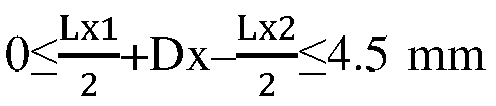

- In an embodiment of this application, further, when 1


- In an embodiment of this application, because of the insulation material in the
insulation layer 104 does not participate in any electrochemical reaction, with 0.5 mm≤Dx≤5 mm and 0.5 mm≤Dy≤5 mm to control widths of the insulation layer in the X direction and the Y direction, the amount of insulation material added can be controlled, thereby avoiding introducing excessive inactive material into the lithium-ion battery and improving energy density of the lithium-ion battery while achieving the objective of this application. - In an embodiment of this application, Dx preferably satisfies 1.5 mm≤Dx≤3 mm; and Dy preferably satisfies 1.5 mm≤Dy≤3 mm, thereby further improving performance of the lithium-ion battery.
- This application imposes no particular limitation on a thickness of the
insulation layer 104, as long as the objective of this application is achieved. For example, the thickness of theinsulation layer 104 may be set based on a thickness of thepositive electrode membrane 102, as long as theinsulation layer 104 and thepositive electrode membrane 102 have a same thickness after cold pressing, so that compacted density of the AC overhang zone is more consistent with that of the electrode plate zone after thenegative electrode membrane 103 on the opposite side is cold pressed. - In addition, this application imposes no particular limitation on an insulation material used for
insulation layer 104, as long as the objective of this application is achieved. For example, the insulation layer may include at least one of HfO2, SrTiO3, SnO2, CeO2, MgO, NiO, CaO, BaO, ZnO, ZrO2, Y2O3, Al2O3, TiO2, SiO2, boehmite, magnesium hydroxide, or aluminum hydroxide, or may include a material with lithium-ion conductivity, for example, at least one of lithium phosphate (Li3PO4), lithium titanium phosphate, lithium aluminum titanium phosphate, lithium lanthanum titanate, lithium germanium thiophosphate, lithium nitride, SiS2 glass, P2S5 glass, Li2O, LiF, LiOH, Li2CO3, LiAlO2, Li2O-Al2O3-SiO2-P2O5-TiO2-GeO2 ceramics, or garnet ceramics. - A general formula of lithium titanium phosphate may be (LixTiy(PO4)3, where 0<x<2 and 0<y<3.
- A general formula of lithium aluminum titanium phosphate may be (LixAlyTiz(PO4)3, where 0<x<2, 0<y<1, and 0<z<3.
- A general formula of lithium lanthanum titanate may be LixLayTiO3, where 0<x<2 and 0<y<3.
- A general formula of lithium germanium thiophosphate may be LixGeyPzSw, where 0<x<4, 0<y<1, 0<z<1, and 0<w<5.
- A general formula of lithium nitride may be LixNy, where 0<x<4 and 0<y<2.
- A general formula of SiS2 glass may be LixSiySz, where 0≤x<3, 0<y<2, and 0<z<4.
- A general formula of P2S5 glass may be LixSiySz, where 0≤x<3, 0<y<3, and 0<z<7.
- A general formula of lithium germanium phosphorous sulfur ceramics may be Li2O-Al2O3-SiO2-P2Os-TiO2-GeO2.
- A general formula of garnet ceramics is Li3+xLa3M2O12, where 0≤x≤5, and M includes at least one of Te, Nb, or Zr.
- In an embodiment of this application, as shown in
FIG. 1 and FIG. 2 , the partition plate may further include asealing layer 105, thesealing layer 105 is located at a periphery of the partition plate and is configured to improve a packaging effect, and a distance between theinsulation layer 104 and thesealing layer 105 is D3, where 0≤D3≤20 mm and preferably 2≤D3≤5 mm, so that a better sealing effect is implemented for the lithium-ion battery, thereby reducing a self-discharge rate of the lithium-ion battery and improving self-discharge performance of the lithium-ion battery. - This application imposes no particular limitation on a material used for the
sealing layer 105 as long as the objective of this application can be achieved. For example, the material may include at least one of polypropylene, polyester plastic, or 4-hydroxybenzaldehyde (PHBA). - In an embodiment of this application, the
insulation layer 104 includes ceramic particles, where the ceramic particles have excellent insulation properties, an average particle size of the ceramic particles is 10 nm to 20 µm, preferably 100 nm to 10 µm, porosity of the insulation layer is 10% to 60%, preferably 20% to 40%, and an average pore diameter of the insulation layer is 20 nm to 50 µm, preferably 200 nm to 20 µm. - In an embodiment of this application, the insulation layer further includes a binder such that the insulating ceramic particles in the insulation layer can be more firmly fastened, thereby reducing coating fall-off of the insulation layer during cold pressing. The binder typically accounts for 5% to 40% of the insulation layer by mass, to ensure that the insulation layer has good insulating and mechanical performance.
- This application imposes no particular limitation on the binder as long as the objective of this application can be achieved. The binder may include at least one of polyamide, polyurethane, ethylene vinyl acetate copolymer, ethylene vinyl alcohol copolymer, polyacrylate, polyvinylidene fluoride, or polyvinylidene fluoride-hexafluoropropylene copolymer.
- This application imposes no particular limitation on an insulation layer preparing method as long as the objective of this application can be achieved. For example, the insulation layer may be prepared in various methods such as a slurry coating method, a glue coating method, and a 3D printing method.
- This application provides a partition plate, where an insulation layer is provided at a periphery of a positive electrode membrane, and a zone surrounded by orthographic projection of an outer edge of the insulation layer on a partition substrate covers orthographic projection of a negative electrode membrane on the partition substrate, so that an AC overhang zone on the side of the negative electrode membrane has the same compacted density as an electrode plate zone after cold pressing. This not only eliminates local lithium precipitation occurring in a low compacted density zone because of uneven compacted density, but also reduces occurrence of curving and damage on the edge of the partition plate, improving self-discharge and safety performances of an electrochemical apparatus when the partition plate is used as an electrode plate.
- This application further provides an electrochemical apparatus, and the electrochemical apparatus includes at least one partition plate in the foregoing embodiments of this application.
- In an embodiment of this application, the electrochemical apparatus includes at least two electrode assemblies, where the partition plate is hermetically connected to an outer packaging to form separate sealed chambers on two sides of the partition plate, with each sealed chamber containing one electrode assembly and an electrolyte to form a separate electrochemical unit. The partition plate are coated with active materials with opposite polarities on two sides, respectively.
-
FIG. 4 is a schematic structural diagram of an electrochemical apparatus according to an embodiment of this application. As shown inFIG. 4 , the partition plate separates the electrochemical apparatus into two electrode assemblies, namely, afirst electrode assembly 300 and asecond electrode assembly 400. Thefirst electrode assembly 300 includes apositive electrode plate 301, a positive electrodeactive material layer 302, and afirst separator 303 from bottom to top inFIG. 4 . Thesecond electrode assembly 400 includes anegative electrode plate 401, a negative electrodeactive material layer 402, and asecond separator 403 from top to bottom inFIG. 4 . Thenegative electrode membrane 103 of thepartition substrate 101 is adjacent to the positive electrodeactive material layer 302 of thefirst electrode assembly 300, and thepositive electrode membrane 102 of thepartition substrate 101 is adjacent to the negative electrodeactive material layer 402 of thesecond electrode assembly 400. In addition, the electrochemical apparatus may also be sealed by thesealing layer 105, so that a structure of two separate chambers is formed in the electrochemical apparatus; and the two chambers respectively correspond to thefirst electrode assembly 300 and thesecond electrode assembly 400. - In an embodiment, one tab may be extended from each of two adjacent electrode assemblies, and the tabs of the two electrode assemblies have opposite polarities. For example, when a side of the partition plate adjacent to the first electrode assembly is a positive electrode membrane and a side of the partition plate adjacent to the second electrode assembly is a negative electrode membrane, a negative tab is extended from the first electrode assembly, and a positive tab is extended from the second electrode assembly. In this case, an output voltage between the two tabs is a sum of output voltages of two electrochemical units.
- In an embodiment, two tabs may be extended from each of two adjacent electrode assemblies. For example, when a side of the partition plate adjacent to the first electrode assembly is a positive electrode membrane and a side of the partition plate adjacent to the second electrode assembly is a negative electrode membrane, a positive tab of the first electrode assembly is connected in series with a negative tab of the second electrode assembly, and a negative tab of the first electrode assembly and a positive tab of the second electrode assembly are output tabs, where an output voltage is a sum of the output voltages of the two electrochemical units. In this case, the partition plate serves as a bipolar electrode plate, so that two adjacent electrochemical units are both internally connected in series through the partition plate and externally connected in series through the tabs.
- In an embodiment, when the partition plate serves as a bipolar electrode plate, another tab may be extended from the partition plate for monitoring an operating status of the lithium-ion battery.
- In an embodiment of this application, there may be a primer layer between the partition substrate of the partition plate and the positive electrode membrane or the negative electrode membrane, and the primer layer is configured to improve adhesion performance between the partition substrate and the active substance. The primer layer is typically obtained by applying, on the partition substrate, a slurry formed by mixing conductive carbon black, styrene-butadiene rubber, and deionized water, and then drying the slurry, and primer layers on two sides of the partition substrate may be identical or different.
- The positive electrode plate in this application is not particularly limited, provided that the objective of this application can be achieved. For example, the positive electrode plate typically includes a positive electrode current collector and a positive electrode active material. The positive electrode current collector is not particularly limited, and may be any positive electrode current collector known in the art, such as aluminum foil, aluminum alloy foil, or a composite current collector. The positive electrode active material is not particularly limited, and may be any positive electrode active material in the prior art. The positive electrode active material includes at least one of NCM811, NCM622, NCM523, NCM111, NCA, lithium iron phosphate, lithium cobalt oxide, lithium manganate oxide, lithium manganese iron phosphate, or lithium titanate.
- The negative electrode plate in this application is not particularly limited, provided that the objective of this application can be achieved. For example, the negative electrode plate typically includes a negative electrode current collector and a negative electrode active material layer. The negative electrode current collector is not particularly limited, and may be any negative electrode current collector known in the art, such as copper foil, aluminum foil, aluminum alloy foil, and a composite current collector. The negative electrode active material layer includes a negative electrode active material. The negative electrode active material is not particularly limited, and may be any negative electrode active material known in the art. For example, the negative electrode active material may include at least one of artificial graphite, natural graphite, carbonaceous mesophase spherule, soft carbon, hard carbon, silicon, silicon carbon, lithium titanate, or the like.
- The electrolyte in this application is not particularly limited, and may be any electrolyte known in the art, for example, an electrolyte in any one of a gel state, a solid state, and a liquid state. For example, a liquid electrolyte may include a lithium salt and a non-aqueous solvent.
- The lithium salt is not particularly limited, and may be any lithium salt known in the art provided that the objective of this application can be achieved. For example, the lithium salt may include at least one of lithium hexafluorophosphate (LiPF6), lithium tetrafluoroborate (LiBF4), lithium difluorophosphate (LiPO2F2), lithium bis(fluorosulfonyl)imide LiN(CF3SO2)2(LiTFSI), lithium bis(fluorosulfonyl)imide Li(N(SO2F)2)(LiFSI), lithium bis(oxalate)borate LiB(C2O4)2(LiBOB), or lithium difluoro(oxalato)borate LiBF2(C2O4)(LiDFOB). For example, LiPF6 can be used as the lithium salt.
- The non-aqueous solvent is not particularly limited, provided that the objective of this application can be achieved. For example, the non-aqueous solvent may include at least one of a carbonate compound, a carboxylate compound, an ether compound, a nitrile compound, or other organic solvents.
- For example, the carbonate compound may include at least one of diethyl carbonate (DEC), dimethyl carbonate (DMC), ethyl methyl carbonate (EMC), dipropyl carbonate (DPC), methyl propyl carbonate (MPC), ethyl propyl carbonate (EPC), methyl ethyl carbonate (MEC), ethylene carbonate (EC), propylene carbonate (PC), butylene carbonate (BC), vinyl ethylene carbonate (VEC), fluoroethylene carbonate (FEC), 1,2-difluoroethylene carbonate, 1,1-difluoroethylene carbonate, 1,1,2-trifluoroethylene carbonate, 1,1,2,2-tetrafluoroethylene carbonate, 1-fluoro-2-methylethylene carbonate, 1-fluoro-1-methylethylene carbonate, 1,2-difluoro-1-methylethylene carbonate, 1,1,2-trifluoro-2-methylethylene carbonate, or trifluoromethylethylene carbonate.
- The separator in this application is not particularly limited. For example, the separator includes a polymer or an inorganic substance formed by a material stable to the electrolyte of this application.
- For example, the separator may include a substrate layer and a surface treatment layer. The substrate layer may be a non-woven fabric, membrane, or composite membrane having a structure, and a material of the substrate layer may be selected from at least one of polyethylene, polypropylene, polyethylene terephthalate, or polyimide. Optionally, a polypropylene membrane, a polyethylene membrane, polypropylene nonwoven fabric, polyethylene nonwoven fabric, or a polypropylene-polyethylene-polypropylene composite membrane can be used. Optionally, the surface treatment layer is provided on at least one surface of the substrate layer, and the surface treatment layer may be a polymer layer or an inorganic layer, or may be a layer formed by mixing a polymer and an inorganic substance.
- For example, the inorganic layer includes inorganic particles and a binder. The inorganic particles are not particularly limited, and may be selected from, for example, at least one of aluminum oxide, silicon oxide, magnesium oxide, titanium oxide, hafnium oxide, tin oxide, ceria oxide, nickel oxide, zinc oxide, calcium oxide, zirconium oxide, yttrium oxide, silicon carbide, boehmite, aluminum hydroxide, magnesium hydroxide, calcium hydroxide, or barium sulfate. The binder is not particularly limited, and may be selected from, for example, a combination of one or more of polyvinylidene fluoride, vinylidene fluoride-hexafluoropropylene copolymer, polyamide, polyacrylonitrile, polyacrylate, polyacrylic acid, polyacrylate, polyvinylpyrrolidone, polyvinyl ether, polymethyl methacrylate, polytetrafluoroethylene, and polyhexafluoropropylene. The polymer layer includes a polymer, and a material of the polymer includes at least one of polyamide, polyacrylonitrile, acrylate polymer, polyacrylic acid, polyacrylate, polyvinylpyrrolidone, polyvinyl ether, polyvinylidene fluoride, or poly(vinylidene fluoride-hexafluoropropylene).
- The electrochemical apparatus provided according to this application uses a partition with an insulation layer provided at a periphery of a positive electrode membrane, where a zone surrounded by orthographic projection of an outer edge of the insulation layer on a partition substrate covers orthographic projection of a negative electrode membrane on the partition substrate, so that an AC overhang zone on the side of the negative electrode membrane has the same compacted density as the electrode plate zone after cold pressing. This not only eliminates local lithium precipitation occurring in a low compacted density zone because of uneven compacted density, but also reduces occurrence of curving and damage on the edge of the partition, improving self-discharge performance and safety of the electrochemical apparatus when the partition is used as an electrode plate.
- This application further provides an electronic apparatus, which includes the electrochemical apparatus provided in the embodiments of this application.
- The electrode assembly in this application is not particularly limited, and may be any electrode assembly in the prior art provided that the objective of this application can be achieved. For example, a laminated electrode assembly or a wound electrode assembly can be used. The electrode assembly typically includes a positive electrode plate, a negative electrode plate, and a separator.
- The following describes the embodiments of this application more specifically by using examples and comparative examples. Various tests and evaluations were performed in the following methods. In addition, unless otherwise specified, "part" and "%" are based on mass.
- Preparation of an insulation layer slurry: Boehmite and polyvinylidene fluoride PVDF were mixed at a mass ratio of 95:5, then dispersed in a mixed solvent including DMF and acetone, and stirred thoroughly to obtain a uniform insulation layer slurry with a 40% solid content. A volume ratio of DMF to acetone in the mixed solvent was 7:3.
- Preparation of a positive electrode slurry: Positive electrode active material lithium cobalt oxide (LiCoO2), conductive carbon black (Super P), and PVDF were mixed at a mass ratio of 97.5:1.0:1.5, and NMP was added as a solvent to prepare a slurry with a 75% solid content which was stirred uniformly.
- Preparation of a negative electrode slurry: Negative electrode active material graphite, conductive carbon black (Super P), and styrene-butadiene rubber (SBR) were mixed at a mass ratio of 96:1.5:2.5, and deionized water was added as a solvent to prepare a slurry with a 70% solid content which was stirred uniformly.
- Preparation of a positive electrode membrane: A commercially available stainless steel partition substrate with a thickness of 20 µm was selected, and a layer of positive electrode slurry was first applied on a surface of the stainless steel partition substrate, and dried at 90°C for 1 hour to obtain the positive electrode membrane. A thickness of the positive electrode membrane was 110 µm, a length Lx1 of the positive electrode membrane was 40 mm, and a width Ly1 of the positive electrode membrane was 34 mm.
- Preparation of an insulation layer: A layer of insulation layer slurry was prepared at a periphery of the positive electrode membrane by using a gluing machine, and dried at 90°C for 1 hour to obtain the insulation layer. A thickness of the insulation layer was 100 µm, and widths Dx and Dy of the insulation layer were both 5 mm.
- Preparation of a negative electrode membrane: A layer of negative electrode slurry was applied on another surface of the stainless steel partition substrate, and dried at 110°C for 1 hour to obtain the negative electrode membrane. A thickness of the negative electrode membrane was 130 µm, a length Lx2 of the negative electrode membrane was 46 mm, a width Ly2 of the negative electrode membrane was 40 mm, and


- Preparation of a partition plate: The stainless steel partition substrate with both surfaces coated was cold pressed by a cold roller to obtain the partition plate, where a thickness of the partition plate was 230 µm.
- Negative electrode active material graphite, conductive carbon black (Super P), and styrene-butadiene rubber (SBR) were mixed at a mass ratio of 96:1.5:2.5, and deionized water was added as a solvent to prepare a slurry with a 70% solid content which was stirred uniformly. The slurry was evenly applied on a surface of copper foil with a thickness of 10 µm, and dried at 110°C, to obtain a negative electrode plate with one face coated with a negative electrode active material layer and a coating thickness of 150 µm, and then the coating step was repeated on another surface of the negative electrode plate, to obtain a negative electrode plate with two faces coated with the negative electrode active material layer. The negative electrode plate was cut into a size of 41 mm×61 mm for use.
- Preparation of a positive electrode slurry: Positive electrode active material lithium cobalt oxide (LiCoO2), conductive carbon black (Super P), and PVDF were mixed at a mass ratio of 97.5:1.0:1.5, and NMP was added as a solvent to prepare a slurry with a 75% solid content which was stirred uniformly. The slurry was evenly applied on a surface of aluminum foil with a thickness of 12 µm, and dried at 90°C, to obtain a positive electrode plate with a coating thickness of 100 µm, and then the coating step was repeated on another surface of the positive electrode plate, to obtain a positive electrode plate with two faces coated with the positive electrode active material layer. The positive electrode plate was cut into a size of 38 mm×58 mm for use.
- In an atmosphere of dry argon, organic solvents including ethylene carbonate (EC), ethyl methyl carbonate (EMC), and diethyl carbonate (DEC) were mixed at a mass ratio of 30:50:20, and then lithium hexafluorophosphate (LiPF6) was dissolved into the organic solvents and mixed uniformly, to obtain an electrolyte. A molar concentration of LiPF6 in the electrolyte was 1.15 mol/L.
- A polyethylene (PE) film with a thickness of 15 µm was selected as a separator, and one positive electrode plate was placed on each of two faces of the negative electrode plate, a layer of separator was placed between the positive electrode plate and the negative electrode plate, to form a stacked plate, and then four corners of the entire stacked structure were fastened, to obtain a first electrode assembly. The first electrode assembly has two tabs, one positive tab and one negative tab.
- The second electrode assembly was prepared in the same method as the first electrode assembly was prepared. The second electrode assembly also has two tabs, one positive tab and one negative tab.
- An aluminum-plastic film with a thickness of 90 µm formed through recess-punching was placed with a pit face up, the first electrode assembly was put into the pit of the aluminum-plastic film with a positive electrode plate of the first electrode assembly face up, and then the negative electrode membrane of the partition plate was put face down on the first electrode assembly, so that the positive electrode plate of the first electrode assembly was opposite the negative electrode membrane of the partition plate, to obtain a first assembly after compression.
- For the first assembly, a positive electrode membrane of the partition plate was put face up. A negative electrode plate of the second electrode assembly was put face down on the partition plate, so that the negative electrode plate of the second electrode assembly was opposite the positive electrode membrane of the partition plate. Then another aluminum-plastic film with a thickness of 90 µm formed through recess-punching was put with a pit face down to cover the second electrode assembly. The two aluminum-plastic films were heat-sealed through hot pressing, so that the first electrode assembly and the second electrode assembly were separated by the partition plate, thereby obtaining an assembled electrode assembly. The assembled electrode assembly had two separate chambers. The first electrode assembly corresponded to a first chamber, the second electrode assembly corresponded to a second chamber, and a positive tab and a negative tab of both the first electrode assembly and the second electrode assembly were extended out of a packaging bag.
- An electrolyte was injected into the two chambers of the assembled electrode assembly and then the assembled electrode assembly was packaged. At that point, the first electrode assembly became a first electrochemical unit, and the second electrode assembly became a second electrochemical unit. A positive tab of the first electrochemical unit was conductively connected in series with a negative tab of the second electrochemical unit, to obtain a series-connected lithium-ion battery. No ion exchange was present between the two chambers of the series-connected lithium-ion battery.
- For charging/discharging of the series-connected lithium-ion battery, a negative tab of the first electrochemical unit and a positive tab of the second electrochemical unit were connected. In addition, the series-connected tabs could be retained and used as voltage monitoring electrodes for the series-connected lithium-ion battery, or the series-connected tabs could be packaged with insulation within the series-connected lithium-ion battery.
- All was the same as Example 1, except that electrical resistivity of the insulation layer was 2.70×10¹⁰, and Al2O3 was selected as an insulation ceramic material.
- All was the same as Example 2, except that electrical resistivity of the insulation layer was 3.50×10¹³.
- All was the same as Example 2, except that electrical resistivity of the insulation layer was 3.60×10¹³, Dx and Dy were both 2 mm, and
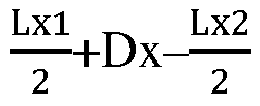

- All was the same as Example 2, except that electrical resistivity of an insulation layer was 3.30×10¹³, Dx and Dy were both 0.5 mm, and

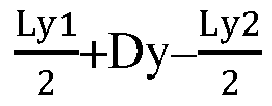
- All was the same as Example 2, except that electrical resistivity of the insulation layer was 3.40×10¹³, Dx and Dy were both 2 mm, and
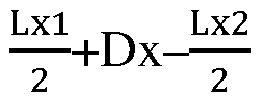
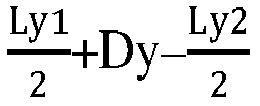
- All was the same as Example 2, except that electrical resistivity of the insulation layer was 3.40×10¹³, and


- All was the same as Example 2, except that electrical resistivity of the insulation layer was 3.50×10¹³, Dx and Dy were both 2 mm,

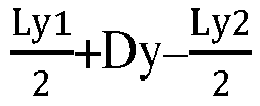
- All was the same as Example 8, except that electrical resistivity of the insulation layer was 3.40×10¹³ and D3 was 3 mm.
- All was the same as Example 8, except that electrical resistivity of the insulation layer was 3.30×10¹³ and D3 was 20 mm.
- All was the same as Example 9, except that electrical resistivity of the insulation layer was 5.70×10⁹, and ZnO was used as an insulation ceramic material.
- All was the same as Example 11, except that electrical resistivity of the insulation layer was 8.30×10¹², Al2O3 was used as an insulation ceramic material, and polyvinylidene fluoride-hexafluoropropylene (PVDF-HFP) was used as a binder.
- All was the same as Example 9, except that an average particle size of insulation ceramic particles was 15 µm and an average pore diameter of the insulation layer was 50 µm.
- All was the same as Example 13, except that porosity of the insulation layer was 30%.
- All was the same as Example 14, except that electrical resistivity of the insulation layer was 3.50×10¹³, an average particle size of insulation ceramic particles was 5 µm, and an average pore diameter of the insulation layer was 15 µm.
- Negative electrode active material graphite, conductive carbon black (Super P), and styrene-butadiene rubber (SBR) were mixed at a mass ratio of 96:1.5:2.5, and deionized water was added as a solvent to prepare a slurry with a 70% solid content which was stirred uniformly. The slurry was evenly applied on a surface of copper foil with a thickness of 10 µm, and dried at 110°C, to obtain a negative electrode plate with one face coated with a negative electrode active material layer and a coating thickness of 150 µm, and then the coating step was repeated on another face of the negative electrode plate, to obtain a negative electrode plate with two faces coated with the negative electrode active material layer. The negative electrode plate was cut into a size of 41 mm×61 mm for use.
- Preparation of a positive electrode slurry: Positive electrode active material lithium cobalt oxide (LiCoO2), conductive carbon black (Super P), and PVDF were mixed at a mass ratio of 97.5:1.0:1.5, and NMP was added as a solvent to prepare a slurry with a 75% solid content which was stirred uniformly. The slurry was evenly applied on a surface of aluminum foil with a thickness of 12 µm, and dried at 90°C, to obtain a positive electrode plate with a coating thickness of 100 µm, and then the coating step was repeated on another face of the positive electrode plate, to obtain a positive electrode plate with two faces coated with the positive electrode active material layer. The positive electrode plate was cut into a size of 38 mm×58 mm for use.
- In an atmosphere of dry argon, organic solvents including ethylene carbonate (EC), ethyl methyl carbonate (EMC), and diethyl carbonate (DEC) were mixed at a mass ratio of 30:50:20, and then lithium hexafluorophosphate (LiPF6) was dissolved into the organic solvents mixed uniformly, to obtain an electrolyte. A molar concentration of LiPF6 in the electrolyte was 1.15 mol/L.
- A negative electrode plate and a positive electrode plate were stacked to form a stack. A polyethylene (PE) film with a thickness of 15 µm was selected as a separator used between the positive electrode plate and the negative electrode plate, and then four corners of the entire stacked structure were fastened with an adhesive tape and put into an aluminum-plastic film. After top-side sealing, electrolyte injection, and packaging, an electrochemical unit was obtained.
- At least two electrochemical units were prepared in the same manner and used as the first electrochemical unit and the second electrochemical unit respectively.
- A negative electrode of the first electrochemical unit and a positive electrode of the second electrochemical unit were connected in series through a wire conductor to obtain a series-connected lithium-ion battery.
- All was the same as Example 1, except that a partition plate made of stainless steel foil was used as the partition plate between the first electrode assembly and the second electrode assembly. A thickness of the stainless steel foil was approximately 20 µm.
- All was the same as Example 1, except that the partition plate included no insulation layer.
- The series-connected lithium-ion batteries prepared in the examples and comparative examples were tested in the following methods:
- The battery was first charged to 8.90 V at 0.5C, then constant-voltage charged to 0.025C, and after standing for 5 minutes, was discharged to 6.0 V at 0.1C, and a discharge capacity was recorded; and then 0.1C discharge energy density was calculated according to this formula: energy density (Wh/kg)=discharge capacity (Wh)/mass of electrochemical apparatus (kg).
- At a test temperature of 25°C, the battery was constant-current charged to 8.90 V at 0.5C, and then constant-voltage charged to 0.025C. After standing for 5 minutes, the battery was discharged to 6.0 V at 0.5C. A capacity obtained in this step was an initial capacity, and after 50 cycles of 0.5C charge and 0.5C discharge, a ratio of a capacity of the lithium-ion battery to the initial capacity was calculated.
-
- (1) The sample lithium-ion battery was left falling freely from a height of 1.5 meters to a smooth marble surface.
- (2) The lithium-ion battery was checked for damage at a curving location of the partition plate at an edge of the positive electrode after the fall.
- (3) 20 samples were tested and a quantity of damaged samples was recorded.
- After the capacity of the lithium-ion battery was tested, the lithium-ion battery was left standing for 48 hours at room temperature, and a voltage V1 of the lithium-ion battery was measured; then the lithium-ion battery was left standing for 48 more hours, and a voltage V2 of the lithium-ion battery was measured; and a value of K for representing self-discharge performance of the lithium-ion battery was calculated according to the following formula: K=(V1-V2)/48, where K was measured in mV/h.



- It can be seen from Examples 1 to 15 and Comparative Examples 1 and 2 that the lithium-ion batteries provided with the bipolar partition plate of this application had significantly improved discharge energy density.
- It can be seen from Examples 1 to 15 and Comparative Example 3 that there was the lithium-ion batteries provided with the bipolar partition plate of this application had improved capacity retention rates after cycling.
- It can be seen from Examples 1 to 15 and Comparative Example 3 that the lithium-ion batteries provided with the bipolar partition plate of this application were less likely to have damage at the curving location of the partition plate at the edge of the positive electrode in the drop test, providing better safety for the lithium-ion batteries.
- It can be seen from Examples 1 to 15 and Comparative Examples 1 to 3 that the lithium-ion batteries provided with the bipolar partition plate of this application had significant improved self-discharge performance.
- It can be seen from Examples 1 to 3 that the capacity retention rate of the lithium-ion battery after cycling increased with the increase of electrical resistivity of the insulation layer, and the self-discharge performance was improved with the increase of electrical resistivity of the insulation layer.
- The foregoing descriptions are merely preferable embodiments of this application, but are not intended to limit this application. Any modification, equivalent replacement, or improvement made without departing from the spirit and principle of this application shall fall within the protection scope of this application.
Claims (18)
- A partition plate, comprising a partition substrate, a positive electrode membrane, a negative electrode membrane, and an insulation layer, whereinthe positive electrode membrane and the negative electrode membrane are respectively located on two surfaces of the partition substrate;the insulation layer is disposed on the partition substrate and the insulation layer is disposed at a periphery of the positive electrode membrane; anda zone surrounded by orthographic projection of an outer edge of the insulation layer on the partition substrate covers orthographic projection of the negative electrode membrane on the partition substrate.
- The partition plate according to claim 1, wherein a negative electrode membrane zone is present in a counterpart of a zone corresponding to the positive electrode membrane on an opposite side of the partition substrate; and a negative electrode membrane zone is present in at least part of a counterpart of a zone corresponding to the insulation layer on an opposite side of the partition substrate.
- The partition plate according to claim 2, wherein orthographic projection of a geometric center of the positive electrode membrane on the partition substrate coincides with orthographic projection of a geometric center of the negative electrode membrane on the partition substrate, a length in a radiating direction from the geometric center to an outer edge of the positive electrode membrane is L1; and in the same radiating direction, a length from the outer edge of the positive electrode membrane to the outer edge of the insulation layer is D, and a length from the geometric center to an outer edge of the negative electrode membrane is L2, wherein the following geometric relationships are satisfied:

- The partition plate according to claim 3, wherein the positive electrode membrane and the negative electrode membrane are rectangular, and the positive electrode membrane, the negative electrode membrane, and the insulation layer satisfy the following geometric relationships:

- The partition plate according to claim 1, wherein electrical resistivity of the insulation layer is greater than 107 Ω·m.
- The partition plate according to claim 3, wherein 0 mm≤L1+D-L2≤4.5 mm.
- The partition plate according to claim 3, wherein 0.5 mm≤D≤5 mm.
- The partition plate according to claim 3, wherein the partition plate satisfies at least one of the following characteristics:(a) electrical resistivity of the insulation layer is greater than 1010 Ω·m;(b) 1 mm≤L1+D-L2≤2.5 mm; or(c) 1.5 mm≤D≤3 mm.
- The partition plate according to claim 1, wherein the partition plate further comprises a sealing layer, the sealing layer is located at a periphery of the partition plate, and a distance between the insulation layer and the sealing layer is D3, wherein 0 mm≤D3≤20 mm.
- The partition plate according to claim 9, wherein 2 mm≤D3≤5 mm.
- The partition plate according to claim 1, wherein the insulation layer comprises ceramic particles, an average particle size of the ceramic particles is 10 nm to 20 µm, porosity of the insulation layer is 10% to 60%, and an average pore diameter of the insulation layer is 20 nm to 50 µm.
- The partition plate according to claim 11, wherein the insulation layer satisfies at least one of the following characteristics:(a) the average particle size of the insulation ceramic particles is 100 nm to 10 µm;(b) the porosity of the insulation layer is 20% to 40%; or(c) the average pore diameter of the insulation layer is 200 nm to 20 µm.
- The partition plate according to claim 1, wherein the insulation layer further comprises a binder and the binder accounts for 5% to 40% of the insulation layer by mass.
- The partition plate according to claim 13, wherein the binder comprises at least one of polyamide, polyurethane, ethylene vinyl acetate copolymer, ethylene vinyl alcohol copolymer, polyacrylate, polyvinylidene fluoride, or polyvinylidene fluoride-hexafluoropropylene copolymer.
- The partition plate according to claim 1, wherein the insulation layer comprises at least one of HfO2, SrTiO3, SnO2, CeO2, MgO, NiO, CaO, BaO, ZnO, ZrO2, Y2O3, Al2O3, TiO2, SiO2, boehmite, magnesium hydroxide, aluminum hydroxide, lithium phosphate, lithium titanium phosphate, lithium aluminum titanium phosphate, lithium lanthanum titanate, lithium germanium thiophosphate, lithium nitride, SiS2 glass, P2S5 glass, Li2O, LiF, LiOH, Li2CO3, LiAlO2, lithium germanium phosphorous sulfur ceramics, or garnet ceramics.
- An electrochemical apparatus, comprising the partition plate according to any one of claims 1 to 15.
- The electrochemical apparatus according to claim 16, comprising at least two electrode assemblies, wherein the partition plate is hermetically connected to an outer packaging to form separate sealed chambers on two sides of the partition plate, with each sealed chamber containing one electrode assembly and an electrolyte.
- An electronic apparatus, comprising the electrochemical apparatus according to claim 16 or 17.
Applications Claiming Priority (1)
| Application Number | Priority Date | Filing Date | Title |
|---|---|---|---|
| PCT/CN2020/099430 WO2022000312A1 (en) | 2020-06-30 | 2020-06-30 | Separator, electrochemical device comprising same, and electronic device |
Publications (2)
| Publication Number | Publication Date |
|---|---|
| EP4156355A1 true EP4156355A1 (en) | 2023-03-29 |
| EP4156355A4 EP4156355A4 (en) | 2024-10-09 |
Family
ID=79317322
Family Applications (1)
| Application Number | Title | Priority Date | Filing Date |
|---|---|---|---|
| EP20943320.0A Pending EP4156355A4 (en) | 2020-06-30 | 2020-06-30 | Separator, electrochemical device comprising same, and electronic device |
Country Status (5)
| Country | Link |
|---|---|
| US (1) | US20230125965A1 (en) |
| EP (1) | EP4156355A4 (en) |
| JP (1) | JP7361137B2 (en) |
| CN (1) | CN114026722B (en) |
| WO (1) | WO2022000312A1 (en) |
Families Citing this family (2)
| Publication number | Priority date | Publication date | Assignee | Title |
|---|---|---|---|---|
| CN119944092A (en) * | 2023-11-03 | 2025-05-06 | 华为技术有限公司 | Battery Cell Components and Lithium-ion Batteries |
| WO2026053860A1 (en) * | 2024-09-04 | 2026-03-12 | 大日本印刷株式会社 | Separation film for electric power storage device and method for manufacturing same, and electric power storage device and method for manufacturing same |
Family Cites Families (17)
| Publication number | Priority date | Publication date | Assignee | Title |
|---|---|---|---|---|
| US5254415A (en) * | 1992-04-09 | 1993-10-19 | Saft America Inc. | Stacked cell array bipolar battery with thermal sprayed container and cell seal |
| CN1139142C (en) * | 1997-02-28 | 2004-02-18 | 旭化成株式会社 | Nonaqueous secondary battery and method for manufacturing same |
| JP5453709B2 (en) * | 2005-11-25 | 2014-03-26 | 日産自動車株式会社 | Exterior material for electrochemical device and electrochemical device using the same |
| JP2007188746A (en) | 2006-01-13 | 2007-07-26 | Nissan Motor Co Ltd | Bipolar battery, battery pack and vehicle equipped with these batteries |
| KR100971345B1 (en) * | 2007-10-08 | 2010-07-20 | 삼성에스디아이 주식회사 | Electrode assembly and secondary battery comprising same |
| JP2010250978A (en) * | 2009-04-10 | 2010-11-04 | Nissan Motor Co Ltd | Battery electrode manufacturing method, battery electrode, bipolar battery, battery pack, and vehicle |
| JP5605662B2 (en) * | 2010-08-05 | 2014-10-15 | トヨタ自動車株式会社 | Secondary battery |
| JP2014013693A (en) * | 2012-07-04 | 2014-01-23 | Mitsubishi Electric Corp | Lithium ion secondary battery and manufacturing method therefor |
| WO2015080305A1 (en) * | 2013-11-27 | 2015-06-04 | 주식회사 엘지화학 | Electrode assembly and electrochemical device including same |
| CN104282877B (en) * | 2014-10-16 | 2017-08-25 | 东莞新能源科技有限公司 | Electrode slice and the lithium ion battery containing the electrode slice |
| KR101739863B1 (en) * | 2015-12-04 | 2017-05-25 | 재단법인 포항산업과학연구원 | Lithium rechargeable battery |
| JP6750389B2 (en) * | 2016-08-16 | 2020-09-02 | トヨタ自動車株式会社 | Bipolar battery |
| JP2018056435A (en) * | 2016-09-30 | 2018-04-05 | 旭化成株式会社 | Nonaqueous lithium power storage element |
| WO2019230323A1 (en) * | 2018-05-28 | 2019-12-05 | 本田技研工業株式会社 | Bipolar electrode manufacturing method and bipolar electrode |
| CN109244362B (en) * | 2018-11-05 | 2023-11-03 | 宁德新能源科技有限公司 | Positive electrode plate, electrochemical device and electronic device containing the same |
| CN109244475B (en) * | 2018-11-05 | 2024-06-21 | 宁德新能源科技有限公司 | Electrochemical device and electronic device including the same |
| CN209045679U (en) * | 2018-11-05 | 2019-06-28 | 宁德新能源科技有限公司 | Electrochemical appliance and electronic device comprising it |
-
2020
- 2020-06-30 JP JP2021571770A patent/JP7361137B2/en active Active
- 2020-06-30 EP EP20943320.0A patent/EP4156355A4/en active Pending
- 2020-06-30 WO PCT/CN2020/099430 patent/WO2022000312A1/en not_active Ceased
- 2020-06-30 CN CN202080030670.1A patent/CN114026722B/en active Active
-
2022
- 2022-12-27 US US18/088,874 patent/US20230125965A1/en active Pending
Also Published As
| Publication number | Publication date |
|---|---|
| JP7361137B2 (en) | 2023-10-13 |
| CN114026722A (en) | 2022-02-08 |
| WO2022000312A1 (en) | 2022-01-06 |
| EP4156355A4 (en) | 2024-10-09 |
| US20230125965A1 (en) | 2023-04-27 |
| CN114026722B (en) | 2024-11-01 |
| JP2022542749A (en) | 2022-10-07 |
Similar Documents
| Publication | Publication Date | Title |
|---|---|---|
| US20220223899A1 (en) | Partition for electrochemical apparatus, electrochemical apparatus, and electronic apparatus | |
| US7927740B2 (en) | Battery pack and vehicle | |
| JP5087433B2 (en) | Bipolar lithium ion rechargeable battery | |
| EP3193402B1 (en) | Wound electrode group, electrode group, and non-aqueous electrolyte battery | |
| CN110379984A (en) | Partition for lithium metal base battery group | |
| US20220223948A1 (en) | Electrochemical apparatus and electronic apparatus | |
| CN115842094A (en) | Negative pole piece and preparation method thereof, secondary battery, battery module, battery pack and electric device | |
| CN111164820B (en) | Lithium-ion secondary battery and manufacturing method thereof | |
| EP4071875A1 (en) | Solid-state battery, battery module, battery pack, and related device thereof | |
| US8841025B2 (en) | Positive electrode with heteropoly and phosphorous additives and nonaqueous electrolyte battery | |
| KR20160112947A (en) | Electrode, nonaqueous electrolyte battery and battery pack | |
| CN101330142A (en) | Positive electrode mixture and non-aqueous electrolyte battery | |
| US20240243339A1 (en) | Electrochemical apparatus, manufacturing method thereof, and electronic apparatus | |
| US20230044348A1 (en) | Electrochemical device | |
| US20230125965A1 (en) | Partition plate and electrochemical apparatus and electronic apparatus including such partition plate | |
| EP3451437A1 (en) | Lithium ion secondary cell charging method, lithium ion secondary cell system, and power storage device | |
| US20220223968A1 (en) | Partition plate for use in electrochemical device, electrochemical device, and electronic device | |
| JP2022549538A (en) | Electrochemical device and electronic device containing the electrochemical device | |
| KR20160036577A (en) | Lithium secondary battery and electrolyte solution for lithium secondary batteries | |
| WO2022226748A1 (en) | Battery group, battery pack, electric apparatus, and manufacturing method and manufacturing device for battery group | |
| WO2022047697A1 (en) | Electrochemical device and electronic device | |
| JP2006012703A (en) | Secondary battery | |
| KR20180127759A (en) | Separator for lithium secondary battery and lithium secondary battery including the same | |
| CN113454833A (en) | Electrochemical device and electronic device | |
| KR102953925B1 (en) | Secondary battery and manufacturing method thereof |
Legal Events
| Date | Code | Title | Description |
|---|---|---|---|
| STAA | Information on the status of an ep patent application or granted ep patent |
Free format text: STATUS: THE INTERNATIONAL PUBLICATION HAS BEEN MADE |
|
| PUAI | Public reference made under article 153(3) epc to a published international application that has entered the european phase |
Free format text: ORIGINAL CODE: 0009012 |
|
| STAA | Information on the status of an ep patent application or granted ep patent |
Free format text: STATUS: REQUEST FOR EXAMINATION WAS MADE |
|
| 17P | Request for examination filed |
Effective date: 20221222 |
|
| AK | Designated contracting states |
Kind code of ref document: A1 Designated state(s): AL AT BE BG CH CY CZ DE DK EE ES FI FR GB GR HR HU IE IS IT LI LT LU LV MC MK MT NL NO PL PT RO RS SE SI SK SM TR |
|
| DAV | Request for validation of the european patent (deleted) | ||
| DAX | Request for extension of the european patent (deleted) | ||
| A4 | Supplementary search report drawn up and despatched |
Effective date: 20240910 |
|
| RIC1 | Information provided on ipc code assigned before grant |
Ipc: H01M 4/13 20100101ALI20240904BHEP Ipc: H01M 4/02 20060101ALI20240904BHEP Ipc: H01M 50/593 20210101ALI20240904BHEP Ipc: H01M 10/0585 20100101ALI20240904BHEP Ipc: H01M 10/0525 20100101ALI20240904BHEP Ipc: H01M 50/46 20210101ALI20240904BHEP Ipc: H01M 10/058 20100101ALI20240904BHEP Ipc: H01M 10/04 20060101AFI20240904BHEP |