EP4152718B1 - Kommunikationsverfahren und -vorrichtung sowie elektronische vorrichtung - Google Patents
Kommunikationsverfahren und -vorrichtung sowie elektronische vorrichtung Download PDFInfo
- Publication number
- EP4152718B1 EP4152718B1 EP21826214.5A EP21826214A EP4152718B1 EP 4152718 B1 EP4152718 B1 EP 4152718B1 EP 21826214 A EP21826214 A EP 21826214A EP 4152718 B1 EP4152718 B1 EP 4152718B1
- Authority
- EP
- European Patent Office
- Prior art keywords
- call
- response
- candidate object
- conference
- multimedia conference
- Prior art date
- Legal status (The legal status is an assumption and is not a legal conclusion. Google has not performed a legal analysis and makes no representation as to the accuracy of the status listed.)
- Active
Links
Images



Classifications
-
- H—ELECTRICITY
- H04—ELECTRIC COMMUNICATION TECHNIQUE
- H04L—TRANSMISSION OF DIGITAL INFORMATION, e.g. TELEGRAPHIC COMMUNICATION
- H04L65/00—Network arrangements, protocols or services for supporting real-time applications in data packet communication
- H04L65/1066—Session management
- H04L65/1069—Session establishment or de-establishment
-
- H—ELECTRICITY
- H04—ELECTRIC COMMUNICATION TECHNIQUE
- H04L—TRANSMISSION OF DIGITAL INFORMATION, e.g. TELEGRAPHIC COMMUNICATION
- H04L65/00—Network arrangements, protocols or services for supporting real-time applications in data packet communication
- H04L65/1066—Session management
- H04L65/1083—In-session procedures
- H04L65/1093—In-session procedures by adding participants; by removing participants
-
- H—ELECTRICITY
- H04—ELECTRIC COMMUNICATION TECHNIQUE
- H04L—TRANSMISSION OF DIGITAL INFORMATION, e.g. TELEGRAPHIC COMMUNICATION
- H04L65/00—Network arrangements, protocols or services for supporting real-time applications in data packet communication
- H04L65/1066—Session management
- H04L65/1096—Supplementary features, e.g. call forwarding or call holding
-
- H—ELECTRICITY
- H04—ELECTRIC COMMUNICATION TECHNIQUE
- H04L—TRANSMISSION OF DIGITAL INFORMATION, e.g. TELEGRAPHIC COMMUNICATION
- H04L65/00—Network arrangements, protocols or services for supporting real-time applications in data packet communication
- H04L65/40—Support for services or applications
- H04L65/403—Arrangements for multi-party communication, e.g. for conferences
-
- H—ELECTRICITY
- H04—ELECTRIC COMMUNICATION TECHNIQUE
- H04L—TRANSMISSION OF DIGITAL INFORMATION, e.g. TELEGRAPHIC COMMUNICATION
- H04L65/00—Network arrangements, protocols or services for supporting real-time applications in data packet communication
- H04L65/60—Network streaming of media packets
- H04L65/61—Network streaming of media packets for supporting one-way streaming services, e.g. Internet radio
- H04L65/611—Network streaming of media packets for supporting one-way streaming services, e.g. Internet radio for multicast or broadcast
-
- H—ELECTRICITY
- H04—ELECTRIC COMMUNICATION TECHNIQUE
- H04L—TRANSMISSION OF DIGITAL INFORMATION, e.g. TELEGRAPHIC COMMUNICATION
- H04L65/00—Network arrangements, protocols or services for supporting real-time applications in data packet communication
- H04L65/80—Responding to QoS
Definitions
- Names of messages or information interacted between multiple apparatuses in the embodiments of the present disclosure are illustrative rather than limit the scope of the message or information.
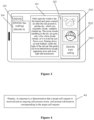
- Figure 1 shows a flowchart of a communication method according to an embodiment of the present disclosure.
- the communication method is applied to a terminal device. As shown in Figure 1 , the method includes steps 101 and 102.
- step 101 in response to a call initiation operation of a multimedia conference, a candidate object of the multimedia conference is determined according to an object to which the call initiation operation is performed.
- an application of the multimedia conference may be an application of a conference service of the multimedia conference provided by a serving end.
- the application has multiple types, and the types are not limited herein.
- the application may be an instant video conference application, a communication application, a video playing application, an email application, a hosting program (for example Applet) of the application, or a browser application having a multimedia conference function provided by a webpage.
- the call status information of the candidate object may be used to indicate that the candidate object is being called to join the conference.
- the response information of the candidate object to the call request may include any one of: accepting the call, rejecting the call or performing no response in a preset time period.
- the conference participant in the multimedia conference status may determine that the candidate object accepts the call in response to receiving the update notification of the conference participant; and stops displaying of the call status information for the candidate object accepting the call in the conference participant list.
- the candidate object may reject the call, and may send a call rejection notification to the server.
- the server may delete the candidate object from the candidate objects of the conference in response to receiving the call rejection notification.
- the server may send an update notification of the candidate object to the conference participant in the multimedia conference status.
- the conference participant in the multimedia conference status determines that the candidate object rejects the call in response to receiving the update notification of the candidate object; and stops displaying of the call status information for the candidate object rejecting the call in the conference object list.
- the preset time period may be set according to an actual application scenario, and is not limited herein.
- the candidate object may perform no response in a long time period (neither accept nor reject), that is, performing no response to the call request in the preset time period.
- the server may determine that the candidate object performs no response in the preset time period if the server receives no call acceptance notification or call rejection notification in the preset time period.
- the candidate object may actively sends a request unprocessed notification.
- the server may determine that the candidate object performs no response in the preset time period in response to receiving the request unprocessed notification.
- the server may send an unresponsive notification to the conference participant in the multimedia conference status when determining that the candidate object performs no response in the preset time period.
- the conference participant in the multimedia conference status may determine that the candidate object performs no response in the preset time period in response to receiving the unresponsive notification; and then stops displaying of the call status information for the candidate object performing no response in the preset time period in the conference participant list.
- step 102 may include: determining, in response to detecting a contact search operation, whether an object indicated by the contact search operation is a candidate object according to the candidate object of the multimedia conference; and displaying the call status information in response to a determination that the object indicated by the contact search operation is the candidate object.
- the contact search operation is performed to search for a contact.
- the contact search operation is performed on a contact set in which association is established, to search for the contact.
- the conference interface may include a contact search window in which the user may input a contact identifier.
- the user triggers search control when inputting a complete contact identifier
- an action for triggering the search control may serve as the contact search operation.
- the call status information is displayed.
- inputting (all or a part) the contact identifier by the user may serve as the contact search operation.
- the first performing body may match the contact identifier inputted by the user with the contact set, and displays a matching result. If the contact identifier in the matching result is among the candidate object identifier of the multimedia conference, it is determined that the object indicated by the search operation is the candidate object. In this case, the call status information is displayed for the contact identifier in the matching result.
- the multimedia conference interface may display a contact search window 203 and a search result displaying region 204. If a user inputs "ZHANG", the first performing body may obtain two matching results "ZHANG San” and "ZHANG Si". In which, “ZHANG San” is the candidate object of the multimedia conference, and “ZHANG Si” is not a candidate object of the multimedia conference. Therefore, call status information "calling” is displayed for "ZHANG San", and is not displayed for "ZHANG San”.
- the contact identifier in the matching result is not among the candidate object identifier of the multimedia conference, it is determined that the object indicated by the contact search operation is not the candidate object of the multimedia conference. In this case, the call status information is not displayed for the user who is not the candidate object. The user may call an object for which the call status information is not displayed in an association manner.
- the candidate object displays call prompt information of the call request in response to a determination that the response status indicates that the call request is received.
- the process of displaying, in response to receiving at least two call requests, the call prompt information for each of the at least two call requests includes: displaying call prompt information of the at least two call requests in a same interface.
- the same interface displaying at least two pieces of call prompt information may be any type of interface.
- a screen of the terminal displays only at least two pieces of call prompt information, or at least two pieces of call prompt information is displayed on the same interface.
- the displaying on the same interface does not mean simultaneous displaying. That is, different call prompt information may be displayed at a certain time instant, but time instants when different prompt information are displayed for the first time are different.
- call prompt information corresponding to the at least two call requests may be simultaneously displayed on an interface of the responsive status.
- the user is prompted of all unprocessed call requests simultaneously, and the user selects to accept which call according to the need.
- the first performing body may automatically terminate the call not accepted by the user and the ongoing call.
- the call prompt information is displayed in the same interface, so that the user can select a required call process. If the user determines that a subsequent call process is more important than a current call process, the user may terminate the current call process and join a new call process.
- the process of displaying, in response to receiving at least two call requests, call prompt information for each of the at least two call requests by the candidate object includes: generating a call request queue according to time when the call request is received; and displaying, in response to detecting that a target call request in the call request queue is rejected, corresponding call prompt information for a call request after the target call request in the call request queue.
- the call request queue may include an unprocessed call request.
- the call request in the call request queue may be deleted after being processed by the user. As time goes on, a received new call request may be added to the call request queue.
- the target call request may be any call request in the call request queue.
- call prompt information corresponding to the call requests is displayed one by one as needed according to the call request queue, so that interference on selection of the user is reduced without missing the call request. That is, at least two pieces of call prompt information is displayed simultaneously to the user, resulting in interference on the selection of the user.
- the candidate object terminates, in response to detecting triggering on the response control, calls expect a call corresponding to the triggered response call.
- the first performing body automatically terminates the call other than the call corresponding to the triggered response control, thereby simplifying the user operation.
- step 401 call prompt information corresponding to the target call request is displayed, in response to a determination that the target call request is received and an ongoing call process exists.
- a second performing body (for example a terminal device) of the communication method shown in the embodiment may display call prompt information corresponding to the target call request in response to a determination that the target call request is received and the ongoing call process exists.
- the second performing body of step 401 may be an electronic device of the candidate object of the multimedia conference.
- a user logged in the second performing body may be referred to as a second user in the embodiment.
- the target call request is used only for convenience of description, and does not limit the call request.
- prompt information of the target call is used to prompt the target call request.
- the call process may be used to record call related information and an object performing a call related action.
- the call may be a call in the multimedia conference or a call conducted between contacts.
- the call process may include but not limited to at least one of: a multimedia conference process and a contact call process.
- the call request may include a multimedia conference invitation request and a contact call request.
- a contact established an association with the second user in advance may send a contact call invitation to the terminal to which the second user logs in, when the contact expects to interact with the second user.
- a status of the call process may be set according to an actual application scenario and is not limited herein.
- the status of the call process may include but not limited to at least one of: an ending status, a call request unprocessed status, a call initiation status and a call ongoing status.
- the second performing body after receiving the target call request, displays target call prompt information for prompting the target call request, regardless of the second performing body being calling, being initiating a call or being displaying the call prompt information.
- the user is promoted of the target call request, and the user determines whether to respond to the target call request, thereby reducing a possibility that the user misses a call.
- the second performing body can accept only one call and the second performing body is calling currently, subsequent calls are omitted by default for the second performing body.
- a busy line status may be displayed or the call is rejected automatically.
- the second performing body may have two unprocessed call requests.
- call prompt information corresponding to each of the two unprocessed call requests is displayed.
- the second performing body may display call prompt information of the at least two call requests on a same interface.
- the displaying on the same interface does not mean simultaneous displaying. That is, different call prompt information may be displayed at a certain time instant, but time instants when different prompt information are displayed for the first time are different.
- the call prompt information is displayed in the same interface, so that the user can select a required call process. If the user determines that a subsequent call process is more important than a current call process, the user may terminate the current call process and join a new call process.
- the second performing body may: generate a call request queue according to time when the call request is received; and display, in response to detecting that the target call request in the call request queue is rejected, call prompt information corresponding to a call request after the target call request in the call request queue.
- the call request queue may include unprocessed call requests.
- the call request in the call request queue may be deleted after being processed by the user. As time goes on, a received new call request may be added to the call request queue.
- the target call request may be any call request in the call request queue.
- call prompt information corresponding to the call requests is displayed one by one as needed according to the call request queue, so that interference on selection of the user is reduced without missing the call request. That is, at least two pieces of call prompt information is displayed simultaneously to the user, resulting in interference on the selection of the user.
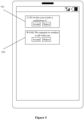
- FIG. 5 shows an interface of a called end.
- a user logging in the called end may be ZHANG San.
- LI Si invites ZHANG San to join a conference A
- WANG Wu calls ZHANG San to request to conduct a dialogue.
- ZHANG San may perform a video call with ZHAO Liu currently (not shown in Figure 5 ).
- call prompt information 501 may be displayed in response to the invitation request from LI Si.
- the call prompt information 501 may include a calling party identifier "LI Si", a call type (for example, a multimedia conference), and a conference identifier "conference A".
- call prompt information 502 may be displayed.
- the call prompt information 502 may include: a calling party identifier "WANG Wu", and a call type (for example two-person call).
- step 401 may include: displaying the target call prompt information in a call interface of a call process, in response to detecting the call process in an ongoing status.
- step 401 may include: displaying the target call prompt information based on a request for displaying call prompt information corresponding to a request unprocessed status, in response to determining that a communication process in which the call request is not processed exists.
- the call prompt information may include but not limited to at least one of: a call initiation party identifier, response control and rejection control.
- the method may further include: initiating a call corresponding the triggered response control, in response to detecting a trigger operation for the response control.
- Triggering the response control by the user may be understood as that the user expects to join the call corresponding to the response control. In this way, the user initiates the call corresponding to the triggered response control, thereby realizing functions expected by the user.
- the method may further include: terminating the call process in a non-ending status in response to detecting a triggering operation for the response control.
- the terminating the call process in a non-ending status may include at least one of: terminating a call in an ongoing status, rejecting an unprocessed call request and terminating a call being initiated.
- the second performing body may be performing a call or may be displaying call prompt information corresponding to the unprocessed call request, when receiving the target call request.
- the second user logging in the second performing body accepts the target call request (that is, triggering the response control), indicating that the second user currently expects to join a call corresponding to the target call request, the second performing body terminates the call or request expect the target call request.
- the user operation is simplified, that is, the user is unnecessary to terminate the call or trigger the rejection control for the call or request except the target call request.
- an apparatus is provided according to an embodiment of the present disclosure to implement the methods shows in the above drawings.
- the apparatus embodiment corresponds to the method embodiment shown in Figure 1 .
- the apparatus may be applied to various electronic devices.
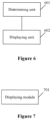
- the communication apparatus includes a determination unit 601 and a displaying unit 602.
- the determining unit 601 is configured to determine, in response to a call initiation operation of a multimedia conference, a candidate object of the multimedia conference according to an object to which the call initiation operation is performed.
- the displaying unit 602 is configured to display call status information of the candidate object in a multimedia conference interface of the multimedia conference.
- the apparatus is further configured to: stop displaying of the call status information for a candidate object satisfying a preset condition in the conference participant list, in response to a determination that response information of the candidate object to a call request satisfies the preset condition.
- the apparatus is further configured to: stop displaying of the call status information for a candidate object rejecting a call in the conference participant list, in response to a determination that the candidate object rejects the call.
- the apparatus is further configured to: stop displaying of the call status information for a candidate object performing no response in a preset time period in the conference participant list, in response to a determination that the candidate object performs no response in the preset time period.
- the process of displaying call status information of the candidate object in a multimedia conference interface of the multimedia conference includes: determining, in response to a determination that a contact search operation is detected, whether an object indicated by the contact search operation is a candidate object of the multimedia conference; and displaying the call status information in response to a determination that the object indicated by the contact search operation is the candidate object of the multimedia conference.
- the apparatus is further configured to: initiate a call to the object indicated by the contact search operation, in response to a determination that the object indicated by the contact search operation is not the candidate object of the multimedia conference and a call initiation operation for the object indicated by the contact search operation is detected.
- the apparatus is further configured to: send a call initiation notification to a server in response to a determination that the call initiation operation is detected.
- the call initiation notification includes a candidate object identifier
- the server generates an update notification of the candidate object in response to receiving the candidate object identifier.
- the determining, in response to a call initiation operation of a multimedia conference, a candidate object of the multimedia conference according to an object to which the call initiation operation is performed includes: determining, in response to receiving an update notification of the candidate object from a server, the candidate object of the multimedia conference according to a candidate object identifier in the update notification of the candidate object.
- the candidate object displays, in response to a determination that a response status indicates a call request being received, call prompt information for the call request.
- the call prompt information includes rejection control and/or response control.
- the candidate object displays, in response to receiving at least two call requests, call prompt information for each of the at least two call requests.
- the call prompt information includes rejection control and/or response control.
- the process of displaying, in response to receiving at least two call requests, call prompt information for each of the at least two call requests by the candidate object includes: displaying call prompt information of the at least two call requests in a same interface.
- the process of displaying, in response to receiving at least two call requests, call prompt information for each of the at least two call requests by the candidate object includes: generating a call request queue according to time when the call request is received; and displaying, in response a detection that a target call request in the call request queue is rejected, call prompt information for a call request after the target call request in the call request queue.
- the candidate object terminates, in response to detecting triggering to the response control, calls except a call corresponding to the triggered response control.
- FIG. 7 a communication apparatus is provided according to an embodiment of the present disclosure to implement the methods shown in the above drawings.
- the apparatus embodiment corresponds to the method embodiment shown in Figure 1 .
- the apparatus may be applied to various electronic devices.
- the communication apparatus in the embodiment includes a displaying module 701.
- the displaying module 701 is configured to display, in response to a determination that a target call request is received and an ongoing call process exists, call prompt information corresponding to the target call request.
- step 401 for processing of the displaying module 701 of the communication apparatus and resulting technical effects, one may refer to related illustration of step 401 in the embodiment described with reference to Figure 4 . Details are not described herein.
- the call process includes: a multimedia conference process and a contact call process.
- the call prompt information includes rejection control and/or response control.
- the apparatus is configured to initiate, in response to detecting a triggering operation to response control, a call corresponding to the triggered response control.
- the apparatus is further configured to: terminate the ongoing call process in response to detecting the triggering operation to the response control.
- Figure 8 shows an architecture of a schematic system to which the communication method according to the embodiment may be applied.
- the system architecture may include terminal devices 801, 802 and 803, a network 804 and a server 805.
- the network 804 is configured to provide medium of a communication link between the terminal devices 801, 802, 803 and the server 805.
- the network 804 may include various types of connections, such as wired, wireless communication links or optical fiber cable.
- the terminal devices 801, 802 and 803 may interact with the server 805 over the network 804, to receive or transmit messages.
- the terminal devices 801, 802 and 803 may be installed with various clients, such as webpage browser application, search application and news application. Clients of the terminal devices 801, 802 and 803 may receive a user instruction, and performs corresponding functions in response to the user instruction. For example, the clients add corresponding information in the information in response to the user instruction.
- the terminal devices 801, 802 and 803 may be implemented by hardware or software.
- the terminal device may be an electronic device including a display screen and supporting web browsing, including but not limited to a smart mobile phone, a tablet computer, an electronic book reader, a moving picture experts group audio layer III (MP3) player, a moving picture experts group audio layer IV (MP4) player, a laptop portable computer and a desktop computer.
- MP3 moving picture experts group audio layer III
- MP4 moving picture experts group audio layer IV
- the terminal device may be installed in the electronic device listed above.
- the terminal device may be implemented as multiple software or software modules (for example software or software module for providing a distributed service), or may be implemented as a single software or software module.
- the implementations of the terminal device are not limited herein.
- the functions described above may be partially performed by one or more hardware logic components.
- the hardware logic components include: a field programmable gate array (FPGA), an application specific integrated circuit (ASIC), an application specific standard product (ASSP), a system on chip (SOC), a complex programmable logic device (CPLD) and so on.
- FPGA field programmable gate array
- ASIC application specific integrated circuit
- ASSP application specific standard product
- SOC system on chip
- CPLD complex programmable logic device
- the computer readable medium may be a tangible medium including or storing programs.
- the programs may be used by an instruction execution system, apparatus or device, or may be used in combination with the instruction execution system, apparatus or device.
- the machine readable medium may be a machine readable signal medium or a machine readable storage medium.
- the machine readable medium may include but not limited to a system, an apparatus or a device in an electric, magnetic, optical, electromagnetic, infrared or a semiconductor form, or any combination thereof.
- the machine readable storage medium may include but not limited to electric connection of one or more wires, a portable computer magnetic disk, a hard disk, a random access memory (RAM), a read-only memory (ROM), an erasable programmable read only memory (EPROM or a flash memory), an optical fiber, a portable compact disk read only memory (CD-ROM), an optical storage device, a magnetic storage device or any combination thereof
Landscapes
- Engineering & Computer Science (AREA)
- Multimedia (AREA)
- Computer Networks & Wireless Communication (AREA)
- Signal Processing (AREA)
- Business, Economics & Management (AREA)
- General Business, Economics & Management (AREA)
- Telephonic Communication Services (AREA)
- Two-Way Televisions, Distribution Of Moving Picture Or The Like (AREA)
- Telephone Function (AREA)
Claims (11)
- Kommunikationsverfahren, das an einer Endgerätevorrichtung angewendet wird, umfassend:Bestimmen als Reaktion auf einen Anrufinitiierungsvorgang einer Multimediakonferenz eines Kandidatenobjekts der Multimediakonferenz gemäß einem Objekt, an dem der Anrufinitiierungsvorgang durchgeführt (101) wird, wobei das Kandidatenobjekt der Multimediakonferenz das Objekt ist, das angerufen wird und nicht an der Multimediakonferenz teilnimmt; undAnzeigen von Anrufstatusinformationen des Kandidatenobjekts in einer Konferenzteilnehmerliste einer Multimediakonferenzschnittstelle (102); undStoppen eines Anzeigens der Anrufstatusinformationen für ein Kandidatenobjekt, das eine voreingestellte Bedingung in der Konferenzteilnehmerliste erfüllt, als Reaktion auf eine Bestimmung, dass Antwortinformationen des Kandidatenobjekts auf eine Anrufanforderung die voreingestellte Bedingung erfüllen.
- Verfahren nach Anspruch 1, wobei das Stoppen eines Anzeigens der Anrufstatusinformationen für ein Kandidatenobjekt, das eine voreingestellte Bedingung in der Konferenzteilnehmerliste erfüllt, als Reaktion auf eine Bestimmung, dass Antwortinformationen des Kandidatenobjekts auf eine Anrufanforderung die voreingestellte Bedingung erfüllen, umfasst:Stoppen eines Anzeigens der Anrufstatusinformationen für ein Kandidatenobjekt, das einen Anruf in der Konferenzteilnehmerliste annimmt, als Reaktion auf eine Bestimmung, dass das Kandidatenobjekt den Anruf annimmt; oderStoppen eines Anzeigens der Anrufstatusinformationen für ein Kandidatenobjekt, das einen Anruf in der Konferenzteilnehmerliste ablehnt, als Reaktion auf eine Bestimmung, dass das Kandidatenobjekt den Anruf ablehnt; oderStoppen eines Anzeigens der Anrufstatusinformationen für ein Kandidatenobjekt, das in einem vorbestimmten Zeitraum in der Konferenzteilnehmerliste keine Antwort gibt, als Reaktion auf eine Bestimmung, dass das Kandidatenobjekt in dem vorbestimmten Zeitraum keine Antwort gibt.
- Verfahren nach Anspruch 1, wobei das Anzeigen von Anrufstatusinformationen des Kandidatenobjekts in einer Multimediakonferenzschnittstelle der Multimediakonferenz umfasst:Bestimmen, als Reaktion auf eine Bestimmung, dass ein Kontaktsuchvorgang erkannt wird, ob ein durch den Kontaktsuchvorgang angegebenes Objekt ein Kandidatenobjekt der Multimediakonferenz ist; undAnzeigen der Anrufstatusinformationen als Reaktion auf eine Bestimmung, dass das durch den Kontaktsuchvorgang angegebene Objekt das Kandidatenobjekt der Multimediakonferenz ist.
- Verfahren nach Anspruch 3, weiter umfassend:
Initiieren eines Anrufs an das durch den Kontaktsuchvorgang angegebenen Objekt als Reaktion auf eine Bestimmung, dass das durch den Kontaktsuchvorgang angegebene Objekt nicht das Kandidatenobjekt der Multimediakonferenz ist und ein Anrufinitiierungsvorgang für das durch den Kontaktsuchvorgang angegebene Objekt erkannt wird. - Verfahren nach Anspruch 1, weiter umfassend:Senden einer Anrufinitiierungsbenachrichtigung an einen Server als Reaktion auf eine Bestimmung, dass der Anrufinitiierungsvorgang erkannt wird, wobei die Anrufinitiierungsbenachrichtigung eine Kandidatenobjektkennung umfasst und der Server als Reaktion auf den Empfang der Kandidatenobjektkennung eine Aktualisierungsbenachrichtigung des Kandidatenobjekts erzeugt; oderwobei das Bestimmen als Reaktion auf einen Anrufinitiierungsvorgang einer Multimediakonferenz eines Kandidatenobjekts der Multimediakonferenz gemäß einem Objekt, an dem der Anrufinitiierungsvorgang durchgeführt wird, umfasst:
Bestimmen als Reaktion auf Empfangen einer Aktualisierungsbenachrichtigung des Kandidatenobjekts von einem Server des Kandidatenobjekts der Multimediakonferenz gemäß einer Kandidatenobjektkennung in der Aktualisierungsbenachrichtigung des Kandidatenobjekts. - Verfahren nach Anspruch 1, wobei das Kandidatenobjekt als Reaktion auf eine Bestimmung, dass ein Antwortstatus eine empfangene Anrufanforderung angibt, Anrufaufforderungsinformationen für die Anrufanforderung anzeigt, wobei die Anrufaufforderungsinformationen Ablehnungssteuerung und/oder Antwortsteuerung umfassen.
- Verfahren nach Anspruch 1, wobei das Kandidatenobjekt als Reaktion auf Empfangen von mindestens zwei Anrufanforderungen Anrufaufforderungsinformationen für jede der mindestens zwei Anrufanforderungen anzeigt, wobei die Anrufaufforderungsinformationen Ablehnungssteuerung und/oder Antwortsteuerung umfassen.
- Verfahren nach Anspruch 7, wobei das Anzeigen als Reaktion auf Empfangen von mindestens zwei Anrufanforderungen von Anrufaufforderungsinformationen für jede der mindestens zwei Anrufanforderungen durch das Kandidatenobjekt umfasst:Anzeigen von Anrufaufforderungsinformationen der mindestens zwei Anrufanforderungen in einer gleichen Schnittstelle; oderErzeugen einer Anrufanforderungswarteschlange entsprechend der Zeit, zu der die Anrufanforderung empfangen wird;Anzeigen, als Reaktion auf eine Erkennung, dass eine Zielanrufanforderung in der Anrufanforderungswarteschlange zurückgewiesen wird, von Anrufaufforderungsinformationen für eine Anrufanforderung nach der Zielanrufanforderung in der Anrufanforderungswarteschlange.
- Verfahren nach einem der Ansprüche 6 bis 8, wobei das Kandidatenobjekt als Reaktion auf Erkennen einer Auslösung der Antwortsteuerung alle Anrufe, mit Ausnahme eines Anrufs, beendet, welcher der ausgelösten Antwortsteuerung entspricht.
- Elektronische Vorrichtung, umfassend:einen oder mehrere Prozessoren; undeinen Speicher, der konfiguriert ist, um ein oder mehrere Programme zu speichern,wobei das eine oder mehrere Programme, wenn sie durch den einen oder mehrere Prozessoren ausgeführt werden, den einen oder mehrere Prozessoren veranlassen, das Verfahren nach einem der Ansprüche 1 bis 9 durchzuführen.
- Computerlesbares Speichermedium, das Computerprogramme speichert, wobei die Computerprogramme, durch einen Prozessor ausgeführt werden, um das Verfahren nach einem der Ansprüche 1 bis 9 durchzuführen.
Applications Claiming Priority (2)
| Application Number | Priority Date | Filing Date | Title |
|---|---|---|---|
| CN202010562556.5A CN111740984A (zh) | 2020-06-18 | 2020-06-18 | 通信方法、装置和电子设备 |
| PCT/CN2021/100106 WO2021254326A1 (zh) | 2020-06-18 | 2021-06-15 | 通信方法、装置和电子设备 |
Publications (4)
| Publication Number | Publication Date |
|---|---|
| EP4152718A1 EP4152718A1 (de) | 2023-03-22 |
| EP4152718A4 EP4152718A4 (de) | 2023-12-27 |
| EP4152718B1 true EP4152718B1 (de) | 2025-07-09 |
| EP4152718C0 EP4152718C0 (de) | 2025-07-09 |
Family
ID=72649890
Family Applications (1)
| Application Number | Title | Priority Date | Filing Date |
|---|---|---|---|
| EP21826214.5A Active EP4152718B1 (de) | 2020-06-18 | 2021-06-15 | Kommunikationsverfahren und -vorrichtung sowie elektronische vorrichtung |
Country Status (5)
| Country | Link |
|---|---|
| US (1) | US11757948B2 (de) |
| EP (1) | EP4152718B1 (de) |
| JP (1) | JP7661371B2 (de) |
| CN (1) | CN111740984A (de) |
| WO (1) | WO2021254326A1 (de) |
Families Citing this family (4)
| Publication number | Priority date | Publication date | Assignee | Title |
|---|---|---|---|---|
| CN111740984A (zh) * | 2020-06-18 | 2020-10-02 | 北京字节跳动网络技术有限公司 | 通信方法、装置和电子设备 |
| CN112291216B (zh) * | 2020-10-19 | 2023-04-07 | 北京字跳网络技术有限公司 | 通信方法、装置和电子设备 |
| CN115065668B (zh) * | 2022-06-09 | 2024-06-04 | 北京字跳网络技术有限公司 | 一种会议呼叫方法、装置、设备及介质 |
| CN115665103B (zh) * | 2022-10-25 | 2025-08-29 | 北京字跳网络技术有限公司 | 一种基于多媒体会议的控制方法及装置 |
Family Cites Families (21)
| Publication number | Priority date | Publication date | Assignee | Title |
|---|---|---|---|---|
| JPH0234077A (ja) * | 1988-07-25 | 1990-02-05 | Nec Corp | 電話器端末 |
| GB2363036B (en) * | 2000-05-31 | 2004-05-12 | Nokia Mobile Phones Ltd | Conference call method and apparatus therefor |
| JP3849924B2 (ja) * | 2001-11-29 | 2006-11-22 | パイオニア株式会社 | ネットワーク会議システム及びその割り込み制御方法並びにネットワーク会議システム用端末及びその割り込み制御方法 |
| JP2004297748A (ja) * | 2003-03-27 | 2004-10-21 | Nagaoka It Jigyo Kyodo Kumiai | ヴィデオ・チャット・システム(vcs) |
| CN1889609B (zh) * | 2005-06-30 | 2010-05-05 | 华为技术有限公司 | 一种电话会议实现方法 |
| JP4905875B2 (ja) * | 2005-10-28 | 2012-03-28 | 京セラ株式会社 | 通信装置及び通信方法 |
| JP4768578B2 (ja) * | 2006-11-01 | 2011-09-07 | Necアクセステクニカ株式会社 | テレビ会議システム、及び、テレビ会議システムにおける制御方法 |
| JP4993707B2 (ja) * | 2007-03-30 | 2012-08-08 | Necインフロンティア株式会社 | 会議システム及び会議用電話回線の設定方法 |
| CN101610324A (zh) * | 2008-06-18 | 2009-12-23 | 深圳华为通信技术有限公司 | 提示呼叫进展状态的方法、会议控制设备以及会议系统 |
| JP2010081279A (ja) * | 2008-09-26 | 2010-04-08 | Hitachi Ltd | 受信装置、送受信システム、及び受信方法 |
| KR101019197B1 (ko) * | 2008-11-11 | 2011-03-04 | 삼성중공업 주식회사 | VoIP 통신 단말 및 방법 |
| CN101754143B (zh) * | 2008-12-11 | 2014-04-02 | 浪潮乐金数字移动通信有限公司 | 一种移动终端及其多方通话补充业务的改进方法 |
| CN101697582B (zh) * | 2009-10-29 | 2016-12-07 | 南京中兴新软件有限责任公司 | 会议电视终端遇忙的处理方法及会议电视终端 |
| CN101808220A (zh) * | 2010-02-05 | 2010-08-18 | 苏州科达科技有限公司 | 一种视频会议系统中控制视频模式的控制方法及相应装置 |
| JP2012100185A (ja) * | 2010-11-05 | 2012-05-24 | Panasonic Corp | テレビ会議システム、テレビ会議方法、プログラムおよび記録媒体 |
| US9319634B2 (en) * | 2012-07-18 | 2016-04-19 | Polycom, Inc. | Facilitating multi-party conferences, including allocating resources needed for conference while establishing connections with participants |
| CN103067585B (zh) * | 2012-12-26 | 2015-03-04 | 广东欧珀移动通信有限公司 | 一种多方呼叫显示控制方法、装置及移动终端 |
| US9374556B2 (en) * | 2014-11-26 | 2016-06-21 | Ricoh Company, Ltd. | Apparatus, system, and method of controlling output of content data, and recording medium |
| JP2016136677A (ja) * | 2015-01-23 | 2016-07-28 | シャープ株式会社 | 通信装置 |
| CN107659906B (zh) * | 2017-11-14 | 2021-06-18 | 中国联合网络通信集团有限公司 | 一种实现呼叫等待的方法及装置 |
| CN111740984A (zh) * | 2020-06-18 | 2020-10-02 | 北京字节跳动网络技术有限公司 | 通信方法、装置和电子设备 |
-
2020
- 2020-06-18 CN CN202010562556.5A patent/CN111740984A/zh active Pending
-
2021
- 2021-06-15 WO PCT/CN2021/100106 patent/WO2021254326A1/zh not_active Ceased
- 2021-06-15 JP JP2022577468A patent/JP7661371B2/ja active Active
- 2021-06-15 EP EP21826214.5A patent/EP4152718B1/de active Active
-
2022
- 2022-12-14 US US18/081,535 patent/US11757948B2/en active Active
Also Published As
| Publication number | Publication date |
|---|---|
| JP7661371B2 (ja) | 2025-04-14 |
| EP4152718A1 (de) | 2023-03-22 |
| CN111740984A (zh) | 2020-10-02 |
| JP2023530151A (ja) | 2023-07-13 |
| EP4152718A4 (de) | 2023-12-27 |
| US20230164196A1 (en) | 2023-05-25 |
| EP4152718C0 (de) | 2025-07-09 |
| WO2021254326A1 (zh) | 2021-12-23 |
| US11757948B2 (en) | 2023-09-12 |
Similar Documents
| Publication | Publication Date | Title |
|---|---|---|
| EP4152718B1 (de) | Kommunikationsverfahren und -vorrichtung sowie elektronische vorrichtung | |
| US20200028815A1 (en) | Method and system for controlling message transmission for a communication group | |
| US20220300243A1 (en) | Screen sharing method and device and electronic equipment | |
| US11652763B2 (en) | Information display method and apparatus, and electronic device | |
| US11758087B2 (en) | Multimedia conference data processing method and apparatus, and electronic device | |
| CN112291629B (zh) | 交互方法、装置、电子设备和可读介质 | |
| EP4130995A1 (de) | Interaktionsverfahren und -vorrichtung sowie elektronische vorrichtung | |
| CN114371896B (zh) | 一种基于文档共享的提示方法、装置、设备及介质 | |
| US20230199873A1 (en) | Information interaction method and apparatus, and electronic device | |
| CN113326013A (zh) | 信息交互方法、装置和电子设备 | |
| US20230124149A1 (en) | Method and apparatus for establishing multimedia call, and electronic device | |
| US12457185B2 (en) | Session information display method and apparatus, and electronic device | |
| CN112968826B (zh) | 语音交互方法、装置和电子设备 | |
| CN112291216B (zh) | 通信方法、装置和电子设备 | |
| CN113079085A (zh) | 商服交互方法、装置、设备及存储介质 | |
| CN112306596B (zh) | 信息交互方法、装置和电子设备 | |
| CN111818293B (zh) | 通信方法、装置和电子设备 | |
| CN112600978B (zh) | 信息处理方法、装置和电子设备 | |
| WO2022222794A1 (zh) | 交互方法、装置和电子设备 | |
| CN113163154B (zh) | 信息处理方法、装置和电子设备 | |
| CN112306597B (zh) | 交互方法、装置和电子设备 | |
| CN117278815A (zh) | 一种直播连线方法、装置、设备及介质 | |
| CN115065668A (zh) | 一种会议呼叫方法、装置、设备及介质 |
Legal Events
| Date | Code | Title | Description |
|---|---|---|---|
| STAA | Information on the status of an ep patent application or granted ep patent |
Free format text: STATUS: THE INTERNATIONAL PUBLICATION HAS BEEN MADE |
|
| PUAI | Public reference made under article 153(3) epc to a published international application that has entered the european phase |
Free format text: ORIGINAL CODE: 0009012 |
|
| STAA | Information on the status of an ep patent application or granted ep patent |
Free format text: STATUS: REQUEST FOR EXAMINATION WAS MADE |
|
| 17P | Request for examination filed |
Effective date: 20221216 |
|
| AK | Designated contracting states |
Kind code of ref document: A1 Designated state(s): AL AT BE BG CH CY CZ DE DK EE ES FI FR GB GR HR HU IE IS IT LI LT LU LV MC MK MT NL NO PL PT RO RS SE SI SK SM TR |
|
| REG | Reference to a national code |
Ref country code: DE Ref legal event code: R079 Free format text: PREVIOUS MAIN CLASS: H04L0029060000 Ref country code: DE Ref legal event code: R079 Ref document number: 602021033923 Country of ref document: DE Free format text: PREVIOUS MAIN CLASS: H04L0029060000 Ipc: H04L0065800000 |
|
| RIC1 | Information provided on ipc code assigned before grant |
Ipc: H04L 65/1069 20220101ALI20230816BHEP Ipc: H04L 65/1093 20220101ALI20230816BHEP Ipc: H04L 65/403 20220101ALI20230816BHEP Ipc: H04L 65/80 20220101AFI20230816BHEP |
|
| DAV | Request for validation of the european patent (deleted) | ||
| DAX | Request for extension of the european patent (deleted) | ||
| A4 | Supplementary search report drawn up and despatched |
Effective date: 20231123 |
|
| RIC1 | Information provided on ipc code assigned before grant |
Ipc: H04L 65/1069 20220101ALI20231117BHEP Ipc: H04L 65/1093 20220101ALI20231117BHEP Ipc: H04L 65/403 20220101ALI20231117BHEP Ipc: H04L 65/80 20220101AFI20231117BHEP |
|
| GRAP | Despatch of communication of intention to grant a patent |
Free format text: ORIGINAL CODE: EPIDOSNIGR1 |
|
| STAA | Information on the status of an ep patent application or granted ep patent |
Free format text: STATUS: GRANT OF PATENT IS INTENDED |
|
| INTG | Intention to grant announced |
Effective date: 20250130 |
|
| GRAS | Grant fee paid |
Free format text: ORIGINAL CODE: EPIDOSNIGR3 |
|
| GRAA | (expected) grant |
Free format text: ORIGINAL CODE: 0009210 |
|
| STAA | Information on the status of an ep patent application or granted ep patent |
Free format text: STATUS: THE PATENT HAS BEEN GRANTED |
|
| AK | Designated contracting states |
Kind code of ref document: B1 Designated state(s): AL AT BE BG CH CY CZ DE DK EE ES FI FR GB GR HR HU IE IS IT LI LT LU LV MC MK MT NL NO PL PT RO RS SE SI SK SM TR |
|
| REG | Reference to a national code |
Ref country code: GB Ref legal event code: FG4D |
|
| REG | Reference to a national code |
Ref country code: CH Ref legal event code: EP |
|
| REG | Reference to a national code |
Ref country code: IE Ref legal event code: FG4D |
|
| REG | Reference to a national code |
Ref country code: DE Ref legal event code: R096 Ref document number: 602021033923 Country of ref document: DE |
|
| U01 | Request for unitary effect filed |
Effective date: 20250709 |
|
| U07 | Unitary effect registered |
Designated state(s): AT BE BG DE DK EE FI FR IT LT LU LV MT NL PT RO SE SI Effective date: 20250715 |