EP4144975B1 - Motorsystemsteuerungsverfahren und motorsystem - Google Patents
Motorsystemsteuerungsverfahren und motorsystem Download PDFInfo
- Publication number
- EP4144975B1 EP4144975B1 EP22187390.4A EP22187390A EP4144975B1 EP 4144975 B1 EP4144975 B1 EP 4144975B1 EP 22187390 A EP22187390 A EP 22187390A EP 4144975 B1 EP4144975 B1 EP 4144975B1
- Authority
- EP
- European Patent Office
- Prior art keywords
- fuel
- crank angle
- cylinder
- engine
- timing
- Prior art date
- Legal status (The legal status is an assumption and is not a legal conclusion. Google has not performed a legal analysis and makes no representation as to the accuracy of the status listed.)
- Active
Links
Images



Classifications
-
- F—MECHANICAL ENGINEERING; LIGHTING; HEATING; WEAPONS; BLASTING
- F02—COMBUSTION ENGINES; HOT-GAS OR COMBUSTION-PRODUCT ENGINE PLANTS
- F02D—CONTROLLING COMBUSTION ENGINES
- F02D41/00—Electrical control of supply of combustible mixture or its constituents
- F02D41/30—Controlling fuel injection
- F02D41/38—Controlling fuel injection of the high pressure type
- F02D41/40—Controlling fuel injection of the high pressure type with means for controlling injection timing or duration
- F02D41/401—Controlling injection timing
-
- F—MECHANICAL ENGINEERING; LIGHTING; HEATING; WEAPONS; BLASTING
- F02—COMBUSTION ENGINES; HOT-GAS OR COMBUSTION-PRODUCT ENGINE PLANTS
- F02D—CONTROLLING COMBUSTION ENGINES
- F02D35/00—Controlling engines, dependent on conditions exterior or interior to engines, not otherwise provided for
- F02D35/02—Controlling engines, dependent on conditions exterior or interior to engines, not otherwise provided for on interior conditions
- F02D35/028—Controlling engines, dependent on conditions exterior or interior to engines, not otherwise provided for on interior conditions by determining the combustion timing or phasing
-
- F—MECHANICAL ENGINEERING; LIGHTING; HEATING; WEAPONS; BLASTING
- F02—COMBUSTION ENGINES; HOT-GAS OR COMBUSTION-PRODUCT ENGINE PLANTS
- F02D—CONTROLLING COMBUSTION ENGINES
- F02D13/00—Controlling the engine output power by varying inlet or exhaust valve operating characteristics, e.g. timing
- F02D13/02—Controlling the engine output power by varying inlet or exhaust valve operating characteristics, e.g. timing during engine operation
- F02D13/0223—Variable control of the intake valves only
- F02D13/0234—Variable control of the intake valves only changing the valve timing only
-
- F—MECHANICAL ENGINEERING; LIGHTING; HEATING; WEAPONS; BLASTING
- F02—COMBUSTION ENGINES; HOT-GAS OR COMBUSTION-PRODUCT ENGINE PLANTS
- F02D—CONTROLLING COMBUSTION ENGINES
- F02D35/00—Controlling engines, dependent on conditions exterior or interior to engines, not otherwise provided for
- F02D35/02—Controlling engines, dependent on conditions exterior or interior to engines, not otherwise provided for on interior conditions
- F02D35/023—Controlling engines, dependent on conditions exterior or interior to engines, not otherwise provided for on interior conditions by determining the cylinder pressure
-
- F—MECHANICAL ENGINEERING; LIGHTING; HEATING; WEAPONS; BLASTING
- F02—COMBUSTION ENGINES; HOT-GAS OR COMBUSTION-PRODUCT ENGINE PLANTS
- F02D—CONTROLLING COMBUSTION ENGINES
- F02D41/00—Electrical control of supply of combustible mixture or its constituents
- F02D41/0025—Controlling engines characterised by use of non-liquid fuels, pluralities of fuels, or non-fuel substances added to the combustible mixtures
-
- F—MECHANICAL ENGINEERING; LIGHTING; HEATING; WEAPONS; BLASTING
- F02—COMBUSTION ENGINES; HOT-GAS OR COMBUSTION-PRODUCT ENGINE PLANTS
- F02D—CONTROLLING COMBUSTION ENGINES
- F02D41/00—Electrical control of supply of combustible mixture or its constituents
- F02D41/009—Electrical control of supply of combustible mixture or its constituents using means for generating position or synchronisation signals
-
- F—MECHANICAL ENGINEERING; LIGHTING; HEATING; WEAPONS; BLASTING
- F02—COMBUSTION ENGINES; HOT-GAS OR COMBUSTION-PRODUCT ENGINE PLANTS
- F02D—CONTROLLING COMBUSTION ENGINES
- F02D41/00—Electrical control of supply of combustible mixture or its constituents
- F02D41/02—Circuit arrangements for generating control signals
- F02D41/04—Introducing corrections for particular operating conditions
- F02D41/06—Introducing corrections for particular operating conditions for engine starting or warming up
- F02D41/062—Introducing corrections for particular operating conditions for engine starting or warming up for starting
-
- F—MECHANICAL ENGINEERING; LIGHTING; HEATING; WEAPONS; BLASTING
- F02—COMBUSTION ENGINES; HOT-GAS OR COMBUSTION-PRODUCT ENGINE PLANTS
- F02D—CONTROLLING COMBUSTION ENGINES
- F02D41/00—Electrical control of supply of combustible mixture or its constituents
- F02D41/24—Electrical control of supply of combustible mixture or its constituents characterised by the use of digital means
- F02D41/2406—Electrical control of supply of combustible mixture or its constituents characterised by the use of digital means using essentially read only memories
- F02D41/2425—Particular ways of programming the data
- F02D41/2429—Methods of calibrating or learning
- F02D41/2477—Methods of calibrating or learning characterised by the method used for learning
-
- F—MECHANICAL ENGINEERING; LIGHTING; HEATING; WEAPONS; BLASTING
- F02—COMBUSTION ENGINES; HOT-GAS OR COMBUSTION-PRODUCT ENGINE PLANTS
- F02D—CONTROLLING COMBUSTION ENGINES
- F02D41/00—Electrical control of supply of combustible mixture or its constituents
- F02D41/30—Controlling fuel injection
- F02D41/38—Controlling fuel injection of the high pressure type
- F02D41/40—Controlling fuel injection of the high pressure type with means for controlling injection timing or duration
-
- F—MECHANICAL ENGINEERING; LIGHTING; HEATING; WEAPONS; BLASTING
- F02—COMBUSTION ENGINES; HOT-GAS OR COMBUSTION-PRODUCT ENGINE PLANTS
- F02D—CONTROLLING COMBUSTION ENGINES
- F02D2200/00—Input parameters for engine control
- F02D2200/02—Input parameters for engine control the parameters being related to the engine
- F02D2200/06—Fuel or fuel supply system parameters
- F02D2200/0611—Fuel type, fuel composition or fuel quality
- F02D2200/0612—Fuel type, fuel composition or fuel quality determined by estimation
-
- Y—GENERAL TAGGING OF NEW TECHNOLOGICAL DEVELOPMENTS; GENERAL TAGGING OF CROSS-SECTIONAL TECHNOLOGIES SPANNING OVER SEVERAL SECTIONS OF THE IPC; TECHNICAL SUBJECTS COVERED BY FORMER USPC CROSS-REFERENCE ART COLLECTIONS [XRACs] AND DIGESTS
- Y02—TECHNOLOGIES OR APPLICATIONS FOR MITIGATION OR ADAPTATION AGAINST CLIMATE CHANGE
- Y02T—CLIMATE CHANGE MITIGATION TECHNOLOGIES RELATED TO TRANSPORTATION
- Y02T10/00—Road transport of goods or passengers
- Y02T10/10—Internal combustion engine [ICE] based vehicles
- Y02T10/30—Use of alternative fuels, e.g. biofuels
-
- Y—GENERAL TAGGING OF NEW TECHNOLOGICAL DEVELOPMENTS; GENERAL TAGGING OF CROSS-SECTIONAL TECHNOLOGIES SPANNING OVER SEVERAL SECTIONS OF THE IPC; TECHNICAL SUBJECTS COVERED BY FORMER USPC CROSS-REFERENCE ART COLLECTIONS [XRACs] AND DIGESTS
- Y02—TECHNOLOGIES OR APPLICATIONS FOR MITIGATION OR ADAPTATION AGAINST CLIMATE CHANGE
- Y02T—CLIMATE CHANGE MITIGATION TECHNOLOGIES RELATED TO TRANSPORTATION
- Y02T10/00—Road transport of goods or passengers
- Y02T10/10—Internal combustion engine [ICE] based vehicles
- Y02T10/40—Engine management systems
Definitions
- the present disclosure relates to a method of controlling an engine and an engine system.
- JP2014-234727A discloses a technique for creating a heat release rate waveform of a low-temperature oxidation reaction, after fuel is injected into a cylinder, by setting a reaction start timing of fuel according to a period during which the fuel floats so as to be on a more advancing side (the lower temperature side of a reaction startable temperature of the low-temperature oxidation reaction) as the floating period is longer. According to this technique, the combustion state can be diagnosed with sufficient accuracy.
- US 2009/306875 A1 discloses a method including monitoring a pressure in a combustion chamber of the engine during a compression stroke and determining whether a fuel composition has changed from a first composition to a second composition.
- WO 2009/040633 A2 discloses fuel type detection from a heat release amount per fuel quantity during engine cranking.
- a controller of the engine controls the engine by setting beforehand a fuel injection timing and a fuel injection amount which are used for the optimal combustion based on the property of a standard fuel. If the property of fuel supplied to the automobile is different from the standard fuel, it may cause misfire or rapid combustion. Therefore, there is a demand of accurately determining the property of fuel supplied to the engine.
- the technique disclosed herein enables a determination of the property of fuel supplied to an engine with sufficient accuracy.
- a method of controlling an engine includes injecting, during motoring of the engine, by an injector, fuel for analysis into a cylinder of the engine at a specific timing after an intake valve of the cylinder is closed.
- the method includes acquiring, by a controller, a crank angle period from a start timing of the fuel injection to a timing of a pressure inside the cylinder reaching a reference pressure, in response to signals of a crank angle sensor and an in-cylinder pressure sensor.
- the reference pressure may be predetermined.
- the method includes determining, by the controller, a property of the fuel injected by the injector by comparing the acquired crank angle period with a reference crank angle period or a predetermined reference crank angle period.
- the method includes comparing, by the controller, the acquired crank angle period with a reference crank angle period or a predetermined reference crank angle period.
- the reference crank angle period is from an injection start timing when a standard fuel is injected into the cylinder to a timing of the pressure inside the cylinder reaching the reference pressure.
- the injector injects the fuel for analysis into the cylinder during motoring of the engine.
- “motoring of the engine” may refer to a state where a crankshaft of the engine starts rotation by a drive source outside of the engine, such as a generator, an electric motor, or a starter motor.
- the motoring of the engine may correspond to a startup of the engine.
- the startup of the engine may correspond to, in the case of engine vehicles, when an ignition switch of an automobile being turned on by a person onboard, or, in the case of hybrid vehicles, when an engine is started for, for example, a demand of generating power, and satisfying a demand torque.
- intake stroke, compression stroke, expansion stroke, and exhaust stroke are performed inside the cylinder, by an external driving force.
- the injector injects the fuel for analysis into the cylinder at the specific timing during compression stroke after the intake valve is closed.
- the "fuel for analysis” may be a small amount of fuel with which a high-temperature oxidation reaction does not occur even when a piston reaches a compression top dead center.
- the "fuel for analysis” is fuel to be supplied into the cylinder in order to determine the property of the fuel.
- the pressure inside the cylinder gradually rises accompanied by the progress of compression stroke.
- the fuel injected into the cylinder results in a low-temperature oxidation reaction, through fission, atomization, evaporation, and mixing with air, according to the progress of time.
- the chemical reaction speed also differs. That is, the speed of the initial chemical reaction in a preparatory step (for example, an in-cylinder gas temperature is 700K) of the low-temperature oxidation reaction differs depending on the chemical structure.
- the initial chemical reaction is a chemical reaction from occurrence of cold flame by a radical (alkylperoxy RO2, QOOHO2) generation due to a hydrogen abstraction reaction until chemical species, such as H, OH radical, bicarbonate (HCO), hydrogen peroxide (H 2 O 2 ) and formaldehyde (HCHO), are generated by the progress of the low-temperature oxidation reaction.
- chemical species such as H, OH radical, bicarbonate (HCO), hydrogen peroxide (H 2 O 2 ) and formaldehyde (HCHO) are generated by the progress of the low-temperature oxidation reaction.
- the controller acquires the crank angle period from the start timing of the fuel injection until the pressure inside the cylinder reaching the reference pressure, in response to the signals of the crank angle sensor and the in-cylinder pressure sensor. If the fuel injected from the injector is fuel which is quicker in chemical reaction speed, the crank angle period is relatively shorter. On the other hand, if it is fuel which is slower in chemical reaction speed, the crank angle period is relatively longer.
- the controller may store the reference crank angle period in advance.
- the "standard fuel” may be, for example, fuel corresponding to K2202 (Motor Gasoline) or K2204 (Diesel Fuel) defined by Japanese Industrial Standards (JIS).
- the reference crank angle period is the crank angle period from the start timing of the fuel injection until the pressure inside the cylinder reaching the reference pressure, when the standard fuel is injected into the cylinder. Further, the controller compares the acquired crank angle period with the reference crank angle period.
- the fuel injected from the injector is fuel with which the chemical reaction speed is quick, the ignition delay time is short, and the low-temperature oxidation reaction ends early. Therefore, this type of fuel will easily cause the high-temperature oxidation reaction under the engine operation after the startup is finished (that is, when the engine operates by the fuel injected into the cylinder being combusted, unlike the motoring). In this case, the combustion tends to be rapid and combustion noise tends to increase.
- the fuel injected from the injector is fuel with which the chemical reaction speed is slow, the ignition delay time is long, and the low-temperature oxidation reaction is slow. Therefore, this type of fuel does not easily cause the high-temperature oxidation reaction under the engine operation after the startup is finished, and as a result, the combustion may be slow. This may lead to a reduction in engine torque and the degradation of fuel efficiency.
- the controller compares the crank angle period from the start timing of the fuel injection until reaching the reference pressure, based on the fact that the crank angle period until the inside of the cylinder rises to the reference pressure varies depending on the chemical reaction speed of the fuel injected into the cylinder.
- the controller can determine the property of fuel supplied to the engine with sufficient accuracy.
- the determination of the fuel property is performed during motoring of the engine. Since the high-temperature oxidation reaction of fuel does not occur under these circumstances, the controller can determine the fuel property without being influenced by heat or residual gas. Thus, the controller can determine more accurately the property of fuel supplied to the engine.
- the cylinder may be on of a plurality of cylinders, and the cylinder into which the injector injects the fuel for analysis may be the cylinder, out of the plurality of cylinders, whose intake valve is closed first after a crankshaft of the engine starts rotation.
- the controller can determine the fuel property without being influenced by heat or residual gas. Further, the rotation speed of the crankshaft gradually increases accompanied by the progress of the engine cycle, and accordingly, the in-cylinder temperature gradually increases. When the in-cylinder temperature increases, the determination of the fuel property may be influenced by heat.
- the injector may inject the fuel for analysis into each of the plurality of cylinders as a cycle of the engine progresses.
- the controller may acquire the crank angle period for each of the plurality of cylinders.
- the controller may compare an average value of the plurality of crank angle periods with the reference crank angle period to determine the property.
- the determination accuracy improves by the controller using the average value of the plurality of crank angle periods to determine the fuel property.
- the reference pressure may become lower as the cycle of the engine progresses.
- the in-cylinder temperature gradually increases accompanied by the progress of the engine cycle.
- the temperature increase inside the cylinder makes the fuel injected into the cylinder more reactive, which promotes the increase in the pressure inside the cylinder.
- the crank angle period can be measured while eliminating the influence of the temperature increase in each of the plurality of cycles.
- the controller can further accurately determine the fuel property based on the plurality of crank angle periods.
- the reference pressure may correspond to a pressure inside the cylinder at a timing of the fuel injected into the cylinder from the injector achieving a low-temperature oxidation reaction through fission, atomization, evaporation, and mixing with air.
- this technique is for determining the fuel property by making use of the fact that the speed of the initial chemical reaction varies.
- the in-cylinder pressure sensor and the crank angle sensor can measure the crank angle period to which the initial chemical reaction speed is reflected.
- the controller can determine the fuel property with sufficient accuracy using the crank angle period.
- the reference pressure may be set as a pressure lower than a top dead center pressure when the piston inside the cylinder reaches a compression top dead center.
- the controller may correct at least one of a fuel injection amount, a fuel injection timing, and a close timing of the intake valve according to the property of the fuel, after startup of the engine is finished.
- the controller correcting at least one of the fuel injection amount, the fuel injection timing, and the close timing of the intake valve according to the fuel property, the combustion is regarded to be standardized regardless of the fuel property. That is, it can make the combustion equivalent to the combustion with the standard fuel regardless of the fuel property. It becomes advantageous for the improvement in fuel efficiency of the engine and the improvement in emission gas performance. Further, the increase in combustion noise can be suppressed.
- the controller may correct the close timing of the intake valve to an advancing side, and/or when the acquired crank angle period is shorter than the reference crank angle period, the controller may correct the close timing of the intake valve to a retarding side.
- the close timing of the intake valve is corrected to the advancing side.
- the close timing of the intake valve is advanced, the temperature and the pressure inside the cylinder increase, which stimulates the chemical reaction of the fuel. Even if the fuel is slower in the chemical reaction speed, this combustion becomes equivalent to the combustion with the standard fuel.
- the close timing of the intake valve is set to after an intake top dead center.
- the close timing of the intake valve is corrected to the retarding side.
- the close timing of the intake valve is retarded, the temperature and the pressure inside the cylinder decrease, which results in the slow chemical reaction of the fuel. Even if the fuel is quicker in the chemical reaction speed, this combustion becomes equivalent to the combustion with the standard fuel.
- the controller may correct the close timing of the intake valve so that the close timing of the intake valve is advanced when the acquired crank angle period is longer than the reference crank angle period. Particularly, the controller may correct the close timing of the intake valve so that the close timing of the intake valve is advanced as the acquired crank angle period becomes longer.
- the controller may increase the fuel injection amount by correcting the start timing of the fuel injection to the advancing side and correcting an end timing of the fuel injection to the retarding side.
- the controller increases the fuel injection amount by correcting the start timing of the fuel injection to the advancing side and correcting the end timing of the fuel injection to the retarding side.
- the concentration of fuel inside the cylinder increases, the chemical reaction is stimulated and the combustion becomes equivalent to the combustion with the standard fuel.
- the controller may reduce the fuel injection amount and/or correct the close timing of the intake valve so that the close timing of the intake valve is retarded when the acquired crank angle period is shorter than the reference crank angle period. Particularly, the controller may reduce the fuel injection amount and/or retard the close timing of the intake valve as the acquired crank angle period becomes shorter.
- the temperature and the pressure inside the cylinder are adjusted according to the fuel property (that is, the temperature and the pressure inside the cylinder decrease). Further, by decreasing the fuel injection amount, the chemical reaction speed of the fuel is reduced. As a result, the combustion becomes equivalent to the combustion with the standard fuel.
- the controller may reduce the fuel injection amount by correcting the fuel injection start timing to the retarding side and correcting the end timing of the fuel injection to the retarding side when the acquired crank angle period is shorter than the reference crank angle period. Particularly, when the valve close timing reaches a maximum retard amount, the controller may retard the fuel injection start timing and retard the end timing of the fuel injection as the acquired crank angle period becomes shorter when the acquired crank angle period is shorter than the reference crank angle period.
- the close timing of the intake valve is set to a given timing or later (for example, ABDC 90deg or later), since a blow back to the intake system is limited by the intake valve choke, the temperature and the pressure inside the cylinder at the start timing of the fuel injection do not drop greatly.
- the controller reduces the fuel injection amount by correcting the start timing of the fuel injection to the retarding side and correcting the end timing of the fuel injection to the retarding side. Therefore, the concentration of the fuel inside the cylinder becomes lower, and thus, the chemical reaction speed becomes slow, and the combustion becomes equivalent to the combustion with the standard fuel.
- an engine system including an engine, which includes a controller that stores information regarding a property of a standard fuel, an injector that injects fuel into a cylinder of the engine in response to a control signal of the controller, an in-cylinder pressure sensor that is attached to the engine, and outputs to the controller a pressure signal corresponding to a pressure inside the cylinder, and a crank angle sensor that is attached to the engine, and outputs to the controller a crank angle signal corresponding to a crank angle of the engine.
- the controller causes the injector to inject fuel for analysis at a specific timing after an intake valve of the cylinder is closed.
- the controller acquires a crank angle period from the start timing of the fuel injection to a timing of the pressure inside the cylinder reaching a reference pressure based on the crank angle signal of the crank angle sensor and the pressure signal of the in-cylinder pressure sensor.
- the information stored in the controller includes a reference crank angle period, or a predetermined reference crank angle period, from the injection start timing when the standard fuel is injected into the cylinder to a timing of the pressure inside the cylinder reaching the reference pressure.
- the controller determines a property of the fuel injected by the injector based on a comparison of the acquired crank angle period with the reference crank angle period.
- the controller can determine the property of fuel supplied to the engine, with sufficient accuracy, during motoring of the engine.
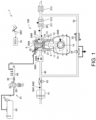
- Fig. 1 is a view illustrating an engine system 1.
- the engine system 1 is mounted on a vehicle or an automobile, particularly a four-wheeled automobile.
- the engine system 1 includes an engine 100 and a controller which controls the engine 100.
- the controller is an ECU (Engine Control Unit or Electronic Control Unit) 10 which will be described later.
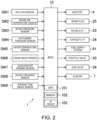
- Fig. 2 is a block diagram illustrating a configuration related to the control of the engine system 1.
- the engine 100 has a cylinder 11. Inside the cylinder 11, intake stroke, compression stroke, expansion stroke, and exhaust stroke are repeated.
- the engine 100 is a four-stroke engine.
- the automobile is propelled by the engine 100 in operation.
- Fuel of the engine 100 is gasoline in this example configuration.
- the engine 100 may be configured so that a mixture gas combusts by self-ignition in at least a part of the operating range. Note that the fuel of the engine 100 may be diesel fuel.
- the engine 100 particularly includes a cylinder block 12 and a cylinder head 13. A plurality of cylinders 11 are formed in the cylinder block 12.
- the engine 100 may be a multicylinder engine. In Fig. 1 , only one cylinder 11 is illustrated.
- a piston 3 is inserted in each cylinder 11.
- the piston 3 is coupled to a crankshaft 15 via a connecting rod 14.
- the piston 3, the cylinder 11, and the cylinder head 13 form a combustion chamber 17.
- the geometric compression ratio of the engine system 1 may be set to a high value for the purpose of improvement in theoretical thermal efficiency.
- the geometric compression ratio ⁇ of the engine system 1 is 14.0:1.0 or higher.
- the geometric compression ratio may be 18:1, for example.
- the geometric compression ratio may be set suitably within a range of 14:1 or higher and 20:1 or lower.
- An intake port 18 is formed in the cylinder head 13 for every cylinder 11.
- the intake port 18 communicates with the inside of the cylinder 11.
- An intake valve 21 is disposed at the intake port 18, and opens and/or closes the intake port 18.
- the intake valve 21 is a poppet valve.
- a valve operating mechanism has an intake cam shaft, and is mechanically connected to the intake valves 21. The valve operating mechanism opens and/or closes the intake valves 21 at a given timing.
- the valve operating mechanism is a variable valve operating mechanism which varies a valve timing and/or a valve lift. As illustrated in Fig. 2 , the valve operating mechanism has an intake S-VT (Sequential-Valve Timing) 23.
- the intake S-VT 23 may continuously change a rotation phase of the intake cam shaft with respect to the crankshaft 15 within a given angle range. A valve opening period of the intake valve 21 may not change.
- the intake S-VT 23 may be a variable phase mechanism.
- the intake S-VT 23 may be of an electric or hydraulic type.
- An exhaust port 19 is formed in the cylinder head 13 for every cylinder 11.
- the exhaust port 19 communicates with the inside of the cylinder 11.
- An exhaust valve 22 is disposed at the exhaust port 19, and opens and/or closes the exhaust port 19.
- the exhaust valve 22 is a poppet valve.
- the valve operating mechanism has an exhaust cam shaft and is mechanically connected to the exhaust valves 22.
- the valve operating mechanism opens and/or closes the exhaust valves 22 at a given timing.
- the valve operating mechanism may be a variable valve operating mechanism which varies a valve timing and/or a valve lift.
- the valve operating mechanism has an exhaust S-VT 24.
- the exhaust S-VT 24 may continuously change a rotation phase of the exhaust cam shaft with respect to the crankshaft 15 within a given angle range. A valve opening period of the exhaust valve 22 may not change.
- the exhaust S-VT 24 may be a variable phase mechanism.
- the exhaust S-VT 24 may be of an electric or hydraulic type.
- An injector 6 is attached to the cylinder head 13 for every cylinder 11.
- the injector 6 directly injects fuel into the cylinder 11.
- a fuel supply system 61 is connected to the injector 6.
- the fuel supply system 61 includes a fuel tank 63 which stores the fuel, and a fuel supply line 62 which connects the fuel tank 63 to the injector 6.
- a fuel pump 65 and a common rail 64 are particularly provided in the fuel supply line 62.
- the fuel pump 65 pumps the fuel to the common rail 64.
- the common rail 64 stores the fuel pumped from the fuel pump 65, at a high fuel pressure. When a valve of the injector 6 opens, the fuel stored in the common rail 64 is injected into the cylinder 11 from a nozzle hole of the injector 6. Note that the configuration of the fuel supply system 61 is not limited to the configuration described above.
- a spark plug 25 is attached to the cylinder head 13 for every cylinder 11.
- the spark plug 25 forcibly ignites the mixture gas inside the cylinder 11.
- An intake passage 40 is connected to one side surface of the engine 100.
- the intake passage 40 communicates with the intake port 18 of each cylinder 11. Air introduced into the cylinder 11 flows through the intake passage 40.
- An air cleaner 41 which filters the air is disposed at an upstream end part of the intake passage 40.
- a surge tank 42 is disposed near a downstream end of the intake passage 40.
- the intake passage 40 downstream of the surge tank 42 constitutes independent intake passages which are branched for every cylinder 11. Downstream ends of the independent intake passages are connected to the intake ports 18 of the respective cylinders 11.
- a throttle valve 43 may be disposed in the intake passage 40, between the air cleaner 41 and the surge tank 42.
- the throttle valve 43 adjusts an amount of air introduced into the cylinder 11 by being adjusted an opening of its valve.
- An exhaust passage 50 is connected to the other side surface of the engine 100.
- the exhaust passage 50 communicates with the exhaust port 19 of each cylinder 11.
- the exhaust passage 50 is a passage through which exhaust gas discharged from the cylinder 11 flows.
- an upstream part of the exhaust passage 50 constitutes independent exhaust passages which are branched for every cylinder 11. Upstream ends of the independent exhaust passages are connected to the exhaust ports 19 of the respective cylinders 11.
- An exhaust emission control system having one or a plurality of catalytic converters is disposed in the exhaust passage 50.
- the upstream catalytic converter may have a three-way catalyst 511 and a GPF (Gasoline Particulate Filter) 512, for example.
- the downstream catalytic converter may have a three-way catalyst 513.
- the exhaust emission control system is not limited to the illustrated configuration.
- the GPF may be omitted.
- the catalytic converter is not limited to what has the three-way catalyst.
- the disposed order of the three-way catalysts and the GPF may be changed suitably.
- An exhaust gas recirculation (EGR) passage 52 is connected between the intake passage 40 and the exhaust passage 50.
- the EGR passage 52 is a passage for recirculating a part of exhaust gas to the intake passage 40.
- An upstream end of the EGR passage 52 is connected between the upstream catalytic converter and the downstream catalytic converter in the exhaust passage 50.
- a downstream end of the EGR passage 52 is connected between the throttle valve 43 and the surge tank 42 in the intake passage 40.
- a water-cooled EGR cooler 53 may be disposed in the EGR passage 52.
- the EGR cooler 53 cools exhaust gas.
- An EGR valve 54 is also disposed in the EGR passage 52.
- the EGR valve 54 adjusts a flow rate of exhaust gas which flows through the EGR passage 52. By adjusting the opening of the EGR valve 54, a recirculating amount of external EGR gas can be adjusted.
- the engine system 1 is provided with the ECU (Engine Control Unit or Electronic Control Unit) 10 for operating the engine 100.
- the ECU 10 is a controller based on a well-known microcomputer.
- the ECU 10 includes a CPU (Central Processing Unit) 101 which executes a program, memory 102 which is comprised of, for example, RAM (Random Access Memory) and ROM (Read Only Memory) and stores the program and data, and an input and output (I/F) circuit 103 which inputs/outputs an electric signal.
- the ECU 10 is one example of a controller in the present disclosure.
- the ECU 10 is connected to one or various kinds of sensors SW1-SW9.
- the sensors SW1-SW9 output signals to the ECU 10.
- the sensors include at least one of the following sensors:
- the ECU 10 may determines the operating state of the engine 100 based on at least one of the signals of the sensors SW1-SW9, and calculates a controlled variable of each device according to the control logic defined beforehand.
- the control logic is stored in the memory 102, and includes calculating a targeted amount and/or a controlled variable by using a map stored in the memory 102.
- the ECU 10 outputs the electric signals according to the calculated controlled variables to the injector 6, the spark plug 25, the intake S-VT 23, the exhaust S-VT 24, the fuel supply system 61, the throttle valve 43, and the EGR valve 54.
- the engine 100 may also be provided with a starter 7, which is coupled to the crankshaft 15 of the engine 100.
- the starter 7 is an electric motor.
- the ECU 10 When a driver turns on an ignition switch, the ECU 10 outputs an electric signal to the starter 7.
- the starter 7 When the starter 7 is turned on, it rotates the crankshaft 15. Then, motoring of the engine 100 is started. After the motoring is started, the ECU 10 outputs the electric signals to the injector 6 and the spark plug 25 to finish startup of the engine 100.
- the property of the fuel supplied to the fuel tank 63 is not always the same.
- the property of the fuel supplied to the fuel tank 63 may change greatly compared with a standard fuel.
- the memory 102 of the ECU 10 may store a map which is set based on the property of the standard fuel, and the ECU 10 may control the engine 100 by using the map based on the standard fuel. If the property of the fuel supplied to the engine 100 changes from the property of the standard fuel, it may cause misfire or rapid combustion.
- this engine system 1 determines the property of the fuel supplied to the engine 100. Further, the engine system 1 corrects the controlled variables of the engine 100 according to the determined property of the fuel.
- the ECU 10 determines the fuel property during the motoring of the engine 100.
- the motoring of the engine 100 is a state where the starter 7 is rotating the crankshaft 15, and the high-temperature oxidation reaction does not occur inside the cylinder 11.
- the ECU 10 can determine the property of fuel, without receiving these influences. Therefore, the determination accuracy is improved.
- Fig. 3 illustrates a change of the pressure inside a certain cylinder 11 during the motoring of the engine 100.
- the horizontal axis indicates a progress of the crank angle
- the vertical axis indicates a pressure inside the cylinder 11.
- IVC intake valve 21
- the pressure inside the cylinder 11 starts to increase as the piston 3 moves upward.
- the ECU 10 causes the injector 6 to inject fuel for analysis into the cylinder 11 at a specific timing after IVC.
- the cylinder 11 to which the fuel is injected may be the cylinder 11 whose intake valve 21 is closed first after the crankshaft 15 starts rotation.
- the temperature inside the cylinder 11 increases gradually.
- the heat may affect the determination of the fuel property.
- the ECU 10 can determine the fuel property, without being influenced by the heat. The determination accuracy of the fuel property improves.
- the injector 6 may inject a small amount of fuel with which the high-temperature oxidation reaction does not occur, into the cylinder 11 as the fuel for analysis.
- the fuel injected into the cylinder 11 results in the low-temperature oxidation reaction, through fission, atomization, evaporation, and mixing with air, according to the progress of time, inside the cylinder 11 where the pressure increases gradually with the ascent of the piston 3.
- the chemical reaction speed also differs. That is, the speed of the initial chemical reaction in the preparatory step (for example, the in-cylinder gas temperature is 700K) of the low-temperature oxidation reaction differs depending on the chemical structure.
- the initial chemical reaction is a chemical reaction from occurrence of cold flame by a radical (alkylperoxy RO2, QOOHO2) generation due to the hydrogen abstraction reaction until chemical species, such as H, OH radical, bicarbonate (HCO), hydrogen peroxide (H 2 O 2 ) and formaldehyde (HCHO), are generated by the progress of the low-temperature oxidation reaction.
- a dotted line in Fig. 3 illustrates a pressure increase when the standard fuel is injected into the cylinder 11.
- a reference period t0 is required from the injection start timing (SOI) of the fuel until the pressure inside the cylinder 11 reaching the reference pressure Px.
- the reference pressure Px is an example the "reference pressure" in the present disclosure.
- the reference pressure Px corresponds to the pressure inside the cylinder 11 when the fuel injected into the cylinder 11 from the injector 6 achieves the low-temperature oxidation reaction through fission, atomization, evaporation, and mixing with air.
- the crank angle period until reaching the reference pressure Px becomes a period during which the chemical reaction speed of the fuel is reflected.
- the reference pressure Px may be a pressure below a top dead center pressure when the piston 3 inside the cylinder 11 reaches a compression top dead center.
- FIG. 3 illustrates the pressure increase when the different type of fuel of which the chemical reaction speed is quicker than the standard fuel is injected into the cylinder 11. Since this type of fuel has a short ignition delay time, the low-temperature oxidation reaction ends early and the pressure increase inside the cylinder 11 is stimulated.
- the crank angle period required for reaching the reference pressure Px (a measured period 11) is shorter than the crank angle period (i.e., the reference period t0) of the standard fuel. Further, a one-dot chain line in Fig.
- FIG 3 illustrates the pressure increase when a different type of fuel of which the chemical reaction speed is slower than the standard fuel is injected into the cylinder 11. Since this type of fuel has a long ignition delay time, the low-temperature oxidation reaction becomes slow, and the pressure increase inside the cylinder 11 is suppressed.
- the crank angle period required for reaching the reference pressure Px (a measured period t2) is longer than the crank angle period of the standard fuel.
- the memory 102 stores information on the property of the standard fuel.
- the information is a crank angle period (i.e., the reference period t0) from the injection start timing when the standard fuel is injected into the cylinder 11 to a timing at which the pressure inside the cylinder 11 reaches the reference pressure (i.e., the reference pressure Px).
- the ECU 10 acquires a crank angle period from the injector 6 starting the injection of the fuel for analysis to the pressure inside the cylinder 11 reaching the reference pressure Px, from the measurement signals of the in-cylinder pressure sensor SW4 and the crank angle sensor SW6, and compares a measured crank angle period t with the reference period t0 stored in the memory 102. If the measured crank angle period t matches with the reference period t0, the ECU 10 can determine that the property of the fuel injected from the injector 6 matches with the property of the standard fuel. If the measured crank angle period t is shorter than the reference period t0, the ECU 10 can determine that the fuel injected from the injector 6 is quicker in the chemical reaction speed than the standard fuel. If the measured crank angle period t is longer than the reference period t0, the ECU 10 can determine that the fuel injected from the injector 6 is slower in the chemical reaction speed than the standard fuel.
- the ECU 10 may determine the property of the fuel based on the crank angle period t measured in the cylinder 11 whose intake valve 21 is closed first since the crankshaft 15 started rotation. Further, the ECU 10 may measure the crank angle period t, not only in the cylinder 11 where the intake valve 21 is closed first but also in each of the plurality of cylinders 11 in which compression stroke takes place thereafter, and may determine the property of fuel based on an average value of the plurality of crank angle periods t. The ECU 10 may measure the crank angle period t for 4 to 5 cycles, for example.
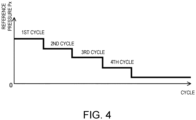
- the ECU 10 may change the reference pressure Px according to progress of the cycle of the engine 100.
- Fig. 4 illustrates a relationship between the progress of the cycle of the engine 100 and the reference pressure Px.
- the reference pressure Px decreases gradually as the cycle of the engine 100 progresses as the first cycle, the second cycle, the third cycle, and the fourth cycle. By doing so, the influence of the temperature inside the cylinder 11 gradually increasing can be eliminated, and therefore, the ECU 10 can determine the difference in the pressure increase inside the cylinder 11 only resulting from the fuel property.
- the ECU 10 After the startup of the engine 100 is finished, the ECU 10 operates the engine 100, while correcting the injection amount of the fuel and/or the close timing of the intake valve 21 (IVC) according to the determined property of the fuel.
- IVC intake valve 21
- Fig. 5 illustrates a correction map (upper figure) for the fuel injection amount, a correction map (middle figure) for the injection timing, and a correction map (lower figure) for the valve close timing.
- These correction maps may be stored in the memory 102 of the ECU 10.
- the horizontal axis is a value of ⁇ measured period ⁇ - ⁇ reference period ⁇ , where the left side (i.e., negative) in this drawing indicates that the measured crank angle period t is shorter than the reference period t0, and the right side (i.e., positive) in this drawing indicates that the measured crank angle period t is longer than the reference period t0.
- the ECU 10 corrects the close timing of the intake valve 21 to the retarding side through the intake S-VT 23. Since the temperature and the pressure inside the cylinder 11 drop when the close timing of the intake valve 21 is retarded, the chemical reaction with the fuel progresses less easily. Even if it is the fuel with a fast chemical reaction speed, this combustion becomes equivalent to the combustion with the standard fuel.
- the ECU 10 corrects the close timing of the intake valve 21 to the advancing side through the intake S-VT 23. Since the temperature and the pressure inside the cylinder 11 increase when the close timing of the intake valve 21 is advanced, the chemical reaction of the fuel progresses more easily. Even if it is the fuel with the slow chemical reaction speed, this combustion becomes equivalent to the combustion with the standard fuel. Note that the closing timing of the intake valve 21 is set after an intake bottom dead center.
- control map of the lower figure of Fig. 5 is configured to correct the close timing of the intake valve 21 so that the close timing of the intake valve 21 is retarded as the measured crank angle period t becomes shorter than the reference period t0, and/or correct the close timing of the intake valve 21 so that the close timing of the intake valve 21 is advanced as the measured crank angle period t becomes longer than the reference period t0.
- the close timing of the intake valve 21 may be retarded as the measured crank angle period t becomes shorter, and/or the close timing of the intake valve 21 is advanced as the measured crank angle period t becomes longer.
- the temperature and the pressure inside the cylinder 11 are adjusted to a temperature and a pressure according to the property of the fuel.
- the ECU 10 corrects the injection start timing (SOI) of the fuel to the retarding side, as illustrated in the middle figure of Fig. 5 .
- the injection start timing of the fuel is retarded as the crank angle period t becomes shorter than the reference period t0.
- the injection start timing of the fuel is retarded as the crank angle period t becomes shorter. Therefore, as illustrated in the upper figure of Fig. 5 , since the fuel injection amount becomes less and the concentration of the mixture gas becomes lower, the chemical reaction speed becomes slower and this combustion becomes equivalent to the combustion with the standard fuel.
- the ECU 10 corrects each of the injection start timing (SOI) of the fuel and the injection end timing (EOI) to the retarding side.
- the injection start timing and the injection end timing of the fuel are retarded as the crank angle period t becomes shorter than the reference period t0.
- the injection start timing and the injection end timing of the fuel may be retarded as the crank angle period t becomes shorter.
- the fuel injection amount becomes less as the crank angle period t becomes shorter than the reference period t0.
- the ECU 10 corrects the injection start timing (SOI) of the fuel to the advancing side and corrects the injection end timing (EOI) to the retarding side, as illustrated in the middle figure of Fig. 5 .
- the injection start timing of the fuel is advanced and the injection end timing is retarded as the crank angle period t becomes longer than the reference period t0.
- the injection start timing of the fuel may be advanced and the injection end timing may be retarded as the crank angle period t becomes longer.
- the fuel injection amount increases as the crank angle period t becomes longer than the reference period t0. Since the concentration of the mixture gas increases, the chemical reaction is stimulated and the combustion becomes equivalent to the combustion with the standard fuel.
- Step S1 the ECU 10 particularly determines whether it is time for starting the engine 100. If not the time for a startup, the process repeats Step S1, and if it is the time for a startup, the process shifts to Step S2.
- Step S2 the ECU 10 particularly determines whether the number of cycle is the first cycle since the crankshaft 15 started rotation. If it is the first cycle, the process shifts to Step S3, and if it is the second or subsequent cycle, the process shifts to Step S11.
- Step S3 the ECU 10 particularly determines whether the intake valve 21 is closed in the cylinder 11 which is a target for injecting the fuel for analysis. Note that, if the number of cycle is the first cycle, it is the intake valve 21 which is first closed after the crankshaft 15 started rotation. If the determination at Step S3 is NO, the process repeats Step S3, and if the determination at Step S3 is YES, the process shifts to Step S4.
- Step S4 the ECU 10 causes the injector 6 to start injecting the fuel for analysis at a specific timing after the intake valve 21 is closed, at the subsequent Step S5, the ECU 10 acquires the crank angle period t, from the start timing of the fuel injection until the pressure inside the cylinder 11 reaching the reference pressure Px, based on the measurement signals of the in-cylinder pressure sensor SW4 and the crank angle sensor SW6.
- Step S6 the ECU 10 particularly determines whether a given number of cycles has passed since the motoring of the engine 100 was started. This given number of cycles is the number of cycles for performing the measurement of the crank angle period, and it may be 4 to 5 cycles, for example. If the determination at Step S6 is NO, the process returns to Step S2.
- Step S2 if it is the second or subsequent cycle, the process shifts to Step S11.
- the ECU 10 changed the reference pressure Px according to the map in Fig. 4 , the ECU 10 performs Steps S3-S5. In this way, the fuel injection into the cylinder 11 and the measurement of the crank angle period are repeated a plurality of times.
- Step S6 If the determination at Step S6 becomes YES, the process shifts to Step S7.
- the ECU 10 calculates an average value of the plurality of measured crank angle periods, and at the subsequent Step S8, it calculates a difference between the measured crank angle period and the reference period of the standard fuel. Further, at Step S9, the ECU 10 determines whether there is an offset between the measured crank angle period and the reference period, and if there is an offset, the process shifts to Step S10.
- Step S10 according to the control map in Fig. 5 , the ECU 10 particularly corrects the fuel injection amount, the start timing of the fuel injection, and/or the close timing of the intake valve 21 after the startup of the engine 100 is finished, based on the fuel property. On the other hand, if there is no offset, the ECU 10 does not correct the fuel injection amount, the start timing of the fuel injection, and the close timing of the intake valve 21.
- the ECU 10 can determine the fuel property with sufficient accuracy because the fuel for analysis is injected into the cylinder 11 in compression stroke, during motoring of the engine 100.
- the combustion under operation of the engine 100 becomes equivalent to the combustion with the standard fuel by correcting the controlled variables of the engine 100 according to the determined property of the fuel, the improvement in fuel efficiency and the improvement in emission gas performance are achieved. In addition, the increase in combustion noise can be suppressed.
- the technique disclosed herein is not limited to being applied to the engine system 1 having the configuration described above.
- the technique disclosed herein is applicable to engine systems 1 of various configurations.
- the technique disclosed herein is also applied to diesel engines.
- the technique disclosed herein is also applicable to so-called “hybrid vehicles.”
- the engine motoring may be performed by a generator.
- an engine may be started in response to a power generation demand or a torque demand.
- the ECU 10 may determine the fuel property, when the engine is started, according to the power generation demand or the torque demand.
Landscapes
- Engineering & Computer Science (AREA)
- Chemical & Material Sciences (AREA)
- Combustion & Propulsion (AREA)
- Mechanical Engineering (AREA)
- General Engineering & Computer Science (AREA)
- Combined Controls Of Internal Combustion Engines (AREA)
Claims (15)
- Verfahren zum Steuern eines Motors (100), umfassend die Schritte:während des Antreibens des Motors (100), Einspritzen, durch eine Einspritzdüse (6), von Kraftstoff zur Analyse in einen Zylinder (11) des Motors (100) zu einem bestimmten Zeitpunkt, nachdem ein Einlassventil (21) des Zylinders (11) geschlossen ist;Erfassen, durch eine Steuerung (10), einer Kurbelwinkelperiode (t1, t2) ab einem Startzeitpunkt der Kraftstoffeinspritzung bis zu einem Zeitpunkt, an dem ein Druck im Inneren des Zylinders (11) einen Referenzdruck (Px) erreicht, als Reaktion auf Signale eines Kurbelwinkelsensors (SW6) und eines Zylinderinnendrucksensors (SW4); undBestimmen, durch die Steuerung (10), einer Eigenschaft des Kraftstoffs, der durch die Einspritzdüse (6) eingespritzt wird, durch Vergleichen der erfassten Kurbelwinkelperiode (t1, t2) mit einer vorbestimmten Referenzkurbelwinkelperiode (t0), wobei die Referenzkurbelwinkelperiode (t0) von einem Einspritzstartzeitpunkt, wenn ein Standardkraftstoff in den Zylinder (11) eingespritzt wird, bis zu einem Zeitpunkt, an dem der Druck im Inneren des Zylinders (11) den Referenzdruck (Px) erreicht, dauert.
- Verfahren nach Anspruch 1,wobei der Zylinder (11) einer aus einer Vielzahl von Zylindern (11) ist, undwobei der Zylinder (11), in den die Einspritzdüse (6) den Kraftstoff zur Analyse einspritzt, der Zylinder (11) aus der Vielzahl von Zylindern (11) ist, dessen Einlassventil (21) zuerst geschlossen wird, nachdem sich eine Kurbelwelle (15) des Motors (100) zu drehen beginnt.
- Verfahren nach Anspruch 2,wobei die Einspritzdüse (6) den Kraftstoff zur Analyse in jeden der Vielzahl von Zylindern (11) einspritzt, während ein Zyklus des Motors (100) fortschreitet,wobei die Steuerung (10) die Kurbelwinkelperiode (t1, t2) für jeden der Vielzahl von Zylindern (11) erfasst, undwobei die Steuerung (10) einen Durchschnittswert der erfassten Vielzahl von Kurbelwinkelperioden (t1, t2)s mit der Referenzkurbelwinkelperiode (t0) vergleicht, um die Eigenschaft zu bestimmen.
- Verfahren nach Anspruch 3, wobei der Referenzdruck (Px) kleiner wird, während der Zyklus des Motors (100) fortschreitet.
- Verfahren nach einem der vorstehenden Ansprüche, wobei der Referenzdruck (Px) einem Druck im Inneren des Zylinders (11) zu einem Zeitpunkt entspricht, an dem der Kraftstoff, der von der Einspritzdüse (6) in den Zylinder (11) eingespritzt wird, eine Niedertemperatur-Oxidationsreaktion durch Spaltung, Zerstäubung, Verdampfung und Vermischung mit Luft erreicht.
- Verfahren nach einem der vorstehenden Ansprüche, wobei die Steuerung (10) eine Kraftstoffeinspritzmenge und/oder einen Kraftstoffeinspritzzeitpunkt und/oder einen Schließzeitpunkt des Einlassventils (21) gemäß der Eigenschaft des Kraftstoffs korrigiert.
- Verfahren nach Anspruch 6, wobei die Steuerung (10) die Kraftstoffeinspritzmenge und/oder den Kraftstoffeinspritzzeitpunkt und/oder den Schließzeitpunkt des Einlassventils (21) gemäß der Eigenschaft des Kraftstoffs korrigiert, nachdem das Anlassen des Motors (100) beendet ist.
- Verfahren nach Anspruch 6 oder 7, wobei, wenn die erfasste Kurbelwinkelperiode (t1, t2) länger als die Referenzkurbelwinkelperiode (t0) ist, die Steuerung (10) den Schließzeitpunkt des Einlassventils (21) auf eine vorschiebende Seite korrigiert, und/oder wenn die erfasste Kurbelwinkelperiode (t1, t2) kürzer als die Referenzkurbelwinkelperiode (t0) ist, die Steuerung (10) den Schließzeitpunkt des Einlassventils (21) auf eine verzögernde Seite korrigiert.
- Verfahren nach Anspruch 8, wobei die Steuerung (10) den Schließzeitpunkt des Einlassventils (21) derart korrigiert, dass der Schließzeitpunkt des Einlassventils (21) vorgeschoben wird, während die erfasste Kurbelwinkelperiode (t2) länger wird, wenn die erfasste Kurbelwinkelperiode (t2) länger als die Referenzkurbelwinkelperiode (t0) ist.
- Verfahren nach Anspruch 8 oder 9, wobei, wenn die erfasste Kurbelwinkelperiode (t2) um einen gegebenen Wert oder mehr länger als die Referenzkurbelwinkelperiode (t0) ist, die Steuerung (10) die Kraftstoffeinspritzmenge erhöht, indem sie den Startzeitpunkt der Kraftstoffeinspritzung auf die vorschiebende Seite korrigiert und einen Endzeitpunkt der Kraftstoffeinspritzung auf die verzögernde Seite korrigiert.
- Verfahren nach einem der Ansprüche 8 bis 10, wobei die Steuerung (10) die Kraftstoffeinspritzmenge reduziert und/oder den Schließzeitpunkt des Einlassventils (21) verzögert, wenn die erfasste Kurbelwinkelperiode (t1) kürzer als die Referenzkurbelwinkelperiode (t0) ist.
- Verfahren nach Anspruch 11, wobei die Steuerung (10) die Kraftstoffeinspritzmenge reduziert und/oder den Schließzeitpunkt des Einlassventils (21) verzögert, wenn die erfasste Kurbelwinkelperiode (t1) kürzer wird.
- Verfahren nach Anspruch 11 oder 12, wobei, wenn der Ventilschließzeitpunkt einen maximalen Verzögerungswert erreicht, die Steuerung (10) die Kraftstoffeinspritzmenge reduziert, indem sie den Einspritzstartzeitpunkt des Kraftstoffs auf die verzögernde Seite korrigiert und den Endzeitpunkt der Kraftstoffeinspritzung auf die verzögernde Seite korrigiert, wenn die erfasste Kurbelwinkelperiode (t1) kürzer als die Referenzkurbelwinkelperiode (t0) ist.
- Verfahren nach einem der vorstehenden Ansprüche,wobei der Standardkraftstoff ein Kraftstoff ist, der durch eine Industrienorm definiert ist, oderwobei der Standardkraftstoff K2202 oder K2204, definiert gemäß den japanischen Industrienormen, ist.
- Motorsystem (1) mit einem Motor (100), aufweisend:eine Steuerung (10), die derart konfiguriert ist, dass sie Informationen über eine Eigenschaft eines Standardkraftstoffs speichert;eine Einspritzdüse (6), die derart konfiguriert ist, dass sie als Reaktion auf ein Steuersignal der Steuerung (10) Kraftstoff in einen Zylinder (11) des Motors (100) einspritzt;einen Zylinderinnendrucksensor (SW4), der an dem Motor (100) angebracht und derart konfiguriert ist, dass er ein Drucksignal an die Steuerung (10) ausgibt, das einem Druck im Inneren des Zylinders (11) entspricht; undeinen Kurbelwinkelsensor (SW6), der an dem Motor (100) angebracht und derart konfiguriert ist, dass er ein Kurbelwinkelsignal an die Steuerung (10) ausgibt, das einem Kurbelwinkel des Motors (100) entspricht,wobei während des Antreibens des Motors (100) die Steuerung (10) derart konfiguriert ist, dass sie die Einspritzdüse (6) veranlasst, Kraftstoff zur Analyse zu einem bestimmten Zeitpunkt einzuspritzen, nachdem ein Einlassventil (21) des Zylinders (11) geschlossen ist,wobei die Steuerung (10) derart konfiguriert ist, dass sie eine Kurbelwinkelperiode ab dem Startzeitpunkt der Kraftstoffeinspritzung bis zu einem Zeitpunkt, an dem der Druck im Inneren des Zylinders (11) einen Referenzdruck (Px) erreicht, auf Grundlage des Kurbelwinkelsignals des Kurbelwinkelsensors (SW6) und des Drucksignals des Zylinderinnendrucksensors (SW4) erfasst, undwobei die Information, die in der Steuerung (10) gespeichert ist, eine vorbestimmte Referenzkurbelwinkelperiode von einem Einspritzstartzeitpunkt, wenn der Standardkraftstoff in den Zylinder (11) eingespritzt wird, bis zu einem Zeitpunkt beinhaltet, zu dem der Druck im Inneren des Zylinders (11) den Referenzdruck (Px) erreicht, undwobei die Steuerung (10) derart konfiguriert ist, dass sie eine Eigenschaft des Kraftstoffs, der von der Einspritzdüse (6) eingespritzt wird, auf Grundlage eines Vergleichs der erfassten Kurbelwinkelperiode mit der Referenzkurbelwinkelperiode bestimmt.
Applications Claiming Priority (1)
| Application Number | Priority Date | Filing Date | Title |
|---|---|---|---|
| JP2021145496A JP7725954B2 (ja) | 2021-09-07 | 2021-09-07 | エンジンの制御方法、及び、エンジンシステム |
Publications (2)
| Publication Number | Publication Date |
|---|---|
| EP4144975A1 EP4144975A1 (de) | 2023-03-08 |
| EP4144975B1 true EP4144975B1 (de) | 2024-01-31 |
Family
ID=82780874
Family Applications (1)
| Application Number | Title | Priority Date | Filing Date |
|---|---|---|---|
| EP22187390.4A Active EP4144975B1 (de) | 2021-09-07 | 2022-07-28 | Motorsystemsteuerungsverfahren und motorsystem |
Country Status (3)
| Country | Link |
|---|---|
| US (1) | US12140105B2 (de) |
| EP (1) | EP4144975B1 (de) |
| JP (1) | JP7725954B2 (de) |
Families Citing this family (2)
| Publication number | Priority date | Publication date | Assignee | Title |
|---|---|---|---|---|
| JP7735737B2 (ja) * | 2021-09-07 | 2025-09-09 | マツダ株式会社 | エンジンの制御方法、及び、エンジンシステム |
| JP7749990B2 (ja) * | 2021-09-07 | 2025-10-07 | マツダ株式会社 | エンジンの制御方法、及び、エンジンシステム |
Family Cites Families (26)
| Publication number | Priority date | Publication date | Assignee | Title |
|---|---|---|---|---|
| JP2001271682A (ja) | 2000-03-24 | 2001-10-05 | Nissan Motor Co Ltd | エンジンの吸気制御装置 |
| JP4075858B2 (ja) * | 2004-06-01 | 2008-04-16 | トヨタ自動車株式会社 | 内燃機関の燃料セタン価測定方法 |
| US8763582B2 (en) | 2005-05-12 | 2014-07-01 | Ford Global Technologies, Llc | Engine starting for engine having adjustable valve operation and port fuel injection |
| JP4899791B2 (ja) * | 2006-10-30 | 2012-03-21 | 株式会社デンソー | 燃料噴射制御装置及び燃料供給系の診断方法 |
| US7788017B2 (en) * | 2006-12-27 | 2010-08-31 | Denso Corporation | Engine control, fuel property detection and determination apparatus, and method for the same |
| JP2008175065A (ja) | 2007-01-16 | 2008-07-31 | Denso Corp | エンジン制御装置及び燃料性状検出装置 |
| JP2008196409A (ja) | 2007-02-14 | 2008-08-28 | Toyota Motor Corp | 内燃機関の燃焼制御装置 |
| DE102007023900A1 (de) * | 2007-05-23 | 2008-11-27 | Robert Bosch Gmbh | Verfahren zur Bestimmung einer Kraftstoffzusammensetzung |
| DE102007023899A1 (de) | 2007-05-23 | 2008-11-27 | Robert Bosch Gmbh | Verfahren zur Bestimmung der Zusammensetzung eines Kraftstoffgemischs |
| JP4853439B2 (ja) * | 2007-09-25 | 2012-01-11 | トヨタ自動車株式会社 | 内燃機関の制御装置 |
| JP2009127434A (ja) | 2007-11-20 | 2009-06-11 | Toyota Motor Corp | 内燃機関の制御装置 |
| JP4888399B2 (ja) | 2008-01-11 | 2012-02-29 | トヨタ自動車株式会社 | フレックス燃料機関の制御装置 |
| JP4670888B2 (ja) * | 2008-04-02 | 2011-04-13 | トヨタ自動車株式会社 | 内燃機関用燃料のアルコール濃度対応値取得装置 |
| US8185293B2 (en) * | 2008-06-05 | 2012-05-22 | Robert Bosch Llc | Fuel composition recognition and adaptation system |
| US8843295B2 (en) * | 2009-05-27 | 2014-09-23 | GM Global Technology Operations LLC | Ethanol content determination systems and methods |
| JP5472076B2 (ja) | 2010-12-20 | 2014-04-16 | トヨタ自動車株式会社 | 火花点火内燃機関 |
| EP2778378B1 (de) | 2011-10-26 | 2017-09-27 | Toyota Jidosha Kabushiki Kaisha | Vorrichtung zur bestimmung von kraftstoffeigenschaften für verbrennungsmotoren |
| JP2013174135A (ja) | 2012-02-23 | 2013-09-05 | Toyota Motor Corp | 内燃機関の制御装置 |
| JP2013234652A (ja) | 2012-04-13 | 2013-11-21 | Denso Corp | エンジン制御装置 |
| JP6015563B2 (ja) | 2013-05-31 | 2016-10-26 | トヨタ自動車株式会社 | 内燃機関の熱発生率波形作成装置及び燃焼状態診断装置 |
| JP2017031961A (ja) | 2015-08-06 | 2017-02-09 | トヨタ自動車株式会社 | 内燃機関の制御装置 |
| JP6560591B2 (ja) | 2015-10-22 | 2019-08-14 | ヤンマー株式会社 | エンジン |
| JP7334403B2 (ja) | 2018-09-20 | 2023-08-29 | マツダ株式会社 | 過給機付2ストロークエンジン |
| US11143137B1 (en) | 2020-06-03 | 2021-10-12 | Caterpillar Inc. | Engine system, combustion control system, and operating method with close-coupled early pilots and cylinder temperature control |
| JP7749990B2 (ja) * | 2021-09-07 | 2025-10-07 | マツダ株式会社 | エンジンの制御方法、及び、エンジンシステム |
| JP7735737B2 (ja) * | 2021-09-07 | 2025-09-09 | マツダ株式会社 | エンジンの制御方法、及び、エンジンシステム |
-
2021
- 2021-09-07 JP JP2021145496A patent/JP7725954B2/ja active Active
-
2022
- 2022-07-28 EP EP22187390.4A patent/EP4144975B1/de active Active
- 2022-08-31 US US17/900,703 patent/US12140105B2/en active Active
Also Published As
| Publication number | Publication date |
|---|---|
| US12140105B2 (en) | 2024-11-12 |
| US20230077202A1 (en) | 2023-03-09 |
| EP4144975A1 (de) | 2023-03-08 |
| JP2023038660A (ja) | 2023-03-17 |
| JP7725954B2 (ja) | 2025-08-20 |
Similar Documents
| Publication | Publication Date | Title |
|---|---|---|
| US8924136B2 (en) | Device and method for controlling start of compression self-ignition engine | |
| EP4144976B1 (de) | Motorsystemsteuerungsverfahren und motorsystem | |
| US9212615B2 (en) | Start control device of compression self-ignition engine | |
| US7788017B2 (en) | Engine control, fuel property detection and determination apparatus, and method for the same | |
| US7587270B2 (en) | Internal combustion engine system and internal combustion engine control method | |
| US20130080036A1 (en) | Device and method for controlling start of compression self-ignition engine | |
| WO2012001940A1 (en) | Starter and starting method of compression self-ignition engine | |
| EP4144975B1 (de) | Motorsystemsteuerungsverfahren und motorsystem | |
| JP2009007966A (ja) | 内燃機関の制御装置 | |
| EP4148258B1 (de) | Motorsystemsteuerungsverfahren und motorsystem | |
| JP4833924B2 (ja) | 内燃機関の制御装置 | |
| US9556801B2 (en) | Driving force control device and driving force control method | |
| US6935312B2 (en) | Internal combustion engine and ignition control method | |
| US9890722B2 (en) | Fuel injection control method for internal combustion engine | |
| JP2000064891A (ja) | 内燃機関の燃料噴射制御装置 | |
| CN101189419A (zh) | 直接喷射式内燃机及其控制方法 | |
| CN114941592B (zh) | 内燃机 | |
| US20170184040A1 (en) | Control device for internal combustion engine | |
| JP2001207888A (ja) | 自己着火内燃機関 | |
| JP2023183598A (ja) | エンジン制御装置 | |
| JP2013072279A (ja) | 圧縮自己着火式エンジンの始動制御装置 |
Legal Events
| Date | Code | Title | Description |
|---|---|---|---|
| PUAI | Public reference made under article 153(3) epc to a published international application that has entered the european phase |
Free format text: ORIGINAL CODE: 0009012 |
|
| STAA | Information on the status of an ep patent application or granted ep patent |
Free format text: STATUS: THE APPLICATION HAS BEEN PUBLISHED |
|
| AK | Designated contracting states |
Kind code of ref document: A1 Designated state(s): AL AT BE BG CH CY CZ DE DK EE ES FI FR GB GR HR HU IE IS IT LI LT LU LV MC MK MT NL NO PL PT RO RS SE SI SK SM TR |
|
| STAA | Information on the status of an ep patent application or granted ep patent |
Free format text: STATUS: REQUEST FOR EXAMINATION WAS MADE |
|
| 17P | Request for examination filed |
Effective date: 20230601 |
|
| RBV | Designated contracting states (corrected) |
Designated state(s): AL AT BE BG CH CY CZ DE DK EE ES FI FR GB GR HR HU IE IS IT LI LT LU LV MC MK MT NL NO PL PT RO RS SE SI SK SM TR |
|
| GRAP | Despatch of communication of intention to grant a patent |
Free format text: ORIGINAL CODE: EPIDOSNIGR1 |
|
| STAA | Information on the status of an ep patent application or granted ep patent |
Free format text: STATUS: GRANT OF PATENT IS INTENDED |
|
| INTG | Intention to grant announced |
Effective date: 20231013 |
|
| GRAS | Grant fee paid |
Free format text: ORIGINAL CODE: EPIDOSNIGR3 |
|
| GRAA | (expected) grant |
Free format text: ORIGINAL CODE: 0009210 |
|
| STAA | Information on the status of an ep patent application or granted ep patent |
Free format text: STATUS: THE PATENT HAS BEEN GRANTED |
|
| AK | Designated contracting states |
Kind code of ref document: B1 Designated state(s): AL AT BE BG CH CY CZ DE DK EE ES FI FR GB GR HR HU IE IS IT LI LT LU LV MC MK MT NL NO PL PT RO RS SE SI SK SM TR |
|
| REG | Reference to a national code |
Ref country code: GB Ref legal event code: FG4D Ref country code: CH Ref legal event code: EP |
|
| REG | Reference to a national code |
Ref country code: DE Ref legal event code: R096 Ref document number: 602022001779 Country of ref document: DE |
|
| REG | Reference to a national code |
Ref country code: IE Ref legal event code: FG4D |
|
| REG | Reference to a national code |
Ref country code: LT Ref legal event code: MG9D |
|
| REG | Reference to a national code |
Ref country code: NL Ref legal event code: MP Effective date: 20240131 |
|
| PG25 | Lapsed in a contracting state [announced via postgrant information from national office to epo] |
Ref country code: IS Free format text: LAPSE BECAUSE OF FAILURE TO SUBMIT A TRANSLATION OF THE DESCRIPTION OR TO PAY THE FEE WITHIN THE PRESCRIBED TIME-LIMIT Effective date: 20240531 |
|
| PG25 | Lapsed in a contracting state [announced via postgrant information from national office to epo] |
Ref country code: LT Free format text: LAPSE BECAUSE OF FAILURE TO SUBMIT A TRANSLATION OF THE DESCRIPTION OR TO PAY THE FEE WITHIN THE PRESCRIBED TIME-LIMIT Effective date: 20240131 |
|
| PG25 | Lapsed in a contracting state [announced via postgrant information from national office to epo] |
Ref country code: GR Free format text: LAPSE BECAUSE OF FAILURE TO SUBMIT A TRANSLATION OF THE DESCRIPTION OR TO PAY THE FEE WITHIN THE PRESCRIBED TIME-LIMIT Effective date: 20240501 |
|
| REG | Reference to a national code |
Ref country code: AT Ref legal event code: MK05 Ref document number: 1654025 Country of ref document: AT Kind code of ref document: T Effective date: 20240131 |
|
| PG25 | Lapsed in a contracting state [announced via postgrant information from national office to epo] |
Ref country code: RS Free format text: LAPSE BECAUSE OF FAILURE TO SUBMIT A TRANSLATION OF THE DESCRIPTION OR TO PAY THE FEE WITHIN THE PRESCRIBED TIME-LIMIT Effective date: 20240430 Ref country code: HR Free format text: LAPSE BECAUSE OF FAILURE TO SUBMIT A TRANSLATION OF THE DESCRIPTION OR TO PAY THE FEE WITHIN THE PRESCRIBED TIME-LIMIT Effective date: 20240131 Ref country code: NL Free format text: LAPSE BECAUSE OF FAILURE TO SUBMIT A TRANSLATION OF THE DESCRIPTION OR TO PAY THE FEE WITHIN THE PRESCRIBED TIME-LIMIT Effective date: 20240131 |
|
| PG25 | Lapsed in a contracting state [announced via postgrant information from national office to epo] |
Ref country code: ES Free format text: LAPSE BECAUSE OF FAILURE TO SUBMIT A TRANSLATION OF THE DESCRIPTION OR TO PAY THE FEE WITHIN THE PRESCRIBED TIME-LIMIT Effective date: 20240131 |
|
| PG25 | Lapsed in a contracting state [announced via postgrant information from national office to epo] |
Ref country code: AT Free format text: LAPSE BECAUSE OF FAILURE TO SUBMIT A TRANSLATION OF THE DESCRIPTION OR TO PAY THE FEE WITHIN THE PRESCRIBED TIME-LIMIT Effective date: 20240131 |
|
| PG25 | Lapsed in a contracting state [announced via postgrant information from national office to epo] |
Ref country code: RS Free format text: LAPSE BECAUSE OF FAILURE TO SUBMIT A TRANSLATION OF THE DESCRIPTION OR TO PAY THE FEE WITHIN THE PRESCRIBED TIME-LIMIT Effective date: 20240430 Ref country code: NO Free format text: LAPSE BECAUSE OF FAILURE TO SUBMIT A TRANSLATION OF THE DESCRIPTION OR TO PAY THE FEE WITHIN THE PRESCRIBED TIME-LIMIT Effective date: 20240430 Ref country code: NL Free format text: LAPSE BECAUSE OF FAILURE TO SUBMIT A TRANSLATION OF THE DESCRIPTION OR TO PAY THE FEE WITHIN THE PRESCRIBED TIME-LIMIT Effective date: 20240131 Ref country code: LT Free format text: LAPSE BECAUSE OF FAILURE TO SUBMIT A TRANSLATION OF THE DESCRIPTION OR TO PAY THE FEE WITHIN THE PRESCRIBED TIME-LIMIT Effective date: 20240131 Ref country code: IS Free format text: LAPSE BECAUSE OF FAILURE TO SUBMIT A TRANSLATION OF THE DESCRIPTION OR TO PAY THE FEE WITHIN THE PRESCRIBED TIME-LIMIT Effective date: 20240531 Ref country code: HR Free format text: LAPSE BECAUSE OF FAILURE TO SUBMIT A TRANSLATION OF THE DESCRIPTION OR TO PAY THE FEE WITHIN THE PRESCRIBED TIME-LIMIT Effective date: 20240131 Ref country code: GR Free format text: LAPSE BECAUSE OF FAILURE TO SUBMIT A TRANSLATION OF THE DESCRIPTION OR TO PAY THE FEE WITHIN THE PRESCRIBED TIME-LIMIT Effective date: 20240501 Ref country code: FI Free format text: LAPSE BECAUSE OF FAILURE TO SUBMIT A TRANSLATION OF THE DESCRIPTION OR TO PAY THE FEE WITHIN THE PRESCRIBED TIME-LIMIT Effective date: 20240131 Ref country code: ES Free format text: LAPSE BECAUSE OF FAILURE TO SUBMIT A TRANSLATION OF THE DESCRIPTION OR TO PAY THE FEE WITHIN THE PRESCRIBED TIME-LIMIT Effective date: 20240131 Ref country code: BG Free format text: LAPSE BECAUSE OF FAILURE TO SUBMIT A TRANSLATION OF THE DESCRIPTION OR TO PAY THE FEE WITHIN THE PRESCRIBED TIME-LIMIT Effective date: 20240131 Ref country code: AT Free format text: LAPSE BECAUSE OF FAILURE TO SUBMIT A TRANSLATION OF THE DESCRIPTION OR TO PAY THE FEE WITHIN THE PRESCRIBED TIME-LIMIT Effective date: 20240131 |
|
| PG25 | Lapsed in a contracting state [announced via postgrant information from national office to epo] |
Ref country code: PT Free format text: LAPSE BECAUSE OF FAILURE TO SUBMIT A TRANSLATION OF THE DESCRIPTION OR TO PAY THE FEE WITHIN THE PRESCRIBED TIME-LIMIT Effective date: 20240531 Ref country code: PL Free format text: LAPSE BECAUSE OF FAILURE TO SUBMIT A TRANSLATION OF THE DESCRIPTION OR TO PAY THE FEE WITHIN THE PRESCRIBED TIME-LIMIT Effective date: 20240131 |
|
| PG25 | Lapsed in a contracting state [announced via postgrant information from national office to epo] |
Ref country code: SE Free format text: LAPSE BECAUSE OF FAILURE TO SUBMIT A TRANSLATION OF THE DESCRIPTION OR TO PAY THE FEE WITHIN THE PRESCRIBED TIME-LIMIT Effective date: 20240131 Ref country code: PT Free format text: LAPSE BECAUSE OF FAILURE TO SUBMIT A TRANSLATION OF THE DESCRIPTION OR TO PAY THE FEE WITHIN THE PRESCRIBED TIME-LIMIT Effective date: 20240531 Ref country code: PL Free format text: LAPSE BECAUSE OF FAILURE TO SUBMIT A TRANSLATION OF THE DESCRIPTION OR TO PAY THE FEE WITHIN THE PRESCRIBED TIME-LIMIT Effective date: 20240131 Ref country code: LV Free format text: LAPSE BECAUSE OF FAILURE TO SUBMIT A TRANSLATION OF THE DESCRIPTION OR TO PAY THE FEE WITHIN THE PRESCRIBED TIME-LIMIT Effective date: 20240131 |
|
| PG25 | Lapsed in a contracting state [announced via postgrant information from national office to epo] |
Ref country code: DK Free format text: LAPSE BECAUSE OF FAILURE TO SUBMIT A TRANSLATION OF THE DESCRIPTION OR TO PAY THE FEE WITHIN THE PRESCRIBED TIME-LIMIT Effective date: 20240131 |
|
| PG25 | Lapsed in a contracting state [announced via postgrant information from national office to epo] |
Ref country code: SM Free format text: LAPSE BECAUSE OF FAILURE TO SUBMIT A TRANSLATION OF THE DESCRIPTION OR TO PAY THE FEE WITHIN THE PRESCRIBED TIME-LIMIT Effective date: 20240131 |
|
| PG25 | Lapsed in a contracting state [announced via postgrant information from national office to epo] |
Ref country code: EE Free format text: LAPSE BECAUSE OF FAILURE TO SUBMIT A TRANSLATION OF THE DESCRIPTION OR TO PAY THE FEE WITHIN THE PRESCRIBED TIME-LIMIT Effective date: 20240131 Ref country code: CZ Free format text: LAPSE BECAUSE OF FAILURE TO SUBMIT A TRANSLATION OF THE DESCRIPTION OR TO PAY THE FEE WITHIN THE PRESCRIBED TIME-LIMIT Effective date: 20240131 |
|
| PG25 | Lapsed in a contracting state [announced via postgrant information from national office to epo] |
Ref country code: SK Free format text: LAPSE BECAUSE OF FAILURE TO SUBMIT A TRANSLATION OF THE DESCRIPTION OR TO PAY THE FEE WITHIN THE PRESCRIBED TIME-LIMIT Effective date: 20240131 |
|
| PG25 | Lapsed in a contracting state [announced via postgrant information from national office to epo] |
Ref country code: SM Free format text: LAPSE BECAUSE OF FAILURE TO SUBMIT A TRANSLATION OF THE DESCRIPTION OR TO PAY THE FEE WITHIN THE PRESCRIBED TIME-LIMIT Effective date: 20240131 Ref country code: SK Free format text: LAPSE BECAUSE OF FAILURE TO SUBMIT A TRANSLATION OF THE DESCRIPTION OR TO PAY THE FEE WITHIN THE PRESCRIBED TIME-LIMIT Effective date: 20240131 Ref country code: RO Free format text: LAPSE BECAUSE OF FAILURE TO SUBMIT A TRANSLATION OF THE DESCRIPTION OR TO PAY THE FEE WITHIN THE PRESCRIBED TIME-LIMIT Effective date: 20240131 Ref country code: EE Free format text: LAPSE BECAUSE OF FAILURE TO SUBMIT A TRANSLATION OF THE DESCRIPTION OR TO PAY THE FEE WITHIN THE PRESCRIBED TIME-LIMIT Effective date: 20240131 Ref country code: DK Free format text: LAPSE BECAUSE OF FAILURE TO SUBMIT A TRANSLATION OF THE DESCRIPTION OR TO PAY THE FEE WITHIN THE PRESCRIBED TIME-LIMIT Effective date: 20240131 Ref country code: CZ Free format text: LAPSE BECAUSE OF FAILURE TO SUBMIT A TRANSLATION OF THE DESCRIPTION OR TO PAY THE FEE WITHIN THE PRESCRIBED TIME-LIMIT Effective date: 20240131 |
|
| REG | Reference to a national code |
Ref country code: DE Ref legal event code: R097 Ref document number: 602022001779 Country of ref document: DE |
|
| PG25 | Lapsed in a contracting state [announced via postgrant information from national office to epo] |
Ref country code: IT Free format text: LAPSE BECAUSE OF FAILURE TO SUBMIT A TRANSLATION OF THE DESCRIPTION OR TO PAY THE FEE WITHIN THE PRESCRIBED TIME-LIMIT Effective date: 20240131 |
|
| PLBE | No opposition filed within time limit |
Free format text: ORIGINAL CODE: 0009261 |
|
| STAA | Information on the status of an ep patent application or granted ep patent |
Free format text: STATUS: NO OPPOSITION FILED WITHIN TIME LIMIT |
|
| PG25 | Lapsed in a contracting state [announced via postgrant information from national office to epo] |
Ref country code: IT Free format text: LAPSE BECAUSE OF FAILURE TO SUBMIT A TRANSLATION OF THE DESCRIPTION OR TO PAY THE FEE WITHIN THE PRESCRIBED TIME-LIMIT Effective date: 20240131 |
|
| 26N | No opposition filed |
Effective date: 20241101 |
|
| PG25 | Lapsed in a contracting state [announced via postgrant information from national office to epo] |
Ref country code: MC Free format text: LAPSE BECAUSE OF FAILURE TO SUBMIT A TRANSLATION OF THE DESCRIPTION OR TO PAY THE FEE WITHIN THE PRESCRIBED TIME-LIMIT Effective date: 20240131 |
|
| PG25 | Lapsed in a contracting state [announced via postgrant information from national office to epo] |
Ref country code: LU Free format text: LAPSE BECAUSE OF NON-PAYMENT OF DUE FEES Effective date: 20240728 |
|
| PG25 | Lapsed in a contracting state [announced via postgrant information from national office to epo] |
Ref country code: LU Free format text: LAPSE BECAUSE OF NON-PAYMENT OF DUE FEES Effective date: 20240728 |
|
| PG25 | Lapsed in a contracting state [announced via postgrant information from national office to epo] |
Ref country code: SI Free format text: LAPSE BECAUSE OF FAILURE TO SUBMIT A TRANSLATION OF THE DESCRIPTION OR TO PAY THE FEE WITHIN THE PRESCRIBED TIME-LIMIT Effective date: 20240131 Ref country code: BE Free format text: LAPSE BECAUSE OF NON-PAYMENT OF DUE FEES Effective date: 20240731 |
|
| PG25 | Lapsed in a contracting state [announced via postgrant information from national office to epo] |
Ref country code: FR Free format text: LAPSE BECAUSE OF NON-PAYMENT OF DUE FEES Effective date: 20240731 |
|
| REG | Reference to a national code |
Ref country code: BE Ref legal event code: MM Effective date: 20240731 |
|
| PG25 | Lapsed in a contracting state [announced via postgrant information from national office to epo] |
Ref country code: IE Free format text: LAPSE BECAUSE OF NON-PAYMENT OF DUE FEES Effective date: 20240728 |
|
| PGFP | Annual fee paid to national office [announced via postgrant information from national office to epo] |
Ref country code: DE Payment date: 20250604 Year of fee payment: 4 |
|
| PG25 | Lapsed in a contracting state [announced via postgrant information from national office to epo] |
Ref country code: CY Free format text: LAPSE BECAUSE OF FAILURE TO SUBMIT A TRANSLATION OF THE DESCRIPTION OR TO PAY THE FEE WITHIN THE PRESCRIBED TIME-LIMIT; INVALID AB INITIO Effective date: 20220728 |
|
| REG | Reference to a national code |
Ref country code: CH Ref legal event code: H13 Free format text: ST27 STATUS EVENT CODE: U-0-0-H10-H13 (AS PROVIDED BY THE NATIONAL OFFICE) Effective date: 20260224 |
|
| PG25 | Lapsed in a contracting state [announced via postgrant information from national office to epo] |
Ref country code: HU Free format text: LAPSE BECAUSE OF FAILURE TO SUBMIT A TRANSLATION OF THE DESCRIPTION OR TO PAY THE FEE WITHIN THE PRESCRIBED TIME-LIMIT; INVALID AB INITIO Effective date: 20220728 |
|
| PG25 | Lapsed in a contracting state [announced via postgrant information from national office to epo] |
Ref country code: CH Free format text: LAPSE BECAUSE OF NON-PAYMENT OF DUE FEES Effective date: 20250731 |