EP4142270B1 - Zugangsdetektionsverfahren für kopfhörerstecker einer elektronischen vorrichtung, elektronische vorrichtung und medium - Google Patents
Zugangsdetektionsverfahren für kopfhörerstecker einer elektronischen vorrichtung, elektronische vorrichtung und medium Download PDFInfo
- Publication number
- EP4142270B1 EP4142270B1 EP22800052.7A EP22800052A EP4142270B1 EP 4142270 B1 EP4142270 B1 EP 4142270B1 EP 22800052 A EP22800052 A EP 22800052A EP 4142270 B1 EP4142270 B1 EP 4142270B1
- Authority
- EP
- European Patent Office
- Prior art keywords
- electronic device
- headset
- analog
- pin
- component
- Prior art date
- Legal status (The legal status is an assumption and is not a legal conclusion. Google has not performed a legal analysis and makes no representation as to the accuracy of the status listed.)
- Active
Links
Images










Classifications
-
- H—ELECTRICITY
- H04—ELECTRIC COMMUNICATION TECHNIQUE
- H04R—LOUDSPEAKERS, MICROPHONES, GRAMOPHONE PICK-UPS OR LIKE ACOUSTIC ELECTROMECHANICAL TRANSDUCERS; ELECTRIC HEARING AIDS; PUBLIC ADDRESS SYSTEMS
- H04R1/00—Details of transducers, loudspeakers or microphones
- H04R1/10—Earpieces; Attachments therefor ; Earphones; Monophonic headphones
- H04R1/1041—Mechanical or electronic switches, or control elements
-
- G—PHYSICS
- G06—COMPUTING OR CALCULATING; COUNTING
- G06F—ELECTRIC DIGITAL DATA PROCESSING
- G06F13/00—Interconnection of, or transfer of information or other signals between, memories, input/output devices or central processing units
- G06F13/38—Information transfer, e.g. on bus
- G06F13/382—Information transfer, e.g. on bus using universal interface adapter
- G06F13/385—Information transfer, e.g. on bus using universal interface adapter for adaptation of a particular data processing system to different peripheral devices
-
- H—ELECTRICITY
- H04—ELECTRIC COMMUNICATION TECHNIQUE
- H04M—TELEPHONIC COMMUNICATION
- H04M1/00—Substation equipment, e.g. for use by subscribers
- H04M1/60—Substation equipment, e.g. for use by subscribers including speech amplifiers
- H04M1/6033—Substation equipment, e.g. for use by subscribers including speech amplifiers for providing handsfree use or a loudspeaker mode in telephone sets
- H04M1/6041—Portable telephones adapted for handsfree use
- H04M1/6058—Portable telephones adapted for handsfree use involving the use of a headset accessory device connected to the portable telephone
-
- H—ELECTRICITY
- H04—ELECTRIC COMMUNICATION TECHNIQUE
- H04M—TELEPHONIC COMMUNICATION
- H04M1/00—Substation equipment, e.g. for use by subscribers
- H04M1/72—Mobile telephones; Cordless telephones, i.e. devices for establishing wireless links to base stations without route selection
- H04M1/724—User interfaces specially adapted for cordless or mobile telephones
- H04M1/72403—User interfaces specially adapted for cordless or mobile telephones with means for local support of applications that increase the functionality
- H04M1/72409—User interfaces specially adapted for cordless or mobile telephones with means for local support of applications that increase the functionality by interfacing with external accessories
-
- H—ELECTRICITY
- H04—ELECTRIC COMMUNICATION TECHNIQUE
- H04M—TELEPHONIC COMMUNICATION
- H04M1/00—Substation equipment, e.g. for use by subscribers
- H04M1/72—Mobile telephones; Cordless telephones, i.e. devices for establishing wireless links to base stations without route selection
- H04M1/724—User interfaces specially adapted for cordless or mobile telephones
- H04M1/72448—User interfaces specially adapted for cordless or mobile telephones with means for adapting the functionality of the device according to specific conditions
-
- H—ELECTRICITY
- H04—ELECTRIC COMMUNICATION TECHNIQUE
- H04R—LOUDSPEAKERS, MICROPHONES, GRAMOPHONE PICK-UPS OR LIKE ACOUSTIC ELECTROMECHANICAL TRANSDUCERS; ELECTRIC HEARING AIDS; PUBLIC ADDRESS SYSTEMS
- H04R2420/00—Details of connection covered by H04R, not provided for in its groups
- H04R2420/01—Input selection or mixing for amplifiers or loudspeakers
-
- H—ELECTRICITY
- H04—ELECTRIC COMMUNICATION TECHNIQUE
- H04R—LOUDSPEAKERS, MICROPHONES, GRAMOPHONE PICK-UPS OR LIKE ACOUSTIC ELECTROMECHANICAL TRANSDUCERS; ELECTRIC HEARING AIDS; PUBLIC ADDRESS SYSTEMS
- H04R2420/00—Details of connection covered by H04R, not provided for in its groups
- H04R2420/05—Detection of connection of loudspeakers or headphones to amplifiers
Definitions
- the present invention relates to the field of electronic technologies, and in particular, to a method for detecting a connection to a headset port of an electronic device, an electronic device, and a readable storage medium.
- an analog headset or an analog adapter cannot be supported. Therefore, an analog headset inserted into a headset port of an electronic device directly or through an analog adapter cannot be used. Based on this, it is required that an electronic device not configured with a codec can determine that an analog headset cannot be used when the analog headset is inserted into the electronic device not configured with a codec.
- the document CN 210721446 U provides an interface detection control device and an interface converter.
- the interface detection control device comprises a USB Type-C male joint, a USB Type-C female seat, an audio decoding chip, a signal switching chip and a first interface detection circuit.
- the signal switching chip is respectively connected with the USB Type-C male joint, the USB Type-C female seat and the audio decoding chip, and is used for switching between an analog signal and a digital signal;
- the first interface detection circuit is connected with the USB Type-C female socket, the audio decoding chip and the signal switching chip, and is used for detecting the USB Type-C female socket and outputting a control signal to the signal switching chip and the audio decoding chip.
- the compatibility of the analog earphone and the digital earphone is realized by using only one signal switching chip, the circuit structure is simplified, the size of the product is reduced, and the cost of the product is reduced.
- the document US 2018/329675 A1 refers to an electronic device and a method for identifying the type of earphone and controlling audio output based on the identified type of the earphone.
- the electronic device includes an interface configured to detect an input of an earphone having a first audio output module with a first impedance value and a second audio output module with a second impedance value, and a processor configured to control the interface to detect the input of the earphone, check the first impedance value of the first audio output module and the second impedance value of the second output module, determine a type of the earphone based on at least the first and second impedance values, and adjust a characteristic related to the audio output of the electronic device based on the determined type of the earphone.
- This application provides a method for detecting a connection to a headset port of an electronic device, an electronic device, and a readable storage medium, so that an electronic device omitting a codec can determine that an analog headset cannot be used.
- the invention provides the following technical solutions.
- this application provides an electronic device, including a headset port and a processor.
- the headset port is configured for a headset component to be connected, and the headset component includes a headset or a headset adapter.
- the processor is configured to determine that the headset port does not support the connected headset component in a case that it is determined that the electronic device does not have a function of performing conversion between digital audio and analog audio and that the headset component connected to the headset port is an analog component.
- the processor in order to determine that the electronic device does not have the function of performing conversion between digital audio and analog audio, is further configured to: acquire configuration information of the electronic device, and determine that the configuration information of the electronic device does not include attribute information of a codec that supports conversion between digital audio and analog audio.
- the processor in order to determine that the electronic device does not have the function of performing conversion between digital audio and analog audio, is further configured to: send a request to the codec, and determine that no response message is received from the codec that supports conversion between digital audio and analog audio within a preset time period.
- the processor in order to determine that the electronic device does not have the function of performing conversion between digital audio and analog audio, is further configured to: read a level value of a configuration bit of the codec, and determine that the level value of the configuration bit of the codec is a target value, where the target value is used for indicating that the electronic device is not configured with the codec that supports conversion between digital audio and analog audio.
- the processor in order to determine that the headset component is the analog component, is further configured to detect that level values of dual CC pins of the headset port are low levels.
- the headset component connected to the headset port is the analog headset or the analog adapter connected to the analog headset.
- a target pin of the headset port of the electronic device is connected to a detection interface, and the detection interface is configured to detect a level of the target pin, and the target pin includes a left channel pin, a right channel pin, a first pin, or a second pin, where the first pin is configured to transmit a signal of a microphone or the ground, and the second pin is configured to transmit a high-speed signal.
- the processor is further configured to detect that the level value of the target pin is a low level through the detection interface.
- the headset component connected to the headset port is the analog adapter.
- the electronic device further includes at least one or any combination of a motor, a display, or an indicator, configured to output prompt information in response to an instruction generated in a case that the processor determines that the headset port does not support the connected headset component, where the prompt information is used for indicating that the headset port does not support the connected headset component.
- this application provides a method for detecting a connection to a headset port of an electronic device, including: determining that the electronic device does not have a function of performing conversion between digital audio and analog audio and that a headset component is an analog component when it is detected that the headset component is connected to the headset port of the electronic device, and determining that the headset port does not support the connected headset component, where the headset component includes a headset or a headset adapter.
- a manner of determining that the electronic device does not have the function of performing conversion between digital audio and analog audio includes: acquiring configuration information of the electronic device, and determining that the configuration information of the electronic device does not include attribute information of a codec; or sending a request to the codec, and determining that no response message is received from the codec within a preset time period; or reading a level value of a configuration bit of the codec, and determining that the level value of the configuration bit of the codec is a target value, where the target value is used for indicating that the electronic device is not configured with the codec.
- the codec supports conversion between digital audio and analog audio.
- a manner of determining that the headset component is the analog component includes: detecting that level values of dual CC pins of the headset port are low levels.
- a target pin of the headset port of the electronic device is connected to a detection interface, and the detection interface is configured to detect a level of the target pin, and the target pin includes a left channel pin, a right channel pin, a first pin, or a second pin, where the first pin is configured to transmit a signal of a microphone or the ground, and the second pin is configured to transmit a high-speed signal.
- a manner of determining that the headset component is the analog component includes: detecting that the level value of the target pin is a low level through the detection interface.
- the method further includes: outputting prompt information, where the prompt information is used for indicating that the headset port does not support the connected headset component.
- this application provides a readable storage medium storing a computer program thereon.
- the computer program when executed by a processor, implements the method for detecting a connection to a headset port of an electronic device in the second aspect and any one of the optional implementations thereof.
- the term "include”, “comprise”, or any other variant is intended to cover non-exclusive include, so that a process, a method, an article, or a device that includes a series of elements and that not only includes such elements, but also includes other elements not explicitly listed, or may further include elements inherent in the process, the method, the article, or the device. Unless otherwise specified, an element limited by “include a/an " does not exclude other same elements existing in the process, the method, the article, or the device that includes the element.
- a wired headset may be connected to the electronic device, and a user may listen to music or answer a voice call by using the wired headset.
- the wired headset may be classified into an analog headset and a digital headset.
- the analog headset supports an analog signal
- the digital headset supports a digital signal.
- a plug of the analog headset is generally a 3.5-mm plug.
- the electronic device In order to allow the headset to be connected, the electronic device is required to be configured with a 3.5-mm port.
- increasing electronic devices use a Type-C interface instead of the 3.5-mm port as a charging interface and a communication port. Therefore, like the digital headset, the analog headset uses the Type-C interface.
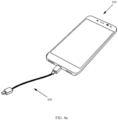
- FIG. 1a shows a connection diagram of an electronic device and an analog headset.
- a port 10 of an electronic device 100 is a Type-C interface
- a plug 20 of a headset 200 is also the Type-C interface.
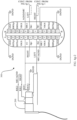
- the Type-C interface supports reversible insertion, that is, can be inserted either side, and has 12 pins on both a surface A and a surface B.
- FIG. 1b provides a diagram of the internal pins of the Type-C interface.
- the surface A and the surface B of the Type-C interface each include two VBUS pins (a pin 4 and a pin 9, which are configured to provide a USB voltage) symmetrically arranged, a CC pin (a pin 5), a Dp1 pin (a pin 6), a Dn1 pin (a pin 7), an SBU pin (a pin 8, which is a spare pin, the SBU pin on the surface A is marked as SBU1, and the SBU pin on the surface B is marked as SBU2), and four GND pins (pins 1 and pins 12 on the surface A and the surface B, which are configured to be grounded).
- a pull-down resistor is connected to the CC pin.
- the electronic device can determine whether the Type-C interface supports a digital signal communication mode or an analog signal communication mode by detecting a level value of the pin, and transmit a signal of the same mode by using a corresponding pin according to the communication mode of the currently connected Type-C interface. Specifically, if the Type-C interface supports the analog signal communication mode, the electronic device transmits an analog signal by using the Dp1 pin, the Dn1 pin, and the SBU pin.
- the electronic device transmits a digital signal by using the RXp1 pin, the RXn1 pin, the TXp 1 pin, the TXn1 pin, the RXp2 pin, the RXn2 pin, the TXp2 pin, and the TXn2 pin.
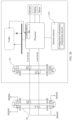
- FIG. 1c is a schematic structural diagram of the electronic device 100.
- the electronic device 100 may be a mobile phone, a tablet computer, a desktop computer, a laptop computer, a notebook computer, an ultra-mobile personal computer (Ultra-mobile Personal Computer, UMPC), a handheld computer, a netbook, a personal digital assistant (Personal Digital Assistant, PDA), a wearable electronic device, a smart watch, or the like.
- UMD Ultra-mobile Personal Computer
- PDA Personal Digital Assistant
- wearable electronic device a smart watch, or the like.
- the electronic device is a mobile phone.
- the electronic device 100 may include a processor 110, an external memory interface 120, an internal memory 121, a universal serial bus (universal serial bus, USB) interface 130, a charging management module 140, a power management module 141, a battery 142, an antenna 1, an antenna 2, a mobile communication module 150, a wireless communication module 160, a speaker 170A, a receiver 170B, a microphone 170C, a sensor module 180, a motor 191, an indicator 192, a camera 193, a display 194 (a flexible display), and the like.
- a processor 110 an external memory interface 120, an internal memory 121, a universal serial bus (universal serial bus, USB) interface 130, a charging management module 140, a power management module 141, a battery 142, an antenna 1, an antenna 2, a mobile communication module 150, a wireless communication module 160, a speaker 170A, a receiver 170B, a microphone 170C, a sensor module 180, a motor 191,
- the schematic structure in this embodiment of this application constitutes no specific limitation on the electronic device 100.
- the electronic device 100 may include more or fewer components than those shown in the figure, or some components may be combined, or some components may be split, or components are arranged in different manners.
- the components in the figure may be implemented by hardware, software, or a combination of software and hardware.
- the processor 110 may include one or more processing units.
- the processor 110 may include an application processor (application processor, AP), a modem processor, a graphics processing unit (graphics processing unit, GPU), an image signal processor (image signal processor, ISP), a controller, a memory, a video codec, a digital signal processor (digital signal processor, DSP), a baseband processor, and/or a neural-network processing unit (neural-network processing unit, NPU).
- Different processing units may be independent devices, or may be integrated into one or more processors.
- the processor may be a nerve center and a command center of the electronic device 100.
- the processor may generate an operating control signal according to an instruction operation code and a sequence signal, to complete control of fetching and executing an instruction.
- a memory may be further disposed in the processor 110, and is configured to store instructions and data.
- the memory in the processor 110 is a cache memory.
- the memory may store an instruction or data that is recently used or cyclically used by the processor 110. If the processor 110 needs to use the instruction or the data again, the processor may directly invoke the instruction or the data from the memory, to avoid repeated access and reduce a waiting time of the processor 110, thereby improving system efficiency.
- the processor 110 may include one or more interfaces.
- the interface may include an inter-integrated circuit (inter-integrated circuit, I2C) interface, an inter-integrated circuit sound (inter-integrated circuit sound, I2S) interface, a pulse code modulation (pulse code modulation, PCM) interface, a universal asynchronous receiver/transmitter (universal asynchronous receiver/transmitter, UART) interface, a mobile industry processor interface (mobile industry processor interface, MIPI), a general-purpose input/output (general-purpose input/output, GPIO) interface, a subscriber identity module (subscriber identity module, SIM) interface, and/or a universal serial bus (universal serial bus, USB) interface, and the like.
- I2C inter-integrated circuit
- I2S inter-integrated circuit sound
- PCM pulse code modulation
- PCM pulse code modulation
- UART universal asynchronous receiver/transmitter
- MIPI mobile industry processor interface
- GPIO general-purpose input/output
- the charging management module 140 is configured to receive a charging input from a charger.
- the charging management module 140 may supply power to the electronic device by using the power management module 141 while charging the battery 142.
- the power management module 141 is configured to connect to the battery 142, the charging management module 140, and the processor 110.
- the power management module 141 receives an input of the battery 142 and/or the charging management module 140, to supply power to the processor 110, the internal memory 121, an external memory, the flexible display 194, the camera 193, the wireless communication module 160, and the like.
- the power management module 141 may be further configured to monitor parameters such as a battery capacity, a battery cycle count, and a battery state of health (electric leakage and impedance).
- a wireless communication function of the electronic device 100 may be implemented by using the antenna 1, the antenna 2, the mobile communication module 150, the wireless communication module 160, the modem processor, the baseband processor, and the like.
- the electronic device 100 implements a display function by using the GPU, the flexible display 194, the AP, and the like.
- the electronic device 100 may implement a photographing function by using the ISP, the camera 193, the video codec, the GPU, the flexible display 194, the AP, and the like.
- the internal memory 121 may be configured to store computer executable program code, and the executable program code includes instructions.
- the processor 110 runs the instruction stored in the internal memory 121, to perform various function applications and data processing of the electronic device 100.
- the internal memory 121 may include a program storage region and a data storage region.
- the program storage region may store an operating system, an application program required by at least one function (for example, a voice playing function or an image playing function), and the like.
- the data storage region may store data (for example, audio data and an address book) and the like created when the electronic device 100 is used.
- the internal memory 121 may include a high-speed random access memory, or may include a non-volatile memory such as at least one magnetic disk memory, a flash memory, or a universal flash storage (universal flash storage, UFS).
- the electronic device 100 may implement an audio function by using the speaker 170A, the receiver 170B, the microphone 170C, the headset port, the application processor, and the like, such as music playback or recording.
- the headset port is a USB interface 130 configured to connect the wired headset.
- the USB interface 130 is an interface that conforms to the USB standard specification, and specifically may be a USB Type C interface or the like.
- the USB interface 130 may be configured to connect to the charger to charge the electronic device 100, or may be used for data transmission between the electronic device 100 and a peripheral device, or may be configured to connect to a headset, to play audio by using the headset.
- the interface may alternatively be configured to connect to another electronic device such as an AR device.
- the motor 191 may generate a vibration prompt.
- the indicator 192 may be an indicator light, and may be configured to indicate a charging state or a battery change, or may be further configured to indicate a message, a missed call, a notification, or the like.
- an analog headset is connected to the electronic device. Since the analog headset cannot parse a digital signal, digital-to-analog conversion is required to be performed on digital audio outputted by the electronic device by a codec (codec) to obtain an analog signal, so as to be provided to the analog headset.
- codec codec
- the analog signal obtained after the digital-to-analog conversion performed by the codec may be further provided to the speaker and receiver for outputting. Voice information collected by the microphone may alternatively be provided to the electronic device after the analog-to-digital conversion by the codec.
- Configuring the codec in the electronic device increases costs and increase a motherboard area.
- the speaker, the receiver, and the microphone are gradually replaced by digital products, and the digital headset is widely used by people, omitting the codec in electronic devices is a research direction of electronic devices.
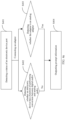
- an embodiment of this application provides a method for detecting a connection to an electronic device port.
- an embodiment of this application provides a method for detecting a connection to an electronic device port.
- the method includes the following steps: S201: Detecting a status of the electronic device port.
- the electronic device port is a USB Type-C interface
- a headset plug connected to the electronic device port is also the USB Type-C interface.
- the pins of the headset plug 10 are correspondingly connected to the pins in the electronic device port 10, and levels of the pins in the electronic device port change. In this way, it can be detected whether there is a headset connected to the electronic device port.
- the CC pin in the headset plug is pulled down to the ground, and the headset plug is inserted into the electronic device port 10. Since the CC pin in the electronic device port 10 is connected to the CC pin of the headset plug 20, the CC pin in the electronic device port is also be pulled down and forms a low level. In this way, a processor of the electronic device may detect the level value of the CC pin in the electronic device port 10, to determine whether there is a headset connected to the electronic device port.
- S202 Detecting whether the electronic device has a function of performing conversion function between digital audio and analog audio.
- the electronic device having the function of performing conversion between digital audio and analog audio means that the electronic device supports the analog headset.
- the function of performing conversion between digital audio and analog audio of the electronic device can be realized by the codec. Therefore, detecting whether the electronic device has the function of performing conversion between digital audio and analog audio may be understood as detecting whether the electronic device is configured with the codec.
- Whether the electronic device is configured with the codec may be detected in the following three manners.
- configuration information of the electronic device is acquired, and it is determined whether the configuration information of the electronic device includes attribute information of the codec.
- the electronic device stores configuration information of the electronic device.
- the configuration information of the electronic device includes attribute information of various components configured in the electronic device.
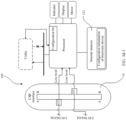
- FIG. 1c illustrates a structural example of the electronic device.
- a speaker 170A, a receiver 170B, a microphone 170C, and a headset port 130 are directly connected to a processor 110, indicating that the codec is omitted in the electronic device.
- the configuration information of the electronic device does not include the attribute information of the codec. If the electronic device is equipped with the codec, the attribute information of the codec is included in the configuration information of the electronic device.
- the electronic device By querying the attribute information of the codec in the configuration information of the electronic device, it can be determined whether the electronic device is equipped with the codec. In a second manner, a request is sent to the codec, and it is determined whether a response message is received from the codec within a preset time period.
- the electronic device may attempt to establish a connection to the codec. If the connection is successfully established, it means that the electronic device is equipped with the codec. Otherwise, the electronic device is not equipped with the codec.
- the electronic device sends the request to the codec by using a unique bus of the codec. If the electronic device receives the response message from the codec within the preset time period, it means that the electronic device is equipped with the codec. If no response message is received from the codec within the preset time period, it means that the electronic device is not configured with the codec.
- the preset time period may be set according to a time difference between the request message and the response message.
- a level value of a configuration bit of the codec is read, and it is determined whether the level value of the configuration bit of the codec is a target value, where the target value is used for indicating that the electronic device is not configured with the codec.
- whether the electronic device is equipped with the codec leads to a different level value of the configuration bit of the codec of the processor.
- the electronic device is equipped with the codec, and the configuration bit of the codec of the processor is configured as high.
- the electronic device may be equipped with the codec, and the configuration bit of the codec of the processor is configured as low.
- FIG. 2a shows that steps S202 and S203 are performed in parallel after step S201.
- steps S202 and S203 may be performed in the following two serial manners.
- the processor may determine whether the headset connected to the electronic device port is the analog headset by detecting potential values of the dual CC pins in the electronic device port.
- S204 is performed to output prompt information.
- the prompt information is used for indicating that the headset connected to the electronic device port is erroneous.
- the electronic device not having the function of performing conversion between digital audio and analog audio means that the electronic device is not equipped with the codec and cannot complete digital-to-analog conversion of a digital audio. Since the electronic device does not support the analog headset, and the analog headset cannot be used when connected to the electronic device port. Therefore, the prompt information is required to be outputted to indicate that the headset connected to the electronic device port is erroneous and prompt the user to connect the digital headset.
- a common implementation of outputting the prompt information is: displaying the prompt message on the display of the electronic device. While the prompt information is displayed on the display of the electronic device, the indicator 192 assists in the prompting or the motor 191 vibrates to assist in the prompting. Alternatively, the prompt information may be outputted by the indicator 192, the motor 191, or a combination thereof.
- the headset when the headset is connected to the electronic device port, if it is detected that the electronic device does not have the function of performing conversion between digital audio and analog audio and that the headset connected to the electronic device port is the analog headset, it is determined that the headset connected to the electronic device port is erroneous, and the prompt message is outputted. In this way, the electronic device omitting the codec can provide prompt when the analog headset is connected to the electronic device port.
- the analog headset generally uses a 3.5-mm plug.
- the analog headset 200 is connected to the electronic device 100 by using a headset adapter 300, as shown in FIG. 3a .
- the headset adapter is classified into an analog adapter and a digital adapter.
- FIG. 3b shows an analog adapter.
- the analog adapter includes a Type-C plug 31, a socket terminal 32, and a connecting line connecting the Type-C plug 31 to the socket terminal 32.
- the Type-C plug 31 is configured to be connected to the Type-C interface of the electronic device, and the socket terminal 32 is configured for the headset to be connected.
- the digital adapter further includes an audio decoding chip.
- the digital adapter can complete the digital-to-analog conversion of a digital signal by using the audio decoding chip.
- the analog headset is connected to the electronic device port by the digital adapter, since the digital adapter can complete the digital-to-analog conversion of a digital signal, even if the codec is omitted in the electronic device, the digital audio outputted by the electronic device can be converted to the analog signal by the digital adapter, so that the analog headset can be used. However, if the analog headset is connected to the electronic device by the analog adapter, the analog headset still cannot be used if the electronic device is not configured with the codec. Based on the above, by using the method for detecting a connection to an electronic device port provided in this embodiment of this application, an erroneous connection can be prompted when the analog headset is connected to the electronic device by the analog adapter and the electronic device is not configured with the codec.
- FIG. 3c shows a method for detecting a connection to an electronic device port according to an embodiment of this application.
- the method includes the following steps: S301: Detecting a status of the electronic device port.
- S302 Detecting whether an electronic device has a function of performing conversion function between digital audio and analog audio.
- the analog headset 200 is inserted into the socket terminal 32 of the analog adapter 300, and the Type-C plug 31 of the analog adapter 300 is inserted into the USB Type-C interface 10 of the electronic device 100.
- the processor of the electronic device 100 detects whether the electronic device has the function of performing conversion between digital audio and analog audio, and detects whether the connected adapter is an analog component.
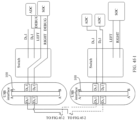
- a CC pin and a VCONN pin (also referred to as a CC pin) of the analog adapter are connected to a digital ground (DGND) by a switch.
- DGND digital ground
- the switch is driven to close, so that DET2 and DET1 are connected, and the CC pin and the VCONN pin of the analog adapter are grounded accordingly.
- the potentials of the dual CC pins in the USB interface 10 are both pulled down, and the processor detects that the potentials of the dual CC pins are low levels.
- a single CC pin of the digital adapter is directly grounded. Therefore, when the headset is connected to the electronic device port by the digital adapter, a voltage of the single CC pin voltage of the electronic device port is pulled down. Based on the above, it may be determined whether the adapter to which the headset is connected is the analog adapter by detecting the potential values of the dual CC pins in the electronic device port. In addition, since the single CC pin of the digital adapter is grounded, even if no headset is connected to the digital adapter and the digital adapter is connected to the electronic device port alone, it can be determined whether the connected adapter is the digital adapter by identifying the level value of the single CC pin of the electronic device port.
- Steps S302 and S303 may alternatively be performed in the above two serial manners.
- S304 is performed to output prompt information.
- the prompt information is used for indicating that the headset connected to the electronic device port is erroneous.
- the prompt message is also outputted to indicate that the component connected to the electronic device port is erroneous, so as to prompt the user to connect the digital headset or the digital adapter.
- the electronic device omitting the codec can provide prompt when the analog headset and the analog adapter are connected to the electronic device port.
- the analog adapter 300 is connected to the port of the electronic device 100.
- No headset is connected to the analog adapter, switches to which the dual CC pins of the analog adapter are connected are in an open state, and the dual CC pins of the analog adapter are in a floating state., and therefore connecting the analog adapter to the electronic device port does not cause dual CC pull-down of the electronic device port. Therefore, it cannot be determined whether the connected adapter is the analog adapter by detecting the level values of the dual CC pins of the electronic device port.
- a left (LEFT) channel pin, a right (RIGHT) channel pin, or an SBU pin (configured to transmit an MIC/GND signal of the headset) is connected to the digital ground (DGND) by default.
- FIG. 4b shows an example of connecting the LEFT channel pin to the DGND. Since the LEFT channel pin, the RIGHT channel pins, or the SBU pin of the analog adapter is connected to the DGND by default, when the analog adapter is connected to the electronic device port, the LEFT channel pin, the RIGHT channel pin, or the SBU pin in the electronic device port is short-circuited to the ground.
- an SS pin of the analog adapter is used as a to-be-detected pin, and the SS pin of the analog adapter is connected to the DGND.
- the SS pin is connected to a GPIO interface or an ADC interface, and the GPIO interface or the ADC interface detects whether a level of the SS pin is a low level.
- This implementation is applicable to a situation in which the analog adapter supports the SS pin and the electronic device supports the SS pin.
- the SS pin transmits a USB3.0 pin signal, and is configured to transmit a high-speed signal. Some electronic devices do not support USB3.0.
- the LEFT channel pin, the RIGHT channel pin, or the SBU pin is connected to a branch of an SOC, and is connected to the ADC interface or the GPIO interface, so that the ADC interface or the GPIO interface detects the level value of the LEFT channel pin, the RIGHT channel pin, or the SBU pin.
- FIG. 4c illustrates an example in which the ADC interface is connected to the LEFT channel pin and the branch of the SOC.
- the adapter is connected to the electronic device port, and the pins of the adapter are correspondingly connected to the pins of the electronic device port.
- the system-on-chip (SOC) of the electronic device sends a control instruction, and switches of the Dp1 pin (also referred to as a right channel pin) and the D N 1 pin (also referred to as a left channel pin) of the electronic device port shown in FIG. 4b are switched to a DEBUG channel (which is a serial port channel) in response to the control instruction.
- SOC system-on-chip
- the ADC interface detects that the low level of the LEFT channel pin. It may be determined that, since the analog adapter is connected to the electronic device port, prompt information may be generated to prompt that the analog adapter is connected to the electronic device port.
- the D P 1 pin, the D N 1 pin, or the SBU pin of the electronic device port is connected to the ADC interface or the GPIO interface.
- the D P 1 pin and the D N 1 pin of the electronic device port are connected to the ADC interface.
- FIG. 4e shows a method for detecting a connection to an electronic device port according to an embodiment of this application.
- the method includes the following steps: S401: Detecting a status of the electronic device port.
- S402 Detecting whether an electronic device has a function of performing conversion function between digital audio and analog audio.
- the analog adapter 300 is inserted into the electronic device port 100, and the pins of the analog adapter 300 are correspondingly connected to the pins of the electronic device port 100.
- the D N 1 pin of the analog adapter 300 is connected to the DGND, the D N 1 pin of the electronic device port 100 is also grounded correspondingly, and the ADC detects that the D N 1 pin of the electronic device port 100 is at a low level. In this way, it can be detected that the adapter is the analog adapter.
- Steps S402 and S403 may alternatively be performed in the above two serial manners.
- S404 is performed to output prompt information.
- the prompt information is used for indicating that the adapter connected to the electronic device port is erroneous.
- the prompt message is outputted to indicate that the adapter connected to the electronic device port is erroneous, so as to prompt the user to connect the digital headset or the digital adapter. In this way, the electronic device omitting the codec can provide prompt when the analog adapter is connected to the electronic device port.
- the plug of the analog headset 200 establishes a connection between DET2 and DET1, and disconnects short-circuited ground of the LEFT channel pin.
- the ADC interface detects that the level of the LEFT channel pin changes to a high level, and the potential values of the dual CC pins in the electronic device port 100 are pulled down to low levels. Since the potential values of the dual CC pins in the electronic device port 100 are pulled down to the low levels, it can be detected that the component connected to the electronic device port 100 is: the analog adapter + the analog headset.
- a further example provides an apparatus for detecting a connection to an electronic device port. As shown in FIG. 5 , the apparatus includes:
- the first detection unit 501 is configured to:
- the second detection unit 502 is configured to detect whether level values of dual CC pins of the electronic device port are low levels. If it is detected that the level values of the dual CC pins of the electronic device port are the low levels, it indicates that the component is the analog component.
- the second detection unit 502 detects whether the component is the analog component includes: detecting whether a level value of a target pin of the electronic device port is a low level.
- the target pin includes a left channel pin, a right channel pin, a first pin, or a second pin, where the first pin is configured to transmit a signal of a microphone or the ground, and the second pin is configured to transmit a high-speed signal. If it is detected that the level value of the target pin of the electronic device port is the low level, it indicates that the component is the analog component.
- the apparatus for detecting a connection to an electronic device port further includes: an output unit, configured to output prompt information after the determining unit determines that the component connected to the electronic device port is erroneous, where the prompt information is used for indicating that the component connected to the electronic device port is erroneous.
- the first detection unit 501 detects whether the electronic device has the function of performing conversion between digital audio and analog audio
- the second detection unit 502 detects whether the component is the analog component
- the output unit 503 detects that the electronic device does not have the function of performing conversion between digital audio and analog audio, and detects whether the component is the analog component, it is determined that the component connected to the electronic device port is erroneous.
- the electronic device not configured with the codec can report an error when the analog component is connected to the electronic device port.
- Another embodiment of this application provides a readable storage medium. Instructions in the readable storage medium, when executed by a processor of an electronic device, cause the electronic device to perform the method for detecting a connection to an electronic device port in any of the above embodiments.
- the readable storage medium may be a non-transitory computer-readable storage medium.
- the non-transitory computer-readable storage medium may be a ROM, a random access memory (RAM), a CD-ROM, a magnetic tape, a floppy disk, an optical data storage device, or the like.
Landscapes
- Engineering & Computer Science (AREA)
- Signal Processing (AREA)
- Physics & Mathematics (AREA)
- Human Computer Interaction (AREA)
- Computer Networks & Wireless Communication (AREA)
- Theoretical Computer Science (AREA)
- Acoustics & Sound (AREA)
- General Engineering & Computer Science (AREA)
- General Physics & Mathematics (AREA)
- Circuit For Audible Band Transducer (AREA)
Claims (11)
- Ein elektronisches Gerät (100), gekennzeichnet durch einen Headset-Anschluss (130) und einen Prozessor (110), wobeidie Headset-Buchse (130) ist für den Anschluss einer Headset-Komponente konfiguriert, und die Headset-Komponente umfasst ein Headset (200) oder einen Headset-Adapter (300);der Prozessor (110) ist so konfiguriert, dass er bestimmt, dass der Headset-Anschluss (130) die angeschlossene Headset-Komponente nicht unterstützt, falls festgestellt wird, dass das elektronische Gerät (100) keine Funktion zur Umwandlung zwischen digitalem Audio und analogem Audio hat und dass die an den Headset-Anschluss (130) angeschlossene Headset-Komponente eine analoge Komponente ist; und wobeidas elektronische Gerät (100) umfasst ferner mindestens eine oder eine beliebige Kombination aus einem Motor (191), einem Display (194) oder einem Indikator, der so konfiguriert ist, dass er Aufforderungsinformationen ausgibt, als Reaktion auf eine Anweisung, die in einem Fall generiert wird, in dem der Prozessor (110) bestimmt, dass der Headset-Anschluss (130) die angeschlossene Headset-Komponente nicht unterstützt, wobei die Aufforderungsinformationen verwendet werden, um anzuzeigen, dass der Headset-Anschluss (130) die angeschlossene Headset-Komponente nicht unterstützt.
- Das elektronische Gerät (100) nach Anspruch 1, dadurch gekennzeichnet, dass der Prozessor (110) ferner dazu konfiguriert ist, um zu bestimmen, dass das elektronische Gerät (100) nicht die Funktion hat, eine Umwandlung zwischen digitalem Audio und analogem Audio durchzuführen:
Erwerben Sie Konfigurationsinformationen des elektronischen Geräts (100) und stellen Sie fest, dass die Konfigurationsinformationen des elektronischen Geräts (100) keine Attributinformationen eines Codecs enthalten, der die Umwandlung zwischen digitalem Audio und analogem Audio unterstützt. - Das elektronische Gerät (100) nach Anspruch 1, dadurch gekennzeichnet, dass der Prozessor (110) ferner dazu konfiguriert ist, um zu bestimmen, dass das elektronische Gerät (100) nicht die Funktion hat, eine Umwandlung zwischen digitalem Audio und analogem Audio durchzuführen:
Senden Sie eine Anfrage an den Codec und stellen Sie fest, dass innerhalb eines voreingestellten Zeitraums keine Antwortnachricht vom Codec empfangen wird, der die Umwandlung zwischen digitalem Audio und analogem Audio unterstützt. - Das elektronische Gerät (100) nach Anspruch 1, dadurch gekennzeichnet, dass der Prozessor (110) ferner dazu konfiguriert ist, um zu bestimmen, dass das elektronische Gerät (100) nicht die Funktion hat, eine Umwandlung zwischen digitalem Audio und analogem Audio durchzuführen:
Lesen Sie einen Pegelwert eines Konfigurationsbits des Codecs und bestimmen Sie, dass der Pegelwert des Konfigurationsbits des Codecs ein Zielwert ist, wobei der Zielwert verwendet wird, um anzuzeigen, dass das elektronische Gerät (100) nicht mit dem Codec konfiguriert ist, der die Umwandlung zwischen digitalem Audio und analogem Audio unterstützt. - Das elektronische Gerät (100) nach einem der Ansprüche 1 bis 4, dadurch gekennzeichnet, dass der Prozessor (110) ferner so konfiguriert ist, um zu bestimmen, dass die Headset-Komponente die analoge Komponente ist:
Erkennen Sie, dass die Pegelwerte der dualen CC-Pins des Headset-Ports (130) niedrige Pegel sind. - Das elektronische Gerät (100) nach einem der Ansprüche 1 bis 4, dadurch gekennzeichnet, dass ein Zielpin des Headset-Anschlusses (130) des elektronischen Geräts (100) mit einer Erkennungsschnittstelle verbunden ist, wobei die Erkennungsschnittstelle so konfiguriert ist, dass sie ein Pegel des Zielpins erkennt, und der Zielpin umfasst einen linken Kanalpin, einen rechten Kanalpin, einen ersten Pin oder einen zweiten Pin, wobei der erste Pin so konfiguriert ist, dass er ein Signal eines Mikrofons (170C) oder die Masse überträgt, und der zweite Pin so konfiguriert ist, dass er ein Hochgeschwindigkeitssignal überträgt, und
Um festzustellen, dass die Headset-Komponente die analoge Komponente ist, ist der Prozessor (110) weiterhin so konfiguriert, dass er erkennt, dass der Pegelwert des Zielpins über die Erkennungsschnittstelle ein niedriger Pegel ist. - Ein Verfahren zum Erkennen einer Verbindung zu einem Headset-Anschluss (130) eines elektronischen Geräts (100), gekennzeichnet durch Folgendes:Erkennen, dass eine Headset-Komponente mit dem Headset-Anschluss (130) des elektronischen Geräts (100) verbunden ist, wobei die Headset-Komponente ein Headset oder ein Headset-Adapter (300) umfasst;Bestimmen, dass das elektronische Gerät (100) keine Funktion zur Umwandlung zwischen digitalem Audio und analogem Audio hat und dass die Headset-Komponente eine analoge Komponente ist;Bestimmen, dass der Headset-Anschluss (130) die angeschlossene Headset-Komponente nicht unterstützt; wobeinach der Feststellung, dass der Headset-Anschluss (130) die angeschlossene Headset-Komponente nicht unterstützt, umfasst das Verfahren weiterhin:
Ausgabe von Aufforderungsinformationen, wobei die Aufforderungsinformationen verwendet werden, um anzuzeigen, dass der Headset-Anschluss (130) die angeschlossene Headset-Komponente nicht unterstützt. - Verfahren zum Erkennen einer Verbindung zu einer Headset-Buchse (130) eines elektronischen Geräts (100) nach Anspruch 7, dadurch gekennzeichnet, dass eine Art der Bestimmung, dass das elektronische Gerät (100) nicht die Funktion der Umwandlung zwischen digitalem Audio und analogem Audio besitzt, umfasst:Erfassen von Konfigurationsinformationen des elektronischen Geräts (100) und Feststellen, dass die Konfigurationsinformationen des elektronischen Geräts (100) keine Attributinformationen eines Codecs enthalten, der die Umwandlung zwischen digitalem Audio und analogem Audio unterstützt; oderSenden einer Anfrage an den Codec und Feststellen, dass innerhalb eines voreingestellten Zeitraums keine Antwortnachricht vom Codec empfangen wird; oderLesen eines Pegelwerts eines Konfigurationsbits des Codecs und Bestimmen, dass der Pegelwert des Konfigurationsbits des Codecs ein Zielwert ist, wobei der Zielwert verwendet wird, um anzuzeigen, dass das elektronische Gerät nicht mit dem Codec konfiguriert ist.
- Verfahren zum Erkennen einer Verbindung zu einer Headset-Buchse (130) eines elektronischen Geräts (100) nach Anspruch 7 oder 8, dadurch gekennzeichnet, dass eine Art der Bestimmung, dass die Headset-Komponente die analoge Komponente ist, umfasst:
Erkennen, dass die Pegelwerte der dualen CC-Pins des Headset-Ports niedrige Pegel sind. - Das Verfahren zum Erkennen einer Verbindung zu einer Headset-Buchse (130) eines elektronischen Geräts (100) gemäß Anspruch 7 oder 8, dadurch gekennzeichnet, dass ein Zielpin der Headset-Buchse (130) des elektronischen Geräts (100) mit einer Erkennungsschnittstelle verbunden ist, die Erkennungsschnittstelle so konfiguriert ist, dass sie ein Pegel des Zielpins erkennt, und der Zielpin umfasst einen linken Kanalpin, einen rechten Kanalpin, einen ersten Pin oder einen zweiten Pin, wobei der erste Pin so konfiguriert ist, dass er ein Signal eines Mikrofons (170C) oder die Masse überträgt, und der zweite Pin so konfiguriert ist, dass er ein Hochgeschwindigkeitssignal überträgt; und
Eine Methode zur Bestimmung, dass die Headset-Komponente die analoge Komponente ist, umfasst: Erkennen, dass der Pegelwert des Zielpins über die Erkennungsschnittstelle ein niedriger Pegel ist. - Ein lesbares Speichermedium, dadurch gekennzeichnet, dass ein Computerprogramm darauf gespeichert ist, wobei das Computerprogramm, wenn es von einem Prozessor (110) ausgeführt wird, das Verfahren zur Erkennung einer Verbindung zu einer Headset-Buchse (130) eines elektronischen Geräts (100) gemäß einem der Ansprüche 7 bis 10 implementiert.
Applications Claiming Priority (2)
| Application Number | Priority Date | Filing Date | Title |
|---|---|---|---|
| CN202110800096.XA CN115604388B (zh) | 2021-07-12 | 2021-07-12 | 电子设备的耳机接口的接入检测方法、电子设备及介质 |
| PCT/CN2022/089196 WO2023284362A1 (zh) | 2021-07-12 | 2022-04-26 | 电子设备的耳机接口的接入检测方法、电子设备及介质 |
Publications (3)
| Publication Number | Publication Date |
|---|---|
| EP4142270A1 EP4142270A1 (de) | 2023-03-01 |
| EP4142270A4 EP4142270A4 (de) | 2023-12-06 |
| EP4142270B1 true EP4142270B1 (de) | 2025-02-19 |
Family
ID=84829989
Family Applications (1)
| Application Number | Title | Priority Date | Filing Date |
|---|---|---|---|
| EP22800052.7A Active EP4142270B1 (de) | 2021-07-12 | 2022-04-26 | Zugangsdetektionsverfahren für kopfhörerstecker einer elektronischen vorrichtung, elektronische vorrichtung und medium |
Country Status (4)
| Country | Link |
|---|---|
| US (1) | US12302055B2 (de) |
| EP (1) | EP4142270B1 (de) |
| CN (1) | CN115604388B (de) |
| WO (1) | WO2023284362A1 (de) |
Family Cites Families (10)
| Publication number | Priority date | Publication date | Assignee | Title |
|---|---|---|---|---|
| US8909803B2 (en) * | 2009-03-16 | 2014-12-09 | Apple Inc. | Accessory identification for mobile computing devices |
| CN105898641A (zh) * | 2010-10-02 | 2016-08-24 | 张沈平 | 一种耳机、相应的音源设备以及控制方法 |
| KR20160094183A (ko) * | 2015-01-30 | 2016-08-09 | 삼성전자주식회사 | 전자 장치의 이어잭을 이용한 전자 장치와 외부 장치와의 인터페이스 장치 및 방법 |
| US10028059B2 (en) * | 2015-08-24 | 2018-07-17 | Microsoft Technology Licensing, Llc | Headphone and associated host apparatus supporting both digital and analog audio connectivity |
| KR102393364B1 (ko) * | 2015-10-29 | 2022-05-03 | 삼성전자주식회사 | 오디오 신호 제어 방법 및 이를 지원하는 전자장치 |
| CN105933810A (zh) * | 2016-04-29 | 2016-09-07 | 乐视控股(北京)有限公司 | 耳机模式切换方法、装置、电子设备及耳机 |
| CN108666826B (zh) * | 2017-03-31 | 2020-06-23 | 中兴通讯股份有限公司 | 一种转接头、终端设备和转接头系统 |
| KR20180123879A (ko) * | 2017-05-10 | 2018-11-20 | 삼성전자주식회사 | 이어폰의 타입에 따라 오디오 출력을 제어하기 위한 전자 장치 및 방법 |
| CN111130596B (zh) * | 2019-11-14 | 2021-08-03 | 荣耀终端有限公司 | 一种复用电路、接口电路系统以及移动终端 |
| CN210721446U (zh) * | 2019-11-20 | 2020-06-09 | 深圳市腾腾高科电子技术有限公司 | 接口检测控制装置及接口转换器 |
-
2021
- 2021-07-12 CN CN202110800096.XA patent/CN115604388B/zh active Active
-
2022
- 2022-04-26 US US17/924,004 patent/US12302055B2/en active Active
- 2022-04-26 EP EP22800052.7A patent/EP4142270B1/de active Active
- 2022-04-26 WO PCT/CN2022/089196 patent/WO2023284362A1/zh not_active Ceased
Also Published As
| Publication number | Publication date |
|---|---|
| EP4142270A1 (de) | 2023-03-01 |
| CN115604388A (zh) | 2023-01-13 |
| US20240129657A1 (en) | 2024-04-18 |
| US12302055B2 (en) | 2025-05-13 |
| CN115604388B (zh) | 2024-07-19 |
| EP4142270A4 (de) | 2023-12-06 |
| WO2023284362A1 (zh) | 2023-01-19 |
Similar Documents
| Publication | Publication Date | Title |
|---|---|---|
| US9414147B2 (en) | Method and device for earphone and USB to share micro-USB interface | |
| US7949802B2 (en) | Enhanced communication via a serial interface | |
| US8417292B2 (en) | Device-adaptive connection establishing method and system for a mobile terminal | |
| CN113937832B (zh) | 一种充电线缆、充电线缆的识别方法及系统 | |
| CN112468644B (zh) | 智能手表和智能手表的通话方法 | |
| KR20170049958A (ko) | 오디오 신호 제어 방법 및 이를 지원하는 전자장치 | |
| CN112737566A (zh) | 一种接口转换电路及电子设备 | |
| CN101022278A (zh) | 终端设备、连接器、充电器和充电方法 | |
| CN107547975A (zh) | 音频通道的切换方法、系统和语音采集器 | |
| CN104093114B (zh) | 一种耳机按键的检测装置、检测系统及检测方法 | |
| CN111596881A (zh) | 音频播放设备、系统、切换方法及蓝牙音箱、蓝牙耳机 | |
| WO2018076628A1 (zh) | 一种usb接口电路、终端、耳机电路及耳机、存储介质 | |
| EP4142270A1 (de) | Zugangsdetektionsverfahren für kopfhörerstecker einer elektronischen vorrichtung, elektronische vorrichtung und medium | |
| CN213638004U (zh) | 一种多媒体智能会议机控制系统 | |
| CN105811515A (zh) | 移动终端向通用串行总线蓝牙耳机充电的方法及系统 | |
| CN110475175B (zh) | 一种为无线耳机充电的方法及装置 | |
| CN116546410B (zh) | 电子设备接口的接入检测方法、电子设备及存储介质 | |
| EP4297430B1 (de) | Elektronische vorrichtung, pull-up-schaltung und verfahren zur verhinderung von pop-ton bei kopfhörern | |
| HK40079400A (en) | Method for connection detection of earphone interface of electronic device, electronic device, and medium | |
| HK40079400B (zh) | 电子设备的耳机接口的接入检测方法、电子设备及介质 | |
| CN117134009A (zh) | 充电方法及电子设备 | |
| TWI394045B (zh) | 攜帶型電子裝置及其附件鑒別方法 | |
| CN106776424B (zh) | 接头及其控制方法、控制装置和电子设备 | |
| CN218103457U (zh) | 通讯充电状态切换电路和蓝牙耳机 | |
| US20260003440A1 (en) | Level Setting Method and Electronic Device |
Legal Events
| Date | Code | Title | Description |
|---|---|---|---|
| STAA | Information on the status of an ep patent application or granted ep patent |
Free format text: STATUS: UNKNOWN |
|
| STAA | Information on the status of an ep patent application or granted ep patent |
Free format text: STATUS: THE INTERNATIONAL PUBLICATION HAS BEEN MADE |
|
| PUAI | Public reference made under article 153(3) epc to a published international application that has entered the european phase |
Free format text: ORIGINAL CODE: 0009012 |
|
| STAA | Information on the status of an ep patent application or granted ep patent |
Free format text: STATUS: REQUEST FOR EXAMINATION WAS MADE |
|
| 17P | Request for examination filed |
Effective date: 20221115 |
|
| AK | Designated contracting states |
Kind code of ref document: A1 Designated state(s): AL AT BE BG CH CY CZ DE DK EE ES FI FR GB GR HR HU IE IS IT LI LT LU LV MC MK MT NL NO PL PT RO RS SE SI SK SM TR |
|
| REG | Reference to a national code |
Ref country code: DE Free format text: PREVIOUS MAIN CLASS: H04M0001724000 Ref country code: DE Ref legal event code: R079 Ref document number: 602022010931 Country of ref document: DE Free format text: PREVIOUS MAIN CLASS: H04M0001724000 Ipc: H04M0001600000 |
|
| A4 | Supplementary search report drawn up and despatched |
Effective date: 20231107 |
|
| RIC1 | Information provided on ipc code assigned before grant |
Ipc: G06F 13/38 20060101ALI20231031BHEP Ipc: H04R 1/10 20060101ALI20231031BHEP Ipc: H04M 1/72409 20210101ALI20231031BHEP Ipc: H04M 1/60 20060101AFI20231031BHEP |
|
| STAA | Information on the status of an ep patent application or granted ep patent |
Free format text: STATUS: EXAMINATION IS IN PROGRESS |
|
| 17Q | First examination report despatched |
Effective date: 20240516 |
|
| GRAP | Despatch of communication of intention to grant a patent |
Free format text: ORIGINAL CODE: EPIDOSNIGR1 |
|
| STAA | Information on the status of an ep patent application or granted ep patent |
Free format text: STATUS: GRANT OF PATENT IS INTENDED |
|
| DAV | Request for validation of the european patent (deleted) | ||
| DAX | Request for extension of the european patent (deleted) | ||
| INTG | Intention to grant announced |
Effective date: 20240912 |
|
| GRAS | Grant fee paid |
Free format text: ORIGINAL CODE: EPIDOSNIGR3 |
|
| GRAA | (expected) grant |
Free format text: ORIGINAL CODE: 0009210 |
|
| STAA | Information on the status of an ep patent application or granted ep patent |
Free format text: STATUS: THE PATENT HAS BEEN GRANTED |
|
| AK | Designated contracting states |
Kind code of ref document: B1 Designated state(s): AL AT BE BG CH CY CZ DE DK EE ES FI FR GB GR HR HU IE IS IT LI LT LU LV MC MK MT NL NO PL PT RO RS SE SI SK SM TR |
|
| REG | Reference to a national code |
Ref country code: GB Ref legal event code: FG4D |
|
| REG | Reference to a national code |
Ref country code: CH Ref legal event code: EP |
|
| REG | Reference to a national code |
Ref country code: IE Ref legal event code: FG4D Ref country code: NL Ref legal event code: FP |
|
| REG | Reference to a national code |
Ref country code: DE Ref legal event code: R096 Ref document number: 602022010931 Country of ref document: DE |
|
| PG25 | Lapsed in a contracting state [announced via postgrant information from national office to epo] |
Ref country code: RS Free format text: LAPSE BECAUSE OF FAILURE TO SUBMIT A TRANSLATION OF THE DESCRIPTION OR TO PAY THE FEE WITHIN THE PRESCRIBED TIME-LIMIT Effective date: 20250519 |
|
| PG25 | Lapsed in a contracting state [announced via postgrant information from national office to epo] |
Ref country code: FI Free format text: LAPSE BECAUSE OF FAILURE TO SUBMIT A TRANSLATION OF THE DESCRIPTION OR TO PAY THE FEE WITHIN THE PRESCRIBED TIME-LIMIT Effective date: 20250219 |
|
| PG25 | Lapsed in a contracting state [announced via postgrant information from national office to epo] |
Ref country code: PL Free format text: LAPSE BECAUSE OF FAILURE TO SUBMIT A TRANSLATION OF THE DESCRIPTION OR TO PAY THE FEE WITHIN THE PRESCRIBED TIME-LIMIT Effective date: 20250219 |
|
| PGFP | Annual fee paid to national office [announced via postgrant information from national office to epo] |
Ref country code: DE Payment date: 20250319 Year of fee payment: 4 |
|
| PG25 | Lapsed in a contracting state [announced via postgrant information from national office to epo] |
Ref country code: ES Free format text: LAPSE BECAUSE OF FAILURE TO SUBMIT A TRANSLATION OF THE DESCRIPTION OR TO PAY THE FEE WITHIN THE PRESCRIBED TIME-LIMIT Effective date: 20250219 |
|
| REG | Reference to a national code |
Ref country code: LT Ref legal event code: MG9D |
|
| PG25 | Lapsed in a contracting state [announced via postgrant information from national office to epo] |
Ref country code: IS Free format text: LAPSE BECAUSE OF FAILURE TO SUBMIT A TRANSLATION OF THE DESCRIPTION OR TO PAY THE FEE WITHIN THE PRESCRIBED TIME-LIMIT Effective date: 20250619 Ref country code: NO Free format text: LAPSE BECAUSE OF FAILURE TO SUBMIT A TRANSLATION OF THE DESCRIPTION OR TO PAY THE FEE WITHIN THE PRESCRIBED TIME-LIMIT Effective date: 20250519 |
|
| PG25 | Lapsed in a contracting state [announced via postgrant information from national office to epo] |
Ref country code: HR Free format text: LAPSE BECAUSE OF FAILURE TO SUBMIT A TRANSLATION OF THE DESCRIPTION OR TO PAY THE FEE WITHIN THE PRESCRIBED TIME-LIMIT Effective date: 20250219 |
|
| PG25 | Lapsed in a contracting state [announced via postgrant information from national office to epo] |
Ref country code: LV Free format text: LAPSE BECAUSE OF FAILURE TO SUBMIT A TRANSLATION OF THE DESCRIPTION OR TO PAY THE FEE WITHIN THE PRESCRIBED TIME-LIMIT Effective date: 20250219 Ref country code: PT Free format text: LAPSE BECAUSE OF FAILURE TO SUBMIT A TRANSLATION OF THE DESCRIPTION OR TO PAY THE FEE WITHIN THE PRESCRIBED TIME-LIMIT Effective date: 20250620 |
|
| PG25 | Lapsed in a contracting state [announced via postgrant information from national office to epo] |
Ref country code: BG Free format text: LAPSE BECAUSE OF FAILURE TO SUBMIT A TRANSLATION OF THE DESCRIPTION OR TO PAY THE FEE WITHIN THE PRESCRIBED TIME-LIMIT Effective date: 20250219 Ref country code: GR Free format text: LAPSE BECAUSE OF FAILURE TO SUBMIT A TRANSLATION OF THE DESCRIPTION OR TO PAY THE FEE WITHIN THE PRESCRIBED TIME-LIMIT Effective date: 20250520 |
|
| REG | Reference to a national code |
Ref country code: AT Ref legal event code: MK05 Ref document number: 1769465 Country of ref document: AT Kind code of ref document: T Effective date: 20250219 |
|
| PG25 | Lapsed in a contracting state [announced via postgrant information from national office to epo] |
Ref country code: SE Free format text: LAPSE BECAUSE OF FAILURE TO SUBMIT A TRANSLATION OF THE DESCRIPTION OR TO PAY THE FEE WITHIN THE PRESCRIBED TIME-LIMIT Effective date: 20250219 |
|
| PG25 | Lapsed in a contracting state [announced via postgrant information from national office to epo] |
Ref country code: SM Free format text: LAPSE BECAUSE OF FAILURE TO SUBMIT A TRANSLATION OF THE DESCRIPTION OR TO PAY THE FEE WITHIN THE PRESCRIBED TIME-LIMIT Effective date: 20250219 |
|
| PG25 | Lapsed in a contracting state [announced via postgrant information from national office to epo] |
Ref country code: DK Free format text: LAPSE BECAUSE OF FAILURE TO SUBMIT A TRANSLATION OF THE DESCRIPTION OR TO PAY THE FEE WITHIN THE PRESCRIBED TIME-LIMIT Effective date: 20250219 |
|
| PG25 | Lapsed in a contracting state [announced via postgrant information from national office to epo] |
Ref country code: IT Free format text: LAPSE BECAUSE OF FAILURE TO SUBMIT A TRANSLATION OF THE DESCRIPTION OR TO PAY THE FEE WITHIN THE PRESCRIBED TIME-LIMIT Effective date: 20250219 |
|
| PG25 | Lapsed in a contracting state [announced via postgrant information from national office to epo] |
Ref country code: AT Free format text: LAPSE BECAUSE OF FAILURE TO SUBMIT A TRANSLATION OF THE DESCRIPTION OR TO PAY THE FEE WITHIN THE PRESCRIBED TIME-LIMIT Effective date: 20250219 |
|
| PG25 | Lapsed in a contracting state [announced via postgrant information from national office to epo] |
Ref country code: CZ Free format text: LAPSE BECAUSE OF FAILURE TO SUBMIT A TRANSLATION OF THE DESCRIPTION OR TO PAY THE FEE WITHIN THE PRESCRIBED TIME-LIMIT Effective date: 20250219 Ref country code: EE Free format text: LAPSE BECAUSE OF FAILURE TO SUBMIT A TRANSLATION OF THE DESCRIPTION OR TO PAY THE FEE WITHIN THE PRESCRIBED TIME-LIMIT Effective date: 20250219 |
|
| PG25 | Lapsed in a contracting state [announced via postgrant information from national office to epo] |
Ref country code: RO Free format text: LAPSE BECAUSE OF FAILURE TO SUBMIT A TRANSLATION OF THE DESCRIPTION OR TO PAY THE FEE WITHIN THE PRESCRIBED TIME-LIMIT Effective date: 20250219 |
|
| PG25 | Lapsed in a contracting state [announced via postgrant information from national office to epo] |
Ref country code: SK Free format text: LAPSE BECAUSE OF FAILURE TO SUBMIT A TRANSLATION OF THE DESCRIPTION OR TO PAY THE FEE WITHIN THE PRESCRIBED TIME-LIMIT Effective date: 20250219 |
|
| REG | Reference to a national code |
Ref country code: DE Ref legal event code: R097 Ref document number: 602022010931 Country of ref document: DE |
|
| REG | Reference to a national code |
Ref country code: CH Ref legal event code: H13 Free format text: ST27 STATUS EVENT CODE: U-0-0-H10-H13 (AS PROVIDED BY THE NATIONAL OFFICE) Effective date: 20251125 |
|
| PG25 | Lapsed in a contracting state [announced via postgrant information from national office to epo] |
Ref country code: LU Free format text: LAPSE BECAUSE OF NON-PAYMENT OF DUE FEES Effective date: 20250426 |
|
| PG25 | Lapsed in a contracting state [announced via postgrant information from national office to epo] |
Ref country code: MC Free format text: LAPSE BECAUSE OF FAILURE TO SUBMIT A TRANSLATION OF THE DESCRIPTION OR TO PAY THE FEE WITHIN THE PRESCRIBED TIME-LIMIT Effective date: 20250219 |
|
| PLBE | No opposition filed within time limit |
Free format text: ORIGINAL CODE: 0009261 |
|
| STAA | Information on the status of an ep patent application or granted ep patent |
Free format text: STATUS: NO OPPOSITION FILED WITHIN TIME LIMIT |
|
| REG | Reference to a national code |
Ref country code: BE Ref legal event code: MM Effective date: 20250430 |
|
| PG25 | Lapsed in a contracting state [announced via postgrant information from national office to epo] |
Ref country code: FR Free format text: LAPSE BECAUSE OF NON-PAYMENT OF DUE FEES Effective date: 20250430 |
|
| PG25 | Lapsed in a contracting state [announced via postgrant information from national office to epo] |
Ref country code: BE Free format text: LAPSE BECAUSE OF NON-PAYMENT OF DUE FEES Effective date: 20250430 |
|
| PG25 | Lapsed in a contracting state [announced via postgrant information from national office to epo] |
Ref country code: CH Free format text: LAPSE BECAUSE OF NON-PAYMENT OF DUE FEES Effective date: 20250430 |
|
| 26N | No opposition filed |
Effective date: 20251120 |
|
| PGFP | Annual fee paid to national office [announced via postgrant information from national office to epo] |
Ref country code: GB Payment date: 20260312 Year of fee payment: 5 |
|
| PG25 | Lapsed in a contracting state [announced via postgrant information from national office to epo] |
Ref country code: IE Free format text: LAPSE BECAUSE OF NON-PAYMENT OF DUE FEES Effective date: 20250426 |
|
| PGFP | Annual fee paid to national office [announced via postgrant information from national office to epo] |
Ref country code: NL Payment date: 20260317 Year of fee payment: 5 |