EP4140989B1 - 2-arylthiazolderivat oder salz davon, herstellungsverfahren dafür und pharmazeutische zusammensetzung damit - Google Patents
2-arylthiazolderivat oder salz davon, herstellungsverfahren dafür und pharmazeutische zusammensetzung damit Download PDFInfo
- Publication number
- EP4140989B1 EP4140989B1 EP21792031.3A EP21792031A EP4140989B1 EP 4140989 B1 EP4140989 B1 EP 4140989B1 EP 21792031 A EP21792031 A EP 21792031A EP 4140989 B1 EP4140989 B1 EP 4140989B1
- Authority
- EP
- European Patent Office
- Prior art keywords
- methylthiazole
- carboxamide hydrochloride
- cyano
- compound
- group
- Prior art date
- Legal status (The legal status is an assumption and is not a legal conclusion. Google has not performed a legal analysis and makes no representation as to the accuracy of the status listed.)
- Active
Links
Images


Classifications
-
- C—CHEMISTRY; METALLURGY
- C07—ORGANIC CHEMISTRY
- C07D—HETEROCYCLIC COMPOUNDS
- C07D277/00—Heterocyclic compounds containing 1,3-thiazole or hydrogenated 1,3-thiazole rings
- C07D277/02—Heterocyclic compounds containing 1,3-thiazole or hydrogenated 1,3-thiazole rings not condensed with other rings
- C07D277/20—Heterocyclic compounds containing 1,3-thiazole or hydrogenated 1,3-thiazole rings not condensed with other rings having two or three double bonds between ring members or between ring members and non-ring members
- C07D277/22—Heterocyclic compounds containing 1,3-thiazole or hydrogenated 1,3-thiazole rings not condensed with other rings having two or three double bonds between ring members or between ring members and non-ring members with only hydrogen atoms, hydrocarbon or substituted hydrocarbon radicals, directly attached to ring carbon atoms
- C07D277/28—Radicals substituted by nitrogen atoms
-
- A—HUMAN NECESSITIES
- A61—MEDICAL OR VETERINARY SCIENCE; HYGIENE
- A61K—PREPARATIONS FOR MEDICAL, DENTAL OR TOILETRY PURPOSES
- A61K31/00—Medicinal preparations containing organic active ingredients
- A61K31/33—Heterocyclic compounds
- A61K31/395—Heterocyclic compounds having nitrogen as a ring hetero atom, e.g. guanethidine or rifamycins
- A61K31/41—Heterocyclic compounds having nitrogen as a ring hetero atom, e.g. guanethidine or rifamycins having five-membered rings with two or more ring hetero atoms, at least one of which being nitrogen, e.g. tetrazole
- A61K31/425—Thiazoles
- A61K31/426—1,3-Thiazoles
-
- A—HUMAN NECESSITIES
- A61—MEDICAL OR VETERINARY SCIENCE; HYGIENE
- A61K—PREPARATIONS FOR MEDICAL, DENTAL OR TOILETRY PURPOSES
- A61K31/00—Medicinal preparations containing organic active ingredients
- A61K31/33—Heterocyclic compounds
- A61K31/395—Heterocyclic compounds having nitrogen as a ring hetero atom, e.g. guanethidine or rifamycins
- A61K31/435—Heterocyclic compounds having nitrogen as a ring hetero atom, e.g. guanethidine or rifamycins having six-membered rings with one nitrogen as the only ring hetero atom
- A61K31/44—Non condensed pyridines; Hydrogenated derivatives thereof
- A61K31/445—Non condensed piperidines, e.g. piperocaine
- A61K31/4523—Non condensed piperidines, e.g. piperocaine containing further heterocyclic ring systems
- A61K31/454—Non condensed piperidines, e.g. piperocaine containing further heterocyclic ring systems containing a five-membered ring with nitrogen as a ring hetero atom, e.g. pimozide, domperidone
-
- A—HUMAN NECESSITIES
- A61—MEDICAL OR VETERINARY SCIENCE; HYGIENE
- A61K—PREPARATIONS FOR MEDICAL, DENTAL OR TOILETRY PURPOSES
- A61K31/00—Medicinal preparations containing organic active ingredients
- A61K31/33—Heterocyclic compounds
- A61K31/395—Heterocyclic compounds having nitrogen as a ring hetero atom, e.g. guanethidine or rifamycins
- A61K31/535—Heterocyclic compounds having nitrogen as a ring hetero atom, e.g. guanethidine or rifamycins having six-membered rings with at least one nitrogen and one oxygen as the ring hetero atoms, e.g. 1,2-oxazines
- A61K31/5375—1,4-Oxazines, e.g. morpholine
- A61K31/5377—1,4-Oxazines, e.g. morpholine not condensed and containing further heterocyclic rings, e.g. timolol
-
- A—HUMAN NECESSITIES
- A61—MEDICAL OR VETERINARY SCIENCE; HYGIENE
- A61K—PREPARATIONS FOR MEDICAL, DENTAL OR TOILETRY PURPOSES
- A61K31/00—Medicinal preparations containing organic active ingredients
- A61K31/33—Heterocyclic compounds
- A61K31/395—Heterocyclic compounds having nitrogen as a ring hetero atom, e.g. guanethidine or rifamycins
- A61K31/55—Heterocyclic compounds having nitrogen as a ring hetero atom, e.g. guanethidine or rifamycins having seven-membered rings, e.g. azelastine, pentylenetetrazole
- A61K31/551—Heterocyclic compounds having nitrogen as a ring hetero atom, e.g. guanethidine or rifamycins having seven-membered rings, e.g. azelastine, pentylenetetrazole having two nitrogen atoms, e.g. dilazep
-
- A—HUMAN NECESSITIES
- A61—MEDICAL OR VETERINARY SCIENCE; HYGIENE
- A61P—SPECIFIC THERAPEUTIC ACTIVITY OF CHEMICAL COMPOUNDS OR MEDICINAL PREPARATIONS
- A61P1/00—Drugs for disorders of the alimentary tract or the digestive system
- A61P1/16—Drugs for disorders of the alimentary tract or the digestive system for liver or gallbladder disorders, e.g. hepatoprotective agents, cholagogues, litholytics
-
- A—HUMAN NECESSITIES
- A61—MEDICAL OR VETERINARY SCIENCE; HYGIENE
- A61P—SPECIFIC THERAPEUTIC ACTIVITY OF CHEMICAL COMPOUNDS OR MEDICINAL PREPARATIONS
- A61P25/00—Drugs for disorders of the nervous system
- A61P25/14—Drugs for disorders of the nervous system for treating abnormal movements, e.g. chorea, dyskinesia
- A61P25/16—Anti-Parkinson drugs
-
- A—HUMAN NECESSITIES
- A61—MEDICAL OR VETERINARY SCIENCE; HYGIENE
- A61P—SPECIFIC THERAPEUTIC ACTIVITY OF CHEMICAL COMPOUNDS OR MEDICINAL PREPARATIONS
- A61P25/00—Drugs for disorders of the nervous system
- A61P25/28—Drugs for disorders of the nervous system for treating neurodegenerative disorders of the central nervous system, e.g. nootropic agents, cognition enhancers, drugs for treating Alzheimer's disease or other forms of dementia
-
- A—HUMAN NECESSITIES
- A61—MEDICAL OR VETERINARY SCIENCE; HYGIENE
- A61P—SPECIFIC THERAPEUTIC ACTIVITY OF CHEMICAL COMPOUNDS OR MEDICINAL PREPARATIONS
- A61P3/00—Drugs for disorders of the metabolism
- A61P3/08—Drugs for disorders of the metabolism for glucose homeostasis
- A61P3/10—Drugs for disorders of the metabolism for glucose homeostasis for hyperglycaemia, e.g. antidiabetics
-
- C—CHEMISTRY; METALLURGY
- C07—ORGANIC CHEMISTRY
- C07D—HETEROCYCLIC COMPOUNDS
- C07D277/00—Heterocyclic compounds containing 1,3-thiazole or hydrogenated 1,3-thiazole rings
- C07D277/02—Heterocyclic compounds containing 1,3-thiazole or hydrogenated 1,3-thiazole rings not condensed with other rings
- C07D277/20—Heterocyclic compounds containing 1,3-thiazole or hydrogenated 1,3-thiazole rings not condensed with other rings having two or three double bonds between ring members or between ring members and non-ring members
- C07D277/32—Heterocyclic compounds containing 1,3-thiazole or hydrogenated 1,3-thiazole rings not condensed with other rings having two or three double bonds between ring members or between ring members and non-ring members with hetero atoms or with carbon atoms having three bonds to hetero atoms with at the most one bond to halogen, e.g. ester or nitrile radicals, directly attached to ring carbon atoms
- C07D277/56—Carbon atoms having three bonds to hetero atoms with at the most one bond to halogen
-
- C—CHEMISTRY; METALLURGY
- C07—ORGANIC CHEMISTRY
- C07D—HETEROCYCLIC COMPOUNDS
- C07D417/00—Heterocyclic compounds containing two or more hetero rings, at least one ring having nitrogen and sulfur atoms as the only ring hetero atoms, not provided for by group C07D415/00
- C07D417/02—Heterocyclic compounds containing two or more hetero rings, at least one ring having nitrogen and sulfur atoms as the only ring hetero atoms, not provided for by group C07D415/00 containing two hetero rings
- C07D417/06—Heterocyclic compounds containing two or more hetero rings, at least one ring having nitrogen and sulfur atoms as the only ring hetero atoms, not provided for by group C07D415/00 containing two hetero rings linked by a carbon chain containing only aliphatic carbon atoms
-
- C—CHEMISTRY; METALLURGY
- C07—ORGANIC CHEMISTRY
- C07D—HETEROCYCLIC COMPOUNDS
- C07D417/00—Heterocyclic compounds containing two or more hetero rings, at least one ring having nitrogen and sulfur atoms as the only ring hetero atoms, not provided for by group C07D415/00
- C07D417/02—Heterocyclic compounds containing two or more hetero rings, at least one ring having nitrogen and sulfur atoms as the only ring hetero atoms, not provided for by group C07D415/00 containing two hetero rings
- C07D417/12—Heterocyclic compounds containing two or more hetero rings, at least one ring having nitrogen and sulfur atoms as the only ring hetero atoms, not provided for by group C07D415/00 containing two hetero rings linked by a chain containing hetero atoms as chain links
Definitions
- the present invention relates to a novel 2-arylthiazole derivative or salt thereof, a process for the preparation thereof, and a pharmaceutical composition comprising the same. More specifically, the present invention relates to a novel 2-arylthiazole derivative or pharmaceutically acceptable salt thereof having a specific carboxamide moiety, for example a substituted aminoalkyl-carboxamide moiety, a N-containing heterocyclic-alkyl-carboxamide moiety, or a N-containing heterocyclic-carboxamide moiety, a process for the preparation thereof, and a pharmaceutical composition comprising the same.
- the 2-arylthiazole derivative or pharmaceutically acceptable salt thereof according to the present invention has an excellent autophagy-inducing activity.
- Autophagy which is also referred to as autophagocytosis, is the natural regulated mechanism of the cell that disassembles unnecessary or dysfunctional components. It allows the orderly degradation and recycling of cellular components.
- autophagosome a double-membraned vesicle known as an autophagosome. Then, the autophagosome fuses with an available lysosome and eventually the contents of the vesicle are degraded and recycled.
- Three forms of autophagy are commonly described: macroautophagy, microautophagy, and chaperone-mediated autophagy (CMA).
- autophagy when autophagy is reduced, various diseases may be caused by accumulation of misfolded proteins and so on.
- neurodegenerative diseases such as Huntington's disease (HD), Parkinson's disease (PD), Alzheimer's disease (AD), prion disease, multiple sclerosis, and amyotrophic lateral sclerosis (Lou Gehrig's disease) (e.g., Korean Patent No. 10-1731908 ).
- the induction of autophagy can treat hepatic diseases such as liver fibrosis, liver cirrhosis, hepatitis, and fatty liver disease (e.g., Korean Laid-open Publication No. 10-2017-0022790 ).
- a material inducing autophagy can be usefully applied for preventing or treating various diseases associated with autophagy, such as neurodegenerative diseases, hepatic diseases, metabolic diseases, sepsis, and so on.
- the present invention provides said 2-arylthiazole derivative or pharmaceutically acceptable salt thereof, a process for the preparation thereof, a pharmaceutical composition comprising the same, and a use thereof.
- a pharmaceutical composition comprising said 2-arylthiazole derivative or pharmaceutically acceptable salt thereof as an active ingredient.
- a compound for use in a method for treating an autophagy-associated disease comprising administering said 2-arylthiazole derivative or pharmaceutically acceptable salt thereof.
- the compound of the present invention i.e., the novel 2-arylthiazole derivative or pharmaceutically acceptable salt thereof having a specific carboxamide moiety, for example a substituted aminoalkyl-carboxamide moiety, a N-containing heterocyclic-alkyl-carboxamide moiety, or a N-containing heterocyclic-carboxamide moiety, has an excellent autophagy-inducing activity. Therefore, the compound or pharmaceutically acceptable salt thereof according to the present invention can be usefully applied for preventing or treating various diseases associated with autophagy, including neurodegenerative diseases, hepatic diseases, metabolic diseases, sepsis, and so on.
- various diseases associated with autophagy including neurodegenerative diseases, hepatic diseases, metabolic diseases, sepsis, and so on.
- alkyl refers to a straight or branched aliphatic hydrocarbon radical.
- C 1 -C 6 alkyl means a straight or branched aliphatic hydrocarbon having 1 to 6 carbon atoms, such as methyl, ethyl, propyl, n-butyl, n-pentyl, n-hexyl, isopropyl, isobutyl, sec-butyl, tert-butyl, neopentyl, and isopentyl.
- hydroxy refers to the -OH radical.
- alkoxy refers to a radical formed by substituting the hydrogen atom of a hydroxy group with an alkyl.
- C 1 -C 6 alkoxy includes methoxy, ethoxy, propoxy, n-butoxy, n-pentyloxy, isopropoxy, isobutoxy, sec-butoxy, tert-butoxy, neopentyloxy, and isopentyloxy.
- amino refers to the -NH 2 radical.
- alkylamino refers to an amino group substituted with a mono- or di-alkyl.
- C 1-6 alkylamino includes an amino group substituted with mono- or di-C 1-6 alkyl.
- the present invention provides a compound or salt thereof having an excellent autophagy-inducing activity, i.e., a compound of Formula 1 or pharmaceutically acceptable salt thereof: wherein,
- R 1 may be preferably hydrogen; an isobutyl group; or a diethylaminoethyl group and R 2 may be preferably a methyl group.
- A is a group selected from the group consisting of the groups of Formula 1a to 1d.
- A may be the group of Formula 1a or the group of Formula 1b.
- the compounds of the present invention, in which A is the group of Formula 1a or the group of Formula 1b, have the following structures of Formula 11a and 11b.
- R 3 and R 4 may be preferably jointed each other, with the nitrogen atom to which they are attached, to form piperidine, morpholine, or pyrrolidine. More preferably, the piperidine, morpholine, or pyrrolidine may be substituted with C 1 ⁇ C 4 alkyl.
- the compound or pharmaceutically acceptable salt thereof of the present invention may be one or more selected from the group consisting of:
- the compound or pharmaceutically acceptable salt thereof of the present invention may be one or more selected from the group consisting of:
- the compound of Formula 1 may be in a pharmaceutically acceptable salt form, for example in an acid addition salt form.
- the acid addition salt may be a salt derived from an inorganic acid or an organic acid, such as hydrochloride, hydrobromide, hydroiodide, nitrate, sulfate, hydrogen sulfate, phosphate, acetate, lactate, citrate, tartrate, succinate, maleate, malonate, oxalate, fumarate, gluconate, saccharate, benzoate, methanesulfonate, ethanesulfonate, benzenesulfonate, p-toluenesulfonate, pamoate, and the like, but not limited thereto.
- the acid addition salt may be prepared by reacting the compound of Formula 1 with an inorganic acid or an organic acid in a conventional solvent, e.g., water, alcohol, tetrahydrofuran, acetone, or a mixture thereof
- the compound of Formula 1 or pharmaceutically acceptable salt thereof according to the present invention may be in an anhydrous form, in a hydrate form or in a solvate form.
- the compound of Formula 1 or pharmaceutically acceptable salt thereof according to the present invention may be in an amorphous form or in a crystalline form. Said amorphous or crystalline form may be also in a hydrate form or in a solvate form.
- the hydrate or solvate may comprise water or an organic solvent in a stoichiometric or non-stoichiometric amount to the compound of Formula 1.
- the compound of Formula 1 or pharmaceutically acceptable salt thereof may have substituent(s) containing asymmetric carbon and therefore be in the form of racemic mixture (RS) or in forms of optical isomers, such as (R) or (S) isomer. Therefore, unless otherwise indicated, the compound of Formula 1 or pharmaceutically acceptable salt thereof comprises both racemic mixture (RS) and optical isomers such as (R) or (S) isomer.
- the present invention also includes, within its scope, a process for preparing the compound of Formula 1 or pharmaceutically acceptable salt thereof.
- the compound of Formula 1 or pharmaceutically acceptable salt thereof may be prepared by acylating a compound of Formula 2 with a N-containing compound to prepare a compound of Formula 1, or by acylating a compound of Formula 3 with a N-containing compound to prepare a compound of Formula 4; and alkylating the compound of Formula 4 with R 1 X of Formula 5 to prepare a compound of Formula 1, as shown in the following Reaction Scheme 1:
- R 1 , R 2 , and A are the same as defined in the above and X is halogen.
- the present invention provides a process for preparing a compound of Formula 1 or pharmaceutically acceptable salt thereof, the process comprising acylating a compound of Formula 2 with a N-containing compound selected from the group consisting of NH 2 -(CH 2 ) n -NR 3 R 4 , NH 2 -CH 2 -CR 5 R 6 -NR 3 R 4 , Cy, and NH 2 -Cy (wherein n, R 3 , R 4 , R 5 , and R 6 are the same as defined in the above; Cy is a nitrogen-containing heterocycle selected from the group consisting of homopiperaze, piperidine, morpholine, and pyrrolidine, wherein the nitrogen-containing heterocycle is optionally substituted with C 1 ⁇ C 4 alkyl or benzyl; and NH 2 -Cy is a nitrogen-containing heterocyclic amine selected from the group consisting of homopiperazinylamine, piperidinylamine, morpholinylamine, and pyrrolidin
- the present invention provides a process for preparing a compound of Formula 1 or pharmaceutically acceptable salt thereof, the process comprising acylating a compound of Formula 3 with a N-containing compound selected from the group consisting of NH 2 -(CH 2 ) n -NR 3 R 4 , NH 2 -CH 2 -CR 5 R 6 -NR 3 R 4 , Cy, and NH 2 -Cy (wherein n, R 3 , R 4 , R 5 , and R 6 are the same as defined in the above; Cy is a nitrogen-containing heterocycle selected from the group consisting of homopiperaze, piperidine, morpholine, and pyrrolidine, wherein the nitrogen-containing heterocycle is optionally substituted with C 1 ⁇ C 4 alkyl or benzyl; and NH 2 -Cy is a nitrogen-containing heterocyclic amine selected from the group consisting of homopiperazinylamine, piperidinylamine, morpholinylamine, and pyrrolidin
- the compound of Formula 2, the compound of Formula 3, and the N-containing compound are known compounds and thus commercially available.
- the acylating may be carried out by using an acylating agent, such as 1-ethyl-3-(3-dimethylaminopropyl)carbodiimide (EDC), dicyclohexylcarbodiimide (DCC), 1,1'-carbonyldiimidazole (CDI), N-ethoxycarbonyl-2-ethoxy-1,2-dihydroquinoline (EEDQ).
- EDC 1-ethyl-3-(3-dimethylaminopropyl)carbodiimide
- DCC dicyclohexylcarbodiimide
- CDI 1,1'-carbonyldiimidazole
- EEDQ N-ethoxycarbonyl-2-ethoxy-1,2-dihydroquinoline
- the acylating may be also carried out by reacting the compound of Formula 2 or the compound of Formula 3 with thionyl chloride, oxalyl chloride, phosphorus chloride, and the like to prepare acyl chloride, followed by reacting the N-containing compound therewith.
- the acylating may be carried out in a conventional organic solvent, e.g., dichloromethane, dimethylformamide, etc.
- the alkylating may be carried out in the presences of an alkali metal base such as sodium hydroxide or sodium carbonate.
- the reaction between the compound of Formula 4 and the R 1 X of Formula 5 may be carried out in a molar ratio ranging from 1 : 1 to 1 : 5, preferably in a molar ratio of about 1 : 1.
- the alkylating may be carried out in water, C 1 ⁇ C 4 alcohol, acetone, tetrahydrofuran, toluene, or a mixture thereof.
- the 2-arylthiazole derivative of the present invention i.e., the compound of Formula 1 or pharmaceutically acceptable salt thereof, has an excellent autophagy-inducing activity. Therefore, the compound of Formula 1 or pharmaceutically acceptable salt thereof of the present invention can be usefully applied for preventing or treating various diseases associated with autophagy, including neurodegenerative diseases, hepatic diseases, metabolic diseases, sepsis, and so on.
- the present invention includes, within its scope, a pharmaceutical composition for use in inducing autophagy, comprising a therapeutically effective amount of the compound of Formula 1 or pharmaceutically acceptable salt thereof as an active ingredient.
- the diseases associated with autophagy includes, without limitation, various diseases that can be prevented, ameliorated, or treated through the induction of autophagy.
- the pharmaceutical composition of the present invention may be a pharmaceutical composition for preventing or treating neurodegenerative diseases selected from the group consisting of Huntington's disease, Parkinson's disease, Alzheimer's disease, prion disease, multiple sclerosis, and Lou Gehrig's disease; hepatic diseases selected from the group consisting of liver fibrosis, liver cirrhosis, hepatitis, and fatty liver disease; metabolic diseases selected from the group consisting of diabetes, hyperlipidemia, obesity, and inflammation; or sepsis.
- neurodegenerative diseases selected from the group consisting of Huntington's disease, Parkinson's disease, Alzheimer's disease, prion disease, multiple sclerosis, and Lou Gehrig's disease
- hepatic diseases selected from the group consisting of liver fibrosis, liver cirrhosis, hepatitis, and fatty liver disease
- metabolic diseases selected from the group consist
- the pharmaceutical composition of the present invention may comprise a pharmaceutically acceptable carrier, such as diluents, disintegrants, sweeteners, lubricants, or flavoring agents.
- a pharmaceutically acceptable carrier such as diluents, disintegrants, sweeteners, lubricants, or flavoring agents.
- the pharmaceutical composition may be formulated to an oral dosage form such as tablets, capsules, powders, granules, suspensions, emulsions, or syrups; or a parenteral dosage form such as external solutions, external suspensions, external emulsions, gels (e.g., ointments), inhalants, sprays, injections, according to conventional methods.
- the dosage form may be various forms, e.g., dosage forms for single administration or for multiple administrations.
- the pharmaceutical composition of the present invention may comprise, for example, a diluent (e.g., lactose, corn starch, etc.); a lubricant (e.g., magnesium stearate); an emulsifying agent; a suspending agent; a stabilizer; and/or an isotonic agent. If necessary, the composition further comprises sweeteners and/or flavoring agents.
- composition of the present invention may be administered orally or parenterally, including inhalable, intravenous, intraperitoneal, subcutaneous, intracerebroventricular, rectal and topical routes of administration. Therefore, the composition of the present invention may be formulated into various forms such as tablets, capsules, aqueous solutions or suspensions.
- carriers such as lactose, corn starch, and lubricating agents, e.g. magnesium stearate, are conventionally used.
- lactose and/or dried corn starch may be used as a diluent.
- the active ingredient may be combined with emulsifying and/or suspending agents.
- composition of the present invention may be in the form of an aqueous solution containing pharmaceutically acceptable carriers, e.g., saline having a pH level of 7.4.
- pharmaceutically acceptable carriers e.g., saline having a pH level of 7.4.
- the solutions may be introduced into a patient's intramuscular blood-stream by local bolus injection.
- the 2-arylthiazole derivative of the present invention i.e., the compound of Formula 1 or pharmaceutically acceptable salt thereof, may be administered in a therapeutically effective amount ranging from about 0.0001 mg/kg to about 100 mg/kg per day, preferably from about 0.001 mg/kg to about 100 mg/kg per day, to a subject patient.
- the administration may be carried out, via oral or parenteral route, once or several times a day.
- the dose may be changed according to the patient's age, condition, weight, susceptibility, degree of disease, route of administration, duration of administration, and the like.
- the pharmaceutical composition according to the present invention may contain the compound of Formula 1 or pharmaceutically acceptable salt thereof in an amount ranging from 0.001 to 99 % by weight, preferably 0.01 to 60 % by weight.
- the present invention also includes, within its scope, a compound for use in a method for inducing autophagy in a mammal in need thereof, comprising administering to the mammal an therapeutically effective amount of the compound of Formula 1 or pharmaceutically acceptable salt thereof.
- the present invention includes a compound for use in a method for preventing or treating neurodegenerative diseases selected from the group consisting of Huntington's disease, Parkinson's disease, Alzheimer's disease, prion disease, multiple sclerosis, and Lou Gehrig's disease; hepatic diseases selected from the group consisting of liver fibrosis, liver cirrhosis, hepatitis, and fatty liver disease; metabolic diseases selected from the group consisting of diabetes, hyperlipidemia, obesity, and inflammation; or sepsis.
- neurodegenerative diseases selected from the group consisting of Huntington's disease, Parkinson's disease, Alzheimer's disease, prion disease, multiple sclerosis, and Lou Gehrig's disease
- hepatic diseases selected from the group consisting of liver fibro
- the present invention also includes, within its scope, a use of the compound of Formula 1 or pharmaceutically acceptable salt thereof for the manufacture of a medicament for inducing autophagy in a mammal in need thereof.
- the present invention includes a use of the compound of Formula 1 or pharmaceutically acceptable salt thereof for the manufacture of a medicament for preventing or treating neurodegenerative diseases selected from the group consisting of Huntington's disease, Parkinson's disease, Alzheimer's disease, prion disease, multiple sclerosis, and Lou Gehrig's disease; hepatic diseases selected from the group consisting of liver fibrosis, liver cirrhosis, hepatitis, and fatty liver disease; metabolic diseases selected from the group consisting of diabetes, hyperlipidemia, obesity, and inflammation; or sepsis.
- neurodegenerative diseases selected from the group consisting of Huntington's disease, Parkinson's disease, Alzheimer's disease, prion disease, multiple sclerosis, and Lou Gehrig's disease
- hepatic diseases selected from the group consisting of liver fibros
- the titled compound was prepared in accordance with the same procedures as in Example 1, except for using 2-(diisopropylamino)ethylamine instead of 2-(diethylamino)ethylamine. (Yield: 55.5%)
- the titled compound was prepared in accordance with the same procedures as in Example 1, except for using 2-(dimethylamino)ethylamine instead of 2-(diethylamino)ethylamine. (Yield: 90.6%)
- the titled compound was prepared in accordance with the same procedures as in Example 1, except for using 3-(diethylamino)propylamine instead of 2-(diethylamino)ethylamine. (Yield: 44.4%)
- the titled compound was prepared in accordance with the same procedures as in Example 1, except for using N-methylhomopiperazine instead of 2-(diethylamino)ethylamine. (Yield: 45.3%)
- the titled compound was prepared in accordance with the same procedures as in Example 1, except for using 4-amino-1-methylpiperidine instead of 2-(diethylamino)ethylamine. (Yield: 62.4%)
- the titled compound was prepared in accordance with the same procedures as in Example 1, except for using 4-(2-aminoethyl)morpholine instead of 2-(diethylamino)ethylamine. (Yield: 64.9%)
- the titled compound was prepared in accordance with the same procedures as in Example 1, except for using 1-(2-aminoethyl)pyrrolidine instead of 2-(diethylamino)ethylamine. (Yield: 59.5%)
- the titled compound was prepared in accordance with the same procedures as in Example 1, except for using 1-(2-aminoethyl)piperidine instead of 2-(diethylamino)ethylamine. (Yield: 72.7%)
- the titled compound was prepared in accordance with the same procedures as in Example 1, except for using 4-(aminomethyl)-N,N-dimethyltetrahydro-2H-pyran-4-amine instead of 2-(diethylamino)ethylamine. (Yield: 67.9%)
- the titled compound was prepared in accordance with the same procedures as in Example 1, except for using 1-(aminomethyl)-N,N-dimethylcyclopentylamine instead of 2-(diethylamino)ethylamine. (Yield: 72.9%)
- the titled compound was prepared in accordance with the same procedures as in Example 1, except for using 1-(aminomethyl)-N,N-dimethylcyclohexylamine instead of 2-(diethylamino)ethylamine. (Yield: 58.3%)
- the titled compound was prepared in accordance with the same procedures as in Example 1, except for using 1-benzyl-3-aminopyrrolidine instead of 2-(diethylamino)ethylamine. (Yield: 43.4%)
- the titled compound was prepared in accordance with the same procedures as in Example 1, except for using 2-(2-aminoethyl)-1-methyl-pyrrolidine instead of 2-(diethylamino)ethylamine. (Yield: 85.3%)
- the titled compound was prepared in accordance with the same procedures as in Example 1, except for using (S)-2-(aminomethyl)-1-ethyl-pyrrolidine instead of 2-(diethylamino)ethylamine. (Yield: 63.6%)
- the titled compound was prepared in accordance with the same procedures as in Example 1, except for using 4-aminomorpholine instead of 2-(diethylamino)ethylamine. (Yield: 59.9%)
- the titled compound was prepared in accordance with the same procedures as in Example 1, except for using 1-aminopiperidine instead of 2-(diethylamino)ethylamine. (Yield: 45.8%)
- the resulting oily concentrate was dissolved in 0.5N hydrochloric acid solution (60 ml) and purified water (60 ml) and then washed with ethyl acetate (60 ml x 2 times). The aqueous layer was adjusted to pH 7 ⁇ 8 with sodium hydroxide (1.2 g) and extracted with dichloromethane (60 ml x 2 times). The combined extract was dried on anhydrous sodium sulfate and then concentrated in vacuo to obtain N-(2-(diisopropylamino)ethyl)-2-(3-cyano-4-hydroxyphenyl)-4-methylthiazole-5-carboxamide.
- the titled compound was prepared in accordance with the same procedures as in Example 18, except for using 2-(diethylamino)ethylamine instead of 2-(diisopropylamino)ethylamine. (Yield: 40.0%)
- the titled compound was prepared in accordance with the same procedures as in Example 18, except for using 4-(2-aminoethyl)morpholine instead of 2-(diisopropylamino)ethylamine. (Yield: 73.2%)
- the titled compound was prepared in accordance with the same procedures as in Example 18, except for using (S)-2-(aminomethyl)-1-ethyl-pyrrolidine instead of 2-(diisopropylamino)ethylamine. (Yield: 23.5%)
- the titled compound was prepared in accordance with the same procedures as in Example 23, except for using N-(2-(dimethylamino)ethyl)-2-(3-cyano-4-hydroxyphenyl)-4-methylthiazole-5-carboxamide hydrochloride prepared in Example 20. (Yield: 55.5%)
- the autophagy-inducing activities of the compounds of the present invention were measured in Hela cells (Korean Cell Line Bank), using the Autophagy Detection Kit (DAPGreen Autophagy detection (Dojindo, D676-10)), according to the manufacturer's instructions. Specifically, Hela cells (8 X 10 4 cells), along with FluroBrite DMEM containing 10% fetal bovine serum (FBS), were seeded to each well of a 96-well plate and then incubated overnight at 37°C in a CO 2 incubator so as to stabilize the cells.
- Hela cells 8 X 10 4 cells
- the DAPGreen (Cat.D676-10, Dojindo) solution (0.1 mM in DMSO) was diluted to 1/1000 in a medium (FluroBrite DMEM containing 10% FBS) to prepare a medium containing 0.1 ⁇ M DAPGreen (DAPGreen/FBS-containing medium). After the supernatant was removed from each well to which monolayer cells were attached, each well was washed with FluroBrite DMEM. The DAPGreen/FBS-containing medium prepared in the above (100 ⁇ l) was added to each well, which was incubated in a CO 2 incubator for 30 minutes. Fluorescence values (EX: 450 nm / EM: 535 nm) were measured at the start time and at the time of 30 minutes from the DAPGreen treatment, respectively. The difference value thereof was set to the baseline uptake value of the cells.
- the relative fluorescence values according to the treatments of the test materials (1000 nm and 500 nm) and the control (2-(3-cyano-4-isobutoxyphenyl)-4-methylthiazole-5-carboxylic acid: 1000 nm and 500 nm) were calculated based on the fluorescence values according to the treatment of the positive control (rapamycin: 1000 nm and 500 nm). The results thereof are shown in Table 1 below. In Table 1, the relative fluorescence value is 1 when the autophagy-inducing activity of the test material prepared in an Example is equal to that of the positive control.
- the relative fluorescence value is greater than 1 when the test material prepared in an Example shows higher autophagy-inducing activity than the positive control, while the relative fluorescence value is less than 1 when the test material prepared in an Example shows lower autophagy-inducing activity than the positive control.
- Example 1 Relative fluorescence value (incubation for 4 hours) Test material / concentration 1000 nM 500 nM Example 1 0.951 1.022 Example 2 0.929 0.902 Example 3 0.963 0.918 Example 4 0.941 0.975 Example 5 0.713 0.766 Example 6 0.841 1.069 Example 7 0.873 1.035 Example 8 0.813 0.965 Example 9 0.949 0.994 Example 10 1.242 0.976 Example 11 0.921 0.991 Example 12 1.001 0.752 Example 13 0.836 0.854 Example 14 1.079 0.925 Example 15 0.924 0.847 Example 16 1.177 1.663 Example 17 1.046 1.674 Example 18 0.731 0.838 Example 19 1.229 0.869 Example 20 1.240 0.758 Example 21 0.916 2.286 Example 22 1.064 2.018 Example 23 0.878 0.958 Example 24 1.167 0.969 Example 25 1.076 1.415 Example 26 1.343 1.718 Example 27 1.004 1.370 Example 28 1.715 2.133 Example 29 1.306 1.896
- the compounds according to the present invention exhibited autophagy-inducing activities equal to or higher than the positive control (i.e., rapamycin) and exhibits remarkably excellent autophagy-inducing activities than 2-(3-cyano-4-isobutoxyphenyl)-4-methylthiazole-5-carboxylic acid having a carboxylic acid moiety. Therefore, the compounds according to the present invention exhibit an excellent autophagy-inducing activity, thereby being able to be usefully applied for preventing and treating various diseases associated with autophagy, including neurodegenerative diseases, hepatic diseases, metabolic diseases, sepsis, and so on.
- various diseases associated with autophagy including neurodegenerative diseases, hepatic diseases, metabolic diseases, sepsis, and so on.
- Autophagy lysosomal pathway (ALP) activation by the compounds of the present invention was verified, through measuring the degree of autophagic vesicle formation in neuron cells with the CYTO-ID TM Autophagy Detection Kit (ENZ-51031-K200, Enzo Life Sciences, Inc.).
- Neuron cells i.e., primary mouse cortical neuron cells
- CYTO-ID TM Autophagy Detection Kit ENZ-51031-K200, Enzo Life Sciences, Inc.
- primary mouse cortical neuron cells were isolated by incubating the cortice tissues derived from 16 day embryonic C57BL6 mice, at 37°C for 30 minutes, with 20 U/ml papain (Worthington Biochemical Corporation, LK003176) and 0.005% DNase I (Worthington Biochemical Corporation, LK003170).
- the primary mouse cortical neuron cells (8 X 10 4 cells) and a medium (a neural cell culture media containing 2 mM L-glutamine (Gibco, 25030-081), N2 supplement (Gibco, 17502-048), B27 supplement (Gibco, 17504-044), and 50 ⁇ g/ml penicillin-streptomycin (Gibco, 15140-122)) were added to each well of a 96-well plate and then incubated overnight at 37°C in a CO 2 incubator.
- the compound of Example 10 (5 ⁇ M), the compound of Example 29 (5 ⁇ M), and rapamycin (10 ⁇ M) were respectively treated to the cells, which were incubated at 37°C in a CO 2 incubator for 24 hours.
- the compounds Examples 10 and 29 significantly increase autophagic vesicle formation, even at 1/2 concentration, compared to the positive control (i.e., rapamycin). Therefore, the compounds according to the present invention exhibit an excellent autophagy-inducing activity, thereby being able to be usefully applied for preventing and treating various diseases associated with autophagy, including neurodegenerative diseases, hepatic diseases, metabolic diseases, sepsis, and so on.
- N2a cells (ATCC, CCL-131, mouse neuroblastoma cell line) (3 X 10 4 cells) and a medium (DMEM (Dulbecco's modified Eagle's medium, Gibco,11995-065) supplemented with 5% heat-inactivated fetal bovine serum, FBS; Gibco, 16000-044) and 50 ⁇ g/ml penicillin-streptomycin (Gibco, 15140-122) were added to each well of a 6-well plate and incubated overnight at 37°C in a CO 2 incubator.
- the compound of Example 29 (5 ⁇ M) and rapamycin (10 ⁇ M) were respectively treated and then incubated at 37°C in a CO 2 incubator for 24 hours.
- the compound Example 29 significantly increase autophagic vesicle formation, especially autolysosome formation, even at 1/2 concentration, compared to the positive control (i.e., rapamycin). Therefore, the compounds according to the present invention exhibit an excellent autophagy-inducing activity, thereby being able to be usefully applied for preventing and treating various diseases associated with autophagy, including neurodegenerative diseases, hepatic diseases, metabolic diseases, sepsis, and so on.
- Test Example 4 Evaluation of liver function-improving activities by oral administration in the liver injury model (1)
- the compounds according to the present invention were orally administered to dimethylnitrosamine (DMN) - induced liver injury male SD rats for 3 weeks, so as to evaluate liver function-improving activities.
- DNN dimethylnitrosamine
- 7-week-old male SD rats (Orient Bio, Korea) were accommodated to the laboratory environment at room temperature for 7 days. General symptoms were observed and then only healthy animals were used for the experiment.
- DMN was dissolved in purified water and then administered intraperitoneally at the dose of 10 mg/kg for 3 consecutive days per week (3 times per week, for 4 weeks). Blood samples were collected on Day 3 after the completion of the first-week liver injury inducement and then the serum ALT (Alanine Transaminase) values and the serum AST (Aspartate Transaminase) values were measured so as to confirm the liver injury thereof.
- the compounds of the present invention were administered for 3 weeks, i.e., from Day 4 after the completion of the first-week liver injury inducement to the DMN-administering period.
- the compounds of the present invention were dissolved in purified water and then orally administered, using an oral zonde, at the dose of 25 mg/kg once a day for 3 weeks.
- Blood samples were collected on Day 0 (3 days after the completion of the first-week liver injury inducement) and Day 7, 14 and 21 after the administration of the test materials.
- the collected blood was injected into a vacutainer tube containing a clot activator and then allowed to stand at room temperature for about 20 minutes so as to coagulate each blood sample. After centrifugation for 10 minutes, the resulting serums were subjected to blood-biochemical tests.
- the experimental methods are summarized in FIG. 2 .
- the results obtained from the measurements were subject to group comparison, through parametric multiple comparisons or non-parametric multiple comparisons, with SPSS. When P ⁇ 0.05, it was determined to be statistically significant.
- Table 4 Group ALT values (unit: U/L, average value) 0 week 1 week 2 weeks 3 weeks Normal control group 45.64 54.04 53.68 55.00 DMN-administered group 72.58 107.52 124.82 156.26 The compound of Example 2 and DMN-administered group 70.76 93.68 107.06 117.02 The compound of Example 23 and DMN-administered group 67.64 94.40 97.64 101.04 Table 5 Group AST values (unit: U/L, average value) 0 week 1 week 2 weeks 3 weeks Normal control group 109.64 142.88 137.60 142.74 DMN-administered group 140.16 207.10 250.84 301.04 The compound of Example 2 and DMN-administered group 138.50 180.72 218.90 231.54 The compound of Example 2 and DMN-administered group 138.50 180.72 218.90 231.54
- the serum ALT and AST values in the DMN-administered group were respectively increased about 3 times and about 2 times, after 3 weeks.
- the ALT values at the 3 weeks after the administration were 101.04 and 117.02 (i.e., decreased by 35% and 25% in comparison with that of the DMN-administered group); and the AST values at the 3 weeks after the administration were 203.44 and 231.54 (i.e., decreased by 32% and 23% in comparison with that of the DMN-administered group). Therefore, it can be confirmed that the compounds of the present invention have excellent inhibitory activity against liver fibrosis.
- Test Example 5 Evaluation of liver function-improving activities by oral administration in the liver injury model (2)
- the compounds according to the present invention were orally administered to dimethylnitrosamine (DMN) - induced liver injury male SD rats for 4 weeks, so as to evaluate liver function-improving activities.
- DNN dimethylnitrosamine
- 7-week-old male SD rats (Orient Bio, Korea) were accommodated to the laboratory environment at room temperature for 7 days. General symptoms were observed and then only healthy animals were used for the experiment.
- DMN was dissolved in purified water and then administered intraperitoneally at the dose of 10 mg/kg for 3 consecutive days per week (3 times per week, for 4 weeks). Blood samples were collected after the completion of the fourth-week liver injury inducement and then the serum ALT (Alanine Transaminase) values and the serum AST (Aspartate Transaminase) values were measured so as to confirm the liver injury thereof.
- the compounds of the present invention were administered for 4 weeks, from Day 1 after the completion of the fourth-week liver injury inducement.
- the compounds of the present invention were dissolved in purified water and then orally administered, using an oral zonde, at the dose of 25 mg/kg once a day for 4 weeks.
- Blood samples were collected on Day 0 (1 day after the completion of the fourth-week liver injury inducement) and Day 7, 14, 21 and 28 after the administration of the test materials.
- the collected blood was injected into a vacutainer tube containing a clot activator and then allowed to stand at room temperature for about 20 minutes so as to coagulate each blood sample. After centrifugation for 10 minutes, the resulting serums were subjected to blood-biochemical tests.
- an autopsy for hepatectomy and fixation was performed to prepare the tissue specimens thereof.
- H&E hematoxylin and eosin staining
- Masson's trichrome staining was also performed thereon for microscopic observation of collagen fiber depositions in liver tissues.
- the experimental methods are summarized in FIG. 3 .
- the results obtained from the measurements were subject to group comparison, through parametric multiple comparisons or non-parametric multiple comparisons, with SPSS. When P ⁇ 0.05, it was determined to be statistically significant.
- the serum ALT and AST values obtained by performing the blood-biochemical tests as described above are shown in Tables 6 and 7 below.
- the serum ALT and AST values in the DMN-administered group were respectively increased about 4-5 times and about 3-4 times, after 4 weeks.
- the ALT values at the 4 weeks after the administration were 52.93 ⁇ 59.12 (i.e., decreased by 9.9 - 19% in comparison with that of the DMN-administered group); and the AST values at the 4 weeks after the administration were 114.45 ⁇ 125.59 (i.e., decreased by 21 - 28% in comparison with that of the DMN-administered group).
- the group treated with the compound of Example 26 showed the AST value equivalent to that of the normal control group, at the 4 weeks after the administration. Therefore, it can be confirmed that the compounds of the present invention have excellent treating activity against liver fibrosis.
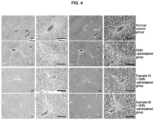
- the results obtained by preparing the liver tissue specimens through autopsy of the normal control group, the DMN-administered group (for 4 weeks), and the compound of present invention (the compound of Example 23 or 26) and DMN-administered groups and then performing the hematoxylin and eosin (H&E) staining and the Masson's trichrome staining as described above are shown in FIG. 4 . From the results of FIG.
- the damage to liver tissue and the inflammatory cell infiltration in liver tissues in the DMN-administered group were respectively increased about 17 times and about 5 times, after 4 weeks, in comparison with those of the normal control group.
- the damages to liver tissue and the inflammatory cell infiltrations in liver tissues were 259.14 - 319.14 cells/1000 cells and 90.00 - 101.43 cells/mm 2 , respectively (i.e., ameliorated by about 43 - 54% and 46 - 52%, in comparison with that of the DMN-administered group).
- the collagen fiber deposition in liver tissues in the DMN-administered group was increased about 12 times, after 4 weeks, in comparison with that of the normal control group.
- the collagen fiber deposition in liver tissues was 10.75 - 12.44 %/mm 2 (i.e., reduced by about 57 ⁇ 63% in comparison with that of the DMN-administered group). Therefore, it can be confirmed that the compounds of the present invention (the compounds of Examples 23 and 26) have excellent inhibitory activity against liver fibrosis.
- Test Example 6 Analysis of inhibitory activity against neuronal apoptosis by beta amyloid
- N2a cells ATCC, CCL-131, mouse neuroblastoma cell line
- neuron cells primary mouse cortical neuron cells
- the cells were treated with the compound of Example 10 and the compound of Example 29 at the concentrations of 5 ⁇ M and 500 nM, respectively, treated with 20 ⁇ M of beta amyloid after 30 minutes therefrom, and then incubated at 37°C in a CO 2 incubator for 72 hours.
- the cells were treated with 10 ⁇ L of CCK-8 reagent (Enzo Life Science, ALX-850-039-KI02) and then incubated at 37°C in a CO 2 incubator for 2 hours.
- Three wells were tested for each group and each absorbance was measured at 450 nm.
- the absorbance value of the untreated control group was set to 100% cell viability.
- the cell viability of each group was calculated from the respective absorbance values. The results are shown in Table 9 below.
- Test Example 7 Analysis of inhibitory activities against mitochondrial damage by rotenone
- N2a cells ATCC, CCL-131, mouse neuroblastoma cell line.
- N2a cells 3 X 10 4 cells
- a medium DMEM (Dulbecco's modified Eagle's medium, Gibco,11995-065) supplemented with 5% heat-inactivated fetal bovine serum (FBS; Gibco, 16000-044) and 50 ⁇ g/ml penicillin-streptomycin (Gibco, 15140-122) were added to each well of a XF24-well culture plate and then incubated overnight at 37°C in a CO 2 incubator.
- the cells were treated with the compound of Example 10 (5 ⁇ M), treated with 10 ⁇ M of rotenone after 30 minutes therefrom, and then incubated at 37°C in a CO 2 incubator for 24 hours.
- a XF Cell Mito Stress Test Kit (Seahorse Bioscience, 103015-100) according to the manufacturer's instructions, the level of mitochondrial respiration was measured, using an XF24 Extracellular Flux Analyzer (Seahorse Bioscience).
- XF24 Extracellular Flux Analyzer Seahorse Bioscience
- the basal respiration of the untreated control group was set to 100% and the remaining values are shown. The results are shown in Table 10 below.
- the control group represents a group treated with only 10 ⁇ M of rotenone.
- Table 10 Test material Mitochondrial respiration (%) Basal ATP production Maximal Spare Control 100 65.32 112.21 19.59 Rotenone 34.76 20.33 47.67 17.00 Example 10 + Rotenone 51.69 31.65 62.28 16.33
- the compound of Example 10 recovers the mitochondrial damage by rotenone treatment in a statistically significant level. Therefore, the compound according to the present invention can be usefully applied for preventing and treating various neurodegenerative diseases associated with mitochondrial damage.
Landscapes
- Health & Medical Sciences (AREA)
- Chemical & Material Sciences (AREA)
- Organic Chemistry (AREA)
- Engineering & Computer Science (AREA)
- Bioinformatics & Cheminformatics (AREA)
- Animal Behavior & Ethology (AREA)
- Veterinary Medicine (AREA)
- Public Health (AREA)
- Medicinal Chemistry (AREA)
- General Health & Medical Sciences (AREA)
- Pharmacology & Pharmacy (AREA)
- Life Sciences & Earth Sciences (AREA)
- General Chemical & Material Sciences (AREA)
- Chemical Kinetics & Catalysis (AREA)
- Biomedical Technology (AREA)
- Nuclear Medicine, Radiotherapy & Molecular Imaging (AREA)
- Neurology (AREA)
- Neurosurgery (AREA)
- Diabetes (AREA)
- Epidemiology (AREA)
- Hospice & Palliative Care (AREA)
- Psychiatry (AREA)
- Gastroenterology & Hepatology (AREA)
- Emergency Medicine (AREA)
- Endocrinology (AREA)
- Hematology (AREA)
- Obesity (AREA)
- Psychology (AREA)
- Pharmaceuticals Containing Other Organic And Inorganic Compounds (AREA)
- Plural Heterocyclic Compounds (AREA)
Claims (12)
- Verbindung der Formel 1 oder pharmazeutisch verträgliches Salz davon:
 R1 Wasserstoff; eine C1~C4-Alkylgruppe; oder eine C1~C4-Alkylgruppe, substituiert mit einem Mono- oder Di-C1~C5-Alkylamino, ist,R2 eine C1~C4-Alkylgruppe ist,A eine Gruppe ist, die ausgewählt ist aus der Gruppe, die aus den folgenden Gruppen von Formel 1a bis 1d besteht,


 * die an die Verbindung der Formel 1 gebundene Position darstellt, n 1, 2 oder 3 ist,R3 und R4, unabhängig voneinander, Wasserstoff oder C1~C4-Alkyl sind; oder R3 und R4, mit dem Stickstoffatom, an das sie gebunden sind, miteinander verbunden sind, um Piperidin, Morpholin oder Pyrrolidin zu bilden, wobei das Piperidin, Morpholin oder Pyrrolidin optional mit C1-C4-Alkyl substituiert ist,R5 und R6 C1~C4-Alkyl sind; oder R5 und R6 einen Ring zur Bildung von Cyclopentan, Cyclohexan oder Tetrahydropyran bilden, undCy eine stickstoffhaltige heterocyclische Gruppe ist, die ausgewählt ist aus der Gruppe bestehend aus Homopiperazinyl, Piperidinyl, Morpholinyl und Pyrrolidinyl, wobei die stickstoffhaltige heterocyclische Gruppe optional mit C1-C4-Alkyl oder Benzyl substituiert ist.
 - Verbindung oder pharmazeutisch verträgliches Salz davon nach Anspruch 1, wobei R1 Wasserstoff; eine Isobutylgruppe; oder eine Diethylaminoethylgruppe ist.
- Verbindung oder pharmazeutisch verträgliches Salz davon nach Anspruch 1, wobei R2 eine Methylgruppe ist.
- Verbindung oder pharmazeutisch verträgliches Salz davon nach Anspruch 1, wobei A die Gruppe der Formel 1a oder die Gruppe der Formel 1b ist.
- Verbindung oder pharmazeutisch verträgliches Salz davon nach Anspruch 4, wobei R3 und R4 über das Stickstoffatom, an das sie gebunden sind, miteinander verbunden sind, um Piperidin, Morpholin oder Pyrrolidin zu bilden.
- Verbindung oder pharmazeutisch verträgliches Salz davon nach Anspruch 5, wobei das Piperidin, Morpholin oder Pyrrolidin mit C1-C4-Alkyl substituiert ist.
- Verbindung oder pharmazeutisch verträgliches Salz davon nach Anspruch 1, ausgewählt aus der Gruppe bestehend aus:N-(2-(Diethylamino)ethyl)-2-(3-cyano-4-isobutoxyphenyl)-4-methylthiazol-5-carboxamidhydrochlorid;N-(2-(Diisopropylamino)ethyl)-2-(3-cyano-4-isobutoxyphenyl)-4-methylthiazol-5-carboxamidhydrochlorid;N-(2-(Dimethylamino)ethyl)-2-(3-cyano-4-isobutoxyphenyl)-4-methylthiazol-5-carboxamidhydrochlorid;N-(3-(Diethylamino)propyl)-2-(3-cyano-4-isobutoxyphenyl)-4-methylthiazol-5-carboxamidhydrochlorid;N-(4-Methylhomopiperazino)-2-(3-cyano-4-isobutoxyphenyl)-4-methylthiazol-5-carboxamidhydrochlorid;N-(4-(1-Methyl)piperidinyl)-2-(3-cyano-4-isobutoxyphenyl)-4-methylthiazol-5-carboxamidhydrochlorid;N-(2-(4-Morpholino)ethyl)-2-(3-cyano-4-isobutoxyphenyl)-4-methylthiazol-5-carboxamidhydrochlorid;N-(2-(1-Pyrrolidino)ethyl)-2-(3-cyano-4-isobutoxyphenyl)-4-methylthiazol-5-carboxamidhydrochlorid;N-(2-(1-Piperidino)ethyl)-2-(3-cyano-4-isobutoxyphenyl)-4-methylthiazol-5-carboxamidhydrochlorid;N-((4-(Dimethylamino)tetrahydro-2H-pyran-4-yl)methyl)-2-(3-cyano-4-isobutoxyphenyl)-4-methylthiazol-5-carboxamidhydrochlorid;N-((1-(Dimethylamino)cyclopentyl)methyl)-2-(3-cyano-4-isobutoxyphenyl)-4-methylthiazol-5-carboxamidhydrochlorid;N-((1-(Dimethylamino)cyclohexyl)methyl)-2-(3-cyano-4-isobutoxyphenyl)-4-methylthiazol-5-carboxamidhydrochlorid;N-(3-(1-Benzyl)pyrrolidinyl)-2-(3-cyano-4-isobutoxyphenyl)-4-methylthiazol-5-carboxamidhydrochlorid;N-(2-(2-(1-Methyl)pyrrolidino)ethyl)-2-(3-cyano-4-isobutoxyphenyl)-4-methylthiazol-5-carboxamidhydrochlorid;N-((S)-2-(1-Ethyl)pyrrolidinomethyl)-2-(3-cyano-4-isobutoxyphenyl)-4-methylthiazol-5-carboxamidhydrochlorid;N-(4-Morpholinamino)-2-(3-cyano-4-isobutoxyphenyl)-4-methylthiazol-5-carboxamidhydrochlorid;N-(1-Piperidinamino)-2-(3-cyano-4-isobutoxyphenyl)-4-methylthiazol-5-carboxamidhydrochlorid;N-(2-(Diisopropylamino)ethyl)-2-(3-cyano-4-hydroxyphenyl)-4-methylthiazol-5-carboxamidhydrochlorid;N-(2-(Diethylamino)ethyl)-2-(3-cyano-4-hydroxyphenyl)-4-methylthiazol-5-carboxamidhydrochlorid;N-(2-(Dimethylamino)ethyl)-2-(3-cyano-4-hydroxyphenyl)-4-methylthiazol-5-carboxamidhydrochlorid;N-(2-(4-Morpholino)ethyl)-2-(3-cyano-4-hydroxyphenyl)-4-methylthiazol-5-carboxamidhydrochlorid;N-((S)-2-(1-Ethyl)pyrrolidinomethyl)-2-(3-cyano-4-hydroxyphenyl)-4-methylthiazol-5-carboxamidhydrochlorid;N-(2-(Diisopropylamino)ethyl)-2-(4-(2-diethylamino)ethoxy-3-cyanophenyl)-4-methylthiazol-5-carboxamidhydrochlorid;N-(2-(Diethylamino)ethyl)-2-(4-(2-diethylamino)ethoxy-3-cyanophenyl)-4-methylthiazol-5-carboxamidhydrochlorid;N-(2-(Dimethylamino)ethyl)-2-(4-(2-diethylamino)ethoxy-3-cyanophenyl)-4-methylthiazol-5-carboxamidhydrochlorid;N-(2-(4-Morpholino)ethyl)-2-(4-(2-diethylamino)ethoxy-3-cyanophenyl)-4-methylthiazol-5-carboxamidhydrochlorid;N-((S)-2-(1-Ethyl)pyrrolidinomethyl)-2-(4-(2-diethylamino)ethoxy-3-cyanophenyl)-4-methylthiazol-5-carboxamidhydrochlorid;N-((4-(Dimethylamino)tetrahydro-2H-pyran-4-yl)methyl)-2-(3-cyano-4-hydroxyphenyl)-4-methylthiazol-5-carboxamidhydrochlorid; undN-((4-(Dimethylamino)tetrahydro-2H-pyran-4-yl)methyl)-2-(4-(2-diethylamino)ethoxy-3-cyanophenyl)-4-methylthiazol-5-carboxamidhydrochlorid.
- Verbindung oder pharmazeutisch verträgliches Salz davon nach Anspruch 1, ausgewählt aus der Gruppe bestehend aus:N-(2-(Diisopropylamino)ethyl)-2-(3-cyano-4-isobutoxyphenyl)-4-methylthiazol-5-carboxamidhydrochlorid;N-((4-(Dimethylamino)tetrahydro-2H-pyran-4-yl)methyl)-2-(3-cyano-4-isobutoxyphenyl)-4-methylthiazol-5-carboxamidhydrochlorid;N-(2-(Diisopropylamino)ethyl)-2-(4-(2-diethylamino)ethoxy-3-cyanophenyl)-4-methylthiazol-5-carboxamidhydrochlorid;N-(2-(4-Morpholino)ethyl)-2-(4-(2-diethylamino)ethoxy-3-cyanophenyl)-4-methylthiazol-5-carboxamidhydrochlorid;N-((4-(Dimethylamino)tetrahydro-2H-pyran-4-yl)methyl)-2-(3-cyano-4-hydroxyphenyl)-4-methylthiazol-5-carboxamidhydrochlorid; undN-((4-(Dimethylamino)tetrahydro-2H-pyran-4-yl)methyl)-2-(4-(2-diethylamino)ethoxy-3-cyanophenyl)-4-methylthiazol-5-carboxamidhydrochlorid.
- Verfahren zur Herstellung einer Verbindung der Formel 1 oder eines pharmazeutisch verträglichen Salzes davon, das Verfahren umfassend ein Acylieren einer Verbindung der Formel 2 mit einer N-haltigen Verbindung, die ausgewählt ist aus der Gruppe bestehend aus NH2-(CH2)n-NR3R4, NH2-CH2-CR5R6-NR3R4, Cy und NH2-Cy (wobei n, R3, R4, R5 und R6 die gleichen wie in Anspruch 1 definiert sind; Cy ein stickstoffhaltiger Heterocyclus, ausgewählt aus der Gruppe bestehend aus Homopiperazin, Piperidin, Morpholin und Pyrrolidin, ist, wobei der stickstoffhaltige Heterocyclus optional mit C1~C4-Alkyl oder Benzyl substituiert ist; und NH2-Cy ein stickstoffhaltiges heterocyclisches Amin, ausgewählt aus der Gruppe bestehend aus Homopiperazinylamin, Piperidinylamin, Morpholinylamin und Pyrrolidinylamin, ist, wobei das stickstoffhaltige heterocyclische Amin optional mit C1-C4-Alkyl oder Benzyl substituiert ist):


- Verfahren zur Herstellung einer Verbindung der Formel 1 oder eines pharmazeutisch verträglichen Salzes davon, das Verfahren umfassendAcylieren einer Verbindung der Formel 3 mit einer N-haltigen Verbindung, ausgewählt aus der Gruppe bestehend aus NH2-(CH2)n-NR3R4, NH2-CH2-CR5R6-NR3R4, Cy und NH2-Cy (wobei n, R3, R4, R5 und R6 die gleichen wie in Anspruch 1 definiert sind; Cy ein stickstoffhaltiger Heterocyclus, ausgewählt aus der Gruppe bestehend aus Homopiperazin, Piperidin, Morpholin und Pyrrolidin, ist, wobei der stickstoffhaltige Heterocyclus optional mit C1-C4-Alkyl oder Benzyl substituiert ist; und NH2-Cy ein stickstoffhaltiges heterocyclisches Amin, ausgewählt aus der Gruppe bestehend aus Homopiperazinylamin, Piperidinylamin, Morpholinylamin und Pyrrolidinylamin, ist, wobei das stickstoffhaltige heterocyclische Amin optional mit C1-C4-Alkyl oder Benzyl substituiert ist), um eine Verbindung der Formel 4 herzustellen; undAlkylieren der Verbindung der Formel 4 mit einer Verbindung der Formel 5, um eine Verbindung der Formel 1 herzustellen:


<Formel 5> R1X
wobei R1, R2 und A die gleichen wie in Anspruch 1 definiert sind und X Halogen ist. - Pharmazeutische Zusammensetzung zur Verwendung beim Induzieren von Autophagie, die die Verbindung oder das pharmazeutisch verträgliche Salz davon nach einem der Ansprüche 1 bis 8 als Wirkstoff umfasst.
- Pharmazeutische Zusammensetzung zur Verwendung nach Anspruch 11 zur Verwendung beim Verhindern oder Behandeln von neurodegenerativen Erkrankungen, ausgewählt aus der Gruppe bestehend aus Huntington-Krankheit, Parkinson-Krankheit, Alzheimer-Krankheit, Prionkrankheit, Multipler Sklerose und Lou-Gehrig-Krankheit; hepatischen Erkrankungen, ausgewählt aus der Gruppe bestehend aus Leberfibrose, Leberzirrhose, Hepatitis und Fettlebererkrankung; metabolischen Erkrankungen, ausgewählt aus der Gruppe bestehend aus Diabetes, Hyperlipidämie, Fettleibigkeit und Entzündung; oder Sepsis.
Applications Claiming Priority (2)
| Application Number | Priority Date | Filing Date | Title |
|---|---|---|---|
| KR1020200048262A KR102871918B1 (ko) | 2020-04-21 | 2020-04-21 | 신규의 2-아릴티아졸 유도체 또는 이의 염, 이의 제조방법, 및 이를 함유하는 약학 조성물 |
| PCT/KR2021/000578 WO2021215624A1 (ko) | 2020-04-21 | 2021-01-15 | 신규의 2-아릴티아졸 유도체 또는 이의 염, 이의 제조방법, 및 이를 함유하는 약학 조성물 |
Publications (4)
| Publication Number | Publication Date |
|---|---|
| EP4140989A1 EP4140989A1 (de) | 2023-03-01 |
| EP4140989A4 EP4140989A4 (de) | 2023-10-18 |
| EP4140989C0 EP4140989C0 (de) | 2024-07-17 |
| EP4140989B1 true EP4140989B1 (de) | 2024-07-17 |
Family
ID=78231501
Family Applications (1)
| Application Number | Title | Priority Date | Filing Date |
|---|---|---|---|
| EP21792031.3A Active EP4140989B1 (de) | 2020-04-21 | 2021-01-15 | 2-arylthiazolderivat oder salz davon, herstellungsverfahren dafür und pharmazeutische zusammensetzung damit |
Country Status (9)
| Country | Link |
|---|---|
| US (1) | US12503451B2 (de) |
| EP (1) | EP4140989B1 (de) |
| JP (1) | JP7692002B2 (de) |
| KR (1) | KR102871918B1 (de) |
| CN (1) | CN115667233B (de) |
| AU (1) | AU2021261570A1 (de) |
| CA (1) | CA3176088A1 (de) |
| ES (1) | ES2987881T3 (de) |
| WO (1) | WO2021215624A1 (de) |
Families Citing this family (2)
| Publication number | Priority date | Publication date | Assignee | Title |
|---|---|---|---|---|
| EP4378932A1 (de) * | 2022-11-30 | 2024-06-05 | Universität Bern | Cd93 inhibitoren |
| CN119528900A (zh) * | 2024-08-08 | 2025-02-28 | 河南科技大学 | 具有抗肝癌活性的甲基噻唑衍生物及其制备方法和应用 |
Family Cites Families (12)
| Publication number | Priority date | Publication date | Assignee | Title |
|---|---|---|---|---|
| JP2002105067A (ja) * | 2000-09-28 | 2002-04-10 | Teijin Ltd | 2−フェニルチアゾール誘導体、およびそれを有効成分とする医薬組成物 |
| EP1848428A4 (de) * | 2005-02-18 | 2012-04-18 | Neurogen Corp | Thiazolamide, imidazolamide und verwandte analoga |
| WO2006103045A1 (en) * | 2005-03-31 | 2006-10-05 | Ucb Pharma S.A. | Compounds comprising an oxazole or thiazole moiety, processes for making them, and their uses |
| JP2010037337A (ja) * | 2008-07-09 | 2010-02-18 | Mitsubishi Tanabe Pharma Corp | 医薬組成物 |
| WO2010128163A2 (en) * | 2009-05-08 | 2010-11-11 | Pike Pharma Gmbh | Small molecule inhibitors of influenza a and b virus and respiratory syncytial virus replication |
| WO2012073259A1 (en) * | 2010-12-02 | 2012-06-07 | Indoco Remedies Limited | Novel process for the preparation of febuxostat |
| KR20120131401A (ko) | 2011-05-25 | 2012-12-05 | 울산대학교 산학협력단 | 자가포식작용 촉진제의 신규 용도 |
| KR101731908B1 (ko) | 2015-08-18 | 2017-05-11 | 서울대학교산학협력단 | p62 ZZ 도메인에 결합하는 리간드 또는 아르기닌화된 BiP에 의해 매개되는 오토파지 활성을 통한 신경변성 질환 예방 및 치료 |
| KR102100470B1 (ko) | 2015-08-21 | 2020-04-13 | (주)오토파지사이언스 | 신규한 카테콜 유도체 및 이를 포함하는 약학적 조성물 |
| KR101915016B1 (ko) * | 2016-07-12 | 2018-11-06 | 연세대학교 산학협력단 | 자가포식 향상물질 및 그 용도 |
| CN110066258A (zh) | 2018-01-23 | 2019-07-30 | 湘北威尔曼制药股份有限公司 | 噻唑-5-甲酸衍生物及其制备方法与应用 |
| CA3106968A1 (en) * | 2018-07-20 | 2020-01-23 | Hexapharmatec Co., Ltd. | Novel catechol derivatives or salt thereof, processes for preparing the same, and pharmaceutical compositions comprising the same |
-
2020
- 2020-04-21 KR KR1020200048262A patent/KR102871918B1/ko active Active
-
2021
- 2021-01-15 ES ES21792031T patent/ES2987881T3/es active Active
- 2021-01-15 US US17/996,544 patent/US12503451B2/en active Active
- 2021-01-15 JP JP2022564122A patent/JP7692002B2/ja active Active
- 2021-01-15 CA CA3176088A patent/CA3176088A1/en active Pending
- 2021-01-15 EP EP21792031.3A patent/EP4140989B1/de active Active
- 2021-01-15 WO PCT/KR2021/000578 patent/WO2021215624A1/ko not_active Ceased
- 2021-01-15 CN CN202180040070.8A patent/CN115667233B/zh active Active
- 2021-01-15 AU AU2021261570A patent/AU2021261570A1/en active Pending
Also Published As
| Publication number | Publication date |
|---|---|
| EP4140989C0 (de) | 2024-07-17 |
| AU2021261570A1 (en) | 2022-12-08 |
| US12503451B2 (en) | 2025-12-23 |
| KR102871918B1 (ko) | 2025-10-17 |
| EP4140989A4 (de) | 2023-10-18 |
| US20230219908A1 (en) | 2023-07-13 |
| EP4140989A1 (de) | 2023-03-01 |
| CN115667233B (zh) | 2024-05-24 |
| CA3176088A1 (en) | 2021-10-28 |
| ES2987881T3 (es) | 2024-11-18 |
| KR20210130016A (ko) | 2021-10-29 |
| WO2021215624A1 (ko) | 2021-10-28 |
| CN115667233A (zh) | 2023-01-31 |
| JP2023523417A (ja) | 2023-06-05 |
| JP7692002B2 (ja) | 2025-06-12 |
Similar Documents
| Publication | Publication Date | Title |
|---|---|---|
| EP3630755B1 (de) | 5-methyl-1,3,4-oxadiazol-2-yl-verbindungen | |
| US7728158B2 (en) | PPAR activity regulators | |
| EP4140989B1 (de) | 2-arylthiazolderivat oder salz davon, herstellungsverfahren dafür und pharmazeutische zusammensetzung damit | |
| US8318184B2 (en) | MGLU2 agonists | |
| KR20110028554A (ko) | O-치환 히드록시아릴 유도체 | |
| Chen et al. | Syntheses and evaluation of novel isoliquiritigenin derivatives as potential dual inhibitors for amyloid-beta aggregation and 5-lipoxygenase | |
| CA2970546A1 (en) | Antimicrobial polymyxins for treatment of bacterial infections | |
| EP3947344B1 (de) | 2,2'-(1,3-phenylendimethylidyn)-bis-hydrazincarboximidamide- derivate als retromer-stabilisatoren zur behandlung von neurologischen erkrankungen | |
| CN107857760A (zh) | 鞘氨醇‑1‑磷酸受体调节剂及其应用 | |
| EP3814340B1 (de) | Neuartige katecholderivate oder deren salze, verfahren zu ihrer herstellung und diese enthaltende pharmazeutische zusammensetzungen | |
| EP3037412A1 (de) | Indolamidverbindung als nekrosehemmer | |
| EP4431098A1 (de) | Pharmazeutische zusammensetzung zur behandlung von alport-syndrom | |
| KR20230106637A (ko) | 빈혈 및 암 치료용 vhl 억제제로서의 1-(2-(4-시클로프로필-1h-1,2,3-트리아졸-1-일)아세틸)-4-히드록시-n-(벤질)피롤리딘 e-2-카르복사미드 유도체 | |
| RU2822057C1 (ru) | Новое производное 2-арилтиазола или его соль, способ его получения и содержащая его фармацевтическая композиция | |
| JP2019085364A (ja) | ミトコンドリアの機能障害の改善剤、及びミトコンドリアの機能障害に起因する疾患又は症状の予防又は治療薬、並びにそれらの用途 | |
| WO2021123297A1 (en) | Oga inhibitor compounds | |
| US20040180943A1 (en) | Oxazolone analogs as amyloid aggregation inhibitors and for the treatment of alzheimer's disease and disorders related to amyloidosis | |
| EP4253388A1 (de) | Salzform als cdc7-inhibitor und kristallform davon | |
| RU2795227C2 (ru) | Новые производные катехола или их соль, способы их получения и содержащие их фармацевтические композиции | |
| US6552076B2 (en) | Compounds for altering mitochondrial function and cellular responses | |
| CN119569664B (zh) | 一种苯硫酚类化合物及其制备方法与应用 | |
| KR20090033752A (ko) | 인돌-사이아졸린을 포함하는 신규한 베타-세크리타제저해용 화합물 | |
| EP1798220A1 (de) | Dibenzolderivate als Calciumkanalblocker | |
| HK1171228B (en) | Mglu2 agonists |
Legal Events
| Date | Code | Title | Description |
|---|---|---|---|
| STAA | Information on the status of an ep patent application or granted ep patent |
Free format text: STATUS: THE INTERNATIONAL PUBLICATION HAS BEEN MADE |
|
| PUAI | Public reference made under article 153(3) epc to a published international application that has entered the european phase |
Free format text: ORIGINAL CODE: 0009012 |
|
| STAA | Information on the status of an ep patent application or granted ep patent |
Free format text: STATUS: REQUEST FOR EXAMINATION WAS MADE |
|
| 17P | Request for examination filed |
Effective date: 20221114 |
|
| AK | Designated contracting states |
Kind code of ref document: A1 Designated state(s): AL AT BE BG CH CY CZ DE DK EE ES FI FR GB GR HR HU IE IS IT LI LT LU LV MC MK MT NL NO PL PT RO RS SE SI SK SM TR |
|
| DAV | Request for validation of the european patent (deleted) | ||
| DAX | Request for extension of the european patent (deleted) | ||
| REG | Reference to a national code |
Ref country code: DE Ref legal event code: R079 Free format text: PREVIOUS MAIN CLASS: C07D0277280000 Ipc: C07D0277560000 Ref document number: 602021015930 Country of ref document: DE |
|
| A4 | Supplementary search report drawn up and despatched |
Effective date: 20230915 |
|
| RIC1 | Information provided on ipc code assigned before grant |
Ipc: A61P 3/10 20060101ALI20230911BHEP Ipc: A61P 1/16 20060101ALI20230911BHEP Ipc: A61P 25/28 20060101ALI20230911BHEP Ipc: A61P 25/16 20060101ALI20230911BHEP Ipc: A61K 31/5377 20060101ALI20230911BHEP Ipc: A61K 31/454 20060101ALI20230911BHEP Ipc: A61K 31/551 20060101ALI20230911BHEP Ipc: A61K 31/426 20060101ALI20230911BHEP Ipc: C07D 417/12 20060101ALI20230911BHEP Ipc: C07D 417/06 20060101ALI20230911BHEP Ipc: C07D 277/56 20060101AFI20230911BHEP |
|
| RIC1 | Information provided on ipc code assigned before grant |
Ipc: A61P 3/10 20060101ALI20231031BHEP Ipc: A61P 1/16 20060101ALI20231031BHEP Ipc: A61P 25/28 20060101ALI20231031BHEP Ipc: A61P 25/16 20060101ALI20231031BHEP Ipc: A61K 31/5377 20060101ALI20231031BHEP Ipc: A61K 31/454 20060101ALI20231031BHEP Ipc: A61K 31/551 20060101ALI20231031BHEP Ipc: A61K 31/426 20060101ALI20231031BHEP Ipc: C07D 417/12 20060101ALI20231031BHEP Ipc: C07D 417/06 20060101ALI20231031BHEP Ipc: C07D 277/56 20060101AFI20231031BHEP |
|
| GRAP | Despatch of communication of intention to grant a patent |
Free format text: ORIGINAL CODE: EPIDOSNIGR1 |
|
| STAA | Information on the status of an ep patent application or granted ep patent |
Free format text: STATUS: GRANT OF PATENT IS INTENDED |
|
| INTG | Intention to grant announced |
Effective date: 20240205 |
|
| GRAS | Grant fee paid |
Free format text: ORIGINAL CODE: EPIDOSNIGR3 |
|
| GRAA | (expected) grant |
Free format text: ORIGINAL CODE: 0009210 |
|
| STAA | Information on the status of an ep patent application or granted ep patent |
Free format text: STATUS: THE PATENT HAS BEEN GRANTED |
|
| AK | Designated contracting states |
Kind code of ref document: B1 Designated state(s): AL AT BE BG CH CY CZ DE DK EE ES FI FR GB GR HR HU IE IS IT LI LT LU LV MC MK MT NL NO PL PT RO RS SE SI SK SM TR |
|
| REG | Reference to a national code |
Ref country code: CH Ref legal event code: EP |
|
| REG | Reference to a national code |
Ref country code: DE Ref legal event code: R096 Ref document number: 602021015930 Country of ref document: DE |
|
| REG | Reference to a national code |
Ref country code: IE Ref legal event code: FG4D |
|
| U01 | Request for unitary effect filed |
Effective date: 20240813 |
|
| U07 | Unitary effect registered |
Designated state(s): AT BE BG DE DK EE FI FR IT LT LU LV MT NL PT SE SI Effective date: 20240826 |
|
| REG | Reference to a national code |
Ref country code: ES Ref legal event code: FG2A Ref document number: 2987881 Country of ref document: ES Kind code of ref document: T3 Effective date: 20241118 |
|
| U20 | Renewal fee for the european patent with unitary effect paid |
Year of fee payment: 5 Effective date: 20241205 |
|
| PG25 | Lapsed in a contracting state [announced via postgrant information from national office to epo] |
Ref country code: NO Free format text: LAPSE BECAUSE OF FAILURE TO SUBMIT A TRANSLATION OF THE DESCRIPTION OR TO PAY THE FEE WITHIN THE PRESCRIBED TIME-LIMIT Effective date: 20241017 |
|
| PG25 | Lapsed in a contracting state [announced via postgrant information from national office to epo] |
Ref country code: GR Free format text: LAPSE BECAUSE OF FAILURE TO SUBMIT A TRANSLATION OF THE DESCRIPTION OR TO PAY THE FEE WITHIN THE PRESCRIBED TIME-LIMIT Effective date: 20241018 Ref country code: PL Free format text: LAPSE BECAUSE OF FAILURE TO SUBMIT A TRANSLATION OF THE DESCRIPTION OR TO PAY THE FEE WITHIN THE PRESCRIBED TIME-LIMIT Effective date: 20240717 |
|
| PGFP | Annual fee paid to national office [announced via postgrant information from national office to epo] |
Ref country code: GB Payment date: 20241121 Year of fee payment: 5 |
|
| PG25 | Lapsed in a contracting state [announced via postgrant information from national office to epo] |
Ref country code: IS Free format text: LAPSE BECAUSE OF FAILURE TO SUBMIT A TRANSLATION OF THE DESCRIPTION OR TO PAY THE FEE WITHIN THE PRESCRIBED TIME-LIMIT Effective date: 20241117 |
|
| PG25 | Lapsed in a contracting state [announced via postgrant information from national office to epo] |
Ref country code: HR Free format text: LAPSE BECAUSE OF FAILURE TO SUBMIT A TRANSLATION OF THE DESCRIPTION OR TO PAY THE FEE WITHIN THE PRESCRIBED TIME-LIMIT Effective date: 20240717 |
|
| PG25 | Lapsed in a contracting state [announced via postgrant information from national office to epo] |
Ref country code: RS Free format text: LAPSE BECAUSE OF FAILURE TO SUBMIT A TRANSLATION OF THE DESCRIPTION OR TO PAY THE FEE WITHIN THE PRESCRIBED TIME-LIMIT Effective date: 20241017 |
|
| PG25 | Lapsed in a contracting state [announced via postgrant information from national office to epo] |
Ref country code: RS Free format text: LAPSE BECAUSE OF FAILURE TO SUBMIT A TRANSLATION OF THE DESCRIPTION OR TO PAY THE FEE WITHIN THE PRESCRIBED TIME-LIMIT Effective date: 20241017 Ref country code: PL Free format text: LAPSE BECAUSE OF FAILURE TO SUBMIT A TRANSLATION OF THE DESCRIPTION OR TO PAY THE FEE WITHIN THE PRESCRIBED TIME-LIMIT Effective date: 20240717 Ref country code: NO Free format text: LAPSE BECAUSE OF FAILURE TO SUBMIT A TRANSLATION OF THE DESCRIPTION OR TO PAY THE FEE WITHIN THE PRESCRIBED TIME-LIMIT Effective date: 20241017 Ref country code: IS Free format text: LAPSE BECAUSE OF FAILURE TO SUBMIT A TRANSLATION OF THE DESCRIPTION OR TO PAY THE FEE WITHIN THE PRESCRIBED TIME-LIMIT Effective date: 20241117 Ref country code: HR Free format text: LAPSE BECAUSE OF FAILURE TO SUBMIT A TRANSLATION OF THE DESCRIPTION OR TO PAY THE FEE WITHIN THE PRESCRIBED TIME-LIMIT Effective date: 20240717 Ref country code: GR Free format text: LAPSE BECAUSE OF FAILURE TO SUBMIT A TRANSLATION OF THE DESCRIPTION OR TO PAY THE FEE WITHIN THE PRESCRIBED TIME-LIMIT Effective date: 20241018 |
|
| PG25 | Lapsed in a contracting state [announced via postgrant information from national office to epo] |
Ref country code: SM Free format text: LAPSE BECAUSE OF FAILURE TO SUBMIT A TRANSLATION OF THE DESCRIPTION OR TO PAY THE FEE WITHIN THE PRESCRIBED TIME-LIMIT Effective date: 20240717 |
|
| PGFP | Annual fee paid to national office [announced via postgrant information from national office to epo] |
Ref country code: ES Payment date: 20250206 Year of fee payment: 5 |
|
| PG25 | Lapsed in a contracting state [announced via postgrant information from national office to epo] |
Ref country code: CZ Free format text: LAPSE BECAUSE OF FAILURE TO SUBMIT A TRANSLATION OF THE DESCRIPTION OR TO PAY THE FEE WITHIN THE PRESCRIBED TIME-LIMIT Effective date: 20240717 |
|
| PG25 | Lapsed in a contracting state [announced via postgrant information from national office to epo] |
Ref country code: SK Free format text: LAPSE BECAUSE OF FAILURE TO SUBMIT A TRANSLATION OF THE DESCRIPTION OR TO PAY THE FEE WITHIN THE PRESCRIBED TIME-LIMIT Effective date: 20240717 |
|
| PLBE | No opposition filed within time limit |
Free format text: ORIGINAL CODE: 0009261 |
|
| STAA | Information on the status of an ep patent application or granted ep patent |
Free format text: STATUS: NO OPPOSITION FILED WITHIN TIME LIMIT |
|
| 26N | No opposition filed |
Effective date: 20250422 |
|
| REG | Reference to a national code |
Ref country code: CH Ref legal event code: PL |
|
| PG25 | Lapsed in a contracting state [announced via postgrant information from national office to epo] |
Ref country code: MC Free format text: LAPSE BECAUSE OF FAILURE TO SUBMIT A TRANSLATION OF THE DESCRIPTION OR TO PAY THE FEE WITHIN THE PRESCRIBED TIME-LIMIT Effective date: 20240717 |
|
| PG25 | Lapsed in a contracting state [announced via postgrant information from national office to epo] |
Ref country code: CH Free format text: LAPSE BECAUSE OF NON-PAYMENT OF DUE FEES Effective date: 20250131 |
|
| PG25 | Lapsed in a contracting state [announced via postgrant information from national office to epo] |
Ref country code: IE Free format text: LAPSE BECAUSE OF NON-PAYMENT OF DUE FEES Effective date: 20250115 |