EP4134577B1 - Auswertesystem und -verfahren - Google Patents
Auswertesystem und -verfahren Download PDFInfo
- Publication number
- EP4134577B1 EP4134577B1 EP22185596.8A EP22185596A EP4134577B1 EP 4134577 B1 EP4134577 B1 EP 4134577B1 EP 22185596 A EP22185596 A EP 22185596A EP 4134577 B1 EP4134577 B1 EP 4134577B1
- Authority
- EP
- European Patent Office
- Prior art keywords
- electric current
- mean
- electrically controlled
- standard deviation
- controlled valve
- Prior art date
- Legal status (The legal status is an assumption and is not a legal conclusion. Google has not performed a legal analysis and makes no representation as to the accuracy of the status listed.)
- Active
Links
Images




Classifications
-
- F—MECHANICAL ENGINEERING; LIGHTING; HEATING; WEAPONS; BLASTING
- F16—ENGINEERING ELEMENTS AND UNITS; GENERAL MEASURES FOR PRODUCING AND MAINTAINING EFFECTIVE FUNCTIONING OF MACHINES OR INSTALLATIONS; THERMAL INSULATION IN GENERAL
- F16K—VALVES; TAPS; COCKS; ACTUATING-FLOATS; DEVICES FOR VENTING OR AERATING
- F16K37/00—Special means in or on valves or other cut-off apparatus for indicating or recording operation thereof, or for enabling an alarm to be given
- F16K37/0025—Electrical or magnetic means
-
- F—MECHANICAL ENGINEERING; LIGHTING; HEATING; WEAPONS; BLASTING
- F16—ENGINEERING ELEMENTS AND UNITS; GENERAL MEASURES FOR PRODUCING AND MAINTAINING EFFECTIVE FUNCTIONING OF MACHINES OR INSTALLATIONS; THERMAL INSULATION IN GENERAL
- F16K—VALVES; TAPS; COCKS; ACTUATING-FLOATS; DEVICES FOR VENTING OR AERATING
- F16K37/00—Special means in or on valves or other cut-off apparatus for indicating or recording operation thereof, or for enabling an alarm to be given
- F16K37/0075—For recording or indicating the functioning of a valve in combination with test equipment
- F16K37/0083—For recording or indicating the functioning of a valve in combination with test equipment by measuring valve parameters
-
- F—MECHANICAL ENGINEERING; LIGHTING; HEATING; WEAPONS; BLASTING
- F02—COMBUSTION ENGINES; HOT-GAS OR COMBUSTION-PRODUCT ENGINE PLANTS
- F02M—SUPPLYING COMBUSTION ENGINES IN GENERAL WITH COMBUSTIBLE MIXTURES OR CONSTITUENTS THEREOF
- F02M26/00—Engine-pertinent apparatus for adding exhaust gases to combustion-air, main fuel or fuel-air mixture, e.g. by exhaust gas recirculation [EGR] systems
- F02M26/45—Sensors specially adapted for EGR systems
- F02M26/48—EGR valve position sensors
-
- F—MECHANICAL ENGINEERING; LIGHTING; HEATING; WEAPONS; BLASTING
- F02—COMBUSTION ENGINES; HOT-GAS OR COMBUSTION-PRODUCT ENGINE PLANTS
- F02M—SUPPLYING COMBUSTION ENGINES IN GENERAL WITH COMBUSTIBLE MIXTURES OR CONSTITUENTS THEREOF
- F02M26/00—Engine-pertinent apparatus for adding exhaust gases to combustion-air, main fuel or fuel-air mixture, e.g. by exhaust gas recirculation [EGR] systems
- F02M26/49—Detecting, diagnosing or indicating an abnormal function of the EGR system
-
- F—MECHANICAL ENGINEERING; LIGHTING; HEATING; WEAPONS; BLASTING
- F02—COMBUSTION ENGINES; HOT-GAS OR COMBUSTION-PRODUCT ENGINE PLANTS
- F02M—SUPPLYING COMBUSTION ENGINES IN GENERAL WITH COMBUSTIBLE MIXTURES OR CONSTITUENTS THEREOF
- F02M26/00—Engine-pertinent apparatus for adding exhaust gases to combustion-air, main fuel or fuel-air mixture, e.g. by exhaust gas recirculation [EGR] systems
- F02M26/52—Systems for actuating EGR valves
-
- F—MECHANICAL ENGINEERING; LIGHTING; HEATING; WEAPONS; BLASTING
- F02—COMBUSTION ENGINES; HOT-GAS OR COMBUSTION-PRODUCT ENGINE PLANTS
- F02M—SUPPLYING COMBUSTION ENGINES IN GENERAL WITH COMBUSTIBLE MIXTURES OR CONSTITUENTS THEREOF
- F02M26/00—Engine-pertinent apparatus for adding exhaust gases to combustion-air, main fuel or fuel-air mixture, e.g. by exhaust gas recirculation [EGR] systems
- F02M26/65—Constructional details of EGR valves
- F02M26/70—Flap valves; Rotary valves; Sliding valves; Resilient valves
-
- F—MECHANICAL ENGINEERING; LIGHTING; HEATING; WEAPONS; BLASTING
- F16—ENGINEERING ELEMENTS AND UNITS; GENERAL MEASURES FOR PRODUCING AND MAINTAINING EFFECTIVE FUNCTIONING OF MACHINES OR INSTALLATIONS; THERMAL INSULATION IN GENERAL
- F16K—VALVES; TAPS; COCKS; ACTUATING-FLOATS; DEVICES FOR VENTING OR AERATING
- F16K1/00—Lift valves or globe valves, i.e. cut-off apparatus with closure members having at least a component of their opening and closing motion perpendicular to the closing faces
- F16K1/16—Lift valves or globe valves, i.e. cut-off apparatus with closure members having at least a component of their opening and closing motion perpendicular to the closing faces with pivoted closure-members
- F16K1/18—Lift valves or globe valves, i.e. cut-off apparatus with closure members having at least a component of their opening and closing motion perpendicular to the closing faces with pivoted closure-members with pivoted discs or flaps
- F16K1/22—Lift valves or globe valves, i.e. cut-off apparatus with closure members having at least a component of their opening and closing motion perpendicular to the closing faces with pivoted closure-members with pivoted discs or flaps with axis of rotation crossing the valve member, e.g. butterfly valves
- F16K1/221—Lift valves or globe valves, i.e. cut-off apparatus with closure members having at least a component of their opening and closing motion perpendicular to the closing faces with pivoted closure-members with pivoted discs or flaps with axis of rotation crossing the valve member, e.g. butterfly valves specially adapted operating means therefor
-
- F—MECHANICAL ENGINEERING; LIGHTING; HEATING; WEAPONS; BLASTING
- F16—ENGINEERING ELEMENTS AND UNITS; GENERAL MEASURES FOR PRODUCING AND MAINTAINING EFFECTIVE FUNCTIONING OF MACHINES OR INSTALLATIONS; THERMAL INSULATION IN GENERAL
- F16K—VALVES; TAPS; COCKS; ACTUATING-FLOATS; DEVICES FOR VENTING OR AERATING
- F16K31/00—Actuating devices; Operating means; Releasing devices
- F16K31/12—Actuating devices; Operating means; Releasing devices actuated by fluid
- F16K31/16—Actuating devices; Operating means; Releasing devices actuated by fluid with a mechanism, other than pulling-or pushing-rod, between fluid motor and closure member
- F16K31/163—Actuating devices; Operating means; Releasing devices actuated by fluid with a mechanism, other than pulling-or pushing-rod, between fluid motor and closure member the fluid acting on a piston
- F16K31/1635—Actuating devices; Operating means; Releasing devices actuated by fluid with a mechanism, other than pulling-or pushing-rod, between fluid motor and closure member the fluid acting on a piston for rotating valves
-
- Y—GENERAL TAGGING OF NEW TECHNOLOGICAL DEVELOPMENTS; GENERAL TAGGING OF CROSS-SECTIONAL TECHNOLOGIES SPANNING OVER SEVERAL SECTIONS OF THE IPC; TECHNICAL SUBJECTS COVERED BY FORMER USPC CROSS-REFERENCE ART COLLECTIONS [XRACs] AND DIGESTS
- Y02—TECHNOLOGIES OR APPLICATIONS FOR MITIGATION OR ADAPTATION AGAINST CLIMATE CHANGE
- Y02T—CLIMATE CHANGE MITIGATION TECHNOLOGIES RELATED TO TRANSPORTATION
- Y02T10/00—Road transport of goods or passengers
- Y02T10/10—Internal combustion engine [ICE] based vehicles
- Y02T10/40—Engine management systems
Definitions
- EP 0315391 B discloses a system according the preamble of claim 12.
- a health state of the electrically controlled valve is determined by comparing the baseline values associated with the input electric current, the output electric current, and the position signals with subsequently measured values associated with the input electric current, the output electric current, and the position signals.
- a system in one or more embodiments, includes an electrically controlled valve that receives input electric current to change a position of the electrically controlled valve, one or more sensors configured to measure the input electric current that is input into the electrically controlled valve and measure output electric current that is output from the electrically controlled valve in response to the input electric current being input into the electrically controlled valve.
- the sensors generate position signals indicative of the position of the electrically controlled valve.
- the system includes one or more processors that calculate baseline values associated with the input electric current, the output electric current, and the position signals based on measured values repeatedly sampled during a prior moving time window.
- the processors determine a health state of the electrically controlled valve by comparing the baseline values associated with the input electric current, the output electric current, and the position signals with subsequently measured values associated with the input electric current, the output electric current, and the position signals.
- a method includes measuring input electric current that is input into an electrically controlled valve to change a position of the electrically controlled valve.
- the method includes measuring output electric current that is output from the electrically controlled valve in response to the input electric current being input into the electrically controlled valve.
- Position voltages are measured using a sensor coupled with the electrically controlled valve. The position voltages are indicative of the position of the electrically controlled valve. Baseline values associated with the input electric current, the output electric current, and the position voltages are calculated based on previous measurements of the input electric current, the output electric current, and the position voltages.
- the baseline values that are calculated include a first mean and a first standard deviation of sums of the position voltages repeatedly sampled during a prior moving time window, a second mean and a second standard deviation of first differences between the position voltages repeatedly sampled during the prior moving time window, and a third mean and a third standard deviation of second differences between the input electric current and the output electric current repeatedly sampled during the prior moving time window.
- a fourth mean and a fourth standard deviation of the sums of the position voltages repeatedly sampled during a subset of the prior moving time window are calculated, a fifth mean and a fifth standard deviation of the first differences between the position voltages repeatedly sampled during the subset of the prior moving time window are calculated, and a sixth mean and a sixth standard deviation of the second differences between the input electric current and the output electric current repeatedly sampled during the subset of the prior moving time window are calculated.
- the fourth mean and the fourth standard deviation are compared with the first mean and the first standard deviation
- the fifth mean and the fifth standard deviation are compared with the second mean and the second standard deviation
- the sixth mean and the sixth standard deviation are compared with the third mean and the third standard deviation.
- a health state of the electrically controlled valve is determined by determining a set of comparison values indicative of comparing the fourth mean and the fourth standard deviation with the first mean and the first standard deviation, the fifth mean and the fifth standard deviation with the second mean and the second standard deviation, and the sixth mean and the sixth standard deviation with the third mean and the third standard deviation.
- the set of the comparison values are mapped with different values of the health state of the electrically controlled value to determine the health state of the electrically controlled valve.
- Embodiments of the subject matter described herein relate to evaluation systems and methods related thereto.
- the evaluation systems may be used to determine a state of health of an electrically controlled valve, such as an exhaust gas recirculation (EGR) valve that is used within a system that expels an exhaust gas or other fluid.
- EGR exhaust gas recirculation
- the EGR valve may be controlled to recirculate a portion of exhaust gas generated by an engine back to the engine cylinders, and the evaluation system and method described herein may determine the state of health of the EGR valve.
- the state of health of the electrically controlled valve may be determined by measuring different data associated with the valve.
- the data set may include an input electric current that is applied to a pump device that pumps a fluid into a chamber of the valve, an output electric current that is output in response to the input electric current being input, and position signals using a position sensor indicative of a position of the electrically controlled valve.
- the position signals may be or comprise position voltages.
- Baseline values associated with the input electric current, the output electric current, and the position signals based on previous measurements may be calculated, and the state of health of the valve may be determined by comparing the baseline values associated with the input electric current, the output electric current, and the position voltages with recent (e.g., subsequently measured) values associated with the input electric current, the output electric current, and the position signals.
- the baseline values that are calculated may include a sum of the position signals (e.g., position voltages).
- the baseline values may include a difference between the position signals.
- the baseline values may include a difference between the input electric current and the output electric current.
- the baseline values may include a mean and standard deviation of the sums of the position signals repeatedly sampled during a prior moving time window; may include a mean and standard deviation of the differences between the position signals repeatedly sampled during the prior moving time window; and may include a mean and standard deviation of the differences between the input electric current and the output electric current.
- the baseline values may be determined or calculated by alternative evaluation methods. For example, the baseline values may be based on an average of the data set, a percentage of the data set, whether the data set is within or outside of a predetermined acceptable range, or the like.
- the electrically controlled valve may be an exhaust gas recirculation (EGR) valve that is used within a system that expels a gas or other fluid.
- EGR valve may be used within a fuel powered vehicle (e.g., a rail vehicle, automobile, a truck, a bus, a mining vehicle, a marine vessel, a manned and/or unmanned aircraft, an agricultural vehicle, or another off-highway vehicle) or an alternative fuel powered system (e.g., manufacturing machinery, power generating systems, domestic machinery, or the like.
- the EGR system may use a liquid fuel such as diesel or gasoline.
- the EGR valve may be used to control an amount of emissions generated by the vehicle and/or non-vehicle systems.
- the EGR valve may be controlled to recirculate a portion of exhaust gas generated by an engine back to the engine cylinders.
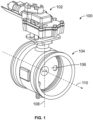
- the electrically controlled valve includes an electrical portion 102 and a mechanical portion 104 operably coupled with the electrical portion.
- the mechanical portion includes a plate 106 that is configured to rotate about an axis 108 based on control of the plate by the electrical portion of the valve.
- the electrical portion may control a position of the plate between a closed position and one or more different open positions.
- Recirculated exhaust gas may be directed through the mechanical portion of the valve in a direction 110.
- the position of the plate may control an amount of exhaust gas that is directed through the valve.
- the plate may be in a closed position such that the plate prohibits gas from being directed through the valve in the direction 110.
- the plate may be in one or more different open positions to control an amount of the gas that is directed through the valve.
- Figure 2 illustrates a partial cross-sectional view of the electrical portion of the electrically controlled valve shown in Figure 1 .
- the valve includes a chamber 216 that is defined by a chamber end surface 230 and a rack end surface 232, and plural interior surfaces of the chamber.
- the rack end surface is operably coupled with a rack 222.
- a pump (not shown) directs a fluid into the valve via a fluid inlet 204 and out of the valve via a fluid outlet 206.
- the pump may be electrically controlled, such that an electric current is directed to the pump to control operation of the pump.
- the fluid may be a gas, a liquid, or a gas-liquid mixture.
- the fluid may be oil.
- the fluid may be an alternative liquid and/or gas.
- the fluid is directed into the chamber via a passage 226.
- the rack is configured to move in a linear direction based on an amount of the fluid within the chamber. As the fluid within the chamber increases, the rack moves in a first direction 234 and away from the chamber end surface. Alternatively, as the fluid within the chamber decreases, the rack moves in an opposite second direction 236 and toward the chamber end surface.
- the rack is operably coupled with a gear 202 such that the gear rotates responsive to the linear movement of the rack in the first or second directions. For example, as the amount of fluid in the chamber increases, the rack moves in the first direction, and the gear rotates in a first direction about a center axis. The gear rotates in an opposite second direction responsive to the amount of fluid in the chamber decreasing and the rack moving in the second direction.
- the gear is operably coupled with the plate (shown in Figure 1 ) such that rotation of the gear causes rotation of the plate between a closed position and one or more different open positions. For example, rotational movement of the gear translates to rotational movement of the plate to control a position of the plate between a closed position and one or more open positions.
- the plate may be operably coupled with another device that controls movement of the plate with linear movement instead of rotational movement.
- the position of the plate may be controlled by movement of any alternative device, component, feature, or the like.
- the electrically controlled valve also includes a displacement sensor 210 disposed within the electrical portion of the valve.
- the displacement sensor may be referred to as a linear variable displacement transducer (LVDT) sensor, or the like.
- the valve may include an alternative position and/or displacement sensor.
- the displacement sensor includes a sensor rod 214, a spring 208, a solenoid 212, and a sensor coil 228.
- the displacement sensor is operably coupled with the gear via a spring 218. Rotation of the gear responsive to movement of the rack causes the spring to move in a linear direction.
- the solenoid of the displacement sensor is indirectly coupled with the rack via the gear. Movement of the rack causes movement of the gear that is generated, detected, sensed, or otherwise measured, by the displacement sensor.
- the position signals generated by the displacement sensor indicate the position of the electrically controlled valve between a closed position and one or more different open positions.
- the position signals based on the position of the solenoid of the displacement sensor indirectly indicate the position of the valve plate.
- the displacement sensor may generate position voltages indicative of the position of the valve.
- the displacement sensor may generate or sense another output that may indicate the position of the valve.
- the electrically controlled valve may include additional or alternative components that control the movement of the valve plate between the closed position and one or more open positions.
- the valve may be devoid or without a gear and rack, and may have an alternative system that may control operation of the valve.
- the electrically controlled valve may have alternative linear components that move the valve plate (e.g., rotate the plate, move in linear directions, or the like) responsive to linear movement.
- the electrically controlled valve may have an alternative configuration.
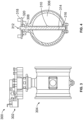
- Figure 3 illustrates a side view of an electrically controlled valve 300 in accordance with one embodiment
- Figure 4 illustrates a partial front view of the electrically controlled valve.
- the electrically controlled valve includes an electrical portion 302 and a mechanical portion 304 operably coupled with the electrical portion.
- the mechanical portion includes a plate 306 that is configured to rotate about an axis (not shown) based on control of the plate by the electrical portion of the valve.
- the electrical portion includes an adapter plate 318 and gasket 320, and a shaft 312 that extends through the adapter plate from the electrical portion toward the mechanical portion.
- the mechanical portion includes the plate, a pin 310, a washer 314 that receives an end portion of the shaft, and a bushing 316 that is operably coupled with end of the shaft.
- Figure 5 illustrates a partial cross-sectional side view
- Figure 6 illustrates a cross-sectional top view of the electrical portion of the electrically controlled valve shown in Figures 3 and 4 .
- the shaft extends through a passage of the gasket and a passage of the adapter plate along an axis (e.g., along the same axis as the axis of rotation of the plate).
- the adapter plate includes a chamber that is separated into a first pocket 322 and a second pocket 332.
- the gasket is coupled with the adapter plate such a first portion 338 of the gasket is disposed within the first pocket and a second portion 340 of the gasket is disposed within the second pocket.
- a pump device may pump a fluid (e.g., a gas, a liquid, a gas-liquid mixture) into and/or out of the first and second pockets of the adapter plate.
- a fluid e.g., a gas, a liquid, a gas-liquid mixture
- the first and second portions of the gasket move within the first and second pockets, respectively, responsive to the fluid being directed into or out of the first and second pockets.
- the first portion of the gasket may rotate to move toward a first surface 324 of the first pocket
- the second portion of the gasket may rotate with the first portion of the gasket to move toward a first surface 334 of the second pocket.
- the first portion of the gasket may rotate to move toward a second surface 326 of the first pocket, and the second portion of the gasket may rotate to move toward a second surface 336 of the second pocket.
- the electrically controlled valve may be coupled with a displacement sensor (not shown) that may generate position signals based on rotational movement of the gasket about the axis of the shaft.
- Movement of the gasket about the axis of the shaft controls rotational movement of the plate of the mechanical portion of the electrically controlled valve.
- the rotational movement of the gasket within the adapter plate may be controlled by the flow of a fluid directed into or out of the first and second pockets of the adapter plate.
- the gasket is coupled with the shaft, and the shaft is coupled with the plate.
- the position of the plate between one or more open positions and a closed position may be controlled based on the rotational position of the gasket.
- the electrically controlled valve may have any alternative configuration or arrangement, and the plate of the electrically controlled valve may be controlled by any additional and/or alternative components of the electrical portion of the electrically controlled valve.
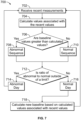
- Figure 7 illustrates a flowchart 700 of one embodiment of a method of determining a health state of an electrically controlled valve, such as the electrically controlled valve illustrated in Figures 1 through 6 .
- One or more of the operations performed or associated with the method may be omitted, performed multiple times, performed in an alternative order, or the like.
- one or more processors receive recent measurements (e.g., subsequently measured values) of the electrically controlled valve.
- the electrically controlled valve may be operably coupled with a computer or alternative controller having and/or connected with one or more processors, such as one or more microprocessors, field programmable gate arrays, integrated circuits, and/or the like.
- the electrically controlled valve may be wirelessly coupled with the one or more processors, or conductively coupled via one or more conductors, wires, or the like.
- Figure 8 illustrates one example of the measurements 800 that may be received, sensed, or otherwise obtained by the one or more processors.
- the measurements may include an input electric current 802, an output electric current 804, and position signals 806.
- the processors may receive measurements and/or sensed data from the displacement sensor and one or more sensors operably coupled with the pump device.
- the input electric current may be a current that is applied to the pump or pump device that pumps the fluid into the chamber of the electrically controlled valve to change the position of the valve.
- the output electric current may be a current that is output from the pump or pump device in response to the input electric current being input into the electrically controlled valve.
- the position signals may be generated by the displacement sensor that changes values of the position signals based on linear displacement of the solenoid within the displacement sensor of the electrically controlled valve.
- Figure 10 illustrates a timeline 1000 including a moving time window 1008 in accordance with one embodiment.
- the timeline includes a start time 1002 that may represent a day, date, a time of day, or the like.
- the timeline includes the moving time window 1008 that extends between the start time and a first stop time 1004.
- the moving time window may also be referred to as a moving day average, or moving time average.
- the moving time window may be a length of time that is about 50 days long between the start and first stop times, may be 100 days long, may be 200 days long, or the like.
- the moving time window may be associated with an amount of repeatedly sampled data.
- New or recent data is evaluated on a daily or otherwise predetermined timeline basis, and is compared with baseline data of the electrically controlled valve.
- the recent values associated with the input electric current, the output electric current, and the position signals may be compared with baseline values associated with the input electric current, the output electric current, and the position signals during previous measurements.
- the input electric current, the output electric current, and the position signals may be sensed or measured;
- baseline values may be calculated or determined based on the sensed or measured input electric current, output electric current, and the position signals;
- subsequent and/or additional sensing or measuring of the input electric current, the output electric current, and the position signals may be performed or conducted (e.g., at a later time); and
- the health state of the electrically controlled valve may be determined based on comparing the values associated with the subsequent sensing to the baseline values associated with the previous sensing.
- the recent values of the first, second, and third means and standard deviations may be compared with the first, second, and third means and standard deviations of the previous data. For example, the processors compare the six different variables to determine whether the variables indicate a healthy or an unhealthy electrically controlled valve. If the recent baseline values are greater than the calculated values, flow of the method proceeds toward 308 and the recent baseline values may be associated with an abnormal sequence that may indicate a poor state of health of the electrically controlled valve.
- the recent baseline values may be associated with a normal sequence that may indicate a good state of health of the electrically controlled valve.
- the recent and previous baseline values may be compared in alternative ways such that an abnormal sequence may be indicated by recent baseline values being less than the previous calculated baseline values.
- the abnormal sequence may be indicated by alternative comparison methods between the recent baseline values and the previous calculated baseline values (e.g., averages, percentages, alternative mean and/or standard deviation comparisons, or the like).
- the processors may determine the day values that are under evaluation to ensure that recent changes to the data being evaluated do not skew the normal data. For example, the processors may determine whether the calculated baseline values including the six variables should be recalculated and/or reevaluated. The processors may determine whether data associated a particular day of evaluation is a normal day or an abnormal day. If the day is determined to be normal, the processors may update the calculated baseline values to include a variation shift or a mean shift in the full set of data. Alternatively, if the day is determined to be abnormal, the processors may ignore the recent data and may not update the calculated baseline values.
- the processors determine if a ratio of abnormal sequences to normal sequences is outside of a predetermined limit. If the day values under evaluation are considered to be abnormal, the abnormal evaluations may represent a variation shift or a mean shift based on at least one of the six variables. If the number of abnormal points relative to the number of normal points exceeds a predetermined limit or it outside of a predetermined limit, then the day is determined to be an abnormal day, and flow of the method proceeds toward 714.
- an abnormal day may be outside of the moving time window.
- the abnormal day may be determined to be at a point 1022 within a recent timeline 1010 shown in Figure 10 that extends between the first stop time 1004 and a second stop time 1006.
- the start time may represent day T-210
- the first stop time may represent day T-30
- the second stop time may represent T-0.
- the day may fall within the recent timeline and may be too recent.
- the recent data may skew the data associated with the moving time window, and therefore the recent data may be ignored.
- Flow of the method may return to 302, and the method may repeat for a predetermined length of time, for a predetermined number of data sets to be collected or the like.
- the day is determined to be a normal day, and flow of the method proceeds toward 716.
- the day may be determined to be at a point 1020 that fall within the moving time window between the start time and the first stop time. If the recent baseline values compared to the calculated baseline values associated with the moving time window differ, are outside of a predetermined range indicating the abnormal sequence, and the day is determined to be a normal day (relative to an abnormal day), then flow of the method proceeds toward 718.
- a new baseline may be calculated based on values associated with the recent values. For example, the six variables may be recalculated or determined based on the recent abnormal sequence discovered on a normal day of evaluation.
- the processors may update, recalculate, or re-evaluate the baseline values using one or more different methods.
- the processors may calculate a fourth mean and fourth standard deviation of the sums of the position signals repeatedly sampled during a subset of the prior moving time window; calculate a fifth mean and a fifth standard deviation of the first differences between the position signals repeatedly sampled during the subset of the prior moving time window; and calculate a sixth mean and a sixth standard deviation of second differences between the input electric current and the outlet electric current repeatedly sampled during the subset of the prior moving time window.
- the processors may compare the fourth mean and fourth standard deviation with the first mean and first standard deviation; compare the fifth mean and the fifth standard deviation with the second mean and the second standard deviation; and compare the sixth mean and the sixth standard deviation with the third mean and the third standard deviation.
- the processors may update the baseline values (e.g., the first mean and first standard deviation, the second mean and second standard deviation, and the third mean and third standard deviation) based on the comparison between the twelve data sets.
- the processors may determine a set of comparison values indicative of comparing the fourth mean and the fourth standard deviation with the first mean and the first standard deviation; the fifth mean and fifth standard deviation with the second mean and second standard deviation; and the sixth mean and sixth standard deviation with the third mean and third standard deviation.
- the processors may map the set of the comparison values with different values of the health state of the electrically controlled valve to determine the health state of the valve.
- Figure 11 illustrates a table 1100 of one example of mapping the set of comparison values to determine the health state of the valve.
- the table include a first column 1102 that indicates a case or evaluation number.
- the table also includes second, third, fourth, fifth, sixth, and seventh columns 1104 through 1114 indicative of each of the six comparison values indicative of comparing the different mean and standard deviation values.
- the columns 1104 through 1114 indicate if one of the set of the comparison values is outside of a predetermined limit, exceeds a predetermined limit, or the like.
- the table includes an eighth column 1116 that is based on the data associated with columns 1104 through 1114.
- the processors may determine a state of health of the electrically controlled valve based on the data in column 1116. For example, the processors may determine whether the electrically controlled valve is healthy or unhealthy based on the data indicated in column 1116, and may communicate the determined state of health of the valve in a nineth column 1118. In one or more embodiments, the processors may determine that the state of health of the valve is inconclusive based on the data analysis, and may indicate to an operator of the valve that the valve requires further analysis. Optionally, the processors may determine a state of health of a particular component of the valve and that only the particular component requires repair or replacement.
- the processors may determine that there is an issue with the solenoid of the displacement sensor of the valve, that there is an issue with another portion of the position sensor, that there is an oil leak within the valve, that the valve plate is stuck, that the electrically controlled valve is overheating, that there is a short circuit or a damaged wire within the valve, or the like.
- the processors may determine the state of health of the electrically controlled valve based on the data analysis of the position sensor and the input and output electric current. In one or more embodiments, the processors may determine that the valve, or a portion of the valve, requires repairing or replacement based on the health state of the valve. Optionally, the processors may indicate to an operator of the valve that the valve requires repairing and/or replacement (e.g., via an output device, an audio and/or visual alarm, or the like). Optionally, the processors may determine that the additional evaluation is needed to determine the state of health of the valve. Optionally, the processors may determine that the failure is unknown, but that the electrically controlled valve is still able to operate. Optionally, the processors may determine that the valve needs to be replaced, and may determine a state of urgency of replacing the valve.
- a method includes measuring input electric current that is input into an electrically controlled valve to change a position of the electrically controlled valve.
- Output electric current that is output from the electrically controlled valve in response to the input electric current being input into the electrically controlled valve is measured.
- Position signals are generated using a sensor coupled with the electrically controlled valve that are indicative of the position of the electrically controlled valve.
- Baseline values associated with the input electric current, the output electric current, and the position signals are calculated.
- a health state of the electrically controlled valve is determined by comparing the baseline values associated with the input electric current, the output electric current, and the position signals with subsequently measured values associated with the input electric current, the output electric current, and the position signals.
- the method may include repairing or replacing the electrically controlled valve based on the health state.
- the input electric current that is measured may be applied to a pump device that pumps a fluid into a chamber of the electrically controlled valve to change the position of the electrically controlled valve.
- the output electric current that is measured may be output from a pump device that pumps a fluid into a chamber of the electrically controlled valve to change the position of the electrically controlled valve.
- the position signals may be generated as the position voltages that are measured by a displacement sensor that changes values of the position voltages based on a linear displacement of a solenoid within the electrically controlled valve.
- the position signals may be or include position voltages
- the baseline values that are calculated may include a sum of the position voltages
- the position signals may be or include position voltages
- the baseline values that are calculated may include a difference between the position voltages
- the baseline values that are calculated may include a difference between the input electric current and the output electric current.
- the position signals may be or include position voltages
- the baseline values that are calculated may include a first mean and a first standard deviation of sums of the position voltages repeatedly sampled during a prior moving time window, a second mean and a second standard deviation of the first differences between the position voltages repeatedly sampled during the prior moving time window, and a third mean and a third standard deviation of second differences between the input electric current and the output electric current repeatedly sampled during the prior moving time window.
- determining the health state of the electrically controlled valve may include calculating a fourth mean and a fourth standard deviation of the sums of the position voltages repeatedly sampled during a subset of the prior moving time window, a fifth mean and a fifth standard deviation of the first differences between the position voltages repeatedly sampled during the subset of the prior moving time window, and a sixth mean and a sixth standard deviation of the second differences between the input electric current and the output electric current repeatedly sampled during the subset of the prior moving time window.
- the fourth mean and the fourth standard deviation are compared with the first mean and the first standard deviation
- the fifth mean and the fifth standard deviation are compared with the second mean and the second standard deviation
- the sixth mean and the sixth standard deviation are compared with the third mean and the third standard deviation.
- determining the health state of the electrically controlled valve may include determining a set of comparison values indicative of comparing the fourth mean and the fourth standard deviation with the first mean and the first standard deviation, the fifth mean and the fifth standard deviation with the second mean and the second standard deviation, and the sixth mean and the sixth standard deviation with the third mean and the third standard deviation, and mapping the set of the comparison values with different values of the health state of the electrically controlled value to determine the health state of the electrically controlled valve.
- a system in one or more embodiments of the subject matter described herein, includes an electrically controlled valve that receives input electric current to change a position of the electrically controlled valve, one or more sensors configured to measure the input electric current that is input into the electrically controlled valve and measure output electric current that is output from the electrically controlled valve in response to the input electric current being input into the electrically controlled valve.
- the sensors generate position signals indicative of the position of the electrically controlled valve.
- the system includes one or more processors that calculate baseline values associated with the input electric current, the output electric current, and the position signals.
- the processors determine a health state of the electrically controlled valve by comparing the baseline values associated with the input electric current, the output electric current, and the position signals with subsequently measured values associated with the input electric current, the output electric current, and the position signals.
- the input electric current that is measured is applied to a pump device that pumps a fluid into a chamber of the electrically controlled valve to change the position of the electrically controlled valve.
- the output electric current that is measured is output from a pump device that pumps a fluid into a chamber of the electrically controlled valve to change the position of the electrically controlled valve.
- the position signals that are generated are output by a displacement sensor that changes values of the position signals based on linear displacement of a solenoid within the electrically controlled valve.
- the position signals may be or include position voltages
- the baseline values that are calculated include a sum of the position voltages and a difference between the position voltages.
- the position signals may be or include position voltages, and the baseline values that are calculated into a difference between the input electric current and the output electric current.
- the position signals may be or include position voltages
- the baseline values that are calculated may include a first mean and a first standard deviation of sums of the position voltages repeatedly sampled during a prior moving time window, a second mean and a second standard deviation of the first differences between the position voltages repeatedly sampled during the prior moving time window, and a third mean and a third standard deviation of second differences between the input electric current and the output electric current repeatedly sampled during the prior moving time window.
- the one or more processors may calculate a fourth mean and a fourth standard deviation of the sums of the position voltages repeatedly sampled during a subset of the prior moving time window, a fifth mean and a fifth standard deviation of the first differences between the position voltages repeatedly sampled during the subset of the prior moving time window, and a sixth mean and a sixth standard deviation of the second differences between the input electric current and the output electric current repeatedly sampled during the subset of the prior moving time window, and may compare the fourth mean and the fourth standard deviation with the first mean and the first standard deviation, compare the fifth mean and the fifth standard deviation with the second mean and the second standard deviation, and compare the sixth mean and the sixth standard deviation with the third mean and the third standard deviation.
- a method includes measuring input electric current that is input into an electrically controlled valve to change a position of the electrically controlled valve.
- the method includes measuring output electric current that is output from the electrically controlled valve in response to the input electric current being input into the electrically controlled valve.
- Position voltages are measured using a sensor coupled with the electrically controlled valve. The position voltages are indicative of the position of the electrically controlled valve. Baseline values associated with the input electric current, the output electric current, and the position voltages are calculated.
- the baseline values that are calculated include a first mean and a first standard deviation of sums of the position voltages repeatedly sampled during a prior moving time window, a second mean and a second standard deviation of first differences between the position voltages repeatedly sampled during the prior moving time window, and a third mean and a third standard deviation of second differences between the input electric current and the output electric current repeatedly sampled during the prior moving time window.
- a health state of the electrically controlled valve is determined by determining a set of comparison values indicative of comparing the fourth mean and the fourth standard deviation with the first mean and the first standard deviation, the fifth mean and the fifth standard deviation with the second mean and the second standard deviation, and the sixth mean and the sixth standard deviation with the third mean and the third standard deviation.
- the set of the comparison values are mapped with different values of the health state of the electrically controlled value to determine the health state of the electrically controlled valve.
Landscapes
- Engineering & Computer Science (AREA)
- General Engineering & Computer Science (AREA)
- Mechanical Engineering (AREA)
- Chemical & Material Sciences (AREA)
- Combustion & Propulsion (AREA)
- Analytical Chemistry (AREA)
- Indication Of The Valve Opening Or Closing Status (AREA)
- Details Of Valves (AREA)
- Testing Of Devices, Machine Parts, Or Other Structures Thereof (AREA)
Claims (15)
- Verfahren, umfassend:Messen eines elektrischen Eingangsstroms (802), der in ein elektrisch gesteuertes Ventil (100) eingegeben wird, um eine Position des elektrisch gesteuerten Ventils (100) zu ändern;Messen des elektrischen Ausgangsstroms (804), der von dem elektrisch gesteuerten Ventil (100) als Reaktion auf den elektrischen Eingangsstrom, der in das elektrisch gesteuerte Ventil eingegeben wird, ausgegeben wird;Erzeugen von Positionssignalen (806) unter Verwendung eines Sensors (210), der mit dem elektrisch gesteuerten Ventil (100) gekoppelt ist, wobei die Positionssignale die Position des elektrisch gesteuerten Ventils (100) angeben;gekennzeichnet durchBerechnen von Basislinienwerten (900), die dem elektrischen Eingangsstrom, dem elektrischen Ausgangsstrom und den Positionssignalen zugeordnet sind, wobei die Basiswerte auf gemessenen elektrischen Eingangsstromwerten, gemessenen elektrischen Ausgangsstromwerten und gemessenen Positionssignalwerten basieren, die während eines vorherigen beweglichen Zeitfensters (1008) wiederholt abgetastet wurden; undBestimmen eines Betriebszustands des elektrisch gesteuerten Ventils (100) durch Vergleichen der Basiswerte (900), die mit dem elektrischen Eingangsstrom, dem elektrischen Ausgangsstrom und den Positionssignalen verbunden sind, mit nachfolgend gemessenen Werten (800), die dem elektrischen Eingangsstrom (802), dem elektrischen Ausgangsstrom (804) und den Positionssignalen (806) zugeordnet sind.
- Verfahren nach Anspruch 1, ferner umfassend:
Reparieren oder Auswechseln des elektrisch gesteuerten Ventils (100) auf der Grundlage des Betriebszustandes. - Verfahren nach Anspruch 1, wobei der gemessene elektrische Eingangsstrom (802) an eine Pumpvorrichtung angelegt wird, die ein Fluid in eine Kammer des elektrisch gesteuerten Ventils (100) pumpt, um die Position des elektrisch gesteuerten Ventils (100) zu ändern.
- Verfahren nach Anspruch 1, wobei der gemessene elektrische Ausgangsstrom (804) von einer Pumpvorrichtung ausgegeben wird, die ein Fluid in eine Kammer des elektrisch gesteuerten Ventils pumpt, um die Position des elektrisch gesteuerten Ventils (100) zu ändern.
- Verfahren nach Anspruch 1, wobei die Positionssignale (806) als Positionsspannungen erzeugt werden, die von einem Verschiebungssensor (210) gemessen werden, der die Werte der Positionsspannungen basierend auf der linearen Verschiebung eines Solenoids (212) innerhalb des elektrisch gesteuerten Ventils (100) ändert.
- Verfahren nach Anspruch 1, wobei die Positionssignale (806) Positionsspannungen umfassen und die berechneten Basiswerte (900) eine Summe der Positionsspannungen einschließen.
- Verfahren nach Anspruch 1, wobei die Positionssignale (806) Positionsspannungen umfassen und die berechneten Basiswerte (900) eine Differenz zwischen den Positionsspannungen einschließen.
- Verfahren nach Anspruch 1, wobei die berechneten Basiswerte (900) eine Differenz zwischen dem elektrischen Eingangsstrom und dem elektrischen Ausgangsstrom einschließen.
- Verfahren nach Anspruch 1, wobei die Positionssignale (806) Positionsspannungen umfassen und die berechneten Basiswerte (900) einen ersten Mittelwert (902A) und eine erste Standardabweichung (902B) von Summen der Positionsspannungen, die während des vorherigen gleitenden Zeitfensters (1008) wiederholt abgetastet wurden, einen zweiten Mittelwert (904A) und eine zweite Standardabweichung (904B) von ersten Differenzen zwischen den Positionsspannungen, die während des vorherigen gleitenden Zeitfensters (1008) wiederholt abgetastet wurden, und einen dritten Mittelwert (906A) und eine dritte Standardabweichung (906B) von zweiten Differenzen zwischen dem elektrischen Eingangsstrom und dem elektrischen Ausgangsstrom, die während des vorherigen gleitenden Zeitfensters (1008) wiederholt abgetastet wurden, einschließen.
- Verfahren nach Anspruch 9, wobei das Bestimmen des Betriebszustands des elektrisch gesteuerten Ventils (100) Folgendes einschließt:Berechnen eines vierten Mittelwerts und einer vierten Standardabweichung der Summen der Positionsspannungen, die während einer Teilmenge des vorherigen gleitenden Zeitfensters (1008) wiederholt abgetastet wurden, eines fünften Mittelwerts und einer fünften Standardabweichung der ersten Differenzen zwischen den Positionsspannungen, die während der Teilmenge des vorherigen gleitenden Zeitfensters (1008) wiederholt abgetastet wurden, und eines sechsten Mittelwerts und einer sechsten Standardabweichung der zweiten Differenzen zwischen dem elektrischen Eingangsstrom und dem elektrischen Ausgangsstrom, die während der Teilmenge des vorherigen gleitenden Zeitfensters (1008) wiederholt abgetastet wurden; undVergleichen des vierten Mittelwerts und der vierten Standardabweichung mit dem ersten Mittelwert (902A) und der ersten Standardabweichung (902B), des fünften Mittelwerts und der fünften Standardabweichung mit dem zweiten Mittelwert (904A) und der zweiten Standardabweichung (904B), und des sechsten Mittelwerts und der sechsten Standardabweichung mit dem dritten Mittelwert (906A) und der dritten Standardabweichung (906B).
- Verfahren nach Anspruch 10, wobei das Bestimmen des Betriebszustands des elektrisch gesteuerten Ventils (100) Folgendes einschließt:Bestimmen eines Satzes von Vergleichswerten, die ein Vergleichen des vierten Mittelwerts und der vierten Standardabweichung mit dem ersten Mittelwert (902A) und der ersten Standardabweichung (902B), des fünften Mittelwerts und der fünften Standardabweichung mit dem zweiten Mittelwert (904A) und der zweiten Standardabweichung (904B), und des sechsten Mittelwerts und der sechsten Standardabweichung mit dem dritten Mittelwert (906A) und der dritten Standardabweichung (906B) angeben; undAbbilden des Satzes von Vergleichswerten mit unterschiedlichen Werten des Betriebszustands des elektrisch gesteuerten Ventils (100), um den Betriebszustand des Ventils (100) zu bestimmen.
- System umfassend:ein elektrisch gesteuertes Ventil (100), das so konfiguriert ist, dass es elektrischen Eingangsstrom empfängt, um eine Position des elektrisch gesteuerten Ventils (100) zu ändern; undeinen oder mehrere Sensoren (210), die so konfiguriert sind, dass sie den elektrischen Eingangsstrom (802) messen, der in das elektrisch gesteuerte Ventil (100) eingegeben wird, und den elektrischen Ausgangsstrom (804) messen, der von dem elektrisch gesteuerten Ventil (100) als Reaktion auf den elektrischen Eingangsstrom ausgegeben wird, der in das elektrisch gesteuerte Ventil (100) eingegeben wird, wobei der eine oder die mehreren Sensoren (210) so konfiguriert sind, dass sie Positionssignale (806) erzeugen, die die Position des elektrisch gesteuerten Ventils (100) angeben;dadurch gekennzeichnet, dassein oder mehrere Prozessoren so konfiguriert sind, dass sie Basiswerte (900) berechnen, die dem elektrischen Eingangsstrom, dem elektrischen Ausgangsstrom und den Positionssignalen zugeordnet sind, wobei die Basiswerte (900) auf gemessenen elektrischen Eingangsstromwerten, gemessenen elektrischen Ausgangsstromwerten und gemessenen Positionssignalwerten basieren, die während eines vorhergehenden beweglichen Zeitfensters (1008) wiederholt abgetastet wurden,wobei der eine oder die mehreren Prozessoren so konfiguriert sind, dass sie einen Betriebszustand des elektrisch gesteuerten Ventils (100) bestimmen, indem sie die dem elektrischen Eingangsstrom, dem elektrischen Ausgangsstrom und den Positionssignalen zugeordneten Basiswerte (900) mit anschließend gemessenen Werten (800) vergleichen, die dem elektrischen Eingangsstrom (802), dem elektrischen Ausgangsstrom (804) und den Positionssignalen (806) zugeordnet sind.
- System nach Anspruch 12, wobei der gemessene elektrische Eingangsstrom (802) an eine Pumpvorrichtung angelegt wird, die ein Fluid in eine Kammer des elektrisch gesteuerten Ventils (100) pumpt, um die Position des elektrisch gesteuerten Ventils (100) zu ändern.
- System nach Anspruch 12, wobei der gemessene elektrische Ausgangsstrom (804) von einer Pumpvorrichtung ausgegeben wird, die ein Fluid in eine Kammer des elektrisch gesteuerten Ventils (100) pumpt, um die Position des elektrisch gesteuerten Ventils (100) zu ändern.
- Verfahren, umfassend:Messen eines elektrischen Eingangsstroms (802), der in ein elektrisch gesteuertes Ventil (100) eingegeben wird, um eine Position des elektrisch gesteuerten Ventils (100) zu ändern;Messen des elektrischen Ausgangsstroms (804), der von dem elektrisch gesteuerten Ventil (100) als Reaktion auf den elektrischen Eingangsstrom (802), der in das elektrisch gesteuerte Ventil (100) eingegeben wird, ausgegeben wird;Erzeugen von Positionsspannungen (806) unter Verwendung eines Sensors (210), der mit dem elektrisch gesteuerten Ventil (100) gekoppelt ist, wobei die Positionsspannungen (806) die Position des elektrisch gesteuerten Ventils (100) anzeigen;gekennzeichnet durchBerechnen von Basiswerten (900), die dem elektrischen Eingangsstrom, dem elektrischen Ausgangsstrom und den Positionsspannungen zugeordnet sind, auf der Grundlage früherer Messungen des elektrischen Eingangsstroms, des elektrischen Ausgangsstroms und der Positionsspannungen, wobei die Basiswerte (900), die berechnet werden, einen ersten Mittelwert (902A) und eine erste Standardabweichung (902B) von Summen der Positionsspannungen enthalten, die während eines früheren gleitenden Zeitfensters (1008) wiederholt abgetastet werden, einen zweiten Mittelwert (904A) und eine zweite Standardabweichung (904B) von ersten Differenzen zwischen den Positionsspannungen, die während des vorherigen gleitenden Zeitfensters (1008) wiederholt abgetastet wurden, und einen dritten Mittelwert (906A) und eine dritte Standardabweichung (906B) von zweiten Differenzen zwischen dem elektrischen Eingangsstrom und dem elektrischen Ausgangsstrom, die während des vorherigen gleitenden Zeitfensters (1008) wiederholt abgetastet wurden;Berechnen eines vierten Mittelwerts und einer vierten Standardabweichung der Summen der Positionsspannungen, die während einer Teilmenge des vorherigen gleitenden Zeitfensters (1008) wiederholt abgetastet wurden, eines fünften Mittelwerts und einer fünften Standardabweichung der ersten Differenzen zwischen den Positionsspannungen, die während der Teilmenge des vorherigen gleitenden Zeitfensters (1008) wiederholt abgetastet wurden, und eines sechsten Mittelwerts und einer sechsten Standardabweichung der zweiten Differenzen zwischen dem elektrischen Eingangsstrom und dem elektrischen Ausgangsstrom, die während der Teilmenge des vorherigen gleitenden Zeitfensters (1008) wiederholt abgetastet wurden;Vergleichen des vierten Mittelwerts und der vierten Standardabweichung mit dem ersten Mittelwert (902A) und der ersten Standardabweichung (902B), des fünften Mittelwerts und der fünften Standardabweichung mit dem zweiten Mittelwert (904A) und der zweiten Standardabweichung (904B), und des sechsten Mittelwerts und der sechsten Standardabweichung mit dem dritten Mittelwert (906A) und der dritten Standardabweichung (906B);Bestimmen eines Betriebszustands des elektrisch gesteuerten Ventils (100) durch Bestimmen eines Satzes von Vergleichswerten, die ein Vergleichen des vierten Mittelwerts und der vierten Standardabweichung mit dem ersten Mittelwert (902A) und der ersten Standardabweichung (902B), des fünften Mittelwerts und der fünften Standardabweichung mit dem zweiten Mittelwert (904A) und der zweiten Standardabweichung (904B), und des sechsten Mittelwerts und der sechsten Standardabweichung mit dem dritten Mittelwert (906A) und der dritten Standardabweichung (906B) angeben; undAbbilden des Satzes von Vergleichswerten mit unterschiedlichen Werten des Betriebszustands des elektrisch gesteuerten Ventils (100), um den Betriebszustand des Ventils (100) zu bestimmen.
Applications Claiming Priority (1)
| Application Number | Priority Date | Filing Date | Title |
|---|---|---|---|
| US17/401,268 US12366306B2 (en) | 2021-08-12 | 2021-08-12 | Evaluation system and method |
Publications (2)
| Publication Number | Publication Date |
|---|---|
| EP4134577A1 EP4134577A1 (de) | 2023-02-15 |
| EP4134577B1 true EP4134577B1 (de) | 2024-11-27 |
Family
ID=82655326
Family Applications (1)
| Application Number | Title | Priority Date | Filing Date |
|---|---|---|---|
| EP22185596.8A Active EP4134577B1 (de) | 2021-08-12 | 2022-07-19 | Auswertesystem und -verfahren |
Country Status (5)
| Country | Link |
|---|---|
| US (1) | US12366306B2 (de) |
| EP (1) | EP4134577B1 (de) |
| JP (1) | JP7437453B2 (de) |
| CN (1) | CN115704843A (de) |
| AU (1) | AU2022205194B2 (de) |
Families Citing this family (1)
| Publication number | Priority date | Publication date | Assignee | Title |
|---|---|---|---|---|
| US12386334B2 (en) * | 2022-05-25 | 2025-08-12 | Fisher-Rosemount Systems, Inc. | Suspicious control valve performance detection |
Family Cites Families (30)
| Publication number | Priority date | Publication date | Assignee | Title |
|---|---|---|---|---|
| US4662604A (en) | 1985-05-30 | 1987-05-05 | Canadian Fram Limited | Force balanced EGR valve with position feedback |
| KR890007306A (ko) * | 1987-10-30 | 1989-06-19 | 제트.엘.더머 | 온라인 밸브 진단 감시 시스템 |
| US6267349B1 (en) * | 1992-09-25 | 2001-07-31 | Target Rock Corporation | Precision valve control |
| US5433245A (en) | 1993-08-16 | 1995-07-18 | Westinghouse Electric Corporation | Online valve diagnostic monitoring system having diagnostic couplings |
| US6178956B1 (en) | 1996-05-20 | 2001-01-30 | Borgwarner Inc. | Automotive fluid control system with pressure balanced solenoid valve |
| US6411081B1 (en) | 2000-02-10 | 2002-06-25 | Siemens Ag | Linear position sensor using magnetic fields |
| JP3411980B2 (ja) | 2000-10-25 | 2003-06-03 | 日本原子力発電株式会社 | 弁装置における異常診断及び劣化予測方法並びに装置 |
| US6601821B2 (en) | 2000-11-17 | 2003-08-05 | G. W. Lisk Company, Inc. | Proportional control valve assembly for exhaust gas recirculation system |
| US7383165B2 (en) * | 2001-08-17 | 2008-06-03 | General Electric Company | System and method for diagnosing faults utilizing baseline modeling techniques |
| US6917203B1 (en) * | 2001-09-07 | 2005-07-12 | The United States Of America As Represented By The Administrator Of The National Aeronautics And Space Administration | Current signature sensor |
| JP2006009855A (ja) | 2004-06-23 | 2006-01-12 | Hitachi Valve Ltd | ボール弁 |
| GB0426733D0 (en) | 2004-12-06 | 2005-01-12 | Imp College Innovations Ltd | Flow control device for a turbocharger |
| US20070095400A1 (en) * | 2005-11-03 | 2007-05-03 | Parker-Hannifin Corporation | Shut-off valve system |
| US7539560B2 (en) * | 2007-01-05 | 2009-05-26 | Dresser, Inc. | Control valve and positioner diagnostics |
| WO2009140322A2 (en) | 2008-05-16 | 2009-11-19 | G.W. Lisk Company, Inc | Integrated sensor for position control |
| JP5122398B2 (ja) | 2008-08-04 | 2013-01-16 | 株式会社クボタ | 石油化学プラントのバルブ制御装置 |
| DE102008058208B4 (de) | 2008-11-19 | 2017-01-05 | Samson Aktiengesellschaft | Stellgerät und Verfahren zur Überprüfung der korrekten Funktionsfähigkeit eines Faltenbalges eines Stellgerätes |
| US8425200B2 (en) * | 2009-04-21 | 2013-04-23 | Xylem IP Holdings LLC. | Pump controller |
| MX2014015608A (es) | 2012-06-20 | 2015-03-05 | Dayco Ip Holdings Llc | Valvula de flujo variable para turbocargadores. |
| WO2015031587A1 (en) | 2013-08-29 | 2015-03-05 | Llc Vector Horizon Technologies | Electro-hydraulic actuator |
| US9291094B2 (en) | 2014-05-05 | 2016-03-22 | Dayco Ip Holdings, Llc | Variable flow valve having metered flow orifice |
| US9541040B2 (en) | 2014-09-05 | 2017-01-10 | General Electric Company | Method and systems for exhaust gas recirculation system diagnosis |
| US9915375B1 (en) * | 2017-02-10 | 2018-03-13 | Fisher Controls International Llc | Methods and apparatus to monitor health information of a valve |
| US10612427B2 (en) * | 2017-08-28 | 2020-04-07 | Schaeffler Technologies AG & Co. KG | Solenoid valve control for noise reduction in a variable valve lift system |
| JP6955405B2 (ja) | 2017-09-12 | 2021-10-27 | 川崎重工業株式会社 | スプール弁装置、及びスプール弁 |
| CA3080229A1 (en) | 2017-11-01 | 2019-05-09 | General Technologies Corp. | Valve-diagnostic system and device |
| JP2019143645A (ja) | 2018-02-15 | 2019-08-29 | 株式会社デンソーテン | 制御装置およびソレノイドバルブの制御方法 |
| US11181111B2 (en) * | 2018-02-27 | 2021-11-23 | Oshkosh Corporation | Fluid delivery system health monitoring systems and methods |
| US11365828B2 (en) * | 2018-07-06 | 2022-06-21 | Danfoss Power Solutions Ii Technology A/S | System and method for detecting position of a valve driven by a solenoid linear actuator |
| US11028941B2 (en) * | 2019-08-19 | 2021-06-08 | General Equipment And Manufacturing Company, Inc. | Methods and apparatus for monitoring solenoid valve health |
-
2021
- 2021-08-12 US US17/401,268 patent/US12366306B2/en active Active
-
2022
- 2022-07-04 JP JP2022107999A patent/JP7437453B2/ja active Active
- 2022-07-13 AU AU2022205194A patent/AU2022205194B2/en active Active
- 2022-07-19 EP EP22185596.8A patent/EP4134577B1/de active Active
- 2022-07-27 CN CN202210892172.9A patent/CN115704843A/zh active Pending
Also Published As
| Publication number | Publication date |
|---|---|
| JP2023026328A (ja) | 2023-02-24 |
| AU2022205194B2 (en) | 2023-12-21 |
| JP7437453B2 (ja) | 2024-02-22 |
| EP4134577A1 (de) | 2023-02-15 |
| US20230046464A1 (en) | 2023-02-16 |
| AU2022205194A1 (en) | 2023-03-02 |
| CN115704843A (zh) | 2023-02-17 |
| US12366306B2 (en) | 2025-07-22 |
Similar Documents
| Publication | Publication Date | Title |
|---|---|---|
| EP2798190B1 (de) | Verfahren zum konkretisieren einer fehlfunktion einer abgasrückführung einer brennkraftmaschine eines kraftfahrzeuges und entsprechendes diagnosegerät | |
| DE102013200536B3 (de) | Verfahren zur Diagnose einer Niederdruck-Abgasrückführung einer Brennkraftmaschine und Vorrichtung zur Durchführung des Verfahrens | |
| EP4134577B1 (de) | Auswertesystem und -verfahren | |
| DE112012003847T5 (de) | Systeme und Verfahren für eine Motordiagnose | |
| DE102009003236A1 (de) | Fehlerlokalisation in einem Kraftstoff-Einspritzsystem | |
| EP3961018B1 (de) | System zur überwachung und anpassung der leistung eines turboladers | |
| WO2009141199A1 (de) | Verfahren zur erkennung einer fehlfunktion und insbesondere einer drift eines raildrucksensors bei einem common rail-einspritzsystem | |
| CN111305965B (zh) | 车辆及其进气系统的漏气检测方法和装置 | |
| US9389144B2 (en) | Method for diagnosing EGR system | |
| JP2016532051A (ja) | 燃料噴射装置をインジェクタごとに診断するための方法、及び、燃料噴射装置を有する内燃機関 | |
| US11248574B2 (en) | Methods and systems for diagnosing a valve | |
| US20220065185A1 (en) | Detection of fuel injector failure systems and methods | |
| CN110696990A (zh) | 一种基于数据驱动的船舶发电机部件影响识别方法及系统 | |
| DE102015215521A1 (de) | Verfahren und Vorrichtung zum Diagnostizieren der Trennung eines Sauerstoffsensors | |
| US11603916B2 (en) | Systems and methods for monitoring lubrication of a gear assembly | |
| DE102010025177B4 (de) | Diagnoseverfahren und Diagnosesystem zur Erkennung von Leckageströmen in Kraftfahrzeug-Hochdruckeinspritzanlagen | |
| SE1350440A1 (sv) | Övervakningsenhet, och en metod i samband med en övervakningsenhet | |
| DE102013206391B4 (de) | Verfahren zur Überprüfung der Funktionsfähigkeit eines Partikelfilters | |
| KR20180088710A (ko) | 연료의 점도를 결정하는 방법 | |
| Kostomakhin et al. | Experimental sample for diagnosis of hydraulic drive pumps of agricultural equipment by pressure pulsation coefficient | |
| KR101387421B1 (ko) | 차량의 접지 레벨 신호를 이용한 차량상태 검사 분석 방법 및 장치 | |
| DE102024106205A1 (de) | Steuernetzwerk-Diagnosegerät für Kraftfahrzeugmotoren und dazugehöriges Verfahren zur Diagnose von Verbrennungskraftmaschinen | |
| DE112014002182T5 (de) | Vorrichtung und Verfahren zum Ermitteln der Funktion eines Sensors | |
| CN121186454A (zh) | 一种柴油机电磁干扰的诊断方法 | |
| Wierzbicki et al. | Diagnostics of a common rail system using a signal analyser |
Legal Events
| Date | Code | Title | Description |
|---|---|---|---|
| PUAI | Public reference made under article 153(3) epc to a published international application that has entered the european phase |
Free format text: ORIGINAL CODE: 0009012 |
|
| STAA | Information on the status of an ep patent application or granted ep patent |
Free format text: STATUS: THE APPLICATION HAS BEEN PUBLISHED |
|
| AK | Designated contracting states |
Kind code of ref document: A1 Designated state(s): AL AT BE BG CH CY CZ DE DK EE ES FI FR GB GR HR HU IE IS IT LI LT LU LV MC MK MT NL NO PL PT RO RS SE SI SK SM TR |
|
| P01 | Opt-out of the competence of the unified patent court (upc) registered |
Effective date: 20230530 |
|
| STAA | Information on the status of an ep patent application or granted ep patent |
Free format text: STATUS: REQUEST FOR EXAMINATION WAS MADE |
|
| 17P | Request for examination filed |
Effective date: 20230814 |
|
| GRAP | Despatch of communication of intention to grant a patent |
Free format text: ORIGINAL CODE: EPIDOSNIGR1 |
|
| STAA | Information on the status of an ep patent application or granted ep patent |
Free format text: STATUS: GRANT OF PATENT IS INTENDED |
|
| INTG | Intention to grant announced |
Effective date: 20240624 |
|
| GRAS | Grant fee paid |
Free format text: ORIGINAL CODE: EPIDOSNIGR3 |
|
| GRAA | (expected) grant |
Free format text: ORIGINAL CODE: 0009210 |
|
| STAA | Information on the status of an ep patent application or granted ep patent |
Free format text: STATUS: THE PATENT HAS BEEN GRANTED |
|
| AK | Designated contracting states |
Kind code of ref document: B1 Designated state(s): AL AT BE BG CH CY CZ DE DK EE ES FI FR GB GR HR HU IE IS IT LI LT LU LV MC MK MT NL NO PL PT RO RS SE SI SK SM TR |
|
| REG | Reference to a national code |
Ref country code: GB Ref legal event code: FG4D |
|
| REG | Reference to a national code |
Ref country code: CH Ref legal event code: EP |
|
| REG | Reference to a national code |
Ref country code: IE Ref legal event code: FG4D |
|
| REG | Reference to a national code |
Ref country code: DE Ref legal event code: R096 Ref document number: 602022008107 Country of ref document: DE |
|
| REG | Reference to a national code |
Ref country code: LT Ref legal event code: MG9D |
|
| REG | Reference to a national code |
Ref country code: NL Ref legal event code: MP Effective date: 20241127 |
|
| PG25 | Lapsed in a contracting state [announced via postgrant information from national office to epo] |
Ref country code: HR Free format text: LAPSE BECAUSE OF FAILURE TO SUBMIT A TRANSLATION OF THE DESCRIPTION OR TO PAY THE FEE WITHIN THE PRESCRIBED TIME-LIMIT Effective date: 20241127 Ref country code: PT Free format text: LAPSE BECAUSE OF FAILURE TO SUBMIT A TRANSLATION OF THE DESCRIPTION OR TO PAY THE FEE WITHIN THE PRESCRIBED TIME-LIMIT Effective date: 20250327 Ref country code: IS Free format text: LAPSE BECAUSE OF FAILURE TO SUBMIT A TRANSLATION OF THE DESCRIPTION OR TO PAY THE FEE WITHIN THE PRESCRIBED TIME-LIMIT Effective date: 20250327 |
|
| PG25 | Lapsed in a contracting state [announced via postgrant information from national office to epo] |
Ref country code: FI Free format text: LAPSE BECAUSE OF FAILURE TO SUBMIT A TRANSLATION OF THE DESCRIPTION OR TO PAY THE FEE WITHIN THE PRESCRIBED TIME-LIMIT Effective date: 20241127 Ref country code: NL Free format text: LAPSE BECAUSE OF FAILURE TO SUBMIT A TRANSLATION OF THE DESCRIPTION OR TO PAY THE FEE WITHIN THE PRESCRIBED TIME-LIMIT Effective date: 20241127 |
|
| REG | Reference to a national code |
Ref country code: AT Ref legal event code: MK05 Ref document number: 1746007 Country of ref document: AT Kind code of ref document: T Effective date: 20241127 |
|
| PG25 | Lapsed in a contracting state [announced via postgrant information from national office to epo] |
Ref country code: BG Free format text: LAPSE BECAUSE OF FAILURE TO SUBMIT A TRANSLATION OF THE DESCRIPTION OR TO PAY THE FEE WITHIN THE PRESCRIBED TIME-LIMIT Effective date: 20241127 |
|
| PG25 | Lapsed in a contracting state [announced via postgrant information from national office to epo] |
Ref country code: ES Free format text: LAPSE BECAUSE OF FAILURE TO SUBMIT A TRANSLATION OF THE DESCRIPTION OR TO PAY THE FEE WITHIN THE PRESCRIBED TIME-LIMIT Effective date: 20241127 |
|
| PG25 | Lapsed in a contracting state [announced via postgrant information from national office to epo] |
Ref country code: NO Free format text: LAPSE BECAUSE OF FAILURE TO SUBMIT A TRANSLATION OF THE DESCRIPTION OR TO PAY THE FEE WITHIN THE PRESCRIBED TIME-LIMIT Effective date: 20250227 |
|
| PG25 | Lapsed in a contracting state [announced via postgrant information from national office to epo] |
Ref country code: LV Free format text: LAPSE BECAUSE OF FAILURE TO SUBMIT A TRANSLATION OF THE DESCRIPTION OR TO PAY THE FEE WITHIN THE PRESCRIBED TIME-LIMIT Effective date: 20241127 Ref country code: GR Free format text: LAPSE BECAUSE OF FAILURE TO SUBMIT A TRANSLATION OF THE DESCRIPTION OR TO PAY THE FEE WITHIN THE PRESCRIBED TIME-LIMIT Effective date: 20250228 Ref country code: AT Free format text: LAPSE BECAUSE OF FAILURE TO SUBMIT A TRANSLATION OF THE DESCRIPTION OR TO PAY THE FEE WITHIN THE PRESCRIBED TIME-LIMIT Effective date: 20241127 |
|
| PG25 | Lapsed in a contracting state [announced via postgrant information from national office to epo] |
Ref country code: PL Free format text: LAPSE BECAUSE OF FAILURE TO SUBMIT A TRANSLATION OF THE DESCRIPTION OR TO PAY THE FEE WITHIN THE PRESCRIBED TIME-LIMIT Effective date: 20241127 |
|
| PG25 | Lapsed in a contracting state [announced via postgrant information from national office to epo] |
Ref country code: RS Free format text: LAPSE BECAUSE OF FAILURE TO SUBMIT A TRANSLATION OF THE DESCRIPTION OR TO PAY THE FEE WITHIN THE PRESCRIBED TIME-LIMIT Effective date: 20250227 |
|
| PG25 | Lapsed in a contracting state [announced via postgrant information from national office to epo] |
Ref country code: SM Free format text: LAPSE BECAUSE OF FAILURE TO SUBMIT A TRANSLATION OF THE DESCRIPTION OR TO PAY THE FEE WITHIN THE PRESCRIBED TIME-LIMIT Effective date: 20241127 |
|
| PG25 | Lapsed in a contracting state [announced via postgrant information from national office to epo] |
Ref country code: DK Free format text: LAPSE BECAUSE OF FAILURE TO SUBMIT A TRANSLATION OF THE DESCRIPTION OR TO PAY THE FEE WITHIN THE PRESCRIBED TIME-LIMIT Effective date: 20241127 |
|
| PG25 | Lapsed in a contracting state [announced via postgrant information from national office to epo] |
Ref country code: EE Free format text: LAPSE BECAUSE OF FAILURE TO SUBMIT A TRANSLATION OF THE DESCRIPTION OR TO PAY THE FEE WITHIN THE PRESCRIBED TIME-LIMIT Effective date: 20241127 |
|
| PG25 | Lapsed in a contracting state [announced via postgrant information from national office to epo] |
Ref country code: RO Free format text: LAPSE BECAUSE OF FAILURE TO SUBMIT A TRANSLATION OF THE DESCRIPTION OR TO PAY THE FEE WITHIN THE PRESCRIBED TIME-LIMIT Effective date: 20241127 |
|
| PG25 | Lapsed in a contracting state [announced via postgrant information from national office to epo] |
Ref country code: SK Free format text: LAPSE BECAUSE OF FAILURE TO SUBMIT A TRANSLATION OF THE DESCRIPTION OR TO PAY THE FEE WITHIN THE PRESCRIBED TIME-LIMIT Effective date: 20241127 |
|
| PG25 | Lapsed in a contracting state [announced via postgrant information from national office to epo] |
Ref country code: CZ Free format text: LAPSE BECAUSE OF FAILURE TO SUBMIT A TRANSLATION OF THE DESCRIPTION OR TO PAY THE FEE WITHIN THE PRESCRIBED TIME-LIMIT Effective date: 20241127 |
|
| PG25 | Lapsed in a contracting state [announced via postgrant information from national office to epo] |
Ref country code: IT Free format text: LAPSE BECAUSE OF FAILURE TO SUBMIT A TRANSLATION OF THE DESCRIPTION OR TO PAY THE FEE WITHIN THE PRESCRIBED TIME-LIMIT Effective date: 20241127 |
|
| REG | Reference to a national code |
Ref country code: DE Ref legal event code: R097 Ref document number: 602022008107 Country of ref document: DE |
|
| PG25 | Lapsed in a contracting state [announced via postgrant information from national office to epo] |
Ref country code: SE Free format text: LAPSE BECAUSE OF FAILURE TO SUBMIT A TRANSLATION OF THE DESCRIPTION OR TO PAY THE FEE WITHIN THE PRESCRIBED TIME-LIMIT Effective date: 20241127 |
|
| PLBE | No opposition filed within time limit |
Free format text: ORIGINAL CODE: 0009261 |
|
| STAA | Information on the status of an ep patent application or granted ep patent |
Free format text: STATUS: NO OPPOSITION FILED WITHIN TIME LIMIT |
|
| REG | Reference to a national code |
Ref country code: CH Ref legal event code: L10 Free format text: ST27 STATUS EVENT CODE: U-0-0-L10-L00 (AS PROVIDED BY THE NATIONAL OFFICE) Effective date: 20251008 |
|
| PGFP | Annual fee paid to national office [announced via postgrant information from national office to epo] |
Ref country code: DE Payment date: 20250618 Year of fee payment: 4 |
|
| PGFP | Annual fee paid to national office [announced via postgrant information from national office to epo] |
Ref country code: FR Payment date: 20250722 Year of fee payment: 4 |
|
| 26N | No opposition filed |
Effective date: 20250828 |
|
| REG | Reference to a national code |
Ref country code: CH Ref legal event code: H13 Free format text: ST27 STATUS EVENT CODE: U-0-0-H10-H13 (AS PROVIDED BY THE NATIONAL OFFICE) Effective date: 20260224 |
|
| PG25 | Lapsed in a contracting state [announced via postgrant information from national office to epo] |
Ref country code: LU Free format text: LAPSE BECAUSE OF NON-PAYMENT OF DUE FEES Effective date: 20250719 |
|
| REG | Reference to a national code |
Ref country code: BE Ref legal event code: MM Effective date: 20250731 |
|
| PG25 | Lapsed in a contracting state [announced via postgrant information from national office to epo] |
Ref country code: BE Free format text: LAPSE BECAUSE OF NON-PAYMENT OF DUE FEES Effective date: 20250731 |
|
| PG25 | Lapsed in a contracting state [announced via postgrant information from national office to epo] |
Ref country code: CH Free format text: LAPSE BECAUSE OF NON-PAYMENT OF DUE FEES Effective date: 20250731 |