EP4131996A1 - Rauschunterdrückender kopfhörer - Google Patents
Rauschunterdrückender kopfhörer Download PDFInfo
- Publication number
- EP4131996A1 EP4131996A1 EP20929345.5A EP20929345A EP4131996A1 EP 4131996 A1 EP4131996 A1 EP 4131996A1 EP 20929345 A EP20929345 A EP 20929345A EP 4131996 A1 EP4131996 A1 EP 4131996A1
- Authority
- EP
- European Patent Office
- Prior art keywords
- noise
- signal
- cancelling
- microphone
- headphone
- Prior art date
- Legal status (The legal status is an assumption and is not a legal conclusion. Google has not performed a legal analysis and makes no representation as to the accuracy of the status listed.)
- Granted
Links
Images




Classifications
-
- G—PHYSICS
- G10—MUSICAL INSTRUMENTS; ACOUSTICS
- G10K—SOUND-PRODUCING DEVICES; METHODS OR DEVICES FOR PROTECTING AGAINST, OR FOR DAMPING, NOISE OR OTHER ACOUSTIC WAVES IN GENERAL; ACOUSTICS NOT OTHERWISE PROVIDED FOR
- G10K11/00—Methods or devices for transmitting, conducting or directing sound in general; Methods or devices for protecting against, or for damping, noise or other acoustic waves in general
- G10K11/16—Methods or devices for protecting against, or for damping, noise or other acoustic waves in general
- G10K11/175—Methods or devices for protecting against, or for damping, noise or other acoustic waves in general using interference effects; Masking sound
- G10K11/178—Methods or devices for protecting against, or for damping, noise or other acoustic waves in general using interference effects; Masking sound by electro-acoustically regenerating the original acoustic waves in anti-phase
- G10K11/1787—General system configurations
- G10K11/17879—General system configurations using both a reference signal and an error signal
- G10K11/17881—General system configurations using both a reference signal and an error signal the reference signal being an acoustic signal, e.g. recorded with a microphone
-
- G—PHYSICS
- G10—MUSICAL INSTRUMENTS; ACOUSTICS
- G10K—SOUND-PRODUCING DEVICES; METHODS OR DEVICES FOR PROTECTING AGAINST, OR FOR DAMPING, NOISE OR OTHER ACOUSTIC WAVES IN GENERAL; ACOUSTICS NOT OTHERWISE PROVIDED FOR
- G10K11/00—Methods or devices for transmitting, conducting or directing sound in general; Methods or devices for protecting against, or for damping, noise or other acoustic waves in general
- G10K11/16—Methods or devices for protecting against, or for damping, noise or other acoustic waves in general
- G10K11/175—Methods or devices for protecting against, or for damping, noise or other acoustic waves in general using interference effects; Masking sound
- G10K11/178—Methods or devices for protecting against, or for damping, noise or other acoustic waves in general using interference effects; Masking sound by electro-acoustically regenerating the original acoustic waves in anti-phase
-
- G—PHYSICS
- G10—MUSICAL INSTRUMENTS; ACOUSTICS
- G10K—SOUND-PRODUCING DEVICES; METHODS OR DEVICES FOR PROTECTING AGAINST, OR FOR DAMPING, NOISE OR OTHER ACOUSTIC WAVES IN GENERAL; ACOUSTICS NOT OTHERWISE PROVIDED FOR
- G10K11/00—Methods or devices for transmitting, conducting or directing sound in general; Methods or devices for protecting against, or for damping, noise or other acoustic waves in general
- G10K11/16—Methods or devices for protecting against, or for damping, noise or other acoustic waves in general
- G10K11/175—Methods or devices for protecting against, or for damping, noise or other acoustic waves in general using interference effects; Masking sound
- G10K11/178—Methods or devices for protecting against, or for damping, noise or other acoustic waves in general using interference effects; Masking sound by electro-acoustically regenerating the original acoustic waves in anti-phase
- G10K11/1781—Methods or devices for protecting against, or for damping, noise or other acoustic waves in general using interference effects; Masking sound by electro-acoustically regenerating the original acoustic waves in anti-phase characterised by the analysis of input or output signals, e.g. frequency range, modes, transfer functions
- G10K11/17821—Methods or devices for protecting against, or for damping, noise or other acoustic waves in general using interference effects; Masking sound by electro-acoustically regenerating the original acoustic waves in anti-phase characterised by the analysis of input or output signals, e.g. frequency range, modes, transfer functions characterised by the analysis of the input signals only
-
- G—PHYSICS
- G10—MUSICAL INSTRUMENTS; ACOUSTICS
- G10K—SOUND-PRODUCING DEVICES; METHODS OR DEVICES FOR PROTECTING AGAINST, OR FOR DAMPING, NOISE OR OTHER ACOUSTIC WAVES IN GENERAL; ACOUSTICS NOT OTHERWISE PROVIDED FOR
- G10K11/00—Methods or devices for transmitting, conducting or directing sound in general; Methods or devices for protecting against, or for damping, noise or other acoustic waves in general
- G10K11/16—Methods or devices for protecting against, or for damping, noise or other acoustic waves in general
- G10K11/175—Methods or devices for protecting against, or for damping, noise or other acoustic waves in general using interference effects; Masking sound
- G10K11/178—Methods or devices for protecting against, or for damping, noise or other acoustic waves in general using interference effects; Masking sound by electro-acoustically regenerating the original acoustic waves in anti-phase
- G10K11/1781—Methods or devices for protecting against, or for damping, noise or other acoustic waves in general using interference effects; Masking sound by electro-acoustically regenerating the original acoustic waves in anti-phase characterised by the analysis of input or output signals, e.g. frequency range, modes, transfer functions
- G10K11/17821—Methods or devices for protecting against, or for damping, noise or other acoustic waves in general using interference effects; Masking sound by electro-acoustically regenerating the original acoustic waves in anti-phase characterised by the analysis of input or output signals, e.g. frequency range, modes, transfer functions characterised by the analysis of the input signals only
- G10K11/17827—Desired external signals, e.g. pass-through audio such as music or speech
-
- G—PHYSICS
- G10—MUSICAL INSTRUMENTS; ACOUSTICS
- G10K—SOUND-PRODUCING DEVICES; METHODS OR DEVICES FOR PROTECTING AGAINST, OR FOR DAMPING, NOISE OR OTHER ACOUSTIC WAVES IN GENERAL; ACOUSTICS NOT OTHERWISE PROVIDED FOR
- G10K11/00—Methods or devices for transmitting, conducting or directing sound in general; Methods or devices for protecting against, or for damping, noise or other acoustic waves in general
- G10K11/16—Methods or devices for protecting against, or for damping, noise or other acoustic waves in general
- G10K11/175—Methods or devices for protecting against, or for damping, noise or other acoustic waves in general using interference effects; Masking sound
- G10K11/178—Methods or devices for protecting against, or for damping, noise or other acoustic waves in general using interference effects; Masking sound by electro-acoustically regenerating the original acoustic waves in anti-phase
- G10K11/1785—Methods, e.g. algorithms; Devices
- G10K11/17857—Geometric disposition, e.g. placement of microphones
-
- H—ELECTRICITY
- H04—ELECTRIC COMMUNICATION TECHNIQUE
- H04R—LOUDSPEAKERS, MICROPHONES, GRAMOPHONE PICK-UPS OR LIKE ACOUSTIC ELECTROMECHANICAL TRANSDUCERS; ELECTRIC HEARING AIDS; PUBLIC ADDRESS SYSTEMS
- H04R1/00—Details of transducers, loudspeakers or microphones
- H04R1/10—Earpieces; Attachments therefor ; Earphones; Monophonic headphones
- H04R1/1058—Manufacture or assembly
- H04R1/1075—Mountings of transducers in earphones or headphones
-
- H—ELECTRICITY
- H04—ELECTRIC COMMUNICATION TECHNIQUE
- H04R—LOUDSPEAKERS, MICROPHONES, GRAMOPHONE PICK-UPS OR LIKE ACOUSTIC ELECTROMECHANICAL TRANSDUCERS; ELECTRIC HEARING AIDS; PUBLIC ADDRESS SYSTEMS
- H04R1/00—Details of transducers, loudspeakers or microphones
- H04R1/10—Earpieces; Attachments therefor ; Earphones; Monophonic headphones
- H04R1/1083—Reduction of ambient noise
-
- G—PHYSICS
- G10—MUSICAL INSTRUMENTS; ACOUSTICS
- G10K—SOUND-PRODUCING DEVICES; METHODS OR DEVICES FOR PROTECTING AGAINST, OR FOR DAMPING, NOISE OR OTHER ACOUSTIC WAVES IN GENERAL; ACOUSTICS NOT OTHERWISE PROVIDED FOR
- G10K2210/00—Details of active noise control [ANC] covered by G10K11/178 but not provided for in any of its subgroups
- G10K2210/10—Applications
- G10K2210/108—Communication systems, e.g. where useful sound is kept and noise is cancelled
- G10K2210/1081—Earphones, e.g. for telephones, ear protectors or headsets
-
- G—PHYSICS
- G10—MUSICAL INSTRUMENTS; ACOUSTICS
- G10K—SOUND-PRODUCING DEVICES; METHODS OR DEVICES FOR PROTECTING AGAINST, OR FOR DAMPING, NOISE OR OTHER ACOUSTIC WAVES IN GENERAL; ACOUSTICS NOT OTHERWISE PROVIDED FOR
- G10K2210/00—Details of active noise control [ANC] covered by G10K11/178 but not provided for in any of its subgroups
- G10K2210/30—Means
- G10K2210/301—Computational
- G10K2210/3045—Multiple acoustic inputs, single acoustic output
-
- H—ELECTRICITY
- H04—ELECTRIC COMMUNICATION TECHNIQUE
- H04R—LOUDSPEAKERS, MICROPHONES, GRAMOPHONE PICK-UPS OR LIKE ACOUSTIC ELECTROMECHANICAL TRANSDUCERS; ELECTRIC HEARING AIDS; PUBLIC ADDRESS SYSTEMS
- H04R2460/00—Details of hearing devices, i.e. of ear- or headphones covered by H04R1/10 or H04R5/033 but not provided for in any of their subgroups, or of hearing aids covered by H04R25/00 but not provided for in any of its subgroups
- H04R2460/01—Hearing devices using active noise cancellation
-
- H—ELECTRICITY
- H04—ELECTRIC COMMUNICATION TECHNIQUE
- H04R—LOUDSPEAKERS, MICROPHONES, GRAMOPHONE PICK-UPS OR LIKE ACOUSTIC ELECTROMECHANICAL TRANSDUCERS; ELECTRIC HEARING AIDS; PUBLIC ADDRESS SYSTEMS
- H04R3/00—Circuits for transducers
- H04R3/04—Circuits for transducers for correcting frequency response
-
- H—ELECTRICITY
- H04—ELECTRIC COMMUNICATION TECHNIQUE
- H04R—LOUDSPEAKERS, MICROPHONES, GRAMOPHONE PICK-UPS OR LIKE ACOUSTIC ELECTROMECHANICAL TRANSDUCERS; ELECTRIC HEARING AIDS; PUBLIC ADDRESS SYSTEMS
- H04R5/00—Stereophonic arrangements
- H04R5/033—Headphones for stereophonic communication
Definitions
- the present invention relates to a noise-cancelling headphone.
- a noise-cancelling headphone collects so-called noise with a microphone and mutes (cancels) the noise by using a cancelling sound corresponding to a cancelling signal in antiphase to the collected noise.
- FF type feed-forward type
- An FF type noise-cancelling headphone collects noise outside (around) the noise-cancelling headphone and generates a cancelling signal.
- a cancelling signal generating circuit and the like in the FF type noise-cancelling headphone are designed on the assumption that an ear pad of the noise-cancelling headphone and a head are brought into close contact with each other without any gap when the noise-cancelling headphone is worn on the head of a user.
- a shape of a user's head varies from person to person. For this reason, a gap is generated between the ear pad and the head for some users.
- the FF type noise-cancelling headphone do not assume that noise comes into the user's ear through the gap. Therefore, the FF type noise-cancelling headphone does not enable the noise through the gap to be cancelled.
- a measure to solve such a problem of the FF type noise-cancelling headphone includes a hybrid type noise-cancelling headphone (For example, see PTL 1).
- the hybrid type noise-cancelling headphone collects noise in a space (front air chamber) between an ear pad and a head and generates a cancelling signal. That is, the hybrid type noise-cancelling headphone outputs a cancelling sound corresponding to a cancelling signal generated by collecting external noise and outputs a cancelling sound corresponding to the cancelling signal generated by collecting the noise in the front air chamber.
- the hybrid type noise-cancelling headphone achieves a higher cancelling effect than the FF type noise-cancelling headphone.
- the hybrid type noise-cancelling headphone requires, in addition to the circuit for generating the cancelling signal corresponding to the external noise, a circuit (error correcting noise cancelling circuit) for generating the cancelling signal corresponding to the noise in the front air chamber. Further, the hybrid type noise-cancelling headphone requires an adder that adds the cancelling signal corresponding to the external noise and the cancelling signal corresponding to the noise in the front air chamber. Therefore, the hybrid type noise-cancelling headphone has a more complex circuit configuration and is also more expensive.
- An object of the present invention is to achieve a high cancelling effect with a simple configuration.
- a noise-cancelling headphone includes: a headphone unit configured to output a sound wave corresponding to an audio signal; a baffle plate to which the headphone unit is attached; an ear pad attached to the baffle plate; a housing attached to the baffle plate; a first microphone configured to collect external noise outside the housing, a first buffer amplifier unit configured to perform impedance conversion to a signal from the first microphone and output the impedance-converted signal; a second microphone configured to collect internal noise inside a front air chamber formed by the headphone unit, the baffle plate, the ear pad, and a head of a user when the noise-cancelling headphone is worn on the user's head; a second buffer amplifier unit configured to perform impedance conversion to a signal from the second microphone and output the impedance-converted signal; and a noise-cancelling signal generation circuit configured to generate a noise-cancelling signal, based on a combined signal by combining the signal from the first buffer amplifier unit with the signal from the second buffer amplifier unit.
- the present invention achieves a high cancelling effect with a simple configuration.
- FIG. 1 is a perspective view of an embodiment of the noise-cancelling headphone according to the present invention.
- a noise-cancelling headphone 1 is worn on a head of a user of the noise-cancelling headphone 1 and outputs a sound wave corresponding to an audio signal from a sound source (not illustrated) such as a portable music player toward an ear of the user.
- a sound source not illustrated
- the "user” is a user of the noise-cancelling headphone 1.
- the noise-cancelling headphone 1 includes a left sound emitting unit 10, a right sound emitting unit 20, and a connecting member 30.
- the left sound emitting unit 10 and the right sound emitting unit 20 constitute a pair of sound emitting units.
- the pair of sound emitting units is worn around the ear of the user on a temporal region HD of the user and outputs the sound wave corresponding to the audio signal from the sound source.
- the noise-cancelling headphone 1 forms a front air chamber SF (see FIG. 2 ) described later between the noise-cancelling headphone 1 and the temporal region HD.
- the left sound emitting unit 10 is worn around a left ear LE (see FIG. 2 ) on the temporal region HD of the user and outputs the sound wave corresponding to the audio signal from the sound source.
- the left sound emitting unit 10 includes a housing 11, an ear pad 12, a baffle plate 13, and a headphone unit 14 (see FIG. 2 ).
- the housing 11 is attached to the baffle plate 13 and accommodates the headphone unit 14 and the like.
- the housing 11 has a cup shape.
- the housing 11 is made of, for example, a synthetic resin such as acrylonitrile-butadiene-styrene (ABS) resin.
- ABS acrylonitrile-butadiene-styrene
- the housing 11 includes a sound collecting hole 11h.
- the sound collecting hole 11h allows communication between the outside and the inside (rear air chamber SR described later (see FIG. 2 )) of the housing 11.
- the sound collecting hole 11h is a first sound collecting hole in the present invention.
- the ear pad 12 is attached to the baffle plate 13 and functions as a cushion between the baffle plate 13 and the temporal region HD.
- the ear pad 12 has an elliptical ring shape.
- the ear pad 12 abuts on the temporal region HD of the user.
- An elastic material such as urethane foam, which is easily deformable, is used for the ear pad 12.
- the baffle plate 13 holds the headphone unit 14.
- the baffle plate 13 separates the front air chamber SF and the rear air chamber SR.
- the baffle plate 13 includes a sound collecting hole 13h (see FIG. 2 ).
- the sound collecting hole 13h allows communication between the front air chamber SF and the rear air chamber SR.
- the sound collecting hole 13h is a second sound collecting hole in the present invention.
- the right sound emitting unit 20 is worn around a right ear on the temporal region HD of the user and outputs the sound wave corresponding to the audio signal from the sound source.
- the right sound emitting unit 20 includes a housing 21, an ear pad 22, and a baffle plate 23.
- the housing 21, the ear pad 22, and the baffle plate 23 have the same functions and configurations as the housing 11, the ear pad 12, and the baffle plate 13, respectively. Thus, a specific description of the configuration and the like of the right sound emitting unit 20 is omitted.
- the connecting member 30 connects the left sound emitting unit 10 and the right sound emitting unit 20 and supports the left sound emitting unit 10 and the right sound emitting unit 20.
- the connecting member 30 fixes the noise-cancelling headphone 1 to the head of the user.
- the connecting member 30 applies side pressure to the right and left sound emitting units 10 and 20 toward the temporal region HD side of the user and fixes the right and left sound emitting units 10 and 20 to the temporal region HD of the user.
- FIG. 2 is a schematic diagram illustrating a state (worn state) in which the noise-cancelling headphone 1 is worn on the head (temporal region) of the user.
- the figure schematically illustrates the temporal region HD and the left ear LE.
- the figure illustrates that the front air chamber SF is formed between the noise-cancelling headphone 1 and the temporal region HD.
- the figure also illustrates that the front air chamber SF and the rear air chamber SR are separated by the baffle plate 13.
- the "front air chamber SF" is an acoustic space (a space formed by the headphone unit 14, the baffle plate 13, the ear pad 12, and the temporal region HD) surrounded by the head (temporal region HD) of the user and the noise-cancelling headphone 1 in the worn state of the noise-cancelling headphone 1.
- the "rear air chamber SR" is an acoustic space (a space formed by the housing 11, the baffle plate 13, and the headphone unit 14) surrounded by the housing 11, the baffle plate 13, and the headphone unit 14.
- FIG. 2 illustrates that a part of the ear pad 12 does not abut on the temporal region HD. That is, the figure indicates that a gap exists between the part of the ear pad 12 and the temporal region HD.
- the front air chamber SF communicates with the outside of the noise-cancelling headphone 1 through the gap.
- the gap is likely to occur between the temporal region HD and the ear pad 12.
- sound insulation of the noise-cancelling headphone 1 deteriorates and noise (hereinafter referred to as "external noise") outside the noise-cancelling headphone 1 enters the front air chamber SF (acoustic space) through the gap.
- the noise-cancelling headphone 1 includes the headphone unit 14, a substrate 15, a first microphone 16, and a second microphone 17 inside the housing 11 (rear air chamber SR).
- the headphone unit 14 converts the audio signal from the sound source into the sound wave corresponding to the audio signal and outputs the sound wave.
- the headphone unit 14 is attached to the baffle plate 13.
- the substrate 15 mounts a noise-cancelling circuit (hereinafter referred to as "NC circuit").
- NC circuit a noise-cancelling circuit
- the first microphone 16 collects external noise outside the housing 11 and generates a noise signal corresponding to the external noise.
- the first microphone 16 is, for example, a condenser microphone.
- the "external noise” is sound that reaches the inside (rear air chamber SR) of the housing 11 and the front air chamber SF from a sound source different from the sound source such as the portable music player, for example, the outside of the noise-cancelling headphone 1. That is, the “external noise” is so-called noise.
- the first microphone 16 is attached to the housing 11.
- the first microphone 16 is disposed at a position away from the headphone unit 14 and near the sound collecting hole 11h in the rear air chamber SR.
- a sound collecting portion of the first microphone 16 is exposed to the outside of the housing 11 through the sound collecting hole 11h.
- the first microphone 16 collects the external noise through the sound collecting hole 11h.
- the first microphone 16 is connected to the NC circuit mounted on the substrate 15 via a signal line L1.
- the configuration in which the sound collecting portion of the first microphone is exposed to the outside is not limited to the configuration to be exposed through the sound collecting hole (sound collecting hole 11h). That is, the first microphone may be disposed inside the sound collecting hole in such a way that the sound collecting portion (sound collecting surface) is continuous to an outer surface of the housing, for example.
- the second microphone 17 collects noise (hereinafter referred to as "internal noise") inside the front air chamber SF at a position close to the ear of the user and generates a noise signal corresponding to the internal noise.
- the second microphone 17 is, for example, a condenser microphone.
- the "internal noise” is external noise that enters the front air chamber SF through the gap between the ear pad 12 and the temporal region HD or through the ear pad 12.
- the second microphone 17 is attached to the baffle plate 13.
- the second microphone 17 is disposed at a position not to be overlapped with the ear pad 12 and the headphone unit 14 in the rear air chamber SR.
- a sound collecting portion of the second microphone 17 is exposed to the front air chamber SF through the sound collecting hole 13h.
- the second microphone 17 collects the internal noise through the sound collecting hole 13h.
- the second microphone 17 is connected to the NC circuit mounted on the substrate 15 via a signal line L2.
- the configuration in which the sound collecting portion of the second microphone is exposed to the front air chamber is not limited to the configuration to be exposed through the sound collecting hole (sound collecting hole 13h). That is, the second microphone may be disposed inside the sound collecting hole in such a way that the sound collecting portion (sound collecting surface) is continuous to one surface of the baffle plate on the front air chamber side, for example.
- the second microphone may be disposed inside the front air chamber as long as the internal noise can be collected.
- FIG. 3 is a schematic diagram illustrating a configuration of the NC circuit included in the noise-cancelling headphone 1.
- the NC circuit includes a first buffer amplifier unit 151, a second buffer amplifier unit 152, a microphone signal amplifying unit 153, a noise-cancelling signal generating circuit 154, a noise-cancelling signal amplifying unit 155, a musical sound input terminal 156, and a musical sound signal amplifying unit 157.
- the first buffer amplifier unit 151 performs impedance conversion to the noise signal from the first microphone 16.
- the first buffer amplifier unit 151 outputs the impedance-converted noise signal to the microphone signal amplifying unit 153.
- the second buffer amplifier unit 152 performs impedance conversion to the noise signal from the second microphone 17.
- the second buffer amplifier unit 152 outputs the impedance-converted noise signal to the microphone signal amplifying unit 153.
- the microphone signal amplifying unit 153 amplifies a signal (hereinafter referred to as "combined signal”) including the output signal (noise signal corresponding to the external noise) from the first buffer amplifier unit 151 and the output signal (noise signal corresponding to the internal noise) from the second buffer amplifier unit 152.
- the microphone signal amplifying unit 153 outputs the amplified combined signal to the noise-cancelling signal generating circuit (hereinafter referred to as "NC signal generating circuit”) 154.
- NC signal generating circuit the noise-cancelling signal generating circuit
- the NC signal generating circuit 154 generates a noise-cancelling signal, based on the output signal (combined signal amplified by the microphone signal amplifying unit 153) from the microphone signal amplifying unit 153. That is, the NC signal generating circuit 154 generates the noise-cancelling signal including a noise-cancelling signal based on the external noise collected by the first microphone 16 (noise-cancelling signal based on the signal from the first buffer amplifier unit 151) and a noise-cancelling signal based on the internal noise collected by the second microphone 17 (noise-cancelling signal based on the signal from the second buffer amplifier unit 152).
- the noise-cancelling signal in antiphase to the external noise is a signal to cancel the external noise.
- the noise-cancelling signal in antiphase to the internal noise is a signal to cancel the internal noise.
- the noise-cancelling signal in antiphase to the external noise is a first noise-cancelling signal in the present invention.
- the noise-cancelling signal in antiphase to the internal noise is a second noise-cancelling signal in the present invention.
- the NC signal amplifying unit 155 amplifies the noise-cancelling signal (the first noise-cancelling signal, the second noise-cancelling signal) from the NC signal generating circuit 154.
- An output unit (not illustrated) of the NC signal amplifying unit 155 is connected to one input unit (not illustrated) of the headphone unit 14.
- the audio signal (musical sound) from the sound source such as a portable music player is input to the musical sound input terminal 156.
- the musical sound input terminal 156 outputs the audio signal to the musical sound signal amplifying unit 157.
- the musical sound signal amplifying unit 157 amplifies the audio signal from the musical sound input terminal 156.
- An output unit (not illustrated) of the musical sound signal amplifying unit 157 is connected to the other input unit (not illustrated) of the headphone unit 14.
- the headphone unit 14 converts the audio signal from the sound source into the sound wave (sound wave corresponding to the audio signal) and outputs the sound wave as described above, and also converts the first noise-cancelling signal into a sound wave and converts the second noise-cancelling signal into a sound wave, and outputs the sound waves. That is, the headphone unit 14 outputs the sound wave corresponding to the musical sound signal and the sound waves corresponding to the noise-cancelling signals amplified by the NC signal amplifying unit 155.
- the second buffer amplifier unit may be an impedance conversion unit included in the second microphone. That is, for example, the second microphone includes a microphone unit that converts the internal noise into the noise signal and the impedance conversion unit that performs impedance conversion to the noise signal and outputs the impedance-converted noise signal.
- the impedance conversion unit of the second microphone functions as the second buffer amplifier unit. According to this configuration, the number of components included in the NC circuit is reduced.
- FIG. 4 is a graph illustrating a cancelling effect of the noise-cancelling headphone 1.
- the figure indicates a frequency characteristic (thin lines) when a noise-cancelling function of the noise-cancelling headphone 1 is off and the frequency characteristic (thick lines) when the same function is on.
- the solid lines indicate the frequency characteristic of the left sound emitting unit 10 and the dashed lines indicate the frequency characteristic of the right sound emitting unit 20.
- the noise-cancelling headphone 1 exhibits a cancelling effect of attenuating a gain by about 8 dB to 30 dB, particularly in a low frequency band (around 30 Hz to 500 Hz).
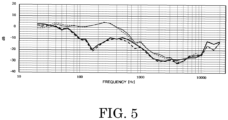
- FIG. 5 is a graph illustrating a cancelling effect of the conventional FF type noise-cancelling headphone.
- the figure indicates the frequency characteristic (thin lines) when the noise-cancelling function of the conventional FF type noise-cancelling headphone is off and the frequency characteristic (thick lines) when the same function is on.
- the solid lines indicate the frequency characteristic of the left sound emitting unit and the dashed lines indicate the frequency characteristic of the right sound emitting unit.
- the conventional FF type noise-cancelling headphone exhibits the cancelling effect of attenuating a gain by about 6 dB to 24 dB in a low frequency band (around 80 Hz to 400 Hz).
- the cancelling effect by the conventional FF type noise-cancelling headphone appears in a narrow frequency band, and the attenuation amount of the gain is small.
- the noise-cancelling headphone 1 exhibits the large cancelling effect in a wide range of frequency bands, as compared with the conventional FF type noise-cancelling headphone.
- FIG. 6 is a schematic diagram illustrating a state of cancellation in the conventional FF type noise-cancelling headphone in an ideal using state.
- FIG. 7 is a schematic diagram illustrating a state of cancellation in the conventional FF type noise-cancelling headphone in an actual using state.
- the noise-cancelling headphone is worn on the head of the user, thereby causing a so-called passive effect in which noise in a high frequency band (high frequency component) is muted (cancelled) due to shielding by the ear pad. That is, in the ideal using state (hereinafter referred to as "ideal state"), when the noise-cancelling headphone is worn on the head of the user, the high frequency component is muted (cancelled) by the ear pad, and the high frequency component does not reach the front air chamber. In contrast, the passive effect is not sufficiently obtained for noise in a low frequency band (low frequency component) of the external noise, and thus such noise reaches the front air chamber in a state where the sound volume is reduced.
- ideal using state hereinafter referred to as "ideal state”
- the passive effect is not sufficiently obtained for noise in a low frequency band (low frequency component) of the external noise, and thus such noise reaches the front air chamber in a state where the sound volume is reduced.
- the noise-cancelling signal generating circuit (NC signal generating circuit) included in the conventional FF type noise-cancelling headphone functions to cancel the low frequency component of the external noise that reaches the front air chamber due to the little passive effect.
- the conventional noise-cancelling signal generating circuit performs, with respect to the collected external noise, signal processing in consideration of the volume reduction amount due to the passive effect in the ideal state, generates a noise signal, and generates a noise-cancelling signal in antiphase to the generated noise signal.
- external noise in a low frequency band (N1) is cancelled by a generated noise-cancelling signal (C1).
- the external noise is muted (cancelled) to a predetermined muting level (L1).
- the conventional noise-cancelling signal generating circuit (NC signal generating circuit) in the ideal state is designed assuming the passive effect in the ideal state in which the head (temporal region) of the user and the ear pad is in close contact without any gap (the state in which the front air chamber is sealed).
- the conventional noise-cancelling signal generating circuit in the ideal state generates a cancelling signal, based on a reference characteristic with this assumption as a standard. That is, when the passive effect as assumed is not obtained due to the gap between the head (temporal region) of the user and the ear pad, the conventional noise-cancelling signal generating circuit generates the cancelling signal (C1), based on the external noise (N1) when the passive effect is obtained according to the reference characteristic.
- N2 indicates the external noise that actually reaches the front air chamber.
- FIG. 8 is a schematic diagram illustrating a state of cancellation in the noise-cancelling headphone according to the present invention.
- the second microphone collects, as the internal noise, the part (L2) of the external noise in the low frequency band that remains without being cancelled in the conventional FF type noise-cancelling headphone in the actual using state illustrated in FIG. 7 , and an antiphase noise-cancelling signal (C2) including the collected internal noise is generated.
- the noise that is not completely cancelled and remains, as the internal noise, in the conventional FF type noise-cancelling headphone in the actual using state is muted to the predetermined muting level (L1).
- the noise-cancelling headphone according to the present invention generates the cancelling signal corresponding to the internal noise collected by the second microphone in addition to the external noise collected by the first microphone.
- the noise-cancelling headphone according to the present invention exhibits a higher cancelling effect than the conventional FF type noise-cancelling headphone.
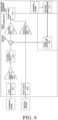
- FIG. 9 is a schematic diagram illustrating a configuration of an NC circuit included in the conventional hybrid type noise-cancelling headphone.
- a front air chamber SFA and a rear air chamber SRA illustrated in the figure are spaces corresponding to the front air chamber SF and the rear air chamber SR illustrated in FIG. 3 , respectively.
- the NC circuit included in the conventional hybrid type noise-cancelling headphone includes a microphone signal amplifying unit 153A, an NC signal generating circuit 154A, an NC signal amplifying unit 155A, a musical sound input terminal 156A, a musical sound signal amplifying unit 157A, an error correcting NC circuit 18A, and an adder 19A. That is, the conventional NC circuit includes the error correcting NC circuit 18A and the adder 19A as compared with the NC circuit included in the noise-cancelling headphone 1 illustrated in FIG. 3 .
- the musical sound input terminal 156A, the musical sound signal amplifying unit 157A, a first microphone 16A, and a second microphone 17A illustrated in the figure have the same functions and configurations as the musical sound input terminal 156, the musical sound signal amplifying unit 157, the first microphone 16, and the second microphone 17 illustrated in Fig. 3 , respectively. Therefore, a specific description of each of the musical sound input terminal 156A, the musical sound signal amplifying unit 157A, the first microphone 16A, and the second microphone 17A are omitted.
- the microphone signal amplifying unit 153A amplifies a noise signal from the first microphone 16A.
- the NC signal generating circuit 154A generates a noise-cancelling signal, based on an output signal from the microphone signal amplifying unit 153A.
- the NC signal generating circuit 154A generates a noise-cancelling signal in antiphase to the external noise collected by the first microphone 16A.
- the NC signal generating circuit 154A outputs the noise-cancelling signal to the NC signal amplifying unit 155A via the adder 19A.
- the adder 19A and the NC signal amplifying unit 155A are described later.
- the error correcting NC circuit 18A generates an error correcting signal for cancelling noise (hereinafter referred to as "error noise") that has not been completely muted by the cancelling signal corresponding to the noise signal from the first microphone 16A.
- error noise an error correcting signal for cancelling noise
- the second microphone 17A collects the error noise, generates a noise signal corresponding to the error signal, and outputs the noise signal to the error correcting NC circuit 18A.
- the error correction NC circuit 18A outputs the error correcting signal to the adder 19A.
- the adder 19A adds the noise-cancelling signal from the NC signal generating circuit 154A and the error correcting signal from the error correcting NC circuit 18A.
- the adder 19A outputs the added signal to the NC signal amplifying unit 155A.
- the NC signal amplifying unit 155A amplifies the added signal (noise-cancelling signal and error correcting signal) generated by adding in the adder 19A.
- An output unit (not illustrated) of the NC signal amplifying unit 155A is connected to one input unit (not illustrated) of a headphone unit 14A.
- the NC circuit included in the conventional hybrid type noise-cancelling headphone includes the second microphone 17A, the error correcting NC circuit 18A, and the adder 19A, in addition to the NC circuit included in the conventional FF type noise-cancelling headphone.
- the NC circuit (see FIG. 3 ) included in the noise-cancelling headphone 1 includes the second microphone 17 and the second buffer amplifier unit 152, in addition to the NC circuit included in the conventional FF type noise-cancelling headphone. That is, the second microphone 17 and the second buffer amplifier unit 152 function as a filter to mute the noise through the gap between the head (temporal region) of the user and the ear pad. Further, the second microphone 17 and the second buffer amplifier unit 152 automatically correct the noise-cancelling signal with respect to noise unique to a user caused by an individual variation of the gap between the head (temporal region) of the user and the ear pad.
- the second buffer amplifier unit may be the impedance conversion unit included in the second microphone as described above.
- the NC circuit included in the noise-cancelling headphone according to the present invention is configured by adding only the second microphone to the NC circuit included in the conventional FF type noise-cancelling headphone. That is, the noise-cancelling headphone according to the present invention reduces the signal processing according to the noise signal and achieves the cancelling effect equivalent to the conventional hybrid type with a simple NC circuit.
- the NC circuit included in the noise-cancelling headphone according to the present invention does not require an expensive error correcting NC circuit nor an adder with a complex configuration unlike the NC circuit included in the conventional hybrid type noise-cancelling headphone. That is, the NC circuit noise-cancelling headphone according to the present invention has a simple configuration as compared with the NC circuit included in the conventional hybrid type noise-cancelling headphone. Meanwhile, the noise-cancelling headphone according to the present invention achieves a higher cancelling effect than the conventional FF type noise-cancelling headphone. As described above, the noise-cancelling headphone according to the present invention achieves a high cancelling effect with a simple configuration.
Landscapes
- Engineering & Computer Science (AREA)
- Physics & Mathematics (AREA)
- Acoustics & Sound (AREA)
- Signal Processing (AREA)
- Multimedia (AREA)
- Manufacturing & Machinery (AREA)
- Health & Medical Sciences (AREA)
- Audiology, Speech & Language Pathology (AREA)
- General Health & Medical Sciences (AREA)
- Soundproofing, Sound Blocking, And Sound Damping (AREA)
Applications Claiming Priority (2)
| Application Number | Priority Date | Filing Date | Title |
|---|---|---|---|
| JP2020067948 | 2020-04-03 | ||
| PCT/JP2020/044725 WO2021199498A1 (ja) | 2020-04-03 | 2020-12-01 | ノイズキャンセルヘッドホン |
Publications (4)
| Publication Number | Publication Date |
|---|---|
| EP4131996A1 true EP4131996A1 (de) | 2023-02-08 |
| EP4131996A4 EP4131996A4 (de) | 2024-04-24 |
| EP4131996C0 EP4131996C0 (de) | 2025-09-17 |
| EP4131996B1 EP4131996B1 (de) | 2025-09-17 |
Family
ID=77927187
Family Applications (1)
| Application Number | Title | Priority Date | Filing Date |
|---|---|---|---|
| EP20929345.5A Active EP4131996B1 (de) | 2020-04-03 | 2020-12-01 | Rauschunterdrückender kopfhörer |
Country Status (6)
| Country | Link |
|---|---|
| US (1) | US12075219B2 (de) |
| EP (1) | EP4131996B1 (de) |
| JP (1) | JP7653714B2 (de) |
| KR (1) | KR102724334B1 (de) |
| CN (1) | CN115244945B (de) |
| WO (1) | WO2021199498A1 (de) |
Families Citing this family (2)
| Publication number | Priority date | Publication date | Assignee | Title |
|---|---|---|---|---|
| USD1008997S1 (en) * | 2023-08-20 | 2023-12-26 | Weihan Lin | Headphone |
| CN116939428B (zh) * | 2023-09-18 | 2023-12-22 | 歌尔股份有限公司 | 耳机设备、风噪抑制方法及计算机可读存储介质 |
Family Cites Families (12)
| Publication number | Priority date | Publication date | Assignee | Title |
|---|---|---|---|---|
| JP2007028354A (ja) | 2005-07-20 | 2007-02-01 | Audio Technica Corp | ノイズキャンセルヘッドホン |
| GB2434708B (en) * | 2006-01-26 | 2008-02-27 | Sonaptic Ltd | Ambient noise reduction arrangements |
| JP5114611B2 (ja) * | 2007-09-28 | 2013-01-09 | 株式会社DiMAGIC Corporation | ノイズ制御システム |
| US8385559B2 (en) * | 2009-12-30 | 2013-02-26 | Robert Bosch Gmbh | Adaptive digital noise canceller |
| JP2012023637A (ja) | 2010-07-15 | 2012-02-02 | Audio Technica Corp | ノイズキャンセルヘッドホン |
| JP5610945B2 (ja) * | 2010-09-15 | 2014-10-22 | 株式会社オーディオテクニカ | ノイズキャンセルヘッドホン及びノイズキャンセルイヤーマフ |
| JP5799650B2 (ja) * | 2011-08-11 | 2015-10-28 | ソニー株式会社 | ヘッドホン装置 |
| US9208769B2 (en) * | 2012-12-18 | 2015-12-08 | Apple Inc. | Hybrid adaptive headphone |
| GB201421291D0 (en) * | 2014-12-01 | 2015-01-14 | Soundchip Sa | Earphone system |
| US10080078B2 (en) * | 2016-09-16 | 2018-09-18 | Intel Corporation | Battery-less, noise-cancellation headset |
| US10567863B2 (en) * | 2017-12-19 | 2020-02-18 | Revx Technologies, Inc. | System and method for configuring audio signals to compensate for acoustic changes of the ear |
| JP6798717B2 (ja) * | 2019-07-18 | 2020-12-09 | 株式会社オーディオテクニカ | ノイズキャンセルヘッドホン |
-
2020
- 2020-12-01 JP JP2022511520A patent/JP7653714B2/ja active Active
- 2020-12-01 US US17/995,013 patent/US12075219B2/en active Active
- 2020-12-01 CN CN202080098118.6A patent/CN115244945B/zh active Active
- 2020-12-01 KR KR1020227029321A patent/KR102724334B1/ko active Active
- 2020-12-01 WO PCT/JP2020/044725 patent/WO2021199498A1/ja not_active Ceased
- 2020-12-01 EP EP20929345.5A patent/EP4131996B1/de active Active
Also Published As
| Publication number | Publication date |
|---|---|
| CN115244945A (zh) | 2022-10-25 |
| WO2021199498A1 (ja) | 2021-10-07 |
| JPWO2021199498A1 (de) | 2021-10-07 |
| EP4131996A4 (de) | 2024-04-24 |
| US12075219B2 (en) | 2024-08-27 |
| CN115244945B (zh) | 2025-05-23 |
| EP4131996C0 (de) | 2025-09-17 |
| KR102724334B1 (ko) | 2024-11-01 |
| EP4131996B1 (de) | 2025-09-17 |
| JP7653714B2 (ja) | 2025-03-31 |
| KR20220163357A (ko) | 2022-12-09 |
| US20230164486A1 (en) | 2023-05-25 |
Similar Documents
| Publication | Publication Date | Title |
|---|---|---|
| US8948409B2 (en) | Audio headset with active noise control of the non-adaptive type for listening to an audio music source and/or for “hands-free” telephony functions | |
| US7043037B2 (en) | Hearing aid having acoustical feedback protection | |
| KR100935769B1 (ko) | 피드백 제어를 갖는 주파수 특성 보상형 능동형 소음 제어장치 및 방법 | |
| TWI648992B (zh) | 抗噪耳機 | |
| GB2455821A (en) | Active noise cancellation system with split digital filter | |
| WO2010089934A1 (ja) | ノイズキャンセルヘッドホン | |
| US6714654B2 (en) | Hearing aid operative to cancel sounds propagating through the hearing aid case | |
| EP2018640A2 (de) | Kommunikation mit aktivem rauschminderndem kopfhörer | |
| TW201813416A (zh) | 抗噪耳機 | |
| JP7687333B2 (ja) | 音響再生装置、信号処理装置、信号処理方法 | |
| US12075219B2 (en) | Noise-cancelling headphone | |
| CN114787911A (zh) | 耳戴式播放设备的噪声消除系统和信号处理方法 | |
| USH417H (en) | Headset for ambient noise suppression | |
| CN109151632B (zh) | 头戴式耳机 | |
| JP2781193B2 (ja) | アクティブ・ノイズ・キャンセラー | |
| JP2781194B2 (ja) | アクティブ・ノイズ・キャンセラー | |
| CN222302020U (zh) | 耳戴式听力设备 | |
| JP6081854B2 (ja) | こもり音低減装置及びそれを備えた補聴器、オーディオ用イヤホン、耳せん | |
| US20230026002A1 (en) | Non-acoustic sensor for active noise cancellation | |
| JP6297950B2 (ja) | こもり音低減装置及びそれを備えた補聴器、オーディオ用イヤホン、耳せん、並びに電気音響変換器 | |
| CN117177120A (zh) | 一种降噪音频耳机 | |
| JP2019003126A (ja) | ヘッドホン | |
| TW202207216A (zh) | 雜訊分離式混合型主動抗噪系統 |
Legal Events
| Date | Code | Title | Description |
|---|---|---|---|
| STAA | Information on the status of an ep patent application or granted ep patent |
Free format text: STATUS: THE INTERNATIONAL PUBLICATION HAS BEEN MADE |
|
| PUAI | Public reference made under article 153(3) epc to a published international application that has entered the european phase |
Free format text: ORIGINAL CODE: 0009012 |
|
| STAA | Information on the status of an ep patent application or granted ep patent |
Free format text: STATUS: REQUEST FOR EXAMINATION WAS MADE |
|
| 17P | Request for examination filed |
Effective date: 20220921 |
|
| AK | Designated contracting states |
Kind code of ref document: A1 Designated state(s): AL AT BE BG CH CY CZ DE DK EE ES FI FR GB GR HR HU IE IS IT LI LT LU LV MC MK MT NL NO PL PT RO RS SE SI SK SM TR |
|
| DAV | Request for validation of the european patent (deleted) | ||
| DAX | Request for extension of the european patent (deleted) | ||
| REG | Reference to a national code |
Ref legal event code: R079 Ipc: G10K0011178000 Ref country code: DE Ref document number: 602020059182 Country of ref document: DE Free format text: PREVIOUS MAIN CLASS: H04R0001100000 |
|
| A4 | Supplementary search report drawn up and despatched |
Effective date: 20240325 |
|
| RIC1 | Information provided on ipc code assigned before grant |
Ipc: H04R 1/10 20060101ALI20240319BHEP Ipc: G10K 11/178 20060101AFI20240319BHEP |
|
| GRAP | Despatch of communication of intention to grant a patent |
Free format text: ORIGINAL CODE: EPIDOSNIGR1 |
|
| STAA | Information on the status of an ep patent application or granted ep patent |
Free format text: STATUS: GRANT OF PATENT IS INTENDED |
|
| INTG | Intention to grant announced |
Effective date: 20250423 |
|
| GRAS | Grant fee paid |
Free format text: ORIGINAL CODE: EPIDOSNIGR3 |
|
| GRAA | (expected) grant |
Free format text: ORIGINAL CODE: 0009210 |
|
| STAA | Information on the status of an ep patent application or granted ep patent |
Free format text: STATUS: THE PATENT HAS BEEN GRANTED |
|
| AK | Designated contracting states |
Kind code of ref document: B1 Designated state(s): AL AT BE BG CH CY CZ DE DK EE ES FI FR GB GR HR HU IE IS IT LI LT LU LV MC MK MT NL NO PL PT RO RS SE SI SK SM TR |
|
| REG | Reference to a national code |
Ref country code: GB Ref legal event code: FG4D |
|
| REG | Reference to a national code |
Ref country code: CH Ref legal event code: EP |
|
| REG | Reference to a national code |
Ref country code: DE Ref legal event code: R096 Ref document number: 602020059182 Country of ref document: DE |
|
| REG | Reference to a national code |
Ref country code: IE Ref legal event code: FG4D |
|
| U01 | Request for unitary effect filed |
Effective date: 20251009 |
|
| U07 | Unitary effect registered |
Designated state(s): AT BE BG DE DK EE FI FR IT LT LU LV MT NL PT RO SE SI Effective date: 20251015 |
|
| PG25 | Lapsed in a contracting state [announced via postgrant information from national office to epo] |
Ref country code: NO Free format text: LAPSE BECAUSE OF FAILURE TO SUBMIT A TRANSLATION OF THE DESCRIPTION OR TO PAY THE FEE WITHIN THE PRESCRIBED TIME-LIMIT Effective date: 20251217 |
|
| PG25 | Lapsed in a contracting state [announced via postgrant information from national office to epo] |
Ref country code: HR Free format text: LAPSE BECAUSE OF FAILURE TO SUBMIT A TRANSLATION OF THE DESCRIPTION OR TO PAY THE FEE WITHIN THE PRESCRIBED TIME-LIMIT Effective date: 20250917 |
|
| PG25 | Lapsed in a contracting state [announced via postgrant information from national office to epo] |
Ref country code: GR Free format text: LAPSE BECAUSE OF FAILURE TO SUBMIT A TRANSLATION OF THE DESCRIPTION OR TO PAY THE FEE WITHIN THE PRESCRIBED TIME-LIMIT Effective date: 20251218 |
|
| PG25 | Lapsed in a contracting state [announced via postgrant information from national office to epo] |
Ref country code: RS Free format text: LAPSE BECAUSE OF FAILURE TO SUBMIT A TRANSLATION OF THE DESCRIPTION OR TO PAY THE FEE WITHIN THE PRESCRIBED TIME-LIMIT Effective date: 20251217 |
|
| U20 | Renewal fee for the european patent with unitary effect paid |
Year of fee payment: 6 Effective date: 20251223 |