EP4131864B1 - Informationsanzeigeverfahren und -vorrichtung, elektronische vorrichtung und speichermedium - Google Patents
Informationsanzeigeverfahren und -vorrichtung, elektronische vorrichtung und speichermedium Download PDFInfo
- Publication number
- EP4131864B1 EP4131864B1 EP21795442.9A EP21795442A EP4131864B1 EP 4131864 B1 EP4131864 B1 EP 4131864B1 EP 21795442 A EP21795442 A EP 21795442A EP 4131864 B1 EP4131864 B1 EP 4131864B1
- Authority
- EP
- European Patent Office
- Prior art keywords
- identification
- sharee
- sharer
- displaying
- Prior art date
- Legal status (The legal status is an assumption and is not a legal conclusion. Google has not performed a legal analysis and makes no representation as to the accuracy of the status listed.)
- Active
Links
Images




Classifications
-
- H—ELECTRICITY
- H04—ELECTRIC COMMUNICATION TECHNIQUE
- H04L—TRANSMISSION OF DIGITAL INFORMATION, e.g. TELEGRAPHIC COMMUNICATION
- H04L51/00—User-to-user messaging in packet-switching networks, transmitted according to store-and-forward or real-time protocols, e.g. e-mail
- H04L51/04—Real-time or near real-time messaging, e.g. instant messaging [IM]
- H04L51/046—Interoperability with other network applications or services
-
- H—ELECTRICITY
- H04—ELECTRIC COMMUNICATION TECHNIQUE
- H04L—TRANSMISSION OF DIGITAL INFORMATION, e.g. TELEGRAPHIC COMMUNICATION
- H04L51/00—User-to-user messaging in packet-switching networks, transmitted according to store-and-forward or real-time protocols, e.g. e-mail
- H04L51/48—Message addressing, e.g. address format or anonymous messages, aliases
-
- G—PHYSICS
- G06—COMPUTING OR CALCULATING; COUNTING
- G06Q—INFORMATION AND COMMUNICATION TECHNOLOGY [ICT] SPECIALLY ADAPTED FOR ADMINISTRATIVE, COMMERCIAL, FINANCIAL, MANAGERIAL OR SUPERVISORY PURPOSES; SYSTEMS OR METHODS SPECIALLY ADAPTED FOR ADMINISTRATIVE, COMMERCIAL, FINANCIAL, MANAGERIAL OR SUPERVISORY PURPOSES, NOT OTHERWISE PROVIDED FOR
- G06Q10/00—Administration; Management
- G06Q10/10—Office automation; Time management
- G06Q10/107—Computer-aided management of electronic mailing [e-mailing]
-
- H—ELECTRICITY
- H04—ELECTRIC COMMUNICATION TECHNIQUE
- H04L—TRANSMISSION OF DIGITAL INFORMATION, e.g. TELEGRAPHIC COMMUNICATION
- H04L51/00—User-to-user messaging in packet-switching networks, transmitted according to store-and-forward or real-time protocols, e.g. e-mail
- H04L51/04—Real-time or near real-time messaging, e.g. instant messaging [IM]
-
- H—ELECTRICITY
- H04—ELECTRIC COMMUNICATION TECHNIQUE
- H04L—TRANSMISSION OF DIGITAL INFORMATION, e.g. TELEGRAPHIC COMMUNICATION
- H04L51/00—User-to-user messaging in packet-switching networks, transmitted according to store-and-forward or real-time protocols, e.g. e-mail
- H04L51/04—Real-time or near real-time messaging, e.g. instant messaging [IM]
- H04L51/043—Real-time or near real-time messaging, e.g. instant messaging [IM] using or handling presence information
-
- H—ELECTRICITY
- H04—ELECTRIC COMMUNICATION TECHNIQUE
- H04L—TRANSMISSION OF DIGITAL INFORMATION, e.g. TELEGRAPHIC COMMUNICATION
- H04L51/00—User-to-user messaging in packet-switching networks, transmitted according to store-and-forward or real-time protocols, e.g. e-mail
- H04L51/42—Mailbox-related aspects, e.g. synchronisation of mailboxes
-
- H—ELECTRICITY
- H04—ELECTRIC COMMUNICATION TECHNIQUE
- H04L—TRANSMISSION OF DIGITAL INFORMATION, e.g. TELEGRAPHIC COMMUNICATION
- H04L51/00—User-to-user messaging in packet-switching networks, transmitted according to store-and-forward or real-time protocols, e.g. e-mail
- H04L51/56—Unified messaging, e.g. interactions between e-mail, instant messaging or converged IP messaging [CPM]
Definitions
- the present disclosure relates the computer technical field, and in particular to an information display method, an information display apparatus, an electronic device and a storage medium.
- a mail system-based instant messaging method includes: in response to a discussion initiating request sent by a client according to a mail page, establishing a discussion group; respectively defaulting a mail subject, a mail contact and mail text of the mail page as a discussion topic, a member and a discussion information stream of the discussion group; receiving the discussion topic, the member and the discussion information stream which are sent by the client and have been added, deleted and modified in an editing page, and updating the same to the editing page of a local database in real time; in response to a confirmation request sent by the client, generating a discussion page and a discussion group link which are associated with each other, and sending the discussion group link to the clients of all members of the discussion group, and the clients entering the discussion group by means of the link.
- An information display method, an information display apparatus, an electronic device and a storage medium are provided according to embodiments of the present disclosure, so as to improve information viewing efficiency and user experience.
- an information display method is provided according to an embodiment of the present disclosure.
- the method includes:
- an information display method is provided according to an embodiment of the present disclosure.
- the method includes:
- a message display apparatus in a third aspect, includes a target mail sharing module, a first identification obtaining module and a first identification display module.
- the target mail sharing module is configured to share, in response to a mail sharing operation triggered by a sharer, a target mail with a sharee indicated by sharee information, according to the sharee information.
- the first identification obtaining module is configured to obtain a first identification of the sharee.
- the first identification display module is configured to display the first identification of the sharee on a mail display interface of the target mail in an email client of the sharer.
- an information display apparatus includes a target mail obtaining module, a second identification obtaining module and a second identification display module.
- the target mail obtaining module is configured to obtain a target mail, wherein the target mail is shared by a sharer in response to a mail sharing operation.
- the second identification obtaining module is configured to obtain a second identification of the sharer.
- the second identification display module is configured to display the second identification of the sharer on a mail display interface of the target mail in an email client of a sharee.
- an electronic device is further provided according to an embodiment of the present disclosure.
- the electronic device includes: one or more processors; and a memory configured to store one or more programs, where the one or more programs, when executed by the one or more processors, cause the one or more processors to perform the information display method according to the embodiments of the present disclosure.
- a computer readable storage medium storing computer programs is further provided according to an embodiment of the present disclosure.
- the programs are executed by a processor to perform the information display method according to the embodiment of the present disclosure.
- the target mail in response to the mail sharing operation triggered by the sharer, is shared to the sharee indicated by the sharee information, according to the sharee information.
- the first identification of the sharee is displayed on the mail display interface in the email client of the sharer, so that the sharer can quickly view users receiving the target mail in the email client directly.
- the second identification of the sharer is displayed on the mail display interface of the target mail in the email client of the sharee, so that the sharee can quickly view the sharer of the target mail directly in the email client, thereby improving information viewing efficiency and user experience.
- the sharer needs to switch from an email client to an IM (instant messaging) client, to view the sharees receiving the mail based on a sharing record on the IM client; or the sharee needs to switch from the email client to the IM client, to view the sharer sharing the target mail on the IM client.
- IM instant messaging
- a target mail in response to a mail viewing operation triggered by a sharer, is shared with the sharee indicated by sharee information according to the sharee information; a first identification of the sharee is displayed on a mail display interface of the target mail in an email client of the sharer.
- a second identification of the sharer is displayed on a mail display interface of the target mail in the email client of the sharee, so that the sharee can quickly view a sharer sharing the target mail directly in the email client, thereby improving the information viewing efficiency and user experience.
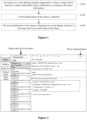
- Figure 1 is a schematic flowchart of an information display method according to a first embodiment of the present disclosure.
- the embodiment may be applied to a case that an identification of a sharee is displayed on a shared target mail.
- the method is performed by an information display apparatus.
- the apparatus is implemented by software and/or hardware and is integrated in an email client of the sharer.
- the email client may be integrated in a PC (Personal Computer) end or a mobile terminal.
- the method includes steps S110 to S130 as follows.
- a target mail is shared to a sharee indicated by sharee information, according to the sharee information.
- the sharer may be a user who expects to perform a mail sharing operation.
- the sharee information may include at least one piece of user information and/or at least one piece of user group information.
- the user information may include, but not be limited to, a user account name.
- the user group information may include, but not be limited to, a user group name.
- the sharee indicated by sharee information may include a user indicated by each piece of user information, and/or users included in a user group indicated by each piece of user group information.
- the number of the sharee may be one or more.
- the sharee information may include IM information of the sharee, by which the target mail is shared to an IM client corresponding to the sharee.
- the sharee information may include email information of the sharee, by which the target mail is shared to an email client of the sharee.
- the target mail may refer to at least one mail to be shared currently.
- the target mail is determined based on a mail sharing operation triggered by the sharer.
- a preset sharing button may be provided on a mail display interface of each mail in the email.
- a mail sharing operation may be triggered for one mail by clicking the preset sharing button of the mail.
- a preset sharing button in a dashed circle in Figure 2
- the mail sharing operation is triggered for this mail by clicking the preset sharing button.
- a preset sharing button may be provided in a display interface of each mail group.
- a preset sharing button (in a dashed circle in Figure 3 ) is provided on a display interface of the first mail group in a mail group list in the inbox.
- the mail sharing operation is triggered for the mail group by clicking the preset sharing button.
- the preset sharing button may be provided on mail display interfaces of all mails in the mail group.
- the mail sharing operation is triggered for each mail in the mail group by clicking the preset sharing button thereof.
- Each mail group in the email may be used to store mails matching with the mail group, so as to classify and store the mails. For example, mails with the same subject information and the same recipient information may be stored in one mail group; or mails with the same subject information and with a referential relationship may be stored in the same mail group.
- the first mail is determined as a target mail, in response to a detection of the mail sharing operation triggered by the sharer clicking the preset sharing button on the mail display interface of the first mail.
- each mail is stored independently in the email, information of a first mail is matched with information of other mails in the email to determine a second mail matching with the first mail, and a target mail to be shared currently is determined from the second mail.
- all mails in the mail group including the first mail is determined as the second mail matching with the first mail, and a target mail to be shared currently is determined from the second mail. For example, each second mail matching with the first mail may be determined as the target mail.
- the second mails may be displayed on the display interface, and the sharer can select a mail to be shared based on requirement.
- the target mail to be shared currently is obtained based on the selection of the user, thereby improving mail sharing flexibility and satisfying the personalized requirement of the user.
- the first mail may include: a mail in an edit state, a received mail in an inbox, a sent mail in an outbox, or an edited mail stored in a draft box.
- the mail in an edit state may be a new editable mail generated in response to a mail writing operation triggered by the sharer.
- the second mail may include the first mail and/or other mail.
- each mail in the first mail group may be determined as the target mail, in response to a detection of a mail sharing operation triggered by the sharer clicking the preset sharing button on the display interface of the first mail group.
- all mails in the first mail group are displayed on the display interface, and the sharer can select a mail to be shared based on requirement. In this way, the target mail to be shared currently is obtained based on the selection of the user, thereby improving mail sharing flexibility.
- the email client of the sharer displays a display interface for obtaining sharee information, in response to a detection of the mail sharing operation triggered by the sharer.
- the sharer can input the sharee information manually on the display interface; or select required sharee information from displayed information of candidate sharee. In this way, the sharee information may be obtained based on the input or selection of the user.
- the target mail is shared to the sharee indicated by the sharee information, thereby displaying the target mail on a client of the sharee.
- the target mail is shared to the sharee indicated by IM information of the sharee, so that the target mail is displayed in an association manner on an IM client interface of the sharee.
- the target mail may be directly displayed on the IM client interface of the sharee.
- target mail sharing prompt information is displayed on the IM client interface of the sharee, and the target mail is displayed on an email client interface of the sharee.
- the sharee views the target mail in the email client of the sharee based on the mail sharing prompt information, thereby sharing the mail from the email client to the IM client.
- the target mail is shared with a sharee indicated by email information of the sharee, and the target mail is displayed on the email client interface of the sharee, thereby sharing the mail from the email client to the email client.
- the target mail shared by the mail sharing operation may be controlled by the sharer.
- operation permission for the target mail of the sharee obtained by sharing of the sharer is a temporal permission.
- the temporary permission of the sharee for the target mail is limited by an operation triggered by the sharer. For example, in response to a sharing end operation triggered by the sharer, the target mail becomes invisible for the sharee. If the target mail is a received mail or a sent mail in the email of the sharer, the sharer does not modify content of the target mail when sharing the target mail. That is, the receiving end may display at least a part of the target mail determined based on the temporary permission as the target mail, regardless a type of the temporary permission assigned to the sharee by the sharer.
- the sharer may set different mail processing permissions for different receivers.
- the mail forwarded by a mail forwarding operation is a mail which has been received by a forwarder.
- the forwarded mail is not controlled by the forwarder.
- content of a mail to be forwarded in the email can be modified, and different receivers of the forwarded mail have the same mail processing permission.
- the mail sharing operation differs from the existing mail forwarding operation.
- Each sharee may have a unique first identification, so that different sharees can be distinguished based on different first identifications.
- the first identification may include, but not limited to, an avatar identification and/or an account identification of the sharee.
- the avatar identification of the sharee may include, but not limited to, a picture and a name of the sharee.
- the name of the sharee may include, but not limited to, a Chinese full name, an English full name, a Chinese abbreviation name or an English abbreviation name.
- the account identification of the sharee may include, but not limited to, an IM account name or an email account name.
- the email account name may be a complete mail account name or a mail prefix name.
- an identification of the sharee in the IM client serves as the first identification of the sharee.
- an identification of the sharee in the email client serves as the first identification of the sharee.
- the sharee is all sharees in step S110 or a part of the sharees in step S110.
- the first identification of the sharee currently accessing the target mail is only obtained.
- the first identification of the sharee is obtained locally. For example, if the information of the sharee is email information of the sharee, the first identifications of respective mail users may be pre-stored in the email client of the sharer, thereby directly obtaining the first identification of the sharee locally. If the first identification of the sharee is not stored in the email client of the sharer, the first identification of the sharee may be obtained by remotely invoking a server.
- the S120 may include: if the sharee information includes a user group name, the first identification of the sharee is determined according to the user group name.
- the user group name may include an IM user group name and a mail user group name.
- the email client of the sharer may obtain, based on pre-stored first identifications of respective email users, a first identification of each email user in an email user group indicated by the email user group name, thereby quickly obtaining the first identification of the sharee locally.
- the process of determining a first identification of the sharee according to the user group name may include: generating an identification obtaining request according to the IM user group name; sending the identification obtaining request to an IM server, to instruct the IM server to determine identifications of respective IM users indicated by the IM user group name in response to the identification obtaining request; and obtaining the first identification of the sharee according to the identifications of the respective IM users sent by the IM server.
- the email client of the sharer may obtain the first identifications of the IM users in the IM user group by interacting with the IM server.
- step S130 the first identification of the sharee is displayed on mail display interface of the target mail in the email client of the sharer.
- any blank position in the mail display interface may serve as a preset position for displaying the first identification.
- the first identification of the sharee may be displayed on a mail display interface of each target mail; or be displayed on a display interface of the mail group including the target mail, to uniformly prompt users receiving the mail in the mail group.
- Figure 4 is an example showing the first identification. As shown in Figure 4 , two mails in the first mail group in the inbox are shared with three users A, B and C. Avatar identifications of the three users may be displayed at the top of the display interface of the mail group.
- the first identification of the sharee is displayed at a preset position in the mail display interface of the target mail in the email client of the sharer, to prompt the sharer of users receiving the target mail.
- the sharer can quickly view the users receiving the target mail in the email client directly without switching to the email client.
- the sharer is unnecessary to switch from the email client to the IM client, so as to view each IM user receiving the target mail based on a sharing record in the IM client.
- the user viewing operation is simplified, and the information viewing efficiency and user experience are improved.
- the process of displaying the first identification of the sharee on the mail display interface of the target mail in the email client of the sharer in S130 may include the following cases. In one case, if the first identifications of all the sharees are obtained in S 120, the first identifications of all the sharees are displayed. In the other case, if the first identification of a part of the sharees is obtained in S120, the first identification of the part of the sharees is displayed. For example, if the first identification of the sharee viewing the target mail is obtained, the first identification of the sharee currently viewing the target mail is displayed on the mail display interface.
- S 130 may include: displaying the first identification of the sharee and the second identification of the sharer on the mail display interface of the target mail in the email client of the sharer.
- the second identification may include but not limited to an avatar identification and an account identification of the sharer.
- both the first identification of the sharee and the second identification of the sharer are displayed on the mail display interface of the target mail in the email client of the sharer, so as to prompt the sharer that the target mail is shared actively by the sharer.
- the second identification of the sharer may be displayed at a specific position, so as to prompt the sharer clearly. For example, when all identifications are displayed horizontally (as shown in Figure 4 ), the second identification of the sharer may be displayed in front of the first identifications of the sharee, thereby further improving viewing experience of the sharer.
- the target mail in response to the mail sharing operation triggered by the sharer, is shared with the sharee indicated by sharee information, according to the sharee information, and the first identification of the sharee is displayed on the mail display interface of the target mail in the email client of the sharer.
- the sharer can quickly view the users receiving the target mail in the email client directly, thereby improving the information viewing efficiency and user experience.
- S130 may include: detecting whether a mail viewing operation for the target mail is triggered by the sharee; if the mail viewing operation for the target mail is not triggered by the sharee, displaying the first identification of the sharee in a first identification display mode on the mail display interface of the target mail in the email client of the sharer; and if the mail viewing operation for the target mail is triggered by the sharee, switching a display mode of the first identification from the first identification display mode to a second identification display mode.
- the first identification display mode may differ from the second identification display mode.
- the first identification display mode and the second identification display mode may be distinguished by different display colors.
- the first identification display mode may be gray scale display, and the second identification mode may be highlight display.
- a preset identification is added on the first identification; and in the second identification mode, no preset identification is added on the first identification.
- the preset identification may indicate that the sharee does not view the mail.
- the email client of the sharer can detect the mail viewing operation triggered for the target mail by each sharee in real time, so as to determine the display mode of the first identification based on whether the sharee views the target mail. For example, in the client of the sharee, the sharee may trigger the mail viewing operation by clicking the obtained target mail. In response to the mail viewing operation triggered by the sharee, the client of the sharee may add information indicating that the target mail has been viewed, in a message queue. The email client of the sharer can determine whether the sharee has viewed the target mail, by monitoring the message queue in real time.
- the email client of the sharer does not detect the mail viewing operation triggered for a specific sharee, it is indicated that the sharee does not view the target mail.
- the first identification of the sharee may be displayed in the first identification display mode on the mail display interface of the target mail. If the email client of the sharer detects the mail viewing operation triggered for a specific sharee, it is indicated that the sharee has viewed the target mail. In this case, the displayed first identification of the sharee may be re-displayed in the second identification display mode. In this way, the first identification are displayed in different identification display modes, so that the information whether the sharee has viewed the target mail is prompted to the sharer, thereby further improving the user experience.
- the method may further include: displaying, in response to a detection of an adding operation for adding the sharee, a first identification of the currently added sharee on the mail display interface of the target mail in the email client of the sharer; and deleting, in response to a deleting operation for deleting an existing sharee, a displayed first identification of the existing sharee.
- a sharee having an adding permission or the sharer may further add a sharee, so as to share the target mail to the added sharee.
- a sharee adding button may be provided on the mail display interface of the target mail.
- the sharee having an adding permission or the sharer may trigger the adding operation of the sharee by clicking the sharee adding button.
- a first identification of a currently added sharee may be obtained, and the obtained first identification is displayed on the mail display interface of the target mail, so as to synchronously display all users who have currently received the target mail.
- the sharee having a deleting permission or the sharer may delete the existing sharee, so as to delete the target mail which has been shared to the existing sharee.
- the shared mail may be controlled in real time.
- the displayed first identification of the existing sharee is deleted on the mail display interface, thereby deleting the first identification synchronously to ensure display accuracy of the first identification.
- the method may further include: displaying a sharing success prompt identification on the mail display interface of the target mail in the email client of the sharer.
- the sharing success prompt identification may indicate that the sharer successfully shares the target mail for the first time, to prompt the sharer that the mail has been successfully shared.
- the sharing success prompt identification may be represented by a special symbol or a graph.
- Figure 5 is an example showing a sharing success prompt identification.
- the sharing success prompt identification is represented by a black dot.
- the sharing success prompt identification may be displayed at a preset location of a target cell in a mail list including the target mail.
- the target cell may be used to display abbreviative information of the target mail.
- the abbreviative information of the target mail may include, but not limited to, at least one of a recipient, a sender, subject information and text abstract information of the target mail.
- the sharing success prompt identification may be displayed at a blank position on the left of the recipient displayed in the target cell.
- the sharing success prompt identification may be displayed on the display interface of the target mail.
- a conversation icon is created on the display interface of the target mail and the sharing success prompt identification is displayed at a preset location in the conversation icon, thereby prompting the sharer that the target mail has been shared successfully.
- the displayed sharing success prompt identification in response to a detection of the mail viewing operation triggered for the target mail by the sharer or in response to a click operation on the displayed sharing success prompt identification, can be deleted, thereby allowing the display interface to be more concise.
- the process of displaying the sharing success prompt identification on the mail display interface of the target mail in the email client of the sharer may include: in response to a detection of an unread message sent by the sharee in the IM client of the sharer, displaying an unread message prompt identification, instead of the displayed sharing success prompt identification.
- the unread message prompt identification may be used to prompt the sharer that there is an unread message sent by the sharee presently.
- the unread message prompt identification may include but not limited to an unread message icon or the number of unread messages.
- the sharee may send IM message to the sharer by the IM client of the sharee. If the sharer does not view the IM message sent by the sharee in a timely manner, that is, there is an unread message sent by the sharee in the IM client of the sharer, the IM server adds unread message information to a message queue.
- the mail client of the sharer subscribes this message queue; obtains the unread message information in real time, when there is an unread message sent by the sharee; and determines, based on the unread message information, the number of unread messages or that there is the unread message sent by the sharee presently.
- an unread message prompt identification is displayed instead of the displayed sharing success prompt identification.
- an unread message prompt identification is displayed at the top of the conversation icon in Figure 5 , instead of the displayed sharing success prompt identification. In this way, the unread message is prompted more conveniently, and thus the sharer can timely know that there is an unread message in the IM client, thereby further improving user experience.
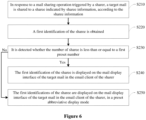
- Figure 6 is a schematic flowchart of an information display method according to a second embodiment of the present disclosure.
- the embodiment may be combined with the above embodiments.
- a display mode of the first identification of the sharee is optimized. Explanation of the same or corresponding terms relative to the above embodiments is not described in detail herein.
- the information display method according to the embodiment includes steps S210 to S250 as follows.
- a target mail is shared to a sharee indicated by sharee information, according to the sharee information.
- S230 it is detected whether the number of the sharee is less than or equal to a first preset number; if the number of the sharee is less than or equal to the first preset number, the method proceeds to S240; and if the number of the sharee is greater than the first preset number, the method proceeds to S250.
- the first preset number may be the maximum number of the first identifications of the sharees which can be displayed on a mail display interface of the target mail, which may be set based on a size of a blank region in the mail display interface and service requirement.
- the first identifications of the sharees are displayed in an appropriate display mode based on the number of the sharees, thereby allowing the mail display interface to be more concise and thus improving user experience.
- the first identification of the sharee is displayed on the mail display interface of the target mail in the email client of the sharer.
- the first identifications of sharees are displayed on the mail display interface of the target mail, so that the sharer can intuitively see all users receiving the target mail based on the first identifications.
- the first identifications of the sharees are displayed on the mail display interface of the target mail in the email client of the sharer, in a preset abbreviative display mode.
- the first identifications of the sharees are displayed in a preset abbreviative display mode, so as to avoid disorder of the display interface due to the simultaneous display of the first identifications of all the sharees, thereby saving the display space and allowing the mail display interface to be more concise.
- first abbreviative display identification if it is detected that the number of the sharee is greater than the first preset number, only one first abbreviative display identification is displayed on the mail display interface, and the first identifications of all the sharees may be displayed by the first abbreviative display identification.
- a viewing operation triggered for the first abbreviative display identification by the sharer is detected, for example, the sharer triggers the viewing operation by clicking the displayed first abbreviative display identification.
- an abbreviative display interface corresponding to the first abbreviative display identification is displayed, and the first identifications of at most the second preset number of sharees are displayed on the abbreviative display interface.
- the first identifications of all sharees are simultaneously displayed on the abbreviative display interface. If the number of the sharees is greater than the second preset number, the first identifications of the sharees are displayed in page turning manner on the abbreviative display interface page by page. For example, the first identifications of the second preset number of sharees are displayed on the first page, and the first identifications of remaining sharees are displayed on subsequent at least one page.
- the method may further include: displaying the total number of the sharees at a preset location of the first abbreviative display identification.
- the preset location of the first abbreviative display identification may be a blank location near the first abbreviative display identification or a location where the first abbreviative display identification is located.
- the total number of the sharees is displayed at the preset location of the first abbreviative display identification, so that the sharer can quickly know the total number of users receiving the mail, thereby further improving user experience.
- the first identifications of the sharees may all be displayed or may be displayed in an abbreviative display mode, based on the number of the sharees, thereby allowing the mail display interface to be more concise and improving user viewing experience.
- S250 may include: displaying the second abbreviative display identification and the first identifications of the first preset number of sharees on the mail display interface of the target mail in the email client of the sharer; if a viewing operation triggered for the second abbreviative display identification by the sharer is detected, displaying the first identifications of at most the third preset number of sharees among remaining sharees, or displaying the first identifications of at most the third preset number of sharees among all the sharees.
- the third preset number is preset and is the maximum number of sharees which can be displayed on the abbreviative display interface corresponding to the second abbreviative display identification.
- the first identifications of the first preset number of sharees and one second abbreviative display identification are displayed on the mail display interface.
- the first identifications of remaining sharees or the first identifications of all the sharees are displayed by the second abbreviative display identification.
- a viewing operation triggered for the second abbreviative display identification by the sharer is detected.
- the sharer triggers the viewing operation by clicking the displayed second abbreviative display identification.
- an abbreviative display interface corresponding to the second abbreviative display identification is displayed.
- the first identifications of at most the third preset number of sharees among remaining sharees are displayed on the abbreviative display interface, or the first identifications of at most the third preset number of sharees among all sharees are displayed on the abbreviative display interface. For example, in the case that the first identifications of remaining sharees are displayed based on the second abbreviative display identification, if the number of remaining sharees is less than or equal to the third preset number, the first identifications of all remaining sharees are simultaneously displayed on the abbreviative display interface. If the number of the remaining sharees is greater than the third preset number, the first identifications of the remaining sharees may be displayed in a page turning manner.
- the first identifications of the third preset number of sharees among the remaining sharees are displayed on a first page, and the first identifications of other undisplayed sharees among the remaining sharees are displayed on subsequent at least one page.
- the first identifications of all sharees are displayed based on the second abbreviative display identification, if the number of the sharees is less than or equal to the third preset number, the first identifications of all sharees are simultaneously displayed on the abbreviative display interface. If the number of the sharees is greater than the third preset number, the first identifications of all the sharees may be displayed in a page turning manner. For example, the first identifications of the third preset number of sharees among all the sharees are displayed on a first page, and the first identifications of remaining sharees are displayed on subsequent at least one page.
- the method may further include: displaying the total number of remaining sharees or the total number of the sharees at a preset location of the second abbreviative display identification.
- the preset location of the second abbreviative display identification may be a blank location near the second abbreviative display identification, or a location where the second abbreviative display identification is located.
- the total number of remaining sharees or the total number of the sharees is displayed at the preset location of the second abbreviative display identification, so that the sharer can quickly know the total number of first identifications which is not displayed or the total number of users receiving the mail, thereby further improving user experience.
- Figure 7 shows an example of a first identification of a sharee.
- the sharer shares the target mail to 20 users, avatars of two users and one second abbreviative display identification are displayed on the mail display interface, and the total number of first identifications which is not displayed, i.e., "+18" is displayed on the left of the second abbreviative display identification.
- the sharer triggers a viewing operation by clicking the second abbreviative display identification, to view avatars of remaining sharees or avatars of all sharees, so that the sharer can quickly know users receiving the target mail.
- Figure 8 is a schematic flowchart of an information display method according to a third embodiment of the present disclosure.
- the embodiment may be combined with the above embodiments.
- the following step is added: displaying, in response to a detection that an unread message sent by the sharee exists in an IM client of the sharer, an unread message prompt identification at a preset location of the first identification of the sharee. Explanation of the same or corresponding terms relative to the above embodiments is not described in detail herein.
- the information display method according to the embodiment includes S310 to S340 as follows.
- a target mail is shared with a sharee indicated by sharee information, according to the sharee information.
- the first identification of the sharee is displayed on a mail display interface of the target mail in an email client of the sharer.
- an unread message prompt identification is displayed at a preset location of the first identification of the sharee.
- the unread message may be an IM message which is sent from the sharee to the sharer and is in an unread state (the sharer does not view).
- the unread message prompt identification may include but not limited to an unread message icon or the number of unread message.
- the preset location of the first identification of the sharee may be any location near the first identification, for example, the top of the first identification.
- the sharee may send an IM message to the sharer in the IM client of the sharee. If the sharer does not view the IM message sent by the sharee timely, that is, there is an unread message sent by the sharee in the IM client of the sharer, the IM server adds the unread message to a message queue.
- the email client of the sharer subscribes the message queue; obtains unread message information in real time, when there is an unread message sent by the sharee; and determines, based on the unread message information, that there is the unread message sent by the sharee presently.
- the unread message information may include the identification of the sharee sending the unread message, so that the email client of the sharer can determine the sharee currently sending the unread message based on the identification of the sharee in the unread message information.
- An unread message prompt identification is displayed at the preset location of the first identification of the sharee, to prompt the sharer that an unread message sent by the sharee exists presently. The sharer manually opens the IM client based on the displayed unread message prompt identification, so as to view the unread message sent by the sharee in the IM client timely, thereby further improving user experience.
- the sharer shares the target mail to three IM users, that is, users A, B and C. If the user A sends a message to the sharer in the IM client and the sharer does not view the message in a timely manner, the email client of the sharer can detect that an unread message sent by the user A exists. In this case, an unread message prompt identification is displayed at a preset location of the first identification of the user A on the mail display interface, so as to prompt the sharer that an unread message sent by the user A exists presently, thereby viewing the unread message by the sharer timely and thus improving user experience.
- the displaying an unread message prompt identification at a preset location of the first identification of the sharee in S340 may include: obtaining the total number of unread messages sent by the sharee, and displaying the total number of unread messages at the preset location of the first identification of the sharee.
- the unread message information subscribed by the email client of the sharer may include: the total number of unread messages sent by the sharee.
- the sharer can obtain the total number of unread messages sent by the sharee based on the obtained unread message information.
- the total number of unread messages is displayed at the preset location of the first identification of the sharee, so that the sharer can quickly obtain the total number of unread messages at a current time instant, thereby further improving user experience.
- the unread message prompt identification or the number of unread messages is displayed at the preset location of the first identification of the sharee, so that the sharer can know that the unread message sent by the sharee exists in the IM client timely, thereby viewing the message in a timely manner and thus improving user experience.
- S340 may include: if the sharee is an IM user in an IM user group, displaying, in response to a detection that an unread message for the sharer exists in the IM user group, an unread message prompt identification at the preset location of the first identification of a preset IM user in the IM user group.
- the preset IM user may be any preset user in the IM user group.
- a group master of the IM user group or an IM user of which a first identification is displayed at the front may be set as the preset IM user.
- the first identification of each IM user in the IM user group is displayed on the mail display interface of the target mail.
- the email client of the sharer may detect whether an unread message for the sharer exists in the IM user group in a timely manner. If the unread message for the sharer exists in the IM user group, an unread message prompt identification is displayed at the preset location of the first identification of the preset IM user in the IM user group, to prompt the sharer that the unread message exists in the user group of the preset IM message.
- the unread message prompt identification is displayed at the preset location of the first identification of the preset IM user, thereby allowing the display interface to be more concise.
- the total number of unread messages in the IM user group presently can be determined according to the unread message sent by each IM user in the IM user group.
- the total number of unread messages is displayed at the preset location of the first identification of the preset IM user, to prompt the sharer the accurate number of unread messages in the IM user group.
- each target IM user who sends the unread message is determined in the IM user group, and an unread message prompt identification is displayed at the preset location of the first identification of each target IM user, so as to prompt the sharer a specific user who sends the unread message in the IM user group.
- the number of unread messages sent by each target IM user is obtained, and the number of unread messages is displayed at the preset location of the first identification of the target IM user, so as to prompt the sharer the number of unread messages sent by the target IM user.
- the method may include: deleting the displayed unread message prompt identification, in response to a detection of a message viewing operation triggered for the displayed unread message prompt identification by the sharer.
- the sharer may trigger the message viewing operation by clicking the displayed unread message prompt identification. If the email client of the sharer detects the message trigger operation, it is indicated that the sharer has known the prompt message. In this case, the displayed unread message prompt identification is deleted, thereby ensuring accuracy of the unread message prompt.
- the method may include: displaying an IM conversation interface of the sharee, in response to a detection of a message viewing operation triggered for the displayed unread message prompt identification by the sharer.
- the IM conversation interface contains the unread message sent by the sharee.
- the sharer may trigger the message viewing operation by clicking the displayed unread message prompt identification.
- the IM conversation interface of the sharee corresponding to the unread message prompt identification is automatically displayed, so that the user can view the unread message sent by the sharee timely in the IM conversation interface without manual searching, thereby further improving the searching efficiency.
- the displaying an IM conversation interface of the sharee may include: jumping to an IM client of the sharer, and displaying the IM conversation interface of the sharee on an interface of the IM client of the sharer; or obtaining an unread message sent by the sharee and displaying the IM conversation interface containing the unread message on the email client interface of the sharer.
- the email client and the IM client of the sharer may be different clients.
- the email client and the IM client of the sharer may be different functional modules in the same client, such that the email client can communicate with the IM client more conveniently.
- the email client of the sharer may automatically jump to the IM client of the sharer, and an IM conversation interface of the sharee is displayed on the IM client interface of the sharer, thereby automatically displaying the unread messages.
- the IM user group conversation interface corresponding to the IM user group information may be displayed by jumping to the IM client of the sharer.
- the unread message information subscribed by the email client of the sharer may include: a specific unread message sent by the sharee.
- the sharer can obtain the unread message sent by the sharee based on the unread message information.
- the email client of the sharer adds the obtained unread message to a pre-established IM conversation, and an IM conversation interface containing the unread message is displayed via a popup window in the email client of the sharer.
- the IM conversation interface including the unread message may be displayed at the right of the mail display interface of the target mail, so that the sharer can simultaneously view the target mail and the unread message in the email client, thereby further improving user experience.
- FIG. 9 is a schematic flowchart of an information display method according to a fourth embodiment of the present disclosure.
- the embodiment may be applied to a case that an identification of the sharer is displayed on a target mail shared by the sharer.
- the method may be performed by an information display apparatus.
- the apparatus may be implemented as software and/or hardware, and is integrated in the email client of the sharee.
- the email client may be integrated in a PC (Personal Computer) end or a mobile terminal.
- PC Personal Computer
- the email client of the sharer shares the target mail with the sharee indicated by the email information of the sharee based on the mail information of the sharee, in response to the mail sharing operation triggered by the sharer.
- the email client of the sharee can obtain the target mail shared by the sharer.
- Each sharer may have a unique second identification, so that different sharers can be distinguished by different second identifications.
- the second identification of the sharer may include an avatar identification and/or an account identification of the sharer. If the sharer shares the target mail to only the email client of the sharee, the identification of the sharer in the email client serves as the second identification of the sharer. If the sharer shares the target mail to both the IM client and the email client of the sharee, the identification of the sharer in the IM client or the identification of the sharer in the email client serves as the second identification of the sharer.
- the email client of the sharer may share the target mail and the second identification of the sharer to the email client of the sharee.
- the email client of the sharee simultaneously obtains the target mail and the second identification of the sharer. If the second identification of the sharer is pre-stored in the email client of the sharee, the identification of the sharer can be obtained locally. If the second identification of the sharer is not stored in the email client of the sharee, the second identification of the sharer may be obtained by invoking an IM server or the email server. If the target mail is shared with both the IM client and the email client of the sharee, the email client of the sharee can obtain an IM account identification or an IM avatar identification as the second identification, by invoking the IM server.
- the second identification of the sharer is displayed on the mail display interface of the target mail in the email client of the sharee.
- any blank position in the mail display interface may serve as a preset position for displaying the second identification.
- the second identification of the sharer may be displayed on a mail display interface of each target mail; or the second identification of the sharer is displayed on a display interface of a mail group including the target mail, to uniformly notify users of the sharer sharing the mail in the mail group.
- the second identification of the sharer may be displayed at the preset position in the mail display interface of the target mail in the email client of the sharee, so as to prompt the sharee of the sharer sharing the target mail.
- the sharee can quickly view who shares the target mail in the email client directly without switching to the email client.
- the sharee is unnecessary to switch from the email client to the IM client so as to view who shares the target mail based on a sharing record in the IM client.
- the viewing operation of the sharee is simplified, and the information viewing efficiency and user experience are improved.
- the second identification of the sharer is displayed on the mail display interface of the target mail in the email client of the sharee. In this way, the sharee can quickly view who shares the target mail directly in the email client, thereby improving the information viewing efficiency and user experience.
- S430 may include: obtaining a first identification of the sharee of the target mail; and displaying the first identification and the second identification on the mail display interface of the target mail in the client of the sharee.
- the sharee of the target mail may include all or a part of the sharees receiving the target mail.
- the first identification of the sharee can be obtained from a local terminal of the sharee.
- the email client of the current sharee can obtain the first identification of other sharee locally or by invoking a server.
- the second identification of the sharer and the first identification of the sharee other than the current sharee are displayed on the mail display interface of the target mail in the client of the sharee, so as to prompt the sharee of the sharer for sharing the target mail and other users receiving the target mail.
- the second identification of the sharer and the first identification of all sharees are displayed on the mail display interface, so as to prompt the sharee of the sharer for sharing the target mail and all users receiving the target mail. In this way, the sharee can quickly view the user sharing the target mail and the users receiving the target mail on the mail display interface without switching between the clients, thereby further simplifying the viewing operation of the sharee and improving the information viewing efficiency and user experience.
- the first identification and the second identification may be displayed in the email client of the sharee in a similar manner as in the mail client of the sharer. For example, if the total number of the sharer and the sharees is less than or equal to a first preset number, the second identification of the sharer and the first identifications of all sharees are displayed on the mail display interface of the target mail in the email client of the sharee. If the total number of the sharer and the sharees is greater than the first preset number, the second identification of the sharer and the first identifications of the sharees are displayed in a preset abbreviative display mode on the mail display interface of the target mail in the email client of the sharee.
- an unread message is prompted in the email client of the sharee in a similar manner as in the mail client of the sharer. For example, after the second identification and the first identification are displayed on the mail display interface of the target mail in the email client of the sharee, the email client of the sharee detects an unread message sent by the sharer or by other sharee in the IM client of the sharee, so as to prompt the sharee that there is the unread message. In this case, an unread message prompt identification is displayed at a preset location of the corresponding identification, thereby viewing the unread message by the sharee timely and thus improving user experience.
- the displaying the first identification and the second identification on the mail display interface of the target mail in the client of the sharee may include: ranking the first identification and the second identification in a preset ranking mode; and displaying the ranked first identification and second identification on the mail display interface of the target mail in the client of the sharee.
- the first identification and the second identification are ranked in the preset ranking mode, so that the second identification of the sharer can be displayed at a fixed location.
- the second identification is ranked in front of all first identifications.
- the second identification of the sharer is displayed at first, so that the sharee can determine the sharer directly based on the second identification.
- the sharer and the sharee can be effectively distinguished based on the display location, thereby avoiding confusion and thus further improving user experience.
- Embodiments of an information display apparatus are provided below according to an embodiment of the present disclosure.
- the apparatus shares the same invention concept as the information display method described in the above embodiments.
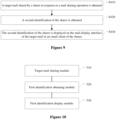
- FIG. 10 is a schematic structural diagram of an information display apparatus according to a fifth embodiment of the present disclosure.
- the embodiment may be applied to a case that sharee information is displayed on a shared target mail.
- the apparatus includes a target mail sharing module 510, a first identification obtaining module 520 and a first identification display module 530.
- the target mail sharing module 510 is configured to share, in response to a mail sharing operation triggered by a sharer, a target mail with a sharee indicated by sharee information according to the sharee information.
- the first identification obtaining module 520 is configured to obtain a first identification of the sharee.
- the first identification display module 530 is configured to display the first identification of the sharee on a mail display interface of the target mail in an email client of the sharer.
- the first identification of the sharee is displayed on the mail display interface of the target mail in the email client of the sharer.
- the sharer can quickly view the users receiving the target mail directly in the email client, thereby improving the information viewing efficiency and user experience.
- the first identification includes an avatar identification and/or an account identification of the sharee.
- the first identification obtaining module 520 is configured to if the sharee information includes a user group name, determine the first identification of the sharee according to the user group name.
- the user group name includes an instant messaging IM user group name.
- the first identification obtaining module 520 is configured to generate an identification obtaining request according to the IM user group name; send the identification obtaining request to an IM server, to instruct the IM server to determine identifications of respective IM users indicated by the IM user group name in response to the identification obtaining request; and obtain the first identifications of the sharees according to the identifications of the IM users sent by the IM server.
- the first identification display module 530 includes a first display unit and a second display unit.
- the first display unit is configured to if the number of the sharees is less than or equal to a first preset number, display the first identifications of the sharees on the mail display interface of the target mail in the email client of the sharer.
- the second display unit is configured to if the number of the sharees is greater than the first preset number, display the first identifications of the sharees on the mail display interface of the target mail in the email client of the sharer in a preset abbreviative display mode.
- the second display unit is configured to display a first abbreviative display identification on the mail display interface of the target mail in the mail client of the sharer; and in a case that a viewing operation on the first abbreviative display identification triggered by the sharer is detected, display the first identifications of at most a second preset number of sharees among all sharees; or display a second abbreviative display identification and the first identification of the first preset number of sharee on the mail display interface of the target mail in the email client of the sharer; and in a case that a viewing operation on the second abbreviative display identification triggered by the sharer is detected, display the first identifications of at most a third preset number of sharees among remaining sharees or display the first identifications of at most a third preset number of sharees among all sharees.
- the apparatus further includes: an identification number display module configured to display the total number of the sharees at a preset location of the first abbreviative display identification; or display the total number of the remaining sharees or the total number of all sharees at a preset location of the second abbreviative display identification.
- the apparatus further includes: an unread message prompt module configured to, in response to a detection that an unread message sent by the sharee exists in an IM client of the sharer, display an unread message prompt identification at a preset location of the first identification of the sharee, after the first identification of the sharee is displayed on the mail display interface of the target mail in the email client of the sharer.
- an unread message prompt module configured to, in response to a detection that an unread message sent by the sharee exists in an IM client of the sharer, display an unread message prompt identification at a preset location of the first identification of the sharee, after the first identification of the sharee is displayed on the mail display interface of the target mail in the email client of the sharer.
- the unread message prompt module is further configured to obtain the total number of unread messages sent by the sharee; and display the total number of unread messages at the preset location of the first identification of the sharee.
- the unread message prompt module is further configured to if the sharee is an IM user in an IM user group, display the unread message prompt identification at a preset location of a first identification of a preset IM user in the IM user group, in response to a detection that an unread message for the sharer exists in the IM user group.
- the apparatus further includes: an unread message display module configured to display an IM conversation interface of the sharee, in response to a detection of a message viewing operation on the displayed unread message prompt identification triggered by the sharer, after the unread message prompt identification is displayed at the preset location of the first identification of the sharee.
- the IM conversation interface contains the unread message sent by the sharee.
- the unread message display module is further configured to jump to the IM client of the sharer, and display the IM conversation interface corresponding to the sharee on an interface of the IM client of the sharer; or obtain an unread message sent by the sharee, and display an IM conversation interface containing the unread message on an interface of the email client of the sharer.
- the apparatus further includes: an unread message identification deleting module configured to delete the displayed unread message prompt identification in response to a detection of a message viewing operation on the displayed unread message prompt identification triggered by the sharer, after the unread message prompt identification is displayed at the preset location of the first identification of the sharee.
- the first identification display module 530 is further configured to detect a mail viewing operation on the target mail triggered by the sharee; displaying the first identification of the sharee in a first identification display mode on the mail display interface of the target mail in the email client of the sharer, in the case that the mail viewing operation is not detected; and switch a display mode of the first identification from the first identification display mode to a second identification display mode, in the case that the mail viewing operation is detected.
- the apparatus further include: a first identification updating module configured to display, in response to a detection of an adding operation for adding a sharee, a first identification of a currently added sharee on the mail display interface of the target mail in the email client of the sharer; and delete, in response to a detection of a deleting operation for deleting an existing sharee, the displayed first identification of the existing sharee.
- a first identification updating module configured to display, in response to a detection of an adding operation for adding a sharee, a first identification of a currently added sharee on the mail display interface of the target mail in the email client of the sharer; and delete, in response to a detection of a deleting operation for deleting an existing sharee, the displayed first identification of the existing sharee.
- the apparatus further includes: a sharing success prompt identification display module configured to display a sharing success prompt identification on the mail display interface of the target mail in the email client of the sharer, after the target mail is shared to the sharee indicated by the sharee information.
- the apparatus further includes: a sharing success prompt identification switching module configured to display, in response to a detection that an unread message sent by the sharee exists in an IM client of the sharer, an unread message prompt identification instead of the displayed sharing success prompt identification.
- the information display apparatus may perform the information display method according to the first to third embodiments, and can produce the same beneficial effect as the information display method.
- FIG 11 is a schematic structural diagram of an information display apparatus according to a sixth embodiment of the present disclosure.
- the embodiment may be applied to a case that an identification of the sharer is displayed on a target mail shared by the sharer.
- the apparatus includes a target mail obtaining module 610, a second identification obtaining module 620 and a second identification display module 630.
- the second identification of the sharer is displayed on the mail display interface of the target mail in the email client of the sharee. In this way, the sharee can quickly view who shares the target mail directly in the email client, thereby improving the information viewing efficiency and user experience.
- the second identification display module 630 includes a first identification obtaining unit and an identification display unit.
- the first identification obtaining unit is configured to obtain a first identification of the sharee of the target mail.
- the identification display unit is configured to display the first identification and the second identification on the mail display interface of the target mail in the client of the sharee.
- the information display apparatus may perform the information display method according to the fourth embodiment, and can produce the same beneficial effect as the information display method.
- FIG. 12 shows a schematic structural diagram of an electronic device 900 for implementing the claimed invention (for example, the terminal device or the server shown in Figure 12 ).
- the terminal device may include but not limited to a mobile terminal such as a mobile phone, a notebook computer, a digital broadcast sharee, a personal digital assistance (PDA), a tablet computer (PAD), a portable multimedia player (PMP) and a vehicle terminal (for example a vehicle navigation terminal); and a fixed terminal such as digital TV and a desktop computer.
- PDA personal digital assistance
- PAD tablet computer
- PMP portable multimedia player
- vehicle terminal for example a vehicle navigation terminal
- the electronic device in Figure 12 is schematic, and is not intended to limit the function and use scope of the embodiments of the present disclosure.
- the electronic device 900 may include a processing apparatus (such as a central processor and a graphic processor) 901.
- the processing apparatus may perform various appropriate actions and processing by executing programs stored in a read-only memory (ROM) 902 or programs uploaded from a storage apparatus 908 to a random access memory (RAM) 903.
- ROM read-only memory
- RAM random access memory
- Various programs and data required for operations of the electronic device 900 are also stored in the RAM 903.
- the processing apparatus 901, the ROM 902 and the RAM 903 are connected to each other through the bus 904.
- An input/output (I/O) interface 905 is also connected to the bus 904.
- an input apparatus 906 such as a touch screen, a touch panel, a keyboard, a mouse, a camera, a microphone, an accelerometer, and gyroscope
- an output apparatus 907 such as a liquid crystal display (LCD), a loudspeaker and a vibrator
- a storage apparatus 908 such as a magnetic tape and a hard disk
- the communication apparatus 909 may allow the electronic device 900 to communicate with other device in a wired or wireless manner to exchange data.
- Figure 12 shows the electronic device 900 provided with various apparatuses, it should be understood that not all shown apparatuses are necessary. Alternatively, more or less apparatuses may be included.
- a process described in the flowchart may be implemented by computer software programs.
- a computer program product including computer program carried on a non-transient computer readable medium is provided.
- the computer program includes program codes for performing the method shown in the flowchart.
- the computer program may be downloaded and installed from the network through the communication apparatus 909, installed from the storage apparatus 908 or installed from the ROM 902.
- the computer program is executed by the processing apparatus 901 to perform functions defined in the methods described in the embodiments of the present disclosure.
- the electronic device shares the same invention concept as the information display method according to the above embodiments. For contents not described in detail in the device embodiment, one may refer to description of the above method embodiments.
- the electronic device can generate the same beneficial effect as the method embodiments.
- a computer storage medium storing computer programs is provided according to embodiments of the present disclosure.
- the programs are executed by a processor to perform the information display method according to the above embodiments.
- the computer readable storage medium may be a tangible medium including or storing programs.
- the programs may be used by an instruction execution system, apparatus or device, or may be used in combination with the instruction execution system, apparatus or device.
- a computer readable signal medium may include a data signal in a baseband or propagated as a part of carrier.
- the computer readable signal medium carries computer readable program codes.
- the propagated data signal may include but not limited to an electromagnetic signal, an optical signal or any combination thereof.
- the computer readable signal medium may be any computer readable medium other than the computer readable storage medium.
- the computer readable signal medium may send, propagate or transmit programs used by the instruction execution system, apparatus or device or the programs used in combination with the instruction execution system, apparatus or device.
- the program code included in the computer readable medium may be transmitted via any appropriate medium, including but not limited to an electric wire, an optical fiber, radio frequency (RF) or any appropriate combination thereof.
- RF radio frequency
- the client and the server may perform communication by using any known network protocol such as Hyper Text Transfer Protocol (HTTP) or any network protocol to be developed, and may connect with digital data in any form or carried in any medium (for example, a communication network).
- HTTP Hyper Text Transfer Protocol
- the communication network includes a local area network (LAN), a wide area network (WAN), an international network (for example the internet), a peer-to-peer network (for example ad hoc peer-to-peer network), and any known network or network to be developed.
- the computer readable medium may be included in the electronic device described above, or may exist independently and is not installed in the electronic device.
- the computer readable storage medium carries one or more programs.
- the one or more programs when being executed by the electronic device, cause the electronic device to: share, in response to a mail sharing operation triggered by a sharer, a target mail with the sharee indicated by sharee information, according to the sharee information; obtain a first identification of the sharee; and display the first identification of the sharee on a mail display interface of the target mail in an email client of the sharer; or obtain a target mail which is shared by a sharer in response to a mail sharing operation; obtain a second identification of the sharer; and display the second identification of the sharer on a mail display interface of the target mail in an email client of a sharee.
- each block in the block diagrams and/or flowcharts, and a combination of blocks in the block diagrams and/or flowcharts may be implemented by a dedicated hardware system for performing specified functions or operations, or may be implemented by a combination of dedicated hardware and computer instructions.
- Units involved in the embodiments of the present disclosure may be implemented by software or hardware. Names of the units do not limit the units in a certain case.
- the editable content display unit may be referred to as "an editing unit”.
- the functions described above may be partially performed by one or more hardware logic components.
- the hardware logic components include: a field programmable gate array (FPGA), an application specific integrated circuit (ASIC), an application specific standard product (ASSP), a system on chip (SOC), a complex programmable logic device (CPLD) and so on.
- FPGA field programmable gate array
- ASIC application specific integrated circuit
- ASSP application specific standard product
- SOC system on chip
- CPLD complex programmable logic device
- the computer readable medium may be a tangible medium including or storing programs.
- the programs may be used by an instruction execution system, apparatus or device, or may be used in combination with the instruction execution system, apparatus or device.
- the machine readable medium may be a machine readable signal medium or a machine readable storage medium.
- the machine readable medium may include but not limited to a system, an apparatus or a device in an electric, magnetic, optical, electromagnetic, infrared or a semiconductor form, or any combination thereof.
- the machine readable storage medium may include but not limited to electric connection of one or more wires, a portable computer magnetic disk, a hard disk, a random access memory (RAM), a read-only memory (ROM), an erasable programmable read only memory (EPROM or a flash memory), an optical fiber, a portable compact disk read only memory (CD-ROM), an optical storage device, a magnetic storage device or any combination thereof.
Landscapes
- Engineering & Computer Science (AREA)
- Business, Economics & Management (AREA)
- Computer Networks & Wireless Communication (AREA)
- Signal Processing (AREA)
- Human Resources & Organizations (AREA)
- Entrepreneurship & Innovation (AREA)
- Strategic Management (AREA)
- Marketing (AREA)
- Physics & Mathematics (AREA)
- Economics (AREA)
- Computer Hardware Design (AREA)
- Operations Research (AREA)
- Quality & Reliability (AREA)
- Tourism & Hospitality (AREA)
- Data Mining & Analysis (AREA)
- General Business, Economics & Management (AREA)
- General Physics & Mathematics (AREA)
- Theoretical Computer Science (AREA)
- Information Transfer Between Computers (AREA)
- User Interface Of Digital Computer (AREA)
- Management, Administration, Business Operations System, And Electronic Commerce (AREA)
Claims (24)
- Informationsanzeigeverfahren, das durch eine Informationsanzeigeeinrichtung (900) durchgeführt wird, die in einen E-Mail-Client eines Freigabegebers integriert ist, gekennzeichnet dadurch, dass es umfasst:Freigeben (S110), als Reaktion auf einen E-Mail-Freigabevorgang, der durch den Freigabegeber ausgelöst wird, einer Ziel-E-Mail an einen Freigabenehmer,wobei die Ziel-E-Mail eine empfangene E-Mail ist, die in einem Posteingang des E-Mail-Clients des Freigabegebers gespeichert ist, und der Inhalt der Ziel-E-Mail unverändert bleibt, bevor er freigegeben wird;Erhalten (S120) einer ersten Identifikation des Freigabenehmers, wobei die erste Identifikation des Freigabenehmers eine eindeutige Identifikation zum Identifizieren des Freigabenehmers ist und entweder in dem E-Mail-Client des Freigabegebers oder auf einem Server gespeichert ist; undAnzeigen (S130) der ersten Identifikation des Freigabenehmers auf einer E-Mail-Anzeigeschnittstelle des Freigabegebers.
- Informationsanzeigeverfahren nach Anspruch 1, wobei die erste Identifikation eine Avatar-Identifikation und/oder eine Kontoidentifikation des Freigabenehmers umfasst.
- Informationsanzeigeverfahren nach Anspruch 1, wobei das Erhalten einer ersten Identifikation des Freigabenehmers umfasst:
in einem Fall, dass die Freigabenehmerinformationen einen Benutzergruppennamen umfassen, Bestimmen der ersten Identifikation des Freigabenehmers gemäß dem Benutzergruppennamen. - Informationsanzeigeverfahren nach Anspruch 3, wobei der Benutzergruppenname einen E-Mail-Benutzergruppennamen umfasst; und wobei das Bestimmen der ersten Identifikation des Freigabenehmers gemäß dem Benutzergruppennamen umfasst:Erhalten erster Identifikationen jeweiliger E-Mail-Benutzer, die in einer E-Mail-Benutzergruppe enthalten sind, die durch den E-Mail-Benutzergruppennamen angegeben sind, gemäß vorab gespeicherter erster Identifikationen der E-Mail-Benutzer; oderwobei der Benutzergruppenname einen Sofortnachrichtendienstbenutzergruppennamen, IM-Benutzergruppennamen, umfasst; und wobei das Bestimmen der ersten Identifikation des Freigabenehmers gemäß dem Benutzergruppennamen umfasst:Erzeugen einer Identifikationserhaltungsanforderung gemäß dem IM-Benutzergruppennamen;Senden der Identifikationserhaltungsanforderung an einen IM-Server, um den IM-Server anzuweisen, als Reaktion auf die Identifikationserhaltungsanforderung die Identifikationen der jeweiligen IM-Benutzer zu bestimmen, die durch den IM-Benutzergruppennamen angegeben sind; undErhalten der ersten Identifikationen der Freigabenehmer gemäß den Identifikationen der jeweiligen IM-Benutzer, die durch den IM-Server gesendet werden.
- Informationsanzeigeverfahren nach Anspruch 1, ferner umfassend:
Anzeigen einer zweiten Identifikation des Freigabegebers auf der E-Mail-Anzeigeschnittstelle der Ziel-E-Mail in einem E-Mail-Client des Freigabenehmers. - Informationsanzeigeverfahren nach Anspruch 1, wobei das Anzeigen der ersten Identifikation des Freigabenehmers auf einer E-Mail-Anzeigeschnittstelle der Ziel-E-Mail in einem E-Mail-Client des Freigabegebers umfasst:in einem Fall, dass die Anzahl der Freigabenehmer kleiner als oder gleich einer ersten voreingestellten Anzahl ist, Anzeigen der ersten Identifikation jedes Freigabenehmers auf der E-Mail-Anzeigeschnittstelle der Ziel-E-Mail in dem E-Mail-Client des Freigabegebers; undin einem Fall, dass die Anzahl der Freigabenehmer größer als die erste voreingestellte Anzahl ist, Anzeigen der ersten Identifikationen der Freigabenehmer auf der E-Mail-Anzeigeschnittstelle der Ziel-E-Mail in dem E-Mail-Client des Freigabegebers in einem voreingestellten abgekürzten Anzeigemodus.
- Informationsanzeigeverfahren nach Anspruch 6, wobei das Anzeigen der ersten Identifikationen der Freigabenehmer auf der E-Mail-Anzeigeschnittstelle der Ziel-E-Mail in dem E-Mail-Client des Freigabegebers in einem voreingestellten abgekürzten Anzeigemodus umfasst:Anzeigen einer ersten abgekürzten Anzeigeidentifikation auf der E-Mail-Anzeigeschnittstelle der Ziel-E-Mail in dem E-Mail-Client des Freigabegebers; und in einem Fall, dass ein Betrachtungsvorgang auf der ersten abgekürzten Anzeigeidentifikation erkannt wird, der durch den Freigabegeber ausgelöst wird, Anzeigen der ersten Identifikationen von höchstens einer zweiten voreingestellten Anzahl von Freigabenehmern unter allen Freigabenehmern; oderAnzeigen einer zweiten abgekürzten Anzeigeidentifikation und der ersten Identifikation der ersten voreingestellten Anzahl des Freigabenehmers auf der E-Mail-Anzeigeschnittstelle der Ziel-E-Mail in dem E-Mail-Client des Freigabegebers; und in einem Fall, dass ein Betrachtungsvorgang auf der zweiten abgekürzten Anzeigeidentifikation erkannt wird, der durch den Freigabegeber ausgelöst wird, Anzeigen der ersten Identifikationen von höchstens einer dritten voreingestellten Anzahl von Freigabenehmern unter den verbleibenden Freigabenehmern oder Anzeigen der ersten Identifikationen von höchstens einer dritten voreingestellten Anzahl von Freigabenehmern unter allen Freigabenehmern.
- Informationsanzeigeverfahren nach Anspruch 7, ferner umfassend:Anzeigen einer Gesamtanzahl der Freigabenehmer an einer voreingestellten Stelle der ersten abgekürzten Anzeigeidentifikation; oderAnzeigen einer Gesamtananzahl der verbleibenden Freigabenehmer oder einer Gesamtanzahl aller Freigabenehmer an einer voreingestellten Stelle der zweiten abgekürzten Anzeigeidentifikation.
- Informationsanzeigeverfahren nach Anspruch 1, wobei das Verfahren nach dem Anzeigen der ersten Identifikation des Freigabenehmers auf einer E-Mail-Anzeigeschnittstelle der Ziel-E-Mail in einem E-Mail-Client des Freigabegebers ferner umfasst:
Anzeigen (S340) einer Eingabeaufforderungsidentifikation für eine ungelesene Nachricht an einer voreingestellten Stelle der ersten Identifikation des Freigabenehmers als Reaktion auf eine Erkennung, dass in einem IM-Client des Freigabegebers eine ungelesene Nachricht vorhanden ist, die durch den Freigabenehmer gesendet wurde. - Informationsanzeigeverfahren nach Anspruch 9, wobei das Anzeigen einer Eingabeaufforderungsidentifikation für die ungelesene Nachricht an einer voreingestellten Stelle der ersten Identifikation des Freigabenehmers umfasst:Erhalten der Gesamtanzahl ungelesener Nachrichten, die durch den Freigabenehmer gesendet werden; undAnzeigen der Gesamtanzahl ungelesener Nachrichten an der voreingestellten Stelle der ersten Identifikation des Freigabenehmers.
- Informationsanzeigeverfahren nach Anspruch 9, wobei das Anzeigen einer Eingabeaufforderungsidentifikation für die ungelesene Nachricht an einer voreingestellten Stelle der ersten Identifikation des Freigabenehmers als Reaktion auf eine Erkennung, dass eine ungelesene Nachricht, die durch den Freigabenehmer gesendet wird, in einem IM-Client des Freigabegebers vorhanden ist, umfasst:
in einem Fall, dass der Freigabenehmer ein IM-Benutzer in einer IM-Benutzergruppe ist, Anzeigen einer Eingabeaufforderungsidentifikation für die ungelesene Nachricht an einer voreingestellten Stelle einer ersten Identifikation des IM-Benutzers in der IM-Benutzergruppe als Reaktion auf eine Erkennung, dass eine ungelesene Nachricht des Freigabegebers in der IM-Benutzergruppe vorhanden ist. - Informationsanzeigeverfahren nach Anspruch 9, wobei, nach dem Anzeigen einer Eingabeaufforderungsidentifikation für die ungelesene Nachricht an einer voreingestellten Stelle der ersten Identifikation des Freigabenehmers, das Verfahren ferner mindestens eines umfasst von:Anzeigen einer IM-Konversationsschnittstelle, die dem Freigabenehmer entspricht, als Reaktion auf eine Erkennung eines Nachrichtenbetrachtungsvorgangs auf der angezeigten Eingabeaufforderungsidentifikation für die ungelesene Nachricht, die durch den Freigabegeber ausgelöst wird, wobei die IM-Konversationsschnittstelle die ungelesene Nachricht umfasst, die durch den Freigabenehmer gesendet wird; oderLöschen der angezeigten Eingabeaufforderungsidentifikation für die ungelesene Nachricht als Reaktion auf eine Erkennung eines Nachrichtenbetrachtungsvorgangs auf der angezeigten Eingabeaufforderungsidentifikation für die ungelesene Nachricht, die durch den Freigabegeber ausgelöst wird.
- Informationsanzeigeverfahren nach Anspruch 12, wobei das Anzeigen einer IM-Konversationsschnittstelle, die dem Freigabenehmer entspricht, umfasst:Springen zu dem IM-Client des Freigabegebers und Anzeigen der IM-Konversationsschnittstelle, die dem Freigabenehmer entspricht, auf einer Schnittstelle des IM-Clients des Freigabegebers; oderErhalten der ungelesenen Nachricht, die durch Freigabenehmer gesendet wird, und Anzeigen einer IM-Konversationsschnittstelle, die die ungelesene Nachricht enthält, auf einer Schnittstelle des E-Mail-Clients des Freigabegebers.
- Informationsanzeigeverfahren nach einem der Ansprüche 1 bis 13, wobei das Anzeigen der ersten Identifikation des Freigabenehmers auf einer E-Mail-Anzeigeschnittstelle der Ziel-E-Mail in einem E-Mail-Client des Freigabegebers umfasst:Erkennen eines E-Mail-Betrachtungsvorgangs auf der Ziel-E-Mail, der durch den Freigabenehmer ausgelöst wird;Anzeigen der ersten Identifikation des Freigabenehmers in einem ersten Identifikationsanzeigemodus auf der E-Mail-Anzeigeschnittstelle der Ziel-E-Mail in dem E-Mail-Client des Freigabegebers, in einem Fall, dass der E-Mail-Betrachtungsvorgang durch den Freigabenehmer nicht erkannt wird; undUmschalten eines Anzeigemodus der ersten Identifikation von dem ersten Identifikationsanzeigemodus in einen zweiten Identifikationsanzeigemodus, in einem Fall, dass der E-Mail-Betrachtungsvorgang durch den Freigabenehmer erkannt wird.
- Informationsanzeigeverfahren nach einem der Ansprüche 1 bis 13, wobei, nach dem Anzeigen der ersten Identifikation des Freigabenehmers auf einer E-Mail-Anzeigeschnittstelle der Ziel-E-Mail in einem E-Mail-Client des Freigabegebers, das Verfahren ferner umfasst:Anzeigen, als Reaktion auf eine Erkennung eines Hinzufügungsvorgangs zum Hinzufügen eines Freigabenehmers, einer ersten Identifikation eines aktuell hinzugefügten Freigabenehmers auf der E-Mail-Anzeigeschnittstelle der Ziel-E-Mail in dem E-Mail-Client des Freigabegebers; undLöschen, als Reaktion auf eine Erkennung eines Löschvorgangs zum Löschen eines bestehenden Freigabenehmers, der angezeigten ersten Identifikation des bestehenden Freigabenehmers.
- Informationsanzeigeverfahren nach einem der Ansprüche 1 bis 13, wobei, nach dem Freigeben einer Ziel-E-Mail an einen Freigabenehmer, der durch die Freigabenehmerinformationen gemäß den Freigabenehmerinformationen angegeben wird, das Verfahren ferner umfasst:
Anzeigen einer Eingabeaufforderungsidentifikation einer erfolgreichen Freigabe auf der E-Mail-Anzeigeschnittstelle der Ziel-E-Mail in dem E-Mail-Client des Freigabegebers. - Informationsanzeigeverfahren nach Anspruch 16, ferner umfassend:
Löschen der angezeigten Eingabeaufforderungsidentifikation der erfolgreichen Freigabe als Reaktion auf eine Erkennung eines E-Mail-Betrachtungsvorgangs auf der Ziel-E-Mail, die durch den Freigabegeber ausgelöst wird, oder als Reaktion auf eine Erkennung eines Klickvorgangs auf die angezeigte Eingabeaufforderungsidentifikation der erfolgreichen Freigabe, die durch den Freigabegeber ausgelöst wird. - Informationsanzeigeverfahren nach Anspruch 16, wobei das Anzeigen einer Eingabeaufforderungsidentifikation der erfolgreichen Freigabe auf der E-Mail-Anzeigeschnittstelle der Ziel-E-Mail in dem E-Mail-Client des Freigabegebers umfasst:
Anzeigen, als Reaktion auf eine Erkennung, dass eine ungelesene Nachricht, die durch den Freigabenehmer gesendet wurde, in einem IM-Client des Freigabegebers vorhanden ist, einer Eingabeaufforderungsidentifikation der ungelesenen Nachricht anstelle der angezeigten Eingabeaufforderungsidentifikation der erfolgreichen Freigabe. - Informationsanzeigeverfahren nach einem der Ansprüche 1 bis 18, wobei das Erhalten einer ersten Identifikation des Freigabenehmers umfasst:
Erhalten der ersten Identifikation des Freigabenehmers, der aktuell auf die Ziel-E-Mail zugreift. - Informationsanzeigeverfahren, das durch eine Informationsanzeigeeinrichtung (900) durchgeführt wird, die in einen E-Mail-Client eines Freigabenehmers integriert ist, gekennzeichnet dadurch, dass es umfasst:Erhalten (S410) einer Ziel-E-Mail, wobei die Ziel-E-Mail durch einen Freigabegeber basierend auf einem E-Mail-Freigabevorgang freigegeben wird, wobei die Ziel-E-Mail in einem Posteingang des E-Mail-Clients des Freigabegebers gespeichert wird und der Inhalt der Ziel-E-Mail unverändert bleibt, bevor er freigegeben wird;Erhalten (S420) einer zweiten Identifikation des Freigabegebers, wobei die zweite Identifikation des Freigabegebers eine eindeutige Identifikation zum Identifizieren des Freigabegebers ist; undAnzeigen (S430) der zweiten Identifikation des Freigabegebers auf einer E-Mail-Anzeigeschnittstelle eines E-Mail-Clients eines Freigabenehmers.
- Informationsanzeigeverfahren nach Anspruch 20, wobei das Anzeigen der zweiten Identifikation des Freigabegebers auf einer E-Mail-Anzeigeschnittstelle der Ziel-E-Mail in einem E-Mail-Client eines Freigabenehmers umfasst:Erhalten einer ersten Identifikation des Freigabenehmers der Ziel-E-Mail; undAnzeigen der ersten Identifikation und der zweiten Identifikation auf der E-Mail-Anzeigeschnittelle der Ziel-E-Mail in dem E-Mail-Client des Freigabenehmers.
- Informationsanzeigeverfahren nach Anspruch 21, wobei das Anzeigen der ersten Identifikation und der zweiten Identifikation auf der E-Mail-Anzeigeschnittstelle der Ziel-E-Mail in dem E-Mail-Client des Freigabenehmers umfasst:Einstufen der ersten Identifikation und der zweiten Identifikation in einem voreingestellten Einstufungsmodus; undAnzeigen der eingestuften ersten Identifikation und zweiten Identifikation auf der E-Mail-Anzeigeschnittelle der Ziel-E-Mail in dem E-Mail-Client des Freigabenehmers.
- Informationsanzeigeeinrichtung (900), gekennzeichnet dadurch, dass sie umfasst:einen oder mehrere Prozessoren (901); undeinen Speicher (908), der konfiguriert ist, um ein oder mehrerer Programme zu speichern,wobei das eine oder die mehreren Programme, wenn sie durch den einen oder die mehreren Prozessoren (901) ausgeführt werden, den einen oder die mehreren Prozessoren veranlassen, das Informationsanzeigeverfahren nach einem der Ansprüche 1 bis 22 durchzuführen.
- Computerlesbares Speicherungsmedium, das Computerprogramme speichert, dadurch gekennzeichnet, dass die Programme durch einen Prozessor (901) ausgeführt werden, um das Informationsanzeigeverfahren nach einem der Ansprüche 1 bis 22 durchzuführen.
Applications Claiming Priority (2)
| Application Number | Priority Date | Filing Date | Title |
|---|---|---|---|
| CN202010368140.XA CN113595861B (zh) | 2020-04-30 | 2020-04-30 | 一种信息展示方法、装置、电子设备和存储介质 |
| PCT/CN2021/087701 WO2021218658A1 (zh) | 2020-04-30 | 2021-04-16 | 一种信息展示方法、装置、电子设备和存储介质 |
Publications (3)
| Publication Number | Publication Date |
|---|---|
| EP4131864A1 EP4131864A1 (de) | 2023-02-08 |
| EP4131864A4 EP4131864A4 (de) | 2023-09-13 |
| EP4131864B1 true EP4131864B1 (de) | 2024-10-09 |
Family
ID=78236923
Family Applications (1)
| Application Number | Title | Priority Date | Filing Date |
|---|---|---|---|
| EP21795442.9A Active EP4131864B1 (de) | 2020-04-30 | 2021-04-16 | Informationsanzeigeverfahren und -vorrichtung, elektronische vorrichtung und speichermedium |
Country Status (5)
| Country | Link |
|---|---|
| US (1) | US12149494B2 (de) |
| EP (1) | EP4131864B1 (de) |
| JP (1) | JP7642676B2 (de) |
| CN (1) | CN113595861B (de) |
| WO (1) | WO2021218658A1 (de) |
Families Citing this family (5)
| Publication number | Priority date | Publication date | Assignee | Title |
|---|---|---|---|---|
| JP7582740B2 (ja) * | 2020-04-30 | 2024-11-13 | 北京字節跳動網絡技術有限公司 | 情報インタラクション方法、装置、電子機器、および記憶媒体 |
| EP4135271B1 (de) * | 2020-04-30 | 2025-03-19 | Beijing Bytedance Network Technology Co., Ltd. | Informationsinteraktionsverfahren und -vorrichtung, vorrichtung und medium |
| CN116149516A (zh) * | 2021-11-17 | 2023-05-23 | 北京字节跳动网络技术有限公司 | 数据处理方法、装置、电子设备及存储介质 |
| CN114663128A (zh) * | 2022-02-16 | 2022-06-24 | 北京结慧科技有限公司 | 一种展示方法、计算机设备和存储介质 |
| CN114693245A (zh) * | 2022-03-02 | 2022-07-01 | 深圳市小满科技有限公司 | 用户画像生成方法及装置、电子设备、可读存储介质 |
Family Cites Families (36)
| Publication number | Priority date | Publication date | Assignee | Title |
|---|---|---|---|---|
| US6791583B2 (en) * | 2000-03-09 | 2004-09-14 | Sun Microsystems, Inc. | System and method for providing spatially distributed device interaction |
| JP4859276B2 (ja) | 2001-03-21 | 2012-01-25 | 富士通東芝モバイルコミュニケーションズ株式会社 | 通信端末装置及び表示方法 |
| US7921160B2 (en) * | 2002-09-17 | 2011-04-05 | At&T Intellectual Property I, L.P. | Initiating instant messaging (IM) chat sessions from email messages |
| US7941762B1 (en) * | 2003-02-14 | 2011-05-10 | Shoretel, Inc. | Display of real time information for selected possibilities |
| US7730129B2 (en) * | 2004-10-20 | 2010-06-01 | Inbit, Inc. | Collaborative communication platforms |
| US20090049141A1 (en) * | 2007-08-17 | 2009-02-19 | International Business Machines Corporation | Tracking delivered e-mail |
| US8793702B2 (en) * | 2007-10-23 | 2014-07-29 | Adobe Systems Incorporated | Take and share indicator |
| US20090119606A1 (en) * | 2007-11-05 | 2009-05-07 | Bryan Gilbert | System and method for combining instant messaging with email in one client interface |
| US9106447B2 (en) * | 2008-01-03 | 2015-08-11 | Apple Inc. | Systems, methods and apparatus for providing unread message alerts |
| US8375309B2 (en) * | 2009-01-06 | 2013-02-12 | International Business Machines Corporation | Integration of collaboration systems in an instant messaging application |
| US20120110064A1 (en) | 2010-11-01 | 2012-05-03 | Google Inc. | Content sharing interface for sharing content in social networks |
| US8903922B2 (en) * | 2011-07-27 | 2014-12-02 | Cisco Technology, Inc. | Exporting an email thread to a persistent chat room |
| CN102394837A (zh) * | 2011-10-31 | 2012-03-28 | 孟伟 | 信息分享的方法、终端及系统 |
| US9607291B2 (en) * | 2011-12-13 | 2017-03-28 | Yahoo! Inc. | Email sharing |
| US20130159429A1 (en) * | 2011-12-19 | 2013-06-20 | Microsoft Corporation | Sharing and transferring message content between users |
| CN102761840A (zh) * | 2012-06-29 | 2012-10-31 | 惠州Tcl移动通信有限公司 | 一种移动通信终端及其邮件处理方法 |
| CN103001856B (zh) * | 2012-12-05 | 2015-12-23 | 华为软件技术有限公司 | 一种信息分享方法及系统、即时通讯客户端及服务器 |
| US9189529B2 (en) | 2013-02-14 | 2015-11-17 | Ab Initio Technology Llc | Queue monitoring and visualization |
| CN103268541A (zh) * | 2013-04-15 | 2013-08-28 | 广州博冠信息科技有限公司 | 一种邮箱界面交互方法和设备 |
| US9998555B2 (en) | 2014-04-08 | 2018-06-12 | Dropbox, Inc. | Displaying presence in an application accessing shared and synchronized content |
| KR101626474B1 (ko) * | 2015-02-09 | 2016-06-01 | 라인 가부시키가이샤 | 메신저 기반 문서 공유 서비스 제공 장치 및 이를 이용한 방법 |
| CN106161201B (zh) * | 2015-04-27 | 2019-12-13 | 中国移动通信集团公司 | 一种以邮箱账号为标识参与群聊的方法、设备及系统 |
| JP6553937B2 (ja) | 2015-04-30 | 2019-07-31 | 和田 哲也 | 情報共有プログラム、情報処理装置、及び情報共有方法 |
| CN106302082A (zh) * | 2015-05-14 | 2017-01-04 | 阿里巴巴集团控股有限公司 | 电子邮件处理方法、客户端及服务器 |
| WO2016205234A1 (en) * | 2015-06-15 | 2016-12-22 | Alibaba Group Holding Limited | E-mail processing |
| CN106484373A (zh) * | 2015-08-26 | 2017-03-08 | 阿里巴巴集团控股有限公司 | 分享联系人信息的方法和装置 |
| EP3402136B1 (de) * | 2016-01-28 | 2022-01-26 | Huawei Technologies Co., Ltd. | Informationsinteraktionsverfahren, client und vorrichtung |
| US10462077B2 (en) * | 2016-12-29 | 2019-10-29 | Dropbox, Inc. | File-level comments in collaborative content items |
| CN108306810B (zh) * | 2017-01-11 | 2020-11-03 | 腾讯科技(深圳)有限公司 | 一种群组组建方法、服务器及终端 |
| US10904197B2 (en) * | 2017-12-19 | 2021-01-26 | Salesforce.Com, Inc. | Management of members of social network conversations |
| CN108055197A (zh) * | 2018-01-09 | 2018-05-18 | 论客科技(广州)有限公司 | 基于即时通讯的邮件分享方法、装置及系统 |
| CN108156070B (zh) * | 2018-01-09 | 2020-07-17 | 论客科技(广州)有限公司 | 基于邮件系统的即时通讯方法、装置及系统 |
| CN108055196B (zh) * | 2018-01-09 | 2020-01-31 | 论客科技(广州)有限公司 | 基于即时通讯创建讨论群的方法、装置及系统 |
| CN108322384A (zh) * | 2018-01-09 | 2018-07-24 | 论客科技(广州)有限公司 | 基于即时通讯的邮件分享方法、装置及系统 |
| CN110297717A (zh) * | 2018-03-22 | 2019-10-01 | 香港乐蜜有限公司 | 确定客户端应用程序分享者的方法、装置、电子设备及存储介质 |
| CN111581924B (zh) * | 2020-04-30 | 2022-04-15 | 北京字节跳动网络技术有限公司 | 邮件处理方法、装置、电子设备及存储介质 |
-
2020
- 2020-04-30 CN CN202010368140.XA patent/CN113595861B/zh active Active
-
2021
- 2021-04-16 JP JP2022564641A patent/JP7642676B2/ja active Active
- 2021-04-16 EP EP21795442.9A patent/EP4131864B1/de active Active
- 2021-04-16 WO PCT/CN2021/087701 patent/WO2021218658A1/zh not_active Ceased
-
2022
- 2022-08-09 US US17/818,661 patent/US12149494B2/en active Active
Also Published As
| Publication number | Publication date |
|---|---|
| CN113595861B (zh) | 2023-01-10 |
| CN113595861A (zh) | 2021-11-02 |
| JP2023523050A (ja) | 2023-06-01 |
| JP7642676B2 (ja) | 2025-03-10 |
| US20220385618A1 (en) | 2022-12-01 |
| US12149494B2 (en) | 2024-11-19 |
| WO2021218658A1 (zh) | 2021-11-04 |
| EP4131864A1 (de) | 2023-02-08 |
| EP4131864A4 (de) | 2023-09-13 |
Similar Documents
| Publication | Publication Date | Title |
|---|---|---|
| EP4131864B1 (de) | Informationsanzeigeverfahren und -vorrichtung, elektronische vorrichtung und speichermedium | |
| US12182503B2 (en) | Method and apparatus for displaying online document, and storage medium | |
| CN108306810B (zh) | 一种群组组建方法、服务器及终端 | |
| EP4109321B1 (de) | Postverarbeitungsverfahren und -vorrichtung, elektronische vorrichtung und speichermedium | |
| JP7604522B2 (ja) | 情報共有方法、情報表示方法、装置、電子機器および記憶媒体 | |
| CN113595852A (zh) | 一种邮件信息展示方法、装置、电子设备和存储介质 | |
| US12184602B2 (en) | Email forwarding method and apparatus, electronic device, and storage medium | |
| US20250193142A1 (en) | Message sending method and apparatus, and device and storage medium | |
| JP2023548883A (ja) | 情報処理方法、装置、端末及び記憶媒体 | |
| US11895075B2 (en) | Method and apparatus for displaying shared mail, and electronic device and storage medium | |
| US11929965B2 (en) | Information presentation method, apparatus, electronic device, and storage medium | |
| US12542753B2 (en) | Interaction method and apparatus, and electronic device | |
| CN113595858A (zh) | 一种信息展示方法、装置、电子设备和存储介质 | |
| CN110704151A (zh) | 一种信息处理方法、装置和电子设备 | |
| CN116886659A (zh) | 邮件显示方法、装置、电子设备和计算机可读介质 | |
| CN115174508A (zh) | 消息通知方法、装置、设备和存储介质 | |
| CN117749749A (zh) | 一种信息处理方法、装置、设备及介质 |
Legal Events
| Date | Code | Title | Description |
|---|---|---|---|
| STAA | Information on the status of an ep patent application or granted ep patent |
Free format text: STATUS: THE INTERNATIONAL PUBLICATION HAS BEEN MADE |
|
| PUAI | Public reference made under article 153(3) epc to a published international application that has entered the european phase |
Free format text: ORIGINAL CODE: 0009012 |
|
| STAA | Information on the status of an ep patent application or granted ep patent |
Free format text: STATUS: REQUEST FOR EXAMINATION WAS MADE |
|
| 17P | Request for examination filed |
Effective date: 20221025 |
|
| AK | Designated contracting states |
Kind code of ref document: A1 Designated state(s): AL AT BE BG CH CY CZ DE DK EE ES FI FR GB GR HR HU IE IS IT LI LT LU LV MC MK MT NL NO PL PT RO RS SE SI SK SM TR |
|
| REG | Reference to a national code |
Free format text: PREVIOUS MAIN CLASS: H04L0012580000 Ipc: H04L0051480000 Ref country code: DE Ref legal event code: R079 Ref document number: 602021020061 Country of ref document: DE |
|
| DAV | Request for validation of the european patent (deleted) | ||
| DAX | Request for extension of the european patent (deleted) | ||
| A4 | Supplementary search report drawn up and despatched |
Effective date: 20230810 |
|
| RIC1 | Information provided on ipc code assigned before grant |
Ipc: H04L 51/56 20220101ALI20230804BHEP Ipc: G06Q 10/107 20230101ALI20230804BHEP Ipc: H04L 51/48 20220101AFI20230804BHEP |
|
| GRAP | Despatch of communication of intention to grant a patent |
Free format text: ORIGINAL CODE: EPIDOSNIGR1 |
|
| STAA | Information on the status of an ep patent application or granted ep patent |
Free format text: STATUS: GRANT OF PATENT IS INTENDED |
|
| INTG | Intention to grant announced |
Effective date: 20240429 |
|
| GRAS | Grant fee paid |
Free format text: ORIGINAL CODE: EPIDOSNIGR3 |
|
| GRAA | (expected) grant |
Free format text: ORIGINAL CODE: 0009210 |
|
| STAA | Information on the status of an ep patent application or granted ep patent |
Free format text: STATUS: THE PATENT HAS BEEN GRANTED |
|
| AK | Designated contracting states |
Kind code of ref document: B1 Designated state(s): AL AT BE BG CH CY CZ DE DK EE ES FI FR GB GR HR HU IE IS IT LI LT LU LV MC MK MT NL NO PL PT RO RS SE SI SK SM TR |
|
| REG | Reference to a national code |
Ref country code: CH Ref legal event code: EP |
|
| REG | Reference to a national code |
Ref country code: DE Ref legal event code: R096 Ref document number: 602021020061 Country of ref document: DE |
|
| REG | Reference to a national code |
Ref country code: IE Ref legal event code: FG4D |
|
| REG | Reference to a national code |
Ref country code: LT Ref legal event code: MG9D |
|
| P01 | Opt-out of the competence of the unified patent court (upc) registered |
Free format text: CASE NUMBER: APP_622/2025 Effective date: 20250107 |
|
| REG | Reference to a national code |
Ref country code: NL Ref legal event code: MP Effective date: 20241009 |
|
| REG | Reference to a national code |
Ref country code: AT Ref legal event code: MK05 Ref document number: 1731837 Country of ref document: AT Kind code of ref document: T Effective date: 20241009 |
|
| PG25 | Lapsed in a contracting state [announced via postgrant information from national office to epo] |
Ref country code: NL Free format text: LAPSE BECAUSE OF FAILURE TO SUBMIT A TRANSLATION OF THE DESCRIPTION OR TO PAY THE FEE WITHIN THE PRESCRIBED TIME-LIMIT Effective date: 20241009 |
|
| PG25 | Lapsed in a contracting state [announced via postgrant information from national office to epo] |
Ref country code: NL Free format text: LAPSE BECAUSE OF FAILURE TO SUBMIT A TRANSLATION OF THE DESCRIPTION OR TO PAY THE FEE WITHIN THE PRESCRIBED TIME-LIMIT Effective date: 20241009 |
|
| PG25 | Lapsed in a contracting state [announced via postgrant information from national office to epo] |
Ref country code: HR Free format text: LAPSE BECAUSE OF FAILURE TO SUBMIT A TRANSLATION OF THE DESCRIPTION OR TO PAY THE FEE WITHIN THE PRESCRIBED TIME-LIMIT Effective date: 20241009 Ref country code: PT Free format text: LAPSE BECAUSE OF FAILURE TO SUBMIT A TRANSLATION OF THE DESCRIPTION OR TO PAY THE FEE WITHIN THE PRESCRIBED TIME-LIMIT Effective date: 20250210 Ref country code: IS Free format text: LAPSE BECAUSE OF FAILURE TO SUBMIT A TRANSLATION OF THE DESCRIPTION OR TO PAY THE FEE WITHIN THE PRESCRIBED TIME-LIMIT Effective date: 20250209 |
|
| PG25 | Lapsed in a contracting state [announced via postgrant information from national office to epo] |
Ref country code: FI Free format text: LAPSE BECAUSE OF FAILURE TO SUBMIT A TRANSLATION OF THE DESCRIPTION OR TO PAY THE FEE WITHIN THE PRESCRIBED TIME-LIMIT Effective date: 20241009 |
|
| PG25 | Lapsed in a contracting state [announced via postgrant information from national office to epo] |
Ref country code: BG Free format text: LAPSE BECAUSE OF FAILURE TO SUBMIT A TRANSLATION OF THE DESCRIPTION OR TO PAY THE FEE WITHIN THE PRESCRIBED TIME-LIMIT Effective date: 20241009 |
|
| PG25 | Lapsed in a contracting state [announced via postgrant information from national office to epo] |
Ref country code: ES Free format text: LAPSE BECAUSE OF FAILURE TO SUBMIT A TRANSLATION OF THE DESCRIPTION OR TO PAY THE FEE WITHIN THE PRESCRIBED TIME-LIMIT Effective date: 20241009 |
|
| PG25 | Lapsed in a contracting state [announced via postgrant information from national office to epo] |
Ref country code: NO Free format text: LAPSE BECAUSE OF FAILURE TO SUBMIT A TRANSLATION OF THE DESCRIPTION OR TO PAY THE FEE WITHIN THE PRESCRIBED TIME-LIMIT Effective date: 20250109 |
|
| PG25 | Lapsed in a contracting state [announced via postgrant information from national office to epo] |
Ref country code: LV Free format text: LAPSE BECAUSE OF FAILURE TO SUBMIT A TRANSLATION OF THE DESCRIPTION OR TO PAY THE FEE WITHIN THE PRESCRIBED TIME-LIMIT Effective date: 20241009 Ref country code: GR Free format text: LAPSE BECAUSE OF FAILURE TO SUBMIT A TRANSLATION OF THE DESCRIPTION OR TO PAY THE FEE WITHIN THE PRESCRIBED TIME-LIMIT Effective date: 20250110 Ref country code: AT Free format text: LAPSE BECAUSE OF FAILURE TO SUBMIT A TRANSLATION OF THE DESCRIPTION OR TO PAY THE FEE WITHIN THE PRESCRIBED TIME-LIMIT Effective date: 20241009 |
|
| PG25 | Lapsed in a contracting state [announced via postgrant information from national office to epo] |
Ref country code: PL Free format text: LAPSE BECAUSE OF FAILURE TO SUBMIT A TRANSLATION OF THE DESCRIPTION OR TO PAY THE FEE WITHIN THE PRESCRIBED TIME-LIMIT Effective date: 20241009 |
|
| PG25 | Lapsed in a contracting state [announced via postgrant information from national office to epo] |
Ref country code: RS Free format text: LAPSE BECAUSE OF FAILURE TO SUBMIT A TRANSLATION OF THE DESCRIPTION OR TO PAY THE FEE WITHIN THE PRESCRIBED TIME-LIMIT Effective date: 20250109 |
|
| PG25 | Lapsed in a contracting state [announced via postgrant information from national office to epo] |
Ref country code: SM Free format text: LAPSE BECAUSE OF FAILURE TO SUBMIT A TRANSLATION OF THE DESCRIPTION OR TO PAY THE FEE WITHIN THE PRESCRIBED TIME-LIMIT Effective date: 20241009 |
|
| PGFP | Annual fee paid to national office [announced via postgrant information from national office to epo] |
Ref country code: DE Payment date: 20250417 Year of fee payment: 5 |
|
| PG25 | Lapsed in a contracting state [announced via postgrant information from national office to epo] |
Ref country code: DK Free format text: LAPSE BECAUSE OF FAILURE TO SUBMIT A TRANSLATION OF THE DESCRIPTION OR TO PAY THE FEE WITHIN THE PRESCRIBED TIME-LIMIT Effective date: 20241009 |
|
| REG | Reference to a national code |
Ref country code: DE Ref legal event code: R097 Ref document number: 602021020061 Country of ref document: DE |
|
| PG25 | Lapsed in a contracting state [announced via postgrant information from national office to epo] |
Ref country code: EE Free format text: LAPSE BECAUSE OF FAILURE TO SUBMIT A TRANSLATION OF THE DESCRIPTION OR TO PAY THE FEE WITHIN THE PRESCRIBED TIME-LIMIT Effective date: 20241009 |
|
| PG25 | Lapsed in a contracting state [announced via postgrant information from national office to epo] |
Ref country code: RO Free format text: LAPSE BECAUSE OF FAILURE TO SUBMIT A TRANSLATION OF THE DESCRIPTION OR TO PAY THE FEE WITHIN THE PRESCRIBED TIME-LIMIT Effective date: 20241009 |
|
| PG25 | Lapsed in a contracting state [announced via postgrant information from national office to epo] |
Ref country code: SK Free format text: LAPSE BECAUSE OF FAILURE TO SUBMIT A TRANSLATION OF THE DESCRIPTION OR TO PAY THE FEE WITHIN THE PRESCRIBED TIME-LIMIT Effective date: 20241009 |
|
| PG25 | Lapsed in a contracting state [announced via postgrant information from national office to epo] |
Ref country code: CZ Free format text: LAPSE BECAUSE OF FAILURE TO SUBMIT A TRANSLATION OF THE DESCRIPTION OR TO PAY THE FEE WITHIN THE PRESCRIBED TIME-LIMIT Effective date: 20241009 |
|
| PG25 | Lapsed in a contracting state [announced via postgrant information from national office to epo] |
Ref country code: IT Free format text: LAPSE BECAUSE OF FAILURE TO SUBMIT A TRANSLATION OF THE DESCRIPTION OR TO PAY THE FEE WITHIN THE PRESCRIBED TIME-LIMIT Effective date: 20241009 |
|
| PLBE | No opposition filed within time limit |
Free format text: ORIGINAL CODE: 0009261 |
|
| STAA | Information on the status of an ep patent application or granted ep patent |
Free format text: STATUS: NO OPPOSITION FILED WITHIN TIME LIMIT |
|
| PG25 | Lapsed in a contracting state [announced via postgrant information from national office to epo] |
Ref country code: SE Free format text: LAPSE BECAUSE OF FAILURE TO SUBMIT A TRANSLATION OF THE DESCRIPTION OR TO PAY THE FEE WITHIN THE PRESCRIBED TIME-LIMIT Effective date: 20241009 |
|
| 26N | No opposition filed |
Effective date: 20250710 |
|
| REG | Reference to a national code |
Ref country code: CH Ref legal event code: H13 Free format text: ST27 STATUS EVENT CODE: U-0-0-H10-H13 (AS PROVIDED BY THE NATIONAL OFFICE) Effective date: 20251125 |
|
| PG25 | Lapsed in a contracting state [announced via postgrant information from national office to epo] |
Ref country code: LU Free format text: LAPSE BECAUSE OF NON-PAYMENT OF DUE FEES Effective date: 20250416 |
|
| PG25 | Lapsed in a contracting state [announced via postgrant information from national office to epo] |
Ref country code: MC Free format text: LAPSE BECAUSE OF FAILURE TO SUBMIT A TRANSLATION OF THE DESCRIPTION OR TO PAY THE FEE WITHIN THE PRESCRIBED TIME-LIMIT Effective date: 20241009 |
|
| REG | Reference to a national code |
Ref country code: BE Ref legal event code: MM Effective date: 20250430 |
|
| PG25 | Lapsed in a contracting state [announced via postgrant information from national office to epo] |
Ref country code: BE Free format text: LAPSE BECAUSE OF NON-PAYMENT OF DUE FEES Effective date: 20250430 |
|
| PG25 | Lapsed in a contracting state [announced via postgrant information from national office to epo] |
Ref country code: CH Free format text: LAPSE BECAUSE OF NON-PAYMENT OF DUE FEES Effective date: 20250430 |
|
| PGFP | Annual fee paid to national office [announced via postgrant information from national office to epo] |
Ref country code: GB Payment date: 20260214 Year of fee payment: 6 |
|
| PG25 | Lapsed in a contracting state [announced via postgrant information from national office to epo] |
Ref country code: IE Free format text: LAPSE BECAUSE OF NON-PAYMENT OF DUE FEES Effective date: 20250416 |
|
| PGFP | Annual fee paid to national office [announced via postgrant information from national office to epo] |
Ref country code: FR Payment date: 20260317 Year of fee payment: 6 |