EP4131093A1 - Bereichsempfehlungsvorrichtung - Google Patents
Bereichsempfehlungsvorrichtung Download PDFInfo
- Publication number
- EP4131093A1 EP4131093A1 EP21776159.2A EP21776159A EP4131093A1 EP 4131093 A1 EP4131093 A1 EP 4131093A1 EP 21776159 A EP21776159 A EP 21776159A EP 4131093 A1 EP4131093 A1 EP 4131093A1
- Authority
- EP
- European Patent Office
- Prior art keywords
- region
- information
- recommended
- target
- regions
- Prior art date
- Legal status (The legal status is an assumption and is not a legal conclusion. Google has not performed a legal analysis and makes no representation as to the accuracy of the status listed.)
- Withdrawn
Links
Images












Classifications
-
- G—PHYSICS
- G06—COMPUTING OR CALCULATING; COUNTING
- G06Q—INFORMATION AND COMMUNICATION TECHNOLOGY [ICT] SPECIALLY ADAPTED FOR ADMINISTRATIVE, COMMERCIAL, FINANCIAL, MANAGERIAL OR SUPERVISORY PURPOSES; SYSTEMS OR METHODS SPECIALLY ADAPTED FOR ADMINISTRATIVE, COMMERCIAL, FINANCIAL, MANAGERIAL OR SUPERVISORY PURPOSES, NOT OTHERWISE PROVIDED FOR
- G06Q10/00—Administration; Management
- G06Q10/06—Resources, workflows, human or project management; Enterprise or organisation planning; Enterprise or organisation modelling
- G06Q10/063—Operations research, analysis or management
- G06Q10/0631—Resource planning, allocation, distributing or scheduling for enterprises or organisations
- G06Q10/06315—Needs-based resource requirements planning or analysis
-
- G—PHYSICS
- G06—COMPUTING OR CALCULATING; COUNTING
- G06Q—INFORMATION AND COMMUNICATION TECHNOLOGY [ICT] SPECIALLY ADAPTED FOR ADMINISTRATIVE, COMMERCIAL, FINANCIAL, MANAGERIAL OR SUPERVISORY PURPOSES; SYSTEMS OR METHODS SPECIALLY ADAPTED FOR ADMINISTRATIVE, COMMERCIAL, FINANCIAL, MANAGERIAL OR SUPERVISORY PURPOSES, NOT OTHERWISE PROVIDED FOR
- G06Q10/00—Administration; Management
- G06Q10/06—Resources, workflows, human or project management; Enterprise or organisation planning; Enterprise or organisation modelling
-
- G—PHYSICS
- G06—COMPUTING OR CALCULATING; COUNTING
- G06Q—INFORMATION AND COMMUNICATION TECHNOLOGY [ICT] SPECIALLY ADAPTED FOR ADMINISTRATIVE, COMMERCIAL, FINANCIAL, MANAGERIAL OR SUPERVISORY PURPOSES; SYSTEMS OR METHODS SPECIALLY ADAPTED FOR ADMINISTRATIVE, COMMERCIAL, FINANCIAL, MANAGERIAL OR SUPERVISORY PURPOSES, NOT OTHERWISE PROVIDED FOR
- G06Q10/00—Administration; Management
-
- G—PHYSICS
- G06—COMPUTING OR CALCULATING; COUNTING
- G06Q—INFORMATION AND COMMUNICATION TECHNOLOGY [ICT] SPECIALLY ADAPTED FOR ADMINISTRATIVE, COMMERCIAL, FINANCIAL, MANAGERIAL OR SUPERVISORY PURPOSES; SYSTEMS OR METHODS SPECIALLY ADAPTED FOR ADMINISTRATIVE, COMMERCIAL, FINANCIAL, MANAGERIAL OR SUPERVISORY PURPOSES, NOT OTHERWISE PROVIDED FOR
- G06Q10/00—Administration; Management
- G06Q10/02—Reservations, e.g. for tickets, services or events
-
- G—PHYSICS
- G06—COMPUTING OR CALCULATING; COUNTING
- G06V—IMAGE OR VIDEO RECOGNITION OR UNDERSTANDING
- G06V40/00—Recognition of biometric, human-related or animal-related patterns in image or video data
- G06V40/10—Human or animal bodies, e.g. vehicle occupants or pedestrians; Body parts, e.g. hands
- G06V40/16—Human faces, e.g. facial parts, sketches or expressions
- G06V40/172—Classification, e.g. identification
-
- G—PHYSICS
- G06—COMPUTING OR CALCULATING; COUNTING
- G06V—IMAGE OR VIDEO RECOGNITION OR UNDERSTANDING
- G06V40/00—Recognition of biometric, human-related or animal-related patterns in image or video data
- G06V40/70—Multimodal biometrics, e.g. combining information from different biometric modalities
Definitions
- the present disclosure relates to a region recommendation device.
- a region recommendation device determines one or more recommended regions to be recommended to a target person from among a plurality of target regions in a target space.
- the region recommendation device includes a region information acquiring unit, a recommended region determining unit, and a presenting unit.
- the region information acquiring unit acquires region information that is information regarding the target regions.
- the recommended region determining unit determines the one or more recommended regions on the basis of the region information.
- the presenting unit presents, to the target person, the one or more recommended regions and a recommendation reason for determining the one or more recommended regions.
- the presenting unit presents, in addition to the one or more recommended regions, the recommendation reason for determining the one or more recommended regions to the target person. Therefore, the target person can select a preferred region from the plurality of recommended regions in consideration of the recommendation reason.
- a region recommendation device is the region recommendation device according to the first aspect, in which the recommended region determining unit calculates a first degree of similarity indicating a degree of similarity between past information including past region information that is the region information of a past and current information including current region information that is the region information of present, regarding the target person and the target regions, and determines the one or more recommended regions.
- a region recommendation device is the region recommendation device according to the second aspect, further including a biological information acquiring unit that acquires biological information of the target person.
- the past information further includes past biological information that is the biological information of the past regarding the target person authenticated by a target person authenticating unit.
- the current information further includes current biological information that is the biological information of the present regarding the target person.
- a region recommendation device is the region recommendation device according to the second or third aspect, in which the region information includes region information items.
- the region information items include at least one of a temperature, a humidity, an illuminance, a color of illumination, a noise, a type of chair, a type of table, personal use or shared use, whether a window is near, a population density, presence or absence of an outlet, and proximity of OA equipment.
- the recommended region determining unit further calculates, for each of the region information items, a second degree of similarity indicating a degree of similarity between the past region information and the current region information.
- the recommended region determining unit further calculates, for each of the region information items, the second degree of similarity indicating the degree of similarity between the past region information and the current region information. Therefore, the region recommendation device may use the second degree of similarity for each of the region information items as the recommendation reason. As a result, the target person has more determination material, and can easily select a preferred region from the plurality of recommended regions.
- a region recommendation device is the region recommendation device according to the fourth aspect, further including a desired condition acquiring unit that acquires a desired condition of the target person.
- the desired condition includes a priority region information item that is the region information item to which the target person has priority.
- the recommended region determining unit calculates the second degree of similarity regarding the priority region information item and determines the one or more recommended regions.
- the region recommendation device if the target person has the desired condition, the recommended region determining unit calculates the second degree of similarity regarding the priority region information item and determines the one or more recommended regions. Therefore, the region recommendation device may determine the one or more recommended regions in consideration of only the priority region information item. As a result, the target person can receive region recommendation in consideration of only the preferred region information item.
- a region recommendation device is the region recommendation device according to any of the first to fifth aspects, in which the region information includes region information items.
- the region information items include at least one of a temperature, a humidity, an illuminance, a color of illumination, a noise, a type of chair, a type of table, personal use or shared use, whether a window is near, a population density, presence or absence of an outlet, and proximity of OA equipment.
- the recommendation reason presented by the presenting unit includes at least one or more of the region information items regarding the one or more recommended regions.
- a region recommendation device is the region recommendation device according to any of the first to sixth aspects, in which the presenting unit further presents a use history of the target person on the basis of the region information regarding the target person.
- the presenting unit further presents the use history of the target person. Therefore, the target person can select a recommended region with reference to the use history of the past.
- a region recommendation device is the region recommendation device according to any of the first to seventh aspects, further including a selected region information acquiring unit that acquires selected region information that is position information of a region selected by the target person.
- the presenting unit further presents the region information regarding the selected region information.
- the presenting unit presents the region information regarding the selected region information acquired from the target person. Therefore, the target person can also refer to the region information on currently unused target regions other than the one or more recommended regions.
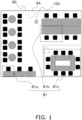
- a region recommendation device 100 determines one or more recommended regions R81 to be recommended to a target person from among a plurality of target regions 81 in a target space 80.
- the target space 80 is, for example, a free address space such as a shared office.
- Fig. 1 illustrates a plan view of the target space 80.
- the region recommendation device 100 is installed near an entrance 84 of the target space 80, for example.
- the target regions 81 are a plurality of regions provided to users of the target space 80.
- the target regions 81 are given regions such as seats, rooms, or spaces.
- a single-person seat 81a, a two-person seat 81b, and a meeting room 81c are illustrated as examples of the target regions 81.
- the term "user” is used to mean a user of the target space 80.
- target person is used to mean a person who receives region recommendation by the region recommendation device 100 among users of the target space 80.
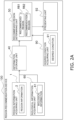
- the region recommendation device 100 mainly includes a region information acquiring unit 1, a biological information acquiring unit 60, an information storage unit 40, a recommended region determining unit 50, a desired condition acquiring unit 90, and a presenting unit 92.
- the region recommendation device 100 further includes a control arithmetic device and a storage device.
- a processor such as a CPU or a GPU can be used as the control arithmetic device.
- the control arithmetic device reads a program stored in the storage device and performs predetermined image processing and arithmetic processing in accordance with the program. Furthermore, the control arithmetic device can write an arithmetic result into the storage device and read information stored in the storage device according to the program.
- the region information acquiring unit 1, the biological information acquiring unit 60, the information storage unit 40, the recommended region determining unit 50, the desired condition acquiring unit 90, and the presenting unit 92 are various functional blocks implemented by the control arithmetic device.
- the region information acquiring unit 1 acquires region information 2 that is information on target regions 81.
- the region information 2 includes region information items 2a.
- the region information items 2a include at least one of a temperature, a humidity, an illuminance, a color of illumination, a noise, a type of chair, a type of table, personal use or shared use, whether a window is near, a population density, the presence or absence of an outlet, and the proximity of OA equipment.
- Fig. 2B is a diagram illustrating details of the region information acquiring unit 1 and the biological information acquiring unit 60 in Fig. 2A .
- the region information acquiring unit 1 includes a usage information acquiring unit 10, an environmental information acquiring unit 20, and a feature information acquiring unit 30.
- the region information 2 includes usage information 11 acquired from the usage information acquiring unit 10, environmental information 21 acquired from the environmental information acquiring unit 20, and region feature information 31 acquired from the feature information acquiring unit 30.
- the usage information acquiring unit 10 acquires the usage information 11 regarding usage situations of persons in the target regions 81. As illustrated in Fig. 2B , the usage information acquiring unit 10 includes a basic information acquiring unit 12, a user information acquiring unit 14, and an authenticating unit 16.
- the basic information acquiring unit 12 acquires region basic information 13 that is basic information regarding the target regions 81.
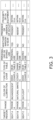
- Fig. 3 illustrates an example of the region basic information 13.
- the region basic information 13 includes "target region” and “range” as main items. Items subsequent to "color of illumination” will be described later.
- the names of the target regions 81 are stored as "target region”. In Fig. 3 , "seat A" and the like are stored.
- the region basic information 13 has content that can be set in advance.
- the user information acquiring unit 14 acquires user information 15 that is information regarding users of the target space 80.
- Fig. 4 illustrates an example of the user information 15.
- the user information 15 includes "user ID”, "name”, and "face image” as main items.
- the user information acquiring unit 14 registers users of the target space 80.
- the user information acquiring unit 14 receives information such as "name” and “face image” from the users, and issues "user ID” that uniquely identifies the users. These pieces of information are stored in the user information 15.
- “100” and the like are stored as “user ID”
- "AA” and the like are stored as “name”
- "/pic/aaa.jpeg” and the like are stored as "face images”.
- the authenticating unit 16 authenticates users in the target space 80.
- face authentication For example, face authentication, fingerprint authentication, password authentication, or the like is used for authentication.
- the authenticating unit 16 authenticates the users by face authentication.
- the authenticating unit 16 authenticates the users on the basis of face images detected in the target space 80 and the user information 15.
- an object detection camera or the like is used to detect the face images.
- an object detection camera or the like is illustrated as a detector D.
- the authenticating unit 16 can output user IDs of the authenticated users.
- the usage information acquiring unit 10 acquires the usage information 11 from the region basic information 13, the user information 15, and the function of the authenticating unit 16.
- Fig. 5 illustrates an example of the usage information 11.
- the usage information 11 includes "target region”, “date”, “time”, and "user ID” as main items.
- the "target region” is acquired from “target region” of the region basic information 13.
- "seat A” and the like are stored.
- a date on which the usage information 11 is acquired is stored as "date”.
- “Jan. 29, 2020” is stored.
- “Date” is acquired from, for example, an internal timer of the control arithmetic device included in the region recommendation device 100.
- a time at which the usage information 11 is acquired is stored as "time".
- the usage information 11, and the environmental information 21, the region feature information 31, and biological information 61, which will be described later, are acquired every hour. Therefore, in Fig. 5 , the time of every hour such as "10:00" and "11:00” is stored.
- “Time” is acquired from, for example, the internal timer or the like of the control arithmetic device included in the region recommendation device 100.
- User IDs of users who use "target region” at “time” and on “date” are stored as “user ID”.
- “100”, “NULL”, and the like are stored.
- "NULL” indicates that "target region” is not used.
- "User ID” is acquired from the region basic information 13, the user information 15, and the function of the authenticating unit 16.
- the environmental information acquiring unit 20 acquires the environmental information 21 regarding an indoor environment in the target regions 81.
- the environmental information 21 includes at least one of a temperature, a humidity, an illuminance, a color of illumination, and a noise.
- Fig. 6 illustrates an example of the environmental information 21.
- the environmental information 21 includes, as main items, "target region”, “date”, “time”, “temperature”, “humidity”, “illuminance”, “color of illumination”, and “noise”.
- the temperature, the humidity, the illuminance, and the noise of "target region" at "time” and on “date” are stored as “temperature”, “humidity”, “illuminance”, and “noise”.
- the color of illumination of "target region” is stored as "color of illumination”.
- Tempoture is acquired from, for example, a temperature sensor or the like. In Fig. 6 , values ranging from 20°C to 22°C are stored.
- “Humidity” is acquired from, for example, a humidity sensor or the like. In Fig. 6 , values ranging from 49% to 52% are stored.
- Illuminance is acquired from, for example, an illuminance sensor or the like. In Fig. 6 , values ranging from 300 lx to 750 lx are stored.
- Noise is acquired from, for example, a sound collecting microphone or the like.
- values ranging from 20 dB to 40 dB are stored.
- Fig. 2B the above temperature sensor and the like are illustrated as the detector D.
- the feature information acquiring unit 30 acquires the region feature information 31 regarding equipment and peripheral information in the target regions 81.
- the region feature information 31 includes at least one of a type of chair, a type of table, a personal seat or not, whether a window is near, a population density, the presence or absence of an outlet, and the proximity of OA equipment in the target regions 81.
- Fig. 7 illustrates an example of the region feature information 31.
- the region feature information 31 includes, as main items, "target region”, “date”, “time”, “type of chair”, “type of table”, “personal use or shared use”, “whether window is near”, “population density”, “presence or absence of outlet”, and “proximity of OA equipment”.
- the type of chair, the type of table, a personal seat or not, whether a window is near, the presence or absence of an outlet, and the proximity of OA equipment in “target region” are stored as “type of chair”, “ type of table”, “personal use or shared use”, “whether window is near”, “presence or absence of outlet”, and “proximity of OA equipment”.
- Type of chair "Type of chair”, “type of table”, “personal use or shared use”, “whether window is near”, “presence or absence of outlet”, and “proximity of OA equipment” are acquired from “type of chair”, “type of table”, “personal use or shared use”, “whether window is near”, “presence or absence of outlet”, and “proximity of OA equipment” of the region basic information 13 illustrated in Fig. 3 .
- “Population density” is the number of people within predetermined ranges from the target regions 81. "Population density” is calculated using an object detection camera or the like, for example. In Fig. 2B , an object detection camera or the like is illustrated as a detector D. In Fig. 7 , values ranging from 2 to 4 people are stored.
- the biological information acquiring unit 60 acquires the biological information 61 of a person in the target space 80.
- the biological information 61 includes at least one of a body surface temperature, a core body temperature, and a pulse.
- Fig. 8 illustrates an example of the biological information 61.
- the biological information 61 includes, as main items, "user ID”, “date”, “time”, “body surface temperature”, “core body temperature”, and "pulse”.
- the body surface temperature, the core body temperature, and the pulse of a user indicated by "user ID” at “time” and on “date” are stored as “body surface temperature”, “core body temperature”, and “pulse”, respectively.
- Body surface temperature is acquired from, for example, a thermocamera or the like. In Fig. 8 , values ranging from 33°C to 35°C are stored.
- Core body temperature is acquired from, for example, a non-contact vital sensor or the like.
- values ranging from 36.3°C to 37°C are stored.
- Pulse is acquired from, for example, a non-contact vital sensor or the like. In Fig. 8 , values ranging from 65 times/minute to 90 times/minute are stored.
- thermocamera or the like is illustrated as the detector D.
- the biological information acquiring unit 60 authenticates users in the target space 80 by the function of the authenticating unit 16. For example, it is assumed that a user whose "user ID” is "100” is authenticated. At this time, "100" is stored as "user ID” of the biological information 61. Since the biological information 61 is acquired at 11:00 on Jan. 29, 2020, “Jan. 29, 2020” and “11:00” are stored as “date” and "time” of the biological information 61, respectively. Values acquired from a thermocamera or the like at 11:00 on Jan. 29, 2020 are stored as "body surface temperature", “core body temperature", and "pulse". The record acquired here corresponds to the record in the second row of the biological information 61 in Fig. 8 . When this process is performed for all users in the target space 80, the biological information 61 at 11:00 on Jan. 29, 2020 can be acquired.
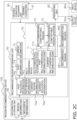
- Fig. 2C is a diagram illustrating details of the information storage unit 40, the recommended region determining unit 50, the desired condition acquiring unit 90, and the presenting unit 92 in Fig. 2A .
- the information storage unit 40 stores the region information 2 acquired by the region information acquiring unit 1 and the biological information 61 acquired by the biological information acquiring unit 60. These pieces of information are stored in the storage device included in the region recommendation device 100.
- the recommended region determining unit 50 determines the one or more recommended regions R81 on the basis of the region information 2.
- the recommended region determining unit 50 calculates a first degree of similarity SM1 indicating a degree of similarity between past information 74 including past region information 74a that is the region information 2 of the past and current information 75 including current region information 75a that is the region information 2 of the present, regarding the target person and the target regions 81, and determines the one or more recommended regions R81.
- the past information 74 further includes past biological information 74b that is the biological information 61 of the past regarding the target person.
- the current information 75 further includes current biological information 75b that is the biological information 61 of the present regarding the target person.
- the past region information 74a which is the region information 2 of the past regarding the target person and the target regions 81, is the region information 2 regarding the target person and the target regions 81 stored before the date and time when the target person receives the region recommendation.
- the past biological information 74b which is the biological information 61 of the past regarding the target person, is the biological information 61 regarding the target person stored before the date and time when the target person receives the region recommendation.
- the recommended region determining unit 50 joins and unifies the past region information 74a and the past biological information 74b to create the past information 74.
- the recommended region determining unit 50 quantifies the past information 74 to acquire past multi-dimensional information points 71a. Since the past multi-dimensional information points 71a are quantified, they can be mapped to a multi-dimensional space 70 having each item of the past multi-dimensional information points 71a as an axis.
- the current region information 75a which is the region information 2 of the present regarding the target person and the target regions 81, is the region information 2 regarding the target person and the unused target regions 81 at the date and time when the target person receives the region recommendation.
- the current biological information 75b which is the biological information 61 of the present regarding the target person, is the biological information 61 regarding the target person at the date and time when the target person receives the region recommendation.
- the recommended region determining unit 50 joins and unifies the current region information 75a and the current biological information 75b to create the current information 75.
- the recommended region determining unit 50 quantifies the current information 75 to acquire current multi-dimensional information points 71b. Since the current multi-dimensional information points 71b are quantified, they can be mapped to the multi-dimensional space 70 having each item of the current multi-dimensional information points 71b as an axis.
- the recommended region determining unit 50 further performs data cleaning such as outlier exclusion on the past multi-dimensional information points 71a, and defines a region in the multi-dimensional space 70 including the past multi-dimensional information points 71a after the data cleaning as a multi-dimensional comfortable region 72.
- a multi-dimensional comfortable region centroid 73 that is the centroid of the past multi-dimensional information points 71a included in the multi-dimensional comfortable region 72 is calculated.
- a first distance D1 is defined in the multi-dimensional space 70 as the first degree of similarity SM1 indicating the degree of similarity, and the first distance D1 between the multi-dimensional comfortable region centroid 73 and each of the current multi-dimensional information points 71b is calculated.
- the recommended region determining unit 50 determines, as the one or more recommended regions R81, one or more target regions 81 associated with one or more current multi-dimensional information points 71b for which the first distance D1 from the multi-dimensional comfortable region centroid 73 is close.
- the recommended region determining unit 50 further calculates a second degree of similarity SM2 indicating a degree of similarity, for each of the region information items 2a, between the past region information 74a and the current region information 75a. Specifically, the recommended region determining unit 50 defines a second distance D2 as the second degree of similarity SM2 indicating the degree of similarity in the multi-dimensional space 70. The recommended region determining unit 50 calculates, for each of the region information items 2a, the second distance D2 between the multi-dimensional comfortable region centroid 73 calculated from the past region information 74a and each of the current multi-dimensional information points 71b.
- the recommended region determining unit 50 calculates the second degree of similarity SM2 regarding a priority region information item 2b described later, and determines the recommended region R81. Specifically, if the desired condition 91 is acquired, the recommended region determining unit 50 determines, as the one or more recommended regions R81, one or more target regions 81 associated with one or more current multi-dimensional information points 71b for which the second distance D2 regarding the priority region information item 2b from the multi-dimensional comfortable region centroid 73 is close.
- the desired condition acquiring unit 90 acquires the desired condition 91 of the target person.
- the desired condition 91 includes the priority region information item 2b that is a region information item 2a to which the target person has priority. For example, if the target person desires to receive region recommendation by giving priority to the temperature, the target person sets the desired condition 91 with the temperature that is a region information item 2a as the priority region information item 2b.
- the desired condition 91 may be set as appropriate.
- the desired condition acquiring unit 90 receives an instruction to start the recommended region determining process and the desired condition 91 from the target person through an input device 90a, and transmits the instruction and the desired condition 91 to the recommended region determining unit 50.
- the input device 90a is, for example, a screen of signage 93 including a touch panel.
- Fig. 9 illustrates the screen of the signage 93.
- a recommendation execution button 94 and the desired condition 91 are illustrated as those related to the desired condition acquiring unit 90.
- the temperature among the region information items 2a is set as the priority region information item 2b.
- the region information item 2a to be prioritized is touched on the screen of the signage 93.
- the recommendation execution button 94 the recommended region determining process is started by the function of the desired condition acquiring unit 90.
- the presenting unit 92 presents, to the target person, the one or more recommended regions R81 and a recommendation reason R82 for which the one or more recommended regions R81 are determined.
- the recommendation reason R82 presented by the presenting unit 92 includes at least one or more region information items 2a regarding the one or more recommended regions R81.
- the presenting unit 92 performs screen presentation, audio presentation, or the like. In the present embodiment, a case of screen presentation is assumed. As illustrated in Fig.
- the presenting unit 92 receives a layout diagram (not illustrated) of the target space 80, the one or more recommended regions R81, and the recommendation reason R82 for determining the one or more recommended regions R81 from the recommended region determining unit 50, and presents the layout diagram, the one or more recommended regions R81, and the recommendation reason R82 on an output device 92a.
- the output device 92a is, for example, a screen of the signage 93 including a touch panel.
- Fig. 9 illustrates the screen of the signage 93.
- Fig. 9 illustrates the layout diagram of the target space 80, recommended regions R81, and the recommendation reason R82 as those related to the presenting unit 92.
- the recommended regions R81 names of a plurality of recommended regions R81 such as "seat A" are presented.
- the plurality of recommended regions R81 presented here indicate that the recommendation order is higher as one goes to the top.
- “seat A” is selected from the plurality of recommended regions R81. Therefore, in Fig. 9 , the recommendation reason R82 regarding "seat A" and position information in the target space 80 are illustrated.
- the recommended region R81 for example, the recommended region R81 to be selected is touched on the screen of the signage 93.
- the recommendation reason R82 for a plurality of region information items 2a regarding "seat A"
- the values thereof and comfort levels 83 are illustrated. The comfort levels 83 will be described later.
- a target person In order to receive region recommendation, a target person transmits an instruction to start the recommended region determining process and the desired condition 91 from the input device 90a to the region recommendation device 100.
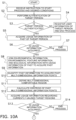
- the region recommendation device 100 receives the instruction to start the recommended region determining process and the desired condition 91 by the function of the desired condition acquiring unit 90. As illustrated in step S2, the region recommendation device 100 performs authentication of the target person using the authenticating unit 16. As illustrated in step S3, if the target person is authenticated, the region recommendation device 100 acquires "user ID" output from the authenticating unit 16, and proceeds to step S5. Here, it is assumed that the acquired "user ID" of the target person is "100". As illustrated in step S3, if the target person is not authenticated, since the past information 74 does not exist for unauthenticated target persons, the region recommendation device 100 is unable to perform the recommended region determining process.
- the region recommendation device 100 registers the user information 15 of the target person using the user information acquiring unit 14, and ends the recommended region determining process.
- the region recommendation device 100 may, for example, present "unable to recommend a region because of the absence of past usage history" on the output device 92a using the function of the presenting unit 92.
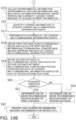
- the region recommendation device 100 Upon acquiring "user ID" of the target person, as illustrated in step S5, the region recommendation device 100 acquires the current date and time from the internal timer of the control arithmetic device, and acquires the usage information 11 regarding the target person before the current date and time. Specifically, if the current date and time is 13:00 on Jan. 30, 2020, the region recommendation device 100 extracts records in which "date" and "time” are earlier than "13:00" on “Jan. 30, 2020” and "user ID” is "100" from the usage information 11. As illustrated in step S6, if the usage information 11 of the past regarding the target person is acquired, the process proceeds to step S8.
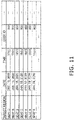
- Fig. 11 illustrates an example of the usage information 11 of the past. In Fig.
- the target person uses "seat C" at "17:00” on “Dec. 10, 2019". Furthermore, the target person uses “seat B” from “13:00” to “15:00” on “Jan. 15, 2020”. Furthermore, the target person uses “seat A” from "10:00” to "11:00” on “Jan. 29, 2020”. Normally, once the target person is authenticated, the target person is assumed to have used the target space 80 in the past, and thus, it is possible to acquire the usage information 11 of the past regarding the target person.
- the region recommendation device 100 presents "unable to recommend a region because of the absence of past usage history" on the output device 92a using the function of the presenting unit 92, and ends the recommended region determining process as illustrated in step S7.
- the region recommendation device 100 Upon acquiring the usage information 11 of the past, as illustrated in step S8, the region recommendation device 100 joins the environmental information 21, the region feature information 31, and the biological information 61 with the usage information 11 of the past to acquire past information 74. Specifically, the environmental information 21 and the region feature information 31 are joined using "target region”, "date”, and “time” of the usage information 11 of the past as keys. This join is left outer join in which the usage information 11 of the past is set to the left. Furthermore, the region recommendation device 100 joins the biological information 61 with "user ID”, "date”, and “time” of the usage information 11 of the past as keys. This join is left outer join in which the usage information 11 of the past is set to the left.
- the region recommendation device 100 acquires the past information 74 in which the usage information 11, the environmental information 21, the region feature information 31, and the biological information 61 of the past regarding the target person are unified.
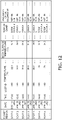
- Fig. 12 illustrates an example of the past information 74.
- Fig. 12 illustrates "temperature” as a representative of the environmental information 21, "body surface temperature” as a representative of the biological information 61, and "type of chair” and "proximity of OA equipment” as a representative of the region feature information 31.
- the region recommendation device 100 quantifies the past information 74 to acquire the past multi-dimensional information points 71a.
- Numerical data such as "temperature” and "humidity” has already been quantified.
- Nominal scale data such as "type of chair” and “type of table” is quantified by, for example, one-hot encoding.
- a numerical value is assigned to ordinal scale data such as "proximity of OA equipment” according to the order, for example.
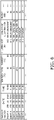
- Fig. 13 illustrates an example of the past multi-dimensional information points 71a. In Fig. 13 , in particular, the nominal scale "type of chair” and the ordinal scale "proximity of OA equipment” are quantified.
- Fig. 14A illustrates the past multi-dimensional information points 71a in the multi-dimensional space 70. In Fig. 14A , only three dimensions are drawn for visualization.
- the region recommendation device 100 Upon acquiring the past multi-dimensional information points 71a, as illustrated in step S10, the region recommendation device 100 performs data cleaning such as outlier exclusion on the past multi-dimensional information points 71a to define the multi-dimensional comfortable region 72.
- data cleaning for example, outlier exclusion, missing value exclusion, or the like is performed.
- outlier exclusion for example, a mean and a standard deviation are calculated for each of the region information items 2a constituting the past multi-dimensional information points 71a, and past multi-dimensional information points 71a having an item value separated from the mean by three times or more of the standard deviation are excluded.
- past multi-dimensional information points 71a having a missing value in the region information items 2a constituting the past multi-dimensional information points 71a are excluded.
- a region including the past multi-dimensional information points 71a after the data cleaning is defined as the multi-dimensional comfortable region 72.
- Fig. 14B illustrates the past multi-dimensional information points 71a after the data cleaning and the multi-dimensional comfortable region 72.
- the region recommendation device 100 may perform scaling in addition to the data cleaning.
- Scaling is a process of aligning the scale of each item.
- distances are used to determine the recommended regions R81. Therefore, it may be important to align the scale so that the each item contributes equally to the distances.
- the scaling for example, normalization, standardization, or the like is performed. In the normalization, the numerical value of each item is converted to 0 or more and 1 or less. In the standardization, the distribution of each item is converted into a distribution with a mean of 0 and a standard deviation of 1.
- the region recommendation device 100 Upon defining the multi-dimensional comfortable region 72, as illustrated in step S11, the region recommendation device 100 calculates the multi-dimensional comfortable region centroid 73, which is the centroid of past multi-dimensional information points 71a included in the multi-dimensional comfortable region 72.
- r (i) is a position vector of an i-th past multi-dimensional information point 71a.
- r (G) is a position vector of the multi-dimensional comfortable region centroid 73.
- m i is the weight of the i-th past multi-dimensional information point 71a. In a case of weighting by the past multi-dimensional information point 71a, m i is adjusted. For example, it is used when past multi-dimensional information points 71a in the morning are desired to be emphasized.
- the multi-dimensional comfortable region centroid 73 in which every m i is set to 1 is used.
- the multi-dimensional comfortable region centroid 73 of the present embodiment coincides with the mean vector of past multi-dimensional information points 71a included in the multi-dimensional comfortable region 72.
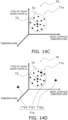
- Fig. 14C illustrates the multi-dimensional comfortable region centroid 73.
- the region recommendation device 100 Upon calculating the multi-dimensional comfortable region centroid 73, as illustrated in step S12, the region recommendation device 100 acquires the usage information 11 regarding currently unused target regions 81, using the usage information acquiring unit 10. As illustrated in step S13, if the usage information 11 regarding the currently unused target regions 81 is acquired, the process proceeds to step S15.
- Fig. 15 illustrates an example of the usage information 11 regarding the currently unused target regions 81. In Fig. 15 , "seat A”, “seat D", and “seat E" are unused.
- the region recommendation device 100 presents "there are no currently available regions" on the output device 92a, using the function of the presenting unit 92, and ends the recommended region determining process as illustrated in step S14.
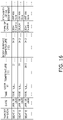
- the region recommendation device 100 Upon acquiring the usage information 11 regarding the currently unused target regions 81, as illustrated in step S15, the region recommendation device 100 acquires the environmental information 21, the region feature information 31, and the biological information 61 regarding the target person and the currently unused target regions 81, using the environmental information acquiring unit 20, the feature information acquiring unit 30, and the biological information acquiring unit 60. The region recommendation device 100 unifies these pieces of information to acquire the current information 75 in the same manner as when acquiring the past information 74. As the biological information 61, current values regarding the target person are used. Fig. 16 illustrates an example of the current information 75.
- the region recommendation device 100 Upon acquiring the current information 75, as illustrated in step S16, the region recommendation device 100 quantifies the current information 75 to acquire the current multi-dimensional information points 71b.
- the quantification method is the same as that when the past multi-dimensional information points 71a are acquired.
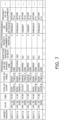
- Fig. 17 illustrates an example of the current multi-dimensional information points 71b.
- Fig. 14D illustrates the current multi-dimensional information points 71b in the multi-dimensional space 70. In Fig. 14D , three current multi-dimensional information points 71b1, 71b2, and 71b3 are depicted.
- the region recommendation device 100 Upon acquiring the current multi-dimensional information points 71b, as illustrated in step S17, the region recommendation device 100 performs data cleaning on the current multi-dimensional information points 71b.
- the data cleaning method is the same as that for the past multi-dimensional information points 71a. If scaling is performed on the past multi-dimensional information points 71a, the region recommendation device 100 performs the same process on the current multi-dimensional information points 71b.
- the region recommendation device 100 defines the first distance D1 as the first degree of similarity SM1 indicating the degree of similarity in the multi-dimensional space 70, and calculates the first distance D1 between the multi-dimensional comfortable region centroid 73 and each of the current multi-dimensional information points 71b.
- Minkowski distance is used as the first distance D1.
- D 1 r G , r i ⁇ k r k G ⁇ r k i p p
- r (i) is the position vector of an i-th current multi-dimensional information point 71b.
- r k (i) is the value of a k-th region information item 2a constituting the i-th current multi-dimensional information point 71b.
- ⁇ and ⁇ are a mean vector and a variance-covariance matrix of the past multi-dimensional information points 71a included in the multi-dimensional comfortable region 72.
- ⁇ coincides with the multi-dimensional comfortable region centroid 73. Since the Mahalanobis distance is a distance in consideration of variance, scaling of the past multi-dimensional information points 71a and the current multi-dimensional information points 71b may be skipped when the Mahalanobis distance is used.
- the region recommendation device 100 Upon calculating the first distance D1, as illustrated in step S19, the region recommendation device 100 defines the second distance D2 as the second degree of similarity SM2 indicating the degree of similarity in the multi-dimensional space 70, and calculates the second distance D2 between the multi-dimensional comfortable region centroid 73 and each of the current multi-dimensional information points 71b for each of the region information items 2a.
- the following distance is used as the second distance D2 between the multi-dimensional comfortable region centroid 73 and the i-th current multi-dimensional information point 71b for the k-th region information item 2a.
- D 2 r k G r k i r k G ⁇ r k i
- the region recommendation device 100 determines whether or not the desired condition 91 is present.
- the region recommendation device 100 determines one or more recommended regions R81 on the basis of the first distance D1.
- the region recommendation device 100 determines, as the one or more recommended regions R81, one or more target regions 81 associated with one or more current multi-dimensional information points 71b for which the first distance D1 from the multi-dimensional comfortable region centroid 73 is close.
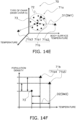
- first distances D1 from the multi-dimensional comfortable region centroid 73 to the three current multi-dimensional information points 71b1, 71b2, and 71b3 are indicated by three double-headed arrows.
- a target region 81 associated with the current multi-dimensional information point 71b1 is determined as a recommended region R81 with the highest priority.
- the region recommendation device 100 determines the one or more recommended regions R81 on the basis of the second distance D2, as illustrated in step S22.
- the region recommendation device 100 determines, as one or more recommended regions R81, one or more target regions 81 associated with one or more current multi-dimensional information points 71b for which the second distance D2 from the multi-dimensional comfortable region centroid 73 is close.
- second distances D2 from the multi-dimensional comfortable region centroid 73 to two current multi-dimensional information points 71b4 and 71b5 are indicated by four double-headed arrows.
- Fig. 14F only two dimensions are drawn for visualization.
- a target region 81 associated with the current multi-dimensional information point 71b4 is determined as a recommended region R81 with the highest priority.
- the region recommendation device 100 Upon determining the one or more recommended regions R81, as illustrated in step S23, the region recommendation device 100 presents the layout diagram of the target space 80, the one or more recommended regions R81, and the recommendation reason R82 for determining the one or more recommended regions R81 on the output device 92a using the function of the presenting unit 92.
- the region recommendation device 100 may present the comfort level 83 for each of the region information items 2a while presenting the recommendation reason R82.
- the comfort level 83 is defined to have a larger value as the second distance D2 is shorter.
- the comfort level 83 is presented as illustrated in Fig. 9 , for example.
- Comfort Level 83 of the k-th region information item 2a at the i-th current multi-dimensional information point 71b is calculated, for example, as follows.
- Comfort Level % 100 1 + ⁇ ⁇ D 2 r k G r k i ⁇ k
- ⁇ k is the standard deviation calculated from the values of the k-th region information item 2a of all current multi-dimensional information points 71b4.
- ⁇ is a hyperparameter.
- the comfort level 83 becomes a maximum value of 100% when the second distance D2 coincides with the multi-dimensional comfortable region centroid 73.
- the region recommendation device 100 causes the presenting unit 92 to present, in addition to the one or more recommended regions R81, and the recommendation reason R82 for determining the one or more recommended regions R81 to the target person. Therefore, the target person can select a preferred region from the plurality of recommended regions R81 in consideration of the recommendation reason R82.
- the region recommendation device 100 calculates the second degree of similarity SM2 indicating the degree of similarity, for each of the region information items 2a, between the past region information 74a and the current region information 75a.
- the second degree of similarity SM2 in the present embodiment is the second distance D2.
- the region recommendation device 100 calculates, for example, the comfort level 83 for each of the region information items 2a from the second distance D2. Therefore, the region recommendation device 100 can use the comfort level 83 for each of the region information items 2a as the recommendation reason R82.
- the target person has more determination material, and can easily select a preferred region from the plurality of recommended regions R81.
- the region recommendation device 100 determines a recommended region R81 using the second degree of similarity SM2 regarding the priority region information item 2b. Therefore, the region recommendation device 100 may determine the recommended region R81 in consideration of only the priority region information item 2b. As a result, the target person can receive region recommendation in consideration of only the preferred region information item 2a.
- the region recommendation device 100 presents only the positions of the recommended regions R81 in the layout diagram of the target space 80.
- the presenting unit 92 of the region recommendation device 100 may further present the usage history of the target person on the basis of the region information 2 regarding the target person.
- the region recommendation device 100 may output the positions of target regions 81 stored in the usage information 11 of the past regarding the target person illustrated in Fig. 11 to the output device 92a.
- the region recommendation device 100 presents the past usage regions P81a and P81b on the screen of the signage 93 by rectangular dotted lines. As a result, the target person can select a recommended region R81 with reference to past usage regions P81.
- the region recommendation device 100 may further include a selected region information acquiring unit 95 that acquires selected region information 96 that is position information of a region selected by a target person.
- the presenting unit 92 further presents the region information 2 regarding the selected region information 96.
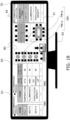
- the region recommendation device 100 presents the positions of all currently unused target regions 81 in the layout diagram of the target space 80. For example, in Fig. 19 , currently unused target regions 81d, 81e, 81f, and 81g are indicated by rectangular dotted lines on the screen of the signage 93. Since the recommended regions R81 are also currently unused target regions 81, in Fig.
- the position of the seat A that is a recommended region R81 overlaps the currently unused target region 81e.
- the target person selects a preferred region from the recommended regions R81 presented on the output device 92a.
- some target persons may want to refer to the region information 2 of currently unused target regions 81 other than the recommended regions R81.
- the target person touches the currently unused target region 81 to be referred to on the screen of the signage 93.
- the selected region information acquiring unit 95 acquires selected region information 96 that is position information of a target region 81 touched by the target person.
- the selected region information 96 is information regarding "range" in the region basic information 13 illustrated in Fig. 3 .
- the region recommendation device 100 refers to the region basic information 13 and calculates the corresponding target region 81 from the selected region information 96. If the target region 81 is calculated, the region recommendation device 100 presents the region information 2 regarding the target region 81 using the presenting unit 92.
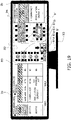
- the region recommendation device 100 presents a screen similar to the screen after touching the seat D in the recommended region R81 table in Fig. 19 on the output device 92a, for example, as illustrated in Fig. 20 . If the target region 81 touched by the target person is a seat Z (81g in Fig. 19 ) that is not the recommended region R81, the region recommendation device 100 presents, for example, the region information 2 regarding the seat Z on the output device 92a as illustrated in Fig. 21 .
Landscapes
- Business, Economics & Management (AREA)
- Engineering & Computer Science (AREA)
- Human Resources & Organizations (AREA)
- Strategic Management (AREA)
- Entrepreneurship & Innovation (AREA)
- Economics (AREA)
- General Physics & Mathematics (AREA)
- Theoretical Computer Science (AREA)
- Physics & Mathematics (AREA)
- Tourism & Hospitality (AREA)
- Marketing (AREA)
- General Business, Economics & Management (AREA)
- Quality & Reliability (AREA)
- Operations Research (AREA)
- Development Economics (AREA)
- Game Theory and Decision Science (AREA)
- Educational Administration (AREA)
- General Health & Medical Sciences (AREA)
- Oral & Maxillofacial Surgery (AREA)
- Human Computer Interaction (AREA)
- Multimedia (AREA)
- Health & Medical Sciences (AREA)
- Information Retrieval, Db Structures And Fs Structures Therefor (AREA)
- Management, Administration, Business Operations System, And Electronic Commerce (AREA)
Applications Claiming Priority (2)
| Application Number | Priority Date | Filing Date | Title |
|---|---|---|---|
| JP2020056171A JP7048906B2 (ja) | 2020-03-26 | 2020-03-26 | 領域推薦装置 |
| PCT/JP2021/011743 WO2021193547A1 (ja) | 2020-03-26 | 2021-03-22 | 領域推薦装置 |
Publications (2)
| Publication Number | Publication Date |
|---|---|
| EP4131093A1 true EP4131093A1 (de) | 2023-02-08 |
| EP4131093A4 EP4131093A4 (de) | 2023-08-02 |
Family
ID=77890389
Family Applications (1)
| Application Number | Title | Priority Date | Filing Date |
|---|---|---|---|
| EP21776159.2A Withdrawn EP4131093A4 (de) | 2020-03-26 | 2021-03-22 | Bereichsempfehlungsvorrichtung |
Country Status (5)
| Country | Link |
|---|---|
| US (1) | US20230012149A1 (de) |
| EP (1) | EP4131093A4 (de) |
| JP (2) | JP7048906B2 (de) |
| CN (1) | CN115335837A (de) |
| WO (1) | WO2021193547A1 (de) |
Families Citing this family (3)
| Publication number | Priority date | Publication date | Assignee | Title |
|---|---|---|---|---|
| WO2023175968A1 (ja) * | 2022-03-18 | 2023-09-21 | 日本電気株式会社 | 施設管理装置、システム及び方法、並びに、コンピュータ可読媒体 |
| JP7440560B2 (ja) * | 2022-03-28 | 2024-02-28 | 本田技研工業株式会社 | レコメンド装置、及び、レコメンド方法 |
| JP7514877B2 (ja) * | 2022-03-28 | 2024-07-11 | 本田技研工業株式会社 | レコメンド装置、及び、レコメンド方法 |
Family Cites Families (18)
| Publication number | Priority date | Publication date | Assignee | Title |
|---|---|---|---|---|
| US6675130B2 (en) * | 2000-12-21 | 2004-01-06 | Ibm Corporation | System and method of using a plurality of sensors for determining an individual's level of productivity |
| JP2006339794A (ja) * | 2005-05-31 | 2006-12-14 | Sony Corp | 情報処理装置、情報処理方法、およびプログラム |
| US20080281644A1 (en) | 2007-05-11 | 2008-11-13 | Andrew Payne | Seat selection method for event tickets |
| WO2010032579A1 (ja) * | 2008-09-19 | 2010-03-25 | 株式会社日立製作所 | 行動履歴の生成方法及び行動履歴の生成システム |
| JP5348548B2 (ja) | 2009-07-14 | 2013-11-20 | 清水建設株式会社 | ビル管理システム |
| US20110313797A1 (en) * | 2010-06-17 | 2011-12-22 | Avaya Inc. | Context aware office space locator |
| KR20120019396A (ko) * | 2010-08-24 | 2012-03-06 | 삼성전자주식회사 | Phd 표준 및 비표준 데이터를 통합 관리하는 단말기 및 서버 |
| JP6071728B2 (ja) | 2013-04-25 | 2017-02-01 | 大成建設株式会社 | 快適環境選択支援装置および快適環境選択支援方法 |
| EP3029620A4 (de) * | 2013-07-31 | 2017-04-12 | Sony Corporation | Informationsverarbeitungsvorrichtung, informationsverarbeitungsverfahren und programm |
| JP2016177775A (ja) | 2015-03-20 | 2016-10-06 | 株式会社リコー | 情報処理装置、空き情報提供プログラム及び空き情報提供方法 |
| JP6861932B2 (ja) * | 2015-06-12 | 2021-04-21 | ユニバーシティ オブ メリーランド, カレッジ パーク | コンフォートユニット及びシステム、それらを用いる方法及び装置 |
| US20170293866A1 (en) | 2016-04-12 | 2017-10-12 | International Business Machines Corporation | Intelligent Seat Management |
| CN108078572A (zh) * | 2016-11-22 | 2018-05-29 | 松下知识产权经营株式会社 | 客舱乘务员的评价系统和客舱乘务员的评价方法 |
| US20180285791A1 (en) * | 2017-03-29 | 2018-10-04 | Microsoft Technology Licensing, Llc | Space optimization solver using team collaboration patterns to guide team-to-floor allocation planning |
| WO2019018758A1 (en) * | 2017-07-20 | 2019-01-24 | Carrier Corporation | HEAD EXCHANGE PLATFORM BASED ON ENVIRONMENTAL PREFERENCE |
| US20190228348A1 (en) * | 2018-01-17 | 2019-07-25 | WeWork Companies Inc. | Reservation system in a shared workspace |
| WO2019157514A2 (en) * | 2018-02-12 | 2019-08-15 | University Of Maryland, College Park | Occupant monitoring method and system for building energy management |
| JP7012266B2 (ja) * | 2018-02-22 | 2022-01-28 | パナソニックIpマネジメント株式会社 | 執務席提示システムおよび執務席提示方法 |
-
2020
- 2020-03-26 JP JP2020056171A patent/JP7048906B2/ja active Active
-
2021
- 2021-03-22 EP EP21776159.2A patent/EP4131093A4/de not_active Withdrawn
- 2021-03-22 CN CN202180023863.9A patent/CN115335837A/zh active Pending
- 2021-03-22 WO PCT/JP2021/011743 patent/WO2021193547A1/ja not_active Ceased
-
2022
- 2022-03-24 JP JP2022048455A patent/JP2022075944A/ja active Pending
- 2022-09-22 US US17/950,125 patent/US20230012149A1/en not_active Abandoned
Also Published As
| Publication number | Publication date |
|---|---|
| EP4131093A4 (de) | 2023-08-02 |
| US20230012149A1 (en) | 2023-01-12 |
| JP2022075944A (ja) | 2022-05-18 |
| JP7048906B2 (ja) | 2022-04-06 |
| CN115335837A (zh) | 2022-11-11 |
| JP2021157409A (ja) | 2021-10-07 |
| WO2021193547A1 (ja) | 2021-09-30 |
Similar Documents
| Publication | Publication Date | Title |
|---|---|---|
| US20230012149A1 (en) | Region recommendation device | |
| Bozdağ et al. | Psychological resilience of healthcare professionals during Covid-19 Pandemic | |
| Seaborn et al. | Not only WEIRD but “uncanny”? A systematic review of diversity in human–robot interaction research | |
| Scheuerman et al. | Auto-essentialization: Gender in automated facial analysis as extended colonial project | |
| Corona et al. | Familism is associated with psychological well-being and physical health: Main effects and stress-buffering effects | |
| US20230009912A1 (en) | Region recommendation device | |
| Prizmić-Larsen et al. | Fear of COVID-19 and fear of earthquake: multiple distressing events and well-being in Croatia | |
| John et al. | Dimensions of oral-health-related quality of life | |
| Wiemers et al. | Living arrangements of mothers and their adult children over the life course | |
| Lee et al. | Similar predictive accuracy of the Static-99R risk tool for White, Black, and Hispanic sex offenders in California | |
| Bahamondes et al. | System justification and perceptions of group-based discrimination: Investigating the temporal order of the ideologically motivated minimization (or exaggeration) of discrimination across low-and high-status groups | |
| Kao et al. | Efficiency measurement using independent component analysis and data envelopment analysis | |
| Gonçalves et al. | Sexual sadism among sex offenders in Switzerland | |
| Luo et al. | Applying item response theory analysis to the Montreal Cognitive Assessment in a low-education older population | |
| CN111681765A (zh) | 一种医学问答系统的多模型融合方法 | |
| McGee et al. | Resilience among unemployed and underemployed emerging adults: A cross-sectional study of how stress and coping relate to depressive symptoms | |
| Hasegawa et al. | Examining the utility of perceptual noise categorization in pediatric and neonatal hospital units | |
| Martins et al. | Correlated gamma frailty models for bivariate survival time data | |
| Yan et al. | Comparing regression coefficients between nested linear models for clustered data with generalized estimating equations | |
| Sutera et al. | Generative AI in Medicine: Pioneering Progress or Perpetuating Historical Inaccuracies? Cross-Sectional Study Evaluating Implicit Bias | |
| Dennis et al. | Traditional postpartum rituals among immigrant and non-immigrant Chinese women | |
| Ekl et al. | The Moderating Effect of Values on the Relationship between Subjective Social Status and Depression: Evidence from MIDUS | |
| Hessel | Demographic causes of conflict and their implications for public health | |
| US20200211715A1 (en) | Method for recruiting patients, and patient recruitment system | |
| JP7207143B2 (ja) | ルール提示方法、ルール提示プログラムおよびルール提示装置 |
Legal Events
| Date | Code | Title | Description |
|---|---|---|---|
| STAA | Information on the status of an ep patent application or granted ep patent |
Free format text: STATUS: THE INTERNATIONAL PUBLICATION HAS BEEN MADE |
|
| PUAI | Public reference made under article 153(3) epc to a published international application that has entered the european phase |
Free format text: ORIGINAL CODE: 0009012 |
|
| STAA | Information on the status of an ep patent application or granted ep patent |
Free format text: STATUS: REQUEST FOR EXAMINATION WAS MADE |
|
| 17P | Request for examination filed |
Effective date: 20221014 |
|
| AK | Designated contracting states |
Kind code of ref document: A1 Designated state(s): AL AT BE BG CH CY CZ DE DK EE ES FI FR GB GR HR HU IE IS IT LI LT LU LV MC MK MT NL NO PL PT RO RS SE SI SK SM TR |
|
| DAV | Request for validation of the european patent (deleted) | ||
| DAX | Request for extension of the european patent (deleted) | ||
| P01 | Opt-out of the competence of the unified patent court (upc) registered |
Effective date: 20230525 |
|
| A4 | Supplementary search report drawn up and despatched |
Effective date: 20230703 |
|
| RIC1 | Information provided on ipc code assigned before grant |
Ipc: G06Q 10/02 20120101ALI20230627BHEP Ipc: G06Q 50/10 20120101ALI20230627BHEP Ipc: G06Q 10/00 20230101AFI20230627BHEP |
|
| STAA | Information on the status of an ep patent application or granted ep patent |
Free format text: STATUS: EXAMINATION IS IN PROGRESS |
|
| 17Q | First examination report despatched |
Effective date: 20240327 |
|
| 18W | Application withdrawn |
Effective date: 20240619 |