EP4121133B1 - Hydrogel hétérogène hybride, procédé de fabrication et utilisation comme implant de comblement non-dégradable in-situ - Google Patents
Hydrogel hétérogène hybride, procédé de fabrication et utilisation comme implant de comblement non-dégradable in-situ Download PDFInfo
- Publication number
- EP4121133B1 EP4121133B1 EP21711292.9A EP21711292A EP4121133B1 EP 4121133 B1 EP4121133 B1 EP 4121133B1 EP 21711292 A EP21711292 A EP 21711292A EP 4121133 B1 EP4121133 B1 EP 4121133B1
- Authority
- EP
- European Patent Office
- Prior art keywords
- microbeads
- hydrogel
- hybrid heterogeneous
- implant
- heterogeneous hydrogel
- Prior art date
- Legal status (The legal status is an assumption and is not a legal conclusion. Google has not performed a legal analysis and makes no representation as to the accuracy of the status listed.)
- Active
Links
Images
Classifications
-
- A—HUMAN NECESSITIES
- A61—MEDICAL OR VETERINARY SCIENCE; HYGIENE
- A61L—METHODS OR APPARATUS FOR STERILISING MATERIALS OR OBJECTS IN GENERAL; DISINFECTION, STERILISATION OR DEODORISATION OF AIR; CHEMICAL ASPECTS OF BANDAGES, DRESSINGS, ABSORBENT PADS OR SURGICAL ARTICLES; MATERIALS FOR BANDAGES, DRESSINGS, ABSORBENT PADS OR SURGICAL ARTICLES
- A61L27/00—Materials for grafts or prostheses or for coating grafts or prostheses
- A61L27/14—Macromolecular materials
- A61L27/16—Macromolecular materials obtained by reactions only involving carbon-to-carbon unsaturated bonds
-
- A—HUMAN NECESSITIES
- A61—MEDICAL OR VETERINARY SCIENCE; HYGIENE
- A61L—METHODS OR APPARATUS FOR STERILISING MATERIALS OR OBJECTS IN GENERAL; DISINFECTION, STERILISATION OR DEODORISATION OF AIR; CHEMICAL ASPECTS OF BANDAGES, DRESSINGS, ABSORBENT PADS OR SURGICAL ARTICLES; MATERIALS FOR BANDAGES, DRESSINGS, ABSORBENT PADS OR SURGICAL ARTICLES
- A61L27/00—Materials for grafts or prostheses or for coating grafts or prostheses
- A61L27/50—Materials characterised by their function or physical properties, e.g. injectable or lubricating compositions, shape-memory materials, surface modified materials
- A61L27/52—Hydrogels or hydrocolloids
-
- A—HUMAN NECESSITIES
- A61—MEDICAL OR VETERINARY SCIENCE; HYGIENE
- A61L—METHODS OR APPARATUS FOR STERILISING MATERIALS OR OBJECTS IN GENERAL; DISINFECTION, STERILISATION OR DEODORISATION OF AIR; CHEMICAL ASPECTS OF BANDAGES, DRESSINGS, ABSORBENT PADS OR SURGICAL ARTICLES; MATERIALS FOR BANDAGES, DRESSINGS, ABSORBENT PADS OR SURGICAL ARTICLES
- A61L27/00—Materials for grafts or prostheses or for coating grafts or prostheses
- A61L27/14—Macromolecular materials
-
- A—HUMAN NECESSITIES
- A61—MEDICAL OR VETERINARY SCIENCE; HYGIENE
- A61L—METHODS OR APPARATUS FOR STERILISING MATERIALS OR OBJECTS IN GENERAL; DISINFECTION, STERILISATION OR DEODORISATION OF AIR; CHEMICAL ASPECTS OF BANDAGES, DRESSINGS, ABSORBENT PADS OR SURGICAL ARTICLES; MATERIALS FOR BANDAGES, DRESSINGS, ABSORBENT PADS OR SURGICAL ARTICLES
- A61L27/00—Materials for grafts or prostheses or for coating grafts or prostheses
- A61L27/14—Macromolecular materials
- A61L27/18—Macromolecular materials obtained otherwise than by reactions only involving carbon-to-carbon unsaturated bonds
-
- C—CHEMISTRY; METALLURGY
- C08—ORGANIC MACROMOLECULAR COMPOUNDS; THEIR PREPARATION OR CHEMICAL WORKING-UP; COMPOSITIONS BASED THEREON
- C08J—WORKING-UP; GENERAL PROCESSES OF COMPOUNDING; AFTER-TREATMENT NOT COVERED BY SUBCLASSES C08B, C08C, C08F, C08G or C08H
- C08J7/00—Chemical treatment or coating of shaped articles made of macromolecular substances
- C08J7/12—Chemical modification
-
- C—CHEMISTRY; METALLURGY
- C08—ORGANIC MACROMOLECULAR COMPOUNDS; THEIR PREPARATION OR CHEMICAL WORKING-UP; COMPOSITIONS BASED THEREON
- C08L—COMPOSITIONS OF MACROMOLECULAR COMPOUNDS
- C08L101/00—Compositions of unspecified macromolecular compounds
- C08L101/005—Dendritic macromolecules
-
- C—CHEMISTRY; METALLURGY
- C08—ORGANIC MACROMOLECULAR COMPOUNDS; THEIR PREPARATION OR CHEMICAL WORKING-UP; COMPOSITIONS BASED THEREON
- C08L—COMPOSITIONS OF MACROMOLECULAR COMPOUNDS
- C08L33/00—Compositions of homopolymers or copolymers of compounds having one or more unsaturated aliphatic radicals, each having only one carbon-to-carbon double bond, and only one being terminated by only one carboxyl radical, or of salts, anhydrides, esters, amides, imides or nitriles thereof; Compositions of derivatives of such polymers
- C08L33/24—Homopolymers or copolymers of amides or imides
- C08L33/26—Homopolymers or copolymers of acrylamide or methacrylamide
-
- A—HUMAN NECESSITIES
- A61—MEDICAL OR VETERINARY SCIENCE; HYGIENE
- A61L—METHODS OR APPARATUS FOR STERILISING MATERIALS OR OBJECTS IN GENERAL; DISINFECTION, STERILISATION OR DEODORISATION OF AIR; CHEMICAL ASPECTS OF BANDAGES, DRESSINGS, ABSORBENT PADS OR SURGICAL ARTICLES; MATERIALS FOR BANDAGES, DRESSINGS, ABSORBENT PADS OR SURGICAL ARTICLES
- A61L2300/00—Biologically active materials used in bandages, wound dressings, absorbent pads or medical devices
- A61L2300/60—Biologically active materials used in bandages, wound dressings, absorbent pads or medical devices characterised by a special physical form
- A61L2300/62—Encapsulated active agents, e.g. emulsified droplets
- A61L2300/622—Microcapsules
-
- A—HUMAN NECESSITIES
- A61—MEDICAL OR VETERINARY SCIENCE; HYGIENE
- A61L—METHODS OR APPARATUS FOR STERILISING MATERIALS OR OBJECTS IN GENERAL; DISINFECTION, STERILISATION OR DEODORISATION OF AIR; CHEMICAL ASPECTS OF BANDAGES, DRESSINGS, ABSORBENT PADS OR SURGICAL ARTICLES; MATERIALS FOR BANDAGES, DRESSINGS, ABSORBENT PADS OR SURGICAL ARTICLES
- A61L2400/00—Materials characterised by their function or physical properties
- A61L2400/06—Flowable or injectable implant compositions
-
- A—HUMAN NECESSITIES
- A61—MEDICAL OR VETERINARY SCIENCE; HYGIENE
- A61L—METHODS OR APPARATUS FOR STERILISING MATERIALS OR OBJECTS IN GENERAL; DISINFECTION, STERILISATION OR DEODORISATION OF AIR; CHEMICAL ASPECTS OF BANDAGES, DRESSINGS, ABSORBENT PADS OR SURGICAL ARTICLES; MATERIALS FOR BANDAGES, DRESSINGS, ABSORBENT PADS OR SURGICAL ARTICLES
- A61L2430/00—Materials or treatment for tissue regeneration
- A61L2430/34—Materials or treatment for tissue regeneration for soft tissue reconstruction
Definitions
- the invention relates to a hybrid heterogeneous hydrogel and more particularly to its use as a filling implant.
- a lesion of the nerve parenchyma of the spinal cord leads to a rupture of the nerve fiber connections. which interrupts the transmission of nerve impulses to control motor functions from the brain and in turn the processing of sensory functions. This results in complete or partial paralysis.
- the lesion by compression or by any other vertebro-medullary impact evolves through neurodegenerative phenomena which develop centrifugally from the epicenter of the lesion and which gradually lead towards the chronic stage of the initial lesion.
- the lesion is represented by a cystic cavity, partitioned and circumscribed by a heterogeneous scar tissue composed of glial cells, fibroblasts, pericytes and meningeal cells, molecules of the extracellular matrix in particular proteoglycans and collagen.
- This form of scarring like the intramedullary cavity, causes failure of nerve fiber regeneration in the ascending and descending axonal pathways.
- Regenerative therapies aim at cell repair of the cystic cavity in the chronic stage of spinal cord injury as well as the revascularization of the damaged area which can represent a significant loss of volume whose size varies from 2 to 6 vertebral bodies in height.
- Regenerative therapies also aim to re-grow nerve fibers through this cystic cavity in order to promote the reconnection of spinal neuronal circuits, and restore locomotor and sensory functions. This strategy takes into account the post-lesion plasticity of the nervous system which is in the capacity to reform relay circuits between the nerve fibers in regrowth and intact neurons under lesion.
- the strategy used in tissue engineering is to introduce a porous and permissive substrate at the level of the lesion (either at the acute stage or at the chronic stage) to serve as a physical, chemical and mechanical support for the endogenous cellular, vascular and nervous repair processes leading to to the histological reconstruction of nervous tissue.
- the supports generally used at the experimental level and in clinical trials are represented by the particular class of biomaterials, hydrogels. These are polymer matrices forming a cross-linked macromolecular network saturated with water. They are used in tissue engineering, particularly in the nervous system. They are prepared from degradable or bioresorbable polymers to constitute temporally unstable porous structures. These polymers are of natural origin: alginate, agarose, chitosan, collagen, hyaluronic acid, fibrin, peptides or of synthesis such as poly caprolactones, poly(hydroxybutyrates), poly(ortho esters), poly(a-hydroxy esters ), polyanhydrides. Thus degradable and/or bioresorbable hydrogels have been proposed to promote nerve regeneration of spinal cord lesions on experimental models or in clinical trials in humans.
- Biodegradable hydrogels are those which, once introduced into a living organism, decompose by spontaneous chemical hydrolysis for polyanhydrides, poly(ortho esters), poly(a-hydroxy esters). Thioether-esters decompose in the presence of water and biological polymers (oligopeptides, proteins, polysaccharides) decompose by the action of enzymes or other proteins produced by the cells.
- the patent US 7,163,545 discloses a poly(lactic-co-glycolic) acid matrix, including guide channels for axonal regeneration in combination with therapeutic agents.
- the patent US 8,377,463 teaches a poly(lactic-co-glycolic) acid device for treating the acute stage of spinal cord injury that degrades in situ between 30 and 60 days, which can be combined with therapeutic agents and/or stem cells .
- the document US 2018/0037865 describes a complex hydrogel comprising a degradable matrix of hyaluronic acid, collagen, fibrins, chitosan, methylcellulose, poly(ethylene oxide) or a combination thereof, combined with stem cells and therapeutic molecules, which degrade in situ at a variable rate depending on the nature of the polymer.
- the document US 20060002978 discloses a tubular matrix containing a porous polymeric material formed from homo- or copolymers of lactic acid and/or glycolic acid and/or poly(caprolactone).
- the polymer matrix can comprise an aliphatic polyester, a polyanhydride, a polyphosphazene, a polyvinyl alcohol, a polypeptide, an alginate.
- the patent US 8,877,498 teaches a matrix having a hierarchical structure with aligned topography channels and ridges along the walls allowing guided regeneration of nerve fibers, and whose composition includes chitosan, chitin, cellulose, alginate, gelatin, hyaluronic acid, collagen, elastin or a combination thereof.
- the document WO2014013188 discloses an acetylated chitosan biomaterial in the form of a suspension of microgels or in the form of a 2-3 mm 3 gel for treating spinal cord injuries.
- the documents US 2015/0166786 A1 And WO2013010087A1 disclose a hydrogel composed of poly(lactic-co-glycolic) or comprising poly( ⁇ -caprolactone) combined with poly(L-lysine) for treating acute spinal cord injury in humans.
- the document US 2015/0044259 A1 describes a matrix composed of poly-D Lysine and a peptidoglycan to promote nerve fiber growth.
- the document EP2347763A1 and the document US 2011/0177170 A1 describe a matrix composed of collagen microparticles included in a homogeneous gel composed of peptides, uronic acid and hexosamine for implantation together with a cell graft in the treatment of lesions of the central nervous system, and whose degradation takes place between a few weeks and several months.
- the document WO2013/084137 discloses a degradable implant from hemihydrated calcium sulfate that includes channels of parallel geometry combined with a growth factor for the treatment of complete lesions of the spinal cord in humans.
- biodegradable hydrogels such as those presented in the document US 8,815,277 or in the document WO2011/002249 . It is indicated that these systems have the advantage of not being invasive, that is to say that they do not require open surgery of the spinal cord for their implantation. In general, these systems degrade in situ within two weeks, which is very fast compared to a regenerative process.
- a poly(lactic-co-glycolic) acid hydrogel for repairing nerve pathways in the spinal cord.
- This hydrogel degrades in 30 to 60 days in rats, which is a very insufficient period for successful tissue regeneration if these results are transposed to humans.
- a comparative study has shown that the growth time of isolated axons is longer and the regeneration rate is three times slower in humans compared to rats ( Gordon 2007, The potential of electrical stimulation to promote functional recovery after peripheral nerve injury-comparisons between rats and humans; Acta Neurochir Suppl. 2007; 100:3-11 ).
- the duration is even longer because a large number of nerve fibers must grow back to ensure functional motor recovery.
- the growth of axons through the site of surgical repair is slow and asynchronous until they reach the appropriate targets in the sublesional segment of the spinal cord.
- the degradable hydrogel matrices degrade by breaking the polymer chains simultaneously with the migration and colonization of cells, blood vessels, nerve fibers in regrowth during tissue remodeling.
- the degradable hydrogel matrices exhibit a high rate of degradation leading to a rapid loss of the initial mechanical support properties.
- tissue regeneration to be optimal, that is to say complete over time, it is essential that the hydrogel support retains a certain spatial and temporal structural integrity throughout the tissue remodeling process.
- An object of the invention consists in overcoming these drawbacks, and more particularly in providing an implant based on a hydrogel whose degradation rate is reduced in comparison with the hydrogels of the prior art and which adapt better to mechanical stresses. related to cell colonization.
- the hybrid heterogeneous hydrogel is characterized in that it is mainly formed by a plurality of microbeads having a diameter greater than 1.5 microns and less than 10 microns and containing mainly by weight N-substituted methacrylamide and N-substituted acrylamide, the microbeads being assembled together to form aggregates containing between 5 and 50 microbeads, the aggregates being linked to each other by crosslinking points to define a porous network passing through defining three-dimensional percolating paths, the traversing porous network defining pores of which the majority of the porous fraction is formed by pores whose diameter is between 10 and 30 microns and in which the hybrid heterogeneous hydrogel has a viscoelastic character and has a elastic modulus between 1 and 200kPa.
- the microbeads have a diameter of between 2 and 5 microns.
- the microbeads comprise at least 90% by weight of the acrylamide compound. Even more preferentially, the microbeads consist of the crosslinked acrylamide compound.
- the aggregates contain between 10 and 30 microbeads. It is advantageous to provide that the aggregates are deformable in compression.
- the functionalized dendrimer monomer comprises one or more macromolecular dendritic branches of poly(ethylene oxide), said at least one macromolecular dendritic branches of poly(ethylene oxide) being functionalized with one or more bioactive copolymerizable materials chosen from the group consisting of a derivative of a complex sugar, a derivative of a tissue adhesion peptide and a derivative of a polymer conjugate coupled to antibodies directed against lipid derivatives said one or more bioactive copolymerizable materials covering the wall of the three-dimensional percolating network.
- the wall of the three-dimensional percolating network is functionalized by means of several different bioactive copolymerizable materials.
- said one or more active molecules are selected from the group consisting of derivative of complex sugars, derivatives of tissue adhesion peptide or peptide with angiogenic activity, derivatives of nerve regrowth, peptide derivatives stimulating cell proliferation and differentiation, a derivative of a polymer conjugate coupled to antibodies directed against lipid derivatives, chemokines of the class of Stromal-derived factor-1 (SDF-1 ).
- SDF-1 Stromal-derived factor-1
- the functionalized dendrimer monomer comprises a central core A, macromolecular dendritic branches of poly(ethylene oxide) with at least one of the dendritic branches functionalized by a polymerizable acrylate or methacrylate radical.
- the acrylamide compound is N-(2-hydroxypropyl)methacrylamide (HPMA) and the functionalized dendrimer monomer comprises dendritic branches of poly(ethylene oxide) functionalized at their periphery with bioactive agents conferring bioactive properties for tissue regeneration.
- HPMA N-(2-hydroxypropyl)methacrylamide
- the hybrid heterogeneous hydrogel as filling implant is used to fill an intra-parenchymal cavity of the central nervous system.
- the hybrid heterogeneous hydrogel as a filling implant is used to correct the congenital malformation of the central nervous system or spina bifida.
- a process for the manufacture of a hybrid heterogeneous hydrogel according to claims 12 to 14 which is easy to implement for industrial production, allowing the production of hybrid heterogeneous hydrogels better suited to the formation of a filling implant and in particular with regard to the physico-chemical specifications.
- the molar ratio between the functionalized dendrimer monomer and the crosslinking agent is between 0.1 and 0.8.
- the functionalized dendrimer monomer has a molecular mass of between 6220 g/mol and 23280 g/mol.
- a bioactive copolymerizable material is present in the reaction mixture to form the microbeads, the bioactive copolymerizable material being selected from the group consisting of a derivative of a complex sugar, a derivative of a tissue adhesion peptide and a derived from a polymer conjugate coupled to antibodies directed against lipid derivatives.
- the reaction mixture is injected into a metal mold whose internal walls are covered with polytetrafluoroethylene.
- the mold is preferably heated by means of a water bath.
- the polymerization of the reaction mixture is carried out at a first temperature for at least 80 minutes to form the microbeads, then an increase in the temperature of the mold and of the reaction mixture by at least 5° C. is carried out.
- the process for forming aggregates of microbeads of a hybrid heterogeneous hydrogel according to one of the preceding configurations is involved in a process for manufacturing a filling implant.
- the method of manufacturing a filler implant comprising the formation of aggregates of microbeads of a hybrid heterogeneous hydrogel and the assembly of the aggregates to each other by a three-dimensional printing process to form a filler implant.
- a hydrogel-based implant is intended to be implanted in a cavity representing a volumetric loss of tissue, for example a medullary cavity. If the rate of degradation (V d ) of the hydrogel is greater than the rate of cell regeneration (V r ), quickly, there is no longer any support for tissue reconstruction. Tissue reconstruction will be limited to the periphery of the implantation area and the cellular regeneration process will be incomplete. Additionally, biodegradation of polymer scaffolds implanted into the spinal cord injury results in the physical separation between the implant body and the spinal cord tissue. The separation space between the implant and the tissue is filled with cerebrospinal fluid and prevents the integration of the hydrogel into the nervous tissue. It also prevents regenerating axons from reaching the body of the scaffold formed by the implant.
- the generation of acidic breakdown products can lead to an acute inflammatory response.
- Other degradation products can have toxic effects at the cellular level and disrupt organ homeostasis. These degradation products are generated over time until complete destruction of the polymer support.
- the degradation products can be transported by the systemic circulation to accumulate sequentially in target organs, the long-term consequences of which can be deleterious for the organ.
- the rate of degradation of the polymer network of the implant must be in balance with the rate of tissue repair so that the decrease in the total volume of the gel with the increasing volume of the increasing cellular bioburden remains constant so as not to impose mechanical compressive stresses at the interfaces with the host organ. Such stresses would cause ischemic compression injuries. Even if it is possible to control the rate of degradation of a polymer hydrogel in vitro under strictly controlled experimental conditions, it is impossible to control in vivo the rate of degradation of the hydrogel matrix and to follow in vivo the rate of polymer matrix degradation versus cellular bioburden rate. It is therefore impossible to effectively use a biodegradable implant in a regeneration process.
- the process of cellular regeneration and the process of degradation of the implant begin from the interface in contact with the spinal cord to extend towards the interior of the cavity.
- the center of the hydrogel matrix does not completely degrade and remains in the form of oligomeric chains having lost their structure and their function as a growth substrate.
- the implant is no longer usable because it does not provide any mechanical support and it ends up hindering the reconstruction.
- the degradation of the matrix can still lead to a dissociation of the connections which exist between the cells which have migrated into the structure of the hydrogel. These connections are essential in the formation and cohesion of a functional tissue.
- hydrogel of degradable polymers as an implant in tissue engineering for the optimal repair of a loss of tissue volume and in particular of the nervous system therefore requires taking into account both the evolution of the mechanical behavior of the hydrogel matrix during its use so that it retains its structural integrity until the formation of new biological tissue and its actual rate of degradation in vivo. This is not possible since, as it degrades, the matrix gradually loses its architectural topography and therefore its mechanical properties which are defined by its initial architecture. The structural integrity of the implant cannot be maintained over time. However, the structural stability of the implant is an essential characteristic for supporting the formation of the tissue reconstruction throughout the tissue reconstruction.
- nerve fibers Following a lesion, nerve fibers have a natural ability to regenerate either by elongation or by collateral budding. This capacity is greatly reduced if the ends of the regenerating fibres, the growth cones, do not find a substrate to adhere to and elongate.
- hybrid heterogeneous hydrogel which is non-degradable, that is to say whose degradation rate is lower than the regeneration rate.
- non-degradable hybrid heterogeneous hydrogel is meant a polymeric composition which is not subject to degradation in situ by reaction of chemical or enzymatic hydrolysis or of cleavage by photolysis, under physiological conditions representative of the human body. For example, chemical degradation is low or zero over a reference period at least equal to one or two years.
- the study of the degradability of the hybrid heterogeneous hydrogel is advantageously carried out at 40° C. in an acid solution whose pH is equal to 1 and in a basic solution whose pH is equal to 14.
- a piece of hydrogel is placed in each of these solutions and each solution is maintained at 40° C., for example by means of a heating plate.
- the solution is stirred.
- the hybrid heterogeneous hydrogel sample and the solution are observed regularly. For example, it is found that after one week, a non-degradable heterogeneous hybrid hydrogel has not changed in appearance and the solution has remained clear. No floating residue of the sample is observed in the solution. Nor is a loss of mass of the hydrogel noted.
- the acid solution is advantageously a 0.1 mol/L hydrochloric acid solution.
- the basic solution is advantageously a 1 mol/L sodium hydroxide solution.
- the hybrid heterogeneous hydrogel is also analyzed by high performance liquid chromatography.
- a mixture containing 25% by volume of methanol and 75% water is preferably used as eluent.
- the flow rate of the eluent is advantageously 1 mL/min.
- the column used can be of the C18 novapack 3.9*150mm type in reversed phase. The analysis of the chromatograms makes it possible to detect the degradation of the hydrogel by looking for its constituents.
- the analysis of the chromatograms shows very few new peaks over time.
- the chromatograms were analyzed in order to follow the main constituents of a hydrogel according to the invention, for example a hydrogel containing HPMA (N-(2-Hydroxypropyl) methacrylamide).
- HPMA N-(2-Hydroxypropyl) methacrylamide
- High performance liquid chromatography analyzes show no degradation of the HPMA-based hydrogel.
- hydrogel which is not bioresorbable and which is compressible.
- a hydrogel allows its use as a filling implant and its interposition between the edges of an anatomical defect of an organ, for example of the nervous system and in particular a post-traumatic intramedullary cystic cavity.
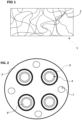
- the implant degrading little or not at all, the volume of the implant should not interfere with cellular reconstruction. It is particularly advantageous to form a filling implant which comprises a porous hybrid heterogeneous hydrogel support with through pores which allow cell regeneration inside the implant. As shown in figure 1 , it is particularly advantageous for the hybrid heterogeneous hydrogel 1 to have a porous structure whose pores communicate with each other to create a percolating network 2 in the three dimensions of the volume of the gel. The through network formed by the pores allows the cells to migrate and proliferate to the heart of the hydrogel, to join together and to survive thanks to the transport and diffusion of the nutrients necessary for cellular metabolism.
- the hydrogel is non-degradable, the networks of pores do not induce increased degradation of the hydrogel with stagnation of toxic or irritating molecules in the pores.
- the implant is a porous structure with open pores crossing the implant to define percolating paths in the three dimensions of the hydrogel.
- the open pores promote cell and vascular colonization from the tissue to the core of the implant as well as the circulation of biological fluids, cell growth factors, cell repair factors and physiological nutrients through the implant.
- the passage of different fluids to through the implant facilitates the vascularization of the tissue generated in the implant.
- the implant forms a three-dimensional support matrix whose through pores guide the growth of cells, nerve fibers and blood vessels. Cell growth is better in contact with the implant than without the implant.
- the implant can only be formed by the hydrogel.
- the porous fraction of the hydrogel forming the implant is greater than 85%, more preferably at least equal to 90% and even more preferably at least equal to 92% by volume.
- the porous fraction can be calculated with a mercury porosimetry technique.
- a hybrid heterogeneous hydrogel in which the majority of the porous fraction is formed by pores whose diameter is between 10 and 30 microns.
- at least 60% of the porous fraction is formed by pores having a diameter of between 10 and 30 microns.
- at least 60% of the porous volume is produced by pores having a diameter of between 10 and 30 microns.
- the pores having a diameter of between 30 and 300 represent a larger fraction than the pores having a diameter of less than 10 microns.
- the fraction of pores having a diameter of between 30 and 300 microns is greater than 20%, even more preferably greater than 30%.
- the fraction of the pores having a diameter comprised between 30 and 300 microns is particularly advantageous for accommodating large biological objects such as multicellular tissues.
- the fraction of pores having a diameter of less than 10 microns is less than 15%, even more preferably less than 10%.
- the heterogeneous hydrogel to comprise less than 2% by volume of pores having a size of less than 1 micron in the through porous network.
- Such a distribution in the dimensions of the pores ensures the passage of the biological compounds through the implant by covering the entire dimensional spectrum of the biological compounds of a living tissue. This facilitates the use of the implant as a tissue equivalent of the organ to be repaired.
- the pores of the implant are compatible with the circulation of chemokines secreted by inflammatory cells.
- the implant configuration allows infiltration of glial cells, mesenchymal cells, SDF-1-secreting leptomeninge-associated stem/progenitor cells, and central canal epithelium-associated stem/progenitor cells with potential of neuronal differentiation, infiltration of blood vessels and growth of regenerating nerve fibres.
- hybrid heterogeneous hydrogel in a material which has the property of changing the configuration of its porous network as cell colonization or the amount of cell bioload progresses.
- the hybrid heterogeneous hydrogel may deform under stress applied by cellular colonization and/or cellular bioburden.
- the implant deforms under the pressure exerted by the cellular tissue as regeneration progresses.
- the hydrogel must be able to deform with the mechanical stresses of the cellular bioload, which makes it possible to keep a structure with percolating channels.
- a filling implant which comprises a porous and viscoelastically deformable heterogeneous hybrid hydrogel support and whose degradation rate is sufficiently low for the hydrogel to be considered as a non-degradable heterogeneous hybrid hydrogel.
- the volume occupied by the porous implant will change as the regeneration progresses to partly adapt to the regeneration rate around and in the hydrogel.
- the macromolecular skeleton of the hybrid heterogeneous hydrogel deforms at constant or substantially constant volume.
- the polymer network deforms under the mechanical pressure exerted by the cellular accumulation.
- the structure of the implant is made of a material that has an elastic modulus between 1 and 200 KPa in order to adapt to the stress applied by the cellular bioload. The value of the elastic modulus can be measured at 50% of its deformation before rupture.
- the implant deforms according to the mechanical stresses introduced by the cellular bioburden in the implant.
- the implant deforms elastically and then viscoelastically so as not to interfere with cell growth, particularly in the through channels.
- the implant retains a three-dimensional percolating network that stretches to ensure complete tissue regeneration.
- the residual polymer network of the implant serves as a supportive intercellular matrix that stabilizes the formed neotissue by exerting mechanical tension.
- the surface of the implant has a high roughness which allows good adhesion with the host tissue by increasing the contact surface between the implant and the cells of the tissue in contact, which will promote adhesion between the two media.
- the open pores on the surface of the implant and connected to the percolating network promote cell and vascular colonization to the heart of the implant from the tissue in contact at the same time as the circulation of biological fluids, cell growth factors and physiological nutrients needed by the cell.
- hybrid heterogeneous hydrogel which is a copolymer derived from at least three monomers: a dendrimer monomer functionalized with an ethylenic radical, an acrylamide monomer and a crosslinking agent.
- the hybrid heterogeneous hydrogel includes a bioactive copolymerizable material.
- the hybrid heterogeneous hydrogel is devoid of a bioactive copolymerizable material. The bioactivation can be carried out subsequently on the hydrogel formed.
- the bioactive copolymerizable material is selected from the group comprising derivatives of a complex sugar, a tissue adhesion peptide and a polymer conjugate coupled to antibodies directed against lipid derivatives.
- the bioactive copolymerizable material is a methacryloyl or methacrylamide derivative of a complex sugar, of a tissue adhesion peptide and of a polymer conjugate coupled to antibodies directed against lipid derivatives,
- the bioactive copolymerizable material can be a derivative, preferably methacryloyl or methacrylamide, of a complex sugar chosen, for example, from glucosamine, N-acetyl-glucosamine, N-diglycidyl-glucosamine, N-acetylgalactosamine, N-acetylneuraminic acid (sialic acid) and polysialic acid.
- glucosamine N-acetyl-glucosamine, N-diglycidyl-glucosamine, N-acetylgalactosamine, N-acetylneuraminic acid (sialic acid) and polysialic acid.
- the bioactive copolymerizable material may be a derivative, preferably methacryloyl or methacrylamide, of a tissue adhesion peptide selected from tissue adhesion oligopeptides containing amino acid sequences such as Arg-Gly-Asp, Ile-Lys-Val-Ala-Val, Ala-His-Ala-Val-Ser-Glu, Tyr-Ile-Gly-Ser-Arg, oligopeptide derivatives of tissue differentiation molecules, for example, bone morphogenetic proteins or proteins of the SDF-1 (stromal cell derived factor-1) family, a chemokine which has the capacity to mobilize and attract endogenous stem cells which express the CXCR4 receptor and which has the capacity to stimulate the growth of axons during tissue regeneration.
- tissue adhesion peptide selected from tissue adhesion oligopeptides containing amino acid sequences such as Arg-Gly-Asp, Ile-Lys-Val-Ala-Val, Ala
- the bioactive copolymerizable material may be a derivative, preferably methacryloyl or methacrylamide, of a polymer conjugate coupled to antibodies against myelin and its axon-associated lipid derivatives.
- the acrylamide monomer is advantageously an N-substituted methacrylamide or N-substituted acrylamide.
- the value of the elastic modulus is partly defined by the crosslinking density of the hydrogel, that is to say by the number of covalent branches between the macromolecular chains formed from the acrylamide monomer, preferably by controlling the number of covalent connections between the macromolecular chains of HPMA.
- the N-substituted methacrylamide is preferably chosen from the group consisting of N-monoalkylmethacrylamide, N,N-dialkylmethacrylamide, N-hydroxyalkylmethacrylamide, preferentially N-(2-hydroxypropyl)methacrylamide (HPMA), N-alkyl, N -hydroxyalkylmethacrylamide, and N,N-dihydroxyalkylmethacrylamide.
- the N-substituted acrylamide is preferably selected from the group consisting of N-monoalkylacrylamide, N-hydroxyalkylacrylamide, N,N-dialkylacrylamide, N-alkyl,N-hydroxyalkylacrylamide and N,N-dihydroxyalkylacrylamide.
- the dendrimer monomer preferably comprises a central core A and macromolecular dendritic branches of poly(oxyethylene) (PEO). Only one of the dendritic branches is functionalized, advantageously in the terminal position, with an ethylenic radical.
- the ethylenic radical is unsaturated in order to react with a monomer comprising at least one reactive vinyl double bond.
- the other dendritic branches are preferably terminated by a hydroxyl function and devoid of ethylenic radical. They can also be functionalized before copolymerization by other functions such as ester or amide functions.
- the ethylenic radical is advantageously an acrylate or methacrylate radical.
- the star-shaped architecture of the dendrimer makes it possible to introduce into the hydrogel a multifunctional variable geometry to respond in a specific way to the multiple interactions envisaged with other materials.
- the indication that only one of the branches is functionalized corresponds to a statistical result indicating that, on average, the dendrimer monomer is functionalized by a single branch provided with an unsaturated ethylenic radical.
- the hydroxyl functional groups in the hybrid heterogeneous hydrogel can be modified by attaching entities, for example, bioactive agents such as polypeptides, active principles, ligands, polymerizable groups or oligosaccharides.
- bioactive agents such as polypeptides, active principles, ligands, polymerizable groups or oligosaccharides.
- the central core A is a group chosen from a carbosilane, a polycarbosilane, a polycarbosilane with star architecture, or a group corresponding to the following formula (1): -(CH 2 ) n -Si-(CH 2 ) n - (1) where n is an integer between 1 and 20, preferably equal to 6.
- the central core A is a poly(divinylbenzene).
- the dendrimer monomer corresponds to the following formula (3):
- Si-PEO4-MMA For the sake of clarity, we will identify this dendrimer monomer by the notation Si-PEO4-MMA.
- the mechanical and chemical properties of the hydrogel can also be adjusted by grafting, onto the free hydroxyl terminals of the dendritic branches, functions with specific properties such as hydrophilic, hydrophobic and/or surfactant properties.
- the hydroxyl function is easily functionalizable due to the nucleophilic character of its oxygen atom. This function is known to be easily activated, for example, by basic processing.
- the intrinsic properties of the hybrid heterogeneous hydrogel can also be modified by varying the number of dendrimer monomers introduced into the hydrogel skeleton and the nature of the central core A. The number of dendritic branches conditions the solubility of the macromolecule in water and organic solvents.
- the heterogeneous hybrid hydrogel is mainly formed or is constituted by a plurality of microbeads which are assembled together to define the through porous network.
- the microbeads have a spherical or substantially spherical shape and mostly a diameter greater than 1.5 microns and less than 10 microns.
- the microbeads mainly have a diameter of between 2 and 5 microns to better modulate the deformation of the channels according to the stress applied by the cellular bioload.
- the hydrogel microbeads in the form of aggregates which comprise at least 5 microbeads and less than 50 microbeads and preferentially at least 10 microbeads.
- the microbeads agglomerate together to form aggregates in groups of 10 to 30 microbeads. It is also particularly advantageous for the hydrogel microbeads to agglomerate together in a so-called “bunch of grapes” configuration, which facilitates the formation of an effective porous network while ensuring good deformability of the support. It is better to that the aggregates are formed by microbeads whose diameter is between 5 and 10 microns.
- the aggregates preferentially form the primary network of the hydrogel matrix.
- the aggregates are fixed to each other by fixing points which allow the displacement of one aggregate relative to another.
- the cross-section grows from end to end and the cross-section is substantially circular perpendicular to the length of the aggregate.
- the grape cluster conformation is more advantageous than the linear configuration for facilitating the interactions between the cells and the implant and thus facilitating the formation of a multicellular tissue structure and/or the growth of nerve fibers.
- the cluster conformation also helps improve grip
- the microbeads are fixed to each other by deformable cross-linking points to allow the movements of the microbeads between them and to adapt the conformation of the hybrid heterogeneous hydrogel support according to the mechanical stresses applied.
- the aggregate can compress.
- the polymer chains deform between the crosslinking points by stretching.
- the crosslinking points move away from each other, which results in an increase in the porous fraction of the hydrogel.
- the total pore volume of the implant increases at constant volume according to an anisotropic configuration.
- the aggregates of microbeads are mounted mobile relative to each other so as to allow the contraction of the aggregates of microbeads in response to the capillary pressure exerted by the migrating cells in contact with the surface of the microbeads.
- the microbead aggregates are configured such that their contraction results in an expansion of the porous network and an increase in the pore volume available for expansion of the tissue being formed.
- the aggregates are attached to each other to form a porous network comprising mesoporous and macroporous domains.
- the multiple pores defined by the aggregates are connected together to form a network percolating which has a certain tortuosity and which crosses the hydrogel in its initial configuration.
- the percolating network allows cells, blood vessels, and nerve fibers to infiltrate through the hydrogel in all three dimensions of space during the tissue bioreconstruction process.
- the microbeads define micropores whose size is less than 20 nm, preferably whose size varies in the range of 1.5 and 11 nanometers with an average diameter of 6 nanometers. These micropores are closed and non-communicating.
- micropores form craters on the surface of the microbeads, giving the hydrogel microbeads a dimpled surface. These micropores create surface and contribute to increase the internal specific surface of the macromolecular network of the hydrogel formed from these hydrogel microbeads. This increase in the surface of the macromolecular network and the surface topography of the microbeads promote interactions with cell membranes, in particular focal adhesions of migrating cells.
- the percolating network defines a significant internal specific surface, at least equal to 25m 2 /g, advantageously at least 50m 2 /g.
- the difference in degree of crosslinking can be defined by means of the manufacturing process used. It is preferable to use a copolymerization of the hydrogel by means of a method which implements a phase separation of the reaction mixture, it is also advantageous to implement a copolymerization process in which the phase separation comes from thermally induced polymerization. It is particularly advantageous to control the phase separation by carrying out the crosslinking in a defined temperature range. For example, good results have been obtained with a phase separation between 40°C and 60°C. A more efficient support was obtained with a crosslinking between 45°C and 55°C. An even more efficient support was obtained with a crosslinking between 49°C and 51°C. The use of such a temperature range makes it possible to better define the dimensions of the microbeads.
- the crosslinking time is greater than 6 hours or even greater than 12 hours to form an implant.
- the hydrogel is formed by strongly cross-linked aggregates bound together by weakly cross-linked zones.
- the strongly cross-linked aggregates form mechanical support zones which can move relative to each other by means of the weakly cross-linked zones.
- the cross-linking points between the aggregates are formed by covalent bonds, that is to say chemical bonds that can be considered as non-degradable, which allows good mechanical strength between the aggregates. It is advantageous to provide that the aggregates are distributed statistically in the volume of the hydrogel defining areas of high concentration of polymer chains and domains of low concentration of polymer chains and forming cavities containing free water.
- the average distance between two crosslinking points in the highly crosslinked areas is less than 20% of the average distance between two crosslinking points in the weakly crosslinked areas, preferably less than 10% of the average distance between two crosslinking points in the weakly reticular areas.
- the proportion of the zone with strong cross-linking represents at least 60% of the total volume of intrusion of the hydrogel. It is also interesting that the proportion of the zone with strong cross-linking represents less than 80% of the total volume of intrusion of the hydrogel.
- the surface of the implant is not flat. It has defects, for example protuberances resulting from the assembly of the microbeads.
- the microbeads comprise at least 90% by weight or even at least 95% by weight or consist of the acrylamide compound, for example N-substituted methacrylamide or N-substituted acrylamide to confer elastic properties to the microbeads ensuring the deformation of the implant with the cellular load.
- the microbeads mainly or exclusively made of acrylamide compound have a diameter of between 1.5 and 10 microns, preferably between 2 and 5 microns.
- the microbeads mainly contain HPMA by mass, preferably highly crosslinked HPMA.
- a highly crosslinked microbead has a crosslinking rate greater than 1 mol% of crosslinker.
- the use of such a degree of crosslinking ensures the existence of a sufficient number of chemical transverse bonds between the chains of linear polymers per unit volume of the hydrogel.
- This setup gives the hydrogel sufficient cohesion of the polymer networks, for example HPMA, for a degree of swelling at equilibrium of 96% of the final mass (g of water/g of dry matter). In the present case, this rate is preferably 0.95 mol%.
- More weakly cross-linked material eg HPMA
- HPMA can be used to form the bonds between the microbeads and define the microbead aggregates.
- the through channels of the implant are delimited by microbeads whose functionalized dendrimer monomer comprises one or more macromolecular dendritic branches of poly(ethylene oxide).
- the macromolecular dendritic branch of poly(ethylene oxide) is functionalized by one or more active molecules, for example one of the bioactive copolymerizable materials described above. It is then possible to functionalize the surface of the percolating network to facilitate cell reconstruction inside the implant.
- the active molecule is selected from the group consisting of a derivative of complex sugars, derivatives of tissue adhesion peptide or peptide with angiogenic activity, derivatives of nerve regrowth stimulation peptide, derivatives of stimulation of cell proliferation and differentiation, a derivative of a polymer conjugate coupled to antibodies directed against lipid derivatives, chemokines of the class of Stromal-derived factor-1 (SDF-1).
- SDF-1 Stromal-derived factor-1
- the acrylamide compound is N-(2-hydroxypropyl) methacrylamide (HPMA) and the dendrimer monomer functionalized by an ethylenic radical comprises dendrimers of poly(ethylene oxide) functionalized at their periphery with bioactive agents conferring bioactive properties for tissue regeneration.
- HPMA N-(2-hydroxypropyl) methacrylamide
- the dendrimer monomer functionalized by an ethylenic radical comprises dendrimers of poly(ethylene oxide) functionalized at their periphery with bioactive agents conferring bioactive properties for tissue regeneration.
- a hybrid heterogeneous hydrogel can be made by means of radical copolymerization.
- the preferred polymerization process is carried out in an organic and advantageously bi-organic polar medium, for example an acetone/DMSO mixture.
- the copolymerization is associated with a polymerization-induced phase separation (PIPS).
- PIPS polymerization-induced phase separation
- the molar ratio between the functionalized dendrimer monomer and the crosslinking agent is between 0.1 and 0.8, for example a PEO-MMA/MbisAA ratio between 0.1 and 0.8.
- the phase separation defines the balls which form the microbeads. In the 45-55° C. temperature range, it is easier to obtain mostly balls of acrylamide compound whose diameter is between 1.5 and 10 microns.
- This ratio value also allows the formation of a three-dimensional percolating network. It is even easier to control the number of pellets generated and the size distribution of the pellets by choosing a functionalized dendrimer monomer whose molecular mass is between 6220 g/mol and 23280 g/mol. In this particular range when the molar mass of the functionalized dendrimer monomer increases, the number of pellets increases and the size distribution decreases.
- the process for forming the hybrid heterogeneous hydrogel comprises a first phase of the reaction of the reaction mixture forming insoluble nuclei consisting of chains of polymers shaped into a ball.
- the reaction mixture is injected into molds 3 of sealed cylindrical shape and heat conductor with a wall 4 of PTFE in contact with the reaction mixture.
- the reaction mixture may have been degassed with argon.
- microbeads are associated to form the aggregates and the aggregates are linked together to form the hybrid heterogeneous hydrogel intended to form the filling implant.
- the copolymerization is carried out using a crosslinking agent.
- the cross-linking agent can be an acrylamide such as methylene bisacrylamide (MbisAA), precursors thereof or divinyl compounds such as divinylbenzene (DVB).
- MbisAA methylene bisacrylamide
- DVB divinyl compounds
- the free-radical polymerization initiator is selected from known initiators such as azobisisobutyronitrile (AIBN) or benzoyl peroxide.
- the crosslinking agent is preferably methylene bisacrylamide (MbisAA) which has two vinyl groups.
- Methylene bisacrylamide provides superior reactivity compared to N-(2-hydroxypropyl)methacrylamide (HPMA) which has only one vinyl group. This allows faster incorporation of methylene bisacrylamide into the growing chains that form nuclei before forming the microbeads.
- poly(ethylene oxide) hydrogel Because poly(ethylene oxide) has demonstrated a neuroprotective effect on the membrane of neurons and reduces post-lesion oxidative stress ( Luo et al. Polyethylene glycol immediately repairs neuronal membranes and inhibits free radical production after spinal cord injury. J. Neurochem. 83, 471, 2002 ) . It is preferable to use a hydrogel formed from one or more polymers with a branched star structure with poly(ethylene oxide) branches, which improves the biocompatibility of the hydrogel, in particular by preventing nonspecific absorption.
- branched molecules can be modified with functional groups of the class of peptides, bioactive sugars, chemokines by bioconjugation in the terminal position of the poly(ethylene oxide) branches. It is particularly advantageous to form a hydrogel material which has a porous structure produced in a support comprising a structure composed of N-(2-Hydroxypropyl) methacrylamide and a branched structure formed by branched poly(ethylene oxide) polymers carrying functional groups.
- the functional groups are preferably short peptides such as oligopeptides for interaction with the integrin receptors of cells, for example, but not limited to the following sequences, Arg-Gly-Asp, (RGD), Arg-Gly-Asp-Ser ( RGDS), Ile-Lys-Val-Ala-Val (IKVAV).
- oligomers conjugated with one or more sialic acids for example sialyllactose (Neu5Ac-a2,3-Gal- ⁇ 1,4-Glc), as well as sulfated oligosaccharides such as HNK1 (SO 4 -3 -GlcA ⁇ 1-4Gal ⁇ 1-4GlcNac-R) or fucosylated oligosaccharides, for example Fuc a(1-2)Gal.
- Bioactive agents can also be chosen from growth factors which stimulate the regeneration of axons which includes, but is not limited to the factor BDNF ("Brain Derived Neurotrophic Factors"), IGF-1 ("Insulin-like Growth Factor”), NT -3 ("Neurotrophin”), GDNF ("Glial Derived Neurotrophis Factor”); or which stimulates the proliferation of neuronal precursors such as FGF (“Fibroblast Growth Factors”), and EGF (“Epidermal Growth Factor”) PDGF ("Platelet-derived Growth Factor”), VEGF (“Vascular Endothelial Growth Factor”) ), PIGF (“Placental Growth Factor”), NGF (“Nerve Growth Factor”) and TGF (“Transforming Growth Factor”) can be conjugated to POE.
- BDNF Brain Derived Neurotrophic Factors
- IGF-1 Insulin-like Growth Factor
- NT -3 Neurotrophin
- GDNF Glial Derived
- Bioactive agents that stimulate the mobilization of precursor stem cells such as SDF-1 ( Stromal-derived factor-1 ) chemokines which have the ability to attract endogenous stem cells expressing the CXCR4 receptor and stimulate the growth of axons during tissue regeneration, the cytokines G-CSF ( granulocyte colony-stimulating factor) , GM-CSF ( granulocyte-macrophage colony-stimulating factor) or SCF ( Stem cell factor ) and interleukin (IL-8).
- SDF-1 Stromal-derived factor-1
- chemokines which have the ability to attract endogenous stem cells expressing the CXCR4 receptor and stimulate the growth of axons during tissue regeneration
- the cytokines G-CSF ( granulocyte colony-stimulating factor) granulocyte colony-stimulating factor
- GM-CSF granulocyte-macrophage colony-stimulating factor
- SCF Stem cell factor
- IL-8 interleuk
- One embodiment of the hydrogel is advantageously produced under an inert atmosphere and comprises a hydrogel which combines N-(2-hydroxypropyl) methacrylamide with the crosslinking agent N,N'-Methylenebisacrylamide or N,N'-Methylenebismethacrylamide comprising two vinyl groups in a molar ratio of 100:1 to 30.4% by weight of the total weight of the reaction mixture; a bi-organic polar solvent acetone/DMSO (93/7 v/v).
- the reaction mixture is degassed with argon and injected into sealed, heat-conducting cylindrical molds with a PTFE wall in contact with the reaction mixture.
- the initial reaction mixture is placed in a metal mold, preferably stainless steel, the internal walls of which are covered with a polytetrafluoroethylene (PTFE).
- PTFE polytetrafluoroethylene
- the reaction mixture is purged with an inert gas directly inside the mold.
- the mold has a circular section with a height at least twice greater than the diameter.
- a radical polymerization reaction preferentially in the presence of the initiator azobisisobutyronitrile at 50° C. is carried out. It has been observed that it is particularly advantageous to increase the temperature of the mold and of the reaction mixture by at least 5° C., preferably by 10° C. or more during polymerization. It is advantageous if the temperature increase is less than 20°C. It is also advantageous for the maximum temperature of the polymerization to be lower than 70° C. and even more preferably lower than 65° C. so as not to degrade the xerogel, that is to say the hydrogel before its saturation with water. This increase in temperature makes it possible to obtain a more homogeneous distribution of the polymer chains in the hydrogel as well as a better yield.
- the temperature increase is carried out after the formation of the microbeads or of a majority of the microbeads.
- the temperature increase can occur at least after 80 minutes of polymerization, even more preferably after 90 minutes of polymerization.
- the polymerization can be carried out with a first temperature plateau used to form the microbeads, for example a temperature plateau comprised between 45°C and 55°C, preferably equal to 50°C.
- the temperature plateau is then followed by a second plateau or possibly by a ramp or other form of annealing at a temperature at least 5°C higher than the temperature of the plateau.
- the use of two different temperature ranges allows better control of the dimensions of the microbeads and better control of the dimensions of the aggregates.
- the polymerization is carried out until the concentration of oligomers reaches a threshold value making it possible to form longer chains by condensation of the oligomers.
- the condensation of the oligomers induces the appearance of at least two phases having different densities. It is advantageous to achieve phase separation by changing the polymerization temperature.
- an absorbance signal is monitored by absorption spectrometry (optical density) in the ultraviolet-visible range.
- absorption spectrometry optical density
- the detection of a sufficient quantity of long chains obtained by condensation of the oligomers can correspond to an absorbance threshold value or a rate of evolution of the absorbance which reaches a threshold value. Once we detect the threshold value, we know that the chains long are in sufficient quantity.
- a second polymerization step is carried out at higher temperature, preferably with a second plate which is at least 5° C. hotter than the previous plate. The second plate makes it possible to carry out the copolymerization by accelerating the nucleation and allowing the continuation of the polymerization.
- Balls of cross-linked oligomers are formed which form the microbeads.
- the microbeads aggregate randomly and crosslinking points are formed.
- the absorbance value decreases.
- the second plateau is replaced by a ramp or a more complex evolution of the temperature and which has a minimum temperature higher than the temperature of the first plateau by at least 5°C.
- the mold 3 it is preferable to close the mold 3 in a sealed manner, for example by means of a polytetrafluoroethylene lid advantageously associated with a seal 5.
- a polytetrafluoroethylene lid advantageously associated with a seal 5.
- the use of the lid limits the evaporation of the solvents from the reaction mixture and allows better reproducibility.
- the dimensions of the mold are chosen so that the hydrogel formed from the mold has a diameter equal to 175 mm and a height equal to 400 mm for a hydrated gel. It is also advantageous to use the same metal part which defines several molds in the form of several wells 6.
- the mold 3 can comprise orifices 7 intended to cooperate with screws to close the wells 6.
- the xerogel is in a dry or anhydrous form and is unmolded. It is particularly advantageous to cover the internal walls of the mold with polytetrafluoroethylene since this allows easier demolding of the hydrogel in dry form, which avoids damaging it.
- the xerogel present in the mold is friable, which makes it a fragile material which is easily degraded when an attempt is made to extract it from the bulbs used in the methods of the prior art.
- the xerogel is transferred into a first container in the form of an openwork basket, the basket is advantageously made of polytetrafluoroethylene.
- the first basket is installed in a second basket which contains a liquid.
- the liquid can be water, ethanol or methanol or a mixture of water with ethanol or methanol. The liquid from the second container passes through the holes of the first container to clean the xerogel.
- the second container can be opaque to visible radiation.
- the second container can be made of polycarbonate.
- the xerogel installed in the first container is subjected to a washing cycle which advantageously comprises the application of several successive washing baths.
- the water content is increasing in the different baths in order to clean the xerogel and to saturated it with water to form the hydrogel.
- the hydrogel is advantageously crosslinked with methylenebisacrylamide at a rate equal or substantially also equal to 1 mol% which gives the hydrogel advantageous physical characteristics as a filling implant.
- the gel is advantageously placed in a cylindrical container made of high-grade PTFE, a material which does not interact with the chemical nature of the gel, and filled with non-pyrogenic injectable grade water.
- the PTFE container with the gel is sterilized by autoclaving at 121°C for 30 minutes and the container is sealed with a screw cap so that the gel remains saturated with water and sterile.
- This container is placed in a second polystyrene container with a "cap snap safe type" which is open to a sterile operating field.
- the second polystyrene container may have a height equal to 54mm, an internal diameter equal to 34mm and a thickness equal to 1.5mm.
- the hybrid heterogeneous hydrogel is advantageously used in a filling strategy in order to modify the phenomena of natural healing by carrying out the filling by a phenomenon of regeneration in the presence of a viscoelastic matrix which has the property of changing the configuration of its porous geometric space. and the configuration of its polymer network.
- the elasticity effects of the hydrogel offer the advantage of being able to modify the mechano-elastic properties of the substrate and to reconstitute a mechanical environment close to that of cells in vivo.
- Such a hydrogel is capable of receiving and guiding flows of cells, nerve fibers and blood vessels.
- the hybrid heterogeneous hydrogel defines an elastically deformable and continuous, non-degradable and non-bioresorbable porous medium with a geometry that adapts to the kinetics of cell, vascular and nerve regeneration.
- the hydrogel matrix attaches itself to the spinal cord, which allows the hydrogel matrix to follow the movements of the spinal cord caused by the movements of the spine and by the beats of the arteries which irrigate this organ and therefore remain anchored to the graft site.
- the implant forms a support structure, thanks to its open porous structure which allows the flow of cells to migrate in the polymer matrix following the percolating paths of the porous network.
- the hybrid heterogeneous hydrogel forms an implant in a graft cavity, for example an intramedullary cavity.
- the cavity can be formed by dissecting and removing non-living scar tissue from an inner edge of the lesion.
- the edges of the cavity are formed by healthy nervous tissue.
- the supply of the cavity is followed by drainage of cerebrospinal fluid. This makes it possible to create a "de novo" lesion which is equivalent to an acute lesion, which reactivates the inflammatory processes of endogenous cellular repair (mobilization of stem cells, budding of nerve ends, angiogenesis).
- the implantation method also includes a step of filling the post-traumatic cavity with the introduction of the hydrogel into the intramedullary cavity.
- the hydrogel can be cut to fit the shape and geometry of the cavity.
- the hydrogel is particularly advantageous to partially dehydrate the hydrogel before introducing it into the cavity. After installation in the cavity, the hydrogel swells following contact with the fluids circulating in the cavity until the hydrogel implant is in contact with the entire surface of the cavity in such a way that it forms an integral interface (100%) with the white matter of the intact peri-lesional nervous tissue.
- the hydrogel is capable of absorbing a significant amount of water and it swells in the presence of water and biological fluids containing water. It is advantageous for the hydrogel to contain at least 80% by volume of water at equilibrium. It is advantageous to provide the hydrogel with a water content less than or equal to 75% by volume.
- the implant is dehydrated so as to have a reduction in its volume of between 10% and 30%.
- the implant is introduced into the cavity, preferably an intra-parenchymal cavity, then it is rehydrated to reach at least 95% of its initial volume, preferably 100% of its initial volume. Hydration of the implant to its initial volume can be achieved in less than a minute. Preferably, the volume of the implant with an inflation rate equal to 100% represents between 80% and 100% of the volume of the cavity to be filled.
- the porous surfaces of the implant come into contact with the surfaces of the cavity, which facilitates adhesion. It is advantageous to have a gradient in the rate of dehydration with a more central portion hydrated than the peripheral portion. Greater dehydration at the surface improves the quality of contact with the cavity wall thereafter.
- the implant which is in the form of a plurality of bunches of grapes formed by microbeads.
- the conformation of the implant with the aforementioned microbeads makes it possible to define a surface roughness with asperities and protuberances. It is advantageous to have a roughness less than or equal to 30 micrometers, preferably less than or equal to 15 micrometers and even more advantageously less than or equal to 5 micrometers. It is also advantageous for the roughness to be greater than or equal to 0.1 micrometer.
- Such a range of roughness makes it possible to promote the circulation of interstitial fluids between the surface of the hydrogel and the parenchyma.
- This surface texture comes from the cluster structure of the microbeads in the hydrogel. Adhesion is also promoted by surface pores on protrusions on a nanometric scale.
- the implant is particularly suitable for matching the geometry of the surfaces of the cavity. These steps lead to the anatomical reconstruction of the spinal cord at the level of its traumatic zone. It is particularly advantageous to cover the implant with living peri-lesional white matter comprising the ascending, descending and association nerve fibers in order to take advantage of the bioadhesive properties of the implant with the biological tissue.
- an implant that has bioadhesive properties or bioadhesive properties improved.
- bioadhesive properties or bioadhesive properties improved By adapting the surface properties of the implant, it improves the adhesion between the implant and the biological tissue.
- the implant has improved bioadhesive properties, this makes it possible to insert it into the cavity and to have quality cellular reconstruction without using surgical suture with the biological tissue.
- the implant it is particularly advantageous for the implant to actively stimulate hemostasis and more particularly the primary phase of hemostasis. It is also advantageous if the implant actively stimulates platelet aggregation. In this way, the implant induces blood coagulation which facilitates the achievement of good tissue reconstruction.
- This particular implant configuration makes it possible to control microbleeding as close as possible to the interface between the implant and the cavity and which avoids the formation of a degraded interface between the implant and the tissue. In vitro tests of blood coagulation and platelet aggregation as well as in vivo tests have shown good control of hemostasis by the implant.
Landscapes
- Health & Medical Sciences (AREA)
- Chemical & Material Sciences (AREA)
- Medicinal Chemistry (AREA)
- Oral & Maxillofacial Surgery (AREA)
- Transplantation (AREA)
- Epidemiology (AREA)
- Life Sciences & Earth Sciences (AREA)
- Animal Behavior & Ethology (AREA)
- General Health & Medical Sciences (AREA)
- Public Health (AREA)
- Veterinary Medicine (AREA)
- Dermatology (AREA)
- Chemical Kinetics & Catalysis (AREA)
- Polymers & Plastics (AREA)
- Organic Chemistry (AREA)
- Dispersion Chemistry (AREA)
- General Chemical & Material Sciences (AREA)
- Materials For Medical Uses (AREA)
- Addition Polymer Or Copolymer, Post-Treatments, Or Chemical Modifications (AREA)
- Compositions Of Macromolecular Compounds (AREA)
- Processes Of Treating Macromolecular Substances (AREA)
- Medicinal Preparation (AREA)
- Graft Or Block Polymers (AREA)
- Manufacture Of Porous Articles, And Recovery And Treatment Of Waste Products (AREA)
- Prostheses (AREA)
Applications Claiming Priority (2)
| Application Number | Priority Date | Filing Date | Title |
|---|---|---|---|
| FR2002619A FR3108260B1 (fr) | 2020-03-17 | 2020-03-17 | Hydrogel hétérogène hybride, procédé de fabrication et utilisation comme implant de comblement non-dégradable in-situ |
| PCT/EP2021/056753 WO2021185881A1 (fr) | 2020-03-17 | 2021-03-17 | Hydrogel hétérogène hybride, procédé de fabrication et utilisation comme implant de comblement non-dégradable in-situ |
Publications (3)
| Publication Number | Publication Date |
|---|---|
| EP4121133A1 EP4121133A1 (fr) | 2023-01-25 |
| EP4121133C0 EP4121133C0 (fr) | 2023-08-16 |
| EP4121133B1 true EP4121133B1 (fr) | 2023-08-16 |
Family
ID=71452405
Family Applications (1)
| Application Number | Title | Priority Date | Filing Date |
|---|---|---|---|
| EP21711292.9A Active EP4121133B1 (fr) | 2020-03-17 | 2021-03-17 | Hydrogel hétérogène hybride, procédé de fabrication et utilisation comme implant de comblement non-dégradable in-situ |
Country Status (12)
| Country | Link |
|---|---|
| US (1) | US12599703B2 (https=) |
| EP (1) | EP4121133B1 (https=) |
| JP (1) | JP2023518227A (https=) |
| KR (1) | KR20220154749A (https=) |
| CN (1) | CN115297903B (https=) |
| AU (1) | AU2021237753A1 (https=) |
| BR (1) | BR112022017583A2 (https=) |
| CA (1) | CA3167699A1 (https=) |
| FR (1) | FR3108260B1 (https=) |
| IL (1) | IL296328B2 (https=) |
| MX (1) | MX2022011096A (https=) |
| WO (1) | WO2021185881A1 (https=) |
Families Citing this family (3)
| Publication number | Priority date | Publication date | Assignee | Title |
|---|---|---|---|---|
| US20230386697A1 (en) * | 2020-10-13 | 2023-11-30 | President And Fellows Of Harvard College | Viscoelastic conductive hydrogel |
| WO2022251643A1 (en) * | 2021-05-27 | 2022-12-01 | The Regents Of The University Of California | Superporous gel matrix for encapsulation of cells |
| CN114103125B (zh) * | 2021-09-30 | 2022-06-28 | 哈尔滨工业大学(威海) | 一种高导热微型器件的制备方法 |
Family Cites Families (20)
| Publication number | Priority date | Publication date | Assignee | Title |
|---|---|---|---|---|
| US5863551A (en) * | 1996-10-16 | 1999-01-26 | Organogel Canada Ltee | Implantable polymer hydrogel for therapeutic uses |
| WO2001005578A1 (en) * | 1999-07-16 | 2001-01-25 | Wesley-Jessen Corporation | Thermoformable ophthalmic lens |
| US7163545B2 (en) | 2002-07-29 | 2007-01-16 | Mayo Foundation For Medical Education And Research | Spinal cord surgical implant |
| JP2006503080A (ja) * | 2002-10-11 | 2006-01-26 | ノボセル インコーポレイテッド | 疾患治療用のカプセルで包んだ生物材料の移植 |
| US7569222B2 (en) * | 2002-11-18 | 2009-08-04 | Woerly Stephane | Hydrogel membrane composition and use thereof |
| US7846466B2 (en) | 2004-06-10 | 2010-12-07 | Northwestern University | Biodegradable scaffolds and uses thereof |
| ATE464025T1 (de) * | 2004-08-13 | 2010-04-15 | Setagon Inc | Herstellungsverfahren für medizinprodukte mit nanoporösen schichten |
| US8377463B2 (en) | 2006-04-25 | 2013-02-19 | Children's Medical Center Corporation | Methods and compositions for the treatment of open and closed wound spinal cord injuries |
| RU2394593C2 (ru) | 2008-09-25 | 2010-07-20 | Андрей Степанович БРЮХОВЕЦКИЙ | Имплантируемая нейроэндопротезная система, способ ее получения и способ проведения реконструктивной нейрохирургической операции |
| FR2942080B1 (fr) | 2009-02-09 | 2011-04-01 | Vehicules Electr Soc D | Procede de gestion thermique d'une batterie electrique |
| FR2942408B1 (fr) * | 2009-02-24 | 2012-01-27 | Stephane Woerly | Hydrogel heterogene hybride et son utilisation therapeutique |
| KR101091028B1 (ko) | 2009-07-02 | 2011-12-09 | 아주대학교산학협력단 | 체내 주입형 하이드로젤 및 이의 생의학적 용도 |
| US8877498B2 (en) | 2010-12-01 | 2014-11-04 | Drexel University | Porous polymer scaffolds for neural tissue engineering and methods of producing the same |
| TW201313263A (zh) | 2011-07-13 | 2013-04-01 | Invivo Therapeutics Corp | 聚乳酸-聚乙醇酸(plga)-b-離胺酸及plga與pll(聚e-cbz-l離胺酸)嵌段共聚物合成方法 |
| JP6319847B2 (ja) | 2011-12-06 | 2018-05-09 | バイオアークティック アーベー | 軸索再生を促進するための脊髄装置および方法 |
| FR2993566B1 (fr) | 2012-07-19 | 2015-05-15 | Univ Claude Bernard Lyon | Hydrogel de chitosane pour la reparation du tissu nerveux |
| US20150044259A1 (en) | 2013-08-08 | 2015-02-12 | Mauris N. DeSilva | Scaffold for enhanced neural tissue regeneration |
| CN105412935B (zh) * | 2015-02-04 | 2019-02-19 | 四川大学 | 一种基于n-(2-羟丙基)甲基丙烯酰胺聚合物的纳米粒及其制备方法 |
| US20180037865A1 (en) | 2016-08-05 | 2018-02-08 | Wayne State University | Methods and compositions relating to treatment of nervous system injuries |
| MX2024007071A (es) * | 2021-12-09 | 2024-08-26 | Likarda Llc | Rellenos de tejido suave a base de micropartículas de hidrogel. |
-
2020
- 2020-03-17 FR FR2002619A patent/FR3108260B1/fr active Active
-
2021
- 2021-03-17 WO PCT/EP2021/056753 patent/WO2021185881A1/fr not_active Ceased
- 2021-03-17 CN CN202180021887.0A patent/CN115297903B/zh active Active
- 2021-03-17 EP EP21711292.9A patent/EP4121133B1/fr active Active
- 2021-03-17 AU AU2021237753A patent/AU2021237753A1/en active Pending
- 2021-03-17 US US17/912,184 patent/US12599703B2/en active Active
- 2021-03-17 JP JP2022555660A patent/JP2023518227A/ja active Pending
- 2021-03-17 CA CA3167699A patent/CA3167699A1/en active Pending
- 2021-03-17 KR KR1020227035527A patent/KR20220154749A/ko active Pending
- 2021-03-17 IL IL296328A patent/IL296328B2/en unknown
- 2021-03-17 BR BR112022017583A patent/BR112022017583A2/pt unknown
- 2021-03-17 MX MX2022011096A patent/MX2022011096A/es unknown
Also Published As
| Publication number | Publication date |
|---|---|
| IL296328A (en) | 2022-11-01 |
| EP4121133A1 (fr) | 2023-01-25 |
| US20230166005A1 (en) | 2023-06-01 |
| CN115297903A (zh) | 2022-11-04 |
| WO2021185881A1 (fr) | 2021-09-23 |
| CN115297903B (zh) | 2024-03-12 |
| AU2021237753A1 (en) | 2022-10-20 |
| FR3108260A1 (fr) | 2021-09-24 |
| EP4121133C0 (fr) | 2023-08-16 |
| US12599703B2 (en) | 2026-04-14 |
| IL296328B1 (en) | 2025-11-01 |
| KR20220154749A (ko) | 2022-11-22 |
| FR3108260B1 (fr) | 2024-01-05 |
| JP2023518227A (ja) | 2023-04-28 |
| IL296328B2 (en) | 2026-03-01 |
| CA3167699A1 (en) | 2021-09-23 |
| MX2022011096A (es) | 2022-11-10 |
| BR112022017583A2 (pt) | 2022-10-18 |
Similar Documents
| Publication | Publication Date | Title |
|---|---|---|
| EP4121133B1 (fr) | Hydrogel hétérogène hybride, procédé de fabrication et utilisation comme implant de comblement non-dégradable in-situ | |
| Van Vlierberghe et al. | Biopolymer-based hydrogels as scaffolds for tissue engineering applications: a review | |
| Sekar et al. | Hyaluronic acid as bioink and hydrogel scaffolds for tissue engineering applications | |
| Barbetta et al. | Scaffolds based on biopolymeric foams | |
| EP1711552B1 (fr) | Gel reticule biocompatible | |
| Xu et al. | Hyaluronic acid-based hydrogels: from a natural polysaccharide to complex networks | |
| Goding et al. | Considerations for hydrogel applications to neural bioelectronics | |
| KR20180126436A (ko) | 조직 복원용 간엽 세포-결합 복합 재료 | |
| KR20180125937A (ko) | 조직 치유용 섬유-하이드로겔 복합체 외과용 메쉬 | |
| JP2000503884A (ja) | 治療用移植可能アクリルアミド共重合体ヒドロゲル | |
| JP2006517478A (ja) | 遠心力を用いる構造体の製造方法 | |
| EP2874672B1 (fr) | Hydrogel de chitosane pour la reparation du tissu nerveux | |
| CA2432804A1 (fr) | Biomateriaux polymeres poreux, procede de preparation et utilisations | |
| EP3328923B1 (fr) | Procédé de préparation de matrices poreuse polymères biocompatibles et biodegradables trimensionnelles | |
| CN121015947A (zh) | 一种膨胀型高效止血海绵及其制备方法 | |
| RU2860433C2 (ru) | ГИБРИДНЫЙ ГЕТЕРОГЕННЫЙ ГИДРОГЕЛЬ, СПОСОБ ЕГО ПОЛУЧЕНИЯ И ПРИМЕНЕНИЕ В КАЧЕСТВЕ in situ НЕРАЗЛАГАЕМОГО ФИЛЛЕРНОГО ИМПЛАНТА | |
| CN118267342A (zh) | 一种核壳微针贴片及其制备方法 | |
| Al-Lami | Preparation and release study of biodegradable L-lactide IPN’s insulin delivery | |
| FR2942408A1 (fr) | Hydrogel heterogene hybride et son utilisation therapeutique | |
| Qin et al. | Redesigned silk: a new macroporous biomaterial platform for antimicrobial dermal patches with unique exudate wicking ability | |
| FR3108253A1 (fr) | Mousse de lysat plaquettaire pour la culture cellulaire, la thérapie cellulaire et la régénération tissulaire et procédé d’obtention | |
| Pereira et al. | de Zea Bermudez | |
| HK1018942A (en) | Implantable acrylamide copolymer hydrogel for therapeutic uses | |
| FR2909285A1 (fr) | "utilisation d'un gel anti-adhesif et anti fibrotique" |
Legal Events
| Date | Code | Title | Description |
|---|---|---|---|
| STAA | Information on the status of an ep patent application or granted ep patent |
Free format text: STATUS: UNKNOWN |
|
| STAA | Information on the status of an ep patent application or granted ep patent |
Free format text: STATUS: THE INTERNATIONAL PUBLICATION HAS BEEN MADE |
|
| PUAI | Public reference made under article 153(3) epc to a published international application that has entered the european phase |
Free format text: ORIGINAL CODE: 0009012 |
|
| STAA | Information on the status of an ep patent application or granted ep patent |
Free format text: STATUS: REQUEST FOR EXAMINATION WAS MADE |
|
| 17P | Request for examination filed |
Effective date: 20220801 |
|
| AK | Designated contracting states |
Kind code of ref document: A1 Designated state(s): AL AT BE BG CH CY CZ DE DK EE ES FI FR GB GR HR HU IE IS IT LI LT LU LV MC MK MT NL NO PL PT RO RS SE SI SK SM TR |
|
| STAA | Information on the status of an ep patent application or granted ep patent |
Free format text: STATUS: EXAMINATION IS IN PROGRESS |
|
| 17Q | First examination report despatched |
Effective date: 20230208 |
|
| GRAP | Despatch of communication of intention to grant a patent |
Free format text: ORIGINAL CODE: EPIDOSNIGR1 |
|
| STAA | Information on the status of an ep patent application or granted ep patent |
Free format text: STATUS: GRANT OF PATENT IS INTENDED |
|
| DAV | Request for validation of the european patent (deleted) | ||
| DAX | Request for extension of the european patent (deleted) | ||
| GRAS | Grant fee paid |
Free format text: ORIGINAL CODE: EPIDOSNIGR3 |
|
| GRAA | (expected) grant |
Free format text: ORIGINAL CODE: 0009210 |
|
| STAA | Information on the status of an ep patent application or granted ep patent |
Free format text: STATUS: THE PATENT HAS BEEN GRANTED |
|
| INTG | Intention to grant announced |
Effective date: 20230619 |
|
| AK | Designated contracting states |
Kind code of ref document: B1 Designated state(s): AL AT BE BG CH CY CZ DE DK EE ES FI FR GB GR HR HU IE IS IT LI LT LU LV MC MK MT NL NO PL PT RO RS SE SI SK SM TR |
|
| REG | Reference to a national code |
Ref country code: CH Ref legal event code: EP Ref country code: DE Ref legal event code: R096 Ref document number: 602021004354 Country of ref document: DE |
|
| REG | Reference to a national code |
Ref country code: IE Ref legal event code: FG4D Free format text: LANGUAGE OF EP DOCUMENT: FRENCH |
|
| U01 | Request for unitary effect filed |
Effective date: 20230906 |
|
| U07 | Unitary effect registered |
Designated state(s): AT BE BG DE DK EE FI FR IT LT LU LV MT NL PT SE SI Effective date: 20230913 |
|
| PG25 | Lapsed in a contracting state [announced via postgrant information from national office to epo] |
Ref country code: GR Free format text: LAPSE BECAUSE OF FAILURE TO SUBMIT A TRANSLATION OF THE DESCRIPTION OR TO PAY THE FEE WITHIN THE PRESCRIBED TIME-LIMIT Effective date: 20231117 |
|
| PG25 | Lapsed in a contracting state [announced via postgrant information from national office to epo] |
Ref country code: IS Free format text: LAPSE BECAUSE OF FAILURE TO SUBMIT A TRANSLATION OF THE DESCRIPTION OR TO PAY THE FEE WITHIN THE PRESCRIBED TIME-LIMIT Effective date: 20231216 |
|
| PG25 | Lapsed in a contracting state [announced via postgrant information from national office to epo] |
Ref country code: RS Free format text: LAPSE BECAUSE OF FAILURE TO SUBMIT A TRANSLATION OF THE DESCRIPTION OR TO PAY THE FEE WITHIN THE PRESCRIBED TIME-LIMIT Effective date: 20230816 Ref country code: NO Free format text: LAPSE BECAUSE OF FAILURE TO SUBMIT A TRANSLATION OF THE DESCRIPTION OR TO PAY THE FEE WITHIN THE PRESCRIBED TIME-LIMIT Effective date: 20231116 Ref country code: IS Free format text: LAPSE BECAUSE OF FAILURE TO SUBMIT A TRANSLATION OF THE DESCRIPTION OR TO PAY THE FEE WITHIN THE PRESCRIBED TIME-LIMIT Effective date: 20231216 Ref country code: HR Free format text: LAPSE BECAUSE OF FAILURE TO SUBMIT A TRANSLATION OF THE DESCRIPTION OR TO PAY THE FEE WITHIN THE PRESCRIBED TIME-LIMIT Effective date: 20230816 Ref country code: GR Free format text: LAPSE BECAUSE OF FAILURE TO SUBMIT A TRANSLATION OF THE DESCRIPTION OR TO PAY THE FEE WITHIN THE PRESCRIBED TIME-LIMIT Effective date: 20231117 |
|
| PG25 | Lapsed in a contracting state [announced via postgrant information from national office to epo] |
Ref country code: PL Free format text: LAPSE BECAUSE OF FAILURE TO SUBMIT A TRANSLATION OF THE DESCRIPTION OR TO PAY THE FEE WITHIN THE PRESCRIBED TIME-LIMIT Effective date: 20230816 |
|
| PG25 | Lapsed in a contracting state [announced via postgrant information from national office to epo] |
Ref country code: ES Free format text: LAPSE BECAUSE OF FAILURE TO SUBMIT A TRANSLATION OF THE DESCRIPTION OR TO PAY THE FEE WITHIN THE PRESCRIBED TIME-LIMIT Effective date: 20230816 |
|
| PG25 | Lapsed in a contracting state [announced via postgrant information from national office to epo] |
Ref country code: SM Free format text: LAPSE BECAUSE OF FAILURE TO SUBMIT A TRANSLATION OF THE DESCRIPTION OR TO PAY THE FEE WITHIN THE PRESCRIBED TIME-LIMIT Effective date: 20230816 Ref country code: RO Free format text: LAPSE BECAUSE OF FAILURE TO SUBMIT A TRANSLATION OF THE DESCRIPTION OR TO PAY THE FEE WITHIN THE PRESCRIBED TIME-LIMIT Effective date: 20230816 Ref country code: ES Free format text: LAPSE BECAUSE OF FAILURE TO SUBMIT A TRANSLATION OF THE DESCRIPTION OR TO PAY THE FEE WITHIN THE PRESCRIBED TIME-LIMIT Effective date: 20230816 Ref country code: SK Free format text: LAPSE BECAUSE OF FAILURE TO SUBMIT A TRANSLATION OF THE DESCRIPTION OR TO PAY THE FEE WITHIN THE PRESCRIBED TIME-LIMIT Effective date: 20230816 |
|
| U20 | Renewal fee for the european patent with unitary effect paid |
Year of fee payment: 4 Effective date: 20240325 |
|
| REG | Reference to a national code |
Ref country code: DE Ref legal event code: R097 Ref document number: 602021004354 Country of ref document: DE |
|
| PLBE | No opposition filed within time limit |
Free format text: ORIGINAL CODE: 0009261 |
|
| STAA | Information on the status of an ep patent application or granted ep patent |
Free format text: STATUS: NO OPPOSITION FILED WITHIN TIME LIMIT |
|
| 26N | No opposition filed |
Effective date: 20240517 |
|
| PG25 | Lapsed in a contracting state [announced via postgrant information from national office to epo] |
Ref country code: MC Free format text: LAPSE BECAUSE OF FAILURE TO SUBMIT A TRANSLATION OF THE DESCRIPTION OR TO PAY THE FEE WITHIN THE PRESCRIBED TIME-LIMIT Effective date: 20230816 |
|
| PG25 | Lapsed in a contracting state [announced via postgrant information from national office to epo] |
Ref country code: MC Free format text: LAPSE BECAUSE OF FAILURE TO SUBMIT A TRANSLATION OF THE DESCRIPTION OR TO PAY THE FEE WITHIN THE PRESCRIBED TIME-LIMIT Effective date: 20230816 |
|
| PG25 | Lapsed in a contracting state [announced via postgrant information from national office to epo] |
Ref country code: IE Free format text: LAPSE BECAUSE OF NON-PAYMENT OF DUE FEES Effective date: 20240317 |
|
| PG25 | Lapsed in a contracting state [announced via postgrant information from national office to epo] |
Ref country code: IE Free format text: LAPSE BECAUSE OF NON-PAYMENT OF DUE FEES Effective date: 20240317 |
|
| U20 | Renewal fee for the european patent with unitary effect paid |
Year of fee payment: 5 Effective date: 20250325 |
|
| PGFP | Annual fee paid to national office [announced via postgrant information from national office to epo] |
Ref country code: CH Payment date: 20250401 Year of fee payment: 5 |
|
| PG25 | Lapsed in a contracting state [announced via postgrant information from national office to epo] |
Ref country code: CY Free format text: LAPSE BECAUSE OF FAILURE TO SUBMIT A TRANSLATION OF THE DESCRIPTION OR TO PAY THE FEE WITHIN THE PRESCRIBED TIME-LIMIT; INVALID AB INITIO Effective date: 20210317 |
|
| PG25 | Lapsed in a contracting state [announced via postgrant information from national office to epo] |
Ref country code: HU Free format text: LAPSE BECAUSE OF FAILURE TO SUBMIT A TRANSLATION OF THE DESCRIPTION OR TO PAY THE FEE WITHIN THE PRESCRIBED TIME-LIMIT; INVALID AB INITIO Effective date: 20210317 |
|
| PG25 | Lapsed in a contracting state [announced via postgrant information from national office to epo] |
Ref country code: TR Free format text: LAPSE BECAUSE OF FAILURE TO SUBMIT A TRANSLATION OF THE DESCRIPTION OR TO PAY THE FEE WITHIN THE PRESCRIBED TIME-LIMIT Effective date: 20230816 |
|
| REG | Reference to a national code |
Ref country code: CH Ref legal event code: U11 Free format text: ST27 STATUS EVENT CODE: U-0-0-U10-U11 (AS PROVIDED BY THE NATIONAL OFFICE) Effective date: 20260401 |
|
| PGFP | Annual fee paid to national office [announced via postgrant information from national office to epo] |
Ref country code: GB Payment date: 20260326 Year of fee payment: 6 |
|
| PGFP | Annual fee paid to national office [announced via postgrant information from national office to epo] |
Ref country code: CZ Payment date: 20260216 Year of fee payment: 6 |
|
| U20 | Renewal fee for the european patent with unitary effect paid |
Year of fee payment: 6 Effective date: 20260326 |