EP4110780B1 - 1,3,4oxadiazolderivatverbindungen als histondeacetylase-6-hemmer und pharmazeutische zusammensetzung damit - Google Patents
1,3,4oxadiazolderivatverbindungen als histondeacetylase-6-hemmer und pharmazeutische zusammensetzung damit Download PDFInfo
- Publication number
- EP4110780B1 EP4110780B1 EP21760387.7A EP21760387A EP4110780B1 EP 4110780 B1 EP4110780 B1 EP 4110780B1 EP 21760387 A EP21760387 A EP 21760387A EP 4110780 B1 EP4110780 B1 EP 4110780B1
- Authority
- EP
- European Patent Office
- Prior art keywords
- alkyl
- mmol
- independently
- dichloromethane
- heteroaryl
- Prior art date
- Legal status (The legal status is an assumption and is not a legal conclusion. Google has not performed a legal analysis and makes no representation as to the accuracy of the status listed.)
- Active
Links
Classifications
-
- A—HUMAN NECESSITIES
- A61—MEDICAL OR VETERINARY SCIENCE; HYGIENE
- A61K—PREPARATIONS FOR MEDICAL, DENTAL OR TOILETRY PURPOSES
- A61K31/00—Medicinal preparations containing organic active ingredients
- A61K31/33—Heterocyclic compounds
- A61K31/395—Heterocyclic compounds having nitrogen as a ring hetero atom, e.g. guanethidine or rifamycins
- A61K31/435—Heterocyclic compounds having nitrogen as a ring hetero atom, e.g. guanethidine or rifamycins having six-membered rings with one nitrogen as the only ring hetero atom
- A61K31/44—Non condensed pyridines; Hydrogenated derivatives thereof
- A61K31/445—Non condensed piperidines, e.g. piperocaine
- A61K31/4523—Non condensed piperidines, e.g. piperocaine containing further heterocyclic ring systems
- A61K31/4545—Non condensed piperidines, e.g. piperocaine containing further heterocyclic ring systems containing a six-membered ring with nitrogen as a ring hetero atom, e.g. pipamperone, anabasine
-
- A—HUMAN NECESSITIES
- A61—MEDICAL OR VETERINARY SCIENCE; HYGIENE
- A61K—PREPARATIONS FOR MEDICAL, DENTAL OR TOILETRY PURPOSES
- A61K31/00—Medicinal preparations containing organic active ingredients
- A61K31/33—Heterocyclic compounds
- A61K31/395—Heterocyclic compounds having nitrogen as a ring hetero atom, e.g. guanethidine or rifamycins
- A61K31/495—Heterocyclic compounds having nitrogen as a ring hetero atom, e.g. guanethidine or rifamycins having six-membered rings with two or more nitrogen atoms as the only ring heteroatoms, e.g. piperazine or tetrazines
- A61K31/496—Non-condensed piperazines containing further heterocyclic rings, e.g. rifampin, thiothixene or sparfloxacin
-
- A—HUMAN NECESSITIES
- A61—MEDICAL OR VETERINARY SCIENCE; HYGIENE
- A61P—SPECIFIC THERAPEUTIC ACTIVITY OF CHEMICAL COMPOUNDS OR MEDICINAL PREPARATIONS
- A61P25/00—Drugs for disorders of the nervous system
-
- A—HUMAN NECESSITIES
- A61—MEDICAL OR VETERINARY SCIENCE; HYGIENE
- A61P—SPECIFIC THERAPEUTIC ACTIVITY OF CHEMICAL COMPOUNDS OR MEDICINAL PREPARATIONS
- A61P29/00—Non-central analgesic, antipyretic or antiinflammatory agents, e.g. antirheumatic agents; Non-steroidal antiinflammatory drugs [NSAID]
-
- A—HUMAN NECESSITIES
- A61—MEDICAL OR VETERINARY SCIENCE; HYGIENE
- A61P—SPECIFIC THERAPEUTIC ACTIVITY OF CHEMICAL COMPOUNDS OR MEDICINAL PREPARATIONS
- A61P35/00—Antineoplastic agents
-
- A—HUMAN NECESSITIES
- A61—MEDICAL OR VETERINARY SCIENCE; HYGIENE
- A61P—SPECIFIC THERAPEUTIC ACTIVITY OF CHEMICAL COMPOUNDS OR MEDICINAL PREPARATIONS
- A61P37/00—Drugs for immunological or allergic disorders
-
- C—CHEMISTRY; METALLURGY
- C07—ORGANIC CHEMISTRY
- C07D—HETEROCYCLIC COMPOUNDS
- C07D471/00—Heterocyclic compounds containing nitrogen atoms as the only ring hetero atoms in the condensed system, at least one ring being a six-membered ring with one nitrogen atom, not provided for by groups C07D451/00 - C07D463/00
- C07D471/02—Heterocyclic compounds containing nitrogen atoms as the only ring hetero atoms in the condensed system, at least one ring being a six-membered ring with one nitrogen atom, not provided for by groups C07D451/00 - C07D463/00 in which the condensed system contains two hetero rings
- C07D471/04—Ortho-condensed systems
-
- C—CHEMISTRY; METALLURGY
- C07—ORGANIC CHEMISTRY
- C07D—HETEROCYCLIC COMPOUNDS
- C07D519/00—Heterocyclic compounds containing more than one system of two or more relevant hetero rings condensed among themselves or condensed with a common carbocyclic ring system not provided for in groups C07D453/00 or C07D455/00
Definitions
- the present invention relates to a 1,3,4-oxadiazole derivative compound having a histone deacetylase 6 (HDAC6) inhibitory activity, an optical isomer thereof, a pharmaceutically acceptable salt thereof; the use for preparing a therapeutic medicament; the use of said medicament in a treatment method; a pharmaceutical composition containing the same; and a preparation method thereof.
- HDAC6 histone deacetylase 6
- Post-translational modifications such as acetylation in cells are very important regulatory modules at the center of biological processes and are strictly controlled by a number of enzymes.
- Histones are core proteins that make up the chromatin, acting as spools around which DNA winds to help condensation of DNA.
- the balance between acetylation and deacetylation of histones plays a very important role in gene expression.
- Histone deacetylases are enzymes that remove the acetyl group of the histone protein lysine residues constituting the chromatin, which are known to be associated with gene silencing and to induce cell cycle arrest, angiogenesis inhibition, immune regulation, cell death, and the like ( Hassig et al., Curr. Opin. Chem. Biol. 1997, 1, 300-308 ). Further, it has been reported that inhibition of HDAC enzyme function induces cancer cell death by reducing the activity of cancer cell survival-related factors and activating cancer cell death-related factors in vivo ( Warrell et al, J. Natl. Cancer Inst. 1998, 90, 1621-1625 ).
- HDACs In humans, 18 HDACs are known and are classified into 4 groups depending on their homology with yeast HDACs.
- 11 HDACs using zinc as a cofactor can be divided into three groups of Class I (HDACs 1, 2, 3, and 8), Class II (IIa: HDACs 4, 5, 7, and 9; IIb: HDACs 6 and 10) and Class IV (HDAC11).
- 7 HDACs of Class III (SIRT 1-7) employ NAD + as a cofactor instead of zinc ( Bolden et al., Nat. Rev. Drug. Discov. 2006, 5(9), 769-784 ).
- HDAC inhibitors are in the preclinical or clinical development stage. However, until now, only non-selective HDAC inhibitors are known as anticancer agents, wherein vorinostat (SAHA) and romidepsin (FK228) have been approved as treatments for cutaneous T-cell lymphoma, and panobinostat (LBH-589) has been approved as a treatment for multiple myeloma. However, non-selective HDACs inhibitors are generally known to cause side effects such as fatigue and nausea, and the like, at high doses ( Piekarz et al., Pharmaceuticals 2010, 3, 2751-2767 ).
- HDAC6 one of the Class IIb HDACs, is mainly present in the cytoplasm and is known to be involved in deacetylation of a number of non-histone substrates (HSP90, cortactin, and the like) including tubulin proteins ( Yao et al., Mol. Cell 2005, 18, 601-607 ).
- the HDAC6 has two catalytic domains, and the C-terminal of zinc-finger domain may bind to ubiquitinated proteins.
- the HDAC6 Since the HDAC6 has a large number of non-histone proteins as substrates, it is known to play an important role in various diseases such as cancer, inflammatory diseases, autoimmune diseases, neurological diseases, and neurodegenerative disorders, and the like ( Santo et al., Blood 2012 119: 2579-258 ; Vishwakarma et al., International Immunopharmacology 2013, 16, 72-78 ; Hu et al., J. Neurol. Sci. 2011, 304, 1-8 ).
- HDAC inhibitors consist of a cap group, a linker group, and a zinc-binding group (ZBG), as shown in the structure of vorinostat below.
- ZBG zinc-binding group
- Many researchers have studied the inhibitory activity and selectivity for enzymes through structural modifications of the cap group and linker group.
- the zinc-binding group is known to play a more important role in the enzyme inhibitory activity and selectivity ( Wiest et al., J. Org. Chem. 2013 78: 5051-5065 ; Methot et al., Bioorg. Med. Chem. Lett. 2008, 18, 973-978 ).
- hydroxamic acid or benzamide Most of the zinc-binding groups are hydroxamic acid or benzamide, and among them, hydroxamic acid derivatives exhibit a strong HDAC inhibitory effect, but have problems such as low bioavailability and severe off-target activity. Since benzamide contains aniline, there is a problem that toxic metabolites may be caused in vivo ( Woster et al., Med. Chem. Commun. 2015 , online publication).
- An object of the present invention is to provide a 1,3,4-oxadiazole derivative compound having a selective histone deacetylase 6 (HDAC6) inhibitory activity, an optical isomer thereof, or a pharmaceutically acceptable salt thereof.
- HDAC6 histone deacetylase 6
- Another object of the present invention is to provide a pharmaceutical composition including a 1,3,4-oxadiazole derivative compound having a selective HDAC6 inhibitory activity, an optical isomer thereof, or a pharmaceutically acceptable salt thereof.
- Still another object of the present invention is to provide a preparation method thereof.
- Still another object of the present invention is to provide a pharmaceutical composition including the compounds for preventing or treating histone deacetylase 6(HDAC6)-mediated diseases including infectious diseases; neoplasm; endocrine, nutritional and metabolic diseases; mental and behavioral disorders; neurological diseases; diseases of eyes and adnexa; circulatory diseases; respiratory diseases; digestive diseases; skin and subcutaneous tissue diseases; musculoskeletal and connective tissue diseases; or congenital malformations, alterations, or chromosomal abnormalities.
- HDAC6 histone deacetylase 6
- Still another object of the present invention is to provide the use of the compounds for preparing a medicament for preventing or treating HDAC6-mediated diseases.
- Still another object of the present invention is to provide said composition including the compounds as described above for use in a method for preventing or treating HDAC6-mediated diseases including administering a therapeutically effective amount of said composition.
- the present inventors found a 1,3,4-oxadiazole derivative compound having a histone deacetylase 6 (HDAC6) inhibitory activity to inhibit or treat HDAC6-mediated diseases, and completed the present invention.
- HDAC6 histone deacetylase 6
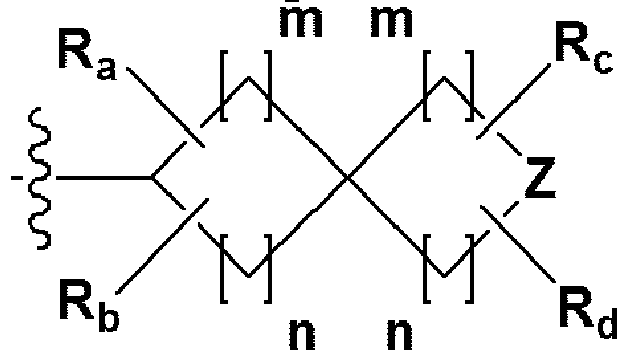
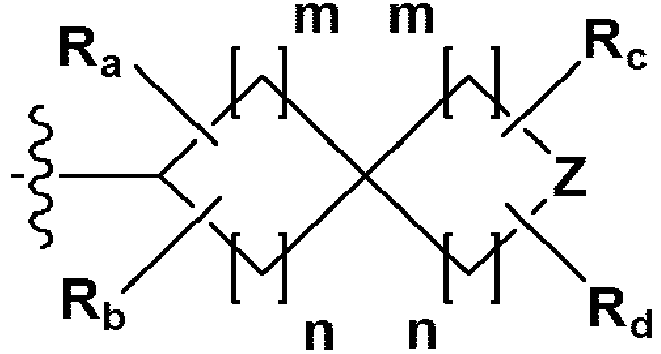
- the present invention provides a 1,3,4-oxadiazole derivative compound represented by Chemical Formula I below, an optical isomer thereof, or a pharmaceutically acceptable salt thereof:
- the pharmaceutically acceptable salt refers to a salt commonly used in the pharmaceutical industry, for example, may include inorganic ionic salts prepared from calcium, potassium, sodium, and magnesium, and the like, inorganic acid salts prepared from hydrochloric acid, nitric acid, phosphoric acid, bromic acid, iodic acid, perchloric acid, and sulfuric acid, and the like; organic acid salts prepared from acetic acid, trifluoroacetic acid, citric acid, maleic acid, succinic acid, oxalic acid, benzoic acid, tartaric acid, fumaric acid, manderic acid, propionic acid, lactic acid, glycolic acid, gluconic acid, galacturonic acid, glutamic acid, glutaric acid, glucuronic acid, aspartic acid, ascorbic acid, carbonic acid, vanillic acid, hydroiodic acid, and the like; sulfonic acid salts prepared from methanesulfonic acid, ethanesul
- Preferred salts in the present invention include hydrochloride, phosphate, sulfate, trifluoroacetate, citrate, bromate, maleate, or tartrate.
- the compound represented by Chemical Formula I of the present invention may contain one or more asymmetric carbons, thereby being able to exist as a racemate, a racemic mixture, a single enantiomer, a diastereomeric mixture, and each diastereomer. These isomers may be separated using conventional techniques, for example, by partitioning, such as by column chromatography, HPLC, or the like, the compound represented by Chemical Formula I. Alternatively, stereoisomers of each of the compounds represented by Chemical Formula I may be stereospecifically synthesized using optically pure starting materials and/or reagents with known arrangement.
- the present invention provides a method for preparing a 1,3,4-oxadiazole derivative compound represented by Chemical Formula I, an optical isomer thereof, or a pharmaceutically acceptable salt thereof.
- a preferred method for preparing the 1,3,4-oxadiazole derivative compound represented by Chemical Formula I, the optical isomer thereof, or the pharmaceutically acceptable salt thereof is the same as Reaction Schemes 1 and 2 below, which also includes preparation methods that are modified to a level obvious to those skilled in the art.
- Reaction Scheme 1 shows a method for synthesizing a compound having a sulfonamide structure, wherein Compound 1-2 in which a protecting group is introduced into Compound 1-1 is synthesized, and then reacted with hydrazine to synthesize hydrazide Compounds 1-3.
- a cyclization reaction with difluoroacetic anhydride is performed to synthesize Compound 1-4, and then the protecting group is removed under an acidic condition to synthesize Compound 1-5.
- bicyclic Compound 1-6 is synthesized and reacted with a sulfonamide functional group to synthesize Compound 1-8.
- Compound 1-9 from which the protecting group is removed under an acid condition is synthesized, and title Compound 1-10 is synthesized by introducing various functional groups.
- Compounds prepared by the above Reaction Scheme are Compounds 3778, 3779, 4214, 4215, 4216, 4217, 4218, 4219, 4220, 4221, 4222, 4223, 4224, 4225, 4226, 4227, 4228, 4236, 4237, 4238, 4239, 4240, 4241, 4242, 4243, 4244, 4245, 4246, 4247, 4248, 4249, 4250, 4251, 4252, 4253, 4254, 4255, 4616, 4617 and 6893.
- Compounds prepared by the above Reaction Scheme are Compounds 4256, 4257, 4258, 4259, 4260, 4261, 4262, 4263, 4264, 4265, 4266, 4267, 4268, 4269, 4270, 4271, 4272, 4273, 4274, 4275, 4297, 4298, 4299, 4300, 4301, 4302, 4303, 4304, 4305, 4306, 4307, 4308, 4309, 4310, 4311, 4312, 4313, 4314, 4315, 4622, 4623, and 4624.
- composition comprising 1,3,4-oxadiazole derivative compounds, use thereof, and treatment method using the same
- the present invention provides a pharmaceutical composition for preventing or treating histone deacetylase 6-mediated diseases containing the compound represented by Chemical Formula I below, the optical isomer thereof, or the pharmaceutically acceptable salt thereof as an active ingredient:
- the Chemical Formula I is the same as defined above.
- the pharmaceutical composition of the present invention exhibits a remarkable effect in the prevention or treatment of histone deacetylase 6-mediated diseases by selectively inhibiting a histone deacetylase 6.
- the histone deacetylase 6-mediated diseases include infectious diseases such as prion disease; neoplasm such as benign tumors (e.g. myelodysplastic syndrome) or malignant tumors (e.g. multiple myeloma, lymphoma, leukemia, lung cancer, colorectal cancer, colon cancer, prostate cancer, urinary tract epithelial cell carcinoma, breast cancer, melanoma, skin cancer, liver cancer, brain cancer, stomach cancer, ovarian cancer, pancreatic cancer, head and neck cancer, oral cancer or glioma); endocrine, nutritional and metabolic diseases such as Wilson's disease, amyloidosis or diabetes; mental and behavioral disorders such as depression or Rett syndrome; neurological diseases such as central nervous system atrophy (e.g.
- Huntington's disease spinal muscular atrophy (SMA), spinal cerebellar ataxia (SCA)), neurodegenerative diseases (e.g. Alzheimer's disease), movement disorders (e.g. Parkinson's disease), neuropathy (e.g. hereditary neuropathy (Charcot-Marie-Tooth disease), sporadic neuropathy, inflammatory neuropathy, drug-induced neuropathy), motor neuropathy (e.g. amyotrophic lateral sclerosis (ALS)), or central nervous system demyelination (e.g.
- MS multiple sclerosis
- diseases of eyes and adnexa such as uveitis
- circulatory diseases such as atrial fibrillation, stroke, and the like
- respiratory diseases such as asthma
- digestive diseases such as alcoholic liver disease, inflammatory bowel disease, Crohn's disease, ulcerative bowel disease, and the like
- skin and subcutaneous tissue diseases such as psoriasis
- musculoskeletal and connective tissue diseases such as rheumatoid arthritis, osteoarthritis, systemic lupus erythematosus (SLE), and the like
- congenital malformations, alterations, and chromosomal abnormalities such as autosomal dominant polycystic kidney disease, and also include symptoms or diseases related to abnormal functions of histone deacetylase.
- the pharmaceutically acceptable salt is the same as described above in the pharmaceutically acceptable salt of the compound represented by Chemical Formula I of the present invention.
- the pharmaceutical composition of the present invention may further include one or more pharmaceutically acceptable carriers for administration, in addition to the compound represented by Chemical Formula I, the optical isomer thereof, or the pharmaceutically acceptable salt thereof.
- the pharmaceutically acceptable carrier may be used by mixing saline, sterile water, Ringer's solution, buffered saline, dextrose solution, maltodextrin solution, glycerol, ethanol and one or more of these ingredients, and if necessary, other conventional additives such as antioxidants, buffers, bacteriostatic agents, and the like, may be added.
- injectable formulations such as aqueous solutions, suspensions, emulsions, and the like, pills, capsules, granules or tablets may be formulated by further adding diluents, dispersants, surfactants, binders and lubricants.
- the composition of the present invention may be a patch, liquid, pill, capsule, granule, tablet, suppository, or the like.
- These formulations may be prepared by a conventional method used for formulation in the art or by a method disclosed in Remington's Pharmaceutical Science (latest edition), Mack Publishing Company, Easton PA , and formulated into various formulations depending on respective diseases or ingredients.
- composition of the present invention may be administered orally or parenterally (for example, intravenously, subcutaneously, intraperitoneally or topically) depending on the desired method, and the dosage range varies depending on the patient's weight, age, sex, health condition, diet, administration time, administration method, excretion rate, and severity of disease, and the like.
- the daily dose of the compound represented by Chemical Formula I of the present invention may be about 1 to 1000 mg/kg, preferably 5 to 100 mg/kg, and may be administered once a day or divided into several times a day.
- the pharmaceutical composition of the present invention may further include one or more active ingredients exhibiting the same or similar medicinal effects in addition to the compound represented by Chemical Formula I above, the optical isomer thereof, or the pharmaceutically acceptable salt thereof.
- the present invention provides the compound represented by Chemical Formula I, the optical isomer thereof, or the pharmaceutically acceptable salt thereof for use in a method for preventing or treating histone deacetylase 6-mediated diseases including administering a therapeutically effective amount of the compound represented by Chemical Formula I, the optical isomer thereof, or the pharmaceutically acceptable salt thereof.
- the present invention provides the compound represented by Chemical Formula I, the optical isomer thereof, or the pharmaceutically acceptable salt thereof for use in a method for selectively inhibiting HDAC6 by administering the compound represented by Chemical Formula I, the optical isomer thereof, or the pharmaceutically acceptable salt thereof to a mammal including humans.
- the method for preventing or treating the histone deacetylase 6-mediated diseases also includes administering the compound represented by Chemical Formula I to treat the disease itself before the onset of the symptom, but also to inhibit or avoid the symptom thereof.
- prophylactic or therapeutic dose of a specific active ingredient will vary depending on the nature and severity of the disease or condition, and the route to which the active ingredient is administered.
- the dose and frequency of dose will vary depending on the age, weight and response of the individual patients.
- a suitable dosage regimen may be readily selected by a person having ordinary knowledge in the art considering these factors for granted.
- the method for preventing or treating histone deacetylase 6-mediated diseases may further include administrating a therapeutically effective amount of an additional active agent useful for the treatment of the disease together with the compound represented by Chemical Formula I, wherein the additional active agent may exhibit synergistic or auxiliary effects together with the compound represented by Chemical Formula I.
- the present invention also aims to provide the use of the compound represented by Chemical Formula I above, the optical isomer thereof, or the pharmaceutically acceptable salt thereof for preparing a medicament for treating histone deacetylase 6-mediated diseases.
- the compound represented by Chemical Formula I above for preparing the medicament may be mixed with acceptable adjuvants, diluents, carriers, and the like, and may be prepared as a complex formulation with other active agents to have a synergistic effect of active ingredients.
- compositions and treatment methods of the present invention are applied equally as long as they are inconsistent with each other.
- the compound represented by Chemical Formula I above of the present invention, the optical isomer thereof, or the pharmaceutically acceptable salt thereof, is able to selectively inhibit histone deacetylase 6 (HDAC6), thereby having remarkably excellent preventive or therapeutic effects on HDAC6-mediated diseases.
- HDAC6 histone deacetylase 6
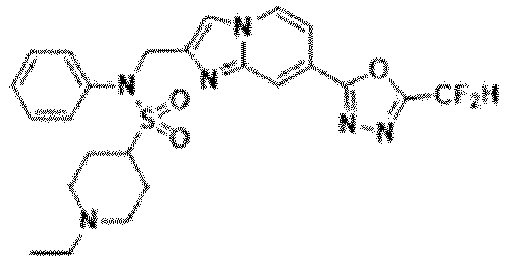
- Example 1 Synthesis of Compound 3778, N- ((7-(5-(difluoromethyl)-1,3,4-oxadiazol-2-yl)imidazo[1,2-a]pyridin-2-yl)methyl)-1-methyl- N -phenylpiperidine-4-sulfonamide
- Methyl 2-aminoisonicotinate (20.000 g, 131.449 mmol) and di-tert-butyl dicarbonate (37.295 g, 170.884 mmol) were dissolved in tert-butanol (800 mL) at room temperature.
- the resulting solution was stirred at 60°C for 16 hours, and then the temperature was lowered to room temperature to terminate the reaction.
- the precipitated solid was filtered, washed with ethanol, and dried to obtain the title compound (26.000 g, 78.4 %) as a white solid.
- Methyl 2-((tert-butoxycarbonyl)amino)isonicotinate (26.000 g, 103.064 mmol) prepared in step 1 and hydrazine monohydrate (100.182 mL, 2.061 mol) were dissolved in methanol (800 mL) at room temperature. The resulting solution was stirred at the same temperature for 16 hours. Methanol (500 mL) was added to the obtained product, followed by filtration through a plastic filter to obtain an organic layer, and the organic layer was concentrated to obtain the title compound (25.000 g, 96.2 %) as a white solid.
- a saturated aqueous sodium hydrogen carbonate solution was poured into the reaction mixture, followed by extraction with dichloromethane.
- the organic layer was washed with a saturated aqueous water solution, dried over anhydrous magnesium sulfate, filtered, and concentrated under reduced pressure.
- a saturated aqueous sodium hydrogen carbonate solution was poured into the reaction mixture, followed by extraction with dichloromethane.
- the organic layer was washed with a saturated aqueous water solution, dried over anhydrous magnesium sulfate, filtered, and concentrated under reduced pressure.
- the organic layer was washed with a saturated aqueous sodium chloride solution, dried over anhydrous sodium sulfate, filtered, and concentrated under reduced pressure.
- the organic layer was washed with a saturated aqueous sodium chloride solution, dried over anhydrous sodium sulfate, filtered, and concentrated under reduced pressure.
- the organic layer was washed with a saturated aqueous sodium chloride solution, dried over anhydrous sodium sulfate, filtered, and concentrated under reduced pressure.
- the organic layer was washed with a saturated aqueous sodium chloride solution, dried over anhydrous sodium sulfate, filtered, and concentrated under reduced pressure.
- Example 7 Synthesis of Compound 4218, 1-cyclohexyl- N- ((7-(5-(difluoromethyl)-1,3,4-oxadiazol-2-yl)imidazo[1,2-a]pyridin-2-yl)methyl)- N -phenylpiperidine-4-sulfonamide
- the organic layer was washed with a saturated aqueous sodium chloride solution, dried over anhydrous sodium sulfate, filtered, and concentrated under reduced pressure.
- Example 8 Synthesis of Compound 4219, N- ((7-(5-(difluoromethyl)-1,3,4-oxadiazol-2-yl)imidazo[1,2-a]pyridin-2-yl)methyl)- N -phenyl-1-(tetrahydro-2H-pyran-4-yl)piperidine-4-sulfonamide
- the organic layer was washed with a saturated aqueous sodium chloride solution, dried over anhydrous sodium sulfate, filtered, and concentrated under reduced pressure.
- Example 9 Synthesis of Compound 4220, 1-(4,4-difluorocyclohexyl)- N -((7-(5-(difluoromethyl)-1,3,4-oxadiazol-2-yl)imidazo[1,2-a]pyridin-2-yl)methyl)- N- phenylpiperidine-4-sulfonamide
- the organic layer was washed with a saturated aqueous sodium chloride solution, dried over anhydrous sodium sulfate, filtered, and concentrated under reduced pressure.
- the organic layer was washed with a saturated aqueous sodium chloride solution, dried over anhydrous sodium sulfate, filtered, and concentrated under reduced pressure.
- the organic layer was washed with a saturated aqueous sodium chloride solution, dried over anhydrous sodium sulfate, filtered, and concentrated under reduced pressure.
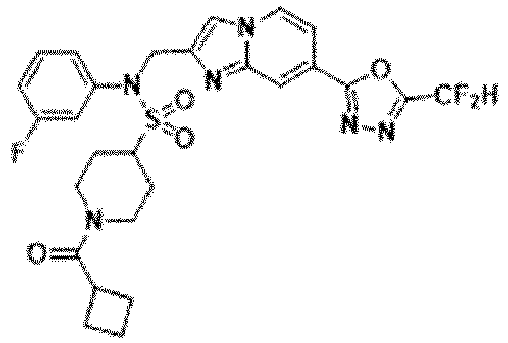
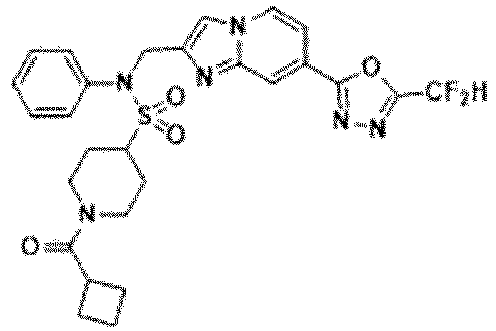
- Example 12 Synthesis of Compound 4223, 1-(cyclobutanecarbonyl)- N- ((7-(5-(difluoromethyl)-1,3,4-oxadiazol-2-yl)imidazo[1,2-a]pyridine -2-yl)methyl)- N- phenylpiperidine-4-sulfonamide
- the organic layer was washed with a saturated aqueous sodium chloride solution, dried over anhydrous sodium sulfate, filtered, and concentrated under reduced pressure.
- Example 13 Synthesis of Compound 4224, N- ((7-(5-(difluoromethyl)-1,3,4-oxadiazol-2-yl)imidazo[1,2-a]pyridin-2-yl)methyl)- N- phenyl-1-(2,2,2-trifluoroacetyl)piperidine-4-sulfonamide
- the organic layer was washed with a saturated aqueous sodium chloride solution, dried over anhydrous sodium sulfate, filtered, and concentrated under reduced pressure.
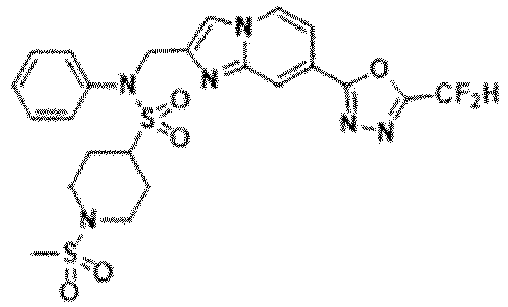
- Example 14 Synthesis of Compound 4225, N- ((7-(5-(difluoromethyl)-1,3,4-oxadiazol-2-yl)imidazo[1,2-a]pyridin-2-yl)methyl)-1-(methylsulfonyl)- N- phenylpiperidine-4-sulfonamide
- Example 15 Synthesis of Compound 4226, methyl 4-( N- ((7-(5-(difluoromethyl)-1,3,4-oxadiazol-2-yl)imidazo[1,2-a]pyridin-2-yl)methyl)- N- phenylsulfamoyl)piperidine-1-carboxylate
- the organic layer was washed with a saturated aqueous sodium chloride solution, dried over anhydrous sodium sulfate, filtered, and concentrated under reduced pressure.
- Example 16 Synthesis of Compound 4227, 4-( N- ((7-(5-(difluoromethyl)-1,3,4-oxadiazol-2-yl)imidazo[1,2-a]pyridin-2-yl)methyl)- N- phenylsulfamoyl)- N , N- dimethylpiperidine-1-carboxamide
- the organic layer was washed with a saturated aqueous sodium chloride solution, dried over anhydrous sodium sulfate, filtered, and concentrated under reduced pressure.
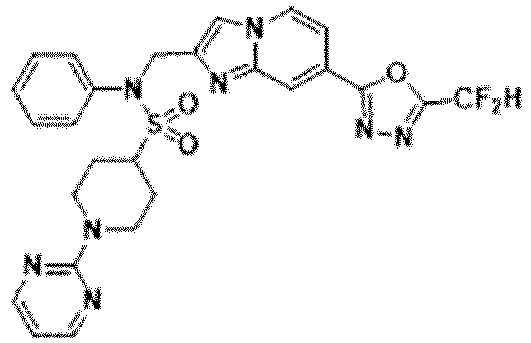
- Example 17 Synthesis of Compound 4228, N- ((7-(5-(difluoromethyl)-1,3,4-oxadiazol-2-yl)imidazo[1,2-a]pyridin-2-yl)methyl)- N- phenyl-1-(pyrimidin-2-yl)piperidine-4-sulfonamide
- a saturated aqueous ammonium chloride solution was poured into the concentrate obtained by removing the solvent from the reaction mixture under reduced pressure, followed by extraction with dichloromethane. The organic layer was washed with a saturated aqueous water solution, dried over anhydrous magnesium sulfate, filtered, and concentrated under reduced pressure.
- a saturated aqueous sodium hydrogen carbonate solution was poured into the reaction mixture, extracted with dichloromethane, and then filtered through a plastic filter to remove a solid residue and an aqueous layer. After concentration under reduced pressure, the title compound (0.990g, 100.1%) was obtained as a yellow solid without further purification.
- N -((7-(5-(difluoromethyl)-1,3,4-oxadiazol-2-yl)imidazo[1,2-a]pyridin-2-yl)methyl)- N -(3-fluorophenyl)piperidine-4-sulfonamide (0.050 g, 0.099 mmol) prepared in step 3 of Example 18, acetaldehyde (0.009 g, 0.197 mmol), acetic acid (0.006 mL, 0.099 mmol), sodium triacetoxyborohydride (0.063 g, 0.296 mmol) and triethylamine (0.014 mL, 0.099 mmol) were dissolved in dichloromethane (1 mL) at room temperature, and the resulting solution was stirred at the same temperature for 18 hours.
- aqueous sodium hydrogen carbonate solution was poured into the reaction mixture, extracted with dichloromethane, and filtered through a plastic filter to remove a solid residue and an aqueous layer, and then concentrated under reduced pressure.
- aqueous sodium hydrogen carbonate solution was poured into the reaction mixture, extracted with dichloromethane, and filtered through a plastic filter to remove a solid residue and an aqueous layer, and then concentrated under reduced pressure.
- Example 21 Synthesis of Compound 4239, N -((7-(5-(difluoromethyl)-1,3,4-oxadiazol-2-yl)imidazo[1,2-a]pyridin-2-yl)methyl)- N- (3-fluorophenyl)-1-(1-hydroxypropan-2-yl)piperidine-4-sulfonamide
- aqueous sodium hydrogen carbonate solution was poured into the reaction mixture, extracted with dichloromethane, and filtered through a plastic filter to remove a solid residue and an aqueous layer, and then concentrated under reduced pressure.
- Example 22 Synthesis of Compound 4240, 1-cyclobutyl- N -((7-(5-(difluoromethyl)-1,3,4-oxadiazol-2-yl)imidazo[1,2-a]pyridin-2-yl)methyl)- N -(3-fluorophenyl)piperidine-4-sulfonamide
- aqueous sodium hydrogen carbonate solution was poured into the reaction mixture, extracted with dichloromethane, and filtered through a plastic filter to remove a solid residue and an aqueous layer, and then concentrated under reduced pressure.
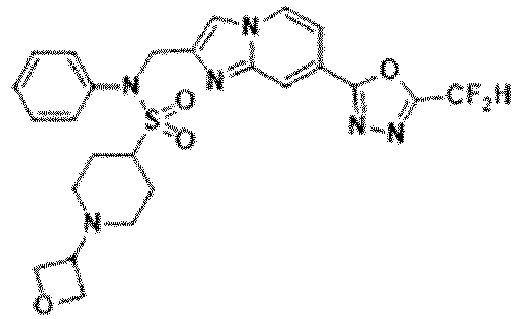
- Example 23 Synthesis of Compound 4241, N-((7-(5-(difluoromethyl)-1,3,4-oxadiazol-2-yl)imidazo[1,2-a]pyridin-2-yl)methyl)- N -(3-fluorophenyl)-1-oxetan-3-yl)piperidine-4-sulfonamide
- N -((7-(5-(difluoromethyl)-1,3,4-oxadiazol-2-yl)imidazo[1,2-a]pyridin-2-yl)methyl)-N-(3-fluorophenyl)piperidine-4-sulfonamide (0.050 g, 0.099 mmol) prepared in step 3 of Example 18, oxetan-3-one (0.014 g, 0.197 mmol), acetic acid (0.006 mL, 0.099 mmol), sodium triacetoxyborohydride (0.063 g, 0.296 mmol), and triethylamine (0.014 mL, 0.099 mmol) were dissolved in dichloromethane (1 mL) at room temperature, and the resulting solution was stirred at the same temperature for 18 hours.
- aqueous sodium hydrogen carbonate solution was poured into the reaction mixture, extracted with dichloromethane, and filtered through a plastic filter to remove a solid residue and an aqueous layer, and then concentrated under reduced pressure.
- Example 25 Synthesis of Compound 4243, N -((7-(5-(difluoromethyl)-1,3,4-oxadiazol-2-yl)imidazo[1,2-a]pyridin-2-yl)methyl)- N- (3-fluorophenyl)-1-(tetrahydro-2H-pyran-4-yl)piperidine-4-sulfonamide
- N -((7-(5-(difluoromethyl)-1,3,4-oxadiazol-2-yl)imidazo[1,2-a]pyridin-2-yl)methyl)- N -(3-fluorophenyl)piperidine-4-sulfonamide (0.050 g, 0.099 mmol) prepared in step 3 of Example 18, tetrahydro-4H-pyran-4-one (0.020 g, 0.197 mmol), acetic acid (0.006 mL, 0.099 mmol), sodium triacetoxyborohydride (0.063 g, 0.296 mmol), and triethylamine (0.014 mL, 0.099 mmol) were dissolved in dichloromethane (1 mL) at room temperature, and the resulting solution was stirred at the same temperature for 18 hours.
- aqueous sodium hydrogen carbonate solution was poured into the reaction mixture, extracted with dichloromethane, and filtered through a plastic filter to remove a solid residue and an aqueous layer, and then concentrated under reduced pressure.
- Example 26 Synthesis of Compound 4244, 1-(4,4-difluorocyclohexyl)- N -((7-(5-(difluoromethyl)-1,3,4-oxadiazol-2-yl)imidazo[1,2-a]pyridin-2-yl)methyl)- N- (3-fluorophenyl)piperidine-4-sulfonamide
- N -((7-(5-(difluoromethyl)-1,3,4-oxadiazol-2-yl)imidazo[1,2-a]pyridin-2-yl)methyl)-N-(3-fluorophenyl)piperidine-4-sulfonamide (0.050 g, 0.099 mmol) prepared in step 3 of Example 18, 4,4-difluorocyclohexan-1-one (0.026 g, 0.197 mmol), acetic acid (0.006 mL, 0.099 mmol), sodium triacetoxyborohydride (0.063 g, 0.296 mmol), and triethylamine (0.014 mL, 0.099 mmol) were dissolved in dichloromethane (1 mL) at room temperature, and the resulting solution was stirred at the same temperature for 18 hours.
- aqueous sodium hydrogen carbonate solution was poured into the reaction mixture, extracted with dichloromethane, and filtered through a plastic filter to remove a solid residue and an aqueous layer, and then concentrated under reduced pressure.
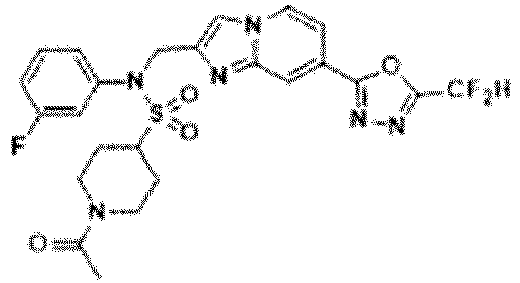
- N -((7-(5-(difluoromethyl)-1,3,4-oxadiazol-2-yl)imidazo[1,2-a]pyridin-2-yl)methyl)- N -(3-fluorophenyl)piperidine-4-sulfonamide (0.050 g, 0.099 mmol) prepared in step 3 of Example 18, acetyl chloride (0.014 mL, 0.197 mmol), and triethylamine (0.041 mL, 0.296 mmol) were dissolved in dichloromethane (1 mL) at room temperature, and the resulting solution was stirred at the same temperature for 18 hours.
- aqueous sodium hydrogen carbonate solution was poured into the reaction mixture, extracted with dichloromethane, and filtered through a plastic filter to remove a solid residue and an aqueous layer, and then concentrated under reduced pressure.
- Example 28 Synthesis of Compound 4246, N -((7-(5-(difluoromethyl)-1,3,4-oxadiazol-2-yl)imidazo[1,2-a]pyridin-2-yl)methyl)- N- (3-fluorophenyl)-1-propionylpiperidine-4-sulfonamide
- N -((7-(5-(difluoromethyl)-1,3,4-oxadiazol-2-yl)imidazo[1,2-a]pyridin-2-yl)methyl)-N-(3-fluorophenyl)piperidine-4-sulfonamide (0.050 g, 0.099 mmol) prepared in step 3 of Example 18, propionyl chloride (0.018 g, 0.197 mmol), and triethylamine (0.041 mL, 0.296 mmol) were dissolved in dichloromethane (1 mL) at room temperature, and the resulting solution was stirred at the same temperature for 18 hours.
- aqueous sodium hydrogen carbonate solution was poured into the reaction mixture, extracted with dichloromethane, and filtered through a plastic filter to remove a solid residue and an aqueous layer, and then concentrated under reduced pressure.
- Example 29 Synthesis of Compound 4247, N -((7-(5-(difluoromethyl)-1,3,4-oxadiazol-2-yl)imidazo[1,2-a]pyridin-2-yl)methyl)- N -(3-fluorophenyl)-1-(2-hydroxyacetyl)piperidine-4-sulfonamide
- N -((7-(5-(difluoromethyl)-1,3,4-oxadiazol-2-yl)imidazo[1,2-a]pyridin-2-yl)methyl)- N -(3-fluorophenyl)piperidine-4-sulfonamide (0.050 g, 0.099 mmol) prepared in step 3 of Example 18, 2-hydroxyacetic acid (0.015 g, 0.197 mmol), triethylamine (0.028 mL, 0.197 mmol), and 1-[bis(dimethylamino)methylene]-1H-1,2,3-triazolo[4,5-b]pyridinium 3-oxide hexafluorophosphate (HATU, 0.056 g, 0.148 mmol) were dissolved in dichloromethane (1 mL) at room temperature, and the resulting solution was stirred at the same temperature for 18 hours.
- HATU 1-[bis(dimethylamino)methylene]-1H-1,2,3-tri
- aqueous sodium hydrogen carbonate solution was poured into the reaction mixture, extracted with dichloromethane, and filtered through a plastic filter to remove a solid residue and an aqueous layer, and then concentrated under reduced pressure.
- N -((7-(5-(difluoromethyl)-1,3,4-oxadiazol-2-yl)imidazo[1,2-a]pyridin-2-yl)methyl)- N -(3-fluorophenyl)piperidine-4-sulfonamide (0.050 g, 0.099 mmol) prepared in step 3 of Example 18, cyclobutanecarbonyl chloride (0.023 g, 0.197 mmol), and triethylamine (0.041 mL, 0.296 mmol) were dissolved in dichloromethane (1 mL) at room temperature, and the resulting solution was stirred at the same temperature for 18 hours.
- aqueous sodium hydrogen carbonate solution was poured into the reaction mixture, extracted with dichloromethane, and filtered through a plastic filter to remove a solid residue and an aqueous layer, and then concentrated under reduced pressure.
- Example 31 Synthesis of Compound 4249, N -((7-(5-(difluoromethyl)-1,3,4-oxadiazol-2-yl)imidazo[1,2-a]pyridin-2-yl)methyl)- N- (3-fluorophenyl)-1-(oxetan-3-carbonyl)piperidine-4-sulfonamide
- N -((7-(5-(difluoromethyl)-1,3,4-oxadiazol-2-yl)imidazo[1,2-a]pyridin-2-yl)methyl)- N -(3-fluorophenyl)piperidine-4-sulfonamide (0.050 g, 0.099 mmol) prepared in step 3 of Example 18, oxetane-3-carboxylic acid (0.020 g, 0.197 mmol), 1-[bis(dimethylamino)methylene]-1H-1,2,3-triazolo[4,5-b]pyridinium 3-oxide hexafluorophosphate (HATU, 0.056 g, 0.148 mmol), and triethylamine (0.028 mL, 0.197 mmol) were dissolved in dichloromethane (1 mL) at room temperature, and the resulting solution was stirred at the same temperature for 18 hours.
- HATU 1-[bis(dimethylamino)methylene
- aqueous sodium hydrogen carbonate solution was poured into the reaction mixture, extracted with dichloromethane, and filtered through a plastic filter to remove a solid residue and an aqueous layer, and then concentrated under reduced pressure.
- Example 32 Synthesis of Compound 4250, N -((7-(5-(difluoromethyl)-1,3,4-oxadiazol-2-yl)imidazo[1,2-a]pyridin-2-yl)methyl)- N- (3-fluorophenyl)-1-(2,2,2-trifluoroacetyl)piperidine-4-sulfonamide
- N -((7-(5-(difluoromethyl)-1,3,4-oxadiazol-2-yl)imidazo[1,2-a]pyridin-2-yl)methyl)- N -(3-fluorophenyl)piperidine-4-sulfonamide (0.050 g, 0.099 mmol) prepared in step 3 of Example 18, 2,2,2-trifluoroacetic anhydride (0.041 g, 0.197 mmol), and triethylamine (0.041 mL, 0.296 mmol) were dissolved in dichloromethane (1 mL) at room temperature, and the resulting solution was stirred at the same temperature for 18 hours.
- aqueous sodium hydrogen carbonate solution was poured into the reaction mixture, extracted with dichloromethane, and filtered through a plastic filter to remove a solid residue and an aqueous layer, and then concentrated under reduced pressure.
- N -((7-(5-(difluoromethyl)-1,3,4-oxadiazol-2-yl)imidazo[1,2-a]pyridin-2-yl)methyl)- N -(3-fluorophenyl)piperidine-4-sulfonamide (0.050 g, 0.099 mmol) prepared in step 3 of Example 18, methanesulfonyl chloride (0.015 mL, 0.197 mmol), and triethylamine (0.041 mL, 0.296 mmol) were dissolved in dichloromethane (1 mL) at room temperature, and the resulting solution was stirred at the same temperature for 18 hours.
- aqueous sodium hydrogen carbonate solution was poured into the reaction mixture, extracted with dichloromethane, and filtered through a plastic filter to remove a solid residue and an aqueous layer, and then concentrated under reduced pressure.
- Example 34 Synthesis of Compound 4252, methyl 4-( N -((7-(5-(difluoromethyl)-1,3,4-oxadiazol-2-yl)imidazo[1,2-a]pyridin-2-yl)methyl)- N- (3-fhiorophenyl)sulfamoyl)piperidine-1-carboxylate
- N -((7-(5-(difluoromethyl)-1,3,4-oxadiazol-2-yl)imidazo[1,2-a]pyridin-2-yl)methyl)- N -(3-fluorophenyl)piperidine-4-sulfonamide (0.050 g, 0.099 mmol) prepared in step 3 of Example 18, methyl carbonochloridate (0.019 g, 0.197 mmol), and triethylamine (0.041 mL, 0.296 mmol) were dissolved in dichloromethane (1 mL) at room temperature, and the resulting solution was stirred at the same temperature for 18 hours.
- aqueous sodium hydrogen carbonate solution was poured into the reaction mixture, extracted with dichloromethane, and filtered through a plastic filter to remove a solid residue and an aqueous layer, and then concentrated under reduced pressure.
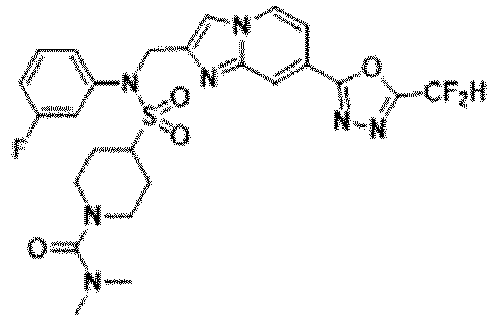
- Example 35 Synthesis of Compound 4253, 4-( N -((7-(5-(difluoromethyl)-1,3,4-oxadiazol-2-yl)imidazo[1,2-a]pyridin-2-yl)methyl)- N -(3-fluorophenyl)sulfamoyl)-N,N-dimethylpiperidine-1 -carboxamide
- N -((7-(5-(difluoromethyl)-1,3,4-oxadiazol-2-yl)imidazo[1,2-a]pyridin-2-yl)methyl)- N -(3-fluorophenyl)piperidine-4-sulfonamide (0.050 g, 0.099 mmol) prepared in step 3 of Example 18, dimethylcarbamic chloride (0.021 g, 0.197 mmol), and triethylamine (0.041 mL, 0.296 mmol) were dissolved in dichloromethane (1 mL) at room temperature, and the resulting solution was stirred at the same temperature for 18 hours.
- aqueous sodium hydrogen carbonate solution was poured into the reaction mixture, extracted with dichloromethane, and filtered through a plastic filter to remove a solid residue and an aqueous layer, and then concentrated under reduced pressure.
- Example 36 Synthesis of Compound 4254, N -((7-(5-(difluoromethyl)-1,3,4-oxadiazol-2-yl)imidazo[1,2-a]pyridin-2-yl)methyl)- N- (3-fluorophenyl)-1-(pyridin-2-yl)piperidine-4-sulfonamide
- N -((7-(5-(difluoromethyl)-1,3,4-oxadiazol-2-yl)imidazo[1,2-a]pyridin-2-yl)methyl)- N -(3-fluorophenyl)piperidine-4-sulfonamide (0.050 g, 0.099 mmol) prepared in step 3 of Example 18, 2-bromopyridine (0.031 g, 0.197 mmol), RuPhos palladium G2 (0.004 g, 0.005 mmol) and cesium carbonate (0.064 g, 0.197 mmol) were dissolved in 1,4-dioxane (1 mL) at room temperature, and the resulting solution was stirred at 120°C for 18 hours.
- Example 37 Synthesis of Compound 4255, N -((7-(5-(difluoromethyl)-1,3,4-oxadiazol-2-yl)imidazo[1,2-a]pyridin-2-yl)methyl)- N- (3-fluorophenyl)-1-(pyrimidin-2-yl)piperidine-4-sulfonamide
- N -((7-(5-(difluoromethyl)-1,3,4-oxadiazol-2-yl)imidazo[1,2-a]pyridin-2-yl)methyl)- N -(3-fluorophenyl)piperidine-4-sulfonamide (0.050 g, 0.099 mmol) prepared in step 3 of Example 18, 2-chloropyrimidine (0.023 g, 0.197 mmol), and potassium carbonate (0.041 g, 0.296 mmol) were dissolved in N , N- dimethylformamide (0.5 mL)/acetonitrile (0.5 mL) at room temperature, and the resulting solution was stirred at the same temperature for 18 hours.
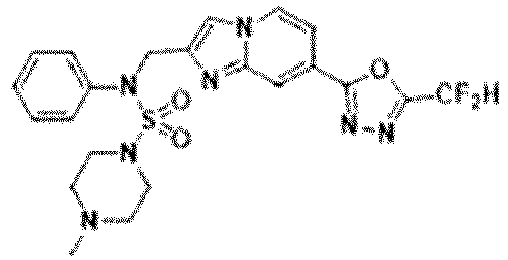
- Example 38 Synthesis of Compound 4256, N -((7-(5-(difluoromethyl)-1,3,4-oxadiazol-2-yl)imidazo[1,2-a]pyridin-2-yl)methyl)-4-methyl-N phenylpiperazine-1-sulfonamide
- 1,1'-sulfonylbis (1H-imidazole, 10.000 g, 50.454 mmol) and methyl trifluoromethanesulfonate (4.981 mL, 45.409 mmol) were dissolved in dichloromethane (150 mL) at room temperature, and the resulting solution was stirred at the same temperature for 3 hours. After removing the solvent from the reaction mixture under reduced pressure, the title compound (18.280 g, 100.0 %) was obtained as a white solid without further purification.
- the organic layer was washed with a saturated aqueous water solution, dried over anhydrous magnesium sulfate, filtered, and concentrated under reduced pressure.
- the organic layer was washed with a saturated aqueous water solution, dried over anhydrous magnesium sulfate, filtered, and concentrated under reduced pressure.
- a saturated aqueous ammonium chloride solution was poured into the concentrate obtained by removing the solvent from the reaction mixture under reduced pressure, followed by extraction with dichloromethane. The organic layer was washed with a saturated aqueous water solution, dried over anhydrous magnesium sulfate, filtered, and concentrated under reduced pressure.
- a saturated aqueous sodium hydrogen carbonate solution was poured into the reaction mixture, extracted with dichloromethane, and filtered through a plastic filter to remove a solid residue and an aqueous layer, and then concentrated under reduced pressure.
- Example 39 Synthesis of Compound 4257, N -((7-(5-(difluoromethyl)-1,3,4-oxadiazol-2-yl)imidazo[1,2-a]pyridin-2-yl)methyl)-4-ethyl- N- phenylpiperazine-1-sulfonamide
- a saturated aqueous sodium hydrogen carbonate solution was poured into the reaction mixture, extracted with dichloromethane, and filtered through a plastic filter to remove a solid residue and an aqueous layer, and then concentrated under reduced pressure.
- Example 40 Synthesis of Compound 4258, N -((7-(5-(difluoromethyl)-1,3,4-oxadiazol-2-yl)imidazo[1,2-a]pyridin-2-yl)methyl)-4-isopropyl- N- phenylpiperazine-1-sulfonamide
- a saturated aqueous sodium hydrogen carbonate solution was poured into the reaction mixture, extracted with dichloromethane, and filtered through a plastic filter to remove a solid residue and an aqueous layer, and then concentrated under reduced pressure.
- Example 41 Synthesis of Compound 4259, N -((7-(5-(difluoromethyl)-1,3,4-oxadiazol-2-yl)imidazo[1,2-a]pyridin-2-yl)methyl)-4-(1-hydroxypropan-2-yl)- N- phenylpiperazine-1-sulfonamide
- a saturated aqueous sodium hydrogen carbonate solution was poured into the reaction mixture, extracted with dichloromethane, and filtered through a plastic filter to remove a solid residue and an aqueous layer, and then concentrated under reduced pressure.
- Example 42 Synthesis of Compound 4260, 4-cyclobutyl- N- ((7-(5-(difluoromethyl)-1,3,4-oxadiazol-2-yl)imidazo[1,2-a]pyridin-2-yl)methyl)- N- phenylpiperazine-1-sulfonamide
- a saturated aqueous sodium hydrogen carbonate solution was poured into the reaction mixture, extracted with dichloromethane, and filtered through a plastic filter to remove a solid residue and an aqueous layer, and then concentrated under reduced pressure.
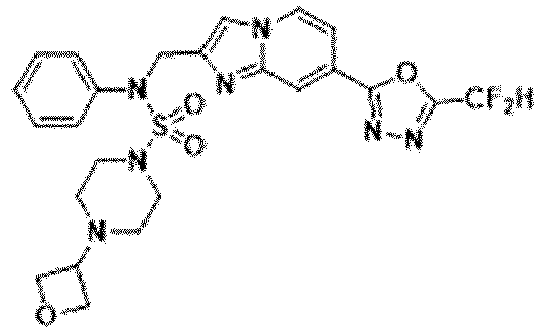
- Example 43 Synthesis of Compound 4261, N -((7-(5-(difluoromethyl)-1,3,4-oxadiazol-2-yl)imidazo[1,2-a]pyridin-2-yl)methyl)-4-(oxetan-3-yl)- N- phenylpiperazine-1-sulfonamide
- a saturated aqueous sodium hydrogen carbonate solution was poured into the reaction mixture, extracted with dichloromethane, and filtered through a plastic filter to remove a solid residue and an aqueous layer, and then concentrated under reduced pressure.
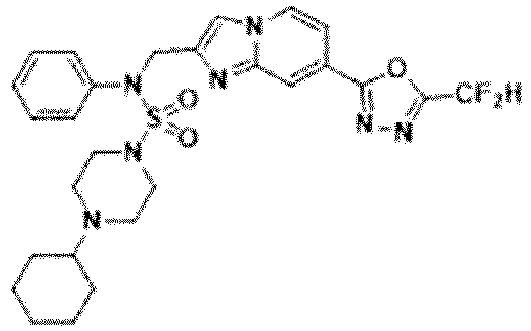
- Example 44 Synthesis of Compound 4262, 4-cyclohexyl- N- ((7-(5-(difluoromethyl)-1,3,4-oxadiazol-2-yl)imidazo[1,2-a]pyridin-2-yl)methyl)- N- phenylpiperazine-1-sulfonamide
- a saturated aqueous sodium hydrogen carbonate solution was poured into the reaction mixture, extracted with dichloromethane, and filtered through a plastic filter to remove a solid residue and an aqueous layer, and then concentrated under reduced pressure.
- Example 45 Synthesis of Compound 4263, N -((7-(5-(difluoromethyl)-1,3,4-oxadiazol-2-yl)imidazo[1,2-a]pyridin-2-yl)methyl)- N- phenyl-1-(tetrahydro-2H-pyran-4-yl)piperazine-1-sulfonamide
- N -((7-(5-(difluoromethyl)-1,3,4-oxadiazol-2-yl)imidazo[1,2-a]pyridin-2-yl)methyl)- N- phenylpiperazine-1-sulfonamide (0.050 g, 0.102 mmol) prepared in step 6 of Example 38, tetrahydro-4H-pyran-4-one (0.015 g, 0.153 mmol), acetic acid (0.006 mL, 0.102 mmol), sodium triacetoxyborohydride (0.065 g, 0.306 mmol), and triethylamine (0.014 mL, 0.102 mmol) were dissolved in dichloromethane (1 mL) at room temperature, and the resulting solution was stirred at the same temperature for 18 hours.
- aqueous sodium hydrogen carbonate solution was poured into the reaction mixture, extracted with dichloromethane, filtered through a plastic filter to remove a solid residue and an aqueous layer, and then concentrated under reduced pressure.
- Example 46 Synthesis of Compound 4264, 4-(4,4-difluorocyclohexyl)- N -((7-(5-(difluoromethyl)-1,3,4-oxadiazol-2-yl)imidazo[1,2-a]pyridin-2-yl)methyl)- N- phenylpiperazine-1 -sulfonamide
- aqueous sodium hydrogen carbonate solution was poured into the reaction mixture, extracted with dichloromethane, filtered through a plastic filter to remove a solid residue and an aqueous layer, and then concentrated under reduced pressure.
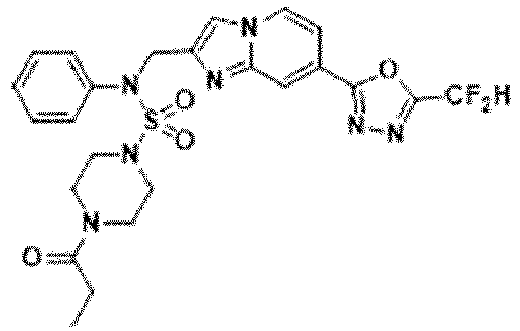
- Example 48 Synthesis of Compound 4266, N -((7-(5-(difluoromethyl)-1,3,4-oxadiazol-2-yl)imidazo[1,2-a]pyridin-2-yl)methyl)- N- phenyl-4-propionylpiperazine-1-sulfonamide
- aqueous sodium hydrogen carbonate solution was poured into the reaction mixture, extracted with dichloromethane, filtered through a plastic filter to remove a solid residue and an aqueous layer, and then concentrated under reduced pressure.
- Example 49 Synthesis of Compound 4267, N -((7-(5-(difluoromethyl)-1,3,4-oxadiazol-2-yl)imidazo[1,2-a]pyridin-2-yl)methyl)-4-(2-hydroxyacetyl)- N -phenylpiperazine-1-sulfonamide
- 2-hydroxyacetic acid 0.012 g, 0.153 mmol
- aqueous sodium hydrogen carbonate solution was poured into the reaction mixture, extracted with dichloromethane, filtered through a plastic filter to remove a solid residue and an aqueous layer, and then concentrated under reduced pressure.
- Example 50 Synthesis of Compound 4268, 4-(cyclobutanecarbonyl)- N -((7-(5-(difluoromethyl)-1,3,4-oxadiazol-2-yl)imidazo[1,2-a]pyridine -2-yl)methyl)- N- phenylpiperazine-1 -sulfonamide
- aqueous sodium hydrogen carbonate solution was poured into the reaction mixture, extracted with dichloromethane, filtered through a plastic filter to remove a solid residue and an aqueous layer, and then concentrated under reduced pressure.
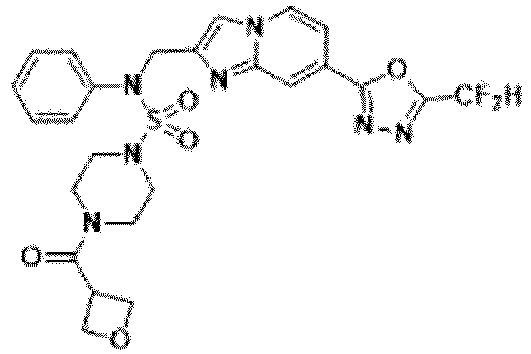
- Example 51 Synthesis of Compound 4269, N -((7-(5-(difluoromethyl)-1,3,4-oxadiazol-2-yl)imidazo[1,2-a]pyridin-2-yl)methyl)-4-(oxetan-3-carbonyl)-N-phenylpiperazine-1-sulfonamide
- HATU 1-[bis(dimethylamino)methylene]-1H-1,2,3
- aqueous sodium hydrogen carbonate solution was poured into the reaction mixture, extracted with dichloromethane, filtered through a plastic filter to remove a solid residue and an aqueous layer, and then concentrated under reduced pressure.
- Example 52 Synthesis of Compound 4270, N -((7-(5-(difluoromethyl)-1,3,4-oxadiazol-2-yl)imidazo[1,2-a]pyridin-2-yl)methyl)- N -phenyl-4-(2,2,2-trifluoroacetyl)piperazine-1-sulfonamide
- Example 53 Synthesis of Compound 4271, N -((7-(5-(difluoromethyl)-1,3,4-oxadiazol-2-yl)imidazo[1,2-a]pyridin-2-yl)methyl)-4-(methylsulfonyl)- N- phenylpiperazine-1-sulfonamide
- aqueous sodium hydrogen carbonate solution was poured into the reaction mixture, extracted with dichloromethane, filtered through a plastic filter to remove a solid residue and an aqueous layer, and then concentrated under reduced pressure.
- Example 54 Synthesis of Compound 4272, methyl 4-( N -((7-(5-(difluoromethyl)-1,3,4-oxadiazol-2-yl)imidazo[1,2-a]pyridin-2-yl)methyl)- N -phenylsulfamoyl)piperazine-1-carboxylate
- Example 55 Synthesis of Compound 4273, 4-( N -((7-(5-(difluoromethyl)-1,3,4-oxadiazol-2-yl)imidazo[1,2-a]pyridin-2-yl)methyl)- N- phenylsulfamoyl)- N , N- dimethylpiperazine-1-carboxamide
- Example 56 Synthesis of Compound 4274, N -((7-(5-(difluoromethyl)-1,3,4-oxadiazol-2-yl)imidazo[1,2-a]pyridin-2-yl)methyl)- N- phenyl-4-(pyridin-2-yl)piperazine-1-sulfonamide
- Example 57 Synthesis of Compound 4275, N -((7-(5-(difluoromethyl)-1,3,4-oxadiazol-2-yl)imidazo[1,2-a]pyridin-2-yl)methyl)- N- phenyl-4-(pyrimidin-2-yl)piperazine-1-sulfonamide
- Example 58 Synthesis of Compound 4297, N -((7-(5-(difluoromethyl)-1,3,4-oxadiazol-2-yl)imidazo[1,2-a]pyridin-2-yl)methyl)- N- (3-fluorophenyl)-4-methylpiperazine-1-sulfonamide
- the organic layer was washed with a saturated aqueous water solution, dried over anhydrous magnesium sulfate, filtered, and concentrated under reduced pressure.
- a saturated aqueous ammonium chloride solution was poured into the concentrate obtained by removing the solvent from the reaction mixture under reduced pressure, followed by extraction with dichloromethane. The organic layer was washed with a saturated aqueous water solution, dried over anhydrous magnesium sulfate, filtered, and concentrated under reduced pressure.
- N -((7-(5-(difluoromethyl)-1,3,4-oxadiazol-2-yl)imidazo[1,2-a]pyridin-2-yl)methyl)- N -(3-fluorophenyl)piperazine-1-sulfonamide (0.050 g, 0.099 mmol) prepared in step 3, formaldehyde (0.006 g, 0.197 mmol), acetic acid (0.006 mL, 0.099 mmol), and sodium triacetoxyborohydride (0.063 g, 0.296 mmol) were dissolved in dichloromethane (3 mL) at room temperature, and the resulting solution was stirred at the same temperature for 18 hours.
- a saturated aqueous sodium hydrogen carbonate solution was poured into the reaction mixture, extracted with dichloromethane, and filtered through a plastic filter to remove a solid residue and an aqueous layer, and then concentrated under reduced pressure.
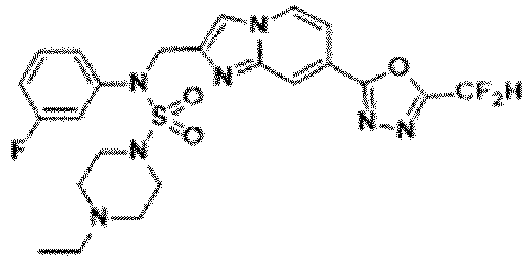
- Example 59 Synthesis of Compound 4298, N -((7-(5-(difluoromethyl)-1,3,4-oxadiazol-2-yl)imidazo[1,2-a]pyridin-2-yl)methyl)-4-ethyl- N- (3-fluorophenyl)-piperazine-1-sulfonamide
- N -((7-(5-(difluoromethyl)-1,3,4-oxadiazol-2-yl)imidazo[1,2-a]pyridin-2-yl)methyl)- N -(3-fluorophenyl)piperazine-1-sulfonamide (0.050 g, 0.099 mmol) prepared in step 3 of Example 58, acetaldehyde (0.009 g, 0.197 mmol), acetic acid (0.006 mL, 0.099 mmol), and sodium triacetoxyborohydride (0.063 g, 0.296 mmol) were dissolved in dichloromethane (3 mL) at room temperature, and the resulting solution was stirred at the same temperature for 18 hours.
- a saturated aqueous sodium hydrogen carbonate solution was poured into the reaction mixture, extracted with dichloromethane, and filtered through a plastic filter to remove a solid residue and an aqueous layer, and then concentrated under reduced pressure.
- Example 60 Synthesis of Compound 4299, N -((7-(5-(difluoromethyl)-1,3,4-oxadiazol-2-yl)imidazo[1,2-a]pyridin-2-yl)methyl)- N -(3-fluorophenyl)-4-isopropylpiperazine-1-sulfonamide
- N -((7-(5-(difluoromethyl)-1,3,4-oxadiazol-2-yl)imidazo[1,2-a]pyridin-2-yl)methyl)- N -(3-fluorophenyl)piperazine-1-sulfonamide (0.050 g, 0.099 mmol) prepared in step 3 of Example 58, propan-2-one (0.011 g, 0.197 mmol), acetic acid (0.006 mL, 0.099 mmol), and sodium triacetoxyborohydride (0.063 g, 0.296 mmol) were dissolved in dichloromethane (3 mL) at room temperature, and the resulting solution was stirred at the same temperature for 18 hours.
- a saturated aqueous sodium hydrogen carbonate solution was poured into the reaction mixture, extracted with dichloromethane, and filtered through a plastic filter to remove a solid residue and an aqueous layer, and then concentrated under reduced pressure.
- Example 61 Synthesis of Compound 4300, N -((7-(5-(difluoromethyl)-1,3,4-oxadiazol-2-yl)imidazo[1,2-a]pyridin-2-yl)methyl)- N- (3-fluorophenyl)-4-(1-hydroxypropan-2-yl)piperazine-1-sulfonamide
- N -((7-(5-(difluoromethyl)-1,3,4-oxadiazol-2-yl)imidazo[1,2-a]pyridin-2-yl)methyl)- N -(3-fluorophenyl)piperazine-1-sulfonamide (0.050 g, 0.099 mmol) prepared in step 3 of Example 58, 1-hydroxypropan-2-one (0.015 g, 0.197 mmol), acetic acid (0.006 mL, 0.099 mmol), and sodium triacetoxyborohydride (0.063 g, 0.296 mmol) were dissolved in dichloromethane (3 mL) at room temperature, and the resulting solution was stirred at the same temperature for 18 hours.
- a saturated aqueous sodium hydrogen carbonate solution was poured into the reaction mixture, extracted with dichloromethane, and filtered through a plastic filter to remove a solid residue and an aqueous layer, and then concentrated under reduced pressure.
- Example 62 Synthesis of Compound 4301, 4-cyclobutyl- N- ((7-(5-(difluoromethyl)-1,3,4-oxadiazol-2-yl)imidazo[1,2-a]pyridin-2-yl)methyl)- N -(3-fluorophenyl)piperazine-1-sulfonamide
- N -((7-(5-(difluoromethyl)-1,3,4-oxadiazol-2-yl)imidazo[1,2-a]pyridin-2-yl)methyl)- N -(3-fluorophenyl)piperazine-1-sulfonamide (0.050 g, 0.099 mmol) prepared in step 3 of Example 58, cyclobutanone (0.014 g, 0.197 mmol), acetic acid (0.006 mL, 0.099 mmol), and sodium triacetoxyborohydride (0.063 g, 0.296 mmol) were dissolved in dichloromethane (3 mL) at room temperature, and the resulting solution was stirred at the same temperature for 18 hours.
- a saturated aqueous sodium hydrogen carbonate solution was poured into the reaction mixture, extracted with dichloromethane, and filtered through a plastic filter to remove a solid residue and an aqueous layer, and then concentrated under reduced pressure.
- Example 63 Synthesis of Compound 4302, N -((7-(5-(difluoromethyl)-1,3,4-oxadiazol-2-yl)imidazo[1,2-a]pyridin-2-yl)methyl)- N- (3-fluorophenyl)-4-oxetan-3-yl)piperazine-1-sulfonamide
- N -((7-(5-(difluoromethyl)-1,3,4-oxadiazol-2-yl)imidazo[1,2-a]pyridin-2-yl)methyl)- N -(3-fluorophenyl)piperazine-1-sulfonamide (0.050 g, 0.099 mmol) prepared in step 3 of Example 58, oxetan-3-one (0.014 g, 0.197 mmol), acetic acid (0.006 mL, 0.099 mmol), and sodium triacetoxyborohydride (0.063 g, 0.296 mmol) were dissolved in dichloromethane (3 mL) at room temperature, and the resulting solution was stirred at the same temperature for 18 hours.
- a saturated aqueous sodium hydrogen carbonate solution was poured into the reaction mixture, extracted with dichloromethane, and filtered through a plastic filter to remove a solid residue and an aqueous layer, and then concentrated under reduced pressure.
- Example 64 Synthesis of Compound 4303, 4-cyclohexyl- N- ((7-(5-(difluoromethyl)-1,3,4-oxadiazol-2-yl)imidazo[1,2-a]pyridin-2-yl)methyl)- N- (3-fluorophenyl)piperazine-1-sulfonamide
- N -((7-(5-(difluoromethyl)-1,3,4-oxadiazol-2-yl)imidazo[1,2-a]pyridin-2-yl)methyl)- N -(3-fluorophenyl)piperazine-1-sulfonamide (0.050 g, 0.099 mmol) prepared in step 3 of Example 58, cyclohexanone (0.019 g, 0.197 mmol), acetic acid (0.006 mL, 0.099 mmol), and sodium triacetoxyborohydride (0.063 g, 0.296 mmol) were dissolved in dichloromethane (3 mL) at room temperature, and the resulting solution was stirred at the same temperature for 18 hours.
- a saturated aqueous sodium hydrogen carbonate solution was poured into the reaction mixture, extracted with dichloromethane, and filtered through a plastic filter to remove a solid residue and an aqueous layer, and then concentrated under reduced pressure.
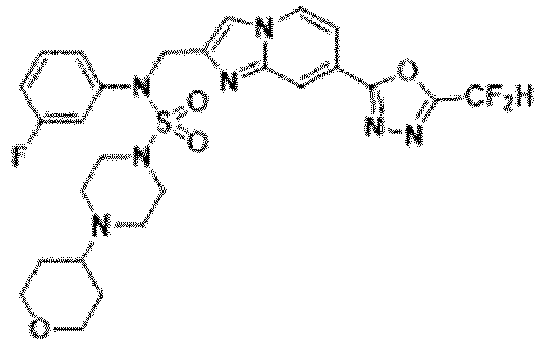
- Example 65 Synthesis of Compound 4304, N -((7-(5-(difluoromethyl)-1,3,4-oxadiazol-2-yl)imidazo[1,2-a]pyridin-2-yl)methyl)- N -(3-fluorophenyl)-4-(tetrahydro-2H-pyran-4-yl)piperazine-1-sulfonamide
- N -((7-(5-(difluoromethyl)-1,3,4-oxadiazol-2-yl)imidazo[1,2-a]pyridin-2-yl)methyl)- N -(3-fluorophenyl)piperazine-1-sulfonamide (0.050 g, 0.099 mmol) prepared in step 3 of Example 58, tetrahydro-4H-pyran-4-one (0.015 g, 0.148 mmol), acetic acid (0.006 mL, 0.099 mmol), sodium triacetoxyborohydride (0.063 g, 0.296 mmol), and triethylamine (0.014 mL, 0.099 mmol) were dissolved in dichloromethane (1 mL) at room temperature, and the resulting solution was stirred at the same temperature for 18 hours.
- Example 66 Synthesis of Compound 4305, 4-(4,4-difluorocyclohexyl)- N -((7-(5-(difluoromethyl)-1,3,4-oxadiazol-2-yl)imidazo[1,2-a]pyridin-2-yl)methyl)- N- (3-fluorophenyl)piperazine-1-sulfonamide
- N -((7-(5-(difluoromethyl)-1,3,4-oxadiazol-2-yl)imidazo[1,2-a]pyridin-2-yl)methyl)- N -(3-fluorophenyl)piperazine-1-sulfonamide (0.050 g, 0.099 mmol) prepared in step 3 of Example 58, 4,4-difluorocyclohexan-1-one (0.020 g, 0.148 mmol), acetic acid (0.006 mL, 0.099 mmol), sodium triacetoxyborohydride (0.063 g, 0.296 mmol), and triethylamine (0.014 mL, 0.099 mmol) were dissolved in dichloromethane (1 mL) at room temperature, and the resulting solution was stirred at the same temperature for 18 hours.
- Example 67 Synthesis of Compound 4306, 4-acetyl- N -((7-(5-(difluoromethyl)-1,3,4-oxadiazol-2-yl)imidazo[1,2-a]pyridin-2-yl)methyl)- N -(3-fluorophenyl)piperazine-1-sulfonamide
- N -((7-(5-(difluoromethyl)-1,3,4-oxadiazol-2-yl)imidazo[1,2-a]pyridin-2-yl)methyl)- N -(3-fluorophenyl)piperazine-1-sulfonamide (0.050 g, 0.099 mmol) prepared in step 3 of Example 58, acetyl chloride (0.011 mL, 0.148 mmol), and triethylamine (0.041 mL, 0.296 mmol) were dissolved in dichloromethane (1 mL) at room temperature, and the resulting solution was stirred at the same temperature for 18 hours.
- Example 68 Synthesis of Compound 4307, N -((7-(5-(difluoromethyl)-1,3,4-oxadiazol-2-yl)imidazo[1,2-a]pyridin-2-yl)methyl)- N- (3-fluorophenyl)-4-propionylpiperazine-1-sulfonamide
- N -((7-(5-(difluoromethyl)-1,3,4-oxadiazol-2-yl)imidazo[1,2-a]pyridin-2-yl)methyl)- N -(3-fluorophenyl)piperazine-1-sulfonamide (0.050 g, 0.099 mmol) prepared in step 3 of Example 58, propionyl chloride (0.014 g, 0.148 mmol), and triethylamine (0.041 mL, 0.296 mmol) were dissolved in dichloromethane (1 mL) at room temperature, and the resulting solution was stirred at the same temperature for 18 hours.
- Example 69 Synthesis of Compound 4308, N -((7-(5-(difluoromethyl)-1,3,4-oxadiazol-2-yl)imidazo[1,2-a]pyridin-2-yl)methyl)- N -(3-fluorophenyl)-4-(2-hydroxyacetyl)piperazine-1-sulfonamide
- N -((7-(5-(difluoromethyl)-1,3,4-oxadiazol-2-yl)imidazo[1,2-a]pyridin-2-yl)methyl)- N -(3-fluorophenyl)piperazine-1-sulfonamide (0.050 g, 0.099 mmol) prepared in step 3 of Example 58, 2-hydroxyacetic acid (0.011 g, 0.148 mmol), triethylamine (0.041 mL, 0.296 mmol), and 1-[bis(dimethylamino)methylene]-1H-1,2,3-triazolo[4,5-b]pyridinium 3-oxide hexafluorophosphate (HATU, 0.056 g, 0.148 mmol) were dissolved in dichloromethane (1 mL) at room temperature, and the resulting solution was stirred at the same temperature for 18 hours.
- HATU 1-[bis(dimethylamino)methylene]-1H-1,2,
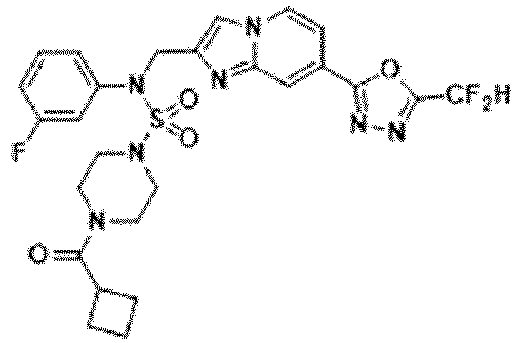
- Example 70 Synthesis of Compound 4309, 4-(cyclobutanecarbonyl)- N -((7-(5-(difluoromethyl)-1,3,4-oxadiazol-2-yl)imidazo[1,2-a]pyridine-2-yl)methyl)- N- (3-fluorophenyl)piperazine-1-sulfonamide
- N -((7-(5-(difluoromethyl)-1,3,4-oxadiazol-2-yl)imidazo[1,2-a]pyridin-2-yl)methyl)- N -(3-fluorophenyl)piperazine-1-sulfonamide (0.050 g, 0.099 mmol) prepared in step 3 of Example 58, cyclobutanecarbonyl chloride (0.018 g, 0.148 mmol), and triethylamine (0.041 mL, 0.296 mmol) were dissolved in dichloromethane (1 mL) at room temperature, and the resulting solution was stirred at the same temperature for 18 hours.
- Example 71 Synthesis of Compound 4310, N -((7-(5-(difluoromethyl)-1,3,4-oxadiazol-2-yl)imidazo[1,2-a]pyridin-2-yl)methyl)- N -(3-fluorophenyl)-4-(oxetane-3-carbonyl)piperazine-1-sulfonamide
- N -((7-(5-(difluoromethyl)-1,3,4-oxadiazol-2-yl)imidazo[1,2-a]pyridin-2-yl)methyl)- N -(3-fluorophenyl)piperazine-1-sulfonamide (0.050 g, 0.099 mmol) prepared in step 3 of Example 58, oxetane-3-carboxylic acid (0.015 g, 0.148 mmol), triethylamine (0.041 mL, 0.296 mmol), and 1-[bis(dimethylamino)methylene]-1H-1,2,3-triazolo[4,5-b]pyridinium 3-oxide hexafluorophosphate (HATU, 0.056 g, 0.148 mmol) were dissolved in dichloromethane (1 mL) at room temperature, and the resulting solution was stirred at the same temperature for 18 hours.
- HATU 1-[bis(dimethylamino
- Example 72 Synthesis of Compound 4311, N -((7-(5-(difluoromethyl)-1,3,4-oxadiazol-2-yl)imidazo[1,2-a]pyridin-2-yl)methyl)- N -(3-fluorophenyl)-4-(2,2,2-trifluoroacetyl)piperazine-1-sulfonamide
- N -((7-(5-(difluoromethyl)-1,3,4-oxadiazol-2-yl)imidazo[1,2-a]pyridin-2-yl)methyl)- N -(3-fluorophenyl)piperazine-1-sulfonamide (0.050 g, 0.099 mmol) prepared in step 3 of Example 58, 2,2,2-trifluoroacetic anhydride (0.031 g, 0.148 mmol), and triethylamine (0.041 mL, 0.296 mmol) were dissolved in dichloromethane (1 mL) at room temperature, and the resulting solution was stirred at the same temperature for 18 hours.
- Example 73 Synthesis of Compound 4312, N -((7-(5-(difluoromethyl)-1,3,4-oxadiazol-2-yl)imidazo[1,2-a]pyridin-2-yl)methyl)- N- (3-fluorophenyl)-4-(methylsulfonyl)piperazine-1-sulfonamide
- N -((7-(5-(difluoromethyl)-1,3,4-oxadiazol-2-yl)imidazo[1,2-a]pyridin-2-yl)methyl)- N -(3-fluorophenyl)piperazine-1-sulfonamide (0.040 g, 0.079 mmol) prepared in step 3 of Example 58, methanesulfonyl chloride (0.009 mL, 0.118 mmol), and triethylamine (0.033 mL, 0.236 mmol) were dissolved in dichloromethane (1 mL) at 0°C, and the resulting solution was stirred at room temperature for 10 minutes.
- aqueous sodium hydrogen carbonate solution was poured into the reaction mixture, extracted with dichloromethane, filtered through a plastic filter to remove a solid residue and an aqueous layer, and then concentrated under reduced pressure.
- Example 74 Synthesis of Compound 4313, methyl 4-( N- ((7-(5-(difluoromethyl)-1,3,4-oxadiazol-2-yl)imidazo[1,2-a]pyridin-2-yl)methyl)- N- (3-fluorophenyl)sulfamoyl)piperazine-1-carboxylate
- N -((7-(5-(difluoromethyl)-1,3,4-oxadiazol-2-yl)imidazo[1,2-a]pyridin-2-yl)methyl)- N -(3-fluorophenyl)piperazine-1-sulfonamide (0.050 g, 0.099 mmol) prepared in step 3 of Example 58, methyl carbonochloridate (0.014 g, 0.148 mmol), and triethylamine (0.041 mL, 0.296 mmol) were dissolved in dichloromethane (1 mL) at room temperature, and the resulting solution was stirred at the same temperature for 18 hours.
- Example 75 Synthesis of Compound 4314, 4-( N- ((7-(5-(difluoromethyl)-1,3,4-oxadiazol-2-yl)imidazo[1,2-a]pyridin-2-yl)methyl)-N-(3-fluorophenyl)sulfamoyl)- N , N- dimethylpiperazine-1 -carboxamide
- N -((7-(5-(difluoromethyl)-1,3,4-oxadiazol-2-yl)imidazo[1,2-a]pyridin-2-yl)methyl)- N -(3-fluorophenyl)piperazine-1-sulfonamide (0.050 g, 0.099 mmol) prepared in step 3 of Example 58, cyclobutanecarbonyl chloride (0.016 g, 0.148 mmol), and triethylamine (0.041 mL, 0.296 mmol) were dissolved in dichloromethane (1 mL) at room temperature, and the resulting solution was stirred at the same temperature for 18 hours.
- aqueous sodium hydrogen carbonate solution was poured into the reaction mixture, extracted with dichloromethane, filtered through a plastic filter to remove a solid residue and an aqueous layer, and then concentrated under reduced pressure.
- Example 76 Synthesis of Compound 4315, N -((7-(5-(difluoromethyl)-1,3,4-oxadiazol-2-yl)imidazo[1,2-a]pyridin-2-yl)methyl)- N- (3-fluorophenyl)-4-(pyrimidin-2-yl)piperazine-1-sulfonamide
- Example 77 Synthesis of Compound 4616, N -((7-(5-(difluoromethyl)-1,3,4-oxadiazol-2-yl)imidazo[1,2-a]pyridin-2-yl)methyl)- N- (3-fluorophenyl)-1-(spiro[3.3]heptan-2-yl)piperidine-4-sulfonamide
- N -((7-(5-(difluoromethyl)-1,3,4-oxadiazol-2-yl)imidazo[1,2-a]pyridin-2-yl)methyl)- N -(3-fluorophenyl)piperidine-4-sulfonamide (0.100 g, 0.197 mmol) prepared in step 3 of Example 18, spiro[3.3]heptan-2-one (0.043 g, 0.395 mmol), acetic acid (0.011 mL, 0.197 mmol), and sodium triacetoxyborohydride (0.126 g, 0.592 mmol) were dissolved in dichloromethane (5 mL) at room temperature, and the resulting solution was stirred at the same temperature for 3 hours.
- a saturated aqueous sodium hydrogen carbonate solution was poured into the reaction mixture, extracted with dichloromethane, and filtered through a plastic filter to remove a solid residue and an aqueous layer, and then concentrated under reduced pressure.
- Example 78 Synthesis of Compound 4617, N -((7-(5-(difluoromethyl)-1,3,4-oxadiazol-2-yl)imidazo[1,2-a]pyridin-2-yl)methyl)- N- (3-fluorophenyl)-1-(2-oxaspiro[3.3]heptan-6-yl)piperidine-4-sulfonamide
- N -((7-(5-(difluoromethyl)-1,3,4-oxadiazol-2-yl)imidazo[1,2-a]pyridin-2-yl)methyl)- N -(3-fluorophenyl)piperidine-4-sulfonamide (0.100 g, 0.197 mmol) prepared in step 3 of Example 18, 2-oxaspiro[3.3]heptan-6-one (0.044 g, 0.395 mmol), acetic acid (0.011 mL, 0.197 mmol), and sodium triacetoxyborohydride (0.126 g, 0.592 mmol) were dissolved in dichloromethane (5 mL) at room temperature, and the resulting solution was stirred at the same temperature for 3 hours.
- a saturated aqueous sodium hydrogen carbonate solution was poured into the reaction mixture, extracted with dichloromethane, and filtered through a plastic filter to remove a solid residue and an aqueous layer, and then concentrated under reduced pressure.
- Example 79 Synthesis of Compound 4622, N -((7-(5-(difluoromethyl)-1,3,4-oxadiazol-2-yl)imidazo[1,2-a]pyridin-2-yl)methyl)- N- (3-fluorophenyl)-4-(spiro[3.3]heptan-2-yl)piperazine-1-sulfonamide
- N -((7-(5-(difluoromethyl)-1,3,4-oxadiazol-2-yl)imidazo[1,2-a]pyridin-2-yl)methyl)- N -(3-fluorophenyl)piperazine-1-sulfonamide (0.090 g, 0.177 mmol) prepared in step 3 of Example 58, spiro[3.3]heptan-2-one (0.039 g, 0.355 mmol), acetic acid (0.010 mL, 0.177 mmol), and sodium triacetoxyborohydride (0.113 g, 0.532 mmol) were dissolved in dichloromethane (5 mL) at room temperature, and the resulting solution was stirred at the same temperature for 3 hours.
- a saturated aqueous sodium hydrogen carbonate solution was poured into the reaction mixture, extracted with dichloromethane, and filtered through a plastic filter to remove a solid residue and an aqueous layer, and then concentrated under reduced pressure.
- Example 80 Synthesis of Compound 4623, N -((7-(5-(difluoromethyl)-1,3,4-oxadiazol-2-yl)imidazo[1,2-a]pyridin-2-yl)methyl)- N- (3-fluorophenyl)-4-(2-oxaspiro[3.3]heptan-6-yl)piperazine-1-sulfonamide
- N -((7-(5-(difluoromethyl)-1,3,4-oxadiazol-2-yl)imidazo[1,2-a]pyridin-2-yl)methyl)- N -(3-fluorophenyl)piperazine-1-sulfonamide (0.090 g, 0.177 mmol) prepared in step 3 of Example 58, 2-oxaspiro[3.3]heptan-6-one (0.040 g, 0.355 mmol), acetic acid (0.010 mL, 0.177 mmol), and sodium triacetoxyborohydride (0.113 g, 0.532 mmol) were dissolved in dichloromethane (5 mL) at room temperature, and the resulting solution was stirred at the same temperature for 3 hours.
- a saturated aqueous sodium hydrogen carbonate solution was poured into the reaction mixture, extracted with dichloromethane, and filtered through a plastic filter to remove a solid residue and an aqueous layer, and then concentrated under reduced pressure.
- Example 81 Synthesis of Compound 4624, N -((7-(5-(difluoromethyl)-1,3,4-oxadiazol-2-yl)imidazo[1,2-a]pyridin-2-yl)methyl)-6-methyl- N -phenyl-2,6-diazaspiro[3.3]heptan-2-sulfonamide
- tert-butyl 2,6-diazaspiro[3.3]heptan-2-carboxylate oxalate (2.659 g, 5.465 mmol) and N,N -diisopropylethylamine (8.654 mL, 49.683 mmol) were added at 0°C, stirred at the same temperature for 0.2 hours, and further stirred at room temperature for 3 hours.
- a saturated aqueous sodium hydrogen carbonate solution was poured into the reaction mixture, followed by extraction with dichloromethane. The organic layer was washed with a saturated aqueous sodium chloride solution, dried over anhydrous sodium sulfate, filtered, and concentrated under reduced pressure.
- the organic layer was washed with a saturated aqueous sodium chloride solution, dried over anhydrous sodium sulfate, filtered, and concentrated under reduced pressure.
- N -((7-(5-(difluoromethyl)-1,3,4-oxadiazol-2-yl)imidazo[1,2-a]pyridin-2-yl)methyl)- N- phenyl-2,6-diazaspiro[3.3]heptan-2-sulfonamide (0.100 g, 0.199 mmol) prepared in step 5, formaldehyde (0.012 g, 0.399 mmol), acetic acid (0.011 mL, 0.199 mmol), and sodium triacetoxyborohydride (0.127 g, 0.598 mmol) were dissolved in dichloromethane (5 mL) at room temperature, and the resulting solution was stirred at the same temperature for 3 hours.
- a saturated aqueous sodium hydrogen carbonate solution was poured into the reaction mixture, extracted with dichloromethane, and filtered through a plastic filter to remove a solid residue and an aqueous layer, and then concentrated under reduced pressure.
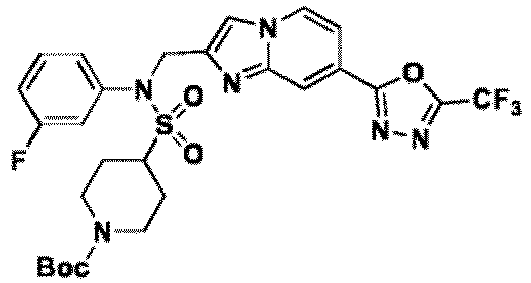
- Example 82 Synthesis of Compound 6893, tert-butyl 4-( N -(3-fluorophenyl)- N -((7-(5-(trifluoromethyl)-1,3,4-oxadiazol-2-yl)imidazo[1,2-a]pyridin-2-yl)methyl)sulfamoyl)piperidine-1-carboxylate
- HDAC enzyme activity was measured using the HDAC Fluorimetric Drug Discovery Kit (Enzo Life Sciences, Inc., BML-AK511, 516).
- human recombinant HDAC1 BML-SE456
- Fluor de Lys -SIRT1 BNL-KI177
- HDAC6-specific inhibitors The effects of the HDAC6-specific inhibitors on mitochondrial axonal transport were analyzed. Specifically, in order to confirm whether the compounds represented by Chemical Formula I of the present invention selectively inhibit the HDAC6 activity and increase the acetylation of tubulin, which is a major substrate of HDAC6, thereby improving the mitochondrial axonal transport rates reduced by amyloid-beta treatment in neuronal axons, a comparison experiment was performed using the material that has already been developed as a control group.
- Hippocampal neurons from Sprague-Dawley (SD) rat embryos at embryonic day 17-18 (E17-18) were cultured for 7 days in an extracellular matrix-coated culture dish for imaging, and then treated with 1M of amyloid-beta peptide fragments. After 24 hours, the compound was treated on the 8th day of in vitro culture, and 3 hours later, treated with MitoTracker Red CMXRos (Life Technologies, NY, USA) for the last 5 minutes to stain the mitochondria.
- the transport rates of each mitochondrion were determined using the IMARIS analysis software (BITPLANE, Zurich, Switzerland) by taking images using a confocal microscope (Leica 5P8; Leica Microsystems, UK) at 1-second intervals for 1 minute.
Landscapes
- Health & Medical Sciences (AREA)
- Chemical & Material Sciences (AREA)
- Organic Chemistry (AREA)
- Medicinal Chemistry (AREA)
- General Health & Medical Sciences (AREA)
- Animal Behavior & Ethology (AREA)
- Life Sciences & Earth Sciences (AREA)
- Veterinary Medicine (AREA)
- Public Health (AREA)
- Pharmacology & Pharmacy (AREA)
- Chemical Kinetics & Catalysis (AREA)
- Nuclear Medicine, Radiotherapy & Molecular Imaging (AREA)
- General Chemical & Material Sciences (AREA)
- Bioinformatics & Cheminformatics (AREA)
- Engineering & Computer Science (AREA)
- Epidemiology (AREA)
- Neurology (AREA)
- Neurosurgery (AREA)
- Pain & Pain Management (AREA)
- Rheumatology (AREA)
- Immunology (AREA)
- Biomedical Technology (AREA)
- Pharmaceuticals Containing Other Organic And Inorganic Compounds (AREA)
- Heterocyclic Carbon Compounds Containing A Hetero Ring Having Nitrogen And Oxygen As The Only Ring Hetero Atoms (AREA)
- Nitrogen And Oxygen Or Sulfur-Condensed Heterocyclic Ring Systems (AREA)
- Nitrogen Condensed Heterocyclic Rings (AREA)
- Acyclic And Carbocyclic Compounds In Medicinal Compositions (AREA)
Claims (11)




































es sich bei den durch Histondeacetylase 6 vermittelten Krankheiten um infektiöse Krankheiten; Neubildungen; endokrine, Ernährungs- und Stoffwechselkrankheiten; psychische und Verhaltensstörungen; neurologische Krankheiten; Krankheiten des Auges und der Augenanhangsgebilde; Krankheiten des Kreislaufsystems; Krankheiten des Atmungssystems; Krankheiten des Verdauungssystems; Krankheiten der Haut und der Unterhaut; Krankheiten des Muskel-Skelett-Systems und des Bindegewebes oder angeborene Fehlbildungen, Veränderungen oder Chromosomenanomalien handelt.
Priority Applications (1)
| Application Number | Priority Date | Filing Date | Title |
|---|---|---|---|
| HRP20241315TT HRP20241315T1 (hr) | 2020-02-25 | 2021-02-25 | Spojevi derivata 1,3,4-oksadiazola kao inhibitor histon deacetilaze 6, te farmaceutski pripravak koji ih sadrži |
Applications Claiming Priority (2)
| Application Number | Priority Date | Filing Date | Title |
|---|---|---|---|
| KR1020200023249A KR102537616B1 (ko) | 2020-02-25 | 2020-02-25 | 히스톤 탈아세틸화 효소 6 억제제로서의 1,3,4-옥사다이아졸 유도체 화합물 및 이를 포함하는 약제학적 조성물 |
| PCT/KR2021/002362 WO2021172886A1 (en) | 2020-02-25 | 2021-02-25 | 1,3,4-oxadiazole derivative compounds as histone deacetylase 6 inhibitor, and the pharmaceutical composition comprising the same |
Publications (3)
| Publication Number | Publication Date |
|---|---|
| EP4110780A1 EP4110780A1 (de) | 2023-01-04 |
| EP4110780A4 EP4110780A4 (de) | 2023-07-05 |
| EP4110780B1 true EP4110780B1 (de) | 2024-08-07 |
Family
ID=77490107
Family Applications (1)
| Application Number | Title | Priority Date | Filing Date |
|---|---|---|---|
| EP21760387.7A Active EP4110780B1 (de) | 2020-02-25 | 2021-02-25 | 1,3,4oxadiazolderivatverbindungen als histondeacetylase-6-hemmer und pharmazeutische zusammensetzung damit |
Country Status (19)
| Country | Link |
|---|---|
| US (1) | US12466827B2 (de) |
| EP (1) | EP4110780B1 (de) |
| JP (1) | JP7525662B2 (de) |
| KR (1) | KR102537616B1 (de) |
| CN (1) | CN115151542B (de) |
| AU (1) | AU2021225683B2 (de) |
| BR (1) | BR112022016743A2 (de) |
| CA (1) | CA3167361C (de) |
| DK (1) | DK4110780T3 (de) |
| ES (1) | ES2993711T3 (de) |
| FI (1) | FI4110780T3 (de) |
| HR (1) | HRP20241315T1 (de) |
| HU (1) | HUE068550T2 (de) |
| MX (1) | MX2022010394A (de) |
| MY (1) | MY200481A (de) |
| PH (1) | PH12022552238A1 (de) |
| PT (1) | PT4110780T (de) |
| TW (1) | TWI786553B (de) |
| WO (1) | WO2021172886A1 (de) |
Families Citing this family (4)
| Publication number | Priority date | Publication date | Assignee | Title |
|---|---|---|---|---|
| WO2018165520A1 (en) | 2017-03-10 | 2018-09-13 | Vps-3, Inc. | Metalloenzyme inhibitor compounds |
| WO2021021979A2 (en) | 2019-07-30 | 2021-02-04 | Eikonizo Therapapeutics, Inc. | Hdac6 inhibitors and uses thereof |
| KR102537615B1 (ko) | 2020-02-25 | 2023-05-30 | 주식회사 종근당 | 히스톤 탈아세틸화효소 6 억제제로서의 1,3,4-옥사다이아졸 유도체 화합물 및 이를 포함하는 약제학적 조성물 |
| EP4504190A4 (de) | 2022-04-08 | 2026-03-25 | Eikonizo Therapeutics Inc | Oxadiazol-hdac6-inhibitoren und verwendungen davon |
Family Cites Families (27)
| Publication number | Priority date | Publication date | Assignee | Title |
|---|---|---|---|---|
| EP2114941B1 (de) * | 2006-12-22 | 2015-03-25 | Astex Therapeutics Limited | Bicyclische heterocyclische verbindungen als fgfr-inhibitoren |
| EP2170882A1 (de) * | 2007-06-26 | 2010-04-07 | Gilead Colorado, Inc. | Imidazopyridinylthiazolylverbindungen als histondeacetylaseinhibitoren |
| GB0906470D0 (en) | 2009-04-15 | 2009-05-20 | Astex Therapeutics Ltd | New compounds |
| TWI482771B (zh) * | 2009-05-04 | 2015-05-01 | Du Pont | 磺醯胺殺線蟲劑 |
| US8431538B2 (en) | 2009-07-22 | 2013-04-30 | The Board Of Trustees Of The University Of Illinois | HDAC inhibitors and therapeutic methods of using same |
| EP2480547A4 (de) | 2009-09-23 | 2013-02-20 | Panmira Pharmaceuticals Llc | Indolizinhemmer aus 5-lipoxygenase |
| NZ601655A (en) | 2010-01-22 | 2014-10-31 | Acetylon Pharmaceuticals Inc | Reverse amide compounds as protein deacetylase inhibitors and methods of use thereof |
| CN103764635B (zh) | 2011-07-08 | 2016-01-20 | 诺华股份有限公司 | 新的三氟甲基-噁二唑衍生物及其在疾病治疗中的用途 |
| WO2013041407A1 (en) | 2011-09-19 | 2013-03-28 | Cellzome Ag | Hydroxamic acids as hdac6 inhibitors |
| CA2850757A1 (en) | 2011-10-03 | 2013-04-11 | The Trustees Of Columbia University In The City Of New York | Novel molecules that selectively inhibit histone deacetylase 6 relative to histone deacetylase 1 |
| WO2013066838A1 (en) | 2011-10-31 | 2013-05-10 | Glaxosmithkline Llc | Compounds and methods |
| WO2013066835A2 (en) | 2011-10-31 | 2013-05-10 | Glaxosmithkline Llc | Compounds and methods |
| WO2013066839A2 (en) | 2011-10-31 | 2013-05-10 | Glaxosmithkline Llc | Compounds and methods |
| WO2013066833A1 (en) | 2011-10-31 | 2013-05-10 | Glaxosmithkline Llc | Compounds and methods to inhibit histone deacetylase (hdac) enzymes |
| EP2785713B1 (de) | 2011-11-28 | 2016-09-07 | Novartis AG | Neue trifluormethyl-oxadiazolderivate und ihre verwendung bei der behandlung von krankheiten |
| CA2866707A1 (en) | 2012-03-07 | 2013-09-12 | H. Lee Moffitt Cancer Center And Research Institute, Inc. | Selective histone deactylase 6 inhibitors |
| AU2016215455A1 (en) | 2015-02-02 | 2017-08-17 | Ontera Inc. | Labile linkers for biomarker detection |
| PL3328843T3 (pl) | 2015-07-27 | 2023-02-27 | Chong Kun Dang Pharmaceutical Corp. | Związki będące pochodnymi 1,3,4 oksadiazolosulfonamidów jako inhibitor deacetylazy histonowej 6, oraz kompozycja farmaceutyczna je zawierająca |
| NZ739211A (en) | 2015-07-27 | 2019-05-31 | Chong Kun Dang Pharmaceutical Corp | 1,3,4-oxadiazole amide derivative compound as histone deacetylase 6 inhibitor, and pharmaceutical composition containing same |
| RU2695227C9 (ru) | 2015-07-27 | 2020-03-04 | Чонг Кун Данг Фармасьютикал Корп. | Производные 1,3,4-оксадиазолсульфамида в качестве ингибитора гистондеацетилазы 6 и содержащая их фармацевтическая композиция |
| PT3331864T (pt) | 2015-08-04 | 2022-01-18 | Chong Kun Dang Pharmaceutical Corp | Compostos derivados de 1,3,4-oxadiazol como inibidor de histona desacetilase 6 e a composição farmacêutica compreendendo os mesmos |
| WO2017030938A1 (en) | 2015-08-14 | 2017-02-23 | Incyte Corporation | Heterocyclic compounds and uses thereof |
| WO2017222950A1 (en) * | 2016-06-23 | 2017-12-28 | Merck Sharp & Dohme Corp. | 3-heterocyclyl substituted 5-trifluoromethyl oxadiazoles as histone deacetylase 6 (hdac6) inhibitors |
| WO2017222951A1 (en) | 2016-06-23 | 2017-12-28 | Merck Sharp & Dohme Corp. | 3-aryl and heteroaryl substituted 5-trifluoromethyl oxadiazoles as histone deacetylase 6 (hdac6) inhibitors |
| CN111406054B (zh) | 2017-12-05 | 2024-01-02 | 奥莱松基因组股份有限公司 | 作为组蛋白脱乙酰基酶6抑制剂的1,2,4-噁二唑衍生物 |
| CN114980887A (zh) | 2019-12-20 | 2022-08-30 | 特纳亚治疗股份有限公司 | 氟代烷基-噁二唑及其用途 |
| KR102537615B1 (ko) | 2020-02-25 | 2023-05-30 | 주식회사 종근당 | 히스톤 탈아세틸화효소 6 억제제로서의 1,3,4-옥사다이아졸 유도체 화합물 및 이를 포함하는 약제학적 조성물 |
-
2020
- 2020-02-25 KR KR1020200023249A patent/KR102537616B1/ko active Active
-
2021
- 2021-02-25 HU HUE21760387A patent/HUE068550T2/hu unknown
- 2021-02-25 MY MYPI2022004533A patent/MY200481A/en unknown
- 2021-02-25 CA CA3167361A patent/CA3167361C/en active Active
- 2021-02-25 AU AU2021225683A patent/AU2021225683B2/en active Active
- 2021-02-25 MX MX2022010394A patent/MX2022010394A/es unknown
- 2021-02-25 WO PCT/KR2021/002362 patent/WO2021172886A1/en not_active Ceased
- 2021-02-25 HR HRP20241315TT patent/HRP20241315T1/hr unknown
- 2021-02-25 EP EP21760387.7A patent/EP4110780B1/de active Active
- 2021-02-25 TW TW110106772A patent/TWI786553B/zh active
- 2021-02-25 JP JP2022576784A patent/JP7525662B2/ja active Active
- 2021-02-25 US US17/904,806 patent/US12466827B2/en active Active
- 2021-02-25 PH PH1/2022/552238A patent/PH12022552238A1/en unknown
- 2021-02-25 ES ES21760387T patent/ES2993711T3/es active Active
- 2021-02-25 CN CN202180016680.4A patent/CN115151542B/zh active Active
- 2021-02-25 PT PT217603877T patent/PT4110780T/pt unknown
- 2021-02-25 FI FIEP21760387.7T patent/FI4110780T3/fi active
- 2021-02-25 DK DK21760387.7T patent/DK4110780T3/da active
- 2021-02-25 BR BR112022016743A patent/BR112022016743A2/pt unknown
Also Published As
| Publication number | Publication date |
|---|---|
| PT4110780T (pt) | 2024-10-07 |
| HRP20241315T1 (hr) | 2024-12-20 |
| US12466827B2 (en) | 2025-11-11 |
| CN115151542B (zh) | 2025-02-14 |
| MX2022010394A (es) | 2022-09-07 |
| TW202146408A (zh) | 2021-12-16 |
| NZ791043A (en) | 2025-09-26 |
| FI4110780T3 (fi) | 2024-10-25 |
| JP7525662B2 (ja) | 2024-07-30 |
| HUE068550T2 (hu) | 2025-01-28 |
| CA3167361C (en) | 2025-05-27 |
| DK4110780T3 (da) | 2024-10-21 |
| MY200481A (en) | 2023-12-28 |
| KR20210108274A (ko) | 2021-09-02 |
| CN115151542A (zh) | 2022-10-04 |
| JP2023516824A (ja) | 2023-04-20 |
| EP4110780A1 (de) | 2023-01-04 |
| CA3167361A1 (en) | 2021-09-02 |
| AU2021225683A1 (en) | 2022-09-01 |
| TWI786553B (zh) | 2022-12-11 |
| PH12022552238A1 (en) | 2024-02-12 |
| WO2021172886A1 (en) | 2021-09-02 |
| AU2021225683B2 (en) | 2023-12-07 |
| KR102537616B1 (ko) | 2023-05-26 |
| BR112022016743A2 (pt) | 2022-10-18 |
| ES2993711T3 (en) | 2025-01-07 |
| US20230147859A1 (en) | 2023-05-11 |
| EP4110780A4 (de) | 2023-07-05 |
Similar Documents
| Publication | Publication Date | Title |
|---|---|---|
| EP3328844B1 (de) | 1,3,4-oxadiazolsulfamidderivate als histondeacetylase-6-hemmer und pharmazeutische zusammensetzung damit | |
| EP4110781B1 (de) | 1,3,4oxadiazolderivatverbindungen als histondeacetylase-6-hemmer und pharmazeutische zusammensetzung damit | |
| EP3330259B1 (de) | 1,3,4-oxadiazolamidderivatverbindung als histondeacetylasehemmer und pharmazeutische zusammensetzung damit | |
| US12466827B2 (en) | 1,3,4-oxadiazole derivative compounds as histone deacetylase 6 inhibitor, and the pharmaceutical composition comprising the same | |
| EP3297992B1 (de) | Heterocyclische alkylderivatverbindungen als selektive histondeacetylasehemmer und pharmazeutische zusammensetzungen damit | |
| AU2021255176B2 (en) | 1,3,4-oxadiazole derivative compounds as histone deacetylase 6 inhibitor, and the pharmaceutical composition comprising the same | |
| WO2022215020A1 (en) | 1,3,4-oxadiazole thiocarbonyl compounds as histone deacetylase 6 inhibitor, and pharmaceutical composition comprising the same | |
| EP3456712A1 (de) | Neuartige 2,4,6-trisubstituierte s-triazin-verbindung, herstellungsverfahren dafür und verwendung davon | |
| RU2822180C1 (ru) | Производные 1,3,4-оксадиазола в качестве ингибитора гистондеацетилазы 6 и содержащая их фармацевтическая композиция | |
| JP2025523127A (ja) | ヒストン脱アセチル化酵素6阻害剤としての1,3,4-オキサジアゾールトリアゾール化合物およびこれを含む薬剤学的組成物 | |
| RU2822624C1 (ru) | Производные 1,3,4-оксадиазола в качестве ингибитора гистондеацетилазы 6 и содержащая их фармацевтическая композиция | |
| RU2810081C1 (ru) | Производные 1,3,4-оксадиазола в качестве ингибитора гистондеацетилазы 6 и содержащая их фармацевтическая композиция | |
| HK40074260A (en) | 1,3,4 oxadiazole derivative compounds as histone deacetylase 6 inhibitor, and the pharmaceutical composition comprising the same | |
| CA3174319C (en) | 1,3,4-oxadiazole derivative compounds as histone deacetylase 6 inhibitor, and the pharmaceutical composition comprising the same | |
| HK40074260B (zh) | 作为组蛋白脱乙醯酶6抑制剂的1,3,4-恶二唑衍生物化合物以及包含其的药物组合物 |
Legal Events
| Date | Code | Title | Description |
|---|---|---|---|
| REG | Reference to a national code |
Ref country code: HR Ref legal event code: TUEP Ref document number: P20241315T Country of ref document: HR |
|
| STAA | Information on the status of an ep patent application or granted ep patent |
Free format text: STATUS: THE INTERNATIONAL PUBLICATION HAS BEEN MADE |
|
| PUAI | Public reference made under article 153(3) epc to a published international application that has entered the european phase |
Free format text: ORIGINAL CODE: 0009012 |
|
| STAA | Information on the status of an ep patent application or granted ep patent |
Free format text: STATUS: REQUEST FOR EXAMINATION WAS MADE |
|
| 17P | Request for examination filed |
Effective date: 20220923 |
|
| AK | Designated contracting states |
Kind code of ref document: A1 Designated state(s): AL AT BE BG CH CY CZ DE DK EE ES FI FR GB GR HR HU IE IS IT LI LT LU LV MC MK MT NL NO PL PT RO RS SE SI SK SM TR |
|
| DAV | Request for validation of the european patent (deleted) | ||
| DAX | Request for extension of the european patent (deleted) | ||
| A4 | Supplementary search report drawn up and despatched |
Effective date: 20230605 |
|
| RIC1 | Information provided on ipc code assigned before grant |
Ipc: A61P 37/00 20060101ALI20230530BHEP Ipc: A61P 35/00 20060101ALI20230530BHEP Ipc: A61P 29/00 20060101ALI20230530BHEP Ipc: A61P 25/00 20060101ALI20230530BHEP Ipc: A61K 31/496 20060101ALI20230530BHEP Ipc: A61K 31/4545 20060101ALI20230530BHEP Ipc: C07D 471/04 20060101AFI20230530BHEP |
|
| GRAP | Despatch of communication of intention to grant a patent |
Free format text: ORIGINAL CODE: EPIDOSNIGR1 |
|
| STAA | Information on the status of an ep patent application or granted ep patent |
Free format text: STATUS: GRANT OF PATENT IS INTENDED |
|
| RIC1 | Information provided on ipc code assigned before grant |
Ipc: A61P 37/00 20060101ALI20240205BHEP Ipc: A61P 35/00 20060101ALI20240205BHEP Ipc: A61P 29/00 20060101ALI20240205BHEP Ipc: A61P 25/00 20060101ALI20240205BHEP Ipc: A61K 31/496 20060101ALI20240205BHEP Ipc: A61K 31/4545 20060101ALI20240205BHEP Ipc: C07D 471/04 20060101AFI20240205BHEP |
|
| INTG | Intention to grant announced |
Effective date: 20240305 |
|
| GRAS | Grant fee paid |
Free format text: ORIGINAL CODE: EPIDOSNIGR3 |
|
| GRAA | (expected) grant |
Free format text: ORIGINAL CODE: 0009210 |
|
| STAA | Information on the status of an ep patent application or granted ep patent |
Free format text: STATUS: THE PATENT HAS BEEN GRANTED |
|
| AK | Designated contracting states |
Kind code of ref document: B1 Designated state(s): AL AT BE BG CH CY CZ DE DK EE ES FI FR GB GR HR HU IE IS IT LI LT LU LV MC MK MT NL NO PL PT RO RS SE SI SK SM TR |
|
| REG | Reference to a national code |
Ref country code: GB Ref legal event code: FG4D |
|
| REG | Reference to a national code |
Ref country code: CH Ref legal event code: EP |
|
| P01 | Opt-out of the competence of the unified patent court (upc) registered |
Free format text: CASE NUMBER: APP_42155/2024 Effective date: 20240717 |
|
| REG | Reference to a national code |
Ref country code: IE Ref legal event code: FG4D |
|
| REG | Reference to a national code |
Ref country code: DE Ref legal event code: R096 Ref document number: 602021016931 Country of ref document: DE |
|
| REG | Reference to a national code |
Ref country code: PT Ref legal event code: SC4A Ref document number: 4110780 Country of ref document: PT Date of ref document: 20241007 Kind code of ref document: T Free format text: AVAILABILITY OF NATIONAL TRANSLATION Effective date: 20240930 |
|
| REG | Reference to a national code |
Ref country code: DK Ref legal event code: T3 Effective date: 20241018 |
|
| REG | Reference to a national code |
Ref country code: NL Ref legal event code: FP |
|
| REG | Reference to a national code |
Ref country code: FI Ref legal event code: FGE |
|
| REG | Reference to a national code |
Ref country code: SE Ref legal event code: TRGR |
|
| REG | Reference to a national code |
Ref country code: LT Ref legal event code: MG9D |
|
| REG | Reference to a national code |
Ref country code: GR Ref legal event code: EP Ref document number: 20240402417 Country of ref document: GR Effective date: 20241111 |
|
| REG | Reference to a national code |
Ref country code: HR Ref legal event code: T1PR Ref document number: P20241315 Country of ref document: HR |
|
| REG | Reference to a national code |
Ref country code: ES Ref legal event code: FG2A Ref document number: 2993711 Country of ref document: ES Kind code of ref document: T3 Effective date: 20250107 |
|
| PG25 | Lapsed in a contracting state [announced via postgrant information from national office to epo] |
Ref country code: LV Free format text: LAPSE BECAUSE OF FAILURE TO SUBMIT A TRANSLATION OF THE DESCRIPTION OR TO PAY THE FEE WITHIN THE PRESCRIBED TIME-LIMIT Effective date: 20240807 |
|
| PG25 | Lapsed in a contracting state [announced via postgrant information from national office to epo] |
Ref country code: RS Free format text: LAPSE BECAUSE OF FAILURE TO SUBMIT A TRANSLATION OF THE DESCRIPTION OR TO PAY THE FEE WITHIN THE PRESCRIBED TIME-LIMIT Effective date: 20241107 |
|
| REG | Reference to a national code |
Ref country code: HU Ref legal event code: AG4A Ref document number: E068550 Country of ref document: HU |
|
| PG25 | Lapsed in a contracting state [announced via postgrant information from national office to epo] |
Ref country code: RS Free format text: LAPSE BECAUSE OF FAILURE TO SUBMIT A TRANSLATION OF THE DESCRIPTION OR TO PAY THE FEE WITHIN THE PRESCRIBED TIME-LIMIT Effective date: 20241107 Ref country code: LV Free format text: LAPSE BECAUSE OF FAILURE TO SUBMIT A TRANSLATION OF THE DESCRIPTION OR TO PAY THE FEE WITHIN THE PRESCRIBED TIME-LIMIT Effective date: 20240807 |
|
| REG | Reference to a national code |
Ref country code: HR Ref legal event code: ODRP Ref document number: P20241315 Country of ref document: HR Payment date: 20241227 Year of fee payment: 5 |
|
| PG25 | Lapsed in a contracting state [announced via postgrant information from national office to epo] |
Ref country code: SM Free format text: LAPSE BECAUSE OF FAILURE TO SUBMIT A TRANSLATION OF THE DESCRIPTION OR TO PAY THE FEE WITHIN THE PRESCRIBED TIME-LIMIT Effective date: 20240807 |
|
| PG25 | Lapsed in a contracting state [announced via postgrant information from national office to epo] |
Ref country code: EE Free format text: LAPSE BECAUSE OF FAILURE TO SUBMIT A TRANSLATION OF THE DESCRIPTION OR TO PAY THE FEE WITHIN THE PRESCRIBED TIME-LIMIT Effective date: 20240807 |
|
| PG25 | Lapsed in a contracting state [announced via postgrant information from national office to epo] |
Ref country code: SK Free format text: LAPSE BECAUSE OF FAILURE TO SUBMIT A TRANSLATION OF THE DESCRIPTION OR TO PAY THE FEE WITHIN THE PRESCRIBED TIME-LIMIT Effective date: 20240807 |
|
| REG | Reference to a national code |
Ref country code: DE Ref legal event code: R097 Ref document number: 602021016931 Country of ref document: DE |
|
| PLBE | No opposition filed within time limit |
Free format text: ORIGINAL CODE: 0009261 |
|
| STAA | Information on the status of an ep patent application or granted ep patent |
Free format text: STATUS: NO OPPOSITION FILED WITHIN TIME LIMIT |
|
| 26N | No opposition filed |
Effective date: 20250508 |
|
| PGFP | Annual fee paid to national office [announced via postgrant information from national office to epo] |
Ref country code: IS Payment date: 20251229 Year of fee payment: 6 |
|
| PGFP | Annual fee paid to national office [announced via postgrant information from national office to epo] |
Ref country code: GB Payment date: 20251222 Year of fee payment: 6 |
|
| PGFP | Annual fee paid to national office [announced via postgrant information from national office to epo] |
Ref country code: NO Payment date: 20251223 Year of fee payment: 6 Ref country code: MC Payment date: 20251223 Year of fee payment: 6 |
|
| PGFP | Annual fee paid to national office [announced via postgrant information from national office to epo] |
Ref country code: PT Payment date: 20251222 Year of fee payment: 6 |
|
| PGFP | Annual fee paid to national office [announced via postgrant information from national office to epo] |
Ref country code: FI Payment date: 20251222 Year of fee payment: 6 Ref country code: DK Payment date: 20251223 Year of fee payment: 6 |
|
| PG25 | Lapsed in a contracting state [announced via postgrant information from national office to epo] |
Ref country code: IT Free format text: LAPSE BECAUSE OF NON-PAYMENT OF DUE FEES Effective date: 20250225 |
|
| PGFP | Annual fee paid to national office [announced via postgrant information from national office to epo] |
Ref country code: LU Payment date: 20251223 Year of fee payment: 6 Ref country code: HR Payment date: 20251222 Year of fee payment: 6 Ref country code: FR Payment date: 20251223 Year of fee payment: 6 Ref country code: NL Payment date: 20251223 Year of fee payment: 6 |
|
| PGFP | Annual fee paid to national office [announced via postgrant information from national office to epo] |
Ref country code: GR Payment date: 20251222 Year of fee payment: 6 Ref country code: BE Payment date: 20251229 Year of fee payment: 6 |
|
| PGFP | Annual fee paid to national office [announced via postgrant information from national office to epo] |
Ref country code: SE Payment date: 20251223 Year of fee payment: 6 |
|
| PGFP | Annual fee paid to national office [announced via postgrant information from national office to epo] |
Ref country code: IE Payment date: 20251223 Year of fee payment: 6 Ref country code: CZ Payment date: 20251223 Year of fee payment: 6 |
|
| PGFP | Annual fee paid to national office [announced via postgrant information from national office to epo] |
Ref country code: PL Payment date: 20251229 Year of fee payment: 6 |
|
| PGFP | Annual fee paid to national office [announced via postgrant information from national office to epo] |
Ref country code: BG Payment date: 20251223 Year of fee payment: 6 |
|
| PGFP | Annual fee paid to national office [announced via postgrant information from national office to epo] |
Ref country code: RO Payment date: 20251229 Year of fee payment: 6 |
|
| REG | Reference to a national code |
Ref country code: HR Ref legal event code: ODRP Ref document number: P20241315 Country of ref document: HR Payment date: 20251222 Year of fee payment: 6 |
|
| REG | Reference to a national code |
Ref country code: CH Ref legal event code: U11 Free format text: ST27 STATUS EVENT CODE: U-0-0-U10-U11 (AS PROVIDED BY THE NATIONAL OFFICE) Effective date: 20260301 |
|
| PGFP | Annual fee paid to national office [announced via postgrant information from national office to epo] |
Ref country code: HU Payment date: 20260129 Year of fee payment: 6 |
|
| PGFP | Annual fee paid to national office [announced via postgrant information from national office to epo] |
Ref country code: ES Payment date: 20260324 Year of fee payment: 6 |
|
| PGFP | Annual fee paid to national office [announced via postgrant information from national office to epo] |
Ref country code: DE Payment date: 20251222 Year of fee payment: 6 |
|
| PGFP | Annual fee paid to national office [announced via postgrant information from national office to epo] |
Ref country code: AT Payment date: 20251222 Year of fee payment: 6 |
|
| PG25 | Lapsed in a contracting state [announced via postgrant information from national office to epo] |
Ref country code: IT Free format text: LAPSE BECAUSE OF NON-PAYMENT OF DUE FEES Effective date: 20250225 |
|
| PGFP | Annual fee paid to national office [announced via postgrant information from national office to epo] |
Ref country code: IT Payment date: 20251223 Year of fee payment: 6 |
|
| PGRI | Patent reinstated in contracting state [announced from national office to epo] |
Ref country code: IT Effective date: 20250630 |
|
| PGFP | Annual fee paid to national office [announced via postgrant information from national office to epo] |
Ref country code: TR Payment date: 20260109 Year of fee payment: 6 |
|
| PGFP | Annual fee paid to national office [announced via postgrant information from national office to epo] |
Ref country code: CH Payment date: 20260301 Year of fee payment: 6 |