EP4101220B1 - Übertragung von daten im unlizenzierten spektrum - Google Patents
Übertragung von daten im unlizenzierten spektrum Download PDFInfo
- Publication number
- EP4101220B1 EP4101220B1 EP20704289.6A EP20704289A EP4101220B1 EP 4101220 B1 EP4101220 B1 EP 4101220B1 EP 20704289 A EP20704289 A EP 20704289A EP 4101220 B1 EP4101220 B1 EP 4101220B1
- Authority
- EP
- European Patent Office
- Prior art keywords
- channel
- signal
- transmitting
- data
- unlicensed spectrum
- Prior art date
- Legal status (The legal status is an assumption and is not a legal conclusion. Google has not performed a legal analysis and makes no representation as to the accuracy of the status listed.)
- Active
Links
Images

Classifications
-
- H—ELECTRICITY
- H04—ELECTRIC COMMUNICATION TECHNIQUE
- H04W—WIRELESS COMMUNICATION NETWORKS
- H04W74/00—Wireless channel access
- H04W74/08—Non-scheduled access, e.g. ALOHA
- H04W74/0808—Non-scheduled access, e.g. ALOHA using carrier sensing, e.g. carrier sense multiple access [CSMA]
-
- H—ELECTRICITY
- H04—ELECTRIC COMMUNICATION TECHNIQUE
- H04W—WIRELESS COMMUNICATION NETWORKS
- H04W72/00—Local resource management
- H04W72/04—Wireless resource allocation
- H04W72/044—Wireless resource allocation based on the type of the allocated resource
- H04W72/0453—Resources in frequency domain, e.g. a carrier in FDMA
Definitions
- US 2018/035463 relates to a user equipment (UE) or base station communicating in an unlicensed radio frequency (RF) spectrum band transmitting a signal (i.e., a request-to-send (RTS) or clear-to-send (CTS) signal) in licensed RF spectrum band in an effort to ensure that neighbouring devices do not interfere with the communication.
- a signal i.e., a request-to-send (RTS) or clear-to-send (CTS) signal
- RTS request-to-send
- CTS clear-to-send
- a transmitter When wireless communication uses an unlicensed band, such as for example the 2.4GHz or 5GHz unlicensed band, before transmission in a channel a transmitter must typically first perform a measurement of the channel and determine whether the channel is idle. If the channel is not idle, for example because another transmitter is transmitting a signal in that channel, the transmitter must not access the channel but must instead defer from transmission. On the other hand, if the channel is idle, the transmitter must typically initiate a form of random access procedure. The random access procedure may or may not result in the transmitter gaining access to the channel and transmitting its data, as another device may begin a transmission in the meantime. Furthermore, when the transmitter gains access to the channel and can start a transmission, the time it takes before the transmission can begin may vary due to the random nature of the channel access scheme.
- the apparatus comprises a processor and a memory.
- the memory contains instructions executable by the processor such that the apparatus is operable to determine that a transmitter is transmitting a first signal on the first channel in unlicensed spectrum, transmit a second signal to cause the transmitter to cease transmitting the signal, and transmit the data on the first channel in unlicensed spectrum.
- the apparatus comprises a processor and a memory.
- the memory contains instructions executable by the processor such that the apparatus is operable to transmit a first signal on a first channel in unlicensed spectrum, receive a second signal from a second wireless device, and cease transmission of the first signal in response to receiving the second signal.
- the present disclosure proposes to introduce a signal that can be used, as claimed, to abort an ongoing transmission.
- this signal may be referred to as a "shut-up" signal, contrary for example to a "wake-up” signal which may cause a receiver to "wake up” to receive another signal.
- the "shut-up" signal is sent first in order to cause the transmitter of the ongoing transmission to cease the transmission and clear the channel. After the shut-up signal is sent, the device can transmit its data on the channel.
- Examples disclosed herein are presented in the context of IEEE 802.11. However, it is considered that these examples are applicable to other wireless communication technologies such as for example 4G/LTE and 5G/NR (and in particular LTE LAA and NR-U), and hence this disclosure encompasses these examples applied to these other technologies.
- IEEE 802.11 access to a communication channel in unlicensed spectrum is based on carrier sense multiple access with collision avoidance (CSMA/CA). That is, before a transmission can be initiated, the channel must be sensed to be idle. The sensing may be based on evaluating whether an 802.11 legacy preamble is present at a power level above a -82 dBm threshold and whether the received power is above a -62 dBm threshold.
- CSMA/CA carrier sense multiple access with collision avoidance
- shut-up signal also referred to as a second signal in examples described below
- the shut-up signal is sent to force an ongoing transmission (also referred to as a first signal in examples described below) to end immediately, even if this means that the ongoing transmission will be corrupted (which in some examples may result in a retransmission of the interrupted data at a later time).
- FIG. 1 is a flow chart of an example of a method 100 in a wireless device of transmitting data on a first channel in unlicensed spectrum.
- the wireless device may be for example any type of device capable of wireless communications, such as for example an Access Point (AP) or wireless station (STA).
- the method comprises, in step 102, determining, as claimed, that a transmitter is transmitting a first signal on the first channel in unlicensed spectrum. This may be done for example by sensing the transmission on the first channel, such as for example as part of a Listen Before Talk (LBT) procedure or Clear Channel Assessment (CCA).
- LBT Listen Before Talk
- CCA Clear Channel Assessment
- the wireless device may have prior knowledge of the signal, for example due to previous scheduling of the first signal, or if the wireless device is currently receiving the first signal (e.g. from an AP or STA).
- the wireless device may perform another determination of whether the channel is clear (e.g. another LBT, CCA or other procedure), or may determine that the channel is clear due to an ongoing procedure that also determined that the channel was not clear in step 102.
- the second signal may be a continuous signal (until the end of the transmission of the second signal), though in other examples the second signal may be a discrete message or repeated (periodic) message or signal with "quiet" periods where the second signal is not transmitted.
- the wireless device may for example be able to gain access to the first channel in unlicensed spectrum and transmit the data on the first channel with low delay. Examples may therefore be suitable for transmission of data with a low latency and/or high reliability requirement or constraint, such as industrial control data or high priority data.
- a low latency and/or high reliability requirement or constraint such as industrial control data or high priority data.
- an increase in spectrum efficiency may be obtained.
- the second signal is transmitted on a second channel in unlicensed spectrum.
- the second channel may be the same channel as the first channel (i.e. the second signal is transmitted on the first channel), or the second channel may alternatively be different to the first channel.
- the second signal may be transmitted without performing an assessment of the second channel, such as for example a LBT procedure. This may be achieved for example by appropriately forming the second signal.
- the second signal may be transmitted at a low enough power such that determining whether the second channel is occupied before transmitting the second signal is not required.
- the transmission power of the second signal may be below the level above which local regulations or legal requirements may require such a procedure.
- the requirements are more relaxed if the transmission power of the second signal does not exceed 10 dBm, e.g. the LBT procedure is not required prior to transmission at or below this power.
- the second signal is transmitted using a spread spectrum technique.
- the second signal may thus for example be spread across the second channel or may even be spread across multiple channels, which may help to reduce the transmission power in a particular channel.
- using the spread spectrum technique may allow the second signal to be transmitted without performing an assessment of the second channel, such as for example a LBT procedure.
- the spread spectrum technique may achieve a low power spectrum density (PSD) on average, and may be achieved for example using direct sequence spread spectrum (DSSS) or frequency hopped spread spectrum (FHSS).
- the time to transmit the second signal may be 100 ⁇ s, and this may be transmitted periodically.
- a 5% channel occupation, above which LBT or other channel occupancy determination procedure would be required, would then correspond to the ability to send the second signal every 2ms, i.e. 500 times per second. It is envisioned that this is order of magnitudes more often than would be needed in a typical use case.
- Allocating a dedicated second channel for the shut-up signal may in some examples have the advantage that a device currently transmitting the first signal can simultaneously listen on the dedicated channel, and thus may quickly detect when the second signal is transmitted. It may then for example quickly cease transmission of the first signal.
- the second channel allocated for the second signal may be separated sufficiently in frequency from the first signal in order to allow for the device that is transmitter of the first signal and receiver of the second signal not to be severely interfered by the transmitted signal (e.g. so that the transmitter in the device that is transmitting the firstsignal does not swamp the receiver for the second signal in the device).
- the first and second channels may not be adjacent channels, and may be separated by one, two or more channels, though in other examples the first and second channels may be adjacent channels.
- the first and second channels may be separated by a frequency in the order of at least 50 MHz, which may in some examples a reasonable separation for devices using frequency division duplex (FDD) to simultaneously transmit the first signal and listen for the second signal.
- FDD frequency division duplex
- the first and second channels may be located in completely different frequency bands, so that e.g. the first signal is transmitted in the 2.4 GHz ISM band, whereas the second signal is transmitted in the 5 GHz band.
- a dedicated (reserved) channel for the second signal may result in part of the available spectrum not being used for sending data, and thus may seem sub-optimal in terms of spectrum efficiency.
- a single channel (the second channel) allocated for the second signal can be used to cease transmission on one (or more) data channels, where the first channel is one of the data channels. For example, twenty data channels can be used together with a single shut-up channel, though in other examples a different number of data channels may be associated with the second channel in this way.
- a device when a device wants to stop a transmission from another device on a specific data channel, it may send a message on the second channel indicating that all operation on this specific data channel should be stopped, but no data transmissions on other data channels will be impacted.
- One particular example way to achieve this is to associate a specific sequence to each data channel, so that for example when 20 data channels are associated with the second channel, at least 20 different sequences are used.
- N 1,2,...,20 for example
- it may in some examples at the same time listen on the second channel for the sequence corresponding to channel N, but not for any other of the sequences relating to other data channels. Only if the sequence corresponding to channel N is detected the transmission will be stopped.
- the different sequences may be binary sequences with favourable cross-correlation properties
- the transmitter of the first signal may include a receiver for the second signal on the second channel, wherein the receiver is based on a correlator that continuously searches for the presence of the specific sequence corresponding to the channel the device currently is transmitting on (the first channel). Subsequently, for example, if the device changes to transmitting on another channel, the sequence used in the correlator may be changed accordingly.
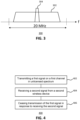
- Guard bands 204 located near the edges of the bandwidth of the first channel are frequency regions of reduced or zero power of the first signal 202 which may result in reduced interference between the first signal 202 and signals in other channels.
- the second signal 206 is shown being transmitted entirely within the upper frequency guard band 204. As a result, interference between the first signal 202 and second signal 206 may be reduced compared to if the second signal 206 is transmitted in the frequency range of the first signal 202. In some examples, the second signal may at least partially overlap with the first signal.
- This approach may be spectrum efficient, in particular if it is not possible to have the second channel dedicated to the second signal for one or more data channels.
- the transmitter of the first signal may in some examples be required to receive (or at least listen for) the second signal simultaneously with transmitting the first signal.
- full duplex operation of the transmitter of the first signal may be a feasible approach.
- the receiver may be required to receive ordinary data and thus may require a signal to noise ratio (SNR) of e.g. at least 20 dB
- SNR signal to noise ratio
- correct (e.g. reliable or decodable) reception of the second signal may be achieved at a lower SNR, for example at a SNR of 0 dB or less.
- the bandwidth of the second signal 304 is considerably less than the bandwidth of the first signal 302, though in other examples the bandwidth of the second signal may be identical to the bandwidth of the data signal or it may be larger than the bandwidth of the data signal.
- determining that the first channel is occupied comprises determining that the wireless device is receiving the first signal from the transmitter.
- the wireless device may be an AP that is receiving the first signal from a STA, or the wireless device may be a STA that is receiving the first signal from an AP.
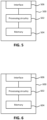
- FIG. 6 is a schematic of an example of apparatus 600 in a first wireless device for transmitting data on a first channel in unlicensed spectrum.
- the apparatus 600 comprises processing circuitry 602 (e.g. one or more processors) and a memory 604 in communication with the processing circuitry 602.
- the memory 604 contains instructions executable by the processing circuitry 602.
- the apparatus 600 also comprises an interface 606 in communication with the processing circuitry 602. Although the interface 606, processing circuitry 602 and memory 604 are shown connected in series, these may alternatively be interconnected in any other way, for example via a bus.
Landscapes
- Engineering & Computer Science (AREA)
- Computer Networks & Wireless Communication (AREA)
- Signal Processing (AREA)
- Mobile Radio Communication Systems (AREA)
Claims (17)
- Verfahren (100) in einer drahtlosen Vorrichtung zum Senden von Daten auf einem ersten Kanal in einem unlizenzierten Spektrum, wobei das Verfahren (100) Folgendes umfasst:Bestimmen (102), dass ein Sender ein erstes Signal auf dem ersten Kanal im unlizenzierten Spektrum sendet;Senden (104) eines zweiten Signals, um den Sender zu veranlassen, das Senden des ersten Signals zu unterlassen, wobei das zweite Signal ein Signal zur Verwendung zum Abbrechen einer laufenden Übertragung ist; undSenden (106) der Daten auf dem ersten Kanal im unlizenzierten Spektrum.
- Verfahren (100) nach Anspruch 1, wobei das zweite Signal auf einem zweiten Kanal im unlizenzierten Spektrum gesendet wird.
- Verfahren (100) nach Anspruch 2, wobei das zweite Signal ungeachtet dessen gesendet wird, ob der zweite Kanal belegt ist.
- Verfahren (100) nach Anspruch 2 oder 3, wobei das zweite Signal ohne Bestimmen dessen gesendet wird, ob der zweite Kanal belegt ist.
- Verfahren (100) nach einem der Ansprüche 2 bis 4, wobei das zweite Signal ohne Durchführen einer Listen-Before-Talk-Prozedur, LBT-Prozedur, gesendet wird.
- Verfahren (100) nach einem der Ansprüche 2 bis 5, wobei das zweite Signal mit einer hinlänglich niedrigen Leistung gesendet wird, so dass es nicht erforderlich ist, vor dem Senden des zweiten Signals zu bestimmen, ob der zweiten Kanal belegt ist.
- Verfahren (100) nach einem der Ansprüche 2 bis 6, wobei das zweite Signal bei einer hinlänglich geringen Kanalbelegung gesendet wird, so dass es nicht erforderlich ist, vor dem Senden des zweiten Signals zu bestimmen, ob der zweiten Kanal belegt ist.
- Verfahren (100) nach einem der Ansprüche 2 bis 7, wobei sich der zweite Kanal vom ersten Kanal unterscheidet und einen Kanal umfasst, der zum Senden des zweiten Signals reserviert ist, oder wobei der zweite Kanal derselbe wie der erste Kanal ist.
- Verfahren (100) nach Anspruch 8, wobei das zweite Signal zumindest teilweise in einem Schutzband des ersten Kanals gesendet wird.
- Verfahren (100) nach Anspruch 8 oder 9, wobei sich das zweite Signal zumindest teilweise mit dem ersten Signal überlappt.
- Verfahren (100) nach einem der Ansprüche 1 bis 10, wobei das Bestimmen, dass der Sender das erste Signal auf dem ersten Kanal im unlizenzierten Spektrum sendet, Bestimmen umfasst, dass der erste Kanal belegt ist.
- Verfahren (100) nach Anspruch 11, wobei das Bestimmen, dass der erste Kanal belegt ist, Durchführen einer ersten Listen-Before-Talk-Prozedur, LBT-Prozedur, auf dem ersten Kanal umfasst.
- Verfahren (100) nach Anspruch 12, wobei das Senden der Daten auf dem ersten Kanal im unlizenzierten Spektrum Senden der Daten umfasst, wenn die erste LBT-Prozedur anzeigt, dass der erste Kanal unbelegt ist, oder wobei das Senden der Daten auf dem ersten Kanal im unlizenzierten Spektrum Senden der Daten umfasst, wenn eine zweite LBT-Prozedur anzeigt, dass der erste Kanal unbelegt ist.
- Verfahren (100) nach einem der Ansprüche 1 bis 13, wobei der erste Kanal mit einer Mehrzahl von Datenkanälen assoziiert ist, die den ersten Kanal umfasst, und das erste Signal bewirkt, dass Operationen auf einem oder mehreren der Datenkanäle, die den ersten Kanal umfassen, gestoppt werden.
- Computerprogrammprodukt, umfassend ein nichttransitorisches computerlesbares Medium, das ein Computerprogramm darauf gespeichert aufweist, das Anweisungen umfasst, die bei Ausführung auf mindestens einem Prozessor den mindestens einen Prozessor zum Durchführen eines Verfahrens (100) nach einem der vorhergehenden Ansprüche veranlassen.
- Einrichtung (500) in einer drahtlosen Vorrichtung zum Senden von Daten auf einem ersten Kanal in einem unlizenzierten Spektrum, wobei die Einrichtung (500) einen Prozessor (502) und einen Speicher (504) umfasst, wobei der Speicher (504) Anweisungen enthält, die vom Prozessor (502) ausgeführt werden können, so dass die Einrichtung (500) ausgelegt ist zum:Bestimmen, dass ein Sender ein erstes Signal auf dem ersten Kanal im unlizenzierten Spektrum sendet;Senden eines zweiten Signals, um den Sender zu veranlassen, das Senden des ersten Signals zu unterlassen, wobei das zweite Signal ein Signal zur Verwendung zum Abbrechen einer laufenden Übertragung ist; undSenden der Daten auf dem ersten Kanal im unlizenzierten Spektrum.
- Einrichtung (500) nach Anspruch 16, wobei der Speicher (504) Anweisungen enthält, die vom Prozessor (502) ausgeführt werden können, so dass die Einrichtung (500) zum Durchführen des Verfahrens (100) nach einem der Ansprüche 2 bis 14 ausgelegt ist.
Applications Claiming Priority (1)
| Application Number | Priority Date | Filing Date | Title |
|---|---|---|---|
| PCT/EP2020/053211 WO2021155954A1 (en) | 2020-02-07 | 2020-02-07 | Transmitting data in unlicensed spectrum |
Publications (2)
| Publication Number | Publication Date |
|---|---|
| EP4101220A1 EP4101220A1 (de) | 2022-12-14 |
| EP4101220B1 true EP4101220B1 (de) | 2025-04-09 |
Family
ID=69526277
Family Applications (1)
| Application Number | Title | Priority Date | Filing Date |
|---|---|---|---|
| EP20704289.6A Active EP4101220B1 (de) | 2020-02-07 | 2020-02-07 | Übertragung von daten im unlizenzierten spektrum |
Country Status (3)
| Country | Link |
|---|---|
| US (1) | US20230066537A1 (de) |
| EP (1) | EP4101220B1 (de) |
| WO (1) | WO2021155954A1 (de) |
Families Citing this family (1)
| Publication number | Priority date | Publication date | Assignee | Title |
|---|---|---|---|---|
| CN118369991A (zh) * | 2021-12-16 | 2024-07-19 | 索尼集团公司 | 通信设备和方法 |
Family Cites Families (16)
| Publication number | Priority date | Publication date | Assignee | Title |
|---|---|---|---|---|
| US10681733B2 (en) * | 2016-07-26 | 2020-06-09 | Qualcomm Incorporated | License assisted request-to-send and clear-to-send transmission |
| US11115983B2 (en) * | 2016-11-11 | 2021-09-07 | Qualcomm Incorporated | Data and control channels in synchronization bursts for millimeter wave new radio |
| US10484992B2 (en) * | 2017-04-05 | 2019-11-19 | Qualcomm Incorporated | Channel reservation for multi-user scheduling |
| US10757615B2 (en) * | 2017-09-13 | 2020-08-25 | Comcast Cable Communications, Llc | Radio link failure information for PDCP duplication |
| WO2019056370A1 (zh) * | 2017-09-25 | 2019-03-28 | 华为技术有限公司 | 一种通信方法和装置 |
| CN118139200A (zh) * | 2018-06-19 | 2024-06-04 | 交互数字专利控股公司 | 用于在非授权频谱中进行系统接入的方法、装置和系统 |
| US11219061B2 (en) * | 2018-07-24 | 2022-01-04 | Qualcomm Incorporated | Listen-before-talk (LBT) modes for random access procedures |
| US10999014B2 (en) * | 2018-08-10 | 2021-05-04 | Qualcomm Incorporated | Hybrid automatic repeat request (HARQ) in a wireless local area network (WLAN) |
| KR20200020615A (ko) * | 2018-08-16 | 2020-02-26 | 주식회사 케이티 | 비면허 대역에서 주파수 호핑 방법 및 장치 |
| TWI732302B (zh) * | 2018-09-28 | 2021-07-01 | 聯發科技股份有限公司 | 上行鏈路傳送方法及電子裝置 |
| US11032818B2 (en) * | 2018-11-05 | 2021-06-08 | Qualcomm Incorporated | Radio-unlicensed (NR-U) channel reservation at slot boundary |
| US11304229B2 (en) * | 2018-12-06 | 2022-04-12 | Qualcomm Incorporated | Constraints on no listen-before-talk (LBT) transmission during uplink/downlink (UL/DL) switches |
| EP3915327A1 (de) * | 2019-02-12 | 2021-12-01 | Google LLC | System und verfahren zur reduzierung der verzögerungen von zeitgeberbasierten übertragungen auf einem gemeinsamen träger |
| US11483870B2 (en) * | 2019-03-28 | 2022-10-25 | Qualcomm Incorporated | Resource mapping and waveform generation for uplink transmission |
| US12273733B2 (en) * | 2019-10-22 | 2025-04-08 | Nokia Technologies Oy | Method and apparatus for improving reliable and low-latency communication uplink transmission in the unlicensed spectrum |
| US11997664B2 (en) * | 2019-11-26 | 2024-05-28 | Qualcomm Incorporated | Beam failure detection and recovery for high priority or broadcast coreset |
-
2020
- 2020-02-07 US US17/796,931 patent/US20230066537A1/en active Pending
- 2020-02-07 WO PCT/EP2020/053211 patent/WO2021155954A1/en not_active Ceased
- 2020-02-07 EP EP20704289.6A patent/EP4101220B1/de active Active
Also Published As
| Publication number | Publication date |
|---|---|
| US20230066537A1 (en) | 2023-03-02 |
| EP4101220A1 (de) | 2022-12-14 |
| WO2021155954A1 (en) | 2021-08-12 |
Similar Documents
| Publication | Publication Date | Title |
|---|---|---|
| US10917905B2 (en) | Autonomous uplink transmission using shared radio frequency spectrum | |
| EP2345275B1 (de) | Kognitives funkkommunikationsendgerät und verfahren zur kollisionserkennung mittels merkmalserkennung | |
| US8861437B2 (en) | Contention-based communication | |
| EP2752066B1 (de) | Koexistenz einer normal-rate-bitübertragungsschicht und low-rate-bitübertragungsschicht in einem drahtlosen netzwerk | |
| KR102131676B1 (ko) | 채널 예약 신호 송신 방법 및 기지국 | |
| EP3372041B1 (de) | Planung von und zugriff auf uplink-ressourcen | |
| US20180367286A1 (en) | System for Coexistence of Wi-Fi HaLow Network and Low-Rate Wireless Personal Area Network (LR-WPAN) | |
| US20130203429A1 (en) | Method and apparatus for enabling scheduled transmission | |
| EP2732669B1 (de) | Koexistenz einer normal-rate-bitübertragungsschicht und low-rate-bitübertragungsschicht in einem drahtlosen netzwerk | |
| CN102088706B (zh) | 收发装置、无线终端装置及无线通信方法 | |
| US20040242252A1 (en) | Mechanism for reserving multiple channels of a single medium access control and physical layer | |
| CN107005862B (zh) | 一种数据传输方法及装置 | |
| MXPA04007545A (es) | Minimizacion de interferencia a traves de multiplexion de division de tiempo de transmisiones ieee 802.11 y cdma. | |
| US12336002B2 (en) | Systems, methods, and apparatus for slot structure, channel access, and resource allocation for sidelink communications | |
| EP2891262A1 (de) | Verfahren, vorrichtung, system und computerprogrammprodukt zur koordination von drahtlosübertragung in einem frequenzband | |
| RU2763959C1 (ru) | Способ связи и устройство связи | |
| CN110958715A (zh) | 一种发送、接收随机接入前导的方法及通信装置 | |
| US7773577B2 (en) | Method for reducing medium access overhead in a wireless network | |
| EP4101220B1 (de) | Übertragung von daten im unlizenzierten spektrum | |
| CN105634859A (zh) | 基于负载的lbt信道检测方法及系统、基站和终端 | |
| WO2016191967A1 (zh) | 一种信道接入方法及站点 | |
| JP2006500816A (ja) | 伝送ネットワークにおける資源予約 | |
| US20160255644A1 (en) | Methods and apparatus for redundant waveform protection in a mixed wireless communication system | |
| CN111095966A (zh) | 用于载波侦听的方法和设备 | |
| KR20160134478A (ko) | 공유 대역을 사용하는 무선 통신 시스템에서 데이터 송수신 방법 및 그 장치 |
Legal Events
| Date | Code | Title | Description |
|---|---|---|---|
| STAA | Information on the status of an ep patent application or granted ep patent |
Free format text: STATUS: UNKNOWN |
|
| STAA | Information on the status of an ep patent application or granted ep patent |
Free format text: STATUS: THE INTERNATIONAL PUBLICATION HAS BEEN MADE |
|
| PUAI | Public reference made under article 153(3) epc to a published international application that has entered the european phase |
Free format text: ORIGINAL CODE: 0009012 |
|
| STAA | Information on the status of an ep patent application or granted ep patent |
Free format text: STATUS: REQUEST FOR EXAMINATION WAS MADE |
|
| 17P | Request for examination filed |
Effective date: 20220906 |
|
| AK | Designated contracting states |
Kind code of ref document: A1 Designated state(s): AL AT BE BG CH CY CZ DE DK EE ES FI FR GB GR HR HU IE IS IT LI LT LU LV MC MK MT NL NO PL PT RO RS SE SI SK SM TR |
|
| DAV | Request for validation of the european patent (deleted) | ||
| DAX | Request for extension of the european patent (deleted) | ||
| REG | Reference to a national code |
Ref country code: DE Ref legal event code: R079 Free format text: PREVIOUS MAIN CLASS: H04W0072040000 Ipc: H04W0074080800 Ref country code: DE Ref legal event code: R079 Ref document number: 602020049048 Country of ref document: DE Free format text: PREVIOUS MAIN CLASS: H04W0072040000 Ipc: H04W0074080800 |
|
| GRAP | Despatch of communication of intention to grant a patent |
Free format text: ORIGINAL CODE: EPIDOSNIGR1 |
|
| STAA | Information on the status of an ep patent application or granted ep patent |
Free format text: STATUS: GRANT OF PATENT IS INTENDED |
|
| RIC1 | Information provided on ipc code assigned before grant |
Ipc: H04W 72/0453 20230101ALN20240822BHEP Ipc: H04W 74/0808 20240101AFI20240822BHEP |
|
| INTG | Intention to grant announced |
Effective date: 20240920 |
|
| GRAS | Grant fee paid |
Free format text: ORIGINAL CODE: EPIDOSNIGR3 |
|
| GRAA | (expected) grant |
Free format text: ORIGINAL CODE: 0009210 |
|
| STAA | Information on the status of an ep patent application or granted ep patent |
Free format text: STATUS: THE PATENT HAS BEEN GRANTED |
|
| AK | Designated contracting states |
Kind code of ref document: B1 Designated state(s): AL AT BE BG CH CY CZ DE DK EE ES FI FR GB GR HR HU IE IS IT LI LT LU LV MC MK MT NL NO PL PT RO RS SE SI SK SM TR |
|
| REG | Reference to a national code |
Ref country code: GB Ref legal event code: FG4D |
|
| REG | Reference to a national code |
Ref country code: CH Ref legal event code: EP |
|
| REG | Reference to a national code |
Ref country code: DE Ref legal event code: R096 Ref document number: 602020049048 Country of ref document: DE |
|
| REG | Reference to a national code |
Ref country code: IE Ref legal event code: FG4D |
|
| REG | Reference to a national code |
Ref country code: NL Ref legal event code: MP Effective date: 20250409 |
|
| PG25 | Lapsed in a contracting state [announced via postgrant information from national office to epo] |
Ref country code: NL Free format text: LAPSE BECAUSE OF FAILURE TO SUBMIT A TRANSLATION OF THE DESCRIPTION OR TO PAY THE FEE WITHIN THE PRESCRIBED TIME-LIMIT Effective date: 20250409 |
|
| REG | Reference to a national code |
Ref country code: AT Ref legal event code: MK05 Ref document number: 1784772 Country of ref document: AT Kind code of ref document: T Effective date: 20250409 |
|
| PG25 | Lapsed in a contracting state [announced via postgrant information from national office to epo] |
Ref country code: FI Free format text: LAPSE BECAUSE OF FAILURE TO SUBMIT A TRANSLATION OF THE DESCRIPTION OR TO PAY THE FEE WITHIN THE PRESCRIBED TIME-LIMIT Effective date: 20250409 Ref country code: PT Free format text: LAPSE BECAUSE OF FAILURE TO SUBMIT A TRANSLATION OF THE DESCRIPTION OR TO PAY THE FEE WITHIN THE PRESCRIBED TIME-LIMIT Effective date: 20250811 Ref country code: ES Free format text: LAPSE BECAUSE OF FAILURE TO SUBMIT A TRANSLATION OF THE DESCRIPTION OR TO PAY THE FEE WITHIN THE PRESCRIBED TIME-LIMIT Effective date: 20250409 |
|
| REG | Reference to a national code |
Ref country code: LT Ref legal event code: MG9D |
|
| PG25 | Lapsed in a contracting state [announced via postgrant information from national office to epo] |
Ref country code: NO Free format text: LAPSE BECAUSE OF FAILURE TO SUBMIT A TRANSLATION OF THE DESCRIPTION OR TO PAY THE FEE WITHIN THE PRESCRIBED TIME-LIMIT Effective date: 20250709 Ref country code: GR Free format text: LAPSE BECAUSE OF FAILURE TO SUBMIT A TRANSLATION OF THE DESCRIPTION OR TO PAY THE FEE WITHIN THE PRESCRIBED TIME-LIMIT Effective date: 20250710 |
|
| PG25 | Lapsed in a contracting state [announced via postgrant information from national office to epo] |
Ref country code: PL Free format text: LAPSE BECAUSE OF FAILURE TO SUBMIT A TRANSLATION OF THE DESCRIPTION OR TO PAY THE FEE WITHIN THE PRESCRIBED TIME-LIMIT Effective date: 20250409 |
|
| PG25 | Lapsed in a contracting state [announced via postgrant information from national office to epo] |
Ref country code: BG Free format text: LAPSE BECAUSE OF FAILURE TO SUBMIT A TRANSLATION OF THE DESCRIPTION OR TO PAY THE FEE WITHIN THE PRESCRIBED TIME-LIMIT Effective date: 20250409 |
|
| PG25 | Lapsed in a contracting state [announced via postgrant information from national office to epo] |
Ref country code: HR Free format text: LAPSE BECAUSE OF FAILURE TO SUBMIT A TRANSLATION OF THE DESCRIPTION OR TO PAY THE FEE WITHIN THE PRESCRIBED TIME-LIMIT Effective date: 20250409 |
|
| PG25 | Lapsed in a contracting state [announced via postgrant information from national office to epo] |
Ref country code: AT Free format text: LAPSE BECAUSE OF FAILURE TO SUBMIT A TRANSLATION OF THE DESCRIPTION OR TO PAY THE FEE WITHIN THE PRESCRIBED TIME-LIMIT Effective date: 20250409 |
|
| PG25 | Lapsed in a contracting state [announced via postgrant information from national office to epo] |
Ref country code: RS Free format text: LAPSE BECAUSE OF FAILURE TO SUBMIT A TRANSLATION OF THE DESCRIPTION OR TO PAY THE FEE WITHIN THE PRESCRIBED TIME-LIMIT Effective date: 20250709 |
|
| PG25 | Lapsed in a contracting state [announced via postgrant information from national office to epo] |
Ref country code: IS Free format text: LAPSE BECAUSE OF FAILURE TO SUBMIT A TRANSLATION OF THE DESCRIPTION OR TO PAY THE FEE WITHIN THE PRESCRIBED TIME-LIMIT Effective date: 20250809 |
|
| PG25 | Lapsed in a contracting state [announced via postgrant information from national office to epo] |
Ref country code: LV Free format text: LAPSE BECAUSE OF FAILURE TO SUBMIT A TRANSLATION OF THE DESCRIPTION OR TO PAY THE FEE WITHIN THE PRESCRIBED TIME-LIMIT Effective date: 20250409 |
|
| REG | Reference to a national code |
Ref country code: DE Ref legal event code: R097 Ref document number: 602020049048 Country of ref document: DE |
|
| PG25 | Lapsed in a contracting state [announced via postgrant information from national office to epo] |
Ref country code: SM Free format text: LAPSE BECAUSE OF FAILURE TO SUBMIT A TRANSLATION OF THE DESCRIPTION OR TO PAY THE FEE WITHIN THE PRESCRIBED TIME-LIMIT Effective date: 20250409 Ref country code: DK Free format text: LAPSE BECAUSE OF FAILURE TO SUBMIT A TRANSLATION OF THE DESCRIPTION OR TO PAY THE FEE WITHIN THE PRESCRIBED TIME-LIMIT Effective date: 20250409 |
|
| PG25 | Lapsed in a contracting state [announced via postgrant information from national office to epo] |
Ref country code: CZ Free format text: LAPSE BECAUSE OF FAILURE TO SUBMIT A TRANSLATION OF THE DESCRIPTION OR TO PAY THE FEE WITHIN THE PRESCRIBED TIME-LIMIT Effective date: 20250409 |
|
| PG25 | Lapsed in a contracting state [announced via postgrant information from national office to epo] |
Ref country code: EE Free format text: LAPSE BECAUSE OF FAILURE TO SUBMIT A TRANSLATION OF THE DESCRIPTION OR TO PAY THE FEE WITHIN THE PRESCRIBED TIME-LIMIT Effective date: 20250409 |
|
| PG25 | Lapsed in a contracting state [announced via postgrant information from national office to epo] |
Ref country code: SK Free format text: LAPSE BECAUSE OF FAILURE TO SUBMIT A TRANSLATION OF THE DESCRIPTION OR TO PAY THE FEE WITHIN THE PRESCRIBED TIME-LIMIT Effective date: 20250409 |
|
| PG25 | Lapsed in a contracting state [announced via postgrant information from national office to epo] |
Ref country code: IT Free format text: LAPSE BECAUSE OF FAILURE TO SUBMIT A TRANSLATION OF THE DESCRIPTION OR TO PAY THE FEE WITHIN THE PRESCRIBED TIME-LIMIT Effective date: 20250409 |
|
| PLBE | No opposition filed within time limit |
Free format text: ORIGINAL CODE: 0009261 |
|
| STAA | Information on the status of an ep patent application or granted ep patent |
Free format text: STATUS: NO OPPOSITION FILED WITHIN TIME LIMIT |
|
| REG | Reference to a national code |
Ref country code: CH Ref legal event code: L10 Free format text: ST27 STATUS EVENT CODE: U-0-0-L10-L00 (AS PROVIDED BY THE NATIONAL OFFICE) Effective date: 20260218 |
|
| 26N | No opposition filed |
Effective date: 20260112 |