EP4100574B1 - Topically treated tissue product - Google Patents
Topically treated tissue product Download PDFInfo
- Publication number
- EP4100574B1 EP4100574B1 EP20917519.9A EP20917519A EP4100574B1 EP 4100574 B1 EP4100574 B1 EP 4100574B1 EP 20917519 A EP20917519 A EP 20917519A EP 4100574 B1 EP4100574 B1 EP 4100574B1
- Authority
- EP
- European Patent Office
- Prior art keywords
- lotion
- web
- tissue
- weight percent
- wax
- Prior art date
- Legal status (The legal status is an assumption and is not a legal conclusion. Google has not performed a legal analysis and makes no representation as to the accuracy of the status listed.)
- Active
Links
Images


Classifications
-
- A—HUMAN NECESSITIES
- A47—FURNITURE; DOMESTIC ARTICLES OR APPLIANCES; COFFEE MILLS; SPICE MILLS; SUCTION CLEANERS IN GENERAL
- A47K—SANITARY EQUIPMENT NOT OTHERWISE PROVIDED FOR; TOILET ACCESSORIES
- A47K10/00—Body-drying implements; Toilet paper; Holders therefor
- A47K10/16—Paper towels; Toilet paper; Holders therefor
-
- A—HUMAN NECESSITIES
- A61—MEDICAL OR VETERINARY SCIENCE; HYGIENE
- A61F—FILTERS IMPLANTABLE INTO BLOOD VESSELS; PROSTHESES; DEVICES PROVIDING PATENCY TO, OR PREVENTING COLLAPSING OF, TUBULAR STRUCTURES OF THE BODY, e.g. STENTS; ORTHOPAEDIC, NURSING OR CONTRACEPTIVE DEVICES; FOMENTATION; TREATMENT OR PROTECTION OF EYES OR EARS; BANDAGES, DRESSINGS OR ABSORBENT PADS; FIRST-AID KITS
- A61F13/00—Bandages or dressings; Absorbent pads
- A61F13/15—Absorbent pads, e.g. sanitary towels, swabs or tampons for external or internal application to the body; Supporting or fastening means therefor; Tampon applicators
- A61F13/51—Absorbent pads, e.g. sanitary towels, swabs or tampons for external or internal application to the body; Supporting or fastening means therefor; Tampon applicators characterised by the outer layers of the pads
- A61F13/511—Topsheet, i.e. the permeable cover or layer facing the skin
- A61F13/51113—Topsheet, i.e. the permeable cover or layer facing the skin comprising an additive, e.g. lotion or odour control
-
- A—HUMAN NECESSITIES
- A61—MEDICAL OR VETERINARY SCIENCE; HYGIENE
- A61K—PREPARATIONS FOR MEDICAL, DENTAL OR TOILETRY PURPOSES
- A61K8/00—Cosmetics or similar toiletry preparations
- A61K8/02—Cosmetics or similar toiletry preparations characterised by special physical form
- A61K8/0208—Tissues; Wipes; Patches
-
- A—HUMAN NECESSITIES
- A61—MEDICAL OR VETERINARY SCIENCE; HYGIENE
- A61K—PREPARATIONS FOR MEDICAL, DENTAL OR TOILETRY PURPOSES
- A61K8/00—Cosmetics or similar toiletry preparations
- A61K8/18—Cosmetics or similar toiletry preparations characterised by the composition
- A61K8/30—Cosmetics or similar toiletry preparations characterised by the composition containing organic compounds
- A61K8/31—Hydrocarbons
-
- A—HUMAN NECESSITIES
- A61—MEDICAL OR VETERINARY SCIENCE; HYGIENE
- A61K—PREPARATIONS FOR MEDICAL, DENTAL OR TOILETRY PURPOSES
- A61K8/00—Cosmetics or similar toiletry preparations
- A61K8/18—Cosmetics or similar toiletry preparations characterised by the composition
- A61K8/30—Cosmetics or similar toiletry preparations characterised by the composition containing organic compounds
- A61K8/33—Cosmetics or similar toiletry preparations characterised by the composition containing organic compounds containing oxygen
- A61K8/34—Alcohols
-
- A—HUMAN NECESSITIES
- A61—MEDICAL OR VETERINARY SCIENCE; HYGIENE
- A61K—PREPARATIONS FOR MEDICAL, DENTAL OR TOILETRY PURPOSES
- A61K8/00—Cosmetics or similar toiletry preparations
- A61K8/18—Cosmetics or similar toiletry preparations characterised by the composition
- A61K8/30—Cosmetics or similar toiletry preparations characterised by the composition containing organic compounds
- A61K8/33—Cosmetics or similar toiletry preparations characterised by the composition containing organic compounds containing oxygen
- A61K8/34—Alcohols
- A61K8/342—Alcohols having more than seven atoms in an unbroken chain
-
- A—HUMAN NECESSITIES
- A61—MEDICAL OR VETERINARY SCIENCE; HYGIENE
- A61K—PREPARATIONS FOR MEDICAL, DENTAL OR TOILETRY PURPOSES
- A61K8/00—Cosmetics or similar toiletry preparations
- A61K8/18—Cosmetics or similar toiletry preparations characterised by the composition
- A61K8/30—Cosmetics or similar toiletry preparations characterised by the composition containing organic compounds
- A61K8/33—Cosmetics or similar toiletry preparations characterised by the composition containing organic compounds containing oxygen
- A61K8/34—Alcohols
- A61K8/345—Alcohols containing more than one hydroxy group
-
- A—HUMAN NECESSITIES
- A61—MEDICAL OR VETERINARY SCIENCE; HYGIENE
- A61K—PREPARATIONS FOR MEDICAL, DENTAL OR TOILETRY PURPOSES
- A61K8/00—Cosmetics or similar toiletry preparations
- A61K8/18—Cosmetics or similar toiletry preparations characterised by the composition
- A61K8/72—Cosmetics or similar toiletry preparations characterised by the composition containing organic macromolecular compounds
- A61K8/84—Cosmetics or similar toiletry preparations characterised by the composition containing organic macromolecular compounds obtained by reactions otherwise than those involving only carbon-carbon unsaturated bonds
- A61K8/86—Polyethers
-
- A—HUMAN NECESSITIES
- A61—MEDICAL OR VETERINARY SCIENCE; HYGIENE
- A61K—PREPARATIONS FOR MEDICAL, DENTAL OR TOILETRY PURPOSES
- A61K8/00—Cosmetics or similar toiletry preparations
- A61K8/18—Cosmetics or similar toiletry preparations characterised by the composition
- A61K8/92—Oils, fats or waxes; Derivatives thereof, e.g. hydrogenation products thereof
-
- A—HUMAN NECESSITIES
- A61—MEDICAL OR VETERINARY SCIENCE; HYGIENE
- A61K—PREPARATIONS FOR MEDICAL, DENTAL OR TOILETRY PURPOSES
- A61K8/00—Cosmetics or similar toiletry preparations
- A61K8/18—Cosmetics or similar toiletry preparations characterised by the composition
- A61K8/92—Oils, fats or waxes; Derivatives thereof, e.g. hydrogenation products thereof
- A61K8/922—Oils, fats or waxes; Derivatives thereof, e.g. hydrogenation products thereof of vegetable origin
-
- A—HUMAN NECESSITIES
- A61—MEDICAL OR VETERINARY SCIENCE; HYGIENE
- A61Q—SPECIFIC USE OF COSMETICS OR SIMILAR TOILETRY PREPARATIONS
- A61Q19/00—Preparations for care of the skin
-
- D—TEXTILES; PAPER
- D21—PAPER-MAKING; PRODUCTION OF CELLULOSE
- D21H—PULP COMPOSITIONS; PREPARATION THEREOF NOT COVERED BY SUBCLASSES D21C OR D21D; IMPREGNATING OR COATING OF PAPER; TREATMENT OF FINISHED PAPER NOT COVERED BY CLASS B31 OR SUBCLASS D21G; PAPER NOT OTHERWISE PROVIDED FOR
- D21H27/00—Special paper not otherwise provided for, e.g. made by multi-step processes
- D21H27/002—Tissue paper; Absorbent paper
-
- D—TEXTILES; PAPER
- D21—PAPER-MAKING; PRODUCTION OF CELLULOSE
- D21H—PULP COMPOSITIONS; PREPARATION THEREOF NOT COVERED BY SUBCLASSES D21C OR D21D; IMPREGNATING OR COATING OF PAPER; TREATMENT OF FINISHED PAPER NOT COVERED BY CLASS B31 OR SUBCLASS D21G; PAPER NOT OTHERWISE PROVIDED FOR
- D21H27/00—Special paper not otherwise provided for, e.g. made by multi-step processes
- D21H27/02—Patterned paper
-
- D—TEXTILES; PAPER
- D21—PAPER-MAKING; PRODUCTION OF CELLULOSE
- D21H—PULP COMPOSITIONS; PREPARATION THEREOF NOT COVERED BY SUBCLASSES D21C OR D21D; IMPREGNATING OR COATING OF PAPER; TREATMENT OF FINISHED PAPER NOT COVERED BY CLASS B31 OR SUBCLASS D21G; PAPER NOT OTHERWISE PROVIDED FOR
- D21H27/00—Special paper not otherwise provided for, e.g. made by multi-step processes
- D21H27/30—Multi-ply
-
- D—TEXTILES; PAPER
- D21—PAPER-MAKING; PRODUCTION OF CELLULOSE
- D21H—PULP COMPOSITIONS; PREPARATION THEREOF NOT COVERED BY SUBCLASSES D21C OR D21D; IMPREGNATING OR COATING OF PAPER; TREATMENT OF FINISHED PAPER NOT COVERED BY CLASS B31 OR SUBCLASS D21G; PAPER NOT OTHERWISE PROVIDED FOR
- D21H27/00—Special paper not otherwise provided for, e.g. made by multi-step processes
- D21H27/30—Multi-ply
- D21H27/40—Multi-ply at least one of the sheets being non-planar, e.g. crêped
-
- A—HUMAN NECESSITIES
- A61—MEDICAL OR VETERINARY SCIENCE; HYGIENE
- A61K—PREPARATIONS FOR MEDICAL, DENTAL OR TOILETRY PURPOSES
- A61K2800/00—Properties of cosmetic compositions or active ingredients thereof or formulation aids used therein and process related aspects
- A61K2800/20—Chemical, physico-chemical or functional or structural properties of the composition as a whole
- A61K2800/30—Characterized by the absence of a particular group of ingredients
- A61K2800/31—Anhydrous
Definitions
- Absorbent tissue products such as facial tissue and bath tissue have been used to absorb body fluids and leave the skin dry.
- Absorbent tissue in addition to absorbing fluids, however, also abrade the skin during use and frequently do not leave the skin completely dry and free of the body fluid the tissue is trying to absorb. During frequent nose-blowing or perianal wiping, the skin can become so abraded as to appear red and be sore to the touch.
- tissue additive formulations can be applied to the tissue such that, in use, the additive formulation either provides lubricity causing the tissue to glide across the surface of the skin or leaves the tissue and is deposited on the skin.
- these formulations have been liquids or lipid (lipophilic materials) based semi-solids or lipid-based solids at room temperature.
- the liquid or lipid-based semi-solid type of formulations require a high amount of formulation added to the tissue to deliver the benefit of reduced skin irritation and redness because these formulations absorb into a tissue, leaving less on the surface to provide the benefit.
- the lipid based solid formulations can be heated (slightly above the melting point of the formulation) and applied to the surface of a tissue or towel thereafter re-solidifying the formulation on the surface(s) of the tissue where the formulation is readily available for transfer to the user's skin to protect the skin from or prevent further irritation and redness in an efficient cost-effective manner.
- fibrous structure refers to a structure comprising a plurality of elongated particulate having a length to diameter ratio greater than about 10 such as, for example, papermaking fibers and more particularly pulp fibers, including both wood and non-wood pulp fibers, and synthetic staple fibers.
- a non-limiting example of a fibrous structure is a tissue web comprising pulp fibers.
- tissue product refers to products made from tissue webs and includes, bath tissues, facial tissues, paper towels, industrial wipers, foodservice wipers, napkins, medical pads, and other similar products. Tissue products may comprise one, two, three or more plies.
- textured generally refers the three-dimensional topography of a first or a second side of a fibrous structure.
- a textured structure will have a first side with first and second surfaces lying in first and second surface planes where there is some non-zero z-direction height difference between the first and second surface planes.
- a textured tissue web may comprise a plurality of elevated elements having an upper surface lying in a first surface plane separated from one another by land areas lying in a second surface plane.
- discrete element refers to an element, such as a design element, disposed on a fibrous structure that does not extend continuously in any dimension of the fibrous structure.
- caliper is the representative thickness of a single sheet (caliper of tissue products comprising two or more plies is the thickness of a single sheet of tissue product comprising all plies) measured in accordance with TAPPI test method T402 using an EMVECO 200-A Microgage automated micrometer (EMVECO, Inc., Newberg, OR).
- the micrometer has an anvil diameter of 2.22 inches (56.4 mm) and an anvil pressure of 132 grams per square inch (per 6.45 square centimeters) (2.0 kPa).
- tissue products prepared according to the present invention generally have a caliper greater than about 100 ⁇ m, more preferably greater than about 200 ⁇ m and still more preferably greater than about 300 ⁇ m, such as from about 100 to about 1,500 ⁇ m and more preferably from about 300 to about 1,200 ⁇ m.
- sheet bulk refers to the quotient of the caliper (generally having units of ⁇ m) divided by the bone-dry basis weight (generally having units of gsm). The resulting sheet bulk is expressed in cubic centimeters per gram (cc/g). While sheet bulk may vary depending on any one of a number of factors, tissue products prepared according to the present invention may have a sheet bulk greater than about 5 cc/g, more preferably greater than about 8 cc/g and still more preferably greater than about 10 cc/g, such as from about 5 to about 20 cc/g.
- tissue products prepared according to the present invention may have a GMT greater than about 500 g/3" (g/7.62 cm), more preferably greater than about 700 g/3" (g/7.62 cm) and still more preferably greater than about 1,000 g/3" (g/7.62 cm).
- any fibrous structure may be treated with a lotion according to the present invention
- the first surface plane lies above the second surface plane and forms the upper most structure surface and is selectively treated with lotion.
- the second surface which lies below the first surface, is generally free from lotion.
- the surface of the structure may be selectively treated with lotion such that the surface first brought into contact with the user's skin in-use is selectively treated with lotion.
- the amount of lotion added to the tissue may be reduced without negatively affecting user's perception of softness and comfort.
- other important properties such as absorbency, strength and bulk may be preserved.
- the textured surface may comprise a first side having peaks or ridges lying in a first surface plane and valleys lying in a second surface plane below the first surface plane.
- the first side may comprise a first surface plane and a design element lying in a second surface plane below the first surface plane where the design element provides the fibrous structure with a visually discernable design which users may find aesthetically pleasing.
- the structures of the present invention generally have a first side having at least two different surface planes where the upper most surface is preferentially treated with a lotion.
- Textured fibrous structures useful in the present invention may be created using any number of well-known techniques, such as wet molding or embossing.
- texture is imparted to the fibrous structure during the manufacturing process such as by wet texturing, molding using a drying fabric or by embossing.
- the texture is not the result of printing.
- the fibrous structure is a wet-laid tissue web having a textured surface formed during the manufacturing process by molding the web using an endless belt having a corresponding textured surface.
- the wet-laid tissue web may be manufactured using an endless belt which comprises a continuous three-dimensional element (also referred to herein as a continuous line element) and a reinforcing structure (also referred to herein as a carrier structure or fabric).
- the reinforcing structure comprises a pair of opposed major surfaces - a web contacting surface from which the continuous line elements extend and a machine contacting surface.
- Machinery employed in a typical papermaking operation is well known in the art and may include, for example, vacuum pickup shoes, rollers, and drying cylinders.
- the belt comprises a through-air drying fabric useful for transporting an embryonic tissue web across drying cylinders during the tissue manufacturing process.
- the web contacting surface supports the embryonic tissue web, while the opposite surface, the machine contacting surface, contacts the through-air dryer.
- a plurality of continuous line elements may be disposed on the web-contacting surface for cooperating with, and structuring of, the wet fibrous web during manufacturing.
- the web contacting surface comprises a plurality of spaced apart three-dimensional elements distributed across the web-contacting surface of the carrier structure and together constituting from at least about 15 percent of the web-contacting surface, such as from about 15 to about 35 percent, more preferably from about 18 to about 30 percent, and still more preferably from about 20 to about 25 percent of the web-contacting surface.
- the fibrous structure 10 has two principle dimensions - a machine direction ("MD"), which is the direction substantially parallel to the principal direction of travel of the tissue web during manufacture and a cross-machine direction ("CD"), which is generally orthogonal to the machine direction.
- MD machine direction
- CD cross-machine direction
- the fibrous structure generally has a textured first side 12 comprising a plurality of continuous elevated line elements 16, also referred to herein as ridges, and a plurality of valleys 18, also referred to herein as land areas, there-between.
- At least one of the calender rolls, particularly the roll to which the lotion is applied is a roll having a metal surface and more preferably a heated steel roll with a substantially smooth surface.
- the lotion 108 which is provided in a solid state and has a penetration hardness greater than about 5.0 mm, such as from about 5.0 to about 30 mm (measured pursuant to the Hardness Method set forth below) is urged against the surface 103 of a second calendering roll 102, which preferably has a metal surface and is heated.
- the calendering-coating apparatus may be provided with an applicator 200 for retaining a solid lotion 108, having a thickness (t), and urging the lotion against the surface 103 of a calender roll 102.
- the lotion thickness (t) may range from about 1 to about 5 cm.
- the lotion thickness (t) may be varied along with one or more process variables to control the amount of lotion added to the web. As the lotion 108 is urged against the calender surface 103 a coating of lotion 110 is applied. The lotion 110 may then be transferred to the surface of a web 100 as it passes through the nip 105.
- the speed of the web 100 as it passes through the nip 105 may be varied to control the amount of lotion added to the web.
- the web speed may range from about 15 to about 300 meters per minute, such as from about 50 to about 250 meters per minute.
- the applicator 200 may comprise a holder 202 and an automatic indexing mechanism 204 for automatically advancing the solid lotion 108 towards the roll surface 103.
- the automatic indexing mechanism may include a pressure sensor for measuring and monitoring the pressure applied to the solid lotion as it is urged against the calender roll surface and a means for advancing the solid lotion towards the roll surface.
- the lotion applicator may comprise a holder and a mechanical means, such as a spring, to maintain the desired pressure against the solid lotion and urge it against the roll surface.
- the automatic indexing mechanism 204 may advance the solid lotion 108 towards the roll surface 103 at a predetermined feed rate (FR) to achieve the desired add-on.
- FR feed rate
- the feed rate may be varied from about 0.05 to about 0.2 mm per second to achieve an add-on from about 0.5 to about 6.0 grams per square meter (gsm) of web.
- the desired add-on (having units of grams per square meter of web) may be achieved by controlling the thickness of the solid lotion (having units of mm or the like), the lotion feed rate (FR, having units of mm per second or the like), the penetration hardness of the lotion (measured as described herein and having units of mm) and the speed of the web (having units of meters per minute or the like) as it passes through the nip.
- the desired lotion add-on may be related to lotion thickness, feed rate, penetration hardness and web speed by Equation 1, below. Lotion Add On ⁇ Thickness ⁇ Feed Rate ⁇ Penetration Hardness Web Speed
- the solid lotion 108 is urged against the second calender roll 102 and a portion of the lotion is transferred to the roll surface 103.
- the lotion coated roll surface 110 is then brought into contact with the first side 122 of the web 100 in the calender nip 105. Within the nip, the lotion is transferred from the roll surface to the upper most surface of the first side 122 of the textured fibrous structure.
- the roll surface may be substantially free from lotion however, in certain instances it is possible that a lotion residue remains on the surface. Lotion residue on the leading rotating sector of the second calender roll 102 may be stripped from the outer surface thereof with the help of a doctor blade (shown in FIG. 6 ) or other stripping device.
- Solid lotions useful in the present invention may be provided with a range of different product forms.
- One of these is a so-called "stick” which is usually a bar of an apparently firm solid material held within an applicator and which retains its structural integrity and shape while being urged against a calender roll.
- a portion of the stick is drawn across the surface of a calender roll a film of the stick composition is transferred to the roll surface.
- the stick has the appearance of a solid article capable of retaining its own shape for a period of time, the material usually has a structured liquid phase so that a film of the composition is readily transferred from the stick to roll surface upon contact.
- Lotion compositions useful in the present invention may be provided as solids that are characterized by their retaining their shape without lateral support under the influence of the Earth's gravity, at temperatures up to at least 50°C.
- the hardness of the solid lotions can be measured in a needle penetration test. Pursuant to this test, as the solid lotions become softer, their needle penetration hardness values increase, with higher hardness values being indicative of a softer lotion composition.
- the lotion compositions have a penetration hardness from 5.0 to 30 mm, more particularly from 7.0 to 25 mm, more particularly from 12 to 22 mm, and still more particularly from 16 to 22 mm measured pursuant to the Hardness Method set forth below. Hardness values within these ranges are indicative of self-supporting solid lotions having a somewhat soft feel but are well suited for indirect application to a tissue web via a conventional calendering apparatus.
- lotions useful in the present invention are formulated as hydrophobic compositions.
- the hydrophobic lotions of the present invention preferably do not comprise added water, which could require an additional drying step. However, minor or trace quantities of water in the lotion that are picked as a result of, for example, ambient humidity can be tolerated without adverse effect.
- hydrophobic lotions useful in the present invention are provided as a solid stick having a penetration hardness ranging from 5.0 to 30 mm and contain about 3 percent or less water, preferably about 1 percent or less water, most preferably about 0.5 percent or less water.
- the solid lotion composition may be hydrophobic and comprise one or more oils.
- the amount of oil in the composition can be from about 30 to about 90 weight percent, more specifically from about 40 to about 70 weight percent, and still more specifically from about 45 to about 60 weight percent.
- Suitable oils include, but are not limited to, the following classes of oils: petroleum or mineral oils, such as mineral oil and petrolatum; or animal oils, such as mink oil and lanolin oil.
- Particularly preferred oils are mineral oils such as petroleum derivatives comprising a mixture of paraffinic and naphthenic (cyclic) hydrocarbons. These include both “light” and “heavy” mineral oils, which are differentiated on the basis of the average molecular weight of the hydrocarbons included.
- the mineral oils useful herein have the following properties: viscosity of from about 5 centistokes (about 5 mm 2 /s) to about 70 centistokes (about 70 mm 2 /s) at 40°C; density between about 0.82 and about 0.89 g/cm 3 at 25°C; flash point between about 138°C and about 216°C; and carbon chain length between about 14 and about 40 carbons.
- lotions useful in the present invention may comprise a wax.
- the amount of wax in the composition can be from about 10 to about 40 weight percent, more specifically from about 10 to about 30 weight percent, and still more specifically from about 15 to about 25 weight percent.
- Suitable waxes include, but are not limited to, the following classes: natural waxes, such as beeswax and carnauba wax; petroleum waxes, such as paraffin and ceresine wax; silicone waxes, such as alkyl methyl siloxanes; or synthetic waxes, such as synthetic beeswax and synthetic sperm wax.
- lotions useful in the present invention may comprise one or more fatty alcohol, which may be present in amounts ranging from about 5 to about 40 weight percent, and more specifically from about 10 to about 30 weight percent.
- Suitable fatty alcohols include alcohols having a carbon chain length of C 14 -C 30 , including acetyl alcohol, stearyl alcohol, behenyl alcohol, and dodecyl alcohol.
- lotions useful in the present invention may be provided as a solid stick having a penetration hardness ranging from 5.0 to 0 mm and comprising from about 30 to about 90 weight percent oil, and from about 10 to about 40 weight percent wax, preferably also containing from about 5 to about 40 weight percent fatty alcohol.
- lotions useful in the present invention may be provided as a solid stick having a penetration hardness ranging from 5.0 to 30 mm and comprising from about 20 to about 50 weight percent mineral oil and from about 10 to about 30 weight percent ceresin wax having a melting point from 64 to 67°C and from about 10 to about 30 weight percent fatty alcohol selected from the group consisting of cetyl alcohol, stearyl alcohol, behenyl alcohol, and dodecyl alcohol.
- additional ingredients may optionally be included in a lotion useful in the present invention.
- Optional ingredients and their corresponding benefits include, without limitation, C 10 or greater fatty alcohols (lubricity, body, opacity), fatty esters (lubricity, feel modification), vitamins (topical medicinal benefits), dimethicone (skin protection), powders (lubricity, oil absorption, skin protection), preservatives and antioxidants (product integrity), ethoxylated fatty alcohols (wetability, process aids), fragrance (consumer appeal), lanolin derivatives (skin moisturization), colorants, optical brighteners, sunscreens, alpha hydroxy acids, natural herbal extracts, and the like.
- the lotion comprises one or more oils selected from the group consisting of plant oils, such as aloe extract, sunflower oil and avocado oil, and silicone oils, such as dimethicone and alkyl methylsilicones.
- lotions useful in the present invention may be provided in hydrophobic forms, the invention is not so limited.
- the lotion may be hydrophilic and comprise water.
- hydrophilic lotions are provided as a solid stick having a penetration hardness ranging from about 5.0 to about 30 mm and comprise from 70 to 99.5 weight percent hydrophilic solvent.
- Tissue webs and products produced according to the present invention not only comprise a lotion that may be readily available for transfer to the user's skin to protect the skin from or prevent further irritation and redness, they may also have favorable physical properties, such as sufficient strength to withstand use without being stiff or rough.
- a tissue product has a basis weight from about 10 to about 80 gsm, and more preferably from about 15 to about 60 gsm and a sheet bulk greater than about 5.0 cc/g, such as from about 5.0 to about 20 cc/g and more preferably greater than about 10 cc/g, such as from about 10 to about 20 cc/g.
- inventive single ply tissue webs may be plied together with other single ply webs prepared according to the present disclosure or with single ply webs of the prior art to form multi-ply tissue products using any ply attachment means known in the art, such as mechanical crimping or adhesive.
- Samples for tensile strength testing are prepared by cutting a 3 inches (76.2 mm) x 5 inches (127 mm) long strip in either the machine direction (MD) or cross-machine direction (CD) orientation using a JDC Precision Sample Cutter (Thwing-Albert Instrument Company, Philadelphia, PA, Model No. JDC 3-10, Ser. No. 37333).
- the instrument used for measuring tensile strengths is an MTS Systems Sintech 11S, Serial No. 6233.
- the data acquisition software is MTS TestWorks TM for Windows Ver. 4 (MTS Systems Corp., Research Triangle Park, NC).
- the load cell is selected from either a 50 or 100 Newton maximum, depending on the strength of the sample being tested, such that the majority of peak load values fall between 10 and 90 percent of the load cell's full-scale value.
- the gauge length between jaws is 4 ⁇ 0.04 inches.
- the jaws are operated using pneumatic-action and are rubber coated.
- the minimum grip face width is 3 inches (76.2 mm), and the approximate height of a jaw is 0.5 inches (12.7 mm).
- the crosshead speed is 10 ⁇ 0.4 inches/min (254 ⁇ 1 mm/min), and the break sensitivity is set at 65 percent.
- the sample is placed in the jaws of the instrument, centered both vertically and horizontally. The test is then started and ends when the specimen breaks.
- the various surface planes and z-directional height differences may be measured using well-known microscopy techniques.
- the cross-section image of a fibrous structure, web or tissue product may be taken using a VHX-1000 Digital Microscope (Keyence Corporation of Osaka, Japan) equipped with VHX-H3M application software.
- a first line may be drawn approximately along the top surface plane of structure with the line tangent to two adjacent elevated elements.
- a second line is drawn approximately along the bottom surface plane of the structure with the line tangent to two adjacent land areas.
- the application software can be instructed to calculate the distances between the planes.
- Tissue basesheets were produced from a furnish comprising northern softwood kraft and eucalyptus kraft using a layered headbox fed by three stock chests such that the webs having three layers (two outer layers and a middle layer) were formed.
- the two outer layers comprised eucalyptus and the middle layer comprised softwood.
- the 3-layered structure had a furnish split of 33% EHWK/34% NBSK/33% EHWK, all on a weight percent basis.
Landscapes
- Health & Medical Sciences (AREA)
- Life Sciences & Earth Sciences (AREA)
- Public Health (AREA)
- Veterinary Medicine (AREA)
- Animal Behavior & Ethology (AREA)
- General Health & Medical Sciences (AREA)
- Epidemiology (AREA)
- Birds (AREA)
- Emergency Medicine (AREA)
- Engineering & Computer Science (AREA)
- Biomedical Technology (AREA)
- Oil, Petroleum & Natural Gas (AREA)
- Chemical & Material Sciences (AREA)
- Heart & Thoracic Surgery (AREA)
- Vascular Medicine (AREA)
- Dermatology (AREA)
- Paper (AREA)
- Medicines Containing Plant Substances (AREA)
- Medicinal Preparation (AREA)
- Acyclic And Carbocyclic Compounds In Medicinal Compositions (AREA)
- Media Introduction/Drainage Providing Device (AREA)
Description
- Absorbent tissue products such as facial tissue and bath tissue have been used to absorb body fluids and leave the skin dry. Absorbent tissue, in addition to absorbing fluids, however, also abrade the skin during use and frequently do not leave the skin completely dry and free of the body fluid the tissue is trying to absorb. During frequent nose-blowing or perianal wiping, the skin can become so abraded as to appear red and be sore to the touch. To reduce skin abrasion, tissue additive formulations can be applied to the tissue such that, in use, the additive formulation either provides lubricity causing the tissue to glide across the surface of the skin or leaves the tissue and is deposited on the skin. To date, these formulations have been liquids or lipid (lipophilic materials) based semi-solids or lipid-based solids at room temperature. The liquid or lipid-based semi-solid type of formulations require a high amount of formulation added to the tissue to deliver the benefit of reduced skin irritation and redness because these formulations absorb into a tissue, leaving less on the surface to provide the benefit. The lipid based solid formulations can be heated (slightly above the melting point of the formulation) and applied to the surface of a tissue or towel thereafter re-solidifying the formulation on the surface(s) of the tissue where the formulation is readily available for transfer to the user's skin to protect the skin from or prevent further irritation and redness in an efficient cost-effective manner.
- While the foregoing formulations have been successfully employed in the manufacture of tissue products, they leave much to be desired. For example, their application often requires complex and expensive off-line processes such as rotogravure printing, flexographic printing or spraying. These methods are not only complex and expensive, they generally treat more of the tissue surface than is necessary to achieve the desired user benefit. Accordingly, there remains a need in the art for a low cost, in-line process for selectively treating a tissue product with a lotion.
- A low-cost, in-line process for treating a fibrous web with a lotion has now been discovered. The inventive process is particularly useful in treating fibrous webs, particularly textured tissue webs, with a lotion. In certain instances, the method may be used to selectively dispose lotion on only a portion of the structure's surface.
- In one aspect, the present invention provides a textured fibrous web having a first side to be contacted by a user in-use, the first side having an uppermost surface lying in a first surface plane and second surface lying in a second surface plane, the second surface plane lying below the first surface plane, and a lotion selectively disposed on the uppermost surface in an amount ranging from about 0.20 to about 3.0 grams per square meter of textured fibrous web, wherein the lotion has a penetration hardness as measured by the method defined herein ranging from 5 to 30 mm.
- In another aspect, the present invention provides a method of manufacturing a lotion treated web comprising the steps of: providing a lotion composition having a penetration hardness as measured by the method defined herein ranging from about 5 to about 30 mm; providing a nip between a transfer surface and a second surface; applying the lotion to the transfer surface; conveying a web through the nip whereby one outwardly facing surface of the web is contacted by the transfer surface resulting in a transfer of the lotion to the surface of the web; and wherein the web has a first side with an uppermost surface lying in a first surface plane and a second surface lying in a second surface plane, the second surface plane lying below the first surface plane and wherein the lotion is selectively disposed on the uppermost surface.
- In certain instances, the amount of lotion transfer to the web may be less than about 3.0 grams per square meter (gsm) of fibrous web and more preferably less than about 2.0 gsm and still more preferably less than about 1.0 gsm, such as from about 0.10 to about 3.0 gsm, such as from about 0.5 to about 2.0 gsm.
-
-
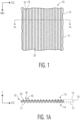
FIG. 1 is a plan view of a fibrous structure according to one embodiment of the present invention withFIG. 1A representing a cross-sectional view of the structure throughline 1A-1A; -
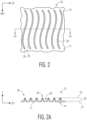
FIG. 2 is a plan view of a fibrous structure according to another embodiment of the present invention withFIG. 2A representing a cross-sectional view of the structure throughline 2A-2A; -
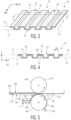
FIG. 3 is a perspective view of a lotion treated fibrous structure according to one embodiment of the present invention; -
FIG. 4 is a cross-sectional view of the structure through line 4-4; -
FIG. 5 is an illustration of an apparatus useful in forming the fibrous structures of the present invention; -
FIG. 6 is a perspective view of an apparatus useful in forming the fibrous structures of the present invention; and -
FIG. 7 is an image of a tissue product prepared as described in the example. - As used herein the term "fibrous structure" refers to a structure comprising a plurality of elongated particulate having a length to diameter ratio greater than about 10 such as, for example, papermaking fibers and more particularly pulp fibers, including both wood and non-wood pulp fibers, and synthetic staple fibers. A non-limiting example of a fibrous structure is a tissue web comprising pulp fibers.
- As used herein the term "basesheet" refers to a fibrous structure provided in sheet form that has been formed by any one of the papermaking processes described herein but has not been subjected to further processing to convert the sheet into a finished product, such as subtractive texturing, embossing, calendering, perforating, plying, folding, or rolling into individual rolled products.
- As used herein the term "tissue web" refers to a fibrous structure provided in sheet form and being suitable for forming a tissue product.
- As used herein the term "tissue product" refers to products made from tissue webs and includes, bath tissues, facial tissues, paper towels, industrial wipers, foodservice wipers, napkins, medical pads, and other similar products. Tissue products may comprise one, two, three or more plies.
- As used herein the term "ply" refers to a discrete tissue web used to form a tissue product. Individual plies may be arranged in juxtaposition to each other.
- As used herein the term "layer" refers to a plurality of strata of fibers, chemical treatments, or the like, within a ply.
- As used herein, the term "papermaking fabric" means any woven fabric used for making a tissue sheet, either by a wet-laid process or an air-laid process. Specific papermaking fabrics within the scope of this invention include wet-laid through-air drying fabrics and air-laid forming fabrics.
- As used herein, the term "textured" generally refers the three-dimensional topography of a first or a second side of a fibrous structure. Generally, a textured structure will have a first side with first and second surfaces lying in first and second surface planes where there is some non-zero z-direction height difference between the first and second surface planes. For example, in one-embodiment, a textured tissue web may comprise a plurality of elevated elements having an upper surface lying in a first surface plane separated from one another by land areas lying in a second surface plane.
- As used herein, the term "surface plane" generally refers to the plane formed by the upper most surface of an element disposed on one side of a fibrous structure. A surface plane may be determined by well-known imaging techniques such as, for example, using a VHX-1000 Digital Microscope (manufactured by Keyence Corporation of Osaka, Japan) equipped with VHX-H3M application software or other suitable image analysis software.
- As used herein, the term "design element" means a decorative figure, icon or shape such as a line element, a flower, heart, puppy, logo, trademark, word(s) and the like. A design element may comprise a portion of the fibrous structure surface that lies out of plane with the land or background areas.
- As used herein the term "line element" refers to an element, such as a design element, in the shape of a line, which may be continuous, discrete, interrupted, and/or a partial line with respect to a fibrous structure on which it is present. The line element may be of any suitable shape such as straight, bent, kinked, curled, curvilinear, serpentine, sinusoidal, and mixtures thereof, that may form regular or irregular periodic or non-periodic lattice work or structures wherein the line element exhibits a length along its path of at least 10 mm. In one example, the line element may comprise a plurality of discrete elements, such as dots and/or dashes for example, that are oriented together to form a line element.
- As used herein the term "continuous element" refers to an element, such as a design element, disposed on a fibrous structure that extends without interruption throughout one dimension of the fibrous structure.
- As used herein the term "discrete element" refers to an element, such as a design element, disposed on a fibrous structure that does not extend continuously in any dimension of the fibrous structure.
- As used herein the term "basis weight" generally refers to the bone-dry weight per unit area of a tissue and is generally expressed as grams per square meter (gsm). Basis weight is measured using TAPPI test method T-220. While basis weight may be varied, tissue products prepared according to the present invention generally have a basis weight greater than about 10 gsm, such as from about 10 to about 80 gsm and more preferably from about 30 to about 60 gsm.
- As used herein the term "caliper" is the representative thickness of a single sheet (caliper of tissue products comprising two or more plies is the thickness of a single sheet of tissue product comprising all plies) measured in accordance with TAPPI test method T402 using an EMVECO 200-A Microgage automated micrometer (EMVECO, Inc., Newberg, OR). The micrometer has an anvil diameter of 2.22 inches (56.4 mm) and an anvil pressure of 132 grams per square inch (per 6.45 square centimeters) (2.0 kPa). The caliper of a tissue product may vary depending on a variety of manufacturing processes and the number of plies in the product, however, tissue products prepared according to the present invention generally have a caliper greater than about 100 µm, more preferably greater than about 200 µm and still more preferably greater than about 300 µm, such as from about 100 to about 1,500 µm and more preferably from about 300 to about 1,200 µm.
- As used herein the term "sheet bulk" refers to the quotient of the caliper (generally having units of µm) divided by the bone-dry basis weight (generally having units of gsm). The resulting sheet bulk is expressed in cubic centimeters per gram (cc/g). While sheet bulk may vary depending on any one of a number of factors, tissue products prepared according to the present invention may have a sheet bulk greater than about 5 cc/g, more preferably greater than about 8 cc/g and still more preferably greater than about 10 cc/g, such as from about 5 to about 20 cc/g.
- As used herein, the terms "geometric mean tensile" and "GMT" refer to the square root of the product of the machine direction tensile strength and the cross-machine direction tensile strength of the tissue product. While the GMT may vary, tissue products prepared according to the present invention may have a GMT greater than about 500 g/3" (g/7.62 cm), more preferably greater than about 700 g/3" (g/7.62 cm) and still more preferably greater than about 1,000 g/3" (g/7.62 cm).
- The present invention provides a variety of novel lotion treated fibrous structures and methods of producing the same. For example, the present invention provides tissue products, particularly products having three-dimensional surface topography, where a lotion is selectively applied to only a portion of the tissue surface.
- While any fibrous structure may be treated with a lotion according to the present invention, in certain instances it may be preferable to treat a fibrous structure having a three-dimensional topography with portions of the structure upper surface lying in first and second surface planes. In certain preferred embodiments the first surface plane lies above the second surface plane and forms the upper most structure surface and is selectively treated with lotion. The second surface, which lies below the first surface, is generally free from lotion. In this manner, the surface of the structure may be selectively treated with lotion such that the surface first brought into contact with the user's skin in-use is selectively treated with lotion. In this manner, the amount of lotion added to the tissue may be reduced without negatively affecting user's perception of softness and comfort. Further, by reducing the amount of lotion and selectively applying it to only a portion of the structure, other important properties such as absorbency, strength and bulk may be preserved.
- In certain embodiments the textured surface may comprise a first side having peaks or ridges lying in a first surface plane and valleys lying in a second surface plane below the first surface plane. In other embodiments the first side may comprise a first surface plane and a design element lying in a second surface plane below the first surface plane where the design element provides the fibrous structure with a visually discernable design which users may find aesthetically pleasing. Regardless of the shape and arrangement of elements the structures of the present invention generally have a first side having at least two different surface planes where the upper most surface is preferentially treated with a lotion.
- Textured fibrous structures useful in the present invention may be created using any number of well-known techniques, such as wet molding or embossing. In certain preferred embodiments, texture is imparted to the fibrous structure during the manufacturing process such as by wet texturing, molding using a drying fabric or by embossing. Generally, the texture is not the result of printing.
- Accordingly, in one embodiment, the fibrous structure is a wet-laid tissue web having a textured surface formed during the manufacturing process by molding the web using an endless belt having a corresponding textured surface. For example, the wet-laid tissue web may be manufactured using an endless belt which comprises a continuous three-dimensional element (also referred to herein as a continuous line element) and a reinforcing structure (also referred to herein as a carrier structure or fabric). The reinforcing structure comprises a pair of opposed major surfaces - a web contacting surface from which the continuous line elements extend and a machine contacting surface. Machinery employed in a typical papermaking operation is well known in the art and may include, for example, vacuum pickup shoes, rollers, and drying cylinders. In one embodiment the belt comprises a through-air drying fabric useful for transporting an embryonic tissue web across drying cylinders during the tissue manufacturing process. In such embodiments the web contacting surface supports the embryonic tissue web, while the opposite surface, the machine contacting surface, contacts the through-air dryer.
- In certain embodiments a plurality of continuous line elements may be disposed on the web-contacting surface for cooperating with, and structuring of, the wet fibrous web during manufacturing. In a particularly preferred embodiment the web contacting surface comprises a plurality of spaced apart three-dimensional elements distributed across the web-contacting surface of the carrier structure and together constituting from at least about 15 percent of the web-contacting surface, such as from about 15 to about 35 percent, more preferably from about 18 to about 30 percent, and still more preferably from about 20 to about 25 percent of the web-contacting surface.
- Now with reference to
FIGS. 1 and 1A , one embodiment of afibrous structure 10 prepared according to the present invention is illustrated. Thefibrous structure 10 has two principle dimensions - a machine direction ("MD"), which is the direction substantially parallel to the principal direction of travel of the tissue web during manufacture and a cross-machine direction ("CD"), which is generally orthogonal to the machine direction. The fibrous structure generally has a texturedfirst side 12 comprising a plurality of continuouselevated line elements 16, also referred to herein as ridges, and a plurality ofvalleys 18, also referred to herein as land areas, there-between. - The
line elements 16 lie in afirst surface plane 13 and the valleys lie in asecond surface plane 15 and together form the surface of thefirst side 12. Opposite thefirst side 12 is thesecond side 14, lying in abottom surface plane 17. While the instant fibrous structure is illustrated as having alternating ridges and valleys which define both the first and second sides and provide both with a textured surface, the invention is not so limited. For example, in an alternative embodiment the fibrous structure may comprise only one textured side. Moreover, while the illustratedline elements 16 andvalleys 18 are both continuous the invention is not so limited, as will be discussed in further detail below. - With continued reference to
FIGS. 1 and 1A thefibrous structure 10 comprises alotion 20 selectively deposited on theridges 16. In this manner thelotion 20 lies in thefirst surface plane 13 and is registered with the upper-most surface of thefibrous structure 10 such that it is the first surface to contact a user's skin in-use. - Turning now to
FIGS. 2 and 2A , another embodiment of afibrous structure 10 prepared according to the present invention is illustrated. Thefibrous structure 10 comprises a plurality ofdiscrete design elements 26 that form a portion of thefirst side 12 of thestructure 10. Thedesign elements 26 have an upper surface lying in afirst surface plane 23. Thedesign elements 26 are separated from one another byland areas 28, which have an upper surface lying in asecond surface plane 25. Thefirst surface plane 23 lies above thesecond surface plane 25 and together thediscrete design elements 26 and theland areas 28 form thefirst side 12 of the structure. Opposite thefirst side 12 is asecond side 14 that forms the bottom of thestructure 10 and lies in abottom surface plane 27. - A
lotion 20 is selectively disposed on, in registration with, thediscrete design elements 26. As such, thelotion 20 is selectively disposed on the upper most surface of thestructure 10, while theland areas 28 are substantially free from lotion. - With reference now to
FIG.3 , another embodiment of afibrous structure 10 according to the present invention is provided. Thefirst side 12 comprisescontinuous line elements 16, which are similarly sized and have generally straight, parallel spaced apart sidewalls that provide thecontinuous elements 16 with a width, and a height. The width and the height may be varied depending on the desired physical properties of the fibrous structure, such as sheet bulk and cross-machine direction stretch. In certain embodiments the height of the sidewalls is such that the resulting tissue structure has a caliper greater than about 300 µm, such as from about 300 to about 1,200 µm. The height is generally measured as the distance between thefirst surface plane 13 and thebottom surface plane 17. - The spacing and arrangement of the continuous line elements may vary depending on the desired tissue product properties and appearance. In one embodiment a plurality of line elements extend continuously throughout one dimension of the fibrous structure and each element in the plurality is spaced apart from the adjacent element. Thus, the elements may be spaced apart across the entire cross-machine direction of the fibrous structure or may run diagonally relative to the machine and cross-machine directions. Of course, the directions of the line elements alignments (machine direction, cross-machine direction, or diagonal) discussed above refer to the principal alignment of the elements. Within each alignment, the elements may have segments aligned at other directions, but aggregate to yield the particular alignment of the entire elements.
- In addition to varying the spacing and arrangement of the elements, the shape of the element may also be varied. For example, in one embodiment, the elements are substantially sinusoidal and are arranged substantially parallel to one another such that none of the elements intersect one-another. As such the adjacent sidewalls of individual elements are equally spaced apart from one another. In such embodiments, the spacing of elements may be from about 1.0 to about 20 mm, and more preferably from about 2.0 to about 5.0 mm apart. The foregoing spacing may be optimized to maximum caliper of the fibrous structure, or provide a fibrous structure having a three-dimensional surface topography, yet relatively uniform density. Further, while in certain embodiments the elements are continuous the invention is not so limited. In other embodiments the elements may be discrete.
- Further, while the elements are illustrated as having a square horizontal and lateral (relative to the upper surface plane) cross-sectional shape the invention is not so limited, and the elements may have any number of different horizontal and lateral cross-sectional shapes. A particularly preferred element is a line element having substantially planar sidewalls which are generally perpendicular to the upper surface plane. Further, while the uppermost surface of the
element 16 is illustrated as being planar and defining afirst surface plane 13, the invention is not so limited. For example, the element's upper surface may be non-planar, such as having further depressions in the form of lines or dots disposed thereon. Where the element's upper surface is non-planar the design element plane is generally defined by a line drawn tangent to the upper most point of the design element and parallel to the x-axis of the fibrous structure. - The individual elements, also referred to herein as design elements, may be arranged in any number of different manners to create a decorative pattern. In one particular embodiment design elements are spaced and arranged in a non-random pattern so as to create a wave-like design. Landing areas may be interspaced between adjacent individual design elements so as to provide a visually distinctive interruption to the decorative pattern formed by the individual spaced apart design elements. In this manner, despite being discrete elements, the design elements are spaced apart so as to form a visually distinctive curvilinear decorative element that extends substantially in the machine direction. In this manner, taken as a whole, the discrete elements may form a decorative pattern, such as a wave-like pattern.
- In other embodiments the design elements may be spaced and arranged so as to form a decorative figure, icon or shape such as a flower, heart, puppy, logo, trademark, word(s) and the like. Generally, the design elements are spaced about the fibrous structure and can be equally spaced or may be varied such that the density and the spacing distance may be varied amongst the design elements. For example, the density of the design elements can be varied to provide a relatively large or relatively small number of design elements on the web. In a particularly preferred embodiment the design element density, measured as the percentage of one surface of the fibrous structure covered by a design element, is from about 5 to about 35 percent and more preferably from about 10 to about 30 percent. Similarly, the spacing of the design elements can also be varied, for example, the design elements can be arranged in spaced apart rows. In addition, the distance between spaced apart rows and/or between the design elements within a single row can also be varied.
- Fibrous structures having textured surfaces which may be imparted with a design element of the present invention may be formed using any one of several well-known manufacturing processes. For example, in certain embodiments, fibrous structures may be produced by a through-air drying (TAD) manufacturing process, an advanced tissue molding system (ATMOS) manufacturing process, a structured tissue technology (STT) manufacturing process, or belt creped. In particularly preferred embodiments the fibrous structure is manufactured by a creped through-air dried (CTAD) process or uncreped through-air dried (UCTAD) process.
- In one embodiment, tissue webs useful in the present invention are formed by the UCTAD process of: (a) depositing an aqueous suspension of papermaking fibers (furnish) onto an endless forming fabric to form a wet web; (b) dewatering or drying the web; (c) transferring the web to a transfer fabric; (d) transferring the web to a TAD fabric of the present invention having a pattern thereon; (e) deflecting the web wherein the web is macroscopically rearranged to substantially conform the web to the textured background pattern of the TAD fabric; and (f) through-air drying the web. In the foregoing process the web is not subject to creping but may be further processed as described below to impart a design pattern to the web.
- After the basesheet is formed and dried it may be subjected to various converting process before final packaging. Prior to, or during this converting process, in accordance with the present invention, the basesheet is subjected to treatment with a lotion, which is preferably provided in solid form and transferred to a first surface of the basesheet by a transfer surface and more preferably a heated transfer surface.
- In a particularly preferred embodiment, the transfer surface is a calender roll. In this manner a calendering-coating process may be used to selectively deposit a lotion on the surface of the web. This calendering-coating process may compress the web as it applies lotion to the upper most surface, effectively breaking some bonds formed between the fibers of the basesheet while selectively applying a lotion to its surface. The perceived softness of the basesheet is increased without significantly sacrificing tensile strength or any other characteristic thereof.
- Referring now to
FIG. 5 , one embodiment of a roll-gap apparatus useful for calendering-coating a fibrous structure according to the present invention is illustrated. In general, roll-gap calendering involves two calendering rolls 101 and 102 that compress theweb 100, which may be textured in certain preferred embodiments. Thesurfaces web 100 may comprise a variety of materials including, for example, metal such as steel or cast iron, or a polymeric material such as polyurethane, natural rubber (hard or soft), synthetic rubber, an elastomeric material, and the like. Furthermore, the roll surfaces can be smooth, roughened, or etched. In one embodiment, afirst calendering roll 101 has asurface 104 comprising a polymer material and thesecond calendering roll 102 has asmooth metal surface 103. - The calendering-coating of the fibrous structure is achieved through compression of the fibrous structure in a
nip 105 between the first and second calendering rolls 101 and 102. The two calendering rolls 101 and 102 are arranged to provide nip load, commonly having units of pounds per linear inch (pli) ranging from about 20 to about 120 pli (3.5 to about 21 N/mm), such as from about 40 to about 100 pli (7 to about 18 N/mm). While the embodiment illustrated inFIG. 5 relies upon a constant gap between the calendering rolls 101 and 102, the invention is not so limited, and the invention may be implemented using a calendering apparatus where the surfaces of the two rolls can be pressed together to form a pressure between the surfaces that compresses the base web at a higher pressure than the gap. However, depending on the load settings and the z-direction properties of the fibrous structure, it is possible to run the nipped mode at the same or even less pressure than the gap mode. - Both calendering rolls 101, 102 rotate so their
respective surfaces web 100. In the embodiment illustrated inFIG. 5 , thefirst calendering roll 101 is rotating counter-clockwise and thesecond calendering roll 102 is rotating clockwise. In certain instances, the fibrous structure moves from an unwind roll through a roll-gap calendering apparatus and is rewound onto a roll. - In a particularly preferred embodiment at least one of the calender rolls, particularly the roll to which the lotion is applied, is a roll having a metal surface and more preferably a heated steel roll with a substantially smooth surface. For example, with continued reference to
FIG. 5 , thelotion 108, which is provided in a solid state and has a penetration hardness greater than about 5.0 mm, such as from about 5.0 to about 30 mm (measured pursuant to the Hardness Method set forth below) is urged against thesurface 103 of asecond calendering roll 102, which preferably has a metal surface and is heated. The second calender roll may be heated such that its surface temperature is at least about 70°C, such as from about 70 to about 100°C and more preferably from about 70 to about 90°C. The degree to which the second calender roll is heated may depend on the composition of the lotion and the desired lotion add-on. - With reference now to
FIG. 6 , the calendering-coating apparatus may be provided with anapplicator 200 for retaining asolid lotion 108, having a thickness (t), and urging the lotion against thesurface 103 of acalender roll 102. In certain non-limiting instances, the lotion thickness (t) may range from about 1 to about 5 cm. Further, as discussed in more detail below, the lotion thickness (t) may be varied along with one or more process variables to control the amount of lotion added to the web. As thelotion 108 is urged against the calender surface 103 a coating oflotion 110 is applied. Thelotion 110 may then be transferred to the surface of aweb 100 as it passes through thenip 105. - The speed of the
web 100 as it passes through thenip 105 may be varied to control the amount of lotion added to the web. In certain non-limiting instances, the web speed may range from about 15 to about 300 meters per minute, such as from about 50 to about 250 meters per minute. - The
applicator 200 may comprise aholder 202 and anautomatic indexing mechanism 204 for automatically advancing thesolid lotion 108 towards theroll surface 103. The automatic indexing mechanism may include a pressure sensor for measuring and monitoring the pressure applied to the solid lotion as it is urged against the calender roll surface and a means for advancing the solid lotion towards the roll surface. In other embodiments the lotion applicator may comprise a holder and a mechanical means, such as a spring, to maintain the desired pressure against the solid lotion and urge it against the roll surface. - In certain preferred embodiments the
automatic indexing mechanism 204 may advance thesolid lotion 108 towards theroll surface 103 at a predetermined feed rate (FR) to achieve the desired add-on. For example, the feed rate may be varied from about 0.05 to about 0.2 mm per second to achieve an add-on from about 0.5 to about 6.0 grams per square meter (gsm) of web. In certain instances the desired add-on (having units of grams per square meter of web) may be achieved by controlling the thickness of the solid lotion (having units of mm or the like), the lotion feed rate (FR, having units of mm per second or the like), the penetration hardness of the lotion (measured as described herein and having units of mm) and the speed of the web (having units of meters per minute or the like) as it passes through the nip. For example, the desired lotion add-on may be related to lotion thickness, feed rate, penetration hardness and web speed by Equation 1, below.
- For carrying out the calendering-coating process the
solid lotion 108 is urged against thesecond calender roll 102 and a portion of the lotion is transferred to theroll surface 103. The lotion coatedroll surface 110 is then brought into contact with thefirst side 122 of theweb 100 in the calender nip 105. Within the nip, the lotion is transferred from the roll surface to the upper most surface of thefirst side 122 of the textured fibrous structure. After leaving the calender nip, the roll surface may be substantially free from lotion however, in certain instances it is possible that a lotion residue remains on the surface. Lotion residue on the leading rotating sector of thesecond calender roll 102 may be stripped from the outer surface thereof with the help of a doctor blade (shown inFIG. 6 ) or other stripping device. - After leaving the calender nip, the textured fibrous structure has been treated with the lotion, with the lotion oriented on the
first side 122 and more particularly on the upper most surface of thefirst side 122. The lotion treated fibrous structure may be subjected to further processing, such as drying, to ensure that the lotion treatment retains its size, shape, configuration, or registration on thefirst side 122 of the structure as it was applied. It will be recognized by those skilled in the art that the particular configuration of the calender rolls 102, 104 andapplicator 200 as shown inFIG. 6 is merely exemplary, and other configurations and set up of the apparatus may be used. - The total add-on amount of the lotion to the fibrous structure may be less than about 3.0 grams per square meter (gsm) of fibrous web and more preferably less than about 2.0 gsm and still more preferably less than about 1.0 gsm, such as from about 0.10 to about 3.0 gsm. In other instances, the lotion add-on may be expressed in terms as a percentage of the weight of the fibrous structure and may be less than about 5.0 percent, by weight of the web, such as from about 1.0 to about 5.0 percent and more preferably from about 2.0 to about 3.0 percent. The lotion add-on amount will depend upon the desired effect of the composition on the product attributes and the specific composition of the lotion.
- Preferably the lotion is a solid at room temperature and is melted during the application process after which it re-solidifies to form a distribution, preferably a uniform distribution, of solid deposits on the upper most surface of a textured fibrous structure. Because the composition is a solid at room temperature and rapidly solidifies after deposition, it has less tendency to penetrate and migrate into the sheet. Compared to fibrous structures treated with liquid formulations, this leaves a greater percentage of the additive composition on the surface of the tissue where it can contact and transfer to the user's skin to provide enhanced skin health benefits. Furthermore, a lower add-on amount can be used to deliver the same benefit at a lower cost because of the efficient placement of the composition substantially at the surface of the product.
- Solid lotions useful in the present invention may be provided with a range of different product forms. One of these is a so-called "stick" which is usually a bar of an apparently firm solid material held within an applicator and which retains its structural integrity and shape while being urged against a calender roll. When a portion of the stick is drawn across the surface of a calender roll a film of the stick composition is transferred to the roll surface. Although the stick has the appearance of a solid article capable of retaining its own shape for a period of time, the material usually has a structured liquid phase so that a film of the composition is readily transferred from the stick to roll surface upon contact.
- Lotion compositions useful in the present invention may be provided as solids that are characterized by their retaining their shape without lateral support under the influence of the Earth's gravity, at temperatures up to at least 50°C. The hardness of the solid lotions can be measured in a needle penetration test. Pursuant to this test, as the solid lotions become softer, their needle penetration hardness values increase, with higher hardness values being indicative of a softer lotion composition. The lotion compositions have a penetration hardness from 5.0 to 30 mm, more particularly from 7.0 to 25 mm, more particularly from 12 to 22 mm, and still more particularly from 16 to 22 mm measured pursuant to the Hardness Method set forth below. Hardness values within these ranges are indicative of self-supporting solid lotions having a somewhat soft feel but are well suited for indirect application to a tissue web via a conventional calendering apparatus.
- In particularly preferred embodiments lotions useful in the present invention are formulated as hydrophobic compositions. The hydrophobic lotions of the present invention preferably do not comprise added water, which could require an additional drying step. However, minor or trace quantities of water in the lotion that are picked as a result of, for example, ambient humidity can be tolerated without adverse effect. Typically, hydrophobic lotions useful in the present invention are provided as a solid stick having a penetration hardness ranging from 5.0 to 30 mm and contain about 3 percent or less water, preferably about 1 percent or less water, most preferably about 0.5 percent or less water.
- In certain instances, the solid lotion composition may be hydrophobic and comprise one or more oils. The amount of oil in the composition can be from about 30 to about 90 weight percent, more specifically from about 40 to about 70 weight percent, and still more specifically from about 45 to about 60 weight percent. Suitable oils include, but are not limited to, the following classes of oils: petroleum or mineral oils, such as mineral oil and petrolatum; or animal oils, such as mink oil and lanolin oil.
- Particularly preferred oils are mineral oils such as petroleum derivatives comprising a mixture of paraffinic and naphthenic (cyclic) hydrocarbons. These include both "light" and "heavy" mineral oils, which are differentiated on the basis of the average molecular weight of the hydrocarbons included. The mineral oils useful herein have the following properties: viscosity of from about 5 centistokes (about 5 mm2/s) to about 70 centistokes (about 70 mm2/s) at 40°C; density between about 0.82 and about 0.89 g/cm3 at 25°C; flash point between about 138°C and about 216°C; and carbon chain length between about 14 and about 40 carbons.
- In other instances, lotions useful in the present invention may comprise a wax. The amount of wax in the composition can be from about 10 to about 40 weight percent, more specifically from about 10 to about 30 weight percent, and still more specifically from about 15 to about 25 weight percent. Suitable waxes include, but are not limited to, the following classes: natural waxes, such as beeswax and carnauba wax; petroleum waxes, such as paraffin and ceresine wax; silicone waxes, such as alkyl methyl siloxanes; or synthetic waxes, such as synthetic beeswax and synthetic sperm wax.
- In still other instances, lotions useful in the present invention may comprise one or more fatty alcohol, which may be present in amounts ranging from about 5 to about 40 weight percent, and more specifically from about 10 to about 30 weight percent. Suitable fatty alcohols include alcohols having a carbon chain length of C14-C30, including acetyl alcohol, stearyl alcohol, behenyl alcohol, and dodecyl alcohol.
- In particularly preferred embodiments lotions useful in the present invention may be provided as a solid stick having a penetration hardness ranging from 5.0 to 0 mm and comprising from about 30 to about 90 weight percent oil, and from about 10 to about 40 weight percent wax, preferably also containing from about 5 to about 40 weight percent fatty alcohol.
- In other embodiments lotions useful in the present invention may be provided as a solid stick having a penetration hardness ranging from 5.0 to 30 mm and comprising from about 20 to about 50 weight percent mineral oil and from about 10 to about 30 weight percent ceresin wax having a melting point from 64 to 67°C and from about 10 to about 30 weight percent fatty alcohol selected from the group consisting of cetyl alcohol, stearyl alcohol, behenyl alcohol, and dodecyl alcohol.
- In order to better enhance the benefits to a user, additional ingredients may optionally be included in a lotion useful in the present invention. Optional ingredients and their corresponding benefits include, without limitation, C10 or greater fatty alcohols (lubricity, body, opacity), fatty esters (lubricity, feel modification), vitamins (topical medicinal benefits), dimethicone (skin protection), powders (lubricity, oil absorption, skin protection), preservatives and antioxidants (product integrity), ethoxylated fatty alcohols (wetability, process aids), fragrance (consumer appeal), lanolin derivatives (skin moisturization), colorants, optical brighteners, sunscreens, alpha hydroxy acids, natural herbal extracts, and the like. In a particularly preferred embodiment, the lotion comprises one or more oils selected from the group consisting of plant oils, such as aloe extract, sunflower oil and avocado oil, and silicone oils, such as dimethicone and alkyl methylsilicones.
- While in certain instances lotions useful in the present invention may be provided in hydrophobic forms, the invention is not so limited. In other instances, the lotion may be hydrophilic and comprise water. Preferably hydrophilic lotions are provided as a solid stick having a penetration hardness ranging from about 5.0 to about 30 mm and comprise from 70 to 99.5 weight percent hydrophilic solvent. Suitable hydrophilic solvents include, but are not limited to, the following materials: water, propylene glycol, polyethylene glycol, methoxyisopropanol, PPG-2 propyl ether, PPG-2 butyl ether, PPG-2 methyl ether, PPG-3 methyl ether, dipropylene glycol propyl ether, dipropylene glycol butyl ether, dipropylene glycol, methyl propanediol, propylene carbonate, water soluble/dispersible polypropylene glycols, ethoxylated polypropylene glycol, glycerin, sorbitol, hydrogenated starch hydrolysate, and silicone glycols.
- Particularly preferred hydrophilic solvents are high molecular weight polyethylene glycols. As used herein "high molecular weight polyethylene glycols," generally refer to polyethylene glycols having an average molecular weight of 400 or greater, such as 600 or greater, such as 700 or greater. Particularly preferred are high molecular weight polyethylene glycols that are not liquid at room temperature, such as polyethylene glycols having an average molecular weight from about 700 to about 10,000, such as from about 700 to about 5,000, such as from about 700 to about 3,500. The solid hydrophilic lotion may comprise from 70 to 99.5 weight percent weight percent high molecular weight polyethylene glycol and has a penetration hardness ranging from 5.0 to 30 mm.
- In other embodiments, the solid hydrophilic lotion may comprise propylene glycol, glycerin and a fatty alcohol. For example, the hydrophilic lotion may comprise from about 30 to about 95 weight percent propylene glycol, from about 30 to about 60 weight percent glycerin and from about 1 to about 10 weight percent of a fatty alcohol. Suitable fatty alcohols include, but are not limited to, alcohols having a carbon chain length of C14-C30, including cetyl alcohol, stearyl alcohol, arachidyl alcohol, and behenyl alcohol.
- In certain instances, the hydrophilic lotion composition may comprise water, such as from about 10 to about 25 weight percent, more specifically from about 10 to about 20 weight percent, more specifically from about 12 to about 18 weight percent.
- Tissue webs and products produced according to the present invention not only comprise a lotion that may be readily available for transfer to the user's skin to protect the skin from or prevent further irritation and redness, they may also have favorable physical properties, such as sufficient strength to withstand use without being stiff or rough. Accordingly, in one embodiment of the present invention a tissue product has a basis weight from about 10 to about 80 gsm, and more preferably from about 15 to about 60 gsm and a sheet bulk greater than about 5.0 cc/g, such as from about 5.0 to about 20 cc/g and more preferably greater than about 10 cc/g, such as from about 10 to about 20 cc/g.
- In addition to having the foregoing basis weights and sheet bulks, tissue webs and products prepared according to the present invention may have a geometric mean tensile (GMT) greater than about 500 g/3" (g/7.62 cm), such as from about 500 to about 1,500 g/3" (g/7.62 cm), and more preferably from about 600 to about 1,000 g/3" (g/7.62 cm). At these tensile strengths the tissue webs and products have relatively low geometric mean modulus, expressed as GM Slope, so as to not overly stiffen the tissue product. Accordingly, in certain embodiments, tissue webs and products may have GM Slope less than about 20 kg, and more preferably less than about 15 kg and still more preferably less than about 10 kg.
- In one particularly preferred embodiment the present invention provides a lotion rolled bath tissue product having a basis weight from about 20 to about 45 gsm, a GMT from about 500 to about 1,200 g/3" (g/7.62 cm), a GM Slope less than about 12 kg, such as from about 5.0 to about 12 kg, and a GM Stretch greater than about 5 percent, such as from about 5 to about 15 percent. The foregoing rolled bath tissue product preferably comprises at least one textured tissue web having a first side with first and second surfaces lying in first and second surface planes. The z-directional height difference between the first and second surface planes may be from about 100 to about 300 µm and more preferably from about 150 to about 250 µm.
- The inventive single ply tissue webs may be plied together with other single ply webs prepared according to the present disclosure or with single ply webs of the prior art to form multi-ply tissue products using any ply attachment means known in the art, such as mechanical crimping or adhesive.
- When two or more inventive tissue webs are joined together the resulting multi-ply tissue product may have a basis weight greater than about 40 gsm, such as from about 40 to about 80 gsm, and more preferably from about 50 to about 60 gsm. At these basis weights the tissue products generally have calipers greater than about 300 µm, such as from about 300 to about 1,200 µm, and more preferably from about 400 to about 1,000 µm. The tissue products further have sheet bulks greater than about 5.0 cc/g, such as from about 5.0 to about 20 cc/g and more preferably from about 10 to about 20 cc/g.
- The inventive tissue products may also have relatively low modulus so as not to be overly stiff. For example, in certain embodiments the present invention provides lotion treated tissue products having a GMT greater than about 700 g/3" (g/7.62 cm), such as from about 700 to about 1,200 g/3" (g/7.62 cm), and geometric means slopes (GM Slopes) less than about 12.0 and more preferably less than about 10.0 kg, such as from about 4.0 to about 12.0 kg, such as from about 4.0 to about 10.0 kg, such as from about 4.0 to about 7.0 kg. At the foregoing strengths, inventive tissue products may have a Stiffness index less than about 10.0, such as from about 4.0 to about 10.0, such as from about 4.0 to about 8.0.
- The hardness and rigidity of a composition, such as a lotion useful in the present invention, which is a firm solid can be determined by penetrometry. If the composition is a softer solid, this will be observed as a substantial lack of any resistance to the penetrometer probe.
- A suitable procedure for measuring penetration hardness utilizes Precision Scientific Model No. 73510 penetrometer equipped with a C521 needle (weight 2.5 grams) which has a cone angle at the point of the needle specified to be 9° 10' ±15'. A 50 g weight is added to the plunger rod (47.5 g) for a combined testing load of approximately 100 g. Tests were conduct at approximately 20°C.
- A sample of the composition with a flat upper surface is placed on the base of the penetrometer. The height of the mechanism head is adjusted so that the point of the penetrometer needle is brought exactly into contact with the surface of the sample. With the instrument zeroed, the test rod is released allowing the needle to descend into the sample. The release lever is depressed (held open) for a period of 5 seconds after which it is then released (closed). The depth gauge rod is then pressed down gently as far as it will go and the penetration depth is read from the gauge. Desirably the test is carried out at five (5) points on each sample and the results are averaged.
- Utilizing a test of this nature, an appropriate hardness of a lotion for use in the present invention has a penetration of less than 30 mm in this test, for example in a range from 5.0 to 30 mm, more particularly from 7.0 to 25 mm, more particularly from 12 to 22 mm, and still more particularly from 16 to 22 mm.
- Lotion add-on was determined gravimetrically. A lotion treated web was cut off of the treated roll shortly after its manufacture and then die cut with a 10.1 x 10.1 cm die. Six stacks comprising 10 die cut sheets each were collected and then weighed on a scale to the nearest 0.01 g. The basis weight (gsm) of the treated sample was calculated by dividing the mass of the sample by its area (0.6194 m2). An untreated tissue sample (control), run under the same process conditions, was sampled and its basis weight measured similarly. The treatment add-on (gsm) is the difference between the basis weights of the treated and untreated samples.
- Samples for tensile strength testing are prepared by cutting a 3 inches (76.2 mm) x 5 inches (127 mm) long strip in either the machine direction (MD) or cross-machine direction (CD) orientation using a JDC Precision Sample Cutter (Thwing-Albert Instrument Company, Philadelphia, PA, Model No. JDC 3-10, Ser. No. 37333). The instrument used for measuring tensile strengths is an MTS Systems Sintech 11S, Serial No. 6233. The data acquisition software is MTS TestWorks™ for Windows Ver. 4 (MTS Systems Corp., Research Triangle Park, NC). The load cell is selected from either a 50 or 100 Newton maximum, depending on the strength of the sample being tested, such that the majority of peak load values fall between 10 and 90 percent of the load cell's full-scale value. The gauge length between jaws is 4 ± 0.04 inches. The jaws are operated using pneumatic-action and are rubber coated. The minimum grip face width is 3 inches (76.2 mm), and the approximate height of a jaw is 0.5 inches (12.7 mm). The crosshead speed is 10 ± 0.4 inches/min (254 ± 1 mm/min), and the break sensitivity is set at 65 percent. The sample is placed in the jaws of the instrument, centered both vertically and horizontally. The test is then started and ends when the specimen breaks. The peak load is recorded as either the "MD tensile strength" or the "CD tensile strength" of the specimen depending on the sample being tested. At least six representative specimens are tested for each product, taken "as is," and the arithmetic average of all individual specimen tests is either the MD or CD tensile strength for the product.
- The various surface planes and z-directional height differences may be measured using well-known microscopy techniques. For example, the cross-section image of a fibrous structure, web or tissue product, may be taken using a VHX-1000 Digital Microscope (Keyence Corporation of Osaka, Japan) equipped with VHX-H3M application software. Using the application software, a first line may be drawn approximately along the top surface plane of structure with the line tangent to two adjacent elevated elements. A second line is drawn approximately along the bottom surface plane of the structure with the line tangent to two adjacent land areas. With the two lines drawn, each corresponding to a surface plane of the structure, the application software can be instructed to calculate the distances between the planes.
- A single-ply tissue product was produced using a through-air dried papermaking process commonly referred to as "uncreped through-air dried" ("UCTAD") and generally described in
US Patent No. 5,607,551 , the contents of which are incorporated herein in a manner consistent with the present disclosure. - Tissue basesheets were produced from a furnish comprising northern softwood kraft and eucalyptus kraft using a layered headbox fed by three stock chests such that the webs having three layers (two outer layers and a middle layer) were formed. The two outer layers comprised eucalyptus and the middle layer comprised softwood. The 3-layered structure had a furnish split of 33% EHWK/34% NBSK/33% EHWK, all on a weight percent basis.
- The tissue web was formed on a Voith Fabrics TissueForm V forming fabric, vacuum dewatered to approximately 25 percent consistency and then subjected to rush transfer when transferred to the transfer fabric. The transfer fabric was the fabric described as "Fred" in
US Patent No. 7,611,607 (commercially available from Voith Fabrics, Appleton, WI). - The web was then transferred to a through-air drying fabric. The through-air drying fabric was a silicone printed fabric described previously in co-pending PCT Appl. No.
PCT/US2013/072220 . Transfer to the through-drying fabric was done using vacuum levels of greater than 0.33 bars (33 kPa) at the transfer. The web was then dried to approximately 98 percent solids before winding. - A hydrophobic lotion composition (Lotion Reference Code 1) was prepared by adding mineral oil (1547.9 g) to a stainless-steel beaker equipped with a hot plate and overhead stirrer. The mineral oil was heated with agitation to 65°C. Once heated, dimethicone (27.3 g) and isopropyl palmitate (77.6 g) were mixed with the mineral oil. Ceresin wax (470.9 g) was then mixed with agitation and heating to 65°C. After the wax was completely melted stearyl alcohol (470.9 g) was added, followed by the aloe extract (2.7 g) and vitamin E acetate (2.7 g). The composition was mixed for 5 minutes and then a UV optical brightening agent, Tinopal OB (2.6 g) and the visual colorant, Black Ink Exp R3989-123 (13.0 g) was added. The entire mixture was poured into a pan and allowed to cool overnight. The hardness of the resulting cake was measured as described above.
- A hydrophilic lotion comprising propylene glycol and glycerin (Lotion Reference Code 2) was prepared by mixing propylene glycol (2576 g) and glycerin (1200 g) in a large beaker and the mixture was heated to 85°C with good mixing but no air entrainment. Once at temperature and uniformly mixed, sodium stearate (200 g) was added and mixed until dissolved. A UV optical brightening agent, Tinopal OB (4 g), and a visual colorant, blue liquid dye (20 g), were added and mixed until uniform. The mixture was stirred and allowed to cool to 50°C, then poured into a pan and allowed to cool overnight. Total batch weight was 4000 g. The hardness of the resulting cake was measured as described above.
- A hydrophobic lotion comprising polyethylene glycol (Lotion Reference Code 3) was prepared by mixing PEG 400 (3456 g) and PEG 8000 (520 g) in a large beaker and heating to 70°C. Once the PEGs were completely mixed, a UV optical brightening agent, Tinopal OB (4 g), and a visual colorant, blue liquid dye (20 g) were added and mixed until uniform. The mixture was allowed to cool slightly and poured into a pan and allowed to cool overnight. Total batch weight was 4000 g. The hardness of the resulting cake was measured as described above.
TABLE 1 Lotion Reference Code Penetration Hardness (mm) Lotion Composition (wt%) 1 16 Mineral Oil (59.2%) Ceresin Wax (18.0%) Stearyl Alcohol (18.0%) Isopropyl Palmitate (3.7%) Dimethicone (1.3%) Aloe Extract (0.13%) Vitamin E Acetate (0.13%) 2 15 Propylene Glycol (37.4%) Glycerin (60%) Sodium Stearate (2%) 3 14.5 PEG 400 (86.4%) PEG 8000 (13.0%) - The basesheet was calendered-coated using an apparatus substantially similar to that illustrated in
FIG. 6 . The solid lotion was applied to a steel calender roll opposed to a conventional 40 P&J roll. In certain instances the steel calender roll was heated. The calender linear nip load ranged from about 40 to about 50 pli (about 7 to about 8.8 N/mm). The process conditions used to produce each of the inventive samples are set forth in Table 2, below.TABLE 2 Inventive Code Lotion Reference Code Lotion Thickness (mm) Applicator Angle (°) Lotion Feed Rate (mm/s) Web Speed (mpm) Calender Nip Load (pli (0.18 N/mm)) Calender Temp. (°C) Lotion Add-On (gsm) 287 1 16 0 0.4 152 50 21 3.1 292 1 16 0 0.5 152 50 63 3.3 297 1 16 0 1.5 457 50 63 3.2 459 1 25 29.5 0.1 91 40 82 1.11 460 1 25 29.5 0.1 152 40 82 0.66 461 1 25 29.5 0.1 304 40 82 0.39 728 2 25 29.5 0.9 457 40 21 3.96 748 3 25 29.5 0.3 152 40 21 3.20 - The lotion treated tissue web was converted to a finished rolled tissue product and subjected to physical testing. The results of the physical testing are summarized in Table 3, below.
TABLE 3 Inventive Code Basis Wt. (gsm) Caliper (microns) Sheet Bulk (cc/g) GMT (g/3" (g/7.62 cm)) GM Slope (kg) Stiffness Index 287 43.3 696 16.1 796 5.33 6.7 292 41.7 691 16.6 760 4.93 6.5 297 42.3 864 20.4 752 4.35 5.8 459 40.6 749 18.5 793 4.82 6.1 460 40.0 752 18.8 780 4.70 6.0 461 39.6 765 19.3 763 4.51 5.9 728 43.7 798 18.3 586 4.17 7.1 748 43.3 724 19.3 778 5.15 6.6 - A photograph of the finished tissue product is shown in
FIG. 7 . Thetissue product 300 has afirst side 302 comprising a plurality of substantially similarly shapedcontinuous line elements 304 havingupper surfaces 306 lying in a first surface plane. Between theline elements 304 arevalleys 305 lying in a second surface plane below the first surface plane. A lotion 310 (dyed blue) is selectively disposed on theupper surface 306 of thecontinuous line elements 304.
Claims (15)
- A textured fibrous web having a first side to be contacted by a user in-use, the first side having an uppermost surface lying in a first surface plane and a second surface lying in a second surface plane, the second surface plane lying below the first surface plane, and a lotion selectively disposed on the uppermost surface in an amount ranging from about 0.20 to about 3.0 grams per square meter of textured fibrous web, wherein the lotion has a penetration hardness as measured by the method defined herein ranging from 5 to 30 mm.
- The textured fibrous web of claim 1, wherein the lotion comprises from about 30 to about 90 weight percent oil and from about 10 to about 40 weight percent wax.
- The textured fibrous web of claim 1 wherein the textured fibrous web is a tissue web consisting essentially of wood pulp fibers and having a basis weight from about 10 to about 50 grams per square meter and a sheet bulk greater than about 5.0 cc/g.
- The textured fibrous web of claim 1 wherein the uppermost surface comprises from about 70 to about 95 percent of the total surface area of the first side.
- The textured fibrous web of claim 1 wherein the z-directional height difference between the first and second surface planes is from about 100 to about 500 µm.
- The textured fibrous web of claim 1 wherein the second surface forms a design element, preferably wherein the design element is a continuous line element or a discrete line element.
- A method of manufacturing a lotion treated web comprising the steps of:a. providing a lotion composition having a penetration hardness as measured by the method defined herein ranging from about 5 to about 30 mm;b. providing a nip between a transfer surface and a second surface;c. applying the lotion to the transfer surface;d. conveying a web through the nip whereby one outwardly facing surface of the web is contacted by the transfer surface resulting in a transfer of the lotion to the surface of the web;and wherein the web has a first side with an uppermost surface lying in a first surface plane and a second surface lying in a second surface plane, the second surface plane lying below the first surface plane and wherein the lotion is selectively disposed on the uppermost surface.
- The method of claim 7 wherein the transfer surface is heated and has a surface temperature ranging from about 70 to about 100°C.
- The method of claim 7 wherein the transfer surface comprises a steel calender roll and the second surface comprises a polymer coated calender roll, preferably wherein the steel calender roll is heated and has a surface temperature ranging from about 70 to about 90°C.
- The method of claim 7 wherein the lotion comprises from about 30 to about 90 weight percent oil and from about 10 to about 40 weight percent wax.
- The method of claim 7 wherein the lotion has a penetration hardness from about 10 to about 20 mm and comprises at least one oil selected from the group consisting of mineral oil, animal oil, plant oil and silicone oil, at least one wax selected from the group consisting of natural wax, petroleum wax, silicone wax and synthetic wax and at least one fatty alcohol selected from the group consisting of cetyl alcohol, stearyl alcohol, behenyl alcohol and dodecyl alcohol, preferably wherein the lotion comprises from about 30 to about 90 weight percent oil, from about 10 to about 40 weight percent wax and from about 15 to about 25 weight percent fatty alcohol, or wherein the lotion comprises a high molecular weight polyethylene glycol or propylene glycol.
- The method of claim 7 wherein the web has a caliper and the caliper is reduced after being conveyed through the nip.
- The method of claim 7 wherein the amount of lotion transferred to the surface of the web ranges from about 0.20 to about 3.0 grams per square meter of web, or wherein lotion is transferred to about 70 to about 95 percent of the total surface area of the web.
- The method of claim 7 wherein the step of applying the lotion to the transfer surface comprises urging the solid lotion against the transfer surface at a feed rate ranging from about 0.05 to about 0.2 mm per second, or wherein the web is conveyed through the nip at a speed ranging from about 15 to about 300 meters per minute (mpm).
- The method of claim 7 further comprising the steps of providing a second lotion having a penetration hardness ranging from about 5 to about 30 mm and applying the second solid lotion to the transfer surface, wherein the first and the second solid lotions are different.
Applications Claiming Priority (1)
| Application Number | Priority Date | Filing Date | Title |
|---|---|---|---|
| PCT/US2020/017008 WO2021158228A1 (en) | 2020-02-06 | 2020-02-06 | Topically treated tissue product |
Publications (3)
| Publication Number | Publication Date |
|---|---|
| EP4100574A1 EP4100574A1 (en) | 2022-12-14 |
| EP4100574A4 EP4100574A4 (en) | 2023-10-11 |
| EP4100574B1 true EP4100574B1 (en) | 2025-04-09 |
Family
ID=77200230
Family Applications (1)
| Application Number | Title | Priority Date | Filing Date |
|---|---|---|---|
| EP20917519.9A Active EP4100574B1 (en) | 2020-02-06 | 2020-02-06 | Topically treated tissue product |
Country Status (7)
| Country | Link |
|---|---|
| US (2) | US20230070834A1 (en) |
| EP (1) | EP4100574B1 (en) |
| KR (1) | KR20220131544A (en) |
| AU (1) | AU2020427100A1 (en) |
| ES (1) | ES3028795T3 (en) |
| MX (1) | MX2022009295A (en) |
| WO (1) | WO2021158228A1 (en) |
Families Citing this family (2)
| Publication number | Priority date | Publication date | Assignee | Title |
|---|---|---|---|---|
| AU2020427100A1 (en) * | 2020-02-06 | 2022-09-22 | Kimberly-Clark Worldwide, Inc. | Topically treated tissue product |
| JP7345449B2 (en) * | 2020-09-25 | 2023-09-15 | 大王製紙株式会社 | Disposable wearing items |
Family Cites Families (89)
| Publication number | Priority date | Publication date | Assignee | Title |
|---|---|---|---|---|
| NL270757A (en) | 1960-10-31 | |||
| US3337388A (en) | 1964-08-07 | 1967-08-22 | Procter & Gamble | Selective napping of embossed paper toweling and article produced thereby |
| NL6917625A (en) | 1968-12-16 | 1971-05-25 | ||
| JPS5951638B2 (en) | 1975-09-18 | 1984-12-14 | 神崎製紙 (株) | Method for producing roughened paper with uniform transparency |
| US4211743A (en) | 1978-05-24 | 1980-07-08 | Nauta Roll Corporation | Apparatus and method for embossing web material |
| US4191609A (en) | 1979-03-09 | 1980-03-04 | The Procter & Gamble Company | Soft absorbent imprinted paper sheet and method of manufacture thereof |
| US4536431A (en) | 1983-08-05 | 1985-08-20 | Wyckoff Robert L | Method of texturing a surface and articles textured by the method |
| US4528239A (en) | 1983-08-23 | 1985-07-09 | The Procter & Gamble Company | Deflection member |
| US5024799A (en) | 1987-09-14 | 1991-06-18 | Tredegar Industries, Inc. | Method for producing an embossed oriented film |
| US5607551A (en) | 1993-06-24 | 1997-03-04 | Kimberly-Clark Corporation | Soft tissue |
| US5830487A (en) | 1996-06-05 | 1998-11-03 | The Procter & Gamble Company | Anti-viral, anhydrous, and mild skin lotions for application to tissue paper products |
| US6238682B1 (en) | 1993-12-13 | 2001-05-29 | The Procter & Gamble Company | Anhydrous skin lotions having antimicrobial components for application to tissue paper products which mitigate the potential for skin irritation |
| US5643588A (en) | 1994-11-28 | 1997-07-01 | The Procter & Gamble Company | Diaper having a lotioned topsheet |
| US5695607A (en) | 1994-04-01 | 1997-12-09 | James River Corporation Of Virginia | Soft-single ply tissue having very low sidedness |
| US5549790A (en) | 1994-06-29 | 1996-08-27 | The Procter & Gamble Company | Multi-region paper structures having a transition region interconnecting relatively thinner regions disposed at different elevations, and apparatus and process for making the same |
| FR2728152B1 (en) | 1994-12-16 | 1997-01-24 | Kaysersberg Sa | COMBINED EMBOSSED ABSORBENT PAPER |
| WO1996019204A1 (en) | 1994-12-19 | 1996-06-27 | The Procter & Gamble Company | Medicated tissue paper product |
| US5665426A (en) | 1995-02-06 | 1997-09-09 | Kimberly-Clark Corporation | Soft treated tissue |
| US5624676A (en) | 1995-08-03 | 1997-04-29 | The Procter & Gamble Company | Lotioned tissue paper containing an emollient and a polyol polyester immobilizing agent |
| GB9524450D0 (en) | 1995-11-30 | 1996-01-31 | Kaysersberg Sa | Sheet of absorbent paper which includes watermarked patterns,manufacturing process and manufacturing device |
| US5662758A (en) | 1996-01-10 | 1997-09-02 | The Procter & Gamble Company | Composite material releasably sealable to a target surface when pressed thereagainst and method of making |
| US6277226B1 (en) | 1996-03-20 | 2001-08-21 | Fort James Corporation | Method of processing laminated embossed webs having equal embossed definition |
| US5840403A (en) * | 1996-06-14 | 1998-11-24 | The Procter & Gamble Company | Multi-elevational tissue paper containing selectively disposed chemical papermaking additive |
| US6420013B1 (en) | 1996-06-14 | 2002-07-16 | The Procter & Gamble Company | Multiply tissue paper |
| US6277467B1 (en) | 1996-12-23 | 2001-08-21 | Fort James Corporation | Soft, bulky single-ply tissue having a serpentine configuration and low sidedness and method for its manufacture |
| US6217707B1 (en) | 1996-12-31 | 2001-04-17 | Kimberly-Clark Worldwide, Inc. | Controlled coverage additive application |
| US6030690A (en) | 1997-04-23 | 2000-02-29 | The Procter & Gamble Company | High pressure embossing and paper produced thereby |
| US6099940A (en) | 1997-07-16 | 2000-08-08 | The Procter & Gamble Company | Selectively-activatible three-dimensional sheet material having multi-stage progressive activation to deliver a substance to a target surface |
| US5869075A (en) * | 1997-08-15 | 1999-02-09 | Kimberly-Clark Worldwide, Inc. | Soft tissue achieved by applying a solid hydrophilic lotion |
| US6179961B1 (en) | 1997-10-08 | 2001-01-30 | The Procter & Gamble Company | Tissue paper having a substantive anhydrous softening mixture deposited thereon |
| ITFI980031A1 (en) | 1998-02-13 | 1999-08-13 | Perini Fabio Spa | EMBOSSING AND LAMINATING DEVICE FOR TAPE MATERIAL |
| JP4041209B2 (en) | 1998-05-06 | 2008-01-30 | 小林 昌志 | Tissue paper with soft touch and method and apparatus for manufacturing the same |
| JP4568437B2 (en) * | 1999-03-31 | 2010-10-27 | ザ プロクター アンド ギャンブル カンパニー | Pre-wet wipe with lotion to improve dispensing |
| US6398909B1 (en) | 1999-06-17 | 2002-06-04 | Valmet-Karlstad Aktiebolag | Method and apparatus for imprinting, drying, and reeling a fibrous web |
| US7118796B2 (en) | 1999-11-01 | 2006-10-10 | Fort James Corporation | Multi-ply absorbent paper product having impressed pattern |
| US6455129B1 (en) | 1999-11-12 | 2002-09-24 | Fort James Corporation | Single-ply embossed absorbent paper products |
| US6610173B1 (en) * | 2000-11-03 | 2003-08-26 | Kimberly-Clark Worldwide, Inc. | Three-dimensional tissue and methods for making the same |
| US6547928B2 (en) | 2000-12-15 | 2003-04-15 | The Procter & Gamble Company | Soft tissue paper having a softening composition containing an extensional viscosity modifier deposited thereon |
| US7407560B2 (en) | 2001-02-16 | 2008-08-05 | The Procter & Gamble Company | Lotioned and embossed tissue paper |
| US6582560B2 (en) | 2001-03-07 | 2003-06-24 | Kimberly-Clark Worldwide, Inc. | Method for using water insoluble chemical additives with pulp and products made by said method |
| US6701637B2 (en) | 2001-04-20 | 2004-03-09 | Kimberly-Clark Worldwide, Inc. | Systems for tissue dried with metal bands |
| US6729869B2 (en) | 2001-07-16 | 2004-05-04 | Sca Hygiene Products Gmbh | Device for applying an embossing to a web of tissue paper |
| US6913673B2 (en) | 2001-12-19 | 2005-07-05 | Kimberly-Clark Worldwide, Inc. | Heated embossing and ply attachment |
| US6716309B2 (en) | 2001-12-21 | 2004-04-06 | Kimberly-Clark Worldwide, Inc. | Method for the application of viscous compositions to the surface of a paper web and products made therefrom |
| EP1362953B1 (en) | 2002-05-14 | 2005-05-11 | Georgia-Pacific France | Process for marking a paperweb, paperweb having a watermark pattern |
| US7008507B2 (en) | 2002-12-31 | 2006-03-07 | Kimberly-Clark Worldwide, Inc. | Non-impact printing method for applying compositions to webs and products produced therefrom |
| BRPI0409900B1 (en) | 2003-05-01 | 2016-01-19 | Johnson & Johnson Gmbh | nonwoven laminated products |
| US7396593B2 (en) | 2003-05-19 | 2008-07-08 | Kimberly-Clark Worldwide, Inc. | Single ply tissue products surface treated with a softening agent |
| US7470345B2 (en) | 2003-12-30 | 2008-12-30 | Kimberly-Clark Worldwide, Inc. | Rolled paper product having high bulk and softness |
| CN1946902A (en) * | 2004-04-23 | 2007-04-11 | 宝洁公司 | Fibrous structures comprising a surface treating composition and a lotion composition |
| US20050247416A1 (en) * | 2004-05-06 | 2005-11-10 | Forry Mark E | Patterned fibrous structures |
| US7624765B2 (en) | 2004-12-23 | 2009-12-01 | Kimberly-Clark Worldwide, Inc. | Woven throughdrying fabric having highlighted design elements |
| US7799167B2 (en) | 2005-06-09 | 2010-09-21 | Kawano Paper Co., Ltd. | Embossed crepe paper and its manufacturing method |
| US7527851B2 (en) | 2005-06-21 | 2009-05-05 | Georgia-Pacific Consumer Products Llp | Tissue product with mixed inclination embosses |
| US20070071797A1 (en) * | 2005-09-16 | 2007-03-29 | Hernandez-Munoa Diego A | Lotioned fibrous structures |
| ITFI20050218A1 (en) | 2005-10-20 | 2007-04-21 | Guglielmo Biagiotti | IMPROVEMENT OF METHODS AND DEVICES FOR THE PRODUCTION OF TISSUE PAPERS AND PAPER VEIL FROM THESE DERIVATIVES |
| US7820010B2 (en) | 2005-12-15 | 2010-10-26 | Kimberly-Clark Worldwide, Inc. | Treated tissue products having increased strength |
| DE102006010709A1 (en) | 2006-03-08 | 2007-09-13 | Metsä Tissue Oyj | Embossing device for at least two-ply surface products such as toilet paper, handkerchiefs o. |
| US8455077B2 (en) | 2006-05-16 | 2013-06-04 | The Procter & Gamble Company | Fibrous structures comprising a region of auxiliary bonding and methods for making same |
| US7611607B2 (en) | 2006-10-27 | 2009-11-03 | Voith Patent Gmbh | Rippled papermaking fabrics for creped and uncreped tissue manufacturing processes |
| US7942995B2 (en) | 2007-09-05 | 2011-05-17 | The Procter & Gamble Company | Method for converting a multi-ply paper product |
| FR2928383B1 (en) | 2008-03-06 | 2010-12-31 | Georgia Pacific France | WAFER SHEET COMPRISING A PLY IN WATER SOLUBLE MATERIAL AND METHOD FOR PRODUCING SUCH SHEET |
| NZ568698A (en) | 2008-05-27 | 2010-12-24 | Corcel Ip Ltd | Method and machine for forming single face corrugated board |
| EP2326497A1 (en) | 2008-07-25 | 2011-06-01 | Sca Hygiene Products AB | Method and device for producing a multi-ply fibrous product and multi-ply fibrous product |
| DE102008041951A1 (en) | 2008-09-10 | 2010-03-11 | Voith Patent Gmbh | Method of predicting the surface topography of tissue paper |
| TWI414425B (en) | 2009-03-13 | 2013-11-11 | Chan Li Machinery Co Ltd | Multi-layer tissue with pressure-resistant adhesive structure |
| US9243368B2 (en) * | 2009-05-19 | 2016-01-26 | The Procter & Gamble Company | Embossed fibrous structures and methods for making same |
| US20100297402A1 (en) | 2009-05-21 | 2010-11-25 | Donn Nathan Boatman | Paper product produced by a high pressure embossing apparatus |
| US20100297286A1 (en) | 2009-05-21 | 2010-11-25 | Donn Nathan Boatman | High pressure embossing apparatus |
| KR101712690B1 (en) | 2009-12-28 | 2017-03-06 | 다이오 페이퍼 코퍼레이션 | Method of manufacturing secondary whole roll for tissue paper product |
| JP5395101B2 (en) * | 2011-02-28 | 2014-01-22 | 大王製紙株式会社 | Toilet paper manufacturing method |
| CA2780735C (en) * | 2011-07-01 | 2018-04-24 | The Procter & Gamble Company | Lotion composition and fibrous structure comprising same |
| US8481133B2 (en) | 2011-09-21 | 2013-07-09 | Kimberly-Clark Worldwide, Inc. | High bulk rolled tissue products |
| CN102555304A (en) | 2012-01-06 | 2012-07-11 | 金红叶纸业集团有限公司 | Embossing roll set and household paper manufactured by aid of same |
| US20140004307A1 (en) * | 2012-06-29 | 2014-01-02 | The Procter & Gamble Company | Textured Fibrous Webs, Apparatus And Methods For Forming Textured Fibrous Webs |
| EP2692948B2 (en) | 2012-08-03 | 2023-04-19 | Sca Tissue France | Multi-ply tissue paper product and method for manufacturing the same |
| JP5993031B2 (en) | 2013-05-07 | 2016-09-14 | 菊夫 山田 | Manufacturing method of water-disintegrating paper |
| US9416496B2 (en) * | 2013-10-16 | 2016-08-16 | Georgia-Pacific Consumer Products Lp | Method for reducing the bulk and increasing the density of a tissue product |
| US10711395B2 (en) * | 2015-07-24 | 2020-07-14 | The Procter & Gamble Company | Textured fibrous structures |
| MX2018010410A (en) * | 2016-03-24 | 2018-11-29 | Kimberly Clark Co | Lotion treated through-air dried tissue. |
| GB2565694B (en) * | 2016-05-09 | 2020-07-01 | Kimberly Clark Co | Topically treated patterned tissue product |
| US20190133385A1 (en) * | 2016-05-09 | 2019-05-09 | Kimberly-Clark Worldwide, Inc. | Patterned tissue product |
| KR102509230B1 (en) * | 2016-05-09 | 2023-03-14 | 킴벌리-클라크 월드와이드, 인크. | Subtractive Texture Patterning |
| US10422083B2 (en) | 2016-11-22 | 2019-09-24 | Kimberly-Clark Worldwide, Inc. | Embossed multi-ply tissue product |
| WO2019209321A1 (en) * | 2018-04-27 | 2019-10-31 | Kimberly-Clark Worldwide, Inc. | Multi-ply tissue product produced from a single ply tissue web |
| CN111607907A (en) * | 2019-02-25 | 2020-09-01 | 山田菊夫 | Non-hydrolyzable fibrous sheet and method for producing the same |
| WO2020247980A1 (en) * | 2019-06-06 | 2020-12-10 | The Procter & Gamble Company | Skin care compositions derived from renewable resources and absorbent articles comprising same |
| AU2020427100A1 (en) * | 2020-02-06 | 2022-09-22 | Kimberly-Clark Worldwide, Inc. | Topically treated tissue product |
| US20250101684A1 (en) * | 2022-02-02 | 2025-03-27 | Kimberly-Clark Worldwide, Inc. | Creped tissue products having a machine direction oriented pattern |
-
2020
- 2020-02-06 AU AU2020427100A patent/AU2020427100A1/en active Pending
- 2020-02-06 MX MX2022009295A patent/MX2022009295A/en unknown
- 2020-02-06 EP EP20917519.9A patent/EP4100574B1/en active Active
- 2020-02-06 WO PCT/US2020/017008 patent/WO2021158228A1/en not_active Ceased
- 2020-02-06 ES ES20917519T patent/ES3028795T3/en active Active
- 2020-02-06 US US17/797,372 patent/US20230070834A1/en not_active Abandoned
- 2020-02-06 KR KR1020227030309A patent/KR20220131544A/en active Pending
-
2024
- 2024-03-28 US US18/619,776 patent/US12329621B2/en active Active
Also Published As
| Publication number | Publication date |
|---|---|
| WO2021158228A1 (en) | 2021-08-12 |
| MX2022009295A (en) | 2022-08-22 |
| ES3028795T3 (en) | 2025-06-20 |
| US20230070834A1 (en) | 2023-03-09 |
| EP4100574A4 (en) | 2023-10-11 |
| KR20220131544A (en) | 2022-09-28 |
| AU2020427100A1 (en) | 2022-09-22 |
| US12329621B2 (en) | 2025-06-17 |
| EP4100574A1 (en) | 2022-12-14 |
| US20240238134A1 (en) | 2024-07-18 |
Similar Documents
| Publication | Publication Date | Title |
|---|---|---|
| AU2017264499B2 (en) | Topically treated patterned tissue product | |
| US12329621B2 (en) | Topically treated tissue product | |
| JP5769229B2 (en) | Crepe paper processing method and processing apparatus | |
| AU2014379599B2 (en) | Two sided multi-ply tissue product | |
| US7407560B2 (en) | Lotioned and embossed tissue paper | |
| AU2004312505B2 (en) | Rolled paper product having high bulk and softness | |
| KR102509230B1 (en) | Subtractive Texture Patterning | |
| CA2436521C (en) | Lotioned and embossed tissuepaper | |
| EP3277143B1 (en) | Smooth and bulky rolled tissue products | |
| US11661706B2 (en) | Single ply tissue having improved cross-machine direction properties | |
| KR102325693B1 (en) | tissue products with patterns | |
| JP5118483B2 (en) | Tissue paper with protruding lotion deposit | |
| KR20250073641A (en) | Tissue products | |
| AU2002240465A1 (en) | Lotioned and embossed tissuepaper |
Legal Events
| Date | Code | Title | Description |
|---|---|---|---|
| STAA | Information on the status of an ep patent application or granted ep patent |
Free format text: STATUS: THE INTERNATIONAL PUBLICATION HAS BEEN MADE |
|
| PUAI | Public reference made under article 153(3) epc to a published international application that has entered the european phase |
Free format text: ORIGINAL CODE: 0009012 |
|
| STAA | Information on the status of an ep patent application or granted ep patent |
Free format text: STATUS: REQUEST FOR EXAMINATION WAS MADE |
|
| 17P | Request for examination filed |
Effective date: 20220831 |
|
| AK | Designated contracting states |
Kind code of ref document: A1 Designated state(s): AL AT BE BG CH CY CZ DE DK EE ES FI FR GB GR HR HU IE IS IT LI LT LU LV MC MK MT NL NO PL PT RO RS SE SI SK SM TR |
|
| DAV | Request for validation of the european patent (deleted) | ||
| DAX | Request for extension of the european patent (deleted) | ||
| A4 | Supplementary search report drawn up and despatched |
Effective date: 20230913 |
|
| RIC1 | Information provided on ipc code assigned before grant |
Ipc: D21H 27/02 20060101ALI20230907BHEP Ipc: D21F 11/12 20060101ALI20230907BHEP Ipc: A61K 8/92 20060101ALI20230907BHEP Ipc: A47K 10/16 20060101ALI20230907BHEP Ipc: D21H 27/40 20060101ALI20230907BHEP Ipc: D21H 23/54 20060101ALI20230907BHEP Ipc: D21H 23/60 20060101AFI20230907BHEP |
|
| STAA | Information on the status of an ep patent application or granted ep patent |
Free format text: STATUS: EXAMINATION IS IN PROGRESS |
|
| 17Q | First examination report despatched |
Effective date: 20240514 |
|
| GRAP | Despatch of communication of intention to grant a patent |
Free format text: ORIGINAL CODE: EPIDOSNIGR1 |
|
| STAA | Information on the status of an ep patent application or granted ep patent |
Free format text: STATUS: GRANT OF PATENT IS INTENDED |
|
| INTG | Intention to grant announced |
Effective date: 20241004 |
|
| GRAS | Grant fee paid |
Free format text: ORIGINAL CODE: EPIDOSNIGR3 |
|
| P01 | Opt-out of the competence of the unified patent court (upc) registered |
Free format text: CASE NUMBER: APP_3988/2025 Effective date: 20250124 |
|
| RAP3 | Party data changed (applicant data changed or rights of an application transferred) |
Owner name: KIMBERLY-CLARK WORLDWIDE, INC. |
|
| GRAA | (expected) grant |
Free format text: ORIGINAL CODE: 0009210 |
|
| STAA | Information on the status of an ep patent application or granted ep patent |
Free format text: STATUS: THE PATENT HAS BEEN GRANTED |
|
| AK | Designated contracting states |
Kind code of ref document: B1 Designated state(s): AL AT BE BG CH CY CZ DE DK EE ES FI FR GB GR HR HU IE IS IT LI LT LU LV MC MK MT NL NO PL PT RO RS SE SI SK SM TR |
|
| REG | Reference to a national code |
Ref country code: GB Ref legal event code: FG4D |
|
| REG | Reference to a national code |
Ref country code: CH Ref legal event code: EP |
|
| REG | Reference to a national code |
Ref country code: DE Ref legal event code: R096 Ref document number: 602020049344 Country of ref document: DE |
|
| REG | Reference to a national code |
Ref country code: IE Ref legal event code: FG4D |
|
| REG | Reference to a national code |
Ref country code: ES Ref legal event code: FG2A Ref document number: 3028795 Country of ref document: ES Kind code of ref document: T3 Effective date: 20250620 |
|
| REG | Reference to a national code |
Ref country code: NL Ref legal event code: MP Effective date: 20250409 |
|
| PG25 | Lapsed in a contracting state [announced via postgrant information from national office to epo] |
Ref country code: NL Free format text: LAPSE BECAUSE OF FAILURE TO SUBMIT A TRANSLATION OF THE DESCRIPTION OR TO PAY THE FEE WITHIN THE PRESCRIBED TIME-LIMIT Effective date: 20250409 |
|
| REG | Reference to a national code |
Ref country code: AT Ref legal event code: MK05 Ref document number: 1783610 Country of ref document: AT Kind code of ref document: T Effective date: 20250409 |
|
| PG25 | Lapsed in a contracting state [announced via postgrant information from national office to epo] |
Ref country code: PT Free format text: LAPSE BECAUSE OF FAILURE TO SUBMIT A TRANSLATION OF THE DESCRIPTION OR TO PAY THE FEE WITHIN THE PRESCRIBED TIME-LIMIT Effective date: 20250811 Ref country code: FI Free format text: LAPSE BECAUSE OF FAILURE TO SUBMIT A TRANSLATION OF THE DESCRIPTION OR TO PAY THE FEE WITHIN THE PRESCRIBED TIME-LIMIT Effective date: 20250409 |
|
| REG | Reference to a national code |
Ref country code: LT Ref legal event code: MG9D |
|
| PG25 | Lapsed in a contracting state [announced via postgrant information from national office to epo] |
Ref country code: NO Free format text: LAPSE BECAUSE OF FAILURE TO SUBMIT A TRANSLATION OF THE DESCRIPTION OR TO PAY THE FEE WITHIN THE PRESCRIBED TIME-LIMIT Effective date: 20250709 Ref country code: GR Free format text: LAPSE BECAUSE OF FAILURE TO SUBMIT A TRANSLATION OF THE DESCRIPTION OR TO PAY THE FEE WITHIN THE PRESCRIBED TIME-LIMIT Effective date: 20250710 |
|
| PG25 | Lapsed in a contracting state [announced via postgrant information from national office to epo] |
Ref country code: PL Free format text: LAPSE BECAUSE OF FAILURE TO SUBMIT A TRANSLATION OF THE DESCRIPTION OR TO PAY THE FEE WITHIN THE PRESCRIBED TIME-LIMIT Effective date: 20250409 |
|
| PG25 | Lapsed in a contracting state [announced via postgrant information from national office to epo] |
Ref country code: BG Free format text: LAPSE BECAUSE OF FAILURE TO SUBMIT A TRANSLATION OF THE DESCRIPTION OR TO PAY THE FEE WITHIN THE PRESCRIBED TIME-LIMIT Effective date: 20250409 |
|
| PG25 | Lapsed in a contracting state [announced via postgrant information from national office to epo] |
Ref country code: HR Free format text: LAPSE BECAUSE OF FAILURE TO SUBMIT A TRANSLATION OF THE DESCRIPTION OR TO PAY THE FEE WITHIN THE PRESCRIBED TIME-LIMIT Effective date: 20250409 |
|
| PG25 | Lapsed in a contracting state [announced via postgrant information from national office to epo] |
Ref country code: AT Free format text: LAPSE BECAUSE OF FAILURE TO SUBMIT A TRANSLATION OF THE DESCRIPTION OR TO PAY THE FEE WITHIN THE PRESCRIBED TIME-LIMIT Effective date: 20250409 |
|
| PG25 | Lapsed in a contracting state [announced via postgrant information from national office to epo] |
Ref country code: RS Free format text: LAPSE BECAUSE OF FAILURE TO SUBMIT A TRANSLATION OF THE DESCRIPTION OR TO PAY THE FEE WITHIN THE PRESCRIBED TIME-LIMIT Effective date: 20250709 |
|
| PG25 | Lapsed in a contracting state [announced via postgrant information from national office to epo] |
Ref country code: IS Free format text: LAPSE BECAUSE OF FAILURE TO SUBMIT A TRANSLATION OF THE DESCRIPTION OR TO PAY THE FEE WITHIN THE PRESCRIBED TIME-LIMIT Effective date: 20250809 |
|
| PG25 | Lapsed in a contracting state [announced via postgrant information from national office to epo] |
Ref country code: LV Free format text: LAPSE BECAUSE OF FAILURE TO SUBMIT A TRANSLATION OF THE DESCRIPTION OR TO PAY THE FEE WITHIN THE PRESCRIBED TIME-LIMIT Effective date: 20250409 |