EP4100001B1 - System zur kontrollierten freisetzung von in wässrigen medien löslichen phytocannabinoidformulierungen, verfahren und verwendungen davon - Google Patents
System zur kontrollierten freisetzung von in wässrigen medien löslichen phytocannabinoidformulierungen, verfahren und verwendungen davon Download PDFInfo
- Publication number
- EP4100001B1 EP4100001B1 EP21703254.9A EP21703254A EP4100001B1 EP 4100001 B1 EP4100001 B1 EP 4100001B1 EP 21703254 A EP21703254 A EP 21703254A EP 4100001 B1 EP4100001 B1 EP 4100001B1
- Authority
- EP
- European Patent Office
- Prior art keywords
- phytocannabinoids
- controlled release
- poly
- hyaluronic acid
- derivative
- Prior art date
- Legal status (The legal status is an assumption and is not a legal conclusion. Google has not performed a legal analysis and makes no representation as to the accuracy of the status listed.)
- Active
Links
Images


Classifications
-
- A—HUMAN NECESSITIES
- A61—MEDICAL OR VETERINARY SCIENCE; HYGIENE
- A61K—PREPARATIONS FOR MEDICAL, DENTAL OR TOILETRY PURPOSES
- A61K31/00—Medicinal preparations containing organic active ingredients
- A61K31/658—Medicinal preparations containing organic active ingredients o-phenolic cannabinoids, e.g. cannabidiol, cannabigerolic acid, cannabichromene or tetrahydrocannabinol
-
- A—HUMAN NECESSITIES
- A23—FOODS OR FOODSTUFFS; TREATMENT THEREOF, NOT COVERED BY OTHER CLASSES
- A23L—FOODS, FOODSTUFFS OR NON-ALCOHOLIC BEVERAGES, NOT OTHERWISE PROVIDED FOR; PREPARATION OR TREATMENT THEREOF
- A23L33/00—Modifying nutritive qualities of foods; Dietetic products; Preparation or treatment thereof
- A23L33/10—Modifying nutritive qualities of foods; Dietetic products; Preparation or treatment thereof using additives
- A23L33/105—Plant extracts, their artificial duplicates or their derivatives
-
- A—HUMAN NECESSITIES
- A61—MEDICAL OR VETERINARY SCIENCE; HYGIENE
- A61K—PREPARATIONS FOR MEDICAL, DENTAL OR TOILETRY PURPOSES
- A61K36/00—Medicinal preparations of undetermined constitution containing material from algae, lichens, fungi or plants, or derivatives thereof, e.g. traditional herbal medicines
- A61K36/18—Magnoliophyta (angiosperms)
- A61K36/185—Magnoliopsida (dicotyledons)
- A61K36/348—Cannabaceae
- A61K36/3482—Cannabis
-
- A—HUMAN NECESSITIES
- A61—MEDICAL OR VETERINARY SCIENCE; HYGIENE
- A61K—PREPARATIONS FOR MEDICAL, DENTAL OR TOILETRY PURPOSES
- A61K47/00—Medicinal preparations characterised by the non-active ingredients used, e.g. carriers or inert additives; Targeting or modifying agents chemically bound to the active ingredient
- A61K47/30—Macromolecular organic or inorganic compounds, e.g. inorganic polyphosphates
- A61K47/34—Macromolecular compounds obtained otherwise than by reactions only involving carbon-to-carbon unsaturated bonds, e.g. polyesters, polyamino acids, polysiloxanes, polyphosphazines, copolymers of polyalkylene glycol or poloxamers
-
- A—HUMAN NECESSITIES
- A61—MEDICAL OR VETERINARY SCIENCE; HYGIENE
- A61K—PREPARATIONS FOR MEDICAL, DENTAL OR TOILETRY PURPOSES
- A61K47/00—Medicinal preparations characterised by the non-active ingredients used, e.g. carriers or inert additives; Targeting or modifying agents chemically bound to the active ingredient
- A61K47/30—Macromolecular organic or inorganic compounds, e.g. inorganic polyphosphates
- A61K47/36—Polysaccharides; Derivatives thereof, e.g. gums, starch, alginate, dextrin, hyaluronic acid, chitosan, inulin, agar or pectin
-
- A—HUMAN NECESSITIES
- A61—MEDICAL OR VETERINARY SCIENCE; HYGIENE
- A61K—PREPARATIONS FOR MEDICAL, DENTAL OR TOILETRY PURPOSES
- A61K8/00—Cosmetics or similar toiletry preparations
- A61K8/18—Cosmetics or similar toiletry preparations characterised by the composition
- A61K8/30—Cosmetics or similar toiletry preparations characterised by the composition containing organic compounds
- A61K8/33—Cosmetics or similar toiletry preparations characterised by the composition containing organic compounds containing oxygen
- A61K8/34—Alcohols
- A61K8/347—Phenols
-
- A—HUMAN NECESSITIES
- A61—MEDICAL OR VETERINARY SCIENCE; HYGIENE
- A61K—PREPARATIONS FOR MEDICAL, DENTAL OR TOILETRY PURPOSES
- A61K8/00—Cosmetics or similar toiletry preparations
- A61K8/18—Cosmetics or similar toiletry preparations characterised by the composition
- A61K8/72—Cosmetics or similar toiletry preparations characterised by the composition containing organic macromolecular compounds
- A61K8/73—Polysaccharides
- A61K8/735—Mucopolysaccharides, e.g. hyaluronic acid; Derivatives thereof
-
- A—HUMAN NECESSITIES
- A61—MEDICAL OR VETERINARY SCIENCE; HYGIENE
- A61K—PREPARATIONS FOR MEDICAL, DENTAL OR TOILETRY PURPOSES
- A61K8/00—Cosmetics or similar toiletry preparations
- A61K8/18—Cosmetics or similar toiletry preparations characterised by the composition
- A61K8/72—Cosmetics or similar toiletry preparations characterised by the composition containing organic macromolecular compounds
- A61K8/90—Block copolymers
-
- A—HUMAN NECESSITIES
- A61—MEDICAL OR VETERINARY SCIENCE; HYGIENE
- A61K—PREPARATIONS FOR MEDICAL, DENTAL OR TOILETRY PURPOSES
- A61K9/00—Medicinal preparations characterised by special physical form
- A61K9/0012—Galenical forms characterised by the site of application
- A61K9/0019—Injectable compositions; Intramuscular, intravenous, arterial, subcutaneous administration; Compositions to be administered through the skin in an invasive manner
- A61K9/0024—Solid, semi-solid or solidifying implants, which are implanted or injected in body tissue
-
- A—HUMAN NECESSITIES
- A61—MEDICAL OR VETERINARY SCIENCE; HYGIENE
- A61P—SPECIFIC THERAPEUTIC ACTIVITY OF CHEMICAL COMPOUNDS OR MEDICINAL PREPARATIONS
- A61P29/00—Non-central analgesic, antipyretic or antiinflammatory agents, e.g. antirheumatic agents; Non-steroidal antiinflammatory drugs [NSAID]
-
- A—HUMAN NECESSITIES
- A61—MEDICAL OR VETERINARY SCIENCE; HYGIENE
- A61Q—SPECIFIC USE OF COSMETICS OR SIMILAR TOILETRY PREPARATIONS
- A61Q19/00—Preparations for care of the skin
-
- A—HUMAN NECESSITIES
- A61—MEDICAL OR VETERINARY SCIENCE; HYGIENE
- A61Q—SPECIFIC USE OF COSMETICS OR SIMILAR TOILETRY PREPARATIONS
- A61Q19/00—Preparations for care of the skin
- A61Q19/007—Preparations for dry skin
-
- A—HUMAN NECESSITIES
- A61—MEDICAL OR VETERINARY SCIENCE; HYGIENE
- A61Q—SPECIFIC USE OF COSMETICS OR SIMILAR TOILETRY PREPARATIONS
- A61Q19/00—Preparations for care of the skin
- A61Q19/08—Anti-ageing preparations
-
- A—HUMAN NECESSITIES
- A61—MEDICAL OR VETERINARY SCIENCE; HYGIENE
- A61K—PREPARATIONS FOR MEDICAL, DENTAL OR TOILETRY PURPOSES
- A61K2800/00—Properties of cosmetic compositions or active ingredients thereof or formulation aids used therein and process related aspects
- A61K2800/80—Process related aspects concerning the preparation of the cosmetic composition or the storage or application thereof
- A61K2800/91—Injection
Definitions
- the present invention relates generally to formulations of phytocannabinoids.
- the invention relates to a controlled release system of phytocannabinoids formulation soluble in aqueous media, the method for the manufacture of this controlled release system and its uses in pharmaceutical, nutraceutical and cosmetic applications.
- Phytocannabinoids have pharmacological activity as they interact with the central nervous system (psychotropic). However, only some of them are psychoactive and cause an alteration of perception, mood and can cause addiction.
- Phytocannabinoid derivatives have a wide variety of therapeutic applications that can be divided according to different medical conditions:
- Phytocannabinoids dissolve easily in lipids, alcohols and other non-polar organic solvents, but display low water solubility. This fact limits its bioavailability and makes its encapsulation necessary in order to optimize its therapeutic activity and minimize its possible addictive properties.
- THC tetrahydrocannabinol
- CBD canbidiol
- CBG canbigerol
- Cannabidiol is the non-psychoactive analog of tetrahydrocannabinol (THC). From a pharmacological point of view cannabidiol has little binding affinity for either CB1 and CB2 receptor but is capable of antagonizing them in the presence of other phytocannabionoids such as THC. CBD also regulates the perception of pain by affecting the activity of a significant number of targets including non-phytocannabinoid G protein-coupled receptors, ion channels and peroxisome proliferator- activated receptor. CBD displays as well anti-inflammatory and antispasmodic benefits. Other phytocannabinoids that can contribute to the analgesic effects of CBD is for instance cannabigerol (CBG). Similarly to CBD, CBG does not display significant affinities for phytocannabinoid receptors but they have other modes of action.
- CBD cannabigerol
- Hyaluronic acid is a major component of the extracellular matrix (ECM) and thus is the major physiological constituent of the articular cartilage matrix and is particularly abundant in synovial fluid and in the skin.
- ECM extracellular matrix
- the hyaluronic acid in its acid or salt form, is a biomaterial broadly employed as an injectable material for applications in tissue engineering and especially for augmentation of skin tissue and of other soft tissues.
- Hyaluronic acid is a linear non-sulfated glycosaminoglycan biopolymer composed of repeating units of D-glucuronic acid and N-acetyl-D-glucosamine ( Tammi R., Agren U M., Tuhkanen A L., Tammi M. Hyaluronan metabolism in skin. Progress in Histochemistry & Cytochemistry 29 (2): 1.-81, 1994 ). At physiological pH (7.4) it is in the conjugate base hyaluronate form.
- Hyaluronic acid is mostly synthesized in the skin by dermal fibroblasts and epidermal keratinocytes ( Tammi R., et al, 1994) and acts as a water pump for maintaining the elasticity of the skin.
- the ECM is composed of structural proteins such as collagen and elastin and of water, minerals and proteoglycans. This matrix is a dynamic structure with a structural role that provides to the skin with its mechanical properties of elasticity, firmness and tone.
- the decrease in cellular defenses increases damage and disorders induced by external stresses such oxidative stress.
- the skin is then subjected to an aging process leading to the appearance of defects and blemishes of keratinous substances, in particular of the skin.
- Hydrogels of hyaluronic acid display numerous applications, especially as filling materials in traumatology, plastic and cosmetic surgery, ophthalmology and as products for preventing non-desired tissue adhesions.
- the applications indicated above for products of this type, without implying any limitation are familiar for those skilled in the art.
- gels consisting mainly of hyaluronic acid
- Crosslinked hyaluronic acid allows a reduction of such wrinkles.
- US 2016/01 66554 A1 it is known that the injection of such gels often produces a painful effect to the patient.
- the main fillers based on hyaluronic acid are available with a local anesthetic agent to ensure greater patient comfort.
- This local anesthetic agent is only lidocaine, with a dosage of about 0.3%.
- lidocaine may display the disadvantage, regarding its vasodilatory properties, to imply a too rapid absorption by the patient's body and sometimes an exacerbated occurrence of hematoma which has, for obvious aesthetic reasons, to be avoided as much as possible.
- phytocannabinoids such as cannabidiol
- cannabidiol are well known to exhibit pain relief, vasoconstriction and antiinflamatory effects. Therefore, they can be used to neutralize the side effects of the lidocaine or to diminish the inflammation provoke while injecting the soft tissue filler.
- Joint diseases are injuries that affect human joints. Arthritis is the best known joint disease. Diseases of the joints may be variously short-lived or exceedingly chronic, agonizingly painful or merely nagging and uncomfortable; they may be confined to one joint or may affect many parts of the skeleton. Two principal categories are distinguished: inflammatory joint diseases in which inflammation is the principal set of signs or symptoms, and non-inflammatory joint diseases. Arthritis is a generic term for inflammatory joint disease. Regardless of the cause, inflammation of the joints may cause pain, stiffness, swelling, and some redness of the skin about the joint. Effusion of fluid into the joint cavity is common, and examination of this fluid is often a valuable procedure for determining the nature of the disease. The inflammation may be of such a nature and of such severity as to destroy the joint cartilage and underlying bone and cause irreparable deformities ( WO2017203529A1 ).
- Hyaluronic acid has been widely used for viscosupplementation of diseased or aged articular joints.
- recent investigations have revealed the active anti-inflammatory or chondroprotective effect of hyaluronic acid, suggesting its potential role in attenuation of joint damage ( Masuko, 2009 Masuko K, Murata M, Yudoh K, Kato T, Nakamura H, 2009, Anti-inflammatory effects of hyaluronan in arthritis therapy: Not just for viscosity. Int. J. General Medicine 2:77-81 ).
- Hyaluronan has been found to be effective in treatment of inflammatory processes in medical areas such as orthopedics, dermatology and ophthalmology, and it has been further found to be anti-inflammatory and antibacterial in gingivitis and periodontitis therapy.
- Phytocannabinoids and, in particular, cannabidiol (CBD), display anti-inflammatory properties.
- CBD cannabidiol
- RA rheumatoid arthritis
- CBD2 cannabinoid receptor 2
- Many members of the endocannabinoid system are reported to inhibit synovial inflammation, hyperplasia, and cartilage destruction in RA.
- Crosslinking of hyaluronic acid derivatives is usually performed under alkaline or acidic aqueous media, due to requirements of the crosslinking-agents. Under these conditions (both, acid and alkaline), the vehiculized phytocannabinoids are degraded.
- the method of the present invention allows the cross-linking of hyaluronic acid containing encapsulated or vehiculized phytocannabinoids at neutral pH, avoiding the degradation of the phytocannabinoids.
- the authors of the invention have performed new methods for crosslinking polymers in the presence of phytocannabinoids vehiculized through non ionic surfactants.
- the subsequent product is sterilized, and it is suitable for pharmaceutical applications, for instance for the treatment of inflammatory joint diseases and for tissue filler applications.
- Non-sterilized product is suitable for cosmetic applications such as moisturizing gels, as well as for nutraceutical applications such as edible gels.
- the obtained product is a multimatrix controlled release system of phytocannabinoids based on a cross-linked polymer net (matrix 1) which contains vehiculized phytocannabinoids through non-ionic surfactants (matrix 2).
- matrix 1 cross-linked polymer net
- matrix 2 non-ionic surfactants
- the present invention refers to a multi-matrix controlled release system of phytocannabinoids formulation soluble in aqueous media comprising a cross-linked polymer net which contains phytocannabinoids vehiculized through non-ionic surfactants,wherein the phytocannabinoids are selected from a phytocannabinoid, or a mixture of phytocannabinoids, wherein the polymer is selected from hyaluronic acid or a salt thereof, wherein the pH of the compositions ranges between 6 and 8, and wherein the weight ratio of phytocannabinoid/polymer is 50:1 to 1:50, preferably 20:1 to 1:20, and more preferably 10:1 to 1:10, and most preferably 2:1 to 1:2, and wherein the weight ratio phytocannabinoid/non-ionic surfactant is 1:30 to 1:1, preferably 1:9 to 1:1
- phytocannabinoids can be obtained not only from natural sources but also from chemical synthesis, biochemical synthesis or from genetically modified microorganism ( R. K. Razdan, in The Total Synthesis of Natural Products, ed. J. ApSimon, 1981, vol. 4, pp. 185-262 ; US9822384B2 : Production of cannabinoids in yeast ). Accordingly, phytocannabinoids used in the formulation of the present invention can be natural or synthetic.
- Phytocannabinoids can be selected, among others, from cannabigerolic acid, cannabigerolic acid monomethylether, cannabigerol, cannabigerol monomethylether, cannabigerovarinic acid, cannabigerovarin, cannabichromenic acid, cannabichromene, cannabichromevarinic acid, cannabichromevarin, cannabidiolic acid, cannabidiol, cannabidiol monomethylether, cannabidiol C4, cannabidivarinic acid, cannabidivarin, cannabidioreol, D9-(trans)-tetrahydrocannabinolic acid A, delta9-(trans)-tetrahydrocannabinolic acid B, D9-(trans)-tetrahydrocannabinol, D9-(trans)-tetrahydrocannabinolic acid C4, D9-(trans)-tetrahydrocannabin
- the phytocannabinoids are selected from cannabidiol, cannabigerol or a mixture thereof.
- a cannabis sativa extract can be used as phytocannabinoids source.
- the cannabis sativa extract comes from any part of the cannabis sativa plant including flower, leaf, stem and seeds.
- Phytocannabinoids are vehiculized in a non ionic surfactant.
- non-ionic triblock copolymers derived of poly(ethylene glycol)-block-poly(propylene glycol)-block-poly(ethyleneglycol) are used as surfactans.
- the poly(ethylene glycol)-block-poly(propylene glycol)-block-poly(ethyleneglycol) are defined according to the formula: where a is an integer of from 10 to 150 and b is an integer of from 15 to 65.
- the formulation may comprise two poly(ethylene glycol)a-block-poly(propylene glycol)b-block-poly(ethyleneglycol)a derivatives.
- the formulation comprises two poly(ethylene glycol)a-block-poly(propylene glycol)b-block-poly(ethyleneglycol)a derivatives, it is preferred that for one derivative a is 80, b is 27 and for the other derivative a is 141 and b is 44.
- Other known poly(ethylene glycol)-block-poly(propylene glycol)-block-poly(ethyleneglycol) derivatives useful in the present invention are those where a is 64 and b is 34, a is 12 and b is 20.
- the combination of glyceryl citrate/lactate/linoleate/oleate and polyglyceryl-2 oleate can be used instead of the non-ionic triblock copolymers derived of poly(ethylene glycol)-block-poly(propylene glycol)-block-poly(ethyleneglycol).
- the polymer used in the formulations of the present invention is hyaluronic acid or a salt thereof. More preferably, the polymer to be crosslinked is a hyaluronic acid salt. In particular, it is selected from the sodium salt, the potassium salt and mixtures thereof.
- the hyaluronic acid salt is of low molecular weight (M), where M ⁇ 0.75 ⁇ 10 6 Da, or a hyaluronic acid salt of high molecular weight (M), where M ⁇ 2.2 ⁇ 10 6 Da, or a mixture thereof, more preferably the hyaluronic acid salt is of low molecular weight, where 0.5 ⁇ 10 6 Da ⁇ M ⁇ 0.75 ⁇ 10 6 Da or a hyaluronic acid salt of high molecular weight (M), where 1.9 ⁇ 10 6 ⁇ M ⁇ 2.2 ⁇ 10 6 Da or a mixture thereof.
- Said low molecular or high molecular weight salts are of the same nature. In a most preferred embodiment, these salts consist of sodium hyaluronate.
- the authors of the invention have performed new methods for obtaining the formulations of the invention, by crosslinking polymers in the presence of phytocannabinoids vehiculized through non ionic surfactants.
- the present invention refers to a method of producing the controlled release system of phytocannabinoids formulation soluble in aqueous media as disclosed in the enclosed claims comprising the steps of:
- step a) a solution that contains the hyaluronic polymer, preferably sodium hyaluronate and a non-ionic surfactant, preferably poly(ethylene glycol)-block-poly(propylene glycol)-block-poly(ethyleneglycol) derivative, is obtained.
- the non-ionic surfactant is able to form colloidal particles that contain phytocannabinoids.
- Solution of step a) comprises low molecular weight and/or high molecular weight sodium hyaluronate in a concentration between 0.1 and 3% (w/w), and preferably in a concentration between 0.5% and 2.5% (w/w) and most preferably in a concentration between 0.75 and 1.5% (w/w), which is a sufficient amount of sodium hyaluronate to guarantee that the crosslinked hyaluronic acid containing phytocannabinoids has a homogeneous consistency.
- the aqueous solution medium used in step a) is selected from:
- the aqueous solution is a buffer consisting of 1.6% of NaCl, 0.12% of Na 2 HPO 4 12H 2 O and 0.01% of NaH 2 PO 4 2H 2 O.
- step b) a phytocannabinoid or a mixture of phytocannabinoids are dissolved in a proper solvent and added to the solution of step a).
- the phytocannabinoids are selected from cannabidiol, cannabigerol or a mixture thereof. Under these conditions colloidal particles that contain cannabinoids are formed.
- step d) the cross-linking of the resulting solution is carried out in the presence of a cross-linking agent derived from a carbodiimide derivative, a carbonyl imidazole derivative, a carbonyl benzotriazole derivative, a carbonyl triazole derivative or mixtures thereof.
- a cross-linking agent derived from a carbodiimide derivative, a carbonyl imidazole derivative, a carbonyl benzotriazole derivative, a carbonyl triazole derivative or mixtures thereof.
- an active ester forming molecule can be also added to the solution at the cross linking step, for example, N-hydroxysuccinimide (NHS), sulfo-N-hydroxysuccinimide (sulfo-NHS), hydroxybenzotriazole (HOBt), hexafluorophosphate benzotriazole tetramethyl uronium (HBTU) or 1-[bis(dimethylamino)methylene]-1H-1,2,3-triazolo[4,5-b]pyridinium 3-oxide hexafluorophosphate, also called hexafluorophosphate azabenzotriazole tetramethyl uranium (HATU).
- sulfo-NHS is used.
- a dihydrazide derivative can also be added in the cross-linking step, for example, one selected from adipic acid dihydrazide, pimelic acid dihydrazide, malonic acid dihydrazide, ethylmalonic acid dihydrazide, carbonyl dihydrazide, oxalyldihydrazide or succinic dihydrazide.
- the polymer to be crosslinked is preferably hyaluronic acid salt. It is more preferably selected from the sodium salt, the potassium salt and mixtures thereof, most preferably consists of the sodium salt (NaHA).
- the crosslinking process of the method of the invention is a process for crosslinking sodium hyaluronate and derivatives thereof in a solution that contains phytocannabinoids vehiculized in poly(ethylene glycol)-block-poly(propylene glycol)-block-poly(ethyleneglycol) derivatives.
- the cross-linking reaction mixture contains: One hyaluronic acid salt of low molecular weight M, where M ⁇ 0.75 ⁇ 10 6 Da, preferably 0.5 ⁇ 10 6 Da ⁇ M ⁇ 0.75 ⁇ 10 6 Da or one hyaluronic acid salt of high molecular weight M, where M ⁇ 2.2 ⁇ 10 6 Da, preferably 1.9 ⁇ 10 6 ⁇ M ⁇ 2.2 ⁇ 10 6 Da, or a mixture thereof.
- Said low molecular or high molecular weight salts are of the same nature and very advantageously consisting of sodium hyaluronate.
- the pH of the formulation may be outside the desired ranges (6 and 8)), and then, a pH adjusting step after the cross-linking is necessary, wherein:
- the solvent used to dissolve the phytcannabinoid in any of the method of the invention is defined by the formula: wherein R1-R4 are selected independently from H, OH, CH 2 OH, CH 3 , CH 2 CH 3 , C(O)CH 3 , C(O)OCH 2 CH 3 , CH 2 C(O)CH 2 CH 3 .
- the solvent is preferably selected from the group consisting of methanol, 1-propanol and isomers thereof, ethylene glycol, propylene glycol and mixtures thereof.
- the crosslinking step involves the addition of a carbodiimide derivative.
- R1 and R2 are selected from cyclohexyl, isopropyl, 3-dimethylaminopropyl, ethyl, (2-morpholinoethyl).
- the carbodiimide can be as well in form hydrochloride or in form of methoxy-p-toluenesulfonate.
- a carbodiimide derivative instead of a carbodiimide derivative another crosslinking agents such as 1,1'-carbonyl diimidazole carbonyldibenzimidazole, carbonyldi-1,2,4-triazole, and carbonyldibenzotriazole may be used.
- crosslinking agents such as 1,1'-carbonyl diimidazole carbonyldibenzimidazole, carbonyldi-1,2,4-triazole, and carbonyldibenzotriazole may be used.
- Crosslinking process could require the addition of an active ester forming molecule.
- active ester forming molecule are N-hydroxysuccinimide (NHS), sulfo-N-hydroxysuccinimide (sulfo-NHS), hydroxybenzotriazole (HOBt), hexafluorophosphate benzotriazole tetramethyl uronium (HBTU), 1-[bis(dimethylamino)methylene]-1H-1,2,3-triazolo[4,5-b]pyridinium 3-oxide hexafluorophosphate also called hexafluorophosphate azabenzotriazole tetramethyl uranium (HATU).
- sulfo-N-hydroxysuccinimide sulfo-NHS
- sulfo-NHS is used.
- Cross-linking is also performed by the addition of dihydrazide derivatives to the crosslinking mixture that contains carbodiimide derivatives as well as active ester forming molecules.
- dihydrazide derivatives are adipic acid dihydrazide, pimelic acid dihydrazide, malonic acid dihydrazide, ethylmalonic acid dihydrazide, carbonyl dihydrazide, oxalyldihydrazide, succinic dihydrazide.
- the present invention contemplates another method of producing the controlled release system of phytocannabinoids formulation soluble in aqueous of the present invention as disclosed in the enclosed claims comprising the steps of:
- Solution of step i) contains low molecular weight and/or high molecular weight sodium hyaluronate in a concentration between 0.1 and 3%, and preferably in a concentration between 0.5% and 2.5% and most preferably in a concentration between 0.75 and 1.5%, which is a sufficient amount of sodium hyaluronate to guarantee that the crosslinked hyaluronic acid containing phytocannabinoids has a homogeneous consistency.
- the aqueous solution medium used in step i) is selected from:
- the aqueous solution is a buffer consisting of 1.6% of NaCl, 0.12% of Na 2 HPO 4 12H 2 O and 0.01% of NaH 2 PO 4 2H 2 O.
- a cannabis sativa extract containing phytocannabinoids is dissolved in a solution that contains a combination of glyceryl citrate/lactate/linoleate/oleate and polyglyceryl-2 oleate, as non-ionic surfactant, and a proper solvent, preferably propylenglycol. Under these conditions, nanocapsules which contain cannabinoids are formed.
- the pH of the formulation may be outside the desired ranges (6 and 8), and then, a pH adjusting step after the cross-linking is necessary, wherein
- the solvent used to dissolve the phytcannabinoid in any of the method of the invention is defined by the formula: wherein R1-R4 are selected independently from H, OH, CH 2 OH, CH 3 , CH 2 CH 3 , C(O)CH 3 , C(O)OCH 2 CH 3 , CH 2 C(O)CH 2 CH 3 .
- the crosslinking step involves the addition of a carbodiimide derivative.
- R1 and R2 are selected from cyclohexyl, isopropyl, 3-dimethylaminopropyl, ethyl, (2-morpholinoethyl).
- the carbodiimide can be as well in form hydrochloride or in form of methoxy-p-toluenesulfonate.
- a carbodiimide derivative instead of a carbodiimide derivative another crosslinking agents such as 1,1'-carbonyl diimidazole carbonyldibenzimidazole, carbonyldi-1,2,4-triazole, and carbonyldibenzotriazole may be used.
- crosslinking agents such as 1,1'-carbonyl diimidazole carbonyldibenzimidazole, carbonyldi-1,2,4-triazole, and carbonyldibenzotriazole may be used.
- Crosslinking process could require the addition of an active ester forming molecule.
- active ester forming molecule are N-hydroxysuccinimide (NHS), sulfo-N-hydroxysuccinimide (sulfo-NHS), hydroxybenzotriazole (HOBt), hexafluorophosphate benzotriazole tetramethyl uronium (HBTU), 1-[bis(dimethylamino)methylene]-1H-1,2,3-triazolo[4,5-b]pyridinium 3-oxide hexafluorophosphate also called hexafluorophosphate azabenzotriazole tetramethyl uranium (HATU).
- sulfo-N-hydroxysuccinimide sulfo-NHS
- sulfo-NHS is used.
- Cross-linking is also performed by the addition of dihydrazide derivatives to the crosslinking mixture that contains carbodiimide derivatives as well as active ester forming molecules.
- dihydrazide derivatives are adipic acid dihydrazide, pimelic acid dihydrazide, malonic acid dihydrazide, ethylmalonic acid dihydrazide, carbonyl dihydrazide, oxalyldihydrazide, succinic dihydrazide.
- the resulting formulation exhibit a concentration of hyaluronic acid between 0.1 and 3% (w/w), and preferably in a concentration between 0.5% and 2.5% (w/w) and most preferably in a concentration between 0.75 and 1.5% (w/w) and of cross-linking reagents in a concentration between 0.000025 M and 0.5 M and preferably between 0.05 M and 0.3 M and most preferably between 0.1 and 0.2 M.
- the concentrations in weight are between 0.0004% and 8% (w/w), and preferably between 0.8% and 5% (w/w), and most preferably between 1.6 and 3.2% (w/w) with a pH between 4.5 and 8, which are compatible with an injectable use.
- the resulting formulation can be optionally sterilized, as in the case of injectable formulations.
- Sterilization process may be performed by steam sterilization, in an autoclave at a temperature ranging from 120°C to 140°C.
- the sterilization can be performed at 121° for 15 to 20 minutes, preferably 15 min, to obtain F0>15 (sterilizing value). Dry-heat is also employed to achieve sterilization.
- Sterilization may be performed by other means such as radiation sterilization including UV, X-rays, gamma ray, beta particles (electrons).
- radiation sterilization including UV, X-rays, gamma ray, beta particles (electrons).
- Sterilization may be also realized by chemical means including ethylene oxide, carbon-dioxide, ozone gas, hydrogen peroxide, nitrogen dioxide, glutaraldehyde and formaldehyde solutions, phthalaldehyde and peracetic acid.
- the methods of the present invention afford scalability so that the fabrication method can be performed at industrial level (manufacturing).
- the method provides a net that includes homogeneously distributed colloid particles or nanocapsules and afford a controlled release system which can be optimized by:
- compositions of the invention are suitable for pharmaceutical, cosmetic and nutraceutical applications.
- the invention refers to a pharmaceutical composition comprising the phytocannabinoid formulations of the present invention and their uses in different pharmaceutical or medical applications.
- the present invention refers to this pharmaceutical composition for use in the treatment of inflammatory joint diseases, taking advance of the viscosupplementation effect of the hyaluronic acid and the anti-inflammatory properties of hyaluronic acid and cannabinoids, especially cannabidiol.
- the invention also refers to a pharmaceutical composition comprising the phytocannabinoid formulations of the present invention for use in tissue filler applications.
- the pharmaceutical composition of the invention affords sterile soft tissue filler compositions for the augmentation and/or repair of soft tissue and keratin materials, like the skin.
- These compositions can also comprise local anesthetics, such as lidocaine.
- the present invention also refers to a cosmetic composition comprising the controlled release system of the present invention and its non-therapeutic use for cosmetic applications. Specifically, the cosmetic composition of the invention affords compositions with relaxing, soothing and moisturizing effects on the skin.
- the composition of the invention also refers to a nutraceutical composition comprising the controlled release system of the present invention and its use for nutraceutical applications. Specifically, nutraceutical compositions of the invention are useful for relaxation, calming and moisturization of the skin and for the improvement of the well-being of the human body.
- compositions of the invention can be administered by topical administration.
- Suitable topical compositions can be gels, ointments, creams, lotions, drops, etc.
- Topical compositions obtained by the methods of the invention do not need a sterilization step after the crosslinking step.
- composition of the invention can also be administered by systemic administration. This includes delivering the phytocannabinoid composition by injection, wherein the injection is intravenous, intra-articular, intramuscular, intradermal, intraspinal, intraperitoneal, subcutaneous, a bolus or a continuous administration.
- composition of the invention can also be administered by oral administration, such edible gels in the case of nutraceutical compositions.
- compositions of the invention can be administered including in a medical device.
- the composition can be drawn into a syringe for a water-based injection medium.
- the consistency of the gel is characterized at 25°C by rheological measurement of the moduli of elasticity (G') and viscosity (G") as a function of the frequency (from 10 Hz to 0.01 Hz) using a controlled strain (1%) in AR 550 Rheometer (TA Instruments) and a cone-and-plate geometry of 40 mm diameter and a truncation (gap) of 115 ⁇ m.
- CBG/CBD phytocannabinoids
- HPLC-DAD analytical method was developed in order to quantify the CBG and CBD concentration in the formulations. Such a method is common for both CBG and CBD.
- DLS measurements were performed by diluting 70 ⁇ L of the samples in 900 ⁇ L of water followed by analysis in the DLS equipment at 173° measurement angle. Atenuator value, measurement position and count number were employed as measurement quality indicators (table 2).
- Table 2 DLS analysis method parameters for the characterization of vehiculized CBG. Dispersant Water Temperature 25°C Viscosity 0.8872 cP RI 1.330 Dielectric constant 78.5 Fitting model Smoluchowski Equilibration time 120 s Cell time Capillary cell DTS1070 Measurement angle 173° Number of measurements per sample 3
- phytocannabinoid 64 mg of CBD, or 64 mg of CBG or a mixture of 32 mg of CBG + 32 mg of CBD
- an organic solvent methanol, isopropanol or propyleneglycol
- adipic dihydrazide was added to the cross-linking step.
- the protocol was modified as follows: 230 mg of N-(3-dimethylaminopropyl)-N'-ethylcarbodiimide hydrochloride (EDC*HCl) and 65 mg of N-hydroxysulfosuccinimide sodium salt (sulfo-NHS) was added via spatula. The resulting mixture was shaken mechanically for 1 hour. Afterwards 262 mg of adipic dihydrazide were added and the resulting mixture was shaken until complete dissolution of the dihydrazide is reached. The resulting mixture was let to cross-link for 24 h.
- EDC*HCl N-(3-dimethylaminopropyl)-N'-ethylcarbodiimide hydrochloride
- sulfo-NHS N-hydroxysulfosuccinimide sodium salt
- Example 1 The experiment of example 1 was modified so that half amount of EDC*HCl and of sulfo-NHS were used for the cross-linking step.
- the protocol was adapted as follows: 115 mg of N-(3-dimethylaminopropyl)-N'-ethylcarbodiimide hydrochloride (EDC*HCl) and 33 mg of N-hydroxysulfosuccinimide sodium salt (sulfo-NHS) was added via spatula. The resulting mixture was shaken mechanically until the complete dissolution of the reactants was reached.
- EDC*HCl N-(3-dimethylaminopropyl)-N'-ethylcarbodiimide hydrochloride
- sulfo-NHS N-hydroxysulfosuccinimide sodium salt
- phytocannabinoid 96 mg of CBD, or 96 mg of CBG or a mixture of 48 mg of CBG + 48 mg of CBD
- an organic solvent methanol, isopropanol or propyleneglycol
- the experiment of example 4 was modified so that half amount of EDC*HCl and of sulfo-NHS were used for the cross-linking step.
- the protocol was adapted as follows: 115 mg of N-(3-dimethylaminopropyl)-N'-ethylcarbodiimide hydrochloride (EDC*HCl) and 33 mg of N-hydroxysulfosuccinimide sodium salt (sulfo-NHS) was added via spatula. The resulting mixture was shaken mechanically until the complete dissolution of the reactants was reached.
- 0.5 g of low molecular weight hyaluronic acid (MW 0.5 - 0.75 ⁇ 10 6 Da) and 0.5 g of high molecular weight hyaluronic acid (MW 1.9 - 2.2 ⁇ 10 6 Da) were dissolved in 99 mL phosphate saline buffer (pH 7.4) for 12 hours.
- phytocannabinoid 96 mg of CBD, or 96 mg of CBG or a mixture of 48 mg of CBG + 48 mg of CBD
- an organic solvent methanol, isopropanol or propyleneglycol
- EDC*HCl N-(3-dimethylaminopropyl)-N'-ethylcarbodiimide hydrochloride
- sulfo-NHS N-hydroxysulfosuccinimide sodium salt
- phytocannabinoid 64 mg of CBD, or 64 mg of CBG or a mixture of 32 mg of CBG + 32 mg of CBD
- an organic solvent methanol, isopropanol or propyleneglycol
- adipic dihydrazide was added to the cross-linking step.
- the protocol was modified as follows: 230 mg of N-(3-dimethylaminopropyl)-N'-ethylcarbodiimide hydrochloride (EDC*HCl) and 65 mg of N-hydroxysulfosuccinimide sodium salt (sulfo-NHS) was added via spatula. The resulting mixture was shaken mechanically for 1 hour. Afterwards 262 mg of adipic dihydrazide were added and the resulting mixture was shaken until complete dissolution of the dihydrazide is reached. The resulting mixture was let to cross-link for 24 h.
- EDC*HCl N-(3-dimethylaminopropyl)-N'-ethylcarbodiimide hydrochloride
- sulfo-NHS N-hydroxysulfosuccinimide sodium salt
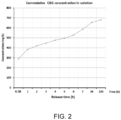
- the analyzed concentration of CBD is cumulative, which means that concentration refers to the actual concentration of CBD in the controlled release solution and reaches a maximum value of 847 mg/L after 120h of release experiment. 95% of the release of CBD takes place in the first 24h of the experiment.
- the analyzed concentration of CBG is cumulative, which means that concentration refers to the actual concentration of CBG in the controlled release solution and reaches a maximum value of 680 mg/L after 120h of release experiment. 96% of the release of CBD takes place in the first 24h of the experiment.
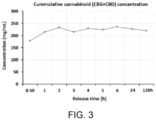
- the analyzed concentration of cannabinoids is cumulative, which means that concentration refers to the actual concentration of cannabinoids in the controlled release solution and reaches a maximum value of 235 mg/L after 6h of release experiment. 98% of the maximum release of CBD takes place after 2h of the release experiment.
- the analyzed concentration of cannabinoids is cumulative, which means that concentration refers to the actual concentration of cannabinoids in the controlled release solution and reaches a maximum value of 255 mg/L after 24h of release experiment. 79% of the maximum release of CBD takes place after 6h of the release experiment.
Landscapes
- Health & Medical Sciences (AREA)
- Life Sciences & Earth Sciences (AREA)
- Veterinary Medicine (AREA)
- Public Health (AREA)
- General Health & Medical Sciences (AREA)
- Animal Behavior & Ethology (AREA)
- Chemical & Material Sciences (AREA)
- Epidemiology (AREA)
- Pharmacology & Pharmacy (AREA)
- Medicinal Chemistry (AREA)
- Natural Medicines & Medicinal Plants (AREA)
- Engineering & Computer Science (AREA)
- Dermatology (AREA)
- Birds (AREA)
- Mycology (AREA)
- Botany (AREA)
- Inorganic Chemistry (AREA)
- Medical Informatics (AREA)
- Biotechnology (AREA)
- Alternative & Traditional Medicine (AREA)
- Microbiology (AREA)
- Emergency Medicine (AREA)
- Nutrition Science (AREA)
- Polymers & Plastics (AREA)
- Food Science & Technology (AREA)
- Proteomics, Peptides & Aminoacids (AREA)
- Gerontology & Geriatric Medicine (AREA)
- Rheumatology (AREA)
- Chemical Kinetics & Catalysis (AREA)
- General Chemical & Material Sciences (AREA)
- Nuclear Medicine, Radiotherapy & Molecular Imaging (AREA)
- Organic Chemistry (AREA)
- Pain & Pain Management (AREA)
- Neurosurgery (AREA)
- Biomedical Technology (AREA)
- Pharmaceuticals Containing Other Organic And Inorganic Compounds (AREA)
- Medicinal Preparation (AREA)
- Polysaccharides And Polysaccharide Derivatives (AREA)
- Cosmetics (AREA)
Claims (38)
- Multimatrix-System zur kontrollierten Freisetzung von einer in wässrigen Medien löslichen Phytocannabinoid-Formulierung, das ein vernetztes Polymernetz aufweist, das Phytocannabinoide enthält, die durch nicht-ionische Tenside vehicularisiert werden,
wobei die Phytocannabinoide aus einem Phytocannabinoid oder einer Mischung von Phytocannabinoiden ausgewählt sind, wobei das Polymer aus Hyaluronsäure oder einem Salz davon ausgewählt ist, wobei der pH-Wert der Zusammensetzungen zwischen 6 und 8 liegt und wobei das Gewichtsverhältnis von Phytocannabinoid/Polymer 50:1 bis 1:50, bevorzugt 20:1 bis 1:20, und stärker bevorzugt 10:1 bis 1:10, und am meisten bevorzugt 2:1 bis 1:2 beträgt, und wobei das Gewichtsverhältnis Phytocannabinoid/nicht-ionisches Tensid 1:30 bis 1:1, bevorzugt 1:9 bis 1:1 beträgt. - Multimatrix-System zur kontrollierten Freisetzung nach Anspruch 1, wobei die Phytocannabinoide aus Cannabidiol, Cannabigerol oder einer Mischung davon ausgewählt sind.
- Multimatrix-System zur kontrollierten Freisetzung nach Anspruch 1 oder 2, wobei das nicht-ionische Tensid mindestens ein Poly(ethylenglycol)-block-poly(propylenglycol)-block-poly(ethylenglycol)-Derivat ist, das gemäß der Formel definiert ist:

- Multimatrix-System zur kontrollierten Freisetzung nach Anspruch 3, wobei das nicht-ionische Tensid zwei Poly(ethylenglycol)-a-Block-Poly(propylenglycol)-b-Block-Poly(ethylenglycol)-Derivate aufweist.
- Multimatrix-System zur kontrollierten Freisetzung nach Anspruch 4, wobei für ein Derivat a gleich 80 und b gleich 27 und für das andere Derivat a gleich 141 und b gleich 44 ist.
- Multimatrix-System zur kontrollierten Freisetzung nach Anspruch 4, wobei für ein Derivat a gleich 64 und b gleich 34 und für das andere Derivat a gleich 12 und b gleich 20 ist.
- Multimatrix-System zur kontrollierten Freisetzung nach Anspruch 1, wobei das Phytocannabinoid ein Cannabis sativa-Extrakt ist.
- Multimatrix-System zur kontrollierten Freisetzung nach Anspruch 7, wobei das nicht-ionische Tensid eine Kombination aus Glycerylcitrat/Lactat/Linoleat/Oleat und Polyglyceryl-2-Oleat ist.
- Multimatrix-System zur kontrollierten Freisetzung nach Anspruch 1, wobei das Polymer ein Hyaluronsäuresalz ist.
- Multimatrix-System zur kontrollierten Freisetzung nach Anspruch 9, wobei das Hyaluronsäuresalz ein niedriges Molekulargewicht (M) hat, wobei M≤ 0,75·106 Da, oder das Hyaluronsäuresalz ein hohes Molekulargewicht (M) hat, wobei M ≤ 2,2·106 Da, oder eine Mischung davon.
- Multimatrix-System zur kontrollierten Freisetzung nach Anspruch 10, wobei das Hyaluronsäuresalz ein niedriges Molekulargewicht hat, wobei 0,5·106 Da ≤ M ≤ 0,75·106 Da, oder das Hyaluronsäuresalz ein hohes Molekulargewicht (M) hat, wobei 1,9·106≤ M ≤ 2,2·106 Da, oder eine Mischung davon.
- Multimatrix-System zur kontrollierten Freisetzung nach einem der Ansprüche 9-11, wobei das Hyaluronsäuresalz Natriumhyaluronat ist.
- Verfahren zur Herstellung eines Multimatrix-Systems zur kontrollierten Freisetzung einer in wässrigen Medien löslichen Phytocannabinoid-Formulierung nach Anspruch 1, das die Schritte aufweist:a) Erhalten einer Lösung durch Mischen von Hyaluronsäure oder eines Salzes davon, die zuvor in einer wässrigen Lösung gelöst wurde, und eines nichtionischen Tensids,b) Erhalten einer Lösung eines Phytocannabinoids oder einer Mischung von Phytocannabinoiden durch Lösen der Phytocannabinoide in einem geeigneten Lösungsmittel,c) Zugabe der in b) erhaltenen Lösung zu der in a) erhaltenen Lösung undd) Vernetzen der in c) erhaltenen Lösung in Gegenwart eines Vernetzungsmittels.
- Verfahren nach Anspruch 13, wobei die in Schritt b) verwendeten Phytocannabinoide aus Cannabidiol, Cannabigerol oder einer Mischung davon ausgewählt werden.
- Verfahren nach Anspruch 13 oder 14, wobei das in Schritt a) verwendete nicht-ionische Tensid mindestens ein Poly(ethylenglykol)-block-poly(propylenglykol)-block-poly(ethylenglykol)-Derivat ist, das gemäß der Formel definiert ist:

- Verfahren nach Anspruch 15, wobei das nicht-ionische Tensid zwei Poly(ethylenglykol)a-Block-Poly(propylenglykol)b-Block-Poly(ethylenglykol)a-Derivate aufweist.
- Verfahren nach Anspruch 16, wobei für ein Derivat a gleich 80 und b gleich 27 und für das andere Derivat a gleich 141 und b gleich 44 ist.
- Verfahren nach Anspruch 16, wobei für ein Derivat a gleich 64 und b gleich 34 und für das andere Derivat a gleich 12 und b gleich 20 ist.
- Verfahren zur Herstellung eines Multimatrix-Systems zur kontrollierten Freisetzung einer in wässrigen Medien löslichen Phytocannabinoid-Formulierung nach Anspruch 1, das die folgenden Schritte aufweist:i. Erhalten einer Lösung durch Lösen von Hyaluronsäure oder eines Salzes davon in einer wässrigen Lösung,ii. Erhalten einer Lösung eines Phytocannabinoids oder einer Mischung von Phytocannabinoiden durch Auflösen der Phytocannabinoide in einer Lösung, die ein nicht-ionisches Tensid und ein geeignetes Lösungsmittel enthält,iii. Hinzufügen der in ii) erhaltenen Lösung zu der in i) erhaltenen Lösung, undiv. Vernetzen der in iii) erhaltenen Lösung in Gegenwart eines Vernetzungsmittels.
- Verfahren nach Anspruch 19, wobei in Schritt i) ein Cannabis sativa-Extrakt, der Phytocannabinoide enthält, verwendet wird.
- Verfahren nach Anspruch 20, wobei das in Schritt ii) verwendete nicht-ionische Tensid Glycerylcitrat/Lactat/Linoleat/Oleat und Polyglyceryl-2-Oleat ist.
- Verfahren nach einem der Ansprüche 13-21, das weiterhin einen Schritt zur Einstellung des pH-Werts nach dem Vernetzungsschritt aufweist, wobei- wenn der nach dem Vernetzungsschritt erreichte pH-Wert sauer ist, wird der pH-Wert durch Zugabe einer 0,25 M Natriumhydroxidlösung (NaOH) eingestellt, bis der gewünschte pH-Wert erreicht ist, oder- wenn der in Schritt d) erreichte pH-Wert basisch ist, wird der pH-Wert durch Zugabe einer 0,25 M Lösung von Chlorwasserstoffsäure (HCl) eingestellt, bis der gewünschte pH-Wert erreicht ist.
- Verfahren nach den Ansprüchen 13-22, wobei das Polymer ein Hyaluronsäuresalz mit niedrigem Molekulargewicht (M), wobei M ≤ Da, oder ein Hyaluronsäuresalz mit hohem Molekulargewicht (M), wobei M ≤ 2,2·106 Da, oder eine Mischung davon ist.
- Verfahren nach Anspruch 23, wobei das Polymer ein Hyaluronsäuresalz mit niedrigem Molekulargewicht, wobei 0,5·106 Da≤ M≤ Da, oder ein Hyaluronsäuresalz mit hohem Molekulargewicht (M), wobei 1,9·106 ≤ M ≤ 2,2·106 Da, oder eine Mischung davon ist.
- Verfahren nach den Ansprüchen 23 oder 24, wobei das Hyaluronsäuresalz Natriumhyaluronat ist.
- Verfahren nach Anspruch 25, wobei die Polymerlösung niedermolekulares und/oder hochmolekulares Natriumhyaluronat in einer Konzentration zwischen 0,1 und 3 % (w/w) und bevorzugt in einer Konzentration zwischen 0,5 % und 2,5 % (w/w) und am stärksten bevorzugt in einer Konzentration zwischen 0,75 und 1,5 % (w/w) aufweist.
- Verfahren nach einem der Ansprüche 13-26, wobei das in Schritt a) oder i) verwendete wässrige Lösungsmedium ausgewählt ist aus:- Wasser,- einem Puffer bestehend aus NaCl in einer Konzentration zwischen 0,2 und 8 % und Na2HPO4 12H2O, in einer Konzentration zwischen 0,01 % und 10 % und Na2HPO4 2H2O, in einer Konzentration zwischen 0,001 % und 10 %, oder- einem Puffer bestehend aus Natriumcitratdehydrat oder einem Natriumcitratderivat in einer Konzentration zwischen 0,002 und 2,5 % und Zitronensäure (hydratisiert oder dehydriert) in einer Konzentration zwischen 0,002 % und 2 %, und- einem Puffer bestehend aus Essigsäure in einer Konzentration zwischen 0,0005 % und 0,1 % und Natriumacetatderivat in einer Konzentration zwischen 0,005 % und 0,5 %.
- Verfahren nach einem der Ansprüche 1-27, wobei das zum Lösen des Cannabinoids verwendete Lösungsmittel durch die Formel definiert ist:

- Verfahren nach Anspruch 28, wobei das Lösungsmittel ausgewählt ist aus der Gruppe bestehend aus Methanol, 1-Propanol und Isomeren davon, Ethylenglykol, Propylenglykol und Mischungen davon.
- Verfahren nach einem der Ansprüche 13 bis 29, wobei das Vernetzungsmittel ausgewählt ist aus einem Carbodiimid-Derivat, einem Carbonylimidazol-Derivat, einem Carbonylbenzotriazol-Derivat, einem Carbonyltriazol-Derivat oder Mischungen davon.
- Verfahren nach Anspruch 30, wobei im Vernetzungsschritt auch ein Aktivesterbildendes Molekül vorhanden ist, bevorzugt Sulfo-Hydroxysuccinimid (Sulfo-NHS).
- Verfahren nach einem der Ansprüche 30-31, wobei im Vernetzungsschritt d) auch ein Dihydrazidderivat vorhanden ist.
- Verfahren nach einem der Ansprüche 13-32, wobei nach dem Vernetzungsschritt ein Sterilisationsschritt durchgeführt wird.
- Verfahren nach Anspruch 33, wobei der Sterilisationsprozess durch Dampfsterilisation in einem Autoklaven bei einer Temperatur im Bereich von 120°C bis 140°C, bevorzugt bei 121°C, für 15-20 Minuten durchgeführt wird.
- Pharmazeutische, kosmetische oder nutrazeutische Zusammensetzung, die das Multimatrix-System zur kontrollierten Freisetzung von Cannabinoiden nach einem der Ansprüche 1-12 aufweist.
- Pharmazeutische Zusammensetzung nach Anspruch 35 zur Verwendung bei der Behandlung von entzündlichen Gelenkerkrankungen.
- Pharmazeutische Zusammensetzung nach Anspruch 35 zur therapeutischen Verwendung bei der Vermehrung und/oder Reparatur von Weichgewebe und Keratinmaterialien.
- Nicht therapeutische Verwendung der kosmetischen oder nutrazeutischen Zusammensetzung nach Anspruch 35 zur Entspannung, Beruhigung und Befeuchtung der Haut und zur Verbesserung des Wohlbefindens des menschlichen Körpers.
Applications Claiming Priority (2)
| Application Number | Priority Date | Filing Date | Title |
|---|---|---|---|
| EP20382072.5A EP3861996A1 (de) | 2020-02-04 | 2020-02-04 | System zur kontrollierten freisetzung von in wässrigen medien löslichen phytocannabinoidformulierungen, verfahren und verwendungen davon |
| PCT/EP2021/052511 WO2021156291A1 (en) | 2020-02-04 | 2021-02-03 | Controlled release system of phytocannabinoids formulations soluble in aqueous media, methods and uses thereof |
Publications (3)
| Publication Number | Publication Date |
|---|---|
| EP4100001A1 EP4100001A1 (de) | 2022-12-14 |
| EP4100001C0 EP4100001C0 (de) | 2025-06-25 |
| EP4100001B1 true EP4100001B1 (de) | 2025-06-25 |
Family
ID=69713981
Family Applications (2)
| Application Number | Title | Priority Date | Filing Date |
|---|---|---|---|
| EP20382072.5A Withdrawn EP3861996A1 (de) | 2020-02-04 | 2020-02-04 | System zur kontrollierten freisetzung von in wässrigen medien löslichen phytocannabinoidformulierungen, verfahren und verwendungen davon |
| EP21703254.9A Active EP4100001B1 (de) | 2020-02-04 | 2021-02-03 | System zur kontrollierten freisetzung von in wässrigen medien löslichen phytocannabinoidformulierungen, verfahren und verwendungen davon |
Family Applications Before (1)
| Application Number | Title | Priority Date | Filing Date |
|---|---|---|---|
| EP20382072.5A Withdrawn EP3861996A1 (de) | 2020-02-04 | 2020-02-04 | System zur kontrollierten freisetzung von in wässrigen medien löslichen phytocannabinoidformulierungen, verfahren und verwendungen davon |
Country Status (5)
| Country | Link |
|---|---|
| US (1) | US20230081080A1 (de) |
| EP (2) | EP3861996A1 (de) |
| CA (1) | CA3166966A1 (de) |
| ES (1) | ES3037264T3 (de) |
| WO (1) | WO2021156291A1 (de) |
Family Cites Families (13)
| Publication number | Priority date | Publication date | Assignee | Title |
|---|---|---|---|---|
| DK2176208T3 (en) * | 2007-07-30 | 2015-04-27 | Zynerba Pharmaceuticals Inc | Prodrugs of cannabidiol, compositions containing prodrugs of cannabidiol and methods of use thereof |
| US20130184354A1 (en) * | 2012-01-13 | 2013-07-18 | Donna K. Jackson | Silicone and Hylauronic Acid (HLA) Delivery Systems for Products by Sustainable Processes for Medical Uses Including Wound Management |
| US9421198B2 (en) | 2013-07-30 | 2016-08-23 | Teoxane | Composition comprising hyaluronic acid and mepivacaine |
| CA2990071C (en) | 2014-07-14 | 2023-01-24 | Librede Inc. | Production of cannabigerolic acid |
| MX395015B (es) * | 2014-12-12 | 2025-03-24 | Ojai Energetics Pbc | Composiciones microencapsuladas de cannabinoides |
| US20200121616A1 (en) * | 2015-06-09 | 2020-04-23 | Bol Pharma Ltd. | Compositions comprising cannabidiol and hyaluronic acid for treating inflammatory joint diseases |
| US9827322B2 (en) * | 2015-07-24 | 2017-11-28 | Bao Tran | Medication dispensing system |
| CA3025208A1 (en) | 2016-05-24 | 2017-11-30 | Bol Pharma Ltd. | Compositions comprising cannabidiol and hyaluronic acid for treating inflammatory joint diseases |
| IL246790A0 (en) * | 2016-07-14 | 2016-09-29 | Friedman Doron | Self-dissolving compounds of cannabinoids |
| WO2018075730A1 (en) * | 2016-10-21 | 2018-04-26 | Axim Biotechnologies, Inc. | Suppositories comprising cannabinoids |
| US12324789B2 (en) * | 2017-08-28 | 2025-06-10 | Apirx Pharmaceutical Usa, Llc | Method to treat psoriasis |
| GB2572125B (en) * | 2018-01-03 | 2021-01-13 | Gw Res Ltd | Pharmaceutical |
| CN110201141A (zh) * | 2019-07-17 | 2019-09-06 | 李卫 | 一种用于治疗面部神经炎的含有大麻二酚的组合物及其制备方法 |
-
2020
- 2020-02-04 EP EP20382072.5A patent/EP3861996A1/de not_active Withdrawn
-
2021
- 2021-02-03 US US17/760,041 patent/US20230081080A1/en active Pending
- 2021-02-03 WO PCT/EP2021/052511 patent/WO2021156291A1/en not_active Ceased
- 2021-02-03 EP EP21703254.9A patent/EP4100001B1/de active Active
- 2021-02-03 CA CA3166966A patent/CA3166966A1/en active Pending
- 2021-02-03 ES ES21703254T patent/ES3037264T3/es active Active
Also Published As
| Publication number | Publication date |
|---|---|
| WO2021156291A1 (en) | 2021-08-12 |
| EP4100001A1 (de) | 2022-12-14 |
| EP4100001C0 (de) | 2025-06-25 |
| US20230081080A1 (en) | 2023-03-16 |
| CA3166966A1 (en) | 2021-08-12 |
| EP3861996A1 (de) | 2021-08-11 |
| ES3037264T3 (en) | 2025-09-30 |
Similar Documents
| Publication | Publication Date | Title |
|---|---|---|
| KR102076337B1 (ko) | 히알루론산 유도체 및 dna 분획물이 포함된 히알루론산 주사용 조성물 및 이의 이용 | |
| JP5657545B2 (ja) | 注射用容器内で架橋した注射用ヒドロゲルの調製方法 | |
| AU2013276844B2 (en) | Method of preparing a composition based on hyaluronic acid | |
| US20100298259A1 (en) | Pharmaceutical or cosmetic preparations for topical and/or parenteral application, preparation methods thereof and use of same | |
| KR101459070B1 (ko) | 지속성을 갖는 히알루론산 겔 조성물 | |
| KR20150079786A (ko) | 피부 주사가능한 멸균 조성물 | |
| EP3813895B1 (de) | Fettsäuregepfropfte hyaluronsäure, dermale füllstoffformulierungen damit, verfahren zur herstellung und verwendung davon | |
| CN104394934A (zh) | 包含至少一种透明质酸及至少一种蔗糖八硫酸酯水溶性盐的在水性介质中的组合物 | |
| WO2014172784A1 (en) | Crosslinked hyaluronic acid compositions | |
| EP2222713B1 (de) | Gemischte butyrin-formyl-ester aus sauren polysacchariden, ihre herstellung und ihre verwendung als hautkosmetika | |
| US20100323983A1 (en) | Pharmaceutical or cosmetic preparations for topical and/or parenteral application, preparation methods thereof, and uses thereof | |
| JP2023510089A (ja) | 炭水化物ポリマー及び活性成分を備える錯体及びそれらを調製する方法 | |
| US20260014068A1 (en) | Hydrogel based on zinc gluconate and hyaluronic acid esters | |
| TW201414478A (zh) | 經修飾的透明質酸衍生物及其用途 | |
| EP4100001B1 (de) | System zur kontrollierten freisetzung von in wässrigen medien löslichen phytocannabinoidformulierungen, verfahren und verwendungen davon | |
| KR101637883B1 (ko) | 폴리에틸렌글리콜 수화젤 주사제 | |
| KR20180035032A (ko) | 가교 히알루론산을 포함하는 주사용 조성물 | |
| KR20150110843A (ko) | 물리적 반응에 의한 히알루론산 하이드로겔의 제조 방법 | |
| KR102202188B1 (ko) | 고분자 히알루론산의 체내 지속성 향상용 조성물 및 이를 포함하는 주사용 피부 필러 조성물 | |
| EP4259110B1 (de) | Zusammensetzung mit meerwasser und cannabinoidbeladenen submikropartikeln für pharmazeutische, nutrazeutische und kosmetische anwendungen | |
| EP2219632B1 (de) | Zusammensetzung zur behandlung hypertropher narben mit fucose, dimethylsulfon und acetylglucosamin | |
| EP4635524A1 (de) | Hydrogele auf hyaluronsäurebasis, dermale füllstoffzusammensetzungen und verfahren zur herstellung davon | |
| US20240417522A1 (en) | Method for crosslinking hyaluronic acid using resonant acoustic mixing | |
| CN121889141A (zh) | 地塞米松递送系统 | |
| Dai et al. | A Kneading-Responsive Hyaluronic Acid-based Hydrogel for On-Demand Local Anesthesia in Osteoarthritis |
Legal Events
| Date | Code | Title | Description |
|---|---|---|---|
| STAA | Information on the status of an ep patent application or granted ep patent |
Free format text: STATUS: UNKNOWN |
|
| STAA | Information on the status of an ep patent application or granted ep patent |
Free format text: STATUS: THE INTERNATIONAL PUBLICATION HAS BEEN MADE |
|
| PUAI | Public reference made under article 153(3) epc to a published international application that has entered the european phase |
Free format text: ORIGINAL CODE: 0009012 |
|
| STAA | Information on the status of an ep patent application or granted ep patent |
Free format text: STATUS: REQUEST FOR EXAMINATION WAS MADE |
|
| 17P | Request for examination filed |
Effective date: 20220728 |
|
| AK | Designated contracting states |
Kind code of ref document: A1 Designated state(s): AL AT BE BG CH CY CZ DE DK EE ES FI FR GB GR HR HU IE IS IT LI LT LU LV MC MK MT NL NO PL PT RO RS SE SI SK SM TR |
|
| DAV | Request for validation of the european patent (deleted) | ||
| DAX | Request for extension of the european patent (deleted) | ||
| STAA | Information on the status of an ep patent application or granted ep patent |
Free format text: STATUS: EXAMINATION IS IN PROGRESS |
|
| 17Q | First examination report despatched |
Effective date: 20230821 |
|
| REG | Reference to a national code |
Ref country code: DE Ref legal event code: R079 Free format text: PREVIOUS MAIN CLASS: A61K0031352000 Ipc: A61K0008340000 Ref country code: DE Ref legal event code: R079 Ref document number: 602021032778 Country of ref document: DE Free format text: PREVIOUS MAIN CLASS: A61K0031352000 Ipc: A61K0008340000 |
|
| GRAP | Despatch of communication of intention to grant a patent |
Free format text: ORIGINAL CODE: EPIDOSNIGR1 |
|
| STAA | Information on the status of an ep patent application or granted ep patent |
Free format text: STATUS: GRANT OF PATENT IS INTENDED |
|
| RIC1 | Information provided on ipc code assigned before grant |
Ipc: A61P 29/00 20060101ALI20250123BHEP Ipc: A61K 47/36 20060101ALI20250123BHEP Ipc: A61K 31/352 20060101ALI20250123BHEP Ipc: A61K 9/00 20060101ALI20250123BHEP Ipc: A61Q 19/08 20060101ALI20250123BHEP Ipc: A61Q 19/00 20060101ALI20250123BHEP Ipc: A61K 8/90 20060101ALI20250123BHEP Ipc: A61K 8/73 20060101ALI20250123BHEP Ipc: A61K 8/34 20060101AFI20250123BHEP |
|
| INTG | Intention to grant announced |
Effective date: 20250205 |
|
| RAP3 | Party data changed (applicant data changed or rights of an application transferred) |
Owner name: I+MED S. COOP. |
|
| GRAS | Grant fee paid |
Free format text: ORIGINAL CODE: EPIDOSNIGR3 |
|
| GRAA | (expected) grant |
Free format text: ORIGINAL CODE: 0009210 |
|
| STAA | Information on the status of an ep patent application or granted ep patent |
Free format text: STATUS: THE PATENT HAS BEEN GRANTED |
|
| AK | Designated contracting states |
Kind code of ref document: B1 Designated state(s): AL AT BE BG CH CY CZ DE DK EE ES FI FR GB GR HR HU IE IS IT LI LT LU LV MC MK MT NL NO PL PT RO RS SE SI SK SM TR |
|
| REG | Reference to a national code |
Ref country code: GB Ref legal event code: FG4D |
|
| REG | Reference to a national code |
Ref country code: CH Ref legal event code: EP |
|
| REG | Reference to a national code |
Ref country code: CH Ref legal event code: EP |
|
| REG | Reference to a national code |
Ref country code: IE Ref legal event code: FG4D |
|
| REG | Reference to a national code |
Ref country code: DE Ref legal event code: R096 Ref document number: 602021032778 Country of ref document: DE |
|
| U01 | Request for unitary effect filed |
Effective date: 20250711 |
|
| U07 | Unitary effect registered |
Designated state(s): AT BE BG DE DK EE FI FR IT LT LU LV MT NL PT RO SE SI Effective date: 20250718 |
|
| REG | Reference to a national code |
Ref country code: ES Ref legal event code: FG2A Ref document number: 3037264 Country of ref document: ES Kind code of ref document: T3 Effective date: 20250930 |
|
| PG25 | Lapsed in a contracting state [announced via postgrant information from national office to epo] |
Ref country code: NO Free format text: LAPSE BECAUSE OF FAILURE TO SUBMIT A TRANSLATION OF THE DESCRIPTION OR TO PAY THE FEE WITHIN THE PRESCRIBED TIME-LIMIT Effective date: 20250925 Ref country code: GR Free format text: LAPSE BECAUSE OF FAILURE TO SUBMIT A TRANSLATION OF THE DESCRIPTION OR TO PAY THE FEE WITHIN THE PRESCRIBED TIME-LIMIT Effective date: 20250926 |
|
| PG25 | Lapsed in a contracting state [announced via postgrant information from national office to epo] |
Ref country code: HR Free format text: LAPSE BECAUSE OF FAILURE TO SUBMIT A TRANSLATION OF THE DESCRIPTION OR TO PAY THE FEE WITHIN THE PRESCRIBED TIME-LIMIT Effective date: 20250625 |
|
| PG25 | Lapsed in a contracting state [announced via postgrant information from national office to epo] |
Ref country code: RS Free format text: LAPSE BECAUSE OF FAILURE TO SUBMIT A TRANSLATION OF THE DESCRIPTION OR TO PAY THE FEE WITHIN THE PRESCRIBED TIME-LIMIT Effective date: 20250925 |
|
| PG25 | Lapsed in a contracting state [announced via postgrant information from national office to epo] |
Ref country code: IS Free format text: LAPSE BECAUSE OF FAILURE TO SUBMIT A TRANSLATION OF THE DESCRIPTION OR TO PAY THE FEE WITHIN THE PRESCRIBED TIME-LIMIT Effective date: 20251025 |
|
| PG25 | Lapsed in a contracting state [announced via postgrant information from national office to epo] |
Ref country code: SM Free format text: LAPSE BECAUSE OF FAILURE TO SUBMIT A TRANSLATION OF THE DESCRIPTION OR TO PAY THE FEE WITHIN THE PRESCRIBED TIME-LIMIT Effective date: 20250625 |
|
| PG25 | Lapsed in a contracting state [announced via postgrant information from national office to epo] |
Ref country code: CZ Free format text: LAPSE BECAUSE OF FAILURE TO SUBMIT A TRANSLATION OF THE DESCRIPTION OR TO PAY THE FEE WITHIN THE PRESCRIBED TIME-LIMIT Effective date: 20250625 |
|
| PG25 | Lapsed in a contracting state [announced via postgrant information from national office to epo] |
Ref country code: PL Free format text: LAPSE BECAUSE OF FAILURE TO SUBMIT A TRANSLATION OF THE DESCRIPTION OR TO PAY THE FEE WITHIN THE PRESCRIBED TIME-LIMIT Effective date: 20250625 |
|
| PG25 | Lapsed in a contracting state [announced via postgrant information from national office to epo] |
Ref country code: SK Free format text: LAPSE BECAUSE OF FAILURE TO SUBMIT A TRANSLATION OF THE DESCRIPTION OR TO PAY THE FEE WITHIN THE PRESCRIBED TIME-LIMIT Effective date: 20250625 |
|
| U20 | Renewal fee for the european patent with unitary effect paid |
Year of fee payment: 6 Effective date: 20260120 |
|
| REG | Reference to a national code |
Ref country code: CH Ref legal event code: U11 Free format text: ST27 STATUS EVENT CODE: U-0-0-U10-U11 (AS PROVIDED BY THE NATIONAL OFFICE) Effective date: 20260301 |
|
| PGFP | Annual fee paid to national office [announced via postgrant information from national office to epo] |
Ref country code: GB Payment date: 20260115 Year of fee payment: 6 |
|
| PGFP | Annual fee paid to national office [announced via postgrant information from national office to epo] |
Ref country code: ES Payment date: 20260305 Year of fee payment: 6 |
|
| PGFP | Annual fee paid to national office [announced via postgrant information from national office to epo] |
Ref country code: CH Payment date: 20260301 Year of fee payment: 6 |
|
| PLBE | No opposition filed within time limit |
Free format text: ORIGINAL CODE: 0009261 |
|
| STAA | Information on the status of an ep patent application or granted ep patent |
Free format text: STATUS: NO OPPOSITION FILED WITHIN TIME LIMIT |