EP4099480A1 - Batteriemodul - Google Patents
Batteriemodul Download PDFInfo
- Publication number
- EP4099480A1 EP4099480A1 EP21747424.6A EP21747424A EP4099480A1 EP 4099480 A1 EP4099480 A1 EP 4099480A1 EP 21747424 A EP21747424 A EP 21747424A EP 4099480 A1 EP4099480 A1 EP 4099480A1
- Authority
- EP
- European Patent Office
- Prior art keywords
- secondary battery
- heat transfer
- fireproof
- transfer prevention
- battery module
- Prior art date
- Legal status (The legal status is an assumption and is not a legal conclusion. Google has not performed a legal analysis and makes no representation as to the accuracy of the status listed.)
- Pending
Links
Images


Classifications
-
- H—ELECTRICITY
- H01—ELECTRIC ELEMENTS
- H01M—PROCESSES OR MEANS, e.g. BATTERIES, FOR THE DIRECT CONVERSION OF CHEMICAL ENERGY INTO ELECTRICAL ENERGY
- H01M50/00—Constructional details or processes of manufacture of the non-active parts of electrochemical cells other than fuel cells, e.g. hybrid cells
- H01M50/20—Mountings; Secondary casings or frames; Racks, modules or packs; Suspension devices; Shock absorbers; Transport or carrying devices; Holders
- H01M50/204—Racks, modules or packs for multiple batteries or multiple cells
- H01M50/207—Racks, modules or packs for multiple batteries or multiple cells characterised by their shape
- H01M50/211—Racks, modules or packs for multiple batteries or multiple cells characterised by their shape adapted for pouch cells
-
- H—ELECTRICITY
- H01—ELECTRIC ELEMENTS
- H01M—PROCESSES OR MEANS, e.g. BATTERIES, FOR THE DIRECT CONVERSION OF CHEMICAL ENERGY INTO ELECTRICAL ENERGY
- H01M10/00—Secondary cells; Manufacture thereof
- H01M10/60—Heating or cooling; Temperature control
- H01M10/65—Means for temperature control structurally associated with the cells
- H01M10/658—Means for temperature control structurally associated with the cells by thermal insulation or shielding
-
- H—ELECTRICITY
- H01—ELECTRIC ELEMENTS
- H01M—PROCESSES OR MEANS, e.g. BATTERIES, FOR THE DIRECT CONVERSION OF CHEMICAL ENERGY INTO ELECTRICAL ENERGY
- H01M10/00—Secondary cells; Manufacture thereof
- H01M10/60—Heating or cooling; Temperature control
- H01M10/65—Means for temperature control structurally associated with the cells
- H01M10/653—Means for temperature control structurally associated with the cells characterised by electrically insulating or thermally conductive materials
-
- H—ELECTRICITY
- H01—ELECTRIC ELEMENTS
- H01M—PROCESSES OR MEANS, e.g. BATTERIES, FOR THE DIRECT CONVERSION OF CHEMICAL ENERGY INTO ELECTRICAL ENERGY
- H01M10/00—Secondary cells; Manufacture thereof
- H01M10/60—Heating or cooling; Temperature control
- H01M10/61—Types of temperature control
- H01M10/613—Cooling or keeping cold
-
- H—ELECTRICITY
- H01—ELECTRIC ELEMENTS
- H01M—PROCESSES OR MEANS, e.g. BATTERIES, FOR THE DIRECT CONVERSION OF CHEMICAL ENERGY INTO ELECTRICAL ENERGY
- H01M10/00—Secondary cells; Manufacture thereof
- H01M10/60—Heating or cooling; Temperature control
- H01M10/64—Heating or cooling; Temperature control characterised by the shape of the cells
- H01M10/647—Prismatic or flat cells, e.g. pouch cells
-
- H—ELECTRICITY
- H01—ELECTRIC ELEMENTS
- H01M—PROCESSES OR MEANS, e.g. BATTERIES, FOR THE DIRECT CONVERSION OF CHEMICAL ENERGY INTO ELECTRICAL ENERGY
- H01M10/00—Secondary cells; Manufacture thereof
- H01M10/60—Heating or cooling; Temperature control
- H01M10/65—Means for temperature control structurally associated with the cells
- H01M10/655—Solid structures for heat exchange or heat conduction
- H01M10/6554—Rods or plates
- H01M10/6555—Rods or plates arranged between the cells
-
- H—ELECTRICITY
- H01—ELECTRIC ELEMENTS
- H01M—PROCESSES OR MEANS, e.g. BATTERIES, FOR THE DIRECT CONVERSION OF CHEMICAL ENERGY INTO ELECTRICAL ENERGY
- H01M50/00—Constructional details or processes of manufacture of the non-active parts of electrochemical cells other than fuel cells, e.g. hybrid cells
- H01M50/20—Mountings; Secondary casings or frames; Racks, modules or packs; Suspension devices; Shock absorbers; Transport or carrying devices; Holders
- H01M50/233—Mountings; Secondary casings or frames; Racks, modules or packs; Suspension devices; Shock absorbers; Transport or carrying devices; Holders characterised by physical properties of casings or racks, e.g. dimensions
-
- H—ELECTRICITY
- H01—ELECTRIC ELEMENTS
- H01M—PROCESSES OR MEANS, e.g. BATTERIES, FOR THE DIRECT CONVERSION OF CHEMICAL ENERGY INTO ELECTRICAL ENERGY
- H01M50/00—Constructional details or processes of manufacture of the non-active parts of electrochemical cells other than fuel cells, e.g. hybrid cells
- H01M50/20—Mountings; Secondary casings or frames; Racks, modules or packs; Suspension devices; Shock absorbers; Transport or carrying devices; Holders
- H01M50/233—Mountings; Secondary casings or frames; Racks, modules or packs; Suspension devices; Shock absorbers; Transport or carrying devices; Holders characterised by physical properties of casings or racks, e.g. dimensions
- H01M50/24—Mountings; Secondary casings or frames; Racks, modules or packs; Suspension devices; Shock absorbers; Transport or carrying devices; Holders characterised by physical properties of casings or racks, e.g. dimensions adapted for protecting batteries from their environment, e.g. from corrosion
-
- H—ELECTRICITY
- H01—ELECTRIC ELEMENTS
- H01M—PROCESSES OR MEANS, e.g. BATTERIES, FOR THE DIRECT CONVERSION OF CHEMICAL ENERGY INTO ELECTRICAL ENERGY
- H01M50/00—Constructional details or processes of manufacture of the non-active parts of electrochemical cells other than fuel cells, e.g. hybrid cells
- H01M50/20—Mountings; Secondary casings or frames; Racks, modules or packs; Suspension devices; Shock absorbers; Transport or carrying devices; Holders
- H01M50/289—Mountings; Secondary casings or frames; Racks, modules or packs; Suspension devices; Shock absorbers; Transport or carrying devices; Holders characterised by spacing elements or positioning means within frames, racks or packs
- H01M50/293—Mountings; Secondary casings or frames; Racks, modules or packs; Suspension devices; Shock absorbers; Transport or carrying devices; Holders characterised by spacing elements or positioning means within frames, racks or packs characterised by the material
-
- A—HUMAN NECESSITIES
- A62—LIFE-SAVING; FIRE-FIGHTING
- A62C—FIRE-FIGHTING
- A62C3/00—Fire prevention, containment or extinguishing specially adapted for particular objects or places
- A62C3/07—Fire prevention, containment or extinguishing specially adapted for particular objects or places in vehicles, e.g. in road vehicles
-
- A—HUMAN NECESSITIES
- A62—LIFE-SAVING; FIRE-FIGHTING
- A62C—FIRE-FIGHTING
- A62C3/00—Fire prevention, containment or extinguishing specially adapted for particular objects or places
- A62C3/16—Fire prevention, containment or extinguishing specially adapted for particular objects or places in electrical installations, e.g. cableways
-
- Y—GENERAL TAGGING OF NEW TECHNOLOGICAL DEVELOPMENTS; GENERAL TAGGING OF CROSS-SECTIONAL TECHNOLOGIES SPANNING OVER SEVERAL SECTIONS OF THE IPC; TECHNICAL SUBJECTS COVERED BY FORMER USPC CROSS-REFERENCE ART COLLECTIONS [XRACs] AND DIGESTS
- Y02—TECHNOLOGIES OR APPLICATIONS FOR MITIGATION OR ADAPTATION AGAINST CLIMATE CHANGE
- Y02E—REDUCTION OF GREENHOUSE GAS [GHG] EMISSIONS, RELATED TO ENERGY GENERATION, TRANSMISSION OR DISTRIBUTION
- Y02E60/00—Enabling technologies; Technologies with a potential or indirect contribution to GHG emissions mitigation
- Y02E60/10—Energy storage using batteries
Definitions
- the present disclosure relates to a battery module.
- a secondary battery cell is a battery capable of repetitive charging and discharging operations due to the reversible mutual conversion between chemical energy and electrical energy within each battery cell.
- the secondary battery cell includes an electrode assembly such as a positive electrode, a negative electrode, a separator, an electrolyte and the like, which are main components of a secondary battery, and a cell body member of a laminated film case protecting the same.
- an electrode assembly such as a positive electrode, a negative electrode, a separator, an electrolyte and the like, which are main components of a secondary battery, and a cell body member of a laminated film case protecting the same.
- multiple secondary battery cells are connected and mounted to form a battery module for supplying power and being recharged in an electric vehicle or other systems.
- the explosion of any one secondary battery cell may cause a problem leading to a chain explosion of secondary battery cells by applying high temperature and high pressure to other secondary battery cells in the vicinity.
- An aspect of the present disclosure is to provide a battery module capable of preventing a problem in which heat of one secondary battery cell is transferred to another secondary battery cell.
- Another aspect of the present disclosure is to provide a battery module in which a problem of sequential explosion of other secondary battery cells due to a flame caused by the explosion of any one secondary battery cell is prevented.
- a battery module includes a plurality of secondary battery cells, a housing member in which the plurality of secondary battery cells are accommodated, and a multilayer member provided between the plurality of secondary battery cells, at least a portion thereof in a thickness direction being formed of a material having low thermal conductivity compared to other portions.
- the multilayer member of the battery module may include a fireproof portion forming an outer layer adjacent to the secondary battery cell, and a heat transfer prevention portion provided to be in contact with the fireproof portion on both sides thereof to form an inner layer, and formed of a material having thermal conductivity lower than thermal conductivity of the fireproof portion.
- the heat transfer prevention portion of the battery module according to an embodiment of the present disclosure may be formed of a material having a thermal conductivity of 0.3 W/(m-K) or less.
- the heat transfer prevention portion of the battery module according to an embodiment of the present disclosure may be formed of a material including at least one of a polymer material, an inorganic material, and a ceramic material.
- the fireproof portion of the battery module according to an embodiment of the present disclosure may be formed of a material having a degree of fire resistance higher than fire resistance of the heat transfer prevention portion.
- the fireproof portion of the battery module may be formed of a material having a melting point higher than at least 1000°C.
- the fireproof portion of the battery module according to an embodiment of the present disclosure may be formed of a material maintaining a shape thereof, at at least 1000°C.
- the fireproof portion of the battery module according to an embodiment of the present disclosure may be formed to have a thickness greater than at least 0.01 mm.
- the fireproof portion of the battery module according to an embodiment of the present disclosure may be formed to have a thickness less than a thickness of the heat transfer prevention portion in an entire area in contact with the secondary battery cell.
- the fireproof portion of the battery module according to an embodiment of the present disclosure may be formed to have a thickness less than a thickness of the heat transfer prevention portion in a central portion of a region in contact with the secondary battery cell.
- the fireproof portion of the battery module may be formed to have a thickness greater than a thickness of the heat transfer prevention portion in an outer side portion of a region in contact with the secondary battery cell.
- the fireproof portion of the battery module according to an embodiment of the present disclosure may be formed to have a thickness gradually thinner than a thickness of the heat transfer prevention portion, from an outer side portion of a region in contact with the secondary battery cell toward a central portion thereof.
- the multilayer member of the battery module may include a heat transfer prevention portion forming an outer layer adjacent to the secondary battery cell, and a fireproof portion provided to be in contact with the heat transfer prevention portion on both sides thereof to form an inner layer, wherein the heat transfer prevention portion is formed of a material having thermal conductivity lower than thermal conductivity of the fireproof portion.
- the multilayer member of the battery module may include a heat transfer prevention portion forming an outer layer adjacent to the secondary battery cell, and a core buffer portion provided to be in contact with the heat transfer prevention portion on both sides thereof to form an inner layer, and elastically deformed and compressed when the secondary battery cell expands, wherein the heat transfer prevention portion is formed of a material having thermal conductivity lower than thermal conductivity of the core buffer portion.
- the heat transfer prevention portion of the battery module according to an embodiment of the present disclosure may be fixed to the secondary battery cell with an adhesive or an adhesive tape.
- the battery module of the present disclosure may be implemented to achieve an effect of preventing a problem in which heat of one secondary battery cell is transferred to another secondary battery cell.
- the battery module of the present disclosure may be implemented to achieve an advantage in that the problem in which other secondary battery cells are sequentially exploded by a flame caused by the explosion of any one secondary battery cell may be prevented.
- the present disclosure relates to a battery module, and a problem in which heat of one secondary battery cell 10 is transferred to another secondary battery cell 10 may be prevented, and in another aspect, the problem in which other secondary battery cells 10 are sequentially exploded by the flame caused by the explosion of any one secondary battery cell 10 may be prevented.
- the battery module of the present disclosure may be configured, such that a multilayer member 30 provided between the secondary battery cells 10 adjacent to each other shields at least one of heat and a flame generated in any one secondary battery cell 10 from propagating to surrounding other secondary battery cells 10.
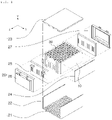
- FIG. 1 is an exploded perspective view illustrating a battery module of the present disclosure.
- the battery module may include a plurality of the secondary battery cells 10, a housing member 20 in which the plurality of secondary battery cells 10 are accommodated, and the multilayer member 30 which is provided between the plurality of secondary battery cells 10 and of which at least a portion in the thickness direction X is formed of a material having low thermal conductivity compared to the other portions.
- the battery module of the present disclosure includes the multilayer member 30 between the plurality of secondary battery cells 10, such that at least one of heat and flames generated in any one secondary battery cell 10 may be prevented from propagation to other secondary battery cells 10.
- the secondary battery cell 10 may include an electrode assembly and a cell body member surrounding the electrode assembly.
- the electrode assembly substantially includes the electrolyte and is accommodated in the cell body member to be used together.
- the electrolyte may include lithium salts such as LiPF 6 , LiBF 4 , or the like in an organic solvent such as ethylene carbonate (EC), propylene carbonate (PC), diethyl carbonate (DEC), ethyl methyl carbonate (EMC), dimethyl carbonate (DMC), or the like.
- the electrolyte may be in a liquid, solid or gel form.
- the cell body member protects the electrode assembly and is configured to accommodate the electrolyte
- the cell body member may be provided as a pouch-type member or a can-type member.
- the pouch-shaped member is a form to accommodate the electrode assembly by sealing three surfaces of the same, and is a member configured to be sealed by overlapping and bonding three surfaces of the upper surface and both sides except for one surface portion, which is mainly the lower surface portion, in a state in which the electrode assembly is accommodated therein.
- pouch-type secondary battery cells 10 and can-type secondary battery cells 10 are only examples of the secondary battery cells 10 accommodated in the battery module of the present disclosure, and are not limited to the type of secondary battery cells 10 accommodated in the battery module of the present disclosure.
- the housing member 20 serves as a body of the battery module in which the plurality of secondary battery cells 10 are accommodated.
- the housing member 20 has a configuration in which a plurality of secondary batteries are installed, and serves to transfer the electrical energy generated by the secondary battery to the outside or to transfer external electrical energy to the secondary battery, while protecting the secondary battery.
- the housing member 20 may include a bottom member 21 and a side wall member 22 accommodating the plurality of secondary battery cells 10.
- the housing member 20 may include the bottom member 21 on which the secondary battery cell 10 is mounted, and the side wall member 22 provided on an edge of the bottom member 21.
- the bottom member 21 has the plurality of secondary battery cells 10 seated thereon, and serves to support the plurality of secondary battery cells 10 seated in this manner.
- the bottom member 21 may be configured to transfer heat generated in the secondary battery cells 10 to an external heat sink, to be cooled.
- the side wall member 22 forming the side of the housing member 20 may also discharge heat generated in the secondary battery cells 10 externally.
- the housing member 20 may include a cover member 23 provided on the upper end of the side wall member 22 and may be configured to protect the upper end of the secondary battery.
- the housing member 20 may include a front member 26 and a rear member 27 adjacent to the side wall member 22, and may thus be configured to surround the plurality of secondary battery cells 10.
- bus bar member 25 for electrically connecting the secondary battery to the outside, or the like, may be provided in the housing member 20.
- a compression member 24 may be provided on the inner side surface of the side wall member 22 to more firmly protect the secondary battery 10.
- the multilayer member 30 serves to prevent at least one of heat and flame generated in any one secondary battery cell 10 from propagating to other secondary battery cells 10 in the vicinity.
- the multilayer member 30 may be provided between the secondary battery cells 10 adjacent to each other.
- the multilayer member 30 is provided to form a plurality of layers, and at least a portion thereof may be formed of a material having a lower thermal conductivity than other portions.
- the multilayer member 30 is formed to have a lower thermal conductivity than other portions, thereby preventing the transfer of heat generated in any one of the secondary battery cells 10.
- the multilayer member 30 may include a fireproof portion 31 and a heat transfer prevention portion 32, to be formed in multiple layers in the thickness direction (X). A detailed description thereof will be described later with reference to FIGS. 2 to 10 .
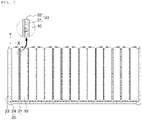
- FIG. 2 is a front view illustrating a battery module of the present disclosure.
- the multilayer member 30 of the battery module may include the fireproof portion 31 forming an outer layer adjacent to the secondary battery cell 10, and the heat transfer prevention portion 32 which is in contact with the fireproof portion 31 on both side surfaces thereof to form an inner layer and is formed of a material having lower thermal conductivity than the fireproof portion 31.
- the multilayer member 30 may include the fireproof portion 31 and the heat transfer prevention portion 32 having a lower thermal conductivity than the fireproof portion 31, such that at least a portion thereof is formed to have a lower thermal conductivity than other parts and the heat generated in any one of the secondary battery cells 10 may thus be prevented from being transferred.
- the heat transfer prevention portion 32 is formed in a central portion in the thickness direction (X), and the fireproof portion 31 is formed in an outer side portion in the thickness direction (X).
- the fireproof portion 31 and the heat transfer prevention portion 32 may be formed to have ratios of formation in the thickness direction (X) of the multilayer member 30 to be different from each other in the height direction (Y) of the multilayer member 30, thereby more effectively securing durability and preventing heat transfer(thermal propagation). A detailed description thereof will be described later with reference to FIGS. 3 to 5 .
- the fireproof portion 31 is provided on the outer side of the heat transfer prevention portion 32 in the thickness direction (X) of the multilayer member 30 to form an outer layer.
- the fireproof portion 31 is configured not to be lost by melting or burning by the heat and flame generated in any one of the secondary battery cells 10, and serves to increase the durability of the multilayer member 30.
- the heat transfer prevention portion 32 has a lower thermal conductivity than the fireproof portion 31 to prevent heat transfer, but may melt or disappear by heat or flame, and the fireproof portion 31 may be configured to complement this point.
- the fireproof portion 31 of the battery module may be formed of a material having a higher fire resistance than the heat transfer prevention portion 32.
- the fireproof portion 31 forming the outer layer of the multilayer member 30 is directly exposed to heat or flame. Therefore, in order to prevent problems such as melting or burning of the heat transfer prevention portion 32 by such heat and flame, the fireproof portion 31 is formed of a material having a higher fire resistance than the heat transfer prevention portion 32.
- the fireproof portion 31 of the battery module according to an embodiment of the present disclosure may be formed of a material having a melting point higher than at least 1000°C.
- the multilayer member 30 may ensure durability.
- the fireproof portion 31 may be formed of a material such as iron (Fe) or copper (Cu) having a melting point higher than 1000°C, such that durability of the multilayer member 30 may be secured.
- the fireproof portion 31 may be formed of an inorganic material such as ceramics or the like to ensure durability against heat or flame.
- the fireproof portion 31 of the battery module according to an embodiment of the present disclosure may be formed of a material that maintains the shape thereof at at least 1000°C.
- the fireproof portion 31 maintains the shape thereof. Accordingly, the multilayer member 30 prevents or delays the direct transfer of heat, gas, or the like to the other secondary battery cells 10 in the vicinity.
- the fireproof portion 31 may be formed of a material such as iron (Fe), copper (Cu), aluminum (Al), or the like that has not been additionally processed, or may also be configured by coating or heat treating the outer surface of a metal material such as iron (Fe), copper (Cu), aluminum (Al), or the like with a material advantageous for shape maintenance.
- a material such as iron (Fe), copper (Cu), aluminum (Al), or the like that has not been additionally processed, or may also be configured by coating or heat treating the outer surface of a metal material such as iron (Fe), copper (Cu), aluminum (Al), or the like with a material advantageous for shape maintenance.
- the fireproof portion 31 of the battery module according to an embodiment of the present disclosure may be formed to have a thickness greater than at least 0.01 mm.
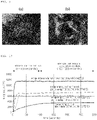
- FIG. 9 is a photograph illustrating a state in which the fireproof portion 31 of the present disclosure is not perforated in a high temperature test, and the technical significance of the limitation of the thickness of the fireproof portion 31 may be confirmed.
- the high temperature test was performed by applying a flame to a specific point in front of the fireproof portion 31 with a torch.
- the fireproof portion 31 was formed of an iron alloy material (SUS 304) having a melting point of about 1400°C, and the heat transfer prevention portion 32 was formed of a mica sheet.
- the thickness of the fireproof portion 31 was formed to be 0.01m or 0.5 mm.
- the fireproof portion 31 also has an effect of preventing heat transfer in part as the thickness thereof increases.
- the fireproof portion 31 of the battery module according to an embodiment of the present disclosure may be formed to have a thickness less than that of the heat transfer prevention portion 32, in the entire region in contact with the secondary battery cell 10.
- the heat transfer prevention portion 32 may be formed relatively thicker in the space of a limited interval between the secondary battery cells 10 adjacent to each other.
- the heat transfer prevention portion 32 is provided relatively thickly, the effect of blocking the transfer of heat generated in any one of the secondary battery cells 10 may be further increased.
- the amount of heat conduction is inversely proportional to the distance, and since the heat transfer prevention portion 32, which has lower thermal conductivity than the fireproof portion 31, is formed relatively more, there is an effect of increasing the heat conduction distance.
- the heat transfer effect may increase in the entire area in which the multilayer member 30 is in contact with the secondary battery cell 10.
- the heat transfer prevention portion 32 is provided inside the fireproof portion 31 in the thickness direction (X) of the multilayer member 30 to form a core layer.
- the heat transfer prevention portion 32 may be provided to reduce the problem of heat generated in one of the secondary battery cells 10 being transferred to the other secondary battery cells 10 in the vicinity.
- the heat transfer prevention portion 32 may be configured to have a lower thermal conductivity than the fireproof portion 31.
- the heat transfer prevention portion 32 of the battery module according to an embodiment of the present disclosure may be formed of a material having a thermal conductivity of 0.3 W/(m ⁇ K) or less.
- the thermal conductivity of the heat transfer prevention portion 32 may be equal to or less than 0.3 W/(m ⁇ K), the problem in which the heat generated in any one of the secondary battery cells 10 is transferred to other secondary battery cells 10 in the vicinity may be reduced.
- the thermal conductivity of the heat transfer prevention portion 32 is formed to be at least equal to or less than 0.03 W/(m ⁇ K) to further enhance the effect of reducing the heat transfer problem.
- a material may be selected in consideration of only the physical properties of thermal conductivity. That is, since a material of the heat transfer prevention portion 32 may be selected by excluding the problem of durability such as melting or burning due to heat or flame, the range of material selection may be further expanded.
- the heat transfer prevention portion 32 of the battery module may be formed of a material including at least one of a polymer material, an inorganic material, and a ceramic material.
- the polymer material may be, for example, a material such as a silicone-based material or the like.
- the inorganic material is a material that does not contain carbon (C), and for example, may be mica, lime, salt, silicon compounds such as glass and some metals such as iron.
- the ceramic material may be a material formed of oxide, carbide, nitride made by combining metal elements such as, for example, silicon (Si), aluminum (Al), titanium (Ti), zirconium (Zr) or the like with oxygen, carbon, nitrogen, or the like.
- This ceramic material may be prepared by using, for example, a natural raw material such as clay, kaolin, feldspar, silica, or the like, or may be prepared by using a synthetic raw material such as silicon carbide, silicon nitride, alumina, zirconia, barium titanate, or the like.
- a natural raw material such as clay, kaolin, feldspar, silica, or the like
- a synthetic raw material such as silicon carbide, silicon nitride, alumina, zirconia, barium titanate, or the like.
- the multilayer member 30 may shield the heat generated in any one secondary battery cell 10 from propagating to other secondary battery cells 10 in the vicinity.
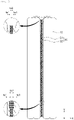
- FIG. 3 is a front view illustrating an embodiment in which the thickness is adjusted in the central portion of the fireproof portion 31 in the battery module of the present disclosure.
- the fireproof portion 31 of the battery module according to an embodiment of the present disclosure may be formed to have a thickness less than that of the heat transfer prevention portion 32 in the central portion of the region in contact with the secondary battery cell 10.
- the multilayer member 30 may be formed such that a thickness tc2 of the heat transfer prevention portion 32 is thicker than a thickness tc1 of the fireproof portion 31 in the central portion of the region in contact with the secondary battery cell 10.
- a thickness te1 of the fireproof portion 31 and a thickness te2 of the heat transfer prevention portion 32 may be the same, or the thickness te1 of the fireproof portion 31 may be thicker than the thickness te2 of the heat transfer prevention portion 32.
- the heat transfer prevention portion 32 may be formed in a greater proportion in the area facing the central portion in which a relatively large amount of heat is generated in the secondary battery cell 10.
- heat transfer may be prevented at a relatively higher rate in the central portion in which relatively a lot of heat is generated.
- heat transfer may be prevented more effectively by increasing the effect of preventing heat transfer in a portion in which a relatively large amount of heat is generated and reducing the effect in preventing heat transfer in a portion in which relatively little heat is generated.
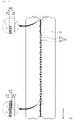
- FIG. 4 is a front view illustrating an embodiment in which the thickness of the fireproof portion 31 is adjusted on the outer side portion in the battery module of the present disclosure.
- the fireproof portion 31 of the battery module according to an embodiment of the present disclosure may be formed to have a thickness greater than that of the heat transfer prevention portion 32 on the outer side portion of the region in contact with the secondary battery cell 10.
- the multilayer member 30 may be formed such that the thickness te1 of the fireproof portion 31 is thicker than the thickness te2 of the heat transfer prevention portion 32 in the outer side portion of the region in contact with the secondary battery cell 10.
- the thickness tc1 of the fireproof portion 31 and the thickness tc2 of the heat transfer prevention portion 32 may be the same, or the thickness tc2 of the heat transfer prevention portion 32 may be thicker than the thickness tc1 of the fireproof portion 31.
- the region in which a flame is generated by the explosion of the secondary battery cell 10 is mainly the outer side portion of the secondary battery cell 10, and the fireproof portion 31 may be formed in a larger proportion in the region facing the outer side portion of the secondary battery cell 10 having a high flame generation rate as described above.
- the durability may be ensured relatively more firmly in the outer side portion in which a relatively large number of flames are generated in the secondary battery cell 10.
- the durability is increased in the portion in which the problem of burning the material due to relatively large number of flames occurs, and the durability is formed relatively low in the portion where the flame is relatively small, thereby securing the durability more effectively.
- FIG. 5 is a front view illustrating an embodiment in which the thickness of the fireproof portion 31 in the battery module of the present disclosure is adjusted to be gradually changed from the central portion toward the outer side portion.
- the fireproof portion 31 of the battery module according to an embodiment of the present disclosure may be formed to have a thickness gradually thinner than the heat transfer prevention portion 32, from the outer side part of the region in contact with the secondary battery cell 10 toward the central portion.
- the multilayer member 30 may be formed, such that the thickness tc2 of the heat transfer prevention portion 32 is thicker than the thickness tc1 of the fireproof portion 31 in the central portion of the region in contact with the secondary battery cell 10, and the thickness te1 of the fireproof portion 31 is thicker than the thickness te2 of the heat transfer prevention portion 32 in the outer side portion of the region in contact with the secondary battery cell 10.
- the heat transfer prevention effect may be formed to gradually increase toward the central portion of the secondary battery cell 10, in which a relatively large amount of heat generates.
- the problem of loss by the flame may be prevented by gradually forming more rigidly toward the outer side portion of the secondary battery cell 10, in which the occurrence of a flame is relatively large.
- FIG. 6 is a front view illustrating an embodiment in which the heat transfer prevention portion 32 forms an outer layer and the fireproof portion 31 forms an inner layer in the battery module of the present disclosure.
- the multilayer member 30 of the battery module according to an embodiment of the present disclosure may include the heat transfer prevention portion 32 forming an outer layer adjacent to the secondary battery cell 10, and the fireproof portion 31 of which both side surface is in contact with the heat transfer prevention portion 32 and which forms an inner layer, and the heat transfer prevention portion 32 may be formed of a material having a lower thermal conductivity than the fireproof portion 31.
- the multilayer member 30 may include the fireproof portion 31 and the heat transfer prevention portion 32 having a lower thermal conductivity than the fireproof portion 31, such that at least a portion thereof is formed to have a lower thermal conductivity than other parts and the heat generated in any one of the secondary battery cells 10 may thus be prevented from being transferred.
- the fireproof portion 31 may be formed in a central portion in the thickness direction (X), and the heat transfer prevention portion 32 may be formed in an outer side portion in the thickness direction (X).
- the embodiment described above with reference to FIG. 2 has a structure in which the fireproof portion 31 forms an outer layer and the heat transfer prevention portion 32 forms an inner layer
- the embodiment described with reference to FIG. 6 provides a structure in which the fireproof portion 31 forms an inner layer and the heat transfer prevention portion 32 forms an outer layer.
- limitations such as material, thickness, and the like of the fireproof portion 31 and the heat transfer prevention portion 32 described with reference to FIG. 2 may be all applied to the embodiment described with reference to FIG. 6 .
- FIG. 7 is a front view illustrating an embodiment in which the heat transfer prevention portion 32 forms an outer layer and the core buffer portion 33 forms an inner layer in the battery module of the present disclosure.
- the multilayer member 30 of the battery module according to an embodiment of the present disclosure includes the heat transfer prevention portion 32 forming an outer layer adjacent to the secondary battery cell 10, and the core buffer portion 33 of which both side surfaces contact the heat transfer prevention portion 32 to form an inner layer and which is elastically deformed and compressed when the secondary battery cell 10 expands, and the heat transfer prevention portion 32 may be formed of a material having a lower thermal conductivity than the core buffer portion 33.
- the core buffer portion 33 may be formed in the central portion in the thickness direction (X), and the heat transfer prevention portion 32 may be formed in the outer side portion in the thickness direction (X).
- the multilayer member 30 may include the core buffer portion 33 and the thermal transfer prevention portion 32 having a lower thermal conductivity than the core buffer portion 33, such that at least a portion is formed to have a lower thermal conductivity than other parts and thus the heat generated in any one of the secondary battery cells 10 may be prevented from being transferred.
- the core buffer portion 33 may be provided in the form of a pad or a sheet.
- the core buffer portion 33 may be formed using a foam-type material such as polyurethane foam (PU foam) or the like, but is not limited thereto.
- FIG. 8 is a front view illustrating an embodiment in which the heat transfer prevention portion 32 forming the outer layer in the battery module of the present disclosure is fixed to the secondary battery cell 10 with an adhesive or an adhesive tape T. That is, referring to the drawing, the heat transfer prevention portion 32 of the battery module according to an embodiment of the present disclosure may be fixed to the secondary battery cell 10 with an adhesive or the adhesive tape T. Accordingly, the multilayer member 30 including the heat transfer prevention portion 32 may be stably disposed between the secondary battery cells 10.
- the multilayer member 30 including the heat transfer prevention portion 32 when disposed between the secondary battery cells 10, it may be provided so as not to be fixed without an adhesive or an adhesive tape T.
Landscapes
- Chemical & Material Sciences (AREA)
- Chemical Kinetics & Catalysis (AREA)
- Electrochemistry (AREA)
- General Chemical & Material Sciences (AREA)
- Engineering & Computer Science (AREA)
- Manufacturing & Machinery (AREA)
- Battery Mounting, Suspending (AREA)
Applications Claiming Priority (3)
| Application Number | Priority Date | Filing Date | Title |
|---|---|---|---|
| KR20200012010 | 2020-01-31 | ||
| KR1020210006104A KR102754016B1 (ko) | 2020-01-31 | 2021-01-15 | 배터리 모듈 |
| PCT/KR2021/000751 WO2021153938A1 (ko) | 2020-01-31 | 2021-01-19 | 배터리 모듈 |
Publications (2)
| Publication Number | Publication Date |
|---|---|
| EP4099480A1 true EP4099480A1 (de) | 2022-12-07 |
| EP4099480A4 EP4099480A4 (de) | 2024-08-07 |
Family
ID=77079537
Family Applications (1)
| Application Number | Title | Priority Date | Filing Date |
|---|---|---|---|
| EP21747424.6A Pending EP4099480A4 (de) | 2020-01-31 | 2021-01-19 | Batteriemodul |
Country Status (5)
| Country | Link |
|---|---|
| US (1) | US20220367934A1 (de) |
| EP (1) | EP4099480A4 (de) |
| KR (1) | KR20250010730A (de) |
| CN (1) | CN115004455B (de) |
| WO (1) | WO2021153938A1 (de) |
Cited By (1)
| Publication number | Priority date | Publication date | Assignee | Title |
|---|---|---|---|---|
| EP4411960A4 (de) * | 2022-12-23 | 2025-05-21 | Lg Energy Solution, Ltd. | Batteriemodul und batteriepack sowie fahrzeug damit |
Families Citing this family (5)
| Publication number | Priority date | Publication date | Assignee | Title |
|---|---|---|---|---|
| JP7758853B2 (ja) * | 2022-03-31 | 2025-10-22 | エルジー エナジー ソリューション リミテッド | 安全性を高めたバッテリーモジュール |
| CN117013211A (zh) * | 2022-04-29 | 2023-11-07 | 比亚迪股份有限公司 | 电池模组、电池模组的针刺保护方法及车辆 |
| WO2024144085A1 (ko) * | 2022-12-26 | 2024-07-04 | 주식회사 엘지에너지솔루션 | 셀 모듈 어셈블리 및 이를 포함하는 전지 팩 |
| CN118659062B (zh) * | 2024-08-07 | 2024-12-10 | 比亚迪股份有限公司 | 保护结构、电池包和用电设备 |
| CN118610650B (zh) * | 2024-08-08 | 2024-12-10 | 比亚迪股份有限公司 | 一种阻热保护结构、电池模组以及用电设备 |
Family Cites Families (13)
| Publication number | Priority date | Publication date | Assignee | Title |
|---|---|---|---|---|
| CN100446338C (zh) * | 2006-04-11 | 2008-12-24 | 首天恩经营管理有限责任公司 | 一种安全锂离子电池单元及安全锂离子电池组 |
| CN102055003A (zh) * | 2009-10-30 | 2011-05-11 | 财团法人工业技术研究院 | 具有导热胶的电池组 |
| JP2013004255A (ja) * | 2011-06-15 | 2013-01-07 | Nissan Motor Co Ltd | 電池及び組電池 |
| JP6394083B2 (ja) * | 2013-08-08 | 2018-09-26 | Nok株式会社 | 全固体電池 |
| US20170288186A1 (en) * | 2014-08-22 | 2017-10-05 | Corvus Energy Ltd. | Thermal runaway containment apparatus for a battery |
| WO2017104877A1 (ko) | 2015-12-18 | 2017-06-22 | 주식회사 엘지화학 | 배터리 모듈 |
| EP3269540A1 (de) * | 2016-07-15 | 2018-01-17 | Von Roll Schweiz AG | Komprimierbares und flexibles verbundstoffmaterial zur verwendung insbesondere als ein baumaterial für batterien |
| JP6885791B2 (ja) * | 2017-06-05 | 2021-06-16 | 積水化学工業株式会社 | 熱暴走防止シート |
| DE102017008102A1 (de) * | 2017-08-29 | 2019-02-28 | Carl Freudenberg Kg | Energiespeichersystem |
| JP7009892B2 (ja) * | 2017-09-29 | 2022-02-10 | 株式会社Gsユアサ | 蓄電モジュール及び蓄電パック |
| KR102424274B1 (ko) * | 2017-10-23 | 2022-07-22 | 에스케이온 주식회사 | 열차단 기능을 구비한 전지 모듈 |
| US11476532B2 (en) * | 2018-02-27 | 2022-10-18 | Panasonic Intellectual Property Management Co., Ltd. | Battery module |
| CN113782861A (zh) * | 2021-07-27 | 2021-12-10 | 华为技术有限公司 | 电池保护结构、电池包及电动汽车 |
-
2021
- 2021-01-19 WO PCT/KR2021/000751 patent/WO2021153938A1/ko not_active Ceased
- 2021-01-19 EP EP21747424.6A patent/EP4099480A4/de active Pending
- 2021-01-19 CN CN202180011648.7A patent/CN115004455B/zh active Active
-
2022
- 2022-07-29 US US17/877,745 patent/US20220367934A1/en active Pending
-
2025
- 2025-01-06 KR KR1020250001670A patent/KR20250010730A/ko active Pending
Cited By (1)
| Publication number | Priority date | Publication date | Assignee | Title |
|---|---|---|---|---|
| EP4411960A4 (de) * | 2022-12-23 | 2025-05-21 | Lg Energy Solution, Ltd. | Batteriemodul und batteriepack sowie fahrzeug damit |
Also Published As
| Publication number | Publication date |
|---|---|
| KR20250010730A (ko) | 2025-01-21 |
| CN115004455A (zh) | 2022-09-02 |
| WO2021153938A1 (ko) | 2021-08-05 |
| CN115004455B (zh) | 2025-09-02 |
| EP4099480A4 (de) | 2024-08-07 |
| US20220367934A1 (en) | 2022-11-17 |
Similar Documents
| Publication | Publication Date | Title |
|---|---|---|
| EP4099480A1 (de) | Batteriemodul | |
| KR102754016B1 (ko) | 배터리 모듈 | |
| US11936022B2 (en) | Battery module | |
| KR102814054B1 (ko) | 배터리 모듈 | |
| KR102866050B1 (ko) | 배터리 모듈 | |
| US20220263155A1 (en) | Battery module and manufacturing method thereof | |
| KR20220029941A (ko) | 열 차단막이 내장된 고전압 배터리 모듈 및 팩 | |
| US11799148B2 (en) | Battery module | |
| KR102851449B1 (ko) | 전지 모듈 및 이를 포함하는 전지 팩 | |
| TW201919277A (zh) | 電池模組與具有其之電池包裝體 | |
| EP4513633A1 (de) | Batteriemodul mit wärmeableitungs- und isolationsfunktion sowie batteriepack damit | |
| JP7450894B2 (ja) | 電池モジュールおよびこれを含む電池パック | |
| CN119054137A (zh) | 电池模块 | |
| KR20230172858A (ko) | 배터리 모듈 | |
| KR102851448B1 (ko) | 전지 모듈 및 이를 포함하는 전지 팩 | |
| EP4401205B1 (de) | Batteriepack mit verbesserter sicherheit | |
| KR102872030B1 (ko) | 안전성이 향상된 배터리 팩 | |
| EP4579885A1 (de) | Batteriemodul und batteriepack mit wärmeleitfähigem polymer | |
| CN118556322A (zh) | 电池模块 | |
| KR20250165015A (ko) | 전지 모듈 및 이를 포함하는 전지팩 | |
| KR20240142866A (ko) | 배터리 팩 | |
| CN120937176A (zh) | 电池组 | |
| KR20250067212A (ko) | 열 전파 차단 조립체 및 열 전파 차단 조립체를 포함하는 배터리 모듈 | |
| KR20240082992A (ko) | 배터리 모듈 | |
| KR20240166152A (ko) | 버스바 조립체 및 이를 포함하는 전지 팩 |
Legal Events
| Date | Code | Title | Description |
|---|---|---|---|
| STAA | Information on the status of an ep patent application or granted ep patent |
Free format text: STATUS: THE INTERNATIONAL PUBLICATION HAS BEEN MADE |
|
| PUAI | Public reference made under article 153(3) epc to a published international application that has entered the european phase |
Free format text: ORIGINAL CODE: 0009012 |
|
| STAA | Information on the status of an ep patent application or granted ep patent |
Free format text: STATUS: REQUEST FOR EXAMINATION WAS MADE |
|
| 17P | Request for examination filed |
Effective date: 20220826 |
|
| AK | Designated contracting states |
Kind code of ref document: A1 Designated state(s): AL AT BE BG CH CY CZ DE DK EE ES FI FR GB GR HR HU IE IS IT LI LT LU LV MC MK MT NL NO PL PT RO RS SE SI SK SM TR |
|
| DAV | Request for validation of the european patent (deleted) | ||
| DAX | Request for extension of the european patent (deleted) | ||
| P01 | Opt-out of the competence of the unified patent court (upc) registered |
Effective date: 20230602 |
|
| A4 | Supplementary search report drawn up and despatched |
Effective date: 20240705 |
|
| RIC1 | Information provided on ipc code assigned before grant |
Ipc: A62C 3/16 20060101ALI20240701BHEP Ipc: H01M 50/293 20210101ALI20240701BHEP Ipc: H01M 50/211 20210101ALI20240701BHEP Ipc: H01M 10/658 20140101AFI20240701BHEP |