EP4096949B1 - Procede de gestion d'une phase de deceleration d'un vehicule automobile de type hybride - Google Patents
Procede de gestion d'une phase de deceleration d'un vehicule automobile de type hybride Download PDFInfo
- Publication number
- EP4096949B1 EP4096949B1 EP20841986.1A EP20841986A EP4096949B1 EP 4096949 B1 EP4096949 B1 EP 4096949B1 EP 20841986 A EP20841986 A EP 20841986A EP 4096949 B1 EP4096949 B1 EP 4096949B1
- Authority
- EP
- European Patent Office
- Prior art keywords
- torque
- heat engine
- motor
- engine
- mechanical losses
- Prior art date
- Legal status (The legal status is an assumption and is not a legal conclusion. Google has not performed a legal analysis and makes no representation as to the accuracy of the status listed.)
- Active
Links
Images

Classifications
-
- B—PERFORMING OPERATIONS; TRANSPORTING
- B60—VEHICLES IN GENERAL
- B60K—ARRANGEMENT OR MOUNTING OF PROPULSION UNITS OR OF TRANSMISSIONS IN VEHICLES; ARRANGEMENT OR MOUNTING OF PLURAL DIVERSE PRIME-MOVERS IN VEHICLES; AUXILIARY DRIVES FOR VEHICLES; INSTRUMENTATION OR DASHBOARDS FOR VEHICLES; ARRANGEMENTS IN CONNECTION WITH COOLING, AIR INTAKE, GAS EXHAUST OR FUEL SUPPLY OF PROPULSION UNITS IN VEHICLES
- B60K6/00—Arrangement or mounting of plural diverse prime-movers for mutual or common propulsion, e.g. hybrid propulsion systems comprising electric motors and internal combustion engines
- B60K6/20—Arrangement or mounting of plural diverse prime-movers for mutual or common propulsion, e.g. hybrid propulsion systems comprising electric motors and internal combustion engines the prime-movers consisting of electric motors and internal combustion engines, e.g. HEVs
- B60K6/42—Arrangement or mounting of plural diverse prime-movers for mutual or common propulsion, e.g. hybrid propulsion systems comprising electric motors and internal combustion engines the prime-movers consisting of electric motors and internal combustion engines, e.g. HEVs characterised by the architecture of the hybrid electric vehicle
- B60K6/48—Parallel type
-
- B—PERFORMING OPERATIONS; TRANSPORTING
- B60—VEHICLES IN GENERAL
- B60K—ARRANGEMENT OR MOUNTING OF PROPULSION UNITS OR OF TRANSMISSIONS IN VEHICLES; ARRANGEMENT OR MOUNTING OF PLURAL DIVERSE PRIME-MOVERS IN VEHICLES; AUXILIARY DRIVES FOR VEHICLES; INSTRUMENTATION OR DASHBOARDS FOR VEHICLES; ARRANGEMENTS IN CONNECTION WITH COOLING, AIR INTAKE, GAS EXHAUST OR FUEL SUPPLY OF PROPULSION UNITS IN VEHICLES
- B60K6/00—Arrangement or mounting of plural diverse prime-movers for mutual or common propulsion, e.g. hybrid propulsion systems comprising electric motors and internal combustion engines
- B60K6/20—Arrangement or mounting of plural diverse prime-movers for mutual or common propulsion, e.g. hybrid propulsion systems comprising electric motors and internal combustion engines the prime-movers consisting of electric motors and internal combustion engines, e.g. HEVs
- B60K6/50—Architecture of the driveline characterised by arrangement or kind of transmission units
- B60K6/52—Driving a plurality of drive axles, e.g. four-wheel drive
-
- B—PERFORMING OPERATIONS; TRANSPORTING
- B60—VEHICLES IN GENERAL
- B60W—CONJOINT CONTROL OF VEHICLE SUB-UNITS OF DIFFERENT TYPE OR DIFFERENT FUNCTION; CONTROL SYSTEMS SPECIALLY ADAPTED FOR HYBRID VEHICLES; ROAD VEHICLE DRIVE CONTROL SYSTEMS FOR PURPOSES NOT RELATED TO THE CONTROL OF A PARTICULAR SUB-UNIT
- B60W10/00—Conjoint control of vehicle sub-units of different type or different function
- B60W10/02—Conjoint control of vehicle sub-units of different type or different function including control of driveline clutches
-
- B—PERFORMING OPERATIONS; TRANSPORTING
- B60—VEHICLES IN GENERAL
- B60W—CONJOINT CONTROL OF VEHICLE SUB-UNITS OF DIFFERENT TYPE OR DIFFERENT FUNCTION; CONTROL SYSTEMS SPECIALLY ADAPTED FOR HYBRID VEHICLES; ROAD VEHICLE DRIVE CONTROL SYSTEMS FOR PURPOSES NOT RELATED TO THE CONTROL OF A PARTICULAR SUB-UNIT
- B60W10/00—Conjoint control of vehicle sub-units of different type or different function
- B60W10/04—Conjoint control of vehicle sub-units of different type or different function including control of propulsion units
- B60W10/06—Conjoint control of vehicle sub-units of different type or different function including control of propulsion units including control of combustion engines
-
- B—PERFORMING OPERATIONS; TRANSPORTING
- B60—VEHICLES IN GENERAL
- B60W—CONJOINT CONTROL OF VEHICLE SUB-UNITS OF DIFFERENT TYPE OR DIFFERENT FUNCTION; CONTROL SYSTEMS SPECIALLY ADAPTED FOR HYBRID VEHICLES; ROAD VEHICLE DRIVE CONTROL SYSTEMS FOR PURPOSES NOT RELATED TO THE CONTROL OF A PARTICULAR SUB-UNIT
- B60W10/00—Conjoint control of vehicle sub-units of different type or different function
- B60W10/04—Conjoint control of vehicle sub-units of different type or different function including control of propulsion units
- B60W10/08—Conjoint control of vehicle sub-units of different type or different function including control of propulsion units including control of electric propulsion units, e.g. motors or generators
-
- B—PERFORMING OPERATIONS; TRANSPORTING
- B60—VEHICLES IN GENERAL
- B60W—CONJOINT CONTROL OF VEHICLE SUB-UNITS OF DIFFERENT TYPE OR DIFFERENT FUNCTION; CONTROL SYSTEMS SPECIALLY ADAPTED FOR HYBRID VEHICLES; ROAD VEHICLE DRIVE CONTROL SYSTEMS FOR PURPOSES NOT RELATED TO THE CONTROL OF A PARTICULAR SUB-UNIT
- B60W10/00—Conjoint control of vehicle sub-units of different type or different function
- B60W10/24—Conjoint control of vehicle sub-units of different type or different function including control of energy storage means
- B60W10/26—Conjoint control of vehicle sub-units of different type or different function including control of energy storage means for electrical energy, e.g. batteries or capacitors
-
- B—PERFORMING OPERATIONS; TRANSPORTING
- B60—VEHICLES IN GENERAL
- B60W—CONJOINT CONTROL OF VEHICLE SUB-UNITS OF DIFFERENT TYPE OR DIFFERENT FUNCTION; CONTROL SYSTEMS SPECIALLY ADAPTED FOR HYBRID VEHICLES; ROAD VEHICLE DRIVE CONTROL SYSTEMS FOR PURPOSES NOT RELATED TO THE CONTROL OF A PARTICULAR SUB-UNIT
- B60W20/00—Control systems specially adapted for hybrid vehicles
- B60W20/10—Controlling the power contribution of each of the prime movers to meet required power demand
- B60W20/13—Controlling the power contribution of each of the prime movers to meet required power demand in order to stay within battery power input or output limits; in order to prevent overcharging or battery depletion
- B60W20/14—Controlling the power contribution of each of the prime movers to meet required power demand in order to stay within battery power input or output limits; in order to prevent overcharging or battery depletion in conjunction with braking regeneration
-
- B—PERFORMING OPERATIONS; TRANSPORTING
- B60—VEHICLES IN GENERAL
- B60W—CONJOINT CONTROL OF VEHICLE SUB-UNITS OF DIFFERENT TYPE OR DIFFERENT FUNCTION; CONTROL SYSTEMS SPECIALLY ADAPTED FOR HYBRID VEHICLES; ROAD VEHICLE DRIVE CONTROL SYSTEMS FOR PURPOSES NOT RELATED TO THE CONTROL OF A PARTICULAR SUB-UNIT
- B60W30/00—Purposes of road vehicle drive control systems not related to the control of a particular sub-unit, e.g. of systems using conjoint control of vehicle sub-units
- B60W30/18—Propelling the vehicle
- B60W30/18009—Propelling the vehicle related to particular drive situations
- B60W30/18072—Coasting
-
- B—PERFORMING OPERATIONS; TRANSPORTING
- B60—VEHICLES IN GENERAL
- B60W—CONJOINT CONTROL OF VEHICLE SUB-UNITS OF DIFFERENT TYPE OR DIFFERENT FUNCTION; CONTROL SYSTEMS SPECIALLY ADAPTED FOR HYBRID VEHICLES; ROAD VEHICLE DRIVE CONTROL SYSTEMS FOR PURPOSES NOT RELATED TO THE CONTROL OF A PARTICULAR SUB-UNIT
- B60W30/00—Purposes of road vehicle drive control systems not related to the control of a particular sub-unit, e.g. of systems using conjoint control of vehicle sub-units
- B60W30/18—Propelling the vehicle
- B60W30/18009—Propelling the vehicle related to particular drive situations
- B60W30/18109—Braking
- B60W30/18127—Regenerative braking
-
- B—PERFORMING OPERATIONS; TRANSPORTING
- B60—VEHICLES IN GENERAL
- B60W—CONJOINT CONTROL OF VEHICLE SUB-UNITS OF DIFFERENT TYPE OR DIFFERENT FUNCTION; CONTROL SYSTEMS SPECIALLY ADAPTED FOR HYBRID VEHICLES; ROAD VEHICLE DRIVE CONTROL SYSTEMS FOR PURPOSES NOT RELATED TO THE CONTROL OF A PARTICULAR SUB-UNIT
- B60W30/00—Purposes of road vehicle drive control systems not related to the control of a particular sub-unit, e.g. of systems using conjoint control of vehicle sub-units
- B60W30/18—Propelling the vehicle
- B60W30/18009—Propelling the vehicle related to particular drive situations
- B60W30/18109—Braking
- B60W30/18136—Engine braking
-
- B—PERFORMING OPERATIONS; TRANSPORTING
- B60—VEHICLES IN GENERAL
- B60W—CONJOINT CONTROL OF VEHICLE SUB-UNITS OF DIFFERENT TYPE OR DIFFERENT FUNCTION; CONTROL SYSTEMS SPECIALLY ADAPTED FOR HYBRID VEHICLES; ROAD VEHICLE DRIVE CONTROL SYSTEMS FOR PURPOSES NOT RELATED TO THE CONTROL OF A PARTICULAR SUB-UNIT
- B60W30/00—Purposes of road vehicle drive control systems not related to the control of a particular sub-unit, e.g. of systems using conjoint control of vehicle sub-units
- B60W30/18—Propelling the vehicle
- B60W30/18009—Propelling the vehicle related to particular drive situations
- B60W30/18072—Coasting
- B60W2030/18081—With torque flow from driveshaft to engine, i.e. engine being driven by vehicle
-
- B—PERFORMING OPERATIONS; TRANSPORTING
- B60—VEHICLES IN GENERAL
- B60W—CONJOINT CONTROL OF VEHICLE SUB-UNITS OF DIFFERENT TYPE OR DIFFERENT FUNCTION; CONTROL SYSTEMS SPECIALLY ADAPTED FOR HYBRID VEHICLES; ROAD VEHICLE DRIVE CONTROL SYSTEMS FOR PURPOSES NOT RELATED TO THE CONTROL OF A PARTICULAR SUB-UNIT
- B60W30/00—Purposes of road vehicle drive control systems not related to the control of a particular sub-unit, e.g. of systems using conjoint control of vehicle sub-units
- B60W30/18—Propelling the vehicle
- B60W30/18009—Propelling the vehicle related to particular drive situations
- B60W30/18072—Coasting
- B60W2030/1809—Without torque flow between driveshaft and engine, e.g. with clutch disengaged or transmission in neutral
-
- B—PERFORMING OPERATIONS; TRANSPORTING
- B60—VEHICLES IN GENERAL
- B60W—CONJOINT CONTROL OF VEHICLE SUB-UNITS OF DIFFERENT TYPE OR DIFFERENT FUNCTION; CONTROL SYSTEMS SPECIALLY ADAPTED FOR HYBRID VEHICLES; ROAD VEHICLE DRIVE CONTROL SYSTEMS FOR PURPOSES NOT RELATED TO THE CONTROL OF A PARTICULAR SUB-UNIT
- B60W50/00—Details of control systems for road vehicle drive control not related to the control of a particular sub-unit, e.g. process diagnostic or vehicle driver interfaces
- B60W2050/0001—Details of the control system
- B60W2050/0019—Control system elements or transfer functions
- B60W2050/0026—Lookup tables or parameter maps
-
- B—PERFORMING OPERATIONS; TRANSPORTING
- B60—VEHICLES IN GENERAL
- B60W—CONJOINT CONTROL OF VEHICLE SUB-UNITS OF DIFFERENT TYPE OR DIFFERENT FUNCTION; CONTROL SYSTEMS SPECIALLY ADAPTED FOR HYBRID VEHICLES; ROAD VEHICLE DRIVE CONTROL SYSTEMS FOR PURPOSES NOT RELATED TO THE CONTROL OF A PARTICULAR SUB-UNIT
- B60W2510/00—Input parameters relating to a particular sub-units
- B60W2510/06—Combustion engines, Gas turbines
- B60W2510/0638—Engine speed
-
- B—PERFORMING OPERATIONS; TRANSPORTING
- B60—VEHICLES IN GENERAL
- B60W—CONJOINT CONTROL OF VEHICLE SUB-UNITS OF DIFFERENT TYPE OR DIFFERENT FUNCTION; CONTROL SYSTEMS SPECIALLY ADAPTED FOR HYBRID VEHICLES; ROAD VEHICLE DRIVE CONTROL SYSTEMS FOR PURPOSES NOT RELATED TO THE CONTROL OF A PARTICULAR SUB-UNIT
- B60W2510/00—Input parameters relating to a particular sub-units
- B60W2510/24—Energy storage means
- B60W2510/242—Energy storage means for electrical energy
- B60W2510/244—Charge state
-
- B—PERFORMING OPERATIONS; TRANSPORTING
- B60—VEHICLES IN GENERAL
- B60W—CONJOINT CONTROL OF VEHICLE SUB-UNITS OF DIFFERENT TYPE OR DIFFERENT FUNCTION; CONTROL SYSTEMS SPECIALLY ADAPTED FOR HYBRID VEHICLES; ROAD VEHICLE DRIVE CONTROL SYSTEMS FOR PURPOSES NOT RELATED TO THE CONTROL OF A PARTICULAR SUB-UNIT
- B60W2540/00—Input parameters relating to occupants
- B60W2540/10—Accelerator pedal position
-
- B—PERFORMING OPERATIONS; TRANSPORTING
- B60—VEHICLES IN GENERAL
- B60W—CONJOINT CONTROL OF VEHICLE SUB-UNITS OF DIFFERENT TYPE OR DIFFERENT FUNCTION; CONTROL SYSTEMS SPECIALLY ADAPTED FOR HYBRID VEHICLES; ROAD VEHICLE DRIVE CONTROL SYSTEMS FOR PURPOSES NOT RELATED TO THE CONTROL OF A PARTICULAR SUB-UNIT
- B60W2710/00—Output or target parameters relating to a particular sub-units
- B60W2710/02—Clutches
- B60W2710/027—Clutch torque
-
- B—PERFORMING OPERATIONS; TRANSPORTING
- B60—VEHICLES IN GENERAL
- B60W—CONJOINT CONTROL OF VEHICLE SUB-UNITS OF DIFFERENT TYPE OR DIFFERENT FUNCTION; CONTROL SYSTEMS SPECIALLY ADAPTED FOR HYBRID VEHICLES; ROAD VEHICLE DRIVE CONTROL SYSTEMS FOR PURPOSES NOT RELATED TO THE CONTROL OF A PARTICULAR SUB-UNIT
- B60W2710/00—Output or target parameters relating to a particular sub-units
- B60W2710/08—Electric propulsion units
- B60W2710/083—Torque
-
- Y—GENERAL TAGGING OF NEW TECHNOLOGICAL DEVELOPMENTS; GENERAL TAGGING OF CROSS-SECTIONAL TECHNOLOGIES SPANNING OVER SEVERAL SECTIONS OF THE IPC; TECHNICAL SUBJECTS COVERED BY FORMER USPC CROSS-REFERENCE ART COLLECTIONS [XRACs] AND DIGESTS
- Y02—TECHNOLOGIES OR APPLICATIONS FOR MITIGATION OR ADAPTATION AGAINST CLIMATE CHANGE
- Y02T—CLIMATE CHANGE MITIGATION TECHNOLOGIES RELATED TO TRANSPORTATION
- Y02T10/00—Road transport of goods or passengers
- Y02T10/10—Internal combustion engine [ICE] based vehicles
- Y02T10/40—Engine management systems
-
- Y—GENERAL TAGGING OF NEW TECHNOLOGICAL DEVELOPMENTS; GENERAL TAGGING OF CROSS-SECTIONAL TECHNOLOGIES SPANNING OVER SEVERAL SECTIONS OF THE IPC; TECHNICAL SUBJECTS COVERED BY FORMER USPC CROSS-REFERENCE ART COLLECTIONS [XRACs] AND DIGESTS
- Y02—TECHNOLOGIES OR APPLICATIONS FOR MITIGATION OR ADAPTATION AGAINST CLIMATE CHANGE
- Y02T—CLIMATE CHANGE MITIGATION TECHNOLOGIES RELATED TO TRANSPORTATION
- Y02T10/00—Road transport of goods or passengers
- Y02T10/60—Other road transportation technologies with climate change mitigation effect
- Y02T10/62—Hybrid vehicles
Definitions
- the present invention relates to a method for managing a deceleration phase of a hybrid type motor vehicle.
- hybrid type motor vehicle we mean a motor vehicle having a thermal power source and an electric power source to ensure its traction.
- Motor vehicle traction chains comprising a heat engine and an electric traction motor mounted on a set of wheels of the motor vehicle.
- the electric traction motor is connected to an input shaft of a gearbox.
- An output shaft of the gearbox is connected to the wheels through a differential.
- the gearbox is for example an automatic gearbox, in particular a gearbox with planetary gear trains.
- a clutch called a motor interconnection clutch, is interposed between the heat engine and the electric traction motor.
- the engine interconnection clutch makes it possible to isolate the electric traction motor from the thermal engine when the electric motor provides traction for the vehicle in an electric driving mode.
- the engine interconnect clutch is closed in a thermal running mode.
- a vehicle computer controls, from time t1, the application of a resistive torque Cr_mel corresponding to a torque negative of the electric motor which then operates in generator mode to recharge the battery.
- the braking torque respecting the desired braking torque then corresponds to the resisting torque Cr_mel.
- the computer controls the starting of the thermal engine as well as its coupling to the gearbox by at least partial closing of the interconnection clutch motor (the signal S_mth relating to the control of the heat engine goes to 1).
- the computer controls the engine interconnection clutch so that the heat engine provides a negative torque making it possible to obtain the desired braking torque.
- the electric motor no longer participates in braking the motor vehicle and the computer controls the application of a resistive torque by the thermal engine Cr_mth to respect the desired braking torque Cfs.
- the thermal engine is uncoupled from the gearbox then stopped (the signal S_mth returns to 0), so that the vehicle can return to an electric operating mode.
- the invention thus makes it possible, taking into account the mechanical losses of the heat engine, to delay the application of the second resistive torque by the heat engine. By delaying the application of negative torque by the thermal engine, the invention therefore limits the fuel consumption of the vehicle as well as carbon dioxide emissions.
- the method comprises a step of controlling the engine interconnection clutch so that the heat engine provides a negative torque making it possible to obtain the desired braking torque.
- the pair of mechanical losses of the heat engine takes into account mechanical losses by friction, mechanical losses by pumping, and mechanical losses linked to a drive of auxiliary organs, such as an air conditioner. or an alternator.
- the pair of mechanical losses of the heat engine depends on a target speed of the heat engine.
- the pair of mechanical losses is determined using a map receiving as input a target speed of the heat engine and providing as output the associated pair of mechanical losses.
- the deceleration phase is implemented when an accelerator pedal is released.
- the invention also relates to a computer comprising a memory storing software instructions for implementing the method for managing a deceleration phase of a motor vehicle as previously defined.
- the invention further relates to a motor vehicle comprising a computer as defined above.
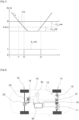
- FIG. 2 shows a traction chain 10 for a motor vehicle 10' comprising a thermal engine 11 and an electric traction motor 12 mounted on a set of wheels 13 of the motor vehicle 10', in particular a set of front wheels.
- the heat engine 11 is for example a heat engine with four cylinders.
- the thermal engine 11 may of course include a different number of cylinders, in particular three cylinders or more than four cylinders.
- the electric traction motor 12 is connected to an input shaft of the gearbox 15.
- An output shaft of the gearbox 15 is connected to the wheels via a differential (not shown).
- the gearbox 15 is for example an automatic gearbox, in particular a gearbox with planetary gear trains.
- a clutch 16 called a motor interconnection clutch, is interposed between the thermal engine 11 and the electric traction motor 12.
- the motor interconnection clutch 16 is a controlled clutch, that is to say that the closing and the opening, as well as intermediate sliding positions can be controlled automatically by a computer 26 without any particular action on the part of the driver.
- the calculator 26 is described in more detail below.
- the motor interconnection clutch 16 makes it possible to isolate the electric traction motor 12 from the thermal engine 11 when the electric motor 12 provides traction for the vehicle in an electric driving mode.
- the engine interconnect clutch 16 is closed in a thermal running mode.
- a second electric traction motor 18 is mounted on the rear wheel set 19 of the motor vehicle 10' via a reduction gear 22 and a coupling and decoupling device 23 of the electric traction motor 18 with the train rear 19.
- the reduction gear 22 makes it possible to make the very high rotational speed of the electric traction motor 12 compatible with that of the vehicle wheels which is lower.
- the coupling and decoupling device 23 can take an open state in which the electric traction motor 18 is uncoupled relative to the rear wheel set 19 and a closed state in which the electric motor of traction 18 is coupled with the rear wheel set 19.
- the coupling and decoupling device 23 is preferably a dog device.
- the coupling and decoupling device 23 takes the form of a clutch.
- a battery 24 is electrically connected to the electric traction motor 12 and to the electric traction motor 18.
- the battery 24 is here common to the two electric traction motors 12, 18.
- the first electric traction motor 12 and the second electric traction motor 18 may have a high operating voltage, in particular a voltage greater than 48 Volts.
- An electric traction motor 12, 18 is capable of transforming electrical energy from the battery 24 into mechanical energy to ensure traction of the vehicle.
- An electric traction motor 12, 18 is also capable of operating in a generator mode in which at least one electric motor 12, 18 transforms mechanical energy into electrical energy making it possible to recharge the battery 24, in particular during a braking phase. recuperative. The electric traction motor 12, 18 then applies a negative torque to the wheels of the vehicle.
- Such architecture allows the vehicle to operate in a pure thermal mode, a hybrid propulsion mode, a pure electric propulsion mode, a hybrid 4x4 mode, and an electric 4x4 mode.
- the computer 26 controls the various components of the traction chain 10.
- This computer 26 includes a memory storing software instructions for implementing the method according to the invention for managing a deceleration phase of the motor vehicle 10' .
- the deceleration phase is advantageously implemented when an accelerator pedal is released.
- the computer 26 controls, from time t1, the application of a first torque resistant Cr_mel corresponding to a negative torque of the electric traction motor 12 which then operates in generator mode to recharge the battery 24.
- the braking torque respecting the desired braking torque Cfs then corresponds to the resistant torque Cr_mel.
- the motor vehicle then operates in a regenerative braking phase.
- the resisting torque Cr_mth is not applied from this instant but in a delayed manner at instant t3.
- the resistant torque of the thermal engine Cr_mth is applied at time t3 as soon as a braking torque equal to the sum of a torque Crech previously applied by the electric motor 12 is reached when a maximum recharge capacity of the battery 24 has been reached and a couple of mechanical losses Cpm of the thermal engine 11.
- the pair of mechanical losses Cpm takes into account mechanical losses by friction, mechanical losses by pumping, and mechanical losses linked to the drive of auxiliary organs, such as an air conditioner or an alternator, or other.
- the mechanical loss torque Cpm depends on a target speed of the heat engine.
- the mechanical loss torque Cpm is determined using a map receiving as input a target speed of the heat engine 11 and providing as output the associated mechanical loss torque Cpm.
- the computer 26 then controls the starting of the thermal engine 11 as well as its coupling to the gearbox 15 by at least partial closing of the engine interconnection clutch 16 (the signal S_mth relating to the command of the thermal engine 11 goes to 1).
- the computer 26 controls the motor interconnection clutch 16 so that the thermal engine 11 provides a negative torque making it possible to obtain the desired braking torque Cfs.
- the electric motor 12 no longer participates in braking the motor vehicle (the Cr_mel resistant cut is no longer applied) and the computer 26 controls the application of a resistant torque Cr_mth by the thermal engine 11 from the moment when the braking torque Crech increased by the mechanical loss torque Cpm of the thermal engine 11 has been reached.
- the heat engine 11 is uncoupled from the gearbox 15 by controlling an opening of the clutch 16 then is stopped (the signal S_mth returns to 0).
- the motor vehicle 10' then returns to an electric operating mode.
- the electric motor 18 may also participate in the implementation of the method according to the invention for managing a deceleration phase of the motor vehicle 10'.
- the architecture of the traction chain 10 could be reversed, that is to say that the electric traction motor 12 and the thermal engine 11 could be mounted on the rear wheel set 19 of the motor vehicle 10'.
- the electric traction motor 18 as well as the reduction gear 22 and the coupling and decoupling device 23 can be mounted on the front wheel set 13 of the motor vehicle 10'.
Landscapes
- Engineering & Computer Science (AREA)
- Transportation (AREA)
- Mechanical Engineering (AREA)
- Chemical & Material Sciences (AREA)
- Combustion & Propulsion (AREA)
- Automation & Control Theory (AREA)
- Electric Propulsion And Braking For Vehicles (AREA)
- Hybrid Electric Vehicles (AREA)
Description
- La présente invention porte sur un procédé de gestion d'une phase de décélération d'un véhicule automobile de type hybride. Par véhicule automobile de type "hybride", on entend un véhicule automobile ayant une source de puissance thermique et une source de puissance électrique pour assurer sa traction.
- On connaît des chaînes de traction de véhicule automobile comportant un moteur thermique et un moteur électrique de traction montés sur un train de roues du véhicule automobile.
- Le moteur électrique de traction est connecté à un arbre d'entrée d'une boîte de vitesses. Un arbre de sortie de la boîte de vitesses est connecté aux roues par l'intermédiaire d'un différentiel. La boîte de vitesses est par exemple une boîte de vitesses automatique, notamment une boîte de vitesses à trains épicycloïdaux.
- Un embrayage, dit embrayage d'interconnexion moteur, est interposé entre le moteur thermique et le moteur électrique de traction. A l'état ouvert, l'embrayage d'interconnexion moteur permet d'isoler le moteur électrique de traction par rapport au moteur thermique lorsque le moteur électrique assure une traction du véhicule dans un mode de roulage électrique. L'embrayage d'interconnexion moteur est fermé dans un mode de roulage thermique.
- Comme cela est illustré par la
figure 1 , lors d'une phase de décélération intervenant notamment lors d'un relâchement d'une pédale d'accélérateur, un calculateur du véhicule commande, à partir de l'instant t1, l'application d'un couple résistant Cr_mel correspondant à un couple négatif du moteur électrique qui fonctionne alors en mode générateur pour recharger la batterie. Le couple de freinage respectant le couple de freinage souhaité correspond alors au couple résistant Cr_mel. - A l'instant t2, lorsqu'une capacité de recharge maximale de la batterie a été atteinte, le calculateur pilote le démarrage du moteur thermique ainsi que son couplage à la boîte de vitesses par une fermeture au moins partielle de l'embrayage d'interconnexion moteur (le signal S_mth relatif à la commande du moteur thermique passe à 1). Le calculateur pilote l'embrayage d'interconnexion moteur de façon que le moteur thermique fournisse un couple négatif permettant d'obtenir le couple de freinage souhaité.
- Ainsi, entre les instants t2 et t3, le moteur électrique ne participe plus au freinage du véhicule automobile et le calculateur commande l'application d'un couple résistant par le moteur thermique Cr_mth pour respecter le couple de freinage souhaité Cfs.
- A l'instant t3, le moteur thermique est désaccouplé de la boîte de vitesses puis arrêté (le signal S_mth repasse à 0), de sorte que le véhicule peut repasser dans un mode de fonctionnement électrique.
- L'inconvénient de ce procédé est que le moteur thermique est sollicité de façon précoce, ce qui entraîne une surconsommation de carburant ainsi que des émissions de particules polluantes.
- On connait encore le document
FR2842145A1 - L'invention vise à remédier efficacement à cet inconvénient en proposant un procédé de gestion d'une phase de décélération d'un véhicule automobile comportant une chaîne de traction comprenant:
- un moteur électrique relié mécaniquement à un arbre d'entrée d'une boîte de vitesses,
- une batterie reliée électriquement au moteur électrique,
- un moteur thermique, et
- un embrayage d'interconnexion moteur interposé entre le moteur thermique et le moteur électrique,
- ledit procédé comportant, lors d'une phase de décélération dans laquelle le moteur thermique est à l'arrêt et l'embrayage d'interconnexion moteur ouvert :
- une étape d'application d'un premier couple résistant correspondant à un couple négatif du moteur électrique fonctionnant en mode générateur pour recharger la batterie, puis
- une étape d'application d'un deuxième couple résistant correspondant à un couple négatif du moteur thermique par un démarrage et un couplage du moteur thermique à la boîte de vitesses par une fermeture au moins partielle de l'embrayage d'interconnexion moteur,
- le deuxième couple résistant étant appliqué dès qu'est atteint un couple de freinage souhaité égal à une somme d'un couple précédemment appliqué par le moteur électrique lorsqu'une capacité de recharge maximale de la batterie a été atteinte et d'un couple de pertes mécaniques du moteur thermique.
- L'invention permet ainsi, en tenant compte des pertes mécaniques du moteur thermique, de retarder l'application du deuxième couple résistant par le moteur thermique. En temporisant l'application du couple négatif par le moteur thermique, l'invention limite donc la consommation en carburant du véhicule ainsi que les émissions de dioxyde de carbone.
- Selon une mise en oeuvre de l'invention, le procédé comporte une étape de pilotage de l'embrayage d'interconnexion moteur de sorte que le moteur thermique fournisse un couple négatif permettant d'obtenir le couple de freinage souhaité.
- Selon une mise en oeuvre de l'invention, le couple de pertes mécaniques du moteur thermique tient compte de pertes mécaniques par frottement, de pertes mécaniques par pompage, et de pertes mécaniques liées à un entraînement d'organes auxiliaires, tels qu'un climatiseur ou un alternateur.
- Selon une mise en oeuvre de l'invention, le couple de pertes mécaniques du moteur thermique dépend d'un régime cible du moteur thermique.
- Selon une mise en oeuvre de l'invention, le couple de pertes mécaniques est déterminé à l'aide d'une cartographie recevant en entrée un régime cible du moteur thermique et fournissant en sortie le couple de pertes mécaniques associé.
- Selon une mise en oeuvre de l'invention, la phase de décélération est mise en oeuvre lors d'un relâchement d'une pédale d'accélérateur.
- L'invention a également pour objet un calculateur comportant une mémoire stockant des instructions logicielles pour la mise en oeuvre du procédé de gestion d'une phase de décélération d'un véhicule automobile tel que précédemment défini.
- L'invention concerne en outre un véhicule automobile comportant un calculateur tel que précédemment défini.
- L'invention sera mieux comprise à la lecture de la description qui suit et à l'examen des figures qui l'accompagnent. Ces figures ne sont données qu'à titre illustratif mais nullement limitatif de l'invention.
- [
Fig. 1 ] Lafigure 1 , déjà décrite, est une représentation graphique de l'évolution en fonction du temps d'un couple de freinage d'un véhicule automobile et d'une phase de démarrage et de couplage à une boîte de vitesses d'un moteur thermique appliquant un couple résistant lors d'une mise en oeuvre d'un procédé connu de gestion d'une phase de décélération d'un véhicule automobile; - [
Fig. 2 ] Lafigure 2 est une représentation schématique d'une chaîne de traction pour véhicule automobile mettant en oeuvre un procédé selon l'invention de gestion d'une phase de décélération d'un véhicule automobile; - [
Fig. 3 ] Lafigure 3 est une représentation graphique de l'évolution en fonction du temps d'un couple de freinage d'un véhicule automobile et d'une phase de démarrage et de couplage à une boîte de vitesses d'un moteur thermique appliquant un couple résistant lors d'une mise en oeuvre d'un procédé selon l'invention de gestion d'une phase de décélération d'un véhicule automobile. - La
figure 2 montre une chaîne de traction 10 pour un véhicule automobile 10' comportant un moteur thermique 11 et un moteur électrique de traction 12 montés sur un train de roues 13 du véhicule automobile 10', notamment un train de roues avant. Le moteur thermique 11 est par exemple un moteur thermique à quatre cylindres. En variante, le moteur thermique 11 pourra bien entendu comporter un nombre différent de cylindres, notamment trois cylindres ou plus de quatre cylindres. - Le moteur électrique de traction 12 est connecté à un arbre d'entrée de la boîte de vitesses 15. Un arbre de sortie de la boîte de vitesses 15 est connecté aux roues par l'intermédiaire d'un différentiel (non représenté). La boîte de vitesses 15 est par exemple une boîte de vitesses automatique, notamment une boîte de vitesses à trains épicycloïdaux.
- Un embrayage 16, dit embrayage d'interconnexion moteur, est interposé entre le moteur thermique 11 et le moteur électrique de traction 12. L'embrayage d'interconnexion moteur 16 est un embrayage piloté, c'est-à-dire que la fermeture et l'ouverture, ainsi que des positions intermédiaires de mise en glissement peuvent être commandées de façon automatique par un calculateur 26 sans action particulière de la part du conducteur. Le calculateur 26 est décrit plus en détails ci-après.
- A l'état ouvert, l'embrayage d'interconnexion moteur 16 permet d'isoler le moteur électrique de traction 12 par rapport au moteur thermique 11 lorsque le moteur électrique 12 assure une traction du véhicule dans un mode de roulage électrique. L'embrayage d'interconnexion moteur 16 est fermé dans un mode de roulage thermique.
- Un deuxième moteur électrique de traction 18 est monté sur le train de roues arrière 19 du véhicule automobile 10' par l'intermédiaire d'un réducteur 22 et d'un dispositif de couplage et de découplage 23 du moteur électrique de traction 18 avec le train arrière 19.
- Le réducteur 22 permet de rendre compatible la vitesse de rotation très élevée du moteur électrique de traction 12 avec celle des roues du véhicule qui est moins élevée.
- Le dispositif de couplage et de découplage 23 pourra prendre un état ouvert dans lequel le moteur électrique de traction 18 est désaccouplé par rapport au train de roues arrière 19 et un état fermé dans lequel le moteur électrique de traction 18 est accouplé avec le train de roues arrière 19. Le dispositif de couplage et de découplage 23 est de préférence un dispositif à crabot. En variante, le dispositif de couplage et de découplage 23 prend la forme d'un embrayage.
- Une batterie 24 est reliée électriquement au moteur électrique de traction 12 et au moteur électrique de traction 18. La batterie 24 est ici commune aux deux moteurs électriques de traction 12, 18. En variante, on utilise une batterie 24 associée à chaque moteur électrique de traction 12, 18.
- Le premier moteur électrique de traction 12 et le deuxième moteur électrique de traction 18 pourront présenter une haute tension de fonctionnement, notamment une tension supérieure à 48 Volts.
- Un moteur électrique de traction 12, 18 est apte à transformer une énergie électrique issue de la batterie 24 en une énergie mécanique pour assurer une traction du véhicule. Un moteur électrique de traction 12, 18 est également apte à fonctionner dans un mode générateur dans lequel au moins un moteur électrique 12, 18 transforme une énergie mécanique en une énergie électrique permettant de recharger la batterie 24, notamment lors d'une phase de freinage récupératif. Le moteur électrique de traction 12, 18 applique alors un couple négatif aux roues du véhicule.
- Une telle architecture permet au véhicule de fonctionner dans un mode thermique pur, un mode de propulsion hybride, un mode de propulsion électrique pur, un mode 4x4 hybride, et un mode 4x4 électrique.
- Le calculateur 26 assure le pilotage des différents composants de la chaîne de traction 10. Ce calculateur 26 comporte une mémoire stockant des instructions logicielles pour la mise en oeuvre du procédé selon l'invention de gestion d'une phase de décélération du véhicule automobile 10'. La phase de décélération est avantageusement mise en oeuvre lors d'un relâchement d'une pédale d'accélérateur.
- Comme cela est illustré par la
figure 3 , lors de la phase de décélération, le calculateur 26 commande, à partir de l'instant t1, l'application d'un premier couple résistant Cr_mel correspondant à un couple négatif du moteur électrique de traction 12 qui fonctionne alors en mode générateur pour recharger la batterie 24. Le couple de freinage respectant le couple de freinage souhaité Cfs correspond alors au couple résistant Cr_mel. Le véhicule automobile fonctionne alors dans une phase de freinage récupératif. - A l'instant t2, la capacité de recharge maximale de la batterie 24 est atteinte. Contrairement au procédé selon l'état de la technique, le couple résistant Cr_mth n'est pas appliqué dès cet instant mais de façon différée à l'instant t3.
- Plus précisément, le couple résistant du moteur thermique Cr_mth est appliqué à l'instant t3 dès qu'est atteint un couple de freinage égal à la somme d'un couple Crech précédemment appliqué par le moteur électrique 12 lorsqu'une capacité de recharge maximale de la batterie 24 a été atteinte et d'un couple de pertes mécaniques Cpm du moteur thermique 11.
- Le couple de pertes mécaniques Cpm tient compte de pertes mécaniques par frottement, de pertes mécaniques par pompage, et de pertes mécaniques liées à un entraînement d'organes auxiliaires, tels qu'un climatiseur ou un alternateur, ou autre.
- Le couple de pertes mécaniques Cpm dépend d'un régime cible du moteur thermique. Avantageusement, le couple de pertes mécaniques Cpm est déterminé à l'aide d'une cartographie recevant en entrée un régime cible du moteur thermique 11 et fournissant en sortie le couple de pertes mécaniques Cpm associé.
- A l'instant t3, le calculateur 26 pilote alors le démarrage du moteur thermique 11 ainsi que son couplage à la boîte de vitesses 15 par une fermeture au moins partielle de l'embrayage d'interconnexion moteur 16 (le signal S_mth relatif à la commande du moteur thermique 11 passe à 1). Le calculateur 26 pilote l'embrayage d'interconnexion moteur 16 de sorte que le moteur thermique 11 fournisse un couple négatif permettant d'obtenir le couple de freinage Cfs souhaité.
- Ainsi, entre les instants t3 et t4, le moteur électrique 12 ne participe plus au freinage du véhicule automobile (le coupe résistant Cr_mel n'est plus appliqué) et le calculateur 26 commande l'application d'un couple résistant Cr_mth par le moteur thermique 11 à partir du moment où a été atteint le couple de freinage Crech majoré du couple de pertes mécaniques Cpm du moteur thermique 11.
- A l'instant t4, le moteur thermique 11 est désaccouplé de la boîte de vitesses 15 par le pilotage d'une ouverture de l'embrayage 16 puis est arrêté (le signal S_mth repasse à 0). Le véhicule automobile 10' repasse alors dans un mode de fonctionnement électrique.
- En variante, le moteur électrique 18 pourra également participer à la mise en oeuvre du procédé selon l'invention de gestion d'une phase de décélération du véhicule automobile 10'.
- En variante, l'architecture de la chaîne de traction 10 pourra être inversée, c'est-à-dire que le moteur électrique de traction 12 et le moteur thermique 11 pourront être montés sur le train de roues arrière 19 du véhicule automobile 10', tandis que le moteur électrique de traction 18 ainsi que le réducteur 22 et le dispositif de couplage et de découplage 23 pourront être montés sur le train de roues avant 13 du véhicule automobile 10'.
Claims (8)
- Procédé de gestion d'une phase de décélération d'un véhicule automobile (10') comportant une chaîne de traction (10) comprenant:- un moteur électrique (12) relié mécaniquement à un arbre d'entrée d'une boîte de vitesses (15),- une batterie (24) reliée électriquement au moteur électrique (12),- un moteur thermique (11), et- un embrayage d'interconnexion moteur (16) interposé entre le moteur thermique (11) et le moteur électrique (12),- ledit procédé comportant, lors d'une phase de décélération dans laquelle le moteur thermique (11) est à l'arrêt et l'embrayage d'interconnexion moteur (16) ouvert :- une étape d'application d'un premier couple résistant (Cr_mel) correspondant à un couple négatif du moteur électrique (12) fonctionnant en mode générateur pour recharger la batterie (24), puis- une étape d'application d'un deuxième couple résistant (Cr_mth) correspondant à un couple négatif du moteur thermique (11) par un démarrage et un couplage du moteur thermique (11) à la boîte de vitesses (15) par une fermeture au moins partielle de l'embrayage d'interconnexion moteur (16),caractérisé en ce que le deuxième couple résistant (Cr_mth) est appliqué dès qu'est atteint un couple de freinage souhaité (Cfs) égal à une somme d'un couple (Crech) précédemment appliqué par le moteur électrique (12) lorsqu'une capacité de recharge maximale de la batterie (24) a été atteinte et d'un couple de pertes mécaniques (Cpm) du moteur thermique (11).
- Procédé selon la revendication 1, caractérisé en ce qu'il comporte une étape de pilotage de l'embrayage d'interconnexion moteur (16) de sorte que le moteur thermique (11) fournisse un couple négatif permettant d'obtenir le couple de freinage souhaité (Cfs).
- Procédé selon la revendication 2 ou la revendication 3, caractérisé en ce que le couple de pertes mécaniques (Cpm) du moteur thermique (11) tient compte de pertes mécaniques par frottement, de pertes mécaniques par pompage, et de pertes mécaniques liées à un entraînement d'organes auxiliaires, tels qu'un climatiseur ou un alternateur.
- Procédé selon l'une quelconque des revendications 1 à 3, caractérisé en ce que le couple de pertes mécaniques (Cpm) du moteur thermique (11) dépend d'un régime cible du moteur thermique.
- Procédé selon l'une quelconque des revendications 1 à 4, caractérisé en ce que le couple de pertes mécaniques (Cpm) est déterminé à l'aide d'une cartographie recevant en entrée un régime cible du moteur thermique et fournissant en sortie le couple de pertes mécaniques (Cpm) associé.
- Procédé selon l'une quelconque des revendications 1 à 5, caractérisé en ce que la phase de décélération est mise en oeuvre lors d'un relâchement d'une pédale d'accélérateur.
- Calculateur (26) comportant une mémoire stockant des instructions logicielles pour la mise en oeuvre du procédé de gestion d'une phase de décélération d'un véhicule automobile (10') tel que défini selon l'une quelconque des revendications précédentes.
- Véhicule automobile comportant un calculateur (26) tel que défini selon la revendication 8.
Applications Claiming Priority (2)
| Application Number | Priority Date | Filing Date | Title |
|---|---|---|---|
| FR2000798A FR3106551B1 (fr) | 2020-01-28 | 2020-01-28 | Procede de gestion d'une phase de deceleration d'un vehicule automobile de type hybride |
| PCT/FR2020/052297 WO2021152225A1 (fr) | 2020-01-28 | 2020-12-07 | Procede de gestion d'une phase de deceleration d'un vehicule automobile de type hybride |
Publications (2)
| Publication Number | Publication Date |
|---|---|
| EP4096949A1 EP4096949A1 (fr) | 2022-12-07 |
| EP4096949B1 true EP4096949B1 (fr) | 2024-05-15 |
Family
ID=70154708
Family Applications (1)
| Application Number | Title | Priority Date | Filing Date |
|---|---|---|---|
| EP20841986.1A Active EP4096949B1 (fr) | 2020-01-28 | 2020-12-07 | Procede de gestion d'une phase de deceleration d'un vehicule automobile de type hybride |
Country Status (4)
| Country | Link |
|---|---|
| EP (1) | EP4096949B1 (fr) |
| CN (1) | CN115003576B (fr) |
| FR (1) | FR3106551B1 (fr) |
| WO (1) | WO2021152225A1 (fr) |
Citations (1)
| Publication number | Priority date | Publication date | Assignee | Title |
|---|---|---|---|---|
| EP3090910B1 (fr) * | 2015-05-07 | 2020-11-04 | PSA Automobiles SA | Procede de pilotage du moteur thermique d'un vehicule hybride pour une phase de deceleration du vehicule |
Family Cites Families (8)
| Publication number | Priority date | Publication date | Assignee | Title |
|---|---|---|---|---|
| GB1231144A (fr) | 1968-01-26 | 1971-05-12 | ||
| GB2391325A (en) * | 2002-07-12 | 2004-02-04 | Visteon Global Tech Inc | Control system and method for a hybrid vehicle powertrain. |
| JP2008279886A (ja) * | 2007-05-10 | 2008-11-20 | Toyota Motor Corp | 車両及びその制御方法 |
| JP6052152B2 (ja) * | 2013-12-10 | 2016-12-27 | トヨタ自動車株式会社 | ハイブリッド車両の制御装置 |
| US9352744B2 (en) * | 2014-01-17 | 2016-05-31 | Ford Global Technologies, Llc | Hybrid vehicle braking limit determination system and method |
| JP6515499B2 (ja) * | 2014-11-19 | 2019-05-22 | いすゞ自動車株式会社 | ハイブリッド車両の制御方法及び制御装置 |
| FR3032166B1 (fr) * | 2015-02-02 | 2017-02-17 | Peugeot Citroen Automobiles Sa | Procede et dispositif d'aide aux decisions de couplage/decouplage d'une machine motrice d'un vehicule hybride en fonction du potentiel de recuperation de couple d'une autre machine motrice |
| US10807588B2 (en) * | 2018-06-04 | 2020-10-20 | Ford Global Technologies, Llc | Powertrain control system and strategy for electrified vehicle |
-
2020
- 2020-01-28 FR FR2000798A patent/FR3106551B1/fr not_active Expired - Fee Related
- 2020-12-07 CN CN202080095021.XA patent/CN115003576B/zh active Active
- 2020-12-07 EP EP20841986.1A patent/EP4096949B1/fr active Active
- 2020-12-07 WO PCT/FR2020/052297 patent/WO2021152225A1/fr not_active Ceased
Patent Citations (1)
| Publication number | Priority date | Publication date | Assignee | Title |
|---|---|---|---|---|
| EP3090910B1 (fr) * | 2015-05-07 | 2020-11-04 | PSA Automobiles SA | Procede de pilotage du moteur thermique d'un vehicule hybride pour une phase de deceleration du vehicule |
Also Published As
| Publication number | Publication date |
|---|---|
| FR3106551B1 (fr) | 2022-01-14 |
| CN115003576A (zh) | 2022-09-02 |
| FR3106551A1 (fr) | 2021-07-30 |
| EP4096949A1 (fr) | 2022-12-07 |
| CN115003576B (zh) | 2026-02-13 |
| WO2021152225A1 (fr) | 2021-08-05 |
Similar Documents
| Publication | Publication Date | Title |
|---|---|---|
| EP1097830B1 (fr) | Groupe motopropulseur hybride comportant au moins deux trains épicycloidaux | |
| FR2760411A1 (fr) | Systeme d'entrainement hybride pour un vehicule automobile | |
| FR2809352A1 (fr) | Groupe motopropulseur d'un vehicule hybride et son procede de commande | |
| EP1100690A1 (fr) | Groupe motopropulseur hybride comportant deux machines electriques | |
| WO2012042137A1 (fr) | Groupe motopropulseur hybride a arbres d'entree coaxiaux et procede de commande correspondant | |
| EP3790778B1 (fr) | Procédé de gestion de l'entraînement d'un véhicule automobile hybride, et véhicule | |
| EP3074257B1 (fr) | Procede et systeme de demarrage d'un moteur thermique | |
| EP4096949B1 (fr) | Procede de gestion d'une phase de deceleration d'un vehicule automobile de type hybride | |
| EP1281557A1 (fr) | Groupe motopropulseur hybride comportant un train épicycloidal verrouillable et dispositif de roue libre | |
| EP4094963A1 (fr) | Sous-ensemble hybride d'entraînement d'un véhicule, groupe moteur hybride et procédé d'entraînement hybride | |
| EP2505409B1 (fr) | Groupe motopropulseur pour véhicule hybride. | |
| FR2774039A1 (fr) | Groupe motopropulseur hybride comportant des moyens de freinage de l'alternateur | |
| FR2834248A1 (fr) | Dispositif de traction hybride parallele, et procedes de commande de ce dispositif | |
| WO2016177950A1 (fr) | Procede de gestion des pentes de l'agrement preventif en deceleration | |
| FR3106107A1 (fr) | Procede pour optimiser un regime de moteur thermique d’un vehicule a boite de vitesse automotisee notamment lors d’un accostage. | |
| WO2018087438A1 (fr) | Dispositif et procédé de pilotage d'une boite de vitesses robotisee pour vehicule automobile a propulsion hybride | |
| EP2505410A1 (fr) | Groupe motopropulseur pour véhicule hybride | |
| WO2021099702A1 (fr) | Procédé de chauffage d'un catalyseur de moteur thermique dans une architecture hybride | |
| FR2814988A1 (fr) | Groupe motopropulseur hybride a double commande pour un vehicule | |
| EP4061662B1 (fr) | Procede de pilotage d'une machine motrice anticipant un regime de consigne lors d'une phase de synchronisation | |
| FR2792582A1 (fr) | Dispositif de propulsion/traction pour vehicule electrique hybride | |
| FR3001936A1 (fr) | Procede et dispositif de controle du rapport engage dans une boite de vitesses robotisee d'un vehicule hybride, en fonction d'un rapport cible | |
| EP3751112B1 (fr) | Procédé de pilotage d'un ensemble comportant un turbocompresseur et des moyens complémentaires d' entraînement | |
| WO2024200933A1 (fr) | Procede de pilotage d'une transmission dct en recuperation d'energie | |
| FR2833538A1 (fr) | Dispositif de transmission de puissance et groupe motopropulseur hybride associe |
Legal Events
| Date | Code | Title | Description |
|---|---|---|---|
| STAA | Information on the status of an ep patent application or granted ep patent |
Free format text: STATUS: UNKNOWN |
|
| STAA | Information on the status of an ep patent application or granted ep patent |
Free format text: STATUS: THE INTERNATIONAL PUBLICATION HAS BEEN MADE |
|
| PUAI | Public reference made under article 153(3) epc to a published international application that has entered the european phase |
Free format text: ORIGINAL CODE: 0009012 |
|
| STAA | Information on the status of an ep patent application or granted ep patent |
Free format text: STATUS: REQUEST FOR EXAMINATION WAS MADE |
|
| 17P | Request for examination filed |
Effective date: 20220531 |
|
| AK | Designated contracting states |
Kind code of ref document: A1 Designated state(s): AL AT BE BG CH CY CZ DE DK EE ES FI FR GB GR HR HU IE IS IT LI LT LU LV MC MK MT NL NO PL PT RO RS SE SI SK SM TR |
|
| DAV | Request for validation of the european patent (deleted) | ||
| DAX | Request for extension of the european patent (deleted) | ||
| RAP3 | Party data changed (applicant data changed or rights of an application transferred) |
Owner name: STELLANTIS AUTO SAS |
|
| GRAP | Despatch of communication of intention to grant a patent |
Free format text: ORIGINAL CODE: EPIDOSNIGR1 |
|
| STAA | Information on the status of an ep patent application or granted ep patent |
Free format text: STATUS: GRANT OF PATENT IS INTENDED |
|
| INTG | Intention to grant announced |
Effective date: 20240102 |
|
| RIN1 | Information on inventor provided before grant (corrected) |
Inventor name: MICHAUT, SIMON Inventor name: MILHAU, YOHAN Inventor name: HABBANI, RIDOUANE Inventor name: SCHAEFFER, ERIC |
|
| GRAS | Grant fee paid |
Free format text: ORIGINAL CODE: EPIDOSNIGR3 |
|
| GRAA | (expected) grant |
Free format text: ORIGINAL CODE: 0009210 |
|
| STAA | Information on the status of an ep patent application or granted ep patent |
Free format text: STATUS: THE PATENT HAS BEEN GRANTED |
|
| AK | Designated contracting states |
Kind code of ref document: B1 Designated state(s): AL AT BE BG CH CY CZ DE DK EE ES FI FR GB GR HR HU IE IS IT LI LT LU LV MC MK MT NL NO PL PT RO RS SE SI SK SM TR |
|
| REG | Reference to a national code |
Ref country code: CH Ref legal event code: EP |
|
| REG | Reference to a national code |
Ref country code: DE Ref legal event code: R096 Ref document number: 602020031071 Country of ref document: DE |
|
| REG | Reference to a national code |
Ref country code: IE Ref legal event code: FG4D Free format text: LANGUAGE OF EP DOCUMENT: FRENCH |
|
| REG | Reference to a national code |
Ref country code: LT Ref legal event code: MG9D |
|
| REG | Reference to a national code |
Ref country code: NL Ref legal event code: MP Effective date: 20240515 |
|
| PG25 | Lapsed in a contracting state [announced via postgrant information from national office to epo] |
Ref country code: IS Free format text: LAPSE BECAUSE OF FAILURE TO SUBMIT A TRANSLATION OF THE DESCRIPTION OR TO PAY THE FEE WITHIN THE PRESCRIBED TIME-LIMIT Effective date: 20240915 |
|
| PG25 | Lapsed in a contracting state [announced via postgrant information from national office to epo] |
Ref country code: BG Free format text: LAPSE BECAUSE OF FAILURE TO SUBMIT A TRANSLATION OF THE DESCRIPTION OR TO PAY THE FEE WITHIN THE PRESCRIBED TIME-LIMIT Effective date: 20240515 |
|
| PG25 | Lapsed in a contracting state [announced via postgrant information from national office to epo] |
Ref country code: FI Free format text: LAPSE BECAUSE OF FAILURE TO SUBMIT A TRANSLATION OF THE DESCRIPTION OR TO PAY THE FEE WITHIN THE PRESCRIBED TIME-LIMIT Effective date: 20240515 Ref country code: HR Free format text: LAPSE BECAUSE OF FAILURE TO SUBMIT A TRANSLATION OF THE DESCRIPTION OR TO PAY THE FEE WITHIN THE PRESCRIBED TIME-LIMIT Effective date: 20240515 |
|
| PG25 | Lapsed in a contracting state [announced via postgrant information from national office to epo] |
Ref country code: GR Free format text: LAPSE BECAUSE OF FAILURE TO SUBMIT A TRANSLATION OF THE DESCRIPTION OR TO PAY THE FEE WITHIN THE PRESCRIBED TIME-LIMIT Effective date: 20240816 |
|
| PG25 | Lapsed in a contracting state [announced via postgrant information from national office to epo] |
Ref country code: PT Free format text: LAPSE BECAUSE OF FAILURE TO SUBMIT A TRANSLATION OF THE DESCRIPTION OR TO PAY THE FEE WITHIN THE PRESCRIBED TIME-LIMIT Effective date: 20240916 |
|
| REG | Reference to a national code |
Ref country code: AT Ref legal event code: MK05 Ref document number: 1686682 Country of ref document: AT Kind code of ref document: T Effective date: 20240515 |
|
| PG25 | Lapsed in a contracting state [announced via postgrant information from national office to epo] |
Ref country code: NL Free format text: LAPSE BECAUSE OF FAILURE TO SUBMIT A TRANSLATION OF THE DESCRIPTION OR TO PAY THE FEE WITHIN THE PRESCRIBED TIME-LIMIT Effective date: 20240515 |
|
| PG25 | Lapsed in a contracting state [announced via postgrant information from national office to epo] |
Ref country code: ES Free format text: LAPSE BECAUSE OF FAILURE TO SUBMIT A TRANSLATION OF THE DESCRIPTION OR TO PAY THE FEE WITHIN THE PRESCRIBED TIME-LIMIT Effective date: 20240515 |
|
| REG | Reference to a national code |
Ref country code: DE Ref legal event code: R084 Ref document number: 602020031071 Country of ref document: DE |
|
| PG25 | Lapsed in a contracting state [announced via postgrant information from national office to epo] |
Ref country code: AT Free format text: LAPSE BECAUSE OF FAILURE TO SUBMIT A TRANSLATION OF THE DESCRIPTION OR TO PAY THE FEE WITHIN THE PRESCRIBED TIME-LIMIT Effective date: 20240515 |
|
| PG25 | Lapsed in a contracting state [announced via postgrant information from national office to epo] |
Ref country code: PL Free format text: LAPSE BECAUSE OF FAILURE TO SUBMIT A TRANSLATION OF THE DESCRIPTION OR TO PAY THE FEE WITHIN THE PRESCRIBED TIME-LIMIT Effective date: 20240515 |
|
| PG25 | Lapsed in a contracting state [announced via postgrant information from national office to epo] |
Ref country code: LV Free format text: LAPSE BECAUSE OF FAILURE TO SUBMIT A TRANSLATION OF THE DESCRIPTION OR TO PAY THE FEE WITHIN THE PRESCRIBED TIME-LIMIT Effective date: 20240515 |
|
| PG25 | Lapsed in a contracting state [announced via postgrant information from national office to epo] |
Ref country code: PT Free format text: LAPSE BECAUSE OF FAILURE TO SUBMIT A TRANSLATION OF THE DESCRIPTION OR TO PAY THE FEE WITHIN THE PRESCRIBED TIME-LIMIT Effective date: 20240916 Ref country code: PL Free format text: LAPSE BECAUSE OF FAILURE TO SUBMIT A TRANSLATION OF THE DESCRIPTION OR TO PAY THE FEE WITHIN THE PRESCRIBED TIME-LIMIT Effective date: 20240515 Ref country code: NO Free format text: LAPSE BECAUSE OF FAILURE TO SUBMIT A TRANSLATION OF THE DESCRIPTION OR TO PAY THE FEE WITHIN THE PRESCRIBED TIME-LIMIT Effective date: 20240815 Ref country code: NL Free format text: LAPSE BECAUSE OF FAILURE TO SUBMIT A TRANSLATION OF THE DESCRIPTION OR TO PAY THE FEE WITHIN THE PRESCRIBED TIME-LIMIT Effective date: 20240515 Ref country code: LV Free format text: LAPSE BECAUSE OF FAILURE TO SUBMIT A TRANSLATION OF THE DESCRIPTION OR TO PAY THE FEE WITHIN THE PRESCRIBED TIME-LIMIT Effective date: 20240515 Ref country code: IS Free format text: LAPSE BECAUSE OF FAILURE TO SUBMIT A TRANSLATION OF THE DESCRIPTION OR TO PAY THE FEE WITHIN THE PRESCRIBED TIME-LIMIT Effective date: 20240915 Ref country code: HR Free format text: LAPSE BECAUSE OF FAILURE TO SUBMIT A TRANSLATION OF THE DESCRIPTION OR TO PAY THE FEE WITHIN THE PRESCRIBED TIME-LIMIT Effective date: 20240515 Ref country code: GR Free format text: LAPSE BECAUSE OF FAILURE TO SUBMIT A TRANSLATION OF THE DESCRIPTION OR TO PAY THE FEE WITHIN THE PRESCRIBED TIME-LIMIT Effective date: 20240816 Ref country code: FI Free format text: LAPSE BECAUSE OF FAILURE TO SUBMIT A TRANSLATION OF THE DESCRIPTION OR TO PAY THE FEE WITHIN THE PRESCRIBED TIME-LIMIT Effective date: 20240515 Ref country code: ES Free format text: LAPSE BECAUSE OF FAILURE TO SUBMIT A TRANSLATION OF THE DESCRIPTION OR TO PAY THE FEE WITHIN THE PRESCRIBED TIME-LIMIT Effective date: 20240515 Ref country code: BG Free format text: LAPSE BECAUSE OF FAILURE TO SUBMIT A TRANSLATION OF THE DESCRIPTION OR TO PAY THE FEE WITHIN THE PRESCRIBED TIME-LIMIT Effective date: 20240515 Ref country code: AT Free format text: LAPSE BECAUSE OF FAILURE TO SUBMIT A TRANSLATION OF THE DESCRIPTION OR TO PAY THE FEE WITHIN THE PRESCRIBED TIME-LIMIT Effective date: 20240515 Ref country code: RS Free format text: LAPSE BECAUSE OF FAILURE TO SUBMIT A TRANSLATION OF THE DESCRIPTION OR TO PAY THE FEE WITHIN THE PRESCRIBED TIME-LIMIT Effective date: 20240815 |
|
| PG25 | Lapsed in a contracting state [announced via postgrant information from national office to epo] |
Ref country code: DK Free format text: LAPSE BECAUSE OF FAILURE TO SUBMIT A TRANSLATION OF THE DESCRIPTION OR TO PAY THE FEE WITHIN THE PRESCRIBED TIME-LIMIT Effective date: 20240515 |
|
| PG25 | Lapsed in a contracting state [announced via postgrant information from national office to epo] |
Ref country code: EE Free format text: LAPSE BECAUSE OF FAILURE TO SUBMIT A TRANSLATION OF THE DESCRIPTION OR TO PAY THE FEE WITHIN THE PRESCRIBED TIME-LIMIT Effective date: 20240515 |
|
| PG25 | Lapsed in a contracting state [announced via postgrant information from national office to epo] |
Ref country code: CZ Free format text: LAPSE BECAUSE OF FAILURE TO SUBMIT A TRANSLATION OF THE DESCRIPTION OR TO PAY THE FEE WITHIN THE PRESCRIBED TIME-LIMIT Effective date: 20240515 |
|
| PG25 | Lapsed in a contracting state [announced via postgrant information from national office to epo] |
Ref country code: SK Free format text: LAPSE BECAUSE OF FAILURE TO SUBMIT A TRANSLATION OF THE DESCRIPTION OR TO PAY THE FEE WITHIN THE PRESCRIBED TIME-LIMIT Effective date: 20240515 Ref country code: RO Free format text: LAPSE BECAUSE OF FAILURE TO SUBMIT A TRANSLATION OF THE DESCRIPTION OR TO PAY THE FEE WITHIN THE PRESCRIBED TIME-LIMIT Effective date: 20240515 |
|
| PG25 | Lapsed in a contracting state [announced via postgrant information from national office to epo] |
Ref country code: SM Free format text: LAPSE BECAUSE OF FAILURE TO SUBMIT A TRANSLATION OF THE DESCRIPTION OR TO PAY THE FEE WITHIN THE PRESCRIBED TIME-LIMIT Effective date: 20240515 |
|
| PG25 | Lapsed in a contracting state [announced via postgrant information from national office to epo] |
Ref country code: SM Free format text: LAPSE BECAUSE OF FAILURE TO SUBMIT A TRANSLATION OF THE DESCRIPTION OR TO PAY THE FEE WITHIN THE PRESCRIBED TIME-LIMIT Effective date: 20240515 Ref country code: SK Free format text: LAPSE BECAUSE OF FAILURE TO SUBMIT A TRANSLATION OF THE DESCRIPTION OR TO PAY THE FEE WITHIN THE PRESCRIBED TIME-LIMIT Effective date: 20240515 Ref country code: RO Free format text: LAPSE BECAUSE OF FAILURE TO SUBMIT A TRANSLATION OF THE DESCRIPTION OR TO PAY THE FEE WITHIN THE PRESCRIBED TIME-LIMIT Effective date: 20240515 Ref country code: EE Free format text: LAPSE BECAUSE OF FAILURE TO SUBMIT A TRANSLATION OF THE DESCRIPTION OR TO PAY THE FEE WITHIN THE PRESCRIBED TIME-LIMIT Effective date: 20240515 Ref country code: DK Free format text: LAPSE BECAUSE OF FAILURE TO SUBMIT A TRANSLATION OF THE DESCRIPTION OR TO PAY THE FEE WITHIN THE PRESCRIBED TIME-LIMIT Effective date: 20240515 Ref country code: CZ Free format text: LAPSE BECAUSE OF FAILURE TO SUBMIT A TRANSLATION OF THE DESCRIPTION OR TO PAY THE FEE WITHIN THE PRESCRIBED TIME-LIMIT Effective date: 20240515 |
|
| PG25 | Lapsed in a contracting state [announced via postgrant information from national office to epo] |
Ref country code: IT Free format text: LAPSE BECAUSE OF FAILURE TO SUBMIT A TRANSLATION OF THE DESCRIPTION OR TO PAY THE FEE WITHIN THE PRESCRIBED TIME-LIMIT Effective date: 20240515 |
|
| REG | Reference to a national code |
Ref country code: DE Ref legal event code: R097 Ref document number: 602020031071 Country of ref document: DE |
|
| PLBE | No opposition filed within time limit |
Free format text: ORIGINAL CODE: 0009261 |
|
| STAA | Information on the status of an ep patent application or granted ep patent |
Free format text: STATUS: NO OPPOSITION FILED WITHIN TIME LIMIT |
|
| 26N | No opposition filed |
Effective date: 20250218 |
|
| PG25 | Lapsed in a contracting state [announced via postgrant information from national office to epo] |
Ref country code: SI Free format text: LAPSE BECAUSE OF FAILURE TO SUBMIT A TRANSLATION OF THE DESCRIPTION OR TO PAY THE FEE WITHIN THE PRESCRIBED TIME-LIMIT Effective date: 20240515 |
|
| PG25 | Lapsed in a contracting state [announced via postgrant information from national office to epo] |
Ref country code: MC Free format text: LAPSE BECAUSE OF FAILURE TO SUBMIT A TRANSLATION OF THE DESCRIPTION OR TO PAY THE FEE WITHIN THE PRESCRIBED TIME-LIMIT Effective date: 20240515 |
|
| REG | Reference to a national code |
Ref country code: CH Ref legal event code: PL |
|
| PG25 | Lapsed in a contracting state [announced via postgrant information from national office to epo] |
Ref country code: LU Free format text: LAPSE BECAUSE OF NON-PAYMENT OF DUE FEES Effective date: 20241207 |
|
| PG25 | Lapsed in a contracting state [announced via postgrant information from national office to epo] |
Ref country code: SE Free format text: LAPSE BECAUSE OF FAILURE TO SUBMIT A TRANSLATION OF THE DESCRIPTION OR TO PAY THE FEE WITHIN THE PRESCRIBED TIME-LIMIT Effective date: 20240515 |
|
| REG | Reference to a national code |
Ref country code: BE Ref legal event code: MM Effective date: 20241231 |
|
| PG25 | Lapsed in a contracting state [announced via postgrant information from national office to epo] |
Ref country code: BE Free format text: LAPSE BECAUSE OF NON-PAYMENT OF DUE FEES Effective date: 20241231 |
|
| PG25 | Lapsed in a contracting state [announced via postgrant information from national office to epo] |
Ref country code: CH Free format text: LAPSE BECAUSE OF NON-PAYMENT OF DUE FEES Effective date: 20241231 |
|
| PG25 | Lapsed in a contracting state [announced via postgrant information from national office to epo] |
Ref country code: IE Free format text: LAPSE BECAUSE OF NON-PAYMENT OF DUE FEES Effective date: 20241207 |
|
| PGFP | Annual fee paid to national office [announced via postgrant information from national office to epo] |
Ref country code: DE Payment date: 20251126 Year of fee payment: 6 |
|
| PGFP | Annual fee paid to national office [announced via postgrant information from national office to epo] |
Ref country code: GB Payment date: 20251119 Year of fee payment: 6 |
|
| PGFP | Annual fee paid to national office [announced via postgrant information from national office to epo] |
Ref country code: FR Payment date: 20251120 Year of fee payment: 6 |
|
| PG25 | Lapsed in a contracting state [announced via postgrant information from national office to epo] |
Ref country code: CY Free format text: LAPSE BECAUSE OF FAILURE TO SUBMIT A TRANSLATION OF THE DESCRIPTION OR TO PAY THE FEE WITHIN THE PRESCRIBED TIME-LIMIT; INVALID AB INITIO Effective date: 20201207 |