EP4095751A1 - Tragbare authentifizierungsvorrichtung, ic-karte und authentifizierungssystem - Google Patents
Tragbare authentifizierungsvorrichtung, ic-karte und authentifizierungssystem Download PDFInfo
- Publication number
- EP4095751A1 EP4095751A1 EP21744137.7A EP21744137A EP4095751A1 EP 4095751 A1 EP4095751 A1 EP 4095751A1 EP 21744137 A EP21744137 A EP 21744137A EP 4095751 A1 EP4095751 A1 EP 4095751A1
- Authority
- EP
- European Patent Office
- Prior art keywords
- card
- registrant
- access control
- user
- control device
- Prior art date
- Legal status (The legal status is an assumption and is not a legal conclusion. Google has not performed a legal analysis and makes no representation as to the accuracy of the status listed.)
- Withdrawn
Links
Images


Classifications
-
- G—PHYSICS
- G06—COMPUTING OR CALCULATING; COUNTING
- G06F—ELECTRIC DIGITAL DATA PROCESSING
- G06F21/00—Security arrangements for protecting computers, components thereof, programs or data against unauthorised activity
- G06F21/30—Authentication, i.e. establishing the identity or authorisation of security principals
- G06F21/31—User authentication
- G06F21/34—User authentication involving the use of external additional devices, e.g. dongles or smart cards
- G06F21/35—User authentication involving the use of external additional devices, e.g. dongles or smart cards communicating wirelessly
-
- G—PHYSICS
- G06—COMPUTING OR CALCULATING; COUNTING
- G06F—ELECTRIC DIGITAL DATA PROCESSING
- G06F21/00—Security arrangements for protecting computers, components thereof, programs or data against unauthorised activity
- G06F21/30—Authentication, i.e. establishing the identity or authorisation of security principals
- G06F21/31—User authentication
- G06F21/32—User authentication using biometric data, e.g. fingerprints, iris scans or voiceprints
-
- G—PHYSICS
- G06—COMPUTING OR CALCULATING; COUNTING
- G06F—ELECTRIC DIGITAL DATA PROCESSING
- G06F21/00—Security arrangements for protecting computers, components thereof, programs or data against unauthorised activity
- G06F21/30—Authentication, i.e. establishing the identity or authorisation of security principals
- G06F21/45—Structures or tools for the administration of authentication
-
- G—PHYSICS
- G06—COMPUTING OR CALCULATING; COUNTING
- G06K—GRAPHICAL DATA READING; PRESENTATION OF DATA; RECORD CARRIERS; HANDLING RECORD CARRIERS
- G06K19/00—Record carriers for use with machines and with at least a part designed to carry digital markings
- G06K19/06—Record carriers for use with machines and with at least a part designed to carry digital markings characterised by the kind of the digital marking, e.g. shape, nature, code
- G06K19/067—Record carriers with conductive marks, printed circuits or semiconductor circuit elements, e.g. credit or identity cards also with resonating or responding marks without active components
- G06K19/07—Record carriers with conductive marks, printed circuits or semiconductor circuit elements, e.g. credit or identity cards also with resonating or responding marks without active components with integrated circuit chips
- G06K19/0716—Record carriers with conductive marks, printed circuits or semiconductor circuit elements, e.g. credit or identity cards also with resonating or responding marks without active components with integrated circuit chips at least one of the integrated circuit chips comprising a sensor or an interface to a sensor
- G06K19/0718—Record carriers with conductive marks, printed circuits or semiconductor circuit elements, e.g. credit or identity cards also with resonating or responding marks without active components with integrated circuit chips at least one of the integrated circuit chips comprising a sensor or an interface to a sensor the sensor being of the biometric kind, e.g. fingerprint sensors
-
- G—PHYSICS
- G06—COMPUTING OR CALCULATING; COUNTING
- G06K—GRAPHICAL DATA READING; PRESENTATION OF DATA; RECORD CARRIERS; HANDLING RECORD CARRIERS
- G06K19/00—Record carriers for use with machines and with at least a part designed to carry digital markings
- G06K19/06—Record carriers for use with machines and with at least a part designed to carry digital markings characterised by the kind of the digital marking, e.g. shape, nature, code
- G06K19/067—Record carriers with conductive marks, printed circuits or semiconductor circuit elements, e.g. credit or identity cards also with resonating or responding marks without active components
- G06K19/07—Record carriers with conductive marks, printed circuits or semiconductor circuit elements, e.g. credit or identity cards also with resonating or responding marks without active components with integrated circuit chips
- G06K19/073—Special arrangements for circuits, e.g. for protecting identification code in memory
- G06K19/07309—Means for preventing undesired reading or writing from or onto record carriers
- G06K19/07345—Means for preventing undesired reading or writing from or onto record carriers by activating or deactivating at least a part of the circuit on the record carrier, e.g. ON/OFF switches
- G06K19/07354—Means for preventing undesired reading or writing from or onto record carriers by activating or deactivating at least a part of the circuit on the record carrier, e.g. ON/OFF switches by biometrically sensitive means, e.g. fingerprint sensitive
-
- G—PHYSICS
- G06—COMPUTING OR CALCULATING; COUNTING
- G06Q—INFORMATION AND COMMUNICATION TECHNOLOGY [ICT] SPECIALLY ADAPTED FOR ADMINISTRATIVE, COMMERCIAL, FINANCIAL, MANAGERIAL OR SUPERVISORY PURPOSES; SYSTEMS OR METHODS SPECIALLY ADAPTED FOR ADMINISTRATIVE, COMMERCIAL, FINANCIAL, MANAGERIAL OR SUPERVISORY PURPOSES, NOT OTHERWISE PROVIDED FOR
- G06Q20/00—Payment architectures, schemes or protocols
- G06Q20/30—Payment architectures, schemes or protocols characterised by the use of specific devices or networks
- G06Q20/34—Payment architectures, schemes or protocols characterised by the use of specific devices or networks using cards, e.g. integrated circuit [IC] cards or magnetic cards
- G06Q20/341—Active cards, i.e. cards including their own processing means, e.g. including an IC or chip
-
- G—PHYSICS
- G06—COMPUTING OR CALCULATING; COUNTING
- G06Q—INFORMATION AND COMMUNICATION TECHNOLOGY [ICT] SPECIALLY ADAPTED FOR ADMINISTRATIVE, COMMERCIAL, FINANCIAL, MANAGERIAL OR SUPERVISORY PURPOSES; SYSTEMS OR METHODS SPECIALLY ADAPTED FOR ADMINISTRATIVE, COMMERCIAL, FINANCIAL, MANAGERIAL OR SUPERVISORY PURPOSES, NOT OTHERWISE PROVIDED FOR
- G06Q20/00—Payment architectures, schemes or protocols
- G06Q20/38—Payment protocols; Details thereof
- G06Q20/40—Authorisation, e.g. identification of payer or payee, verification of customer or shop credentials; Review and approval of payers, e.g. check credit lines or negative lists
- G06Q20/401—Transaction verification
- G06Q20/4014—Identity check for transactions
- G06Q20/40145—Biometric identity checks
-
- G—PHYSICS
- G06—COMPUTING OR CALCULATING; COUNTING
- G06V—IMAGE OR VIDEO RECOGNITION OR UNDERSTANDING
- G06V40/00—Recognition of biometric, human-related or animal-related patterns in image or video data
- G06V40/10—Human or animal bodies, e.g. vehicle occupants or pedestrians; Body parts, e.g. hands
- G06V40/12—Fingerprints or palmprints
- G06V40/13—Sensors therefor
-
- G—PHYSICS
- G06—COMPUTING OR CALCULATING; COUNTING
- G06V—IMAGE OR VIDEO RECOGNITION OR UNDERSTANDING
- G06V40/00—Recognition of biometric, human-related or animal-related patterns in image or video data
- G06V40/10—Human or animal bodies, e.g. vehicle occupants or pedestrians; Body parts, e.g. hands
- G06V40/12—Fingerprints or palmprints
- G06V40/1365—Matching; Classification
-
- G—PHYSICS
- G06—COMPUTING OR CALCULATING; COUNTING
- G06V—IMAGE OR VIDEO RECOGNITION OR UNDERSTANDING
- G06V40/00—Recognition of biometric, human-related or animal-related patterns in image or video data
- G06V40/50—Maintenance of biometric data or enrolment thereof
-
- G—PHYSICS
- G06—COMPUTING OR CALCULATING; COUNTING
- G06V—IMAGE OR VIDEO RECOGNITION OR UNDERSTANDING
- G06V40/00—Recognition of biometric, human-related or animal-related patterns in image or video data
- G06V40/50—Maintenance of biometric data or enrolment thereof
- G06V40/55—Performing matching on a personal external card, e.g. to avoid submitting reference information
-
- H—ELECTRICITY
- H04—ELECTRIC COMMUNICATION TECHNIQUE
- H04W—WIRELESS COMMUNICATION NETWORKS
- H04W12/00—Security arrangements; Authentication; Protecting privacy or anonymity
- H04W12/40—Security arrangements using identity modules
- H04W12/47—Security arrangements using identity modules using near field communication [NFC] or radio frequency identification [RFID] modules
-
- G—PHYSICS
- G06—COMPUTING OR CALCULATING; COUNTING
- G06F—ELECTRIC DIGITAL DATA PROCESSING
- G06F2221/00—Indexing scheme relating to security arrangements for protecting computers, components thereof, programs or data against unauthorised activity
- G06F2221/21—Indexing scheme relating to G06F21/00 and subgroups addressing additional information or applications relating to security arrangements for protecting computers, components thereof, programs or data against unauthorised activity
- G06F2221/2117—User registration
-
- G—PHYSICS
- G06—COMPUTING OR CALCULATING; COUNTING
- G06F—ELECTRIC DIGITAL DATA PROCESSING
- G06F2221/00—Indexing scheme relating to security arrangements for protecting computers, components thereof, programs or data against unauthorised activity
- G06F2221/21—Indexing scheme relating to G06F21/00 and subgroups addressing additional information or applications relating to security arrangements for protecting computers, components thereof, programs or data against unauthorised activity
- G06F2221/2141—Access rights, e.g. capability lists, access control lists, access tables, access matrices
Definitions
- An embodiment of the present invention relates to a portable authentication device, an IC card and an authentication system.
- an authentication system that authorizes only predetermined (designated) persons or qualified persons to operate a device (referred to as an access control device hereinafter).
- the conventional authentication system authorizes a user to use an access control device when it can be confirmed that the user is registered in the access control device or a host device such as a server connected to the access control device.
- the access control device when a user is authenticated by an access control device, the access control device has to include hardware for user authentication.
- the access control device or its host device when a user is authenticated by biometrics or the like, there is a problem that an access control device or its host device has to manage biological information of all registrants or the like with security.
- IC cards with fingerprint authentication have been put to practical use.
- the IC cards makes it possible to manage biological information with security and thus achieves high-security biometrics.
- the conventional IC cards simply output a result of biometrics between user's biological information and a registrant and cannot confirm whether the registrant has right to use a device.
- Patent literature 1 Jpn. Pat. Appln. KOKAI Publication No. 11-134302
- a portable authentication device an IC card and an authentication system, which are capable of supplying a device with a result of biometrics as to whether a user has right to use the device.
- an authentication device includes a sensor, a communication interface, a memory, and a processor.
- the sensor acquires biological information.
- the communication interface communicates with a device.
- the memory stores feature information (template) of biological information of a registrant for use in biometrics and management information indicating a device which the registrant has a right to use.
- the processor authenticates whether a user whose biological information has been acquired by the sensor is the registrant having a right to use the device communicated through the communication interface, and transmits a result of the authentication to the device communicated through the communication interface.
- a portable electronic device such as an IC card according to an embodiment is a portable authentication device that performs a person authentication process with security using biological information acquired from a user.
- the IC card includes a fingerprint sensor as a biosensor that acquires an image of a person's fingerprint (fingerprint image) to perform an authentication process using the fingerprint image acquired by the fingerprint sensor.
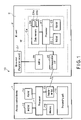
- FIG. 1 shows a configuration example of an authentication system 10 including an IC card 2 according to the embodiment.
- the authentication system 10 is a system including the IC card 2 and an access control device 1 of a plurality of types (1A, 1B, 1C, ).
- the access control device 1 is a device that authorizes a specific person to use the device.
- the access control device 1 may authorize a predetermined person to use it and may authorize a specific qualified person to use it.
- the access control device 1 has a function of communicating with the IC card 2 as a portable authentication device.
- the access control device 1 is a device that can be used by a person who is authorized to use the device when the person is authenticated by the IC card 2.
- the access control device 1 may be a medical device which can be operated by a predetermined person and may be a device which can be operated by a qualified person.
- the access control device 1 includes a processor 11, a ROM 12, a RAM 13, a data memory 14, a reader/writer 15 and a processing unit 16.
- the processor 11 controls each unit and executes various processes.
- the processor 11 is, for example, a central processing unit (CPU).
- the processor 11 executes a program stored in the ROM 11 or data memory 14 to control each unit and perform various processes.
- the ROM 12 is a nonvolatile memory that stores data that cannot be rewritable.
- the ROM 12 stores programs or control data.
- the RAM 13 is a volatile memory that stores data temporarily.
- the data memory 14 is a rewritable nonvolatile memory.
- the data memory 14 is implemented by a hard disk drive data (HDD), a solid state drive (SSD) or the like.
- the reader/writer 15 is an interface for communicative connection with the IC card 2.
- the reader/writer 15 applies power to the IC card 2, supplies a clock thereto, resets the IC card 2, and transmits and receives data to and from the IC card 2.
- the reader/writer 15 is configured by an interface that conforms to the communication system of the IC card 2.
- the reader/writer 15 configured by a contact unit that is physically and electrically connected to a contact portion of the IC card 2.
- the reader/writer 15 is configured by an antenna and a communication control unit for performing radio communication with the IC card 2.
- the processing unit 16 performs a process when the IC card 2 authorizes a user to use the device.
- the processing unit 16 may performs a process when a predetermined person is authenticated by the IC card 2 or when a predetermined qualified person is authenticated by the IC card 2.
- the processing unit 16 may include a processing mechanism for performing or assisting a medical practice or may include a driving mechanism for driving the device in response to the operation of a person (qualified person) having a driving (operating) license.
- the IC card 2 is a portable authentication device having a function of performing authentication (biometrics) using biological information.
- the IC card 2 is operated by power supplied from the reader/writer 15 of the access control device 1 to perform a process in accordance with a command from the reader/writer 15.
- the IC card 2 also supplies the reader/writer 15 with a response indicating a result of the process for the command from the reader/writer 15.
- the IC card 2 has a card-shaped main body C that is formed of plastic or the like.
- the IC card 2 incorporates in the main body C a module M and a biosensor (fingerprint sensor) 27 connected to the module M.
- the module M is connected to an IC chip Ca, a communication interface 25 and an MPU 26 and formed integrally with them as one unit.
- the module M is embedded in the main body C of the IC card 2.
- the IC chip Ca includes a processor 21, a ROM 22, a RAM 23, a data memory 24 and the like.
- the processor 21 is connected to the ROM 22, RAM 23, data memory 24, communication interface 25 and MPU 26 via a data bus or the like.
- the MPU 26 is connected to the biosensor 27 via a data bus or the like.
- the IC card 2 may have a configuration as needed in addition to the configuration shown in FIG. 1 or a specific configuration may be excluded from the IC card 2.
- the processor 21 functions as a control unit that controls the entire IC card 2.
- the processor 21 performs various processes based on the control program and control data stored in the ROM 22 or the data memory 24.
- the processor 21 executes the program stored in the ROM 22 to perform various processes in accordance with the operation control or operation mode of the IC card 2.
- the processor 21 has only to be a processor that executes a program to perform information processing and control of each unit in the IC card 2.
- processor 21 controls the functions performed by the hardware circuit.
- the ROM 22 is a nonvolatile memory that stores control programs, control data and the like in advance.
- the ROM 22 is incorporated into the IC card 2 at the production stage while storing the control programs, control data and the like.
- the control programs and control data are stored in advance in the ROM 22 in accordance with the specifications of the IC card 2.
- the RAM 23 is a volatile memory.
- the RAM 23 temporarily stores data or the like that the processor 21 is processing.
- the RAM 23 functions as a calculating buffer, a receiving buffer and a transmitting buffer.
- the calculating buffer temporarily holds results of various arithmetic operations to be performed by the processor 21.
- the receiving buffer holds command data and the like received from the reader/writer 15 via the communication interface 25.
- the transmitting buffer holds a message (response data) and the like which are to be transmitted to the reader/writer 15 via the communication interface 25.
- the data memory 24 is configured by a nonvolatile memory capable of writing and rewriting data, such as a flash ROM.
- the data memory 24 stores control programs, applications and various types of data in accordance with the operating use of the IC card 2. For example, program files and data files are created in the data memory 24. The control programs and various types of data are written to each of the created files.
- the data memory 24 stores feature information (template) 24a of biological information obtained from biological information of a registrant as dictionary data for biological (fingerprint) authentication.
- the feature information 24a of the biological information is, for example, feature information as a feature amount extracted from the biological information of a registrant.
- the data memory 24 stores feature information 24a of biological information for each registrant.
- the IC card 2 may register the feature information 24a of biological information for one specific registrant or may register the feature information 24a (24a1, 24a2, 42a3, ...) of a plurality of items of biological information corresponding to a plurality of registrants.
- the data memory 24 includes a management table 24b indicating the access control device 1 that can be used by a user (registrant).
- the management table 24b stores information representing the relationship between registrants the feature information 24a of biological information of which is registered and access control devices which can be used by the registrants.
- the management table 24b has only to store data representing the relationship between registrants and the right to use access control devices.
- the management table 24b may store information indicating an access control device that is available for each registrant, information indicating a registrant having a right to use each access control device, and information indicating the correspondence between a plurality of registrants and rights to use a plurality of access control devices.
- the management table 24b may store the qualification of a registrant and a right to use an access control device for various qualifications in association with each other.
- the communication interface 25 is an interface for transmitting and receiving data to and from the reader/writer 15. That is, the communication interface 25 is an interface for transmitting and receiving data to and from the access control device 1 via the reader/writer 15.
- the communication interface 25 includes a contact unit and a communication control unit which are in physical and electrical contact with the reader/writer 15 to transmit and receive signals to and from the reader/writer 15.
- the IC card 2 is activated upon receipt of operating power and operating clocks from the reader/writer 15 via the contact unit.
- the communication interface 25 includes an antenna and a communication control unit such as a modulation/demodulation circuit for performing radio communication with the reader/writer 15.
- a communication control unit such as a modulation/demodulation circuit for performing radio communication with the reader/writer 15.
- the IC card 2 receives radio waves from the reader/writer 15 via the antenna, modulation/demodulation circuit and the like.
- the IC card 2 generates operating power and operating clocks from the radio waves by a power supply unit (not shown) and is thus activated.
- the biosensor 27 acquires biological information of an operator.
- the biosensor 27 is, for example, a fingerprint sensor.
- the fingerprint sensor serving as the biosensor 27 acquires a fingerprint image from the operator's fingers.
- the fingerprint sensor serving as the biosensor 27 includes a CCD sensor and the like.
- the fingerprint sensor 27 may include a sensor that senses a change in electrical capacitance.
- the fingerprint sensor 27 transmits a fingerprint image to the MPU 26.
- the present embodiment will be described on the assumption that the IC card 2 is a contact-type IC card, but it can be achieved similarly even though the IC card 2 is a non-contact type IC card.
- the biosensor 27 is a fingerprint sensor, and a user's finger can be put at a reading position of the fingerprint sensor while the IC card 2 is set in the reader/writer 15 of the access control device 1.
- the micro processing unit (MPU) 26 processes a fingerprint image from the fingerprint sensor 27.
- the MPU 26 is configured to include a processor, a RAM, a ROM and the like.
- the process performed by the MPU 26, which will be described in the present embodiment, can be achieved by the processor 21 in the IC chip Ca using the ROM 22 and RAM 23.
- the process to be performed by the MPU 26, which will be described below, may be done by the processor 21.
- the MPU 26 extracts feature information (information indicating the coordinates, amount and the like of features) from the fingerprint image from the fingerprint sensor 27.
- the MPU 26 transmits the extracted feature information to the processor 21.
- the processor 21 may perform the process of extracting feature information from the fingerprint image acquired by the fingerprint sensor 27 as described above.
- the processor 21 verifies the feature information extracted from the fingerprint image, which is acquired by the fingerprint sensor 27 and transmitted from the MPU 26, with the feature information of fingerprint images registered in the data memory 24 or the like. For example, in accordance with a predetermined algorithm, the processor 21 calculates a similarity between the feature information extracted from the fingerprint image acquired by the fingerprint sensor 27 and the feature information of the registered fingerprint images, as a similarity between the fingerprint images.
- the similarity is an index indicating that the similarity between the fingerprint images becomes higher as the calculated similarity increases.
- the processor 21 reads and holds the feature information of the fingerprint images registered in the data memory 24 or the like.
- the processor 21 verifies the feature information transmitted from the MPU 26 with the feature information held in the processor 21 to calculate a similarity between them.
- the processor 21 calculates the similarity, it compares the calculated similarity with a threshold value for authentication as a verification process (authentication process) to determine the success or failure of the authentication. For example, if the calculated similarity is equal to or greater than the threshold value for authentication, the processor 21 determines that the persons are the same (success in authentication), and if the calculated similarity is less than the threshold value for authentication, the processor 21 determines that the persons are not the same (failure in authentication), thus obtaining the result of the authentication process.
- a threshold value for authentication as a verification process
- the MPU 26 may perform the verification process between the fingerprint image acquired by the fingerprint sensor 27 and the registered fingerprint images. For example, the MPU 26 may perform a verification process to calculate a similarity between the fingerprint image acquired by the fingerprint sensor 27 and the registered fingerprint images and transmit the calculated similarity to the processor 21. The MPU 26 may also compare the calculated similarity with a threshold value for authentication to transmit the success or failure of authentication to the processor 21.
- the IC card 2 may include a display unit that displays various items of information under the control of the processor 21.
- the display unit may be a light (for example, a light emitting diode (LED) light) that is turned on under the control of the processor 21.
- LED light emitting diode
- the data memory 24 of the IC card 2 stores the feature information 24a and management table 24b of biological information for each registrant.
- the IC card 2 may register feature information 24a of biological information of one registrant or may register feature information 24a1, 24a2, ... of biological information for a plurality of registrants.
- the management table 24b has only to store information representing the relationship between a registrant and an access control device having a right to use.
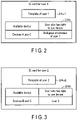
- FIGS. 2 to 4 are diagrams each showing a configuration example of the feature information 24a and management table 24b of biological information of a registrant in the IC card 2 that is issued for each user (registrant).
- FIG. 2 shows an example of the feature information 24a and management table 24b of biological information of registrants in the IC card (IC card for the user 1) 2 issued to the user 1.
- FIG. 3 shows an example of the feature information 24a and management table 24b of biological information of registrants in the IC card (IC card for the user 2) 2 issued to the user 2.
- FIG. 4 shows an example of the feature information 24a and management table 24b of biological information of registrants in the IC card (IC card for the user 3) 2 issued to the user 3.
- the data memory 24 of the IC card 2 stores the feature information 24a of biological information of registrants, which is dictionary data for biometrics of the user 1, and the management table 24b that stores information indicating the access control device 1 which the user 1 has a right to use.
- the management table 24b shown in FIG. 2 indicates that the user 1 who can perform biometric authentication using the feature information 24a of biological information of registrants has a right to use the device A and device C.
- the data memory 24 of the IC card 2 stores the feature information 24a of biological information, which is dictionary data for biometrics of the user 2, and the management table 24b that stores information indicating the access control device 1 which the user 2 has a right to use.
- the management table 24b shown in FIG. 3 indicates that the user 2 who can perform biometric authentication using the feature information 24a of biological information has a right to use the device B and device C.
- the data memory 24 of the IC card 2 stores the feature information 24a of biological information, which is dictionary data for biometrics of the user 3, and the management table 24b that stores information indicating the access control device 1 which the user 3 has a right to use.
- the management table 24b shown in FIG. 3 indicates that the user 3 who can perform biometric authentication using the feature information 24a of biological information has a right to use the device A and device C.
- the feature information 24a of biological information of each user (registrant) who holds the IC card 2 and the information indicating a device that is available by the user are registered in the IC card 2.
- the IC card 2 can be provided in which not only biometrics for the registrant who holds the IC card 2 but also the device that is available by the registrant (user) can be confirmed.
- an IC card with a biometrics function is issued to each user as an ID card or the like
- the feature information 24a and management table 24b of biological information of the registrant as shown in FIGS. 2 to 4 are registered in the IC card 2, a device for use can be confirmed and biometrics of the user can be achieved in the IC card 2, as will be described later.
- FIGS. 5 to 7 are diagrams each showing a configuration example of the feature information 24a and management table 24b of biological information of a registrant in the IC card 2 issued for each access control device.
- FIG. 5 shows an example of the feature information 24a and management table 24b of biological information of a registrant in the IC card (IC card for the device A) 2 issued to the device A.
- FIG. 6 shows an example of the feature information 24a and management table 24b of biological information of a registrant in the IC card (IC card for the device B) 2 issued to the device B.
- FIG. 7 shows an example of the feature information 24a and management table 24b of biological information of a registrant in the IC card (IC card for the device C) 2 issued to the device C.
- the data memory 24 of the IC card 2 stores the feature information 24a1 of biological information of the user 1 having a right to use the device A, the feature information 24a2 of biological information of the user 2, and the management table 24b that stores information indicating a user having a right to use the device A.
- the management table 24b shown in FIG. 5 indicates that the users having a right to use the device A are the user 1 of the feature information 24a1 of the biological information and the user 2 of the feature information 24a2 of the biological information.
- the data memory 24 of the IC card 2 stores the feature information 24a2 of biological information of the user 2 having a right to use the device B and the management table 24b that stores information indicating a user having a right to use the device B.
- the management table 24b shown in FIG. 6 indicates that the user having a right to use the device B is the user 2 of the feature information 24a2 of the biological information.
- the data memory 24 of the IC card 2 stores the feature information 24a1 of biological information of the user 1 having a right to use the device C, the feature information 24a2 of biological information of the user 2, the feature information 24a3 of biological information of the user 3, and the management table 24b that stores information indicating a user having a right to use the device C.
- the management table 24b shown in FIG. 7 indicates that the users having a right to use the device C are the user 1 of the feature information 24a1 of the biological information, the user 2 of the feature information 24a2 of the biological information and the user 3 of the feature information 24a3 of the biological information.
- the IC card 2 issued (set) for each access control device a user who can use the access control device and the feature information of biological information of the user are registered.
- the IC card 2 can thus confirm not only biometrics for each registrant but also a user who can use the device. For example, in the case of an operation of issuing an IC card for each access control device, confirmation of a used device in an IC card 2 for each device and biometrics of the user as described later can be achieved if the feature information 24a of biological information of a registrant and the management table 24b as shown in FIGS. 5 to 7 are registered in the IC card 2.
- FIG. 8 is a diagram showing a configuration example of the feature information 24a and management table 24b of biological information of registrants in the IC card 2 issued to one system.
- FIG. 8 shows an example of the feature information 24a and management table 24b of biological information of registrants in an IC card (IC card for the master) 2 issued to the entire system including three devices A, B and C.
- the data memory 24 of the IC card 2 stores feature information items 24a1, 24a2 and 24a3 of biological information for three persons, and the management table 24b that stores information indicating a user having a right to use each of the three devices.
- the feature information items 24a1, 24a2 and 24a3 of biological information shown in FIG. 8 are dictionary data for biometrics of user 1, user 2 and user 3, respectively.
- the management table 24b shown in FIG. 8 indicates that the user having a right to use the device A is users 1 and 2, the user having a right to use the device B is user 2 and the user having a right to use the device C is users 1, 2 and 3.
- the IC card 2 to be issued (set) for the entire system including a plurality of access control devices a user who can use each of the access control devices and the feature information of biological information of the user are registered.
- the IC card 2 can thus confirm not only biometrics for a plurality of registrants but also a user who can use each of the devices. For example, in the case of an operation of issuing a single IC card for the entire system including the access control devices, confirmation of a used device in the IC card 2 and biometrics of the user as described later can be achieved if the feature information 24a of biological information of the registrants and the management table 24b as shown in FIG. 8 are registered in the IC card 2.
- an IC card having the configurations shown in FIGS. 2 to 4 an IC card having the configurations shown in FIGS. 5 to 7 , and an IC card having the configuration shown in FIG. 8 may be issued. If, for example, not only an IC card for each person as shown in FIGS. 2 to 4 , but also an IC card (master IC card) for the entire system as shown in FIG. 8 is issued, an access control device can be used by the master IC card even when the IC card for each user a failure occurs or lost.
- FIG. 9 is a timing chart for describing the operation example of the authentication system 10 according to the embodiment.
- a user who is going to use an access control device 1 sets the IC card 2 in the reader/writer 15 of the access control device 1 for biometric (fingerprint) authentication.
- the access control device 1 applies power for operation to the IC card 2 set in the reader/writer 15 (ST10).
- the IC card 2 is activated (started) (ST11).
- the processor 21 of the IC card 2 When the processor 21 of the IC card 2 is started by the power from the reader/writer 15, it transmits an initial response to the reader/writer 15.
- the reader/writer 15 applies the power for operation to the set IC card 2 and receives the initial response from the IC card 2.
- the reader/writer 15 Upon receiving the initial response, the reader/writer 15 performs mutual authentication with the IC card 2 to establish a communication state.
- the processor 11 of the access control device 1 establishes a state of communication with the IC card 2 via the reader/writer 15, it transmits the device ID as identification information of the access control device 1 and transmits a command to make a request for user authentication in the IC card 2 (ST12).
- the processor 21 of the IC card 2 Upon receiving the device ID of the access control device, the processor 21 of the IC card 2 confirms whether the feature information of biological information of a person having a right to use the access control device 1 indicated by the received device ID is registered in the IC card 2 (ST13). The processor 21 refers to the management table 24b to confirm whether the biological information of the person having a right to use the access control device of the device ID is registered to determine whether the access control device 1 is a device that can be used using the IC card 2 (ST14).
- the processor 21 assumes the access control device 1 in which the IC card 2 is set to be available. If the biological information of a person who has a right to use a device of the received device ID is not registered, the processor 21 assumes the access control device 1 in which the IC card 2 is set to be unavailable.
- the processor 21 determines that a registrant having a right to use the access control device 1 is not registered in the IC card 2 (NO in ST14), it responds to the access control device 1 to indicated that the access control device 1 is an unavailable device (ST 20).
- the access control device 1 in which the IC card 2 is set receives the response indicating that the device is unavailable as described above to make the processing unit 16 unable to perform its process.
- the processor 21 determines that a registrant having a right to use the access control device 1 is registered in the IC card 2 (YES in ST14), it activates the fingerprint sensor 27 as a biosensor through the MPU 26 to acquire a fingerprint image as biological information of a user (ST15) with the fingerprint sensor 27. Assume here that the user places his or her finger having a fingerprint for authentication at a reading position of the fingerprint sensor 27. The MPU 26 may detect that the finger is placed at the reading position of the fingerprint sensor 27 and read a fingerprint image by the fingerprint sensor 27.
- the processor 21 and the MPU 26 perform biometric (fingerprint) authentication using the acquired fingerprint image (ST16).
- the MPU 26 extracts feature information from the fingerprint image acquired by the fingerprint sensor 27, and transmits the extracted feature information to the processor 21.
- the processor 21 acquires feature information of the user's fingerprint image read by the fingerprint sensor 27 from the MPU 26.
- the processor 21 acquires the feature information of the user's fingerprint image, it verifies the acquired feature information with the feature information of registrants' fingerprint images registered in the data memory 24.
- the processor 21 calculates the similarity between the feature information of the user's fingerprint image and the feature information of the registrants' fingerprint images to determine whether the user is a registrant according to whether the calculated similarity is equal to or greater than a threshold value for authentication.
- the processor 21 determines whether the user matching the registrant (i.e., the registrant) has a right to use the access control device 1 indicated by the device ID (ST17).
- the processor 21 responds to the reader/writer 15 of the access control device 1 through the communication interface 25 to indicate that the user placing his or her finger on the fingerprint sensor 27 is authenticated as a registrant who can use the access control device 1 indicated by the device ID (ST18).
- the processor 11 of the access control device 1 allows the processing unit 16 to perform a process required by the user (ST19).
- the processor 11 of the access control device 1 records in the memory 14 history information indicating the use contents executed by the user together with information indicating the user who is allowed to use the device according to a result of the authentication in the IC card 2 (ST20).
- the processor 11 When the processor 11 cannot determine that the user is a registrant having a right to use the access control device 1 (NO in ST17), it responds to the access control device 1 to indicate that the user cannot be confirmed as a registrant having a right to user the access control device 1 or that the access control 1 is unavailable (ST21).
- the processor 11 of the access control device 1 Upon receiving from the IC card 2 a response indicating that the user cannot be authenticated as a registrant or that the access control device 1 is an unavailable device, the processor 11 of the access control device 1 disables the operation of the processing unit 16 and makes the user unable to use the access control device 1 (ST22). In this case, the processor 11 of the access control device 1 may record in the memory 14 history information indicating that the device cannot be used as a result of the authentication in the IC card 2.
- the ID card as a portable authentication device including biosensor when communicatively connected to an access control device, it confirms whether a registrant registered in the IC card has a right to use the access control device and confirms whether a user is the registrant having a right to use the access control device by biometrics acquired by the biosensor.
- the IC card can prevent a person who does not have a right to use the access control device from using the access control device and can confirm the user as a person who has a right to use the access control device by the biometrics.
- the IC card can confirm the use of a device with reliability, and the biometrics can prevent impersonation attacks. Therefore, a person having a right to use an access control device can use the access control device with reliability.
- an access control device is a medical device for performs a medical act (medical process) in the processing unit
- the IC card performs a process of confirming a user's right to use the access control device and performing biometrics to confirm that the user is identified as a registrant (a patient or a specific operator) having a right to use the access control device by biological information.
- the IC card can allow the access control device to perform a medical process when biometrics are successful for a person having a right to use the access control device, with the result that the medical process can reliably be performed by a right access control device associated with a registrant.
- the management table 24b of the IC card 2 stores information indicating qualifications of the registrant and information indicating qualifications for allowing each access control device to be used.
- An authentication system 10 according to the modification will not be described in detail because its configuration excluding the management table 24b can be achieved by the configuration similar to that of the foregoing embodiment.
- FIG. 10 is a diagram showing a configuration example of feature information 24a of biological information of registrants in the IC card 2 and a management table 24b when the right to use the access control device is confirmed based on qualification information.
- a data memory 24 of the IC card 2 stores feature information items 24a1, 24a2 and 24a3 of biological information for three persons and a management table 24b including a first table 24b1 and a second table 24b2.
- the first table 24b1 stores information indicating a qualification necessary to use each of the access control devices (devices A, B, C).
- the second table 24b2 stores information indicating qualifications of each of the registrants (users 1, 2, 3).
- the device A can determine from the first table 24b1 that the qualification necessary for use is ⁇ and can determine from the second table 24b2 that users having the qualification ⁇ is the users 1 and 3. That is, referring to the management table 24b, the processor 21 of the IC card 2 shown in FIG. 10 can specify that the users 1 and 3 have a right to use the device A.
- the device B can determine from the first table 24b1 that the qualification necessary for use is ⁇ and can determine from the second table 24b2 that a user having the qualification ⁇ is the user 2. That is, referring to the management table 24b, the processor 21 of the IC card 2 shown in FIG. 10 can specify that the user 2 has a right to use the device B.
- the device C can determine from the first table 24b1 that the qualification necessary for use is ⁇ or ⁇ and can determine from the second table 24b2 that users having the qualification ⁇ are the users 1 and 3 and a user having the qualification ⁇ is the user 3. That is, referring to the management table 24b, the processor 21 of the IC card 2 shown in FIG. 10 can specify that the users 1, 2 and 3 have a right to use the device C.
- the authentication system can perform a process in a manner similar to the foregoing process shown in FIG. 9 .
- information registered in the management table 24b as shown in FIG. 10 may be referred to in order to confirm whether an access control device in which the IC card is set is an available device based on the qualification of a registrant.
- the foregoing modification makes it possible to provide an IC card as a portable authentication device capable of not only biometrics for a plurality of registrants but also confirming a user who can use each device based on the qualifications of the registrants.
Landscapes
- Engineering & Computer Science (AREA)
- Theoretical Computer Science (AREA)
- Computer Security & Cryptography (AREA)
- Physics & Mathematics (AREA)
- General Physics & Mathematics (AREA)
- Computer Hardware Design (AREA)
- General Engineering & Computer Science (AREA)
- Business, Economics & Management (AREA)
- Software Systems (AREA)
- Microelectronics & Electronic Packaging (AREA)
- Multimedia (AREA)
- Human Computer Interaction (AREA)
- Computer Networks & Wireless Communication (AREA)
- Accounting & Taxation (AREA)
- Strategic Management (AREA)
- General Business, Economics & Management (AREA)
- Automation & Control Theory (AREA)
- Finance (AREA)
- Signal Processing (AREA)
- Collating Specific Patterns (AREA)
- Financial Or Insurance-Related Operations Such As Payment And Settlement (AREA)
- Credit Cards Or The Like (AREA)
Applications Claiming Priority (2)
| Application Number | Priority Date | Filing Date | Title |
|---|---|---|---|
| JP2020006637A JP7414545B2 (ja) | 2020-01-20 | 2020-01-20 | 携帯可能な認証デバイス、icカードおよび認証システム |
| PCT/JP2021/001453 WO2021149632A1 (ja) | 2020-01-20 | 2021-01-18 | 携帯可能な認証デバイス、icカードおよび認証システム |
Publications (2)
| Publication Number | Publication Date |
|---|---|
| EP4095751A1 true EP4095751A1 (de) | 2022-11-30 |
| EP4095751A4 EP4095751A4 (de) | 2024-01-24 |
Family
ID=76992387
Family Applications (1)
| Application Number | Title | Priority Date | Filing Date |
|---|---|---|---|
| EP21744137.7A Withdrawn EP4095751A4 (de) | 2020-01-20 | 2021-01-18 | Tragbare authentifizierungsvorrichtung, ic-karte und authentifizierungssystem |
Country Status (4)
| Country | Link |
|---|---|
| US (1) | US20220350873A1 (de) |
| EP (1) | EP4095751A4 (de) |
| JP (1) | JP7414545B2 (de) |
| WO (1) | WO2021149632A1 (de) |
Families Citing this family (2)
| Publication number | Priority date | Publication date | Assignee | Title |
|---|---|---|---|---|
| JP7399727B2 (ja) * | 2020-01-30 | 2023-12-18 | 株式会社東芝 | 認証デバイスおよび認証システム |
| US12367269B2 (en) * | 2022-09-14 | 2025-07-22 | Capital One Services, Llc | Biometric authentication-based token |
Family Cites Families (15)
| Publication number | Priority date | Publication date | Assignee | Title |
|---|---|---|---|---|
| JPH11134302A (ja) | 1997-10-31 | 1999-05-21 | Mitsubishi Electric Corp | 端末のアクセス制御装置および認証カード |
| JP4285368B2 (ja) * | 2004-08-25 | 2009-06-24 | セイコーエプソン株式会社 | Icカード、認証システムおよび認証方法 |
| JP4900392B2 (ja) * | 2006-09-29 | 2012-03-21 | 富士通株式会社 | 情報処理装置および情報管理方法 |
| JP2010286936A (ja) | 2009-06-10 | 2010-12-24 | Hitachi Ltd | 半導体素子および認証装置、認証システム |
| EP2887248A1 (de) | 2013-12-20 | 2015-06-24 | Orange | Verfahren zur Authentifizierung von mindestens einem Benutzer von mindestens einer elektronischen Vorrichtung sowie Vorrichtung dafür |
| JP6390986B2 (ja) | 2014-09-02 | 2018-09-19 | Necソリューションイノベータ株式会社 | 認証装置、認証システム、認証方法及びプログラム |
| JP5855217B1 (ja) | 2014-12-15 | 2016-02-09 | 株式会社MoriX | 指紋認証付スマートカードとこれを用いた決済方法 |
| KR20160072682A (ko) * | 2014-12-15 | 2016-06-23 | 삼성전자주식회사 | 생체 정보를 이용한 인증 방법 및 이를 위한 전자 장치 |
| US9775044B2 (en) * | 2015-07-09 | 2017-09-26 | Mastercard International Incorporated | Systems and methods for use in authenticating individuals, in connection with providing access to the individuals |
| JP2018005272A (ja) * | 2016-06-27 | 2018-01-11 | 株式会社東芝 | Icカード、携帯可能電子装置、及びicカードの制御方法 |
| JP2018005271A (ja) * | 2016-06-27 | 2018-01-11 | 株式会社東芝 | サーバ、icカード処理装置、および、icカード処理システム |
| JP2018018324A (ja) | 2016-07-28 | 2018-02-01 | 株式会社東芝 | Icカードおよび携帯可能電子装置 |
| JP2018045330A (ja) * | 2016-09-12 | 2018-03-22 | 株式会社東芝 | Icカード及び携帯可能電子装置 |
| JP6946031B2 (ja) * | 2017-03-22 | 2021-10-06 | 株式会社東芝 | Icカード、およびicカードの制御方法 |
| US20200026829A1 (en) * | 2018-07-17 | 2020-01-23 | Sensormatic Electronics, LLC | Biometric access control identification card |
-
2020
- 2020-01-20 JP JP2020006637A patent/JP7414545B2/ja active Active
-
2021
- 2021-01-18 WO PCT/JP2021/001453 patent/WO2021149632A1/ja not_active Ceased
- 2021-01-18 EP EP21744137.7A patent/EP4095751A4/de not_active Withdrawn
-
2022
- 2022-07-19 US US17/867,936 patent/US20220350873A1/en active Pending
Also Published As
| Publication number | Publication date |
|---|---|
| JP2021114145A (ja) | 2021-08-05 |
| US20220350873A1 (en) | 2022-11-03 |
| WO2021149632A1 (ja) | 2021-07-29 |
| EP4095751A4 (de) | 2024-01-24 |
| JP7414545B2 (ja) | 2024-01-16 |
Similar Documents
| Publication | Publication Date | Title |
|---|---|---|
| US20210042759A1 (en) | Incremental enrolment algorithm | |
| US10997586B2 (en) | Multifunction card including biometric data, card payment terminal, and card payment system | |
| US10528857B2 (en) | IC card, portable electronic device, and information processing method | |
| US20190180018A1 (en) | Portable electronic device | |
| EP3657368B1 (de) | Ic-karte, tragbare elektronische vorrichtung, ic-karten-verarbeitungsverfahren und programm | |
| US20220350873A1 (en) | Portable authentication device, ic card and authentication system | |
| EP3067813A1 (de) | Tragbare elektronische vorrichtung und system | |
| US20170374066A1 (en) | Server, ic card processing apparatus, and ic card processing system | |
| JP4089294B2 (ja) | 個人認証システム及び個人認証用端末装置 | |
| JP2007164423A (ja) | 個人認証システム及び個人認証方法 | |
| US20230214474A1 (en) | Portable electronic device and ic card | |
| JP2022143852A (ja) | リモート発行システムおよびデータ生成サーバ | |
| JP2006268570A (ja) | セキュリティカード及びセキュリティカードシステム | |
| JP2006163492A (ja) | 決済システム | |
| JP6860352B2 (ja) | Icカードおよび携帯可能電子装置 | |
| US20230261864A1 (en) | Ic card, portable electronic device, and issuing device | |
| JP7388417B2 (ja) | 情報処理方法、カード、マイクロコントローラ及びコンピュータプログラム | |
| US20240048554A1 (en) | Remote issuance system and data generation server | |
| JP2026049949A (ja) | セキュリティシステムおよびセキュリティデバイスの使用方法 | |
| KR20010055068A (ko) | 카드/지문인식 복합형 신원 확인 시스템 | |
| JP2007148724A (ja) | 個人認証システム、および個人認証プログラム | |
| EP2980719A1 (de) | Verfahren zur Authentifizierung eines Benutzers und entsprechende erste Vorrichtung und System | |
| JP2022000729A (ja) | Icカード及び携帯可能電子装置 | |
| JP2004334816A (ja) | バイオメトリクス技術を使ってicカードの認証のパスワードなどを代行入力する方法 | |
| KR20040052641A (ko) | 지문 센서 일체형 인증 장치 |
Legal Events
| Date | Code | Title | Description |
|---|---|---|---|
| STAA | Information on the status of an ep patent application or granted ep patent |
Free format text: STATUS: THE INTERNATIONAL PUBLICATION HAS BEEN MADE |
|
| PUAI | Public reference made under article 153(3) epc to a published international application that has entered the european phase |
Free format text: ORIGINAL CODE: 0009012 |
|
| STAA | Information on the status of an ep patent application or granted ep patent |
Free format text: STATUS: REQUEST FOR EXAMINATION WAS MADE |
|
| 17P | Request for examination filed |
Effective date: 20220715 |
|
| AK | Designated contracting states |
Kind code of ref document: A1 Designated state(s): AL AT BE BG CH CY CZ DE DK EE ES FI FR GB GR HR HU IE IS IT LI LT LU LV MC MK MT NL NO PL PT RO RS SE SI SK SM TR |
|
| DAV | Request for validation of the european patent (deleted) | ||
| DAX | Request for extension of the european patent (deleted) | ||
| A4 | Supplementary search report drawn up and despatched |
Effective date: 20231221 |
|
| RIC1 | Information provided on ipc code assigned before grant |
Ipc: G06V 40/50 20220101ALI20231215BHEP Ipc: G06V 40/12 20220101ALI20231215BHEP Ipc: G06Q 20/34 20120101ALI20231215BHEP Ipc: G06K 19/073 20060101ALI20231215BHEP Ipc: G06F 21/35 20130101ALI20231215BHEP Ipc: H04W 12/47 20210101ALI20231215BHEP Ipc: G06F 21/32 20130101ALI20231215BHEP Ipc: G06T 7/00 20170101ALI20231215BHEP Ipc: G06Q 20/40 20120101ALI20231215BHEP Ipc: G06K 19/07 20060101AFI20231215BHEP |
|
| RAP1 | Party data changed (applicant data changed or rights of an application transferred) |
Owner name: KABUSHIKI KAISHA TOSHIBA |
|
| STAA | Information on the status of an ep patent application or granted ep patent |
Free format text: STATUS: EXAMINATION IS IN PROGRESS |
|
| 17Q | First examination report despatched |
Effective date: 20251106 |
|
| STAA | Information on the status of an ep patent application or granted ep patent |
Free format text: STATUS: THE APPLICATION HAS BEEN WITHDRAWN |
|
| 18W | Application withdrawn |
Effective date: 20251208 |