EP4092633A1 - Verfahren und vorrichtung zur spurwechselvorhersage eines zielfahrzeugs - Google Patents
Verfahren und vorrichtung zur spurwechselvorhersage eines zielfahrzeugs Download PDFInfo
- Publication number
- EP4092633A1 EP4092633A1 EP22165556.6A EP22165556A EP4092633A1 EP 4092633 A1 EP4092633 A1 EP 4092633A1 EP 22165556 A EP22165556 A EP 22165556A EP 4092633 A1 EP4092633 A1 EP 4092633A1
- Authority
- EP
- European Patent Office
- Prior art keywords
- lane
- target vehicle
- ccs
- machine learning
- learning model
- Prior art date
- Legal status (The legal status is an assumption and is not a legal conclusion. Google has not performed a legal analysis and makes no representation as to the accuracy of the status listed.)
- Pending
Links
Images
Classifications
-
- B—PERFORMING OPERATIONS; TRANSPORTING
- B60—VEHICLES IN GENERAL
- B60W—CONJOINT CONTROL OF VEHICLE SUB-UNITS OF DIFFERENT TYPE OR DIFFERENT FUNCTION; CONTROL SYSTEMS SPECIALLY ADAPTED FOR HYBRID VEHICLES; ROAD VEHICLE DRIVE CONTROL SYSTEMS FOR PURPOSES NOT RELATED TO THE CONTROL OF A PARTICULAR SUB-UNIT
- B60W30/00—Purposes of road vehicle drive control systems not related to the control of a particular sub-unit, e.g. of systems using conjoint control of vehicle sub-units
- B60W30/18—Propelling the vehicle
- B60W30/18009—Propelling the vehicle related to particular drive situations
- B60W30/18163—Lane change; Overtaking manoeuvres
-
- G—PHYSICS
- G06—COMPUTING OR CALCULATING; COUNTING
- G06V—IMAGE OR VIDEO RECOGNITION OR UNDERSTANDING
- G06V20/00—Scenes; Scene-specific elements
- G06V20/50—Context or environment of the image
- G06V20/56—Context or environment of the image exterior to a vehicle by using sensors mounted on the vehicle
- G06V20/58—Recognition of moving objects or obstacles, e.g. vehicles or pedestrians; Recognition of traffic objects, e.g. traffic signs, traffic lights or roads
-
- G—PHYSICS
- G08—SIGNALLING
- G08G—TRAFFIC CONTROL SYSTEMS
- G08G1/00—Traffic control systems for road vehicles
- G08G1/16—Anti-collision systems
- G08G1/167—Driving aids for lane monitoring, lane changing, e.g. blind spot detection
-
- B—PERFORMING OPERATIONS; TRANSPORTING
- B60—VEHICLES IN GENERAL
- B60W—CONJOINT CONTROL OF VEHICLE SUB-UNITS OF DIFFERENT TYPE OR DIFFERENT FUNCTION; CONTROL SYSTEMS SPECIALLY ADAPTED FOR HYBRID VEHICLES; ROAD VEHICLE DRIVE CONTROL SYSTEMS FOR PURPOSES NOT RELATED TO THE CONTROL OF A PARTICULAR SUB-UNIT
- B60W40/00—Estimation or calculation of non-directly measurable driving parameters for road vehicle drive control systems not related to the control of a particular sub unit, e.g. by using mathematical models
- B60W40/10—Estimation or calculation of non-directly measurable driving parameters for road vehicle drive control systems not related to the control of a particular sub unit, e.g. by using mathematical models related to vehicle motion
- B60W40/105—Speed
-
- B—PERFORMING OPERATIONS; TRANSPORTING
- B60—VEHICLES IN GENERAL
- B60W—CONJOINT CONTROL OF VEHICLE SUB-UNITS OF DIFFERENT TYPE OR DIFFERENT FUNCTION; CONTROL SYSTEMS SPECIALLY ADAPTED FOR HYBRID VEHICLES; ROAD VEHICLE DRIVE CONTROL SYSTEMS FOR PURPOSES NOT RELATED TO THE CONTROL OF A PARTICULAR SUB-UNIT
- B60W50/00—Details of control systems for road vehicle drive control not related to the control of a particular sub-unit, e.g. process diagnostic or vehicle driver interfaces
-
- G—PHYSICS
- G06—COMPUTING OR CALCULATING; COUNTING
- G06F—ELECTRIC DIGITAL DATA PROCESSING
- G06F18/00—Pattern recognition
- G06F18/20—Analysing
- G06F18/24—Classification techniques
- G06F18/241—Classification techniques relating to the classification model, e.g. parametric or non-parametric approaches
- G06F18/2411—Classification techniques relating to the classification model, e.g. parametric or non-parametric approaches based on the proximity to a decision surface, e.g. support vector machines
-
- G—PHYSICS
- G06—COMPUTING OR CALCULATING; COUNTING
- G06F—ELECTRIC DIGITAL DATA PROCESSING
- G06F18/00—Pattern recognition
- G06F18/20—Analysing
- G06F18/24—Classification techniques
- G06F18/241—Classification techniques relating to the classification model, e.g. parametric or non-parametric approaches
- G06F18/2415—Classification techniques relating to the classification model, e.g. parametric or non-parametric approaches based on parametric or probabilistic models, e.g. based on likelihood ratio or false acceptance rate versus a false rejection rate
-
- G—PHYSICS
- G06—COMPUTING OR CALCULATING; COUNTING
- G06F—ELECTRIC DIGITAL DATA PROCESSING
- G06F18/00—Pattern recognition
- G06F18/20—Analysing
- G06F18/25—Fusion techniques
- G06F18/254—Fusion techniques of classification results, e.g. of results related to same input data
-
- G—PHYSICS
- G06—COMPUTING OR CALCULATING; COUNTING
- G06V—IMAGE OR VIDEO RECOGNITION OR UNDERSTANDING
- G06V20/00—Scenes; Scene-specific elements
- G06V20/50—Context or environment of the image
- G06V20/56—Context or environment of the image exterior to a vehicle by using sensors mounted on the vehicle
- G06V20/588—Recognition of the road, e.g. of lane markings; Recognition of the vehicle driving pattern in relation to the road
-
- B—PERFORMING OPERATIONS; TRANSPORTING
- B60—VEHICLES IN GENERAL
- B60W—CONJOINT CONTROL OF VEHICLE SUB-UNITS OF DIFFERENT TYPE OR DIFFERENT FUNCTION; CONTROL SYSTEMS SPECIALLY ADAPTED FOR HYBRID VEHICLES; ROAD VEHICLE DRIVE CONTROL SYSTEMS FOR PURPOSES NOT RELATED TO THE CONTROL OF A PARTICULAR SUB-UNIT
- B60W50/00—Details of control systems for road vehicle drive control not related to the control of a particular sub-unit, e.g. process diagnostic or vehicle driver interfaces
- B60W2050/0001—Details of the control system
- B60W2050/0019—Control system elements or transfer functions
-
- B—PERFORMING OPERATIONS; TRANSPORTING
- B60—VEHICLES IN GENERAL
- B60W—CONJOINT CONTROL OF VEHICLE SUB-UNITS OF DIFFERENT TYPE OR DIFFERENT FUNCTION; CONTROL SYSTEMS SPECIALLY ADAPTED FOR HYBRID VEHICLES; ROAD VEHICLE DRIVE CONTROL SYSTEMS FOR PURPOSES NOT RELATED TO THE CONTROL OF A PARTICULAR SUB-UNIT
- B60W2520/00—Input parameters relating to overall vehicle dynamics
- B60W2520/10—Longitudinal speed
-
- B—PERFORMING OPERATIONS; TRANSPORTING
- B60—VEHICLES IN GENERAL
- B60W—CONJOINT CONTROL OF VEHICLE SUB-UNITS OF DIFFERENT TYPE OR DIFFERENT FUNCTION; CONTROL SYSTEMS SPECIALLY ADAPTED FOR HYBRID VEHICLES; ROAD VEHICLE DRIVE CONTROL SYSTEMS FOR PURPOSES NOT RELATED TO THE CONTROL OF A PARTICULAR SUB-UNIT
- B60W2520/00—Input parameters relating to overall vehicle dynamics
- B60W2520/12—Lateral speed
-
- B—PERFORMING OPERATIONS; TRANSPORTING
- B60—VEHICLES IN GENERAL
- B60W—CONJOINT CONTROL OF VEHICLE SUB-UNITS OF DIFFERENT TYPE OR DIFFERENT FUNCTION; CONTROL SYSTEMS SPECIALLY ADAPTED FOR HYBRID VEHICLES; ROAD VEHICLE DRIVE CONTROL SYSTEMS FOR PURPOSES NOT RELATED TO THE CONTROL OF A PARTICULAR SUB-UNIT
- B60W2552/00—Input parameters relating to infrastructure
- B60W2552/53—Road markings, e.g. lane marker or crosswalk
-
- B—PERFORMING OPERATIONS; TRANSPORTING
- B60—VEHICLES IN GENERAL
- B60W—CONJOINT CONTROL OF VEHICLE SUB-UNITS OF DIFFERENT TYPE OR DIFFERENT FUNCTION; CONTROL SYSTEMS SPECIALLY ADAPTED FOR HYBRID VEHICLES; ROAD VEHICLE DRIVE CONTROL SYSTEMS FOR PURPOSES NOT RELATED TO THE CONTROL OF A PARTICULAR SUB-UNIT
- B60W2554/00—Input parameters relating to objects
- B60W2554/40—Dynamic objects, e.g. animals, windblown objects
- B60W2554/404—Characteristics
- B60W2554/4045—Intention, e.g. lane change or imminent movement
-
- B—PERFORMING OPERATIONS; TRANSPORTING
- B60—VEHICLES IN GENERAL
- B60W—CONJOINT CONTROL OF VEHICLE SUB-UNITS OF DIFFERENT TYPE OR DIFFERENT FUNCTION; CONTROL SYSTEMS SPECIALLY ADAPTED FOR HYBRID VEHICLES; ROAD VEHICLE DRIVE CONTROL SYSTEMS FOR PURPOSES NOT RELATED TO THE CONTROL OF A PARTICULAR SUB-UNIT
- B60W2554/00—Input parameters relating to objects
- B60W2554/80—Spatial relation or speed relative to objects
- B60W2554/801—Lateral distance
-
- B—PERFORMING OPERATIONS; TRANSPORTING
- B60—VEHICLES IN GENERAL
- B60W—CONJOINT CONTROL OF VEHICLE SUB-UNITS OF DIFFERENT TYPE OR DIFFERENT FUNCTION; CONTROL SYSTEMS SPECIALLY ADAPTED FOR HYBRID VEHICLES; ROAD VEHICLE DRIVE CONTROL SYSTEMS FOR PURPOSES NOT RELATED TO THE CONTROL OF A PARTICULAR SUB-UNIT
- B60W2554/00—Input parameters relating to objects
- B60W2554/80—Spatial relation or speed relative to objects
- B60W2554/802—Longitudinal distance
Definitions
- the invention relates to the field of lane-changing prediction of a target vehicle, and in particular, to a method and device for lane-changing prediction of a target vehicle, a computer storage medium, and a vehicle.
- Dynamic movement of other moving vehicles on a road has critical influences on road traffic safety.
- the selection of a driving strategy for intelligent connected vehicles needs to take into consideration motion behaviors of other vehicles, mainly including lane changing and lane keeping of the other vehicles, where the lane changing of the vehicles poses a significant threat to road traffic safety. Therefore, the prediction of a lane-changing intention of vehicles on two sides of a present vehicle on a road can effectively prevent traffic incidents from happening and improve the driving safety.
- a method for lane-changing prediction of a target vehicle including: receiving a velocity and a position of the target vehicle; respectively obtaining, based on the velocity and the position of the target vehicle, a first lane-changing probability and a second lane-changing probability of the target vehicle by using a first machine learning model and
- a second machine learning model determining a possibility of lane changing of the target vehicle based on the first lane-changing probability and the second lane-changing probability, the first machine learning model and the second machine learning model being pre-trained and being different from each other.
- the velocity and the position of the target vehicle include: a longitudinal distance d x of the target vehicle in a vehicle coordinate system of a present vehicle; a lateral distance d y_ccs of the target vehicle in a lane line coordinate system; and a lateral velocity v y_ccs and a longitudinal velocity v x_ccs of the target vehicle in the lane line coordinate system.
- the first machine learning model is trained by using at least the lateral distance d y_ccs of the target vehicle in the lane line coordinate system and the lateral velocity v y_ccs of the target vehicle in the lane line coordinate system as feature parameters.
- the second machine learning model is trained by using at least the longitudinal distance d x of the target vehicle in the vehicle coordinate system of the present vehicle, the lateral distance d y_ccs of the target vehicle in the lane line coordinate system, and the lateral velocity v y_ccs and the longitudinal velocity v x_ccs of the target vehicle in the lane line coordinate system as feature parameters.
- the determining a possibility of lane changing of the target vehicle based on the first lane-changing probability and the second lane-changing probability includes: when both the first lane-changing probability and the second lane-changing probability satisfy a threshold condition, considering lane-changing prediction of the target vehicle successful and outputting a lane-changing probability P of the target vehicle.
- a device for lane-changing prediction of a target vehicle including: a receiving apparatus configured to receive a velocity and a position of the target vehicle; a calculation apparatus configured to respectively obtain, based on the velocity and the position of the target vehicle, a first lane-changing probability and a second lane-changing probability of the target vehicle by using a first machine learning model and a second machine learning model; and a determination apparatus configured to determine a possibility of lane changing of the target vehicle based on the first lane-changing probability and the second lane-changing probability, the first machine learning model and the second machine learning model being pre-trained and being different from each other.
- the velocity and the position of the target vehicle include: a longitudinal distance d x of the target vehicle in a vehicle coordinate system of a present vehicle; a lateral distance d y_ccs of the target vehicle in a lane line coordinate system; and a lateral velocity v y_ccs and a longitudinal velocity v _ccs of the target vehicle in the lane line coordinate system.
- the above device further includes: a first training apparatus configured to train the first machine learning model, wherein at least the lateral distance d y_ccs of the target vehicle in the lane line coordinate system and the lateral velocity v y_ccs of the target vehicle in the lane line coordinate system are used as feature parameters for the first machine learning model.
- the above device further includes: a second training apparatus configured to train the second machine learning model, wherein at least the longitudinal distance d x of the target vehicle in the vehicle coordinate system of the present vehicle, the lateral distance d y_ccs of the target vehicle in the lane line coordinate system, and the lateral velocity v y_ccs and the longitudinal velocity v x_ccs of the target vehicle in the lane line coordinate system are used as feature parameters for the second machine learning model.
- the determination apparatus is configured to: when both the first lane-changing probability and the second lane-changing probability satisfy a threshold condition, output a lane-changing probability P of the target vehicle.
- a computer storage medium including instructions, where when the instructions are run, the method as described above is performed.
- a vehicle including the device as described above.
- two different models namely, the first machine learning model and the second machine learning model
- the first machine learning model and the second machine learning model are combined to provide a comprehensive determination of a lane-changing intention of the target vehicle, such that the accuracy and stability of a prediction system is ensured, thereby improving the driving safety.
- control logic of the invention may be included on a computer-readable medium as executable program instructions, which are implemented by a processor or the like.
- the computer-readable medium include, but are not limited to, a ROM, a RAM, an optical disc, a magnetic tape, a floppy disk, a flash drive, a smart card, and an optical data storage apparatus.
- a computer-readable recording medium may also be distributed in a computer system connected to a network, so that the computer-readable medium is stored and implemented in a distributed manner, for example, through a vehicle telematics service or a controller area network (CAN).
- CAN controller area network
- vehicle or other similar terms used herein includes general motor vehicles, such as passenger vehicles (including sport utility vehicles, buses, trucks, etc.), various commercial vehicles, etc., and includes hybrid vehicles, electric vehicles, etc.
- a hybrid vehicle is a vehicle with two or more power sources, such as a vehicle powered by a gasoline engine and an electric motor.
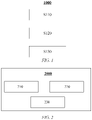
- FIG. 1 is a schematic flowchart of a method 1000 for lane-changing prediction of a target vehicle according to an embodiment of the invention. As shown in FIG. 1 , the method 1000 for lane-changing prediction of a target vehicle includes the following steps:
- target vehicle is another vehicle other than a present vehicle.
- the target vehicle to be subjected to lane-changing prediction is on the front left or front right of the present vehicle.
- Machine learning refers to a process of using some algorithms to guide a computer to obtain a proper model based on known data and then using the model to make a determination on a new situation. Therefore, in the context of the invention, the "first machine learning model” and the “second machine learning model” are different models obtained by a computer under the guidance of different algorithms, and the models may be used to determine (or predict) a lane-changing probability of the target vehicle.
- the use of a single model for lane-changing prediction of the target vehicle may produce a large determination error.
- the present vehicle may erroneously brake because of the target vehicle, and when severe, traffic accidents, such as rear-end collision, may be caused.
- the use of the two models, namely, the first machine learning model and the second machine learning model, for lane-changing prediction of the target vehicle improves the accuracy of the lane-changing prediction of the target vehicle.
- the velocity and the position of the target vehicle include: a longitudinal distance d x of the target vehicle in a vehicle coordinate system of a present vehicle; a lateral distance d y_ccs of the target vehicle in a lane line coordinate system; and a lateral velocity v y_ccs and a longitudinal velocity v x_ccs of the target vehicle in the lane line coordinate system.
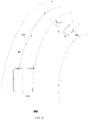
- FIG. 3 is a schematic diagram of a scenario 3000 of predicting a lane-changing probability of a target vehicle based on a motion status of the target vehicle.
- a present vehicle is denoted by a reference numeral 310
- the target vehicle is denoted by a reference numeral 320.
- a center of a front bumper of the vehicle is, for example, used as an origin, which is denoted by a point O in FIG. 3 .
- a lane line coordinate system may be a Frenet coordinate system, in which a lane centerline is used as a reference line, and variables s and d are used to describe positions of the vehicle on a road.
- the s coordinates represent a distance along the road (also referred to as a longitudinal displacement or a longitudinal distance), and the d coordinates represent a position relative to the left or right of the road (also referred to as a lateral displacement or a lateral distance).
- a projection point of the vehicle 320 on the reference line (namely, a lane centerline 330) is C, and therefore, a distance between the point C and a lateral position B of the target vehicle 320 in the vehicle coordinate system is the lateral distance d y_ccs of the target vehicle in the lane line coordinate system.
- the first machine learning model is trained by using at least the lateral distance d y_ccs of the target vehicle in the lane line coordinate system and the lateral velocity v y_ccs of the target vehicle in the lane line coordinate system as feature parameters.
- c 1 to c 5 are coefficients obtained after training of the first machine learning model.
- the model parameters c 1 to c 5 are obtained after training, by using a big data learning method, based on the velocity and the position of the target vehicle. Then, the velocity and the position of the target vehicle can be input to obtain a probability value of lane changing of the target vehicle.
- the second machine learning model is trained by using at least the longitudinal distance d x of the target vehicle in the vehicle coordinate system of the present vehicle, the lateral distance d y_ccs of the target vehicle in the lane line coordinate system, and the lateral velocity v y_ccs and the longitudinal velocity v x_ccs of the target vehicle in the lane line coordinate system as feature parameters.
- step S130 includes: when both the first lane-changing probability and the second lane-changing probability satisfy a threshold condition, considering lane-changing prediction of the target vehicle successful and outputting a lane-changing probability P of the target vehicle.
- a final lane-changing probability P w1 ⁇ P1 + w2 ⁇ P2, where w1 and w2 are weights and may be adjusted as needed.
- the method for lane-changing prediction of a target vehicle provided in the one or more embodiments of the invention can be implemented by using a computer program.
- a computer storage medium for example, a USB flash drive
- the method for lane-changing prediction of a target vehicle according to one or more embodiments of the invention can be performed by executing the computer program.
- FIG. 2 is a schematic structural diagram of a device 2000 for lane-changing prediction of a target vehicle according to an embodiment of the invention.
- the device 2000 for lane-changing prediction of a target vehicle includes: a receiving apparatus 210, a calculation apparatus 220, and a determination apparatus 230.
- the receiving apparatus 210 is configured to receive a velocity and a position of the target vehicle; the calculation apparatus 220 is configured to respectively obtain, based on the velocity and the position of the target vehicle, a first lane-changing probability and a second lane-changing probability of the target vehicle by using a first machine learning model and a second machine learning model; and the determination apparatus 230 is configured to determine a possibility of lane changing of the target vehicle based on the first lane-changing probability and the second lane-changing probability, the first machine learning model and the second machine learning model being pre-trained and being different from each other.
- target vehicle is another vehicle other than a present vehicle.
- the target vehicle to be subjected to lane-changing prediction is on the front left or front right of the present vehicle.
- Machine learning refers to a process of using some algorithms to guide a computer to obtain a proper model based on known data and then using the model to make a determination on a new situation. Therefore, in the context of the invention, the "first machine learning model” and the “second machine learning model” are different models obtained by a computer under the guidance of different algorithms, and the models may be used to determine (or predict) a lane-changing probability of the target vehicle.
- the use of a single model for lane-changing prediction of the target vehicle may produce a large determination error.
- the present vehicle may erroneously brake because of the target vehicle, and when severe, traffic accidents, such as rear-end collision, may be caused.
- the device 2000 for lane-changing prediction of a target vehicle uses the two models, namely, the first machine learning model and the second machine learning model, for lane-changing prediction of the target vehicle, thereby improving the accuracy of the lane-changing prediction of the target vehicle.
- the velocity and the position of the target vehicle include: a longitudinal distance d x of the target vehicle in a vehicle coordinate system of a present vehicle; a lateral distance d y_ccs of the target vehicle in a lane line coordinate system; and a lateral velocity v y_ccs and a longitudinal velocity v x_ccs of the target vehicle in the lane line coordinate system.
- FIG. 3 it is a schematic diagram of a scenario 3000 of predicting a lane-changing probability of a target vehicle based on a motion status of the target vehicle.
- a present vehicle is denoted by a reference numeral 310
- the target vehicle is denoted by a reference numeral 320.
- a center of a front bumper of the vehicle is, for example, used as an origin, which is denoted by a point O in FIG. 3 .
- a lane line coordinate system may be a Frenet coordinate system, in which a lane centerline is used as a reference line, and variables s and d are used to describe positions of the vehicle on a road.
- the s coordinates represent a distance along the road (also referred to as a longitudinal displacement or a longitudinal distance), and the d coordinates represent a position relative to the left or right of the road (also referred to as a lateral displacement or a lateral distance).
- a projection point of the vehicle 320 on the reference line (namely, a lane centerline 330) is C, and therefore, a distance between the point C and a lateral position B of the target vehicle 320 in the vehicle coordinate system is the lateral distance d y_ccs of the target vehicle in the lane line coordinate system.
- the device 2000 may further include: a first training apparatus configured to train the first machine learning model, wherein at least the lateral distance d y_ccs of the target vehicle in the lane line coordinate system and the lateral velocity v y_ccs of the target vehicle in the lane line coordinate system are used as feature parameters for the first machine learning model.
- a first training apparatus configured to train the first machine learning model, wherein at least the lateral distance d y_ccs of the target vehicle in the lane line coordinate system and the lateral velocity v y_ccs of the target vehicle in the lane line coordinate system are used as feature parameters for the first machine learning model.
- the device 2000 may further include: a second training apparatus configured to train the second machine learning model, wherein at least the longitudinal distance d x of the target vehicle in the vehicle coordinate system of the present vehicle, the lateral distance d y_ccs of the target vehicle in the lane line coordinate system, and the lateral velocity v y_ccs and the longitudinal velocity v x_ccs of the target vehicle in the lane line coordinate system are used as feature parameters for the second machine learning model.
- a second training apparatus configured to train the second machine learning model, wherein at least the longitudinal distance d x of the target vehicle in the vehicle coordinate system of the present vehicle, the lateral distance d y_ccs of the target vehicle in the lane line coordinate system, and the lateral velocity v y_ccs and the longitudinal velocity v x_ccs of the target vehicle in the lane line coordinate system are used as feature parameters for the second machine learning model.
- c 1 to c 5 are coefficients obtained after training of the first machine learning model.
- the model parameters c 1 to c 5 are obtained after training, by using a big data learning method, based on the velocity and the position of the target vehicle. Then, the velocity and the position of the target vehicle can be input to obtain a probability value of lane changing of the target vehicle.
- the device 2000 for lane-changing prediction of a target vehicle may be included in advanced driver assistance systems (ADAS).
- ADAS advanced driver assistance systems
- the advanced driver assistance systems (ADAS) may be installed in the vehicle in an embodiment.
- ADAS advanced driver assistance systems
- sensors such as a millimeter-wave radar, a laser radar, a monocular/binocular camera, and satellite navigation
- sensors mounted on an automobile to sense the surrounding environment at any time during traveling of the automobile, collect data, identify, monitor, and track a still/moving object, and perform system operations and analysis in combination with navigation map data, allowing for a driver to be aware of potential dangers in advance, thereby effectively improving the comfort and safety of the automobile during traveling.
- the advanced driver assistance systems include a traffic message channel (TMC) system, an intelligent speed adaptation or intelligent speed advice (ISA) system, a vehicular communication system, an adaptive cruise control (ACC) system, a lane departure warning system (LDWS), a lane keeping assistance system, a collision avoidance system or a pre-crash system, a night vision system, an adaptive light control system, a pedestrian protection system, an automatic parking system, a traffic sign recognition system, a blind spot detection system, a driver drowsiness detection system, a hill descent control system, and an electric vehicle warning sounds system.
- TMC traffic message channel
- ISA intelligent speed adaptation or intelligent speed advice
- ACC adaptive cruise control
- LDWS lane departure warning system
- a collision avoidance system or a pre-crash system a night vision system
- an adaptive light control system a pedestrian protection system
- an automatic parking system a traffic sign recognition system
- a blind spot detection system a driver drowsiness detection system
- a hill descent control system a hill descent control
- two different models namely, the first machine learning model and the second machine learning model
- the first machine learning model and the second machine learning model are combined to provide a comprehensive determination of a lane-changing intention of the target vehicle, such that the accuracy and stability of a prediction system is ensured, thereby improving the driving safety.
Landscapes
- Engineering & Computer Science (AREA)
- Physics & Mathematics (AREA)
- Theoretical Computer Science (AREA)
- General Physics & Mathematics (AREA)
- Data Mining & Analysis (AREA)
- Mechanical Engineering (AREA)
- Transportation (AREA)
- Automation & Control Theory (AREA)
- General Engineering & Computer Science (AREA)
- Life Sciences & Earth Sciences (AREA)
- Bioinformatics & Computational Biology (AREA)
- Computer Vision & Pattern Recognition (AREA)
- Evolutionary Biology (AREA)
- Evolutionary Computation (AREA)
- Artificial Intelligence (AREA)
- Bioinformatics & Cheminformatics (AREA)
- Multimedia (AREA)
- Mathematical Physics (AREA)
- Probability & Statistics with Applications (AREA)
- Human Computer Interaction (AREA)
- Traffic Control Systems (AREA)
- Control Of Driving Devices And Active Controlling Of Vehicle (AREA)
Applications Claiming Priority (1)
| Application Number | Priority Date | Filing Date | Title |
|---|---|---|---|
| CN202110562398.8A CN113147766B (zh) | 2021-05-21 | 2021-05-21 | 目标车辆的换道预测方法及设备 |
Publications (1)
| Publication Number | Publication Date |
|---|---|
| EP4092633A1 true EP4092633A1 (de) | 2022-11-23 |
Family
ID=76877533
Family Applications (1)
| Application Number | Title | Priority Date | Filing Date |
|---|---|---|---|
| EP22165556.6A Pending EP4092633A1 (de) | 2021-05-21 | 2022-03-30 | Verfahren und vorrichtung zur spurwechselvorhersage eines zielfahrzeugs |
Country Status (3)
| Country | Link |
|---|---|
| US (1) | US12236788B2 (de) |
| EP (1) | EP4092633A1 (de) |
| CN (1) | CN113147766B (de) |
Families Citing this family (6)
| Publication number | Priority date | Publication date | Assignee | Title |
|---|---|---|---|---|
| KR20230014375A (ko) * | 2021-07-21 | 2023-01-30 | 현대모비스 주식회사 | 차량충돌 방지장치 및 방법 |
| CN113997954B (zh) * | 2021-11-29 | 2023-11-21 | 广州文远知行科技有限公司 | 一种车辆行驶意图预测方法、装置、设备及可读存储介质 |
| CN115447599B (zh) * | 2022-09-22 | 2023-06-27 | 上海保隆汽车科技股份有限公司 | 车辆转向自动预警方法、装置、设备及可读存储介质 |
| CN116824700B (zh) * | 2023-06-30 | 2026-02-13 | 驭势(上海)汽车科技有限公司 | 道路参与者的运动行为预测方法、装置、设备和介质 |
| CN118701056A (zh) * | 2024-06-26 | 2024-09-27 | 重庆长安汽车股份有限公司 | 一种车辆换道控制方法、装置、车辆及存储介质 |
| CN120057041B (zh) * | 2025-04-28 | 2025-08-08 | 山东交通学院 | 驾驶决策确定方法、装置及电子设备 |
Citations (1)
| Publication number | Priority date | Publication date | Assignee | Title |
|---|---|---|---|---|
| CN112053589A (zh) * | 2020-08-18 | 2020-12-08 | 北京航空航天大学 | 一种目标车辆换道行为自适应识别模型构建方法 |
Family Cites Families (7)
| Publication number | Priority date | Publication date | Assignee | Title |
|---|---|---|---|---|
| CN100492437C (zh) * | 2007-06-01 | 2009-05-27 | 清华大学 | 一种目标车换道工况下的快速识别方法 |
| EP3732085A4 (de) * | 2017-12-27 | 2021-08-11 | Bayerische Motoren Werke Aktiengesellschaft | Vorhersage eines spurwechsels eines fahrzeugs |
| DE112019000070T5 (de) * | 2018-01-07 | 2020-03-12 | Nvidia Corporation | Führen von fahrzeugen durch fahrzeugmanöver unter verwendung von modellen für maschinelles lernen |
| EP3650297B1 (de) * | 2018-11-08 | 2023-06-14 | Bayerische Motoren Werke Aktiengesellschaft | Verfahren und vorrichtung zum bestimmen von informationen in bezug auf einen spurwechsel eines zielfahrzeugs, und computerprogramm |
| KR102179835B1 (ko) * | 2018-12-26 | 2020-11-17 | 한양대학교 산학협력단 | 무선통신을 포함한 차량센서 기반의 객체선정 알고리즘 및 주변차량 주행 의도를 고려한 경로 예측 방법 및 시스템 |
| CN110020748B (zh) * | 2019-03-18 | 2022-02-15 | 杭州飞步科技有限公司 | 轨迹预测方法、装置、设备和存储介质 |
| US11548512B2 (en) * | 2019-08-23 | 2023-01-10 | Zoox, Inc. | Yield behavior modeling and prediction |
-
2021
- 2021-05-21 CN CN202110562398.8A patent/CN113147766B/zh active Active
-
2022
- 2022-03-30 EP EP22165556.6A patent/EP4092633A1/de active Pending
- 2022-05-19 US US17/748,234 patent/US12236788B2/en active Active
Patent Citations (1)
| Publication number | Priority date | Publication date | Assignee | Title |
|---|---|---|---|---|
| CN112053589A (zh) * | 2020-08-18 | 2020-12-08 | 北京航空航天大学 | 一种目标车辆换道行为自适应识别模型构建方法 |
Non-Patent Citations (4)
| Title |
|---|
| DOU YANGLIU ET AL: "Lane changing prediction at highway lane drops using support vector machine and artificial neural network classifiers", 2016 IEEE INTERNATIONAL CONFERENCE ON ADVANCED INTELLIGENT MECHATRONICS (AIM), IEEE, 12 July 2016 (2016-07-12), pages 901 - 906, XP032971944, DOI: 10.1109/AIM.2016.7576883 * |
| REMMEN FLORIS ET AL: "Cut-in Scenario Prediction for Automated Vehicles", 2018 IEEE INTERNATIONAL CONFERENCE ON VEHICULAR ELECTRONICS AND SAFETY (ICVES), IEEE, 12 September 2018 (2018-09-12), pages 1 - 7, XP033439389, DOI: 10.1109/ICVES.2018.8519594 * |
| SHOU ZHENYU ET AL: "Long-Term Prediction of Lane Change Maneuver Through a Multilayer Perceptron", 2020 IEEE INTELLIGENT VEHICLES SYMPOSIUM (IV), IEEE, 19 October 2020 (2020-10-19), pages 246 - 252, XP033873457, DOI: 10.1109/IV47402.2020.9304587 * |
| SONKA ADRIAN ET AL: "Dual approach for maneuver classification in vehicle environment data", 2017 IEEE INTELLIGENT VEHICLES SYMPOSIUM (IV), IEEE, 11 June 2017 (2017-06-11), pages 97 - 102, XP033133739, DOI: 10.1109/IVS.2017.7995704 * |
Also Published As
| Publication number | Publication date |
|---|---|
| CN113147766B (zh) | 2025-08-08 |
| CN113147766A (zh) | 2021-07-23 |
| US12236788B2 (en) | 2025-02-25 |
| US20220375349A1 (en) | 2022-11-24 |
Similar Documents
| Publication | Publication Date | Title |
|---|---|---|
| EP4092633A1 (de) | Verfahren und vorrichtung zur spurwechselvorhersage eines zielfahrzeugs | |
| CN109795487B (zh) | 用于控制车辆队列行驶的装置和方法 | |
| US12441317B2 (en) | Automated lane changing device and method for vehicle | |
| US9159023B2 (en) | System for predicting a driver's intention to change lanes | |
| US9744969B2 (en) | Vehicle control apparatus and method for driving safety | |
| US9566981B2 (en) | Method and system for post-collision manoeuvre planning and vehicle equipped with such system | |
| EP1332910A1 (de) | Verfahren und System zur Verbesserung der Fahrerunterstützung | |
| CN111516692A (zh) | 一种车辆在坑洼路面上行驶的控制系统及方法 | |
| US20140350813A1 (en) | Apparatus and method for preventing collision with vehicle | |
| CN112208533A (zh) | 车辆控制系统、车辆控制方法及存储介质 | |
| CN111731296B (zh) | 行驶控制装置、行驶控制方法以及存储程序的存储介质 | |
| US20190256085A1 (en) | Apparatus and method for setting speed of vehicle | |
| CN114506324B (zh) | 一种车道决策方法及相关装置 | |
| CN116238483A (zh) | 一种考虑自车与他车碰撞的自车行车风险量化方法及系统 | |
| JP2019209909A (ja) | 車両制御システム | |
| CN117842019B (zh) | 超车辅助方法、装置、设备及存储介质 | |
| US12315269B2 (en) | Method and device for determining reliability of visual detection | |
| EP4108536B1 (de) | Verfahren und vorrichtung zur fahrerunterstützung | |
| CN117980207A (zh) | 驾驶控制方法及驾驶控制装置 | |
| CN119329529B (zh) | 车辆变道的控制方法、装置、设备、介质及车辆 | |
| US12447967B2 (en) | Vehicle control device, operation method of vehicle control device, and storage medium | |
| CN117184081B (zh) | 一种停车控制方法、装置、电子设备及存储介质 | |
| EP4403429A1 (de) | Verfahren zur vermeidung einer heckkollision zwischen einem ersten fahrzeug und einem zweiten fahrzeug, datenverarbeitungsvorrichtung, computerprogramm und computerlesbares speichermedium | |
| CN117585005A (zh) | 向周围车辆发送预警信息的方法和提示驾驶员的方法 | |
| CN121794174A (zh) | 用于为车辆提供变道辅助的方法和用于车辆的变道辅助方法 |
Legal Events
| Date | Code | Title | Description |
|---|---|---|---|
| PUAI | Public reference made under article 153(3) epc to a published international application that has entered the european phase |
Free format text: ORIGINAL CODE: 0009012 |
|
| STAA | Information on the status of an ep patent application or granted ep patent |
Free format text: STATUS: REQUEST FOR EXAMINATION WAS MADE |
|
| 17P | Request for examination filed |
Effective date: 20220330 |
|
| AK | Designated contracting states |
Kind code of ref document: A1 Designated state(s): AL AT BE BG CH CY CZ DE DK EE ES FI FR GB GR HR HU IE IS IT LI LT LU LV MC MK MT NL NO PL PT RO RS SE SI SK SM TR |
|
| STAA | Information on the status of an ep patent application or granted ep patent |
Free format text: STATUS: EXAMINATION IS IN PROGRESS |
|
| 17Q | First examination report despatched |
Effective date: 20241219 |