EP4089498B1 - Autonomes fahrsystem, verfahren zur steuerung von autonomem fahren und nichtflüchtiges speichermedium - Google Patents
Autonomes fahrsystem, verfahren zur steuerung von autonomem fahren und nichtflüchtiges speichermedium Download PDFInfo
- Publication number
- EP4089498B1 EP4089498B1 EP22167338.7A EP22167338A EP4089498B1 EP 4089498 B1 EP4089498 B1 EP 4089498B1 EP 22167338 A EP22167338 A EP 22167338A EP 4089498 B1 EP4089498 B1 EP 4089498B1
- Authority
- EP
- European Patent Office
- Prior art keywords
- remote support
- autonomous vehicle
- route
- specific position
- autonomous
- Prior art date
- Legal status (The legal status is an assumption and is not a legal conclusion. Google has not performed a legal analysis and makes no representation as to the accuracy of the status listed.)
- Active
Links
Images







Classifications
-
- B—PERFORMING OPERATIONS; TRANSPORTING
- B60—VEHICLES IN GENERAL
- B60W—CONJOINT CONTROL OF VEHICLE SUB-UNITS OF DIFFERENT TYPE OR DIFFERENT FUNCTION; CONTROL SYSTEMS SPECIALLY ADAPTED FOR HYBRID VEHICLES; ROAD VEHICLE DRIVE CONTROL SYSTEMS FOR PURPOSES NOT RELATED TO THE CONTROL OF A PARTICULAR SUB-UNIT
- B60W60/00—Drive control systems specially adapted for autonomous road vehicles
-
- G—PHYSICS
- G08—SIGNALLING
- G08G—TRAFFIC CONTROL SYSTEMS
- G08G1/00—Traffic control systems for road vehicles
- G08G1/09—Arrangements for giving variable traffic instructions
- G08G1/0962—Arrangements for giving variable traffic instructions having an indicator mounted inside the vehicle, e.g. giving voice messages
- G08G1/0968—Systems involving transmission of navigation instructions to the vehicle
- G08G1/096833—Systems involving transmission of navigation instructions to the vehicle where different aspects are considered when computing the route
- G08G1/096844—Systems involving transmission of navigation instructions to the vehicle where different aspects are considered when computing the route where the complete route is dynamically recomputed based on new data
-
- G—PHYSICS
- G05—CONTROLLING; REGULATING
- G05D—SYSTEMS FOR CONTROLLING OR REGULATING NON-ELECTRIC VARIABLES
- G05D1/00—Control of position, course, altitude or attitude of land, water, air or space vehicles, e.g. using automatic pilots
- G05D1/0011—Control of position, course, altitude or attitude of land, water, air or space vehicles, e.g. using automatic pilots associated with a remote control arrangement
- G05D1/0022—Control of position, course, altitude or attitude of land, water, air or space vehicles, e.g. using automatic pilots associated with a remote control arrangement characterised by the communication link
-
- B—PERFORMING OPERATIONS; TRANSPORTING
- B60—VEHICLES IN GENERAL
- B60W—CONJOINT CONTROL OF VEHICLE SUB-UNITS OF DIFFERENT TYPE OR DIFFERENT FUNCTION; CONTROL SYSTEMS SPECIALLY ADAPTED FOR HYBRID VEHICLES; ROAD VEHICLE DRIVE CONTROL SYSTEMS FOR PURPOSES NOT RELATED TO THE CONTROL OF A PARTICULAR SUB-UNIT
- B60W50/00—Details of control systems for road vehicle drive control not related to the control of a particular sub-unit, e.g. process diagnostic or vehicle driver interfaces
- B60W50/02—Ensuring safety in case of control system failures, e.g. by diagnosing, circumventing or fixing failures
- B60W50/0205—Diagnosing or detecting failures; Failure detection models
-
- B—PERFORMING OPERATIONS; TRANSPORTING
- B60—VEHICLES IN GENERAL
- B60W—CONJOINT CONTROL OF VEHICLE SUB-UNITS OF DIFFERENT TYPE OR DIFFERENT FUNCTION; CONTROL SYSTEMS SPECIALLY ADAPTED FOR HYBRID VEHICLES; ROAD VEHICLE DRIVE CONTROL SYSTEMS FOR PURPOSES NOT RELATED TO THE CONTROL OF A PARTICULAR SUB-UNIT
- B60W50/00—Details of control systems for road vehicle drive control not related to the control of a particular sub-unit, e.g. process diagnostic or vehicle driver interfaces
- B60W50/02—Ensuring safety in case of control system failures, e.g. by diagnosing, circumventing or fixing failures
- B60W50/029—Adapting to failures or work around with other constraints, e.g. circumvention by avoiding use of failed parts
-
- B—PERFORMING OPERATIONS; TRANSPORTING
- B60—VEHICLES IN GENERAL
- B60W—CONJOINT CONTROL OF VEHICLE SUB-UNITS OF DIFFERENT TYPE OR DIFFERENT FUNCTION; CONTROL SYSTEMS SPECIALLY ADAPTED FOR HYBRID VEHICLES; ROAD VEHICLE DRIVE CONTROL SYSTEMS FOR PURPOSES NOT RELATED TO THE CONTROL OF A PARTICULAR SUB-UNIT
- B60W60/00—Drive control systems specially adapted for autonomous road vehicles
- B60W60/001—Planning or execution of driving tasks
- B60W60/0015—Planning or execution of driving tasks specially adapted for safety
-
- B—PERFORMING OPERATIONS; TRANSPORTING
- B60—VEHICLES IN GENERAL
- B60W—CONJOINT CONTROL OF VEHICLE SUB-UNITS OF DIFFERENT TYPE OR DIFFERENT FUNCTION; CONTROL SYSTEMS SPECIALLY ADAPTED FOR HYBRID VEHICLES; ROAD VEHICLE DRIVE CONTROL SYSTEMS FOR PURPOSES NOT RELATED TO THE CONTROL OF A PARTICULAR SUB-UNIT
- B60W60/00—Drive control systems specially adapted for autonomous road vehicles
- B60W60/001—Planning or execution of driving tasks
- B60W60/0025—Planning or execution of driving tasks specially adapted for specific operations
-
- G—PHYSICS
- G01—MEASURING; TESTING
- G01C—MEASURING DISTANCES, LEVELS OR BEARINGS; SURVEYING; NAVIGATION; GYROSCOPIC INSTRUMENTS; PHOTOGRAMMETRY OR VIDEOGRAMMETRY
- G01C21/00—Navigation; Navigational instruments not provided for in groups G01C1/00 - G01C19/00
- G01C21/26—Navigation; Navigational instruments not provided for in groups G01C1/00 - G01C19/00 specially adapted for navigation in a road network
- G01C21/34—Route searching; Route guidance
- G01C21/3407—Route searching; Route guidance specially adapted for specific applications
- G01C21/3415—Dynamic re-routing, e.g. recalculating the route when the user deviates from calculated route or after detecting real-time traffic data or accidents
-
- G—PHYSICS
- G01—MEASURING; TESTING
- G01C—MEASURING DISTANCES, LEVELS OR BEARINGS; SURVEYING; NAVIGATION; GYROSCOPIC INSTRUMENTS; PHOTOGRAMMETRY OR VIDEOGRAMMETRY
- G01C21/00—Navigation; Navigational instruments not provided for in groups G01C1/00 - G01C19/00
- G01C21/26—Navigation; Navigational instruments not provided for in groups G01C1/00 - G01C19/00 specially adapted for navigation in a road network
- G01C21/34—Route searching; Route guidance
- G01C21/3453—Special cost functions, i.e. other than distance or default speed limit of road segments
- G01C21/3461—Preferred or disfavoured areas, e.g. dangerous zones, toll or emission zones, intersections, manoeuvre types or segments such as motorways, toll roads or ferries
-
- G—PHYSICS
- G05—CONTROLLING; REGULATING
- G05D—SYSTEMS FOR CONTROLLING OR REGULATING NON-ELECTRIC VARIABLES
- G05D1/00—Control of position, course, altitude or attitude of land, water, air or space vehicles, e.g. using automatic pilots
- G05D1/0011—Control of position, course, altitude or attitude of land, water, air or space vehicles, e.g. using automatic pilots associated with a remote control arrangement
- G05D1/0038—Control of position, course, altitude or attitude of land, water, air or space vehicles, e.g. using automatic pilots associated with a remote control arrangement by providing the operator with simple or augmented images from one or more cameras located onboard the vehicle, e.g. tele-operation
-
- G—PHYSICS
- G08—SIGNALLING
- G08G—TRAFFIC CONTROL SYSTEMS
- G08G1/00—Traffic control systems for road vehicles
- G08G1/09—Arrangements for giving variable traffic instructions
- G08G1/0962—Arrangements for giving variable traffic instructions having an indicator mounted inside the vehicle, e.g. giving voice messages
- G08G1/0967—Systems involving transmission of highway information, e.g. weather, speed limits
- G08G1/096708—Systems involving transmission of highway information, e.g. weather, speed limits where the received information might be used to generate an automatic action on the vehicle control
- G08G1/096725—Systems involving transmission of highway information, e.g. weather, speed limits where the received information might be used to generate an automatic action on the vehicle control where the received information generates an automatic action on the vehicle control
-
- G—PHYSICS
- G08—SIGNALLING
- G08G—TRAFFIC CONTROL SYSTEMS
- G08G1/00—Traffic control systems for road vehicles
- G08G1/09—Arrangements for giving variable traffic instructions
- G08G1/0962—Arrangements for giving variable traffic instructions having an indicator mounted inside the vehicle, e.g. giving voice messages
- G08G1/0967—Systems involving transmission of highway information, e.g. weather, speed limits
- G08G1/096766—Systems involving transmission of highway information, e.g. weather, speed limits where the system is characterised by the origin of the information transmission
- G08G1/096783—Systems involving transmission of highway information, e.g. weather, speed limits where the system is characterised by the origin of the information transmission where the origin of the information is a roadside individual element
-
- G—PHYSICS
- G08—SIGNALLING
- G08G—TRAFFIC CONTROL SYSTEMS
- G08G1/00—Traffic control systems for road vehicles
- G08G1/09—Arrangements for giving variable traffic instructions
- G08G1/0962—Arrangements for giving variable traffic instructions having an indicator mounted inside the vehicle, e.g. giving voice messages
- G08G1/0968—Systems involving transmission of navigation instructions to the vehicle
- G08G1/096833—Systems involving transmission of navigation instructions to the vehicle where different aspects are considered when computing the route
-
- H—ELECTRICITY
- H04—ELECTRIC COMMUNICATION TECHNIQUE
- H04L—TRANSMISSION OF DIGITAL INFORMATION, e.g. TELEGRAPHIC COMMUNICATION
- H04L67/00—Network arrangements or protocols for supporting network services or applications
- H04L67/01—Protocols
- H04L67/12—Protocols specially adapted for proprietary or special-purpose networking environments, e.g. medical networks, sensor networks, networks in vehicles or remote metering networks
-
- H—ELECTRICITY
- H04—ELECTRIC COMMUNICATION TECHNIQUE
- H04W—WIRELESS COMMUNICATION NETWORKS
- H04W4/00—Services specially adapted for wireless communication networks; Facilities therefor
- H04W4/30—Services specially adapted for particular environments, situations or purposes
- H04W4/40—Services specially adapted for particular environments, situations or purposes for vehicles, e.g. vehicle-to-pedestrians [V2P]
-
- H—ELECTRICITY
- H04—ELECTRIC COMMUNICATION TECHNIQUE
- H04W—WIRELESS COMMUNICATION NETWORKS
- H04W4/00—Services specially adapted for wireless communication networks; Facilities therefor
- H04W4/30—Services specially adapted for particular environments, situations or purposes
- H04W4/40—Services specially adapted for particular environments, situations or purposes for vehicles, e.g. vehicle-to-pedestrians [V2P]
- H04W4/44—Services specially adapted for particular environments, situations or purposes for vehicles, e.g. vehicle-to-pedestrians [V2P] for communication between vehicles and infrastructures, e.g. vehicle-to-cloud [V2C] or vehicle-to-home [V2H]
-
- B—PERFORMING OPERATIONS; TRANSPORTING
- B60—VEHICLES IN GENERAL
- B60W—CONJOINT CONTROL OF VEHICLE SUB-UNITS OF DIFFERENT TYPE OR DIFFERENT FUNCTION; CONTROL SYSTEMS SPECIALLY ADAPTED FOR HYBRID VEHICLES; ROAD VEHICLE DRIVE CONTROL SYSTEMS FOR PURPOSES NOT RELATED TO THE CONTROL OF A PARTICULAR SUB-UNIT
- B60W50/00—Details of control systems for road vehicle drive control not related to the control of a particular sub-unit, e.g. process diagnostic or vehicle driver interfaces
- B60W50/02—Ensuring safety in case of control system failures, e.g. by diagnosing, circumventing or fixing failures
- B60W50/029—Adapting to failures or work around with other constraints, e.g. circumvention by avoiding use of failed parts
- B60W2050/0292—Fail-safe or redundant systems, e.g. limp-home or backup systems
-
- B—PERFORMING OPERATIONS; TRANSPORTING
- B60—VEHICLES IN GENERAL
- B60W—CONJOINT CONTROL OF VEHICLE SUB-UNITS OF DIFFERENT TYPE OR DIFFERENT FUNCTION; CONTROL SYSTEMS SPECIALLY ADAPTED FOR HYBRID VEHICLES; ROAD VEHICLE DRIVE CONTROL SYSTEMS FOR PURPOSES NOT RELATED TO THE CONTROL OF A PARTICULAR SUB-UNIT
- B60W2556/00—Input parameters relating to data
- B60W2556/40—High definition maps
-
- B—PERFORMING OPERATIONS; TRANSPORTING
- B60—VEHICLES IN GENERAL
- B60W—CONJOINT CONTROL OF VEHICLE SUB-UNITS OF DIFFERENT TYPE OR DIFFERENT FUNCTION; CONTROL SYSTEMS SPECIALLY ADAPTED FOR HYBRID VEHICLES; ROAD VEHICLE DRIVE CONTROL SYSTEMS FOR PURPOSES NOT RELATED TO THE CONTROL OF A PARTICULAR SUB-UNIT
- B60W2556/00—Input parameters relating to data
- B60W2556/45—External transmission of data to or from the vehicle
Definitions
- the present disclosure relates to an autonomous driving system, an autonomous driving control method, and a non-transitory storage medium.
- JP 2018-077649 A discloses a remote driving control device that remotely drives a vehicle.
- the remote driving control device remotely drives the vehicle by communicating with the vehicle.
- a vehicle may be navigated to an available space from a drop-off location with the use of special-purpose sensors, GPS data, or wireless signal triangulation to identify available parking spots.
- a self-driving vehicle Based on a detected anomaly associated with a live sensor view, a self-driving vehicle according to US 2018/0257643 A1 can transmit a teleassistance inquiry to a backend transport system in accordance with a data prioritization scheme.
- a recharging station server computer system is configured to receive recharging event information corresponding to a recharging event for an electric vehicle battery unit by an identified recharger, the recharging event information including at least a measurement relating to an electrical infrastructure providing power to the identified recharger in a system of US 2016/0026659 A1 .
- a remote support technique for remotely supporting driving of an autonomous vehicle will be considered.
- Remote support requires communication between a remote support device and an autonomous vehicle.
- a "remote support system” includes configurations and functions for providing the remote support to the autonomous vehicle.
- the remote support system includes a remote support device, a communication network, and a communication device mounted on the autonomous vehicle. If an abnormality occurs in at least a part of the remote support system, the remote support system cannot provide the remote support to the autonomous vehicle or the accuracy of remote support will decrease.
- the present disclosure provides a technique capable of appropriately controlling the autonomous vehicle when the abnormality occurs in the remote support system that provides the remote support to the autonomous vehicle.
- the invention is defined in the claims and the independent claims define an autonomous driving system according to a first aspect of the present disclosure, an autonomous driving control method according to a second aspect of the present disclosure, and a non-transitory storage medium according to a third aspect of the present disclosure.
- the autonomous driving system searches for the alternative route having a smaller number of specific positions to be passed through by an autonomous vehicle than a first target route.
- a target route to a destination is changed from the first target route to the alternative route. Since the number of specific positions to be passed through by the autonomous vehicle decreases, the overall probability that remote support will be required decreases. Therefore, the probability that the autonomous vehicle can reach the destination increases. Even when the abnormality is detected in the remote support system, it is not necessary to end autonomous driving near the current position. Performing a rerouting process makes it possible to continue autonomous driving as much as possible.
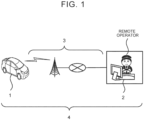
- FIG. 1 is a conceptual diagram showing a remote support system according to an embodiment of the present disclosure.
- the remote support system includes an autonomous vehicle 1, a remote support device 2, and a communication network 3.
- the autonomous vehicle 1 is a vehicle capable of autonomous driving. Autonomous driving is assumed that the one does not necessarily require a driver to fully focus on driving (so-called Level 3 or higher autonomous driving).
- the autonomous vehicle 1 may be a Level 4 or higher autonomous vehicle that does not require a driver.
- the autonomous vehicle 1 is an object of remote support in the present embodiment.
- the remote support device 2 is a device for remotely supporting the autonomous vehicle 1, and the remote support device 2 is operated by a remote operator.
- the autonomous vehicle 1 and the remote support device 2 are connected to each other via the communication network 3 so that they can communicate with each other via the communication network 3.
- the remote support device 2 communicates with the autonomous vehicle 1 via the communication network 3 to remotely support driving of the autonomous vehicle 1. More specifically, the remote operator operates the remote support device 2 to remotely support driving of the autonomous vehicle 1. It can also be said that the remote support device 2 is a device that assists the remote support by the remote operator to the autonomous vehicle 1.
- the communication network 3 includes a wireless base station, a wireless communication network, a wired communication network, etc.
- An example of the wireless communication network is a 5th Generation (5G) network.
- FIG. 2 is a conceptual diagram illustrating an overview of remote support according to the present embodiment.
- An autonomous driving system 10 controls the autonomous vehicle 1.
- the autonomous driving system 10 performs various vehicle processes during autonomous driving. Typical vehicle processes that are performed during autonomous driving include the following processes.
- the perception accuracy of a traffic light indication may decrease when a traffic light installed at an intersection is in sunlight.
- the autonomous driving system 10 requires remote support for traffic light perception.
- the autonomous driving system 10 also requires remote support for the action determination process and the timing determination process.
- an oncoming vehicle may enter an intersection or an oncoming vehicle or a preceding vehicle may still stay in the intersection, even after a traffic light indication seen from the autonomous driving system 10 shows that "vehicles can turn right.”
- the autonomous driving system 10 may request remote support for the action determination process and the timing determination process while the autonomous driving system 10 stops the autonomous vehicle 1.
- the autonomous driving system 10 may request remote support for the action determination process.
- the autonomous driving system 10 may request the remote operator to remotely drive (remotely control) the autonomous vehicle 1.
- the "remote support” in the present embodiment is a concept including not only support for at least one of the perception process, the action determination process, and the timing determination process, but also remote driving (remote control).
- the autonomous driving system 10 determines that remote support is necessary, it sends a remote support request REQ to the remote support device 2 via the communication network 3.
- the remote support request REQ is information requesting the remote operator for remote support for the autonomous vehicle 1.
- the remote support device 2 notifies the remote operator of the received remote support request REQ.
- the remote operator starts remotely supporting the autonomous vehicle 1.
- the autonomous driving system 10 sends vehicle information VCL to the remote support device 2 via the communication network 3 during the remote support.
- the vehicle information VCL indicates the state of the autonomous vehicle 1, the surroundings of the autonomous vehicle 1, the results of the vehicle processes performed by the autonomous driving system 10, etc.
- the remote support device 2 presents the vehicle information VCL received from the autonomous driving system 10 to the remote operator. For example, as shown in FIG. 2 , the remote support device 2 displays image information IMG captured by a camera mounted on the autonomous vehicle 1 on a display device.
- the remote operator remotely supports the autonomous vehicle 1 while referring to the vehicle information VCL.
- An operator instruction INS is an instruction to the autonomous vehicle 1 that is input by the remote operator.
- the remote support device 2 receives an input of an operator instruction INS from the remote operator.
- the remote support device 2 then sends the operator instruction INS to the autonomous vehicle 1 via the communication network 3.
- the autonomous driving system 10 receives the operator instruction INS from the remote support device 2 and controls the autonomous vehicle 1 according to the received operator instruction INS.
- a "remote support system 4" means configurations and functions for providing remote support to the autonomous vehicle 1.
- the remote support system 4 includes the remote support device 2, the communication network 3, and a communication device mounted on the autonomous vehicle 1, etc (see FIG. 1 ).
- Examples of the communication device mounted on the autonomous vehicle 1 include a communication electronic control unit (ECU), a communication module, and a transmitter and receiver circuit, etc.
- the abnormality in the remote support system 4 includes a "functional failure" that is a loss of function of the remote support system 4.
- An example of the functional failure of the remote support system 4 is a communication disruption.
- a communication disruption may occur when trouble occurs in the communication network 3.
- Another example of the functional failure of the remote support system 4 is a failure (down) of the remote support device 2.
- Still another example of the functional failure of the remote support system 4 is a failure of the communication device mounted on the autonomous vehicle 1. When a functional failure of the remote support system 4 occurs, the remote support system 4 cannot provide remote support to the autonomous vehicle 1.
- the abnormality in the remote support system 4 may include "performance degradation" that is degradation in function of the remote support system 4.
- An example of the performance degradation of the remote support system 4 is a significant decrease in communication speed or throughput.
- Another example of the performance degradation of the remote support system 4 is a significant increase in communication delay.
- Still another example of the performance degradation of the remote support system 4 is a decrease in internal communication speed or calculation speed of the communication ECU mounted on the autonomous vehicle 1.
- the accuracy of remote support may decrease when the performance degradation of the remote support system 4 occurs.
- the remote support system 4 cannot provide remote support to the autonomous vehicle 1 or the accuracy of remote support to the autonomous vehicle 1 will decrease.
- the autonomous driving system 10 can continue autonomous driving as usual in situations in which remote support is not necessary. That is, it is not necessary to rush to end autonomous driving just because the abnormality is detected in the remote support system 4.
- the autonomous driving system 10 continues autonomous driving as much as possible in consideration of the possibility that remote support is required.
- a position where there is a possibility that remote support for the autonomous vehicle 1 is required is hereinafter referred to as a "specific position PS."
- the specific position PS is such an intersection as shown in FIG. 3 .
- the specific position PS may be a position other than an operational design domain (ODD).
- ODD is a domain in which an autonomous driving system is designed to properly operate.
- the specific position PS may include a construction section, a traffic jam section, an accident location, etc.
- the specific position PS is registered in advance in map information.
- information on the specific position PS such as a traffic jam section or an accident location may be acquired in real time.
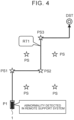
- FIG. 4 shows an example of the situation of autonomous driving upon detection of the abnormality in the remote support system 4.
- P1 and DST represent the current position and destination of the autonomous vehicle 1, respectively.
- a target route RT from the current position P1 to the destination DST of the autonomous vehicle 1 is set by the autonomous driving system 10.
- the current target route RT is referred to as a "first target route RT1.”
- the autonomous driving system 10 controls the autonomous vehicle 1 to move toward the destination DST along the first target route RT1.
- the specific position PS has already existed on the first target route RT1 to the destination DST at the time the abnormality is detected in the remote support system 4.
- the autonomous driving system 10 searches for an "alternative route RT2" different from the first target route RT1 as the target route RT to the destination DST.
- the autonomous driving system 10 searches for the alternative route RT2 having a smaller number of specific positions PSs to be passed through by the autonomous vehicle 1 than the first target route RT1.
- the autonomous driving system 10 performs a "rerouting process" in which the autonomous driving system 10 changes the target route RT to the destination DST from the first target route RT1 to the alternative route RT2.
- FIG. 5 is a conceptual diagram showing an example of the alternative route RT2.
- the autonomous vehicle 1 reaches the destination DST from the current position P1 without passing through any specific position PS. Since the alternative route RT2 does not pass through any specific position PS, the autonomous driving system 10 can continue autonomous driving as usual until the autonomous vehicle 1 reaches the destination DST, without requiring remote support. That is, the autonomous vehicle 1 can reach the destination DST without being affected by the abnormality in the remote support system 4.
- FIG. 6 is a conceptual diagram showing another example of the alternative route RT2.
- the autonomous vehicle 1 reaches the destination DST from the current position P1 through only one specific position PS 1. That is, the alternative route RT2 has a smaller number of specific positions PSs to be passed through by the autonomous vehicle 1 than the first target route RT1. Since the number of specific positions PSs to be passed through by the autonomous vehicle 1 decreases, the overall probability that remote support will be required decreases. Therefore, the probability that the autonomous vehicle 1 can reach the destination DST increases.
- the specific position PS 1 is a position where there is a possibility that remote support is required, and remote support is not necessarily required at the specific position PS 1. If remote support is not required at the specific position PS1, the autonomous vehicle 1 can pass through the specific position PS1 by normal autonomous driving. Even if remote support is required at the specific position PS 1, remote support can be provided when the abnormality in the remote support system 4 is "performance degradation," although the response of the remote support system 4 is slow.
- the autonomous driving system 10 may perform an "evacuation process" in which the autonomous driving system 10 safely evacuates the autonomous vehicle 1.
- FIG. 7 is a conceptual diagram illustrating an example of the evacuation process.
- a "target evacuation position PE" is a target stop position at which the autonomous vehicle 1 is to be stopped in the evacuation process.
- the target evacuation position PE may be set to a safe position on the road. In the example shown in FIG. 7 , the target evacuation position PE is set to the shoulder of the road.
- the autonomous driving system 10 sets the target evacuation position PE on and around the road on the first target route RT1.
- the autonomous driving system 10 then controls the autonomous vehicle 1 to move toward the target evacuation position PE and stop at the target evacuation position PE.
- the autonomous driving system 10 generates a target trajectory TR that the autonomous vehicle 1 moves from the current position toward the target evacuation position PE and stops at the target evacuation position PE.
- the autonomous driving system 10 controls driving of the autonomous vehicle 1 so that the autonomous vehicle 1 follows the target trajectory TR.
- An area that can be used as the target evacuation position PE in the evacuation process may be determined in advance.
- the area that can be used as the target evacuation position PE in the evacuation process is hereinafter referred to as a "candidate stopping area AC.”
- FIG. 8 is a conceptual diagram illustrating an example of the candidate stopping area AC.
- a "no stopping area AX" will be described first.
- No stopping areas AXs are areas where parking and stopping of vehicles are prohibited, and are determined in advance by road traffic laws etc.
- the no stopping area AX includes a crosswalk and an area with a predetermined width around the crosswalk.
- the no stopping area AX may include an intersection an area with a predetermined width around the intersection.
- Other areas such as an area in front of fire fighting equipment are also included in the no stopping areas AX.
- the candidate stopping area AC is selected from areas other than the no stopping area AX on the road.
- the candidate stopping area AC is a part of the areas other than the no stopping area AX.
- the candidate stopping area AC is selected in terms of ensuring the safety of the stopped autonomous vehicle 1.
- the candidate stopping area AC may be an area relatively close to the edge of the road.
- the candidate stopping area AC may be set to include a shoulder or a road margin.
- a priority level may be set for the candidate stopping area AC.
- a high priority level area ACH is a candidate stopping area AC having a relatively high priority level
- a low priority level area ACL is a candidate stopping area AC having a relatively low priority level.
- a straight section is set as a high priority level area ACH and a curved section is set as a low priority level area ACL.
- the candidate stopping area AC and the no stopping area AX are registered in advance in, for example, the map information.
- the autonomous driving system 10 may set the target evacuation position PE so that the target evacuation position PE is included in the candidate stopping area AC.
- the autonomous driving system 10 sets the target evacuation position PE so that the target evacuation position PE is included in the candidate stopping area AC having as high a priority level as possible.
- the autonomous driving system 10 searches for the alternative route RT2 having a smaller number of specific positions PSs to be passed through by the autonomous vehicle 1 than the first target route RT1.
- the target route RT to the destination DST is changed from the first target route RT1 to the alternative route RT2. Since the number of specific positions PSs to be passed through by the autonomous vehicle 1 decreases, the overall probability that remote support will be required decreases. Therefore, the probability that the autonomous vehicle 1 can reach the destination DST increases. Even when the abnormality is detected in the remote support system 4, it is not necessary to end autonomous driving near the current position P1. Performing the rerouting process makes it possible to continue autonomous driving as much as possible.
- the autonomous driving system 10 may search for the alternative route RT2 along which the autonomous vehicle 1 reaches the destination DST without passing through any specific position PS may be searched for. In this case, since there is no opportunity that remote support is required, the autonomous driving system 10 can continue autonomous driving as usual until the autonomous vehicle 1 reaches the destination DST. That is, the autonomous vehicle 1 can reach the destination DST without being affected by the abnormality in the remote support system 4.
- the autonomous driving system 10 controls the autonomous vehicle 1.
- the autonomous driving system 10 is mounted on the autonomous vehicle 1.
- at least a part of the autonomous driving system 10 may be located in an external device outside the autonomous vehicle 1 and may remotely control the autonomous vehicle 1. That is, the autonomous driving system 10 may be dispersedly located in the autonomous vehicle 1 and the external device.
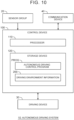
- FIG. 10 is a block diagram showing a configuration example of the autonomous driving system 10 according to the present embodiment.
- the autonomous driving system 10 includes a sensor group 20, a driving device 30, a communication device 40, and a control device 100.
- the sensor group 20 is mounted on the autonomous vehicle 1.
- the sensor group 20 includes a vehicle state sensor, a perception sensor, a position sensor, etc.
- the vehicle state sensor detects the state of the autonomous vehicle 1. Examples of the vehicle state sensor include a vehicle speed sensor, a yaw rate sensor, a lateral acceleration sensor, and a steering angle sensor, etc.
- the perception sensor detects the surroundings of the autonomous vehicle 1. Examples of the perception sensor include a camera, a Laser Imaging Detection and Ranging (LIDAR), and a radar, etc.
- the position sensor detects the position and orientation of the autonomous vehicle 1.
- An example of the position sensor is a Global Positioning System (GPS) sensor.
- GPS Global Positioning System
- the driving device 30 is mounted on the autonomous vehicle 1.
- the driving device 30 includes a steering device, a drive device, and a braking device.
- the steering device steers wheels.
- the steering device includes an electric power steering (EPS) system.
- EPS electric power steering
- the drive device is a power source that generates a driving force. Examples of the drive device include an engine, an electric motor, and an in-wheel motor, etc.
- the braking device generates a braking force.
- the communication device 40 communicates with the outside of the autonomous vehicle 1.
- the communication device 40 communicates with the remote support device 2 via the communication network 3 (see FIGS. 1 and 2 ).
- the communication device 40 may communicate with a management server.
- the communication device 40 may communicate with its surrounding infrastructure via vehicle-to-infrastructure (V2I) communication.
- the communication device 40 may communicate with other vehicles around it via vehicle-to-vehicle (V2V) communication.
- the communication device 40 includes a communication electronic control unit (ECU), a communication module, a transmitter and receiver circuit, etc.
- the control device 100 controls the autonomous vehicle 1.
- the control device 100 includes one or more processors 110 (hereinafter simply referred to as the "processor 110") and one or more storage devices 120 (hereinafter simply referred to as the “storage device 120").
- the processor 110 performs various processes.
- the processor 110 includes a central processing unit (CPU).
- the storage device 120 stores various kinds of information. Examples of the storage device 120 include a volatile memory, a nonvolatile memory, a hard disk drive (HDD), and a solid state drive (SSD).
- the control device 100 may include one or more ECUs. A part of the control device 100 may be an information processing device outside the autonomous vehicle 1.
- An autonomous driving control program PROG is a computer program for controlling the autonomous vehicle 1.
- the various programs performed by the control device 100 are implemented by the processor 110 executing the autonomous driving control program PROG.
- the autonomous driving control program PROG is stored in the storage device 120. Alternatively, the autonomous driving control program PROG may be recorded on a computer-readable recording medium.
- Driving environment information 200 indicates the driving environment for the autonomous vehicle 1.
- the driving environment information 200 is stored in the storage device 120.
- FIG. 11 is a block diagram showing an example of the driving environment information 200.
- the driving environment information 200 includes map information 210, specific position information 220, evacuation area information 230, vehicle state information 240, surroundings information 250, vehicle position information 260, and distribution information 270.
- the map information 210 includes a common navigation map.
- the map information 210 may indicate lane arrangements, road shapes, etc.
- the map information 210 may include position information of traffic lights, signs, etc.
- the processor 110 acquires map information of a necessary area from a map database.
- the map database may be stored in a predetermined storage device mounted on the autonomous vehicle 1, or may be stored in an external management server. In the latter case, the processor 110 communicates with the management server to acquire necessary map information.
- the specific position information 220 indicates the specific position PS where there is a possibility that remote support for the autonomous vehicle 1 is required.
- the specific position information 220 is created in advance.
- the specific position information 220 may be included in the map information 210. As will be described later, the specific position information 220 may be added in real time.
- the evacuation area information 230 indicates the positions of the candidate stopping area AC and the no stopping area AX (see FIG. 8 ).
- the evacuation area information 230 may indicate the priority level of each candidate stopping area AC (see FIG. 9 ).
- the evacuation area information 230 is created in advance.
- the evacuation area information 230 may be included in the map information 210.
- the vehicle state information 240 is information indicating the state of the autonomous vehicle 1.
- the processor 110 acquires the vehicle state information 240 from the vehicle state sensor.
- the surroundings information 250 is information indicating the surroundings of the autonomous vehicle 1.
- the processor 110 acquires the surroundings information 250 by using the perception sensor.
- the surroundings information 250 includes image information IMG captured by a camera.
- the surroundings information 250 further includes object information regarding an object around the autonomous vehicle 1. Examples of the object include pedestrians, bicycles, other vehicles (preceding vehicles, parked vehicles, etc.), road configurations (white lines, curbs, guardrails, walls, medians, roadside structures, etc.), signs, and obstacles, etc.
- the object information indicates the relative position and relative speed of the object with respect to the autonomous vehicle 1.
- the vehicle position information 260 is information indicating the position of the autonomous vehicle 1.
- the processor 110 acquires the vehicle position information 260 from the detection results of the position sensor.
- the processor 110 may acquire accurate vehicle position information 260 by a well-known self-localization process (Localization) using the object information and the map information 210.
- Localization self-localization process
- the distribution information 270 includes road traffic information, construction section information, traffic regulation information, etc.
- the processor 110 receives the distribution information 270 from an information providing server or roadside infrastructure via the communication device 40.
- the processor 110 can be aware of a construction section, a traffic jam section, an accident location, etc. based on the distribution information 270. In this case, the processor 110 may add the construction section, the traffic jam section, the accident location, etc. to the specific position information 220.
- the processor 110 performs "vehicle driving control” in which the processor 110 controls driving of the autonomous vehicle 1.
- the vehicle driving control includes steering control, acceleration control, and deceleration control.
- the processor 110 performs the vehicle driving control by controlling the driving device 30 (steering device, drive device, and braking device). Specifically, the processor 110 performs the steering control by controlling the steering device.
- the processor 110 performs the acceleration control by controlling the drive device.
- the processor 110 performs the deceleration control by controlling the drive device.
- the processor 110 performs autonomous driving control based on the driving environment information 200. More specifically, the processor 110 sets the target route RT to the destination DST based on the map information 210 etc. The processor 110 then performs the vehicle driving control based on the driving environment information 200 so that the autonomous vehicle 1 moves toward the destination DST along the target route RT.
- the processor 110 generates a driving plan for the autonomous vehicle 1 based on the driving environment information 200.
- the driving plan includes keeping the current lane, changing lanes, avoiding an obstacle, etc.
- the processor 110 also generates the target trajectory TR that is necessary for the autonomous vehicle 1 to run according to the driving plan.
- the target trajectory TR includes a target position and a target speed.
- the processor 110 then performs the vehicle driving control so that the autonomous vehicle 1 follows the target route RT and the target trajectory TR. 3-4. Process related to remote support
- the processor 110 determines whether remote support by the remote operator is necessary. Typically, situations in which remote support by the remote operator is necessary are situations in which autonomous driving is difficult. For example, when it is difficult to perform at least one of the perception process, the action determination process, and the timing determination process, the processor 110 determines that remote support by the remote operator is necessary.
- the processor 110 determines that remote support is necessary, it sends a remote support request REQ to the remote support device 2 via the communication device 40.
- the remote support request REQ requests the remote operator for remote support for the autonomous vehicle 1.
- the processor 110 also sends the vehicle information VCL to the remote support device 2 via the communication device 40.
- the vehicle information VCL includes at least a part of the driving environment information 200.
- the vehicle information VCL includes image information IMG captured by a camera.
- the vehicle information VCL may include object information.
- the vehicle information VCL may include the vehicle state information 240 and the vehicle position information 260.
- the vehicle information VCL may include the results of the perception process, the action determination process, and the timing determination process.
- the processor 110 also receives an operator instruction INS from the remote support device 2 via the communication device 40.
- An operator instruction INS is an instruction to the autonomous vehicle 1 that is input by the remote operator.
- the processor 110 receives an operator instruction INS, it performs the vehicle driving control according to the received operator instruction INS.
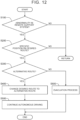
- FIG. 12 is a flowchart showing an example of a process that is performed by the autonomous driving system 10 according to the present embodiment.
- FIG. 12 shows a process flow that is performed when the abnormality occurs in the remote support system 4.
- step S100 the processor 110 determines whether there is the abnormality in the remote support system 4 that provides remote support to the autonomous vehicle 1.
- the remote support system 4 includes the remote support device 2, the communication network 3, and the communication device 40 of the autonomous driving system 10.
- the abnormality in the remote support system 4 includes a "functional failure" that is a loss of function of the remote support system 4.
- the processor 110 monitors the communication status with the remote support device 2 (e.g., throughput, communication speed). When communication with the remote support device 2 is disrupted, the processor 110 determines that a function failure has occurred in the remote support device 2 or the communication network 3.
- the communication device 40 e.g., communication ECU
- the self-diagnostic function allows the processor 110 to detect a functional failure of the communication device 40.
- the abnormality in the remote support system 4 may include performance degradation that is degradation in function of the remote support system 4.
- the processor 110 monitors the communication status with the remote support device 2 (e.g., throughput, communication speed, communication delay). When the throughput or the communication speed falls below a threshold, the processor 110 determines that performance degradation of the remote support system 4 has occurred. In another example, when the communication delay exceeds a threshold, the processor 110 determines that performance degradation of the remote support system 4 has occurred.
- step S100 When no abnormality is detected in the remote support system 4 (step S100; NO), the process in this cycle ends.
- step S100; YES When the abnormality is detected in the remote support system 4 (step S100; YES), the routine proceeds to step S200.
- step S200 the processor 110 determines whether there is the specific position PS on the first target route RT1 from the current position P1 to the destination DST.
- the first target route RT1 is set by the processor 110, and the processor 110 is aware of the first target route RT1.
- the specific position PS is obtained from the specific position information 220. Therefore, the processor 110 can determine whether there is the specific position PS on the first target route RT1, based on the specific position information 220.
- step S200 When there is the specific position PS on the first target route RT1 (step S200; YES), the routine proceeds to step S300. When there is no specific position PS on the first target route RT1 (step S200; NO), the process in this cycle ends.
- step S300 the processor 110 searches for the alternative route RT2 different from the first target route RT1 as the target route RT to the destination DST.
- the processor 110 searches for the alternative route RT2 having a smaller number of specific positions PSs to be passed through by the autonomous vehicle 1 than the first target route RT1.
- the processor 110 can search for such the alternative route RT2 based on the map information 210 and the specific position information 220.
- step S300 When the alternative route RT2 is found (step S300; YES), the routine proceeds to step S400. When no alternative route RT2 is found (step S300; NO), the routine proceeds to step S600. Hereinafter, some examples of step S300 will be described. 4-3-1.
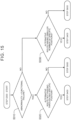
- FIG. 13 is a flowchart showing a first example of step S300.
- step S320 the processor 110 searches for the alternative route RT2 along which the autonomous vehicle 1 reaches the destination DST from the current position P1 without passing through any specific position PS.
- step S320; YES the routine proceeds to step S400.
- step S320; NO the routine proceeds to step S600.
- the processor 110 can search for the alternative route RT2 that is not affected by the abnormality in the remote support system 4.
- FIG. 14 is a flowchart showing a second example of step S300.
- Step S320 is similar to that in the first example.
- the routine proceeds to step S330.
- step S330 the processor 110 searches for the alternative route RT2 having a smaller number of specific positions PSs to be passed through by the autonomous vehicle 1 than the first target route RT1.
- step S330; YES the routine proceeds to step S400.
- step S330; NO the routine proceeds to step S600.
- selection of the alternative route RT2 can be expanded. That is, the condition imposed on the alternative route RT2 can be relaxed.
- FIG. 15 is a flowchart showing a third example of step S300.
- step S310 the processor 110 determines whether the abnormality in the remote support system 4 is a functional failure or performance degradation.
- step S310 When the abnormality in the remote support system 4 is a functional failure (step S310; YES), the routine proceeds to step S320.
- Step S320 and the subsequent steps are similar to those in the first example.
- step S310 When the abnormality in the remote support system 4 is performance degradation (step S310; NO), the routine proceeds to step S330. Step S330 and the subsequent steps are similar to those in the second example.
- the alternative route RT2 herein also includes the alternative route RT2 that does not pass through any specific position PS.
- selection of the alternative route RT2 can be expanded when the abnormality in the remote support system 4 is performance degradation. That is, the condition imposed on the alternative route RT2 can be relaxed when the abnormality in the remote support system 4 is performance degradation.
- step S400 the processor 110 performs the rerouting process. Specifically, the processor 110 changes the target route RT to the destination DST from the first target route RT1 to the alternative route RT2. The routine then proceeds to step S500. 4-5. Step S500
- step S500 the processor 110 performs the vehicle driving control based on the driving environment information 200 so that the autonomous vehicle 1 moves toward the destination DST along the alternative route RT2.
- step S600 the processor 110 performs the evacuation process in which the autonomous driving system 10 safely evacuates the autonomous vehicle 1.
- the processor 110 sets a target evacuation position PE on and around the road on the first target route RT1. At this time, the processor 110 sets the target evacuation position PE so that the autonomous vehicle 1 can actually stop, based on the current position P1, vehicle speed, motion performance, etc. of the autonomous vehicle 1.
- the processor 110 may further refer to the evacuation area information 230.
- the evacuation area information 230 indicates the positions of a candidate stopping area AC and the no stopping area AX. The processor 110 avoids the no stopping area AX for the desired evacuation position PE, and sets the target evacuation position PE within the candidate stopping area AC.
- the evacuation area information 230 may indicate the priority level of each candidate stopping area AC. In that case, the processor 110 sets the target evacuation position PE so that the target evacuation position PE is included in the candidate stopping area AC having as high a priority level as possible.
- the processor 110 then performs the vehicle driving control so that the autonomous vehicle 1 moves toward the target evacuation position PE and stops at the target evacuation position PE. For example, the processor 110 generates the target trajectory TR that the autonomous vehicle 1 moves from the current position P1 toward the target evacuation position PE and stops at the target evacuation position PE.
- the autonomous driving system 10 then performs the vehicle driving control so that the autonomous vehicle 1 follows the target trajectory TR (see FIG. 7 ).
Landscapes
- Engineering & Computer Science (AREA)
- Automation & Control Theory (AREA)
- Physics & Mathematics (AREA)
- Radar, Positioning & Navigation (AREA)
- Remote Sensing (AREA)
- General Physics & Mathematics (AREA)
- Mechanical Engineering (AREA)
- Human Computer Interaction (AREA)
- Transportation (AREA)
- Life Sciences & Earth Sciences (AREA)
- Atmospheric Sciences (AREA)
- Computer Networks & Wireless Communication (AREA)
- Signal Processing (AREA)
- Mathematical Physics (AREA)
- Aviation & Aerospace Engineering (AREA)
- Computing Systems (AREA)
- Health & Medical Sciences (AREA)
- General Health & Medical Sciences (AREA)
- Medical Informatics (AREA)
- Traffic Control Systems (AREA)
- Navigation (AREA)
- Control Of Driving Devices And Active Controlling Of Vehicle (AREA)
- Control Of Position, Course, Altitude, Or Attitude Of Moving Bodies (AREA)
Claims (12)
- Autonomes Fahrsystem (10), umfassend:eine oder mehrere Speichervorrichtungen (120), die spezifische Positionsinformationen (220) speichern, die eine spezifische Position (PS) angeben, wo ein autonomes Fahrzeug (1) möglicherweise Fernunterstützung benötigt,eine Kommunikationsvorrichtung (40), die dazu ausgestaltet ist, mit einer äußeren Umgebung des autonomen Fahrzeugs zu kommunizieren, wobei, wenn der eine oder die mehreren Prozessoren (110) Verteilungsinformationen (270) von einem Informationen bereitstellenden Server außerhalb des autonomen Fahrzeugs (1) oder von straßenseitiger Infrastruktur über die Kommunikationsvorrichtung (40) empfangen, der eine oder die mehreren Prozessoren (110) dazu ausgestaltet sind, die spezifische Position (PS) auf Grundlage der Verteilungsinformationen (270) zu den spezifischen Positionsinformationen (220) hinzuzufügen, undeinen oder mehrere Prozessoren (110), die dazu ausgestaltet sind,eine erste Zielroute als eine Zielroute festzulegen, die eine Route zu einem Bestimmungsort ist,zu bestimmen, ob eine Anomalie in einem Fernunterstützungssystem (4) aufgetreten ist, wobei das Fernunterstützungssystem (4) dazu ausgestaltet ist, dem autonomen Fahrzeug (1), das ein Gegenstand der Fernunterstützung ist, die Fernunterstützung bereitzustellen,wenn die Anomalie erfasst wird, die ein Leistungsabfall in dem Fernunterstützungssystem (4) ist, eine alternative Route, die eine Route zu dem Bestimmungsort ist, auf Grundlage der spezifischen Positionsinformationen (220) zu suchen, wobei die alternative Route eine geringere Anzahl der spezifischen Positionen (PS) aufweist, die von dem autonomen Fahrzeug (1) passiert werden müssen, als die erste Zielroute,wenn die alternative Route gefunden wird, die Zielroute von der ersten Zielroute auf die alternative Route zu ändern, unddas autonome Fahrzeug (1) zu steuern.
- Autonomes Fahrsystem (10) nach Anspruch 1, wobei der eine oder die mehreren Prozessoren (110) dazu ausgestaltet sind, auf Grundlage der spezifischen Positionsinformationen (220) jene alternative Route zu suchen, entlang welcher das autonome Fahrzeug (1) den Bestimmungsort erreicht, ohne die spezifische Position (PS) zu passieren.
- Autonomes Fahrsystem (10) nach Anspruch 2, wobei der eine oder die mehreren Prozessoren (110) dazu ausgestaltet sind, wenn die alternative Route, entlang welcher das autonome Fahrzeug (1) den Bestimmungsort erreicht, ohne die spezifische Position (PS) zu passieren, nicht gefunden wird, auf Grundlage der spezifischen Positionsinformationen (220) jene alternative Route zu suchen, bei welcher die eine oder die mehreren spezifischen Positionen (PS) von dem autonomen Fahrzeug (1) passiert werden müssen.
- Autonomes Fahrsystem (10) nach einem der Ansprüche 1 bis 3, wobei der eine oder die mehreren Prozessoren (110) dazu ausgestaltet sind, auf Grundlage der spezifischen Positionsinformationen (220) jene alternative Route zu suchen, entlang welcher das autonome Fahrzeug (1) den Bestimmungsort erreicht, ohne die spezifische Position (PS) zu passieren, wenn der eine oder die mehreren Prozessoren (110) bestimmen, dass die Anomalie in dem Fernunterstützungssystem (4) ein Funktionsausfall ist.
- Autonomes Fahrsystem (10) nach einem der Ansprüche 1 bis 4, wobei der eine oder die mehreren Prozessoren (110) dazu ausgestaltet sind, wenn die alternative Route nicht gefunden wird,eine Ziel-Evakuierungsposition (PE) auf der ersten Zielroute festzulegen, unddas autonome Fahrzeug (1) so zu steuern, dass es an der Ziel-Evakuierungsposition (PE) stoppt.
- Autonomes Fahrsystem (10) nach einem der Ansprüche 1 bis 5, wobei der eine oder die mehreren Prozessoren (110) dazu ausgestaltet sind, das autonome Fahrzeug so zu steuern, dass es sich entlang der Zielroute zu dem Bestimmungsort hinbewegt.
- Autonomes Fahrsystem (10) nach einem der Ansprüche 1 bis 6, wobei:die eine oder die mehreren Speichervorrichtungen Karteninformationen (210) speichern, unddie Karteninformationen (210) die spezifischen Positionsinformationen (220) beinhalten.
- Autonomes Fahrsystem (10) nach einem der Ansprüche 1 bis 7, wobei die spezifische Position (PS) eine Kreuzung beinhaltet.
- Autonomes Fahrsystem (10) nach einem der Ansprüche 1 bis 8, wobei die spezifische Position (PS) eine andere Position als eine Betriebskonzept-Domäne beinhaltet.
- Autonomes Fahrsystem (10) nach einem der Ansprüche 1 bis 9, wobei die spezifische Position (PS) eine Baustellensektion, eine Stausektion, und eine Unfallstelle beinhaltet.
- Verfahren zur autonomen Fahrtsteuerung, umfassend:Festlegen einer ersten Zielroute als eine Zielroute, die eine Route zu einem Bestimmungsort ist,(S100) Bestimmen, ob eine Anomalie aufgetreten ist, die ein Leistungsabfall in einem Fernunterstützungssystem (4) ist, wobei das Fernunterstützungssystem (4) dazu ausgestaltet ist, einem autonomen Fahrzeug (1), das ein Gegenstand der Fernunterstützung ist, die Fernunterstützung bereitzustellen,Hinzufügen einer spezifischen Position (PS) zu spezifischen Positionsinformationen (220) auf Grundlage der Verteilungsinformationen (270) bei Erhalt von Verteilungsinformationen (270) von einem Informationen bereitstellenden Server außerhalb des autonomen Fahrzeugs (1) oder von straßenseitiger Infrastruktur über eine Kommunikationsvorrichtung (40), die dazu ausgestaltet ist, mit einer äußeren Umgebung des autonomen Fahrzeugs zu kommunizieren,(S300) wenn die Anomalie in dem Fernunterstützungssystem (4) erfasst wird, Suchen einer alternativen Route, die eine Route zu dem Bestimmungsort ist, auf Grundlage der spezifischen Positionsinformationen (220), wo das autonome Fahrzeug (1) möglicherweise die Fernunterstützung benötigt, wobei die alternative Route eine geringere Anzahl spezifischer Positionen (PS) aufweist, die von dem autonomen Fahrzeug (1) passiert werden müssen, als die erste Zielroute,(S400) wenn die alternative Route gefunden wird, Ändern der Zielroute von der ersten Zielroute auf die alternative Route, undSteuern des autonomen Fahrzeugs (1).
- Nicht transitorisches Speichermedium, das ein Programm zur autonomen Fahrtsteuerung speichert, das von einem oder mehreren Prozessoren (110) ausgeführt werden kann und das den einen oder die mehreren Prozessoren (110) dazu veranlasst, Funktionen auszuführen, wobei die Funktionen umfassen:Festlegen einer ersten Zielroute als eine Zielroute, die eine Route zu einem Bestimmungsort ist,Bestimmen, ob eine Anomalie aufgetreten ist, die ein Leistungsabfall in einem Fernunterstützungssystem (4) ist, wobei das Fernunterstützungssystem (4) dazu ausgestaltet ist, einem autonomen Fahrzeug (1), das ein Gegenstand der Fernunterstützung ist, die Fernunterstützung bereitzustellen,Hinzufügen einer spezifischen Position (PS) zu spezifischen Positionsinformationen (220) auf Grundlage der Verteilungsinformationen (270) bei Erhalt von Verteilungsinformationen (270) von einem Informationen bereitstellenden Server außerhalb des autonomen Fahrzeugs (1) oder von straßenseitiger Infrastruktur über eine Kommunikationsvorrichtung (40), die dazu ausgestaltet ist, mit einer äußeren Umgebung des autonomen Fahrzeugs zu kommunizieren,wenn die Anomalie in dem Fernunterstützungssystem (4) erfasst wird, Suchen einer alternativen Route, die eine Route zu dem Bestimmungsort ist, auf Grundlage der spezifischen Positionsinformationen (220), wo das autonome Fahrzeug (1) möglicherweise die Fernunterstützung benötigt, wobei die alternative Route eine geringere Anzahl spezifischer Positionen (PS) aufweist, die von dem autonomen Fahrzeug (1) passiert werden müssen, als die erste Zielroute,wenn die alternative Route gefunden wird, Ändern der Zielroute von der ersten Zielroute auf die alternative Route, undSteuern des autonomen Fahrzeugs (1).
Applications Claiming Priority (1)
| Application Number | Priority Date | Filing Date | Title |
|---|---|---|---|
| JP2021080496A JP7605013B2 (ja) | 2021-05-11 | 2021-05-11 | 自動運転システム、自動運転制御方法、及び自動運転制御プログラム |
Publications (2)
| Publication Number | Publication Date |
|---|---|
| EP4089498A1 EP4089498A1 (de) | 2022-11-16 |
| EP4089498B1 true EP4089498B1 (de) | 2024-01-03 |
Family
ID=81307035
Family Applications (1)
| Application Number | Title | Priority Date | Filing Date |
|---|---|---|---|
| EP22167338.7A Active EP4089498B1 (de) | 2021-05-11 | 2022-04-08 | Autonomes fahrsystem, verfahren zur steuerung von autonomem fahren und nichtflüchtiges speichermedium |
Country Status (4)
| Country | Link |
|---|---|
| US (1) | US11955009B2 (de) |
| EP (1) | EP4089498B1 (de) |
| JP (1) | JP7605013B2 (de) |
| CN (1) | CN115320629B (de) |
Families Citing this family (4)
| Publication number | Priority date | Publication date | Assignee | Title |
|---|---|---|---|---|
| US20200361452A1 (en) * | 2019-05-13 | 2020-11-19 | Toyota Research Institute, Inc. | Vehicles and methods for performing tasks based on confidence in accuracy of module output |
| US12358520B2 (en) * | 2023-03-23 | 2025-07-15 | Torc Robotics, Inc. | Enhanced map display for autonomous vehicles and passengers |
| US12391271B2 (en) * | 2023-03-23 | 2025-08-19 | Torc Robotics, Inc. | Enhanced signage display for autonomous vehicles and passengers |
| CN116819993A (zh) * | 2023-03-30 | 2023-09-29 | 北京百度网讯科技有限公司 | 远程驾驶方法、装置、设备、介质及远程驾驶系统 |
Family Cites Families (16)
| Publication number | Priority date | Publication date | Assignee | Title |
|---|---|---|---|---|
| DE19640735A1 (de) * | 1996-10-02 | 1998-04-23 | Bosch Gmbh Robert | Telematikgerät für ein Kraftfahrzeug |
| KR100532141B1 (ko) * | 2002-10-21 | 2005-11-29 | 에스케이 주식회사 | 차량 장착 단말기 및 차량 종합 관리 서버와, 이 차량장착 단말기를 사용한 차량 종합 관리 시스템 |
| KR20070099726A (ko) * | 2006-04-05 | 2007-10-10 | 주식회사 현대오토넷 | 네비게이션 시스템의 경로 탐색 방법 |
| US20160026659A1 (en) * | 2014-07-22 | 2016-01-28 | GM Global Technology Operations LLC | Centrally Managing Electrical Vehicle Recharging Station Infrastructure Data Using Over-the-Air Telematics Communications |
| US9432929B1 (en) * | 2015-12-08 | 2016-08-30 | Uber Technologies, Inc. | Communication configuration system for a fleet of automated vehicles |
| US10503168B1 (en) * | 2016-01-22 | 2019-12-10 | State Farm Mutual Automotive Insurance Company | Autonomous vehicle retrieval |
| US10324463B1 (en) * | 2016-01-22 | 2019-06-18 | State Farm Mutual Automobile Insurance Company | Autonomous vehicle operation adjustment based upon route |
| JP6650386B2 (ja) | 2016-11-09 | 2020-02-19 | 本田技研工業株式会社 | 遠隔運転制御装置、車両制御システム、遠隔運転制御方法、および遠隔運転制御プログラム |
| WO2018106757A1 (en) * | 2016-12-06 | 2018-06-14 | Nissan North America, Inc. | Advanced threat warning for autonomous vehicles |
| US10293818B2 (en) * | 2017-03-07 | 2019-05-21 | Uber Technologies, Inc. | Teleassistance data prioritization for self-driving vehicles |
| US10332320B2 (en) * | 2017-04-17 | 2019-06-25 | Intel Corporation | Autonomous vehicle advanced sensing and response |
| US10540892B1 (en) * | 2017-10-26 | 2020-01-21 | State Farm Mutual Automobile Insurance Company | Technology for real-time detection and mitigation of remote vehicle anomalous behavior |
| US10501014B2 (en) * | 2018-03-02 | 2019-12-10 | Uatc, Llc | Remote assist feedback system for autonomous vehicles |
| CN109151034A (zh) | 2018-08-31 | 2019-01-04 | 百度在线网络技术(北京)有限公司 | 自动驾驶车辆的远程控制方法、装置和服务器 |
| JP7222332B2 (ja) | 2019-08-23 | 2023-02-15 | トヨタ自動車株式会社 | 車両遠隔指示システム |
| JP7234872B2 (ja) | 2019-09-12 | 2023-03-08 | トヨタ自動車株式会社 | 車両遠隔指示システム |
-
2021
- 2021-05-11 JP JP2021080496A patent/JP7605013B2/ja active Active
-
2022
- 2022-04-08 EP EP22167338.7A patent/EP4089498B1/de active Active
- 2022-04-13 US US17/719,958 patent/US11955009B2/en active Active
- 2022-04-24 CN CN202210434370.0A patent/CN115320629B/zh active Active
Also Published As
| Publication number | Publication date |
|---|---|
| JP7605013B2 (ja) | 2024-12-24 |
| CN115320629A (zh) | 2022-11-11 |
| US11955009B2 (en) | 2024-04-09 |
| US20220366788A1 (en) | 2022-11-17 |
| CN115320629B (zh) | 2025-07-29 |
| EP4089498A1 (de) | 2022-11-16 |
| JP2022174598A (ja) | 2022-11-24 |
Similar Documents
| Publication | Publication Date | Title |
|---|---|---|
| EP4089498B1 (de) | Autonomes fahrsystem, verfahren zur steuerung von autonomem fahren und nichtflüchtiges speichermedium | |
| CN112660156A (zh) | 车辆控制系统 | |
| CN107953884B (zh) | 用于自主车辆的行驶控制设备和方法 | |
| US12479435B2 (en) | Driving assist method and driving assist device | |
| CN110809790B (zh) | 车辆用信息存储方法、车辆的行驶控制方法、以及车辆用信息存储装置 | |
| JP6885462B2 (ja) | 運転支援装置及び運転支援方法 | |
| EP4089499B1 (de) | Autonomes fahrsystem, verfahren zur steuerung von autonomem fahren und nichtflüchtiges speichermedium | |
| US20180224850A1 (en) | Autonomous vehicle control system implementing teleassistance | |
| US20210221403A1 (en) | Perception performance evaluation of a vehicle adas or ads | |
| CN115129041B (zh) | 远程支援系统以及远程支援方法 | |
| KR102727117B1 (ko) | 군집 주행 제어 장치, 그를 포함한 시스템 및 그 방법 | |
| WO2020090306A1 (ja) | 情報処理装置、情報処理方法及び情報処理プログラム | |
| CN112660155B (zh) | 车辆控制系统 | |
| US12533953B2 (en) | Vehicle display control device, vehicle display control system, and vehicle display control method | |
| US20240051581A1 (en) | Determination of an action for an autonomous vehicle in the presence of intelligent agents | |
| CN115230732B (zh) | 远程功能选择装置 | |
| CN116890854A (zh) | 车辆控制系统、车辆控制方法以及计算机能够读取的记录介质 | |
| JP2023048308A (ja) | 車両支援サーバ、車両支援サーバの処理方法、及びプログラム | |
| EP3734569B1 (de) | Verfahren, system, backend-server und beobachtungseinheit zur unterstützung mindestens eines selbstfahrenden fahrzeugs bei der bewältigung eines charakteristischen verhaltens des örtlichen verkehrs in einem jeweiligen spezifischen bereich und entsprechendes selbstfahrendes fahrzeug, das gemäss der fahrstrategie betrieben werden kann | |
| US20240326839A1 (en) | Information processing device, information processing method, and program | |
| JP2024004281A (ja) | 車両制御システム | |
| CN116203506A (zh) | 一种检测自主车辆上的俯仰角的雷达安装误差的方法 |
Legal Events
| Date | Code | Title | Description |
|---|---|---|---|
| PUAI | Public reference made under article 153(3) epc to a published international application that has entered the european phase |
Free format text: ORIGINAL CODE: 0009012 |
|
| STAA | Information on the status of an ep patent application or granted ep patent |
Free format text: STATUS: REQUEST FOR EXAMINATION WAS MADE |
|
| 17P | Request for examination filed |
Effective date: 20220408 |
|
| AK | Designated contracting states |
Kind code of ref document: A1 Designated state(s): AL AT BE BG CH CY CZ DE DK EE ES FI FR GB GR HR HU IE IS IT LI LT LU LV MC MK MT NL NO PL PT RO RS SE SI SK SM TR |
|
| REG | Reference to a national code |
Ref country code: DE Ref legal event code: R079 Free format text: PREVIOUS MAIN CLASS: G05D0001000000 Ipc: G01C0021340000 Ref document number: 602022001519 Country of ref document: DE |
|
| GRAP | Despatch of communication of intention to grant a patent |
Free format text: ORIGINAL CODE: EPIDOSNIGR1 |
|
| STAA | Information on the status of an ep patent application or granted ep patent |
Free format text: STATUS: GRANT OF PATENT IS INTENDED |
|
| RIC1 | Information provided on ipc code assigned before grant |
Ipc: G05D 1/00 20060101ALI20230619BHEP Ipc: G01C 21/34 20060101AFI20230619BHEP |
|
| INTG | Intention to grant announced |
Effective date: 20230725 |
|
| GRAS | Grant fee paid |
Free format text: ORIGINAL CODE: EPIDOSNIGR3 |
|
| GRAA | (expected) grant |
Free format text: ORIGINAL CODE: 0009210 |
|
| STAA | Information on the status of an ep patent application or granted ep patent |
Free format text: STATUS: THE PATENT HAS BEEN GRANTED |
|
| AK | Designated contracting states |
Kind code of ref document: B1 Designated state(s): AL AT BE BG CH CY CZ DE DK EE ES FI FR GB GR HR HU IE IS IT LI LT LU LV MC MK MT NL NO PL PT RO RS SE SI SK SM TR |
|
| REG | Reference to a national code |
Ref country code: GB Ref legal event code: FG4D |
|
| REG | Reference to a national code |
Ref country code: CH Ref legal event code: EP |
|
| REG | Reference to a national code |
Ref country code: DE Ref legal event code: R096 Ref document number: 602022001519 Country of ref document: DE |
|
| REG | Reference to a national code |
Ref country code: IE Ref legal event code: FG4D |
|
| REG | Reference to a national code |
Ref country code: LT Ref legal event code: MG9D |
|
| PG25 | Lapsed in a contracting state [announced via postgrant information from national office to epo] |
Ref country code: ES Free format text: LAPSE BECAUSE OF FAILURE TO SUBMIT A TRANSLATION OF THE DESCRIPTION OR TO PAY THE FEE WITHIN THE PRESCRIBED TIME-LIMIT Effective date: 20240103 |
|
| PG25 | Lapsed in a contracting state [announced via postgrant information from national office to epo] |
Ref country code: ES Free format text: LAPSE BECAUSE OF FAILURE TO SUBMIT A TRANSLATION OF THE DESCRIPTION OR TO PAY THE FEE WITHIN THE PRESCRIBED TIME-LIMIT Effective date: 20240103 |
|
| REG | Reference to a national code |
Ref country code: NL Ref legal event code: MP Effective date: 20240103 |
|
| P01 | Opt-out of the competence of the unified patent court (upc) registered |
Effective date: 20240419 |
|
| REG | Reference to a national code |
Ref country code: DE Ref legal event code: R084 Ref document number: 602022001519 Country of ref document: DE |
|
| REG | Reference to a national code |
Ref country code: AT Ref legal event code: MK05 Ref document number: 1647222 Country of ref document: AT Kind code of ref document: T Effective date: 20240103 |
|
| PG25 | Lapsed in a contracting state [announced via postgrant information from national office to epo] |
Ref country code: NL Free format text: LAPSE BECAUSE OF FAILURE TO SUBMIT A TRANSLATION OF THE DESCRIPTION OR TO PAY THE FEE WITHIN THE PRESCRIBED TIME-LIMIT Effective date: 20240103 |
|
| PG25 | Lapsed in a contracting state [announced via postgrant information from national office to epo] |
Ref country code: NL Free format text: LAPSE BECAUSE OF FAILURE TO SUBMIT A TRANSLATION OF THE DESCRIPTION OR TO PAY THE FEE WITHIN THE PRESCRIBED TIME-LIMIT Effective date: 20240103 |
|
| PG25 | Lapsed in a contracting state [announced via postgrant information from national office to epo] |
Ref country code: IS Free format text: LAPSE BECAUSE OF FAILURE TO SUBMIT A TRANSLATION OF THE DESCRIPTION OR TO PAY THE FEE WITHIN THE PRESCRIBED TIME-LIMIT Effective date: 20240503 |
|
| PG25 | Lapsed in a contracting state [announced via postgrant information from national office to epo] |
Ref country code: LT Free format text: LAPSE BECAUSE OF FAILURE TO SUBMIT A TRANSLATION OF THE DESCRIPTION OR TO PAY THE FEE WITHIN THE PRESCRIBED TIME-LIMIT Effective date: 20240103 |
|
| PG25 | Lapsed in a contracting state [announced via postgrant information from national office to epo] |
Ref country code: GR Free format text: LAPSE BECAUSE OF FAILURE TO SUBMIT A TRANSLATION OF THE DESCRIPTION OR TO PAY THE FEE WITHIN THE PRESCRIBED TIME-LIMIT Effective date: 20240404 |
|
| PG25 | Lapsed in a contracting state [announced via postgrant information from national office to epo] |
Ref country code: HR Free format text: LAPSE BECAUSE OF FAILURE TO SUBMIT A TRANSLATION OF THE DESCRIPTION OR TO PAY THE FEE WITHIN THE PRESCRIBED TIME-LIMIT Effective date: 20240103 Ref country code: RS Free format text: LAPSE BECAUSE OF FAILURE TO SUBMIT A TRANSLATION OF THE DESCRIPTION OR TO PAY THE FEE WITHIN THE PRESCRIBED TIME-LIMIT Effective date: 20240403 |
|
| PG25 | Lapsed in a contracting state [announced via postgrant information from national office to epo] |
Ref country code: CZ Free format text: LAPSE BECAUSE OF FAILURE TO SUBMIT A TRANSLATION OF THE DESCRIPTION OR TO PAY THE FEE WITHIN THE PRESCRIBED TIME-LIMIT Effective date: 20240103 Ref country code: AT Free format text: LAPSE BECAUSE OF FAILURE TO SUBMIT A TRANSLATION OF THE DESCRIPTION OR TO PAY THE FEE WITHIN THE PRESCRIBED TIME-LIMIT Effective date: 20240103 |
|
| PG25 | Lapsed in a contracting state [announced via postgrant information from national office to epo] |
Ref country code: RS Free format text: LAPSE BECAUSE OF FAILURE TO SUBMIT A TRANSLATION OF THE DESCRIPTION OR TO PAY THE FEE WITHIN THE PRESCRIBED TIME-LIMIT Effective date: 20240403 Ref country code: NO Free format text: LAPSE BECAUSE OF FAILURE TO SUBMIT A TRANSLATION OF THE DESCRIPTION OR TO PAY THE FEE WITHIN THE PRESCRIBED TIME-LIMIT Effective date: 20240403 Ref country code: LT Free format text: LAPSE BECAUSE OF FAILURE TO SUBMIT A TRANSLATION OF THE DESCRIPTION OR TO PAY THE FEE WITHIN THE PRESCRIBED TIME-LIMIT Effective date: 20240103 Ref country code: IS Free format text: LAPSE BECAUSE OF FAILURE TO SUBMIT A TRANSLATION OF THE DESCRIPTION OR TO PAY THE FEE WITHIN THE PRESCRIBED TIME-LIMIT Effective date: 20240503 Ref country code: HR Free format text: LAPSE BECAUSE OF FAILURE TO SUBMIT A TRANSLATION OF THE DESCRIPTION OR TO PAY THE FEE WITHIN THE PRESCRIBED TIME-LIMIT Effective date: 20240103 Ref country code: GR Free format text: LAPSE BECAUSE OF FAILURE TO SUBMIT A TRANSLATION OF THE DESCRIPTION OR TO PAY THE FEE WITHIN THE PRESCRIBED TIME-LIMIT Effective date: 20240404 Ref country code: CZ Free format text: LAPSE BECAUSE OF FAILURE TO SUBMIT A TRANSLATION OF THE DESCRIPTION OR TO PAY THE FEE WITHIN THE PRESCRIBED TIME-LIMIT Effective date: 20240103 Ref country code: BG Free format text: LAPSE BECAUSE OF FAILURE TO SUBMIT A TRANSLATION OF THE DESCRIPTION OR TO PAY THE FEE WITHIN THE PRESCRIBED TIME-LIMIT Effective date: 20240103 Ref country code: AT Free format text: LAPSE BECAUSE OF FAILURE TO SUBMIT A TRANSLATION OF THE DESCRIPTION OR TO PAY THE FEE WITHIN THE PRESCRIBED TIME-LIMIT Effective date: 20240103 |
|
| PG25 | Lapsed in a contracting state [announced via postgrant information from national office to epo] |
Ref country code: PL Free format text: LAPSE BECAUSE OF FAILURE TO SUBMIT A TRANSLATION OF THE DESCRIPTION OR TO PAY THE FEE WITHIN THE PRESCRIBED TIME-LIMIT Effective date: 20240103 Ref country code: PT Free format text: LAPSE BECAUSE OF FAILURE TO SUBMIT A TRANSLATION OF THE DESCRIPTION OR TO PAY THE FEE WITHIN THE PRESCRIBED TIME-LIMIT Effective date: 20240503 |
|
| PG25 | Lapsed in a contracting state [announced via postgrant information from national office to epo] |
Ref country code: SE Free format text: LAPSE BECAUSE OF FAILURE TO SUBMIT A TRANSLATION OF THE DESCRIPTION OR TO PAY THE FEE WITHIN THE PRESCRIBED TIME-LIMIT Effective date: 20240103 Ref country code: PT Free format text: LAPSE BECAUSE OF FAILURE TO SUBMIT A TRANSLATION OF THE DESCRIPTION OR TO PAY THE FEE WITHIN THE PRESCRIBED TIME-LIMIT Effective date: 20240503 Ref country code: PL Free format text: LAPSE BECAUSE OF FAILURE TO SUBMIT A TRANSLATION OF THE DESCRIPTION OR TO PAY THE FEE WITHIN THE PRESCRIBED TIME-LIMIT Effective date: 20240103 Ref country code: LV Free format text: LAPSE BECAUSE OF FAILURE TO SUBMIT A TRANSLATION OF THE DESCRIPTION OR TO PAY THE FEE WITHIN THE PRESCRIBED TIME-LIMIT Effective date: 20240103 |
|
| REG | Reference to a national code |
Ref country code: DE Ref legal event code: R097 Ref document number: 602022001519 Country of ref document: DE |
|
| PG25 | Lapsed in a contracting state [announced via postgrant information from national office to epo] |
Ref country code: DK Free format text: LAPSE BECAUSE OF FAILURE TO SUBMIT A TRANSLATION OF THE DESCRIPTION OR TO PAY THE FEE WITHIN THE PRESCRIBED TIME-LIMIT Effective date: 20240103 |
|
| PG25 | Lapsed in a contracting state [announced via postgrant information from national office to epo] |
Ref country code: SM Free format text: LAPSE BECAUSE OF FAILURE TO SUBMIT A TRANSLATION OF THE DESCRIPTION OR TO PAY THE FEE WITHIN THE PRESCRIBED TIME-LIMIT Effective date: 20240103 |
|
| PG25 | Lapsed in a contracting state [announced via postgrant information from national office to epo] |
Ref country code: EE Free format text: LAPSE BECAUSE OF FAILURE TO SUBMIT A TRANSLATION OF THE DESCRIPTION OR TO PAY THE FEE WITHIN THE PRESCRIBED TIME-LIMIT Effective date: 20240103 |
|
| PG25 | Lapsed in a contracting state [announced via postgrant information from national office to epo] |
Ref country code: SK Free format text: LAPSE BECAUSE OF FAILURE TO SUBMIT A TRANSLATION OF THE DESCRIPTION OR TO PAY THE FEE WITHIN THE PRESCRIBED TIME-LIMIT Effective date: 20240103 |
|
| PG25 | Lapsed in a contracting state [announced via postgrant information from national office to epo] |
Ref country code: SM Free format text: LAPSE BECAUSE OF FAILURE TO SUBMIT A TRANSLATION OF THE DESCRIPTION OR TO PAY THE FEE WITHIN THE PRESCRIBED TIME-LIMIT Effective date: 20240103 Ref country code: SK Free format text: LAPSE BECAUSE OF FAILURE TO SUBMIT A TRANSLATION OF THE DESCRIPTION OR TO PAY THE FEE WITHIN THE PRESCRIBED TIME-LIMIT Effective date: 20240103 Ref country code: RO Free format text: LAPSE BECAUSE OF FAILURE TO SUBMIT A TRANSLATION OF THE DESCRIPTION OR TO PAY THE FEE WITHIN THE PRESCRIBED TIME-LIMIT Effective date: 20240103 Ref country code: EE Free format text: LAPSE BECAUSE OF FAILURE TO SUBMIT A TRANSLATION OF THE DESCRIPTION OR TO PAY THE FEE WITHIN THE PRESCRIBED TIME-LIMIT Effective date: 20240103 Ref country code: DK Free format text: LAPSE BECAUSE OF FAILURE TO SUBMIT A TRANSLATION OF THE DESCRIPTION OR TO PAY THE FEE WITHIN THE PRESCRIBED TIME-LIMIT Effective date: 20240103 |
|
| PLBE | No opposition filed within time limit |
Free format text: ORIGINAL CODE: 0009261 |
|
| STAA | Information on the status of an ep patent application or granted ep patent |
Free format text: STATUS: NO OPPOSITION FILED WITHIN TIME LIMIT |
|
| PG25 | Lapsed in a contracting state [announced via postgrant information from national office to epo] |
Ref country code: MC Free format text: LAPSE BECAUSE OF FAILURE TO SUBMIT A TRANSLATION OF THE DESCRIPTION OR TO PAY THE FEE WITHIN THE PRESCRIBED TIME-LIMIT Effective date: 20240103 |
|
| PG25 | Lapsed in a contracting state [announced via postgrant information from national office to epo] |
Ref country code: MC Free format text: LAPSE BECAUSE OF FAILURE TO SUBMIT A TRANSLATION OF THE DESCRIPTION OR TO PAY THE FEE WITHIN THE PRESCRIBED TIME-LIMIT Effective date: 20240103 |
|
| PG25 | Lapsed in a contracting state [announced via postgrant information from national office to epo] |
Ref country code: IT Free format text: LAPSE BECAUSE OF FAILURE TO SUBMIT A TRANSLATION OF THE DESCRIPTION OR TO PAY THE FEE WITHIN THE PRESCRIBED TIME-LIMIT Effective date: 20240103 |
|
| 26N | No opposition filed |
Effective date: 20241007 |
|
| PG25 | Lapsed in a contracting state [announced via postgrant information from national office to epo] |
Ref country code: LU Free format text: LAPSE BECAUSE OF NON-PAYMENT OF DUE FEES Effective date: 20240408 |
|
| REG | Reference to a national code |
Ref country code: BE Ref legal event code: MM Effective date: 20240430 |
|
| PG25 | Lapsed in a contracting state [announced via postgrant information from national office to epo] |
Ref country code: LU Free format text: LAPSE BECAUSE OF NON-PAYMENT OF DUE FEES Effective date: 20240408 Ref country code: IT Free format text: LAPSE BECAUSE OF FAILURE TO SUBMIT A TRANSLATION OF THE DESCRIPTION OR TO PAY THE FEE WITHIN THE PRESCRIBED TIME-LIMIT Effective date: 20240103 |
|
| PG25 | Lapsed in a contracting state [announced via postgrant information from national office to epo] |
Ref country code: BE Free format text: LAPSE BECAUSE OF NON-PAYMENT OF DUE FEES Effective date: 20240430 |
|
| PG25 | Lapsed in a contracting state [announced via postgrant information from national office to epo] |
Ref country code: FR Free format text: LAPSE BECAUSE OF NON-PAYMENT OF DUE FEES Effective date: 20240430 |
|
| PG25 | Lapsed in a contracting state [announced via postgrant information from national office to epo] |
Ref country code: FR Free format text: LAPSE BECAUSE OF NON-PAYMENT OF DUE FEES Effective date: 20240430 Ref country code: BE Free format text: LAPSE BECAUSE OF NON-PAYMENT OF DUE FEES Effective date: 20240430 |
|
| PG25 | Lapsed in a contracting state [announced via postgrant information from national office to epo] |
Ref country code: IE Free format text: LAPSE BECAUSE OF NON-PAYMENT OF DUE FEES Effective date: 20240408 |
|
| PG25 | Lapsed in a contracting state [announced via postgrant information from national office to epo] |
Ref country code: SI Free format text: LAPSE BECAUSE OF FAILURE TO SUBMIT A TRANSLATION OF THE DESCRIPTION OR TO PAY THE FEE WITHIN THE PRESCRIBED TIME-LIMIT Effective date: 20240103 |
|
| PGFP | Annual fee paid to national office [announced via postgrant information from national office to epo] |
Ref country code: DE Payment date: 20250305 Year of fee payment: 4 |
|
| PG25 | Lapsed in a contracting state [announced via postgrant information from national office to epo] |
Ref country code: CY Free format text: LAPSE BECAUSE OF FAILURE TO SUBMIT A TRANSLATION OF THE DESCRIPTION OR TO PAY THE FEE WITHIN THE PRESCRIBED TIME-LIMIT; INVALID AB INITIO Effective date: 20220408 |
|
| PG25 | Lapsed in a contracting state [announced via postgrant information from national office to epo] |
Ref country code: HU Free format text: LAPSE BECAUSE OF FAILURE TO SUBMIT A TRANSLATION OF THE DESCRIPTION OR TO PAY THE FEE WITHIN THE PRESCRIBED TIME-LIMIT; INVALID AB INITIO Effective date: 20220408 |
|
| PG25 | Lapsed in a contracting state [announced via postgrant information from national office to epo] |
Ref country code: FI Free format text: LAPSE BECAUSE OF FAILURE TO SUBMIT A TRANSLATION OF THE DESCRIPTION OR TO PAY THE FEE WITHIN THE PRESCRIBED TIME-LIMIT Effective date: 20240103 |
|
| REG | Reference to a national code |
Ref country code: CH Ref legal event code: H13 Free format text: ST27 STATUS EVENT CODE: U-0-0-H10-H13 (AS PROVIDED BY THE NATIONAL OFFICE) Effective date: 20251125 |
|
| PG25 | Lapsed in a contracting state [announced via postgrant information from national office to epo] |
Ref country code: CH Free format text: LAPSE BECAUSE OF NON-PAYMENT OF DUE FEES Effective date: 20250430 |