EP4083073B1 - Neuartiger chimärer antigenrezeptor und verwendung davon - Google Patents
Neuartiger chimärer antigenrezeptor und verwendung davon Download PDFInfo
- Publication number
- EP4083073B1 EP4083073B1 EP21760732.4A EP21760732A EP4083073B1 EP 4083073 B1 EP4083073 B1 EP 4083073B1 EP 21760732 A EP21760732 A EP 21760732A EP 4083073 B1 EP4083073 B1 EP 4083073B1
- Authority
- EP
- European Patent Office
- Prior art keywords
- cell
- cancer
- chain
- lymphoma
- car
- Prior art date
- Legal status (The legal status is an assumption and is not a legal conclusion. Google has not performed a legal analysis and makes no representation as to the accuracy of the status listed.)
- Active
Links
Images


Classifications
-
- C—CHEMISTRY; METALLURGY
- C07—ORGANIC CHEMISTRY
- C07K—PEPTIDES
- C07K14/00—Peptides having more than 20 amino acids; Gastrins; Somatostatins; Melanotropins; Derivatives thereof
- C07K14/435—Peptides having more than 20 amino acids; Gastrins; Somatostatins; Melanotropins; Derivatives thereof from animals; from humans
- C07K14/705—Receptors; Cell surface antigens; Cell surface determinants
- C07K14/70503—Immunoglobulin superfamily
- C07K14/7051—T-cell receptor (TcR)-CD3 complex
-
- A—HUMAN NECESSITIES
- A61—MEDICAL OR VETERINARY SCIENCE; HYGIENE
- A61K—PREPARATIONS FOR MEDICAL, DENTAL OR TOILETRY PURPOSES
- A61K39/00—Medicinal preparations containing antigens or antibodies
- A61K39/0005—Vertebrate antigens
-
- A—HUMAN NECESSITIES
- A61—MEDICAL OR VETERINARY SCIENCE; HYGIENE
- A61K—PREPARATIONS FOR MEDICAL, DENTAL OR TOILETRY PURPOSES
- A61K40/00—Cellular immunotherapy
- A61K40/10—Cellular immunotherapy characterised by the cell type used
- A61K40/11—T-cells, e.g. tumour infiltrating lymphocytes [TIL] or regulatory T [Treg] cells; Lymphokine-activated killer [LAK] cells
-
- A—HUMAN NECESSITIES
- A61—MEDICAL OR VETERINARY SCIENCE; HYGIENE
- A61K—PREPARATIONS FOR MEDICAL, DENTAL OR TOILETRY PURPOSES
- A61K40/00—Cellular immunotherapy
- A61K40/30—Cellular immunotherapy characterised by the recombinant expression of specific molecules in the cells of the immune system
- A61K40/31—Chimeric antigen receptors [CAR]
-
- A—HUMAN NECESSITIES
- A61—MEDICAL OR VETERINARY SCIENCE; HYGIENE
- A61K—PREPARATIONS FOR MEDICAL, DENTAL OR TOILETRY PURPOSES
- A61K40/00—Cellular immunotherapy
- A61K40/40—Cellular immunotherapy characterised by antigens that are targeted or presented by cells of the immune system
- A61K40/41—Vertebrate antigens
- A61K40/42—Cancer antigens
- A61K40/4202—Receptors, cell surface antigens or cell surface determinants
- A61K40/421—Immunoglobulin superfamily
- A61K40/4211—CD19 or B4
-
- A—HUMAN NECESSITIES
- A61—MEDICAL OR VETERINARY SCIENCE; HYGIENE
- A61P—SPECIFIC THERAPEUTIC ACTIVITY OF CHEMICAL COMPOUNDS OR MEDICINAL PREPARATIONS
- A61P35/00—Antineoplastic agents
-
- A—HUMAN NECESSITIES
- A61—MEDICAL OR VETERINARY SCIENCE; HYGIENE
- A61P—SPECIFIC THERAPEUTIC ACTIVITY OF CHEMICAL COMPOUNDS OR MEDICINAL PREPARATIONS
- A61P35/00—Antineoplastic agents
- A61P35/02—Antineoplastic agents specific for leukemia
-
- C—CHEMISTRY; METALLURGY
- C07—ORGANIC CHEMISTRY
- C07K—PEPTIDES
- C07K14/00—Peptides having more than 20 amino acids; Gastrins; Somatostatins; Melanotropins; Derivatives thereof
- C07K14/435—Peptides having more than 20 amino acids; Gastrins; Somatostatins; Melanotropins; Derivatives thereof from animals; from humans
- C07K14/705—Receptors; Cell surface antigens; Cell surface determinants
- C07K14/70503—Immunoglobulin superfamily
- C07K14/70517—CD8
-
- C—CHEMISTRY; METALLURGY
- C07—ORGANIC CHEMISTRY
- C07K—PEPTIDES
- C07K14/00—Peptides having more than 20 amino acids; Gastrins; Somatostatins; Melanotropins; Derivatives thereof
- C07K14/435—Peptides having more than 20 amino acids; Gastrins; Somatostatins; Melanotropins; Derivatives thereof from animals; from humans
- C07K14/705—Receptors; Cell surface antigens; Cell surface determinants
- C07K14/70575—NGF/TNF-superfamily, e.g. CD70, CD95L, CD153, CD154
-
- C—CHEMISTRY; METALLURGY
- C07—ORGANIC CHEMISTRY
- C07K—PEPTIDES
- C07K14/00—Peptides having more than 20 amino acids; Gastrins; Somatostatins; Melanotropins; Derivatives thereof
- C07K14/435—Peptides having more than 20 amino acids; Gastrins; Somatostatins; Melanotropins; Derivatives thereof from animals; from humans
- C07K14/705—Receptors; Cell surface antigens; Cell surface determinants
- C07K14/70578—NGF-receptor/TNF-receptor superfamily, e.g. CD27, CD30, CD40, CD95
-
- C—CHEMISTRY; METALLURGY
- C07—ORGANIC CHEMISTRY
- C07K—PEPTIDES
- C07K14/00—Peptides having more than 20 amino acids; Gastrins; Somatostatins; Melanotropins; Derivatives thereof
- C07K14/435—Peptides having more than 20 amino acids; Gastrins; Somatostatins; Melanotropins; Derivatives thereof from animals; from humans
- C07K14/705—Receptors; Cell surface antigens; Cell surface determinants
- C07K14/715—Receptors; Cell surface antigens; Cell surface determinants for cytokines; for lymphokines; for interferons
- C07K14/7155—Receptors; Cell surface antigens; Cell surface determinants for cytokines; for lymphokines; for interferons for interleukins [IL]
-
- C—CHEMISTRY; METALLURGY
- C07—ORGANIC CHEMISTRY
- C07K—PEPTIDES
- C07K16/00—Immunoglobulins [IG], e.g. monoclonal or polyclonal antibodies
- C07K16/18—Immunoglobulins [IG], e.g. monoclonal or polyclonal antibodies against material from animals or humans
- C07K16/28—Immunoglobulins [IG], e.g. monoclonal or polyclonal antibodies against material from animals or humans against receptors, cell surface antigens or cell surface determinants
- C07K16/2803—Immunoglobulins [IG], e.g. monoclonal or polyclonal antibodies against material from animals or humans against receptors, cell surface antigens or cell surface determinants against the immunoglobulin superfamily
-
- C—CHEMISTRY; METALLURGY
- C12—BIOCHEMISTRY; BEER; SPIRITS; WINE; VINEGAR; MICROBIOLOGY; ENZYMOLOGY; MUTATION OR GENETIC ENGINEERING
- C12N—MICROORGANISMS OR ENZYMES; COMPOSITIONS THEREOF; PROPAGATING, PRESERVING, OR MAINTAINING MICROORGANISMS; MUTATION OR GENETIC ENGINEERING; CULTURE MEDIA
- C12N5/00—Undifferentiated human, animal or plant cells, e.g. cell lines; Tissues; Cultivation or maintenance thereof; Culture media therefor
- C12N5/06—Animal cells or tissues; Human cells or tissues
- C12N5/0602—Vertebrate cells
- C12N5/0634—Cells from the blood or the immune system
- C12N5/0636—T lymphocytes
-
- A—HUMAN NECESSITIES
- A61—MEDICAL OR VETERINARY SCIENCE; HYGIENE
- A61K—PREPARATIONS FOR MEDICAL, DENTAL OR TOILETRY PURPOSES
- A61K2121/00—Preparations for use in therapy
-
- A—HUMAN NECESSITIES
- A61—MEDICAL OR VETERINARY SCIENCE; HYGIENE
- A61K—PREPARATIONS FOR MEDICAL, DENTAL OR TOILETRY PURPOSES
- A61K2239/00—Indexing codes associated with cellular immunotherapy of group A61K40/00
- A61K2239/10—Indexing codes associated with cellular immunotherapy of group A61K40/00 characterized by the structure of the chimeric antigen receptor [CAR]
- A61K2239/11—Antigen recognition domain
- A61K2239/15—Non-antibody based
-
- A—HUMAN NECESSITIES
- A61—MEDICAL OR VETERINARY SCIENCE; HYGIENE
- A61K—PREPARATIONS FOR MEDICAL, DENTAL OR TOILETRY PURPOSES
- A61K2239/00—Indexing codes associated with cellular immunotherapy of group A61K40/00
- A61K2239/10—Indexing codes associated with cellular immunotherapy of group A61K40/00 characterized by the structure of the chimeric antigen receptor [CAR]
- A61K2239/17—Hinge-spacer domain
-
- A—HUMAN NECESSITIES
- A61—MEDICAL OR VETERINARY SCIENCE; HYGIENE
- A61K—PREPARATIONS FOR MEDICAL, DENTAL OR TOILETRY PURPOSES
- A61K2239/00—Indexing codes associated with cellular immunotherapy of group A61K40/00
- A61K2239/10—Indexing codes associated with cellular immunotherapy of group A61K40/00 characterized by the structure of the chimeric antigen receptor [CAR]
- A61K2239/21—Transmembrane domain
-
- A—HUMAN NECESSITIES
- A61—MEDICAL OR VETERINARY SCIENCE; HYGIENE
- A61K—PREPARATIONS FOR MEDICAL, DENTAL OR TOILETRY PURPOSES
- A61K2239/00—Indexing codes associated with cellular immunotherapy of group A61K40/00
- A61K2239/10—Indexing codes associated with cellular immunotherapy of group A61K40/00 characterized by the structure of the chimeric antigen receptor [CAR]
- A61K2239/22—Intracellular domain
-
- A—HUMAN NECESSITIES
- A61—MEDICAL OR VETERINARY SCIENCE; HYGIENE
- A61K—PREPARATIONS FOR MEDICAL, DENTAL OR TOILETRY PURPOSES
- A61K2239/00—Indexing codes associated with cellular immunotherapy of group A61K40/00
- A61K2239/31—Indexing codes associated with cellular immunotherapy of group A61K40/00 characterized by the route of administration
-
- A—HUMAN NECESSITIES
- A61—MEDICAL OR VETERINARY SCIENCE; HYGIENE
- A61K—PREPARATIONS FOR MEDICAL, DENTAL OR TOILETRY PURPOSES
- A61K2239/00—Indexing codes associated with cellular immunotherapy of group A61K40/00
- A61K2239/38—Indexing codes associated with cellular immunotherapy of group A61K40/00 characterised by the dose, timing or administration schedule
-
- A—HUMAN NECESSITIES
- A61—MEDICAL OR VETERINARY SCIENCE; HYGIENE
- A61K—PREPARATIONS FOR MEDICAL, DENTAL OR TOILETRY PURPOSES
- A61K2239/00—Indexing codes associated with cellular immunotherapy of group A61K40/00
- A61K2239/46—Indexing codes associated with cellular immunotherapy of group A61K40/00 characterised by the cancer treated
- A61K2239/48—Blood cells, e.g. leukemia or lymphoma
-
- A—HUMAN NECESSITIES
- A61—MEDICAL OR VETERINARY SCIENCE; HYGIENE
- A61K—PREPARATIONS FOR MEDICAL, DENTAL OR TOILETRY PURPOSES
- A61K2300/00—Mixtures or combinations of active ingredients, wherein at least one active ingredient is fully defined in groups A61K31/00 - A61K41/00
-
- C—CHEMISTRY; METALLURGY
- C07—ORGANIC CHEMISTRY
- C07K—PEPTIDES
- C07K2317/00—Immunoglobulins specific features
- C07K2317/60—Immunoglobulins specific features characterized by non-natural combinations of immunoglobulin fragments
- C07K2317/62—Immunoglobulins specific features characterized by non-natural combinations of immunoglobulin fragments comprising only variable region components
- C07K2317/622—Single chain antibody (scFv)
-
- C—CHEMISTRY; METALLURGY
- C07—ORGANIC CHEMISTRY
- C07K—PEPTIDES
- C07K2319/00—Fusion polypeptide
- C07K2319/01—Fusion polypeptide containing a localisation/targetting motif
- C07K2319/02—Fusion polypeptide containing a localisation/targetting motif containing a signal sequence
-
- C—CHEMISTRY; METALLURGY
- C07—ORGANIC CHEMISTRY
- C07K—PEPTIDES
- C07K2319/00—Fusion polypeptide
- C07K2319/01—Fusion polypeptide containing a localisation/targetting motif
- C07K2319/03—Fusion polypeptide containing a localisation/targetting motif containing a transmembrane segment
-
- C—CHEMISTRY; METALLURGY
- C07—ORGANIC CHEMISTRY
- C07K—PEPTIDES
- C07K2319/00—Fusion polypeptide
- C07K2319/01—Fusion polypeptide containing a localisation/targetting motif
- C07K2319/033—Fusion polypeptide containing a localisation/targetting motif containing a motif for targeting to the internal surface of the plasma membrane, e.g. containing a myristoylation motif
-
- C—CHEMISTRY; METALLURGY
- C07—ORGANIC CHEMISTRY
- C07K—PEPTIDES
- C07K2319/00—Fusion polypeptide
- C07K2319/33—Fusion polypeptide fusions for targeting to specific cell types, e.g. tissue specific targeting, targeting of a bacterial subspecies
-
- C—CHEMISTRY; METALLURGY
- C12—BIOCHEMISTRY; BEER; SPIRITS; WINE; VINEGAR; MICROBIOLOGY; ENZYMOLOGY; MUTATION OR GENETIC ENGINEERING
- C12N—MICROORGANISMS OR ENZYMES; COMPOSITIONS THEREOF; PROPAGATING, PRESERVING, OR MAINTAINING MICROORGANISMS; MUTATION OR GENETIC ENGINEERING; CULTURE MEDIA
- C12N2510/00—Genetically modified cells
-
- Y—GENERAL TAGGING OF NEW TECHNOLOGICAL DEVELOPMENTS; GENERAL TAGGING OF CROSS-SECTIONAL TECHNOLOGIES SPANNING OVER SEVERAL SECTIONS OF THE IPC; TECHNICAL SUBJECTS COVERED BY FORMER USPC CROSS-REFERENCE ART COLLECTIONS [XRACs] AND DIGESTS
- Y02—TECHNOLOGIES OR APPLICATIONS FOR MITIGATION OR ADAPTATION AGAINST CLIMATE CHANGE
- Y02A—TECHNOLOGIES FOR ADAPTATION TO CLIMATE CHANGE
- Y02A50/00—TECHNOLOGIES FOR ADAPTATION TO CLIMATE CHANGE in human health protection, e.g. against extreme weather
- Y02A50/30—Against vector-borne diseases, e.g. mosquito-borne, fly-borne, tick-borne or waterborne diseases whose impact is exacerbated by climate change
Definitions
- the present invention relates to the field of cellular immunotherapy, in particular, to a novel chimeric antigen receptor containing the intracellular region of the cytokine receptor common ⁇ chain (also known as ⁇ c chain), and use thereof.
- CAR-T cell therapy still has some problems in clinical application. for example, massive tumor recurrences in the treatment of hematologic tumors, and a low response rate in solid tumor treatment, which may be caused by complex tumor microenvironment, CAR-T cell depletion, and other factors.
- the transmembrane domain is a transmembrane domain of a protein selected from the group consisting of: TCR ⁇ chain, TCR ⁇ chain, TCR ⁇ chain, TCR ⁇ chain, CD3 ⁇ subunit, CD3 ⁇ subunit, CD3 ⁇ subunit, CD3 ⁇ subunit, CD45, CD4, CD5, CD8 ⁇ , CD9, CD16, CD22, CD33, CD28, CD37, CD64, CD80, CD86, CD134, CD137, and CD154.
- the transmembrane domain is selected from transmembrane domains of CD8 ⁇ , CD4, CD28, and CD278.
- the present invention further provides a nucleic acid containing a sequence encoding the chimeric antigen receptor of the present invention, a vector containing the nucleic acid, and an immune cell containing the nucleic acid or vector.
- the vector further contains elements such as an origin of autonomous replication in an immune cell, a selectable marker, a restriction enzyme cleavage site, a promoter, a poly-A tail (polyA), 3' UTR, 5' UTR, an enhancer, a terminator, an insulator, an operon, a selectable marker, a reporter gene, a targeting sequence, and/or a protein purification tag.
- the vector is an in vitro transcription vector.
- the present invention provides a pharmaceutical composition, containing the chimeric antigen receptor or the nucleic acid encoding the same, the vector or the immune cell containing them of the present invention as defined above, and one or more pharmaceutically acceptable excipients.
- the present invention provides the pharmaceutical composition of the invention as described above for use in treating a subject with cancer, including administering to the subject an effective amount of the chimeric antigen receptor, the immune cell or the pharmaceutical composition according to the present invention.
- the cancer is selected from the group consisting of: blastoma, sarcoma, leukemia, basal cell carcinoma, biliary tract cancer, bladder cancer, bone cancer, brain and CNS cancer, breast cancer, peritoneal cancer, cervical cancer, choriocarcinoma, colon and rectal cancer, connective tissue cancer, cancer of digestive system, endometrial cancer, esophageal cancer, eye cancer, head and neck cancer, stomach cancer, glioblastoma (GBM), liver cancer, hepatoma, intraepithelial tumor, kidney cancer, larynx cancer, leukemia, liver tumor, lung cancer, lymphoma, melanoma, myeloma, neuroblastoma, oral cancer, ovarian cancer, pancreatic cancer, prostate cancer, retinoblastoma, rhabdomyosarcoma, rectal cancer, cancer of respiratory system, salivary gland cancer, skin cancer, squamous cell carcinoma, stomach cancer, testicular cancer,
- the disease which can be treated with the chimeric antigen receptor, the nucleic acid, the vector, the immune cell, or the pharmaceutical composition of the present invention is selected from the group consisting of: leukemia, lymphoma, multiple myeloma, brain glioma, pancreatic cancer, stomach cancer, and so on.
- the novel chimeric antigen receptor of the present invention when expressed within T cell, CAR advantageously does not dimerize with ⁇ chain and ⁇ chain of the endogenous T cell receptor (TCR).
- TCR endogenous T cell receptor
- the novel chimeric antigen receptor of the present invention further includes an additional signaling region consisting of the intracellular region of the ⁇ c chain.
- antigen-binding region refers to any structure or a functional variant thereof that can bind to an antigen.
- the antigen-binding region may be an antibody structure, including, but not limited to, monoclonal antibody, polyclonal antibody, recombinant antibody, human antibody, humanized antibody, chimeric antibody, and functional fragment thereof.
- the antigen-binding region includes, but is not limited to, Fab, single chain antibody fragment (scFv), single domain antibody (sdAb), nanobody (Nb), antigen binding ligand, recombinant fibronectin domain, anticalin, DARPIN, and so on, preferably selected from Fab, scFv, sdAb, and nanobody.
- the antigen-binding region may be monovalent or bivalent, and may be a monospecific, bispecific or multispecific antibody.
- the antigen-binding region also may be a specific binding polypeptide or receptor of a specific protein, wherein the specific protein is, for example, PD1, PDL1, PDL2, TGF ⁇ , APRIL, and NKG2D.
- Fab refers to any one of two identical fragments produced after an immunoglobulin molecule is cleaved by papain, and consists of an intact light chain and a heavy chain N-terminal part linked by a disulfide bond, wherein the heavy chain N-terminal part includes a heavy chain variable domain and CH1. Compared with intact IgG, Fab lacks an Fc fragment, has relatively high fluidity and tissue penetration ability, and can univalently bind to an antigen without mediating antibody effects.
- Single chain antibody or “scFv” is an antibody composed of antibody heavy chain variable domain (VH) and light chain variable domain (VL) linked by a linker.
- the optimal length and/or amino acid composition of the linker can be selected.
- the length of the linker will significantly affect the variable domain folding and interaction of the scFv. In fact, intrachain folding can be prevented if a shorter linker (e.g. 5-10 amino acids) is used.
- a shorter linker e.g. 5-10 amino acids
- Size and composition of the linker see, e.g., Hollinger et al., 1993 Proc Natl Acad. Sci. U.S.A. 90:6444-6448 ; US patent applications with publication Nos. 2005/0100543 , 2005/0175606 , 2007/0014794 ; and PCT applications with publication Nos. WO2006/020258 and WO2007/024715 .
- Nemobody or “Nb” refers to a VHH structure that is individually cloned and expressed, which has structural stability and binding activity to an antigen comparable to those of the original heavy chain antibody, and is the smallest unit currently known to be capable of binding to a target antigen.
- the term "functional variant” or “functional fragment” refers to a variant that substantially contains the amino acid sequence of a parent, but, compared with the parent amino acid sequence, contains at least one amino acid modification (i.e., substitution, deletion, or insertion), provided that the variant retains the biological activity of the parent amino acid sequence.
- the amino acid modification is preferably a conservative modification.
- conservative modification refers to amino acid modification that does not significantly affect or alter the binding characteristics of the antibody or antibody fragment containing the amino acid sequence. These conservative modifications include amino acid substitution, addition, and deletion. The modifications can be introduced into the chimeric antigen receptor of the present invention by standard techniques known in the art, such as sitedirected mutagenesis and PCR-mediated mutagenesis. The conservative amino scid substitution is a substitution in which the amino acid residue is replaced with an amino acid residue having a similar side chain.
- Amino acid residue families having a similar side chain have been defined in the art, including basic side chain (e.g., lysine, arginine, histidine), acidic side chain (e.g., aspartic acid, glutamic acid), uncharged polar side chain (e.g., glycine, asparagine, glutamine, serine, threonine, tyrosine, cysteine), nonpolar side chain (e.g., alanine, valine, leucine, isoleucine, proline, phenylalanine, methionine, tryptophan), ⁇ -branched side chain (e.g., threonine, valine, isoleucine), and aromatic side chain (e.g., tyrosine, phenylalanine, tryptophan, histidine).
- the conservative modifications may be selected, for example, based on polarity, charge, solubility, hydrophobicity, hydrophilicity, and/or
- sequence identity indicates the degree to which two (nucleotide or amino acid) sequences have the same residue at the same position in an alignment, and is generally expressed by percentage. Preferably, the identity is determined over the entire length of the sequences being compared. Thus, two copies with identical sequences have 100% identity.
- Blast Altschul et al. (1997) Nucleic Acids Res. 25:3389-3402
- Blast2 Altschul et al. (1990) J. Mol. Biol. 215:403-410
- Smith-Waterman Smith et al. (1981) J. Mol. Biol. 147:195-197
- ClustalW ClustalW.
- the antigen-binding region of the present invention binds to one or more targets selected from the group consisting of: TSHR, CD19, CD123, CD22, CD30, CD171, CS-1, CLL-1, CD33, EGFRvIII, GD2, GD3, BCMA, Tn Ag, PSMA, ROR1, FLT3, FAP, TAG72, CD38, CD44v6, CEA, EPCAM, B7H3, KIT, IL-13Ra2, mesothelin, IL-1 1Ra, PSCA, PRSS21, VEGFR2, LewisY, CD24, PDGFR- ⁇ , SSEA-4, CD20, Folate receptor ⁇ , ERBB2 (Her2/neu), MUC1, EGFR, NCAM, Prostase, PAP, ELF2M,
- the target is selected from the group consisting of: CD19, CD20, CD22, BAFF-R, CD33, EGFRvIII, BCMA, GPRC5D, PSMA, ROR1, FAP, ERBB2 (Her2/neu), MUC1, EGFR, CAIX, WT1, NY-ESO-1, CD79a, CD79b, GPC3, Claudin18.2, NKG2D, and any combination thereof.
- the CAR of the present invention may be designed to include an antigen-binding region specific for the antigen.
- a CD19 antibody can be used as an antigen-binding region of the present invention.
- the transmembrane domains particularly suitable in the present invention may be derived from, for example, a TCR ⁇ chain, a TCR ⁇ chain, a TCR ⁇ chain, a TCR ⁇ chain, a CD3 ⁇ subunit, a CD3 ⁇ subunit, a CD3 ⁇ subunit, a CD3 ⁇ subunit, CD45, CD4, CD5, CD8 ⁇ , CD9, CD16, CD22, CD33, CD28, CD37, CD64, CD80, CD86, CD134, CD137, CD154, and functional fragments thereof.
- the transmembrane domain may be synthesized and may mainly contain a hydrophobic residue such as leucine and valine.
- the transmembrane domain is derived from a human CD8 ⁇ chain, which has at least 70%, preferably at least 80%, more preferably at least 90%, 95%, 97% or 99% or 100% sequence identity to an amino acid sequence represented by SEQ ID NO: 4 or a nucleotide sequence represented by SEQ ID NO: 3.
- the hinge region may be a synthetic sequence corresponding to a naturally occurring hinge sequence, or may be a completely synthetic hinge sequence.
- the hinge region contains a hinge region portion of a CD8 ⁇ chain, an Fc ⁇ RIII ⁇ receptor, an IgG4, or an IgG1, more preferably a CD8 ⁇ hinge, which has at least 70%, preferably at least 80%, more preferably at least 90%, 95%, 97% or 99% or 100% sequence identity to an amino acid sequence represented by SEQ ID NO: 12 or a nucleotide sequence represented by SEQ ID NO: 11.
- intracellular signaling domain refers to a protein portion that transduces an effector function signal and guides a cell to perform a specified function.
- the intracellular signaling domain is responsible for intracellular primary signaling after the antigen-binding region binds to the antigen, thus causing activation of immune cell and immune reaction.
- the intracellular signaling domain is responsible for activating at least one of the normal effector functions of the immune cells in which the CAR is expressed.
- the effector functions of T cell can be cytolytic activity or auxiliary activity, including secretion of cytokines.
- the intracellular signaling domain contained in the chimeric antigen receptor of the present invention is the signaling domain of CD3 ⁇ .
- such signaling domain of CD3 ⁇ has at least 70%, preferably at least 80%, more preferably at least 90%, 95%, 97%, or 99% or 100% sequence identity to an amino acid sequence represented by SEQ ID NO: 8 or a nucleotide sequence represented by SEQ ID NO: 7.
- the chimeric antigen receptor of the present invention contains one or more co-stimulatory signaling domains.
- the co-stimulatory signaling domain is the co-stimulatory signaling domain of CD137 (4-1BB).
- the co-stimulatory domain of the CAR of the present invention has at least 70%, preferably at least 80%, more preferably at least 90%, 95%, 97% or 99% or 100% sequence identity to an amino acid sequence represented by SEQ ID NO: 6 or a nucleotide sequence represented by SEQ ID NO: 5.
- the chimeric antigen receptor of the present invention further contains at least one additional signaling region, wherein the additional signaling region consists of the intracellular region of the ⁇ c chain.
- the intracellular region (i.e., a structure for signaling) of the chimeric antigen receptor of the present invention consists of three signaling structures, namely, the co-stimulatory domain, the intracellular signaling domain, and the intracellular region of the ⁇ c chain.
- the chimeric antigen receptor of the present invention does not contain a fourth signaling structure, for example, signaling regions of other cytokines, such as intracellular region of IL-2Ra, IL2Ra, IL2Rb, IL4Ra, IL7Ra, IL9Ra, IL15Ra, and IL21Ra.
- a fourth signaling structure for example, signaling regions of other cytokines, such as intracellular region of IL-2Ra, IL2Ra, IL2Rb, IL4Ra, IL7Ra, IL9Ra, IL15Ra, and IL21Ra.
- ⁇ c chain refers to the ⁇ chain shared by the receptors of cytokines IL-2, IL-4, IL-7, IL-9, IL-15, and IL-21.
- the ⁇ c chain was initially identified in the IL-2 receptor, and it was later found that it is also involved in the composition of receptors such as IL-4, IL-7, IL-9, IL-15, and IL-21, so it is also called a common ⁇ chain.
- the IL-2 receptor has three forms, formed by different combinations of ⁇ chain (also known as IL-2R ⁇ ), ⁇ chain (also known as IL-2R ⁇ ), and ⁇ c chain (also known as IL-2R ⁇ or IL-2Rg), wherein compared with other combinations, the IL-2 receptor containing all three chains has the highest affinity to the IL-2 cytokine.
- the three chains of the IL-2 receptor are anchored to the cell membrane, and transmit a biochemical signal into the cell by binding to IL-2.
- cytokine receptor-specific components such as IL-2R ⁇ , IL-4R ⁇ , IL-7R ⁇ , IL-9R ⁇ , and IL-21R, are responsible for binding to JAK1, while the ⁇ c chain binds to JAK3.
- cytokine receptors bind to cytokines, three major signaling pathways are activated, including MAP kinase, PI3 kinase, and JAK-STAT pathway, thus regulating the survival and proliferation of T cell and NK cell.
- ⁇ c chain is a glycoprotein having a molecular weight of 64 kD, and consists of 347 amino acids, in which an extracellular region of 232 amino acids, a transmembrane region of 29 amino acids, and an intracellular region of 86 amino acids are included.
- the intracellular region contains an Src homologous region, which is crucial for promoting the growth of cells and the expression of IL-2-mediated genes such as c-myc, c-fos, and c-jun.
- the intracellular region of the ⁇ c chain is represented by SEQ ID NO: 16 or a nucleotide sequence represented by SEQ ID NO: 15.
- the intracellular region of the ⁇ c chain consists of SEQ ID NO: 16.
- the chimeric antigen receptor of the present invention includes a CD8 ⁇ transmembrane domain, a 4-1BB co-stimulatory domain, a CD3 ⁇ signaling domain, and an intracellular region of the ⁇ c chain. More preferably, the chimeric antigen receptor further contains a CD8 ⁇ signal peptide, a CD8 ⁇ hinge region, and/or a CD28 co-stimulatory domain.
- the chimeric antigen receptor of the present invention, the co-stimulatory domain, the intracellular signaling domain, and the additional signaling region are arranged in order of distance from the cell membrane from nearest to farthest, that is, the co-stimulatory domain is closest to the cell membrane, while the additional signaling region is furthest away from the cell membrane.
- the present invention further provides a nucleic acid, which contains a sequence encoding the chimeric antigen receptor of the present invention.
- nucleic acid includes a sequence of ribonucleotides and deoxyribonucleotides, such as modified or unmodified RNA or DNA, each in single-stranded and/or double-stranded form, linear or circular, or their mixtures (including hybrid molecules).
- the nucleic acid according to the present invention includes DNA (e.g. dsDNA, ssDNA, cDNA), RNA (e.g. dsRNA, ssRNA, mRNA, ivtRNA), their combinations or derivatives (e.g. PNA).
- the nucleic acid is DNA or RNA, more preferably mRNA.
- the nucleic acid may contain a conventional phosphodiester bond or an unconventional bonds (e.g., amide bond, such as found in peptide nucleic acid (PNA)).
- the nucleic acid of the present invention further may contain one or more modified bases, such as, for example, trityl base and uncommon base (such as inosine). Other modifications also can be contemplated, including chemical, enzymatic, or metabolic modifications, so long as the multi-chain CAR of the present invention can be expressed from polynucleotides.
- the nucleic acid can be provided in isolated form.
- vector is a nucleic acid molecule used as an intermediary to transfer (exogenous) genetic material into a host cell, wherein in the host cell the nucleic acid molecule can be, for example, replicated and/or expressed.
- the vectors of the present invention include, but are not limited to, linear nucleic acid molecule (e.g., DNA or RNA), plasmid, virus (e.g., retrovirus, lentivirus, adenovirus, vaccinia virus, Rous sarcoma virus (RSV), multiple tumor virus, and adeno-associated virus (AAV), etc.), bacteriophage, phagemid, cosmid, and artificial chromosome (including BAC and YAC).
- the vector itself is usually a nucleotide sequence, and usually is a DNA sequence containing the insert (transgene) and a larger sequence acting as "backbone" of the vector.
- the term "immune cell” refers to any cell of the immune system that has one or more effector functions (e.g., cytotoxic cell killing activity, secretion of cytokines, induction of ADCC and/or CDC).
- the immune cell may be a T cell, a macrophage, a dendritic cell, a monocyte, an NK cell, and/or an NKT cell.
- the immune cell is a T cell.
- the T cell may be any T cell, such as in vitro cultured T cell, for example, primary T cell, or T cell from in vitro cultured T cell line, e.g., Jurkat, SupT1, etc., or T cell obtained from a subject.
- the T cell may be any type of T cell and may be at any stage of development including, but not limited to, a CD4+/CD8+ double positive T cell, a CD4+ helper T cell (e.g., Th1 and Th2 cells), CD8+ T cell (e.g., cytotoxic T cell), tumor infiltrating cell, memory T cell, naive T cell, ⁇ -T cell, ⁇ -T cell, etc.
- the immune cell is a human T cell.
- the T cell can be isolated from the blood of a subject using a variety of techniques known to those of skill in the art, such as Ficoll.
- the immune cell is engineered to express the chimeric antigen receptor polypeptides.
- the nucleic acid sequence encoding the chimeric antigen receptor polypeptide can be introduced into the immune cell to express the chimeric antigen receptor polypeptide of the present invention using conventional methods known in the art (e.g., by transduction, transfection, transformation, etc.).
- Transfection is a process of introducing a nucleic acid molecule or polynucleotide (including a vector) into a target cell.
- An example is RNA transfection, i.e., the process of introducing RNA (such as in vitro transcribed RNA, ivtRNA) into a host cell. This term is primarily used for a non-viral method in eukaryotic cells.
- transformation is used to describe the non-virus transfer of a nucleic acid molecule or polynucleotide (including a vector) to bacteria, and also to non-animal eukaryotic cells (including plant cells).
- the transformation is a genetic alteration of bacterial or non-animal eukaryotic cells, which is produced by direct uptake of a cell membrane from its surroundings and subsequent incorporation of exogenous genetic material (nucleic acid molecule).
- the transformation can be achieved by artificial means.
- the cell or bacterium must be in a competent state.
- the techniques may include heat-shock-mediated uptake, fusion to bacterial protoplasts of intact cells, microinjection, and electroporation.
- the immune cell of the present invention further contains at least one inactive gene selected from the group consisting of CD52, GR, TCR ⁇ , TCR ⁇ , CD3 ⁇ , CD3 ⁇ , CD3 ⁇ , CD247 ⁇ , HLA-I, HLA-II gene, and immune checkpoint gene such as PD1 and CTLA-4. More particularly, at least the TCR ⁇ or TCR ⁇ gene in the immune cell is inactivated. Such inactivation renders the TCR non-functional in cells. This strategy is particularly useful for avoiding graft-versus-host disease (GvHD).
- GvHD graft-versus-host disease
- nucleic acid or vector can be introduced into the immune cell by a physical method, such as calcium phosphate precipitation, lipofection, particle bombardment, microinjection, and electroporation.
- a chemical method also can be employed, for example, the nucleic acid or vector is introduced by a colloid dispersion system such as macromolecular complex, nanocapsule, microsphere, bead, and a lipid-based system, including oil-in-water emulsion, micelle, mixed micelle, and liposome.
- a biological method also can be used to introduce the nucleic acid or vector.
- the subject is further administered one or more additional chemotherapeutic agents, biological agents, medicines, or treatments.
- the chemotherapeutic agents, biological agents, medicines, or treatments is selected from the group consisting of radiotherapy, surgery, antibody reagent and/or small molecule and any combination thereof.
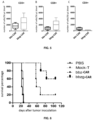
- Nalm6 target cells carrying a fluorescein gene were first plated into a 96-well plate at 1 ⁇ 10 4 per well, then bbzg-CAR T cells, Con-CAR T cells (positive control), and untransfected T cells (negative control) were plated into the 96-well plate at an effector-target ratio of 32:1 (i.e. a ratio of effector T cells to target cells) for co-culture, and a fluorescence value was measured with a plate reader 16-18 hours later.
- the killing efficiency was calculated, and the result is as shown in FIG. 2 .
- the killing effect of the bbzg-CAR T cell of the present invention on target cells is significantly higher than that of the conventional bbz-CAR T cell.
- Target cells (Nalm6 and Raji) and non-target cells (193F) were plated in a 96-well plate at 1 ⁇ 10 5 /well, respectively, then the bbzg-CAR T, con-CAR T (positive control), and NT cells (negative control) were co-cultured with target or non-target cells, respectively, at a ratio of 1:1, and cell co-culture supernatant was collected 18-24 hours later.
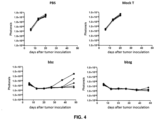
- the bbzg-CAR T cell of the present invention due to the introduction of the cytokine receptor general ⁇ chain, can greatly promote the amplification of the T cell, thus improving the sustained killing effect on tumor cells, improving the in vivo tumor inhibitory effect, and increasing the survival of mice.
- the ⁇ c chain intracellular region (SEQ ID NO: 15) was inserted between the 4-1BB co-stimulatory domain and the CD3 ⁇ primary signaling domain of the bbz-CAR plasmid to obtain the bbgz-CAR plasmid, which differs from the bbzg-CAR plasmid only in that the position of the ⁇ c chain intracellular region is different.
- the bbgz-CAR T cell was prepared according to the method of Example 1.
- the killing effect of CAR-T cell on target cells was detected according to the method described in Example 2, and the results are as shown in FIG. 7 . It can be seen that the killing effect of the bbgz-CAR T cell on target cells is comparable to that of the conventional bbz-CAR T cell, but both are significantly lower than the killing effect of the bbzg-CAR T cell. This indicates that the position of the additional signaling region (i.e., the intracellular region of the ⁇ c chain) in the CAR structure has an important influence on the killing activity of CAR T cell.
- the additional signaling region i.e., the intracellular region of the ⁇ c chain
Landscapes
- Health & Medical Sciences (AREA)
- Life Sciences & Earth Sciences (AREA)
- Chemical & Material Sciences (AREA)
- Immunology (AREA)
- Organic Chemistry (AREA)
- General Health & Medical Sciences (AREA)
- Genetics & Genomics (AREA)
- Medicinal Chemistry (AREA)
- Public Health (AREA)
- Animal Behavior & Ethology (AREA)
- Veterinary Medicine (AREA)
- Zoology (AREA)
- Biochemistry (AREA)
- Cell Biology (AREA)
- Engineering & Computer Science (AREA)
- Epidemiology (AREA)
- Proteomics, Peptides & Aminoacids (AREA)
- Molecular Biology (AREA)
- Biophysics (AREA)
- Gastroenterology & Hepatology (AREA)
- Toxicology (AREA)
- Biomedical Technology (AREA)
- Wood Science & Technology (AREA)
- Biotechnology (AREA)
- Bioinformatics & Cheminformatics (AREA)
- Pharmacology & Pharmacy (AREA)
- General Chemical & Material Sciences (AREA)
- Nuclear Medicine, Radiotherapy & Molecular Imaging (AREA)
- Chemical Kinetics & Catalysis (AREA)
- Microbiology (AREA)
- Hematology (AREA)
- General Engineering & Computer Science (AREA)
- Mycology (AREA)
- Oncology (AREA)
- Peptides Or Proteins (AREA)
- Micro-Organisms Or Cultivation Processes Thereof (AREA)
- Medicines That Contain Protein Lipid Enzymes And Other Medicines (AREA)
- Medicines Containing Material From Animals Or Micro-Organisms (AREA)
- Medicines Containing Antibodies Or Antigens For Use As Internal Diagnostic Agents (AREA)
- Pharmaceuticals Containing Other Organic And Inorganic Compounds (AREA)
Claims (12)
- Chimärer Antigenrezeptor, enthaltend eine Antigenbindungsregion, eine Transmembrandomäne und eine intrazelluläre Region, wobei die intrazelluläre Region aus einer kostimulatorischen Domäne, einer intrazellulären Signalisierungsdomäne und einer zusätzlichen Signalisierungsregion besteht,wobei die zusätzliche Signalisierungsregion aus der intrazellulären Region der yc-Kette besteht,die intrazelluläre Signalisierungsdomäne die Signalisierungsdomäne von CD3 ζ ist,die kostimulatorische Domäne die kostimulatorische Signalisierungsdomäne von CD137 (4-1BB) ist,dadurch gekennzeichnet, dass die kostimulatorische Domäne, die intrazelluläre Signalisierungsdomäne und die zusätzliche Signalisierungsregion in der Reihenfolge ihrer Entfernung von der Zellmembran vom nächsten zum entferntesten angeordnet sind.
- Chimärer Antigenrezeptor nach Anspruch 1, wobei die Aminosäuresequenz der intrazellulären Region der yc-Kette wie durch SEQ ID NO: 16 dargestellt ist.
- Chimärer Antigenrezeptor nach Anspruch 1, wobei die Antigenbindungsregion aus der Gruppe ausgewählt ist, die aus sdAb, Nanobody, Antigenbindungs-Ligand, rekombinanter Fibronektin-Domäne, Anticalin und DARPIN besteht.
- Chimärer Antigenrezeptor nach Anspruch 1, wobei die Antigenbindungsregion aus der Gruppe ausgewählt ist, die aus monoklonalem Antikörper, polyklonalem Antikörper, rekombinantem Antikörper, humanem Antikörper, humanisiertem Antikörper, murinem Antikörper und chimärem Antikörper besteht.
- Chimärer Antigenrezeptor nach einem der Ansprüche 1 bis 2, wobei die Antigenbindungsregion an ein Target bindet, das aus der Gruppe ausgewählt ist, die aus TSHR, CD19, CD123, CD22, BAFF-R, CD30, CD171, CS-1, CLL-1, CD33, EGFRvIII, GD2, GD3, BCMA, GPRC5D, Tn Ag, PSMA, ROR1, FLT3, FAP, TAG72, CD38, CD44v6, CEA, EPCAM, B7H3, KIT, IL-13Ra2, Mesothelin, IL-1 1Ra, PSCA, PRSS21, VEGFR2, LewisY, CD24, PDGFR-β, SSEA-4, CD20, Folatrezeptor α, ERBB2 (Her2/neu), MUC1, EGFR, NCAM, Claudin18.2, Prostase, PAP, ELF2M, Ephrin B2, IGF-I-Rezeptor, CAIX, LMP2, gp100, bcr-ab1, Tyrosinase, EphA2, Fucosyl GM1, sLe, GM3, TGS5, HMWMAA, o-acetyl-GD2, Folatrezeptor β, TEM1/CD248, TEM7R, CLDN6, GPRC5D, CXORF61, CD97, CD179a, ALK, Polysialinsäure, PLAC1, GloboH, NY-BR-1, UPK2, HAVCR1, ADRB3, PANX3, GPR20, LY6K, OR51E2, TARP, WT1, NY-ESO-1, LAGE-1a, MAGE-A1, Legumain, HPV E6, E7, MAGE A1, ETV6-AML, Spermaprotein 17, XAGE1, Tie2, MAD-CT-1, MAD-CT-2, Fos-assoziiertem Antigen 1, p53, p53 mutierend, Prostataspezifisches Protein, Survivin und Telomerase, PCTA-1/Galectin 8, MelanA/MART1, Ras-Mutant, hTERT, Sarkom-Translokationsbruchpunkt, ML-IAP, ERG (TMPRSS2 ETS-Fusionsgen), NA17, PAX3, Androgenrezeptor, Cyclin B1, MYCN, RhoC, TRP-2, CYP1B1, BORIS, SART3, PAX5, OY-TES 1, LCK, AKAP-4, SSX2, RAGE-1, humane Telomerase-Reverse-Transkriptase, RU1, RU2, Darmtrakt Carboxylesterase, mutiertes hsp70-2, CD79a, CD79b, CD72, LAIR1, FCAR, LILRA2, CD300LF, CLEC12A, BST2, EMR2, LY75, GPC3, FCRL5, IGLLI1, PD1, PDL1, PDL2, TGF β, APRIL, NKG2D und jede Kombination davon, besteht.
- Chimärer Antigenrezeptor nach einem der Ansprüche 1 bis 5, wobei die Transmembrandomäne eine Transmembrandomäne eines Proteins ist, das aus der Gruppe ausgewählt ist, die aus: TCR α-Kette, TCR β-Kette, TCR γ-Kette, TCR δ-Kette, CD3 ζ-Untereinheit, CD3 ε-Untereinheit, CD3 γ-Untereinheit, CD3 δ-Untereinheit, CD45, CD4, CD5, CD8, CD9, CD16, CD22, CD33, CD28, CD37, CD64, CD80, CD86, CD134, CD137 und CD154 besteht.
- Nukleinsäure, dadurch gekennzeichnet, dass sie eine Sequenz enthält, die den chimären Antigenrezeptor nach einem der Ansprüche 1 bis 6 kodiert.
- Vektor, dadurch gekennzeichnet, dass er die Nukleinsäure nach Anspruch 7 enthält.
- Immunzelle, dadurch gekennzeichnet, dass sie den chimären Antigenrezeptor nach einem der Ansprüche 1 bis 6, die Nukleinsäure nach Anspruch 7 oder den Vektor nach Anspruch 8 enthält,vorzugsweise wird der Vektor aus der Gruppe ausgewählt, die aus linearem Nukleinsäuremolekül, Plasmid, Retrovirus, Lentivirus, Adenovirus, Vaccinia-Virus, Rous-Sarkom-Virus (RSV), Polyomavirus und adeno-assoziiertem Virus (AAV), Bakteriophage, Kosmid und künstlichem Chromosom besteht;vorzugsweise wird die Immunzelle aus der Gruppe ausgewählt, die aus einer T-Zelle, einem Makrophage, einer dendritischer Zelle, einem Monozyt, einer NK-Zelle und einer NKT-Zelle besteht,besonders bevorzugt ist die Immunzelle eine T-Zelle, die aus der Gruppe ausgewählt ist, die aus: CD4+/CD8+ doppelt positiver T-Zelle, einer CD4+ T-Helfer-Zelle, einer CD8+ T-Zelle, einer tumorinfiltrierender Zelle, einer T-Gedächtniszelle, einer naiver T-Zelle, einer γδ-T-Zelle und einer αβ-T-Zelle besteht.
- Immunzelle nach Anspruch 9, wobei mindestens ein Gen, das aus der Gruppe ausgewählt wird, die aus CD52, GR, TCR α, TCR β, CD3 γ, CD3 δ, CD3 ε, CD247 ζ, HLA-I, HLA-II-Gen und Immun-Checkpoint-Gen wie PD1 und CTLA-4 besteht, in der Immunzelle inaktiviert ist, vorzugsweise durch DNA-Bruch, der durch eine Meganuklease, eine Zinkfinger-Nuklease, eine TALE-Nuklease oder ein Cas-Enzym in einem CRISPR-System erreicht wird.
- Pharmazeutische Zusammensetzung, dadurch gekennzeichnet, dass sie den chimären Antigenrezeptor nach einem der Ansprüche 1 bis 6, die Nukleinsäure nach Anspruch 7, den Vektor nach Anspruch 8 oder die Immunzelle nach einem der Ansprüche 9 oder 10 und ein oder mehrere pharmazeutisch akzeptable Exzipienten enthält.
- Pharmazeutische Zusammensetzung nach Anspruch 11 zum Gebrauch in einem Verfahren zur Behandlung eines Krebses, das aus der Gruppe ausgewählt wird, die aus Blastom, Sarkom, Leukämie, Basalzellkarzinom, Gallengangskrebs, Blasenkrebs, Knochenkrebs, Gehirn- und ZNS-Krebs, Brustkrebs, Peritonealkrebs, Gebärmutterhalskrebs, Choriokarzinom, Dickdarm- und Rektumkrebs, Bindegewebskrebs, Krebs des Verdauungssystems, Endometriumkrebs, Speiseröhrenkrebs, Augenkrebs, Kopf- und Halskrebs, Magenkrebs, Glioblastom (GBM), Leberkrebs, Hepatom, intraepitheliale Tumoren, Nierenkrebs, Kehlkopfkrebs, Leukämie, Lebertumor, Lungenkrebs, Lymphom, Melanom, Myelom, Neuroblastom, Mundhölenkrebs, Eierstockkrebs, Bauchspeicheldrüsenkrebs, Prostatakrebs, Retinoblastom, Rhabdomyosarkom, Rektumkrebs, Krebs des Atmungssystems, Speicheldrüsenkrebs, Hautkrebs, Plattenepithelkarzinom, Magenkrebs, Hodenkrebs, Schilddrüsenkrebs, Gebärmutterkrebs oder Endometriumkrebs, malignen Tumoren des Harnsystems, Vulvakrebs und anderen Krebsarten und Sarkomen, sowie B-Zell-Lymphom, Mantelzell-Lymphom, AIDSassoziiertem Lymphom, Waldenström-Makroglobulinämie, chronischer lymphatischer Leukämie (CLL), akuter lymphatischer Leukämie (ALL), akuter lymphatischer B-Zell-Leukämie (B-ALL), akuter lymphatischer T-Zell-Leukämie (T-ALL), B-Zellprolymphozytischer Leukämie, blastischen plasmazytoiden dendritischen Zelltumoren, Burkitt-Lymphom, diffusem großzelligem B-Zell-Lymphom, follikulärem Lymphom, chronischer myeloischer Leukämie (CML), maligner lymphoproliferativer Erkrankung, MALT-Lymphom, Haarzell-Leukämie, Marginalzonen-Lymphom, multiplem Myelom, Myelodysplasie, plasmoblastischem Lymphom, Präleukämie, plasmazytoidem dendritischen Zelltumor und lymphoproliferativer Erkrankung nach Transplantation (PTLD) besteht.
Applications Claiming Priority (2)
| Application Number | Priority Date | Filing Date | Title |
|---|---|---|---|
| CN202010128134.7A CN111269326A (zh) | 2020-02-28 | 2020-02-28 | 新型嵌合抗原受体及其用途 |
| PCT/CN2021/077580 WO2021169977A1 (zh) | 2020-02-28 | 2021-02-24 | 新型嵌合抗原受体及其用途 |
Publications (4)
| Publication Number | Publication Date |
|---|---|
| EP4083073A1 EP4083073A1 (de) | 2022-11-02 |
| EP4083073A4 EP4083073A4 (de) | 2023-07-12 |
| EP4083073B1 true EP4083073B1 (de) | 2025-04-09 |
| EP4083073C0 EP4083073C0 (de) | 2025-04-09 |
Family
ID=70995356
Family Applications (1)
| Application Number | Title | Priority Date | Filing Date |
|---|---|---|---|
| EP21760732.4A Active EP4083073B1 (de) | 2020-02-28 | 2021-02-24 | Neuartiger chimärer antigenrezeptor und verwendung davon |
Country Status (8)
| Country | Link |
|---|---|
| US (1) | US20240277843A1 (de) |
| EP (1) | EP4083073B1 (de) |
| JP (1) | JP7462777B2 (de) |
| KR (1) | KR20220145374A (de) |
| CN (2) | CN111269326A (de) |
| AU (1) | AU2021225890B2 (de) |
| CA (1) | CA3169610A1 (de) |
| WO (1) | WO2021169977A1 (de) |
Families Citing this family (28)
| Publication number | Priority date | Publication date | Assignee | Title |
|---|---|---|---|---|
| CN111269326A (zh) * | 2020-02-28 | 2020-06-12 | 南京北恒生物科技有限公司 | 新型嵌合抗原受体及其用途 |
| CN111808821B (zh) * | 2020-06-24 | 2022-06-14 | 南方医科大学珠江医院 | Flt3-nkg2d双靶点car-t的构建与制备 |
| CN113980136B (zh) * | 2020-07-27 | 2023-08-22 | 中国科学院分子细胞科学卓越创新中心 | 一种包含具有Y/F突变的CD3ε胞内区的嵌合抗原受体及其用途 |
| CN111875712A (zh) * | 2020-07-31 | 2020-11-03 | 广东昭泰体内生物医药科技有限公司 | 一种增强型靶向muc1的嵌合抗原受体及其应用 |
| CN114057890A (zh) * | 2020-07-31 | 2022-02-18 | 南京北恒生物科技有限公司 | 新型共刺激结构域及其用途 |
| CN111875710A (zh) * | 2020-07-31 | 2020-11-03 | 广东昭泰体内生物医药科技有限公司 | 异质性肿瘤治疗用免疫细胞及其应用 |
| CN111925448B (zh) * | 2020-08-03 | 2022-06-21 | 山东大学 | 在体生成car-巨噬细胞的制备方法及肿瘤免疫治疗中的应用 |
| CN111956795B (zh) * | 2020-08-27 | 2023-02-03 | 武汉波睿达生物科技有限公司 | 以cd99为靶点的嵌合抗原受体联合抗肿瘤药物的应用 |
| CN112321721B (zh) * | 2020-11-05 | 2021-07-06 | 山东仁济生物科技有限公司 | 一种嵌合抗原受体及其修饰的免疫细胞及该免疫细胞在晚期胰腺癌治疗上的应用 |
| CN113480668A (zh) * | 2020-12-14 | 2021-10-08 | 广州百暨基因科技有限公司 | 抗b7h3嵌合抗原受体及其应用 |
| CN112877365A (zh) * | 2021-01-19 | 2021-06-01 | 因诺伟(北京)生物医疗科技有限公司 | 一种外周血造血干细胞采集物来源的嵌合抗原受体t细胞的制备及应用 |
| US20240082306A1 (en) * | 2021-02-03 | 2024-03-14 | Bioheng Therapeutics Limited | Novel chimeric antigen receptor and use thereof |
| TW202300644A (zh) * | 2021-02-24 | 2023-01-01 | 中國大陸商杭州啟函生物科技有限公司 | 免疫細胞中的嵌合抗原受體 |
| CN112870227B (zh) * | 2021-03-09 | 2023-04-14 | 深圳市体内生物医药科技有限公司 | 一种肝癌治疗药物及其制备方法和应用 |
| CN115216449A (zh) * | 2021-04-16 | 2022-10-21 | 南京北恒生物科技有限公司 | 工程化免疫细胞及其用途 |
| CN115232797A (zh) * | 2021-04-23 | 2022-10-25 | 南京北恒生物科技有限公司 | 工程化免疫细胞及其用途 |
| CN113461818B (zh) * | 2021-06-30 | 2022-01-21 | 徐州医科大学 | 靶向CD276的全人源抗体scFv、嵌合抗原受体、工程化免疫细胞及其制备方法 |
| CN113980138B (zh) * | 2021-08-11 | 2023-08-11 | 卡瑞济(北京)生命科技有限公司 | EphA2嵌合抗原受体以及其用途 |
| CN115785279A (zh) * | 2021-09-09 | 2023-03-14 | 南京北恒生物科技有限公司 | 包含新型共刺激结构域的嵌合抗原受体及其用途 |
| CN116103239A (zh) * | 2021-11-11 | 2023-05-12 | 南京北恒生物科技有限公司 | 工程化免疫细胞及其用途 |
| CN114133457B (zh) * | 2021-12-08 | 2022-08-19 | 郑州源创吉因实业有限公司 | 一种靶向ror1和cd33的双特异性嵌合抗原受体(car)及其应用 |
| CN115991790B (zh) * | 2022-09-26 | 2025-09-30 | 东南大学 | 一种增强肿瘤抗原作用的car及其应用 |
| CN115724997B (zh) * | 2022-09-27 | 2025-08-12 | 河南大学 | 一种抗cd97嵌合抗原受体、基因、表达载体、t细胞及应用 |
| CN116041542B (zh) * | 2022-12-06 | 2026-02-17 | 上海恩凯细胞技术有限公司 | 逆转肿瘤微环境抑制性信号的nk细胞制备方法及应用 |
| CN116286660B (zh) * | 2022-12-08 | 2023-10-03 | 全球细胞控股(广州)有限公司 | 一种ipsc-(car)自然杀伤细胞、制备方法及其在肿瘤治疗中的应用 |
| WO2024193687A1 (en) * | 2023-03-23 | 2024-09-26 | Nanjing Legend Biotech Co., Ltd. | Inverted cytokine receptors and methods of use thereof |
| CN117402261B (zh) * | 2023-10-17 | 2025-03-28 | 北京景达生物科技有限公司 | 一种基于重组腺病毒的car-nk细胞制备方法及其应用 |
| CN117683113B (zh) * | 2023-12-12 | 2025-02-28 | 北京景达生物科技有限公司 | 表达mIL-15的HER2靶向CAR-NK细胞的制备及其应用 |
Family Cites Families (16)
| Publication number | Priority date | Publication date | Assignee | Title |
|---|---|---|---|---|
| US5731168A (en) | 1995-03-01 | 1998-03-24 | Genentech, Inc. | Method for making heteromultimeric polypeptides |
| CN1294148C (zh) | 2001-04-11 | 2007-01-10 | 中国科学院遗传与发育生物学研究所 | 环状单链三特异抗体 |
| KR20060041205A (ko) | 2003-07-01 | 2006-05-11 | 이뮤노메딕스, 인코오포레이티드 | 양특이성 항체들의 다가 담체들 |
| JP2008512352A (ja) | 2004-07-17 | 2008-04-24 | イムクローン システムズ インコーポレイティド | 新規な四価の二重特異性抗体 |
| KR20130108481A (ko) | 2005-08-19 | 2013-10-02 | 아보트 러보러터리즈 | 이원 가변 도메인 면역글로불린 및 이의 용도 |
| PH12013501201A1 (en) * | 2010-12-09 | 2013-07-29 | Univ Pennsylvania | Use of chimeric antigen receptor-modified t cells to treat cancer |
| GB201518816D0 (en) | 2015-10-23 | 2015-12-09 | Autolus Ltd | Receptor |
| PT3436079T (pt) * | 2016-04-01 | 2021-10-06 | Kite Pharma Inc | Recetores de antigénios quiméricos e de células t e métodos de uso |
| WO2018195339A1 (en) * | 2017-04-19 | 2018-10-25 | Board Of Regents, The University Of Texas System | Immune cells expressing engineered antigen receptors |
| GB201715918D0 (en) * | 2017-09-29 | 2017-11-15 | Tc Biopharm Ltd | Modified CAR-T |
| WO2019109980A1 (zh) * | 2017-12-06 | 2019-06-13 | 科济生物医药(上海)有限公司 | 嵌合蛋白、表达嵌合蛋白的免疫效应细胞及其应用 |
| US20210015859A1 (en) * | 2017-12-08 | 2021-01-21 | Fate Therapeutics, Inc. | IMMUNOTHERAPIES USING ENHANCED iPSC DERIVED EFFECTOR CELLS |
| US20210017248A1 (en) * | 2018-03-16 | 2021-01-21 | The Regents Of The University Of California | Cellular signaling domain engineering in chimeric antigen receptor-modified regulatory t cells |
| CN110615843B (zh) * | 2018-06-20 | 2023-05-09 | 上海隆耀生物科技有限公司 | 一种包含第三信号受体的嵌合抗原受体及其应用 |
| CN111269326A (zh) * | 2020-02-28 | 2020-06-12 | 南京北恒生物科技有限公司 | 新型嵌合抗原受体及其用途 |
| US20240082306A1 (en) * | 2021-02-03 | 2024-03-14 | Bioheng Therapeutics Limited | Novel chimeric antigen receptor and use thereof |
-
2020
- 2020-02-28 CN CN202010128134.7A patent/CN111269326A/zh active Pending
-
2021
- 2021-02-24 WO PCT/CN2021/077580 patent/WO2021169977A1/zh not_active Ceased
- 2021-02-24 KR KR1020227032920A patent/KR20220145374A/ko not_active Ceased
- 2021-02-24 CN CN202110205785.6A patent/CN113321737B/zh active Active
- 2021-02-24 JP JP2022549898A patent/JP7462777B2/ja active Active
- 2021-02-24 CA CA3169610A patent/CA3169610A1/en active Pending
- 2021-02-24 US US17/802,242 patent/US20240277843A1/en active Pending
- 2021-02-24 EP EP21760732.4A patent/EP4083073B1/de active Active
- 2021-02-24 AU AU2021225890A patent/AU2021225890B2/en active Active
Also Published As
| Publication number | Publication date |
|---|---|
| CN113321737A (zh) | 2021-08-31 |
| CN113321737B (zh) | 2025-10-14 |
| CN111269326A (zh) | 2020-06-12 |
| JP2023514385A (ja) | 2023-04-05 |
| JP7462777B2 (ja) | 2024-04-05 |
| US20240277843A1 (en) | 2024-08-22 |
| WO2021169977A1 (zh) | 2021-09-02 |
| EP4083073A4 (de) | 2023-07-12 |
| AU2021225890A1 (en) | 2022-08-25 |
| CA3169610A1 (en) | 2021-09-02 |
| EP4083073A1 (de) | 2022-11-02 |
| EP4083073C0 (de) | 2025-04-09 |
| AU2021225890B2 (en) | 2024-12-19 |
| KR20220145374A (ko) | 2022-10-28 |
Similar Documents
| Publication | Publication Date | Title |
|---|---|---|
| EP4083073B1 (de) | Neuartiger chimärer antigenrezeptor und verwendung davon | |
| US11896620B2 (en) | Engineered immune cell and use thereof | |
| US20240009311A1 (en) | Engineered immune cell and use thereof | |
| WO2021129559A1 (zh) | T细胞受体融合蛋白及其用途 | |
| WO2022218226A1 (zh) | 工程化免疫细胞及其用途 | |
| WO2022223049A1 (zh) | 工程化免疫细胞及其用途 | |
| US20230270858A1 (en) | Novel co-stimulatory domain and use thereof | |
| HK40076158B (en) | Novel chimeric antigen receptor and use thereof | |
| HK40076158A (en) | Novel chimeric antigen receptor and use thereof | |
| HK40082597A (en) | Engineered immune cell and use thereof | |
| HK40087333A (en) | Novel co-stimulatory domain and uses thereof | |
| HK40075547A (en) | Engineered immune cell and use thereof | |
| WO2023025009A1 (zh) | 工程化免疫细胞及其用途 | |
| WO2023016284A1 (zh) | 工程化免疫细胞及其用途 |
Legal Events
| Date | Code | Title | Description |
|---|---|---|---|
| STAA | Information on the status of an ep patent application or granted ep patent |
Free format text: STATUS: THE INTERNATIONAL PUBLICATION HAS BEEN MADE |
|
| PUAI | Public reference made under article 153(3) epc to a published international application that has entered the european phase |
Free format text: ORIGINAL CODE: 0009012 |
|
| STAA | Information on the status of an ep patent application or granted ep patent |
Free format text: STATUS: REQUEST FOR EXAMINATION WAS MADE |
|
| 17P | Request for examination filed |
Effective date: 20220729 |
|
| AK | Designated contracting states |
Kind code of ref document: A1 Designated state(s): AL AT BE BG CH CY CZ DE DK EE ES FI FR GB GR HR HU IE IS IT LI LT LU LV MC MK MT NL NO PL PT RO RS SE SI SK SM TR |
|
| REG | Reference to a national code |
Ref country code: HK Ref legal event code: DE Ref document number: 40076158 Country of ref document: HK |
|
| DAV | Request for validation of the european patent (deleted) | ||
| DAX | Request for extension of the european patent (deleted) | ||
| REG | Reference to a national code |
Ref country code: DE Ref legal event code: R079 Free format text: PREVIOUS MAIN CLASS: C07K0019000000 Ipc: A61K0039000000 Ref document number: 602021028954 Country of ref document: DE |
|
| STAA | Information on the status of an ep patent application or granted ep patent |
Free format text: STATUS: EXAMINATION IS IN PROGRESS |
|
| A4 | Supplementary search report drawn up and despatched |
Effective date: 20230614 |
|
| RIC1 | Information provided on ipc code assigned before grant |
Ipc: C07K 14/715 20060101ALI20230607BHEP Ipc: C07K 14/725 20060101ALI20230607BHEP Ipc: A61P 35/00 20060101ALI20230607BHEP Ipc: A61K 39/00 20060101AFI20230607BHEP |
|
| 17Q | First examination report despatched |
Effective date: 20230626 |
|
| RAP1 | Party data changed (applicant data changed or rights of an application transferred) |
Owner name: BIOHENG THERAPEUTICS LIMITED |
|
| REG | Reference to a national code |
Ref country code: DE Ref legal event code: R079 Free format text: PREVIOUS MAIN CLASS: A61K0039000000 Ipc: C12N0005078300 Ref document number: 602021028954 Country of ref document: DE |
|
| RIC1 | Information provided on ipc code assigned before grant |
Ipc: C07K 14/715 20060101ALI20240808BHEP Ipc: C07K 14/725 20060101ALI20240808BHEP Ipc: A61K 39/00 20060101ALI20240808BHEP Ipc: C12N 5/0783 20100101AFI20240808BHEP |
|
| GRAP | Despatch of communication of intention to grant a patent |
Free format text: ORIGINAL CODE: EPIDOSNIGR1 |
|
| STAA | Information on the status of an ep patent application or granted ep patent |
Free format text: STATUS: GRANT OF PATENT IS INTENDED |
|
| INTG | Intention to grant announced |
Effective date: 20241004 |
|
| GRAS | Grant fee paid |
Free format text: ORIGINAL CODE: EPIDOSNIGR3 |
|
| GRAA | (expected) grant |
Free format text: ORIGINAL CODE: 0009210 |
|
| STAA | Information on the status of an ep patent application or granted ep patent |
Free format text: STATUS: THE PATENT HAS BEEN GRANTED |
|
| AK | Designated contracting states |
Kind code of ref document: B1 Designated state(s): AL AT BE BG CH CY CZ DE DK EE ES FI FR GB GR HR HU IE IS IT LI LT LU LV MC MK MT NL NO PL PT RO RS SE SI SK SM TR |
|
| REG | Reference to a national code |
Ref country code: GB Ref legal event code: FG4D |
|
| REG | Reference to a national code |
Ref country code: CH Ref legal event code: EP |
|
| REG | Reference to a national code |
Ref country code: IE Ref legal event code: FG4D |
|
| U01 | Request for unitary effect filed |
Effective date: 20250409 |
|
| U07 | Unitary effect registered |
Designated state(s): AT BE BG DE DK EE FI FR IT LT LU LV MT NL PT RO SE SI Effective date: 20250415 |
|
| PG25 | Lapsed in a contracting state [announced via postgrant information from national office to epo] |
Ref country code: ES Free format text: LAPSE BECAUSE OF FAILURE TO SUBMIT A TRANSLATION OF THE DESCRIPTION OR TO PAY THE FEE WITHIN THE PRESCRIBED TIME-LIMIT Effective date: 20250409 |
|
| PG25 | Lapsed in a contracting state [announced via postgrant information from national office to epo] |
Ref country code: NO Free format text: LAPSE BECAUSE OF FAILURE TO SUBMIT A TRANSLATION OF THE DESCRIPTION OR TO PAY THE FEE WITHIN THE PRESCRIBED TIME-LIMIT Effective date: 20250709 Ref country code: GR Free format text: LAPSE BECAUSE OF FAILURE TO SUBMIT A TRANSLATION OF THE DESCRIPTION OR TO PAY THE FEE WITHIN THE PRESCRIBED TIME-LIMIT Effective date: 20250710 |
|
| PG25 | Lapsed in a contracting state [announced via postgrant information from national office to epo] |
Ref country code: PL Free format text: LAPSE BECAUSE OF FAILURE TO SUBMIT A TRANSLATION OF THE DESCRIPTION OR TO PAY THE FEE WITHIN THE PRESCRIBED TIME-LIMIT Effective date: 20250409 |
|
| PG25 | Lapsed in a contracting state [announced via postgrant information from national office to epo] |
Ref country code: HR Free format text: LAPSE BECAUSE OF FAILURE TO SUBMIT A TRANSLATION OF THE DESCRIPTION OR TO PAY THE FEE WITHIN THE PRESCRIBED TIME-LIMIT Effective date: 20250409 |
|
| PG25 | Lapsed in a contracting state [announced via postgrant information from national office to epo] |
Ref country code: RS Free format text: LAPSE BECAUSE OF FAILURE TO SUBMIT A TRANSLATION OF THE DESCRIPTION OR TO PAY THE FEE WITHIN THE PRESCRIBED TIME-LIMIT Effective date: 20250709 |
|
| PG25 | Lapsed in a contracting state [announced via postgrant information from national office to epo] |
Ref country code: IS Free format text: LAPSE BECAUSE OF FAILURE TO SUBMIT A TRANSLATION OF THE DESCRIPTION OR TO PAY THE FEE WITHIN THE PRESCRIBED TIME-LIMIT Effective date: 20250809 |
|
| PG25 | Lapsed in a contracting state [announced via postgrant information from national office to epo] |
Ref country code: SM Free format text: LAPSE BECAUSE OF FAILURE TO SUBMIT A TRANSLATION OF THE DESCRIPTION OR TO PAY THE FEE WITHIN THE PRESCRIBED TIME-LIMIT Effective date: 20250409 |
|
| PG25 | Lapsed in a contracting state [announced via postgrant information from national office to epo] |
Ref country code: CZ Free format text: LAPSE BECAUSE OF FAILURE TO SUBMIT A TRANSLATION OF THE DESCRIPTION OR TO PAY THE FEE WITHIN THE PRESCRIBED TIME-LIMIT Effective date: 20250409 |
|
| PG25 | Lapsed in a contracting state [announced via postgrant information from national office to epo] |
Ref country code: SK Free format text: LAPSE BECAUSE OF FAILURE TO SUBMIT A TRANSLATION OF THE DESCRIPTION OR TO PAY THE FEE WITHIN THE PRESCRIBED TIME-LIMIT Effective date: 20250409 |
|
| PLBE | No opposition filed within time limit |
Free format text: ORIGINAL CODE: 0009261 |
|
| STAA | Information on the status of an ep patent application or granted ep patent |
Free format text: STATUS: NO OPPOSITION FILED WITHIN TIME LIMIT |
|
| REG | Reference to a national code |
Ref country code: CH Ref legal event code: L10 Free format text: ST27 STATUS EVENT CODE: U-0-0-L10-L00 (AS PROVIDED BY THE NATIONAL OFFICE) Effective date: 20260218 |
|
| 26N | No opposition filed |
Effective date: 20260112 |
|
| U20 | Renewal fee for the european patent with unitary effect paid |
Year of fee payment: 6 Effective date: 20260224 |