EP4081604B9 - Omniphobe und biozide sol-gel-beschichtungszusammensetzung - Google Patents
Omniphobe und biozide sol-gel-beschichtungszusammensetzung Download PDFInfo
- Publication number
- EP4081604B9 EP4081604B9 EP20839051.8A EP20839051A EP4081604B9 EP 4081604 B9 EP4081604 B9 EP 4081604B9 EP 20839051 A EP20839051 A EP 20839051A EP 4081604 B9 EP4081604 B9 EP 4081604B9
- Authority
- EP
- European Patent Office
- Prior art keywords
- mixture
- organo
- alkyl
- silyl
- alkoxysilane
- Prior art date
- Legal status (The legal status is an assumption and is not a legal conclusion. Google has not performed a legal analysis and makes no representation as to the accuracy of the status listed.)
- Active
Links
Images

Classifications
-
- C—CHEMISTRY; METALLURGY
- C09—DYES; PAINTS; POLISHES; NATURAL RESINS; ADHESIVES; COMPOSITIONS NOT OTHERWISE PROVIDED FOR; APPLICATIONS OF MATERIALS NOT OTHERWISE PROVIDED FOR
- C09D—COATING COMPOSITIONS, e.g. PAINTS, VARNISHES OR LACQUERS; FILLING PASTES; CHEMICAL PAINT OR INK REMOVERS; INKS; CORRECTING FLUIDS; WOODSTAINS; PASTES OR SOLIDS FOR COLOURING OR PRINTING; USE OF MATERIALS THEREFOR
- C09D183/00—Coating compositions based on macromolecular compounds obtained by reactions forming in the main chain of the macromolecule a linkage containing silicon, with or without sulfur, nitrogen, oxygen, or carbon only; Coating compositions based on derivatives of such polymers
- C09D183/04—Polysiloxanes
-
- C—CHEMISTRY; METALLURGY
- C09—DYES; PAINTS; POLISHES; NATURAL RESINS; ADHESIVES; COMPOSITIONS NOT OTHERWISE PROVIDED FOR; APPLICATIONS OF MATERIALS NOT OTHERWISE PROVIDED FOR
- C09D—COATING COMPOSITIONS, e.g. PAINTS, VARNISHES OR LACQUERS; FILLING PASTES; CHEMICAL PAINT OR INK REMOVERS; INKS; CORRECTING FLUIDS; WOODSTAINS; PASTES OR SOLIDS FOR COLOURING OR PRINTING; USE OF MATERIALS THEREFOR
- C09D183/00—Coating compositions based on macromolecular compounds obtained by reactions forming in the main chain of the macromolecule a linkage containing silicon, with or without sulfur, nitrogen, oxygen, or carbon only; Coating compositions based on derivatives of such polymers
- C09D183/10—Block or graft copolymers containing polysiloxane sequences
-
- C—CHEMISTRY; METALLURGY
- C09—DYES; PAINTS; POLISHES; NATURAL RESINS; ADHESIVES; COMPOSITIONS NOT OTHERWISE PROVIDED FOR; APPLICATIONS OF MATERIALS NOT OTHERWISE PROVIDED FOR
- C09D—COATING COMPOSITIONS, e.g. PAINTS, VARNISHES OR LACQUERS; FILLING PASTES; CHEMICAL PAINT OR INK REMOVERS; INKS; CORRECTING FLUIDS; WOODSTAINS; PASTES OR SOLIDS FOR COLOURING OR PRINTING; USE OF MATERIALS THEREFOR
- C09D5/00—Coating compositions, e.g. paints, varnishes or lacquers, characterised by their physical nature or the effects produced; Filling pastes
- C09D5/14—Paints containing biocides, e.g. fungicides, insecticides or pesticides
-
- C—CHEMISTRY; METALLURGY
- C09—DYES; PAINTS; POLISHES; NATURAL RESINS; ADHESIVES; COMPOSITIONS NOT OTHERWISE PROVIDED FOR; APPLICATIONS OF MATERIALS NOT OTHERWISE PROVIDED FOR
- C09D—COATING COMPOSITIONS, e.g. PAINTS, VARNISHES OR LACQUERS; FILLING PASTES; CHEMICAL PAINT OR INK REMOVERS; INKS; CORRECTING FLUIDS; WOODSTAINS; PASTES OR SOLIDS FOR COLOURING OR PRINTING; USE OF MATERIALS THEREFOR
- C09D5/00—Coating compositions, e.g. paints, varnishes or lacquers, characterised by their physical nature or the effects produced; Filling pastes
- C09D5/16—Antifouling paints; Underwater paints
- C09D5/1656—Antifouling paints; Underwater paints characterised by the film-forming substance
- C09D5/1662—Synthetic film-forming substance
- C09D5/1675—Polyorganosiloxane-containing compositions
-
- C—CHEMISTRY; METALLURGY
- C08—ORGANIC MACROMOLECULAR COMPOUNDS; THEIR PREPARATION OR CHEMICAL WORKING-UP; COMPOSITIONS BASED THEREON
- C08G—MACROMOLECULAR COMPOUNDS OBTAINED OTHERWISE THAN BY REACTIONS ONLY INVOLVING UNSATURATED CARBON-TO-CARBON BONDS
- C08G77/00—Macromolecular compounds obtained by reactions forming a linkage containing silicon with or without sulfur, nitrogen, oxygen or carbon in the main chain of the macromolecule
- C08G77/04—Polysiloxanes
- C08G77/14—Polysiloxanes containing silicon bound to oxygen-containing groups
-
- C—CHEMISTRY; METALLURGY
- C08—ORGANIC MACROMOLECULAR COMPOUNDS; THEIR PREPARATION OR CHEMICAL WORKING-UP; COMPOSITIONS BASED THEREON
- C08G—MACROMOLECULAR COMPOUNDS OBTAINED OTHERWISE THAN BY REACTIONS ONLY INVOLVING UNSATURATED CARBON-TO-CARBON BONDS
- C08G77/00—Macromolecular compounds obtained by reactions forming a linkage containing silicon with or without sulfur, nitrogen, oxygen or carbon in the main chain of the macromolecule
- C08G77/04—Polysiloxanes
- C08G77/20—Polysiloxanes containing silicon bound to unsaturated aliphatic groups
-
- C—CHEMISTRY; METALLURGY
- C08—ORGANIC MACROMOLECULAR COMPOUNDS; THEIR PREPARATION OR CHEMICAL WORKING-UP; COMPOSITIONS BASED THEREON
- C08G—MACROMOLECULAR COMPOUNDS OBTAINED OTHERWISE THAN BY REACTIONS ONLY INVOLVING UNSATURATED CARBON-TO-CARBON BONDS
- C08G77/00—Macromolecular compounds obtained by reactions forming a linkage containing silicon with or without sulfur, nitrogen, oxygen or carbon in the main chain of the macromolecule
- C08G77/42—Block-or graft-polymers containing polysiloxane sequences
- C08G77/442—Block-or graft-polymers containing polysiloxane sequences containing vinyl polymer sequences
Definitions
- the present invention relates to sol-gel coatings, particularly to repellent, omniphobic and biocide sol-gel coating compositions useful as non-stick surfaces.
- the repellent, omniphobic and biocide sol-gel coating compositions of the present invention are useful to prepare antiadhesive, easy-to-clean, antifogging, anti-icing and antifouling surfaces, for having a durable low interfacial energy and non-leaching antibacterial activity also with low roughness and anticorrosion properties.
- the present invention also relates to a process for the preparation of the sol-gel coated substrate and the coated substrate obtainable by the process.
- the surface energy is an important property that influences the material's wettability, adhesion and friction properties and therefore, it may be modulated to reduce adherence of undesirable agents such as water, oil, grease, soiling, dust or ice during its life service.
- the wetting behaviour of a surface by a liquid is governed by both the surface free energy and its topography.
- Perfluorinated polymers are known for being materials with extremely low surface free energy, which results in an antiadhesive behaviour for polar and non-polar substances.
- the high strength of the carbon-fluoro bond grants excellent thermal, chemical, photochemical and hydrolytic stability, which are relevant features for outdoor application and weathering resistance.
- biofilm is an agglomeration of bacteria on a surface that is surrounded by extracellular polysaccharide polymeric substances, which are produced by the bacteria themselves to help them get attached to the surfaces and bind to one another.
- the formation of a biofilm of microorganisms usually results in the establishment of a macroscopic community of living organisms on a (submerged) surface with devastating effects on engineered materials (also known as biofouling).
- the biofouling affects a wide range of sectors (for instance marine applications, sanitary/medical field, household and other industrial sectors such as food packaging, heat transfer and air-conditioning systems, among others) creating problems such as microbially influenced corrosion, product contamination, anti-hygienic conditions and the spread of infections and diseases causing threats to public health.
- biofouling is a very dynamic process which implies firstly, the formation of a layer of proteins from bacteria adsorbed to a pristine surface, that may happen within seconds to minutes after immersion and it is strongly influenced by both the topographical morphology and chemical properties of the surface. Protein conformation defines functionality with respect to cell adhesion. In fact, this first protein layer acts as a conditioning film for the settlement of micro-organisms such as diatoms.
- the surface should ease the detachment of the protein layer or kill the bacteria.
- two main approaches are usually followed for attaining antifouling properties: (i) preventing biofoulings from attaching to the surface (foul-release property), through coatings with controlled low interfacial energy; or (ii) killing the biofouling (bactericidal activity), by incorporating species with controlled release of enzymatic natural biocide in the coatings.
- foul-release property is attributed to a surface with low interfacial energy, low elastic modulus, low glass transition temperature and low roughness, resulting in weak adhesion with the adhesives secreted by biofoulings.
- Baier curve A correlation between adhesion of organisms and the interfacial energy of a surface is given by the Baier curve. This relationship has been demonstrated in several marine and biomedical environments.
- a key characteristic of the Baier curve is that minimal adhesion is typically achieved at a critical surface tension of 22-24 mJ/m 2 (or mN/m). This surface tension, often referred to as surface energy, is approximately equal to the dispersive component for water.
- coatings containing biocide agents have been used to prevent the growth of potential fouling organisms such as bacteria, fungi, algae, plants and molluscs.
- biocides are problematic because they can leach into the environment and cause harm to living organisms other than the ones they were intended to kill.
- cells in biofilm might become resistant to antibacterial agents.
- world-wide legislation is imposing increasing limitations on the use of biocides to combat biofouling (particularly in marine applications).
- Antiseptics are biocides or products that destroy or inhibit the growth of microorganisms in or on living tissue (e.g. health care personnel handwashes and surgical scrubs) and disinfectants are similar but generally are products or biocides that are used on inanimate objects or surfaces.
- Antimicrobial surfaces can be designed in several ways to kill microbes in the vicinity by conjugating polymer with agents such as antibiotics or antimicrobial peptides or complexed with biocide agents such as silver.
- agents such as antibiotics or antimicrobial peptides or complexed with biocide agents such as silver.
- biocide agents such as silver.
- An alternative way to create contact-active surfaces is to immobilize polymers conjugated with antimicrobial proteins, although the antimicrobial activity of these proteins decreases after immobilization in many reported studies.
- a new promising class of antimicrobial polymeric surfaces is based on the immobilization of the bactericidal polymer chain to kill the bacteria upon contact.
- Some of these biocide polymer chains are those containing cationic groups, such as quaternary ammonium or phosphonium groups.
- QAC quaternary ammonium compounds
- QACs are highly effective antiseptics and disinfectants and have been used for a variety of clinical disinfection purposes.
- QACs are considered as excellent antibacterial agents due to their effective biocidal activity, long term durability and environmentally friendly performance and they are membrane active agents (i.e., with a target site predominantly at the cytoplasmic inner membrane in bacteria or the plasma membrane in yeasts).
- Inventors have provided a stable sol-gel composition useful for preparing repellent coatings with low interfacial energy comprising a specific mixture of inorganic and organic precursors that lead to the formation of a functionalized hybrid organic-inorganic material at molecular level, even some of them having biocide activity. Furthermore, inventors have also provided a stable sol-gel composition useful for preparing omniphobic coatings with low interfacial energy comprising a specific mixture of inorganic and organic precursors that lead to the formation of a functionalized hybrid organic-inorganic material at molecular level.
- sol-gel precursors in which the organic moiety is linked to the central atom by a non-hydrolysable carbon-metal or carbon-semimetal bond (particularly a C-Si bond), permits to design a sol-gel material with the desired functionalization covalently linked to the inorganic network.
- the sol-gel composition of the present invention is a versatile composition which allows attaining permanent repellent, omniphobic, biocide or repellent-biocide functionalities thanks to the presence of appropriate moieties covalently bonded to the network through metal-C or semimetal-C bonds (particularly C-Si bonds).
- the sol-gel coating composition of the invention comprises a hybrid matrix functionalized with covalently bonded polyfluoroalkyl chain, alkyl chain, quaternary ammonium compound or mixture thereof which are introduced in the sol-gel network by means of fluoroalkyl silane (FAS), alkyl silane (CAS) quaternary ammonium silane (QAS), or a mixture thereof respectively, without compromising the integrity of the hybrid matrix and permitting having the desired repellent and omniphobic properties with a low interfacial energy as well as a permanent and non-leaching biocide activity.
- FAS fluoroalkyl silane
- CAS alkyl silane
- QAS quaternary ammonium silane
- the quaternary ammonium silanes are the perfect candidates to prepare materials with immobilized biocide organic moiety due to the presence of the non-hydrolysable Si-C bond, thus permitting to obtain non-leaching biocides with permanent activity.
- the hydrolysis and condensation of the alkoxy groups let to obtain quaternary ammonium moiety chemically bonded to the coating matrix.
- sol-gel coating compositions of the invention which are prepared by incorporating acrylate or methacrylate organic precursors (i.e. an organic precursors of formula (VI) and (VII)) compatible with organo-alkoxysilanes and zirconium alkoxide without the need of the presence of functional organo-alkoxysilane or organo-halosilane having a functional organosilyl moiety selected from the group consisting of quaternary ammonium silyl, polyfluoro-(C 1 -C 20 )alkyl silyl, (C 1 -C 40 )alkyl silyl, and a mixture thereof.
- these sol-gel coating compositions also add a high levelling ability to the coating. It is advantageous because these sol-gel coating compositions allows obtaining super-smooth surfaces decreasing the intrinsic original roughness of the substrate.
- the sol-gel coating compositions of the present invention are useful as repellent or multi-repellent surfaces for having low interfacial energy, or as antifouling surfaces for having low interfacial energy combined with bactericide activity.
- the coating surfaces prepared with sol-gel coating compositions of the present invention comprising at least one functional organo-alkoxysilane or organo-halosilane having a functional organosilyl moiety selected from the group consisting of quaternary ammonium silyl, polyfluoro-(C 1 -C 20 )alkyl silyl, (C 1 -C 40 )alkyl silyl, and a mixture thereof showed water contact angle values higher than 90° and hexadecane contact angle values higher than 90°, which makes them hydrophobic and oleophobic surfaces with an interfacial free energy tailored between 8 to 30 mJ/m 2 even showing an extremely low roughness.
- the coating surfaces prepared with sol-gel coating compositions of the present invention showed a biocidal activity. Particularly, they killed all colony forming units (CFU) of Escherichia Coli after 24 h of contact according to ISO22196 standard, showing roughness values as low as 2.4 nm.
- the coating surfaces prepared with sol-gel coating compositions of the present invention prepared by an acrylate or methacrylate organic precursors (i.e.
- an organic precursor of formula (VI) or (VII)) compatible with organo-alkoxysilanes and zirconium alkoxide showed water contact angle values higher than 90°, interfacial free energy ⁇ 30 mJ/m 2 and Escherichia Coli CFU were totally went away after 24 h of contact according to ISO22196 standard, showing roughness values as low as nm.
- sol-gel coatings of the present invention have also shown excellent homogeneity and adhesion on a wide variety of substrates such as aluminium alloy, glass and plastic (for instance polyetherimide -PEI), as well as excellent corrosion protection of aluminium alloys.
- substrates such as aluminium alloy, glass and plastic (for instance polyetherimide -PEI), as well as excellent corrosion protection of aluminium alloys.
- the first aspect of the inventio relates to a process for preparing a sol-gel coated substrate comprising:
- the second aspect of the invention relates to a coated substrate comprising a sol-gel layer obtainable by the process as defined in the first aspect of the invention.
- Fig. 1 shows a graphical representation of contact angle and surface tension in the solid-liquid, solid-vapour, and liquid-vapour interfaces.
- the given ranges include both the lower and the upper end-points. Ranges such as temperatures, times, and the like, should be considered approximate, unless specifically stated.
- sol-gel or “solution sol-gel” or “SG” process have the same meaning and are used interchangeably. They refer to a chemical process that is used for the synthesis of single- or multiple-component materials, including glasses, in the form of thin solid films, ultrafine powders, high surface area porous materials, dense abrasive minerals, and continuous ceramic and glass fibres.
- a sol-gel coating is prepared by a sol-gel process that involves the preparation of one or more precursor mixtures (also called “sol”), which is converted into intermediate product (also called “gel”) and thereof into a specified material by a process that may involve chemical reactions, product forming, jellification, drying, and curing.
- sol refers to either a dispersion of colloidal particles of one phase in a fluid medium or a solution prepared by hydrolysis and polycondensation of semimetal or metalorganic derivatives compounds or inorganic salts in alcoholic solution.
- gel refers to a material consisting of a three-dimensional network of a solid phase interwoven with an entrapped and immobilized continuous liquid phase.
- percentage (%) by weight or “% by weight” are used interchangeably and they refer to the percentage of each component in relation to the total weight of the composition.
- metal alkoxide refers to a compound characterized by a metal central atom that forms covalent bonds to organic groups, but not directly to a carbon atom, though an oxygen atom instead, namely metal-oxygen-carbon bonds.
- metal atom refers to elements that form materials in which the valence and the conduction band is overlapped. It refers to chemical elements defined as metal in the periodic table of elements. Metallic elements are subdivided in alkali metals, alkaline earth metals, transition metals, post-transition metals, lanthanides and actinides. Examples of metals appropriate for the present invention include, without limitation, Al, Ti, Zr and Y.
- silica refers to a compound characterized by a semimetal central atom that forms covalent bonds to organic groups, but not directly to a carbon atom, though an oxygen atom instead, namely semimetal-oxygen-carbon bonds.
- semimetal atom refers to chemical elements defined as "metalloid” in the periodic table of elements. Examples of semimetals appropriate for the present invention include, without limitation, Si, Ge, B, As, Sb, Te, Po and At.
- organo-alkoxysilane refers to a semimetal-organic compound in which the central atom is silicon that forms two types of covalent bonding systems. One of them is silicon-oxygen-carbon and the other is silicon-carbon.
- molar ratio refers to the relation of mols between the different components of the sol-gel coating compositions.
- coating or “layer” have the same meaning and are used interchangeably. They refer to the surface that remains after the deposition of a “coating composition” directly onto the bare surface of a substrate or alternatively onto a substrate which already has one or more layers.
- alkyl refers to a saturated straight, or branched hydrocarbon chain which contains the number of carbon atoms specified in the description or claims. Examples include, among others, the group methyl, ethyl, propyl, isopropyl, butyl, isobutyl, sec-butyl, tert-butyl, n-pentyl, and n-hexyl.
- alkylene refers to a bivalent alkyl group which contains the number of carbon atoms specified in the description or claims.
- alkenyl refers to a saturated straight or branched alkyl chain which contains f the number of carbon atoms specified in the description or claims and that also contains one or more double bonds. Examples include, among others, ethenyl, 1-propen-1-yl, 1-propen-2-yl, 3-propen-1-yl, 1-buten-1-yl, 1-buten-2-yl, 3-buten-1-yl, 3-buten-2-yl, 2-buten-1-yl, 2-buten-2-yl, 2-methyl-1-propen-1-yl, 2-methyl-2-propen-1-yl, 1,3-butadien-1-yl, 1,3-butadien-2-yl, and 2-hexenyl.
- alkynyl refers a saturated straight or branched alkyl chain which contains the number of carbon atoms specified in the description or claims and that also contains one or more triple bonds. Examples include, among others, ethynyl, 1-propynyl, 2-butynyl, 1,3-butadinyl, 4-pentynyl, and 1-hexynyl.
- aryl refers to a membered ring, saturated, partially or totally unsaturated, optionally bridged or fused to a 5 to 6 membered ring, wherein the number of the members of the rings is that specified in the description or claims and the members of the rings are independently selected from C, CH, CH 2 , O, N, NH, and S; being one or more of the hydrogen atoms of the members optionally substituted by a radical selected from the group consisting of (C 1 -C 6 )alkyl, (C 1 -C 6 )alkyl-halogen, halogen, (C 1 -C 6 )alkyl-O, (C 1 -C 6 )alkyl-CO-, (C 1 -C 6 )alkyl-O-CO-, -NO 2 and -CN.
- polyfluoro-alkyl refers to a saturated straight, or branched hydrocarbon wherein at least one hydrogen atom is substituted by a fluorine atom and which contains from 1 to 20 carbon atoms. Examples include, among others, the group trifluoromethyl/perfluoro methyl, perfluoro ethyl, perfluoro propyl, perfluoro isopropyl, perfluoro butyl, perfluoro isobutyl, perfluoro-sec-butyl, perfluoro-tert-butyl, perfluoro-n-pentyl, perfluoro-hexyl, perfluoro-octyl, perfluoro-dodecyl perfluoro-decyl.
- halogen refers to fluorine, chlorine, bromine and iodine.
- an aspect of the present invention refers to a process for preparing a sol-gel coating composition useful for the preparation of a repellent coating on a substrate having durable omniphobicity and antibacterial activity over a wide range of substrates obtainable by the process of the invention.
- the sol-gel coating composition of the invention are useful to prepare omniphobic, repellent, antiadhesive, easy-to-clean, antifogging, anti-icing and antifouling surfaces, for having a durable low interfacial energy and non-leaching antibacterial activity also in combination with low roughness and anticorrosion properties.
- the term "repellent" refers to a material or a coating or a surface that can repel at least a substance such as water, oil or organic solvents.
- the repellence capability can be measured by any method known in the state of the art. Examples of appropriate methods for determining the repellence capability include the determination of contact angle formed by a test liquid in the interface. The measurement of contact angle with more than one test liquid allows calculating the dispersive and polar components of the surface free energy by Owens-Wendt method. The total surface free energy corresponds to the sum of both components.
- a material can be considered repellent when shows a contact angle value > 90° for at least one test liquid.
- the repellence capability can also be attributed to a material with low surface free energy ⁇ 30 mJ/m 2 .
- omniphobic and multi-repellent have the same meaning and are used interchangeable. They refer to a material or a coating or a surface that exhibit omniphobic functionality since they are able to repel substances of different nature such as water, oil and/or organic solvents.
- biocide and “antibacterial” have the same meaning and are used interchangeable. They refer to a material, coating or surface capable of destroying a harmful organism; or counteracting, neutralizing, or avoiding the action of a harmful organism; or exercise any control over a harmful organism, by chemical or biological means.
- the first alternative of the first aspect of the invention refers to a process for preparing a sol-gel coated substrate comprising:
- the process comprises:
- the process comprises depositing a sol1 sol-gel coating composition obtainable by a process which comprises: a1) preparing a mixture A1 comprising:
- the process comprises depositing a sol1 sol-gel coating composition obtainable by a process which comprises: a2) preparing a mixture A2 comprising:
- the process comprises depositing the sol1-2 as defined above obtainable by a process wherein the at least one functional organo-alkoxysilane or organo-halosilane having a functional organosilyl moiety selected from the group consisting of quaternary ammonium silyl, polyfluoro-(C 1 -C 20 )alkyl silyl, (C 1 -C 40 )alkyl silyl, and a mixture thereof is present in step a2'.
- the at least one functional organo-alkoxysilane or organo-halosilane having a functional organosilyl moiety selected from the group consisting of quaternary ammonium silyl, polyfluoro-(C 1 -C 20 )alkyl silyl, (C 1 -C 40 )alkyl silyl, and a mixture thereof is present in step a2'.
- the process comprises depositing the sol1-2 as defined above obtainable by a process wherein the at least one functional organo-alkoxysilane or organo-halosilane having a functional organosilyl moiety selected from the group consisting of quaternary ammonium silyl, polyfluoro-(C 1 -C 20 )alkyl silyl, (C 1 -C 40 )alkyl silyl, and a mixture thereof is present in step a2".
- the process comprises depositing a sol1 sol-gel coating composition obtainable by a process which comprises: a3) preparing a mixture A3 comprising:
- the process comprises depositing the sol1-3 as defined above obtainable by a process wherein the at least one functional organo-alkoxysilane or organo-halosilane having a functional organosilyl moiety selected from the group consisting of quaternary ammonium silyl, polyfluoro-(C 1 -C 20 )alkyl silyl, (C 1 -C 40 )alkyl silyl, and a mixture thereof is present in step a3').
- the process comprises depositing the sol1-3 as defined above obtainable by a process wherein the at least one functional organo-alkoxysilane or organo-halosilane having a functional organosilyl moiety selected from the group consisting of quaternary ammonium silyl, polyfluoro-(C 1 -C 20 )alkyl silyl, (C 1 -C 40 )alkyl silyl, and a mixture thereof is present in step a3").
- the process comprises depositing the sol1-3 as defined above obtainable by a process wherein the at least one functional organo-alkoxysilane or organo-halosilane having a functional organosilyl moiety selected from the group consisting of quaternary ammonium silyl, polyfluoro-(C 1 -C 20 )alkyl silyl, (C 1 -C 40 )alkyl silyl, and a mixture thereof is present in step a3 ⁇ ).
- the process comprises depositing a sol1 sol-gel coating composition obtainable by a process which comprises: a4) preparing a mixture A4 comprising:
- the process comprises depositing the sol1-4 as defined above obtainable by a process wherein the at least one functional organo-alkoxysilane or organo-halosilane having a functional organosilyl moiety selected from the group consisting of quaternary ammonium silyl, polyfluoro-(C 1 -C 20 )alkyl silyl, (C 1 -C 40 )alkyl silyl, and a mixture thereof is present in step a4').
- the process comprises depositing the sol1-4 as defined above obtainable by a process wherein the at least one functional organo-alkoxysilane or organo-halosilane having a functional organosilyl moiety selected from the group consisting of quaternary ammonium silyl, polyfluoro-(C 1 -C 20 )alkyl silyl, (C 1 -C 40 )alkyl silyl, and a mixture thereof is present in step a4").
- the process comprises depositing the sol1-4 as defined above obtainable by a process wherein the at least one functional organo-alkoxysilane or organo-halosilane having a functional organosilyl moiety selected from the group consisting of quaternary ammonium silyl, polyfluoro-(C 1 -C 20 )alkyl silyl, (C 1 -C 40 )alkyl silyl, and a mixture thereof is present in step a4′′′).
- the process comprises depositing a sol1 sol-gel coating composition obtainable by a process which comprises: a5) preparing a mixture A5 comprising:
- the process comprises depositing the sol1-5 as defined above obtainable by a process wherein the at least one functional organo-alkoxysilane or organo-halosilane having a functional organosilyl moiety selected from the group consisting of quaternary ammonium silyl, polyfluoro-(C 1 -C 20 )alkyl silyl, (C 1 -C 40 )alkyl silyl, and a mixture thereof is present in step a5').
- the process comprises depositing the sol1-4 as defined above obtainable by a process wherein the at least one functional organo-alkoxysilane or organo-halosilane having a functional organosilyl moiety selected from the group consisting of quaternary ammonium silyl, polyfluoro-(C 1 -C 20 )alkyl silyl, (C 1 -C 40 )alkyl silyl, and a mixture thereof is present in step a5").
- the process comprises depositing the sol1-4 as defined above obtainable by a process wherein the at least one functional organo-alkoxysilane or organo-halosilane having a functional organosilyl moiety selected from the group consisting of quaternary ammonium silyl, polyfluoro-(C 1 -C 20 )alkyl silyl, (C 1 -C 40 )alkyl silyl, and a mixture thereof is present in step a5 v ).
- the process comprises depositing a sol3 sol-gel coating composition obtainable by a process which comprises:
- the process comprises depositing the sol3 as defined above obtainable by a process wherein the at least one functional organo-alkoxysilane or organo-halosilane having a functional organosilyl moiety selected from the group consisting of quaternary ammonium silyl, polyfluoro-(C 1 -C 20 )alkyl silyl, (C 1 -C 40 )alkyl silyl, and a mixture thereof is present in sol1.
- the process comprises depositing the sol3 as defined above obtainable by a process wherein the at least one functional organo-alkoxysilane or organo-halosilane having a functional organosilyl moiety selected from the group consisting of quaternary ammonium silyl, polyfluoro-(C 1 -C 20 )alkyl silyl, (C 1 -C 40 )alkyl silyl, and a mixture thereof is present in sol2.
- the process comprises depositing the sol3 as defined above obtainable by a process which comprises:
- the process comprises depositing the sol3 as defined above obtainable by a process wherein when the sol1 is a sol1-1, then sol1-1 is obtainable by a process wherein step a1') mixing the semimetal alkoxide; the organo-alkoxysilane; optionally at least one (C 1 -C 8 )alcohol; an aqueous solution of at least one acid catalyst in aqueous solution having a pH lower than 5; and at least one functional organo-alkoxysilane or organo-halosilane having a functional organosilyl moiety selected from the group consisting of quaternary ammonium silyl, polyfluoro-(C 1 -C 20 )alkyl silyl, (C 1 -C 40 )alkyl silyl, and a mixture thereof at a temperature from 15 °C to 90 °C for an appropriate period of time to obtain the sol1-1; and a1") optionally ageing the resulting mixture by stirring at a temperature from
- the process comprises depositing the sol3 as defined above obtainable by a process wherein when the sol1 is a sol1-2, then sol1-2 is obtainable by a process wherein step a2') preparing a first mixture comprising the semimetal alkoxide; the organo-alkoxysilane; at least one (C 1 -C 8 )alcohol; an aqueous solution of at least one acid catalyst in aqueous solution having a pH lower than 5; and optionally at least one functional organo-alkoxysilane or organo-halosilane having a functional organosilyl moiety selected from the group consisting of quaternary ammonium silyl, polyfluoro-(C 1 -C 20 )alkyl silyl, (C 1 -C 40 )alkyl silyl, and a mixture thereof at a temperature from 15 °C to 90 °C; a2") preparing a second mixture comprising at least one organic precursor; at least one polymerization
- the process comprises depositing the sol3 as defined above obtainable by a process wherein when the sol1 is a sol1-3, then sol1-3 is obtainable by a process wherein step a3') preparing a first mixture comprising the organo-alkoxysilane; optionally at least one (C 1 -C 8 )alcohol; an aqueous solution of at least one acid catalyst in aqueous solution having a pH lower than 5; and optionally at least one functional organo-alkoxysilane or organo-halosilane having a functional organosilyl moiety selected from the group consisting of quaternary ammonium silyl, polyfluoro-(C 1 -C 20 )alkyl silyl, (C 1 -C 40 )alkyl silyl, and a mixture thereof at a temperature from 15 °C to 90 °C;
- the process comprises depositing the sol3 as defined above obtainable by a process wherein when the sol1 is a sol1-4, then sol1-4 is obtainable by a process wherein step a4') preparing a first mixture comprising the organo-alkoxysilane; an aqueous solution of at least one acid catalyst in aqueous solution having a pH lower than 5; and optionally at least one functional organo-alkoxysilane or organo-halosilane having a functional organosilyl moiety selected from the group consisting of quaternary ammonium silyl, polyfluoro-(C 1 -C 20 )alkyl silyl, (C 1 -C 40 )alkyl silyl, and a mixture thereof at a temperature from 15 °C to 90 °C;
- the process comprises depositing the sol3 as defined above obtainable by a process wherein when the sol1 is a sol1-5, then sol1-5 is obtainable by a process wherein stepa5') preparing a first mixture comprising the organo-alkoxysilane; an aqueous solution of at least one acid catalyst in aqueous solution having a pH lower than 5; and optionally at least one functional organo-alkoxysilane or organo-halosilane having a functional organosilyl moiety selected from the group consisting of quaternary ammonium silyl, polyfluoro-(C 1 -C 20 )alkyl silyl, (C 1 -C 40 )alkyl silyl, and a mixture thereof at a temperature from 15 °C to 90 °C;
- the first alternative process of the first aspect of the invention comprises depositing a sol-gel coating composition comprising at least one functional organo-alkoxysilane or organo-halosilane having a functional organosilyl moiety selected from the group consisting of quaternary ammonium silyl, polyfluoro-(C 1 -C 20 )alkyl silyl, (C 1 -C 40 )alkyl silyl, and a mixture thereof.
- the term "functional organo-alkoxysilane” refers to a compound consisting of a silicon central atom containing some functional organic moiety directly bonded to a carbon and some organic groups not directly bonded to carbon, though an oxygen atom instead, thus alkoxy groups.
- the functional organic moiety adds new functionality to a final formed material, such as hydrophobicity, oleophobicity or biocidal action.
- the term "functional organo-halosilane” refers to a compound consisting of a silicon central atom containing some functional organic moiety directly bonded to a carbon and some direct bonds to halogen atoms.
- the functional organic moiety adds new functionality to a final formed material, such as hydrophobicity, oleophobicity or biocidal action.
- the term "functional organosilyl moiety” refers to an organic moiety containing a carbon to silicon bond.
- the functional organic moiety adds new functionality to a final formed material, such as hydrophobicity, oleophobicity or biocidal action.
- the process comprises depositing a sol-gel coating composition comprising at least one functional organo-alkoxysilane or organo-halosilane having a functional organosilyl moiety selected from the group consisting of: quaternary ammonium silyl, polyfluoro-(C 1 -C 20 )alkyl silyl, (C 1 -C 40 )alkyl silyl, which is selected from the group consisting of: one or more quaternary ammonium alkoxysilanes; one or more quaternary ammonium halosilanes; one or more polyfluoro-(C 1 -C 20 )alkyl alkoxysilanes; one or more polyfluoro-(C 1 -C 20 ) halosilanes; one or more (C 1 -C 40 )alkyl alkoxysilanes; one or more (C 1 -C 40 )alkyl halosilanes; a mixture of one or more quaternary ammoni
- the process comprises depositing a sol-gel coating composition comprising at least one functional organo-alkoxysilane or organo-halosilane having a quaternary ammonium silyl as a functional organosilyl moiety, thereby being a quaternary ammonium alkoxysilane or a quaternary ammonium halosilane.
- a sol-gel coating composition comprising at least one functional organo-alkoxysilane or organo-halosilane having a quaternary ammonium silyl as a functional organosilyl moiety, thereby being a quaternary ammonium alkoxysilane or a quaternary ammonium halosilane.
- the term functional organo-alkoxysilane or organo-halosilane having a quaternary ammonium silyl as a functional organosilyl moiety refers to a quaternary ammonium alkoxysilane or a quaternary
- quaternary ammonium silane and “silylated quaternary ammonium salt” have the same meaning and are used interchangeable.
- the "quaternary ammonium alkoxysilane” refers to a salt consisting of a cation formed by a silicon central atom containing i) a quaternary ammonium moiety linked to Si by an alkyl chain and ii) alkyl groups linked to Si by an oxygen atom, thus Si-O-C, thus forming alkoxy groups; in combination with an halide anion; and the term “quaternary ammonium halosilane” refers to a salt consisting of a cation formed by a silicon central atom containing i) a quaternary ammonium moiety linked to Si by an alkyl chain and ii) direct bonds between Si to halogen atoms, Si-X; in combination with an halide anion.
- the process comprises depositing a sol-gel coating composition comprising at least one quaternary ammonium alkoxysilane of formula (XIV) wherein X is an halogen selected from the group consisting of chlorine, bromine and iodine; each R 57 is independently a (C 1 -C 6 )alkyl, particularly selected form methyl, ethyl, n-propyl, isopropyl and butyl; R 58 is a (C 1 -C 20 )alkylene, R 59 is (C 1 -C 20 )alkyl, R 60 is (C 1 -C 20 )alkyl and R 61 is (C 1 -C 20 )alkyl.
- X is an halogen selected from the group consisting of chlorine, bromine and iodine
- each R 57 is independently a (C 1 -C 6 )alkyl, particularly selected form methyl, ethyl, n-propyl, isopropy
- the process comprises depositing a sol-gel coating composition comprising at least one quaternary ammonium alkoxysilane selected from the group consisting of dimethyl octadecyl[-3-(trimethoxy silyl)propyl]ammonium chloride, dimethyl octadecyl[-3-(triethoxy silyl)propyl]ammonium chloride, diethyl octadecyl[-3-(trimethoxy silyl)propyl]ammonium chloride, dimethyl octadecyl[-3-(trimethoxy silyl)propyl]ammonium fluoride, dimethyl tetradecyl (3-trimethoxysilylpropyl)ammonium chloride, dimethyl tetradecyl (3-triethoxysilylpropyl)ammonium chloride, dimethyl hexadecyl[-3-(trimethoxy silyl)prop
- the process comprises depositing a sol-gel coating composition comprising at least one quaternary ammonium alkoxysilane or a quaternary ammonium halosilane is dimethyl octadecyl[3-(trimethoxysilyl) propyl] ammonium chloride.
- the process comprises depositing a sol-gel coating composition comprising at least one functional organo-alkoxysilane or organo-halosilane having a polyfluoro-(C 1 -C 20 )alkyl silyl as a functional organosilyl moiety, thereby being polyfluoro-(C 1 -C 20 )alkyl alkoxysilanes or a polyfluoro-(C 1 -C 20 ) halosilanes; particularly a polyfluoro-(C 1 -C 12 )alkyl alkoxysilane or a polyfluoro-(C 1 -C 12 )alkyl halosilane.
- polyfluoro-(C 1 -C 20 )alkyl alkoxysilane refers to a compound formed by silicon central atom containing some polyfluoroalkyl moiety linked to Si by an alkyl (or polyfluoroalkyl) chain and some alkyl groups linked to Si by an oxygen atom, thus Si-O-C, thus forming alkoxy groups; and the term “polyfluoro-(C 1 -C 20 ) halosilane” refers to a compound formed by silicon central atom containing some polyfluoroalkyl moiety linked to Si by an alkyl (or polyfluoroalkyl) chain and some halogen atoms linked to Si by a Si-X bond.
- the process comprises depositing a sol-gel coating composition comprising at least one polyfluoro-(C 1 -C 20 )alkyl alkoxysilane or a polyfluoro-(C 1 -C 20 )alkyl halosilane selected from the group consisting of a compound of formula (XV) [CF 3 -(CF 2 ) v (CH 2 ) u ] w -Si(OR 47 ) y (XV) wherein each R 47 is independently (C 1 -C 20 )alkyl; u and v are independently an integer from 0 to 20, w is an integer selected from 1, 2 and 3; y is an integer selected from 1, 2, and 3; and the sum of w+y is 4; and a compound of formula (XVI) [CF 3 -(CF 2 ) v (CH 2 ) u ] w -SiX y (XVI) wherein each X is independently an halogen independently selected from the group consisting of chlorine
- the process comprises depositing a sol-gel coating composition comprising at least one polyfluoro-(C 1 -C 20 )alkyl alkoxysilane or a polyfluoro-(C 1 -C 20 )alkyl halosilane, selected from the group consisting of a compound of formula (XV-A): CF 3 -(CF 2 ) v (CH 2 ) u -Si(OR 48 )(OR 49 )(OR 50 ) (XV-A) wherein: each one of R 48 , R 49 and R 50 are independently selected from the group consisting of a substituted or un-substituted (C 1 -C 14 )alkyl and u and v are independently an integer from 0 to 20; and a compound of formula (XVI-A) CF 3 -(CF 2 ) v (CH 2 ) u -SiX 3 (XVI-A) wherein X is a halogen independently selected from the group consist
- the process comprises depositing a sol-gel coating composition comprising at least one polyfluoro-(C 1 -C 20 )alkyl alkoxysilane or a polyfluoro-(C 1 -C 20 )alkyl halosilane selected from the group consisting of (1H,1H,2H,2H-perfluorododec-1-yl) triethoxy silane (1H,1H,2H,2H-perfluorododecyl) trimethoxy silane, (1H,1H,2H,2H-perfluorodecyl) triethoxy silane (FAS17), (1H,1H,2H,2H-perfluorodecyl) trimethoxy silane, (1H,1H,2H,2H-perfluorooctyl) triethoxy silane (FAS13), (1H,1H,2H,2H-perfluorooctyl) trimethoxy silane
- the process comprises depositing a sol-gel coating composition comprising at least one polyfluoro-(C 1 -C 20 )alkyl alkoxysilane or a polyfluoro-(C 1 -C 20 )alkyl halosilane is (1H,1H,2H,2H-perfluorodecyl) triethoxy silane (FAS17).
- the process comprises depositing a sol-gel coating composition comprising at least one functional organo-alkoxysilane or organo-halosilane having a (C 1 -C 40 )alkyl silyl as a functional organosilyl moiety, thereby being a (C 1 -C 40 )alkyl alkoxysilanes or a (C 1 -C 40 )alkyl halosilanes.
- (C 1 -C 40 )alkyl alkoxysilane refers to a compound formed by silicon central atom containing some alkyl moiety directly linked to Si, thus a Si-C bond, and some alkyl groups linked to Si by an oxygen atom, thus Si-O-C, thus forming alkoxy groups; and the term “(C 1 -C 40 )alkyl halosilane” refers to a compound formed by silicon central atom containing some alkyl moiety directly linked to Si, thus a Si-C bond, and some halogen atoms linked to Si by a Si-X bond.
- the process comprises depositing a sol-gel coating composition comprising at least one (C 1 -C 40 )alkyl alkoxysilanes or a (C 1 -C 40 )alkyl halosilanes selected from the group consisting of a compound of formula (XVII) (R 51 ) a Si(OR 52 ) b (XVII) wherein each R 51 is independently a (C 1 -C 40 )alkyl; each R 52 is independently a (C 1 -C 20 )alkyl; w is an integer selected from 1, 2 and 3; y is an integer selected from 1, 2, and 3; and the sum of w+y is 4; and a compound of formula (XVII) [CH 3 -(CH 2 ) u ] w -SiX y (XVIII) wherein each X is an halogen independently selected from the group consisting of chlorine, bromine and iodine; u is an integer from 0 to 40, w
- the process comprises depositing a sol-gel coating composition comprising at least one (C 1 -C 40 )alkyl alkoxysilanes or a (C 1 -C 40 )alkyl halosilanes selected from the group consisting of a compound of formula (XVII-A) R 53 Si(OR 54 )(OR 55 )(OR 56 ) (XVII-A) wherein each R 53 is independently a (C 1 -C 40 )alkyl; each R 54, R 55 and R 56 are independently a (C 1 -C 20 )alkyl; and a compound of formula (XVIII-A) CH 3 -(CH 2 ) u -SiX 3 (XVIII-A) wherein X is an halogen independently selected from the group consisting of chlorine, bromine and iodine; preferably chlorine and u is an integer from 0 to 40.
- a sol-gel coating composition comprising at least one (C 1 -C 40 )alkyl
- the process comprises depositing a sol-gel coating composition comprising at least one (C 1 -C 40 )alkyl alkoxysilanes or a (C 1 -C 40 )alkyl halosilanes selected from the group consisting of n-octadecyltriethoxysilane, n-octadecyltrimethoxysilane, n-hexadecyltriethoxysilane, n-hexadecyltrimethoxysilane, n-dodecyltriethoxysilane (C12), n-dodecyltrimethoxysilane, n-octyltriethoxysilane and n-octyltrimethoxysilane; preferably n-dodecyltriethoxysilane (C12), , of n-octadecyltrichlorosilane,
- the process comprises depositing a sol-gel coating composition comprising at least one (C 1 -C 40 )alkyl alkoxysilane or a (C 1 -C 40 )alkyl halosilane is n-dodecyltriethoxysilane (C12).
- the process comprises depositing a sol-gel coating composition comprising a mixture selected from the group consisting of (1H,1H,2H,2H-perfluorodecyl) triethoxy silane (FAS17) and dimethyl octadecyl[3-(trimethoxysilyl) propyl] ammonium chloride; and (1H,1H,2H,2H-perfluorodecyl) triethoxy silane (FAS17) and n-dodecyltriethoxysilane (C12).
- a sol-gel coating composition comprising a mixture selected from the group consisting of (1H,1H,2H,2H-perfluorodecyl) triethoxy silane (FAS17) and dimethyl octadecyl[3-(trimethoxysilyl) propyl] ammonium chloride; and (1H,1H,2H,2H-perfluorodecyl) tri
- the process comprises depositing a sol-gel coating composition comprising at least one functional organo-alkoxysilane or organo-halosilane having a functional organosilyl moiety selected from the group consisting of quaternary ammonium silyl, polyfluoro-(C 1 -C 20 )alkyl silyl, (C 1 -C 40 )alkyl silyl, and a mixture thereof in a molar ratio between it and the organo-silicon alkoxide from 0.001 to 2 moles for one mole of the organo-silicon alkoxide.
- a sol-gel coating composition comprising at least one functional organo-alkoxysilane or organo-halosilane having a functional organosilyl moiety selected from the group consisting of quaternary ammonium silyl, polyfluoro-(C 1 -C 20 )alkyl silyl, (C 1 -C 40 )alkyl silyl, and a mixture thereof in
- the process comprises depositing a sol-gel coating composition comprising at least one functional organo-alkoxysilane or organo-halosilane having a functional organosilyl moiety selected from the group consisting of quaternary ammonium silyl, polyfluoro-(C 1 -C 20 )alkyl silyl, (C 1 -C 40 )alkyl silyl, and a mixture thereof in a molar ratio between it and the organo-silicon alkoxide from 0.01 to 0.5 moles for one mole of the organo-silicon alkoxide.
- a sol-gel coating composition comprising at least one functional organo-alkoxysilane or organo-halosilane having a functional organosilyl moiety selected from the group consisting of quaternary ammonium silyl, polyfluoro-(C 1 -C 20 )alkyl silyl, (C 1 -C 40 )alkyl silyl, and a mixture thereof in
- the process comprises depositing a sol-gel coating composition comprising a mixture of one or more quaternary ammonium alkoxysilane and one or more polyfluoro-(C 1 -C 20 )alkyl alkoxysilanes as defined in the present invention, wherein the molar ratio between them is from 1:0.1 to 1:10 (i.e. from 0.1 to 10 moles of polyfluoro-(C 1 -C 20 )alkyl alkoxysilanes for one mole of quaternary ammonium alkoxysilane).
- the process comprises depositing a sol-gel coating composition comprising a mixture of one or more quaternary ammonium alkoxysilanes and one or more polyfluoro-(C 1 -C 20 )alkyl halosilanes as defined in the present invention, wherein the molar ratio between them is from 1:0.1 to 1:10.
- the process comprises depositing a sol-gel coating composition comprising a mixture of one or more polyfluoro-(C 1 -C 20 )alkyl alkoxysilanes and one or more (C 1 -C 40 )alkyl alkoxysilane as defined in the present invention, wherein the molar ratio between them is from 1:0.1 to 1:10.
- the process comprises depositing a sol-gel coating composition comprising a mixture of one or more quaternary ammonium alkoxysilane and one or more (C 1 -C 40 )alkyl alkoxysilane as defined in the present invention, wherein the molar ratio between them is from 1:0.1 to 1:10.
- the process comprises depositing a sol-gel coating composition comprising a mixture of one or more quaternary ammonium alkoxysilanes and one or more (C 1 -C 40 )alkyl halosilane as defined in the present invention, wherein the molar ratio between them is from 1:0.1 to 1:10.
- the process comprises depositing a sol-gel coating composition comprising a mixture of one or more quaternary ammonium alkoxysilane, one or more polyfluoro-(C 1 -C 20 )alkyl silane and one or more (C 1 -C 40 )alkyl alkoxysilane as defined in the present invention, wherein the molar ratio between them is from 1:0.1:0.1 to 1:10:10.
- the process comprises depositing a sol-gel coating composition comprising a mixture of one or more quaternary ammonium alkoxysilanes, one or more polyfluoro-(C 1 -C 20 )halosilane and one or more (C 1 -C 40 )alkyl halosilane as defined in the present invention, wherein the molar ratio between them is from 1:0.1:0.1 to 1:10:10.
- the process comprises depositing a sol-gel coating composition comprising an organo-alkoxysilane selected from the group consisting of:
- the process comprises depositing a sol-gel coating composition comprising an organo-alkoxysilane of formula (I) as defined above.
- the process comprises depositing a sol-gel coating composition comprising an organo-alkoxysilane of formula (I) selected from the group consisting of vinyltriethoxysilane (VTES), vinyltrimethoxysilane (VTMS), allyltriethoxysilane, allyltrimethoxysilane, isopropenyltriethoxysilane, isopropenyltrimethoxysilane, phenyltriethoxysilane, phenyltrimethoxysilane, (2-phenylethyl)triethoxysilane, (2-phenylethyl)trimethoxysilane and a mixture thereof.
- VTES vinyltriethoxysilane
- VTMS vinyltrimethoxysilane
- allyltriethoxysilane allyltrimethoxysi
- the process comprises depositing a sol-gel coating composition comprising an organo-alkoxysilane of formula (II) as defined above.
- the process comprises depositing a sol-gel coating composition comprising an organo-alkoxysilane of formula (II) selected from the group consisting of (3-glycidyloxypropyl)trimethoxy silane (GPTMS), (3-glycidyloxypropyl)triethoxysilane (GPTES), (3-glycidoxypropyl)dimethoxymethylsilane, [3-(methacryloyloxy)propyl]trimethoxysilane (MAPTMS), [3-(methacryloyloxy)propyl]triethoxysilane (MAPTES), [3-(phenylamino)propyl]trimethoxy silane (PAPTMS), [3-(phenylamino)propyl]triethoxy silane (PAPTES), (3-mercaptoprop
- the process comprises depositing a sol-gel coating composition comprising an organo-alkoxysilane of formula (III) as defined above.
- the process comprises depositing a sol-gel coating composition comprising an organo-alkoxysilane of formula (III) selected from the group consisting of bis-silylfunctional precursors, bis-[triethoxysilylpropyl] tetrasulfide silane (BTESTP) and bis-1,2(triethoxysilyl)ethane (BTSE) bis-[3-(trimethoxysilyl)propyl]amine.
- the process comprises depositing a sol-gel coating composition comprising [3-(methacryloyloxy)propyl]trimethoxysilane (MAPTMS), [3-(methacryloyloxy)propyl]triethoxysilane (MAPTES), (3-glycidyloxypropyl)triethoxy silane (GPTES) or (3-glycidyloxypropyl)trimethoxy silane (GPTMS) as organo-alkoxysilane.
- MAPTMS [3-(methacryloyloxy)propyl]trimethoxysilane
- MAPTES [3-(methacryloyloxy)propyl]triethoxysilane
- GPTES (3-glycidyloxypropyl)triethoxy silane
- GTMS 3-glycidyloxypropyl)trimethoxy silane
- the process comprises depositing a sol-gel coating composition comprising an organic precursor selected from the group consisting of: compound of formula (VI) , a compound of formula (VII) and a mixture thereof wherein:
- the process comprises depositing a sol-gel coating composition comprising an organic precursor of formula (VI) wherein R 27 are independently selected from (C 1 -C 6 )alkyl.
- the process comprises depositing a sol-gel coating composition comprising an organic precursor of formula (VI) wherein all R 27 are methyl.
- the process comprises depositing a sol-gel coating composition comprising an organic precursor of formula (VI) selected from the group consisting of methyl methacrylate, ethyl methacrylate and propyl methacrylate.
- a sol-gel coating composition comprising an organic precursor of formula (VI) selected from the group consisting of methyl methacrylate, ethyl methacrylate and propyl methacrylate.
- the process comprises depositing a sol-gel coating composition comprising an organic precursor of formula (VII) wherein:
- the process comprises depositing a sol-gel coating composition comprising an organic precursor is a compound of formula (VII) as defined above wherein both R 40 and R 41 are H. In an embodiment, the process comprises depositing a sol-gel coating composition comprising an organic precursor is a compound of formula (VII) as defined above wherein both R 40 and R 41 are (C 1 -C 6 )alkyl; preferably methyl.
- the process comprises depositing a sol-gel coating composition comprising an organic precursor is a compound of formula (VII) as defined above wherein X 2 is a compound of formula (VIII) as defined above; particularly X 2 is a compound of formula (VIII) and n is from 1 to 5.
- the process comprises depositing a sol-gel coating composition comprising an organic precursor is a compound of formula (VII) as defined above wherein X 2 is a compound of formula (IX) as defined above.
- the process comprises depositing a sol-gel coating composition comprising an organic precursor is a compound of formula (IX) as defined above wherein X 2 is a compound of formula (IX) and R 42 is H.
- the process comprises depositing a sol-gel coating composition comprising an organic precursor is a compound of formula (VII) as defined above wherein X 2 is a compound of formula (IX) and R 42 is (C 1 -C 6 )alkyl; preferably methyl.
- the process comprises depositing a sol-gel coating composition comprising an organic precursor is a compound of formula (VII) as defined above wherein X 2 is a compound of formula (IX) and p is from 1 to 4.
- the process comprises depositing a sol-gel coating composition comprising an organic precursor is a compound of formula (VII) selected from the group consisting of ethylene glycol dimethacrylate, di(ethylene glycol) dimethacrylate, tri(ethylene glycol) dimethacrylate, tetra(ethylene glycol) dimethacrylate, ethylene glycol diacrylate, di(ethylene glycol) diacrylate, 1,3-butanediol diacrylate, 1,6-hexanediol diacrylate, 1,6-hexanediol dimethacrylate, and mixture thereof.
- VII formula (VII) selected from the group consisting of ethylene glycol dimethacrylate, di(ethylene glycol) dimethacrylate, tri(ethylene glycol) dimethacrylate, tetra(ethylene glycol) dimethacrylate, ethylene glycol diacrylate, di(ethylene glycol) diacrylate, 1,3-butanediol diacrylate, 1,6-hexan
- the organic precursor is selected from the group consisting of ethylene glycol dimethacrylate (EGDMA), di(ethylene glycol) dimethacrylate, tri(ethylene glycol) dimethacrylate, tetra(ethylene glycol) dimethacrylate, ethylene glycol diacrylate, di(ethylene glycol) diacrylate, tri(ethylene glycol) diacrylate, tetra(ethylene glycol) diacrylate, 1,3-butanediol dimethacrylate, 1,3-butanediol diacrylate, 1,6-hexanediol dimethacrylate, 1,6-hexanediol diacrylate and a mixture thereof.
- the process comprises depositing a sol-gel coating composition comprising ethylene glycol dimethacrylate (EGDMA) as the organic precursor of formula (VII).
- the process comprises depositing a sol-gel coating composition comprising at least one organic precursor as defined above and at least one alkoxide being an organo-alkoxysilane as defined above. In an embodiment, the process comprises depositing a sol-gel coating composition comprising at least one organic precursor as defined above and at least one alkoxide being an organo-alkoxysilane as defined above, wherein the molar ratio between the organic precursor and the organo-alkoxysilane is from 0.1 to 10.
- the process comprises depositing a sol-gel coating composition comprising at least one metal alkoxide, at least one semimetal alkoxide or a mixture thereof being independently selected from a compound of formula (XIII) (OR 43 )(OR 44 )(OR 45 )(OR 46 )Z (XIII) wherein:
- the process comprises depositing a sol-gel coating composition comprising a metal alkoxide, wherein the metal atom is selected from the group consisting of Al, Ti, Zr and Y; particularly Zr and Ti. In an embodiment, the process comprises depositing a sol-gel coating composition comprising a metal alkoxide, wherein the metal atom is Zr.
- the process comprises depositing a sol-gel coating composition comprising a metal alkoxide is selected from the group consisting of zirconium (IV) n-propoxide (TPOZ), zirconium (IV) isopropoxide, zirconium (IV) n-butoxide, zirconium (IV) isobutoxide, and mixtures thereof; particularly zirconium (IV) n-propoxide (TPOZ).
- the process comprises depositing a sol-gel coating composition comprising a metal alkoxide, wherein the metal atom is Ti.
- the process comprises depositing a sol-gel coating composition comprising a metal alkoxide is selected from the group consisting of titanium n-propoxide, titanium isopropoxide, titanium n-butoxide, titanium isobutoxide, and mixtures thereof; particularly titanium n-propoxide and titanium isopropoxide (TISP).
- a metal alkoxide is selected from the group consisting of titanium n-propoxide, titanium isopropoxide, titanium n-butoxide, titanium isobutoxide, and mixtures thereof; particularly titanium n-propoxide and titanium isopropoxide (TISP).
- the process comprises depositing a sol-gel coating composition comprising a semimetal alkoxide, wherein the semimetal atom is selected from the group consisting of Si, Ge, B, As, Sb, Te, Po and At.
- the process comprises depositing a sol-gel coating composition comprising a semimetal alkoxide, wherein the semimetal atom is Si.
- the process comprises depositing a sol-gel coating composition comprising a semimetal alkoxide is selected from the group consisting of tetraethylorthosilicate (TEOS), tetramethyl orthosilicate (TMOS), and mixtures thereof; particularly tetraethylorthosilicate (TEOS).
- TEOS tetraethylorthosilicate
- TMOS tetramethyl orthosilicate
- TEOS tetraethylorthosilicate
- the process comprises depositing a sol-gel coating composition comprising an alkoxide selected from at least zirconium (IV) n-propoxide (TPOZ) as a metal alkoxide, at least tetraethylorthosilicate (TEOS) as a semimetal alkoxide, and [3-(methacryloyloxy)propyl]trimethoxysilane (MAPTMS) or [3-(methacryloyloxy)propyl]triethoxysilane (MAPTES) as an organo-alkoxysilane.
- an alkoxide selected from at least zirconium (IV) n-propoxide (TPOZ) as a metal alkoxide, at least tetraethylorthosilicate (TEOS) as a semimetal alkoxide
- TEOS tetraethylorthosilicate
- MATMS [3-(methacryloyloxy)propyl]trime
- the process comprises depositing a sol-gel coating composition comprising an alkoxide selected from at least zirconium (IV) n-propoxide (TPOZ) as a metal alkoxide, at least tetraethylorthosilicate (TEOS) as a semimetal alkoxide, and (3-glycidyloxypropyl)trimethoxy silane (GPTMS) or (3-glycidyloxypropyl)triethoxy silane (GPTES) as an organo-alkoxysilane.
- an alkoxide selected from at least zirconium (IV) n-propoxide (TPOZ) as a metal alkoxide, at least tetraethylorthosilicate (TEOS) as a semimetal alkoxide
- TEOS tetraethylorthosilicate
- GTMS (3-glycidyloxypropyl)trimethoxy silane
- GPTES (3-glycid
- the process comprises depositing a sol-gel coating composition comprising an alkoxide selected from at least zirconium (IV) n-propoxide (TPOZ) as a metal alkoxide, at least tetraethylorthosilicate (TEOS) as a semimetal alkoxide, and [3-(methacryloyloxy)propyl]trimethoxysilane (MAPTMS) as an organo-alkoxysilane; and ethylene glycol dimethacrylate (EGDMA) as an organic precursor.
- an alkoxide selected from at least zirconium (IV) n-propoxide (TPOZ) as a metal alkoxide, at least tetraethylorthosilicate (TEOS) as a semimetal alkoxide, and [3-(methacryloyloxy)propyl]trimethoxysilane (MAPTMS) as an organo-alkoxysilane; and ethylene glycol dim
- the process comprises depositing a sol-gel coating composition comprising at least one polymerization initiator.
- the process comprises depositing a sol-gel coating composition comprising at least one polymerization initiator selected from the group consisting of azo compounds, peroxide compounds, imidazole compounds, aliphatic amines, phenylenediamines, carboxylic acids and their anhydrides and a mixture thereof.
- azo compounds include, without limitation azobisisobutyronitrile or 2,2'-azobis(2-methylpropionitrile) (AIBN) and 1,1'-azobis(cyclohexane carbonitrile) (ACHN).
- Examples of appropriate peroxide compounds include benzoyl peroxide and lauroyl peroxide.
- imidazole compounds for the present invention include, without limitation, (1-methylimidazole (1-MI), 2-methylimidazole (2-MI), 2-phenylimidazole (2-Phl), 1,2-dimethylimidazole (1,2-DMI), 2-ethyl-4-methylimidazole (2,4-EMI), 1-benzyl-2-methylimidazole (1,2-BMI).
- appropriate aliphatic amine include, without limitation, ethylenediamine (EDA), tris(2-aminoethyl)amine (TAEA), triethylenetetramine (TETA), or diethylenetriamine (DETA).
- Examples of phenylenediamines include without limitation, o-phenylenediamine (o-PDA), m-phenylenediamine (m-PDA), or p-phenylenediamine (p-PDA).
- Examples of appropriate carboxylic acids include, without limitation, phthalic acid (PA), hexahydro phthalic acid (HHPA), or tetrahydro phthalic acid (THPA).
- Examples of appropriate anhydrides of carboxylic acids include, without limitation phthalic anhydride (PA), hexahydro phthalic anhydride (HHPA), or tetrahydro phthalic anhydride (THPA).
- the process comprises depositing a sol-gel coating composition comprising at least 2,2'-azobis(2-methylpropionitrile) (AIBN) as polymerization initiator.
- the process comprises depositing a sol-gel coating composition comprising at least one polymerization initiator in a molar ratio between the organo-alkoxysilane and the polymerization initiator from 50 to 150; particularly from 50 to 100.
- the process comprises depositing a sol-gel coating composition comprising at least one complexing agent.
- the process comprises depositing a sol-gel coating composition comprising at least one complexing agent selected from the group consisting of acetyl acetone (AcAc), methacrylic acid (MAc), acetic acid, isobutyric acid, bipyridine, and a mixture thereof.
- the process comprises depositing a sol-gel coating composition comprising at least methacrylic acid (MAc) as complexing agent.
- the process comprises depositing a sol-gel coating composition comprising at least one complexing agent in a molar ratio between the metal alkoxide, and the complexing agent from 0.5 to 4; from 0.7 to 3; particularly from 0.7 to 2.
- the process comprises depositing a sol-gel coating composition comprising at least one (C 1 -C 8 )alcohol. In an embodiment, the process comprises depositing a sol-gel coating composition comprising at least one (C 1 -C 8 )alcohol selected from the group consisting of ethanol, butanol, propanol, and a mixture thereof.
- the term “alcohol” refers to an "alkane” wherein at least one hydrogen atom is substituted by a hydroxyl group and that contains the number of carbon atoms specified in the description or claims.
- alkane refers to a saturated, branched or linear hydrocarbon that contains the number of carbon atoms specified in the description or claims.
- the process comprises depositing a sol-gel coating composition comprising at least ethanol as (C 1 -C 8 )alcohol. In an embodiment, the process comprises depositing a sol-gel coating composition comprising at least one (C 1 -C 8 )alcohol in a molar ratio between the organo-silicon alkoxide, and the (C 1 -C 8 )alcohol from 0.1 to 10.
- the process comprises depositing a sol-gel coating composition comprising an acid catalyst in aqueous solution.
- the process comprises depositing a sol-gel coating composition comprising an acid catalyst in aqueous solution is an inorganic acid selected from the group consisting of H 2 SO 4 , HCl, HNO 3 , and a mixture thereof; particularly HNO 3 .
- the acid catalyst is in form of an aqueous solution having a pH lower than 5; preferably the pH is from 0 to 3.
- the process comprises depositing a sol-gel coating composition comprising an acid catalyst in aqueous solution as defined above in a molar ratio between the sum of moles of alkoxides; particularly the sum of metal alkoxide plus semimetal alkoxide plus organo-silicon alkoxide plus functional organo-silicon alkoxide presents in the formulation; and moles of water of the aqueous acidic solution is from 0.01 to 100; preferable from 0.10 to 10.
- the process comprises depositing a sol-gel coating composition comprising:
- the process comprises depositing a sol-gel coating composition comprising:
- the process comprises depositing a sol-gel coating composition comprising:
- the process comprises depositing a sol-gel coating composition comprising a alkoxide selected from at least zirconium (IV) n-propoxide (TPOZ) as a metal alkoxide, at least tetraethylorthosilicate (TEOS) as a semimetal alkoxide, [3-(methacryloyloxy)propyl]trimethoxysilane (MAPTMS) as an organo-alkoxysilane; 2'-azobis(2-methylpropionitrile) (AIBN) as polymerization initiator; HNO 3 as an acid catalyst in aqueous solution; methanol, ethanol and/or n-propanol as (C 1 -C 8 )alcohols; and methacrylic acid as complexing agent.
- a sol-gel coating composition comprising a alkoxide selected from at least zirconium (IV) n-propoxide (TPOZ) as a metal alkoxide, at least tetra
- the process comprises depositing a sol-gel coating composition comprising a alkoxide selected from at least zirconium (IV) n-propoxide (TPOZ) as a metal alkoxide, at least tetraethylorthosilicate (TEOS) as a semimetal alkoxide, and [3-(methacryloyloxy)propyl]trimethoxysilane (MAPTMS) as an organo-alkoxysilane; ethylene glycol dimethacrylate (EGDMA) as an organic precursor; 2'-azobis(2-methylpropionitrile) (AIBN) as polymerization initiator; HNO 3 as an acid catalyst in aqueous solution; methanol, ethanol and/or n-propanol as (C 1 -C 8 )alcohols; and methacrylic acid as complexing agent.
- a sol-gel coating composition comprising a alkoxide selected from at least zirconium (IV) n-propoxide
- the term "substrate” refers to any material susceptible to be spoiled.
- the substrate is selected from the group consisting of metal, polymeric substrate, glass, and ceramic.
- substrate is metal; preferably the metal is selected from the group consisting of aluminium, aluminium alloy, magnesium, magnesium alloy, carbon steel, stainless steel, as well as these metals and metallic alloys treated with conventional coatings that are commonly applied such as galvanising, electroplating, electroless plating, electrophoretic deposition, anodising, chemical conversion treatments, thermochemical surface treatments, thin films applied by dry techniques (e.g. Plasma Vapour Deposition, Chemical Vapour Deposition, thermal spraying), plasma based surface treatments.
- the substrate is glass.
- the substrate is a polymeric substrate.
- the substrate is ceramic.
- the substrate is aluminium alloy.
- glass refers to a non-crystalline amorphous solid that is often transparent.
- glass is often defined in a broader sense, encompassing every solid that possesses a non-crystalline structure at the atomic scale and that exhibits a glass transition when heated towards the liquid state.
- the term “glass” encompasses the terms “silica glass” and “oxide glass”.
- sica glass refers to any silica-based glass and combination thereof known in the state of the art.
- oxide glass refers to a glass that comprises oxide selected from the group consisting of Aluminum oxide, Antimony trioxide, Arsenic trioxide, Barium oxide, Bismuth(III) oxide, Boron trioxide, Calcium oxide, Cerium(lll) oxide, Chromium(III) oxide, Gadolinium oxide, Germanium oxide, Iron(III) oxide, Lanthanum oxide, Lead(II) oxide, Lithium oxide, Magnesium oxide, Niobium pentoxide, Phosphorus pentoxide, Potassium oxide, Silicon dioxide, Sodium oxide, Strontium oxide, Sulphur dioxide, Tin dioxide, Titanium dioxide, Zinc oxide, Zirconium dioxide and combination therefore.
- oxide selected from the group consisting of Aluminum oxide, Antimony trioxide, Arsenic trioxide, Barium oxide, Bismuth(III) oxide, Boron trioxide, Calcium oxide, Cerium(lll) oxide, Chromium(III) oxide, Gadolinium oxide, Germanium oxide, Iron(III) oxide, Lanthanum oxide
- Step 1) of depositing the sol-gel composition over a substrate can be performed using the known techniques of the state of the art for depositing sol-gel coating compositions.
- step 1) is performed by depositing the sol-gel layer over the substrate using a technique selected from the group consisting of spin-coating, web-coating, dip-coating, spray-coating, doctor blade coating, flow-coating, roll-coating, printing such as screen-printing, ink-jet printing, flexographic printing, gravure printing, and micro-gravure printing.
- the sol-gel coating composition of the invention is deposited over the substrate (step 1) by dipping the substrate in the sol-gel coating composition as defined in the present invention to obtain a coated substrate having one or more of the permanent properties selected from hydrophobicity, oleophobicity and antibacterial activity.
- step 1) of the process of the invention is performed by dipping the substrate in the sol-gel coating composition as disclosed in the present invention at a deposition rate from 1 cm/min to 40 cm/min.
- the process of the present invention further comprises a previous step prior to step 1) which comprises conditioning the substrate.
- the conditioning step of the substrate facilitates the deposition and/or coating steps.
- the conditioning step is performed by using the corresponding technics known in the state of the art such as for example degreasing, cleaning, etching and/or blasting the substrate.
- the appropriate preparation/pre-treatment conditions can readily be determined by those skilled in the art according to the type of substrate being used.
- the conditioning steps comprises an alkaline cleaning followed by acidic etching.
- the conditioning steps comprises activation of the surface to form free radicals on the surface by means of processes that break covalent bonds between stable C-C bonds, thus offering sites to promote adhesion of coatings.
- Example of known technics used for performing the conditioning step of the substrate can be, among others, plasma treatment, UV-Ozone treatment, wet-chemical etching.
- the process for preparing the coated substrate of the present invention comprises a curing step 2) after the deposition of the sol-gel coating composition over the substrate.
- Step 2) of the process of the invention can be performed using the known techniques of the state of the art for curing a coating on a substrate.
- step 2) is performed by a technique selected from the group consisting of thermal curing; photochemical curing such as ultraviolet curing and infrared curing; microwave induced curing; other options include latent heat curing when substrate undergoes previous processes generating residual heat.
- curing step (step 2) is performed by thermal curing at a temperature from 80 °C to 220 °C for an appropriate period of time; particularly from 0.1 h to 48 h.
- curing step (step 2) is performed by thermal curing at a temperature from 80 °C to 200 °C for 30 min to 12 h.
- the process for preparing the coated substrate of the present invention further comprises adding one or more additives for the preparation of the sol1 or alternatively the sol3 as defined in the present invention.
- the additive is selected from the group consisting of a corrosion inhibitor, an ink and a photoinitiator.
- appropriate corrosion inhibitors for the present invention include, without limitation, inorganic salts of Cerium, Yttrium, Manganese, Lanthanum, Lithium; organic compounds such as benzotriazole and benzothiazole derivatives, propargyl alcohol, 8-hydroxyquinoline; ceramic or metallic nanoparticles optionally doped with the corrosion inhibitor.
- appropriate inks for the present invention include, without limitation, inorganic and organic inks.
- organic inks include, without limitation, erythrosine B, calcien, fluoroscein, trypan blue, and brilliant green.
- appropriate photoinitiator for the present invention include, without limitation, cationic UV curing photoinitiators such as diaryliodonium or triarylsulfonium salts; and UV radical photoinitiators such as 2-benzyl-2-N,N-dimethylamino-1-(4- morpholino phenyl) butanone, 2,2-dimethoxy-2- phenyl acetophenone, 2-hydroxy-2-methylpropiophenone and 2-hydroxy-4'-(2-hydroxyethoxy)-2-methylpropiophenone.
- sol-gel coated substrates of the invention may be defined by its preparation process as defined above and therefore, those coated substrates obtainable by the process above is considered the second aspect of the invention.
- a coated substrate obtainable by a process of the first aspect of the invention is also part of the invention.
- the coated substrate obtained by the process of the invention comprising the sol-gel coating composition disclosed in the present invention have permanent hydrophobicity, oleophobicity and/or antibacterial activity.
- the coated substrates are also advantageous because allow having a permanent hydrophobicity, oleophobicity and/or antibacterial activity including a low amount of the functional organo-alkoxysilane or organo-halosilane having a functional organosilyl moiety selected from the group consisting of quaternary ammonium silyl, polyfluoro-(C 1 -C 20 )alkyl silyl, (C 1 -C 40 )alkyl silyl and a mixture thereof.
- coated substrates of the present invention are specially advantageous to obtain super-smooth surfaces and to prevent or retard adherence of undesirable agents such as substances dissolved in water, oil, grease, soiling, dust, ice, fingerprints, fog, fouling, biofouling or biofilm growth during its life service, as well as facilitate the surface cleaning in case of attachment.
- the second alternative of the first aspect of the invention refers to a process for preparing a sol-gel coated substrate comprising:
- a coated substrate obtainable by the process of the third aspect of the invention is also part of the invention. All the embodiments disclosed above for the process of the first aspect of the invention, such as the steps of the process, the components of the sol-gel composition as well as the experimental conditions of each step also apply for the process of the third aspect of the invention and for the coated substrates obtainable by this process. These coated substrates are specially advantageous to obtain super-smooth surfaces and to prevent or retard the formation of fouling, biofouling or biofilm growth during its life service, as well as facilitate the surface cleaning in case of attachment.
- First alternative composition comprising functional organo-alkoxysilane or organo-halosilane having a functional organosilyl moiety selected from the group consisting of quaternary ammonium silyl, polyfluoro-(C 1 -C 20 )alkyl silyl, (C 1 -C 40 )alkyl silyl
- Table 1 shows the quantitative components of SOL1 comprising a functional organo-alkoxysilane or organo-halosilane having a functional organosilyl moiety selected from the group consisting of quaternary ammonium silyl, polyfluoro-(C 1 -C 20 )alkyl silyl, (C 1 -C 40 )alkyl silyl, and a mixture thereof that intervene in the preparation of the coated substrates of the present invention by the depositing of these SOL1 over the substrate. The amount of the ingredients is expressed in molar ratio. Table 1 also discloses the process used for the preparation of the SOL1.
- Table 1A Ingredients Sol-gel coating composition (Ex.) Process A Description Name Ex.1 Ex.2 Ex.3 Ex.
- Table 2 shows the quantitative components of comparative SOL1 which does not comprise a functional organo-alkoxysilane or organo-halosilane having a functional organosilyl moiety selected from the group consisting of quaternary ammonium silyl, polyfluoro-(C 1 -C 20 )alkyl silyl, (C 1 -C 40 )alkyl silyl, and a mixture thereof that intervene in the preparation of the comparative coated substrates falling outside of the present invention by the depositing of comparative SOL1 over the substrate. The amount of the ingredients is expressed in molar ratio. Table 2 also discloses the process used for the preparation of the comparative SOL1.
- Table 3 shows the quantitative components of SOL3 comprising a functional organo-alkoxysilane or organo-halosilane having a functional organosilyl moiety selected from the group consisting of quaternary ammonium silyl, polyfluoro-(C 1 -C 20 )alkyl silyl, (C 1 -C 40 )alkyl silyl, and a mixture thereof that intervene in the preparation of the coated substrates of the present invention by the depositing of these SOL3 over the substrate.
- a functional organo-alkoxysilane or organo-halosilane having a functional organosilyl moiety selected from the group consisting of quaternary ammonium silyl, polyfluoro-(C 1 -C 20 )alkyl silyl, (C 1 -C 40 )alkyl silyl, and a mixture thereof that intervene in the preparation of the coated substrates of the present invention by the depositing of these SOL3 over the substrate.
- Table 3 shows the quantitative components of SOL1 and SOL2. The amount of the ingredients is expressed in molar ratio. Table 3 also discloses the process used for the preparation of the SOL1 and SOL2.
- Table 3 Ingredients Sol-gel coating composition (Ex.) Sol Process C Process D Description Name 10 11 12 13 14 15 16 17 Semi-metal alkoxide TEOS 1 0.5 0.5 0.5 0.5 0.5 0.125 0.125 0.125 Organo-silicon alkoxide MAPTM S 1 1 1 1 1 1 1 1 1 1 1 1 1 1 Organic precursor EDGMA 0.25 0.25 0.25 0.25 0.25 0.25 0.25 0.25 0.25 0.25 0.25 0.25 0.25 0.25 0.25 0.25 0.25 0.25 0.25 Polymerizatio n initiator AIBN 0.015 0.015 0.015 0.015 0.015 0.015 0.015 0.015 0.015 0.015 0.015 Acid aqueous solution HNO 3 0.01N 3.5 3.5 3.5 3.5 3.5 3.5 1.03 1.08 1.03 (C 1 -
- Table 4 shows the quantitative components of SOL3 which comprises an organic precursor of formula (VII) but do not comprises a functional organo-alkoxysilane or organo-halosilane having a functional organosilyl moiety selected from the group consisting of quaternary ammonium silyl, polyfluoro-(C 1 -C 20 )alkyl silyl, (C 1 -C 40 )alkyl silyl, and a mixture thereof that intervene in the preparation of the coated substrates of the third aspect of the invention by the depositing of these SOL3 over the substrate. The amount of the ingredients is expressed in molar ratio. Table 4 also discloses the process used for the preparation of the comparative SOL1 and SOL2.
- organo-alkoxysilane selected from the group consisting of MAPTMS and GPTES and at least one functional organo-alkoxysilane or organo-halosilane having a functional organosilyl moiety selected from the group consisting of quaternary ammonium silyl of 42% weight in methanol, polyfluoro-(C 1 -C 20 )alkyl silyl, (C 1 -C 40 )alkyl silyl, and a mixture thereof were mixed in alcohol media, and aqueous solution HNO 3 0.01 N was added. The resultant solution was stirred during 3 h at 80 °C to obtain SOL1.
- the amount of components for the preparation of SOL1 are those disclosed in the above-mentioned Table 1.
- TEOS TEOS
- MAPTMS at least one functional organo-alkoxysilane or organo-halosilane having a functional organosilyl moiety selected from the group consisting of quaternary ammonium silyl of 42% weight in methanol, polyfluoro-(C 1 -C 20 )alkyl silyl, (C 1 -C 40 )alkyl silyl, and a mixture thereof were mixed in alcohol media, and aqueous solution HNO 3 0.01 N was added. The resultant solution was stirred during 3 h at 80 °C to obtain a first mixture.
- EGDMA and AIBN were mixed and stirred during 10 min at room temperature.
- the amount of components for the preparation of SOL1 are those disclosed in the above-mentioned Table 1.
- the comparative Ex.3 was prepared following the process B using the components and amounts disclosed in Table 2 but without the addition of the functional organo-alkoxysilane or organo-halosilane having a functional organosilyl moiety selected of quaternary ammonium silyl, polyfluoro-(C 1 -C 20 )alkyl silyl, (C 1 -C 40 )alkyl silyl, or a mixture thereof.
- the functional organo-alkoxysilane or organo-halosilane having a functional organosilyl moiety selected of quaternary ammonium silyl, polyfluoro-(C 1 -C 20 )alkyl silyl, (C 1 -C 40 )alkyl silyl, or a mixture thereof.
- SOL1 was prepared following the Process B.
- TPOZ of 70% weight in n-propanol and MAAH were mixed and stirred during for 30 min at room temperature to obtain SOL2.
- SOL2 was poured in SOL1, and admixed. Then, aqueous HNO 3 0.01 N was added and stirred during 30 in to form the SOL3.
- Example 18 of the present invention was prepared following the process C using the components and amounts disclosed in Table 5, particularly the organic precursor EDGMA of formula (VII) but without the addition of one functional organo-alkoxysilane or organo-halosilane having a functional organosilyl moiety selected from the group consisting of quaternary ammonium silyl of 42% weight in methanol, polyfluoro-(C 1 -C 20 )alkyl silyl, (C 1 -C 40 )alkyl silyl, and a mixture thereof.
- MAPTMS was added to EtOH and the aqueous solution HNO 3 0.01 N was added. The resultant solution was stirred during 30 minutes at room temperature.
- At least one functional organo-alkoxysilane or organo-halosilane having a functional organosilyl moiety selected from the group consisting of quaternary ammonium silyl of 42% weight in methanol, polyfluoro-(C 1 -C 20 )alkyl silyl, (C 1 -C 40 )alkyl silyl, and a mixture thereof were added.
- TEOS was added and finally an aqueous solution HNO 3 0.01 N was added. The resultant solution was stirred during 1 h at 80°C to obtain a first mixture.
- EGDMA and AIBN were mixed and stirred during 10 min at room temperature.
- TPOZ of 70% weight in n-propanol or TISP of 97% in isopropanol and MAAH were mixed and stirred during for 30 min at room temperature to obtain SOL2.
- SOL2 was poured in SOL1 under stirring. Then, aqueous HNO 3 0.01 N was added and stirred during 30 in to form the SOL3.
- Example 19 of the present invention was prepared following the process D using the components and amounts disclosed in Table 5, particularly the organic precursor EDGMA of formula (VII) but without the addition of one functional organo-alkoxysilane or organo-halosilane having a functional organosilyl moiety selected from the group consisting of quaternary ammonium silyl of 42% weight in methanol, polyfluoro-(C 1 -C 20 )alkyl silyl, (C 1 -C 40 )alkyl silyl, and a mixture thereof.
- Polymeric substrates were degreased with a cloth soaked in acetone.
- Aluminium alloys were degreased with a cloth soaked in acetone followed by chemical or mechanical pre-treatments.
- the preparation of the surface was performed by i) chemical pre-treatment after acetone decreasing consisting in alkaline degreasing followed by acid etching, in order to activate the surface and improve the adherence with the sol-gel coating, as disclosed below:
- the degreased, cleaned and pre-treated substrates obtained in the previous step were introduced in the corresponding sol-gel coating composition of the invention or alternatively, in the comparative sol-gel coating composition and then, they were withdrawn at 15 cm/min, followed by a thermal treatment at 150 °C during 2 h.
- the composition of the mono-layer coated substrate of the present invention is disclosed in Table 5.
- Table 6 discloses the sol-gel composition used for each substrate: glass (G), the aluminum alloy 2024-T3 (A), and polyetherimide (P).
- Table 5 Coated substrate Substrate Coated substrate Substrate Coated substrate Substrate Sol-gel coating composition Thickness ( ⁇ m) M1G Glass M1A AA2024 - - Ex.1 1.3 M2G Glass M2A AA2024 - - Ex.2 1.6 M3G Glass M3A AA2024 - - Ex.3 1.8 M4G Glass M4A AA2024 - - Ex.
- Table 6 discloses the sol-gel composition used for each substrate glass (G) and aluminum alloy 2024-T3 (A).
- Table 6 Coated substrate Substrate Coated substrate Substrate Sol-gel coating composition Thickness ( ⁇ m) Comp. M1G Glass Comp. M1A AA2024 Comparative Ex.1 1 Comp. M2G Glass Comp. M2A AA2024 Comparative Ex.2 0.5 Comp. M3G Glass Comp. M3A AA2024 Comparative Ex.3 1 ND: not determined
- the contact angle was determined by the static drop method, using Digidrop Contact Angle Meter (GBX Instruments). Ten measurements of the apparent contact angle were taken for water ( ⁇ c H 2 O ) and hexadecane ( ⁇ c C 16 H 34 ) by placing drops of each liquid on the horizontal and flat coating surface and measuring the angle at the liquid-solid-air boundary. ⁇ c corresponds to the angle formed at the solid-liquid interface as presented in the Figure 1 .
- the SFE was determined by Owens-Wendt method, which considers two types of interaction in a solid-liquid interface. In particular, weak dispersive van der Waals forces, called dispersion component, and the stronger hydrogen-bonding forces associated with the polar interactions, as represented in Equation 1.
- ⁇ sv d ⁇ lv d 0.5 + ⁇ sv p ⁇ lv p 0.5 0.5 ⁇ lv 1 + cos ⁇ c
- ⁇ c is the contact angle
- ⁇ is the surface tension
- subscripts sl, sv, and lv refer to the solid-liquid, solid-vapour, and liquid-vapour interfaces, respectively
- superscripts d and p refer to dispersive and polar components, respectively.
- the contact angle must be measured using at least two liquids wherein at least one of them must have a polar part > 0.
- the roughness of coatings was measured using profilometer Dektak 150 according to ISO 4288 standard. Five 4.8-mm length scans were taken on each sample using a 2- ⁇ m radius stylus, 1 mg force and lengthwise resolution of 0.32 ⁇ m. Arithmetic average roughness, Ra, was calculated from the central 4 mm of the scan using short and long pass filter cut off of 800 ⁇ m. Mean Ra of the five scans for each sample was calculated.
- the biocide activity was determined under antimicrobial tests conducted according to the ISO 22196:2011 standard: Measurement of antibacterial activity on plastics and other non-porous surfaces. Assessment of colony forming units of Escherichia coli CECT 516 and Staphylococcus aureus CECT 240 were performed at time 0 h and after 24 h of contact.
- the adherence of the sol-gel coatings of the present invention to the plastic substrate was evaluated by means of cross-cut tape adhesion tests, following the indications of Section 6 in the ISO 2409:2013(E).
- the test was performed in accordance with ISO 2409:2013(E) using hand-held, multi-blade cutting tool. A lattice pattern with several cuts in each direction was made in the coated substrate. Evaluation and designation of the results is performed according to Sections 7 and 8 in the ISO 2409:2013(E). Dry adherence test was performed on fresh coated PEI.
- the samples were tested in a C&W SF/1000/CCT corrosion chamber that met the conditions of the ASTM B-117-16 standard.
- the salt solution consisted of 5 ⁇ 1 part of NaCl in 95 ⁇ 1 part by mass of deionised water and the temperature in the exposure zone was maintained at 35 ⁇ 2 °C.
- Aluminium specimens were supported at 6° from the vertical in accordance with aeronautic specifications MIL-DTL-5541F (page 6, 11 July 2006) and MIL-DTL-81706B:2006 (page 11, 2 May 2006). The borders of the specimens were masked using a tape in order to cover the edges.
- cytotoxicity was determined according to the UNE-EN ISO 10993-5:2009.
- the sample and reference preparation followed the protocol described in UNE-EN ISO 10993-12:2009.
- Discs of i) high density polyethylene discs and ii) polyurethane loaded with 0.1% of zinc diethyldithiocarbamate were tested in parallel as negative and positive references, respectively.
- the tested cells were CCL 171 (ATCC) which were prepared in growth medium supplemented with 10% of fetal bovine serum and 1 % of antibiotic penicillin/streptomycin, at 37 ⁇ 2°C and atmosphere of 5% de CO 2 up to obtain a confluent monolayer.
- sol-gel coating compositions of the present invention consisted in one-phase, homogeneous and totally transparent liquid, with a stable viscosity value at least along one month. Therefore, the sol-gel coating compositions of the present invention were useful to prepare homogeneous and repetitive coatings on several substrates.
- the Table 14 shows the results of cell viability (CCL-171) in contact with the sample extract of the highest concentration with respect to the blank test.
- Table 14 Coated substrate Cell viability (%) M9G 74 ⁇ 3 M17G 112 ⁇ 3 M19G 115 ⁇ 7 M20G 112 ⁇ 2 Comp. M3G 101 ⁇ 4
- a sample is considered cytotoxic when the cell viability for the sample extract of the highest concentration is lower than 70% with respect to the blank test. Therefore, the tested coatings are not considered cytotoxic.
- the sol-gel coating compositions of the present invention allow obtaining a repellent, omniphobic or multi-repellent coated substrate having hydrophobic, oleophobic and/or biocide properties appropriate for being used in a wide variety of uses such as for example the preparation of antiadhesive, easy-to-clean, antifogging, anti-icing and antifouling surfaces, having a low interfacial energy, low roughness and antibacterial activity also with anticorrosion properties.
- the specific experimental conditions of the process of the present invention in combination with the reactants used for the preparation are important for attaining stable, homogenous, one-phase sols useful for obtaining repellent, repellent-biocide or omniphobic coated substrates having hydrophobic, oleophobic and/or biocide properties with low roughness.
Landscapes
- Chemical & Material Sciences (AREA)
- Life Sciences & Earth Sciences (AREA)
- Engineering & Computer Science (AREA)
- Materials Engineering (AREA)
- Wood Science & Technology (AREA)
- Organic Chemistry (AREA)
- Chemical Kinetics & Catalysis (AREA)
- Plant Pathology (AREA)
- Silicon Polymers (AREA)
- Paints Or Removers (AREA)
Claims (13)
- Ein Verfahren zur Herstellung eines Sol-Gel-beschichteten Substrats, umfassend:1) zuerst Abscheiden einer Sol-Gel-Beschichtungszusammensetzung, die aus der Gruppe ausgewählt ist, die aus Sol1 und Sol3 besteht, über dem Substrat2) zweitens Härten der in Schritt 1) erhaltenen Beschichtung;wobei das Sol1 eine Sol-Gel-Beschichtungszusammensetzung ist, die durch ein Verfahren erhalten werden kann, das Folgendes umfasst:a) Herstellen einer Mischung A, umfassend:mindestens ein Alkoxid, das ausgewählt ist aus der Gruppe bestehend aus einem Metallalkoxid, einem Halbmetallalkoxid, einem Organoalkoxysilan und einer Mischung davon;mindestens einen sauren Katalysator in wässriger Lösung mit einem pH-Wert von weniger als 5;wahlweise mindestens einen (C1-C8)-Alkohol;wahlweise mindestens einen organischen Vorläufer;wahlweise mindestens einen Polymerisationsinitiator; undwahlweise mindestens ein funktionelles Organoalkoxysilan oder Organohalogensilan mit einem funktionellen Organosilylrest, der ausgewählt ist aus der Gruppe bestehend aus quartärem Ammoniumsilyl, Fluor-(C1-C20)alkylsilyl, (C1-C40)-Alkylsilyl und einer Mischung davon;bei einer Temperatur von 15 °C bis 90 °C für einen angemessenen Zeitraum, um Sol1 zu erhalten; und wahlweise Altern der resultierenden Mischung Sol1 durch Rühren bei einer Temperatur von 15 °C bis 30 °C für einen Zeitraum von 24 h bis 72 h, um Sol1 zu erhalten;
undwobei das Sol3 eine Sol-Gel-Beschichtungszusammensetzung ist, die durch ein Verfahren erhalten werden kann, das Folgendes umfasst:b) Herstellen einer Mischung A, umfassend:mindestens ein Alkoxid, das ausgewählt ist aus der Gruppe bestehend aus einem Metallalkoxid, einem Halbmetallalkoxid, einem Organoalkoxysilan und einer Mischung davon;mindestens einen sauren Katalysator in wässriger Lösung mit einem pH-Wert von weniger als 5;wahlweise mindestens einen organischen Vorläufer;wahlweise mindestens einen Polymerisationsinitiator;wahlweise mindestens einen (C1-C8)-Alkohol; undwahlweise mindestens ein funktionelles Organoalkoxysilan oder Organohalogensilan mit einem funktionellen Organosilylrest, der ausgewählt ist aus der Gruppe bestehend aus quartärem Ammoniumsilyl, Polyfluor-(C1-C20)alkylsilyl, (C1-C40)-Alkylsilyl und einer Mischung davon;bei einer Temperatur von 15 °C bis 90 °C, um Sol1 zu erhalten; undwahlweise Altern der resultierenden Mischung Sol1 durch Rühren bei einer Temperatur von 15 °C bis 30 °C von 24 h bis 72 h;c) Herstellen einer Mischung B, umfassend:mindestens ein Metallalkoxid;mindestens einen Komplexbildner;wahlweise mindestens einen Säurekatalysator in wässriger Lösung oder Wasser mit einem pH-Wert von weniger als 7;wahlweise einen oder mehrere (C1-C8)-Alkohol(e); undwahlweise mindestens ein funktionelles Organoalkoxysilan oder Organohalogensilan mit einem funktionellen Organosilylrest, der ausgewählt ist aus der Gruppe bestehend aus quartärem Ammoniumsilyl, Polyfluor-(C1-C20)alkylsilyl, (C1-C40)-Alkylsilyl und einer Mischung davon;bei einer Temperatur von 15 °C bis 30 °C für einen angemessenen Zeitraum, um Sol2 zu erhalten; und wahlweise Altern der resultierenden Mischung Sol2 durch Rühren bei einer Temperatur von 15 °C bis 30 °C von 24 h bis 72 h; undd) Mischen des Sols 1 mit dem Sol 2; wahlweise Zugabe von mindestens einem sauren Katalysator in wässriger Lösung oder Wasser mit einem pH-Wert von weniger als 7 zu der in Schritt d) erhaltenen Mischung; und Altern der resultierenden Mischung durch Rühren bei einer Temperatur von 15 °C bis 30 °C von 24 h bis 72 h;mit der Maßgabe, dass die Sol-Gel-Beschichtungszusammensetzung von Schritt 1) mindestens ein funktionelles Organoalkoxysilan oder Organohalogensilan mit einem funktionellen Organosilylrest umfasst, der aus der Gruppe ausgewählt ist, die aus quartärem Ammoniumsilyl, Polyfluor-(C1-C20)-alkylsilyl, (C1-C40)-Alkylsilyl und einer Mischung davon besteht;oder ersatzweise,ein Verfahren zur Herstellung eines Sol-Gel-beschichteten Substrats, umfassend:1) zuerst Abscheiden einer Sol-Gel-Beschichtungszusammensetzung, die aus der Gruppe ausgewählt ist, die aus Sol3 besteht, über dem Substrat; und2) zweitens Härten der in Schritt 1) erhaltenen Beschichtung;wobei das Sol3 eine Sol-Gel-Beschichtungszusammensetzung ist, die durch ein Verfahren erhalten werden kann, das Folgendes umfasst:b) Herstellen einer Mischung A, umfassend:mindestens ein Alkoxid, das ausgewählt ist aus der Gruppe bestehend aus einem Metallalkoxid, einem Halbmetallalkoxid, einem Organoalkoxysilan und einer Mischung davon;mindestens einen sauren Katalysator in wässriger Lösung mit einem pH-Wert von weniger als 5;mindestens einen organischen Vorläufer;mindestens einen Polymerisationsinitiator; undwahlweise mindestens einen (C1-C8)-Alkohol;bei einer Temperatur von 15 °C bis 90 °C, um Sol1 zu erhalten; undwahlweise Altern der resultierenden Mischung Sol1 durch Rühren bei einer Temperatur von 15 °C bis 90 °C von 24 h bis 72 h;c) Herstellen einer Mischung B, umfassend:mindestens ein Metallalkoxid;mindestens einen Komplexbildner;wahlweise einen oder mehrere (C1-C8)-Alkohol(e); undwahlweise mindestens einen Säurekatalysator in wässriger Lösung oder Wasser mit einem pH-Wert von weniger als 7;bei einer Temperatur von 15 °C bis 30 °C, um Sol2 zu erhalten; wahlweise Altern der resultierenden Mischung Sol2 durch Rühren bei einer Temperatur von 15 °C bis 30 °C von 24 h bis 72 h; undd) Mischen des Sols 1 mit dem Sol 2; wahlweise Zugabe von mindestens einem sauren Katalysator in wässriger Lösung oder Wasser mit einem pH-Wert von weniger als 7 zu der in Schritt d) erhaltenen Mischung; und Altern der resultierenden Mischung durch Rühren bei einer Temperatur von 15 °C bis 30 °C von 24 h bis 72 h;wobei der organische Vorläufer eine Verbindung ist, die ausgewählt ist aus der Gruppe bestehend aus einer Verbindung der Formel (VI)
 R27 unabhängig voneinander ausgewählt sind aus (C1-C6)-Alkyl;R40 und R41 unabhängig voneinander aus der Gruppe ausgewählt sind, die aus H und (C1-C6)-Alkyl besteht;X2 ausgewählt ist aus der Gruppe bestehend aus einer Verbindung der Formel (VIII)

wobei:R42 ausgewählt ist aus der Gruppe bestehend aus H und (C1-C6)-Alkyl;p eine ganze Zahl von 1 bis 8 ist; undn' eine ganze Zahl von 1 bis 6 ist. - Das Verfahren nach Anspruch 1, welches das Abscheiden von einer Sol1 Sol-Gel-Beschichtungszusammensetzung umfasst, welche durch ein Verfahren erhalten werden kann, welches Folgendes umfasst:a1) Herstellen einer Mischung A1, umfassend:mindestens ein Halbmetallalkoxid;mindestens ein Organoalkoxysilan;mindestens einen Säurekatalysator in wässriger Lösung mit einem pH-Wert von weniger als 5; und wahlweise mindestens einen (C1-C8)-Alkohol; undwahlweise mindestens ein funktionelles Organoalkoxysilan oder Organohalogensilan mit einem funktionellen Organosilylrest, der ausgewählt ist aus der Gruppe bestehend aus quartärem Ammoniumsilyl, Polyfluor-(C1-C20)alkylsilyl, (C1-C40)-Alkylsilyl und einer Mischung davon;
durch:a1') das Halbmetallalkoxid; das Organoalkoxysilan; wahlweise mindestens einen (C1-C8)-Alkohol; Mischen einer wässrigen Lösung von mindestens einem sauren Katalysator in wässriger Lösung mit einem pH-Wert von weniger als 5; und mindestens einem funktionellen Organoalkoxysilan oder Organohalogensilan mit einem funktionellen Organosilylrest, der ausgewählt ist aus der Gruppe bestehend aus quartärem Ammoniumsilyl, Polyfluor-(C1-C20)alkylsilyl, (C1-C40)-Alkylsilyl und einer Mischung davon, bei einer Temperatur von 15 °C bis 90 °C für einen angemessenen Zeitraum, um das Sol1-1 zu erhalten; unda1") wahlweise Altern der resultierenden Mischung durch Rühren bei einer Temperatur von 15 °C bis 30 °C von 24 h bis 72 h, um das alternde Sol1-1 zu erhalten;mit die Maßgabe, dass das Sol1-1 mindestens ein funktionelles Organoalkoxysilan oder Organohalogensilan mit einem funktionellen Organosilylrest umfasst, der ausgewählt ist aus der Gruppe bestehend aus quartärem Ammoniumsilyl, Polyfluor-(C1-C20)alkylsilyl, (C1-C40)-Alkylsilyl und einer Mischung davon;
oder ersatzweise;a2) Herstellen einer Mischung A2, umfassend:mindestens ein Halbmetallalkoxid;mindestens ein Organoalkoxysilan;mindestens einen sauren Katalysator in wässriger Lösung mit einem pH-Wert von weniger als 5;mindestens einen organischen Vorläufer;wahlweise mindestens einen Polymerisationsinitiator;mindestens einen (C1-C8)-Alkohol; undwahlweise mindestens ein funktionelles Organoalkoxysilan oder Organohalogensilan mit einem funktionellen Organosilylrest, der ausgewählt ist aus der Gruppe bestehend aus quartärem Ammoniumsilyl, Polyfluor-(C1-C20)alkylsilyl, (C1-C40)-Alkylsilyl und einer Mischung davon;
durch:a2') Herstellen einer ersten Mischung, die das Halbmetallalkoxid; das Organoalkoxysilan; mindestens einen (C1-C8)-Alkohol; eine wässrige Lösung von mindestens einem sauren Katalysator in wässriger Lösung mit einem pH-Wert von weniger als 5; und wahlweise mindestens ein funktionelles Organoalkoxysilan oder Organohalogensilan mit einem funktionellen Organosilylrest, der ausgewählt ist aus der Gruppe bestehend aus quartärem Ammoniumsilyl, Polyfluor-(C1-C20)-alkylsilyl, (C1-C40)-Alkylsilyl und einer Mischung davon, bei einer Temperatur von 15 °C bis 90 °C, umfasst;a2") Herstellen einer zweiten Mischung, die eine wässrige Lösung von mindestens einem sauren Katalysator in wässriger Lösung mit einem pH-Wert von weniger als 5; mindestens einen organischen Vorläufer; wahlweise mindestens einen Polymerisationsinitiator oder eine Mischung davon; mindestens einen (C1-C8)-Alkohol; und wahlweise mindestens ein funktionelles Organoalkoxysilan oder Organohalogensilan mit einem funktionellen Organosilylrest, der aus der Gruppe ausgewählt ist, die aus quartärem Ammoniumsilyl, Polyfluor-(C1-C20)-alkylsilyl, (C1-C40)-Alkylsilyl und einer Mischung davon besteht, bei einer Temperatur von 15 °C bis 90 °C, umfasst;a2‴) Mischen der zweiten Mischung und der ersten Mischung bei einer Temperatur von 15 °C bis 30 °C; und Rühren der resultierenden Mischung bei einer Temperatur von 15 °C bis 90 °C für einen angemessenen Zeitraum, um das Sol1-2 zu erhalten; unda2ʺʺ) wahlweise Altern der resultierenden Mischung durch Rühren bei einer Temperatur von 15 °C bis 30 °C von 24 h bis 72 h, um das alternde Sol1-2 zu erhalten;Mit die Maßgabe, dass das Sol1-2 mindestens ein funktionelles Organoalkoxysilan oder Organohalogensilan mit einem funktionellen Organosilylrest umfasst, der ausgewählt ist aus der Gruppe bestehend aus quartärem Ammoniumsilyl, Polyfluor-(C1-C20)alkylsilyl, (C1-C40)-Alkylsilyl und einer Mischung davon;oder ersatzweise;a3) Herstellen einer Mischung A3, umfassend:mindestens ein Halbmetallalkoxid;mindestens ein Organoalkoxysilan;mindestens einen sauren Katalysator in wässriger Lösung mit einem pH-Wert von weniger als 5;mindestens einen organischen Vorläufer;wahlweise mindestens einen Polymerisationsinitiator;wahlweise mindestens einen (C1-C8)-Alkohol; undwahlweise mindestens ein funktionelles Organoalkoxysilan oder Organohalogensilan mit einem funktionellen Organosilylrest, der ausgewählt ist aus der Gruppe bestehend aus quartärem Ammoniumsilyl, Polyfluor-(C1-C20)alkylsilyl, (C1-C40)-Alkylsilyl und einer Mischung davon;durch:a3') Herstellen von einer ersten Mischung umfassend das Organoalkoxysilan; wahlweise mindestens einen (C1-C8)Alkohol; eine wässrige Lösung von mindestens einem sauren Katalysator in wässriger Lösung mit einem pH-Wert von weniger als 5; und wahlweise mindestens ein funktionelles Organoalkoxysilan oder Organohalogensilan mit einem funktionellen Organosilylrest, der ausgewählt ist aus der Gruppe bestehend aus quartärem Ammoniumsilyl, Polyfluor-(C1-C20)alkylsilyl, (C1-C40)-Alkylsilyl und einer Mischung davon bei einer Temperatur von 15 °C bis 90 °C;a3") wahlweise, Zugabe von mindestens einem funktionellen Organoalkoxysilan oder Organohalogensilan mit einem funktionellen Organosilylrest, der ausgewählt ist aus der Gruppe bestehend aus quartärem Ammoniumsilyl, Polyfluor-(C1-C20)alkylsilyl, (C1-C40)-Alkylsilyl bei einer Temperatur von 15 °C bis 30 °C;a3‴) Zugeben von mindestens einem Halbmetallalkoxid bei einer Temperatur von 15 °C bis 30 °C;a3ʺʺv) Herstellen von einer zweiten Mischung, die mindestens einen organischen Vorläufer; wahlweise mindestens einen Polymerisationsinitiator; wahlweise eine wässrige Lösung von mindestens einem sauren Katalysator in wässriger Lösung mit einem pH-Wert von weniger als 5; oder eine Mischung davon; und wahlweise mindestens ein funktionelles Organoalkoxysilan oder Organohalogensilan mit einem funktionellen Organosilylrest, der aus der Gruppe ausgewählt ist, die aus quartärem Ammoniumsilyl, Polyfluor-(C1-C20)-alkylsilyl, (C1-C40) Alkylsilyl und einer Mischung davon besteht, bei einer Temperatur von 15 °C bis 30 °C, umfasst;a3v) Mischen der zweiten Mischung mit der in Schritt a3‴) erhaltenen Mischung bei einer Temperatur von 15 °C bis 30 °C, um das Sol1-3 zu erhalten; unda3vi) wahlweise Altern der resultierenden Mischung durch Rühren bei einer Temperatur von 15 °C bis 30 °C von 24 h bis 72 h, um das alternde Sol1-3 zu erhalten;mit die Maßgabe, dass das Sol1-3 mindestens ein funktionelles Organoalkoxysilan oder Organohalogensilan mit einem funktionellen Organosilylrest umfasst, der ausgewählt ist aus der Gruppe bestehend aus quartärem Ammoniumsilyl, Polyfluor-(C1-C20)alkylsilyl, (C1-C40)-Alkylsilyl und einer Mischung davon;oder ersatzweise,a4) Herstellen einer Mischung A4, umfassend:mindestens ein Organoalkoxysilan;mindestens einen sauren Katalysator in wässriger Lösung mit einem pH-Wert von weniger als 5;mindestens einen organischen Vorläufer;wahlweise mindestens einen Polymerisationsinitiator; undwahlweise mindestens ein funktionelles Organoalkoxysilan oder Organohalogensilan mit einem funktionellen Organosilylrest, der ausgewählt ist aus der Gruppe bestehend aus quartärem Ammoniumsilyl, Polyfluor-(C1-C20)alkylsilyl, (C1-C40)-Alkylsilyl und einer Mischung davon;
durch:a4') Herstellen einer ersten Mischung umfassend das Organoalkoxysilan; eine wässrige Lösung von mindestens einem sauren Katalysator in wässriger Lösung mit einem pH-Wert von weniger als 5; und wahlweise mindestens ein funktionelles Organoalkoxysilan oder Organohalogensilan mit einem funktionellen Organosilylrest, der ausgewählt ist aus der Gruppe bestehend aus quartärem Ammoniumsilyl, Polyfluor-(C1-C20)alkylsilyl, (C1-C40)-Alkylsilyl und einer Mischung davon bei einer Temperatur von 15 °C bis 90 °C;a4") wahlweise, Hinzufügen von mindestens einem funktionellen Organoalkoxysilan oder Organohalogensilan mit einem funktionellen Organosilylrest, der ausgewählt ist aus der Gruppe bestehend aus quartärem Ammoniumsilyl, Polyfluor-(C1-C20)alkylsilyl, (C1-C40)-Alkylsilyl und einer Mischung davon, bei einer Temperatur von 15 °C bis 30 °C; und Rühren der resultierenden Mischung bei einer Temperatur von 15 °C bis 90 °C; unda4‴) Herstellen von einer zweiten Mischung, die mindestens einen organischen Vorläufer; wahlweise mindestens einen Polymerisationsinitiator oder eine Mischung davon; wahlweise eine wässrige Lösung von mindestens einem sauren Katalysator in wässriger Lösung mit einem pH-Wert von weniger als 5; und wahlweise mindestens ein funktionelles Organoalkoxysilan oder Organohalogensilan mit einem funktionellen Organosilylrest, der aus der Gruppe ausgewählt ist, die aus quartärem Ammoniumsilyl, Polyfluor-(C1-C20)-alkylsilyl, (C1-C40)-Alkylsilyl und einer Mischung davon besteht, bei einer Temperatur von 15 °C bis 90 °C, umfasst;a4ʺʺ) Mischen der zweiten Mischung mit der in Schritt a4‴) erhaltenen Mischung bei einer Temperatur von 15 °C bis 30 °C, um das Sol1-4 zu erhalten; unda4v) wahlweise Altern der resultierenden Mischung durch Rühren bei einer Temperatur von 15 °C bis 30 °C von 24 h bis 72 h, um das alternde Sol1-4 zu erhalten;mit die Maßgabe, dass das Sol1-4 mindestens ein funktionelles Organoalkoxysilan oder Organohalogensilan mit einem funktionellen Organosilylrest umfasst, der ausgewählt ist aus der Gruppe bestehend aus quartärem Ammoniumsilyl, Polyfluor-(C1-C20)alkylsilyl, (C1-C40)-Alkylsilyl und einer Mischung davon;oder ersatzweise,a5) Herstellen einer Mischung A5, umfassend:mindestens ein Halbmetallalkoxid;mindestens ein Organoalkoxysilan;mindestens einen sauren Katalysator in wässriger Lösung mit einem pH-Wert von weniger als 5;mindestens einen organischen Vorläufer;wahlweise mindestens einen Polymerisationsinitiator; undwahlweise mindestens ein funktionelles Organoalkoxysilan oder Organohalogensilan mit einem funktionellen Organosilylrest, der ausgewählt ist aus der Gruppe bestehend aus quartärem Ammoniumsilyl, Polyfluor-(C1-C20)alkylsilyl, (C1-C40)-Alkylsilyl und einer Mischung davon;
durch:a5') Herstellen einer ersten Mischung umfassend das Organoalkoxysilan; eine wässrige Lösung von mindestens einem sauren Katalysator in wässriger Lösung mit einem pH-Wert von weniger als 5; und wahlweise mindestens ein funktionelles Organoalkoxysilan oder Organohalogensilan mit einem funktionellen Organosilylrest, der ausgewählt ist aus der Gruppe bestehend aus quartärem Ammoniumsilyl, Polyfluor-(C1-C20)alkylsilyl, (C1-C40)-Alkylsilyl und einer Mischung davon bei einer Temperatur von 15 °C bis 90 °C;a5") wahlweise, Zugabe von mindestens einem funktionellen Organoalkoxysilan oder Organohalogensilan mit einem funktionellen Organosilylrest, der ausgewählt ist aus der Gruppe bestehend aus quartärem Ammoniumsilyl, Polyfluor-(C1-C20)alkylsilyl, (C1-C40)-Alkylsilyl und einer Mischung davon bei einer Temperatur von 15 °C bis 30 °C;a5‴) Zugeben von mindestens einem Halbmetallalkoxid bei einer Temperatur von 15 °C bis 30 °C;a5ʺʺ) Mischen der resultierenden Mischung bei einer Temperatur von 15 °C bis 90 °C; und Rühren der resultierenden Mischung bei einer Temperatur von 15 °C bis 90 °C; unda5v) Herstellen einer zweiten Mischung, die eine wässrige Lösung von mindestens einem organischen Vorläufer; wahlweise mindestens einen Polymerisationsinitiator oder eine Mischung davon; wahlweise einen sauren Katalysator in wässriger Lösung mit einem pH-Wert von weniger als 5; und wahlweise mindestens ein funktionelles Organoalkoxysilan oder Organohalogensilan mit einem funktionellen Organosilylrest, der aus der Gruppe ausgewählt ist, die aus quartärem Ammoniumsilyl, Polyfluor-(C1-C20)-alkylsilyl, (C1-C40)-Alkylsilyl und einer Mischung davon besteht, bei einer Temperatur von 15 °C bis 30 °C, umfasst;a5vi) Mischen der zweiten Mischung mit der in Schritt a5‴) erhaltenen Mischung bei einer Temperatur von 15 °C bis 30 °C, um das Sol1-5 zu erhalten; unda5vii) wahlweise Altern der resultierenden Mischung durch Rühren bei einer Temperatur von 15 °C bis 30 °C von 24 h bis 72 h, um das alternde Sol1-5 zu erhalten; undmit die Maßgabe, dass das Sol1-5 mindestens ein funktionelles Organoalkoxysilan oder Organohalogensilan mit einem funktionellen Organosilylrest umfasst, der ausgewählt ist aus der Gruppe bestehend aus quartärem Ammoniumsilyl, Polyfluor-(C1-C20)alkylsilyl, (C1-C40)-Alkylsilyl und einer Mischung davon. - Das Verfahren nach einem der Ansprüche 1 oder 2, welches das Abscheiden von einer Sol3 Sol-Gel-Beschichtungszusammensetzung umfasst, welche durch ein Verfahren erhalten werden kann, welches Folgendes umfasst:b) Herstellen eines Sol1 ausgewählt aus der Gruppe bestehend aus Sol1-1, Sol1-2, Sol1-3, Sol1-4, Sol1-5, alterndem Sol1-1, alterndem Sol1-2, alterndem Sol1-3, alterndem Sol1-4 und alterndem Sol1-5 wie in Anspruch 2 definiert;c) Herstellen eines Sol2 durch Herstellen einer Mischung B durch Mischen von mindestens einem Metallalkoxid; mindestens einem Komplexbildner; wahlweise einem oder mehreren (C1-C8)-Alkoholen; wahlweise mindestens einem sauren Katalysator in wässriger Lösung oder Wasser mit einem pH-Wert von weniger als 7; und wahlweise mindestens einem funktionellen Organoalkoxysilan oder Organohalogensilan mit einem funktionellen Organosilylrest, der aus der Gruppe ausgewählt ist, die aus quartärem Ammoniumsilyl, Polyfluor-(C1-C20)-alkylsilyl, (C1-C40)-Alkylsilyl und einer Mischung davon besteht, bei einer Temperatur von 15 °C bis 90 °C, um Sol2 zu erhalten; wahlweise Altern der resultierenden Mischung Sol2 durch Rühren bei einer Temperatur von 15 °C bis 30 °C von 24 h bis 72 h, um das alternde Sol2 zu erhalten; undd) Mischen des Sols 1 mit dem Sol 2, wahlweise Zugeben von mindestens einem sauren Katalysator in wässriger Lösung oder Wasser mit einem pH-Wert von weniger als 7 zu der in Schritt d) erhaltenen Mischung; und Altern der resultierenden Mischung durch Rühren bei einer Temperatur von 15 °C bis 30 °C von 24 h bis 72 h, um das Sol3 zu erhalten, das aus der Gruppe ausgewählt ist, die aus Sol3-1, Sol3-1, Sol3-2, Sol3-3, Sol3-4, Sol3-5, alterndem Sol3-1, alterndem Sol3-2, alterndem Sol3-3, alterndem Sol3-4 bzw. alterndem Sol3-5 besteht.
- Das Verfahren nach einem der Ansprüche 1 bis 3, welches das Abscheiden von einer Sol-Gel-Beschichtungszusammensetzung, die aus der Gruppe ausgewählt ist, die aus Sol1 und Sol3 besteht, über dem Substrat umfasst, wobei: das Sol 1 das Organoalkoxysilan oder Organohalogensilan mit einem funktionellen Organosilylrest, der aus der Gruppe ausgewählt ist, die aus quartärem Ammoniumsilyl, Polyfluor-(C1-C20)-alkylsilyl, (C1-C40)-Alkylsilyl und einer Mischung davon besteht, umfasst.
- Das Verfahren nach Anspruch 4, wobei:Wenn das Sol1 ein Sol1-1 ist, dann kann das Sol1-1 durch ein Verfahren erhalten werden, bei dem Schritt a1') das Halbmetallalkoxid; das Organoalkoxysilan; wahlweise mindestens ein (C1-C8)-Alkohol; eine wässrige Lösung von mindestens einem sauren Katalysator in wässriger Lösung mit einem pH-Wert von weniger als 5; und mindestens ein funktionelles Organoalkoxysilan oder Organohalogensilan mit einem funktionellen Organosilylrest, der ausgewählt ist aus der Gruppe bestehend aus quartärem Ammoniumsilyl, Polyfluor-(C1-C20)alkylsilyl, (C1-C40)-Alkylsilyl und einer Mischung davon bei einer Temperatur von 15 °C bis 90 °C für einen angemessenen Zeitraum zum Erhalten des Sol1-1 gemischt werden; und a1") wahlweise Altern der resultierenden Mischung durch Rühren bei einer Temperatur von 15 °C bis 30 °C von 24 h bis 72 h; oder ersatzweise,Wenn das Sol1 ein Sol-2 ist, dann kann das Sol1-2 durch ein Verfahren erhalten werden, bei dem Schritt a2') eine erste Mischung hergestellt wird, die das Halbmetallalkoxid; das Organoalkoxysilan; mindestens einen (C1-C8)Alkohol; eine wässrige Lösung von mindestens einem sauren Katalysator in wässriger Lösung mit einem pH-Wert von weniger als 5; und wahlweise mindestens ein funktionelles Organoalkoxysilan oder Organohalogensilan mit einem funktionellen Organosilylrest, ausgewählt aus der Gruppe bestehend aus quartärem Ammoniumsilyl, Polyfluor-(C1-C20)alkylsilyl, (C1-C40)Alkylsilyl und eine Mischung davon bei einer Temperatur von 15 °C bis 90 °C, umfasst; a2") Herstellen von einer zweiten Mischung, die eine wässrige Lösung von mindestens einem sauren Katalysator in wässriger Lösung mit einem pH-Wert von weniger als 5; mindestens einen organischen Vorläufer; wahlweise mindestens einen Polymerisationsinitiator oder eine Mischung davon; mindestens einen (C1-C8) -Alkohol; und wahlweise mindestens ein funktionelles Organoalkoxysilan oder Organohalogensilan mit einem funktionellen Organosilylrest, der ausgewählt ist aus der Gruppe bestehend aus quartärem Ammoniumsilyl, Polyfluor-(C1-C20)alkylsilyl, (C1-C40)-Alkylsilyl und eine Mischung davon bei einer Temperatur von 15 °C bis 90 °C; a2‴) Mischen der zweiten Mischung und der ersten Mischung bei einer Temperatur von 15°C bis 30°C; und Rühren der resultierenden Mischung bei einer Temperatur von 15 °C bis 90 °C für einen angemessenen Zeitraum, um das Sol1-2 zu erhalten; und a2ʺʺ) wahlweise Altern der resultierenden Mischung durch Rühren bei einer Temperatur von 15 °C bis 30 °C von 24 h bis 72 h; oder ersatzweise,Wenn das Sol1 ein Sol1-3 ist, dann kann das Sol1-3 durch ein Verfahren erhalten werden, bei dem Schritt a3') eine erste Mischung hergestellt wird, die das Organoalkoxysilan; wahlweise mindestens einen (C1-C8)-Alkohol; eine wässrige Lösung von mindestens einem sauren Katalysator in wässriger Lösung mit einem pH-Wert von weniger als 5; und wahlweise mindestens ein funktionelles Organoalkoxysilan oder Organohalogensilan mit einem funktionellen Organosilylrest, der aus der Gruppe ausgewählt ist, die aus quartärem Ammoniumsilyl, Polyfluor-(C1-C20)alkylsilyl, (C1-C40)-Alkylsilyl und einer Mischung davon besteht, bei einer Temperatur von 15 °C bis 90 °C umfasst;a3") wahlweise, Zugabe von mindestens einem funktionellen Organoalkoxysilan oder Organohalogensilan mit einem funktionellen Organosilylrest, der ausgewählt ist aus der Gruppe bestehend aus quartärem Ammoniumsilyl, Polyfluor-(C1-C20)alkylsilyl, (C1-C40)-Alkylsilyl bei einer Temperatur von 15 °C bis 30 °C;a3‴) Zugeben von mindestens einem Halbmetallalkoxid bei einer Temperatur von 15 °C bis 30 °C;a3ʺʺv) Herstellen von einer zweiten Mischung, die mindestens einen organischen Vorläufer; wahlweise mindestens einen Polymerisationsinitiator; wahlweise eine wässrige Lösung von mindestens einem sauren Katalysator in wässriger Lösung mit einem pH-Wert von weniger als 5; oder eine Mischung davon; und wahlweise mindestens ein funktionelles Organoalkoxysilan oder Organohalogensilan mit einem funktionellen Organosilylrest, der aus der Gruppe ausgewählt ist, die aus quartärem Ammoniumsilyl, Polyfluor-(C1-C20)-alkylsilyl, (C1-C40)-Alkylsilyl und einer Mischung davon besteht, bei einer Temperatur von 15 °C bis 30 °C, umfasst;a3v) Mischen der zweiten Mischung mit der in Schritt a3‴) erhaltenen Mischung bei einer Temperatur von 15 °C bis 30 °C, um das Sol1-3 zu erhalten; unda3vi) wahlweise Altern der resultierenden Mischung durch Rühren bei einer Temperatur von 15 °C bis 30 °C von 24 h bis 72 h; oder ersatzweise,Wenn das Sol1 ein Sol1-4 ist, dann kann das Sol1-4 durch ein Verfahren erhalten werden, bei dem Schritt a4') eine erste Mischung hergestellt wird, die das Organoalkoxysilan; eine wässrige Lösung von mindestens einem sauren Katalysator in wässriger Lösung mit einem pH-Wert von weniger als 5; und wahlweise mindestens ein funktionelles Organoalkoxysilan oder Organohalogensilan mit einem funktionellen Organosilylrest, der ausgewählt ist aus der Gruppe bestehend aus quartärem Ammoniumsilyl, Polyfluor-(C1-C20)alkylsilyl, (C1-C40)-Alkylsilyl und einer Mischung davon, bei einer Temperatur von 15 °C bis 90 °C umfasst;a4") wahlweise, Hinzufügen von mindestens einem funktionellen Organoalkoxysilan oder Organohalogensilan mit einem funktionellen Organosilylrest, der ausgewählt ist aus der Gruppe bestehend aus quartärem Ammoniumsilyl, Polyfluor-(C1-C20)alkylsilyl, (C1-C40)-Alkylsilyl und einer Mischung davon, bei einer Temperatur von 15 °C bis 30 °C; und Rühren der resultierenden Mischung bei einer Temperatur von 15 °C bis 90 °C; unda4‴) Herstellen von einer zweiten Mischung, die mindestens einen organischen Vorläufer; wahlweise mindestens einen Polymerisationsinitiator oder eine Mischung davon; wahlweise eine wässrige Lösung von mindestens einem sauren Katalysator in wässriger Lösung mit einem pH-Wert von weniger als 5; und wahlweise mindestens ein funktionelles Organoalkoxysilan oder Organohalogensilan mit einem funktionellen Organosilylrest, der aus der Gruppe ausgewählt ist, die aus quartärem Ammoniumsilyl, Polyfluor-(C1-C20)-alkylsilyl, (C1-C40)-Alkylsilyl und einer Mischung davon besteht, bei einer Temperatur von 15 °C bis 30 °C, umfasst;a4ʺʺ) Mischen der zweiten Mischung mit der in Schritt a4‴) erhaltenen Mischung und Rühren bei einer Temperatur von 15 °C bis 90 °C, um das Sol1-4 zu erhalten; unda4v) wahlweises Altern der resultierenden Mischung durch Rühren bei einer Temperatur von 15 °C bis 30 °C von 24 h bis 72 h; oder ersatzweise,Wenn das Sol1 ein Sol1-5 ist, dann kann das Sol1-5 durch ein Verfahren erhalten werden, bei dem Schritt a5') eine erste Mischung hergestellt wird, die das Organoalkoxysilan; eine wässrige Lösung von mindestens einem sauren Katalysator in wässriger Lösung mit einem pH-Wert von weniger als 5; und wahlweise mindestens ein funktionelles Organoalkoxysilan oder Organohalogensilan mit einem funktionellen Organosilylrest, der ausgewählt ist aus der Gruppe bestehend aus quartärem Ammoniumsilyl, Polyfluor-(C1-C20)alkylsilyl, (C1-C40)-Alkylsilyl und einer Mischung davon, bei einer Temperatur von 15 °C bis 90 °C umfasst; a5") wahlweise, Zugabe von mindestens einem funktionellen Organoalkoxysilan oder Organohalogensilan mit einem funktionellen Organosilylrest, der ausgewählt ist aus der Gruppe bestehend aus quartärem Ammoniumsilyl, Polyfluor-(C1-C20)alkylsilyl, (C1-C40)-Alkylsilyl und einer Mischung davon bei einer Temperatur von 15 °C bis 30 °C;a5‴) Zugeben von mindestens einem Halbmetallalkoxid bei einer Temperatur von 15 °C bis 30 °C;a5ʺʺ) Mischen der resultierenden Mischung bei einer Temperatur von 15 °C bis 90 °C; und Rühren der resultierenden Mischung bei einer Temperatur von 15 °C bis 90 °C; unda5v) Herstellen von einer zweiten Mischung, die mindestens einen organischen Vorläufer; wahlweise mindestens einen Polymerisationsinitiator oder eine Mischung davon; wahlweise einen sauren Katalysator in wässriger Lösung mit einem pH-Wert von weniger als 5; und wahlweise mindestens ein funktionelles Organoalkoxysilan oder Organohalogensilan mit einem funktionellen Organosilylrest, der aus der Gruppe ausgewählt ist, die aus quartärem Ammoniumsilyl, Polyfluor-(C1-C20)alkylsilyl, (C1-C40)-Alkylsilyl und einer Mischung davon besteht, bei einer Temperatur von 15 °C bis 30 °C umfasst;a5vi) Mischen der zweiten Mischung mit der in Schritt a5‴) erhaltenen Mischung bei einer Temperatur von 15 °C bis 90 °C, um das Sol1-5 zu erhalten; unda5vii) wahlweise Altern der resultierenden Mischung durch Rühren bei einer Temperatur von 15 °C bis 30 °C von 24 h bis 72 h.
- Das Verfahren nach einem der Ansprüche 1 bis 5, wobei das mindestens eine funktionelle Organoalkoxysilan oder Organohalogensilan mit einem funktionellen Organosilylrest ausgewählt aus der Gruppe bestehend aus: quartärem Ammoniumsilyl, Polyfluor-(C1-C20)alkylsilyl, (C1-C40)-Alkylsilyl, ausgewählt ist aus der Gruppe bestehend aus: einem oder mehreren quartären Ammoniumalkoxysilanen; einem oder mehreren quartären Ammoniumhalogensilanen; einem oder mehreren Polyfluor-(C1-C20)-Alkylalkoxysilanen; einem oder mehreren Polyfluor-(C1-C20)-Halogensilanen; einem oder mehreren (C1-C40)-Alkylalkoxysilanen; einem oder mehreren (C1-C40)-Alkylhalogensilane; einer Mischung aus einem oder mehreren quartären Ammoniumalkoxysilanen und einem oder mehreren Polyfluor-(C1-C20)-Alkylalkoxysilanen; einer Mischung aus einem oder mehreren quartären Ammoniumalkoxysilanen und einem oder mehreren Polyfluor-(C1-C20)-Halogensilanen; einer Mischung aus einem oder mehreren quartären Ammoniumhalogensilanen und einem oder mehreren Polyfluor-(C1-C20)-Alkylalkoxysilanen; einer Mischung aus einem oder mehreren Polyfluor-(C1-C20)-Alkylalkoxysilanen und einem oder mehreren (C1-C40)-Alkylalkoxysilanen; einer Mischung aus einem oder mehreren Polyfluor-C1-C20)-Alkylalkoxysilanen und einem oder mehreren (C1-C40)-Alkylhalogensilanen; einer Mischung aus einem oder mehreren Polyfluoro-(C1-C20)-Halogensilanen und einem oder mehreren (C1-C40)-Alkylalkoxysilanen; einer Mischung aus einem oder mehreren Polyfluoro-(C1-C20)-Halogensilanen und einem oder mehreren (C1-C40)-Alkylhalogensilanen; einer Mischung aus einem oder mehreren quartären Ammoniumalkoxysilanen und einem oder mehreren (C1-C40)-Alkylalkoxysilanen; einer Mischung aus einem oder mehreren quartären Ammoniumalkoxysilanen und einem oder mehreren (C1-C40)-Alkylhalogensilanen; einer Mischung aus einem oder mehreren quartären Ammoniumhalogensilanen und einem oder mehreren (C1-C40)-Alkylalkoxysilanen; einer Mischung aus einem oder mehreren quartären Ammoniumalkoxysilanen, einem oder mehreren Polyfluoro-(C1-C20)-Alkylalkoxysilanen und einem oder mehreren (C1-C40)-Alkylalkoxysilanen; einer Mischung aus einem oder mehreren quartären Ammoniumalkoxysilanen, einem oder mehreren Polyfluoro-(C1-C20)-Halogensilanen und einem oder mehreren (C1-C40)-Alkylalkoxysilanen; einer Mischung aus einem oder mehreren quartären Ammoniumalkoxysilanen, einem oder mehreren Polyfluoro-(C1-C20)-Alkylalkoxysilanen und einem oder mehreren (C1-C40)-Alkylhalogensilanen; einer Mischung aus einem oder mehreren quartären Ammoniumalkoxysilanen, einem oder mehreren Polyfluoro-(C1-C20)-Halogensilanen und einem oder mehreren (C1-C40)-Alkylhalogensilanen; und einer Mischung aus einem oder mehreren quartären Ammoniumhalogensilanen, einem oder mehreren Polyfluoro-(C1-C20)alkylsilanen und einem oder mehreren (C1-C40)-Alkylalkoxysilanen.
- Das Verfahren nach einem der Ansprüche 1 bis 6, wobei:das mindestens eine quartäre Ammoniumsilan eine Verbindung der Formel (XIV) ist
 wobei jedes X ein Halogen ist, das unabhängig ausgewählt ist aus der Gruppe bestehend aus Chlor, Brom und lod; jedes R57 unabhängig ein (C1-C6)-Alkyl ist, insbesondere ausgewählt aus Methyl, Ethyl, n-Propyl, Isopropyl und Butyl; R58 ein (C1-C20)-Alkylen ist, R59 (C1-C20)-Alkyl ist, R60 (C1-C20)-Alkyl ist und R61 (C1-C20)-Alkyl ist;das mindestens eine Polyfluor-(C1-C20)-Alkylalkoxysilan oder ein Polyfluor-(C1-C20)-Alkylhalogensilan ausgewählt ist aus der Gruppe bestehend aus einer Verbindung der Formel (XV)
[CF3-(CF2)v(CH2)u]w-Si(OR47)y (XV)
wobei jedes R47 unabhängig voneinander (C1-C20)-Alkyl ist; u und v unabhängig voneinander eine ganze Zahl von 0 bis 20 sind, w eine ganze Zahl ist, die aus 1, 2 und 3 ausgewählt ist; y eine ganze Zahl ist, die aus 1, 2 und 3 ausgewählt ist; und die Summe aus w+y 4 ist;und einer Verbindung der Formel (XVI)
[CF3-(CF2)v(CH2)u]w-SiXy (XVI)
wobei jedes X unabhängig ein Halogen ist, das unabhängig aus der Gruppe ausgewählt ist, die aus Chlor, Brom und Jod besteht; u und v unabhängig voneinander eine ganze Zahl von 0 bis 20 sind, w eine ganze Zahl ist, die aus 1, 2 und 3 ausgewählt ist; y eine ganze Zahl ist, die aus 1, 2 und 3 ausgewählt ist; und die Summe von w+y 4 ist;das mindestens eine (C1-C40)Alkylalkoxysilan oder ein (C1-C40)Alkylhalogensilan ausgewählt ist aus der Gruppe bestehend aus einer Verbindung der Formel (XVII)
(R51)aSi(OR52)b (XVII)
wobei jedes R51 unabhängig voneinander ein (C1-C40)-Alkyl ist; jedes R52 unabhängig voneinander ein (C1-C20)-Alkyl ist; w eine ganze Zahl ist, die aus 1, 2 und 3 ausgewählt ist; y eine ganze Zahl ist, die aus 1, 2 und 3 ausgewählt ist; und die Summe aus w+y 4 ist;und einer Verbindung der Formel (XVII)
[CH3-(CH2)u]w-SiXy (XVIII)
wobei jedes X ein Halogen ist, das unabhängig aus der Gruppe ausgewählt ist, die aus Chlor, Brom und Jod besteht; u eine ganze Zahl von 0 bis 40 ist, w eine ganze Zahl ist, die aus 1, 2 und 3 ausgewählt ist; y eine ganze Zahl ist, die aus 1, 2 und 3 ausgewählt ist; und die Summe von w+y 4 ist. - Das Verfahren nach einem der Ansprüche 1 bis 7, wobei das Organoalkoxysilan ausgewählt ist aus der Gruppe bestehend aus:einer Verbindung der Formel (I);
[R4]s-Si(OR1)t(OR2)(OR3) (I)
einer Verbindung der Formel (II);
[R8-(CH2)m]-Si(OR5)qR6 r (II)
einer Verbindung der Formel (III);
(9RO)(10RO)(11RO)Si-X1-Si(OR12)(OR13)(OR14) (III)
einer Mischung aus mindestens einer Verbindung der Formel (I), worin R4 (C1-C4)-Alkenyl ist, und mindestens einer Verbindung der Formel (I), worin R4 (C2-C20)-Alkyl-CH=CH- ist;einer Mischung aus mindestens einer Verbindung der Formel (I) und mindestens einer Verbindung der Formel (II);einer Mischung aus mindestens einer Verbindung der Formel (I) und mindestens einer Verbindung der Formel (III);einer Mischung aus mindestens einer Verbindung der Formel (II) und mindestens einer Verbindung der Formel (III);wobei:jeweils eines von R1, R2 und R3 unabhängig voneinander ein substituiertes oder unsubstituiertes (C1-C14)-Alkyl ist;R4 ausgewählt ist aus der Gruppe bestehend aus einem substituierten oder unsubstituierten (C2-C14)Alkenyl, (C5-C6)Aryl, (C2-C14)Alkinyl; und (C2-C20)Alkyl-CH=CH-;R5, R6, R9, R10, R11, R12, R13 und R14 unabhängig voneinander ausgewählt sind aus der Gruppe bestehend aus einem substituierten oder unsubstituierten (C1-C14)-Alkyl, (C5-C6)-Aryl, (C2-C14)-Alkenyl und (C2-C14)-Alkyl-CH=CH-;R8 ausgewählt ist aus der Gruppe bestehend aus H, -SH, substituiertem oder unsubstituiertem (C1-C12)Alkyl, substituiertem oder unsubstituiertem (C5-C6)Aryl, -(CF2)b-CF3, -NR15R16, einer Verbindung der Formel (IV)
 R15 und R16 unabhängig voneinander ausgewählt sind aus der Gruppe bestehend aus H, substituiertem oder unsubstituiertem (C1-C12)-Alkyl, -CO und substituiertem oder unsubstituiertem (C5-C6)-Aryl;R17 ausgewählt ist aus der Gruppe bestehend aus H und substituiertem oder unsubstituiertem (C1-C12)Alkyl;X1 ausgewählt ist aus der Gruppe bestehend aus substituiertem oder unsubstituiertem -(C1-C12)-Alkylen-, - (C1-C12)-Alkylen-NH-(C1-C12)-Alkylen- und -(C1-C12)-Alkylen-(S)n-(C1-C12)-Alkylen-,m eine ganze Zahl von 0 bis 20 ist;n eine ganze Zahl von 1 bis 4 ist;q eine ganze Zahl von 2 bis 3 ist;r eine ganze Zahl von 0 bis 1 ist;s eine ganze Zahl von 1 bis 2 ist;t eine ganze Zahl von 0 bis 1 ist;die Summe von q + r 3 ist;die Summe von s + t 2 ist; undb eine ganze Zahl von 0 bis 12 ist.
 - Das Verfahren nach einem der Ansprüche 1 bis 8, wobei der organische Vorläufer ausgewählt ist aus der Gruppe bestehend aus einer Verbindung der Formel (VI)


wobei:R27 unabhängig voneinander ausgewählt sind aus (C1-C6)-Alkyl;R40 und R41 unabhängig voneinander aus der Gruppe ausgewählt sind, die aus H und (C1-C6)-Alkyl besteht;X2 ausgewählt ist aus der Gruppe bestehend aus einer Verbindung der Formel (VIII)
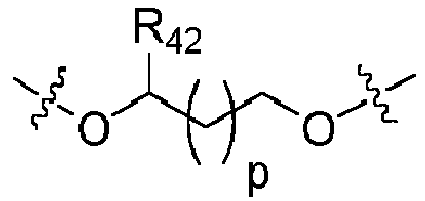

wobei:R42 ausgewählt ist aus der Gruppe bestehend aus H und (C1-C6)-Alkyl;p eine ganze Zahl von 1 bis 8 ist; undn' eine ganze Zahl von 1 bis 6 ist. - Das Verfahren nach Anspruch 9, wobei der organische Vorläufer eine Verbindung der Formel (VII) ist
 R40 und R41 unabhängig voneinander aus der Gruppe ausgewählt sind, die aus H und (C1-C6)-Alkyl besteht;X2 ausgewählt ist aus der Gruppe bestehend aus einer Verbindung der Formel (VIII)

wobei:R42 ausgewählt ist aus der Gruppe bestehend aus H und (C1-C6)-Alkyl;p eine ganze Zahl von 1 bis 8 ist; undn' eine ganze Zahl von 1 bis 6 ist. - Das Verfahren nach einem der Ansprüche 1 bis 10, wobei: der Säurekatalysator in wässriger Lösung eine anorganische Säure ist, die unabhängig aus der Gruppe ausgewählt ist, die aus H2SO4, HCl, HNO3 und einer Mischung davon besteht;
der (C1-C8)-Alkohol unabhängig ausgewählt ist aus der Gruppe bestehend aus Methanol, Ethanol, Butanol, n-Propanol, Isopropanol und einer Mischung davon; und der Komplexbildner ausgewählt ist aus der Gruppe bestehend aus Acetylaceton, Methacrylsäure, Essigsäure, Isobuttersäure, Bipyridin und einer Mischung davon; insbesondere ist die Säure HNO3, der (C1-C8)-Alkohol ist Ethanol und der Komplexbildner ist Methacrylsäure. - Das Verfahren nach einem der Ansprüche 1 bis 11, wobei das Metallalkoxid und das Halbmetallalkoxid unabhängig eine Verbindung der Formel (XIII) sind
(OR43)(OR44)(OR45)(OR46)Z (XIII)
wobei:jedes von R43, R44, R45 und R46 unabhängig ausgewählt ist aus der Gruppe bestehend aus substituiertem oder unsubstituiertem (C1-C14)-Alkyl, (C5-C6)-Aryl, (C2-C14)-Alkenyl und (C2-C14)-Alkinyl; undZ ausgewählt ist aus der Gruppe bestehend aus den Metall- und Halbmetallatomen. - Ein beschichtetes Substrat, das eine Sol-Gel-Schicht umfasst, die durch das Verfahren wie in einem der Ansprüche 1 bis 12 definiert erhalten werden kann.
Applications Claiming Priority (2)
| Application Number | Priority Date | Filing Date | Title |
|---|---|---|---|
| EP19383186.4A EP3842501A1 (de) | 2019-12-23 | 2019-12-23 | Omniphobe und biozide sol-gel-beschichtungszusammensetzung |
| PCT/EP2020/087626 WO2021130224A1 (en) | 2019-12-23 | 2020-12-22 | An omniphobic and biocide sol-gel coating composition |
Publications (3)
| Publication Number | Publication Date |
|---|---|
| EP4081604A1 EP4081604A1 (de) | 2022-11-02 |
| EP4081604B1 EP4081604B1 (de) | 2024-06-05 |
| EP4081604B9 true EP4081604B9 (de) | 2024-10-16 |
Family
ID=69172575
Family Applications (2)
| Application Number | Title | Priority Date | Filing Date |
|---|---|---|---|
| EP19383186.4A Withdrawn EP3842501A1 (de) | 2019-12-23 | 2019-12-23 | Omniphobe und biozide sol-gel-beschichtungszusammensetzung |
| EP20839051.8A Active EP4081604B9 (de) | 2019-12-23 | 2020-12-22 | Omniphobe und biozide sol-gel-beschichtungszusammensetzung |
Family Applications Before (1)
| Application Number | Title | Priority Date | Filing Date |
|---|---|---|---|
| EP19383186.4A Withdrawn EP3842501A1 (de) | 2019-12-23 | 2019-12-23 | Omniphobe und biozide sol-gel-beschichtungszusammensetzung |
Country Status (3)
| Country | Link |
|---|---|
| EP (2) | EP3842501A1 (de) |
| ES (1) | ES2993011T3 (de) |
| WO (1) | WO2021130224A1 (de) |
Families Citing this family (2)
| Publication number | Priority date | Publication date | Assignee | Title |
|---|---|---|---|---|
| KR102752187B1 (ko) * | 2021-09-14 | 2025-01-09 | 코오롱인더스트리 주식회사 | 코팅필름, 코팅용 조성물 및 표시장치 |
| US20250043428A1 (en) * | 2023-08-04 | 2025-02-06 | Wolverine Advanced Materials, Llc | Nanoceramic coatings for metal substrates and method of forming same |
Family Cites Families (2)
| Publication number | Priority date | Publication date | Assignee | Title |
|---|---|---|---|---|
| ES2828970T3 (es) * | 2016-10-17 | 2021-05-28 | Fundacion Tecnalia Res & Innovation | Composición de recubrimiento híbrida sol-gel resistente a la corrosión |
| US20190352223A1 (en) * | 2017-01-16 | 2019-11-21 | Fundacion Tecnalia Research & Innovation | Broadband anti-reflective sol-gel coating composition |
-
2019
- 2019-12-23 EP EP19383186.4A patent/EP3842501A1/de not_active Withdrawn
-
2020
- 2020-12-22 EP EP20839051.8A patent/EP4081604B9/de active Active
- 2020-12-22 WO PCT/EP2020/087626 patent/WO2021130224A1/en not_active Ceased
- 2020-12-22 ES ES20839051T patent/ES2993011T3/es active Active
Also Published As
| Publication number | Publication date |
|---|---|
| WO2021130224A1 (en) | 2021-07-01 |
| ES2993011T3 (en) | 2024-12-20 |
| EP4081604B1 (de) | 2024-06-05 |
| EP4081604A1 (de) | 2022-11-02 |
| EP3842501A1 (de) | 2021-06-30 |
Similar Documents
| Publication | Publication Date | Title |
|---|---|---|
| Jeon et al. | Highly transparent, robust hydrophobic, and amphiphilic organic–inorganic hybrid coatings for antifogging and antibacterial applications | |
| US8372384B2 (en) | Quaternary ammonium functionalized cross-linked polyalkylsiloxanes with anti-fouling activity | |
| Xiao et al. | Novel robust superhydrophobic coating with self-cleaning properties in air and oil based on rare earth metal oxide | |
| Detty et al. | Environmentally benign sol–gel antifouling and foul-releasing coatings | |
| KR101104262B1 (ko) | 자기세정성 부재 및 그 제조방법 | |
| JP5570452B2 (ja) | 表面処理組成物 | |
| Liu et al. | Integrated dual-functional ORMOSIL coatings with AgNPs@ rGO nanocomposite for corrosion resistance and antifouling applications | |
| JP2006525376A (ja) | 腐食に対して保護する金属の被覆のための組成物 | |
| JP2009256564A (ja) | 親水性膜形成用組成物および親水性部材 | |
| JP2017201010A (ja) | 皮膜 | |
| EP4081604B9 (de) | Omniphobe und biozide sol-gel-beschichtungszusammensetzung | |
| JP5991665B2 (ja) | 透明ハイブリッド皮膜とその製造方法 | |
| JP2016033109A (ja) | 被膜付きガラスおよび被膜形成用組成物 | |
| JPH02292201A (ja) | 抗菌性シリカゲルおよび抗菌性樹脂 | |
| JPWO2016068118A1 (ja) | 透明皮膜 | |
| Saravanan et al. | Twin applications of tetra-functional epoxy monomers for anticorrosion and antifouling studies | |
| Wang et al. | Modification strategy of siloxane antifouling coating: adhesion strength, static antifouling, and self-healing properties | |
| WO2022261559A2 (en) | Antifouling materials, compositions and methods of use | |
| WO2016009947A1 (ja) | 防汚塗料組成物 | |
| US7405006B2 (en) | Method of treating surfaces for self-sterilization and microbial growth resistance | |
| JP5121025B2 (ja) | 透明膜形成液状抗菌剤組成物 | |
| WO2019033199A1 (en) | COATING COMPOSITIONS AND METHODS FOR PREVENTING THE FORMATION OF BIOFILMS ON SURFACES | |
| JP2010070735A (ja) | 親水性組成物、親水性部材、フィン材、熱交換器、及びエアコン | |
| CN105121704A (zh) | 无机涂层和组合物 | |
| Bös et al. | Molecular Design and Nanoarchitectonics of Inorganic–Organic Hybrid Sol–Gel Systems for Antifouling Coatings |
Legal Events
| Date | Code | Title | Description |
|---|---|---|---|
| STAA | Information on the status of an ep patent application or granted ep patent |
Free format text: STATUS: UNKNOWN |
|
| STAA | Information on the status of an ep patent application or granted ep patent |
Free format text: STATUS: THE INTERNATIONAL PUBLICATION HAS BEEN MADE |
|
| PUAI | Public reference made under article 153(3) epc to a published international application that has entered the european phase |
Free format text: ORIGINAL CODE: 0009012 |
|
| STAA | Information on the status of an ep patent application or granted ep patent |
Free format text: STATUS: REQUEST FOR EXAMINATION WAS MADE |
|
| 17P | Request for examination filed |
Effective date: 20220725 |
|
| AK | Designated contracting states |
Kind code of ref document: A1 Designated state(s): AL AT BE BG CH CY CZ DE DK EE ES FI FR GB GR HR HU IE IS IT LI LT LU LV MC MK MT NL NO PL PT RO RS SE SI SK SM TR |
|
| DAV | Request for validation of the european patent (deleted) | ||
| DAX | Request for extension of the european patent (deleted) | ||
| GRAP | Despatch of communication of intention to grant a patent |
Free format text: ORIGINAL CODE: EPIDOSNIGR1 |
|
| STAA | Information on the status of an ep patent application or granted ep patent |
Free format text: STATUS: GRANT OF PATENT IS INTENDED |
|
| INTG | Intention to grant announced |
Effective date: 20230627 |
|
| GRAJ | Information related to disapproval of communication of intention to grant by the applicant or resumption of examination proceedings by the epo deleted |
Free format text: ORIGINAL CODE: EPIDOSDIGR1 |
|
| STAA | Information on the status of an ep patent application or granted ep patent |
Free format text: STATUS: REQUEST FOR EXAMINATION WAS MADE |
|
| INTC | Intention to grant announced (deleted) | ||
| GRAP | Despatch of communication of intention to grant a patent |
Free format text: ORIGINAL CODE: EPIDOSNIGR1 |
|
| STAA | Information on the status of an ep patent application or granted ep patent |
Free format text: STATUS: GRANT OF PATENT IS INTENDED |
|
| INTG | Intention to grant announced |
Effective date: 20240105 |
|
| GRAS | Grant fee paid |
Free format text: ORIGINAL CODE: EPIDOSNIGR3 |
|
| GRAA | (expected) grant |
Free format text: ORIGINAL CODE: 0009210 |
|
| STAA | Information on the status of an ep patent application or granted ep patent |
Free format text: STATUS: THE PATENT HAS BEEN GRANTED |
|
| AK | Designated contracting states |
Kind code of ref document: B1 Designated state(s): AL AT BE BG CH CY CZ DE DK EE ES FI FR GB GR HR HU IE IS IT LI LT LU LV MC MK MT NL NO PL PT RO RS SE SI SK SM TR |
|
| REG | Reference to a national code |
Ref country code: CH Ref legal event code: EP |
|
| REG | Reference to a national code |
Ref country code: DE Ref legal event code: R096 Ref document number: 602020032099 Country of ref document: DE |
|
| P01 | Opt-out of the competence of the unified patent court (upc) registered |
Effective date: 20240527 |
|
| REG | Reference to a national code |
Ref country code: IE Ref legal event code: FG4D |
|
| REG | Reference to a national code |
Ref country code: CH Ref legal event code: PK Free format text: BERICHTIGUNG B9 |
|
| REG | Reference to a national code |
Ref country code: LT Ref legal event code: MG9D |
|
| REG | Reference to a national code |
Ref country code: CH Ref legal event code: PK Free format text: BERICHTIGUNG B9 |
|
| PG25 | Lapsed in a contracting state [announced via postgrant information from national office to epo] |
Ref country code: BG Free format text: LAPSE BECAUSE OF FAILURE TO SUBMIT A TRANSLATION OF THE DESCRIPTION OR TO PAY THE FEE WITHIN THE PRESCRIBED TIME-LIMIT Effective date: 20240605 |
|
| REG | Reference to a national code |
Ref country code: NL Ref legal event code: MP Effective date: 20240605 |
|
| PG25 | Lapsed in a contracting state [announced via postgrant information from national office to epo] |
Ref country code: HR Free format text: LAPSE BECAUSE OF FAILURE TO SUBMIT A TRANSLATION OF THE DESCRIPTION OR TO PAY THE FEE WITHIN THE PRESCRIBED TIME-LIMIT Effective date: 20240605 Ref country code: FI Free format text: LAPSE BECAUSE OF FAILURE TO SUBMIT A TRANSLATION OF THE DESCRIPTION OR TO PAY THE FEE WITHIN THE PRESCRIBED TIME-LIMIT Effective date: 20240605 |
|
| PG25 | Lapsed in a contracting state [announced via postgrant information from national office to epo] |
Ref country code: GR Free format text: LAPSE BECAUSE OF FAILURE TO SUBMIT A TRANSLATION OF THE DESCRIPTION OR TO PAY THE FEE WITHIN THE PRESCRIBED TIME-LIMIT Effective date: 20240906 |
|
| PG25 | Lapsed in a contracting state [announced via postgrant information from national office to epo] |
Ref country code: LV Free format text: LAPSE BECAUSE OF FAILURE TO SUBMIT A TRANSLATION OF THE DESCRIPTION OR TO PAY THE FEE WITHIN THE PRESCRIBED TIME-LIMIT Effective date: 20240605 |
|
| PG25 | Lapsed in a contracting state [announced via postgrant information from national office to epo] |
Ref country code: NO Free format text: LAPSE BECAUSE OF FAILURE TO SUBMIT A TRANSLATION OF THE DESCRIPTION OR TO PAY THE FEE WITHIN THE PRESCRIBED TIME-LIMIT Effective date: 20240905 Ref country code: LV Free format text: LAPSE BECAUSE OF FAILURE TO SUBMIT A TRANSLATION OF THE DESCRIPTION OR TO PAY THE FEE WITHIN THE PRESCRIBED TIME-LIMIT Effective date: 20240605 Ref country code: HR Free format text: LAPSE BECAUSE OF FAILURE TO SUBMIT A TRANSLATION OF THE DESCRIPTION OR TO PAY THE FEE WITHIN THE PRESCRIBED TIME-LIMIT Effective date: 20240605 Ref country code: GR Free format text: LAPSE BECAUSE OF FAILURE TO SUBMIT A TRANSLATION OF THE DESCRIPTION OR TO PAY THE FEE WITHIN THE PRESCRIBED TIME-LIMIT Effective date: 20240906 Ref country code: FI Free format text: LAPSE BECAUSE OF FAILURE TO SUBMIT A TRANSLATION OF THE DESCRIPTION OR TO PAY THE FEE WITHIN THE PRESCRIBED TIME-LIMIT Effective date: 20240605 Ref country code: BG Free format text: LAPSE BECAUSE OF FAILURE TO SUBMIT A TRANSLATION OF THE DESCRIPTION OR TO PAY THE FEE WITHIN THE PRESCRIBED TIME-LIMIT Effective date: 20240605 Ref country code: RS Free format text: LAPSE BECAUSE OF FAILURE TO SUBMIT A TRANSLATION OF THE DESCRIPTION OR TO PAY THE FEE WITHIN THE PRESCRIBED TIME-LIMIT Effective date: 20240905 |
|
| PG25 | Lapsed in a contracting state [announced via postgrant information from national office to epo] |
Ref country code: NL Free format text: LAPSE BECAUSE OF FAILURE TO SUBMIT A TRANSLATION OF THE DESCRIPTION OR TO PAY THE FEE WITHIN THE PRESCRIBED TIME-LIMIT Effective date: 20240605 |
|
| REG | Reference to a national code |
Ref country code: AT Ref legal event code: MK05 Ref document number: 1692444 Country of ref document: AT Kind code of ref document: T Effective date: 20240605 |
|
| PG25 | Lapsed in a contracting state [announced via postgrant information from national office to epo] |
Ref country code: NL Free format text: LAPSE BECAUSE OF FAILURE TO SUBMIT A TRANSLATION OF THE DESCRIPTION OR TO PAY THE FEE WITHIN THE PRESCRIBED TIME-LIMIT Effective date: 20240605 |
|
| PG25 | Lapsed in a contracting state [announced via postgrant information from national office to epo] |
Ref country code: PT Free format text: LAPSE BECAUSE OF FAILURE TO SUBMIT A TRANSLATION OF THE DESCRIPTION OR TO PAY THE FEE WITHIN THE PRESCRIBED TIME-LIMIT Effective date: 20241007 |
|
| REG | Reference to a national code |
Ref country code: ES Ref legal event code: FG2A Ref document number: 2993011 Country of ref document: ES Kind code of ref document: T3 Effective date: 20241220 |
|
| PG25 | Lapsed in a contracting state [announced via postgrant information from national office to epo] |
Ref country code: PT Free format text: LAPSE BECAUSE OF FAILURE TO SUBMIT A TRANSLATION OF THE DESCRIPTION OR TO PAY THE FEE WITHIN THE PRESCRIBED TIME-LIMIT Effective date: 20241007 |
|
| PG25 | Lapsed in a contracting state [announced via postgrant information from national office to epo] |
Ref country code: PL Free format text: LAPSE BECAUSE OF FAILURE TO SUBMIT A TRANSLATION OF THE DESCRIPTION OR TO PAY THE FEE WITHIN THE PRESCRIBED TIME-LIMIT Effective date: 20240605 |
|
| PG25 | Lapsed in a contracting state [announced via postgrant information from national office to epo] |
Ref country code: EE Free format text: LAPSE BECAUSE OF FAILURE TO SUBMIT A TRANSLATION OF THE DESCRIPTION OR TO PAY THE FEE WITHIN THE PRESCRIBED TIME-LIMIT Effective date: 20240605 |
|
| PG25 | Lapsed in a contracting state [announced via postgrant information from national office to epo] |
Ref country code: AT Free format text: LAPSE BECAUSE OF FAILURE TO SUBMIT A TRANSLATION OF THE DESCRIPTION OR TO PAY THE FEE WITHIN THE PRESCRIBED TIME-LIMIT Effective date: 20240605 Ref country code: IS Free format text: LAPSE BECAUSE OF FAILURE TO SUBMIT A TRANSLATION OF THE DESCRIPTION OR TO PAY THE FEE WITHIN THE PRESCRIBED TIME-LIMIT Effective date: 20241005 |
|
| PG25 | Lapsed in a contracting state [announced via postgrant information from national office to epo] |
Ref country code: CZ Free format text: LAPSE BECAUSE OF FAILURE TO SUBMIT A TRANSLATION OF THE DESCRIPTION OR TO PAY THE FEE WITHIN THE PRESCRIBED TIME-LIMIT Effective date: 20240605 |
|
| PG25 | Lapsed in a contracting state [announced via postgrant information from national office to epo] |
Ref country code: RO Free format text: LAPSE BECAUSE OF FAILURE TO SUBMIT A TRANSLATION OF THE DESCRIPTION OR TO PAY THE FEE WITHIN THE PRESCRIBED TIME-LIMIT Effective date: 20240605 Ref country code: SK Free format text: LAPSE BECAUSE OF FAILURE TO SUBMIT A TRANSLATION OF THE DESCRIPTION OR TO PAY THE FEE WITHIN THE PRESCRIBED TIME-LIMIT Effective date: 20240605 |
|
| PG25 | Lapsed in a contracting state [announced via postgrant information from national office to epo] |
Ref country code: SM Free format text: LAPSE BECAUSE OF FAILURE TO SUBMIT A TRANSLATION OF THE DESCRIPTION OR TO PAY THE FEE WITHIN THE PRESCRIBED TIME-LIMIT Effective date: 20240605 |
|
| PG25 | Lapsed in a contracting state [announced via postgrant information from national office to epo] |
Ref country code: SM Free format text: LAPSE BECAUSE OF FAILURE TO SUBMIT A TRANSLATION OF THE DESCRIPTION OR TO PAY THE FEE WITHIN THE PRESCRIBED TIME-LIMIT Effective date: 20240605 Ref country code: SK Free format text: LAPSE BECAUSE OF FAILURE TO SUBMIT A TRANSLATION OF THE DESCRIPTION OR TO PAY THE FEE WITHIN THE PRESCRIBED TIME-LIMIT Effective date: 20240605 Ref country code: RO Free format text: LAPSE BECAUSE OF FAILURE TO SUBMIT A TRANSLATION OF THE DESCRIPTION OR TO PAY THE FEE WITHIN THE PRESCRIBED TIME-LIMIT Effective date: 20240605 Ref country code: PL Free format text: LAPSE BECAUSE OF FAILURE TO SUBMIT A TRANSLATION OF THE DESCRIPTION OR TO PAY THE FEE WITHIN THE PRESCRIBED TIME-LIMIT Effective date: 20240605 Ref country code: IS Free format text: LAPSE BECAUSE OF FAILURE TO SUBMIT A TRANSLATION OF THE DESCRIPTION OR TO PAY THE FEE WITHIN THE PRESCRIBED TIME-LIMIT Effective date: 20241005 Ref country code: EE Free format text: LAPSE BECAUSE OF FAILURE TO SUBMIT A TRANSLATION OF THE DESCRIPTION OR TO PAY THE FEE WITHIN THE PRESCRIBED TIME-LIMIT Effective date: 20240605 Ref country code: CZ Free format text: LAPSE BECAUSE OF FAILURE TO SUBMIT A TRANSLATION OF THE DESCRIPTION OR TO PAY THE FEE WITHIN THE PRESCRIBED TIME-LIMIT Effective date: 20240605 Ref country code: AT Free format text: LAPSE BECAUSE OF FAILURE TO SUBMIT A TRANSLATION OF THE DESCRIPTION OR TO PAY THE FEE WITHIN THE PRESCRIBED TIME-LIMIT Effective date: 20240605 |
|
| REG | Reference to a national code |
Ref country code: DE Ref legal event code: R097 Ref document number: 602020032099 Country of ref document: DE |
|
| PLBE | No opposition filed within time limit |
Free format text: ORIGINAL CODE: 0009261 |
|
| STAA | Information on the status of an ep patent application or granted ep patent |
Free format text: STATUS: NO OPPOSITION FILED WITHIN TIME LIMIT |
|
| PG25 | Lapsed in a contracting state [announced via postgrant information from national office to epo] |
Ref country code: DK Free format text: LAPSE BECAUSE OF FAILURE TO SUBMIT A TRANSLATION OF THE DESCRIPTION OR TO PAY THE FEE WITHIN THE PRESCRIBED TIME-LIMIT Effective date: 20240605 |
|
| 26N | No opposition filed |
Effective date: 20250306 |
|
| PG25 | Lapsed in a contracting state [announced via postgrant information from national office to epo] |
Ref country code: MC Free format text: LAPSE BECAUSE OF FAILURE TO SUBMIT A TRANSLATION OF THE DESCRIPTION OR TO PAY THE FEE WITHIN THE PRESCRIBED TIME-LIMIT Effective date: 20240605 |
|
| REG | Reference to a national code |
Ref country code: CH Ref legal event code: PL |
|
| PG25 | Lapsed in a contracting state [announced via postgrant information from national office to epo] |
Ref country code: LU Free format text: LAPSE BECAUSE OF NON-PAYMENT OF DUE FEES Effective date: 20241222 |
|
| PG25 | Lapsed in a contracting state [announced via postgrant information from national office to epo] |
Ref country code: SE Free format text: LAPSE BECAUSE OF FAILURE TO SUBMIT A TRANSLATION OF THE DESCRIPTION OR TO PAY THE FEE WITHIN THE PRESCRIBED TIME-LIMIT Effective date: 20240605 |
|
| REG | Reference to a national code |
Ref country code: BE Ref legal event code: MM Effective date: 20241231 |
|
| PG25 | Lapsed in a contracting state [announced via postgrant information from national office to epo] |
Ref country code: BE Free format text: LAPSE BECAUSE OF NON-PAYMENT OF DUE FEES Effective date: 20241231 |
|
| PG25 | Lapsed in a contracting state [announced via postgrant information from national office to epo] |
Ref country code: CH Free format text: LAPSE BECAUSE OF NON-PAYMENT OF DUE FEES Effective date: 20241231 |
|
| PG25 | Lapsed in a contracting state [announced via postgrant information from national office to epo] |
Ref country code: IE Free format text: LAPSE BECAUSE OF NON-PAYMENT OF DUE FEES Effective date: 20241222 |
|
| PGFP | Annual fee paid to national office [announced via postgrant information from national office to epo] |
Ref country code: GB Payment date: 20251229 Year of fee payment: 6 |
|
| PGFP | Annual fee paid to national office [announced via postgrant information from national office to epo] |
Ref country code: IT Payment date: 20251219 Year of fee payment: 6 |
|
| PGFP | Annual fee paid to national office [announced via postgrant information from national office to epo] |
Ref country code: FR Payment date: 20251226 Year of fee payment: 6 |
|
| PGFP | Annual fee paid to national office [announced via postgrant information from national office to epo] |
Ref country code: ES Payment date: 20260101 Year of fee payment: 6 |
|
| PGFP | Annual fee paid to national office [announced via postgrant information from national office to epo] |
Ref country code: DE Payment date: 20251229 Year of fee payment: 6 |