EP4074145B1 - Volumetric plasma gas flow measurement and control system for metal-based wire-plasma arc additive manufacturing applications - Google Patents
Volumetric plasma gas flow measurement and control system for metal-based wire-plasma arc additive manufacturing applications Download PDFInfo
- Publication number
- EP4074145B1 EP4074145B1 EP20829809.1A EP20829809A EP4074145B1 EP 4074145 B1 EP4074145 B1 EP 4074145B1 EP 20829809 A EP20829809 A EP 20829809A EP 4074145 B1 EP4074145 B1 EP 4074145B1
- Authority
- EP
- European Patent Office
- Prior art keywords
- gas
- inert gas
- mass flow
- volumetric flow
- plasma torch
- Prior art date
- Legal status (The legal status is an assumption and is not a legal conclusion. Google has not performed a legal analysis and makes no representation as to the accuracy of the status listed.)
- Active
Links
Images




Classifications
-
- H—ELECTRICITY
- H05—ELECTRIC TECHNIQUES NOT OTHERWISE PROVIDED FOR
- H05H—PLASMA TECHNIQUE; PRODUCTION OF ACCELERATED ELECTRICALLY-CHARGED PARTICLES OR OF NEUTRONS; PRODUCTION OR ACCELERATION OF NEUTRAL MOLECULAR OR ATOMIC BEAMS
- H05H1/00—Generating plasma; Handling plasma
- H05H1/24—Generating plasma
- H05H1/26—Plasma torches
- H05H1/32—Plasma torches using an arc
- H05H1/34—Details, e.g. electrodes, nozzles
-
- B—PERFORMING OPERATIONS; TRANSPORTING
- B23—MACHINE TOOLS; METAL-WORKING NOT OTHERWISE PROVIDED FOR
- B23K—SOLDERING OR UNSOLDERING; WELDING; CLADDING OR PLATING BY SOLDERING OR WELDING; CUTTING BY APPLYING HEAT LOCALLY, e.g. FLAME CUTTING; WORKING BY LASER BEAM
- B23K10/00—Welding or cutting by means of a plasma
- B23K10/02—Plasma welding
- B23K10/027—Welding for purposes other than joining, e.g. build-up welding
-
- B—PERFORMING OPERATIONS; TRANSPORTING
- B22—CASTING; POWDER METALLURGY
- B22F—WORKING METALLIC POWDER; MANUFACTURE OF ARTICLES FROM METALLIC POWDER; MAKING METALLIC POWDER; APPARATUS OR DEVICES SPECIALLY ADAPTED FOR METALLIC POWDER
- B22F10/00—Additive manufacturing of workpieces or articles from metallic powder
- B22F10/20—Direct sintering or melting
- B22F10/22—Direct deposition of molten metal
-
- B—PERFORMING OPERATIONS; TRANSPORTING
- B22—CASTING; POWDER METALLURGY
- B22F—WORKING METALLIC POWDER; MANUFACTURE OF ARTICLES FROM METALLIC POWDER; MAKING METALLIC POWDER; APPARATUS OR DEVICES SPECIALLY ADAPTED FOR METALLIC POWDER
- B22F12/00—Apparatus or devices specially adapted for additive manufacturing; Auxiliary means for additive manufacturing; Combinations of additive manufacturing apparatus or devices with other processing apparatus or devices
- B22F12/90—Means for process control, e.g. cameras or sensors
-
- B—PERFORMING OPERATIONS; TRANSPORTING
- B23—MACHINE TOOLS; METAL-WORKING NOT OTHERWISE PROVIDED FOR
- B23K—SOLDERING OR UNSOLDERING; WELDING; CLADDING OR PLATING BY SOLDERING OR WELDING; CUTTING BY APPLYING HEAT LOCALLY, e.g. FLAME CUTTING; WORKING BY LASER BEAM
- B23K10/00—Welding or cutting by means of a plasma
- B23K10/006—Control circuits therefor
-
- B—PERFORMING OPERATIONS; TRANSPORTING
- B23—MACHINE TOOLS; METAL-WORKING NOT OTHERWISE PROVIDED FOR
- B23K—SOLDERING OR UNSOLDERING; WELDING; CLADDING OR PLATING BY SOLDERING OR WELDING; CUTTING BY APPLYING HEAT LOCALLY, e.g. FLAME CUTTING; WORKING BY LASER BEAM
- B23K9/00—Arc welding or cutting
- B23K9/16—Arc welding or cutting making use of shielding gas
- B23K9/173—Arc welding or cutting making use of shielding gas and of a consumable electrode
-
- B—PERFORMING OPERATIONS; TRANSPORTING
- B33—ADDITIVE MANUFACTURING TECHNOLOGY
- B33Y—ADDITIVE MANUFACTURING, i.e. MANUFACTURING OF THREE-DIMENSIONAL [3D] OBJECTS BY ADDITIVE DEPOSITION, ADDITIVE AGGLOMERATION OR ADDITIVE LAYERING, e.g. BY 3D PRINTING, STEREOLITHOGRAPHY OR SELECTIVE LASER SINTERING
- B33Y10/00—Processes of additive manufacturing
-
- B—PERFORMING OPERATIONS; TRANSPORTING
- B33—ADDITIVE MANUFACTURING TECHNOLOGY
- B33Y—ADDITIVE MANUFACTURING, i.e. MANUFACTURING OF THREE-DIMENSIONAL [3D] OBJECTS BY ADDITIVE DEPOSITION, ADDITIVE AGGLOMERATION OR ADDITIVE LAYERING, e.g. BY 3D PRINTING, STEREOLITHOGRAPHY OR SELECTIVE LASER SINTERING
- B33Y50/00—Data acquisition or data processing for additive manufacturing
- B33Y50/02—Data acquisition or data processing for additive manufacturing for controlling or regulating additive manufacturing processes
-
- G—PHYSICS
- G05—CONTROLLING; REGULATING
- G05D—SYSTEMS FOR CONTROLLING OR REGULATING NON-ELECTRIC VARIABLES
- G05D7/00—Control of flow
- G05D7/06—Control of flow characterised by the use of electric means
- G05D7/0617—Control of flow characterised by the use of electric means specially adapted for fluid materials
- G05D7/0629—Control of flow characterised by the use of electric means specially adapted for fluid materials characterised by the type of regulator means
- G05D7/0635—Control of flow characterised by the use of electric means specially adapted for fluid materials characterised by the type of regulator means by action on throttling means
-
- B—PERFORMING OPERATIONS; TRANSPORTING
- B22—CASTING; POWDER METALLURGY
- B22F—WORKING METALLIC POWDER; MANUFACTURE OF ARTICLES FROM METALLIC POWDER; MAKING METALLIC POWDER; APPARATUS OR DEVICES SPECIALLY ADAPTED FOR METALLIC POWDER
- B22F2999/00—Aspects linked to processes or compositions used in powder metallurgy
-
- Y—GENERAL TAGGING OF NEW TECHNOLOGICAL DEVELOPMENTS; GENERAL TAGGING OF CROSS-SECTIONAL TECHNOLOGIES SPANNING OVER SEVERAL SECTIONS OF THE IPC; TECHNICAL SUBJECTS COVERED BY FORMER USPC CROSS-REFERENCE ART COLLECTIONS [XRACs] AND DIGESTS
- Y02—TECHNOLOGIES OR APPLICATIONS FOR MITIGATION OR ADAPTATION AGAINST CLIMATE CHANGE
- Y02P—CLIMATE CHANGE MITIGATION TECHNOLOGIES IN THE PRODUCTION OR PROCESSING OF GOODS
- Y02P10/00—Technologies related to metal processing
- Y02P10/25—Process efficiency
Definitions
- the present invention relates generally to systems and methods for controlling and consistently delivering a gas flow to a melting tool of an additive manufacturing process in order to create consistent force of the melt pool while the gas density is subject to variations due to mechanical and environmental factors.
- Structured metal parts made of titanium or titanium alloys conventionally have been made by casting, forging or machining from a billet. These techniques have a number of disadvantages, such as high material use of the expensive titanium metal and large lead times in the fabrication of the metal object. Casting, which often can be used for production of a potentially near-net-shape object, typically has a reduced material quality due to lack of control of solidification and cooling rates. Tooling costs and the inability to prepare objects with complex shapes are additional disadvantages of the conventional methods.
- Fully dense physical objects can be made by additive manufacturing, a manufacturing technology also known as rapid prototyping, rapid manufacturing, free form fabrication and layered manufacturing.
- Additive manufacturing prepares near-net-shape products by consecutive layering of materials one layer at a time to yield the three-dimensional object. This is opposed to subtractive manufacturing, in which a billet or block of material is worked by removing material in order to produce the final product.
- WAAM wire and arc additive manufacturing
- GTWA Gas tungsten arc welding
- PAW plasma arc welding
- the ionization can occur between a non-consumable negative (tungsten) electrode and the workpiece as a direct transferred arc, alone or in combination with a pilot arc between a non-consumable negative (tungsten) electrode and an anode, where the preform or substrate can act as an anode.
- the configuration of the torch and its relative position and placement with respect to the workpiece can result in the plasma column impinging on the melt pool.
- both the number of gas molecules in time and the gas volume in time are critical because both factors affect the plasma arc thermal characteristics.
- the gas mass flow (number of gas molecules per unit time) affects the ionization degree of the plasma arc (i.e. the number of ionized gas atoms relative to the total number of available gas atoms), and the gas volumetric flow (volume of gas per unit time) affects the kinetic energy of the plasma arc flow and the resulting pressure on the melt pool.
- the pressure that the plasma column can exert of the workpiece during formation can have a significant impact on layer uniformity and process repeatability.
- the pressure of the plasma column can be influenced by the control of the inert gas supplied to the torch.
- the gas flow control technologies currently used in metal-based wire-plasma arc additive manufacturing processes measure and control the mass flow rate, i.e. the number of gas molecules per time unit, supplied to the plasma torch, by "assuming" standard conditions for the pressure and temperature of the supply gas.
- the density of the gas supplied to the torch can change significantly due to environmental variations, alone or in combination with machine-to-machine variation factors.
- a system for controlling flow of a gas to a plasma torch of an additive manufacturing device according to claim 1 and a method of delivering a target volumetric flow and a target mass flow of an inert gas to be ionized into plasma to a plasma torch according to claim 16 are provided.
- Preferred embodiments of the invention are described in the dependent claims. Accordingly, embodiments described herein are directed to systems and methods for controlling the flow of the inert gas to a plasma torch that can determine actual volumetric flow and can allow adjustment of the plasma arc pressure and melt pool dynamics for use in metal-based wire-plasma arc additive manufacturing processes. Provided are systems that regulate both mass flow and volumetric flow of the gas to the plasma torch.
- the systems and methods can include volumetric flow control elements that can be located inside a production chamber at or in the vicinity of the plasma torch gas inlet for receiving the gas to be ionized into plasma by the plasma torch(es) to be able to measure and/or control any gas density variations due to arc radiation disturbance, such as variations in temperature of the gas hoses or pipes.
- the volumetric flow control elements at or in the vicinity of the plasma torch(es) gas inlet also can allow detection of any mass flow reductions, such as due to leakages, and can act as a second opinion sensor for the mass flow.
- An objective of embodiments described herein is to provide a consistent force on the melt-pool during wire plasma arc additive manufacturing processes even if the gas density is subject to variations due to mechanical or environmental disturbances or both.
- consistent force can be achieved by controlling the volumetric flow of the gas at the plasma torch that forms the ionized gas or plasma.
- control of the volumetric flow of the gas at the plasma torch can be achieved by adjusting the mass flow of the gas to be ionized from the gas supply source, or by adjusting the density of the gas to be ionized at the plasma torch by modifying the temperature or pressure or a combination thereof of the gas, or a combination of adjustments to the mass-flow of the gas to be ionized at the gas supply in combination with volumetric flow of the gas to be ionized by the plasma torch by adjusting the temperature and/or pressure of the gas to be ionized at or in the vicinity of the plasma torch gas inlet.
- An objective of embodiments described herein is to improve melt pool dynamics, and thus the geometric shape and mechanical properties of the preform produced by a metal-based wire-plasma arc additive manufacturing process, thereby improving consistency and quality.
- Another objective of embodiments provided herein is to create a consistent plasma arc pressure on the melt-pool (i.e. arc force per unit area of melt-pool), by maintaining the gas discharge velocity of the plasma arc from the nozzle of the plasma torch at a target discharge velocity, across various density levels of the inert gas supplied to the plasma torch(es).
- a system for controlling flow of a gas to a plasma torch of an additive manufacturing device where the system includes a source of an inert gas; a supply manifold in fluid communication with the source of the inert gas; a plasma torch comprising a gas inlet for receiving the inert gas from an inert gas line connected to the supply manifold, and a gas ionizer electromagnetic field for ionizing the inert gas into plasma.
- the system further includes a sensory kit comprising a temperature measurement unit, a pressure measurement unit, and a mass flow measurement unit wherein each unit is in communication with one or more sensory connecters connected to a position of the inert gas line between the supply manifold and the gas ionizer electromagnetic field.
- the system also includes a control valve in fluid communication with the gas supply manifold and that regulates flow of the inert gas from the gas supply manifold to the plasma torch.
- the system further includes a process master controller in communication with the sensory kit, a part program that provides a mass flow set value and a volumetric flow set value to the process master controller, a calculation function running on the process master controller calculating actual volumetric flow, and a) a mass flow control function and a volumetric flow control function running on the process master controller, or b) a combined mass flow and volumetric flow control function running on the process master controller, and wherein the system further comprises a density control element that controls the temperature and/or pressure of the inert gas delivered to the inlet of the plasma torch.
- the system can include a mass flow control function comparing the mass flow set value from the part program to the actual mass flow value from the sensory kit mass flow measurement unit, and modulating either the control valve or the density control element or both the control valve and the density control element to increase or decrease mass flow of inert gas to decrease the difference between the mass flow set value and the actual mass flow value.
- the volumetric flow control function can compare the volumetric flow set value from the part program to the calculated volumetric flow value from the calculation function, and modulate either the control valve or the density control element or both the control valve and the density control element to increase or decrease volumetric flow of the inert gas to decrease the difference between the volumetric flow set value and the calculated volumetric flow value.
- the mass flow control function can compares the mass flow set value from the part program to the actual mass flow value from the sensory kit mass flow measurement unit, and the volumetric flow control function compares the volumetric flow set value from the part program to the calculated volumetric flow value from the calculation function and modulates the control valve and the density control element to adjust the volumetric flow of the inert gas delivered to the gas ionizer electromagnetic field of the plasma torch.
- the combined mass flow and volumetric flow control function may be adapted to comparing the mass flow set value from the part program to the actual mass flow value from the sensory kit mass flow measurement unit, and the volumetric flow set value from the part program to the calculated volumetric flow value from the calculation function, and modulating the control valve and the density control element to adjust both the mass flow and volumetric flow of the inert gas delivered to the gas ionizer electromagnetic field of the plasma torch.
- the mass flow control function may be adapted to comparing the mass flow set value from the part program to the actual mass flow value from the sensory kit mass flow measurement unit, and modulating the control valve to increase or decrease mass flow of inert gas to decrease the difference between the mass flow set value and the actual mass flow value the mass flow of the inert gas delivered to the gas ionizer electromagnetic field of the plasma torch; and the volumetric flow control function is adapted to comparing the volumetric flow set value from the part program to the calculated volumetric flow value from the calculation function and adjusting the density control element to control the volumetric flow of the inert gas delivered to the gas ionizer electromagnetic field of the plasma torch.
- the sensory connecter of each of the temperature measurement unit, the pressure measurement unit, and the mass flow measurement unit of the sensory kit can be connected in the vicinity of the plasma torch gas inlet, and the sensory connecter of each of the temperature measurement unit and the pressure measurement unit of the sensory kit is located within the plasma torch.
- the gas density modifier can include: a) a temperature regulator and a temperature sensor; or b) a pressure regulator and a pressure sensor; or c) a temperature regulator, a temperature sensor, a pressure regulator and a pressure sensor; or d) any combination of a), b) and c).
- the gas density modifier comprises the temperature regulator, and the temperature regulator comprises a heater, the heater comprises an induction heater, a resistance heater, a piezoelectric ceramic heating element, or a combination thereof, and the temperature regulator further comprises a cooling apparatus.
- the cooling apparatus can include: a) a pipe connected to a refrigerated fluid reservoir and a pump for forming a closed loop cooling path for supplying a cooling fluid to the temperature regulator; or b) a conduit passing through the temperature regulator and a fan connected to the conduit for passing a cooling gas through the temperature regulator; or c) a combination of a) and b).
- the pressure regulator can include a movable plenum chamber that can increase the volume of the pressure regulator and thereby decrease the pressure of the inert gas exiting the pressure regulator; or decrease the volume of the pressure regulator and thereby increase the pressure of the inert gas exiting the pressure regulator.
- control element can be configured to control a speed of the inert gas to the plasma torch.
- the sensory connecter can be positioned inside a production chamber of an additive manufacturing system and at the plasma torch gas inlet to measure a radiation disturbance from the plasma torch and/or the workpiece.
- the systems provided herein can include a mass flow meter located upstream of the control valve and in communication with the process master controller that can detect a reduction in mass flow of the inert gas from the manifold, and the process master control sends a signal to a data monitoring system to indicate a leak.
- the sensory connecter can be connected to, or connected in the vicinity of, the plasma torch gas inlet, and the system may further comprise a processor group connected to the sensory kit and in communication with the control valve, wherein the processor group comprises: a process master controller in communication with the sensory unit; a calculation processor in communication with the sensory kit and the process master controller, the calculation processor calculating actual volumetric flow; and the mass flow controller and a volumetric flow controller in communication with the process master controller; and a part program that provides a mass flow set value or a volumetric flow set value or both a mass flow set value and a volumetric flow set value to the process master controller.
- the methods include providing an inert gas from a gas supply manifold to an inlet of the plasma torch through a control valve attached to an inert gas supply manifold; measuring a temperature, a mass flow and a pressure of the inert gas at or in the vicinity of the inlet; calculating an actual volumetric flow rate of the inert gas at or in the vicinity of the inlet; and comparing the actual volumetric flow rate to the target volumetric flow rate to generate a differential value.
- control valve can be adjusted to increase or decrease mass flow of the inert gas through the control valve to the inlet of the plasma torch; or the density of the inert gas can be adjusted by increasing or decreasing the pressure and/or temperature of the inert gas to yield a modified inert gas, and directing the modified inert gas to the inlet of the plasma torch.
- adjusting the control valve can include generating an adjustment signal based on the differential value; and sending the adjustment signal to a driver attached to the control valve, the driver increasing or decreasing an opening of the control valve based on the adjustment signal.
- adjusting the density of the inert gas can include a) measuring the temperature of the inert gas and increasing or decreasing the temperature of the inert gas in response to the differential value; or b) measuring the pressure of the inert gas and increasing or decreasing the pressure of the inert gas in response to the differential value; or c) both a) and b).
- increasing the temperature of the inert gas can include directing the inert gas to a temperature regulator comprising a heater and activating the heater.
- the heater can include an induction heater, a resistance heater, a piezoelectric ceramic heating element, or a combination thereof.
- decreasing the temperature of the inert gas can include directing the inert gas to a temperature regulator that can include a cooling apparatus, and activating the cooling apparatus.
- the cooling apparatus can include a pipe connected to a refrigerated fluid reservoir and a pump for forming a closed loop cooling path for supplying a cooling fluid to the temperature regulator; or a conduit passing through the temperature regulator and a fan connected to the conduit for passing a cooling gas through the temperature regulator and a pipe connected to a refrigerated fluid reservoir and a pump for forming a closed loop cooling path for supplying a cooling fluid to the temperature regulator; or a conduit passing through the temperature regulator and a fan connected to the conduit for passing a cooling gas through the temperature regulator.
- increasing or decreasing the pressure of the inert gas delivered to the plasma torch can include directing the inert gas to a pressure regulator.
- the pressure regulator can include a movable plenum chamber that can increase the volume of the pressure regulator and thereby decrease the pressure of the inert gas exiting the pressure regulator, or decrease the volume of the pressure regulator and thereby increase the pressure of the inert gas exiting the pressure regulator.
- the inert gas can be argon.
- ranges and amounts can be expressed as “about” a particular value or range. “About” also includes the exact amount. Hence “about 5 percent” means “about 5 percent” and also “5 percent.” “About” means within typical experimental error for the application or purpose intended.
- an optional component in a system means that the component may be present or may not be present in the system.
- a "combination" refers to any association between two items or among more than two items.
- the association can be spatial or refer to the use of the two or more items for a common purpose.
- any element so conjoined means “either or both” of the elements so conjoined, i.e., elements that are conjunctively present in some cases and disjunctively present in other cases. Multiple elements listed with “and/or” should be construed in the same fashion, i.e., "one or more" of the elements so conjoined. Other elements may optionally be present other than the elements specifically identified by the "and/or” clause, whether related or unrelated to those elements specifically identified.
- a reference to "A and/or B", when used in conjunction with open-ended language such as “comprising” can refer, in one embodiment, to A only (optionally including elements other than B); in another embodiment, to B only (optionally including elements other than A); in yet another embodiment, to both A and B (optionally including other elements); etc.
- additive manufacturing or “AM” is also known as “additive fabrication” and “additive layer manufacturing” and refers to an additive process implementing the manufacturing, layer after layer, of an object.
- the process can employ the use of a 3D model data, a metal source, such as wire or powder, a melting tool containing an energy source (such as a plasma arc, laser or electron beam) to melt the metal source, or a combination thereof.
- a metal source such as wire or powder
- a melting tool containing an energy source such as a plasma arc, laser or electron beam
- additive manufacturing system refers to the machine used for additive manufacturing.
- DED Directed Energy Deposition
- metal material refers to any known or conceivable metal or metal alloy which can be employed in an additive manufacturing process to form a three-dimensional object.
- suitable materials include, but are not limited to; titanium and titanium alloys such as i.e. Ti-6Al-4V alloy.
- plasma gas refers to an inert gas that is converted into plasma by the action of a plasma torch.
- the inert gas to be ionized into plasma typically is argon, or can be a combination of argon and helium.
- a "plasma torch” refers to any welding torch that can be used in plasma arc welding.
- a "Plasma Arc Welding torch” or “PAW torch” refers to a welding torch that can be used in plasma arc welding.
- the torch is designed so that a gas can be heated to a high temperature to form plasma and becomes electrically conductive, the plasma then transfers an electric arc to a workpiece, and the intense heat of the arc can melt metal and/or fuse two pieces of metal together.
- a PAW torch can include a nozzle for constricting the arc thereby increasing the power density of the arc.
- the inert gas to be ionized into plasma typically is argon.
- the PAW torch also typically has an outer nozzle for providing a shielding gas.
- the shielding gas can be argon, helium or combinations thereof, and the shielding gas assists minimizing oxidation of the molten metal.
- PAW torches include plasma transferred arc torches.
- plasma transferred arc torch or "PTA-torch” as used interchangeably herein means any device able to heat and excite a stream of inert gas to plasma by an electric field and then transfer the flow of plasma including the electric arc out through a nozzle to form a constricted plume which extends out of the nozzle and transfers the intense heat of the plasma to a target region.
- the electrode and target region are electrically connected to a power source, such as a direct current power source, such that the electrode of the PTA-torch can become the cathode and the target region can become the anode.
- a plasma transferred arc can have the advantage of providing stable and consistent arcs with little wandering and good tolerance for length deviations between the cathode and anode.
- the PTA-torch can be suitable both for forming a molten pool in the base material and to heat and melt the metallic wire feed.
- the PTA-torch may advantageously have an electrode made of tungsten and a nozzle made of copper, while various parts of the PTA-torch can be water cooled.
- the invention is not tied to any specific choice or type of PTA-torch or any specific configuration thereof. Any known or conceivable device able to function as PTA-torch may be used.
- in the vicinity of the plasma torch gas inlet means located at a position at or near the gas inlet of the plasma torch at which electromagnetic radiation from the plasma arc or the workpiece, or temperature variations caused by such electromagnetic radiation, can be measured. Where the samples of the inert gas is taken to measure the flow and density of the gas can be a few millimeters, or several centimeters, or a few meters away from the torch inlet.
- base material refers to the target material for the heat from a melting tool and on which a molten pool can be formed. This will be the holding substrate when depositing the first layer of metallic material. When one or more layers of metallic material have been deposited onto the holding substrate, the base material will be the upper layer of deposited metallic material that is to have deposited a new layer of metallic material.
- workpiece refers to a metal body being produced using solid free form fabrication.
- a "preform" is the workpiece produced by an additive manufacturing process, and is an intermediate of the final finished part or is a semifinished part.
- the preforms have a near-net shape to the final finished product, but requires at least some, if minimal, further processing such as a final finish machining to high tolerance configurations in order to yield the final finished product.
- a "melting tool” refers to a device that includes a thermal source for melting a metallic material or a portion of a surface of a workpiece or both in an additive manufacturing process. Examples include a PTA torch that produces a plasma arc as a thermal source, a laser device that produces a laser beam as a thermal source, and an electron beam device that produces an electron beam as a thermal source.
- gas discharge velocity from the nozzle refers to how fast the gas is moving out of the nozzle of the plasma torch in distance per unit of time.
- design model or "computer assisted design model” or "CAD-model” as used interchangeably herein refers to any known or conceivable virtual vectorized layered three-dimensional representation of an object that is to be formed by an additive manufacturing process.
- the model may, for instance, be obtained by forming a virtual vectorized layered model of the three-dimensional object by first dividing the object into a set of virtual parallel layers and then dividing each of the parallel layers into a set of virtual quasi one-dimensional pieces that can be used by the controller of the additive manufacturing system to form the object via layers of metal deposited or fused according to the virtual parallel layers.
- controller refers to any logic circuitry and/or processing elements involved in communicating with and/or controlling one or more components of the additive manufacturing system, as well as related software or programs of additive manufacturing system components.
- the controller can include a computer and/or computer memory.
- a "computer” can include, but is not limited to, hardware and/or software, which can capture and/or store data, and any program that can be programed to communicate with and/or control one or more electronic devices or software controlling mechanical devices.
- the computer can include non-transitory computer-readable medium that can include, but is not limited to, CD-ROM, removable flash memory card, a hard disk drive, or a magnetic tape.
- computer memory refers to a configurable storage element capable of storing digital data or information that may be acquired by a computer.
- inert atmosphere refers to any known or conceivable gas or gaseous mixture that can cover or envelop an object to isolate the object from ambient air.
- the inert atmosphere can protect the object from exposure to oxygen or being subject to oxidation or other unwanted chemical action from constituents of the ambient atmosphere.
- exemplary inert atmospheres include one or more noble gases.
- melt pool refers to a volume of molten metal that is formed during additive manufacturing.
- electromagnetic force refers to the Lorentz force resulting from the electromagnetic field that is used for ionizing the gas to create plasma.
- electromagnetic axial pressure refers to electromagnetic force per unit area of the melt-pool.
- plasma flow force refers to the mechanical disturbance resulting from the momentum of the plasma as a fluid which flows towards the melt-pool.
- plasma flow axial pressure refers to plasma flow force per unit area of the melt-pool.
- plasma arc pressure or “total arc pressure” refers to the arc force per unit area of the melt-pool.
- Total Arc Pressure is equal to the sum of the electromagnetic axial pressure and the plasma flow axial pressure.
- arc force refers to the electromagnetic force, i.e. Lorentz force, resulting from the electromagnetic field which is used for ionizing the gas to create plasma, plus the mechanical disturbance resulting from the mass of the plasma as a fluid which flows towards the melt-pool.
- mass flow rate refers to the number of gas molecules supplied to a plasma torch per unit of time.
- volumetric flow rate refers to the volume of the gas supplied to a plasma torch per unit of time.
- stagnation pressure or “pitot pressure” are used interchangeably to refer to the static pressure at a stagnation point in a fluid flow. At a stagnation point, the fluid velocity is zero and all kinetic energy has been converted into pressure energy.
- melt-pool temperature refers to a temperature that characterizes a melt pool, which temperature can be a melt-pool volume-average temperature, a melt-pool time-average temperature, a melt-pool surface temperature, or a melt-pool peak temperature (the highest temperature reached by any surface or region within the melt pool).
- range includes all values therein and all subranges therein.
- range includes 1 and 10 and all values between 1 and 10, such as, e.g., 1.1, 2.5, 3.333, 6.26, 7.9989, etc., and includes all subranges therebetween, such as for example, 1 to 3.5, 2.75 to 9.33, 1.5 to 9.999, etc.
- Direct Energy Deposition technologies can use a localized heat source, such as a plasma arc, to heat and melt a metal feedstock, which can be provided to the plasma torch in the form of a wire.
- a localized heat source such as a plasma arc
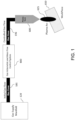
- FIG. 1 An exemplary plasma transferred arc (PTA) configuration using one PTA torch is shown in FIG. 1 .
- the figure shows a plasma torch 600 producing a plasma arc 625 positioned above workpiece 650. Not shown are the metal wire melted by the plasma arc 625, which melts the wire, resulting in molten drops of metal that are deposited onto the workpiece 650 layer by layer to form a three-dimensional object by an additive manufacturing process.
- FIG. 1 An exemplary plasma transferred arc (PTA) configuration using one PTA torch is shown in FIG. 1 .
- the figure shows a plasma torch 600 producing a plasma arc 625 positioned above workpiece 650. Not shown are the metal wire melted by the plasma arc 625, which melts the wire
- FIG. 1 depicts a single plasma torch 600, other configurations that can include two or more plasma torches, or two or more wire feeders, or multiple wires, or a wire feeder with a head that can handle multiple metal wires, also are contemplated and can be included in the systems provided herein.
- FIG. 1 illustrates a gas supply manifold 120 connected to a gas volumetric and mass flow control system 800 via a gas hose 160.
- the control system 800 is connected to the plasma torch via a gas hose 196.
- the workpiece can be included in an electrical circuit.
- Plasma is formed between the workpiece and the plasma torch due to the ionizing effect of the electromagnetic field which is produced between the torch and the workpiece by connecting a power source, e.g., an inverted, terminal to the torch and the workpiece.
- a noble gas such as argon can be the gas to be ionized by the plasma torch, such as by using an arc electrode, although alternative inert gases, ions, molecules, or atoms can be used in conjunction with a plasma torch instead of argon. These alternative mediators of the plasma energy can include positive and/or negative ions, or electrons alone or together with ions. Further, reactive elements can be combined with an inert gas such as argon to optimize performance of the torch.
- the plasma generating process can energize the argon gas to an elevated gas temperature, such as a temperature of between 5,000K and 30,000K. Consequently, only a small volume of energized argon gas is required to melt metal feedstock wire into molten metal to be deposited on the workpiece.
- the plasma torch can include one or more nozzles.
- nozzles of varying apertures can be used to provide specific geometry and/or plasma collimation for the fabrication of different components.
- the plasma torch can include one or more orifices.
- Exemplary orifices include a direct beam nozzle orifices and fan shapes orifices. These orifices also can be used to impart a desired geometry and/or plasma collimation of the plasma column.
- the plasma flow exiting the plasma torch can impinge on a surface of, or in the vicinity of, the melt pool.
- the volumetric flow of the plasma column can impact the melt pool dynamics, such as by the pressure exerted by the plasma column on the melt pool.
- the systems and methods provided herein can allow adjustment of the plasma arc pressure, and thus can allow modification of the melt pool dynamics during object fabrication using metal-based wire-plasma arc additive manufacturing processes.
- the plasma torch can be designed so that a gas can be heated to a high temperature to form plasma and can become electrically conductive. The plasma then can transfer an electric arc to a workpiece. The intense heat of the arc can melt metal and/or fuse two pieces of metal together.
- the plasma torch can be "plasma transferred arc torch” or "PTA torch,” which can heat and excite a stream of inert gas to plasma by an electric arc discharge and then transfer the flow of plasma including the electric arc out through an orifice (such as a nozzle) to form a constricted plume that extends out of the orifice and transfers the intense heat of the arc to a target region, such as a metal wire or a workpiece or both.
- Plasma can be fed along an electrode and ionized and accelerated in the vicinity of a cathode.
- the arc can be directed towards the workpiece and is more stable than a free burning arc (such as in a TIG torch).
- Current typically goes up to about 500 A DC (direct current), and voltage typically is in the range of about 10 - 70 V.
- the pressure and temperature distribution of the plasma arc also can be influenced by factors such as the relative location of the plasma torch to the work-piece, and the presence of a transfer voltage between the workpiece and the plasma head.
- energy of a plasma transferred arc can be more directed than a non-plasma transferred arc and a more concentrated transfer of heat energy to material deposited on the work-piece can be achieved.
- the total arc pressure exerted by the plasma arc onto the melt pool during manufacture can be a function of the plasma power, gas density and temperature, and gas flow rate (speed). For example, it has been observed that any X% variation in the inert gas flow at the torch inlet can result in an up to 2X% variation or more in melt-in area of the plasma arc.
- an increase of the inert gas flow to the plasma torch from 2.5 L/min to 2.75 L/min can result in the melt-in area of the plasma arc increasing by about 10%, while all other process variables are kept constant. This is the impact of the increased kinetic energy of the plasma flow.
- Plasma arc pressure on the melt-pool can be one of the most critical factors defining the melt-pool dynamics.
- Plasma arc pressure can affect geometric shape, or mechanical properties, or both geometric shape and mechanical properties of the deposited metal layers, which can impact the additive manufacturing process consistency and quality.
- the systems and methods provided herein can be used to create a consistent plasma arc pressure on the melt-pool, by regulating and maintaining the gas discharge velocity from the plasma torch at a desired level, across various density levels of the gas to be ionized supplied to a plasma torch.
- the gas flow control technologies currently used in metal-based wire-plasma arc additive manufacturing processes measure and control the welding gas mass flow rate, i.e. the number of gas molecules per time unit, supplied to the plasma torch, by "assuming" standard conditions for the pressure and temperature of the supply gas.
- the typical plasma welding gas control system regulates the Standard Volumetric Flow in N L/min, where N stands for normal. Standard Volumetric flow assumes a gas temperature of, e.g. , 0 °C (273.15K, although other temperatures, such as 20°C or 25°C also have been used in the art) and a gas pressure of 1 atmosphere (atm, or 1.013 bar). These reference conditions can be referred to as normal temperature and pressure, or NTP conditions.
- the Actual Volumetric Flow (in L/min) is different based on the temperature and pressure of the gas.
- This method eliminates the need to use the values for gas density at standard and actual conditions.
- volumetric flow measures the volume that the gas occupies as it flows through a conduit, such as a hose or plasma torch, so can be considered to be a measurement of the space occupied by gas molecules.
- mass flow measures the number of molecules that flow through a conduit.
- the robustness of the additive manufacturing process can be improved using the systems and methods provided herein by controlling the effect of the actual plasma volumetric flow on the melt-pool dynamics.
- the control can be achieved by regulating and controlling volumetric flow, alone or in combination with simultaneous mass flow control.
- By controlling gas volumetric flow, alone or in combination with mass flow effects of environmental disturbances, mechanical variations, or combinations thereof on the melt pool and the fabricated workpiece can be mitigated.
- variations of gas density due to environmental disturbances can be controlled, and thus the environmental disturbances will not affect or will have a negligible effect on the melt-pool dynamical behavior.
- Flow rate of the gas to be ionized into plasma can be one of the key process parameters in wire-plasma arc additive manufacturing process.
- the gas to be ionized by the plasma torch is supplied to the plasma torch through supply lines, pipes or hoses.
- the gas is ionized, and can be accelerated inside an electromagnetic field created by a power source, such as an inverter, and forms the plasma arc that is the heat source for the additive manufacturing process.
- This arc can then be used for heating/melting metal feedstock, such as titanium wire and substrate, which is the basis for the metal-based additive manufacturing where the objective is to produce a three dimensional shape by adding layer after layer of solidified materials to create the desired workpiece geometry.
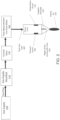
- FIG. 2 is a simplified diagram showing an exemplary embodiment of a flow of inert gas to be ionized from a gas supply manifold, through a flow control system provided herein, and through a plasma torch that includes a temperature sensor and a pressure sensor within the plasma torch, the inert gas passing through a region of an ionizing EM field to produce a plasma arc, the pressure of which can be controlled.
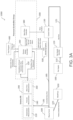
- inert gas from gas supply 100 flows to a gas supply manifold 120 to a control valve 130 that can regulate the flow of the inert gas to plasma torch 600.
- the dashed lines show data connection pathways; the solid lines show fluid connections pathways, such as pipes and hoses through which a fluid can flow; and the dashed-dotted lines enclose the components of different groups, such as the sensory kit or the processor group.
- the system also can include, instead of a group of separate processors, a process master controller in which the calculation processor, mass flow controller and/or the volumetric flow controller are not individual processers or separate central processor units (CPUs), but instead they are functions or software codes running (e.g., in an integrated manner) on the process master controller.
- a process master controller in which the calculation processor, mass flow controller and/or the volumetric flow controller are not individual processers or separate central processor units (CPUs), but instead they are functions or software codes running (e.g., in an integrated manner) on the process master controller.
- the function of the mass flow controller and the volumetric flow controller can be integrated into a unified controller, such as a process master controller.
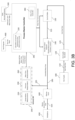
- FIG. 3B An alternate embodiment of a system 1000 for the regulation of mass flow and the monitoring of volumetric flow is illustrated in FIG. 3B .
- a single process master controller 340 contains the control tasks of the calculation processor and the mass flow controller, which are software codes or functions running in an integrated manner on the process master controller.
- the process master controller is in communication with a density control element and a control valve and communicates mass flow control commands to the control valve and/or the density control element, resulting in the production of a controlled mass flow of inert gas to the plasma torch.
- these configurations can be useful in troubleshooting the system.
- these configurations can be useful in detecting leaks in the system.
- the mass flow rate and gas density are measured directly at the plasma torch inlet, or in the vicinity of the plasma torch inlet. This can allow all leakages in pipes, hoses, or connections that could have reduced mass flow that can occur between the gas supply 100 and the sensory connecter 195 to be detected and compensated for through the action of the control valve.
- the density measurement with either of these configurations can allow the variations in density due to environmental factors, mechanical tolerances, and absorbed heat due the arc radiation to be taken into account while regulating the flow of the inert gas.
- a gas supply 100 is connected to a gas supply manifold 120 via hose 110.
- the inert gas of the gas supply 100 can be a nobel gas.
- the gas supply 100 provides a gas selected from among helium, neon, argon, krypton, xenon, and combinations thereof.
- the gas supply 100 provides argon to the system.
- the gas supply manifold 120 can provide gas to several different components of an additive manufacturing machines, or to different additive manufacturing machines, as well as, or in addition to, providing gas to maintain a desired environment in the vicinity of the plasma arc or workpiece.
- inert gas can flow from the control valve 130 through hose 185 to the plasma torch 600, which ionizes the gas to form plasma arc 625, which can be used to melt a wire metal source to deposit molten metal from the melted metal wire source onto the workpiece 650.
- inert gas can flow from the control valve 130 through hose 135 to a density control element 140, and then through hose 190 to the plasma torch 600, which ionizes the gas to form plasma arc 625, which can be used to melt a wire metal source to deposit molten metal from the melted metal wire source onto the workpiece 650.
- the sensory connecter 195 which can be a gas sampling hose or tube, of the sensory kit 200 can be connected to any part of the inert gas delivery line anywhere between (i) the gas manifold or any other type of gas distribution system and (ii) the gas ionizer electromagnetic field.
- the placement can be selected to accommodate any space restrictions for the placement system hardware, such as the sensory kit, due to various configurations of different deposition machines.
- the placement of the sensory connecter 195 becomes more remote from the ionization field, it may be possible that some of the external disturbances to the controlled gas flow, e.g. gas leakage or gas temperature variations due to radiation from the plasma arc and workpiece, may not be detected, and thus may not be compensated for by the gas flow controllers.
- the sensory connecter 195 can be connected directly to the torch inlet.
- An advantage of this configuration is that all the external disturbances to the controlled gas flow, e.g. gas leakage or gas temperature variations due to radiation from the arc and workpiece, up to the torch inlet will be detected and compensated for by the gas flow controllers. With this configuration, the external disturbances to the gas flow introduced inside the torch assembly, e.g . pressure variations due to the torch mechanical tolerances, or temperature variations due to cooling circuit malfunctions, will not be captured and compensated for by the gas flow controllers.
- the sensory connecter 195 can be connected to the gas delivery line inside the production chamber just at the gas input of the plasma torch, or in the vicinity of the plasma torch gas inlet.
- the pressure sensor and/or the temperature sensor of the sensor kit can be located inside the torch.
- FIG. 2 illustrates an exemplary embodiment of a plasma torch containing both a pressure sensor and a temperature sensor.
- An advantage of this configuration is that all the external disturbances to the gas flow including the effects of torch mechanical tolerances, radiation from the plasma arc and leakages, will be measured and compensated for by the gas flow controllers.
- the placement of the pressure and temperature sensors of the sensor kit inside the torch can provide the most accurate control of the inert gas flow, which is going to be delivered to the ionization electromagnetic filed inside the torch.
- Disadvantages for modifying the torch to include the pressure and temperature sensors of the sensor kit can include limitations for introducing the hardware for the pressure and temperature sensors of the sensor kit inside the torch, such as space restrictions. Another disadvantage can be the increased cost for this configuration of the torch.
- multiple sensory connecters 195 can be used, each connected at a different location. Exemplary multiple positions can include any combination of (a) in the inert gas feed line between the gas manifold and the torch inlet, (b) at the torch inlet, and (c) inside the torch. Multiple sampling by the multiple sensory connecters 195 can allow the sensory kit 200 to be able to measure and control the gas density variations more precisely throughout the system.
- the sensors of each of the separate components of the sensory kit each can be separated and placed independently at different locations. For example, mass flow measurement 260 of the sensory kit 200 can be positioned along multiple part of the inert gas line 175 or 185. Separate temperature sensors and/or pressure sensors can be positioned along the inert gas line 175 or 185, or even into the plasma torch 600.
- the sensory kit 200 illustrated in FIGS. 3A , 3B , 4 and 7 can be separated and each of the elements can be embedded into different parts of the inert gas line (125 and 185).
- the grouping of the sensors 220, 240, and 260 is shown only for clarity of the presentation in FIGS. 3A , 3B , 4 and 7 , and is not intended to restrict the generality of the control scheme, as the sensors can be separated from each other any placed anywhere between the gas manifold and gas ionizer electromagnetic field, as discussed above.
- the processor group 300 can calculate and adjust the actual volumetric flow of the gas to be ionized.
- the processor group 300 can include a calculation processor 320 for calculation of the actual volumetric flow, and a mass flow controller 380 that can operate the control valve 130 based on data received from the process master controller 340.
- the process master controller 340 can receive the calculated volumetric flow from the calculation processor 320 and the measured gas mass flow from the sensory kit 200.
- the processor group 300 can be a set of processors doing different tasks in parallel, or one processor doing a set of tasks in parallel, to support various functions.
- the processor group 300 represents the parallel calculations of a logic process that can be embedded on different physical processors ( FIG. 3A ), or can be integrated on one process master controller in the form of logic functions ( FIG. 3B ), depending on the computational capacity of the processor.
- the processes 320, 360 and 380 can be implemented in the form of different functions on one physical processor which can be 340, as shown in FIG. 3B , or similarly can be done on different processors in parallel, as shown in FIG. 3A .
- a part program 400 which includes the data necessary for the additive manufacturing system to prepare a given preform, including trajectories of the plasma torch to form layer upon layer of molten metal to form the preform as well as gas flows and gas set value signals, can be in communication with the process master controller.
- the process master controller then can provide the mass flow set values obtained from the part program 400 and the mass flow actual values obtained from the sensory kit 200 to the mass flow controller 380.
- Mass flow controller 380 can compare the mass flow set value to the mass flow actual value and send a signal to control valve 130 to incrementally open control valve 130 to increase the mass flow of gas to the plasma torch.
- Mass flow controller 380 can send a signal to control valve 130 to incrementally close control valve 130 to decrease the mass flow of gas to the plasma torch.
- the actions taken by the process master controller 340 to regulate the mass flow of the gas from the gas supply manifold 120 to the plasma torch 600 based on data received from the sensory kit 200 via the sensory connecter 195 allows a controlled mass flow of gas to be delivered to the plasma torch. This can allow controlled number of the supplied gas molecules to the plasma torch per unit of time (i.e., controlled mass flow).
- the system can monitor volumetric flow of the inert gas as well.
- the calculated volumetric flow data received by the process master controller 340 from the calculation processor 320 can be sent to the data monitoring system 500 for review by an operator. By monitoring the actual volumetric flow data, an operator or the system can determine the plasma arc pressure and make any necessary adjustments to the inert gas mass flow in order to adjust the plasma arc pressure. In this configuration, the volumetric flow data can be used for position process analysis, machine status analysis, and leakage detection and elimination (or compensation).
- the data generated by any one or a combination of the sensory kit, the calculation processor, the mass flow controller, and volumetric flow controller, control valve and the density control element can be logged into a data server or other form of data monitoring system, and/or can be presented to a user in real time or as a data file. This can allow the system or a user to evaluate the data for system operations, quality control, diagnostics, or problem detection and/or correction.
- previous recorded data can be used to update a part program to adjust a flow set value.
- the real time data can be monitored during manufacture to allow adjustment of the flow to provide controlled flow parameters in line with the flow set values for production of a workpiece.
- daily operation data can be compared to determine inert gas requirements for manufacturing needs for a given workpiece to allow for allocation of resources.
- the data can be compared to information from the quality control analysis of the finished workpiece to determine if the flow parameters require adjustment, or to reset flow set values to achieve similar quality control results in subsequent workpieces.
- the collected data such as the combination of mass flow control and volumetric flow control can be used to create a flow set value that achieves desired properties in the final workpiece by controlling the plasma arc pressure on the melt-pool during manufacture of the workpiece.
- the collected data also can be compared to archived data to minimize differences in production from day to day or on different manufacturing machines or systems. Any one or a combination of the process master controller, the calculation processor, the volumetric control processor, and the mass flow control processor can be in communication with a data server, and the mass flow and volumetric flow data can be sent to the data server.
- the control valve 130 can be operated by a driver in response to a setpoint signal, which can be generated by the process master controller 340.
- a setpoint can correspond to a desired inert gas mass flow rate.
- the process master controller 340 can receive a mass flow set value from part program 400 and the process master controller 340 can be connected to a driver connected to the control valve 130, directly or via the mass flow controller 380.
- the process master controller 340 can compare the actual mass flow value to a mass flow set value to generate an adjustment signal that can be transmitted to the driver of the control valve 130 to adjust the degree of opening of the control valve 130 to cause a change in the rate of flow of inert gas therethrough thereby reducing any difference between the set mass flow value and the measured actual mass flow value.
- the mass flow controller 380 can include a sensor attached to the control valve 130 that can detect the position of the opening of the valve, and the sensor can communicate the valve position to the mass flow controller 380, which is in communication with the process master controller 340, in order to adjust the valve position based on valve position feedback received from the sensor.
- the signals communicated to the process master controller 340 from the mass flow controller 380 or control valve 130 can be a digital signal, such as a high voltage, a low voltage, or zero voltage, indicating that the value being measured is above, below, or at the preferred level.
- any output communicated to control valve 130 by process master controller 340 directly or via mass flow controller 380 can be an open, closed, or neutral signal.
- the signals may communicate an analog value.
- the process master controller 340 can be configured to be capable of outputting a valve control signal to control valve 130 or mass flow controller 380 as a high, low, or zero voltage, and can also include an option for outputting an error signal. If the valve control signal is a high signal or a low signal, then the control valve 130 can incrementally close or open, respectively, until a zero signal is achieved. If the valve control signal is zero, then the valve will not change position. If the valve control signal is error, the valve may shut off completely or interpret the error output as a zero output, depending on the type of error. For example, if the flow rate is too low to support the desired flow rate, the control valve 130 may open completely to maximize flow. Alternatively, if the sensor detects insufficient or no inert gas flow, the error signal can be interpreted to close the valve and send an alert signal to the data monitoring system 500.
- the gas flow measurement and control systems in conventional additive manufacturing systems are normally located in a control cabinet that can be located far away from the torch due to space restrictions in the production chamber of the additive manufacturing machines. This implies that the regulated flow in the control cabinet is subject to disturbances which are added in the distance between the control cabinet and the torch.
- Positioning the sensory connecter 195 adjacent to or in the vicinity of the gas inlet of the plasma torch 600 can allow detection of any mass flow reduction of the gas delivered to the plasma torch, such as reduction in plasma flow due to a leakage, and thus the sensory kit 200 can serve as a second opinion sensor for the mass flow of the plasma from the gas manifold 120 to the plasma torch 600.
- the temperature measurement unit 220 of the sensory kit 200 can include a temperature sensor to measure temperature of the inert gas.
- the temperature sensor of the temperature measurement unit 220 is not limited. Exemplary temperature sensors include a thermocouple, a thermistor, a resistive temperature device, an infrared detector, a bimetallic device, a liquid expansion device, and any combination thereof.
- the pressure measurement unit 240 of the sensory kit 200 can include a pressure sensor to measure pressure of the inert gas.
- the pressure sensor of the pressure measurement unit 240 is not limited.
- Exemplary pressure sensors include piezoelectric strain gauge, a capacitive sensor, a strain gauge, a resistive pressure sensor, piezoresistive strain gauge, a metal thin-film sensor, a titanium-alloy sensing element, a ceramic thick-film sensor, an optical sensor, an accelerometer, a micro electro-mechanical system sensor, and combinations thereof.
- the mass flow measurement unit 260 of the sensory kit 200 can include a flow meter to measure mass flow.
- the mass flow meter can be of any configuration.
- the mass flow meter can measure the amount of mass of a substance passing through the mass flow meter for a given amount of time regardless of the space occupied by the molecules of the substance. From that information, a mass flow rate can be calculated.
- Exemplary mass flow meters include thermal mass flow meters, and Coriolis mass flow meters. Such meters are known in the art ( e.g ., see U.S. Pat. Nos.
- gas flow to the plasma torch can be corrected and controlled by choosing between a mass-flow rate control, as discussed above, and a volumetric flow rate control based on the requirements and pros and cons for the process.
- the data generated by the sensory kit of the system provided herein can be used to adjust gas flow to the plasma torch by controlling volumetric flow of the gas by comparing set values and actual values of volumetric flow to regulate the gas volume per unit of time (i.e. to compensate for the density variations).
- the mass flow of the plasma column can be adjusted to achieve the actual volumetric flow to a targeted level across variations of the gas density in order to achieve targeted plasma discharge velocity at the plasma torch.
- FIGS. 4A and 4B Exemplary configurations are illustrated as system 2000 in FIGS. 4A and 4B .
- the embodiment shown in FIG. 4A includes a processor group, which includes a separate calculation processor, a process master controller, and a volumetric flow controller, where the volumetric flow controller is in communication with the control valve and a density control element.
- a single process master controller controls the tasks of the calculation processor and the volumetric flow controller, which are are software codes or functions running in an integrated manner on the process master controller.
- the process master controller is in communication with a density control element and a control valve, and communicates volumetric flow control commands to the control valve and/or the density control element.
- the fluid flow path of inert gas from the gas supply 100 to the plasma torch 600 in system 2000 is similar to the fluid flow path of system 1000 illustrated in FIG. 3A .
- a difference is the presence of a density control element 140 in between the control valve 130 and the sensory connecter 195.
- the density control element 140 can modify or control the temperature and/or pressure of the inert gas.
- the density control element 140 can include a temperature regulator 150 (not shown) or a pressure regulator 160 (not shown) or both a temperature regulator 150 and a pressure regulator 160.
- the density control element 140 can be used in a controlled manner to change or modify the temperature or pressure or both the temperature and pressure of the gas in order to control the gas volumetric flow/gas speed to the plasma torch to achieve and maintain a target plasma discharge level from the plasma torch.
- the density control element 140 is in communication with a volumetric flow controller 360 of the processor group 300.
- the volumetric flow controller 360 also is in communication with control valve 130.
- the density control element 140 is in communication with the processor master controller 340, which also is in communication with the control valve 130.
- Regulating the temperature and/or pressure can control the inert gas density in order to maintain a constant average distance between the inert gas molecules due to the environmental and mechanical disturbances which can affect this distance, thereby achieving a targeted volumetric flow of the plasma.
- the gas density modifier can assist in regulating all of the parameters that can define volumetric flow, which can result in a consistent application of the plasma arc at the melt pool, even if external conditions or disturbances change.
- the density control element can include a temperature regulator or a pressure regulator or both a temperature regulator and a pressure regulator.
- the density control element 140 can include a temperature regulator. There is no limitation on the type of temperature regulator that can be included in the density control element.
- the temperature control regulator can include an element that can increase a temperature of a gas passing through the density control element.
- the temperature control regulator can include an element that can decrease a temperature of a gas passing through the density control element.
- the temperature control regulator can include a first element that can increase a temperature of a gas passing through the density control element and a second element that can increase a temperature of a gas passing through the density control element.
- the temperature regulator can include a heater.
- the heater can increase the temperature of the inert gas within the density control element 140, which can increase the volume occupied by the same number of gas molecules.
- the heater can include an induction heater, a resistance heater, a piezoelectric ceramic heating element, or a combination thereof.
- the temperature regulator can include a cooling apparatus.
- the cooling apparatus can reduce the temperature of the inert gas within the density control element 140, which can reduce the volume occupied by the same number of gas molecules.
- the cooling apparatus can include a pipe connected to a refrigerated fluid reservoir and a pump for forming a closed loop cooling path for supplying a cooling fluid to the temperature regulator within the density control element 140.
- the cooling apparatus can include a closed conduit passing through the temperature regulator and a fan connected to the closed conduit for passing a cooling gas through the temperature regulator within the density control element 140.
- a combination of a closed loop refrigerated cooling path and a conduit for passing a cooling gas through the temperature regulator can be used.
- the density control element 140 can include a closed loop cooling path for supplying a cooling fluid to the temperature regulator within the density control element 140 as well as a heater for increasing the temperature of the gas flowing through the density control element to allow independent adjustment of the temperature using either device individually.
- FIG. 5 An exemplary density control element 140 to control the pressure of the inert gas to the inlet of the plasma torch and thus the average distance between the gas molecules is illustrated in FIG. 5 .
- the density control element 140 modulates the pressure of the inert gas by changing the temperature of the gas. For a given volume of gas, by increasing the temperature, the pressure can be increased, and conversely, by decreasing the temperature, the pressure can be decreased.
- the density control element 140 includes a temperature regulator 150 that includes a liquid temperature regulator 151.
- the liquid temperature regulator 151 can increase or decrease the temperature of a fluid.
- the liquid temperature regulator 151 in fluid communication with a heat exchanger 154 within the density control element 140 via a conduit 153 that is connected to outlet 152 of the liquid temperature regulator 151.
- the heat exchanger 154 is positioned to be in thermal communication with the inert gas flowing through the density control element 140.
- the liquid from liquid temperature regulator 151 flowing through the heat exchanger 154 is at a temperature lower than the temperature of the inert gas flowing through the density control element 140, the liquid can absorb thermal energy from the inert gas, resulting in a reduction of the temperature of the inert gas as it passes the heat exchanger 154 toward the inlet of the plasma torch.
- the liquid from the liquid temperature regulator 151 flowing through the heat exchanger 154 is at a temperature higher than the temperature of the inert gas flowing through the density control element 140, the liquid can donate thermal energy to the inert gas, resulting in an increase of the temperature of the inert gas as it passes the heat exchanger 154 toward the inlet of the plasma torch.
- the liquid temperature regulator 151 includes an outlet 152 connected to a conduit 153 that is connected to the heat exchanger 154 to allow fluid to flow from the , the liquid temperature regulator 151 to the heat exchanger 154.
- the temperature regulator 150 includes a pump 170 that can pump a liquid from the heat exchanger 154 through a conduit 155, which is connected to an inlet 176 of the pump 170, and through outlet 174 of the pump 170 through conduit 156 back to inlet 158 of the liquid temperature regulator 151 to complete the fluid flow circuit.
- the conduits 153, 155, and 156 can be a hose or pipe.
- the pump 170 is shown connected between the heat exchanger 154 and the liquid temperature regulator 151 after the heat exchanger 154.
- the pump 170 also can be connected between the liquid temperature regulator 151 and the heat exchanger 154 before the heat exchanger 154.
- the pump 170 can allow circulation of the liquid of the liquid temperature regulator 151 through the fluid flow circuit and back to the liquid temperature regulator 151.
- the pump can be configured to include a discharge 178 to allow discharging the liquid received from the heat exchanger 154 from the fluid flow circuit instead of recycling it back to the liquid temperature regulator 151.
- the pump 170 also can include an intake 172 to allow replacement fluid from an external liquid source 175 to be introduced into the fluid flow circuit to be directed to the liquid temperature regulator 151 for temperature adjustment of the liquid.
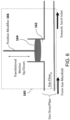
- FIG. 6 An exemplary embodiment of a density control element 140 that includes a pressure regulator is illustrated in FIG. 6 .
- the pressure regulator 160 includes a plenum chamber 162, the volume of which can be adjusted by modulating the location of a sealing element 164 via a position modulator 166 that can raise at least a portion of the sealing element 164 thereby increasing the volume of the plenum chamber 162, or that can lower at least a portion of the sealing element 164, thereby decreasing the volume of the plenum chamber 162.
- the effective volume within the pressure regulator 160 increases, and thus the distance between molecules of inert gas decreases.
- the sealing element 164 can be a solid disk that can be raised or lowered to increase or decrease the volume of the plenum chamber 162.
- the sealing element 164 can be a flexible or elastic diaphragm fixed to the walls of the plenum chamber 162, and the position modifier 166 can push the center of the sealing element 164 toward the gas flow pipe to decrease the volume of the plenum chamber 162, or the position modifier 166 can pull on the center of the sealing element 164 away from the gas flow pipe to increase the volume of the plenum chamber 162. While the illustrated embodiment shows a single plenum chamber, the pressure regulator 160 can include two or more plenum chambers.
- a volumetric flow controller 380 in communication with the control valve 130 and the density control element 140 is included.
- a gas supply 100 is connected to a gas supply manifold 120 via hose 110.
- the inert gas of the gas supply 100 can be a nobel gas.
- the gas supply 100 provides a gas selected from among helium, neon, argon, krypton, xenon, and combinations thereof.
- the gas supply 100 provides argon to the system.
- the gas supply manifold can provide gas to several different components of an additive manufacturing machines, or to different additive manufacturing machines, as well as, or in addition to, providing gas to maintain a desired environment in the vicinity of the plasma arc or workpiece.
- FIGS. 4A and 4B illustrate only the gas line 125 connecting the gas supply manifold 120 to control valve 130.
- Control valve 130 can be operated to increase or decrease the opening in the valve to increase or decrease the amount of gas flowing through control valve 130.
- Gas can flow from the control valve 130 flows through hose 135 to density control element 140, then through hose 190 to the plasma torch 600, which ionizes the gas to form plasma arc 625, which can be used to melt a wire metal source to deposit molten metal from the melted metal wire source onto the workpiece 650.
- the sensory kit 200 includes a sensory connecter 195 to the gas line 190 to allow measurement of the temperature, pressure and flow of the gas to the plasma torch.
- the sensory kit can include a temperature measurement unit 220, a pressure measurement unit 240, and a mass flow measurement unit 260.
- the temperature measurement unit 220 can include a temperature sensor.
- the pressure measurement unit 240 can include a pressure sensor.
- the mass flow measurement unit 260 can include a flow meter for measurement of mass flow at standard conditions. Other environmental measuring devices can be included in sensory kit 200.
- the sensory connecter 195 of the sensory kit 200 can be located inside the production chamber just at the plasma torch gas inlet, or in the vicinity of the plasma torch gas inlet. This positioning can allow the sensory kit 200 to be able to measure and control the gas density variations due to any arc radiation disturbance, such as temperature changes due directly to the action of the plasma column, or thermal contributions from the workpiece, such as the radiated heat from the melt pool, or combinations thereof. This positioning also can allow the mass flow meter to detect variations in flow that could be attributed to a leak in the gas lines between the gas supply and the plasma torch. In some embodiments, the sensory connecter 195 can be located from 10 mm to 15 cm from the plasma torch gas inlet.
- the processor group 300 can calculate the actual volumetric flow of the gas to be ionized.
- the processor group 300 of FIG. 4A can include a calculation processor 320 for calculation of the actual volumetric flow, and a volumetric flow controller 360 that can operate the control valve 130 based on data received from the process master controller 340.
- the process master controller 340 can receive the calculated volumetric flow from the calculation processor 320 and the measured gas mass flow from the sensory kit 200.
- the 4B can include a software function performing the tasks of a calculation processor for calculation of the actual volumetric flow, and a software function performing the functionality of a volumetric flow controller 340.
- the process master controller 340 can operate the control valve 130 based on data generated by the software functions calculating actual volumetric flow and the functionality of the volumetric flow controller.
- a part program 400 which includes the data necessary for the additive manufacturing system to prepare a given preform, including trajectories of the plasma torch to form layer upon layer of molten metal to form the preform as well as gas flows and gas set value signals, can be in communication with the process master controller.
- the process master controller then can provide the volumetric flow set values obtained from the part program 400 and the volumetric flow actual values as calculated and obtained from calculation processor 320 to the volumetric flow controller 360 ( FIG. 4A ) or to the software function performing the functionality of a volumetric flow controller 340 ( FIG. 4B ).
- Volumetric flow controller 360 whether configured as a separate processor or as a software function, can compare the volumetric flow set value to the volumetric flow calculated value. In the configuration shown in FIG.
- the processor containing the volumetric flow controller 360 sends a signal to control valve 130 to incrementally open control valve 130 to increase the mass flow of gas to the plasma torch when the calculated volumetric flow value is below the volumetric flow set value.
- the process master controller receives the data from the volumetric flow controller 360 software function, and the process master controller 340 can send a signal to control valve 130 to incrementally close control valve 130 to decrease the mass flow of gas to the plasma torch when the calculated volumetric flow value is above the volumetric flow set value.
- the system can monitor mass flow of the inert gas as well.
- the mass flow data received by the process master controller 340 from the mass flow measurement unit 260 of the sensory kit 200 can be sent to the data monitoring system 500 for review by an operator or the system. In this configuration, the mass flow data can be used for deposition process analysis, control system calibration, and leakage detection and elimination (or compensation).
- the control valve 130 can be operated by a driver in response to a setpoint signal, which can be generated by the volumetric flow controller 360 (configuration shown in FIG. 4A ) or the process master controller 340 (configuration shown in FIG. 4B ).
- a setpoint can correspond to a desired inert gas volumetric flow rate.
- the process master controller 340 can receive a volumetric flow set value from part program 400 and the process master controller 340 can be connected to a driver connected to the control valve 130, directly or via the volumetric flow controller 360.
- the process master controller 340 can compare the actual calculated volumetric flow value to a volumetric flow set value to generate an adjustment signal that can be transmitted to the driver of the control valve 130 to adjust the degree of opening of the control valve 130 to cause a change in the rate of flow of inert gas therethrough thereby reducing any difference between the set volumetric flow value and the calculated actual volumetric flow value.
- the volumetric flow controller 360 can include a sensor attached to the control valve 130 that can detect the position of the opening of the valve, and the sensor can communicate the valve position to the volumetric flow controller 360, which is in communication with the process master controller 340, in order to adjust the valve position based on valve position feedback received from the sensor.
- the signals communicated to the process master controller 340 from the volumetric flow controller 360 or control valve 130 can be a digital signal, such as a high voltage, a low voltage, or zero voltage, indicating that the value being measured is above, below, or at the preferred level.
- any output communicated to control valve 130 by process master controller 340 directly or via volumetric flow controller 360 can be an open, closed, or neutral signal.
- the signals may communicate an analog value.
- the process master controller 340 can be configured to be capable of outputting a valve control signal to control valve 130 or volumetric flow controller 360 as a high, low, or zero voltage, and can also include an option for outputting an error signal. If the valve control signal is a high signal or a low signal, then the control valve 130 can incrementally close or open, respectively, until a zero signal is achieved. If the valve control signal is zero, then the valve will not change position. If the valve control signal is error, the valve may shut off completely or interpret the error output as an zero output, depending on the type of error. For example, if the pressure is too low to support the desired flow rate, the control valve 130 may open completely to maximize flow. Alternatively, if the sensor detects insufficient or no inert gas flow, the error signal can be interpreted to close the valve and send an alert signal to the data monitoring system 500.
- the density of the gas supplied from the gas supply manifold 120 is subject to large variations (in terms of temperature and pressure).
- the embodiments of the systems provided herein configured as shown as system 2000 in FIGS. 4A and 4B allow for the provision of a controlled inert gas volumetric flow to the plasma torch despite the various demands on the gas supply manifold 120.
- the inert gas flow delivered to the plasma torch can be controlled in terms of both the number of gas molecules in time, and the gas volume in time.
- Exemplified configurations of system 3000 that regulate both mass flow and volumetric flow is shown in FIGS. 7A , 7B and 7C .
- System 3000 can maintain the gas volumetric flow/speed at a desired and relatively consistent level regardless of any variations of the inert gas density.
- the embodiment shown in FIG. 7A includes a processor group, which includes a separate calculation processor, a process master controller, a volumetric flow controller, and a mass flow controller, where the volumetric flow controller is in communication with the density control element and the mass flow controller is in communication with the control valve.
- the systems provided herein can include a single process master controller in which the control tasks of the calculation processor, the mass flow controller, and the volumetric flow controller are software codes or functions running in an integrated manner on the process master controller.
- the mass control function and the volumetric flow control function can be two single input single output (SISO) controllers working in parallel.
- FIG. 8A An exemplary configuration is illustrated in FIG. 8A .
- mass flow error from the sensory kit units is directed to a SISO mass flow controller function, which in response sends a commanded valve position to the control valve.
- Volumetric flow error from the sensory kit units is directed to a SISO volumetric flow controller function, which in response sends a density control command to the density control element.
- Use of parallel SISO controllers can allow simplicity of control design. Two parallel SISO controllers ignore any coupling between mass flow error and volumetric flow error.
- FIG. 7B illustrates a single process master controller in which the control tasks of the calculation processor, the mass flow controller, and the volumetric flow controller are software codes or functions separately running in an integrated manner on the process master controller, where the process master controller is in communication with a density control element and a control valve, and communicates volumetric flow control commands to the density control element, and communicates mass flow control commands to the control valve.
- SISO controllers working in parallel can be used.
- a mass and volumetric control function using a multivariable controller can be used.
- the multivariable controller can have two inputs (mass flow error and volumetric flow error), and can have two outputs (commanded valve position and commanded action to the density control element).
- MIMO controllers can consider any coupling dynamics between or amongst variables. Such consideration between or amongst multiple variables can be included in the control algorithms. For example, one can regulate a variable X to some setpoint and a variable Y to some other setpoint, and check that each of variable X and variable Y are stabilized when working separately.
- variable X and variable Y When the coupling between variable X and variable Y of a dynamic system are reasonably weak, then impacts of variable X on variable Y may not perturb the system as a whole. However, when the coupling between variable X and variable Y of a dynamic system are strong, impacts of variable X on variable Y on each other can perturb the system as a whole, and in very strong coupling situations, the impacts of variable X on variable Y can result in destabilization of the system (i.e. variable X and variable Y "disturb" each other). Under these conditions, MIMO controllers can be superior to single SISO controllers working in parallel because the MIMO controllers can consider "coupling dynamics" of different variables. Use of MIMO controllers can maximize the stability of an interconnected system where coupling of variables is present. One unified MIMO controller can take coupling terms between the variables into account, and adjust the system accordingly.
- FIG. 8B An exemplary configuration of a MIMO controller of the systems provided herein is illustrated in FIG. 8B .
- a multivariable MIMO controller has two inputs (mass flow error and volumetric flow error received from the sensory kit units, control algorithms that can consider any coupling dynamics of the two variables, and has two outputs (commanded valve position and commanded action to the density control element) that are directed to the control valve and density control element, respectively.
- This configuration can allow the system to stabilize the individual values as well as address or compensate for any disturbance one variable has on the other, and thus can stabilize the whole system.
- FIG. 7C shows a single process master controller that uses a MIMO controller, shown as a combined mass flow and volumetric flow controller.
- the control tasks of the calculation processor, and the combined mass flow and volumetric flow controller are software codes or functions running in an integrated manner on the process master controller, where the process master controller is in communication with a density control element and a control valve, and communicates mass and volumetric flow control commands to the density control element and to the control valve.
- a controlled mass flow of inert gas is delivered from the control valve 130 to the density control element 140, and the density control element delivers a controlled mass and volumetric flow of the inert gas to the plasma torch.
- the mass flow and the volumetric flow of the inert gas to the plasma torch can be measured and regulated.
- the mass flow data can be converted to volumetric flow by assuming standard conditions (e.g., 0°C temperature and 1 atm pressure), which may be different from actual volumetric flow of the inert gas due to density variations.
- the data generated by the sensory kit 200 of the system 3000 can be used to adjust gas flow to the plasma torch by measuring mass flow and calculating volumetric flow of the gas, and by comparing set values and actual values of the mass flow and the volumetric flow, the final volumetric flow of the inert gas can be regulated to compensate for any density variations.
- the mass flow of the inert gas as well as the temperature and/or the pressure of the inert gas can be adjusted to achieve the actual volumetric flow to a targeted level across variations of the gas density in order to achieve targeted plasma column discharge velocity at the plasma torch.
- the fluid flow path of gas from the gas supply 100 to the plasma torch 600 in system 3000 is similar to the fluid flow path of system 2000 illustrated ins FIG. 4A and 4B .
- a difference is the presence of a mass flow controller 380, which in FIG. 7A is shown in communication with the process master controller 340 and control valve 130.
- the density control element 140 can modify or control the temperature and/or pressure of the inert gas.
- the density control element 140 can include a temperature regulator or a pressure regulator or both a temperature regulator and a pressure regulator.
- the density control element 140 can be used in a controlled manner to modify the temperature or pressure or both the temperature and pressure of the gas in order to control the gas volumetric flow/gas speed to the plasma torch to achieve and maintain a target plasma discharge level from the plasma torch.
- the density control element 140 is in communication with a volumetric flow controller 360 of the processor group 300 and the control valve 130 is in communication with mass flow controller 380.
- the density control element 140 and the control valve 130 are in communication with the process master controller 340.
- Regulating the temperature and/or pressure can control the inert gas density in order to maintain a constant average distance between the inert gas molecules due to the environmental and mechanical disturbances which can affect this distance, thereby achieving a targeted volumetric flow of the inert gas to the plasma torch.
- the gas density modifier can assist in regulating all of the parameters that can define volumetric flow, which can result in a consistent application of the plasma arc at the melt pool, even if external conditions or disturbances change.
- the density control element 140 can include a temperature regulator.
- the temperature regulator can include a heater.
- the heater can increase the temperature of the inert gas within the density control element 140, which can increase the volume occupied by the same number of gas molecules.
- the heater can include an induction heater, a resistance heater, a piezoelectric ceramic heating element, or a combination thereof.
- the temperature regulator can include a cooling apparatus.
- the cooling apparatus can reduce the temperature of the inert gas within the density control element 140, which can reduce the volume occupied by the same number of gas molecules.
- the cooling apparatus can include a pipe connected to a refrigerated fluid reservoir and a pump for forming a closed loop cooling path for supplying a cooling fluid to the temperature regulator within the density control element 140.
- the cooling apparatus can include a closed conduit passing through the temperature regulator and a fan connected to the closed conduit for passing a cooling gas through the temperature regulator within the density control element 140.
- a combination of a closed loop refrigerated cooling path and a conduit for passing a cooling gas through the temperature regulator can be used.
- the density control element 140 can include a pressure regulator.
- the pressure regulator can include a movable plenum chamber that can increase the volume of the pressure regulator and thereby decrease the pressure of the inert gas exiting the pressure regulator, or decrease the volume of the pressure regulator and thereby increase the pressure of the inert gas exiting the pressure regulator.
- a gas supply 100 is connected to a gas supply manifold 120 via hose 110.
- the inert gas of the gas supply 100 can be a nobel gas.
- the gas supply 100 provides a gas selected from among helium, neon, argon, krypton, xenon, and combinations thereof.
- the gas supply 100 provides argon to the system.
- the gas supply manifold can provide gas to several different components of an additive manufacturing machines, or to different additive manufacturing machines, as well as, or in addition to, providing gas to maintain a desired environment in the vicinity of the plasma arc or workpiece. FIGS.
- Control valve 130 is shown connected to density control element 140 via hose 135.
- Control valve 130 can be operated to increase or decrease the opening in the valve to increase or decrease the amount of gas flowing through control valve 130 to density control element 140.
- Gas can flow from the control valve 130 through hose 135 to density control element 140, then through hose 190 to the plasma torch 600, which ionizes the gas to form plasma arc 625, which can be used to melt a wire metal source to deposit molten metal from the melted metal wire source onto the workpiece 650.
- the sensory kit 200 includes a sensory connecter 195 to the gas line 190 to allow measurement of the temperature, pressure and flow of the gas to the plasma torch.
- the sensory kit can include a temperature measurement unit 220, a pressure measurement unit 240, and a mass flow measurement unit 260.
- the temperature measurement unit 220 can include a temperature sensor.
- the pressure measurement unit 240 can include a pressure sensor.
- the mass flow measurement unit 260 can include a flow meter for measurement of mass flow or volumetric flow at standard conditions. Other environmental measuring devices can be included in sensory kit 200.
- the sensory connecter 195 of the sensory kit 200 can be located inside the production chamber just at the gas input of the plasma torch, or in the vicinity of the plasma torch gas inlet. This positioning can allow the sensory kit 200 to be able to measure and control the gas density variations due to any arc radiation disturbance, such as temperature changes due directly to the action of the plasma column, or thermal contributions from the workpiece, such as the radiated heat from the melt pool, or combinations thereof. This positioning also can allow the mass flow meter to detect variations in flow that could be attributed to a leak in the gas lines between the gas supply and the plasma torch. In some embodiments, the sensory connecter 195 can be located from 10 mm to 15 cm, or 2 cm to 2 m, from the plasma torch gas inlet.
- the calculation processor 320 in the processor group 300 can calculate the actual volumetric flow of the gas to be ionized.
- the process master controller processor FIGS. 7B and 7C
- the processor group 300 can include the calculation processor 320 for calculation of the actual volumetric flow, a volumetric flow controller 360 that is communication with and can operate the density control element 140, and a mass flow controller 380, which is in communication with and can operate the control valve 130 based on data received from the process master controller 340.
- the process master controller 340 can receive the measured gas mass flow data from sensory kit 200 and the calculated volumetric flow from the calculation processor 320, as well as flow set values from part program 400.
- the calculation processor 320 for calculation of the actual volumetric flow, the volumetric flow controller 360, and the mass flow controller 380 each is a software function running on the process master controller 340.
- the process master controller 340 is in communication with and can operate the control valve 130 and the density control element 140.
- the process master controller 340 can receive the measured gas mass flow data from sensory kit 200 and use the calculated volumetric flow from the calculation processor 320 software function, as well as flow set values from part program 400 to determine a differential between the set volumetric flow value and the calculated actual flow value, as well as the set mass flow value and the actual mass flow value from the mass flow measurement 260 from the sensory kit 200.
- the process master controller 340 communicates with the control valve 130 to increase or decrease the mass flow of inert gas so that the mass flow differential value approaches or becomes zero, yielding a controlled mass flow from the control valve 130 to the density control element 140.
- the process master controller 340 communicates with the density control element 140 to increase or decrease the temperature and/or pressure of inert gas so that the volumetric flow differential value approaches or becomes zero, yielding a controlled volumetric flow and controlled mass flow from the density control element 140 to the plasma torch 600.
- the exemplary configuration shown in FIG. 7C differs from the configuration shown in FIG. 7C in that the process master controller 340 includes a software function 385 running on the process master controller 340, where the software function 385 performs the functions of the mass flow controller and the volumetric flow controller of the process master controller 340 in FIG. 7B .
- the mass and volumetric flow controller 385 of the configuration shown in FIG. 7C utilizes the calculated actual volumetric flow from the software function performing the functions of the calculation processor 320 to determine a differential between the volumetric flow set value from part program 400 and the calculated value of the volumetric flow, and this differential is communicated to the process master controller 340.
- the process master controller also compares the set mass flow value from the part program 400 and the actual mass flow value from the mass flow measurement 260 from the sensory kit 200, to determine a differential between the mass flow set value and the actual mass flow value. Based on the differential mass flow value, the process master controller 340 communicates with the control valve 130 to increase or decrease the mass flow of inert gas so that the mass flow differential value approaches or becomes zero, yielding a controlled mass flow from the control valve 130 to the density control element 140.
- the process master controller 340 communicates with the density control element 140 to increase or decrease the temperature and/or pressure of inert gas so that the volumetric flow differential value approaches or becomes zero, yielding a controlled volumetric flow and controlled mass flow from the density control element 140 to the plasma torch 600.
- the part program 400 which includes the data necessary for the additive manufacturing system to prepare a given preform, including trajectories of the plasma torch to form layer upon layer of molten metal to form the preform as well as gas flows and gas set value signals, can be in communication with the process master controller.
- the process master controller 340 can provide the mass flow set values and the actual measured gas mass flow values to the mass flow controller 380.
- the process master controller 340 can provide the volumetric flow set values obtained from the part program 400, and the volumetric flow actual values as calculated and obtained from calculation processor 320 to the volumetric flow controller 360.
- the mass flow controller can both be a separate processor, e . g ., a controller, or can be a software function running on the process master controller processor.
- Mass flow controller 380 can compare the gas mass flow set value to the actual mass flow value and send a signal to control valve 130 to incrementally open control valve 130 to increase the mass flow of gas to the density control element 140 when the measured mass flow value is below the mass flow set value.
- Mass flow controller 380 can send a signal to control valve 130 to incrementally close control valve 130 to decrease the mass flow of gas to the density control element 140 when the measured mass flow value is above the mass flow set value.
- the volumetric flow controller 360 can compare the volumetric flow set value to the volumetric flow calculated value and send a signal to density control element 140 to incrementally increase the temperature to increase the volume of the gas, or decrease the pressure to increase the volume when the calculated volumetric flow value is below the volumetric flow set value. Volumetric flow controller 360 can send a signal to control valve 130 to incrementally decrease the temperature to decrease the volume of the gas or increase the pressure to decrease the volume of the gas when the calculated volumetric flow value is above the volumetric flow set value.
- the actions taken by the process master controller 340 to regulate the volumetric flow of the gas from the gas supply manifold 120 through density control element 140 to the plasma torch 600 based on data received from the sensory kit 200 via the sensory connecter 195 allows a controlled volumetric flow and regulated mass flow of inert gas to be delivered to the plasma torch 600. This can allow both controlled volume and number of the supplied gas molecules to the plasma torch.
- the system can monitor mass flow of the inert gas as well.
- the mass flow data and volumetric flow data received by the process master controller 340 can be sent to the data monitoring system 500 for review by an operator or the system.
- the mass flow and actual volumetric flow data can be used, e . g ., for deposition process analysis and development, leakage detection and elimination (or compensation), and gas control system calibration.
- the control valve 130 can be operated by a driver in response to a mass setpoint signal, which can be generated by the process master controller 340 and sent to mass flow controller 380.
- the process master controller 340 can receive a mass flow set value from part program 400 and the mass flow controller 380 can be connected to a driver connected to the control valve 130.
- the process master controller 340 can compare the actual calculated volumetric flow value to a volumetric flow set value to generate an adjustment signal that can be transmitted to the mass flow controller 380 to be transmitted to the driver of the control valve 130 to adjust the degree of opening of the control valve 130 to cause a change in the rate of flow of inert gas therethrough thereby reducing any difference between the set mass flow value and the measured actual mass flow value.
- the mass flow adjusted gas then can be sent via hose 135 to density control element 140.
- the process master controller 340 also can receive a volumetric flow set value from part program 400 and the process master controller 340 can be connected to density control element 140, directly or via the volumetric flow controller 360.
- the volumetric flow controller can both be a separate processor, e.g. a controller, or can be a software function running on the process master controller processor.
- the process master controller 340 can compare the actual calculated volumetric flow value to a volumetric flow set value to generate an adjustment signal that can be transmitted to the density control element 140 to adjust the volume of the gas by modifying the temperature and/or pressure to cause a change in the volumetric flow of inert gas therethrough thereby reducing any difference between the set volumetric flow value and the calculated actual volumetric flow value.
- the mass flow controller 380 can include a sensor attached to the control valve 130 that can detect the position of the opening of the valve, and the sensor can communicate the valve position to the mass flow controller 380, which is in communication with the process master controller 340, in order to adjust the valve position based on valve position feedback received from the sensor.
- the signals communicated to the process master controller 340 from the mass flow controller 380 or a sensor of control valve 130 can be a digital signal, such as a high voltage, a low voltage, or zero voltage, indicating that the value being measured is above, below, or at the preferred level.
- any output communicated to control valve 130 by process master controller 340 directly or via mass flow controller 380 can be an open, closed, or neutral signal.
- the signals may communicate an analog value.
- the process master controller 340 can be configured to be capable of outputting a valve control signal to control valve 130 or mass flow controller 380 as a high, low, or zero voltage, and can also include an option for outputting an error signal. If the valve control signal is a high signal or a low signal, then the control valve 130 can incrementally close or open, respectively, until a zero signal is achieved. If the valve control signal is zero, then the valve will not change position. If the valve control signal is error, the valve may shut off completely or interpret the error output as an zero output, depending on the type of error. For example, if the pressure is too low to support the desired flow rate, the control valve 130 may open completely to maximize flow. Alternatively, if the sensor detects insufficient or no inert gas flow, the error signal can be interpreted to close the valve and send an alert signal to the data monitoring system 500.
- 7A , 7B , and 7C allow for the provision of a controlled inert gas mass flow and volumetric flow to the plasma torch despite the various demands on the gas supply manifold 120, or gas leakage in the system between the gas supply 100 and the plasma torch 600, or gas temperature variations due to radiation from the plasma arc and workpiece.
- Any wire-based additive manufacturing system can be modified for use with any of the inert gas flow control system provided herein.
- the methods provided herein can deliver a target inert gas mass flow, or volumetric flow, or mass flow and volumetric flow, to a plasma torch.
- the methods can include integrating one of the systems provided herein into a DED manufacturing system and using the system to regulate and control inert gas flow to the plasma torch.
- Plasma arc pressure on the melt-pool can be one of the most critical factors defining the melt-pool dynamics, and thus geometric shape and mechanical properties of the beads, which can characterize the additive manufacturing process consistency and quality.
- the methods provided herein can create a consistent plasma arc pressure on the melt-pool (i.e.
- melt-pool dynamics the methods can provide a consistent volumetric flow of inert gas to the plasma torch, a much improved, more robust deposition process across different environmental and mechanical variations that can affect the gas density can be achieved.
- a sensory connecter which can be a gas sampling hose/tube, can be connected to the inert gas flow line anywhere between the gas manifold and gas ionizer electromagnetic field. In some embodiments, the sensory connecter can be attached directly to or in the vicinity of the torch inlet.
- temperature and pressure sensors of the sensory connecter can be incorporated inside the torch.
- the actual volumetric flow control elements can be located inside the production chamber just at the input of the inert gas to the plasma torch to be able to measure and control the gas density variations due to arc radiation disturbance or thermal radiation disturbance due to the workpiece.
- the methods can include adding a mass flow measurement element at the inlet of the inert gas to the plasma torch, which can enable detection of any mass flow reduction, such as due to leakages, and can be used as a second opinion sensor for the mass flow of the inert gas.
- the methods can include use of a torch that includes a temperature sensor and/or a pressure sensor inside the plasma torch to measure the temperature and/or pressure of the inert gas.
- the method provided herein can allow an actual volumetric flow to be achieved across variations of gas density in order to achieve a gas discharge velocity at the plasma torch at a targeted value.
- the methods and systems provided herein also can allow inert gas flow delivered to the plasma torch both in terms of the number of gas molecules in time as well as the gas volume in time.
- Volume control of the inert gas can be achieved by varying the temperature and/or pressure of the inert gas, which can control the gas density to maintain a constant average distance between gas molecules due to the environmental and mechanical disturbances which may affect the distance between gas molecules.
- the methods can include communicating a target inert gas mass flow, or volumetric flow, or mass flow and volumetric flow, to a process master controller; measuring a mass flow of the inert gas; determining a calculated volumetric flow based on the mass flow of the inert gas; comparing the calculated volumetric flow to the target volumetric flow; calculating a difference between the calculated volumetric flow and the target volumetric flow; and adjusting the inert gas flow to the plasma torch by a) adjusting a mass flow control valve to increase or decrease the mass flow of the inert gas to the plasma torch, or b) adjusting the gas density of the inert gas by regulating the temperature and/or pressure of the inert gas delivered to the plasma torch.
- the methods also can include positioning a gas density modifier in the inert gas flow line of an additive manufacturing system, and measuring and regulating a gas density variation in the inert gas due to a radiation disturbance from the plasma torch, or the forming workpiece, or a combination thereof.
- the gas density modifier can be positioned inside the production chamber.
- the gas density modifier can be positioned outside of the production chamber.
- the gas density modifier can be in communication with a sensory kit in communication with a position at or in the vicinity of the plasma torch gas inlet, or within the plasma torch, or connected anywhere between the gas manifold and the gas ionizer electromagnetic field.
- the sensory kit can be in communication with a plurality of flow meters, temperature sensors, pressure sensors, or any combination thereof.
- the sensory kit can detect external disturbances that affect the inert gas flow to the plasma torch.
- the regulating of the gas density can include increasing or decreasing the gas temperature.
- the regulating of the gas density can include increasing or decreasing the gas pressure.
- the regulating of the gas density can include modifying the gas temperature and pressure.
- the method can include adjusting the control valve by generating an adjustment signal based on the differential value that represents a difference between the set and actual values; and sending the adjustment signal to a driver attached to the flow control valve, the driver increasing or decreasing an opening of the control valve based on the adjustment signal.
- the inert gas can be directed to a gas density modifier that can adjust the density of the inert gas.
- Adjusting the density of the inert gas can include a) measuring the temperature of the inert gas and increasing or decreasing the temperature of the inert gas in response to the differential value; or b) measuring the pressure of the inert gas and increasing or decreasing the pressure of the inert gas in response to the differential value; or c) both a) and b).
- Increasing the temperature of the inert gas can include directing the inert gas to a temperature regulator that includes a heater, and activating the heater.
- Decreasing the temperature of the inert gas can include directing the inert gas to a temperature regulator that includes a cooling apparatus, and activating the cooling apparatus.
- Increasing or decreasing the pressure of the inert gas delivered to the plasma torch can include directing the inert gas to a pressure regulator.
- An exemplary method of delivering a target volumetric flow and a target mass flow of an inert gas to be ionized into plasma to a plasma torch includes providing an inert gas from a gas supply manifold to an inlet of the plasma torch through a control valve attached to an inert gas supply manifold via an inert gas line; a) measuring a temperature, a mass flow, and a pressure of the inert gas between the inert gas supply manifold and a gas ionizer electromagnetic field of the plasma torch; or b) measuring a temperature, a mass flow, and a pressure of the inert gas at or in the vicinity of the plasma torch gas inlet; or c) measuring a temperature and a pressure of the inert gas inside the plasma torch and a mass flow at or in the vicinity of the plasma torch gas inlet; or d) any combination of a), b) and c); calculating an actual volumetric flow rate of the inert gas to the plasma torch: i) at or in the vicinity
- adjusting the control valve can include generating an adjustment signal based on the mass flow differential value and/or volumetric flow differential value, and sending the adjustment signal to a driver attached to the control valve, the driver increasing or decreasing an opening of the control valve based on the adjustment signal.
- adjusting the density of the inert gas can include a) measuring the temperature of the inert gas and increasing or decreasing the temperature of the inert gas in response to the volumetric flow differential value; or b) measuring the pressure of the inert gas and increasing or decreasing the pressure of the inert gas in response to the volumetric flow differential value; or c) both a) and b).
- Increasing the temperature of the inert gas comprises directing the inert gas to a temperature regulator comprising a heater and activating the heater.
- Any heater can be used as long as it is capable of raising the temperature of the inert gas.
- Exemplary heaters include an induction heater, a resistance heater, a piezoelectric ceramic heating element, and any combination thereof.
- Decreasing the temperature of the inert gas can include directing the inert gas to a temperature regulator that includes a cooling apparatus and activating the cooling apparatus. Any cooling apparatus can be used as long as it can reduce the temperature of the inert gas.
- a cooling apparatus can include a refrigeration system or a heat exchanger that can reduce the temperature of the inert gas.
- the cooling apparatus can include a refrigerated fluid that can remove thermal energy from the inert gas.
- the cooling apparatus can include a) a pipe connected to a refrigerated fluid reservoir and a pump for forming a closed loop cooling path for supplying a cooling fluid to the temperature regulator; or b) a conduit passing through the temperature regulator and a fan connected to the conduit for passing a cooling gas through the temperature regulator; or c) a combination of a) and b).
- increasing or decreasing the pressure of the inert gas comprises directing the inert gas to a pressure regulator.
- Any pressure regulator can be used as long as it is capable of increasing or decreasing the pressure of the inert gas.
- the pressure regulator can include a movable plenum chamber that can increase the volume of the pressure regulator and thereby decrease the pressure of the inert gas exiting the pressure regulator, or decrease the volume of the pressure regulator and thereby increase the pressure of the inert gas exiting the pressure regulator.
- the inert gas can be argon.
Landscapes
- Engineering & Computer Science (AREA)
- Physics & Mathematics (AREA)
- Plasma & Fusion (AREA)
- Chemical & Material Sciences (AREA)
- Materials Engineering (AREA)
- Manufacturing & Machinery (AREA)
- Mechanical Engineering (AREA)
- Automation & Control Theory (AREA)
- General Physics & Mathematics (AREA)
- Analytical Chemistry (AREA)
- Spectroscopy & Molecular Physics (AREA)
- Plasma Technology (AREA)
- Treatment Of Steel In Its Molten State (AREA)
- Nonmetallic Welding Materials (AREA)
Applications Claiming Priority (3)
| Application Number | Priority Date | Filing Date | Title |
|---|---|---|---|
| US201962948148P | 2019-12-13 | 2019-12-13 | |
| US17/116,092 US12465998B2 (en) | 2019-12-13 | 2020-12-09 | Volumetric plasma gas flow measurement and control system for metal-based wire-plasma arc additive manufacturing applications |
| PCT/EP2020/085540 WO2021116291A1 (en) | 2019-12-13 | 2020-12-10 | Volumetric plasma gas flow measurement and control system for metal-based wire-plasma arc additive manufacturing applications |
Publications (2)
| Publication Number | Publication Date |
|---|---|
| EP4074145A1 EP4074145A1 (en) | 2022-10-19 |
| EP4074145B1 true EP4074145B1 (en) | 2024-05-22 |
Family
ID=76316999
Family Applications (1)
| Application Number | Title | Priority Date | Filing Date |
|---|---|---|---|
| EP20829809.1A Active EP4074145B1 (en) | 2019-12-13 | 2020-12-10 | Volumetric plasma gas flow measurement and control system for metal-based wire-plasma arc additive manufacturing applications |
Country Status (10)
| Country | Link |
|---|---|
| US (1) | US12465998B2 (da) |
| EP (1) | EP4074145B1 (da) |
| JP (1) | JP7712272B2 (da) |
| KR (1) | KR102930252B1 (da) |
| CN (1) | CN114788417B (da) |
| AU (1) | AU2020401322A1 (da) |
| CA (1) | CA3164110A1 (da) |
| DK (1) | DK4074145T3 (da) |
| ES (1) | ES2982746T3 (da) |
| WO (1) | WO2021116291A1 (da) |
Families Citing this family (6)
| Publication number | Priority date | Publication date | Assignee | Title |
|---|---|---|---|---|
| CN115229214B (zh) * | 2022-07-15 | 2024-01-09 | 深圳大学 | 增材制造及再制造环境温度调整装置和方法 |
| AU2023360862A1 (en) * | 2022-10-10 | 2025-05-08 | Relativity Space, Inc. | Additive manufacturing modular end effector assembly |
| CN115570790A (zh) * | 2022-10-21 | 2023-01-06 | 湖南华曙高科技股份有限公司 | 一种管道同心变径流量调节装置和增材制造设备及其自动零位校准方法 |
| JP2025104464A (ja) * | 2023-12-28 | 2025-07-10 | ウシオ電機株式会社 | プラズマ処理装置 |
| CN118808836B (zh) * | 2024-08-14 | 2025-01-17 | 中铁六局集团有限公司 | 一种封闭风井内管道焊接工艺 |
| CN119002566B (zh) * | 2024-10-25 | 2024-12-24 | 氢联(江苏)高科技有限公司 | 一种金属粉末生产过程中氩气流量检测控制方法及系统 |
Citations (1)
| Publication number | Priority date | Publication date | Assignee | Title |
|---|---|---|---|---|
| EP3135419B1 (en) * | 2015-08-28 | 2020-05-20 | Hobart Brothers Company | Method for additive manufacturing using aluminum metal-cored wire |
Family Cites Families (24)
| Publication number | Priority date | Publication date | Assignee | Title |
|---|---|---|---|---|
| US4542650A (en) | 1983-08-26 | 1985-09-24 | Innovus | Thermal mass flow meter |
| JPS6117360A (ja) * | 1984-07-04 | 1986-01-25 | Hitachi Ltd | プラズマア−ク溶接装置 |
| US4934196A (en) | 1989-06-02 | 1990-06-19 | Micro Motion, Inc. | Coriolis mass flow rate meter having a substantially increased noise immunity |
| US5497665A (en) | 1991-02-05 | 1996-03-12 | Direct Measurement Corporation | Coriolis mass flow rate meter having adjustable pressure and density sensitivity |
| US6526839B1 (en) | 1998-12-08 | 2003-03-04 | Emerson Electric Co. | Coriolis mass flow controller and capacitive pick off sensor |
| DE10332569B3 (de) * | 2003-07-11 | 2005-02-03 | Kjellberg Finsterwalde Elektroden Und Maschinen Gmbh | Verfahren und Anordnung zur Versorgung eines Plasmabrenners mit einem Plasmagasgemisch aus mindestens zwei verschiedenen Gasen oder Mischgasen oder mindestens einem Gas und mindestens einem Mischgas |
| US7181982B2 (en) | 2003-12-12 | 2007-02-27 | Endress + Hauser Flowtec Ag | Coriolis mass flow measuring device |
| US7115833B2 (en) | 2004-11-03 | 2006-10-03 | The Esab Group, Inc. | Metering system and method for supplying gas to a torch |
| EP1979120A2 (en) * | 2006-01-27 | 2008-10-15 | Hypertherm, Inc. | Method and apparatus for improved plasma arc torch cut quality |
| US8504318B2 (en) | 2008-03-05 | 2013-08-06 | Brooks Instruments, Llc | System, method and computer program for determining fluid flow rate using a pressure sensor and a thermal mass flow sensor |
| US7905139B2 (en) | 2008-08-25 | 2011-03-15 | Brooks Instrument, Llc | Mass flow controller with improved dynamic |
| JP2010169657A (ja) | 2008-12-25 | 2010-08-05 | Horiba Stec Co Ltd | 質量流量計及びマスフローコントローラ |
| JP2010247028A (ja) | 2009-04-13 | 2010-11-04 | Renesas Electronics Corp | プラズマ処理装置、異常検出装置、及び異常検出方法 |
| US8283594B2 (en) | 2010-08-09 | 2012-10-09 | The Esab Group, Inc. | System and method for supplying fluids to a plasma arc torch |
| WO2013152805A1 (en) | 2012-04-13 | 2013-10-17 | European Space Agency | Method and system for production and additive manufacturing of metals and alloys |
| AT513674B1 (de) | 2012-11-28 | 2014-08-15 | Fronius Int Gmbh | Verfahren und Vorrichtung zum Überwachen des Schutzgases bei einem Schweißprozess |
| JP2017524541A (ja) | 2014-07-07 | 2017-08-31 | クーカ・ロボティクス・コーポレイション | ガスシステムおよび溶接の方法 |
| US11370068B2 (en) * | 2015-02-25 | 2022-06-28 | Hobart Brothers Llc | Systems and methods for additive manufacturing using aluminum metal-cored wire |
| US10850356B2 (en) | 2015-02-25 | 2020-12-01 | Hobart Brothers Llc | Aluminum metal-cored welding wire |
| US10232439B2 (en) | 2015-11-20 | 2019-03-19 | General Electric Company | Gas flow monitoring in additive manufacturing |
| US9821399B1 (en) | 2016-07-08 | 2017-11-21 | Norsk Titanium As | Wire arc accuracy adjustment system |
| WO2018128695A2 (en) | 2016-11-07 | 2018-07-12 | Velo3D, Inc. | Gas flow in three-dimensional printing |
| US20190004497A1 (en) * | 2017-06-30 | 2019-01-03 | Norsk Titanium As | Technologies of controlling additive manufacturing systems |
| KR102580867B1 (ko) | 2017-06-30 | 2023-09-19 | 노르스크 티타늄 아에스 | 금속 적층 가공에 있어서의 현위치 가스 제트 충돌의 적용을 통한 응고 미세화 및 일반적인 상 변태 제어 |
-
2020
- 2020-12-09 US US17/116,092 patent/US12465998B2/en active Active
- 2020-12-10 KR KR1020227023433A patent/KR102930252B1/ko active Active
- 2020-12-10 JP JP2022535521A patent/JP7712272B2/ja active Active
- 2020-12-10 CA CA3164110A patent/CA3164110A1/en active Pending
- 2020-12-10 ES ES20829809T patent/ES2982746T3/es active Active
- 2020-12-10 DK DK20829809.1T patent/DK4074145T3/da active
- 2020-12-10 WO PCT/EP2020/085540 patent/WO2021116291A1/en not_active Ceased
- 2020-12-10 CN CN202080085842.5A patent/CN114788417B/zh active Active
- 2020-12-10 AU AU2020401322A patent/AU2020401322A1/en active Pending
- 2020-12-10 EP EP20829809.1A patent/EP4074145B1/en active Active
Patent Citations (1)
| Publication number | Priority date | Publication date | Assignee | Title |
|---|---|---|---|---|
| EP3135419B1 (en) * | 2015-08-28 | 2020-05-20 | Hobart Brothers Company | Method for additive manufacturing using aluminum metal-cored wire |
Also Published As
| Publication number | Publication date |
|---|---|
| WO2021116291A1 (en) | 2021-06-17 |
| US20210178507A1 (en) | 2021-06-17 |
| KR102930252B1 (ko) | 2026-02-23 |
| AU2020401322A1 (en) | 2022-06-30 |
| KR20220116215A (ko) | 2022-08-22 |
| JP7712272B2 (ja) | 2025-07-23 |
| JP2023506455A (ja) | 2023-02-16 |
| CN114788417A (zh) | 2022-07-22 |
| CA3164110A1 (en) | 2021-06-17 |
| US12465998B2 (en) | 2025-11-11 |
| ES2982746T3 (es) | 2024-10-17 |
| DK4074145T3 (da) | 2024-07-15 |
| CN114788417B (zh) | 2025-09-19 |
| EP4074145A1 (en) | 2022-10-19 |
Similar Documents
| Publication | Publication Date | Title |
|---|---|---|
| EP4074145B1 (en) | Volumetric plasma gas flow measurement and control system for metal-based wire-plasma arc additive manufacturing applications | |
| EP2555902B1 (en) | Raster methodology for electron beam layer manufacturing using closed loop control | |
| US7326377B2 (en) | Solid-free-form fabrication process and apparatus including in-process workpiece cooling | |
| CN104395495B (zh) | 用于将液态金属供给到蒸发器装置的方法和设备 | |
| EP2525631A2 (en) | Plasma nano-powder synthesizing and coating device and method of the same | |
| US20220143686A1 (en) | Metal additive manufacturing apparatus and method | |
| JP5496992B2 (ja) | プラズマ溶射装置及びその制御方法 | |
| US20200338829A1 (en) | Closed loop gated recoater monitoring system | |
| CN109352139A (zh) | 一种氧可控框架类金属零件gtaw电弧增材制造系统及方法 | |
| Liang et al. | Maintaining a proper droplet transfer state in electron beam directed energy deposition via absorbed current-sensed control | |
| EP4091743A1 (en) | System and method for controlling gas flow temperature in additive manufacturing | |
| CN113996898B (zh) | 焊接用保护气罩和焊接系统 | |
| CN113934139A (zh) | 一种基于在线仿真模型的真空电弧重熔过程熔化速度控制方法 | |
| CN115502529A (zh) | 基于温度场的等离子弧焊焊缝结晶过程的控制装置及方法 | |
| KR20200003302A (ko) | 쓰리디 프린터용 금속분말 제조방법 | |
| JP2024511684A (ja) | 接続インターフェース付きの、溶接装置に応用した保護ガスフロー電子調節システム及び装置 | |
| Richter et al. | Latest technology for commercially available cold spray systems | |
| RU2832032C2 (ru) | Устройство для получения мелкодисперсного металлического порошка в электродуговом плазменном реакторе | |
| EP4155010A1 (en) | Alloying of metal jetting compositions and methods thereof | |
| CN206858653U (zh) | 一种薄膜沉积温度的调整装置 | |
| KR20200003301A (ko) | 쓰리디 프린터용 금속분말 제조장치 | |
| Fan et al. | Fuzzy control system for consumable DE-GMAW process | |
| CN119035562A (zh) | 合金粉末制备装置、方法 | |
| EP1750885A2 (en) | Regulating method, apparatus and software for gas metal arc welding with continuously fed electrode | |
| Wilden et al. | PTA Welding–Modeling and Experimental Optimization |
Legal Events
| Date | Code | Title | Description |
|---|---|---|---|
| STAA | Information on the status of an ep patent application or granted ep patent |
Free format text: STATUS: UNKNOWN |
|
| STAA | Information on the status of an ep patent application or granted ep patent |
Free format text: STATUS: THE INTERNATIONAL PUBLICATION HAS BEEN MADE |
|
| PUAI | Public reference made under article 153(3) epc to a published international application that has entered the european phase |
Free format text: ORIGINAL CODE: 0009012 |
|
| STAA | Information on the status of an ep patent application or granted ep patent |
Free format text: STATUS: REQUEST FOR EXAMINATION WAS MADE |
|
| 17P | Request for examination filed |
Effective date: 20220705 |
|
| AK | Designated contracting states |
Kind code of ref document: A1 Designated state(s): AL AT BE BG CH CY CZ DE DK EE ES FI FR GB GR HR HU IE IS IT LI LT LU LV MC MK MT NL NO PL PT RO RS SE SI SK SM TR |
|
| DAV | Request for validation of the european patent (deleted) | ||
| DAX | Request for extension of the european patent (deleted) | ||
| GRAP | Despatch of communication of intention to grant a patent |
Free format text: ORIGINAL CODE: EPIDOSNIGR1 |
|
| STAA | Information on the status of an ep patent application or granted ep patent |
Free format text: STATUS: GRANT OF PATENT IS INTENDED |
|
| INTG | Intention to grant announced |
Effective date: 20230727 |
|
| GRAJ | Information related to disapproval of communication of intention to grant by the applicant or resumption of examination proceedings by the epo deleted |
Free format text: ORIGINAL CODE: EPIDOSDIGR1 |
|
| STAA | Information on the status of an ep patent application or granted ep patent |
Free format text: STATUS: REQUEST FOR EXAMINATION WAS MADE |
|
| GRAP | Despatch of communication of intention to grant a patent |
Free format text: ORIGINAL CODE: EPIDOSNIGR1 |
|
| STAA | Information on the status of an ep patent application or granted ep patent |
Free format text: STATUS: GRANT OF PATENT IS INTENDED |
|
| INTC | Intention to grant announced (deleted) | ||
| INTG | Intention to grant announced |
Effective date: 20231212 |
|
| GRAS | Grant fee paid |
Free format text: ORIGINAL CODE: EPIDOSNIGR3 |
|
| GRAA | (expected) grant |
Free format text: ORIGINAL CODE: 0009210 |
|
| STAA | Information on the status of an ep patent application or granted ep patent |
Free format text: STATUS: THE PATENT HAS BEEN GRANTED |
|
| AK | Designated contracting states |
Kind code of ref document: B1 Designated state(s): AL AT BE BG CH CY CZ DE DK EE ES FI FR GB GR HR HU IE IS IT LI LT LU LV MC MK MT NL NO PL PT RO RS SE SI SK SM TR |
|
| REG | Reference to a national code |
Ref country code: GB Ref legal event code: FG4D |
|
| REG | Reference to a national code |
Ref country code: CH Ref legal event code: EP |
|
| REG | Reference to a national code |
Ref country code: DE Ref legal event code: R096 Ref document number: 602020031396 Country of ref document: DE |
|
| REG | Reference to a national code |
Ref country code: IE Ref legal event code: FG4D |
|
| REG | Reference to a national code |
Ref country code: DK Ref legal event code: T3 Effective date: 20240710 |
|
| REG | Reference to a national code |
Ref country code: SE Ref legal event code: TRGR |
|
| REG | Reference to a national code |
Ref country code: NL Ref legal event code: FP |
|
| REG | Reference to a national code |
Ref country code: LT Ref legal event code: MG9D |
|
| PG25 | Lapsed in a contracting state [announced via postgrant information from national office to epo] |
Ref country code: IS Free format text: LAPSE BECAUSE OF FAILURE TO SUBMIT A TRANSLATION OF THE DESCRIPTION OR TO PAY THE FEE WITHIN THE PRESCRIBED TIME-LIMIT Effective date: 20240922 |
|
| PG25 | Lapsed in a contracting state [announced via postgrant information from national office to epo] |
Ref country code: BG Free format text: LAPSE BECAUSE OF FAILURE TO SUBMIT A TRANSLATION OF THE DESCRIPTION OR TO PAY THE FEE WITHIN THE PRESCRIBED TIME-LIMIT Effective date: 20240522 |
|
| PG25 | Lapsed in a contracting state [announced via postgrant information from national office to epo] |
Ref country code: FI Free format text: LAPSE BECAUSE OF FAILURE TO SUBMIT A TRANSLATION OF THE DESCRIPTION OR TO PAY THE FEE WITHIN THE PRESCRIBED TIME-LIMIT Effective date: 20240522 Ref country code: HR Free format text: LAPSE BECAUSE OF FAILURE TO SUBMIT A TRANSLATION OF THE DESCRIPTION OR TO PAY THE FEE WITHIN THE PRESCRIBED TIME-LIMIT Effective date: 20240522 |
|
| PG25 | Lapsed in a contracting state [announced via postgrant information from national office to epo] |
Ref country code: GR Free format text: LAPSE BECAUSE OF FAILURE TO SUBMIT A TRANSLATION OF THE DESCRIPTION OR TO PAY THE FEE WITHIN THE PRESCRIBED TIME-LIMIT Effective date: 20240823 |
|
| PG25 | Lapsed in a contracting state [announced via postgrant information from national office to epo] |
Ref country code: PT Free format text: LAPSE BECAUSE OF FAILURE TO SUBMIT A TRANSLATION OF THE DESCRIPTION OR TO PAY THE FEE WITHIN THE PRESCRIBED TIME-LIMIT Effective date: 20240923 |
|
| REG | Reference to a national code |
Ref country code: ES Ref legal event code: FG2A Ref document number: 2982746 Country of ref document: ES Kind code of ref document: T3 Effective date: 20241017 |
|
| PG25 | Lapsed in a contracting state [announced via postgrant information from national office to epo] |
Ref country code: PL Free format text: LAPSE BECAUSE OF FAILURE TO SUBMIT A TRANSLATION OF THE DESCRIPTION OR TO PAY THE FEE WITHIN THE PRESCRIBED TIME-LIMIT Effective date: 20240522 |
|
| PG25 | Lapsed in a contracting state [announced via postgrant information from national office to epo] |
Ref country code: LV Free format text: LAPSE BECAUSE OF FAILURE TO SUBMIT A TRANSLATION OF THE DESCRIPTION OR TO PAY THE FEE WITHIN THE PRESCRIBED TIME-LIMIT Effective date: 20240522 |
|
| PG25 | Lapsed in a contracting state [announced via postgrant information from national office to epo] |
Ref country code: PT Free format text: LAPSE BECAUSE OF FAILURE TO SUBMIT A TRANSLATION OF THE DESCRIPTION OR TO PAY THE FEE WITHIN THE PRESCRIBED TIME-LIMIT Effective date: 20240923 Ref country code: PL Free format text: LAPSE BECAUSE OF FAILURE TO SUBMIT A TRANSLATION OF THE DESCRIPTION OR TO PAY THE FEE WITHIN THE PRESCRIBED TIME-LIMIT Effective date: 20240522 Ref country code: LV Free format text: LAPSE BECAUSE OF FAILURE TO SUBMIT A TRANSLATION OF THE DESCRIPTION OR TO PAY THE FEE WITHIN THE PRESCRIBED TIME-LIMIT Effective date: 20240522 Ref country code: IS Free format text: LAPSE BECAUSE OF FAILURE TO SUBMIT A TRANSLATION OF THE DESCRIPTION OR TO PAY THE FEE WITHIN THE PRESCRIBED TIME-LIMIT Effective date: 20240922 Ref country code: HR Free format text: LAPSE BECAUSE OF FAILURE TO SUBMIT A TRANSLATION OF THE DESCRIPTION OR TO PAY THE FEE WITHIN THE PRESCRIBED TIME-LIMIT Effective date: 20240522 Ref country code: GR Free format text: LAPSE BECAUSE OF FAILURE TO SUBMIT A TRANSLATION OF THE DESCRIPTION OR TO PAY THE FEE WITHIN THE PRESCRIBED TIME-LIMIT Effective date: 20240823 Ref country code: FI Free format text: LAPSE BECAUSE OF FAILURE TO SUBMIT A TRANSLATION OF THE DESCRIPTION OR TO PAY THE FEE WITHIN THE PRESCRIBED TIME-LIMIT Effective date: 20240522 Ref country code: BG Free format text: LAPSE BECAUSE OF FAILURE TO SUBMIT A TRANSLATION OF THE DESCRIPTION OR TO PAY THE FEE WITHIN THE PRESCRIBED TIME-LIMIT Effective date: 20240522 Ref country code: RS Free format text: LAPSE BECAUSE OF FAILURE TO SUBMIT A TRANSLATION OF THE DESCRIPTION OR TO PAY THE FEE WITHIN THE PRESCRIBED TIME-LIMIT Effective date: 20240822 |
|
| PG25 | Lapsed in a contracting state [announced via postgrant information from national office to epo] |
Ref country code: EE Free format text: LAPSE BECAUSE OF FAILURE TO SUBMIT A TRANSLATION OF THE DESCRIPTION OR TO PAY THE FEE WITHIN THE PRESCRIBED TIME-LIMIT Effective date: 20240522 |
|
| PG25 | Lapsed in a contracting state [announced via postgrant information from national office to epo] |
Ref country code: CZ Free format text: LAPSE BECAUSE OF FAILURE TO SUBMIT A TRANSLATION OF THE DESCRIPTION OR TO PAY THE FEE WITHIN THE PRESCRIBED TIME-LIMIT Effective date: 20240522 |
|
| PG25 | Lapsed in a contracting state [announced via postgrant information from national office to epo] |
Ref country code: SK Free format text: LAPSE BECAUSE OF FAILURE TO SUBMIT A TRANSLATION OF THE DESCRIPTION OR TO PAY THE FEE WITHIN THE PRESCRIBED TIME-LIMIT Effective date: 20240522 Ref country code: RO Free format text: LAPSE BECAUSE OF FAILURE TO SUBMIT A TRANSLATION OF THE DESCRIPTION OR TO PAY THE FEE WITHIN THE PRESCRIBED TIME-LIMIT Effective date: 20240522 |
|
| PG25 | Lapsed in a contracting state [announced via postgrant information from national office to epo] |
Ref country code: SK Free format text: LAPSE BECAUSE OF FAILURE TO SUBMIT A TRANSLATION OF THE DESCRIPTION OR TO PAY THE FEE WITHIN THE PRESCRIBED TIME-LIMIT Effective date: 20240522 Ref country code: RO Free format text: LAPSE BECAUSE OF FAILURE TO SUBMIT A TRANSLATION OF THE DESCRIPTION OR TO PAY THE FEE WITHIN THE PRESCRIBED TIME-LIMIT Effective date: 20240522 Ref country code: EE Free format text: LAPSE BECAUSE OF FAILURE TO SUBMIT A TRANSLATION OF THE DESCRIPTION OR TO PAY THE FEE WITHIN THE PRESCRIBED TIME-LIMIT Effective date: 20240522 Ref country code: CZ Free format text: LAPSE BECAUSE OF FAILURE TO SUBMIT A TRANSLATION OF THE DESCRIPTION OR TO PAY THE FEE WITHIN THE PRESCRIBED TIME-LIMIT Effective date: 20240522 |
|
| REG | Reference to a national code |
Ref country code: DE Ref legal event code: R097 Ref document number: 602020031396 Country of ref document: DE |
|
| PLBE | No opposition filed within time limit |
Free format text: ORIGINAL CODE: 0009261 |
|
| STAA | Information on the status of an ep patent application or granted ep patent |
Free format text: STATUS: NO OPPOSITION FILED WITHIN TIME LIMIT |
|
| PG25 | Lapsed in a contracting state [announced via postgrant information from national office to epo] |
Ref country code: SI Free format text: LAPSE BECAUSE OF FAILURE TO SUBMIT A TRANSLATION OF THE DESCRIPTION OR TO PAY THE FEE WITHIN THE PRESCRIBED TIME-LIMIT Effective date: 20240522 |
|
| 26N | No opposition filed |
Effective date: 20250225 |
|
| PG25 | Lapsed in a contracting state [announced via postgrant information from national office to epo] |
Ref country code: MC Free format text: LAPSE BECAUSE OF FAILURE TO SUBMIT A TRANSLATION OF THE DESCRIPTION OR TO PAY THE FEE WITHIN THE PRESCRIBED TIME-LIMIT Effective date: 20240522 |
|
| REG | Reference to a national code |
Ref country code: CH Ref legal event code: PL |
|
| PG25 | Lapsed in a contracting state [announced via postgrant information from national office to epo] |
Ref country code: LU Free format text: LAPSE BECAUSE OF NON-PAYMENT OF DUE FEES Effective date: 20241210 |
|
| REG | Reference to a national code |
Ref country code: BE Ref legal event code: MM Effective date: 20241231 |
|
| PG25 | Lapsed in a contracting state [announced via postgrant information from national office to epo] |
Ref country code: BE Free format text: LAPSE BECAUSE OF NON-PAYMENT OF DUE FEES Effective date: 20241231 |
|
| PG25 | Lapsed in a contracting state [announced via postgrant information from national office to epo] |
Ref country code: CH Free format text: LAPSE BECAUSE OF NON-PAYMENT OF DUE FEES Effective date: 20241231 |
|
| PG25 | Lapsed in a contracting state [announced via postgrant information from national office to epo] |
Ref country code: IE Free format text: LAPSE BECAUSE OF NON-PAYMENT OF DUE FEES Effective date: 20241210 |
|
| PGFP | Annual fee paid to national office [announced via postgrant information from national office to epo] |
Ref country code: DE Payment date: 20251209 Year of fee payment: 6 |
|
| PGFP | Annual fee paid to national office [announced via postgrant information from national office to epo] |
Ref country code: GB Payment date: 20251210 Year of fee payment: 6 |
|
| PGFP | Annual fee paid to national office [announced via postgrant information from national office to epo] |
Ref country code: NO Payment date: 20251230 Year of fee payment: 6 |
|
| PGFP | Annual fee paid to national office [announced via postgrant information from national office to epo] |
Ref country code: AT Payment date: 20251209 Year of fee payment: 6 |
|
| PGFP | Annual fee paid to national office [announced via postgrant information from national office to epo] |
Ref country code: DK Payment date: 20251209 Year of fee payment: 6 |
|
| PGFP | Annual fee paid to national office [announced via postgrant information from national office to epo] |
Ref country code: NL Payment date: 20251229 Year of fee payment: 6 Ref country code: FR Payment date: 20251210 Year of fee payment: 6 |
|
| PGFP | Annual fee paid to national office [announced via postgrant information from national office to epo] |
Ref country code: SE Payment date: 20251229 Year of fee payment: 6 |
|
| PG25 | Lapsed in a contracting state [announced via postgrant information from national office to epo] |
Ref country code: SM Free format text: LAPSE BECAUSE OF FAILURE TO SUBMIT A TRANSLATION OF THE DESCRIPTION OR TO PAY THE FEE WITHIN THE PRESCRIBED TIME-LIMIT; INVALID AB INITIO Effective date: 20201210 |
|
| PGFP | Annual fee paid to national office [announced via postgrant information from national office to epo] |
Ref country code: ES Payment date: 20260108 Year of fee payment: 6 |
|
| PGFP | Annual fee paid to national office [announced via postgrant information from national office to epo] |
Ref country code: IT Payment date: 20251229 Year of fee payment: 6 |