EP4072162B1 - Selbstdiagnoseverfahren eines audiowiedergabegeräts - Google Patents
Selbstdiagnoseverfahren eines audiowiedergabegeräts Download PDFInfo
- Publication number
- EP4072162B1 EP4072162B1 EP22167041.7A EP22167041A EP4072162B1 EP 4072162 B1 EP4072162 B1 EP 4072162B1 EP 22167041 A EP22167041 A EP 22167041A EP 4072162 B1 EP4072162 B1 EP 4072162B1
- Authority
- EP
- European Patent Office
- Prior art keywords
- signal
- audio
- loudspeaker
- self
- diagnosis method
- Prior art date
- Legal status (The legal status is an assumption and is not a legal conclusion. Google has not performed a legal analysis and makes no representation as to the accuracy of the status listed.)
- Active
Links
Images

Classifications
-
- H—ELECTRICITY
- H04—ELECTRIC COMMUNICATION TECHNIQUE
- H04R—LOUDSPEAKERS, MICROPHONES, GRAMOPHONE PICK-UPS OR LIKE ACOUSTIC ELECTROMECHANICAL TRANSDUCERS; ELECTRIC HEARING AIDS; PUBLIC ADDRESS SYSTEMS
- H04R29/00—Monitoring arrangements; Testing arrangements
- H04R29/001—Monitoring arrangements; Testing arrangements for loudspeakers
-
- H—ELECTRICITY
- H04—ELECTRIC COMMUNICATION TECHNIQUE
- H04R—LOUDSPEAKERS, MICROPHONES, GRAMOPHONE PICK-UPS OR LIKE ACOUSTIC ELECTROMECHANICAL TRANSDUCERS; ELECTRIC HEARING AIDS; PUBLIC ADDRESS SYSTEMS
- H04R29/00—Monitoring arrangements; Testing arrangements
- H04R29/001—Monitoring arrangements; Testing arrangements for loudspeakers
- H04R29/002—Loudspeaker arrays
-
- H—ELECTRICITY
- H04—ELECTRIC COMMUNICATION TECHNIQUE
- H04R—LOUDSPEAKERS, MICROPHONES, GRAMOPHONE PICK-UPS OR LIKE ACOUSTIC ELECTROMECHANICAL TRANSDUCERS; ELECTRIC HEARING AIDS; PUBLIC ADDRESS SYSTEMS
- H04R29/00—Monitoring arrangements; Testing arrangements
- H04R29/004—Monitoring arrangements; Testing arrangements for microphones
- H04R29/005—Microphone arrays
-
- H—ELECTRICITY
- H04—ELECTRIC COMMUNICATION TECHNIQUE
- H04R—LOUDSPEAKERS, MICROPHONES, GRAMOPHONE PICK-UPS OR LIKE ACOUSTIC ELECTROMECHANICAL TRANSDUCERS; ELECTRIC HEARING AIDS; PUBLIC ADDRESS SYSTEMS
- H04R5/00—Stereophonic arrangements
- H04R5/04—Circuit arrangements, e.g. for selective connection of amplifier inputs/outputs to loudspeakers, for loudspeaker detection, or for adaptation of settings to personal preferences or hearing impairments
Definitions
- the invention relates to the field of audio reproduction equipment comprising loudspeakers and microphones.
- the document CN 108 430 026 A discloses a self-diagnostic method implemented in audio reproduction equipment comprising an audio reproduction unit comprising at least one loudspeaker and an audio capture unit comprising at least one microphone, the self-diagnostic method comprising the steps of broadcasting a sinusoidal audio signal via the loudspeaker(s), acquiring audio signals received by the microphone(s) and resulting from reception of the sinusoidal signal, analyzing the audio signals received to establish a first diagnosis of the audio reproduction unit and a second diagnosis of the audio capture unit.
- the audio reproduction equipment can therefore implement a first diagnosis of the audio reproduction unit which uses the set of microphones, and a second diagnostics of the audio capture unit that uses the speaker set.
- This complete mutual self-diagnosis is entirely carried out by the audio playback equipment, autonomously, and therefore does not require external equipment (such as a test bench).
- the audio playback equipment can thus correct certain acoustic defects itself, for example by performing an acoustic recalibration or by asking the user to modify the positioning of the audio playback equipment. This limits returns to the seller or manufacturer of the audio playback equipment.
- self-diagnosis makes it possible to better target the origin of the defect in order to improve its management.
- a self-diagnostic method as previously described comprising the step of calculating a ratio between a sum of the levels of the harmonics and the level of the fundamental, and of detecting the fault. acoustics from said report.
- harmonics are the first five harmonics of the second received signal, and in which the detected fault is an internal fault in the second loudspeaker.
- a self-diagnostic method is also proposed as previously described, in which the harmonics are the harmonics of ranks greater than ten of the second signal received, and in which the fault detected is a vibration fault manifested by the presence of first vibration levels that are too high at first vibration frequencies.
- the emitted test audio signals comprise a third emitted signal broadcast by at least a third loudspeaker
- the received test audio signals comprise at least a third current received signal produced by at least a third microphone
- the analysis comprising the steps of comparing the current third received signal with at least one previous third received signal that has been previously recorded, detecting an acoustic defect from results of said comparison, and performing an acoustic recalibration of the audio reproduction equipment to correct said acoustic defect.
- acoustic recalibration comprises modifying the audio equalization of an audio channel incorporating the third speaker.
- the emitted test audio signals comprise a fourth emitted signal broadcast via at least a fourth loudspeaker which thus emits an audio signal
- the self-diagnostic method comprising the step of verifying that the audio signal has been received by the tested microphones.
- a self-diagnostic method as previously described comprising the step, if at least one first microphone tested has correctly received the sound signal and if at least one second microphone tested has not received the sound signal, of detecting an irremediable failure of the second microphone tested.
- a self-diagnostic method as previously described is also proposed, further comprising the steps, before asking the user whether he has heard the sound signal, of emitting the sound signal again using a fifth loudspeaker different from the fourth loudspeaker, and of detecting an irremediable failure of the fourth loudspeaker if the sound signal is this time received by at least one of the microphones tested.
- Audio reproduction equipment comprising a processing component, an audio reproduction unit comprising at least one loudspeaker, and an audio capture unit comprising at least one microphone, the self-diagnostic method as previously described being implemented in the processing component.
- Audio reproduction equipment as previously described is also provided, the audio reproduction equipment being a connected speaker.
- Also provided is a computer program comprising instructions that cause the processing component of the audio playback equipment as previously described to perform the steps of the self-diagnostic method as previously described.
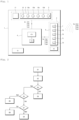
- the invention is here implemented in audio reproduction equipment which is in this case a connected speaker 1.
- the connected speaker 1 comprises an audio reproduction unit 2, an audio capture unit 3, a processing module 4 and a communication module 5.
- the audio reproduction unit 2 comprises a set of loudspeakers 6 comprising at least one, in this case a plurality of loudspeakers 7 integrated in an acoustic enclosure, as well as electronic components 8 arranged to process and transmit audio signals emitted to the loudspeakers 7 which reproduce them by generating sound signals.
- the electronic components 8 comprise in particular amplifiers.
- the electronic components 8 form several audio channels each connected to one or more loudspeakers 7.
- the audio capture unit 3 comprises a set of microphones 9 comprising at least one, in this case a plurality of microphones 10 as well as electronic components 11 arranged to acquire and process received audio signals produced by the microphones 10 when the latter capture sound signals.
- the electronic components 11 include in particular one or more analog-digital converters which transform the analog audio signals produced by the microphones 10 into digital signals.
- the processing module 4 comprises a processing component 12 which is adapted to execute instructions of a program to implement the self-diagnosis method according to the invention.
- the program is stored in a memory module 13 comprising one or more memories of different types (volatile, non-volatile) and connected or integrated in the processing component 12.
- the processing component 12 is for example a processor, a microcontroller, a DSP (for Digital Signal Processor ), or a programmable logic circuit such as an FPGA (for Field Programmable Gate Arrays ) or an ASIC (for Application Specified Integrated Circuit).
- the communication module 5 implements a wireless connection using a Wi-Fi protocol here.
- the communication module 5 makes it possible to connect the connected speaker 1 to a residential gateway located in the home of the user of the connected speaker 1.
- the connected speaker 1 can thus be connected to a communication network (for example the Internet) via its communication module 5 and the residential gateway.
- connection could be another wireless connection (for example a Bluetooth connection) , or a wired connection.
- the self-diagnostic method consists in acquiring or producing emitted test audio signals Se and broadcasting them via the speaker(s) 7 which generate then test audio signals So.
- the processing component 12 acquires received test audio signals Sr produced by the microphone(s) 10 and resulting from a reception by the microphone(s) 10 of the test audio signals.
- the processing component 12 analyzes the received test audio signals Sr to establish a first diagnosis of the audio reproduction unit 2 and a second diagnosis of the audio capture unit 3.
- the processing component 12 thus first establishes, within the framework of the first diagnosis of the audio reproduction unit 2, a diagnosis relating to a first group of loudspeakers tested and to the acoustic enclosure.
- the first group of loudspeakers tested comprises at least a first loudspeaker 7a of the set of loudspeakers 6.
- the first group of loudspeakers tested which is targeted by this diagnosis may comprise a single loudspeaker, all the loudspeakers, or only certain loudspeakers of the set of loudspeakers 6.
- the diagnostic performance uses at least one first microphone 10a of the microphone set 9. Again, it is possible to use a single microphone, all the microphones, or only certain microphones of the microphone set 9.
- the emitted test audio signals Se comprise a first emitted signal Se1 which is broadcast via the first speaker(s) 7a of the first group of speakers tested.
- the first emitted signal Se1 is a pre-recorded signal.
- the received test audio signals Sr comprise, for each first microphone 10a, a first received signal Sr1 produced by said first microphone 10a.
- the processing component 12 produces and broadcasts the first emitted signal Se1 via the first group of loudspeakers tested (step E1).
- the first emitted signal Se1 is broadcast successively by each of the first loudspeakers 7a which each produce a first sound signal So1.
- the first emitted signal Se1 here comprises a first sinusoidal signal having a frequency less than 100Hz, here equal to 50Hz.
- the first sinusoidal signal is a pure sine.
- the first microphones 10a capture the first sound signal So1 produced by said first loudspeaker 7a (step E2).
- the processing component 12 acquires the first received signal Sr1 produced by each first microphone 10a.
- the processing component 12 checks whether the first signal received Sr1 is consistent or not with the first signal emitted Se1 (step E3).
- step E4 the processing component 12 launches an acoustic recalibration phase, which will be discussed below.
- the processing component 12 checks that the first transmitted signal Se1 is indeed present in the first received signal Sr1 (step E5).
- step E6 If the first transmitted signal Se1 is not present in the first received signal Sr1, an irremediable failure of the first loudspeaker 7a is detected (step E6).
- step E5 if the first transmitted signal Se1 is indeed present in the first received signal Sr1, the processing component 12 analyzes the first received signal Sr1 to detect a residual noise signal also present in the first received signal Sr1.
- the analysis is a spectral analysis that uses a spectral measurement of the first received signal Sr1.
- the spectral measurement shows a peak at the fundamental frequency, as well as possibly other peaks at harmonic frequencies (multiples of the fundamental).
- the residual noise signal will be high: this is the noise of the air flow turbulence of the leaks.
- the processing component 12 checks whether the residual noise signal has a frequency higher than a predefined frequency and a level higher than a predefined level, the predefined frequency being higher than a first frequency of the first emitted signal Se1 (step E7). If this is the case, the processing component 12 detects a sealing defect of the acoustic enclosure (step E8).
- step E7 if the sealing defect is not detected, the processing component 12 launches an acoustic recalibration phase (step E9).
- each first loudspeaker 7a emits the first emitted signal Se1 successively.
- an emitted audio test signal other than a pure sine, for example pink noise or a frequency sweep.
- a pure sine at a medium frequency (e.g. 500 Hz) can only be used to check for the presence of a loudspeaker.
- a pure sine wave at a low frequency (e.g. 50 Hz) can be used to check for the presence of a loudspeaker and ensure that its enclosure is sealed.
- a frequency sweep can be used to check for the presence of a speaker, its frequency response, its THD ( Total Harmonic Distortion ), and possible parasitic vibrations in the connected speaker 1.
- the implementation of the first diagnosis of the audio restitution unit 2 can therefore consist of detecting other faults.
- the self-diagnostic method can establish a diagnosis of a second group of tested loudspeakers comprising at least one second loudspeaker 7b of the set of loudspeakers 6.
- the second group of tested loudspeakers which is targeted by this diagnosis can comprise a single loudspeaker, all the loudspeakers, or only certain loudspeakers of the set of loudspeakers 6.
- the one or more second speakers 7b may be the same as the first speaker(s) 7a.
- the diagnostic performance uses at least one second microphone 10b of the microphone set 9. Again, it is possible to use a single microphone, all the microphones, or only some microphones of the microphone set 9.
- the second microphone(s) 10b may be the same as the first microphone(s) 10a.
- the transmitted test audio signals comprise a second transmitted signal Se2 which is broadcast via the second speaker(s) 7b of the second group of speakers tested.
- the received test audio signals comprise, for each second microphone 10b, a second received signal Sr2 produced by said second microphone 10b.
- the second emitted signal Se2 is emitted successively by each second loudspeaker 7b.
- the second emitted signal Se2 here comprises a succession of second sinusoidal signals having distinct second frequencies and forming a frequency sweep.
- the second sinusoidal signals are pure sinuses.
- the emitted frequencies are for example between 31.25 Hz and 1 kHz, in third octaves, i.e.: 31.25 Hz x 2 ⁇ (N x 1/3).
- the frequencies could of course be different, and for example between 20 Hz and 2 kHz, in steps of a multiplicative factor equal to 1.58: 20 Hz, 31.7 Hz, 50.2 Hz, ..., 1.26 kHz, 2 kHz.
- Each frequency is for example emitted for 500ms.
- the second microphones 10b capture the second sound signal So2 produced by said second loudspeaker 7b.
- the processing component 12 acquires the second received signal Sr2 produced by each second microphone 10b.
- the processing component 12 implements a spectral analysis which, for each second sinusoidal signal of the second emitted signal Se2, that is to say for each emitted frequency, consists in carrying out measurements of a level of a fundamental and of harmonic levels of the second received audio signal Sr2, and in detecting a defect from said measurements.
- the processing component 12 calculates a ratio between a sum of the levels of the harmonics and the level of the fundamental, and detects a defect from said ratio.
- the level of the fundamental gives the frequency response of the audio reproduction unit 2.
- the harmonics are the multiples of the fundamental.
- the distortion can be calculated by taking into account the first five harmonics of the second received signal Sr2.
- the detected defect is an internal defect in the second loudspeaker 7b.
- the detected defect is for example a deterioration of the membrane or suspension, a misalignment of the coil, etc.
- the processing component 12 can detect a vibration defect by calculating the ratio between a sum of the levels of the harmonics and the level of the fundamental, the harmonics taken into account being the harmonics of ranks greater than ten of the second signal received Sr2.
- the detected defect is a vibration defect manifested by the presence in the connected enclosure 1 of first vibration levels that are too high at first vibration frequencies.
- Each first vibration frequency is therefore an emitted frequency, which is associated with a first vibration level (ratio between the sum of the levels of the harmonics and the level of the fundamental, i.e. of said first vibration frequency) that is too high and symptomatic of a vibration defect.
- the processing component therefore establishes a first list of frequencies for which the vibration level is higher than a predefined threshold, which is for example equal to 5%.
- the processing component 12 uses the speaker assembly 6 to communicate with the user and ask him to move the connected speaker 1.
- the processing component 12 rebroadcasts the second emitted signal Se2 via the second loudspeaker 7b and reanalyzes the second received signal Sr2 to evaluate second vibration levels at second vibration frequencies.
- the second vibration frequencies are again the emitted frequencies of the signal Se2.
- the processing component attempts to detect excessively high second vibration levels associated with second vibration frequencies.
- the processing component therefore establishes a second list of frequencies for which the vibration level is higher than the predefined threshold.
- the processing component 12 compares the first vibration levels with the second vibration levels, and/or the first vibration frequencies with the second vibration frequencies, in order to determine whether the detected defect comes from the positioning of the connected speaker 1 or from an internal defect in the connected speaker 1.
- the processing component considers that there is a vibration defect at these frequencies, which is intrinsic to the connected speaker 1.
- the acoustic recalibration phase can be implemented at any time, and for example periodically, to ensure that the audio reproduction performance of the acoustic speaker 1 is optimal.
- the acoustic recalibration phase can also be implemented, as we have seen, following the completion of the first diagnosis, i.e. at steps E4 and E9: see figure 2 .
- the acoustic recalibration phase can also be implemented when the existence of an acoustic defect is noted by comparing the latest results with those previously kept.
- the acoustic defect in question may consist of an inconsistent frequency response, due for example to vibrations, and requiring recalibration in order to approach the initial acoustic characteristics.
- the acoustic recalibration may concern a third group of tested loudspeakers comprising at least a third loudspeaker 7c of the loudspeaker assembly 6.
- the third group of tested loudspeakers which is concerned by this recalibration may comprise a single loudspeaker, all the loudspeakers, or only certain loudspeakers of the loudspeaker assembly.
- the third loudspeaker(s) 7c may be the same as the first loudspeaker(s) 7a or as the second loudspeaker(s) 7b.
- At least one third microphone 10c of the microphone array 9 is again used. It is possible to use a single microphone, all the microphones, or only some of the microphones of the microphone array 9.
- the third microphone(s) 10c may be the same as the first microphone(s) 10a or the second microphone(s) 10b.
- the transmitted test audio signals Se comprise a third transmitted signal Se3 which is broadcast via the third speaker(s) 7c of the third speaker group under test.
- the received test audio signals comprise, for each third microphone 10c, a third received signal Sr3 produced by said third microphone(s) 10c.
- a third sound signal So3 produced by at least a third loudspeaker 7c
- the third microphone 10c produces a third current received signal Sr3.
- the third current received signal is stored in a non-volatile memory of the memory module 13 (step E10).
- the processing component 12 checks whether the memory contains at least one third previous received signal which was previously emitted by the same third loudspeaker 7c (or the same third loudspeakers 7c) and recorded by the processing component 12 (step E11).
- step E12 the acoustic recalibration phase is not carried out
- the processing component 12 analyzes the current third received signal by comparing it with the previous third received signals stored in the memory (step E13).
- the processing component 12 attempts to detect an acoustic defect from the results of said comparison (step E14).
- step E15 If no acoustic defect is detected, the decision process ends; the acoustic recalibration phase is not carried out (step E15).
- the processing component 12 performs a recalibration of the connected speaker 1 to correct said acoustic defect (step E16).
- the processing component 12 may decide to limit the level of the audio signals emitted in this frequency band, if said frequency band is sufficiently narrow.
- the processing component 12 decides to limit the level of the audio signals emitted if the frequency bandwidth is less than a predetermined threshold.
- the predetermined threshold is for example equal to 1/6 octave.
- Acoustic recalibration may also include modifying the audio equalization of an audio channel incorporating the third 7c speaker in question, so as to obtain the desired spectrum shape (e.g. a flat frequency response).
- desired spectrum shape e.g. a flat frequency response
- the emitted test audio signals include a fourth emitted signal Se4.
- the fourth emitted signal Se4 is broadcast via a fourth group of loudspeakers comprising at least a fourth loudspeaker 7d of the loudspeaker assembly 6, which thus emits a fourth sound signal So4.
- the processing component 12 begins by adjusting the sound volume of the connected speaker 1 to a predefined level (for example 50% or 100% of the maximum volume): step E20. This step is optional.
- the processing component 12 uses the speaker set 6 to ask the user to check that no object obstructs the inputs of the microphones 10 of the microphone set 9 or the outputs of the speakers 7 of the speaker set 6 (step E21). This step is optional.
- the processing component 12 initializes the audio capture on the microphones 10d which are the microphones under test (step E22).
- the processing component 12 broadcasts the fourth emitted signal Se4 via the fourth group of loudspeakers (step E23), which produces a fourth sound signal So4.
- the processing component 12 then checks that the fourth sound signal So4 has been received by at least one microphone tested (step E24).
- the processing component 12 checks that the fourth sound signal So4 has been received by all the microphones tested (step E25).
- step E26 the processing component 12 possibly implements the first diagnosis (if this has not already been carried out): step E26.
- step E25 if at least one first microphone tested has correctly received the fourth sound signal So4 and if at least one second microphone tested has not received said fourth sound signal So4, the processing component 12 detects an irremediable failure of the second microphone(s) tested (step E27).
- step E24 if none of the tested microphones has received the fourth sound signal So4, the processing component 12 asks the user whether he has heard the fourth sound signal So4 (step E28).
- the processing component 12 detects an irremediable failure of a first subsystem belonging to the audio reproduction unit 2 and comprising the fourth group of loudspeakers (step E29).
- the processing component 12 detects an irremediable failure of a second subsystem belonging to the audio capture unit 3 and comprising the microphones tested (step E30).
- step E24 if none of the tested microphones has received the fourth sound signal So4, the processing component, before asking the user whether he has heard the fourth sound signal So4, emits the fourth sound signal So4 again using a fifth loudspeaker different from the fourth loudspeaker.
- the processing component detects an irremediable failure of the fourth loudspeaker if the sound signal So4 is this time well received by at least one of the tested microphones.
- the invention therefore makes it possible to implement a mutual self-diagnosis by using the set of microphones 9 to establish the first diagnosis of the audio reproduction unit 2, and by using the set of loudspeakers 6 to establish the second diagnosis of the audio capture unit 3.
- the first diagnosis and the second diagnosis can be implemented periodically, testing all the speakers 7 or only certain speakers each time. 7, and testing all 10 microphones or only some 10 microphones each time.
- the microphones 10 it is noted that it is possible, during the implementation of the first diagnosis (relating to the loudspeakers 7), to test the first microphones 10a. For example, following step E2 visible on the figure 2 , it is possible to provide for comparing the first received signals Sr1 produced by the first microphones 10a with each other. If the first received signal Sr1 produced by one of the first microphones 10a is inconsistent with respect to the other first received signals Sr1 produced by the other first microphones 10a, the processing component 12 detects a failure of the first microphone 10a in question.
- the connected speaker 1 can transmit to the manufacturer, via the communication module 5, the results of the tests carried out. This information can be sent to a database to enable statistical processing of the data.
- the invention minimizes interactions with the user.
- the connected speaker 1 can perfectly inform the user of the presence and nature of this defect, and can guide him to possibly try to correct this defect.
- the manufacturer can also possibly contact the user to help him resolve certain problems reported by the connected speaker 1.
- the invention therefore makes it possible to detect the irremediable failure of one or more loudspeakers 7, the irremediable failure of one or more audio channels (amplifier, etc.), the irremediable failure of one or more microphones 10.
- the invention also makes it possible to inform the user and/or to proactively inform the After-Sales Service, and to update the product statistical data.
- the invention also makes it possible to detect sub-optimized use of the audio reproduction unit 2 (modification of the user environment, natural aging of the audio elements, etc.).
- the invention can also offer the user to perform an acoustic recalibration in order to take full advantage over time of the characteristics and performance of his connected speaker 1.
- the audio reproduction equipment in which the invention is implemented is of course not necessarily a connected speaker, but can be any electronic equipment integrating one or more speakers and one or more microphones: residential gateway, set-top box, voice assistant, tablet, smartphone, etc.
- the transmitted test audio signals may be pre-recorded, generated by the processing component 12, or obtained from the network via the communication module 5.
Landscapes
- Physics & Mathematics (AREA)
- Engineering & Computer Science (AREA)
- Acoustics & Sound (AREA)
- Signal Processing (AREA)
- Health & Medical Sciences (AREA)
- General Health & Medical Sciences (AREA)
- Otolaryngology (AREA)
- Circuit For Audible Band Transducer (AREA)
Claims (17)
- Selbstdiagnoseverfahren, welches in einem Audiowiedergabegerät (1) ausgeführt wird, das eine Audiowiedergabeeinheit (2) umfassend zumindest einen Lautsprecher (7) sowie eine Audioaufnahmeeinheit (3) umfassend zumindest ein Mikrofon (10) enthält, wobei das Selbstdiagnoseverfahren die Schritte umfasst, dass:- Audiotest-Sendesignale (Se) erfasst oder erzeugt werden und über den oder die Lautsprecher (7) abgegeben werden, welche dabei Test-Tonsignale (So) generieren;- Audiotest-Empfangssignale (Sr) erfasst werden, die von dem oder den Mikrofonen (10) erzeugt worden sind und aus einem Empfang der Test-Tonsignale durch das oder die Mikrofone (10) resultieren;- die Audiotest-Empfangssignale analysiert werden, um eine erste Diagnose der Audiowiedergabeeinheit (2) und eine zweite Diagnose der Audioaufnahmeeinheit (3) zu stellen;wobei die Audiotest-Sendesignale (Se) ein erstes Sendesignal (Se1) umfassen, das von zumindest einem ersten Lautsprecher (7a) abgegeben wird, wobei das erste Sendesignal ein erstes Sinussignal mit einer Frequenz von weniger als 100 Hz umfasst, und wobei die Audiotest-Empfangssignale zumindest ein erstes Empfangssignal (Sr1) umfassen, das von zumindest einem ersten Mikrofon (10a) erzeugt wird, wobei die Analyse den Schritt umfasst, dass das erste Sendesignal tatsächlich in dem ersten Empfangssignal (Sr1) vorhanden ist,wobei das Verfahren, sofern das erste Sendesignal (Se1) tatsächlich in dem ersten Empfangssignal (Sr1) vorhanden ist, ferner die Schritte um fasst, dass- eine Spektralanalyse durchgeführt wird, um ein Rest-Rauschsignal zu detektieren, das auch in dem ersten Empfangssignal (Sr1) vorhanden ist, und um zu prüfen, ob das Rest-Rauschsignal eine über einer vordefinierten Frequenz liegende Frequenz und einen über einem vordefinierten Pegel liegenden Signalpegel aufweist, wobei die vordefinierte Frequenz über einer Frequenz des ersten Ausgabesignals (Se1) liegt, wobei die Spektralanalyse die Schritte umfasst, dass eine Spektralmessung des ersten Empfangssignals verwendet wird, wobei die Spektralmessung eine Spitze bei der Frequenz des Grundtons sowie ggf. weitere Spitzen bei den Frequenzen der Obertöne aufweist, und dass diese Spitzen entfernt werden, um dadurch ein Spektrum des Rest-Rauschsignals zu erhalten;- und dass, wenn dies der Fall ist, eine Undichtigkeit einer Lautsprecherbox des Audiowiedergabegeräts (1), in dem der erste Lautsprecher (7a) untergebracht ist, detektiert wird.
- Selbstdiagnoseverfahren nach Anspruch 1, welches den Schritt umfasst, dass ein irreparabler Fehler des ersten Lautsprechers (7a) detektiert wird, wenn das erste Sendesignal (Se1) in dem ersten Empfangssignal (Sr1) nicht vorhanden ist.
- Selbstdiagnoseverfahren nach einem der vorhergehenden Ansprüche, wobei die Audiotest-Sendesignale (Se) ein von zumindest einem zweiten Lautsprecher (7b) abgegebenes, zweites Sendesignal (Se2) umfassen, und wobei die Audiotest-Empfangssignale (Sr) zumindest ein von zumindest einem zweiten Mikrophon (10b) erzeugtes, zweites Empfangssignal (Sr2) umfassen, wobei das zweite Sendesignal (Se2) eine Folge zweiter Sinussignale enthält, die unterschiedliche zweite Frequenzen aufweisen und einen Frequenzdurchlauf bilden, wobei die Analyse die Schritte umfasst, dass für jedes zweite Sinussignal Messungen eines Pegels eines Grundtons und der Pegel von Obertönen des zweiten Audio-Empfangssignals (Sr2) erfolgen und dass ausgehend von diesen Messungen ein Akustikfehler des zweiten Lautsprechers (7b) detektiert wird.
- Selbstdiagnoseverfahren nach Anspruch 3, welches den Schritt umfasst, dass ein Verhältnis zwischen einer Summe der Pegel der Obertöne und dem Pegel des Grundtons berechnet wird und dass der Akustikfehler ausgehend von diesem Verhältnis detektiert wird.
- Selbstdiagnoseverfahren nach Anspruch 4, wobei es sich bei den Obertönen um die fünf ersten Obertöne des zweiten Empfangssignals (Sr2) handelt und wobei es sich bei dem detektierten Fehler um einen internen Defekt des zweiten Lautsprechers (7b) handelt.
- Selbstdiagnoseverfahren nach Anspruch 4, wobei es sich bei den Obertönen um die Obertöne höher als zehnter Ordnung des zweiten Empfangssignals (Sr2) handelt und wobei es sich bei dem detektierten Fehler um einen Schwingungsfehler handelt, der in dem Vorhandensein von zu hohen ersten Schwingungspegeln für erste Schwingungsfrequenzen zum Ausdruck kommt.
- Selbstdiagnoseverfahren nach Anspruch 6, welches die Schritte umfasst, dass die ersten Schwingungspegel bei den ersten Schwingungsfrequenzen ausgewertet werden und, wenn ein Schwingungsfehler detektiert wird, ein Benutzer gebeten wird, das Audiowiedergabegerät (1) an einen anderen Ort zu bewegen, und dass anschließend das zweite Sendesignal (Se2) erneut gesendet wird und erneut das zweite Empfangssignal (Sr2) analysiert wird, um zweite Schwingungspegel bei zweiten Schwingungsfrequenzen auszuwerten, dass anschließend die ersten Schwingungspegel mit den zweiten Schwingungspegeln und/oder die ersten Schwingungsfrequenzen mit den zweiten Schwingungsfrequenzen verglichen werden, um zu bestimmen, ob der detektierte Fehler von einem Aufstellungsort des Audiowiedergabegeräts (1) oder von einem internen Defekt des Audiowiedergabegeräts (1) herrührt.
- Selbstdiagnoseverfahren nach einem der vorhergehenden Ansprüche, wobei die Audiotest-Sendesignale (Se) ein von zumindest einem dritten Lautsprecher (7c) abgegebenes, drittes Sendesignal (Se3) umfassen, und wobei die Audiotest-Empfangssignale (Sr) zumindest ein von zumindest einem dritten Mikrophon (10c) erzeugtes, drittes, gegenwärtiges Empfangssignal (Sr3) umfassen, wobei die Analyse die Schritte umfasst, dass das dritte, gegenwärtige Empfangssignal (Sr3) mit zumindest einem dritten, früheren, zu einem früheren Zeitpunkt aufgezeichneten Signal verglichen wird, dass ausgehend von Ergebnissen des Vergleichs ein Akustikfehler detektiert wird, und dass eine akustische Neukalibrierung des Audiowiedergabegeräts (1) durchgeführt wird, um den Akustikfehler zu korrigieren.
- Selbstdiagnoseverfahren nach Anspruch 8, wobei die akustische Neukalibrierung eine Modifizierung der Audioentzerrung eines Audiokanals umfasst, in dem der dritte Lautsprecher (7c) integriert ist.
- Selbstdiagnoseverfahren nach einem der vorhergehenden Ansprüche, wobei die Audiotest-Sendesignale ein viertes Sendesignal (Se4) umfassen, das über zumindest einen vierten Lautsprecher (7d) abgegeben wird, der dabei ein Tonsignal (So4) sendet, wobei das Selbstdiagnoseverfahren den Schritt umfasst, dass überprüft wird, dass das Tonsignal (So4) tatsächlich von den getesteten Mikrophonen empfangen worden ist.
- Selbstdiagnoseverfahren nach Anspruch 10, welches den Schritt umfasst, dass, falls zumindest ein getestetes erstes Mikrofon tatsächlich das Tonsignal (So4) empfangen hat und falls zumindest ein getestetes zweites Mikrofon das Tonsignal nicht empfangen hat, ein irreparabler Fehler des zweiten Mikrofons detektiert wird.
- Selbstdiagnoseverfahren nach Anspruch 10, welches den Schritt umfasst, dass, falls keines der getesteten Mikrofone das Tonsignal (So4) empfangen hat, ein Benutzer des Audiowiedergabegeräts befragt wird, ob er das Tonsignal gehört hat, und:- wenn dies nicht der Fall ist, ein irreparabler Fehler des vierten Lautsprechers detektiert wird;- wenn dies der Fall ist, ein irreparabler Fehler der getesteten Mikrofone detektiert wird.
- Selbstdiagnoseverfahren nach Anspruch 12, welches ferner die Schritte umfasst, dass, bevor der Benutzer befragt wird, ob er das Tonsignal (So4) gehört hat, das Tonsignal erneut gesendet wird, und zwar unter Verwendung eines von dem vierten Lautsprecher unterschiedlichen, fünften Lautsprechers, und dass ein irreparabler Fehler des vierten Lautsprechers detektiert wird, wenn das Tonsignal (So4) diesmal tatsächlich von zumindest einem der getesteten Mikrophone empfangen wird.
- Audiowiedergabegerät, welches eine Verarbeitungskomponente (12), eine Audiowiedergabeeinheit (2) umfassend zumindest einen Lautsprecher (7) sowie eine Audioaufnahmeeinheit (3) umfassend zumindest ein Mikrofon (10) enthält, wobei das Selbstdiagnoseverfahren nach einem der vorhergehenden Ansprüche in der Verarbeitungskomponente (12) implementiert ist.
- Audiowiedergabegerät nach Anspruch 14, wobei es sich bei dem Audiowiedergabegerät um eine vernetzte Lautsprecherbox (1) handelt.
- Computerprogramm, das Befehle umfasst, welche die Verarbeitungskomponente (12) des Audiowiedergabegeräts (1) nach einem der Ansprüche 14 oder 15 dazu veranlassen, die Schritte des Selbsttestverfahrens nach einem der Ansprüche 1 bis 12 auszuführen.
- Computerlesbares Aufzeichnungsmedium, auf welchem das Computerprogramm nach Anspruch 16 abgespeichert ist.
Applications Claiming Priority (1)
| Application Number | Priority Date | Filing Date | Title |
|---|---|---|---|
| FR2103681A FR3121810A1 (fr) | 2021-04-09 | 2021-04-09 | Procédé d’auto-diagnostic d’un équipement de restitution audio |
Publications (2)
| Publication Number | Publication Date |
|---|---|
| EP4072162A1 EP4072162A1 (de) | 2022-10-12 |
| EP4072162B1 true EP4072162B1 (de) | 2024-08-28 |
Family
ID=75850382
Family Applications (1)
| Application Number | Title | Priority Date | Filing Date |
|---|---|---|---|
| EP22167041.7A Active EP4072162B1 (de) | 2021-04-09 | 2022-04-06 | Selbstdiagnoseverfahren eines audiowiedergabegeräts |
Country Status (3)
| Country | Link |
|---|---|
| US (1) | US12156002B2 (de) |
| EP (1) | EP4072162B1 (de) |
| FR (1) | FR3121810A1 (de) |
Family Cites Families (7)
| Publication number | Priority date | Publication date | Assignee | Title |
|---|---|---|---|---|
| JP4882338B2 (ja) * | 2005-10-27 | 2012-02-22 | ヤマハ株式会社 | マルチスピーカシステム |
| US8600067B2 (en) * | 2008-09-19 | 2013-12-03 | Personics Holdings Inc. | Acoustic sealing analysis system |
| WO2013126603A1 (en) * | 2012-02-21 | 2013-08-29 | Intertrust Technologies Corporation | Audio reproduction systems and methods |
| US9930463B2 (en) * | 2016-03-31 | 2018-03-27 | Sonos, Inc. | Defect detection via audio playback |
| US20180213340A1 (en) * | 2017-01-26 | 2018-07-26 | W. L. Gore & Associates, Inc. | High throughput acoustic vent structure test apparatus |
| CN108430026B (zh) * | 2018-03-07 | 2020-08-21 | 广州艾美网络科技有限公司 | 音频设备故障检测方法和点唱设备 |
| CN109379689A (zh) * | 2018-10-30 | 2019-02-22 | Oppo广东移动通信有限公司 | 扬声器总谐波失真测量方法、装置、存储介质及测量系统 |
-
2021
- 2021-04-09 FR FR2103681A patent/FR3121810A1/fr not_active Withdrawn
-
2022
- 2022-04-06 EP EP22167041.7A patent/EP4072162B1/de active Active
- 2022-04-07 US US17/715,499 patent/US12156002B2/en active Active
Also Published As
| Publication number | Publication date |
|---|---|
| FR3121810A1 (fr) | 2022-10-14 |
| EP4072162A1 (de) | 2022-10-12 |
| US20220329956A1 (en) | 2022-10-13 |
| US12156002B2 (en) | 2024-11-26 |
Similar Documents
| Publication | Publication Date | Title |
|---|---|---|
| CN103179495A (zh) | 移动终端的耳机麦克风和听筒的音频测试方法及系统 | |
| US20220232332A1 (en) | Measuring speech intelligibility of an audio environment | |
| US12192737B2 (en) | Automated audio tuning and compensation procedure | |
| EP2595153A1 (de) | Tonqualitätsbeurteilungsvorrichtung und Verfahren dafür | |
| CN111182435B (zh) | 语音设备的测试方法及装置 | |
| CN103179240A (zh) | 移动终端的音频测试方法及测试系统 | |
| FR2932920A1 (fr) | Procede et appareil de mesure de l'intelligibilite d'un dispositif de diffusion sonore | |
| FR2997257A1 (fr) | Systeme et procede de test d'un equipement audio | |
| US12267655B2 (en) | Automated audio tuning launch procedure and report | |
| WO2008006952A2 (fr) | Procede et dispositif de diagnostic de l'etat de fonctionnement d'un systeme de sonorisation | |
| WO2023081534A1 (en) | Automated audio tuning launch procedure and report | |
| CN109195089A (zh) | 用于产品内扬声器电声参数的测试方法及系统 | |
| EP4072162B1 (de) | Selbstdiagnoseverfahren eines audiowiedergabegeräts | |
| CN111274073A (zh) | 一种服务器声卡音频功能诊断方法及系统 | |
| CN121284449A (zh) | 音频信号的输出方法、装置、电子设备和存储介质 | |
| US12538063B2 (en) | Method and system for authentication and compensation | |
| CN112995882B (zh) | 一种智能设备音频开环测试方法 | |
| JP2020153935A (ja) | 音響特性計測装置及び音響特性計測方法 | |
| CN113473348A (zh) | 扫频音源定位方法、音频设备品质测试方法、系统及设备 | |
| CN115668984A (zh) | 音频扬声器的瞬态多音调测试信号和方法 | |
| FR3112017A1 (fr) | Equipement électronique comprenant un simulateur de distorsion | |
| EP3844979A1 (de) | Verfahren und vorrichtung zur steuerung der verzerrung eines lautsprechersystems an bord eines fahrzeuges | |
| CN111953967A (zh) | 一种自动测试网络摄像机咪头与喇叭的方法 | |
| Heck et al. | Ambient sounds in auralization-calibration method for spherical microphones | |
| FR2984581A1 (fr) | Methode pour mesurer une distorsion causee par un appareil audionumerique |
Legal Events
| Date | Code | Title | Description |
|---|---|---|---|
| PUAI | Public reference made under article 153(3) epc to a published international application that has entered the european phase |
Free format text: ORIGINAL CODE: 0009012 |
|
| STAA | Information on the status of an ep patent application or granted ep patent |
Free format text: STATUS: EXAMINATION IS IN PROGRESS |
|
| 17P | Request for examination filed |
Effective date: 20220406 |
|
| AK | Designated contracting states |
Kind code of ref document: A1 Designated state(s): AL AT BE BG CH CY CZ DE DK EE ES FI FR GB GR HR HU IE IS IT LI LT LU LV MC MK MT NL NO PL PT RO RS SE SI SK SM TR |
|
| RBV | Designated contracting states (corrected) |
Designated state(s): AL AT BE BG CH CY CZ DE DK EE ES FI FR GB GR HR HU IE IS IT LI LT LU LV MC MK MT NL NO PL PT RO RS SE SI SK SM TR |
|
| RAP3 | Party data changed (applicant data changed or rights of an application transferred) |
Owner name: SAGEMCOM BROADBAND SAS |
|
| GRAP | Despatch of communication of intention to grant a patent |
Free format text: ORIGINAL CODE: EPIDOSNIGR1 |
|
| STAA | Information on the status of an ep patent application or granted ep patent |
Free format text: STATUS: GRANT OF PATENT IS INTENDED |
|
| INTG | Intention to grant announced |
Effective date: 20240320 |
|
| GRAS | Grant fee paid |
Free format text: ORIGINAL CODE: EPIDOSNIGR3 |
|
| GRAA | (expected) grant |
Free format text: ORIGINAL CODE: 0009210 |
|
| STAA | Information on the status of an ep patent application or granted ep patent |
Free format text: STATUS: THE PATENT HAS BEEN GRANTED |
|
| AK | Designated contracting states |
Kind code of ref document: B1 Designated state(s): AL AT BE BG CH CY CZ DE DK EE ES FI FR GB GR HR HU IE IS IT LI LT LU LV MC MK MT NL NO PL PT RO RS SE SI SK SM TR |
|
| REG | Reference to a national code |
Ref country code: CH Ref legal event code: EP |
|
| REG | Reference to a national code |
Ref country code: DE Ref legal event code: R096 Ref document number: 602022005584 Country of ref document: DE |
|
| REG | Reference to a national code |
Ref country code: IE Ref legal event code: FG4D Free format text: LANGUAGE OF EP DOCUMENT: FRENCH |
|
| REG | Reference to a national code |
Ref country code: LT Ref legal event code: MG9D |
|
| PG25 | Lapsed in a contracting state [announced via postgrant information from national office to epo] |
Ref country code: NO Free format text: LAPSE BECAUSE OF FAILURE TO SUBMIT A TRANSLATION OF THE DESCRIPTION OR TO PAY THE FEE WITHIN THE PRESCRIBED TIME-LIMIT Effective date: 20241128 |
|
| REG | Reference to a national code |
Ref country code: AT Ref legal event code: MK05 Ref document number: 1719231 Country of ref document: AT Kind code of ref document: T Effective date: 20240828 |
|
| PG25 | Lapsed in a contracting state [announced via postgrant information from national office to epo] |
Ref country code: FI Free format text: LAPSE BECAUSE OF FAILURE TO SUBMIT A TRANSLATION OF THE DESCRIPTION OR TO PAY THE FEE WITHIN THE PRESCRIBED TIME-LIMIT Effective date: 20240828 Ref country code: NL Free format text: LAPSE BECAUSE OF FAILURE TO SUBMIT A TRANSLATION OF THE DESCRIPTION OR TO PAY THE FEE WITHIN THE PRESCRIBED TIME-LIMIT Effective date: 20240828 Ref country code: PT Free format text: LAPSE BECAUSE OF FAILURE TO SUBMIT A TRANSLATION OF THE DESCRIPTION OR TO PAY THE FEE WITHIN THE PRESCRIBED TIME-LIMIT Effective date: 20241230 Ref country code: PL Free format text: LAPSE BECAUSE OF FAILURE TO SUBMIT A TRANSLATION OF THE DESCRIPTION OR TO PAY THE FEE WITHIN THE PRESCRIBED TIME-LIMIT Effective date: 20240828 Ref country code: GR Free format text: LAPSE BECAUSE OF FAILURE TO SUBMIT A TRANSLATION OF THE DESCRIPTION OR TO PAY THE FEE WITHIN THE PRESCRIBED TIME-LIMIT Effective date: 20241129 |
|
| PG25 | Lapsed in a contracting state [announced via postgrant information from national office to epo] |
Ref country code: BG Free format text: LAPSE BECAUSE OF FAILURE TO SUBMIT A TRANSLATION OF THE DESCRIPTION OR TO PAY THE FEE WITHIN THE PRESCRIBED TIME-LIMIT Effective date: 20240828 |
|
| PG25 | Lapsed in a contracting state [announced via postgrant information from national office to epo] |
Ref country code: LV Free format text: LAPSE BECAUSE OF FAILURE TO SUBMIT A TRANSLATION OF THE DESCRIPTION OR TO PAY THE FEE WITHIN THE PRESCRIBED TIME-LIMIT Effective date: 20240828 |
|
| REG | Reference to a national code |
Ref country code: NL Ref legal event code: MP Effective date: 20240828 |
|
| PG25 | Lapsed in a contracting state [announced via postgrant information from national office to epo] |
Ref country code: IS Free format text: LAPSE BECAUSE OF FAILURE TO SUBMIT A TRANSLATION OF THE DESCRIPTION OR TO PAY THE FEE WITHIN THE PRESCRIBED TIME-LIMIT Effective date: 20241228 Ref country code: AT Free format text: LAPSE BECAUSE OF FAILURE TO SUBMIT A TRANSLATION OF THE DESCRIPTION OR TO PAY THE FEE WITHIN THE PRESCRIBED TIME-LIMIT Effective date: 20240828 |
|
| PG25 | Lapsed in a contracting state [announced via postgrant information from national office to epo] |
Ref country code: HR Free format text: LAPSE BECAUSE OF FAILURE TO SUBMIT A TRANSLATION OF THE DESCRIPTION OR TO PAY THE FEE WITHIN THE PRESCRIBED TIME-LIMIT Effective date: 20240828 |
|
| PG25 | Lapsed in a contracting state [announced via postgrant information from national office to epo] |
Ref country code: RS Free format text: LAPSE BECAUSE OF FAILURE TO SUBMIT A TRANSLATION OF THE DESCRIPTION OR TO PAY THE FEE WITHIN THE PRESCRIBED TIME-LIMIT Effective date: 20241128 Ref country code: ES Free format text: LAPSE BECAUSE OF FAILURE TO SUBMIT A TRANSLATION OF THE DESCRIPTION OR TO PAY THE FEE WITHIN THE PRESCRIBED TIME-LIMIT Effective date: 20240828 |
|
| PG25 | Lapsed in a contracting state [announced via postgrant information from national office to epo] |
Ref country code: RS Free format text: LAPSE BECAUSE OF FAILURE TO SUBMIT A TRANSLATION OF THE DESCRIPTION OR TO PAY THE FEE WITHIN THE PRESCRIBED TIME-LIMIT Effective date: 20241128 Ref country code: PT Free format text: LAPSE BECAUSE OF FAILURE TO SUBMIT A TRANSLATION OF THE DESCRIPTION OR TO PAY THE FEE WITHIN THE PRESCRIBED TIME-LIMIT Effective date: 20241230 Ref country code: PL Free format text: LAPSE BECAUSE OF FAILURE TO SUBMIT A TRANSLATION OF THE DESCRIPTION OR TO PAY THE FEE WITHIN THE PRESCRIBED TIME-LIMIT Effective date: 20240828 Ref country code: NO Free format text: LAPSE BECAUSE OF FAILURE TO SUBMIT A TRANSLATION OF THE DESCRIPTION OR TO PAY THE FEE WITHIN THE PRESCRIBED TIME-LIMIT Effective date: 20241128 Ref country code: NL Free format text: LAPSE BECAUSE OF FAILURE TO SUBMIT A TRANSLATION OF THE DESCRIPTION OR TO PAY THE FEE WITHIN THE PRESCRIBED TIME-LIMIT Effective date: 20240828 Ref country code: LV Free format text: LAPSE BECAUSE OF FAILURE TO SUBMIT A TRANSLATION OF THE DESCRIPTION OR TO PAY THE FEE WITHIN THE PRESCRIBED TIME-LIMIT Effective date: 20240828 Ref country code: IS Free format text: LAPSE BECAUSE OF FAILURE TO SUBMIT A TRANSLATION OF THE DESCRIPTION OR TO PAY THE FEE WITHIN THE PRESCRIBED TIME-LIMIT Effective date: 20241228 Ref country code: HR Free format text: LAPSE BECAUSE OF FAILURE TO SUBMIT A TRANSLATION OF THE DESCRIPTION OR TO PAY THE FEE WITHIN THE PRESCRIBED TIME-LIMIT Effective date: 20240828 Ref country code: GR Free format text: LAPSE BECAUSE OF FAILURE TO SUBMIT A TRANSLATION OF THE DESCRIPTION OR TO PAY THE FEE WITHIN THE PRESCRIBED TIME-LIMIT Effective date: 20241129 Ref country code: FI Free format text: LAPSE BECAUSE OF FAILURE TO SUBMIT A TRANSLATION OF THE DESCRIPTION OR TO PAY THE FEE WITHIN THE PRESCRIBED TIME-LIMIT Effective date: 20240828 Ref country code: ES Free format text: LAPSE BECAUSE OF FAILURE TO SUBMIT A TRANSLATION OF THE DESCRIPTION OR TO PAY THE FEE WITHIN THE PRESCRIBED TIME-LIMIT Effective date: 20240828 Ref country code: BG Free format text: LAPSE BECAUSE OF FAILURE TO SUBMIT A TRANSLATION OF THE DESCRIPTION OR TO PAY THE FEE WITHIN THE PRESCRIBED TIME-LIMIT Effective date: 20240828 Ref country code: AT Free format text: LAPSE BECAUSE OF FAILURE TO SUBMIT A TRANSLATION OF THE DESCRIPTION OR TO PAY THE FEE WITHIN THE PRESCRIBED TIME-LIMIT Effective date: 20240828 |
|
| PG25 | Lapsed in a contracting state [announced via postgrant information from national office to epo] |
Ref country code: SM Free format text: LAPSE BECAUSE OF FAILURE TO SUBMIT A TRANSLATION OF THE DESCRIPTION OR TO PAY THE FEE WITHIN THE PRESCRIBED TIME-LIMIT Effective date: 20240828 Ref country code: RO Free format text: LAPSE BECAUSE OF FAILURE TO SUBMIT A TRANSLATION OF THE DESCRIPTION OR TO PAY THE FEE WITHIN THE PRESCRIBED TIME-LIMIT Effective date: 20240828 Ref country code: DK Free format text: LAPSE BECAUSE OF FAILURE TO SUBMIT A TRANSLATION OF THE DESCRIPTION OR TO PAY THE FEE WITHIN THE PRESCRIBED TIME-LIMIT Effective date: 20240828 |
|
| PG25 | Lapsed in a contracting state [announced via postgrant information from national office to epo] |
Ref country code: EE Free format text: LAPSE BECAUSE OF FAILURE TO SUBMIT A TRANSLATION OF THE DESCRIPTION OR TO PAY THE FEE WITHIN THE PRESCRIBED TIME-LIMIT Effective date: 20240828 |
|
| PG25 | Lapsed in a contracting state [announced via postgrant information from national office to epo] |
Ref country code: CZ Free format text: LAPSE BECAUSE OF FAILURE TO SUBMIT A TRANSLATION OF THE DESCRIPTION OR TO PAY THE FEE WITHIN THE PRESCRIBED TIME-LIMIT Effective date: 20240828 |
|
| PG25 | Lapsed in a contracting state [announced via postgrant information from national office to epo] |
Ref country code: IT Free format text: LAPSE BECAUSE OF FAILURE TO SUBMIT A TRANSLATION OF THE DESCRIPTION OR TO PAY THE FEE WITHIN THE PRESCRIBED TIME-LIMIT Effective date: 20240828 Ref country code: SK Free format text: LAPSE BECAUSE OF FAILURE TO SUBMIT A TRANSLATION OF THE DESCRIPTION OR TO PAY THE FEE WITHIN THE PRESCRIBED TIME-LIMIT Effective date: 20240828 |
|
| REG | Reference to a national code |
Ref country code: DE Ref legal event code: R097 Ref document number: 602022005584 Country of ref document: DE |
|
| PLBE | No opposition filed within time limit |
Free format text: ORIGINAL CODE: 0009261 |
|
| STAA | Information on the status of an ep patent application or granted ep patent |
Free format text: STATUS: NO OPPOSITION FILED WITHIN TIME LIMIT |
|
| PGFP | Annual fee paid to national office [announced via postgrant information from national office to epo] |
Ref country code: DE Payment date: 20250319 Year of fee payment: 4 |
|
| 26N | No opposition filed |
Effective date: 20250530 |
|
| PG25 | Lapsed in a contracting state [announced via postgrant information from national office to epo] |
Ref country code: SE Free format text: LAPSE BECAUSE OF FAILURE TO SUBMIT A TRANSLATION OF THE DESCRIPTION OR TO PAY THE FEE WITHIN THE PRESCRIBED TIME-LIMIT Effective date: 20240828 |
|
| REG | Reference to a national code |
Ref country code: CH Ref legal event code: H13 Free format text: ST27 STATUS EVENT CODE: U-0-0-H10-H13 (AS PROVIDED BY THE NATIONAL OFFICE) Effective date: 20251125 |
|
| PG25 | Lapsed in a contracting state [announced via postgrant information from national office to epo] |
Ref country code: LU Free format text: LAPSE BECAUSE OF NON-PAYMENT OF DUE FEES Effective date: 20250406 |
|
| PG25 | Lapsed in a contracting state [announced via postgrant information from national office to epo] |
Ref country code: MC Free format text: LAPSE BECAUSE OF FAILURE TO SUBMIT A TRANSLATION OF THE DESCRIPTION OR TO PAY THE FEE WITHIN THE PRESCRIBED TIME-LIMIT Effective date: 20240828 |
|
| REG | Reference to a national code |
Ref country code: BE Ref legal event code: MM Effective date: 20250430 |
|
| PG25 | Lapsed in a contracting state [announced via postgrant information from national office to epo] |
Ref country code: BE Free format text: LAPSE BECAUSE OF NON-PAYMENT OF DUE FEES Effective date: 20250430 |
|
| PG25 | Lapsed in a contracting state [announced via postgrant information from national office to epo] |
Ref country code: CH Free format text: LAPSE BECAUSE OF NON-PAYMENT OF DUE FEES Effective date: 20250430 |
|
| PG25 | Lapsed in a contracting state [announced via postgrant information from national office to epo] |
Ref country code: IE Free format text: LAPSE BECAUSE OF NON-PAYMENT OF DUE FEES Effective date: 20250406 |
|
| PGFP | Annual fee paid to national office [announced via postgrant information from national office to epo] |
Ref country code: FR Payment date: 20260319 Year of fee payment: 5 |