EP4072041A1 - Kohärentes lichtempfangsgerät und optisches system mit kohärentem lichtempfangsgerät - Google Patents
Kohärentes lichtempfangsgerät und optisches system mit kohärentem lichtempfangsgerät Download PDFInfo
- Publication number
- EP4072041A1 EP4072041A1 EP20910106.2A EP20910106A EP4072041A1 EP 4072041 A1 EP4072041 A1 EP 4072041A1 EP 20910106 A EP20910106 A EP 20910106A EP 4072041 A1 EP4072041 A1 EP 4072041A1
- Authority
- EP
- European Patent Office
- Prior art keywords
- optical
- local oscillator
- light
- sub
- oscillator light
- Prior art date
- Legal status (The legal status is an assumption and is not a legal conclusion. Google has not performed a legal analysis and makes no representation as to the accuracy of the status listed.)
- Granted
Links
Images




Classifications
-
- H—ELECTRICITY
- H04—ELECTRIC COMMUNICATION TECHNIQUE
- H04B—TRANSMISSION
- H04B10/00—Transmission systems employing electromagnetic waves other than radio-waves, e.g. infrared, visible or ultraviolet light, or employing corpuscular radiation, e.g. quantum communication
- H04B10/60—Receivers
- H04B10/61—Coherent receivers
-
- H—ELECTRICITY
- H04—ELECTRIC COMMUNICATION TECHNIQUE
- H04B—TRANSMISSION
- H04B10/00—Transmission systems employing electromagnetic waves other than radio-waves, e.g. infrared, visible or ultraviolet light, or employing corpuscular radiation, e.g. quantum communication
- H04B10/60—Receivers
- H04B10/61—Coherent receivers
- H04B10/615—Arrangements affecting the optical part of the receiver
- H04B10/6151—Arrangements affecting the optical part of the receiver comprising a polarization controller at the receiver's input stage
-
- H—ELECTRICITY
- H04—ELECTRIC COMMUNICATION TECHNIQUE
- H04B—TRANSMISSION
- H04B10/00—Transmission systems employing electromagnetic waves other than radio-waves, e.g. infrared, visible or ultraviolet light, or employing corpuscular radiation, e.g. quantum communication
- H04B10/25—Arrangements specific to fibre transmission
- H04B10/2575—Radio-over-fibre, e.g. radio frequency signal modulated onto an optical carrier
- H04B10/25752—Optical arrangements for wireless networks
- H04B10/25758—Optical arrangements for wireless networks between a central unit and a single remote unit by means of an optical fibre
- H04B10/25759—Details of the reception of RF signal or the optical conversion before the optical fibre
-
- H—ELECTRICITY
- H04—ELECTRIC COMMUNICATION TECHNIQUE
- H04B—TRANSMISSION
- H04B10/00—Transmission systems employing electromagnetic waves other than radio-waves, e.g. infrared, visible or ultraviolet light, or employing corpuscular radiation, e.g. quantum communication
- H04B10/60—Receivers
- H04B10/61—Coherent receivers
- H04B10/614—Coherent receivers comprising one or more polarization beam splitters, e.g. polarization multiplexed [PolMux] X-PSK coherent receivers, polarization diversity heterodyne coherent receivers
-
- Y—GENERAL TAGGING OF NEW TECHNOLOGICAL DEVELOPMENTS; GENERAL TAGGING OF CROSS-SECTIONAL TECHNOLOGIES SPANNING OVER SEVERAL SECTIONS OF THE IPC; TECHNICAL SUBJECTS COVERED BY FORMER USPC CROSS-REFERENCE ART COLLECTIONS [XRACs] AND DIGESTS
- Y02—TECHNOLOGIES OR APPLICATIONS FOR MITIGATION OR ADAPTATION AGAINST CLIMATE CHANGE
- Y02D—CLIMATE CHANGE MITIGATION TECHNOLOGIES IN INFORMATION AND COMMUNICATION TECHNOLOGIES [ICT], I.E. INFORMATION AND COMMUNICATION TECHNOLOGIES AIMING AT THE REDUCTION OF THEIR OWN ENERGY USE
- Y02D30/00—Reducing energy consumption in communication networks
- Y02D30/70—Reducing energy consumption in communication networks in wireless communication networks
Definitions
- This application relates to the field of optical communication, and in particular, to a coherent optical receiving apparatus and an optical system that uses the coherent optical receiving apparatus.
- a coherent optical transmission technology is widely used due to a large transmission capacity and a long transmission distance.
- local oscillator light and signal light are input to an optical hybrid apparatus for optical hybridization, output light obtained through optical hybridization is converted into an electrical signal, and amplitude and phase information of the signal light may be obtained through sampling, analog-to-digital conversion, and digital signal processing, to implement a decoding function.
- an embodiment of this application provides a coherent optical receiving apparatus, to resolve a problem that a receiver cannot normally work due to a random change of a polarization state of local oscillator light.
- an embodiment of this application discloses a coherent optical receiving apparatus, where the coherent optical receiving apparatus includes:
- the polarization control unit is introduced to adjust the polarization of the local oscillator light, so that the local oscillator light avoids these polarization states that make the coherent optical receiving apparatus fail to work, thereby enabling the coherent optical receiving apparatus to maintain normal work.
- the optical splitting unit is configured to: receive signal light and local oscillator light in any polarization mode, and decompose the signal light into a plurality of beams of sub signal light, and decompose the local oscillator light into a plurality of beams of sub local oscillator light specifically includes: the optical splitting unit is configured to: receive the signal light in any polarization mode, and decompose the signal light into at least one beam of first sub signal light and at least one beam of second sub signal light, where the first sub signal light is in a first polarization mode, and the second sub signal light is in a second polarization mode; and the optical splitting unit is configured to: receive the local oscillator light in any polarization mode, and decompose the local oscillator light into at least one beam of first sub local oscillator light and at least one beam of second sub local oscillator light, where the first sub local oscillator light is in the first polarization mode, and the second sub local oscillator light is in the second polar
- the optical hybrid unit is configured to perform optical hybridization on the sub signal light and the sub local oscillator light, to obtain a plurality of beams of hybrid light specifically includes: the optical hybrid unit is configured to: perform optical hybridization on each beam of the first sub signal light and one beam of the first sub local oscillator light and perform optical hybridization on each beam of the second sub signal light and one beam of the second sub local oscillator light to obtain the plurality of beams of hybrid light.
- the polarization control unit includes a plurality of first beam splitters BSs, a phase modulator, a first optical-to-electrical conversion module, and a signal processing module;
- the polarization optical splitting unit includes a first polarization splitter and rotator PSR, a second PSR, a second BS, a third BS, a fourth BS, and a fifth BS;
- the polarization optical splitting design solution avoids a problem that the service data cannot be obtained from signals obtained after optical hybridization is performed on the signal light and the local oscillator light and that is caused by concentration of energy of the local oscillator light in a particular polarization mode.
- the polarization control unit is configured to adjust a polarization delay angle of the first local oscillator light and/or the second local oscillator light, so that the first DSP obtains the service data based on the plurality of coherent electrical signals.
- the polarization optical splitting unit includes a first BS, a second BS, a first PSR, a second PSR, a third PSR, and a fourth PSR;
- power beam splitting is first performed by using the BSs, and then polarization beam splitting is performed by using the PSRs, to simplify an optical path design for polarization optical splitting.
- the optical hybrid unit includes at least one optical hybrid, and the optical hybrid includes a first optical splitter, a second optical splitter, a third optical splitter, a fourth optical splitter, and a 90-degree phase shifter, where
- the optical splitting unit includes a first optical fiber collimator, a second optical fiber collimator, a first lens, a second lens, a reflection assembly, and a polarization rotator; and that the optical splitting unit is configured to: receive signal light and local oscillator light in any polarization mode, and decompose the signal light into a plurality of beams of sub signal light, and decompose the local oscillator light into a plurality of beams of sub local oscillator light includes:
- the optical hybrid unit includes a first optical hybrid and a second optical hybrid
- the polarization control unit further includes a third PSR and a first polarization rotator and combiner (PRC), and an output terminal of the PRC is connected to an input terminal of the second BS;
- PRC first polarization rotator and combiner
- the combiner unit includes a plurality of second PRCs and a plurality of second optical-to-electrical conversion modules; the second PRCs are configured to perform beam combination on two of the plurality of beams of hybrid light; and the plurality of second optical-to-electrical conversion modules are configured to convert, into the plurality of coherent electrical signals, a plurality of beams of the hybrid light on which the second PSRs perform beam combination.
- the combiner unit includes a third optical-to-electrical conversion module
- the third optical-to-electrical conversion module includes a plurality of photonic detectors PDs, a plurality of electrical domain adders/subtracters, a plurality of trans-impedance amplifiers TIAs, and a plurality of analog-to-digital converters ADCs
- the PDs are configured to convert the plurality of beams of hybrid light into a plurality of beams of hybrid electrical signals
- the plurality of electrical domain adders/subtracters are configured to combine the plurality of beams of hybrid electrical signals to obtain the plurality of coherent electrical signals
- the TIAs are configured to amplify the plurality of coherent electrical signals
- the ADCs are configured to perform analog-to-digital conversion on the plurality of coherent electrical signals.
- the signal processing module includes a second DSP, a digital-to-analog converter DAC, and a power amplifier;
- the second DSP is configured to generate the feedback control electrical signals based on the electrical supervisory signals;
- the DAC is configured to perform digital-to-analog conversion on the feedback control electrical signals;
- the power amplifier is configured to perform power amplification on the feedback control electrical signals on which digital-to-analog conversion is performed.
- the coherent optical receiving apparatus further includes the first DSP, and the first DSP is configured to obtain the service data based on the plurality of coherent electrical signals.
- an embodiment of this application discloses a polarization control method, where the method includes:
- an embodiment of this application discloses an optical system, where the system includes an optical sending device, an optical fiber, and any coherent optical receiving apparatus in the first aspect, the coherent optical receiving apparatus receives, by using the optical fiber, signal light sent by the optical sending device, and that the coherent optical receiving apparatus receives local oscillator light or the coherent optical receiving apparatus generates the local oscillator light specifically includes: the coherent optical receiving apparatus receives, by using the optical fiber, the local oscillator light sent by the optical sending device; or the coherent optical receiving apparatus generates the local oscillator light.
- the coherent optical receiving apparatus and the optical system disclosed in embodiments of this application resolve the difficult problem that the receiver cannot normally work due to the random change of the polarization state of the local oscillator light.
- Introducing polarization control enables the coherent optical receiving apparatus to maintain normal restoration of the service data, to further improve coherent optical receiving stability, and reduce difficulty and precision of polarization control, thereby reducing costs.
- a device form and a service scenario that are described in embodiments of this application are intended to describe technical solutions in embodiments of the present invention more clearly, and do not constitute a limitation on the technical solutions provided in embodiments of the present invention.
- a person of ordinary skill in the art may learn that, as the device form evolves and a new service scenario appears, the technical solutions provided in embodiments of this application are also applicable to a similar technical problem.
- a coherent optical receiving apparatus and an optical signal demodulation apparatus provided in embodiments of this application are apparatuses applied to an optical receiver.
- the coherent optical receiving apparatus may be a front-end device in the optical receiver, or may be referred to as a coherent receiving front-end.
- the optical signal demodulation apparatus may be the optical receiver.
- the technical solutions provided in this application are applicable to different service scenarios, including but not limited to a backbone optical transmission network, an optical access network, data center interconnection, short-range optical interconnection, wireless service fronthaul/backhaul, and the like.
- the technical solutions provided in this application may be used for receive side devices corresponding to the foregoing different networks, or an optical system including a receive side device.
- FIG. 1a is a schematic diagram of a possible application scenario to which an embodiment of this application is applicable.
- FIG. 1a shows a homologous coherent optical transmission system 100.
- the system 100 includes a transmit side device 101 and a receive side device 102, and optical fibers 103a and 103b connecting the two devices.
- the transmit side device 101 includes a data input 1011, a laser 1012, an optical splitter 1013, and a modulator 1014.
- Light output by the laser 1012 is divided into two parts by the optical splitter 1013.
- One part is modulated by the modulator 1014 to obtain signal light loaded with service data, and the other part is used as local oscillator light.
- the signal light and the local oscillator light generated by the transmit side device 101 are transmitted to the receive side device 102 by using the optical fibers 103a and 103b.
- the receive side device 102 includes a coherent optical receiving apparatus 1021 and a digital signal processor (Digital Signal Processor, DSP) 1022.
- the former receives the signal light and the local oscillator light, to implement coherent optical receiving.
- the latter processes an electrical signal output by the coherent optical receiving apparatus 1021 to obtain the service data.
- Both the signal light and the local oscillator light are generated by the transmit side device. Therefore, the system 100 is referred to as the homologous coherent optical transmission system.
- the signal light and the local oscillator light may be alternatively transmitted by using one optical fiber.
- the DSP 1022 may be alternatively located in the coherent optical receiving apparatus 1021.
- FIG. 1b is a schematic diagram of an existing coherent optical receiving apparatus 1021 according to this application.
- the coherent optical receiving apparatus 1021 includes a PSR 10211, a PSR 10212, an optical hybrid 10213, an optical hybrid 10214, and a coherent photoelectric processor 10215.
- the PSR (Polarization beam splitter, polarization beam splitter) 10211 performs polarization beam splitting on the input signal light to obtain Sx and S Y , that is, linearly polarized light in an X polarization state and linearly polarized light in a Y polarization state of the signal light.
- the PSR 10212 performs polarization beam splitting on the input local oscillator light to obtain LO X and LO Y , that is, linearly polarized light in an X polarization state and linearly polarized light in a Y polarization state of the local oscillator light.
- the optical hybrid 10213 performs optical hybridization on Sx and LO Y to obtain four beams of hybrid light and inputs the hybrid light to the coherent photoelectric processor 10215
- the optical hybrid 10214 performs optical hybridization on S Y and LOx to obtain four beams of hybrid light and inputs the hybrid light to the coherent photoelectric processor 10215.
- the coherent photoelectric processor 10215 performs coherent photoelectric processing on the eight beams of hybrid light to obtain a plurality of coherent electrical signals.
- the signal light or the local oscillator light has two polarization modes: TE and TM, which are also usually referred to as the X polarization state and the Y polarization state.
- the X polarization state and the Y polarization state are orthogonal to each other. In other words, a beam in a single polarization state (the Y polarization state) turns into a beam in the Y polarization state after polarization state rotation.
- An optical signal is polarized only in the X polarization state or in the Y polarization state, and is referred to as linearly polarized light.
- the existing coherent optical receiving apparatus usually performs optical hybridization on the X polarization state of the signal light and the Y polarization state of the local oscillator light, and performs optical hybridization on the Y polarization state of the signal light and the X polarization state of the local oscillator light.
- the existing coherent optical receiving apparatus can normally work.
- the polarization states of the signal light and the local oscillator light are both random, energy of the optical signal is very likely to be concentrated in one polarization state and there is almost no energy in the other polarization state.
- the optical fiber inevitably suffers from compression, reducing polarization maintaining performance of the polarization maintaining optical fiber. Consequently, performance of the coherent optical receiving apparatus is degraded (to be specific, a data receiving error occurs). Therefore, although the polarization maintaining optical fiber can be used to resolve the problem of random deflection of the polarization state of the local oscillator light to some extent, this solution increases costs of the coherent optical transmission system and leads to unstable performance.
- this application provides a new coherent optical receiving apparatus.
- An input of the coherent optical receiving apparatus is signal light and local oscillator light
- an output of the coherent optical receiving apparatus is an electrical signal.
- the output electrical signal includes service data, and final service data may be obtained by further processing the output electrical signal.
- the coherent optical receiving apparatus includes a DSP
- an output of the coherent optical receiving apparatus is service data.
- the coherent optical receiving apparatus performs relatively precise phase control on the local oscillator light, so that two beams of local oscillator light with substantially the same power are used for coherent receiving related processing, thereby effectively avoiding a problem that a receiver cannot normally work due to a random change of a polarization state of the local oscillator light.
- a coherent optical transmission system can use a conventional optical fiber (that is, a non-polarization maintaining optical fiber) to implement normal coherent optical receiving.
- FIG. 2 is a schematic diagram of a first embodiment of a coherent optical receiving apparatus 20 according to an embodiment of this application.
- the coherent optical receiving apparatus 20 in this embodiment of this application includes an optical splitting unit 201, a polarization control unit 202, an optical hybrid unit 203, and a combiner unit 204.
- an optical splitting unit 201 the coherent optical receiving apparatus 20 in this embodiment of this application includes an optical splitting unit 201, a polarization control unit 202, an optical hybrid unit 203, and a combiner unit 204.
- local oscillator light in any polarization state and signal light in any polarization state are respectively input from a local oscillator optical port and a signal optical port of the coherent optical receiving apparatus 20.
- the optical splitting unit 201 decomposes the received local oscillator light to obtain a plurality of beams of sub local oscillator light, and the optical splitting unit 201 decomposes the received signal light to obtain a plurality of beams of sub signal light, where a quantity of the beams of sub local oscillator light is the same as a quantity of the beams of sub signal light.
- the optical hybrid unit 203 performs optical hybridization on each of the plurality of beams of sub signal light and one of the plurality of beams of sub local oscillator light, to obtain a plurality of beams of hybrid optical signals.
- the combiner unit 204 performs optical-to-electrical conversion on the plurality of beams of hybrid optical signals and outputs a plurality of coherent electrical signals.
- the polarization control unit 202 adjusts polarization of the local oscillator light, so that the DSP obtains service data based on the plurality of coherent electrical signals.
- that the polarization control unit 202 adjusts polarization of the local oscillator light includes adjusting a phase of the local oscillator light.
- polarization states of the plurality of beams of sub signal light obtained through decomposition by the optical splitting unit 201 and polarization states of the plurality of beams of sub local oscillator light obtained through decomposition by the optical splitting unit 201 are also random, and the sub signal light and the sub local oscillator light are not linearly polarized light.
- the optical splitting unit 201 may be a polarization optical splitting unit.
- the optical splitting unit 201 decomposes the received local oscillator light to obtain a plurality of beams of sub local oscillator light, and decomposes the received signal light to obtain a plurality of beams of sub signal light specifically includes: decomposing the signal light into at least one beam of first sub signal light and at least one beam of second sub signal light, and decomposing the local oscillator light into at least one beam of first sub local oscillator light and at least one beam of second sub local oscillator light, where the first sub signal light and the first sub local oscillator light are in an X polarization state, and the second sub local oscillator light and the second sub signal light are in a Y polarization state.
- That the optical hybrid unit 203 performs optical hybridization on each of the plurality of beams of sub signal light and one of the plurality of beams of sub local oscillator light, to obtain a plurality of beams of hybrid optical signals specifically includes: the optical hybrid unit 203 performs optical hybridization on the first sub signal light and the first sub local oscillator light and performs optical hybridization on the second sub signal light and the second sub local oscillator light to obtain a plurality of beams of hybrid light.
- optical hybridization is performed on each beam of the first sub signal light and one beam of the first sub local oscillator light
- optical hybridization is performed on each beam of the second sub signal light and one beam of the second sub local oscillator light.
- the combiner unit 204 may first combine every two beams of optical signals in the plurality of beams of hybrid optical signals output by the optical hybrid unit 203 after optical hybridization into one beam, to obtain a plurality of paths of beam-combined optical signals, where a quantity of the beam-combined optical signals is a half of a quantity of the hybrid optical signals. Then, optical-to-electrical conversion is performed on the plurality of paths of beam-combined optical signals to output the plurality of coherent electrical signals.
- the polarization control unit is introduced to adjust the polarization of the local oscillator light, so that the local oscillator light avoids these polarization states that make the coherent optical receiving apparatus fail to work, thereby enabling the coherent optical receiving apparatus to maintain normal work.
- FIG. 3 is a schematic diagram of a second embodiment of a coherent optical receiving apparatus according to an embodiment of this application.
- the coherent optical receiving apparatus 30 in this embodiment of this application includes: a signal optical input port 301, a local oscillator optical input port 302, a polarization beam splitting module 303, a power equalization module 304, an optical hybrid 1 305, an optical hybrid 2 306, an optical hybrid 3 307, an optical hybrid 4 308, a polarization beam combining module 309, a first optical-to-electrical conversion module 310, a second optical-to-electrical conversion module 311, a coupling beam splitting module 312, a phase modulator 313, a third optical-to-electrical conversion module 314, a signal processing module 315, and an ODSP (Optical Digital Signal Processing, optical digital signal processor) 316.
- the phase modulator may be a general phase shifter (PS, Phase Shifter), or may be an element that can perform phase modulation, such as a half-wave plate or a lens.
- the polarization beam splitting module, the power equalization module, and the polarization beam combining module described in this application that have similar functions in the apparatus are mainly put together.
- the optical-to-electrical conversion module, the coupling beam splitting module, and the signal processing module described in this application summarize functions of components in a specific range.
- the foregoing module division is used for ease of understanding of a solution, and different module division may actually exist.
- the polarization optical splitting unit 201 in the embodiment in FIG. 2 includes the polarization beam splitting module 303 and the power equalization module 304 in this embodiment.
- the polarization control unit 202 includes the coupling beam splitting module 312, the phase modulator 313, the third optical-to-electrical conversion module 314, and the signal processing module 315.
- the optical hybrid unit 203 includes the optical hybrid 1 305, the optical hybrid 2 306, the optical hybrid 3 307, and the optical hybrid 4 308.
- the combiner unit 204 includes the polarization beam combining module 309, the first optical-to-electrical conversion module 310, and the second optical-to-electrical conversion module 311.
- Signal light S is input from the signal optical input port 301, and a PSR 1 (Polarization Splitter and Rotator, polarization splitter and rotator) in the polarization beam splitting module 303 performs polarization beam splitting on the signal light S to obtain first signal light Sx and second signal light S Y , that is, light in an X polarization state of the signal light and light in a Y polarization state of the signal light.
- PSR 1 Polarization Splitter and Rotator, polarization splitter and rotator
- a BS 1 Beam Splitter, beam splitter
- Local oscillator (Local Oscillator, LO) light is input from the local oscillator optical input port 302, and a PSR 2 in the polarization beam splitting module 303 performs polarization beam splitting on the signal light S to obtain first local oscillator light LOx and second local oscillator light LO Y , that is, light in the X polarization state of the local oscillator light and light in the Y polarization state of the local oscillator light.
- first local oscillator light LOx and second local oscillator light LO Y that is, light in the X polarization state of the local oscillator light and light in the Y polarization state of the local oscillator light.
- a BS 3 Beam Splitter, beam splitter
- a small part of the first local oscillator light LOx and a small part of the second local oscillator light LO Y are respectively obtained by a BS 5 and a BS 6 through division for polarization control.
- the optical hybrid 1 305 receives F1 and F2 and performs optical hybridization to obtain four paths of hybrid light: T1, T2, T3, and T4.
- the optical hybrid 2 306 receives F3 and F4 and performs optical hybridization to obtain four paths of hybrid light: T5, T6, T7, and T8.
- the optical hybrid 3 307 receives F5 and F6 and performs optical hybridization to obtain four paths of hybrid light: T9, T10, T11, and T12.
- the optical hybrid 4 308 receives F7 and F8 and performs optical hybridization to obtain four paths of hybrid light: T13, T14, T15, and T16. 16 beams of hybrid light are obtained herein.
- FIG. 4 is a schematic diagram of a structure of an optical hybrid according to an embodiment of this application.
- the optical hybrid includes an optical splitter 1 401, an optical splitter 2 402, an optical splitter 3 403, an optical splitter 4 404, and a 90-degree phase shifter 405.
- the optical splitter 1 401 receives the light beam F1 and performs beam splitting on F1 to obtain two beams of F 1 2 .
- the optical splitter 3 403 receives the light beam F3 and performs beam splitting on F3 to obtain two beams of F 2 2 .
- the 90-degree phase shifter 405 phase-shifts one beam of F 2 2 by 90 degrees to obtain j * F 2 2 . As shown in FIG.
- the optical splitter 2 402 receives the light beams F 1 2 and F 2 2 , and performs coupling beam splitting to obtain (F1+F2)/2 and (F1-F2)/2.
- the optical splitter 3 403 receives F 1 2 and j * F 2 2 and performs coupling beam splitting to obtain hybrid light (F1+j ⁇ F2)/2 and (F1-j ⁇ F2)/2.
- T 1 1 4 S x + LO x ;
- the optical hybrid unit in the solution provided in this embodiment of this application has four optical hybrids.
- optical hybridization is performed on the signal light and the local oscillator light
- the following four cases are all included: Optical hybridization is performed on the X polarization state of the signal light and the X polarization state of the local oscillator light, optical hybridization is performed on the X polarization state of the signal light and the Y polarization state of the local oscillator light, optical hybridization is performed on the Y polarization state of the signal light and the X polarization state of the local oscillator light, and optical hybridization is performed on the Y polarization state of the signal light and the Y polarization state of the local oscillator light.
- the existing coherent optical receiving apparatus usually includes only two of the foregoing four cases. As shown in FIG. 1b , the following two cases usually exist: Optical hybridization is performed on the X polarization state of the signal light and the Y polarization state of the local oscillator light and optical hybridization is performed on the Y polarization state of the signal light and the X polarization state of the local oscillator light.
- Optical hybridization is performed on the X polarization state of the signal light and the Y polarization state of the local oscillator light and optical hybridization is performed on the Y polarization state of the signal light and the X polarization state of the local oscillator light.
- the polarization states of the signal light and the local oscillator light are both random, energy of the optical signal is very likely to be concentrated in one polarization state and there is almost no energy in the other polarization state.
- the foregoing example is still used.
- Polarization beam combination may be first performed on the foregoing 16 beams of hybrid light, and then optical-to-electrical conversion is performed to obtain a plurality of coherent electrical signals.
- the polarization beam combining module 309 includes eight PRCs (Polarization Rotator and combiner, polarization rotator and combiner), and each PRC performs beam combination on two of the 16 beams of hybrid light.
- a PRC 1 performs beam combination on the hybrid light T1 and T5
- a PRC 2 performs beam combination on the hybrid light T2 and T6
- a PRC 3 performs beam combination on the hybrid light T3 and T7
- a PRC 4 performs beam combination on the hybrid light T4 and T8, and so on.
- An x th output light beam in the optical hybrid 1 305 is combined with an (x+a) th output light beam in the optical hybrid 2 306 into one path, and an x th output light beam in the optical hybrid 3 307 is combined with an (x+a) th output light beam in the optical hybrid 4 308 into one path, where a represents a quantity of light beams output by the PRC.
- the PRC 1 uses the PRC 1 as an example, the PRC 1 performs beam combination on T1 and T5. A loss usually occurs in a beam combination process.
- Light beams E1 and E2 are respectively received by a PD 1 (Photonic detector, photonic detector) and a PD 2 in the first optical-to-electrical conversion module 310 to obtain electrical domain signals:
- Q 1 1 32 S x + LO x 2 + S y + LO y 2
- Q 2 1 32 S x ⁇ LO x 2 + S y ⁇ LO y 2
- An operation real represents taking a real part
- an operation imag represents taking an imaginary part
- the four paths of coherent electrical signals: I 1,I , I 1,Q , 1 2,I , and I 2,Q are amplified by respective trans-impedance amplifiers (trans-impedance amplifier, TIA) and then sampled by an analog-to-digital converter (analog digital converter, ADC), and then sent to an ODSP 316 for processing to restore service data.
- the coherent optical receiving apparatus 30 may include an ODSP 316, and the ODSP 316 may be alternatively located outside the coherent optical receiving apparatus 30.
- the ODSP 316 then performs restoration based on the coherent electrical signals to obtain the service data.
- the ODSP 316 may fail to perform restoration based on the coherent electrical signals to obtain the service data when a polarization rotation angle or a polarization delay angle of the local oscillator light has a specific value.
- a MIMO algorithm in the ODSP 316 may perform restoration in the two paths of complex signals I 1 I 2 to obtain the service data.
- the local oscillator light is linearly polarized light at a transmit end, and may be denoted as E LO 0 .
- M cos ⁇ sin ⁇ e j ⁇ sin ⁇ e j ⁇ cos ⁇ E LO ⁇
- the polarization control unit is introduced to adjust polarization of the local oscillator light, so that the ODSP 316 obtains the service data based on the plurality of coherent electrical signals.
- the phase modulator 313 is added to one of the first local oscillator light LOx and the second local oscillator light LO Y of the local oscillator light that pass through the PSR 2.
- the phase modulator 313 is placed on a branch of the second local oscillator light LOy.
- the phase modulator 313 may be alternatively placed on a branch of the first local oscillator light LOx.
- the polarization delay angle ⁇ of the first local oscillator light or the second local oscillator light is adjusted by controlling the phase modulator, so that the M matrix can be controlled to be always in a reversible state.
- FIG. 5 is a schematic diagram of a Poincare sphere corresponding to local oscillator light.
- the local oscillator light obtained after adjustment is performed by introducing the phase ⁇ by the phase modulator 313 to the polarization delay angle ⁇ of the first local oscillator light or the second local oscillator light falls into a black range on the spherical surface, and the M matrix reaches the reversible state.
- the polarization control unit 202 only needs to enable the local oscillator light that performs random disturbance on the spherical surface to bypass a white range and fall into the black range, so that the ODSP 316 can perform restoration based on the coherent electrical signals to obtain the service data, and the coherent optical receiving apparatus normally works, to greatly reduce difficulty of feedback control.
- the local oscillator light that performs random disturbance on the spherical surface usually needs to be controlled to be at one dot or in a small region of the spherical surface, and the control difficulty is high. The difficulty and precision of polarization control provided in this embodiment of this application are reduced, so that design costs are reduced.
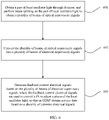
- FIG. 6 is a flowchart of a polarization control method according to an embodiment of this application. Specifically, a control process of a polarization control unit 202 is as follows:
- Step 601 Obtain a part of local oscillator light through division, and perform beam splitting on the part of local oscillator light to obtain a plurality of beams of optical supervisory signals.
- a coupling beam splitting module 312 includes a plurality of BSs.
- a BS 5 and a BS 6 separately obtain a small part of local oscillator light through coupling.
- the two beams of light are then respectively equally divided by a BS 7 and a BS 8 into four paths of optical supervisory signals.
- Two paths of the optical supervisory signals are then coupled and added by a BS 9 to obtain the following three paths of hybrid light:
- Step 602 Convert the plurality of beams of optical supervisory signals into a plurality of beams of electrical supervisory signals.
- the foregoing three paths of hybrid light are then received by a PD 9, a PD 10, and a PD 11 in a third optical-to-electrical conversion module 314, amplified by a TIA5, a TIA6, and a TIA 7 in the third optical-to-electrical conversion module 314, and sampled by an ADC 5, an ADC 6, and an ADC 7 in the third optical-to-electrical conversion module 314, to obtain three paths of electrical supervisory signals: I 10 I 20 I 30 ⁇ cos 2 ⁇ 1 + sin ⁇ cos ⁇ sin ⁇ + ⁇ sin 2 ⁇ E LO 2
- Step 603 Generate feedback control electrical signals based on the plurality of beams of electrical supervisory signals, where the feedback control electrical signals are used to control a phase modulator to adjust polarization of the local oscillator light, so that an ODSP 316 obtains service data based on the plurality of coherent electrical signals.
- a signal processing module 315 monitors energy of the electrical supervisory signals:
- the phase modulator 313 When energy of I 10 is close to that of I 30 , the phase modulator 313 needs to be started to control polarization of the local oscillator light. In this case, the signal processing module 315 generates the feedback control signals to adjust the phase modulator 313.
- the phase modulator 313 makes energy of ( I 2 - I 1 - I 3 ) increase through adjustment, it can be determined that the current M matrix is reversible, and the coherent optical receiving apparatus can normally work.
- the feedback control electrical signals control the phase modulator 313 to adjust a phase of the foregoing first local oscillator light or second local oscillator light, so that an ODSP 316 obtains service data based on the foregoing plurality of coherent electrical signals.
- adjusting the phase of the foregoing first local oscillator light or second local oscillator light includes adjusting a polarization delay angle of the foregoing first local oscillator light or second local oscillator light.
- the phase modulator 313 introduces a phase ⁇ to the first local oscillator light or the second local oscillator light, and when ( ⁇ + ⁇ ) approaches 90 degrees, that is, the polarization delay angle ⁇ of the first local oscillator light or the second local oscillator light plus the phase ⁇ introduced by the phase modulator 313 approaches 90 degrees, it is considered that the coherent optical receiving apparatus can normally work in this case.
- the signal processing module 315 includes a DSP 3151, a DAC 3152 (digital-to-analog converter, digital-to-analog converter), and a power amplifier 3153.
- the DSP 3151 is configured to generate the feedback control electrical signals based on the electrical supervisory signals, where the feedback control electrical signals are used to control the phase modulator to adjust polarization of the local oscillator light, so that the ODSP 316 obtains the service data based on the plurality of coherent electrical signals.
- the DAC 3152 is configured to perform digital-to-analog conversion on the feedback control electrical signals.
- the power amplifier 3153 is configured to perform power amplification on the feedback control electrical signals on which digital-to-analog conversion is performed.
- 90:10 or 95:5 optical splitters may be selected as the BS 5 and the BS 6.
- 10% or 5% of local oscillator light of respective branches is obtained through coupling, for polarization control.
- the coherent optical receiving apparatus disclosed in this embodiment of this application resolves the difficult problem that the receiver cannot normally work due to the random change of the polarization state of the local oscillator light.
- Introducing polarization control enables the coherent optical receiving apparatus to maintain normal restoration of the service data, to further improve coherent optical receiving stability, simplify the polarization control unit, and reduce difficulty and precision of polarization control, thereby reducing costs.
- 90-degree phase shift or 90-degree polarization state rotation mentioned in this application may be alternatively 270-degree phase shift or 270-degree polarization state rotation, provided that the phase shift or polarization state rotation achieves a same technical effect as the 90-degree phase shift or 90-degree polarization state rotation. It should be noted that, the above-mentioned degrees of rotation may slightly deviate due to a reason such as limitation on an actual device process. It should be understood that, the 90-degree phase shift or 90-degree polarization state rotation mentioned in this application includes this approximate-90-degree or approximate-270-degree rotation.
- the PSR mentioned in embodiments of this application may be replaced with a connected combination of a PBS (Polarization Beam Splitter, polarization beam splitter) and a PR (Polarization Rotator, polarization rotator), and the PRC may be replaced with a connected combination of a PBC (Polarization Beam Combiner, polarization beam combiner) and a PR.
- PBS Polarization Beam Splitter
- PR Polarization Rotator, polarization rotator
- PRC Polarization Beam Combiner, polarization beam combiner
- the optical splitter may be a waveguide coupler or a multimode interferometer (Multimode interferometer, MMI) coupler.
- MMI multimode interferometer
- FIG. 7 is a schematic diagram of a third embodiment of a coherent optical receiving apparatus according to an embodiment of this application.
- the coherent optical receiving apparatus 70 includes: a signal optical input port 301, a local oscillator optical input port 302, a polarization beam splitting module 303, a power equalization module 304, an optical hybrid 1 305, an optical hybrid 2 306, an optical hybrid 3 307, an optical hybrid 4 308, an optical-to-electrical conversion module 701, a coupling beam splitting module 312, a phase modulator 313, a third optical-to-electrical conversion module 314, a signal processing module 315, and an ODSP 316.
- the signal optical input port 301, the local oscillator optical input port 302, the polarization beam splitting module 303, the power equalization module 304, the coupling beam splitting module 312, the phase modulator 313, the third optical-to-electrical conversion module 314, and the signal processing module 315 are the same as those shown in FIG. 3 and are not shown in FIG. 7 .
- the difference between FIG. 7 and FIG. 3 mainly lies in the optical-to-electrical conversion module 701 that processes 16 beams of hybrid light output by the optical hybrid unit.
- the 16 beams of hybrid light T1 to T16 output by the optical hybrid 1 305, the optical hybrid 2 306, the optical hybrid 3 307, and the optical hybrid 4 308 are respectively converted by a PD 1 to a PD 16 into electrical signals first, and then added and subtracted by adders/subtracters to obtain a plurality of coherent electrical signals.
- T1, T2, T5, and T6 are detected by PDs:
- Q 1 1 16 S x + LO x 2
- Q 2 1 16 S x ⁇ LO x 2
- Q 5 1 16 S y ⁇ LO y 2
- Q 16 1 16 S y ⁇ LO y 2
- a sequence of outputting the hybrid light by the optical hybrid 2 306 and the optical hybrid 4 308 may be switched to alleviate subsequent optical path crossing of the optical hybrids.
- the coherent optical receiving apparatus does not use an optical path polarization beam combining solution for the hybrid light output by the optical hybrids, but directly performs addition and subtraction by adding adders/subtracters, to avoid a coupling loss caused by polarization beam combining, and reduce an insertion loss.
- FIG. 8 is a schematic diagram of a fourth embodiment of a coherent optical receiving apparatus according to an embodiment of this application.
- the coherent optical receiving apparatus 80 includes a BS 1 801, a BS 2 802, a polarization beam splitting module 803, a PSR 4 804, a PSR 6 805, and a polarization control module 806, and further includes a signal optical input port 301, a local oscillator optical input port 302, an optical hybrid 1 305, an optical hybrid 2 306, an optical hybrid 3 307, an optical hybrid 4 308, a phase modulator 313, and an ODSP 316.
- the polarization beam splitting module 803 includes four PSRs: a PSR 1, a PSR 2, a PSR 3, and a PSR 4.
- the embodiment shown in FIG. 8 mainly differs from the embodiment shown in FIG. 3 in that, optical path simplification is performed for polarization beam splitting of signal light and local oscillator light.
- the signal light S is input from the signal optical input port 301, and after power beam splitting is performed on the signal light S by using the BS 1 801, first signal light and second signal light are obtained.
- the PSR 1 in the polarization beam splitting module 803 performs polarization beam splitting on the first signal light to obtain one beam of first sub signal light F1 and one beam of second sub signal light F7.
- the PSR 3 performs polarization beam splitting on the second signal light to obtain another beam of first sub signal light F3 and another beam of second sub signal light F5.
- the first sub signal light is in an X polarization state
- the second sub signal light is in a Y polarization state.
- the local oscillator light LO is input from the local oscillator optical input port 302, and third local oscillator light and fourth local oscillator light are first obtained by performing polarization beam splitting by using the PSR 5 804, where the third local oscillator light is in the X polarization state, and the fourth local oscillator light is in the Y polarization state.
- the BS 5 and the BS 6 separately obtain a part of the local oscillator light through coupling and input the part of the local oscillator light to the polarization control module 806 for polarization control.
- Optical supervisory signals are obtained based on the part of the local oscillator light.
- the optical supervisory signals are converted into electrical supervisory signals.
- Feedback control signals are generated based on the electrical supervisory signals to control the phase modulator 313 to adjust a phase of the fourth local oscillator light.
- the PRC 6 805 performs polarization beam combination on the third local oscillator light and the fourth local oscillator light that pass through the BS 5 and the BS 6, for input to the BS 2 802.
- the polarization control module 806 may include the BS 7, the BS 8, and the BS 9 in the coupling beam splitting module 312, the third optical-to-electrical conversion module 314, the signal processing module 315, and the ODSP 316 in the embodiment of FIG. 3 .
- the BS 2 802 performs power beam splitting on the local oscillator light to obtain first local oscillator light and second local oscillator light.
- the PSR 2 in the polarization beam splitting module 803 performs polarization beam splitting on the first local oscillator light to obtain one beam of first sub local oscillator light F2 and one beam of second sub local oscillator light F6.
- the PSR 4 performs polarization beam splitting on the second local oscillator light to obtain another beam of first sub local oscillator light F4 and another beam of second sub local oscillator light F8.
- the first sub local oscillator light is in the X polarization state
- the second sub local oscillator light is in the Y polarization state.
- the optical-to-electrical conversion module 701 in FIG. 7 may be further connected following the optical hybrids in FIG. 8 , or the polarization beam combining module 309 in FIG. 3 may be connected, and then the first optical-to-electrical conversion module 310 and the second optical-to-electrical conversion module 311 are connected.
- the polarization optical splitting solution in FIG. 3 in this application is first performing polarization beam splitting by using the PSRs and then performing power beam splitting by using the BSs, but the polarization optical splitting solution in FIG. 8 of this application is first performing power beam splitting by using the BSs, and then performing polarization beam splitting by using the PSRs.
- polarization optical splitting for the signal light and the local oscillator light may be alternatively as follows:
- the polarization optical splitting solution in the embodiment of FIG. 3 is used for the signal light, and the polarization optical splitting solution in the embodiment of FIG. 8 is used for the local oscillator light; or the polarization optical splitting solution in the embodiment of FIG.
- FIG. 9 is a schematic diagram of a fifth embodiment of a coherent optical receiving apparatus according to an embodiment of this application.
- the coherent optical receiving apparatus 90 includes an optical fiber collimator 901, an optical fiber collimator 902, a lens 1 903, a lens 2 904, a reflection assembly 1 905, a reflection assembly 2 906, a polarization rotator 907, an optical hybrid 908, and an optical hybrid 909; and further includes a signal optical input port 301, a local oscillator optical input port 302, a phase modulator 313, and a polarization control module 806.
- a signal optical input port 301 a local oscillator optical input port 302, a phase modulator 313, and a polarization control module 806.
- signal light After being collimated by the optical fiber collimator 901, signal light is input to the lens 1 903, and the lens 1 903 decomposes the signal light into first signal light and second signal light.
- local oscillator light After being collimated by the optical fiber collimator 902, local oscillator light is input to the lens 2 904, and the lens 2 904 decomposes the local oscillator light into first local oscillator light and second local oscillator light.
- polarization rotation is performed on the second local oscillator light by the polarization rotator 907, the second local oscillator light enters the optical hybrid 909.
- the optical hybrid 908 performs optical hybridization on the first signal light and the first local oscillator light
- the optical hybrid 909 performs optical hybridization on the second signal light and the second local oscillator light.
- the optical hybrid 908 and the optical hybrid 909 may be spatial optical hybrids.
- the reflection assembly 1 905 may reflect the second signal light to input the second signal light to the optical hybrid 908, and the reflection assembly 2 906 may reflect the second local oscillator light to input the second local oscillator light to the optical hybrid 907.
- the polarization rotator may be a 90-degree polarization rotator.
- FIG. 10 is a schematic diagram of an optical system according to an embodiment of this application.
- the optical system 100 includes an optical sending device 1001, an optical fiber 1002, and a coherent optical receiving apparatus 1003.
- the coherent optical receiving apparatus 1003 receives, by using the optical fiber 1002, signal light sent by the optical sending device 1001.
- the coherent optical receiving apparatus 1003 receives local oscillator light by using the optical fiber 1002 or the coherent optical receiving apparatus 1003 generates the local oscillator light.
- the coherent optical receiving apparatus 1003 may be any coherent optical receiving apparatus in the foregoing embodiments.
Landscapes
- Physics & Mathematics (AREA)
- Electromagnetism (AREA)
- Engineering & Computer Science (AREA)
- Computer Networks & Wireless Communication (AREA)
- Signal Processing (AREA)
- Optical Communication System (AREA)
- Optical Modulation, Optical Deflection, Nonlinear Optics, Optical Demodulation, Optical Logic Elements (AREA)
Applications Claiming Priority (2)
| Application Number | Priority Date | Filing Date | Title |
|---|---|---|---|
| CN201911414636.XA CN113132020B (zh) | 2019-12-31 | 2019-12-31 | 相干光接收装置和采用相干光接收装置的光系统 |
| PCT/CN2020/117043 WO2021135428A1 (zh) | 2019-12-31 | 2020-09-23 | 相干光接收装置和采用相干光接收装置的光系统 |
Publications (3)
| Publication Number | Publication Date |
|---|---|
| EP4072041A1 true EP4072041A1 (de) | 2022-10-12 |
| EP4072041A4 EP4072041A4 (de) | 2023-01-25 |
| EP4072041B1 EP4072041B1 (de) | 2025-09-17 |
Family
ID=76686376
Family Applications (1)
| Application Number | Title | Priority Date | Filing Date |
|---|---|---|---|
| EP20910106.2A Active EP4072041B1 (de) | 2019-12-31 | 2020-09-23 | Kohärentes lichtempfangsgerät und optisches system mit kohärentem lichtempfangsgerät |
Country Status (5)
| Country | Link |
|---|---|
| US (1) | US11817908B2 (de) |
| EP (1) | EP4072041B1 (de) |
| JP (1) | JP7427094B2 (de) |
| CN (1) | CN113132020B (de) |
| WO (1) | WO2021135428A1 (de) |
Families Citing this family (7)
| Publication number | Priority date | Publication date | Assignee | Title |
|---|---|---|---|---|
| CN113949461A (zh) * | 2021-09-07 | 2022-01-18 | 中航海信光电技术有限公司 | 一种自由空间相干接收机 |
| US12160272B2 (en) * | 2021-11-23 | 2024-12-03 | Google Llc | Dual-output coherent optical technology |
| CN116800345A (zh) * | 2022-03-18 | 2023-09-22 | 华为技术有限公司 | 相干接收装置、相干发送装置和相干通信系统 |
| CN114706059B (zh) * | 2022-03-25 | 2025-03-21 | 深圳市速腾聚创科技有限公司 | 光束接收装置及光束接收方法 |
| JP7799227B2 (ja) * | 2022-10-31 | 2026-01-15 | Ntt株式会社 | 光伝送システム、光受信装置及び光伝送方法 |
| CN119375899B (zh) * | 2024-12-30 | 2025-05-16 | 浙江大学 | 基于单频波形和调制波形组合的目标微动信息测量方法及装置 |
| CN121000306A (zh) * | 2025-10-23 | 2025-11-21 | 上海卫星互联网研究院有限公司 | 一种相干合束发射装置、方法、设备、介质及光通信终端 |
Family Cites Families (23)
| Publication number | Priority date | Publication date | Assignee | Title |
|---|---|---|---|---|
| US5258615A (en) * | 1990-08-03 | 1993-11-02 | Gpt Limited | Optical fiber monitoring by detection of polarization variations |
| JP2004511128A (ja) * | 2000-09-26 | 2004-04-08 | セライト、インコーポレーテッド | 符号分割多重光通信のためのシステム及び方法 |
| US6917031B1 (en) * | 2004-02-17 | 2005-07-12 | Nortel Networks Limited | Method for quadrature phase angle correction in a coherent receiver of a dual-polarization optical transport system |
| JP4531740B2 (ja) | 2006-12-15 | 2010-08-25 | 富士通株式会社 | コヒーレント光受信機 |
| JP5034770B2 (ja) | 2007-08-16 | 2012-09-26 | 富士通株式会社 | コヒーレント光受信器および光通信システム |
| CN101753252B (zh) * | 2008-12-01 | 2013-01-23 | 华为技术有限公司 | 一种光收发方法、装置及系统 |
| CN102142901B (zh) * | 2011-01-21 | 2013-07-31 | 武汉邮电科学研究院 | 无需控制本振光偏振态的相干解调方法 |
| CN104780037B (zh) * | 2014-01-10 | 2019-04-30 | 深圳市中兴微电子技术有限公司 | 一种时钟恢复方法、装置及系统 |
| CN106134108B (zh) * | 2014-02-07 | 2019-12-24 | 丹麦技术大学 | 对组合调幅和调频信号解码 |
| JP6346803B2 (ja) | 2014-06-23 | 2018-06-20 | 株式会社フジクラ | 光受信回路およびその調整方法 |
| CN106797251B (zh) * | 2014-08-28 | 2019-11-01 | 日本电气株式会社 | 偏振色散添加器和光学接收器 |
| US10050713B2 (en) | 2015-03-02 | 2018-08-14 | Futurewei Technologies, Inc. | Optical transceiver using duplex media, self-homodyne detection (SHD), coherent detection, and uncooled laser |
| US9819420B2 (en) | 2015-03-02 | 2017-11-14 | Futurewei Technolgies, Inc. | Polarization state aligner (PSA) |
| CN104767570B (zh) * | 2015-03-26 | 2017-10-17 | 华中科技大学 | 一种偏振无关相干接收机 |
| CN105071894B (zh) * | 2015-08-03 | 2017-10-24 | 西南交通大学 | 一种基于相位追踪的非正交偏振复用相位调制信号传输方法 |
| JP2017143485A (ja) | 2016-02-12 | 2017-08-17 | 日本電気株式会社 | 光受信器および光受信方法 |
| CN105589506B (zh) | 2016-02-29 | 2017-10-17 | 华为技术有限公司 | 功率跟踪方法、装置及光伏发电系统 |
| US10126572B2 (en) | 2016-03-31 | 2018-11-13 | Huawei Technologies Co., Ltd. | Automatic endless polarization controller for a silicon-on-insulator platform |
| WO2019049030A1 (en) * | 2017-09-05 | 2019-03-14 | Telefonaktiebolaget Lm Ericsson (Publ) | COHERENT LITE EMITTER-RECEIVER WITHOUT DSP OPTICAL INTERCONNECTIONS INTRA-DATA CENTER 1 LAMBDA × 400G 10 KM NEXT GENERATION |
| CN107643120A (zh) * | 2017-11-10 | 2018-01-30 | 武汉理工光科股份有限公司 | 避免偏振衰落的分布式光纤瑞利散射振动传感系统和方法 |
| US10651947B2 (en) * | 2018-02-20 | 2020-05-12 | Futurewei Technologies, Inc. | Coherent detection with remotely delivered local oscillators |
| US10735104B2 (en) * | 2018-05-08 | 2020-08-04 | Maxim Integrated Products, Inc. | Systems and methods for analog electronic polarization control for coherent optical receivers |
| CN111835431B (zh) | 2019-04-16 | 2021-11-19 | 华为技术有限公司 | 一种相干光学接收装置及光信号解调装置 |
-
2019
- 2019-12-31 CN CN201911414636.XA patent/CN113132020B/zh active Active
-
2020
- 2020-09-23 EP EP20910106.2A patent/EP4072041B1/de active Active
- 2020-09-23 JP JP2022540549A patent/JP7427094B2/ja active Active
- 2020-09-23 WO PCT/CN2020/117043 patent/WO2021135428A1/zh not_active Ceased
-
2022
- 2022-06-29 US US17/853,067 patent/US11817908B2/en active Active
Also Published As
| Publication number | Publication date |
|---|---|
| EP4072041A4 (de) | 2023-01-25 |
| WO2021135428A1 (zh) | 2021-07-08 |
| JP7427094B2 (ja) | 2024-02-02 |
| CN113132020B (zh) | 2023-07-28 |
| CN113132020A (zh) | 2021-07-16 |
| US20220345224A1 (en) | 2022-10-27 |
| JP2023509027A (ja) | 2023-03-06 |
| US11817908B2 (en) | 2023-11-14 |
| EP4072041B1 (de) | 2025-09-17 |
Similar Documents
| Publication | Publication Date | Title |
|---|---|---|
| EP4072041B1 (de) | Kohärentes lichtempfangsgerät und optisches system mit kohärentem lichtempfangsgerät | |
| CN101729187B (zh) | 一种光信号传输处理方法、发送装置及系统 | |
| US20090214224A1 (en) | Method and apparatus for coherent analog rf photonic transmission | |
| US20140079391A1 (en) | In-band supervisory data modulation | |
| US9755759B2 (en) | Polarisation-independent coherent optical receiver | |
| US8977140B2 (en) | Optical receiver and optical reception method | |
| CN101296042A (zh) | 光接收器 | |
| WO2020151192A1 (zh) | 一种相干信号收发方法、装置及相干无源光网络系统 | |
| US20230163855A1 (en) | System for generating and receiving polarization multiplexed single sideband signal and method therefor | |
| EP1536578B1 (de) | Optisches Übertragungssystem mit differenzieller Polarisationsumtastung | |
| EP3461035A1 (de) | Kohärenter optischer empfänger für verbindungen mittlerer und kurzer reichweite | |
| CN114696917A (zh) | 相干光接收机、光通信设备及系统 | |
| US20140241722A1 (en) | PDM-(M) Ask Optical Systems And Methods For Metro Network Applications | |
| US20230336248A1 (en) | Reconfigurable optical transceiver for use with multiple modulation techniques | |
| US20220140913A1 (en) | Optical Receiver Evaluation Method and Optical Receiver Evaluation Apparatus | |
| US11695482B2 (en) | Polarization-diversity Kramers-Kronig heterodyne receiver and method | |
| Matiss et al. | Novel integrated coherent receiver module for 100G serial transmission | |
| Ishimura et al. | Polarization-diversity Stokes-analyzer-based coherent receiver | |
| US12526053B2 (en) | Optical transmission device and system | |
| CN115529086A (zh) | 一种相干接收装置,相干接收的方法以及相干通信系统 | |
| US20250105582A1 (en) | Integrated optical frequency discriminator | |
| Ishimura et al. | Low-cost transceivers for multi-dimensional Stokes-vector and coherent transmission systems | |
| EP3565144A1 (de) | Verfahren zur übertragung eines optischen signals und zugehörige einrichtung | |
| Ataie et al. | Demonstration of local-oscillator phase-noise tolerant 40 GBaud/s coherent transmitter | |
| Al-Bermani et al. | Nonlinear effect of IQ modulator in a realtime synchronous 16-QAM transmission system |
Legal Events
| Date | Code | Title | Description |
|---|---|---|---|
| STAA | Information on the status of an ep patent application or granted ep patent |
Free format text: STATUS: THE INTERNATIONAL PUBLICATION HAS BEEN MADE |
|
| PUAI | Public reference made under article 153(3) epc to a published international application that has entered the european phase |
Free format text: ORIGINAL CODE: 0009012 |
|
| STAA | Information on the status of an ep patent application or granted ep patent |
Free format text: STATUS: REQUEST FOR EXAMINATION WAS MADE |
|
| 17P | Request for examination filed |
Effective date: 20220705 |
|
| AK | Designated contracting states |
Kind code of ref document: A1 Designated state(s): AL AT BE BG CH CY CZ DE DK EE ES FI FR GB GR HR HU IE IS IT LI LT LU LV MC MK MT NL NO PL PT RO RS SE SI SK SM TR |
|
| A4 | Supplementary search report drawn up and despatched |
Effective date: 20230104 |
|
| RIC1 | Information provided on ipc code assigned before grant |
Ipc: H04B 10/61 20130101AFI20221222BHEP |
|
| DAV | Request for validation of the european patent (deleted) | ||
| DAX | Request for extension of the european patent (deleted) | ||
| GRAP | Despatch of communication of intention to grant a patent |
Free format text: ORIGINAL CODE: EPIDOSNIGR1 |
|
| STAA | Information on the status of an ep patent application or granted ep patent |
Free format text: STATUS: GRANT OF PATENT IS INTENDED |
|
| INTG | Intention to grant announced |
Effective date: 20250416 |
|
| GRAS | Grant fee paid |
Free format text: ORIGINAL CODE: EPIDOSNIGR3 |
|
| GRAA | (expected) grant |
Free format text: ORIGINAL CODE: 0009210 |
|
| STAA | Information on the status of an ep patent application or granted ep patent |
Free format text: STATUS: THE PATENT HAS BEEN GRANTED |
|
| AK | Designated contracting states |
Kind code of ref document: B1 Designated state(s): AL AT BE BG CH CY CZ DE DK EE ES FI FR GB GR HR HU IE IS IT LI LT LU LV MC MK MT NL NO PL PT RO RS SE SI SK SM TR |
|
| REG | Reference to a national code |
Ref country code: GB Ref legal event code: FG4D |
|
| REG | Reference to a national code |
Ref country code: CH Ref legal event code: EP |
|
| REG | Reference to a national code |
Ref country code: IE Ref legal event code: FG4D |
|
| REG | Reference to a national code |
Ref country code: DE Ref legal event code: R096 Ref document number: 602020059158 Country of ref document: DE |
|
| PGFP | Annual fee paid to national office [announced via postgrant information from national office to epo] |
Ref country code: DE Payment date: 20250910 Year of fee payment: 6 |
|
| PGFP | Annual fee paid to national office [announced via postgrant information from national office to epo] |
Ref country code: NL Payment date: 20250930 Year of fee payment: 6 |
|
| PGFP | Annual fee paid to national office [announced via postgrant information from national office to epo] |
Ref country code: GB Payment date: 20250926 Year of fee payment: 6 |
|
| REG | Reference to a national code |
Ref country code: NL Ref legal event code: FP |
|
| PG25 | Lapsed in a contracting state [announced via postgrant information from national office to epo] |
Ref country code: NO Free format text: LAPSE BECAUSE OF FAILURE TO SUBMIT A TRANSLATION OF THE DESCRIPTION OR TO PAY THE FEE WITHIN THE PRESCRIBED TIME-LIMIT Effective date: 20251217 |
|
| REG | Reference to a national code |
Ref country code: LT Ref legal event code: MG9D |
|
| PG25 | Lapsed in a contracting state [announced via postgrant information from national office to epo] |
Ref country code: FI Free format text: LAPSE BECAUSE OF FAILURE TO SUBMIT A TRANSLATION OF THE DESCRIPTION OR TO PAY THE FEE WITHIN THE PRESCRIBED TIME-LIMIT Effective date: 20250917 |
|
| PG25 | Lapsed in a contracting state [announced via postgrant information from national office to epo] |
Ref country code: HR Free format text: LAPSE BECAUSE OF FAILURE TO SUBMIT A TRANSLATION OF THE DESCRIPTION OR TO PAY THE FEE WITHIN THE PRESCRIBED TIME-LIMIT Effective date: 20250917 |
|
| PG25 | Lapsed in a contracting state [announced via postgrant information from national office to epo] |
Ref country code: GR Free format text: LAPSE BECAUSE OF FAILURE TO SUBMIT A TRANSLATION OF THE DESCRIPTION OR TO PAY THE FEE WITHIN THE PRESCRIBED TIME-LIMIT Effective date: 20251218 |
|
| PG25 | Lapsed in a contracting state [announced via postgrant information from national office to epo] |
Ref country code: SE Free format text: LAPSE BECAUSE OF FAILURE TO SUBMIT A TRANSLATION OF THE DESCRIPTION OR TO PAY THE FEE WITHIN THE PRESCRIBED TIME-LIMIT Effective date: 20250917 |
|
| PG25 | Lapsed in a contracting state [announced via postgrant information from national office to epo] |
Ref country code: LV Free format text: LAPSE BECAUSE OF FAILURE TO SUBMIT A TRANSLATION OF THE DESCRIPTION OR TO PAY THE FEE WITHIN THE PRESCRIBED TIME-LIMIT Effective date: 20250917 |
|
| PG25 | Lapsed in a contracting state [announced via postgrant information from national office to epo] |
Ref country code: BG Free format text: LAPSE BECAUSE OF FAILURE TO SUBMIT A TRANSLATION OF THE DESCRIPTION OR TO PAY THE FEE WITHIN THE PRESCRIBED TIME-LIMIT Effective date: 20250917 |
|
| PG25 | Lapsed in a contracting state [announced via postgrant information from national office to epo] |
Ref country code: RS Free format text: LAPSE BECAUSE OF FAILURE TO SUBMIT A TRANSLATION OF THE DESCRIPTION OR TO PAY THE FEE WITHIN THE PRESCRIBED TIME-LIMIT Effective date: 20251217 |