EP4065216B1 - Implantierbare medizinprodukte für die mehrkammerstimulation - Google Patents
Implantierbare medizinprodukte für die mehrkammerstimulation Download PDFInfo
- Publication number
- EP4065216B1 EP4065216B1 EP20894751.5A EP20894751A EP4065216B1 EP 4065216 B1 EP4065216 B1 EP 4065216B1 EP 20894751 A EP20894751 A EP 20894751A EP 4065216 B1 EP4065216 B1 EP 4065216B1
- Authority
- EP
- European Patent Office
- Prior art keywords
- patient
- heart
- electrodes
- left ventricular
- electrode
- Prior art date
- Legal status (The legal status is an assumption and is not a legal conclusion. Google has not performed a legal analysis and makes no representation as to the accuracy of the status listed.)
- Active
Links
Images




Classifications
-
- A—HUMAN NECESSITIES
- A61—MEDICAL OR VETERINARY SCIENCE; HYGIENE
- A61B—DIAGNOSIS; SURGERY; IDENTIFICATION
- A61B17/00—Surgical instruments, devices or methods
- A61B17/34—Trocars; Puncturing needles
- A61B17/3468—Trocars; Puncturing needles for implanting or removing devices, e.g. prostheses, implants, seeds, wires
-
- A—HUMAN NECESSITIES
- A61—MEDICAL OR VETERINARY SCIENCE; HYGIENE
- A61N—ELECTROTHERAPY; MAGNETOTHERAPY; RADIATION THERAPY; ULTRASOUND THERAPY
- A61N1/00—Electrotherapy; Circuits therefor
- A61N1/02—Details
- A61N1/04—Electrodes
- A61N1/05—Electrodes for implantation or insertion into the body, e.g. heart electrode
- A61N1/056—Transvascular endocardial electrode systems
-
- A—HUMAN NECESSITIES
- A61—MEDICAL OR VETERINARY SCIENCE; HYGIENE
- A61N—ELECTROTHERAPY; MAGNETOTHERAPY; RADIATION THERAPY; ULTRASOUND THERAPY
- A61N1/00—Electrotherapy; Circuits therefor
- A61N1/02—Details
- A61N1/04—Electrodes
- A61N1/05—Electrodes for implantation or insertion into the body, e.g. heart electrode
- A61N1/056—Transvascular endocardial electrode systems
- A61N1/057—Anchoring means; Means for fixing the head inside the heart
- A61N1/0573—Anchoring means; Means for fixing the head inside the heart chacterised by means penetrating the heart tissue, e.g. helix needle or hook
-
- A—HUMAN NECESSITIES
- A61—MEDICAL OR VETERINARY SCIENCE; HYGIENE
- A61N—ELECTROTHERAPY; MAGNETOTHERAPY; RADIATION THERAPY; ULTRASOUND THERAPY
- A61N1/00—Electrotherapy; Circuits therefor
- A61N1/18—Applying electric currents by contact electrodes
- A61N1/32—Applying electric currents by contact electrodes alternating or intermittent currents
- A61N1/36—Applying electric currents by contact electrodes alternating or intermittent currents for stimulation
- A61N1/362—Heart stimulators
- A61N1/3621—Heart stimulators for treating or preventing abnormally high heart rate
- A61N1/3622—Heart stimulators for treating or preventing abnormally high heart rate comprising two or more electrodes co-operating with different heart regions
-
- A—HUMAN NECESSITIES
- A61—MEDICAL OR VETERINARY SCIENCE; HYGIENE
- A61N—ELECTROTHERAPY; MAGNETOTHERAPY; RADIATION THERAPY; ULTRASOUND THERAPY
- A61N1/00—Electrotherapy; Circuits therefor
- A61N1/18—Applying electric currents by contact electrodes
- A61N1/32—Applying electric currents by contact electrodes alternating or intermittent currents
- A61N1/36—Applying electric currents by contact electrodes alternating or intermittent currents for stimulation
- A61N1/372—Arrangements in connection with the implantation of stimulators
- A61N1/375—Constructional arrangements, e.g. casings
- A61N1/37512—Pacemakers
-
- A—HUMAN NECESSITIES
- A61—MEDICAL OR VETERINARY SCIENCE; HYGIENE
- A61N—ELECTROTHERAPY; MAGNETOTHERAPY; RADIATION THERAPY; ULTRASOUND THERAPY
- A61N1/00—Electrotherapy; Circuits therefor
- A61N1/18—Applying electric currents by contact electrodes
- A61N1/32—Applying electric currents by contact electrodes alternating or intermittent currents
- A61N1/36—Applying electric currents by contact electrodes alternating or intermittent currents for stimulation
- A61N1/372—Arrangements in connection with the implantation of stimulators
- A61N1/375—Constructional arrangements, e.g. casings
- A61N1/3756—Casings with electrodes thereon, e.g. leadless stimulators
-
- A—HUMAN NECESSITIES
- A61—MEDICAL OR VETERINARY SCIENCE; HYGIENE
- A61B—DIAGNOSIS; SURGERY; IDENTIFICATION
- A61B17/00—Surgical instruments, devices or methods
- A61B17/34—Trocars; Puncturing needles
- A61B17/3478—Endoscopic needles, e.g. for infusion
-
- A—HUMAN NECESSITIES
- A61—MEDICAL OR VETERINARY SCIENCE; HYGIENE
- A61B—DIAGNOSIS; SURGERY; IDENTIFICATION
- A61B17/00—Surgical instruments, devices or methods
- A61B17/34—Trocars; Puncturing needles
- A61B17/3494—Trocars; Puncturing needles with safety means for protection against accidental cutting or pricking, e.g. limiting insertion depth, pressure sensors
- A61B17/3496—Protecting sleeves or inner probes; Retractable tips
-
- A—HUMAN NECESSITIES
- A61—MEDICAL OR VETERINARY SCIENCE; HYGIENE
- A61N—ELECTROTHERAPY; MAGNETOTHERAPY; RADIATION THERAPY; ULTRASOUND THERAPY
- A61N1/00—Electrotherapy; Circuits therefor
- A61N1/02—Details
- A61N1/04—Electrodes
- A61N1/05—Electrodes for implantation or insertion into the body, e.g. heart electrode
- A61N1/056—Transvascular endocardial electrode systems
- A61N1/0563—Transvascular endocardial electrode systems specially adapted for defibrillation or cardioversion
-
- A—HUMAN NECESSITIES
- A61—MEDICAL OR VETERINARY SCIENCE; HYGIENE
- A61N—ELECTROTHERAPY; MAGNETOTHERAPY; RADIATION THERAPY; ULTRASOUND THERAPY
- A61N1/00—Electrotherapy; Circuits therefor
- A61N1/02—Details
- A61N1/04—Electrodes
- A61N1/05—Electrodes for implantation or insertion into the body, e.g. heart electrode
- A61N1/056—Transvascular endocardial electrode systems
- A61N1/057—Anchoring means; Means for fixing the head inside the heart
-
- A—HUMAN NECESSITIES
- A61—MEDICAL OR VETERINARY SCIENCE; HYGIENE
- A61N—ELECTROTHERAPY; MAGNETOTHERAPY; RADIATION THERAPY; ULTRASOUND THERAPY
- A61N1/00—Electrotherapy; Circuits therefor
- A61N1/18—Applying electric currents by contact electrodes
- A61N1/32—Applying electric currents by contact electrodes alternating or intermittent currents
- A61N1/36—Applying electric currents by contact electrodes alternating or intermittent currents for stimulation
- A61N1/362—Heart stimulators
- A61N1/365—Heart stimulators controlled by a physiological parameter, e.g. heart potential
-
- A—HUMAN NECESSITIES
- A61—MEDICAL OR VETERINARY SCIENCE; HYGIENE
- A61N—ELECTROTHERAPY; MAGNETOTHERAPY; RADIATION THERAPY; ULTRASOUND THERAPY
- A61N1/00—Electrotherapy; Circuits therefor
- A61N1/18—Applying electric currents by contact electrodes
- A61N1/32—Applying electric currents by contact electrodes alternating or intermittent currents
- A61N1/36—Applying electric currents by contact electrodes alternating or intermittent currents for stimulation
- A61N1/362—Heart stimulators
- A61N1/365—Heart stimulators controlled by a physiological parameter, e.g. heart potential
- A61N1/368—Heart stimulators controlled by a physiological parameter, e.g. heart potential comprising more than one electrode co-operating with different heart regions
- A61N1/3684—Heart stimulators controlled by a physiological parameter, e.g. heart potential comprising more than one electrode co-operating with different heart regions for stimulating the heart at multiple sites of the ventricle or the atrium
-
- A—HUMAN NECESSITIES
- A61—MEDICAL OR VETERINARY SCIENCE; HYGIENE
- A61N—ELECTROTHERAPY; MAGNETOTHERAPY; RADIATION THERAPY; ULTRASOUND THERAPY
- A61N1/00—Electrotherapy; Circuits therefor
- A61N1/18—Applying electric currents by contact electrodes
- A61N1/32—Applying electric currents by contact electrodes alternating or intermittent currents
- A61N1/36—Applying electric currents by contact electrodes alternating or intermittent currents for stimulation
- A61N1/372—Arrangements in connection with the implantation of stimulators
- A61N1/378—Electrical supply
-
- A—HUMAN NECESSITIES
- A61—MEDICAL OR VETERINARY SCIENCE; HYGIENE
- A61N—ELECTROTHERAPY; MAGNETOTHERAPY; RADIATION THERAPY; ULTRASOUND THERAPY
- A61N1/00—Electrotherapy; Circuits therefor
- A61N1/18—Applying electric currents by contact electrodes
- A61N1/32—Applying electric currents by contact electrodes alternating or intermittent currents
- A61N1/38—Applying electric currents by contact electrodes alternating or intermittent currents for producing shock effects
- A61N1/39—Heart defibrillators
- A61N1/3956—Implantable devices for applying electric shocks to the heart, e.g. for cardioversion
-
- A—HUMAN NECESSITIES
- A61—MEDICAL OR VETERINARY SCIENCE; HYGIENE
- A61N—ELECTROTHERAPY; MAGNETOTHERAPY; RADIATION THERAPY; ULTRASOUND THERAPY
- A61N1/00—Electrotherapy; Circuits therefor
- A61N1/02—Details
- A61N1/04—Electrodes
- A61N1/05—Electrodes for implantation or insertion into the body, e.g. heart electrode
- A61N1/056—Transvascular endocardial electrode systems
- A61N1/057—Anchoring means; Means for fixing the head inside the heart
- A61N2001/0578—Anchoring means; Means for fixing the head inside the heart having means for removal or extraction
-
- A—HUMAN NECESSITIES
- A61—MEDICAL OR VETERINARY SCIENCE; HYGIENE
- A61N—ELECTROTHERAPY; MAGNETOTHERAPY; RADIATION THERAPY; ULTRASOUND THERAPY
- A61N1/00—Electrotherapy; Circuits therefor
- A61N1/02—Details
- A61N1/04—Electrodes
- A61N1/05—Electrodes for implantation or insertion into the body, e.g. heart electrode
- A61N1/056—Transvascular endocardial electrode systems
- A61N2001/0585—Coronary sinus electrodes
Definitions
- the present technology is generally related to implantable medical devices and, in particular, leadless implantable medical devices and related uses.
- US 2019/3512236 A1 relates to systems and methods for threating cardiac arrythmias.
- US 2004/230236 A1 relates to papillary muscle stimulation.
- the invention is defined by the independent claim 1.
- the device includes a plurality of electrodes.
- the plurality of electrodes may include a right atrial electrode positionable within the right atrium to deliver cardiac therapy to or sense electrical activity of the right atrium of the patient's heart and at least one left ventricular electrode positionable proximate the left ventricle of the patient's heart.
- the device may further include a housing extending from a proximal end region to a distal end region and the right atrial electrode may be leadlessly coupled to the proximal end region.
- the device may further include a leadlet extending from a proximal region to a distal region, where the proximal region is coupled to the distal end region of the housing and the at least one ventricular electrode is coupled to the distal region of the leadlet. Further, the leadlet may be configured to extend through the coronary sinus ostium and into the coronary sinus or a coronary vein of the patient's heart to position the least one left ventricular electrode proximate the left ventricle of the patient's heart.
- the device may further include a therapy delivery circuit within the housing and operably coupled to the plurality of electrodes to deliver cardiac therapy to the patient's heart and a sensing circuit within the housing and operably coupled to the plurality of electrodes to sense electrical activity of the patient's heart.
- the device may further include a controller within the housing and comprising processing circuitry operably coupled to the therapy delivery circuit and the sensing circuit.
- the controller may be configured to monitor electrical activity using the processing circuitry and one or more of the plurality of electrodes and delivering pacing therapy using the processing circuitry and one or more of the plurality of electrodes.
- the method may include implanting a right atrial electrode in the right atrial endocardium or in the right atrial myocardium of a patient's heart, the right atrial electrode being leadlessly coupled to a proximal end region of an implantable housing.
- the method may further include implanting at least one left ventricular electrode through the coronary sinus ostium and into the coronary sinus or a coronary vein of the patient's heart, where the at least one left ventricular electrode being coupled to a distal region of a leadlet and a proximal region of the leadlet being coupled to a distal end region of the implantable housing.
- the method may include delivering a delivery catheter and a penetration element located, positioned, or disposed, in the delivery catheter to the right ventricular endocardium of the interventricular septal wall of a patient's heart, puncturing the right ventricular endocardium using the penetration element to form an opening through the right ventricular endocardium and into the interventricular septal wall, and retracting the penetration element.
- the system may include a delivery catheter extending from a proximal end region to a distal end region, where the distal end region positionable adjacent to the right ventricular endocardium of the interventricular septal wall of a patient's heart.
- the system may further include a penetration element locatable, positionable, or disposable, in the delivery catheter to form an opening through the right ventricular endocardium and into the interventricular septal wall and a guide element extending from a proximal end region to a distal end region.
- the guide element may be locatable, positionable, or disposable, in the delivery catheter to enter the interventricular septal wall through the opening and to extend along the left ventricular endocardial wall.
- LIMD leadless implantable medical device
- the present disclosure also makes reference to the triangle of Koch region. Examples of uses of the triangle of Koch region are described U.S. Patent Application Publication No. 2019/0290905 published on September 26, 2019 .
- any suitable type of IMD including a lead or leadlet may be used.
- suitable IMDs include an implantable transvenous pacemaker, a transvenous cardiac resynchronization therapy (CRT) device, a transvenous CRT pacemaker (CRT-P), a transvenous CRT defibrillator (CRT-D), an implantable transvenous cardioverter defibrillator (ICD), a subcutaneous ICD (S-ICD), and a subcutaneous medical device.
- CTR cardiac resynchronization therapy
- CRT-P transvenous CRT pacemaker
- CRT-D transvenous CRT defibrillator
- ICD implantable transvenous cardioverter defibrillator
- S-ICD subcutaneous ICD
- FIG. 1 One example of a LIMD 10 positioned in the right atrium (RA) of a patient's heart 2 including a leadlet 20 positioned in the RA of the patient's heart 2 is depicted in FIG. 1 .
- the LIMD 10 may include a housing 11 extending from a distal end region 12 to a proximal end region 14.
- the leadlet 20 may be physically and operably coupled to the proximal end region 14 of the housing 11 of LIMD 10.
- the LIMD 10 may be used to sense electrical activity of the patient's heart or to deliver cardiac therapy to the patient's heart.
- a first electrode 21 operably and physically coupled to the leadlet 20 may be implanted in the RA endocardium or myocardium.
- a second electrode 31 may be operably and physically coupled to a fixation element 30 extending from the distal end region 12 of the LIMD 10 and may be implanted in the left ventricular (LV) myocardium.
- the second electrode 31 may be coupled to a distal end region 12 of an implantable housing 11 of the LIMD 10, such as disposed on a fixation element 30 (e.g., helical or screw-like structure) extending away from the housing 11 of the LIMD 10 to facilitate fixation.
- a fixation element 30 e.g., helical or screw-like structure
- the first electrode 21 may be coupled to a leadlet 20 extending from a proximal end region 14 of the housing 11 of the LIMD 10.
- the LIMD 10 may be described as a ventricular LIMD implanted in the atrium that paces the ventricle that also includes a leadlet, or "pig tail,” that paces the atrium.
- the LIMD 10 may be used in any suitable manner.
- a method of using the LIMD 10 may include implanting the first, or right atrial, electrode 21 on the right atrial endocardium or in the right atrial myocardium of the patient's heart 2. It may be described that the leadlet 20 extends from a distal end, or first portion, to a proximal end, or second portion.
- the first, or right atrial, electrode 21 may be coupled to the distal end, or first portion, of the leadlet 20.
- the proximal end, or second portion, of the leadlet 20 may be coupled to the proximal end region 14 of the housing 11 of the LIMD 10.
- Processing circuitry 19 may be disposed in the housing 11 and operably coupled to the electrodes 21, 31.
- An illustrative method may include implanting a left ventricular electrode through or proximate to the triangle of Koch region of the right atrium, such as in the coronary sinus (CS) ostium, through the right atrial endocardium, and through central fibrous body and into the basal, septal, or basal-septal region in the left ventricular myocardium of the patient's heart.
- the left ventricular electrode may be leadlessly coupled to a distal portion of the implantable housing.
- the processing circuitry may be operably coupled to the left ventricular electrode.
- the method may further include monitoring electrical activity using the processing circuitry and at least one of the right atrial electrode and the left ventricular electrode. Further, the method may include delivering pacing therapy using the processing circuitry and at least one of the right atrial electrode and the left ventricular electrode.
- an LIMD similar to the LIMD 10 of FIG. 1 may be utilized in a different configuration or method.
- the LIMD may include a right atrial electrode for implantation on the right atrial endocardium or in the right atrial myocardium of the patient's heart, and the right atrial electrode may be leadlessly coupled to a distal end region, or distal portion, of an implantable housing of the LIMD.
- a left ventricular electrode may be implanted through or proximate to the triangle of Koch region of the right atrium, such as in the CS ostium, through the right atrial endocardium, and through central fibrous body and into the basal, septal, or basal-septal region in the left ventricular myocardium of the patient's heart.
- the left ventricular electrode may be coupled to a distal end region, or a first portion, of a leadlet.
- a proximal end region, or a second portion, of the leadlet may be coupled to a proximal end region, or proximal portion, of the implantable housing of the LIMD.
- the processing circuitry located in the housing may be operably coupled to both of the right and the left ventricular electrode.
- the LIMD may monitor electrical activity using the processing circuitry and at least one of the right atrial electrode and the left ventricular electrode. Further, the LIMD may deliver pacing therapy using the processing circuitry and at least one of the right atrial electrode and the
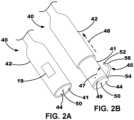
- FIGS. 2A-2B An illustrative LIMD 40 including a deployable leadlet is depicted in FIGS. 2A-2B .
- the LIMD 40 may include one or more fixation elements (although not shown), a deployable leadlet 45, a first electrode 50, and a second electrode 52 coupled to the leadlet 45.
- the leadlet 45 extends from a proximal end region 54 to a distal end region 56, and the second electrode is located proximate (or within) the distal end region 56.
- the LIMD 40 may include a body portion 41 and a sheath portion 42 moveable with respect to the body portion 41.
- the sheath portion 42 may define an opening or aperture within which the body portion 41 is located.
- the LIMD 40 may define a stowed configuration or position as shown in FIG. 2A and a deployed configuration as shown in FIG. 2B .
- the body portion 41 When in the stowed configuration, the body portion 41 may be located substantially completely within the opening of the sheath portion 42 such that, e.g., the deployable leadlet 45 is also in a stowed configuration where the leadlet 45 does not extend beyond or outside of the sheath portion 42. More specifically, when in the stowed configuration, the leadlet 45 may reside within a recess, or groove, 49.
- one or more fixation elements may be disposed on the distal end region 44 of the body portion 41 of the LIMD 40 and extend distally from the body portion 41.
- the one or more fixation elements may be electrically active or passive.
- the first electrode 50 may be positioned on the distal end region 44 of the body portion 41 of the LIMD 40 to engage the endocardial wall of the patient's heart.
- the second electrode 52 may be coupled to the leadlet 45 extending at least partially in a radial direction away from the body portion 41 in a deployed position.
- the body portion 41 may define, or include, a recess 49 to at least partially receive the leadlet 45 in the stowed position.
- the body portion 41 may be delivered in a "cup" (e.g., defined by the sheath portion 42) and protracted to deploy the body portion 41 for implantation.
- the endocardial wall is the right atrial endocardial wall.
- the leadlet 45 may described as defining a shape have two sections or portions. The first section, which is closest to the proximal end region 54, may extend tangentially and in a straight line away from the outside (e.g., circumference) of the body portion 41. The second section, which is closer to the distal end region 56, may then curve or bend away from the tangentially straight line defined by the first section back towards a path somewhat or partially parallel to the outside (e.g., circumference) of the body portion 41.
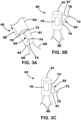
- the LIMD 60 may include one or more fixation elements 69 (e.g., curved tines), a deployable leadlet 65, a first electrode 70, and a second electrode 72 coupled to the leadlet 65.
- fixation elements 69 e.g., curved tines
- the leadlet 65 extends from a proximal end region 74 to a distal end region 76, and the second electrode 72 is located proximate (or within) the distal end region 76.
- the leadlet 65 may include (e.g., be formed of) resilient materials such that, e.g., when the sheath portion 62 is retracted 68 away exposed a distal end region 64 of the body portion 61, the leadlet 65 may move 67 (e.g., pivot or partially rotate) away from the body portion 61 in at least partially radial manner to position the distal end region 76, and consequently, the second electrode 72, of the leadlet 65, away from the body portion 61.
- One or more fixation elements 69 may be disposed on the distal end region 64 of the body portion 61 of the LIMD 60 and extend distally from the body portion 61.
- the one or more fixation elements 69 may be electrically active or passive.
- the first electrode 70 may be positioned on the distal end region 64 of the body portion 61 of the LIMD 40 to engage the endocardial wall of the patient's heart.
- the second electrode 72 may be coupled to the leadlet 65 extending at least partially in a radial direction away from the body portion 61 in a deployed position as shown.
- the body portion 61 may define, or include, a recess to at least partially receive the leadlet 65 in the stowed position.
- the body portion 61 may be delivered in a "cup" (e.g., defined by the sheath portion 62) and protracted to deploy the body portion 61 for implantation.
- the endocardial wall is the right atrial endocardial wall.
- FIG 3C Another illustrative LIMD 63 including a deployable leadlet 65 is depicted in FIG 3C .
- the LIMD 63 may be substantially similar to the LIMD 60 except for the movement of the leadlet 65.
- the leadlet 65 of LIMD 63 swings, or rotates, away from the body portion 61 in an opposite direction than the leadlet 65 of LIMD 60 to, e.g., provide ease of re-sheathing the body portion 61 into the sheath portion 62.
- the sheath portion 62 may contact and "fold down" the leadlet 65 when the body portion 61 is moved with respect to the sheath portion 62 of the LIMD 63 to position the body portion 61 within the aperture or opening of the sheath portion 62 (i.e., the body portion 61 being retracted into the sheath portion 62).
- the LIMD 63 may be provide "easy" retraction of the body portion 61 within the sheath portion 62.
- the LIMDs 40, 60, 63 may be used in any suitable manner.
- a method of using the LIMDs 40, 60, 63 may include attaching one or more fixation elements 69 thereof to the endocardial wall of the patient's heart.
- the fixation elements 69 may be coupled to the distal end region, or distal portion, 44, 64 of the body portion 41, 61.
- Processing circuitry 19 may be disposed in the body portion 41, 61.
- the method of using the LIMDs 40, 60, 63 may also include implanting the first electrode 50, 70 to engage the endocardial wall of the patient's heart when the fixation element is attached.
- the first electrode 50, 70 may be leadlessly coupled to the distal end region, or distal portion, 44, 64 of the body portion 41, 61.
- the processing circuitry 19 may be operably coupled to each of the first and second electrodes 50, 52, 70, 72.
- the method of using the LIMDs 40, 60, 63 may further include implanting the second electrode 52, 72 to engage the endocardial wall of the patient's heart when the LIMD 40, 60, 63 is in the deployed configuration placing the leadlet 45, 65 in the deployed position. More specifically, it may be described that the second electrode 52, 72 is coupled to the distal end region, or a first portion, 56, 76 of the leadlet 45, 65 and the proximal end region, or a second portion, 54, 74 of the leadlet 45, 65 may be coupled to the distal end region 44, 64 of the body portion 41, 61. As described herein, the leadlet 45, 65 may extend at least partially in a radial direction away from the body portion 41, 61 in the deployed configuration/position so as to, e.g., engage cardiac tissue with the second electrode 52, 72.
- the method of using the LIMDs 40, 60, 63 may further include monitoring electrical activity using the processing circuitry 19 and at least one of the first electrode 50, 70 and the second electrode 52, 72. Further, the method of using the LIMDs 40, 60, 63 may further include delivering pacing therapy using the processing circuitry 19 and at least one of the first electrode 50, 70 and the second electrode 52, 72.
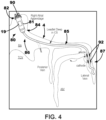
- FIG. 4 A conceptual diagram of an LIMD 80 positioned in the right atrium of a patient's heart including a leadlet 85 extending through the coronary sinus (CS) ostium of the patient's heart is depicted in FIG. 4 .
- the LIMD 80 may include an implantable housing 81 extending from a proximal end region 82 to a distal end region 84.
- the LIMD 80 may include a plurality of electrodes.
- the plurality of electrodes may include one or more right atrial electrodes configured to sense and/or pace right atrial tissue and one or more left ventricular electrodes configured to sense and/or pace left ventricular tissue.
- the LIMD 80 includes a right atrial electrode 90 positioned on the proximal end region 82 of the implantable housing 81 of the LIMD 80.
- the right atrial electrode 90 may be implanted in the right atrial endocardium or in the right atrial myocardium of the patient's heart.
- the right atrial electrode 90 may be positioned proximate to (e.g., in contact with, adjacent, partially within, within, etc.) the right atrial appendage.
- the LIMD 80 of FIG. 4 may be used in any suitable manner.
- a method of using the LIMD 80 may include implanting the right atrial electrode 90 on the right atrial endocardium or in the right atrial myocardium of the patient's heart.
- the right atrial electrode 90 may be leadlessly coupled to a proximal end region, or portion, 82 of the implantable housing 81.
- Processing circuitry 19 may be disposed in the housing 81 and may be operably coupled to the right atrial electrode 90.
- implanting the left ventricular electrodes 92 may include implanting the left ventricular electrodes 92 into the lateral vein of the patient's heart. Further, in some embodiments, delivering pacing therapy may include utilizing field steering to avoid left atrial capture by the left ventricular electrodes 92.
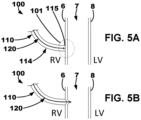
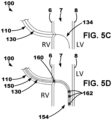
- the delivery system may be described as puncturing the right ventricular endocardium 6 to allow a lead 150 to be simply pushed into the septal myocardium 7, or interventricular septal wall, and tunneled up or down the septum.
- the lead 150 may be tunneled into the basal-septal, mid-septal, or even apical septal region with the septal myocardium 7
- the lead 150 may be a multipolar lead such as, e.g., the quadripolar lead 590 described herein with respect to FIG. 14 . More specifically, a distal portion 154 of the lead 150 may have a quadripolar configuration, which may be the same or similar to an ATTAIN STABILITY TM or ATTAIN STABILITY QUAD TM or ATTAIN PERFORMA TM leads available from Medtronic plc of Dublin, Ireland. A side helix or hook usable for fixation that may be disposed on the distal portion, which may be selectively electrically active or passive and may be mechanically active or adjustable.
- Another exemplary lead that may be employed is described in U.S. Patent No. 9,901,732 to Sommer et al., granted February 27, 2018 , in which electrodes are jumpered in a diagonal configuration in order to increase the opportunity to capture cardiac tissue.
- the distal region 134 may define or include a distal curvature portion that curves when exiting the delivery catheter 110 into the interventricular septal wall 7 so as to deliver at least a region of a distal portion 154 of an implantable medical lead 150 substantially parallel to the interventricular septal wall 7 in the left ventricular myocardium.
- a distal portion of the implantable medical lead 150 of the device 100 may be advanced or delivered over the guide element 130 to the left ventricular myocardium to extend along the left ventricular endocardial wall 8 to position one or more left ventricular electrodes 162 on the distal portion in the left ventricular myocardium.
- the guide element 130 does not extend beyond the tip of the lead 150, and instead, may remain a selected distance away from the tip (e.g., about 1 centimeter) to allow tip to flex during blunt dissection/tunneling of the lead150.
- Examples of the guide element 130 may include a steerable stylet, shaped stylets, etc.
- one or more left ventricular electrodes 162 may be positioned proximate to the left bundle branch (LBB) of the conduction system of the patient's heart.
- LBB left bundle branch
- the method of using IMD 100 may include monitoring electrical activity of at least one of the right ventricular electrode 160 and one or more of the left ventricular electrodes 162, and delivering pacing therapy using at least one of the right ventricular electrode 160 and the left ventricular electrodes 162.
- delivering pacing therapy may include delivering pacing pulses to the left ventricular electrodes 162 configured to pace the left bundle branch of the conduction system of the patient's heart.
- the implantable medical lead 150 may include a plurality of left ventricular electrodes, a plurality of right ventricular electrodes, or both.
- a delivery system may be configured to puncture the right atrial endocardium and central fibrous body (CFB) to allow the lead 250 to be simply pushed into the septal myocardium, or interventricular septal wall, and tunneled up or down the septum as shown by the trajectory 270 in FIG. 7 .
- the lead 250 may be tunneled into the basal-septal, mid-septal, or even apical septal region.
- CFB central fibrous body
- a multipolar lead may be used such as, e.g., the quadripolar lead 590 described herein with respect to FIG. 14 .
- the distal portion 254 of the lead 250 may have a quadripolar configuration, which may be the same or similar to an ATTAIN STABILITY TM or ATTAIN STABILITY QUAD TM or ATTAIN PERFORMA TM leads available from Medtronic plc of Dublin, Ireland.
- a side helix or hook usable for fixation that may be disposed on the distal portion, which may be selectively electrically active or passive and may be mechanically active or adjustable.
- Another exemplary lead that may be employed is described in U.S. Patent No. 9,901,732 to Sommer et al., granted February 27, 2018 , in which electrodes are jumpered in a diagonal configuration in order to increase the opportunity to capture cardiac tissue.
- the guiding element may be a guidewire, a steerable stylet or wire, or a hybrid of stylet guidewire that is a part of the ATTAIN family, may be used to guide the lead into the septum. With multiple electrodes and different spacing, one lead may be used to pace the atrium and multiple locations down the septum.
- a guiding element that may be used is described in U.S. Patent No. 7,881,806 to Sommer et al., granted February 1, 2011
- the IMD 200 may be used in any suitable manner.
- a method of implanting and using the IMD 200 may include delivering the delivery catheter and a penetration element disposed in the delivery catheter to the right atrial endocardium in or proximate to the triangle of Koch region of a patient's heart, such as in the coronary sinus ostium.
- the method of implanting and using the IMD 200 may also include puncturing the right atrial endocardium and the central fibrous body using the penetration element to form an opening through the right ventricular endocardium and the central fibrous body and into the interventricular septal wall. Then, the penetration element may be retracted. Then, a distal portion of a guide element may be advanced through the delivery catheter and the opening and into the interventricular septal wall to extend along the left ventricular endocardial wall.
- the method of implanting and using the IMD 200 may include delivering a distal portion 254 of an implantable medical lead 250 over the guide element to the left ventricular myocardium to extend along the left ventricular endocardial wall to position one or more left ventricular electrodes 262 on the distal portion 254 in the left ventricular myocardium.
- the left ventricular electrodes 262 may be positioned proximate to the left bundle branch of the conduction system of the patient's heart.
- the method of implanting and using the IMD 200 may also include implanting one or more right atrial electrodes 260 proximate to the right atrial endocardium.
- the right atrial electrodes 260 may be positioned proximally along the lead 250 to the left ventricular electrodes 262 on the distal portion 254 of the implantable medical lead 250.
- the method of using the IMD 100 may further include monitoring electrical activity of at least one of the right atrial electrodes 260 and the left ventricular electrodes 262, and delivering pacing therapy using at least one of the right atrial electrodes 260 and the left ventricular electrodes 262.
- delivering pacing therapy may include delivering pacing pulses to the left ventricular electrodes 262 configured to pace the left bundle branch of the conduction system of the patient's heart.
- the implantable medical lead may include a plurality of left ventricular electrodes, a plurality of right atrial electrodes, or both.
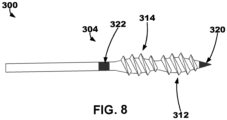
- IMD or LIMD may include an elongate member 300 extending between a proximal portion and a distal portion 304.
- a first electrode 320 may be disposed on the distal portion 304 of the elongate member.
- a second electrode 322 may be disposed proximal to the first electrode 320 on the distal portion 304 of the elongate member 300.
- a first threaded bulb region 312 may be disposed between the first and second electrodes 320, 322 on the distal portion 304 of the elongate member 300.
- a second threaded bulb region 314 disposed between the first threaded bulb region 312 and the second electrode 322 on the distal portion 304 of the elongate member 300.
- the threaded bulb regions 312, 314 may share a similar threaded pattern or spacing.
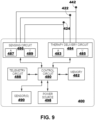
- FIG. 9 is a block diagram of circuitry that may be enclosed within the housings of an illustrative IMD 400 to provide the functions of cardiac therapy described herein with respect to FIGS. 1-8 .
- the IMD 400 may be used with any one or more of the embodiments described with respect to FIGS. 1-8 .
- the electronic circuitry of the device 400 may include software, firmware, and hardware that cooperatively monitor atrial and ventricular electrical cardiac signals, determine when a cardiac therapy is necessary, and/or deliver electrical pulses to the patient's heart according to programmed therapy mode and pulse control parameters.
- the electronic circuitry may include a control circuit 480 (e.g., including processing circuitry), a memory 482, a therapy delivery circuit 484, a sensing circuit 486, and/or a telemetry circuit 488.
- the device 400 includes one or more sensors 490 for producing a signal that is correlated to a physiological function, state, or condition of the patient, such as a patient activity sensor, for use in determining a need for pacing therapy and/or controlling a pacing rate.
- the power source 498 may provide power to the circuitry of the device 400 including each of the components 480, 482, 484, 486, 488, and 490, as needed.
- the power source 498 may include one or more energy storage devices, such as one or more rechargeable or non-rechargeable batteries.
- the connections between the power source 498 and each of the components 480, 482, 484, 486, 488, and 490 are to be understood from the general block diagram illustrated but are not shown for the sake of clarity.
- the power source 498 may be coupled to one or more charging circuits included in the therapy delivery circuit 484 for providing the power needed to charge holding capacitors included in the therapy delivery circuit 484 that are discharged at appropriate times under the control of the control circuit 480 for delivering pacing pulses, e.g., according to a dual chamber pacing mode such as DDI(R).
- the power source 498 may also be coupled to components of the sensing circuit 486, such as sense amplifiers, analog-to-digital converters, switching circuitry, etc., sensors 490, the telemetry circuit 488, and the memory 482 to provide power to the various circuits.
- the functional blocks shown represent functionality included in the device 400 and may include any discrete and/or integrated electronic circuit components that implement analog, and/or digital circuits capable of producing the functions attributed to the device 400 herein.
- the various components may include processing circuitry, such as an application specific integrated circuit (ASIC), an electronic circuit, a processor (shared, dedicated, or group), and memory that execute one or more software or firmware programs, a combinational logic circuit, state machine, or other suitable components or combinations of components that provide the described functionality.
- ASIC application specific integrated circuit
- the particular form of software, hardware, and/or firmware employed to implement the functionality disclosed herein will be determined primarily by the particular system architecture employed in the medical device and by the particular detection and therapy delivery methodologies employed by the medical device. Providing software, hardware, and/or firmware to accomplish the described functionality in the context of any modern cardiac medical device system, given the disclosure herein, is within the abilities of one of skill in the art.
- the memory 482 may include any volatile, non-volatile, magnetic, or electrical non-transitory computer readable storage media, such as random-access memory (RAM), read-only memory (ROM), non-volatile RAM (NVRAM), electrically-erasable programmable ROM (EEPROM), flash memory, or any other memory device. Furthermore, the memory 482 may include a non-transitory computer readable media storing instructions that, when executed by one or more processing circuits, cause the control circuit 480 and/or other processing circuitry to perform a single, dual, or triple chamber pacing (e.g., single or multiple chamber pacing) function or other sensing and therapy delivery functions attributed to the device 400.
- the non-transitory computer-readable media storing the instructions may include any of the media listed above.
- the control circuit 480 may communicate, e.g., via a data bus, with the therapy delivery circuit 484 and the sensing circuit 486 for sensing cardiac electrical signals and controlling delivery of cardiac electrical stimulation therapies in response to sensed cardiac events, e.g., P-waves and R-waves, or the absence thereof.
- the electrodes 422, 424, 442 e.g., left ventricular electrodes, right ventricular electrodes, right atrial electrodes, housing electrodes, etc.
- the sensing circuit 486 may include an atrial (A) sensing channel 487 and a ventricular (V) sensing channel 489.
- the electrodes 422, 424 may be coupled to the atrial sensing channel 487 for sensing atrial signals, e.g., P-waves attendant to the depolarization of the atrial myocardium.
- the sensing circuit 486 may include switching circuitry for selectively coupling one or more of the available electrodes to cardiac event detection circuitry included in the atrial sensing channel 487.
- Switching circuitry may include a switch array, switch matrix, multiplexer, or any other type of switching device suitable to selectively couple components of the sensing circuit 486 to selected electrodes.
- electrodes 424, 442 may be coupled to the ventricular sensing channel 489 for sensing ventricular signals, e.g., R-waves attendant to the depolarization of the ventricular myocardium.
- Each of the atrial sensing channel 487 and the ventricular sensing channel 489 may include cardiac event detection circuitry for detecting P-waves and R-waves, respectively, from the cardiac electrical signals received by the respective sensing channels.
- the cardiac event detection circuitry included in each of the channels 487 and 489 may be configured to amplify, filter, digitize, and rectify the cardiac electrical signal received from the selected electrodes to improve the signal quality for detecting cardiac electrical events.
- the cardiac event detection circuitry within each channel 487 and 489 may include one or more sense amplifiers, filters, rectifiers, threshold detectors, comparators, analog-to-digital converters (ADCs), timers, or other analog or digital components.
- ADCs analog-to-digital converters
- a cardiac event sensing threshold e.g., a P-wave sensing threshold and an R-wave sensing threshold
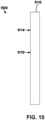
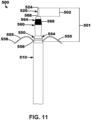
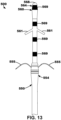
- fixation elements 561 restrict the inner lead body 560 from moving proximally towards (e.g., back towards) the outer lead body 550 after the inner lead body 560 has been moved away (e.g., distally) from the outer lead body 550. Further, as the inner lead body 560 becomes more exposed, more of the electrodes 569 along the inner lead body 560 are shown.
- the lead and delivery system 500 of FIGS. 10-13 may provide for mechanical injection into the intraseptal space. It may be described that the lead is loaded into a delivery system, a perforating element is extended out of the distal of the lead and is shrouded by the catheter. After lead has been positioned in desired implant location, the lead may be extended out of catheter. As the lead extends out of catheter, the fixation elements (e.g., nitinol tines) may engage the endocardium. Further, as the fixation elements actuate, they extend the lead out of the delivery system. Still further, as the lead tip/needle is actuated forward, the lead is injected into the septum and simultaneously fixated.
- the fixation elements e.g., nitinol tines
- the needle may be retracted, and the inner assembly of the lead may then be tunneled to desired location.
- the lead/catheter can be shifted, and shaped/steerable stylets can be used. Further, the inner and outer lead assemblies may then be secured.
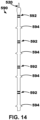
- the lead 590 includes four dipole electrodes 592 spaced along the length of the lead 590.
- the electrodes 592 may be spaced apart between about 1 millimeters (mm) and about 5 mm.
- the lead 590 includes a plurality of small fixation elements 594 located between each of the electrodes 592.
- the fixation elements 594 may be flexible, polymer tines that can fold down in a delivery catheter and can deploy into to muscle fiber when deployed. Also, when enough force is applied, the fixation elements 594 will flex and allow removal chronically (e.g., pulled out of an implant location, moved proximally away from an implant location).
- the lead 590 may include a helix or helical fixation element as opposed to the fixation elements 594 shown in FIG. 14 .
- a helix may allow the lead 590 to be fixated, and then the inner lead body to be advanced after outer lead body is fixated.
- the fixation elements 594 may be configured to be predominantly "one-way.” In other words, the fixation elements 594 may restrict proximal movement of the lead 590 more than distal movement of the lead 590 to, e.g., allow for implantation but restrict dislodgment in the proximal direction.
- Coupled or “connected” refer to elements being attached to each other either directly (in direct contact with each other) or indirectly (having one or more elements between and attaching the two elements). Either term may be modified by "operatively” and “operably,” which may be used interchangeably, to describe that the coupling or connection is configured to allow the components to interact to carry out functionality.
- phrases "at least one of,” “comprises at least one of,” and “one or more of” followed by a list refers to any one of the items in the list and any combination of two or more items in the list.
Landscapes
- Health & Medical Sciences (AREA)
- Cardiology (AREA)
- Heart & Thoracic Surgery (AREA)
- Life Sciences & Earth Sciences (AREA)
- Public Health (AREA)
- Veterinary Medicine (AREA)
- Nuclear Medicine, Radiotherapy & Molecular Imaging (AREA)
- Biomedical Technology (AREA)
- Animal Behavior & Ethology (AREA)
- General Health & Medical Sciences (AREA)
- Engineering & Computer Science (AREA)
- Radiology & Medical Imaging (AREA)
- Vascular Medicine (AREA)
- Biophysics (AREA)
- Surgery (AREA)
- Pathology (AREA)
- Medical Informatics (AREA)
- Molecular Biology (AREA)
- Physiology (AREA)
- Electrotherapy Devices (AREA)
Claims (5)
- Implantierbare medizinische Vorrichtung, umfassend:
eine Vielzahl von Elektroden, umfassend:eine rechtsatriale Elektrode (90), die innerhalb des rechten Atriums positionierbar ist, um die Herztherapie an das rechte Atrium des Herzens des Patienten abzugeben oder um die elektrische Aktivität des rechten Atriums des Herzens des Patienten zu erfassen; undmindestens eine linksventrikuläre Elektrode (92), die in der Nähe des linken Ventrikels des Herzens des Patienten positionierbar ist, um eine Herztherapie abzugeben oder um die elektrische Aktivität des linken Ventrikels des Herzens des Patienten zu erfassen;ein Gehäuse (81), das sich von einem proximalen Endbereich (82) zu einem distalen Endbereich (84) erstreckt, wobei die rechtsatriale Elektrode mit dem proximalen Endbereich leitungslos gekoppelt ist;ein Leadlet (85), das sich von einem proximalen Bereich (86) zu einem distalen Bereich (87) erstreckt, wobei der proximale Bereich mit dem distalen Endbereich des Gehäuses gekoppelt ist und die mindestens eine ventrikuläre Elektrode mit dem distalen Bereich des Leadlet gekoppelt ist, wobei das Leadlet konfiguriert ist, um sich durch das Ostium des Koronarsinus und in den Koronarsinus oder eine Koronarvene des Herzens des Patienten zu erstrecken, um die mindestens eine linksventrikuläre Elektrode in der Nähe des linken Ventrikels des Herzens des Patienten zu positionieren;eine Therapieabgabeschaltung (484) innerhalb des Gehäuses, und die mit der Vielzahl von Elektroden betriebsfähig gekoppelt ist, um die Herztherapie an das Herz des Patienten abzugeben;eine Erfassungsschaltung (486) innerhalb des Gehäuses, und die mit der Vielzahl von Elektroden betriebsfähig gekoppelt ist, um die elektrische Aktivität des Herzens des Patienten zu erfassen; undeine Steuerung (480) innerhalb des Gehäuses, und umfassend eine Verarbeitungsschaltlogik, die mit der Therapieabgabeschaltung und der Erfassungsschaltung betriebsfähig gekoppelt ist, und wobei die Erfassungsschaltung und die Steuerung konfiguriert sind zum:Überwachen der elektrischen Aktivität unter Verwendung der Verarbeitungsschaltlogik und einer oder mehrerer der Vielzahl von Elektroden. undAbgeben einer Schrittmachertherapie unter Verwendung der Verarbeitungsschaltlogik und einer oder mehrerer der Vielzahl von Elektroden. - Vorrichtung nach Anspruch 1, wobei die mindestens eine linksventrikuläre Elektrode in das linksventrikuläre Myokard von dem Koronarsinus proximal zu der hinteren Vene des Herzens des Patienten implantierbar ist.
- Vorrichtung nach Anspruch 1, wobei die mindestens eine linksventrikuläre Elektrode für den linken Ventrikel in die vordere interventrikuläre Vene des Herzens des Patienten implantierbar ist.
- Vorrichtung nach Anspruch 1, wobei die mindestens eine linksventrikuläre Elektrode in die Seitenvene des Herzens des Patienten implantierbar ist.
- Vorrichtung nach einem der Ansprüche 1 bis 4, wobei das Abgeben einer Schrittmachertherapie das Verwenden einer Feldsteuerung umfasst, um einen linksatrialen Capture durch die mindestens eine linksventrikuläre Elektrode zu vermeiden.
Priority Applications (1)
| Application Number | Priority Date | Filing Date | Title |
|---|---|---|---|
| EP25188096.9A EP4606420A3 (de) | 2019-11-26 | 2020-11-26 | Implantierbare medizinprodukte für die mehrkammerstimulation |
Applications Claiming Priority (2)
| Application Number | Priority Date | Filing Date | Title |
|---|---|---|---|
| US201962940711P | 2019-11-26 | 2019-11-26 | |
| PCT/US2020/062466 WO2021108744A1 (en) | 2019-11-26 | 2020-11-26 | Implantable medical devices for multi-chamber pacing |
Related Child Applications (1)
| Application Number | Title | Priority Date | Filing Date |
|---|---|---|---|
| EP25188096.9A Division EP4606420A3 (de) | 2019-11-26 | 2020-11-26 | Implantierbare medizinprodukte für die mehrkammerstimulation |
Publications (3)
| Publication Number | Publication Date |
|---|---|
| EP4065216A1 EP4065216A1 (de) | 2022-10-05 |
| EP4065216A4 EP4065216A4 (de) | 2024-03-13 |
| EP4065216B1 true EP4065216B1 (de) | 2025-07-09 |
Family
ID=75971593
Family Applications (2)
| Application Number | Title | Priority Date | Filing Date |
|---|---|---|---|
| EP20894751.5A Active EP4065216B1 (de) | 2019-11-26 | 2020-11-26 | Implantierbare medizinprodukte für die mehrkammerstimulation |
| EP25188096.9A Pending EP4606420A3 (de) | 2019-11-26 | 2020-11-26 | Implantierbare medizinprodukte für die mehrkammerstimulation |
Family Applications After (1)
| Application Number | Title | Priority Date | Filing Date |
|---|---|---|---|
| EP25188096.9A Pending EP4606420A3 (de) | 2019-11-26 | 2020-11-26 | Implantierbare medizinprodukte für die mehrkammerstimulation |
Country Status (4)
| Country | Link |
|---|---|
| US (2) | US20210154477A1 (de) |
| EP (2) | EP4065216B1 (de) |
| CN (1) | CN114793425A (de) |
| WO (1) | WO2021108744A1 (de) |
Families Citing this family (10)
| Publication number | Priority date | Publication date | Assignee | Title |
|---|---|---|---|---|
| US11813468B2 (en) * | 2021-07-16 | 2023-11-14 | Medtronic, Inc. | Connector conditioning/bore plug |
| CN115721854B (zh) * | 2021-08-30 | 2024-03-26 | 深圳市先健心康医疗电子有限公司 | 电极导管结构及起搏电极导管装置 |
| CN115869542A (zh) * | 2021-09-29 | 2023-03-31 | 创领心律管理医疗器械(上海)有限公司 | 医用电极导线组件及心脏起搏系统 |
| CN115252078B (zh) * | 2022-07-28 | 2024-04-26 | 储慧民 | 一种心包穿刺针 |
| EP4593937A1 (de) * | 2022-09-29 | 2025-08-06 | Medtronic, Inc. | Implantierbare medizinische vorrichtung mit mehreren elektroden |
| WO2024170982A1 (en) * | 2023-02-15 | 2024-08-22 | Medtronic, Inc. | Distal end fixation for implantable medical device |
| CN118177924A (zh) * | 2023-09-22 | 2024-06-14 | 杭州启明医疗器械股份有限公司 | 一种心律调整系统 |
| WO2025072076A1 (en) * | 2023-09-25 | 2025-04-03 | Medtronic, Inc. | Delivery of electrically conductive nanomaterial |
| CN117065219B (zh) * | 2023-10-10 | 2024-01-09 | 深圳市先健心康医疗电子有限公司 | 心脏起搏导线 |
| CN119236310B (zh) * | 2024-09-26 | 2026-01-02 | 科塞尔医疗科技(苏州)有限公司 | 一种用于起搏的导线 |
Family Cites Families (32)
| Publication number | Priority date | Publication date | Assignee | Title |
|---|---|---|---|---|
| US5728140A (en) * | 1996-06-17 | 1998-03-17 | Cardiac Pacemakers, Inc. | Method for evoking capture of left ventricle using transeptal pacing lead |
| US7546166B2 (en) * | 2001-11-29 | 2009-06-09 | Medtronic, Inc. | Medical lead designs for lead placement through tissue |
| US20040230283A1 (en) * | 2001-11-29 | 2004-11-18 | Medtronic, Inc. | Trans-septal pacing method and apparatus |
| US8396549B2 (en) * | 2001-11-29 | 2013-03-12 | Medtronic, Inc. | Papillary muscle stimulation |
| DE60336643D1 (de) * | 2002-04-11 | 2011-05-19 | Medtronic Vascular Inc | Vorrichtungen für die transluminale oder transthorakale interstitielle Elektrodenplatzierung |
| US7317950B2 (en) * | 2002-11-16 | 2008-01-08 | The Regents Of The University Of California | Cardiac stimulation system with delivery of conductive agent |
| WO2006045075A1 (en) * | 2004-10-20 | 2006-04-27 | Boston Scientific Limited | Leadless cardiac stimulation systems |
| US7927742B2 (en) | 2004-10-29 | 2011-04-19 | Medtronic, Inc. | Negative-limited lithium-ion battery |
| CN101048897B (zh) | 2004-10-29 | 2010-10-27 | 麦德托尼克公司 | 锂离子电池充电方法 |
| US8105714B2 (en) | 2004-10-29 | 2012-01-31 | Medtronic, Inc. | Lithium-ion battery |
| EP2471450A1 (de) * | 2005-10-14 | 2012-07-04 | Nanostim, Inc. | Leitungsloser Herzschrittmacher und System |
| US7881806B2 (en) | 2006-10-31 | 2011-02-01 | Medtronic, Inc. | Medical lead delivery device |
| US8317810B2 (en) * | 2008-12-29 | 2012-11-27 | St. Jude Medical, Atrial Fibrillation Division, Inc. | Tissue puncture assemblies and methods for puncturing tissue |
| US9072872B2 (en) * | 2010-10-29 | 2015-07-07 | Medtronic, Inc. | Telescoping catheter delivery system for left heart endocardial device placement |
| US8700181B2 (en) * | 2011-11-03 | 2014-04-15 | Pacesetter, Inc. | Single-chamber leadless intra-cardiac medical device with dual-chamber functionality and shaped stabilization intra-cardiac extension |
| US8798740B2 (en) * | 2011-11-03 | 2014-08-05 | Pacesetter, Inc. | Single chamber leadless intra-cardiac medical device with dual-chamber functionality |
| US8996109B2 (en) * | 2012-01-17 | 2015-03-31 | Pacesetter, Inc. | Leadless intra-cardiac medical device with dual chamber sensing through electrical and/or mechanical sensing |
| US20140107723A1 (en) * | 2012-10-16 | 2014-04-17 | Pacesetter, Inc. | Single-chamber leadless intra-cardiac medical device with dual-chamber functionality |
| US20140172034A1 (en) * | 2012-12-18 | 2014-06-19 | Pacesetter, Inc. | Intra-cardiac implantable medical device with ic device extension for lv pacing/sensing |
| EP2769750B1 (de) * | 2013-02-25 | 2020-01-22 | Sorin CRM SAS | System zur elektrodenleitungslosen Takteinstellung des Herzens |
| US20150224320A1 (en) * | 2014-02-10 | 2015-08-13 | Cardiac Pacemakers, Inc. | Multi-chamber leadless pacemaker system with inter-device communication |
| US9901732B2 (en) | 2014-10-24 | 2018-02-27 | Medtronic, Inc. | Medical electrical lead |
| US9623234B2 (en) * | 2014-11-11 | 2017-04-18 | Medtronic, Inc. | Leadless pacing device implantation |
| EP3253448B1 (de) * | 2015-02-06 | 2021-02-24 | Cardiac Pacemakers, Inc. | System zur behandlung von herzrhythmusstörungen |
| WO2016183417A1 (en) | 2015-05-13 | 2016-11-17 | Medtronic, Inc. | Securing an implantable medical device in position while reducing perforations |
| US10463853B2 (en) | 2016-01-21 | 2019-11-05 | Medtronic, Inc. | Interventional medical systems |
| US20190143118A1 (en) * | 2016-05-04 | 2019-05-16 | John R. Bullinga | Leads and methods for cardiac resynchronization therapy |
| US10668294B2 (en) * | 2016-05-10 | 2020-06-02 | Cardiac Pacemakers, Inc. | Leadless cardiac pacemaker configured for over the wire delivery |
| US10707692B2 (en) | 2017-01-26 | 2020-07-07 | Medtronic, Inc. | Recharge of implanted medical devices |
| EP3727576B1 (de) * | 2017-12-22 | 2024-01-31 | Cardiac Pacemakers, Inc. | Implantierbare medizinische vorrichtung für den vaskulären einsatz |
| CN111936046B (zh) | 2018-03-23 | 2024-06-28 | 美敦力公司 | 用于心动过速的vfa心脏治疗 |
| WO2020010001A1 (en) * | 2018-07-06 | 2020-01-09 | Cardiac Pacemakers, Inc. | Adjustable sensing in a his-bundle pacemaker |
-
2020
- 2020-11-26 WO PCT/US2020/062466 patent/WO2021108744A1/en not_active Ceased
- 2020-11-26 CN CN202080081710.5A patent/CN114793425A/zh active Pending
- 2020-11-26 EP EP20894751.5A patent/EP4065216B1/de active Active
- 2020-11-26 US US17/105,603 patent/US20210154477A1/en not_active Abandoned
- 2020-11-26 EP EP25188096.9A patent/EP4606420A3/de active Pending
-
2023
- 2023-05-22 US US18/200,406 patent/US20230285758A1/en active Pending
Also Published As
| Publication number | Publication date |
|---|---|
| US20230285758A1 (en) | 2023-09-14 |
| EP4606420A2 (de) | 2025-08-27 |
| US20210154477A1 (en) | 2021-05-27 |
| CN114793425A (zh) | 2022-07-26 |
| EP4065216A1 (de) | 2022-10-05 |
| WO2021108744A1 (en) | 2021-06-03 |
| EP4065216A4 (de) | 2024-03-13 |
| EP4606420A3 (de) | 2025-11-05 |
Similar Documents
| Publication | Publication Date | Title |
|---|---|---|
| EP4065216B1 (de) | Implantierbare medizinprodukte für die mehrkammerstimulation | |
| US20250332427A1 (en) | Electrodes for intra-cardiac pacemaker | |
| US10758733B2 (en) | Implantable medical device with retractable fixation sheath | |
| EP1501596B1 (de) | Vorrichtung zum auswählen einer optimalen elektrodenkonfiguration | |
| US8634919B1 (en) | Intracardiac implantable medical device for biatrial and/or left heart pacing and method of implanting same | |
| EP2994192B1 (de) | System zur retrosternalen elektrischen stimulation | |
| EP3209367B1 (de) | Medizinische koronarsinuselektrode | |
| WO2016077099A1 (en) | Leadless pacing device implantation | |
| US11213676B2 (en) | Delivery systems for VfA cardiac therapy | |
| EP4188523B1 (de) | Stimulation über septumdurchbohrende vene | |
| WO2023021358A1 (en) | Medical device with angled header and delivery system | |
| US20230053875A1 (en) | Medical device with angled header and delivery system | |
| EP4531995A1 (de) | Tachyarrhythmiedetektion mit vfa-vorrichtungen | |
| CN119255839A (zh) | 使用VfA装置进行的单通道感测 |
Legal Events
| Date | Code | Title | Description |
|---|---|---|---|
| STAA | Information on the status of an ep patent application or granted ep patent |
Free format text: STATUS: THE INTERNATIONAL PUBLICATION HAS BEEN MADE |
|
| PUAI | Public reference made under article 153(3) epc to a published international application that has entered the european phase |
Free format text: ORIGINAL CODE: 0009012 |
|
| STAA | Information on the status of an ep patent application or granted ep patent |
Free format text: STATUS: REQUEST FOR EXAMINATION WAS MADE |
|
| 17P | Request for examination filed |
Effective date: 20220516 |
|
| AK | Designated contracting states |
Kind code of ref document: A1 Designated state(s): AL AT BE BG CH CY CZ DE DK EE ES FI FR GB GR HR HU IE IS IT LI LT LU LV MC MK MT NL NO PL PT RO RS SE SI SK SM TR |
|
| DAV | Request for validation of the european patent (deleted) | ||
| DAX | Request for extension of the european patent (deleted) | ||
| REG | Reference to a national code |
Ref legal event code: R079 Free format text: PREVIOUS MAIN CLASS: A61N0001375000 Ipc: A61N0001362000 Ref country code: DE Ref legal event code: R079 Ref document number: 602020054382 Country of ref document: DE Free format text: PREVIOUS MAIN CLASS: A61N0001375000 Ipc: A61N0001362000 |
|
| RIC1 | Information provided on ipc code assigned before grant |
Ipc: A61N 1/39 20060101ALN20231110BHEP Ipc: A61N 1/378 20060101ALN20231110BHEP Ipc: A61N 1/365 20060101ALN20231110BHEP Ipc: A61B 17/34 20060101ALN20231110BHEP Ipc: A61N 1/368 20060101ALN20231110BHEP Ipc: A61N 1/05 20060101ALN20231110BHEP Ipc: A61N 1/375 20060101ALI20231110BHEP Ipc: A61N 1/362 20060101AFI20231110BHEP |
|
| A4 | Supplementary search report drawn up and despatched |
Effective date: 20240212 |
|
| RIC1 | Information provided on ipc code assigned before grant |
Ipc: A61N 1/39 20060101ALN20240206BHEP Ipc: A61N 1/378 20060101ALN20240206BHEP Ipc: A61N 1/365 20060101ALN20240206BHEP Ipc: A61B 17/34 20060101ALN20240206BHEP Ipc: A61N 1/368 20060101ALN20240206BHEP Ipc: A61N 1/05 20060101ALN20240206BHEP Ipc: A61N 1/375 20060101ALI20240206BHEP Ipc: A61N 1/362 20060101AFI20240206BHEP |
|
| GRAP | Despatch of communication of intention to grant a patent |
Free format text: ORIGINAL CODE: EPIDOSNIGR1 |
|
| STAA | Information on the status of an ep patent application or granted ep patent |
Free format text: STATUS: GRANT OF PATENT IS INTENDED |
|
| INTG | Intention to grant announced |
Effective date: 20250211 |
|
| RIC1 | Information provided on ipc code assigned before grant |
Ipc: A61N 1/39 20060101ALN20250203BHEP Ipc: A61N 1/378 20060101ALN20250203BHEP Ipc: A61N 1/365 20060101ALN20250203BHEP Ipc: A61B 17/34 20060101ALN20250203BHEP Ipc: A61N 1/368 20060101ALN20250203BHEP Ipc: A61N 1/05 20060101ALN20250203BHEP Ipc: A61N 1/375 20060101ALI20250203BHEP Ipc: A61N 1/362 20060101AFI20250203BHEP |
|
| GRAS | Grant fee paid |
Free format text: ORIGINAL CODE: EPIDOSNIGR3 |
|
| GRAA | (expected) grant |
Free format text: ORIGINAL CODE: 0009210 |
|
| STAA | Information on the status of an ep patent application or granted ep patent |
Free format text: STATUS: THE PATENT HAS BEEN GRANTED |
|
| AK | Designated contracting states |
Kind code of ref document: B1 Designated state(s): AL AT BE BG CH CY CZ DE DK EE ES FI FR GB GR HR HU IE IS IT LI LT LU LV MC MK MT NL NO PL PT RO RS SE SI SK SM TR |
|
| REG | Reference to a national code |
Ref country code: GB Ref legal event code: FG4D |
|
| REG | Reference to a national code |
Ref country code: CH Ref legal event code: EP |
|
| REG | Reference to a national code |
Ref country code: IE Ref legal event code: FG4D |
|
| REG | Reference to a national code |
Ref country code: DE Ref legal event code: R096 Ref document number: 602020054382 Country of ref document: DE |
|
| REG | Reference to a national code |
Ref country code: NL Ref legal event code: MP Effective date: 20250709 |
|
| PG25 | Lapsed in a contracting state [announced via postgrant information from national office to epo] |
Ref country code: PT Free format text: LAPSE BECAUSE OF FAILURE TO SUBMIT A TRANSLATION OF THE DESCRIPTION OR TO PAY THE FEE WITHIN THE PRESCRIBED TIME-LIMIT Effective date: 20251110 |
|
| PG25 | Lapsed in a contracting state [announced via postgrant information from national office to epo] |
Ref country code: NL Free format text: LAPSE BECAUSE OF FAILURE TO SUBMIT A TRANSLATION OF THE DESCRIPTION OR TO PAY THE FEE WITHIN THE PRESCRIBED TIME-LIMIT Effective date: 20250709 |
|
| REG | Reference to a national code |
Ref country code: AT Ref legal event code: MK05 Ref document number: 1811312 Country of ref document: AT Kind code of ref document: T Effective date: 20250709 |
|
| PG25 | Lapsed in a contracting state [announced via postgrant information from national office to epo] |
Ref country code: IS Free format text: LAPSE BECAUSE OF FAILURE TO SUBMIT A TRANSLATION OF THE DESCRIPTION OR TO PAY THE FEE WITHIN THE PRESCRIBED TIME-LIMIT Effective date: 20251109 |
|
| PGFP | Annual fee paid to national office [announced via postgrant information from national office to epo] |
Ref country code: DE Payment date: 20251022 Year of fee payment: 6 |
|
| PG25 | Lapsed in a contracting state [announced via postgrant information from national office to epo] |
Ref country code: NO Free format text: LAPSE BECAUSE OF FAILURE TO SUBMIT A TRANSLATION OF THE DESCRIPTION OR TO PAY THE FEE WITHIN THE PRESCRIBED TIME-LIMIT Effective date: 20251009 |
|
| REG | Reference to a national code |
Ref country code: LT Ref legal event code: MG9D |
|
| PG25 | Lapsed in a contracting state [announced via postgrant information from national office to epo] |
Ref country code: AT Free format text: LAPSE BECAUSE OF FAILURE TO SUBMIT A TRANSLATION OF THE DESCRIPTION OR TO PAY THE FEE WITHIN THE PRESCRIBED TIME-LIMIT Effective date: 20250709 |
|
| PG25 | Lapsed in a contracting state [announced via postgrant information from national office to epo] |
Ref country code: FI Free format text: LAPSE BECAUSE OF FAILURE TO SUBMIT A TRANSLATION OF THE DESCRIPTION OR TO PAY THE FEE WITHIN THE PRESCRIBED TIME-LIMIT Effective date: 20250709 |
|
| PG25 | Lapsed in a contracting state [announced via postgrant information from national office to epo] |
Ref country code: HR Free format text: LAPSE BECAUSE OF FAILURE TO SUBMIT A TRANSLATION OF THE DESCRIPTION OR TO PAY THE FEE WITHIN THE PRESCRIBED TIME-LIMIT Effective date: 20250709 |
|
| PGFP | Annual fee paid to national office [announced via postgrant information from national office to epo] |
Ref country code: FR Payment date: 20251022 Year of fee payment: 6 |
|
| PG25 | Lapsed in a contracting state [announced via postgrant information from national office to epo] |
Ref country code: GR Free format text: LAPSE BECAUSE OF FAILURE TO SUBMIT A TRANSLATION OF THE DESCRIPTION OR TO PAY THE FEE WITHIN THE PRESCRIBED TIME-LIMIT Effective date: 20251010 |
|
| PG25 | Lapsed in a contracting state [announced via postgrant information from national office to epo] |
Ref country code: SE Free format text: LAPSE BECAUSE OF FAILURE TO SUBMIT A TRANSLATION OF THE DESCRIPTION OR TO PAY THE FEE WITHIN THE PRESCRIBED TIME-LIMIT Effective date: 20250709 |
|
| PG25 | Lapsed in a contracting state [announced via postgrant information from national office to epo] |
Ref country code: LV Free format text: LAPSE BECAUSE OF FAILURE TO SUBMIT A TRANSLATION OF THE DESCRIPTION OR TO PAY THE FEE WITHIN THE PRESCRIBED TIME-LIMIT Effective date: 20250709 |
|
| PG25 | Lapsed in a contracting state [announced via postgrant information from national office to epo] |
Ref country code: PL Free format text: LAPSE BECAUSE OF FAILURE TO SUBMIT A TRANSLATION OF THE DESCRIPTION OR TO PAY THE FEE WITHIN THE PRESCRIBED TIME-LIMIT Effective date: 20250709 Ref country code: BG Free format text: LAPSE BECAUSE OF FAILURE TO SUBMIT A TRANSLATION OF THE DESCRIPTION OR TO PAY THE FEE WITHIN THE PRESCRIBED TIME-LIMIT Effective date: 20250709 |
|
| PG25 | Lapsed in a contracting state [announced via postgrant information from national office to epo] |
Ref country code: RS Free format text: LAPSE BECAUSE OF FAILURE TO SUBMIT A TRANSLATION OF THE DESCRIPTION OR TO PAY THE FEE WITHIN THE PRESCRIBED TIME-LIMIT Effective date: 20251009 |
|
| PG25 | Lapsed in a contracting state [announced via postgrant information from national office to epo] |
Ref country code: ES Free format text: LAPSE BECAUSE OF FAILURE TO SUBMIT A TRANSLATION OF THE DESCRIPTION OR TO PAY THE FEE WITHIN THE PRESCRIBED TIME-LIMIT Effective date: 20250709 |
|
| PG25 | Lapsed in a contracting state [announced via postgrant information from national office to epo] |
Ref country code: RO Free format text: LAPSE BECAUSE OF FAILURE TO SUBMIT A TRANSLATION OF THE DESCRIPTION OR TO PAY THE FEE WITHIN THE PRESCRIBED TIME-LIMIT Effective date: 20250709 |