EP4060671B1 - Positioning device - Google Patents
Positioning device Download PDFInfo
- Publication number
- EP4060671B1 EP4060671B1 EP20887791.0A EP20887791A EP4060671B1 EP 4060671 B1 EP4060671 B1 EP 4060671B1 EP 20887791 A EP20887791 A EP 20887791A EP 4060671 B1 EP4060671 B1 EP 4060671B1
- Authority
- EP
- European Patent Office
- Prior art keywords
- positioning apparatus
- region
- upper unit
- unit
- movement
- Prior art date
- Legal status (The legal status is an assumption and is not a legal conclusion. Google has not performed a legal analysis and makes no representation as to the accuracy of the status listed.)
- Active
Links
Images




Classifications
-
- G—PHYSICS
- G12—INSTRUMENT DETAILS
- G12B—CONSTRUCTIONAL DETAILS OF INSTRUMENTS, OR COMPARABLE DETAILS OF OTHER APPARATUS, NOT OTHERWISE PROVIDED FOR
- G12B5/00—Adjusting position or attitude, e.g. level, of instruments or other apparatus, or of parts thereof; Compensating for the effects of tilting or acceleration, e.g. for optical apparatus
-
- F—MECHANICAL ENGINEERING; LIGHTING; HEATING; WEAPONS; BLASTING
- F16—ENGINEERING ELEMENTS AND UNITS; GENERAL MEASURES FOR PRODUCING AND MAINTAINING EFFECTIVE FUNCTIONING OF MACHINES OR INSTALLATIONS; THERMAL INSULATION IN GENERAL
- F16M—FRAMES, CASINGS OR BEDS OF ENGINES, MACHINES OR APPARATUS, NOT SPECIFIC TO ENGINES, MACHINES OR APPARATUS PROVIDED FOR ELSEWHERE; STANDS; SUPPORTS
- F16M11/00—Stands or trestles as supports for apparatus or articles placed thereon ; Stands for scientific apparatus such as gravitational force meters
- F16M11/20—Undercarriages with or without wheels
- F16M11/2007—Undercarriages with or without wheels comprising means allowing pivoting adjustment
- F16M11/2021—Undercarriages with or without wheels comprising means allowing pivoting adjustment around a horizontal axis
-
- F—MECHANICAL ENGINEERING; LIGHTING; HEATING; WEAPONS; BLASTING
- F16—ENGINEERING ELEMENTS AND UNITS; GENERAL MEASURES FOR PRODUCING AND MAINTAINING EFFECTIVE FUNCTIONING OF MACHINES OR INSTALLATIONS; THERMAL INSULATION IN GENERAL
- F16M—FRAMES, CASINGS OR BEDS OF ENGINES, MACHINES OR APPARATUS, NOT SPECIFIC TO ENGINES, MACHINES OR APPARATUS PROVIDED FOR ELSEWHERE; STANDS; SUPPORTS
- F16M11/00—Stands or trestles as supports for apparatus or articles placed thereon ; Stands for scientific apparatus such as gravitational force meters
- F16M11/20—Undercarriages with or without wheels
- F16M11/22—Undercarriages with or without wheels with approximately constant height, e.g. with constant length of column or of legs
-
- F—MECHANICAL ENGINEERING; LIGHTING; HEATING; WEAPONS; BLASTING
- F16—ENGINEERING ELEMENTS AND UNITS; GENERAL MEASURES FOR PRODUCING AND MAINTAINING EFFECTIVE FUNCTIONING OF MACHINES OR INSTALLATIONS; THERMAL INSULATION IN GENERAL
- F16M—FRAMES, CASINGS OR BEDS OF ENGINES, MACHINES OR APPARATUS, NOT SPECIFIC TO ENGINES, MACHINES OR APPARATUS PROVIDED FOR ELSEWHERE; STANDS; SUPPORTS
- F16M7/00—Details of attaching or adjusting engine beds, frames, or supporting-legs on foundation or base; Attaching non-moving engine parts, e.g. cylinder blocks
-
- H—ELECTRICITY
- H01—ELECTRIC ELEMENTS
- H01F—MAGNETS; INDUCTANCES; TRANSFORMERS; SELECTION OF MATERIALS FOR THEIR MAGNETIC PROPERTIES
- H01F7/00—Magnets
- H01F7/02—Permanent magnets [PM]
- H01F7/0231—Magnetic circuits with PM for power or force generation
- H01F7/0252—PM holding devices
-
- H—ELECTRICITY
- H01—ELECTRIC ELEMENTS
- H01M—PROCESSES OR MEANS, e.g. BATTERIES, FOR THE DIRECT CONVERSION OF CHEMICAL ENERGY INTO ELECTRICAL ENERGY
- H01M10/00—Secondary cells; Manufacture thereof
- H01M10/04—Construction or manufacture in general
- H01M10/0404—Machines for assembling batteries
-
- H—ELECTRICITY
- H01—ELECTRIC ELEMENTS
- H01M—PROCESSES OR MEANS, e.g. BATTERIES, FOR THE DIRECT CONVERSION OF CHEMICAL ENERGY INTO ELECTRICAL ENERGY
- H01M10/00—Secondary cells; Manufacture thereof
- H01M10/42—Methods or arrangements for servicing or maintenance of secondary cells or secondary half-cells
- H01M10/48—Accumulators combined with arrangements for measuring, testing or indicating the condition of cells, e.g. the level or density of the electrolyte
-
- H—ELECTRICITY
- H01—ELECTRIC ELEMENTS
- H01M—PROCESSES OR MEANS, e.g. BATTERIES, FOR THE DIRECT CONVERSION OF CHEMICAL ENERGY INTO ELECTRICAL ENERGY
- H01M4/00—Electrodes
- H01M4/02—Electrodes composed of, or comprising, active material
- H01M4/13—Electrodes for accumulators with non-aqueous electrolyte, e.g. for lithium-accumulators; Processes of manufacture thereof
- H01M4/139—Processes of manufacture
Definitions
- the present disclosure relates to a positioning apparatus.
- a robot is structured such that end effector such as a hand is attached to the end of an arm and can grip a component or a work by means of the end effector.
- the operation of a robot is controlled according to position control.
- position control When the position of an object gripped is displaced from a preprogrammed target position, therefore, the robot might not be able to grip the object properly. It is therefore desired to finely adjust the position of an object so that the position of the object agrees with the target position.
- patent literature 1 discloses a work positioning apparatus capable of finely adjusting the horizontal position of a work.
- Patent literature 2 discloses a positioning apparatus reflecting the preamble of present claim 1.
- Patent literature 3 discloses a device for aligning a table with respect to a base body with a plurality of adjustment elements which act on the periphery of the tiltable table.
- the above-mentioned related-art positioning apparatus is structured such that a table part not carrying a work is returned to the centering position by a volute spring. Therefore, the number of components in the related-art positioning apparatus is large, and the structure thereof is complicated. A larger number of components could lead to a larger size of the positioning apparatus. The manufacturing cost of the positioning apparatus is also increased accordingly. Further, an attempt to reduce the size of the positioning apparatus requires reducing the size of components and could lead to reduced durability of the components and, ultimately, reduced durability of the positioning apparatus.
- the positioning apparatus includes: an upper unit that includes a spherical body, a retainer part that retains the spherical body, and an upper plate part provided on the retainer part and adapted to carry a carried object; a lower unit that includes a lower plate part on which the upper unit is mounted and a guide part that marks a region of movement of the upper unit on the lower plate part; and a tilting structure that tilts the region of movement relative to a horizontal plane and guides the upper unit, on which the carried object is not mounted, toward a reference position located on a lower side of a tilt, the reference position being a position where the carried object (1) is to be mounted on the upper plate part (50); the reference position being a position where the upper unit (26) butts against the guide part (60); the upper unit (26) on which the carried object (1) is not mounted can be returned to the reference position automatically by utilizing gravitational force.
- the structure of a positioning apparatus is simplified.
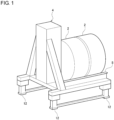
- Fig. 1 is a perspective view of a carried object mounted on the positioning apparatus according to embodiment 1.
- Fig. 2 is a perspective view of a rack restriction apparatus provided with a positioning apparatus.
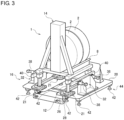
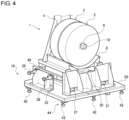
- Figs. 3 and 4 are perspective views showing how the carried object is mounted on the rack restriction apparatus. In Figs. 3 and 4 , illustration of a housing frame body 18 is omitted.
- the positioning apparatus 16 according to this embodiment is used to finely adjust the position of a carried object 1 mounted on a rack restriction apparatus 14.
- the carried object 1 includes, by way of one example, an electrode hoop 2 and an electrode rack 4 for supporting the electrode hoop 2.
- the electrode hoop 2 is produced by winding an electrode plate of a secondary battery around a bobbin, and has a through hole 6 in the center.
- the electrode rack 4 includes a rack body 8, a support shaft 10 projecting from the rack body 8 substantially in the horizontal direction, and a rack leg 12 projecting downward from the rack body 8.
- the electrode rack 4 according to this embodiment includes four rack legs 12.
- the electrode hoop 2 is supported by the electrode rack 4 such that the support shaft 10 is inserted in the through hole 6. In this embodiment, two electrode hoops 2 are supported by one electrode rack 4.
- the weight of the carried object 1 is, for example, 500 kg to 1000 kg.
- the carried object 1 is not limited to the electrode hoop 2 and the electrode rack 4.
- the rack restriction apparatus 14 includes the positioning apparatus 16 and the housing frame body 18.
- the positioning apparatus 16 includes a base plate 20 and a movable part 21.
- the carried object 1 is mounted on the base plate 20.
- the housing frame body 18 is fixed to the upper surface of the base plate 20.
- the housing frame body 18 surrounds the carried object 1 while the carried object 1 is placed on the base plate 20.
- the housing frame body 18 includes an entrance frame 22 and an exit frame 24 opposite to each other.
- the carried object 1 is inserted from the entrance frame 22 and mounted on the base plate 20.
- the end of the support shaft 10 faces the exit frame 24 while the carried object 1 is placed on the base plate 20.
- An arm (not shown) of a robot advances from the exit frame 24 to a position above the base plate 20, grips the electrode hoop 2 of the carried object 1, and dismantles the electrode hoop 2 from the support shaft 10.
- the housing frame body 18 includes a sensor 25 for sensing that the carried object 1 is mounted on the base plate 20.
- the movable part 21 is a floating unit that supports the carried object 1 and is fixed to the upper surface of the base plate 20.
- the movable part 21 includes an upper unit 26 and a lower unit 28.
- the positioning apparatus 16 of this embodiment includes four movable parts 21 to correspond to the four rack legs 12.
- the lower unit 28 of each movable part 21 is supported by the base plate 20.
- the upper unit 26 is mounted on the lower unit 28.
- the rack leg 12 of the electrode rack 4 is mounted on each upper unit 26. Displacement of each upper unit 26 relative to each lower unit 28 finely adjusts the position of the carried object 1.
- the positioning apparatus 16 includes a drawing mechanism 30 and a pair of lateral position adjustment mechanisms 32.
- the drawing mechanism 30 is provided on the side of the base plate 20 opposite to the entrance frame 22, i.e., toward the exit frame 24.
- the drawing mechanism 30 includes, by way of one example, an air cylinder 34 and a catching pawl 36 attached to the end of the piston provided in the air cylinder 34.
- the air cylinder 34 can extend or contract in the direction of advancement of the carried object 1, i.e., in the direction in which the entrance frame 22 and the exit frame 24 are aligned.
- the drawing mechanism 30 can finely adjust the position of the carried object 1 in the direction of advancement of the carried object 1 by catching the catching pawl 36 in the rack body 8 of the carried object 1 mounted on the upper unit 26 to extend or contract the air cylinder 34.
- the pair of lateral position adjustment mechanisms 32 are aligned in a direction (hereinafter, referred to as lateral direction for convenience) orthogonal to the direction of advancement of the carried object 1.
- Each lateral position adjustment mechanism 32 includes, by way of one example, a pair of air cylinders 38 and an extrusion rod 40 attached to the end of the piston provided in each air cylinder 38.
- the air cylinder 38 can extend or contract in the lateral direction.
- the pair of lateral position adjustment mechanisms 32 can finely adjust the position of the carried object 1 in the lateral direction by thrusting the respective extrusion rods 40 against the rack body 8 of the carried object 1 mounted on the upper unit 26 so as to extend or contract each air cylinder 38.
- the extrusion force of one of the lateral position mechanisms 32 is configured to be weaker than that of the other lateral position mechanism 32. This ensures that the lateral position of the carried object 1 is adjusted in a stable manner.
- the base plate 20 includes a leg part 42 that projects from the lower surface.
- the rack restriction apparatus 14 is supported on the floor face by the leg part 42.
- two leg parts 42 are provided at the edges of the base plate 20 toward the entrance frame 22 so as to be aligned in the lateral direction, and three leg parts 42 are provided at the edges toward the exit frame 24 so as to be aligned in the lateral direction.
- Each leg part 42 is formed by an adjuster bolt, etc. and can extend or contract independently. Therefore, leveling adjustment of the electrode rack 4 is possible by adjusting the length of each leg part 42.
- the positioning apparatus 16 has a tilting structure 44.
- the tilting structure 44 of this embodiment is formed by the leg part 42.
- the tilting structure 44 is a mechanism to tilt the movable part 21 relative to the horizontal plane.
- the movable part 21 and the tilting structure 44 will be described in detail.
Landscapes
- Engineering & Computer Science (AREA)
- General Engineering & Computer Science (AREA)
- Mechanical Engineering (AREA)
- Automatic Assembly (AREA)
- Container, Conveyance, Adherence, Positioning, Of Wafer (AREA)
- Details Of Measuring And Other Instruments (AREA)
Description
- The present disclosure relates to a positioning apparatus.
- Recently, industrial robots are used in production lines for various industrial products. A robot is structured such that end effector such as a hand is attached to the end of an arm and can grip a component or a work by means of the end effector. Generally, the operation of a robot is controlled according to position control. When the position of an object gripped is displaced from a preprogrammed target position, therefore, the robot might not be able to grip the object properly. It is therefore desired to finely adjust the position of an object so that the position of the object agrees with the target position. In this background, patent literature 1 discloses a work positioning apparatus capable of finely adjusting the horizontal position of a work.
Patent literature 2 discloses a positioning apparatus reflecting the preamble of present claim 1. Patent literature 3 discloses a device for aligning a table with respect to a base body with a plurality of adjustment elements which act on the periphery of the tiltable table. - [Patent literature 1]
JP2015-111648 - [Patent literature 2]
JP2005-109443 - [Patent literature 3]
DE 40 24 557 - The above-mentioned related-art positioning apparatus is structured such that a table part not carrying a work is returned to the centering position by a volute spring. Therefore, the number of components in the related-art positioning apparatus is large, and the structure thereof is complicated. A larger number of components could lead to a larger size of the positioning apparatus. The manufacturing cost of the positioning apparatus is also increased accordingly. Further, an attempt to reduce the size of the positioning apparatus requires reducing the size of components and could lead to reduced durability of the components and, ultimately, reduced durability of the positioning apparatus.
- An embodiment of the present disclosure relates to a positioning apparatus. The positioning apparatus includes: an upper unit that includes a spherical body, a retainer part that retains the spherical body, and an upper plate part provided on the retainer part and adapted to carry a carried object; a lower unit that includes a lower plate part on which the upper unit is mounted and a guide part that marks a region of movement of the upper unit on the lower plate part; and a tilting structure that tilts the region of movement relative to a horizontal plane and guides the upper unit, on which the carried object is not mounted, toward a reference position located on a lower side of a tilt, the reference position being a position where the carried object (1) is to be mounted on the upper plate part (50); the reference position being a position where the upper unit (26) butts against the guide part (60); the upper unit (26) on which the carried object (1) is not mounted can be returned to the reference position automatically by utilizing gravitational force.
- Optional combinations of the aforementioned constituting elements, and implementations of the present disclosure in the form of methods, devices, systems, etc. may also be practiced as additional modes of the present disclosure.
- According to the present disclosure, the structure of a positioning apparatus is simplified.
-
-
Fig. 1 is a perspective view of a carried object mounted on the positioning apparatus according to embodiment 1; -
Fig. 2 is a perspective view of a rack restriction apparatus provided with a positioning apparatus; -
Fig. 3 is a perspective view showing how the carried object is mounted on the rack restriction apparatus; -
Fig. 4 is a perspective view showing how the carried object is mounted on the rack restriction apparatus; -
Fig. 5 is a perspective view of the movable part provided in the positioning apparatus; -
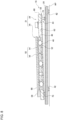
Fig. 6 is a cross-sectional view of the positioning apparatus; -
Fig. 7 is a cross-sectional view of the positioning apparatus according toembodiment 2; -
Fig. 8 is a cross-sectional view of the positioning apparatus according to embodiment 3; -
Fig. 9 is a cross-sectional view of the positioning apparatus according toembodiment 4; -
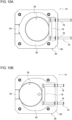
Fig. 10A is a plan view of the positioning apparatus according to embodiment 5; and -
Fig. 10B is a plan view of the positioning apparatus according to embodiment 5. - Hereinafter, the present disclosure will be described based on preferred embodiments with reference to the accompanying drawings. The embodiments are not intended to limit the scope of the present disclosure but exemplify the present disclosure. Not all of the features and the combinations thereof described in the embodiments are necessarily essential to the present disclosure. Identical or like constituting elements, members, processes shown in the drawings are represented by identical symbols and a duplicate description will be omitted as appropriate. The scales and shapes shown in the figures are defined for convenience's sake to make the explanation easy and shall not be interpreted limitatively unless otherwise specified. Terms like "first", "second", etc. used in the specification and claims do not indicate an order or importance by any means unless specified otherwise and are used to distinguish a certain feature from the others. Those of the members that are not important in describing the embodiment are omitted from the drawings.
-
Fig. 1 is a perspective view of a carried object mounted on the positioning apparatus according to embodiment 1.Fig. 2 is a perspective view of a rack restriction apparatus provided with a positioning apparatus.Figs. 3 and4 are perspective views showing how the carried object is mounted on the rack restriction apparatus. InFigs. 3 and4 , illustration of ahousing frame body 18 is omitted. Thepositioning apparatus 16 according to this embodiment is used to finely adjust the position of a carried object 1 mounted on arack restriction apparatus 14. - The carried object 1 includes, by way of one example, an
electrode hoop 2 and anelectrode rack 4 for supporting theelectrode hoop 2. Theelectrode hoop 2 is produced by winding an electrode plate of a secondary battery around a bobbin, and has a throughhole 6 in the center. Theelectrode rack 4 includes arack body 8, asupport shaft 10 projecting from therack body 8 substantially in the horizontal direction, and arack leg 12 projecting downward from therack body 8. Theelectrode rack 4 according to this embodiment includes fourrack legs 12. Theelectrode hoop 2 is supported by theelectrode rack 4 such that thesupport shaft 10 is inserted in the throughhole 6. In this embodiment, twoelectrode hoops 2 are supported by oneelectrode rack 4. The weight of the carried object 1 is, for example, 500 kg to 1000 kg. The carried object 1 is not limited to theelectrode hoop 2 and theelectrode rack 4. - The
rack restriction apparatus 14 includes thepositioning apparatus 16 and thehousing frame body 18. Thepositioning apparatus 16 includes abase plate 20 and amovable part 21. The carried object 1 is mounted on thebase plate 20. Thehousing frame body 18 is fixed to the upper surface of thebase plate 20. Thehousing frame body 18 surrounds the carried object 1 while the carried object 1 is placed on thebase plate 20. - The
housing frame body 18 includes anentrance frame 22 and anexit frame 24 opposite to each other. The carried object 1 is inserted from theentrance frame 22 and mounted on thebase plate 20. The end of thesupport shaft 10 faces theexit frame 24 while the carried object 1 is placed on thebase plate 20. An arm (not shown) of a robot advances from theexit frame 24 to a position above thebase plate 20, grips theelectrode hoop 2 of the carried object 1, and dismantles theelectrode hoop 2 from thesupport shaft 10. Thehousing frame body 18 includes asensor 25 for sensing that the carried object 1 is mounted on thebase plate 20. - The
movable part 21 is a floating unit that supports the carried object 1 and is fixed to the upper surface of thebase plate 20. Themovable part 21 includes anupper unit 26 and alower unit 28. Thepositioning apparatus 16 of this embodiment includes fourmovable parts 21 to correspond to the fourrack legs 12. Thelower unit 28 of eachmovable part 21 is supported by thebase plate 20. Theupper unit 26 is mounted on thelower unit 28. Therack leg 12 of theelectrode rack 4 is mounted on eachupper unit 26. Displacement of eachupper unit 26 relative to eachlower unit 28 finely adjusts the position of the carried object 1. - The
positioning apparatus 16 includes adrawing mechanism 30 and a pair of lateralposition adjustment mechanisms 32. Thedrawing mechanism 30 is provided on the side of thebase plate 20 opposite to theentrance frame 22, i.e., toward theexit frame 24. Thedrawing mechanism 30 includes, by way of one example, anair cylinder 34 and a catchingpawl 36 attached to the end of the piston provided in theair cylinder 34. Theair cylinder 34 can extend or contract in the direction of advancement of the carried object 1, i.e., in the direction in which theentrance frame 22 and theexit frame 24 are aligned. Thedrawing mechanism 30 can finely adjust the position of the carried object 1 in the direction of advancement of the carried object 1 by catching the catchingpawl 36 in therack body 8 of the carried object 1 mounted on theupper unit 26 to extend or contract theair cylinder 34. - The pair of lateral
position adjustment mechanisms 32 are aligned in a direction (hereinafter, referred to as lateral direction for convenience) orthogonal to the direction of advancement of the carried object 1. Each lateralposition adjustment mechanism 32 includes, by way of one example, a pair ofair cylinders 38 and anextrusion rod 40 attached to the end of the piston provided in eachair cylinder 38. Theair cylinder 38 can extend or contract in the lateral direction. The pair of lateralposition adjustment mechanisms 32 can finely adjust the position of the carried object 1 in the lateral direction by thrusting therespective extrusion rods 40 against therack body 8 of the carried object 1 mounted on theupper unit 26 so as to extend or contract eachair cylinder 38. For example, the extrusion force of one of thelateral position mechanisms 32 is configured to be weaker than that of the otherlateral position mechanism 32. This ensures that the lateral position of the carried object 1 is adjusted in a stable manner. - The
base plate 20 includes aleg part 42 that projects from the lower surface. Therack restriction apparatus 14 is supported on the floor face by theleg part 42. In this embodiment, twoleg parts 42 are provided at the edges of thebase plate 20 toward theentrance frame 22 so as to be aligned in the lateral direction, and threeleg parts 42 are provided at the edges toward theexit frame 24 so as to be aligned in the lateral direction. Eachleg part 42 is formed by an adjuster bolt, etc. and can extend or contract independently. Therefore, leveling adjustment of theelectrode rack 4 is possible by adjusting the length of eachleg part 42. - The
positioning apparatus 16 has a tiltingstructure 44. The tiltingstructure 44 of this embodiment is formed by theleg part 42. The tiltingstructure 44 is a mechanism to tilt themovable part 21 relative to the horizontal plane. Themovable part 21 and the tiltingstructure 44 will be described in detail. -
Fig. 5 is a perspective view of themovable part 21 provided in thepositioning apparatus 16.Fig. 6 is a cross-sectional view of thepositioning apparatus 16. As described above, themovable part 21 includes theupper unit 26 and thelower unit 28. Theupper unit 26 includes aspherical body 46, aretainer part 48, and anupper plate part 50. - The
spherical body 46 is a high-rigidity ball formed by, for example, a steel ball. Theupper unit 26 of this embodiment includes a plurality ofspherical bodies 46. The plurality ofspherical bodies 46 are arranged at predetermined intervals in a plan view. Theretainer part 48 is a plate body extending in parallel to thebase plate 20 and includes a plurality of throughholes 52 connecting two opposite principal surfaces. Thespherical body 46 is housed in each throughhole 52. This ensures that the plurality ofspherical bodies 46 are retained by theretainer part 48. - The
upper plate part 50 is provided on theretainer part 48. For example, theupper plate part 50 is fixed to the upper surface of theretainer part 48. The carried object 1 is mounted on the upper surface of theupper plate part 50. Theupper plate part 50 of this embodiment is structured such that atop plate 56 is mounted on a high-rigidity plate 54 formed by a hardened plate, etc. Further, theupper plate part 50 is circular in a plan view. The opening above each throughhole 52 is blocked by the high-rigidity plate 54. Therefore, thespherical body 46 is in contact with the high-rigidity plate 54. Theretainer part 48 and theupper plate part 50 may be formed by the same member and integrated with each other. - The
lower unit 28 includes alower plate part 58 and aguide part 60. Thelower plate part 58 is formed by, for example, a high-rigidity plate such as a hardened plate and is fixed to the upper surface of thebase plate 20. Theupper unit 26 is mounted on thelower plate part 58. In this state, thespherical body 46 is in contact with the upper surface of thelower plate part 58. Theupper unit 26 can move on the upper surface of thelower unit 28 as thespherical body 46 rolls on the upper surface of thelower plate part 58. - The central region on the upper surface of the
lower plate part 58 forms a region ofmovement 62 of theupper unit 26. Theupper unit 26 can move within the region ofmovement 62. Theguide part 60 has a frame shape and marks the region ofmovement 62 by being fixed to the upper surface of thelower plate part 58. Theguide part 60 extends on the peripheral part of the upper surface of thelower plate part 58 and surrounds the outer circumference of the region ofmovement 62. The region ofmovement 62 of this embodiment is circular in a plan view. Theupper unit 26 is restricted from moving outside the region ofmovement 62 by butting against theguide part 60. Thelower plate part 58 and theguide part 60 may be formed by the same member and integrated with each other. - The tilting
structure 44 tilts the region ofmovement 62 relative to the horizontal plane HP and guides theupper unit 26 on which the carried object 1 is not mounted toward the reference position located on the lower side of the tilt.Fig. 6 shows that theupper unit 26 is located at the reference position. The horizontal plane HP is the plane of installation of thepositioning apparatus 16 or therack restriction apparatus 14 or the floor face. Providing a tilt in the region ofmovement 62 allows theupper unit 26, on which the carried object 1 is not mounted and to which a load is not exerted from outside, to move toward the lower side of the tilt under its own weight. Theupper unit 26 moves downs the tilt of the region ofmovement 62 and comes to a stop at a position where it butts against theguide part 60. The position represents the reference position. The tilting angle of the region ofmovement 62 relative to the horizontal plane HP is, for example, 0.5 degrees. - As described above, the tilting
structure 44 is formed by theleg part 42. By configuring someleg parts 42 of the tiltingstructure 44 to be longer than theother leg parts 42, thebase plate 20 is tilted relative to the horizontal plane HP. Since thelower plate part 58 is fixed to the upper surface of thebase plate 20, the entirety of thelower plate part 58, including the region ofmovement 62, can be tilted by tilting thebase plate 20. The tiltingstructure 44 of this embodiment tilts thebase plate 20 by extending theleg part 42 provided toward theexit frame 24 farther than theleg part 42 provided toward theentrance frame 22. Therefore, theupper unit 26 is nearer theentrance frame 22 as shown inFig. 2 . In thepositioning apparatus 16 of this embodiment, therefore, the reference position is eccentrically located toward the upstream side in the direction of advancement of the carried object 1. - Tilting the
base plate 20 such that theexit frame 24 is higher and theentrance frame 22 is lower ensures that the end of thesupport shaft 10 is higher than the base thereof. This restricts theelectrode hoop 2 from being dislodged from thesupport shaft 10 while the carried object 1 is mounted on therack restriction apparatus 14. - The
positioning apparatus 16 includes afirst attraction member 64 and asecond attraction member 66 that attract each other by a magnetic force. At least one of thefirst attraction member 64 and thesecond attraction member 66 is a magnet (permanent magnet) or an electromagnet, and the other is a magnet, an electromagnet, or a ferromagnetic body. Materials forming thefirst attraction member 64 and thesecond attraction member 66 are exemplified by a hard magnetic body such as a neodymium-iron-boron magnet, a ferrite magnet, and an alnico magnet, and a soft magnetic body such as a magnetic steel sheet, a magnetic stainless steel, sendust, and a soft magnetic composite (SMC). - The
first attraction member 64 is provided in a region in thelower unit 28 on the lower side of the tilt. In other words, thefirst attraction member 64 is provided near the reference position. In this embodiment, thefirst attraction member 64 is fixed to theguide part 60. Thesecond attraction member 66 is provided in a region in theupper unit 26 on the lower side of the tilt. In this embodiment, thesecond attraction member 66 is provided in theupper unit 26 such that thetop plate 56 is formed by thesecond attraction member 66. The entirety of thetop plate 56 may be formed by thesecond attraction member 66, or only a region in thetop plate 56 on the lower side of the tilt may be formed by thesecond attraction member 66. Alternatively, thesecond attraction member 66 may be provided in theretainer part 48 or the high-rigidity plate 54. - The region in the
lower unit 28 on the lower side of the tilt is a region that includes a part closest to theentrance frame 22 in the region of movement 62 (circular in a plan view). Further, the region in theupper unit 26 on the lower side of the tilt is a region that includes a part closest to theentrance frame 22 in the second attraction member 66 (circular in a plan view). Thefirst attraction member 64 and thesecond attraction member 66 are provided such that they are opposite to other while theupper unit 26 is at the reference position. This allows theupper unit 26 to remain at the reference position in a stable manner. - As described above, the
positioning apparatus 16 according to this embodiment includes theupper unit 26, thelower unit 28, and the tiltingstructure 44. Theupper unit 26 includes thespherical body 46, theretainer part 48 that retains thespherical body 46, and theupper plate part 50 provided on theretainer part 48 and adapted to carry the carried object 1. Thelower unit 28 includes thelower plate part 58 on which theupper unit 26 is mounted and theguide part 60 that marks the region ofmovement 62 of theupper unit 26 on the upper surface of thelower plate part 58. The tiltingstructure 44 tilts the region ofmovement 62 relative to the horizontal plane HP and guides theupper unit 26 on which the carried object 1 is not provided toward the reference position located on the lower side of the tilt. - According to the
positioning apparatus 16 of this embodiment, theupper unit 26 on which the carried object 1 is not mounted can be returned to the reference position automatically by utilizing the gravitational force exerted on theupper unit 26. This helps reduce the number of components constituting thepositioning apparatus 16 and simplify the structure. Further, the size and the manufacturing cost of thepositioning apparatus 16 can be reduced. Further, the durability of thepositioning apparatus 16 can be increased. Theupper unit 26 always remains at the reference position when the carried object 1 is mounted on therack restriction apparatus 14. Therefore, variation in the range of positions of the carried object 1 that can be adjusted by thepositioning apparatus 16 is avoided. - Further, the
positioning apparatus 16 includes thebase plate 20 that supports thelower unit 28. Thebase plate 20 includes theleg part 42 that projects from the lower surface, and the tiltingstructure 44 is formed by theleg part 42. This makes it possible to provide a tilt in the region ofmovement 62 with a simple structure. - Further, the
positioning apparatus 16 includes thefirst attraction member 64 and thesecond attraction member 66 that attract each other by a magnetic force. Thefirst attraction member 64 is provided in the region in thelower unit 28 on the lower side of the tilt, and thesecond attraction member 66 is provided in the region in theupper unit 26 on the lower side of the tilt. This can maintain a state in which theupper unit 26 remains at the reference position in a stable manner. -
Embodiment 2 shares common features with embodiment 1 except for the tiltingstructure 44. The following description of this embodiment highlights features different from those of embodiment 1, and the description of the common features will be simplified or omitted.Fig. 7 is a cross-sectional view of thepositioning apparatus 16 according toembodiment 2. - The
positioning apparatus 16 includes theupper unit 26 that includes thespherical body 46, theretainer part 48 and theupper plate part 50, thelower unit 28 that includes thelower plate part 58 and theguide part 60, and the tiltingstructure 44 that tilts the region ofmovement 62 relative to the horizontal plane HP to guide theupper unit 26 toward the reference position. Further, thepositioning apparatus 16 includes thebase plate 20 that supports thelower unit 28. - The
base plate 20 of this embodiment includes a gradedchange part 68 in which thethickness 20T of the part that overlaps the region ofmovement 62 in the vertical direction is progressively smaller from one end of the region ofmovement 62 toward the other. In this embodiment, thethickness 20T is progressively smaller from the side of theexit frame 24 toward theentrance frame 22 over the entirety of thebase plate 20. Therefore, the gradedchange part 68 is provided over the entirety of thebase plate 20. Provision of the gradedchange part 68 tilts the upper surface of thebase plate 20 relative to the horizontal plane HP. Thelower plate part 58 is fixed to the upper surface of thebase plate 20 so that the gradedchange part 68 also tilts the region ofmovement 62. Therefore, the tiltingstructure 44 of this embodiment is formed by the gradedchange part 68. The feature provides the same advantage as that of embodiment 1. - Embodiment 3 shares common features with embodiment 1 except for the tilting
structure 44. The following description of this embodiment highlights features different from those of embodiment 1, and the description of the common features will be simplified or omitted.Fig. 8 is a cross-sectional view of thepositioning apparatus 16 according to embodiment 3. - The
positioning apparatus 16 includes theupper unit 26 that includes thespherical body 46, theretainer part 48 and theupper plate part 50, thelower unit 28 that includes thelower plate part 58 and theguide part 60, and the tiltingstructure 44 that tilts the region ofmovement 62 relative to the horizontal plane HP to guide theupper unit 26 toward the reference position. - The
lower unit 28 of this embodiment includes aleg part 70 that projects downward. By way of one example, theleg part 70 projects downward from the lower surface of thelower plate part 58. Further, a plurality ofleg parts 70 are provided at each of the edge of thelower plate part 58 toward theentrance frame 22 and the edge toward theexit frame 24. Like theleg part 42, eachleg part 70 is formed by an adjuster bolt, etc. and can extend or contract independently. The tiltingstructure 44 of this embodiment is formed by theleg part 70. By configuring someleg parts 70 of the tiltingstructure 44 to be longer than theother leg parts 70, the region ofmovement 62 is tilted relative to the horizontal plane HP. The feature provides the same advantage as that of embodiment 1. -
Embodiment 4 shares common features with embodiment 1 except for the tiltingstructure 44. The following description of this embodiment highlights features different from those of embodiment 1, and the description of the common features will be simplified or omitted.Fig. 9 is a cross-sectional view of thepositioning apparatus 16 according toembodiment 4. - The
positioning apparatus 16 includes theupper unit 26 that includes thespherical body 46, theretainer part 48 and theupper plate part 50, thelower unit 28 that includes thelower plate part 58 and theguide part 60, and the tiltingstructure 44 that tilts the region ofmovement 62 relative to the horizontal plane HP to guide theupper unit 26 toward the reference position. - The
lower plate part 58 of this embodiment includes a gradedchange part 72 in which thethickness 58T of the part that includes the region ofmovement 62 is progressively smaller from one end of the region ofmovement 62 toward the other. In this embodiment, thethickness 58T is progressively smaller from the side of theexit frame 24 toward the side of theentrance frame 22 over the entirety of thelower plate part 58. Therefore, the gradedchange part 72 is provided over the entirety of thelower plate part 58. Provision of the gradedchange part 72 tilts the region ofmovement 62 relative to the horizontal plane HP. Therefore, the tiltingstructure 44 of this embodiment is formed by the gradedchange part 72. The feature provides the same advantage as that of embodiment 1. - Embodiment 5 shares common features with embodiment 1 except that a biasing part is provided. The following description of this embodiment highlights features different from those of embodiment 1, and the description of the common features will be simplified or omitted.
Figs. 10A and 10B are plan views of thepositioning apparatus 16 according to embodiment 5.Fig. 10A shows a state in which the carried object 1 (not shown) is mounted on theupper unit 26, andFig. 10 B shows a state in which the carried object 1 is not mounted on theupper unit 26. - The
positioning apparatus 16 includes theupper unit 26 that includes thespherical body 46, theretainer part 48 and theupper plate part 50, thelower unit 28 that includes thelower plate part 58 and theguide part 60, and the tiltingstructure 44 that tilts the region ofmovement 62 relative to the horizontal plane HP to guide theupper unit 26 toward the reference position. Further, thepositioning apparatus 16 includes thebase plate 20 that supports thelower unit 28. - The
positioning apparatus 16 of this embodiment includes a biasingpart 74 that biases theupper unit 26 toward the reference position. The biasingpart 74 includes, by way of one example, a pair ofspring cylinders 76 and a biasingplate 78 attached to the end of the pair ofspring cylinders 76. Eachspring cylinder 76 is slidably fixed to a region in theguide part 60 toward the exit frame 24 (the upper side of the tilt). The end of eachspring cylinder 76 can advance and recede relative to the region ofmovement 62, and the built-in coil spring (not shown) biases the end in the direction of advancement toward the region ofmovement 62. The biasingplate 78 comes into contact with the side surface of theupper unit 26 and biases theupper unit 26 toward the entrance frame 22 (the lower side of the tilt) by a biasing force of thespring cylinder 76. - When the carried object 1 is mounted on the
positioning apparatus 16 and is drawn by thedrawing mechanism 30 toward theexit frame 24, theupper unit 26 is displaced toward theexit frame 24 against the biasing force of the spring cylinder 6 (Fig. 10A ). When the carried object 1 is removed from thepositioning apparatus 16, theupper unit 16 is pressed by the biasingplate 78 toward the reference position (Fig. 10B ). This ensures that theupper unit 26 is guided toward the reference position more properly. - Embodiments of the present disclosure have been described above in detail. The embodiments described above are merely specific examples of practicing the present disclosure. The details of the embodiments shall not be construed as limiting the technical scope of the present disclosure. A number of design modifications such as modification, addition, deletion, etc. of constituting elements may be made to the extent that they do not depart from the idea of the invention defined by the claims. New embodiments with design modifications will provide the combined advantages of the embodiment and the variation. Although the details subject to such design modification are emphasized in the embodiments by using phrases such as "of this embodiment" and "in this embodiment", details not referred to as such are also subject to design modification. Any combination of constituting elements included in the respective embodiments is also useful as an embodiment of the present disclosure. Hatching in the cross section in the drawings should not be construed as limiting the material of the hatched object.
-
- 1 carried object
- 16 positioning apparatus
- 20 base plate
- 26 upper unit
- 28 lower unit
- 42 leg part
- 44 tilting structure
- 46 spherical body
- 48 retainer part
- 50 upper plate part
- 58 lower plate part
- 60 guide part
- 62 region of movement
- 64 first suction part
- 66 second suction part
- 68 graded change part
- 70 leg part
- 72 graded change part
- 74 biasing part
Claims (7)
- A positioning apparatus (16) comprising:an upper unit (26) that includes a spherical body (46), a retainer part (48) that retains the spherical body (46), and an upper plate part (50) provided on the retainer part (48) and adapted to carry a carried object (1);a lower unit (28) that includes a lower plate part (58) on which the upper unit (26) is mounted and a guide part (60) that marks a region of movement (62) of the upper unit (26) on the lower plate part (58);characterized in that the positing apparatus further comprisesa tilting structure (44) that tilts the region of movement (62) relative to a horizontal plane (HP) and guides the upper unit (26), on which the carried object (1) is not mounted, toward a reference position located on a lower side of a tilt, the reference position being a position where the carried object (1) is to be mounted on the upper plate part (50); the reference position being a position where the upper unit (26) butts against the guide part (60); the upper unit (26) on which the carried object (1) is not mounted can be returned to the reference position automatically by utilizing gravitational force.
- The positioning apparatus (16) according to claim 1, further comprising a base plate (20) that supports the lower unit (28), whereinthe base plate (20) includes a leg part (42) that projects from a lower surface, andthe tilting structure (44) is formed by the leg part (42) of the base plate (20).
- The positioning apparatus (16) according to claim 1 or 2, further comprising a base plate (20) that supports the lower unit (28), whereinthe base plate (20) includes a graded change part (68) in which a thickness (20T) of a part that overlaps the region of movement (62) in a vertical direction is progressively smaller from one end of the region of movement (62) toward the other, andthe tilting structure (44) is formed by the graded change part (68) of the baes plate (20).
- The positioning apparatus (16) according to any one of claims 1 through 3, whereinthe lower unit (28) includes a leg part (70) that projects downward, andthe tilting structure (44) is formed by the leg part (70) of the lower unit (28).
- The positioning apparatus (16) according to any one of claims 1 through 4, whereinthe lower plate part (58) includes a graded change part (72) in which a thickness (58T) of a part that includes the region of movement (62) is progressively smaller from one end of the region of movement (62) toward the other, andthe tilting structure (44) is formed by the graded change part (72) of the lower plate part (58).
- The positioning apparatus (16) according to any one of claims 1 through 5, whereinthe positioning apparatus (16) includes a first attraction member (64) and a second attraction member (66) that attract each other by a magnetic force,the first attraction member (64) is provided in a region in the lower unit (28) on a lower side of the tilt, andthe second attraction member (66) is provided in a region in the upper unit (26) on a lower side of the tilt.
- The positioning apparatus (16) according to any one of claims 1 through 6, further comprising a biasing part (74) that biases the upper unit (26) toward the reference position.
Applications Claiming Priority (2)
| Application Number | Priority Date | Filing Date | Title |
|---|---|---|---|
| JP2019204647 | 2019-11-12 | ||
| PCT/JP2020/032982 WO2021095327A1 (en) | 2019-11-12 | 2020-09-01 | Positioning device |
Publications (3)
| Publication Number | Publication Date |
|---|---|
| EP4060671A1 EP4060671A1 (en) | 2022-09-21 |
| EP4060671A4 EP4060671A4 (en) | 2023-01-04 |
| EP4060671B1 true EP4060671B1 (en) | 2025-04-02 |
Family
ID=75911425
Family Applications (1)
| Application Number | Title | Priority Date | Filing Date |
|---|---|---|---|
| EP20887791.0A Active EP4060671B1 (en) | 2019-11-12 | 2020-09-01 | Positioning device |
Country Status (5)
| Country | Link |
|---|---|
| US (1) | US11879587B2 (en) |
| EP (1) | EP4060671B1 (en) |
| JP (1) | JP7486093B2 (en) |
| CN (1) | CN114641827B (en) |
| WO (1) | WO2021095327A1 (en) |
Families Citing this family (1)
| Publication number | Priority date | Publication date | Assignee | Title |
|---|---|---|---|---|
| CN216071927U (en) * | 2021-11-15 | 2022-03-18 | 宁德时代新能源科技股份有限公司 | Positioning devices and systems |
Family Cites Families (30)
| Publication number | Priority date | Publication date | Assignee | Title |
|---|---|---|---|---|
| JPS58109238A (en) * | 1981-12-21 | 1983-06-29 | Mitsutoyo Mfg Co Ltd | Positioning table device |
| US4749867A (en) * | 1985-04-30 | 1988-06-07 | Canon Kabushiki Kaisha | Exposure apparatus |
| JP2631392B2 (en) * | 1988-06-30 | 1997-07-16 | キヤノン株式会社 | Positioning device |
| DE4024557A1 (en) * | 1990-08-02 | 1992-02-06 | Heidenhain Gmbh Dr Johannes | Adjustment arrangement for table w.r.t base body - has adjustment elements arranged concentrically about centre of table, acting tangentially to spherical bearing |
| US6112917A (en) * | 1998-11-23 | 2000-09-05 | Denstor Mobile Storage Systems, Inc. | Moveable file storage supporting apparatus |
| JP3066895B2 (en) * | 1998-12-10 | 2000-07-17 | 株式会社東京精密 | Microscope tilt mechanism |
| JP4501174B2 (en) * | 1999-05-31 | 2010-07-14 | ソニー株式会社 | Substrate positioning device and substrate bonding device |
| JP2001253536A (en) * | 2000-03-09 | 2001-09-18 | Hirata Corp | Substrate transfer robot device |
| JP2004151839A (en) * | 2002-10-29 | 2004-05-27 | Matsushita Electric Ind Co Ltd | Positioning table |
| JP4226955B2 (en) * | 2003-06-13 | 2009-02-18 | 大日本スクリーン製造株式会社 | Substrate positioning device |
| JP4443343B2 (en) * | 2003-09-12 | 2010-03-31 | 株式会社井口機工製作所 | Positioning stage support unit and its mounting structure |
| JP4476764B2 (en) * | 2004-03-26 | 2010-06-09 | 富士フイルム株式会社 | Substrate bonding apparatus and method |
| JP4895518B2 (en) * | 2005-03-22 | 2012-03-14 | オリンパス株式会社 | Substrate holding device and substrate holding method |
| JP2006329895A (en) * | 2005-05-30 | 2006-12-07 | Dainippon Screen Mfg Co Ltd | Substrate measuring device |
| DE102005056449A1 (en) * | 2005-11-26 | 2007-08-02 | Alfing Kessler Sondermaschinen Gmbh | Workpiece holding device and processing machine equipped therewith |
| JP4797025B2 (en) * | 2005-12-13 | 2011-10-19 | 高千穂 武田 | Carrying material positioning device |
| JP4882368B2 (en) * | 2005-12-27 | 2012-02-22 | ウシオ電機株式会社 | Stage equipment |
| US7516934B2 (en) * | 2006-02-24 | 2009-04-14 | Bio-Rad Laboratories, Inc. | Sample plate support of adjustable angular orientation |
| TWI457193B (en) * | 2006-03-02 | 2014-10-21 | 住友重機械工業股份有限公司 | Stage device |
| JPWO2009113317A1 (en) * | 2008-03-13 | 2011-07-21 | 株式会社ニコン | Substrate holder, substrate holder unit, substrate transfer device, and substrate bonding device |
| JP5488037B2 (en) * | 2010-02-23 | 2014-05-14 | 村田機械株式会社 | Transfer device and work placement device |
| JP5720186B2 (en) * | 2010-11-04 | 2015-05-20 | 株式会社Ihi | Workpiece transfer device |
| US8813338B2 (en) * | 2011-03-11 | 2014-08-26 | Varian Semiconductor Equipment Associates, Inc. | Workpiece alignment device |
| JP6304536B2 (en) | 2013-10-16 | 2018-04-04 | Smc株式会社 | Work positioning device |
| JP5666041B1 (en) * | 2013-10-17 | 2015-02-04 | 株式会社エムエイチセンター | R-θ table device and female thread processing device |
| DE102016106936A1 (en) * | 2016-04-14 | 2017-10-19 | F. Zimmermann Gmbh | Positioning device, in particular tool positioning device, for a machining center and machining center with this |
| US10337667B2 (en) * | 2016-07-11 | 2019-07-02 | Dyno Equipment, Inc. | Modular motorized slider system |
| JP2019010692A (en) * | 2017-06-29 | 2019-01-24 | 日本電産サンキョー株式会社 | Hand for industrial robot and industrial robot |
| US11014216B2 (en) * | 2017-10-27 | 2021-05-25 | Aida Engineering, Ltd. | Workpiece holding tool changing system for a workpiece conveying apparatus of a transfer press machine |
| US11630374B2 (en) * | 2018-01-09 | 2023-04-18 | Light-Path, Llc | Production equipment support assembly |
-
2020
- 2020-09-01 EP EP20887791.0A patent/EP4060671B1/en active Active
- 2020-09-01 US US17/775,476 patent/US11879587B2/en active Active
- 2020-09-01 WO PCT/JP2020/032982 patent/WO2021095327A1/en not_active Ceased
- 2020-09-01 JP JP2021555910A patent/JP7486093B2/en active Active
- 2020-09-01 CN CN202080076033.8A patent/CN114641827B/en active Active
Also Published As
| Publication number | Publication date |
|---|---|
| US20220397231A1 (en) | 2022-12-15 |
| WO2021095327A1 (en) | 2021-05-20 |
| US11879587B2 (en) | 2024-01-23 |
| JP7486093B2 (en) | 2024-05-17 |
| JPWO2021095327A1 (en) | 2021-05-20 |
| EP4060671A1 (en) | 2022-09-21 |
| CN114641827A (en) | 2022-06-17 |
| CN114641827B (en) | 2023-03-07 |
| EP4060671A4 (en) | 2023-01-04 |
Similar Documents
| Publication | Publication Date | Title |
|---|---|---|
| US8973910B2 (en) | Positioning apparatus | |
| KR102080447B1 (en) | Kinematic holding system for a placement head of a placement apparatus | |
| EP4060671B1 (en) | Positioning device | |
| US10111797B2 (en) | Device for height adjustment of an operating table | |
| US8544830B2 (en) | Magnetic clamp | |
| JP6464128B2 (en) | Work fixing device | |
| CN105229363A (en) | Supporting foot | |
| JP2009113200A (en) | Work positioning device | |
| KR101747664B1 (en) | Apparatus for controlling position of material | |
| US20140251298A1 (en) | Grinding wheel machining device | |
| JP2016171126A (en) | Substrate support device, electronic component mounting device | |
| JP2014104478A (en) | Die device | |
| JP5950604B2 (en) | Work holder and work set method | |
| JP7671188B2 (en) | Grip device and component mounting device | |
| JP2010132369A (en) | Carried object positioning device | |
| CN114654499B (en) | A variable stiffness passive compliance device for industrial robots and a collaborative assembly method | |
| JP6223728B2 (en) | Support jig | |
| JP2025045909A (en) | Robot system, control method for robot system, moving trestle, control method for moving trestle, article manufacturing method, program, and recording medium | |
| JP6305249B2 (en) | Stage equipment | |
| US10081893B2 (en) | Computer-controlled sewing machine positioning system integrated with processing device, and positioning method thereof | |
| US20240207988A1 (en) | Workpiece holding device and workpiece holding method | |
| JP2021079501A (en) | Assembling device, and manufacturing method of article | |
| JP7237312B2 (en) | jig | |
| US20240269893A1 (en) | Brick loading/unloading apparatus and method | |
| CN120962266B (en) | A welding fixture for a shock absorber oil reservoir |
Legal Events
| Date | Code | Title | Description |
|---|---|---|---|
| STAA | Information on the status of an ep patent application or granted ep patent |
Free format text: STATUS: THE INTERNATIONAL PUBLICATION HAS BEEN MADE |
|
| PUAI | Public reference made under article 153(3) epc to a published international application that has entered the european phase |
Free format text: ORIGINAL CODE: 0009012 |
|
| STAA | Information on the status of an ep patent application or granted ep patent |
Free format text: STATUS: REQUEST FOR EXAMINATION WAS MADE |
|
| 17P | Request for examination filed |
Effective date: 20220426 |
|
| AK | Designated contracting states |
Kind code of ref document: A1 Designated state(s): AL AT BE BG CH CY CZ DE DK EE ES FI FR GB GR HR HU IE IS IT LI LT LU LV MC MK MT NL NO PL PT RO RS SE SI SK SM TR |
|
| A4 | Supplementary search report drawn up and despatched |
Effective date: 20221202 |
|
| RIC1 | Information provided on ipc code assigned before grant |
Ipc: H01M 4/00 20060101ALI20221128BHEP Ipc: H01L 21/67 20060101ALI20221128BHEP Ipc: G12B 5/00 20060101AFI20221128BHEP |
|
| DAV | Request for validation of the european patent (deleted) | ||
| DAX | Request for extension of the european patent (deleted) | ||
| GRAP | Despatch of communication of intention to grant a patent |
Free format text: ORIGINAL CODE: EPIDOSNIGR1 |
|
| STAA | Information on the status of an ep patent application or granted ep patent |
Free format text: STATUS: GRANT OF PATENT IS INTENDED |
|
| RIC1 | Information provided on ipc code assigned before grant |
Ipc: H01M 10/48 20060101ALN20241108BHEP Ipc: H01M 10/04 20060101ALN20241108BHEP Ipc: H01M 4/139 20100101ALN20241108BHEP Ipc: H01F 7/02 20060101ALN20241108BHEP Ipc: F16M 7/00 20060101ALI20241108BHEP Ipc: F16P 1/00 20060101ALI20241108BHEP Ipc: H01M 4/00 20060101ALI20241108BHEP Ipc: H01L 21/67 20060101ALI20241108BHEP Ipc: G12B 5/00 20060101AFI20241108BHEP |
|
| INTG | Intention to grant announced |
Effective date: 20241125 |
|
| GRAS | Grant fee paid |
Free format text: ORIGINAL CODE: EPIDOSNIGR3 |
|
| P01 | Opt-out of the competence of the unified patent court (upc) registered |
Free format text: CASE NUMBER: APP_2636/2025 Effective date: 20250116 |
|
| GRAA | (expected) grant |
Free format text: ORIGINAL CODE: 0009210 |
|
| STAA | Information on the status of an ep patent application or granted ep patent |
Free format text: STATUS: THE PATENT HAS BEEN GRANTED |
|
| P01 | Opt-out of the competence of the unified patent court (upc) registered |
Free format text: CASE NUMBER: APP_2636/2025 Effective date: 20250116 |
|
| AK | Designated contracting states |
Kind code of ref document: B1 Designated state(s): AL AT BE BG CH CY CZ DE DK EE ES FI FR GB GR HR HU IE IS IT LI LT LU LV MC MK MT NL NO PL PT RO RS SE SI SK SM TR |
|
| REG | Reference to a national code |
Ref country code: GB Ref legal event code: FG4D |
|
| REG | Reference to a national code |
Ref country code: CH Ref legal event code: EP |
|
| REG | Reference to a national code |
Ref country code: DE Ref legal event code: R096 Ref document number: 602020048898 Country of ref document: DE |
|
| REG | Reference to a national code |
Ref country code: IE Ref legal event code: FG4D |
|
| REG | Reference to a national code |
Ref country code: NL Ref legal event code: MP Effective date: 20250402 |
|
| PG25 | Lapsed in a contracting state [announced via postgrant information from national office to epo] |
Ref country code: NL Free format text: LAPSE BECAUSE OF FAILURE TO SUBMIT A TRANSLATION OF THE DESCRIPTION OR TO PAY THE FEE WITHIN THE PRESCRIBED TIME-LIMIT Effective date: 20250402 |
|
| REG | Reference to a national code |
Ref country code: AT Ref legal event code: MK05 Ref document number: 1782127 Country of ref document: AT Kind code of ref document: T Effective date: 20250402 |
|
| PG25 | Lapsed in a contracting state [announced via postgrant information from national office to epo] |
Ref country code: FI Free format text: LAPSE BECAUSE OF FAILURE TO SUBMIT A TRANSLATION OF THE DESCRIPTION OR TO PAY THE FEE WITHIN THE PRESCRIBED TIME-LIMIT Effective date: 20250402 Ref country code: PT Free format text: LAPSE BECAUSE OF FAILURE TO SUBMIT A TRANSLATION OF THE DESCRIPTION OR TO PAY THE FEE WITHIN THE PRESCRIBED TIME-LIMIT Effective date: 20250804 Ref country code: ES Free format text: LAPSE BECAUSE OF FAILURE TO SUBMIT A TRANSLATION OF THE DESCRIPTION OR TO PAY THE FEE WITHIN THE PRESCRIBED TIME-LIMIT Effective date: 20250402 |
|
| PGFP | Annual fee paid to national office [announced via postgrant information from national office to epo] |
Ref country code: DE Payment date: 20250919 Year of fee payment: 6 |
|
| REG | Reference to a national code |
Ref country code: LT Ref legal event code: MG9D |
|
| PG25 | Lapsed in a contracting state [announced via postgrant information from national office to epo] |
Ref country code: NO Free format text: LAPSE BECAUSE OF FAILURE TO SUBMIT A TRANSLATION OF THE DESCRIPTION OR TO PAY THE FEE WITHIN THE PRESCRIBED TIME-LIMIT Effective date: 20250702 Ref country code: GR Free format text: LAPSE BECAUSE OF FAILURE TO SUBMIT A TRANSLATION OF THE DESCRIPTION OR TO PAY THE FEE WITHIN THE PRESCRIBED TIME-LIMIT Effective date: 20250703 |
|
| PG25 | Lapsed in a contracting state [announced via postgrant information from national office to epo] |
Ref country code: PL Free format text: LAPSE BECAUSE OF FAILURE TO SUBMIT A TRANSLATION OF THE DESCRIPTION OR TO PAY THE FEE WITHIN THE PRESCRIBED TIME-LIMIT Effective date: 20250402 |
|
| PG25 | Lapsed in a contracting state [announced via postgrant information from national office to epo] |
Ref country code: BG Free format text: LAPSE BECAUSE OF FAILURE TO SUBMIT A TRANSLATION OF THE DESCRIPTION OR TO PAY THE FEE WITHIN THE PRESCRIBED TIME-LIMIT Effective date: 20250402 |
|
| PGFP | Annual fee paid to national office [announced via postgrant information from national office to epo] |
Ref country code: GB Payment date: 20250919 Year of fee payment: 6 |
|
| PG25 | Lapsed in a contracting state [announced via postgrant information from national office to epo] |
Ref country code: HR Free format text: LAPSE BECAUSE OF FAILURE TO SUBMIT A TRANSLATION OF THE DESCRIPTION OR TO PAY THE FEE WITHIN THE PRESCRIBED TIME-LIMIT Effective date: 20250402 |
|
| PG25 | Lapsed in a contracting state [announced via postgrant information from national office to epo] |
Ref country code: AT Free format text: LAPSE BECAUSE OF FAILURE TO SUBMIT A TRANSLATION OF THE DESCRIPTION OR TO PAY THE FEE WITHIN THE PRESCRIBED TIME-LIMIT Effective date: 20250402 |
|
| PGFP | Annual fee paid to national office [announced via postgrant information from national office to epo] |
Ref country code: FR Payment date: 20250922 Year of fee payment: 6 |
|
| PG25 | Lapsed in a contracting state [announced via postgrant information from national office to epo] |
Ref country code: RS Free format text: LAPSE BECAUSE OF FAILURE TO SUBMIT A TRANSLATION OF THE DESCRIPTION OR TO PAY THE FEE WITHIN THE PRESCRIBED TIME-LIMIT Effective date: 20250702 |
|
| PG25 | Lapsed in a contracting state [announced via postgrant information from national office to epo] |
Ref country code: IS Free format text: LAPSE BECAUSE OF FAILURE TO SUBMIT A TRANSLATION OF THE DESCRIPTION OR TO PAY THE FEE WITHIN THE PRESCRIBED TIME-LIMIT Effective date: 20250802 |
|
| PG25 | Lapsed in a contracting state [announced via postgrant information from national office to epo] |
Ref country code: LV Free format text: LAPSE BECAUSE OF FAILURE TO SUBMIT A TRANSLATION OF THE DESCRIPTION OR TO PAY THE FEE WITHIN THE PRESCRIBED TIME-LIMIT Effective date: 20250402 |
|
| REG | Reference to a national code |
Ref country code: DE Ref legal event code: R097 Ref document number: 602020048898 Country of ref document: DE |
|
| PG25 | Lapsed in a contracting state [announced via postgrant information from national office to epo] |
Ref country code: DK Free format text: LAPSE BECAUSE OF FAILURE TO SUBMIT A TRANSLATION OF THE DESCRIPTION OR TO PAY THE FEE WITHIN THE PRESCRIBED TIME-LIMIT Effective date: 20250402 Ref country code: SM Free format text: LAPSE BECAUSE OF FAILURE TO SUBMIT A TRANSLATION OF THE DESCRIPTION OR TO PAY THE FEE WITHIN THE PRESCRIBED TIME-LIMIT Effective date: 20250402 |
|
| PG25 | Lapsed in a contracting state [announced via postgrant information from national office to epo] |
Ref country code: CZ Free format text: LAPSE BECAUSE OF FAILURE TO SUBMIT A TRANSLATION OF THE DESCRIPTION OR TO PAY THE FEE WITHIN THE PRESCRIBED TIME-LIMIT Effective date: 20250402 |
|
| PG25 | Lapsed in a contracting state [announced via postgrant information from national office to epo] |
Ref country code: EE Free format text: LAPSE BECAUSE OF FAILURE TO SUBMIT A TRANSLATION OF THE DESCRIPTION OR TO PAY THE FEE WITHIN THE PRESCRIBED TIME-LIMIT Effective date: 20250402 |
|
| PG25 | Lapsed in a contracting state [announced via postgrant information from national office to epo] |
Ref country code: SK Free format text: LAPSE BECAUSE OF FAILURE TO SUBMIT A TRANSLATION OF THE DESCRIPTION OR TO PAY THE FEE WITHIN THE PRESCRIBED TIME-LIMIT Effective date: 20250402 |
|
| PG25 | Lapsed in a contracting state [announced via postgrant information from national office to epo] |
Ref country code: IT Free format text: LAPSE BECAUSE OF FAILURE TO SUBMIT A TRANSLATION OF THE DESCRIPTION OR TO PAY THE FEE WITHIN THE PRESCRIBED TIME-LIMIT Effective date: 20250402 |
|
| PLBE | No opposition filed within time limit |
Free format text: ORIGINAL CODE: 0009261 |
|
| STAA | Information on the status of an ep patent application or granted ep patent |
Free format text: STATUS: NO OPPOSITION FILED WITHIN TIME LIMIT |
|
| PG25 | Lapsed in a contracting state [announced via postgrant information from national office to epo] |
Ref country code: RO Free format text: LAPSE BECAUSE OF FAILURE TO SUBMIT A TRANSLATION OF THE DESCRIPTION OR TO PAY THE FEE WITHIN THE PRESCRIBED TIME-LIMIT Effective date: 20250402 |
|
| REG | Reference to a national code |
Ref country code: CH Ref legal event code: L10 Free format text: ST27 STATUS EVENT CODE: U-0-0-L10-L00 (AS PROVIDED BY THE NATIONAL OFFICE) Effective date: 20260211 |
|
| 26N | No opposition filed |
Effective date: 20260105 |
|
| REG | Reference to a national code |
Ref country code: CH Ref legal event code: H13 Free format text: ST27 STATUS EVENT CODE: U-0-0-H10-H13 (AS PROVIDED BY THE NATIONAL OFFICE) Effective date: 20260425 |