EP4053082B1 - Verfahren zum abbau einer perfluorierten verbindung - Google Patents
Verfahren zum abbau einer perfluorierten verbindung Download PDFInfo
- Publication number
- EP4053082B1 EP4053082B1 EP20914075.5A EP20914075A EP4053082B1 EP 4053082 B1 EP4053082 B1 EP 4053082B1 EP 20914075 A EP20914075 A EP 20914075A EP 4053082 B1 EP4053082 B1 EP 4053082B1
- Authority
- EP
- European Patent Office
- Prior art keywords
- pfcs
- solution
- ctab
- assembled
- iaa
- Prior art date
- Legal status (The legal status is an assumption and is not a legal conclusion. Google has not performed a legal analysis and makes no representation as to the accuracy of the status listed.)
- Active
Links
Images


Classifications
-
- C—CHEMISTRY; METALLURGY
- C02—TREATMENT OF WATER, WASTE WATER, SEWAGE, OR SLUDGE
- C02F—TREATMENT OF WATER, WASTE WATER, SEWAGE, OR SLUDGE
- C02F1/00—Treatment of water, waste water, or sewage
- C02F1/70—Treatment of water, waste water, or sewage by reduction
-
- C—CHEMISTRY; METALLURGY
- C07—ORGANIC CHEMISTRY
- C07C—ACYCLIC OR CARBOCYCLIC COMPOUNDS
- C07C51/00—Preparation of carboxylic acids or their salts, halides or anhydrides
- C07C51/347—Preparation of carboxylic acids or their salts, halides or anhydrides by reactions not involving formation of carboxyl groups
- C07C51/377—Preparation of carboxylic acids or their salts, halides or anhydrides by reactions not involving formation of carboxyl groups by splitting-off hydrogen or functional groups; by hydrogenolysis of functional groups
-
- C—CHEMISTRY; METALLURGY
- C02—TREATMENT OF WATER, WASTE WATER, SEWAGE, OR SLUDGE
- C02F—TREATMENT OF WATER, WASTE WATER, SEWAGE, OR SLUDGE
- C02F1/00—Treatment of water, waste water, or sewage
- C02F1/30—Treatment of water, waste water, or sewage by irradiation
- C02F1/32—Treatment of water, waste water, or sewage by irradiation with ultraviolet light
-
- C—CHEMISTRY; METALLURGY
- C02—TREATMENT OF WATER, WASTE WATER, SEWAGE, OR SLUDGE
- C02F—TREATMENT OF WATER, WASTE WATER, SEWAGE, OR SLUDGE
- C02F1/00—Treatment of water, waste water, or sewage
- C02F1/66—Treatment of water, waste water, or sewage by neutralisation; pH adjustment
-
- C—CHEMISTRY; METALLURGY
- C02—TREATMENT OF WATER, WASTE WATER, SEWAGE, OR SLUDGE
- C02F—TREATMENT OF WATER, WASTE WATER, SEWAGE, OR SLUDGE
- C02F1/00—Treatment of water, waste water, or sewage
- C02F2001/007—Processes including a sedimentation step
-
- C—CHEMISTRY; METALLURGY
- C02—TREATMENT OF WATER, WASTE WATER, SEWAGE, OR SLUDGE
- C02F—TREATMENT OF WATER, WASTE WATER, SEWAGE, OR SLUDGE
- C02F2101/00—Nature of the contaminant
- C02F2101/30—Organic compounds
- C02F2101/36—Organic compounds containing halogen
-
- C—CHEMISTRY; METALLURGY
- C02—TREATMENT OF WATER, WASTE WATER, SEWAGE, OR SLUDGE
- C02F—TREATMENT OF WATER, WASTE WATER, SEWAGE, OR SLUDGE
- C02F2209/00—Controlling or monitoring parameters in water treatment
- C02F2209/06—Controlling or monitoring parameters in water treatment pH
-
- C—CHEMISTRY; METALLURGY
- C02—TREATMENT OF WATER, WASTE WATER, SEWAGE, OR SLUDGE
- C02F—TREATMENT OF WATER, WASTE WATER, SEWAGE, OR SLUDGE
- C02F2305/00—Use of specific compounds during water treatment
- C02F2305/04—Surfactants, used as part of a formulation or alone
-
- Y—GENERAL TAGGING OF NEW TECHNOLOGICAL DEVELOPMENTS; GENERAL TAGGING OF CROSS-SECTIONAL TECHNOLOGIES SPANNING OVER SEVERAL SECTIONS OF THE IPC; TECHNICAL SUBJECTS COVERED BY FORMER USPC CROSS-REFERENCE ART COLLECTIONS [XRACs] AND DIGESTS
- Y02—TECHNOLOGIES OR APPLICATIONS FOR MITIGATION OR ADAPTATION AGAINST CLIMATE CHANGE
- Y02W—CLIMATE CHANGE MITIGATION TECHNOLOGIES RELATED TO WASTEWATER TREATMENT OR WASTE MANAGEMENT
- Y02W10/00—Technologies for wastewater treatment
- Y02W10/30—Wastewater or sewage treatment systems using renewable energies
- Y02W10/37—Wastewater or sewage treatment systems using renewable energies using solar energy
Definitions
- the present invention belongs to the field of degradation of persistent pollutants, and more particularly, relates to a method for degrading perfluorinated compounds (PFCs).
- PFCs perfluorinated compounds
- PFCs are a series of synthetic chemicals. Since perfluorooctanoic acid (PFOA) was successfully synthesized for the first time by 3M in the 1950s, it has received extensive attention in many fields. However, its massive production and use make the problem of PFCs pollution in surface water and groundwater more and more serious ( Paul, A. G.; Jones, K. C.; Sweetman, A. J., A First Global Production, Emission, And Environmental Inventory For Perfluorooctane Sulfonate. Environmental science & technology 2009, 43, (2), 386-392 . Wang, Z.; Cousins, I. T.; Scheringer, M.; Buck, R.
- PFCs generally have hydrophobic and lipophobic properties.
- fluorocarbon bonds Hu, X. C.; Andrews, D. Q.; Lindstrom, A. B.; Bruton, T. A.; Schaider, L. A.; Grandjean, P.; Lohmann, R.; Carignan, C. C.; Blum, A.; Balan, S. A.; Higgins, C. P.; Sunderland, E. M., Detection of Poly- and Perfluoroalkyl Substances (PFASs) in US Drinking Water Linked to Industrial Sites, Military Fire Training Areas, and Wastewater Treatment Plants.
- PFASs Poly- and Perfluoroalkyl Substances
- United States Patent Application Publication US 2017/0183246 A1 discloses a method for degrading PFC by organically modifying montmorillonite with hexadecyl trimethyl ammonium bromide to obtain an organo-montmorillonite, mixing a solution of the PFC to be degraded with a 3-indoleacetic acid (IAA) solution, adding the organo-montmorillonite and irradiating the mixed solution by using a low-pressure mercury lamp to enable the degradation and defluorination of the PFC.
- IAA 3-indoleacetic acid
- the present invention provides a method for degrading PFCs.
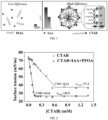
- positively charged cationic surfactant cetyltrimethylammonium bromide (CTAB) is added into negatively charged indoleacetic acid (IAA) and PFCs solution, the mutually exclusive IAA and PFCs are connected with each other by utilizing the bridging effect of the CTAB to form compact self-assembled micelles, and then the self-assembled micelles are illuminated by a high-voltage mercury lamp, so that PFCs can be rapidly degraded in the micelles, thereby improving the degradation efficiency of PFCs.
- the concentration ratio of IAA to CTAB is 1:(0.055-1.4).
- step S10 comprises: mixing CTAB, IAA and PFCs at a concentration ratio of 1.4:1:0.024 and stirring for 5-15 min at the speed of 400-600 rmp to obtain a solution of ternary mixed self-assembled micelle.
- the solution of ternary mixed self-assembled micelle obtained in step S10 is charged into a photoreactor, the pH of the solution is adjusted to 5-7, and then a high-voltage mercury lamp is turned on to illuminate the solution of ternary mixed self-assembled micelle to implement photoreaction to degrade PFCs.
- the high-voltage mercury lamp is a mercury lamp with a power of 500 W.
- the photoreaction is performed at 20-30°C for 2-3 h.
- the present invention has the following beneficial effects:
- a method for degrading PFCs according to the present invention comprises the following steps:
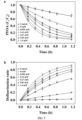
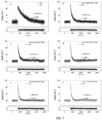
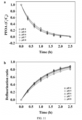
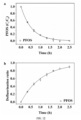
- PFCs are degraded by the method of the present invention, so that the PFOA concentration can be reduced from 10 mg L -1 to about 60 ng L -1 , and the degradation rate is close to 100%.
- CTAB positively charged cationic surfactant
- the positively charged CTAB combines IAA and PFCs which are originally mutually exclusive to form compact self-assembled micelles through electrostatic action, and PFCs are rapidly degraded in the micelles under ultraviolet irradiation.
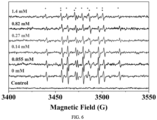
- the CTAB-induced mixed self-assembled micelles make IAA and PFCs more closely combined, which greatly improves the reaction rate of hydrated electrons generated by PFCs and IAA under illumination.
- the hydrated electrons generated in the micelles are well protected due to they are wrapped in colloid, thus slowing down the quenching of hydrated electrons by oxygen and protons; and which also improves the utilization efficiency of hydrated electrons and realizes the rapid degradation and defluorination of PFCs under aerobic and acidic conditions.
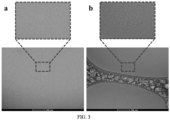
- the mixed self-assembled micelles can polymerize quickly; after the photoreaction is completed, the self-assembled micelles settle quickly, and almost all of the organic substances remaining in a system settle, so the introduced CTAB and IAA do not cause secondary pollution to the environment, thereby implementing the green and environment-friendly technology for degrading PFCs.
- the mixed self-assembled micelles induced by CTAB were shot by cryoelectron microscope, with the steps as follows:
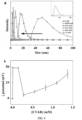
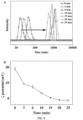
- the particle size and ⁇ potential of generated micelles were measured by dynamic light scattering, with the steps as follows:
Landscapes
- Chemical & Material Sciences (AREA)
- Organic Chemistry (AREA)
- Engineering & Computer Science (AREA)
- Water Supply & Treatment (AREA)
- Hydrology & Water Resources (AREA)
- Environmental & Geological Engineering (AREA)
- Life Sciences & Earth Sciences (AREA)
- Health & Medical Sciences (AREA)
- Toxicology (AREA)
- Chemical Kinetics & Catalysis (AREA)
- Oil, Petroleum & Natural Gas (AREA)
- Physical Water Treatments (AREA)
- Organic Low-Molecular-Weight Compounds And Preparation Thereof (AREA)
Claims (7)
- Verfahren zum Abbau von perfluorierten Verbindungen (PFCs), die folgenden Schritte umfassend:S10: gleichmäßiges Mischen von Cetyltrimethylammoniumbromid (CTAB), Indolessigsäure (IAA) und PFCs, um ternäre gemischte selbstassemblierte Micellen zu erhalten; undS20: Beleuchten der in Schritt S10 erhaltenen ternären gemischten selbstassemblierten Mizellen mit einer Hochspannungs-Quecksilberlampe, um eine Photoreaktion zum Abbau der PFCs durchzuführen.
- Verfahren zum Abbau von PFCs nach Anspruch 1, wobei in Schritt S10 das Konzentrationsverhältnis von IAA zu CTAB 1:(0,055-1,4) beträgt.
- Verfahren zum Abbau von PFCs nach Anspruch 1, wobei in Schritt S10 das Konzentrationsverhältnis von PFCs zu IAA 1:(40-42) beträgt.
- Verfahren zum Abbau von PFCs nach Anspruch 1, wobei der Prozess von Schritt S10 umfasst: Mischen von CTAB, IAA und PFCs in einem Konzentrationsverhältnis von 1,4:1:0,024 und Rühren für 5-15 Minuten bei einer Geschwindigkeit von 400-600 rmp, um eine Lösung von ternären gemischten selbstassemblierten Mizellen zu erhalten.
- Verfahren zum Abbau von PFCs nach Anspruch 1, wobei der Prozess von Schritt S20 umfasst: Einbringen der in Schritt S10 erhaltenen Lösung von ternären gemischten selbstassemblierten Mizellen in einen Photoreaktor, Einstellen des pH-Werts der Lösung auf 5-7 und anschließendes Einschalten einer Hochspannungs-Quecksilberlampe, um die Lösung von ternären gemischten selbstassemblierten Mizellen zu beleuchten, um eine Photoreaktion zum Abbau von PFCs durchzuführen.
- Verfahren zum Abbau von PFCs nach Anspruch 5, wobei die Hochspannungs-Quecksilberlampe eine Quecksilberlampe mit einer Leistung von 500 W ist.
- Verfahren zum Abbau von PFCs nach Anspruch 5, wobei die Photoreaktion bei 20-30 °C für 2-3 h durchgeführt wird.
Applications Claiming Priority (2)
| Application Number | Priority Date | Filing Date | Title |
|---|---|---|---|
| CN202010037007.6A CN111153462B (zh) | 2020-01-14 | 2020-01-14 | 一种降解全氟化合物的方法 |
| PCT/CN2020/137429 WO2021143454A1 (zh) | 2020-01-14 | 2020-12-18 | 一种降解全氟化合物的方法 |
Publications (4)
| Publication Number | Publication Date |
|---|---|
| EP4053082A1 EP4053082A1 (de) | 2022-09-07 |
| EP4053082A4 EP4053082A4 (de) | 2022-09-28 |
| EP4053082B1 true EP4053082B1 (de) | 2025-03-12 |
| EP4053082C0 EP4053082C0 (de) | 2025-03-12 |
Family
ID=70563102
Family Applications (1)
| Application Number | Title | Priority Date | Filing Date |
|---|---|---|---|
| EP20914075.5A Active EP4053082B1 (de) | 2020-01-14 | 2020-12-18 | Verfahren zum abbau einer perfluorierten verbindung |
Country Status (6)
| Country | Link |
|---|---|
| US (1) | US11072574B2 (de) |
| EP (1) | EP4053082B1 (de) |
| CN (1) | CN111153462B (de) |
| AU (1) | AU2020422054B2 (de) |
| CA (1) | CA3161412A1 (de) |
| WO (1) | WO2021143454A1 (de) |
Families Citing this family (9)
| Publication number | Priority date | Publication date | Assignee | Title |
|---|---|---|---|---|
| EP4061869A4 (de) * | 2019-11-08 | 2023-11-01 | Board Of Trustees Of Michigan State University | Nanoreaktorsystem zur zersetzung von per- und polyfluoralkyl-substanzen |
| CN111153462B (zh) * | 2020-01-14 | 2021-04-30 | 南京大学 | 一种降解全氟化合物的方法 |
| CN112551778B (zh) * | 2020-11-20 | 2022-06-21 | 南京大学 | 一种高效处理全氟化合物污染水体的方法 |
| CN113135608A (zh) * | 2021-04-28 | 2021-07-20 | 南京大学 | 用于处理全氟化合物污染水体的自组装胶束及方法 |
| KR20250016208A (ko) * | 2022-05-25 | 2025-02-03 | 더 리전트 오브 더 유니버시티 오브 캘리포니아 | Uv 물 정화 시스템 및 방법 |
| CN115321635B (zh) * | 2022-07-11 | 2023-11-17 | 南京大学 | 一种高效去除水体中全氟化合物的界面吸附方法 |
| CN116573711B (zh) * | 2023-05-15 | 2023-10-10 | 苏州科技大学 | 一种聚吲哚-蒙脱石复合体及其制备方法和应用 |
| US20250019265A1 (en) | 2023-07-14 | 2025-01-16 | Claros Technologies Inc. | Methods and Systems of Oxidative Pretreatment of Aqueous Solutions Containing PFAS |
| CN118598271A (zh) * | 2024-05-30 | 2024-09-06 | 同济大学 | 一种牺牲电子供体强化紫外光还原全氟有机酸的方法 |
Family Cites Families (14)
| Publication number | Priority date | Publication date | Assignee | Title |
|---|---|---|---|---|
| GB2413553A (en) * | 2004-04-29 | 2005-11-02 | Seiko Epson Corp | UV decomposable molecules and a photopatternable monomolecular film formed therefrom |
| CN100351185C (zh) * | 2004-10-28 | 2007-11-28 | 力晶半导体股份有限公司 | 一种含氟废水处理的方法 |
| CN100347137C (zh) * | 2005-01-07 | 2007-11-07 | 清华大学 | 一种全氟辛酸或全氟辛基磺酸盐脱氟降解的方法 |
| CN101130157A (zh) * | 2007-07-19 | 2008-02-27 | 中国科学院生态环境研究中心 | 混合胶束核壳式Fe3O4/SiO2磁性纳米固相萃取剂的制备及应用 |
| CN101884831A (zh) * | 2009-05-13 | 2010-11-17 | 同济大学 | 一种光还原脱氟降解全氟类化合物的方法 |
| CN104193056B (zh) * | 2014-09-22 | 2016-09-07 | 中国科学技术大学 | 一种废水中多氟化合物pfoa的高效降解方法 |
| CN104492378B (zh) * | 2014-11-13 | 2017-01-18 | 华中科技大学 | 一种吸附全氟化合物的磁性纳米复合材料及其制备方法 |
| CN105271501A (zh) * | 2015-10-28 | 2016-01-27 | 哈尔滨工业大学深圳研究生院 | 一种快速去除水中全氟化物的高级还原方法与装置 |
| CN105536198B (zh) * | 2015-12-23 | 2018-10-30 | 南京大学 | 一种高效降解全氟化合物的方法 |
| CN108828128B (zh) * | 2018-06-20 | 2019-08-13 | 清华大学 | 一种测定水样和水溶液中总有机氟的方法 |
| CN109019746A (zh) * | 2018-08-29 | 2018-12-18 | 临沂大学 | 活性炭介导水合电子还原降解PFASs的方法 |
| CN109759116B (zh) * | 2019-02-22 | 2021-06-04 | 大连理工大学 | 光电耦合促进全氟化合物分解净化的方法 |
| CN109745962A (zh) * | 2019-03-15 | 2019-05-14 | 南京大学 | 一种混合改性有机蒙脱土及其合成方法与应用 |
| CN111153462B (zh) * | 2020-01-14 | 2021-04-30 | 南京大学 | 一种降解全氟化合物的方法 |
-
2020
- 2020-01-14 CN CN202010037007.6A patent/CN111153462B/zh active Active
- 2020-07-09 US US16/925,038 patent/US11072574B2/en active Active
- 2020-12-18 WO PCT/CN2020/137429 patent/WO2021143454A1/zh not_active Ceased
- 2020-12-18 CA CA3161412A patent/CA3161412A1/en active Pending
- 2020-12-18 AU AU2020422054A patent/AU2020422054B2/en active Active
- 2020-12-18 EP EP20914075.5A patent/EP4053082B1/de active Active
Also Published As
| Publication number | Publication date |
|---|---|
| CA3161412A1 (en) | 2021-07-22 |
| US11072574B2 (en) | 2021-07-27 |
| CN111153462B (zh) | 2021-04-30 |
| EP4053082A4 (de) | 2022-09-28 |
| CN111153462A (zh) | 2020-05-15 |
| AU2020422054A1 (en) | 2022-06-23 |
| EP4053082C0 (de) | 2025-03-12 |
| AU2020422054B2 (en) | 2023-09-07 |
| US20210047256A1 (en) | 2021-02-18 |
| WO2021143454A1 (zh) | 2021-07-22 |
| EP4053082A1 (de) | 2022-09-07 |
Similar Documents
| Publication | Publication Date | Title |
|---|---|---|
| EP4053082B1 (de) | Verfahren zum abbau einer perfluorierten verbindung | |
| Gu et al. | Efficient decomposition of perfluorooctanoic acid by a high photon flux UV/sulfite process: Kinetics and associated toxicity | |
| Hu et al. | Catalytic degradation of p-nitrophenol by magnetically recoverable Fe3O4 as a persulfate activator under microwave irradiation | |
| Guo et al. | Synergistic impact of humic acid on the photo-reductive decomposition of perfluorooctanoic acid | |
| Chen et al. | Highly efficient degradation of rhodamine B by carbon nanotubes-activated persulfate | |
| Katsumata et al. | Humic acid degradation in aqueous solution by the photo-Fenton process | |
| Luo et al. | Removal and toxic forecast of microplastics treated by electrocoagulation: Influence of dissolved organic matter | |
| Luo et al. | Synergistic effects of persistent free radicals and visible radiation on peroxymonosulfate activation by ferric citrate for the decomposition of organic contaminants | |
| Jinendra et al. | Facile synthesis of CoFe2O4 nanoparticles and application in removal of malachite green dye | |
| WO2020186795A1 (zh) | 一种混合改性有机蒙脱土及其合成方法与应用 | |
| Zhou et al. | Photodegradation of hexabromocyclododecane (HBCD) by Fe (III) complexes/H2O2 under simulated sunlight | |
| Song et al. | Catalytic degradation of carbamazepine by metal organic frameworks (MOFs) derived magnetic catalyst Fe@ PC in an electro-Fenton coupled membrane filtration system: performance, pathway, and mechanism | |
| Gong et al. | N/B co-doped polymeric carbon nitride with boosted charge transfer property and enhanced photocatalytic degradation of tetracycline | |
| CN114307941A (zh) | 一种胺化表面缺陷闪锌矿材料、制备方法及其在降解全氟化合物中的应用 | |
| Lin et al. | Nitrogen-doped carbon dots as an effective fluorescence enhancing system for the determination of perfluorooctyl sulfonate | |
| Sampath et al. | Solvothermal synthesis of magnetically separable Co–ZnO nanowires for visible light driven photocatalytic applications | |
| Wang et al. | Readily separable and stable CoFe2O4 beads for activating peroxymonosulfate to degrade lomefloxacin hydrochloride: Optimization, performance and degradation mechanism | |
| Yu et al. | Photolysis of bis (2-ethylhexyl) phthalate in aqueous solutions at the presence of natural water photoreactive constituents under simulated sunlight irradiation | |
| Chu et al. | Efficient decomposition of perfluorooctane sulfonate by hydrated electrons: Performance, mechanism, and carbon emission reduction | |
| Hao et al. | The synthesis of carbon dots by folic acid and utilized as sustainable probe and paper sensor for Hg2+ sensing and cellular imaging | |
| Tao et al. | Recyclable magnetic AgBr/BiOBr/Fe3O4 photocatalytic activation peroxymonosulfate for carbamazepine degradation: synergistic effect and mechanism | |
| Li et al. | GO@ MIL-53 (Fe) adsorption-photocatalytic synergistic degradation of tetracycline | |
| Yao et al. | Visible light promoted the removal of tetrabromobisphenol A from water by humic acid-FeS colloid | |
| Zhang et al. | Nanobubbles improve peroxymonosulfate-based advanced oxidation: High efficiency, low toxicity/cost, and novel collaborative mechanism | |
| Wang et al. | Enhanced Fenton-like oxidation (Vis/Fe (III)/Peroxydisulfate): The role of iron species and the Fe (III)-LVF complex in levofloxacin degradation |
Legal Events
| Date | Code | Title | Description |
|---|---|---|---|
| STAA | Information on the status of an ep patent application or granted ep patent |
Free format text: STATUS: THE INTERNATIONAL PUBLICATION HAS BEEN MADE |
|
| PUAI | Public reference made under article 153(3) epc to a published international application that has entered the european phase |
Free format text: ORIGINAL CODE: 0009012 |
|
| STAA | Information on the status of an ep patent application or granted ep patent |
Free format text: STATUS: REQUEST FOR EXAMINATION WAS MADE |
|
| 17P | Request for examination filed |
Effective date: 20220601 |
|
| AK | Designated contracting states |
Kind code of ref document: A1 Designated state(s): AL AT BE BG CH CY CZ DE DK EE ES FI FR GB GR HR HU IE IS IT LI LT LU LV MC MK MT NL NO PL PT RO RS SE SI SK SM TR |
|
| A4 | Supplementary search report drawn up and despatched |
Effective date: 20220831 |
|
| RIC1 | Information provided on ipc code assigned before grant |
Ipc: C02F 101/36 20060101ALN20220825BHEP Ipc: C02F 1/70 20060101ALN20220825BHEP Ipc: C02F 1/66 20060101ALN20220825BHEP Ipc: C02F 1/32 20060101AFI20220825BHEP |
|
| DAV | Request for validation of the european patent (deleted) | ||
| DAX | Request for extension of the european patent (deleted) | ||
| GRAP | Despatch of communication of intention to grant a patent |
Free format text: ORIGINAL CODE: EPIDOSNIGR1 |
|
| STAA | Information on the status of an ep patent application or granted ep patent |
Free format text: STATUS: GRANT OF PATENT IS INTENDED |
|
| RIC1 | Information provided on ipc code assigned before grant |
Ipc: C02F 101/36 20060101ALN20240924BHEP Ipc: C02F 1/70 20060101ALN20240924BHEP Ipc: C02F 1/66 20060101ALN20240924BHEP Ipc: C02F 1/32 20060101AFI20240924BHEP |
|
| INTG | Intention to grant announced |
Effective date: 20241016 |
|
| GRAS | Grant fee paid |
Free format text: ORIGINAL CODE: EPIDOSNIGR3 |
|
| GRAA | (expected) grant |
Free format text: ORIGINAL CODE: 0009210 |
|
| STAA | Information on the status of an ep patent application or granted ep patent |
Free format text: STATUS: THE PATENT HAS BEEN GRANTED |
|
| AK | Designated contracting states |
Kind code of ref document: B1 Designated state(s): AL AT BE BG CH CY CZ DE DK EE ES FI FR GB GR HR HU IE IS IT LI LT LU LV MC MK MT NL NO PL PT RO RS SE SI SK SM TR |
|
| REG | Reference to a national code |
Ref country code: GB Ref legal event code: FG4D |
|
| REG | Reference to a national code |
Ref country code: CH Ref legal event code: EP |
|
| REG | Reference to a national code |
Ref country code: DE Ref legal event code: R096 Ref document number: 602020047766 Country of ref document: DE |
|
| REG | Reference to a national code |
Ref country code: IE Ref legal event code: FG4D |
|
| U01 | Request for unitary effect filed |
Effective date: 20250312 |
|
| U07 | Unitary effect registered |
Designated state(s): AT BE BG DE DK EE FI FR IT LT LU LV MT NL PT RO SE SI Effective date: 20250321 |
|
| PG25 | Lapsed in a contracting state [announced via postgrant information from national office to epo] |
Ref country code: RS Free format text: LAPSE BECAUSE OF FAILURE TO SUBMIT A TRANSLATION OF THE DESCRIPTION OR TO PAY THE FEE WITHIN THE PRESCRIBED TIME-LIMIT Effective date: 20250612 |
|
| PG25 | Lapsed in a contracting state [announced via postgrant information from national office to epo] |
Ref country code: ES Free format text: LAPSE BECAUSE OF FAILURE TO SUBMIT A TRANSLATION OF THE DESCRIPTION OR TO PAY THE FEE WITHIN THE PRESCRIBED TIME-LIMIT Effective date: 20250312 |
|
| PG25 | Lapsed in a contracting state [announced via postgrant information from national office to epo] |
Ref country code: NO Free format text: LAPSE BECAUSE OF FAILURE TO SUBMIT A TRANSLATION OF THE DESCRIPTION OR TO PAY THE FEE WITHIN THE PRESCRIBED TIME-LIMIT Effective date: 20250612 |
|
| PG25 | Lapsed in a contracting state [announced via postgrant information from national office to epo] |
Ref country code: HR Free format text: LAPSE BECAUSE OF FAILURE TO SUBMIT A TRANSLATION OF THE DESCRIPTION OR TO PAY THE FEE WITHIN THE PRESCRIBED TIME-LIMIT Effective date: 20250312 |
|
| PG25 | Lapsed in a contracting state [announced via postgrant information from national office to epo] |
Ref country code: GR Free format text: LAPSE BECAUSE OF FAILURE TO SUBMIT A TRANSLATION OF THE DESCRIPTION OR TO PAY THE FEE WITHIN THE PRESCRIBED TIME-LIMIT Effective date: 20250613 |
|
| PG25 | Lapsed in a contracting state [announced via postgrant information from national office to epo] |
Ref country code: SM Free format text: LAPSE BECAUSE OF FAILURE TO SUBMIT A TRANSLATION OF THE DESCRIPTION OR TO PAY THE FEE WITHIN THE PRESCRIBED TIME-LIMIT Effective date: 20250312 |
|
| PG25 | Lapsed in a contracting state [announced via postgrant information from national office to epo] |
Ref country code: PL Free format text: LAPSE BECAUSE OF FAILURE TO SUBMIT A TRANSLATION OF THE DESCRIPTION OR TO PAY THE FEE WITHIN THE PRESCRIBED TIME-LIMIT Effective date: 20250312 |
|
| PG25 | Lapsed in a contracting state [announced via postgrant information from national office to epo] |
Ref country code: CZ Free format text: LAPSE BECAUSE OF FAILURE TO SUBMIT A TRANSLATION OF THE DESCRIPTION OR TO PAY THE FEE WITHIN THE PRESCRIBED TIME-LIMIT Effective date: 20250312 |
|
| PG25 | Lapsed in a contracting state [announced via postgrant information from national office to epo] |
Ref country code: SK Free format text: LAPSE BECAUSE OF FAILURE TO SUBMIT A TRANSLATION OF THE DESCRIPTION OR TO PAY THE FEE WITHIN THE PRESCRIBED TIME-LIMIT Effective date: 20250312 |
|
| PG25 | Lapsed in a contracting state [announced via postgrant information from national office to epo] |
Ref country code: IS Free format text: LAPSE BECAUSE OF FAILURE TO SUBMIT A TRANSLATION OF THE DESCRIPTION OR TO PAY THE FEE WITHIN THE PRESCRIBED TIME-LIMIT Effective date: 20250712 |