EP4052930B1 - Tire including dissymmeteric sipe - Google Patents
Tire including dissymmeteric sipe Download PDFInfo
- Publication number
- EP4052930B1 EP4052930B1 EP22160298.0A EP22160298A EP4052930B1 EP 4052930 B1 EP4052930 B1 EP 4052930B1 EP 22160298 A EP22160298 A EP 22160298A EP 4052930 B1 EP4052930 B1 EP 4052930B1
- Authority
- EP
- European Patent Office
- Prior art keywords
- rift
- sipe
- channel
- channel part
- tread
- Prior art date
- Legal status (The legal status is an assumption and is not a legal conclusion. Google has not performed a legal analysis and makes no representation as to the accuracy of the status listed.)
- Active
Links
Images










Classifications
-
- B—PERFORMING OPERATIONS; TRANSPORTING
- B60—VEHICLES IN GENERAL
- B60C—VEHICLE TYRES; TYRE INFLATION; TYRE CHANGING; CONNECTING VALVES TO INFLATABLE ELASTIC BODIES IN GENERAL; DEVICES OR ARRANGEMENTS RELATED TO TYRES
- B60C11/00—Tyre tread bands; Tread patterns; Anti-skid inserts
- B60C11/03—Tread patterns
- B60C11/0304—Asymmetric patterns
-
- B—PERFORMING OPERATIONS; TRANSPORTING
- B60—VEHICLES IN GENERAL
- B60C—VEHICLE TYRES; TYRE INFLATION; TYRE CHANGING; CONNECTING VALVES TO INFLATABLE ELASTIC BODIES IN GENERAL; DEVICES OR ARRANGEMENTS RELATED TO TYRES
- B60C11/00—Tyre tread bands; Tread patterns; Anti-skid inserts
- B60C11/03—Tread patterns
- B60C11/12—Tread patterns characterised by the use of narrow slits or incisions, e.g. sipes
- B60C11/1204—Tread patterns characterised by the use of narrow slits or incisions, e.g. sipes with special shape of the sipe
- B60C11/1218—Three-dimensional shape with regard to depth and extending direction
-
- B—PERFORMING OPERATIONS; TRANSPORTING
- B60—VEHICLES IN GENERAL
- B60C—VEHICLE TYRES; TYRE INFLATION; TYRE CHANGING; CONNECTING VALVES TO INFLATABLE ELASTIC BODIES IN GENERAL; DEVICES OR ARRANGEMENTS RELATED TO TYRES
- B60C11/00—Tyre tread bands; Tread patterns; Anti-skid inserts
- B60C11/03—Tread patterns
- B60C11/0306—Patterns comprising block rows or discontinuous ribs
-
- B—PERFORMING OPERATIONS; TRANSPORTING
- B60—VEHICLES IN GENERAL
- B60C—VEHICLE TYRES; TYRE INFLATION; TYRE CHANGING; CONNECTING VALVES TO INFLATABLE ELASTIC BODIES IN GENERAL; DEVICES OR ARRANGEMENTS RELATED TO TYRES
- B60C11/00—Tyre tread bands; Tread patterns; Anti-skid inserts
- B60C11/03—Tread patterns
- B60C11/032—Patterns comprising isolated recesses
- B60C11/0323—Patterns comprising isolated recesses tread comprising channels under the tread surface, e.g. for draining water
-
- B—PERFORMING OPERATIONS; TRANSPORTING
- B60—VEHICLES IN GENERAL
- B60C—VEHICLE TYRES; TYRE INFLATION; TYRE CHANGING; CONNECTING VALVES TO INFLATABLE ELASTIC BODIES IN GENERAL; DEVICES OR ARRANGEMENTS RELATED TO TYRES
- B60C11/00—Tyre tread bands; Tread patterns; Anti-skid inserts
- B60C11/03—Tread patterns
- B60C11/12—Tread patterns characterised by the use of narrow slits or incisions, e.g. sipes
- B60C11/1204—Tread patterns characterised by the use of narrow slits or incisions, e.g. sipes with special shape of the sipe
-
- B—PERFORMING OPERATIONS; TRANSPORTING
- B60—VEHICLES IN GENERAL
- B60C—VEHICLE TYRES; TYRE INFLATION; TYRE CHANGING; CONNECTING VALVES TO INFLATABLE ELASTIC BODIES IN GENERAL; DEVICES OR ARRANGEMENTS RELATED TO TYRES
- B60C11/00—Tyre tread bands; Tread patterns; Anti-skid inserts
- B60C11/03—Tread patterns
- B60C11/12—Tread patterns characterised by the use of narrow slits or incisions, e.g. sipes
- B60C11/1236—Tread patterns characterised by the use of narrow slits or incisions, e.g. sipes with special arrangements in the tread pattern
-
- B—PERFORMING OPERATIONS; TRANSPORTING
- B60—VEHICLES IN GENERAL
- B60C—VEHICLE TYRES; TYRE INFLATION; TYRE CHANGING; CONNECTING VALVES TO INFLATABLE ELASTIC BODIES IN GENERAL; DEVICES OR ARRANGEMENTS RELATED TO TYRES
- B60C11/00—Tyre tread bands; Tread patterns; Anti-skid inserts
- B60C11/03—Tread patterns
- B60C11/12—Tread patterns characterised by the use of narrow slits or incisions, e.g. sipes
- B60C11/1272—Width of the sipe
- B60C11/1281—Width of the sipe different within the same sipe, i.e. enlarged width portion at sipe bottom or along its length
-
- B—PERFORMING OPERATIONS; TRANSPORTING
- B60—VEHICLES IN GENERAL
- B60C—VEHICLE TYRES; TYRE INFLATION; TYRE CHANGING; CONNECTING VALVES TO INFLATABLE ELASTIC BODIES IN GENERAL; DEVICES OR ARRANGEMENTS RELATED TO TYRES
- B60C11/00—Tyre tread bands; Tread patterns; Anti-skid inserts
- B60C11/03—Tread patterns
- B60C11/13—Tread patterns characterised by the groove cross-section, e.g. for buttressing or preventing stone-trapping
- B60C11/1307—Tread patterns characterised by the groove cross-section, e.g. for buttressing or preventing stone-trapping with special features of the groove walls
- B60C11/1323—Tread patterns characterised by the groove cross-section, e.g. for buttressing or preventing stone-trapping with special features of the groove walls asymmetric
-
- B—PERFORMING OPERATIONS; TRANSPORTING
- B60—VEHICLES IN GENERAL
- B60C—VEHICLE TYRES; TYRE INFLATION; TYRE CHANGING; CONNECTING VALVES TO INFLATABLE ELASTIC BODIES IN GENERAL; DEVICES OR ARRANGEMENTS RELATED TO TYRES
- B60C11/00—Tyre tread bands; Tread patterns; Anti-skid inserts
- B60C11/03—Tread patterns
- B60C11/13—Tread patterns characterised by the groove cross-section, e.g. for buttressing or preventing stone-trapping
- B60C11/1353—Tread patterns characterised by the groove cross-section, e.g. for buttressing or preventing stone-trapping with special features of the groove bottom
-
- B—PERFORMING OPERATIONS; TRANSPORTING
- B60—VEHICLES IN GENERAL
- B60C—VEHICLE TYRES; TYRE INFLATION; TYRE CHANGING; CONNECTING VALVES TO INFLATABLE ELASTIC BODIES IN GENERAL; DEVICES OR ARRANGEMENTS RELATED TO TYRES
- B60C11/00—Tyre tread bands; Tread patterns; Anti-skid inserts
- B60C11/03—Tread patterns
- B60C11/12—Tread patterns characterised by the use of narrow slits or incisions, e.g. sipes
- B60C11/1204—Tread patterns characterised by the use of narrow slits or incisions, e.g. sipes with special shape of the sipe
- B60C2011/1213—Tread patterns characterised by the use of narrow slits or incisions, e.g. sipes with special shape of the sipe sinusoidal or zigzag at the tread surface
-
- B—PERFORMING OPERATIONS; TRANSPORTING
- B60—VEHICLES IN GENERAL
- B60C—VEHICLE TYRES; TYRE INFLATION; TYRE CHANGING; CONNECTING VALVES TO INFLATABLE ELASTIC BODIES IN GENERAL; DEVICES OR ARRANGEMENTS RELATED TO TYRES
- B60C11/00—Tyre tread bands; Tread patterns; Anti-skid inserts
- B60C11/03—Tread patterns
- B60C11/12—Tread patterns characterised by the use of narrow slits or incisions, e.g. sipes
- B60C11/1272—Width of the sipe
- B60C2011/1286—Width of the sipe being different from sipe to sipe
Definitions
- the present invention relates to a tire including dissymmetric sipes.
- the present invention relates to a tire including dissymmetric sipes of which vertical positions of channel parts are different from each other.
- the sipe part may further include a third sipe part adjacent to either of the first sipe part and the second sipe part, and the third sipe part may include a third channel part extending from the surface of the tread block part and a third rift part connected to the third channel part and positioned under the third channel part.
- the term "and/or" may include a combination of a plurality of related items listed or any of the plurality of related items listed.
- the present document may omit the detailed description when it is determined that a specific description of a related well-known function or configuration may unnecessarily obscure the point of the present invention.
- the block part BK is formed on an outer surface of the base tread part BTP.
- Forming such a groove part GV may improve the wet performance of the tire 1A.
- the rift part 100 extends from the surface of the tread block part BK to the channel part 110.
- the width of the channel part 110 is greater than the width of the rift part 100.
- the 'width' may refer to the width of the block BK in the horizontal direction DRH (the first direction DR1 or the second direction DR2).
- the sipe part may be formed in the second direction DR2, that is, the length direction or longitudinal direction of the block part BK, among the horizontal directions DRH in the block part BK.
- the sipe part may be formed in an oblique direction in the block part BK.
- the shape of the sipe part 10 may be variously modified in the block part BK in the present invention.
- the vertical (also called radial) positions of the channel parts 110 of at least two sipe parts 10 are different from each other in the tire 1A according to the present invention.
- the first sipe part 10a includes a first rift part 100a and the first channel part 110a.
- the second sipe part 10b includes a second rift part 100b and the second channel part 110b.
- the second channel part 110b is positioned under the second rift part 100b and is connected to the second rift part 100b.
- the width of the second channel part 110b of the second sipe part 10b is greater than the width of the second rift part 100b.
- the length T1 (height) of the first rift part 100a in the vertical direction DRV (the third direction DR3) in the first sipe part 10a is different from the length T2 (height) of the second rift part 100b in the vertical direction DRV in the second sipe part 10b.
- the length T1 of the first rift part 100a in the vertical direction DRV in the first sipe part 10a may be greater than the length T2 of the second rift part 100b in the vertical direction DRV in the second sipe part 10b.
- the total depth H1, that is, the length H1 in the vertical direction DRV, of the first sipe part 10A may be greater than the total depth H2, that is, the length H2 in the vertical direction DRV, of the second sipe part 10b.
- the region A1 may be adjacent to the surface of the block part BK.
- the first rift part 100a and the second rift part 100b may be exposed on the surfaces of the first block part BKa and the second block part BKb during the initial use period of the tire 1A.
- a step difference may be generated in the tread part TP.
- FIG. 10C illustrates an example of the step difference generated in the tread part TP.
- the first rift part 100a and the second rift part 100b overlap each other in the horizontal direction DRH in a region A3.
- the first rift part 100a and the second channel part 110b overlap each other in a region A4 positioned under the region A3 with respect to the surface of the block part BK.
- the first channel part 110a and the second channel part 110b may overlap each other in a region A5 positioned under the region A4 with respect to the surface of the block part BK.
- FIGS. 12 , 13 , 14 , and 16 are views for describing a second example of the dissymmetric sipe parts useful for understanding the invention.
- Fig. 15 is a view for describing an embodiment of the dissymmetric sipe according to the invention. The description of portions described in detail above may be omitted in the following.
- the first rift part 100a may be exposed in the first block part BKa and the2-2 rift part 100b2 may be exposed in the second block part BKb.
- the tire 1A may be in a second middle use period.
- first channel part 110a and the second channel part 110b may be spaced apart from each other by a predetermined distance G2 and may overlap each other depending on the design.
- the second diminishing portion DP2 includes a portion of which the width gradually diminishes toward the 2-2 rift part 100b2 in the boundary portion between the second channel part 110b and the 2-2 rift part 100b2.
- two first sipe part 10a and two second sipe part 10b may be formed and be alternately disposed in one block part BK.
- FIG. 17 is a view for describing a third example of the dissymmetric sipe parts useful for understanding the invention.
- FIGS. 18 and 19 are views for describing embodiments of the dissymmetric sipe according to the invention. Description of the portions described in detail above may be omitted in the following.
- the third sipe part 10c may include a third channel part 110c and a third rift part 100c.
- the firsts rift part 100a, the 2-1 rift part 100b1, and the third rift part 100c may overlap each other in a region B2 positioned under the region B1 with respect to the surface of the block part BK. Further, the third channel 110c and the second channel part 110b may overlap each other.
- the first rift part 100a, the second channel part 110b, and the third rift part 100c may overlap each other in a region B3 positioned under the region B2 with respect to the surface of the block part BK.
- the first rift part 100a, the 2-2 rift part 100b2, and the third rift part 100c may overlap each other in a region B4 positioned under the region B3 with respect to the surface of the block part BK. Further, the first channel part 110a and the second channel part 110b may overlap each other.
- the length in the vertical direction that is, the height S2, of the second channel part 110b is greater than the length S1 of the first channel part 110a in the vertical direction.
- the length S3 of the third channel part 110c in the vertical direction may be less than or equal to the length S2 of the second channel part 110b in the vertical direction.
- the first channel part 110a of the first sipe part 10a, the second channel part 110b of the second sipe part 10b, and the third channel part 110c of the third sipe part 10c may have shapes different from each other.
- the third channel part 110c may include a second maintenance portion MP2 and a third diminishing portion DP3.
- the third diminishing portion DP3 may include a portion of which the width gradually diminishes toward the third rift portion 100c in the boundary portion between the third channel part 110c and the third rift part 100c.
- the third maintenance portion MP3 may be positioned between the third diminishing portion DP3 and the surface of the third block part BKc and include a portion of which the width is maintained constant.
- step difference may be prevented or checked even when the block part BK wears down.
- the first block part BKa, the second block part BKb, and the third block part BKc may have wear patterns different from each other in the initial, middle, and terminal use periods of the tire 1A.
Landscapes
- Engineering & Computer Science (AREA)
- Mechanical Engineering (AREA)
- Tires In General (AREA)
Description
- The present invention relates to a tire including dissymmetric sipes.
- More particularly, the present invention relates to a tire including dissymmetric sipes of which vertical positions of channel parts are different from each other.
- In general, a tire may include a tread which is a part that makes contact with a road surface when a vehicle drives.
- Such a tread may be provided with a sipe including a groove for improving braking force, driving force, traction force, anti-slip, and the like.
- As for a conventional technology on a tire including a sipe,
Korean Patent Publication No. 10-0869025 - However, in the technique according to Patent Document 1, when the tire tread wears down as the travel distance increases, a step difference may be generated due to the difference in the amount of wear of the leading part and the trailing part of the tire.
- The generation of the step difference in the tread may lead to vibrations and noise in the vehicle and the deterioration in the wear performance.
- As for another conventional technology on a tire including a sipe,
Korean Patent Publication No. 10-2011-0056792 - However, in the technique according to Patent Document 2, when the tire tread wears down as the travel distance increases, a step difference may also be generated due to the difference in the amount of wear of the leading part and the trailing part of the tire. Documents of Related Art
- (Patent Document 1)
Korean Patent No. 10-0869025 Korean Patent No. 10-2011-0056792 - Attention is also drawn to the disclosure of
DE102009044829 A1 showing a tire comprising oval-shaped channels in its tread. - An object of the present invention is to provide a tire including dissymmetric sipes configured to prevent the generation of a step difference even when a tread wears down. The present invention provides for a tire according to claim 1. Further developments of the invention are defined in the dependent claims. Any examples of the description not falling within the scope of the claims do not form part of the invention and are provided for illustrative purposes only.
- Further, the total depth (height) of the first sipe part and the second sipe part may be approximately the same.
- Further, the sipe part may further include a third sipe part adjacent to either of the first sipe part and the second sipe part, and the third sipe part may include a third channel part extending from the surface of the tread block part and a third rift part connected to the third channel part and positioned under the third channel part.
- Further, the third channel part may overlap the first rift part and the 2-1 rift part in the horizontal direction of the tread block part and the third rift part may overlap the first channel part, the first rift part, the second channel part, and the 2-2 rift part in the horizontal direction of the tread block part.
- Here, the second channel part may not overlap the third channel part in the horizontal direction.
- Further, the total depth (height) of the first sipe part, the second sipe part, and the third sipe part may be approximately the same.
- Further, the third channel part may include a third diminishing portion including a portion in which the third channel part has a diminishing width toward the third rift part at a boundary portion between the third channel part and the third rift part and a second maintenance portion positioned between the third diminishing portion and the surface of the tread block part to include a portion of which the width is maintained constant.
- The tire including dissymmetric sipes according to the present invention has the effect of checking and/or preventing the generation of a step difference even when the tread wears down.
- The tire including the dissymmetric sipes according to the present invention has an effect of improving wet and traction performance.
- The tire including the dissymmetric sipes according to the present invention has the effect of reducing the vibrations and noise in the vehicle and checking and/or preventing the deterioration of wear performance.
-
-
FIGS. 1 and2 are views for describing a configuration of a tire including dissymmetric sipes according to the present invention. -
FIGS. 3 is a view for describing a block part and a sipe part as an example useful for understanding the invention.Fig. 4 to 6 are views for describing a block part and a sipe part. -
FIGS. 7 to 11 are views for describing a first example of a dissymmetric sipe part useful for understanding the invention. -
FIGS. 12 ,13 ,14 , and16 are views for describing a second example of the dissymmetric sipe part useful for understanding the invention.Fig. 15 is a view for describing an embodiment of the dissymmetric sipe according to the invention.FIGS. 17 is a view for describing a third example of the dissymmetric sipe part useful for understanding the invention.FIGS. 18 and19 are views for describing embodiments of the dissymmetric sipe according to the invention. - A tire including dissymmetric sipes according to the present invention will be described in detail with reference to the accompanying drawings in the following.
- The present invention may be subject to various modifications and have various embodiments, and specific embodiments will be illustrated in the drawings and described in detail in the detailed description.
- In describing the present invention, terms such as first, second, etc. may be used to describe various components, but the components may not be limited by the terms. The terms may only be used for the purpose of distinguishing one component from another. For example, without departing from the scope of the present invention, a first component may be denoted as a second component, and similarly, a second component may also be denoted as a first component.
- The term "and/or" may include a combination of a plurality of related items listed or any of the plurality of related items listed.
- When a component is referred to as being "connected" or "coupled" to another component, the component may be directly connected or coupled to the another component, but it is to be understood that other components may exist in between. On the other hand, when a component is referred to as being "directly connected" or "directly coupled" to another component, it is to be understood that there are no intervening components present.
- The terms used herein are used for the purpose of describing specific embodiments only and are not intended to limit the invention. Singular expressions may include plural expressions unless the context explicitly indicates otherwise.
- In the present document, terms such as "comprise" or "have" are intended to point out the presence of features, numbers, steps, operations, components, parts, or combinations thereof disclosed in the specification, and it is to be understood that the presence or additional possibilities of one or more of other features, numbers, steps, operations, components, parts or combinations thereof are not precluded in advance.
- Unless otherwise defined, all terms used herein, including technical or scientific terms, may have the same meanings as are generally understood by those skilled in the art to which the present invention pertains. The terms such as those defined in commonly used dictionaries may be interpreted as having meanings consistent with their meanings in the context of the related technology and may not be interpreted in an idealized or overly formal sense unless expressly so defined herein.
- In addition, the embodiments disclosed in the present document are provided for a better description to those skilled in the art, and the shapes and sizes of the elements in the drawings may be exaggerated for a clearer description.
- In describing the present invention, the present document may omit the detailed description when it is determined that a specific description of a related well-known function or configuration may unnecessarily obscure the point of the present invention.
- In the following, a first direction DR1 (also called axial direction) may be a direction along the width (breadth) of the block part of the tread part. The first direction DR1 may be referred to as a breadth direction or width direction.
- A second direction DR2 (also called circumferential direction) may be a direction along the length (longitude) of the block part
of the tread part. The second direction DR2 may be referred to as a longitudinal direction or length direction. - A third direction DR3 (also called radial direction) may be a direction along the height (depth) of the block part of the tread part. The third direction DR3 may be referred to as a vertical direction or depth direction.
- The first direction DR1 may (perpendicularly) cross the second direction DR2 and the third direction DR3, and the second direction DR2 may (perpendicularly) cross the third direction DR3.
- The first direction DR1 and the second direction DR2 may be collectively referred to as the horizontal direction DRH (also called circumferential and/or axial direction).
- The third direction DR3 may be referred to as the vertical direction DRV.
- The circular direction DRC may (perpendicularly) crosses the axle and mean an extending direction along an edge of the tread surface.
-
FIGS. 1 and2 are views for describing a configuration of a tire including dissymmetric sipes according to the present invention. -
FIGS. 1 and2 show that atire 1A (hereinafter, possibly referred to as a 'tire') including dissymmetric sipes according to the present invention may include a tread part TP including a portion making contact with a road surface. - The tread part TP may include a rubber composition having excellent wear resistance to cope with friction with the road surface.
- The
tire 1A in the present invention may be of any type as long as the tire includes the tread part TP. For example, thetire 1A may be of any type such as a pneumatic tire, a heavy-load pneumatic tire, or a non-pneumatic tire under the condition that the tire includes the tread part TP. - Considering that the block part BK is often applied to the tread part TP of the heavy-load pneumatic tire applied to medium-to-large vehicles such as buses, trucks, and the like, it may be preferable for the
tire 1A in the present invention to be a heavy-load tire. -
FIG. 2 shows that the tread part TP includes a base tread part BTP, a tread block part BK (hereinafter, possibly referred to as 'block part'), a groove part GV, and a sipe part (not illustrated). - The base tread part BTP includes a portion positioned on the edge of the
tire 1A in the circular direction DRC to have a ring shape. - The block part BK is formed on an outer surface of the base tread part BTP.
- In addition, the base tread part BTP includes a plurality of block parts BK.
- The base tread part BTP and the tread block part BK may be integrally formed.
- The groove part GV is formed between the tread block parts BK.
- The groove part GV may be formed in various patterns.
- Forming such a groove part GV may improve the wet performance of the
tire 1A. - The
reference numeral 20, not described, inFIG. 2 may be a belt part including at least one one belt layer. - The
belt part 20 may improve the structural stability of thetire 1A. - Although not illustrated, the sipe part is formed in at least one block part BK. The sipe part will be described in detail below with reference to the accompanying drawings.
-
FIGS. 3 to 6 are views for describing the block part and the sipe part. The description of the portions described in detail above may be omitted in the following. -
FIG. 3 shows an example useful for understanding the invention, wherein thesipe part 10 is formed in the block part BK. - The
sipe part 10 includes arift part 100 and achannel part 110. - The
sipe part 10 may also be referred to as a kerf part. The 'sipe' may have the same meaning as the 'kerf' in the present invention. - The
rift part 100 includes a gap in the tread block part BK. - The
channel part 110 is formed inside the tread block part BK and be connected to therift part 100. - The
rift part 100 extends from the surface of the tread block part BK to thechannel part 110. - In addition, the width of the
channel part 110 is greater than the width of therift part 100. - Here, the 'width' may refer to the width of the block BK in the horizontal direction DRH (the first direction DR1 or the second direction DR2).
-
FIG. 3 exemplifies the cross-section of the block part BK being rectangular in the horizontal direction DRH (the first direction DR1 or the second direction DR2), but the present invention is not limited thereto. - For example, as illustrated in
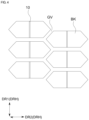
FIG. 4 , the cross-section of the block part BK may be hexagonal in the horizon direction DRH. - As described above, the shape of the block part BK may be variously modified in the present invention.
- On the other hand, the formation direction of the
sipe part 10 may be variously modified in the present invention. - For example, as illustrated in
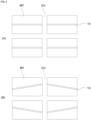
FIG. 3 , the sipe part may be formed in the first direction DR1, that is, the width direction or breadth direction of the block part BK, among the horizontal directions DRH in the block part BK. - Alternatively, as illustrated in
FIG. 5A , the sipe part may be formed in the second direction DR2, that is, the length direction or longitudinal direction of the block part BK, among the horizontal directions DRH in the block part BK. - Alternatively, as illustrated in
FIG. 5B , the sipe part may be formed in an oblique direction in the block part BK. - On the other hand, the shape of the
sipe part 10 may be variously modified in the block part BK in the present invention. - For example, as illustrated in
FIG. 6 , thesipe part 10 may have a zigzag shape similar to a spiral shape. - The
sipe part 10 is of a dissymmetric type in the present invention, as is described below with reference to the accompanying drawings. -
FIGS. 7 to 11 are views for describing a first example of a dissymmetric sipe part useful for understanding the invention. The description of the portion described in detail above may be omitted in the following. - The vertical (also called radial) positions of the
channel parts 110 of at least twosipe parts 10 are different from each other in thetire 1A according to the present invention. - For example, as illustrated in
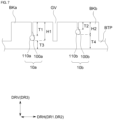
FIG. 7 , the vertical position of afirst channel part 110a of afirst sipe part 10a formed in a first block part BKa and the vertical position of asecond channel part 110b of asecond sipe part 10b formed in a second block part BKb are different from each other. - The
first sipe part 10a includes afirst rift part 100a and thefirst channel part 110a. - The
first rift part 100a extends from the surface of the first block part BKa. - The
first channel part 110a is positioned under (also called radially inward) thefirst rift part 100a and be connected to thefirst rift part 100a. - The width W2 of the
first channel part 110a of thefirst sipe part 10a is greater than the width W1 of thefirst rift part 100a. - The
second sipe part 10b includes asecond rift part 100b and thesecond channel part 110b. - The
second rift part 100a extends from the surface of the second block part BKb. - The
second channel part 110b is positioned under thesecond rift part 100b and is connected to thesecond rift part 100b. - The width of the
second channel part 110b of thesecond sipe part 10b is greater than the width of thesecond rift part 100b. - The length T1 (height) of the
first rift part 100a in the vertical direction DRV (the third direction DR3) in thefirst sipe part 10a is different from the length T2 (height) of thesecond rift part 100b in the vertical direction DRV in thesecond sipe part 10b. For example, the length T1 of thefirst rift part 100a in the vertical direction DRV in thefirst sipe part 10a may be greater than the length T2 of thesecond rift part 100b in the vertical direction DRV in thesecond sipe part 10b. - Accordingly, the vertical position of the
first channel part 110a connected to the end of thefirst rift part 100a of thefirst sipe part 10a and the vertical position of thesecond channel part 110b connected to the end of thesecond rift part 100b of thesecond sipe part 10b is different from each other. - More specifically, the vertical position of the
first channel part 110a of thefirst sipe part 10a from the surface of the first block part BKa and the vertical position of thesecond channel part 110b of thesecond sipe part 10b from the surface of the second block part BKb are different from each other. - On the other hand, the vertical position of the
first channel part 110a and the vertical position of thesecond channel part 110b, viewed from the base tread part BTP, are different from each other. - For example, the
first channel part 110a of thefirst sipe part 10a is spaced apart from the base tread part BTP by T3 and thesecond channel part 110b of thesecond sipe part 10b is spaced apart from the base tread part BTP by T4. - From another point of view, the vertical position of the
first channel part 110a of thefirst sipe part 10a from the base tread part BTP and the vertical position of thesecond channel part 110b of thesecond sipe part 10b from the base tread part BTP are different from each other. - In this case, the total depth H1, that is, the length H1 in the vertical direction DRV, of the first sipe part 10A may be greater than the total depth H2, that is, the length H2 in the vertical direction DRV, of the
second sipe part 10b. - A more detailed comparison between the
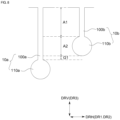
first sipe part 10a and thesecond sipe part 10b shows that, as illustrated inFIG. 8 as an example useful for understanding the invention, thefirsts rift part 100a and thesecond rift part 100b overlap each other in the horizontal direction DRH in a region A1. - The region A1 may be adjacent to the surface of the block part BK.
- The
first rift part 100a and thesecond channel part 110b overlap each other in a region A2 positioned under the region A1 with respect to the surface of the block part BK. - In this case, the
first channel part 110a and thesecond channel part 110b may be spaced apart from each other by a predetermined distance in the vertical direction DRV. That is, thefirst channel part 110a and thesecond channel part 110b may not overlap each other in the vertical direction DRV. - When the vertical positions of the
channel part 110 are different from each other in at least twosipe parts 10 as described above, the generation of a step difference may be prevented or checked even when the block part BK wears down. - For example, as illustrated in
FIG. 9A as an example useful for understanding the invention, thefirst rift part 100a and thesecond rift part 100b may be exposed on the surfaces of the first block part BKa and the second block part BKb during the initial use period of thetire 1A. - Thereafter, when the use period of the
tire 1A increases and the tread part TP wears down, as illustrated inFIG. 9B , thefirst rift part 100a is exposed in the first block part BKa and thesecond channel part 110b may be exposed in the second block part BKb. In this case, thetire 1A may be in the middle use period. - Thereafter, when the use period of the
tire 1A further increases and the tread part TP further wears down, as illustrated inFIG. 9C , thefirst channel part 110a may be exposed in the first block part BKa. In this case, thetire 1A may be in the terminal use period. - At least two block parts BK may show different patterns depending on the degree of wear of the tread part TP, as described above.
- Accordingly, fixation of wear patterns of the block parts BK may be checked or prevented, thereby checking or preventing the generation of step difference in the tread parts TP.
- Unlike the present invention, it may be assumed that the
first sipe 10a formed in the first block part BKa and thesecond sipe 10b formed in the second block part BKb are the same. - In this case, as illustrated in
FIGS. 10A, 10B, and 10C , the surfaces of the first block part BKa and the second block part BKb may be similar or the same in the initial A, middle B, and terminal C use periods of thetire 1A. - Accordingly, the wear pattern of the tread part TP may be fixed in the initial A, middle B, and terminal C use periods of the
tire 1A, thereby further aggravating wear in certain portions of the tread part TP relatively and slowing down wear in other portions relatively. - Accordingly, a step difference may be generated in the tread part TP.
-
FIG. 10C illustrates an example of the step difference generated in the tread part TP. -
FIG. 11 shows an example useful for understanding the invention, wherein thefirst channel part 110a of thefirst sipe part 10a and thesecond channel part 110b of thesecond sipe part 10b overlap each other in the vertical direction DRV. - For example, the
first rift part 100a and thesecond rift part 100b overlap each other in the horizontal direction DRH in a region A3. - The region A3 is adjacent to the surface of the block part BK.
- The
first rift part 100a and thesecond channel part 110b overlap each other in a region A4 positioned under the region A3 with respect to the surface of the block part BK. - The
first channel part 110a and thesecond channel part 110b may overlap each other in a region A5 positioned under the region A4 with respect to the surface of the block part BK. - In this case, fixation of the wear pattern of the tread part TP may be checked or prevented, thereby checking or preventing the generation of step difference caused by wear of the tread part TP.
-
FIGS. 12 ,13 ,14 , and16 are views for describing a second example of the dissymmetric sipe parts useful for understanding the invention.Fig. 15 is a view for describing an embodiment of the dissymmetric sipe according to the invention. The description of portions described in detail above may be omitted in the following. -
FIG. 12 shows that thesecond sipe part 10b may include a 2-1 rift part 100b1 (also called first rift part portion 100b1), asecond channel part 110b, and a 2-2 rift part 100b2 (also called second rift part portion 100b2). - Comparison of
FIG. 12 withFIG. 7 shows that thesecond sipe part 10b may further include another riftpart. - The 2-1 rift part 100b1 is adjacentto the surface of the second block part BKb and extends to the surface of the second block part BKb.
- The
second channel part 110b is positioned under the 2-1 rift part 100b1, and thesecond channel part 110b is connected to a lower portion of the 2-1 rift part 100b1. - The 2-2 rift part 100b2 is positioned under the
second channel part 110b, and the 2-2 rift part 100b2 is connected to a lower portion of thesecond channel part 110b. - The
second channel part 110b is positioned between the 2-1 rift part 100b1 and the 2-2 rift part 100b2. - In this case, the vertical position of the
first channel part 110a of thefirst sipe part 10a and the vertical position of thesecond channel part 110b of thesecond sipe part 10b are different from each other. - In addition, the total depth H1, that is, the length H1 in the vertical direction DRV, of the
first sipe part 10a may be substantially the same as the total depth H2, that is, the length H2 in the vertical direction DRV, of thesecond sipe part 10b. -
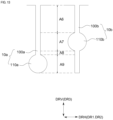
FIG. 13 shows an example useful for understanding the invention, wherein thefirst rift part 100a and the 2-1 rift part 100b1 overlap each other in the horizontal direction DRH in a region A6 adjacent to the surface of the block part BK. - The
first rift part 100a and thesecond channel part 110b overlap each other in a region A7 positioned under the region A6 with respect to the surface of the block part BK. - The
first rift part 100a and the 2-2 rift part 100b2 may overlap each other in a region A8 positioned under the region A7 with respect to the surface of the black part BK. - The
first channel part 110a and the 2-2 rift part 1 00b2 overlap each other in a region A9 positioned under the region A8 with respect to the surface of the block part BK. -
FIG. 13 shows that thefirst channel part 110a of thefirst sipe part 10a and thesecond channel part 110b of thesecond sipe part 10b overlap each other in the vertical direction DRV. - In this case, the generation of the step difference may be checked or prevented even when the block part BK wears down.
- For example, as illustrated in
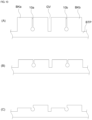
FIG. 14A an example useful for understanding the invention, thefirst rift part 100a and the 2-1 rift part 100b1 may be exposed on the surfaces of the first block part BKa and the second block part BKb in the initial use period of thetire 1A, - Thereafter, when the use period of the
tire 1A increases and the tread part TP wears down, as illustrated inFIG. 14B , thefirst rift part 100a may be exposed in the first block part BKa and thesecond channel part 110b may be exposed in the second block part BKb. In this case, thetire 1A may be in a first middle use period. - Thereafter, when the tread part TP further wears down, as illustrated in
FIG. 14C , thefirst rift part 100a may be exposed in the first block part BKa and the2-2 rift part 100b2 may be exposed in the second block part BKb. In this case, thetire 1A may be in a second middle use period. - Thereafter, when the tread part TP further wears down, as illustrated in
FIG. 14D , thefirst channel part 110a may be exposed in the first block part BKa and the 2-2 rift part 100b2 may be exposed in the second block part BKb. In this case, thetire 1A may be in the terminal use period. - At least two block parts BK may have different patterns depending on the degree of wear of the tread part TP as described above, thereby checking or preventing the generation of step difference in the tread part TP.
- On the other hand, the
first channel part 110a of thefirst sipe part 10a and thesecond channel part 110b of thesecond sipe part 10b have different shapes. - For example, the cross-section of the
first channel part 110a in the vertical direction DRV may have a circular shape, and the cross-section of thesecond channel part 110b in the vertical direction DRV may have a shape similar to an ellipse. - In this case, the height S2 of the
second channel part 110b in the vertical direction DRV is greater than the height S1 of thefirst channel part 110a. - In addition, the
first channel part 110a and thesecond channel part 110b may be spaced apart from each other by a predetermined distance G2 and may overlap each other depending on the design. - A more detailed look at the shape of the
second channel part 110b shows that thesecond channel part 110b includes a first diminishing portion DP1, a second diminishing portion DP2, and a first maintenance portion MP1. - Here, the first diminishing portion DP1 includes a portion of which the width gradually diminishes toward the 2-1 rift part 100b1 in the boundary portion between the
second channel part 110b and the 2-1 rift part 100b1. - The second diminishing portion DP2 includes a portion of which the width gradually diminishes toward the 2-2 rift part 100b2 in the boundary portion between the
second channel part 110b and the 2-2 rift part 100b2. - The first maintenance portion MP1 is positioned between the first diminishing portion DP1 and the second diminishing portion DP2 and have a portion of which the width is maintained constant.
- As described above, when the length S2 (height) of the
second channel part 110b in the vertical direction DRV is greater than the length S1 (height) of thefirst channel part 110a, the generation of step difference of the tread part TP may be further checked or prevented in the middle use period, which is relatively longer than the initial or terminal use period, of thetire 1A. - On the other hand, the formation of the
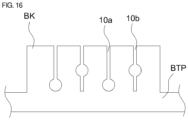
first sipe part 10a and thesecond sipe part 10b in block parts BKa and BKb, different from each other, is described above, but thefirst sipe part 10a and thesecond sipe part 10b may be formed together in one block part BK. - For example, as illustrated in
FIG. 16 an example useful for understanding the invention, twofirst sipe part 10a and twosecond sipe part 10b may be formed and be alternately disposed in one block part BK. -
FIG. 17 is a view for describing a third example of the dissymmetric sipe parts useful for understanding the invention.FIGS. 18 and19 are views for describing embodiments of the dissymmetric sipe according to the invention. Description of the portions described in detail above may be omitted in the following. -
FIG. 17 shows that thetire 1A according to the present invention may further include a third block part BKc in which athird sipe part 10c is formed. - The
third sipe part 10c may include athird channel part 110c and athird rift part 100c. - The
third channel part 110c may be adjacent to the surface of the third block part BKc and extend to the surface of the third block part BKc. - The
third rift part 100c may be positioned under thethird channel part 110c and be connected to a lower portion of thethird channel part 110c. - In this case, the vertical position of the
first channel part 110a of thefirst sipe part 10a and the vertical positions of thesecond channel part 110b of thesecond sipe part 10b and thethird channel part 110c of thethird sipe part 10c may be different from each other. - The total depth, that is, the length in the vertical direction DRV, of the
first sipe part 10a may be substantially the same as the total depth of thesecond sipe part 10b and the total depth of thethird sipe part 10c. -
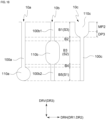
FIG. 18 shows that thefirst rift part 100a, the 2-1 rift part 100b1, and thethird channel part 110c may overlap each other in the horizontal direction DRH in a region B1 adjacent to the surface of the block part BK. - The
firsts rift part 100a, the 2-1 rift part 100b1, and thethird rift part 100c may overlap each other in a region B2 positioned under the region B1 with respect to the surface of the block part BK. Further, thethird channel 110c and thesecond channel part 110b may overlap each other. - The
first rift part 100a, thesecond channel part 110b, and thethird rift part 100c may overlap each other in a region B3 positioned under the region B2 with respect to the surface of the block part BK. - The
first rift part 100a, the 2-2 rift part 100b2, and thethird rift part 100c may overlap each other in a region B4 positioned under the region B3 with respect to the surface of the block part BK. Further, thefirst channel part 110a and thesecond channel part 110b may overlap each other. - The
first channel part 110a, the 2-2 rift part 100b2, and thethird rift part 100c may overlap each other in a region B5 positioned under the region B4 with respect to the surface of the block part BK. - In this case, the length in the vertical direction, that is, the height S2, of the
second channel part 110b is greater than the length S1 of thefirst channel part 110a in the vertical direction. - In addition, the length S3 of the
third channel part 110c in the vertical direction may be less than or equal to the length S2 of thesecond channel part 110b in the vertical direction. - The
first channel part 110a of thefirst sipe part 10a, thesecond channel part 110b of thesecond sipe part 10b, and thethird channel part 110c of thethird sipe part 10c may have shapes different from each other. - A more detailed look at the shape of the
third channel part 110c shows that thethird channel part 110c may include a second maintenance portion MP2 and a third diminishing portion DP3. - Here, the third diminishing portion DP3 may include a portion of which the width gradually diminishes toward the
third rift portion 100c in the boundary portion between thethird channel part 110c and thethird rift part 100c. - The third maintenance portion MP3 may be positioned between the third diminishing portion DP3 and the surface of the third block part BKc and include a portion of which the width is maintained constant.
- In this case, the generation of step difference may be prevented or checked even when the block part BK wears down.
- For example, as illustrated in
FIGS. 19A, 19B, and 19C , the first block part BKa, the second block part BKb, and the third block part BKc may have wear patterns different from each other in the initial, middle, and terminal use periods of thetire 1A. - Accordingly, the generation of step difference in the tread part TP may be checked or prevented.
- It is to be understood that the embodiments described above are illustrative and not restrictive in all aspects, and the scope of the present invention is to be interpreted as being represented by the claims described below rather than the detailed description above.
Claims (4)
- A tire including dissymmetric sipes, comprising:a base tread part (BTP) positioned on an edge of the tire to include a portion having a ring shape;a plurality of tread block parts (BK) formed on an outer surface of the base tread part (BTP);a groove part formed between the tread block parts (BK); anda plurality of sipe parts (10) formed in at least one of the tread block parts (BK), wherein each sipe part (10) forms a sipe and includes:a rift part (100) including a gap in the tread block part (BK), anda channel part (110) connected to the rift part (100) to have a greater width than the rift part (100), andwherein radial (DRV, DR3) positions of the channel parts (110) in at least two of the sipe parts (10) are different from each other;wherein a first sipe part (10a) and second sipe part (10b) of the plurality of sipe parts (10) are placed adjacent to each other in a circumferential and/or axial direction (DRH, DR1, DR2),wherein the first sipe part (10a) includes:a first rift part (100a) extending from a surface of the tread block part (BK); anda first channel part (110a) connected to the first rift part (100a) and positioned radially (DRV, DR3) inward relative to the first part, andwherein the second sipe part (10b) includes:a first rift part portion (100b1) extending from the surface of the tread block part (BK);a second channel part (110b) connected to the first rift part portion (100b1) and positioned radially (DRV, DR3) inward relative to the first rift part portion (100b1); anda second rift part portion (100b2) connected to the second channel part (110b) and positioned radially (DRV, DR3) inward relative to the second channel part (110b);whereinthe first rift part (100a) overlaps the first rift part portion (100b1) and the second channel part (110b) in the circumferential and/or axial direction (DRH, DR1, DR2) of the tread block part (BK), andthe first channel part (110a) overlaps the second rift part portion (100b2) in the circumferential and/or axial direction (DRH, DR1, DR2) of the tread block part (BK);wherein the second channel part (110b) includes:a first diminishing portion (DP1) including a portion in which width of the second channel part (110b) gradually diminishes toward the first rift part portion (100b1) in a boundary portion between the second channel part (110b) and the first rift part portion (100b1);a second diminishing portion (DP2) including a portion in which the width of the second channel part (110b) gradually diminishes toward the second rift part portion (100b2) in a boundary portion between the second channel part (110b) and the second rift part portion (100b2); anda first maintenance portion (MP1), which is positioned between the first diminishing portion (DP1) and the second diminishing portion (DP2) including a portion of which the width is maintained constant,characterized in thata cross-section of the first channel part (110a) in the radial direction (DRV, DR3) has a circular shape and a height of the second channel part (110b) in the radial direction (DRV, DR3) is greater than a height of the first channel part (110a) in the radial direction (DRV, DR3).
- The tire of claim 1, whereinthe plurality of sipe parts (10) further includes a third sipe part (10c) adjacent to either one of the first sipe part (10a) and the second sipe part (10b), andwherein the third sipe part (10c) includes:a third channel part (110c) extending from the surface of the tread block part (BK); anda third rift part (100c) connected to the third channel part (110c) and positioned radially (DRV, DR3) inward relative to the third channel part (110c).
- The tire of claim 2, whereinthe third channel part (110c) overlaps the first rift part (100a) and the first rift part portion (100b1) in the circumferential and/or axial direction (DRH, DR1, DR2) of the tread block part (BK), andthe third rift part (100c) overlaps the first channel part (110a), the first rift part (100a), the second channel part (110b), and the second rift part portion (100b2) in the circumferential and/or axial direction (DRH, DR1, DR2) of the tread block part (BK).
- The tire of claim 2, wherein the third channel part (110c) includes:a third diminishing portion (DP3) including a portion in which width of the third channel part (110c) gradually diminishes toward the third rift part (100c) in a boundary portion between the third channel part (110c) and the third rift part (100c); anda second maintenance portion (MP2), which is positioned between the third diminishing portion (DP3) and the surface of the tread block part (BK), including a portion of which the width is maintained constant.
Applications Claiming Priority (1)
| Application Number | Priority Date | Filing Date | Title |
|---|---|---|---|
| KR1020210029356A KR102530687B1 (en) | 2021-03-05 | 2021-03-05 | Tire including dissymmetry sipe |
Publications (2)
| Publication Number | Publication Date |
|---|---|
| EP4052930A1 EP4052930A1 (en) | 2022-09-07 |
| EP4052930B1 true EP4052930B1 (en) | 2025-04-16 |
Family
ID=80628721
Family Applications (1)
| Application Number | Title | Priority Date | Filing Date |
|---|---|---|---|
| EP22160298.0A Active EP4052930B1 (en) | 2021-03-05 | 2022-03-04 | Tire including dissymmeteric sipe |
Country Status (5)
| Country | Link |
|---|---|
| US (1) | US20220281268A1 (en) |
| EP (1) | EP4052930B1 (en) |
| JP (1) | JP7349519B2 (en) |
| KR (1) | KR102530687B1 (en) |
| CN (1) | CN115008947B (en) |
Families Citing this family (2)
| Publication number | Priority date | Publication date | Assignee | Title |
|---|---|---|---|---|
| EP4183598B1 (en) * | 2021-11-22 | 2025-04-23 | Sumitomo Rubber Industries, Ltd. | Tyre |
| KR102892041B1 (en) * | 2024-05-03 | 2025-11-26 | 한국타이어앤테크놀로지 주식회사 | Truck and bus radial tire |
Family Cites Families (25)
| Publication number | Priority date | Publication date | Assignee | Title |
|---|---|---|---|---|
| JP2527801B2 (en) * | 1988-03-09 | 1996-08-28 | 株式会社ブリヂストン | Belt-shaped laminated reinforcement and pneumatic tire |
| JP3208417B2 (en) * | 1991-11-11 | 2001-09-10 | 株式会社ブリヂストン | Pneumatic tire |
| US5385189A (en) * | 1991-11-01 | 1995-01-31 | Bridgestone Corporation | Pneumatic tire with paired sides in the tread |
| JP3110847B2 (en) | 1992-03-12 | 2000-11-20 | 株式会社ブリヂストン | Heavy duty pneumatic tires |
| JPH1076814A (en) * | 1996-09-03 | 1998-03-24 | Takashi Morita | Tire which indicates wear by color |
| FR2763892A1 (en) * | 1997-05-30 | 1998-12-04 | Michelin & Cie | SCULPTURE AND MOLD FOR TIRE TREAD |
| JP4327962B2 (en) | 1999-11-04 | 2009-09-09 | 株式会社ブリヂストン | Pneumatic tire |
| JP4297255B2 (en) * | 2003-06-13 | 2009-07-15 | 横浜ゴム株式会社 | Pneumatic tire |
| JP2005193815A (en) * | 2004-01-08 | 2005-07-21 | Bridgestone Corp | Pneumatic tire |
| US7793692B2 (en) | 2005-10-31 | 2010-09-14 | The Goodyear Tire & Rubber Company | Pneumatic tire tread having sipe that devolves into groove as tread wears |
| KR100869025B1 (en) | 2007-07-04 | 2008-11-17 | 금호타이어 주식회사 | Pneumatic tires with variable sipes |
| DE102007051645A1 (en) * | 2007-10-26 | 2009-04-30 | Continental Aktiengesellschaft | Vehicle tires |
| FR2931728B1 (en) * | 2008-06-03 | 2010-07-30 | Michelin Soc Tech | PNEUMATIC FOR ICE TRUCK |
| JP5270407B2 (en) * | 2009-03-09 | 2013-08-21 | 東洋ゴム工業株式会社 | Pneumatic tire |
| KR20110056792A (en) | 2009-11-23 | 2011-05-31 | 한국타이어 주식회사 | Car tire improved cuff |
| DE102009044829A1 (en) * | 2009-12-09 | 2011-06-16 | Continental Reifen Deutschland Gmbh | Tread pattern of a pneumatic vehicle tire |
| RU2521899C1 (en) * | 2010-10-29 | 2014-07-10 | Мишлен Решерш Э Текник С.А. | Tire tread with several wearing plies |
| FR2989031B1 (en) * | 2012-04-05 | 2014-05-02 | Michelin & Cie | TIRE ROLLER BELT FOR HEAVYWEIGHT ENGINE AXLE |
| FR3014022B1 (en) * | 2013-12-02 | 2016-07-08 | Michelin & Cie | ADVANCED TIRE ROLLER FOR TIRES |
| JP6449005B2 (en) * | 2014-12-03 | 2019-01-09 | 東洋ゴム工業株式会社 | Pneumatic tire |
| CN109070650B (en) * | 2016-04-18 | 2021-06-01 | 株式会社普利司通 | tire |
| DE102017209903A1 (en) * | 2017-06-13 | 2018-12-13 | Continental Reifen Deutschland Gmbh | Tread pattern of a vehicle tire for use on wintry surfaces |
| FR3069485A1 (en) * | 2017-07-25 | 2019-02-01 | Compagnie Generale Des Etablissements Michelin | PNEUMATIC TIRE WITH TREAD COMPRISING AN EVOLVING SCULPTURE WITH INCISIONS |
| US11548322B2 (en) * | 2017-12-22 | 2023-01-10 | Compagnie Generale Des Etablissements Michelin | Heavy goods vehicle tire with improved endurance |
| US11001103B2 (en) * | 2018-01-31 | 2021-05-11 | The Goodyear Tire & Rubber Company | Tread for a tire |
-
2021
- 2021-03-05 KR KR1020210029356A patent/KR102530687B1/en active Active
-
2022
- 2022-03-04 EP EP22160298.0A patent/EP4052930B1/en active Active
- 2022-03-07 US US17/687,885 patent/US20220281268A1/en not_active Abandoned
- 2022-03-07 CN CN202210216229.3A patent/CN115008947B/en active Active
- 2022-03-07 JP JP2022034619A patent/JP7349519B2/en active Active
Also Published As
| Publication number | Publication date |
|---|---|
| CN115008947A (en) | 2022-09-06 |
| JP2022136065A (en) | 2022-09-15 |
| CN115008947B (en) | 2024-08-20 |
| KR102530687B1 (en) | 2023-05-10 |
| US20220281268A1 (en) | 2022-09-08 |
| JP7349519B2 (en) | 2023-09-22 |
| KR20220125883A (en) | 2022-09-15 |
| EP4052930A1 (en) | 2022-09-07 |
Similar Documents
| Publication | Publication Date | Title |
|---|---|---|
| AU2010207199B2 (en) | Tire | |
| US4690189A (en) | All-season pneumatic tire with chamfered tread blocks | |
| JP5435877B2 (en) | Pneumatic tire | |
| JP5454602B2 (en) | Pneumatic tire | |
| JP4589680B2 (en) | Pneumatic tire | |
| US8689843B2 (en) | Snow performance peaks | |
| JP4639974B2 (en) | Pneumatic tire | |
| EP4052930B1 (en) | Tire including dissymmeteric sipe | |
| EP3208110A1 (en) | Tire tread and pneumatic tire | |
| CN108099504B (en) | Pneumatic tires | |
| EP3666551A1 (en) | Tire tread | |
| JP2002019420A (en) | Pneumatic tire | |
| JP5109481B2 (en) | Heavy duty pneumatic tire | |
| WO2011102264A1 (en) | Tire | |
| EP1918130A1 (en) | Pneumatic tire | |
| JPH0310908A (en) | Pneumatic tire | |
| EP3530489A1 (en) | Tire tread | |
| JPH05169920A (en) | Tire | |
| JP3204777B2 (en) | Pneumatic radial tire for heavy loads | |
| WO2021130833A1 (en) | A noise improving tread | |
| CN101005962A (en) | Pneumatic tire | |
| JPH10203120A (en) | Pneumatic tire | |
| JP2010064515A (en) | Heavy load pneumatic radial tire | |
| KR20040037633A (en) | An air-bound radial tire for heavy weight with shoulder mini groove | |
| KR20060066891A (en) | Tread Rib Pattern Structure of Heavy Load Pneumatic Tire |
Legal Events
| Date | Code | Title | Description |
|---|---|---|---|
| PUAI | Public reference made under article 153(3) epc to a published international application that has entered the european phase |
Free format text: ORIGINAL CODE: 0009012 |
|
| STAA | Information on the status of an ep patent application or granted ep patent |
Free format text: STATUS: REQUEST FOR EXAMINATION WAS MADE |
|
| 17P | Request for examination filed |
Effective date: 20220304 |
|
| AK | Designated contracting states |
Kind code of ref document: A1 Designated state(s): AL AT BE BG CH CY CZ DE DK EE ES FI FR GB GR HR HU IE IS IT LI LT LU LV MC MK MT NL NO PL PT RO RS SE SI SK SM TR |
|
| STAA | Information on the status of an ep patent application or granted ep patent |
Free format text: STATUS: EXAMINATION IS IN PROGRESS |
|
| 17Q | First examination report despatched |
Effective date: 20230809 |
|
| GRAP | Despatch of communication of intention to grant a patent |
Free format text: ORIGINAL CODE: EPIDOSNIGR1 |
|
| STAA | Information on the status of an ep patent application or granted ep patent |
Free format text: STATUS: GRANT OF PATENT IS INTENDED |
|
| INTG | Intention to grant announced |
Effective date: 20241114 |
|
| GRAS | Grant fee paid |
Free format text: ORIGINAL CODE: EPIDOSNIGR3 |
|
| GRAA | (expected) grant |
Free format text: ORIGINAL CODE: 0009210 |
|
| STAA | Information on the status of an ep patent application or granted ep patent |
Free format text: STATUS: THE PATENT HAS BEEN GRANTED |
|
| AK | Designated contracting states |
Kind code of ref document: B1 Designated state(s): AL AT BE BG CH CY CZ DE DK EE ES FI FR GB GR HR HU IE IS IT LI LT LU LV MC MK MT NL NO PL PT RO RS SE SI SK SM TR |
|
| REG | Reference to a national code |
Ref country code: GB Ref legal event code: FG4D |
|
| REG | Reference to a national code |
Ref country code: CH Ref legal event code: EP |
|
| REG | Reference to a national code |
Ref country code: IE Ref legal event code: FG4D Ref country code: DE Ref legal event code: R081 Ref document number: 602022013089 Country of ref document: DE Owner name: HANKOOK TIRE & TECHNOLOGY CO., LTD, SEONGNAM-S, KR Free format text: FORMER OWNER: HANKOOK TIRE & TECHNOLOGY CO., LTD, GYEONGGI-DO, KR |
|
| REG | Reference to a national code |
Ref country code: DE Ref legal event code: R096 Ref document number: 602022013089 Country of ref document: DE |
|
| REG | Reference to a national code |
Ref country code: NL Ref legal event code: MP Effective date: 20250416 |
|
| PG25 | Lapsed in a contracting state [announced via postgrant information from national office to epo] |
Ref country code: NL Free format text: LAPSE BECAUSE OF FAILURE TO SUBMIT A TRANSLATION OF THE DESCRIPTION OR TO PAY THE FEE WITHIN THE PRESCRIBED TIME-LIMIT Effective date: 20250416 |
|
| REG | Reference to a national code |
Ref country code: AT Ref legal event code: MK05 Ref document number: 1785362 Country of ref document: AT Kind code of ref document: T Effective date: 20250416 |
|
| PG25 | Lapsed in a contracting state [announced via postgrant information from national office to epo] |
Ref country code: FI Free format text: LAPSE BECAUSE OF FAILURE TO SUBMIT A TRANSLATION OF THE DESCRIPTION OR TO PAY THE FEE WITHIN THE PRESCRIBED TIME-LIMIT Effective date: 20250416 Ref country code: PT Free format text: LAPSE BECAUSE OF FAILURE TO SUBMIT A TRANSLATION OF THE DESCRIPTION OR TO PAY THE FEE WITHIN THE PRESCRIBED TIME-LIMIT Effective date: 20250818 Ref country code: ES Free format text: LAPSE BECAUSE OF FAILURE TO SUBMIT A TRANSLATION OF THE DESCRIPTION OR TO PAY THE FEE WITHIN THE PRESCRIBED TIME-LIMIT Effective date: 20250416 |
|
| REG | Reference to a national code |
Ref country code: LT Ref legal event code: MG9D |
|
| PG25 | Lapsed in a contracting state [announced via postgrant information from national office to epo] |
Ref country code: GR Free format text: LAPSE BECAUSE OF FAILURE TO SUBMIT A TRANSLATION OF THE DESCRIPTION OR TO PAY THE FEE WITHIN THE PRESCRIBED TIME-LIMIT Effective date: 20250717 Ref country code: NO Free format text: LAPSE BECAUSE OF FAILURE TO SUBMIT A TRANSLATION OF THE DESCRIPTION OR TO PAY THE FEE WITHIN THE PRESCRIBED TIME-LIMIT Effective date: 20250716 |
|
| PG25 | Lapsed in a contracting state [announced via postgrant information from national office to epo] |
Ref country code: PL Free format text: LAPSE BECAUSE OF FAILURE TO SUBMIT A TRANSLATION OF THE DESCRIPTION OR TO PAY THE FEE WITHIN THE PRESCRIBED TIME-LIMIT Effective date: 20250416 |
|
| PG25 | Lapsed in a contracting state [announced via postgrant information from national office to epo] |
Ref country code: BG Free format text: LAPSE BECAUSE OF FAILURE TO SUBMIT A TRANSLATION OF THE DESCRIPTION OR TO PAY THE FEE WITHIN THE PRESCRIBED TIME-LIMIT Effective date: 20250416 |
|
| PG25 | Lapsed in a contracting state [announced via postgrant information from national office to epo] |
Ref country code: HR Free format text: LAPSE BECAUSE OF FAILURE TO SUBMIT A TRANSLATION OF THE DESCRIPTION OR TO PAY THE FEE WITHIN THE PRESCRIBED TIME-LIMIT Effective date: 20250416 |
|
| PG25 | Lapsed in a contracting state [announced via postgrant information from national office to epo] |
Ref country code: AT Free format text: LAPSE BECAUSE OF FAILURE TO SUBMIT A TRANSLATION OF THE DESCRIPTION OR TO PAY THE FEE WITHIN THE PRESCRIBED TIME-LIMIT Effective date: 20250416 |
|
| PG25 | Lapsed in a contracting state [announced via postgrant information from national office to epo] |
Ref country code: RS Free format text: LAPSE BECAUSE OF FAILURE TO SUBMIT A TRANSLATION OF THE DESCRIPTION OR TO PAY THE FEE WITHIN THE PRESCRIBED TIME-LIMIT Effective date: 20250716 |
|
| PG25 | Lapsed in a contracting state [announced via postgrant information from national office to epo] |
Ref country code: IS Free format text: LAPSE BECAUSE OF FAILURE TO SUBMIT A TRANSLATION OF THE DESCRIPTION OR TO PAY THE FEE WITHIN THE PRESCRIBED TIME-LIMIT Effective date: 20250816 |
|
| PG25 | Lapsed in a contracting state [announced via postgrant information from national office to epo] |
Ref country code: LV Free format text: LAPSE BECAUSE OF FAILURE TO SUBMIT A TRANSLATION OF THE DESCRIPTION OR TO PAY THE FEE WITHIN THE PRESCRIBED TIME-LIMIT Effective date: 20250416 |
|
| PG25 | Lapsed in a contracting state [announced via postgrant information from national office to epo] |
Ref country code: DK Free format text: LAPSE BECAUSE OF FAILURE TO SUBMIT A TRANSLATION OF THE DESCRIPTION OR TO PAY THE FEE WITHIN THE PRESCRIBED TIME-LIMIT Effective date: 20250416 Ref country code: SM Free format text: LAPSE BECAUSE OF FAILURE TO SUBMIT A TRANSLATION OF THE DESCRIPTION OR TO PAY THE FEE WITHIN THE PRESCRIBED TIME-LIMIT Effective date: 20250416 |
|
| REG | Reference to a national code |
Ref country code: DE Ref legal event code: R097 Ref document number: 602022013089 Country of ref document: DE |
|
| PG25 | Lapsed in a contracting state [announced via postgrant information from national office to epo] |
Ref country code: CZ Free format text: LAPSE BECAUSE OF FAILURE TO SUBMIT A TRANSLATION OF THE DESCRIPTION OR TO PAY THE FEE WITHIN THE PRESCRIBED TIME-LIMIT Effective date: 20250416 |
|
| PG25 | Lapsed in a contracting state [announced via postgrant information from national office to epo] |
Ref country code: EE Free format text: LAPSE BECAUSE OF FAILURE TO SUBMIT A TRANSLATION OF THE DESCRIPTION OR TO PAY THE FEE WITHIN THE PRESCRIBED TIME-LIMIT Effective date: 20250416 |
|
| PG25 | Lapsed in a contracting state [announced via postgrant information from national office to epo] |
Ref country code: SK Free format text: LAPSE BECAUSE OF FAILURE TO SUBMIT A TRANSLATION OF THE DESCRIPTION OR TO PAY THE FEE WITHIN THE PRESCRIBED TIME-LIMIT Effective date: 20250416 |
|
| PG25 | Lapsed in a contracting state [announced via postgrant information from national office to epo] |
Ref country code: IT Free format text: LAPSE BECAUSE OF FAILURE TO SUBMIT A TRANSLATION OF THE DESCRIPTION OR TO PAY THE FEE WITHIN THE PRESCRIBED TIME-LIMIT Effective date: 20250416 |
|
| PLBE | No opposition filed within time limit |
Free format text: ORIGINAL CODE: 0009261 |
|
| STAA | Information on the status of an ep patent application or granted ep patent |
Free format text: STATUS: NO OPPOSITION FILED WITHIN TIME LIMIT |
|
| REG | Reference to a national code |
Ref country code: CH Ref legal event code: L10 Free format text: ST27 STATUS EVENT CODE: U-0-0-L10-L00 (AS PROVIDED BY THE NATIONAL OFFICE) Effective date: 20260225 |
|
| 26N | No opposition filed |
Effective date: 20260119 |
|
| PGFP | Annual fee paid to national office [announced via postgrant information from national office to epo] |
Ref country code: DE Payment date: 20260220 Year of fee payment: 5 |
|
| PGFP | Annual fee paid to national office [announced via postgrant information from national office to epo] |
Ref country code: FR Payment date: 20260224 Year of fee payment: 5 |