EP4046882A1 - Verfahren zur steuerung des schaltdrehmomentes eines hybridfahrzeugs - Google Patents
Verfahren zur steuerung des schaltdrehmomentes eines hybridfahrzeugs Download PDFInfo
- Publication number
- EP4046882A1 EP4046882A1 EP20948893.1A EP20948893A EP4046882A1 EP 4046882 A1 EP4046882 A1 EP 4046882A1 EP 20948893 A EP20948893 A EP 20948893A EP 4046882 A1 EP4046882 A1 EP 4046882A1
- Authority
- EP
- European Patent Office
- Prior art keywords
- motor
- path
- torque
- engine
- charge
- Prior art date
- Legal status (The legal status is an assumption and is not a legal conclusion. Google has not performed a legal analysis and makes no representation as to the accuracy of the status listed.)
- Granted
Links
Images




Classifications
-
- B—PERFORMING OPERATIONS; TRANSPORTING
- B60—VEHICLES IN GENERAL
- B60L—PROPULSION OF ELECTRICALLY-PROPELLED VEHICLES; SUPPLYING ELECTRIC POWER FOR AUXILIARY EQUIPMENT OF ELECTRICALLY-PROPELLED VEHICLES; ELECTRODYNAMIC BRAKE SYSTEMS FOR VEHICLES IN GENERAL; MAGNETIC SUSPENSION OR LEVITATION FOR VEHICLES; MONITORING OPERATING VARIABLES OF ELECTRICALLY-PROPELLED VEHICLES; ELECTRIC SAFETY DEVICES FOR ELECTRICALLY-PROPELLED VEHICLES
- B60L50/00—Electric propulsion with power supplied within the vehicle
- B60L50/10—Electric propulsion with power supplied within the vehicle using propulsion power supplied by engine-driven generators, e.g. generators driven by combustion engines
-
- B—PERFORMING OPERATIONS; TRANSPORTING
- B60—VEHICLES IN GENERAL
- B60K—ARRANGEMENT OR MOUNTING OF PROPULSION UNITS OR OF TRANSMISSIONS IN VEHICLES; ARRANGEMENT OR MOUNTING OF PLURAL DIVERSE PRIME-MOVERS IN VEHICLES; AUXILIARY DRIVES FOR VEHICLES; INSTRUMENTATION OR DASHBOARDS FOR VEHICLES; ARRANGEMENTS IN CONNECTION WITH COOLING, AIR INTAKE, GAS EXHAUST OR FUEL SUPPLY OF PROPULSION UNITS IN VEHICLES
- B60K6/00—Arrangement or mounting of plural diverse prime-movers for mutual or common propulsion, e.g. hybrid propulsion systems comprising electric motors and internal combustion engines
- B60K6/20—Arrangement or mounting of plural diverse prime-movers for mutual or common propulsion, e.g. hybrid propulsion systems comprising electric motors and internal combustion engines the prime-movers consisting of electric motors and internal combustion engines, e.g. HEVs
- B60K6/42—Arrangement or mounting of plural diverse prime-movers for mutual or common propulsion, e.g. hybrid propulsion systems comprising electric motors and internal combustion engines the prime-movers consisting of electric motors and internal combustion engines, e.g. HEVs characterised by the architecture of the hybrid electric vehicle
- B60K6/48—Parallel type
-
- B—PERFORMING OPERATIONS; TRANSPORTING
- B60—VEHICLES IN GENERAL
- B60K—ARRANGEMENT OR MOUNTING OF PROPULSION UNITS OR OF TRANSMISSIONS IN VEHICLES; ARRANGEMENT OR MOUNTING OF PLURAL DIVERSE PRIME-MOVERS IN VEHICLES; AUXILIARY DRIVES FOR VEHICLES; INSTRUMENTATION OR DASHBOARDS FOR VEHICLES; ARRANGEMENTS IN CONNECTION WITH COOLING, AIR INTAKE, GAS EXHAUST OR FUEL SUPPLY OF PROPULSION UNITS IN VEHICLES
- B60K6/00—Arrangement or mounting of plural diverse prime-movers for mutual or common propulsion, e.g. hybrid propulsion systems comprising electric motors and internal combustion engines
- B60K6/20—Arrangement or mounting of plural diverse prime-movers for mutual or common propulsion, e.g. hybrid propulsion systems comprising electric motors and internal combustion engines the prime-movers consisting of electric motors and internal combustion engines, e.g. HEVs
- B60K6/50—Architecture of the driveline characterised by arrangement or kind of transmission units
- B60K6/54—Transmission for changing ratio
- B60K6/547—Transmission for changing ratio the transmission being a stepped gearing
-
- B—PERFORMING OPERATIONS; TRANSPORTING
- B60—VEHICLES IN GENERAL
- B60L—PROPULSION OF ELECTRICALLY-PROPELLED VEHICLES; SUPPLYING ELECTRIC POWER FOR AUXILIARY EQUIPMENT OF ELECTRICALLY-PROPELLED VEHICLES; ELECTRODYNAMIC BRAKE SYSTEMS FOR VEHICLES IN GENERAL; MAGNETIC SUSPENSION OR LEVITATION FOR VEHICLES; MONITORING OPERATING VARIABLES OF ELECTRICALLY-PROPELLED VEHICLES; ELECTRIC SAFETY DEVICES FOR ELECTRICALLY-PROPELLED VEHICLES
- B60L15/00—Methods, circuits, or devices for controlling the traction-motor speed of electrically-propelled vehicles
- B60L15/20—Methods, circuits, or devices for controlling the traction-motor speed of electrically-propelled vehicles for control of the vehicle or its driving motor to achieve a desired performance, e.g. speed, torque, programmed variation of speed
- B60L15/2054—Methods, circuits, or devices for controlling the traction-motor speed of electrically-propelled vehicles for control of the vehicle or its driving motor to achieve a desired performance, e.g. speed, torque, programmed variation of speed by controlling transmissions or clutches
-
- B—PERFORMING OPERATIONS; TRANSPORTING
- B60—VEHICLES IN GENERAL
- B60L—PROPULSION OF ELECTRICALLY-PROPELLED VEHICLES; SUPPLYING ELECTRIC POWER FOR AUXILIARY EQUIPMENT OF ELECTRICALLY-PROPELLED VEHICLES; ELECTRODYNAMIC BRAKE SYSTEMS FOR VEHICLES IN GENERAL; MAGNETIC SUSPENSION OR LEVITATION FOR VEHICLES; MONITORING OPERATING VARIABLES OF ELECTRICALLY-PROPELLED VEHICLES; ELECTRIC SAFETY DEVICES FOR ELECTRICALLY-PROPELLED VEHICLES
- B60L58/00—Methods or circuit arrangements for monitoring or controlling batteries or fuel cells, specially adapted for electric vehicles
- B60L58/10—Methods or circuit arrangements for monitoring or controlling batteries or fuel cells, specially adapted for electric vehicles for monitoring or controlling batteries
- B60L58/12—Methods or circuit arrangements for monitoring or controlling batteries or fuel cells, specially adapted for electric vehicles for monitoring or controlling batteries responding to state of charge [SoC]
- B60L58/13—Maintaining the SoC within a determined range
-
- B—PERFORMING OPERATIONS; TRANSPORTING
- B60—VEHICLES IN GENERAL
- B60W—CONJOINT CONTROL OF VEHICLE SUB-UNITS OF DIFFERENT TYPE OR DIFFERENT FUNCTION; CONTROL SYSTEMS SPECIALLY ADAPTED FOR HYBRID VEHICLES; ROAD VEHICLE DRIVE CONTROL SYSTEMS FOR PURPOSES NOT RELATED TO THE CONTROL OF A PARTICULAR SUB-UNIT
- B60W10/00—Conjoint control of vehicle sub-units of different type or different function
- B60W10/04—Conjoint control of vehicle sub-units of different type or different function including control of propulsion units
- B60W10/06—Conjoint control of vehicle sub-units of different type or different function including control of propulsion units including control of combustion engines
-
- B—PERFORMING OPERATIONS; TRANSPORTING
- B60—VEHICLES IN GENERAL
- B60W—CONJOINT CONTROL OF VEHICLE SUB-UNITS OF DIFFERENT TYPE OR DIFFERENT FUNCTION; CONTROL SYSTEMS SPECIALLY ADAPTED FOR HYBRID VEHICLES; ROAD VEHICLE DRIVE CONTROL SYSTEMS FOR PURPOSES NOT RELATED TO THE CONTROL OF A PARTICULAR SUB-UNIT
- B60W10/00—Conjoint control of vehicle sub-units of different type or different function
- B60W10/04—Conjoint control of vehicle sub-units of different type or different function including control of propulsion units
- B60W10/08—Conjoint control of vehicle sub-units of different type or different function including control of propulsion units including control of electric propulsion units, e.g. motors or generators
-
- B—PERFORMING OPERATIONS; TRANSPORTING
- B60—VEHICLES IN GENERAL
- B60W—CONJOINT CONTROL OF VEHICLE SUB-UNITS OF DIFFERENT TYPE OR DIFFERENT FUNCTION; CONTROL SYSTEMS SPECIALLY ADAPTED FOR HYBRID VEHICLES; ROAD VEHICLE DRIVE CONTROL SYSTEMS FOR PURPOSES NOT RELATED TO THE CONTROL OF A PARTICULAR SUB-UNIT
- B60W20/00—Control systems specially adapted for hybrid vehicles
- B60W20/10—Controlling the power contribution of each of the prime movers to meet required power demand
-
- B—PERFORMING OPERATIONS; TRANSPORTING
- B60—VEHICLES IN GENERAL
- B60W—CONJOINT CONTROL OF VEHICLE SUB-UNITS OF DIFFERENT TYPE OR DIFFERENT FUNCTION; CONTROL SYSTEMS SPECIALLY ADAPTED FOR HYBRID VEHICLES; ROAD VEHICLE DRIVE CONTROL SYSTEMS FOR PURPOSES NOT RELATED TO THE CONTROL OF A PARTICULAR SUB-UNIT
- B60W20/00—Control systems specially adapted for hybrid vehicles
- B60W20/10—Controlling the power contribution of each of the prime movers to meet required power demand
- B60W20/13—Controlling the power contribution of each of the prime movers to meet required power demand in order to stay within battery power input or output limits; in order to prevent overcharging or battery depletion
-
- B—PERFORMING OPERATIONS; TRANSPORTING
- B60—VEHICLES IN GENERAL
- B60W—CONJOINT CONTROL OF VEHICLE SUB-UNITS OF DIFFERENT TYPE OR DIFFERENT FUNCTION; CONTROL SYSTEMS SPECIALLY ADAPTED FOR HYBRID VEHICLES; ROAD VEHICLE DRIVE CONTROL SYSTEMS FOR PURPOSES NOT RELATED TO THE CONTROL OF A PARTICULAR SUB-UNIT
- B60W20/00—Control systems specially adapted for hybrid vehicles
- B60W20/10—Controlling the power contribution of each of the prime movers to meet required power demand
- B60W20/15—Control strategies specially adapted for achieving a particular effect
-
- B—PERFORMING OPERATIONS; TRANSPORTING
- B60—VEHICLES IN GENERAL
- B60W—CONJOINT CONTROL OF VEHICLE SUB-UNITS OF DIFFERENT TYPE OR DIFFERENT FUNCTION; CONTROL SYSTEMS SPECIALLY ADAPTED FOR HYBRID VEHICLES; ROAD VEHICLE DRIVE CONTROL SYSTEMS FOR PURPOSES NOT RELATED TO THE CONTROL OF A PARTICULAR SUB-UNIT
- B60W20/00—Control systems specially adapted for hybrid vehicles
- B60W20/10—Controlling the power contribution of each of the prime movers to meet required power demand
- B60W20/15—Control strategies specially adapted for achieving a particular effect
- B60W20/19—Control strategies specially adapted for achieving a particular effect for achieving enhanced acceleration
-
- B—PERFORMING OPERATIONS; TRANSPORTING
- B60—VEHICLES IN GENERAL
- B60K—ARRANGEMENT OR MOUNTING OF PROPULSION UNITS OR OF TRANSMISSIONS IN VEHICLES; ARRANGEMENT OR MOUNTING OF PLURAL DIVERSE PRIME-MOVERS IN VEHICLES; AUXILIARY DRIVES FOR VEHICLES; INSTRUMENTATION OR DASHBOARDS FOR VEHICLES; ARRANGEMENTS IN CONNECTION WITH COOLING, AIR INTAKE, GAS EXHAUST OR FUEL SUPPLY OF PROPULSION UNITS IN VEHICLES
- B60K6/00—Arrangement or mounting of plural diverse prime-movers for mutual or common propulsion, e.g. hybrid propulsion systems comprising electric motors and internal combustion engines
- B60K6/20—Arrangement or mounting of plural diverse prime-movers for mutual or common propulsion, e.g. hybrid propulsion systems comprising electric motors and internal combustion engines the prime-movers consisting of electric motors and internal combustion engines, e.g. HEVs
- B60K6/42—Arrangement or mounting of plural diverse prime-movers for mutual or common propulsion, e.g. hybrid propulsion systems comprising electric motors and internal combustion engines the prime-movers consisting of electric motors and internal combustion engines, e.g. HEVs characterised by the architecture of the hybrid electric vehicle
- B60K6/48—Parallel type
- B60K2006/4825—Electric machine connected or connectable to gearbox input shaft
-
- B—PERFORMING OPERATIONS; TRANSPORTING
- B60—VEHICLES IN GENERAL
- B60L—PROPULSION OF ELECTRICALLY-PROPELLED VEHICLES; SUPPLYING ELECTRIC POWER FOR AUXILIARY EQUIPMENT OF ELECTRICALLY-PROPELLED VEHICLES; ELECTRODYNAMIC BRAKE SYSTEMS FOR VEHICLES IN GENERAL; MAGNETIC SUSPENSION OR LEVITATION FOR VEHICLES; MONITORING OPERATING VARIABLES OF ELECTRICALLY-PROPELLED VEHICLES; ELECTRIC SAFETY DEVICES FOR ELECTRICALLY-PROPELLED VEHICLES
- B60L2240/00—Control parameters of input or output; Target parameters
- B60L2240/10—Vehicle control parameters
- B60L2240/12—Speed
-
- B—PERFORMING OPERATIONS; TRANSPORTING
- B60—VEHICLES IN GENERAL
- B60L—PROPULSION OF ELECTRICALLY-PROPELLED VEHICLES; SUPPLYING ELECTRIC POWER FOR AUXILIARY EQUIPMENT OF ELECTRICALLY-PROPELLED VEHICLES; ELECTRODYNAMIC BRAKE SYSTEMS FOR VEHICLES IN GENERAL; MAGNETIC SUSPENSION OR LEVITATION FOR VEHICLES; MONITORING OPERATING VARIABLES OF ELECTRICALLY-PROPELLED VEHICLES; ELECTRIC SAFETY DEVICES FOR ELECTRICALLY-PROPELLED VEHICLES
- B60L2240/00—Control parameters of input or output; Target parameters
- B60L2240/10—Vehicle control parameters
- B60L2240/14—Acceleration
-
- B—PERFORMING OPERATIONS; TRANSPORTING
- B60—VEHICLES IN GENERAL
- B60L—PROPULSION OF ELECTRICALLY-PROPELLED VEHICLES; SUPPLYING ELECTRIC POWER FOR AUXILIARY EQUIPMENT OF ELECTRICALLY-PROPELLED VEHICLES; ELECTRODYNAMIC BRAKE SYSTEMS FOR VEHICLES IN GENERAL; MAGNETIC SUSPENSION OR LEVITATION FOR VEHICLES; MONITORING OPERATING VARIABLES OF ELECTRICALLY-PROPELLED VEHICLES; ELECTRIC SAFETY DEVICES FOR ELECTRICALLY-PROPELLED VEHICLES
- B60L2240/00—Control parameters of input or output; Target parameters
- B60L2240/40—Drive Train control parameters
- B60L2240/42—Drive Train control parameters related to electric machines
- B60L2240/423—Torque
-
- B—PERFORMING OPERATIONS; TRANSPORTING
- B60—VEHICLES IN GENERAL
- B60L—PROPULSION OF ELECTRICALLY-PROPELLED VEHICLES; SUPPLYING ELECTRIC POWER FOR AUXILIARY EQUIPMENT OF ELECTRICALLY-PROPELLED VEHICLES; ELECTRODYNAMIC BRAKE SYSTEMS FOR VEHICLES IN GENERAL; MAGNETIC SUSPENSION OR LEVITATION FOR VEHICLES; MONITORING OPERATING VARIABLES OF ELECTRICALLY-PROPELLED VEHICLES; ELECTRIC SAFETY DEVICES FOR ELECTRICALLY-PROPELLED VEHICLES
- B60L2240/00—Control parameters of input or output; Target parameters
- B60L2240/40—Drive Train control parameters
- B60L2240/44—Drive Train control parameters related to combustion engines
- B60L2240/443—Torque
-
- B—PERFORMING OPERATIONS; TRANSPORTING
- B60—VEHICLES IN GENERAL
- B60L—PROPULSION OF ELECTRICALLY-PROPELLED VEHICLES; SUPPLYING ELECTRIC POWER FOR AUXILIARY EQUIPMENT OF ELECTRICALLY-PROPELLED VEHICLES; ELECTRODYNAMIC BRAKE SYSTEMS FOR VEHICLES IN GENERAL; MAGNETIC SUSPENSION OR LEVITATION FOR VEHICLES; MONITORING OPERATING VARIABLES OF ELECTRICALLY-PROPELLED VEHICLES; ELECTRIC SAFETY DEVICES FOR ELECTRICALLY-PROPELLED VEHICLES
- B60L2250/00—Driver interactions
- B60L2250/26—Driver interactions by pedal actuation
-
- B—PERFORMING OPERATIONS; TRANSPORTING
- B60—VEHICLES IN GENERAL
- B60W—CONJOINT CONTROL OF VEHICLE SUB-UNITS OF DIFFERENT TYPE OR DIFFERENT FUNCTION; CONTROL SYSTEMS SPECIALLY ADAPTED FOR HYBRID VEHICLES; ROAD VEHICLE DRIVE CONTROL SYSTEMS FOR PURPOSES NOT RELATED TO THE CONTROL OF A PARTICULAR SUB-UNIT
- B60W2510/00—Input parameters relating to a particular sub-units
- B60W2510/06—Combustion engines, Gas turbines
- B60W2510/0604—Throttle position
-
- B—PERFORMING OPERATIONS; TRANSPORTING
- B60—VEHICLES IN GENERAL
- B60W—CONJOINT CONTROL OF VEHICLE SUB-UNITS OF DIFFERENT TYPE OR DIFFERENT FUNCTION; CONTROL SYSTEMS SPECIALLY ADAPTED FOR HYBRID VEHICLES; ROAD VEHICLE DRIVE CONTROL SYSTEMS FOR PURPOSES NOT RELATED TO THE CONTROL OF A PARTICULAR SUB-UNIT
- B60W2510/00—Input parameters relating to a particular sub-units
- B60W2510/06—Combustion engines, Gas turbines
- B60W2510/0657—Engine torque
-
- B—PERFORMING OPERATIONS; TRANSPORTING
- B60—VEHICLES IN GENERAL
- B60W—CONJOINT CONTROL OF VEHICLE SUB-UNITS OF DIFFERENT TYPE OR DIFFERENT FUNCTION; CONTROL SYSTEMS SPECIALLY ADAPTED FOR HYBRID VEHICLES; ROAD VEHICLE DRIVE CONTROL SYSTEMS FOR PURPOSES NOT RELATED TO THE CONTROL OF A PARTICULAR SUB-UNIT
- B60W2510/00—Input parameters relating to a particular sub-units
- B60W2510/10—Change speed gearings
- B60W2510/1005—Transmission ratio engaged
-
- B—PERFORMING OPERATIONS; TRANSPORTING
- B60—VEHICLES IN GENERAL
- B60W—CONJOINT CONTROL OF VEHICLE SUB-UNITS OF DIFFERENT TYPE OR DIFFERENT FUNCTION; CONTROL SYSTEMS SPECIALLY ADAPTED FOR HYBRID VEHICLES; ROAD VEHICLE DRIVE CONTROL SYSTEMS FOR PURPOSES NOT RELATED TO THE CONTROL OF A PARTICULAR SUB-UNIT
- B60W2510/00—Input parameters relating to a particular sub-units
- B60W2510/18—Braking system
- B60W2510/182—Brake pressure, e.g. of fluid or between pad and disc
-
- B—PERFORMING OPERATIONS; TRANSPORTING
- B60—VEHICLES IN GENERAL
- B60W—CONJOINT CONTROL OF VEHICLE SUB-UNITS OF DIFFERENT TYPE OR DIFFERENT FUNCTION; CONTROL SYSTEMS SPECIALLY ADAPTED FOR HYBRID VEHICLES; ROAD VEHICLE DRIVE CONTROL SYSTEMS FOR PURPOSES NOT RELATED TO THE CONTROL OF A PARTICULAR SUB-UNIT
- B60W2510/00—Input parameters relating to a particular sub-units
- B60W2510/24—Energy storage means
- B60W2510/242—Energy storage means for electrical energy
- B60W2510/244—Charge state
-
- B—PERFORMING OPERATIONS; TRANSPORTING
- B60—VEHICLES IN GENERAL
- B60W—CONJOINT CONTROL OF VEHICLE SUB-UNITS OF DIFFERENT TYPE OR DIFFERENT FUNCTION; CONTROL SYSTEMS SPECIALLY ADAPTED FOR HYBRID VEHICLES; ROAD VEHICLE DRIVE CONTROL SYSTEMS FOR PURPOSES NOT RELATED TO THE CONTROL OF A PARTICULAR SUB-UNIT
- B60W2520/00—Input parameters relating to overall vehicle dynamics
- B60W2520/10—Longitudinal speed
-
- B—PERFORMING OPERATIONS; TRANSPORTING
- B60—VEHICLES IN GENERAL
- B60W—CONJOINT CONTROL OF VEHICLE SUB-UNITS OF DIFFERENT TYPE OR DIFFERENT FUNCTION; CONTROL SYSTEMS SPECIALLY ADAPTED FOR HYBRID VEHICLES; ROAD VEHICLE DRIVE CONTROL SYSTEMS FOR PURPOSES NOT RELATED TO THE CONTROL OF A PARTICULAR SUB-UNIT
- B60W2540/00—Input parameters relating to occupants
- B60W2540/10—Accelerator pedal position
-
- B—PERFORMING OPERATIONS; TRANSPORTING
- B60—VEHICLES IN GENERAL
- B60W—CONJOINT CONTROL OF VEHICLE SUB-UNITS OF DIFFERENT TYPE OR DIFFERENT FUNCTION; CONTROL SYSTEMS SPECIALLY ADAPTED FOR HYBRID VEHICLES; ROAD VEHICLE DRIVE CONTROL SYSTEMS FOR PURPOSES NOT RELATED TO THE CONTROL OF A PARTICULAR SUB-UNIT
- B60W2540/00—Input parameters relating to occupants
- B60W2540/12—Brake pedal position
-
- Y—GENERAL TAGGING OF NEW TECHNOLOGICAL DEVELOPMENTS; GENERAL TAGGING OF CROSS-SECTIONAL TECHNOLOGIES SPANNING OVER SEVERAL SECTIONS OF THE IPC; TECHNICAL SUBJECTS COVERED BY FORMER USPC CROSS-REFERENCE ART COLLECTIONS [XRACs] AND DIGESTS
- Y02—TECHNOLOGIES OR APPLICATIONS FOR MITIGATION OR ADAPTATION AGAINST CLIMATE CHANGE
- Y02T—CLIMATE CHANGE MITIGATION TECHNOLOGIES RELATED TO TRANSPORTATION
- Y02T10/00—Road transport of goods or passengers
- Y02T10/60—Other road transportation technologies with climate change mitigation effect
- Y02T10/62—Hybrid vehicles
Definitions
- the present invention relates to the field of vehicle control, in particular to a control method for switching a torque output path of a motor of a hybrid electric vehicle.
- hybrid power technology is a key to achieve energy saving and emission reduction.
- OEMs original equipment manufacturers
- parts suppliers are looking for solutions.
- existing battery technologies of full electric vehicle technology system is complex and costly, and structure of a hybrid power system determines types of operating modes that can be achieved, therefore, in order to achieve multiple operating modes, the hybrid power system usually has a relatively complex structure. This complex structure leads to that the hybrid power system occupies a relatively large space, which significantly reduces the space utilization inside the vehicle.
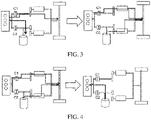
- FIG. 1 A P2.5-architecture single-motor hybrid power system among the hybrid power systems is shown in FIG. 1 , in which 10 represents an engine, 20 represents a motor, C1 represents a first clutch, C2 represents a second clutch, 31 represents an odd-numbered shaft of transmission (which may be connected to the first, third, fifth and seventh gears), 32 represents an even-numbered shaft of transmission (which may be connected to the reverse, second, fourth and sixth gears), and 40 represents a wheel end.
- 10 represents an engine
- 20 represents a motor
- C1 represents a first clutch
- C2 represents a second clutch
- 31 represents an odd-numbered shaft of transmission (which may be connected to the first, third, fifth and seventh gears)
- 32 represents an even-numbered shaft of transmission (which may be connected to the reverse, second, fourth and sixth gears)
- 40 represents a wheel end.
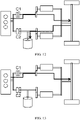
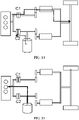
- ISG path refers to that the motor 20 is connected with the engine 10 through the second clutch C2, while the motor 20 is disconnected with the even-numbered shaft 32of the transmission.
- EFAD path refers to that the motor 20 is directly connected with the even-numbered shaft 32 of the transmission for assisting or charging, and the motor 20 is disconnected with the engine 10.
- Disengaged path refers to that the motor is disconnected with the engine and the even-numbered shaft of transmission.
- the present invention provides a control method for switching the torque output path of a motor of a hybrid electric vehicle, which is specifically achieved by the following technical solution in the present invention.
- the present invention provides a control method for switching a torque output path of a motor of a hybrid electric vehicle, which includes:
- a further improvement of the control method for switching a torque output path of a motor of hybrid electric vehicle is that controlling the torque output path of the motor to be transitioned from the ISG path to the EFAD path includes:
- a further improvement of the control method for switching a torque output path of a motor of a hybrid electric vehicle is that controlling the motor torque to be transitioned from negative torque to positive torque, and transitioning the state of charge/discharge of the motor to that the motor outputs positive torque to the crankshaft end of the engine in the ISG path includes:
- a further improvement of the control method for switching a torque output path of a motor of a hybrid electric vehicle is that the method further includes: acquiring a first current state of charge of the vehicle battery, determining charging torque according to the first current state of charge, and determining initial torque requested by a driver according to the initial accelerator pedal opening; wherein the first preset condition is that the first current torque of the engine is not less than a difference between the initial torque requested by the driver and the charging torque.
- a further improvement of the control method for switching the torque output path of a motor of a hybrid electric vehicle is that transitioning the state of charge/discharge of the motor to that the motor outputs positive torque to the wheel end in the EFAD path includes:
- a further improvement of the control method for switching a torque output path of a motor of a hybrid electric vehicle provided by the present invention is that before adjusting the motor rev to the target motor rev in the EFAD path, the method further includes:
- a further improvement of the control method for switching a torque output path of a motor of a hybrid electric vehicle provided by the present invention is that after transitioning the state of charge/discharge of the motor to that the motor outputs positive torque to the wheel end in the EFAD path, the method further includes:
- a further improvement of the control method for switching a torque output path of a motor of a hybrid electric vehicle is that transitioning the state of charge/discharge of the motor to that the motor outputs positive torque to the crankshaft end of the engine in the EFAD path includes:
- a further improvement of the control method for switching a torque output path of a motor of a hybrid electric vehicle provided by the present invention is that controlling the torque output path of the motor to be transitioned from the EFAD path to the ISG path includes:
- a further improvement of the control method for switching a torque output path of a motor of a hybrid electric vehicle provided by the present invention is that said controlling the motor to shift to the second gear and adjusting the motor rev to the second gear target motor rev includes:
- a further improvement of the control method for switching the torque output path of a motor of a hybrid electric vehicle provided by the present invention is that the method further includes:
- a further improvement of the control method for switching a torque output path of a motor of a hybrid electric vehicle provided by the present invention is that transitioning the state of charge/discharge of the motor to that the motor is charged by the engine in the ISG path, the method further includes:
- the present invention solve the technical problem that the switching between the ISG path and the EFAD path cannot be performed in the prior art, and provides a control method for a case that the torque output path of the motor of the hybrid electric vehicle changes, including the control method of transitioning from the ISG path to the EFAD path and from the EFAD path to the ISG path.
- the control method for switching the torque output path of the motor of the hybrid electric vehicle according to the present invention improves the drivability, comfort and safety of the vehicle by a smooth control during a process of switching the torque output path of the motor.
- the present invention provides a control method for switching a torque output path of a motor of a hybrid electric vehicle, which is specifically achieved by the following technical solution in the present invention.
- this embodiment provides a control method for switching a torque output path of a motor of a hybrid electric vehicle, which includes steps of:
- FIG. 1 The P2.5-architecture single-motor hybrid power system in the hybrid power system is shown in FIG. 1 , in which 10 represents an engine, 20 represents a motor, C1 represents a first clutch, C2 represents a second clutch, 31 represents an odd-numbered shaft of the transmission (which may be connected with the first, third, fifth and seventh gears), 32 represents the even-numbered shaft of the transmission (which may be connected with the reverse, second, fourth and sixth gears), and 40 represents a wheel end.
- a first case is switching to the EFAD path from the ISG path.
- the vehicle is in a charging condition in the ISG path, the driver is now stepping deeper on the accelerator to accelerate, and at this time, the ISG path will be transitioned to the EFAD path.
- a second case is switching to the ISG path from the EFAD path.
- the vehicle speed is about 50km/h, decelerating now, and a SOC (State of Charge) of the vehicle is insufficient, so the engine keeps running, at this time, the motor is in the EFAD path, and the driver stepped on the brake pedal to stop the vehicle. Due to recycling of braking energy during the braking process, the SOC is gradually full charged, and the engine needs to be stopped, so it is necessary to transition to the ISG path for the motor-assisting stop, and at this time, transition from the EFAD path to the ISG path is performed.
- SOC State of Charge
- This embodiment defines a control method for a case that the torque output path of the motor of a hybrid electric vehicle changes, including the control method of transitioning from the ISG path to the EFAD path and from the EFAD path to the ISG path.
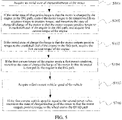
- controlling the torque output path of the motor to be transitioned from the ISG path to the EFAD path includes steps of:
- the motor in the case that the vehicle is in a charging condition in the ISG path, if at this time the driver is now stepping deeper on the accelerator to accelerate, it is necessary to transition from the ISG route to the EFAD route.
- the driver steps on the accelerator to accelerate during charging in the ISG mode, when a certain vehicle speed threshold is reached, the motor will be requested to switch from the ISG charging mode to the EFAD mode for assisting or using the EFAD path for charging to improve system efficiency.
- the transition process includes an ISG path-motor charging stage, an ISG path-motor assisting stage, an ISG path-motor charging stage, a motor rev synchronization stage and an EFAD path-motor assisting stage.
- the initial charge state of the vehicle is less than the first preset value, the battery SOC is low, and an energy management module sends a charging request, at this time, the state of charge/discharge is that the engine is charging the motor in the ISG path.
- an initial condition is that the vehicle speed in-situ is 0, the gear is at D, the accelerator pedal is at 0%, the battery SOC is low, the energy management module sends a charging request, and the motor is charged through the ISG path.
- step S102 includes:
- the torque of the motor will rapidly increase from the first current torque of the motor (for example, -50nm) to 0, and the motor will exit the charging state of, wherein a duration of a process of exiting charging (the first preset duration) is calibrated and generally set to 1 to 1.5 seconds.
- accelerator characteristics at low speed is configured to have little correlation with the vehicle speed, which tends to lead to that the trigger fast torque regulation of the engine torque, resulting in that the actual engine torque follows a gas-path requested torque.
- lag of the gas-path torque is obvious, in this case, if the fast torque adjustment function of the engine cannot be triggered, it will cause the engine torque to increase slowly.
- a strategy is upgraded to ensure that ignition angle adjustment of the engine is forcibly activated when charging torque is unloaded.
- the torque slope parameter of the motor (the first slope parameter) is the key to control stability of the motor torque.
- the first slope parameter the first current torque of the motor/the first preset duration.
- the initial state of charge/discharge may be that the motor outputs positive torque to the crankshaft end of the engine in the ISG path, and then the first current torque of the engine can be directly acquired (as in step S103).
- control method for switching a torque output path of a motor of a hybrid electric vehicle further includes step S104: if the first current torque of the engine meets a first preset condition, the state of charge/discharge of the motor is transitioned to that the motor is charged by the engine in the ISG path.
- the control method for switching a torque output path of a motor of a hybrid electric vehicle further includes: acquiring a first current state of charge of the vehicle battery, determining charging torque according to the first current state of charge, and determining initial torque requested by the driver according to the initial accelerator pedal opening; the first preset condition is that the first current torque of the engine is not less than a difference between the initial torque requested by the driver and the charging torque. This is a stage of "ISG path-motor charging" following the stage of "ISG path-motor assisting".
- the motor may be charged in the ISG path, that is, the state of charge/discharge of the motor is transitioned to that the motor is charged by the engine in the ISG path.
- this embodiment provides a control method for switching a torque output path of a motor of a hybrid electric vehicle, which further includes steps of:
- transitioning the state of charge/discharge of the motor to that the motor outputs positive torque to the wheel end in the EFAD path includes:
- the torque requested by the driver on the wheel end is obtained according to a current actual brake pedal opening, a current actual accelerator pedal opening and a preset calibration relationship.
- the method further includes:
- the path of the motor needs to be transitioned from the ISG path to the EFAD path according to the system efficiency.
- the motor speed needs to be synchronized from an actual speed in the ISG path to the target speed in the EFAD path, so synchronization of the motor speed is triggered.
- the motor Before the synchronization, the motor is operating in the ISG path, and the motor rev is equal to an engine rev.
- the motor torque needs to be reduced to ON-m.
- the engine torque needs to be adjusted quickly to ensure that the torque requested by the wheel end can be met. Therefore, during the time when the motor torque decreases, the engine torque should be quickly responded by adjusting the ignition angle.
- the motor mode changes from the torque mode to the rev mode, and in this case the vehicle is driven only by the engine.
- the target motor rev in the EFAD path is equal to the product of current wheel speed and the transmission ratio of the transmission gears.
- the method further includes:
- transitioning the state of charge/discharge of the motor to that the motor outputs the positive torque to the crankshaft end of the engine in the EFAD path includes:
- the path of the motor is already switched to the EFAD path, and both the motor and engine can directly drive the wheels of the vehicle.
- the motor propels the vehicle through the even-numbered shaft, and the motor may be connected with the second, fourth or sixth gear.
- the engine can drive the vehicle through the odd-numbered shaft or the even-numbered shaft.
- the engine may be connected with the first, second, third, fourth, fifth, sixth or seventh gear.
- gear transmission ratios of the engine and the motor are independent from each other, or may be different.
- the speed ratio of the engine decreases, and since the torque at the crankshaft end of the engine remains stable, the torque at the wheel end of the engine decreases.
- the motor will assist in the compensation of the torque at the wheel end driven by the engine, which decreased due to the reduction of the speed ratio.
- the above table shows a preset calibration relationship between the engine load and the second preset duration.
- the second preset duration can be determined, and according to the second current torque of the motor and the second preset duration, the second slope parameter can be determined.
- the second slope parameter may be equal to the second current torque of the motor/the second preset duration.
- controlling the torque output path of the motor to be transitioned from the EFAD path to the ISG path includes steps of:
- controlling the motor to shift to the second gear and adjusting the motor rev to the target rev of the second gear includes:
- the transition process from the EFAD path to the ISG path includes the stages of EFAD path-motor charging, motor gear shifting and down shifting, motor rev synchronization-adjusting from the rev in the EFAD path to the rev in the ISG path, and motor assisted engine stop in the ISG path.
- an initial state is that the vehicle is at 50km/h, the SOC of battery is low, the motor gear is at the fourth gear, the engine is running, and the driver steps on the brake pedal.
- the hybrid power system has a braking recovery capability, wherein torque of the braking recovery is equal to a total braking torque from a braking system.
- the motor is charged in the EFAD path.
- control method for switching a torque output path of a motor of a hybrid electric vehicle further includes steps of:
- the path of the motor is changed to the ISG path, and the engine is about to stop.
- the motor is controlled to output negative torque to assist the engine to stop, so as to reduce the vibration.
- the negative torque of the motor is calculated according to a rev difference between an actual engine rev and a target engine rev.
- control method for switching a torque output path of a motor of a hybrid electric vehicle further includes steps of:
- step S206 the method further includes steps of:
- the second current state of charge is less than the first preset value, the SOC is still relatively low, and the battery is still being charged.
- the vehicle speed is lower than a certain threshold (such as 5km/h), in this case, the SOC is still relatively low, and it needs to be charged, for the sake of charging efficiency of the system, the motor needs to be switched from the EFAD path to the ISG path for charging. Therefore, the motor needs a speed regulation.
- the path of the motor is changed to the ISG path, and the motor is charged in the ISG path.
- the state of charge/discharge of the motor is transitioned to that the motor outputs negative torque to the engine, to assist the engine to stop in the ISG path.
- the power system thereof consists of an engine, a motor, a 7DCT transmission, a decelerator, half shafts and wheels.
- the motor is in an ISG path, the motor is connected with an even-numbered shaft clutch, and the gear of the motor is at gear 0.
- the motor is in an EFAD path, the motor is connected with the wheel end, and there are three gears of second-fourth-sixth, when conditions on vehicle speed and accelerator are met, the motor will shift gears.
- the main functions of the ISG path are low-speed charging, stop assistance and low-speed assistance. In a case that the vehicle speed is greater than 13km/h, the vehicle will exit the ISG path and enter the EFAD path.
- the path of the motor will be switched from the ISG path to the EFAD path. In some working conditions during low SOC deceleration, the path of the motor will be switched from the EFAD path to the ISG path.
- the present invention solve the technical problem that switching between the ISG path and the EFAD path cannot be performed in the prior art, and provides a control method for a case that the torque output path of the motor of the hybrid electric vehicle changes, including the control method of transitioning from the ISG path to the EFAD path and from the EFAD path to the ISG path.
- the control method for switching a torque output path of a motor of a hybrid electric vehicle according to the present invention improves the drivability, comfort and safety of the vehicle by a smooth control during a process of switching the torque output path of the motor.
Landscapes
- Engineering & Computer Science (AREA)
- Transportation (AREA)
- Mechanical Engineering (AREA)
- Chemical & Material Sciences (AREA)
- Combustion & Propulsion (AREA)
- Automation & Control Theory (AREA)
- Power Engineering (AREA)
- Life Sciences & Earth Sciences (AREA)
- Sustainable Development (AREA)
- Sustainable Energy (AREA)
- Electric Propulsion And Braking For Vehicles (AREA)
- Hybrid Electric Vehicles (AREA)
Applications Claiming Priority (1)
| Application Number | Priority Date | Filing Date | Title |
|---|---|---|---|
| PCT/CN2020/138403 WO2022133746A1 (zh) | 2020-12-22 | 2020-12-22 | 一种混合动力汽车电机扭矩输出路径切换的控制方法 |
Publications (4)
| Publication Number | Publication Date |
|---|---|
| EP4046882A1 true EP4046882A1 (de) | 2022-08-24 |
| EP4046882A4 EP4046882A4 (de) | 2022-10-19 |
| EP4046882C0 EP4046882C0 (de) | 2023-11-29 |
| EP4046882B1 EP4046882B1 (de) | 2023-11-29 |
Family
ID=80868532
Family Applications (1)
| Application Number | Title | Priority Date | Filing Date |
|---|---|---|---|
| EP20948893.1A Active EP4046882B1 (de) | 2020-12-22 | 2020-12-22 | Verfahren zur steuerung des schaltdrehmomentes eines hybridfahrzeugs |
Country Status (3)
| Country | Link |
|---|---|
| EP (1) | EP4046882B1 (de) |
| CN (1) | CN114286763B (de) |
| WO (1) | WO2022133746A1 (de) |
Cited By (1)
| Publication number | Priority date | Publication date | Assignee | Title |
|---|---|---|---|---|
| FR3154075A1 (fr) * | 2023-10-13 | 2025-04-18 | Psa Automobiles Sa | Contrôle du mode de performance de la machine motrice thermique d’un gmp hybride d’un véhicule terrestre |
Families Citing this family (5)
| Publication number | Priority date | Publication date | Assignee | Title |
|---|---|---|---|---|
| CN114604105B (zh) * | 2022-04-11 | 2023-12-15 | 潍柴动力股份有限公司 | 一种电机载频切换的控制方法和相关装置 |
| CN115489509B (zh) * | 2022-09-22 | 2025-10-21 | 西安法士特汽车传动有限公司 | 一种油电混动变速器气路控制系统和方法 |
| CN115556739A (zh) * | 2022-10-31 | 2023-01-03 | 东风汽车集团股份有限公司 | 一种混动汽车的控制方法及装置 |
| CN119428617B (zh) * | 2024-12-31 | 2026-01-30 | 安徽江淮汽车集团股份有限公司 | 混动汽车扭矩动态控制方法 |
| CN119796163B (zh) * | 2025-01-26 | 2025-10-17 | 江铃汽车股份有限公司 | 一种插电混动车型的wltc工况经济性优化方法及系统 |
Family Cites Families (10)
| Publication number | Priority date | Publication date | Assignee | Title |
|---|---|---|---|---|
| DE102007050656B4 (de) * | 2007-10-24 | 2020-06-04 | Zf Friedrichshafen Ag | Verfahren zum Betreiben eines Antriebsstrangs |
| DE102010044618B4 (de) * | 2010-08-27 | 2013-10-31 | Getrag Getriebe- Und Zahnradfabrik Hermann Hagenmeyer Gmbh & Cie Kg | Verfahren zum Ansteuern eines Hybrid-Antriebsstranges |
| DE102015115714A1 (de) * | 2015-09-17 | 2017-03-23 | Borgward Trademark Holdings Gmbh | Drehmomentregelverfahren und -system für ein Hybridelektrofahrzeug |
| JP2017094823A (ja) * | 2015-11-20 | 2017-06-01 | スズキ株式会社 | ハイブリッド車の制動制御装置 |
| CN107628023A (zh) * | 2017-10-11 | 2018-01-26 | 奇瑞汽车股份有限公司 | 混合动力汽车传动系统的控制方法 |
| CN109895758A (zh) * | 2017-12-08 | 2019-06-18 | 郑州宇通客车股份有限公司 | 一种混合动力汽车发动机扭矩控制方法、系统及车辆 |
| CN108327514B (zh) * | 2018-02-08 | 2020-03-27 | 合肥工业大学 | 一种多模式混合动力传动装置 |
| CN110103946B (zh) * | 2019-04-18 | 2021-01-05 | 浙江吉利控股集团有限公司 | 一种混合动力汽车发动机启动控制方法及系统 |
| CN111637659A (zh) * | 2020-06-16 | 2020-09-08 | 珠海格力电器股份有限公司 | 一种高能效的热泵空调系统及其控制方法 |
| CN111873812B (zh) * | 2020-09-27 | 2020-12-25 | 浙江吉利控股集团有限公司 | 一种车辆扭矩确定方法及装置 |
-
2020
- 2020-12-22 WO PCT/CN2020/138403 patent/WO2022133746A1/zh not_active Ceased
- 2020-12-22 EP EP20948893.1A patent/EP4046882B1/de active Active
- 2020-12-22 CN CN202080051221.5A patent/CN114286763B/zh active Active
Cited By (1)
| Publication number | Priority date | Publication date | Assignee | Title |
|---|---|---|---|---|
| FR3154075A1 (fr) * | 2023-10-13 | 2025-04-18 | Psa Automobiles Sa | Contrôle du mode de performance de la machine motrice thermique d’un gmp hybride d’un véhicule terrestre |
Also Published As
| Publication number | Publication date |
|---|---|
| EP4046882C0 (de) | 2023-11-29 |
| EP4046882A4 (de) | 2022-10-19 |
| CN114286763B (zh) | 2024-06-14 |
| CN114286763A (zh) | 2022-04-05 |
| EP4046882B1 (de) | 2023-11-29 |
| WO2022133746A1 (zh) | 2022-06-30 |
Similar Documents
| Publication | Publication Date | Title |
|---|---|---|
| EP4046882B1 (de) | Verfahren zur steuerung des schaltdrehmomentes eines hybridfahrzeugs | |
| US7617025B2 (en) | Electric oil pump control system in hybrid vehicle | |
| US7056260B2 (en) | Drive unit for vehicle | |
| US7363122B2 (en) | Method for controlling a hybrid drive of a vehicle | |
| KR102935115B1 (ko) | 전기자동차의 사륜구동 전환 제어 시스템 및 방법 | |
| US20050061563A1 (en) | Method and system of requesting engine on/off state in hybrid electric vehicle | |
| CN109572666B (zh) | 一种行星式混合动力汽车发动机起停控制方法 | |
| JP2008150014A (ja) | ハイブリッド電気車両のアイドリング充電時の発電制御方法 | |
| JP2008150022A (ja) | Etcが搭載されたハイブリッド電気自動車のエンジントルク制御方法 | |
| KR102791570B1 (ko) | 사륜 구동 전동화 차량의 구동 제어 장치 및 방법 | |
| JP6659459B2 (ja) | 車両 | |
| KR20220025960A (ko) | 사륜 구동 하이브리드 차량의 구동 제어 시스템 및 방법 | |
| US9156461B2 (en) | Vehicle control unit | |
| KR20180077670A (ko) | 하이브리드 차량의 변속 제어장치 및 제어방법 | |
| JP7530848B2 (ja) | 変速制御方法、及び、変速制御装置 | |
| CN109693673B (zh) | 一种具备减速器的新能源车电控传动装置 | |
| US20250376150A1 (en) | Hybrid vehicle | |
| JP2007230431A (ja) | 車両の駆動制御装置 | |
| CN114688244A (zh) | 混动车辆变速器档位的调节方法及装置 | |
| KR100980966B1 (ko) | 하이브리드 차량의 변속 방법 | |
| CN118602104A (zh) | 换挡控制方法、装置、系统、设备及介质 | |
| CN111071243B (zh) | 混动系统的无缝降挡控制方法 | |
| CN111071237B (zh) | 混动系统无缝降挡控制方法 | |
| KR101882129B1 (ko) | 하이브리드 자동차의 변속 제어 방법 | |
| CN115743083B (zh) | P2构型车辆的制动能量回收动力能力边界计算方法及系统 |
Legal Events
| Date | Code | Title | Description |
|---|---|---|---|
| STAA | Information on the status of an ep patent application or granted ep patent |
Free format text: STATUS: UNKNOWN |
|
| STAA | Information on the status of an ep patent application or granted ep patent |
Free format text: STATUS: THE INTERNATIONAL PUBLICATION HAS BEEN MADE |
|
| PUAI | Public reference made under article 153(3) epc to a published international application that has entered the european phase |
Free format text: ORIGINAL CODE: 0009012 |
|
| STAA | Information on the status of an ep patent application or granted ep patent |
Free format text: STATUS: REQUEST FOR EXAMINATION WAS MADE |
|
| 17P | Request for examination filed |
Effective date: 20220215 |
|
| AK | Designated contracting states |
Kind code of ref document: A1 Designated state(s): AL AT BE BG CH CY CZ DE DK EE ES FI FR GB GR HR HU IE IS IT LI LT LU LV MC MK MT NL NO PL PT RO RS SE SI SK SM TR |
|
| A4 | Supplementary search report drawn up and despatched |
Effective date: 20220919 |
|
| RIC1 | Information provided on ipc code assigned before grant |
Ipc: B60K 6/48 20071001ALI20220913BHEP Ipc: B60K 6/485 20071001ALI20220913BHEP Ipc: B60W 20/15 20160101ALI20220913BHEP Ipc: B60W 10/06 20060101ALI20220913BHEP Ipc: B60W 10/08 20060101AFI20220913BHEP |
|
| GRAP | Despatch of communication of intention to grant a patent |
Free format text: ORIGINAL CODE: EPIDOSNIGR1 |
|
| STAA | Information on the status of an ep patent application or granted ep patent |
Free format text: STATUS: GRANT OF PATENT IS INTENDED |
|
| RIC1 | Information provided on ipc code assigned before grant |
Ipc: B60K 6/48 20071001ALI20230825BHEP Ipc: B60K 6/485 20071001ALI20230825BHEP Ipc: B60W 20/15 20160101ALI20230825BHEP Ipc: B60W 10/06 20060101ALI20230825BHEP Ipc: B60W 10/08 20060101AFI20230825BHEP |
|
| DAV | Request for validation of the european patent (deleted) | ||
| DAX | Request for extension of the european patent (deleted) | ||
| INTG | Intention to grant announced |
Effective date: 20230914 |
|
| GRAS | Grant fee paid |
Free format text: ORIGINAL CODE: EPIDOSNIGR3 |
|
| GRAA | (expected) grant |
Free format text: ORIGINAL CODE: 0009210 |
|
| STAA | Information on the status of an ep patent application or granted ep patent |
Free format text: STATUS: THE PATENT HAS BEEN GRANTED |
|
| AK | Designated contracting states |
Kind code of ref document: B1 Designated state(s): AL AT BE BG CH CY CZ DE DK EE ES FI FR GB GR HR HU IE IS IT LI LT LU LV MC MK MT NL NO PL PT RO RS SE SI SK SM TR |
|
| REG | Reference to a national code |
Ref country code: GB Ref legal event code: FG4D |
|
| REG | Reference to a national code |
Ref country code: CH Ref legal event code: EP |
|
| REG | Reference to a national code |
Ref country code: DE Ref legal event code: R096 Ref document number: 602020022135 Country of ref document: DE |
|
| REG | Reference to a national code |
Ref country code: IE Ref legal event code: FG4D |
|
| U01 | Request for unitary effect filed |
Effective date: 20231205 |
|
| U07 | Unitary effect registered |
Designated state(s): AT BE BG DE DK EE FI FR IT LT LU LV MT NL PT SE SI Effective date: 20231211 |
|
| U20 | Renewal fee for the european patent with unitary effect paid |
Year of fee payment: 4 Effective date: 20231228 |
|
| PG25 | Lapsed in a contracting state [announced via postgrant information from national office to epo] |
Ref country code: GR Free format text: LAPSE BECAUSE OF FAILURE TO SUBMIT A TRANSLATION OF THE DESCRIPTION OR TO PAY THE FEE WITHIN THE PRESCRIBED TIME-LIMIT Effective date: 20240301 |
|
| PG25 | Lapsed in a contracting state [announced via postgrant information from national office to epo] |
Ref country code: IS Free format text: LAPSE BECAUSE OF FAILURE TO SUBMIT A TRANSLATION OF THE DESCRIPTION OR TO PAY THE FEE WITHIN THE PRESCRIBED TIME-LIMIT Effective date: 20240329 |
|
| PG25 | Lapsed in a contracting state [announced via postgrant information from national office to epo] |
Ref country code: ES Free format text: LAPSE BECAUSE OF FAILURE TO SUBMIT A TRANSLATION OF THE DESCRIPTION OR TO PAY THE FEE WITHIN THE PRESCRIBED TIME-LIMIT Effective date: 20231129 |
|
| PG25 | Lapsed in a contracting state [announced via postgrant information from national office to epo] |
Ref country code: IS Free format text: LAPSE BECAUSE OF FAILURE TO SUBMIT A TRANSLATION OF THE DESCRIPTION OR TO PAY THE FEE WITHIN THE PRESCRIBED TIME-LIMIT Effective date: 20240329 Ref country code: GR Free format text: LAPSE BECAUSE OF FAILURE TO SUBMIT A TRANSLATION OF THE DESCRIPTION OR TO PAY THE FEE WITHIN THE PRESCRIBED TIME-LIMIT Effective date: 20240301 Ref country code: ES Free format text: LAPSE BECAUSE OF FAILURE TO SUBMIT A TRANSLATION OF THE DESCRIPTION OR TO PAY THE FEE WITHIN THE PRESCRIBED TIME-LIMIT Effective date: 20231129 |
|
| PG25 | Lapsed in a contracting state [announced via postgrant information from national office to epo] |
Ref country code: RS Free format text: LAPSE BECAUSE OF FAILURE TO SUBMIT A TRANSLATION OF THE DESCRIPTION OR TO PAY THE FEE WITHIN THE PRESCRIBED TIME-LIMIT Effective date: 20231129 Ref country code: PL Free format text: LAPSE BECAUSE OF FAILURE TO SUBMIT A TRANSLATION OF THE DESCRIPTION OR TO PAY THE FEE WITHIN THE PRESCRIBED TIME-LIMIT Effective date: 20231129 Ref country code: NO Free format text: LAPSE BECAUSE OF FAILURE TO SUBMIT A TRANSLATION OF THE DESCRIPTION OR TO PAY THE FEE WITHIN THE PRESCRIBED TIME-LIMIT Effective date: 20240229 Ref country code: HR Free format text: LAPSE BECAUSE OF FAILURE TO SUBMIT A TRANSLATION OF THE DESCRIPTION OR TO PAY THE FEE WITHIN THE PRESCRIBED TIME-LIMIT Effective date: 20231129 |
|
| PG25 | Lapsed in a contracting state [announced via postgrant information from national office to epo] |
Ref country code: CZ Free format text: LAPSE BECAUSE OF FAILURE TO SUBMIT A TRANSLATION OF THE DESCRIPTION OR TO PAY THE FEE WITHIN THE PRESCRIBED TIME-LIMIT Effective date: 20231129 |
|
| PG25 | Lapsed in a contracting state [announced via postgrant information from national office to epo] |
Ref country code: SK Free format text: LAPSE BECAUSE OF FAILURE TO SUBMIT A TRANSLATION OF THE DESCRIPTION OR TO PAY THE FEE WITHIN THE PRESCRIBED TIME-LIMIT Effective date: 20231129 |
|
| PG25 | Lapsed in a contracting state [announced via postgrant information from national office to epo] |
Ref country code: SM Free format text: LAPSE BECAUSE OF FAILURE TO SUBMIT A TRANSLATION OF THE DESCRIPTION OR TO PAY THE FEE WITHIN THE PRESCRIBED TIME-LIMIT Effective date: 20231129 Ref country code: SK Free format text: LAPSE BECAUSE OF FAILURE TO SUBMIT A TRANSLATION OF THE DESCRIPTION OR TO PAY THE FEE WITHIN THE PRESCRIBED TIME-LIMIT Effective date: 20231129 Ref country code: RO Free format text: LAPSE BECAUSE OF FAILURE TO SUBMIT A TRANSLATION OF THE DESCRIPTION OR TO PAY THE FEE WITHIN THE PRESCRIBED TIME-LIMIT Effective date: 20231129 Ref country code: CZ Free format text: LAPSE BECAUSE OF FAILURE TO SUBMIT A TRANSLATION OF THE DESCRIPTION OR TO PAY THE FEE WITHIN THE PRESCRIBED TIME-LIMIT Effective date: 20231129 |
|
| REG | Reference to a national code |
Ref country code: CH Ref legal event code: PL |
|
| PG25 | Lapsed in a contracting state [announced via postgrant information from national office to epo] |
Ref country code: MC Free format text: LAPSE BECAUSE OF FAILURE TO SUBMIT A TRANSLATION OF THE DESCRIPTION OR TO PAY THE FEE WITHIN THE PRESCRIBED TIME-LIMIT Effective date: 20231129 |
|
| PG25 | Lapsed in a contracting state [announced via postgrant information from national office to epo] |
Ref country code: MC Free format text: LAPSE BECAUSE OF FAILURE TO SUBMIT A TRANSLATION OF THE DESCRIPTION OR TO PAY THE FEE WITHIN THE PRESCRIBED TIME-LIMIT Effective date: 20231129 |
|
| REG | Reference to a national code |
Ref country code: DE Ref legal event code: R097 Ref document number: 602020022135 Country of ref document: DE |
|
| PLBE | No opposition filed within time limit |
Free format text: ORIGINAL CODE: 0009261 |
|
| STAA | Information on the status of an ep patent application or granted ep patent |
Free format text: STATUS: NO OPPOSITION FILED WITHIN TIME LIMIT |
|
| REG | Reference to a national code |
Ref country code: IE Ref legal event code: MM4A |
|
| PG25 | Lapsed in a contracting state [announced via postgrant information from national office to epo] |
Ref country code: IE Free format text: LAPSE BECAUSE OF NON-PAYMENT OF DUE FEES Effective date: 20231222 |
|
| PG25 | Lapsed in a contracting state [announced via postgrant information from national office to epo] |
Ref country code: CH Free format text: LAPSE BECAUSE OF NON-PAYMENT OF DUE FEES Effective date: 20231231 |
|
| PG25 | Lapsed in a contracting state [announced via postgrant information from national office to epo] |
Ref country code: IE Free format text: LAPSE BECAUSE OF NON-PAYMENT OF DUE FEES Effective date: 20231222 Ref country code: CH Free format text: LAPSE BECAUSE OF NON-PAYMENT OF DUE FEES Effective date: 20231231 |
|
| 26N | No opposition filed |
Effective date: 20240830 |
|
| U20 | Renewal fee for the european patent with unitary effect paid |
Year of fee payment: 5 Effective date: 20241127 |
|
| PG25 | Lapsed in a contracting state [announced via postgrant information from national office to epo] |
Ref country code: CY Free format text: LAPSE BECAUSE OF FAILURE TO SUBMIT A TRANSLATION OF THE DESCRIPTION OR TO PAY THE FEE WITHIN THE PRESCRIBED TIME-LIMIT; INVALID AB INITIO Effective date: 20201222 |
|
| PG25 | Lapsed in a contracting state [announced via postgrant information from national office to epo] |
Ref country code: HU Free format text: LAPSE BECAUSE OF FAILURE TO SUBMIT A TRANSLATION OF THE DESCRIPTION OR TO PAY THE FEE WITHIN THE PRESCRIBED TIME-LIMIT; INVALID AB INITIO Effective date: 20201222 |
|
| GBPC | Gb: european patent ceased through non-payment of renewal fee |
Effective date: 20241222 |
|
| PG25 | Lapsed in a contracting state [announced via postgrant information from national office to epo] |
Ref country code: GB Free format text: LAPSE BECAUSE OF NON-PAYMENT OF DUE FEES Effective date: 20241222 |
|
| PG25 | Lapsed in a contracting state [announced via postgrant information from national office to epo] |
Ref country code: TR Free format text: LAPSE BECAUSE OF FAILURE TO SUBMIT A TRANSLATION OF THE DESCRIPTION OR TO PAY THE FEE WITHIN THE PRESCRIBED TIME-LIMIT Effective date: 20231129 |
|
| U20 | Renewal fee for the european patent with unitary effect paid |
Year of fee payment: 6 Effective date: 20251124 |