EP4037824B1 - Aktiver träger in der fotokatalyse - Google Patents
Aktiver träger in der fotokatalyse Download PDFInfo
- Publication number
- EP4037824B1 EP4037824B1 EP20736621.2A EP20736621A EP4037824B1 EP 4037824 B1 EP4037824 B1 EP 4037824B1 EP 20736621 A EP20736621 A EP 20736621A EP 4037824 B1 EP4037824 B1 EP 4037824B1
- Authority
- EP
- European Patent Office
- Prior art keywords
- support
- nanocrystals
- tio
- support according
- heating
- Prior art date
- Legal status (The legal status is an assumption and is not a legal conclusion. Google has not performed a legal analysis and makes no representation as to the accuracy of the status listed.)
- Active
Links
Images





Classifications
-
- B—PERFORMING OPERATIONS; TRANSPORTING
- B01—PHYSICAL OR CHEMICAL PROCESSES OR APPARATUS IN GENERAL
- B01J—CHEMICAL OR PHYSICAL PROCESSES, e.g. CATALYSIS OR COLLOID CHEMISTRY; THEIR RELEVANT APPARATUS
- B01J21/00—Catalysts comprising the elements, oxides, or hydroxides of magnesium, boron, aluminium, carbon, silicon, titanium, zirconium, or hafnium
- B01J21/06—Silicon, titanium, zirconium or hafnium; Oxides or hydroxides thereof
- B01J21/063—Titanium; Oxides or hydroxides thereof
-
- B—PERFORMING OPERATIONS; TRANSPORTING
- B01—PHYSICAL OR CHEMICAL PROCESSES OR APPARATUS IN GENERAL
- B01J—CHEMICAL OR PHYSICAL PROCESSES, e.g. CATALYSIS OR COLLOID CHEMISTRY; THEIR RELEVANT APPARATUS
- B01J23/00—Catalysts comprising metals or metal oxides or hydroxides, not provided for in group B01J21/00
- B01J23/002—Mixed oxides other than spinels, e.g. perovskite
-
- B—PERFORMING OPERATIONS; TRANSPORTING
- B01—PHYSICAL OR CHEMICAL PROCESSES OR APPARATUS IN GENERAL
- B01J—CHEMICAL OR PHYSICAL PROCESSES, e.g. CATALYSIS OR COLLOID CHEMISTRY; THEIR RELEVANT APPARATUS
- B01J23/00—Catalysts comprising metals or metal oxides or hydroxides, not provided for in group B01J21/00
- B01J23/06—Catalysts comprising metals or metal oxides or hydroxides, not provided for in group B01J21/00 of zinc, cadmium or mercury
-
- B—PERFORMING OPERATIONS; TRANSPORTING
- B01—PHYSICAL OR CHEMICAL PROCESSES OR APPARATUS IN GENERAL
- B01J—CHEMICAL OR PHYSICAL PROCESSES, e.g. CATALYSIS OR COLLOID CHEMISTRY; THEIR RELEVANT APPARATUS
- B01J23/00—Catalysts comprising metals or metal oxides or hydroxides, not provided for in group B01J21/00
- B01J23/70—Catalysts comprising metals or metal oxides or hydroxides, not provided for in group B01J21/00 of the iron group metals or copper
- B01J23/72—Copper
-
- B—PERFORMING OPERATIONS; TRANSPORTING
- B01—PHYSICAL OR CHEMICAL PROCESSES OR APPARATUS IN GENERAL
- B01J—CHEMICAL OR PHYSICAL PROCESSES, e.g. CATALYSIS OR COLLOID CHEMISTRY; THEIR RELEVANT APPARATUS
- B01J23/00—Catalysts comprising metals or metal oxides or hydroxides, not provided for in group B01J21/00
- B01J23/70—Catalysts comprising metals or metal oxides or hydroxides, not provided for in group B01J21/00 of the iron group metals or copper
- B01J23/74—Iron group metals
- B01J23/745—Iron
-
- B—PERFORMING OPERATIONS; TRANSPORTING
- B01—PHYSICAL OR CHEMICAL PROCESSES OR APPARATUS IN GENERAL
- B01J—CHEMICAL OR PHYSICAL PROCESSES, e.g. CATALYSIS OR COLLOID CHEMISTRY; THEIR RELEVANT APPARATUS
- B01J23/00—Catalysts comprising metals or metal oxides or hydroxides, not provided for in group B01J21/00
- B01J23/70—Catalysts comprising metals or metal oxides or hydroxides, not provided for in group B01J21/00 of the iron group metals or copper
- B01J23/74—Iron group metals
- B01J23/755—Nickel
-
- B—PERFORMING OPERATIONS; TRANSPORTING
- B01—PHYSICAL OR CHEMICAL PROCESSES OR APPARATUS IN GENERAL
- B01J—CHEMICAL OR PHYSICAL PROCESSES, e.g. CATALYSIS OR COLLOID CHEMISTRY; THEIR RELEVANT APPARATUS
- B01J35/00—Catalysts, in general, characterised by their form or physical properties
- B01J35/30—Catalysts, in general, characterised by their form or physical properties characterised by their physical properties
- B01J35/39—Photocatalytic properties
-
- B—PERFORMING OPERATIONS; TRANSPORTING
- B01—PHYSICAL OR CHEMICAL PROCESSES OR APPARATUS IN GENERAL
- B01J—CHEMICAL OR PHYSICAL PROCESSES, e.g. CATALYSIS OR COLLOID CHEMISTRY; THEIR RELEVANT APPARATUS
- B01J37/00—Processes, in general, for preparing catalysts; Processes, in general, for activation of catalysts
- B01J37/0009—Use of binding agents; Moulding; Pressing; Powdering; Granulating; Addition of materials ameliorating the mechanical properties of the product catalyst
- B01J37/0018—Addition of a binding agent or of material, later completely removed among others as result of heat treatment, leaching or washing,(e.g. forming of pores; protective layer, desintegrating by heat)
-
- B—PERFORMING OPERATIONS; TRANSPORTING
- B01—PHYSICAL OR CHEMICAL PROCESSES OR APPARATUS IN GENERAL
- B01J—CHEMICAL OR PHYSICAL PROCESSES, e.g. CATALYSIS OR COLLOID CHEMISTRY; THEIR RELEVANT APPARATUS
- B01J37/00—Processes, in general, for preparing catalysts; Processes, in general, for activation of catalysts
- B01J37/02—Impregnation, coating or precipitation
- B01J37/0201—Impregnation
- B01J37/0207—Pretreatment of the support
-
- B—PERFORMING OPERATIONS; TRANSPORTING
- B01—PHYSICAL OR CHEMICAL PROCESSES OR APPARATUS IN GENERAL
- B01J—CHEMICAL OR PHYSICAL PROCESSES, e.g. CATALYSIS OR COLLOID CHEMISTRY; THEIR RELEVANT APPARATUS
- B01J37/00—Processes, in general, for preparing catalysts; Processes, in general, for activation of catalysts
- B01J37/02—Impregnation, coating or precipitation
- B01J37/03—Precipitation; Co-precipitation
- B01J37/031—Precipitation
-
- B—PERFORMING OPERATIONS; TRANSPORTING
- B01—PHYSICAL OR CHEMICAL PROCESSES OR APPARATUS IN GENERAL
- B01J—CHEMICAL OR PHYSICAL PROCESSES, e.g. CATALYSIS OR COLLOID CHEMISTRY; THEIR RELEVANT APPARATUS
- B01J37/00—Processes, in general, for preparing catalysts; Processes, in general, for activation of catalysts
- B01J37/06—Washing
-
- B—PERFORMING OPERATIONS; TRANSPORTING
- B01—PHYSICAL OR CHEMICAL PROCESSES OR APPARATUS IN GENERAL
- B01J—CHEMICAL OR PHYSICAL PROCESSES, e.g. CATALYSIS OR COLLOID CHEMISTRY; THEIR RELEVANT APPARATUS
- B01J37/00—Processes, in general, for preparing catalysts; Processes, in general, for activation of catalysts
- B01J37/08—Heat treatment
-
- C—CHEMISTRY; METALLURGY
- C01—INORGANIC CHEMISTRY
- C01G—COMPOUNDS CONTAINING METALS NOT COVERED BY SUBCLASSES C01D OR C01F
- C01G23/00—Compounds of titanium
- C01G23/04—Oxides; Hydroxides
- C01G23/047—Titanium dioxide
- C01G23/053—Producing by wet processes, e.g. hydrolysing titanium salts
-
- B—PERFORMING OPERATIONS; TRANSPORTING
- B01—PHYSICAL OR CHEMICAL PROCESSES OR APPARATUS IN GENERAL
- B01J—CHEMICAL OR PHYSICAL PROCESSES, e.g. CATALYSIS OR COLLOID CHEMISTRY; THEIR RELEVANT APPARATUS
- B01J2219/00—Chemical, physical or physico-chemical processes in general; Their relevant apparatus
- B01J2219/00049—Controlling or regulating processes
- B01J2219/00177—Controlling or regulating processes controlling the pH
-
- B—PERFORMING OPERATIONS; TRANSPORTING
- B01—PHYSICAL OR CHEMICAL PROCESSES OR APPARATUS IN GENERAL
- B01J—CHEMICAL OR PHYSICAL PROCESSES, e.g. CATALYSIS OR COLLOID CHEMISTRY; THEIR RELEVANT APPARATUS
- B01J2235/00—Indexing scheme associated with group B01J35/00, related to the analysis techniques used to determine the catalysts form or properties
- B01J2235/30—Scanning electron microscopy; Transmission electron microscopy
-
- B—PERFORMING OPERATIONS; TRANSPORTING
- B01—PHYSICAL OR CHEMICAL PROCESSES OR APPARATUS IN GENERAL
- B01J—CHEMICAL OR PHYSICAL PROCESSES, e.g. CATALYSIS OR COLLOID CHEMISTRY; THEIR RELEVANT APPARATUS
- B01J2523/00—Constitutive chemical elements of heterogeneous catalysts
- B01J2523/40—Constitutive chemical elements of heterogeneous catalysts of Group IV (IVA or IVB) of the Periodic Table
- B01J2523/47—Titanium
-
- B—PERFORMING OPERATIONS; TRANSPORTING
- B01—PHYSICAL OR CHEMICAL PROCESSES OR APPARATUS IN GENERAL
- B01J—CHEMICAL OR PHYSICAL PROCESSES, e.g. CATALYSIS OR COLLOID CHEMISTRY; THEIR RELEVANT APPARATUS
- B01J2523/00—Constitutive chemical elements of heterogeneous catalysts
- B01J2523/60—Constitutive chemical elements of heterogeneous catalysts of Group VI (VIA or VIB) of the Periodic Table
- B01J2523/69—Tungsten
-
- B—PERFORMING OPERATIONS; TRANSPORTING
- B01—PHYSICAL OR CHEMICAL PROCESSES OR APPARATUS IN GENERAL
- B01J—CHEMICAL OR PHYSICAL PROCESSES, e.g. CATALYSIS OR COLLOID CHEMISTRY; THEIR RELEVANT APPARATUS
- B01J35/00—Catalysts, in general, characterised by their form or physical properties
- B01J35/70—Catalysts, in general, characterised by their form or physical properties characterised by their crystalline properties, e.g. semi-crystalline
Definitions
- TiO 2 -based nanoparticles are used in many fields: cosmetics (sunscreen), food, pollution control, etc. These are cheap materials, hence their very common use. In recent years, several studies have warned against the dangers of using these nanometric materials (size ⁇ 100nm).
- the document KR20030027551 describes a method for obtaining a coating composed of TiO 2 particles on a support, giving photocatalytic properties to the support.
- the document WO2017/109426 describes a process for preparing a nanomaterial composed of 80 to 100 mol% TiO 2 and 0 to 20 mol% of another metal or semi-metal oxide.
- the inventors have developed a method for fixing TiO2 in situ inside or on the surface of a support, allowing the development of new processes and the transformation of TiO2 into a non-powdery and non-nanometric form retaining exceptional photocatalytic properties.
- the present invention also relates to a support active in photocatalysis at least in the visible range and of at least micrometric size, produced by the process defined above, having on its surface crystals attached by covalent bonds, these crystals being composed of 80% to 100% by moles of TiO 2 and of 0% to 20% by moles of another metallic or semi-metallic oxide.
- the object of the invention thus makes it possible to make supports active in photocatalysis by incorporating materials based on titanium oxide in mild conditions (respecting the criteria of green chemistry).
- supports active in photocatalysis can be of very diverse natures (polymers, carbon/graphite felts or activated carbon, glasses, textiles, silicates, etc.), allowing many applications such as self-cleaning coatings, antibacterial air filters, reflective paints, etc.
- the present invention makes it possible to achieve a very strong bond between support and TiO2 , by directly developing the nanocrystals inside or on the surface of a support, without the risk of detaching and spreading into the environment.
- nanocrystals are grown on micrometric and macrometric supports, then added to the paint without loss of reactivity.
- titanium oxide TiO 2 can be scaled to micrometer or millimeter scale, without loss of reactivity, allowing solve the problems related to its nanometer size in many other applications.
- Another very important advantage of the invention is to produce an active support in visible light photocatalysis, making this support attractive for many applications and in many fields.
- TiO 2 -based material Composed of 80% to 100% by mole of TiO 2 and 0% to 20% by mole of another oxide
- basalt-based textile fabric on felted carbon
- polymers such as polystyrene
- cotton/polyester support chemist's coat
- siliceous supports of variable macrometric and micrometric sizes (filtration silica and sand).
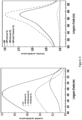
- the organic pollutants used are: methyl orange (concentration 10mg/L (or ppm)) and bromophenol blue (concentration 20mg/L (or ppm)), glyphosate and toluene (concentration 1mg/L (or ppm)); and they were subjected to 3 hours of radiation (for example with a 300 W Xenon lamp with UV filter).
- the present invention uses a process for preparing an aqueous reaction medium composed of 80% to 100% by mole of TiO 2 and 0% to 20% by mole of another oxide, from a titanium oxide precursor which is a titanium alkoxide, or from a mixture of this titanium oxide precursor with at least one other precursor of another metallic or semi-metallic oxide.
- hydrochloric acid is added, for example between 30% and 37% mass/volume.
- step a1) the pH of the reaction medium is chosen around 5, so as to obtain nanocrystals on the support having a stable Brookite crystalline form, and reactive in photocatalysis at least in the visible range.
- step a1) the pH of the reaction medium is chosen around 0-2, so as to obtain nanocrystals having a Rutile crystalline form, reactive in photocatalysis at least in the visible range.
- the metallic or semi-metallic oxide can be chosen from: SiO 2 , ZrO 2 , Al 2 O 3 , Fe 2 O 3 , CeO 2 , MgO, ZnO, CuO, NiO.
- the other metal oxide being WOs
- the pH of the reaction medium is between 0 and 1, so as to obtain nanocrystals having an Anatase crystalline form of at least 90%, reactive in photocatalysis at least in the visible range.
- the present invention relates to a method for producing a support of at least micrometric size and active in photocatalysis at least in the visible range (and a fortiori in the UV range), containing nanocrystals each composed of 80% to 100% by mole of TiO 2 and 0% to 20% by mole of at least one other metallic or semi-metallic oxide.
- the invention makes it possible to produce active supports in photocatalysis by incorporating titanium oxide-based materials under mild conditions (without surfactant, aqueous medium, requiring little energy, without excessive temperatures),
- This residual solution could be re-implanted in the reaction medium for a new synthesis depending on the complete stoichiometry or not of the reaction with the titanium alkoxide and the surface.
- the surface was prepared upstream of step a4), to increase the (O-) attachment points (Cull grafting).
- the steps of the process can be carried out in the open air, i.e. in contact with ambient air.
- the acidic aqueous solution is produced without a co-solvent, in a non-limiting manner, such as alcohol.
- the agitation of the acidic aqueous reaction medium can be carried out between 800 and 1200 rpm.
- the technique used is not a dip coating.
- the condensation reaction of the surfactant-free precursors of step a4) is very fast and is carried out between 30 and 90 minutes.
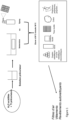
- the TiO 2 precursors will make covalent bonds that attach to the surface on or inside the support and then grow crystals there.
- the TiO 2 precursors are formed after a first formation of precipitate which is stirred vigorously in order to dissolve it in the medium. Then in this medium, the TiO 2 precursors attach to the support on its surface, on or inside, and crystallize only on the surface of the support in a single step. In other words, in the present invention, the TiO 2 precursors crystallize and grow only after attachment to the support.
- the nanocrystals obtained on the support are generally more heterogeneous in shape and size than the nanocrystals obtained without support and without surfactant with only the acidic aqueous reaction medium.
- the determined heating time may be at least 24 hours to render the material active and crystalline.
- the crystallization may be carried out at room temperature or at a higher temperature below a temperature for which the morphology of the crystals would change.
- the support/materials provided with TiO2-based nanocrystals can be immersed in an HNOs bath (optional step), then rinsed in water (to remove unattached particles).
- steps a4) and a5) there are condensation reactions then crystallization and finally increase in the size of the crystals and homogenization.
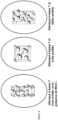
- the TiO 2 obtained very early can for example be made up of very small crystals in the form of squares of approximately 5nm, whereas that of 24h at 50°C and 24h at 90°C presents homogeneous crystals in the form of sticks of 5nm by 25nm.
- the duration of the condensation reaction (polymerization) of step a4) is less than 90 minutes, and the heating temperature is between 40°C and 95°C, for a heating time of at least 24 hours during the heating step a5).
- the support is millimeter, centimeter, or metric in size.
- the support can be made of the following material: polymers (polystyrene, polyester); carbon/graphite felt or activated carbon; glass; textile (cotton, basalt); micrometric silicates (filter silica, sand); cements.
- the support of at least micrometric size may comprise, like the metallic or semi-metallic oxide associated with TiO 2 , the following metallic oxides from the list: SiO 2 , ZrO 2 , Al 2 O 3 , Fe 2 O 3 , CeO 2 , MgO, ZnO, CuO, NiO.
- the other metal oxide associated with the TiO 2 is WOs, and in step a1) the pH is between 0 and 2, so as to obtain nanocrystals having an Anatase crystalline form of at least 90%, reactive in photocatalysis at least in the visible range.
- the support can then be dried in an oven at 50°C.
- the support can then be dried in an oven at 50°C.
- the present invention also relates to the use of the active support in photocatalysis with the nanocrystals crystallized on its surface, for the photocatalytic degradation of compounds.
- the compounds can be selected from dyes, active pharmaceutical ingredients, herbicides, pesticides, fungicides, hormones, hydrocarbons and volatile organic compounds such as formaldehyde, BTEX.
- TiO2 on the textile is essential to eliminate glyphosate molecules.
- the nanocrystals are well attached to the support, and there is no TiO2 in the solution.
- TiO2 improves the elimination of toluene.
- the nanocrystals are well attached to the textile, and there is no TiO2 in the solution.
Landscapes
- Chemical & Material Sciences (AREA)
- Organic Chemistry (AREA)
- Materials Engineering (AREA)
- Engineering & Computer Science (AREA)
- Chemical Kinetics & Catalysis (AREA)
- Thermal Sciences (AREA)
- Physics & Mathematics (AREA)
- Life Sciences & Earth Sciences (AREA)
- Environmental & Geological Engineering (AREA)
- General Life Sciences & Earth Sciences (AREA)
- Geology (AREA)
- Inorganic Chemistry (AREA)
- Catalysts (AREA)
- Inorganic Compounds Of Heavy Metals (AREA)
- Crystallography & Structural Chemistry (AREA)
Claims (19)
- Verfahren zur Herstellung eines mindestens mikrometergroßen und mindestens im sichtbaren Bereich photokatalytisch aktiven Photokatalyseträgers, der Nanokristalle enthält, die jeweils zu 80 bis 100 Mol-% aus TiO2 und zu 0 bis 20 Mol-% aus mindestens einem anderen Metall- oder Halbmetalloxid zusammengesetzt sind, umfassend die folgenden Schritte, ohne Verwendung eines Tensids:a1) Herstellen und Erwärmen einer sauren wässrigen Lösung mit einem bestimmten pH-Wert zwischen 0 und 6 und bei einer Temperatur zwischen 20 °C und 60 °C, ohne Tensid, durch Zugabe von Salzsäure,a2) Hinzufügen eines Titanoxid-Vorläufers oder einer Mischung aus einem Titanoxid-Vorläufer und mindestens einem anderen Vorläufer eines anderen Metall- oder Halbmetalloxids zu der sauren wässrigen Lösung, wobei sich ein Präzipitat in dem wässrigen sauren Reaktionsmedium bildet, das zu 80 bis 100 Mol-% aus TiO2 und zu 0 bis 20 Mol-% aus einem anderen Oxid besteht, aus dem Titanoxid-Vorläufer, der ein Titanalkoxid ist, oder einer Mischung dieses Titanoxid-Vorläufers mit mindestens einem anderen Vorläufer eines anderen Metall- oder Halbmetalloxids,a3) Rühren des sauren wässrigen Reaktionsmediums, um das in Schritt a2) gebildete Präzipitat darin aufzulösen,a4) Reaktion zwischen den in Schritt a3) erhaltenen Vorläufern und dem Träger, um die Vorläufer zu kondensieren, die sich durch kovalente Bindungen an der Oberfläche des Trägers festsetzen, durch:• Sprühen auf den Träger oder• Eintauchen des Trägers in das wässrige Reaktionsmedium für eine bestimmte Zeit,a5) Erwärmen, wobei die Erwärmungstemperatur zwischen 40 °C und 95 °C liegt, wobei es der mindestens mikrometergroße Träger gestattet, die Titanoxid-Vorläufer oder einer Mischung aus einem Titanoxid-Vorläufer und mindestens einem anderen Vorläufer eines anderen Metall- oder Halbmetalloxids in Nanokristallen an seiner Oberfläche ohne Verwendung eines Tensids in dem wässrigen sauren Reaktionsmedium zu kristallisieren,
wobei die Vorläufer kristallisieren, sobald sie sich an der Oberfläche des Trägers festgesetzt haben,a6) Spülen mit Wasser und Rückgewinnen:einerseits des Trägers, auf dem die Kristallisation stattgefunden hat, wobei die erhaltenen Nanokristalle zu 80 bis 100 Mol-% aus TiO2 und zu 0 bis 20 Mol-% aus mindestens einem anderen metallischen oder halbmetallischen Oxid zusammengesetzt sind, wobei sich diese Nanokristalle durch kovalente Bindungen an dem Träger festgesetzt haben,und andererseits einer Restlösung. - Verfahren zur Herstellung eines Trägers nach Anspruch 1, wobei das Verfahren in der freien Luft durchgeführt wird.
- Verfahren zur Herstellung eines Trägers nach einem der Ansprüche 1 bis 2, wobei das saure wässrige Reaktionsmedium ohne Co-Lösungsmittel hergestellt wird.
- Verfahren zur Herstellung eines Trägers nach Anspruch 3, wobei das saure wässrige Reaktionsmedium alkoholfrei hergestellt wird.
- Verfahren zur Herstellung eines Trägers nach einem der Ansprüche 1 bis 4, wobei Schritt a5) aufweist:- einen ersten Teilschritt des Erwärmens von 30 °C auf 60 °C während einer ersten gegebenen Dauer;- ein zweiter Teilschritt des Erwärmens von 50 °C auf 90 °C während einer zweiten Dauer.
- Verfahren zur Herstellung eines Trägers nach Anspruch 5, wobei:- für den ersten Teilschritt des Erwärmens von Schritt a5) die erste Heizdauer mehrere Stunden beträgt;- für den zweiten Teilschritt des Erwärmens von Schritt a5) die zweite Heizdauer mehrere Stunden beträgt.
- Verfahren zur Herstellung eines Trägers nach Anspruch 6, wobei:- für den ersten Teilschritt des Erwärmens von Schritt a5) die erste Heizdauer mindestens 24 Stunden beträgt;- für den zweiten Teilschritt des Erwärmens von Schritt a5) die zweite Heizdauer mindestens 24 Stunden beträgt.
- Verfahren zur Herstellung eines Trägers nach einem der Ansprüche 1 bis 7, wobei in Schritt a1)- der pH-Wert gleich 5 gewählt ist, um Nanokristalle auf dem Träger mit einer stabilen Brookite-Kristallform zu erhalten,- oder der pH-Wert zwischen 0 und 2 liegt, um Nanokristalle mit einer Rutil-Kristallform zu erhalten.
- Verfahren zur Herstellung eines Trägers nach einem der Ansprüche 1 bis 8, wobei das Metall- oder Halbmetalloxid ausgewählt ist aus: SiO2, ZrO2, Al2O3, Fe2O3, CeO2, MgO, ZnO, CuO, NiO.
- Verfahren zur Herstellung eines Trägers nach einem der Ansprüche 1 bis 8, wobei das andere Metalloxid WOs ist, und in Schritt a1) der pH-Wert zwischen 0 und 1 liegt, um Nanokristalle mit einer Anatase-Kristallform zu mindestens 90 % zu erhalten.
- Verfahren zur Herstellung eines Trägers nach einem der Ansprüche 1 bis 10, wobei der Träger in Schritt a6):(a) in Salpetersäure getaucht, mit Wasser gespült und dann getrocknet wird oder(b) in eine Metalllösung von Ag+, Cu2+, Ni2+, Zn2+, Al3+, Mg+ getaucht, mit Wasser gespült, bei Raumtemperatur getrocknet, dann in ein Salpetersäurebad getaucht und gespült wird.
- Photokatalyseträger, der mindestens im sichtbaren Bereich photokatalytisch aktiv und mindestens mikrometergroß ist, der nach einem Verfahren nach den Ansprüchen 1 bis 11 hergestellt wird, der an seiner Oberfläche Nanokristalle aufweist, die sich durch kovalente Bindungen festgesetzt haben, wobei diese Nanokristalle zu 80 bis 100 Mol-% aus TiO2 und zu 0 bis 20 Mol-% aus einem anderen Metall- oder Halbmetalloxid zusammengesetzt sind.
- Aktiver Photokatalyseträger nach Anspruch 12, dadurch gekennzeichnet, dass der aktive Träger 80 bis 95 Mol-% TiO2 und 5 bis 20 Mol-% eines anderen Metall- oder Halbmetalloxids aufweist.
- Aktiver Photokatalyseträger nach Anspruch 12 oder 13 mit Nanokristallen mit stabiler Brookite-Kristallform.
- Aktiver Photokatalyseträger nach Anspruch 12 oder 13 mit Nanokristallen mit Rutil-Kristallform.
- Aktiver Photokatalyseträger nach einem der Ansprüche 12 bis 15, wobei das Metalloxid oder das Halbmetalloxid aus der folgenden Liste ausgewählt ist: TiO2, ZrO2, Al2O3, Fe2O3, CeO2, MgO, ZnO, CuO, NiO.
- Aktiver Photokatalyseträger nach einem der Ansprüche 12 bis 15 mit Nanokristallen, die eine Anatase-Kristallform zu mindestens 90 % aufweisen, wobei das andere Metalloxid WO3 ist.
- Aktiver Photokatalyseträger nach einem der Ansprüche 12 bis 17, wobei der Träger aus folgendem Material besteht: Polymere; Kohlenstoff-/Graphit- oder Aktivkohlefilz; Glas; Textil; mikrometrische Silikate; Zemente.
- Aktiver Photokatalyseträger nach einem der Ansprüche 12 bis 18, wobei der Träger eine mikrometrische, millimetrische, zentimetrische, metrische Größe hat.
Applications Claiming Priority (2)
| Application Number | Priority Date | Filing Date | Title |
|---|---|---|---|
| EP19200532.0A EP3797864A1 (de) | 2019-09-30 | 2019-09-30 | Aktiver träger in der fotokatalyse |
| PCT/EP2020/068431 WO2021063554A1 (fr) | 2019-09-30 | 2020-06-30 | Support actif en photocatalyse avec matériaux à base de tio2 |
Publications (3)
| Publication Number | Publication Date |
|---|---|
| EP4037824A1 EP4037824A1 (de) | 2022-08-10 |
| EP4037824B1 true EP4037824B1 (de) | 2024-10-23 |
| EP4037824C0 EP4037824C0 (de) | 2024-10-23 |
Family
ID=68242243
Family Applications (2)
| Application Number | Title | Priority Date | Filing Date |
|---|---|---|---|
| EP19200532.0A Withdrawn EP3797864A1 (de) | 2019-09-30 | 2019-09-30 | Aktiver träger in der fotokatalyse |
| EP20736621.2A Active EP4037824B1 (de) | 2019-09-30 | 2020-06-30 | Aktiver träger in der fotokatalyse |
Family Applications Before (1)
| Application Number | Title | Priority Date | Filing Date |
|---|---|---|---|
| EP19200532.0A Withdrawn EP3797864A1 (de) | 2019-09-30 | 2019-09-30 | Aktiver träger in der fotokatalyse |
Country Status (4)
| Country | Link |
|---|---|
| US (1) | US12533668B2 (de) |
| EP (2) | EP3797864A1 (de) |
| ES (1) | ES2999907T3 (de) |
| WO (1) | WO2021063554A1 (de) |
Families Citing this family (1)
| Publication number | Priority date | Publication date | Assignee | Title |
|---|---|---|---|---|
| CN117563581B (zh) * | 2023-09-12 | 2024-08-09 | 安徽农业大学 | 一种负载Dy单原子的TiO2光催化剂及其制备方法和应用 |
Family Cites Families (4)
| Publication number | Priority date | Publication date | Assignee | Title |
|---|---|---|---|---|
| KR100411953B1 (ko) * | 2001-09-29 | 2003-12-24 | 대양전기공업 주식회사 | 투과율이 우수한 광촉매성 산화티탄졸 및 이의 제조 방법및 코팅 방법 |
| FR2975309A1 (fr) * | 2011-05-19 | 2012-11-23 | Centre Nat Rech Scient | Monolithe macrocellulaire de dioxyde de titane, procede de preparation, utilisation a titre de photocatalyseur et procede de decontamination |
| CN104475082B (zh) * | 2014-12-11 | 2016-07-06 | 西安科技大学 | 可见光响应的WO3/{001}TiO2复合光催化剂的制备方法 |
| FR3046157A1 (fr) * | 2015-12-23 | 2017-06-30 | Commissariat Energie Atomique | Procede de preparation de nouveaux nanomateriaux |
-
2019
- 2019-09-30 EP EP19200532.0A patent/EP3797864A1/de not_active Withdrawn
-
2020
- 2020-06-30 ES ES20736621T patent/ES2999907T3/es active Active
- 2020-06-30 US US17/764,764 patent/US12533668B2/en active Active
- 2020-06-30 WO PCT/EP2020/068431 patent/WO2021063554A1/fr not_active Ceased
- 2020-06-30 EP EP20736621.2A patent/EP4037824B1/de active Active
Also Published As
| Publication number | Publication date |
|---|---|
| EP3797864A1 (de) | 2021-03-31 |
| US20220370996A1 (en) | 2022-11-24 |
| ES2999907T3 (en) | 2025-02-27 |
| US12533668B2 (en) | 2026-01-27 |
| WO2021063554A1 (fr) | 2021-04-08 |
| EP4037824A1 (de) | 2022-08-10 |
| EP4037824C0 (de) | 2024-10-23 |
Similar Documents
| Publication | Publication Date | Title |
|---|---|---|
| US5897958A (en) | Modified titanium oxide sol, photocatalyst composition and photocatalyst composition-forming agent | |
| Yang et al. | Cytocompatible encapsulation of individual Chlorella cells within titanium dioxide shells by a designed catalytic peptide | |
| Klem et al. | Photochemical mineralization of europium, titanium, and iron oxyhydroxide nanoparticles in the ferritin protein cage | |
| EP3393975B1 (de) | Neuen nanomaterialien, verfahren zu ihrer herstellung und ihre verwendung | |
| Tseng et al. | Biomimetic synthesis of nacrelike faceted mesocrystals of ZnO− gelatin composite | |
| CA2279828C (fr) | Materiau polymerique inorganique a base d'oxyde de tantale, notamment a indice de refraction eleve, mecaniquement resistant a l'abrasion, son procede de fabrication, et materiau optique comprenant ce materiau | |
| EP3932548A1 (de) | Fotokatalysators auf tio2-basis, dessen hersellungsverfahren und verwendung zur biomasseabbau | |
| RU2399589C2 (ru) | СПОСОБ ПОЛУЧЕНИЯ ДИСПЕРСИЙ TiO2 В ФОРМЕ НАНОЧАСТИЦ, ДИСПЕРСИИ, ПОЛУЧЕННЫЕ УКАЗАННЫМ СПОСОБОМ, И ПРИМЕНЕНИЕ ДИСПЕРСИЙ TiO2 ДЛЯ ПРИДАНИЯ ПОВЕРХНОСТЯМ ЗАДАННЫХ СВОЙСТВ | |
| EP0970025B1 (de) | Verfahren zur herstellung eines mehrschichtigen optischen gegenstands mit vernetzungs-verdichtung durch belichtung mit uv-strahlung und so erhaltener optischer gegenstand | |
| JP2009525246A (ja) | ナノ粒子の形態のTiO2の水性分散液の製造方法、及びこの方法で得られる分散体 | |
| DE19802392A1 (de) | Beschichtungsflüssigkeit zur Erzeugung eines hydrophilen Films und Verfahren zur ihrer Herstellung | |
| EP4037824B1 (de) | Aktiver träger in der fotokatalyse | |
| CN106102466A (zh) | 表面涂层 | |
| Saxena et al. | Organization of SiO2 and TiO2 nanoparticles into fractal patterns on glass surface for the generation of superhydrophilicity | |
| Doni et al. | Recent developments in materials science for the conservation and restoration of historic artifacts | |
| FR3033785A1 (fr) | Procede de preparation de materiaux a base de dioxyde de titane dope au soufre, materiaux obtenus et applications en photocatalyse | |
| Jung et al. | Synthesis of surface-reinforced biodegradable chitosan nanoparticles and their application in nanostructured antireflective and self-cleaning surfaces | |
| Summer et al. | Silk sericin protein: turning discarded biopolymer into ecofriendly and valuable reducing, capping, and stabilizing agent for nanoparticles synthesis using sonication | |
| Pouget et al. | Dispersions of monodisperse hybrid rod-like particles by mineralization of filamentous viruses | |
| McGuinness et al. | Self-cleaning photocatalytic activity: materials and applications | |
| WO2008132390A9 (fr) | Composition sous forme de gel comprenant une substance odorante | |
| JP6214539B2 (ja) | 溶液プロセスで製造可能なタングステン酸化物バッファ層およびそれを含む有機電子素子 | |
| JP6934674B2 (ja) | 複合粉末およびその製造方法、ならびに、耐熱材料およびその製造方法 | |
| JPH09227158A (ja) | 防曇性被膜形成基材、これを用いた防曇膜及びその製造方法 | |
| JPH08309203A (ja) | 光触媒組成物 |
Legal Events
| Date | Code | Title | Description |
|---|---|---|---|
| STAA | Information on the status of an ep patent application or granted ep patent |
Free format text: STATUS: UNKNOWN |
|
| STAA | Information on the status of an ep patent application or granted ep patent |
Free format text: STATUS: THE INTERNATIONAL PUBLICATION HAS BEEN MADE |
|
| PUAI | Public reference made under article 153(3) epc to a published international application that has entered the european phase |
Free format text: ORIGINAL CODE: 0009012 |
|
| STAA | Information on the status of an ep patent application or granted ep patent |
Free format text: STATUS: REQUEST FOR EXAMINATION WAS MADE |
|
| 17P | Request for examination filed |
Effective date: 20220317 |
|
| AK | Designated contracting states |
Kind code of ref document: A1 Designated state(s): AL AT BE BG CH CY CZ DE DK EE ES FI FR GB GR HR HU IE IS IT LI LT LU LV MC MK MT NL NO PL PT RO RS SE SI SK SM TR |
|
| DAV | Request for validation of the european patent (deleted) | ||
| DAX | Request for extension of the european patent (deleted) | ||
| GRAJ | Information related to disapproval of communication of intention to grant by the applicant or resumption of examination proceedings by the epo deleted |
Free format text: ORIGINAL CODE: EPIDOSDIGR1 |
|
| STAA | Information on the status of an ep patent application or granted ep patent |
Free format text: STATUS: GRANT OF PATENT IS INTENDED |
|
| GRAP | Despatch of communication of intention to grant a patent |
Free format text: ORIGINAL CODE: EPIDOSNIGR1 |
|
| RIC1 | Information provided on ipc code assigned before grant |
Ipc: C01G 23/053 20060101ALI20240513BHEP Ipc: B01J 37/03 20060101ALI20240513BHEP Ipc: B01J 37/00 20060101ALI20240513BHEP Ipc: B01J 35/39 20240101ALI20240513BHEP Ipc: B01J 35/30 20240101ALI20240513BHEP Ipc: B01J 23/755 20060101ALI20240513BHEP Ipc: B01J 23/745 20060101ALI20240513BHEP Ipc: B01J 23/72 20060101ALI20240513BHEP Ipc: B01J 23/06 20060101ALI20240513BHEP Ipc: B01J 21/06 20060101AFI20240513BHEP |
|
| INTG | Intention to grant announced |
Effective date: 20240618 |
|
| GRAS | Grant fee paid |
Free format text: ORIGINAL CODE: EPIDOSNIGR3 |
|
| GRAA | (expected) grant |
Free format text: ORIGINAL CODE: 0009210 |
|
| STAA | Information on the status of an ep patent application or granted ep patent |
Free format text: STATUS: THE PATENT HAS BEEN GRANTED |
|
| AK | Designated contracting states |
Kind code of ref document: B1 Designated state(s): AL AT BE BG CH CY CZ DE DK EE ES FI FR GB GR HR HU IE IS IT LI LT LU LV MC MK MT NL NO PL PT RO RS SE SI SK SM TR |
|
| REG | Reference to a national code |
Ref country code: GB Ref legal event code: FG4D Free format text: NOT ENGLISH |
|
| RAP4 | Party data changed (patent owner data changed or rights of a patent transferred) |
Owner name: COMMISSARIAT A L'ENERGIE ATOMIQUE ET AUX ENERGIESALTERNATIVES Owner name: CY CERGY PARIS UNIVERSITE Owner name: CENTRE NATIONAL DE LA RECHERCHE SCIENTIFIQUE |
|
| REG | Reference to a national code |
Ref country code: CH Ref legal event code: EP |
|
| REG | Reference to a national code |
Ref country code: DE Ref legal event code: R096 Ref document number: 602020039893 Country of ref document: DE |
|
| REG | Reference to a national code |
Ref country code: IE Ref legal event code: FG4D Free format text: LANGUAGE OF EP DOCUMENT: FRENCH |
|
| U01 | Request for unitary effect filed |
Effective date: 20241106 |
|
| U07 | Unitary effect registered |
Designated state(s): AT BE BG DE DK EE FI FR IT LT LU LV MT NL PT RO SE SI Effective date: 20241114 |
|
| REG | Reference to a national code |
Ref country code: ES Ref legal event code: FG2A Ref document number: 2999907 Country of ref document: ES Kind code of ref document: T3 Effective date: 20250227 |
|
| PG25 | Lapsed in a contracting state [announced via postgrant information from national office to epo] |
Ref country code: IS Free format text: LAPSE BECAUSE OF FAILURE TO SUBMIT A TRANSLATION OF THE DESCRIPTION OR TO PAY THE FEE WITHIN THE PRESCRIBED TIME-LIMIT Effective date: 20250223 Ref country code: HR Free format text: LAPSE BECAUSE OF FAILURE TO SUBMIT A TRANSLATION OF THE DESCRIPTION OR TO PAY THE FEE WITHIN THE PRESCRIBED TIME-LIMIT Effective date: 20241023 |
|
| PG25 | Lapsed in a contracting state [announced via postgrant information from national office to epo] |
Ref country code: NO Free format text: LAPSE BECAUSE OF FAILURE TO SUBMIT A TRANSLATION OF THE DESCRIPTION OR TO PAY THE FEE WITHIN THE PRESCRIBED TIME-LIMIT Effective date: 20250123 |
|
| PG25 | Lapsed in a contracting state [announced via postgrant information from national office to epo] |
Ref country code: GR Free format text: LAPSE BECAUSE OF FAILURE TO SUBMIT A TRANSLATION OF THE DESCRIPTION OR TO PAY THE FEE WITHIN THE PRESCRIBED TIME-LIMIT Effective date: 20250124 |
|
| PG25 | Lapsed in a contracting state [announced via postgrant information from national office to epo] |
Ref country code: PL Free format text: LAPSE BECAUSE OF FAILURE TO SUBMIT A TRANSLATION OF THE DESCRIPTION OR TO PAY THE FEE WITHIN THE PRESCRIBED TIME-LIMIT Effective date: 20241023 |
|
| PG25 | Lapsed in a contracting state [announced via postgrant information from national office to epo] |
Ref country code: RS Free format text: LAPSE BECAUSE OF FAILURE TO SUBMIT A TRANSLATION OF THE DESCRIPTION OR TO PAY THE FEE WITHIN THE PRESCRIBED TIME-LIMIT Effective date: 20250123 |
|
| PG25 | Lapsed in a contracting state [announced via postgrant information from national office to epo] |
Ref country code: SM Free format text: LAPSE BECAUSE OF FAILURE TO SUBMIT A TRANSLATION OF THE DESCRIPTION OR TO PAY THE FEE WITHIN THE PRESCRIBED TIME-LIMIT Effective date: 20241023 |
|
| PGFP | Annual fee paid to national office [announced via postgrant information from national office to epo] |
Ref country code: GB Payment date: 20250625 Year of fee payment: 6 |
|
| PG25 | Lapsed in a contracting state [announced via postgrant information from national office to epo] |
Ref country code: SK Free format text: LAPSE BECAUSE OF FAILURE TO SUBMIT A TRANSLATION OF THE DESCRIPTION OR TO PAY THE FEE WITHIN THE PRESCRIBED TIME-LIMIT Effective date: 20241023 |
|
| PG25 | Lapsed in a contracting state [announced via postgrant information from national office to epo] |
Ref country code: CZ Free format text: LAPSE BECAUSE OF FAILURE TO SUBMIT A TRANSLATION OF THE DESCRIPTION OR TO PAY THE FEE WITHIN THE PRESCRIBED TIME-LIMIT Effective date: 20241023 |
|
| U20 | Renewal fee for the european patent with unitary effect paid |
Year of fee payment: 6 Effective date: 20250630 |
|
| PLBE | No opposition filed within time limit |
Free format text: ORIGINAL CODE: 0009261 |
|
| STAA | Information on the status of an ep patent application or granted ep patent |
Free format text: STATUS: NO OPPOSITION FILED WITHIN TIME LIMIT |
|
| 26N | No opposition filed |
Effective date: 20250724 |
|
| PGFP | Annual fee paid to national office [announced via postgrant information from national office to epo] |
Ref country code: ES Payment date: 20250710 Year of fee payment: 6 |
|
| REG | Reference to a national code |
Ref country code: CH Ref legal event code: H13 Free format text: ST27 STATUS EVENT CODE: U-0-0-H10-H13 (AS PROVIDED BY THE NATIONAL OFFICE) Effective date: 20260127 |
|
| PG25 | Lapsed in a contracting state [announced via postgrant information from national office to epo] |
Ref country code: MC Free format text: LAPSE BECAUSE OF FAILURE TO SUBMIT A TRANSLATION OF THE DESCRIPTION OR TO PAY THE FEE WITHIN THE PRESCRIBED TIME-LIMIT Effective date: 20241023 |
|
| PG25 | Lapsed in a contracting state [announced via postgrant information from national office to epo] |
Ref country code: IE Free format text: LAPSE BECAUSE OF NON-PAYMENT OF DUE FEES Effective date: 20250630 |