EP4026337B1 - Codierer, decodierer und entsprechendes verfahren - Google Patents
Codierer, decodierer und entsprechendes verfahren Download PDFInfo
- Publication number
- EP4026337B1 EP4026337B1 EP20867807.8A EP20867807A EP4026337B1 EP 4026337 B1 EP4026337 B1 EP 4026337B1 EP 20867807 A EP20867807 A EP 20867807A EP 4026337 B1 EP4026337 B1 EP 4026337B1
- Authority
- EP
- European Patent Office
- Prior art keywords
- layer
- inter
- sps
- syntax element
- video
- Prior art date
- Legal status (The legal status is an assumption and is not a legal conclusion. Google has not performed a legal analysis and makes no representation as to the accuracy of the status listed.)
- Active
Links
Images





Classifications
-
- H—ELECTRICITY
- H04—ELECTRIC COMMUNICATION TECHNIQUE
- H04N—PICTORIAL COMMUNICATION, e.g. TELEVISION
- H04N19/00—Methods or arrangements for coding, decoding, compressing or decompressing digital video signals
- H04N19/30—Methods or arrangements for coding, decoding, compressing or decompressing digital video signals using hierarchical techniques, e.g. scalability
- H04N19/33—Methods or arrangements for coding, decoding, compressing or decompressing digital video signals using hierarchical techniques, e.g. scalability in the spatial domain
-
- H—ELECTRICITY
- H04—ELECTRIC COMMUNICATION TECHNIQUE
- H04N—PICTORIAL COMMUNICATION, e.g. TELEVISION
- H04N19/00—Methods or arrangements for coding, decoding, compressing or decompressing digital video signals
- H04N19/30—Methods or arrangements for coding, decoding, compressing or decompressing digital video signals using hierarchical techniques, e.g. scalability
- H04N19/31—Methods or arrangements for coding, decoding, compressing or decompressing digital video signals using hierarchical techniques, e.g. scalability in the temporal domain
-
- H—ELECTRICITY
- H04—ELECTRIC COMMUNICATION TECHNIQUE
- H04N—PICTORIAL COMMUNICATION, e.g. TELEVISION
- H04N19/00—Methods or arrangements for coding, decoding, compressing or decompressing digital video signals
- H04N19/10—Methods or arrangements for coding, decoding, compressing or decompressing digital video signals using adaptive coding
- H04N19/102—Methods or arrangements for coding, decoding, compressing or decompressing digital video signals using adaptive coding characterised by the element, parameter or selection affected or controlled by the adaptive coding
- H04N19/103—Selection of coding mode or of prediction mode
- H04N19/105—Selection of the reference unit for prediction within a chosen coding or prediction mode, e.g. adaptive choice of position and number of pixels used for prediction
-
- H—ELECTRICITY
- H04—ELECTRIC COMMUNICATION TECHNIQUE
- H04N—PICTORIAL COMMUNICATION, e.g. TELEVISION
- H04N19/00—Methods or arrangements for coding, decoding, compressing or decompressing digital video signals
- H04N19/10—Methods or arrangements for coding, decoding, compressing or decompressing digital video signals using adaptive coding
- H04N19/134—Methods or arrangements for coding, decoding, compressing or decompressing digital video signals using adaptive coding characterised by the element, parameter or criterion affecting or controlling the adaptive coding
- H04N19/157—Assigned coding mode, i.e. the coding mode being predefined or preselected to be further used for selection of another element or parameter
-
- H—ELECTRICITY
- H04—ELECTRIC COMMUNICATION TECHNIQUE
- H04N—PICTORIAL COMMUNICATION, e.g. TELEVISION
- H04N19/00—Methods or arrangements for coding, decoding, compressing or decompressing digital video signals
- H04N19/10—Methods or arrangements for coding, decoding, compressing or decompressing digital video signals using adaptive coding
- H04N19/134—Methods or arrangements for coding, decoding, compressing or decompressing digital video signals using adaptive coding characterised by the element, parameter or criterion affecting or controlling the adaptive coding
- H04N19/157—Assigned coding mode, i.e. the coding mode being predefined or preselected to be further used for selection of another element or parameter
- H04N19/159—Prediction type, e.g. intra-frame, inter-frame or bidirectional frame prediction
-
- H—ELECTRICITY
- H04—ELECTRIC COMMUNICATION TECHNIQUE
- H04N—PICTORIAL COMMUNICATION, e.g. TELEVISION
- H04N19/00—Methods or arrangements for coding, decoding, compressing or decompressing digital video signals
- H04N19/10—Methods or arrangements for coding, decoding, compressing or decompressing digital video signals using adaptive coding
- H04N19/169—Methods or arrangements for coding, decoding, compressing or decompressing digital video signals using adaptive coding characterised by the coding unit, i.e. the structural portion or semantic portion of the video signal being the object or the subject of the adaptive coding
- H04N19/17—Methods or arrangements for coding, decoding, compressing or decompressing digital video signals using adaptive coding characterised by the coding unit, i.e. the structural portion or semantic portion of the video signal being the object or the subject of the adaptive coding the unit being an image region, e.g. an object
- H04N19/172—Methods or arrangements for coding, decoding, compressing or decompressing digital video signals using adaptive coding characterised by the coding unit, i.e. the structural portion or semantic portion of the video signal being the object or the subject of the adaptive coding the unit being an image region, e.g. an object the region being a picture, frame or field
-
- H—ELECTRICITY
- H04—ELECTRIC COMMUNICATION TECHNIQUE
- H04N—PICTORIAL COMMUNICATION, e.g. TELEVISION
- H04N19/00—Methods or arrangements for coding, decoding, compressing or decompressing digital video signals
- H04N19/10—Methods or arrangements for coding, decoding, compressing or decompressing digital video signals using adaptive coding
- H04N19/169—Methods or arrangements for coding, decoding, compressing or decompressing digital video signals using adaptive coding characterised by the coding unit, i.e. the structural portion or semantic portion of the video signal being the object or the subject of the adaptive coding
- H04N19/187—Methods or arrangements for coding, decoding, compressing or decompressing digital video signals using adaptive coding characterised by the coding unit, i.e. the structural portion or semantic portion of the video signal being the object or the subject of the adaptive coding the unit being a scalable video layer
-
- H—ELECTRICITY
- H04—ELECTRIC COMMUNICATION TECHNIQUE
- H04N—PICTORIAL COMMUNICATION, e.g. TELEVISION
- H04N19/00—Methods or arrangements for coding, decoding, compressing or decompressing digital video signals
- H04N19/50—Methods or arrangements for coding, decoding, compressing or decompressing digital video signals using predictive coding
- H04N19/503—Methods or arrangements for coding, decoding, compressing or decompressing digital video signals using predictive coding involving temporal prediction
- H04N19/51—Motion estimation or motion compensation
- H04N19/513—Processing of motion vectors
- H04N19/517—Processing of motion vectors by encoding
- H04N19/52—Processing of motion vectors by encoding by predictive encoding
-
- H—ELECTRICITY
- H04—ELECTRIC COMMUNICATION TECHNIQUE
- H04N—PICTORIAL COMMUNICATION, e.g. TELEVISION
- H04N19/00—Methods or arrangements for coding, decoding, compressing or decompressing digital video signals
- H04N19/70—Methods or arrangements for coding, decoding, compressing or decompressing digital video signals characterised by syntax aspects related to video coding, e.g. related to compression standards
-
- H—ELECTRICITY
- H04—ELECTRIC COMMUNICATION TECHNIQUE
- H04N—PICTORIAL COMMUNICATION, e.g. TELEVISION
- H04N19/00—Methods or arrangements for coding, decoding, compressing or decompressing digital video signals
- H04N19/90—Methods or arrangements for coding, decoding, compressing or decompressing digital video signals using coding techniques not provided for in groups H04N19/10-H04N19/85, e.g. fractals
- H04N19/96—Tree coding, e.g. quad-tree coding
-
- H—ELECTRICITY
- H04—ELECTRIC COMMUNICATION TECHNIQUE
- H04N—PICTORIAL COMMUNICATION, e.g. TELEVISION
- H04N19/00—Methods or arrangements for coding, decoding, compressing or decompressing digital video signals
- H04N19/30—Methods or arrangements for coding, decoding, compressing or decompressing digital video signals using hierarchical techniques, e.g. scalability
Definitions
- Embodiments of the present application generally relate to the field of picture processing and more particularly to inter-layer prediction.
- video data is generally compressed before being communicated across modem day telecommunications networks.
- the size of a video could also be an issue when the video is stored on a storage device because memory resources may be limited.
- Video compression devices often use software and/or hardware at the source to code the video data prior to transmission or storage, thereby decreasing the quantity of data needed to represent digital video images.
- the compressed data is then received at the destination by a video decompression device that decodes the video data.
- DRUGEON PANASONIC
- V "AHG17: Presence of Video Parameter Set in bitstream” , 128.
- MPEG MEETING 20191007 - 20191011; GENEVA;
- URL http://phenix.int-evry.fr/mpeg/doc_end_user/documents/128_Geneva/wg11/m50169-JVET-P0205-v1-JVET-P0205.zip JVET-P0205_Spec_based_on_JVET-O2001-vE.docx, (20190923 ), discloses that the sequence parameter set RBSP syntax includes sps _video_parameter_set_id and inter_layer_ref_pics_present_flag, when sps_video_parameter_set_id is equal to 0, the value of inter_layer_ref_pics_present_flag is
- Embodiments of the present application provide apparatuses and methods for encoding and decoding according to the independent claims.
- the invention relates to a method for decoding coded video bitstream.
- the method is performed by a decoding device.
- the method includes: obtaining a sequence parameter set (SPS)-level syntax element from the bitstream, wherein that the SPS-level syntax element equal to a preset value specifies that no video parameter set (VPS) is referred to by a SPS, and the SPS-level syntax element greater than the preset value specifies that the SPS refers to a VPS; obtaining , as the SPS-level syntax element is greater than the preset value, an inter-layer enabled syntax element specifying whether one or more inter-layer reference pictures (ILRPs) are enabled to be used for the inter prediction of one or more coded pictures; and predicting one or more coded pictures based on the value of the inter-layer enabled syntax element.
- SPS sequence parameter set
- VPS video parameter set
- ILRPs inter-layer reference pictures
- inter-layer prediction a coded picture and the reference picture of the coded picture belong to different layers, wherein different layers may corresponding to different resolution, and the low spatial resolution may be used as the reference of high spatial resolution.
- the inter-layer enabled syntax element specifies whether inter-layer prediction is enabled, therefore syntax elements related to inter-layer prediction need not be signaled when the inter-layer enabled syntax element specifies inter-layer prediction is disabled, thus the bitrate can be reduced.
- Video parameter set (VPS) is for multiple layers, no VPS is referred to by a SPS means that multiple layers are not needed when decoding the pictures related to the SPS, in other words, there is only one layer will be used when decoding the pictures related to the SPS.
- Inter-layer prediction can't be performed when there is only one layer, therefore not signaling the inter-layer enabled syntax element when no VPS is referred to by a SPS will further reduce the bitrate.
- bitstream is sequence of bits forming one or more coded video sequences (CVSs).
- CVSs coded video sequences
- a coded video sequence is a sequence of AUs.
- coded layer video sequence is a sequence of PUs with the same value of nuh_layer_id.
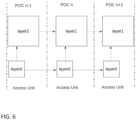
- an access unit is a set of PUs that belong to different layers and contain coded pictures associated with the same time for output from the DPB.
- the SPS-level syntax element equal to a preset value further specifies that a coded video sequence (CVS) comprises coded pictures of only one layer.
- CVS coded video sequence
- the encoder further comprises a determining unit configured to determine whether the one or more ILRPs are enabled to be used for inter prediction of one or more coded pictures.
- the invention relates to an apparatus for decoding a video stream includes a processor and a memory.
- the memory is storing instructions that cause the processor to perform the method according to the first aspect.
- the invention relates to an apparatus for encoding a video stream includes a processor and a memory.
- the memory is storing instructions that cause the processor to perform the method according to the second aspect.
- a computer-readable storage medium having stored thereon instructions that when executed cause one or more processors configured to code video data is proposed.
- the instructions cause the one or more processors to perform a method according to the first or second aspect or any possible embodiment of the first or second aspect.
- a method of decoding a coded video bitstream comprising:
- the method further comprises: when a second condition is satisfied, predicting a picture of the layer with index i using the layer with index j as a direct reference layer for the layer with index i, wherein j is integer, and j is less than i and larger than or equal to 0, wherein the second condition comprises the syntax element specifies that the layer with index i may use inter-layer prediction and i is equal to the preset value.
- the method further comprises: when the second condition is satisfied, determining the value of the second syntax element specifies the layer with index j is a direct reference layer for the layer with index i.
- the picture of the layer with index i comprises the picture in the layer with index i or the picture related to the layer with index i.
- a method of decoding a coded video bitstream comprising:
- the picture of the layer with index i comprises the picture in the layer with index i or the picture related to the layer with index i.
- a method of decoding a coded video bitstream comprising:
- a method of decoding a coded video bitstream comprising: Determining that whether a condition is satisfied, wherein the condition comprises the layer index of a current layer is larger than a preset value;
- condition further comprises a second syntax element (for example, sps_video_parameter_set_id) is larger than 0.
- a second syntax element for example, sps_video_parameter_set_id
- a computer program product comprising program code for performing the method according to any one of the preceding embodiments when executed on a computer or a processor .
- Embodiments referring to "coding" of video pictures shall be understood to relate to “encoding” or “decoding” of video pictures or respective video sequences.
- the combination of the encoding part and the decoding part is also referred to as CODEC (Coding and Decoding).
- the original video pictures can be reconstructed, i.e. the reconstructed video pictures have the same quality as the original video pictures (assuming no transmission loss or other data loss during storage or transmission).
- further compression e.g. by quantization, is performed, to reduce the amount of data representing the video pictures, which cannot be completely reconstructed at the decoder, i.e. the quality of the reconstructed video pictures is lower or worse compared to the quality of the original video pictures.
- a video encoder 20 and a video decoder 30 are described based on Figs. 1 to 3 .
- Fig. 1A is a schematic block diagram illustrating an example coding system 10, e.g. a video coding system 10 (or short coding system 10) that may utilize techniques of this present application.
- Video encoder 20 (or short encoder 20) and video decoder 30 (or short decoder 30) of video coding system 10 represent examples of devices that may be configured to perform techniques in accordance with various examples described in the present application.
- the coding system 10 comprises a source device 12 configured to provide encoded picture data 21 e.g. to a destination device 14 for decoding the encoded picture data 13.
- the picture source 16 may comprise or be any kind of picture capturing device, for example a camera for capturing a real-world picture, and/or any kind of a picture generating device, for example a computer-graphics processor for generating a computer animated picture, or any kind of other device for obtaining and/or providing a real-world picture, a computer generated picture (e.g. a screen content, a virtual reality (VR) picture) and/or any combination thereof (e.g. an augmented reality (AR) picture).
- the picture source may be any kind of memory or storage storing any of the aforementioned pictures.
- the picture or picture data 17 may also be referred to as raw picture or raw picture data 17.
- Pre-processor 18 is configured to receive the (raw) picture data 17 and to perform pre-processing on the picture data 17 to obtain a pre-processed picture 19 or pre-processed picture data 19.
- Pre-processing performed by the pre-processor 18 may, e.g., comprise trimming, color format conversion (e.g. from RGB to YCbCr), color correction, or de-noising. It can be understood that the pre-processing unit 18 may be optional component.
- the video encoder 20 is configured to receive the pre-processed picture data 19 and provide encoded picture data 21 (further details will be described below, e.g., based on Fig. 2 ).
- Communication interface 22 of the source device 12 may be configured to receive the encoded picture data 21 and to transmit the encoded picture data 21 (or any further processed version thereof) over communication channel 13 to another device, e.g. the destination device 14 or any other device, for storage or direct reconstruction.
- the destination device 14 comprises a decoder 30 (e.g. a video decoder 30), and may additionally, i.e. optionally, comprise a communication interface or communication unit 28, a post-processor 32 (or post-processing unit 32) and a display device 34.
- a decoder 30 e.g. a video decoder 30
- the communication interface 22 and the communication interface 28 may be configured to transmit or receive the encoded picture data 21 or encoded data 13 via a direct communication link between the source device 12 and the destination device 14, e.g. a direct wired or wireless connection, or via any kind of network, e.g. a wired or wireless network or any combination thereof, or any kind of private and public network, or any kind of combination thereof.
- the communication interface 22 may be, e.g., configured to package the encoded picture data 21 into an appropriate format, e.g. packets, and/or process the encoded picture data using any kind of transmission encoding or processing for transmission over a communication link or communication network.
- Both, communication interface 22 and communication interface 28 may be configured as unidirectional communication interfaces as indicated by the arrow for the communication channel 13 in Fig. 1A pointing from the source device 12 to the destination device 14, or bi-directional communication interfaces, and may be configured, e.g. to send and receive messages, e.g. to set up a connection, to acknowledge and exchange any other information related to the communication link and/or data transmission, e.g. encoded picture data transmission.
- the display device 34 of the destination device 14 is configured to receive the post-processed picture data 33 for displaying the picture, e.g. to a user or viewer.
- the display device 34 may be or comprise any kind of display for representing the reconstructed picture, e.g. an integrated or external display or monitor.
- the displays may, e.g. comprise liquid crystal displays (LCD), organic light emitting diodes (OLED) displays, plasma displays, projectors, micro LED displays, liquid crystal on silicon (LCoS), digital light processor (DLP) or any kind of other display.
- the decoder 30 may be implemented via processing circuitry 46 to embody the various modules as discussed with respect to decoder 30 of FIG. 3 and/or any other decoder system or subsystem described herein.
- the processing circuitry may be configured to perform the various operations as discussed later.
- a device may store instructions for the software in a suitable, non-transitory computer-readable storage medium and may execute the instructions in hardware using one or more processors to perform the techniques of this disclosure.
- Either of video encoder 20 and video decoder 30 may be integrated as part of a combined encoder/decoder (CODEC) in a single device, for example, as shown in Fig. 1B .
- CDEC combined encoder/decoder
- Source device 12 and destination device 14 may comprise any of a wide range of devices, including any kind of handheld or stationary devices, e.g. notebook or laptop computers, mobile phones, smart phones, tablets or tablet computers, cameras, desktop computers, set-top boxes, televisions, display devices, digital media players, video gaming consoles, video streaming devices(such as content services servers or content delivery servers), broadcast receiver device, broadcast transmitter device, or the like and may use no or any kind of operating system.
- the source device 12 and the destination device 14 may be equipped for wireless communication.
- the source device 12 and the destination device 14 may be wireless communication devices.
- video coding system 10 illustrated in Fig. 1A is merely an example and the techniques of the present application may apply to video coding settings (e.g., video encoding or video decoding) that do not necessarily include any data communication between the encoding and decoding devices.
- data is retrieved from a local memory, streamed over a network, or the like.
- a video encoding device may encode and store data to memory, and/or a video decoding device may retrieve and decode data from memory.
- the encoding and decoding is performed by devices that do not communicate with one another, but simply encode data to memory and/or retrieve and decode data from memory.
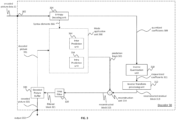
- Fig. 2 shows a schematic block diagram of an example video encoder 20 that is configured to implement the techniques of the present application.
- the video encoder 20 comprises an input 201 (or input interface 201), a residual calculation unit 204, a transform processing unit 206, a quantization unit 208, an inverse quantization unit 210, and inverse transform processing unit 212, a reconstruction unit 214, a loop filter unit 220, a decoded picture buffer (DPB) 230, a mode selection unit 260, an entropy encoding unit 270 and an output 272 (or output interface 272).
- the mode selection unit 260 may include an inter prediction unit 244, an intra prediction unit 254 and a partitioning unit 262.
- Inter prediction unit 244 may include a motion estimation unit and a motion compensation unit (not shown).
- a video encoder 20 as shown in Fig. 2 may also be referred to as hybrid video encoder or a video encoder according to a hybrid video codec.
- the encoder 20 may be configured to receive, e.g. via input 201, a picture 17 (or picture data 17), e.g. picture of a sequence of pictures forming a video or video sequence.
- the received picture or picture data may also be a pre-processed picture 19 (or pre-processed picture data 19).
- the picture 17 may also be referred to as current picture or picture to be coded (in particular in video coding to distinguish the current picture from other pictures, e.g. previously encoded and/or decoded pictures of the same video sequence, i.e. the video sequence which also comprises the current picture).
- a (digital) picture is or can be regarded as a two-dimensional array or matrix of samples with intensity values.
- a sample in the array may also be referred to as pixel (short form of picture element) or a pel.
- the number of samples in horizontal and vertical direction (or axis) of the array or picture define the size and/or resolution of the picture.
- typically three color components are employed, i.e. the picture may be represented or include three sample arrays.
- RBG format or color space a picture comprises a corresponding red, green and blue sample array.
- each pixel is typically represented in a luminance and chrominance format or color space, e.g.
- a picture may comprise only a luminance sample array. Accordingly, a picture may be, for example, an array of luma samples in monochrome format or an array of luma samples and two corresponding arrays of chroma samples in 4:2:0, 4:2:2, and 4:4:4 colour format.
- the video encoder may be configured to receive directly a block 203 of the picture 17, e.g. one, several or all blocks forming the picture 17.
- the picture block 203 may also be referred to as current picture block or picture block to be coded.
- Embodiments of the video encoder 20 as shown in Fig. 2 may be configured to encode the picture 17 block by block, e.g. the encoding and prediction is performed per block 203.
- Embodiments of the video encoder 20 as shown in Fig. 2 may be further configured to partition and/or encode the picture by using slices (also referred to as video slices), wherein a picture may be partitioned into or encoded using one or more slices (typically non-overlapping), and each slice may comprise one or more blocks (e.g. CTUs) or one or more groups of blocks (e.g. tiles (H.265/HEVC and VVC) or bricks (VVC)).
- slices also referred to as video slices
- each slice may comprise one or more blocks (e.g. CTUs) or one or more groups of blocks (e.g. tiles (H.265/HEVC and VVC) or bricks (VVC)).
- Embodiments of the video encoder 20 as shown in Fig. 2 may be further configured to partition and/or encode the picture by using slices/tile groups (also referred to as video tile groups) and/or tiles (also referred to as video tiles), wherein a picture may be partitioned into or encoded using one or more slices/tile groups (typically non-overlapping), and each slice/tile group may comprise, e.g. one or more blocks (e.g. CTUs) or one or more tiles, wherein each tile, e.g. may be of rectangular shape and may comprise one or more blocks (e.g. CTUs), e.g. complete or fractional blocks.
- slices/tile groups also referred to as video tile groups
- tiles also referred to as video tiles
- each slice/tile group may comprise, e.g. one or more blocks (e.g. CTUs) or one or more tiles, wherein each tile, e.g. may be of rectangular shape and may comprise one or more blocks (e.g. CTUs), e.
- the quantization unit 208 may be configured to quantize the transform coefficients 207 to obtain quantized coefficients 209, e.g. by applying scalar quantization or vector quantization.
- the quantized coefficients 209 may also be referred to as quantized transform coefficients 209 or quantized residual coefficients 209.
- the quantization process may reduce the bit depth associated with some or all of the transform coefficients 207. For example, an n-bit transform coefficient may be rounded down to an m-bit Transform coefficient during quantization, where n is greater than m.
- the degree of quantization may be modified by adjusting a quantization parameter (QP). For example for scalar quantization, different scaling may be applied to achieve finer or coarser quantization. Smaller quantization step sizes correspond to finer quantization, whereas larger quantization step sizes correspond to coarser quantization.
- the applicable quantization step size may be indicated by a quantization parameter (QP).
- the quantization parameter may for example be an index to a predefined set of applicable quantization step sizes.
- Additional scaling factors may be introduced for quantization and dequantization to restore the norm of the residual block, which might get modified because of the scaling used in the fixed point approximation of the equation for quantization step size and quantization parameter.
- the scaling of the inverse transform and dequantization might be combined.
- customized quantization tables may be used and signaled from an encoder to a decoder, e.g. in a bitstream.
- the quantization is a lossy operation, wherein the loss increases with increasing quantization step sizes.
- Embodiments of the video encoder 20 may be configured to output quantization parameters (QP), e.g. directly or encoded via the entropy encoding unit 270, so that, e.g., the video decoder 30 may receive and apply the quantization parameters for decoding.
- QP quantization parameters
- the inverse quantization unit 210 is configured to apply the inverse quantization of the quantization unit 208 on the quantized coefficients to obtain dequantized coefficients 211, e.g. by applying the inverse of the quantization scheme applied by the quantization unit 208 based on or using the same quantization step size as the quantization unit 208.
- the dequantized coefficients 211 may also be referred to as dequantized residual coefficients 211 and correspond - although typically not identical to the transform coefficients due to the loss by quantization - to the transform coefficients 207.
- the loop filter unit 220 (or short "loop filter” 220), is configured to filter the reconstructed block 215 to obtain a filtered block 221, or in general, to filter reconstructed samples to obtain filtered sample values.
- the loop filter unit is, e.g., configured to smooth pixel transitions, or otherwise improve the video quality.
- the loop filter unit 220 may comprise one or more loop filters such as a de-blocking filter, a sample-adaptive offset (SAO) filter or one or more other filters, e.g. an adaptive loop filter (ALF), a noise suppression filter (NSF), or any combination thereof.
- the loop filter unit 220 may comprise a de-blocking filter, a SAO filter and an ALF filter.
- Subblock-based temporal motion vector prediction which is similar to the temporal motion vector prediction (TMVP) in HEVC, but predicts the motion vectors of the sub-CUs within the current CU.
- Bi-directional optical flow (BDOF), previously referred to as BIO, is a simpler version that requires much less computation, especially in terms of number of multiplications and the size of the multiplier.
- Triangle partition mode in such a mode, a CU is split evenly into two triangle-shaped partitions, using either the diagonal split or the anti-diagonal split. Besides, the bi-prediction mode is extended beyond simple averaging to allow weighted averaging of the two prediction signals.
- the inter prediction unit 244 may include a motion estimation (ME) unit and a motion compensation (MC) unit (both not shown in Fig.2 ).
- the motion estimation unit may be configured to receive or obtain the picture block 203 (current picture block 203 of the current picture 17) and a decoded picture 231, or at least one or a plurality of previously reconstructed blocks, e.g. reconstructed blocks of one or a plurality of other/different previously decoded pictures 231, for motion estimation.
- a video sequence may comprise the current picture and the previously decoded pictures 231, or in other words, the current picture and the previously decoded pictures 231 may be part of or form a sequence of pictures forming a video sequence.
- the motion compensation unit is configured to obtain, e.g. receive, an inter prediction parameter and to perform inter prediction based on or using the inter prediction parameter to obtain an inter prediction block 265.
- Motion compensation performed by the motion compensation unit, may involve fetching or generating the prediction block based on the motion/block vector determined by motion estimation, possibly performing interpolations to sub-pixel precision. Interpolation filtering may generate additional pixel samples from known pixel samples, thus potentially increasing the number of candidate prediction blocks that may be used to code a picture block.
- the motion compensation unit may locate the prediction block to which the motion vector points in one of the reference picture lists.
- the motion compensation unit may also generate syntax elements associated with the blocks and video slices for use by video decoder 30 in decoding the picture blocks of the video slice.
- syntax elements associated with the blocks and video slices for use by video decoder 30 in decoding the picture blocks of the video slice.
- tile groups and/or tiles and respective syntax elements may be generated or used.
- the encoded bitstream 21 may be transmitted to video decoder 30, or stored in a memory for later transmission or retrieval by video decoder 30.
- a non-transform based encoder 20 can quantize the residual signal directly without the transform processing unit 206 for certain blocks or frames.
- an encoder 20 can have the quantization unit 208 and the inverse quantization unit 210 combined into a single unit.
- the decoder 30 comprises an entropy decoding unit 304, an inverse quantization unit 310, an inverse transform processing unit 312, a reconstruction unit 314 (e.g. a summer 314), a loop filter 320, a decoded picture buffer (DBP) 330, a mode application unit 360, an inter prediction unit 344 and an intra prediction unit 354.
- Inter prediction unit 344 may be or include a motion compensation unit.
- Video decoder 30 may, in some examples, perform a decoding pass generally reciprocal to the encoding pass described with respect to video encoder 100 from FIG. 2 .
- the inverse quantization unit 310 may be identical in function to the inverse quantization unit 110
- the inverse transform processing unit 312 may be identical in function to the inverse transform processing unit 212
- the reconstruction unit 314 may be identical in function to reconstruction unit 214
- the loop filter 320 may be identical in function to the loop filter 220
- the decoded picture buffer 330 may be identical in function to the decoded picture buffer 230. Therefore, the explanations provided for the respective units and functions of the video 20 encoder apply correspondingly to the respective units and functions of the video decoder 30.
- the inverse quantization unit 310 may be configured to receive quantization parameters (QP) (or in general information related to the inverse quantization) and quantized coefficients from the encoded picture data 21 (e.g. by parsing and/or decoding, e.g. by entropy decoding unit 304) and to apply based on the quantization parameters an inverse quantization on the decoded quantized coefficients 309 to obtain dequantized coefficients 311, which may also be referred to as transform coefficients 311.
- the inverse quantization process may include use of a quantization parameter determined by video encoder 20 for each video block in the video slice (or tile or tile group) to determine a degree of quantization and, likewise, a degree of inverse quantization that should be applied.
- Inverse transform processing unit 312 may be configured to receive dequantized coefficients 311, also referred to as transform coefficients 311, and to apply a transform to the dequantized coefficients 311 in order to obtain reconstructed residual blocks 213 in the sample domain.
- the reconstructed residual blocks 213 may also be referred to as transform blocks 313.
- the transform may be an inverse transform, e.g., an inverse DCT, an inverse DST, an inverse integer transform, or a conceptually similar inverse transform process.
- the inverse transform processing unit 312 may be further configured to receive transform parameters or corresponding information from the encoded picture data 21 (e.g. by parsing and/or decoding, e.g. by entropy decoding unit 304) to determine the transform to be applied to the dequantized coefficients 311.
- the reconstruction unit 314 (e.g. adder or summer 314) may be configured to add the reconstructed residual block 313, to the prediction block 365 to obtain a reconstructed block 315 in the sample domain, e.g. by adding the sample values of the reconstructed residual block 313 and the sample values of the prediction block 365.
- the loop filter unit 320 (either in the coding loop or after the coding loop) is configured to filter the reconstructed block 315 to obtain a filtered block 321, e.g. to smooth pixel transitions, or otherwise improve the video quality.
- the loop filter unit 320 may comprise one or more loop filters such as a de-blocking filter, a sample-adaptive offset (SAO) filter or one or more other filters, e.g. an adaptive loop filter (ALF), a noise suppression filter (NSF), or any combination thereof.
- the loop filter unit 220 may comprise a de-blocking filter, a SAO filter and an ALF filter. The order of the filtering process may be the deblocking filter, SAO and ALF.
- decoded video blocks 321 of a picture are then stored in decoded picture buffer 330, which stores the decoded pictures 331 as reference pictures for subsequent motion compensation for other pictures and/or for output respectively display.
- the decoder 30 is configured to output the decoded picture 311, e.g. via output 312, for presentation or viewing to a user.
- the inter prediction unit 344 may be identical to the inter prediction unit 244 (in particular to the motion compensation unit) and the intra prediction unit 354 may be identical to the inter prediction unit 254 in function, and performs split or partitioning decisions and prediction based on the partitioning and/or prediction parameters or respective information received from the encoded picture data 21 (e.g. by parsing and/or decoding, e.g. by entropy decoding unit 304).
- Mode application unit 360 may be configured to perform the prediction (intra or inter prediction (may comprise inter-layer prediciton)) per block based on reconstructed pictures, blocks or respective samples (filtered or unfiltered) to obtain the prediction block 365.
- intra prediction unit 354 of mode application unit 360 is configured to generate prediction block 365 for a picture block of the current video slice based on a signaled intra prediction mode and data from previously decoded blocks of the current picture.
- inter prediction unit 344 e.g. motion compensation unit
- the prediction blocks may be produced from one of the reference pictures within one of the reference picture lists.
- Embodiments of the video decoder 30 as shown in Fig. 3 may be configured to partition and/or decode the picture by using slices/tile groups (also referred to as video tile groups) and/or tiles (also referred to as video tiles), wherein a picture may be partitioned into or decoded using one or more slices/tile groups (typically non-overlapping), and each slice/tile group may comprise, e.g. one or more blocks (e.g. CTUs) or one or more tiles, wherein each tile, e.g. may be of rectangular shape and may comprise one or more blocks (e.g. CTUs), e.g. complete or fractional blocks.
- slices/tile groups also referred to as video tile groups
- tiles also referred to as video tiles
- each slice/tile group may comprise, e.g. one or more blocks (e.g. CTUs) or one or more tiles, wherein each tile, e.g. may be of rectangular shape and may comprise one or more blocks (e.g. CTUs),
- the video decoder 30 can be used to decode the encoded picture data 21.
- the decoder 30 can produce the output video stream without the loop filtering unit 320.
- a non-transform based decoder 30 can inverse-quantize the residual signal directly without the inverse-transform processing unit 312 for certain blocks or frames.
- the video decoder 30 can have the inverse-quantization unit 310 and the inverse-transform processing unit 312 combined into a single unit.
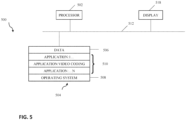
- the video coding device 400 comprises ingress ports 410 (or input ports 410) and receiver units (Rx) 420 for receiving data; a processor, logic unit, or central processing unit (CPU) 430 to process the data; transmitter units (Tx) 440 and egress ports 450 (or output ports 450) for transmitting the data; and a memory 460 for storing the data.
- the video coding device 400 may also comprise optical-to-electrical (OE) components and electrical-to-optical (EO) components coupled to the ingress ports 410, the receiver units 420, the transmitter units 440, and the egress ports 450 for egress or ingress of optical or electrical signals.
- OE optical-to-electrical
- EO electrical-to-optical
- vps_layer_id [ i ] specifies the nuh_layer_id value of the i-th layer. For any two non-negative integer values of m and n, when m is less than n, the value of vpslayer_id[ m ] shall be less than vps_layer_id[ n ].
- variable DirectDependentLayerIdx[ i ][ j ] specifying the j-th direct dependent layer of the i-th layer, is derived as follows:
- syntax elements vps_independent_layer_flag[ i ] and vps_direct_dependency_flag[ i ][ j ] are inter-layer prediction information of the layers, wherein i, and j are layer identifier, different layers corresponding to different layer identifier.
- All the reference pictures are stored in the DPB. All the pictures in the DPB are marked as "used for long-term reference”, “used for short-term reference”, or “unused for reference”, and only one for the three status. Once a picture is marked as "unused for reference”, it will not used for reference anymore. If it also not needed storing for output, then it can be removed from the DPB.
- the status of the reference pictures can be signaled in the slice header, or can be derived from the slice header informaton.
- ref_pic_list_sps_flag [ i ] 1 specifies that reference picture list i of the current slice is derived based on one of the ref_pic_list struct( listIdx, rplsIdx ) syntax structures with listIdx equal to i in the SPS.
- ref_pic_list_sps_flag[ i ] 0 specifies that reference picture list i of the current slice is derived based on the ref_pic_list_struct( listIdx, rplsIdx ) syntax structure with listIdx equal to i that is directly included in the slice headers of the current picture.
- ref_pic_list_idx [ i ] specifies the index, into the list of the ref_pic_list_struct( listIdx, rplsIdx ) syntax structures with listIdx equal to i included in the SPS, of the ref_pic_list_struct( listIdx, rplsIdx ) syntax structure with listIdx equal to i that is used for derivation of reference picture list i of the current picture.
- the syntax element ref_pic_list_idx[ i ] is represented by Ceil( Log2( num_ref_pic_lists_in_sps[ i ] ) ) bits.
- slice_poc_lsb_lt [ i ][ j ] specifies the value of the picture order count modulo MaxPicOrderCntLsb of the j-th LTRP entry in the i-th reference picture list.
- the length of the slice_poc_lsb_lt[ i ][ j ] syntax element is log2_max_pic_order_cnt_lsb_minus4 + 4 bits.
- delta_poc_msb_present_flag [ i ][ j ] 1 specifies that delta_poc_msb_cycle_lt[ i ][ j ] is present.
- delta_poc_msb_present_flag[ i ][ j ] 0 specifies that delta_poc_msb_cycle_lt[ i ][ j ] is not present.
- delta_poc_msb_cycle_lt [ i ][ j ] specifies the value of the variable FullPocLt[ i ][ j ] as follows:
- delta_poc_msb_cycle_lt[ i ][ j ] shall be in the range of 0 to 2 (32 - log2_max_pic_order_cnt_lsb_minus4 - 4 ) , inclusive.
- delta_poc_msb_cycle_lt[ i ] [ j ] is inferred to be equal to 0.
- num_ref_entries [ listIdx ][ rplsIdx ] specifies the number of entries in the ref_pic_list_struct( listIdx, rplsIdx ) syntax structure.
- the value of num_ref_entries[ listIdx ][ rplsIdx ] shall be in the range of 0 to sps_max_dec_pic_buffering_minus1 + 14, inclusive.
- ltrp_in_slice_header_flag [ listIdx ][ rplsIdx ] equal to 0 specifies that the POC LSBs of the LTRP entries in the ref_pic_list_struct( listIdx, rplsIdx ) syntax structure are present in the ref_pic_list_struct( listIdx, rplsIdx ) syntax structure.
- ltrp_in_slice_header_flag[ listIdx ][ rplsIdx ] 1 specifies that the POC LSBs of the LTRP entries in the ref_pic_list_struct( listIdx, rplsIdx ) syntax structure are not present in the ref_pic_list_struct( listIdx, rplsIdx ) syntax structure.
- inter_layer_ref_pic_flag [ listIdx ][ rplsIdx ][ i ] 1 specifies that the i-th entry in the ref_pic_list_struct( listIdx, rplsIdx ) syntax structure is an ILRP entry.
- inter_layer_ref_pic_flag[ listIdx ][ rplsIdx ][ i ] 0 specifies that the i-th entry in the ref_pic_list_struct( listIdx, rplsIdx ) syntax structure is not an ILRP entry.
- the value of inter_layer_ref_pic_flag[ listIdx ][ rplsIdx ][ i ] is inferred to be equal to 0.
- st_ref_pic_flag [ listIdx ][ rplsIdx ][ i ] 1 specifies that the i-th entry in the ref_pic_list_struct( listIdx, rplsIdx ) syntax structure is an STRP entry.
- st_ref_pic_flag[ listIdx ][ rplsIdx ][ i ] 0 specifies that the i-th entry in the ref_pic_list_struct( listIdx, rplsIdx ) syntax structure is an LTRP entry.
- abs_delta_poc_st [ listIdx ][ rplsIdx ][ i ] specifies the value of the variable AbsDeltaPocSt[ listIdx ][ rplsIdx ][ i ] as follows:
- strp_entry_sign_flag [ listIdx ][ rplsIdx ][ i ] 1 specifies that i-th entry in the syntax structure ref_pic_list_struct( listldx, rplsIdx ) has a value greater than or equal to 0.
- strp_entry_sign_flag[ listIdx ][ rplsIdx ][ i ] equal to 0 specifies that the i-th entry in the syntax structure ref_pic_list_struct( listIdx, rplsIdx ) has a value less than 0.
- the value of strp_entry_sign_flag[ listIdx ][ rplsIdx ][ i ] is inferred to be equal to 1.
- the list DeltaPocValSt[ listIdx ][ rplsIdx ] is derived as follows:
- rpls_poc_lsb_lt [ listIdx ][ rplsIdx ][ i ] specifies the value of the picture order count modulo MaxPicOrderCntLsb of the picture referred to by the i-th entry in the ref_pic_list_struct( listIdx, rplsIdx ) syntax structure.
- the length of the rpls_poc_lsb_lt[ listIdx ][ rplsIdx ][ i ] syntax element is log2_max_pic_order_cnt_lsb_minus4 + 4 bits.
- num_ref_entries[ listIdx istrplsIdx ] is signaled to indicate the number of reference pictures in the list.
- ltrp_in_slice_header_flag[ listIdx istrplsIdx ] is used indicated whether LSB (Least Significant Bit) information is signaled in the slice header. If current reference picture is not an inter-layer reference picture, then a st_ref_pic_flag[ listIdx ][ rplsIdx ][ i ] to indicat whether it is a long-term reference picture.
- the POC information (abs_delta_poc_st and strp_entry_sign_flag) is signaled. if ltrp_in_slice_header_flag[tlistIdx istrplsIdx ] is zero, then rpls_poc_lsb_lt[plistIdx istrplsIdx plsj++ ] is used to derived the LSB information of current reference picture.
- the MSB (Most Significant Bit) can be derived directly, or derived based on the information (delta_poc_msb_present_flag[ei ][ j ] and delta_poc_msb_cycle_lt[ei ][ j ]) in the slice header.
- This process is invoked at the beginning of the decoding process for each slice of a non-IDR picture.
- Reference pictures are addressed through reference indices.
- a reference index is an index into a reference picture list.
- no reference picture list is used in decoding of the slice data.
- reference picture list 0 i.e., RefPicList[ 0 ]
- reference picture list 1 i.e., RefPicList[ 1 ]
- the reference picture lists RefPicList[ 0 ] and RefPicList[ 1 ] are derived.
- the reference picture lists are used in marking of reference pictures as specified in clause 8.3.3 or in decoding of the slice data.
- RefPicList[ 0 ] and RefPicList[ 1 ] may be derived for bitstream conformance checking purpose, but their derivation is not necessary for decoding of the current picture or pictures following the current picture in decoding order.
- sps_video_parameter_set_id when greater than 0, specifies the value of vpsvideo_parameter_set_rbsp( set_id for the VPS referred to by the SPS.
- sps_video_parameter_set_id when sps_video_parameter_set_id is equal to 0, the SPS does not refer to a VPS and no VPS is referred to when decoding each CVS referring to the SPS.
- Syntax elements for inter-layer reference information are signaled considering the index of current layer. If the information can be derived by the index of current layer, the information is not needed to siganled.
- Syntax elements for inter-layer reference information are signaled considering the index of current layer. If the information can be derived by the index of current layer, the information is not needed to siganled.
- long_term_ref_pics_flag 1
- long_term_ref_pics_flag 0
- long_term_ref_pics_flag 0 specifies that these syntax elements are not present in the syntax structures ref_pic_list_struct( listIdx, rplsIdx ).
- long_term_ref_pics_flag 0 specifies that no LTRP is used for inter prediction of any coded picture in the CVS.
- long_term_ref_pics_flag 1 specifies that LTRPs may be used for inter prediction of one or more coded pictures in the CVS.
- the LTRP doesn't include ILRP (inter-layer reference picture).
- vps_direct_dependency _flag[ i ][ j ] does not need to be signaled. Only when i larger than 1, vps_direct_dependency_flag[ i ][ j ] need to be signaled.
- vps_direct_dependency_flag [ i ][ j ] 0 specifies that the layer with index j is not a direct reference layer for the layer with index i.
- vps_direct_dependency_flag [ i ][ j ] 1 specifies that the layer with index j is a direct reference layer for the layer with index i.
- vps_direct_dependency_flag[ i ][ j ] When vps_direct_dependency_flag[ i ][ j ] is not present for i and j in the range of 0 to vps_max_layers_minus1, inclusive, if i equal to 1 and vps_independent_layer_flag[ i ] equal to 0, vps_direct_dependency_flag[ i ][ j ] is inferred to be equal to 1, otherwise, it is inferred to be equal to 0.
- inter_layer_ref_pics_present_flag 0 specifies that no ILRP is used for inter prediction of any coded picture in the CVS.
- inter_layer_ref_pics_flag 1 specifies that ILRPs may be used for inter prediction of one or more coded pictures in the CVS.
- inter_layer_ref_pics_flag not present, it is inferred to be equal to 0.
- inter_layer_ref_pics_present_flag 0 specifies that no ILRP is used for inter prediction of any coded picture in the CVS.
- inter_layer_ref_pics_flag 1 specifies that ILRPs may be used for inter prediction of one or more coded pictures in the CVS.
- inter_layer_ref_pics_flag not present, it is inferred to be equal to 0.
- inter_layer_ref_pics_present_flag 0 specifies that no ILRP is used for inter prediction of any coded picture in the CVS.
- inter_layer_ref_pics_flag 1 specifies that ILRPs may be used for inter prediction of one or more coded pictures in the CVS.
- inter_layer_ref_pics_flag not present, it is inferred to be equal to 0.
- the fourth embodiment (the inter-layer reference information is signaled considering the index of current layer, to remove the redundancy information signaling, to improve the coding efficiency.)
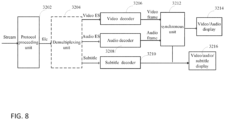
- stream file is generated.
- the file is outputted to a demultiplexing unit 3204.
- the demultiplexing unit 3204 can separate the multiplexed data into the encoded audio data and the encoded video data. As described above, for some practical scenarios, for example in the video conference system, the encoded audio data and the encoded video data are not multiplexed. In this situation, the encoded data is transmitted to video decoder 3206 and audio decoder 3208 without through the demultiplexing unit 3204.
- embodiments of the invention have been primarily described based on video coding, it should be noted that embodiments of the coding system 10, encoder 20 and decoder 30 (and correspondingly the system 10) and the other embodiments described herein may also be configured for still picture processing or coding, i.e. the processing or coding of an individual picture independent of any preceding or consecutive picture as in video coding.
- inter-prediction units 244 (encoder) and 344 (decoder) may not be available in case the picture processing coding is limited to a single picture 17. All other functionalities (also referred to as tools or technologies) of the video encoder 20 and video decoder 30 may equally be used for still picture processing, e.g.
- residual calculation 204/304 transform 206, quantization 208, inverse quantization 210/310, (inverse) transform 212/312, partitioning 262/362, intra-prediction 254/354, and/or loop filtering 220, 320, and entropy coding 270 and entropy decoding 304.
- Embodiments, e.g. of the encoder 20 and the decoder 30, and functions described herein, e.g. with reference to the encoder 20 and the decoder 30, may be implemented in hardware, software, firmware, or any combination thereof. If implemented in software, the functions may be stored on a computer-readable medium or transmitted over communication media as one or more instructions or code and executed by a hardware-based processing unit.
- Computer-readable media may include computer-readable storage media, which corresponds to a tangible medium such as data storage media, or communication media including any medium that facilitates transfer of a computer program from one place to another, e.g., according to a communication protocol.
- computer-readable media generally may correspond to (1) tangible computer-readable storage media which is non-transitory or (2) a communication medium such as a signal or carrier wave.
- Data storage media may be any available media that can be accessed by one or more computers or one or more processors to retrieve instructions, code and/or data structures for implementation of the techniques described in this disclosure.
- a computer program product may include a computer-readable medium.
- a method of decoding a coded video bitstream implemented in an decoder as illustrated in Figure 9 comprising: S901, obtaining a sequence parameter set (SPS)-level syntax element from the bitstream, wherein that the SPS-level syntax element equals to a preset value specifies that no video parameter set (VPS) is referred to by a SPS, and the SPS-level syntax element greater than the preset value specifies that the SPS refers to a VPS.
- SPS sequence parameter set
- S902 obtaining, as the SPS-level syntax element is greater than the preset value, an inter-layer enabled syntax element specifying whether one or more inter-layer reference pictures (ILRPs) are enabled to be used for the inter prediction of one or more coded pictures; and S903, predicting one or more coded pictures based on the value of the inter-layer enabled syntax element.
- ILRPs inter-layer reference pictures
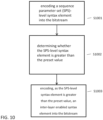
- a method of encoding a video bitstream comprising coded data for a implemented in an encoder as illustrated in Figure 10 comprising: S1001, encoding a sequence parameter set (SPS)-level syntax element into the bitstream, wherein the SPS-level syntax element equal to a preset value specifies that no video parameter set (VPS) is referred to by a SPS, and the SPS-level syntax element greater than the preset value specifies that the SPS refer to a VPS; S1003, encoding, as the SPS-level syntax element is greater than the preset value, an inter-layer enabled syntax element into the bitstream, wherein the inter-layer enabled syntax element specifies whether one or more inter-layer reference pictures (ILRPs) are enabled to be used for inter prediction of one or more coded pictures.
- SPS sequence parameter set
- VPS video parameter set
- ILRPs inter-layer reference pictures
- the method may further comprises: S1002, determining whether the SPS-level syntax element is greater than the preset value.
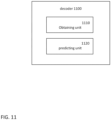
- FIG. 11 illustrates a decoder 1100 configured for decoding a video bitstream comprising coded data for a plurality of pictures.
- the decoder 1100 comprises: a obtaining unit 1110 configured to obtain a sequence parameter set (SPS)-level syntax element from the bitstream, wherein that the SPS-level syntax element equals to a preset value specifies that no video parameter set (VPS) is referred to by a SPS, and the SPS-level syntax element greater than the preset value specifies that the SPS refers to a VPS; the obtaining unit 1110 is further configured to obtain , as the SPS-level syntax element is greater than the preset value, an inter-layer enabled syntax element specifying whether one or more inter-layer reference pictures (ILRPs) are enabled to be used for the inter prediction of one or more coded pictures; and a predicting unit 1120 configured to predict one or more coded pictures based on the value of the inter-layer enabled syntax element.
- SPS sequence parameter set
- VPS video parameter set
- the obtaining unit may be entropy decoding unit 304.
- the predicting unit 1120 may be inter prediction unit 344.
- the decoder 1100 may be the destination device 14, the decoder 30, the apparatus 500, the video decoder 3206 or the terminal device 3106.
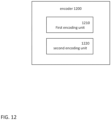
- an encoder 1200 configured for encoding a video bitstream comprising coded data for a plurality of pictures as illustrated in Figure 12 .
- the encoder 1200 comprises: a first encoding unit 1210 configured to encode a sequence parameter set (SPS)-level syntax element into the bitstream, wherein the SPS-level syntax element equal to a preset value specifies that no video parameter set (VPS) is referred to by a SPS, and the SPS-level syntax element greater than the preset value specifies that the SPS refer to a VPS; a second encoding unit 1220 configured to encode, as the SPS-level syntax element is greater than the preset value, an inter-layer enabled syntax element into the bitstream, wherein the inter-layer enabled syntax element specifies whether one or more inter-layer reference pictures (ILRPs) are enabled to be used for inter prediction of one or more coded pictures.
- SPS sequence parameter set
- VPS video parameter set
- ILRPs inter-layer reference pictures
- first encoding unit 1210 and the second encoding unit 1220 may be Entropy encoding unit 270.
- the determining unit may be mode selection unit 260.
- the encoder 1200 may be the source device 12, the encoder 20, or the apparatus 500.
- such computer-readable storage media can comprise RAM, ROM, EEPROM, CD-ROM or other optical disk storage, magnetic disk storage, or other magnetic storage devices, flash memory, or any other medium that can be used to store desired program code in the form of instructions or data structures and that can be accessed by a computer.
- any connection is properly termed a computer-readable medium.
- a computer-readable medium For example, if instructions are transmitted from a website, server, or other remote source using a coaxial cable, fiber optic cable, twisted pair, digital subscriber line (DSL), or wireless technologies such as infrared, radio, and microwave, then the coaxial cable, fiber optic cable, twisted pair, DSL, or wireless technologies such as infrared, radio, and microwave are included in the definition of medium.
- DSL digital subscriber line
- processors such as one or more digital signal processors (DSPs), general purpose microprocessors, application specific integrated circuits (ASICs), field programmable logic arrays (FPGAs), or other equivalent integrated or discrete logic circuitry.
- DSPs digital signal processors
- ASICs application specific integrated circuits
- FPGAs field programmable logic arrays
- processors may refer to any of the foregoing structure or any other structure suitable for implementation of the techniques described herein.
- the functionality described herein may be provided within dedicated hardware and/or software modules configured for encoding and decoding, or incorporated in a combined codec. Also, the techniques could be fully implemented in one or more circuits or logic elements.
- the techniques of this disclosure may be implemented in a wide variety of devices or apparatuses, including a wireless handset, an integrated circuit (IC) or a set of ICs (e.g., a chip set).
- IC integrated circuit
- a set of ICs e.g., a chip set.
- Various components, modules, or units are described in this disclosure to emphasize functional aspects of devices configured to perform the disclosed techniques, but do not necessarily require realization by different hardware units. Rather, as described above, various units may be combined in a codec hardware unit or provided by a collection of interoperative hardware units, including one or more processors as described above, in conjunction with suitable software and/or firmware.
Landscapes
- Engineering & Computer Science (AREA)
- Multimedia (AREA)
- Signal Processing (AREA)
- Compression Or Coding Systems Of Tv Signals (AREA)
Claims (13)
- Verfahren zum Decodieren eines codierten Videobitstroms, wobei das Verfahren Folgendes umfasst:Erlangen eines Sequenzparametersatz-Ebenen-Syntaxelements, SPS-Ebenen-Syntaxelements, aus dem Bitstrom, wobei das SPS-Ebenen-Syntaxelement gleich 0 spezifiziert, dass kein Videoparametersatz, VPS, durch einen SPS referenziert wird, und das SPS-Ebenen-Syntaxelement größer 0 spezifiziert, dass der SPS einen VPS referenziert;Ableiten einer Variablen GeneralLayerIdx[ i ], die einen Schichtindex einer Schicht mit nuh_layer_id gleich vps_layer_id[ i ] spezifiziert, wobei die vps_layer_id[ i ] den nuh_layer_id-Wert einer i-ten Schicht spezifiziert;wenn das SPS-Ebenen-Syntaxelement größer als 0 ist und der GeneralLayerIdx[ nuh_layer_id ] größer als 0 ist, Erlangen, von dem SPS, eines schichtübergreifend aktivierten Syntaxelements, das spezifiziert, ob ein oder mehrere schichtübergreifende Referenzbilder, ILRPs, dazu aktiviert sind, für eine Inter-Vorhersage eines oder mehrerer codierter Bilder verwendet zu werden;andernfalls ist das schichtübergreifend aktivierte Syntaxelement nicht in dem Bitstrom vorhanden und ein Wert des schichtübergreifend aktivierten Syntaxelements wird als gleich 0 angenommen;Vorhersagen eines oder mehrerer codierter Bilder basierend auf dem Wert des schichtübergreifend aktivierten Syntaxelements.
- Verfahren nach Anspruch 1, wobei der VPS Syntaxelemente umfasst, die schichtübergreifende Vorhersageinformationen der Schichten in einer codierten Videosequenz, CVS, beschreiben und der SPS das SPS-Ebenen-Syntaxelement und das schichtübergreifend aktivierte Syntaxelement umfasst, wobei die CVS das eine oder die mehreren ILRPs und das eine oder die mehreren codierten Bilder umfasst.
- Verfahren nach Anspruch 2, wobei das Vorhersagen eines oder mehrerer codierter Bilder basierend auf dem Wert des schichtübergreifend aktivierten Syntaxelements Folgendes umfasst: wenn der Wert des schichtübergreifend aktivierten Syntaxelements spezifiziert, dass ein oder mehrere ILRPs zum Verwenden für die Inter-Vorhersage eines oder mehrerer codierter Bilder aktiviert sind, Vorhersagen des einen oder der mehreren codierten Bilder durch Referenzieren des einen oder der mehreren ILRPs, wobei das eine oder die mehreren ILRPs basierend auf den schichtübergreifenden Vorhersageinformationen erlangt werden, die in dem VPS beinhaltet sind, der durch den SPS referenziert wird.
- Verfahren nach einem der Ansprüche 1 bis 3, wobei das SPS-Ebenen-Syntaxelement gleich 0 ferner spezifiziert, dass eine codierte Videosequenz, CVS, codierte Bilder nur einer Schicht umfasst.
- Verfahren nach einem der Ansprüche 1 bis 4, wobei das Vorhersagen des einen oder der mehreren codierten Bilder basierend auf dem Wert des schichtübergreifend aktivierten Syntaxelements Folgendes umfasst:
Vorhersagen des einen oder der mehreren codierten Bilder ohne Referenzieren irgendeines ILRP, falls der Wert des schichtübergreifend aktivierten Syntaxelements spezifiziert, dass das eine oder die mehreren ILRPs nicht für die Inter-Vorhersage eines oder mehrerer codierter Bilder verwendet werden. - Verfahren zum Codieren eines codierten Videobitstroms, wobei das Verfahren Folgendes umfasst:Codieren eines Sequenzparametersatz-Ebenen-Syntaxelements, SPS-Ebenen-Syntaxelements, in den Bitstrom, wobei das SPS-Ebenen-Syntaxelement gleich 0 spezifiziert, dass kein Videoparametersatz, VPS, durch einen SPS referenziert wird, und das SPS-Ebenen-Syntaxelement größer 0 spezifiziert, dass der SPS einen VPS referenziert;Ableiten einer Variablen GeneralLayerIdx[ i ], die einen Schichtindex einer Schicht mit nuh_layer_id gleich vps_layer_id[ i ] spezifiziert, wobei die vps_layer_id[ i ] den nuh_layer_id-Wert einer i-ten Schicht spezifiziert;Codieren, wenn das SPS-Ebenen-Syntaxelement größer als 0 ist und die GeneralLayerIdx[ nuh_layer_id ] größer als 0 ist, eines schichtübergreifend aktivierten Syntaxelements in den SPS des Bitstroms, wobei das schichtübergreifend aktivierte Syntaxelement spezifiziert, ob ein oder mehrere schichtübergreifende Referenzbilder, ILRPs, aktiviert sind, um für die Inter-Vorhersage eines oder mehrerer codierter Bilder verwendet zu werden; andernfalls ist das schichtübergreifend aktivierte Syntaxelement nicht im Bitstrom vorhanden und ein Wert des schichtübergreifend aktivierten Syntaxelements wird als gleich 0 angenommen.
- Verfahren nach Anspruch 6, wobei der VPS Syntaxelemente umfasst, welche die schichtübergreifenden Vorhersageinformationen der Schichten in einer codierten Videosequenz, CVS, beschreiben und der SPS das SPS-Ebenen-Syntaxelement und das schichtübergreifend aktivierte Syntaxelement umfasst, wobei die CVS das eine oder die mehreren ILRPs und das eine oder die mehreren codierten Bilder umfasst.
- Verfahren nach einem der Ansprüche 6 bis 7, wobei das SPS-Ebenen-Syntaxelement gleich 0 ferner spezifiziert, dass eine codierte Videosequenz, CVS, codierte Bilder nur einer Schicht umfasst.
- Verfahren nach einem der Ansprüche 6 bis 8, wobei das Codieren des schichtübergreifend aktivierten Syntaxelements in den Bitstrom Folgendes umfasst: Codieren des schichtübergreifend aktivierten Syntaxelements, indem spezifiziert wird, dass das eine oder die mehreren ILRPs dazu aktiviert sind, für die Inter-Vorhersage eines oder mehrerer codierter Bilder in den Bitstrom verwendet zu werden, basierend auf Bestimmen, dass das eine oder die mehreren ILRPs dazu aktiviert sind, für die Inter-Vorhersage eines oder mehrerer codierter Bilder verwendet zu werden.
- Verfahren nach einem der Ansprüche 6 bis 9, wobei das Codieren des schichtübergreifend aktivierten Syntaxelements in den Bitstrom Folgendes umfasst: Codieren des schichtübergreifend aktivierten Syntaxelements, indem spezifiziert wird, dass das eine oder die mehreren ILRPs nicht für die Inter-Vorhersage eines oder mehrerer codierter Bilder in den Bitstrom verwendet werden, basierend auf Bestimmen, dass das eine oder die mehreren ILRPs nicht für die Inter-Vorhersage eines oder mehrerer codierter Bilder verwendet werden.
- Coding-Vorrichtung, wobei die Coding-Vorrichtung eine Decodiervorrichtung oder eine Codiervorrichtung ist, Folgendes umfassend: einen oder mehrere Prozessoren; und
ein nichtflüchtiges computerlesbares Speichermedium, das mit den Prozessoren gekoppelt ist und Programmierung zur Ausführung durch die Prozessoren speichert, wobei die Programmierung, wenn sie durch die Prozessoren ausgeführt wird, die Coding-Vorrichtung dazu konfiguriert, das Verfahren nach einem der vorhergehenden Ansprüche 1 bis 10 durchzuführen. - Nichtflüchtiges Speichermedium, das einen codierten Bitstrom beinhaltet, der durch eine Bild-Decodiervorrichtung decodiert wird, wobei der Bitstrom durch Aufteilen eines Frames eines Videosignals oder eines Bildsignals in eine Vielzahl von Blöcken erzeugt wird und Folgendes beinhalteteine Vielzahl von Syntaxelementen, wobei die Vielzahl von Syntaxelementen ein Sequenzparametersatz-Ebenen-Syntaxelement, SPS-Ebenen-Syntaxelement, umfasst, wobei das SPS-Ebenen-Syntaxelement gleich 0 spezifiziert, dass kein Videoparametersatz, VPS, durch einen SPS referenziert wird, und das SPS-Ebenen-Syntaxelement größer 0 spezifiziert, dass der SPS einen VPS referenziert;wobei:
wenn das SPS-Ebenen-Syntaxelement größer als 0 ist und eine Variable GeneralLayerIdx[ nuh_layer_id ] größer als 0 ist, die Vielzahl von Syntaxelementen ferner ein schichtübergreifend aktiviertes Syntaxelement umfasst, das spezifiziert, ob ein oder mehrere schichtübergreifende Referenzbilder, ILRPs, dazu aktiviert sind, für die Inter-Vorhersage eines oder mehrerer codierter Bilder verwendet zu werden, und das schichtübergreifend aktivierte Syntaxelement in dem SPS des Bitstroms enthalten ist; andernfalls das schichtübergreifend aktivierte Syntaxelement nicht in dem Bitstrom vorhanden ist und ein Wert des schichtübergreifend aktivierten Syntaxelements als gleich 0 angenommen wird; wobei die Variable GeneralLayerIdx[ i ] abgeleitet wird und einen Schichtindex einer Schicht mit nuh_layer_id gleich vps_layer_id[ i ] spezifiziert, wobei die vps_layer_id[ i ] den nuh_layer_id-Wert einer i-ten Schicht spezifiziert. - Nichtflüchtiges Speichermedium nach Anspruch 12
;, wobei der Bitstrom ferner den VPS und den SPS umfasst,
wobei der VPS Syntaxelemente umfasst, die schichtübergreifende Vorhersageinformationen der Schichten in einer codierten Videosequenz, CVS, beschreiben und der SPS das SPS-Ebenen-Syntaxelement und das schichtübergreifend aktivierte Syntaxelement umfasst, wobei die CVS das eine oder die mehreren ILRPs und das eine oder die mehreren codierten Bilder umfasst.
Priority Applications (1)
| Application Number | Priority Date | Filing Date | Title |
|---|---|---|---|
| EP25155978.7A EP4543004A1 (de) | 2019-09-24 | 2020-09-24 | Codierer, decodierer und zugehörige verfahren |
Applications Claiming Priority (2)
| Application Number | Priority Date | Filing Date | Title |
|---|---|---|---|
| CN2019107594 | 2019-09-24 | ||
| PCT/CN2020/117557 WO2021057869A1 (en) | 2019-09-24 | 2020-09-24 | An encoder, a decoder and corresponding methods |
Related Child Applications (2)
| Application Number | Title | Priority Date | Filing Date |
|---|---|---|---|
| EP25155978.7A Division-Into EP4543004A1 (de) | 2019-09-24 | 2020-09-24 | Codierer, decodierer und zugehörige verfahren |
| EP25155978.7A Division EP4543004A1 (de) | 2019-09-24 | 2020-09-24 | Codierer, decodierer und zugehörige verfahren |
Publications (3)
| Publication Number | Publication Date |
|---|---|
| EP4026337A1 EP4026337A1 (de) | 2022-07-13 |
| EP4026337A4 EP4026337A4 (de) | 2022-10-26 |
| EP4026337B1 true EP4026337B1 (de) | 2025-07-02 |
Family
ID=75166778
Family Applications (2)
| Application Number | Title | Priority Date | Filing Date |
|---|---|---|---|
| EP25155978.7A Pending EP4543004A1 (de) | 2019-09-24 | 2020-09-24 | Codierer, decodierer und zugehörige verfahren |
| EP20867807.8A Active EP4026337B1 (de) | 2019-09-24 | 2020-09-24 | Codierer, decodierer und entsprechendes verfahren |
Family Applications Before (1)
| Application Number | Title | Priority Date | Filing Date |
|---|---|---|---|
| EP25155978.7A Pending EP4543004A1 (de) | 2019-09-24 | 2020-09-24 | Codierer, decodierer und zugehörige verfahren |
Country Status (11)
| Country | Link |
|---|---|
| US (3) | US11412215B2 (de) |
| EP (2) | EP4543004A1 (de) |
| JP (2) | JP7483869B2 (de) |
| KR (1) | KR20220065040A (de) |
| CN (2) | CN115209153B (de) |
| AU (1) | AU2020352952A1 (de) |
| CA (1) | CA3152464C (de) |
| ES (1) | ES3041489T3 (de) |
| MX (2) | MX2022003556A (de) |
| PL (1) | PL4026337T3 (de) |
| WO (1) | WO2021057869A1 (de) |
Families Citing this family (7)
| Publication number | Priority date | Publication date | Assignee | Title |
|---|---|---|---|---|
| KR20250099411A (ko) | 2019-10-07 | 2025-07-01 | 후아웨이 테크놀러지 컴퍼니 리미티드 | 다중 계층 비디오 스트림에서의 중복 시그널링 방지 |
| CN114846457A (zh) | 2019-12-26 | 2022-08-02 | 字节跳动有限公司 | 对层级视频的编解码的限制 |
| KR102776845B1 (ko) | 2019-12-26 | 2025-03-10 | 바이트댄스 아이엔씨 | 코딩된 비트스트림들에서의 비디오 계층들의 시그널링에 대한 제약들 |
| EP4066386A4 (de) | 2019-12-27 | 2023-01-25 | ByteDance Inc. | Unterbildsignalisierung in videocodierung |
| EP4074024A4 (de) | 2020-01-09 | 2023-04-05 | ByteDance Inc. | Signalisierung des vorhandenseins von zwischenschicht-referenzbildern |
| BR122022013317A2 (pt) * | 2020-02-13 | 2022-09-13 | Panasonic Intellectual Property Corporation Of America | Codificador, decodificador e meio legível por computador não transitório |
| US12069310B2 (en) * | 2021-09-29 | 2024-08-20 | Tencent America LLC | Techniques for constraint flag signaling for range extension |
Family Cites Families (19)
| Publication number | Priority date | Publication date | Assignee | Title |
|---|---|---|---|---|
| US9451252B2 (en) | 2012-01-14 | 2016-09-20 | Qualcomm Incorporated | Coding parameter sets and NAL unit headers for video coding |
| US9319679B2 (en) | 2012-06-07 | 2016-04-19 | Qualcomm Incorporated | Signaling data for long term reference pictures for video coding |
| US9325990B2 (en) * | 2012-07-09 | 2016-04-26 | Qualcomm Incorporated | Temporal motion vector prediction in video coding extensions |
| US9426462B2 (en) * | 2012-09-21 | 2016-08-23 | Qualcomm Incorporated | Indication and activation of parameter sets for video coding |
| US9161039B2 (en) | 2012-09-24 | 2015-10-13 | Qualcomm Incorporated | Bitstream properties in video coding |
| US9357211B2 (en) * | 2012-12-28 | 2016-05-31 | Qualcomm Incorporated | Device and method for scalable and multiview/3D coding of video information |
| KR20140129624A (ko) | 2013-04-30 | 2014-11-07 | 주식회사 칩스앤미디어 | 동영상 처리 방법 및 장치 |
| US10003815B2 (en) | 2013-06-03 | 2018-06-19 | Qualcomm Incorporated | Hypothetical reference decoder model and conformance for cross-layer random access skipped pictures |
| CN105453569A (zh) * | 2013-07-10 | 2016-03-30 | 夏普株式会社 | 缩放列表信号发送和参数集激活 |
| GB2516424A (en) * | 2013-07-15 | 2015-01-28 | Nokia Corp | A method, an apparatus and a computer program product for video coding and decoding |
| CN105453562B (zh) * | 2013-07-30 | 2018-12-25 | 株式会社Kt | 支持多个层的图像编码和解码方法以及使用该方法的装置 |
| HK1223472A1 (zh) * | 2013-10-10 | 2017-07-28 | 夏普株式会社 | 图像解码装置 |
| US10187662B2 (en) | 2013-10-13 | 2019-01-22 | Sharp Kabushiki Kaisha | Signaling parameters in video parameter set extension and decoder picture buffer operation |
| KR102290091B1 (ko) * | 2013-10-14 | 2021-08-18 | 한국전자통신연구원 | 다계층 기반의 영상 부호화/복호화 방법 및 장치 |
| JP2015195543A (ja) | 2014-03-26 | 2015-11-05 | シャープ株式会社 | 画像復号装置、画像符号化装置 |
| WO2016167538A1 (ko) | 2015-04-12 | 2016-10-20 | 엘지전자(주) | 비디오 신호의 인코딩, 디코딩 방법 및 그 장치 |
| US10779006B2 (en) | 2018-02-14 | 2020-09-15 | Qualcomm Incorporated | Signaling 360-degree video information |
| US11418813B2 (en) | 2019-09-20 | 2022-08-16 | Tencent America LLC | Signaling of inter layer prediction in video bitstream |
| EP4128756A4 (de) * | 2020-03-26 | 2024-04-24 | Alibaba Group Holding Limited | Verfahren zur codierung oder decodierung eines videoparametersatzes oder sequenzparametersatzes |
-
2020
- 2020-09-24 EP EP25155978.7A patent/EP4543004A1/de active Pending
- 2020-09-24 ES ES20867807T patent/ES3041489T3/es active Active
- 2020-09-24 CA CA3152464A patent/CA3152464C/en active Active
- 2020-09-24 CN CN202210410921.XA patent/CN115209153B/zh active Active
- 2020-09-24 PL PL20867807.8T patent/PL4026337T3/pl unknown
- 2020-09-24 WO PCT/CN2020/117557 patent/WO2021057869A1/en not_active Ceased
- 2020-09-24 KR KR1020227013372A patent/KR20220065040A/ko not_active Ceased
- 2020-09-24 JP JP2022519007A patent/JP7483869B2/ja active Active
- 2020-09-24 MX MX2022003556A patent/MX2022003556A/es unknown
- 2020-09-24 EP EP20867807.8A patent/EP4026337B1/de active Active
- 2020-09-24 AU AU2020352952A patent/AU2020352952A1/en active Pending
- 2020-09-24 CN CN202080065857.5A patent/CN114424571A/zh active Pending
-
2021
- 2021-10-01 US US17/492,122 patent/US11412215B2/en active Active
-
2022
- 2022-03-23 MX MX2025011600A patent/MX2025011600A/es unknown
- 2022-07-13 US US17/863,684 patent/US11968357B2/en active Active
-
2024
- 2024-03-20 US US18/610,994 patent/US20240357075A1/en active Pending
- 2024-04-11 JP JP2024063909A patent/JP7787224B2/ja active Active
Also Published As
| Publication number | Publication date |
|---|---|
| JP2024096145A (ja) | 2024-07-12 |
| CN115209153B (zh) | 2023-06-06 |
| US20240357075A1 (en) | 2024-10-24 |
| US11968357B2 (en) | 2024-04-23 |
| CA3152464C (en) | 2024-05-14 |
| PL4026337T3 (pl) | 2025-10-06 |
| EP4543004A1 (de) | 2025-04-23 |
| EP4026337A1 (de) | 2022-07-13 |
| US11412215B2 (en) | 2022-08-09 |
| EP4026337A4 (de) | 2022-10-26 |
| US20220368892A1 (en) | 2022-11-17 |
| WO2021057869A1 (en) | 2021-04-01 |
| JP2022550322A (ja) | 2022-12-01 |
| JP7483869B2 (ja) | 2024-05-15 |
| JP7787224B2 (ja) | 2025-12-16 |
| CA3152464A1 (en) | 2021-04-01 |
| MX2022003556A (es) | 2022-06-14 |
| CN115209153A (zh) | 2022-10-18 |
| AU2020352952A1 (en) | 2022-04-21 |
| US20220030222A1 (en) | 2022-01-27 |
| BR112022005469A2 (pt) | 2022-06-14 |
| KR20220065040A (ko) | 2022-05-19 |
| CN114424571A (zh) | 2022-04-29 |
| MX2025011600A (es) | 2025-11-03 |
| ES3041489T3 (en) | 2025-11-12 |
Similar Documents
| Publication | Publication Date | Title |
|---|---|---|
| US12477154B2 (en) | Encoder, decoder and corresponding methods and apparatus | |
| EP4026337B1 (de) | Codierer, decodierer und entsprechendes verfahren | |
| US12058378B2 (en) | Encoder, a decoder and corresponding methods | |
| WO2021068918A1 (en) | An encoder, a decoder and corresponding methods for simplifying signalling picture header | |
| EP4022920A1 (de) | Verfahren und vorrichtung zur hochpegelsignalisierung für gewichtete prädiktion | |
| US12069242B2 (en) | Reference picture management methods for video coding | |
| US12010345B2 (en) | Encoder, a decoder and corresponding methods of flexible profile configuration | |
| US20220217346A1 (en) | Method and Apparatus for Chrominance QP Offsets Tables Signaling and Derivation | |
| WO2021008470A1 (en) | An encoder, a decoder and corresponding methods | |
| US20220232260A1 (en) | Encoder, a decoder and corresponding methods | |
| WO2021128295A1 (en) | An encoder, a decoder and corresponding methods for inter prediction |
Legal Events
| Date | Code | Title | Description |
|---|---|---|---|
| STAA | Information on the status of an ep patent application or granted ep patent |
Free format text: STATUS: THE INTERNATIONAL PUBLICATION HAS BEEN MADE |
|
| PUAI | Public reference made under article 153(3) epc to a published international application that has entered the european phase |
Free format text: ORIGINAL CODE: 0009012 |
|
| STAA | Information on the status of an ep patent application or granted ep patent |
Free format text: STATUS: REQUEST FOR EXAMINATION WAS MADE |
|
| 17P | Request for examination filed |
Effective date: 20220331 |
|
| AK | Designated contracting states |
Kind code of ref document: A1 Designated state(s): AL AT BE BG CH CY CZ DE DK EE ES FI FR GB GR HR HU IE IS IT LI LT LU LV MC MK MT NL NO PL PT RO RS SE SI SK SM TR |
|
| A4 | Supplementary search report drawn up and despatched |
Effective date: 20220922 |
|
| RIC1 | Information provided on ipc code assigned before grant |
Ipc: H04N 19/30 20140101ALN20220916BHEP Ipc: H04N 19/187 20140101ALI20220916BHEP Ipc: H04N 19/157 20140101ALI20220916BHEP Ipc: H04N 19/105 20140101ALI20220916BHEP Ipc: H04N 19/70 20140101AFI20220916BHEP |
|
| DAV | Request for validation of the european patent (deleted) | ||
| DAX | Request for extension of the european patent (deleted) | ||
| STAA | Information on the status of an ep patent application or granted ep patent |
Free format text: STATUS: EXAMINATION IS IN PROGRESS |
|
| 17Q | First examination report despatched |
Effective date: 20230524 |
|
| GRAP | Despatch of communication of intention to grant a patent |
Free format text: ORIGINAL CODE: EPIDOSNIGR1 |
|
| STAA | Information on the status of an ep patent application or granted ep patent |
Free format text: STATUS: GRANT OF PATENT IS INTENDED |
|
| RIC1 | Information provided on ipc code assigned before grant |
Ipc: H04N 19/30 20140101ALN20240920BHEP Ipc: H04N 19/187 20140101ALI20240920BHEP Ipc: H04N 19/157 20140101ALI20240920BHEP Ipc: H04N 19/105 20140101ALI20240920BHEP Ipc: H04N 19/70 20140101AFI20240920BHEP |
|
| RIC1 | Information provided on ipc code assigned before grant |
Ipc: H04N 19/30 20140101ALN20240927BHEP Ipc: H04N 19/187 20140101ALI20240927BHEP Ipc: H04N 19/157 20140101ALI20240927BHEP Ipc: H04N 19/105 20140101ALI20240927BHEP Ipc: H04N 19/70 20140101AFI20240927BHEP |
|
| INTG | Intention to grant announced |
Effective date: 20241009 |
|
| GRAJ | Information related to disapproval of communication of intention to grant by the applicant or resumption of examination proceedings by the epo deleted |
Free format text: ORIGINAL CODE: EPIDOSDIGR1 |
|
| STAA | Information on the status of an ep patent application or granted ep patent |
Free format text: STATUS: EXAMINATION IS IN PROGRESS |
|
| GRAP | Despatch of communication of intention to grant a patent |
Free format text: ORIGINAL CODE: EPIDOSNIGR1 |
|
| STAA | Information on the status of an ep patent application or granted ep patent |
Free format text: STATUS: GRANT OF PATENT IS INTENDED |
|
| P01 | Opt-out of the competence of the unified patent court (upc) registered |
Free format text: CASE NUMBER: APP_718/2025 Effective date: 20250108 |
|
| INTG | Intention to grant announced |
Effective date: 20250204 |
|
| RIC1 | Information provided on ipc code assigned before grant |
Ipc: H04N 19/30 20140101ALN20250128BHEP Ipc: H04N 19/187 20140101ALI20250128BHEP Ipc: H04N 19/157 20140101ALI20250128BHEP Ipc: H04N 19/105 20140101ALI20250128BHEP Ipc: H04N 19/70 20140101AFI20250128BHEP |
|
| GRAS | Grant fee paid |
Free format text: ORIGINAL CODE: EPIDOSNIGR3 |
|
| GRAA | (expected) grant |
Free format text: ORIGINAL CODE: 0009210 |
|
| STAA | Information on the status of an ep patent application or granted ep patent |
Free format text: STATUS: THE PATENT HAS BEEN GRANTED |
|
| AK | Designated contracting states |
Kind code of ref document: B1 Designated state(s): AL AT BE BG CH CY CZ DE DK EE ES FI FR GB GR HR HU IE IS IT LI LT LU LV MC MK MT NL NO PL PT RO RS SE SI SK SM TR |
|
| REG | Reference to a national code |
Ref country code: GB Ref legal event code: FG4D |
|
| REG | Reference to a national code |
Ref country code: CH Ref legal event code: EP |
|
| REG | Reference to a national code |
Ref country code: DE Ref legal event code: R096 Ref document number: 602020053982 Country of ref document: DE |
|
| REG | Reference to a national code |
Ref country code: IE Ref legal event code: FG4D |
|
| PGFP | Annual fee paid to national office [announced via postgrant information from national office to epo] |
Ref country code: DE Payment date: 20250730 Year of fee payment: 6 |
|
| PGFP | Annual fee paid to national office [announced via postgrant information from national office to epo] |
Ref country code: GB Payment date: 20250731 Year of fee payment: 6 |
|
| PGFP | Annual fee paid to national office [announced via postgrant information from national office to epo] |
Ref country code: FR Payment date: 20250808 Year of fee payment: 6 |
|
| REG | Reference to a national code |
Ref country code: NL Ref legal event code: MP Effective date: 20250702 |
|
| REG | Reference to a national code |
Ref country code: ES Ref legal event code: FG2A Ref document number: 3041489 Country of ref document: ES Kind code of ref document: T3 Effective date: 20251112 Ref country code: SK Ref legal event code: T3 Ref document number: E 47120 Country of ref document: SK |
|
| PG25 | Lapsed in a contracting state [announced via postgrant information from national office to epo] |
Ref country code: PT Free format text: LAPSE BECAUSE OF FAILURE TO SUBMIT A TRANSLATION OF THE DESCRIPTION OR TO PAY THE FEE WITHIN THE PRESCRIBED TIME-LIMIT Effective date: 20251103 |
|
| PG25 | Lapsed in a contracting state [announced via postgrant information from national office to epo] |
Ref country code: NL Free format text: LAPSE BECAUSE OF FAILURE TO SUBMIT A TRANSLATION OF THE DESCRIPTION OR TO PAY THE FEE WITHIN THE PRESCRIBED TIME-LIMIT Effective date: 20250702 |
|
| REG | Reference to a national code |
Ref country code: AT Ref legal event code: MK05 Ref document number: 1810642 Country of ref document: AT Kind code of ref document: T Effective date: 20250702 |
|
| PG25 | Lapsed in a contracting state [announced via postgrant information from national office to epo] |
Ref country code: IS Free format text: LAPSE BECAUSE OF FAILURE TO SUBMIT A TRANSLATION OF THE DESCRIPTION OR TO PAY THE FEE WITHIN THE PRESCRIBED TIME-LIMIT Effective date: 20251102 |
|
| PG25 | Lapsed in a contracting state [announced via postgrant information from national office to epo] |
Ref country code: NO Free format text: LAPSE BECAUSE OF FAILURE TO SUBMIT A TRANSLATION OF THE DESCRIPTION OR TO PAY THE FEE WITHIN THE PRESCRIBED TIME-LIMIT Effective date: 20251002 |
|
| REG | Reference to a national code |
Ref country code: LT Ref legal event code: MG9D |
|
| PG25 | Lapsed in a contracting state [announced via postgrant information from national office to epo] |
Ref country code: AT Free format text: LAPSE BECAUSE OF FAILURE TO SUBMIT A TRANSLATION OF THE DESCRIPTION OR TO PAY THE FEE WITHIN THE PRESCRIBED TIME-LIMIT Effective date: 20250702 |
|
| PG25 | Lapsed in a contracting state [announced via postgrant information from national office to epo] |
Ref country code: FI Free format text: LAPSE BECAUSE OF FAILURE TO SUBMIT A TRANSLATION OF THE DESCRIPTION OR TO PAY THE FEE WITHIN THE PRESCRIBED TIME-LIMIT Effective date: 20250702 |
|
| PGFP | Annual fee paid to national office [announced via postgrant information from national office to epo] |
Ref country code: IT Payment date: 20251022 Year of fee payment: 6 |
|
| PG25 | Lapsed in a contracting state [announced via postgrant information from national office to epo] |
Ref country code: HR Free format text: LAPSE BECAUSE OF FAILURE TO SUBMIT A TRANSLATION OF THE DESCRIPTION OR TO PAY THE FEE WITHIN THE PRESCRIBED TIME-LIMIT Effective date: 20250702 |
|
| PG25 | Lapsed in a contracting state [announced via postgrant information from national office to epo] |
Ref country code: GR Free format text: LAPSE BECAUSE OF FAILURE TO SUBMIT A TRANSLATION OF THE DESCRIPTION OR TO PAY THE FEE WITHIN THE PRESCRIBED TIME-LIMIT Effective date: 20251003 |
|
| PG25 | Lapsed in a contracting state [announced via postgrant information from national office to epo] |
Ref country code: SE Free format text: LAPSE BECAUSE OF FAILURE TO SUBMIT A TRANSLATION OF THE DESCRIPTION OR TO PAY THE FEE WITHIN THE PRESCRIBED TIME-LIMIT Effective date: 20250702 Ref country code: CZ Free format text: LAPSE BECAUSE OF FAILURE TO SUBMIT A TRANSLATION OF THE DESCRIPTION OR TO PAY THE FEE WITHIN THE PRESCRIBED TIME-LIMIT Effective date: 20250702 |
|
| PG25 | Lapsed in a contracting state [announced via postgrant information from national office to epo] |
Ref country code: LV Free format text: LAPSE BECAUSE OF FAILURE TO SUBMIT A TRANSLATION OF THE DESCRIPTION OR TO PAY THE FEE WITHIN THE PRESCRIBED TIME-LIMIT Effective date: 20250702 |
|
| PG25 | Lapsed in a contracting state [announced via postgrant information from national office to epo] |
Ref country code: BG Free format text: LAPSE BECAUSE OF FAILURE TO SUBMIT A TRANSLATION OF THE DESCRIPTION OR TO PAY THE FEE WITHIN THE PRESCRIBED TIME-LIMIT Effective date: 20250702 |
|
| PGFP | Annual fee paid to national office [announced via postgrant information from national office to epo] |
Ref country code: PL Payment date: 20250812 Year of fee payment: 6 |
|
| PGFP | Annual fee paid to national office [announced via postgrant information from national office to epo] |
Ref country code: SK Payment date: 20250812 Year of fee payment: 6 |
|
| PG25 | Lapsed in a contracting state [announced via postgrant information from national office to epo] |
Ref country code: RS Free format text: LAPSE BECAUSE OF FAILURE TO SUBMIT A TRANSLATION OF THE DESCRIPTION OR TO PAY THE FEE WITHIN THE PRESCRIBED TIME-LIMIT Effective date: 20251002 |
|
| PGFP | Annual fee paid to national office [announced via postgrant information from national office to epo] |
Ref country code: ES Payment date: 20251016 Year of fee payment: 6 |