EP4022849B1 - Synchrone wiedergabe im mischmodus - Google Patents
Synchrone wiedergabe im mischmodus Download PDFInfo
- Publication number
- EP4022849B1 EP4022849B1 EP20768858.1A EP20768858A EP4022849B1 EP 4022849 B1 EP4022849 B1 EP 4022849B1 EP 20768858 A EP20768858 A EP 20768858A EP 4022849 B1 EP4022849 B1 EP 4022849B1
- Authority
- EP
- European Patent Office
- Prior art keywords
- playback
- group
- timing
- packets
- audio
- Prior art date
- Legal status (The legal status is an assumption and is not a legal conclusion. Google has not performed a legal analysis and makes no representation as to the accuracy of the status listed.)
- Active
Links
Images









Classifications
-
- H—ELECTRICITY
- H04—ELECTRIC COMMUNICATION TECHNIQUE
- H04L—TRANSMISSION OF DIGITAL INFORMATION, e.g. TELEGRAPHIC COMMUNICATION
- H04L12/00—Data switching networks
- H04L12/02—Details
- H04L12/16—Arrangements for providing special services to substations
- H04L12/18—Arrangements for providing special services to substations for broadcast or conference, e.g. multicast
- H04L12/1863—Arrangements for providing special services to substations for broadcast or conference, e.g. multicast comprising mechanisms for improved reliability, e.g. status reports
- H04L12/1877—Measures taken prior to transmission
-
- H—ELECTRICITY
- H04—ELECTRIC COMMUNICATION TECHNIQUE
- H04L—TRANSMISSION OF DIGITAL INFORMATION, e.g. TELEGRAPHIC COMMUNICATION
- H04L12/00—Data switching networks
- H04L12/02—Details
- H04L12/16—Arrangements for providing special services to substations
- H04L12/18—Arrangements for providing special services to substations for broadcast or conference, e.g. multicast
- H04L12/1836—Arrangements for providing special services to substations for broadcast or conference, e.g. multicast with heterogeneous network architecture
-
- H—ELECTRICITY
- H04—ELECTRIC COMMUNICATION TECHNIQUE
- H04L—TRANSMISSION OF DIGITAL INFORMATION, e.g. TELEGRAPHIC COMMUNICATION
- H04L12/00—Data switching networks
- H04L12/02—Details
- H04L12/16—Arrangements for providing special services to substations
- H04L12/18—Arrangements for providing special services to substations for broadcast or conference, e.g. multicast
- H04L12/189—Arrangements for providing special services to substations for broadcast or conference, e.g. multicast in combination with wireless systems
-
- H—ELECTRICITY
- H04—ELECTRIC COMMUNICATION TECHNIQUE
- H04L—TRANSMISSION OF DIGITAL INFORMATION, e.g. TELEGRAPHIC COMMUNICATION
- H04L12/00—Data switching networks
- H04L12/28—Data switching networks characterised by path configuration, e.g. LAN [Local Area Networks] or WAN [Wide Area Networks]
- H04L12/2803—Home automation networks
- H04L12/2838—Distribution of signals within a home automation network, e.g. involving splitting/multiplexing signals to/from different paths
-
- H—ELECTRICITY
- H04—ELECTRIC COMMUNICATION TECHNIQUE
- H04L—TRANSMISSION OF DIGITAL INFORMATION, e.g. TELEGRAPHIC COMMUNICATION
- H04L41/00—Arrangements for maintenance, administration or management of data switching networks, e.g. of packet switching networks
- H04L41/08—Configuration management of networks or network elements
- H04L41/0893—Assignment of logical groups to network elements
-
- H—ELECTRICITY
- H04—ELECTRIC COMMUNICATION TECHNIQUE
- H04L—TRANSMISSION OF DIGITAL INFORMATION, e.g. TELEGRAPHIC COMMUNICATION
- H04L65/00—Network arrangements, protocols or services for supporting real-time applications in data packet communication
- H04L65/60—Network streaming of media packets
- H04L65/61—Network streaming of media packets for supporting one-way streaming services, e.g. Internet radio
- H04L65/611—Network streaming of media packets for supporting one-way streaming services, e.g. Internet radio for multicast or broadcast
-
- H—ELECTRICITY
- H04—ELECTRIC COMMUNICATION TECHNIQUE
- H04L—TRANSMISSION OF DIGITAL INFORMATION, e.g. TELEGRAPHIC COMMUNICATION
- H04L12/00—Data switching networks
- H04L12/28—Data switching networks characterised by path configuration, e.g. LAN [Local Area Networks] or WAN [Wide Area Networks]
- H04L12/2803—Home automation networks
- H04L2012/2847—Home automation networks characterised by the type of home appliance used
- H04L2012/2849—Audio/video appliances
Definitions
- the present disclosure is related to consumer goods and, more particularly, to methods, systems, products, features, services, and other elements directed to media playback or some aspect thereof.
- Media content e.g., songs, podcasts, video sound
- playback devices such that each room with a playback device can play back corresponding different media content.
- rooms can be grouped together for synchronous playback of the same media content, and/or the same media content can be heard in all rooms synchronously.
- multiple networked media playback devices sometimes referred to herein as playback devices or zone players
- the network links disclosed and described herein may be implemented as hardwired network links (e.g., via an Ethernet cable, optical cable, or any other wired connection now known or later developed that is suitable for transmitting data via multicast network addressing schemes) and/or wireless network links (e.g., a WiFi, Bluetooth, or other wireless connection now known or later developed that is suitable for transmitting data via multicast network addressing schemes).
- hardwired network links e.g., via an Ethernet cable, optical cable, or any other wired connection now known or later developed that is suitable for transmitting data via multicast network addressing schemes
- wireless network links e.g., a WiFi, Bluetooth, or other wireless connection now known or later developed that is suitable for transmitting data via multicast network addressing schemes.
- Some networked media playback devices are configurable to operate in a station mode (or infrastructure mode) where an individual media playback device communicates with one or more other media playback devices via a network access point, e.g., a wireless/wired network router, network switch, or other network infrastructure component. And some media playback devices are configurable to operate in a peer-to-peer mode (or ad-hoc mode, or mesh network mode) where an individual media playback device communicates with one or more other media playback devices via a direct peer-to-peer (or ad-hoc or mesh) network link, where communications are transmitted between two or more media playback devices without traversing a network access point. And still further media playback devices are configurable to switch between operating in either a station/infrastructure mode or a peer-to-peer/ad-hoc/mesh mode, depending on network topologies, available network infrastructure, and/or wireless network capacity.
- some networked media playback systems include multiple networked media playback devices, where some of the media playback devices in the networked media playback system are configured to operate in the station/infrastructure mode, and where some of the media playback devices in the networked media playback system are configured to operate in the peer-to-peer/ad-hoc/mesh mode.
- a playback group (e.g., a synchrony group or any of the other groupings disclosed herein for groupwise playback of media content) is formed from one or more media playback devices operating in the station/infrastructure mode and one or more media playback devices operating in the peer-to-peer/ad-hoc/mesh mode
- the playback group is sometimes referred to herein as having a mixed-mode configuration.
- one device (which may be a media playback device or another computing device) in a playback group is designated as a group coordinator for the playback group and one or more other playback devices in the playback group are designated as group members.
- the device designated as the group coordinator (i) obtains audio content for playback by the playback group, (ii) distributes the obtained audio content to the group members, and (iii) coordinates groupwise playback of the audio content by the media playback devices in the playback group, including but not limited to coordinating playback of the audio content in synchrony by the media playback devices in the playback group.
- the group coordinator may additionally play the obtained audio content in a groupwise fashion with the group members.
- the group coordinator plays the obtained audio content in synchrony with the other group members in the playback group. But in other embodiments, the group coordinator may obtain, distribute, and coordinate groupwise and/or synchronous playback of the audio content by the group members, but the group coordinator may not itself play the obtained audio content.
- the group coordinator distributing the obtained audio to the group members of the playback group includes the group coordinator transmitting packets (or frames, cells, or other suitable data structures) comprising portions of the obtained audio to a multicast network address for the playback group.
- at least some (or perhaps all) of the packets addressed to the multicast network address comprise a multicast network address that comprises or at least resolves to at least one of (i) a multicast Media Access Control (MAC) address or (ii) a unicast MAC address.
- MAC Media Access Control
- MAC Multicast Media Access Control
- at least some packets addressed to the multicast network address comprise a multicast Internet Protocol (IP) address and a unicast MAC address.
- IP Internet Protocol
- at least some packets addressed to multicast network address comprise a multicast IP address and a unicast MAC address.
- an individual media playback device receives audio content for playback via the multicast network address for the playback group.
- an individual media playback device may additionally receive other data via the multicast network address for the playback group, including one or more of (i) playback timing for the audio content, (ii) clock timing information of the group coordinator, and/or (iii) other playback group control messages.
- a playback group operates in a mixed-mode configuration when some member(s) of the playback group (i.e., the group coordinator and/or one or more group members) are configured to operate in the above-described station/infrastructure mode, and other member(s) of the playback group (i.e., the group coordinator and/or one or more group members) are configured to operate in the peer-to-peer/ad-hoc/mesh mode.
- at least some packets addressed to the multicast address for the playback group must traverse an access point (e.g., a wireless/wired network router, network switch, or other network infrastructure component).
- At least some types of access points drop (i.e., do not forward) multicast-addressed packets that need to be forwarded to one or more group members.
- at least some types of access points drop multicast-addressed packets received via a first interface (e.g., a wired network interface) that need to be forwarded to one or more group members via a second interface (e.g., a wireless network interface).
- at least some types of access points drop multicast-addressed regardless of the of the interface on which they were received and/or the interface which they would otherwise have been forwarded.
- the access point drops packets comprising audio content (and perhaps other control data).
- the group members do not receive those dropped multicast-addressed packets and therefore cannot play the audio content contained in those dropped multicast-addressed packets and/or do not perform desired functions in response to commands or other control signaling contained within those dropped multicast-addressed packets.
- the systems and methods disclosed and described herein overcome these and other technical problems that can arise when a playback group is operating in a mixed-mode configuration by, among other features, intelligently substituting multicast-addressed packets for unicast-addressed packets for packets that need to traverse an access point between the packet's source and destination.
- the first device determines whether the next hop of a particular packet is either (i) a second device in the playback group (e.g., because one of first or second devices is configured to operate in a peer-to-peer/ad-hoc/mesh network mode, and/or because the first and second devices are configured to communicate with each other via a direct peer-to-peer/ad-hoc/mesh network link), or (ii) an access point (e.g., because one of the first or second network devices are configured to operate in a station/infrastructure network mode, and/or because the first and second devices are configured to communication with each other via an network link that traverses an access point).
- a second device in the playback group e.g., because one of first or second devices is configured to operate in a peer-to-peer/ad-hoc/mesh network mode, and/or because the first and second devices are configured to communicate with each other via a direct peer-to-peer/ad-hoc/mesh network link
- the first device e.g., the group coordinator
- the first device transmits the packet to the unicast network address of the second device (e.g., the unicast network address of a group member).
- the first device transmits the packet to the multicast network address of the playback group.
- the first device determines which other devices in the playback group (e.g., which group members) should be addressed via their unicast network addresses and which other devices in the playback group (e.g., which other group members) can receive packets via the multicast network address for the playback group.
- some embodiments include (i) a first device (e.g., the group coordinator) receiving a request to join the playback group from a second device (e.g., a prospective group member), where the request to join the playback group includes a unicast network address of the second device (e.g., the prospective group member), and (ii) in response to receiving the request to join the playback group from the second device (e.g., the prospective group member), the first device (e.g., the group coordinator) adds the second device to the playback group as a new group member and stores an indication of the unicast address of the new group member in memory, e.g., in a routing or forwarding table or any other data storage arrangement suitable for effectuating the features and functions disclosed and described herein.
- a first device e.g., the group coordinator
- the request to join the playback group may additionally include an indication of whether the prospective media playback device is configured to (or at least configurable to) operate in the station/infrastructure mode or the peer-to-peer/ad-hoc/mesh mode.
- the group coordinator can distribute each packet of audio data to the playback group via four packets: (i) one multicast packet addressed to the playback group's multicast network address and (ii) three separate unicast packets, where each unicast packet of the three unicast packets is addressed to one of the three group members for which packets must traverse an access point.
- an individual computing device (which may be a media playback device or another type of networked computing device) in a playback group determines, for each other computing device in the playback group, whether the other computing device is operating in one of (i) a first networking mode or (ii) a second networking mode.
- the first networking mode comprises the above-described peer-to-peer/ad-hoc/mesh mode
- the second networking mode comprises the above-described station/infrastructure mode.
- the individual computing device in the playback group After the individual computing device in the playback group has determined the networking mode (i.e., peer-to-peer/ad-hoc/mesh or station/infrastructure), and when the individual computing device needs to transmit one or more packets to the other computing devices in the playback group, (i) for each other computing device operating in the first networking mode, the individual computing device transmits the one or more packets to a multicast network address for the playback group, and (ii) for each other computing device operating in the second networking mode, the individual computing device transmits the one or more packets to a unicast network address of the other computer computing device.
- the networking mode i.e., peer-to-peer/ad-hoc/mesh or station/infrastructure
- a playback device configured in a playback group to transmit multicast-addressed packets and/or unicast-addressed packets to other playback devices (or computing devices) in the playback group based on the networking mode of the individual playback devices (or computing devices) in the playback group.
- transmitting multicast-addressed and/or unicast-addressed packets to playback devices in a playback group based on the networking mode of each playback device further improves the operation of a playback group by reducing the total number of packets required to distribute the audio content (and perhaps control data, too) to all the group members by a factor corresponding to the number of playback devices in the playback group that are operating in the peer-to-peer/ad-hoc/mesh networking mode.
- Some embodiments disclosed herein relate to a first playback device (or other computing device) configured to perform the audio content and/or control data distribution features and functions disclosed and described herein. Some embodiments disclosed herein relate to a first playback device (or other computing device) comprising one or more processors and tangible, non-transitory, computer-readable media comprising instructions that, when executed, cause the first playback device (or other computing device) to perform the audio content and/or control data distribution features and functions disclosed and described herein. And further embodiments disclosed herein relate a method of performing the audio content and/or control data distribution features and functions disclosed and described herein.
- the environment 101 comprises a household having several rooms, spaces, and/or playback zones, including (clockwise from upper left) a master bathroom 101a, a master bedroom 101b, a second bedroom 101c, a family room or den 101d, an office 101e, a living room 101f, a dining room 101g, a kitchen 101h, and an outdoor patio 101i. While certain embodiments and examples are described below in the context of a home environment, the technologies described herein may be implemented in other types of environments.
- the playback devices 110h-j can be configured, for instance, to play back audio content in synchrony as individual ones of playback devices 110, as one or more bonded playback devices, and/or as one or more consolidated playback devices. Additional details regarding bonded and consolidated playback devices are described below with respect to, for example, Figures 1B and 1E and 1I-1M .
- one or more of the playback zones in the environment 101 may each be playing different audio content.
- a user may be grilling on the patio 101i and listening to hip hop music being played by the playback device 110c while another user is preparing food in the kitchen 101h and listening to classical music played by the playback device 110b.
- a playback zone may play the same audio content in synchrony with another playback zone.
- the user may be in the office 101e listening to the playback device 110f playing back the same hip hop music being played back by playback device 110c on the patio 101i.
- the playback devices 110c and 110f play back the hip hop music in synchrony such that the user perceives that the audio content is being played seamlessly (or at least substantially seamlessly) while moving between different playback zones. Additional details regarding audio playback synchronization among playback devices and/or zones can be found, for example, in U.S. Patent No. 8,234,395 entitled, "System and method for synchronizing operations among a plurality of independently clocked digital data processing devices," which is incorporated herein by reference in its entirety.
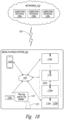
- the cloud network 102 is described above in the context of a single cloud network, in some embodiments the cloud network 102 comprises a plurality of cloud networks comprising communicatively coupled computing devices. Furthermore, while the cloud network 102 is shown in Figure 1B as having three of the computing devices 106, in some embodiments, the cloud network 102 comprises fewer (or more than) three computing devices 106.
- the network 104 can include, for example, a wireless network (e.g., a WiFi network, a Bluetooth, a Z-Wave network, a ZigBee, and/or other suitable wireless communication protocol network) and/or a wired network (e.g., a network comprising Ethernet, Universal Serial Bus (USB), and/or another suitable wired communication).
- a wireless network e.g., a WiFi network, a Bluetooth, a Z-Wave network, a ZigBee, and/or other suitable wireless communication protocol network
- a wired network e.g., a network comprising Ethernet, Universal Serial Bus (USB), and/or another suitable wired communication.
- WiFi can refer to several different communication protocols including, for example, Institute of Electrical and Electronics Engineers (IEEE) 802.11a, 802.11b, 802.11g, 802.11n, 802.11ac, 802.11ac, 802.11ad, 802.11af, 802.11ah, 802.11ai, 802.11aj, 802.11aq, 802.11ax, 802.11ay, 802.15, etc. transmitted at 2.4 Gigahertz (GHz), 5 GHz, and/or another suitable frequency.
- IEEE Institute of Electrical and Electronics Engineers
- the network 104 comprises a dedicated communication network that the media playback system 100 uses to transmit messages between individual devices and/or to transmit media content to and from media content sources (e.g., one or more of the computing devices 106).
- the network 104 is configured to be accessible only to devices in the media playback system 100, thereby reducing interference and competition with other household devices.
- the network 104 comprises an existing household communication network (e.g., a household WiFi network).
- the links 103 and the network 104 comprise one or more of the same networks.
- the links 103 and the network 104 comprise a telecommunication network (e.g., an LTE network, a 5G network).
- the media playback system 100 is implemented without the network 104, and devices comprising the media playback system 100 can communicate with each other, for example, via one or more direct connections, PANs, telecommunication networks, and/or other suitable communication links.
- audio content sources may be regularly added or removed from the media playback system 100.
- the media playback system 100 performs an indexing of media items when one or more media content sources are updated, added to, and/or removed from the media playback system 100.
- the media playback system 100 can scan identifiable media items in some or all folders and/or directories accessible to the playback devices 110, and generate or update a media content database comprising metadata (e.g., title, artist, album, track length) and other associated information (e.g., URIs, URLs) for each identifiable media item found.
- the media content database is stored on one or more of the playback devices 110, network microphone devices 120, and/or control devices 130.
- the playback devices 110l and 110m comprise a group 107a.
- the playback devices 110l and 110m can be positioned in different rooms in a household and be grouped together in the group 107a on a temporary or permanent basis based on user input received at the control device 130a and/or another control device 130 in the media playback system 100.
- the playback devices 110l and 110m can be configured to play back the same or similar audio content in synchrony from one or more audio content sources.
- the group 107a comprises a bonded zone in which the playback devices 110l and 110m comprise left audio and right audio channels, respectively, of multi-channel audio content, thereby producing or enhancing a stereo effect of the audio content.
- the group 107a includes additional playback devices 110.
- the media playback system 100 omits the group 107a and/or other grouped arrangements of the playback devices 110. Additional details regarding groups and other arrangements of playback devices are described in further detail below with respect to Figures 1-I through IM .
- the media playback system 100 includes the NMDs 120a and 120d, each comprising one or more microphones configured to receive voice utterances from a user.
- the NMD 120a is a standalone device and the NMD 120d is integrated into the playback device 110n.
- the NMD 120a for example, is configured to receive voice input 121 from a user 123.
- the NMD 120a transmits data associated with the received voice input 121 to a voice assistant service (VAS) configured to (i) process the received voice input data and (ii) transmit a corresponding command to the media playback system 100.
- VAS voice assistant service
- the computing device 106c comprises one or more modules and/or servers of a VAS (e.g., a VAS operated by one or more of SONOS ® , AMAZON ® , GOOGLE ® APPLE ® , MICROSOFT ® ).
- the computing device 106c can receive the voice input data from the NMD 120a via the network 104 and the links 103.
- the computing device 106c processes the voice input data (i.e., "Play Hey Jude by The Beatles"), and determines that the processed voice input includes a command to play a song (e.g., "Hey Jude").
- the computing device 106c accordingly transmits commands to the media playback system 100 to play back "Hey Jude" by the Beatles from a suitable media service (e.g., via one or more of the computing devices 106) on one or more of the playback devices 110.
- Figure 1C is a block diagram of the playback device 110a comprising an input/output 111.
- the input/output 111 can include an analog I/O 111a (e.g., one or more wires, cables, and/or other suitable communication links configured to carry analog signals) and/or a digital I/O 111b (e.g., one or more wires, cables, or other suitable communication links configured to carry digital signals).
- the analog I/O 111a is an audio line-in input connection comprising, for example, an auto-detecting 3.5mm audio line-in connection.
- the digital I/O 111b comprises a Sony/Philips Digital Interface Format (S/PDIF) communication interface and/or cable and/or a Toshiba Link (TOSLINK) cable.
- the digital I/O 111b comprises an High-Definition Multimedia Interface (HDMI) interface and/or cable.
- the digital I/O 111b includes one or more wireless communication links comprising, for example, a radio frequency (RF), infrared, WiFi, Bluetooth, or another suitable communication protocol.
- RF radio frequency
- the analog I/O 111a and the digital I/O 111b comprise interfaces (e.g., ports, plugs, jacks) configured to receive connectors of cables transmitting analog and digital signals, respectively, without necessarily including cables.
- the playback device 110a can receive media content (e.g., audio content comprising music and/or other sounds) from a local audio source 105 via the input/output 111 (e.g., a cable, a wire, a PAN, a Bluetooth connection, an ad hoc wired or wireless communication network, and/or another suitable communication link).
- the local audio source 105 can comprise, for example, a mobile device (e.g., a smartphone, a tablet, a laptop computer) or another suitable audio component (e.g., a television, a desktop computer, an amplifier, a phonograph, a Blu-ray player, a memory storing digital media files).
- the local audio source 105 includes local music libraries on a smartphone, a computer, a networked-attached storage (NAS), and/or another suitable device configured to store media files.
- one or more of the playback devices 110, NMDs 120, and/or control devices 130 comprise the local audio source 105.
- the media playback system omits the local audio source 105 altogether.
- the playback device 110a does not include an input/output 111 and receives all audio content via the network 104.
- the playback device 110a further comprises electronics 112, a user interface 113 (e.g., one or more buttons, knobs, dials, touch-sensitive surfaces, displays, touchscreens), and one or more transducers 114 (referred to hereinafter as "the transducers 114").
- the electronics 112 is configured to receive audio from an audio source (e.g., the local audio source 105) via the input/output 111, one or more of the computing devices 106a-c via the network 104 ( Figure 1B )), amplify the received audio, and output the amplified audio for playback via one or more of the transducers 114.
- an audio source e.g., the local audio source 105
- the computing devices 106a-c via the network 104 ( Figure 1B )
- the playback device 110a optionally includes one or more microphones 115 (e.g., a single microphone, a plurality of microphones, a microphone array) (hereinafter referred to as "the microphones 115").
- the playback device 110a having one or more of the optional microphones 115 can operate as an NMD configured to receive voice input from a user and correspondingly perform one or more operations based on the received voice input.
- the electronics 112 comprise one or more processors 112a (referred to hereinafter as “the processors 112a”), memory 112b, software components 112c, a network interface 112d, one or more audio processing components 112g (referred to hereinafter as “the audio components 112g"), one or more audio amplifiers 112h (referred to hereinafter as “the amplifiers 112h”), and power 112i (e.g., one or more power supplies, power cables, power receptacles, batteries, induction coils, Power-over Ethernet (POE) interfaces, and/or other suitable sources of electric power).
- the electronics 112 optionally include one or more other components 112j (e.g., one or more sensors, video displays, touchscreens, battery charging bases).
- the processors 112a can comprise clock-driven computing component(s) configured to process data
- the memory 112b can comprise a computer-readable medium (e.g., a tangible, non-transitory computer-readable medium, data storage loaded with one or more of the software components 112c) configured to store instructions for performing various operations and/or functions.
- the processors 112a are configured to execute the instructions stored on the memory 112b to perform one or more of the operations.
- the operations can include, for example, causing the playback device 110a to retrieve audio information from an audio source (e.g., one or more of the computing devices 106a-c ( Figure 1B )), and/or another one of the playback devices 110.
- an audio source e.g., one or more of the computing devices 106a-c ( Figure 1B )
- the operations further include causing the playback device 110a to send audio information to another one of the playback devices 110a and/or another device (e.g., one of the NMDs 120).
- Certain embodiments include operations causing the playback device 110a to pair with another of the one or more playback devices 110 to enable a multi-channel audio environment (e.g., a stereo pair, a bonded zone).
- the processors 112a can be further configured to perform operations causing the playback device 110a to synchronize playback of audio content with another of the one or more playback devices 110.
- a listener will preferably be unable to perceive time-delay differences between playback of the audio content by the playback device 110a and the other one or more other playback devices 110. Additional details regarding audio playback synchronization among playback devices can be found, for example, in U.S. Patent No. 8,234,395 , which was incorporated by reference above.
- the memory 112b is further configured to store data associated with the playback device 110a, such as one or more zones and/or zone groups of which the playback device 110a is a member, audio sources accessible to the playback device 110a, and/or a playback queue that the playback device 110a (and/or another of the one or more playback devices) can be associated with.
- the stored data can comprise one or more state variables that are periodically updated and used to describe a state of the playback device 110a.
- the memory 112b can also include data associated with a state of one or more of the other devices (e.g., the playback devices 110, NMDs 120, control devices 130) of the media playback system 100.
- the amplifiers 112h are configured to receive and amplify the audio output signals produced by the audio processing components 112g and/or the processors 112a.
- the amplifiers 112h can comprise electronic devices and/or components configured to amplify audio signals to levels sufficient for driving one or more of the transducers 114.
- the amplifiers 112h include one or more switching or class-D power amplifiers.
- the amplifiers include one or more other types of power amplifiers (e.g., linear gain power amplifiers, class-A amplifiers, class-B amplifiers, class-AB amplifiers, class-C amplifiers, class-D amplifiers, class-E amplifiers, class-F amplifiers, class-G and/or class H amplifiers, and/or another suitable type of power amplifier).
- the amplifiers 112h comprise a suitable combination of two or more of the foregoing types of power amplifiers.
- individual ones of the amplifiers 112h correspond to individual ones of the transducers 114.
- the electronics 112 includes a single one of the amplifiers 112h configured to output amplified audio signals to a plurality of the transducers 114. In some other embodiments, the electronics 112 omits the amplifiers 112h.
- the transducers 114 can include one or more low frequency transducers (e.g., subwoofers, woofers), mid-range frequency transducers (e.g., mid-range transducers, mid-woofers), and one or more high frequency transducers (e.g., one or more tweeters).
- low frequency can generally refer to audible frequencies below about 500 Hz
- mid-range frequency can generally refer to audible frequencies between about 500 Hz and about 2 kHz
- “high frequency” can generally refer to audible frequencies above 2 kHz.
- one or more of the transducers 114 comprise transducers that do not adhere to the foregoing frequency ranges.
- one of the transducers 114 may comprise a mid-woofer transducer configured to output sound at frequencies between about 200 Hz and about 5 kHz.
- NMDs Network Microphone Devices
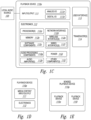
- FIG 1F is a block diagram of the NMD 120a ( Figures 1A and 1B ).
- the NMD 120a includes one or more voice processing components 124 (hereinafter “the voice components 124") and several components described with respect to the playback device 110a ( Figure 1C ) including the processors 112a, the memory 112b, and the microphones 115.
- the NMD 120a optionally comprises other components also included in the playback device 110a ( Figure 1C ), such as the user interface 113 and/or the transducers 114.
- an NMD can be integrated into a playback device.
- Figure 1G is a block diagram of a playback device 110r comprising an NMD 120d.
- the playback device 110r can comprise many or all of the components of the playback device 110a and further include the microphones 115 and voice processing 124 ( Figure 1F ).
- the playback device 110r optionally includes an integrated control device 130c.
- the control device 130c can comprise, for example, a user interface (e.g., the user interface 113 of Figure 1B ) configured to receive user input (e.g., touch input, voice input) without a separate control device. In other embodiments, however, the playback device 110r receives commands from another control device (e.g., the control device 130a of Figure 1B ). Additional NMD embodiments are described in further detail below with respect to Figures 3A-3F .
- the microphones 115 are configured to acquire, capture, and/or receive sound from an environment (e.g., the environment 101 of Figure 1A ) and/or a room in which the NMD 120a is positioned.
- the received sound can include, for example, vocal utterances, audio played back by the NMD 120a and/or another playback device, background voices, ambient sounds, etc.
- the microphones 115 convert the received sound into electrical signals to produce microphone data.
- the voice processing 124 receives and analyzes the microphone data to determine whether a voice input is present in the microphone data.
- the voice input can comprise, for example, an activation word followed by an utterance including a user request.
- an activation word is a word or other audio cue that signifying a user voice input. For instance, in querying the AMAZON ® VAS, a user might speak the activation word "Alexa.” Other examples include “Ok, Google” for invoking the GOOGLE ® VAS and “Hey, Siri” for invoking the APPLE ® VAS.
- voice processing 124 monitors the microphone data for an accompanying user request in the voice input.
- the user request may include, for example, a command to control a third-party device, such as a thermostat (e.g., NEST ® thermostat), an illumination device (e.g., a PHILIPS HUE ® lighting device), or a media playback device (e.g., a Sonos ® playback device).
- a thermostat e.g., NEST ® thermostat
- an illumination device e.g., a PHILIPS HUE ® lighting device
- a media playback device e.g., a Sonos ® playback device.
- a user might speak the activation word "Alexa” followed by the utterance "set the thermostat to 68 degrees” to set a temperature in a home (e.g., the environment 101 of Figure 1A ).
- the user might speak the same activation word followed by the utterance "turn on the living room” to turn on illumination devices in a living room area of the home.
- the user may similarly speak an activation word followed by a request to play a particular song, an album, or a playlist of music on a playback device in the home. Additional description regarding receiving and processing voice input data can be found in further detail below with respect to Figures 3A-3F .
- the control device 130a includes electronics 132, a user interface 133, one or more speakers 134, and one or more microphones 135.
- the electronics 132 comprise one or more processors 132a (referred to hereinafter as "the processors 132a"), a memory 132b, software components 132c, and a network interface 132d.
- the processor 132a can be configured to perform functions relevant to facilitating user access, control, and configuration of the media playback system 100.
- the memory 132b can comprise data storage that can be loaded with one or more of the software components executable by the processor 302 to perform those functions.
- the software components 132c can comprise applications and/or other executable software configured to facilitate control of the media playback system 100.
- the memory 112b can be configured to store, for example, the software components 132c, media playback system controller application software, and/or other data associated with the media playback system 100 and the user.
- the network interface 132d is configured to facilitate network communications between the control device 130a and one or more other devices in the media playback system 100, and/or one or more remote devices.
- the network interface 132d is configured to operate according to one or more suitable communication industry standards (e.g., infrared, radio, wired standards including IEEE 802.3, wireless standards including IEEE 802.11a, 802.11b, 802.11g, 802.11n, 802.11ac, 802.15, 4G, LTE).
- suitable communication industry standards e.g., infrared, radio, wired standards including IEEE 802.3, wireless standards including IEEE 802.11a, 802.11b, 802.11g, 802.11n, 802.11ac, 802.15, 4G, LTE.
- the network interface 132d can be configured, for example, to transmit data to and/or receive data from the playback devices 110, the NMDs 120, other ones of the control devices 130, one of the computing devices 106 of Figure 1B , devices comprising one or more other media playback systems, etc.
- the transmitted and/or received data can include, for example, playback device control commands, state variables, playback zone and/or zone group configurations.
- the network interface 132d can transmit a playback device control command (e.g., volume control, audio playback control, audio content selection) from the control device 304 to one or more of playback devices.
- the network interface 132d can also transmit and/or receive configuration changes such as, for example, adding/removing one or more playback devices to/from a zone, adding/removing one or more zones to/from a zone group, forming a bonded or consolidated player, separating one or more playback devices from a bonded or consolidated player, among others. Additional description of zones and groups can be found below with respect to Figures 1-I through 1M .
- the user interface 133 is configured to receive user input and can facilitate "control of the media playback system 100.
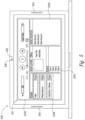
- the user interface 133 includes media content art 133a (e.g., album art, lyrics, videos), a playback status indicator 133b (e.g., an elapsed and/or remaining time indicator), media content information region 133c, a playback control region 133d, and a zone indicator 133e.
- the media content information region 133c can include a display of relevant information (e.g., title, artist, album, genre, release year) about media content currently playing and/or media content in a queue or playlist.
- the playback control region 133d can include selectable (e.g., via touch input and/or via a cursor or another suitable selector) icons to cause one or more playback devices in a selected playback zone or zone group to perform playback actions such as, for example, play or pause, fast forward, rewind, skip to next, skip to previous, enter/exit shuffle mode, enter/exit repeat mode, enter/exit cross fade mode, etc.
- the playback control region 133d may also include selectable icons to modify equalization settings, playback volume, and/or other suitable playback actions.
- the user interface 133 comprises a display presented on a touch screen interface of a smartphone (e.g., an iPhone TM , an Android phone). In some embodiments, however, user interfaces of varying formats, styles, and interactive sequences may alternatively be implemented on one or more network devices to provide comparable control access to a media playback system.
- the one or more speakers 134 can be configured to output sound to the user of the control device 130a.
- the one or more speakers comprise individual transducers configured to correspondingly output low frequencies, mid-range frequencies, and/or high frequencies.
- the control device 130a is configured as a playback device (e.g., one of the playback devices 110).
- the control device 130a is configured as an NMD (e.g., one of the NMDs 120), receiving voice commands and other sounds via the one or more microphones 135.
- the one or more microphones 135 can comprise, for example, one or more condenser microphones, electret condenser microphones, dynamic microphones, and/or other suitable types of microphones or transducers. In some embodiments, two or more of the microphones 135 are arranged to capture location information of an audio source (e.g., voice, audible sound) and/or configured to facilitate filtering of background noise. Moreover, in certain embodiments, the control device 130a is configured to operate as playback device and an NMD. In other embodiments, however, the control device 130a omits the one or more speakers 134 and/or the one or more microphones 135.
- an audio source e.g., voice, audible sound
- the control device 130a is configured to operate as playback device and an NMD. In other embodiments, however, the control device 130a omits the one or more speakers 134 and/or the one or more microphones 135.
- control device 130a may comprise a device (e.g., a thermostat, an IoT device, a network device) comprising a portion of the electronics 132 and the user interface 133 (e.g., a touch screen) without any speakers or microphones. Additional control device embodiments are described in further detail below with respect to Figures 4A-4D and 5 .
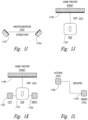
- Figures 1-1 through 1M show example configurations of playback devices in zones and zone groups.
- a single playback device may belong to a zone.
- the playback device 110g in the second bedroom 101c ( FIG. 1A ) may belong to Zone C.
- multiple playback devices may be "bonded" to form a "bonded pair" which together form a single zone.
- the playback device 110l e.g., a left playback device
- the playback device 110l e.g., a left playback device
- Bonded playback devices may have different playback responsibilities (e.g., channel responsibilities).
- multiple playback devices may be merged to form a single zone.
- the playback device 110h e.g., a front playback device
- the playback device 110i e.g., a subwoofer
- the playback devices 110j and 110k e.g., left and right surround speakers, respectively
- the playback devices 110g and 110h can be be merged to form a merged group or a zone group 108b.
- the merged playback devices 110g and 110h may not be specifically assigned different playback responsibilities. That is, the merged playback devices 110h and 110i may, aside from playing audio content in synchrony, each play audio content as they would if they were not merged.
- Playback devices that are bonded may have different playback responsibilities, such as responsibilities for certain audio channels.
- the playback devices 110l and 110m may be bonded so as to produce or enhance a stereo effect of audio content.
- the playback device 110l may be configured to play a left channel audio component
- the playback device 110k may be configured to play a right channel audio component.
- stereo bonding may be referred to as "pairing.”
- bonded playback devices may have additional and/or different respective speaker drivers.
- the playback device 110h named Front may be bonded with the playback device 110i named SUB.
- the Front device 110h can be configured to render a range of mid to high frequencies and the SUB device 110i can be configured render low frequencies. When unbonded, however, the Front device 110h can be configured render a full range of frequencies.
- Figure 1K shows the Front and SUB devices 110h and 110i further bonded with Left and Right playback devices 110j and 110k, respectively.
- the Right and Left devices 110j and 102k can be configured to form surround or "satellite" channels of a home theater system.
- the bonded playback devices 110h, 110i, 110j, and 110k may form a single Zone D ( FIG. 1M ).
- Playback devices that are merged may not have assigned playback responsibilities, and may each render the full range of audio content the respective playback device is capable of. Nevertheless, merged devices may be represented as a single UI entity (i.e., a zone, as discussed above). For instance, the playback devices 110a and 110n the master bathroom have the single UI entity of Zone A. In one embodiment, the playback devices 110a and 110n may each output the full range of audio content each respective playback devices 110a and 110n are capable of, in synchrony.
- an NMD is bonded or merged with another device so as to form a zone.
- the NMD 120b may be bonded with the playback device 110e, which together form Zone F, named Living Room.
- a stand-alone network microphone device may be in a zone by itself. In other embodiments, however, a stand-alone network microphone device may not be associated with a zone. Additional details regarding associating network microphone devices and playback devices as designated or default devices may be found, for example, in previously referenced U.S. Patent Application No. 15/438,749 .
- Zones of individual, bonded, and/or merged devices may be grouped to form a zone group.
- Zone A may be grouped with Zone B to form a zone group 108a that includes the two zones.
- Zone G may be grouped with Zone H to form the zone group 108b.
- Zone A may be grouped with one or more other Zones C-I.
- the Zones A-I may be grouped and ungrouped in numerous ways. For example, three, four, five, or more (e.g., all) of the Zones A-I may be grouped.
- the zones of individual and/or bonded playback devices may play back audio in synchrony with one another, as described in previously referenced U.S. Patent No. 8,234,395 .
- Playback devices may be dynamically grouped and ungrouped to form new or different groups that synchronously play back audio content.
- the playback queue region 533d includes graphical representations of audio content in a playback queue associated with the selected playback zone or zone group.
- each playback zone or zone group may be associated with a playback queue containing information corresponding to zero or more audio items for playback by the playback zone or zone group.
- each audio item in the playback queue may comprise a uniform resource identifier (URI), a uniform resource locator (URL) or some other identifier that may be used by a playback device in the playback zone or zone group to find and/or retrieve the audio item from a local audio content source or a networked audio content source, possibly for playback by the playback device.
- URI uniform resource identifier
- URL uniform resource locator
- a playlist can be added to a playback queue, in which information corresponding to each audio item in the playlist may be added to the playback queue.
- audio items in a playback queue may be saved as a playlist.
- a playback queue may be empty, or populated but "not in use" when the playback zone or zone group is playing continuously streaming audio content, such as Internet radio that may continue to play until otherwise stopped, rather than discrete audio items that have playback durations.
- a playback queue can include Internet radio and/or other streaming audio content items and be "in use" when the playback zone or zone group is playing those items.
- the media playback system 100 receives an indication of selected media content (e.g., one or more songs, albums, playlists, podcasts, videos, stations) via the control device 130a.
- the selected media content can comprise, for example, media items stored locally on or more devices (e.g., the audio source 105 of Figure 1C ) connected to the media playback system and/or media items stored on one or more media service servers (one or more of the remote computing devices 106 of Figure 1B ).
- the control device 130a transmits a message 651a to the playback device 110a ( Figures 1A-1C ) to add the selected media content to a playback queue on the playback device 110a.
- the playback device 110a receives the message 651d with the data corresponding to the requested media content and plays back the associated media content.
- the playback device 110a optionally causes one or more other devices to play back the selected media content.
- the playback device 110a is one of a bonded zone of two or more players ( Figure 1M ).
- the playback device 110a can receive the selected media content and transmit all or a portion of the media content to other devices in the bonded zone.
- the playback device 110a is a coordinator of a group and is configured to transmit and receive timing information from one or more other devices in the group.
- the other one or more devices in the group can receive the selected media content from the first computing device 106a, and begin playback of the selected media content in response to a message from the playback device 110a such that all of the devices in the group play back the selected media content in synchrony.
- a group of playback devices playing audio content with each other in a groupwise fashion comprises the group of playback devices playing the audio content in synchrony with each other.
- Some playback devices are configurable to operate in a station mode (or infrastructure mode) where an individual playback device communicates with one or more other playback devices via a network access point, e.g., a wireless/wired network router, network switch, or other network infrastructure component. And some playback devices are configurable to operate in a peer-to-peer mode (or ad-hoc mode) where an individual playback device communicates with one or more other playback devices via a peer-to-peer (or ad-hoc) network link, where communications are transmitted between two or more playback devices without traversing a network access point.
- a station mode or infrastructure mode
- a network access point e.g., a wireless/wired network router, network switch, or other network infrastructure component.
- Some playback devices are configurable to operate in a peer-to-peer mode (or ad-hoc mode) where an individual playback device communicates with one or more other playback devices via a peer-to-peer (or ad-hoc)
- playback devices are configurable to switch between operating in either a station/infrastructure mode or a peer-to-peer/ad-hoc/mesh mode, depending on network topologies, available network infrastructure, and/or wireless network capacity.
- a playback group is formed from one or more playback devices operating in a station/infrastructure mode and one or more playback devices operating in a peer-to-peer/ad-hoc/mesh mode
- the playback group is referred to herein as operating in a mixed-mode configuration.
- a playback group includes a group coordinator and one or more group members.
- the group coordinator and the group members are playback devices.
- the group coordinator is or comprises a laptop computer, tablet computer, smartphone or other computing device, and the group members are playback devices.
- the group coordinator performs functions for initiating and controlling groupwise playback of audio content by (i) the group members or (ii) the group coordinator and the group members.
- the group coordinator functions include (i) obtaining audio information from an audio source, (ii) generating playback timing for the audio information, where the playback devices in the playback group (including the group coordinator in some embodiments) use the audio information and the playback timing to play audio content based on the audio information in a groupwise fashion, including but not limited to playing the audio content based on the audio information in synchrony with the other playback devices in the playback group, and (iii) transmitting the audio information and the playback timing information to all the playback devices in the playback group.
- the group coordinator functions additionally include distributing clock timing information to all the playback devices in the playback group, where the playback devices in the playback group (including the group coordinator in some embodiments) use the clock timing information, the audio information, and the playback timing to play audio content based on the audio information in a groupwise fashion, including but not limited to playing the audio content based on the audio information in synchrony with the other playback devices in the playback group.
- clock timing or some other common clock reference may be generated and provided by a device other than the group coordinator.
- the clock timing information may be provided by another group member or perhaps another device separate from the playback group.
- At least some aspects of the technical solutions derive from the technical structure and organization of the audio information, the playback timing, and clock timing information that the playback devices use to play audio content from audio sources in synchrony with each other or in some other groupwise fashion, including how playback devices generate playback timing based on clock timing and play audio content based on playback timing and clock timing.
- Audio content may be any type of audio content now known or later developed.
- the audio content includes any one or more of: (i) streaming music or other audio obtained from a streaming media service, such as Spotify, Pandora, or other streaming media services; (ii) streaming music or other audio from a local music library, such as a music library stored on a user's laptop computer, desktop computer, smartphone, tablet, home server, or other computing device now known or later developed; (iii) audio content associated with video content, such as audio associated with a television program or movie received from any of a television, set-top box, Digital Video Recorder, Digital Video Disc player, streaming video service, or any other source of audio-visual media content now known or later developed; (iv) text-to-speech or other audible content from a voice assistant service (VAS), such as Amazon Alexa or other VAS services now known or later developed; (v) audio content from a doorbell or intercom system such as Nest, Ring, or other doorbells or intercom systems now known or
- VAS voice
- a group coordinator (sometimes referred to as a "sourcing" device) obtains any of the aforementioned types of audio content from an audio source via an interface on the group coordinator, e.g., one of the group coordinator's network interfaces, a "line-in” analog interface, a digital audio interface, or any other interface suitable for receiving audio content in digital or analog format now known or later developed.
- An audio source is any system, device, or application that generates, provides, or otherwise makes available any of the aforementioned audio content to a group coordinator or playback device.
- an audio source includes any one or more of a streaming media (audio, video) service, digital media server or other computing system, VAS service, television, cable set-top-box, streaming media player (e.g., AppleTV, Roku, gaming console), CD/DVD player, doorbell, intercom, telephone, tablet, or any other source of digital audio content.
- a playback device that receives or otherwise obtains audio information from an audio source for playback and/or distribution to other playback devices in a playback group is sometimes referred to herein as the group coordinator or "sourcing" device for the playback group.
- One function of the group coordinator of a playback group is to process received audio information for playback and/or distribution to group members of the playback group for groupwise playback.
- the group coordinator transmits the processed audio information to all the other group members in the playback group.
- the group coordinator transmits the audio information to a multicast network address, and all the group member playback devices configured to play the audio content (i.e., the group members of the playback group) receive the audio information via that multicast address.
- the group coordinator transmits the audio content to the group members via the playback group's multicast address and/or individual group members' unicast network addresses, depending on each group member's configured networking mode. For example, in some embodiments, (i) for the group members operating in the peer-to-peer/ad-hoc/mesh mode described above, the group coordinator transmits packets comprising the audio content to the multicast network address for the playback group, and (ii) for each group member operating in the station/infrastructure mode, the group coordinator transmits packets comprising the audio information to the unicast network address of the group member.
- the group coordinator receives audio information from an audio source in digital form, e.g., via a stream of packets.
- individual packets in the stream have a sequence number or other identifier that specifies an ordering of the packets.
- the group coordinator uses the sequence number or other identifier to detect missing packets and/or to reassemble the packets of the stream in the correct order before performing further processing.
- the sequence number or other identifier that specifies the ordering of the packets is or at least comprises a timestamp indicating a time when the packet was created. The packet creation time can be used as a sequence number based on an assumption that packets are created in the order in which they should be subsequently played out.
- individual packets from an audio source may include both a timestamp and a sequence number.
- the timestamp is used to place the incoming packets of audio information in the correct order, and the sequence number is mainly used to detect packet losses.
- the sequence numbers increase by one for each Real-time Transport Protocol (RTP) packet transmitted from the audio source, and timestamps increase by the time "covered" by an RTP packet.
- RTP Real-time Transport Protocol
- multiple RTP packets can have the same timestamp.
- the group coordinator does not change the sequence number or identifier of a received packet during processing.
- the group coordinator reorders at least a first set packets in a first packet stream received from an audio source (an inbound stream) based on each packet's sequence identifier, extracts audio information from the received packets, reassembles a bitstream of audio information from the received packets, and then repacketizes the reassembled bitstream into a second set of packets (an outbound stream), where packets in the second set of packets have sequence numbers and/or timestamps that differ from the sequence numbers and/or timestamps of the packets in the first set of packets (or first stream).
- individual packets in the second stream are a different length (i.e., shorter or longer) than individual packets in the first stream.
- reassembling a bitstream from the incoming packet stream and then subsequently repacketizing the reassembled bitstream into a different set of packets facilitates uniform processing and/or transmission of audio content by the group coordinator and uniform processing by the group members that receive the audio information from the group coordinator.
- the group coordinator may not perform reassembly and repacketization for some (or all) audio information that it receives before playing the audio information and/or transmitting the audio information to other playback devices / group members.
- an audio source provides audio information in digital form to a group coordinator, e.g., via a digital line-in interface.
- the group coordinator packetizes the digital audio into packets of audio information before transmitting the audio information to other playback devices.
- individual packets comprise a sequence number or other identifier so that, when other playback devices receive the audio information, those other playback devices will be able to reliably arrange the received packets in the correct order before performing further packet processing.
- the playback devices disclosed and described herein use playback timing to play audio content in synchrony with each other.
- An individual playback device can generate playback timing and/or playback audio content according to playback timing, based on the playback device's configuration in the playback group.
- the sourcing playback device (acting as a group coordinator) that generates the playback timing for audio content also transmits that generated playback timing to all the playback devices that are configured to play the audio content (the group members).
- the group coordinator transmits playback timing separately from the audio information. In some embodiments, the group coordinator transmits the playback timing to all the group members by transmitting the playback timing to a multicast network address for the playback group, and all the group members receive the playback timing via the playback group's multicast address. In some embodiments, the group coordinator transmits the playback timing to each group member by transmitting the playback timing to each group member's unicast network address.
- the group coordinator transmits packets comprising the playback timing to the multicast network address for the playback group, and (ii) for each group member operating in the station/infrastructure mode, the group coordinator transmits packets comprising the playback timing to the unicast network address of the group member.
- the playback timing is generated for individual frames (or packets) of audio information.
- the audio information is packaged in a series of frames (or packets) where individual frames (or packets) comprise a portion of the audio information.
- the playback timing for the audio information includes a playback time for each frame (or packet) of audio information.
- the playback timing for an individual frame (or packet) is included within the frame (or packet), e.g., in the header of the frame (or packet), in an extended header of the frame (or packet), and/or in the payload portion of the frame (or packet).
- the group coordinator transmits packets comprising audio information and playback timing to the multicast network address for the playback group, and (ii) for each group member operating in the station/infrastructure mode, the group coordinator transmits packets comprising the audio information and the playback timing to the unicast network address of the group member.
- the playback time for an individual frame (or packet) is identified within a timestamp or other indication.
- the timestamp (or other indication) represents a time to play the one or more portions of audio information within that individual frame (or packet).
- the playback timing for an individual frame (or packet) is a future time relative to a current clock time of a reference clock at the time that the playback timing for that individual frame (or packet) is generated.
- the reference clock can be a "local" clock at the group coordinator or a "remote" clock at a separate network device, e.g., another playback device, a computing device, or another network device configured to provide clock timing for use by playback devices to generate playback timing and/or playback audio content.
- a playback device tasked with playing particular audio content will play the portion(s) of the particular audio content within an individual frame (or packet) at the playback time specified by the playback timing for that individual frame (or packet), as adjusted to accommodate for differences between the clock timing information and a clock at the playback device that is tasked with playing the audio content, as describe in more detail below.
- the playback devices disclosed and described herein use clock timing to generate playback timing for audio information and to play the audio content based on the audio information and the generated playback timing.
- the group coordinator uses clock timing from a reference clock (e.g., a device clock, a digital-to-audio converter clock, a playback time reference clock, or any other clock) to generate playback timing for audio information that the group coordinator receives from an audio source.
- a reference clock e.g., a device clock, a digital-to-audio converter clock, a playback time reference clock, or any other clock
- the reference clock can be a "local" clock at the group coordinator or a "remote" clock at a separate network device, e.g., another playback device, a computing device, or another network device configured to provide clock timing for use by (i) a group coordinator to generate playback timing and/or (ii) the group coordinator and group members to play back audio content.
- all of the playback devices tasked with playing particular audio content in synchrony use the same clock timing from the same reference clock to play back that particular audio content in synchrony with each other.
- playback devices use the same clock timing to play audio content that was used to generate the playback timing for the audio content.
- the reference clock may be a local clock of the group coordinator, but the reference clock could also be a clock at a different device, including a different playback device.
- the device that generates the clock timing also transmits the clock timing to all the playback devices in the network that need to use the clock timing for generating playback timing and/or playing back audio content.
- the device that generates the clock timing e.g., the group coordinator in some embodiments
- all the playback devices configured to generate playback timing and/or play audio content e.g., the group coordinator and/or the group members
- receive the clock timing via that multicast address receive the clock timing via that multicast address.
- the device that generates the clock timing alternatively transmits the clock timing to each unicast network address of each playback device in the playback group.
- the device that generates the clock timing is a playback device configured to operate as the group coordinator for the playback group. And in operation, the group coordinator of the playback group transmits the clock timing to all the group members of the playback group.
- the group coordinator and the group members all use the clock timing and the playback timing to play audio content in a groupwise manner. In some embodiments, the group coordinator and the group members all use the clock timing and the playback timing to play audio content in synchrony with each other.
- the group coordinator transmits packets comprising clock timing to the multicast network address for the playback group, and (ii) for each group member operating in the station/infrastructure mode, the group coordinator transmits packets comprising the clock timing to the unicast network address of the group member
- the group coordinator : (i) generates playback timing for audio information based on clock timing from a local clock at the group coordinator, and (ii) transmits the generated playback timing to all the other group members in the playback group.
- the group coordinator adds a "timing advance" to the current clock time of a local clock at the group coordinator that the group coordinator is using for generating the playback timing.
- the "timing advance" is based on an amount of time that is greater than or equal to the sum of (i) the network transit time required for frames and/or packets comprising audio information transmitted from the group coordinator to arrive at all the other group members and (ii) the amount of time required for all the other group members to process received frames/packets from the group coordinator for playback.
- the group coordinator determines a timing advance by sending one or more test packets to one or more (or perhaps all) of the other group members, and then receiving test response packets back from those one or more group members. In some embodiments, the group coordinator and the one or more group members negotiate a timing advance via multiple test and response messages. In some embodiments with more than two group members, the group coordinator determines a timing advance by exchanging test and response messages with all of the group members, and then setting a timing advance that is sufficient for the group member having the longest total of network transmit time and packet processing time.
- the timing advance is less than about 50 milliseconds. In some embodiments, the timing advance is less than about 20-30 milliseconds. And in still further embodiments, the timing advance is less than about 10 milliseconds. In some embodiments, the timing advance remains constant after being determined, or at least constant for the duration of a synchronous playback session.
- the group coordinator can change the timing advance in response to a request from a group member indicating that a greater timing advance is required (e.g., because the group member is not receiving packets comprising portions of audio content until after one or more other group members have already played the portions of audio content) or a shorter timing advance would be sufficient (e.g., because the group member is buffering more packets comprising portions of audio content than necessary to provide consistent, reliable playback).
- all the playback devices in a playback group configured to play the audio content in synchrony will use the playback timing and the clock timing to play the audio content in synchrony with each other.
- the group coordinator may generate playback timing for audio information based on clock timing from a remote clock at another network device, e.g., another playback device, another computing device (e.g., a smartphone, laptop, media server, or other computing device configurable to provide clock timing sufficient for use by the group coordinator generate playback timing and/or playback audio content).
- Generating playback timing based on clock timing from a remote clock at another network device is more complicated than generating playback timing based on clock timing from a local clock in embodiments where the same clock timing is used for both (i) generating playback timing and (ii) playing audio content based on the playback timing.
- the playback timing for an individual frame (or packet) is based on (i) a "timing offset" between (a) a local clock at the group coordinator that the group coordinator uses for generating the playback timing and (b) the clock timing information from the remote reference clock, and (ii) a "timing advance” based on an amount of time that is greater than or equal to the sum of (a) the network transit time required for packets transmitted from the group coordinator to arrive at the group members and (b) the amount of time required for all of those group members to process frames and/or packets comprising audio information received from the group coordinator for playback.
- the group coordinator For an individual frame (or packet) containing a portion(s) of the audio information, the group coordinator generates playback timing for that individual frame (or packet) by adding the sum of the "timing offset” and the “timing advance” to a current time of the local clock at the group coordinator that the group coordinator uses to generate the playback timing for the audio information.
- the "timing offset” may be a positive or a negative offset, depending on whether the local clock at the group coordinator is ahead of or behind the remote clock providing the clock timing.
- the “timing advance” is a positive number because it represents a future time relative to the local clock time, as adjusted by the "timing offset.”
- the group coordinator By adding the sum of the "timing advance” and the “timing offset” to a current time of the local clock at the group coordinator that the group coordinator is using to generate the playback timing for the audio information, the group coordinator is, in effect, generating the playback timing relative to the remote clock.
- the "timing advance" is based on an amount of time that is greater than or equal to the sum of (i) the network transit time required for frames and/or packets comprising audio information transmitted from the group coordinator to arrive at all other group members and (ii) the amount of time required for all the other group members to process received frames/packets from the sourcing playback device for playback.
- the group coordinator determines a timing advance via signaling between the group coordinator and one or more group members, as described previously. Further, in some embodiments, the timing advance is less than about 50 milliseconds, less than about 20-30 milliseconds, or less than about 10 milliseconds, depending on the audio content playback latency requirements because different audio content may have different latency requirements. For example, audio content having associated video content may have lower latency requirements than audio content that does not have associated video content because audio content associating with video content must be synchronized with its corresponding video content whereas audio content that is not associated with video content need not be synchronized with any corresponding video content. In some embodiments, the timing advance remains constant after being determined, or at least constant for the duration of a playback session. And in some embodiments, the group coordinator can change the timing advance based on further signaling between the group coordinator (generating the playback timing) and one or more group members (that are using the playback timing to play audio content).
- all the playback devices configured to play the audio content in synchrony will use the playback timing and the clock timing to play the audio content in synchrony with each other.
- the group coordinator is configured to play audio content in synchrony with one or more group members. And if the group coordinator is using clock timing from a local clock at the group coordinator to generate the playback timing, then the group coordinator will play the audio content using locally-generated playback timing and the locally-generated clock timing. In operation, the group coordinator plays an individual frame (or packet) comprising portions of the audio information when the local clock that the group coordinator used to generate the playback timing reaches the time specified in the playback timing for that individual frame (or packet).
- the group coordinator device when generating playback timing for an individual frame (or packet), the group coordinator device adds a "timing advance" to the current clock time of the reference clock used for generating the playback timing.
- the reference clock used for generating the playback timing is a local clock at the group coordinator. So, if the timing advance for an individual frame is, for example, 30 milliseconds, then the group coordinator plays the portion (e.g., a sample or set of samples) of audio information in an individual frame (or packet) 30 milliseconds after creating the playback timing for that individual frame (or packet).
- the group coordinator plays audio content based on the audio information by using locally-generated playback timing and clock timing from a local reference clock at the group coordinator.
- the group coordinator plays that portion(s) of the audio content corresponding to the audio information in that individual frame and/or packet in synchrony with other group members in the playback group.
- the group coordinator generates playback timing for audio content based on clock timing from a remote clock
- the group coordinator generates the playback timing for an individual frame (or packet) based on (i) a "timing offset” based on a difference between (a) a local clock at the group coordinator and (b) the clock timing information from the remote clock, and (ii) a "timing advance” comprising an amount of time that is greater than or equal to the sum of (a) the network transit time required for frames/packets transmitted from the group coordinator to arrive at all the group members and (b) the amount of time required for all of the group members to process frames and/or packets comprising audio information received from the group coordinator for playback.
- the group coordinator transmits the generated playback timing to all of the group members in the playback group tasked with playing the audio content in synchrony.
- the group coordinator subtracts the "timing offset" from the playback timing for that individual frame (or packet) to generate a "local" playback time for playing the audio content based on the audio information within that individual frame (or packet).
- the group coordinator plays the portion(s) of the audio content corresponding to the audio information in the individual frame (or packet) when the local clock that the group coordinator is using to play the audio content reaches the "local" playback time for that individual frame (or packet).
- the group coordinator transmits the audio information and the playback timing for the audio information to one or more group members. If the group member that receives (i.e., the receiving group member) the audio information and playback timing from the group coordinator is the same group member that provided clock timing information to the group coordinator that the group coordinator used for generating the playback timing, then the receiving group member in this instance plays audio content using the audio information and playback timing received from the group coordinator (i.e., remote playback timing) and the group member's own clock timing (i.e., local clock timing). Because the group coordinator used clock timing from a clock at the receiving group member to generate the playback timing, the receiving group member also uses the clock timing from its local clock to play the audio content. In this manner, the receiving group member plays audio content using the remote playback timing (i.e., from the group coordinator) and the clock timing from its local clock (i.e., its local clock timing).
- the group coordinator used clock timing from a clock at the receiving group member to generate the playback timing
- the receiving group member also uses
- the receiving group member To play an individual frame (or packet) of the audio information in synchrony with the group coordinator (and every other playback device that receives the playback timing from the group coordinator and clock timing from the receiving group member), the receiving group member (i) receives the frames (or packets) comprising the portions of the audio information from the group coordinator, (ii) receives the playback timing for the audio information from the group coordinator (e.g., in the frame and/or packet headers of the frames and/or packets comprising the portions of the audio information or perhaps separately from the frames and/or packets comprising the portions of the audio information), and (iii) plays the portion(s) of the audio information in the individual frame (or packet) when the local clock that the receiving group member used to generate the clock timing reaches the playback time specified in the playback timing for that individual frame (or packet) received from the group coordinator.
- the receiving group member plays frames (or packets) comprising portions of the audio information according to the playback timing
- the group coordinator plays the same frames (or packets) comprising portions of the audio information according to the playback timing and the determined "timing offset”
- the receiving group member and the group coordinator play the same frames (or packets) comprising audio information corresponding to the same portions of audio content in synchrony, i.e., at the same time or at substantially the same time.
- the sourcing playback device (e.g., which in many cases may be the group coordinator) transmits the audio information and the playback timing for the audio information to one or more other playback devices in the synchrony group.
- the network device providing the clock timing can be a different device than the playback device providing the audio information and playback timing (i.e., the sourcing playback device, which in many cases may be the group coordinator).
- Playback devices that receive the audio information, the playback timing, and the clock timing from one or more other devices are configured to playback the audio content using the playback timing from the device that provided the playback timing (i.e., remote playback timing) and clock timing from a clock at the device that provided the clock timing (i.e., remote clock timing).
- the receiving group member playback device in this instance plays audio content based on audio information by using remote playback timing and remote clock timing.
- the receiving playback device when playing back the audio content, the receiving playback device generates new playback timing (specific to the receiving playback device) for individual frames (or packets) of audio information by adding the previously determined “timing offset” to the playback timing for each received frame (or packet) comprising portions of audio information.
- the receiving playback device converts the playback timing for the received audio information into "local" playback timing for the receiving playback device. Because each receiving playback device calculates its own “timing offset,” each receiving playback device's determined "local” playback timing for an individual frame is specific to that particular playback device.
- the example embodiments described below illustrate configurations of payback groups configured for mixed-mode synchronous playback according to some embodiments.
- the media playback system 700 in Figures 7A-D includes (i) playback devices 702, 704, 706, and 708, and (ii) access point 740.
- the playback system 700 obtains audio information from an audio source (not shown) for playback in synchrony.
- the playback devices 702, 704, 706, and 708 may be the same as or similar to any of the playback devices disclosed and described herein.
- the access point 740 is configured to connect the playback system 700 to the Internet 750 via link 752.
- the access point 740 can be any type of wireless and/or wired router, switch, or other network infrastructure device configured to receive and forward packets (or frames or cells or other suitable data structure) via one or more wireless and/or wired network interfaces.
- playback devices 702, 704, 706, and 708 are configured in a mixed-mode playback group.
- Playback device 702 is configured as the group coordinator and playback devices 704, 706, and 708 are configured as group members.
- each playback device 702, 704, 706, and 708 has a corresponding unicast network address, and the playback group has a multicast address.
- playback devices 702, 704, and 706 are configured in a peer-to-peer (or ad-hoc/mesh) networking mode and playback device 708 is configured in a station (or infrastructure) networking mode.
- group coordinator 702 and group member 704 are configured to communicate with each other via a logical peer-to-peer network link 780 that does not traverse access point 740.
- group coordinator 702 and group member 706 are configured to communicate with each other via a logical peer-to-peer network link 782 that does not traverse access point 740.
- group coordinator 702 and group member 708 are configured to communicate with each other via logical network links 760 and 762 that form a route that traverses access point 740.
- group coordinator 702 knows that group members 704 and 706 are configured in a peer-to-peer networking mode and group member 708 is configured in a station networking mode. Group coordinator 702 also knows each group member's unicast network address and the multicast network address for the playback group. The group coordinator 702 and the group members 704, 706, and 708 also know the multicast network address for the playback group. In some embodiments, each group member also knows one or more of (i) the group coordinator's 702 unicast address and/or (ii) one or more of the other group members' unicast network addresses.
- each playback device 702, 704, 706, and 708 maintains one or more routing or forwarding tables (or other suitable data structures) comprising unicast network addresses of the playback devices in the playback group and the multicast network address for the playback group.
- the one or more routing or forwarding tables includes a mesh network routing/forwarding table.
- the group coordinator 702 determines that group members 704 and 706 are configured in the peer-to-peer networking mode and group member 708 is configured in the station networking mode based on information that the group coordinator 702 received from each respective group member 704, 706, 708 when that group member joined the playback group.
- one or more playback group join messages and/or responses thereto exchanged between the group coordinator 702 and group member 704 includes information identifying the configured networking mode of the group member 704 (and perhaps the group coordinator 702, too).
- one or more playback group join messages and/or responses thereto exchanged between the group coordinator 702 and group member 706 includes information identifying the configured networking mode of the group member 706 (and perhaps the group coordinator 702, too).
- one or more playback group join messages and/or responses thereto exchanged between the group coordinator 702 and group member 708 includes information identifying the configured networking mode of the group member 708 (and perhaps the group coordinator 702, too).
- the group coordinator 702 obtains and distributes audio information from an audio information source (not shown) according to any of the audio information distribution methods disclosed herein.
- the audio information may be any of the various types of audio information from any of the various audio sources disclosed herein.
- the audio information is in the form of streaming audio information from a streaming audio source.
- the group coordinator 702 additionally generates and distributes playback timing for the audio information according to any of the playback timing generation and distribution methods disclosed herein.
- the group coordinator 702 additionally generates and distributes clock timing information according to any of the clock timing generation and distribution methods disclosed herein.
- the group coordinator 702 transmits a stream of packets comprising one or more of the audio information, the playback timing, and the clock timing to all of the group members 704, 706, and 708.
- the group coordinator 702 transmits the stream of packets to the multicast network address for the playback group, and both group members 704 and 706 receive the stream of packets via the playback group's multicast network address from the group coordinator 702 without traversing the access point 740.
- the group coordinator 702 transmits the stream of packets to group member's 708 unicast network address, and group member 708 receives the stream of packets via group member's 708 unicast network address from the group coordinator 702 via the access point 740.
- the group coordinator (i) transmits a stream of packets comprising the audio information and the playback timing to group members 704 and 706 (operating in the peer-to-peer networking mode) via the multicast network address for the playback group, (ii) transmits the stream of packets comprising the audio information and the playback timing to group member 708 (operating in the station networking mode) via group member's 708 unicast address, and (iii) transmits packets comprising clock timing to group members 704, 706, and 708 via separate transmissions to each group member's unicast network address.
- the group coordinator 702 When the group coordinator 702 transmits the stream of packets to group member 708 via the access point 740, the group coordinator 702 converts the packets addressed to the multicast address of the playback group into unicast packets addressed to group member 708 via an address translation.
- the address translation includes converting ⁇ ip-src, ip-dest-multicast, eth-src-unicast, eth-dst-unicast> TO ⁇ ip-src, ip-dest-unicast, eth-src-unicast, eth-dst-unicast>.
- group members 704, 706, and 708 after receiving at least a portion of audio information, playback timing, and clock timing from the group coordinator 702, group members 704, 706, and 708 use the playback timing and clock timing to play audio content based on the audio information in synchrony with each other. And in some embodiments, after receiving at least a portion of audio information, playback timing, and clock timing from the group coordinator 702, group members 704, 706, and 708 use the playback timing and clock timing to play audio content based on the audio information in synchrony with each other and also with the group coordinator 702. In operation, the group coordinator 702 and the group members 704, 706, and 708 play audio content in synchrony with each other according to any of the synchronous playback methods disclosed and described herein.
- Figure 7B is similar to Figure 7A in most respects except that network topology of Figure 7B is different than the network topology in Figure 7A , and the group coordinator and group members of the playback group are different.
- playback devices 702, 704, 706, and 708 are configured in a mixed-mode playback group. But in Figure 7B , playback device 704 is configured as the group coordinator and playback devices 702, 706, and 708 are configured as group members.
- playback devices 702, 704, and 706 are configured in a peer-to-peer (or ad-hoc) networking mode and playback device 708 is configured in a station (or infrastructure) networking mode.
- group coordinator 704 and group member 702 are configured to communicate with each other via a logical peer-to-peer network link 780 that does not traverse access point 740.
- group coordinator 704 and group member 706 are configured to communicate with each other via a logical peer-to-peer network link 782 that does not traverse access point 740.
- group coordinator 704 and group member 708 are configured to communicate with each other via logical network links 760 and 762 that form a route that traverses access point 740.
- group coordinator 704 knows that group members 702 and 706 are configured in a peer-to-peer networking mode and group member 708 is configured in a station networking mode. Group coordinator 704 also knows each group member's unicast network address and the multicast network address for the playback group. The group coordinator 704 and the group members 702, 706, and 708 also know the multicast network address for the playback group. In some embodiments, each group member also knows one or more of (i) the group coordinator's 704 unicast address and/or (ii) one or more of the other group members' unicast network addresses.
- each playback device 702, 704, 706, and 708 maintains one or more routing or forwarding tables (or other suitable data structures) comprising unicast network addresses of the playback devices in the playback group and the multicast network address for the playback group.
- the one or more routing or forwarding tables includes a mesh network routing/forwarding table.
- the group coordinator 704 determines that group members 702 and 706 are configured in the peer-to-peer networking mode and group member 708 is configured in the station networking mode based on information that the group coordinator 704 received from each respective group member 702, 706, 708 when that group member joined the playback group.
- one or more playback group join messages and/or responses thereto exchanged between the group coordinator 704 and group member 702 includes information identifying the configured networking mode of the group member 702 (and perhaps the group coordinator 704, too).
- one or more playback group join messages and/or responses thereto exchanged between the group coordinator 704 and group member 706 includes information identifying the configured networking mode of the group member 706 (and perhaps the group coordinator 704, too).
- one or more playback group join messages and/or responses thereto exchanged between the group coordinator 704 and group member 708 includes information identifying the configured networking mode of the group member 708 (and perhaps the group coordinator 704, too).
- the group coordinator 704 obtains and distributes audio information from an audio information source (not shown) according to any of the audio information distribution methods disclosed herein.
- the audio information may be any of the various types of audio information from any of the various audio sources disclosed herein.
- the audio information is in the form of streaming audio information from a streaming audio source.
- the group coordinator 704 additionally generates and distributes playback timing for the audio information according to any of the playback timing generation and distribution methods disclosed herein.
- the group coordinator 704 additionally generates and distributes clock timing information according to any of the clock timing generation and distribution methods disclosed herein.
- the group coordinator 704 transmits a stream of packets comprising one or more of the audio information, the playback timing, and the clock timing to all of the group members 702, 706, and 708.
- the group coordinator 704 transmits packets comprising one or more of audio information, playback timing, and clock timing to group members 702 and 706 (operating in the peer-to-peer/ad-hoc/mesh mode) via the multicast network address for the playback group, and both group members 702 and 706 receive the stream of packets via the playback group's multicast network address from the group coordinator 704 without traversing the access point 740.
- group member 702 When group member 702 receives packets from the group coordinator 704 that are addressed to the multicast network address for the playback group, group member 702 forwards those packets according to its routing/forwarding table. If group member 708 was configured in the peer-to-peer networking mode and there was a peer-to-peer network link between group member 702 and group member 708, then group member 702 could forward the packets from group coordinator 704 to the multicast network address of the playback group.
- group member 702 cannot forward the packets received from the group coordinator 704 to the multicast network address of the playback group and be confident that group member 708 would receive them because, as discussed earlier, some access points 140 drop (or do not forward) multicast-addressed packets.
- the group member 702 instead replaces the playback device's multicast address with the group member's 708 unicast address and transmits the unicast-addressed packets to access point 140, which in turn forwards those packets addressed with the group member's 708 unicast address to the group member 708.
- the group member 702 For the multicast-addressed packets that the group member 702 forwards to the group member 708 via the access point 740, the group member changes the multicast-addressed packets to unicast-addressed packets, such as by converting ⁇ ip-src, ip-dest-multicast, eth-src-unicast, eth-dst-unicast> TO ⁇ ip-src, ip-dest-unicast, eth-src-unicast, eth-dst-unicast>.
- the group coordinator 704 transmits a stream of packets comprising the audio information and the playback timing to group members 702 and 706 (operating in the peer-to-peer networking mode) via the multicast network address for the playback group, and (ii) group member 702 forwards the stream of packets comprising the audio information and the playback timing received from the group coordinator 704 to the group member 708 (operating in the station networking mode) via group member's 708 unicast address. And the group coordinator 704 transmits packets comprising clock timing to group members 702, 706, and 708 via separate transmissions to each group member's unicast network address.
- group members 702, 706, and 708 after receiving at least a portion of audio information, playback timing, and clock timing from the group coordinator 704, group members 702, 706, and 708 use the playback timing and clock timing to play audio content based on the audio information in synchrony with each other. And in some embodiments, after receiving at least a portion of audio information, playback timing, and clock timing from the group coordinator 704, group members 702, 706, and 708 use the playback timing and clock timing to play audio content based on the audio information in synchrony with each other and also with the group coordinator 704. In operation, the group coordinator 704 and the group members 702, 706, and 708 play audio content in synchrony with each other according to any of the synchronous playback methods disclosed and described herein.
- Figure 7C is similar to Figures 7A and 7B in most respects except that network topology of Figure 7C is different than the network topologies in Figures 7A and 7B .
- playback devices 702, 704, 706, and 708 are configured in a playback group where playback device 704 is configured as the group coordinator and playback devices 702, 706, and 708 are configured as group members. Unlike Figures 7A and 7B , the playback group in Figure 7C is not a mixed-mode playback group.
- playback devices 702, 704, 706, and 708 are all configured in a peer-to-peer (or ad-hoc) networking mode and are able to communicate with each other via peer-to-peer network links that do not need to traverse the access point 740.
- group coordinator 704 and group member 702 are configured to communicate with each other via a logical peer-to-peer network link 780 that does not traverse access point 740.
- Group coordinator 704 and group member 706 are configured to communicate with each other via a logical peer-to-peer network link 782 that does not traverse access point 740.
- group coordinator 704 and group member 708 are configured to communicate with each other via logical peer-to-peer network links 780 and 784 that form a route traversing group member 702.
- group coordinator 704 knows that group members 702, 704, and 706 are configured in a peer-to-peer networking mode. Group coordinator 704 also knows each group member's unicast network address and the multicast network address for the playback group. The group coordinator 704 and the group members 702, 706, and 708 also know the multicast network address for the playback group. In some embodiments, each group member also knows one or more of (i) the group coordinator's 704 unicast address and/or (ii) one or more of the other group members' unicast network addresses.
- each playback device 702, 704, 706, and 708 maintains one or more routing or forwarding tables (or other suitable data structures) comprising unicast network addresses of the playback devices in the playback group and the multicast network address for the playback group.
- the one or more routing or forwarding tables includes a mesh network routing/forwarding table.
- the group coordinator 704 determines that group members 702, 706, and 708 are configured in the peer-to-peer networking mode based on information that the group coordinator 704 received from each respective group member 702, 706, 708 when that group member joined the playback group. For example, in some embodiments, one or more playback group join messages and/or responses thereto exchanged between the group coordinator 704 and group member 702 includes information identifying the configured networking mode of the group member 702 (and perhaps the group coordinator 704, too). Similarly, one or more playback group join messages and/or responses thereto exchanged between the group coordinator 704 and group member 706 includes information identifying the configured networking mode of the group member 706 (and perhaps the group coordinator 704, too). And one or more playback group join messages and/or responses thereto exchanged between the group coordinator 704 and group member 708 includes information identifying the configured networking mode of the group member 708 (and perhaps the group coordinator 704, too).
- the group coordinator 704 obtains and distributes audio information from an audio information source (not shown) according to any of the audio information distribution methods disclosed herein.
- the audio information may be any of the various types of audio information from any of the various audio sources disclosed herein.
- the audio information is in the form of streaming audio information from a streaming audio source.
- the group coordinator 704 additionally generates and distributes playback timing for the audio information according to any of the playback timing generation and distribution methods disclosed herein.
- the group coordinator 704 additionally generates and distributes clock timing information according to any of the clock timing generation and distribution methods disclosed herein.
- the group coordinator 704 transmits a stream of packets comprising one or more of the audio information, the playback timing, and the clock timing to all of the group members 702, 706, and 708.
- the group coordinator 704 transmits packets comprising one or more of audio information, playback timing, and clock timing to group members 702 and 706 via the multicast network address for the playback group, and both group members 702 and 706 receive the stream of packets via the playback group's multicast network address from the group coordinator 704 without traversing the access point 740.
- group member 702 When group member 702 receives packets from the group coordinator 704 that are addressed to the multicast network address for the playback group, group member 702 forwards those packets according to its routing/forwarding table. Because group member 708 is configured in the peer-to-peer networking mode and there is a peer-to-peer network link 784 between group member 702 and group member 708, then group member 708 can forward the packets from group coordinator 704 to the multicast network address of the playback group. Therefore, in the configuration shown in Figure 7C , group member 702 forwards packets from the group coordinator 704 to the playback group's multicast network address, and group member 708 receives the multicast-addressed packets from the group coordinator 704 via group member 702.
- the group coordinator 704 transmits a stream of packets comprising the audio information and the playback timing to group members 702 and 706 via the multicast network address for the playback group, and (ii) group member 702 forwards the stream of packets comprising the audio information and the playback timing received from the group coordinator 704 to the group member 708 via the playback group's multicast network address. And the group coordinator 704 transmits packets comprising clock timing to group members 702, 706, and 708 via separate transmissions to each group member's unicast network address.
- group members 702, 706, and 708 after receiving at least a portion of audio information, playback timing, and clock timing from the group coordinator 704, group members 702, 706, and 708 use the playback timing and clock timing to play audio content based on the audio information in synchrony with each other. And in some embodiments, after receiving at least a portion of audio information, playback timing, and clock timing from the group coordinator 704, group members 702, 706, and 708 use the playback timing and clock timing to play audio content based on the audio information in synchrony with each other and also with the group coordinator 704. In operation, the group coordinator 704 and the group members 702, 706, and 708 play audio content in synchrony with each other according to any of the synchronous playback methods disclosed and described herein.
- Figure 7D is similar to Figures 7A-7C in most respects except that network topology of Figure 7D is different than the network topologies in Figures 7A-7C .
- playback devices 702, 704, 706, and 708 are configured in a mixed-mode playback group where playback device 708 is configured as the group coordinator and playback devices 702, 704, and 706 are configured as group members.
- playback devices 702, 704, and 706 are configured in a peer-to-peer (or ad-hoc) networking mode and playback device 708 is configured in a station (or infrastructure) networking mode.
- group coordinator 708 and group member 702 are configured to communicate with each other via logical network links 762 and 760 that form a route that traverses access point 740.
- group member 702 and group member 706 are configured to communicate with each other via a logical peer-to-peer network link 782 that does not traverse access point 740.
- group member 702 and group member 704 are configured to communicate with each other via a logical peer-to-peer network link 780 that does not traverse access point 740.
- each playback device 702, 704, 706, and 708 maintains one or more routing or forwarding tables (or other suitable data structures) comprising unicast network addresses of the playback devices in the playback group and the multicast network address for the playback group.
- the one or more routing or forwarding tables includes a mesh network routing/forwarding table.
- the group coordinator 708 obtains and distributes audio information from an audio information source (not shown) according to any of the audio information distribution methods disclosed herein.
- the audio information may be any of the various types of audio information from any of the various audio sources disclosed herein.
- the audio information is in the form of streaming audio information from a streaming audio source.
- the group coordinator 708 additionally generates and distributes playback timing for the audio information according to any of the playback timing generation and distribution methods disclosed herein.
- the group coordinator 708 additionally generates and distributes clock timing information according to any of the clock timing generation and distribution methods disclosed herein.
- the group coordinator 708 transmits a stream of packets comprising one or more of the audio information, the playback timing, and the clock timing to all of the group members 702, 704, and 706.
- the group coordinator 708 transmits packets comprising one or more of audio information, playback timing, and clock timing to group members 702, 704, and 708. But because all transmissions from the group coordinator 708 must traverse the access point 740, and because some access points drop (or do not forward) multicast-addressed packets, the group coordinator 708 cannot transmit packets comprising one or more the audio information, playback timing and clock timing to the playback group's multicast network address with confidence that group members 702, 704, and 706 will receive the packets.
- the group coordinator 708 instead transmits three separate streams of packets comprising one or more of the audio information, playback timing, and clock timing to each corresponding unicast address of each of the group members 702, 704, and 708.
- group members 702, 704, and 706 after receiving at least a portion of audio information, playback timing, and clock timing from the group coordinator 708, group members 702, 704, and 706 use the playback timing and clock timing to play audio content based on the audio information in synchrony with each other. And in some embodiments, after receiving at least a portion of audio information, playback timing, and clock timing from the group coordinator 708, group members 702, 704, and 706 use the playback timing and clock timing to play audio content based on the audio information in synchrony with each other and also with the group coordinator 708. In operation, the group coordinator 708 and the group members 702, 704, and 706 play audio content in synchrony with each other according to any of the synchronous playback methods disclosed and described herein.
- Figure 7E is similar to Figures 7A-7D in most respects except that network topology of Figure 7E is different than the network topologies in Figures 7A-7D .
- playback devices 702, 704, 706, and 708 are configured in a mixed-mode playback group where playback device 704 is configured as the group coordinator and playback devices 702, 706, and 708 are configured as group members. Playback device 702 is configured as bridge for the playback group, so playback device 702 can forward audio information (and timing and control information, too) but playback device 702 not configured to play audio information in this configuration.
- playback devices 702 and 704 are configured in a peer-to-peer (or ad-hoc) networking mode and playback devices 706 and 708 are configured in a station (or infrastructure) networking mode.
- group coordinator 704 and group member 702 are configured to communicate with each other via a logical peer-to-peer network link 780 that does not traverse access point 740.
- group coordinator 704 and group members 706 and 708 are configured to communicate with each other via logical links that traverse access point 740.
- each playback device 702, 704, 706, and 708 maintains one or more routing or forwarding tables (or other suitable data structures) comprising unicast network addresses of the playback devices in the playback group and the multicast network address for the playback group.
- the one or more routing or forwarding tables includes a mesh network routing/forwarding table.
- the group coordinator 704 obtains and distributes audio information from an audio information source (not shown) according to any of the audio information distribution methods disclosed herein.
- the audio information may be any of the various types of audio information from any of the various audio sources disclosed herein.
- the audio information is in the form of streaming audio information from a streaming audio source.
- the group coordinator 704 additionally generates and distributes playback timing for the audio information according to any of the playback timing generation and distribution methods disclosed herein.
- the group coordinator 704 additionally generates and distributes clock timing information according to any of the clock timing generation and distribution methods disclosed herein.
- the group coordinator 704 transmits a stream of packets comprising one or more of the audio information, the playback timing, and the clock timing to all of the group members 702, 706, and 708.
- the group coordinator 708 transmits packets comprising one or more of audio information, playback timing, and clock timing to bridge 702 and group members 706 and 708.
- the group coordinator 704 transmits packets comprising one or more of audio information, playback timing, and clock timing to bridge 702 via the multicast network address for the playback group, and bridge 702 receives the stream of packets via the playback group's multicast network address from the group coordinator 704 without traversing the access point 740.
- bridge 702 When bridge 702 receives packets from the group coordinator 704 that are addressed to the multicast network address for the playback group, bridge 702 forwards those packets according to its routing/forwarding table. If group members 706 and 708 were configured in the peer-to-peer networking mode and there was a peer-to-peer network link between bridge 702 and group members 706 and 708, then bridge 702 could forward the packets from group coordinator 704 to the multicast network address of the playback group.
- bridge 702 cannot forward the packets received from the group coordinator 704 to the multicast network address of the playback group and be confident that group members 706 and 708 would receive them because, as discussed earlier, some access points 140 drop (or do not forward) multicast-addressed packets.
- bridge 702 instead transmits two separate streams to each respective unicast address for group members 706 and 708.
- bridge 702 replaces the playback group's multicast address with the group member's 708 unicast address and transmits the unicast-addressed packets to access point 140, which in turn forwards those packets addressed with the group member's 708 unicast address to the group member 708.
- bridge 702 replaces the playback group's multicast address with the group member's 706 unicast address and transmits the unicast-addressed packets to access point 140, which in turn forwards those packets addressed with the group member's 706 unicast address to the group member 706.
- the bridge 702 changes the multicast-addressed packets to unicast-addressed packets by (i) converting ⁇ ip-src, ip-dest-multicast, eth-src-unicast, eth-dst-unicast> TO ⁇ ip-src, ip-dest-unicast, eth-src-unicast, eth-dst-unicast> for the unicast-addressed packets for group member 706 and (ii) converting ⁇ ip-src, ip-dest-multicast, eth-src-unicast, eth-dst-unicast> TO ⁇ ip-src, ip-dest-unicast, eth-src-unicast
- the group coordinator 704 transmits a stream of packets comprising the audio information and the playback timing to bridge 702 (operating in the peer-to-peer networking mode) via the multicast network address for the playback group, and (ii) bridge 702 forwards a first unicast streams of packets comprising the audio information and the playback timing received from the group coordinator 704 to the group member 706 (operating in the station networking mode) via group member's 706 unicast address, and forwards a second unicast streams of packets comprising the audio information and the playback timing received from the group coordinator 704 to the group member 708 (operating in the station networking mode) via group member's 708 unicast address.
- the group coordinator 704 transmits packets comprising clock timing to group members 702, 706, and 708 via separate transmissions to each group member's unicast network address.
- group members 706 and 708 after receiving at least a portion of audio information, playback timing, and clock timing from the group coordinator 704, use the playback timing and clock timing to play audio content based on the audio information in synchrony with each other. And in some embodiments, after receiving at least a portion of audio information, playback timing, and clock timing from the group coordinator 704, group members 706 and 708 use the playback timing and clock timing to play audio content based on the audio information in synchrony with each other and also with the group coordinator 704. In operation, the group coordinator 704 and the group members 706 and 708 play audio content in synchrony with each other according to any of the synchronous playback methods disclosed and described herein.
- Figure 8 shows an example method 800 performed by a computing device in a mixed-mode synchronous playback configuration according to some embodiments.
- the computing device may be the same as or similar any of the computing devices disclosed herein.
- Method 800 begins at step 802, which includes receiving a request to join the group from a prospective group member, wherein the request to join the group comprises a unicast network address of the prospective group member.
- step 804 includes, in response to receiving the request to join the group from the prospective group member, adding the prospective group member to the group as a new group member and storing an indication of the unicast address of the new group member.
- step 806 includes for each group member in the group, determining whether (i) the group member is operating in the first networking mode or (ii) the group member is operating in the second networking mode.
- determining whether a group member is operating in the first networking mode comprises determining that the computing device is in communication with the group member via a first type of network link, and wherein determining whether the group member is operating in the second networking mode comprises determining that the computing device is in communication with the group member via a second type of network link.
- step 808 includes, for a stream of packets to be transmitted to the group comprising one or more group members, wherein each group member has a unicast network address, (i) for each group member operating in a first networking mode, transmitting the stream of packets to a multicast network address for the group, and (ii) for each group member operating in a second networking mode, transmitting the stream of packets to the unicast network address of the group member.
- the computing device comprises a playback device
- each group member in the group comprises a playback device
- the stream of packets comprises media content and playback timing for the media content
- the playback timing is generated by the computing device
- the computing device is configured to use the playback timing to play the media content in synchrony with the group members.
- the playback devices may be the same as or similar to any of the playback devices disclosed and/or described herein, including but not limited to any of the playback devices described with reference to Figure 7 .
- each group member in the group comprises a playback device
- the stream of packets comprises media content and playback timing for the media content
- the playback timing is generated by the computing device
- the computing device is configured to transmit the stream of packets to the group members in a manner sufficient to enable the group members to use the playback timing to play the media content in synchrony with each other.
- references herein to "embodiment” means that a particular feature, structure, or characteristic described in connection with the embodiment can be included in at least one example embodiment of an invention.
- the appearances of this phrase in various places in the specification are not necessarily all referring to the same embodiment, nor are separate or alternative embodiments mutually exclusive of other embodiments.
- the embodiments described herein, explicitly and implicitly understood by one skilled in the art can be combined with other embodiments.
Landscapes
- Engineering & Computer Science (AREA)
- Computer Networks & Wireless Communication (AREA)
- Signal Processing (AREA)
- Multimedia (AREA)
- Automation & Control Theory (AREA)
- Mobile Radio Communication Systems (AREA)
- Information Transfer Between Computers (AREA)
- Two-Way Televisions, Distribution Of Moving Picture Or The Like (AREA)
Claims (10)
- Verfahren (800) zum Übertragen eines Paketstroms durch eine Rechenvorrichtung an eine Gruppe umfassend eine Vielzahl von Gruppenmitgliedern (702, 704, 706, 708), die jeweils eine Unicast-Adresse aufweisen, wobei das Verfahren umfasst:für jedes Gruppenmitglied, das in einem ersten Netzwerkmodus arbeitet, wobei der erste Netzwerkmodus ein Peer-to-Peer-Netzwerkmodus ist, Übertragen des Paketstroms an eine Multicast-Netzwerkadresse für die Gruppe, wobei der Paketstrom Mediendaten zur synchronen Wiedergabe durch die Vielzahl von Gruppenmitgliedern umfasst; undfür jedes Gruppenmitglied, das in einem zweiten Netzwerkmodus arbeitet, wobei der zweite Netzwerkmodus ein Infrastrukturmodus ist, Konvertieren von Paketen, die an die Multicast-Netzwerkadresse für die Gruppe adressiert sind, in Pakete, die an die Unicast-Netzwerkadresse des Gruppenmitglieds adressiert sind, und Übertragen des Paketstroms an die Unicast-Netzwerkadresse des Gruppenmitglieds.
- Verfahren nach Anspruch 1, ferner umfassend das Bestimmen (806), ob jedes Gruppenmitglied in dem ersten oder dem zweiten Netzwerkmodus arbeitet.
- Verfahren nach Anspruch 2, wobei das Bestimmen, ob jedes Gruppenmitglied in dem ersten oder dem zweiten Netzwerkmodus arbeitet, umfasst:Bestimmen, dass ein Gruppenmitglied in dem ersten Netzwerkmodus arbeitet, wenn der Paketstrom von der Rechenvorrichtung an das bestimmte Gruppenmitglied übertragen werden soll, ohne eine oder mehrere zwischengeschaltete Netzwerkvorrichtungen zu durchlaufen; undBestimmen, dass ein Gruppenmitglied in dem zweiten Netzwerkmodus arbeitet, wenn der Paketstrom über einen Router (740) an das bestimmte Gruppenmitglied übertragen werden soll.
- Verfahren nach einem der vorstehenden Ansprüche, ferner umfassend:Empfangen (802) einer Anfrage zum Beitritt zu der Gruppe von einem potenziellen Gruppenmitglied, wobei die Anfrage eine Unicast-Netzwerkadresse des potenziellen Gruppenmitglieds umfasst, undnach Empfangen der Beitrittsanfrage des potenziellen Gruppenmitglieds:Hinzufügen des potenziellen Gruppenmitglieds zur Gruppe als neues Gruppenmitglied undSpeichern einer Angabe der Unicast-Adresse des neuen Gruppenmitglieds.
- Verfahren nach einem der vorstehenden Ansprüche, wobei:die Rechenvorrichtung eine Wiedergabevorrichtung umfasst, wobei jedes Gruppenmitglied in der Gruppe eine Wiedergabevorrichtung umfasst,der Paketstrom Medieninhalte und die Wiedergabezeitpunkte für die Medieninhalte umfasst,der Wiedergabezeitpunkt von der Rechenvorrichtung generiert wird unddie Rechenvorrichtung konfiguriert ist, um den Wiedergabezeitpunkt zu verwenden, um die Medieninhalte synchron mit den Gruppenmitgliedern abzuspielen.
- Verfahren nach einem der vorstehenden Ansprüche, wobei:jedes Gruppenmitglied in der Gruppe eine Wiedergabevorrichtung umfasst,der Paketstrom Medieninhalte und Wiedergabezeitpunkte für die Medieninhalte umfasst, die von den Gruppenmitgliedern verwendet werden sollen, um die Medieninhalte synchron miteinander abzuspielen, wobei die Wiedergabezeitpunkte von der Rechenvorrichtung generiert werden.
- Verfahren nach Anspruch 1, wobei:der Paketstrom Medieninhalte und Wiedergabezeitpunkte für die Medieninhalte umfasst, wobei die Wiedergabezeitpunkte von der Rechenvorrichtung generiert werden, unddas Verfahren ferner umfasst:Generieren von Uhrzeitinformationen durch die Rechenvorrichtung zur Verwendung durch die Gruppenmitglieder mit dem Wiedergabezeitpunkt, um die Medieninhalte synchron miteinander abzuspielen; undÜbertragen von Paketen, die die Uhrzeitinformationen umfassen, von der Rechenvorrichtung an jedes Gruppenmitglied.
- Verfahren nach Anspruch 7, wobei die Pakete, die die Uhrzeitinformationen umfassen, an die Unicast-Netzwerkadresse jedes Gruppenmitglieds übertragen werden.
- Materielles, nicht flüchtiges computerlesbares Medium, umfassend darin gespeicherte Anweisungen, wobei die Anweisungen, wenn sie ausgeführt werden, bewirken, dass eine Rechenvorrichtung das Verfahren nach einem der vorstehenden Ansprüche durchführt.
- Rechenvorrichtung, umfassend:einen oder mehrere Prozessor(en);eine oder mehrere Netzwerkschnittstelle(n); undmaterielles, nicht flüchtiges computerlesbares Medium, umfassend darin gespeicherte Anweisungen, wobei die Anweisungen, wenn sie ausgeführt werden, bewirken, dass die Rechenvorrichtung das Verfahren nach einem der Ansprüche 1 bis 8 durchführt.
Applications Claiming Priority (2)
| Application Number | Priority Date | Filing Date | Title |
|---|---|---|---|
| US16/558,061 US11818187B2 (en) | 2019-08-31 | 2019-08-31 | Mixed-mode synchronous playback |
| PCT/US2020/048674 WO2021042014A1 (en) | 2019-08-31 | 2020-08-31 | Mixed-mode synchronous playback |
Publications (2)
| Publication Number | Publication Date |
|---|---|
| EP4022849A1 EP4022849A1 (de) | 2022-07-06 |
| EP4022849B1 true EP4022849B1 (de) | 2025-07-09 |
Family
ID=72433111
Family Applications (1)
| Application Number | Title | Priority Date | Filing Date |
|---|---|---|---|
| EP20768858.1A Active EP4022849B1 (de) | 2019-08-31 | 2020-08-31 | Synchrone wiedergabe im mischmodus |
Country Status (3)
| Country | Link |
|---|---|
| US (2) | US11818187B2 (de) |
| EP (1) | EP4022849B1 (de) |
| WO (1) | WO2021042014A1 (de) |
Families Citing this family (2)
| Publication number | Priority date | Publication date | Assignee | Title |
|---|---|---|---|---|
| US11818187B2 (en) * | 2019-08-31 | 2023-11-14 | Sonos, Inc. | Mixed-mode synchronous playback |
| US20240394012A1 (en) * | 2021-09-28 | 2024-11-28 | Sonos, Inc. | Synchronous Playback Of Media Content By Off-Net Portable Playback Devices |
Family Cites Families (102)
| Publication number | Priority date | Publication date | Assignee | Title |
|---|---|---|---|---|
| DE3787494T2 (de) * | 1986-05-14 | 1994-04-28 | Mitsubishi Electric Corp | Datenübertragungssteuerungssystem. |
| US5440644A (en) | 1991-01-09 | 1995-08-08 | Square D Company | Audio distribution system having programmable zoning features |
| JP3094900B2 (ja) | 1996-02-20 | 2000-10-03 | ヤマハ株式会社 | ネットワーク機器およびデータ送受信方法 |
| US6404811B1 (en) | 1996-05-13 | 2002-06-11 | Tektronix, Inc. | Interactive multimedia system |
| US6469633B1 (en) | 1997-01-06 | 2002-10-22 | Openglobe Inc. | Remote control of electronic devices |
| US6611537B1 (en) | 1997-05-30 | 2003-08-26 | Centillium Communications, Inc. | Synchronous network for digital media streams |
| US7031326B1 (en) * | 1997-09-11 | 2006-04-18 | At&T Corp | Method and system for a Unicast endpoint client to access a multicast internet protocol (IP) session |
| US6032202A (en) | 1998-01-06 | 2000-02-29 | Sony Corporation Of Japan | Home audio/video network with two level device control |
| US20020002039A1 (en) | 1998-06-12 | 2002-01-03 | Safi Qureshey | Network-enabled audio device |
| US7130616B2 (en) | 2000-04-25 | 2006-10-31 | Simple Devices | System and method for providing content, management, and interactivity for client devices |
| US6256554B1 (en) | 1999-04-14 | 2001-07-03 | Dilorenzo Mark | Multi-room entertainment system with in-room media player/dispenser |
| US7657910B1 (en) | 1999-07-26 | 2010-02-02 | E-Cast Inc. | Distributed electronic entertainment method and apparatus |
| US6522886B1 (en) | 1999-11-22 | 2003-02-18 | Qwest Communications International Inc. | Method and system for simultaneously sharing wireless communications among multiple wireless handsets |
| ES2277419T3 (es) | 1999-12-03 | 2007-07-01 | Telefonaktiebolaget Lm Ericsson (Publ) | Un metodo para producir simultaneamente ficheros de audio en dos telefonos. |
| US20010042107A1 (en) | 2000-01-06 | 2001-11-15 | Palm Stephen R. | Networked audio player transport protocol and architecture |
| WO2001053994A2 (en) | 2000-01-24 | 2001-07-26 | Friskit, Inc. | Streaming media search and playback system |
| WO2001053963A1 (en) | 2000-01-24 | 2001-07-26 | Zapmedia, Inc. | System and method for the distribution and sharing of media assets between media players devices |
| US6772267B2 (en) | 2000-02-18 | 2004-08-03 | Bridgeco Ag | Multi-portal bridge for providing network connectivity |
| US6631410B1 (en) | 2000-03-16 | 2003-10-07 | Sharp Laboratories Of America, Inc. | Multimedia wired/wireless content synchronization system and method |
| US20020022453A1 (en) | 2000-03-31 | 2002-02-21 | Horia Balog | Dynamic protocol selection and routing of content to mobile devices |
| GB2363036B (en) | 2000-05-31 | 2004-05-12 | Nokia Mobile Phones Ltd | Conference call method and apparatus therefor |
| US6778869B2 (en) | 2000-12-11 | 2004-08-17 | Sony Corporation | System and method for request, delivery and use of multimedia files for audiovisual entertainment in the home environment |
| US7143939B2 (en) | 2000-12-19 | 2006-12-05 | Intel Corporation | Wireless music device and method therefor |
| US20020124097A1 (en) * | 2000-12-29 | 2002-09-05 | Isely Larson J. | Methods, systems and computer program products for zone based distribution of audio signals |
| US7130316B2 (en) * | 2001-04-11 | 2006-10-31 | Ati Technologies, Inc. | System for frame based audio synchronization and method thereof |
| US6757517B2 (en) * | 2001-05-10 | 2004-06-29 | Chin-Chi Chang | Apparatus and method for coordinated music playback in wireless ad-hoc networks |
| US7047308B2 (en) * | 2001-08-31 | 2006-05-16 | Sharp Laboratories Of America, Inc. | System and method for simultaneous media playout |
| WO2003054686A2 (en) | 2001-12-17 | 2003-07-03 | Becomm Corporation | Method and system for synchronization of content rendering |
| US8103009B2 (en) | 2002-01-25 | 2012-01-24 | Ksc Industries, Inc. | Wired, wireless, infrared, and powerline audio entertainment systems |
| US7853341B2 (en) | 2002-01-25 | 2010-12-14 | Ksc Industries, Inc. | Wired, wireless, infrared, and powerline audio entertainment systems |
| AU2003216319A1 (en) | 2002-02-20 | 2003-09-09 | Meshnetworks, Inc. | A system and method for routing 802.11 data traffic across channels to increase ad-hoc network capacity |
| JP4555072B2 (ja) | 2002-05-06 | 2010-09-29 | シンクロネイション インコーポレイテッド | ローカライズされたオーディオ・ネットワークおよび関連するディジタル・アクセサリ |
| US7643894B2 (en) | 2002-05-09 | 2010-01-05 | Netstreams Llc | Audio network distribution system |
| JP2004080738A (ja) * | 2002-06-21 | 2004-03-11 | Matsushita Electric Ind Co Ltd | コンテテンツパケット、配信要求信号、配信計画表、サーバ装置及び端末装置 |
| US8060225B2 (en) | 2002-07-31 | 2011-11-15 | Hewlett-Packard Development Company, L. P. | Digital audio device |
| DE60210177T2 (de) | 2002-08-14 | 2006-12-28 | Sony Deutschland Gmbh | Bandbreitenorientierte Neukonfigurierung von drahtlosen Ad-Hoc-Netzen |
| US7295548B2 (en) | 2002-11-27 | 2007-11-13 | Microsoft Corporation | Method and system for disaggregating audio/visual components |
| US7630612B2 (en) * | 2003-02-10 | 2009-12-08 | At&T Intellectual Property, I, L.P. | Video stream adaptive frame rate scheme |
| US7548585B2 (en) * | 2003-02-10 | 2009-06-16 | At&T Intellectual Property I, L.P. | Audio stream adaptive frequency scheme |
| US7188026B2 (en) * | 2003-05-12 | 2007-03-06 | Dash Navigation, Inc. | Hierarchical floating car data network |
| US7571014B1 (en) * | 2004-04-01 | 2009-08-04 | Sonos, Inc. | Method and apparatus for controlling multimedia players in a multi-zone system |
| US8234395B2 (en) * | 2003-07-28 | 2012-07-31 | Sonos, Inc. | System and method for synchronizing operations among a plurality of independently clocked digital data processing devices |
| US7199725B2 (en) * | 2003-11-06 | 2007-04-03 | International Business Machines Corporation | Radio frequency identification aiding the visually impaired with synchronous sound skins |
| US7483538B2 (en) | 2004-03-02 | 2009-01-27 | Ksc Industries, Inc. | Wireless and wired speaker hub for a home theater system |
| JP4394988B2 (ja) * | 2004-03-19 | 2010-01-06 | 富士通株式会社 | パケット読出し制御方法及び装置 |
| US7630501B2 (en) | 2004-05-14 | 2009-12-08 | Microsoft Corporation | System and method for calibration of an acoustic system |
| MX2007004142A (es) * | 2004-10-05 | 2008-02-15 | Vectormax Corp | Metodo y sistema para difundir datos en multimedia. |
| US7539219B2 (en) * | 2005-05-12 | 2009-05-26 | Radioshack Corporation | Method and apparatus for synchronization of digital multimedia packets |
| US7881755B1 (en) * | 2005-05-26 | 2011-02-01 | Marvell International Ltd. | Wireless LAN power savings |
| US7885286B2 (en) * | 2005-12-23 | 2011-02-08 | Netsocket, Inc. | Method and arrangements in an IP network |
| US20170019198A1 (en) * | 2006-01-28 | 2017-01-19 | Blackfire Research Corporation | System for synchronous playback of media using a hybrid bluetooth™ and wi-fi network |
| US8365060B2 (en) * | 2006-08-24 | 2013-01-29 | Nokia Corporation | System and method for indicating track relationships in media files |
| US8483853B1 (en) | 2006-09-12 | 2013-07-09 | Sonos, Inc. | Controlling and manipulating groupings in a multi-zone media system |
| EP2080272B1 (de) * | 2006-10-17 | 2019-08-21 | D&M Holdings, Inc. | Vereinigung von multimedia-einrichtungen |
| JP4935345B2 (ja) * | 2006-12-25 | 2012-05-23 | ソニー株式会社 | コンテンツ再生システム、再生装置、再生制御方法及びプログラム |
| US7903645B2 (en) * | 2007-08-22 | 2011-03-08 | Intel Corporation | Methods, apparatus and systems configured for heterogeneous secure associations in Wi-Fi PAN |
| US8498725B2 (en) * | 2008-11-14 | 2013-07-30 | 8X8, Inc. | Systems and methods for distributed conferencing |
| US20100309913A1 (en) | 2009-06-05 | 2010-12-09 | Nick Herodotou | Method and system for handling iptv multicast traffic in a home network |
| US8787234B2 (en) * | 2009-06-23 | 2014-07-22 | Qualcomm Incorporated | Multicasting within a wireless communications system |
| US20110066746A1 (en) * | 2009-09-11 | 2011-03-17 | Broadcom Corporation | Synchronized data streaming |
| US8239495B2 (en) * | 2009-11-02 | 2012-08-07 | Broadcom Corporation | Media player with integrated parallel source download technology |
| US8649659B2 (en) * | 2010-10-06 | 2014-02-11 | Motorola Mobility Llc | Method and system for transitioning media output among two or more devices |
| US9414105B2 (en) * | 2011-02-14 | 2016-08-09 | Blackfire Research Corporation | Mobile source device media playback over rendering devices at lifestyle-determined locations |
| US8769144B2 (en) * | 2011-05-19 | 2014-07-01 | Mobitv, Inc. | Contextually aware client buffer thresholds |
| US8819264B2 (en) * | 2011-07-18 | 2014-08-26 | Verizon Patent And Licensing Inc. | Systems and methods for dynamically switching between unicast and multicast delivery of media content in a wireless network |
| US9712573B2 (en) * | 2011-09-13 | 2017-07-18 | Qualcomm Incorporated | Synchronized wireless display devices |
| US9088583B2 (en) * | 2011-10-31 | 2015-07-21 | Interdigital Patent Holdings, Inc. | Method and apparatus for enabling multimedia synchronization |
| US8861932B2 (en) * | 2012-05-18 | 2014-10-14 | At&T Mobility Ii Llc | Video service buffer management |
| US8839317B1 (en) * | 2012-05-24 | 2014-09-16 | Time Warner Cable Enterprises Llc | Methods and apparatus for providing multi-source bandwidth sharing management |
| US8806522B2 (en) * | 2012-07-30 | 2014-08-12 | Verizon Patent And Licensing Inc. | Group based multicast streaming systems and methods |
| US9516440B2 (en) * | 2012-10-01 | 2016-12-06 | Sonos | Providing a multi-channel and a multi-zone audio environment |
| KR101571338B1 (ko) * | 2013-03-13 | 2015-11-24 | 삼성전자주식회사 | 복수의 재생 장치들이 스트리밍 컨텐트를 동기화하여 재생하는 방법 및 이를 위한 장치 |
| EP2819364A1 (de) * | 2013-06-25 | 2014-12-31 | British Telecommunications public limited company | Inhaltsverteilungssystem und -verfahren |
| US10270607B2 (en) * | 2013-09-25 | 2019-04-23 | Hewlett Packard Enterprise Development Lp | Method and system for roamed client device handling |
| US20150121224A1 (en) * | 2013-10-28 | 2015-04-30 | At&T Intellectual Property I, L.P. | Method and System to Control a Seek Position of Multimedia Content Using a Rotatable Video Frame Graphic |
| US11477538B2 (en) * | 2013-12-05 | 2022-10-18 | Time Warner Cable Enterprises Llc | Methods and apparatus that support delivery of targeted advertising content via a secondary channel |
| JP2015122640A (ja) * | 2013-12-24 | 2015-07-02 | 日立金属株式会社 | 中継システムおよびスイッチ装置 |
| CN106416176A (zh) | 2014-05-29 | 2017-02-15 | 汤姆逊许可公司 | 家庭媒体流传输的切换和同时重放的方法和系统 |
| US10390059B2 (en) * | 2014-09-04 | 2019-08-20 | Comcast Cable Communications, Llc | Latent binding of content based on user preference |
| WO2016061823A1 (zh) * | 2014-10-24 | 2016-04-28 | 富士通株式会社 | 缓存状态报告的触发方法、装置以及通信系统 |
| US9706320B2 (en) * | 2015-05-29 | 2017-07-11 | Sound United, LLC | System and method for providing user location-based multi-zone media |
| US10270834B2 (en) * | 2015-08-20 | 2019-04-23 | Huawei Technologies Co., Ltd. | System and method for online multimedia streaming services |
| WO2017058654A1 (en) * | 2015-09-28 | 2017-04-06 | Google Inc. | Time-synchronized, multizone media streaming |
| US11070601B2 (en) * | 2015-12-02 | 2021-07-20 | Telefonaktiebolaget Lm Ericsson (Publ) | Data rate adaptation for multicast delivery of streamed content |
| US10594785B2 (en) * | 2016-03-11 | 2020-03-17 | Intel Corporation | Transitioning from an infrastructure based wireless connection to a peer to peer (P2P) wireless connection |
| US9846564B1 (en) * | 2016-06-21 | 2017-12-19 | Google Inc. | Mesh network of nearby mobile devices as a combined speaker system for audio |
| US10771528B2 (en) * | 2016-06-29 | 2020-09-08 | Oneview Controls, Inc. | Common distribution of audio and power signals |
| US10332520B2 (en) | 2017-02-13 | 2019-06-25 | Qualcomm Incorporated | Enhanced speech generation |
| US10264358B2 (en) * | 2017-02-15 | 2019-04-16 | Amazon Technologies, Inc. | Selection of master device for synchronized audio |
| US10839795B2 (en) * | 2017-02-15 | 2020-11-17 | Amazon Technologies, Inc. | Implicit target selection for multiple audio playback devices in an environment |
| US10431217B2 (en) * | 2017-02-15 | 2019-10-01 | Amazon Technologies, Inc. | Audio playback device that dynamically switches between receiving audio data from a soft access point and receiving audio data from a local access point |
| US10135601B1 (en) * | 2017-05-16 | 2018-11-20 | Disney Enterprises, Inc. | Providing common point of control and configuration in IP-based timing systems |
| US10154122B1 (en) * | 2017-09-05 | 2018-12-11 | Sonos, Inc. | Grouping in a system with multiple media playback protocols |
| EP4254903B1 (de) * | 2018-02-06 | 2026-01-28 | Stats Llc | Simulation eines lokalen erlebnisses durch live-streaming von geteilten ansichtspunkten eines live-ereignisses |
| US10868637B2 (en) * | 2019-01-04 | 2020-12-15 | California Eastern Laboratories, Inc. | Retransmission of an unexecuted message |
| US20200228934A1 (en) * | 2019-01-16 | 2020-07-16 | Qualcomm Incorporated | Low latency multicast wireless communication |
| US12210797B2 (en) * | 2019-02-28 | 2025-01-28 | Sonos, Inc. | Playback transitions |
| US11188294B2 (en) * | 2019-02-28 | 2021-11-30 | Sonos, Inc. | Detecting the nearest playback device |
| US11818187B2 (en) * | 2019-08-31 | 2023-11-14 | Sonos, Inc. | Mixed-mode synchronous playback |
| US12321662B2 (en) * | 2019-09-10 | 2025-06-03 | Sonos, Inc. | Synchronizing playback of audio information received from other networks |
| WO2024073078A2 (en) * | 2022-09-30 | 2024-04-04 | Sonos, Inc. | Playback system architectures and area zone configurations |
| US20240114305A1 (en) * | 2022-09-30 | 2024-04-04 | Sonos, Inc. | Playback Systems with Dynamic Forward Error Correction |
-
2019
- 2019-08-31 US US16/558,061 patent/US11818187B2/en active Active
-
2020
- 2020-08-31 WO PCT/US2020/048674 patent/WO2021042014A1/en not_active Ceased
- 2020-08-31 EP EP20768858.1A patent/EP4022849B1/de active Active
-
2023
- 2023-11-06 US US18/502,622 patent/US12506629B2/en active Active
Also Published As
| Publication number | Publication date |
|---|---|
| EP4022849A1 (de) | 2022-07-06 |
| US20240259447A1 (en) | 2024-08-01 |
| US20210067573A1 (en) | 2021-03-04 |
| US12506629B2 (en) | 2025-12-23 |
| US11818187B2 (en) | 2023-11-14 |
| WO2021042014A1 (en) | 2021-03-04 |
Similar Documents
| Publication | Publication Date | Title |
|---|---|---|
| US20250374001A1 (en) | Wireless Multi-Channel Headphones Systems and Methods | |
| US12393397B2 (en) | Distributed synchronization | |
| US12075226B2 (en) | Wireless transmission to satellites for multichannel audio system | |
| CA3128228A1 (en) | Methods for calibrating passive speakers with a graphical user interface | |
| US12506629B2 (en) | Mixed-mode synchronous playback | |
| EP4285600B1 (de) | Synchronisierung über out-of-band-taktsignalisierung | |
| US12507008B2 (en) | Bluetooth line-in stereo | |
| US20230023652A1 (en) | Wireless Streaming of Audio/Visual Content in a Home Theater Architecture | |
| WO2023055742A1 (en) | Synchronous playback of media content by off-net portable playback devices | |
| WO2024206437A1 (en) | Content-aware multi-channel multi-device time alignment | |
| WO2025064375A1 (en) | Wireless communication profile management |
Legal Events
| Date | Code | Title | Description |
|---|---|---|---|
| STAA | Information on the status of an ep patent application or granted ep patent |
Free format text: STATUS: UNKNOWN |
|
| STAA | Information on the status of an ep patent application or granted ep patent |
Free format text: STATUS: THE INTERNATIONAL PUBLICATION HAS BEEN MADE |
|
| PUAI | Public reference made under article 153(3) epc to a published international application that has entered the european phase |
Free format text: ORIGINAL CODE: 0009012 |
|
| STAA | Information on the status of an ep patent application or granted ep patent |
Free format text: STATUS: REQUEST FOR EXAMINATION WAS MADE |
|
| 17P | Request for examination filed |
Effective date: 20220331 |
|
| AK | Designated contracting states |
Kind code of ref document: A1 Designated state(s): AL AT BE BG CH CY CZ DE DK EE ES FI FR GB GR HR HU IE IS IT LI LT LU LV MC MK MT NL NO PL PT RO RS SE SI SK SM TR |
|
| DAV | Request for validation of the european patent (deleted) | ||
| DAX | Request for extension of the european patent (deleted) | ||
| STAA | Information on the status of an ep patent application or granted ep patent |
Free format text: STATUS: EXAMINATION IS IN PROGRESS |
|
| 17Q | First examination report despatched |
Effective date: 20240227 |
|
| RAP3 | Party data changed (applicant data changed or rights of an application transferred) |
Owner name: SONOS, INC. |
|
| GRAP | Despatch of communication of intention to grant a patent |
Free format text: ORIGINAL CODE: EPIDOSNIGR1 |
|
| STAA | Information on the status of an ep patent application or granted ep patent |
Free format text: STATUS: GRANT OF PATENT IS INTENDED |
|
| INTG | Intention to grant announced |
Effective date: 20250114 |
|
| GRAS | Grant fee paid |
Free format text: ORIGINAL CODE: EPIDOSNIGR3 |
|
| GRAA | (expected) grant |
Free format text: ORIGINAL CODE: 0009210 |
|
| STAA | Information on the status of an ep patent application or granted ep patent |
Free format text: STATUS: THE PATENT HAS BEEN GRANTED |
|
| AK | Designated contracting states |
Kind code of ref document: B1 Designated state(s): AL AT BE BG CH CY CZ DE DK EE ES FI FR GB GR HR HU IE IS IT LI LT LU LV MC MK MT NL NO PL PT RO RS SE SI SK SM TR |
|
| REG | Reference to a national code |
Ref country code: GB Ref legal event code: FG4D |
|
| REG | Reference to a national code |
Ref country code: CH Ref legal event code: EP |
|
| REG | Reference to a national code |
Ref country code: IE Ref legal event code: FG4D |
|
| REG | Reference to a national code |
Ref country code: DE Ref legal event code: R096 Ref document number: 602020054222 Country of ref document: DE |
|
| PGFP | Annual fee paid to national office [announced via postgrant information from national office to epo] |
Ref country code: DE Payment date: 20250827 Year of fee payment: 6 |
|
| PGFP | Annual fee paid to national office [announced via postgrant information from national office to epo] |
Ref country code: GB Payment date: 20250826 Year of fee payment: 6 |
|
| PGFP | Annual fee paid to national office [announced via postgrant information from national office to epo] |
Ref country code: FR Payment date: 20250827 Year of fee payment: 6 |
|
| REG | Reference to a national code |
Ref country code: NL Ref legal event code: MP Effective date: 20250709 |
|
| PG25 | Lapsed in a contracting state [announced via postgrant information from national office to epo] |
Ref country code: PT Free format text: LAPSE BECAUSE OF FAILURE TO SUBMIT A TRANSLATION OF THE DESCRIPTION OR TO PAY THE FEE WITHIN THE PRESCRIBED TIME-LIMIT Effective date: 20251110 |
|
| PG25 | Lapsed in a contracting state [announced via postgrant information from national office to epo] |
Ref country code: NL Free format text: LAPSE BECAUSE OF FAILURE TO SUBMIT A TRANSLATION OF THE DESCRIPTION OR TO PAY THE FEE WITHIN THE PRESCRIBED TIME-LIMIT Effective date: 20250709 |
|
| REG | Reference to a national code |
Ref country code: AT Ref legal event code: MK05 Ref document number: 1812919 Country of ref document: AT Kind code of ref document: T Effective date: 20250709 |
|
| PG25 | Lapsed in a contracting state [announced via postgrant information from national office to epo] |
Ref country code: IS Free format text: LAPSE BECAUSE OF FAILURE TO SUBMIT A TRANSLATION OF THE DESCRIPTION OR TO PAY THE FEE WITHIN THE PRESCRIBED TIME-LIMIT Effective date: 20251109 |
|
| PG25 | Lapsed in a contracting state [announced via postgrant information from national office to epo] |
Ref country code: NO Free format text: LAPSE BECAUSE OF FAILURE TO SUBMIT A TRANSLATION OF THE DESCRIPTION OR TO PAY THE FEE WITHIN THE PRESCRIBED TIME-LIMIT Effective date: 20251009 |
|
| REG | Reference to a national code |
Ref country code: LT Ref legal event code: MG9D |
|
| PG25 | Lapsed in a contracting state [announced via postgrant information from national office to epo] |
Ref country code: AT Free format text: LAPSE BECAUSE OF FAILURE TO SUBMIT A TRANSLATION OF THE DESCRIPTION OR TO PAY THE FEE WITHIN THE PRESCRIBED TIME-LIMIT Effective date: 20250709 |
|
| PG25 | Lapsed in a contracting state [announced via postgrant information from national office to epo] |
Ref country code: FI Free format text: LAPSE BECAUSE OF FAILURE TO SUBMIT A TRANSLATION OF THE DESCRIPTION OR TO PAY THE FEE WITHIN THE PRESCRIBED TIME-LIMIT Effective date: 20250709 |
|
| PG25 | Lapsed in a contracting state [announced via postgrant information from national office to epo] |
Ref country code: HR Free format text: LAPSE BECAUSE OF FAILURE TO SUBMIT A TRANSLATION OF THE DESCRIPTION OR TO PAY THE FEE WITHIN THE PRESCRIBED TIME-LIMIT Effective date: 20250709 |
|
| PG25 | Lapsed in a contracting state [announced via postgrant information from national office to epo] |
Ref country code: GR Free format text: LAPSE BECAUSE OF FAILURE TO SUBMIT A TRANSLATION OF THE DESCRIPTION OR TO PAY THE FEE WITHIN THE PRESCRIBED TIME-LIMIT Effective date: 20251010 |
|
| PG25 | Lapsed in a contracting state [announced via postgrant information from national office to epo] |
Ref country code: SE Free format text: LAPSE BECAUSE OF FAILURE TO SUBMIT A TRANSLATION OF THE DESCRIPTION OR TO PAY THE FEE WITHIN THE PRESCRIBED TIME-LIMIT Effective date: 20250709 |
|
| PG25 | Lapsed in a contracting state [announced via postgrant information from national office to epo] |
Ref country code: LV Free format text: LAPSE BECAUSE OF FAILURE TO SUBMIT A TRANSLATION OF THE DESCRIPTION OR TO PAY THE FEE WITHIN THE PRESCRIBED TIME-LIMIT Effective date: 20250709 |
|
| PG25 | Lapsed in a contracting state [announced via postgrant information from national office to epo] |
Ref country code: BG Free format text: LAPSE BECAUSE OF FAILURE TO SUBMIT A TRANSLATION OF THE DESCRIPTION OR TO PAY THE FEE WITHIN THE PRESCRIBED TIME-LIMIT Effective date: 20250709 Ref country code: PL Free format text: LAPSE BECAUSE OF FAILURE TO SUBMIT A TRANSLATION OF THE DESCRIPTION OR TO PAY THE FEE WITHIN THE PRESCRIBED TIME-LIMIT Effective date: 20250709 |
|
| PG25 | Lapsed in a contracting state [announced via postgrant information from national office to epo] |
Ref country code: RS Free format text: LAPSE BECAUSE OF FAILURE TO SUBMIT A TRANSLATION OF THE DESCRIPTION OR TO PAY THE FEE WITHIN THE PRESCRIBED TIME-LIMIT Effective date: 20251009 |
|
| PG25 | Lapsed in a contracting state [announced via postgrant information from national office to epo] |
Ref country code: ES Free format text: LAPSE BECAUSE OF FAILURE TO SUBMIT A TRANSLATION OF THE DESCRIPTION OR TO PAY THE FEE WITHIN THE PRESCRIBED TIME-LIMIT Effective date: 20250709 |
|
| PG25 | Lapsed in a contracting state [announced via postgrant information from national office to epo] |
Ref country code: RO Free format text: LAPSE BECAUSE OF FAILURE TO SUBMIT A TRANSLATION OF THE DESCRIPTION OR TO PAY THE FEE WITHIN THE PRESCRIBED TIME-LIMIT Effective date: 20250709 |
|
| REG | Reference to a national code |
Ref country code: CH Ref legal event code: H13 Free format text: ST27 STATUS EVENT CODE: U-0-0-H10-H13 (AS PROVIDED BY THE NATIONAL OFFICE) Effective date: 20260324 |
|
| PG25 | Lapsed in a contracting state [announced via postgrant information from national office to epo] |
Ref country code: SM Free format text: LAPSE BECAUSE OF FAILURE TO SUBMIT A TRANSLATION OF THE DESCRIPTION OR TO PAY THE FEE WITHIN THE PRESCRIBED TIME-LIMIT Effective date: 20250709 |
|
| PG25 | Lapsed in a contracting state [announced via postgrant information from national office to epo] |
Ref country code: DK Free format text: LAPSE BECAUSE OF FAILURE TO SUBMIT A TRANSLATION OF THE DESCRIPTION OR TO PAY THE FEE WITHIN THE PRESCRIBED TIME-LIMIT Effective date: 20250709 |
|
| PG25 | Lapsed in a contracting state [announced via postgrant information from national office to epo] |
Ref country code: LU Free format text: LAPSE BECAUSE OF NON-PAYMENT OF DUE FEES Effective date: 20250831 Ref country code: IT Free format text: LAPSE BECAUSE OF FAILURE TO SUBMIT A TRANSLATION OF THE DESCRIPTION OR TO PAY THE FEE WITHIN THE PRESCRIBED TIME-LIMIT Effective date: 20250709 |