EP4022399B1 - Mécanisme d'affichage - Google Patents
Mécanisme d'affichage Download PDFInfo
- Publication number
- EP4022399B1 EP4022399B1 EP20760935.5A EP20760935A EP4022399B1 EP 4022399 B1 EP4022399 B1 EP 4022399B1 EP 20760935 A EP20760935 A EP 20760935A EP 4022399 B1 EP4022399 B1 EP 4022399B1
- Authority
- EP
- European Patent Office
- Prior art keywords
- display
- fixed
- ball bearing
- ring
- disc
- Prior art date
- Legal status (The legal status is an assumption and is not a legal conclusion. Google has not performed a legal analysis and makes no representation as to the accuracy of the status listed.)
- Active
Links
Images



Classifications
-
- G—PHYSICS
- G04—HOROLOGY
- G04B—MECHANICALLY-DRIVEN CLOCKS OR WATCHES; MECHANICAL PARTS OF CLOCKS OR WATCHES IN GENERAL; TIME PIECES USING THE POSITION OF THE SUN, MOON OR STARS
- G04B19/00—Indicating the time by visual means
- G04B19/24—Clocks or watches with date or week-day indicators, i.e. calendar clocks or watches; Clockwork calendars
- G04B19/243—Clocks or watches with date or week-day indicators, i.e. calendar clocks or watches; Clockwork calendars characterised by the shape of the date indicator
- G04B19/247—Clocks or watches with date or week-day indicators, i.e. calendar clocks or watches; Clockwork calendars characterised by the shape of the date indicator disc-shaped
-
- G—PHYSICS
- G04—HOROLOGY
- G04B—MECHANICALLY-DRIVEN CLOCKS OR WATCHES; MECHANICAL PARTS OF CLOCKS OR WATCHES IN GENERAL; TIME PIECES USING THE POSITION OF THE SUN, MOON OR STARS
- G04B19/00—Indicating the time by visual means
- G04B19/20—Indicating by numbered bands, drums, discs, or sheets
- G04B19/202—Indicating by numbered bands, drums, discs, or sheets by means of turning discs
Definitions
- the present invention relates to a display mechanism for a timepiece and in particular a simple or perpetual calendar display mechanism, preferably a display mechanism making it possible to display the date, the day of the week and the month.
- optical magnifying means such as a magnifying glass
- the units and tens digits are distributed on separate mobiles and the size of these digits can then be considerably enlarged.
- the document CH 310 559 describes for example a date display, in which the date is indicated by two juxtaposed or coplanar disks, one bearing the tens digits, the other the units digits. Other arrangements of the units and tens disks are possible.
- the documents EP 0 529 191 And EP 1 070 996 describe a date display with a units disc and a tens disc superimposed.
- the documents CH 690 515 , DE 102005010602 And CH 688 671 describe a date display with a coplanar and coaxial units disk and tens disk.
- the aim of the present invention is therefore to produce a display mechanism, in particular a date display mechanism, comprising two coplanar display disks, and which overcomes the above drawbacks.
- a particular aim of the present invention is to produce a display mechanism which makes it possible to display the date, the day of the week and the month on a single line in a single window as large as possible and without superimposing disks.
- the present invention relates to a display mechanism according to claim 1 and a movement and a timepiece according to claims 10 and 11 respectively.
- the present invention relates to a display mechanism intended to equip a movement of a timepiece.
- the display mechanism makes it possible to display the date, the day of the week and the month.
- the illustrated display mechanism comprises a tens indicator 11 and a units indicator 12, together forming a date display, as well as a days of the week indicator 13 and a months indicator 14.
- the tens indicator 11 is shaped like a crown and bears the series of numbers 0, 1, 2, 3 repeated five times counterclockwise.
- the 12 units indicator is also crown-shaped and bears the series of numbers 0, 1, 2, 3, 4, 5, 6, 7, 8, 9, repeated twice counterclockwise.
- the date display is of the "large date" type and therefore allows the use of indications of a reasonable size to facilitate reading.
- the weekday indicator 13 and the month indicator 14 are disc-shaped and bear respectively seven indications for the days of the week and twelve indications for the months of the year, distributed in a clockwise direction (the usual English abbreviations are used as indications in the figures).
- the tens indicator 11 and the weekday indicator 13 are coaxial and coplanar, the tens indicator 11 surrounding the weekday indicator 13.
- the units indicator 12 and the month indicator 14 are also coaxial and coplanar, the units indicator 12 surrounding the month indicator 14. surrounding that of the months 14.
- the four indicators 11, 12, 13, 14 are arranged to be coplanar. It is thus possible to display the day, date and month on one line and in a single large window.
- the weekday indicator 13 is carried by a weekday disc 130.
- the weekday disc 130 is arranged to pivot relative to a first fixed ring 15, coaxial with said weekday disc 130 and fixedly mounted on the plate or a bridge of the movement.
- the weekday disc 130 pivots inside the first fixed ring 15 by means of a first ball bearing (see Figures 5a and 5b ) in which a first series of balls 161 are kept regularly spaced by any suitable means (cage) between the disc of the days of the week 130 and the first fixed ring 15.
- the tens indicator 11 is carried by a tens ring 110 mounted coaxially with the disc of the days of the week 130 and with the first fixed ring 15 and arranged to pivot relative to said first fixed ring 15 by means of a second ball bearing (see Figures 5a and 5b ) in which a second series of balls 162 are kept regularly spaced by any suitable means (cage) between the tens ring 110 and the first fixed ring 15.
- the arrangement of the units indicator 12 and that of the months 14 is similar.
- the months indicator 14 is carried by a months disc 140.
- the months disc 140 is arranged to pivot relative to a second fixed ring 17, coaxial with said months disc 140 and fixedly mounted on the plate or a bridge of the movement.
- the months disc 140 pivots inside the second fixed ring 17 by means of a third ball bearing (see Figures 5a and 5b ) in which a third series of balls 163 are kept regularly spaced by any suitable means (cage) between the month disc 140 and the second fixed ring 17.
- the units indicator 12 is carried by a units ring 120 mounted coaxially with the month disc 140 and with the second fixed ring 17 and arranged to pivot relative to said second fixed ring 17 by means of a fourth ball bearing (see Figures 5a and 5b ) in which a fourth series of balls 164 are kept regularly spaced by any suitable means (cage) between the ring of units 120 and the second fixed ring 17 holder.
- the four ball bearings formed firstly by the weekday disc 130, the first fixed ring 15 and the first series of balls 161, secondly by the first fixed ring 15, the tens ring 110 and the second series of balls 162, thirdly by the month disc 140, the second fixed ring 17 and the third series of balls 163, and fourthly by the second fixed ring 17, the units ring 120 and the fourth series of balls 164, make it possible to replace the sliding friction (of an axis between two bearings or stones, or of tubes interacting with each other) by the rolling friction between the weekday disc 130, the tens ring 110 and the first fixed ring 15 and between the month disc 140, the units ring 120 and the second fixed ring 17.
- the display mechanism according to the present embodiment is arranged to drive the units ring 120 (units indicator 12) thirty times per month (no drive when changing from 31 to 01 see below) and the days of the week disc 130 (days of the week indicator 13) once per day, the tens ring 110 and the tens indicator 11 four times per month and the months disc 140 (month indicator 14) once per month.
- the tens ring 110 carries an external toothing 111 for its drive of four steps per month via a dedicated kinematic chain of the display mechanism and a positioning toothing 112 cooperating with a jumper 113 for its angular positioning.
- the ring of the units 120 also includes an external toothing 121 for its drive of thirty steps per month via a dedicated kinematic chain of the display mechanism and a positioning toothing 122 cooperating with a jumper 123 for its angular positioning.
- the disk of the days of the week 130 is attached to a star of the days of the week 30 comprising seven teeth arranged to be driven one step per day by a dedicated kinematic chain of the display mechanism and whose positioning is ensured by a jumper 31.
- the 140 month disc is also attached to a 4 month star with twelve teeth and designed to make one turn per year.
- the positioning of the 4 month star and therefore of the 140 month disc is ensured by a 41 month jumper.
- the display mechanism according to the present embodiment automatically takes into account the length of the months (28, 29, 30 or 31 days), the transition from 31 to 01 at the end of the month and leap years. It is therefore a perpetual calendar display mechanism.
- the display mechanism described above may further include a correction mechanism to enable the displayed date, day of the week and month to be corrected.
- the display mechanism described above allowing the display of the date, days of the week and months, and what is more in a perpetual manner, is an example of an embodiment of a display mechanism according to the invention.
- the display mechanism according to the invention could be a simple, annual or secular calendar or a display of the week number or even a chronograph counter or more generally a mechanism display allowing the display of a single piece of information in a single window or of several separate pieces of information in at least one window.
- the embodiment illustrated above is in fact the combination of several variants of the invention: in fact, the units indicator and the tens indicator are coplanar and juxtaposed and pivoted relative to each other by means of two ball bearings and cooperate together to display a single piece of information (the date) in the same window; while the tens indicator and the day of the week indicator are coplanar and coaxial and pivot relative to each other by means of two ball bearings also to display two separate pieces of information (tens of the date and day of the week) in the same window.
- the display mechanism comprises at least a first display wheel and a second display wheel arranged to be coplanar, either by being coaxial or by being juxtaposed.
- the first and second display wheels are further arranged to be pivoted relative to each other by means of at least one ball bearing.
- each of the first and second display mobiles comprises at least one fixed part and one movable part arranged to pivot relative to the fixed part by means of a first or second ball bearing. That is to say, a first or second series of balls are placed between the movable part of the first display mobile and its fixed part and between the movable part of the second display mobile and its fixed part to form a first or second ball bearing.
- a first or second series of balls are placed between the movable part of the first display mobile and its fixed part and between the movable part of the second display mobile and its fixed part to form a first or second ball bearing.
- the other or both display mobiles movable part pivoted inside or outside their respective fixed part, movable part pivoted between a first and a second fixed part by means of two ball bearings.
- the movable parts and the fixed parts may have the shape of a disk or a ring.
- first and second display mobiles are also coaxial and each comprise a movable part.
- the movable part of the second display mobile pivots inside the movable part of the first display mobile by means of a ball bearing, balls being placed between the movable part of the first display mobile and the movable part of the second display mobile.
- the first display mobile may further comprise a fixed part and the movable part of said first display mobile may be arranged to pivot relative to said fixed part by means of another ball bearing.
- the display mechanism further comprises at least one fixed part coaxial and coplanar with the first and second display mobiles, the mobile part of the first display mobile pivoting relative to the fixed part, on the outside thereof, by means of a first ball bearing, while the mobile part of the second display mobile pivots relative to the fixed part, inside thereof, by means of a second ball bearing.
- the mechanism could comprise a second fixed part, central, around which the mobile part of the second display mobile would be pivoted by means of another ball bearing;
- the mechanism could comprise a third fixed part, external, inside which the mobile part of the first display mobile would be pivoted by means of yet another ball bearing.
- the moving parts and the fixed parts can have the shape of a disc or a ring.
- the first and second display mobiles each carry indicators intended to cooperate with at least one fixed window for displaying one or more pieces of information.
- the indicators cooperate with the same single fixed window.
Landscapes
- Physics & Mathematics (AREA)
- General Physics & Mathematics (AREA)
- Electromechanical Clocks (AREA)
Description
- La présente invention a pour objet un mécanisme d'affichage pour pièce d'horlogerie et en particulier un mécanisme d'affichage du quantième simple ou perpétuel, de préférence un mécanisme d'affichage permettant d'afficher le quantième, le jour de la semaine et le mois.
- Une des difficultés rencontrées dans l'affichage du quantième pour une pièce d'horlogerie, et notamment une montre bracelet, est sa lisibilité. En effet, avec trente-et-une indications à répartir sur un mobile d'affichage (disque de quantième), la taille des indications est souvent très petite, voire trop petite pour être lues confortablement. La problématique est la même pour l'affichage du numéro de la semaine qui comprend cinquante-et-une indications.
- Plusieurs solutions à ce problème ont été envisagées ; soit des moyens d'agrandissement optiques, comme une loupe, sont prévus sur la glace pour faciliter la lecture, soit les chiffres des unités et des dizaines sont répartis sur des mobiles séparés et la taille de ces chiffres peut être alors considérablement agrandie.
- Les mécanismes de quantième appliquant cette dernière solution sont communément appelés « grande date » et sont bien connus. Le document
CH 310 559 EP 0 529 191 etEP 1 070 996 décrivent un affichage de quantième avec un disque des unités et un disque des dizaines superposés. Les documentsCH 690 515 DE 102005010602 etCH 688 671 - Ces mécanismes présentent plusieurs inconvénients. D'une part, lorsqu'ils sont superposés, la différence de hauteur entre les disques des dizaines et des unités nuit à la lecture et à l'esthétisme de l'affichage du quantième. D'autre part, qu'ils soient coplanaires ou non, lorsque les disques des dizaines et des unités sont coaxiaux, il existe des contraintes liées au pivotement de leur support respectif : frottement dû au pivotement dans des paliers ou des pierres, frottement dû au pivotement entre l'axe et/ou les mobiles en interaction. A cause de certaines de ces contraintes, les disques risquent de se freiner l'un l'autre ou de s'entraîner l'un l'autre par friction à des moments inopportuns. De plus, ces mécanismes requièrent un couple important pour vaincre ces contraintes et pour faire pivoter les deux disques en même temps lors d'un changement d'unité et de dizaine du quantième Il existe le document
EP2674818A1 qui utilise une masse oscillante comprenant des ouvertures prévues pour laisser voir l'affichage d'une date où des roulements à billes sont agencés pour le pivotement des mobiles d'affichage autour de la masse oscillante. Le documentCH708001 A2 DE102011114466A1 divulgue un roulement à billes prévu pour le pivotement entre une aiguille d'affichage et un disque d'affichage. - Le but de la présente invention est donc de réaliser un mécanisme d'affichage, en particulier un mécanisme d'affichage de quantième, comprenant deux disques d'affichage coplanaires, et qui obvie aux inconvénients ci-dessus. Un but particulier de la présente invention est de réaliser un mécanisme d'affichage qui permette d'afficher le quantième, le jour de la semaine et le mois sur une seule ligne dans un guichet unique le plus grand possible et sans superposition de disques.
- La présente invention a pour objet un mécanisme d'affichage selon la revendication 1 et un mouvement et une pièce d'horlogerie selon les revendications 10 et 11 respectivement.
- Les figures annexées illustrent schématiquement et à titre d'exemple une forme d'exécution d'un mécanisme d'affichage selon l'invention.
- La
figure 1 illustre un mécanisme d'affichage selon une forme d'exécution de l'invention permettant l'affichage du quantième, des jours de la semaine et des mois. - La
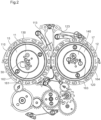
figure 2 est une vue de lafigure 1 sans les indicateurs des jours de la semaine et des mois. - La
figure 3 est une vue de lafigure 1 sans aucun indicateur ni les disques des jours de la semaine et des mois. - Les
figures 4a et 4b sont des vues en perspective et de côté des mobiles d'affichage du mécanisme d'affichage de lafigure 1 . - Les
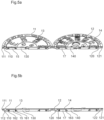
figures 5a et 5b sont des vues en perspective et en coupe des roulements à billes du mécanisme d'affichage de lafigure 1 . - La présente invention a pour objet un mécanisme d'affichage destiné à équiper un mouvement d'une pièce d'horlogerie. Dans la forme d'exécution illustrée, le mécanisme d'affichage permet d'afficher le quantième, le jour de la semaine et le mois.
- En particulier, le mécanisme d'affichage illustré comprend un indicateur des dizaines 11 et un indicateur des unités 12, formant ensemble un affichage du quantième, ainsi qu'un indicateur des jours de la semaine 13 et un indicateur des mois 14.
- L'indicateur des dizaines 11 a la forme d'une couronne et porte la série de chiffres 0, 1, 2, 3 répétée cinq fois dans le sens antihoraire.
- L'indicateur des unités 12 a également la forme d'une couronne et porte la série de chiffres 0, 1, 2, 3, 4, 5, 6, 7, 8, 9, répétée deux fois dans le sens antihoraire.
- Les unités et les dizaines étant indiquées par des mobiles séparés, l'affichage du quantième est du type « grande date » et permet donc d'utiliser des indications de taille raisonnable pour faciliter la lecture.
- L'indicateur des jours de la semaine 13 et l'indicateur des mois 14 ont la forme de disque et portent respectivement sept indications pour les jours de la semaine et douze indications pour les mois de l'année, répartis dans le sens horaire (les abréviations usuelles anglaises sont utilisées comme indications dans les figures).
- Dans la forme d'exécution illustrée, l'indicateur des dizaines 11 et celui des jours de la semaine 13 sont coaxiaux et coplanaires, l'indicateur des dizaines 11 entourant celui des jours de la semaine 13. L'indicateur des unités 12 et celui des mois 14 sont également coaxiaux et coplanaires, l'indicateur des unités 12 entourant celui des mois 14. Les quatre indicateurs 11, 12, 13, 14 sont agencés pour être coplanaires. Il est ainsi possible d'afficher le jour, la date et le mois sur une ligne et dans un seul grand guichet.
- Plus précisément, l'indicateur des jours de la semaine 13 est porté par un disque des jours de la semaine 130. Le disque des jours de la semaine 130 est agencé pour pivoter par rapport à une première bague fixe 15, coaxiale audit disque des jours de la semaine 130 et montée fixe sur la platine ou un pont du mouvement. Le disque des jours de la semaine 130 pivote à l'intérieur de la première bague fixe 15 par l'intermédiaire d'un premier roulement à bille (voir
figures 5a et 5b ) dans lequel une première série de billes 161 sont maintenues régulièrement espacées par tout moyen approprié (cage) entre le disque des jours de la semaine 130 et la première bague fixe 15. - L'indicateur des dizaines 11 est porté par une bague des dizaines 110 montée coaxiale au disque des jours de la semaine 130 et à la première bague fixe 15 et agencée pour pivoter par rapport à ladite première bague fixe 15 par l'intermédiaire d'un second roulement à billes (voir
figures 5a et 5b ) dans lequel une seconde série de billes 162 sont maintenues régulièrement espacées par tout moyen approprié (cage) entre la bague des dizaines 110 et la première bague fixe 15. - L'agencement de l'indicateur des unités 12 et de celui des mois 14 est similaire. L'indicateur des mois 14 est porté par un disque des mois 140. Le disque des mois 140 est agencé pour pivoter par rapport à une seconde bague fixe 17, coaxiale audit disque des mois 140 et montée fixe sur la platine ou un pont du mouvement. Le disque des mois 140 pivote à l'intérieur de la seconde bague fixe 17 par l'intermédiaire d'un troisième roulement à bille (voir
figures 5a et 5b ) dans lequel une troisième série de billes 163 sont maintenues régulièrement espacées par tout moyen approprié (cage) entre le disque des mois 140 et la seconde bague fixe 17. - L'indicateur des unités 12 est porté par une bague des unités 120 montée coaxiale au disque des mois 140 et à la seconde bague fixe 17 et agencée pour pivoter par rapport à ladite seconde bague fixe 17 par l'intermédiaire d'un quatrième roulement à billes (voir
figures 5a et 5b ) dans lequel une quatrième série de billes 164 sont maintenues régulièrement espacées par tout moyen approprié (cage) entre la bague des unités 120 et la seconde bague fixe 17 porte. - Ainsi, les quatre roulements à billes, formés premièrement du disque des jours de la semaine 130, de la première bague fixe 15 et de la première série de billes 161, deuxièmement de la première bague fixe 15, de la bague des dizaines 110 et de la seconde série de billes 162, troisièmement, du disque des mois 140, de la seconde bague fixe 17 et de la troisième série de billes 163, et quatrièmement de la seconde bague fixe 17, de la bague des unités 120 et de la quatrième série de billes 164, permettent de remplacer le frottement de glissement (d'un axe entre deux paliers ou pierres, ou de tubes en interaction l'un dans l'autre) par le frottement de roulement entre le disque des jours de la semaine 130, la bague des dizaines 110 et la première bague fixe 15 et entre le disque des mois 140, la bague des unités 120 et la seconde bague fixe 17.
- De manière générale, le mécanisme d'affichage selon la présente forme d'exécution est agencé pour entraîner la bague des unités 120 (indicateur des unités 12) trente fois par mois (pas d'entraînement lors du passage du 31 au 01 voir plus loin) et le disque des jours de la semaine 130 (indicateur des jours de la semaine 13) une fois par jour, la bague des dizaines 110 et l'indicateur des dizaines 11 quatre fois par mois et le disque des mois 140 (indicateur des mois 14) une fois par mois.
- Pour ce faire, la bague des dizaines 110 porte une denture extérieure 111 pour son entraînement de quatre pas par mois via une chaîne cinématique dédiée du mécanisme d'affichage et une denture de positionnement 112 coopérant avec un sautoir 113 pour son positionnement angulaire.
- La bague des unités 120 comprend également une denture extérieure 121 pour son entraînement de trente pas par mois via une chaîne cinématique dédiée du mécanisme d'affichage et une denture de positionnement 122 coopérant avec un sautoir 123 pour son positionnement angulaire.
- Le disque des jours de la semaine 130 est quant à lui solidaire d'une étoile des jours de la semaine 30 comprenant sept dents agencée pour être entraînée d'un pas par jour par une chaîne cinématique dédiée du mécanisme d'affichage et dont le positionnement est assuré par un sautoir 31.
- Enfin, le disque des mois 140 est également solidaire d'une étoile des mois 4 présentant douze dents et agencée pour effectuer un tour par an. Le positionnement de l'étoile des mois 4 et donc du disque des mois 140 est assuré par un sautoir des mois 41.
- De préférence, le mécanisme d'affichage selon la présente forme d'exécution tient compte automatiquement de la durée des mois (28, 29, 30 ou 31 jours), du passage du 31 au 01 en fin de mois et des années bissextiles. Il s'agit donc d'un mécanisme d'affichage du quantième perpétuel. Le fonctionnement d'un tel quantième perpétuel et des chaînes cinématiques qui le composent n'étant pas l'objet de la présente invention, ils ne seront pas décrits plus en détail dans la suite.
- Le mécanisme d'affichage décrit ci-dessus peut encore comprendre un mécanisme de correction pour permettre de corriger le quantième, le jour de la semaine et le mois affichés.
- Le mécanisme d'affichage décrit ci-dessus permettant l'affichage du quantième, des jours de la semaine et des mois et qui plus est de façon perpétuelle, est un exemple d'une forme d'exécution d'un mécanisme d'affichage selon l'invention.
- En variante, le mécanisme d'affichage selon l'invention pourrait être un quantième simple, annuel ou séculaire ou un affichage du numéro de la semaine ou encore un compteur de chronographe ou plus généralement un mécanisme d'affichage permettant l'affichage d'une seule information dans un guichet unique ou de plusieurs informations distinctes dans au moins un guichet.
- La forme d'exécution illustrée ci-dessus est en fait la combinaison de plusieurs variante de l'invention : en effet, l'indicateur des unités et celui des dizaines sont coplanaires et juxtaposés et pivotés l'un par rapport à l'autre par l'intermédiaire de deux roulement à billes et coopèrent ensemble pour afficher une information unique (le quantième) dans un même guichet; tandis que l'indicateur des dizaines et celui des jours de la semaine sont coplanaires et coaxiaux et pivotent l'un par rapport à l'autre par l'intermédiaire de deux roulement à billes également pour afficher deux informations distinctes (dizaines du quantième et jour de la semaine) dans un même guichet.
- De manière générale, le mécanisme d'affichage selon l'invention comprend au moins un premier mobile d'affichage et un second mobile d'affichage agencés pour être coplanaires, soit en étant coaxiaux, soit en étant juxtaposés. Les premier et second mobiles d'affichage sont en outre agencés pour être pivotés l'un par rapport à l'autre par l'intermédiaire d'au moins un roulement à bille.
- Dans une première variante, chacun des premier et second mobiles d'affichage comprend au moins une partie fixe et une partie mobile agencée pour pivoter par rapport à la partie fixe par l'intermédiaire d'un premier respectivement second roulement à billes. C'est-à-dire qu'une première, respectivement une seconde série de billes sont placées entre la partie mobile du premier mobile d'affichage et sa partie fixe et entre la partie mobile du second mobile d'affichage et sa partie fixe pour former un premier et respectivement un second roulement à billes. Dans cette variante, plusieurs agencements sont possibles pour l'un, l'autre ou les deux mobiles d'affichage : partie mobile pivotée à l'intérieur ou à l'extérieur de leur partie fixe respective, partie mobile pivotée entre une première et une seconde partie fixe par l'intermédiaire de deux roulements à billes. Selon l'agencement, les parties mobiles et les parties fixes peuvent avoir la forme d'un disque ou d'une bague.
- Dans une autre variante, les premier et second mobiles d'affichage sont également coaxiaux et comprennent chacun une partie mobile. Selon une première alternative, la partie mobile du second mobile d'affichage pivote à l'intérieur de la partie mobile du premier mobile d'affichage par l'intermédiaire d'un roulement à billes, des billes étant placées entre la partie mobile du premier mobile d'affichage et la partie mobile du second mobile d'affichage. Selon cette première alternative, le premier mobile d'affichage peut comprendre en outre une partie fixe et la partie mobile dudit premier mobile d'affichage peut être agencée pour pivoter par rapport à ladite partie fixe par l'intermédiaire d'un autre roulement à billes. Selon une seconde alternative, le mécanisme d'affichage comprend en outre au moins une partie fixe coaxiale et coplanaire aux premier et second mobiles d'affichage, la partie mobile du premier mobile d'affichage pivotant par rapport à la partie fixe, sur l'extérieur de celle-ci, par l'intermédiaire d'un premier roulement à billes, tandis que la partie mobile du second mobile d'affichage pivote par rapport à la partie fixe, à l'intérieur de celle-ci, par l'intermédiaire d'un second roulement à billes. Dans cette seconde alternative, plusieurs agencements sont possibles pour l'un, l'autre ou les deux mobiles d'affichage : le mécanisme pourrait comprendre une seconde partie fixe, centrale, autour de laquelle serait pivotée la partie mobile du seconde mobile d'affichage par l'intermédiaire d'un autre roulement à billes ; le mécanisme pourrait comprendre une troisième partie fixe, extérieure, à l'intérieur de laquelle serait pivotée la partie mobile du premier mobile d'affichage par l'intermédiaire d'encore un autre roulement à billes. Comme dans la variante précédente, selon l'agencement choisi, les parties mobiles et les parties fixes peuvent avoir la forme d'un disque ou d'une bague.
- Les premier et second mobiles d'affichage portent chacun des indicateurs destinés à coopérer avec au moins un guichet fixe pour l'affichage d'une ou plusieurs informations. De préférence, les indicateurs coopèrent avec un même guichet unique fixe.
- Il est donc possible de réaliser un mécanisme d'affichage avec des mobiles coplanaires, coaxiaux ou juxtaposés, offrant ainsi un affichage lisible et esthétique (pas de différence de niveau), tout en s'affranchissant des contraintes liées au pivotement de mobiles que l'on trouve dans l'art antérieur. En effet, en utilisant des roulements à billes pour le pivotement de deux mobiles coplanaires, il n'est plus nécessaire de faire pivoter lesdits mobiles entre des pierres ou des paliers, ni de faire pivoter des tubes ou mobiles les uns dans les autres si les mobiles sont coaxiaux. On supprime ainsi les contraintes dues au frottement par glissement. Les mobiles sont vraiment indépendants l'un de l'autre sans risque d'interaction (un mobile qui entraîne l'autre à cause de contraintes de frottement trop importantes). Enfin, les frottements de roulement étant bien moindres que les frottements de glissement, l'énergie nécessaire à la rotation des mobiles est aussi grandement diminuée, ce qui est très appréciable dans le cas d'un mécanisme d'affichage comme celui décrit ci-dessus, dans lequel, en fin de mois, il faut entraîner une multitude de mobiles.
Claims (10)
- Mécanisme d'affichage pour mouvement de pièce d'horlogerie comprenant un premier mobile d'affichage (110 ; 120) et un second mobile d'affichage (130 ; 140), agencés pour être coplanaires, les premier et second mobiles d'affichage (110, 120 ; 130 ; 140) étant en outre agencés pour être pivotés l'un par rapport à l'autre par l'intermédiaire d'au moins un roulement à bille (161, 162, 163, 164), le mécanisme étant caractérisé par le fait que les premier et second mobiles d'affichage (110, 120; 130; 140) portent un premier, respectivement un second indicateurs (11, 12, 13, 14) destinés à coopérer avec au moins un guichet fixe pour l'affichage d'au moins une information.
- Mécanisme d'affichage selon la revendication précédente, caractérisé par le fait que chacun des premier et second mobiles d'affichage comprend une partie fixe et une partie mobile pivotée par rapport à la partie fixe par l'intermédiaire d'un premier respectivement second roulement à billes.
- Mécanisme d'affichage selon la revendication 1, caractérisé par le fait que les premier et second mobiles d'affichage (110, 130 ; 120, 140) sont également coaxiaux.
- Mécanisme d'affichage selon la revendication précédente, caractérisé par le fait que chacun des premier et second mobiles d'affichage comprend une partie mobile, la partie mobile du second mobile d'affichage pivotant à l'intérieur de la partie mobile du premier mobile d'affichage par l'intermédiaire d'un premier roulement à billes.
- Mécanisme selon la revendication précédente, caractérisé par le fait qu'il comprend un outre au moins une partie fixe agencée de sorte que soit la partie mobile du premier mobile d'affichage est pivotée à l'intérieur de ladite partie fixe par l'intermédiaire d'un second roulement à billes soit la partie mobile du second mobile d'affichage est pivotée à l'extérieur de ladite partie fixe par l'intermédiaire d'un troisième roulement à billes
- Mécanisme d'affichage selon la revendication 3, caractérisé par le fait qu'il comprend une bague fixe (15 ; 17) coaxiale et coplanaire aux premier et second mobiles d'affichage (110, 130 ; 120, 140) ; par le fait que le premier mobile d'affichage comprend une bague extérieure (110 ; 120) et le second mobile d'affichage comprend une bague ou disque intérieur(e) (130 ; 140) ; la bague extérieure (110 ; 120) du premier mobile d'affichage étant agencée pour pivoter par rapport à la bague fixe (15; 17), sur l'extérieur de celle-ci, par l'intermédiaire d'un premier roulement à billes (162 ; 164), tandis que la bague ou disque intérieur(e) (130 ;140) du second mobile d'affichage est agencée pour pivoter par rapport à la bague fixe (15 ; 17), à l'intérieur de celle-ci, par l'intermédiaire d'un second roulement à billes (161 ; 163).
- Mécanisme d'affichage selon l'une des revendications précédentes, caractérisé par le fait que les premier et second indicateurs (11, 12, 13, 14) sont agencés pour coopérer avec le même guichet unique fixe.
- Mécanisme d'affichage selon l'une des revendications 1 à 6, caractérisé par le fait que les premier et second indicateurs (11, 12) portés par les premier et second mobiles d'affichage coopèrent avec le guichet fixe pour afficher une seule information.
- Mouvement pour pièce d'horlogerie comprenant un mécanisme d'affichage selon l'une des revendications 1 à 8.
- Pièce d'horlogerie comprenant un mouvement selon la revendication 9.
Applications Claiming Priority (2)
| Application Number | Priority Date | Filing Date | Title |
|---|---|---|---|
| EP19194522 | 2019-08-30 | ||
| PCT/IB2020/057825 WO2021038396A1 (fr) | 2019-08-30 | 2020-08-20 | Mécanisme d'affichage |
Publications (2)
| Publication Number | Publication Date |
|---|---|
| EP4022399A1 EP4022399A1 (fr) | 2022-07-06 |
| EP4022399B1 true EP4022399B1 (fr) | 2024-11-06 |
Family
ID=67810418
Family Applications (1)
| Application Number | Title | Priority Date | Filing Date |
|---|---|---|---|
| EP20760935.5A Active EP4022399B1 (fr) | 2019-08-30 | 2020-08-20 | Mécanisme d'affichage |
Country Status (5)
| Country | Link |
|---|---|
| US (1) | US12353170B2 (fr) |
| EP (1) | EP4022399B1 (fr) |
| JP (2) | JP2022545852A (fr) |
| CN (1) | CN113826050B (fr) |
| WO (1) | WO2021038396A1 (fr) |
Families Citing this family (1)
| Publication number | Priority date | Publication date | Assignee | Title |
|---|---|---|---|---|
| EP4180880A1 (fr) * | 2021-11-10 | 2023-05-17 | Montres Breguet S.A. | Dispositif d'affichage d'une succession d'indications d'une grandeur temporelle pour une pièce d'horlogerie |
Citations (1)
| Publication number | Priority date | Publication date | Assignee | Title |
|---|---|---|---|---|
| EP1316859B1 (fr) * | 2001-11-30 | 2010-01-27 | Rolex Sa | Procédé pour former un mécanisme de quantième actionnné par un mouvement d'horlogerie |
Family Cites Families (19)
| Publication number | Priority date | Publication date | Assignee | Title |
|---|---|---|---|---|
| CH310559A (fr) | 1953-07-03 | 1955-10-31 | Fontainemelon Horlogerie | Pièce d'horlogerie à quantièmes. |
| JPS5237971U (fr) * | 1976-07-15 | 1977-03-17 | ||
| CH666980GA3 (fr) * | 1986-09-05 | 1988-09-15 | ||
| DE4127825C1 (fr) | 1991-08-22 | 1992-10-01 | Jaeger-Le Coultre S.A., Le Sentier, Ch | |
| JP3055407B2 (ja) * | 1993-12-24 | 2000-06-26 | セイコーエプソン株式会社 | 時計用摺動部品およびその製造方法、および時計 |
| CH688671B5 (fr) | 1995-05-15 | 1998-07-15 | Ulysse Nardin S.A. | Mécanisme d`affichage du quantième. |
| CH690515A5 (fr) | 1996-03-27 | 2000-09-29 | Patek Philippe Sa | Pièce d'horlogerie munie d'un affichage du quantième. |
| FR2796732B1 (fr) | 1999-07-19 | 2001-11-02 | Girard Perregaux Sa | Piece d'horlogerie a affichage du quantieme |
| TW493113B (en) * | 2000-08-23 | 2002-07-01 | Ebauchesfabrik Eta Ag | Electronic watch with a large date aperture |
| DE01811165T1 (de) | 2001-11-30 | 2004-03-11 | Rolex Sa | Kalendermechanismus für eine Uhr |
| DE102005010602B4 (de) | 2005-03-06 | 2006-12-07 | Mühle-Glashütte GmbH Nautische Instrumente & Feinmechanik | Datumsanzeige für eine Uhr |
| CH703913B1 (fr) | 2010-10-07 | 2015-02-27 | Blancpain Sa | Mécanisme d'affichage concentrique d'au moins deux grandeurs physiques. |
| JP5715453B2 (ja) * | 2011-03-13 | 2015-05-07 | セイコーインスツル株式会社 | レトログラード表示機構及びこれを備えた時計 |
| DE102011114466A1 (de) * | 2011-09-28 | 2013-03-28 | Mho Ag | Uhr |
| EP2674818B1 (fr) * | 2012-06-14 | 2017-08-02 | Blancpain SA. | Affichage sur masse oscillante d'un mouvement à remontage automatique |
| CH707269B1 (fr) * | 2012-11-16 | 2018-07-13 | Winston Harry Sa | Méchanisme d'affichage de plusieurs informations horométriques différentes et pièce d'horlogerie comprenant un tel mécanisme. |
| CH708001B1 (fr) * | 2013-04-30 | 2017-08-31 | Patek Philippe Sa Geneve | Mécanisme de calendrier à quantième perpétuel et affichage du millésime. |
| CN109283824B (zh) * | 2017-07-19 | 2023-11-07 | 天津海鸥表业集团有限公司 | 一种手表大日历显示机构 |
| CH716399A1 (fr) | 2019-07-11 | 2021-01-15 | Mft Et Fabrique De Montres Et Chronometres Ulysse Nardin Le Locle S A | Mécanisme d'affichage d'une valeur horlogère, en particulier du quantième. |
-
2020
- 2020-08-20 WO PCT/IB2020/057825 patent/WO2021038396A1/fr not_active Ceased
- 2020-08-20 EP EP20760935.5A patent/EP4022399B1/fr active Active
- 2020-08-20 JP JP2021571601A patent/JP2022545852A/ja active Pending
- 2020-08-20 US US17/637,948 patent/US12353170B2/en active Active
- 2020-08-20 CN CN202080034592.2A patent/CN113826050B/zh active Active
-
2025
- 2025-07-07 JP JP2025114254A patent/JP7837456B2/ja active Active
Patent Citations (1)
| Publication number | Priority date | Publication date | Assignee | Title |
|---|---|---|---|---|
| EP1316859B1 (fr) * | 2001-11-30 | 2010-01-27 | Rolex Sa | Procédé pour former un mécanisme de quantième actionnné par un mouvement d'horlogerie |
Also Published As
| Publication number | Publication date |
|---|---|
| JP2022545852A (ja) | 2022-11-01 |
| JP7837456B2 (ja) | 2026-03-30 |
| WO2021038396A1 (fr) | 2021-03-04 |
| CN113826050B (zh) | 2024-10-01 |
| EP4022399A1 (fr) | 2022-07-06 |
| US20220283546A1 (en) | 2022-09-08 |
| US12353170B2 (en) | 2025-07-08 |
| JP2025146850A (ja) | 2025-10-03 |
| CN113826050A (zh) | 2021-12-21 |
Similar Documents
| Publication | Publication Date | Title |
|---|---|---|
| EP1546818B1 (fr) | Dispositif mecanique d affichage des heures et des minutes | |
| EP0940833A1 (fr) | Mécanisme de quantième pour mouvement d'horlogerie | |
| CH697662B1 (fr) | Mécanisme de quantième perpétuel ou annuel. | |
| WO2006069981A1 (fr) | Pièce d'horlogerie à calendrier mécanique chinois | |
| WO2003083584A2 (fr) | Piece d'horlogerie a calendrier | |
| EP3857313B1 (fr) | Mécanisme d'affichage à guichet unique | |
| EP3765922B1 (fr) | Pièce d'horlogerie | |
| CH707971B1 (fr) | Pièce d'horlogerie comprenant un dispositif d'affichage de quantième. | |
| EP3667434B1 (fr) | Mécanisme d'affichage de quantième grande date et pièce d'horlogerie comprenant un tel mécanisme | |
| EP4022399A1 (fr) | Mécanisme d'affichage | |
| EP3779609B1 (fr) | Mécanisme d'affichage pour pièce d'horlogerie | |
| EP3764171B1 (fr) | Mécanisme d'affichage d'une valeur horlogère | |
| EP3786723B1 (fr) | Mechanisme d'affichage de quantième | |
| EP4113218B1 (fr) | Mécanisme d'affichage combiné d'un quantième lunaire et des phases de la lune pour mouvement horloger | |
| EP3667435B1 (fr) | Systeme de reglage de la position d'un premier mobile dente par rapport a un support sur lequel le premier mobile dente est monte pivotant et piece d'horlogerie comprenant un tel systeme | |
| EP3460588B1 (fr) | Mecanisme de quantieme | |
| CH708962B1 (fr) | Calendrier annuel pour pièce d'horlogerie. | |
| CH706189B1 (fr) | Mécanisme de correction de quantième. | |
| EP4650884A1 (fr) | Mécanisme d'entraînement pour affichage sautant | |
| EP2042945A2 (fr) | Dispositif d'affichage des mois pour mouvement horloger | |
| CH703199A2 (fr) | Pièce d'horlogerie. | |
| CH715566B1 (fr) | Système comprenant un premier mobile denté dont la position angulaire peut être réglée par rapport à un support sur lequel le premier mobile denté est monté pivotant, pièce d'horlogerie comprenant un tel système et mécanisme d'affichage grande date. | |
| CH709366A1 (fr) | Montre analogique à affichage de l'heure universelle. | |
| CH714487A2 (fr) | Mouvement d'horlogerie permettant d'afficher des informations relatives à la Lune. | |
| CH332880A (fr) | Pièce d'horlogerie |
Legal Events
| Date | Code | Title | Description |
|---|---|---|---|
| STAA | Information on the status of an ep patent application or granted ep patent |
Free format text: STATUS: UNKNOWN |
|
| STAA | Information on the status of an ep patent application or granted ep patent |
Free format text: STATUS: THE INTERNATIONAL PUBLICATION HAS BEEN MADE |
|
| PUAI | Public reference made under article 153(3) epc to a published international application that has entered the european phase |
Free format text: ORIGINAL CODE: 0009012 |
|
| STAA | Information on the status of an ep patent application or granted ep patent |
Free format text: STATUS: REQUEST FOR EXAMINATION WAS MADE |
|
| 17P | Request for examination filed |
Effective date: 20211213 |
|
| AK | Designated contracting states |
Kind code of ref document: A1 Designated state(s): AL AT BE BG CH CY CZ DE DK EE ES FI FR GB GR HR HU IE IS IT LI LT LU LV MC MK MT NL NO PL PT RO RS SE SI SK SM TR |
|
| DAV | Request for validation of the european patent (deleted) | ||
| DAX | Request for extension of the european patent (deleted) | ||
| P01 | Opt-out of the competence of the unified patent court (upc) registered |
Effective date: 20230521 |
|
| GRAP | Despatch of communication of intention to grant a patent |
Free format text: ORIGINAL CODE: EPIDOSNIGR1 |
|
| STAA | Information on the status of an ep patent application or granted ep patent |
Free format text: STATUS: GRANT OF PATENT IS INTENDED |
|
| INTG | Intention to grant announced |
Effective date: 20240704 |
|
| GRAS | Grant fee paid |
Free format text: ORIGINAL CODE: EPIDOSNIGR3 |
|
| GRAA | (expected) grant |
Free format text: ORIGINAL CODE: 0009210 |
|
| STAA | Information on the status of an ep patent application or granted ep patent |
Free format text: STATUS: THE PATENT HAS BEEN GRANTED |
|
| AK | Designated contracting states |
Kind code of ref document: B1 Designated state(s): AL AT BE BG CH CY CZ DE DK EE ES FI FR GB GR HR HU IE IS IT LI LT LU LV MC MK MT NL NO PL PT RO RS SE SI SK SM TR |
|
| REG | Reference to a national code |
Ref country code: GB Ref legal event code: FG4D Free format text: NOT ENGLISH |
|
| REG | Reference to a national code |
Ref country code: CH Ref legal event code: EP |
|
| REG | Reference to a national code |
Ref country code: DE Ref legal event code: R096 Ref document number: 602020040870 Country of ref document: DE |
|
| REG | Reference to a national code |
Ref country code: IE Ref legal event code: FG4D Free format text: LANGUAGE OF EP DOCUMENT: FRENCH |
|
| REG | Reference to a national code |
Ref country code: LT Ref legal event code: MG9D |
|
| REG | Reference to a national code |
Ref country code: NL Ref legal event code: MP Effective date: 20241106 |
|
| PG25 | Lapsed in a contracting state [announced via postgrant information from national office to epo] |
Ref country code: PT Free format text: LAPSE BECAUSE OF FAILURE TO SUBMIT A TRANSLATION OF THE DESCRIPTION OR TO PAY THE FEE WITHIN THE PRESCRIBED TIME-LIMIT Effective date: 20250306 Ref country code: HR Free format text: LAPSE BECAUSE OF FAILURE TO SUBMIT A TRANSLATION OF THE DESCRIPTION OR TO PAY THE FEE WITHIN THE PRESCRIBED TIME-LIMIT Effective date: 20241106 Ref country code: IS Free format text: LAPSE BECAUSE OF FAILURE TO SUBMIT A TRANSLATION OF THE DESCRIPTION OR TO PAY THE FEE WITHIN THE PRESCRIBED TIME-LIMIT Effective date: 20250306 |
|
| PG25 | Lapsed in a contracting state [announced via postgrant information from national office to epo] |
Ref country code: NL Free format text: LAPSE BECAUSE OF FAILURE TO SUBMIT A TRANSLATION OF THE DESCRIPTION OR TO PAY THE FEE WITHIN THE PRESCRIBED TIME-LIMIT Effective date: 20241106 Ref country code: FI Free format text: LAPSE BECAUSE OF FAILURE TO SUBMIT A TRANSLATION OF THE DESCRIPTION OR TO PAY THE FEE WITHIN THE PRESCRIBED TIME-LIMIT Effective date: 20241106 |
|
| REG | Reference to a national code |
Ref country code: AT Ref legal event code: MK05 Ref document number: 1740024 Country of ref document: AT Kind code of ref document: T Effective date: 20241106 |
|
| PG25 | Lapsed in a contracting state [announced via postgrant information from national office to epo] |
Ref country code: BG Free format text: LAPSE BECAUSE OF FAILURE TO SUBMIT A TRANSLATION OF THE DESCRIPTION OR TO PAY THE FEE WITHIN THE PRESCRIBED TIME-LIMIT Effective date: 20241106 |
|
| PG25 | Lapsed in a contracting state [announced via postgrant information from national office to epo] |
Ref country code: ES Free format text: LAPSE BECAUSE OF FAILURE TO SUBMIT A TRANSLATION OF THE DESCRIPTION OR TO PAY THE FEE WITHIN THE PRESCRIBED TIME-LIMIT Effective date: 20241106 |
|
| PG25 | Lapsed in a contracting state [announced via postgrant information from national office to epo] |
Ref country code: NO Free format text: LAPSE BECAUSE OF FAILURE TO SUBMIT A TRANSLATION OF THE DESCRIPTION OR TO PAY THE FEE WITHIN THE PRESCRIBED TIME-LIMIT Effective date: 20250206 |
|
| PG25 | Lapsed in a contracting state [announced via postgrant information from national office to epo] |
Ref country code: LV Free format text: LAPSE BECAUSE OF FAILURE TO SUBMIT A TRANSLATION OF THE DESCRIPTION OR TO PAY THE FEE WITHIN THE PRESCRIBED TIME-LIMIT Effective date: 20241106 Ref country code: AT Free format text: LAPSE BECAUSE OF FAILURE TO SUBMIT A TRANSLATION OF THE DESCRIPTION OR TO PAY THE FEE WITHIN THE PRESCRIBED TIME-LIMIT Effective date: 20241106 Ref country code: GR Free format text: LAPSE BECAUSE OF FAILURE TO SUBMIT A TRANSLATION OF THE DESCRIPTION OR TO PAY THE FEE WITHIN THE PRESCRIBED TIME-LIMIT Effective date: 20250207 |
|
| PG25 | Lapsed in a contracting state [announced via postgrant information from national office to epo] |
Ref country code: PL Free format text: LAPSE BECAUSE OF FAILURE TO SUBMIT A TRANSLATION OF THE DESCRIPTION OR TO PAY THE FEE WITHIN THE PRESCRIBED TIME-LIMIT Effective date: 20241106 |
|
| PG25 | Lapsed in a contracting state [announced via postgrant information from national office to epo] |
Ref country code: RS Free format text: LAPSE BECAUSE OF FAILURE TO SUBMIT A TRANSLATION OF THE DESCRIPTION OR TO PAY THE FEE WITHIN THE PRESCRIBED TIME-LIMIT Effective date: 20250206 |
|
| PG25 | Lapsed in a contracting state [announced via postgrant information from national office to epo] |
Ref country code: SM Free format text: LAPSE BECAUSE OF FAILURE TO SUBMIT A TRANSLATION OF THE DESCRIPTION OR TO PAY THE FEE WITHIN THE PRESCRIBED TIME-LIMIT Effective date: 20241106 |
|
| PG25 | Lapsed in a contracting state [announced via postgrant information from national office to epo] |
Ref country code: DK Free format text: LAPSE BECAUSE OF FAILURE TO SUBMIT A TRANSLATION OF THE DESCRIPTION OR TO PAY THE FEE WITHIN THE PRESCRIBED TIME-LIMIT Effective date: 20241106 |
|
| PGFP | Annual fee paid to national office [announced via postgrant information from national office to epo] |
Ref country code: GB Payment date: 20250626 Year of fee payment: 6 |
|
| PG25 | Lapsed in a contracting state [announced via postgrant information from national office to epo] |
Ref country code: EE Free format text: LAPSE BECAUSE OF FAILURE TO SUBMIT A TRANSLATION OF THE DESCRIPTION OR TO PAY THE FEE WITHIN THE PRESCRIBED TIME-LIMIT Effective date: 20241106 |
|
| PG25 | Lapsed in a contracting state [announced via postgrant information from national office to epo] |
Ref country code: RO Free format text: LAPSE BECAUSE OF FAILURE TO SUBMIT A TRANSLATION OF THE DESCRIPTION OR TO PAY THE FEE WITHIN THE PRESCRIBED TIME-LIMIT Effective date: 20241106 |
|
| PG25 | Lapsed in a contracting state [announced via postgrant information from national office to epo] |
Ref country code: SK Free format text: LAPSE BECAUSE OF FAILURE TO SUBMIT A TRANSLATION OF THE DESCRIPTION OR TO PAY THE FEE WITHIN THE PRESCRIBED TIME-LIMIT Effective date: 20241106 |
|
| PG25 | Lapsed in a contracting state [announced via postgrant information from national office to epo] |
Ref country code: CZ Free format text: LAPSE BECAUSE OF FAILURE TO SUBMIT A TRANSLATION OF THE DESCRIPTION OR TO PAY THE FEE WITHIN THE PRESCRIBED TIME-LIMIT Effective date: 20241106 |
|
| PG25 | Lapsed in a contracting state [announced via postgrant information from national office to epo] |
Ref country code: IT Free format text: LAPSE BECAUSE OF FAILURE TO SUBMIT A TRANSLATION OF THE DESCRIPTION OR TO PAY THE FEE WITHIN THE PRESCRIBED TIME-LIMIT Effective date: 20241106 |
|
| REG | Reference to a national code |
Ref country code: DE Ref legal event code: R097 Ref document number: 602020040870 Country of ref document: DE |
|
| PG25 | Lapsed in a contracting state [announced via postgrant information from national office to epo] |
Ref country code: SE Free format text: LAPSE BECAUSE OF FAILURE TO SUBMIT A TRANSLATION OF THE DESCRIPTION OR TO PAY THE FEE WITHIN THE PRESCRIBED TIME-LIMIT Effective date: 20241106 |
|
| PLBE | No opposition filed within time limit |
Free format text: ORIGINAL CODE: 0009261 |
|
| STAA | Information on the status of an ep patent application or granted ep patent |
Free format text: STATUS: NO OPPOSITION FILED WITHIN TIME LIMIT |
|
| PGFP | Annual fee paid to national office [announced via postgrant information from national office to epo] |
Ref country code: DE Payment date: 20250624 Year of fee payment: 6 |
|
| 26N | No opposition filed |
Effective date: 20250807 |
|
| PGFP | Annual fee paid to national office [announced via postgrant information from national office to epo] |
Ref country code: CH Payment date: 20250901 Year of fee payment: 6 |
|
| PG25 | Lapsed in a contracting state [announced via postgrant information from national office to epo] |
Ref country code: MC Free format text: LAPSE BECAUSE OF FAILURE TO SUBMIT A TRANSLATION OF THE DESCRIPTION OR TO PAY THE FEE WITHIN THE PRESCRIBED TIME-LIMIT Effective date: 20241106 |
|
| PG25 | Lapsed in a contracting state [announced via postgrant information from national office to epo] |
Ref country code: LU Free format text: LAPSE BECAUSE OF NON-PAYMENT OF DUE FEES Effective date: 20250820 |