EP4018737B1 - Reichweitensignalübertragung in einem unlizenzierten band - Google Patents
Reichweitensignalübertragung in einem unlizenzierten band Download PDFInfo
- Publication number
- EP4018737B1 EP4018737B1 EP20761437.1A EP20761437A EP4018737B1 EP 4018737 B1 EP4018737 B1 EP 4018737B1 EP 20761437 A EP20761437 A EP 20761437A EP 4018737 B1 EP4018737 B1 EP 4018737B1
- Authority
- EP
- European Patent Office
- Prior art keywords
- unlicensed
- channel
- prs
- prss
- radio
- Prior art date
- Legal status (The legal status is an assumption and is not a legal conclusion. Google has not performed a legal analysis and makes no representation as to the accuracy of the status listed.)
- Active
Links
Images







Classifications
-
- G—PHYSICS
- G01—MEASURING; TESTING
- G01S—RADIO DIRECTION-FINDING; RADIO NAVIGATION; DETERMINING DISTANCE OR VELOCITY BY USE OF RADIO WAVES; LOCATING OR PRESENCE-DETECTING BY USE OF THE REFLECTION OR RERADIATION OF RADIO WAVES; ANALOGOUS ARRANGEMENTS USING OTHER WAVES
- G01S5/00—Position-fixing by co-ordinating two or more direction or position line determinations; Position-fixing by co-ordinating two or more distance determinations
- G01S5/02—Position-fixing by co-ordinating two or more direction or position line determinations; Position-fixing by co-ordinating two or more distance determinations using radio waves
- G01S5/0205—Details
- G01S5/0236—Assistance data, e.g. base station almanac
-
- G—PHYSICS
- G01—MEASURING; TESTING
- G01S—RADIO DIRECTION-FINDING; RADIO NAVIGATION; DETERMINING DISTANCE OR VELOCITY BY USE OF RADIO WAVES; LOCATING OR PRESENCE-DETECTING BY USE OF THE REFLECTION OR RERADIATION OF RADIO WAVES; ANALOGOUS ARRANGEMENTS USING OTHER WAVES
- G01S11/00—Systems for determining distance or velocity not using reflection or reradiation
- G01S11/02—Systems for determining distance or velocity not using reflection or reradiation using radio waves
- G01S11/04—Systems for determining distance or velocity not using reflection or reradiation using radio waves using angle measurements
-
- G—PHYSICS
- G01—MEASURING; TESTING
- G01S—RADIO DIRECTION-FINDING; RADIO NAVIGATION; DETERMINING DISTANCE OR VELOCITY BY USE OF RADIO WAVES; LOCATING OR PRESENCE-DETECTING BY USE OF THE REFLECTION OR RERADIATION OF RADIO WAVES; ANALOGOUS ARRANGEMENTS USING OTHER WAVES
- G01S5/00—Position-fixing by co-ordinating two or more direction or position line determinations; Position-fixing by co-ordinating two or more distance determinations
- G01S5/02—Position-fixing by co-ordinating two or more direction or position line determinations; Position-fixing by co-ordinating two or more distance determinations using radio waves
- G01S5/0205—Details
-
- G—PHYSICS
- G01—MEASURING; TESTING
- G01S—RADIO DIRECTION-FINDING; RADIO NAVIGATION; DETERMINING DISTANCE OR VELOCITY BY USE OF RADIO WAVES; LOCATING OR PRESENCE-DETECTING BY USE OF THE REFLECTION OR RERADIATION OF RADIO WAVES; ANALOGOUS ARRANGEMENTS USING OTHER WAVES
- G01S5/00—Position-fixing by co-ordinating two or more direction or position line determinations; Position-fixing by co-ordinating two or more distance determinations
- G01S5/02—Position-fixing by co-ordinating two or more direction or position line determinations; Position-fixing by co-ordinating two or more distance determinations using radio waves
- G01S5/0257—Hybrid positioning
- G01S5/0268—Hybrid positioning by deriving positions from different combinations of signals or of estimated positions in a single positioning system
-
- G—PHYSICS
- G01—MEASURING; TESTING
- G01S—RADIO DIRECTION-FINDING; RADIO NAVIGATION; DETERMINING DISTANCE OR VELOCITY BY USE OF RADIO WAVES; LOCATING OR PRESENCE-DETECTING BY USE OF THE REFLECTION OR RERADIATION OF RADIO WAVES; ANALOGOUS ARRANGEMENTS USING OTHER WAVES
- G01S5/00—Position-fixing by co-ordinating two or more direction or position line determinations; Position-fixing by co-ordinating two or more distance determinations
- G01S5/02—Position-fixing by co-ordinating two or more direction or position line determinations; Position-fixing by co-ordinating two or more distance determinations using radio waves
- G01S5/10—Position of receiver fixed by co-ordinating a plurality of position lines defined by path-difference measurements, e.g. omega or decca systems
-
- H—ELECTRICITY
- H04—ELECTRIC COMMUNICATION TECHNIQUE
- H04L—TRANSMISSION OF DIGITAL INFORMATION, e.g. TELEGRAPHIC COMMUNICATION
- H04L5/00—Arrangements affording multiple use of the transmission path
- H04L5/003—Arrangements for allocating sub-channels of the transmission path
- H04L5/0048—Allocation of pilot signals, i.e. of signals known to the receiver
-
- H—ELECTRICITY
- H04—ELECTRIC COMMUNICATION TECHNIQUE
- H04W—WIRELESS COMMUNICATION NETWORKS
- H04W4/00—Services specially adapted for wireless communication networks; Facilities therefor
- H04W4/02—Services making use of location information
- H04W4/029—Location-based management or tracking services
-
- H—ELECTRICITY
- H04—ELECTRIC COMMUNICATION TECHNIQUE
- H04W—WIRELESS COMMUNICATION NETWORKS
- H04W4/00—Services specially adapted for wireless communication networks; Facilities therefor
- H04W4/30—Services specially adapted for particular environments, situations or purposes
- H04W4/40—Services specially adapted for particular environments, situations or purposes for vehicles, e.g. vehicle-to-pedestrians [V2P]
-
- H—ELECTRICITY
- H04—ELECTRIC COMMUNICATION TECHNIQUE
- H04W—WIRELESS COMMUNICATION NETWORKS
- H04W64/00—Locating users or terminals or network equipment for network management purposes, e.g. mobility management
- H04W64/003—Locating users or terminals or network equipment for network management purposes, e.g. mobility management locating network equipment
-
- H—ELECTRICITY
- H04—ELECTRIC COMMUNICATION TECHNIQUE
- H04W—WIRELESS COMMUNICATION NETWORKS
- H04W74/00—Wireless channel access
- H04W74/08—Non-scheduled access, e.g. ALOHA
- H04W74/0808—Non-scheduled access, e.g. ALOHA using carrier sensing, e.g. carrier sense multiple access [CSMA]
-
- G—PHYSICS
- G01—MEASURING; TESTING
- G01S—RADIO DIRECTION-FINDING; RADIO NAVIGATION; DETERMINING DISTANCE OR VELOCITY BY USE OF RADIO WAVES; LOCATING OR PRESENCE-DETECTING BY USE OF THE REFLECTION OR RERADIATION OF RADIO WAVES; ANALOGOUS ARRANGEMENTS USING OTHER WAVES
- G01S5/00—Position-fixing by co-ordinating two or more direction or position line determinations; Position-fixing by co-ordinating two or more distance determinations
- G01S5/0009—Transmission of position information to remote stations
- G01S5/0018—Transmission from mobile station to base station
- G01S5/0036—Transmission from mobile station to base station of measured values, i.e. measurement on mobile and position calculation on base station
-
- H—ELECTRICITY
- H04—ELECTRIC COMMUNICATION TECHNIQUE
- H04L—TRANSMISSION OF DIGITAL INFORMATION, e.g. TELEGRAPHIC COMMUNICATION
- H04L67/00—Network arrangements or protocols for supporting network services or applications
- H04L67/01—Protocols
- H04L67/12—Protocols specially adapted for proprietary or special-purpose networking environments, e.g. medical networks, sensor networks, networks in vehicles or remote metering networks
-
- H—ELECTRICITY
- H04—ELECTRIC COMMUNICATION TECHNIQUE
- H04W—WIRELESS COMMUNICATION NETWORKS
- H04W16/00—Network planning, e.g. coverage or traffic planning tools; Network deployment, e.g. resource partitioning or cells structures
- H04W16/14—Spectrum sharing arrangements between different networks
Definitions
- This disclosure relates generally to wireless communications and, more specifically, to positioning operations in a wireless communications system.
- Wireless communications systems are widely deployed to provide various types of communication content such as voice, video, packet data, messaging, broadcast, and so on. These systems may be capable of supporting communication with multiple users by sharing the available system resources (such as time, frequency, and power). Examples of such multiple-access systems include code division multiple access (CDMA) systems, time division multiple access (TDMA) systems, frequency division multiple access (FDMA) systems, and orthogonal frequency division multiple access (OFDMA) systems (such as a Long Term Evolution (LTE) system or a Fifth Generation (5G) New Radio (NR) system).
- CDMA code division multiple access
- TDMA time division multiple access
- FDMA frequency division multiple access
- OFDMA orthogonal frequency division multiple access
- LTE Long Term Evolution
- NR Fifth Generation
- a wireless multiple-access communications system may include a number of base stations or access network nodes, each simultaneously supporting communication for multiple communication devices, which may be otherwise known as user equipment (UE).
- UE user equipment
- Wireless communication systems may include or support networks used for vehicle-based communications, also referred to as vehicle-to-everything (V2X), vehicle-to-vehicle (V2V) networks, and cellular V2X (C-V2X) networks.
- Vehicle-based communication networks may provide always-on telematics for which UEs (such as vehicle UEs (v-UEs)) can communicate directly to the network (V2N), to pedestrian UEs (V2P), to infrastructure devices (V2I), and to other v-UEs.
- Document US 2018/007576 A1 discloses a method for receiving a reference signal for determining location by means of one or more unlicensed band cells in a wireless communication system, and the method, carried out by a terminal, may comprise the steps of: receiving configuration information associated with a positioning reference signal (PRS) transmitted by means of one or more unlicensed band cells, the PRS-related configuration information comprising information regarding the subframe from which the PRS is transmitted; receiving and measuring the PRS by means of the PRS-related configuration information; and reporting the results of the PRS measurement to a serving base station.
- PRS positioning reference signal
- Document US 2018/054750 A1 discloses a method for receiving a pilot signal for determining a location in an unlicensed band in a wireless communication system, the method is executed by a terminal, and may comprises the steps of: receiving configuration information regarding a pilot signal for location determination which is transmitted from a section in which signal transmission without channel sensing is permitted within the unlicensed band; detecting the pilot signal for location determination using the configuration information regarding the pilot signal for location determination, and measuring the same; and reporting the measurement result of the pilot signal for location determination to a network.
- Document US 2019/208366 A1 discloses aspects of a Next Generation Node-B (gNB) and User Equipment (UE).
- gNB Next Generation Node-B
- UE User Equipment
- the gNB may transmit control signaling to configure transmission of position reference signals (PRSs) by a plurality of transmit-receive points (TRPs).
- the gNB may receive, from the UE, for each of the TRPs, a set of signal location parameters (SLPs).
- SLPs signal location parameters
- the gNB may perform an iterative process to estimate a position of the UE. For a current iteration, the gNB may: determine a current estimate of the position of the UE based on a current plurality of sets of SLPs; and determine a cost function for each of the current plurality of sets of SLPs.
- the gNB may determine, based on the cost functions, a next plurality of sets of SLPs for a next estimate of the position of the UE.
- Document WO 2018/111173 A1 discloses a method performed by a wireless device for reporting an RSTD value to a network node of a wireless communication network.
- the method comprises receiving a configuration of positioning reference signals, PRSs, from the network node, the configuration indicating a plurality of PRS identities for respective transmission points, TPs, of the wireless communication network, determining an RSTD value for a TP based on the received configuration, and reporting the determined RSTD value for the TP to the network node.
- PRSs positioning reference signals
- the method is performed by an apparatus of a user equipment (UE), and includes receiving location assistance data including a list of candidate transmission-reception points (TRPs) for a positioning operation, and receiving a positioning reference signal (PRS) from each candidate TRP of a number of the candidate TRPs over an unlicensed Fifth Generation (5G) New Radio (NR) radio band.
- UE user equipment
- PRS positioning reference signal
- the location assistance data may include a PRS configuration indicating one or more of a transmission time of the PRS from each candidate TRP or the unlicensed 5G NR radio band upon which each of the PRSs is received.
- the PRS configuration may indicate a bandwidth, a subframe offset, a periodicity, a duration, a muting pattern, and a muting sequence periodicity of the corresponding TRP.
- the location assistance data also may include one or more of identification information for the candidate TRPs, timing information for the candidate TRPs, PRS configurations of the candidate TRPs, and location information of the candidate TRPs.
- the identification information for a respective candidate TRP may be one or more of a physical cell ID (PID), a global cell ID (GCI), or a UE ID.
- the method also may include receiving a location measurement request over a channel of a 5G NR access network prior to receiving the location assistance data.
- the channel may be a vehicle-to everything (V2X) frequency subband of the 5G NR access network, the unlicensed 5G NR radio band, or a licensed 5G NR radio band.
- the channel may be or include one or more Unlicensed National Information Infrastructure (UNII) radio bands such as the UNII-1 radio band, the UNII-2A radio band, the UNII-2B radio band, or the UNII-3 radio band.
- UNII Unlicensed National Information Infrastructure
- the method also includes transmitting one or more PRSs to at least one candidate TRP of the number of candidate TRPs over the unlicensed 5G NR radio band, and performing a round-trip time (RTT) ranging operation with the at least one candidate TRP based at least in part on the received PRS and the one or more transmitted PRSs.
- RTT round-trip time
- the wireless communication device includes a memory, at least one network interface, and a processing system communicatively coupled to the memory and the at least one network interface.
- the processing system is configured to receive location assistance data including a list of candidate transmission-reception points TRPs for a positioning operation, and to receive a PRS from each candidate TRP of a number of the candidate TRPs over an unlicensed 5G NR radio band.
- the location assistance data may include a PRS configuration indicating one or more of a transmission time of the PRS from each candidate TRP or the unlicensed 5G NR radio band upon which each of the PRSs is received.
- the PRS configuration may indicate a bandwidth, a subframe offset, a periodicity, a duration, a muting pattern, and a muting sequence periodicity of the corresponding TRP.
- the location assistance data also may include one or more of identification information for the candidate TRPs, timing information for the candidate TRPs, PRS configurations of the candidate TRPs, and location information of the candidate TRPs.
- the identification information for a respective candidate TRP may be one or more of a PID, a GCI, or a UE ID.
- the processing system also may be configured to receive a location measurement request over a channel of a 5G NR access network prior to receiving the location assistance data.
- the channel may be a V2X frequency subband of the 5G NR access network, the unlicensed 5G NR radio band, or a licensed 5G NR radio band.
- the channel may be or include one or more UNII radio bands such as the UNII-1 radio band, the UNII-2A radio band, the UNII-2B radio band, or the UNII-3 radio band.
- the processing system also is configured to transmit one or more PRSs to at least one candidate TRP of the number of candidate TRPs over the unlicensed 5G NR radio band, and to perform an RTT ranging operation with the at least one candidate TRP based at least in part on the received PRS and the one or more transmitted PRSs.
- the method is performed by an apparatus of a UE, and includes receiving a PRS configuration, and transmitting a sequence of PRSs based on the received PRS configuration over an unlicensed 5G NR radio band.
- the PRS configuration may be received over a channel including one of a V2X frequency subband of a 5G NR access network, a licensed radio band of the 5G NR access network, or an unlicensed 5G NR radio band.
- the received PRS configuration may identify the unlicensed 5G NR radio band upon which the UE is to transmit the sequence of PRSs.
- the UE may transmit the sequence of PRSs over the unlicensed 5G NR radio band using Short Control Signaling Transmissions without medium sensing.
- the received PRS configuration may allocate a first CET window for PRS transmissions from the UE within each of number of time periods, and may allocate one or more other CET windows for PRS transmissions from one or more wireless nodes within each of the number of time periods.
- the time period may correspond to an observation period defined for Short Control Signaling Transmissions on unlicensed radio bands, and each of the CET windows may correspond to a total duration of the Short Control Signaling Transmissions allowed on unlicensed radio bands from a given LBE during the observation period.
- transmitting the sequence of PRSs may include contending for channel access over the unlicensed 5G NR radio band using a category-2 LBT channel access mechanism, gaining access to the unlicensed 5G NR radio band for a duration based on the contending, and transmitting the sequence of PRSs over the unlicensed 5G NR radio band during at least part of the duration.
- the received PRS configuration may allocate a first PRS window to the UE for PRS transmissions within a time period, and may allocate one or more other PRS windows to one or more wireless nodes for PRS transmissions within the time period.
- the time period may correspond to an observation period defined for Short Control Signaling Transmissions on unlicensed radio bands, and each of the PRS windows may correspond to a total duration of the Short Control Signaling Transmissions allowed on unlicensed radio bands from a given LBE during the observation period.
- transmitting the sequence of PRSs may include contending for channel access on the unlicensed 5G NR radio band using a category-4 LBT channel access mechanism for a highest-priority traffic class, gaining access to the unlicensed 5G NR radio band for a channel occupancy time (COT) based on the contending, and transmitting the sequence of PRSs over the unlicensed 5G NR radio band during at least part of the COT.
- the received PRS configuration may allocate a first PRS window to the UE for PRS transmissions within a time period, and may allocate one or more other PRS windows to one or more wireless nodes for PRS transmissions within the time period.
- the time period may be independent of an observation period defined for Short Control Signaling Transmissions on unlicensed radio bands, and each of the CET windows may be independent of a total duration of Short Control Signaling Transmissions allowed on unlicensed radio bands from a given LBE during the observation period.
- the wireless communication device includes a memory, at least one network interface, and a processing system communicatively coupled to the memory and the at least one network interface.
- the processing system is configured to receive a PRS configuration, and to transmit a sequence of PRSs based on the received PRS configuration over an unlicensed 5G NR radio band.
- the PRS configuration may be received over a channel including one of a V2X frequency subband of a 5G NR access network, a licensed radio band of the 5G NR access network, or an unlicensed 5G NR radio band.
- the received PRS configuration may identify the unlicensed 5G NR radio band upon which the wireless communication device is to transmit the sequence of PRSs.
- the wireless communication device may transmit the sequence of PRSs over the unlicensed 5G NR radio band using Short Control Signaling Transmissions without medium sensing.
- the received PRS configuration may allocate a first CET window for PRS transmissions from the wireless communication device within each of the number of time periods, and may allocate one or more other CET windows for PRS transmissions from one or more wireless nodes within each of the number of time periods.
- the time period may correspond to an observation period defined for Short Control Signaling Transmissions on unlicensed radio bands, and each of the CET windows may correspond to a total duration of the Short Control Signaling Transmissions allowed on unlicensed radio bands from a given LBE during the observation period.
- the processing system may be configured to transmit the sequence of PRSs by contending for channel access over the unlicensed 5G NR radio band using a category-2 LBT channel access mechanism, gaining access to the unlicensed 5G NR radio band for a duration based on the contending, and transmitting the sequence of PRSs over the unlicensed 5G NR radio band during at least part of the duration.
- the received PRS configuration may allocate a first PRS window to the wireless communication device for PRS transmissions within a time period, and may allocate one or more other PRS windows to one or more wireless nodes for PRS transmissions within the time period.
- the time period may correspond to an observation period defined for Short Control Signaling Transmissions on unlicensed radio bands, and each of the PRS windows may correspond to a total duration of the Short Control Signaling Transmissions allowed on unlicensed radio bands from a given LBE during the observation period.
- the processing system may be configured to transmit the sequence of PRSs by contending for channel access on the unlicensed 5G NR radio band using a category-4 LBT channel access mechanism for a highest-priority traffic class, gaining access to the unlicensed 5G NR radio band for a COT based on the contending, and transmitting the sequence of PRSs over the unlicensed 5G NR radio band during at least part of the COT.
- the received PRS configuration may allocate a first PRS window to the wireless communication device for PRS transmissions within a time period, and may allocate one or more other PRS windows to one or more wireless nodes for PRS transmissions within the time period.
- the time period may be independent of an observation period defined for Short Control Signaling Transmissions on unlicensed radio bands, and each of the CET windows may be independent of a total duration of Short Control Signaling Transmissions allowed on unlicensed radio bands from a given LBE during the observation period.
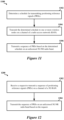
- the method may be performed by an apparatus of a UE, and may include receiving, on a channel of a radio access network (RAN), location assistance data including a list of candidate transmission-reception points (TRPs) for a positioning operation; receiving a positioning reference signal (PRS) from each of a number of the candidate TRPs on an unlicensed frequency band; and determining positioning information of the UE based at least in part on the received PRSs.
- the channel may be a vehicle-to everything (V2X) frequency subband of a fifth-generation (5G) new radio (NR) access network.
- V2X vehicle-to everything
- 5G fifth-generation
- NR new radio
- the unlicensed frequency band may be one or more Unlicensed National Information Infrastructure (UNII) radio bands (such as one or more of the UNII-1 radio band, the UNII-2A radio band, the UNII-2B radio band, or the UNII-3 radio band).
- determining the positioning information can include determining reference signal time difference (RSTD) measurements based at least in part on the received PRSs.
- the method also can include determining a position of the UE based at least in part on the determined RSTD measurements, transmitting the determined RSTD measurements to a location server, or both.
- RSTD reference signal time difference
- the location assistance data also may include one or more of identification information for the candidate TRPs, timing information for the candidate TRPs, PRS configurations of the candidate TRPs, and location information of the candidate TRPs.
- the location assistance data also may include a transmission time of the PRS from each of the number of candidate TRPs, and may identify the unlicensed frequency band upon which each of the PRSs is transmitted.
- the identification information for a respective candidate TRP may include one or more of a physical cell ID (PID), a global cell ID (GCI), or a UEID.
- the PRS configuration may include a bandwidth, a subframe offset, a periodicity, a duration, a muting pattern, and a muting sequence periodicity of the corresponding TRP.
- the PRS configuration also may identify the unlicensed frequency band upon which a respective TRP transmits the PRS.
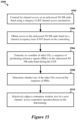
- the method may be performed by an apparatus of a UE, and may include receiving a PRS configuration on a channel of a RAN, and transmitting a sequence of PRSs based on the received PRS configuration on an unlicensed frequency band.
- the channel may be a V2X frequency subband of a 5G NR access network, and the unlicensed frequency band may be one or more UNII radio bands.
- the sequence of PRSs may be transmitted on the unlicensed frequency band using Short Control Signaling Transmissions without medium sensing.
- the received PRS configuration may allocate a first CET window for PRS transmissions from the UE within each of number of time periods, and may allocate one or more other CET windows for PRS transmissions from one or more wireless nodes within each of the number of time periods.
- the received PRS configuration also may include the CET window allocations.
- the time period may correspond to an observation period defined for Short Control Signaling Transmissions on the unlicensed frequency band, and each of the CET windows may correspond to a total duration of the Short Control Signaling Transmissions allowed on the unlicensed frequency band from a given LBE during the observation period.
- transmitting the sequence of PRSs may include contending for medium access on the unlicensed frequency band using a category-2 LBT protocol, gaining access to the unlicensed frequency band for a duration based on the contending, and transmitting the sequence of PRSs on the unlicensed frequency band during at least part of the duration.
- the received PRS configuration may allocate a first PRS window to the UE for PRS transmissions within a time period, and may allocate one or more other PRS windows to one or more wireless nodes for PRS transmissions within the time period.
- the time period may correspond to an observation period defined for Short Control Signaling Transmissions on the unlicensed frequency band
- each of the PRS windows may correspond to a total duration of the Short Control Signaling Transmissions allowed on the unlicensed frequency band from a given LBE during the observation period.
- transmitting the sequence of PRSs may include contending for medium access on the unlicensed frequency band using a category-4 LBT medium access protocol for a highest-priority traffic class, gaining access to the unlicensed frequency band for a COT based on the contending, and transmitting the sequence of PRSs on the unlicensed frequency band during at least part of the duration.
- the received PRS configuration may allocate a first PRS window to the UE for PRS transmissions within a time period, and may allocate one or more other PRS windows to one or more wireless nodes for PRS transmissions within the time period.
- the time period may be independent of an observation period defined for Short Control Signaling Transmissions on the unlicensed frequency band, and each of the CET windows may be independent of a total duration of Short Control Signaling Transmissions allowed on the unlicensed frequency band from a given LBE during the observation period.
- the method may be performed by an apparatus of a UE, and may include determining a schedule for transmitting PRSs, transmitting the determined schedule to one or more wireless nodes on a channel of a RAN, and transmitting a sequence of PRSs on an unlicensed frequency band based on the determined schedule.
- the channel may be a V2X frequency subband of a 5G NR access network.
- transmitting the sequence of PRSs includes contending for channel access on the unlicensed radio band using a category-4 LBT channel access mechanism.
- the channel may be a physical downlink control channel (PDCCH), a physical downlink shared channel (PDSCH), a physical sidelink control channel (PSCCH), or a physical sidelink shared channel (PSSCH) of the RAN.
- the unlicensed frequency band may be one or more UNII radio bands.
- the determined schedule may include identification information of the one or more wireless nodes.
- the method may be performed by an apparatus of a UE, and may include receiving a request to transmit a sequence of PRSs on a channel of a radio access network RAN, and transmitting the sequence of PRSs on an unlicensed frequency band based on the request.
- the channel may be a V2X frequency subband of a 5G NR access network, and the unlicensed frequency band may be one or more UNII radio bands.
- transmitting the sequence of PRSs may include contending for medium access on the unlicensed frequency band using a LBT medium access protocol.
- the sequence of PRSs may be transmitted using Short Control Signaling Transmissions.
- the sequence of PRSs can be transmitted during a CET window allocated to the UE.
- the CET window corresponds to a total duration of the Short Control Signaling Transmissions allowed on the unlicensed radio band from a given LBE during an observation period.
- the method may be performed by an apparatus of a UE, and may include transmitting, on a channel of a RAN, a request for a number of other UEs to transmit a sequence of PRSs; and receiving, from at least one of the number of other UEs, the requested sequence of PRSs on an unlicensed radio band.
- the channel may be a V2X frequency subband of a 5G NR access network, and the unlicensed frequency band may be one or more UNII radio bands.
- the request may be a unicast message identifying each of the number of other UEs for transmitting the sequences of PRSs. In some other implementations, the request may be a multicast message identifying a group of other UEs for transmitting the sequences of PRSs. In some other implementations, the request may identify a group of other UEs that are located within a specified zone. In addition, or in the alternative, the requested PRS may be a sidelink PRS.
- the request is a unicast message identifying each of the number of other UEs for transmitting the sequences of PRSs. In other instances, the request is a multicast message identifying a group of other UEs for transmitting the sequences of PRSs. In some other instances, the request identifies a group of other UEs that are located within a specified zone. In some instances, the request identifies a group of other UEs that are located within a specified zone. In some other instances, the requested PRS is a sidelink PRS.
- the method may be performed by an apparatus of a UE, and may include contending for channel access on an unlicensed frequency band using a category-4 LBT channel access mechanism; obtaining access to the unlicensed radio band for a COT based on the contending; transmitting, over a channel of a RAN, a message including a request for a number of other UEs to transmit a sequence of PRSs; and receiving, from at least one of the number of other UEs, the requested sequence of PRSs on the unlicensed radio band during a portion of the COT.
- the category-4 LBT channel access mechanism may be an eCCA mechanism without exponential back-off.
- the message allocates a unique portion of the COT to each of the number of other UEs for transmitting the sequence of PRSs.
- the channel may be a V2X frequency subband of a 5G NR access network, and the unlicensed frequency band may be one or more UNII radio bands.
- the one or more UNII radio bands may include one or more of the UNII-1 radio band, the UNII-2A radio band, the UNII-2B radio band, or the UNII-3 radio band.
- the method may be performed by an apparatus of a UE, and may include contending for channel access on an unlicensed radio band using a category-4 LBT channel access mechanism; obtaining access to the unlicensed radio band for a COT; transmitting, to a number of other UEs, a sequence of PRSs on the unlicensed radio band during the COT; determining whether any of the number of other UEs received the sequence of PRSs; and selectively adjusting a contention window size for a next channel access contention operation based on the determining.
- the determining may include receiving, from at least one of the number of other UEs, a feedback message indicating a signal strength of the PRSs; and selectively adjusting the contention window size based on the indicated signal strength.
- the channel may be a V2X frequency subband of a 5G NR access network, and the unlicensed frequency band may be one or more UNII radio bands.
- the method also can include increasing the contention window size based on the indicated signal strength being less than a value, and maintaining the contention window size based on the indicated signal strength being greater than the value.
- the category-4 LBT medium access protocol may be an eCCA procedure without exponential back-off.
- the following description is directed to certain implementations for the purposes of describing the innovative aspects of this disclosure.
- the teachings herein can be applied in a multitude of different ways.
- the described implementations may be implemented in any device, system or network that is capable of transmitting and receiving RF signals according to any of the IEEE 16.11 standards, or any of the IEEE 802.11 standards, the Bluetooth ® standard, code division multiple access (CDMA), frequency division multiple access (FDMA), time division multiple access (TDMA), Global System for Mobile communications (GSM), GSM/General Packet Radio Service (GPRS), Enhanced Data GSM Environment (EDGE), Terrestrial Trunked Radio (TETRA), Wideband-CDMA (W-CDMA), Evolution Data Optimized (EV-DO), 1xEV-DO, EV-DO Rev A, EV-DO Rev B, High Speed Packet Access (HSPA), High Speed Downlink Packet Access (HSDPA), High Speed Uplink Packet Access (HSUPA), Evolved High Speed Pack
- HSPA High Speed Packet Access
- Vehicle based communications V2X
- vehicle-to-vehicle V2V
- C-V2X cellular V2X
- V2N vehicle UEs
- V2P pedestrian UEs
- V2I infrastructure devices
- vehicle based communication networks may support a safe, always-connected driving experience by providing intelligent connectivity through which traffic signal timing information, real-time traffic and routing information, safety alerts to pedestrians, collision avoidance information, and other messages are exchanged between vehicles via UEs.
- traffic signal timing information real-time traffic and routing information
- safety alerts to pedestrians collision avoidance information
- other messages are exchanged between vehicles via UEs.
- Implementations of the subject matter described in this disclosure may be used by a UE (such as a vehicle UE) to determine its position and to determine distances to other UEs with greater accuracy than conventional V2X communications.
- a UE participating in a positioning operation may transmit or receive non-positioning signals over a V2X channel, a licensed radio band, or other suitable channel of a radio access network (RAN), and may transmit or receive positioning signals over an unlicensed radio band (the latter is according to the invention).
- RAN radio access network
- the positioning signals may include positioning reference signals (PRSs, as according to the invention) associated with observed time difference of arrival (OTDOA) positioning operations, ranging signals associated with round-trip time (RTT, as according to the invention) positioning operations, or other suitable signals from which the position of the UE can be determined.
- PRSs positioning reference signals
- OTD observed time difference of arrival
- RTT round-trip time
- the positioning signals may be transmitted over one or more Unlicensed National Information Infrastructure (UNII) radio bands including, for example, one or more of the UNII-1 radio band, the UNII-2A radio band, the UNII-2B radio band, or the UNII-3 radio band.
- UNII National Information Infrastructure
- the positioning signals may be transmitted together with one or more of a physical downlink control channel (PDCCH), a physical downlink shared channel (PDSCH), a physical sidelink control channel (PSCCH), or a physical sidelink shared channel (PSSCH) of the RAN.
- the RAN may be a 5G NR access network
- the V2X channel may be or may occupy a frequency subband of the 5G NR access network
- the unlicensed radio band is an unlicensed 5G NR radio band.
- the non-positioning signals may include location requests, location information, location assistance data, PRS configurations, requests to transmit PRS sequences, requests to initiate ranging operations, and other suitable management messages, control messages, or configurations (such as radio resource control (RRC) configurations).
- RRC radio resource control
- the non-positioning signals may be transmitted over the V2X channel of a 5G NR access network.
- one or more of the non-positioning signals may be transmitted over one or more unlicensed radio bands (such as an unlicensed 5G NR radio band).
- a UE may transmit a sequence of PRSs over one or more unlicensed radio bands using Short Control Signaling Transmissions (SCST) without medium sensing.
- SCST Short Control Signaling Transmissions
- a PRS configuration received by the UE may allocate a first Clear Channel Assessment (CCA) Exempt Transmission (CET) window for PRS transmissions from the UE within each of a number of time periods, and may allocate one or more other CET windows for PRS transmissions from one or more wireless nodes within each of the number of time periods.
- CCA Clear Channel Assessment
- CET Exempt Transmission
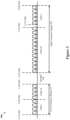
- the time periods may correspond to an observation period defined for SCST on unlicensed radio bands, and each of the CET windows may correspond to a total duration of the SCST allowed on unlicensed radio bands from a given load-based equipment (LBE) during the observation period.
- the observation period may be between approximately 25 and 100 milliseconds (ms), and the total duration may be no more than approximately 2.5 milliseconds.
- the observation period and the total duration may be specified by one or more standards or releases published by the European Telecommunications Standards Institute (ETSI).
- ETSI European Telecommunications Standards Institute
- the UE may contend for channel access on the unlicensed radio band using a category-2 listen-before-talk or listen-before-transmit (LBT) channel access mechanism, may gain access to the unlicensed radio band for a duration based on the contending, and may transmit a sequence of PRSs over the unlicensed radio band during at least part of the duration.
- the PRS configuration received by the UE may allocate a first PRS window to the UE for PRS transmissions within a time period, and may allocate one or more other PRS windows to one or more wireless nodes for PRS transmissions within the time period.
- the UE may contend for channel access on the unlicensed radio band using a category-4 LBT channel access mechanism for a highest-priority traffic class, may gain access to the unlicensed radio band for a channel occupancy time (COT) based on the contending, and may transmit the sequence of PRSs over the unlicensed radio band during at least part of the COT.
- the PRS configuration received by the UE may allocate a first PRS window to the UE for PRS transmissions within a time period, and may allocate one or more other PRS windows to one or more wireless nodes for PRS transmissions within the time period.
- the time period may be independent of an observation period defined for SCST on unlicensed radio bands, and each of the CET windows may be independent of a total duration of SCST allowed on unlicensed radio bands from a given load-based equipment (LBE) during the observation period.
- LBE load-based equipment
- the UE may receive a request to transmit a sequence of PRSs on a channel of a RAN (such as a 5G NR access network), and may transmit the sequence of PRSs over one or more unlicensed radio bands (such as an unlicensed 5G NR radio band) based on the request.
- a RAN such as a 5G NR access network
- the UE may contend for channel access on the unlicensed radio band using a LBT channel access mechanism, and may transmit the sequence of PRSs over the unlicensed radio band upon gaining channel access to the unlicensed radio band.
- the UE may transmit, on a channel of the RAN, a request for a number of other UEs to transmit a sequence of PRSs, and may receive, from at least one of the number of other UEs, the requested sequence of PRSs on an unlicensed radio band (such as an unlicensed 5G NR radio band).
- an unlicensed radio band such as an unlicensed 5G NR radio band
- the accuracy of positioning operations between wireless communication devices may be proportional to the frequency bandwidth over which positioning signals are exchanged between the wireless communication devices. For example, OTDOA positioning operations for which the positioning reference signals (PRSs) are transmitted over a relatively large frequency bandwidth may be more accurate than OTDOA positioning operations for which the PRSs are transmitted over a relatively small frequency bandwidth. Similarly, ranging operations for which the ranging frames or signals are transmitted over a relatively large frequency bandwidth may be more accurate than ranging operations for which the ranging frames or signals are transmitted over a relatively small frequency bandwidth.
- OTDOA positioning operations for which the positioning reference signals (PRSs) are transmitted over a relatively large frequency bandwidth may be more accurate than OTDOA positioning operations for which the PRSs are transmitted over a relatively small frequency bandwidth.
- ranging operations for which the ranging frames or signals are transmitted over a relatively large frequency bandwidth may be more accurate than ranging operations for which the ranging frames or signals are transmitted over a relatively small frequency bandwidth.
- aspects of the present disclosure may increase the accuracy with which OTDOA-based positioning operations can determine the positions of the UEs (such as compared to conventional techniques for which PRS sequences are transmitted over the V2X frequency subband).
- the V2X frequency subband has a channel width of 40 MHz
- the UNII-1 and UNII-2A radio bands each have a channel width of 100 MHz
- the UNII-2C radio band has a channel width of 255 MHz
- the UNII-3 radio band has a channel width of 125 MHz.
- the accuracy of OTDOA-based positioning operations can be increased by transmitting the positioning signals over one (or more) of the UNII radio bands (rather than over the V2X frequency subband).
- aspects of the present disclosure may increase the accuracy with which RTT-based positioning operations can determine the positions of the UEs (such as compared with conventional techniques for which the ranging signals are exchanged on the V2X frequency subband).
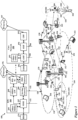
- FIG. 1 shows a diagram of an example wireless communications system 100.
- the wireless communications system 100 includes base stations 102, UEs 104, an Evolved Packet Core (EPC) 160, and another core network 190 (such as a 5G Core (5GC)).
- the base stations 102 may include macrocells (high power cellular base station) or small cells (low power cellular base station).
- the macrocells include base stations.
- the small cells include femtocells, picocells, and microcells.
- the base stations 102 configured for 4G LTE may interface with the EPC 160 through backhaul links 132 (such as the S1 interface).
- the base stations 102 configured for 5G NR may interface with core network 190 through backhaul links 184.
- UMTS Universal Mobile Telecommunications System
- 5G NR Next Generation RAN
- the base stations 102 may perform one or more of the following functions: transfer of user data, radio channel ciphering and deciphering, integrity protection, header compression, mobility control functions (such as handover, dual connectivity), inter-cell interference coordination, connection setup and release, load balancing, distribution for non-access stratum (NAS) messages, NAS node selection, synchronization, radio access network (RAN) sharing, multimedia broadcast multicast service (MBMS), subscriber and equipment trace, RAN information management (RIM), paging, positioning, and delivery of warning messages.
- the base stations 102 may communicate directly or indirectly (such as through the EPC 160 or core network 190) with each other over backhaul links 134 (such as the X2 interface).
- the backhaul links 134 may be wired or wireless.
- the base stations 102 may wirelessly communicate with the UEs 104. Each of the base stations 102 may provide communication coverage for a respective geographic coverage area 110. There may be overlapping geographic coverage areas 110. For example, the small cell 102' may have a coverage area 110' that overlaps the coverage area 110 of one or more macro base stations 102.
- a network that includes both small cell and macrocells may be known as a heterogeneous network.
- a heterogeneous network also may include Home Evolved Node Bs (eNBs) (HeNBs), which may provide service to a restricted group known as a closed subscriber group (CSG).
- eNBs Home Evolved Node Bs
- CSG closed subscriber group
- the communication links 120 between the base stations 102 and the UEs 104 may include uplink (UL) (also referred to as reverse link) transmissions from a UE 104 to a base station 102 or downlink (DL) (also referred to as forward link) transmissions from a base station 102 to a UE 104.
- the communication links 120 may use multiple-input and multiple-output (MIMO) antenna technology, including spatial multiplexing, beamforming, or transmit diversity.
- MIMO multiple-input and multiple-output
- the communication links may be through one or more carriers.
- the base stations 102 / UEs 104 may use spectrum up to Y MHz (such as 5 MHz, 10 MHz, 15 MHz, 20 MHz, 100 MHz, 400 MHz, etc.) bandwidth per carrier allocated in a carrier aggregation of up to a total of Yx MHz (x component carriers) used for transmission in each direction.
- the carriers may or may not be adjacent to each other. Allocation of carriers may be asymmetric with respect to DL and UL (such as more or fewer carriers may be allocated for DL than for UL).
- the component carriers may include a primary component carrier and one or more secondary component carriers.
- a primary component carrier may be referred to as a primary cell (PCell) and a secondary component carrier may be referred to as a secondary cell (SCell).
- PCell primary cell
- SCell secondary cell
- D2D communication link 158 may use the DL/UL WWAN spectrum.
- the D2D communication link 158 may use one or more sidelink channels, such as a physical sidelink broadcast channel (PSBCH), a physical sidelink discovery channel (PSDCH), a physical sidelink shared channel (PSSCH), and a physical sidelink control channel (PSCCH).
- sidelink channels such as a physical sidelink broadcast channel (PSBCH), a physical sidelink discovery channel (PSDCH), a physical sidelink shared channel (PSSCH), and a physical sidelink control channel (PSCCH).
- sidelink channels such as a physical sidelink broadcast channel (PSBCH), a physical sidelink discovery channel (PSDCH), a physical sidelink shared channel (PSSCH), and a physical sidelink control channel (PSCCH).
- sidelink channels such as a physical sidelink broadcast channel (PSBCH), a physical sidelink discovery channel (PSDCH), a physical sidelink shared channel (PSSCH), and a physical sidelink control channel (PSCCH).
- the wireless communications system may further include a Wi-Fi access point (AP) 150 in communication with Wi-Fi stations (STAs) 152 via communication links 154 in a 5 GHz unlicensed frequency spectrum.
- AP Wi-Fi access point
- STAs Wi-Fi stations
- communication links 154 in a 5 GHz unlicensed frequency spectrum.
- the STAs 152 / AP 150 may perform a clear channel assessment (CCA) prior to communicating in order to determine whether the channel is available.
- CCA clear channel assessment
- the small cell 102' may operate in a licensed or an unlicensed frequency spectrum. When operating in an unlicensed frequency spectrum, the small cell 102' may employ NR and use the same 5 GHz unlicensed frequency spectrum as used by the Wi-Fi AP 150. The small cell 102', employing NR in an unlicensed frequency spectrum, may boost coverage to or increase capacity of the access network.
- a base station 102 may include an eNB, gNodeB (gNB), or another type of base station.
- Some base stations, such as gNB 180 may operate in a traditional sub 6 GHz spectrum, in millimeter wave (mmW) frequencies, or near mmW frequencies in communication with the UE 104.
- mmW millimeter wave
- mmW base station Extremely high frequency (EHF) is part of the RF in the electromagnetic spectrum. EHF has a range of 30 GHz to 300 GHz and a wavelength between 1 millimeter and 10 millimeters.
- Radio waves in the band may be referred to as a millimeter wave.
- Near mmW may extend down to a frequency of 3 GHz with a wavelength of 100 millimeters.
- the super high frequency (SHF) band extends between 3 GHz and 30 GHz, also referred to as centimeter wave.
- Communications using the mmW / near mmW radio frequency band (such as between 3 GHz - 300 GHz) has extremely high path loss and a short range.
- the mmW base station 180 may utilize beamforming 182 with the UE 104 to compensate for the extremely high path loss and short range.
- the base station 180 may transmit a beamformed signal to the UE 104 in one or more transmit directions 182'.
- the UE 104 may receive the beamformed signal from the base station 180 in one or more receive directions 182''.
- the UE 104 also may transmit a beamformed signal to the base station 180 in one or more transmit directions.
- the base station 180 may receive the beamformed signal from the UE 104 in one or more receive directions.
- the base station 180 and UE 104 may perform beam training to determine the best receive and transmit directions for each of the base station 180 and UE 104.
- the transmit and receive directions for the base station 180 may or may not be the same.
- the transmit and receive directions for the UE 104 may or may not be the same.
- the EPC 160 may include a Mobility Management Entity (MME) 162, other MMEs 164, a Serving Gateway 166, a Multimedia Broadcast Multicast Service (MBMS) Gateway 168, a Broadcast Multicast Service Center (BM-SC) 170, and a Packet Data Network (PDN) Gateway 172.
- MME Mobility Management Entity
- MBMS Multimedia Broadcast Multicast Service
- BM-SC Broadcast Multicast Service Center
- PDN Packet Data Network
- the MME 162 may be in communication with a Home Subscriber Server (HSS) 174.
- HSS Home Subscriber Server
- the MME 162 is the control node that processes the signaling between the UEs 104 and the EPC 160.
- the MME 162 provides bearer and connection management. All user Internet protocol (IP) packets are transferred through the Serving Gateway 166, which itself is connected to the PDN Gateway 172.
- IP Internet protocol
- the PDN Gateway 172 provides UE IP address allocation as well as other functions.
- the PDN Gateway 172 and the BM-SC 170 are connected to the IP Services 176.
- the IP Services 176 may include the Internet, an intranet, an IP Multimedia Subsystem (IMS), a PS Streaming Service, or other IP services.
- the BM-SC 170 may provide functions for MBMS user service provisioning and delivery.
- the BM-SC 170 may serve as an entry point for content provider MBMS transmission, may be used to authorize and initiate MBMS Bearer Services within a public land mobile network (PLMN), and may be used to schedule MBMS transmissions.
- PLMN public land mobile network
- the MBMS Gateway 168 may be used to distribute MBMS traffic to the base stations 102 belonging to a Multicast Broadcast Single Frequency Network (MBSFN) area broadcasting a particular service, and may be responsible for session management (start/stop) and for collecting MBMS related charging information.
- MMSFN Multicast Broadcast Single Frequency Network
- the core network 190 may include an Access and Mobility Management Function (AMF) 192, other AMFs 193, a Session Management Function (SMF) 194, and a User Plane Function (UPF) 195.
- the AMF 192 may be in communication with a Unified Data Management (UDM) 196.
- the AMF 192 is the control node that processes the signaling between the UEs 104 and the core network 190.
- the AMF 192 provides QoS flow and session management. All user Internet protocol (IP) packets are transferred through the UPF 195.
- the UPF 195 provides UE IP address allocation as well as other functions.
- the UPF 195 is connected to the IP Services 197.
- the IP Services 197 may include the Internet, an intranet, an IP Multimedia Subsystem (IMS), a PS Streaming Service, or other IP services.
- IMS IP Multimedia Subsystem
- PS Streaming Service or other IP services.
- the base station also may be referred to as a gNB, Node B, evolved Node B (eNB), an access point, a base transceiver station, a radio base station, a radio transceiver, a transceiver function, a basic service set (BSS), an extended service set (ESS), a transmit reception point (TRP), or some other suitable terminology.
- the base station 102 provides an access point to the EPC 160 or core network 190 for a UE 104.
- Examples of UEs 104 include a cellular phone, a smart phone, a session initiation protocol (SIP) phone, a laptop, a personal digital assistant (PDA), a satellite radio, a global positioning system, a multimedia device, a video device, a digital audio player (such as an MP3 player), a camera, a game console, a tablet, a smart device, a wearable device, a vehicle, an electric meter, a gas pump, a large or small kitchen appliance, a healthcare device, an implant, a sensor/actuator, a display, or any other similar functioning device.
- Some of the UEs 104 may be referred to as IoT devices (such as a parking meter, gas pump, toaster, vehicles, heart monitor, etc.).
- the UE 104 also may be referred to as a station, a mobile station, a subscriber station, a mobile unit, a subscriber unit, a wireless unit, a remote unit, a mobile device, a wireless device, a wireless communications device, a remote device, a mobile subscriber station, an access terminal, a mobile terminal, a wireless terminal, a remote terminal, a handset, a user agent, a mobile client, a client, or some other suitable terminology.
- the wireless communications system 100 may utilize both licensed and unlicensed radio frequency spectrum bands.
- the wireless system 100 may employ LTE License Assisted Access (LTE-LAA), LTE Unlicensed (LTE U) radio access technology, or 5G NR technology in an unlicensed radio band (such as the 5 GHz Industrial, Scientific, and Medical (ISM) band or the 6 GHz UNII bands).
- LTE-LAA LTE License Assisted Access
- LTE U LTE Unlicensed
- 5G NR technology such as the 5 GHz Industrial, Scientific, and Medical (ISM) band or the 6 GHz UNII bands.
- LBT listen-before-talk
- operations in unlicensed radio bands may be based on a carrier aggregation (CA) configuration in conjunction with component carriers (CCs) operating in a licensed band.
- operations in unlicensed radio bands may include downlink transmissions, uplink transmissions, or both.
- Duplexing in unlicensed radio bands may be based on frequency division duplexing (FDD), time division duplex
- the wireless communications system 100 also may include or support vehicle-based communications.
- Vehicle-based communication networks may provide always on telematics where UEs 104, referred to herein as v-UEs, communicate directly to V2N, to pedestrian UEs (V2P), to infrastructure devices (V21), and to other v-UEs (such as via the network).
- the vehicle-based communication networks may support a safe, always-connected driving experience by providing intelligent connectivity where traffic signal/timing, real-time traffic and routing, safety alerts to pedestrians/bicyclist, collision avoidance information, and the like are exchanged.
- Figure 2A shows an example of a first slot 200 within a 5G/NR frame structure.
- Figure 2B shows an example of DL channels 230 within a 5G/NR slot.
- Figure 2C shows an example of a second slot 250 within a 5G/NR frame structure.
- Figure 2D shows an example of UL channels 280 within a 5G/NR slot.
- the 5G/NR frame structure may be FDD in which, for a particular set of subcarriers (carrier system bandwidth), slots within the set of subcarriers are dedicated for either DL or UL transmissions.
- the 5G/NR frame structure may be TDD in which, for a particular set of subcarriers (carrier system bandwidth), slots within the set of subcarriers are dedicated for both DL and UL transmissions.
- the 5G/NR frame structure is based on TDD, with slot 4 configured with slot format 28 (with mostly DL), where D indicates DL, U indicates UL, and X indicates that the slot is flexible for use between DL and UL, and with slot 3 configured with slot format 34 (with mostly UL). While slots 3 and 4 are shown with slot formats 34 and 28, respectively, any particular slot may be configured with any of the various available slot formats 0-61. Slot formats 0 and 1 are all DL and all UL, respectively.
- slot formats 2-61 include a mix of DL, UL, and flexible symbols.
- UEs may be configured with the slot format, either dynamically through downlink control information (DCI) or semi-statically through radio resource control (RRC) signaling by a slot format indicator (SFI).
- DCI downlink control information
- RRC radio resource control
- SFI slot format indicator
- the configured slot format also may apply to a 5G/NR frame structure that is based on FDD.
- a frame may be divided into a number of equally sized subframes. For example, a frame having a duration of 10 microseconds ( ⁇ s) may be divided into 10 equally sized subframes each having a duration of 1 ⁇ s.
- Each subframe may include one or more time slots.
- Subframes also may include mini-slots, which may include 7, 4, or 2 symbols.
- Each slot may include 7 or 14 symbols, depending on the slot configuration. For slot configuration 0, each slot may include 14 symbols, and for slot configuration 1, each slot may include 7 symbols.
- the symbols on DL may be cyclic prefix (CP) OFDM (CP-OFDM) symbols.
- the symbols on UL may be CP-OFDM symbols (such as for high throughput scenarios) or discrete Fourier transform (DFT) spread OFDM (DFT-s-OFDM) symbols (also referred to as single carrier frequency-division multiple access (SC-FDMA) symbols) (such as for power limited scenarios).
- DFT discrete Fourier transform
- SC-FDMA single carrier frequency-division multiple access
- the number of slots within a subframe is based on the slot configuration and the numerology.
- different numerologies ( ⁇ ) 0 to 5 allow for 1, 2, 4, 8, 16, and 32 slots, respectively, per subframe.
- different numerologies 0 to 2 allow for 2, 4, and 8 slots, respectively, per subframe.
- the subcarrier spacing and symbol length/duration are a function of the numerology.
- the subcarrier spacing may be equal to 2 ⁇ *15 kHz, where ⁇ is the numerology 0 to 5.
- the symbol length/duration is inversely related to the subcarrier spacing.
- the subcarrier spacing is 15 kHz and symbol duration is approximately 66.7 microseconds ( ⁇ s).
- a resource grid may be used to represent the frame structure.
- Each time slot includes a resource block (RB) (also referred to as a physical RB (PRB)) that extends across 12 consecutive subcarriers and across a number of symbols. The intersections of subcarriers and across 14 symbols. The intersections of subcarriers and of the RB define multiple resource elements (REs). The number of bits carried by each RE depends on the modulation scheme.
- RB resource block
- PRB physical RB
- some of the REs carry a reference signal (RS) for the UE.
- RS reference signal
- one or more REs may carry a demodulation reference signal (DM-RS) (indicated as Rx for one particular configuration, where 100x is the port number, but other DM-RS configurations are possible).
- DM-RS demodulation reference signal
- one or more REs may carry a channel state information reference signal (CSI-RS) for channel measurement at the UE.
- the REs also may include a beam measurement reference signal (BRS), a beam refinement reference signal (BRRS), and a phase tracking reference signal (PT-RS).
- BRS beam measurement reference signal
- BRRS beam refinement reference signal
- PT-RS phase tracking reference signal
- FIG. 2B illustrates an example of various DL channels within a subframe of a frame.
- the physical downlink control channel (PDCCH) carries DCI within one or more control channel elements (CCEs), each CCE including nine RE groups (REGs), each REG including four consecutive REs in an OFDM symbol.
- a primary synchronization signal (PSS) may be within symbol 2 of particular subframes of a frame. The PSS is used by a UE 104 to determine subframe or symbol timing and a physical layer identity.
- a secondary synchronization signal (SSS) may be within symbol 4 of particular subframes of a frame. The SSS is used by a UE to determine a physical layer cell identity group number and radio frame timing.
- the UE can determine a physical cell identifier (PCI). Based on the PCI, the UE can determine the locations of the aforementioned DM-RS.
- the physical broadcast channel (PBCH) which carries a master information block (MIB), may be logically grouped with the PSS and SSS to form a synchronization signal (SS)/PBCH block.
- the MIB provides a number of RBs in the system bandwidth and a system frame number (SFN).
- the physical downlink shared channel (PDSCH) carries user data, broadcast system information not transmitted through the PBCH such as system information blocks (SIBs), and paging messages.
- SIBs system information blocks
- some of the REs carry DM-RS (indicated as R for one particular configuration, but other DM-RS configurations are possible) for channel estimation at the base station.
- the UE may transmit DM-RS for the physical uplink control channel (PUCCH) and DM-RS for the physical uplink shared channel (PUSCH).
- the PUSCH DM-RS may be transmitted in the first one or two symbols of the PUSCH.
- the PUCCH DM-RS may be transmitted in different configurations depending on whether short or long PUCCHs are transmitted and depending on the particular PUCCH format used.
- the UE may transmit sounding reference signals (SRS).
- the SRS may be used by a base station for channel quality estimation to enable frequency-dependent scheduling on the UL.
- FIG. 2D illustrates an example of various UL channels within a subframe of a frame.
- the PUCCH may be located as indicated in one configuration.
- the PUCCH carries uplink control information (UCI), such as scheduling requests, a channel quality indicator (CQI), a precoding matrix indicator (PMI), a rank indicator (RI), and HARQ ACK/NACK feedback.
- UCI uplink control information
- the PUSCH carries data, and may additionally be used to carry a buffer status report (BSR), a power headroom report (PHR), or UCI.
- BSR buffer status report
- PHR power headroom report
- FIG. 3 shows a block diagram of an example base station 310 and UE 350 in an access network.
- IP packets from the EPC 160 may be provided to a controller/processor 375.
- the controller/processor 375 implements layer 3 and layer 2 functionality.
- Layer 3 includes a radio resource control (RRC) layer
- layer 2 includes a service data adaptation protocol (SDAP) layer, a packet data convergence protocol (PDCP) layer, a radio link control (RLC) layer, and a medium access control (MAC) layer.
- RRC radio resource control
- SDAP service data adaptation protocol
- PDCP packet data convergence protocol
- RLC radio link control
- MAC medium access control
- the controller/processor 375 provides RRC layer functionality associated with broadcasting of system information (such as the MIB and SIBs), RRC connection control (such as RRC connection paging, RRC connection establishment, RRC connection modification, and RRC connection release), inter radio access technology (RAT) mobility, and measurement configuration for UE measurement reporting; PDCP layer functionality associated with header compression / decompression, security (ciphering, deciphering, integrity protection, integrity verification), and handover support functions; RLC layer functionality associated with the transfer of upper layer packet data units (PDUs), error correction through ARQ, concatenation, segmentation, and reassembly of RLC service data units (SDUs), re-segmentation of RLC data PDUs, and reordering of RLC data PDUs; and MAC layer functionality associated with mapping between logical channels and transport channels, multiplexing of MAC SDUs onto transport blocks (TBs), demultiplexing of MAC SDUs from TBs, scheduling information reporting, error correction through HARQ,
- the transmit (TX) processor 316 and the receive (RX) processor 370 implement layer 1 functionality associated with various signal processing functions.
- Layer 1 which includes a physical (PHY) layer, may include error detection on the transport channels, forward error correction (FEC) coding/decoding of the transport channels, interleaving, rate matching, mapping onto physical channels, modulation/demodulation of physical channels, and MIMO antenna processing.
- the TX processor 316 handles mapping to signal constellations based on various modulation schemes (such as binary phase-shift keying (BPSK), quadrature phase-shift keying (QPSK), M-phase-shift keying (M-PSK), M-quadrature amplitude modulation (M-QAM)).
- BPSK binary phase-shift keying
- QPSK quadrature phase-shift keying
- M-PSK M-phase-shift keying
- M-QAM M-quadrature amplitude modulation
- Each stream may then be mapped to an OFDM subcarrier, multiplexed with a reference signal (such as a pilot signal) in the time or frequency domain, and then combined together using an Inverse Fast Fourier Transform (IFFT) to produce a physical channel carrying a time domain OFDM symbol stream.
- IFFT Inverse Fast Fourier Transform
- the OFDM stream is spatially precoded to produce multiple spatial streams.
- Channel estimates from a channel estimator 374 may be used to determine the coding and modulation scheme, as well as for spatial processing.
- the channel estimate may be derived from a reference signal or channel condition feedback transmitted by the UE 350.
- Each spatial stream may then be provided to a different antenna 320 via a separate transmitter 318TX.
- Each transmitter 318TX may modulate an RF carrier with a respective spatial stream for transmission.
- each receiver 354RX receives a signal through its respective antenna 352.
- Each receiver 354RX recovers information modulated onto an RF carrier and provides the information to the receive (RX) processor 356.
- the TX processor 368 and the RX processor 356 implement layer 1 functionality associated with various signal processing functions.
- the RX processor 356 may perform spatial processing on the information to recover any spatial streams destined for the UE 350. If multiple spatial streams are destined for the UE 350, they may be combined by the RX processor 356 into a single OFDM symbol stream.
- the RX processor 356 then converts the OFDM symbol stream from the time-domain to the frequency domain using a Fast Fourier Transform (FFT).
- FFT Fast Fourier Transform
- the frequency domain signal includes a separate OFDM symbol stream for each subcarrier of the OFDM signal.
- the symbols on each subcarrier, and the reference signal are recovered and demodulated by determining the most likely signal constellation points transmitted by the base station 310. These soft decisions may be based on channel estimates computed by the channel estimator 358.
- the soft decisions are then decoded and deinterleaved to recover the data and control signals that were originally transmitted by the base station 310 on the physical channel.
- the data and control signals are then provided to the controller/processor 359, which implements layer 3 and layer 2 functionality.
- the controller/processor 359 can be associated with a memory 360 that stores program codes and data.
- the memory 360 may be referred to as a computer-readable medium.
- the controller/processor 359 provides demultiplexing between transport and logical channels, packet reassembly, deciphering, header decompression, and control signal processing to recover IP packets from the EPC 160.
- the controller/processor 359 is also responsible for error detection using an ACK or NACK protocol to support HARQ operations.
- the controller/processor 359 provides RRC layer functionality associated with system information (such as the MIB and SIBs) acquisition, RRC connections, and measurement reporting; PDCP layer functionality associated with header compression / decompression, and security (ciphering, deciphering, integrity protection, integrity verification); RLC layer functionality associated with the transfer of upper layer PDUs, error correction through ARQ, concatenation, segmentation, and reassembly of RLC SDUs, re-segmentation of RLC data PDUs, and reordering of RLC data PDUs; and MAC layer functionality associated with mapping between logical channels and transport channels, multiplexing of MAC SDUs onto TBs, demultiplexing of MAC SDUs from TBs, scheduling information reporting, error correction through HARQ, priority handling, and logical channel prioritization.
- RRC layer functionality associated with system information (such as the MIB and SIBs) acquisition, RRC connections, and measurement reporting
- PDCP layer functionality associated with header compression / decom
- Channel estimates derived by a channel estimator 358 from a reference signal or feedback transmitted by the base station 310 may be used by the TX processor 368 to select the appropriate coding and modulation schemes, and to facilitate spatial processing.
- the spatial streams generated by the TX processor 368 may be provided to different antenna 352 via separate transmitters 354TX. Each transmitter 354TX may modulate an RF carrier with a respective spatial stream for transmission.
- the UL transmission is processed at the base station 310 in a manner similar to that described in connection with the receiver function at the UE 350.
- Each receiver 318RX receives a signal through its respective antenna 320.
- Each receiver 318RX recovers information modulated onto an RF carrier and provides the information to a RX processor 370.
- the controller/processor 375 can be associated with a memory 376 that stores program codes and data.
- the memory 376 may be referred to as a computer-readable medium.
- the controller/processor 375 provides demultiplexing between transport and logical channels, packet reassembly, deciphering, header decompression, control signal processing to recover IP packets from the UE 350. IP packets from the controller/processor 375 may be provided to the EPC 160.
- the controller/processor 375 is also responsible for error detection using an ACK or NACK protocol to support HARQ operations.
- Information to be wirelessly communicated (such as for LTE or NR based communications) is encoded and mapped, at the PHY layer, to one or more wireless channels for transmission.
- each antenna 352 of the UE 350 is coupled to a respective transmitter 354TX.
- each transmitter may be coupled to a respective power amplifier (PA) which amplifies the signal to be transmitted.
- PA power amplifier
- the combination of a transmitter with a PA may be referred to herein as a "transmit chain" or "TX chain.”
- TX chain To save on cost or die area, the same PA may be reused to transmit signals over multiple RX antennas.
- one or more TX chains of a UE may be switchably coupled to multiple RX antennas ports.
- FIG 4 shows an example vehicle-to-everything (V2X) communications system 400.
- the V2X communications system 400 within which at least some of the various aspects of the present disclosure may be implemented, may be configured to operate in the 5.9 GHz spectrum.
- the V2X communications system 400 may include two configurations 410 and 420. In the first configuration 410, UEs embedded within or associated with vehicles 411-412, person 413, and traffic signal 414 may communicate directly with each other using peer-to-peer (P2P) communications (such as without the base station 102 of Figure 1 ).
- P2P peer-to-peer
- each of the vehicles 411-412 may establish vehicle-to-person (V2P) communications with person 413 through a PC5 interface, and may establish vehicle-to-vehicle (V2V) communications with each other through a PC5 interface.
- V2P vehicle-to-person
- V2V vehicle-to-vehicle
- Each of the vehicles 411-412 also may establish vehicle-to-infrastructure (V2I) communications with the traffic signal 414 through a PC5 interface.
- the first configuration 410 may be a self-managed system that does not require subscription to a radio access network (RAN). As such, the first configuration 410 may have lower costs and increased reliability, for example, as compared with the second configuration 420.
- RAN radio access network
- UEs embedded within or associated with vehicles 411-412 and other devices or persons communicate with each other using vehicle-to-network (V2N) communications, for example, facilitated by a radio access network (RAN) associated with a number of base stations 421 (only one base station 421 shown for simplicity).
- V2N vehicle-to-network
- RAN radio access network
- the V2X communications system 400 may have several advantages over conventional IEEE 802.11p networks. For example, while conventional IEEE 802.11p networks have limited scaling capabilities and may suffer from channel access delays, V2X communications may be performed on a V2X frequency subband of a 5G NR access network without contending for channel access. Moreover, just as 5G NR is designed to meet new requirements associated with latency, reliability, security, and scalability, communications on the V2X frequency subband are also designed to meet new requirements associated with latency, reliability, security, and scalability, for example, as may be necessary to facilitate reliable communications between moving vehicles.
- Timing information, real-time traffic information, collision avoidance information, and some other features provided by V2X communications and V2X channels of a RAN may depend, at least in part, on the ability of a UE (such as a v-UE) to accurately determine its position relative to other vehicles or obstacles and to accurately determine distances between the UE and nearby vehicles or obstacles. Since the accuracy of positioning operations (such as OTDOA or RTT-based ranging) may be proportional to the frequency bandwidth used to transmit and receive positioning signals, positioning and ranging accuracy may be increased by using wider channels to transmit and receive the positioning signals. As such, although a 40 MHz V2X channel of a 5G NR access network may allow for contention-free transmissions of positioning signals to, from, or between UEs, positioning and ranging accuracy may be improved by transmitting the positioning signals on wider channels.
- positioning signals may be transmitted over one or more unlicensed radio bands having wider channels than the V2X frequency subband, which may increase the accuracy with which positioning and ranging operations can be performed.
- positioning signals may be transmitted over one or more of the Unlicensed National Information Infrastructure (UNII) radio bands, which have channel widths ranging from 100 MHz to as high as 255 MHz, thereby improving positioning and ranging accuracy (such as compared with transmitting positioning signals over a 40 MHz V2X frequency subband).
- UNII Unlicensed National Information Infrastructure
- FIG. 5 shows a frequency spectrum diagram 500 depicting an example 5 GHz frequency band.
- the 5 GHz frequency band may range from 5.15 GHz to 5.85 GHz, and may be subdivided into a number of UNII radio sub-bands. More specifically, the usable sub-bands in the 5 GHz frequency band may include a UNII-1 sub-band (such as between 5.15 - 5.25 GHz), a UNII-2A sub-band (such as between 5.25 - 5.35 GHz), a UNII-2C sub-band (such as between 5.470 - 5.725 GHz), and a UNII-3 sub-band (such as between 5.725 - 5.850 GHz).
- a UNII-1 sub-band such as between 5.15 - 5.25 GHz
- a UNII-2A sub-band such as between 5.25 - 5.35 GHz
- a UNII-2C sub-band such as between 5.470 - 5.725 GHz
- a UNII-3 sub-band
- Each of the sub-bands includes a number of 20 MHz channels (such as channels 36 - 64 and 100 - 177).
- the 20 MHz channels may be grouped or paired with one another to form 40 MHz channels.
- the 40 MHz channels also may be grouped or paired with one another to form 80 MHz channels, and the 80 MHz channels may be further grouped or paired with one another to form a 160 MHz channel.
- a 120 MHz wide frequency band or gap exists between the UNII-2A sub-band and the UNII-2C sub-band (such as between 5.35 - 5.47 GHz), dividing the 5 GHz frequency band into a lower frequency range 410 (such as between 5.17 - 5.35 GHz) and an upper frequency range 520 (such as between 5.47 - 5.85 GHz).
- Wireless communications may be restricted in the 120 MHz wide region.
- the UNII-1 sub-band may allow channel widths of up to 100 MHz, with a maximum transmit power of 50 milliwatts (mW).
- the UNII-2A sub-band may allow channel widths of up to 100 MHz, with a maximum transmit power of 250 mW.
- the UNII-2C sub-band may allow channel widths of up to 255 MHz, with a maximum transmit power of 250 mW.
- the UNII-3 sub-band may allow channel widths of up to 125 MHz, with an unspecified maximum transmit power.
- the European Telecommunications Standards Institute (ETSI) EN 301-893 standards define channel access mechanisms to be used by wireless devices or nodes for transmissions on the UNII-1 and UNII-2 radio bands.
- ETSI EN 301-893 standards define a LBT channel access protocol to be used by wireless devices or nodes (including IEEE 802.11-compliant wireless devices and LAA-compliant wireless devices) for gaining channel access on the UNII-1 and UNII-2 radio bands.
- This channel access mechanism which may be referred to as a category-2 LBT channel access protocol, includes a mechanism by which wireless devices perform a Clear Channel Assessment (CCA) to ensure that wireless channel is idle before transmitting data on the wireless channel.
- CCA Clear Channel Assessment
- the ETSI EN 301-893 standards also define Priority Class dependent channel access parameters that prioritize channel access for high-priority class traffic over low-priority class traffic by using different Contention Window (CW) parameters for different classes of traffic or data.
- CW Contention Window
- This channel access mechanism which may be referred to as a category-4 LBT channel access protocol, sets the CW min and CW max parameters at lower values for high-priority class traffic than for low-priority class traffic.
- Short Control Signaling Transmissions are typically used by FBE and LBE devices to send management and control frames without sensing the channel for the presence of other signals.
- the use of Short Control Signaling Transmissions is constrained as follows: within an observation period of 50 ms, the number of Short Control Signaling Transmissions by a given FBE or LBE device shall be less than or equal to 50ms; and the total duration of the Short Control Signaling Transmissions from a given FBE or LBE device shall be less than 2.5 ms within each observation period. The 2.5 ms time period may be distributed across multiple transmissions or across multiple FBE or LBE devices.
- UEs may transmit positioning signals for Long Term Evolution (LTE) positioning protocols (LPP) operations or RTT-based ranging operations using Short Control Signaling Transmissions (SCST) on one or more UNII radio bands, for example, to avoid contending for channel access.
- LTE Long Term Evolution
- LPP positioning protocols
- SCST Short Control Signaling Transmissions
- UEs (and other suitable wireless nodes) that are to transmit positioning signals for LPP operations or RTT-based ranging operations may use the category-2 LBT channel access mechanism to gain access to one or more unlicensed radio bands, and may transmit the positioning signals on the one or more unlicensed radio bands during a TXOP, for example, to avoid interference associated with multiple devices attempting to transmit data on a shared wireless medium concurrently.
- UEs that are to transmit positioning signals for LPP operations or RTT-based ranging operations may use the category-4 LBT channel access mechanism to gain access to one or more unlicensed radio bands, and may transmit the positioning signals over the one or more unlicensed radio bands during a COT.
- FIG 6A shows a sequence diagram depicting an example operation 600 for wireless communications that supports positioning operations, according to some implementations useful for understanding the invention.
- the operation 600 is described with reference to a receiving device 601, a first transmitting device 602, and a second transmitting device 603.
- the operation 600 may correspond to an OTDOA positioning operation performed using the LTE positioning protocol (LPP).
- the receiving device 601 may be one example of the base station 102 or the UE 104 of Figure 1 , the base station 310 or the UE 350 of Figure 3 , or another suitable wireless node.
- the first transmitting device 602 may be a location server (such as an E-SMLC).
- the first transmitting device 602 may be one example of the base station 102, the UE 104, the base station 310, or the UE 350 configured to perform at least some of the functions of the location server.
- the second transmitting device 603 may be one example of the base station 102 or the UE 104 of Figure 1 , or the base station 310 or the UE 350 of Figure 3 .
- the second transmitting device 603 may be a transmission-reception point (TRP), or another suitable wireless node.
- TRP transmission-reception point
- the receiving device 601 can be a first vehicle-UE (v-UE) or a UE carried by a person in the first vehicle
- the first transmitting device 602 can be a second v-UE or a UE carried by a person in the second vehicle
- a second transmitting device 603 can be a third v-UE or a UE carried by a person in the third vehicle.
- the operation 600 may begin with the receiving device 601 and the first transmitting device 602 exchanging capabilities with one another.
- the receiving device 601 may send a message including information such as supported OTDOA modes, supported frequency bands, and support for inter-frequency RSTD measurements.
- the receiving device 601 and the first transmitting device 602 may not exchange capabilities, or may already have each other's capability information.
- the receiving device 601 may receive location assistance data from the first transmitting device 602 over a channel of a radio access network (RAN).
- the channel may be a V2X frequency subband of a 5G NR access network.
- the channel may be an unlicensed 5G NR radio band.
- the channel may be a licensed 5G NR radio band.
- the location assistance data may include a list of candidate transmission-reception points (TRPs) for a positioning operation.
- the location assistance data may include information for a reference cell and a plurality of neighbor cells (such as the second transmitting device 603).
- the location assistance data also may include one or more of identification information for the candidate TRPs, timing information for the candidate TRPs, PRS configurations of the candidate TRPs, and location information of the candidate TRPs.
- Each of the TRPs may be an eNB, a gNB, a UE, or any other suitable wireless device or node.
- the receiving device 601 may receive, from the first transmitting device 602, a location measurement request that instructs the receiving device 601 to determine time difference measurements based on positioning reference signals (PRSs) to be transmitted from a number of the candidate TRPs (such as the second transmitting device 603).
- the location measurement request may include location information type, desired accuracy of the location estimate, and response time.
- the receiving device 601 may receive the location measurement request prior to receiving the location assistance data.
- the receiving device 601 may receive a PRS (or a sequence of PRSs) from the second transmitting device 603 (and from one or more of the other candidate TRPs) over an unlicensed radio band, and may determine a number of reference signal time difference (RSTD) measurements based at least in part on the received PRSs.
- the unlicensed radio band may be one or more of the UNII radio bands. In some other instances, the unlicensed radio band may be an unlicensed 5G NR radio band.
- the receiving device 601 may transmit location information to the first transmitting device 602.
- the location information which may include the RSTD measurements, is received by the first transmitting device 602 may be used to determine a location of the receiving device 601 relative to the TRPs that transmitted PRSs to the receiving device 601.
- the first transmitting device 602 may use the RSTD measurements and known positions of the transmitting TRPs to determine an absolute position of the receiving device 601.
- the receiving device 601 may use the RSTD measurements to determine its relative position, or may use trilateration techniques to determine its absolute position based on the RSTD measurements and known locations of the TRPs which transmitted the PRSs.
- Figure 6B shows a sequence diagram depicting an example operation 610 for wireless communications that supports positioning operations, according to some implementations useful for understanding the invention.
- the operation 610 is described with reference to a transmitting device 611 and one or more receiving devices 612.
- the transmitting device 611 may be one example of the base station 102 or UE 104 of Figure 1 , the base station 310 or UE 350 of Figure 3 , or another suitable wireless node.
- the receiving devices 612 may be one example of the base station 102 or the UE 104 of Figure 1 , or the base station 310 or the UE 350 of Figure 3 .
- the second transmitting device 612 may be a TRP, or another suitable wireless node.
- the transmitting device 611 can be a first v-UE or a UE carried by a person in the first vehicle, and the receiving devices 612 can be corresponding second v-UEs or UEs carried by persons in the corresponding second vehicles.
- the transmitting device 611 may receive a PRS configuration from one of the receiving devices 612 over a channel of a RAN.
- the channel may be a V2X frequency subband of a 5G NR access network.
- the channel may be the unlicensed 5G NR radio band, or may be a licensed 5G NR radio band.
- the transmitting device 611 may transmit, to the receiving devices 612, a sequence of PRSs over an unlicensed radio band.
- the unlicensed radio band may be one or more of the UNII radio bands.
- the unlicensed radio band may be an unlicensed 5G NR radio band.
- the transmitting device 611 may transmit the sequence of PRSs using Short Control Signaling Transmissions, without sensing the wireless channel. In some other implementations, the transmitting device 611 may contend for channel access on the unlicensed radio band using a category-2 LBT channel access mechanism. In some other implementations, the transmitting device 611 may contend for channel access on the unlicensed radio band using a category-4 LBT channel access mechanism.
- FIG. 6C shows a sequence diagram depicting an example operation 620 for wireless communications that supports positioning operations, according to some implementations useful for understanding the invention.
- the operation 620 is described with reference to a transmitting device 621 and one or more receiving devices 622.
- the transmitting device 621 may be one example of the base station 102 or the UE 104 of Figure 1 , the base station 310 or the UE 350 of Figure 3 , or another suitable wireless node.
- each of the receiving devices 622 may be one example of the base station 102 or the UE 104 of Figure 1 , or the base station 310 or the UE 350 of Figure 3 .
- each of the receiving devices 622 may be a TRP or another suitable wireless node.
- the transmitting device 621 can be a first v-UE or a UE carried by a person in the first vehicle, and the receiving devices 622 can be corresponding second v-UEs or UEs carried by persons in the corresponding second vehicles.
- the transmitting device 621 may determine a schedule for transmitting positioning reference signals (PRSs), and may transmit the schedule to the one or more receiving devices 622 over a channel of a RAN.
- the channel may be a V2X frequency subband of a 5G NR access network.
- the channel may be a physical downlink control channel (PDCCH), a physical downlink shared channel (PDSCH), a physical sidelink control channel (PSCCH), or a physical sidelink shared channel (PSSCH) of the RAN.
- PDCCH physical downlink control channel
- PDSCH physical downlink shared channel
- PSCCH physical sidelink control channel
- PSSCH physical sidelink shared channel
- the transmitting device 621 may transmit a sequence of PRSs over an unlicensed radio band based on the determined schedule.
- the unlicensed radio band may be one or more of the UNII radio bands.
- the unlicensed radio band may be an unlicensed 5G NR radio band.
- the transmitting device 621 may contend for channel access on the unlicensed radio band using a category-4 LBT channel access mechanism.
- FIG. 6D shows a sequence diagram depicting an example operation 630 for wireless communications that supports positioning operations, according to some implementations useful for understanding the invention.
- the operation 630 is described with reference to a transmitting device 631 and one or more receiving devices 632.
- the transmitting device 631 may be one example of the base station 102 or the UE 104 of Figure 1 , the base station 310 or the UE 350 of Figure 3 , or another suitable wireless node.
- each of the receiving devices 632 may be one example of the base station 102 or the UE 104 of Figure 1 , or the base station 310 or the UE 350 of Figure 3 .
- each of the receiving devices 632 may be a TRP, or another suitable wireless node.
- the transmitting device 631 can be a first v-UE or a UE carried by a person in the first vehicle, and the receiving devices 632 can be corresponding second v-UEs or UEs carried by persons in the corresponding second vehicles.
- the transmitting device 631 may receive a request to transmit a sequence of positioning reference signals (PRSs) over a channel of a radio access network (RAN).
- the channel may be a V2X frequency subband of a 5G NR access network.
- the channel may be an unlicensed 5G NR radio band or a licensed 5G NR radio band.
- the transmitting device 631 may transmit the sequence of PRSs over the unlicensed radio band.
- the unlicensed radio band may be one or more of the UNII radio bands.
- the unlicensed radio band may be an unlicensed 5G NR radio band.
- the transmitting device 631 may contend for channel access on the unlicensed radio band using a LBT channel access mechanism. In some other implementations, the transmitting device 631 may transmit the sequence of PRSs using Short Control Signaling Transmissions. In some other implementations, the sequence of PRSs may be transmitted during a CET window.
- Figure 6E shows a sequence diagram depicting an example operation 640 for wireless communications that supports positioning operations, according to some implementations useful for understanding the invention.
- the operation 640 is described with reference to a receiving device 641 and one or more transmitting devices 642.
- the receiving device 641 may be one example of the base station 102 or the UE 104 of Figure 1 , the base station 310 or the UE 350 of Figure 3 , or another suitable wireless node.
- each of the transmitting devices 642 may be one example of the base station 102 or the UE 104 of Figure 1 , or the base station 310 or the UE 350 of Figure 3 .
- each of the transmitting devices 642 may be a TRP, or another suitable wireless node.
- the channel may be a V2X frequency subband of a 5G NR access network.
- the receiving device 641 can be a first v-UE or a UE carried by a person in the first vehicle, and the transmitting devices 642 receiving devices 612 can be corresponding second v-UEs or UEs carried by persons in the corresponding second vehicles.
- the receiving device 641 may transmit, over a channel of a RAN, a request for the one or more transmitting devices 642 to transmit a sequence of PRSs.
- the receiving device 641 may receive, from at least one of the transmitting devices 642, the requested sequence of PRSs over an unlicensed radio band.
- the unlicensed radio band may be one or more of the UNII radio bands. In some other instances, the unlicensed radio band may be an unlicensed 5G NR radio band.
- FIG. 7 shows a flowchart depicting an example operation for wireless communication that supports positioning operations, according to some implementations.
- the operation 700 may be performed by an apparatus of a wireless communication device such as the UE 104 of Figure 1 , the UE 350 of Figure 3 , or the receiving device 601 of Figure 6A .
- the UE receives location assistance data including a list of candidate transmission-reception points (TRPs) for a positioning operation.
- the UE receives a positioning reference signal (PRS) from each of a number of the candidate TRPs over an unlicensed 5G NR radio band.
- TRPs transmission-reception points
- PRS positioning reference signal
- the location assistance data also may include one or more of identification information for the candidate TRPs, timing information for the candidate TRPs, PRS configurations of the candidate TRPs, or location information of the candidate TRPs.
- the location assistance data also may include a transmission time of the PRS from each candidate TRP, and may identify the unlicensed 5G NR radio band upon which each of the PRSs is received.
- the identification information for a respective candidate TRP may include one or more of a physical cell ID (PID), a global cell ID (GCI), or a UE ID.
- the PRS configuration may include a bandwidth, a subframe offset, a periodicity, a duration, a muting pattern, and a muting sequence periodicity of the corresponding TRP.
- FIG 8A shows a flowchart depicting an example operation 800 for wireless communication that supports positioning operations, according to some implementations.
- the operation 800 may be performed by an apparatus of a wireless communication device such as the UE 104 of Figure 1 , the UE 350 of Figure 3 , or the receiving device 601 of Figure 6A .
- the operation 800 may be performed prior to receiving the location assistance data in block 702 of Figure 7 .
- the UE receives a location measurement request over a channel of a 5G NR access network prior to receiving the location assistance data.
- the location measurement request may be received from a location server associated with the 5G NR access network.
- the location server may be an Evolved Serving Mobile Location Center (E-SMLC).
- E-SMLC Evolved Serving Mobile Location Center
- the location assistance data may be received on a vehicle-to-everything (V2X) frequency subband of a 5G NR access network. In some other implementations, the location assistance data may be received on another suitable channel of the 5G NR access network, or on a channel of another suitable wireless communication network.
- V2X vehicle-to-everything
- the PRSs may be received on one or more Unlicensed National Information Infrastructure (UNII) radio bands.
- the one or more UNII radio bands may include one or more of the UNII-1 radio band, the UNII-2A radio band, the UNII-2B radio band, or the UNII-3 radio band.
- FIG 8B shows a flowchart depicting an example operation 810 for wireless communication that supports positioning operations, according to some implementations useful for understanding the invention.
- the operation 810 may be performed by an apparatus of a wireless communication device such as the UE 104 of Figure 1 , the UE 350 of Figure 3 , or the receiving device 601 of Figure 6A .
- the operation 810 may be performed after receiving the PRSs from the candidate TRPs in block 704 of Figure 7 .
- the UE determines reference signal time difference (RSTD) measurements based at least in part on the PRSs received over the unlicensed 5G NR radio band.
- the UE transmits the determined RSTD measurements to a location server.
- RSTD reference signal time difference
- the UE may determine its position based at least in part on the determined RSTD measurements.
- the determined RSTD measurements may be used to determine a number of observed time difference of arrival (OTDOA) values based at least in part on the received PRSs.
- OTDOA values may be used to determine a relative position of the UE with respect to the TRPs.
- the OTDOA values and the known locations of the TRPs may be used to determine an absolute position of the UE using any suitable trilateration technique.
- FIG 8C shows a flowchart depicting an example operation 820 for wireless communication that supports positioning operations, according to some implementations.
- the operation 820 may be performed by an apparatus of a wireless communication device (according to the invention it is performed by a UE) such as the UE 104 of Figure 1 , the UE 350 of Figure 3 , or the receiving device 601 of Figure 6A .
- the operation 820 may be performed after receiving the PRSs from the candidate TRPs in block 704 of Figure 7 .
- the UE transmits one or more PRSs to at least one candidate TRP of the number of candidate TRPs over the unlicensed 5G NR radio band.
- the UE performs a round-trip time (RTT) ranging operation with the at least one candidate TRP based at least in part on the received PRS and the one or more transmitted PRSs.
- RTT round-trip time
- FIG 9 shows a flowchart depicting an example operation for wireless communication that supports positioning operations, according to other implementations useful for understanding the invention.
- the operation 900 may be performed by an apparatus of a wireless communication device such as the UE 104 of Figure 1 , the UE 350 of Figure 3 , or the transmitting device 611 of Figure 6B .
- the UE receives a positioning reference signal (PRS) configuration.
- the UE transmits a sequence of PRSs based on the received PRS configuration over an unlicensed 5G NR radio band.
- PRS positioning reference signal
- the PRS configuration may identify the unlicensed 5G NR radio band upon which the UE is to transmit the sequence of PRSs.
- the PRS configuration may be received on a V2X frequency subband of a 5G NR access network, a licensed radio band of the 5G NR access network, or an unlicensed 5G NR radio band.
- the PRS configuration may be received on another suitable channel of the 5G NR access network, or on a channel of another suitable wireless communication network.
- the PRSs may be received on one or more Unlicensed National Information Infrastructure (UNII) radio bands.
- the one or more UNII radio bands may include one or more of the UNII-1 radio band, the UNII-2A radio band, the UNII-2B radio band, or the UNII-3 radio band.
- FIG 10A shows a flowchart depicting an example operation 1000 for wireless communication that supports positioning operations, according to other implementations useful for understanding the invention.
- the operation 1000 may be performed by an apparatus of a wireless communication device such as the UE 104 of Figure 1 , the UE 350 of Figure 3 , or the transmitting device 611 of Figure 6B .
- the operation 1000 may be an example of transmitting the sequence of PRSs in block 904 of Figure 9 .
- the UE transmits the sequence of PRSs over the unlicensed 5G NR radio band using Short Control Signaling Transmissions without medium sensing.
- the received PRS configuration allocates a first Clear Channel Assessment (CCA) Exempt Transmission (CET) window for PRS transmissions from the UE within each of number of time periods, and allocates one or more other CET windows for PRS transmissions from one or more wireless nodes within each period.
- CCA Clear Channel Assessment
- CET Exempt Transmission
- the received PRS configuration also may indicate the CET window allocations.
- the time period may correspond to an observation period defined for Short Control Signaling Transmissions on unlicensed radio bands (such as the UNII radio bands), and each of the CET windows may correspond to a total duration of the Short Control Signaling Transmissions allowed on unlicensed radio bands from a given load-based equipment (LBE) during the observation period.
- LBE load-based equipment
- the observation period may be approximately 50 milliseconds, and the total duration of the Short Control Signaling Transmissions allowed on the unlicensed radio bands from the given LBE may be approximately 2.5 milliseconds.
- Figure 10B shows a flowchart depicting an example operation 1010 for wireless communication that supports positioning operations, according to other implementations useful for understanding the invention.
- the operation 1010 may be performed by an apparatus of a wireless communication device such as the UE 104 of Figure 1 , the UE 350 of Figure 3 , or the transmitting device 611 of Figure 6B .
- the operation 1010 may be another example of transmitting the sequence of PRSs in block 904 of Figure 9 .
- the UE contends for channel access on the unlicensed 5G NR radio band using a category-2 LBT channel access mechanism.
- the UE gains access to the unlicensed 5G NR radio band for a duration based on the contending.
- the UE transmits the sequence of PRSs over the unlicensed 5G NR radio band during at least part of the duration.
- the received PRS configuration allocates a first PRS window to the UE for PRS transmissions within a time period, and allocates one or more other PRS windows to one or more wireless nodes for PRS transmissions within the time period.
- the time period may correspond to an observation period defined for Short Control Signaling Transmissions on unlicensed radio bands, and each of the PRS windows may correspond to a total duration of the Short Control Signaling Transmissions allowed on unlicensed radio bands from a given LBE during the observation period.
- the observation period may be approximately 50 milliseconds, and the total duration may be no more than 2.5 milliseconds. In some other instances, the observation period may be of other suitable durations.
- Figure 10C shows a flowchart depicting an example operation 1020 for wireless communication that supports positioning operations, according to other implementations useful for understanding the invention.
- the operation 1020 may be performed by a wireless communication device such as the UE 104 of Figure 1 , the UE 350 of Figure 3 , or the transmitting device 611 of Figure 6B .
- the PRS configuration may be received on a V2X frequency subband of a 5G NR access network, a licensed radio band of the 5G NR access network, or an unlicensed 5G NR radio band.
- the operation 1020 may be another example of transmitting the sequence of PRSs in block 904 of Figure 9 .
- the UE contends for channel access on the unlicensed 5G NR radio band using a category-4 LBT channel access mechanism for a highest-priority traffic class.
- the UE gains access to the unlicensed 5G NR radio band for a channel occupancy time (COT) based on the contending.
- the UE transmits the sequence of PRSs over the unlicensed 5G NR radio band during at least part of the COT.
- the received PRS configuration may allocate a first PRS window to the UE for PRS transmissions within a time period, and may allocate one or more other PRS windows to one or more wireless nodes for PRS transmissions within the time period.
- the time period may be independent of the observation period defined for Short Control Signaling Transmissions on unlicensed radio bands (such as the UNII radio bands), and each of the PRS windows may be independent of a total duration of Short Control Signaling Transmissions allowed on unlicensed radio bands (such as the UNII radio bands) from a given LBE during the observation period.
- each of the one or more wireless nodes includes one of an nr-gNB, a gNB, an eNB, a UE, an LBE, or a TRP.
- FIG 11 shows a flowchart depicting an example operation 1100 for wireless communication that supports positioning operations, according to some other implementations useful for understanding the invention.
- the operation 1100 may be performed by a wireless communication device such as the UE 104 of Figure 1 , the UE 350 of Figure 3 , or the transmitting device 621 of Figure 6C .
- the UE determines a schedule for transmitting positioning reference signals (PRSs).
- PRSs positioning reference signals
- UE transmits the determined schedule to one or more wireless nodes over a channel of a radio access network (RAN).
- RAN radio access network
- the UE transmits a sequence of PRSs based on the determined schedule over an unlicensed radio band (such as the unlicensed 5G NR radio band).
- an unlicensed radio band such as the unlicensed 5G NR radio band
- the channel may be a V2X frequency subband of a 5G NR access network.
- the channel may be one of a physical downlink control channel (PDCCH), a physical downlink shared channel (PDSCH), a physical sidelink control channel (PSCCH), or a physical sidelink shared channel (PSSCH) of the RAN.
- the unlicensed radio band may be one or more Unlicensed National Information Infrastructure (UNII) radio bands.
- the one or more UNII radio bands may be one or more of the UNII-1 radio band, the UNII-2A radio band, the UNII-2B radio band, or the UNII-3 radio band.
- the determined schedule also may include identification information of the one or more wireless nodes.
- each of the one or more wireless nodes may be one of an nr-gNB, a gNB, an eNB, a UE, or a TRP configured to operate in either an LBE mode or an FBE mode.
- FIG 12 shows a flowchart depicting an example operation 1200 for wireless communication that supports positioning operations, according to some other implementations useful for understanding the invention.
- the operation 1200 may be performed by a wireless communication device such as the UE 104 of Figure 1 , the UE 350 of Figure 3 , or the transmitting device 631 of Figure 6D .
- the UE receives a request to transmit a sequence of positioning reference signals (PRSs) over a channel of a 5G NR access network.
- PRSs positioning reference signals
- the UE transmits the sequence of PRSs on an unlicensed 5G NR radio band based on the request.
- PRSs positioning reference signals
- the UE may contend for channel access on the unlicensed 5G NR radio band using a LBT channel access mechanism, and the sequence of PRSs may be transmitted over the unlicensed 5G NR radio band using Short Control Signaling Transmissions.
- the sequence of PRSs may be transmitted over the unlicensed 5G NR radio band during a CET window allocated to the UE.
- the CET window may correspond to a total duration of the Short Control Signaling Transmissions allowed on unlicensed radio bands from a given LBE during an observation period.
- Figure 13 shows a flowchart depicting an example operation 1300 for wireless communication that supports positioning operations, according to some other implementations useful for understanding the invention.
- the operation 1300 may be performed by a wireless communication device such as the UE 104 of Figure 1 , the UE 350 of Figure 3 , or the receiving device 641 of Figure 6E .
- the UE transmits, over a channel of a 5G NR access network, a request for a number of other UEs to transmit a sequence of positioning reference signals (PRSs).
- PRSs positioning reference signals
- the UE receives, from at least one of the number of other UEs, the requested sequence of PRSs over an unlicensed 5G NR radio band.
- the request may be a unicast message identifying each of the number of other UEs for transmitting the sequences of PRSs. In some other implementations, the request may be a multicast message identifying a group of other UEs for transmitting the sequences of PRSs. In some other implementations, the request may identify a group of other UEs that are located within a specified zone.
- FIG 14 shows a flowchart depicting an example operation 1400 for wireless communication that supports positioning operations, according to some other implementations useful for understanding the invention.
- the operation 1400 may be performed by a wireless communication device such as the base station 102 or UE 104 of Figure 1 , the base station 310 or UE 350 of Figure 3 , or any one or more of the transmitting devices or receiving devices of Figures 6A-6E .
- the UE contends for channel access on an unlicensed 5G NR radio band using a category-4 LBT channel access mechanism.
- the UE obtains access to the unlicensed 5G NR radio band for a channel occupancy time (COT) based on the contending.
- COT channel occupancy time
- the UE transmits, over a channel of a 5G NR access network, a message including a request for a number of other UEs to transmit a sequence of positioning reference signals (PRSs).
- PRSs positioning reference signals
- the UE receives, from at least one of the number of other UEs, the requested sequence of PRSs over the unlicensed 5G NR radio band during a portion of the COT.
- FIG 15 shows a flowchart depicting an example operation 1500 for wireless communication that supports positioning operations, according to some other implementations useful for understanding the invention.
- the operation 1500 may be performed by a wireless communication device such as the base station 102 or UE 104 of Figure 1 , the base station 310 or UE 350 of Figure 3 , or any one or more of the transmitting devices or receiving devices of Figures 6A-6E .
- the UE contends for channel access on an unlicensed 5G NR radio band using a category-4 LBT channel access mechanism.
- the UE obtains access to the unlicensed 5G NR radio band for a channel occupancy time (COT) based on the contending.
- COT channel occupancy time
- the UE transmits, to a number of other UEs, a sequence of positioning reference signals (PRSs) over the unlicensed 5G NR radio band during the COT.
- PRSs positioning reference signals
- the UE determines whether any of the number of other UEs received the sequence of PRSs.
- the UE selectively adjusts a contention window size for a next channel access procedure based on the determining.
- the category-4 LBT channel access mechanism may be (or may be based on) an Enhanced Clear Channel Access (ECCA) mechanism without exponential back-off, and the COT may be based on regulations associated with one or more unlicensed radio bands.
- the sequence of PRSs which may be used by one or more of the other UEs for positioning operations (such as OTDOA positioning), may be transmitted on one or more unlicensed radio bands such as (but not limited to) the Unlicensed National Information Infrastructure (UNII) radio bands.
- the one or more UNII radio bands may be one or more of the UNII-1 radio band, the UNII-2A radio band, the UNII-2B radio band, or the UNII-3 radio band.
- Figure 16 shows a flowchart depicting an example operation 1600 for wireless communication that supports positioning operations, according to some other implementations useful for understanding the invention.
- the operation 1600 may be performed by a wireless communication device such as the UE 104 of Figure 1 , the UE 350 of Figure 3 , or any one or more of the transmitting devices 611, 621, or 631 of Figures 6A , 6B, or 6C , respectively.
- the operation 1600 may be an example of determining whether any of the number of other UEs received the sequence of PRSs in block 1508 of Figure 15 .
- the UE receives, from at least one of the number of other UEs, a feedback message indicating a signal strength of the PRSs.
- the UE selectively adjusts the contention window size based on the indicated signal strength.
- one or more of the feedback messages may be received on a V2X frequency subband of a 5G NR access network, and may include RSSI values of the PRSs received by a corresponding one of the other UEs.
- the feedback messages may be received on another suitable channel of the RAN.
- the feedback messages may be received on one or more unlicensed radio bands.
- FIG 17 shows a flowchart depicting an example operation 1700 for wireless communication that supports positioning operations, according to some other implementations useful for understanding the invention.
- the operation 1700 may be performed by a wireless communication device such as the UE 104 of Figure 1 , the UE 350 of Figure 3 , or any one or more of the transmitting devices 611, 621, or 631 of Figures 6B, 6C , or 6D , respectively.
- the operation 1700 may be an example of selectively adjusting the contention window size in block 1604 of Figure 16 .
- the UE determines whether the indicated signal strength is less than a value. If the indicated signal strength is less than the value, as determined at block 1704, then at block 1706, the UE increases the contention window size. If the indicated signal strength is not less than the value, as determined at block 1704, then at block 1708, the UE maintains the contention window size.
- the value may correspond to a minimum RSSI value for a positioning signal to achieve a specified accuracy.
- a phrase referring to "at least one of" a list of items refers to any combination of those items, including single members.
- "at least one of: a, b, or c” is intended to cover: a, b, c, a-b, a-c, b-c, and a-b-c.
- the hardware and data processing apparatus used to implement the various illustrative logics, logical blocks, modules and circuits described in connection with the aspects disclosed herein may be implemented or performed with a general purpose single- or multi-chip processor, a digital signal processor (DSP), an application specific integrated circuit (ASIC), a field programmable gate array (FPGA) or other programmable logic device, discrete gate or transistor logic, discrete hardware components, or any combination thereof designed to perform the functions described herein.
- a general purpose processor may be a microprocessor, or any conventional processor, controller, microcontroller, or state machine.
- a processor also may be implemented as a combination of computing devices (such as a combination of a DSP and a microprocessor), a plurality of microprocessors, one or more microprocessors in conjunction with a DSP core, or any other such configuration.
- particular processes and methods may be performed by circuitry that is specific to a given function.
- the functions described may be implemented in hardware, digital electronic circuitry, computer software, firmware, including the structures disclosed in this specification and their structural equivalents thereof, or in any combination thereof. Implementations of the subject matter described in this specification also can be implemented as one or more computer programs (such as one or more modules of computer program instructions), encoded on a computer storage media for execution by, or to control the operation of, data processing apparatus.
- Computer-readable media includes both computer storage media and communication media including any medium that can be enabled to transfer a computer program from one place to another.
- a storage media may be any available media that may be accessed by a computer.
- such computer-readable media may include RAM, ROM, EEPROM, CD-ROM or other optical disk storage, magnetic disk storage or other magnetic storage devices, or any other medium that may be used to store desired program code in the form of instructions or data structures and that may be accessed by a computer.
- Disk and disc includes compact disc (CD), laser disc, optical disc, digital versatile disc (DVD), floppy disk, and Blu-ray disc where disks usually reproduce data magnetically, while discs reproduce data optically with lasers. Combinations of the above should also be included within the scope of computer-readable media. Additionally, the operations of a method or algorithm may reside as one or any combination or set of codes and instructions on a machine readable medium and computer-readable medium, which may be incorporated into a computer program product.
Landscapes
- Engineering & Computer Science (AREA)
- Signal Processing (AREA)
- Computer Networks & Wireless Communication (AREA)
- Physics & Mathematics (AREA)
- General Physics & Mathematics (AREA)
- Radar, Positioning & Navigation (AREA)
- Remote Sensing (AREA)
- Mobile Radio Communication Systems (AREA)
Claims (8)
- Verfahren, das von einer Vorrichtung eines Benutzergeräts, UE, durchgeführt wird, umfassend:Empfangen (702) von Standortunterstützungsdaten, die eine Liste von Kandidaten-Sende-Empfangspunkten, TRPs, für einen Positionierungsvorgang beinhalten;Empfangen (704) eines Positionierungsreferenzsignals, PRS, von jedem Kandidaten-TRP einer Anzahl der Kandidaten-TRPs über ein unlizenziertes New Radio-, NR-, Funkband der fünften Generation, 5G;Senden (822) eines oder mehrerer PRSs an mindestens einen Kandidaten-TRP der Anzahl von Kandidaten-TRPs über das unlizenzierte 5G-NR-Funkband; undDurchführen (824) eines Umlaufzeit-, RTT-, Ranging-Vorgangs mit dem mindestens einen Kandidaten-TRP mindestens teilweise basierend auf dem empfangenen PRS und dem einen oder den mehreren gesendeten PRSs.
- Verfahren nach Anspruch 1, ferner umfassend:
vor dem Empfangen der Standortunterstützungsdaten, Empfangen einer Standortmessungsanforderung über einen Kanal eines 5G-NR-Zugangsnetzes. - Verfahren nach Anspruch 2, wobei der Kanal ein Vehicle-to-Everything-, V2X-, Frequenzteilband des 5G-NR-Zugangsnetzes, das unlizenzierte 5G-NR-Funkband oder ein lizenziertes 5G-NR-Funkband umfasst.
- Verfahren nach Anspruch 2, wobei der Kanal ein oder mehrere Unlicensed National Information Infrastructure-, UNII-, Funkbänder umfasst.
- Verfahren nach Anspruch 1, wobei die Standortunterstützungsdaten eine PRS-Konfiguration beinhalten, die eines oder mehrere von einer Sendezeit des PRS von jedem Kandidaten-TRP der Anzahl von Kandidaten-TRPs oder dem unlizenzierten 5G-NR-Funkband, auf dem jedes der PRSs empfangen wird, angibt.
- Drahtlose Kommunikationsvorrichtung, umfassend:einen Speicher;mindestens eine Netzschnittstelle; undein Verarbeitungssystem, das kommunikativ mit dem Speicher und der mindestens einen Netzschnittstelle gekoppelt ist, wobei das Verarbeitungssystem konfiguriert ist zum:Empfangen (702) von Standortunterstützungsdaten, die eine Liste von Kandidaten-Sende-Empfangspunkten, TRPs, für einen Positionierungsvorgang beinhalten;Empfangen (704) eines Positionierungsreferenzsignals, PRS, von jedem Kandidaten-TRP einer Anzahl der Kandidaten-TRPs über ein unlizenziertes New Radio-, NR-, Band der fünften Generation, 5G;Senden (822) eines oder mehrerer PRSs an mindestens einen Kandidaten-TRP der Anzahl von Kandidaten-TRPs über das unlizenzierte 5G-NR-Funkband; undDurchführen (824) eines Umlaufzeit-, RTT-, Ranging-Vorgangs mit dem mindestens einen Kandidaten-TRP mindestens teilweise basierend auf dem empfangenen PRS und dem einen oder den mehreren gesendeten PRSs.
- Drahtlose Kommunikationsvorrichtung nach Anspruch 6, wobei das Verarbeitungssystem ferner konfiguriert ist zum:
vor dem Empfangen der Standortunterstützungsdaten, Empfangen einer Standortmessungsanforderung über einen Kanal eines 5G-NR-Zugangsnetzes. - Computerprogramm, umfassend Anweisungen, die, wenn das Programm von einem Computer ausgeführt wird, den Computer veranlassen, das Verfahren nach einem der Ansprüche 1 bis 5 auszuführen.
Applications Claiming Priority (3)
| Application Number | Priority Date | Filing Date | Title |
|---|---|---|---|
| US201962890917P | 2019-08-23 | 2019-08-23 | |
| US16/989,745 US11483794B2 (en) | 2019-08-23 | 2020-08-10 | Ranging signal transmission in unlicensed band |
| PCT/US2020/045721 WO2021041020A1 (en) | 2019-08-23 | 2020-08-11 | Ranging signal transmission in unlicensed band |
Publications (2)
| Publication Number | Publication Date |
|---|---|
| EP4018737A1 EP4018737A1 (de) | 2022-06-29 |
| EP4018737B1 true EP4018737B1 (de) | 2025-05-21 |
Family
ID=74647187
Family Applications (1)
| Application Number | Title | Priority Date | Filing Date |
|---|---|---|---|
| EP20761437.1A Active EP4018737B1 (de) | 2019-08-23 | 2020-08-11 | Reichweitensignalübertragung in einem unlizenzierten band |
Country Status (4)
| Country | Link |
|---|---|
| US (1) | US11483794B2 (de) |
| EP (1) | EP4018737B1 (de) |
| CN (1) | CN114651491B (de) |
| WO (1) | WO2021041020A1 (de) |
Families Citing this family (39)
| Publication number | Priority date | Publication date | Assignee | Title |
|---|---|---|---|---|
| AU2018407846A1 (en) * | 2018-02-06 | 2020-09-17 | Guangdong Oppo Mobile Telecommunications Corp., Ltd. | User device, and method for inter-user-device sending and receiving of positioning signal |
| EP3826395B1 (de) * | 2018-08-17 | 2023-06-21 | Guangdong Oppo Mobile Telecommunications Corp., Ltd. | Signalübertragungsverfahren, endgerätevorrichtung und netzwerkvorrichtung |
| WO2020222519A1 (ko) * | 2019-04-30 | 2020-11-05 | 엘지전자 주식회사 | 무선 통신 시스템에서 신호를 송수신하는 방법 및 이를 지원하는 장치 |
| US11903026B2 (en) * | 2019-08-29 | 2024-02-13 | Lg Electronics Inc. | Positioning method by user device in wireless communication system |
| CN112788519B (zh) * | 2019-11-11 | 2022-07-22 | 大唐移动通信设备有限公司 | 一种进行定位的方法、终端及网络侧设备 |
| US11658855B2 (en) * | 2019-11-16 | 2023-05-23 | Qualcomm Incorporated | Positioning reference signal muting patterns |
| US11765682B2 (en) * | 2020-01-31 | 2023-09-19 | Samsung Electronics Co., Ltd. | Method and apparatus for NR UE-based relative positioning scheme |
| EP4284038A3 (de) * | 2020-10-09 | 2024-02-28 | Apple Inc. | Bestimmung einer position eines ziel-benutzergeräts unter verwendung von ue-signalisierungsunterstützung |
| WO2022184245A1 (en) * | 2021-03-03 | 2022-09-09 | Huawei Technologies Co., Ltd. | Client device and network node for switching positioning procedures |
| US20220317278A1 (en) * | 2021-04-01 | 2022-10-06 | Qualcomm Incorporated | Protocol exchange parameters for sidelink-based ranging and positioning |
| WO2022206625A1 (zh) * | 2021-04-02 | 2022-10-06 | 华为技术有限公司 | 定位信息的上报方法及装置 |
| CN115174018B (zh) * | 2021-04-06 | 2025-04-04 | 展讯通信(上海)有限公司 | 一种控制信令译码方法和电子设备 |
| CN115412833A (zh) * | 2021-05-10 | 2022-11-29 | 华为技术有限公司 | 一种定位方法和装置 |
| US11496986B1 (en) * | 2021-05-13 | 2022-11-08 | Qualcomm Incorporated | Distributed positioning procedure for vehicular-ues in out-of-coverage cellular networks |
| US11506746B1 (en) * | 2021-05-25 | 2022-11-22 | Qualcomm Incorporated | Sidelink-based positioning using sidelink signaling |
| CN113490177B (zh) * | 2021-06-16 | 2024-02-13 | 北京邮电大学 | 基于云无线接入网架构的车联网高效通信方法及相关设备 |
| CN115623584B (zh) * | 2021-07-12 | 2026-01-30 | 维沃移动通信有限公司 | 测量方法、装置、通信设备、存储介质及系统 |
| WO2023002313A1 (en) * | 2021-07-19 | 2023-01-26 | Lenovo (Singapore) Pte. Ltd. | Method, apparatus, and network entity for positioning triggering and capability enhancements over unlicensed bands |
| US20240373435A1 (en) * | 2021-07-19 | 2024-11-07 | Lenovo (Singapore) Pte. Ltd. | Positioning configuration and assistance data enhancements over unlicensed bands |
| US11929951B2 (en) * | 2021-07-19 | 2024-03-12 | Qualcomm Incorporated | Sidelink positioning reference signal transmissions |
| CN115884388B (zh) * | 2021-08-02 | 2025-11-04 | 中信科智联科技有限公司 | 直通链路定位方法、装置及用户设备 |
| US20240373397A1 (en) * | 2021-08-20 | 2024-11-07 | Lenovo (Beijing) Limited | Method and apparatus for sidelink positioning reference signal transmission |
| US11929952B2 (en) | 2021-09-22 | 2024-03-12 | Qualcomm Incorporated | Sidelink positioning reference signal pattern |
| WO2023044713A1 (zh) * | 2021-09-24 | 2023-03-30 | Oppo广东移动通信有限公司 | 通信方法及装置 |
| WO2023049612A1 (en) * | 2021-09-24 | 2023-03-30 | Qualcomm Incorporated | Post-measurement assistance data for positioning |
| WO2023070239A1 (en) * | 2021-10-25 | 2023-05-04 | Qualcomm Incorporated | Sidelink synchronization signal transmission prioritization |
| CN116132953B (zh) * | 2021-11-15 | 2025-10-14 | 大唐移动通信设备有限公司 | 一种定位方法、装置及终端 |
| EP4510754A4 (de) * | 2022-04-14 | 2026-01-28 | Lg Electronics Inc | Verfahren und vorrichtung zur meldung des betriebs eines gemeinsamen cot in sl-u |
| GB2630708A (en) * | 2022-06-15 | 2024-12-04 | Lenovo Singapore Pte Ltd | Wireless angle-based positioning |
| CN119732148A (zh) * | 2022-07-18 | 2025-03-28 | 上海诺基亚贝尔股份有限公司 | 用于通信的方法、设备和计算机可读介质 |
| CN119678512A (zh) * | 2022-08-10 | 2025-03-21 | 上海诺基亚贝尔股份有限公司 | 用于非授权频谱中的侧链路定位的高效定位参考信号检测 |
| CN115669114A (zh) * | 2022-08-12 | 2023-01-31 | 北京小米移动软件有限公司 | 定位方法及其装置 |
| WO2024072419A1 (en) * | 2022-09-30 | 2024-04-04 | Intel Corporation | Unlicensed national information infrastructure 4 (unii4) discovery operation |
| CN119856437A (zh) * | 2022-12-30 | 2025-04-18 | Oppo广东移动通信有限公司 | 用于侧行传输的方法和终端设备 |
| CN120814307A (zh) * | 2023-03-23 | 2025-10-17 | 高通股份有限公司 | 用于侧链路定位的信道接入优先级类别(capc) |
| WO2024210508A2 (ko) * | 2023-04-04 | 2024-10-10 | 엘지전자 주식회사 | 참조 신호를 송수신하는 방법 및 장치 |
| US20240377503A1 (en) * | 2023-04-27 | 2024-11-14 | Mediatek Inc. | Applying port diversity of virtual array for improving sensing capability with joint communication links |
| WO2024109080A1 (en) * | 2023-06-30 | 2024-05-30 | Zte Corporation | Systems and methods for delivering location information in an internet protocol multimedia subsystem emergency session |
| CN120226431A (zh) * | 2023-07-31 | 2025-06-27 | 中兴通讯股份有限公司 | 在nr非授权频段中发送和接收定位参考信号的系统和方法 |
Family Cites Families (15)
| Publication number | Priority date | Publication date | Assignee | Title |
|---|---|---|---|---|
| US10959197B2 (en) * | 2014-09-08 | 2021-03-23 | Samsung Electronics Co., Ltd. | Cell detection, synchronization and measurement on unlicensed spectrum |
| WO2016129908A1 (ko) * | 2015-02-13 | 2016-08-18 | 엘지전자 주식회사 | 무선 통신 시스템에서 참조 신호 수신 방법 및 이를 위한 장치 |
| WO2016144028A1 (ko) * | 2015-03-06 | 2016-09-15 | 엘지전자 주식회사 | 무선 통신 시스템에서 참조 신호 수신 방법 및 이를 위한 장치 |
| US10390249B2 (en) | 2015-04-03 | 2019-08-20 | Lg Electronics Inc. | Method for receiving or transmitting pilot signal in wireless communication system, and apparatus therefor |
| CA3042346C (en) * | 2016-11-04 | 2022-06-28 | Telefonaktiebolaget Lm Ericsson (Publ) | Positioning support information for time of arrival (toa) estimation in possible multipath propagation conditions |
| US10656241B2 (en) | 2016-12-12 | 2020-05-19 | Telefonaktiebolaget Lm Ericsson (Publ) | Methods and apparatus for reporting RSTD values |
| US10871545B2 (en) * | 2017-02-03 | 2020-12-22 | Telefonaktiebolaget Lm Ericsson (Publ) | Radio network node, location node, wireless device and methods performed therein for reporting measured positioning information |
| US10154453B2 (en) * | 2017-04-21 | 2018-12-11 | Qualcomm Incorporated | Mobile device position determination using non-dedicated-frequency nodes |
| WO2018203806A1 (en) * | 2017-05-05 | 2018-11-08 | Telefonaktiebolaget Lm Ericsson (Publ) | First network node, second network node, wireless device and methods therein for handling broadcast information |
| US10461847B2 (en) | 2017-05-26 | 2019-10-29 | Qualcomm Incorporated | Terrestrial wireless positioning in licensed and unlicensed frequency bands |
| KR102367084B1 (ko) * | 2017-08-01 | 2022-02-24 | 삼성전자 주식회사 | 사용자 장치를 위한 위치 결정 방법 및 디바이스와 사용자 장치 |
| WO2019156603A1 (en) * | 2018-02-09 | 2019-08-15 | Telefonaktiebolaget Lm Ericsson (Publ) | A method, apparatus and system for determining a position of a wireless device |
| US10623909B2 (en) | 2018-03-09 | 2020-04-14 | Intel Corporation | User equipment positioning using PRSS from a plurality of TRPS in a 5G-NR network |
| US10880895B2 (en) * | 2018-05-27 | 2020-12-29 | Brian Gordaychik | Variable length downlink control information formats for next generation radio technologies |
| US11140708B2 (en) * | 2018-07-30 | 2021-10-05 | Samsung Electronics Co., Ltd. | Method and apparatus for frame based equipment operation of NR unlicensed |
-
2020
- 2020-08-10 US US16/989,745 patent/US11483794B2/en active Active
- 2020-08-11 EP EP20761437.1A patent/EP4018737B1/de active Active
- 2020-08-11 CN CN202080058964.5A patent/CN114651491B/zh active Active
- 2020-08-11 WO PCT/US2020/045721 patent/WO2021041020A1/en not_active Ceased
Also Published As
| Publication number | Publication date |
|---|---|
| WO2021041020A1 (en) | 2021-03-04 |
| US20210058889A1 (en) | 2021-02-25 |
| CN114651491A (zh) | 2022-06-21 |
| CN114651491B (zh) | 2025-01-28 |
| EP4018737A1 (de) | 2022-06-29 |
| US11483794B2 (en) | 2022-10-25 |
Similar Documents
| Publication | Publication Date | Title |
|---|---|---|
| EP4018737B1 (de) | Reichweitensignalübertragung in einem unlizenzierten band | |
| CN115943587B (zh) | 在非许可侧行链路上的覆盖内网络控制的卸载 | |
| US12119913B2 (en) | Sidelink beam failure recovery | |
| EP4094480B1 (de) | Bewegungsrichtungsbasierte kommunikation zwischen benutzergerät (ue) und basisstation (bs) | |
| CN110383348B (zh) | 经由传感器来扩展车辆到车辆通信 | |
| US12408205B2 (en) | Truncated identification indicators for early user equipment (UE) capability retrieval | |
| US11950261B2 (en) | Sidelink carrier aggregation set-up, activation, and deactivation | |
| US11950200B2 (en) | Enabling user equipment (UE) positioning anchors for vehicle-to-everything (V2X), vehicle-to-vehicle (V2V), and vehicle-to-pedestrian (V2P) positioning | |
| CN114175560A (zh) | 用于接入链路和侧链路的联合探通和测量 | |
| CN114710979B (zh) | 用于单载波波形的波束选择准则 | |
| CN117917142A (zh) | 无线感测带宽聚合 | |
| WO2023107201A1 (en) | Positioning reference signal with sub-band-based comb offset | |
| US12150010B2 (en) | Priority assignment for sidelink-based positioning | |
| CN114586436A (zh) | 侧行链路和uu链路的联合调度 | |
| TW202304231A (zh) | 被動車輛到行人系統 | |
| WO2022060407A1 (en) | Adjustment of automotive transmit power as a function of cable loss between a device and car antenna to provide real time alerts for corrupted antenna and corrupted cable | |
| CN117981415A (zh) | 最小化用户装备请求的针对定位的定位参考信号测量间隙 | |
| CN115104331B (zh) | 用于提早用户装备(ue)能力检索的经截短标识指示符 | |
| WO2021155552A1 (en) | High level operating system (hlos) interface for local area data network (ladn) service | |
| EP4205341B1 (de) | Selektives abhören eines verfolgungsreferenzsignals (trs) während eines diskontinuierlichen empfangs im verbundenen modus (cdrx) | |
| CN115088336B (zh) | 用于蜂窝通信中基于帧的设备模式的同步信号块定位 | |
| CN117882480A (zh) | Prs与其他下行链路信道之间的冲突规则考虑因素 |
Legal Events
| Date | Code | Title | Description |
|---|---|---|---|
| STAA | Information on the status of an ep patent application or granted ep patent |
Free format text: STATUS: UNKNOWN |
|
| STAA | Information on the status of an ep patent application or granted ep patent |
Free format text: STATUS: THE INTERNATIONAL PUBLICATION HAS BEEN MADE |
|
| PUAI | Public reference made under article 153(3) epc to a published international application that has entered the european phase |
Free format text: ORIGINAL CODE: 0009012 |
|
| STAA | Information on the status of an ep patent application or granted ep patent |
Free format text: STATUS: REQUEST FOR EXAMINATION WAS MADE |
|
| 17P | Request for examination filed |
Effective date: 20220119 |
|
| AK | Designated contracting states |
Kind code of ref document: A1 Designated state(s): AL AT BE BG CH CY CZ DE DK EE ES FI FR GB GR HR HU IE IS IT LI LT LU LV MC MK MT NL NO PL PT RO RS SE SI SK SM TR |
|
| DAV | Request for validation of the european patent (deleted) | ||
| DAX | Request for extension of the european patent (deleted) | ||
| STAA | Information on the status of an ep patent application or granted ep patent |
Free format text: STATUS: EXAMINATION IS IN PROGRESS |
|
| 17Q | First examination report despatched |
Effective date: 20240625 |
|
| GRAP | Despatch of communication of intention to grant a patent |
Free format text: ORIGINAL CODE: EPIDOSNIGR1 |
|
| STAA | Information on the status of an ep patent application or granted ep patent |
Free format text: STATUS: GRANT OF PATENT IS INTENDED |
|
| RIC1 | Information provided on ipc code assigned before grant |
Ipc: H04L 67/12 20220101ALN20241217BHEP Ipc: H04W 74/0808 20240101ALN20241217BHEP Ipc: H04W 16/14 20090101ALN20241217BHEP Ipc: G01S 5/00 20060101ALN20241217BHEP Ipc: H04W 4/029 20180101ALI20241217BHEP Ipc: H04W 4/40 20180101ALI20241217BHEP Ipc: G01S 5/10 20060101ALI20241217BHEP Ipc: G01S 5/02 20100101ALI20241217BHEP Ipc: H04W 64/00 20090101AFI20241217BHEP |
|
| INTG | Intention to grant announced |
Effective date: 20250109 |
|
| GRAS | Grant fee paid |
Free format text: ORIGINAL CODE: EPIDOSNIGR3 |
|
| GRAA | (expected) grant |
Free format text: ORIGINAL CODE: 0009210 |
|
| STAA | Information on the status of an ep patent application or granted ep patent |
Free format text: STATUS: THE PATENT HAS BEEN GRANTED |
|
| AK | Designated contracting states |
Kind code of ref document: B1 Designated state(s): AL AT BE BG CH CY CZ DE DK EE ES FI FR GB GR HR HU IE IS IT LI LT LU LV MC MK MT NL NO PL PT RO RS SE SI SK SM TR |
|
| REG | Reference to a national code |
Ref country code: GB Ref legal event code: FG4D |
|
| REG | Reference to a national code |
Ref country code: CH Ref legal event code: EP |
|
| REG | Reference to a national code |
Ref country code: DE Ref legal event code: R096 Ref document number: 602020051643 Country of ref document: DE |
|
| REG | Reference to a national code |
Ref country code: IE Ref legal event code: FG4D |
|
| REG | Reference to a national code |
Ref country code: NL Ref legal event code: MP Effective date: 20250521 |
|
| PG25 | Lapsed in a contracting state [announced via postgrant information from national office to epo] |
Ref country code: PT Free format text: LAPSE BECAUSE OF FAILURE TO SUBMIT A TRANSLATION OF THE DESCRIPTION OR TO PAY THE FEE WITHIN THE PRESCRIBED TIME-LIMIT Effective date: 20250922 Ref country code: ES Free format text: LAPSE BECAUSE OF FAILURE TO SUBMIT A TRANSLATION OF THE DESCRIPTION OR TO PAY THE FEE WITHIN THE PRESCRIBED TIME-LIMIT Effective date: 20250521 Ref country code: FI Free format text: LAPSE BECAUSE OF FAILURE TO SUBMIT A TRANSLATION OF THE DESCRIPTION OR TO PAY THE FEE WITHIN THE PRESCRIBED TIME-LIMIT Effective date: 20250521 |
|
| PGFP | Annual fee paid to national office [announced via postgrant information from national office to epo] |
Ref country code: DE Payment date: 20250709 Year of fee payment: 6 |
|
| REG | Reference to a national code |
Ref country code: LT Ref legal event code: MG9D |
|
| PG25 | Lapsed in a contracting state [announced via postgrant information from national office to epo] |
Ref country code: GR Free format text: LAPSE BECAUSE OF FAILURE TO SUBMIT A TRANSLATION OF THE DESCRIPTION OR TO PAY THE FEE WITHIN THE PRESCRIBED TIME-LIMIT Effective date: 20250822 Ref country code: NO Free format text: LAPSE BECAUSE OF FAILURE TO SUBMIT A TRANSLATION OF THE DESCRIPTION OR TO PAY THE FEE WITHIN THE PRESCRIBED TIME-LIMIT Effective date: 20250821 |
|
| PG25 | Lapsed in a contracting state [announced via postgrant information from national office to epo] |
Ref country code: PL Free format text: LAPSE BECAUSE OF FAILURE TO SUBMIT A TRANSLATION OF THE DESCRIPTION OR TO PAY THE FEE WITHIN THE PRESCRIBED TIME-LIMIT Effective date: 20250521 Ref country code: NL Free format text: LAPSE BECAUSE OF FAILURE TO SUBMIT A TRANSLATION OF THE DESCRIPTION OR TO PAY THE FEE WITHIN THE PRESCRIBED TIME-LIMIT Effective date: 20250521 |
|
| PG25 | Lapsed in a contracting state [announced via postgrant information from national office to epo] |
Ref country code: BG Free format text: LAPSE BECAUSE OF FAILURE TO SUBMIT A TRANSLATION OF THE DESCRIPTION OR TO PAY THE FEE WITHIN THE PRESCRIBED TIME-LIMIT Effective date: 20250521 |
|
| PGFP | Annual fee paid to national office [announced via postgrant information from national office to epo] |
Ref country code: GB Payment date: 20250710 Year of fee payment: 6 |
|
| PG25 | Lapsed in a contracting state [announced via postgrant information from national office to epo] |
Ref country code: HR Free format text: LAPSE BECAUSE OF FAILURE TO SUBMIT A TRANSLATION OF THE DESCRIPTION OR TO PAY THE FEE WITHIN THE PRESCRIBED TIME-LIMIT Effective date: 20250521 |
|
| PGFP | Annual fee paid to national office [announced via postgrant information from national office to epo] |
Ref country code: FR Payment date: 20250709 Year of fee payment: 6 |
|
| PG25 | Lapsed in a contracting state [announced via postgrant information from national office to epo] |
Ref country code: RS Free format text: LAPSE BECAUSE OF FAILURE TO SUBMIT A TRANSLATION OF THE DESCRIPTION OR TO PAY THE FEE WITHIN THE PRESCRIBED TIME-LIMIT Effective date: 20250821 |
|
| PG25 | Lapsed in a contracting state [announced via postgrant information from national office to epo] |
Ref country code: IS Free format text: LAPSE BECAUSE OF FAILURE TO SUBMIT A TRANSLATION OF THE DESCRIPTION OR TO PAY THE FEE WITHIN THE PRESCRIBED TIME-LIMIT Effective date: 20250921 |
|
| PG25 | Lapsed in a contracting state [announced via postgrant information from national office to epo] |
Ref country code: LV Free format text: LAPSE BECAUSE OF FAILURE TO SUBMIT A TRANSLATION OF THE DESCRIPTION OR TO PAY THE FEE WITHIN THE PRESCRIBED TIME-LIMIT Effective date: 20250521 |
|
| REG | Reference to a national code |
Ref country code: AT Ref legal event code: MK05 Ref document number: 1797974 Country of ref document: AT Kind code of ref document: T Effective date: 20250521 |
|
| PG25 | Lapsed in a contracting state [announced via postgrant information from national office to epo] |
Ref country code: AT Free format text: LAPSE BECAUSE OF FAILURE TO SUBMIT A TRANSLATION OF THE DESCRIPTION OR TO PAY THE FEE WITHIN THE PRESCRIBED TIME-LIMIT Effective date: 20250521 Ref country code: DK Free format text: LAPSE BECAUSE OF FAILURE TO SUBMIT A TRANSLATION OF THE DESCRIPTION OR TO PAY THE FEE WITHIN THE PRESCRIBED TIME-LIMIT Effective date: 20250521 Ref country code: SM Free format text: LAPSE BECAUSE OF FAILURE TO SUBMIT A TRANSLATION OF THE DESCRIPTION OR TO PAY THE FEE WITHIN THE PRESCRIBED TIME-LIMIT Effective date: 20250521 |
|
| PG25 | Lapsed in a contracting state [announced via postgrant information from national office to epo] |
Ref country code: CZ Free format text: LAPSE BECAUSE OF FAILURE TO SUBMIT A TRANSLATION OF THE DESCRIPTION OR TO PAY THE FEE WITHIN THE PRESCRIBED TIME-LIMIT Effective date: 20250521 |
|
| PG25 | Lapsed in a contracting state [announced via postgrant information from national office to epo] |
Ref country code: EE Free format text: LAPSE BECAUSE OF FAILURE TO SUBMIT A TRANSLATION OF THE DESCRIPTION OR TO PAY THE FEE WITHIN THE PRESCRIBED TIME-LIMIT Effective date: 20250521 |
|
| PG25 | Lapsed in a contracting state [announced via postgrant information from national office to epo] |
Ref country code: RO Free format text: LAPSE BECAUSE OF FAILURE TO SUBMIT A TRANSLATION OF THE DESCRIPTION OR TO PAY THE FEE WITHIN THE PRESCRIBED TIME-LIMIT Effective date: 20250521 Ref country code: SK Free format text: LAPSE BECAUSE OF FAILURE TO SUBMIT A TRANSLATION OF THE DESCRIPTION OR TO PAY THE FEE WITHIN THE PRESCRIBED TIME-LIMIT Effective date: 20250521 |
|
| PG25 | Lapsed in a contracting state [announced via postgrant information from national office to epo] |
Ref country code: IT Free format text: LAPSE BECAUSE OF FAILURE TO SUBMIT A TRANSLATION OF THE DESCRIPTION OR TO PAY THE FEE WITHIN THE PRESCRIBED TIME-LIMIT Effective date: 20250521 |
|
| REG | Reference to a national code |
Ref country code: CH Ref legal event code: H13 Free format text: ST27 STATUS EVENT CODE: U-0-0-H10-H13 (AS PROVIDED BY THE NATIONAL OFFICE) Effective date: 20260324 |
|
| PLBE | No opposition filed within time limit |
Free format text: ORIGINAL CODE: 0009261 |
|
| STAA | Information on the status of an ep patent application or granted ep patent |
Free format text: STATUS: NO OPPOSITION FILED WITHIN TIME LIMIT |