EP4015669B1 - Hitzebeständiger und stark verformungsbeständiger rohrleitungsstahl und herstellungsverfahren dafür - Google Patents
Hitzebeständiger und stark verformungsbeständiger rohrleitungsstahl und herstellungsverfahren dafür Download PDFInfo
- Publication number
- EP4015669B1 EP4015669B1 EP20896953.5A EP20896953A EP4015669B1 EP 4015669 B1 EP4015669 B1 EP 4015669B1 EP 20896953 A EP20896953 A EP 20896953A EP 4015669 B1 EP4015669 B1 EP 4015669B1
- Authority
- EP
- European Patent Office
- Prior art keywords
- steel
- rolling
- pipeline steel
- resistance
- temperature
- Prior art date
- Legal status (The legal status is an assumption and is not a legal conclusion. Google has not performed a legal analysis and makes no representation as to the accuracy of the status listed.)
- Active
Links
Images
Classifications
-
- C—CHEMISTRY; METALLURGY
- C21—METALLURGY OF IRON
- C21D—MODIFYING THE PHYSICAL STRUCTURE OF FERROUS METALS; GENERAL DEVICES FOR HEAT TREATMENT OF FERROUS OR NON-FERROUS METALS OR ALLOYS; MAKING METAL MALLEABLE, e.g. BY DECARBURISATION OR TEMPERING
- C21D1/00—General methods or devices for heat treatment, e.g. annealing, hardening, quenching or tempering
- C21D1/02—Hardening articles or materials formed by forging or rolling, with no further heating beyond that required for the formation
-
- C—CHEMISTRY; METALLURGY
- C21—METALLURGY OF IRON
- C21D—MODIFYING THE PHYSICAL STRUCTURE OF FERROUS METALS; GENERAL DEVICES FOR HEAT TREATMENT OF FERROUS OR NON-FERROUS METALS OR ALLOYS; MAKING METAL MALLEABLE, e.g. BY DECARBURISATION OR TEMPERING
- C21D1/00—General methods or devices for heat treatment, e.g. annealing, hardening, quenching or tempering
- C21D1/18—Hardening; Quenching with or without subsequent tempering
- C21D1/19—Hardening; Quenching with or without subsequent tempering by interrupted quenching
-
- C—CHEMISTRY; METALLURGY
- C21—METALLURGY OF IRON
- C21D—MODIFYING THE PHYSICAL STRUCTURE OF FERROUS METALS; GENERAL DEVICES FOR HEAT TREATMENT OF FERROUS OR NON-FERROUS METALS OR ALLOYS; MAKING METAL MALLEABLE, e.g. BY DECARBURISATION OR TEMPERING
- C21D1/00—General methods or devices for heat treatment, e.g. annealing, hardening, quenching or tempering
- C21D1/56—General methods or devices for heat treatment, e.g. annealing, hardening, quenching or tempering characterised by the quenching agents
- C21D1/60—Aqueous agents
-
- C—CHEMISTRY; METALLURGY
- C21—METALLURGY OF IRON
- C21D—MODIFYING THE PHYSICAL STRUCTURE OF FERROUS METALS; GENERAL DEVICES FOR HEAT TREATMENT OF FERROUS OR NON-FERROUS METALS OR ALLOYS; MAKING METAL MALLEABLE, e.g. BY DECARBURISATION OR TEMPERING
- C21D1/00—General methods or devices for heat treatment, e.g. annealing, hardening, quenching or tempering
- C21D1/56—General methods or devices for heat treatment, e.g. annealing, hardening, quenching or tempering characterised by the quenching agents
- C21D1/613—Gases; Liquefied or solidified normally gaseous material
-
- C—CHEMISTRY; METALLURGY
- C21—METALLURGY OF IRON
- C21D—MODIFYING THE PHYSICAL STRUCTURE OF FERROUS METALS; GENERAL DEVICES FOR HEAT TREATMENT OF FERROUS OR NON-FERROUS METALS OR ALLOYS; MAKING METAL MALLEABLE, e.g. BY DECARBURISATION OR TEMPERING
- C21D8/00—Modifying the physical properties of ferrous metals or ferrous alloys by deformation combined with, or followed by, heat treatment
- C21D8/02—Modifying the physical properties of ferrous metals or ferrous alloys by deformation combined with, or followed by, heat treatment during manufacturing of plates or strips
-
- C—CHEMISTRY; METALLURGY
- C21—METALLURGY OF IRON
- C21D—MODIFYING THE PHYSICAL STRUCTURE OF FERROUS METALS; GENERAL DEVICES FOR HEAT TREATMENT OF FERROUS OR NON-FERROUS METALS OR ALLOYS; MAKING METAL MALLEABLE, e.g. BY DECARBURISATION OR TEMPERING
- C21D8/00—Modifying the physical properties of ferrous metals or ferrous alloys by deformation combined with, or followed by, heat treatment
- C21D8/02—Modifying the physical properties of ferrous metals or ferrous alloys by deformation combined with, or followed by, heat treatment during manufacturing of plates or strips
- C21D8/0221—Modifying the physical properties of ferrous metals or ferrous alloys by deformation combined with, or followed by, heat treatment during manufacturing of plates or strips characterised by the working steps
- C21D8/0226—Hot rolling
-
- C—CHEMISTRY; METALLURGY
- C21—METALLURGY OF IRON
- C21D—MODIFYING THE PHYSICAL STRUCTURE OF FERROUS METALS; GENERAL DEVICES FOR HEAT TREATMENT OF FERROUS OR NON-FERROUS METALS OR ALLOYS; MAKING METAL MALLEABLE, e.g. BY DECARBURISATION OR TEMPERING
- C21D8/00—Modifying the physical properties of ferrous metals or ferrous alloys by deformation combined with, or followed by, heat treatment
- C21D8/02—Modifying the physical properties of ferrous metals or ferrous alloys by deformation combined with, or followed by, heat treatment during manufacturing of plates or strips
- C21D8/0221—Modifying the physical properties of ferrous metals or ferrous alloys by deformation combined with, or followed by, heat treatment during manufacturing of plates or strips characterised by the working steps
- C21D8/0236—Cold rolling
-
- C—CHEMISTRY; METALLURGY
- C21—METALLURGY OF IRON
- C21D—MODIFYING THE PHYSICAL STRUCTURE OF FERROUS METALS; GENERAL DEVICES FOR HEAT TREATMENT OF FERROUS OR NON-FERROUS METALS OR ALLOYS; MAKING METAL MALLEABLE, e.g. BY DECARBURISATION OR TEMPERING
- C21D8/00—Modifying the physical properties of ferrous metals or ferrous alloys by deformation combined with, or followed by, heat treatment
- C21D8/02—Modifying the physical properties of ferrous metals or ferrous alloys by deformation combined with, or followed by, heat treatment during manufacturing of plates or strips
- C21D8/0247—Modifying the physical properties of ferrous metals or ferrous alloys by deformation combined with, or followed by, heat treatment during manufacturing of plates or strips characterised by the heat treatment
-
- C—CHEMISTRY; METALLURGY
- C21—METALLURGY OF IRON
- C21D—MODIFYING THE PHYSICAL STRUCTURE OF FERROUS METALS; GENERAL DEVICES FOR HEAT TREATMENT OF FERROUS OR NON-FERROUS METALS OR ALLOYS; MAKING METAL MALLEABLE, e.g. BY DECARBURISATION OR TEMPERING
- C21D8/00—Modifying the physical properties of ferrous metals or ferrous alloys by deformation combined with, or followed by, heat treatment
- C21D8/02—Modifying the physical properties of ferrous metals or ferrous alloys by deformation combined with, or followed by, heat treatment during manufacturing of plates or strips
- C21D8/0247—Modifying the physical properties of ferrous metals or ferrous alloys by deformation combined with, or followed by, heat treatment during manufacturing of plates or strips characterised by the heat treatment
- C21D8/0263—Modifying the physical properties of ferrous metals or ferrous alloys by deformation combined with, or followed by, heat treatment during manufacturing of plates or strips characterised by the heat treatment following hot rolling
-
- C—CHEMISTRY; METALLURGY
- C21—METALLURGY OF IRON
- C21D—MODIFYING THE PHYSICAL STRUCTURE OF FERROUS METALS; GENERAL DEVICES FOR HEAT TREATMENT OF FERROUS OR NON-FERROUS METALS OR ALLOYS; MAKING METAL MALLEABLE, e.g. BY DECARBURISATION OR TEMPERING
- C21D9/00—Heat treatment, e.g. annealing, hardening, quenching or tempering, adapted for particular articles; Furnaces therefor
- C21D9/46—Heat treatment, e.g. annealing, hardening, quenching or tempering, adapted for particular articles; Furnaces therefor for sheet metals
-
- C—CHEMISTRY; METALLURGY
- C22—METALLURGY; FERROUS OR NON-FERROUS ALLOYS; TREATMENT OF ALLOYS OR NON-FERROUS METALS
- C22C—ALLOYS
- C22C38/00—Ferrous alloys, e.g. steel alloys
- C22C38/02—Ferrous alloys, e.g. steel alloys containing silicon
-
- C—CHEMISTRY; METALLURGY
- C22—METALLURGY; FERROUS OR NON-FERROUS ALLOYS; TREATMENT OF ALLOYS OR NON-FERROUS METALS
- C22C—ALLOYS
- C22C38/00—Ferrous alloys, e.g. steel alloys
- C22C38/04—Ferrous alloys, e.g. steel alloys containing manganese
-
- C—CHEMISTRY; METALLURGY
- C22—METALLURGY; FERROUS OR NON-FERROUS ALLOYS; TREATMENT OF ALLOYS OR NON-FERROUS METALS
- C22C—ALLOYS
- C22C38/00—Ferrous alloys, e.g. steel alloys
- C22C38/06—Ferrous alloys, e.g. steel alloys containing aluminium
-
- C—CHEMISTRY; METALLURGY
- C22—METALLURGY; FERROUS OR NON-FERROUS ALLOYS; TREATMENT OF ALLOYS OR NON-FERROUS METALS
- C22C—ALLOYS
- C22C38/00—Ferrous alloys, e.g. steel alloys
- C22C38/18—Ferrous alloys, e.g. steel alloys containing chromium
- C22C38/40—Ferrous alloys, e.g. steel alloys containing chromium with nickel
- C22C38/42—Ferrous alloys, e.g. steel alloys containing chromium with nickel with copper
-
- C—CHEMISTRY; METALLURGY
- C22—METALLURGY; FERROUS OR NON-FERROUS ALLOYS; TREATMENT OF ALLOYS OR NON-FERROUS METALS
- C22C—ALLOYS
- C22C38/00—Ferrous alloys, e.g. steel alloys
- C22C38/18—Ferrous alloys, e.g. steel alloys containing chromium
- C22C38/40—Ferrous alloys, e.g. steel alloys containing chromium with nickel
- C22C38/44—Ferrous alloys, e.g. steel alloys containing chromium with nickel with molybdenum or tungsten
-
- C—CHEMISTRY; METALLURGY
- C22—METALLURGY; FERROUS OR NON-FERROUS ALLOYS; TREATMENT OF ALLOYS OR NON-FERROUS METALS
- C22C—ALLOYS
- C22C38/00—Ferrous alloys, e.g. steel alloys
- C22C38/18—Ferrous alloys, e.g. steel alloys containing chromium
- C22C38/40—Ferrous alloys, e.g. steel alloys containing chromium with nickel
- C22C38/46—Ferrous alloys, e.g. steel alloys containing chromium with nickel with vanadium
-
- C—CHEMISTRY; METALLURGY
- C22—METALLURGY; FERROUS OR NON-FERROUS ALLOYS; TREATMENT OF ALLOYS OR NON-FERROUS METALS
- C22C—ALLOYS
- C22C38/00—Ferrous alloys, e.g. steel alloys
- C22C38/18—Ferrous alloys, e.g. steel alloys containing chromium
- C22C38/40—Ferrous alloys, e.g. steel alloys containing chromium with nickel
- C22C38/48—Ferrous alloys, e.g. steel alloys containing chromium with nickel with niobium or tantalum
-
- C—CHEMISTRY; METALLURGY
- C22—METALLURGY; FERROUS OR NON-FERROUS ALLOYS; TREATMENT OF ALLOYS OR NON-FERROUS METALS
- C22C—ALLOYS
- C22C38/00—Ferrous alloys, e.g. steel alloys
- C22C38/18—Ferrous alloys, e.g. steel alloys containing chromium
- C22C38/40—Ferrous alloys, e.g. steel alloys containing chromium with nickel
- C22C38/50—Ferrous alloys, e.g. steel alloys containing chromium with nickel with titanium or zirconium
-
- C—CHEMISTRY; METALLURGY
- C22—METALLURGY; FERROUS OR NON-FERROUS ALLOYS; TREATMENT OF ALLOYS OR NON-FERROUS METALS
- C22C—ALLOYS
- C22C38/00—Ferrous alloys, e.g. steel alloys
- C22C38/18—Ferrous alloys, e.g. steel alloys containing chromium
- C22C38/40—Ferrous alloys, e.g. steel alloys containing chromium with nickel
- C22C38/58—Ferrous alloys, e.g. steel alloys containing chromium with nickel with more than 1.5% by weight of manganese
-
- C—CHEMISTRY; METALLURGY
- C21—METALLURGY OF IRON
- C21D—MODIFYING THE PHYSICAL STRUCTURE OF FERROUS METALS; GENERAL DEVICES FOR HEAT TREATMENT OF FERROUS OR NON-FERROUS METALS OR ALLOYS; MAKING METAL MALLEABLE, e.g. BY DECARBURISATION OR TEMPERING
- C21D2211/00—Microstructure comprising significant phases
- C21D2211/002—Bainite
Definitions
- the invention belongs to the technical field of iron-based alloys, in particular to a pipeline steel.
- Pipeline transportation is the most economical and reasonable transportation mode of oil and natural gas.
- the long transmission pipeline not only needs to pass through different temperature areas, but also needs to pass through the stratum movement areas caused by natural disasters such as earthquake tundra, debris flow and landslide. Therefore, in addition to meeting the requirements of high strength and high toughness, the pipeline also needs to have relatively high anti deformation ability to adapt to the transmission geological environment.
- pipeline steels disclosed in patent documents such as application No. CN2009100760066.8 , CN201210327206 and CN2009100760066.8 involve obtaining ferrite + bainite dual phase structure by relaxation and other methods, which has good resistance to a large deformation characteristics.
- the structure is two-phase structure, see Fig. 2 .
- the two-phase structure has obvious strip along the rolling direction, so the HIC resistance is not ideal.
- the two-phase structure is easy to accumulate hydrogen at boundary, and the strip structure can also induce hydrogen accumulation.
- the HIC resistance is tested according to the corresponding NACE standards.
- the steel plate has many HIC cracks along different directions of thickness, and the HIC resistance is not ideal. Further prior art is disclosed in CN104451446A .
- the invention provides a pipeline steel with both HIC resistance and resistance to a large deformation and a production method thereof, which can adapt to the product development of pipeline steel plate of Grade X80 and below.
- the pipeline steel not only has the characteristics of resistance to a large deformation such as low yield strength ratio, high uniform elongation and high stress ratio, but also shows good HIC resistance.
- the technical scheme adopted by the invention to solve the above problems is: a pipeline steel with both HIC resistance and resistance to a large deformation, which is characterized in that the alloy constituents adopted are C: 0.015-0.039%, Si: 0.15-0.35%, Mn: 1.6-1.9%, S: ⁇ 0.002%, P: ⁇ 0.012%, Al: 0.02- 0.045%, Cr: 0.15-0.35%, 0.05 ⁇ Nb + V + Ti ⁇ 0.1%, Nb, V and Ti are not 0, Ni: 0.15-0.50%, Cu: 0.01-0.25%, Ca: ⁇ 0.002%, N: ⁇ 0.0046%, Mo: 0.01-0.20%, and the balance is Fe and unavoidable impurity elements.
- the content of Nb is determined as per the content of C and niobium carbide, and the content of Ti is determined as per the stoichiometric ratio of Ti / N of 3.42.
- the product is bainite single-phase structure, and the grain size of bainite is grade 11.5 to grade 12.
- the transverse yield strength of the product of the invention Rt0.5: 490 - 550MPa, transverse tensile strength Rm: ⁇ 710MPa, transverse yield ratio Rt0.5 / Rm ⁇ 0.78, - 20 °C Charpy impact energy ⁇ 350J, - 20 °C drop weight shear area SA% ⁇ 90%;Longitudinal yield strength 460-530MPa; Longitudinal tensile strength ⁇ 690MPa, longitudinal uniform elongation Uel ⁇ 11%, longitudinal yield ratio ⁇ 0.77; Longitudinal stress ratio Rt1.5/Rt0.5 ⁇ 1.18, Rt2.0/Rt1.0 ⁇ 1.1; And the HIC resistance of the product: after soaking in a solution according to NACE TM0284-2004 A for 96 hours, the crack length rate %: 0, the crack width rate %: 0, and the crack sensitivity rate %: 0.
- the production method of pipeline steel with both HIC resistance and resistance to a large deformation in the application first smelt the molten steel conforming to the chemical constituents design, cast the continuous casting billet with the chemical constituents consistent with the chemical constituents of the finished steel plate, heat the continuous casting billet to 1120-1160 °C for 3-4 hours, and then discharge the furnace; After descaling with high-pressure water, two-stage rolling is carried out: the first stage is recrystallization zone rolling, and the start rolling temperature is 1110-1150 °C. After multi pass rolling, the final rolling temperature is controlled at 1030-1080 °C , and the rolling deformation rate of two passes of rough rolling is controlled to be ⁇ 19%; The second stage is rolled in the non-recrystallization zone.
- the start rolling temperature is 830-900 °C
- the final rolling temperature is controlled at 750-840 °C
- the rolling cumulative deformation rate in the second stage is ⁇ 70%;
- the billet is directly quenched, air cooled to Ar 3 temperature after direct quenching, and then cooled rapidly.
- the final cooling temperature is controlled below 280 °C, straightened with temperature, and finally air cooled to room temperature to obtain X80 pipeline steel plate with both HIC and resistance to a large deformation .
- the conveying speed of billet roller table after rolling shall take into account the microstructure dislocation movement of steel plate after sufficient deformation of austenite to obtain microstructure with different dislocation density at different grain positions, so as to provide growth conditions for obtaining very fine bainite structure.
- the invention has the advantages that according to the HIC resistance principle and hydrogen trap theory, in order to achieve good HIC resistance performance, it is prefer to have a relatively single and uniform structure. While according to the resistance to a large deformation principle, the structure needs to have excellent cooperative deformation ability in deformation in order to have excellent resistance to a large deformation ability. It is confirmed by research, some low carbon bainites have the ability to combine these two properties. According to the deformation principle, the bainite needs to be very small in order to give play to the good cooperative deformation effect between grains in the deformation process, so as to obtain excellent resistance to a large deformation . In order to obtain this very fine bainite, it is necessary to design the constituents and process.
- the pipeline steel developed by the invention has a uniform microstructure of very fine bainite, and the microstructure grain size reaches more than grade 11.5. Compared with the two-phase structure, H is not easy to aggregate, so it shows good HIC resistance.
- the following embodiments take pipeline steel of X80 steel grade as an example.
- the performance and production difficulty of steel grades below X80 steel grade, such as X70 and X60, are lower than those of X80, so they are not listed one by one in this application.
- the continuous casting billet with thickness no more than 370mm is produced by continuously casting the molten steel consistent with the chemical constituents of the prepared pipeline steel plate through the continuous casting machine.
- the chemical constituents of the obtained continuous casting billet includes: C: 0.015%, Si: 0.28%, Mn: 1.6%, S ⁇ 0.002%, P ⁇ 0.012%, Al: 0.03%, Cr: 0.35%, Nb + V + Ti: 0.06%, Ni: 0.50%, Cu: 0.15%, Ca: ⁇ 0.002%, N: ⁇ 0.0046%, Mo: 0.13%.
- the balance is Fe and unavoidable impurity elements.
- the continuous casting billet is heated to 1150 °C for 3.5 hours, discharged from the furnace, descaled by 20MPa high-pressure water, and then rolled in two stages: The first stage is rolled in the recrystallization zone, the start rolling temperature is 1150 °C, and rolled in seven passes, in which the deformation rate of two passes is ⁇ 19%.
- the final rolling temperature is 1050 °C, and the thickness of the intermediate billet obtained after rolling in the recrystallization zone is 90mm;
- the second stage is rolled in the non-recrystallization zone.
- the start rolling temperature is 850 °C
- the final rolling temperature is 810 °C
- the cumulative deformation rate of rolling in the non-recrystallization zone is ⁇ 70%
- the thickness of the finished pipeline steel plate is 22mm;
- the steel plate is sent to the cooling system through a 60m long roller table at the conveying speed of 1.1m/s. First, it is directly quenched in water, then air cooled to Ar 3 temperature after water is discharged, then is cooled rapidly by ACC, the final cooling temperature is 250 °C, and finally air cooled to room temperature.
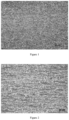
- the microstructure of the obtained pipeline steel is very fine bainite with grain size of 11.5.
- the microstructure morphology in the thickness direction is shown in Fig. 1 .
- the continuous casting billet with thickness no more than 370mm is produced by continuously casting the molten steel consistent with the chemical constituents of the prepared pipeline steel plate through the continuous casting machine.
- the chemical constituents of the obtained continuous casting billet includes: C: 0.03%, Si: 0.30%, Mn: 1.6%, S ⁇ 0.002%, P ⁇ 0.012%, Al: 0.03%, Cr: 0.25%, Nb + V + Ti: 0.06%, Ni: 0.25%, Cu: 0.15%, Ca: ⁇ 0.002%, N: ⁇ 0.0046%, Mo: 0.13%.
- the balance is Fe and unavoidable impurity elements.
- the continuous casting billet is heated to 1150 °C for 3.5 hours, discharged from the furnace, descaled by 20MPa high-pressure water, and then rolled in two stages: The first stage is rolled in the recrystallization zone, the start rolling temperature is 1150 °C, and rolled in seven passes, in which the deformation rate of two passes is ⁇ 19%.
- the final rolling temperature is 1050 °C, and the thickness of the intermediate billet obtained after rolling in the recrystallization zone is 90mm;
- the second stage is rolled in the non-recrystallization zone.
- the start rolling temperature is 850 °C
- the final rolling temperature is 810 °C
- the cumulative deformation rate of rolling in the non-recrystallization zone is ⁇ 70%
- the thickness of the finished pipeline steel plate is 22mm;
- the steel plate is sent to the cooling system through a 60m long roller table at the conveying speed of 1.1m/s. First, it is directly quenched in water, then air cooled to Ar 3 temperature after water is discharged, then is cooled rapidly by ACC, the final cooling temperature is 250 °C, and finally air cooled to room temperature.
- the microstructure of the obtained pipeline steel is very fine bainite with grain size of 11.5.
- the microstructure morphology in the thickness direction is shown in Fig. 1 .
- the microstructure is more uniform and the bainite grain is finer.
- the continuous casting billet with thickness no more than 370mm is produced by continuously casting the molten steel consistent with the chemical constituents of the prepared pipeline steel plate through the continuous casting machine.
- the chemical constituents of the obtained continuous casting billet includes: C: 0.033%, Si: 0.25%, Mn: 1.8%, S ⁇ 0.002%, P ⁇ 0.012%, Al: 0.03%, Cr: 0.25%, Nb+V+Ti: 0.08%, Ni: 0.3%, Cu: 0.12%, Ca: ⁇ 0.002%, N: ⁇ 0.0046%, Mo: 0.20%.
- the balance is Fe and unavoidable impurity elements.
- the continuous casting billet is heated to 1150 °C for 3.0 hours, discharged from the furnace, descaled by 20MPa high-pressure water, and then rolled in two stages: The first stage is rolled in the recrystallization zone, the start rolling temperature is 1150 °C, and rolled in five passes, in which the deformation rate of two passes is ⁇ 17%.
- the final rolling temperature is 1030 °C, and the thickness of the intermediate billet obtained after rolling in the recrystallization zone is 95mm;
- the second stage is rolled in the non-recrystallization zone.
- the start rolling temperature is 850 °C
- the final rolling temperature is 830 °C
- the cumulative deformation rate of rolling in the non-recrystallization zone is ⁇ 60%
- the thickness of the finished pipeline steel plate is 26.4mm
- the steel plate is sent to the cooling system through a 60m long roller table at the conveying speed of 1.55m/s. First, it is directly quenched in water, then air cooled to Ar 3 temperature after water is discharged, then is cooled rapidly by ACC, the final cooling temperature is 270 °C, and finally air cooled to room temperature.
- the microstructure of the obtained pipeline steel is very fine bainite.
- the continuous casting billet with a thickness of no more than 370mm is produced by continuously casting the molten steel consistent with the chemical constituents of the prepared pipeline steel plate through the continuous casting machine.
- the chemical constituents of the obtained continuous casting billet includes: C: 0.039%, Si: 0.25%, Mn: 1.85%, S ⁇ 0.002%, P ⁇ 0.012%, Al: 0.03%, Cr: 0.25%, Nb + V + Ti: 0.10%, Ni: 0.45%, Cu: 0.25%, Ca: ⁇ 0.002%, N: ⁇ 0.0046%, Mo: 0.20%.
- the balance is Fe and unavoidable impurity elements.
- the continuous casting billet is heated to 1160 °C for 4.0 hours, discharged from the furnace, descaled by 20MPa high-pressure water, and then rolled in two stages:
- the first stage is rolled in the recrystallization zone, the start rolling temperature is 1140 °C, and rolled in five passes, in which the deformation rate of two passes is ⁇ 17%.
- the final rolling temperature is 1050 °C, and the thickness of the intermediate billet obtained after rolling in the recrystallization zone is 110mm;
- the second stage is rolled in the non-recrystallization zone.
- the start rolling temperature is 870 °C
- the final rolling temperature is 840 °C
- the cumulative deformation rate of rolling in the non-recrystallization zone is ⁇ 60%
- the thickness of the finished pipeline steel plate is 33mm
- the steel plate is sent to the cooling system through a 85m long roller table at the conveying speed of 2.0m/s. First, it is directly quenched in water, then air cooled to Ar 3 temperature after water is discharged, then is cooled rapidly by ACC, the final cooling temperature is 280 °C, and finally air cooled to room temperature.
- the microstructure of the obtained pipeline steel is very fine bainite.
Landscapes
- Chemical & Material Sciences (AREA)
- Engineering & Computer Science (AREA)
- Mechanical Engineering (AREA)
- Materials Engineering (AREA)
- Metallurgy (AREA)
- Organic Chemistry (AREA)
- Physics & Mathematics (AREA)
- Thermal Sciences (AREA)
- Crystallography & Structural Chemistry (AREA)
- Heat Treatment Of Steel (AREA)
Claims (3)
- Rohrleitungsstahl mit sowohl Hitzebestand als auch Bestand gegen eine starke Verformung, der dadurch gekennzeichnet ist, dass die Legierungsbestandteile wie folgt sind: C: 0,015-0,039 %, Si: 0,15-0,35 %, Mn: 1,6-1,9 %, S: ≤ 0,002 %, P: ≤ 0,012 %, Al: 0,02-0,045 %, Cr: 0,15-0,35 %, 0,05 < Nb + V + Ti ≤ 0,1 %, wobei Nb, V und Ti nicht 0 sind, Ni: 0,15-0,50 %, Cu: 0,01-0,25 %, Ca: ≤ 0,002 %, N: ≤ 0,0046 %, Mo: 0,01-0,20 %, und wobei der Rest Fe und unvermeidbare Unreinheitselemente sind;wobei der Rohrleitungsstahl eine einphasige Bainitstruktur aufweist und die Korngröße von Bainit Grad 11,5 bis Grad 12 ist;wobei Querstreckfestigkeit des Rohrleitungsstahls Rt0,5: 490-550 MPa, Querzugfestigkeit Rm: ≥ 710 MPa, Querstreckverhältnis Rt0,5/ Rm ≤ 0,78, -20 °C Kerbschlagenergie ≥ 350J, -20 °C Fallgewichtsscherfläche SA% ≥ 90 %; Längsstreckfestigkeit 460-530 MPa; Längszugfestigkeit ≥ 690 MPa, Längsgleichmaßdehnung Uel ≥ 11 %, Längsertragsverhältnis ≤ 0,77; Längsspannungsverhältnis Rt1,5/Rt0,5 ≥1,18, Rt2,0/Rt1,0≥1,1 ist;und der Hitzebestand des Rohrleitungsstahls: nach Einweichen in einer Lösung gemäß NACE TM0284-2004 A für 96 Stunden ist die Risslängenrate % 0, ist die Rissbreitenrate % 0 und ist die Rissempfindlichkeitsrate % 0.
- Produktionsverfahren für Rohrleitungsstahl mit sowohl Hitzebestand als auch Bestand gegen eine starke Verformung nach Anspruch 1, wobei ein Stranggussblock 3-4 Stunden auf 1120-1160 °C erhitzt, aus dem Ofen entfernt, durch Hochdruckwasser entzundert und dann in zwei Stufen gewalzt wird:die erste Stufe Walzen in Rekristallisationszonen ist, wobei die Startwalztemperatur 1110-1150 °C ist und nach dem Walzen von mehreren Durchgängen die finale Walztemperatur 1030-1080 °C ist, wobei eine Verformungsrate von zwei Durchgängen ≥19 % ist;die zweite Stufe Walzen in Nichtrekristallisationszonen ist, wobei die Startwalztemperatur 830-900 °C ist, die finale Walztemperatur 750-840 °C ist und die Gesamtverformungsrate des Walzens in der zweiten Stufe ≥70 % ist;nach dem Walzen die Stahlplatte zu einem Kühlsystem durch einen 45 m-95 m langen Walztisch mit einer Fördergeschwindigkeit von V=a* H geschickt wird, wobei H Dicke von Stahl mm ist, a= 0,05-0,08 m/(s*mm);in dem Kühlsystem, zuerst direktes Abschrecken in Wasser, dann Luftkühlen auf Ar3-Temperatur und dann schnelles Abkühlen, und eine finale Kühltemperatur gesteuert wird, um niedriger als 280 °C zu sein, Richten, wenn die Stahlplatte noch warm ist, und schließlich Luftkühlen auf Raumtemperatur, um Rohrleitungsstahl Grad X80 mit sowohl Hitzebestand als auch Bestand gegen eine starke Verformung zu erhalten.
- Produktionsverfahren für Rohrleitungsstahl mit sowohl Hitzebestand als auch Bestand gegen eine starke Verformung nach Anspruch 2, wobei ACC-Wasserkühlung für schnelle Kühlung in dem Kühlsystem angenommen wird.
Applications Claiming Priority (2)
| Application Number | Priority Date | Filing Date | Title |
|---|---|---|---|
| CN201911245533.5A CN110964991B (zh) | 2019-12-07 | 2019-12-07 | 一种兼具抗hic和抗大变形的管线钢及其制造方法 |
| PCT/CN2020/088281 WO2021109439A1 (zh) | 2019-12-07 | 2020-04-30 | 一种兼具抗hic和抗大变形的管线钢及其制造方法 |
Publications (3)
| Publication Number | Publication Date |
|---|---|
| EP4015669A1 EP4015669A1 (de) | 2022-06-22 |
| EP4015669A4 EP4015669A4 (de) | 2022-12-21 |
| EP4015669B1 true EP4015669B1 (de) | 2025-05-07 |
Family
ID=70033279
Family Applications (1)
| Application Number | Title | Priority Date | Filing Date |
|---|---|---|---|
| EP20896953.5A Active EP4015669B1 (de) | 2019-12-07 | 2020-04-30 | Hitzebeständiger und stark verformungsbeständiger rohrleitungsstahl und herstellungsverfahren dafür |
Country Status (3)
| Country | Link |
|---|---|
| EP (1) | EP4015669B1 (de) |
| CN (1) | CN110964991B (de) |
| WO (1) | WO2021109439A1 (de) |
Families Citing this family (7)
| Publication number | Priority date | Publication date | Assignee | Title |
|---|---|---|---|---|
| CN110964991B (zh) * | 2019-12-07 | 2021-02-26 | 江阴兴澄特种钢铁有限公司 | 一种兼具抗hic和抗大变形的管线钢及其制造方法 |
| CN111690801B (zh) * | 2020-05-25 | 2021-11-02 | 中天钢铁集团有限公司 | 一种获得全贝氏体组织的合金工具钢盘条生产工艺 |
| CN111961957B (zh) * | 2020-06-29 | 2022-04-05 | 江阴兴澄特种钢铁有限公司 | 一种既具耐海水腐蚀又具抗大变形的x80级管线钢板及其制造方法 |
| CN113913695B (zh) * | 2021-10-13 | 2022-10-18 | 鞍钢股份有限公司 | 耐腐蚀抗疲劳水下油气采输用管线钢及其生产方法 |
| CN114836683B (zh) * | 2022-03-22 | 2023-09-15 | 江阴兴澄特种钢铁有限公司 | 一种适用于湿硫化氢环境的高强度高韧性低屈强比管线钢钢板及其制造方法 |
| CN115181907B (zh) * | 2022-07-06 | 2023-05-12 | 鞍钢股份有限公司 | 一种高强度高应变强化型含v管线宽厚板及其生产方法 |
| CN119643421B (zh) * | 2023-09-15 | 2025-10-10 | 中国石油化工股份有限公司 | 含硫气田集输管道环焊缝的服役抗硫性能评价和预测方法 |
Family Cites Families (15)
| Publication number | Priority date | Publication date | Assignee | Title |
|---|---|---|---|---|
| CN102011064B (zh) * | 2010-11-18 | 2013-06-19 | 中国石油天然气集团公司 | 一种x80级低温管件用钢的应用 |
| JP5782828B2 (ja) * | 2011-05-24 | 2015-09-24 | Jfeスチール株式会社 | 高圧縮強度鋼管及びその製造方法 |
| JP5565420B2 (ja) * | 2012-02-02 | 2014-08-06 | 新日鐵住金株式会社 | ラインパイプ用uoe鋼管 |
| JP2015189984A (ja) * | 2014-03-27 | 2015-11-02 | Jfeスチール株式会社 | 低降伏比高強度高靭性鋼板、低降伏比高強度高靭性鋼板の製造方法および鋼管 |
| CN104250713B (zh) * | 2014-09-19 | 2017-01-11 | 江阴兴澄特种钢铁有限公司 | 一种x80级抗大变形管线钢板及其制造方法 |
| JP6222041B2 (ja) * | 2014-10-30 | 2017-11-01 | Jfeスチール株式会社 | 耐hic性能に優れた極厚鋼板およびその製造方法 |
| CN104451446B (zh) * | 2014-12-05 | 2017-01-25 | 武汉钢铁(集团)公司 | 一种厚规格高强韧性贝氏体工程用钢及其生产方法 |
| JP6256654B2 (ja) * | 2015-03-26 | 2018-01-10 | Jfeスチール株式会社 | 構造管用厚肉鋼板、構造管用厚肉鋼板の製造方法、および構造管 |
| CN108342655B (zh) * | 2017-01-22 | 2020-10-27 | 宝山钢铁股份有限公司 | 一种调质型抗酸管线钢及其制造方法 |
| CN108342651A (zh) * | 2018-04-02 | 2018-07-31 | 首钢集团有限公司 | 一种耐微生物腐蚀管线钢板及其制备方法 |
| CN109252089B (zh) * | 2018-08-20 | 2020-11-06 | 安阳钢铁股份有限公司 | 一种应变设计管线钢x65钢板及其生产方法 |
| CN109128065B (zh) * | 2018-09-25 | 2020-07-21 | 湖南华菱湘潭钢铁有限公司 | 一种深海管道用中厚钢板的生产方法 |
| CN110284066B (zh) * | 2019-07-24 | 2021-04-16 | 宝钢湛江钢铁有限公司 | 一种薄规格低屈强比管线钢及其制造方法 |
| CN110964991B (zh) * | 2019-12-07 | 2021-02-26 | 江阴兴澄特种钢铁有限公司 | 一种兼具抗hic和抗大变形的管线钢及其制造方法 |
| CN111961957B (zh) * | 2020-06-29 | 2022-04-05 | 江阴兴澄特种钢铁有限公司 | 一种既具耐海水腐蚀又具抗大变形的x80级管线钢板及其制造方法 |
-
2019
- 2019-12-07 CN CN201911245533.5A patent/CN110964991B/zh active Active
-
2020
- 2020-04-30 WO PCT/CN2020/088281 patent/WO2021109439A1/zh not_active Ceased
- 2020-04-30 EP EP20896953.5A patent/EP4015669B1/de active Active
Also Published As
| Publication number | Publication date |
|---|---|
| CN110964991A (zh) | 2020-04-07 |
| WO2021109439A1 (zh) | 2021-06-10 |
| CN110964991B (zh) | 2021-02-26 |
| EP4015669A4 (de) | 2022-12-21 |
| EP4015669A1 (de) | 2022-06-22 |
Similar Documents
| Publication | Publication Date | Title |
|---|---|---|
| CN103014554B (zh) | 一种低屈强比高韧性钢板及其制造方法 | |
| EP4015669A1 (de) | Hitzebeständiger und stark verformungsbeständiger rohrleitungsstahl und herstellungsverfahren dafür | |
| CN101418416B (zh) | 屈服强度800MPa级低焊接裂纹敏感性钢板及其制造方法 | |
| CN103526111B (zh) | 屈服强度900MPa级热轧板带钢及其制备方法 | |
| CN101985722B (zh) | 低屈强比细晶粒高强管线钢板及其生产方法 | |
| US11053563B2 (en) | X80 pipeline steel with good strain-aging performance, pipeline tube and method for producing same | |
| CN103952643B (zh) | 一种屈服强度690MPa级低屈强比钢板及其制备方法 | |
| CN102953018B (zh) | 高强度管线用钢、钢管及其制造方法 | |
| US20200255917A1 (en) | Steel for coiled tubing with low yield ratio and ultra-high strength and preparation method thereof | |
| CN111996449B (zh) | 一种塑韧性优异的管线用厚板及其生产方法 | |
| CN104250713B (zh) | 一种x80级抗大变形管线钢板及其制造方法 | |
| CN110284066B (zh) | 一种薄规格低屈强比管线钢及其制造方法 | |
| CN102912250B (zh) | 一种油气输送用经济型低屈强比管件用钢及其生产方法 | |
| CN115558863B (zh) | 一种屈服强度≥750MPa的低屈强比海工钢及其生产工艺 | |
| JP7244718B2 (ja) | 低温靭性と延伸率に優れ降伏比が小さい厚物高強度ラインパイプ用鋼材及びその製造方法 | |
| KR101778406B1 (ko) | 극저온인성이 우수한 후물 고강도 라인파이프 강재 및 제조방법 | |
| CN101512033B (zh) | 高温强度、韧性和耐再热脆化特性优异的耐火钢材及其制造方法 | |
| CN111893386B (zh) | 基于塑变和抗压溃性设计深水管线用厚板及其生产方法 | |
| CN111542621A (zh) | 高强度高韧性的热轧钢板及其制造方法 | |
| CN111321354B (zh) | 一种x70m热轧钢带及其制造方法 | |
| CN104451446B (zh) | 一种厚规格高强韧性贝氏体工程用钢及其生产方法 | |
| CN104532158A (zh) | 一种屈服强度800MPa级调质高强钢及其生产方法 | |
| CN101591756A (zh) | 屈服强度620MPa级低裂纹敏感性钢板及其制造方法 | |
| CN103014553A (zh) | 一种屈服强度630MPa级高强度高韧性钢板及其制造方法 | |
| KR101647226B1 (ko) | 파괴전파 저항성 및 항복비 특성이 우수한 강재 및 그 제조방법 |
Legal Events
| Date | Code | Title | Description |
|---|---|---|---|
| STAA | Information on the status of an ep patent application or granted ep patent |
Free format text: STATUS: THE INTERNATIONAL PUBLICATION HAS BEEN MADE |
|
| PUAI | Public reference made under article 153(3) epc to a published international application that has entered the european phase |
Free format text: ORIGINAL CODE: 0009012 |
|
| STAA | Information on the status of an ep patent application or granted ep patent |
Free format text: STATUS: REQUEST FOR EXAMINATION WAS MADE |
|
| 17P | Request for examination filed |
Effective date: 20220316 |
|
| AK | Designated contracting states |
Kind code of ref document: A1 Designated state(s): AL AT BE BG CH CY CZ DE DK EE ES FI FR GB GR HR HU IE IS IT LI LT LU LV MC MK MT NL NO PL PT RO RS SE SI SK SM TR |
|
| A4 | Supplementary search report drawn up and despatched |
Effective date: 20221118 |
|
| RIC1 | Information provided on ipc code assigned before grant |
Ipc: C21D 8/02 20060101ALI20221115BHEP Ipc: C22C 38/06 20060101ALI20221115BHEP Ipc: C22C 38/02 20060101ALI20221115BHEP Ipc: C22C 38/44 20060101ALI20221115BHEP Ipc: C22C 38/42 20060101ALI20221115BHEP Ipc: C22C 38/50 20060101ALI20221115BHEP Ipc: C22C 38/46 20060101ALI20221115BHEP Ipc: C22C 38/48 20060101ALI20221115BHEP Ipc: C22C 38/58 20060101AFI20221115BHEP |
|
| DAV | Request for validation of the european patent (deleted) | ||
| DAX | Request for extension of the european patent (deleted) | ||
| REG | Reference to a national code |
Ref country code: DE Ref legal event code: R079 Free format text: PREVIOUS MAIN CLASS: C22C0038580000 Ipc: C22C0038040000 Ref document number: 602020051076 Country of ref document: DE |
|
| GRAP | Despatch of communication of intention to grant a patent |
Free format text: ORIGINAL CODE: EPIDOSNIGR1 |
|
| STAA | Information on the status of an ep patent application or granted ep patent |
Free format text: STATUS: GRANT OF PATENT IS INTENDED |
|
| RIC1 | Information provided on ipc code assigned before grant |
Ipc: C21D 1/613 20060101ALI20250211BHEP Ipc: C21D 1/60 20060101ALI20250211BHEP Ipc: C21D 1/19 20060101ALI20250211BHEP Ipc: C21D 1/02 20060101ALI20250211BHEP Ipc: C21D 9/46 20060101ALI20250211BHEP Ipc: C21D 8/02 20060101ALI20250211BHEP Ipc: C22C 38/06 20060101ALI20250211BHEP Ipc: C22C 38/02 20060101ALI20250211BHEP Ipc: C22C 38/44 20060101ALI20250211BHEP Ipc: C22C 38/42 20060101ALI20250211BHEP Ipc: C22C 38/50 20060101ALI20250211BHEP Ipc: C22C 38/46 20060101ALI20250211BHEP Ipc: C22C 38/48 20060101ALI20250211BHEP Ipc: C22C 38/58 20060101ALI20250211BHEP Ipc: C22C 38/04 20060101AFI20250211BHEP |
|
| INTG | Intention to grant announced |
Effective date: 20250220 |
|
| GRAS | Grant fee paid |
Free format text: ORIGINAL CODE: EPIDOSNIGR3 |
|
| GRAA | (expected) grant |
Free format text: ORIGINAL CODE: 0009210 |
|
| STAA | Information on the status of an ep patent application or granted ep patent |
Free format text: STATUS: THE PATENT HAS BEEN GRANTED |
|
| AK | Designated contracting states |
Kind code of ref document: B1 Designated state(s): AL AT BE BG CH CY CZ DE DK EE ES FI FR GB GR HR HU IE IS IT LI LT LU LV MC MK MT NL NO PL PT RO RS SE SI SK SM TR |
|
| REG | Reference to a national code |
Ref country code: GB Ref legal event code: FG4D |
|
| REG | Reference to a national code |
Ref country code: CH Ref legal event code: EP |
|
| REG | Reference to a national code |
Ref country code: DE Ref legal event code: R096 Ref document number: 602020051076 Country of ref document: DE |
|
| REG | Reference to a national code |
Ref country code: IE Ref legal event code: FG4D |
|
| REG | Reference to a national code |
Ref country code: NL Ref legal event code: MP Effective date: 20250507 |
|
| PG25 | Lapsed in a contracting state [announced via postgrant information from national office to epo] |
Ref country code: PT Free format text: LAPSE BECAUSE OF FAILURE TO SUBMIT A TRANSLATION OF THE DESCRIPTION OR TO PAY THE FEE WITHIN THE PRESCRIBED TIME-LIMIT Effective date: 20250908 Ref country code: FI Free format text: LAPSE BECAUSE OF FAILURE TO SUBMIT A TRANSLATION OF THE DESCRIPTION OR TO PAY THE FEE WITHIN THE PRESCRIBED TIME-LIMIT Effective date: 20250507 Ref country code: ES Free format text: LAPSE BECAUSE OF FAILURE TO SUBMIT A TRANSLATION OF THE DESCRIPTION OR TO PAY THE FEE WITHIN THE PRESCRIBED TIME-LIMIT Effective date: 20250507 |
|
| REG | Reference to a national code |
Ref country code: LT Ref legal event code: MG9D |
|
| PG25 | Lapsed in a contracting state [announced via postgrant information from national office to epo] |
Ref country code: GR Free format text: LAPSE BECAUSE OF FAILURE TO SUBMIT A TRANSLATION OF THE DESCRIPTION OR TO PAY THE FEE WITHIN THE PRESCRIBED TIME-LIMIT Effective date: 20250808 Ref country code: NO Free format text: LAPSE BECAUSE OF FAILURE TO SUBMIT A TRANSLATION OF THE DESCRIPTION OR TO PAY THE FEE WITHIN THE PRESCRIBED TIME-LIMIT Effective date: 20250807 |
|
| PG25 | Lapsed in a contracting state [announced via postgrant information from national office to epo] |
Ref country code: NL Free format text: LAPSE BECAUSE OF FAILURE TO SUBMIT A TRANSLATION OF THE DESCRIPTION OR TO PAY THE FEE WITHIN THE PRESCRIBED TIME-LIMIT Effective date: 20250507 Ref country code: PL Free format text: LAPSE BECAUSE OF FAILURE TO SUBMIT A TRANSLATION OF THE DESCRIPTION OR TO PAY THE FEE WITHIN THE PRESCRIBED TIME-LIMIT Effective date: 20250507 |
|
| REG | Reference to a national code |
Ref country code: AT Ref legal event code: MK05 Ref document number: 1792534 Country of ref document: AT Kind code of ref document: T Effective date: 20250507 |
|
| PG25 | Lapsed in a contracting state [announced via postgrant information from national office to epo] |
Ref country code: BG Free format text: LAPSE BECAUSE OF FAILURE TO SUBMIT A TRANSLATION OF THE DESCRIPTION OR TO PAY THE FEE WITHIN THE PRESCRIBED TIME-LIMIT Effective date: 20250507 |
|
| PG25 | Lapsed in a contracting state [announced via postgrant information from national office to epo] |
Ref country code: HR Free format text: LAPSE BECAUSE OF FAILURE TO SUBMIT A TRANSLATION OF THE DESCRIPTION OR TO PAY THE FEE WITHIN THE PRESCRIBED TIME-LIMIT Effective date: 20250507 |
|
| PG25 | Lapsed in a contracting state [announced via postgrant information from national office to epo] |
Ref country code: AT Free format text: LAPSE BECAUSE OF FAILURE TO SUBMIT A TRANSLATION OF THE DESCRIPTION OR TO PAY THE FEE WITHIN THE PRESCRIBED TIME-LIMIT Effective date: 20250507 |
|
| PG25 | Lapsed in a contracting state [announced via postgrant information from national office to epo] |
Ref country code: RS Free format text: LAPSE BECAUSE OF FAILURE TO SUBMIT A TRANSLATION OF THE DESCRIPTION OR TO PAY THE FEE WITHIN THE PRESCRIBED TIME-LIMIT Effective date: 20250807 |
|
| PG25 | Lapsed in a contracting state [announced via postgrant information from national office to epo] |
Ref country code: IS Free format text: LAPSE BECAUSE OF FAILURE TO SUBMIT A TRANSLATION OF THE DESCRIPTION OR TO PAY THE FEE WITHIN THE PRESCRIBED TIME-LIMIT Effective date: 20250907 |
|
| PG25 | Lapsed in a contracting state [announced via postgrant information from national office to epo] |
Ref country code: LV Free format text: LAPSE BECAUSE OF FAILURE TO SUBMIT A TRANSLATION OF THE DESCRIPTION OR TO PAY THE FEE WITHIN THE PRESCRIBED TIME-LIMIT Effective date: 20250507 |
|
| PG25 | Lapsed in a contracting state [announced via postgrant information from national office to epo] |
Ref country code: DK Free format text: LAPSE BECAUSE OF FAILURE TO SUBMIT A TRANSLATION OF THE DESCRIPTION OR TO PAY THE FEE WITHIN THE PRESCRIBED TIME-LIMIT Effective date: 20250507 Ref country code: SM Free format text: LAPSE BECAUSE OF FAILURE TO SUBMIT A TRANSLATION OF THE DESCRIPTION OR TO PAY THE FEE WITHIN THE PRESCRIBED TIME-LIMIT Effective date: 20250507 |
|
| PG25 | Lapsed in a contracting state [announced via postgrant information from national office to epo] |
Ref country code: CZ Free format text: LAPSE BECAUSE OF FAILURE TO SUBMIT A TRANSLATION OF THE DESCRIPTION OR TO PAY THE FEE WITHIN THE PRESCRIBED TIME-LIMIT Effective date: 20250507 |
|
| PG25 | Lapsed in a contracting state [announced via postgrant information from national office to epo] |
Ref country code: EE Free format text: LAPSE BECAUSE OF FAILURE TO SUBMIT A TRANSLATION OF THE DESCRIPTION OR TO PAY THE FEE WITHIN THE PRESCRIBED TIME-LIMIT Effective date: 20250507 |
|
| PG25 | Lapsed in a contracting state [announced via postgrant information from national office to epo] |
Ref country code: RO Free format text: LAPSE BECAUSE OF FAILURE TO SUBMIT A TRANSLATION OF THE DESCRIPTION OR TO PAY THE FEE WITHIN THE PRESCRIBED TIME-LIMIT Effective date: 20250507 Ref country code: SK Free format text: LAPSE BECAUSE OF FAILURE TO SUBMIT A TRANSLATION OF THE DESCRIPTION OR TO PAY THE FEE WITHIN THE PRESCRIBED TIME-LIMIT Effective date: 20250507 |
|
| PG25 | Lapsed in a contracting state [announced via postgrant information from national office to epo] |
Ref country code: IT Free format text: LAPSE BECAUSE OF FAILURE TO SUBMIT A TRANSLATION OF THE DESCRIPTION OR TO PAY THE FEE WITHIN THE PRESCRIBED TIME-LIMIT Effective date: 20250507 |
|
| REG | Reference to a national code |
Ref country code: DE Ref legal event code: R097 Ref document number: 602020051076 Country of ref document: DE |
|
| PLBE | No opposition filed within time limit |
Free format text: ORIGINAL CODE: 0009261 |
|
| STAA | Information on the status of an ep patent application or granted ep patent |
Free format text: STATUS: NO OPPOSITION FILED WITHIN TIME LIMIT |
|
| REG | Reference to a national code |
Ref country code: CH Ref legal event code: L10 Free format text: ST27 STATUS EVENT CODE: U-0-0-L10-L00 (AS PROVIDED BY THE NATIONAL OFFICE) Effective date: 20260318 |
|
| 26N | No opposition filed |
Effective date: 20260210 |