EP4013497B1 - Zur behandlung und prophylaxe von muskelschwund und anderer leiden geeignete verbinungen - Google Patents
Zur behandlung und prophylaxe von muskelschwund und anderer leiden geeignete verbinungen Download PDFInfo
- Publication number
- EP4013497B1 EP4013497B1 EP20764952.6A EP20764952A EP4013497B1 EP 4013497 B1 EP4013497 B1 EP 4013497B1 EP 20764952 A EP20764952 A EP 20764952A EP 4013497 B1 EP4013497 B1 EP 4013497B1
- Authority
- EP
- European Patent Office
- Prior art keywords
- group
- compound
- methyl
- myomed
- hydrogen
- Prior art date
- Legal status (The legal status is an assumption and is not a legal conclusion. Google has not performed a legal analysis and makes no representation as to the accuracy of the status listed.)
- Active
Links
Images












Classifications
-
- C—CHEMISTRY; METALLURGY
- C07—ORGANIC CHEMISTRY
- C07D—HETEROCYCLIC COMPOUNDS
- C07D407/00—Heterocyclic compounds containing two or more hetero rings, at least one ring having oxygen atoms as the only ring hetero atoms, not provided for by group C07D405/00
- C07D407/02—Heterocyclic compounds containing two or more hetero rings, at least one ring having oxygen atoms as the only ring hetero atoms, not provided for by group C07D405/00 containing two hetero rings
- C07D407/12—Heterocyclic compounds containing two or more hetero rings, at least one ring having oxygen atoms as the only ring hetero atoms, not provided for by group C07D405/00 containing two hetero rings linked by a chain containing hetero atoms as chain links
-
- C—CHEMISTRY; METALLURGY
- C07—ORGANIC CHEMISTRY
- C07D—HETEROCYCLIC COMPOUNDS
- C07D311/00—Heterocyclic compounds containing six-membered rings having one oxygen atom as the only hetero atom, condensed with other rings
- C07D311/02—Heterocyclic compounds containing six-membered rings having one oxygen atom as the only hetero atom, condensed with other rings ortho- or peri-condensed with carbocyclic rings or ring systems
- C07D311/04—Benzo[b]pyrans, not hydrogenated in the carbocyclic ring
- C07D311/06—Benzo[b]pyrans, not hydrogenated in the carbocyclic ring with oxygen or sulfur atoms directly attached in position 2
- C07D311/08—Benzo[b]pyrans, not hydrogenated in the carbocyclic ring with oxygen or sulfur atoms directly attached in position 2 not hydrogenated in the hetero ring
- C07D311/16—Benzo[b]pyrans, not hydrogenated in the carbocyclic ring with oxygen or sulfur atoms directly attached in position 2 not hydrogenated in the hetero ring substituted in position 7
-
- C—CHEMISTRY; METALLURGY
- C07—ORGANIC CHEMISTRY
- C07D—HETEROCYCLIC COMPOUNDS
- C07D405/00—Heterocyclic compounds containing both one or more hetero rings having oxygen atoms as the only ring hetero atoms, and one or more rings having nitrogen as the only ring hetero atom
- C07D405/02—Heterocyclic compounds containing both one or more hetero rings having oxygen atoms as the only ring hetero atoms, and one or more rings having nitrogen as the only ring hetero atom containing two hetero rings
- C07D405/12—Heterocyclic compounds containing both one or more hetero rings having oxygen atoms as the only ring hetero atoms, and one or more rings having nitrogen as the only ring hetero atom containing two hetero rings linked by a chain containing hetero atoms as chain links
-
- A—HUMAN NECESSITIES
- A61—MEDICAL OR VETERINARY SCIENCE; HYGIENE
- A61K—PREPARATIONS FOR MEDICAL, DENTAL OR TOILETRY PURPOSES
- A61K31/00—Medicinal preparations containing organic active ingredients
- A61K31/33—Heterocyclic compounds
- A61K31/335—Heterocyclic compounds having oxygen as the only ring hetero atom, e.g. fungichromin
- A61K31/35—Heterocyclic compounds having oxygen as the only ring hetero atom, e.g. fungichromin having six-membered rings with one oxygen as the only ring hetero atom
- A61K31/352—Heterocyclic compounds having oxygen as the only ring hetero atom, e.g. fungichromin having six-membered rings with one oxygen as the only ring hetero atom condensed with carbocyclic rings, e.g. methantheline
-
- A—HUMAN NECESSITIES
- A61—MEDICAL OR VETERINARY SCIENCE; HYGIENE
- A61K—PREPARATIONS FOR MEDICAL, DENTAL OR TOILETRY PURPOSES
- A61K31/00—Medicinal preparations containing organic active ingredients
- A61K31/33—Heterocyclic compounds
- A61K31/38—Heterocyclic compounds having sulfur as a ring hetero atom
- A61K31/381—Heterocyclic compounds having sulfur as a ring hetero atom having five-membered rings
-
- A—HUMAN NECESSITIES
- A61—MEDICAL OR VETERINARY SCIENCE; HYGIENE
- A61K—PREPARATIONS FOR MEDICAL, DENTAL OR TOILETRY PURPOSES
- A61K31/00—Medicinal preparations containing organic active ingredients
- A61K31/33—Heterocyclic compounds
- A61K31/395—Heterocyclic compounds having nitrogen as a ring hetero atom, e.g. guanethidine or rifamycins
- A61K31/435—Heterocyclic compounds having nitrogen as a ring hetero atom, e.g. guanethidine or rifamycins having six-membered rings with one nitrogen as the only ring hetero atom
- A61K31/44—Non condensed pyridines; Hydrogenated derivatives thereof
- A61K31/4427—Non condensed pyridines; Hydrogenated derivatives thereof containing further heterocyclic ring systems
- A61K31/4433—Non condensed pyridines; Hydrogenated derivatives thereof containing further heterocyclic ring systems containing a six-membered ring with oxygen as a ring hetero atom
-
- A—HUMAN NECESSITIES
- A61—MEDICAL OR VETERINARY SCIENCE; HYGIENE
- A61P—SPECIFIC THERAPEUTIC ACTIVITY OF CHEMICAL COMPOUNDS OR MEDICINAL PREPARATIONS
- A61P21/00—Drugs for disorders of the muscular or neuromuscular system
-
- A—HUMAN NECESSITIES
- A61—MEDICAL OR VETERINARY SCIENCE; HYGIENE
- A61P—SPECIFIC THERAPEUTIC ACTIVITY OF CHEMICAL COMPOUNDS OR MEDICINAL PREPARATIONS
- A61P3/00—Drugs for disorders of the metabolism
- A61P3/08—Drugs for disorders of the metabolism for glucose homeostasis
- A61P3/10—Drugs for disorders of the metabolism for glucose homeostasis for hyperglycaemia, e.g. antidiabetics
-
- A—HUMAN NECESSITIES
- A61—MEDICAL OR VETERINARY SCIENCE; HYGIENE
- A61P—SPECIFIC THERAPEUTIC ACTIVITY OF CHEMICAL COMPOUNDS OR MEDICINAL PREPARATIONS
- A61P9/00—Drugs for disorders of the cardiovascular system
- A61P9/04—Inotropic agents, i.e. stimulants of cardiac contraction; Drugs for heart failure
-
- C—CHEMISTRY; METALLURGY
- C07—ORGANIC CHEMISTRY
- C07D—HETEROCYCLIC COMPOUNDS
- C07D311/00—Heterocyclic compounds containing six-membered rings having one oxygen atom as the only hetero atom, condensed with other rings
- C07D311/02—Heterocyclic compounds containing six-membered rings having one oxygen atom as the only hetero atom, condensed with other rings ortho- or peri-condensed with carbocyclic rings or ring systems
- C07D311/04—Benzo[b]pyrans, not hydrogenated in the carbocyclic ring
- C07D311/06—Benzo[b]pyrans, not hydrogenated in the carbocyclic ring with oxygen or sulfur atoms directly attached in position 2
- C07D311/08—Benzo[b]pyrans, not hydrogenated in the carbocyclic ring with oxygen or sulfur atoms directly attached in position 2 not hydrogenated in the hetero ring
- C07D311/18—Benzo[b]pyrans, not hydrogenated in the carbocyclic ring with oxygen or sulfur atoms directly attached in position 2 not hydrogenated in the hetero ring substituted otherwise than in position 3 or 7
-
- C—CHEMISTRY; METALLURGY
- C07—ORGANIC CHEMISTRY
- C07D—HETEROCYCLIC COMPOUNDS
- C07D409/00—Heterocyclic compounds containing two or more hetero rings, at least one ring having sulfur atoms as the only ring hetero atoms
- C07D409/02—Heterocyclic compounds containing two or more hetero rings, at least one ring having sulfur atoms as the only ring hetero atoms containing two hetero rings
- C07D409/12—Heterocyclic compounds containing two or more hetero rings, at least one ring having sulfur atoms as the only ring hetero atoms containing two hetero rings linked by a chain containing hetero atoms as chain links
-
- C—CHEMISTRY; METALLURGY
- C07—ORGANIC CHEMISTRY
- C07D—HETEROCYCLIC COMPOUNDS
- C07D411/00—Heterocyclic compounds containing two or more hetero rings, at least one ring having oxygen and sulfur atoms as the only ring hetero atoms
- C07D411/02—Heterocyclic compounds containing two or more hetero rings, at least one ring having oxygen and sulfur atoms as the only ring hetero atoms containing two hetero rings
- C07D411/12—Heterocyclic compounds containing two or more hetero rings, at least one ring having oxygen and sulfur atoms as the only ring hetero atoms containing two hetero rings linked by a chain containing hetero atoms as chain links
Definitions
- the present invention relates to novel substituted 4-[2-oxo-chromen-7-yl)heteromethyl]benzoic acid compounds, in particular to the compounds of the general formula I as described herein.
- the compounds possess valuable therapeutic properties and are suitable for treating and for the prophylaxis of muscle wasting conditions as well as for treating or preventing myopathies, especially for such which are associated with an increased Muscle RING Finger 1 (MuRF1) expression.
- Muscle wasting and muscle weakness is a debilitating complication observed under a variety of clinical conditions, including cardiac cachexia, myocardial infarction, hypertension, cancer, cancer treatment with certain drugs, diabetes, renal diseases and renal failure, genetic muscle atrophy and severe infections, but also under several physical conditions which are not linked to a specific disease, such as immobilization, long term mechanical ventilation, prolonged weightlessness or old age. Muscle wasting is characterized by the loss of muscle mass, which occurs in both limb and respiratory muscles. Muscle wasting typically leads to an exacerbation of the symptoms and prognosis and prolongs convalescence.
- muscle wasting includes activation of so-called atrogins, which enhance the degradation of muscle proteins via the autophagosome and ubiquitin proteasome system (UPS).
- atrogins which enhance the degradation of muscle proteins via the autophagosome and ubiquitin proteasome system (UPS).
- WO2015/010107 A1 for example describes the use of small molecules to reduce muscle weakness and/or muscle wasting and/or cachexia by inhibiting the inflammatory cytokine-induced (IL-6-induced) tyrosine phosphorylation of the Signal Transducer and Activator of Transcription 3 (Stat 3).
- the inhibition of Stat 3 phosphorylation prevents the increased expression of myostatin, which is known to block muscle-growth by upregulating the expression of specific atrogins.
- MuRF1 is a muscle-specific ubiquitin E3 ligase, which is believed to provide a key step in the transfer of multi-ubiquitinated muscle proteins to the ubiquitin proteasome system for degradation. Its expression is intimately associated with muscle wasting in numerous clinical conditions, while its gene inactivation confers partial resistance to muscle wasting conditions. Numerous studies over the last 15 years have shown that many muscle related diseases, i.e. myopathies, such as for example critical illness myopathy, nemaline myopathy, chronic inflammatory myopathy, myopathy from diabetes or pulmonary hypertension, which results in muscular weakness, can be linked to an up-regulation of MuRF1 expression.
- myopathies such as for example critical illness myopathy, nemaline myopathy, chronic inflammatory myopathy, myopathy from diabetes or pulmonary hypertension, which results in muscular weakness, can be linked to an up-regulation of MuRF1 expression.
- TNF- ⁇ tumor necrosis factor alpha
- diaphragm fiber CSA is significantly smaller in rats with pulmonary hypertension (PH) compared with controls.
- studies on patients with PH revealed significantly reduced CSA and impaired contractility of diaphragm muscle fibers compared with control subjects. They further found that this reduction in diaphragm fiber CSA is associated with an increased expression of E3-ligases MAFbx and MuRF-1.
- the object of the present invention is to provide further small molecules that are suitable for use in the treatment and/or the prophylaxis of muscle wasting conditions or of conditions which can be attenuated by improving muscle conditions.
- any references to methods of treatment refer to the compounds, pharmaceutical compositions and medicaments of the present invention for use in a method for treatment of the human (or animal) body by therapy (or for diagnosis).
- R 1 is hydrogen or a group -CH 2 R 1a , where R 1a is selected from the group consisting of hydrogen, C 1 -C 3 -alkyl, phenyl, where phenyl is unsubstituted or may carry 1, 2 or 3 radicals independently selected from the group consisting of halogen, cyano, C 1 -C 3 -alkyl, C 1 -C 3 -haloalkyl and C 1 -C 3 -alkoxy; and a 5- to 10-membered heteroaromatic ring containing 1 to 4 heteroatoms or hetero-groups independently selected from the group consisting of N, NR c , O and S as ring member(s), where the 5- to 10-membered heteroaromatic ring is unsubstituted or may carry 1, 2 or 3 radicals R 7 ;
- the present invention therefore relates to the compounds of the general formula I and the pharmaceutically acceptable salts of the compounds of formula I.
- the present invention also relates to the compounds of the general formula I or the pharmaceutically acceptable salts thereof for use as a medicament.
- novel compounds are capable of attenuate muscle wasting and contractile dysfunction in cell tests as well as in clinically relevant animal models.
- the present invention therefore relates to the compounds of the general formula I or the pharmaceutically acceptable salts of the compounds of formula I for use in the treatment or prophylaxis of muscle wasting conditions.
- the present invention relates in particular to the compounds of the general formula I or the pharmaceutically acceptable salts of the compounds of formula I for use in the treatment or prophylaxis of skeletal or cardiac muscle atrophy resulting from one of the following diseases or conditions: congestive heart failure, chronic heart failure, cancer, cancer treatment with myotoxic substances, congenital myopathy, AIDS, chronic obstructive pulmonary disease (COPD), chronic renal diseases, renal failure, diabetes, severe burns, sarcopenia during aging, reduction in blood supply, temporary or long term immobilization, long term mechanical ventilation, denervation, prolonged weightlessness and malnutrition.
- diseases or conditions congestive heart failure, chronic heart failure, cancer, cancer treatment with myotoxic substances, congenital myopathy, AIDS, chronic obstructive pulmonary disease (COPD), chronic renal diseases, renal failure, diabetes, severe burns, sarcopenia during aging, reduction in blood supply, temporary or long term immobilization, long term mechanical ventilation, denervation, prolonged weightlessness and malnutrition
- the compounds of the present invention are potent inhibitors of MuRF 1 function by inhibiting the ubiquitin E3 ligase activity of MuRF 1 and the binding of MuRF1 to target muscle proteins, such as titin.
- the present invention further relates to the compounds of the general formula I or the pharmaceutically acceptable salts of the compounds of formula I for use in the treatment or prophylaxis of conditions which are associated with an increased Muscle RING Finger 1 (MuRF 1) expression, in particular of myopathies which are associated with an increased MuRF 1 expression.
- the invention therefore also relates to the compound of the general formula I or a pharmaceutically acceptable salt thereof for use in the treatment or prophylaxis of cardiac conditions associated with systolic or diastolic dysfunction.
- the invention therefore also relates to the compound of the general formula I or a pharmaceutically acceptable salt thereof for use in the treatment or prophylaxis of diabetes, especially diabetes type II.
- the invention further relates to a medicament, comprising at least one compound of the formula I, as described herein, or at least one pharmaceutically acceptable salt of the compound of the formula I.
- the invention further relates to a pharmaceutical composition
- a pharmaceutical composition comprising a compound selected from compounds of the general formula I, as described herein, or at least one pharmaceutically acceptable salt thereof and at least one pharmaceutically acceptable carrier.
- the invention further relates to the use of compounds selected from compounds of the general formula I, as defined herein, or pharmaceutically acceptable salts thereof for the manufacture of a medicament for the treatment or prophylaxis of muscle-wasting conditions; or for treatment or prophylaxis of the above-listed conditions or disorders.
- the invention further relates to a method for treating or preventing one of the above-listed conditions or disorders, said method comprising the step of administering a compound selected from compounds of the general formula I, as defined herein, or a pharmaceutically acceptable salts thereof to a subject in need thereof.
- pharmaceutically acceptable salts refers to cationic or anionic salts compounds, wherein the counter ion is derived from pharmaceutically acceptable nontoxic bases or acids including inorganic or organic bases and inorganic or organic acids. It will be understood that, as used herein, references to the compounds of formula I are meant to also include the pharmaceutically acceptable salts.
- salts may be prepared from pharmaceutically acceptable non-toxic acids, including inorganic and organic acids.
- pharmaceutically acceptable acid addition salts include, but are not limited to, acetic, trifluoroacetic acid, benzenesulfonic, benzoic, camphorsulfonic, citric, ethanesulfonic, fumaric, gluconic, glutamic, hydrobromic, hydrochloric, isethionic, lactic, maleic, malic, mandelic, methanesulfonic, mucic, nitric, pamoic, pantothenic, phosphoric, succinic, sulfuric, tartaric, p-toluenesulfonic acid, and the like.
- Particularly preferred are citric, hydrobromic, hydrochloric, maleic, phosphoric, sulfuric, fumaric, and tartaric acids.
- salts may be prepared from pharmaceutically acceptable non-toxic bases, including inorganic and organic bases.
- Pharmaceutically acceptable base salts include nontoxic salts derived from bases, including metal cations, such as an alkali or alkaline earth metal cation, as well as amines. Examples of suitable metal cations include lithium, sodium, potassium, magnesium, calcium, zinc, and aluminum.
- Suitable amines include arginine, N,N'-dibenzylethylenediamine, chloroprocaine, choline, diethylamine, diethanolamine, dicyclohexylamine, ethylenediamine, glycine, lysine, N-methylglucamine, olamine, 2-amino-2-hydroxymethyl-propane-1,3-diol, and procaine.
- Preferred pharmaceutically acceptable base salts are lithium, sodium, potassium, magnesium, calcium, zinc, aluminium and diethanolamine.
- C 1 -C 4 -alkyl refers to methyl, ethyl, n-propyl, isopropyl, n-butyl, sec.-butyl, isobutyl or tert.-butyl.
- C 1 -C 4 -alkyl is selected from methyl, ethyl, n-propyl, isopropyl, in particular from methyl and ethyl.
- C 1 -C 3 -alkyl refers to methyl, ethyl, n-propyl or isopropyl.
- C 1 -C 3 -alkyl is selected from methyl and ethyl, in particular from methyl.
- halogen refers to fluorine, chlorine, bromine, and iodine.
- halogen is fluorine and chlorine, in particular fluorine.
- fluorinated methyl refers to fluoromethyl, difluoromethyl, trifluoromethyl, preferably to trifluoromethyl.
- fluorinated methoxy refers to fluoromethoxy, difluoromethoxy, trifluoromethoxy, preferably to trifluoromethoxy.
- C 1 -C 3 -alkoxy refers to methoxy, ethoxy, n-propoxy and isopropoxy.
- C 1 -C 3 -alkoxy is selected from methoxy and ethoxy, in particular from methoxy.
- C 1 -C 3 -haloalkyl refers to a C 1 -C 3 -alkyl radical as defined above, where at least one of the hydrogen atoms, for example 1, 2, 3, 4, 5 or 6 hydrogen atoms, of the C 1 -C 3 -alkyl radical has been replaced by a halogen atom, preferably by an chlorine or fluorine atom, in particular by a fluorine atom.
- C 1 -C 3 -haloalkyl examples include chloromethyl, dichloromethyl, trichloromethyl, 2-chloroethyl, 2,2-dichloroethyl, 2,2,2-trichloroethyl, fluoromethyl, difluoromethyl, trifluoromethyl, 2-fluoroethyl, 2,2-difluoroethyl, 2,2,2-trifluoroethyl, 1-fluoroethyl, 1,1-difluoroethyl, 1,1,2,2-tetrafluoroethyl, pentafluoroethyl etc.
- C 1 -C 3 -haloalkyl is selected from fluorinated methyl, as defined above, and also from trichloromethyl, 2,2,2-trichloroethyl, and 2,2,2-trifluoroethyl, especially from trifluoromethyl.
- C 1 -C 3 -haloalkoxy refers to an C 1 -C 3 -alkoxy radical as defined above, where at least one of the hydrogen atoms, for example 1, 2, 3, 4, 5 or 6 hydrogen atoms, of the C 1 -C 3 -alkoxy radical has been replaced by a halogen atom, preferably by an chlorine or fluorine atom, in particular by a fluorine atom.
- C 1 -C 3 -haloalkoxy examples include chloromethoxy, dichloromethoxy, trichloromethoxy, 2-chloroethoxy, 2,2-dichloroethoxy, 2,2,2-trichloroethoxy, fluoromethoxy, difluoromethoxy, trifluoromethoxy, 2-fluoroethoxy, 2,2-difluoroethoxy, 2,2,2-trifluoroethoxy, 1-fluoroethoxy, 1,1-difluoroethoxy, 1,1,2,2-tetrafluoroethoxy, pentafluoroethoxy etc.
- C 1 -C 3 -haloalkoxy is selected from fluorinated methoxy, as defined above, and also from trichloromethoxy, 2,2,2-trichloroethoxy, and 2,2,2-trifluoroethoxy, especially from trifluoromethoxy.
- 5- to 10-membered heteroaromatic ring refers to a 5- to 6-membered monocyclic aromatic ring or a fused 8- to 10-membered bicyclic aromatic ring, where the monocylic or bicyclic aromatic ring contains 1 to 4 heteroatoms or hetero-groups independently selected from the group consisting of N, NR c , O and S, wherein R c is selected from the group consisting of hydrogen and C 1 -C 4 -alkyl.
- Examples of such 5- to 6-membered monocyclic aromatic rings include thienyl, furyl, pyrrolyl, furazanyl, pyrazolyl, imidazolyl, oxazolyl, isoxazolyl, thiazolyl, isothiazolyl, 1,2,3-triazolyl, 1,2,4-triazolyl, oxadiazolyl, thiadiazolyl, pyridyl, pyrimidyl, pyridazinyl, pyrazinyl, 1,2,4-triazinyl, 1,3,6-triazinyl and the like.
- Examples of such 8- to 10-membered bicyclic aromatic rings include quinolinyl, isoquinolinyl, imidazopyridyl, quinazolinyl, quinoxalinyl, pteridinyl, cinnolinyl, phthalazinyl, naphthyridinyl, indolyl, isoindolyl, azaindolyl, indolizinyl, indazolyl, purinyl, pyrrolopyridinyl, furopyridinyl, benzofuranyl, isobenzofuranyl, benzothienyl, benzoimidazolyl, benzoxazolyl, benzoisoxazolyl, benzothiazolyl, benzoisothiazolyl, benzoxadiazolyl, benzothiadiazolyl and the like.
- R 1 is preferably hydrogen or a group -CH 2 R 1a , where R 1a is selected from the group consisting of hydrogen, methyl, phenyl and a 5- to 10-membered heteroaromatic ring containing 1 to 4 heteroatoms or hetero-groups independently selected from the group consisting of N, NR c , O and S as ring member(s), where the 5- to 10-membered heteroaromatic ring is unsubstituted or may carry 1, 2 or 3 radicals R 7 , wherein R c and R 7 have one of the above general meanings or, in
- R 1 is selected from the group consisting of hydrogen and a group -CH 2 R 1a , where R 1a is selected from the group consisting of hydrogen, methyl and a 5- to 6-membered monocyclic heteroaromatic ring containing 1 to 3 heteroatoms, in particular 1 heteroatom, independently selected from the group consisting of N, O and S, as ring member(s), where the 5- to 6-membered monocyclic heteroaromatic ring is unsubstituted or carries 1 radical R 7 , where R 7 is selected from the group consisting of halogen, C 1 -C 3 -alkyl and C 1 -C 2 -alkoxy.
- R 1 is selected from the group consisting of hydrogen and a group - CH 2 R 1a , where R 1a is selected from the group consisting of hydrogen and an unsubstituted 5- to 6-membered monocyclic heteroaromatic ring containing 1 to 3 heteroatoms, in particular 1 heteroatom, independently selected from the group consisting of N, O and S, as ring member(s).
- R 1 is a group -CH 2 R 1a , where R 1a is an unsubstituted 5- to 6-membered monocyclic heteroaromatic ring containing 1 to 3 heteroatoms independently selected from the group consisting of N, O and S, as ring member(s).
- R 1 is a group -CH 2 R 1a , where R 1a is an unsubstituted 5- to 6-membered monocyclic heteroaromatic ring containing 1 heteroatom selected from the group consisting of N, O and S as ring member.
- R 1 is a group -CH 2 R 1a , where R 1a is furyl, thienyl or pyridyl.
- R 1 is selected from hydrogen, methyl and the group CH 2 -I' or CH 2 -II' wherein ⁇ indicates the point of attachment to the urea nitrogen atom and wherein
- R 1 is selected from the group consisting of CH 2 -I' and CH 2 -II' wherein * indicates the point of attachment to the urea nitrogen atom and wherein R 7 , X 3 and c are as defined herein.
- R 2 is preferably hydrogen or methyl. In particular R 2 is hydrogen.
- R 3 is preferably hydrogen or methyl. In particular R 3 is hydrogen.
- R 4 is preferably methyl or ethyl. In particular R 4 is methyl.
- each R 5 is independently selected from the group consisting of halogen, C 1 -C 3 -alkyl, C 1 -C 2 -haloalkyl and C 1 -C 2 -alkoxy fluorine. More preferably, each R 5 is independently selected from the group consisting of halogen, C 1 -C 3 -alkyl and C 1 -C 2 -alkoxy. Even more preferably, each R 5 is independently selected from the group consisting of fluorine, methyl and trifluoromethyl. In particular, each R 5 is independently selected from the group consisting of fluorine and methyl.
- each R 6 is independently selected from the group consisting of halogen, C 1 -C 3 -alkyl, C 1 -C 2 -haloalkyl and C 1 -C 2 -alkoxy fluorine. More preferably, each R 6 is independently selected from the group consisting of halogen, C 1 -C 3 -alkyl and C 1 -C 2 -alkoxy. Even more preferably, each R 6 is independently selected from fluorine, methyl and trifluoromethyl. In particular, each R 6 is independently selected from fluorine or methyl.
- X 1 is NR a or O.
- X 1 is NH or O.
- X 2 is O or S.
- X 2 is O.
- Y is an oxygen atom. In another preferred embodiment, Y represents two hydrogen atoms.
- R a , R b , R c are each independently selected from the group consisting of hydrogen and C 1 -C 3 -alkyl. More preferably, R a , R b , R c are each independently selected from hydrogen and methyl. In particular, R a , R b , R c are hydrogen.
- a is 0, 1, 2 or 3. More preferably, a is 0, 1 or 2. In particular a is 0.
- b is 0, 1 or 2. More preferably, b is 0 or 1. In particular b is 0.
- a preferred embodiment of the present invention relates to compounds of the general formula I, wherein,
- a more preferred embodiment of the present invention relates to compounds of the general formula I, wherein,
- a particular embodiment of the present invention relates to compounds of the general formula I, wherein,
- Another preferred embodiment of the present invention relates to compounds of the general formula I, wherein,
- Another more preferred embodiment of the present invention relates to compounds of the general formula I, wherein,
- Another particular embodiment of the present invention relates to compounds of the general formula I, wherein,
- Another preferred group of embodiments relates to compounds of the general formula I, wherein the group CH 2 -I',
- Another preferred group of embodiments relates to compounds of the general formula I, wherein the group CH 2 -II',
- a particularly preferred embodiment of the invention relates to a compound of formula I, which corresponds to the formula I-A, wherein
- Another particularly preferred embodiment of the invention relates to a compound of formula I, which corresponds to the formula I-B, wherein
- Another particularly preferred embodiment of the invention relates to a compound of formula I, which corresponds to the formula I-C, wherein
- Another particularly preferred embodiment of the invention relates to compounds of formula I, which corresponds to the formula I-D, wherein
- An especially preferred compound of formula I is [2-(2-furylmethylcarbamoylamino)-2-oxo-ethyl] 4-[(4-methyl-2-oxo-chromen-7-yl)oxymethyl]benzoate (i.e. a compound I wherein R 1 is a group -CH 2 R 1a , where R 1a is furan-2-yl, R 2 is H, R 3 is H, R 4 is methyl, X 1 is O, X 2 is O, Y is O, a is 0 and b is 0) and its pharmaceutically acceptable salts.
- This compound is also termed MyoMed-946 in the following.
- Another especially preferred compound of formula I is N-[2-(2-furylmethylcarbamoylamino)-2-oxo-ethyl]-4-[(4-methyl-2-oxo-chromen-7-yl)oxymethyl]benzamide (i.e. a compound I wherein R 1 is a group -CH 2 R 1a , where R 1a is furan-2-yl, R 2 is H, R 3 is H, R 4 is methyl, X 1 is NH, X 2 is O, Y is O, a is 0 and b is 0) and its pharmaceutically acceptable salts.
- Another especially preferred compound of formula I is [2-oxo-2-(2-thienylmethylcarbamoylamino)ethyl] 4-[(4-methyl-2-oxo-chromen-7-yl)oxymethyl]-benzoate (i.e. a compound I wherein R 1 is a group -CH 2 R 1a , where R 1a is thien-2-yl, R 2 is H, R 3 is H, R 4 is methyl, X 1 is O, X 2 is O, Y is O, a is 0 and b is 0) and its pharmaceutically acceptable salts.
- Another especially preferred compound of formula I is 4-[(4-methyl-2-oxochromen-7-yl)oxymethyl]-N-[2-oxo-2-(2-thienylmethylcarbamoylamino)ethyl]-benzamide (i.e. a compound I wherein R 1 is a group -CH 2 R 1a , where R 1a is thien-2-yl, R 2 is H, R 3 is H, R 4 is methyl, X 1 is NH, X 2 is O, Y is O, a is 0 and b is 0) and its pharmaceutically acceptable salts.
- Another especially preferred compound of formula I is [2-oxo-2-(2-pyridylmethylcarbamoylamino)ethyl] 4-[(4-methyl-2-oxo-chromen-7-yl)oxymethyl]benzoate (i.e. a compound I wherein R 1 is a group -CH 2 R 1a , where R 1a is pyridin-2-yl, R 2 is H, R 3 is H, R 4 is methyl, X 1 is O, X 2 is O, Y is O, a is 0 and b is 0) and its pharmaceutically acceptable salts.
- This compound is also termed MyoMed-203 in the following.
- This compound is also termed MyoMed-205 in the following.
- Another especially preferred compound of formula I is (1-methyl-2-oxo-2-ureidoethyl) 4-[(4-methyl-2-oxo-chromen-7-yl)oxymethyl]benzoate (i.e. a compound I wherein R 1 is H, R 2 is methyl, R 3 is H, R 4 is methyl, X 1 is O, X 2 is O, Y is O, a is 0 and b is 0) and its pharmaceutically acceptable salts.
- This compound is also termed MyoMed-946-5 in the following.
- Another especially preferred compound of formula I is [1-methyl-2-(methylcarbamoyl-amino)-2-oxo-ethyl] 4-[(4-methyl-2-oxo-chromen-7-yl)oxymethyl]-benzoate (i.e. a compound I wherein R 1 is a group -CH 2 R 1a , where R 1a is H, R 2 is methyl, R 3 is H, R 4 is methyl, X 1 is O, X 2 is O, Y is O, a is 0 and b is 0) and its pharmaceutically acceptable salts.
- This compound is also termed MyoMed-946-8 in the following.
- the compounds I according to the invention can be prepared by analogy to methods known from the literature.
- An important approach to the compounds according to the invention is offered by the reaction of a 4-bromoalkyl-substituted methylbenzoate compound II with a chromen-2-on compound III to the 2-oxochromen-substituted methylbenzoate compound IV, which is hydrolyzed to the intermediate benzoic acid compound V, as depicted in scheme 1.
- step a) of scheme 1 the bromide of the formula (II) reacts with the OH, SH or HNR b group (H-X 2 -group) of compound III, under conditions suitable for nucleophilic substitution reactions.
- the skilled person is familiar with the reaction conditions which are required for this type of nucleophilic substitution reaction.
- this reaction is performed in the presence of a base.
- Suitable bases can be inorganic or organic. Examples for suitable inorganic bases are alkali metal carbonates, e.g. Li 2 CO 3 , Na 2 CO 3 , K 2 CO 3 or Cs 2 CO 3 , alkali metal hydroxides, e.g. LiOH, NaOH or KOH, or phosphates, e.g.
- suitable organic bases are for example tertiary amines, e.g. trimethylamine, triethylamine, tripropylamine, ethyldiisopropylamine (DIPEA) and the like, basic N-heterocycles, such as morpholine, pyridine, lutidine, DABCO, DBU or DBN, or alkoxylates, such as sodium or potassium methanolate, ethanolate, propanolate, isopropanolate, butanolate or tert-butanolate.
- DIPEA ethyldiisopropylamine
- alkoxylates such as sodium or potassium methanolate, ethanolate, propanolate, isopropanolate, butanolate or tert-butanolate.
- methyl ester compound of formula (IV) is saponified in step b) of scheme 1 in the presence of a strong base, such as alkali metal hydroxides, e.g. LiOH, NaOH or KOH, to yield the benzoic acid compound of formula (V).
- a strong base such as alkali metal hydroxides, e.g. LiOH, NaOH or KOH
- the intermediate benzoic acid compound V is then further reacted with a urea compound VIa or VIb to yield the compounds I according to the present invention, as depicted in scheme 2.
- step c) of scheme 2 the benzoic acid intermediate of formula (V) is reacted either with a urea compound of formula (VIa) containing a chloride group or with a urea compound of formula (VIb) containing a N(H)R a group to from the corresponding ester or amide compounds of the formula I.
- the reaction of the benzoic acid intermediate of formula (V) with the urea compound of formula (VIa) containing a chloride group in step c) of scheme 2 is performed under conditions suitable for nucleophilic substitution reactions. The skilled person is familiar with the reaction conditions required for these types of reactions. Typically, this reaction is performed in the presence of a base, as defined above, to neutralize the acid formed during the reaction.
- compounds (VIa) can be further activated in situ by adding suitable bromide- or, in particular, iodide salts, to the nucleophilic substitution reaction.
- suitable bromide- or iodide salts are, for example, alkali metal bromides or iodides and tetraalkylammonium bromides or iodides. Examples include sodium bromide, sodium iodide, potassium bromide, potassium iodide, tetrabutylammonium bromide and tetrabutylammonium iodide.
- reaction of the benzoic acid intermediate of formula (V) with the urea compound of formula (VIb) containing a N(H)R a group in step c) of scheme 2 is performed under conditions suitable for amide bond formation.
- the skilled person is familiar with the reaction conditions which are required for this type of reaction.
- the amide bond formation is carried out in the presence of a coupling reagent.
- the above activators can also be used in combination with each other. Generally, the activator is used in at least equimolar amounts, with respect to that reactant not used in excess.
- the benzotriazole and phosphonium coupling reagents are generally used in a basic medium.
- the carboxylic acid intermediate of formula (V) can be first converted into a so-called active ester, which is obtained in a formal sense by the reaction of the carboxylic acid with an active ester-forming alcohol, such as p-nitrophenol, N-hydroxybenzotriazole (HOBt), N-hydroxysuccinimide or OPfp (pentafluorophenol).
- active ester is then reacted with the amine 3 either in the presence or the absence of a coupling reagent.
- step d) of scheme 3 in case where Y represents an oxygen atom, the urea compound (VII) is reacted with the acid chloride (VIIIa) or (VIIIb), under nucleophilic acylation conditions.
- Reaction conditions suitable for acylation reactions are well known to the skilled person.
- Y represents two hydrogen atoms
- step d) is performed in the presence of a base, such as tertiary amines, as defined above, to quench the hydrochloride or other acids, which are formed during the reaction.
- compounds (VIc) can be prepared from compounds (VIa) e.g. following the procedure as depicted in scheme 4.
- step e) of scheme 4 the urea compound (VIa) is transferred to the azide compound (IX) in the presence of an azide source, such as a phosphoryl azide, hydrazoic acid or sodium azide, azide, or via Staudinger reaction with PPh 3 or other phosphorus reagents, as described by Zwierzak, A. in Phosphorus, Sulfur, and Silicon and the Related Elements (1993), 75:1-4, 51-54 .
- step e) is performed in the presence of a base, such as tertiary amines, as defined above, to quench the hydrochloride, which is formed during the reaction.
- step f) of scheme 4 the azide group of compounds (IX) is reduced with hydrogen in the presence of a hydrogenation catalyst or reacted with a hydride to give the amine compounds (VIc).
- Reaction conditions suitable for this type of reactions are well known to the skilled person.
- the above-described reactions are typically performed in an organic solvent, including aprotic organic solvent, e.g. substituted amides, lactames and ureas; such as dimethylformamide, dimethylacetamide, N-methylpyrrolidone, tetramethyl urea, cyclic ethers; such as dioxane, tetrahydrofurane, halogenated hydrocarbons; such as dichloromethane, and mixtures thereof as well as mixtures thereof with C 1 -C 6 -alkanols and/or water.
- aprotic organic solvent e.g. substituted amides, lactames and ureas
- dimethylformamide dimethylacetamide
- N-methylpyrrolidone tetramethyl urea
- cyclic ethers such as dioxane, tetrahydrofurane, halogenated hydrocarbons; such as dichloromethane, and mixtures thereof as well as mixtures thereof with
- reaction mixtures are worked up in a conventional way, e.g. by mixing with water, separating the phases and, where appropriate, purifying the crude products by chromatography. If the intermediates and final products are obtained as solids, the purification can also take place by recrystallization or digestion.
- Routine experimentations including appropriate manipulation of the reaction conditions, reagents and sequence of the synthetic route, protection of any chemical functionality that may not be compatible with the reaction conditions, and deprotection at a suitable point in the reaction sequence of the preparation methods are within routine techniques.
- the compounds of the general formula I are capable of attenuate muscle wasting and contractile dysfunction in cell tests as well as in clinically relevant animal models.
- the invention relates to the compounds of the general formula I, as defined above, for use in the treatment or prophylaxis of muscle wasting conditions.
- treating and “treatment”, as used herein in connection with muscle wasting conditions and myopathies, refer to the treatment of the symptoms, i.e. muscle wasting or muscle weakening, associated with a condition and/or a disease.
- prophylaxis refers to a prophylactic treatment, i.e. a treatment for preventing or reducing the risk of muscle wasting or muscle weakening, associated with a condition and/or a disease.
- muscle wasting has to be understood as referring to a decrease in size (reduced cross sectional area) and numbers of muscle fibers, visible as a decrease in the mass of the muscle, which is also referred to as muscle atrophy in scientific and medical literature.
- myopathy refers to a disease of muscle, in which the muscle fibers do not function properly. This results in muscular weakness.
- myopathy refers in particular to myopathies, which are associated with an increased Muscle RING Finger 1 (MuRF 1) expression. It is however assumed that the effect of the present compounds is not limited to that pathway.
- Muscle wasting is assumed to be caused by a change in the balance between muscle protein synthesis and muscle protein degradation. In particular, it is assumed that during atrophy muscle protein degradation pathways are activated, such as the ubiquitination of muscle proteins.
- Muscle wasting is typically observed in patients suffering from cachexia, for instance cachexia caused by cardiac diseases, i.e. cardiac cachexia. Furthermore, muscle wasting in particular affects skeletal muscles, leading to a degradation of skeletal muscles, i.e. skeletal muscle atrophy. Muscle wasting can however also affect cardiac muscles.
- a preferred embodiment of the present invention relates to the compounds of the general formula I, as defined above, for use in the treatment or prophylaxis of cardiac cachexia, skeletal muscle atrophy or cardiac muscle atrophy.
- Cardiac cachexia, cardiac and skeletal muscle atrophy are for example observed in patients suffering from myocardial infarction, which typically leads to an exacerbation of their symptoms and prognosis and which can significantly prolong their convalescence.
- a particular embodiment of the present invention relates to the compounds of the general formula I, as defined above, for use in the treatment or prophylaxis of cardiac cachexia, skeletal muscle atrophy or cardiac muscle atrophy, where the cardiac cachexia and cardiac or skeletal muscle atrophy are caused by myocardial infarction.
- Disease related conditions which can cause cardiac or skeletal muscle atrophy and/or cachexia, are for example congestive heart failure, chronic heart failure, myocardial infarction, cancer, congenital myopathy, AIDS, chronic obstructive pulmonary disease (COPD), multiple sclerosis, familial amyloid polyneuropathy, reduction in blood supply, hormonal deficiency, chronic renal disease, renal failure, diabetes, infectious disease, chronic pancreatitis and autoimmune disorders.
- congestive heart failure chronic heart failure
- myocardial infarction cancer
- congenital myopathy AIDS
- COPD chronic obstructive pulmonary disease
- multiple sclerosis familial amyloid polyneuropathy
- reduction in blood supply hormonal deficiency
- chronic renal disease renal failure
- diabetes infectious disease
- infectious disease chronic pancreatitis and autoimmune disorders.
- Physical conditions which can cause skeletal muscle atrophy and/or cachexia, and which are not linked to a disease, are for example severe burns, denervation, temporary or long term immobilization, long term mechanical ventilation, sarcopenia during aging, prolonged weightlessness, malnutrition and drug addiction.
- doxorubicin which is an efficient chemotherapeutic drug used in various cancer treatments, is associated with early and chronic cardiotoxicity and myotoxicity ( K.M. Cho et al., Oncotarget, 2017, 8(45), 79441-79452 ; D.S. Hydock et al., Characterization of the Effect of In Vivo Doxorubicin Treatment on Skeletal Muscle Function in the Rat, International Journal of Cancer Research and Treatment, 2011, 2028, 2023-2028 ; T.A. Nissinen et al., Sci. Rep., 2016, 6, 32695 ; M.S. Willis et al., Circulation: Heart Failure, 2019, 12(3), 1-12 ).
- a single injection of doxorubicin is capable of reducing heart and skeletal muscle mass, followed by a marked impairment of function.
- a preferred embodiment of the present invention relates to the compounds of the general formula I, as defined above, for use in the treatment or prophylaxis of skeletal or cardiac muscle atrophy resulting from one of the following diseases or conditions: congestive heart failure, chronic heart failure, cancer, cancer treatment with myotoxic substances, congenital myopathy, AIDS, chronic obstructive pulmonary disease (COPD), chronic renal disease, renal failure, diabetes, severe burns, sarcopenia during aging, reduction in blood supply, temporary or long term immobilization, long term mechanical ventilation, denervation, prolonged weightlessness and malnutrition.
- diseases or conditions congestive heart failure, chronic heart failure, cancer, cancer treatment with myotoxic substances, congenital myopathy, AIDS, chronic obstructive pulmonary disease (COPD), chronic renal disease, renal failure, diabetes, severe burns, sarcopenia during aging, reduction in blood supply, temporary or long term immobilization, long term mechanical ventilation, denervation, prolonged weightlessness and malnutrition.
- the present invention also relates to the treatment or prophylaxis of diabetes, especially of diabetes type II.
- the positive effect on diabetes is based on MuRF1 inhibition which enhances insulin sensitivity of muscles.
- S. Himer et al. showed in J. Mol. Biol., 2008, 379, 666-677 that MuRF1 and insulin can be understood as functionally connected in an antagonist fashion in the sense that MuRF 1 depletes glycogen stores and inhibits glycolysis, whereas insulin upregulates glycolysis and glycogen stores. Consequently, inhibition of MuRF1 can lead to a lower requirement of insulin and constitute a strategy for treating diabetes.
- the present invention in particular relates to:
- the present invention in particular further relates to:
- the present invention specifically relates to:
- the compounds of the formula I and the pharmaceutically acceptable salts thereof are also suitable for use in the treatment or prophylaxis of conditions associated with an increased Muscle RING Finger 1 (MuRF1) expression; and in particular of myopathies which are associated with misbalanced muscle protein synthesis and muscle protein degradation leading to muscle wasting and myopathy, typically associated with an increased Muscle RING Finger 1 (MuRF 1) expression.
- Muscle RING Finger 1 Muscle RING Finger 1
- the invention further relates to the compounds of formula I, as defined above, for use in the treatment or prophylaxis of conditions which are associated with an increased Muscle RING Finger 1 (MuRF1) expression.
- Muscle RING Finger 1 Muscle RING Finger 1
- the invention further relates to the compounds of formula I, as defined above, for use in the treatment or prophylaxis of myopathies, which are associated with an increased Muscle RING Finger 1 (MuRF1) expression.
- Muscle RING Finger 1 Muscle RING Finger 1
- Myopathies which are associated with an increased MuRF1 expression are for example selected from critical illness myopathy, nemaline myopathy, inflammatory myopathy, myopathy from diabetes, myopathy from pulmonary hypertension, myopathies that develop during chronic heart failure, in particular the subtypes heart failure with reduced ejection fraction (HFrEF) and heart failure with preserved ejection fraction (HFpEF), myopathy from kidney failure and myopathy from tumor cachexia.
- HFrEF reduced ejection fraction
- HFpEF heart failure with preserved ejection fraction
- Upregulation of MuRF1 has been reported in chronic kidney failure patients, and this to correlate closely with muscle atrophy ( J. Aniort et al., J. Cachexia Sarcopenia Muscle, 2019, 10(2), 323-337 ; S.H. Lecker et al., J. Am. Soc. Nephrol., 2011, 22(5), 821-824 ).
- Compounds that downregulate MuRF1 are therefore predicted to protect skeletal muscles during chronic kidney failure.
- the concept of kidney injury and muscle atrophy has also been further validated in an animal model using acute gentamycin induced kidney damage ( J. Aniort et al., Int. J. Biochem. Cell Biol., 2016, 79, 505-516 ).
- MuRF1 is upregulated during ageing in skeletal muscles ( O. Rom et al., Free Radic. Biol. Med. 2016, 98, 218-230 ). This is associated with mitochondrial dysfunction, supposed to contribute to sarcopenia (loss of myofibrils) and cardiomypathy ( H.W. Liu et al., Biogerontology. 2020, 21(3), 367-380 ). Rescue from mitochondrial dysfunction rescues in a mouse model from cardiomyopathy ( Y.A. Chiao et al., eLife, 2020, 9, 55513 ). Accordingly, compounds that improve mitochondrial functions and downregulate MuRF1 are predicted to protect from age-associated sarcopenia and cardiomyopathy.
- Severe obesity is accompanied by changes in circulating factors (e.g. insulin and amino acids) that influence skeletal protein synthesis and degradation ( C.S. Katsanos et al., Obesity, 2011, 19, 469-475 ).
- Insulin resistance accelerates muscle protein degradation by activation of the Ubiquitin-Proteasome pathway ( X. Wang, Endocrinology, 147(9), 4160-4168 ).
- Former studies revealed that up to 30% of weight loss may be due to reduction of muscle mass using different modalities of dieting in obesity ( D.L. Ballor et al., Int. J. Obes. Relat. Metab. Disord., 1994, 18, 35-40 ).
- a preferred embodiment of the present invention relates to compounds of formula I, as defined above, for use in the treatment or prophylaxis of critical illness myopathy, nemaline myopathy, inflammatory myopathy, myopathy from diabetes, myopathy from pulmonary hypertension, myopathy from chronic heart failure (in particular the subtypes HFrEF and HFpEF), myopathy from kidney failure, myopathy from tumor cachexia, diaphragm weakness due to stress on the diaphragm by mechanical ventilation or by congestive heart failure, congenital myopathy, in particular congenetic muscle atrophy; age-associated sarcopenia and cardiomyopathy.
- the present invention in particular relates to:
- the compounds I and their salts have a beneficial effect in cardiac conditions associated with systolic or diastolic dysfunction.
- the present invention therefore also relates to the compounds I and their salts for use in the treatment or prophylaxis of cardiac conditions associated with systolic or diastolic dysfunction.
- the present invention further relates to a pharmaceutical composition (i.e. medicaments) comprising at least one compound selected from compounds of the general formula I, as defined above, or at least one pharmaceutically acceptable salt thereof and at least one pharmaceutically acceptable carrier.
- a pharmaceutical composition i.e. medicaments
- at least one compound selected from compounds of the general formula I, as defined above, or at least one pharmaceutically acceptable salt thereof and at least one pharmaceutically acceptable carrier i.e. medicaments
- These pharmaceutically acceptable carriers are chosen according to the pharmaceutical form and the desired mode of administration.
- the compounds of the present invention can be used to manufacture pharmaceutical compositions for parenteral (e.g., intramuscular, intrapentoneal, intravenous, ICV, intracisternal injection or infusion, subcutaneous injection, or implant), oral, sublingual, intratracheal, intranasal, topical, transdermal, vaginal or rectal administration, and be administered to animals or humans in unit dose forms, mixed with conventional pharmaceutical carriers, for the prophylaxis or treatment of the above conditions or diseases.
- parenteral e.g., intramuscular, intrapentoneal, intravenous, ICV, intracisternal injection or infusion, subcutaneous injection, or implant
- oral, sublingual, intratracheal, intranasal, topical, transdermal, vaginal or rectal administration e.g., intranasal, topical, transdermal, vaginal or rectal administration, and be administered to animals or humans in unit dose forms, mixed with conventional pharmaceutical carriers, for the prophylaxis or treatment of the above
- the at least one compound of the present invention may be formulated alone or together with further active compounds, in suitable dosage unit formulations containing conventional carriers, which generally are non-toxic and/or pharmaceutically acceptable.
- the carriers can be solid, semisolid or liquid materials which serve as vehicles, carriers or medium for the active compound. Suitable carriers are listed in the specialist medicinal monographs.
- the formulations can comprise pharmaceutically acceptable carriers or customary auxiliary substances, such as glidants; wetting agents; emulsifying and suspending agents; preservatives; antioxidants; antiirritants; chelating agents; coating auxiliaries; emulsion stabilizers; film formers; gel formers; odor masking agents; taste corrigents; resin; hydrocolloids; solvents; solubilizers; neutralizing agents; diffusion accelerators; pigments; quaternary ammonium compounds; refatting and overfatting agents; raw materials for ointments, creams or oils; silicone derivatives; spreading auxiliaries; stabilizers; sterilants; suppository bases; tablet auxiliaries, such as binders, fillers, glidants, disintegrants or coatings; propellants; drying agents; opacifiers; thickeners; waxes; plasticizers and white mineral oils.
- glidants such as glidants; wetting agents; emulsifying and suspending agents; pre
- a formulation in this regard is based on specialist knowledge as described, for example, in Fiedler, H. P., Lexikon der felfsstoffe für Pharmazie, Kosmetik und angrenzende füre [Encyclopedia of auxiliary substances for pharmacy, cosmetics and related fields], 4th edition, Aulendorf: ECV-Editio-Kantor-Verlag, 1996 .
- Suitable unit dose forms include forms for oral administration, such as tablets, gelatin capsules, powders, granules and solutions or suspensions for oral intake, forms for sublingual, buccal, intratracheal or intranasal administration, aerosols, implants, forms of subcutaneous, intramuscular or intravenous administration and forms of rectal administration.
- the compounds of the invention can be used in creams, ointments or lotions for topical administration.
- a solid composition is prepared in the form of tablets, the main ingredient is mixed with a pharmaceutically acceptable carrier such as gelatin, starch, lactose, magnesium stearate, talc, silicon dioxide or the like.
- a pharmaceutically acceptable carrier such as gelatin, starch, lactose, magnesium stearate, talc, silicon dioxide or the like.
- the tablets may be coated with sucrose, a cellulose derivative or another suitable substance or be treated otherwise in order to display a prolonged or delayed activity and in order to release a predetermined amount of the active basic ingredient continuously.
- a preparation in the form of gelatin capsules is obtained by mixing the active ingredient with an extender and taking up the resulting mixture in soft or hard gelatin capsules.
- a preparation in the form of a syrup or elixir or for administration in the form of drops may comprise active ingredients together with a sweetener, which is preferably calorie-free, methylparaben or propylparaben as antiseptics, a flavoring and a suitable coloring.
- a sweetener which is preferably calorie-free, methylparaben or propylparaben as antiseptics, a flavoring and a suitable coloring.
- the water-dispersible powders or granules may comprise the active ingredients mixed with dispersants, wetting agents or suspending agents such as polyvinylpyrrolidones, and sweeteners or taste improvers.
- Rectal administration is achieved by the use of suppositories which are prepared with binders which melt at the rectal temperature, for example cocobutter or polyethylene glycols.
- Parenteral administration is effected by using aqueous suspensions, isotonic salt solutions or sterile and injectable solutions which comprise pharmacologically suitable dispersants and/or wetting agents, for example propylene glycol or polyethylene glycol.
- the active ingredient may also be formulated as microcapsules or liposomes/centrosomes, if suitable with one or more carriers or additives.
- compositions of the invention may comprise further active ingredients which may be beneficial for the treatment of the impairments or diseases indicated above.
- the present invention thus further relates to pharmaceutical compositions in which a plurality of active ingredients are present together, where at least one thereof is a compound of the invention.
- the compounds according to the invention are optionally mixed or diluted with one or more pharmaceutically acceptable carriers.
- the present invention further relates to the use of compounds selected from compounds of the general formula I, as defined above, or pharmaceutically acceptable salts thereof for the manufacture of a medicament for the treatment or prophylaxis of the conditions defined above, such as muscle-wasting conditions, as defined above, or conditions, in particular myopathies, which are associated with an increased Muscle RING Finger 1 (MuRF 1) expression, as defined above, or cardiac conditions associated with systolic or diastolic dysfunction, or diabetes.
- Muscle RING Finger 1 Muscle RING Finger 1
- the present invention also relates to a method for treating or preventing the conditions defined above, such as a muscle wasting condition or condition, in particular myopathies, which are associated with an increased Muscle RING Finger 1 (MuRF 1) expression, as defined above, or cardiac conditions associated with systolic or diastolic dysfunction, or diabetes, said method comprising the step of administering a therapeutically effective amount of a compound selected from compounds of the general formula I or a pharmaceutically acceptable salts thereof to a subject in need thereof.
- a muscle wasting condition or condition in particular myopathies, which are associated with an increased Muscle RING Finger 1 (MuRF 1) expression, as defined above, or cardiac conditions associated with systolic or diastolic dysfunction, or diabetes
- the present invention relates to a method for protecting or enhancing the diaphragm contractility during stress states, such as long term mechanical ventilation, surgery, chronic heart failure or primary muscular diseases, said method comprising the step of administering a therapeutically effective amount of a compound selected from compounds of the general formula I or a pharmaceutically acceptable salts thereof to a subject in need thereof.
- the present invention in particular relates to:
- the present invention in particular further relates to:
- the present invention specifically relates to:
- subject in need thereof refers to a subject, which suffers from one or more of the aforementioned conditions or diseases or refers to a subject, which is likely to develop one or more of the aforementioned conditions or diseases.
- subject in need thereof refers to a mammal, in particular a human being, productive animal or domestic animal.
- subject in need thereof refers to a human being.
- an effective amount and "therapeutically effective amount”, as used herein, mean the amount of the subject compound that will elicit the biological or medical response of a tissue, system, animal or human that is being sought by the researcher, veterinarian, medical doctor or other clinician. It is recognized that one skilled in the art may affect the muscle wasting conditions and/or myopathies by treating a patient presently afflicted with these disorders or by prophylactically treating a patient afflicted with these disorders with an effective amount of the compound of the present invention.
- treatment refers to all processes, wherein there may be a slowing, interrupting, arresting, controlling, or stopping of the progression of the muscle wasting conditions and/or myopathies, as described herein, but does not necessarily indicate a total elimination of all symptoms of these conditions or disorders, as well as the prophylactic therapy of the mentioned conditions, particularly in a patient who is predisposed to such conditions or disorders.
- composition as used herein is intended to encompass a product comprising the specified ingredients in the specified amounts, as well as any product which results, directly or indirectly, from combination of the specified ingredients in the specified amounts.
- Such term in relation to pharmaceutical composition is intended to encompass a product comprising the active ingredient(s), and the inert ingredient(s) that make up the carrier, as well as any product which results, directly or indirectly, from combination, complexation or aggregation of any two or more of the ingredients, or from dissociation of one or more of the ingredients, or from other types of reactions or interactions of one or more of the ingredients.
- the pharmaceutical compositions of the present invention encompass any composition made by admixing a compound of the present invention and a pharmaceutically acceptable carrier.
- pharmaceutically acceptable it is meant the carrier, diluent or excipient must be compatible with the other ingredients of the formulation and not deleterious to the recipient thereof.
- administering a compound should be understood to mean providing a compound of the invention or a prodrug of a compound of the invention to the individual in need of treatment.
- an appropriate dosage level will generally be about 2 to 500 mg per day per kg body weight of the subject in need thereof, which can be administered in single or multiple doses. Preferably, the dosage level will be about 5 to about 250 mg/kg per day.
- compositions are preferably provided in the form of tablets containing 10 to 5000 milligrams of the active ingredient, particularly 50.0, 100.0, 200.0, 500.0, 1000.0, 2000.0, 3000.0, 4000.0 and 5000.0 milligrams of the active ingredient for the symptomatic adjustment of the dosage to the subject in need thereof.
- This dosage regimen may be adjusted to provide the optimal therapeutic response. It will be understood, however, that the specific dose level and frequency of dosage for any particular patient may be varied and will depend upon a variety of factors including the activity of the specific compound employed, the metabolic stability and length of action of that compound, the age, body weight, general health, sex, diet, mode and time of administration, rate of excretion, drug combination, the severity of the particular condition, and the host undergoing therapy.
- the compounds of the present invention may be administered by conventional routes of administration, including parenteral (e.g., intramuscular, intrapentoneal, intravenous, ICV, intracisternal injection or infusion, subcutaneous injection, or implant), oral, by inhalation spray, nasal, vaginal, rectal, sublingual, or topical routes of administration.
- parenteral e.g., intramuscular, intrapentoneal, intravenous, ICV, intracisternal injection or infusion, subcutaneous injection, or implant
- oral by inhalation spray, nasal, vaginal, rectal, sublingual, or topical routes of administration.
- the compounds according to the present invention are further useful in a method for the treatment and/or prophylaxis of the aforementioned diseases and conditions in combination with other agents.
- the compounds of the present invention may be used in combination with one or more other drugs in the treatment and/or prophylaxis of the aforementioned diseases and conditions for which compounds of formula I or the other drugs may have utility, where the combination of the drugs together are safer or more effective than either drug alone.
- Such other drug(s) may be administered, by a route and in an amount commonly used therefore, contemporaneously or sequentially with a compound of formula I.
- a pharmaceutical composition in unit dosage form containing such other drugs and the compound of formula I is preferred.
- the combination therapy may also include therapies in which the compound of formula I and one or more other drugs are administered on different overlapping schedules.
- the compounds of the present invention and the other active ingredients may be used in lower doses than when each is used singly.
- the above combinations include combinations of a compound of the present invention not only with one other active compound, but also with two or more other active compounds.
- the weight ratio of the compound of the compound of the present invention to the second active ingredient may be varied and will depend upon the effective dose of each ingredient. Generally, an effective dose of each will be used. Thus, for example, when a compound of the present invention is combined with another agent, the weight ratio of the compound of the present invention to the other agent will generally range from about 1000:1 to about 1:1000, preferably about 200:1 to about 1:200. Combinations of a compound of the present invention and other active ingredients will generally also be within the aforementioned range, but in each case, an effective dose of each active ingredient should be used. In such combinations the compound of the present invention and other active agents may be administered separately or in conjunction. In addition, the administration of one element may be prior to, concurrent to, or subsequent to the administration of other agent(s).
- the compounds were characterized via 1 H NMR and eventually 13 C NMR in d6-dimethylsulfoxid (DMSO-d6), if not stated otherwise, on a 400 MHz NMR instrument (Bruker AVANCE III).
- the magnetic nuclear resonance spectral properties refer to the chemical shifts ( ⁇ ) expressed in parts per million (ppm).
- the relative area of the shifts in the 1H NMR spectrum corresponds to the number of hydrogen atoms for a particular functional type in the molecule.
- the nature of the shift, as regards multiplicity, is indicated as singlet (s), broad singlet (s. br.), doublet (d), broad doublet (d br.), triplet (t), broad triplet (t br.), quartet (q), quintet (quint.) and multiplet (m).
- the compounds were further characterized by HPLC-MS and/or UPLC-MS in a fast gradient on C 18 -material (electrospray-ionisation (ESI) mode). If not stated otherwise, the ESI MS-data are recorded in positive mode.
- the MS-data refer to the protonated compounds (M+H) + given as mass over charge-ratio (m/z), where z is 1.
- HPLC-MS Instrument Agilent 1100 Series LC/MSD system with DAD ⁇ ELSD and Agilent LC ⁇ MSD VL (G1956A), SL (G1956B) mass-spectrometer or Agilent 1200 Series LC/MSD system with DAD ⁇ ELSD and Agilent LC ⁇ MSD SL (G6130A), SL (G6140A) mass-spectrometer. All the LC/MS data were obtained using positive/negative mode switching.
- Ionization mode atmospheric pressure chemical ionization (APCI); Scan range: m/z 80-1000.
- APCI atmospheric pressure chemical ionization
- MS-data refer to the protonated compounds (M+H) + given as mass over charge-ratio (m/z), where z is 1.
- HPLC H 2 O-MeOH or H 2 O-CH 3 CN; Agilent 1260 Infinity systems equipped with DAD and mass-detectors using a Waters SunFire C18 OBD Prep Column (100 ⁇ , 5 ⁇ m, 19 mm ⁇ 100 mm with SunFire C18 Prep Guard Cartridge, 100 ⁇ , 10 ⁇ m, 19 mm ⁇ 10 mm).
- the raw compounds were dissolved in 0.7 mL DMSO. Flow: 30mL/min. Purity of the obtained fractions was checked via analytical LCMS. Spectra were recorded for each fraction as it was obtained straight after chromatography in the solution form. The solvent was evaporated in the flow of N 2 at 80°C.
- 2-Amino-N-(2-thienylmethylcarbamoyl)acetamide was prepared analogous to example 2.2.2, except that 1.26 g (5.41 mmol) 2-chloro-N-(2-thienylmethylcarbamoyl)-acetamide was used as the starting material instead of 2-chloro-N-(2-furylmethyl-carbamoyl)acetamide.
- the thus obtained crude 2-amino-N-(2-thienylmethyl-carbamoyl)acetamide was used in the next step without further purification. Yield: 0.7g 62% (from 2 steps).
- Small molecule screens were performed using an ALPHA screen to identify compounds that inhibit interaction between MuRF1 and titin.
- This screen is based on MuRF1 and titin interaction studies that identified the MuRF1 B-box-coiled domain to interact with titin A169 (see for example Mrosek et al., Biochemistry 2008, 47, 10722-10730 ).
- a prototype of this ALPHA screen assay is described in WO 2009/077618 .
- “MuRF1 central fragment” was expressed as previously described ( Mrosek M et al., FASEB J, 2007, 21, 1383-1392 ) and used in DSF experiments at 75 ⁇ M final concentration.
- Compound MyoMed-946 was diluted from a 10 mM stock in DMSO to 100 ⁇ M in PBS as DSF assay buffer, resulting in a final concentration of 1% DMSO. After 1 hour pre-incubation at room temperature, the aqueous protein solutions were soaked into capillaries and placed into a Prometheus NT.48 nanoDSF device (NanoTemper Technologies, Kunststoff, Germany).
- Tm of MuRF1 central fragment in PBS was 65.2 °C (solid line) and was only negligibly changed to 65.8°C by the addition of 1% DMSO (dashed line).
- a strong effect on the thermal unfolding of MuRF1 was observed by the addition of compound MyoMed-946 (dotted line).
- Compound MyoMed-946 destabilized MuRF1 as indicated by the significantly reduced main Tm of 52.5 °C.
- Murine C2C12 myoblasts (CRL-1772, ATCC) were cultured in DMEM (Lonza; Basel, Switzerland) supplemented with 10% fetal calf serum (FCS; Gibco ® Invitrogen, Carlsbad, CA). For induction of differentiation into myotubes, subconfluent cultures were switched to DMEM containing 2% horse serum (Sigma-Aldrich; Seelze, Germany). Myotubes were subsequently pre-treated for 2h with increasing compound concentrations (0.1 to 10 ⁇ mol/L, dissolved in DMSO) or with an equal volume of DMSO before treatment for 24h with 10 ⁇ mol/L dexamethasone (DEX; Sigma-Aldrich; Seelze, Germany).
- Myotube diameter was then evaluated by image analysis software (Analysis 3.0, Olympus Soft Imaging Solutions GmbH, Weg, Germany). To determine cytotoxicity of selected compounds, myoblasts or myotubes were incubated with increasing concentrations for 24h. Subsequently, the concentration of lactate dehydrogenase (LDH) activity was quantified in the cell culture supernatant as a measure for cell destruction as described in Bellocci et al., Anal Biochem, 2008, 374, 48-55 . As can be seen from the figures 1 and 2 , the compound MyoMed-946 shows low toxicity in both, myoblasts and myotubes (myocytes).
- LDH lactate dehydrogenase
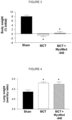
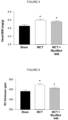
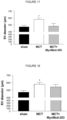
- mice were subcutaneously injected weekly with either MCT (600 mg/kg) or a matched volume of saline for 6 weeks, a time period where MCT is known to induce cardiac cachexia due to pulmonary hypertension and subsequent RV dysfunction rather than anorexia, as described by Ahn et al., PLoS One, 2013, 8:e62702 .
- Mice were exposed to identical conditions under a 12:12 h light/dark cycle with food and water provided ad libitum.
- the MCT+compound group started receiving the inhibitor chow 1 week prior to the MCT injections, whereas the sham and MCT groups were fed an identical chow but without the addition of the selected compound.
- mice were sacrificed following deep anesthetization with i.p. administration of fentanyl (0.05 mg/kg), medetomidine (0.5 mg/kg), midazolam (5 mg/kg) and ketamine (100 mg/kg).
- fentanyl 0.05 mg/kg
- medetomidine 0.5 mg/kg
- midazolam 5 mg/kg
- ketamine 100 mg/kg
- the heart and lungs were dissected, cleaned, blotted dry and weighed, with the heart fixed in 4 % PBS-buffered formalin.
- the left tibialis anterior (TA), soleus, extensor digitorum longus (EDL), and section of costal diaphragm were also dissected, weighed and fixed in 4% PBS buffered formalin, while the remaining muscle portions were immediately frozen in liquid N 2 for molecular analysis.
- paraffin-embedded TA muscle sections (3 ⁇ m) were stained with H&E and fiber cross-sectional area (CSA) and then evaluated by imaging software (Analysis 3.0, Olympus Soft Imaging Solutions GmbH, Weg, Germany).
- imaging software Analysis 3.0, Olympus Soft Imaging Solutions GmbH, Weg, Germany.
- medial cross sections (3 ⁇ m) of the heart were mounted on glass slides and subsequently stained with H&E to assess RV wall thickness.
- the compound concentration in the chow was 0.1 weight-%, resulting in a daily compound intake per mouse of about 3 mg. Body weight was recorded every week for each mouse. Mice were sacrificed after 8 weeks treatment. At sacrifice, examination and tissue analysis were performed as described in test series 1.
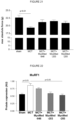
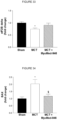
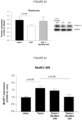
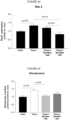
- the MuRF1-expression level in the TA muscle tissue is clearly reduced in MCT + compound fed mice, where the most pronounced reduction is seen for the compound MyoMed-205, as can be seen from figure 22 .
- the expression level of telethonin, a MuRF1 target protein is essentially normalized in the MCT + compound fed mice, as can be seen from figure 23 .
- a myocardial infarction mouse model suffering from a heart failure with reduced ejection fraction (HFrEF) was generated by ligating the left anterior dexterior coronary artery (LAD) as described below to induce an acute myocardial infarction (MI) followed by the development of a chronic (systolic) heart failure (CHF).
- HFrEF heart failure with reduced ejection fraction
- mice from the LAD group were anesthetized by i.p. injection of MMF; Medetomidin (0.5 mg/kg body weight), Midazolam (5.0 mg/kg body weight), Fentanyl (0.05 mg/kg body weight). Unconscious mice were fixed on an operation table. Ventral parts of the thorax were shaved, washed and sterilized.
- intrathoracic access was widened by a surgical spreader inserted above the pericardium.
- the pericardium was opened surgically stump by using two anatomical forceps.
- the thymus if present in the surgical field, was pushed to the side with a surgical swab to gain access to the aortic root.
- the heart was carefully moved out of the pericardium using a hook, and the left atrium was put to the side with a surgical swab.
- the LAD was then ligated with a 5.0 Prolene suture (Ethicon, see http://www.ethicon.com/healthcare-professionals/products/wound-closure/non-absorbable-sutures/prolene-polypropylene).
- the ligation was made close to the aortic root, and the suture was tightened until paleness of the coronary artery anterior wall was noted.
- the thorax wall and then the skin were closed by a single button seam using a 4.0 Prolene suture (company: Ethicon).
- the operation is ended by extubation, and antagonizing the anesthesia by i.p. injection of Atipamezol (2.5 mg/kg body weight) and Flumazenil (0.5 mg/kg body weight). Mice were put onto a warming mate until waking up, and then were transferred back to animal cages. The time for the whole procedure above by expert staff was around 30 min.
- LVEDD left ventricular end-diastolic
- LVESD systolic
- LVFS [LVEDD _LVESDLVEDD] ⁇ 100.
- the contractility in skeletal muscle fiber bundles i.e. fibre bundle from the diaphragm of MCT mice and CHF mice, was measured as follows.
- a fiber bundle from the diaphragm was isolated to allow in vitro contractile function to be assessed using a length-controlled lever system (301B, Aurora Scientific Inc., Aurora, Canada), as described by Bowen et al., FASEB J, 2017, 31 .
- a muscle bundle was mounted vertically in a buffer-filled organ bath ( ⁇ 22°C), set at optimal length, and after 15 min was stimulated over a force-frequency protocol between 1-300 Hz (600 mA; 500 ms train duration; 0.25 ms pulse width).
- the muscle then underwent a force-velocity protocol whereby the muscle was allowed to shorten against external loads (80 - 10 % of the maximal tetanic force; each separated by 1 min) after being stimulated at 150 Hz for 300 ms.
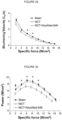
- Shortening velocity was determined 10 ms after the first change in length and on the linear section of the transient (DMA software, Aurora Scientific).
- Force (N) was normalized to muscle cross-sectional area (CSA; cm 2 ) by dividing muscle mass (g) by the product of L o (cm) and estimated muscle density (1.06), which allowed specific force in N/cm 2 to be calculated.
- Shortening velocity was normalized to optimal muscle length (in L o /s), while power was calculated for each load as the product of shortening velocity and specific force (in W/cm 2 ).
- mice chronic heart failure mice
- CHF mice chronic heart failure mice
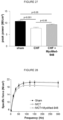
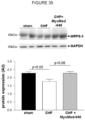
- Figure 24 mice with CHF on control chow developed a diaphragm myopathy at week 10.
- Feeding with compound MyoMed-946 protected mice from such a post-infarct diaphragm weakness.
- the loss of diaphragm function and diaphragm maximal force due to chronic heart failure can be significantly reduced in mice fed with the compound MyoMed-946 compared to the untreated group of CHF mice. This indicates that the selective inhibition of MuRF1 by the compound MyoMed-946 mediates a benefit to diaphragm function after heart failure with reduced ejection fraction (HFrEF) induced by myocardial infarction.
- HFrEF reduced ejection fraction
- the compound concentration in the chow was 0.1 weight-%, resulting in a daily compound intake per mouse of about 3 mg.
- the sham group was fed with an identical chow but without the addition of the selected compound.
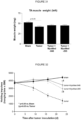
- Wire-hang tests (muscle function) were performed with each mouse 9, 16 and 23 days after tumor inoculation.
- a standard wire hang construction was used with a wire (length: of 40 cm, diameter: 2.5 mm) at a height of 70 cm above the floor. Under the center of the wire a large box with sawdust was placed.
- the mouse was hung to the wire with the two limbs and hang time was recorded. Each animal had three attempts for 180 sec. max each. After three attempts, the maximal holding impulse was calculated (hanging time x body weight).
- mice were sacrificed 25 days after tumor inoculation. At sacrifice, examination and tissue analysis were performed as described above.
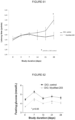
- tumor induced skeletal muscle atrophy could be attenuated in the tumor + MyoMed-946 mice and the tumor + MyoMed-205 mice at least to certain extent when compared to the tumor mice.
- This effect is more pronounced in the wire-hang test ( figure 32 ), where the administration of compounds MyoMed-946 and MyoMed-205 (tumor + MyoMed-946 mice and the tumor + MyoMed-205 mice) significantly attenuates the loss of muscle function compared to the tumor mice on normal diet.
- FIG 56 A schematic drawing of the study design is shown in Figure 56 .
- ZSF1 rats were used. After 20 weeks of age, ZSF1 rats lose diastolic compliance, leading to increased end-diastolic volumes, and thus mimic human HFpEF (also known as diastolic heart failure.
- Rats were exposed to identical conditions in a 12 h light/dark cycle, with food and water provided ad libitum. Twelve weeks after randomization, echocardiography and invasive hemodynamic measurements were performed to elucidate the degree of diastolic dysfunction. Rats were subsequently sacrificed (opening of the chest in deep anesthesia), and skeletal muscle and myocardial tissue was harvested for functional and molecular analyses (formalin fixation and snap frozen in liquid nitrogen). All experiments and procedures were approved by the local animal research council, TU Dresden and the Austin Hair (TVV 42/2018).
- Rats were anesthetized by isoflurane (1.5-2%) and transthoracic echocardiography was performed using a Vevo 3100 system and a 21-MHz transducer (Visual Sonic, Fujifilm) to assess cardiac function as previously described ( T.S. Bowen et al., Eur. J. Heart Fail., 2015, 17, 263-272 ).
- B- and M-Mode of parasternal long- and short axis were measured at the level of the papillary muscles.
- Diastolic function was assessed in the apical 4-chamber view using pulse wave Doppler (for measurement of early (E) and atrial (A) waves of the mitral valve velocity) and tissue Doppler (for measurement of myocardial velocity (E' and A')) at the level of the basal septal segment in the septal wall of the left ventricle.
- Functional parameters i.e. LV ejection fraction (LVEF) and stroke volume (SV)
- ratios of [E/E'] and [E/A] were obtained using the Vevo LAB 2.1.0 software.
- Invasive hemodynamic pressure measurements were performed as the terminal procedure. In anesthetized (ketamine, xylazine) but spontaneous breathing rats the right carotid artery was cannulated with a Rat PV catheter (SPR-838, ADInstruments Limited) which was gently placed in the middle of the left ventricle. The LV end-diastolic and end-systolic pressure, maximum rate of pressure rise (dP/dtmax), maximum rate of pressure fall (dP/dtmin), and time constant ( ⁇ ) for LV relaxation, after which withdrawal of the catheter into the aorta followed, and phasic and mean arterial pressures were measured. Mean arterial pressure was measured in the ascending aorta. Data were recorded in LabChart8 software (ADInstruments).
- the right EDL and the left soleus were dissected and mounted vertically in a Krebs-Henseleit buffer-filled organ bath between a hook and force transducer, with the output continuously recorded and digitized (1205A: Isolated Muscle System - Rat, Aurora Scientific Inc., Ontario, Canada).
- In vitro muscle function was assessed by platinum electrodes stimulating the muscle with a supra-maximal current (700 mA, 500 ms train duration, 0.25 ms pulse width) from a high-power bipolar stimulator (701C; Aurora Scientific Inc., Ontario, Canada).
- the muscle bundle was set at an optimal length (Lo) equivalent to the maximal twitch force produced, after which bath temperature was increased to 25°C and a 15-minute thermos equilibration period followed.
- a force-frequency protocol was then performed at 1, 15, 30, 50, 80, and 120 Hz, separated by 1-minute rest intervals. After a 5-minute rest period, the muscles then under-went a fatigue protocol over 5 minutes (40 Hz every 2 seconds). Forces generated during the fatigue protocol were normalized to the initial force generated to provide a relative assessment of fatigability.
- LVEF left ventricular ejection fraction
- MABP mean arterial blood pressure
- Fig. 58D ZSF1-obese animals which were not treated develop a skeletal muscle dysfunction when compared to the ZSF1-lean control group. This drop in muscle force is evident in the soleus muscle ( Fig. 58D ) when measuring the absolute specific muscle force. Treating the HFpEF animals for 12 weeks with MyoMed-205 resulted in an attenuation of functional loss.
- Doxorubicin is an efficient chemotherapeutic drug used in various cancer treatments. However, its use is associated with early and chronic cardiotoxicity and myotoxicity. In rodents, a single injection of Doxorubicin is capable of reducing heart and skeletal muscle mass, followed by a marked impairment of function.
- MyoMed-205 enriched food in a mouse model that was treated with Doxorubicin was evaluated.
- C57bl/6 mice were acclimated at the vivarium for three days, then randomly sorted into four groups, as follows: 1. Control (placebo food + 0.9% saline i.p. injections); 2. MyoMed-205 (MyoMed-205-food, food supplemented with 1g/kg MyoMed-205; + 0.9% saline injections); 3. DOX (placebo food + DOX injections): 4. DOX+MyoMed-205 (MyoMed-205 food + DOX injections). Animals were pre-fed with either MyoMed-205 food or placebo for seven days before the first DOX injection.
- DOX treatment was at a total dosage of 25mg/kg, given in five injections at days 10, 12, 16, 25, and 28, respectively. Animals' weight and food intake were measured daily at the same hour of the day to assess food consumption and weight gain. Cardiac functions were evaluated at days 19 and 42 by echocardiography. As shown in Figure 59 , feeding with MyoMed-205 was capable to reduce features of cachexia wasting and body stress markedly by day 43: MyoMed-205-fed mice had higher lean mass ( Fig. 59A ), retained more body fat ( Fig. 59B ), and had about two-fold less interstitial edema free liquids ( Fig. 59C ). ⁇ means p ⁇ 0.05 v. control; $ means p ⁇ 0.05 vs. MyoMed-205; ⁇ means p ⁇ 0.05 vs. DOX+MyoMed-205 (Tukey post-test).
- administration of MyoMed-205 during DOX chemotherapy is useful to protect the heart.
- * means p ⁇ 0.05 v. control; $ means p ⁇ 0.05 vs. MyoMed-205; ⁇ means p ⁇ 0.05 vs. DOX+MyoMed-205 (Tukey post-test).
- the effects of compound-feeding in a mouse model for diabetes that also develops myopathy during the progression of diabetes were tested.
- Diabetes was induced by a high-fructose high-fat diet (HFD) for 4 months in DIO mice.
- the body weight gain was 22.2%.
- the mice developed increased fasting glucose and insulin resistance.
- Control group animals received a normal rodent diet (regular diet). Weight loss was then induced during a 30 days test period. In a first stage, the animals were fed normal rodent diet for 16 days. Then in a second stage the animals received a low-calory diet for 14 days.
- the body weight decreased by 12.4% on average at the endpoint.
- Wire hang test For the wire hang tests (WHT), a standard wire hang construction was used with a wire (length: of 40 cm, diameter: 2.5 mm) at a height of 70 cm above the floor. Under the center of the wire a large box with sawdust was placed. For testing, the mouse was hung to the wire with the two limbs and the time that mice were able to hold onto the wire before falling off was recorded. Each animal had three attempts for a maximum of 180 sec. After the three attempts, the maximal holding impulse was calculated (hanging time x body weight).
- Figure 61 is the graphical illustration of the results of the WHT of MyoMed-205-treated DIO mice as compared to DIO control mice.
- MyoMed-205 significantly improved the muscle strength as compared to DIO control mice by week 4 (28 days).
- the muscle strength was also improved significantly as compared to DIO HFD mice and did not differ significantly from the control (RD) mice group by week 4 (not shown in Figure 61 ).
- diabetes was induced by a high-fructose high-fat diet (HFD) for 4 months in DIO mice.
- HFD high-fructose high-fat diet
- Control group animals received a normal rodent diet (regular diet). Weight loss was then induced during a 30 days test period.
- the animals were fed normal rodent diet for 16 days.
- the animals received a low-calory diet for 14 days.
- MyoMed-203 at 1g compound /1kg food).
- Determining the level of blood glucose was performed after 6-hour fasting. An On Call Plus glucometer (Aeon Laboratories, Inc., USA) and specific test strips (REF G133-111) were used for determination of glucose levels. Blood was obtained from the tail vein by incision of the tail tip. 5-6 ⁇ l of blood were used for each assay.
- mice were orally treated with glucose at dose of 2 g/kg at the dose volume of 10 ml/kg after a 6-hour fasting.
- Glucose measurements were performed immediately before treatment and at 15, 30, 60 and 120 min after glucose administration.
- MyoMed-203 showed mild hypoglycemic effect in obese mice after 14 days of weight loss and treatment according to OGTT data. Blood glucose levels in the animals of this group tended to be lower at 30 minutes of OGTT test compared to DIO control group. The same is true for the calculated AUCs describing glucose elimination. A similar trend continued in the 28 th day of the study: significant decrease in the glucose level at 120 min was observed in MyoMed-203 treated group compared with all control groups; the calculated area under the glucose elimination curve tended to be lower as well.
- Figure 63 and Figure 64 show the OGTT data at days 14 and 28, respectively, of MyoMed-203-treated DIO mice and DIO control mice.
- mice were injected intraperitoneally with recombinant human insulin solution (Lilly, France; REF C620001K) at the dose of 0.75 or 0.60 IU/g of body weight in the volume of 5 ml/kg after 6-hour fasting.
- Glucose measurements were performed immediately before treatment and at 15, 30, 60 and 120 min after insulin administration.
- the results of the rate of blood glucose output were expressed as area under the curve (AUC).
- Proteins from frozen diaphragm samples in sham, MCT, and MCT+compound mice were powdered under liquid N 2 . Mass spectrometry was then performed at the DZHK mass spectrometry core facility at Bad Nauheim, as described in Konzer et al., Methods in molecular biology, 2013, 1005, 39-52 . The relative ratios for MCT/sham and MCT+compound/MCT were determined, with only hits deemed to be differentially expressed and highly significant (P ⁇ 0.01) further studied by Western blot.
- the Western blot analyses consisted of frozen TA muscle samples being homogenized in RIPA buffer (50 mmol/L Tris, 150 mmol/L sodium chloride, 1 mmol/L EDTA, 1% NP-40, 0.25% sodium-deoxycholate, 0.1% SDS, 1% Triton X-100; pH 7.4) or relax buffer (90 mmol/L HEPES, 126 mmol/L potassium chloride, 1 mmol/L MgCl, 50 mmol/L EGTA, 8 mmol/L ATP, 10 mmol/l Creatinephosphate; pH 7.4) containing a protease inhibitor mix (Inhibitor mix M, Serva, Heidelberg, Germany), sonicated, and centrifuged at 16,000 x g for 5 min.
- RIPA buffer 50 mmol/L Tris, 150 mmol/L sodium chloride, 1 mmol/L EDTA, 1% NP-40, 0.25% sodium-deoxycholate, 0.
- Protein concentration of the supernatant was determined (BCA assay, Pierce, Bonn, Germany) and aliquots (5 - 20 ⁇ g) were separated by SDS-polyacrylamide gel electrophoresis. Proteins were transferred to a polyvinylidene fluoride membrane (PVDF) and incubated overnight at 4°C with the following primary antibodies: MAFbx (1/2000, Eurogentec, Seraing, Belgium), MuRF1 (1/1000, Myomedix Ltd., Neckargemünd, Germany), CARP (1/500, Myomedix Ltd., Neckargemünd, Germany), BAX (1/1000; Abcam, Cambridge, UK), and eIF2B-delta (1/200; Santa Cruz Biotechnolgy, Santa Cruz, USA).
- MAFbx 1/2000, Eurogentec, Seraing, Belgium
- MuRF1 (1/1000, Myomedix Ltd., Neckargemünd, Germany
- CARP 1/500, Myomedix Ltd., Neckargemünd,
- Membranes were subsequently incubated with a horseradish peroxidase-conjugated secondary antibody and specific bands visualized by enzymatic chemiluminescence (Super Signal West Pico, Thermo Fisher Scientific Inc., Bonn, Germany) and densitometry quantified using a 1D scan software package (Scanalytics Inc., Rockville, USA). Blots were then normalized to the loading control GAPDH (1/30000; HyTest Ltd, Turku, Finland). All data are presented as fold change relative to sham.
- eIF2B delta subunit
- BAX upregulation of eIF2B
- the eIF2B pathway is a known translational regulator of protein synthesis.
- elF2B was previously identified as a MuRF1 interacting factor, suggesting that MuRF1-mediated a depletion of the translation initiation factor elF2B under MCT stress, but this was relieved by the compound.
- the compound also modulated the pro-apoptotic regulator BAX, with this protein upregulated in MCT mice compared to shams and normalized in the MCT+ MyoMed-946 group.
- apoptosis is increased in skeletal muscle and is closely correlated to the degree of atrophy (see for example Adams et al., J Am Coll Cardiol, 1999, 33, 959-965 and Vescovo et al., Heart, 2000, 84, 431-437 ). Indeed, it has been noted before that BAX is elevated in cardiac cachexia and associated with an increased MuRF1 expression (see for example Dalla Libera et al., Am J Physiol Cell Physiol, 2004, 286, C138-144 and Rezk et al., PLoS One, 2012, 7, e30276 ).
- MuRF1 is also known to interact with numerous substrates, with one in particular being CARP (a member of the muscle ankyrin repeat proteins (MARP) family), which is a purported nuclear- and sarcomere(titin)-based protein with transcriptional functions (see for example Miller et al., J Mol Biol, 2003, 333, 951-964 ).
- CARP muscle ankyrin repeat proteins
- CARP is known to be upregulated in stress-related conditions and is associated with contractile dysfunction and muscle atrophy (see for example Laure et al., The FEBS journal, 2009, 276, 669-684 and Moulik et al., J Am Coll Cardiol, 2009, 54, 325-333 ).
- an increase in CARP expression in MCT-stressed mice is observed, while this effect is abolished in the MyoMed-946 fed mice, suggesting that this compound may blunt CARP expression via its inhibition on MuRF1, which in turn may contribute to maintenance of muscle mass and function.
- Mass spectrometry-based proteomic analysis was performed at the DZHK Core Facility, Bad Nauheim, Germany. Obtained MS raw data were processed by MaxQuant (1.6.0.1) using the Andromeda search engine and the Uniprot database for Mus musculus (as of 20 April 2017). At a false discovery rate of 1% (both peptide and protein levels), >2600 protein groups were identified.
- the reductive dimethylation protocol employed (see Boersema et al., Nat Protoc, 2009, 4, 484-494 ) yielded pairwise relative comparative quantitation (ratios) between proteins from CHF + MyoMed-946, CHF, and sham conditions, which were statistically queried for significant differences using standard statistical tests.
- frozen diaphragm was homogenized in relaxing buffer (90 mmol/L HEPES, 126 mmol/L potassium chloride, 36 mmol/L sodium chloride, 1 mmol/L magnesium chloride, 50 mmol/L EGTA, 8 mmol/L ATP, and 10 mmol/L creatine phosphate, pH 7.4) containing a protease inhibitor mix (Inhibitor Mix M, Serva, Heidelberg, Germany) and sonicated.
- relaxing buffer 90 mmol/L HEPES, 126 mmol/L potassium chloride, 36 mmol/L sodium chloride, 1 mmol/L magnesium chloride, 50 mmol/L EGTA, 8 mmol/L ATP, and 10 mmol/L creatine phosphate, pH 7.4
- a protease inhibitor mix Inhibitor Mix M, Serva, Heidelberg, Germany
- Protein concentration of the supernatant was determined (bicinchoninic acid assay, Pierce, Bonn, Germany), and aliquots (5-20 ⁇ g) were separated by sodium dodecyl sulfate-polyacrylamide gel electrophoresis. Proteins were transferred to a polyvinylidene fluoride membrane and incubated overnight at 4 °C using the following primary antibodies: porin and telethonin (both 1/1000, Abcam, Cambridge, UK), MRPS-5 (1/500, Thermo Fisher, Rockford, IL, USA), MuRF1 and MuRF2 (both 1/1000; commercially available from Myomedix, Neckargemünd, Germany), and Tom20 (1:200, Santa Cruz Biotechnologies, Heidelberg, Germany).
- Membranes were subsequently incubated with a horseradish peroxidaseconjugated secondary antibody, specific bands were visualized by enzymatic chemiluminescence (Super Signal West Pico, Thermo Fisher Scientific Inc., Bonn, Germany), and densitometry was quantified using a one-dimensional scan software package (Scanalytics Inc., Rockville, MD, USA). Measurements were normalized to the loading control GAPDH (1/30 000; HyTest Ltd, Turku, Finland) or ⁇ -tubulin (1:1000, Santa Cruz Biotechnologies). All data are presented as fold change relative to sham.
- Protein expression of MuRF1, Nox 2 and LC3 I/II in muscle tissue of B16F10 mice was determined as described above for the MCT and CHF mice.
- the level of the reactive oxygen species marker nitrotyrosine was determined.
- MuRF1 expression is significantly up-regulated in the tumor group, and this was prevented by treatment with compounds MyoMed-946 and MyoMed-205 ( figure 43 ).
- Nox 2 which is a known endogenous reactive oxygen species (ROS)
- ROS reactive oxygen species
- the tissue level of nitrotyrosine is also significantly up-regulated in the tumor mice group, whereas in the tumor + MyoMed-946 and in the tumor + MyoMed-205 mice groups the amounts of these species are significantly reduced in the muscle tissue ( figures 44 and 45 ).
- Diaphragmatic tissue was homogenized in relaxing buffer, and aliquots were used for enzyme activity measurements. Enzyme activities for lactate dehydrogenase (EC 1.1.1.27), pyruvate kinase (EC 2.7.1.40), succinate dehydrogenase (SDH, EC 1.3.5.1), citrate synthase (CS, EC 2.3.3.1), ⁇ -hydroxyacyl-COA dehydrogenase (EC 1.1.1.35), and mitochondrial complex I were measured spectrophotometrically as previously described in detail ( Mukherjee et al., J Biol Chem, 1976, 251, 2155-2160 ; Vanderlinde et al., Ann Clin Lab Sci, 1985, 15, 13-31 ; Dzeja et al., Mol Cell Biochem, 1999, 201, 33-40 ; Takashi et al., Biochim Biohphys Acta, 1979, 574, 258-267 ; Schwarzer et al., J Physiol, 2014
- citrate synthase and mitochondrial complex I in muscle tissue of B16F 10 inoculated mice were determined as described above for the CHF mice.
- the enzyme activities of the mitochondrial enzymes citrate synthase ( Figure 52 ) and mitochondrial complex I ( Figure 53 ) are significantly reduced in the muscle tissue of the tumor group when compared with sham.
- Treatment with compounds MyoMed-946 and MyoMed-205 partially or complete restores the citrate synthase and mitochondrial complex I enzyme activities in the muscle tissue of B16F10 inoculated mice ( Figures 52 and 53 ).
- C2C12 myotubes were incubated with or without compound MyoMed-946 for 20 min at a final concentration of 10 ⁇ mol/L. After the incubation period, Total RNA was isolated from C2C12 cells and reverse transcribed into cDNA using random hexamers and Sensiscript reverse transcriptase (Qiagen, Hilden, Germany). An aliquot of the cDNA was used for quantitative RT-PCR, applying the Light Cycler system (Roche Diagnostics, Mannheim, Germany). The expression of specific genes was normalized to the expression of hypoxanthin-phosphoribosyl-transferase (HPRT)-mRNA.
- HPRT hypoxanthin-phosphoribosyl-transferase
- FRET fluorescence resonance energy transfer
Landscapes
- Chemical & Material Sciences (AREA)
- Organic Chemistry (AREA)
- Health & Medical Sciences (AREA)
- Medicinal Chemistry (AREA)
- General Health & Medical Sciences (AREA)
- Public Health (AREA)
- Animal Behavior & Ethology (AREA)
- Veterinary Medicine (AREA)
- Life Sciences & Earth Sciences (AREA)
- Pharmacology & Pharmacy (AREA)
- Bioinformatics & Cheminformatics (AREA)
- Engineering & Computer Science (AREA)
- Nuclear Medicine, Radiotherapy & Molecular Imaging (AREA)
- General Chemical & Material Sciences (AREA)
- Chemical Kinetics & Catalysis (AREA)
- Diabetes (AREA)
- Physical Education & Sports Medicine (AREA)
- Orthopedic Medicine & Surgery (AREA)
- Neurology (AREA)
- Epidemiology (AREA)
- Cardiology (AREA)
- Emergency Medicine (AREA)
- Endocrinology (AREA)
- Hematology (AREA)
- Obesity (AREA)
- Hospice & Palliative Care (AREA)
- Heart & Thoracic Surgery (AREA)
- Pharmaceuticals Containing Other Organic And Inorganic Compounds (AREA)
- Plural Heterocyclic Compounds (AREA)
Claims (15)
- Verbindung der allgemeinen Formel I
 R1 für Wasserstoff oder eine Gruppe -CH2R1a steht, wobei R1a aus der Gruppe bestehend aus Wasserstoff, C1-C3-Alkyl, Phenyl, wobei Phenyl unsubstituiert ist oder 1, 2 oder 3 Reste, die unabhängig aus Halogen, Cyano, C1-C3-Alkyl, C1-C3-Halogenalkyl und C1-C3-Alkoxy ausgewählt sind, tragen kann; und einem 5- bis 10-gliedrigen heteroaromatischen Ring, der 1 bis 4 Heteroatome bzw. Heterogruppen, die unabhängig aus der Gruppe bestehend aus N, NRc, O und S ausgewählt sind, als Ringglied enthält, wobei der 5- bis 10-gliedrige heteroaromatische Ring unsubstituiert ist oder 1, 2 oder 3 Reste R7 tragen kann, ausgewählt ist;R2 aus der Gruppe bestehend aus Wasserstoff, Methyl und fluoriertem Methyl ausgewählt ist;R3 aus der Gruppe bestehend aus Wasserstoff, Methyl und fluoriertem Methyl ausgewählt ist;R4 aus der Gruppe bestehend aus Wasserstoff und C1-C4-Alkyl ausgewählt ist;R5 jeweils unabhängig aus der Gruppe bestehend aus Halogen, Cyano, C1-C3-Alkyl, C1-C3-Halogenalkyl, C1-C3-Alkoxy und C1-C3-Halogenalkoxy ausgewählt ist;R6 jeweils unabhängig aus der Gruppe bestehend aus Halogen, Cyano, C1-C3-Alkyl, C1-C3-Halogenalkyl, C1-C3-Alkoxy und C1-C3-Halogenalkoxy ausgewählt ist;R7 jeweils unabhängig aus der Gruppe bestehend aus Halogen, Cyano, C1-C3-Alkyl, C1-C3-Halogenalkyl, C1-C3-Alkoxy und C1-C3-Halogenalkoxy ausgewählt ist;X1 für NRa oder O steht;X2 für NRb, O oder S steht;Y für ein Sauerstoffatom oder zwei Wasserstoffatome steht;Ra, Rb, Rc jeweils unabhängig aus der Gruppe bestehend aus Wasserstoff und C1-C4-Alkyl ausgewählt sind;a für 0, 1, 2, 3 oder 4 steht undb für 0, 1, 2 oder 3 steht;und die pharmazeutisch unbedenklichen Salze davon.
 - Verbindung nach Anspruch 1, wobei R1 aus der Gruppe bestehend aus Wasserstoff und einer Gruppe -CH2R1a ausgewählt ist, wobei R1a ausgewählt ist aus der Gruppe bestehend aus Wasserstoff, Methyl und einem 5- bis 6-gliedrigen monocyclischen heteroaromatischen Ring, der 1 bis 3 Heteroatome, insbesondere 1 Heteroatom, die unabhängig aus der Gruppe bestehend aus N, O und S ausgewählt sind, als Ringglied enthält, wobei der 5- bis 6-gliedrige monocyclische heteroaromatische Ring unsubstituiert ist oder 1 Rest R7 trägt, wobei R7 aus der Gruppe bestehend aus Halogen, C1-C3-Alkyl und C1-C2-Alkoxy ausgewählt ist.
- Verbindung nach Anspruch 2, wobei R1 aus der Gruppe bestehend aus Wasserstoff und einer Gruppe -CH2R1a ausgewählt ist, wobei R1a ausgewählt ist aus der Gruppe bestehend aus Wasserstoff und einem unsubstituierten 5- bis 6-gliedrigen monocyclischen heteroaromatischen Ring, der 1 bis 3 Heteroatome, insbesondere 1 Heteroatom, die unabhängig aus der Gruppe bestehend aus N, O und S ausgewählt sind, als Ringglied enthält, wobei R1 insbesondere für eine Gruppe -CH2R1a steht, wobei R1a für einen unsubstituierten 5- bis 6-gliedrigen monocyclischen heteroaromatischen Ring steht, der 1 bis 3 Heteroatome, insbesondere 1 Heteroatom, die unabhängig aus der Gruppe bestehend aus N, O und S ausgewählt sind, als Ringglied enthält.
- Verbindung nach einem der Ansprüche 1 bis 3, wobeiR2 für Wasserstoff oder Methyl steht;R3 für Wasserstoff steht;R4 für Methyl steht;R5 jeweils unabhängig aus der Gruppe bestehend aus Halogen, C1-C3-Alkyl und C1-C2-Alkoxy ausgewählt ist;R6 jeweils unabhängig aus der Gruppe bestehend aus Halogen, C1-C3-Alkyl und C1-C2-Alkoxy ausgewählt ist;X1 für NH oder O steht;X2 für O steht;a für 0, 1 oder 2 steht undb für 0 oder 1 steht.
- Verbindung nach Anspruch 1, wobei R1 aus der Gruppe CH2-I' oder CH2-II'
 R7 jeweils unabhängig aus der Gruppe bestehend aus Halogen, Cyano, C1-C3-Alkyl, C1-C3-Halogenalkyl, C1-C3-Alkoxy und C1-C3-Halogenalkoxy ausgewählt ist;X 3 für NRc, O oder S steht;Rc aus der Gruppe bestehend aus Wasserstoff und C1-C4-Alkyl ausgewählt ist undc für 0, 1, 2 oder 3 steht.
 - Verbindung nach Anspruch 5, wobeiR2 für Wasserstoff oder Methyl steht;R3 für Wasserstoff steht;R4 für Methyl steht;R5 jeweils unabhängig aus der Gruppe bestehend aus Halogen, C1-C3-Alkyl und C1-C2-Alkoxy ausgewählt ist;R6 jeweils unabhängig aus der Gruppe bestehend aus Halogen, C1-C3-Alkyl und C1-C2-Alkoxy ausgewählt ist;R7 jeweils unabhängig aus der Gruppe bestehend aus Halogen, C1-C3-Alkyl und C1-C2-Alkoxy ausgewählt ist;X1 für NH oder O steht;X2 für O steht;X3 für O oder S steht;a für 0, 1 oder 2 steht;b für 0 oder 1 steht undc für 0 oder 1 steht.
- Verbindung nach Anspruch 6, wobeiR2 für Wasserstoff steht;R3 für Wasserstoff steht;R4 für Methyl steht;X1 für NH oder O steht;X2 für O steht;X3 für O oder S steht;a für 0 steht;b für 0 steht undc für 0 steht.
- Verbindung der Formel I gemäß einem der Ansprüche 1 bis 7, die der Formel I-A,
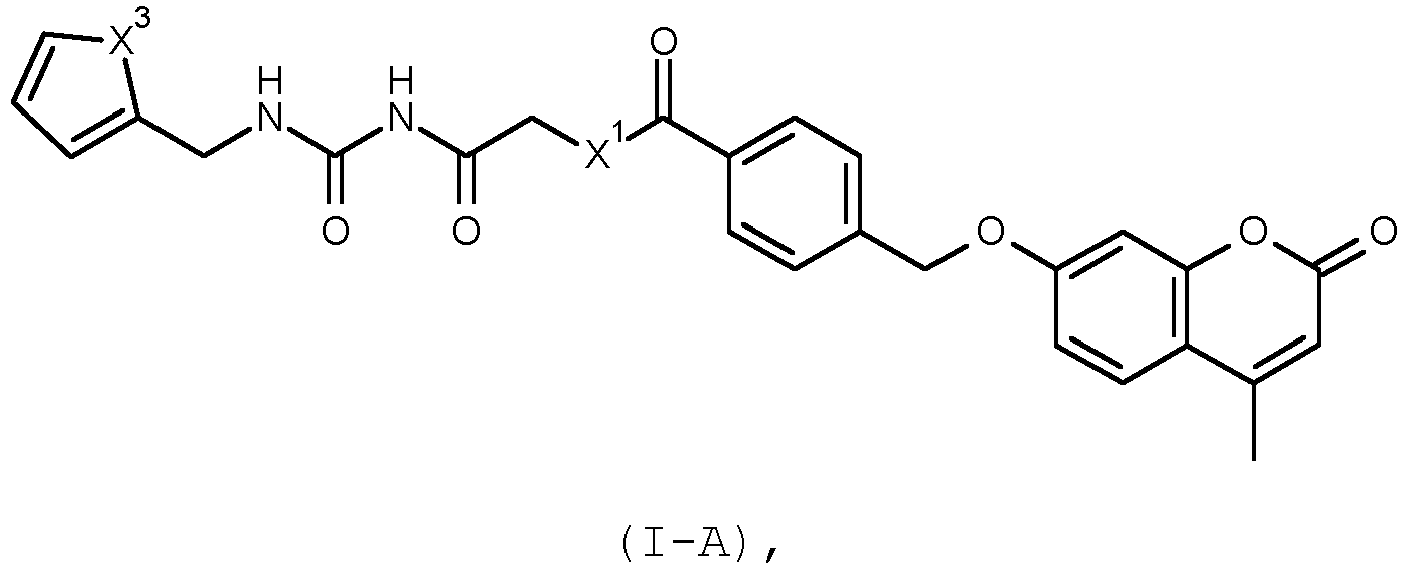 X1 für NH oder O steht undX3 für O oder S steht;und den pharmazeutisch unbedenklichen Salzen davon
oder der Formel I-B, X1 für NH oder O steht;und den pharmazeutisch unbedenklichen Salzen davon
oder der Formel I-C, X1 für NH oder O steht undX3 für O oder S steht;und den pharmazeutisch unbedenklichen Salzen davon
oder der Formel I-D, R1 für Wasserstoff oder Methyl steht undX1 für NH oder O steht;und den pharmazeutisch unbedenklichen Salzen davon entspricht.
 - Verbindung der Formel I gemäß einem der Ansprüche 1 bis 8, bei der es sich um die Verbindung 4-[(4-Methyl-2-oxochromen-7-yl)oxymethyl]benzoesäure-[2-(2-furylmethylcarbamoylamino)-2-oxoethyl]ester oder ein pharmazeutisch unbedenkliches Salz davon handelt
oderum die Verbindung 4-[(4-Methyl-2-oxochromen-7-yl)oxymethyl]-N-[2-(2-thienylmethyl-carbamoylamino)ethyl]benzamid oder ein pharmazeutisch unbedenkliches Salz davon handelt
oderum die Verbindung 4-[(4-Methyl-2-oxochromen-7-yl)-oxymethyl]benzoesäure-[2-oxo-2-(2-pyridylmethyl-carbamoylamino)ethyl]ester oder ein pharmazeutisch unbedenkliches Salz davon handelt
oderum eine Verbindung der Formel I, die aus N-[2-(2-Furylmethylcarbamoylamino)-2-oxoethyl]-4-[(4-methyl-2-oxochromen-7-yl)oxymethyl]benzamid, 4-[(4-Methyl-2-oxochromen-7-yl)oxymethyl]benzoesäure-[2-oxo-2-(2-thienylmethylcarbamoylamino)-ethyl]ester und 4-[(4-Methyl-2-oxochromen-7-yl)oxymethyl]-N-[2-oxo-2-(2-thienylmethylcarbamoyl-amino)ethyl]benzamid und den pharmazeutisch unbedenklichen Salzen davon ausgewählt ist, handelt
oderum eine Verbindung der Formel I, die aus 4-[(4-Methyl-2-oxochromen-7-yl)oxymethyl]benzoesäure-(1-methyl-2-oxo-2-ureidoethyl)ester und 4-[(4-Methyl-2-oxochromen-7-yl)oxymethyl]benzoesäure-[1-methyl-2-(methylcarbamoylamino)-2-oxoethyl]ester und den pharmazeutisch unbedenklichen Salzen davon ausgewählt ist, handelt. - Pharmazeutische Zusammensetzung, umfassend mindestens eine Verbindung der allgemeinen Formel I gemäß einem der Ansprüche 1 bis 9 oder mindestens ein pharmazeutisch unbedenkliches Salz davon und mindestens einen pharmazeutisch unbedenklichen Träger.
- Verbindung nach einem der Ansprüche 1 bis 9 oder ein pharmazeutisch unbedenkliches Salz davon zur Verwendung als Medikament.
- Verbindung nach einem der Ansprüche 1 bis 9 oder ein pharmazeutisch unbedenkliches Salz davon zur Verwendung bei der Behandlung oder Prophylaxe von Muskelschwundleiden.
- Verbindung nach einem der Ansprüche 1 bis 9 oder ein pharmazeutisch unbedenkliches Salz davon zur Verwendung bei der Behandlung oder Prophylaxe von Skelett- oder Herzmuskelatrophie infolge von einer oder mehreren der folgenden Erkrankungen oder Leiden: kongestiver Herzinsuffizienz, chronischer Herzinsuffizienz, Krebs, Krebsbehandlung mit myotoxischen und/oder kardiotoxischen Substanzen wie Doxorubicin, angeborener Myopathie, AIDS, chronisch-obstruktiver Lungenerkrankung (COPD), chronischen Nierenerkrankungen, Nierenversagen, Diabetes, schweren Verbrennungen, Sarkopenie während des Alterns, Verringerung der Blutversorgung, vorübergehender oder langfristiger Immobilisierung, langfristiger mechanischer Beatmung, Denervierung, längerer Schwerelosigkeit und Mangelernährung;
oderzur Verwendung bei der Behandlung oder Prophylaxe von Leiden, die mit erhöhter Expression von MuRF1 (Muscle RING Finger 1) assoziiert sind, insbesondere von Myopathien, die mit erhöhter Expression von MuRF1 (Muscle RING Finger 1) assoziiert sind;
oderzur Verwendung bei der Behandlung oder Prophylaxe von Herzleiden, die mit systolischer oder diastolischer Dysfunktion assoziiert sind;
oderzur Verwendung bei der Behandlung oder Prophylaxe von Diabetes. - Verbindung zur Verwendung nach Anspruch 13, wobei die mit erhöhter Expression von MuRF1 (Muscle RING Finger 1) assoziierte Myopathie aus Critical-Illness-Myopathie, nemalischer Myopathie, entzündlicher Myopathie, Myopathie infolge von Diabetes, Myopathie infolge von pulmonaler Hypertonie, Myopathie infolge von chronischem Herzversagen, Myopathie infolge von Nierenversagen und Myopathie infolge von Tumorkachexie ausgewählt ist.
- Verbindung nach einem der Ansprüche 1 bis 9 oder ein pharmazeutisch unbedenkliches Salz davon zur Verwendung bei der Behandlung oder Prophylaxe von- Skelett- oder Herzmuskelatrophie infolge von oder in Verbindung mit Herzinsuffizienz mit reduzierter Auswurffraktion (HF-rEF), Herzinsuffizienz mit erhaltener Auswurffraktion (HF-pEF), Hypertonie oder Tumorkachexie;- durch Doxorubicin induzierter Muskelathrophie und/oder Herztoxizität;- Sarkopenie und/oder Kardiomyopathie aufgrund von Alterung;- Muskelathrophie aufgrund von chronischer Nierenerkrankung;- Zwerchfellschwäche aufgrund von mechanischer Beatmung oder kongestiver Herzinsuffizienz;- angeborener Myopathie, insbesondere kongenetischer Muskelathrophie;- durch Diabetes induzierter Muskelathrophie und/oder- Diabetes.
Applications Claiming Priority (2)
| Application Number | Priority Date | Filing Date | Title |
|---|---|---|---|
| EP19192107 | 2019-08-16 | ||
| PCT/EP2020/072911 WO2021032643A1 (en) | 2019-08-16 | 2020-08-14 | Compounds suitable for the treatment and prophylaxis of muscle wasting and other conditions |
Publications (3)
| Publication Number | Publication Date |
|---|---|
| EP4013497A1 EP4013497A1 (de) | 2022-06-22 |
| EP4013497C0 EP4013497C0 (de) | 2023-10-04 |
| EP4013497B1 true EP4013497B1 (de) | 2023-10-04 |
Family
ID=67659191
Family Applications (1)
| Application Number | Title | Priority Date | Filing Date |
|---|---|---|---|
| EP20764952.6A Active EP4013497B1 (de) | 2019-08-16 | 2020-08-14 | Zur behandlung und prophylaxe von muskelschwund und anderer leiden geeignete verbinungen |
Country Status (13)
| Country | Link |
|---|---|
| US (1) | US12331042B2 (de) |
| EP (1) | EP4013497B1 (de) |
| JP (1) | JP2022544803A (de) |
| KR (1) | KR20220047807A (de) |
| CN (1) | CN114302881B (de) |
| AU (1) | AU2020334194A1 (de) |
| BR (1) | BR112022002769A2 (de) |
| CA (1) | CA3144700A1 (de) |
| CL (1) | CL2022000320A1 (de) |
| IL (1) | IL290540A (de) |
| MX (1) | MX2022002022A (de) |
| WO (1) | WO2021032643A1 (de) |
| ZA (1) | ZA202202863B (de) |
Families Citing this family (3)
| Publication number | Priority date | Publication date | Assignee | Title |
|---|---|---|---|---|
| KR102823820B1 (ko) * | 2022-09-01 | 2025-06-23 | 단국대학교 천안캠퍼스 산학협력단 | 퓨로크로멘온계 화합물을 유효성분으로 포함하는 근감소증 예방 또는 치료용 약학 조성물 |
| WO2024068809A1 (en) * | 2022-09-30 | 2024-04-04 | Société des Produits Nestlé S.A. | Composition and method for treating muscle decline associated with renal disease or dysfunction |
| KR102995500B1 (ko) * | 2024-11-07 | 2026-07-23 | 아주대학교산학협력단 | 근감소증의 예방 또는 치료용 약학적 조성물 |
Family Cites Families (7)
| Publication number | Priority date | Publication date | Assignee | Title |
|---|---|---|---|---|
| ZA200803016B (en) * | 2005-09-29 | 2009-10-28 | Elan Pharmaceuticals Inc Wyeth | Carbamate compounds which inhibit leukocyte adhesion mediated by VLA-4 |
| EP2072528A1 (de) | 2007-12-19 | 2009-06-24 | Labeit, Mr. Siegfried | Wirtszelle mit ungenügenden MuRF1 und MuRF2 |
| US20140161729A1 (en) * | 2011-04-07 | 2014-06-12 | Cornell University | Cofluorons and methods of making and using them |
| CN106822153B (zh) * | 2011-06-06 | 2019-12-17 | 爱荷华大学研究基金会 | 用于抑制肌萎缩的方法 |
| AU2014290368B2 (en) * | 2013-07-18 | 2019-07-11 | Baylor College Of Medicine | Methods and compositions for treatment of muscle wasting, muscle weakness, and/or cachexia |
| WO2015050984A1 (en) * | 2013-10-01 | 2015-04-09 | New York University | Amino, amido, and heterocyclic compounds as modulators of rage activity and uses thereof |
| CN112274183A (zh) * | 2020-11-02 | 2021-01-29 | 李云莹 | 一种神经内科用脑部超声波治疗装置 |
-
2020
- 2020-08-14 CN CN202080057706.5A patent/CN114302881B/zh active Active
- 2020-08-14 EP EP20764952.6A patent/EP4013497B1/de active Active
- 2020-08-14 CA CA3144700A patent/CA3144700A1/en active Pending
- 2020-08-14 US US17/634,174 patent/US12331042B2/en active Active
- 2020-08-14 BR BR112022002769A patent/BR112022002769A2/pt not_active Application Discontinuation
- 2020-08-14 WO PCT/EP2020/072911 patent/WO2021032643A1/en not_active Ceased
- 2020-08-14 AU AU2020334194A patent/AU2020334194A1/en not_active Abandoned
- 2020-08-14 MX MX2022002022A patent/MX2022002022A/es unknown
- 2020-08-14 JP JP2022510087A patent/JP2022544803A/ja active Pending
- 2020-08-14 KR KR1020227007940A patent/KR20220047807A/ko not_active Ceased
-
2022
- 2022-02-08 CL CL2022000320A patent/CL2022000320A1/es unknown
- 2022-02-10 IL IL290540A patent/IL290540A/en unknown
- 2022-03-09 ZA ZA2022/02863A patent/ZA202202863B/en unknown
Also Published As
| Publication number | Publication date |
|---|---|
| MX2022002022A (es) | 2022-05-11 |
| ZA202202863B (en) | 2023-10-25 |
| EP4013497A1 (de) | 2022-06-22 |
| JP2022544803A (ja) | 2022-10-21 |
| WO2021032643A1 (en) | 2021-02-25 |
| AU2020334194A1 (en) | 2022-02-24 |
| CA3144700A1 (en) | 2021-02-25 |
| US12331042B2 (en) | 2025-06-17 |
| CN114302881A (zh) | 2022-04-08 |
| KR20220047807A (ko) | 2022-04-19 |
| EP4013497C0 (de) | 2023-10-04 |
| BR112022002769A2 (pt) | 2022-05-10 |
| US20220324852A1 (en) | 2022-10-13 |
| IL290540A (en) | 2022-04-01 |
| CL2022000320A1 (es) | 2023-02-03 |
| CN114302881B (zh) | 2025-03-25 |
Similar Documents
| Publication | Publication Date | Title |
|---|---|---|
| US11458137B2 (en) | Compositions and methods of using tyrosine kinase inhibitors | |
| US12331042B2 (en) | Compounds suitable for the treatment and prophylaxis of muscle wasting and other conditions | |
| US20230115515A1 (en) | Pyrazolylpropanamide compounds and uses thereof for treatment of prostate cancer | |
| ES2928773T3 (es) | Inhibidores de proteína cinasas para fomentar la regeneración hepática o reducir o prevenir la muerte de hepatocitos | |
| JP2018502097A (ja) | 二官能性分子によって標的化タンパク質分解を誘導する方法 | |
| HK1256310A1 (zh) | N-磺酰基吡咯衍生物 | |
| ES2955206T3 (es) | Derivados de espiroquinoxalina como inhibidores de la muerte celular regulada no apoptótica | |
| JP2017511333A (ja) | ラミノパシー、老化及び癌を治療又は予防するためのnat10モジュレーター | |
| ES2930106T3 (es) | Compuesto derivado de pirrol-piridina, procedimiento para preparar el mismo y composición farmacéutica que contiene el mismo como ingrediente activo para la prevención o el tratamiento de enfermedades relacionadas con la proteína quinasa | |
| CN107106696A (zh) | 环孢菌素的喹啉偶联物 | |
| BR112021000938A2 (pt) | composto sal farmaceuticamente aceitável, tautômero, isômero ou estereoisômero do mesmo, composição farmacêutica e processo para a síntese do dito composto | |
| WO2022256419A1 (en) | Dual wnt signaling pathway inhibitors and ampk activators for treatments of disease | |
| EP4233871A2 (de) | Hemmung des ionenkanals des übergangsrezeptorpotenzials a1 | |
| KR20030016222A (ko) | 수술후 스트레스 예방ㆍ치료제 | |
| US8530453B2 (en) | Compounds and methods for the treatment of pain and other diseases | |
| JP2021527071A (ja) | Epac阻害剤としてのチエノ[2,3−b]ピリジン誘導体及びその医薬用途 | |
| US20200317626A1 (en) | Autotaxin inhibitors | |
| CN109758459B (zh) | 取代的吡啶的新用途 | |
| CN120424013A (zh) | 雄激素受体拮抗剂、药物组合物及其应用 | |
| WO2026041859A1 (en) | Pak1 and/or pak2 activators and their use in the prevention and/or treatment of diseases or conditions | |
| JP2025503165A (ja) | 心不全(hf)を予防又は処置するための組成物 | |
| WO2018177863A1 (en) | Derivatives of the disodium 2,2'-{carbonylbis[imino-3,1-phenylenecarbonylimino(1-methyl-1h-pyrrole-4,2-diyl) carbonylimino]}dinaphthalene-1,5-disulfonate salt and related compounds as heparanase inhibitors for the treatment of cancer | |
| HK1186736B (en) | (e)-n-(2-amino-phenyl)-3-{1-[4-(1-methyl-1h-pyrazol-4-yl)-benzenesulfonyl]-1h-pyrrol-3-yl}-acrylamide tosylate salt | |
| HK1206346A1 (en) | N-[4-(quinolin-4-yloxy)cyclohexyl(methyl)](hetero)arylcarboxamides as androgen receptor antagonists, production and use thereof as medicinal products |
Legal Events
| Date | Code | Title | Description |
|---|---|---|---|
| STAA | Information on the status of an ep patent application or granted ep patent |
Free format text: STATUS: UNKNOWN |
|
| STAA | Information on the status of an ep patent application or granted ep patent |
Free format text: STATUS: THE INTERNATIONAL PUBLICATION HAS BEEN MADE |
|
| PUAI | Public reference made under article 153(3) epc to a published international application that has entered the european phase |
Free format text: ORIGINAL CODE: 0009012 |
|
| STAA | Information on the status of an ep patent application or granted ep patent |
Free format text: STATUS: REQUEST FOR EXAMINATION WAS MADE |
|
| 17P | Request for examination filed |
Effective date: 20220303 |
|
| AK | Designated contracting states |
Kind code of ref document: A1 Designated state(s): AL AT BE BG CH CY CZ DE DK EE ES FI FR GB GR HR HU IE IS IT LI LT LU LV MC MK MT NL NO PL PT RO RS SE SI SK SM TR |
|
| DAV | Request for validation of the european patent (deleted) | ||
| DAX | Request for extension of the european patent (deleted) | ||
| GRAP | Despatch of communication of intention to grant a patent |
Free format text: ORIGINAL CODE: EPIDOSNIGR1 |
|
| STAA | Information on the status of an ep patent application or granted ep patent |
Free format text: STATUS: GRANT OF PATENT IS INTENDED |
|
| INTG | Intention to grant announced |
Effective date: 20230330 |
|
| GRAS | Grant fee paid |
Free format text: ORIGINAL CODE: EPIDOSNIGR3 |
|
| GRAA | (expected) grant |
Free format text: ORIGINAL CODE: 0009210 |
|
| STAA | Information on the status of an ep patent application or granted ep patent |
Free format text: STATUS: THE PATENT HAS BEEN GRANTED |
|
| AK | Designated contracting states |
Kind code of ref document: B1 Designated state(s): AL AT BE BG CH CY CZ DE DK EE ES FI FR GB GR HR HU IE IS IT LI LT LU LV MC MK MT NL NO PL PT RO RS SE SI SK SM TR |
|
| REG | Reference to a national code |
Ref country code: GB Ref legal event code: FG4D |
|
| REG | Reference to a national code |
Ref country code: CH Ref legal event code: EP |
|
| REG | Reference to a national code |
Ref country code: IE Ref legal event code: FG4D |
|
| REG | Reference to a national code |
Ref country code: DE Ref legal event code: R096 Ref document number: 602020018707 Country of ref document: DE |
|
| U01 | Request for unitary effect filed |
Effective date: 20231102 |
|
| U07 | Unitary effect registered |
Designated state(s): AT BE BG DE DK EE FI FR IT LT LU LV MT NL PT SE SI Effective date: 20231107 |
|
| PG25 | Lapsed in a contracting state [announced via postgrant information from national office to epo] |
Ref country code: GR Free format text: LAPSE BECAUSE OF FAILURE TO SUBMIT A TRANSLATION OF THE DESCRIPTION OR TO PAY THE FEE WITHIN THE PRESCRIBED TIME-LIMIT Effective date: 20240105 |
|
| PG25 | Lapsed in a contracting state [announced via postgrant information from national office to epo] |
Ref country code: IS Free format text: LAPSE BECAUSE OF FAILURE TO SUBMIT A TRANSLATION OF THE DESCRIPTION OR TO PAY THE FEE WITHIN THE PRESCRIBED TIME-LIMIT Effective date: 20240204 |
|
| PG25 | Lapsed in a contracting state [announced via postgrant information from national office to epo] |
Ref country code: ES Free format text: LAPSE BECAUSE OF FAILURE TO SUBMIT A TRANSLATION OF THE DESCRIPTION OR TO PAY THE FEE WITHIN THE PRESCRIBED TIME-LIMIT Effective date: 20231004 |
|
| PG25 | Lapsed in a contracting state [announced via postgrant information from national office to epo] |
Ref country code: IS Free format text: LAPSE BECAUSE OF FAILURE TO SUBMIT A TRANSLATION OF THE DESCRIPTION OR TO PAY THE FEE WITHIN THE PRESCRIBED TIME-LIMIT Effective date: 20240204 Ref country code: GR Free format text: LAPSE BECAUSE OF FAILURE TO SUBMIT A TRANSLATION OF THE DESCRIPTION OR TO PAY THE FEE WITHIN THE PRESCRIBED TIME-LIMIT Effective date: 20240105 Ref country code: ES Free format text: LAPSE BECAUSE OF FAILURE TO SUBMIT A TRANSLATION OF THE DESCRIPTION OR TO PAY THE FEE WITHIN THE PRESCRIBED TIME-LIMIT Effective date: 20231004 |
|
| PG25 | Lapsed in a contracting state [announced via postgrant information from national office to epo] |
Ref country code: RS Free format text: LAPSE BECAUSE OF FAILURE TO SUBMIT A TRANSLATION OF THE DESCRIPTION OR TO PAY THE FEE WITHIN THE PRESCRIBED TIME-LIMIT Effective date: 20231004 Ref country code: PL Free format text: LAPSE BECAUSE OF FAILURE TO SUBMIT A TRANSLATION OF THE DESCRIPTION OR TO PAY THE FEE WITHIN THE PRESCRIBED TIME-LIMIT Effective date: 20231004 Ref country code: NO Free format text: LAPSE BECAUSE OF FAILURE TO SUBMIT A TRANSLATION OF THE DESCRIPTION OR TO PAY THE FEE WITHIN THE PRESCRIBED TIME-LIMIT Effective date: 20240104 Ref country code: HR Free format text: LAPSE BECAUSE OF FAILURE TO SUBMIT A TRANSLATION OF THE DESCRIPTION OR TO PAY THE FEE WITHIN THE PRESCRIBED TIME-LIMIT Effective date: 20231004 |
|
| REG | Reference to a national code |
Ref country code: DE Ref legal event code: R097 Ref document number: 602020018707 Country of ref document: DE |
|
| PG25 | Lapsed in a contracting state [announced via postgrant information from national office to epo] |
Ref country code: CZ Free format text: LAPSE BECAUSE OF FAILURE TO SUBMIT A TRANSLATION OF THE DESCRIPTION OR TO PAY THE FEE WITHIN THE PRESCRIBED TIME-LIMIT Effective date: 20231004 |
|
| PG25 | Lapsed in a contracting state [announced via postgrant information from national office to epo] |
Ref country code: SK Free format text: LAPSE BECAUSE OF FAILURE TO SUBMIT A TRANSLATION OF THE DESCRIPTION OR TO PAY THE FEE WITHIN THE PRESCRIBED TIME-LIMIT Effective date: 20231004 |
|
| PG25 | Lapsed in a contracting state [announced via postgrant information from national office to epo] |
Ref country code: SM Free format text: LAPSE BECAUSE OF FAILURE TO SUBMIT A TRANSLATION OF THE DESCRIPTION OR TO PAY THE FEE WITHIN THE PRESCRIBED TIME-LIMIT Effective date: 20231004 Ref country code: SK Free format text: LAPSE BECAUSE OF FAILURE TO SUBMIT A TRANSLATION OF THE DESCRIPTION OR TO PAY THE FEE WITHIN THE PRESCRIBED TIME-LIMIT Effective date: 20231004 Ref country code: RO Free format text: LAPSE BECAUSE OF FAILURE TO SUBMIT A TRANSLATION OF THE DESCRIPTION OR TO PAY THE FEE WITHIN THE PRESCRIBED TIME-LIMIT Effective date: 20231004 Ref country code: CZ Free format text: LAPSE BECAUSE OF FAILURE TO SUBMIT A TRANSLATION OF THE DESCRIPTION OR TO PAY THE FEE WITHIN THE PRESCRIBED TIME-LIMIT Effective date: 20231004 |
|
| PLBE | No opposition filed within time limit |
Free format text: ORIGINAL CODE: 0009261 |
|
| STAA | Information on the status of an ep patent application or granted ep patent |
Free format text: STATUS: NO OPPOSITION FILED WITHIN TIME LIMIT |
|
| 26N | No opposition filed |
Effective date: 20240705 |
|
| U20 | Renewal fee for the european patent with unitary effect paid |
Year of fee payment: 5 Effective date: 20240829 |
|
| REG | Reference to a national code |
Ref country code: CH Ref legal event code: PL |
|
| PG25 | Lapsed in a contracting state [announced via postgrant information from national office to epo] |
Ref country code: CH Free format text: LAPSE BECAUSE OF NON-PAYMENT OF DUE FEES Effective date: 20240831 Ref country code: MC Free format text: LAPSE BECAUSE OF FAILURE TO SUBMIT A TRANSLATION OF THE DESCRIPTION OR TO PAY THE FEE WITHIN THE PRESCRIBED TIME-LIMIT Effective date: 20231004 |
|
| PG25 | Lapsed in a contracting state [announced via postgrant information from national office to epo] |
Ref country code: IE Free format text: LAPSE BECAUSE OF NON-PAYMENT OF DUE FEES Effective date: 20240814 |
|
| U20 | Renewal fee for the european patent with unitary effect paid |
Year of fee payment: 6 Effective date: 20250829 |
|
| PGFP | Annual fee paid to national office [announced via postgrant information from national office to epo] |
Ref country code: GB Payment date: 20250826 Year of fee payment: 6 |
|
| PG25 | Lapsed in a contracting state [announced via postgrant information from national office to epo] |
Ref country code: CY Free format text: LAPSE BECAUSE OF FAILURE TO SUBMIT A TRANSLATION OF THE DESCRIPTION OR TO PAY THE FEE WITHIN THE PRESCRIBED TIME-LIMIT; INVALID AB INITIO Effective date: 20200814 |
|
| PG25 | Lapsed in a contracting state [announced via postgrant information from national office to epo] |
Ref country code: HU Free format text: LAPSE BECAUSE OF FAILURE TO SUBMIT A TRANSLATION OF THE DESCRIPTION OR TO PAY THE FEE WITHIN THE PRESCRIBED TIME-LIMIT; INVALID AB INITIO Effective date: 20200814 |
|
| PG25 | Lapsed in a contracting state [announced via postgrant information from national office to epo] |
Ref country code: TR Free format text: LAPSE BECAUSE OF FAILURE TO SUBMIT A TRANSLATION OF THE DESCRIPTION OR TO PAY THE FEE WITHIN THE PRESCRIBED TIME-LIMIT Effective date: 20231004 |