EP4010764B1 - Verfahren zur herstellung eines chemischen produkts unter verwendung eines regressionsmodells - Google Patents
Verfahren zur herstellung eines chemischen produkts unter verwendung eines regressionsmodells Download PDFInfo
- Publication number
- EP4010764B1 EP4010764B1 EP20743719.5A EP20743719A EP4010764B1 EP 4010764 B1 EP4010764 B1 EP 4010764B1 EP 20743719 A EP20743719 A EP 20743719A EP 4010764 B1 EP4010764 B1 EP 4010764B1
- Authority
- EP
- European Patent Office
- Prior art keywords
- reaction mixture
- regression model
- data set
- product
- process conditions
- Prior art date
- Legal status (The legal status is an assumption and is not a legal conclusion. Google has not performed a legal analysis and makes no representation as to the accuracy of the status listed.)
- Active
Links
Images

Classifications
-
- G—PHYSICS
- G16—INFORMATION AND COMMUNICATION TECHNOLOGY [ICT] SPECIALLY ADAPTED FOR SPECIFIC APPLICATION FIELDS
- G16C—COMPUTATIONAL CHEMISTRY; CHEMOINFORMATICS; COMPUTATIONAL MATERIALS SCIENCE
- G16C20/00—Chemoinformatics, i.e. ICT specially adapted for the handling of physicochemical or structural data of chemical particles, elements, compounds or mixtures
- G16C20/30—Prediction of properties of chemical compounds, compositions or mixtures
-
- G—PHYSICS
- G05—CONTROLLING; REGULATING
- G05B—CONTROL OR REGULATING SYSTEMS IN GENERAL; FUNCTIONAL ELEMENTS OF SUCH SYSTEMS; MONITORING OR TESTING ARRANGEMENTS FOR SUCH SYSTEMS OR ELEMENTS
- G05B17/00—Systems involving the use of models or simulators of said systems
- G05B17/02—Systems involving the use of models or simulators of said systems electric
-
- G—PHYSICS
- G16—INFORMATION AND COMMUNICATION TECHNOLOGY [ICT] SPECIALLY ADAPTED FOR SPECIFIC APPLICATION FIELDS
- G16C—COMPUTATIONAL CHEMISTRY; CHEMOINFORMATICS; COMPUTATIONAL MATERIALS SCIENCE
- G16C20/00—Chemoinformatics, i.e. ICT specially adapted for the handling of physicochemical or structural data of chemical particles, elements, compounds or mixtures
- G16C20/70—Machine learning, data mining or chemometrics
Definitions
- the present invention relates to a method of producing a chemical product from a reaction mixture.
- a combined transformed regression model is used. This allows for adjustment of chemical or process parameters in response to local climate parameters such as humidity, temperature or air pressure.
- the invention is also directed towards a system configured for producing a chemical product and a computing platform configured for producing a chemical product.
- the present invention has the object of at least partially overcoming a drawback in the art.
- the invention has the object of providing for the production of a chemical product from a reaction mixture where the influence atmospheric parameters on the final product can be compensated by changing the composition of the reaction mixture in a simplified way.
- This object is achieved by a method according to claim 1, a system according to claim 13 and a computing platform according to claim 14.
- Advantageous embodiments are the subject of the dependent claims. They may be combined freely unless the context clearly indicates otherwise. It is also within the scope of the present invention that the subject-matter of embodiments described in connection with the method, particularly the in the dependent method claims, may also be applied to the system and computing platform according to the invention. This extends to combinations of embodiments as well.
- the method of producing a chemical product from a reaction mixture containing at least two components comprises:
- the method according to the invention may, at least partially, be a computer-implemented method.
- steps I to VII are computer-implemented steps.
- the data set in step I) of the method comprises (represents) a plurality of production instances and may be obtained from data collected as routine process and product monitoring.
- a production instance may be a single batch or a single campaign in the production of a chemical product.
- a production instance may be viewed as a time span in the continuous process.
- the quality of the data set will improve with greater detail in regards of the production instances.
- the production instance comprises data on at least one (preferably two or more) climate parameter at the production site of the product during the respective production run.
- this climate data is attributed to the production instance, it may also be described as the respective climate parameters such as air pressure, etc. recorded during the production of the product in the individual instance.
- the production of the chemical product is preferably a process where there is at least partially contact of the reaction mixture or one or more of the components of the reaction mixture with the atmosphere.
- the production instance comprises data on at least one (preferably two or more) target physical property of the product of the respective production run.
- a target physical property in the production instances and therefore in the data set can be viewed as a property which is part of the specifications of the product, which has been determined by measurement for populating the data set and which will be a target to achieve in future production of the chemical product.
- step II using the data set, a regression model is generated for each target physical property of the product.
- the target physical property is therefore an output and other data in the data set are inputs. If there are other target physical properties in the data set, they are disregarded. Examples for regression models include least squares sum and maximum likelihood.
- each regression model obtained in step II) is respectively transformed into a model where at least one climate parameter at the production site of the product is an input. It goes without saying that this at least one climate parameter was also included in the data set as described in step I). Furthermore, each target physical property is assigned a value, thereby reflecting the desired outcome of the chemical reaction. It also goes without saying that the target physical property or properties was included in the data set as described in step I).
- the output of each transformed model is the composition of the reaction mixture and/or the process conditions of a reaction necessary to achieve the target physical properties.
- step III) transforms n regression models into n transformed regression models.
- the data cleansing techniques are preferably focused to find outliers and impute them either with a default value or with a statistical descriptor such as the mean and the median of the corresponding parameter.
- the data set is processed prior to step I) using a statistical method to remove outliers.
- suitable statistical methods include variance analysis, mutual information and Z-score.
- Outliers can be removed on the basis of values such as medians or expected values derived from the aforementioned methods.
- the dimensions of the feature space created by recipe details, atmospheric conditions, process details and properties of the final product may also be reduced to the essential features.
- the statistical analysis also permits to identify common features or clusters in the data, for example by using scatter plots or principal component methods.
- step II) comprises:
- Candidates for regression models which are validated against the testing data set may be cross-validated according to criteria such as the coefficient of determination R 2 , the mean absolute error MAE or the root mean square error RMSE.
- the regression model for each target physical property with the highest R 2 and the lowest MAE and RMSE values can then be selected.
- the data set is grouped into clusters and each cluster is split into a training data set and a testing data set for generating the regression models.
- At least one of steps I) to VI) comprises providing an interaction with a user via a graphical user interface.
- the calculated formulas for the formulation parameters can be integrated in a user interface, where the plant technician inserts its standard formulation.
- the climate condition is measured by sensors implemented in the production plant and foam storage area.
- the measured information with the standard formulation of the plant technician are consumed by the formulas, which then calculates the climate corrected formulation.
- the climate corrected formulation is visualized in the user interface, where the plant technician can manually correct the set points.
- the calculated formulas are implemented in a FPGA, which controls the set points of the machinery.
- the plant technician inserts its standard formulation in a user interface.
- the inserted formulation with the measured climate information of the above mentioned sensors are consumed by the FPGA.
- the FPGA can now change the set points of the machinery without the interaction with the plant technician.
- steps V) to VIII) occur in 60 seconds or less.
- At least two target physical properties are considered.
- At least two climate parameters are considered.
- the at least one climate parameter at the production site is the air pressure, the air temperature, the air's relative humidity or a combination thereof.
- the at least one target physical property is the raw density according to DIN EN ISO 845 and/or the compression load deflection at 40% compression according to EN ISO 3386.
- the chemical product is a polyurethane foam and the reaction mixture comprises a polyisocyanate, a polyisocyanate-reactive compound and a blowing agent.
- suitable polyisocyanates include TDI, MDI, H12-MDI, XDI, HDI, IPDI and their derivatives such as oligomers, NCO-terminated prepolymers, biurets, uretdiones, allophanates and isocyanurates.
- suitable polyols include polyester polyols, polyester polyols, polycarbonate polyols, polyetherester polyols and polyestercarbonate polyols.
- Blowing agents can be physical blowing agents such as cyclopentane or chemical blowing agents such as water or formic acid.
- composing the reaction mixture in step VII) comprises, starting from a pre-defined standard reaction mixture composition:
- steps IX to XII are repeated at least once every 60 seconds, at least once every 30 seconds, or continuously.
- steps IX' to XI' are repeated at least once every 60 seconds, at least once every 30 seconds, or continuously.
- At least two climate parameters are measured in steps V and IX'.
- the present invention is furthermore directed towards a system configured for producing a chemical product from a reaction mixture containing at least two components, the system comprising:
- Another aspect of the present invention is a computing platform configured for producing a chemical product from a reaction mixture containing at least two components, the computing platform comprising:
- the computing platform is in data communication with a reactor for reacting the reaction mixture to obtain the chemical product.
- FIG. 1 illustrates a system 100 configured for producing a chemical product from a reaction mixture containing at least two components, in accordance with one or more implementations.
- system 100 includes one or more servers 102.
- Server(s) 102 is configured to communicate with one or more client computing platforms 104 according to a client/server architecture and/or other architectures.
- Client computing platform(s) 104 is configured to communicate with other client computing platforms via server(s) 102 and/or according to a peer-to-peer architecture and/or other architectures. Users may access system 100 via client computing platform(s) 104.
- Server(s) 102 is configured by machine-readable instructions 106.
- Machine-readable instructions 106 include one or more instruction modules.
- the instruction modules include computer program modules.
- the instruction modules include one or more of a data providing module 108, a regression model generating module 110, a regression model transformation module 112, a regression model combining module 114, a composition calculation module 118, a reaction mixture composition module 120, a reaction mixture reaction module 122, a climate parameter measuring module 124, a reaction mixture process condition adjusting module 126, a reaction mixture process condition adjusting module 128, a measurement determination module 130, and/or other instruction modules.
- Data providing module 108 is configured to provide a data set including a plurality of production instances.
- each production instance includes data on the composition of the reaction mixture, at least one climate parameter at the production site of the product, and at least one target physical property of the product.
- the data set is processed prior to providing the data set using a statistical method to remove outliers.
- the at least one target physical property is the raw density according to DIN EN ISO 845 and/or the compression load deflection at 40 % compression according to EN ISO 3386.
- Regression model generating module 110 is configured to generate a regression model for each target physical property of the product using the data set.
- Generating the regression model includes splitting the data set into a training data set and a testing data set.
- Generating the regression model includes generating each regression model using the training data set.
- Generating the regression model includes validating the regression model against the testing data set.
- the data set is grouped into clusters and each cluster is split into a training data set and a testing data set for generating the regression models.
- a respective target physical property is the dependent variable and other data in the data set are independent variables.
- Regression model transformation module 112 is configured to transform each regression model to obtain a transformed regression model where the composition of the reaction mixture and/or the process conditions of a reaction depends on at least one climate parameter at the production site of the product and each target physical property is assigned a desired value.
- the at least one climate parameter at the production site is the air pressure and/or the air temperature.
- Regression model combining module 114 is configured to combine the transformed regression models to obtain a combined regression model.
- Composition calculation module 118 is configured to calculate the composition of the reaction mixture and/or the process conditions for the reaction using the combined regression model and the at least one measured climate parameter.
- Composition calculation module 118 is alternatively configured to, if the measurement has been determined to be different, calculate the composition of the reaction mixture or process conditions of the reaction using the combined regression model and the at least one measured climate parameter in measuring the at least one climate.
- Reaction mixture composition module 120 is configured to compose the reaction mixture and/or process conditions according the calculation.
- Reaction mixture reaction module 122 is configured to react the reaction mixture to obtain the chemical product after making the adjustment.
- the reaction mixture or process conditions in may adjust the reaction mixture if a calculation is made in adjustinging the reaction.
- climate parameter measuring module 124 is configured to measuring, at the production site, the at least one climate parameter used in the combined regression model before, during and/or after reacting the reaction mixture has begun.
- Reaction mixture process condition adjusting module 126 is configured to adjust the reaction mixture or process conditions according to the calculation in calculating the composition.
- Measurement determination module 130 is configured to determine if the measurement in measuring the at least one climate is different from a previous measurement of the at least one climate parameter.
- the chemical product is a polyurethane foam and the reaction mixture includes a polyisocyanate, a polyisocyanate-reactive compound and a blowing agent.
- composing the reaction mixture includes starting from a pre-defined standard reaction mixture composition increasing or decreasing a molar ratio of isocyanate groups to isocyanate-reactive groups.
- composing the reaction mixture includes starting from a pre-defined standard reaction mixture composition increasing or decreasing an amount of blowing agent. In some implementations, composing the reaction mixture includes starting from a pre-defined standard reaction mixture composition increasing or decreasing relative amounts of physical and chemical blowing agents with respect to each other.
- server(s) 102, client computing platform(s) 104, and/or external resources 132 are operatively linked via one or more electronic communication links.
- electronic communication links is established, at least in part, via a network such as the Internet and/or other networks. It will be appreciated that this is not intended to be limiting, and that the scope of this disclosure includes implementations in which server(s) 102, client computing platform(s) 104, and/or external resources 132 is operatively linked via some other communication media.
- a given client computing platform 104 includes one or more processors configured to execute computer program modules.
- the computer program modules is configured to enable an expert or user associated with the given client computing platform 104 to interface with system 100 and/or external resources 132, and/or provide other functionality attributed herein to client computing platform(s) 104.
- the given client computing platform 104 includes one or more of a desktop computer, a laptop computer, a handheld computer, a tablet computing platform, a NetBook, a Smartphone, a gaming console, and/or other computing platforms.
- External resources 132 include sources of information outside of system 100, external entities participating with system 100, and/or other resources. In some implementations, some or all of the functionality attributed herein to external resources 132 is provided by resources included in system 100.
- Server(s) 102 include electronic storage 134, one or more processors 136, and/or other components. Server(s) 102 includes communication lines, or ports to enable the exchange of information with a network and/or other computing platforms. Illustration of server(s) 102 in FIG. 1 is not intended to be limiting. Server(s) 102 include a plurality of hardware, software, and/or firmware components operating together to provide the functionality attributed herein to server(s) 102. For example, server(s) 102 are implemented by a cloud of computing platforms operating together as server(s) 102.
- Electronic storage 134 may comprise non-transitory storage media that electronically stores information.
- the electronic storage media of electronic storage 134 includes one or both of system storage that is provided integrally (i.e., substantially non-removable) with server(s) 102 and/or removable storage that is removably connectable to server(s) 102 via, for example, a port (e.g., a USB port, a firewire port, etc.) or a drive (e.g., a disk drive, etc.).
- a port e.g., a USB port, a firewire port, etc.
- a drive e.g., a disk drive, etc.
- Electronic storage 134 includes one or more of optically readable storage media (e.g., optical disks, etc.), magnetically readable storage media (e.g., magnetic tape, magnetic hard drive, floppy drive, etc.), electrical charge-based storage media (e.g., EEPROM, RAM, etc.), solid-state storage media (e.g., flash drive, etc.), and/or other electronically readable storage media.
- Electronic storage 134 includes one or more virtual storage resources (e.g., cloud storage, a virtual private network, and/or other virtual storage resources).
- Electronic storage 134 may store software algorithms, information determined by processor(s) 136, information received from server(s) 102, information received from client computing platform(s) 104, and/or other information that enables server(s) 102 to function as described herein.
- Processor(s) 136 is configured to provide information processing capabilities in server(s) 102.
- processor(s) 136 includes one or more of a digital processor, an analog processor, a digital circuit designed to process information, an analog circuit designed to process information, a state machine, and/or other mechanisms for electronically processing information.
- processor(s) 136 is shown in FIG. 1 as a single entity, this is for illustrative purposes only.
- processor(s) 136 includes a plurality of processing units. These processing units is physically located within the same device, or processor(s) 136 may represent processing functionality of a plurality of devices operating in coordination.
- Processor(s) 136 is configured to execute modules 108, 110, 112, 114, 118, 120, 124, 126 and/or 130, and/or other modules by software, hardware, firmware, some combination of software, hardware, and/or firmware; and/or other mechanisms for configuring processing capabilities on processor(s) 136.
- module may refer to any component or set of components that perform the functionality attributed to the module. This includes one or more physical processors during execution of processor readable instructions, the processor readable instructions, circuitry, hardware, storage media, or any other components.
- modules 108, 110, 112, 114, 118, 120, 124, 126 and/or 130 are illustrated in FIG. 1 as being implemented within a single processing unit, in implementations in which processor(s) 136 includes multiple processing units, one or more of modules 108, 110, 112, 114, 118, 120, 124, 126 and/or 130 is implemented remotely from the other modules.
- the description of the functionality provided by the different modules 108, 110, 112, 114, 118, 120, 124, 126 and/or 130 described below is for illustrative purposes, and is not intended to be limiting, as any of modules 108, 110, 112, 114, 118, 120, 124, 126 and/or 130 may provide more or less functionality than is described.
- modules 108, 110, 112, 114, 118, 120, 124, 126 and/or 130 are eliminated, and some or all of its functionality is provided by other ones of modules 108, 110, 112, 114, 118, 120, 124, 126 and/or 130.
- processor(s) 136 is configured to execute one or more additional modules that may perform some or all of the functionality attributed below to one of modules 108, 110, 112, 114, 118, 120, 124, 126 and/or 130.
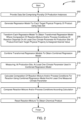
- FIG. 2 illustrates a method 200 for producing a chemical product from a reaction mixture containing at least two components, in accordance with one or more implementations.
- the operations of method 200 presented below are intended to be illustrative. In some implementations, method 200 is accomplished with one or more additional operations not described, and/or without one or more of the operations discussed.
- method 200 is implemented in one or more processing devices (e.g., a digital processor, an analog processor, a digital circuit designed to process information, an analog circuit designed to process information, a state machine, and/or other mechanisms for electronically processing information).
- the one or more processing devices includes one or more devices executing some or all of the operations of method 200 in response to instructions stored electronically on an electronic storage medium.
- the one or more processing devices includes one or more devices configured through hardware, firmware, and/or software to be specifically designed for execution of one or more of the operations of method 200.
- An operation 202 includes providing a data set including a plurality of production instances. Each production instance includes data on the composition of the reaction mixture, at least one climate parameter at the production site of the product, and at least one target physical property of the product. Operation 202 is performed by one or more hardware processors configured by machine-readable instructions including a module that is the same as or similar to data providing module 108, in accordance with one or more implementations.
- An operation 204 includes generating a regression model for each target physical property of the product using the data set.
- a respective target physical property is the dependent variable and other data in the data set are independent variables.
- Operation 204 is performed by one or more hardware processors configured by machine-readable instructions including a module that is the same as or similar to regression model generating module 110, in accordance with one or more implementations.
- An operation 206 includes transforming each regression model to obtain a transformed regression model where the composition of the reaction mixture and/or the process conditions of a reaction depends on at least one climate parameter at the production site of the product and each target physical property is assigned a desired value. Operation 206 is performed by one or more hardware processors configured by machine-readable instructions including a module that is the same as or similar to regression model transformation module 112, in accordance with one or more implementations.
- An operation 208 includes combining the transformed regression models to obtain a combined regression model. Operation 208 is performed by one or more hardware processors configured by machine-readable instructions including a module that is the same as or similar to regression model combining module 114, in accordance with one or more implementations.
- An operation 210 includes measuring, at the production site, at least one climate parameter used in the combined regression model. Operation 210 is performed by one or more hardware processors configured by machine-readable instructions including a module that is the same as or similar to Measuring module 116, in accordance with one or more implementations.
- An operation 212 includes calculating the composition of the reaction mixture and/or the process conditions for the reaction using the combined regression model and the at least one measured climate parameter. Operation 212 is performed by one or more hardware processors configured by machine-readable instructions including a module that is the same as or similar to composition calculation module 118, in accordance with one or more implementations.
- An operation 214 includes composing the reaction mixture and/or process conditions according the calculation. Operation 214 is performed by one or more hardware processors configured by machine-readable instructions including a module that is the same as or similar to reaction mixture composition module 120, in accordance with one or more implementations.
- An operation 216 includes reacting the reaction mixture to obtain the chemical product. Operation 216 is performed by one or more hardware processors configured by machine-readable instructions including a module that is the same as or similar to reaction mixture reaction module 122, in accordance with one or more implementations.
- Each row represents data for one production instance of polyurethane foam.
- the foam may be produced by reacting a polyol component with a polyisocyanate component.
- Water amount of water [g] added to the polyol component as a chemical blowing agent; ISO: NCO index of the reaction mixture; AbsHum_Mean: mean value for the absolute air humidity [g/m 3 ] at the production site; p: air pressure [kPa] at the production site; RD: raw density of the polyurethane foam [kg/m 3 ]; CH40: compression load deflection of the polyurethane foam at 40% compression [kPa].
- ISO X1) Water (X2) AbsHum_Mean (X3) P (X4) RD CH40 First entry First entry First entry First entry First entry First entry First entry First entry First entry First entry First entry First entry First entry First entry First entry First entry First entry First entry First entry First entry First entry First entry First entry First entry First entry First entry First entry First entry First entry First entry First entry First entry First entry First entry First entry First entry First entry First entry First entry First entry First entry First entry First entry First entry First entry First entry First entry First entry First entry First entry First entry First entry First entry First entry First
- each row of the table represents a production instance.
- the composition of the reaction mixture, as it pertains to the method according to the invention is documented in the columns “ISO” and “Water”.
- climate parameters are "AbsHum_Mean” and “p” and target physical properties are “RD” and "CH40”.
- RD constant _ 01 + constant _ 02 ⁇ X 1 + constant _ 03 ⁇ X2 + constant _ 04 ⁇ X 4
- the raw density is the dependent variable and a part of the other data - ISO, water and air pressure - are the independent variables.
- the absolute humidity has not been taken into account.
- the compression load deflection as the other target physical property has been excluded.
- CH 40 constant _ 05 + constant _ 06 ⁇ X 1 + constant _ 07 ⁇ X2 + constant _ 08 ⁇ X3 + constant _ 09 ⁇ X4 + constant _ 10 ⁇ X 1 2 + constant _ 11 ⁇ X2 2 + constant _ 12 ⁇ X 1 ⁇ X 2
- the compression load deflection is the dependent variable and the other data - ISO, water, absolute humidity and air pressure - are the independent variables. Furthermore, also in accordance with the method according to the invention, the raw density as the other target physical property has been excluded.
- the regression models were transformed as follows.
- the subscript "_nr” denotes "new recipe", i.e relating to the recipe for the polyurethane foam after taking climate corrections (absolute humidity and air pressure) into account.
- the constants constant_01 to constant_33 may be positive or negative and have small values, usually from -2 to 2.
- X3_nr and X4_nr are the new measured absolute humidity and air pressure values.
- X3 and X4 are the standard lab climate conditions.
Landscapes
- Engineering & Computer Science (AREA)
- Computing Systems (AREA)
- Chemical & Material Sciences (AREA)
- Bioinformatics & Cheminformatics (AREA)
- Theoretical Computer Science (AREA)
- Bioinformatics & Computational Biology (AREA)
- Crystallography & Structural Chemistry (AREA)
- Life Sciences & Earth Sciences (AREA)
- Physics & Mathematics (AREA)
- General Physics & Mathematics (AREA)
- Automation & Control Theory (AREA)
- General Health & Medical Sciences (AREA)
- Software Systems (AREA)
- Evolutionary Computation (AREA)
- Databases & Information Systems (AREA)
- Health & Medical Sciences (AREA)
- Data Mining & Analysis (AREA)
- Computer Vision & Pattern Recognition (AREA)
- Artificial Intelligence (AREA)
- Medical Informatics (AREA)
- Management, Administration, Business Operations System, And Electronic Commerce (AREA)
- Polyurethanes Or Polyureas (AREA)
Claims (15)
- Verfahren zur Herstellung eines chemischen Produkts aus einer Reaktionsmischung, die mindestens zwei Komponenten enthält, Folgendes umfassend:I) Bereitstellen eines Datensatzes, der mehrere Herstellungsinstanzen umfasst, wobei jede Herstellungsinstanz Daten über (a) die Zusammensetzung der Reaktionsmischung und/oder die Prozessbedingungen, (b) mindestens einen Klimaparameter am Herstellungsort des Produkts und (c) mindestens eine physikalische Zieleigenschaft des Produkts umfasst;II) Erzeugen eines Regressionsmodells für jede physikalische Zieleigenschaft des Produkts unter Verwendung des Datensatzes, wobei in dem Regressionsmodell eine jeweilige physikalische Zieleigenschaft die abhängige Variable ist und mindestens ein Teil der anderen Daten in dem Datensatz, außer allen verbleibenden physikalischen Zieleigenschaften, unabhängige Variablen sind;III) Transformieren jedes Regressionsmodells, um ein transformiertes Regressionsmodell zu erhalten, bei dem a) die Zusammensetzung der Reaktionsmischung und/oder b) die Prozessbedingungen einer Reaktion von mindestens einem Klimaparameter an dem Herstellungsort des Produkts abhängt und jeder physikalischen Zieleigenschaft ein erwünschter Wert zugewiesen wird;IV) Kombinieren der transformierten Regressionsmodelle, um ein kombiniertes Regressionsmodell zu erhalten;V) Messen, an dem Herstellungsort, des mindestens einen Klimaparameters, der in dem kombinierten Regressionsmodell verwendet wird;VI) Berechnen a) der Zusammensetzung der Reaktionsmischung und/oder b) der Prozessbedingungen für die Reaktion unter Verwendung des kombinierten Regressionsmodells und des mindestens einen gemessenen Klimaparameters;VII) Zusammensetzen der Reaktionsmischung und/oder der Prozessbedingungen gemäß der Berechnung; undVIII) Reagieren der Reaktionsmischung, um das chemische Produkt zu erhalten.
- Verfahren nach Anspruch 1, wobei der Datensatz vor dem Schritt I) unter Verwendung eines statistischen Verfahrens verarbeitet wird, um Ausreißer zu entfernen.
- Verfahren nach Anspruch 1, wobei Schritt II) Folgendes umfasst:Trennen des Datensatzes in einen Trainingsdatensatz und einen Prüfdatensatz,Erzeugen jedes Regressionsmodells unter Verwendung des Trainingsdatensatzes undValidieren des Regressionsmodells gegen den Prüfdatensatz.
- Verfahren nach Anspruch 3, wobei der Datensatz in Cluster gruppiert wird und jeder Cluster in einen Trainingsdatensatz und einen Prüfdatensatz zum Erzeugen der Regressionsmodelle geteilt wird.
- Verfahren nach Anspruch 1, wobei der mindestens eine Klimaparameter an dem Herstellungsort der Luftdruck, die Lufttemperatur, die relative Luftfeuchtigkeit der Luft oder eine Kombination davon ist.
- Verfahren nach Anspruch 1, wobei die mindestens eine physikalische Zieleigenschaft die Rohdichte gemäß DIN EN ISO 845 und/oder die Kompressionslastdurchbiegung bei 40 % Kompression gemäß EN ISO 3386 ist.
- Verfahren nach Anspruch 1, wobei das chemische Produkt ein Polyurethan-Schaum ist und die Reaktionsmischung ein Polyisocyanat, eine mit Polyisocyanat reaktionsfähige Verbindung und ein Blähmittel enthält.
- Verfahren nach Anspruch 1, wobei Zusammensetzen der Reaktionsmischung in Schritt VII), angefangen von einer vordefinierten Normzusammensetzung der Reaktionsmischung, Folgendes umfasst:(a) Erhöhen oder Vermindern eines molaren Verhältnisses von Isocyanat-Gruppen zu mit Isocyanat reaktionsfähigen Gruppen;(b) Erhöhen oder Vermindern einer Menge Blähmittel;(c) Erhöhen oder Vermindern relativer Mengen physikalischer und chemischer Blähmittel zueinander; oder(d) eine Kombination davon.
- Verfahren nach Anspruch 1, weiterhin Folgendes umfassend:IX) Messen, an dem Herstellungsort, des mindestens einen Klimaparameters, der in dem kombinierten Regressionsmodell verwendet wird, nachdem der Schritt VIII begonnen hat;X) Berechnen der Zusammensetzung der Reaktionsmischung oder der Prozessbedingungen der Reaktion unter Verwendung des kombinierten Regressionsmodells und des mindestens einen in Schritt IX gemessenen Klimaparameters;XI) Einstellen oder Entscheiden, diese nicht einzustellen, der Reaktionsmischung oder der Prozessbedingungen gemäß der Berechnung in Schritt X; undXII) Reagieren der Reaktionsmischung, um das chemische Produkt zu erhalten, nachdem die Einstellung oder die Entscheidung, nicht einzustellen, der Reaktionsmischung oder der Prozessbedingungen in Schritt XI vorgenommen wurde.
- Verfahren nach Anspruch 9, wobei die Schritte IX bis XII mindestens einmal alle 60 Sekunden, mindestens einmal alle 30 Sekunden oder kontinuierlich wiederholt werden.
- Verfahren nach Anspruch 1, weiterhin Folgendes umfassend:IX') Messen, an dem Herstellungsort, des mindestens einen Klimaparameters, der in dem kombinierten Regressionsmodell verwendet wird, nachdem der Schritt VIII begonnen hat;X') Bestimmen, wenn die Messung in Schritt IX' von einer vorhergehenden Messung des mindestens einen Klimaparameters verschieden ist;XI') wenn bestimmt wird, dass die Messung verschieden ist, dann Berechnen der Zusammensetzung der Reaktionsmischung oder der Prozessbedingungen der Reaktion unter Verwendung des kombinierten Regressionsmodells und des mindestens einen in Schritt IX' gemessenen Klimaparameters;XII') Einstellen der Reaktionsmischung oder der Prozessbedingungen gemäß der Berechnung in Schritt XI', wenn eine derartige Berechnung vorgenommen wird; undXIII') Reagieren der Reaktionsmischung, um das chemische Produkt zu erhalten, nach Vornehmen der Einstellung der Reaktionsmischung oder der Prozessbedingungen in Schritt XII', wenn eine Berechnung in Schritt XI vorgenommen wurde.
- Verfahren nach Anspruch 11, wobei die Schritte IX' bis XI' mindestens einmal alle 60 Sekunden, mindestens einmal alle 30 Sekunden oder kontinuierlich wiederholt werden.
- System, das zum Herstellen eines chemischen Produkts aus einer Reaktionsmischung eingerichtet ist, die mindestens zwei Komponenten enthält, das System Folgendes umfassend:einen oder mehrere Hardware-Prozessoren, die durch maschinenlesbare Befehle eingerichtet sind, um:einen Datensatz bereitzustellen, der mehrere Herstellungsinstanzen umfasst, wobei jede Herstellungsinstanz Daten über die Zusammensetzung der Reaktionsmischung, mindestens einen Klimaparameter am Herstellungsort des Produkts und mindestens eine physikalische Zieleigenschaft des Produkts umfasst;ein Regressionsmodell für jede physikalische Zieleigenschaft des Produkts unter Verwendung des Datensatzes zu erzeugen, wobei in dem Regressionsmodell eine jeweilige physikalische Zieleigenschaft die abhängige Variable ist und andere Daten in dem Datensatz unabhängige Variablen sind;jedes Regressionsmodell zu transformieren, um ein transformiertes Regressionsmodell zu erhalten, bei dem die Zusammensetzung der Reaktionsmischung und/oder die Prozessbedingungen einer Reaktion von mindestens einem Klimaparameter an dem Herstellungsort des Produkts abhängt und jeder physikalischen Zieleigenschaft ein erwünschter Wert zugewiesen wird;die transformierten Regressionsmodelle zu kombinieren, um ein kombiniertes Regressionsmodell zu erhalten;an dem Herstellungsort mindestens einen Klimaparameter zu messen, der in dem kombinierten Regressionsmodell verwendet wird;die Zusammensetzung der Reaktionsmischung und/oder die Prozessbedingungen für die Reaktion unter Verwendung des kombinierten Regressionsmodells und des mindestens einen gemessenen Klimaparameters zu berechnen; unddie Reaktionsmischung und/oder die Prozessbedingungen gemäß der Berechnung zusammenzusetzen;und einen Reaktor zum Reagieren der Reaktionsmischung, um das chemische Produkt zu erhalten.
- Rechnerplattform, die zum Herstellen eines chemischen Produkts aus einer Reaktionsmischung eingerichtet ist, die mindestens zwei Komponenten enthält, die Rechnerplattform Folgendes umfassend:ein nichtflüchtiges computerlesbares Speichermedium mit darauf enthaltenen ausführbaren Befehlen; undeinen oder mehrere Hardware-Prozessoren, die eingerichtet sind, um die Befehle auszuführen, um:einen Datensatz bereitzustellen, der mehrere Herstellungsinstanzen umfasst, wobei jede Herstellungsinstanz Daten über die Zusammensetzung der Reaktionsmischung, mindestens einen Klimaparameter am Herstellungsort des Produkts und mindestens eine physikalische Zieleigenschaft des Produkts umfasst;ein Regressionsmodell für jede physikalische Zieleigenschaft des Produkts unter Verwendung des Datensatzes zu erzeugen, wobei in dem Regressionsmodell eine jeweilige physikalische Zieleigenschaft die abhängige Variable ist und andere Daten in dem Datensatz unabhängige Variablen sind;jedes Regressionsmodell zu transformieren, um ein transformiertes Regressionsmodell zu erhalten, bei dem die Zusammensetzung der Reaktionsmischung und/oder die Prozessbedingungen einer Reaktion von mindestens einem Klimaparameter an dem Herstellungsort des Produkts abhängt und jeder physikalischen Zieleigenschaft ein erwünschter Wert zugewiesen wird;die transformierten Regressionsmodelle zu kombinieren, um ein kombiniertes Regressionsmodell zu erhalten;an dem Herstellungsort mindestens einen Klimaparameter zu messen, der in dem kombinierten Regressionsmodell verwendet wird;die Zusammensetzung der Reaktionsmischung und/oder die Prozessbedingungen für die Reaktion unter Verwendung des kombinierten Regressionsmodells und des mindestens einen gemessenen Klimaparameters zu berechnen; unddie Reaktionsmischung und/oder die Prozessbedingungen gemäß der Berechnung zusammenzusetzen.
- Plattform nach Anspruch 14, wobei die Plattform in Datenkommunikation mit einem Reaktor zum Reagieren der Reaktionsmischung steht, um das chemische Produkt zu erhalten.
Applications Claiming Priority (2)
| Application Number | Priority Date | Filing Date | Title |
|---|---|---|---|
| EP19190049 | 2019-08-05 | ||
| PCT/EP2020/071195 WO2021023566A1 (en) | 2019-08-05 | 2020-07-28 | Method of producing a chemical product using a regression model |
Publications (2)
| Publication Number | Publication Date |
|---|---|
| EP4010764A1 EP4010764A1 (de) | 2022-06-15 |
| EP4010764B1 true EP4010764B1 (de) | 2023-07-19 |
Family
ID=67658440
Family Applications (1)
| Application Number | Title | Priority Date | Filing Date |
|---|---|---|---|
| EP20743719.5A Active EP4010764B1 (de) | 2019-08-05 | 2020-07-28 | Verfahren zur herstellung eines chemischen produkts unter verwendung eines regressionsmodells |
Country Status (6)
| Country | Link |
|---|---|
| US (1) | US20220284991A1 (de) |
| EP (1) | EP4010764B1 (de) |
| JP (1) | JP2022543266A (de) |
| CN (1) | CN114144734B (de) |
| PL (1) | PL4010764T3 (de) |
| WO (1) | WO2021023566A1 (de) |
Families Citing this family (5)
| Publication number | Priority date | Publication date | Assignee | Title |
|---|---|---|---|---|
| EP4075209A1 (de) * | 2021-04-14 | 2022-10-19 | Covestro Deutschland AG | Einstellen des schaumproduktionsparameters, bestimmen der härtekonvertierungsbeziehung, vorrichtung für die schaumerzeugung und mittel |
| EP4163921A1 (de) * | 2021-10-06 | 2023-04-12 | Covestro Deutschland AG | Programm, informationsverarbeitungsgerät, system, server, terminal und methode um ein rezept zur erzeugung einer physikalishen eigenschaft von polyurethanschaum zu erhalten |
| CN114201905B (zh) * | 2021-11-19 | 2022-12-09 | 苏州美昱高分子材料有限公司 | 一种改性粒子的生产方法和装置 |
| US12587274B2 (en) | 2023-03-28 | 2026-03-24 | Quantum Generative Materials Llc | Satellite optimization management system based on natural language input and artificial intelligence |
| US12368503B2 (en) | 2023-12-27 | 2025-07-22 | Quantum Generative Materials Llc | Intent-based satellite transmit management based on preexisting historical location and machine learning |
Family Cites Families (9)
| Publication number | Priority date | Publication date | Assignee | Title |
|---|---|---|---|---|
| DE10237005A1 (de) * | 2002-08-13 | 2004-02-26 | Bayer Ag | Verfahren und Anlage zur Herstellung von Schaumstoff in einem kontinuierlichen Blockschaumprozess |
| JP3824983B2 (ja) * | 2002-09-04 | 2006-09-20 | 本田技研工業株式会社 | リーン運転の際に同定器の演算を停止する内燃機関の空燃比制御装置 |
| CN102527307A (zh) * | 2002-10-28 | 2012-07-04 | 伊内奥斯美国公司 | 采用在线仪器数据转换的化学制造工艺和方法 |
| JP2007517933A (ja) * | 2003-12-19 | 2007-07-05 | ザ プロクター アンド ギャンブル カンパニー | 界面活性剤増強ポリマーを含む洗浄組成物 |
| KR100682888B1 (ko) * | 2004-02-11 | 2007-02-15 | 삼성전자주식회사 | 가중된 회귀모델 결정 방법 및 이를 이용한 혼합물의 성분농도 예측 방법 |
| US9471884B2 (en) * | 2014-05-30 | 2016-10-18 | International Business Machines Corporation | Multi-model blending |
| US10570733B2 (en) * | 2016-12-05 | 2020-02-25 | Baker Hughes, A Ge Company, Llc | Synthetic chromatogram from physical properties |
| US10346969B1 (en) * | 2018-01-02 | 2019-07-09 | Amazon Technologies, Inc. | Detecting surface flaws using computer vision |
| EP3543268A1 (de) * | 2018-03-22 | 2019-09-25 | Covestro Deutschland AG | Verfahren zur herstellung von polyurethanweichschaumstoffen |
-
2020
- 2020-07-28 WO PCT/EP2020/071195 patent/WO2021023566A1/en not_active Ceased
- 2020-07-28 JP JP2022506925A patent/JP2022543266A/ja active Pending
- 2020-07-28 CN CN202080055733.9A patent/CN114144734B/zh active Active
- 2020-07-28 US US17/631,989 patent/US20220284991A1/en not_active Abandoned
- 2020-07-28 EP EP20743719.5A patent/EP4010764B1/de active Active
- 2020-07-28 PL PL20743719.5T patent/PL4010764T3/pl unknown
Also Published As
| Publication number | Publication date |
|---|---|
| US20220284991A1 (en) | 2022-09-08 |
| WO2021023566A1 (en) | 2021-02-11 |
| EP4010764A1 (de) | 2022-06-15 |
| JP2022543266A (ja) | 2022-10-11 |
| PL4010764T3 (pl) | 2023-08-21 |
| CN114144734B (zh) | 2024-11-01 |
| CN114144734A (zh) | 2022-03-04 |
Similar Documents
| Publication | Publication Date | Title |
|---|---|---|
| EP4010764B1 (de) | Verfahren zur herstellung eines chemischen produkts unter verwendung eines regressionsmodells | |
| Dean et al. | Response surface methodology | |
| Fujita et al. | Exogenous versus endogenous separation | |
| KR101432436B1 (ko) | 최근린기법을 이용한 하수처리장의 유입유량과 유입성분농도의 예측 장치 및 방법 | |
| US12112835B2 (en) | Method and computer system for determining polymeric product properties | |
| TWI736696B (zh) | 成像疊對度量方法、電腦程式產品、度量模組及成像疊對度量系統 | |
| DE102016109232A1 (de) | Stichprobenmessverfahren mit Stichprobenentnahmeratenentscheidungsschema und Computerprogrammprodukt hiervon | |
| US10124381B2 (en) | Rolling process learning control device | |
| EP3784712B1 (de) | Verfahren zum ermitteln einer produktkomposition für ein chemisches mischungsprodukt | |
| US6212438B1 (en) | Method and apparatus for generating a model of an industrial production | |
| Chen et al. | Monitoring polyurethane foaming reactions using near-infrared hyperspectral imaging | |
| US11275665B2 (en) | Analysis system | |
| CN101320258A (zh) | 双阶段虚拟测量方法 | |
| JP2017138885A (ja) | パラメータ選定方法、パラメータ選定プログラム及びパラメータ選定装置 | |
| CN112734233A (zh) | 确认app推广渠道的新增客户质量的方法及装置 | |
| CN118036315B (zh) | 一种基于物联网的数字包装设计方法及系统 | |
| Ramirez et al. | Can crop insurance premiums be reliably estimated? | |
| US7127316B2 (en) | Method and system for estimating manufacturing target bias | |
| US20250061251A1 (en) | Model generation device, model generation method, and data estimation device | |
| Mares et al. | Robust design in generalised linear models for improving the quality of polyurethane soles | |
| CN121286815B (zh) | 一种用于运动鞋的弹性鞋垫及其制备方法 | |
| US20250147498A1 (en) | Information processing method, information processing system, and recording medium | |
| Gubreley et al. | Bayes Estimation of Capability Index Using Three-Parameter Weibull Distribution | |
| CN120494162A (zh) | 基于自校正批次相关高斯回归的间歇过程质量预测方法 | |
| EP4167237A1 (de) | Verfahren und system zur rezeptempfehlung, speichermedium |
Legal Events
| Date | Code | Title | Description |
|---|---|---|---|
| STAA | Information on the status of an ep patent application or granted ep patent |
Free format text: STATUS: UNKNOWN |
|
| STAA | Information on the status of an ep patent application or granted ep patent |
Free format text: STATUS: THE INTERNATIONAL PUBLICATION HAS BEEN MADE |
|
| PUAI | Public reference made under article 153(3) epc to a published international application that has entered the european phase |
Free format text: ORIGINAL CODE: 0009012 |
|
| STAA | Information on the status of an ep patent application or granted ep patent |
Free format text: STATUS: REQUEST FOR EXAMINATION WAS MADE |
|
| 17P | Request for examination filed |
Effective date: 20220307 |
|
| AK | Designated contracting states |
Kind code of ref document: A1 Designated state(s): AL AT BE BG CH CY CZ DE DK EE ES FI FR GB GR HR HU IE IS IT LI LT LU LV MC MK MT NL NO PL PT RO RS SE SI SK SM TR |
|
| DAV | Request for validation of the european patent (deleted) | ||
| DAX | Request for extension of the european patent (deleted) | ||
| GRAP | Despatch of communication of intention to grant a patent |
Free format text: ORIGINAL CODE: EPIDOSNIGR1 |
|
| STAA | Information on the status of an ep patent application or granted ep patent |
Free format text: STATUS: GRANT OF PATENT IS INTENDED |
|
| INTG | Intention to grant announced |
Effective date: 20230222 |
|
| GRAS | Grant fee paid |
Free format text: ORIGINAL CODE: EPIDOSNIGR3 |
|
| GRAA | (expected) grant |
Free format text: ORIGINAL CODE: 0009210 |
|
| STAA | Information on the status of an ep patent application or granted ep patent |
Free format text: STATUS: THE PATENT HAS BEEN GRANTED |
|
| AK | Designated contracting states |
Kind code of ref document: B1 Designated state(s): AL AT BE BG CH CY CZ DE DK EE ES FI FR GB GR HR HU IE IS IT LI LT LU LV MC MK MT NL NO PL PT RO RS SE SI SK SM TR |
|
| REG | Reference to a national code |
Ref country code: GB Ref legal event code: FG4D |
|
| REG | Reference to a national code |
Ref country code: CH Ref legal event code: EP |
|
| REG | Reference to a national code |
Ref country code: DE Ref legal event code: R096 Ref document number: 602020014115 Country of ref document: DE |
|
| REG | Reference to a national code |
Ref country code: IE Ref legal event code: FG4D |
|
| REG | Reference to a national code |
Ref country code: LT Ref legal event code: MG9D |
|
| REG | Reference to a national code |
Ref country code: NL Ref legal event code: MP Effective date: 20230719 |
|
| REG | Reference to a national code |
Ref country code: AT Ref legal event code: MK05 Ref document number: 1590088 Country of ref document: AT Kind code of ref document: T Effective date: 20230719 |
|
| PG25 | Lapsed in a contracting state [announced via postgrant information from national office to epo] |
Ref country code: NL Free format text: LAPSE BECAUSE OF FAILURE TO SUBMIT A TRANSLATION OF THE DESCRIPTION OR TO PAY THE FEE WITHIN THE PRESCRIBED TIME-LIMIT Effective date: 20230719 |
|
| PG25 | Lapsed in a contracting state [announced via postgrant information from national office to epo] |
Ref country code: GR Free format text: LAPSE BECAUSE OF FAILURE TO SUBMIT A TRANSLATION OF THE DESCRIPTION OR TO PAY THE FEE WITHIN THE PRESCRIBED TIME-LIMIT Effective date: 20231020 |
|
| PG25 | Lapsed in a contracting state [announced via postgrant information from national office to epo] |
Ref country code: IS Free format text: LAPSE BECAUSE OF FAILURE TO SUBMIT A TRANSLATION OF THE DESCRIPTION OR TO PAY THE FEE WITHIN THE PRESCRIBED TIME-LIMIT Effective date: 20231119 |
|
| PG25 | Lapsed in a contracting state [announced via postgrant information from national office to epo] |
Ref country code: SE Free format text: LAPSE BECAUSE OF FAILURE TO SUBMIT A TRANSLATION OF THE DESCRIPTION OR TO PAY THE FEE WITHIN THE PRESCRIBED TIME-LIMIT Effective date: 20230719 Ref country code: RS Free format text: LAPSE BECAUSE OF FAILURE TO SUBMIT A TRANSLATION OF THE DESCRIPTION OR TO PAY THE FEE WITHIN THE PRESCRIBED TIME-LIMIT Effective date: 20230719 Ref country code: PT Free format text: LAPSE BECAUSE OF FAILURE TO SUBMIT A TRANSLATION OF THE DESCRIPTION OR TO PAY THE FEE WITHIN THE PRESCRIBED TIME-LIMIT Effective date: 20231120 Ref country code: NO Free format text: LAPSE BECAUSE OF FAILURE TO SUBMIT A TRANSLATION OF THE DESCRIPTION OR TO PAY THE FEE WITHIN THE PRESCRIBED TIME-LIMIT Effective date: 20231019 Ref country code: LV Free format text: LAPSE BECAUSE OF FAILURE TO SUBMIT A TRANSLATION OF THE DESCRIPTION OR TO PAY THE FEE WITHIN THE PRESCRIBED TIME-LIMIT Effective date: 20230719 Ref country code: LT Free format text: LAPSE BECAUSE OF FAILURE TO SUBMIT A TRANSLATION OF THE DESCRIPTION OR TO PAY THE FEE WITHIN THE PRESCRIBED TIME-LIMIT Effective date: 20230719 Ref country code: IS Free format text: LAPSE BECAUSE OF FAILURE TO SUBMIT A TRANSLATION OF THE DESCRIPTION OR TO PAY THE FEE WITHIN THE PRESCRIBED TIME-LIMIT Effective date: 20231119 Ref country code: HR Free format text: LAPSE BECAUSE OF FAILURE TO SUBMIT A TRANSLATION OF THE DESCRIPTION OR TO PAY THE FEE WITHIN THE PRESCRIBED TIME-LIMIT Effective date: 20230719 Ref country code: GR Free format text: LAPSE BECAUSE OF FAILURE TO SUBMIT A TRANSLATION OF THE DESCRIPTION OR TO PAY THE FEE WITHIN THE PRESCRIBED TIME-LIMIT Effective date: 20231020 Ref country code: FI Free format text: LAPSE BECAUSE OF FAILURE TO SUBMIT A TRANSLATION OF THE DESCRIPTION OR TO PAY THE FEE WITHIN THE PRESCRIBED TIME-LIMIT Effective date: 20230719 Ref country code: AT Free format text: LAPSE BECAUSE OF FAILURE TO SUBMIT A TRANSLATION OF THE DESCRIPTION OR TO PAY THE FEE WITHIN THE PRESCRIBED TIME-LIMIT Effective date: 20230719 |
|
| REG | Reference to a national code |
Ref country code: CH Ref legal event code: PL |
|
| REG | Reference to a national code |
Ref country code: BE Ref legal event code: MM Effective date: 20230731 |
|
| PG25 | Lapsed in a contracting state [announced via postgrant information from national office to epo] |
Ref country code: LU Free format text: LAPSE BECAUSE OF NON-PAYMENT OF DUE FEES Effective date: 20230728 |
|
| PG25 | Lapsed in a contracting state [announced via postgrant information from national office to epo] |
Ref country code: LU Free format text: LAPSE BECAUSE OF NON-PAYMENT OF DUE FEES Effective date: 20230728 |
|
| REG | Reference to a national code |
Ref country code: DE Ref legal event code: R097 Ref document number: 602020014115 Country of ref document: DE |
|
| REG | Reference to a national code |
Ref country code: IE Ref legal event code: MM4A |
|
| PG25 | Lapsed in a contracting state [announced via postgrant information from national office to epo] |
Ref country code: ES Free format text: LAPSE BECAUSE OF FAILURE TO SUBMIT A TRANSLATION OF THE DESCRIPTION OR TO PAY THE FEE WITHIN THE PRESCRIBED TIME-LIMIT Effective date: 20230719 |
|
| PG25 | Lapsed in a contracting state [announced via postgrant information from national office to epo] |
Ref country code: SM Free format text: LAPSE BECAUSE OF FAILURE TO SUBMIT A TRANSLATION OF THE DESCRIPTION OR TO PAY THE FEE WITHIN THE PRESCRIBED TIME-LIMIT Effective date: 20230719 Ref country code: RO Free format text: LAPSE BECAUSE OF FAILURE TO SUBMIT A TRANSLATION OF THE DESCRIPTION OR TO PAY THE FEE WITHIN THE PRESCRIBED TIME-LIMIT Effective date: 20230719 Ref country code: ES Free format text: LAPSE BECAUSE OF FAILURE TO SUBMIT A TRANSLATION OF THE DESCRIPTION OR TO PAY THE FEE WITHIN THE PRESCRIBED TIME-LIMIT Effective date: 20230719 Ref country code: EE Free format text: LAPSE BECAUSE OF FAILURE TO SUBMIT A TRANSLATION OF THE DESCRIPTION OR TO PAY THE FEE WITHIN THE PRESCRIBED TIME-LIMIT Effective date: 20230719 Ref country code: DK Free format text: LAPSE BECAUSE OF FAILURE TO SUBMIT A TRANSLATION OF THE DESCRIPTION OR TO PAY THE FEE WITHIN THE PRESCRIBED TIME-LIMIT Effective date: 20230719 Ref country code: CZ Free format text: LAPSE BECAUSE OF FAILURE TO SUBMIT A TRANSLATION OF THE DESCRIPTION OR TO PAY THE FEE WITHIN THE PRESCRIBED TIME-LIMIT Effective date: 20230719 Ref country code: MC Free format text: LAPSE BECAUSE OF FAILURE TO SUBMIT A TRANSLATION OF THE DESCRIPTION OR TO PAY THE FEE WITHIN THE PRESCRIBED TIME-LIMIT Effective date: 20230719 Ref country code: CH Free format text: LAPSE BECAUSE OF NON-PAYMENT OF DUE FEES Effective date: 20230731 Ref country code: SK Free format text: LAPSE BECAUSE OF FAILURE TO SUBMIT A TRANSLATION OF THE DESCRIPTION OR TO PAY THE FEE WITHIN THE PRESCRIBED TIME-LIMIT Effective date: 20230719 |
|
| PLBE | No opposition filed within time limit |
Free format text: ORIGINAL CODE: 0009261 |
|
| STAA | Information on the status of an ep patent application or granted ep patent |
Free format text: STATUS: NO OPPOSITION FILED WITHIN TIME LIMIT |
|
| PG25 | Lapsed in a contracting state [announced via postgrant information from national office to epo] |
Ref country code: IT Free format text: LAPSE BECAUSE OF FAILURE TO SUBMIT A TRANSLATION OF THE DESCRIPTION OR TO PAY THE FEE WITHIN THE PRESCRIBED TIME-LIMIT Effective date: 20230719 Ref country code: BE Free format text: LAPSE BECAUSE OF NON-PAYMENT OF DUE FEES Effective date: 20230731 |
|
| 26N | No opposition filed |
Effective date: 20240422 |
|
| PG25 | Lapsed in a contracting state [announced via postgrant information from national office to epo] |
Ref country code: IE Free format text: LAPSE BECAUSE OF NON-PAYMENT OF DUE FEES Effective date: 20230728 |
|
| PG25 | Lapsed in a contracting state [announced via postgrant information from national office to epo] |
Ref country code: IE Free format text: LAPSE BECAUSE OF NON-PAYMENT OF DUE FEES Effective date: 20230728 Ref country code: FR Free format text: LAPSE BECAUSE OF NON-PAYMENT OF DUE FEES Effective date: 20230919 Ref country code: SI Free format text: LAPSE BECAUSE OF FAILURE TO SUBMIT A TRANSLATION OF THE DESCRIPTION OR TO PAY THE FEE WITHIN THE PRESCRIBED TIME-LIMIT Effective date: 20230719 |
|
| PG25 | Lapsed in a contracting state [announced via postgrant information from national office to epo] |
Ref country code: BG Free format text: LAPSE BECAUSE OF FAILURE TO SUBMIT A TRANSLATION OF THE DESCRIPTION OR TO PAY THE FEE WITHIN THE PRESCRIBED TIME-LIMIT Effective date: 20230719 |
|
| PG25 | Lapsed in a contracting state [announced via postgrant information from national office to epo] |
Ref country code: BG Free format text: LAPSE BECAUSE OF FAILURE TO SUBMIT A TRANSLATION OF THE DESCRIPTION OR TO PAY THE FEE WITHIN THE PRESCRIBED TIME-LIMIT Effective date: 20230719 |
|
| GBPC | Gb: european patent ceased through non-payment of renewal fee |
Effective date: 20240728 |
|
| PG25 | Lapsed in a contracting state [announced via postgrant information from national office to epo] |
Ref country code: GB Free format text: LAPSE BECAUSE OF NON-PAYMENT OF DUE FEES Effective date: 20240728 |
|
| PGFP | Annual fee paid to national office [announced via postgrant information from national office to epo] |
Ref country code: PL Payment date: 20250626 Year of fee payment: 6 |
|
| PG25 | Lapsed in a contracting state [announced via postgrant information from national office to epo] |
Ref country code: CY Free format text: LAPSE BECAUSE OF FAILURE TO SUBMIT A TRANSLATION OF THE DESCRIPTION OR TO PAY THE FEE WITHIN THE PRESCRIBED TIME-LIMIT; INVALID AB INITIO Effective date: 20200728 |
|
| PG25 | Lapsed in a contracting state [announced via postgrant information from national office to epo] |
Ref country code: HU Free format text: LAPSE BECAUSE OF FAILURE TO SUBMIT A TRANSLATION OF THE DESCRIPTION OR TO PAY THE FEE WITHIN THE PRESCRIBED TIME-LIMIT; INVALID AB INITIO Effective date: 20200728 |
|
| PGFP | Annual fee paid to national office [announced via postgrant information from national office to epo] |
Ref country code: DE Payment date: 20250618 Year of fee payment: 6 |
|
| PG25 | Lapsed in a contracting state [announced via postgrant information from national office to epo] |
Ref country code: TR Free format text: LAPSE BECAUSE OF FAILURE TO SUBMIT A TRANSLATION OF THE DESCRIPTION OR TO PAY THE FEE WITHIN THE PRESCRIBED TIME-LIMIT Effective date: 20230719 |