EP4009687B1 - Netzwerk-slicing-betrieb - Google Patents
Netzwerk-slicing-betrieb Download PDFInfo
- Publication number
- EP4009687B1 EP4009687B1 EP22150792.4A EP22150792A EP4009687B1 EP 4009687 B1 EP4009687 B1 EP 4009687B1 EP 22150792 A EP22150792 A EP 22150792A EP 4009687 B1 EP4009687 B1 EP 4009687B1
- Authority
- EP
- European Patent Office
- Prior art keywords
- network
- wtru
- slice
- information
- ran
- Prior art date
- Legal status (The legal status is an assumption and is not a legal conclusion. Google has not performed a legal analysis and makes no representation as to the accuracy of the status listed.)
- Active
Links
Images



Classifications
-
- H—ELECTRICITY
- H04—ELECTRIC COMMUNICATION TECHNIQUE
- H04L—TRANSMISSION OF DIGITAL INFORMATION, e.g. TELEGRAPHIC COMMUNICATION
- H04L41/00—Arrangements for maintenance, administration or management of data switching networks, e.g. of packet switching networks
- H04L41/08—Configuration management of networks or network elements
- H04L41/0894—Policy-based network configuration management
-
- H—ELECTRICITY
- H04—ELECTRIC COMMUNICATION TECHNIQUE
- H04L—TRANSMISSION OF DIGITAL INFORMATION, e.g. TELEGRAPHIC COMMUNICATION
- H04L41/00—Arrangements for maintenance, administration or management of data switching networks, e.g. of packet switching networks
- H04L41/12—Discovery or management of network topologies
- H04L41/122—Discovery or management of network topologies of virtualised topologies, e.g. software-defined networks [SDN] or network function virtualisation [NFV]
-
- H—ELECTRICITY
- H04—ELECTRIC COMMUNICATION TECHNIQUE
- H04L—TRANSMISSION OF DIGITAL INFORMATION, e.g. TELEGRAPHIC COMMUNICATION
- H04L67/00—Network arrangements or protocols for supporting network services or applications
- H04L67/50—Network services
- H04L67/51—Discovery or management thereof, e.g. service location protocol [SLP] or web services
-
- H—ELECTRICITY
- H04—ELECTRIC COMMUNICATION TECHNIQUE
- H04L—TRANSMISSION OF DIGITAL INFORMATION, e.g. TELEGRAPHIC COMMUNICATION
- H04L69/00—Network arrangements, protocols or services independent of the application payload and not provided for in the other groups of this subclass
- H04L69/24—Negotiation of communication capabilities
-
- H—ELECTRICITY
- H04—ELECTRIC COMMUNICATION TECHNIQUE
- H04W—WIRELESS COMMUNICATION NETWORKS
- H04W16/00—Network planning, e.g. coverage or traffic planning tools; Network deployment, e.g. resource partitioning or cells structures
- H04W16/02—Resource partitioning among network components, e.g. reuse partitioning
- H04W16/04—Traffic adaptive resource partitioning
-
- H—ELECTRICITY
- H04—ELECTRIC COMMUNICATION TECHNIQUE
- H04W—WIRELESS COMMUNICATION NETWORKS
- H04W28/00—Network traffic management; Network resource management
- H04W28/02—Traffic management, e.g. flow control or congestion control
- H04W28/06—Optimizing the usage of the radio link, e.g. header compression, information sizing, discarding information
-
- H—ELECTRICITY
- H04—ELECTRIC COMMUNICATION TECHNIQUE
- H04W—WIRELESS COMMUNICATION NETWORKS
- H04W48/00—Access restriction; Network selection; Access point selection
- H04W48/08—Access restriction or access information delivery, e.g. discovery data delivery
- H04W48/12—Access restriction or access information delivery, e.g. discovery data delivery using downlink control channel
-
- H—ELECTRICITY
- H04—ELECTRIC COMMUNICATION TECHNIQUE
- H04W—WIRELESS COMMUNICATION NETWORKS
- H04W48/00—Access restriction; Network selection; Access point selection
- H04W48/16—Discovering, processing access restriction or access information
-
- H—ELECTRICITY
- H04—ELECTRIC COMMUNICATION TECHNIQUE
- H04W—WIRELESS COMMUNICATION NETWORKS
- H04W48/00—Access restriction; Network selection; Access point selection
- H04W48/18—Selecting a network or a communication service
-
- H—ELECTRICITY
- H04—ELECTRIC COMMUNICATION TECHNIQUE
- H04W—WIRELESS COMMUNICATION NETWORKS
- H04W60/00—Affiliation to network, e.g. registration; Terminating affiliation with the network, e.g. de-registration
- H04W60/002—Registration for requesting network slices
-
- H—ELECTRICITY
- H04—ELECTRIC COMMUNICATION TECHNIQUE
- H04W—WIRELESS COMMUNICATION NETWORKS
- H04W60/00—Affiliation to network, e.g. registration; Terminating affiliation with the network, e.g. de-registration
- H04W60/04—Affiliation to network, e.g. registration; Terminating affiliation with the network, e.g. de-registration using triggered events
-
- H—ELECTRICITY
- H04—ELECTRIC COMMUNICATION TECHNIQUE
- H04W—WIRELESS COMMUNICATION NETWORKS
- H04W76/00—Connection management
- H04W76/10—Connection setup
- H04W76/12—Setup of transport tunnels
-
- H—ELECTRICITY
- H04—ELECTRIC COMMUNICATION TECHNIQUE
- H04W—WIRELESS COMMUNICATION NETWORKS
- H04W8/00—Network data management
- H04W8/02—Processing of mobility data, e.g. registration information at HLR [Home Location Register] or VLR [Visitor Location Register]; Transfer of mobility data, e.g. between HLR, VLR or external networks
- H04W8/08—Mobility data transfer
-
- H—ELECTRICITY
- H04—ELECTRIC COMMUNICATION TECHNIQUE
- H04W—WIRELESS COMMUNICATION NETWORKS
- H04W88/00—Devices specially adapted for wireless communication networks, e.g. terminals, base stations or access point devices
- H04W88/14—Backbone network devices
-
- H—ELECTRICITY
- H04—ELECTRIC COMMUNICATION TECHNIQUE
- H04W—WIRELESS COMMUNICATION NETWORKS
- H04W88/00—Devices specially adapted for wireless communication networks, e.g. terminals, base stations or access point devices
- H04W88/18—Service support devices; Network management devices
-
- H—ELECTRICITY
- H04—ELECTRIC COMMUNICATION TECHNIQUE
- H04L—TRANSMISSION OF DIGITAL INFORMATION, e.g. TELEGRAPHIC COMMUNICATION
- H04L67/00—Network arrangements or protocols for supporting network services or applications
- H04L67/50—Network services
- H04L67/60—Scheduling or organising the servicing of application requests, e.g. requests for application data transmissions using the analysis and optimisation of the required network resources
-
- H—ELECTRICITY
- H04—ELECTRIC COMMUNICATION TECHNIQUE
- H04W—WIRELESS COMMUNICATION NETWORKS
- H04W12/00—Security arrangements; Authentication; Protecting privacy or anonymity
- H04W12/06—Authentication
-
- H—ELECTRICITY
- H04—ELECTRIC COMMUNICATION TECHNIQUE
- H04W—WIRELESS COMMUNICATION NETWORKS
- H04W48/00—Access restriction; Network selection; Access point selection
- H04W48/20—Selecting an access point
Definitions
- Previous core network architectures utilized a relatively monolithic network and transport framework. Such a framework was relatively limited in terms of providing differentiated service to different wireless transmit/receive units (WTRUs). Although the use of network slicing may allow for network flexibility, such a scheme allowed for relatively uniform procedures and systems in terms of need for assigning network resources to a WTRU. The introduction of 5G network slicing may create numerous potential issues related to discovering which network slices are being provided by the operator, selecting network slices for one or more WTRU, and/or connecting to a particular network slice.
- the network control node may receive service information associated with a service being requested by the WTRU, wherein the service information comprises one or more of a service class, a quality of service (QoS) requirement, or a mobility characteristic.
- the network control node may determine slice information associated with a plurality of network slices, wherein the slice information comprises one or more of an identifier of the network slice, priority of the network slice, a service class served by the network slice, a target device class, a QoS target, mobility support, security service, charging information, and/or performance information.
- the network control node may determine subscriber information for the WTRU.
- the network control node may select at least a first network slice of the plurality of network slices to serve the WTRU, wherein the network control node selects the first network slice based on the service information, the slice information associated with the first network slice, and the subscriber information for the WTRU.
- the network control node may determine whether the network control node or another network control node should service the WTRU for accessing the first network slice. On condition that the network control node determines that the network control node should service the WTRU for accessing the first network slice, the network control node may provide at least one network service associated with the first network slice to the WTRU.
- VNF virtualized network function
- a virtualized network function may include one or more virtual machines running different software and processes on top of standard high-volume servers, switches and storage, or even cloud computing infrastructure, rather than or in addition to having custom hardware appliances for each network function.
- An example NFV framework may include three components: virtualized network functions (VNFs), network function virtualization infrastructure (NFVI), and network functions virtualization management and orchestration architectural framework (NFV-MANO Architectural Framework).
- VNFs may be software-based implementations of network functions that may be deployed on one or more NFVI.
- the NFVI may correspond to the hardware and software components used to build the environment where VNFs are deployed.
- the NFV infrastructure may span several locations, and the network providing connectivity between these locations may be regarded as part of the NFV infrastructure.
- NFV-MANO Architectural Framework may correspond to the collection of functional blocks, data repositories used by the functional blocks, and reference points and interfaces through which these functional blocks exchange information for the purpose of managing and orchestrating NFVI and VNFs.
- SDN allows creation of an architecture that may be dynamic, manageable, cost-effective, and adaptable, suitable for the high-bandwidth and dynamic nature of today's applications.
- SDN architecture may decouple network control and forwarding functions, enabling network control to become directly programmable and the underlying infrastructure to be abstracted from applications and network services.
- SDN may simplify network design and operation because instructions may be provided by SDN controllers instead of multiple, vendor-specific devices and protocols.
- a network slice (e.g. , a 5G slice) may span some one or more or all domains of a given network, including, for example, software modules running on cloud nodes, specific configurations of the transport network that support flexible location of functions, a dedicated radio configuration, a specific radio access technology (RAT), configuration of a network device (e.g. , a 5G device), and/or the like.
- Different network slices may contain the same or different functions. Some functions for a mobile network may not be included in some of the network slices while other functions may be included in all network slices provided by a given network.
- the network slices may be designed to provide traffic treatment for a use case.
- some network slices may be targeted to support massive broadband (e.g ., high-speed, high bandwidth applications), others may be designed to support massive machine-type communications (e.g. , Intemet-of-Things (IoT) use cases), while still others may support ultra-reliable low-latency communications (e.g ., for critical infrastructure communications).
- the network slices may be designed to share some or all underlying network resources while being relatively functionally independent for service of different WTRUs using the different use cases.
- the network slices may be designed to avoid unnecessary functionalities.
- the slice concept may be flexible and may enable the expansion of existing businesses and/or the creation of new businesses, for example.
- Third-party entities may be given permission to control certain aspects of slicing, e.g ., via a suitable application program interface (API). Tailored services may be provided.
- API application program interface
- a WTRU and/or one more network nodes may be configured to discover one or more network slices for use by the WTRU.
- information broadcasted by a radio access network (RAN) may facilitate network slice selection.
- the information may include identifiers for the network slices, priorities of the network slices, service classes served by the network slices, and/or the like.
- the methods may be used by a WTRU and/or one or more network nodes to select an appropriate network slice to serve the WTRU.
- the selection may be made by the WTRU autonomously, may be made by one or more network nodes, and/or may involve a selection procedure involving both the WTRU and/or one or more network nodes.
- the selection may be made on a per-WTRU basis and/or on a per-service basis.
- a WTRU may utilize multiple network slices, for example for different types of services.
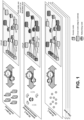
- FIG. 1 illustrates an example in which multiple 5G slices may be operated ( e.g ., concurrently operated) on the same network infrastructure.
- a 5G slice supporting a certain smartphone use case may be realized by distributing functions (e.g ., CP functions and/or UP functions) to multiple nodes across the network.
- functions e.g ., CP functions and/or UP functions
- a 5G slice supporting automotive (e.g ., autonomous vehicle) use cases may emphasize security, reliability, and/or latency requirements.
- functions e.g ., all of the necessary and/or potentially dedicated functions
- Vertical applications may be included, for example, due to latency constraints.
- the network may contain functionality for controlling and/or securing the operation of the network, e.g ., from end-to-end and/or at any circumstance.
- the C- and U-plane functions may be separated.
- Open interfaces may be defined between the C- and U-plane functions, for example, in accordance with SDN principles. Open interfaces may be defined between access-specific and access-agnostic functions so that additional access technologies (e.g ., fixed/wired and/or radio) may be integrated into the network.
- the fronthaul interface(s) between remote radio units and baseband units may be open and/or flexible. Multi-vendor operation and/or forward and backward compatibility may be offered. Options for transport bandwidth reduction may be provided.
- the interfacing between functions may allow for multi-vendor provisioning of different functions.
- the granularity at which functions are defined may be considered in system architecture design. Finer granularity may improve flexibility, but may lead to additional network complexity and/or load. For example, testing efforts for different function combinations and/or slice implementations may become cumbersome and functional interworking issues among different networks may arise.
- a granularity level that balances the goals of flexibility with complexity may be identified. The granularity level may influence how the eco-system delivers solutions.
- Network slice operation may be made transparent or visible to end users/devices.
- the devices may be configured to discover what network slices are being provided by the operator (e.g ., in the devices' current location and/or radio access network).
- network slices may encompass core network functions, underlying resources, radio access resources, and/or the like.
- a radio access network may belong to various network slices.
- knowledge about the network slices may enable a wireless transmit/receive unit (WTRU) to select an appropriate radio access technology (RAT) or radio access network (RAN) for a target network slice.
- WTRU wireless transmit/receive unit
- RAT radio access technology
- RAN radio access network
- a serving network slice may be subject to dynamic changes according to certain criteria, such as a device's mobility state.
- a 5G system or next generation core network architecture may allow a third party application server (AS) to access information regarding services provided by the network (e.g ., connectivity information, quality of service (QoS), mobility, power saving etc. ) and to dynamically customize the network capability for different diverse use cases.
- the core network may provide such exchange of network capabilities to the third party service provider via the API or the service capability exposure function (SCEF) in the core network. If network configuration and connectivity information is exchanged, the AS may request a particular network slice or provide information to assist the core network to make a decision to select a particular slice. Methods may be defined for such application server triggered or assisted selection of a core network slice.
- the RAN may broadcast information associated with available network slices that the RAN belongs to or is connected to.
- the RAN may broadcast the information using air interface signaling (e.g ., such as system information and/or beacon message).
- the network slice information for a particular network slice may include one or more of the following example fields or parameters: an identifier of the network slice, priority of the network slice, service class(es) served by the network slice, target device class, QoS targets, mobility support, security service, charging information, and/or performance information.
- the WTRU and/or network node may utilize the network slice information parameters in order to select an appropriate slice for the WTRU.
- the device performing slice selection for a WTRU e.g ., one or more network nodes, the WTRU, a combination of one or more network nodes and the WTRU, etc.
- the selecting device may ensure that the values for the network slice information parameters are sufficient (or are supported at all) to support the expected services to be used by the WTRU over that network slice.
- the broadcasted network slice identifiers may be human-readable texts, while the identifiers used in the slice operations may be L2 network identifiers such as Multiprotocol Label Switching (MPLS) labels or virtual LAN (VLAN) IDs.
- MPLS Multiprotocol Label Switching
- VLAN virtual LAN
- An example of a network slice information parameter that may be utilized for network slice selection may include a slice priority.
- An available network slice may be assigned a selection priority.
- the WTRU may not have a particular target network slice.
- the WTRU may follow a priority order in selecting network slices. For example, the highest priority network slice may be considered as a default network slice.
- Other network slice information such as slice identifier or service class, may be associated with a certain priority. The presence of those information (e.g ., the slice identifier and/or service class) may indicate the priority and explicit priority information may not be necessary.
- An example of a network slice information parameter that may be utilized for network slice selection may include a service class.
- a service class may indicate the target service type and/or user group that a network slice is intended to serve.
- the service class may indicate the general performance parameters (e.g ., such as delay, throughput, service continuity, security, etc. ) of the network slice.
- An example list of service classes may include the following: mission critical service, general broadcast service, delay tolerant service, and/or high mobility service.
- a network slice may support multiple service classes so the broadcasted slice information may include more than one service class.
- An example of a network slice information parameter that may be utilized for network slice selection may include an association with certain types of WTRUs.
- a network slice may be deployed to serve a specific target group of WTRUs (e.g ., not all WTRUs).
- a mission critical service may be accessible only to WTRUs that belong to an emergency service group (e.g., such as police, fire brigade, medical aids, etc. ) .
- the WTRUs may be preconfigured to be associated with a certain access class.
- a network slice (e.g ., each network slice) may indicate a range of device access classes that are allowed to access the network slice.
- An example of a network slice information parameter that may be utilized for network slice selection may include one or more QoS metrics.
- QoS metrics e.g ., minimum or maximum delay, minimum or maximum throughput
- the QoS metrics may reflect what a network slice promises to achieve.
- Such metrics may be used by mission critical devices (e.g ., devices with stringent QoS requirements).
- An example of a network slice information parameter that may be utilized for network slice selection may include an indication of support for types of mobility management mechanisms. Different network slices may employ different mobility management mechanisms. Details of the mobility management mechanism may be indicated via mobility support information. For example, one or more of the following may be indicated in the mobility support information: the supported mobility protocol (e.g., GTP, PMIP, DSMIP, etc. ), whether IP address preservation may be supported, whether service continuity (with or without IP address preservation) may be supported, whether distributed mobility may be supported, and/or the like.
- the supported mobility protocol e.g., GTP, PMIP, DSMIP, etc.
- IP address preservation may be supported
- service continuity with or without IP address preservation
- An example of a network slice information parameter that may be utilized for network slice selection may include a security mechanism. Different network slice may employ different security mechanisms.
- the mobility support information may indicate the details of the security mechanism.
- Charging rate related information may be indicated for a network slice ( e.g., each network slice). Performance related information such as the load percentage, congestion status, and/or the like, may be indicated.
- a WTRU may acquire the broadcast network slice information, for example if the WTRU is performing or assisting with network slice selection.
- the WTRU may acquire the information from air interface signaling (e.g ., such as system information or beacon messages).
- the WTRU may store the acquired network slice information in its memory.
- the WTRU may pass the acquired slice information to higher layers, for example, to decide whether to choose a particular network slice.
- the acquired network slice information may be presented to the user via a user interface.
- a WTRU may serve as a relay node and provide communication relay services to the other WTRUs.
- the WTRU may serve as a relay WTRU for proximity services (ProSe) and/or for device to device (D2D) communication.
- a WTRU may serve as a relay for a Road Side Unit (RSU) in a vehicular communication system.
- the WTRU may broadcast the network slice information of the slice the WTRU is currently served by or belongs to.
- the broadcast may prompt other WTRUs (e.g ., remote WTRUs) to choose the relay WTRU for desired services.
- the broadcast may be sent over a D2D/ProSe interface such as the PC5 interface.
- a WTRU may receive network slice information from a network server (e.g ., using Web APIs such as XML-based APIs or JSON).
- the network service may identify available network slices and/or may provide network slice information parameters for one or more slices (e.g., slice identifier, service classes, etc. ) .
- the slice information provided by the network server may be organized in different ways. In an example, the slice information may be organized based on the geographical locations in which the slices are available ( e.g ., such as an RAN IDs, cell IDs, various area IDs, network IDs, GPS coordinates, etc. ) . In an example, the slice information may be organized based on the time periods in which the slices are available ( e.g.
- the slice information may be organized based on the radio access technologies or networks of the slices ( e.g. , LTE access, WLAN access, etc. ) .
- the WTRU may be configured with other relevant information such as, for example, one or more of the following: the service class(es) that the WTRU belongs to, the mobility mechanisms that the WTRU supports and/or prefers, the security mechanisms that the WTRU supports and/or prefers, the QoS targets, and/or the like.
- the WTRU may use one or more pieces of the information described herein to match the preconfigured/target network slices with the discovered network slice information, and choose the serving network slice accordingly.
- the network may obtain the one or more pieces of the information described herein (e.g., the service class(es) that the WTRU belongs to, the mobility mechanisms that the WTRU supports and/or prefers, the security mechanisms that the WTRU supports and/or prefers, the QoS targets, and/or the like) to use for choosing a suitable serving network slice for the WTRU.
- the service class(es) that the WTRU belongs to e.g., the mobility mechanisms that the WTRU supports and/or prefers, the security mechanisms that the WTRU supports and/or prefers, the QoS targets, and/or the like
- the WTRU may have a set of configurations ( e.g ., such as those described herein) for a Home Network.
- the WTRU may have a set of configurations ( e.g ., such as those described herein) for a Visiting Network.
- the WTRU may have the configurations on a per-service basis.
- the WTRU may have the configurations on a per-Session basis.
- the WTRU may select different network slices for various services or sessions.
- the WTRU may simultaneously select multiple network slices if those services/sessions are run at the same time.
- the WTRU may be configured to have a default or fallback network slice.
- the WTRU may fall back to select the default network slice, for example, when the WTRU's preferred network slices are not available.
- the default network slice may be configured on a per-service basis or a per-network operator basis, for example.
- the network may be configured to control the selection of network slices.
- the network may be configured to select one or more network slices for a WTRU (e.g ., the WTRU may be assigned multiple network slices and may have simultaneous access to these slices).
- a control entity in a network slice may receive a request to serve a WTRU.
- the control entity may receive a NAS message or another message from a main control node.
- the control entity may verify whether it may serve the WTRU based on information comprised in the message (e.g ., service related information from the WTRU) and/or other information ( e.g. , subscriber information, local policies, etc. ) .
- the control entity may send a NAS message to the WTRU and indicate that the WTRU is registered for a particular set of services.
- the network slice that comprises the control entity e.g ., the control entity in the slice
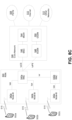
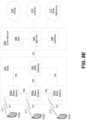
- the control entity may process the NAS message for the services that it may offer. In an example, for the services that the control entity is unable to and/or determines not to serve, the control entity may forward the NAS message to other network slices. The control entity may also forward a new NAS message to the other network slices. The new NAS message may include information about the services that may be provided for the WTRU by the other slices. The control entity may forward the message ( e.g. , existing or new) directly ( e.g. , as shown in 2B) or using eDECOR ( e.g ., as shown in 2C).
- the message e.g. , existing or new
- directly e.g. , as shown in 2B
- eDECOR e.g ., as shown in 2C
- An Application Server may trigger or may assist slice selection.
- a third party AS may request a new network slice or may provide certain application level criteria or characteristics which may assist the network in making slice selection decision.
- the AS may communicate with the network directly, for example, via an API exposed through an exposure functions, or via an application client in the WTRU.
- the AS may send information to the WTRU via application level signaling.
- Information may be passed on the network via WTRU to network signaling protocol.
- an application running on the WTRU may indicate service information to network signaling layers (e.g. , NAS, RRC, etc. ) which may send the service information to the network control node for slice selection.
- the AS providing information to assist in slice selection should be understood to refer to both the AS providing the information directly to the network node (e.g ., via an API, via an SCEF, without WTRU involvement, etc. ) and/or via the WTRU (e.g. , the WTRU application layer providing lower layers the service information which deliver the information to the network node via a RAN).
- One or more of the following information may be to the network to assist the selection of a network slice (e.g. , via the WTRU and/or to the network backend from the AS): application QoS requirements; type of application; and/or frequency of sending application data.
- the AS may send application level QoS requirements to the network for slice selection purposes.
- the QoS requirement may include the level of application priority.
- the AS may ( e.g ., may also) include the user priority within the application.
- Other QoS parameters may be included e.g. required bit rate, type of expected flows (voice, video, etc. ) .
- type of application there may be various types of applications running on the WTRU.
- the network slice decision may be made based on the category of the application. These categories may include machine type applications or internet of things (IoT) applications, health care applications, emergency or public safety applications etc.
- the application type or category may be determined by the application ID, or the AS may explicitly indicate the application type in the API request to the exposure layer or the network.
- the third party AS may indicate the expected data rate for a particular application to the network. This may in the form sending expected time intervals when the data is being sent or average amount data in a given amount of time (e.g ., average data (bits) to be sent within an hour or within one day). Such information may also be on to passed the network for slice selection purposes as described herein.
- the third party AS may play a role in slice selection in multitudes of capacities.
- the AS may assist the network slice selection node in the network while making the initial decision (referred to herein as early discovery) to assign one or more network slices to the WTRU.
- the network may request the AS to provide the information to make the appropriate slice assignment decision.
- the AS may provide the information which may be taken an as input by the network to make the final selection.
- the network node may obtain the application information from various application servers and may make the final decision of the assigning one or more network slices to the WTRU after taking into consideration the application specific information from multiple application servers.
- the network may assign one or more network slices which best serve the need of these AS's, for example, in the case of multiple application servers providing slice selection assistance information.
- the network may be able to contact application servers based on Application ID's or other application information provided to the network in the initial service template by the WTRU.
- the network may expose slice selection or a similar service to the third party AS.
- Certain API's may be available to AS to be able to request a particular slice (or, for example, at least which enable the AS to inform the network that the current network slice does not meet the application requirements, or that the AS is not satisfied with the services provided by the current network slice).
- the AS may initiate an API request if accessing the service via the exposure function or may send a request directly to the network ( e.g ., if there is a direct interface between the AS and the network to request a new network slice).
- the AS may include the application parameters in the request to the network.
- the network may make a new slice decision, for example, based on the received request from the AS.
- the network decision may also take into account the requirements from the other application server's transmitting data to the WTRU.
- the network may accept or reject the request from the AS to assign a new network slice to the WTRU. If the request is accepted, the new slice information may be communicated to the WTRU.
- the network may inform the WTRU directly via WTRU to network.
- the network may inform the AS that the API request has been accepted.
- the AS may inform the WTRU via the application level signaling about new slice(s) that need to be selected by the WTRU. This procedure may be used in "late discovery."
- the information sent to the WTRU to be able connect to the appropriate slice(s) may include one or more of the following: slice information; PLMN or Network ID; and/or time/occasion to disconnect.
- Slice information e.g ., Slice id number, slice name
- multiple slice information id number, name, etc.
- the WTRU is required to connect to multiple network slices.
- the home or the serving network may be unable to meet the WTRU/application requirement, so the WTRU may be asked to connect to network slice of a roaming partner.
- the WTRU may be immediately or the WTRU may be told to change network slices when the WTRU goes to idle mode or when the next time it has data to be sent for a particular application.
- the WTRU may be given a time ( e.g. , in seconds or minutes) after which the WTRU should disconnect/detach from the current network and send a request to connect/attach to the new slice.
- the third party AS may be charged by the network to use the slice selection services. There may be different levels of charging based on the type of request. A request that an application is not satisfied with the current slice may be charged differently from an explicit request that the application server may prefer a new network slice.
- FIG. 6 is a diagram illustrating an example initial network slice connection. If the WTRU autonomously selects the network slice, the WTRU may explicitly initiate Attach or PDN connection procedure towards the selected network slice.
- the WTRU may directly include the identifier of the selected network slice or the service name (e.g ., akin to APN), which can be mapped to a target network slice, in the Attach or PDN connection request.
- the initial Attach or PDN connection procedure may be handled by the control function in the selected network slice.
- the "Portal Function" may have the capability to download the user subscription profile from the central database, and may invoke other necessary control functions in the same network slice to complete the connection procedure.
- the RAN may have the capability to ascertain the target network slice of such messages, either by parsing the network slice identifier or service name in the messages, or the selected network slice had been stored in the RAN's WTRU context in the previous signaling.
- the RAN may be configured with the address of the portal function of each network slice so the RAN is able to forward the message to the portal function of the target network slice.
- the message may be invariably forwarded by the RAN to a common control function that may be independent of network slices, and the common control function may have the capability to analyze the target network slice and forward it to the portal function in the target network slice.
- the message may be invariably forwarded by the RAN to the common control function or the portal function in a default network slice.
- the common control function or the portal function in the default network slice may analyze the real target network slice and instruct the RAN to redirect it to the portal function in the target network slice.
- the handling control function may initiate interaction with other network functions to complete the connection.
- the portal function may invoke one or more of the following: the network-slice-specific authentication function to perform additional authentication on the WTRU (the WTRU may have been generally authenticated when it accesses the RAN and the network); the gateway control function in the same slice to establish the initial PDN connection (e.g . default bearer) for the WTRU; and/or the QoS control function to install the QoS profile for the connection.
- Network slice connection may be proxyed by the same common control function.
- Network slice connection may happen directly between the WTRU and the network slice.
- Interactions between the WTRU and the network functions in the network slice may be through the portal function, for example, the messages from the WTRU to a particular network function (such as, e.g ., Auth Function) may be forwarded by RAN to the portal function.
- the portal function may forward them to the proper function that will handle the messages. For example, messages to the WTRU from the various network functions inside the network slice may go to the portal function.
- the portal function may forward the messages to the RAN and WTRU.
- the RAN may need to store the address of the portal function of the network slice.
- FIG. 7 is a diagram illustrating multiple network slice connection forking.
- the WTRU may be ( e.g ., initially) connected to multiple network slices.
- the WTRU may decide to connect to multiple network slices based on the configuration on the device, the network policy of the network slice selection, etc.
- the WTRU may sequentially initiate the single connection to each selected network slice using a procedure described herein.
- Each connection request (initial attach or PDN connection request) may contain a single slice identifier or service name.
- the WTRU may include multiple network slice identifiers or service names in a single initial connection request and send it to a common control function.
- the common control function may "fork" multiple individual connection requests to the multiple target network slices.
- FIG. 8A is a diagram of an example communications system 500 in which one or more examples disclosed herein may be implemented.
- the communications system 500 may be a multiple access system that provides content, such as voice, data, video, messaging, broadcast, etc. , to multiple wireless users.
- the communications system 500 may enable multiple wireless users to access such content through the sharing of system resources, including wireless bandwidth.
- the communications systems 500 may employ one or more channel access methods, such as code division multiple access (CDMA), time division multiple access (TDMA), frequency division multiple access (FDMA), orthogonal FDMA (OFDMA), single-carrier FDMA (SC-FDMA), and the like.
- CDMA code division multiple access
- TDMA time division multiple access
- FDMA frequency division multiple access
- OFDMA orthogonal FDMA
- SC-FDMA single-carrier FDMA
- the communications system 500 may include wireless transmit/receive units (WTRUs) 502a, 502b, 502c, and/or 502d (which generally or collectively may be referred to as WTRU 502), a radio access network (RAN) 503/504/505, a core network 506/507/509, a public switched telephone network (PSTN) 508, the Internet 510, and other networks 512, though it will be appreciated that the disclosed embodiments contemplate any number of WTRUs, base stations, networks, and/or network elements.
- Each of the WTRUs 502a, 502b, 502c, and/or 502d may be any type of device configured to operate and/or communicate in a wireless environment.
- the WTRUs 502a, 502b, 502c, and/or 502d may be configured to transmit and/or receive wireless signals and may include user equipment (UE), a mobile station, a fixed or mobile subscriber unit, a pager, a cellular telephone, a personal digital assistant (PDA), a smartphone, a laptop, a netbook, a personal computer, a wireless sensor, consumer electronics, and the like.
- UE user equipment
- PDA personal digital assistant
- smartphone a laptop
- netbook a personal computer
- a wireless sensor consumer electronics, and the like.
- the communications systems 500 may also include a base station 514a and a base station 514b.
- Each of the base stations 514a, 514b may be any type of device configured to wirelessly interface with at least one of the WTRUs 502a, 502b, 502c, and/or 502d to facilitate access to one or more communication networks, such as the core network 506/507/509, the Internet 510, and/or the networks 512.
- the base stations 514a and/or 514b may be a base transceiver station (BTS), a Node-B, an eNode B, a Home Node B, a Home eNode B, a site controller, an access point (AP), a wireless router, and the like. While the base stations 514a, 514b are each depicted as a single element, it will be appreciated that the base stations 514a, 514b may include any number of interconnected base stations and/or network elements.
- the base station 514a may be part of the RAN 503/504/505, which may also include other base stations and/or network elements (not shown), such as a base station controller (BSC), a radio network controller (RNC), relay nodes, etc.
- BSC base station controller
- RNC radio network controller
- the base station 514a and/or the base station 514b may be configured to transmit and/or receive wireless signals within a particular geographic region, which may be referred to as a cell (not shown).
- the cell may further be divided into cell sectors.
- the cell associated with the base station 514a may be divided into three sectors.
- the base station 514a may include three transceivers, i.e., one for each sector of the cell.
- the base station 514a may employ multiple-input multiple output (MIMO) technology and, therefore, may utilize multiple transceivers for each sector of the cell.
- MIMO multiple-input multiple output
- the base stations 514a and/or 514b may communicate with one or more of the WTRUs 502a, 502b, 502c, and/or 502d over an air interface 515/516/517, which may be any suitable wireless communication link (e.g ., radio frequency (RF), microwave, infrared (IR), ultraviolet (UV), visible light, etc. ) .
- the air interface 515/516/517 may be established using any suitable radio access technology (RAT).
- RAT radio access technology
- the communications system 500 may be a multiple access system and may employ one or more channel access schemes, such as CDMA, TDMA, FDMA, OFDMA, SC-FDMA, and the like.
- the base station 514a in the RAN 503/504/505 and the WTRUs 502a, 502b, and/or 502c may implement a radio technology such as Universal Mobile Telecommunications System (UMTS) Terrestrial Radio Access (UTRA), which may establish the air interface 515/516/517 using wideband CDMA (WCDMA).
- WCDMA may include communication protocols such as High-Speed Packet Access (HSPA) and/or Evolved HSPA (HSPA+).
- HSPA may include High-Speed Downlink Packet Access (HSDPA) and/or High-Speed Uplink Packet Access (HSUPA).
- the base station 514a and the WTRUs 502a, 502b, and/or 502c may implement a radio technology such as Evolved UMTS Terrestrial Radio Access (E-UTRA), which may establish the air interface 515/516/517 using Long Term Evolution (LTE) and/or LTE-Advanced (LTE-A).
- E-UTRA Evolved UMTS Terrestrial Radio Access
- LTE Long Term Evolution
- LTE-A LTE-Advanced
- the base station 514a and the WTRUs 502a, 502b, and/or 502c may implement radio technologies such as IEEE 802.16 (i.e., Worldwide Interoperability for Microwave Access (WiMAX)), CDMA2000, CDMA2000 1X, CDMA2000 EV-DO, Interim Standard 2000 (IS-2000), Interim Standard 95 (IS-95), Interim Standard 856 (IS-856), Global System for Mobile communications (GSM), Enhanced Data rates for GSM Evolution (EDGE), GSM EDGE (GERAN), and the like.
- IEEE 802.16 i.e., Worldwide Interoperability for Microwave Access (WiMAX)
- CDMA2000, CDMA2000 1X, CDMA2000 EV-DO Code Division Multiple Access 2000
- IS-95 Interim Standard 95
- IS-856 Interim Standard 856
- GSM Global System for Mobile communications
- GSM Global System for Mobile communications
- EDGE Enhanced Data rates for GSM Evolution
- GERAN GSM EDGERAN
- the base station 514b in FIG. 8A may be a wireless router, Home Node B, Home eNode B, or access point, for example, and may utilize any suitable RAT for facilitating wireless connectivity in a localized area, such as a place of business, a home, a vehicle, a campus, and the like.
- the base station 514b and the WTRUs 502c, 502d may implement a radio technology such as IEEE 802.11 to establish a wireless local area network (WLAN).
- the base station 514b and the WTRUs 502c, 502d may implement a radio technology such as IEEE 802.15 to establish a wireless personal area network (WPAN).
- WLAN wireless local area network
- WPAN wireless personal area network
- the base station 514b and the WTRUs 502c, 502d may utilize a cellular-based RAT (e.g. , WCDMA, CDMA2000, GSM, LTE, LTE-A, etc. ) to establish a picocell or femtocell.
- a cellular-based RAT e.g. , WCDMA, CDMA2000, GSM, LTE, LTE-A, etc.
- the base station 514b may have a direct connection to the Internet 510.
- the base station 514b may not be required to access the Internet 510 via the core network 506/507/509.
- the RAN 503/504/505 may be in communication with the core network 506/507/509, which may be any type of network configured to provide voice, data, applications, and/or voice over internet protocol (VoIP) services to one or more of the WTRUs 502a, 502b, 502c, and/or 502d.
- the core network 506/507/509 may provide call control, billing services, mobile location-based services, pre-paid calling, Internet connectivity, video distribution, etc. , and/or perform high-level security functions, such as user authentication.
- the RAN 503/504/505 and/or the core network 506/507/509 may be in direct or indirect communication with other RANs that employ the same RAT as the RAN 503/504/505 or a different RAT.
- the core network 506/507/509 may also be in communication with another RAN (not shown) employing a GSM radio technology.
- the core network 506/507/509 may also serve as a gateway for the WTRUs 502a, 502b, 502c, and/or 502d to access the PSTN 508, the Internet 510, and/or other networks 512.
- the PSTN 508 may include circuit-switched telephone networks that provide plain old telephone service (POTS).
- POTS plain old telephone service
- the Internet 510 may include a global system of interconnected computer networks and devices that use common communication protocols, such as the transmission control protocol (TCP), user datagram protocol (UDP) and the internet protocol (IP) in the TCP/IP internet protocol suite.
- the networks 512 may include wired or wireless communications networks owned and/or operated by other service providers.
- the networks 512 may include another core network connected to one or more RANs, which may employ the same RAT as the RAN 503/504/505 or a different RAT.
- the WTRUs 502a, 502b, 502c, and/or 502d in the communications system 500 may include multi-mode capabilities, i.e., the WTRUs 502a, 502b, 502c, and/or 502d may include multiple transceivers for communicating with different wireless networks over different wireless links.
- the WTRU 502c shown in FIG. 8A may be configured to communicate with the base station 514a, which may employ a cellular-based radio technology, and with the base station 514b, which may employ an IEEE 802 radio technology.
- the transmit/receive element 522 may be configured to transmit signals to, or receive signals from, a base station (e.g ., the base station 514a) over the air interface 515/516/517.
- a base station e.g ., the base station 514a
- the transmit/receive element 522 may be an antenna configured to transmit and/or receive RF signals.
- the transmit/receive element 522 may be an emitter/detector configured to transmit and/or receive IR, UV, or visible light signals, for example.
- the transmit/receive element 522 may be configured to transmit and receive both RF and light signals. It will be appreciated that the transmit/receive element 522 may be configured to transmit and/or receive any combination of wireless signals.
- the WTRU 502 may include any number of transmit/receive elements 522. More specifically, the WTRU 502 may employ MIMO technology. Thus, in one embodiment, the WTRU 502 may include two or more transmit/receive elements 522 (e.g. , multiple antennas) for transmitting and receiving wireless signals over the air interface 515/516/517.
- the WTRU 502 may include two or more transmit/receive elements 522 (e.g. , multiple antennas) for transmitting and receiving wireless signals over the air interface 515/516/517.
- the RNC 542a in the RAN 503 may be connected to the MSC 546 in the core network 506 via an IuCS interface.
- the MSC 546 may be connected to the MGW 544.
- the MSC 546 and the MGW 544 may provide the WTRUs 502a, 502b, and/or 502c with access to circuit-switched networks, such as the PSTN 508, to facilitate communications between the WTRUs 502a, 502b, and/or 502c and traditional land-line communications devices.
- the core network 506 may also be connected to the networks 512, which may include other wired or wireless networks that are owned and/or operated by other service providers.
- Each of the eNode-Bs 560a, 560b, and/or 560c may be associated with a particular cell (not shown) and may be configured to handle radio resource management decisions, handover decisions, scheduling of users in the uplink and/or downlink, and the like. As shown in FIG. 8D , the eNode-Bs 560a, 560b, and/or 560c may communicate with one another over an X2 interface.
- the air interface 517 between the WTRUs 502a, 502b, and/or 502c and the RAN 505 may be defined as an R1 reference point that implements the IEEE 802.16 specification.
- each of the WTRUs 502a, 502b, and/or 502c may establish a logical interface (not shown) with the core network 509.
- the logical interface between the WTRUs 502a, 502b, and/or 502c and the core network 509 may be defined as an R2 reference point, which may be used for authentication, authorization, IP host configuration management, and/or mobility management.
- the RAN 505 may be connected to other ASNs and the core network 509 may be connected to other core networks.
- the communication link between the RAN 505 the other ASNs may be defined as an R4 reference point, which may include protocols for coordinating the mobility of the WTRUs 502a, 502b, and/or 502c between the RAN 505 and the other ASNs.
- the communication link between the core network 509 and the other core networks may be defined as an R5 reference, which may include protocols for facilitating interworking between home core networks and visited core networks.
Landscapes
- Engineering & Computer Science (AREA)
- Computer Networks & Wireless Communication (AREA)
- Signal Processing (AREA)
- Computer Security & Cryptography (AREA)
- Databases & Information Systems (AREA)
- Mobile Radio Communication Systems (AREA)
- Data Exchanges In Wide-Area Networks (AREA)
- Computer And Data Communications (AREA)
Claims (12)
- Verfahren, das durch eine Drahtlos-Sende- und -Empfangseinheit (Wireless Transmit/Receive Unit, WTRU) implementiert wird, wobei das Verfahren umfasst:Senden (1A) einer Nichtzugangsschicht-Nachricht (Non-Access Stratum, NAS-Nachricht) an ein Funkzugangsnetz (Radio Access Network, RAN), wobei die NAS-Nachricht eine Angabe eines Dienstes enthält, den die WTRU zu nutzen wünscht;in Reaktion auf das Senden der NAS-Nachricht an das RAN, Empfangen von Informationen von einer Netzsteuerungsentität, die die WTRU für den Dienst bedienen soll, wobei die Netzsteuerungsentität eine anfängliche Netzsteuerungsentität ist, die die NAS-Nachricht von dem RAN empfängt, oder eine alternative Netzsteuerungsentität ist, die die NAS-Nachricht empfängt, nachdem die anfängliche Netzsteuerungsentität bestimmt hat, dass sie die WTRU für den Dienst nicht bedienen soll; undBestimmen, auf der Grundlage der von der Netzsteuerungsentität empfangenen Informationen, von Slice-Informationen, die mit einer oder mehreren Netz-Slices verknüpft sind, die der WTRU zugewiesen sind, um den Dienst zu empfangen.
- Verfahren nach Anspruch 1, wobei die NAS-Nachricht eine Angabe umfasst, dass der WTRU keine Netz-Slice zugewiesen wurde.
- Verfahren nach Anspruch 1 oder 2, wobei die NAS-Nachricht Netz-Slice-Unterstützungsinformationen enthält, die eine Netz-Slice angeben, die die WTRU zu verwenden wünscht.
- Verfahren nach einem der Ansprüche 1 bis 3, wobei die von der Netzsteuerungsentität empfangenen Informationen eine oder mehrere Netz-Slices angeben, die die WTRU verwenden darf.
- Verfahren nach einem der Ansprüche 1 bis 4, wobei die NAS-Nachricht eine Registrierungsanforderung umfasst.
- Verfahren nach einem der Ansprüche 1 bis 5, wobei die alternative Netzsteuerungsentität die NAS-Nachricht entweder von dem RAN oder von der anfänglichen Netzsteuerungsentität empfängt.
- Drahtlos-Sende- und -Empfangseinheit (Wireless Transmit/Receive Unit, WTRU), umfassend:
einen Prozessor (518), der eingerichtet ist zum:Senden (1A) einer Nichtzugangsschicht-Nachricht (Non-Access Stratum, NAS-Nachricht) an ein Funkzugangsnetz (Radio Access Network, RAN), wobei die NAS-Nachricht eine Angabe eines Dienstes enthält, den die WTRU zu nutzen wünscht;in Reaktion auf das Senden der NAS-Nachricht an das RAN, Empfangen von Informationen von einer Netzsteuerungsentität, die die WTRU für den Dienst bedienen soll, wobei die Netzsteuerungsentität eine anfängliche Netzsteuerungsentität ist, die die NAS-Nachricht von dem RAN empfängt, oder eine alternative Netzsteuerungsentität ist, die die NAS-Nachricht empfängt, nachdem die anfängliche Netzsteuerungsentität bestimmt hat, dass sie die WTRU für den Dienst nicht bedienen soll; undBestimmen, auf der Grundlage der von der Netzsteuerungsentität empfangenen Informationen, von Slice-Informationen, die mit einer oder mehreren Netz-Slices verknüpft sind, die der WTRU zugewiesen sind, um den Dienst zu empfangen. - WTRU nach Anspruch 7, wobei die NAS-Nachricht eine Angabe umfasst, dass der WTRU keine Netz-Slice zugewiesen wurde.
- WTRU nach Anspruch 7 oder 8, wobei die NAS-Nachricht Netz-Slice-Unterstützungsinformationen enthält, die eine Netz-Slice angeben, die die WTRU zu verwenden wünscht.
- WTRU nach einem der Ansprüche 7 bis 9, wobei die von der Netzsteuerungsentität empfangenen Informationen eine oder mehrere Netz-Slices angeben, die die WTRU verwenden darf.
- WTRU nach einem der Ansprüche 7 bis 10, wobei die NAS-Nachricht eine Registrierungsanforderung umfasst.
- WTRU nach einem der Ansprüche 7 bis 11, wobei die alternative Netzsteuerungsentität die NAS-Nachricht entweder von dem RAN oder von der anfänglichen Netzsteuerungsentität empfängt.
Priority Applications (1)
| Application Number | Priority Date | Filing Date | Title |
|---|---|---|---|
| EP25177271.1A EP4604634A3 (de) | 2016-02-16 | 2017-02-16 | Netzwerk-slicing-betrieb |
Applications Claiming Priority (5)
| Application Number | Priority Date | Filing Date | Title |
|---|---|---|---|
| US201662296030P | 2016-02-16 | 2016-02-16 | |
| US201662306738P | 2016-03-11 | 2016-03-11 | |
| PCT/US2017/018147 WO2017143047A1 (en) | 2016-02-16 | 2017-02-16 | Network slicing operation |
| EP20154255.2A EP3664492B1 (de) | 2016-02-16 | 2017-02-16 | Netzwerk-slicing-betrieb |
| EP17708094.2A EP3417641B1 (de) | 2016-02-16 | 2017-02-16 | Netzwerk-slicing-betrieb |
Related Parent Applications (3)
| Application Number | Title | Priority Date | Filing Date |
|---|---|---|---|
| EP20154255.2A Division EP3664492B1 (de) | 2016-02-16 | 2017-02-16 | Netzwerk-slicing-betrieb |
| EP20154255.2A Division-Into EP3664492B1 (de) | 2016-02-16 | 2017-02-16 | Netzwerk-slicing-betrieb |
| EP17708094.2A Division EP3417641B1 (de) | 2016-02-16 | 2017-02-16 | Netzwerk-slicing-betrieb |
Related Child Applications (2)
| Application Number | Title | Priority Date | Filing Date |
|---|---|---|---|
| EP25177271.1A Division EP4604634A3 (de) | 2016-02-16 | 2017-02-16 | Netzwerk-slicing-betrieb |
| EP25177271.1A Division-Into EP4604634A3 (de) | 2016-02-16 | 2017-02-16 | Netzwerk-slicing-betrieb |
Publications (3)
| Publication Number | Publication Date |
|---|---|
| EP4009687A2 EP4009687A2 (de) | 2022-06-08 |
| EP4009687A3 EP4009687A3 (de) | 2022-08-31 |
| EP4009687B1 true EP4009687B1 (de) | 2025-07-02 |
Family
ID=58191661
Family Applications (4)
| Application Number | Title | Priority Date | Filing Date |
|---|---|---|---|
| EP17708094.2A Active EP3417641B1 (de) | 2016-02-16 | 2017-02-16 | Netzwerk-slicing-betrieb |
| EP22150792.4A Active EP4009687B1 (de) | 2016-02-16 | 2017-02-16 | Netzwerk-slicing-betrieb |
| EP25177271.1A Pending EP4604634A3 (de) | 2016-02-16 | 2017-02-16 | Netzwerk-slicing-betrieb |
| EP20154255.2A Active EP3664492B1 (de) | 2016-02-16 | 2017-02-16 | Netzwerk-slicing-betrieb |
Family Applications Before (1)
| Application Number | Title | Priority Date | Filing Date |
|---|---|---|---|
| EP17708094.2A Active EP3417641B1 (de) | 2016-02-16 | 2017-02-16 | Netzwerk-slicing-betrieb |
Family Applications After (2)
| Application Number | Title | Priority Date | Filing Date |
|---|---|---|---|
| EP25177271.1A Pending EP4604634A3 (de) | 2016-02-16 | 2017-02-16 | Netzwerk-slicing-betrieb |
| EP20154255.2A Active EP3664492B1 (de) | 2016-02-16 | 2017-02-16 | Netzwerk-slicing-betrieb |
Country Status (8)
| Country | Link |
|---|---|
| US (3) | US11122439B2 (de) |
| EP (4) | EP3417641B1 (de) |
| JP (3) | JP6725703B2 (de) |
| KR (3) | KR102130231B1 (de) |
| CN (2) | CN117255392A (de) |
| ES (1) | ES3037937T3 (de) |
| RU (1) | RU2725625C2 (de) |
| WO (1) | WO2017143047A1 (de) |
Families Citing this family (167)
| Publication number | Priority date | Publication date | Assignee | Title |
|---|---|---|---|---|
| EP3340692B1 (de) * | 2015-09-18 | 2020-08-05 | Huawei Technologies Co., Ltd. | Verfahren, vorrichtung und system zur auswahl eines kernnetzwerks |
| FR3048574A1 (fr) | 2016-03-07 | 2017-09-08 | Orange | Selection d'une instanciation de tranche de reseau pour la transmission de paquets montants |
| KR102078189B1 (ko) * | 2016-03-11 | 2020-02-20 | 주식회사 케이티 | 무선 액세스 망 슬라이싱 제어 장치와 그 장치가 무선 베어러 전송을 제어하는 방법 |
| WO2017163735A1 (ja) * | 2016-03-23 | 2017-09-28 | 日本電気株式会社 | コアノード、基地局、無線端末、通信方法、無線リソース割当方法、基地局選択方法、及び、可読媒体 |
| US10721758B2 (en) * | 2016-03-23 | 2020-07-21 | Lg Electronics Inc. | Method for transmitting data in a communication system and device therefor |
| US10880813B2 (en) * | 2016-04-05 | 2020-12-29 | Lg Electronics Inc. | Method for processing access request from UE, and network node |
| CN116113014A (zh) * | 2016-04-23 | 2023-05-12 | 华为技术有限公司 | 一种无线接入网切片的生成方法、无线接入网及切片管理器 |
| EP3455985B1 (de) | 2016-05-11 | 2022-03-09 | Convida Wireless, LLC | Neuer funk-downlink-steuerkanal |
| EP3462691B1 (de) * | 2016-06-03 | 2020-08-05 | Huawei Technologies Co., Ltd. | Verfahren und system zur bestimmung von netzwerkslices |
| FR3052324A1 (fr) * | 2016-06-07 | 2017-12-08 | Orange | Procede de connexion d'un terminal a une tranche de reseau |
| JP2019518392A (ja) | 2016-06-15 | 2019-06-27 | コンヴィーダ ワイヤレス, エルエルシー | 新しい無線のための許可不要アップリンク伝送 |
| WO2017218849A1 (en) * | 2016-06-15 | 2017-12-21 | Convida Wireless, Llc | Network slice discovery and selection |
| CN113613293B (zh) | 2016-07-01 | 2024-04-16 | 交互数字专利控股公司 | 用于在wtru中所使用的方法及wtru |
| CN107580360A (zh) * | 2016-07-04 | 2018-01-12 | 中国移动通信有限公司研究院 | 一种网络切片选择的方法、设备及网络架构 |
| JP6773116B2 (ja) * | 2016-07-15 | 2020-10-21 | 日本電気株式会社 | 通信方法 |
| EP3488537A1 (de) | 2016-07-21 | 2019-05-29 | Interdigital Patent Holdings, Inc. | Setup mit mehreren eingängen und mehreren ausgängen (mimo) in wlan-systemen mit millimeterwellen (mmw) |
| WO2018023338A1 (zh) | 2016-08-01 | 2018-02-08 | 华为技术有限公司 | 一种网络功能nf管理方法及nf管理设备 |
| US10567276B2 (en) | 2016-08-05 | 2020-02-18 | Huawei Technologies Co., Ltd. | Virtual network pre-configuration in support of service-based traffic forwarding |
| US10840982B2 (en) | 2016-08-11 | 2020-11-17 | Convidia Wireless, LLC | Beamforming sweeping and training in a flexible frame structure for new radio |
| GB2552844A (en) * | 2016-08-12 | 2018-02-14 | Nec Corp | Communication system |
| EP3510736B1 (de) * | 2016-09-23 | 2022-05-11 | Huawei Technologies Co., Ltd. | Controller und verfahren zur qualität des indikatormanagements für dienstleistungsklassen |
| CN106572516B (zh) * | 2016-09-28 | 2021-02-12 | 华为技术有限公司 | 一种网络切片选择方法、终端设备及网络设备 |
| EP3520553B1 (de) | 2016-09-29 | 2023-03-01 | Telefonaktiebolaget LM Ericsson (PUBL) | Dienstgütedifferenzierung zwischen netzwerk-slices |
| CN109891772B (zh) | 2016-11-03 | 2022-10-04 | 康维达无线有限责任公司 | Nr中的帧结构 |
| CN108243106B (zh) * | 2016-12-23 | 2020-09-04 | 华为技术有限公司 | 控制网络切片的方法、转发设备、控制设备和通信系统 |
| CN114900858A (zh) * | 2016-12-30 | 2022-08-12 | 英特尔公司 | 用于无线电通信的方法和设备 |
| CN108617025B (zh) * | 2016-12-30 | 2021-02-12 | 华为技术有限公司 | 一种双连接方法及接入网设备 |
| JP6855838B2 (ja) * | 2017-02-27 | 2021-04-07 | ソニー株式会社 | 端末装置、方法及びプログラム |
| US10764785B2 (en) * | 2017-03-07 | 2020-09-01 | Htc Corporation | Device and method of handling network slice information |
| US10433174B2 (en) * | 2017-03-17 | 2019-10-01 | Qualcomm Incorporated | Network access privacy |
| CN108632945B (zh) * | 2017-03-20 | 2020-11-06 | 华为技术有限公司 | 一种网络切片选择方法、用户设备及网络设备 |
| US10498666B2 (en) * | 2017-05-01 | 2019-12-03 | At&T Intellectual Property I, L.P. | Systems and methods for allocating end device reources to a network slice |
| US10440641B2 (en) * | 2017-05-26 | 2019-10-08 | Apple Inc. | Idle-mode cellular-to-Wi-Fi link selection using circuit-switched audio quality |
| US11240720B2 (en) * | 2017-06-02 | 2022-02-01 | FG Innovation Company Limited | Methods, devices, and systems for service-driven mobility management |
| CN109392096B (zh) * | 2017-08-04 | 2020-11-03 | 华为技术有限公司 | 一种资源配置方法和装置 |
| CN109379206B (zh) * | 2017-08-07 | 2022-04-22 | 华为技术有限公司 | 网络功能信息的管理方法及相关设备 |
| CN109391592B (zh) * | 2017-08-08 | 2021-12-24 | 华为技术有限公司 | 网络功能服务的发现方法及设备 |
| FR3070564A1 (fr) * | 2017-08-28 | 2019-03-01 | Orange | Procede de taxation de donnees d'une application acheminees sur une tranche d'un reseau de communication |
| CN109547231B (zh) * | 2017-09-22 | 2020-10-23 | 华为技术有限公司 | 一种网络切片管理方法及装置 |
| EP3689035B1 (de) * | 2017-09-25 | 2022-09-07 | Telefonaktiebolaget LM Ericsson (publ) | Adaptive auswahl von netzwerk-slices |
| CN109560948B (zh) * | 2017-09-25 | 2021-01-29 | 华为技术有限公司 | 一种网络切片的部署方法及相关设备 |
| CN109600760B (zh) * | 2017-09-30 | 2022-04-22 | 华为技术有限公司 | 网络管理方法、设备及系统 |
| US20190132218A1 (en) * | 2017-10-06 | 2019-05-02 | Huawei Technologies Co., Ltd. | Interaction between 5g and non-5g management function entities |
| EP3695653B1 (de) * | 2017-10-11 | 2025-09-24 | Nec Corporation | Ue-konfiguration und -aktualisierung mit netzwerk-slice-auswahlrichtlinien |
| WO2019074347A1 (en) | 2017-10-13 | 2019-04-18 | Samsung Electronics Co., Ltd. | USER EQUIPMENT (UE) AND CENTRAL NETWORK FOR MANAGING NETWORK WINDOW CONGESTION IN A WIRELESS COMMUNICATION SYSTEM |
| US11096245B2 (en) | 2017-10-13 | 2021-08-17 | Samsung Electronics Co., Ltd. | Method and system for maintaining service continuity by user equipment (UE) in wireless communication system |
| US11026128B2 (en) * | 2017-10-19 | 2021-06-01 | Qualcomm Incorporated | Mechanism to enable interworking between network slicing and evolved packet core connectivity |
| WO2019083843A1 (en) | 2017-10-23 | 2019-05-02 | Nokia Solutions And Networks Oy | CONFIGURATION OF NETWORK SLICES |
| CN109803281B (zh) * | 2017-11-16 | 2021-11-19 | 华为技术有限公司 | 网络业务的管理方法、设备及系统 |
| US10433177B2 (en) | 2017-12-01 | 2019-10-01 | At&T Intellectual Property I, L.P. | Adaptive pairing of a radio access network slice to a core network slice based on device information or service information |
| WO2019111317A1 (ja) * | 2017-12-05 | 2019-06-13 | 富士通株式会社 | 基地局装置、無線通信システム、及び端末装置 |
| CN108124515B (zh) * | 2017-12-07 | 2023-05-02 | 北京小米移动软件有限公司 | 信息广播方法及装置、业务实现方法及装置和接入点 |
| US11902890B2 (en) * | 2018-02-03 | 2024-02-13 | Nokia Technologies Oy | Application based routing of data packets in multi-access communication networks |
| CN110120879B (zh) * | 2018-02-06 | 2020-12-01 | 华为技术有限公司 | 一种应用服务水平协议的保障方法、设备及系统 |
| JP6930666B2 (ja) | 2018-02-16 | 2021-09-01 | 日本電気株式会社 | Ng−ranノード、ue、ng−ranノードの方法、及びueの方法 |
| WO2019158220A1 (en) * | 2018-02-19 | 2019-08-22 | Huawei Technologies Duesseldorf Gmbh | Apparatus for network slicing and slice management to support multi-slice services |
| JP6947668B2 (ja) * | 2018-03-14 | 2021-10-13 | エヌ・ティ・ティ・コミュニケーションズ株式会社 | 通信制御システム、通信制御方法及びコンピュータープログラム |
| IL277298B2 (en) * | 2018-03-20 | 2025-03-01 | Affirmed Networks Inc | Systems and methods for network slicing |
| US10740149B2 (en) * | 2018-04-20 | 2020-08-11 | Verizon Patent And Licensing, Inc. | Serverless computing architecture |
| WO2019229801A1 (ja) * | 2018-05-28 | 2019-12-05 | 三菱電機株式会社 | 無線アクセスネットワークの管理装置 |
| CN110661638B (zh) * | 2018-06-30 | 2021-04-20 | 华为技术有限公司 | 一种通信方法及装置 |
| EP3827617B1 (de) | 2018-07-23 | 2025-01-15 | Nokia Technologies OY | Verwaltung der benutzergerätekonfiguration in einem versorgenden plmn in gegenwart einer standardkonfiguration für das benutzergerät für alle plmn |
| US10687254B2 (en) * | 2018-08-21 | 2020-06-16 | T-Mobile Usa, Inc. | Dynamic quality of service in wireless networks |
| FR3085511B1 (fr) * | 2018-08-31 | 2022-08-26 | Orange | Procede de reglage de parametres d'un sous-ensemble virtuel d'un reseau dedie a un service |
| FR3085510A1 (fr) * | 2018-08-31 | 2020-03-06 | Orange | Procede de reglage de parametres d'un sous-ensemble virtuel d'un reseau dedie a un service |
| CN110896355B (zh) * | 2018-09-12 | 2022-04-05 | 华为技术有限公司 | 一种网络切片的选择方法及装置 |
| WO2020064250A1 (en) * | 2018-09-27 | 2020-04-02 | British Telecommunications Public Limited Company | Network slice redirection management |
| CN112753265B (zh) | 2018-09-27 | 2025-02-11 | 交互数字专利控股公司 | 新无线电的未经许可的频谱中的子频带操作 |
| US11665635B2 (en) | 2018-09-27 | 2023-05-30 | British Telecommunications Public Limited Company | Network slice management |
| JP7204403B2 (ja) * | 2018-09-28 | 2023-01-16 | 株式会社Nttドコモ | ネットワークノード |
| CN109040322B (zh) | 2018-10-08 | 2021-05-11 | 腾讯科技(深圳)有限公司 | 车辆通信方法、装置、计算机可读介质及电子设备 |
| US11019528B2 (en) * | 2018-10-29 | 2021-05-25 | Verizon Patent And Licensing Inc. | Method and system for admission control with network slice capability |
| US10993177B2 (en) * | 2018-12-13 | 2021-04-27 | Verizon Patent And Licensing Inc. | Network slice instance creation |
| KR102719931B1 (ko) * | 2018-12-20 | 2024-10-23 | 삼성전자주식회사 | 네트워크 연결 방법 및 장치 |
| EP3910890A4 (de) * | 2019-01-11 | 2022-08-31 | Ntt Docomo, Inc. | Kommunikationsverwaltungsvorrichtung und datenverwaltungsvorrichtung |
| US12238516B2 (en) * | 2019-01-11 | 2025-02-25 | Interdigital Patent Holdings, Inc. | Methods and apparatuses for slice-specific authentication |
| CA3126739A1 (en) * | 2019-01-24 | 2020-07-30 | Citrix Systems, Inc. | Optimized network selection |
| US11956763B2 (en) | 2019-01-25 | 2024-04-09 | Northeastern University | Methods for the enforcement of network slicing policies in virtualized cellular networks |
| WO2020160884A1 (en) | 2019-02-06 | 2020-08-13 | British Telecommunications Public Limited Company | Telecommunications network |
| US12120009B2 (en) * | 2019-02-18 | 2024-10-15 | Nokia Solutions And Networks Oy | Apparatus, method, and computer program |
| CN111586772B (zh) * | 2019-02-18 | 2021-06-22 | 华为技术有限公司 | 一种通信方法及装置 |
| US11057301B2 (en) * | 2019-03-21 | 2021-07-06 | Cisco Technology, Inc. | Using a midlay in a software defined networking (SDN) fabric for adjustable segmentation and slicing |
| US10917317B2 (en) | 2019-03-26 | 2021-02-09 | Cisco Technology, Inc. | Enterprise slice management |
| KR102290836B1 (ko) * | 2019-04-29 | 2021-08-17 | 주식회사 케이티 | 5g 통신 시스템의 망 접속 제어 방법 및 망 전환 방법 |
| EP3967078A1 (de) | 2019-05-10 | 2022-03-16 | Nokia Technologies Oy | Vorrichtung, verfahren und computerprogramm |
| JP2020205531A (ja) * | 2019-06-17 | 2020-12-24 | 富士通株式会社 | ネットワーク監視装置、伝送装置、及びネットワーク監視方法 |
| CN110495209B (zh) * | 2019-06-25 | 2023-11-14 | 小米通讯技术有限公司 | 确定无线资源的方法及装置 |
| WO2021004718A1 (en) | 2019-07-08 | 2021-01-14 | Sony Corporation | Methods and devices for utilizing an exposure function of a wireless communications network |
| JP2021022889A (ja) * | 2019-07-30 | 2021-02-18 | ソニー株式会社 | ネットワークスライス制御サーバ、サービスサーバ、および、それらの制御方法 |
| CN110582109A (zh) * | 2019-08-31 | 2019-12-17 | 华为技术有限公司 | 一种无线局域网wlan网络接入方法及装置 |
| CN112449389B (zh) * | 2019-09-05 | 2023-07-21 | 中国移动通信有限公司研究院 | 一种切换方法、源基站、目标基站及终端 |
| JP6859406B2 (ja) * | 2019-09-05 | 2021-04-14 | 京セラ株式会社 | 通信機器、制御方法、及びプログラム |
| US11070422B2 (en) | 2019-09-16 | 2021-07-20 | Cisco Technology, Inc. | Enabling enterprise segmentation with 5G slices in a service provider network |
| CN114365459B (zh) * | 2019-09-18 | 2024-05-14 | 三菱电机株式会社 | 网络控制装置、通信资源分配方法以及通信系统 |
| CN113133087B (zh) * | 2019-12-30 | 2023-09-05 | 中国移动通信集团浙江有限公司 | 针对终端设备配置网络切片的方法及装置 |
| US11240855B2 (en) * | 2020-01-13 | 2022-02-01 | Qualcomm Incorporated | Local area network client participation in a network slice |
| EP3855787B1 (de) * | 2020-01-27 | 2023-10-11 | Nokia Technologies Oy | Auswahl von netzwerk-slice in zellularem system |
| US11638312B2 (en) * | 2020-02-13 | 2023-04-25 | Qualcomm Incorporated | Slice allocation |
| JP7388533B2 (ja) * | 2020-02-21 | 2023-11-29 | 日本電信電話株式会社 | ゲートウェイ装置、方法及びプログラム |
| CN113301586B (zh) * | 2020-02-24 | 2023-04-18 | 华为技术有限公司 | 网络选择方法及电子设备 |
| US20230055913A1 (en) * | 2020-03-12 | 2023-02-23 | Telefonaktiebolaget Lm Ericsson (Publ) | Network Service Management |
| JP2021158605A (ja) * | 2020-03-27 | 2021-10-07 | ソニーグループ株式会社 | 情報処理装置、端末装置、情報処理装置の制御方法および端末装置の制御方法 |
| US11483218B2 (en) | 2020-03-27 | 2022-10-25 | EXFO Solutions SAS | Automating 5G slices using real-time analytics |
| CN113453284B (zh) * | 2020-03-27 | 2023-05-26 | 大唐移动通信设备有限公司 | 一种服务质量Qos控制方法、设备及存储介质 |
| US11451869B2 (en) * | 2020-03-30 | 2022-09-20 | Tencent America LLC | 5G media streaming network capability discovery and expression |
| US11246088B2 (en) * | 2020-04-10 | 2022-02-08 | Cisco Technology, Inc. | Failover and management of multi-vendor network slices |
| GB2594107A (en) | 2020-04-15 | 2021-10-20 | EXFO Solutions SAS | Network analytics |
| CN115486040A (zh) * | 2020-05-02 | 2022-12-16 | 诺基亚技术有限公司 | 装置、方法和计算机程序 |
| CN113747522A (zh) * | 2020-05-30 | 2021-12-03 | 华为技术有限公司 | 一种切换方法及装置 |
| JP7512687B2 (ja) * | 2020-06-03 | 2024-07-09 | 富士フイルムビジネスイノベーション株式会社 | 通信制御装置、通信制御プログラム、及び通信制御システム |
| KR102613535B1 (ko) * | 2020-06-09 | 2023-12-14 | 단국대학교 산학협력단 | 네트워크 슬라이싱에 기반하여 랜덤 액세스를 수행하는 장치 및 방법 |
| EP4164325A4 (de) | 2020-06-03 | 2024-05-29 | UUCOM Co., Ltd. | Vorrichtung und verfahren zur durchführung von direktzugriff |
| US11202234B1 (en) | 2020-06-03 | 2021-12-14 | Dish Wireless L.L.C. | Method and system for smart operating bandwidth adaptation during power outages |
| US11265135B2 (en) * | 2020-06-03 | 2022-03-01 | Dish Wireless Llc | Method and system for slicing assigning for load shedding to minimize power consumption where gNB is controlled for slice assignments for enterprise users |
| US11432159B2 (en) | 2020-06-15 | 2022-08-30 | At&T Intellectual Property I, L.P. | 5G network slice pre-configuration |
| US11277790B2 (en) | 2020-06-15 | 2022-03-15 | Sprint Communications Company L.P. | Wireless network slice selection in wireless user equipment (UE) |
| KR102930607B1 (ko) | 2020-06-24 | 2026-02-24 | 지티이 코포레이션 | 브로드캐스트 무선 통신 서비스를 위한 방법 |
| CN113965463B (zh) * | 2020-06-29 | 2024-08-27 | 中兴通讯股份有限公司 | 网络切片切换方法和终端、存储介质及电子装置 |
| KR102393322B1 (ko) * | 2020-07-15 | 2022-04-29 | 주식회사 엘지유플러스 | 5g 코어망에서 네트워크 슬라이스 식별자를 결정하여 전달하는 방법 |
| US11470549B2 (en) | 2020-07-31 | 2022-10-11 | Dish Wireless L.L.C. | Method and system for implementing mini-slot scheduling for all UEs that only are enabled to lower power usage |
| US11405941B2 (en) | 2020-07-31 | 2022-08-02 | DISH Wireless L.L.C | Method and system for traffic shaping at the DU/CU to artificially reduce the total traffic load on the radio receiver so that not all the TTLs are carrying data |
| CN114205877A (zh) * | 2020-09-02 | 2022-03-18 | 中兴通讯股份有限公司 | 一种网络切片确定方法、通信设备、系统及存储介质 |
| US11864069B2 (en) * | 2020-11-03 | 2024-01-02 | Cisco Technology, Inc. | Network slice based billing |
| US11477644B2 (en) * | 2020-11-30 | 2022-10-18 | At&T Intellectual Property I, L.P. | Network application programming interface guided service placement |
| US11729091B2 (en) | 2020-12-10 | 2023-08-15 | Amazon Technologies, Inc. | Highly available data-processing network functions for radio-based networks |
| US11310733B1 (en) | 2020-12-10 | 2022-04-19 | Amazon Technologies, Inc. | On-demand application-driven network slicing |
| US11627472B2 (en) | 2020-12-10 | 2023-04-11 | Amazon Technologies, Inc. | Automated deployment of radio-based networks |
| US11886315B2 (en) | 2020-12-10 | 2024-01-30 | Amazon Technologies, Inc. | Managing computing capacity in radio-based networks |
| US11601348B2 (en) | 2020-12-10 | 2023-03-07 | Amazon Technologies, Inc. | Managing radio-based private networks |
| US11252655B1 (en) * | 2020-12-10 | 2022-02-15 | Amazon Technologies, Inc. | Managing assignments of network slices |
| WO2022128277A1 (en) | 2020-12-18 | 2022-06-23 | British Telecommunications Public Limited Company | Controlling a radio access point |
| US11665533B1 (en) * | 2020-12-30 | 2023-05-30 | T-Mobile Innovations Llc | Secure data analytics sampling within a 5G virtual slice |
| TW202234940A (zh) * | 2021-01-07 | 2022-09-01 | 美商Idac控股公司 | 與第三層無線傳輸/接收單元到網路相關認證及授權 |
| US11564159B2 (en) * | 2021-02-01 | 2023-01-24 | T-Mobile Usa, Inc. | Orchestration and mediation stack |
| US11696098B2 (en) | 2021-03-04 | 2023-07-04 | Hewlett Packard Enterprise Development Lp | Automatically influencing UE slice policies based on real time analysis |
| US11711727B1 (en) | 2021-03-16 | 2023-07-25 | Amazon Technologies, Inc. | Provisioning radio-based networks on demand |
| US11895508B1 (en) | 2021-03-18 | 2024-02-06 | Amazon Technologies, Inc. | Demand-based allocation of ephemeral radio-based network resources |
| US11838273B2 (en) | 2021-03-29 | 2023-12-05 | Amazon Technologies, Inc. | Extending cloud-based virtual private networks to radio-based networks |
| US12245103B2 (en) * | 2021-05-12 | 2025-03-04 | Tencent America LLC | Methods for implementing various uplink streaming deployment scenarios in 5G networks |
| US11743953B2 (en) | 2021-05-26 | 2023-08-29 | Amazon Technologies, Inc. | Distributed user plane functions for radio-based networks |
| US11558827B1 (en) | 2021-06-24 | 2023-01-17 | T-Mobile Usa, Inc. | Maximum power reduction based on power headroom |
| US11503553B1 (en) | 2021-06-24 | 2022-11-15 | T-Mobile Usa, Inc. | Allocation of resource blocks based on traffic priority |
| JP7165784B1 (ja) * | 2021-06-24 | 2022-11-04 | ソフトバンク株式会社 | 通信システム、プログラム、及び通信制御方法 |
| US11871240B2 (en) | 2021-06-28 | 2024-01-09 | Amazon Technologies, Inc. | Interfaces for creating radio-based private networks |
| US11844012B2 (en) | 2021-07-02 | 2023-12-12 | Cisco Technology, Inc. | Mapping and stitching network slices across various domains based on a border gateway protocol attribute |
| CN118120295A (zh) * | 2021-09-17 | 2024-05-31 | 交互数字专利控股公司 | 网络切片的应用交互 |
| US11784945B2 (en) * | 2021-10-04 | 2023-10-10 | Nec Corporation | Dynamic self-optimization of application quality-of-service requests to mobile networks |
| JP2023056350A (ja) * | 2021-10-07 | 2023-04-19 | キヤノン株式会社 | 通信装置、制御方法、及びプログラム |
| JP7216788B1 (ja) * | 2021-10-08 | 2023-02-01 | ソフトバンク株式会社 | 通信システム |
| US11871318B2 (en) * | 2021-11-08 | 2024-01-09 | Verizon Patent And Licensing Inc. | Systems and methods for tiered network slice design and management in a wireless network |
| JP7785944B2 (ja) * | 2021-11-30 | 2025-12-15 | グーグル エルエルシー | QoSを備えたネットワークスライスを使用したクロスSIM通話 |
| US20250184881A1 (en) * | 2022-02-17 | 2025-06-05 | Interdigital Patent Holdings, Inc. | Enabling non-access stratum-as-a-service |
| US12075245B2 (en) | 2022-03-09 | 2024-08-27 | T-Mobile Innovations Llc | Wireless network slice access based on encrypted slice certificates that indicate slice characteristics |
| US12580943B2 (en) | 2022-06-03 | 2026-03-17 | Kbr Wyle Services Llc | Systems and methods for network resiliency |
| US12177076B2 (en) | 2022-06-29 | 2024-12-24 | Nokia Solutions And Networks Oy | Restoration of a network slice |
| US12101234B2 (en) * | 2022-08-31 | 2024-09-24 | Rakuten Mobile, Inc. | System and method for design of a network slice |
| US12592892B2 (en) | 2022-10-05 | 2026-03-31 | Oracle International Corporation | Methods, systems, and computer readable media for adjusting and using priorities of service/notification request messages at network functions with multiple slice support |
| US12615559B2 (en) * | 2022-10-12 | 2026-04-28 | At&T Intellectual Property I, L.P. | Facilitating network slicing information preservation in advanced networks |
| GB2626321B (en) * | 2023-01-17 | 2025-07-02 | Nokia Technologies Oy | Method, apparatus and computer program |
| WO2024194984A1 (ja) * | 2023-03-20 | 2024-09-26 | 楽天モバイル株式会社 | 特定位置での特定ユーザへの通信支援 |
| JP7383190B1 (ja) | 2023-03-30 | 2023-11-17 | Kddi株式会社 | 情報処理装置及び情報処理方法 |
| US12192033B1 (en) * | 2023-06-27 | 2025-01-07 | At&T Intellectual Property I, L.P. | Method and apparatus for performing network identification verification |
| WO2025041637A1 (ja) * | 2023-08-18 | 2025-02-27 | 京セラ株式会社 | 通信方法、ユーザ装置、及びネットワークノード |
| WO2025074386A1 (en) * | 2023-10-04 | 2025-04-10 | Jio Platforms Limited | A provisioning unit for providing real-time network slice usage metrics |
| FR3154268A1 (fr) * | 2023-10-12 | 2025-04-18 | Orange | Procédés de vérification, de gestion, de contrôle, d’exécution d’une vérification de l’accessibilité d’un équipement, équipement, serveur de contrôle, contrôleur réseau, entité relais et programme d’ordinateur correspondants. |
| FR3155398A1 (fr) * | 2023-11-15 | 2025-05-16 | Orange | Procédé de contrôle d’une communication au cours de laquelle sont échangées des données relatives à un service, et dispositifs électroniques associés |
| US20250380141A1 (en) * | 2024-06-11 | 2025-12-11 | Verizon Patent And Licensing Inc. | Systems and methods for virtual private network using wireless network slice |
Family Cites Families (18)
| Publication number | Priority date | Publication date | Assignee | Title |
|---|---|---|---|---|
| RU2538921C2 (ru) * | 2010-03-31 | 2015-01-10 | Телефонактиеболагет Л М Эрикссон (Пабл) | Обратная связь по сетевому доступу посредством многорежимного терминала |
| EP2621227A1 (de) | 2012-01-27 | 2013-07-31 | Alcatel Lucent | Unterstützung der an ein Mobiltelefon gerichteten Dienstbereitstellung über ein Multi-RAT- und/oder Multidomänennetzwerk |
| EP2645754B1 (de) | 2012-03-29 | 2015-02-25 | Mitsubishi Electric R&D Centre Europe B.V. | Vertrauenbasiertes System und Verfahren zur Durchführung einer Übergabe von einer Quellbasisstation an eine Zielbasisstation |
| CN102711141B (zh) * | 2012-05-15 | 2014-12-17 | 上海交通大学无锡研究院 | 一种基于移动终端的移动网络服务质量分布式采集方法 |
| EP2901766A2 (de) | 2012-09-27 | 2015-08-05 | Interdigital Patent Holdings, Inc. | End-to-end-architektur, api-rahmen, entdeckung und zugang in einem virtualisierten netz |
| WO2015178035A1 (ja) | 2014-05-23 | 2015-11-26 | 日本電気株式会社 | 通信装置、通信方法、通信システムおよびプログラム |
| JPWO2015178033A1 (ja) * | 2014-05-23 | 2017-04-20 | 日本電気株式会社 | 基地局、通信方法、mmeおよび通信システム |
| KR102157185B1 (ko) * | 2014-07-04 | 2020-09-18 | 삼성전자주식회사 | 무선 통신 시스템에서 접속 계층을 통해 서비스 연결을 제공하는 장치 및 방법 |
| WO2016086214A1 (en) | 2014-11-28 | 2016-06-02 | Huawei Technologies Co., Ltd | Systems and methods for providing customized virtual wireless networks based on service oriented network auto-creation |
| EP3281454B1 (de) | 2015-04-08 | 2019-03-27 | Telefonaktiebolaget LM Ericsson (publ) | Verfahrens und netzwerkknoten für netzwerkpartitionserhaltung bei übergaben zwischen zugängen |
| BR112017023037A2 (pt) | 2015-06-01 | 2018-07-03 | Huawei Tech Co Ltd | aparelho e método para funções virtualizadas em planos de controle e de dados. |
| US20180242161A1 (en) * | 2015-08-05 | 2018-08-23 | Telefonaktiebolaget Lm Ericsson (Publ) | Distributed management of network slices using a gossip protocol |
| WO2017063708A1 (en) * | 2015-10-15 | 2017-04-20 | Telefonaktiebolaget Lm Ericsson (Publ) | Apparatus and method for attaching user equipment to a mobile communications network |
| WO2017113109A1 (en) * | 2015-12-29 | 2017-07-06 | Telefonaktiebolaget Lm Ericsson (Publ) | Method and apparatus for virtualized network service provision |
| WO2017121454A1 (en) * | 2016-01-11 | 2017-07-20 | Telefonaktiebolaget Lm Ericsson (Publ) | Radio network node, network node, database, configuration control node, and methods performed thereby |
| EP3412048B1 (de) * | 2016-02-05 | 2019-09-25 | Telefonaktiebolaget LM Ericsson (publ) | Funknetzwerkknoten und verfahren zur ermöglichung der kommunikation in einem netzwerk |
| CN108605281B (zh) * | 2016-02-05 | 2021-01-29 | 瑞典爱立信有限公司 | 核心网络节点、无线网络节点、无线设备以及在其中执行的方法 |
| WO2017140341A1 (en) * | 2016-02-15 | 2017-08-24 | Telefonaktiebolaget Lm Ericsson (Publ) | Network nodes and methods performed therein for enabling communication in a communication network |
-
2017
- 2017-02-16 JP JP2018561929A patent/JP6725703B2/ja active Active
- 2017-02-16 WO PCT/US2017/018147 patent/WO2017143047A1/en not_active Ceased
- 2017-02-16 CN CN202310879254.4A patent/CN117255392A/zh active Pending
- 2017-02-16 ES ES22150792T patent/ES3037937T3/es active Active
- 2017-02-16 EP EP17708094.2A patent/EP3417641B1/de active Active
- 2017-02-16 KR KR1020187024871A patent/KR102130231B1/ko active Active
- 2017-02-16 EP EP22150792.4A patent/EP4009687B1/de active Active
- 2017-02-16 EP EP25177271.1A patent/EP4604634A3/de active Pending
- 2017-02-16 KR KR1020237025331A patent/KR102677335B1/ko active Active
- 2017-02-16 EP EP20154255.2A patent/EP3664492B1/de active Active
- 2017-02-16 RU RU2018132237A patent/RU2725625C2/ru active
- 2017-02-16 US US16/077,684 patent/US11122439B2/en active Active
- 2017-02-16 KR KR1020207018422A patent/KR20200079352A/ko not_active Ceased
- 2017-02-16 CN CN201780019900.2A patent/CN109076347B/zh active Active
-
2020
- 2020-06-25 JP JP2020109793A patent/JP6990961B2/ja active Active
-
2021
- 2021-08-10 US US17/398,364 patent/US12284525B2/en active Active
- 2021-12-06 JP JP2021197803A patent/JP7437372B2/ja active Active
-
2025
- 2025-03-17 US US19/082,114 patent/US20250220440A1/en active Pending
Non-Patent Citations (1)
| Title |
|---|
| 3GPP: "3rd Generation Partnership Project; Technical Specification Group Radio Access Network; Study on New Radio Access Technology; Radio Access Architecture and Interfaces (Release 14)", 3GPP TR 38.801 V0.3.0, 1 January 2016 (2016-01-01), pages 2016 - 608, XP055503024, Retrieved from the Internet <URL:https://www.3gpp.org/ftp/Specs/archive/38_series/38.801/38801-030.zip> [retrieved on 20180829] * |
Also Published As
Similar Documents
| Publication | Publication Date | Title |
|---|---|---|
| US20250220440A1 (en) | Network slicing operation | |
| US20260113389A1 (en) | Edge aware distributed network | |
| KR102840530B1 (ko) | 동적 네트워크 능력 구성 | |
| US20240196452A1 (en) | Connecting to virtualized mobile core networks | |
| CN111684824B (zh) | 增强的nef功能、mec和5g集成 | |
| US9655007B2 (en) | Managing data mobility policies | |
| HK1257866B (en) | Network slicing operation | |
| US20260075398A1 (en) | Analytics enhanced discovery |
Legal Events
| Date | Code | Title | Description |
|---|---|---|---|
| PUAI | Public reference made under article 153(3) epc to a published international application that has entered the european phase |
Free format text: ORIGINAL CODE: 0009012 |
|
| STAA | Information on the status of an ep patent application or granted ep patent |
Free format text: STATUS: REQUEST FOR EXAMINATION WAS MADE |
|
| 17P | Request for examination filed |
Effective date: 20220110 |
|
| AC | Divisional application: reference to earlier application |
Ref document number: 3417641 Country of ref document: EP Kind code of ref document: P Ref document number: 3664492 Country of ref document: EP Kind code of ref document: P |
|
| AK | Designated contracting states |
Kind code of ref document: A2 Designated state(s): AL AT BE BG CH CY CZ DE DK EE ES FI FR GB GR HR HU IE IS IT LI LT LU LV MC MK MT NL NO PL PT RO RS SE SI SK SM TR |
|
| PUAL | Search report despatched |
Free format text: ORIGINAL CODE: 0009013 |
|
| AK | Designated contracting states |
Kind code of ref document: A3 Designated state(s): AL AT BE BG CH CY CZ DE DK EE ES FI FR GB GR HR HU IE IS IT LI LT LU LV MC MK MT NL NO PL PT RO RS SE SI SK SM TR |
|
| RIC1 | Information provided on ipc code assigned before grant |
Ipc: H04W 76/10 20180101ALI20220722BHEP Ipc: H04W 16/04 20090101AFI20220722BHEP |
|
| RAP1 | Party data changed (applicant data changed or rights of an application transferred) |
Owner name: INTERDIGITAL PATENT HOLDINGS, INC. |
|
| STAA | Information on the status of an ep patent application or granted ep patent |
Free format text: STATUS: EXAMINATION IS IN PROGRESS |
|
| 17Q | First examination report despatched |
Effective date: 20230802 |
|
| GRAP | Despatch of communication of intention to grant a patent |
Free format text: ORIGINAL CODE: EPIDOSNIGR1 |
|
| STAA | Information on the status of an ep patent application or granted ep patent |
Free format text: STATUS: GRANT OF PATENT IS INTENDED |
|
| RIC1 | Information provided on ipc code assigned before grant |
Ipc: H04W 60/00 20090101ALN20250129BHEP Ipc: H04L 67/60 20220101ALN20250129BHEP Ipc: H04W 76/12 20180101ALN20250129BHEP Ipc: H04W 88/14 20090101ALN20250129BHEP Ipc: H04W 60/04 20090101ALI20250129BHEP Ipc: H04W 8/08 20090101ALI20250129BHEP Ipc: H04L 69/24 20220101ALI20250129BHEP Ipc: H04W 48/18 20090101ALI20250129BHEP Ipc: H04W 48/16 20090101ALI20250129BHEP Ipc: H04L 67/51 20220101ALI20250129BHEP Ipc: H04W 16/04 20090101AFI20250129BHEP |
|
| INTG | Intention to grant announced |
Effective date: 20250210 |
|
| RIC1 | Information provided on ipc code assigned before grant |
Ipc: H04W 60/00 20090101ALN20250204BHEP Ipc: H04L 67/60 20220101ALN20250204BHEP Ipc: H04W 76/12 20180101ALN20250204BHEP Ipc: H04W 88/14 20090101ALN20250204BHEP Ipc: H04W 60/04 20090101ALI20250204BHEP Ipc: H04W 8/08 20090101ALI20250204BHEP Ipc: H04L 69/24 20220101ALI20250204BHEP Ipc: H04W 48/18 20090101ALI20250204BHEP Ipc: H04W 48/16 20090101ALI20250204BHEP Ipc: H04L 67/51 20220101ALI20250204BHEP Ipc: H04W 16/04 20090101AFI20250204BHEP |
|
| P01 | Opt-out of the competence of the unified patent court (upc) registered |
Free format text: CASE NUMBER: APP_13088/2025 Effective date: 20250317 |
|
| GRAS | Grant fee paid |
Free format text: ORIGINAL CODE: EPIDOSNIGR3 |
|
| GRAA | (expected) grant |
Free format text: ORIGINAL CODE: 0009210 |
|
| STAA | Information on the status of an ep patent application or granted ep patent |
Free format text: STATUS: THE PATENT HAS BEEN GRANTED |
|
| AC | Divisional application: reference to earlier application |
Ref document number: 3417641 Country of ref document: EP Kind code of ref document: P Ref document number: 3664492 Country of ref document: EP Kind code of ref document: P |
|
| AK | Designated contracting states |
Kind code of ref document: B1 Designated state(s): AL AT BE BG CH CY CZ DE DK EE ES FI FR GB GR HR HU IE IS IT LI LT LU LV MC MK MT NL NO PL PT RO RS SE SI SK SM TR |
|
| REG | Reference to a national code |
Ref country code: GB Ref legal event code: FG4D |
|
| REG | Reference to a national code |
Ref country code: CH Ref legal event code: EP |
|
| REG | Reference to a national code |
Ref country code: DE Ref legal event code: R096 Ref document number: 602017090392 Country of ref document: DE |
|
| REG | Reference to a national code |
Ref country code: IE Ref legal event code: FG4D |
|
| REG | Reference to a national code |
Ref country code: NL Ref legal event code: FP |
|
| REG | Reference to a national code |
Ref country code: ES Ref legal event code: FG2A Ref document number: 3037937 Country of ref document: ES Kind code of ref document: T3 Effective date: 20251008 |
|
| PG25 | Lapsed in a contracting state [announced via postgrant information from national office to epo] |
Ref country code: PT Free format text: LAPSE BECAUSE OF FAILURE TO SUBMIT A TRANSLATION OF THE DESCRIPTION OR TO PAY THE FEE WITHIN THE PRESCRIBED TIME-LIMIT Effective date: 20251103 |
|
| REG | Reference to a national code |
Ref country code: AT Ref legal event code: MK05 Ref document number: 1810707 Country of ref document: AT Kind code of ref document: T Effective date: 20250702 |
|
| PG25 | Lapsed in a contracting state [announced via postgrant information from national office to epo] |
Ref country code: IS Free format text: LAPSE BECAUSE OF FAILURE TO SUBMIT A TRANSLATION OF THE DESCRIPTION OR TO PAY THE FEE WITHIN THE PRESCRIBED TIME-LIMIT Effective date: 20251102 |
|
| PG25 | Lapsed in a contracting state [announced via postgrant information from national office to epo] |
Ref country code: NO Free format text: LAPSE BECAUSE OF FAILURE TO SUBMIT A TRANSLATION OF THE DESCRIPTION OR TO PAY THE FEE WITHIN THE PRESCRIBED TIME-LIMIT Effective date: 20251002 |
|
| REG | Reference to a national code |
Ref country code: LT Ref legal event code: MG9D |
|
| PG25 | Lapsed in a contracting state [announced via postgrant information from national office to epo] |
Ref country code: AT Free format text: LAPSE BECAUSE OF FAILURE TO SUBMIT A TRANSLATION OF THE DESCRIPTION OR TO PAY THE FEE WITHIN THE PRESCRIBED TIME-LIMIT Effective date: 20250702 |
|
| PG25 | Lapsed in a contracting state [announced via postgrant information from national office to epo] |
Ref country code: FI Free format text: LAPSE BECAUSE OF FAILURE TO SUBMIT A TRANSLATION OF THE DESCRIPTION OR TO PAY THE FEE WITHIN THE PRESCRIBED TIME-LIMIT Effective date: 20250702 |
|
| PG25 | Lapsed in a contracting state [announced via postgrant information from national office to epo] |
Ref country code: HR Free format text: LAPSE BECAUSE OF FAILURE TO SUBMIT A TRANSLATION OF THE DESCRIPTION OR TO PAY THE FEE WITHIN THE PRESCRIBED TIME-LIMIT Effective date: 20250702 |
|
| PG25 | Lapsed in a contracting state [announced via postgrant information from national office to epo] |
Ref country code: GR Free format text: LAPSE BECAUSE OF FAILURE TO SUBMIT A TRANSLATION OF THE DESCRIPTION OR TO PAY THE FEE WITHIN THE PRESCRIBED TIME-LIMIT Effective date: 20251003 |
|
| PG25 | Lapsed in a contracting state [announced via postgrant information from national office to epo] |
Ref country code: CZ Free format text: LAPSE BECAUSE OF FAILURE TO SUBMIT A TRANSLATION OF THE DESCRIPTION OR TO PAY THE FEE WITHIN THE PRESCRIBED TIME-LIMIT Effective date: 20250702 Ref country code: SE Free format text: LAPSE BECAUSE OF FAILURE TO SUBMIT A TRANSLATION OF THE DESCRIPTION OR TO PAY THE FEE WITHIN THE PRESCRIBED TIME-LIMIT Effective date: 20250702 |
|
| PG25 | Lapsed in a contracting state [announced via postgrant information from national office to epo] |
Ref country code: LV Free format text: LAPSE BECAUSE OF FAILURE TO SUBMIT A TRANSLATION OF THE DESCRIPTION OR TO PAY THE FEE WITHIN THE PRESCRIBED TIME-LIMIT Effective date: 20250702 |
|
| PG25 | Lapsed in a contracting state [announced via postgrant information from national office to epo] |
Ref country code: PL Free format text: LAPSE BECAUSE OF FAILURE TO SUBMIT A TRANSLATION OF THE DESCRIPTION OR TO PAY THE FEE WITHIN THE PRESCRIBED TIME-LIMIT Effective date: 20250702 Ref country code: BG Free format text: LAPSE BECAUSE OF FAILURE TO SUBMIT A TRANSLATION OF THE DESCRIPTION OR TO PAY THE FEE WITHIN THE PRESCRIBED TIME-LIMIT Effective date: 20250702 |
|
| PG25 | Lapsed in a contracting state [announced via postgrant information from national office to epo] |
Ref country code: RS Free format text: LAPSE BECAUSE OF FAILURE TO SUBMIT A TRANSLATION OF THE DESCRIPTION OR TO PAY THE FEE WITHIN THE PRESCRIBED TIME-LIMIT Effective date: 20251002 |
|
| PGFP | Annual fee paid to national office [announced via postgrant information from national office to epo] |
Ref country code: NL Payment date: 20260220 Year of fee payment: 10 |
|
| PG25 | Lapsed in a contracting state [announced via postgrant information from national office to epo] |
Ref country code: SM Free format text: LAPSE BECAUSE OF FAILURE TO SUBMIT A TRANSLATION OF THE DESCRIPTION OR TO PAY THE FEE WITHIN THE PRESCRIBED TIME-LIMIT Effective date: 20250702 |
|
| PGFP | Annual fee paid to national office [announced via postgrant information from national office to epo] |
Ref country code: GB Payment date: 20260223 Year of fee payment: 10 |
|
| PGFP | Annual fee paid to national office [announced via postgrant information from national office to epo] |
Ref country code: ES Payment date: 20260317 Year of fee payment: 10 |
|
| PG25 | Lapsed in a contracting state [announced via postgrant information from national office to epo] |
Ref country code: DK Free format text: LAPSE BECAUSE OF FAILURE TO SUBMIT A TRANSLATION OF THE DESCRIPTION OR TO PAY THE FEE WITHIN THE PRESCRIBED TIME-LIMIT Effective date: 20250702 |
|
| PGFP | Annual fee paid to national office [announced via postgrant information from national office to epo] |
Ref country code: DE Payment date: 20260220 Year of fee payment: 10 |
|
| PG25 | Lapsed in a contracting state [announced via postgrant information from national office to epo] |
Ref country code: IT Free format text: LAPSE BECAUSE OF FAILURE TO SUBMIT A TRANSLATION OF THE DESCRIPTION OR TO PAY THE FEE WITHIN THE PRESCRIBED TIME-LIMIT Effective date: 20250702 |
|
| PGFP | Annual fee paid to national office [announced via postgrant information from national office to epo] |
Ref country code: FR Payment date: 20260224 Year of fee payment: 10 |
|
| PG25 | Lapsed in a contracting state [announced via postgrant information from national office to epo] |
Ref country code: SK Free format text: LAPSE BECAUSE OF FAILURE TO SUBMIT A TRANSLATION OF THE DESCRIPTION OR TO PAY THE FEE WITHIN THE PRESCRIBED TIME-LIMIT Effective date: 20250702 Ref country code: EE Free format text: LAPSE BECAUSE OF FAILURE TO SUBMIT A TRANSLATION OF THE DESCRIPTION OR TO PAY THE FEE WITHIN THE PRESCRIBED TIME-LIMIT Effective date: 20250702 |