EP4008059B1 - Ausrichtung von antennen auf nahfeldkommunikationsgeräten für kommunikation - Google Patents
Ausrichtung von antennen auf nahfeldkommunikationsgeräten für kommunikation Download PDFInfo
- Publication number
- EP4008059B1 EP4008059B1 EP20846349.7A EP20846349A EP4008059B1 EP 4008059 B1 EP4008059 B1 EP 4008059B1 EP 20846349 A EP20846349 A EP 20846349A EP 4008059 B1 EP4008059 B1 EP 4008059B1
- Authority
- EP
- European Patent Office
- Prior art keywords
- document
- mobile device
- antenna
- alignment
- camera
- Prior art date
- Legal status (The legal status is an assumption and is not a legal conclusion. Google has not performed a legal analysis and makes no representation as to the accuracy of the status listed.)
- Active
Links
Images



Classifications
-
- G—PHYSICS
- G06—COMPUTING OR CALCULATING; COUNTING
- G06K—GRAPHICAL DATA READING; PRESENTATION OF DATA; RECORD CARRIERS; HANDLING RECORD CARRIERS
- G06K7/00—Methods or arrangements for sensing record carriers, e.g. for reading patterns
- G06K7/10—Methods or arrangements for sensing record carriers, e.g. for reading patterns by electromagnetic radiation, e.g. optical sensing; by corpuscular radiation
- G06K7/10009—Methods or arrangements for sensing record carriers, e.g. for reading patterns by electromagnetic radiation, e.g. optical sensing; by corpuscular radiation sensing by radiation using wavelengths larger than 0.1 mm, e.g. radio-waves or microwaves
- G06K7/10366—Methods or arrangements for sensing record carriers, e.g. for reading patterns by electromagnetic radiation, e.g. optical sensing; by corpuscular radiation sensing by radiation using wavelengths larger than 0.1 mm, e.g. radio-waves or microwaves the interrogation device being adapted for miscellaneous applications
- G06K7/10376—Methods or arrangements for sensing record carriers, e.g. for reading patterns by electromagnetic radiation, e.g. optical sensing; by corpuscular radiation sensing by radiation using wavelengths larger than 0.1 mm, e.g. radio-waves or microwaves the interrogation device being adapted for miscellaneous applications the interrogation device being adapted for being moveable
- G06K7/10386—Methods or arrangements for sensing record carriers, e.g. for reading patterns by electromagnetic radiation, e.g. optical sensing; by corpuscular radiation sensing by radiation using wavelengths larger than 0.1 mm, e.g. radio-waves or microwaves the interrogation device being adapted for miscellaneous applications the interrogation device being adapted for being moveable the interrogation device being of the portable or hand-handheld type, e.g. incorporated in ubiquitous hand-held devices such as PDA or mobile phone, or in the form of a portable dedicated RFID reader
-
- G—PHYSICS
- G06—COMPUTING OR CALCULATING; COUNTING
- G06F—ELECTRIC DIGITAL DATA PROCESSING
- G06F21/00—Security arrangements for protecting computers, components thereof, programs or data against unauthorised activity
- G06F21/30—Authentication, i.e. establishing the identity or authorisation of security principals
- G06F21/31—User authentication
- G06F21/32—User authentication using biometric data, e.g. fingerprints, iris scans or voiceprints
-
- G—PHYSICS
- G06—COMPUTING OR CALCULATING; COUNTING
- G06F—ELECTRIC DIGITAL DATA PROCESSING
- G06F21/00—Security arrangements for protecting computers, components thereof, programs or data against unauthorised activity
- G06F21/30—Authentication, i.e. establishing the identity or authorisation of security principals
- G06F21/31—User authentication
- G06F21/34—User authentication involving the use of external additional devices, e.g. dongles or smart cards
- G06F21/35—User authentication involving the use of external additional devices, e.g. dongles or smart cards communicating wirelessly
-
- G—PHYSICS
- G06—COMPUTING OR CALCULATING; COUNTING
- G06K—GRAPHICAL DATA READING; PRESENTATION OF DATA; RECORD CARRIERS; HANDLING RECORD CARRIERS
- G06K7/00—Methods or arrangements for sensing record carriers, e.g. for reading patterns
- G06K7/10—Methods or arrangements for sensing record carriers, e.g. for reading patterns by electromagnetic radiation, e.g. optical sensing; by corpuscular radiation
- G06K7/10009—Methods or arrangements for sensing record carriers, e.g. for reading patterns by electromagnetic radiation, e.g. optical sensing; by corpuscular radiation sensing by radiation using wavelengths larger than 0.1 mm, e.g. radio-waves or microwaves
-
- G—PHYSICS
- G06—COMPUTING OR CALCULATING; COUNTING
- G06Q—INFORMATION AND COMMUNICATION TECHNOLOGY [ICT] SPECIALLY ADAPTED FOR ADMINISTRATIVE, COMMERCIAL, FINANCIAL, MANAGERIAL OR SUPERVISORY PURPOSES; SYSTEMS OR METHODS SPECIALLY ADAPTED FOR ADMINISTRATIVE, COMMERCIAL, FINANCIAL, MANAGERIAL OR SUPERVISORY PURPOSES, NOT OTHERWISE PROVIDED FOR
- G06Q10/00—Administration; Management
- G06Q10/10—Office automation; Time management
-
- G—PHYSICS
- G06—COMPUTING OR CALCULATING; COUNTING
- G06Q—INFORMATION AND COMMUNICATION TECHNOLOGY [ICT] SPECIALLY ADAPTED FOR ADMINISTRATIVE, COMMERCIAL, FINANCIAL, MANAGERIAL OR SUPERVISORY PURPOSES; SYSTEMS OR METHODS SPECIALLY ADAPTED FOR ADMINISTRATIVE, COMMERCIAL, FINANCIAL, MANAGERIAL OR SUPERVISORY PURPOSES, NOT OTHERWISE PROVIDED FOR
- G06Q50/00—Information and communication technology [ICT] specially adapted for implementation of business processes of specific business sectors, e.g. utilities or tourism
-
- H—ELECTRICITY
- H04—ELECTRIC COMMUNICATION TECHNIQUE
- H04W—WIRELESS COMMUNICATION NETWORKS
- H04W12/00—Security arrangements; Authentication; Protecting privacy or anonymity
- H04W12/06—Authentication
-
- H—ELECTRICITY
- H04—ELECTRIC COMMUNICATION TECHNIQUE
- H04W—WIRELESS COMMUNICATION NETWORKS
- H04W12/00—Security arrangements; Authentication; Protecting privacy or anonymity
- H04W12/40—Security arrangements using identity modules
- H04W12/47—Security arrangements using identity modules using near field communication [NFC] or radio frequency identification [RFID] modules
Definitions
- the present disclosure relates generally to data processing and, more specifically, to identification (ID) verification using a device with embedded radiofrequency identification (RFID) functionality. Further, to make use of the identification verification technology, reliable means to read the ID are needed. This is especially true for NFC (Near-Field Communication) systems that is a subset of RFID technology. The issue of reading is especially true for readers not designed for specific documents. The NFC reader could have its NFC antenna in an unkown position to a user and the document could have its antenna in another unknown position. This is especially true for non-application specific NFC reading systems.
- the NFC reader may be an external device that plugs into a desktop or laptop computer or an electronics device designed to read any NFC document.
- the documents can include identification documents or any document where further validation is desirable.
- a biometric document is a combined paper and electronic document (for example, a biometric passport) that contains biometric information and can be used to authenticate the identity of its holder.
- the RFID chip can be embedded in the front or back cover or center page of the biometric document.
- RFID enabled systems can read information from documents with embedded RFID chips using contactless technology.
- the use of RFID enabled ID documents can prevent falsification of ID documents as well as tampering, fraud, and other crimes using false documents.
- the alignment of the NFC antennas between an active NFC device and an NFC antenna of a passive device is not necessarily obvious and can end up frustrating the user with the possibility of the data connection never being made.
- Bringing the antennas into alignment is hampered by the facts that the location of the NFC antennas on the mobile device and document are not obvious and that they must be nearly touching for a data connection to be made. What is needed is methods, devices and systems to facilitate placing the two devices in a communications orientation.
- a communication system may include a mobile wireless communications device comprising a display, an optical sensor having a field of view, a movement sensor, a first near-field communication (NFC) device, and a controller.
- the controller may be coupled with the display, the optical sensor, the movement sensor and the first NFC device.
- the controller may be capable of displaying the field of view of the optical sensor on the display, locating a second NFC device within the field of view, and display at least one indicator on the display to indicate a direction of movement to align the first NFC device with the second NFC device for NFC communication with the second NFC device.
- the controller may be configured to display the at least one direction indicator on the display to relocate the second NFC device within the field of view based upon the movement sensor.
- the controller may also cause the first NFC device to communicate with the second NFC device based upon proximity to the second NFC device. As such, guidance may advantageously be provided to move the first NFC device and second NFC into NFC communication range even when the second NFC device falls out of the field of view.
- U.S. Patent Application Publication No. US 2008/0093447 A1 discusses a device and method for guiding a user to a communication position.
- a portable electronic device that includes an antenna and at least one of a transmitter or a receiver connected to the antenna for transferring information between the portable electronic device and a corresponding device via the antenna.
- the corresponding device includes a visual indicator indicative of a location of an antenna of the corresponding device.
- the portable electronic device further includes an imaging device for obtaining an image of the visual indicator, an image analyzer for determining a location of the portable electronic device antenna relative to that of the corresponding device based on the image, a direction analyzer for determining a movement direction of the portable electronic device that would reduce an alignment offset between the antennas, and a directional indicator for indicating the movement direction to a user of the portable electronic device.
- a NFC device may be equipped to detect that a device is attempting to perform a NFC action to communicate with a remote NFC device and may provide a first sensory cue to indicate a first location on a first surface of the device corresponding to an antenna location on a second surface of the device in response to the determination that the device is attempting to perform the NFC action.
- the NFC device may be further operable to determine a type of NFC action the device is attempting to perform and provide a second sensory cue indicating a second location on the first surface of the device based on one or more factors associated with the determined type of NFC action.
- a user to align an NFC enabled mobile device with a document that is NFC enabled.
- the disclosed methods, devices and systems related to identifying the type of mobile device being used, the type of document being read and providing user feedback in aligning the mobile device and document such that NFC communications are enabled.
- a method for aligning NFC antennas on a mobile device and document is provided.
- a model identifier from the mobile device is determined.
- the model identifier is associated with a mobile device configuration to determine the position of the video camera and the NFC antenna. This configuration can be preconfigured on the phone or retrieved from a network coupled source.
- the document type is determined by using a video camera or a manual input. Once the document type is determined, then it is associated with a document configuration to ascertain the location of the document's NFC antenna.
- the device and document configuration is used to select and generate an alignment feedback schema. This can include using the offset of the mobile device video camera from the mobile device NFC antenna to pick a camera target on the document. The idea being that if the camera is brought to the camera target, then the NFC antennas would be close enough for communication.
- the alignment feedback schema can include graphics and overlays on the mobile device display. Further, sound or haptic feedback can be used to provide feedback of whether the antenna alignment is getting closer or farther away.
- Identity verification is important in enabling and securing financial operations, hiring processes, health care, professional services, and so forth.
- ID documents can be tampered with and falsified for fraudulent purposes.
- an RFID chip can be embedded in the ID document. Digital data stored on the RFID chip can duplicate data printed on the ID document. The digital data can be authenticated via Public Key Infrastructure, which makes forgery difficult and expensive.
- conventional digital verification using RFID chip requires special purpose readers.
- a system for ID document verification can allow verification of ID documentation having an embedded RFID chip.
- An image of the ID document can be captured using a camera associated with a client device.
- the client device can transmit the ID document image to a server for processing for retrieval of printed data represented by the ID document (e.g., holder's name, age, fingerprints, document number, and expiration date).
- the retrieved data may be sent back to the client device and further to a server.
- the system for ID document verification residing on the client device may use the retrieved data as a key to unlock the RFID chip and access digital data stored in the RFID chip.
- the digital data may be transmitted to the server, where the system for ID document verification compares the printed and digital data to determine whether the printed and digital data are identical.
- system for ID document verification may perform a facial recognition using the printed and digital data. Based on the comparison and/or recognition, similarities between the printed and digital data may be ascertained. Such verification can establish whether printed data in the ID document was altered and whether the ID document is authentic.
- system for ID document verification can also allow for personal information extraction from a physical ID document.
- FIG. 1 illustrates an environment 100 within which the systems and methods for ID document verification can be implemented, in accordance with some embodiments.
- a system 200 for ID document verification may include a server-based distributed application, which may include a central component residing on a server 150 and one or more client applications residing on a client device 120 and communicating with the central component via a network 110.
- a user may communicate with the system 200 via a client application available through the client device 120.
- the system 200 may be a cloud-based application with the central component residing on the server 150 and accessible via a web browser on the client device 120.
- the network 110 may include the Internet or any other network capable of communicating data between devices. Suitable networks may include or interface with any one or more of, for instance, a local intranet, a Personal Area Network, a Local Area Network (LAN), a Wide Area Network (WAN), a Metropolitan Area Network (MAN), a Virtual Private Network (VPN), a storage area network, a frame relay connection, an Advanced Intelligent Network connection, a synchronous optical network connection, a digital T1, T3, E1 or E3 line, Digital Data Service connection, Digital Subscriber Line connection, an Ethernet connection, an Integrated Services Digital Network (ISDN) line, a dial-up port such as a V.90, V.34 or V.34bis analog modem connection, a cable modem, an Asynchronous Transfer Mode connection, or a Fiber Distributed Data Interface or Copper Distributed Data Interface connection.
- LAN Local Area Network
- WAN Wide Area Network
- MAN Metropolitan Area Network
- VPN Virtual Private Network
- a storage area network a frame relay connection
- an Advanced Intelligent Network connection a synchronous optical
- communications may also include links to any of a variety of wireless networks, including Wireless Application Protocol, General Packet Radio Service, Global System for Mobile Communication, Code Division Multiple Access or Time Division Multiple Access, cellular phone networks, Global Positioning System (GPS), cellular digital packet data, Research in Motion, Limited duplex paging network, Bluetooth radio, or an IEEE 802.11-based radio frequency network.
- the network 110 can further include or interface with any one or more of an RS-232 serial connection, an IEEE-1394 (Firewire) connection, a Fiber Channel connection, an infrared port, a Small Computer Systems Interface connection, a Universal Serial Bus (USB) connection or other wired or wireless, digital or analog interface or connection, mesh, or Digi ® networking.
- the network 110 may include a network of data processing nodes that are interconnected for the purpose of data communication.
- the network may include a Software-defined Networking (SDN).
- SDN Software-defined Networking
- the SDN may include one or more of the above network types.
- the network 110 may include a number of similar or dissimilar devices connected together by a transport medium enabling communication between the devices by using a predefined protocol.
- transport medium enabling communication between the devices by using a predefined protocol.
- An ID document 140 can include a document having an embedded RFID chip (for example, a biometric passport, digital passport, government issued ID, drivers' license, and so forth).
- a user can cause the system 200 to capture an image 130 of the ID document 140 by using a camera associated with the client device 120 (a smart phone, a notebook, a personal computer (PC), a tablet PC, or the like).
- An image 130 associated with the ID document 140 may be transmitted to the server 150 either via a mobile application, a stand-alone web application, or via a fully integrated service (XML, i-frame).
- the image 130 may be captured by a camera associated with the client device 120, e.g. a phone camera, a tablet PC camera, and so forth.
- the server 150 may receive and analyze the image 130 to recognize printed data associated with the ID document 140 (for example, issue date, holder's name, age, gender, holder's fingerprint, and so forth).
- Printed data can be recognized by optical character recognition (OCR).
- the results of the printed data analysis can be transmitted back to the client device 120.
- the client device 120 may scan the RFID chip embedded in the ID document 140 using an RFID reader (or an NFC reader).
- the RFID reader can be a part of the client device 120 or it can be detachably attached to the client device 120 via one of the ports. Alternatively, the RFID reader can be a stand-alone device and the client device 120 can communicate with it wirelessly (for example, via Bluetooth).
- the retrieved printed data can be used as a key to access the digital data on the RFID chip of the ID document 140.
- the system 200 for ID document verification may confirm authenticity of the ID document 140.
- FIG. 2 shows a detailed block diagram of the system 200 for ID document verification, in accordance with an example embodiment.
- the system 200 may include a processor 210, an RFID reader 220, and an optional database 230.
- the processor 210 may be configured to receive an image associated with an ID document. The image may be captured by the camera associated with the client device.
- the processor 210 may transmit the image to a remote server.
- the server processes the image using OCR to detect various zones on the image containing data associated with the ID document and a holder of the ID document and extract printed data from the image.
- the processor 210 may be further configured to receive the extracted printed data from the server.
- the RFID reader 220 may use the printed data as a key to access the RFID chip of the ID document.
- the RFID reader 220 may retrieve digital data from the RFID chip.
- the processor 210 may analyze the digital data and match the digital and printed data to check if they are identical.
- a server may perform the analysis.
- the server may further perform facial recognition based on photos from the digital data (e.g., RFID passphoto), from the printed data (e.g., passphoto ID), and/or a photo of the user captured by the client device. If the digital and printed data proves identical, the ID document may be verified. If the digital and printed data differ or are absent or nonstandard, the ID document may be refused.
- An optional database 230 may be configured to store printed data and digital data as well as verification results.
- the processor 210 may comprise, or may be in communication with, media (for example, computer-readable media) that stores instructions that, when executed by the processor 210, cause the processor 210 to perform the elements described herein. Furthermore, the processor 210 may operate any operating system capable of supporting locally executed applications, client-server based applications, and/or browser or browser-enabled applications.
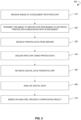
- FIG. 3 is a process flow diagram showing a method 300 for ID document verification within the environment described with reference to FIG. 1 .
- the method 300 may commence with receiving an image of an ID document that has an embedded RFID chip at operation 310.
- the ID document may include a government issued ID, a student ID, an employment ID, a driver's license, a passport, a travel document, and so forth.
- the received image may include a picture, a scan, and so forth.
- the image may be captured by a camera associated with the user (for example, a standalone camera; a camera of a user device, such as a smart phone, a PC, a tablet PC; and so forth).
- the method 300 may proceed with transmitting the image to a server for processing at operation 320.
- the processing can include optical character recognition to obtain printed data.
- the printed data may include holder's name, date of birth, gender, fingerprint, document number, and so forth.
- the printed data obtained as a result of processing may be received from the server at operation 330 and used to unlock the RFID chip at operation 340.
- After unlocking the RFID chip (for example, using any recognized text as a key to access the RFID chip), digital data (or biometric data) stored in the RFID chip may be retrieved at operation 350.
- the digital data may be analyzed to check the authenticity of the ID document.
- the digital data in general duplicates the printed data.
- the system for ID document verification can ensure that printed data was not altered and the ID document is not forged.
- the system may determine that the digital data and printed data are identical and verify the ID document.
- the system may determine one or more evidences of forgery (for example, a difference of the printed data and the digital data, an absence of the digital data, nonstandard digital data, and so forth). On the determining the one or more evidences of forgery, the system may reject the ID document.
- a verification result may be provided at operation 370.
- data of the verified ID document may be used to automatically populate an electronic form, fields associated with a web resource, and so forth.
- filling in forms may be facilitated and accelerated.
- automatic filling in of electronic forms or blanks allows avoiding mistakes and misprints pertaining to manual entry.
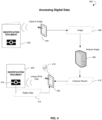
- FIG. 4 illustrates a process 400 of accessing digital data in an RFID chip associated with the ID document, in accordance with some embodiments.
- a user may capture an image 406 of an ID document 402 using a camera embedded in or connected to a client device 404.
- the image 406 may be automatically transmitted to a server 408.
- the image 406 received by the server 408 may be subjected to OCR.
- Printed information in the image 406 may be analyzed to extract textual and/or other relevant data associated with the ID document 402 and the holder of the ID document 402 (e.g., holder's date of birth, first name, last name, and the like).
- the results of the analysis 410 can be transmitted back to the client device 404.
- the client device 404 can scan an RFID chip 416 in the ID document 402 using an RFID reader 418 (or an NFC reader).
- the RFID reader 418 can be either embedded in the client device 404 or detachably attached to the client device 404 via a port of the client device 404.
- the digital data 414 in the RFID chip 416 may be encrypted, so the retrieved printed data can be used as a key to access the digital data 414.
- the digital data 414 and printed data can be compared on the client device 404 to verify ID document identity. Additionally, the digital data 414 can be used to fill-in forms, employment forms, medical records, and so forth.
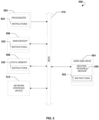
- FIG. 5 shows a diagrammatic representation of a computing device for a machine in the exemplary electronic form of a computer system 500, within which a set of instructions for causing the machine to perform any one or more of the methodologies discussed herein can be executed.
- the machine operates as a standalone device or can be connected (e.g., networked) to other machines.
- the machine can operate in the capacity of a server or a client machine in a server-client network environment, or as a peer machine in a peer-to-peer (or distributed) network environment.
- the machine can be a PC, a tablet PC, a set-top box, a cellular telephone, a digital camera, a portable music player (e.g., a portable hard drive audio device, such as a Moving Picture Experts Group Audio Layer 3 player), a web appliance, a network router, a switch, a bridge, or any machine capable of executing a set of instructions (sequential or otherwise) that specify actions to be taken by that machine.
- a portable music player e.g., a portable hard drive audio device, such as a Moving Picture Experts Group Audio Layer 3 player
- a web appliance e.g., a web appliance, a network router, a switch, a bridge, or any machine capable of executing a set of instructions (sequential or otherwise) that specify actions to be taken by that machine.
- the example computer system 500 includes a processor or multiple processors 502, a hard disk drive 504, a main memory 506, and a static memory 508, which communicate with each other via a bus 510.
- the computer system 500 may also include a network interface device 512.
- the hard disk drive 504 may include a computer-readable medium 520, which stores one or more sets of instructions 522 embodying or utilized by any one or more of the methodologies or functions described herein.
- the instructions 522 can also reside, completely or at least partially, within the main memory 506, the static memory 508, and/or within the processors 502 during execution thereof by the computer system 500.
- the main memory 506 and the processors 502 also constitute machine-readable media.
- While the computer-readable medium 520 is shown in an exemplary embodiment to be a single medium, the term "computer-readable medium” should be taken to include a single medium or multiple media (e.g., a centralized or distributed database, and/or associated caches and servers) that store the one or more sets of instructions.
- the term "computer-readable medium” shall also be taken to include any medium that is capable of storing, encoding, or carrying a set of instructions for execution by the machine and that causes the machine to perform any one or more of the methodologies of the present application, or that is capable of storing, encoding, or carrying data structures utilized by or associated with such a set of instructions.
- the term “computer-readable medium” shall accordingly be taken to include, but not be limited to, solid-state memories, optical and magnetic media. Such media can also include, without limitation, hard disks, floppy disks, NAND or NOR flash memory, digital video disks (DVDs), Random Access Memory (RAM), Read-Only Memory (ROM), and the like.
- the exemplary embodiments described herein can be implemented in an operating environment comprising computer-executable instructions (e.g., software) installed on a computer, in hardware, or in a combination of software and hardware.
- the computer-executable instructions can be written in a computer programming language or can be embodied in firmware logic. If written in a programming language conforming to a recognized standard, such instructions can be executed on a variety of hardware platforms and for interfaces to a variety of operating systems.
- the computer system 500 may be implemented as a cloud-based computing environment, such as a virtual machine operating within a computing cloud.
- the computer system 500 may itself include a cloud-based computing environment, where the functionalities of the computer system 500 are executed in a distributed fashion.
- the computer system 500 when configured as a computing cloud, may include pluralities of computing devices in various forms, as will be described in greater detail below.
- a cloud-based computing environment is a resource that typically combines the computational power of a large grouping of processors (such as within web servers) and/or that combines the storage capacity of a large grouping of computer memories or storage devices.
- Systems that provide cloud-based resources may be utilized exclusively by their owners, or such systems may be accessible to outside users who deploy applications within the computing infrastructure to obtain the benefit of large computational or storage resources.
- the cloud may be formed, for example, by a network of web servers that comprise a plurality of computing devices, such as a client device, with each server (or at least a plurality thereof) providing processor and/or storage resources.
- These servers may manage workloads provided by multiple users (e.g., cloud resource customers or other users).
- each user places workload demands upon the cloud that vary in real-time, sometimes dramatically. The nature and extent of these variations typically depends on the type of business associated with the user.
- Non-volatile media include, for example, optical or magnetic disks, such as a fixed disk.
- Volatile media include dynamic memory, such as system RAM.
- Transmission media include coaxial cables, copper wire, and fiber optics, among others, including the wires that comprise one embodiment of a bus.
- Transmission media can also take the form of acoustic or light waves, such as those generated during radio frequency (RF) and infrared (IR) data communications.
- RF radio frequency
- IR infrared
- Common forms of computer-readable media include, for example, a floppy disk, a flexible disk, a hard disk, magnetic tape, any other magnetic medium, a CD-ROM disk, DVD, any other optical medium, any other physical medium with patterns of marks or holes, a RAM, a Programmable Read-Only Memory (PROM), an Erasable Programmable Read-Only Memory (EPROM), an Electrically Erasable Programmable Read-Only Memory (EEPROM), a FlashEPROM, any other memory chip or data exchange adapter, a carrier wave, or any other medium from which a computer can read.
- PROM Programmable Read-Only Memory
- EPROM Erasable Programmable Read-Only Memory
- EEPROM Electrically Erasable Programmable Read-Only Memory
- FlashEPROM any other memory chip or
- a bus carries the data to system RAM, from which a CPU retrieves and executes the instructions.
- the instructions received by system RAM can optionally be stored on a fixed disk either before or after execution by a CPU.
- Computer program code for carrying out operations for aspects of the present technology may be written in any combination of one or more programming languages, including an object oriented programming language such as Java, Smalltalk, C++ or the like and conventional procedural programming languages, such as the "C" programming language or similar programming languages.
- the program code may execute entirely on the user's computer, partly on the user's computer, as a stand-alone software package, partly on the user's computer and partly on a remote computer or entirely on the remote computer or server.
- the remote computer may be connected to the user's computer through any type of network, including a LAN or a WAN, or the connection may be made to an external computer (for example, through the Internet using an Internet Service Provider).
- These computer program instructions may also be stored in a computer readable medium that can direct a computer, other programmable data processing apparatus, or other devices to function in a particular manner, such that the instructions stored in the computer readable medium produce an article of manufacture including instructions which implement the function/act specified in the flowchart and/or block diagram block or blocks.
- Alignment of the NFC antennas can be a non-obvious task that is necessary to electronically read data from a document by a mobile device.
- user guidance and feedback can be provided by the mobile device to configure the device and align the NFC antennas.
- the methods disclosed provide feedback for device orientation for antenna alignment and device configuration.
- FIG. 6 illustrates an environment 600 in which alignment of an NFC enabled mobile device and an NFC enabled document for enabling NFC data communications can be implemeted in methods, devices, systems, in accordance with some embodiments.
- the system can include a mobile device 610, a document 620, a Network 630, and a Server 640.
- the mobile device 610 is a user electronic device that includes an NFC antenna 614 (also referred to herein as mobile device antenna 614) and electronics 614A configured with the capability to connect to and read data from a document configured with passive NFC electronics.
- the mobile device 610 configured with the capability to read from a passive document 620 is referred to as an active device.
- the Network 630 can be any suitable wide area network including but not limited to the Internet or cell networks including 3G, 4G, and 5G networks.
- the Server 640 is a network connected computer and storage that can be configured with mobile device downloadable applications 641, mobile device configuration data 642, user feedback schema information 643, and document configuration data 644 for installation on the mobile device 610.
- the environment can include a more generic NFC reader device that is a combination of a computing system as shown in FIG. 5 with NFC electronics 414, 418 in FIG 4 .
- An example of such a configuration is where active NFC electronics and video camera is connected by a USB connection or a wireless connection to a laptop or desktop computer.
- the NFC reader device can include configurations other than smart phone or other mobile devices.
- Non limiting examples of mobile devices 610 include devices such as smart phones and tablet devices. These devices need to support an active NFC device mode. Further, these devices need to have a means for providing feedback to a user. Smart phones can provide feedback though a variety of feedback sources including but not limited to their user displays, sound and tone generating capability, LEDs, and haptic capabilities.
- the document 620 is a physical item including but not limited to a passport, driver's license, or other identity document to which a user desires to make an NFC connection and read data from the document 620.
- a document 620 is a physical item that contains passive NFC electronics 625 including an NFC antenna 624.
- the NFC electronics 625 can be co-located with the NFC antenna 624 or separately located.
- the document 620 contains data which a user can read through a contactless NFC connection between the mobile device 610 and the document 620.
- the document is a passive device powered from the mobile device 610.
- the power for the NFC electronics 625 is received from the mobile device 610.
- the emission of an electromagnetic field through an inductive antenna 614 inductively couples to the NFC document's antenna 624 and thereby provides power.
- the disclosure also contemplates the document 620 being an active device. While this is a contactless technology, the two antennas need to be in close proximity. For an NFC device, the communication distance is less than two centimetres.
- Non-limiting examples of NFC passive documents include driver licenses, identity cards, passports, credit cards, and physical documents that have NFC electronics and antennas embedded within them. Each of these documents has a known configuration that can include NFC antenna location on a card page, the page number or cover (front or back) on a multi-page document where the NFC antenna can best be accessed, the location of an MRZ (machine readable zone), identifying marks or text that can be found on the document or a combination thereof.
- MRZ machine readable zone
- the mobile device 610 is a smart phone.
- the mobile device 610 includes a video camera 613, an NFC antenna 614, the NFC electronics 614A for an active NFC device, on-device storage 616 that can hold configuration information for the mobile device, an alignment feedback schema for the device, and document configuration information. Further, the storage can hold applications for identifying a document type including reading the MRZ 627 and generating an alignment feedback schema in accordance with the mobile device type and the document configuration.
- the electronics for the mobile device functionality including the CPU, memory, and networking electronics for executing applications, providing user feedback, and providing network connectivity are previously described and shown in FIG. 5 .
- the mobile device and document configuration information in on-device storage 616 can be preconfigured on the mobile device 610 or downloaded over the network 630 from a server 640. Further, the applications 618 on the mobile device 610 can also be preconfigured on the mobile device 610 or downloaded from the server 640.
- the video camera 613 can be used to identify the document 620 type and in conjunction with the display 617, guide a user to align the mobile device antenna 614 with the document antenna 624.
- a mobile device application 618 can process an image or video of the document 620 to identify a document type.
- the video image can be uploaded over the Network 630 to a Server 640 configured with an application 641 configured to identify the document type.
- the application 618 might identify a distinguishing feature on the cover of a passport to determine the document type or process its MRZ 627 to determine the document type.
- the application 618 may control the mobile device 610 to provide an alignment feedback schema according to the mobile device type and the document type to guide a user to bring the mobile device 610 and document 620 within NFC communication distance.
- the device configuration information held in on-device storage 616 can include offset data between the video camera 613 and the mobile device NFC antenna 614.
- This information can be stored as a first offset 611 in the direction of one mobile device 610 dimension and a second offset 612 in a direction perpendicular to the direction of the first offset 611.
- This information is required to determine a document target 626 on the document 620 because when the mobile device 610 is in or is coming into contact with the document 620, the video camera 613 will be offset from the document antenna 624 so the distance between the video camera 613 and the antenna 614 has to be accounted for.
- the offsets can be different and thus the mobile device configuration 616 will contain information of the offset 611, 612 for each mobile device type if the video camera 613 is to be used in the alignment process.
- the mobile device configuration information in on-device storage 616 can contain other information including but not limited to the number of cameras on the device, and the strength of the NFC reader, types of haptic feedback supported, LEDs that can be controlled, tone generating capabilities, and accelerometer capabilities.
- the document 620 can have one or more of identifying text 628, a shape, or an MRZ (machine readable zone) 627 which can be imaged by the camera 613 and processed by the application 618 to determine a document type. Further, the camera 613 can work in conjunction with an on-device application 618 to provide alignment feedback in accordance with the NFC-document type and the mobile device type.
- identifying text 628 a shape
- MRZ machine readable zone
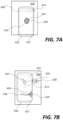
- FIG. 7A illustrates the mobile device 610 with the mobile device antenna 614 aligned with the document's NFC antenna 624.
- the mobile device 610 is oriented with the display 617 away from the document 620, towards a user, and the camera 613 oriented towards the document 620. Because of the offset between the mobile device antenna 614 and the video camera 613, the document target 626 is the letter "O" in the word "PASSPORT" on the document.
- an indicator 615 can be overlaid on the display 617 and the user told when the image target 619 centered, and the mobile device 610 brought into contact or close proximity with the document 620 for data connectivity.
- the use of the word PASSPORT is only for the purpose of illustration.
- the target for the camera 613 is selected to compensate for the offset 611, 612 of the camera 613 from the mobile device's 610 NFC antenna 614.
- the document target 626 can be any other word, colored area, corner or edge of the document.
- FIG. 7B illustrates the mobile device 610 and document 620 where the device antenna 614 is not in alignment with the document antenna 624. In this orientation, the document target 626 is not aligned with the video camera 613. Based on the mobile device configuration and the document configuration, when the camera 613 is aligned with the document target 626, then the NFC antennas 614, 624 will be aligned.
- an image target 619 On the display 617, there is shown an image target 619.
- the image target 619 is a graphic overlay on the display 617.
- the word "PASSPORT" is partially shown on the display 617.
- the mobile device 610 is positioned sufficiently above the document for the video camera 613 to focus on the document and be within the video camera 613 field of view.
- Shown on the display 617 is an arrow indicator 615 providing feedback regarding the direction to move the mobile device for antenna alignment.
- Other graphics are contemplated including, text, or moving graphics or graphics with audio.
- the generation of the alignment indicator can include a rotation indication.
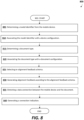
- a process diagram illustrates an embodiment of a process 800 for aligning a mobile device or a reader device and a document for NFC communications. While the process 800 is described for a mobile device, it is equally applicable for an NFC reader in an environment where a computer system and the active NFC electronics and camera are not integrated into a single device. For example, the NFC electronics and camera could be coupled to the computer system by a USB connection or a wireless connection.
- the process starts at 801 where the mobile device application is installed.
- the installation can include the downloading from the server 640 of an application 641, mobile device configuration 642, schema configuration 643, and document configuration information 644. Further, this step can include the initial configuration of the mobile device including preferences for the alignment user feedback.
- the model of the mobile device is identified.
- the model identifier is a processor readable number, sequence of numbers, or ACII string, or other encoded processor readable string that identifies the model of the mobile device.
- the model number contains information specific enough to identify a device's configuration including but not limited to the location of the NFC chip. Further, the configuration can identify other useful mobile device features including but not limited to the position of one or more camera lenses on the mobile device, the strength of the NFC reader on the mobile device, audio capabilities, and haptic feedback features.
- Access to the model identifier can be through an operating system request or reading a hardware memory mapped location. For example, the IOS operating for an Apple iPhone or the Android operating system may have operating system calls to access the phone's model and make.
- the model identifier is associated with a device configuration in on-device storage 616.
- the device configurations including mobile device configuration data 642 and the document configurations including document configuration data 644 are stored in a source.
- This source can be a data structure, table, a database or any other suitable means to store information regarding the device configuration.
- the source can be located on a Server 640 and accessed when needed or downloaded to the mobile device 610 during the initial configuration of the mobile device 610 and stored in the on-device storage 616, e.g., a non-volatile memory.
- the device configuration data can include one or more of the following: the position of the NFC antenna on the mobile device 610, the position of one or more of the cameras on the mobile device 610, the strength of the NFC reader on the mobile device, whether the device supports haptic feedback and vibration modes, audio and tone capabilities, and information regarding controllable LED.
- the document type is identified 815 so that the location of the document NFC antenna 624 can be located.
- the document 620 includes an MRZ (machine readable zone) 627 that can be can optically read by the mobile device 610 and thereby determine the type of the document such as a driver's license, identity card, or a passport.
- a mobile device software program (application 618) can direct the user to image the document 620 with the video camera. The image is processed to determine the document type. If there is not an MRZ 627 on the document, the application 618 can use image processing techniques or OCR to determine the document type. In one example, the text might say "University of XYZ" which could be used in identifying the document as a University identification card. Associating the document ID with a document configuration 820 would enable a determination of whether the document is NFC enabled and the location of the document NFC antenna.
- the user can enter into the mobile device the document type. This entry can be through a display menu or typed into the mobile device or by utilizing a web browser on the mobile device.
- an alignment feedback schema is selected 825 based on the mobile device configuration and the document configuration.
- the use of the alignment feedback schema can include user preferences and be user selectable. One user may prefer display graphics for alignment feedback. Another user may be sight impaired and prefer using tones or audio information for guidance. Further, the alignment feedback schema can be determined by the device configuration of the mobile device. If the device does not have haptic feedback capabilities, then this option will not be included in the feedback schema.
- the alignment feedback can be tailored to any of a user's senses or combination of senses. These can include visual, audio, haptic feedback, or a combination thereof.
- visual feedback can include display graphic images and overlays, LEDs on the phone, and camera lights.
- Graphical images can include pointers on the direction to move, twist, or turn the mobile device or the document to achieve antenna alignment.
- the graphical images can include moving graphs or a video to familiarize a user on the positioning of the mobile device and the document.
- the graphics can be to scale and have a realistic appearance.
- the mobile device uses the selected alignment feedback schema to generate feedback 830 according to the selected feedback schema.
- Examples of provided alignment feedback schema are provided below.
- the mobile device monitors for a data connection 835 with the document. This can be an event created by the operating system or a query made to the operating system by an application.
- the mobile device can be configured to download all the data from the document once the connection is made.
- a connection indication is generated when the mobile device and the document data connection is made.
- This indication can be a tone, a graphic, a vibration or other haptic feedback, or a combination thereof.
- a data transfer completion indication can be generated at the end of the data transfer. Preferably, the data transfer completion indication is different from the connection indication. If the data to be transferred is small, the data transfer completion indication is not needed. But if the data transfer is large, requiring seconds for completion, then the data transfer completion indication is needed.
- Different user feedback schemas can be used to assist in the alignment of the mobile device antenna 614 with the document antenna 624 sufficient for data communications.
- the examples provided below are for illustrative purposes and not intended to limit the scope of the invention.
- the application may have been configured with user preferences including a preferred feedback schema using either the display, audio indications, or by haptic feedback means.
- the mobile device will then determine its device type through a query to the operating system. Once it knows that it is, for example, a "Make XYZ Model 9" it looks to a device configuration table that contains mobile device configuration information regarding what video cameras the device has, the video camera location, the NFC antenna location, LED control capability, sound and tone generation capability, haptic features, and accelerometer capabilities.
- the user has configured the mobile device to use the display for the alignment feedback schema.
- the application may first display message of how the mobile device is to be configured. For example, the message may direct the use to remove any case holding the mobile device. Such case may make NFC operation impossible or overly sensitive. Further, a text overlay message or graphic can be displayed indicating that the document may need to be opened to a specific page.
- the user asserts a button starting the process to align the antennas and read the document NFC data.
- a text message is displayed telling the user to hold the mobile device far enough away from the document to get the entire document within the display.
- the application starts the video camera which then grabs frames of the video image for processing to find and identify the document.
- the process looks for an MRZ within the image. If found, the MRZ is processed and a document type determined. If there is not an MRZ, an image of the document is processed to see if any of the text, logos, or other markings can be extracted and used in the determination of the document type.
- the document type is then looked up in a table containing document configurations for the document types. The associated document configurations contain the location of the NFC antenna. If for some reason the document type is not found , the mobile device can connect to a server that has the latest document types and document configuration information. If found, the document configuration is transmitted to the mobile device.
- the document has an MRZ and the application identifies the document as a country XYZ identity card.
- the application identifies the document as a country XYZ identity card.
- the location of the document NFC antenna is known. This is combined with location of the mobile device video camera and a document target location is determined.
- a graphic or picture of the orientation of the mobile device and the document can be displayed. This graphic will give a user information about how the mobile device and document should be oriented and a rough idea of their positioning to align the antennas.
- the video images are processed to identify the document, the document target location on the document and to overlay on the live video image the image target location.
- the user could have been previously informed that the overlaid image target should be moved to the center of the display.
- an indication can be overlaid on the display showing the direction the phone should be moved for alignment.
- This indicator can include an indication that either the mobile device or the document should be rotated so that when the mobile device and document are brought together, the NFC antennas are more likely to be aligned.
- the indicator will show the direction that the mobile device should be moved for alignment. In another configuration the indication will show the direction in which the image target should move. At the center of the screen there can be an overlay graphic, such as a bullseye showing where the image target should be located.
- a centered indication can be generated.
- this indication can be the flashing of the bullseye, a change of brightness of the bullseye, or a change of color of the bullseye.
- the user will then be directed to lower or otherwise bring the mobile device into contact or close proximity with the document.
- the mobile device if configured with accelerometers may detect the rotation of the mobile device or movements to the left, right, up, down, while being lowered. Using the accelerometer data, any movement causing misalignment can be calculated and used to generated indications for moving the mobile device while on the document. If the NFC data connection is not made, an indication by either graphic, text, or voice will be given to rotate the mobile device against the document. Alternatively an indication to move the device in small circles or small rotation until the data connection indication is made.
- a graphic or sound is made to signal the user to stop moving the device until the data transfer is complete.
- the data transfer time can be short, sub second or as long as several seconds.
- a completion indication can then be generated either on the display or with a sound.
- the user has selected audio indicators for feedback.
- the user asserts a button starting the process to align the antennas and read the document NFC data.
- a voice message is output to the user to hold the mobile device at least six inches away from the document to get the entire document within the camera view.
- the application starts the video camera which then grabs frames of the video image for processing to find and identify the document.
- First the process looks for an MRZ within the image. If found, the MRZ is processed and a document type determined. If there is not an MRZ, an image of the document is processed to see if any of the text, logos, or other markings can be extracted and used in the document type determination.
- the document type is then looked up in a table of different document types to determine the location of the NFC antenna.
- the mobile device can connect to a server that has the latest document types and document configuration information.
- the document has an MRZ and the application identifies the document as a country XYZ identity card.
- the location of the document NFC antenna is known. This is combined with location of the mobile device video camera, and a document target location is determined.
- audio feedback guides a user in the orientation of the mobile device and the document. This audio information gives a user information about how the mobile device and document should be oriented and a course idea of their positioning.
- Audio messages or tones will be given for the orienting and aligning of the mobile device. These can include but are not limited to words “left”, “right”, “up”, “down”, “rotate clockwise”, and “rotate counter clockwise.”
- a tone can be used to indicate whether the user is getting closer or farther away from aligning the NFC antennas.
- a centered audio indication can be generated.
- this centered indication can be a tone of bell or a voice saying "centered”.
- the user will then be directed to lower or otherwise bring the mobile device into contact with the document. Audio directions can be used for this step.
- the mobile device if configured with accelerometers may detect the rotation of the mobile device while being lowered. If the NFC data connection is not made, an indication by voice will be given to rotate the mobile device against the document. Alternatively a voice will indicate to the user to move the device in small circles or small twists until the data connection indication is made.
- a sound is made to signal the user to stop moving the device until the data transfer is complete.
- the data transfer time can be short, sub second or as long as several seconds.
- a completion indication can then be generated with a tone, bell, or voice indication.
- the user has selected haptic indicators for feedback.
- the user asserts a button starting the process to align the antennas and read the document NFC data.
- the user is informed that a first vibration will occur when mobile device at least six inches away and over the document to get the entire document within the camera view.
- the application starts the video camera which then grabs frames of the video image for processing to find and identify the document.
- First the process looks for an MRZ within the image. If found, the MRZ is processed and a document type determined. If there is not an MRZ, an image of the document is processed to see if any of the text, logos, or other markings can be extracted and used in the document type determination.
- the document type is then looked up in a table of different document types to determine the location of the NFC antenna.
- the mobile device can connect to a server that has the latest document types and document configuration information.
- the document has an MRZ and the application identifies the document as a country XYZ identity card.
- the location of the document NFC antenna is known. This is combined with location of the mobile device video camera, and a document target location is determined.
- haptic feedback guides a user in the orientation of the mobile device and the document. This text or audio information gives a user information about how the mobile device and document should be oriented and a course idea of their positioning.
- the video images are processed to identify the document target location. Vibrations will be generated for the orienting and aligning of the mobile device. Vibration strength, if supported by the mobile device, can be used to indicate whether the mobile device is getting closer or farther away from aligning the NFC antennas.
- a centered audio indication can be generated. This can be a quick pulsing vibration.
- the user will then, by the way of text or previously being informed, bring the mobile device contact with the document.
- the mobile device if configured with accelerometers may detect the rotation of the mobile device while being lowered. If the NFC data connection is not made, an indication by a low frequency vibration will be given to rotate the mobile device against the document. Alternatively a different vibration will indicate to the user to move the device in small circles or small twists until the data connection indication is made.
- a quick vibration made to signal the user to stop moving the device until the data transfer is complete.
- the data transfer time can be short, sub second or as long as several seconds.
- a completion indication can then be generated with a long strong vibration.
Landscapes
- Engineering & Computer Science (AREA)
- Physics & Mathematics (AREA)
- Theoretical Computer Science (AREA)
- Health & Medical Sciences (AREA)
- General Physics & Mathematics (AREA)
- Toxicology (AREA)
- Business, Economics & Management (AREA)
- Computer Security & Cryptography (AREA)
- General Health & Medical Sciences (AREA)
- Strategic Management (AREA)
- Human Resources & Organizations (AREA)
- Artificial Intelligence (AREA)
- Computer Vision & Pattern Recognition (AREA)
- Electromagnetism (AREA)
- Entrepreneurship & Innovation (AREA)
- Tourism & Hospitality (AREA)
- Marketing (AREA)
- General Business, Economics & Management (AREA)
- Economics (AREA)
- Computer Networks & Wireless Communication (AREA)
- Operations Research (AREA)
- Quality & Reliability (AREA)
- Data Mining & Analysis (AREA)
- Computer Hardware Design (AREA)
- Software Systems (AREA)
- General Engineering & Computer Science (AREA)
- Signal Processing (AREA)
- Primary Health Care (AREA)
- Collating Specific Patterns (AREA)
- Management, Administration, Business Operations System, And Electronic Commerce (AREA)
- Mobile Radio Communication Systems (AREA)
- Telephone Function (AREA)
- User Interface Of Digital Computer (AREA)
Claims (13)
- Computerimplementiertes Verfahren zum Ausrichten von NFC-Antennen (614, 624) auf einem Mobilgerät (610) und einem Dokument (620), wobei das Verfahren aufweist:Bestimmen (805) einer Modellkennung von dem Mobilgerät (610);Zuordnen (810) der Modellkennung zu einer Gerätekonfiguration (642) von einer Quelle (640);Bestimmen (815) eines Dokumententyps;Zuordnen (820) des Dokumententyps zu einer Dokumentenkonfiguration (644) von der Quelle (640);Auswählen (825) eines Ausrichtungsfeedback-Schemas (643) basierend auf der Gerätekonfiguration (642) und der Dokumentenkonfiguration (644);Erzeugen (830) eines Ausrichtungsfeedbacks gemäß dem Ausrichtungsfeedback-Schema (643),Erfassen (835) einer Datenverbindung zwischen dem Mobilgerät (610) und dem Dokument (620); undErzeugen (840) einer Verbindungsanzeige.
- Verfahren nach Anspruch 1, wobei das Mobilgerät (610) eine Videokamera (613) umfasst, wobei das Dokument (620) eine maschinenlesbare Zone, MRZ (627), umfasst, und wobei das Bestimmen (815) des Dokumententyps die folgenden Schritte umfasst:Abbilden der MRZ (627) mit der Videokamera (613); undBestimmen des Dokumententyps von der MRZ (627).
- Verfahren nach Anspruch 1, wobei das Mobilgerät (610) eine Videokamera (613) und eine Anzeige (617) umfasst, und wobei die Gerätekonfiguration (642) einen Kamera-Antennen-Versatz (611, 612) umfasst und das Ausrichtungsfeedback-Schema (643) die folgenden Schritte umfasst:Anweisen, die Videokamera (613) über dem Dokument (620) zu positionieren;Anzeigen einer Videokameraansicht des Dokuments (620) auf der Anzeige (617);Lokalisieren einer Dokumentenantennenposition in der Videokameraansicht basierend auf der Dokumentenkonfiguration (644);Bestimmen eines Dokumentenziels (626) gemäß dem Kamera-Antennen-Versatz (611, 612) und der Dokumentenantennenposition;Erzeugen eines Bildziels (619) in der Videokameraansicht, das dem Dokumentenziel (626) zugeordnet ist,Erzeugen mindestens eines Zielindikators (615), um das Bildziel (619) (626) mit einer Kamerazielposition auszurichten; undAusrichten gemäß dem Ausrichtungsfeedback-Schema (643), um das Mobilgerät (610) in unmittelbare Nähe des Dokuments (620) zu bringen.
- Verfahren nach Anspruch 3, wobei der mindestens eine Zielindikator (615) mindestens eine Grafik auf der Anzeige (617) umfasst, die eine Richtung anzeigt, in die das Mobilgerät (610) bewegt werden soll, um mit dem Bildziel (619) ausgerichtet zu sein.
- Verfahren nach Anspruch 3 oder 4, wobei der mindestens eine Zielindikator (615) eine Rotationsanzeige für das Mobilgerät (610) umfasst.
- Verfahren nach Anspruch 1, wobei das Mobilgerät (610) eine Videokamera (613) und eine Anzeige (617) umfasst, und wobei die Gerätekonfiguration (642) einen Kamera-Antennen-Versatz (611, 612) umfasst und das Ausrichtungsfeedback-Schema (643) die folgenden Schritte umfasst:Anweisen, die Videokamera (613) über dem Dokument (620) zu positionieren;Anzeigen einer Kameraansicht des Dokuments (620) auf der Anzeige (617);Lokalisieren einer Dokumentenantennenposition in der Kameraansicht basierend auf der Dokumentenkonfiguration (644);Bestimmen eines Dokumentenziels gemäß dem Kamera-Antennen-Versatz (611, 612) und der Dokumentenantennenposition;Erzeugen eines ersten variablen Tons, wenn sich die Antenne des Mobilgeräts (614) der Ausrichtung mit der Dokumentenantenne (624) nähert, und eines zweiten variablen Tons, wenn sich die Antenne des Mobilgeräts (614) weiter von der Ausrichtung gemäß dem Kamera-Antennen-Versatz (611, 612) entfernt; undAusrichten gemäß dem Ausrichtungsfeedback-Schema (643), um das Mobilgerät (610) in unmittelbare Nähe des Dokuments (620) zu bringen.
- Verfahren nach Anspruch 6, wobei die Tonhöhe des ersten variablen Tons zunimmt, wenn sich das Mobilgerät (610) der Ausrichtung nähert, und die Tonhöhe des zweiten variablen Tons abnimmt, wenn sich das Mobilgerät (620) weiter von der Ausrichtung entfernt.
- Verfahren nach Anspruch 1, wobei das Mobilgerät (610) eine Videokamera (613), eine Antenne des Mobilgeräts (614) und eine Anzeige (617) umfasst, und wobei die Gerätekonfiguration (642) einen Kamera-Antennen-Versatz (611, 612) umfasst und das Ausrichtungsfeedback-Schema (643) die folgenden Schritte umfasst:Anweisen, die Videokamera (613) über dem Dokument (620) zu positionieren;Anzeigen einer Kameraansicht des Dokuments (620) auf der Anzeige (617);Lokalisieren einer Dokumentenantennenposition in der Kameraansicht basierend auf der Dokumentenkonfiguration (644);Bestimmen eines Dokumentenziels gemäß dem Kamera-Antennen-Versatz (611, 612) und der Dokumentenantennenposition;Erzeugen eines ersten haptischen Feedbacks, wenn sich die Antenne des Mobilgeräts (614) der Ausrichtung mit der Dokumentenantenne (624) nähert, und eines zweiten haptischen Feedbacks, wenn sich die Antenne (614) des Mobilgeräts weiter von der Ausrichtung gemäß dem Kamera-Antennen-Versatz (611, 612) entfernt; undAnweisen eines Benutzers gemäß dem Ausrichtungsfeedback-Schema (643), das Mobilgerät (610) in Kontakt mit dem Dokument (620) zu bringen.
- Verfahren nach Anspruch 8, wobei das erste haptische Feedback periodisch ist und die Frequenz des haptischen Feedbacks zunimmt, wenn sich das Mobilgerät (610) der Ausrichtung nähert, und wobei die Tonhöhe des zweiten variablen Tons abnimmt, wenn sich das Mobilgerät (610) von der Ausrichtung entfernt.
- Verfahren nach einem der vorhergehenden Ansprüche, wobei das Ausrichtungsfeedback visuelles Feedback, Audiofeedback, haptisches Feedback oder eine Kombination daraus umfasst.
- Mobilgerät, das einen Prozessor (502) aufweist, der so konfiguriert ist, dass er das Verfahren nach einem der Ansprüche 1-10 ausführt.
- Computerlesbares Speichermedium, das Anweisungen aufweist, die, wenn sie von einem Mobilgerät (610) ausgeführt werden, bewirken, dass das Mobilgerät (610) das Verfahren nach einem der Ansprüche 1-10 ausführt.
- Computerprogramm, das Anweisungen aufweist, die, wenn das Programm von einem Mobilgerät (610) ausgeführt wird, bewirken, dass das Mobilgerät (610) das Verfahren nach einem der Ansprüche 1-10 ausführt.
Applications Claiming Priority (3)
| Application Number | Priority Date | Filing Date | Title |
|---|---|---|---|
| US201462004101P | 2014-05-28 | 2014-05-28 | |
| US16/529,293 US10747971B2 (en) | 2014-05-28 | 2019-08-01 | Identification verification using a device with embedded radio-frequency identification functionality |
| PCT/US2020/040368 WO2021021372A1 (en) | 2014-05-28 | 2020-06-30 | Alignment of antennas on near field communication devices for communication |
Publications (4)
| Publication Number | Publication Date |
|---|---|
| EP4008059A1 EP4008059A1 (de) | 2022-06-08 |
| EP4008059A4 EP4008059A4 (de) | 2023-10-04 |
| EP4008059B1 true EP4008059B1 (de) | 2024-11-06 |
| EP4008059C0 EP4008059C0 (de) | 2024-11-06 |
Family
ID=54702158
Family Applications (3)
| Application Number | Title | Priority Date | Filing Date |
|---|---|---|---|
| EP20847720.8A Active EP4007968B1 (de) | 2014-05-28 | 2020-06-30 | Systeme und verfahren zur echtheitsprüfung mittels hybrider nahfeld-kommunikation und optischer authentifizierung |
| EP20846235.8A Pending EP4007984A4 (de) | 2014-05-28 | 2020-06-30 | Selbstständige identitätssysteme und verfahren für identifikationsdokumente |
| EP20846349.7A Active EP4008059B1 (de) | 2014-05-28 | 2020-06-30 | Ausrichtung von antennen auf nahfeldkommunikationsgeräten für kommunikation |
Family Applications Before (2)
| Application Number | Title | Priority Date | Filing Date |
|---|---|---|---|
| EP20847720.8A Active EP4007968B1 (de) | 2014-05-28 | 2020-06-30 | Systeme und verfahren zur echtheitsprüfung mittels hybrider nahfeld-kommunikation und optischer authentifizierung |
| EP20846235.8A Pending EP4007984A4 (de) | 2014-05-28 | 2020-06-30 | Selbstständige identitätssysteme und verfahren für identifikationsdokumente |
Country Status (3)
| Country | Link |
|---|---|
| US (3) | US9665754B2 (de) |
| EP (3) | EP4007968B1 (de) |
| WO (3) | WO2021021373A1 (de) |
Cited By (2)
| Publication number | Priority date | Publication date | Assignee | Title |
|---|---|---|---|---|
| US12475435B2 (en) | 2014-05-28 | 2025-11-18 | Mitek Systems, Inc. | Antenna alignment feedback using near field communication devices |
| US12524635B2 (en) | 2014-05-28 | 2026-01-13 | Mitek Systems, Inc. | User identification document verifications |
Families Citing this family (15)
| Publication number | Priority date | Publication date | Assignee | Title |
|---|---|---|---|---|
| US9495586B1 (en) | 2013-09-18 | 2016-11-15 | IDChecker, Inc. | Identity verification using biometric data |
| US8995774B1 (en) | 2013-09-19 | 2015-03-31 | IDChecker, Inc. | Automated document recognition, identification, and data extraction |
| US9665754B2 (en) | 2014-05-28 | 2017-05-30 | IDChecker, Inc. | Identification verification using a device with embedded radio-frequency identification functionality |
| US12198215B2 (en) * | 2014-05-28 | 2025-01-14 | Mitek Systems, Inc. | Self-sovereign identity systems and methods for identification documents |
| EP3513385A1 (de) * | 2016-07-13 | 2019-07-24 | Botosoft Technologies Ltd | System zur authentifizierung von dokumenten |
| FR3055713B1 (fr) * | 2016-09-08 | 2020-01-03 | Revive Sas | Dispositif d'association d'au moins un support physique avec une base de stockage de donnees numeriques |
| US10489643B2 (en) | 2016-12-30 | 2019-11-26 | Morphotrust Usa, Llc | Identity document validation using biometric image data |
| WO2019064743A1 (ja) * | 2017-09-28 | 2019-04-04 | パナソニックIpマネジメント株式会社 | 認証装置、認証システム、認証方法、及びプログラム |
| CN108229457A (zh) | 2017-12-14 | 2018-06-29 | 深圳市商汤科技有限公司 | 证件的验证方法、装置、电子设备和存储介质 |
| CN112241672B (zh) * | 2019-07-19 | 2024-05-03 | 杭州海康威视数字技术股份有限公司 | 一种身份数据的关联方法、装置、电子设备及存储介质 |
| US12192201B2 (en) * | 2019-10-14 | 2025-01-07 | Workbright | Multi-party document validation |
| EP3901926A1 (de) * | 2020-04-21 | 2021-10-27 | Deutsche Post AG | Validierungsverfahren und -vorrichtung für identifikationsdokumente |
| FR3115128A1 (fr) * | 2020-10-13 | 2022-04-15 | Advanced Track And Trace | Procédé et dispositif de signature et de certification à distance de données d’identification d’une personne |
| CN112465527B (zh) * | 2020-12-10 | 2024-07-12 | 中华人民共和国北京出入境边防检查总站 | 电子护照认证方法、装置及计算机可读存储介质 |
| US12574732B2 (en) | 2023-09-26 | 2026-03-10 | T-Mobile Usa, Inc. | Providing location-based telecommunications resources to users systems and methods |
Citations (18)
| Publication number | Priority date | Publication date | Assignee | Title |
|---|---|---|---|---|
| US20070260886A1 (en) | 2006-05-02 | 2007-11-08 | Labcal Technologies Inc. | Biometric authentication device having machine-readable-zone (MRZ) reading functionality and method for implementing same |
| US20080093447A1 (en) | 2006-09-29 | 2008-04-24 | Phillip Marc Johnson | Device and method for guiding a user to a communication position |
| US20100085257A1 (en) | 2006-02-21 | 2010-04-08 | Nokia Corporation | System and methods for direction finding using a handheld device |
| JP2010109594A (ja) | 2008-10-29 | 2010-05-13 | Canon Inc | 無線通信装置及びその制御方法 |
| US20110156864A1 (en) | 2008-06-12 | 2011-06-30 | De La Rue International Limited | Security document, security systems and methods of controlling access to a region |
| US20120322374A1 (en) | 2010-12-28 | 2012-12-20 | Masaru Yamaoka | Communication apparatus and communication method |
| WO2013000614A1 (de) | 2011-06-27 | 2013-01-03 | Bundesdruckerei Gmbh | Computermaus und verfahren zum lesen von daten aus einem dokument |
| EP2603019A1 (de) | 2011-12-05 | 2013-06-12 | Research In Motion Limited | Mobile drahtlose Kommunikationsvorrichtung mit Führungsrichtungsanzeigebereitstellung zur Nahfeldkommunikationseinleitung und zugehörige Verfahren |
| US20130281014A1 (en) | 2012-04-23 | 2013-10-24 | Qualcomm Imcorporated | Methods and apparatus for improving nfc connection through device positioning |
| US20140065959A1 (en) | 2012-02-28 | 2014-03-06 | Panasonic Corporation | Communication apparatus, communication method, communication program, server apparatus, information updating method for server apparatus, and communication system |
| US8977571B1 (en) | 2009-08-21 | 2015-03-10 | United Services Automobile Association (Usaa) | Systems and methods for image monitoring of check during mobile deposit |
| US20160050324A1 (en) | 2014-08-18 | 2016-02-18 | Ricoh Company, Ltd. | Information processing system, image forming apparatus, and computer program product |
| US20180092136A1 (en) | 2015-05-15 | 2018-03-29 | Sharp Kabushiki Kaisha | Information processing device, method for controlling information processing device, and control device |
| US10402944B1 (en) | 2018-08-20 | 2019-09-03 | Capital One Services, Llc | Determining a position of an object in a rotation corrected image |
| US10467445B1 (en) | 2019-03-28 | 2019-11-05 | Capital One Services, Llc | Devices and methods for contactless card alignment with a foldable mobile device |
| US20190347888A1 (en) | 2016-07-13 | 2019-11-14 | Botosoft Technologies Ltd | Document authentication system |
| US20190354735A1 (en) | 2018-05-17 | 2019-11-21 | Motorola Mobility Llc | Method to correlate an object with a localized tag |
| WO2021021372A1 (en) | 2014-05-28 | 2021-02-04 | Mitek Systems, Inc. | Alignment of antennas on near field communication devices for communication |
Family Cites Families (110)
| Publication number | Priority date | Publication date | Assignee | Title |
|---|---|---|---|---|
| US5881172A (en) | 1996-12-09 | 1999-03-09 | Mitek Systems, Inc. | Hierarchical character recognition system |
| US6269169B1 (en) | 1998-07-17 | 2001-07-31 | Imaging Automation, Inc. | Secure document reader and method therefor |
| US20040049401A1 (en) | 2002-02-19 | 2004-03-11 | Carr J. Scott | Security methods employing drivers licenses and other documents |
| US20020169721A1 (en) * | 2001-05-10 | 2002-11-14 | Cooley William Ray | Digital watermarking apparatus, systems and methods |
| US7152786B2 (en) * | 2002-02-12 | 2006-12-26 | Digimarc Corporation | Identification document including embedded data |
| CN1685380A (zh) | 2002-09-27 | 2005-10-19 | 银河网路股份有限公司 | 远程教育系统、听讲确认方法及听讲确认程序 |
| US7221258B2 (en) * | 2002-11-23 | 2007-05-22 | Kathleen Lane | Hierarchical electronic watermarks and method of use |
| EP1755065B2 (de) | 2002-12-18 | 2021-03-31 | Symbol Technologies, Inc. | System und Verfahren zur Verifizierung von optischen Codelesevorgängen und RFID-Lesevorgängen |
| US20050063027A1 (en) | 2003-07-17 | 2005-03-24 | Durst Robert T. | Uniquely linking security elements in identification documents |
| JP3822592B2 (ja) | 2003-10-24 | 2006-09-20 | 東芝テリー株式会社 | 無線タグ所有物体の特定装置及び方法 |
| US7420457B2 (en) | 2004-01-13 | 2008-09-02 | George Schmitt & Company, Inc. | System and method for validating radio frequency identification tags |
| WO2006014481A2 (en) | 2004-07-06 | 2006-02-09 | Viisage Technology, Inc. | Document classification and authentication |
| US7249717B2 (en) | 2004-12-10 | 2007-07-31 | Mitek Systems, Inc. | System and method for check fraud detection using signature validation |
| US7201323B2 (en) | 2004-12-10 | 2007-04-10 | Mitek Systems, Inc. | System and method for check fraud detection using signature validation |
| US7168614B2 (en) | 2004-12-10 | 2007-01-30 | Mitek Systems, Inc. | System and method for check fraud detection using signature validation |
| US20070200684A1 (en) * | 2005-05-06 | 2007-08-30 | Colby Steven M | RFID Device Configured for Data Entry |
| US20070200680A1 (en) * | 2005-05-06 | 2007-08-30 | Colby Steven M | Transaction Card Including Switchable RFID Tag |
| US20060267737A1 (en) * | 2005-05-27 | 2006-11-30 | Colby Steven M | RF Powered Remote Control |
| US20070200681A1 (en) * | 2005-05-06 | 2007-08-30 | Colby Steven M | Identity Device Including Switchable RFID Tag |
| US20070200679A1 (en) * | 2005-05-06 | 2007-08-30 | Colby Steven M | RFID Device Including Multiple RFID Tags |
| US7924156B2 (en) * | 2005-05-06 | 2011-04-12 | Colby Steven M | Electronically switchable RFID tags |
| GB0503972D0 (en) | 2005-02-25 | 2005-04-06 | Firstondemand Ltd | Identification systems |
| US7741965B2 (en) | 2005-05-19 | 2010-06-22 | Chung Nam Electronics Co., Ltd. | Radio frequency identification (RFID) system |
| US7720221B2 (en) * | 2005-05-20 | 2010-05-18 | Certicom Corp. | Privacy-enhanced e-passport authentication protocol |
| DE102005025806B4 (de) * | 2005-06-02 | 2008-04-17 | Bundesdruckerei Gmbh | Verfahren zum Zugriff von einer Datenstation auf ein elektronisches Gerät |
| US20060274945A1 (en) * | 2005-06-03 | 2006-12-07 | Chu Soy L | System and method for automatically extracting a picture of a person from a government issued identification piece for use on a badge |
| US8208764B2 (en) | 2006-01-21 | 2012-06-26 | Elizabeth Guckenberger | Photo automatic linking system and method for accessing, linking, and visualizing “key-face” and/or multiple similar facial images along with associated electronic data via a facial image recognition search engine |
| US7657091B2 (en) | 2006-03-06 | 2010-02-02 | Mitek Systems, Inc. | Method for automatic removal of text from a signature area |
| JP4743522B2 (ja) | 2006-03-15 | 2011-08-10 | 株式会社日立プラントテクノロジー | 画像データ記録方法、画像データによる作業実績記録方法、画像データ記録装置、並びに画像データによる作業実績記録システム |
| JP5496652B2 (ja) * | 2006-04-19 | 2014-05-21 | オランジュ | 移動端末の近接通信モジュールへのセキュアなアクセスを保障する方法 |
| US7787695B2 (en) | 2006-06-06 | 2010-08-31 | Mitek Systems, Inc. | Method for applying a signature simplicity analysis for improving the accuracy of signature validation |
| US7512567B2 (en) | 2006-06-29 | 2009-03-31 | Yt Acquisition Corporation | Method and system for providing biometric authentication at a point-of-sale via a mobile device |
| DE102006030406A1 (de) | 2006-06-29 | 2008-01-03 | Bundesdruckerei Gmbh | Wert- oder Sicherheitsdokument mit zumindest zwei Anzeigevorrichtungen |
| US7860268B2 (en) | 2006-12-13 | 2010-12-28 | Graphic Security Systems Corporation | Object authentication using encoded images digitally stored on the object |
| WO2008092527A1 (en) * | 2007-01-31 | 2008-08-07 | International Business Machines Corporation | Deliberate access permission to data on contactless devices |
| US7561049B2 (en) * | 2007-04-02 | 2009-07-14 | James Neil Rodgers | Scope reduction of RFID medium |
| US7851517B2 (en) * | 2007-05-08 | 2010-12-14 | Lisa Marie Holmes | Antimicrobial credit cards, identification cards, membership cards and identification badges and badge holders |
| US8058972B2 (en) * | 2007-05-09 | 2011-11-15 | University Of North Texas | Methods and devices for enrollment and verification of biometric information in identification documents |
| US9344280B2 (en) * | 2007-06-07 | 2016-05-17 | Neology, Inc. | Systems and methods for authenticating and providing anti-counterfeiting features for important documents |
| US20100245034A1 (en) * | 2007-06-28 | 2010-09-30 | Iris Corporation Berhad | Method of reading mrz using sam for electronic chip based travel document or identification document |
| DE102007000886B4 (de) | 2007-11-12 | 2018-04-05 | Bundesdruckerei Gmbh | Dokument mit einer integrierten Anzeigevorrichtung, sowie Lesegerät für ein derartiges Dokument |
| US8194933B2 (en) * | 2007-12-12 | 2012-06-05 | 3M Innovative Properties Company | Identification and verification of an unknown document according to an eigen image process |
| EP2073153A1 (de) * | 2007-12-18 | 2009-06-24 | Gemplus | Verfahren zum Autorisieren einer Kommunikation mit Hilfe eines tragbaren elektronischen Geräts, wie dem Zugang zu einer Speicherzone, sowie entsprechendes elektronisches Gerät und System |
| FR2925993A1 (fr) | 2007-12-31 | 2009-07-03 | Radiotelephone Sfr | Outil utilisable pour l'authentification de documents, procedes d'utilisation de l'outil et de documents produits par le ou les procedes |
| US8577118B2 (en) | 2008-01-18 | 2013-11-05 | Mitek Systems | Systems for mobile image capture and remittance processing |
| US8582862B2 (en) | 2010-05-12 | 2013-11-12 | Mitek Systems | Mobile image quality assurance in mobile document image processing applications |
| US8483473B2 (en) | 2008-01-18 | 2013-07-09 | Mitek Systems, Inc. | Systems and methods for obtaining financial offers using mobile image capture |
| US7978900B2 (en) | 2008-01-18 | 2011-07-12 | Mitek Systems, Inc. | Systems for mobile image capture and processing of checks |
| US9842331B2 (en) | 2008-01-18 | 2017-12-12 | Mitek Systems, Inc. | Systems and methods for mobile image capture and processing of checks |
| US8379914B2 (en) | 2008-01-18 | 2013-02-19 | Mitek Systems, Inc. | Systems and methods for mobile image capture and remittance processing |
| EP2247986B1 (de) * | 2008-01-30 | 2014-12-31 | Neology, Inc. | Rfid-authentifikationsarchitektur und verfahren zur rfid-authentifikation |
| JP2009181532A (ja) | 2008-02-01 | 2009-08-13 | Brother Ind Ltd | 無線タグ通信装置、タグラベル作成装置、ラベルイメージ管理システム |
| DE102008023914A1 (de) | 2008-05-16 | 2009-12-10 | Siemens Aktiengesellschaft | Verfahren zur Authentifizierung eines RFID-Tags |
| US9269010B2 (en) | 2008-07-14 | 2016-02-23 | Jumio Inc. | Mobile phone payment system using integrated camera credit card reader |
| DE102008041113A1 (de) | 2008-08-08 | 2010-02-25 | Bundesdruckerei Gmbh | Verfahren zur Prüfung der Echtheit eines Dokuments, Computerprogrammprodukt, Prüfgerät und Datenverarbeitungssystem |
| DE102009027123A1 (de) * | 2009-06-23 | 2010-12-30 | Bundesdruckerei Gmbh | RFID-Lesegerät und RFID-System |
| JP5326859B2 (ja) | 2009-06-24 | 2013-10-30 | 富士ゼロックス株式会社 | 画像処理装置 |
| MX338335B (es) | 2009-08-13 | 2016-04-06 | Innovation In Motion Inc | Un dispositivo periferico inteligente y sistema para la autenticación y verificación de individuos y/o documentos por medio de un servicio de autenticación multifuncional seguro con capacidad de almacenamiento de datos. |
| US8851378B2 (en) * | 2009-09-24 | 2014-10-07 | Ebay Inc. | System and method for recognizing deformed linear barcodes from a stream of varied-focus video frames |
| DE102009045186B4 (de) * | 2009-09-30 | 2018-09-20 | Bundesdruckerei Gmbh | RFID-Lesegerät, RFID-System, Verfahren zur Regelung der Sendeleitung eines RFID-Lesegeräts und Computerprogrammprodukt |
| IL202028A (en) * | 2009-11-10 | 2016-06-30 | Icts Holding Company Ltd | Product, devices and methods for computerized authentication of electronic documents |
| US9020432B2 (en) | 2009-11-30 | 2015-04-28 | Panasonic Intellectual Property Corporation Of America | Mobile communication device, communication method, integrated circuit, and program |
| US20110209192A1 (en) | 2010-02-25 | 2011-08-25 | Leclerc Greer Katelyn M | Biometric social networking |
| US8360317B2 (en) * | 2010-06-21 | 2013-01-29 | Victor Zazzu | Apparatus and method for enhancing card security |
| FR2962616B1 (fr) | 2010-07-08 | 2012-08-17 | Ryad Boulanouar | Systeme et procede d'identification et d'enregistrement d'identite securises. |
| US9147300B2 (en) * | 2010-12-20 | 2015-09-29 | LOCHINTECH Corporation | Intelligent document with stored text and image |
| EP2474931A1 (de) | 2010-12-31 | 2012-07-11 | Gemalto SA | System, das eine verbesserte Abwehr gegen Datendiebstahl für ein elektronisches Identitätsdokument bereitstellt |
| US8811711B2 (en) | 2011-03-08 | 2014-08-19 | Bank Of America Corporation | Recognizing financial document images |
| WO2012137214A1 (en) | 2011-04-05 | 2012-10-11 | Hewlett-Packard Development Company, L. P. | Document registration |
| JP5764387B2 (ja) * | 2011-05-27 | 2015-08-19 | 京セラ株式会社 | 遠隔操作装置、遠隔制御システムおよび制御プログラム |
| US8884744B2 (en) | 2011-12-29 | 2014-11-11 | Symbol Technologies, Inc. | Portable data tag reader device, system and method for identifying a location of a data tag using a read zone and location of the reader |
| US9058580B1 (en) * | 2012-01-12 | 2015-06-16 | Kofax, Inc. | Systems and methods for identification document processing and business workflow integration |
| US9514357B2 (en) | 2012-01-12 | 2016-12-06 | Kofax, Inc. | Systems and methods for mobile image capture and processing |
| US20130198079A1 (en) | 2012-01-27 | 2013-08-01 | Daniel Mattes | Verification of Online Transactions |
| US20130204786A1 (en) | 2012-02-03 | 2013-08-08 | Daniel Mattes | Verification of Online Transactions |
| US8831361B2 (en) | 2012-03-09 | 2014-09-09 | Ancora Software Inc. | Method and system for commercial document image classification |
| EP2825993A1 (de) * | 2012-03-16 | 2015-01-21 | L-1 Secure Credentialing, Inc. | Ipassport-verfahren und -vorrichtung |
| US9087204B2 (en) * | 2012-04-10 | 2015-07-21 | Sita Information Networking Computing Ireland Limited | Airport security check system and method therefor |
| US8792715B2 (en) | 2012-07-02 | 2014-07-29 | Palo Alto Research Center Incorporated | System and method for forms classification by line-art alignment |
| US20140046954A1 (en) | 2012-08-07 | 2014-02-13 | 3M Innovative Properties Company And A Completed | Software tool for creation and management of document reference templates |
| WO2014028769A2 (en) | 2012-08-15 | 2014-02-20 | Jumio Inc. | Image processing for credit validation |
| EP2701415A1 (de) * | 2012-08-24 | 2014-02-26 | Raja Kuppuswamy | Mobile elektronische Vorrichtung und ihre Verwendung für elektronische Transaktionen |
| US9378352B2 (en) * | 2013-02-08 | 2016-06-28 | Intel Corporation | Barcode authentication for resource requests |
| US9406046B2 (en) * | 2013-03-07 | 2016-08-02 | Intelleflex Corporation | RFID systems and methods for associating images of documents with RFID tag-related data |
| US9152930B2 (en) * | 2013-03-15 | 2015-10-06 | United Airlines, Inc. | Expedited international flight online check-in |
| US10270748B2 (en) | 2013-03-22 | 2019-04-23 | Nok Nok Labs, Inc. | Advanced authentication techniques and applications |
| US10198728B2 (en) * | 2013-05-15 | 2019-02-05 | Visa International Service Association | Methods and systems for provisioning payment credentials |
| US9495586B1 (en) | 2013-09-18 | 2016-11-15 | IDChecker, Inc. | Identity verification using biometric data |
| US8995774B1 (en) | 2013-09-19 | 2015-03-31 | IDChecker, Inc. | Automated document recognition, identification, and data extraction |
| WO2015042353A1 (en) * | 2013-09-20 | 2015-03-26 | Dallas/Fort Worth International Airport Board | Apparatus, system, and method supporting compliance with customs/border requirements |
| BR102013031062A2 (pt) | 2013-12-03 | 2015-10-20 | Antonio Ferreira De Souza | sistema de consulta eletrônica e aferição de autenticidade, validade e restrição de carteira nacional de habilitação (cnh), certificado de registro de veículo (crv) e certificado de registro e licenciamento de veículo (crlv), utilizando tecnologia de leitura de dados por aproximação |
| JP6378909B2 (ja) | 2014-03-19 | 2018-08-22 | サトーホールディングス株式会社 | Rfid媒体の読書き検証装置およびその読書き検証方法 |
| US9576194B2 (en) * | 2014-10-13 | 2017-02-21 | Klink Technologies | Method and system for identity and age verification |
| CA2913822A1 (en) * | 2014-12-03 | 2016-06-03 | Sal Khan | Verifiable credentials and methods thereof |
| US10171476B2 (en) * | 2015-01-12 | 2019-01-01 | Sal Khan | System and method for protecting the privacy of identity and financial information of the consumer conducting online business |
| US9369287B1 (en) * | 2015-01-27 | 2016-06-14 | Seyed Amin Ghorashi Sarvestani | System and method for applying a digital signature and authenticating physical documents |
| EP3968194B1 (de) * | 2015-02-13 | 2025-03-19 | Yoti Holding Limited | Digitale identität |
| GB2539184A (en) * | 2015-06-02 | 2016-12-14 | Geoffrey Ayres Stuart | Improvements in or relating to the verification of personal identity |
| KR101634980B1 (ko) | 2015-12-01 | 2016-07-08 | 주식회사 한국엔에프씨 | 이동통신단말기에 저장된 금융카드정보를 이용한 지문 본인 인증 시스템 및 방법 |
| US11734678B2 (en) * | 2016-01-25 | 2023-08-22 | Apple Inc. | Document importation into secure element |
| EP3465637B9 (de) * | 2016-06-03 | 2024-08-28 | Veridas Digital Authentication Solutions, S.L. | Verfahren zur authentifizierung eines dokuments |
| WO2018018175A1 (zh) | 2016-07-29 | 2018-02-01 | 吴茂全 | 物品的防伪验证装置及方法 |
| CA3048889A1 (en) * | 2016-12-29 | 2018-07-05 | Idemia Identity & Security USA LLC | Trusted mobile biometric enrollment |
| US10262191B2 (en) * | 2017-03-08 | 2019-04-16 | Morphotrust Usa, Llc | System and method for manufacturing and inspecting identification documents |
| GB2563925B (en) | 2017-06-30 | 2022-02-09 | Cryptomathic Ltd | System and method |
| KR101900719B1 (ko) | 2017-07-07 | 2018-11-06 | 주식회사 올아이티탑 | 얼굴사진이 표출되는 여권인증카드에 의한 위변조 여권 검사방법 및 그 처리시스템 |
| WO2019048574A1 (en) * | 2017-09-07 | 2019-03-14 | Yoti Holding Limited | DIGITAL IDENTITY SYSTEM |
| WO2019089164A1 (en) | 2017-11-06 | 2019-05-09 | Intel Corporation | Secure device onboarding techniques |
| WO2019109097A1 (en) * | 2017-12-01 | 2019-06-06 | Averon Us, Inc. | Identity verification document request handling utilizing a user certificate system and user identity document repository |
| CN108229457A (zh) | 2017-12-14 | 2018-06-29 | 深圳市商汤科技有限公司 | 证件的验证方法、装置、电子设备和存储介质 |
-
2015
- 2015-05-26 US US14/722,058 patent/US9665754B2/en active Active
-
2017
- 2017-05-24 US US15/604,372 patent/US10372950B2/en active Active
-
2019
- 2019-08-01 US US16/529,293 patent/US10747971B2/en active Active
-
2020
- 2020-06-30 WO PCT/US2020/040371 patent/WO2021021373A1/en not_active Ceased
- 2020-06-30 WO PCT/US2020/040368 patent/WO2021021372A1/en not_active Ceased
- 2020-06-30 EP EP20847720.8A patent/EP4007968B1/de active Active
- 2020-06-30 EP EP20846235.8A patent/EP4007984A4/de active Pending
- 2020-06-30 WO PCT/US2020/040374 patent/WO2021021374A1/en not_active Ceased
- 2020-06-30 EP EP20846349.7A patent/EP4008059B1/de active Active
Patent Citations (18)
| Publication number | Priority date | Publication date | Assignee | Title |
|---|---|---|---|---|
| US20100085257A1 (en) | 2006-02-21 | 2010-04-08 | Nokia Corporation | System and methods for direction finding using a handheld device |
| US20070260886A1 (en) | 2006-05-02 | 2007-11-08 | Labcal Technologies Inc. | Biometric authentication device having machine-readable-zone (MRZ) reading functionality and method for implementing same |
| US20080093447A1 (en) | 2006-09-29 | 2008-04-24 | Phillip Marc Johnson | Device and method for guiding a user to a communication position |
| US20110156864A1 (en) | 2008-06-12 | 2011-06-30 | De La Rue International Limited | Security document, security systems and methods of controlling access to a region |
| JP2010109594A (ja) | 2008-10-29 | 2010-05-13 | Canon Inc | 無線通信装置及びその制御方法 |
| US8977571B1 (en) | 2009-08-21 | 2015-03-10 | United Services Automobile Association (Usaa) | Systems and methods for image monitoring of check during mobile deposit |
| US20120322374A1 (en) | 2010-12-28 | 2012-12-20 | Masaru Yamaoka | Communication apparatus and communication method |
| WO2013000614A1 (de) | 2011-06-27 | 2013-01-03 | Bundesdruckerei Gmbh | Computermaus und verfahren zum lesen von daten aus einem dokument |
| EP2603019A1 (de) | 2011-12-05 | 2013-06-12 | Research In Motion Limited | Mobile drahtlose Kommunikationsvorrichtung mit Führungsrichtungsanzeigebereitstellung zur Nahfeldkommunikationseinleitung und zugehörige Verfahren |
| US20140065959A1 (en) | 2012-02-28 | 2014-03-06 | Panasonic Corporation | Communication apparatus, communication method, communication program, server apparatus, information updating method for server apparatus, and communication system |
| US20130281014A1 (en) | 2012-04-23 | 2013-10-24 | Qualcomm Imcorporated | Methods and apparatus for improving nfc connection through device positioning |
| WO2021021372A1 (en) | 2014-05-28 | 2021-02-04 | Mitek Systems, Inc. | Alignment of antennas on near field communication devices for communication |
| US20160050324A1 (en) | 2014-08-18 | 2016-02-18 | Ricoh Company, Ltd. | Information processing system, image forming apparatus, and computer program product |
| US20180092136A1 (en) | 2015-05-15 | 2018-03-29 | Sharp Kabushiki Kaisha | Information processing device, method for controlling information processing device, and control device |
| US20190347888A1 (en) | 2016-07-13 | 2019-11-14 | Botosoft Technologies Ltd | Document authentication system |
| US20190354735A1 (en) | 2018-05-17 | 2019-11-21 | Motorola Mobility Llc | Method to correlate an object with a localized tag |
| US10402944B1 (en) | 2018-08-20 | 2019-09-03 | Capital One Services, Llc | Determining a position of an object in a rotation corrected image |
| US10467445B1 (en) | 2019-03-28 | 2019-11-05 | Capital One Services, Llc | Devices and methods for contactless card alignment with a foldable mobile device |
Non-Patent Citations (1)
| Title |
|---|
| BB1 - Feature table |
Cited By (2)
| Publication number | Priority date | Publication date | Assignee | Title |
|---|---|---|---|---|
| US12475435B2 (en) | 2014-05-28 | 2025-11-18 | Mitek Systems, Inc. | Antenna alignment feedback using near field communication devices |
| US12524635B2 (en) | 2014-05-28 | 2026-01-13 | Mitek Systems, Inc. | User identification document verifications |
Also Published As
| Publication number | Publication date |
|---|---|
| EP4007984A1 (de) | 2022-06-08 |
| WO2021021372A1 (en) | 2021-02-04 |
| EP4007968C0 (de) | 2025-01-22 |
| US10747971B2 (en) | 2020-08-18 |
| US20150347839A1 (en) | 2015-12-03 |
| US20190354736A1 (en) | 2019-11-21 |
| EP4007984A4 (de) | 2023-09-06 |
| WO2021021373A1 (en) | 2021-02-04 |
| WO2021021374A1 (en) | 2021-02-04 |
| EP4007968B1 (de) | 2025-01-22 |
| EP4007968A1 (de) | 2022-06-08 |
| EP4008059C0 (de) | 2024-11-06 |
| EP4008059A1 (de) | 2022-06-08 |
| EP4007968A4 (de) | 2023-08-23 |
| US20170255800A1 (en) | 2017-09-07 |
| US9665754B2 (en) | 2017-05-30 |
| US10372950B2 (en) | 2019-08-06 |
| EP4008059A4 (de) | 2023-10-04 |
Similar Documents
| Publication | Publication Date | Title |
|---|---|---|
| EP4008059B1 (de) | Ausrichtung von antennen auf nahfeldkommunikationsgeräten für kommunikation | |
| US12475435B2 (en) | Antenna alignment feedback using near field communication devices | |
| US12524635B2 (en) | User identification document verifications | |
| US10331874B1 (en) | Providing an augmented reality overlay to secure input data | |
| US12198215B2 (en) | Self-sovereign identity systems and methods for identification documents | |
| KR101675728B1 (ko) | 정보처리기기를 이용한 사용자 인증 처리 방법 및 장치 | |
| US20180288040A1 (en) | System and Method for Biometric Authentication-Based Electronic Notary Public | |
| US20070260886A1 (en) | Biometric authentication device having machine-readable-zone (MRZ) reading functionality and method for implementing same | |
| WO2020241852A1 (ja) | チケット発券システム、検札装置、およびプログラム | |
| KR101725219B1 (ko) | 디지털 이미지 판단방법 및 시스템, 이를 위한 애플리케이션 시스템, 및 인증 시스템 | |
| EP3171296A1 (de) | Verfahren und scanner zur überprüfung der echtheit eines identitätsdokuments | |
| EP2947633A1 (de) | Automatisches Geldausgabesystem zur Bereitstellung eines Bankdienstes an einer Benutzer des Systems sowie Verfahren dafür | |
| CN109285249A (zh) | 一种人证核验系统及方法 | |
| KR20150124091A (ko) | 신분 확인 장치 및 방법 | |
| KR20170073200A (ko) | 금융 자동화 기기 및 그 동작 방법 | |
| KR101720273B1 (ko) | 금융 서비스 제공을 위한 단말기 및 그 동작 방법, 금융 서비스를 제공하는 서버 및 그 동작 방법 | |
| KR20220053184A (ko) | 복수의 기능들을 지원하는 atm 기기 및 그 동작 방법 |
Legal Events
| Date | Code | Title | Description |
|---|---|---|---|
| STAA | Information on the status of an ep patent application or granted ep patent |
Free format text: STATUS: THE INTERNATIONAL PUBLICATION HAS BEEN MADE |
|
| PUAI | Public reference made under article 153(3) epc to a published international application that has entered the european phase |
Free format text: ORIGINAL CODE: 0009012 |
|
| STAA | Information on the status of an ep patent application or granted ep patent |
Free format text: STATUS: REQUEST FOR EXAMINATION WAS MADE |
|
| 17P | Request for examination filed |
Effective date: 20220228 |
|
| AK | Designated contracting states |
Kind code of ref document: A1 Designated state(s): AL AT BE BG CH CY CZ DE DK EE ES FI FR GB GR HR HU IE IS IT LI LT LU LV MC MK MT NL NO PL PT RO RS SE SI SK SM TR |
|
| DAV | Request for validation of the european patent (deleted) | ||
| DAX | Request for extension of the european patent (deleted) | ||
| REG | Reference to a national code |
Free format text: PREVIOUS MAIN CLASS: H04B0005000000 Ref country code: DE Ref legal event code: R079 Ref document number: 602020041000 Country of ref document: DE Free format text: PREVIOUS MAIN CLASS: H04B0005000000 Ipc: G06K0007100000 |
|
| A4 | Supplementary search report drawn up and despatched |
Effective date: 20230906 |
|
| RIC1 | Information provided on ipc code assigned before grant |
Ipc: H04W 12/06 20210101ALI20230831BHEP Ipc: H04W 12/47 20210101ALI20230831BHEP Ipc: G06F 21/35 20130101ALI20230831BHEP Ipc: G06F 21/32 20130101ALI20230831BHEP Ipc: G06T 11/60 20060101ALI20230831BHEP Ipc: G06Q 50/00 20120101ALI20230831BHEP Ipc: G06Q 10/10 20120101ALI20230831BHEP Ipc: G06K 7/10 20060101AFI20230831BHEP |
|
| GRAP | Despatch of communication of intention to grant a patent |
Free format text: ORIGINAL CODE: EPIDOSNIGR1 |
|
| STAA | Information on the status of an ep patent application or granted ep patent |
Free format text: STATUS: GRANT OF PATENT IS INTENDED |
|
| INTG | Intention to grant announced |
Effective date: 20240528 |
|
| GRAS | Grant fee paid |
Free format text: ORIGINAL CODE: EPIDOSNIGR3 |
|
| GRAA | (expected) grant |
Free format text: ORIGINAL CODE: 0009210 |
|
| STAA | Information on the status of an ep patent application or granted ep patent |
Free format text: STATUS: THE PATENT HAS BEEN GRANTED |
|
| AK | Designated contracting states |
Kind code of ref document: B1 Designated state(s): AL AT BE BG CH CY CZ DE DK EE ES FI FR GB GR HR HU IE IS IT LI LT LU LV MC MK MT NL NO PL PT RO RS SE SI SK SM TR |
|
| REG | Reference to a national code |
Ref country code: GB Ref legal event code: FG4D |
|
| REG | Reference to a national code |
Ref country code: CH Ref legal event code: EP |
|
| REG | Reference to a national code |
Ref country code: DE Ref legal event code: R096 Ref document number: 602020041000 Country of ref document: DE |
|
| REG | Reference to a national code |
Ref country code: IE Ref legal event code: FG4D |
|
| U01 | Request for unitary effect filed |
Effective date: 20241108 |
|
| U07 | Unitary effect registered |
Designated state(s): AT BE BG DE DK EE FI FR IT LT LU LV MT NL PT RO SE SI Effective date: 20241119 |
|
| PG25 | Lapsed in a contracting state [announced via postgrant information from national office to epo] |
Ref country code: IS Free format text: LAPSE BECAUSE OF FAILURE TO SUBMIT A TRANSLATION OF THE DESCRIPTION OR TO PAY THE FEE WITHIN THE PRESCRIBED TIME-LIMIT Effective date: 20250306 Ref country code: HR Free format text: LAPSE BECAUSE OF FAILURE TO SUBMIT A TRANSLATION OF THE DESCRIPTION OR TO PAY THE FEE WITHIN THE PRESCRIBED TIME-LIMIT Effective date: 20241106 |
|
| PG25 | Lapsed in a contracting state [announced via postgrant information from national office to epo] |
Ref country code: ES Free format text: LAPSE BECAUSE OF FAILURE TO SUBMIT A TRANSLATION OF THE DESCRIPTION OR TO PAY THE FEE WITHIN THE PRESCRIBED TIME-LIMIT Effective date: 20241106 |
|
| PG25 | Lapsed in a contracting state [announced via postgrant information from national office to epo] |
Ref country code: NO Free format text: LAPSE BECAUSE OF FAILURE TO SUBMIT A TRANSLATION OF THE DESCRIPTION OR TO PAY THE FEE WITHIN THE PRESCRIBED TIME-LIMIT Effective date: 20250206 |
|
| PG25 | Lapsed in a contracting state [announced via postgrant information from national office to epo] |
Ref country code: GR Free format text: LAPSE BECAUSE OF FAILURE TO SUBMIT A TRANSLATION OF THE DESCRIPTION OR TO PAY THE FEE WITHIN THE PRESCRIBED TIME-LIMIT Effective date: 20250207 |
|
| PG25 | Lapsed in a contracting state [announced via postgrant information from national office to epo] |
Ref country code: PL Free format text: LAPSE BECAUSE OF FAILURE TO SUBMIT A TRANSLATION OF THE DESCRIPTION OR TO PAY THE FEE WITHIN THE PRESCRIBED TIME-LIMIT Effective date: 20241106 |
|
| PG25 | Lapsed in a contracting state [announced via postgrant information from national office to epo] |
Ref country code: RS Free format text: LAPSE BECAUSE OF FAILURE TO SUBMIT A TRANSLATION OF THE DESCRIPTION OR TO PAY THE FEE WITHIN THE PRESCRIBED TIME-LIMIT Effective date: 20250206 |
|
| PG25 | Lapsed in a contracting state [announced via postgrant information from national office to epo] |
Ref country code: SM Free format text: LAPSE BECAUSE OF FAILURE TO SUBMIT A TRANSLATION OF THE DESCRIPTION OR TO PAY THE FEE WITHIN THE PRESCRIBED TIME-LIMIT Effective date: 20241106 |
|
| PGFP | Annual fee paid to national office [announced via postgrant information from national office to epo] |
Ref country code: GB Payment date: 20250618 Year of fee payment: 6 |
|
| PG25 | Lapsed in a contracting state [announced via postgrant information from national office to epo] |
Ref country code: SK Free format text: LAPSE BECAUSE OF FAILURE TO SUBMIT A TRANSLATION OF THE DESCRIPTION OR TO PAY THE FEE WITHIN THE PRESCRIBED TIME-LIMIT Effective date: 20241106 |
|
| PG25 | Lapsed in a contracting state [announced via postgrant information from national office to epo] |
Ref country code: CZ Free format text: LAPSE BECAUSE OF FAILURE TO SUBMIT A TRANSLATION OF THE DESCRIPTION OR TO PAY THE FEE WITHIN THE PRESCRIBED TIME-LIMIT Effective date: 20241106 |
|
| U20 | Renewal fee for the european patent with unitary effect paid |
Year of fee payment: 6 Effective date: 20250627 |
|
| PLBI | Opposition filed |
Free format text: ORIGINAL CODE: 0009260 |
|
| PLAX | Notice of opposition and request to file observation + time limit sent |
Free format text: ORIGINAL CODE: EPIDOSNOBS2 |
|
| 26 | Opposition filed |
Opponent name: BOEHMERT & BOEHMERT ANWALTSPARTNERSCHAFT MBB Effective date: 20250805 |
|
| PLBB | Reply of patent proprietor to notice(s) of opposition received |
Free format text: ORIGINAL CODE: EPIDOSNOBS3 |
|
| REG | Reference to a national code |
Ref country code: CH Ref legal event code: H13 Free format text: ST27 STATUS EVENT CODE: U-0-0-H10-H13 (AS PROVIDED BY THE NATIONAL OFFICE) Effective date: 20260127 |
|
| PG25 | Lapsed in a contracting state [announced via postgrant information from national office to epo] |
Ref country code: MC Free format text: LAPSE BECAUSE OF FAILURE TO SUBMIT A TRANSLATION OF THE DESCRIPTION OR TO PAY THE FEE WITHIN THE PRESCRIBED TIME-LIMIT Effective date: 20241106 |