EP4006166A2 - Aquaporin-2-protein als tumormarker und seine verwendung - Google Patents
Aquaporin-2-protein als tumormarker und seine verwendung Download PDFInfo
- Publication number
- EP4006166A2 EP4006166A2 EP20859995.1A EP20859995A EP4006166A2 EP 4006166 A2 EP4006166 A2 EP 4006166A2 EP 20859995 A EP20859995 A EP 20859995A EP 4006166 A2 EP4006166 A2 EP 4006166A2
- Authority
- EP
- European Patent Office
- Prior art keywords
- cells
- aqp2
- tumor
- protein
- cell carcinoma
- Prior art date
- Legal status (The legal status is an assumption and is not a legal conclusion. Google has not performed a legal analysis and makes no representation as to the accuracy of the status listed.)
- Pending
Links
Images




Classifications
-
- G—PHYSICS
- G01—MEASURING; TESTING
- G01N—INVESTIGATING OR ANALYSING MATERIALS BY DETERMINING THEIR CHEMICAL OR PHYSICAL PROPERTIES
- G01N33/00—Investigating or analysing materials by specific methods not covered by groups G01N1/00 - G01N31/00
- G01N33/48—Biological material, e.g. blood, urine; Haemocytometers
- G01N33/50—Chemical analysis of biological material, e.g. blood, urine; Testing involving biospecific ligand binding methods; Immunological testing
- G01N33/53—Immunoassay; Biospecific binding assay; Materials therefor
- G01N33/575—Immunoassay; Biospecific binding assay; Materials therefor for cancer
- G01N33/5758—Immunoassay; Biospecific binding assay; Materials therefor for cancer involving compounds serving as markers for tumours, cancers or neoplasias, e.g. cellular determinants, receptors, heat shock/stress proteins, A-protein, oligosaccharides or metabolites
- G01N33/5759—Immunoassay; Biospecific binding assay; Materials therefor for cancer involving compounds serving as markers for tumours, cancers or neoplasias, e.g. cellular determinants, receptors, heat shock/stress proteins, A-protein, oligosaccharides or metabolites involving compounds localised on the membrane of tumour or cancer cells
-
- A—HUMAN NECESSITIES
- A61—MEDICAL OR VETERINARY SCIENCE; HYGIENE
- A61K—PREPARATIONS FOR MEDICAL, DENTAL OR TOILETRY PURPOSES
- A61K38/00—Medicinal preparations containing peptides
- A61K38/04—Peptides having up to 20 amino acids in a fully defined sequence; Derivatives thereof
- A61K38/08—Peptides having 5 to 11 amino acids
-
- A—HUMAN NECESSITIES
- A61—MEDICAL OR VETERINARY SCIENCE; HYGIENE
- A61K—PREPARATIONS FOR MEDICAL, DENTAL OR TOILETRY PURPOSES
- A61K38/00—Medicinal preparations containing peptides
- A61K38/16—Peptides having more than 20 amino acids; Gastrins; Somatostatins; Melanotropins; Derivatives thereof
- A61K38/17—Peptides having more than 20 amino acids; Gastrins; Somatostatins; Melanotropins; Derivatives thereof from animals; from humans
- A61K38/1703—Peptides having more than 20 amino acids; Gastrins; Somatostatins; Melanotropins; Derivatives thereof from animals; from humans from vertebrates
- A61K38/1709—Peptides having more than 20 amino acids; Gastrins; Somatostatins; Melanotropins; Derivatives thereof from animals; from humans from vertebrates from mammals
-
- A—HUMAN NECESSITIES
- A61—MEDICAL OR VETERINARY SCIENCE; HYGIENE
- A61K—PREPARATIONS FOR MEDICAL, DENTAL OR TOILETRY PURPOSES
- A61K45/00—Medicinal preparations containing active ingredients not provided for in groups A61K31/00 - A61K41/00
-
- A—HUMAN NECESSITIES
- A61—MEDICAL OR VETERINARY SCIENCE; HYGIENE
- A61P—SPECIFIC THERAPEUTIC ACTIVITY OF CHEMICAL COMPOUNDS OR MEDICINAL PREPARATIONS
- A61P35/00—Antineoplastic agents
-
- A—HUMAN NECESSITIES
- A61—MEDICAL OR VETERINARY SCIENCE; HYGIENE
- A61P—SPECIFIC THERAPEUTIC ACTIVITY OF CHEMICAL COMPOUNDS OR MEDICINAL PREPARATIONS
- A61P35/00—Antineoplastic agents
- A61P35/04—Antineoplastic agents specific for metastasis
-
- C—CHEMISTRY; METALLURGY
- C07—ORGANIC CHEMISTRY
- C07K—PEPTIDES
- C07K14/00—Peptides having more than 20 amino acids; Gastrins; Somatostatins; Melanotropins; Derivatives thereof
- C07K14/435—Peptides having more than 20 amino acids; Gastrins; Somatostatins; Melanotropins; Derivatives thereof from animals; from humans
- C07K14/705—Receptors; Cell surface antigens; Cell surface determinants
-
- C—CHEMISTRY; METALLURGY
- C12—BIOCHEMISTRY; BEER; SPIRITS; WINE; VINEGAR; MICROBIOLOGY; ENZYMOLOGY; MUTATION OR GENETIC ENGINEERING
- C12Q—MEASURING OR TESTING PROCESSES INVOLVING ENZYMES, NUCLEIC ACIDS OR MICROORGANISMS; COMPOSITIONS OR TEST PAPERS THEREFOR; PROCESSES OF PREPARING SUCH COMPOSITIONS; CONDITION-RESPONSIVE CONTROL IN MICROBIOLOGICAL OR ENZYMOLOGICAL PROCESSES
- C12Q1/00—Measuring or testing processes involving enzymes, nucleic acids or microorganisms; Compositions therefor; Processes of preparing such compositions
- C12Q1/68—Measuring or testing processes involving enzymes, nucleic acids or microorganisms; Compositions therefor; Processes of preparing such compositions involving nucleic acids
- C12Q1/6876—Nucleic acid products used in the analysis of nucleic acids, e.g. primers or probes
- C12Q1/6883—Nucleic acid products used in the analysis of nucleic acids, e.g. primers or probes for diseases caused by alterations of genetic material
- C12Q1/6886—Nucleic acid products used in the analysis of nucleic acids, e.g. primers or probes for diseases caused by alterations of genetic material for cancer
-
- G—PHYSICS
- G01—MEASURING; TESTING
- G01N—INVESTIGATING OR ANALYSING MATERIALS BY DETERMINING THEIR CHEMICAL OR PHYSICAL PROPERTIES
- G01N33/00—Investigating or analysing materials by specific methods not covered by groups G01N1/00 - G01N31/00
- G01N33/48—Biological material, e.g. blood, urine; Haemocytometers
- G01N33/50—Chemical analysis of biological material, e.g. blood, urine; Testing involving biospecific ligand binding methods; Immunological testing
- G01N33/53—Immunoassay; Biospecific binding assay; Materials therefor
- G01N33/575—Immunoassay; Biospecific binding assay; Materials therefor for cancer
-
- G—PHYSICS
- G01—MEASURING; TESTING
- G01N—INVESTIGATING OR ANALYSING MATERIALS BY DETERMINING THEIR CHEMICAL OR PHYSICAL PROPERTIES
- G01N33/00—Investigating or analysing materials by specific methods not covered by groups G01N1/00 - G01N31/00
- G01N33/48—Biological material, e.g. blood, urine; Haemocytometers
- G01N33/50—Chemical analysis of biological material, e.g. blood, urine; Testing involving biospecific ligand binding methods; Immunological testing
- G01N33/53—Immunoassay; Biospecific binding assay; Materials therefor
- G01N33/575—Immunoassay; Biospecific binding assay; Materials therefor for cancer
- G01N33/57525—Immunoassay; Biospecific binding assay; Materials therefor for cancer of the liver or pancreas
-
- G—PHYSICS
- G01—MEASURING; TESTING
- G01N—INVESTIGATING OR ANALYSING MATERIALS BY DETERMINING THEIR CHEMICAL OR PHYSICAL PROPERTIES
- G01N33/00—Investigating or analysing materials by specific methods not covered by groups G01N1/00 - G01N31/00
- G01N33/48—Biological material, e.g. blood, urine; Haemocytometers
- G01N33/50—Chemical analysis of biological material, e.g. blood, urine; Testing involving biospecific ligand binding methods; Immunological testing
- G01N33/53—Immunoassay; Biospecific binding assay; Materials therefor
- G01N33/575—Immunoassay; Biospecific binding assay; Materials therefor for cancer
- G01N33/57555—Immunoassay; Biospecific binding assay; Materials therefor for cancer of the prostate
-
- C—CHEMISTRY; METALLURGY
- C12—BIOCHEMISTRY; BEER; SPIRITS; WINE; VINEGAR; MICROBIOLOGY; ENZYMOLOGY; MUTATION OR GENETIC ENGINEERING
- C12Q—MEASURING OR TESTING PROCESSES INVOLVING ENZYMES, NUCLEIC ACIDS OR MICROORGANISMS; COMPOSITIONS OR TEST PAPERS THEREFOR; PROCESSES OF PREPARING SUCH COMPOSITIONS; CONDITION-RESPONSIVE CONTROL IN MICROBIOLOGICAL OR ENZYMOLOGICAL PROCESSES
- C12Q2600/00—Oligonucleotides characterized by their use
- C12Q2600/106—Pharmacogenomics, i.e. genetic variability in individual responses to drugs and drug metabolism
-
- C—CHEMISTRY; METALLURGY
- C12—BIOCHEMISTRY; BEER; SPIRITS; WINE; VINEGAR; MICROBIOLOGY; ENZYMOLOGY; MUTATION OR GENETIC ENGINEERING
- C12Q—MEASURING OR TESTING PROCESSES INVOLVING ENZYMES, NUCLEIC ACIDS OR MICROORGANISMS; COMPOSITIONS OR TEST PAPERS THEREFOR; PROCESSES OF PREPARING SUCH COMPOSITIONS; CONDITION-RESPONSIVE CONTROL IN MICROBIOLOGICAL OR ENZYMOLOGICAL PROCESSES
- C12Q2600/00—Oligonucleotides characterized by their use
- C12Q2600/158—Expression markers
-
- G—PHYSICS
- G01—MEASURING; TESTING
- G01N—INVESTIGATING OR ANALYSING MATERIALS BY DETERMINING THEIR CHEMICAL OR PHYSICAL PROPERTIES
- G01N2800/00—Detection or diagnosis of diseases
- G01N2800/52—Predicting or monitoring the response to treatment, e.g. for selection of therapy based on assay results in personalised medicine; Prognosis
-
- G—PHYSICS
- G01—MEASURING; TESTING
- G01N—INVESTIGATING OR ANALYSING MATERIALS BY DETERMINING THEIR CHEMICAL OR PHYSICAL PROPERTIES
- G01N2800/00—Detection or diagnosis of diseases
- G01N2800/60—Complex ways of combining multiple protein biomarkers for diagnosis
Definitions
- the present invention pertains to the fields of tumor detection and molecular targeted therapy and more specifically, relates to a transmembrane protein AQUAPORIN 2 ("AQP2" for short) and an application thereof.
- AQP2 transmembrane protein AQUAPORIN 2
- Tumors are currently the most serious diseases endangering human health. Studies have found that the generation of tumors is a complex process of gradual accumulation of gene mutations, and the development of modern medical technology and molecular biology has brought tumor treatment into the era of individualization and greatly increased the remission rate of tumor treatment. Therefore, finding specific targets is crucial to early diagnosis, treatment and prognosis of tumors and a key bottleneck restricting the clinical efficacy of tumors.
- Head and neck cancer includes neck tumors (thyroid tumors, etc.), ENT tumors (larynx cancer, nasopharyngeal cancer, paranasal sinus cancer, etc.) and oral and maxillofacial tumors (tongue cancer, gum cancer, cheek cancer, etc.). More than 90% of head and neck tumors are squamous cell carcinoma. Head and neck squamous cell carcinoma is the sixth most common cancer in the world, with more than 500,000 new cases worldwide each year, and the 5-year survival rate of not more than 40%. At present, the treatment methods still mainly include radiotherapy, chemotherapy and surgery, with poor clinical prognosis. Therefore, studying in depth the pathogenesis of head and neck squamous cell carcinoma and discovering new biomarkers are of great significance for the targeted therapy of head and neck squamous cell carcinoma and the prognosis of patients.
- Kidney cancer also known as renal cell carcinoma, originates from renal tubular epithelial cells and is the most common renal parenchymal malignancy. There are about 208,500 new cases every year in the world, and the incidence in China is about 4.5/100,000. At present, the etiology of kidney cancer is not clear, and most patients with kidney cancer are found not sensitive to radiotherapy and chemotherapy in clinical treatment and mostly relying on surgery. Therefore, improving the accuracy of early diagnosis is helpful for the timely treatment of kidney cancer patients.
- Prostate cancer refers to epithelial malignant tumors that occur in the prostate and mainly includes adenocarcinoma (acinar adenocarcinoma), ductal adenocarcinoma, urothelial carcinoma, squamous cell carcinoma and adenosquamous carcinoma.
- adenocarcinoma acinar adenocarcinoma
- ductal adenocarcinoma ductal adenocarcinoma
- urothelial carcinoma squamous cell carcinoma
- squamous cell carcinoma adenosquamous carcinoma
- Tumor metastasis and invasion are important features of malignant tumors and the main culprits of most tumor recurrences.
- Studies have found that tumor metastasis and invasion is a continuous dynamic process involving multiple genes, of which proto-oncogenes and cancer suppressor genes play an equally important role.
- proto-oncogenes such as PTEN, MYC, RAS, PIK3CA and AKT1 in malignant tumors including head and neck squamous cell carcinoma have been revealed in depth, while studies on tumor suppressor genes except TP53 have been rarely reported.
- bioinformatics methods such as high-throughput screening and big data analysis, the discovery of tumor suppressor genes with important functions is very important for revealing the pathogenesis of tumors and proposing more comprehensive diagnosis and treatment plans.
- Aquaporin-2 (AQP2), a member of the aquaporin family, is mainly distributed in the luminal membrane and intracellular vesicles of chief cells of the collecting duct, and is an antidiuretic hormone-sensitive aquaporin.
- Current studies have found that AQP2 is mainly expressed in kidney tissue and is involved in the pathological processes of diseases such as neurological diabetes insipidus and polycystic kidney disease.
- the expression and functions of AQP2 in tumors have not been reported in the literature. This study discovered for the first time the expression level and potential biological functions of AQP2 in different types of tumors, which is important for the development of the application value of AQP2 in tumor detection and treatment.
- the present invention provides a tumor marker AQP2 protein and successfully applied it in tumor detection and treatment.
- a tumor marker AQP2 protein is widely related to the occurrence, development and metastasis of head and neck squamous cell carcinoma, kidney cancer and prostate cancer.
- the present invention adopts the following technical solution: Application of a transmembrane protein in the preparation of tumor treatment drugs or the use as a tumor marker, wherein the marker is transmembrane protein AQP2, and its amino acid sequence is shown in SEQ ID NO.2.
- tumors that this tumor marker is used to detect include head and neck squamous cell carcinoma, kidney cancer and prostate cancer.
- a kit for detecting the expression of the foregoing marker wherein the detection kit includes a specific primer pair designed for the nucleotide sequence encoding AQP2 (shown in SEQ ID NO. 1).
- reagents for detecting biomarker expression can be used in tools for prognosis of tumor subjects.
- the method of prognosis described herein includes: obtaining a test sample from a tumor; determining the expression level of the biomarker in the test sample; and analyzing the expression level to generate a risk score, which can be used to provide a prognosis for the subject.
- the test samples used in the prognosis are fresh, frozen, or paraffin-fixed and -embedded tissue.
- the foregoing detection reagents are reagents containing anti-AQP2 protein antibody and can also be composition detection reagents containing anti-AQP2 protein antibody.
- the method for detecting the foregoing biomarker wherein specific primers are designed, a PCR method is used to detect the expression quantity of transmembrane protein AQP2 in tissue cells, and the primer sequences are shown in SEQ ID NO. 3 and SEQ ID NO. 4.
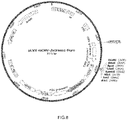
- the recombinant vector is an overexpression plasmid, lentivirus or cell line containing the nucleotide sequence shown in SEQ ID NO. 1 and having the following functions (a1) to (a3):
- the present invention has the following advantages:
- the Cancer Genome Atlas (TCGA) Program was jointly initiated by the National Cancer Institute (NCI) and the National Human Genome Research Institute (NHGRI) of the United States in 2006. It applies the genome analysis technology based on large-scale sequencing to conduct large-scale experiments on 36 types of cancers.
- the Genome Characterization Center (GCC) of TCGA compares tumors and normal tissues to look for gene mutations, amplifications or deletions associated with each cancer or subtype and help understand the molecular mechanism of cancer and improve the scientific understanding on the molecular basis of cancer pathogenesis.
- Graphpad Prism7 was used to conduct statistical analysis on the expression levels of AQP2 in 20 types of tumor tissues and corresponding paracancer tissues. All data underwent statistical t test, ⁇ P ⁇ 0.05 means significant difference, and ⁇ P ⁇ 0.01 means very significant difference.
- AQP2 showed significant low expression in head and neck squamous cell carcinoma ( Fig. 1 ), three renal carcinoma subtypes (papillary cell renal carcinoma, clear cell renal carcinoma, chromophobe renal carcinoma, Fig. 2 to Fig. 4 ) and prostate cancer ( Fig. 5 ).
- the fluorescence quantitative PCR method was used to detect the expression quantities of AQP2 in tumor cells and normal epithelial cells.
- TaKaRa kit PrimeScriptTM RT kit with gDNA Eraser (Perfect Real Time) to reversely transcribe the extracted total RNA to synthesize cDNA.
- This kit contains gDNAEraser DNase and can effectively remove mingled genomic DNA.
- PCR reaction system Reagent Dose ( ⁇ L) SYBR Premix Ex Taq II (TliRNaseH Plus) (2 ⁇ ) 12.5 PCR Forward Primer (10 ⁇ M ) 1 PCR Reverse Primer (10 ⁇ M ) 1 DNA template ( ⁇ 100 ⁇ g) 2 Sterilized water 8.5 Total 25
- the Western blot method was used to detect the expression quantities of AQP2 protein in tumor cells and normal epithelial cells.
- Embodiment 2 Use trypsin to digest and collect the six types of cells in Embodiment 2 when the growth density reached 90%, use a culture solution to re-suspend the cells for multiplication culture, then collect the cells when the confluence was 80%, centrifuge, discard the supernatant, rinse with PBS twice and discard the supernatant. Add RIPA lysis buffer and lyse on ice for 20 min. Centrifuge at 12,000 g for 10 min and collect the supernatant. Add 1XSDS loading buffer, mix well by pipetting, then boil up and degenerate for 5 min. Separate total protein by 10% SDS-PAGE gel, then transfer it onto a PVDF membrane.
- Fig. 7 The results are shown in Fig. 7 and are consistent with AQP2 mRNA expression difference.
- the expression quantities of AQP2 protein in head and neck squamous cell carcinoma cells SCC4, kidney cancer cells 786-O and prostate cancer cells DU145 were reduced significantly.
- Fig. 9 The results are shown in Fig. 9 to Fig. 11 .
- Overexpression of AQP2 caused the expression quantities of AQP2 gene and protein in head and neck squamous cell carcinoma cells SCC4 ( Fig. 9 ), kidney cancer cells 786-O ( Fig. 10 ) and prostate cancer cells DU145 ( Fig. 11 ) to increase significantly.
- This embodiment shows the effect of overexpression of AQP2 on the proliferation ability of human tumor cells.
- ELIASA proliferation inhibition
- test was independently repeated three times. The results obtained from the test were expressed with mean ⁇ SD, statistical t test was done, the comparison of two or more groups of data adopted One-way ANOVA, statistical significance was expressed with value P , P ⁇ 0.05 means significant difference, and P ⁇ 0.01 means very significant difference.
- Fig. 12 to Fig. 14 The results are shown in Fig. 12 to Fig. 14 .
- plvx-crtl the proliferation speed of the cells with overexpression of AQP2 (plvx-AQP2) (head and neck squamous cell carcinoma cells SCC4 ( Fig. 12 ), kidney cancer cells 786-O ( Fig. 14 ) and prostate cancer cells DU145 ( Fig. 15 )) was reduced obviously.
- overexpression of AQP2 can significantly inhibit the proliferation of head and neck squamous cell carcinoma cells SCC4, kidney cancer cells 786-O and prostate cancer cells DU145 and further verifies the importance of AQP2 as a cancer suppressor gene.
- This embodiment shows the effect of overexpression of AQP2 on the migration ability of human tumor cells.
- MIR % 1 ⁇ N test N control ⁇ 100 %
- N test is the number of migrated cells in the test group (plvx-AQP2)
- N control is the number of migrated cells in the blank control group (plvx-ctrl).
- the test was independently repeated three times. The results obtained from the test were expressed with mean ⁇ SD, statistical t test was done, the comparison of two or more groups of data adopted One-way ANOVA, statistical significance was expressed with value P , P ⁇ 0.05 means significant difference, and P ⁇ 0.01 means very significant difference.
- Table 3 Inhibitory effect of overexpression of AQP2 on the migration ability of human tumor cells Cell type Group No.
- This embodiment shows the effect of overexpression of AQP2 on the in vivo growth of human tumor cells.
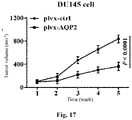
- the cells with overexpression of AQP2 (plvx-AQP2) (head and neck squamous cell carcinoma cells SCC4 ( Fig. 15 ), kidney cancer cells 786-O ( Fig. 16 ) and prostate cancer cells DU145 ( Fig. 17 )) showed a lower tumor growth rate and obviously reduced in-vivo tumorigenicity in nude mice, indicating that overexpression of AQP2 can inhibit the in vivo growth ability of malignant tumor cells.
Landscapes
- Health & Medical Sciences (AREA)
- Life Sciences & Earth Sciences (AREA)
- Chemical & Material Sciences (AREA)
- Immunology (AREA)
- Engineering & Computer Science (AREA)
- General Health & Medical Sciences (AREA)
- Medicinal Chemistry (AREA)
- Organic Chemistry (AREA)
- Molecular Biology (AREA)
- Urology & Nephrology (AREA)
- Hematology (AREA)
- Biomedical Technology (AREA)
- Analytical Chemistry (AREA)
- Pathology (AREA)
- Proteomics, Peptides & Aminoacids (AREA)
- Pharmacology & Pharmacy (AREA)
- Animal Behavior & Ethology (AREA)
- Veterinary Medicine (AREA)
- Public Health (AREA)
- Biochemistry (AREA)
- Physics & Mathematics (AREA)
- Biotechnology (AREA)
- Microbiology (AREA)
- Cell Biology (AREA)
- Zoology (AREA)
- Oncology (AREA)
- Chemical Kinetics & Catalysis (AREA)
- Nuclear Medicine, Radiotherapy & Molecular Imaging (AREA)
- General Chemical & Material Sciences (AREA)
- General Physics & Mathematics (AREA)
- Food Science & Technology (AREA)
- Genetics & Genomics (AREA)
- Bioinformatics & Cheminformatics (AREA)
- Wood Science & Technology (AREA)
- Epidemiology (AREA)
- Gastroenterology & Hepatology (AREA)
- Biophysics (AREA)
- Hospice & Palliative Care (AREA)
- General Engineering & Computer Science (AREA)
- Marine Sciences & Fisheries (AREA)
Applications Claiming Priority (2)
| Application Number | Priority Date | Filing Date | Title |
|---|---|---|---|
| CN201910850263.4A CN112535726B (zh) | 2019-09-05 | 2019-09-05 | 一种肿瘤标志物aquaporin 2蛋白及其应用 |
| PCT/CN2020/126029 WO2021043340A2 (zh) | 2019-09-05 | 2020-11-03 | 一种肿瘤标志物aquaporin 2蛋白及其应用 |
Publications (2)
| Publication Number | Publication Date |
|---|---|
| EP4006166A2 true EP4006166A2 (de) | 2022-06-01 |
| EP4006166A4 EP4006166A4 (de) | 2023-09-27 |
Family
ID=74852112
Family Applications (1)
| Application Number | Title | Priority Date | Filing Date |
|---|---|---|---|
| EP20859995.1A Pending EP4006166A4 (de) | 2019-09-05 | 2020-11-03 | Aquaporin-2-protein als tumormarker und seine verwendung |
Country Status (7)
| Country | Link |
|---|---|
| US (1) | US20220299516A1 (de) |
| EP (1) | EP4006166A4 (de) |
| JP (1) | JP7323965B2 (de) |
| CN (1) | CN112535726B (de) |
| AU (1) | AU2020342299B2 (de) |
| CA (1) | CA3169749A1 (de) |
| WO (1) | WO2021043340A2 (de) |
Families Citing this family (1)
| Publication number | Priority date | Publication date | Assignee | Title |
|---|---|---|---|---|
| CN118671343B (zh) * | 2024-06-25 | 2025-04-29 | 南昌大学第一附属医院 | 一种头颈鳞状细胞癌分子标记物及其应用 |
Family Cites Families (10)
| Publication number | Priority date | Publication date | Assignee | Title |
|---|---|---|---|---|
| KR20020029445A (ko) * | 2000-09-09 | 2002-04-19 | 문우철 | Aqp 돌연변이 유전자, aqp의 돌연변이 및 발현을이용한 암 검색 방법, 및 aqp 돌연변이 염기서열의올리고뉴클레오타이드를 갖는 dna 칩 |
| CA2481334A1 (en) * | 2002-04-01 | 2003-10-16 | Anthony C. Stevens | Tissue-specific endothelial membrane proteins |
| WO2005024603A2 (en) * | 2003-09-10 | 2005-03-17 | The Board Of Regents Of The University Of Texas System | Methods for detecting, diagnosing and treating human renal cell carcinoma |
| WO2006084027A2 (en) * | 2005-02-02 | 2006-08-10 | Government Of The United States Of America, Represented By The Secretary, Department Of Health And Human Services | Sipa-1 gene and sipa-1 inhibitor for the treatment, prevention, and diagnosis of cancer |
| US8106037B2 (en) * | 2007-08-03 | 2012-01-31 | The Brigham And Women's Hospital, Inc. | Identification and treatment of estrogen responsive prostate tumors |
| JP2009079042A (ja) * | 2007-09-07 | 2009-04-16 | Univ Nagoya | 腎性尿崩症治療用組換えベクター及びその用途 |
| KR101810799B1 (ko) * | 2008-02-01 | 2017-12-19 | 더 제너럴 하스피탈 코포레이션 | 의학적 질환 및 병태의 진단, 예후, 및 치료에 있어서 미세소포체의 용도 |
| JP2014519340A (ja) * | 2011-06-16 | 2014-08-14 | カリス ライフ サイエンシズ ルクセンブルク ホールディングス エス.アー.エール.エル. | バイオマーカー組成物および方法 |
| JPWO2013022107A1 (ja) * | 2011-08-11 | 2015-03-05 | 大塚製薬株式会社 | タンパク質を含む生体試料の前処理方法 |
| GR1007816B (el) * | 2011-10-17 | 2013-01-28 | Σωκρατης Ιωαννη Τζαρτος | Βιολογικος δεικτης |
-
2019
- 2019-09-05 CN CN201910850263.4A patent/CN112535726B/zh active Active
-
2020
- 2020-11-03 JP JP2022514787A patent/JP7323965B2/ja active Active
- 2020-11-03 CA CA3169749A patent/CA3169749A1/en active Pending
- 2020-11-03 WO PCT/CN2020/126029 patent/WO2021043340A2/zh not_active Ceased
- 2020-11-03 AU AU2020342299A patent/AU2020342299B2/en active Active
- 2020-11-03 EP EP20859995.1A patent/EP4006166A4/de active Pending
- 2020-11-03 US US17/640,380 patent/US20220299516A1/en active Pending
Also Published As
| Publication number | Publication date |
|---|---|
| AU2020342299A1 (en) | 2022-03-17 |
| US20220299516A1 (en) | 2022-09-22 |
| AU2020342299B2 (en) | 2024-02-15 |
| JP7323965B2 (ja) | 2023-08-09 |
| CN112535726A (zh) | 2021-03-23 |
| JP2022547097A (ja) | 2022-11-10 |
| EP4006166A4 (de) | 2023-09-27 |
| CN112535726B (zh) | 2023-09-12 |
| WO2021043340A2 (zh) | 2021-03-11 |
| CA3169749A1 (en) | 2021-03-11 |
| WO2021043340A3 (zh) | 2021-04-22 |
Similar Documents
| Publication | Publication Date | Title |
|---|---|---|
| CN109880902B (zh) | 一种长链非编码rna rp11-499f3.2在逆转肿瘤西妥昔单抗耐药治疗中的应用 | |
| WO2021022888A1 (zh) | 靶向长链非编码rna ddx11-as1的aso、试剂盒及在肝癌治疗中的应用 | |
| CN111778338A (zh) | 一种环状rna生物标志物的应用 | |
| WO2020093574A1 (zh) | 一种肿瘤相关序列、长链非编码rna及其应用 | |
| CN111518909B (zh) | Mettl2基因在制备检测结直肠癌氟尿嘧啶类药物治疗敏感性的试剂盒中的应用 | |
| Chen et al. | PRKD3 promotes malignant progression of OSCC by downregulating KLF16 expression. | |
| Xu et al. | Mechanism of lncRNA FEZF1-AS1 in promoting the occurrence and development of oral squamous cell carcinoma through targeting miR-196a. | |
| US20230250425A1 (en) | USE OF PIWI-INTERACTING RNA piR-hsa-211106 | |
| Wang et al. | LncRNA LACAT1 promotes proliferation of oral squamous cell carcinoma cells by inhibiting microRNA-4301. | |
| AU2020342299B2 (en) | Tumour marker aquaporin 2 protein and application thereof | |
| CN109251982B (zh) | Adgrg6增强子的突变序列、检测方法、所用的特异性引物对和应用 | |
| CN107164554B (zh) | Asprv1作为生物标志物在喉鳞癌诊疗中的应用 | |
| CN109486816A (zh) | 一种用于肿瘤治疗的多聚核苷酸及其应用 | |
| Liang et al. | lncRNA NR2F2-AS1 inhibits the methylation of miR-494 to regulate oral squamous cell carcinoma cell proliferation | |
| CN118581224A (zh) | Hpcal1在结肠癌诊断及治疗中的应用 | |
| CN110283912A (zh) | has-miR-3656作为食管鳞癌分子标志物的应用 | |
| CN106755373B (zh) | Lmod3在制备口腔鳞癌诊疗制剂中的应用 | |
| Zhou et al. | Low expression of lncRNA TUBA4B promotes proliferation and inhibits apoptosis of colorectal cancer cells via regulating P15 and P16 expressions. | |
| CN111733248B (zh) | Loc158435作为诊治喉鳞癌的生物标志物的应用 | |
| CN110093419B (zh) | 环状rna的应用、试剂盒和药物组合物及其应用 | |
| CN110643707A (zh) | 一种与ESCC相关的lncRNA LLNLR-299G3.1及其应用 | |
| Bai et al. | Long intergenic non-protein coding RNA 312 regulates FRABIN to inhibit the occurrence and development of pancreatic cancer | |
| CN111733249B (zh) | 喉癌发生发展相关分子标志物 | |
| WO2025092879A1 (zh) | Gemin4基因及Gemin4蛋白在肿瘤中的应用 | |
| CN117660654A (zh) | 一种宫颈癌新生物标志物及其应用 |
Legal Events
| Date | Code | Title | Description |
|---|---|---|---|
| STAA | Information on the status of an ep patent application or granted ep patent |
Free format text: STATUS: THE INTERNATIONAL PUBLICATION HAS BEEN MADE |
|
| PUAI | Public reference made under article 153(3) epc to a published international application that has entered the european phase |
Free format text: ORIGINAL CODE: 0009012 |
|
| STAA | Information on the status of an ep patent application or granted ep patent |
Free format text: STATUS: REQUEST FOR EXAMINATION WAS MADE |
|
| 17P | Request for examination filed |
Effective date: 20220224 |
|
| AK | Designated contracting states |
Kind code of ref document: A2 Designated state(s): AL AT BE BG CH CY CZ DE DK EE ES FI FR GB GR HR HU IE IS IT LI LT LU LV MC MK MT NL NO PL PT RO RS SE SI SK SM TR |
|
| XX | Miscellaneous (additional remarks) |
Free format text: THE RESTORATION OF THE RIGHT OF PRIORITY GRANTED BY THE RECEIVING OFFICE IS EFFECTIVE BEFORE THE EPO (R. 49TER.1(A) PCT). |
|
| DAV | Request for validation of the european patent (deleted) | ||
| DAX | Request for extension of the european patent (deleted) | ||
| A4 | Supplementary search report drawn up and despatched |
Effective date: 20230829 |
|
| RIC1 | Information provided on ipc code assigned before grant |
Ipc: C12Q 1/6886 20180101ALI20230823BHEP Ipc: G01N 33/574 20060101ALI20230823BHEP Ipc: G01N 33/68 20060101ALI20230823BHEP Ipc: C12Q 1/68 20180101AFI20230823BHEP |
|
| STAA | Information on the status of an ep patent application or granted ep patent |
Free format text: STATUS: EXAMINATION IS IN PROGRESS |
|
| 17Q | First examination report despatched |
Effective date: 20260129 |