EP3989352A1 - Sekundärbatterie, batteriemodul und vorrichtung, die die batterie als stromquelle verwendet - Google Patents
Sekundärbatterie, batteriemodul und vorrichtung, die die batterie als stromquelle verwendet Download PDFInfo
- Publication number
- EP3989352A1 EP3989352A1 EP20913277.8A EP20913277A EP3989352A1 EP 3989352 A1 EP3989352 A1 EP 3989352A1 EP 20913277 A EP20913277 A EP 20913277A EP 3989352 A1 EP3989352 A1 EP 3989352A1
- Authority
- EP
- European Patent Office
- Prior art keywords
- insulator
- secondary battery
- main body
- connection portion
- overlayer
- Prior art date
- Legal status (The legal status is an assumption and is not a legal conclusion. Google has not performed a legal analysis and makes no representation as to the accuracy of the status listed.)
- Granted
Links
Images






Classifications
-
- H—ELECTRICITY
- H01—ELECTRIC ELEMENTS
- H01M—PROCESSES OR MEANS, e.g. BATTERIES, FOR THE DIRECT CONVERSION OF CHEMICAL ENERGY INTO ELECTRICAL ENERGY
- H01M50/00—Constructional details or processes of manufacture of the non-active parts of electrochemical cells other than fuel cells, e.g. hybrid cells
- H01M50/50—Current conducting connections for cells or batteries
- H01M50/531—Electrode connections inside a battery casing
- H01M50/533—Electrode connections inside a battery casing characterised by the shape of the leads or tabs
-
- H—ELECTRICITY
- H01—ELECTRIC ELEMENTS
- H01M—PROCESSES OR MEANS, e.g. BATTERIES, FOR THE DIRECT CONVERSION OF CHEMICAL ENERGY INTO ELECTRICAL ENERGY
- H01M10/00—Secondary cells; Manufacture thereof
- H01M10/04—Construction or manufacture in general
- H01M10/0431—Cells with wound or folded electrodes
-
- H—ELECTRICITY
- H01—ELECTRIC ELEMENTS
- H01M—PROCESSES OR MEANS, e.g. BATTERIES, FOR THE DIRECT CONVERSION OF CHEMICAL ENERGY INTO ELECTRICAL ENERGY
- H01M10/00—Secondary cells; Manufacture thereof
- H01M10/05—Accumulators with non-aqueous electrolyte
- H01M10/052—Li-accumulators
- H01M10/0525—Rocking-chair batteries, i.e. batteries with lithium insertion or intercalation in both electrodes; Lithium-ion batteries
-
- H—ELECTRICITY
- H01—ELECTRIC ELEMENTS
- H01M—PROCESSES OR MEANS, e.g. BATTERIES, FOR THE DIRECT CONVERSION OF CHEMICAL ENERGY INTO ELECTRICAL ENERGY
- H01M10/00—Secondary cells; Manufacture thereof
- H01M10/05—Accumulators with non-aqueous electrolyte
- H01M10/058—Construction or manufacture
- H01M10/0587—Construction or manufacture of accumulators having only wound construction elements, i.e. wound positive electrodes, wound negative electrodes and wound separators
-
- H—ELECTRICITY
- H01—ELECTRIC ELEMENTS
- H01M—PROCESSES OR MEANS, e.g. BATTERIES, FOR THE DIRECT CONVERSION OF CHEMICAL ENERGY INTO ELECTRICAL ENERGY
- H01M50/00—Constructional details or processes of manufacture of the non-active parts of electrochemical cells other than fuel cells, e.g. hybrid cells
- H01M50/10—Primary casings; Jackets or wrappings
- H01M50/147—Lids or covers
-
- H—ELECTRICITY
- H01—ELECTRIC ELEMENTS
- H01M—PROCESSES OR MEANS, e.g. BATTERIES, FOR THE DIRECT CONVERSION OF CHEMICAL ENERGY INTO ELECTRICAL ENERGY
- H01M50/00—Constructional details or processes of manufacture of the non-active parts of electrochemical cells other than fuel cells, e.g. hybrid cells
- H01M50/10—Primary casings; Jackets or wrappings
- H01M50/147—Lids or covers
- H01M50/148—Lids or covers characterised by their shape
- H01M50/15—Lids or covers characterised by their shape for prismatic or rectangular cells
-
- H—ELECTRICITY
- H01—ELECTRIC ELEMENTS
- H01M—PROCESSES OR MEANS, e.g. BATTERIES, FOR THE DIRECT CONVERSION OF CHEMICAL ENERGY INTO ELECTRICAL ENERGY
- H01M50/00—Constructional details or processes of manufacture of the non-active parts of electrochemical cells other than fuel cells, e.g. hybrid cells
- H01M50/10—Primary casings; Jackets or wrappings
- H01M50/172—Arrangements of electric connectors penetrating the casing
-
- H—ELECTRICITY
- H01—ELECTRIC ELEMENTS
- H01M—PROCESSES OR MEANS, e.g. BATTERIES, FOR THE DIRECT CONVERSION OF CHEMICAL ENERGY INTO ELECTRICAL ENERGY
- H01M50/00—Constructional details or processes of manufacture of the non-active parts of electrochemical cells other than fuel cells, e.g. hybrid cells
- H01M50/20—Mountings; Secondary casings or frames; Racks, modules or packs; Suspension devices; Shock absorbers; Transport or carrying devices; Holders
- H01M50/204—Racks, modules or packs for multiple batteries or multiple cells
- H01M50/207—Racks, modules or packs for multiple batteries or multiple cells characterised by their shape
- H01M50/209—Racks, modules or packs for multiple batteries or multiple cells characterised by their shape adapted for prismatic or rectangular cells
-
- H—ELECTRICITY
- H01—ELECTRIC ELEMENTS
- H01M—PROCESSES OR MEANS, e.g. BATTERIES, FOR THE DIRECT CONVERSION OF CHEMICAL ENERGY INTO ELECTRICAL ENERGY
- H01M50/00—Constructional details or processes of manufacture of the non-active parts of electrochemical cells other than fuel cells, e.g. hybrid cells
- H01M50/50—Current conducting connections for cells or batteries
- H01M50/528—Fixed electrical connections, i.e. not intended for disconnection
-
- H—ELECTRICITY
- H01—ELECTRIC ELEMENTS
- H01M—PROCESSES OR MEANS, e.g. BATTERIES, FOR THE DIRECT CONVERSION OF CHEMICAL ENERGY INTO ELECTRICAL ENERGY
- H01M50/00—Constructional details or processes of manufacture of the non-active parts of electrochemical cells other than fuel cells, e.g. hybrid cells
- H01M50/50—Current conducting connections for cells or batteries
- H01M50/531—Electrode connections inside a battery casing
- H01M50/534—Electrode connections inside a battery casing characterised by the material of the leads or tabs
-
- H—ELECTRICITY
- H01—ELECTRIC ELEMENTS
- H01M—PROCESSES OR MEANS, e.g. BATTERIES, FOR THE DIRECT CONVERSION OF CHEMICAL ENERGY INTO ELECTRICAL ENERGY
- H01M50/00—Constructional details or processes of manufacture of the non-active parts of electrochemical cells other than fuel cells, e.g. hybrid cells
- H01M50/50—Current conducting connections for cells or batteries
- H01M50/531—Electrode connections inside a battery casing
- H01M50/536—Electrode connections inside a battery casing characterised by the method of fixing the leads to the electrodes, e.g. by welding
-
- H—ELECTRICITY
- H01—ELECTRIC ELEMENTS
- H01M—PROCESSES OR MEANS, e.g. BATTERIES, FOR THE DIRECT CONVERSION OF CHEMICAL ENERGY INTO ELECTRICAL ENERGY
- H01M50/00—Constructional details or processes of manufacture of the non-active parts of electrochemical cells other than fuel cells, e.g. hybrid cells
- H01M50/50—Current conducting connections for cells or batteries
- H01M50/531—Electrode connections inside a battery casing
- H01M50/538—Connection of several leads or tabs of wound or folded electrode stacks
-
- H—ELECTRICITY
- H01—ELECTRIC ELEMENTS
- H01M—PROCESSES OR MEANS, e.g. BATTERIES, FOR THE DIRECT CONVERSION OF CHEMICAL ENERGY INTO ELECTRICAL ENERGY
- H01M50/00—Constructional details or processes of manufacture of the non-active parts of electrochemical cells other than fuel cells, e.g. hybrid cells
- H01M50/50—Current conducting connections for cells or batteries
- H01M50/572—Means for preventing undesired use or discharge
- H01M50/584—Means for preventing undesired use or discharge for preventing incorrect connections inside or outside the batteries
- H01M50/59—Means for preventing undesired use or discharge for preventing incorrect connections inside or outside the batteries characterised by the protection means
- H01M50/593—Spacers; Insulating plates
-
- H—ELECTRICITY
- H01—ELECTRIC ELEMENTS
- H01M—PROCESSES OR MEANS, e.g. BATTERIES, FOR THE DIRECT CONVERSION OF CHEMICAL ENERGY INTO ELECTRICAL ENERGY
- H01M2220/00—Batteries for particular applications
- H01M2220/20—Batteries in motive systems, e.g. vehicle, ship, plane
-
- Y—GENERAL TAGGING OF NEW TECHNOLOGICAL DEVELOPMENTS; GENERAL TAGGING OF CROSS-SECTIONAL TECHNOLOGIES SPANNING OVER SEVERAL SECTIONS OF THE IPC; TECHNICAL SUBJECTS COVERED BY FORMER USPC CROSS-REFERENCE ART COLLECTIONS [XRACs] AND DIGESTS
- Y02—TECHNOLOGIES OR APPLICATIONS FOR MITIGATION OR ADAPTATION AGAINST CLIMATE CHANGE
- Y02E—REDUCTION OF GREENHOUSE GAS [GHG] EMISSIONS, RELATED TO ENERGY GENERATION, TRANSMISSION OR DISTRIBUTION
- Y02E60/00—Enabling technologies; Technologies with a potential or indirect contribution to GHG emissions mitigation
- Y02E60/10—Energy storage using batteries
Definitions
- Embodiments of this application relate to the field of batteries, and in particular, to a secondary battery, a battery module, and a device using a battery as a power supply.
- a secondary battery such as a lithium-ion battery is widely used in electronic devices such as a mobile phone and a notebook computer by virtue of a high energy density and environmental friendliness.
- electronic devices such as a mobile phone and a notebook computer by virtue of a high energy density and environmental friendliness.
- the application of lithium-ion batteries has been rapidly expanded to hybrid electric vehicles, ships, and energy storage systems.
- a secondary battery mainly includes a housing and an electrode assembly disposed in the housing.
- the housing contains electrode terminals, and the electrode assembly contains tabs.
- the tabs are electrically connected to the electrode terminals.
- the tabs need to be bent to occupy a smaller space.
- an objective of this application is to provide a secondary battery, a battery module, and a device using a battery as a power supply to make tabs occupy a smaller space and reduce the risk of rupturing the tabs.
- the secondary battery includes: a cap plate; electrode terminals, disposed on the cap plate; an electrode assembly, including a main body and tabs extending from the main body, where each of the tabs includes a connection portion and a bend portion, the connection portion is electrically connected to one of the electrode terminals, and the bend portion is bent against the connection portion and is connected between the connection portion and the main body; and a first insulation member, disposed at a side that is of the connection portion and that is away from the cap plate.
- the first insulation member includes a first insulator connected to the connection portion, a second insulator connected to the main body, and a third insulator connected between the first insulator and the second insulator. At least a part of the bend portion is not fixed to the first insulation member.
- a tab is bent into a connection portion and bend portion to make the tab occupy a smaller space.
- the first insulator can fix the connection portion, disperse a stress transmitted to the connection portion, and reduce the risk of rupturing the connection portion.
- the second insulator can avoid inserting the end that is of the connection portion and that is away from the bend portion into the main body, and reduce the short-circuit risk. At least a part of the bend portion is not fixed to the first insulation member. Therefore, the part that is of the bend portion and that is not fixed to the first insulation member can release the stress during the bending of the tab, thereby reducing the risk of fracturing the bend portion.
- the third insulator includes a first part and a second part.
- the first part is connected between the first insulator and the second part.
- the first part is fixed to the bend portion, and the second part covers a part of the bend portion and is not fixed to the bend portion.
- the third insulator connects the first insulator and the second insulator together to improve the connection strength between the first insulator and the second insulator on the electrode assembly, and reduce the peel-off risk.
- the third insulator includes an inner piece and an outer piece fixed to the inner piece.
- the inner piece is disposed between the outer piece and the bend portion, and the inner piece is not fixed to the bend portion.
- Both the inner piece and the outer piece are single-sided adhesive tape.
- the inner piece and the outer piece are directly bonded together.
- a surface that is of the inner piece and that is away from the outer piece is smooth and non-adhesive, so that the inner piece is not fixed to the bend portion.
- the first insulator is bonded to the connection portion.
- the outer piece is bonded to the inner piece.
- the second insulator is bonded to the main body.
- Both the first insulator and the second insulator are single-sided adhesive tape.
- the first insulator, the outer piece, and the second insulator are different parts of one piece of single-sided adhesive tape.
- the inner piece is another piece of single-sided adhesive tape of a smaller size. In this application, two pieces of single-sided adhesive tape of different sizes are bonded together to form a first insulation member that is adhesive in a specific region.
- the second insulator extends beyond the connection portion.
- the second insulator extends beyond the connection portion.
- the second insulator can separate the connection portion from the main body, so that the end that is of the connection portion and that is away from the bend portion is prevented from being inserted into the main body, and the short-circuit risk is reduced.
- the first insulation member further includes a fourth insulator.
- the fourth insulator is connected to an end of the second insulator, the end being away from the third insulator. In the thickness direction of the main body, the fourth insulator is connected to the outside of the main body.
- the fourth insulator disposed can increase the connection strength between the entire first insulation member and the electrode assembly, and reduce the risk of peeling off the first insulation member from the electrode assembly under the immersion of the electrolytic solution.
- the secondary battery further includes current collection members.
- Each of the current collection members is configured to connect the electrode terminal and the tab.
- the current collection member is welded to the connection portion to form a weld region.
- the first insulator covers the weld region from a side of the weld region, the side being oriented toward the main body.
- the first insulator covers the weld region from a side of the weld region, the side being oriented toward the main body.
- the region of the current collection member, to which the connection portion is welded, can be connected with an unwelded region by the first insulator, so as to reduce the risk of fracturing the connection portion in a process of bending the tab.
- the secondary battery further includes a second insulation member, and the second insulation member covers the weld region from a side of the weld region, the side being oriented toward the cap plate.
- the second insulation member is bonded to a surface that is of the weld region and that is oriented toward the cap plate, so as to fix the metal particles on the surface of the weld region.
- the second insulation member includes a first overlayer and a second overlayer.
- the first overlayer covers the weld region from a side of the weld region, the side being oriented toward the cap plate.
- the second overlayer is connected to the first overlayer and is bent against the first overlayer.
- the second overlayer is located at a side that is of the bend portion and that is away from the third insulator, and is connected to the bend portion.
- the bend portion can be separated from the housing, thereby preventing the bend portion from being scratched by the housing, and ensuring the current-carrying capacity of the bend portion.
- the second insulation member further includes a third overlayer.
- the third overlayer extends from an end that is of the second overlayer and that is away from the first overlayer.
- the third overlayer is connected to the main body.
- the third overlayer disposed can increase the connection strength between the entire second insulation member and the electrode assembly, and reduce the risk of peeling off the second insulation member from the electrode assembly under the immersion of the electrolytic solution. In some embodiments, the third overlayer can further reduce the risks such as scratch of the main body by the housing.
- the secondary battery further includes a prop member.
- the prop member includes a first prop board, a second prop board, and a third prop board.
- the first prop board is disposed at a side of the first insulator away from the cap plate.
- the second prop board is located between the first prop board and the second insulator.
- the third prop board is connected between the first prop board and the second prop board. Along a direction in which the bend portion points to the third insulator, the second insulator extends beyond the second prop board.
- the prop member is formed by bending a sheet material. Under the action of an inherent elastic force, the first prop board can prop the connection portion from a lower side. In this way, the end that is of the connection portion and that is away from the bend portion is prevented from being bent downward and inserted into the main body.
- the third prop board can support shaping of the bend portion of the tab, thereby reducing the risk of inserting the bend portion into the main body.
- the battery module includes the secondary battery described above.
- the secondary battery is plural in number.
- This application further provides a device using a battery as a power supply.
- the battery is the secondary battery described above.
- the tab is bent into a connection portion and a bend portion to make the tab occupy a smaller space.
- the first insulator can fix the connection portion, disperse a stress transmitted to the connection portion, and reduce the risk of rupturing the connection portion.
- the second insulator can separate the connection portion from the main body, so that the end that is of the connection portion and that is away from the bend portion is prevented from being inserted into the main body, and the short-circuit risk is reduced. At least a part of the bend portion is not fixed to the first insulation member.
- the part that is of the bend portion and that is not fixed to the first insulation member can release the stress during the bending of the tab, thereby reducing a tensile force exerted by the first insulation member on the bend portion and reducing the risk of fracturing the bend portion.
- connection may be a fixed connection, or a detachable connection, or an integrated connection, or an electrical connection or signal connection; or may be a direct connection or an indirect connection implemented through an intermediate medium.
- connection may be a fixed connection, a detachable connection, or an integrated connection, and may be a direct connection or an indirect connection implemented through an intermediary.
- Embodiments of this application provide a device using a battery as a power supply.
- the battery is a secondary battery that is cyclically rechargeable and dischargeable. Generally, there are a plurality of secondary batteries in the device arranged in groups.
- the device may be a ship, a vehicle, or the like.
- the vehicle is an new energy vehicle, and may be a battery electric vehicle, or a hybrid electric vehicle, or a range-extended electric vehicle.
- a drive motor is disposed in a chassis of the vehicle.
- the drive motor is electrically connected to a secondary battery.
- the secondary battery provides electrical energy to the drive motor.
- the drive motor is connected to wheels on the chassis of the vehicle through a transmission mechanism to drive the vehicle to move.
- the secondary battery is a lithium-ion battery.
- the battery module includes a plurality of secondary batteries 1000.
- the plurality of secondary batteries 1000 are arranged in sequence.
- the battery module further includes a prop frame and a plurality of busbars.
- the prop frame accommodates and fixes the plurality of secondary batteries 1000.
- the plurality of busbars electrically connect the plurality of secondary batteries 1000 in series, in parallel, or in both series and parallel.
- a secondary battery that is cyclically rechargeable and dischargeable.
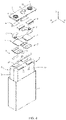
- a secondary battery according to some embodiments includes a cap plate 1, an electrode assembly 2, electrode terminals 4, and a housing 8.
- the electrode assembly 2 is a core member for the secondary battery to implement functions of charging and discharging.
- the electrode assembly 2 includes a first electrode plate 23, a second electrode plate 24, and a separator 25.
- the separator 25 separates the first electrode plate 23 from the second electrode plate 24.
- the electrode assembly 2 may be a jelly-roll structure. Specifically, referring to FIG. 6 , there are one first electrode plate 23 and one second electrode plate 24, and the first electrode plate 23 and the second electrode plate 24 are strap-shaped structures. The first electrode plate 23, the separator 25, and the second electrode plate 24 are sequentially stacked and wound for at least two coils to form the electrode assembly 2. The electrode assembly 2 is flat.
- the electrode assembly 2 may be a stacked structure. Specifically, a plurality of first electrode plates 23 are disposed, and a plurality of second electrode plates 24 are disposed. The plurality of first electrode plates 23 and the plurality of second electrode plates 24 are alternately stacked. The separator 25 separates the first electrode plate 23 from the second electrode plate 24.
- the first electrode plate 23 includes a first current collector and a first active material layer coated on a surface of the first current collector.
- the first current collector is a metal foil such as an aluminum foil.
- the first active material layer includes a ternary material, lithium manganate, or lithium iron phosphate.
- the first current collector includes a first coating region and a first blank region. A surface of the first coating region is coated with the first active material layer. No surface of the first blank region is coated with the first active material layer.
- a jelly-roll electrode assembly 2 there are a plurality of first blank regions of the first electrode plate 23 that are stacked.
- the second electrode plate 24 includes a second current collector and a second active material layer coated on a surface of the second current collector.
- the second current collector is a metal foil such as a copper foil.
- the second active material layer contains graphite or silicon.
- the second current collector includes a second coating region and a second blank region. A surface of the second coating region is coated with the second active material layer. No surface of the second blank region is coated with the second active material layer.
- a jelly-roll electrode assembly 2 there are a plurality of second blank regions of the second electrode plate 24 that are stacked.
- the electrode assembly 2 includes a main body 21 and tabs 22 extending from the main body 21.
- the main body 21 includes a first coating region, a first active material layer, a separator 13, a second coating region, and a second active material layer.
- the two tabs 22 are a first tab and a second tab.
- the first tab includes the plurality of first blank regions that are stacked, and the second tab includes the plurality of second blank regions that are stacked.
- a secondary battery there are a plurality of electrode assemblies 2.
- the plurality of electrode assemblies 2 are stacked in a thickness direction Y of the secondary battery. In some alternative embodiments, there may be one electrode assembly 2.
- the housing 8 is in a hexahedral shape or other shape.
- the housing 8 forms an accommodation cavity interiorly to accommodate the electrode assembly 2 and an electrolytic solution.
- An opening is formed at one end of the housing 8 along a height direction Z.
- the electrode assembly 2 can be placed into the accommodation cavity of the housing 8 through the opening.
- the housing 8 may be made of a conductive metal material.
- the housing 8 is made of aluminum or an aluminum alloy.
- the cap plate 1 is connected to the housing 8 and covers the opening of the housing 8.
- the electrode terminals 4 are disposed on the cap plate 1.
- the electrode terminals 4 are mounted to the cap plate 1 by using a fastener.
- the electrode terminals 4 protrude above the cap plate 1 for ease of connecting to the busbar.
- the two electrode terminals 4 are electrically connected to the first tab and the second tab respectively.
- Two electrode lead-out holes are disposed in the cap plate 1.
- the two electrode lead-out holes run through the cap plate 1 along a thickness direction of the cap plate 1.
- the two electrode terminals 4 cover the two electrode lead-out holes respectively.
- the secondary battery further includes current collection members 5.
- Each of the current collection members 5 is configured to connect the electrode terminal 4 and the tab 22.
- the current collection member 5 includes a first current collection portion 51 and a second current collection portion 52.
- the first current collection portion 51 is connected to the electrode terminal 4, and the second current collection portion 52 is connected to the tab 22.
- the second collection portion 52 is in a flat plate shape.
- the first current collection portion 51 protrudes beyond the second collection portion 52 toward the cap plate 1.
- the first current collection portion 51 extends into the electrode lead-out hole and is welded to the electrode terminal 4.
- a secondary battery according to some embodiments further includes a rupture disk 9.
- a via hole is disposed on the cap plate 1.
- the rupture disk 9 is disposed on the cap plate 1 and seals the via hole.
- the rupture disk 9 can cover the via hole and separate internal space of the secondary battery from the outside, so as to prevent an electrolytic solution in the housing 8 from leaking through the via hole.
- An injection hole 11 is disposed on the cap plate 1.
- an electrolytic solution is injected into the housing 8 through the injection hole 11.
- a sealing strip is welded onto the cap plate 1 to seal the injection hole 11.
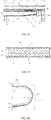
- the tab 22 is bent to make the tab 22 occupy a smaller space.
- the bent tab (22) includes a connection portion 221 and a bend portion 222.
- the connection portion 221 is electrically connected to an electrode terminal 4.
- the bend portion 222 is bent against the connection portion 221 and is connected between the connection portion 221 and the main body 21.
- the connection portion 221 is approximately parallel to a thickness direction of the main body 21.
- the connection portion 221 and the bend portion 222 each include a plurality of metal foil layers.
- connection portion 221 may be directly connected to the electrode terminal 4 or may be connected to the electrode terminal 4 by the current collection member 5.
- the following describes the secondary battery with reference to some embodiments in which a connection portion 221 is connected to a current collection member 5.
- the tab 22 When the tab 22 is bent, stress concentration occurs at a joint between the tab 22 and the current collection member 5. Because the tab 22 includes a plurality of metal foil layers, the tab 22 is prone to rupture at the joint between the tab 22 and the current collection member 5 to impair a current-carrying capacity of the tab 22. In severe circumstances, an innermost metal foil layer of the connection portion 221 (that is, a metal foil layer closest to the main body 21) may break off thoroughly. The broken metal foil layer cannot be fixed, and is prone to be inserted into the main body 21, thereby causing a short-circuit risk.
- the secondary battery further includes a first insulation member 3.
- the first insulation member 3 is disposed at a side of the connection portion 221 away from the cap plate 1.
- the first insulation member 3 includes a first insulator 31 connected to the connection portion 221.
- the connection portion 221 is configured to connect to the current collection member 5. Therefore, when the tab 22 is bent, the connection portion 221 is at high risk of rupturing.
- the first insulator 31 can fix the connection portion 221, disperse a stress transmitted to the connection portion 221, and reduce the risk of rupturing the connection portion 221. In some embodiments, even if the innermost metal foil layer of the connection portion 221 is thoroughly broken off, the first insulator 31 can still connect the broken metal foils together to avoid inserting into the main body 21, thereby reducing the short-circuit risk.
- the first insulation member 3 further includes a second insulator 32 connected to the main body 21.
- the second insulator 32 is disposed between the connection portion 221 and the main body 21.
- the second insulator 32 is connected to a first surface 211 of the main body 21, the first surface being oriented toward the cap plate 1.
- both ends of the separator 25 extend beyond the first active material layer and the second active material layer along a height direction Z.
- an end that is of the separator 25 and that is close to the cap plate 1 approximately forms a surface.
- the surface is the first surface 211 of the main body 21. Because the first surface 211 is formed by the end of the separator 25, some gaps exist on the first surface 211.
- the tab 22 is formed by stacking a plurality of blank regions, and the plurality of blank regions are usually of the same size.
- ends that are of the plurality of blank regions and that are away from the main body 21 are jagged and untidy.
- the ends that are of the plurality of blank regions and that are away from the main body 21 are usually not directly fixed to the current collection member 5. In other words, the ends that are of the connection portion 221 and that are away from the bend portion 222 are not directly fixed to the current collection member 5.
- connection portion 221 and the main body 21 are relatively small.
- the end that is of the connection portion 221 and that is away from the bend portion 222 is prone to be bent and inserted into the main body 21 through the gap on the first surface 211, thereby causing a short-circuit risk.
- the second insulator 32 can separate the connection portion 221 from the main body 21, so that the end that is of the connection portion 221 and that is away from the bend portion 222 is prevented from being inserted into the main body 21, and the short-circuit risk is reduced.
- the electrolytic solution causes an impact onto the first surface 211 of the main body 21.
- the first surface 211 is formed by the end that is of the separator 25 and that is close to the cap plate 1. Therefore, when the separator 25 is impacted by the electrolytic solution, the separator 25 may bend inward, so that the separator 25 is unable to completely separate the first electrode plate 23 from the second electrode plate 24, thereby causing a short-circuit risk.
- the first electrode plate 23 and the second electrode plate 24 may also be wrinkled and deformed, thereby affecting the performance of the electrode assembly 2.
- a projection of the injection hole 11 on the first surface 211 is at least partly covered by the second insulator 32. In some embodiments, a projection of the injection hole 11 on the first surface 211 is fully covered by the second insulator 32.
- the second insulator 32 separates the first surface 211 from the injection hole 11 to prevent the electrolytic solution from directly impacting the first surface 211, and reduce the deformation of the separator 25 and the electrode plate.
- the first insulation member 3 further includes a third insulator 33 connected between the first insulator 31 and the second insulator 32.
- the third insulator 33 connects the first insulator 31 and the second insulator 32 together to improve the connection strength between the first insulator 31 and the second insulator 32 on the electrode assembly 2, and reduce the peel-off risk.
- the first insulator 31 and the second insulator 32 are disposed discretely, the first insulator 31 and the second insulator 32 need to be connected to the electrode assembly 2 through two processes respectively. By disposing the third insulator 33, one process is enough to connect the first insulation member 3 to the electrode assembly 2, thereby improving assembling efficiency.
- At least a part of the bend portion 222 is not fixed to the first insulation member 3. In other words, at least a part of the surface that is of the bend portion 222 and that is oriented toward the first insulation member 3 is not fixed to the first insulation member 3. Further, at least a part of the surface that is of the bend portion 222 and that is oriented toward the first insulation member 3 is covered by the third insulator 33 and not fixed to the third insulator 33.
- the bend portion 222 is wholly fixed to the first insulation member 3 (for example, fixed to the third insulator 33), then when the tab 22 is bent, the first insulation member 3 will pull the innermost metal foil layer of the bend portion 222, and the innermost metal foil layer of the bend portion 222 is at risk of fracturing.
- at least a part of the bend portion 222 is not fixed to the first insulation member 3. Therefore, the part that is of the bend portion 222 and that is not fixed to the first insulation member 3 can release the stress during the bending of the tab 22, thereby reducing a tensile force exerted by the first insulation member 3 on the bend portion 222 and reducing the risk of fracturing the bend portion 222.
- the third insulator 33 includes a first part 331 and a second part 332.
- the first part 331 is connected between the first insulator 31 and the second part 332.
- the first part 331 is fixed to the bend portion 222, and the second part 332 covers a part of the bend portion 222 and is not fixed to the bend portion 222.
- the first part 331 is closer to the joint between the connection portion 221 and the current collection member 5 than the second part 332. Therefore, in some embodiments, the first part 331 is connected to the bend portion 222, so as to reduce the risk of fracturing the connection portion 221.
- the first insulator 31 and the first part 331 can connect the broken metal foils together, thereby avoiding being inserted into the main body 21.
- At least a part of the first part 331 is arc-shaped.
- the tab 22 may be bent along the first part 331.
- the third insulator 33 includes an inner piece 333 and an outer piece 334 fixed to the inner piece 333.
- the inner piece 333 is disposed between the outer piece 334 and bend portion 222.
- the inner piece 333 is not fixed to the bend portion 222.
- Both the inner piece 333 and the outer piece 334 are single-sided adhesive tape.
- the inner piece 333 and the outer piece 334 are directly bonded together.
- a surface that is of the inner piece 333 and that is away from the outer piece 334 is smooth and non-adhesive, so that the inner piece 333 is not fixed to the bend portion 222.
- the size of the outer piece 334 is larger than the size of the inner piece 333.
- the inner piece 333 covers just a part of the outer piece 334.
- a part that is of the outer piece 334 and that extends beyond the inner piece 333 is directly bonded onto the bend portion 222.
- a part that is of the outer piece 334 and that overlaps the inner piece 333 combines with the inner piece 333 to form the second part 332 that is not fixed to the bend portion 222.
- the part that is of the outer piece 334 and that extends beyond the inner piece 333 forms the first part 331 that is fixed to the bend portion 222.
- the third insulator 33 may be not fixed to the bend portion 222 at all.
- the size of the outer piece 334 is equal to the size of the inner piece 333, and the outer piece 334 completely overlaps the inner piece 333.
- the first insulator 31 is bonded to the connection portion 221, and the second insulator 32 is bonded to the main body 21. Both the first insulator 31 and the second insulator 32 are single-sided adhesive tape.
- the first insulator 31, the outer piece 334, and the second insulator 32 are integrated into a whole.
- the first insulator 31, the outer piece 334, and the second insulator 32 are different parts of one piece of single-sided adhesive tape.
- the inner piece 333 is another piece of single-sided adhesive tape of a smaller size. In this embodiment of this application, two pieces of single-sided adhesive tape of different sizes are bonded together to form a first insulation member 3 that is adhesive in a specific region.
- the second insulator 32 extends beyond the connection portion 221 along a direction in which the bend portion 222 points to the third insulator 33.
- a projection of the end that is of the connection portion 221 and that is away from the bend portion 222 at least partly overlaps a projection of the second insulator 32.
- the second insulator 32 can separate the connection portion 221 from the main body 21, so that the end that is of the connection portion 221 and that is away from the bend portion 222 is prevented from being inserted into the main body 21, and the short-circuit risk is reduced.
- the first insulation member 3 further includes a fourth insulator 34.
- the fourth insulator 34 is connected to an end of the second insulator 32, the end being away from the third insulator 33. In a thickness direction of the main body 21, the fourth insulator 34 is connected to the outside of the main body 21.
- the main body 21 contains a second surface 212 and a third surface 213.
- the second surface 212 and the third surface 213 are disposed opposite to each other along the thickness direction of the main body 21.
- the second surface 212 is located at a side that is of the bend portion 222 and that is close to the third insulator 33.
- the third surface 213 is located at a side of the bend portion 222, the side being away from the third insulator 33.
- the fourth insulator 34 is bonded to the second surface 212.
- the fourth insulator 34 and the third insulator 33 are integrated into a whole.
- the fourth insulator 34 disposed can increase the connection strength between the entire first insulation member 3 and the electrode assembly 2, and reduce the risk of peeling off the first insulation member 3 from the electrode assembly 2 under the immersion of the electrolytic solution.
- the current collection member 5 is welded to the connection portion 221 to form a weld region W.
- a plurality of metal foil layers of the connection portion 221 are connected to the current collection member 5 by welding.
- each metal foil layer is of relatively low strength, and is at risk of fracturing when being under a force.
- the first insulator 31 covers the weld region W from a side of the weld region W, the side being oriented toward the main body 21.
- the region of the current collection member 5, to which the connection portion 221 is welded can be connected with an unwelded region by the first insulator 31, so as to reduce the risk of fracturing the connection portion 221 in a process of bending the tab 22.
- some metal particles may remain on the surface of the weld region W.
- the metal particles falling into the main body 21 may cause a short-circuit risk.
- the first insulator 31 can fix the metal particles onto the weld region W to prevent the metal particles from falling, and reduce the short-circuit risk.
- connection portion 221 is located at a side of the second current collection portion 52 away from the cap plate 1.
- the connection portion 221 is welded to the second current collection portion 52 to form the weld region W.
- the secondary battery further includes a second insulation member 6.
- the second insulation member 6 covers the weld region W from a side of the weld region W, the side being oriented toward the cap plate 1.
- the second insulation member 6 is bonded to a surface that is of the weld region W and that is oriented toward the cap plate 1, so as to fix the metal particles on the surface of the weld region W.
- the second insulation member 6 includes a first overlayer 61 and a second overlayer 62.
- the first overlayer 61 covers the weld region W from a side of the weld region W, the side being oriented toward the cap plate 1.
- the second overlayer 62 is connected to the first overlayer 61 and is bent against the first overlayer 61.
- the first overlayer 61 is bonded to a surface of the welding region W, the surface being oriented toward the cap plate 1.
- the second overlayer 62 is located at a side of the bend portion 222 away from the third insulator 33, and is connected to the bend portion 222.
- the bend portion 222 can be separated from the housing 8, thereby preventing the bend portion 222 from being scratched by the housing 8, and ensuring the current-carrying capacity of the bend portion 222.
- the second insulation member 6 further includes a third overlayer 63.
- the third overlayer 63 extends from an end that is of the second overlayer 62 and that is away from the first overlayer 61.
- the third overlayer 63 is connected to the main body 21.
- the third overlayer 63 is bonded to a third surface 213 of the main body 21.
- the third overlayer 63 disposed can increase the connection strength between the entire second insulation member 6 and the electrode assembly 2, and reduce the risk of peeling off the second insulation member 6 from the electrode assembly 2 under the immersion of the electrolytic solution. In some embodiments, the third overlayer 63 can reduce the risks such as scratch of the main body 21 by the housing 8.
- the second insulation member 6 is single-sided adhesive tape.
- the first overlayer 61, the second overlayer 62, and the third overlayer 63 are integrated into a whole.
- the secondary battery further includes a prop member 7.
- the prop member 7 includes a first prop board 71, a second prop board 72, and a third prop board 73.
- the first prop board 71 is disposed at a side of the first insulator 31 away from the cap plate 1.
- the second prop board 72 is located between the first prop board 71 and the second insulator 32.
- the third prop board 73 is connected between the first prop board 71 and the second prop board 72.
- the prop member 7 is formed by bending a sheet material. Under the action of an inherent elastic force, the first prop board 71 can prop the connection portion 221 from a lower side. In this way, the end that is of the connection portion 221 and that is away from the bend portion 222 is prevented from being bent downward and inserted into the main body 21.
- the material of the prop member 7 is PET.
- the prop member 7 is bonded to the first insulation member 3.
- the third prop board 73 fits snugly with and is bonded to the third insulator 33.
- the third prop board 73 can support shaping of the bend portion 222 of the tab 22, thereby reducing the risk of inserting the bend portion 222 into the main body 21.
- the end that is of the second prop board 72 and that is away from the third prop board 73 exerts a force on the first surface 211. That is, the end of the third prop board 73 is prone to be inserted into the main body 21 to cause a short-circuit risk.
- the second insulator 32 extends beyond the second prop board 72. The second insulator 32 can separate the second prop board 72 from the main body 21, thereby preventing the end of the third prop board 73 from being inserted into the main body 21.
Landscapes
- Chemical & Material Sciences (AREA)
- Chemical Kinetics & Catalysis (AREA)
- Electrochemistry (AREA)
- General Chemical & Material Sciences (AREA)
- Engineering & Computer Science (AREA)
- Manufacturing & Machinery (AREA)
- Materials Engineering (AREA)
- Connection Of Batteries Or Terminals (AREA)
- Battery Mounting, Suspending (AREA)
Applications Claiming Priority (2)
| Application Number | Priority Date | Filing Date | Title |
|---|---|---|---|
| CN202010054531.4A CN112332039B (zh) | 2020-01-17 | 2020-01-17 | 二次电池、电池模块以及使用电池作为电源的装置 |
| PCT/CN2020/139185 WO2021143481A1 (zh) | 2020-01-17 | 2020-12-24 | 二次电池、电池模块以及使用电池作为电源的装置 |
Publications (4)
| Publication Number | Publication Date |
|---|---|
| EP3989352A1 true EP3989352A1 (de) | 2022-04-27 |
| EP3989352A4 EP3989352A4 (de) | 2023-01-25 |
| EP3989352B1 EP3989352B1 (de) | 2024-08-21 |
| EP3989352B8 EP3989352B8 (de) | 2024-10-16 |
Family
ID=74302840
Family Applications (1)
| Application Number | Title | Priority Date | Filing Date |
|---|---|---|---|
| EP20913277.8A Active EP3989352B8 (de) | 2020-01-17 | 2020-12-24 | Sekundärbatterie, batteriemodul und vorrichtung mit der batterie als stromversorgung |
Country Status (9)
| Country | Link |
|---|---|
| US (2) | US12463297B2 (de) |
| EP (1) | EP3989352B8 (de) |
| JP (1) | JP7587579B2 (de) |
| KR (1) | KR102848263B1 (de) |
| CN (1) | CN112332039B (de) |
| ES (1) | ES2994847T3 (de) |
| FI (1) | FI3989352T3 (de) |
| HU (1) | HUE068821T2 (de) |
| WO (1) | WO2021143481A1 (de) |
Cited By (2)
| Publication number | Priority date | Publication date | Assignee | Title |
|---|---|---|---|---|
| EP4369465A1 (de) * | 2022-11-11 | 2024-05-15 | Shenzhen Hithium Energy Storage Technology Co., Ltd. | Energiespeichervorrichtung und elektronische vorrichtung |
| EP4579929A4 (de) * | 2022-10-27 | 2025-12-24 | Contemporary Amperex Technology Hong Kong Ltd | Batteriezelle, batterie und elektrische vorrichtung |
Families Citing this family (14)
| Publication number | Priority date | Publication date | Assignee | Title |
|---|---|---|---|---|
| CN112332039B (zh) | 2020-01-17 | 2021-10-22 | 宁德时代新能源科技股份有限公司 | 二次电池、电池模块以及使用电池作为电源的装置 |
| CN113853709B (zh) * | 2020-07-30 | 2023-06-20 | 东莞新能安科技有限公司 | 电化学装置和电子装置 |
| KR102848220B1 (ko) | 2021-04-30 | 2025-08-21 | 컨템포러리 엠퍼렉스 테크놀로지 (홍콩) 리미티드 | 전지 셀, 그 제조 방법, 제조 시스템, 전지 및 전력 소비 장치 |
| CN215266598U (zh) * | 2021-07-30 | 2021-12-21 | 宁德时代新能源科技股份有限公司 | 电池单体、电池以及用电装置 |
| CN116648814A (zh) | 2021-09-29 | 2023-08-25 | 宁德时代新能源科技股份有限公司 | 电池单体、电池、用电设备及电池单体的制造方法和设备 |
| CN216354646U (zh) * | 2021-11-30 | 2022-04-19 | 宁德时代新能源科技股份有限公司 | 动力电池 |
| CN115172998A (zh) * | 2022-07-26 | 2022-10-11 | 上海兰钧新能源科技有限公司 | 二次电池、二次电池的制造方法 |
| WO2024055159A1 (zh) * | 2022-09-13 | 2024-03-21 | 宁德时代新能源科技股份有限公司 | 电池单体、电池及用电装置 |
| WO2024148468A1 (zh) * | 2023-01-09 | 2024-07-18 | 宁德时代新能源科技股份有限公司 | 电池单体、电池及用电装置 |
| CN119627375A (zh) * | 2023-09-12 | 2025-03-14 | 宁德时代新能源科技股份有限公司 | 电池单体、电池和用电装置 |
| CN222015634U (zh) * | 2023-09-28 | 2024-11-15 | 宁德时代新能源科技股份有限公司 | 电池单体、电池和用电装置 |
| CN221239756U (zh) * | 2023-09-28 | 2024-06-28 | 宁德时代新能源科技股份有限公司 | 电池单体、电池和用电装置 |
| CN118431682B (zh) * | 2024-07-04 | 2024-10-08 | 江苏正力新能电池技术股份有限公司 | 一种电池连接件、电池、用电设备及极耳焊接方法 |
| CN119419458A (zh) * | 2025-01-07 | 2025-02-11 | 宁德时代新能源科技股份有限公司 | 用电装置、电池装置、电池单体及其制造方法 |
Family Cites Families (28)
| Publication number | Priority date | Publication date | Assignee | Title |
|---|---|---|---|---|
| JPH04147517A (ja) | 1990-10-09 | 1992-05-21 | Fujikura Ltd | シールド付きテープ電線 |
| JPH10154505A (ja) * | 1996-11-22 | 1998-06-09 | Matsushita Electric Ind Co Ltd | 円筒密閉型電池 |
| EP0975031B2 (de) | 1998-02-05 | 2011-11-02 | Dai Nippon Printing Co., Ltd. | Blatt für zellgehäuse und zellenanordnung |
| JP4780598B2 (ja) * | 2004-09-29 | 2011-09-28 | 日立マクセルエナジー株式会社 | 密閉角形電池 |
| US20080289171A1 (en) | 2007-05-22 | 2008-11-27 | Jason Cheng | Method for assembling a stacked plate electrochemical device |
| US8592079B2 (en) * | 2011-07-28 | 2013-11-26 | Samsung Sdi Co., Ltd. | Rechargeable battery |
| US9634299B2 (en) * | 2011-09-06 | 2017-04-25 | Samsung Sdi Co., Ltd. | Rechargeable battery |
| JP2014112492A (ja) * | 2012-12-05 | 2014-06-19 | Toyota Industries Corp | 蓄電装置 |
| KR101342696B1 (ko) | 2012-12-07 | 2013-12-17 | 한화케미칼 주식회사 | 리튬이차전지 및 그 제조방법 |
| US9660249B2 (en) * | 2013-10-01 | 2017-05-23 | Samsung Sdi Co., Ltd. | Rechargeable battery having a fuse |
| JP6079592B2 (ja) | 2013-12-02 | 2017-02-15 | 株式会社豊田自動織機 | 蓄電装置 |
| KR102273643B1 (ko) * | 2014-10-07 | 2021-07-07 | 삼성에스디아이 주식회사 | 이차 전지 |
| KR102284569B1 (ko) * | 2014-10-07 | 2021-08-03 | 삼성에스디아이 주식회사 | 이차 전지 및 그 제조 방법 |
| CN205248346U (zh) | 2015-12-30 | 2016-05-18 | 安徽贵博新能科技有限公司 | 一种软包电池标准模块盒结构 |
| CN205609629U (zh) * | 2016-04-28 | 2016-09-28 | 宁德时代新能源科技股份有限公司 | 储能装置封装组件 |
| KR102264700B1 (ko) | 2016-07-25 | 2021-06-11 | 삼성에스디아이 주식회사 | 이차 전지 |
| KR102260826B1 (ko) * | 2016-09-06 | 2021-06-03 | 삼성에스디아이 주식회사 | 이차 전지 |
| CN206250261U (zh) * | 2016-12-02 | 2017-06-13 | 宁德时代新能源科技股份有限公司 | 二次电池 |
| CN206432317U (zh) * | 2017-02-17 | 2017-08-22 | 宁德时代新能源科技股份有限公司 | 电芯及电池 |
| CN109698385B (zh) * | 2017-10-20 | 2024-06-18 | 宁德时代新能源科技股份有限公司 | 二次电池 |
| CN107968182B (zh) | 2018-01-12 | 2023-12-15 | 宁德时代新能源科技股份有限公司 | 二次电池及汽车 |
| JP2019145271A (ja) | 2018-02-19 | 2019-08-29 | 株式会社豊田自動織機 | 蓄電装置及び蓄電装置の製造方法 |
| CN208189697U (zh) | 2018-03-23 | 2018-12-04 | 比亚迪股份有限公司 | 单体电池、电池模组、动力电池和电动汽车 |
| CN209561523U (zh) | 2018-12-28 | 2019-10-29 | 蜂巢能源科技有限公司 | 多层结构的动力电池连接片及动力盖板 |
| CN209786120U (zh) * | 2019-05-31 | 2019-12-13 | 宁德时代新能源科技股份有限公司 | 二次电池和电池模组 |
| CN209766569U (zh) * | 2019-06-19 | 2019-12-10 | 宁德时代新能源科技股份有限公司 | 二次电池及电池模组 |
| CN210467893U (zh) | 2019-08-07 | 2020-05-05 | 江苏时代新能源科技有限公司 | 二次电池及电池包 |
| CN112332039B (zh) | 2020-01-17 | 2021-10-22 | 宁德时代新能源科技股份有限公司 | 二次电池、电池模块以及使用电池作为电源的装置 |
-
2020
- 2020-01-17 CN CN202010054531.4A patent/CN112332039B/zh active Active
- 2020-12-24 HU HUE20913277A patent/HUE068821T2/hu unknown
- 2020-12-24 EP EP20913277.8A patent/EP3989352B8/de active Active
- 2020-12-24 JP JP2022528650A patent/JP7587579B2/ja active Active
- 2020-12-24 KR KR1020227016530A patent/KR102848263B1/ko active Active
- 2020-12-24 WO PCT/CN2020/139185 patent/WO2021143481A1/zh not_active Ceased
- 2020-12-24 ES ES20913277T patent/ES2994847T3/es active Active
- 2020-12-24 FI FIEP20913277.8T patent/FI3989352T3/fi active
-
2022
- 2022-03-24 US US17/702,908 patent/US12463297B2/en active Active
-
2025
- 2025-08-07 US US19/294,111 patent/US20250364704A1/en active Pending
Cited By (2)
| Publication number | Priority date | Publication date | Assignee | Title |
|---|---|---|---|---|
| EP4579929A4 (de) * | 2022-10-27 | 2025-12-24 | Contemporary Amperex Technology Hong Kong Ltd | Batteriezelle, batterie und elektrische vorrichtung |
| EP4369465A1 (de) * | 2022-11-11 | 2024-05-15 | Shenzhen Hithium Energy Storage Technology Co., Ltd. | Energiespeichervorrichtung und elektronische vorrichtung |
Also Published As
| Publication number | Publication date |
|---|---|
| US20250364704A1 (en) | 2025-11-27 |
| EP3989352B1 (de) | 2024-08-21 |
| EP3989352A4 (de) | 2023-01-25 |
| JP2023502115A (ja) | 2023-01-20 |
| CN112332039B (zh) | 2021-10-22 |
| KR102848263B1 (ko) | 2025-08-20 |
| CN112332039A (zh) | 2021-02-05 |
| KR20220084357A (ko) | 2022-06-21 |
| US20220216574A1 (en) | 2022-07-07 |
| FI3989352T3 (fi) | 2024-11-11 |
| US12463297B2 (en) | 2025-11-04 |
| WO2021143481A1 (zh) | 2021-07-22 |
| ES2994847T3 (en) | 2025-02-03 |
| JP7587579B2 (ja) | 2024-11-20 |
| EP3989352B8 (de) | 2024-10-16 |
| HUE068821T2 (hu) | 2025-01-28 |
Similar Documents
| Publication | Publication Date | Title |
|---|---|---|
| US12463297B2 (en) | Secondary battery, battery module, and device using battery as power supply | |
| US12347890B2 (en) | Secondary battery, battery module, and device using secondary battery as power supply | |
| US20230123940A1 (en) | Battery cell, battery and power consuming device | |
| US11489236B2 (en) | Rechargeable battery | |
| CN217158290U (zh) | 电极组件、电池单体、电池及用电装置 | |
| US20240322351A1 (en) | Battery cell, battery and electrical apparatus | |
| EP4310977A1 (de) | Elektrodenfolie und herstellungsverfahren dafür, batterie und elektronische vorrichtung | |
| US20240154263A1 (en) | Electrode assembly and traction battery | |
| WO2023185288A1 (zh) | 电池 | |
| US11929510B2 (en) | Secondary battery and manufacturing method thereof, battery module, and apparatus | |
| US20230307798A1 (en) | Battery | |
| US20230318151A1 (en) | Battery | |
| US20230261334A1 (en) | Battery cell, battery, electric device, and manufacturing method and device of battery cell | |
| CN212517274U (zh) | 电池和使用电池的装置 | |
| EP4089800A1 (de) | Batteriezelle, herstellungsverfahren und system dafür, batterie und elektrisches gerät | |
| US12315960B2 (en) | Current collecting member and manufacturing method thereof, secondary battery and manufacturing method thereof, battery module, and apparatus | |
| CN213150965U (zh) | 电池和使用电池的装置 | |
| CN213636220U (zh) | 电池及电子装置 | |
| CN211376679U (zh) | 二次电池及用于其的顶盖组件、电池模块和使用二次电池作为电源的装置 | |
| EP4220824A1 (de) | Batteriezelle, batterie, elektrische vorrichtung sowie verfahren und vorrichtung zur herstellung einer batteriezelle | |
| KR20050121905A (ko) | 이차 전지와 이에 사용되는 전극 조립체 |
Legal Events
| Date | Code | Title | Description |
|---|---|---|---|
| STAA | Information on the status of an ep patent application or granted ep patent |
Free format text: STATUS: THE INTERNATIONAL PUBLICATION HAS BEEN MADE |
|
| PUAI | Public reference made under article 153(3) epc to a published international application that has entered the european phase |
Free format text: ORIGINAL CODE: 0009012 |
|
| STAA | Information on the status of an ep patent application or granted ep patent |
Free format text: STATUS: REQUEST FOR EXAMINATION WAS MADE |
|
| 17P | Request for examination filed |
Effective date: 20220119 |
|
| AK | Designated contracting states |
Kind code of ref document: A1 Designated state(s): AL AT BE BG CH CY CZ DE DK EE ES FI FR GB GR HR HU IE IS IT LI LT LU LV MC MK MT NL NO PL PT RO RS SE SI SK SM TR |
|
| RAP3 | Party data changed (applicant data changed or rights of an application transferred) |
Owner name: CONTEMPORARY AMPEREX TECHNOLOGY CO., LIMITED |
|
| A4 | Supplementary search report drawn up and despatched |
Effective date: 20221222 |
|
| RIC1 | Information provided on ipc code assigned before grant |
Ipc: H01M 50/593 20210101ALI20221216BHEP Ipc: H01M 50/536 20210101ALI20221216BHEP Ipc: H01M 50/534 20210101ALI20221216BHEP Ipc: H01M 50/209 20210101ALI20221216BHEP Ipc: H01M 10/0587 20100101ALI20221216BHEP Ipc: H01M 50/15 20210101ALI20221216BHEP Ipc: H01M 50/533 20210101AFI20221216BHEP |
|
| DAV | Request for validation of the european patent (deleted) | ||
| DAX | Request for extension of the european patent (deleted) | ||
| STAA | Information on the status of an ep patent application or granted ep patent |
Free format text: STATUS: EXAMINATION IS IN PROGRESS |
|
| 17Q | First examination report despatched |
Effective date: 20230904 |
|
| GRAP | Despatch of communication of intention to grant a patent |
Free format text: ORIGINAL CODE: EPIDOSNIGR1 |
|
| STAA | Information on the status of an ep patent application or granted ep patent |
Free format text: STATUS: GRANT OF PATENT IS INTENDED |
|
| INTG | Intention to grant announced |
Effective date: 20240313 |
|
| GRAS | Grant fee paid |
Free format text: ORIGINAL CODE: EPIDOSNIGR3 |
|
| GRAA | (expected) grant |
Free format text: ORIGINAL CODE: 0009210 |
|
| STAA | Information on the status of an ep patent application or granted ep patent |
Free format text: STATUS: THE PATENT HAS BEEN GRANTED |
|
| AK | Designated contracting states |
Kind code of ref document: B1 Designated state(s): AL AT BE BG CH CY CZ DE DK EE ES FI FR GB GR HR HU IE IS IT LI LT LU LV MC MK MT NL NO PL PT RO RS SE SI SK SM TR |
|
| RAP3 | Party data changed (applicant data changed or rights of an application transferred) |
Owner name: CONTEMPORARY AMPEREX TECHNOLOGY CO., LIMITED |
|
| REG | Reference to a national code |
Ref country code: GB Ref legal event code: FG4D |
|
| REG | Reference to a national code |
Ref country code: CH Ref legal event code: EP |
|
| REG | Reference to a national code |
Ref country code: DE Ref legal event code: R096 Ref document number: 602020036452 Country of ref document: DE |
|
| REG | Reference to a national code |
Ref country code: IE Ref legal event code: FG4D |
|
| REG | Reference to a national code |
Ref country code: DE Ref legal event code: R081 Ref document number: 602020036452 Country of ref document: DE Owner name: CONTEMPORARY AMPEREX TECHNOLOGY (HONG KONG) LI, HK Free format text: FORMER OWNER: CONTEMPORARY AMPEREX TECHNOLOGY CO., LIMITED, NINGDE CITY, FUJIAN, CN |
|
| REG | Reference to a national code |
Ref country code: CH Ref legal event code: PK Free format text: BERICHTIGUNG B8 |
|
| RAP2 | Party data changed (patent owner data changed or rights of a patent transferred) |
Owner name: CONTEMPORARY AMPEREX TECHNOLOGY(HONG KONG) LIMITED |
|
| REG | Reference to a national code |
Ref country code: FI Ref legal event code: FGE |
|
| P01 | Opt-out of the competence of the unified patent court (upc) registered |
Free format text: CASE NUMBER: APP_53009/2024 Effective date: 20240923 |
|
| REG | Reference to a national code |
Ref country code: NL Ref legal event code: FP |
|
| REG | Reference to a national code |
Ref country code: SE Ref legal event code: TRGR |
|
| REG | Reference to a national code |
Ref country code: LT Ref legal event code: MG9D |
|
| PGFP | Annual fee paid to national office [announced via postgrant information from national office to epo] |
Ref country code: DE Payment date: 20241216 Year of fee payment: 5 |
|
| PG25 | Lapsed in a contracting state [announced via postgrant information from national office to epo] |
Ref country code: NO Free format text: LAPSE BECAUSE OF FAILURE TO SUBMIT A TRANSLATION OF THE DESCRIPTION OR TO PAY THE FEE WITHIN THE PRESCRIBED TIME-LIMIT Effective date: 20241121 |
|
| PG25 | Lapsed in a contracting state [announced via postgrant information from national office to epo] |
Ref country code: PT Free format text: LAPSE BECAUSE OF FAILURE TO SUBMIT A TRANSLATION OF THE DESCRIPTION OR TO PAY THE FEE WITHIN THE PRESCRIBED TIME-LIMIT Effective date: 20241223 Ref country code: GR Free format text: LAPSE BECAUSE OF FAILURE TO SUBMIT A TRANSLATION OF THE DESCRIPTION OR TO PAY THE FEE WITHIN THE PRESCRIBED TIME-LIMIT Effective date: 20241122 Ref country code: PL Free format text: LAPSE BECAUSE OF FAILURE TO SUBMIT A TRANSLATION OF THE DESCRIPTION OR TO PAY THE FEE WITHIN THE PRESCRIBED TIME-LIMIT Effective date: 20240821 |
|
| PGFP | Annual fee paid to national office [announced via postgrant information from national office to epo] |
Ref country code: NL Payment date: 20241213 Year of fee payment: 5 Ref country code: BE Payment date: 20241212 Year of fee payment: 5 Ref country code: FI Payment date: 20241216 Year of fee payment: 5 |
|
| PGFP | Annual fee paid to national office [announced via postgrant information from national office to epo] |
Ref country code: GB Payment date: 20241213 Year of fee payment: 5 |
|
| PG25 | Lapsed in a contracting state [announced via postgrant information from national office to epo] |
Ref country code: BG Free format text: LAPSE BECAUSE OF FAILURE TO SUBMIT A TRANSLATION OF THE DESCRIPTION OR TO PAY THE FEE WITHIN THE PRESCRIBED TIME-LIMIT Effective date: 20240821 |
|
| PGFP | Annual fee paid to national office [announced via postgrant information from national office to epo] |
Ref country code: FR Payment date: 20241216 Year of fee payment: 5 |
|
| PG25 | Lapsed in a contracting state [announced via postgrant information from national office to epo] |
Ref country code: LV Free format text: LAPSE BECAUSE OF FAILURE TO SUBMIT A TRANSLATION OF THE DESCRIPTION OR TO PAY THE FEE WITHIN THE PRESCRIBED TIME-LIMIT Effective date: 20240821 |
|
| PG25 | Lapsed in a contracting state [announced via postgrant information from national office to epo] |
Ref country code: IS Free format text: LAPSE BECAUSE OF FAILURE TO SUBMIT A TRANSLATION OF THE DESCRIPTION OR TO PAY THE FEE WITHIN THE PRESCRIBED TIME-LIMIT Effective date: 20241221 |
|
| PGFP | Annual fee paid to national office [announced via postgrant information from national office to epo] |
Ref country code: HU Payment date: 20241209 Year of fee payment: 5 |
|
| PG25 | Lapsed in a contracting state [announced via postgrant information from national office to epo] |
Ref country code: HR Free format text: LAPSE BECAUSE OF FAILURE TO SUBMIT A TRANSLATION OF THE DESCRIPTION OR TO PAY THE FEE WITHIN THE PRESCRIBED TIME-LIMIT Effective date: 20240821 |
|
| PG25 | Lapsed in a contracting state [announced via postgrant information from national office to epo] |
Ref country code: RS Free format text: LAPSE BECAUSE OF FAILURE TO SUBMIT A TRANSLATION OF THE DESCRIPTION OR TO PAY THE FEE WITHIN THE PRESCRIBED TIME-LIMIT Effective date: 20241121 |
|
| PGFP | Annual fee paid to national office [announced via postgrant information from national office to epo] |
Ref country code: IT Payment date: 20241217 Year of fee payment: 5 |
|
| REG | Reference to a national code |
Ref country code: HU Ref legal event code: AG4A Ref document number: E068821 Country of ref document: HU |
|
| PGFP | Annual fee paid to national office [announced via postgrant information from national office to epo] |
Ref country code: SE Payment date: 20241213 Year of fee payment: 5 |
|
| PG25 | Lapsed in a contracting state [announced via postgrant information from national office to epo] |
Ref country code: RS Free format text: LAPSE BECAUSE OF FAILURE TO SUBMIT A TRANSLATION OF THE DESCRIPTION OR TO PAY THE FEE WITHIN THE PRESCRIBED TIME-LIMIT Effective date: 20241121 Ref country code: PT Free format text: LAPSE BECAUSE OF FAILURE TO SUBMIT A TRANSLATION OF THE DESCRIPTION OR TO PAY THE FEE WITHIN THE PRESCRIBED TIME-LIMIT Effective date: 20241223 Ref country code: PL Free format text: LAPSE BECAUSE OF FAILURE TO SUBMIT A TRANSLATION OF THE DESCRIPTION OR TO PAY THE FEE WITHIN THE PRESCRIBED TIME-LIMIT Effective date: 20240821 Ref country code: NO Free format text: LAPSE BECAUSE OF FAILURE TO SUBMIT A TRANSLATION OF THE DESCRIPTION OR TO PAY THE FEE WITHIN THE PRESCRIBED TIME-LIMIT Effective date: 20241121 Ref country code: LV Free format text: LAPSE BECAUSE OF FAILURE TO SUBMIT A TRANSLATION OF THE DESCRIPTION OR TO PAY THE FEE WITHIN THE PRESCRIBED TIME-LIMIT Effective date: 20240821 Ref country code: IS Free format text: LAPSE BECAUSE OF FAILURE TO SUBMIT A TRANSLATION OF THE DESCRIPTION OR TO PAY THE FEE WITHIN THE PRESCRIBED TIME-LIMIT Effective date: 20241221 Ref country code: HR Free format text: LAPSE BECAUSE OF FAILURE TO SUBMIT A TRANSLATION OF THE DESCRIPTION OR TO PAY THE FEE WITHIN THE PRESCRIBED TIME-LIMIT Effective date: 20240821 Ref country code: GR Free format text: LAPSE BECAUSE OF FAILURE TO SUBMIT A TRANSLATION OF THE DESCRIPTION OR TO PAY THE FEE WITHIN THE PRESCRIBED TIME-LIMIT Effective date: 20241122 Ref country code: BG Free format text: LAPSE BECAUSE OF FAILURE TO SUBMIT A TRANSLATION OF THE DESCRIPTION OR TO PAY THE FEE WITHIN THE PRESCRIBED TIME-LIMIT Effective date: 20240821 |
|
| REG | Reference to a national code |
Ref country code: ES Ref legal event code: FG2A Ref document number: 2994847 Country of ref document: ES Kind code of ref document: T3 Effective date: 20250203 |
|
| PG25 | Lapsed in a contracting state [announced via postgrant information from national office to epo] |
Ref country code: SM Free format text: LAPSE BECAUSE OF FAILURE TO SUBMIT A TRANSLATION OF THE DESCRIPTION OR TO PAY THE FEE WITHIN THE PRESCRIBED TIME-LIMIT Effective date: 20240821 Ref country code: DK Free format text: LAPSE BECAUSE OF FAILURE TO SUBMIT A TRANSLATION OF THE DESCRIPTION OR TO PAY THE FEE WITHIN THE PRESCRIBED TIME-LIMIT Effective date: 20240821 Ref country code: RO Free format text: LAPSE BECAUSE OF FAILURE TO SUBMIT A TRANSLATION OF THE DESCRIPTION OR TO PAY THE FEE WITHIN THE PRESCRIBED TIME-LIMIT Effective date: 20240821 |
|
| PGFP | Annual fee paid to national office [announced via postgrant information from national office to epo] |
Ref country code: ES Payment date: 20250103 Year of fee payment: 5 |
|
| PG25 | Lapsed in a contracting state [announced via postgrant information from national office to epo] |
Ref country code: CZ Free format text: LAPSE BECAUSE OF FAILURE TO SUBMIT A TRANSLATION OF THE DESCRIPTION OR TO PAY THE FEE WITHIN THE PRESCRIBED TIME-LIMIT Effective date: 20240821 |
|
| PG25 | Lapsed in a contracting state [announced via postgrant information from national office to epo] |
Ref country code: SK Free format text: LAPSE BECAUSE OF FAILURE TO SUBMIT A TRANSLATION OF THE DESCRIPTION OR TO PAY THE FEE WITHIN THE PRESCRIBED TIME-LIMIT Effective date: 20240821 |
|
| REG | Reference to a national code |
Ref country code: DE Ref legal event code: R026 Ref document number: 602020036452 Country of ref document: DE |
|
| PLBI | Opposition filed |
Free format text: ORIGINAL CODE: 0009260 |
|
| 26 | Opposition filed |
Opponent name: BECKER, EBERHARD Effective date: 20250521 |
|
| PLAB | Opposition data, opponent's data or that of the opponent's representative modified |
Free format text: ORIGINAL CODE: 0009299OPPO |
|
| PLAX | Notice of opposition and request to file observation + time limit sent |
Free format text: ORIGINAL CODE: EPIDOSNOBS2 |
|
| PG25 | Lapsed in a contracting state [announced via postgrant information from national office to epo] |
Ref country code: MC Free format text: LAPSE BECAUSE OF FAILURE TO SUBMIT A TRANSLATION OF THE DESCRIPTION OR TO PAY THE FEE WITHIN THE PRESCRIBED TIME-LIMIT Effective date: 20240821 |
|
| R26 | Opposition filed (corrected) |
Opponent name: BECKER, EBERHARD Effective date: 20250521 |
|
| REG | Reference to a national code |
Ref country code: CH Ref legal event code: PL |
|
| PG25 | Lapsed in a contracting state [announced via postgrant information from national office to epo] |
Ref country code: LU Free format text: LAPSE BECAUSE OF NON-PAYMENT OF DUE FEES Effective date: 20241224 |
|
| PG25 | Lapsed in a contracting state [announced via postgrant information from national office to epo] |
Ref country code: CH Free format text: LAPSE BECAUSE OF NON-PAYMENT OF DUE FEES Effective date: 20241231 |
|
| PG25 | Lapsed in a contracting state [announced via postgrant information from national office to epo] |
Ref country code: IE Free format text: LAPSE BECAUSE OF NON-PAYMENT OF DUE FEES Effective date: 20241224 |
|
| PLBB | Reply of patent proprietor to notice(s) of opposition received |
Free format text: ORIGINAL CODE: EPIDOSNOBS3 |