EP3986929B1 - Beurteilung von krankheitsrisikofaktoren in zusammenhang mit über nahrungsmittel aufgenommener neu5gc - Google Patents
Beurteilung von krankheitsrisikofaktoren in zusammenhang mit über nahrungsmittel aufgenommener neu5gc Download PDFInfo
- Publication number
- EP3986929B1 EP3986929B1 EP20826775.7A EP20826775A EP3986929B1 EP 3986929 B1 EP3986929 B1 EP 3986929B1 EP 20826775 A EP20826775 A EP 20826775A EP 3986929 B1 EP3986929 B1 EP 3986929B1
- Authority
- EP
- European Patent Office
- Prior art keywords
- neu5gc
- glycans
- neu5gcα2
- antibodies
- linked glycans
- Prior art date
- Legal status (The legal status is an assumption and is not a legal conclusion. Google has not performed a legal analysis and makes no representation as to the accuracy of the status listed.)
- Active
Links
Images





Classifications
-
- G—PHYSICS
- G01—MEASURING; TESTING
- G01N—INVESTIGATING OR ANALYSING MATERIALS BY DETERMINING THEIR CHEMICAL OR PHYSICAL PROPERTIES
- G01N33/00—Investigating or analysing materials by specific methods not covered by groups G01N1/00 - G01N31/00
- G01N33/48—Biological material, e.g. blood, urine; Haemocytometers
- G01N33/50—Chemical analysis of biological material, e.g. blood, urine; Testing involving biospecific ligand binding methods; Immunological testing
- G01N33/68—Chemical analysis of biological material, e.g. blood, urine; Testing involving biospecific ligand binding methods; Immunological testing involving proteins, peptides or amino acids
- G01N33/6854—Immunoglobulins
-
- C—CHEMISTRY; METALLURGY
- C07—ORGANIC CHEMISTRY
- C07K—PEPTIDES
- C07K16/00—Immunoglobulins [IG], e.g. monoclonal or polyclonal antibodies
- C07K16/06—Immunoglobulins [IG], e.g. monoclonal or polyclonal antibodies from serum
-
- C—CHEMISTRY; METALLURGY
- C07—ORGANIC CHEMISTRY
- C07K—PEPTIDES
- C07K16/00—Immunoglobulins [IG], e.g. monoclonal or polyclonal antibodies
- C07K16/44—Immunoglobulins [IG], e.g. monoclonal or polyclonal antibodies against material not provided for elsewhere, e.g. haptens, metals, DNA, RNA, amino acids
-
- G—PHYSICS
- G01—MEASURING; TESTING
- G01N—INVESTIGATING OR ANALYSING MATERIALS BY DETERMINING THEIR CHEMICAL OR PHYSICAL PROPERTIES
- G01N33/00—Investigating or analysing materials by specific methods not covered by groups G01N1/00 - G01N31/00
- G01N33/48—Biological material, e.g. blood, urine; Haemocytometers
- G01N33/50—Chemical analysis of biological material, e.g. blood, urine; Testing involving biospecific ligand binding methods; Immunological testing
- G01N33/53—Immunoassay; Biospecific binding assay; Materials therefor
- G01N33/575—Immunoassay; Biospecific binding assay; Materials therefor for cancer
- G01N33/57515—Immunoassay; Biospecific binding assay; Materials therefor for cancer of the breast
-
- G—PHYSICS
- G01—MEASURING; TESTING
- G01N—INVESTIGATING OR ANALYSING MATERIALS BY DETERMINING THEIR CHEMICAL OR PHYSICAL PROPERTIES
- G01N33/00—Investigating or analysing materials by specific methods not covered by groups G01N1/00 - G01N31/00
- G01N33/48—Biological material, e.g. blood, urine; Haemocytometers
- G01N33/50—Chemical analysis of biological material, e.g. blood, urine; Testing involving biospecific ligand binding methods; Immunological testing
- G01N33/53—Immunoassay; Biospecific binding assay; Materials therefor
- G01N33/575—Immunoassay; Biospecific binding assay; Materials therefor for cancer
- G01N33/57535—Immunoassay; Biospecific binding assay; Materials therefor for cancer of the large intestine, e.g. colon, rectum or anus
-
- G—PHYSICS
- G01—MEASURING; TESTING
- G01N—INVESTIGATING OR ANALYSING MATERIALS BY DETERMINING THEIR CHEMICAL OR PHYSICAL PROPERTIES
- G01N2400/00—Assays, e.g. immunoassays or enzyme assays, involving carbohydrates
- G01N2400/02—Assays, e.g. immunoassays or enzyme assays, involving carbohydrates involving antibodies to sugar part of glycoproteins
-
- G—PHYSICS
- G01—MEASURING; TESTING
- G01N—INVESTIGATING OR ANALYSING MATERIALS BY DETERMINING THEIR CHEMICAL OR PHYSICAL PROPERTIES
- G01N2800/00—Detection or diagnosis of diseases
- G01N2800/50—Determining the risk of developing a disease
-
- G—PHYSICS
- G01—MEASURING; TESTING
- G01N—INVESTIGATING OR ANALYSING MATERIALS BY DETERMINING THEIR CHEMICAL OR PHYSICAL PROPERTIES
- G01N2800/00—Detection or diagnosis of diseases
- G01N2800/70—Mechanisms involved in disease identification
- G01N2800/7057—(Intracellular) signaling and trafficking pathways
- G01N2800/7066—Metabolic pathways
- G01N2800/7071—Carbohydrate metabolism, e.g. glycolysis, gluconeogenesis
Definitions
- the present invention relates to methods for identifying a subject at increased risk of developing an N -glycolylneuraminic acid (Neu5Gc)-related disease or disorder, to methods of assessment of disease risk factors in correlation with consumption of Neu5Gc from food and antibodies against Neu5Gc.
- Neu5Gc N -glycolylneuraminic acid
- Nutrition can dramatically affect health, and different dietary habits have been associated with various human diseases such as cancer, cardiovascular diseases, type II diabetes, obesity and hypertension.
- high consumption of red meat has frequently been suggested as a risk factor for human cancers and cardiovascular diseases.
- dairy also seems to be linked to such diseases, yet this association remains controversial.
- various mechanistic explanations have been proposed, none seem to be specific for red meat or dairy.
- the non-human carbohydrate N -glycolylneuraminic acid (Neu5Gc) that is present in mammalian-derived food (i.e. red meat and dairy), has been suggested as a possible risk factor in cancer, cardiovascular disease or chronic inflammation.
- Antibodies against Neu5Gc have been implicated as a new risk factor for colorectal cancer despite a lack of correlation to the consumption of Neu5Gc from food ( Samraj et al., PLoS One. 2018;13: e0197464 ).
- Neu5Gc is a common type of sialic acid in mammals. It is a nine-carbon negatively charged carbohydrate that can be synthesized by most mammals and is present as a terminal sugar moiety eventually found attached at the tips of carbohydrate chains (glycans), glycoproteins and glycolipids. Humans specifically cannot synthesize Neu5Gc due to a deletion in the CMAH gene that encodes the cytidine 5'-monophosphate-Neu5Ac hydroxylase. Yet, dietary-Neu5Gc that is consumed from the diet can be incorporated onto human cell surfaces, consequently displaying a broad assortment of immunogenic Neu5Gc-containing glycans.
- anti-Neu5Gc antibodies seem to have dual effects on cancer, in which a low dose promote tumor growth, while higher doses mediate tumor inhibition, effects that can switch even at only twofold concentrations of antibodies.
- certain anti-Neu5Gc antibodies can actually serve as a carcinoma biomarker for human patients ( Padler-Karavani et al., Cancer Res. 2011;71: 3352-3363 ), and have also been proposed to be used for cancer therapy.
- the coexistence and interactions between Neu5Gc on human cells with circulating anti-Neu5Gc antibodies have been suggested to "tip the scales" in chronic-inflammation-meditated diseases through modulation of the inflammatory response characteristics.
- Neu5Gc N -acetylneuraminic acid
- Neu5Gc N -acetylneuraminic acid
- Neu5Ac is a native 'self carbohydrate in humans
- Neu5Gc is a non-human immunogenic carbohydrate.
- Neu5Gc seem to be abundant in red meat and dairy, while low in some fish, and non-existent in chicken.
- Gao et al. (2017, PLOS ONE, 12(7) e0180768A )
- almost all people have circulating anti-Neu5Gc antibodies.
- the level of anti-Neu5Gc IgG as measured against a single synthetic target containing alpha-Neu5Gc-polyacrylamide is higher in men than women, however their level does not change with age or diet (see also Padler-Karavani et al., Glycobiology. 2008, 18(10):818-30 ). It was previously shown that an increase in anti-Neu5Gc antibodies levels that is not related to food, e.g. drug-induced increase, is not responsible to Neu5Gc related inflammations, at least by in vitro assay.
- the present invention provides a method for determining an antibody repertoire score in a biological sample obtained from a subject comprising: (i) evaluating the repertoire of the anti-Neu5Gc antibodies in the biological sample obtained from the subject; and (ii) calculating a ratio of antibodies against Neu5Gc ⁇ 2-3-linked glycans to antibodies against Neu5Gc ⁇ 2-6-linked glycans, wherein the calculated ratio is the antibody repertoire score and wherein the antibody repertoire score value above a control value is indicative to increased likelihood of developing a Neu5Gc related disease or disorder.
- evaluating the repertoire of the anti-Neu5Gc antibodies in the biological sample comprises determining the amount of antibodies against a set of Neu5Gc ⁇ 2-3-linked glycans and the amount of antibodies against a set of Neu5Gc ⁇ 2-6-linked glycans in said biological sample.
- the present invention provides a method for identifying a subject at increased risk of developing a Neu5Gc related disease or disorder comprising: (i) calculating an antibody repertoire score; and (ii) comparing the obtained score to a control antibody repertoire score, wherein the value of said antibody repertoire score above the value of the control antibody repertoire score is predictive of an increased risk of developing the disease or disorder.
- Also provided is a method for identifying a subject at increased risk of developing a disease related to consumption of foods containing Neu5Gc comprising: (i) calculating an antibody repertoire score; and (ii) calculating a ratio of antibodies against Neu5Gc ⁇ 2-3-linked glycans to antibodies against Neu5Gc ⁇ 2-6-linked glycans, wherein the calculated ratio is the antibody repertoire score and wherein the antibody repertoire score value above a control value is indicative to increased likelihood of developing a Neu5Gc related disease or disorder.
- the antibody repertoire score is calculated according to the method of the present invention.
- the present invention provides a method for identifying a subject at increased risk of developing a Neu5Gc related disease or disorder comprising: (i) evaluating the repertoire of the anti-Neu5Gc antibodies in the biological sample obtained from the subject; and (ii) calculating a ratio of antibodies against Neu5Gc ⁇ 2-3-linked glycans to antibodies against Neu5Gc ⁇ 2-6-linked glycans, and (iii) comparing the obtained score to a control antibody repertoire score, wherein the value of said antibody repertoire score above the value of the control antibody repertoire score is predictive to increased risk of developing the disease or disorder.
- the control antibody repertoire score is 0.9.
- the method further comprises informing the subject having an increased risk of developing the disease or disorder and providing dietary guidelines designed to reduce the risk.
- the Neu5Gc related disease or disorder is selected from cancer, atherosclerotic cardiac disease, and chronic inflammatory conditions.
- the present invention provides a diagnostic kit for evaluating the repertoire of the anti-Neu5Gc antibodies in a biological sample comprising:
- the set of Neu5Gc ⁇ 2-3-linked glycans comprises 3 or more of glycans 2, 8, 10, 12, 14, 16, 22, 26, 30, 34, 36, 40, 56, 58, 61, 63 as set forth in Table 1. According one embodiment, the set of Neu5Gc ⁇ 2-3-linked glycans comprises at least 3 glycans of said list.
- the set of Neu5Gc ⁇ 2-6-linked glycans comprises two or more of glycans 4, 6, 18, 20, 24, 28, 32, 38 as set forth in Table 1. According one embodiment, the set of Neu5Gc ⁇ 2-6-linked glycans comprises at least 3 glycans of said list.
- the glycans are immobilized on a solid surface such as membrane or beads or dissolved in a solvent or buffer.
- the kit is configured to allow detection and quantification of said glycans.
- the glycans are marked by one detectable marker or by two or more different markers.
- the markers are configured to bind/adsorb to a surface.
- the determination of antibodies against Neu5Gc antibodies may be performed by any known methods.
- the method of detection comprises immunoassay or FACS.
- the immunoassay is ELISA.
- the kit of the present invention is used to determine the antibody repertoire score. According to other embodiments, the kit is used in methods for identifying a subject at increased risk of developing a Neu5Gc related disease or disorder.
- the present invention provides a method for predicting a likelihood of developing a Neu5Gc related disease or disorder, comprising: (i) evaluating the repertoire of the anti-Neu5Gc antibodies in a biological sample obtained from a subject; (ii) calculating the ratio between antibodies against Neu5Gc ⁇ 2-3-linked glycans and antibodies against Neu5Gc ⁇ 2-6-linked glycans; and (iii) comparing the ratio obtained to the ratio in control subjects having low likelihood, wherein the change in the ratio compared to control subjects is predictive for developing the disease or disorder.
- the method further comprising measuring the level of total anti-Neu5Gc antibodies and incorporating the results in calculation of the likelihood.
- evaluating the repertoire of the anti-Neu5Gc antibodies comprises calculating an antibody repertoire score according to methods of the present invention.
- the present invention provides a method for determining an antibody repertoire score in a biological sample comprising:
- biological sample refers to any biological fluid or tissue obtained from a subject in which antibodies may be detected and quantified.
- the biological sample is blood.
- the biological sample is serum.
- the biological sample is serum.
- the antibody repertoire score value above a control value is indicative for increased likelihood of developing a Neu5Gc related disease or disorder.
- antibody repertoire score refers to a ratio of antibodies against Neu5Gc ⁇ 2-3-linked glycans to antibodies against Neu5Gc ⁇ 2-6-linked glycans in the biological sample of a subject in which said antibodies can be detected. According to some embodiments, the antibodies are not-treated, i.e. non-purified antibodies.
- antibody against target has the meaning of antibody that binds specifically to said target/antigen.
- Sialic acids have common three functional groups: a carboxylate (at carbon position C-1) attached to the C-2 anomeric carbon ( ⁇ -keto; carries a carbonyl in the Sia open chain form), a 3-carbon side chain (C-7, C-8, C-9) projecting out of the 6-carbon ring of a cyclic Sia, and an acylated amino group.
- the immense structural diversity of Sia containing glycans stems from the variety of terminal Sia (e.g. Neu5Gc, NeuSAc), Sia-linkages, underlying glycans (sialoglycans), glycan-carrier (sialoglucoconugates; e.g.
- Sia is alpha-linked through its C-2 position to galactose (at C-3/4/6; Sia ⁇ 2-3/4/6Gal), N acetylgalactosamine (at C-6; Sia ⁇ 2-6GalNac), N-acetylglucosamine (at C-4/6; Sia ⁇ 2-4/6GlcNAc), or to another Sia (at C-8/9; Sia ⁇ 2-8/9Sia).
- structurally diverse Neu5Gc-glycans can be generated based on their linkages to underlying glycans.
- Neu5Gc alpha-linked through its C-2 position to the C-3/6/8 positions of an underlying carbohydrate are referred as Neu5Gc ⁇ 2-3-linked, Neu5Gc ⁇ 2-6-linked Neu5Gc ⁇ 2-8-linked glycans, respectively.
- binding specifically refers to an interaction wherein the antibody associates with a specific glycan more frequently or rapidly, or with greater duration or affinity, or any combination of the above, than with other structurally related/similar glycans, and preferably do not cross-react with other glycans.
- Neuronucleic acid and " N -glycolylneuraminic acid” are used herein interchangeably and refer to a sialic acid molecule having the structure as presented in Formula I and has CAS number 1113-83-3.
- Neu5Gc is found in most non-human mammals but cannot be synthesized in human. The term refers also to any derivatives of Neu5Gc.
- total anti-Neu5Gc antibodies refers to antibodies against a plurality of different Neu5Gc-glycans, preferably against a plurality of the Neu5Gc-glycans present in mammalian serum, cells or tissues.
- the term refers to the antibodies reactive against mammalian serum Neu5Gc-glycoproteins.
- the mammal is selected from primates, livestock animals (including bovines, porcine, etc.), companion animals (e.g., canines, felines, etc.) and rodents (e.g., mice and rats).
- the term refers to the antibodies reactive against mice serum Neu5Gc-glycoproteins.
- the term refers to antibodies reactive against a plurality of serum glycopeptides, such as mouse serum glycopeptides. According to other embodiments, the term refers to antibodies reactive against a plurality of serum Neu5Gc-glycans present in human subject.
- the biological sample is any sample in which antibodies against Neu5Gc may be detected.
- the biological sample is selected from serum and plasma.
- the amount of the total anti-Neu5Gc antibodies is measured in a serum or from plasma of a subject.
- the subject is a human subject. According to one embodiment, the subject is a man. According to other embodiments, the subjects is a woman. According some embodiments, the subject is up to 60 years old. According to one embodiment, the subject is up to 65, up to 67 or up to 70 years old. According to some embodiments, the subject is 30-60 or 40-60, 40-65, 40-70, 60-65 or 60-70 years old. According to some embodiments, the subject is 18-30, or under 18 old.
- evaluating the repertoire of the anti-Neu5Gc antibodies comprises differentiating the antibodies according to the type of Neu5Gc-glycan epitope they bind. According to some embodiments, evaluating the repertoire of the anti-Neu5Gc antibodies comprises assessing the amount, i.e. determining the amount, of antibodies against Neu5Gc ⁇ 2-3-linked glycans and the amount of antibodies against Neu5Gc ⁇ 2-6-linked glycans in the biological sample.
- the Neu5Gc ⁇ 2-3-linked glycans and Neu5Gc ⁇ 2-6-linked glycans refer to all Neu5Gc ⁇ 2-3-linked glycans and Neu5Gc ⁇ 2-6-linked glycans to which antibodies may be produced and measured.
- the amount of antibodies against Neu5Gc ⁇ 2-8-linked glycans is determined as well. It is understood that a repertoire of antibodies against Neu5Gc glycans correlates to repertoire of recognized Neu5Gc antigens.
- the glycans are as defined in Table 1.
- the term “collection of Neu5Gc ⁇ 2-3-linked glycans” refers to all Neu5Gc ⁇ 2-3-linked glycans presented in Table 1, i.e. to glycans having glycan ID numbers 2, 8, 10, 12, 14, 16, 22, 26, 30, 34, 36, 40, 56, 58, 61, 63 as in Table 1 (total 16 glycans).
- the term “collection of Neu5Gc ⁇ 2-6-linked glycans” refers to all Neu5Gc ⁇ 2-6-linked glycans presented in Table 1, i.e.
- evaluating the repertoire of the anti-Neu5Gc antibodies comprises evaluating the amount of antibodies against a plurality of Neu5Gc ⁇ 2-3-linked glycans, which form is a subset (set) of the collection of Neu5Gc ⁇ 2-3-linked glycans and evaluating the amount of antibodies against a plurality of Neu5Gc ⁇ 2-3-linked glycans which form as subset (set) of the collection of Neu5Gc ⁇ 2-3-linked glycans.
- set of Neu5Gc ⁇ 2-6-linked glycans refers to a subset of the collection of Neu5Gc ⁇ 2-6-linked glycans.
- set of Neu5Gc ⁇ 2-3-linked glycans refers to a subset of the collection of Neu5Gc ⁇ 2-3-linked glycans.
- the set of glycan is selected in such a way that determining the amount of antibodies against glycans of said set provides a diagnostic value.
- a set of Neu5Gc ⁇ 2-3-linked glycans comprises 3, 4, 5, 6, 7, 8, 9, 10, 11, 12, 13, 14 or 15 glycans of the collection of Neu5Gc ⁇ 2-3-linked glycans as defined hereinabove.
- a set of Neu5Gc ⁇ 2-6-linked glycans comprises 3, 4, 5, 6, or 7 glycans of the collection of Neu5Gc ⁇ 2-6-linked glycans as defined hereinabove.
- the set of Neu5Gc ⁇ 2-3-linked glycans comprises at least at least 3, at least 4, at least 5, at least 6, at least 7, at least 8, at least 9 or at least 10 glycans of the set of Neu5Gc ⁇ 2-3-linked glycans.
- the set of Neu5Gc ⁇ 2-6-linked glycans comprises at least at least 3, at least 4, at least 5, at least 6, or at least 7 glycans of the set of Neu5Gc ⁇ 2-6-linked glycans.
- the set of Neu5Gc ⁇ 2-3-linked glycans comprises at least 3 glycans of the set of Neu5Gc ⁇ 2-3-linked glycans and the set of Neu5Gc ⁇ 2-6-linked glycans comprises at least 3 glycans of the set of Neu5Gc ⁇ 2-6-linked glycans.
- the set of Neu5Gc ⁇ 2-3-linked glycans comprises at least 4, 5, 6, 7 or 8 glycans of the set of Neu5Gc ⁇ 2-3-linked glycans and the set of Neu5Gc ⁇ 2-6-linked glycans comprises at least 3, 4, 5 or 6 glycans of the set of Neu5Gc ⁇ 2-6-linked glycans.
- the set of Neu5Gc ⁇ 2-3-linked glycans comprises at least 5 glycans of the set of Neu5Gc ⁇ 2-3-linked glycans and the minimal set of Neu5Gc ⁇ 2-6-linked glycans comprises at least 5 glycans of the set of Neu5Gc ⁇ 2-6-linked glycans.
- evaluating the repertoire of the anti-Neu5Gc antibodies in the biological sample obtained from the subject comprises determining the amount of antibodies against a set of Neu5Gc ⁇ 2-3-linked glycans and against a set of Neu5Gc ⁇ 2-6-linked glycans.
- evaluating the repertoire of the anti-Neu5Gc antibodies in the biological sample obtained from the subject comprises determining the amount of antibodies against all glycans of the collection of Neu5Gc ⁇ 2-3-linked glycans and against all glycans of the collection of Neu5Gc ⁇ 2-6-linked glycans.
- the set of Neu5Gc ⁇ 2-3-linked glycans and the set of Neu5Gc ⁇ 2-6-linked glycans are also the collection of Neu5Gc ⁇ 2-3-linked glycans and of Neu5Gc ⁇ 2-6-linked glycans, respectively.
- any known method for determining the amount of antibodies against the sets of Neu5Gc ⁇ 2-3-linked and Neu5Gc ⁇ 2-6-linked glycans may be used. Measuring the amount of antibodies may be performed by any known method. According to some embodiments, measuring the level of anti-Neu5Gc antibodies is effected by an immunoassay methods. According to some embodiments, the immunoassay is ELISA.
- the immunoassay method is selected from ELISA inhibition assay against a collection or a set of Neu5Gc-glycoproteins, ELISA against a collection or a set of Neu5Gc-glycopeptides and a sialoglycan microarray with a collection or a set of Neu5Gc-glycans.
- the detection of the amount of antibodies may be performed by FACS.
- the method is lateral flow.
- glycans may be immobilized on a solid surface.
- the solid phase is a membrane.
- the solid phase is a polymers.
- Non limiting examples of solid phases are nitrocellulose, polyvinylidene fluoride (PVDF); hydrophobic (Charge-modified) nylon and polyethersulfone (PESU).
- the solid phase may be a woven meshes, synthetic nonwovens, cellulose and glass fiber.
- the glycans may be dissolved in a solvent.
- the glycans of the set of Neu5Gc ⁇ 2-3-linked glycans and the glycans of the set of Neu5Gc ⁇ 2-6-linked glycans are marked by one marker. According to other embodiments, the glycans of the two sets are marked by more than one marker. According to one embodiment, the glycans of the set of Neu5Gc ⁇ 2-3-linked glycans and the glycans of the set of Neu5Gc ⁇ 2-6-linked glycans are marked by different markers. According to some embodiments, the marker(s) allow quantifying separately antibodies bound to each set.
- the marker(s) allow quantifying separately antibodies specifically binding or capable of specifically binding to glycans of each set.
- the markers are configured to bind to a surface.
- the glycans of two sets are located in one compartment.
- marking of the glycans is aimed to allow quantifying Neu5Gc ⁇ 2-6-linked glycans and Neu5Gc ⁇ 2-3-linked glycans.
- the glycans of two sets are located in different compartments. In such arrangements, only one marker may be used.
- the marker is a florescent marker.
- the marker is selected from avidin, biotin, and streptavidin.
- determining an antibody repertoire score comprises calculation or assessment of a ratio between antibodies against Neu5Gc ⁇ 2-3-linked glycans and antibodies against Neu5Gc ⁇ 2-6-linked glycans (anti-Neu5Gc ⁇ 3: ⁇ 6 ratio).
- the present invention provides a method for identifying a subject at increased risk of developing a Neu5Gc related disease or disorder comprising:
- present invention provides a method for identifying a subject at increased risk of developing a Neu5Gc related disease or disorder, the method comprises determining an antibody repertoire score in a biological sample and comparing the obtained antibody repertoire score to a control antibody repertoire score, wherein the value of said antibody repertoire score above the control value is predictive to increased risk of developing the disease or disorder.
- determining the antibody repertoire score is performed as described in any one of the above aspects and embodiments.
- the biological samples is obtained from a subject.
- control antibody repertoire score refers to a mean antibody repertoire score obtained in subjects consuming food with low content of Neu5Gc, i.e. in subjects consuming no more than 9500 nmol/day of Neu5Gc.
- control ratio or control antibody repertoire score is 0.6. According to some embodiments, the control ratio or score is 0.7. According to other embodiments, the control ratio or score is 0.8. According to anther embodiment, the control score is 0.9. According to yet another embodiment, the control ratio or score is 1.0. According to certain embodiments, the control ratio or score is 1.2.
- control ratio or control antibody repertoire score is 0.6 for male subjects. According to other embodiments, the control ratio or control antibody repertoire score is 0.7 for male subjects. According to certain embodiments, the control ratio or control antibody repertoire score is 0.8 for male subjects.
- control ratio or control antibody repertoire score is 0.8 for female subjects. According to some above embodiments, the control ratio or control antibody repertoire score is 0.9 for female subjects. According to one embodiment, the control ratio or control antibody repertoire score is 1.0 for female subjects.
- the present invention provides a method for identifying a subject at increased risk of developing a Neu5Gc related disease or disorder comprising calculating the antibody repertoire score as described in any one of the above aspects and embodiments, wherein the antibody repertoire score above 0.9 is predictive to increased risk of developing the disease or disorder.
- the method further comprising measuring the level of total anti-Neu5Gc antibodies and incorporating the results in calculation of the likelihood of developing the disease or disorder.
- the method further comprising informing the subject having an increased risk of developing the disease or disorder and providing dietary guidelines designed to reduce the risk.
- the dietary guidelines comprises guidance to consume no more than 10 ⁇ mol/day of Neu5Gc.
- the dietary guidelines comprises guidance to consume no more than 9.5 ⁇ mol/day of Neu5Gc.
- the dietary guidelines comprises guidance to consume no more than 9.0, no more that 8.5 or no more than ⁇ mol/day of Neu5Gc.
- the dietary guidelines comprises guidance to consume no more than 150 gram (gm) of meat per day.
- the dietary guidelines comprises guidance to consume no more than 130 gm of meat per day.
- the dietary guidelines comprises guidance to consume no more than 120 gm of meat per day. According to another embodiment, the dietary guidelines comprises guidance to consume no more than 100 gm of meat per day. According to yet another embodiment, the dietary guidelines comprises guidance to consume no more than 90 gm of meat per day. According to some embodiments, the meat is a beef. According to some embodiments, the meat is other than beef and the higher recommended amount is calculated using Table 6.
- the dietary guidelines are based on Neu5Gc content in food as disclosed in Table 6.
- measuring the level of anti-Neu5Gc antibodies is performed by any known methods, e.g. by immunoassay.
- the immunoassay is ELISA.
- the immunoassay is selected from ELISA inhibition assay against a collection or a set of Neu5Gc-glycoproteins, ELISA against a collection or a set of Neu5Gc-glycopeptides and ELISA against a collection or a set of Neu5Gc-glycans e.g. in microarray.
- the biological sample is blood or serum.
- the biological sample is obtainable from a subject.
- the method according to any one of the above aspects and embodiments comprises obtaining the biological sample from the subject.
- the present invention provides a method of preventing development of a Neu5Gc related disease or disorder in a subject in need thereof comprising consulting to said subject consuming no more than 10 ⁇ mol/day of Neu5Gc.
- the method comprises consulting to consume no more than 10 ⁇ mol/day of Neu5Gc.
- the method comprises consulting to consume no more than 9.5 ⁇ mol/day of Neu5Gc.
- the method comprises consulting to consume no more than 9.0, no more that 8.5 or no more than ⁇ mol/day of Neu5Gc.
- the method comprises consulting to consume no more than 150 gm of meat per day.
- the method comprises consulting to consume no more than 130 gm of meat per day.
- the method comprises consulting to consume no more than 120 gm of meat per day.
- the method comprises consulting to consume no more than 100 gm of meat per day.
- the method comprises consulting to consume no more than 90 gm of meat per day.
- the meat is a beef meat.
- the meat is other than beef meat and the higher recommended amount is calculated using Table 6.
- the wherein the subject is a subject having an increases risk to develop the Neu5Gc related disease or disorder as determined by the methods according to any one of the above aspects and embodiments.
- the term "preventing” when used in relation to a condition refers to an action such as diagnosis that reduces the frequency of, or delays the onset of, symptoms of a medical condition in a subject relative to a subject that did not undergo the action.
- the term “preventing” or “prevention” includes the prevention of the recurrence, spread or onset of a disease in a patient, such as cancer prevention of cancer onset.
- the terms “acquiring” and “developing” referring to a disease, disorder or condition may be used interchangeably.
- the present invention provides dietary guidelines for use in preventing development of a Neu5Gc related disease or disorder in a subject in need thereof said dietary guidelines comprise consulting to said subject consuming no more than 10 ⁇ mol/day of Neu5Gc.
- the subject is a subject having an increases risk to develop the Neu5Gc related disease or disorder as determined by the methods according to any one of the above aspects and embodiments.
- the dietary guidelines are based on Neu5Gc content in food as disclosed in Table 6.
- the Neu5Gc related disease or disorder is selected from atherosclerotic cardiac disease, cancer and chronic inflammatory conditions.
- the Neu5Gc related disease is cancer.
- cancer is carcinoma.
- the cancer is selected from gastric, colorectal, pancreatic, prostate, oral, esophageal, small intestinal, hepatic, ovarian, endometrial, and breast cancer.
- the cancer is selected from colorectal cancer and breast cancer.
- the cancer is colorectal cancer.
- the cancer is breast cancer.
- the present invention provides a method for preventing cancer in a subject in need thereof comprising consulting to the subject consuming no more than 10 ⁇ mol/day of Neu5Gc.
- the present invention provides a method for preventing colorectal cancer in a subject in need thereof comprising consulting to the subject consuming no more than 10 ⁇ mol/day of Neu5Gc.
- the present invention provides a method for preventing breast cancer in a subject in need thereof comprising consulting to the subject consuming no more than 10 ⁇ mol/day of Neu5Gc.
- the present invention provides a method for preventing lung cancer in a subject in need thereof comprising consulting to the subject consuming no more than 10 ⁇ mol/day of Neu5Gc.
- the present invention provides a diagnostic kit for evaluating the repertoire of the anti-Neu5Gc antibodies in a biological sample comprising:
- the set of Neu5Gc ⁇ 2-3-linked glycans comprises at least 3 glycans of the the collection of Neu5Gc ⁇ 2-3-linked glycans as defined herein above.
- the set of of Neu5Gc ⁇ 2-3-linked glycans comprises at least 3 glycans selected from glycans having ID number 2, 8, 10, 12, 14, 16, 22, 26, 30, 34, 36, 40, 56, 58, 61, 63 as set forth in Table 1.
- the set of Neu5Gc ⁇ 2-6-linked glycans comprises at least 3 of the glycans of the collection of Neu5Gc ⁇ 2-6-linked glycans as defined herein above.
- the set of Neu5Gc ⁇ 2-6-linked glycans comprises at least 3 of the glycans selected from glycans having ID number 4, 6, 18, 20, 24, 28, 32, and 38 as set forth in Table 1.
- the set of Neu5Gc ⁇ 2-3-linked glycans comprises at least 4, 5, 6, 7, 8, 9, 10, 11 or 12 glycans of the collection of Neu5Gc ⁇ 2-3-linked glycans and the set of Neu5Gc ⁇ 2-6-linked glycans comprises at least 3, 4, 5 or 6 glycans of the collection of Neu5Gc ⁇ 2-6-linked glycans.
- the set of Neu5Gc ⁇ 2-3-linked glycans comprises at least 5 glycans of as set of glycans having ID number 2, 8, 10, 12, 14, 16, 22, 26, 30, 34, 36, 40, 56, 58, 61, 63 as set forth in Table 1 and the set of Neu5Gc ⁇ 2-6-linked glycans comprises at least 5 of the glycans of a set of glycans having ID number 4, 6, 18, 20, 24, 28, 32, and 38 as set forth in Table 1.
- the solid phase is a membrane.
- the solid phase is a polymers.
- Non limiting examples of solid phases are nitrocellulose, polyvinylidene fluoride (PVDF); hydrophobic (Charge-modified) nylon and polyethersulfone (PESU).
- the solid phase may be a woven meshes, synthetic nonwovens, cellulose and glass fiber.
- the glycans are dissolved in a solvent. According to some embodiments, the glycans are linked to beads.
- the glycans of the set of Neu5Gc ⁇ 2-3-linked glycans and the glycans of the set of Neu5Gc ⁇ 2-6-linked glycans are marked by one or more markers.
- the glycans of the set of Neu5Gc ⁇ 2-3-linked glycans and the glycans of the set of Neu5Gc ⁇ 2-6-linked glycans are marked by different markers.
- the marker(s) allow quantifying separately antibodies bound to each set.
- the markers are configured to bind to a surface.
- the markers are florescent markers.
- the marker is selected from avidin, biotin, and streptavidin.
- the glycans of the set of Neu5Gc ⁇ 2-3-linked glycans and the glycans of the set of Neu5Gc ⁇ 2-6-linked glycans are bound to beads such as magnetic bead.
- the beads for the set of Neu5Gc ⁇ 2-3-linked glycans and beads of the set of Neu5Gc ⁇ 2-6-linked glycans may be separated.
- the two sets of Neu5Gc glycans i.e. set of Neu5Gc ⁇ 2-3-linked glycans and the set of Neu5Gc ⁇ 2-6-linked glycans, are placed in one compartment.
- the two sets are placed in two different compartments.
- when the two sets are placed in two compartments only one marker can be used.
- the kit comprises means for quantifying the amount of antibodies bound to Neu5Gc ⁇ 2-3-linked glycans and to Neu5Gc ⁇ 2-6-linked glycans.
- the means is an immunoassay.
- the immunoassay is ELISA.
- the means is FACS.
- the means is lateral flow.
- the kit comprises means for determining the ratio between antibodies bound to Neu5Gc ⁇ 2-3-linked glycans and to Neu5Gc ⁇ 2-6-linked glycans, i.e. the antibody repertoire score.
- the means allow quantifying the signals obtained from the two sets upon binding of antibodies and comparing the signals.
- the kit is useful in the methods for determining the antibody repertoire score in a biological sample obtained from a subject, according to any one of the above aspects and embodiments. According to another embodiment, the kit is useful in a methods for identifying a subject at increased risk of developing a Neu5Gc related disease or disorder as described in any one of the above aspects and embodiments. Thus, the kit is a diagnostic kit.
- the present invention provides a method for predicting an increased likelihood of developing a Neu5Gc related disease or disorder, the method comprises calculating an antibody repertoire score according to the method described in any one of the above aspects and embodiments, and further calculating the intake of NeuSGs based on a collected data on food consumption habits of the subject and combining the results with the antibody repertoire score to calculate an joined likelihood predictive of developing the disease.
- food includes any nourishing substance that is eaten or drunk.
- Foods include solids, liquids, gels, and slurries.
- the amount of anti-Neu5Gc antibodies may be measured by ELISA, using a microarray or any other known method.
- collecting data on actual food consumption of a subject comprises at least three 24-hour dietary records of the consumed food, wherein at least 3 of said records are collected at non-consecutive days.
- the collecting data comprises recording of at least 4, at least 5, at least 6, at least 7, at least 8, at least 9, at least 10, at least 11, or at least twelve 24-hour dietary records.
- the collecting data comprises recording of at least 14, at least 16 or at least eighteen 24-hour dietary records.
- the records are randomly distributed between week and weekend days. This is done to take into account intra-individual variability.
- the term food comprises everything consumed by a subject including beverages.
- the collecting data on actual food consumption of a subject comprises at least 7, 9, 11, 12, or fourteen 24-hour dietary records of the consumed food.
- calculating the Neu5Gc intake comprises evaluating the data from the recorded food consumption based on the measured Neu5Gc content in different types of food. Therefore, prior to calculating Neu5Gc a database of Neu5Gc content in different types of food is formed. Example of such database is presented in Table 2. For each country and/or region, a separated database is used. According to some embodiments, the Neu5Gc content is calculated according to Table 6.
- determining the antibody repertoire score is perform by a method according to any one of the above embodiments and aspects.
- the antibody repertoire score of above 0.8 or above 0.9 is predictive of increased risk of the disease.
- the antibody repertoire score of above 0.8 or above 0.9 is correlative to increased likelihood of developing a Neu5Gc related disease or disorder.
- measuring the levels of anti-Neu5Gc antibodies is effected by a method selected from ELISA inhibition assay against a collection or set of Neu5Gc-glycoproteins, ELISA against a collection or set of Neu5Gc-glycopeptides and a collection or set of Neu5Gc-glycans e.g. on a microarray.
- the Neu5Gc associated disease, disorder or condition is selected from atherosclerotic cardiac disease, carcinomas and/or other cancers, and chronic inflammatory conditions.
- control subjects are subjects consuming food with low content of Neu5Gc.
- increase of 1.5, 2, 3, 4, 5 times in the ratio between antibodies against Neu5Gc ⁇ 2-3-linked glycans and antibodies against Neu5Gc ⁇ 2-6-linked glycans is predictive for developing the disease or disorder.
- the anti-Neu5Gc ⁇ 3: ⁇ 6 ratio of above 0.8 is predictive of increased likelihood or increase risk of developing the disease or disorder.
- the anti-Neu5Gc ⁇ 3: ⁇ 6 ratio of above 0.9, 1.0, 1.1, or 1.2 is predictive of increased risk or likelihood of developing the disease or disorder.
- the anti-Neu5Gc ⁇ 3: ⁇ 6 ratio of above 0.9 is predictive of increased risk or likelihood of developing the disease or disorder.
- the anti-Neu5Gc ⁇ 3: ⁇ 6 ratio of above 1.3, 1.4 or 1.5 is predictive of increased risk or likelihood of developing the disease or disorder.
- the anti-Neu5Gc a3:a6 ratio of above 1.8, 2, 2.5 or 3 predictive of increased risk or likelihood of developing the disease or disorder.
- the control is a group of people having low likelihood developing Neu5Gc related disease or disorder.
- the control have anti-Neu5Gc a3:a6 ratio of below 1.2, 1.1, 1, 0.8, 0.79, below 0.75, below 0.7, below 0.65 or below 0.6.
- antibody repertoire score and "anti-Neu5Gc a3:a6 ratio” may be used interchangeably.
- the method further comprising measuring the level of total anti-Neu5Gc antibodies and incorporating the results in calculation of the likelihood.
- the anti-Neu5Gc a3:a6 ratio of above 0.8 is predictive of increased likelihood of developing the disease or disorder.
- the anti-Neu5Gc ⁇ 3: ⁇ 6 ratio of above 0.9, 1.0, 1.1 or 1.2 is predictive of increased likelihood of developing the disease or disorder.
- range format is merely for convenience and brevity and should not be construed as an inflexible limitation on the scope of the invention. Accordingly, the description of a range should be considered to have specifically disclosed all the possible subranges as well as individual numerical values within that range. For example, description of a range such as from 1 to 6 should be considered to have specifically disclosed subranges such as from 1 to 3, from 1 to 4, from 1 to 5, from 2 to 4, from 2 to 6, from 3 to 6 etc., as well as individual numbers within that range, for example, 1, 2, 3, 4, 5, and 6. This applies regardless of the breadth of the range.
- Samples typically food consumed by the participants of NutriNet-Santé cohort were frozen stored in -80 °C. Samples were thawed, 50 mg of each food sample weighed, incubated at -80 °C for 2 hours, then lyophilized overnight.
- Dried samples were dissolved in 1 ml lysis buffer (50 mM TRIS-HCl pH 7.4, 5 mM MgCl 2 , 1 mM Dithiothreitol, 1 mM phenylmethylsulfonyl fluoride), thoroughly vortexed for 30 seconds, put on ice, then sonicated with a probe sonicator (Sonic dismembrator, Fisher scientific) three times at a medium power, each for 10 seconds with 30-seconds intervals incubation on ice. Sonicated solutions were then inserted into a glass dounce tissue grinder (2 ml; Sigma) and homogenized with a loose pestle then with a tight pestle (10 times each).
- a probe sonicator Sonic dismembrator
- the homogenate was centrifuged 10,000 ⁇ g for 5 minutes (min) to remove pelleted nuclei and cell debris, and protein content in the supernatant homogenate was evaluated by a standard BCA assay according to manufactures' protocol (Pierce). The homogenate was stored in -20 °C until use.
- Sialic acid (Sias) content in food homogenate samples was analyzed as described, with some modifications. Sias were released from glycoconjugates by acid hydrolysis with 0.1 M of H 2 SO 4 for 1.5 hours (neutralized with 0.1 M of NaOH) at 80 °C. Free Sias were derivatized with 1,2-diamino-4,5-methylenedioxybenzene (DMB; Sigma) for 2.5 hours at 50 °C, separated by Microcon-10 centrifugal filters and analyzed by fluorescence detection on reverse-phase high pressure liquid chromatography (DMB-HPLC) (Hitachi HPLC Chromaster).
- DMB 1,2-diamino-4,5-methylenedioxybenzene
- Serum anti-Neu5Gc IgG reactivity was measure by three ELISA methods: (1) by an ELISA inhibition assay (EIA assay) using coated wild-type (WT) mouse serum sialo-glycoproteins with Cmah - / - as an adsorbent for non-specific reactivity, as described by Padler-Karavani (PLoS One. 2013;8: e58443 ); (2) by an ELISA using coated mouse serum glycopepetides (GP assay), as described by Bashir et al., (Bioconjug Chem.
- EIA ELISA Inhibition Assay
- human serum was diluted 1: 100 in EIA buffer (PBS pH 7.3, 1% chicken ovalbumin and Cmah -l- pooled sera that lacks mouse-anti-human reactivity, diluted at 1:4,000) and incubated on ice for 2 hours.
- EIA buffer PBS pH 7.3, 1% chicken ovalbumin and Cmah -l- pooled sera that lacks mouse-anti-human reactivity, diluted at 1:4,000
- PBS/OVA was removed from wells and pre-incubated human serum was added to triplicate wells at 100 ⁇ l/well then incubated at RT for 2 hours.
- Wells were washed three times with PBST (PBS pH 7.3, 0.1% Tween-20), detection antibody was then added (100 ⁇ l/well, 1:7,000 HRP-goat-anti-human IgG diluted in PBS) and incubated for 1 hour at RT.
- Anti-Neu5Gc IgG reactivity in human sera samples was evaluated against coated WT mouse serum glycopeptides by ELISA.
- Neu5Gc-positive glycopeptides GP were prepared from serum of WT C57BL/6 mice, as described in Bashir et al. Costar 96-well were coated overnight at 4 °C with 150 pmol/well GP in coating buffer (50 mM sodium carbonate-bicarbonate buffer, pH 9.5). Wells were blocked for 2 hours at RT with PBS/OVA. After removal of buffer, 1: 100 diluted human sera in PBS/OVA were added to triplicate wells at 100 ⁇ l/well then incubated at RT for 2 hours.
- coating buffer 50 mM sodium carbonate-bicarbonate buffer, pH 9.5
- Antibodies were affinity-purified from pooled human sera samples (per Neu5Gc-consumption quartile, described in context) on sequential columns of human and chimpanzee serum glycoproteins, as described in Leviatan Ben-Arye, (J. Vis Exp. 2017;125 ).
- Microarrays were fabricated with NanoPrint LM-60 Microarray Printer (Arrayit, CA) on epoxide-derivatized slides (Corning or PolyAn) with 16 sub-array blocks on each slide (Version 3). The list of glycans printed on glycan microarray and their characteristics is presented in Table 1. Slides were developed with the selected 120 human serum samples diluted 1:100, detected by Cy3-anti-human IgG (H+L) and analyzed.
- slides were rehydrated with dH 2 O and incubated for 30 min in a staining dish with 50 °C pre-warmed 0.05 Methanolamine in 0.1 M of Tris-HCl, pH 9.0 to block the remaining reactive epoxy groups on the slide surface, then washed with 50 °C pre-warmed dH 2 O.
- Slides were centrifuged at 200 ⁇ g for 3 min, then fitted with ProPlate TM Multi-Array 16-well slide module (Invitrogen) to divide into the 16 subarrays (blocks).
- Sia-linkages Siaa2-3/6/8 linkages; ⁇ 3, ⁇ 6, ⁇ 8, respectively
- underlying skeleton glycans [Lac (lactose; Gal ⁇ 3Glc), Gal (galactose), Type 1 (Gal ⁇ 3GlcNAc), GalNAc (N-acetylgalactoseamine), LacNAc (lactoseamine; Gal ⁇ 4GlcNAc), Core 1 (Gal ⁇ 3GalNAc)].
- the affinity of serum anti-Neu5Gc IgG against diverse Neu5Gc-glycans was analyzed by glycan microarray. Briefly, slides were developed as described above with serial dilutions (a factor of 2) of affinity-purified pooled serum anti-Neu5Gc IgG antibodies ranging at 40 ng/ ⁇ l - 6.1 ⁇ 10 -4 ng/ ⁇ l (266.67 nM - 0.033 nM) in PBS/OVA blocking buffer. K D was calculated by fitting a plot of response at equilibrium against a wide range of purified anti-Neu5Gc antibody concentrations (non-linear fit with one-site specific binding, GraphPad Prism 7.0).
- Example 1 Evaluating levels of daily Neu5Gc intake from red meat and dairy
- Neu5Ac and Neu5Gc were quantitated in the diverse food items (Table 2).
- Neu5Ac content was ⁇ 3 times greater than Neu5Gc (414 ⁇ 58 nmol/gr versus 149 ⁇ 30 nmol/gr, respectively; mean ⁇ sem).
- Neu5Gc content was highest in dairy sheep and goat products, moderate in red meat, but rather low in dairy cow products (422 ⁇ 10 nmol/gr, 118 ⁇ 17 nmol/gr, 21 ⁇ 1 nmol/gr, respectively).
- daily dietary Neu5Gc intake relies on actual amounts of food consumed by individuals (e.g. common red meat serving size is ⁇ 250 gr/day, while much lower for dairy). Table 2.
- Sialic acids content (Neu5Ac and Neu5Gc) in common French food items measured by DMB-HPLC.
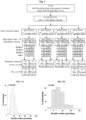
- This focused/selected cohort included 10 men and 10 women aged 45-60 per Neu5Gc-intake quartile by gender (Q1 - Q4; 80 samples), and 10 men and 10 women aged >60 per quartile, from the first and forth quartiles by gender (Q1 and Q4; 40 samples).
- Selected men and women were matched for age, education levels and smoking habits (Table 4), but nutritional habits and intakes were expected to vary across gender. Accordingly, in this cohort there were statistically significant differences between men and women in energy intake, and intake of proteins, animal proteins, lipids and carbohydrates (Table 4). Hence, the total daily Neu5Gc intake in this study cohort was first computed by gender and age (Table 3).
- dietary Neu5Gc was divided into three sub-classes based on the contributing food source (red meat, dairy cow, and dairy sheep or goat). Total daily Neu5Gc intake was significantly higher in men versus women aged 45-60, largely contributed due to higher consumption of red meat. Similar trends were found in the >60 age group, though differences were not statistically significant. There were no significant differences in dairy consumption between men and women.
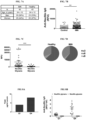
- EIA overall anti-Neu5Gc IgG responses showed a clear gender difference, with almost twice as much higher levels in men compared to women ( Fig. 3C ).
- the medians in the 45-60 age group were 3.94 ⁇ g/ml in men and 2.22 ⁇ g/ml in women (95% confidence interval (CI) 2.35 to 5.26 and 95% CI 1.83 to 3.38, respectively) representing a 1.8 fold difference, and in the >60 age group the medians were 4.75 ⁇ g/ml in men and 2.47 ⁇ g/ml in women (95% CI 2.51 to 6.82 and 95% CI 1.91 to 3.71) representing a 1.9 fold difference.
- These higher anti-Neu5Gc IgG levels in men compared to women were associated with the similar gender differences in daily Neu5Gc intake.
- serum samples of the selected cohort were analyzed by sialoglycan microarrays. These were fabricated with a diverse collection of Neu5Gc-glycan antigens and their matching pairs of Neu5Ac-glycans, each with a terminal primary amine that mediated their covalent conjugation onto epoxide-coated slides (Table 1).
- Neu5Gc and ⁇ Gal are foreign antigens in humans, only Neu5Gc can incorporate into human cells through the diet and generate neoantigens. Given these differences, humoral responses against Neu5Gc-neoantogens are likely to be affected by the diet, in contrast to those against ⁇ Gal.
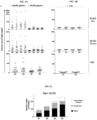
- the ⁇ Gal antigen was printed side-by-side with the Neu5Ac-/Neu5Gc-glycans on the microarrays and human serum IgG reactivity investigated per Neu5Gc-dietary quartile ( Fig. 4B ).
- K D affinity equilibrium constant K D was evaluated. Rather than kinetic measurements, and in light of the limited sample obtained by affinity-purification, K D was evaluated through glycan microarray analysis, against a constant concentration of each of the printed Neu5Gc-glycans (at 100 ⁇ M), by fitting a plot of response at equilibrium against a wide range of concentrations of the purified antibodies. This analysis revealed no significant differences in the affinities of the antibodies purified from Q4 compared to Q1, despite the much higher yields, although a slight and non-significant decrease in K D was noticed ( Fig. 8D ).
- the ratio of total anti-Neu5Gc IgG reactivity against Neu5Gc-glycans with ⁇ 3-linkages to total anti-Neu5Gc IgG reactivity against Neu5Gc-glycans with ⁇ 6-linkages were 1.34 in Q1 and 2.04 in Q4 in men aged 45-60, and 1.98 in Q1 and 3.03 in Q4 in women aged 45-60.
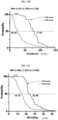
- the ratios of the total anti-Neu5Gc IgG reactivity against Neu5Gc-glycans with ⁇ 3-linkages over total reactivity against Neu5Gc-glycans with ⁇ 6-linkages were calculated on glycan microarray for the group of Men 45-60 stratified according to their Neu5Gc-intake from red meat. In these men, the ratio differentiate between those who consumed low red meat (Q1) with those of higher Neu5Gc-intake from red meat (Q2-Q4) ( Fig. 9A ).
- the receiver operating characteristic (ROC) curve ( Fig. 9B ) showing the diagnostic ability of a method demonstrates that the results may be used for predicting the presence of high amount of antibodies that are correlated to high risk of developing Neu5Gc related disease or disorder.
- Example 10 Personal dietary recommendations based on Gcemic index
- a Gcemic index of 1 means that daily consumption of 58 gr of beef at most is the maximal Q1-Neu5Gc (9443 nmol/day), while daily consumption of at least 120 gr is the minimum Q4-Neu5Gc (19627 nmol/day; Table 6 ). Thus, one can consume 1-2 medium sized beef steaks (225 gr raw meat) per week to fall in Q1 range, while 4-5 steaks weekly is already at Q4 range.
- a lower Gcemic index (or high inverse Gcemic index; Table 6) means that higher amount of food are needed to be consumed in order to reach the Q1/Q4 ranges.
- Q1 range Min-Max
- Table 6 refer to amount of food in gram needed to reach Q1 content of Neu5Gc as described above. Table 6.
- Mozzarella Gcemic index is 0.03 hence almost 30 times more grams can be consumed compared to beef, while Roquefort Gcemic index is 3.86 suggesting consuming only 1 ⁇ 4 the amount of beef can reach Q1/Q4 range.
- cow dairy has the lowest Gcemic index, while sheep/goat dairy has the highest, while variable in meat.
- FAOSTAT The Food and Agriculture Organization of the United Nations
Landscapes
- Health & Medical Sciences (AREA)
- Life Sciences & Earth Sciences (AREA)
- Immunology (AREA)
- Chemical & Material Sciences (AREA)
- Engineering & Computer Science (AREA)
- Molecular Biology (AREA)
- Biomedical Technology (AREA)
- Hematology (AREA)
- Urology & Nephrology (AREA)
- General Health & Medical Sciences (AREA)
- Biochemistry (AREA)
- Medicinal Chemistry (AREA)
- Food Science & Technology (AREA)
- Microbiology (AREA)
- Physics & Mathematics (AREA)
- Analytical Chemistry (AREA)
- Cell Biology (AREA)
- Biotechnology (AREA)
- General Physics & Mathematics (AREA)
- Pathology (AREA)
- Proteomics, Peptides & Aminoacids (AREA)
- Organic Chemistry (AREA)
- Biophysics (AREA)
- Genetics & Genomics (AREA)
- Peptides Or Proteins (AREA)
Claims (14)
- Verfahren zur Bestimmung eines Antikörper-Repertoire-Scores in einer biologischen Probe, die von einer Person erhalten wurde, wobei das Verfahren umfasst:(i) Auswerten des Repertoires der Anti-Neu5Gc-Antikörper in der von der Person erhaltenen biologischen Probe; und(ii) Berechnen eines Verhältnisses von Antikörpern gegen Neu5Gcα2-3-verknüpfte Glykane zu Antikörpern gegen Neu5Gcα2-6-verknüpfte Glykane,wobei das berechnete Verhältnis der Antikörper-Repertoire-Score ist und wobei der Antikörper-Repertoire-Score-Wert oberhalb eines Kontrollwertes auf eine erhöhte Wahrscheinlichkeit der Entwicklung einer Neu5Gc-verwandten Krankheit oder Störung hinweist, vorzugsweise wobei die Auswertung des Repertoires der Anti-Neu5Gc-Antikörper in der biologischen Probe die Bestimmung der Menge an Antikörpern gegen einen Satz von Neu5Gcα2-3-verknüpften Glykanen und der Menge an Antikörpern gegen einen Satz von Neu5Gcα2-6-verknüpften Glykanen in der biologischen Probe umfasst.
- Verfahren zur Identifizierung einer Person mit erhöhtem Risiko, eine Neu5Gc-bezogene Krankheit oder Störung zu entwickeln, wobei das Verfahren umfasst:(i) Berechnen des Antikörper-Repertoire-Scores gemäß dem Verfahren nach Anspruch 1; und(ii) Vergleichen des erhaltenen Wertes mit einem Kontroll-Antikörper-Repertoire-Score,wobei der Wert des Antikörper-Repertoire-Scores, der über dem Wert des Kontroll-Antikörper-Repertoire-Scores liegt, ein erhöhtes Risiko vorhersagt, die Krankheit oder Störung zu entwickeln.
- Verfahren nach Anspruch 1 oder 2, worin der Wert des Kontroll-Antikörper-Repertoire-Scores 0,9 beträgt.
- Verfahren nach einem der Ansprüche 1 bis 3, welches ferner das Informieren der Person, die ein erhöhtes Risiko hat, die Krankheit oder Störung zu entwickeln, und das Bereitstellen von Ernährungsrichtlinien umfasst, die darauf ausgelegt sind, das Risiko zu verringern.
- Verfahren nach Anspruch 4, wobei die Ernährungsrichtlinien dadurch gekennzeichnet sind, dass (i) die Richtlinien die Anweisung enthalten, nicht mehr als 10 µmol/Tag an Neu5Gc zu konsumieren, und (ii) die Ernährungsrichtlinien auf dem Neu5Gc-Gehalt in Lebensmitteln basieren, wie in Tabelle 6 offenbart.
- Verfahren nach einem der Ansprüche 1 bis 5, wobei (i) die Messung des Gehalts an Anti-NeuSGc-Antikörpern durch einen Immunoassay durchgeführt wird, (ii) worin die biologische Probe Blut oder Serum ist oder (iii) sowohl (i) als auch (ii) ist.
- Verfahren nach einem der Ansprüche 1 bis 6, worin die mit Neu5Gc zusammenhängende Krankheit oder Störung ausgewählt ist aus Krebs, atherosklerotischer Herzerkrankung und chronischen Entzündungszuständen.
- Verfahren nach Anspruch 7, worin es sich bei der Krankheit um Krebs handelt und der Krebs vorzugsweise ausgewählt ist unter kolorektalem Krebs und Brustkrebs.
- Diagnostik-Kit zur Bewertung des Repertoires der Anti-Neu5Gc-Antikörper in einer biologischen Probe, welches umfasst:einen Satz von Neu5Gcα2-3-verknüpften Glykanen;einen Satz von Neu5Gcα2-6-verknüpften Glykanen; undMittel zur Quantifizierung der Menge von Antikörpern, die an Neu5Gcα2-3-verknüpfte Glykane und an Neu5Gcα2-6-verknüpfte Glykane gebunden sind.
- Kit nach Anspruch 9, worin das Kit mindestens durch eines gekennzeichnet ist, dass:(i) der Satz von Neu5Gcα2-3-verknüpften Glykanen mindestens 3 Glykane umfasst, ausgewählt unter Glykanen mit der ID-Nummer 2, 8, 10, 12, 14, 16, 22, 26, 30, 34, 36, 40, 56, 58, 61, 63, wie in Tabelle 1 angegeben;(ii) der Satz von Neu5Gcα2-6-verknüpften Glykanen mindestens 3 der Glykane umfasst, ausgewählt unter Glykanen mit den ID-Nummern 4, 6, 18, 20, 24, 28, 32, 38, wie in Tabelle 1 dargelegt; und(iii) der Satz von Neu5Gcα2-3-verknüpften Glykanen mindestens 5 Glykane umfasst, ausgewählt unter Glykanen mit der ID-Nummer 2, 8, 10, 12, 14, 16, 22, 26, 30, 34, 36, 40, 56, 58, 61, 63, wie in Tabelle 1 dargelegt, und wobei der Satz von Neu5Gcα2-6-verknüpften Glykanen mindestens 5 der Glykane umfasst, ausgewählt unter Glykanen mit der ID-Nummer 4, 6, 18, 20, 24, 28, 32, 38, wie in Tabelle 1 dargelegt.
- Kit nach einem der Ansprüche 9 bis 10, worin das Kit mindestens durch eines gekennzeichnet ist, dass:(i) der Satz von Neu5Gcα2-3-verknüpften Glykanen und der Satz von Neu5Gcα2-6-verknüpften Glykanen durch einen oder mehrere Marker markiert sind, vorzugsweise worin die Marker (i) eine getrennte Quantifizierung von Antikörpern, die an jeden Satz gebunden sind, ermöglichen; (ii) so konfiguriert sind, dass sie an eine Oberfläche gebunden werden; oder (iii) sowohl (i) als auch (ii);(ii) die beiden Sätze von NeuSGc-Glykanen sich in einem Kompartiment oder in zwei verschiedenen Kompartimenten befinden;(iii) das Mittel zur Quantifizierung der Menge an Antikörpern, die an Neu5Gcα2-3-verknüpfte Glykane und an Neu5Gcα2-6-verknüpfte Glykane gebunden sind, ein Immunoassay ist;(iv) das Kit Mittel zur Bestimmung des Verhältnisses zwischen Antikörpern umfasst, die an Neu5Gcα2-3-verknüpfte Glykane und an Neu5Gcα2-6-verknüpfte Glykane gebunden sind; und(v) die beiden Sätze von Glykanen auf einer festen Oberfläche immobilisiert oder in einem Lösungsmittel gelöst sind.
- Kit nach einem der Ansprüche 9 bis 11 (i) zur Durchführung des Verfahrens nach Anspruch 1, (ii) zur Identifizierung einer Person mit erhöhtem Risiko für die Entwicklung einer Neu5Gc-bezogenen Krankheit oder Störung, oder (iii) sowohl für (i) als auch für (ii).
- Verfahren zur Vorhersage einer erhöhten Wahrscheinlichkeit, eine mit Neu5Gc zusammenhängende Krankheit oder Störung zu entwickeln, wobei das Verfahren die Berechnung des Antikörper-Repertoire-Scores gemäß dem Verfahren nach Anspruch 1 und ferner die Berechnung der Aufnahme von NeuSGs auf der Grundlage von gesammelten Daten über die Ernährungsgewohnheiten einer Person und die Kombination der Ergebnisse mit dem Antikörper-Repertoire-Score zur Berechnung einer gemeinsamen Wahrscheinlichkeit umfasst, die die Entwicklung der Krankheit vorhersagt.
- Verfahren nach Anspruch 13, worin die Neu5Gc-assoziierte Krankheit, Störung oder der Zustand ausgewählt ist unter Krebs, atherosklerotischer Herzerkrankung und chronischen Entzündungszuständen.
Applications Claiming Priority (2)
| Application Number | Priority Date | Filing Date | Title |
|---|---|---|---|
| US201962862728P | 2019-06-18 | 2019-06-18 | |
| PCT/IL2020/050676 WO2020255134A1 (en) | 2019-06-18 | 2020-06-17 | Assessment of disease risk factors in correlation with neu5gc ingested in food |
Publications (3)
| Publication Number | Publication Date |
|---|---|
| EP3986929A1 EP3986929A1 (de) | 2022-04-27 |
| EP3986929A4 EP3986929A4 (de) | 2023-09-06 |
| EP3986929B1 true EP3986929B1 (de) | 2024-11-20 |
Family
ID=74040712
Family Applications (1)
| Application Number | Title | Priority Date | Filing Date |
|---|---|---|---|
| EP20826775.7A Active EP3986929B1 (de) | 2019-06-18 | 2020-06-17 | Beurteilung von krankheitsrisikofaktoren in zusammenhang mit über nahrungsmittel aufgenommener neu5gc |
Country Status (3)
| Country | Link |
|---|---|
| US (1) | US20220357337A1 (de) |
| EP (1) | EP3986929B1 (de) |
| WO (1) | WO2020255134A1 (de) |
Families Citing this family (1)
| Publication number | Priority date | Publication date | Assignee | Title |
|---|---|---|---|---|
| CN116758310B (zh) * | 2023-06-16 | 2025-10-31 | 江苏运动健康研究院 | 一种量化类器官形态学亚型与生物学功能关系的方法 |
Family Cites Families (2)
| Publication number | Priority date | Publication date | Assignee | Title |
|---|---|---|---|---|
| US7682794B2 (en) * | 2003-07-15 | 2010-03-23 | The Regents Of The University Of California | Methods for detecting and analyzing N-glycolylneuraminic acid (Neu5Gc) in biological materials |
| WO2013151649A1 (en) * | 2012-04-04 | 2013-10-10 | Sialix Inc | Glycan-interacting compounds |
-
2020
- 2020-06-17 WO PCT/IL2020/050676 patent/WO2020255134A1/en not_active Ceased
- 2020-06-17 US US17/620,186 patent/US20220357337A1/en active Pending
- 2020-06-17 EP EP20826775.7A patent/EP3986929B1/de active Active
Also Published As
| Publication number | Publication date |
|---|---|
| EP3986929A1 (de) | 2022-04-27 |
| EP3986929A4 (de) | 2023-09-06 |
| WO2020255134A1 (en) | 2020-12-24 |
| US20220357337A1 (en) | 2022-11-10 |
Similar Documents
| Publication | Publication Date | Title |
|---|---|---|
| Bashir et al. | Association between Neu5Gc carbohydrate and serum antibodies against it provides the molecular link to cancer: French NutriNet-Santé study | |
| Perrone et al. | Advanced glycation end products (AGEs): biochemistry, signaling, analytical methods, and epigenetic effects | |
| Nagai et al. | Glycolaldehyde, a reactive intermediate for advanced glycation end products, plays an important role in the generation of an active ligand for the macrophage scavenger receptor. | |
| US8084219B2 (en) | Methods for detecting and analyzing N-glycolylneuraminic acid (Neu5Gc) in biological materials | |
| Zhang et al. | IgE-binding epitope mapping of tropomyosin allergen (Exo m 1) from Exopalaemon modestus, the freshwater Siberian prawn | |
| EP1731907A1 (de) | Verfahren zum allergennachweis | |
| Klapec et al. | Urinary ochratoxin A and ochratoxin alpha in pregnant women | |
| Eriksen et al. | Urinary deoxynivalenol as a biomarker of exposure in different age, life stage and dietary practice population groups | |
| Gu et al. | Comprehensive research on the properties of advanced glycation end products in food and biological samples and their harmful role in inducing metabolic diseases | |
| CN104316685A (zh) | 一种二乙酰精胺的检测试剂盒及制备方法和应用 | |
| Asombang et al. | Gastric cancer in Zambian adults: a prospective case-control study that assessed dietary intake and antioxidant status by using urinary isoprostane excretion | |
| Yang et al. | Bacterial translocation and risk of liver cancer in a Finnish cohort | |
| WO2010101255A1 (ja) | クローン病診断試薬 | |
| Kandemir et al. | Gastric carcinoma and thyroid status | |
| Kirkali et al. | Ferritin: a tumor marker expressed by renal cell carcinoma | |
| Zhu et al. | How does a celiac iceberg really float? The relationship between celiac disease and gluten | |
| US20220357337A1 (en) | Assessment of disease risk factors in correlation with neu5gc ingested in food | |
| Hada et al. | Discrimination of liver cirrhosis from chronic hepatitis by measuring the ratio of Aleuria aurantia lectin-reactive serum cholinesterase to immunoreactive protein | |
| Rael et al. | Diagnosis and differential diagnosis of food allergy | |
| AU2016321353A1 (en) | Compositions, devices, and methods of osteoarthritis sensitivity testing | |
| Mizgier et al. | Relation between inflammation, oxidative stress, and macronutrient intakes in normal and excessive body weight adolescent girls with clinical features of polycystic ovary syndrome. Nutrients 2021, 13.3: 896 | |
| Wang et al. | Screening of lectins by an enzyme-linked adsorbent assay | |
| JP5229789B2 (ja) | 新規ストレスバイオマーカー及びその用途 | |
| EP3830300A1 (de) | Behandlung und diagnose von brustkrebs | |
| JP7432578B2 (ja) | がんマーカーおよびその用途 |
Legal Events
| Date | Code | Title | Description |
|---|---|---|---|
| STAA | Information on the status of an ep patent application or granted ep patent |
Free format text: STATUS: THE INTERNATIONAL PUBLICATION HAS BEEN MADE |
|
| PUAI | Public reference made under article 153(3) epc to a published international application that has entered the european phase |
Free format text: ORIGINAL CODE: 0009012 |
|
| STAA | Information on the status of an ep patent application or granted ep patent |
Free format text: STATUS: REQUEST FOR EXAMINATION WAS MADE |
|
| 17P | Request for examination filed |
Effective date: 20211214 |
|
| AK | Designated contracting states |
Kind code of ref document: A1 Designated state(s): AL AT BE BG CH CY CZ DE DK EE ES FI FR GB GR HR HU IE IS IT LI LT LU LV MC MK MT NL NO PL PT RO RS SE SI SK SM TR |
|
| RIN1 | Information on inventor provided before grant (corrected) |
Inventor name: FEZEU, LEOPOLD Inventor name: BASHIR, SALAM Inventor name: PADLER-KARAVANI, VERED |
|
| DAV | Request for validation of the european patent (deleted) | ||
| DAX | Request for extension of the european patent (deleted) | ||
| RAP1 | Party data changed (applicant data changed or rights of an application transferred) |
Owner name: RAMOT AT TEL-AVIV UNIVERSITY LTD. |
|
| RIC1 | Information provided on ipc code assigned before grant |
Ipc: G01N 33/53 20060101ALI20230428BHEP Ipc: C07K 16/06 20060101AFI20230428BHEP |
|
| A4 | Supplementary search report drawn up and despatched |
Effective date: 20230809 |
|
| RIC1 | Information provided on ipc code assigned before grant |
Ipc: G01N 33/53 20060101ALI20230803BHEP Ipc: C07K 16/06 20060101AFI20230803BHEP |
|
| GRAP | Despatch of communication of intention to grant a patent |
Free format text: ORIGINAL CODE: EPIDOSNIGR1 |
|
| STAA | Information on the status of an ep patent application or granted ep patent |
Free format text: STATUS: GRANT OF PATENT IS INTENDED |
|
| INTG | Intention to grant announced |
Effective date: 20240611 |
|
| GRAS | Grant fee paid |
Free format text: ORIGINAL CODE: EPIDOSNIGR3 |
|
| GRAA | (expected) grant |
Free format text: ORIGINAL CODE: 0009210 |
|
| STAA | Information on the status of an ep patent application or granted ep patent |
Free format text: STATUS: THE PATENT HAS BEEN GRANTED |
|
| AK | Designated contracting states |
Kind code of ref document: B1 Designated state(s): AL AT BE BG CH CY CZ DE DK EE ES FI FR GB GR HR HU IE IS IT LI LT LU LV MC MK MT NL NO PL PT RO RS SE SI SK SM TR |
|
| REG | Reference to a national code |
Ref country code: GB Ref legal event code: FG4D |
|
| REG | Reference to a national code |
Ref country code: CH Ref legal event code: EP |
|
| REG | Reference to a national code |
Ref country code: DE Ref legal event code: R096 Ref document number: 602020041782 Country of ref document: DE |
|
| REG | Reference to a national code |
Ref country code: IE Ref legal event code: FG4D |
|
| REG | Reference to a national code |
Ref country code: LT Ref legal event code: MG9D |
|
| REG | Reference to a national code |
Ref country code: NL Ref legal event code: MP Effective date: 20241120 |
|
| PG25 | Lapsed in a contracting state [announced via postgrant information from national office to epo] |
Ref country code: IS Free format text: LAPSE BECAUSE OF FAILURE TO SUBMIT A TRANSLATION OF THE DESCRIPTION OR TO PAY THE FEE WITHIN THE PRESCRIBED TIME-LIMIT Effective date: 20250320 Ref country code: HR Free format text: LAPSE BECAUSE OF FAILURE TO SUBMIT A TRANSLATION OF THE DESCRIPTION OR TO PAY THE FEE WITHIN THE PRESCRIBED TIME-LIMIT Effective date: 20241120 Ref country code: PT Free format text: LAPSE BECAUSE OF FAILURE TO SUBMIT A TRANSLATION OF THE DESCRIPTION OR TO PAY THE FEE WITHIN THE PRESCRIBED TIME-LIMIT Effective date: 20250320 |
|
| PG25 | Lapsed in a contracting state [announced via postgrant information from national office to epo] |
Ref country code: FI Free format text: LAPSE BECAUSE OF FAILURE TO SUBMIT A TRANSLATION OF THE DESCRIPTION OR TO PAY THE FEE WITHIN THE PRESCRIBED TIME-LIMIT Effective date: 20241120 Ref country code: NL Free format text: LAPSE BECAUSE OF FAILURE TO SUBMIT A TRANSLATION OF THE DESCRIPTION OR TO PAY THE FEE WITHIN THE PRESCRIBED TIME-LIMIT Effective date: 20241120 |
|
| REG | Reference to a national code |
Ref country code: AT Ref legal event code: MK05 Ref document number: 1743513 Country of ref document: AT Kind code of ref document: T Effective date: 20241120 |
|
| PG25 | Lapsed in a contracting state [announced via postgrant information from national office to epo] |
Ref country code: BG Free format text: LAPSE BECAUSE OF FAILURE TO SUBMIT A TRANSLATION OF THE DESCRIPTION OR TO PAY THE FEE WITHIN THE PRESCRIBED TIME-LIMIT Effective date: 20241120 |
|
| PG25 | Lapsed in a contracting state [announced via postgrant information from national office to epo] |
Ref country code: ES Free format text: LAPSE BECAUSE OF FAILURE TO SUBMIT A TRANSLATION OF THE DESCRIPTION OR TO PAY THE FEE WITHIN THE PRESCRIBED TIME-LIMIT Effective date: 20241120 |
|
| PG25 | Lapsed in a contracting state [announced via postgrant information from national office to epo] |
Ref country code: NO Free format text: LAPSE BECAUSE OF FAILURE TO SUBMIT A TRANSLATION OF THE DESCRIPTION OR TO PAY THE FEE WITHIN THE PRESCRIBED TIME-LIMIT Effective date: 20250220 |
|
| PG25 | Lapsed in a contracting state [announced via postgrant information from national office to epo] |
Ref country code: LV Free format text: LAPSE BECAUSE OF FAILURE TO SUBMIT A TRANSLATION OF THE DESCRIPTION OR TO PAY THE FEE WITHIN THE PRESCRIBED TIME-LIMIT Effective date: 20241120 Ref country code: GR Free format text: LAPSE BECAUSE OF FAILURE TO SUBMIT A TRANSLATION OF THE DESCRIPTION OR TO PAY THE FEE WITHIN THE PRESCRIBED TIME-LIMIT Effective date: 20250221 Ref country code: AT Free format text: LAPSE BECAUSE OF FAILURE TO SUBMIT A TRANSLATION OF THE DESCRIPTION OR TO PAY THE FEE WITHIN THE PRESCRIBED TIME-LIMIT Effective date: 20241120 |
|
| PG25 | Lapsed in a contracting state [announced via postgrant information from national office to epo] |
Ref country code: PL Free format text: LAPSE BECAUSE OF FAILURE TO SUBMIT A TRANSLATION OF THE DESCRIPTION OR TO PAY THE FEE WITHIN THE PRESCRIBED TIME-LIMIT Effective date: 20241120 |
|
| PG25 | Lapsed in a contracting state [announced via postgrant information from national office to epo] |
Ref country code: RS Free format text: LAPSE BECAUSE OF FAILURE TO SUBMIT A TRANSLATION OF THE DESCRIPTION OR TO PAY THE FEE WITHIN THE PRESCRIBED TIME-LIMIT Effective date: 20250220 |
|
| PG25 | Lapsed in a contracting state [announced via postgrant information from national office to epo] |
Ref country code: SM Free format text: LAPSE BECAUSE OF FAILURE TO SUBMIT A TRANSLATION OF THE DESCRIPTION OR TO PAY THE FEE WITHIN THE PRESCRIBED TIME-LIMIT Effective date: 20241120 |
|
| PGFP | Annual fee paid to national office [announced via postgrant information from national office to epo] |
Ref country code: DE Payment date: 20250618 Year of fee payment: 6 |
|
| PG25 | Lapsed in a contracting state [announced via postgrant information from national office to epo] |
Ref country code: DK Free format text: LAPSE BECAUSE OF FAILURE TO SUBMIT A TRANSLATION OF THE DESCRIPTION OR TO PAY THE FEE WITHIN THE PRESCRIBED TIME-LIMIT Effective date: 20241120 |
|
| PGFP | Annual fee paid to national office [announced via postgrant information from national office to epo] |
Ref country code: GB Payment date: 20250618 Year of fee payment: 6 |
|
| PG25 | Lapsed in a contracting state [announced via postgrant information from national office to epo] |
Ref country code: EE Free format text: LAPSE BECAUSE OF FAILURE TO SUBMIT A TRANSLATION OF THE DESCRIPTION OR TO PAY THE FEE WITHIN THE PRESCRIBED TIME-LIMIT Effective date: 20241120 |
|
| PGFP | Annual fee paid to national office [announced via postgrant information from national office to epo] |
Ref country code: FR Payment date: 20250627 Year of fee payment: 6 |
|
| PG25 | Lapsed in a contracting state [announced via postgrant information from national office to epo] |
Ref country code: RO Free format text: LAPSE BECAUSE OF FAILURE TO SUBMIT A TRANSLATION OF THE DESCRIPTION OR TO PAY THE FEE WITHIN THE PRESCRIBED TIME-LIMIT Effective date: 20241120 |
|
| PG25 | Lapsed in a contracting state [announced via postgrant information from national office to epo] |
Ref country code: SK Free format text: LAPSE BECAUSE OF FAILURE TO SUBMIT A TRANSLATION OF THE DESCRIPTION OR TO PAY THE FEE WITHIN THE PRESCRIBED TIME-LIMIT Effective date: 20241120 |
|
| PG25 | Lapsed in a contracting state [announced via postgrant information from national office to epo] |
Ref country code: CZ Free format text: LAPSE BECAUSE OF FAILURE TO SUBMIT A TRANSLATION OF THE DESCRIPTION OR TO PAY THE FEE WITHIN THE PRESCRIBED TIME-LIMIT Effective date: 20241120 |
|
| PG25 | Lapsed in a contracting state [announced via postgrant information from national office to epo] |
Ref country code: IT Free format text: LAPSE BECAUSE OF FAILURE TO SUBMIT A TRANSLATION OF THE DESCRIPTION OR TO PAY THE FEE WITHIN THE PRESCRIBED TIME-LIMIT Effective date: 20241120 |
|
| REG | Reference to a national code |
Ref country code: DE Ref legal event code: R097 Ref document number: 602020041782 Country of ref document: DE |
|
| PG25 | Lapsed in a contracting state [announced via postgrant information from national office to epo] |
Ref country code: SE Free format text: LAPSE BECAUSE OF FAILURE TO SUBMIT A TRANSLATION OF THE DESCRIPTION OR TO PAY THE FEE WITHIN THE PRESCRIBED TIME-LIMIT Effective date: 20241120 |
|
| PLBE | No opposition filed within time limit |
Free format text: ORIGINAL CODE: 0009261 |
|
| STAA | Information on the status of an ep patent application or granted ep patent |
Free format text: STATUS: NO OPPOSITION FILED WITHIN TIME LIMIT |
|
| 26N | No opposition filed |
Effective date: 20250821 |
|
| REG | Reference to a national code |
Ref country code: CH Ref legal event code: H13 Free format text: ST27 STATUS EVENT CODE: U-0-0-H10-H13 (AS PROVIDED BY THE NATIONAL OFFICE) Effective date: 20260127 |
|
| PG25 | Lapsed in a contracting state [announced via postgrant information from national office to epo] |
Ref country code: MC Free format text: LAPSE BECAUSE OF FAILURE TO SUBMIT A TRANSLATION OF THE DESCRIPTION OR TO PAY THE FEE WITHIN THE PRESCRIBED TIME-LIMIT Effective date: 20241120 |
|
| PG25 | Lapsed in a contracting state [announced via postgrant information from national office to epo] |
Ref country code: LU Free format text: LAPSE BECAUSE OF NON-PAYMENT OF DUE FEES Effective date: 20250617 |
|
| REG | Reference to a national code |
Ref country code: BE Ref legal event code: MM Effective date: 20250630 |
|
| PG25 | Lapsed in a contracting state [announced via postgrant information from national office to epo] |
Ref country code: IE Free format text: LAPSE BECAUSE OF NON-PAYMENT OF DUE FEES Effective date: 20250617 |
|
| PG25 | Lapsed in a contracting state [announced via postgrant information from national office to epo] |
Ref country code: BE Free format text: LAPSE BECAUSE OF NON-PAYMENT OF DUE FEES Effective date: 20250630 |
|
| PG25 | Lapsed in a contracting state [announced via postgrant information from national office to epo] |
Ref country code: CH Free format text: LAPSE BECAUSE OF NON-PAYMENT OF DUE FEES Effective date: 20250630 |