EP3983070B1 - Method for treating asthma - Google Patents
Method for treating asthma Download PDFInfo
- Publication number
- EP3983070B1 EP3983070B1 EP20826406.9A EP20826406A EP3983070B1 EP 3983070 B1 EP3983070 B1 EP 3983070B1 EP 20826406 A EP20826406 A EP 20826406A EP 3983070 B1 EP3983070 B1 EP 3983070B1
- Authority
- EP
- European Patent Office
- Prior art keywords
- asthma
- dapansutrile
- airway
- mice
- cells
- Prior art date
- Legal status (The legal status is an assumption and is not a legal conclusion. Google has not performed a legal analysis and makes no representation as to the accuracy of the status listed.)
- Active
Links
Images

Classifications
-
- A—HUMAN NECESSITIES
- A61—MEDICAL OR VETERINARY SCIENCE; HYGIENE
- A61K—PREPARATIONS FOR MEDICAL, DENTAL OR TOILETRY PURPOSES
- A61K31/00—Medicinal preparations containing organic active ingredients
- A61K31/275—Nitriles; Isonitriles
-
- A—HUMAN NECESSITIES
- A61—MEDICAL OR VETERINARY SCIENCE; HYGIENE
- A61P—SPECIFIC THERAPEUTIC ACTIVITY OF CHEMICAL COMPOUNDS OR MEDICINAL PREPARATIONS
- A61P11/00—Drugs for disorders of the respiratory system
- A61P11/06—Antiasthmatics
Definitions
- the present invention relates to 3-methanesulfonylpropionitrile (dapansutrile), or its pharmaceutically acceptable solvates, for use in a method of treating asthma.
- Asthma is a common chronic disorder of the airways characterized by variable and recurring symptoms, reversible airway obstruction, bronchial hyperresponsiveness, and an underlying inflammation. Acute symptoms of asthma include cough, wheezing, shortness of breath and nocturnal awakening. Asthma is regarded as a chronic disease based on a condition of chronic airway inflammation together with airway hyperresponsiveness, with at least partially reversible airway obstruction.
- Th2 T-helper (Th2) cells appear to play a central role in the activation of the immune cascade that results in inflammation.
- Th2-derived cytokines include IL-5, which is needed for eosinophil differentiation and survival, and IL-4 which is important for Th2 cell differentiation and with IL-13 is important for IgE formation and leads to overproduction of IgE and eosinophilia.
- bronchoconstrictor mediators such as histamine and cysteinyl-leukotrienes as well as inflammatory cytokines.
- Eosinophils contain inflammatory enzymes, generate leukotrienes, and express a wide variety of proinflammatory cytokines.
- Airway epithelial cells also play a role in the inflammatory process via release of cytokines such as eotaxin that direct and modify the inflammatory response.
- Acute and chronic inflammation can affect not only the airway caliber and airflow but also can increase the existing bronchial hyperresponsiveness to a variety of stimuli, which enhances susceptibility to bronchospasm.
- the airway smooth muscle cell can undergo proliferation, activation, contraction, and hypertrophy; which are events that can influence airway airflow limitation.
- asthma the dominant physiological event leading to clinical symptoms is airway narrowing and a subsequent interference with airflow.
- bronchial smooth muscle contraction occurs quickly to narrow the airways in response to exposure to a variety of stimuli including allergens or irritants. Allergen-induced acute bronchoconstriction results from an IgE-dependent release of mediators from mast cells that includes histamine, tryptase, leukotrienes, and prostaglandins that directly contract airway smooth muscle.
- Airway remodeling involves structural changes such as thickening of the sub-basement membrane, subepithelial fibrosis, airway smooth muscle hypertrophy and hyperplasia, blood vessel proliferation and dilation with consequent permanent changes in the airway that increase airflow obstruction.
- Airway epithelium and endothelial cell function are also critically involved in asthma. Upon disease progression, epithelial subbasement membranes thicken with mucus hypersecretion and the formation of mucus plugs. Changes in endothelial cell integrity lead to edema, another key pathophysiology defining asthmatic change of the airway. These factors serve to further limit airflow.
- Asthma is characterized by dominant T helper type 2 (Th2) immune responses, including enhanced IL-4, IL-5 and IL-13 responses, allergen-specific immunoglobulin production, eosinophilia, airway inflammation, bronchoconstriction, and airway hyperresponsiveness.
- Th2 T helper type 2
- Current standard therapies for asthma are a combination of corticosteroids and ⁇ 2 -agonists (anti-inflammatory and bronchodilator drugs). These drugs provide acceptable control of the disease for many asthmatics. However, it is estimated that 5 to 10% of the asthma patients have symptomatic disease despite treatment with this combination of corticosteroids and ⁇ 2 -agonists.
- Kim et al. discloses the role for NLRP3 Inflammasome-mediated, IL-1b-Dependent Responses in Severe, Steroid-Resistant Asthma.
- 3-methanesulfonylpropionitrile which reduces the levels of IL-1 ⁇ and IL-6 in several whole animal models of local and systemic inflammation, is effective in treating asthma, reducing airway inflammation, reducing airway resistance, improving lung function, ameliorating asthma symptoms, and improving patient's quality of life.
- the present invention concerns the field of asthma treatment.
- the present invention is directed to a compound of 3-methanesulfonylpropionitrile (dapansutrile), or a pharmaceutically acceptable solvate thereof, for use in a method of treating asthma by oral administration of said compound.
- Solids are addition complexes in which the compound is combined with an acceptable solvent in some fixed proportion.
- Acceptable solvents include, but are not limited to, water, acetic acid, ethanol, and other appropriate organic solvents.
- the present method is effective in prophylactic treatment, which is a process of protecting against the development of asthma by a treatment of dapansutrile before the onset of asthma to affect pathogenesis.
- prophylactic treatment dapansutrile is administered to a patient in need thereof, before the onset of asthma.
- the present method is effective in therapeutic treatment after the onset of asthma, when the patient starts to show clinical signs and/or symptoms.
- the main functional changes of the lungs associated asthma include malfunctioning of the immune system, cellular infiltration composed primarily of eosinophils and neutrophils, acute and chronic inflammation, fluid accumulation (edema), excessive secretion of mucus, and changes in the airway walls that could lead to bronchial epithelial injury, fibrosis, and increased sensitivity to agents that cause bronchial constriction. These features need to be considered in order to develop treatments of the underlying disease process. Small animal models can be designed to mimic the airway inflammation, increased responsiveness to bronchial constrictors, changes in the airway wall, and changes in the migration of the eosinophils and neutrophils to the lungs.
- a mouse model of asthma via ovalbumin sensitization (Lunding, 2015b), for example, can be used to evaluate bronchodilator efficacy of dapansutrile.
- the present invention is based on the properties of dapansutrile to reduce at least one of the following processes contributing to pathophysiology that accompanies this disorder: inflammation, excessive cell proliferation, airway and/or lung tissue edema, airway hyperreactivity, and bronchoconstriction.
- Indicia of efficacy for treating asthma by the present invention include demonstrable improvement in measurable signs, symptoms and other variables clinically relevant to asthma. Such improvements include increased blood oxygen saturation, decreased hypoxia and hypercapnia, decreased need for supplemental oxygen, decreased frequency of coughing and/or wheezing, improved forced expiratory volume in one second (FEVi), improved forced vital capacity (FVC) or other physiologically relevant parameter of respiratory function, decreased need for mechanical ventilation, decreased amount of inflammatory cells infiltrating the lung, decreased levels of proinflammatory cytokines and chemokines, improved alveolar fluid clearance rate, decreased pulmonary edema as determined by any radiographic or other detection method such as amount of epithelial lining fluid, wet to dry lung weight, alveolar fluid clearance and/or radiographic visualization methods, increase in general quality of life, patient-reported or physician-observed signs such as ease of breathing, or decrease in severity of coughing and/or wheezing.
- radiographic or other detection method such as amount of epithelial lining fluid, wet to
- the present invention treats asthma by (i) improving symptoms (daytime and nocturnal symptoms, limitation of activities, use of rescue medications), (ii) improving lung function such as peak expiratory flow (PEF) and/or forced expiratory volume in one second (FEV1), and/or (iii) reducing exacerbations (rate and severity).
- the present invention improves Asthma Quality of Life Questionnaire (AQLQ) scores, which include the scores of symptoms, activity limitation, emotional function, and environmental exposure.
- the present invention has demonstrated that dapansutrile reduced airway resistance, reduced inflammatory cells (eosinophils and neutrophils) and mucus hyperproduction in broncho-alveolar lavage fluid, and reduced airway inflammation, in ovalbumin-induced allergic airway inflammation in mice.
- the present invention provides pharmaceutical compositions comprising one or more pharmaceutically acceptable carriers and an active compound of 3-methanesulfonylpropionitrile, or a pharmaceutically acceptable solvate thereof.
- the active compound or its pharmaceutically acceptable solvate in the pharmaceutical compositions in general is about 1-90% for a tablet formulation or about 1-100% for a capsule formulation.
- the active compound used in the pharmaceutical composition in general is at least 90%, preferably 95%, or 98%, or 99% (w/w) pure.
- the pharmaceutical composition is in a dosage form such as tablets, capsules, granules, fine granules, powders or syrups suitable for oral administration.
- Pharmaceutically acceptable carriers which are inactive ingredients, can be selected by those skilled in the art using conventional criteria.
- Pharmaceutically acceptable carriers include, but are not limited to, non-aqueous based solutions, suspensions, emulsions, microemulsions, micellar solutions, gels, and ointments.
- the pharmaceutically acceptable carriers may also contain ingredients that include, but are not limited to, saline and aqueous electrolyte solutions; ionic and nonionic osmotic agents such as sodium chloride, potassium chloride, glycerol, and dextrose; pH adjusters and buffers such as salts of hydroxide, phosphate, citrate, acetate, borate; and trolamine; antioxidants such as salts, acids and/or bases of bisulfite, sulfite, metabisulfite, thiosulfite, ascorbic acid, acetyl cysteine, cysteine, glutathione, butylated hydroxyanisole, butylated hydroxytoluene, tocopherols, and ascorbyl palmitate; surfactants such as lecithin, phospholipids, including but not limited to phosphatidylcholine, phosphatidylethanolamine and phosphatidyl inositiol; poloxa
- Such pharmaceutically acceptable carriers may be preserved against bacterial contamination using well-known preservatives, these include, but are not limited to, benzalkonium chloride, ethylenediaminetetraacetic acid and its salts, benzethonium chloride, chlorhexidine, chlorobutanol, methylparaben, thimerosal, and phenylethyl alcohol, or may be formulated as a non-preserved formulation for either single or multiple use.
- preservatives include, but are not limited to, benzalkonium chloride, ethylenediaminetetraacetic acid and its salts, benzethonium chloride, chlorhexidine, chlorobutanol, methylparaben, thimerosal, and phenylethyl alcohol, or may be formulated as a non-preserved formulation for either single or multiple use.
- a tablet formulation or a capsule formulation of the active compound may contain other excipients that have no bioactivity and no reaction with the active compound.
- Excipients of a tablet may include fillers, binders, lubricants and glidants, disintegrators, wetting agents, and release rate modifiers.
- Binders promote the adhesion of particles of the formulation and are important for a tablet formulation. Examples of binders include, but not limited to, carboxymethylcellulose, cellulose, ethylcellulose, hydroxypropylmethylcellulose, methylcellulose, karaya gum, starch, starch, and tragacanth gum, poly(acrylic acid), and polyvinylpyrrolidone.
- the present invention is directed to dapansutrile for use in a method of treating Asthma.
- the method comprises the steps of first identifying a subject suffering from asthma or has a propensity to develop asthma, and administering to the subject the active compound dapansutrile, in an amount effective to treat asthma.
- “An effective amount,” as used herein, is the amount effective to treat asthma by ameliorating the pathological condition, reducing airway inflammation, reducing airway hyperresponsiveness, improving lung function, and/or reducing the symptoms of asthma.
- An oral administration is suitable for the present invention.
- the active compound first reaches plasma and then distributes into target tissues.
- the pharmaceutical composition is administrated orally to the subject.
- the dosage for oral administration is generally at least 0.1 mg/kg/day and less than 100 mg/kg/day or 200mg/kg/day.
- the dosage for oral administration is 1-100, or 5-50, or 10-50 mg/kg/day, for a human subject.
- the dosage for oral administration is 100-10,000 mg/day, and preferably 500-2000, 500-4000, 500-4000, 1000-5000, 2000-5000, 2000-6000, or 2000-8000 mg/day for a human subject.
- the drug can be orally taken once, twice, three times, or four times a day.
- the present invention is useful in treating a mammal subject, such as humans, horses, and dogs.
- the present invention is particularly useful in treating humans.
- Example 1 (COMPARATIVE EXAMPLE). Dapansutrile treatment (intraperitoneal) reduced allergic airway inflammation and mucus production in mice
- a well-established mouse model of experimental allergic asthma (Sel 2008, Wegmann 2005, Wegmann 2007, Lunding 2015a) was used to evaluate dapansutrile as a therapeutic option in allergic bronchial asthma and to determine if dapansutrile would have an impact on airway inflammation and the development of airway hyperresponsiveness (AHR).
- AHR airway hyperresponsiveness
- Inflammation in this model is characterized by the infiltration of eosinophils as well as of TH2 cells and involves the subsequent development of AHR and mucus hyperproduction so that this model resembles the major pathophysiologic hallmarks of human bronchial asthma.
- mice were sensitized to OVA (ovalbumin) by three intraperitoneal (i.p.) injections of 10 ⁇ g OVA adsorbed to 150 mg aluminum hydroxide on days 1, 14, and 21.
- OVA ovalbuproin
- This sensitization results in an adoptive immune response against OVA with OVA-specific TH2 cells and the production of OVA-specific antibodies of the subclasses IgE and IgG4.
- mice were exposed three times to an OVA aerosol (1% w/v in PBS) on days 26, 27, and 28.
- OVA aerosol 1% w/v in PBS
- Healthy control animals were sham sensitized to PBS and subsequently challenged with PBS aerosol.
- Non-drug treated animals (asthmatic group) and drug-treated animals (treated group) were sensitized by OVA aerosol and subsequently challenged with OVA aerosol.
- the treatment group were treated with dapansutrile at 60 mg/kg at days 25, 26, 27, and 28 by intraperitoneal (i.p). injection, whereas the healthy group and the asthmatic group were administered with saline by intraperitoneal injection on days 25, 26, 27, and 28.
- inflammatory cell subpopulations eosinophils, macrophages, neutrophils, lymphocytes infiltrating the bronchoalveolar lumen were quantified using cyto-spinned and quick-diff-stained cells from bronchoalveolar lavage fluids (BALF). Further, inflammatory cell infiltration was recorded from hematoxylin and eosin (HE)-stained lung/airway cross-sections. AHR was assessed by recording airway resistance during a methacholine (MCh) provocation test in mice mechanically ventilated by a Buxco FinePoint RC unit.
- BALF bronchoalveolar lavage fluids
- Mucus hyperproduction was quantified in PAS (periodic acid-Schiff)-stained airway cross-sections undergoing systematic, uniform random sampling and subsequent stereologic analysis of mucus amount in the airways and mucus producing goblet cells in the airway mucosa.
- PAS peripheral acid-Schiff
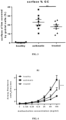
- FIG. 1 shows total numbers of leukocyte subpopulations (macrophage, lymphocyte, neutrophil, and eosinophil, from left to right) on Day 29.
- Dapansutrile 60 mg/kg
- Dapansutrile 60 mg/kg
- three daily OVA aerosol challenges led to a significant reduction in eosinophils in BALF ( FIG. 1 ).
- treatment with dapansutrile resulted in an approximately 60% reduction in eosinophils (from 21.96 ⁇ 10 4 cells/ml to 7.30 ⁇ 10 4 cells/ml; ****p ⁇ 0.0001), a 70% reduction in neutrophils (from 2.41 ⁇ 10 4 cells/ml to 0.70 ⁇ 10 4 cells/ml; p ⁇ 0.01), and a 32% reduction in lymphocytes (from 0.80 ⁇ 10 4 cells/ml to 0.55 ⁇ 10 4 cells/ml) in BALF. Macrophage numbers showed no significant reduction ( FIG. 1 ).
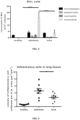
- FIG. 2 shows that the number of inflammatory cells in lung tissue was significantly lower in asthmatic mice vs. dapansutrile-treated mice (**p ⁇ 0.01).
- the label on the y-axis reads "volume of inflammatory cell infiltrate per basal membrane area ( ⁇ m 3 / ⁇ m 2 )".
- the inflammatory cells were counted within a specific distance around the airways using a microscope with the computer assisted stereological toolbox (CAST) system. These counts were set in ratio to the basal membrane to normalize within each microscopic slide to avoid slide-dependent differences.
- CAST computer assisted stereological toolbox
- FIG. 3 shows area of epithelial basal membrane covered by goblet cells in healthy, asthmatic, and treated mice. Comparing to asthmatic mice, Dapansutrile-treated animals displayed a significant reduction of goblet cells covering the airway mucosa (22.74% reduced to 17.67%, p ⁇ 0.01) as quantified by stereology of PAS-stained airway cross-sections.
- FIGs. 1-3 show that dapansutrile treatment in OVA-induced allergic airway inflammation model resulted in significant reduction of allergic airway inflammation and mucus production.
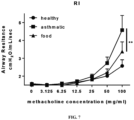
- Airway hyperresponsiveness was determined by measuring airway resistance on Day 29 in response to 100 mg/mL methacholine. The results are shown in FIG. 4 .
- the airway resistance in response to methacholine was 5.61 cm H 2 O ⁇ sec ⁇ ml -1 in asthmatic mice and 3.93 cm H 2 O ⁇ sec ⁇ ml -1 in dapansutrile-treated mice. Dapansutrile treatment reduced airway resistance by about 60% when comparing with asthmatic mice. ****p ⁇ 0.0001 between asthmatic and treated mice. Baseline airway resistance of healthy animals was 2.83 cm H 2 O ⁇ sec ⁇ ml -1 .
- Cytometric bead arrays were used as a method to assess the concentration of cytokines of IFN- ⁇ , TNF ⁇ , IL-1 ⁇ , IL-4, IL-5, IL-6, IL-10, IL-13, and IL17A) in the BALF of Example 1.
- the beads in this array were coated with antibodies specific against a variety of cytokines, some relevant and known to be affected by NLRP3 signaling.
- the concentrations of all measured cytokines showed some reduction between asthmatic mice and dapansutrile-treated mice.
- Both IL-1 ⁇ and IL-6 concentration showed a statistically significant reduction between asthmatic mice and dapansutrile-treated mice (p ⁇ 0.001 and p ⁇ 0.05, respectively).
- mice model The experimental protocols of the mouse model were the same as those described in Example 1, except dapansutrile was administered orally by food.
- mice were fed ad libidum with food pellets containing 7.5 g/kg dapansutrile starting on day 22 for one week; the first aerosol challenge was on day 26.
- Mice typically consume about 4 g of food per day, resulting in an approximate daily dose of 0 mg/kg/day for control groups and 1,000 mg/kg/day for the treatment groups.
- This food pellet concentration (7.5g/kg of dapansutrile in food) in mouse chow resulted in a blood level nearly the same as that of humans treated orally with dapansutrile at doses of 1000 mg/day (40 ⁇ g/mL blood level; Marchetti 2018b)
- FIG. 6 shows that the number of inflammatory cells in lung tissue was significantly lower in asthmatic mice vs. dapansutrile-treated mice (p ⁇ 0.05).
- the label on the y-axis reads "volume of inflammatory cell infiltrate per basal membrane area ( ⁇ m 3 / ⁇ m 2 )".
- the inflammatory cells were counted within a specific distance around the airways using a microscope with the computer assisted stereological toolbox (CAST) system. These counts were set in ratio to the basal membrane to normalize within each microscopic slide to avoid slide-dependent differences.
- CAST computer assisted stereological toolbox
- Dapansutrile-treated mice Comparing to asthmatic mice, Dapansutrile-treated mice also displayed a prominent reduction of goblet cells covering the airway mucosa (-29%; 15.75% reduced to 11.16%), as quantified by stereology of PAS-stained airway cross-sections. (data not shown).
Landscapes
- Health & Medical Sciences (AREA)
- Pulmonology (AREA)
- Medicinal Chemistry (AREA)
- Pharmacology & Pharmacy (AREA)
- Veterinary Medicine (AREA)
- Life Sciences & Earth Sciences (AREA)
- Animal Behavior & Ethology (AREA)
- General Health & Medical Sciences (AREA)
- Public Health (AREA)
- Chemical & Material Sciences (AREA)
- Epidemiology (AREA)
- Chemical Kinetics & Catalysis (AREA)
- Bioinformatics & Cheminformatics (AREA)
- Engineering & Computer Science (AREA)
- General Chemical & Material Sciences (AREA)
- Nuclear Medicine, Radiotherapy & Molecular Imaging (AREA)
- Organic Chemistry (AREA)
- Medicines That Contain Protein Lipid Enzymes And Other Medicines (AREA)
- Pharmaceuticals Containing Other Organic And Inorganic Compounds (AREA)
- Acyclic And Carbocyclic Compounds In Medicinal Compositions (AREA)
- Medicinal Preparation (AREA)
Applications Claiming Priority (2)
| Application Number | Priority Date | Filing Date | Title |
|---|---|---|---|
| US201962862434P | 2019-06-17 | 2019-06-17 | |
| PCT/US2020/037696 WO2020257093A1 (en) | 2019-06-17 | 2020-06-15 | Method for treating asthma |
Publications (3)
| Publication Number | Publication Date |
|---|---|
| EP3983070A1 EP3983070A1 (en) | 2022-04-20 |
| EP3983070A4 EP3983070A4 (en) | 2023-04-26 |
| EP3983070B1 true EP3983070B1 (en) | 2024-09-11 |
Family
ID=74040873
Family Applications (1)
| Application Number | Title | Priority Date | Filing Date |
|---|---|---|---|
| EP20826406.9A Active EP3983070B1 (en) | 2019-06-17 | 2020-06-15 | Method for treating asthma |
Country Status (8)
| Country | Link |
|---|---|
| US (1) | US20220087969A1 (https=) |
| EP (1) | EP3983070B1 (https=) |
| JP (1) | JP7607939B2 (https=) |
| CN (1) | CN114007690B (https=) |
| AU (1) | AU2020296829B2 (https=) |
| CA (1) | CA3141407A1 (https=) |
| MX (1) | MX2021015561A (https=) |
| WO (1) | WO2020257093A1 (https=) |
Family Cites Families (3)
| Publication number | Priority date | Publication date | Assignee | Title |
|---|---|---|---|---|
| EP2651407B1 (en) * | 2010-12-15 | 2016-12-21 | Olatec Industries LLC | 3-methanesulfonylpropionitrile for treating inflammation and pain |
| FR3046933B1 (fr) * | 2016-01-25 | 2018-03-02 | Galderma Research & Development | Inhibiteurs nlrp3 pour le traitement des pathologies cutanees inflammatoires |
| US11597706B2 (en) * | 2016-04-18 | 2023-03-07 | Novartis Ag | Compounds and compositions for treating conditions associated with NLRP activity |
-
2020
- 2020-06-15 AU AU2020296829A patent/AU2020296829B2/en active Active
- 2020-06-15 CA CA3141407A patent/CA3141407A1/en active Pending
- 2020-06-15 CN CN202080044814.9A patent/CN114007690B/zh active Active
- 2020-06-15 MX MX2021015561A patent/MX2021015561A/es unknown
- 2020-06-15 JP JP2021574818A patent/JP7607939B2/ja active Active
- 2020-06-15 WO PCT/US2020/037696 patent/WO2020257093A1/en not_active Ceased
- 2020-06-15 EP EP20826406.9A patent/EP3983070B1/en active Active
-
2021
- 2021-12-02 US US17/457,420 patent/US20220087969A1/en not_active Abandoned
Non-Patent Citations (2)
| Title |
|---|
| KIM RICHARD Y ET AL.: "Role for NLRP3 inflammasome-mediated, IL-1 fl-dependent responses insevere, steroid-resistant asthma: Online Supplement", AMERICAN JOURNAL OF RESPIRATORY AND CRITICAL CARE MEDICINE, vol. 196, no. 3, August 2017 (2017-08-01) * |
| SWANSON KAREN V ET AL: "The NLRP3 inflammasome: molecular activation and regulation to therapeutics", NATURE REVIEWS IMMUNOLOGY, NATURE PUBLISHING GROUP UK, LONDON, vol. 19, no. 8, 29 April 2019 (2019-04-29), pages 477 - 489, XP036846104, ISSN: 1474-1733, [retrieved on 20190429], DOI: 10.1038/S41577-019-0165-0 * |
Also Published As
| Publication number | Publication date |
|---|---|
| CN114007690A (zh) | 2022-02-01 |
| JP7607939B2 (ja) | 2025-01-06 |
| JP2022536932A (ja) | 2022-08-22 |
| US20220087969A1 (en) | 2022-03-24 |
| AU2020296829B2 (en) | 2026-01-15 |
| CA3141407A1 (en) | 2020-12-24 |
| WO2020257093A1 (en) | 2020-12-24 |
| MX2021015561A (es) | 2022-01-24 |
| AU2020296829A1 (en) | 2022-02-10 |
| EP3983070A4 (en) | 2023-04-26 |
| EP3983070A1 (en) | 2022-04-20 |
| CN114007690B (zh) | 2024-03-01 |
Similar Documents
| Publication | Publication Date | Title |
|---|---|---|
| EP1655034A1 (en) | Use of cyclodextrin for treatment and prevention of bronchial inflammatory diseases. | |
| CN114404597A (zh) | 治疗肺损伤或急性呼吸窘迫综合征的药物及药物组合物 | |
| Minoguchi et al. | Effect of theophylline withdrawal on airway inflammation in asthma. | |
| EP3983070B1 (en) | Method for treating asthma | |
| Hoshino et al. | Effects of ketotifen on symptoms and on bronchial mucosa in patients with atopic asthma | |
| WO2019152627A1 (en) | Method for preventing or treating alzheimer's disease | |
| CA2367048A1 (en) | Treatment with small peptides to effect antifibrotic activity | |
| JP2011190274A (ja) | 炎症反応により生ずる哺乳動物の鼻および副鼻洞の病気を処置する方法および組成物 | |
| Aubert et al. | Function of human alveolar macrophages after a 3-day course of azithromycin in healthy volunteers | |
| CN116687907A (zh) | 淫羊藿素在制备抑制淀粉样蛋白Aβ诱导阿尔兹海默病药物中的应用 | |
| CN109419787B (zh) | 一种松香烷型二萜类化合物的用途 | |
| CN104000820B (zh) | 盐酸去亚甲基小檗碱在制备预防和/或治疗溃疡性结肠炎药物中的应用 | |
| WO2012067322A1 (ko) | 페닐부틸산 또는 이의 약학적으로 허용가능한 염을 유효성분으로 포함하는, 천식 치료용 약학적 조성물 | |
| KR20130055580A (ko) | 기도의 염증 및 이상성 점액섬모 전달의 치료법으로서의 에어로졸화 댑손 | |
| EP1908473A1 (en) | Clarithromycin or salt thereof for use in the treatment or prevention of pulmonary disease induced by destruction of pulmonary alveoli | |
| CN101057877A (zh) | 草珊瑚提取方法、提取物及其药物组合物与用途 | |
| CN111658630A (zh) | 玫瑰酸c在制备预防和/或治疗癫痫的药物中的应用 | |
| KR102655168B1 (ko) | 스핑고실포스포릴콜린 및 핑고리모드의 병용투여용 조성물 및 이를 이용한 관절염 예방, 개선, 또는 치료방법 | |
| Jonassen et al. | AP1189: A novel oral biased melanocortin agonist with anti-inflammatory and pro-resolving effect for the treatment of rheumatoid arthritis—ACR meeting abstracts | |
| US20080249144A1 (en) | Preventive or Therapeutic Agent for Chronic Inflammatory Lung Disease | |
| Shaikh et al. | A Review on Novel Approaches to the Treatment of Asthma | |
| Vianna | Mechanisms and therapeutic implications of asthma circadian rhythm | |
| CN120837491A (zh) | 异欧前胡素在制备用于治疗真菌性角膜炎的药物中的应用 | |
| JP2022014868A (ja) | 慢性閉塞性肺疾患の急性増悪の治療薬の調製におけるTanreqingの応用 | |
| CN117427064A (zh) | 炎琥宁在制备预防和/或治疗矽肺疾病药物中的应用 |
Legal Events
| Date | Code | Title | Description |
|---|---|---|---|
| STAA | Information on the status of an ep patent application or granted ep patent |
Free format text: STATUS: THE INTERNATIONAL PUBLICATION HAS BEEN MADE |
|
| PUAI | Public reference made under article 153(3) epc to a published international application that has entered the european phase |
Free format text: ORIGINAL CODE: 0009012 |
|
| STAA | Information on the status of an ep patent application or granted ep patent |
Free format text: STATUS: REQUEST FOR EXAMINATION WAS MADE |
|
| 17P | Request for examination filed |
Effective date: 20220114 |
|
| AK | Designated contracting states |
Kind code of ref document: A1 Designated state(s): AL AT BE BG CH CY CZ DE DK EE ES FI FR GB GR HR HU IE IS IT LI LT LU LV MC MK MT NL NO PL PT RO RS SE SI SK SM TR |
|
| DAV | Request for validation of the european patent (deleted) | ||
| DAX | Request for extension of the european patent (deleted) | ||
| REG | Reference to a national code |
Ref country code: DE Ref country code: DE Ref legal event code: R079 Ref document number: 602020037663 Country of ref document: DE Free format text: PREVIOUS MAIN CLASS: A61P0011040000 Ipc: A61K0031275000 |
|
| A4 | Supplementary search report drawn up and despatched |
Effective date: 20230324 |
|
| RIC1 | Information provided on ipc code assigned before grant |
Ipc: C07C 317/50 20060101ALI20230320BHEP Ipc: C07C 317/48 20060101ALI20230320BHEP Ipc: C07C 317/28 20060101ALI20230320BHEP Ipc: C07C 317/26 20060101ALI20230320BHEP Ipc: A61P 11/06 20060101ALI20230320BHEP Ipc: A61K 31/275 20060101AFI20230320BHEP |
|
| RAP3 | Party data changed (applicant data changed or rights of an application transferred) |
Owner name: OLATEC THERAPEUTICS, INC. |
|
| GRAP | Despatch of communication of intention to grant a patent |
Free format text: ORIGINAL CODE: EPIDOSNIGR1 |
|
| STAA | Information on the status of an ep patent application or granted ep patent |
Free format text: STATUS: GRANT OF PATENT IS INTENDED |
|
| RIC1 | Information provided on ipc code assigned before grant |
Ipc: C07C 317/50 20060101ALI20240318BHEP Ipc: C07C 317/48 20060101ALI20240318BHEP Ipc: C07C 317/28 20060101ALI20240318BHEP Ipc: C07C 317/26 20060101ALI20240318BHEP Ipc: A61P 11/06 20060101ALI20240318BHEP Ipc: A61K 31/275 20060101AFI20240318BHEP |
|
| INTG | Intention to grant announced |
Effective date: 20240409 |
|
| GRAS | Grant fee paid |
Free format text: ORIGINAL CODE: EPIDOSNIGR3 |
|
| GRAA | (expected) grant |
Free format text: ORIGINAL CODE: 0009210 |
|
| STAA | Information on the status of an ep patent application or granted ep patent |
Free format text: STATUS: THE PATENT HAS BEEN GRANTED |
|
| AK | Designated contracting states |
Kind code of ref document: B1 Designated state(s): AL AT BE BG CH CY CZ DE DK EE ES FI FR GB GR HR HU IE IS IT LI LT LU LV MC MK MT NL NO PL PT RO RS SE SI SK SM TR |
|
| REG | Reference to a national code |
Ref country code: GB Ref legal event code: FG4D |
|
| REG | Reference to a national code |
Ref country code: CH Ref legal event code: EP |
|
| REG | Reference to a national code |
Ref country code: DE Ref legal event code: R096 Ref document number: 602020037663 Country of ref document: DE |
|
| REG | Reference to a national code |
Ref country code: IE Ref legal event code: FG4D |
|
| REG | Reference to a national code |
Ref country code: LT Ref legal event code: MG9D |
|
| PG25 | Lapsed in a contracting state [announced via postgrant information from national office to epo] |
Ref country code: NO Free format text: LAPSE BECAUSE OF FAILURE TO SUBMIT A TRANSLATION OF THE DESCRIPTION OR TO PAY THE FEE WITHIN THE PRESCRIBED TIME-LIMIT Effective date: 20241211 |
|
| REG | Reference to a national code |
Ref country code: NL Ref legal event code: MP Effective date: 20240911 |
|
| PG25 | Lapsed in a contracting state [announced via postgrant information from national office to epo] |
Ref country code: GR Free format text: LAPSE BECAUSE OF FAILURE TO SUBMIT A TRANSLATION OF THE DESCRIPTION OR TO PAY THE FEE WITHIN THE PRESCRIBED TIME-LIMIT Effective date: 20241212 Ref country code: FI Free format text: LAPSE BECAUSE OF FAILURE TO SUBMIT A TRANSLATION OF THE DESCRIPTION OR TO PAY THE FEE WITHIN THE PRESCRIBED TIME-LIMIT Effective date: 20240911 |
|
| PG25 | Lapsed in a contracting state [announced via postgrant information from national office to epo] |
Ref country code: BG Free format text: LAPSE BECAUSE OF FAILURE TO SUBMIT A TRANSLATION OF THE DESCRIPTION OR TO PAY THE FEE WITHIN THE PRESCRIBED TIME-LIMIT Effective date: 20240911 |
|
| PG25 | Lapsed in a contracting state [announced via postgrant information from national office to epo] |
Ref country code: LV Free format text: LAPSE BECAUSE OF FAILURE TO SUBMIT A TRANSLATION OF THE DESCRIPTION OR TO PAY THE FEE WITHIN THE PRESCRIBED TIME-LIMIT Effective date: 20240911 |
|
| PG25 | Lapsed in a contracting state [announced via postgrant information from national office to epo] |
Ref country code: HR Free format text: LAPSE BECAUSE OF FAILURE TO SUBMIT A TRANSLATION OF THE DESCRIPTION OR TO PAY THE FEE WITHIN THE PRESCRIBED TIME-LIMIT Effective date: 20240911 |
|
| PG25 | Lapsed in a contracting state [announced via postgrant information from national office to epo] |
Ref country code: ES Free format text: LAPSE BECAUSE OF FAILURE TO SUBMIT A TRANSLATION OF THE DESCRIPTION OR TO PAY THE FEE WITHIN THE PRESCRIBED TIME-LIMIT Effective date: 20240911 Ref country code: RS Free format text: LAPSE BECAUSE OF FAILURE TO SUBMIT A TRANSLATION OF THE DESCRIPTION OR TO PAY THE FEE WITHIN THE PRESCRIBED TIME-LIMIT Effective date: 20241211 |
|
| PG25 | Lapsed in a contracting state [announced via postgrant information from national office to epo] |
Ref country code: RS Free format text: LAPSE BECAUSE OF FAILURE TO SUBMIT A TRANSLATION OF THE DESCRIPTION OR TO PAY THE FEE WITHIN THE PRESCRIBED TIME-LIMIT Effective date: 20241211 Ref country code: NO Free format text: LAPSE BECAUSE OF FAILURE TO SUBMIT A TRANSLATION OF THE DESCRIPTION OR TO PAY THE FEE WITHIN THE PRESCRIBED TIME-LIMIT Effective date: 20241211 Ref country code: LV Free format text: LAPSE BECAUSE OF FAILURE TO SUBMIT A TRANSLATION OF THE DESCRIPTION OR TO PAY THE FEE WITHIN THE PRESCRIBED TIME-LIMIT Effective date: 20240911 Ref country code: HR Free format text: LAPSE BECAUSE OF FAILURE TO SUBMIT A TRANSLATION OF THE DESCRIPTION OR TO PAY THE FEE WITHIN THE PRESCRIBED TIME-LIMIT Effective date: 20240911 Ref country code: GR Free format text: LAPSE BECAUSE OF FAILURE TO SUBMIT A TRANSLATION OF THE DESCRIPTION OR TO PAY THE FEE WITHIN THE PRESCRIBED TIME-LIMIT Effective date: 20241212 Ref country code: FI Free format text: LAPSE BECAUSE OF FAILURE TO SUBMIT A TRANSLATION OF THE DESCRIPTION OR TO PAY THE FEE WITHIN THE PRESCRIBED TIME-LIMIT Effective date: 20240911 Ref country code: ES Free format text: LAPSE BECAUSE OF FAILURE TO SUBMIT A TRANSLATION OF THE DESCRIPTION OR TO PAY THE FEE WITHIN THE PRESCRIBED TIME-LIMIT Effective date: 20240911 Ref country code: BG Free format text: LAPSE BECAUSE OF FAILURE TO SUBMIT A TRANSLATION OF THE DESCRIPTION OR TO PAY THE FEE WITHIN THE PRESCRIBED TIME-LIMIT Effective date: 20240911 |
|
| REG | Reference to a national code |
Ref country code: AT Ref legal event code: MK05 Ref document number: 1722084 Country of ref document: AT Kind code of ref document: T Effective date: 20240911 |
|
| PG25 | Lapsed in a contracting state [announced via postgrant information from national office to epo] |
Ref country code: NL Free format text: LAPSE BECAUSE OF FAILURE TO SUBMIT A TRANSLATION OF THE DESCRIPTION OR TO PAY THE FEE WITHIN THE PRESCRIBED TIME-LIMIT Effective date: 20240911 |
|
| PG25 | Lapsed in a contracting state [announced via postgrant information from national office to epo] |
Ref country code: IS Free format text: LAPSE BECAUSE OF FAILURE TO SUBMIT A TRANSLATION OF THE DESCRIPTION OR TO PAY THE FEE WITHIN THE PRESCRIBED TIME-LIMIT Effective date: 20250111 Ref country code: PT Free format text: LAPSE BECAUSE OF FAILURE TO SUBMIT A TRANSLATION OF THE DESCRIPTION OR TO PAY THE FEE WITHIN THE PRESCRIBED TIME-LIMIT Effective date: 20250113 |
|
| PG25 | Lapsed in a contracting state [announced via postgrant information from national office to epo] |
Ref country code: RO Free format text: LAPSE BECAUSE OF FAILURE TO SUBMIT A TRANSLATION OF THE DESCRIPTION OR TO PAY THE FEE WITHIN THE PRESCRIBED TIME-LIMIT Effective date: 20240911 Ref country code: SM Free format text: LAPSE BECAUSE OF FAILURE TO SUBMIT A TRANSLATION OF THE DESCRIPTION OR TO PAY THE FEE WITHIN THE PRESCRIBED TIME-LIMIT Effective date: 20240911 |
|
| PG25 | Lapsed in a contracting state [announced via postgrant information from national office to epo] |
Ref country code: EE Free format text: LAPSE BECAUSE OF FAILURE TO SUBMIT A TRANSLATION OF THE DESCRIPTION OR TO PAY THE FEE WITHIN THE PRESCRIBED TIME-LIMIT Effective date: 20240911 Ref country code: AT Free format text: LAPSE BECAUSE OF FAILURE TO SUBMIT A TRANSLATION OF THE DESCRIPTION OR TO PAY THE FEE WITHIN THE PRESCRIBED TIME-LIMIT Effective date: 20240911 |
|
| PG25 | Lapsed in a contracting state [announced via postgrant information from national office to epo] |
Ref country code: PL Free format text: LAPSE BECAUSE OF FAILURE TO SUBMIT A TRANSLATION OF THE DESCRIPTION OR TO PAY THE FEE WITHIN THE PRESCRIBED TIME-LIMIT Effective date: 20240911 Ref country code: CZ Free format text: LAPSE BECAUSE OF FAILURE TO SUBMIT A TRANSLATION OF THE DESCRIPTION OR TO PAY THE FEE WITHIN THE PRESCRIBED TIME-LIMIT Effective date: 20240911 |
|
| PG25 | Lapsed in a contracting state [announced via postgrant information from national office to epo] |
Ref country code: IT Free format text: LAPSE BECAUSE OF FAILURE TO SUBMIT A TRANSLATION OF THE DESCRIPTION OR TO PAY THE FEE WITHIN THE PRESCRIBED TIME-LIMIT Effective date: 20240911 Ref country code: SK Free format text: LAPSE BECAUSE OF FAILURE TO SUBMIT A TRANSLATION OF THE DESCRIPTION OR TO PAY THE FEE WITHIN THE PRESCRIBED TIME-LIMIT Effective date: 20240911 |
|
| REG | Reference to a national code |
Ref country code: DE Ref legal event code: R097 Ref document number: 602020037663 Country of ref document: DE |
|
| PGFP | Annual fee paid to national office [announced via postgrant information from national office to epo] |
Ref country code: DE Payment date: 20250618 Year of fee payment: 6 |
|
| PG25 | Lapsed in a contracting state [announced via postgrant information from national office to epo] |
Ref country code: DK Free format text: LAPSE BECAUSE OF FAILURE TO SUBMIT A TRANSLATION OF THE DESCRIPTION OR TO PAY THE FEE WITHIN THE PRESCRIBED TIME-LIMIT Effective date: 20240911 |
|
| PGFP | Annual fee paid to national office [announced via postgrant information from national office to epo] |
Ref country code: GB Payment date: 20250618 Year of fee payment: 6 |
|
| PGFP | Annual fee paid to national office [announced via postgrant information from national office to epo] |
Ref country code: FR Payment date: 20250620 Year of fee payment: 6 |
|
| PLBE | No opposition filed within time limit |
Free format text: ORIGINAL CODE: 0009261 |
|
| STAA | Information on the status of an ep patent application or granted ep patent |
Free format text: STATUS: NO OPPOSITION FILED WITHIN TIME LIMIT |
|
| 26N | No opposition filed |
Effective date: 20250612 |
|
| PG25 | Lapsed in a contracting state [announced via postgrant information from national office to epo] |
Ref country code: SE Free format text: LAPSE BECAUSE OF FAILURE TO SUBMIT A TRANSLATION OF THE DESCRIPTION OR TO PAY THE FEE WITHIN THE PRESCRIBED TIME-LIMIT Effective date: 20240911 |
|
| PGFP | Annual fee paid to national office [announced via postgrant information from national office to epo] |
Ref country code: CH Payment date: 20250701 Year of fee payment: 6 |
|
| PG25 | Lapsed in a contracting state [announced via postgrant information from national office to epo] |
Ref country code: MC Free format text: LAPSE BECAUSE OF FAILURE TO SUBMIT A TRANSLATION OF THE DESCRIPTION OR TO PAY THE FEE WITHIN THE PRESCRIBED TIME-LIMIT Effective date: 20240911 |
|
| PG25 | Lapsed in a contracting state [announced via postgrant information from national office to epo] |
Ref country code: LU Free format text: LAPSE BECAUSE OF NON-PAYMENT OF DUE FEES Effective date: 20250615 |
|
| REG | Reference to a national code |
Ref country code: BE Ref legal event code: MM Effective date: 20250630 |
|
| PG25 | Lapsed in a contracting state [announced via postgrant information from national office to epo] |
Ref country code: IE Free format text: LAPSE BECAUSE OF NON-PAYMENT OF DUE FEES Effective date: 20250615 |
|
| PG25 | Lapsed in a contracting state [announced via postgrant information from national office to epo] |
Ref country code: BE Free format text: LAPSE BECAUSE OF NON-PAYMENT OF DUE FEES Effective date: 20250630 |