EP3980902B1 - Elektronische vorrichtung und verfahren zur bereitstellung von gesprächsdienst - Google Patents
Elektronische vorrichtung und verfahren zur bereitstellung von gesprächsdienst Download PDFInfo
- Publication number
- EP3980902B1 EP3980902B1 EP20856788.3A EP20856788A EP3980902B1 EP 3980902 B1 EP3980902 B1 EP 3980902B1 EP 20856788 A EP20856788 A EP 20856788A EP 3980902 B1 EP3980902 B1 EP 3980902B1
- Authority
- EP
- European Patent Office
- Prior art keywords
- user
- electronic device
- time point
- database
- conversation history
- Prior art date
- Legal status (The legal status is an assumption and is not a legal conclusion. Google has not performed a legal analysis and makes no representation as to the accuracy of the status listed.)
- Active
Links
Images






Classifications
-
- G—PHYSICS
- G06—COMPUTING OR CALCULATING; COUNTING
- G06F—ELECTRIC DIGITAL DATA PROCESSING
- G06F16/00—Information retrieval; Database structures therefor; File system structures therefor
- G06F16/30—Information retrieval; Database structures therefor; File system structures therefor of unstructured textual data
- G06F16/33—Querying
- G06F16/332—Query formulation
- G06F16/3329—Natural language query formulation
-
- G—PHYSICS
- G06—COMPUTING OR CALCULATING; COUNTING
- G06F—ELECTRIC DIGITAL DATA PROCESSING
- G06F16/00—Information retrieval; Database structures therefor; File system structures therefor
- G06F16/30—Information retrieval; Database structures therefor; File system structures therefor of unstructured textual data
- G06F16/33—Querying
- G06F16/3331—Query processing
- G06F16/334—Query execution
- G06F16/3343—Query execution using phonetics
-
- G—PHYSICS
- G06—COMPUTING OR CALCULATING; COUNTING
- G06F—ELECTRIC DIGITAL DATA PROCESSING
- G06F16/00—Information retrieval; Database structures therefor; File system structures therefor
- G06F16/30—Information retrieval; Database structures therefor; File system structures therefor of unstructured textual data
- G06F16/33—Querying
- G06F16/3331—Query processing
- G06F16/334—Query execution
- G06F16/3346—Query execution using probabilistic model
-
- G—PHYSICS
- G06—COMPUTING OR CALCULATING; COUNTING
- G06F—ELECTRIC DIGITAL DATA PROCESSING
- G06F40/00—Handling natural language data
- G06F40/30—Semantic analysis
-
- G—PHYSICS
- G06—COMPUTING OR CALCULATING; COUNTING
- G06V—IMAGE OR VIDEO RECOGNITION OR UNDERSTANDING
- G06V40/00—Recognition of biometric, human-related or animal-related patterns in image or video data
- G06V40/10—Human or animal bodies, e.g. vehicle occupants or pedestrians; Body parts, e.g. hands
- G06V40/16—Human faces, e.g. facial parts, sketches or expressions
-
- G—PHYSICS
- G06—COMPUTING OR CALCULATING; COUNTING
- G06V—IMAGE OR VIDEO RECOGNITION OR UNDERSTANDING
- G06V40/00—Recognition of biometric, human-related or animal-related patterns in image or video data
- G06V40/10—Human or animal bodies, e.g. vehicle occupants or pedestrians; Body parts, e.g. hands
- G06V40/16—Human faces, e.g. facial parts, sketches or expressions
- G06V40/172—Classification, e.g. identification
-
- G—PHYSICS
- G10—MUSICAL INSTRUMENTS; ACOUSTICS
- G10L—SPEECH ANALYSIS TECHNIQUES OR SPEECH SYNTHESIS; SPEECH RECOGNITION; SPEECH OR VOICE PROCESSING TECHNIQUES; SPEECH OR AUDIO CODING OR DECODING
- G10L15/00—Speech recognition
- G10L15/02—Feature extraction for speech recognition; Selection of recognition unit
-
- G—PHYSICS
- G10—MUSICAL INSTRUMENTS; ACOUSTICS
- G10L—SPEECH ANALYSIS TECHNIQUES OR SPEECH SYNTHESIS; SPEECH RECOGNITION; SPEECH OR VOICE PROCESSING TECHNIQUES; SPEECH OR AUDIO CODING OR DECODING
- G10L15/00—Speech recognition
- G10L15/08—Speech classification or search
- G10L15/18—Speech classification or search using natural language modelling
- G10L15/1815—Semantic context, e.g. disambiguation of the recognition hypotheses based on word meaning
-
- G—PHYSICS
- G10—MUSICAL INSTRUMENTS; ACOUSTICS
- G10L—SPEECH ANALYSIS TECHNIQUES OR SPEECH SYNTHESIS; SPEECH RECOGNITION; SPEECH OR VOICE PROCESSING TECHNIQUES; SPEECH OR AUDIO CODING OR DECODING
- G10L15/00—Speech recognition
- G10L15/08—Speech classification or search
- G10L15/18—Speech classification or search using natural language modelling
- G10L15/183—Speech classification or search using natural language modelling using context dependencies, e.g. language models
- G10L15/19—Grammatical context, e.g. disambiguation of the recognition hypotheses based on word sequence rules
- G10L15/197—Probabilistic grammars, e.g. word n-grams
-
- G—PHYSICS
- G10—MUSICAL INSTRUMENTS; ACOUSTICS
- G10L—SPEECH ANALYSIS TECHNIQUES OR SPEECH SYNTHESIS; SPEECH RECOGNITION; SPEECH OR VOICE PROCESSING TECHNIQUES; SPEECH OR AUDIO CODING OR DECODING
- G10L15/00—Speech recognition
- G10L15/22—Procedures used during a speech recognition process, e.g. man-machine dialogue
-
- G—PHYSICS
- G10—MUSICAL INSTRUMENTS; ACOUSTICS
- G10L—SPEECH ANALYSIS TECHNIQUES OR SPEECH SYNTHESIS; SPEECH RECOGNITION; SPEECH OR VOICE PROCESSING TECHNIQUES; SPEECH OR AUDIO CODING OR DECODING
- G10L15/00—Speech recognition
- G10L15/24—Speech recognition using non-acoustical features
- G10L15/25—Speech recognition using non-acoustical features using position of the lips, movement of the lips or face analysis
-
- G—PHYSICS
- G10—MUSICAL INSTRUMENTS; ACOUSTICS
- G10L—SPEECH ANALYSIS TECHNIQUES OR SPEECH SYNTHESIS; SPEECH RECOGNITION; SPEECH OR VOICE PROCESSING TECHNIQUES; SPEECH OR AUDIO CODING OR DECODING
- G10L15/00—Speech recognition
- G10L15/28—Constructional details of speech recognition systems
- G10L15/30—Distributed recognition, e.g. in client-server systems, for mobile phones or network applications
-
- H—ELECTRICITY
- H04—ELECTRIC COMMUNICATION TECHNIQUE
- H04L—TRANSMISSION OF DIGITAL INFORMATION, e.g. TELEGRAPHIC COMMUNICATION
- H04L51/00—User-to-user messaging in packet-switching networks, transmitted according to store-and-forward or real-time protocols, e.g. e-mail
- H04L51/02—User-to-user messaging in packet-switching networks, transmitted according to store-and-forward or real-time protocols, e.g. e-mail using automatic reactions or user delegation, e.g. automatic replies or chatbot-generated messages
-
- G—PHYSICS
- G10—MUSICAL INSTRUMENTS; ACOUSTICS
- G10L—SPEECH ANALYSIS TECHNIQUES OR SPEECH SYNTHESIS; SPEECH RECOGNITION; SPEECH OR VOICE PROCESSING TECHNIQUES; SPEECH OR AUDIO CODING OR DECODING
- G10L15/00—Speech recognition
- G10L15/02—Feature extraction for speech recognition; Selection of recognition unit
- G10L2015/025—Phonemes, fenemes or fenones being the recognition units
-
- G—PHYSICS
- G10—MUSICAL INSTRUMENTS; ACOUSTICS
- G10L—SPEECH ANALYSIS TECHNIQUES OR SPEECH SYNTHESIS; SPEECH RECOGNITION; SPEECH OR VOICE PROCESSING TECHNIQUES; SPEECH OR AUDIO CODING OR DECODING
- G10L15/00—Speech recognition
- G10L15/22—Procedures used during a speech recognition process, e.g. man-machine dialogue
- G10L2015/223—Execution procedure of a spoken command
Definitions
- the disclosure relates to electronic devices and methods for providing a conversational service, and for example, to methods and devices for interpreting a user's utterance input based on a user's conversation history and outputting a response message.
- a speech recognition technology may be applied to a conversational user interface for outputting a response message to a question input by a user's voice in an everyday, natural language to provide a user-friendly conversational service.
- the conversational user interface refers to an intelligent user interface that operates while talking in a user's language.
- the conversational user interface may be used in a question answering (QA) system for outputting an answer to a user's question.
- QA question answering
- the QA system differs from an information retrieval technique used to simply retrieve and present as list information related to a user's question in that the QA system searches for and provides an answer to the user's question.
- public electronic devices such as unattended guide information terminals, unattended kiosks, unmanned checkout counters, etc., installed in stores or public institutions may also provide conversational services.
- Public electronic devices installed in public places need to store and use a conversation history for each user in order to accurately analyze a user's utterance input and provide a personalized answer thereto.
- US2013/0275164 entitled 'Intelligent Automated System' discloses an intelligent automated assistant system engages with the user in an integrated, conversational manner using natural language dialog, and invokes external services when appropriate to obtain information or perform various actions.
- the system can be implemented using any of a number of different platforms, such as the web, email, smartphone and the like, or any combination thereof.
- the system is based on sets of interrelated domains and tasks and employs additional functionally powered by external services with which the system can interact.
- Some embodiments of the disclosure may be described in terms of functional block components and various processing steps. All or some of the functional blocks may be implemented using any number of hardware and/or software components configured to perform the specified functions.
- the functional blocks of the disclosure may be implemented by one or more microprocessors or circuit components for performing predetermined functions.
- the function blocks of the disclosure may be implemented with various programming or scripting languages.
- the functional blocks may be implemented in algorithms that run on one or more processors.
- the disclosure may employ techniques of the related art for electronics configuration, signal processing, and/or data processing.
- a device for providing a conversational service to a plurality of users may manage conversations on a per-user account basis or on a per-one-time session basis without identifying a user.
- a session may refer, for example, to a period of time from the start to the end of a conversational service for performing speech recognition on a user's query and outputting a response thereto.
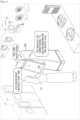
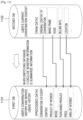
- FIG. 1 is a diagram illustrating an example where a user 10 visited a store a month ago and purchased an air conditioner, a TV, and a refrigerator through an electronic device 200.
- the electronic device 200 may automatically perform face-based user authentication when the user 10 simply approaches the electronic device 200 without entering user information for user authentication.
- the electronic device 200 may start a conversational service via face-based user authentication without a user's separate command.
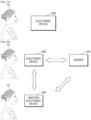
- the electronic device 200 may generate and output a response message to the user's utterance input through communication with the other electronic device 300 and/or the server 201.
- the electronic device 200 may update a stored service usage history mapped to the face ID. Otherwise, when the face ID matching the obtained user's face image is not stored in the database, the electronic device 200 may generate a new face ID and a service usage history mapped to the new face ID.
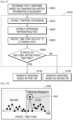
- the electronic device 200 may perform embedding for mapping the text to a plurality of vectors. By applying a bidirectional long short-term memory (LSTM) model to the mapped vectors, the electronic device 200 may assign a beginning-inside-outside (BIO) tag to at least one morpheme representing at least one of a time point, a duration, or a period included in the text. The electronic device 200 may identify an entity representing a time in the text, based on the BIO tag. The electronic device 200 may determine the identified entity as a temporal expression.
- LSTM long short-term memory
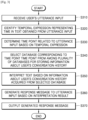
- the electronic device 200 determines a time point related to the user's utterance input based on the temporal expression (operation S330).
- the time point related to the user's utterance input may include a time point when a past utterance was received or stored, the past utterance being related to a user's purchase, reference, query, and service request for a product mentioned in the user's utterance input.
- the electronic device 200 may predict probability values, e.g., probabilities that the temporal expression indicates each of a plurality of time points.
- the electronic device 200 may determine a time point corresponding to a highest probability value from among the predicted probability values as being the time point related to the user's utterance input.
- the electronic device 200 interprets the text based on information about a user's conversation history acquired from the selected database (operation S350).
- the electronic device 200 may share at least one of a user's face ID, a service usage history, or a conversation history with another electronic device. For example, the electronic device 200 may transmit the user's face ID to another electronic device after the conversational service provided to the user ends.
- the other electronic device may identify the user and request information about a user's conversation history from the electronic device 200 based on a determination that the identified user corresponds to the received user's face ID.
- the electronic device 200 may transmit to the other electronic device information about a user's conversation history stored in the second database included in the databases.
- FIG. 4a is a diagram illustrating an example in which the electronic device 200 is an unmanned kiosk in a store that sells electronic products, according to an embodiment of the disclosure.
- a kiosk may refer, for example, to an unmanned information terminal installed in a public place.
- the electronic device 200 may receive an utterance input by a user 10 who asks what the price of air conditioner A is.
- the electronic device 200 may output a response message informing the price of air conditioner A in response to the user's utterance input.
- the electronic device 200 may determine an entity that needs to be specified in the text and acquire specification information for specifying the entity based on the user's conversation history.
- the electronic device 200 may interpret the text in which the entity is specified using an NLU model.
- the electronic device 200 may determine an entity representing a category of a product in the text and specify the product based on conversation history information. For example, as shown in FIG. 4a , the electronic device 200 may determine "air conditioner” as an entity representing a category of a product entity in the user's utterance "What was the price of the air conditioner that I asked you last time?" The electronic device 200 may determine that the product whose price the user desires to know is "air conditioner A", based on the conversation history dated May 5. The electronic device 200 may output a response message informing the price of the air conditioner A in response to the user's question.
- FIG. 5 illustrates an example in which an electronic device 200 is an unmanned kiosk in a store that sells electronic products, according to an embodiment of the disclosure.
- the electronic device 200 may use a first database 501 for storing conversation history information accumulated before a current session for providing a conversational service starts and a second database 502 for storing information related to conversations performed during the current session.
- FIG. 6 is a diagram illustrating an example of a service usage history and a conversation history for each user, which are stored in the first database 501, according to an embodiment of the disclosure.
- the electronic device 200 may map a service usage history 620 and a conversation history 630 to a face ID of a user 10 for storage.
- the electronic device 200 may identify the user 10 by performing face recognition on a face image of the user 10 obtained via a camera (operation S510). For example, the electronic device 200 may retrieve a conversational service usage history corresponding to a face ID of the identified user 10 by searching the first database 501.
- the electronic device 200 may update the conversational service usage history 620 for the user 10 in such a manner as to add information 621 indicating that the user 10 used the conversational service on May 16, 2019.
- the electronic device 200 may delay a date on which information related to the user 10 is scheduled for deletion, based on at least one of the number of visits by the user 10 or a visit period, which is recorded in the user's usage history. For example, as the number of visits by the user 10 increases and the visit periods become shorter, the electronic device 200 may extend a storage period for the information related to the user 10.
- the electronic device 200 may initiate a conversational service and receive a user's utterance input (operation S530).
- the electronic device 200 may obtain a text stating "I'm having a problem with a product I bought last time” from the user's utterance input.
- the electronic device 200 may identify "last time” that is a temporal expression representing a time in the obtained text.
- the electronic device 200 may determine, based on a conversation history 631 dated May 10, that the product that the user 10 intends to refer to is "computer B" having a model name of 19COMR1.
- the electronic device 200 may output a response message confirming whether the user 10 visited the store because of a problem with computer B bought on May 10 (operation S550).
- the electronic device 200 may update information about a user's conversation history in the first database 510 in such a manner as to add information about a history of conversations performed during the session (operation S560).
- FIG. 7a is a flowchart illustrating an example method, performed by the electronic device 200, of providing a conversational service, according to an embodiment of the disclosure
- FIG. 7b is a flowchart illustrating an example method, performed by the electronic device 200, of providing a conversational service, according to an embodiment of the disclosure.
- a user may start using a conversational service by approaching the electronic device 200.
- the electronic device 200 may recognize a user's face via a camera (operation S701). According to an embodiment of the disclosure, the electronic device 200 may search a database for a stored face ID corresponding to the recognized user (operation S702). According to an embodiment of the disclosure, the electronic device 200 may determine whether the face ID corresponding to the recognized user is stored in the database (operation S703).
- the electronic device 200 may ask the user whether he or she agrees to store the user's face ID and a conversation history in the future (operation S704).
- the electronic device 200 may update the user's service usage history in operation S705.
- the electronic device 200 may perform a conversation with the user on a one-time session basis.
- the electronic device 200 may receive a user's utterance input (operation S710).
- the electronic device 200 may determine whether conversation history information is needed to interpret the user's utterance input (operation S721). Operation S721 will be described in greater detail below with reference to FIG. 8 .
- the electronic device 200 may generate and output a general response without using the conversation history information (operation S731).
- the electronic device 200 may determine whether conversation history information included in a first database is needed (operation S723).
- the electronic device 200 When it is determined that the conversation history information included in the first database is needed to interpret the user's utterance input ("Yes” in operation S723), the electronic device 200 generates a response message based on the conversation history information acquired from the first database (operation S733). When it is determined that the conversation history information included in the first database is not needed to interpret the user's utterance input ("No" in operation S723), the electronic device 200 generates a response message based on the conversation history information acquired from the second database (operation S735).
- the electronic device 200 may additionally store conversation history information related to the current conversation in a stored conversation history mapped to a user's face ID (operation S760). Otherwise, when it is determined that the conversation has not ended ("No" in operation S750), according to an embodiment of the disclosure, the electronic device 200 may return to operation S710 and repeat a process of receiving a user's utterance input and generating a response message to the user's utterance input.
- the electronic device 200 may receive a user's utterance input (operation S710).
- the electronic device 200 may obtain a text by performing speech recognition (e.g., automatic speech recognition (ASR)) on the received user's utterance input (operation S810).
- speech recognition e.g., automatic speech recognition (ASR)
- the electronic device 200 may determine that conversation history information is needed to interpret a user's utterance input.
- the electronic device 200 may predict a time point related to the user's utterance input based on the temporal expression representing the past (operation S930). According to an embodiment of the disclosure, the electronic device 200 may determine a time point related to the extracted past time expression by applying a pre-trained time point prediction model to the extracted past time expression.
- the user may be reluctant to store for a long time detailed information related to the user's personal information (e.g., specific conversation content, captured images of the user, a user's voice, user's billing information, a user's location, etc.) in the electronic device 200.
- the electronic device 200 may manage the conversation history information including information sensitive to the user such that the conversation history information is stored in the second database 1102 that stores the conversation history information only for a short period of time.
- FIG. 12c is a diagram illustrating an example process in which a plurality of electronic devices 200-a, 200-b, and 200-c share a user's conversation history with one another, according to an embodiment of the disclosure.
- the processor 250 may predict probability values, e.g., the probabilities that the identified temporal expression indicates each of a plurality of time points and determine a time point corresponding to a highest probability value from among the predicted probability values as being the time point related to the user's utterance input.
- the processor 250 selects a database corresponding to the time point related to the user's utterance input from among a plurality of databases for storing information about a conversation history for the user who uses the conversational service.
- the plurality of databases includes a first database for storing information about a user's conversation history accumulated before a preset time point and a second database for storing information about a user's conversation history accumulated after the preset time point.
- the processor 250 selects the first database from among the databases when the time point related to the user's utterance input is before the preset time point.
- the processor 250 selects the second database from among the databases when the time point related to the user's utterance input is after the preset time point.
- an inputter 220 of the electronic device 200 may include various input circuitry and receive a user input for controlling the electronic device 200.
- the inputter 220 may include a user input device including a touch panel for receiving a user's touch, a button for receiving a push operation by a user, a wheel for receiving a rotation operation by the user, a keyboard, a dome switch, etc., but is not limited thereto.
- the inputter 220 may include, for example, and without limitation, at least one of a camera 221 used to recognize a user's face, a microphone 223 for receiving a user's utterance input, or a payment device 225 for receiving payment information of the user.
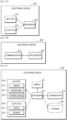
- the electronic device 200 may further include the memory 270.
- the memory 270 may include at least one of data used by the processor 250, a result processed by the processor 250, commands executed by the processor 250, or an artificial intelligence (AI) model used by the processor 250.
- AI artificial intelligence
- the communicator 210 may include various communication circuitry and communicate with an external electronic device or server using a wireless or wired communication method.
- the communicator 210 may include a short-range wireless communication module, wired communication module, a mobile communication module, and a broadcast receiving module.
- the electronic device 200 may share, via the communicator 210, at least one of, for example, and without limitation, a user's face ID, a service usage history, or a conversation history with another electronic device.
- the electronic device 200 may transmit the user's face ID to another electronic device after the conversational service provided to the user ends.
- the other electronic device may identify the user and request information about a user's conversation history from the electronic device 200 based on a determination that the identified user corresponds to the received user's face ID.
- the electronic device 200 may transmit to the other electronic device information about a user's conversation history stored in the database 260.
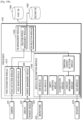
- operations and functions performed by the processor 250 included in the electronic device 200 may be represented by various modules shown in FIG. 15a . Some or all of the modules may be implemented using various numbers of hardware and/or software components that perform particular functions.
- the database management module 1540 may include various processing circuitry and/or executable program elements and select at least one database for acquiring conversation history information from among a plurality of databases and manage a period during which information stored in the database is deleted.
- the face recognition module 1510 of FIG. 15a may include a face detection module including various processing circuitry and/or executable program elements for detecting a face in an image and a face search module including various processing circuitry and/or executable program elements for searching a database for the detected face.
- the speech recognition module 1530 of FIG. 15a may include at least one of an auto speech recognition (ASR) module including various processing circuitry and/or executable program elements for converting a speech signal into a text signal, an NLU module including various processing circuitry and/or executable program elements for interpreting the meaning of a text, an entity extraction module including various processing circuitry and/or executable program elements for extracting an entity included in the text, a classification module including various processing circuitry and/or executable program elements for classifying the text according to a category of the text, a context management module including various processing circuitry and/or executable program elements for managing a conversation history, a temporal context detection module including various processing circuitry and/or executable program elements for detecting a temporal expression in a user's utterance input, or an NLG module including various processing circuitry and/or executable program elements for generating a response message corresponding to a result of interpreting the text and the temporal expression.
- ASR auto speech recognition
- the speech recognition module 1530 may extract a temporal expression included in the text obtained from the user's utterance input, based on a result of the embedding.
- the speech recognition module 1530 may predict the extent to which the extracted temporal expression represents the past with respect to a current time point.
- applying the temporal expression extraction model 1625 may include processing input data according to an AI model shown in FIG. 17 .
- the speech recognition module 1530 may receive a text obtained by converting an utterance input as an input sentence.
- the speech recognition module 1530 may embed the input sentence in units of a word and/ or character.
- the speech recognition module 1530 may perform concatenated embedding in order to use a word embedding result and a character embedding result together.
- the speech recognition module 1530 may generate conditional random fields (CRFs) by applying a bidirectional LSTM model to the text mapped to a plurality of vectors
- the speech recognition module 1530 may generate a CRF by applying a probability-based tagging model under predetermined conditions. According to an embodiment of the disclosure, the speech recognition module 1530 may pre-learn conditions in which a word, stem or morpheme is more likely to be a temporal expression, and tag portions having a probability value greater than or equal to a threshold value based on the pre-learned conditions. For example, the speech recognition module 1530 may extract a temporal expression via BIO tagging.
- FIG. 18 is a diagram illustrating an example time point prediction model according to an embodiment of the disclosure.
- the speech recognition module 1530 may determine a time point related to a temporal expression, based on the temporal expression which is identified in a text by a temporal expression extraction model.
- the speech recognition module 1530 may predict probability values as to what time point is represented by the identified temporal expression and determine a time point having a highest probability value as a time point represented by the temporal expression.
- the speech recognition module 1530 may interpret the text based on a user's conversation history acquired from the selected database.
- FIG. 16 shows only the process in which the NLU module 1620 of the speech recognition module 1530 determines a time point related to an utterance input in a text and select a database based on the time point
- the speech recognition module 1530 may perform again an NLU process for interpreting the text based on information about the user's conversation history acquired from the selected database.
- the NLU module 1620 may specify at least one entity included in the text and interpret the specified text based on the information about the user's conversation history acquired from the selected database.
- the DM module 1630 may receive a result of interpreting the specified text via the NLU module 1620 as an input, and output an instruction list for the NLG module 1640 in consideration of state variables such as a conversation history.
- the NLG module 1640 may generate a response message to a user's utterance input based on the received instruction list.
- the electronic device 200 may use AI technologies in the overall process for providing a conversational service to the user.
- Functions related to AI according to the disclosure are operated by a processor and a memory.
- the processor may include one or more processors.
- the one or more processors may be a general- purpose processor such as, for example, and without limitation, a central processing unit (CPU), an application processor (AP), or a digital signal processor (DSP), a dedicated graphics processor such as a graphical processing unit (GPU) or a vision processing unit (VPU), or a dedicated AI processor such as a neural processing unit (NPU).
- the one or more processors may control input data to be processed according to predefined operation rules or an AI model stored in the memory.
- the dedicated AI processor may be designed with a hardware structure specialized for processing a specific AI model.
- An artificial neural network may include a deep neural network (DNN) and may include, for example, and without limitation, a convolutional neural network (CNN), a DNN, a recurrent neural network (RNN), a restricted Boltzmann machine (RBM), a deep belief network (DBN), a bidirectional recurrent DNN (BRDNN), deep Q-networks (DQN), or the like, but is not limited thereto.
- DNN deep neural network
- CNN convolutional neural network
- RNN recurrent neural network
- RBM restricted Boltzmann machine
- DNN deep belief network
- BDN bidirectional recurrent DNN
- DQN deep Q-networks
- the embodiments of the disclosure may be implemented as a software program including instructions stored in a computer-readable storage medium.
- a computer may refer, for example, to a device configured to retrieve an instruction stored in a computer-readable storage medium and to operate, in response to the retrieved instruction, and may include a terminal device and a remote control device according to embodiments of the disclosure.
- the computer-readable storage medium may be provided in the form of a non-transitory storage medium.
- the 'non-transitory' storage medium may not include a signal and is tangible, and the term does not distinguish between data that is semi-permanently stored and data that is temporarily stored in the storage medium.
- the electronic device and method according to embodiments of the disclosure may be provided in the form of a computer program product.
- the computer program product may be traded, as a product, between a seller and a buyer.
- the computer program product may include a software program and a computer-readable storage medium having stored therein the software program
- the computer program product may include a product (e.g. a downloadable application) in the form of a software program electronically distributed by a manufacturer of the electronic device or through an electronic market (e.g., Google Play Store and App Store).
- a product e.g. a downloadable application
- the storage medium may be a storage medium of a server of the manufacturer, a server of the electronic market, or a relay server for temporarily storing the software program.
- the computer program product may include a storage medium of the server or a storage medium of the terminal.
- a third device e.g., a smartphone
- the computer program product may include a storage medium of the third device.
- the computer program product may include a software program that is transmitted from the server to the terminal or the third device or that is transmitted from the third device to the terminal.
- one of the server, the terminal, and the third device may execute the computer program product, thereby performing methods according to embodiments of the disclosure.
- At least two of the server, the terminal, and the third device may execute the computer program product, thereby performing the methods according to embodiments of the disclosure in a distributed manner.
- the server e.g., a cloud server, an AI server, or the like
- the server may execute the computer program product stored in the server, and may control the terminal communicating with the server to perform the methods according to embodiments of the disclosure.
- the third device may execute the computer program product, and may control the terminal communicating with the third device to perform the methods according to embodiments of the disclosure.
- the third device may remotely control the terminal device or remote control device to transmit or receive a packing image.
- the third device may download the computer program product from the server, and may execute the downloaded computer program product.
- the third device may execute the computer program product that is pre-loaded therein, and may perform the methods according to the embodiments of the disclosure.
Landscapes
- Engineering & Computer Science (AREA)
- Physics & Mathematics (AREA)
- Computational Linguistics (AREA)
- Health & Medical Sciences (AREA)
- Human Computer Interaction (AREA)
- Theoretical Computer Science (AREA)
- Multimedia (AREA)
- Audiology, Speech & Language Pathology (AREA)
- Acoustics & Sound (AREA)
- General Physics & Mathematics (AREA)
- Artificial Intelligence (AREA)
- General Engineering & Computer Science (AREA)
- General Health & Medical Sciences (AREA)
- Data Mining & Analysis (AREA)
- Databases & Information Systems (AREA)
- Mathematical Physics (AREA)
- Probability & Statistics with Applications (AREA)
- Oral & Maxillofacial Surgery (AREA)
- Computer Vision & Pattern Recognition (AREA)
- Signal Processing (AREA)
- Computer Networks & Wireless Communication (AREA)
- Information Retrieval, Db Structures And Fs Structures Therefor (AREA)
- User Interface Of Digital Computer (AREA)
- Machine Translation (AREA)
- Telephonic Communication Services (AREA)
- Input From Keyboards Or The Like (AREA)
Claims (14)
- Verfahren, durchgeführt durch eine elektronische Vorrichtung (200; 200-a; 200-b; 200-c), zum Bereitstellen eines Gesprächsdienstes, wobei das Verfahren Folgendes umfasst:Empfangen (S310) einer Äußerungseingabe;Identifizieren (S320) eines zeitlichen Ausdrucks, der eine Vergangenheit darstellt, in einem Text, der aus der Äußerungseingabe erlangt wird;Bestimmen (S330), ob ein Zeitpunkt, der mit der Äußerungseingabe zusammenhängt, basierend auf dem zeitlichen Ausdruck, der die Vergangenheit darstellt, vor oder nach einem voreingestellten Zeitpunkt liegt;Auswählen (S340) einer Datenbank, die dem bestimmten Zeitpunkt entspricht, aus einer Vielzahl von Datenbanken, die Informationen über einen Gesprächsverlauf des Benutzers speichern, der den Gesprächsdienst verwendet;Interpretieren (S350) des Textes basierend auf Informationen über den Gesprächsverlauf eines Benutzers, wobei die Gesprächsverlaufsinformationen aus der ausgewählten Datenbank erworben werden;Erzeugen (S360) einer Antwortnachricht auf die Äußerungseingabe basierend auf einem Ergebnis des Interpretierens; undAusgeben (S370) der erzeugten Antwortnachricht,wobei die Vielzahl von Datenbanken eine erste Datenbank (261), die Informationen über den Gesprächsverlauf des Benutzers speichert, die vor dem voreingestellten Zeitpunkt angesammelt wurden, und eine zweite Datenbank (263) umfasst, die Informationen über den Gesprächsverlauf des Benutzers speichert, die nach dem voreingestellten Zeitpunkt angesammelt wurden, undwobei das Auswählen (S340) der Datenbank Folgendes umfasst:Auswählen der ersten Datenbank (261) aus der Vielzahl von Datenbanken, wenn der Zeitpunkt, der mit der Äußerungseingabe zusammenhängt, vor dem voreingestellten Zeitpunkt liegt; undAuswählen der zweiten Datenbank (263) aus der Vielzahl von Datenbanken, wenn der Zeitpunkt, der mit der Äußerungseingabe zusammenhängt, nach dem voreingestellten Zeitpunkt liegt.
- Verfahren nach Anspruch 1, wobei das Identifizieren (S320) des zeitlichen Ausdrucks Folgendes umfasst:Erlangen des Textes durch Durchführen einer Spracherkennung an der Äußerungseingabe; undBestimmen, als den zeitlichen Ausdruck, der die Vergangenheit darstellt, einer Entität, die mindestens eines von einem Zeitpunkt, einer Dauer oder einem Zeitraum darstellt, der/die in dem Text enthalten ist.
- Verfahren nach Anspruch 2, wobei das Bestimmen der Entität Folgendes umfasst:Durchführen einer Einbettung zum Zuordnen des Textes zu einer Vielzahl von Vektoren;Zuweisen eines Beginning-Inside-Outside(BIO)-Tags zu mindestens einem Morphem, das mindestens eines von dem Zeitpunkt, der Dauer oder dem Zeitraum darstellt, der/die in dem Text enthalten ist, durch Anwenden eines bidirektionalen Long-Short-Term-Memory(LSTM)-Modells auf die Vielzahl von Vektoren; undIdentifizieren der Entität in dem Text basierend auf dem BIO-Tag.
- Verfahren nach Anspruch 1, wobei das Bestimmen (S330), ob der Zeitpunkt, der mit der Äußerungseingabe zusammenhängt, vor oder nach einem voreingestellten Zeitpunkt liegt, Folgendes umfasst:Vorhersagen von Wahrscheinlichkeitswerten, die Wahrscheinlichkeiten enthalten, dass der zeitliche Ausdruck, der die Vergangenheit darstellt, j eden einer Vielzahl von Zeitpunkten darstellt; undBestimmen eines Zeitpunkts, der einem höchsten Wahrscheinlichkeitswert unter den vorhergesagten Wahrscheinlichkeitswerten entspricht, als den Zeitpunkt, der mit der Äußerungseingabe zusammenhängt.
- Verfahren nach Anspruch 1, wobei die erste Datenbank (261) auf einem externen Server (210) gespeichert ist und die zweite Datenbank (263) auf der elektronischen Vorrichtung (200; 200-a; 200-b; 200-c) gespeichert ist, und
wobei der voreingestellte Zeitpunkt eines von einem Zeitpunkt, der darauf basiert, dass mindestens einige der Informationen über den Gesprächsverlauf des Benutzers, die in der zweiten Datenbank (263) enthalten sind, an die erste Datenbank (261) übertragen werden, einem Zeitpunkt, der darauf basiert, dass ein Gesichtsbild des Benutzers erlangt wird, und einem Zeitpunkt, der auf dem Beginnen des Gesprächsdienstes basiert, enthält. - Verfahren nach Anspruch 1, wobei das Interpretieren (S350) des Textes Folgendes umfasst:Bestimmen einer in dem Text enthaltenen Entität, die zu spezifizieren ist;Erwerben von Spezifizierungsinformationen zum Spezifizieren der bestimmten Entität durch Abrufen der Informationen über den Gesprächsverlauf des Benutzers, die von der ausgewählten Datenbank erworben werden; undInterpretieren des Textes und der Spezifizierungsinformationen unter Verwendung eines Natural-Language-Understanding(NLU)-Modells.
- Verfahren nach Anspruch 1, wobei das Erzeugen (S360) der Antwortnachricht Folgendes umfasst:Bestimmen eines Typs der Antwortnachricht durch Anwenden eines Dialogmanager(DM)-Modells auf das Ergebnis des Interpretierens; undErzeugen der Antwortnachricht des bestimmten Typs unter Verwendung eines Natural-Language-Generation(NLG)-Modells.
- Verfahren nach Anspruch 1, ferner umfassend:Erlangen (S701) eines Gesichtsbildes des Benutzers (10);Bestimmen (S702, S703), ob eine dem erlangten Gesichtsbild entsprechende Gesichts-ID gespeichert ist, durch Durchsuchen der Vielzahl von Datenbanken; undInitiieren des Gesprächsdienstes basierend auf einem Ergebnis des Bestimmens.
- Verfahren nach Anspruch 8, wobei das Initiieren des Gesprächsdienstes Folgendes umfasst:basierend darauf, dass die Gesichts-ID, die dem erlangten Gesichtsbild entspricht, in der Vielzahl von Datenbanken gespeichert ist, Aktualisieren (S705) eines gespeicherten Dienstnutzungsverlaufs, der der Gesichts-ID zugeordnet ist; undbasierend darauf, dass die Gesichts-ID, die dem erlangten Gesichtsbild entspricht, nicht in der Vielzahl von Datenbanken gespeichert ist, Erzeugen einer neuen Gesichts-ID und eines der neuen Gesichts-ID zugeordneten Dienstnutzungsverlaufs.
- Verfahren nach Anspruch 8, ferner umfassend:Übertragen der Gesichts-ID an eine andere elektronische Vorrichtung, nachdem der Gesprächsdienst endet; undals Reaktion darauf, dass eine Anfrage von der anderen elektronischen Vorrichtung empfangen wird, Übertragen von Informationen über den Gesprächsverlauf des Benutzers, die in der Vielzahl von Datenbanken gespeichert sind, an die andere elektronische Vorrichtung.
- Elektronische Vorrichtung (200; 200-a; 200-b; 200-c), dazu konfiguriert, einen Gesprächsdienst bereitzustellen, wobei die elektronische Vorrichtung Folgendes umfasst:einen Speicher (270), der eine oder mehrere Anweisungen speichert; undmindestens einen Prozessor (250), der dazu konfiguriert ist, die eine oder mehrere Anweisungen auszuführen, um dem Benutzer den Gesprächsdienst bereitzustellen,wobei der mindestens eine Prozessor (250) ferner dazu konfiguriert ist, die eine oder mehreren Anweisungen auszuführen, um die elektronische Vorrichtung (200; 200-a; 200-b; 200-c) zu Folgendem zu steuern:Empfangen einer Äußerungseingabe;Identifizieren eines zeitlichen Ausdrucks, der eine Vergangenheit darstellt, in einem Text, der aus der Äußerungseingabe erlangt wird;Bestimmen, ob ein Zeitpunkt, der mit der Äußerungseingabe zusammenhängt, basierend auf dem zeitlichen Ausdruck, der die Vergangenheit darstellt, vor oder nach einem voreingestellten Zeitpunkt liegt;Auswählen einer Datenbank, die dem bestimmten Zeitpunkt entspricht, aus einer Vielzahl von Datenbanken, die Informationen über einen Gesprächsverlauf eines Benutzers speichern, der den Gesprächsdienst verwendet;Interpretieren des Textes basierend auf Informationen über den Gesprächsverlauf des Benutzers, wobei die Gesprächsverlaufsinformationen aus der ausgewählten Datenbank erworben werden;Erzeugen einer Antwortnachricht auf die Äußerungseingabe basierend auf einem Ergebnis des Interpretierens; undAusgeben der erzeugten Antwortnachricht,wobei die Vielzahl von Datenbanken eine erste Datenbank (261), die Informationen über den Gesprächsverlauf des Benutzers speichert, die vor dem voreingestellten Zeitpunkt angesammelt wurden, und eine zweite Datenbank (263) umfasst, die Informationen über den Gesprächsverlauf des Benutzers speichert, die nach dem voreingestellten Zeitpunkt angesammelt wurden, undwobei der mindestens eine Prozessor (250) zu Folgendem konfiguriert ist:Auswählen der ersten Datenbank (261) aus der Vielzahl von Datenbanken, wenn der Zeitpunkt, der mit der Äußerungseingabe zusammenhängt, vor dem voreingestellten Zeitpunkt liegt; undAuswählen der zweiten Datenbank (263) aus der Vielzahl von Datenbanken, wenn der Zeitpunkt, der mit der Äußerungseingabe zusammenhängt, nach dem voreingestellten Zeitpunkt liegt.
- Elektronische Vorrichtung (200; 200-a; 200-b; 200-c) nach Anspruch 11, ferner umfassend:eine Kamera (221), die dazu konfiguriert ist, ein Gesichtsbild des Benutzers zu erlangen; undein Mikrofon (223), das dazu konfiguriert ist, die Äußerungseingabe zu empfangen, wobeider mindestens eine Prozessor (250) vor dem Initiieren des Gesprächsdienstes ferner dazu konfiguriert ist, die eine oder mehreren Anweisungen auszuführen, um die elektronische Vorrichtung (200; 200-a; 200-b; 200-c) zu Folgendem zu steuern:Bestimmen, ob eine dem erlangten Gesichtsbild entsprechende Gesichts-ID gespeichert ist, durch Durchsuchen der Vielzahl von Datenbanken;basierend darauf, dass die Gesichts-ID, die dem erlangten Gesichtsbild entspricht, in der Vielzahl von Datenbanken gespeichert ist, Aktualisieren eines gespeicherten Dienstnutzungsverlaufs, der der Gesichts-ID zugeordnet ist; undbasierend darauf, dass die Gesichts-ID, die dem erlangten Gesichtsbild entspricht, nicht in der Vielzahl von Datenbanken gespeichert ist, Erzeugen einer neuen Gesichts-ID und eines der neuen Gesichts-ID zugeordneten Dienstnutzungsverlaufs.
- Elektronische Vorrichtung (200; 200-a; 200-b; 200-c) nach Anspruch 12, ferner eine Kommunikationsschnittstelle (210) umfassend, die eine Kommunikationsschaltung umfasst, die zu Folgendem konfiguriert ist: Übertragen der Gesichts-ID an eine andere elektronische Vorrichtung, nachdem der Gesprächsdienst endet, und als Reaktion darauf, dass eine Anfrage von der anderen elektronischen Vorrichtung empfangen wird, Übertragen von Informationen über den Gesprächsverlauf des Benutzers, die in einer zweiten Datenbank, die in der Vielzahl von Datenbanken enthalten ist, gespeichert sind, an die andere elektronische Vorrichtung.
- Computerlesbares Aufzeichnungsmedium, auf dem ein Programm gespeichert ist, das bei Ausführung eine elektronische Vorrichtung (200; 200-a; 200-b; 200-c) dazu veranlasst, Operationen zum Bereitstellen eines Gesprächsdienstes durchzuführen, wobei die Operationen Folgendes umfassen:Empfangen (S310) einer Äußerungseingabe;Identifizieren (S320) eines zeitlichen Ausdrucks, der eine Vergangenheit darstellt, in einem Text, der aus der Äußerungseingabe erlangt wird;Bestimmen (S330), ob ein Zeitpunkt, der mit der Äußerungseingabe zusammenhängt, basierend auf dem zeitlichen Ausdruck, der die Vergangenheit darstellt, vor oder nach einem voreingestellten Zeitpunkt liegt;Auswählen (S340) einer Datenbank, die dem bestimmten Zeitpunkt entspricht, aus einer Vielzahl von Datenbanken, die Informationen über einen Gesprächsverlauf eines Benutzers speichern, der den Gesprächsdienst verwendet;Interpretieren (S350) des Textes basierend auf Informationen über den Gesprächsverlauf des Benutzers, wobei die Gesprächsverlaufsinformationen aus der ausgewählten Datenbank erworben werden;Erzeugen (S360) einer Antwortnachricht auf die Äußerungseingabe basierend auf einem Ergebnis des Interpretierens; undAusgeben (S370) der erzeugten Antwortnachricht,wobei die Vielzahl von Datenbanken eine erste Datenbank (261), die Informationen über den Gesprächsverlauf des Benutzers speichert, die vor dem voreingestellten Zeitpunkt angesammelt wurden, und eine zweite Datenbank (263) umfasst, die Informationen über den Gesprächsverlauf des Benutzers speichert, die nach dem voreingestellten Zeitpunkt angesammelt wurden, undwobei das Auswählen (S340) der Datenbank Folgendes umfasst:Auswählen der ersten Datenbank (261) aus der Vielzahl von Datenbanken, wenn der Zeitpunkt, der mit der Äußerungseingabe zusammenhängt, vor dem voreingestellten Zeitpunkt liegt; undAuswählen der zweiten Datenbank (263) aus der Vielzahl von Datenbanken, wenn der Zeitpunkt, der mit der Äußerungseingabe zusammenhängt, nach dem voreingestellten Zeitpunkt liegt.
Priority Applications (1)
| Application Number | Priority Date | Filing Date | Title |
|---|---|---|---|
| EP24172511.8A EP4383218A3 (de) | 2019-08-26 | 2020-03-02 | Elektronische vorrichtung und verfahren zur bereitstellung eines konversationsdienstes |
Applications Claiming Priority (2)
| Application Number | Priority Date | Filing Date | Title |
|---|---|---|---|
| KR1020190104573A KR20210024861A (ko) | 2019-08-26 | 2019-08-26 | 대화 서비스를 제공하는 방법 및 전자 디바이스 |
| PCT/KR2020/002972 WO2021040163A1 (en) | 2019-08-26 | 2020-03-02 | Electronic device and method for providing conversational service |
Related Child Applications (2)
| Application Number | Title | Priority Date | Filing Date |
|---|---|---|---|
| EP24172511.8A Division EP4383218A3 (de) | 2019-08-26 | 2020-03-02 | Elektronische vorrichtung und verfahren zur bereitstellung eines konversationsdienstes |
| EP24172511.8A Division-Into EP4383218A3 (de) | 2019-08-26 | 2020-03-02 | Elektronische vorrichtung und verfahren zur bereitstellung eines konversationsdienstes |
Publications (4)
| Publication Number | Publication Date |
|---|---|
| EP3980902A1 EP3980902A1 (de) | 2022-04-13 |
| EP3980902A4 EP3980902A4 (de) | 2022-08-24 |
| EP3980902B1 true EP3980902B1 (de) | 2024-07-03 |
| EP3980902C0 EP3980902C0 (de) | 2024-07-03 |
Family
ID=74681864
Family Applications (2)
| Application Number | Title | Priority Date | Filing Date |
|---|---|---|---|
| EP20856788.3A Active EP3980902B1 (de) | 2019-08-26 | 2020-03-02 | Elektronische vorrichtung und verfahren zur bereitstellung von gesprächsdienst |
| EP24172511.8A Pending EP4383218A3 (de) | 2019-08-26 | 2020-03-02 | Elektronische vorrichtung und verfahren zur bereitstellung eines konversationsdienstes |
Family Applications After (1)
| Application Number | Title | Priority Date | Filing Date |
|---|---|---|---|
| EP24172511.8A Pending EP4383218A3 (de) | 2019-08-26 | 2020-03-02 | Elektronische vorrichtung und verfahren zur bereitstellung eines konversationsdienstes |
Country Status (5)
| Country | Link |
|---|---|
| US (2) | US11710481B2 (de) |
| EP (2) | EP3980902B1 (de) |
| KR (1) | KR20210024861A (de) |
| CN (2) | CN120910221A (de) |
| WO (1) | WO2021040163A1 (de) |
Families Citing this family (27)
| Publication number | Priority date | Publication date | Assignee | Title |
|---|---|---|---|---|
| US11151331B1 (en) * | 2020-05-13 | 2021-10-19 | International Business Machines Corporation | Layered neural networks to evaluate communication distribution |
| US11763804B2 (en) * | 2020-06-29 | 2023-09-19 | Microsoft Technology Licensing, Llc | Leveraging dialogue history in updated dialogue |
| US11790181B2 (en) * | 2020-08-19 | 2023-10-17 | International Business Machines Corporation | Extractive structured prediction in interactive systems |
| US20220076283A1 (en) * | 2020-09-10 | 2022-03-10 | Adp, Llc | Personal Corporate Survey Chatbot Management |
| US11915697B2 (en) * | 2020-11-11 | 2024-02-27 | Samsung Electronics Co., Ltd. | Electronic device, system and control method thereof |
| CN112559714B (zh) * | 2020-12-24 | 2024-04-12 | 北京百度网讯科技有限公司 | 对话生成方法、装置、电子设备及存储介质 |
| US12131394B1 (en) | 2021-03-31 | 2024-10-29 | Amazon Technologies, Inc. | Distributed system for automated restaurant order acquisition |
| US12499476B1 (en) * | 2021-03-31 | 2025-12-16 | Amazon Technologies, Inc. | Machine learning techniques for dialog-based service order acquisition |
| JP2022161078A (ja) * | 2021-04-08 | 2022-10-21 | 京セラドキュメントソリューションズ株式会社 | 情報処理装置、情報処理方法及び情報処理プログラム |
| US11451496B1 (en) * | 2021-04-30 | 2022-09-20 | Microsoft Technology Licensing, Llc | Intelligent, personalized, and dynamic chatbot conversation |
| CN113326362A (zh) * | 2021-05-27 | 2021-08-31 | 北京沃东天骏信息技术有限公司 | 文本输出方法、装置、设备以及存储介质 |
| CN113111264B (zh) * | 2021-06-15 | 2021-09-07 | 深圳追一科技有限公司 | 界面内容显示方法、装置、电子设备及存储介质 |
| KR102608505B1 (ko) * | 2021-10-01 | 2023-12-04 | (주)파워보이스 | 멀티 챗봇 모듈을 이용한 가상 비서 서비스 제공 방법 및 이에 사용되는 관리 서버 |
| KR200497267Y1 (ko) * | 2021-10-06 | 2023-09-18 | (주)미소정보기술 | 멀티 챗봇 모듈을 이용하는 관리 서버 |
| KR20230102882A (ko) | 2021-12-30 | 2023-07-07 | 삼성전자주식회사 | 전자 장치 및 그 제어 방법 |
| CN115017286B (zh) * | 2022-06-09 | 2023-04-07 | 北京邮电大学 | 基于检索的多轮对话系统和方法 |
| CN117251535B (zh) * | 2022-06-10 | 2026-03-27 | 戴尔产品有限公司 | 问答方法、电子设备和程序产品 |
| CN116049372B (zh) * | 2023-02-07 | 2023-11-28 | 北京百度网讯科技有限公司 | 人机对话方法、装置及电子设备 |
| US12602842B2 (en) | 2023-04-18 | 2026-04-14 | Snap Inc. | Texture generation using multimodal embeddings |
| US12646266B2 (en) | 2023-04-18 | 2026-06-02 | Snap Inc. | Overlaying visual content using model adaptation |
| US12561920B2 (en) | 2023-04-18 | 2026-02-24 | Snap Inc. | Dynamic model adaptation customized for individual users |
| US20250329329A1 (en) * | 2024-04-17 | 2025-10-23 | c/o MINGA BOX LTD. | Interactive bartender leveraging generative artificial intelligence |
| KR102699424B1 (ko) * | 2024-04-26 | 2024-08-27 | 노희숙 | 인공지능에 기반하는 상담 챗봇을 제공하는 시스템 |
| US12322384B1 (en) * | 2024-09-27 | 2025-06-03 | Character Technologies Inc. | Audio turn understanding system |
| KR20260099932A (ko) * | 2024-12-20 | 2026-06-29 | 삼성전자주식회사 | 비디오와 관련된 자연어 입력을 처리하기 위한 전자 장치, 방법, 및 비-일시적 컴퓨터 판독가능 저장 매체 |
| JP2026113030A (ja) * | 2024-12-25 | 2026-07-07 | Tvs Regza株式会社 | 受信装置 |
| JP7818253B1 (ja) * | 2025-08-26 | 2026-02-20 | 真由美 稲場 | 対話システム、及び対話方法 |
Family Cites Families (19)
| Publication number | Priority date | Publication date | Assignee | Title |
|---|---|---|---|---|
| JPH06332945A (ja) * | 1993-05-19 | 1994-12-02 | Canon Inc | 自然言語処理装置及び方法 |
| US8073681B2 (en) * | 2006-10-16 | 2011-12-06 | Voicebox Technologies, Inc. | System and method for a cooperative conversational voice user interface |
| KR20110060039A (ko) | 2009-11-30 | 2011-06-08 | 동국대학교 산학협력단 | 대화형 로봇 장치 및 그 제어방법 |
| US10276170B2 (en) * | 2010-01-18 | 2019-04-30 | Apple Inc. | Intelligent automated assistant |
| US8521526B1 (en) | 2010-07-28 | 2013-08-27 | Google Inc. | Disambiguation of a spoken query term |
| US20130031476A1 (en) | 2011-07-25 | 2013-01-31 | Coin Emmett | Voice activated virtual assistant |
| US10203933B2 (en) | 2014-11-06 | 2019-02-12 | Microsoft Technology Licensing, Llc | Context-based command surfacing |
| KR101751113B1 (ko) * | 2015-06-15 | 2017-06-27 | 포항공과대학교 산학협력단 | 기억 능력을 이용하는 다중 사용자 기반의 대화 관리 방법 및 이를 수행하는 장치 |
| CN104951077A (zh) | 2015-06-24 | 2015-09-30 | 百度在线网络技术(北京)有限公司 | 基于人工智能的人机交互方法、装置和终端设备 |
| US10262062B2 (en) | 2015-12-21 | 2019-04-16 | Adobe Inc. | Natural language system question classifier, semantic representations, and logical form templates |
| US10586535B2 (en) | 2016-06-10 | 2020-03-10 | Apple Inc. | Intelligent digital assistant in a multi-tasking environment |
| EP4086791A1 (de) | 2016-06-13 | 2022-11-09 | NEC Corporation | Antwortvorrichtung, antwortsystem, antwortverfahren und aufzeichnungsmedium |
| US11449744B2 (en) * | 2016-06-23 | 2022-09-20 | Microsoft Technology Licensing, Llc | End-to-end memory networks for contextual language understanding |
| US10467509B2 (en) * | 2017-02-14 | 2019-11-05 | Microsoft Technology Licensing, Llc | Computationally-efficient human-identifying smart assistant computer |
| US10347244B2 (en) | 2017-04-21 | 2019-07-09 | Go-Vivace Inc. | Dialogue system incorporating unique speech to text conversion method for meaningful dialogue response |
| CN109463004B (zh) | 2017-05-16 | 2023-07-21 | 苹果公司 | 数字助理服务的远场延伸 |
| KR101985793B1 (ko) | 2017-09-29 | 2019-06-04 | 주식회사 토룩 | 자율 행동 로봇을 이용하여 대화 서비스를 제공하는 방법, 시스템 및 비일시성의 컴퓨터 판독 가능 기록 매체 |
| WO2019072195A1 (en) * | 2017-10-13 | 2019-04-18 | Midea Group Co., Ltd. | METHOD AND SYSTEM FOR PROVIDING AN EXCHANGE OF CUSTOMIZED INFORMATION ON THE LOCATION |
| US10593318B2 (en) * | 2017-12-26 | 2020-03-17 | International Business Machines Corporation | Initiating synthesized speech outpout from a voice-controlled device |
-
2019
- 2019-08-26 KR KR1020190104573A patent/KR20210024861A/ko not_active Ceased
-
2020
- 2020-02-21 US US16/797,339 patent/US11710481B2/en active Active
- 2020-03-02 CN CN202511361895.6A patent/CN120910221A/zh active Pending
- 2020-03-02 EP EP20856788.3A patent/EP3980902B1/de active Active
- 2020-03-02 CN CN202080062807.1A patent/CN114391143B/zh active Active
- 2020-03-02 EP EP24172511.8A patent/EP4383218A3/de active Pending
- 2020-03-02 WO PCT/KR2020/002972 patent/WO2021040163A1/en not_active Ceased
-
2023
- 2023-06-16 US US18/210,696 patent/US12175979B2/en active Active
Also Published As
| Publication number | Publication date |
|---|---|
| CN114391143B (zh) | 2025-11-11 |
| EP4383218A2 (de) | 2024-06-12 |
| WO2021040163A1 (en) | 2021-03-04 |
| CN114391143A (zh) | 2022-04-22 |
| EP3980902A1 (de) | 2022-04-13 |
| EP3980902A4 (de) | 2022-08-24 |
| US12175979B2 (en) | 2024-12-24 |
| CN120910221A (zh) | 2025-11-07 |
| EP4383218A3 (de) | 2024-08-07 |
| US20210065705A1 (en) | 2021-03-04 |
| US11710481B2 (en) | 2023-07-25 |
| KR20210024861A (ko) | 2021-03-08 |
| EP3980902C0 (de) | 2024-07-03 |
| US20230335131A1 (en) | 2023-10-19 |
Similar Documents
| Publication | Publication Date | Title |
|---|---|---|
| US12175979B2 (en) | Electronic device and method for providing conversational service | |
| US11954150B2 (en) | Electronic device and method for controlling the electronic device thereof | |
| US20190066677A1 (en) | Voice data processing method and electronic device supporting the same | |
| KR102462426B1 (ko) | 발화의 의미를 분석하기 위한 전자 장치 및 그의 동작 방법 | |
| KR102545666B1 (ko) | 페르소나에 기반하여 문장을 제공하는 방법 및 이를 지원하는 전자 장치 | |
| CN112969995A (zh) | 电子装置及其控制方法 | |
| CN109243432A (zh) | 话音处理方法以及支持该话音处理方法的电子设备 | |
| EP4064279B1 (de) | Vorrichtung und verfahren zur bereitstellung von empfohlenen sätzen bezüglich der spracheingabe eines benutzers | |
| US10560576B1 (en) | Electronic device for performing task including call in response to user utterance and operation method thereof | |
| US20180144346A1 (en) | Method and device applying artificial intelligence to send money by using voice input | |
| CN109983491A (zh) | 将人工智能应用于通过使用语音输入来汇钱的方法和装置 | |
| US20220059088A1 (en) | Electronic device and control method therefor | |
| KR20190127372A (ko) | 전자 장치 및 전자 장치의 기능 실행 방법 | |
| KR102787542B1 (ko) | 변형 발화 텍스트를 제공하는 전자 장치 및 그것의 동작 방법 | |
| US20230290343A1 (en) | Electronic device and control method therefor | |
| KR20200044175A (ko) | 전자 장치 및 그의 비서 서비스 제공 방법 | |
| KR20180054365A (ko) | 제품의 판매 정보를 제공하는 방법 및 장치 | |
| KR20190088086A (ko) | 전자 장치 및 이의 제어 방법 | |
| KR20200017290A (ko) | 사용자의 발화에 응답하여 하나 이상의 아이템을 제공하기 위한 전자 장치 및 방법 | |
| KR102948924B1 (ko) | 음성 인식 방법 및 이를 지원하는 전자 장치 | |
| KR102801285B1 (ko) | 사용자 음성 발화를 처리하기 위한 시스템 및 그의 동작 방법 | |
| KR20220057249A (ko) | 사용자 발화를 처리하는 전자 장치, 및 그 전자 장치의 제어 방법 | |
| KR20190021088A (ko) | 음성 명령을 이용한 동작을 수행하는 전자 장치 및 전자 장치의 동작 방법 | |
| KR102511517B1 (ko) | 음성 입력 처리 방법 및 이를 지원하는 전자 장치 | |
| KR102417029B1 (ko) | 자연어 표현 생성 방법 및 전자 장치 |
Legal Events
| Date | Code | Title | Description |
|---|---|---|---|
| STAA | Information on the status of an ep patent application or granted ep patent |
Free format text: STATUS: THE INTERNATIONAL PUBLICATION HAS BEEN MADE |
|
| PUAI | Public reference made under article 153(3) epc to a published international application that has entered the european phase |
Free format text: ORIGINAL CODE: 0009012 |
|
| STAA | Information on the status of an ep patent application or granted ep patent |
Free format text: STATUS: REQUEST FOR EXAMINATION WAS MADE |
|
| 17P | Request for examination filed |
Effective date: 20220106 |
|
| AK | Designated contracting states |
Kind code of ref document: A1 Designated state(s): AL AT BE BG CH CY CZ DE DK EE ES FI FR GB GR HR HU IE IS IT LI LT LU LV MC MK MT NL NO PL PT RO RS SE SI SK SM TR |
|
| A4 | Supplementary search report drawn up and despatched |
Effective date: 20220721 |
|
| RIC1 | Information provided on ipc code assigned before grant |
Ipc: G06K 9/00 20220101ALI20220715BHEP Ipc: G10L 15/22 20060101ALI20220715BHEP Ipc: G06F 40/40 20200101ALI20220715BHEP Ipc: G06F 16/33 20190101ALI20220715BHEP Ipc: G06F 16/332 20190101AFI20220715BHEP |
|
| DAV | Request for validation of the european patent (deleted) | ||
| DAX | Request for extension of the european patent (deleted) | ||
| REG | Reference to a national code |
Ref country code: DE Ref legal event code: R079 Ref country code: DE Ref legal event code: R079 Ref document number: 602020033523 Country of ref document: DE Free format text: PREVIOUS MAIN CLASS: G06F0016332000 Ipc: G10L0015180000 |
|
| GRAP | Despatch of communication of intention to grant a patent |
Free format text: ORIGINAL CODE: EPIDOSNIGR1 |
|
| STAA | Information on the status of an ep patent application or granted ep patent |
Free format text: STATUS: GRANT OF PATENT IS INTENDED |
|
| RIC1 | Information provided on ipc code assigned before grant |
Ipc: G06V 40/00 20220101ALI20240213BHEP Ipc: G06F 40/30 20200101ALI20240213BHEP Ipc: G06F 16/332 20190101ALI20240213BHEP Ipc: G06F 16/33 20190101ALI20240213BHEP Ipc: G10L 15/18 20130101AFI20240213BHEP |
|
| INTG | Intention to grant announced |
Effective date: 20240228 |
|
| GRAS | Grant fee paid |
Free format text: ORIGINAL CODE: EPIDOSNIGR3 |
|
| GRAA | (expected) grant |
Free format text: ORIGINAL CODE: 0009210 |
|
| STAA | Information on the status of an ep patent application or granted ep patent |
Free format text: STATUS: THE PATENT HAS BEEN GRANTED |
|
| AK | Designated contracting states |
Kind code of ref document: B1 Designated state(s): AL AT BE BG CH CY CZ DE DK EE ES FI FR GB GR HR HU IE IS IT LI LT LU LV MC MK MT NL NO PL PT RO RS SE SI SK SM TR |
|
| REG | Reference to a national code |
Ref country code: CH Ref legal event code: EP |
|
| REG | Reference to a national code |
Ref country code: DE Ref legal event code: R096 Ref document number: 602020033523 Country of ref document: DE |
|
| U01 | Request for unitary effect filed |
Effective date: 20240726 |
|
| U07 | Unitary effect registered |
Designated state(s): AT BE BG DE DK EE FI FR IT LT LU LV MT NL PT SE SI Effective date: 20240812 |
|
| PG25 | Lapsed in a contracting state [announced via postgrant information from national office to epo] |
Ref country code: NO Free format text: LAPSE BECAUSE OF FAILURE TO SUBMIT A TRANSLATION OF THE DESCRIPTION OR TO PAY THE FEE WITHIN THE PRESCRIBED TIME-LIMIT Effective date: 20241003 |
|
| PG25 | Lapsed in a contracting state [announced via postgrant information from national office to epo] |
Ref country code: GR Free format text: LAPSE BECAUSE OF FAILURE TO SUBMIT A TRANSLATION OF THE DESCRIPTION OR TO PAY THE FEE WITHIN THE PRESCRIBED TIME-LIMIT Effective date: 20241004 Ref country code: PL Free format text: LAPSE BECAUSE OF FAILURE TO SUBMIT A TRANSLATION OF THE DESCRIPTION OR TO PAY THE FEE WITHIN THE PRESCRIBED TIME-LIMIT Effective date: 20240703 |
|
| PG25 | Lapsed in a contracting state [announced via postgrant information from national office to epo] |
Ref country code: IS Free format text: LAPSE BECAUSE OF FAILURE TO SUBMIT A TRANSLATION OF THE DESCRIPTION OR TO PAY THE FEE WITHIN THE PRESCRIBED TIME-LIMIT Effective date: 20241103 |
|
| PG25 | Lapsed in a contracting state [announced via postgrant information from national office to epo] |
Ref country code: HR Free format text: LAPSE BECAUSE OF FAILURE TO SUBMIT A TRANSLATION OF THE DESCRIPTION OR TO PAY THE FEE WITHIN THE PRESCRIBED TIME-LIMIT Effective date: 20240703 Ref country code: CZ Free format text: LAPSE BECAUSE OF FAILURE TO SUBMIT A TRANSLATION OF THE DESCRIPTION OR TO PAY THE FEE WITHIN THE PRESCRIBED TIME-LIMIT Effective date: 20240703 |
|
| PG25 | Lapsed in a contracting state [announced via postgrant information from national office to epo] |
Ref country code: RS Free format text: LAPSE BECAUSE OF FAILURE TO SUBMIT A TRANSLATION OF THE DESCRIPTION OR TO PAY THE FEE WITHIN THE PRESCRIBED TIME-LIMIT Effective date: 20241003 Ref country code: ES Free format text: LAPSE BECAUSE OF FAILURE TO SUBMIT A TRANSLATION OF THE DESCRIPTION OR TO PAY THE FEE WITHIN THE PRESCRIBED TIME-LIMIT Effective date: 20240703 |
|
| PG25 | Lapsed in a contracting state [announced via postgrant information from national office to epo] |
Ref country code: RS Free format text: LAPSE BECAUSE OF FAILURE TO SUBMIT A TRANSLATION OF THE DESCRIPTION OR TO PAY THE FEE WITHIN THE PRESCRIBED TIME-LIMIT Effective date: 20241003 Ref country code: PL Free format text: LAPSE BECAUSE OF FAILURE TO SUBMIT A TRANSLATION OF THE DESCRIPTION OR TO PAY THE FEE WITHIN THE PRESCRIBED TIME-LIMIT Effective date: 20240703 Ref country code: NO Free format text: LAPSE BECAUSE OF FAILURE TO SUBMIT A TRANSLATION OF THE DESCRIPTION OR TO PAY THE FEE WITHIN THE PRESCRIBED TIME-LIMIT Effective date: 20241003 Ref country code: IS Free format text: LAPSE BECAUSE OF FAILURE TO SUBMIT A TRANSLATION OF THE DESCRIPTION OR TO PAY THE FEE WITHIN THE PRESCRIBED TIME-LIMIT Effective date: 20241103 Ref country code: HR Free format text: LAPSE BECAUSE OF FAILURE TO SUBMIT A TRANSLATION OF THE DESCRIPTION OR TO PAY THE FEE WITHIN THE PRESCRIBED TIME-LIMIT Effective date: 20240703 Ref country code: GR Free format text: LAPSE BECAUSE OF FAILURE TO SUBMIT A TRANSLATION OF THE DESCRIPTION OR TO PAY THE FEE WITHIN THE PRESCRIBED TIME-LIMIT Effective date: 20241004 Ref country code: ES Free format text: LAPSE BECAUSE OF FAILURE TO SUBMIT A TRANSLATION OF THE DESCRIPTION OR TO PAY THE FEE WITHIN THE PRESCRIBED TIME-LIMIT Effective date: 20240703 Ref country code: CZ Free format text: LAPSE BECAUSE OF FAILURE TO SUBMIT A TRANSLATION OF THE DESCRIPTION OR TO PAY THE FEE WITHIN THE PRESCRIBED TIME-LIMIT Effective date: 20240703 |
|
| PG25 | Lapsed in a contracting state [announced via postgrant information from national office to epo] |
Ref country code: SM Free format text: LAPSE BECAUSE OF FAILURE TO SUBMIT A TRANSLATION OF THE DESCRIPTION OR TO PAY THE FEE WITHIN THE PRESCRIBED TIME-LIMIT Effective date: 20240703 |
|
| PG25 | Lapsed in a contracting state [announced via postgrant information from national office to epo] |
Ref country code: SK Free format text: LAPSE BECAUSE OF FAILURE TO SUBMIT A TRANSLATION OF THE DESCRIPTION OR TO PAY THE FEE WITHIN THE PRESCRIBED TIME-LIMIT Effective date: 20240703 |
|
| U20 | Renewal fee for the european patent with unitary effect paid |
Year of fee payment: 6 Effective date: 20250324 |
|
| PLBE | No opposition filed within time limit |
Free format text: ORIGINAL CODE: 0009261 |
|
| STAA | Information on the status of an ep patent application or granted ep patent |
Free format text: STATUS: NO OPPOSITION FILED WITHIN TIME LIMIT |
|
| 26N | No opposition filed |
Effective date: 20250404 |
|
| PG25 | Lapsed in a contracting state [announced via postgrant information from national office to epo] |
Ref country code: MC Free format text: LAPSE BECAUSE OF FAILURE TO SUBMIT A TRANSLATION OF THE DESCRIPTION OR TO PAY THE FEE WITHIN THE PRESCRIBED TIME-LIMIT Effective date: 20240703 |
|
| REG | Reference to a national code |
Ref country code: CH Ref legal event code: H13 Free format text: ST27 STATUS EVENT CODE: U-0-0-H10-H13 (AS PROVIDED BY THE NATIONAL OFFICE) Effective date: 20251023 |
|
| GBPC | Gb: european patent ceased through non-payment of renewal fee |
Effective date: 20250302 |
|
| PG25 | Lapsed in a contracting state [announced via postgrant information from national office to epo] |
Ref country code: GB Free format text: LAPSE BECAUSE OF NON-PAYMENT OF DUE FEES Effective date: 20250302 |
|
| PG25 | Lapsed in a contracting state [announced via postgrant information from national office to epo] |
Ref country code: CH Free format text: LAPSE BECAUSE OF NON-PAYMENT OF DUE FEES Effective date: 20250331 |
|
| PG25 | Lapsed in a contracting state [announced via postgrant information from national office to epo] |
Ref country code: IE Free format text: LAPSE BECAUSE OF NON-PAYMENT OF DUE FEES Effective date: 20250302 |
|
| PG25 | Lapsed in a contracting state [announced via postgrant information from national office to epo] |
Ref country code: RO Free format text: LAPSE BECAUSE OF FAILURE TO SUBMIT A TRANSLATION OF THE DESCRIPTION OR TO PAY THE FEE WITHIN THE PRESCRIBED TIME-LIMIT Effective date: 20240703 |
|
| U20 | Renewal fee for the european patent with unitary effect paid |
Year of fee payment: 7 Effective date: 20260323 |
|
| PG25 | Lapsed in a contracting state [announced via postgrant information from national office to epo] |
Ref country code: CY Free format text: LAPSE BECAUSE OF FAILURE TO SUBMIT A TRANSLATION OF THE DESCRIPTION OR TO PAY THE FEE WITHIN THE PRESCRIBED TIME-LIMIT Effective date: 20240703 |
|
| PG25 | Lapsed in a contracting state [announced via postgrant information from national office to epo] |
Ref country code: TR Free format text: LAPSE BECAUSE OF FAILURE TO SUBMIT A TRANSLATION OF THE DESCRIPTION OR TO PAY THE FEE WITHIN THE PRESCRIBED TIME-LIMIT Effective date: 20240703 |