EP3978095B1 - Cpc verteilungschromatographie von cannabinoiden - Google Patents
Cpc verteilungschromatographie von cannabinoiden Download PDFInfo
- Publication number
- EP3978095B1 EP3978095B1 EP21210058.0A EP21210058A EP3978095B1 EP 3978095 B1 EP3978095 B1 EP 3978095B1 EP 21210058 A EP21210058 A EP 21210058A EP 3978095 B1 EP3978095 B1 EP 3978095B1
- Authority
- EP
- European Patent Office
- Prior art keywords
- cannabinoids
- separation
- purification
- heptane
- cbn
- Prior art date
- Legal status (The legal status is an assumption and is not a legal conclusion. Google has not performed a legal analysis and makes no representation as to the accuracy of the status listed.)
- Active
Links
Images


Classifications
-
- A—HUMAN NECESSITIES
- A61—MEDICAL OR VETERINARY SCIENCE; HYGIENE
- A61K—PREPARATIONS FOR MEDICAL, DENTAL OR TOILETRY PURPOSES
- A61K31/00—Medicinal preparations containing organic active ingredients
- A61K31/658—Medicinal preparations containing organic active ingredients o-phenolic cannabinoids, e.g. cannabidiol, cannabigerolic acid, cannabichromene or tetrahydrocannabinol
-
- B—PERFORMING OPERATIONS; TRANSPORTING
- B01—PHYSICAL OR CHEMICAL PROCESSES OR APPARATUS IN GENERAL
- B01D—SEPARATION
- B01D15/00—Separating processes involving the treatment of liquids with solid sorbents; Apparatus therefor
- B01D15/08—Selective adsorption, e.g. chromatography
- B01D15/10—Selective adsorption, e.g. chromatography characterised by constructional or operational features
- B01D15/18—Selective adsorption, e.g. chromatography characterised by constructional or operational features relating to flow patterns
- B01D15/1892—Selective adsorption, e.g. chromatography characterised by constructional or operational features relating to flow patterns the sorbent material moving as a whole, e.g. continuous annular chromatography, true moving beds or centrifugal chromatography
-
- B—PERFORMING OPERATIONS; TRANSPORTING
- B01—PHYSICAL OR CHEMICAL PROCESSES OR APPARATUS IN GENERAL
- B01D—SEPARATION
- B01D15/00—Separating processes involving the treatment of liquids with solid sorbents; Apparatus therefor
- B01D15/08—Selective adsorption, e.g. chromatography
- B01D15/26—Selective adsorption, e.g. chromatography characterised by the separation mechanism
- B01D15/30—Partition chromatography
-
- C—CHEMISTRY; METALLURGY
- C07—ORGANIC CHEMISTRY
- C07D—HETEROCYCLIC COMPOUNDS
- C07D311/00—Heterocyclic compounds containing six-membered rings having one oxygen atom as the only hetero atom, condensed with other rings
- C07D311/02—Heterocyclic compounds containing six-membered rings having one oxygen atom as the only hetero atom, condensed with other rings ortho- or peri-condensed with carbocyclic rings or ring systems
- C07D311/78—Ring systems having three or more relevant rings
- C07D311/80—Dibenzopyrans; Hydrogenated dibenzopyrans
-
- G—PHYSICS
- G01—MEASURING; TESTING
- G01N—INVESTIGATING OR ANALYSING MATERIALS BY DETERMINING THEIR CHEMICAL OR PHYSICAL PROPERTIES
- G01N30/00—Investigating or analysing materials by separation into components using adsorption, absorption or similar phenomena or using ion-exchange, e.g. chromatography or field flow fractionation
- G01N30/02—Column chromatography
- G01N30/26—Conditioning of the fluid carrier; Flow patterns
- G01N30/38—Flow patterns
-
- G—PHYSICS
- G01—MEASURING; TESTING
- G01N—INVESTIGATING OR ANALYSING MATERIALS BY DETERMINING THEIR CHEMICAL OR PHYSICAL PROPERTIES
- G01N30/00—Investigating or analysing materials by separation into components using adsorption, absorption or similar phenomena or using ion-exchange, e.g. chromatography or field flow fractionation
- G01N30/02—Column chromatography
- G01N30/26—Conditioning of the fluid carrier; Flow patterns
- G01N30/38—Flow patterns
- G01N2030/381—Flow patterns centrifugal chromatography
Definitions
- the invention relates to cannabinoids and their isolation and purification as well as extraction by means of centrifugal partition chromatography (CPC for short).
- CPC is used to extract and enrich plant ingredients from plant extracts on an analytical, semi-preparative and preparative scale.
- CPC is a liquid-liquid chromatography process using a mostly two-phase solvent system.
- CPC Compared to liquid chromatography (HPLC), CPC is simpler and more cost-effective because matrix effects and irreversible adsorption on solid phases do not occur.
- the CPC method uses a 2-phase solvent mixture, as in common liquid-liquid chromatography methods such as High Speed Countercurrent Chromatography (HSCCC). Either the upper or the lower phase can be used as the stationary phase. Unlike the HSCCC, however, the CPC does not work with a capillary coil, but with a rotor equipped with several hundred separation chambers. The distribution of the substances contained in the plant extract between the mobile and stationary phase.
- HSCCC High Speed Countercurrent Chromatography
- the system is set into rapid rotation during separation (up to 2,500 rpm). This means that, depending on the flow direction, the desired phase is retained in the CPC rotor and, at the same time, the separation of the two phases is accelerated by centrifugal force. This enables the use of high flow rates and, consequently, the throughput of large amounts of substance in a short time, making a preparative application of this separation technique possible.
- the distribution coefficient K of the desired substance between the two phases should be in the range between 0.7 and 4.5. If the K is smaller, the substance elutes too quickly, so that no separation can take place. If the K is higher, however, the retention time becomes too long for the rapid purification of large quantities of a plant extract.
- cannabinoids can be obtained from cannabis extracts by means of CO 2 extraction ( DE10051427C1 ).
- the cannabinoids such as THC (A, "dronabinol") or CBD (B, cannabidiol) are not obtained in absolute purity.
- Dronabinol ((6aR-trans)-6a,7,8,10a-tetrahydro-6,6,9-trimethyl-3-pentyl-6H-dibenzo[b,d]pyran-1-ol , ⁇ 9 -tetrahydrocannabinol ( ⁇ 9 THC)), cannabidiol (CBD)
- CBD cannabidiol
- B ((2-[1R-3-methyl-6-(1-methylethenyl]-2-cyclohexen-1-yl]-5-pentyl -1,3-benzenediol))
- the chromatographic separation and preparative purification of cannabinoids remains a challenge, especially the extraction of cannabinoids, preferably ⁇ 9 THC and CBD in high purity of more than 95%.
- the object is therefore to provide an improved process for the separation and/or purification of cannabinoids from cannabis plant extracts, which at least partially eliminates the existing disadvantages and is in particular capable of providing a higher yield and purity of cannabinoids, in particular CBD and/or THC, in many applications.
- the density as well as the viscosity of cyclohexane, n-heptane, iso-octane are greater than the density/viscosity of n-hexane, so that, for example, compared to the second mobile phase such as acetonitrile, a more stable two-phase system is produced, enabling better retention of the stationary phase and consequently an increased separation performance, so that a higher purity and yield is always achieved compared to n-hexane; with purity of over 95%, even 99%.
- the method according to the invention and/or the use according to the invention advantageously show a low eluent consumption in addition to no deposits on a stationary phase, so that no regeneration of the stationary phase or preparation or removal of interfering components is necessary.
- the product recovery is almost quantitative, since the stationary and mobile phases can easily be swapped.
- the stationary phase is completely renewed with each run and can easily be purified or renewed by distillation.
- the purity of the isolated cannabinoids is often so high that further chromatographic purification steps can be omitted.
- the method can also be easily carried out on a large scale.
- the yield of cannabinoids is often greatly increased compared to the state of the art, as will be explained in more detail below.
- the number of process steps required can usually be significantly reduced compared to alternative techniques.
- cannabinoids from any cannabis plant and their extracts can be carried out particularly advantageously.
- the advantageous use of the two immiscible solvents acetonitrile and heptane is provided at a flow of 50 to 600 mL per minute, preferably at a flow of 200 to 300 mL per minute during separation and max. flow during rinsing, at a speed of 50 to 1,500 rpm, preferably a speed of 900 to 1,100 rpm during separation.
- the use of the upper phase as a stationary phase is preferred.
- t-butyl methyl ether can be added to the respective solvent, namely 1 to 15% (v/v), preferably 9 to 13% (v/v).
- acetonitrile optionally mixed with 1-15% t-butyl methyl ether (TBME), is particularly preferred.
- the method according to the invention is carried out once or several times (see, for example, Example 1).
- cannabinoids preferably ⁇ 9 THC and CBD, in high purity of more than 95%.
- a cannabis extract obtainable or obtained by the process according to the invention is also disclosed, wherein the dronabinol purity is more than 95%, in particular 99.6%.
- CBD cannabidiol
- liquid-liquid partition chromatography step in the sense of the present invention is understood in particular to mean a chromatography which proceeds as follows: A certain amount of a substance mixture is passed with a liquid mobile phase through a stationary phase, which is kept stationary by a centrifugal force.
- the liquid-liquid partition chromatography can be carried out continuously.
- the two phases are guided in countercurrent and a continuous separation is achieved instead of a time-delayed (discontinuous) exit (see e.g.
- the stationary phase consists of a packed fixed bed in a column
- liquid-liquid partition chromatography it is a second immiscible liquid phase which is kept stationary by suitable devices, such as a rotor by centrifugal force, in particular by means of an appropriate centrifugal distribution chromatograph (supra).
- Crobis extract in the sense of this invention means any processed extract from a cannabis plant or hemp plant that contains cannabinoids.
- the extract can be a primary extract or a partially processed extract.
- the production of cannabis extracts is sufficiently described in the prior art.
- Suitable cannabis plants or (fiber) hemp plants are those such as drug hemp and fiber hemp.
- At least one preparative column (solid phase, such as silica gel) can be connected upstream or downstream (Example 2).
- Example 1 Cannabinoids from hemp
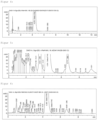
- Extraction of THC (Dronabinol) ( Figure 1-7 ), CBD ( Figure 8 ) or CBC ( Figure 9 ) from drug hemp or industrial, fiber hemp: Extraction of cannabis flos using heptane, decarboxylation at 120°C in vacuum, dissolution in heptane, purification in the CPC.
Landscapes
- Chemical & Material Sciences (AREA)
- Health & Medical Sciences (AREA)
- Organic Chemistry (AREA)
- Analytical Chemistry (AREA)
- General Health & Medical Sciences (AREA)
- Chemical Kinetics & Catalysis (AREA)
- Life Sciences & Earth Sciences (AREA)
- Animal Behavior & Ethology (AREA)
- Veterinary Medicine (AREA)
- Public Health (AREA)
- Epidemiology (AREA)
- Pharmacology & Pharmacy (AREA)
- Medicinal Chemistry (AREA)
- Pathology (AREA)
- Immunology (AREA)
- Physics & Mathematics (AREA)
- General Physics & Mathematics (AREA)
- Biochemistry (AREA)
- Pyrane Compounds (AREA)
- Pharmaceuticals Containing Other Organic And Inorganic Compounds (AREA)
- Organic Low-Molecular-Weight Compounds And Preparation Thereof (AREA)
Description
- Die Erfindung betrifft Cannabinoide und deren Isolierung und Aufreinigung als auch Gewinnung mittels Centrifugal Partition Chromatography (kurz: CPC).
- Die CPC wird zur Gewinnung und Anreicherung von Pflanzeninhaltsstoffen aus Pflanzenextrakten im analytischen, semipräparativen sowie präparativen Maßstab eingesetzt. Die CPC ist ein flüssig-flüssig Chromatographieverfahren unter Verwendung eines zumeist zweiphasigen Lösungsmittelsystems.
- Sie ermöglicht eine nahezu verlustfreie Separation hochkomplexer Substanzgemische aus Rohextrakten. Hersteller solcher Zentrifugal-Verteilungs-Chromatographen zur Durchführung einer CPC ist z.B. Kromaton S.a.r.l (Annonay, FR) oder Armen Instrument Sas (Saint-Avé, FR).
- Die CPC ist im Vergleich zur Flüssigchromatographie (HPLC) einfacher und zudem kostengünstiger, da Matrixeffekte sowie irreversible Adsorptionen an festen Phasen nicht vorkommen.
- Bei der CPC Methode wird, wie bei gängigen flüssig-flüssigchromatographischen Methoden, wie zum Beispiel der High Speed Countercurrent Chromatography (HSCCC), ein 2-phasiges Lösungsmittelgemisch eingesetzt. Es kann wahlweise die obere oder die untere Phase als stationäre Phase verwendet werden. Anders jedoch als bei der HSCCC wird bei der CPC nicht mit einer Kapillarspule, sondern mit einem mit mehreren hundert Trennkammern versehenen Rotor gearbeitet. In diesen direkt hintereinander geschalteten Kammern findet die Verteilung der im Pflanzenextrakt enthaltenen Substanzen zwischen mobiler und stationärer Phase statt.
- Das System wird während der Trennung in schnelle Rotation versetzt (bis zu 2.500 rpm). Dadurch wird zum einen, je nach Durchflußrichtung, die gewünschte Phase im Rotor der CPC zurückgehalten und zum anderen die Trennung der beiden Phasen durch die Zentrifugalkraft beschleunigt. Dies ermöglicht die Verwendung großer Flußgeschwindigkeiten und folglich den Durchsatz großer Substanzmengen in kurzer Zeit, so dass eine präparative Anwendung dieser Trenntechnik möglich ist.
- Der Verteilungskoeffizient K der jeweils gewünschten Substanz zwischen den beiden Phasen sollte im Bereich zwischen 0,7 und 4,5 liegen. Bei kleinerem K eluiert die Substanz zu schnell, so dass keinerlei Trennung erfolgen kann. Bei höherem K hingegen wird die Retentionszeit für die schnelle Aufreinigung großer Mengen eines Pflanzenextrakts zu lang.
- Im Stand der Technik ist beschrieben, dass Cannabinoide mittels CO2 Extraktion aus Cannabis-Extrakten erhalten werden können (
DE10051427C1 ). Dennoch werden die Cannabinoide, wie z.B. THC (A, "Dronabinol") oder CBD (B, Cannabidiol) nicht in absoluter Reinheit erhalten.
- Die chromatographische Trennung und präparative Aufreinigung von Cannabinoiden stellt nach wie vor eine Herausforderung dar, insbesondere die Gewinnung von Cannabinoiden, vorzugsweise Δ9THC und CBD in hoher Reinheit von mehr als 95 %.
- Im Stand der Technik beschreiben Hazekamp, A., 2007, Doctoral thesis, Leiden University und Arno Hazekamp, Ruud Simons, Anja Peltenburg-Looman, Melvin Sengers, Rianne van Zweden, Robert Verpoorte, Preparative isolation of cannabinoids from Cannabis sativa by centrifugal partition chromatography, J. Liq. Chrom. Rel. Technol. 2004, 27(15): 2421-2439, die präparative Gewinnung von Cannabinoiden mittels CPC. Allerdings wird im Stand der Technik ein Zwei-Phasen System auf der Basis von Hexan verwendet und eine Reinheit von max. 93,1 % erreicht. Zudem werden geringe Ausbeuten erreicht. Ferner ist Hexan ein Neurotoxin der Lösungsmittelklasse 2 (ICH Guidelines).
- Es stellt sich somit die Aufgabe, ein verbessertes Verfahren für die Trennung und/oder Reinigung von Cannabinoiden aus Cannabis Pflanzenextrakten bereitzustellen, welches die vorliegenden Nachteile zumindest teilweise beseitigt und insbesondere in der Lage ist, bei vielen Anwendungen eine höhere Ausbeute und Reinheit an Cannabinoiden, insbesondere CBD und / oder THC präparativ bereitzustellen.
- Die Aufgabe wird durch ein Verfahren nach einem der Patentansprüche gelöst.
- Die Dichte als auch die Viskosität von Cyclohexan, n-Heptan, iso-Octan sind größer als die Dichte/Viskosität von n-Hexan, so dass z.B. gegenüber der zweiten mobilen Phase wie z.B. Acetonitril ein stabileres Zweiphasensystem hergestellt wird, so dass eine bessere Retention der stationären Phase ermöglicht und folglich eine erhöhte Trennleistung erreicht wird, so dass gegenüber n-Hexan immer eine höhere Reinheit und Ausbeute erreicht wird; mit Reinheit von über 95 %, gar 99 %. Das erfindungsgemäße Verfahren und/oder die erfindungsgemäße Verwendung zeigen vorteilhaft einen geringen Eluentenverbrauch neben keinen Ablagerungen an einer stationären Phase, so dass keine Regeneration der stationären Phase, bzw. Aufbereitung oder Entfernung von störenden Komponenten vonnöten ist. Die Produktwiederfindung ist nahezu quantitativ, da stationäre und mobile Phase einfach vertauscht werden können. Zudem wird die stationäre Phase bei jedem Lauf vollständig erneuert und kann durch Destillation einfach aufgereinigt bzw. erneuert werden. Die Reinheit der isolierten Cannabinoide ist oftmals so hoch, dass weitere chromatographische Aufreinigungsschritte entfallen können. Das Verfahren ist einfach ebenfalls im großtechnischen Maßstab durchführbar. Die Ausbeute an Cannabinoiden ist gegenüber dem Stand der Technik oftmals stark erhöht, wie im Folgenden noch genauer ausgeführt wird. Die Anzahl an benötigten Prozessstufen kann gegenüber alternativen Techniken meist deutlich vermindert werden. Besonders vorteilhaft kann die Gewinnung von Cannabinoiden aus beliebigen Cannabispflanzen und deren Extrakte erfolgen. Dies umfasst solche Cannabis Extrakte aus Cannabispflanzen (Cannabis sativa, Cannabis indica, Cannabis ruderalis), wie Hanf, Industriehanf, Nutzhanf, Drogenhanf, Faserhanf u.a..
- Beispielsweise (und nicht erfindungsgemäß) ist für Cannabinoide die vorteilhafte Verwendung der beiden nicht miteinander mischbaren Lösungsmittel Acetonitril und Heptan bei einem Fluß von 50 bis 600 mL pro min. vorgesehen, vorzugsweise bei einem Fluss von 200 bis 300 mL pro min. während der Trennung und max. Fluss beim Spülen, bei einer Umdrehungszahl von 50 bis 1.500 rpm, vorzugsweise einer Umdrehungszahl von 900 bis 1.100 rpm während der Trennung. Weiterhin ist bevorzugt die Verwendung der oberen Phase als stationäre Phase.
- In einer weiteren bevorzugten Ausführungsform kann dem jeweiligen Lösungsmittel t-Butylmethylether (TBME) zugesetzt werden und zwar 1 bis 15 % (v/v), vorzugsweise 9 bis 13 % (v/v).
- Die zweite nicht mischbare flüssige Phase kann auch solche Lösungsmittel umfassen, wie Methanol (erfindungsgemäß), Ethylacetat (nicht erfindungsgemäß) oder Wasser (nicht erfindungsgemäß), welche ggfs. mit 1-15 % t-Butylmethylether (TBME) versetzt sind. Beispiele von Lösungsmittelsystemen sind nicht abschließend (stationäre Phase/mobile Phase):
- n-Heptan/ Acetonitril 1:1 (ohne t-Butylmethylether)(nicht gemäß der Erfindung),
- n-Heptan/Ethylacetat/Acetonitril(nicht gemäß der Erfindung),
- n-Heptan/Ethylacetat/t-Butylmethylether/ Acetonitril (nicht gemäß der Erfindung),
- n-Heptan/Ethylacetat/Methanol/Wasser,
- n-Heptan/Methanol/Wasser,
- n-Heptan/Ethanol/Wasser(nicht gemäß der Erfindung),
- n-Heptan/Aceton/Wasser(nicht gemäß der Erfindung),
- n-Heptan/Methanol/Acetonitril,
- n-Heptan/Ethanol/Acetonitril(nicht gemäß der Erfindung),
- n-Heptan/Aceton/Acetonitril(nicht gemäß der Erfindung),
- n-Heptan/Chloroform/Acetonitril(nicht gemäß der Erfindung),
- n-Heptan/Chloroform/Methanol,
- n-Heptan/Methanol,
- n-Heptan/Ethanol/Methanol,
- n-Heptan/n-Butanol/Acetonitril(nicht gemäß der Erfindung),
- n-Heptan/2-Propanol/Wasser(nicht gemäß der Erfindung),
- n-Heptan/n-Propanol/Wasser(nicht gemäß der Erfindung),
- n-Heptan/2-Propanol/Acetonitril(nicht gemäß der Erfindung),
- n-Heptan/n-Propanol/Acetonitril(nicht gemäß der Erfindung),
- n-Heptan/Dichloromethan/Acetonitril(nicht gemäß der Erfindung),
- n-Heptan/Dichloromethan/Methanol,
- n-Heptan/Tetrahydrofuran/Acetonitril(nicht gemäß der Erfindung),
- n-Heptan/Benzotrifluorid/Acetonitril(nicht gemäß der Erfindung),
- Cyclohexan/Methanol/Wasser(nicht gemäß der Erfindung),
- Cyclohexan/Methanol/Acetonitril(nicht gemäß der Erfindung),
- Cyclohexan/t-Butylmethylether/Wasser(nicht gemäß der Erfindung),
- Cyclohexan/Acetonitril/Wasser(nicht gemäß der Erfindung),
- Isooctan/Methanol(nicht gemäß der Erfindung),
- Isooctan/Methanol/Wasser(nicht gemäß der Erfindung),
- Isooctan/Ethylacetat/Methanol/Wasser(nicht gemäß der Erfindung)
- Jedoch ist Actetonitril, ggfs. versetzt mit 1-15 % t-Butylmethylether (TBME) besonders bevorzugt.
- Weiterhin kann vorgesehen sein, dass das erfindungsgemäße Verfahren ein oder mehrfach durchlaufen wird (siehe z.B. Beispiel 1).
- Die vorgenommene Auswahl dieser Lösungsmittel erlaubt eine Gewinnung von Cannabinoiden, vorzugsweise Δ9THC und CBD in hoher Reinheit von mehr als 95 %.
- Daher wird auch einen Cannabis-Extrakt erhältlich oder erhalten nach dem erfindungsgemäßen Verfahren offenbart, wobei die Dronabinol Reinheit mehr als 95 %, insbesondere 99,6 % beträgt.
- Daher wird auch einen Cannabis-Extrakt erhältlich oder erhalten nach dem erfindungsgemäßen Verfahren offenbart, wobei die Cannabidiol (CBD) Reinheit mehr als 95 %, insbesondere 99,3 % beträgt.
- Im Rahmen dieser Erfindung, werden unter Cannabinoiden insbesondere die folgenden Stoffe verstanden:
- Cannabigerol-artige (CBG) : Cannabigerol ((E)-CBG-C5), Cannabigerol Monomethylether ((E)-CBGM-C5 A), Cannabinerolsäure A ((Z)-CBGA-C5 A), Cannabigerovarin ((E)-CBGV-C3), Cannabigerolsäure A ((E)-CBGA-C5 A), Cannabigerolsäure A Monomethylether ((E)-CBGAM-C5 A), Cannabigerovarinsäure A ((E)-CBGVA-C3 A) ;
- Cannabichromen-artige (CBC): Cannabichromen (CBC-C5), Cannabichromensäure A (CBCA-C5 A), Cannabichromevarin (CBCV-C3), Cannabichromevarinsäure A (CBCVA-C3 A);
- Cannabidiol-artige (CBD) : Cannabidiol (CBD-C5), Cannabidiol Monomethylether (CBDM-C5), Cannabidiol-C4 (CBD-C4), Cannabidivarin (CBDV-C3), Cannabidiorcol (CBD-C1), Cannabidiolsäure (CBDA-C5), Cannabidivarinsäure (CBDVA-C3);
- Cannabinodiol-artige (CBND) : Cannabinodiol (CBND-C5), Cannabinodivarin (CBND-C3);
- Tetrahydrocannabinol-artige (THC): Δ9-Tetrahydrocannabinol (Δ9-THC-C5), Δ9-Tetrahydrocannabinol-C4 (Δ9-THC-C4), Δ9-Tetrahydrocannabivarin (Δ9-THCV-C3), Δ9-Tetrahydrocannabiorcol (Δ9-THCO-C1), Δ9-Tetrahydrocannabinolsäure (Δ9-THCA-C5 A), Δ9-Tetrahydrocannabinolsäure B (Δ9-THCA-C5 B), Δ9-Tetrahydrocannabinolsäure-C4 (Δ9-THCA-C4 A und/oder B), Δ9-Tetrahydrocannabivarinsäure A (Δ9-THCVA-C3 A), Δ9-Tetrahydrocannabiorcolsäure (Δ9-THCOA-C1 A und/oder B), (-)-Δ8-trans-(6aR,10aR)-Δ8-Tetrahydrocannabinol (Δ8-THC-C5), (-)-Δ8-trans-(6aR,10aR)-Tetrahydrocannabinolsäure A (Δ8-THCA-C5 A);
- (-)-(6aS,10aR)-Δ9-Tetrahydrocannabinol ((-)-cis-Δ9-THC-C5);
- Cannabinol-artige (CBN): Cannabinol CBN-C5, Cannabinol-C4 (CBN-C4), Cannabivarin (CBN-C3), Cannabinol-C2 (CBN-C2), Cannabiorcol (CBN-C1), Cannabinolsäure A (CBNA-C5 A), Cannabinolmethylether (CBNM-C5)
- Cannabitriol-artige (CBT): (-)-(9R,10R)-trans-Cannabitriol ((-)-trans-CBT-C5), (+)-(9S,10S)-Cannabitriol ((+)-trans-CBT-C5), (±)-(9R,10S/9S,10R)-Cannabitriol ((±)-cis-CBT-C5), (-)-(9R,10R)-trans[10-O-Ethyl-cannabitriol] ((-)-trans-CBT-OEt-C5), (+)-(9R,10R/9S,10S)-Cannabitriol-C3 ((+)-trans-CBT-C3),8,9-Dihydroxy-Δ6a(10a) tetrahydrocannabinol (8,9-Di-OH-CBT-C5), Cannabidiolsäure A (CBDA-C5 9-OH-CBT-C5 ester), (-)-(6aR,9S,10S,10aR)-9,10-Dihydroxy-hexahydrocannabinol, Cannabiripsol Cannabiripsol-C5, (-)-6a,7,10a-Trihydroxy-Δ9-tetrahydrocannabinol ((-)-Cannabitetrol), 10-Oxo-Δ6a(10a) tetrahydrocannabinol (OTHC);
- Cannabielsoin-artige (CBE): (5aS,6S,9R,9aR)- C5-Cannabielsoin (CBE-C5), (5aS,6S,9R,9aR)-C3-Cannabielsoin (CBE-C3), (5aS,6S,9R,9aR)-Cannabielsoinsäure A (CBEA-C5 A), (5aS,6S,9R,9aR)-Cannabielsoinsäure B (CBEA-C5 B), (5aS,6S,9R,9aR)-C3-Cannabielsoinsäure B (CBEA-C3 B), Cannabiglendol-C3 (OH-iso-HHCV-C3), Dehydrocannabifuran (DCBF-C5), Cannabifuran (CBF-C5);
- Isocannabinoide: (-)-Δ7-trans-(1R,3R,6R)-Isotetrahydrocannabinol, (±)-Δ7-1,2-cis-(1R,3R,6S/1S,3S,6R)-Isotetrahydrocannabivarin, (-)-Δ7-trans-(1R,3R,6R)-Isotetrahydrocannabivarin;
- Cannabicyclol-artige (CBL): (±)-(1aS,3aR,8bR,8cR)-Cannabicyclol (CBL-C5), (±)-(1aS,3aR,8bR,8cR)-Cannabicyclolsäure A (CBLA-C5 A), (±)-(1aS,3aR,8bR,8cR)-Cannabicyclovarin (CBLV-C3);
- Cannabicitran-artige (CBT) : Cannabicitran (CBT-C5) ;
- Cannabichromanon-artige (CBCN) : Cannabichromanon (CBCN-C5), Cannabichromanon-C3 (CBCN-C3), Cannabicoumaronon (CBCON-C5).
- Besonders bevorzugt sind jedoch Cannabidiol (CBD-C5) und Δ9-Tetrahydrocannabinol (Δ9-THC-C5).
- Unter dem Begriff "Flüssig-flüssig-Verteilungschromatographieschritt" im Sinne der vorliegenden Erfindung wird insbesondere eine Chromatographie verstanden, bei der wie folgt vorgegangen wird:
Eine bestimmte Menge eines Substanzgemisches wird mit einer flüssigen mobilen Phase durch eine stationär gehaltene Phase geleitet, wobei diese durch eine Zentrifugalkraft stationär gehalten wird. In einer weiteren bevorzugten Ausführungsform kann die Flüssig-flüssig-Verteilungschromatographie kontinuierlich durchgeführt werden. Hierzu werden die beiden Phasen im Gegenstrom geführt und eine kontinuierliche Abtrennung statt eines zeitversetzten (diskontinuierlichen) Austritts wird erreicht (siehe z.B. Yin, Lianhong; Li, Yingnan; Lu, Binan; Jia, Yujie; Peng, Jinyong, Trends in Counter-Current Chromatography: Applications to Natural Products Purification Separation and Purification Reviews (2010), 39(1-2), 33-62) . - Entsprechend ihrer unterschiedlich starken Wechselwirkungen mit der stationären Phase treten die Substanzen kontinuierlich oder diskontinuierlich aus und können getrennt werden. Während jedoch bei der Flüssigchromatographie die stationäre Phase aus einem gepackten Festbett in einer Säule besteht, handelt es sich bei der Flüssig-flüssig-Verteilungschromatographie um eine zweite nicht mischbare flüssige Phase, die durch geeignete Vorrichtungen, wie z. B. einen Rotor durch Zentrifugalkraft stationär gehalten wird, insbesondere mittels einem entsprechenden Zentrifugal-Verteilungs-Chromatograph (supra).
- "Cannabis Extrakt" im Sinne dieser Erfindung bedeutet ein beliebig aufgearbeiteter Extrakt aus einer Cannabispflanze oder Hanfpflanze, welche Cannabinoide enthält. Der Extrakt kann ein Primärextrakt, oder teilaufgearbeiteter Extrakt sein. Die Herstellung von Cannabis Extrakten ist im Stand der Technik hinreichend beschrieben. Geeignete Cannabispflanzen oder (Faser)hanfpflanzen sind solche wie Drogenhanf, Faserhanf.
- In einer weiteren bevorzugten Ausführungsform kann mindestens eine präparative Säule (Festphase, wie z.B. Kieselgel) vor-oder nachgeschaltet sein (Beispiel 2).
- Diese Beispiele und Figuren dienen ausschließlich zur Erläuterung der Erfindung, ohne die Erfindung auf diese Beispiele zu beschränken.
- Gewinnung von THC (Dronabinol) (
Figur 1-7 ), CBD (Figur 8 ) oder CBC (Figur 9 ) aus Drogenhanf oder Nutz-,Faserhanf: Extraktion Cannabis flos mittels Heptan, Decarboxylierung bei 120°C im Vakuum, Auflösen in Heptan, Aufreinigung in der CPC. -
- Fließmittel: Acetonitril TBME ca. 12% (nicht gemäß der Erfindung)
- Stationäre Phase: Heptan TBME ca. 10%
- aus Dronabinol 84,1% mit ca. 15,9% Verunreinigungen, wobei 5,4% CBN und 2,2% CBC sind.
- Farbe: tiefbraun bis schwärzlich.
- Es entsteht:
- Dronabinol 97,7% mit ca. 2,3% Verunreinigungen, wobei 0,4% CBN und 0,9% CBC sind.
- Farbe: gelb.
-
- Optional 2. Lauf: quantitatve Abreinigung von CBC
- Fließmittel: Acetonitril TBME ca. 12%
- Stationäre Phase: Heptan TBME ca. 10%
- aus Dronabinol 97,7% mit ca. 2,3% Verunreinigungen, wobei 0,8% CBN und 0,9% CBC sind.
- Farbe: gelb.
- Es entsteht:
- Dronabinol 99,6% mit ca. 0,4 % Verunreinigungen, wobei 0,04% CBN und 0,05% CBC sind.
- Farbe: gelblich (weitere Farbaufhellung)
-
- Beispiel 2: CPC mit nachgelagertem Lauf über Kieselgelsäule
- Lauf: quantitative Abtrennung CBN
- keine Abtrennung CBC
- Fließmittel: Acetonitril purum
- Stationäre Phase: Heptan purum
- aus Dronabinol 81% mit ca. 19% Verunreinigungen, wobei 4,2% CBN und 1,6% CBC sind.
- Farbe schwärzlich bis tiefbraun
- Es entsteht:
- Dronabinol 94,5% mit ca. 5,5% Verunreinigungen, wobei 0,16% CBN und 1,4% CBC sind.
- Farbe: gelb.
-
Figur 6 (nicht gemäß der Erfindung) - Anschließend präparative Chromatographie über Kieselgel zur quantitativen Abtrennung von CBC:
- Fließmittel Heptan 3% TBME
- aus Dronabinol 96,4% mit ca. 3,6% Verunreinigungen, wobei 0,36% CBN und 1,8% CBC sind.
- Farbe: gelb.
- Es entsteht:
- Dronabinol 98,6% mit ca. 1,4% Verunreinigungen, wobei 0,4% CBN und 0,0% CBC sind.
- Farbe: farblos.
- Es entsteht:
- Cannabidiol 99,3% mit ca. 0,7% Verunreinigungen, wobei 0,3% CBN ist.
- Farbe: farblos, kristallisierbar
-
Figur 9 (nicht gemäß der Erfindung) - Es entsteht:
Cannabichromen 94,1% mit ca. 5.9% Verunreinigungen, wobei Dronabinol 3,39% und Δ8-THC 0,19% sind.
Claims (7)
- Verfahren zur Trennung und/oder Reinigung von Cannabinoiden aus einem Cannabis Extrakt, das Verfahren enthaltend mindestens einen Flüssig-flüssig-Verteilungschromatographieschritt bestehend aus einer ersten Lösungsmittelphase und einer zweiten nicht mischbaren flüssigen Phase, wobei die erste Lösungsmittelphase n-Heptan ist, das durch Zentrifugalkraft stationär gehalten wird, und die zweite nicht mischbare flüssige Phase Methanol ist.
- Verfahren zur Trennung und/oder Reinigung von Cannabinoiden aus einem Cannabis Extrakt nach Anspruch 1, wobei 1% bis 15% (v/v) t-Butylmethylether der ersten Lösungsmittelphase und/oder der zweiten nicht mischbaren flüssigen Phase zugesetzt wird.
- Verfahren zur Trennung und/oder Reinigung von Cannabinoiden aus einem Cannabis Extrakt nach Anspruch 2, wobei die erste Lösungsmittelphase und/oder die zweite nicht mischbare flüssige Phase mit 9% bis 13 % (v/v) t-Butlymethylether versetzt ist.
- Verfahren zur Trennung und/oder Reinigung von Cannabinoiden aus einem Cannabis Extrakt nach einem der Ansprüche 1 bis 3, mit einem Fluss von 50 mL bis 600 mL pro Minute und/oder einer Umdrehungszahl von 50 rpm bis 1.500 rpm.
- Verfahren zur Trennung und/oder Reinigung von Cannabinoiden aus einem Cannabis Extrakt nach einem der Ansprüche 1 bis 4, wobei die erste Lösungsmittelphase und die zweite nicht mischbare flüssige Phase im Gegenstrom geführt werden und eine kontinuierliche Abtrennung erfolgt.
- Verfahren zur Trennung und/oder Reinigung von Cannabinoiden aus einem Cannabis Extrakt nach einem der Ansprüche 1 bis 5, wobei mindestens eine präparative Säule vor- oder nachgeschaltet ist.
- Verfahren zur Trennung und/oder Reinigung von Cannabinoiden aus einem Cannabis Extrakt nach einem der Ansprüche 1 bis 6, wobei ein Zentrifugal-Verteilungs-Chromatograph zur Trennung und/oder Reinigung verwendet wird.
Priority Applications (1)
| Application Number | Priority Date | Filing Date | Title |
|---|---|---|---|
| SI201631869T SI3978095T1 (sl) | 2015-02-27 | 2016-02-29 | CPC porazdelitvena kromatografija kanabinoidov |
Applications Claiming Priority (3)
| Application Number | Priority Date | Filing Date | Title |
|---|---|---|---|
| EP15156901.9A EP3061510A1 (de) | 2015-02-27 | 2015-02-27 | CPC Verteilungschromatographie von Cannabinoiden |
| EP16712219.1A EP3261741B1 (de) | 2015-02-27 | 2016-02-29 | Cpc verteilungschromatographie von cannabinoiden |
| PCT/EP2016/054250 WO2016135346A1 (de) | 2015-02-27 | 2016-02-29 | Cpc verteilungschromatographie von cannabinoiden |
Related Parent Applications (1)
| Application Number | Title | Priority Date | Filing Date |
|---|---|---|---|
| EP16712219.1A Division EP3261741B1 (de) | 2015-02-27 | 2016-02-29 | Cpc verteilungschromatographie von cannabinoiden |
Publications (2)
| Publication Number | Publication Date |
|---|---|
| EP3978095A1 EP3978095A1 (de) | 2022-04-06 |
| EP3978095B1 true EP3978095B1 (de) | 2024-11-06 |
Family
ID=52813883
Family Applications (3)
| Application Number | Title | Priority Date | Filing Date |
|---|---|---|---|
| EP15156901.9A Withdrawn EP3061510A1 (de) | 2015-02-27 | 2015-02-27 | CPC Verteilungschromatographie von Cannabinoiden |
| EP16712219.1A Active EP3261741B1 (de) | 2015-02-27 | 2016-02-29 | Cpc verteilungschromatographie von cannabinoiden |
| EP21210058.0A Active EP3978095B1 (de) | 2015-02-27 | 2016-02-29 | Cpc verteilungschromatographie von cannabinoiden |
Family Applications Before (2)
| Application Number | Title | Priority Date | Filing Date |
|---|---|---|---|
| EP15156901.9A Withdrawn EP3061510A1 (de) | 2015-02-27 | 2015-02-27 | CPC Verteilungschromatographie von Cannabinoiden |
| EP16712219.1A Active EP3261741B1 (de) | 2015-02-27 | 2016-02-29 | Cpc verteilungschromatographie von cannabinoiden |
Country Status (7)
| Country | Link |
|---|---|
| US (2) | US10568863B2 (de) |
| EP (3) | EP3061510A1 (de) |
| DK (1) | DK3978095T3 (de) |
| ES (1) | ES2907151T3 (de) |
| FI (1) | FI3978095T3 (de) |
| SI (1) | SI3978095T1 (de) |
| WO (1) | WO2016135346A1 (de) |
Families Citing this family (28)
| Publication number | Priority date | Publication date | Assignee | Title |
|---|---|---|---|---|
| US11034639B2 (en) * | 2015-01-22 | 2021-06-15 | Phytoplant Research S.L. | Methods of purifying cannabinoids using liquid:liquid chromatography |
| US10207198B2 (en) * | 2015-01-22 | 2019-02-19 | Phytoplant Research S.L. | Methods of purifying cannabinoids using liquid:liquid chromatography |
| EP3061510A1 (de) | 2015-02-27 | 2016-08-31 | Bionorica Ethics GmbH | CPC Verteilungschromatographie von Cannabinoiden |
| US10239808B1 (en) | 2016-12-07 | 2019-03-26 | Canopy Holdings, LLC | Cannabis extracts |
| EP3409339A1 (de) * | 2017-05-29 | 2018-12-05 | Bionorica Ethics GmbH | Verfahren zum trennen von naturstoffgemischen mittels scpc |
| WO2019032609A1 (en) * | 2017-08-07 | 2019-02-14 | Massachusetts Institute Of Technology | SYSTEMS AND METHODS FOR SEPARATING COMPOUNDS DERIVED FROM CANNABIS BY CHROMATOGRAPHY WITH LIQUID OR SUPERCRITICAL CARBON DIOXIDE |
| EP3449992A1 (de) * | 2017-09-04 | 2019-03-06 | Bionorica Ethics GmbH | Rückgewinnung von sauren cannabinoiden aus pflanzenmaterial |
| EP3461545A1 (de) * | 2017-09-30 | 2019-04-03 | Bionorica Ethics GmbH | Kurzwegdestillation im vakuum zur anreicherung von naturstoffen |
| MX2020007960A (es) * | 2018-01-29 | 2020-09-24 | Phytoplant Res S L | Metodos para purificar cannabinoides usando cromatografia liquido-liquido. |
| CA3089994A1 (en) | 2018-01-31 | 2019-08-08 | Canopy Holdings, LLC | Hemp powder |
| US11192870B2 (en) | 2018-03-07 | 2021-12-07 | Socati Technologies—Oregon, Llc | Continuous isolation of cannabidiol and conversion of cannabidiol to delta 8-tetrahydrocannabinol and delta 9-tetrahydrocannabinol |
| MX2020009335A (es) * | 2018-03-07 | 2020-12-03 | Socati Tech Oregon Llc | Aislamiento continuo de cannabidiol y conversion de cannabidiol a delta 8-tetrahidro cannabinol y delta 9- tetrahidro cannabinol. |
| US11851415B2 (en) | 2018-03-07 | 2023-12-26 | Cleen Technology Inc. | Continuous isolation of cannabidiol and cannabinoids and conversion of cannabidiol to delta 8-tetrahydrocannabinol and delta 9-tetrahydrocannabinol |
| DE102018001959A1 (de) | 2018-03-10 | 2019-09-12 | Florian Frey | Thermisches Trennverfahren zur Anreicherung von Cannabinoiden |
| WO2020051371A2 (en) * | 2018-09-05 | 2020-03-12 | Noramco, Inc. | Cannabidiol compositions having modified cannabinoid profiles |
| CA3119729A1 (en) | 2018-10-10 | 2020-04-16 | Treehouse Biotech, Inc. | Synthesis of cannabigerol |
| NL2022616B1 (en) | 2019-02-21 | 2020-09-18 | Patrick Alexander Unger | Cannabigerol and pharmaceutical compositions comprising cannabigerol for use in the treatment of insomnia |
| NL2022615B1 (en) | 2019-02-21 | 2020-08-31 | Patrick Alexander Unger | Pharmaceutical composition comprising tetrahydrocannabivarin for the prevention and treatment of overweight |
| NL2022614B1 (en) | 2019-02-21 | 2020-08-31 | Patrick Alexander Unger | Pharmaceutical, phyto-cannabinoid based compositions |
| WO2020180759A1 (en) * | 2019-03-02 | 2020-09-10 | Martha Knight | Cannabinoid separation by countercurrent chromatography |
| CN110590511B (zh) * | 2019-09-11 | 2021-05-28 | 上海同田生物技术股份有限公司 | 一种同时分离次大麻二酚和大麻萜酚的方法 |
| US20220267290A1 (en) * | 2021-02-19 | 2022-08-25 | Gaia Botanicals Llc Dba Bluebird Botanicals | Method for extraction of cannabinoids and synthesis of thc to cbn |
| CN113135885A (zh) * | 2021-04-07 | 2021-07-20 | 上海同田生物技术有限公司 | 一种高速逆流色谱分离纯化四氢次大麻酚的方法 |
| CN113956228B (zh) * | 2021-11-05 | 2023-07-07 | 中国农业科学院麻类研究所 | 一种大麻酚的提取分离方法 |
| CN114814009B (zh) * | 2022-04-07 | 2024-06-07 | 国家烟草质量监督检验中心 | 一种同时适用于新型烟草产品中酚类化合物及尿液中酚类化合物的代谢物的分析方法 |
| US11548864B1 (en) | 2022-06-15 | 2023-01-10 | Zaiput Flow Technologies LLC | Separation of chemical species using multiple liquid phases and related systems |
| US12187695B2 (en) | 2022-06-15 | 2025-01-07 | Zaiput Flow Technologies LLC | Separation of chemical species using multiple liquid phases and related systems |
| EP4520417A1 (de) | 2023-09-08 | 2025-03-12 | Avextra Innovations GmbH | Verfahren zum herstellen von cannabinoiden, insbesondere dronabinol mittels verteilungschromatographie |
Family Cites Families (6)
| Publication number | Priority date | Publication date | Assignee | Title |
|---|---|---|---|---|
| DE10051427C1 (de) * | 2000-10-17 | 2002-06-13 | Adam Mueller | Verfahren zur Herstellung eines Tetrahydrocannabinol- und Cannabidiol-haltigen Extraktes aus Cannabis-Pflanzenmaterial sowie Cannabis-Extrakte |
| DE102005028937B4 (de) * | 2005-06-22 | 2009-07-23 | Bionorica Ag | Verfahren zur Herstellung von Dronabinol |
| US20100179098A1 (en) * | 2006-09-07 | 2010-07-15 | Henkan Pharmaceutical Co., Ltd. | Furost-5-ene-3, 22, 26-triol glycoside compound for preventing and treatment cancer |
| CN106397205B (zh) * | 2010-08-09 | 2020-09-22 | 蒙特雷尖端科技研究所 | 富含生物活性化合物的鳄梨提取物的抗微生物、抗菌及抑制芽孢萌发活性 |
| GB2495118B (en) * | 2011-09-29 | 2016-05-18 | Otsuka Pharma Co Ltd | A pharmaceutical composition comprising the phytocannabinoids cannabidivarin (CBDV) and cannabidiol (CBD) |
| EP3061510A1 (de) | 2015-02-27 | 2016-08-31 | Bionorica Ethics GmbH | CPC Verteilungschromatographie von Cannabinoiden |
-
2015
- 2015-02-27 EP EP15156901.9A patent/EP3061510A1/de not_active Withdrawn
-
2016
- 2016-02-29 WO PCT/EP2016/054250 patent/WO2016135346A1/de not_active Ceased
- 2016-02-29 DK DK21210058.0T patent/DK3978095T3/da active
- 2016-02-29 EP EP16712219.1A patent/EP3261741B1/de active Active
- 2016-02-29 EP EP21210058.0A patent/EP3978095B1/de active Active
- 2016-02-29 FI FIEP21210058.0T patent/FI3978095T3/fi active
- 2016-02-29 SI SI201631869T patent/SI3978095T1/sl unknown
- 2016-02-29 US US15/552,331 patent/US10568863B2/en active Active
- 2016-02-29 ES ES16712219T patent/ES2907151T3/es active Active
-
2020
- 2020-01-13 US US16/740,863 patent/US11413268B2/en active Active
Also Published As
| Publication number | Publication date |
|---|---|
| DK3978095T3 (da) | 2025-01-20 |
| EP3261741A1 (de) | 2018-01-03 |
| FI3978095T3 (fi) | 2025-01-21 |
| EP3978095A1 (de) | 2022-04-06 |
| EP3061510A1 (de) | 2016-08-31 |
| US20180036278A1 (en) | 2018-02-08 |
| SI3978095T1 (sl) | 2025-02-28 |
| US10568863B2 (en) | 2020-02-25 |
| US11413268B2 (en) | 2022-08-16 |
| US20200147034A1 (en) | 2020-05-14 |
| EP3261741B1 (de) | 2021-11-24 |
| ES2907151T3 (es) | 2022-04-22 |
| WO2016135346A1 (de) | 2016-09-01 |
Similar Documents
| Publication | Publication Date | Title |
|---|---|---|
| EP3261741B1 (de) | Cpc verteilungschromatographie von cannabinoiden | |
| Angelis et al. | An integrated process for the recovery of high added-value compounds from olive oil using solid support free liquid-liquid extraction and chromatography techniques | |
| EP3687649B1 (de) | Kurzwegdestillation im vakuum zur anreicherung von naturstoffen | |
| EP3449992A1 (de) | Rückgewinnung von sauren cannabinoiden aus pflanzenmaterial | |
| EP2844243B1 (de) | Verfahren zur herstellung eines cannabis-pflanzenisolates mit delta-9-tetrahydrocannabinol | |
| Wei et al. | Separation of patuletin-3-O-glucoside, astragalin, quercetin, kaempferol and isorhamnetin from Flaveria bidentis (L.) Kuntze by elution-pump-out high-performance counter-current chromatography | |
| DE60103431T2 (de) | Ein Verfahren zur chromatographischen Isolierung von Isomeren des Vitamins E | |
| EP3150264A1 (de) | Vakuumdestillation zur anreicherung von cbd | |
| US10954208B2 (en) | Method for synthesis of cannabis products | |
| EP3630326B1 (de) | Verfahren zum trennen von naturstoffgemischen mittels scpc | |
| EP3863744B1 (de) | Verfahren zur reinigung von cannabinoiden | |
| Sun et al. | Isolation of two new prenylated flavonoids from Sinopodophyllum emodi fruit by silica gel column and high-speed counter-current chromatography | |
| Destandau et al. | Centrifugal partition chromatography elution gradient for isolation of sesquiterpene lactones and flavonoids from Anvillea radiata | |
| Luca et al. | Separation of minor cannabinoids from hemp extract with trapping multiple dual mode liquid-liquid chromatography | |
| Bozov et al. | Neo-clerodane diterpenoids from Scutellaria altissima | |
| Hamzaoui et al. | Intensified extraction of ionized natural products by ion pair centrifugal partition extraction | |
| Cheng et al. | Two-step preparation of ginsenoside-Re, Rb1, Rc and Rb2 from the root of Panax ginseng by high-performance counter-current chromatography | |
| EP4520417A1 (de) | Verfahren zum herstellen von cannabinoiden, insbesondere dronabinol mittels verteilungschromatographie | |
| de Paiva et al. | Isolation of secondary metabolites from roots of Plumbago auriculata Lam. by countercurrent chromatography | |
| EP1828091A1 (de) | Verfahren zur herstellung von reinem oder angereichertem coenzym q 10 | |
| Liu et al. | Preparative separation of the constituents from Ginkgo biloba L. leaves by a combination of multi‐stage solvent extraction and countercurrent chromatography | |
| EP4431169A1 (de) | Methode zur reinigung von cannabinoid-komponenten aus pflanzenextrakten | |
| CN109534979A (zh) | 一种6-姜酚的分离纯化方法以及生产方法 | |
| das Neves Costa et al. | Evaluation of different solvent systems for the isolation of Sparattosperma leucanthum flavonoids by counter-current chromatography | |
| JP2578421B2 (ja) | 脂溶性化合物の抽出分画法およびその装置 |
Legal Events
| Date | Code | Title | Description |
|---|---|---|---|
| PUAI | Public reference made under article 153(3) epc to a published international application that has entered the european phase |
Free format text: ORIGINAL CODE: 0009012 |
|
| STAA | Information on the status of an ep patent application or granted ep patent |
Free format text: STATUS: THE APPLICATION HAS BEEN PUBLISHED |
|
| AC | Divisional application: reference to earlier application |
Ref document number: 3261741 Country of ref document: EP Kind code of ref document: P |
|
| AK | Designated contracting states |
Kind code of ref document: A1 Designated state(s): AL AT BE BG CH CY CZ DE DK EE ES FI FR GB GR HR HU IE IS IT LI LT LU LV MC MK MT NL NO PL PT RO RS SE SI SK SM TR |
|
| STAA | Information on the status of an ep patent application or granted ep patent |
Free format text: STATUS: REQUEST FOR EXAMINATION WAS MADE |
|
| 17P | Request for examination filed |
Effective date: 20220503 |
|
| RBV | Designated contracting states (corrected) |
Designated state(s): AL AT BE BG CH CY CZ DE DK EE ES FI FR GB GR HR HU IE IS IT LI LT LU LV MC MK MT NL NO PL PT RO RS SE SI SK SM TR |
|
| STAA | Information on the status of an ep patent application or granted ep patent |
Free format text: STATUS: EXAMINATION IS IN PROGRESS |
|
| 17Q | First examination report despatched |
Effective date: 20220907 |
|
| RAP3 | Party data changed (applicant data changed or rights of an application transferred) |
Owner name: CANDORO ETHICS GMBH NM |
|
| GRAP | Despatch of communication of intention to grant a patent |
Free format text: ORIGINAL CODE: EPIDOSNIGR1 |
|
| STAA | Information on the status of an ep patent application or granted ep patent |
Free format text: STATUS: GRANT OF PATENT IS INTENDED |
|
| RIC1 | Information provided on ipc code assigned before grant |
Ipc: C07D 311/80 20060101ALI20240502BHEP Ipc: A61K 31/352 20060101ALI20240502BHEP Ipc: B01D 15/18 20060101AFI20240502BHEP |
|
| INTG | Intention to grant announced |
Effective date: 20240528 |
|
| RAP1 | Party data changed (applicant data changed or rights of an application transferred) |
Owner name: CANDORO ETHICS GMBH |
|
| P01 | Opt-out of the competence of the unified patent court (upc) registered |
Free format text: CASE NUMBER: APP_46812/2024 Effective date: 20240813 |
|
| GRAS | Grant fee paid |
Free format text: ORIGINAL CODE: EPIDOSNIGR3 |
|
| GRAA | (expected) grant |
Free format text: ORIGINAL CODE: 0009210 |
|
| STAA | Information on the status of an ep patent application or granted ep patent |
Free format text: STATUS: THE PATENT HAS BEEN GRANTED |
|
| AC | Divisional application: reference to earlier application |
Ref document number: 3261741 Country of ref document: EP Kind code of ref document: P |
|
| AK | Designated contracting states |
Kind code of ref document: B1 Designated state(s): AL AT BE BG CH CY CZ DE DK EE ES FI FR GB GR HR HU IE IS IT LI LT LU LV MC MK MT NL NO PL PT RO RS SE SI SK SM TR |
|
| REG | Reference to a national code |
Ref country code: GB Ref legal event code: FG4D Free format text: NOT ENGLISH |
|
| REG | Reference to a national code |
Ref country code: CH Ref legal event code: EP |
|
| REG | Reference to a national code |
Ref country code: DE Ref legal event code: R096 Ref document number: 502016016793 Country of ref document: DE |
|
| REG | Reference to a national code |
Ref country code: IE Ref legal event code: FG4D Free format text: LANGUAGE OF EP DOCUMENT: GERMAN |
|
| REG | Reference to a national code |
Ref country code: GR Ref legal event code: EP Ref document number: 20240402694 Country of ref document: GR Effective date: 20241209 |
|
| REG | Reference to a national code |
Ref country code: DK Ref legal event code: T3 Effective date: 20250116 |
|
| REG | Reference to a national code |
Ref country code: FI Ref legal event code: FGE |
|
| REG | Reference to a national code |
Ref country code: SE Ref legal event code: TRGR |
|
| REG | Reference to a national code |
Ref country code: NL Ref legal event code: FP |
|
| REG | Reference to a national code |
Ref country code: LT Ref legal event code: MG9D |
|
| PG25 | Lapsed in a contracting state [announced via postgrant information from national office to epo] |
Ref country code: HR Free format text: LAPSE BECAUSE OF FAILURE TO SUBMIT A TRANSLATION OF THE DESCRIPTION OR TO PAY THE FEE WITHIN THE PRESCRIBED TIME-LIMIT Effective date: 20241106 Ref country code: PT Free format text: LAPSE BECAUSE OF FAILURE TO SUBMIT A TRANSLATION OF THE DESCRIPTION OR TO PAY THE FEE WITHIN THE PRESCRIBED TIME-LIMIT Effective date: 20250306 Ref country code: IS Free format text: LAPSE BECAUSE OF FAILURE TO SUBMIT A TRANSLATION OF THE DESCRIPTION OR TO PAY THE FEE WITHIN THE PRESCRIBED TIME-LIMIT Effective date: 20250306 |
|
| PG25 | Lapsed in a contracting state [announced via postgrant information from national office to epo] |
Ref country code: BG Free format text: LAPSE BECAUSE OF FAILURE TO SUBMIT A TRANSLATION OF THE DESCRIPTION OR TO PAY THE FEE WITHIN THE PRESCRIBED TIME-LIMIT Effective date: 20241106 |
|
| PG25 | Lapsed in a contracting state [announced via postgrant information from national office to epo] |
Ref country code: ES Free format text: LAPSE BECAUSE OF FAILURE TO SUBMIT A TRANSLATION OF THE DESCRIPTION OR TO PAY THE FEE WITHIN THE PRESCRIBED TIME-LIMIT Effective date: 20241106 |
|
| PG25 | Lapsed in a contracting state [announced via postgrant information from national office to epo] |
Ref country code: LV Free format text: LAPSE BECAUSE OF FAILURE TO SUBMIT A TRANSLATION OF THE DESCRIPTION OR TO PAY THE FEE WITHIN THE PRESCRIBED TIME-LIMIT Effective date: 20241106 |
|
| PG25 | Lapsed in a contracting state [announced via postgrant information from national office to epo] |
Ref country code: PL Free format text: LAPSE BECAUSE OF FAILURE TO SUBMIT A TRANSLATION OF THE DESCRIPTION OR TO PAY THE FEE WITHIN THE PRESCRIBED TIME-LIMIT Effective date: 20241106 |
|
| PG25 | Lapsed in a contracting state [announced via postgrant information from national office to epo] |
Ref country code: RS Free format text: LAPSE BECAUSE OF FAILURE TO SUBMIT A TRANSLATION OF THE DESCRIPTION OR TO PAY THE FEE WITHIN THE PRESCRIBED TIME-LIMIT Effective date: 20250206 |
|
| PG25 | Lapsed in a contracting state [announced via postgrant information from national office to epo] |
Ref country code: SM Free format text: LAPSE BECAUSE OF FAILURE TO SUBMIT A TRANSLATION OF THE DESCRIPTION OR TO PAY THE FEE WITHIN THE PRESCRIBED TIME-LIMIT Effective date: 20241106 |
|
| PG25 | Lapsed in a contracting state [announced via postgrant information from national office to epo] |
Ref country code: EE Free format text: LAPSE BECAUSE OF FAILURE TO SUBMIT A TRANSLATION OF THE DESCRIPTION OR TO PAY THE FEE WITHIN THE PRESCRIBED TIME-LIMIT Effective date: 20241106 |
|
| PG25 | Lapsed in a contracting state [announced via postgrant information from national office to epo] |
Ref country code: RO Free format text: LAPSE BECAUSE OF FAILURE TO SUBMIT A TRANSLATION OF THE DESCRIPTION OR TO PAY THE FEE WITHIN THE PRESCRIBED TIME-LIMIT Effective date: 20241106 |
|
| PG25 | Lapsed in a contracting state [announced via postgrant information from national office to epo] |
Ref country code: SK Free format text: LAPSE BECAUSE OF FAILURE TO SUBMIT A TRANSLATION OF THE DESCRIPTION OR TO PAY THE FEE WITHIN THE PRESCRIBED TIME-LIMIT Effective date: 20241106 |
|
| PG25 | Lapsed in a contracting state [announced via postgrant information from national office to epo] |
Ref country code: CZ Free format text: LAPSE BECAUSE OF FAILURE TO SUBMIT A TRANSLATION OF THE DESCRIPTION OR TO PAY THE FEE WITHIN THE PRESCRIBED TIME-LIMIT Effective date: 20241106 |
|
| PG25 | Lapsed in a contracting state [announced via postgrant information from national office to epo] |
Ref country code: IT Free format text: LAPSE BECAUSE OF FAILURE TO SUBMIT A TRANSLATION OF THE DESCRIPTION OR TO PAY THE FEE WITHIN THE PRESCRIBED TIME-LIMIT Effective date: 20241106 |
|
| REG | Reference to a national code |
Ref country code: DE Ref legal event code: R097 Ref document number: 502016016793 Country of ref document: DE |
|
| PLBE | No opposition filed within time limit |
Free format text: ORIGINAL CODE: 0009261 |
|
| STAA | Information on the status of an ep patent application or granted ep patent |
Free format text: STATUS: NO OPPOSITION FILED WITHIN TIME LIMIT |
|
| PG25 | Lapsed in a contracting state [announced via postgrant information from national office to epo] |
Ref country code: MC Free format text: LAPSE BECAUSE OF FAILURE TO SUBMIT A TRANSLATION OF THE DESCRIPTION OR TO PAY THE FEE WITHIN THE PRESCRIBED TIME-LIMIT Effective date: 20241106 |
|
| 26N | No opposition filed |
Effective date: 20250807 |
|
| PG25 | Lapsed in a contracting state [announced via postgrant information from national office to epo] |
Ref country code: LU Free format text: LAPSE BECAUSE OF NON-PAYMENT OF DUE FEES Effective date: 20250228 |
|
| REG | Reference to a national code |
Ref country code: BE Ref legal event code: MM Effective date: 20250228 |
|
| PG25 | Lapsed in a contracting state [announced via postgrant information from national office to epo] |
Ref country code: FR Free format text: LAPSE BECAUSE OF NON-PAYMENT OF DUE FEES Effective date: 20250228 |
|
| PG25 | Lapsed in a contracting state [announced via postgrant information from national office to epo] |
Ref country code: BE Free format text: LAPSE BECAUSE OF NON-PAYMENT OF DUE FEES Effective date: 20250228 |
|
| PG25 | Lapsed in a contracting state [announced via postgrant information from national office to epo] |
Ref country code: IE Free format text: LAPSE BECAUSE OF NON-PAYMENT OF DUE FEES Effective date: 20250228 |
|
| REG | Reference to a national code |
Ref country code: CH Ref legal event code: U11 Free format text: ST27 STATUS EVENT CODE: U-0-0-U10-U11 (AS PROVIDED BY THE NATIONAL OFFICE) Effective date: 20260301 |
|
| PGFP | Annual fee paid to national office [announced via postgrant information from national office to epo] |
Ref country code: NL Payment date: 20260218 Year of fee payment: 11 |
|
| PGFP | Annual fee paid to national office [announced via postgrant information from national office to epo] |
Ref country code: SE Payment date: 20260218 Year of fee payment: 11 |
|
| PGFP | Annual fee paid to national office [announced via postgrant information from national office to epo] |
Ref country code: GB Payment date: 20260219 Year of fee payment: 11 |
|
| PGFP | Annual fee paid to national office [announced via postgrant information from national office to epo] |
Ref country code: NO Payment date: 20260217 Year of fee payment: 11 Ref country code: DK Payment date: 20260217 Year of fee payment: 11 Ref country code: DE Payment date: 20260224 Year of fee payment: 11 |
|
| PGFP | Annual fee paid to national office [announced via postgrant information from national office to epo] |
Ref country code: AT Payment date: 20260216 Year of fee payment: 11 |
|
| PGFP | Annual fee paid to national office [announced via postgrant information from national office to epo] |
Ref country code: FI Payment date: 20260217 Year of fee payment: 11 |
|
| PGFP | Annual fee paid to national office [announced via postgrant information from national office to epo] |
Ref country code: CH Payment date: 20260301 Year of fee payment: 11 |
|
| PGFP | Annual fee paid to national office [announced via postgrant information from national office to epo] |
Ref country code: GR Payment date: 20260216 Year of fee payment: 11 |
|
| PGFP | Annual fee paid to national office [announced via postgrant information from national office to epo] |
Ref country code: SI Payment date: 20260216 Year of fee payment: 11 |