EP3977299B1 - Verfahren und vorrichtung für lese-änderungs-schreibunterstützung im pipelineformat in einem cache-speicher - Google Patents
Verfahren und vorrichtung für lese-änderungs-schreibunterstützung im pipelineformat in einem cache-speicher Download PDFInfo
- Publication number
- EP3977299B1 EP3977299B1 EP20813951.9A EP20813951A EP3977299B1 EP 3977299 B1 EP3977299 B1 EP 3977299B1 EP 20813951 A EP20813951 A EP 20813951A EP 3977299 B1 EP3977299 B1 EP 3977299B1
- Authority
- EP
- European Patent Office
- Prior art keywords
- cache
- data
- storage
- address
- write
- Prior art date
- Legal status (The legal status is an assumption and is not a legal conclusion. Google has not performed a legal analysis and makes no representation as to the accuracy of the status listed.)
- Active
Links
Images



















Classifications
-
- G—PHYSICS
- G06—COMPUTING OR CALCULATING; COUNTING
- G06F—ELECTRIC DIGITAL DATA PROCESSING
- G06F12/00—Accessing, addressing or allocating within memory systems or architectures
- G06F12/02—Addressing or allocation; Relocation
- G06F12/08—Addressing or allocation; Relocation in hierarchically structured memory systems, e.g. virtual memory systems
- G06F12/12—Replacement control
- G06F12/121—Replacement control using replacement algorithms
- G06F12/128—Replacement control using replacement algorithms adapted to multidimensional cache systems, e.g. set-associative, multicache, multiset or multilevel
-
- G—PHYSICS
- G06—COMPUTING OR CALCULATING; COUNTING
- G06F—ELECTRIC DIGITAL DATA PROCESSING
- G06F11/00—Error detection; Error correction; Monitoring
- G06F11/07—Responding to the occurrence of a fault, e.g. fault tolerance
- G06F11/08—Error detection or correction by redundancy in data representation, e.g. by using checking codes
- G06F11/10—Adding special bits or symbols to the coded information, e.g. parity check, casting out 9's or 11's
- G06F11/1008—Adding special bits or symbols to the coded information, e.g. parity check, casting out 9's or 11's in individual solid state devices
- G06F11/1064—Adding special bits or symbols to the coded information, e.g. parity check, casting out 9's or 11's in individual solid state devices in cache or content addressable memories
-
- G—PHYSICS
- G06—COMPUTING OR CALCULATING; COUNTING
- G06F—ELECTRIC DIGITAL DATA PROCESSING
- G06F12/00—Accessing, addressing or allocating within memory systems or architectures
- G06F12/02—Addressing or allocation; Relocation
- G06F12/0215—Addressing or allocation; Relocation with look ahead addressing means
-
- G—PHYSICS
- G06—COMPUTING OR CALCULATING; COUNTING
- G06F—ELECTRIC DIGITAL DATA PROCESSING
- G06F12/00—Accessing, addressing or allocating within memory systems or architectures
- G06F12/02—Addressing or allocation; Relocation
- G06F12/0223—User address space allocation, e.g. contiguous or non contiguous base addressing
- G06F12/023—Free address space management
- G06F12/0238—Memory management in non-volatile memory, e.g. resistive RAM or ferroelectric memory
-
- G—PHYSICS
- G06—COMPUTING OR CALCULATING; COUNTING
- G06F—ELECTRIC DIGITAL DATA PROCESSING
- G06F12/00—Accessing, addressing or allocating within memory systems or architectures
- G06F12/02—Addressing or allocation; Relocation
- G06F12/0223—User address space allocation, e.g. contiguous or non contiguous base addressing
- G06F12/0292—User address space allocation, e.g. contiguous or non contiguous base addressing using tables or multilevel address translation means
-
- G—PHYSICS
- G06—COMPUTING OR CALCULATING; COUNTING
- G06F—ELECTRIC DIGITAL DATA PROCESSING
- G06F12/00—Accessing, addressing or allocating within memory systems or architectures
- G06F12/02—Addressing or allocation; Relocation
- G06F12/08—Addressing or allocation; Relocation in hierarchically structured memory systems, e.g. virtual memory systems
- G06F12/0802—Addressing of a memory level in which the access to the desired data or data block requires associative addressing means, e.g. caches
-
- G—PHYSICS
- G06—COMPUTING OR CALCULATING; COUNTING
- G06F—ELECTRIC DIGITAL DATA PROCESSING
- G06F12/00—Accessing, addressing or allocating within memory systems or architectures
- G06F12/02—Addressing or allocation; Relocation
- G06F12/08—Addressing or allocation; Relocation in hierarchically structured memory systems, e.g. virtual memory systems
- G06F12/0802—Addressing of a memory level in which the access to the desired data or data block requires associative addressing means, e.g. caches
- G06F12/0804—Addressing of a memory level in which the access to the desired data or data block requires associative addressing means, e.g. caches with main memory updating
-
- G—PHYSICS
- G06—COMPUTING OR CALCULATING; COUNTING
- G06F—ELECTRIC DIGITAL DATA PROCESSING
- G06F12/00—Accessing, addressing or allocating within memory systems or architectures
- G06F12/02—Addressing or allocation; Relocation
- G06F12/08—Addressing or allocation; Relocation in hierarchically structured memory systems, e.g. virtual memory systems
- G06F12/0802—Addressing of a memory level in which the access to the desired data or data block requires associative addressing means, e.g. caches
- G06F12/0806—Multiuser, multiprocessor or multiprocessing cache systems
-
- G—PHYSICS
- G06—COMPUTING OR CALCULATING; COUNTING
- G06F—ELECTRIC DIGITAL DATA PROCESSING
- G06F12/00—Accessing, addressing or allocating within memory systems or architectures
- G06F12/02—Addressing or allocation; Relocation
- G06F12/08—Addressing or allocation; Relocation in hierarchically structured memory systems, e.g. virtual memory systems
- G06F12/0802—Addressing of a memory level in which the access to the desired data or data block requires associative addressing means, e.g. caches
- G06F12/0806—Multiuser, multiprocessor or multiprocessing cache systems
- G06F12/0811—Multiuser, multiprocessor or multiprocessing cache systems with multilevel cache hierarchies
-
- G—PHYSICS
- G06—COMPUTING OR CALCULATING; COUNTING
- G06F—ELECTRIC DIGITAL DATA PROCESSING
- G06F12/00—Accessing, addressing or allocating within memory systems or architectures
- G06F12/02—Addressing or allocation; Relocation
- G06F12/08—Addressing or allocation; Relocation in hierarchically structured memory systems, e.g. virtual memory systems
- G06F12/0802—Addressing of a memory level in which the access to the desired data or data block requires associative addressing means, e.g. caches
- G06F12/0806—Multiuser, multiprocessor or multiprocessing cache systems
- G06F12/0815—Cache consistency protocols
-
- G—PHYSICS
- G06—COMPUTING OR CALCULATING; COUNTING
- G06F—ELECTRIC DIGITAL DATA PROCESSING
- G06F12/00—Accessing, addressing or allocating within memory systems or architectures
- G06F12/02—Addressing or allocation; Relocation
- G06F12/08—Addressing or allocation; Relocation in hierarchically structured memory systems, e.g. virtual memory systems
- G06F12/0802—Addressing of a memory level in which the access to the desired data or data block requires associative addressing means, e.g. caches
- G06F12/0806—Multiuser, multiprocessor or multiprocessing cache systems
- G06F12/0815—Cache consistency protocols
- G06F12/0817—Cache consistency protocols using directory methods
- G06F12/082—Associative directories
-
- G—PHYSICS
- G06—COMPUTING OR CALCULATING; COUNTING
- G06F—ELECTRIC DIGITAL DATA PROCESSING
- G06F12/00—Accessing, addressing or allocating within memory systems or architectures
- G06F12/02—Addressing or allocation; Relocation
- G06F12/08—Addressing or allocation; Relocation in hierarchically structured memory systems, e.g. virtual memory systems
- G06F12/0802—Addressing of a memory level in which the access to the desired data or data block requires associative addressing means, e.g. caches
- G06F12/0844—Multiple simultaneous or quasi-simultaneous cache accessing
- G06F12/0853—Cache with multiport tag or data arrays
-
- G—PHYSICS
- G06—COMPUTING OR CALCULATING; COUNTING
- G06F—ELECTRIC DIGITAL DATA PROCESSING
- G06F12/00—Accessing, addressing or allocating within memory systems or architectures
- G06F12/02—Addressing or allocation; Relocation
- G06F12/08—Addressing or allocation; Relocation in hierarchically structured memory systems, e.g. virtual memory systems
- G06F12/0802—Addressing of a memory level in which the access to the desired data or data block requires associative addressing means, e.g. caches
- G06F12/0844—Multiple simultaneous or quasi-simultaneous cache accessing
- G06F12/0855—Overlapped cache accessing, e.g. pipeline
-
- G—PHYSICS
- G06—COMPUTING OR CALCULATING; COUNTING
- G06F—ELECTRIC DIGITAL DATA PROCESSING
- G06F12/00—Accessing, addressing or allocating within memory systems or architectures
- G06F12/02—Addressing or allocation; Relocation
- G06F12/08—Addressing or allocation; Relocation in hierarchically structured memory systems, e.g. virtual memory systems
- G06F12/0802—Addressing of a memory level in which the access to the desired data or data block requires associative addressing means, e.g. caches
- G06F12/0864—Addressing of a memory level in which the access to the desired data or data block requires associative addressing means, e.g. caches using pseudo-associative means, e.g. set-associative or hashing
-
- G—PHYSICS
- G06—COMPUTING OR CALCULATING; COUNTING
- G06F—ELECTRIC DIGITAL DATA PROCESSING
- G06F12/00—Accessing, addressing or allocating within memory systems or architectures
- G06F12/02—Addressing or allocation; Relocation
- G06F12/08—Addressing or allocation; Relocation in hierarchically structured memory systems, e.g. virtual memory systems
- G06F12/0802—Addressing of a memory level in which the access to the desired data or data block requires associative addressing means, e.g. caches
- G06F12/0877—Cache access modes
- G06F12/0884—Parallel mode, e.g. in parallel with main memory or CPU
-
- G—PHYSICS
- G06—COMPUTING OR CALCULATING; COUNTING
- G06F—ELECTRIC DIGITAL DATA PROCESSING
- G06F12/00—Accessing, addressing or allocating within memory systems or architectures
- G06F12/02—Addressing or allocation; Relocation
- G06F12/08—Addressing or allocation; Relocation in hierarchically structured memory systems, e.g. virtual memory systems
- G06F12/0802—Addressing of a memory level in which the access to the desired data or data block requires associative addressing means, e.g. caches
- G06F12/0888—Addressing of a memory level in which the access to the desired data or data block requires associative addressing means, e.g. caches using selective caching, e.g. bypass
-
- G—PHYSICS
- G06—COMPUTING OR CALCULATING; COUNTING
- G06F—ELECTRIC DIGITAL DATA PROCESSING
- G06F12/00—Accessing, addressing or allocating within memory systems or architectures
- G06F12/02—Addressing or allocation; Relocation
- G06F12/08—Addressing or allocation; Relocation in hierarchically structured memory systems, e.g. virtual memory systems
- G06F12/0802—Addressing of a memory level in which the access to the desired data or data block requires associative addressing means, e.g. caches
- G06F12/0891—Addressing of a memory level in which the access to the desired data or data block requires associative addressing means, e.g. caches using clearing, invalidating or resetting means
-
- G—PHYSICS
- G06—COMPUTING OR CALCULATING; COUNTING
- G06F—ELECTRIC DIGITAL DATA PROCESSING
- G06F12/00—Accessing, addressing or allocating within memory systems or architectures
- G06F12/02—Addressing or allocation; Relocation
- G06F12/08—Addressing or allocation; Relocation in hierarchically structured memory systems, e.g. virtual memory systems
- G06F12/0802—Addressing of a memory level in which the access to the desired data or data block requires associative addressing means, e.g. caches
- G06F12/0893—Caches characterised by their organisation or structure
- G06F12/0895—Caches characterised by their organisation or structure of parts of caches, e.g. directory or tag array
-
- G—PHYSICS
- G06—COMPUTING OR CALCULATING; COUNTING
- G06F—ELECTRIC DIGITAL DATA PROCESSING
- G06F12/00—Accessing, addressing or allocating within memory systems or architectures
- G06F12/02—Addressing or allocation; Relocation
- G06F12/08—Addressing or allocation; Relocation in hierarchically structured memory systems, e.g. virtual memory systems
- G06F12/0802—Addressing of a memory level in which the access to the desired data or data block requires associative addressing means, e.g. caches
- G06F12/0893—Caches characterised by their organisation or structure
- G06F12/0897—Caches characterised by their organisation or structure with two or more cache hierarchy levels
-
- G—PHYSICS
- G06—COMPUTING OR CALCULATING; COUNTING
- G06F—ELECTRIC DIGITAL DATA PROCESSING
- G06F12/00—Accessing, addressing or allocating within memory systems or architectures
- G06F12/02—Addressing or allocation; Relocation
- G06F12/08—Addressing or allocation; Relocation in hierarchically structured memory systems, e.g. virtual memory systems
- G06F12/10—Address translation
- G06F12/1027—Address translation using associative or pseudo-associative address translation means, e.g. translation look-aside buffer [TLB]
-
- G—PHYSICS
- G06—COMPUTING OR CALCULATING; COUNTING
- G06F—ELECTRIC DIGITAL DATA PROCESSING
- G06F12/00—Accessing, addressing or allocating within memory systems or architectures
- G06F12/02—Addressing or allocation; Relocation
- G06F12/08—Addressing or allocation; Relocation in hierarchically structured memory systems, e.g. virtual memory systems
- G06F12/12—Replacement control
-
- G—PHYSICS
- G06—COMPUTING OR CALCULATING; COUNTING
- G06F—ELECTRIC DIGITAL DATA PROCESSING
- G06F12/00—Accessing, addressing or allocating within memory systems or architectures
- G06F12/02—Addressing or allocation; Relocation
- G06F12/08—Addressing or allocation; Relocation in hierarchically structured memory systems, e.g. virtual memory systems
- G06F12/12—Replacement control
- G06F12/121—Replacement control using replacement algorithms
-
- G—PHYSICS
- G06—COMPUTING OR CALCULATING; COUNTING
- G06F—ELECTRIC DIGITAL DATA PROCESSING
- G06F12/00—Accessing, addressing or allocating within memory systems or architectures
- G06F12/02—Addressing or allocation; Relocation
- G06F12/08—Addressing or allocation; Relocation in hierarchically structured memory systems, e.g. virtual memory systems
- G06F12/12—Replacement control
- G06F12/121—Replacement control using replacement algorithms
- G06F12/126—Replacement control using replacement algorithms with special data handling, e.g. priority of data or instructions, handling errors or pinning
-
- G—PHYSICS
- G06—COMPUTING OR CALCULATING; COUNTING
- G06F—ELECTRIC DIGITAL DATA PROCESSING
- G06F12/00—Accessing, addressing or allocating within memory systems or architectures
- G06F12/02—Addressing or allocation; Relocation
- G06F12/08—Addressing or allocation; Relocation in hierarchically structured memory systems, e.g. virtual memory systems
- G06F12/12—Replacement control
- G06F12/121—Replacement control using replacement algorithms
- G06F12/126—Replacement control using replacement algorithms with special data handling, e.g. priority of data or instructions, handling errors or pinning
- G06F12/127—Replacement control using replacement algorithms with special data handling, e.g. priority of data or instructions, handling errors or pinning using additional replacement algorithms
-
- G—PHYSICS
- G06—COMPUTING OR CALCULATING; COUNTING
- G06F—ELECTRIC DIGITAL DATA PROCESSING
- G06F13/00—Interconnection of, or transfer of information or other signals between, memories, input/output devices or central processing units
- G06F13/14—Handling requests for interconnection or transfer
- G06F13/16—Handling requests for interconnection or transfer for access to memory bus
- G06F13/1605—Handling requests for interconnection or transfer for access to memory bus based on arbitration
-
- G—PHYSICS
- G06—COMPUTING OR CALCULATING; COUNTING
- G06F—ELECTRIC DIGITAL DATA PROCESSING
- G06F13/00—Interconnection of, or transfer of information or other signals between, memories, input/output devices or central processing units
- G06F13/14—Handling requests for interconnection or transfer
- G06F13/16—Handling requests for interconnection or transfer for access to memory bus
- G06F13/1605—Handling requests for interconnection or transfer for access to memory bus based on arbitration
- G06F13/1642—Handling requests for interconnection or transfer for access to memory bus based on arbitration with request queuing
-
- G—PHYSICS
- G06—COMPUTING OR CALCULATING; COUNTING
- G06F—ELECTRIC DIGITAL DATA PROCESSING
- G06F13/00—Interconnection of, or transfer of information or other signals between, memories, input/output devices or central processing units
- G06F13/14—Handling requests for interconnection or transfer
- G06F13/16—Handling requests for interconnection or transfer for access to memory bus
- G06F13/1668—Details of memory controller
- G06F13/1673—Details of memory controller using buffers
-
- G—PHYSICS
- G06—COMPUTING OR CALCULATING; COUNTING
- G06F—ELECTRIC DIGITAL DATA PROCESSING
- G06F13/00—Interconnection of, or transfer of information or other signals between, memories, input/output devices or central processing units
- G06F13/14—Handling requests for interconnection or transfer
- G06F13/16—Handling requests for interconnection or transfer for access to memory bus
- G06F13/1668—Details of memory controller
- G06F13/1689—Synchronisation and timing concerns
-
- G—PHYSICS
- G06—COMPUTING OR CALCULATING; COUNTING
- G06F—ELECTRIC DIGITAL DATA PROCESSING
- G06F15/00—Digital computers in general; Data processing equipment in general
- G06F15/76—Architectures of general purpose stored program computers
- G06F15/80—Architectures of general purpose stored program computers comprising an array of processing units with common control, e.g. single instruction multiple data processors
- G06F15/8053—Vector processors
- G06F15/8061—Details on data memory access
- G06F15/8069—Details on data memory access using a cache
-
- G—PHYSICS
- G06—COMPUTING OR CALCULATING; COUNTING
- G06F—ELECTRIC DIGITAL DATA PROCESSING
- G06F9/00—Arrangements for program control, e.g. control units
- G06F9/06—Arrangements for program control, e.g. control units using stored programs, i.e. using an internal store of processing equipment to receive or retain programs
- G06F9/30—Arrangements for executing machine instructions, e.g. instruction decode
- G06F9/30003—Arrangements for executing specific machine instructions
- G06F9/30007—Arrangements for executing specific machine instructions to perform operations on data operands
- G06F9/3001—Arithmetic instructions
-
- G—PHYSICS
- G06—COMPUTING OR CALCULATING; COUNTING
- G06F—ELECTRIC DIGITAL DATA PROCESSING
- G06F9/00—Arrangements for program control, e.g. control units
- G06F9/06—Arrangements for program control, e.g. control units using stored programs, i.e. using an internal store of processing equipment to receive or retain programs
- G06F9/30—Arrangements for executing machine instructions, e.g. instruction decode
- G06F9/30003—Arrangements for executing specific machine instructions
- G06F9/3004—Arrangements for executing specific machine instructions to perform operations on memory
- G06F9/30043—LOAD or STORE instructions; Clear instruction
-
- G—PHYSICS
- G06—COMPUTING OR CALCULATING; COUNTING
- G06F—ELECTRIC DIGITAL DATA PROCESSING
- G06F9/00—Arrangements for program control, e.g. control units
- G06F9/06—Arrangements for program control, e.g. control units using stored programs, i.e. using an internal store of processing equipment to receive or retain programs
- G06F9/30—Arrangements for executing machine instructions, e.g. instruction decode
- G06F9/30003—Arrangements for executing specific machine instructions
- G06F9/3004—Arrangements for executing specific machine instructions to perform operations on memory
- G06F9/30047—Prefetch instructions; cache control instructions
-
- G—PHYSICS
- G06—COMPUTING OR CALCULATING; COUNTING
- G06F—ELECTRIC DIGITAL DATA PROCESSING
- G06F9/00—Arrangements for program control, e.g. control units
- G06F9/06—Arrangements for program control, e.g. control units using stored programs, i.e. using an internal store of processing equipment to receive or retain programs
- G06F9/46—Multiprogramming arrangements
- G06F9/54—Interprogram communication
- G06F9/546—Message passing systems or structures, e.g. queues
-
- G—PHYSICS
- G11—INFORMATION STORAGE
- G11C—STATIC STORES
- G11C29/00—Checking stores for correct operation ; Subsequent repair; Testing stores during standby or offline operation
- G11C29/04—Detection or location of defective memory elements, e.g. cell constructio details, timing of test signals
- G11C29/08—Functional testing, e.g. testing during refresh, power-on self testing [POST] or distributed testing
- G11C29/12—Built-in arrangements for testing, e.g. built-in self testing [BIST] or interconnection details
- G11C29/38—Response verification devices
- G11C29/42—Response verification devices using error correcting codes [ECC] or parity check
-
- G—PHYSICS
- G11—INFORMATION STORAGE
- G11C—STATIC STORES
- G11C29/00—Checking stores for correct operation ; Subsequent repair; Testing stores during standby or offline operation
- G11C29/04—Detection or location of defective memory elements, e.g. cell constructio details, timing of test signals
- G11C29/08—Functional testing, e.g. testing during refresh, power-on self testing [POST] or distributed testing
- G11C29/12—Built-in arrangements for testing, e.g. built-in self testing [BIST] or interconnection details
- G11C29/44—Indication or identification of errors, e.g. for repair
-
- G—PHYSICS
- G11—INFORMATION STORAGE
- G11C—STATIC STORES
- G11C29/00—Checking stores for correct operation ; Subsequent repair; Testing stores during standby or offline operation
- G11C29/52—Protection of memory contents; Detection of errors in memory contents
-
- G—PHYSICS
- G11—INFORMATION STORAGE
- G11C—STATIC STORES
- G11C29/00—Checking stores for correct operation ; Subsequent repair; Testing stores during standby or offline operation
- G11C29/70—Masking faults in memories by using spares or by reconfiguring
- G11C29/72—Masking faults in memories by using spares or by reconfiguring with optimized replacement algorithms
-
- G—PHYSICS
- G11—INFORMATION STORAGE
- G11C—STATIC STORES
- G11C29/00—Checking stores for correct operation ; Subsequent repair; Testing stores during standby or offline operation
- G11C29/70—Masking faults in memories by using spares or by reconfiguring
- G11C29/76—Masking faults in memories by using spares or by reconfiguring using address translation or modifications
-
- G—PHYSICS
- G11—INFORMATION STORAGE
- G11C—STATIC STORES
- G11C5/00—Details of stores covered by group G11C11/00
- G11C5/06—Arrangements for interconnecting storage elements electrically, e.g. by wiring
- G11C5/066—Means for reducing external access-lines for a semiconductor memory clip, e.g. by multiplexing at least address and data signals
-
- G—PHYSICS
- G11—INFORMATION STORAGE
- G11C—STATIC STORES
- G11C7/00—Arrangements for writing information into, or reading information out from, a digital store
- G11C7/10—Input/output [I/O] data interface arrangements, e.g. I/O data control circuits, I/O data buffers
-
- G—PHYSICS
- G11—INFORMATION STORAGE
- G11C—STATIC STORES
- G11C7/00—Arrangements for writing information into, or reading information out from, a digital store
- G11C7/10—Input/output [I/O] data interface arrangements, e.g. I/O data control circuits, I/O data buffers
- G11C7/1015—Read-write modes for single port memories, i.e. having either a random port or a serial port
-
- G—PHYSICS
- G11—INFORMATION STORAGE
- G11C—STATIC STORES
- G11C7/00—Arrangements for writing information into, or reading information out from, a digital store
- G11C7/10—Input/output [I/O] data interface arrangements, e.g. I/O data control circuits, I/O data buffers
- G11C7/1051—Data output circuits, e.g. read-out amplifiers, data output buffers, data output registers, data output level conversion circuits
- G11C7/106—Data output latches
-
- G—PHYSICS
- G11—INFORMATION STORAGE
- G11C—STATIC STORES
- G11C7/00—Arrangements for writing information into, or reading information out from, a digital store
- G11C7/10—Input/output [I/O] data interface arrangements, e.g. I/O data control circuits, I/O data buffers
- G11C7/1075—Input/output [I/O] data interface arrangements, e.g. I/O data control circuits, I/O data buffers for multiport memories each having random access ports and serial ports, e.g. video RAM
-
- G—PHYSICS
- G11—INFORMATION STORAGE
- G11C—STATIC STORES
- G11C7/00—Arrangements for writing information into, or reading information out from, a digital store
- G11C7/10—Input/output [I/O] data interface arrangements, e.g. I/O data control circuits, I/O data buffers
- G11C7/1078—Data input circuits, e.g. write amplifiers, data input buffers, data input registers, data input level conversion circuits
-
- G—PHYSICS
- G11—INFORMATION STORAGE
- G11C—STATIC STORES
- G11C7/00—Arrangements for writing information into, or reading information out from, a digital store
- G11C7/10—Input/output [I/O] data interface arrangements, e.g. I/O data control circuits, I/O data buffers
- G11C7/1078—Data input circuits, e.g. write amplifiers, data input buffers, data input registers, data input level conversion circuits
- G11C7/1087—Data input latches
-
- G—PHYSICS
- G11—INFORMATION STORAGE
- G11C—STATIC STORES
- G11C7/00—Arrangements for writing information into, or reading information out from, a digital store
- G11C7/22—Read-write [R-W] timing or clocking circuits; Read-write [R-W] control signal generators or management
- G11C7/222—Clock generating, synchronizing or distributing circuits within memory device
-
- G—PHYSICS
- G06—COMPUTING OR CALCULATING; COUNTING
- G06F—ELECTRIC DIGITAL DATA PROCESSING
- G06F2212/00—Indexing scheme relating to accessing, addressing or allocation within memory systems or architectures
- G06F2212/10—Providing a specific technical effect
- G06F2212/1016—Performance improvement
-
- G—PHYSICS
- G06—COMPUTING OR CALCULATING; COUNTING
- G06F—ELECTRIC DIGITAL DATA PROCESSING
- G06F2212/00—Indexing scheme relating to accessing, addressing or allocation within memory systems or architectures
- G06F2212/10—Providing a specific technical effect
- G06F2212/1016—Performance improvement
- G06F2212/1021—Hit rate improvement
-
- G—PHYSICS
- G06—COMPUTING OR CALCULATING; COUNTING
- G06F—ELECTRIC DIGITAL DATA PROCESSING
- G06F2212/00—Indexing scheme relating to accessing, addressing or allocation within memory systems or architectures
- G06F2212/10—Providing a specific technical effect
- G06F2212/1016—Performance improvement
- G06F2212/1024—Latency reduction
-
- G—PHYSICS
- G06—COMPUTING OR CALCULATING; COUNTING
- G06F—ELECTRIC DIGITAL DATA PROCESSING
- G06F2212/00—Indexing scheme relating to accessing, addressing or allocation within memory systems or architectures
- G06F2212/10—Providing a specific technical effect
- G06F2212/1041—Resource optimization
-
- G—PHYSICS
- G06—COMPUTING OR CALCULATING; COUNTING
- G06F—ELECTRIC DIGITAL DATA PROCESSING
- G06F2212/00—Indexing scheme relating to accessing, addressing or allocation within memory systems or architectures
- G06F2212/10—Providing a specific technical effect
- G06F2212/1041—Resource optimization
- G06F2212/1044—Space efficiency improvement
-
- G—PHYSICS
- G06—COMPUTING OR CALCULATING; COUNTING
- G06F—ELECTRIC DIGITAL DATA PROCESSING
- G06F2212/00—Indexing scheme relating to accessing, addressing or allocation within memory systems or architectures
- G06F2212/30—Providing cache or TLB in specific location of a processing system
- G06F2212/301—In special purpose processing node, e.g. vector processor
-
- G—PHYSICS
- G06—COMPUTING OR CALCULATING; COUNTING
- G06F—ELECTRIC DIGITAL DATA PROCESSING
- G06F2212/00—Indexing scheme relating to accessing, addressing or allocation within memory systems or architectures
- G06F2212/45—Caching of specific data in cache memory
- G06F2212/454—Vector or matrix data
-
- G—PHYSICS
- G06—COMPUTING OR CALCULATING; COUNTING
- G06F—ELECTRIC DIGITAL DATA PROCESSING
- G06F2212/00—Indexing scheme relating to accessing, addressing or allocation within memory systems or architectures
- G06F2212/60—Details of cache memory
- G06F2212/603—Details of cache memory of operating mode, e.g. cache mode or local memory mode
-
- G—PHYSICS
- G06—COMPUTING OR CALCULATING; COUNTING
- G06F—ELECTRIC DIGITAL DATA PROCESSING
- G06F2212/00—Indexing scheme relating to accessing, addressing or allocation within memory systems or architectures
- G06F2212/60—Details of cache memory
- G06F2212/6032—Way prediction in set-associative cache
-
- G—PHYSICS
- G06—COMPUTING OR CALCULATING; COUNTING
- G06F—ELECTRIC DIGITAL DATA PROCESSING
- G06F2212/00—Indexing scheme relating to accessing, addressing or allocation within memory systems or architectures
- G06F2212/60—Details of cache memory
- G06F2212/6042—Allocation of cache space to multiple users or processors
-
- G—PHYSICS
- G06—COMPUTING OR CALCULATING; COUNTING
- G06F—ELECTRIC DIGITAL DATA PROCESSING
- G06F2212/00—Indexing scheme relating to accessing, addressing or allocation within memory systems or architectures
- G06F2212/60—Details of cache memory
- G06F2212/608—Details relating to cache mapping
-
- G—PHYSICS
- G06—COMPUTING OR CALCULATING; COUNTING
- G06F—ELECTRIC DIGITAL DATA PROCESSING
- G06F2212/00—Indexing scheme relating to accessing, addressing or allocation within memory systems or architectures
- G06F2212/62—Details of cache specific to multiprocessor cache arrangements
-
- G—PHYSICS
- G11—INFORMATION STORAGE
- G11C—STATIC STORES
- G11C29/00—Checking stores for correct operation ; Subsequent repair; Testing stores during standby or offline operation
- G11C29/04—Detection or location of defective memory elements, e.g. cell constructio details, timing of test signals
- G11C2029/0409—Online test
-
- G—PHYSICS
- G11—INFORMATION STORAGE
- G11C—STATIC STORES
- G11C29/00—Checking stores for correct operation ; Subsequent repair; Testing stores during standby or offline operation
- G11C29/04—Detection or location of defective memory elements, e.g. cell constructio details, timing of test signals
- G11C2029/0411—Online error correction
-
- G—PHYSICS
- G11—INFORMATION STORAGE
- G11C—STATIC STORES
- G11C29/00—Checking stores for correct operation ; Subsequent repair; Testing stores during standby or offline operation
- G11C29/04—Detection or location of defective memory elements, e.g. cell constructio details, timing of test signals
- G11C29/08—Functional testing, e.g. testing during refresh, power-on self testing [POST] or distributed testing
- G11C29/12—Built-in arrangements for testing, e.g. built-in self testing [BIST] or interconnection details
- G11C29/44—Indication or identification of errors, e.g. for repair
- G11C29/4401—Indication or identification of errors, e.g. for repair for self repair
-
- Y—GENERAL TAGGING OF NEW TECHNOLOGICAL DEVELOPMENTS; GENERAL TAGGING OF CROSS-SECTIONAL TECHNOLOGIES SPANNING OVER SEVERAL SECTIONS OF THE IPC; TECHNICAL SUBJECTS COVERED BY FORMER USPC CROSS-REFERENCE ART COLLECTIONS [XRACs] AND DIGESTS
- Y02—TECHNOLOGIES OR APPLICATIONS FOR MITIGATION OR ADAPTATION AGAINST CLIMATE CHANGE
- Y02D—CLIMATE CHANGE MITIGATION TECHNOLOGIES IN INFORMATION AND COMMUNICATION TECHNOLOGIES [ICT], I.E. INFORMATION AND COMMUNICATION TECHNOLOGIES AIMING AT THE REDUCTION OF THEIR OWN ENERGY USE
- Y02D10/00—Energy efficient computing, e.g. low power processors, power management or thermal management
Definitions
- This description relates generally to computer architecture, and, more particularly, to methods and apparatus to facilitate fully pipelined read-modify-write support in level 1 data cache using store queue and data forwarding.
- the term “configured to” describes the structural and functional characteristics of one or more tangible non-transitory components.
- a device that is “configured to” perform a function mean that the device has a particular configuration that is designed or dedicated for performing a certain function.
- a device is “configured to” perform a certain function if such a device includes tangible non-transitory components that can be enabled, activated, or powered to perform that certain function.
- the term “configured to” may encompass being configurable, this term is not limited to such a narrow definition. Thus, when used for describing a device, the term “configured to” does not require the described device to be configurable at any given point of time.
- Descriptors "first,” “second,” “third,” etc. are used herein when identifying multiple elements or components which may be referred to separately. Unless otherwise specified or understood based on their context of use, such descriptors do not impute any meaning of priority, physical order or arrangement in a list, or ordering in time but are merely used as labels for referring to multiple elements or components separately for ease of understanding the described examples.
- the descriptor "first” may be used to refer to an element in the detailed description, while the same element may be referred to in a claim with a different descriptor such as "second” or “third.” In such instances, such descriptors are used merely for ease of referencing multiple elements or components.
- Some local memory devices include one or more victim caches.
- a victim cache is an additional storage included in or connected to a cache.
- Victim caches improve (e.g., reduce) the cache miss rate, and particularly reduce conflict misses, by storing data recently evicted from the corresponding cache.
- the addition of a victim cache can have a similar impact on cache performance. The benefit is most evident in cases when a victim cache is added to a direct mapped cache, because a direct mapped cache has a relatively high rate of conflict misses.
- a victim cache resides at the end of a cache controller.
- the victim cache holds the evicted data line (e.g., victim data) until there is a reason to evict it out due to capacity or other reasons.
- the victim cache when a subsequent miss in the corresponding cache (e.g., L1 cache) occurs, the victim cache can service the miss and return the line to the corresponding cache, and thereby to a requesting processor core, so that the latency of read-miss is reduced.
- the corresponding cache e.g., L1 cache
- the victim cache has to wait for the main cache to determine that the main cache does not have a data corresponding to a memory operation (also referred to herein as a memory instruction, memory request, and/or memory transaction) from a CPU (e.g., a read operation, instruction, request, and/or transaction, a write operation, instruction, request, and/or transaction, a read-modify-write operation, instruction, request, and/or transaction, an atomic operation, instruction, and/or transaction, a histogram operation, instruction, request, and/or transaction, etc.) before a victim cache can determine whether the memory address is stored in the victim cache.
- a memory operation also referred to herein as a memory instruction, memory request, and/or memory transaction
- a CPU e.g., a read operation, instruction, request, and/or transaction, a write operation, instruction, request, and/or transaction, a read-modify-write operation, instruction, request, and/or transaction, an atomic operation, instruction, and/or transaction,
- Examples described herein include a cache system that decreases latency (e.g., increases speed), reduces the number of cycles to perform write operations, atomic operations (e.g., manipulating data stored in a location to increment, decrement, swap with other data, etc.), and/or histogram operations (e.g., determine a total number of each value in a cache line), and/or increases efficiency of a computing system that includes a cache.
- decreases latency e.g., increases speed
- atomic operations e.g., manipulating data stored in a location to increment, decrement, swap with other data, etc.
- histogram operations e.g., determine a total number of each value in a cache line
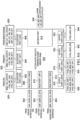
- FIG. 1 illustrates an example computing system 100.
- the example computing system 100 includes an example CPU 102, example processing cores 104a-104n, an example extended memory 106, and an example data cache 108.
- the example data cache 108 includes an example level one (L1) cache 110, an example level two (L2) cache 112, and an example level three (L3) cache 114.
- L1 cache 110 an example level one (L1) cache 110
- L2 cache 112 an example level two cache 112
- L3 cache 114 an example level three cache 114.
- L1 level one
- L2 level two
- L3 cache 114 an example level three cache 114.
- L3 cache 114 an example level three cache 114.
- the example computing system 100 of FIG. 1 includes N processing cores and three levels of cache.
- the example computing system 100 may include any number of processing cores and/or levels of cache.
- one or more of the example components of the computing system 100 may be implemented on the same die and/or different dies in the same chip
- the example CPU 102 of FIG. 1 includes the example processing cores 104a-104n.
- the processing cores 104a-104n may be incorporated in the same die or in separate dies (e.g., connected via one or more interfaces).
- the CPU 102 connects to the example data cache 108 via one or more interfaces.
- the example core 104a of the example CPU 102 may be connected to the data cache 108 via a scalar interface (e.g., a 64-bit wide bidirectional and/or unidirectional interface) and/or a vector interface (e.g., a 512-bit wide interface).
- a scalar interface e.g., a 64-bit wide bidirectional and/or unidirectional interface
- a vector interface e.g., a 512-bit wide interface.
- the use of the scalar interface and the vector interface may be based on interface utilization, data size, and/or other considerations.
- a scalar read operation may be transmitted via the scalar data while the data corresponding to the scalar read may be transmitted over the vector interface.
- either the scalar interface and/or the vector interface may be used if the other interface is busy.
- the CPU 102 may be connected to the data cache 108 using a different number and/or different types of interfaces.
- the processing cores 104a-104n of FIG. 1 access data from the example extended memory 106 and/or the example cache 108 to execute instructions stored in the example extended memory 106 and/or the example data cache 108.
- the example cores 104a-104n can execute different processes at the same time to speed up the execution of tasks (e.g., instructions) of the computing system 100.
- the cores 104a-104n may execute instructions from a workload of an application by writing and/or reading data to/from the extended memory 106 and/or the data cache 108.
- the example core 104a transmits the read and/or write instructions to the example data cache 108.
- the data cache 108 includes the data corresponding to the instructions from the core 104a (e.g., corresponding to a cache hit)
- the data cache 108 fulfills the request and/or instructions from the processing core 104a. If the data cache 108 does not include the data corresponding to the instructions from the cores 104a (e.g., corresponding to a cache miss), the data cache 108 interfaces with the example extended memory 106 to perform the transaction from the core 104a.
- the example extended memory 106 of FIG. 1 is connected to the example data cache 108 via an interface (e.g., a 1024-bit wide extended memory interface). However, a different number and/or a different type of interface may be additionally or alternatively used.
- the example extended memory 106 stores all the data that can be accessed for the computing system 100.
- the example extended memory 106 can be incorporate into the computing system 100 and/or may be memory external to the computing system 100 (e.g., off-chip memory).
- extended memory 108 interacts with a controller of the highest cache (e.g., the example L3 cache 114), and the highest cache (e.g., L3 cache 114) interacts with the next highest cache (e.g., the example L2 cache 112), and so on.
- the new bit(s) which the CPU 102 is/are overwriting from the write portion of the read-modify-write transaction are buffered in the main cache store queue 212 until the old data of the corresponding write (e.g., store) instruction is read from the main storage 214.
- the new bit(s) included in the write portion of the read-modify-write transaction are merged with the old data from the main storage 214, the updated (e.g., merged) data is written back into the main storage 214.
- operation of the multi-bank approach is more efficient than a single main storage (e.g., because the entire cache line is not locked up when a request is received and only a portion of the cache line allocated to the bank that received such a request would be locked), at the expense of complication and/or parts.
- the example cache controller 220 of FIG. 2 is coupled to the components of the L1 to control how data is read and/or written in the example storages 214, 216, and/or how data is updated in the example storages 214, 218. For example, when a read request, a write request, an atomic request, a read-modify-write request, etc. is received at the example CPU interface 202, the cache controller 220 obtains the request and instructs the other components accordingly. For example, during a read request for data at a particular location of the extended memory 106, the example cache controller 220 instructs the main tag RAM access 204 to access the tag RAM 208 to determine if the main storage 214 is storing the data corresponding to the location of the extended memory 106 from the read request.
- the cache controller 220 determines the location of the particular entry based on the data in the tag RAM 208 and interfaces with the main cache store queue 212 to read the value from the example main storage 214 and returns the value to the CPU 102 via the CPU interface 202.
- the example cache controller 220 may transmit the old victim to the L2 cache 112 via the L2 interface 228 to be stored in the L2 cache.
- the address processing components 302a-c may use a memory address from a CPU operation to determine which banks of the main cache store queue 212, the main storage 214, the victim cache store queue 216, and the victim storage 218 is broken up into multiple banks would be needed for the given CPU operation.
- the example hit/miss comparison logic 306 of FIGS. 3A-3D is connected to the input CPU interface 202, the tag RAM 210, the victim cache store queue 216, and/or the example replacement policy component 308.
- the hit/miss comparison logic 306 obtains the entry number of the victim cache (e.g., location) from the tag RAM 210 and an address from the instruction from the CPU interface 202 and compares the two to determine if the access (e.g., the instruction from the CPU interface 202) is a hit or miss (e.g., the data corresponding to the address is stored in the example victim storage 218 or not).
- the example hit-miss comparison logic 306 outputs the result to the replacement policy component 308, the address encoder 326, the multiplexer 330, and/or the victim cache store queue 216.
- the multiplexer 330 of FIGS. 3A-3D is connected to the hit/miss comparison logic 306, the address encoder 326, the replacement address encoder 328, and an address read 332.
- the multiplexer 330 selects an encoded address based on the result of the hit/miss comparison logic 306 (e.g., based on whether the access was a hit or miss).
- the multiplexer 330 provides the selected memory address to the address read 332 to be read into the victim storage 218. For example, the multiplexer 330 outputs the location of the victim storage 218 which the CPU instruction may use to either read the data from or store the data in case of a write instruction.
- the example MUX 320 is connected to the example main storage 214 (e.g., via the eviction line for storing victims), the address processing components 302a-c (e.g., via the write-stream and/or CPU load), the example L2 cache 112 (e.g., via the L2W and/or snoop lines), the victim storage 218, and/or the cache controller 220.
- the example cache controller 220 controls the MUX 320 to control all the ways that data could be written into or read from the example victim storage 218 (e.g., via direct memory access (DMA), a snoop transaction, the victim cache store queue 216, an eviction from the example main storage 214, via L2 cache 112, etc.).
- the example MUXs 318, 320 are controlled by the example cache controller 220 via the respective select inputs.
- a read allocate is when the L1 cache 110 stores the data in the main storage 214, updates the tag RAM 208, etc., to identify that the data for the address is now stored in the main data storage.
- the L1 cache 110 may return the data to the CPU 102 and/or wait for the CPU 102 to send out a subsequent read request for the same address. If the CPU 102 sends out a subsequent read request for the same address, the tag RAM 208 will identify that the data for the address is now present in the main storage 214, thereby resulting in a read hit. If the CPU 102 does a write to the same address, the tag RAM 208 will identify a write hit because the address is stored in the main storage 214. For a write hit, the CPU 102 will provide data to write, and the L1 cache 110 will write the data into the main storage 214 corresponding to the address.
- some example cache systems included a write buffer to store write instructions from the CPU to prevent stalling the CPU (e.g., by attempting to load memory address from higher cache before writing the data).
- the CPU can continue to send instructions while the L1 cache interfaces with higher level cache to obtain the data in the memory address corresponding to the write instructions in the buffer, and stores the data in the main storage and writes the data (e.g., stored in the write buffer) in parallel with subsequent instructions from the CPU.
- the CPU may only write a few number of bytes per write instruction and the interface between the L1 cache and higher level caches and/or the extended memory is capable of sending a larger number of bytes (e.g., 64 byte bandwidth). Accordingly, the transmission of a few number of bytes per cycle on a large byte interface is inefficient.
- the victim storage 218 combines a second threshold amount of the write miss data in the write miss cache into one signal that is sent to the higher level cache (e.g., via the example L2 interface 228) to be written in the address stored in the higher level cache (e.g., the L2 cache 112) and/or the extended memory 106. In this manner most or all of the bandwidth of the interface can be utilized in a particular cycle.
- the second threshold may be the same as or different than the first threshold.
- the write data is stored locally in the main storage 214 or the victim storage 218.
- the cache controller 220 can read and/or write the data to the corresponding address within the write miss cache before it gets transmitted to higher level cache and/or the extended memory 106.
- the structure of the write miss cache in the victim storage 218 includes a byte enable register file that represents the value bytes (e.g., the bytes to be written) of the write miss information. For example, if a write miss corresponding to writing data for a first byte and a third byte of a memory address is stored in the write miss cache, the victim storage 218 stores the write miss data for the first and third byte in conj unction with the memory address and populates the corresponding entry of byte enable register file with a first value (e.g., '1') for the elements of the entry that correspond to the first and third byte and a second value (e.g., '0') for the remaining elements of the entry.
- a first value e.g., '1'
- a second value e.g., '0'
- cache request conflicts as with multiple datapaths are straight forward.
- a datapath is one or more logic circuits that, when executed and/or otherwise invoked, effectuate the transmission or delivery of data (e.g., logic signal(s), bit vector(s), etc.) from a source to a destination.
- Cache request conflicts from the multiple datapaths may be an issue for the victim storage 218 where the victim storage 218 is fully associative and can store write-miss entries as well as cache entries.
- Cache request conflicts for two datapaths may be handled as described in the following examples.
- cache operations are described in the context of a particular datapath. However, the examples are directed to combinations of particular cache operations, and which datapath a particular cache operation is on does not matter.
- cache read miss for a first datapath and a cache write hit for a second datapath, with two different memory addresses.
- cache requests can go to any location within the victim storage 218.
- address generation for a location within the victim storage 218 occurs in the E2 pipestage along with address lookup in the victim cache tag RAM 210, thus address generation for a location within the victim cache is performed before it is known whether an address of the cache request is a hit or miss.
- the controller 220 determines that there is a read miss on the main storage 214, a request to obtain the memory address of the read request is issued to a higher level cache or memory.
- the memory address of the read request of the first datapath maps to a single location in the main storage 214. If there is already cached data in the single location, the already cached data is evicted from the main storage 214 to the victim storage 218 to the pre-generated location within the victim storage 218. If this pre-generated location is the same location the cache write of the second datapath is a hit on, a conflict occurs. This conflict may be detected by the cache controller 220.
- address generation for a location within the victim storage 218 occurs before it is known whether the address of cache request is a hit or a miss, thus there is an address generated for a second location within the victim storage 218 for the cache write of the second datapath before the determination that the cache write is a hit. Based on the detection of the conflict, this second location within the victim cache may be used to store the data evicted from the main storage 214 by the read miss.
- a request to obtain the memory address of the read request is issued to a higher level cache or memory and the already cached data is evicted from the main storage 214 to the victim storage 218 to a pre-generated location, here location A, within the victim storage 218.
- the cache write of the second datapath hits on location A within the victim storage 218 as well, resulting in a set conflict.
- One possible solution to such a conflict is to load the requested read miss from the higher level cache or memory directly to the victim cache in a separate location.
- Another solution to the conflict is for the cache controller 220 to stall the read miss such that the already cached data is not evicted to the victim storage 218 until after the cache write of the second datapath completes to location A and location A is evicted to a higher level cache or memory. In certain cases, the stall may occur while waiting for the higher level cache or memory to return the read miss data.
- a first cache write may be received on the first datapath for the victim storage 218 and a second cache write is also received on the second datapath for the victim storage 218. If the first cache write and the second cache write are addressed to different memory addresses, then both cache writes may proceed in parallel to the victim storage 218. If the first cache write and the second cache write are both addressed to the same memory address and both are cache misses, then the victim cache controller 224 allocates a single location in the allocated victim cache write-miss memory and merges the first cache write and the second cache write in the victim cache store queue 216. The merged data may then be written to the victim cache write-miss memory along with merged byte enable, priority, and color tag information. If the first cache write and the second cache write are both addressed to the same memory address and both are cache hits, both the first cache write and the second cache write are merged into the cache at the hit location.
- a cache read may be received on the first datapath for the victim storage 218 and a cache write may be received on the second datapath for the victim storage 218.
- the cache read and cache write proceed in parallel without conflicts.
- the cache read and cache write also proceed in parallel without conflicts.
- the cache read may use an address generated for a location within the victim storage 218 for the cache write as described above.
- both the cache read and the cache write use addresses generated for locations within the victim storage 218.
- a cache read may be received on the first datapath for the victim storage 218 and a cache write may be received on the second datapath for the victim storage 218.
- the cache read may be a hit for a first address of a set of addresses stored in the victim storage 218.
- the cache write may also be a hit for a second address of the same set of addresses stored in the victim storage 218. In such a case, the cache read and the cache write may proceed in parallel without conflicts.
- the cache read may be a hit for a first address of a set of addresses stored in the victim storage 218.
- the cache write may be a miss for a second address of the same set of addresses stored in the victim storage 218.
- the cache read and the cache write may proceed in parallel without conflicts.
- the cache read may be a miss for a first address of a set of addresses stored in the victim storage 218.
- the cache write may be a hit for a second address of the same set of addresses stored in the victim storage 218.
- the cache read may be stalled until after the cache write of the second datapath completes to the location in the victim storage 218 and is evicted to a higher level cache or memory.
- the cache read then proceeds to read the set of addresses from the higher level cache or memory into the victim storage 218.
- the cache read may be a miss for a first address of a set of addresses stored in the victim storage 218.
- the cache write may also be a miss for a second address of the same set of addresses stored in the victim storage 218. In such a case, the cache read and the cache write may proceed in parallel without conflicts.
- a cache read may be received on the first datapath for the victim storage 218 and a cache write may be received on the second datapath for the victim storage 218.
- the cache read may be a hit for an address stored in the victim storage 218.
- the cache write may also be a hit for the same address stored in the victim storage 218.
- the cache read may proceed first and the cache write may be stalled until after the cache read completes.
- the order of the cache write and cache read may be based on the datapath on which the cache write and cache read are received, with the cache operation arriving on a lower (or higher) numbered datapath being completed before the other cache operation.
- the cache read may be a miss for an address stored in the victim storage 218.
- the cache write may also be a miss for the same address stored in the victim storage 218.
- the cache write operation may be forwarded to a higher level cache or memory and then the cache read may obtain the data from the higher level cache or memory after the cache write operation completes for storage into the victim storage 218.
- a first cache read may be received on the first datapath for the victim storage 218 and a second cache read may be received on the second datapath for the victim storage 218. If the first cache read and the second cache read are for different memory addresses, then there are no conflicts for either hits nor misses. In certain cases, the first cache read may be a miss for a first address of a set of addresses. The second cache read may also be a miss for a second address of the same set of addresses. If the first cache read and the second cache read have different priority levels, a higher level cache or memory is accessed based on the higher of the different priority levels. Otherwise, the higher level cache or memory is accessed and the set of memory addresses obtained for storage in the victim storage 218. The case where the first cache read and the second cache read are for the same address is handled identically.
- Example methods, apparatus, systems, and articles of manufacture to facilitate Write Miss Caching in L1 data cache are described herein. Further examples and combinations thereof include the following:
- Example 1 includes an apparatus comprising a first cache storage, a second cache storage, wherein the second cache storage includes a first portion operable to store a first set of data evicted from the first cache storage and a second portion, a cache controller coupled to the first cache storage and the second cache storage and operable to receive a write operation, determine that the write operation produces a miss in the first cache storage, and in response to the miss in the first cache storage, provide write miss information associated with the write operation to the second cache storage for storing in the second portion.
- Example 3 includes the apparatus of example 2, wherein the threshold corresponds to a bandwidth of an interface.
- Example 4 includes the apparatus of example 2, wherein the threshold corresponds to a size of the second portion.
- Example 5 includes the apparatus of example 1, wherein the write miss information is first write miss information, the cache controller operable to the second cache storage is to not provide the first write miss information from the first cache storage to the second cache storage if the second cache storage includes second write miss information for a memory address corresponding to the first write miss information.
- the write miss information is first write miss information
- the cache controller operable to the second cache storage is to not provide the first write miss information from the first cache storage to the second cache storage if the second cache storage includes second write miss information for a memory address corresponding to the first write miss information.
- Example 6 includes the apparatus of example 1, wherein the first cache storage and the second cache storage are connected in parallel to a central processing unit.
- Example 7 includes the apparatus of example 1, wherein the write miss information is first write miss information, the cache controller operable to, when a first memory address of the first write miss information from the first cache storage matches a second memory address of second write miss information stored in the second portion, to merge the first write miss information with the second write miss information.
- the write miss information is first write miss information
- the cache controller operable to, when a first memory address of the first write miss information from the first cache storage matches a second memory address of second write miss information stored in the second portion, to merge the first write miss information with the second write miss information.
- Example 10 includes the apparatus of example 9, wherein the values correspond to elements of the write miss information that will be written.
- Example 13 includes the system of example 12, wherein the threshold corresponds to a bandwidth of an interface to the second cache.
- Example 14 includes the system of example 12, wherein the threshold corresponds to a size of the second portion.
- Example 15 includes the system of example 11, wherein the second cache storage is to not store the write miss information from the first storage in the second portion if the second cache storage includes second write instructions corresponding to a same memory address as the write miss information from the central processing unit.
- Example 16 includes the system of example 11, wherein the first cache storage and the second cache storage are connected in parallel to the central processing unit.
- Example 17 includes the system of example 11, wherein the write miss information is first write miss information, further including a controller to, when a first memory address of the first write miss information from the first cache storage matches a second memory address of second write miss information stored in the second portion, merge the first write miss information with the second write miss information.
- the write miss information is first write miss information
- the controller to, when a first memory address of the first write miss information from the first cache storage matches a second memory address of second write miss information stored in the second portion, merge the first write miss information with the second write miss information.
- Example 18 includes the system of example 17, wherein the cache controller is to merge the first write miss information with the second write miss information by at least one of (a) maintaining first write information of the first write miss information or (b) discarding second write information of the second write miss information when the second write information corresponds to the same one or more bytes as the first write miss information.
- Example 19 includes a method comprising receiving a write operation, determining that the write operation produces a miss in a first cache storage, and in response to the miss in the first cache storage, proving write miss information associated with the write operation to a second cache storage element with a first portion and a second portion for storing in the second portion, the first portion storing a first set of data evicted from the first cache storage.
- Example 20 includes the method of example 19, further including comparing the second portion of the second cache storage to a threshold, and based on the second portion exceeding the threshold, outputting the write miss information to a second cache.
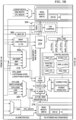
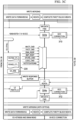
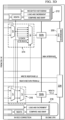
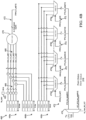
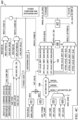
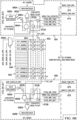
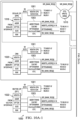
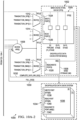
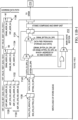
- FIG. 4A is an example circuit implementation of the main cache store queue 212 of FIGS. 2 and/or 3.
- the main cache store queue 212 includes an example latches 402a, 402b, 402c, 402d, 402e, example merge circuits 403a-c, an example arithmetic component 404, an example atomic compare component 406, an example read-modify-write merge component 408, an example select multiplexer 410, and example ECC generator 412, an example arbitration manager 414, an example pending store address data store 416, an example priority multiplexer 418, an example read port 424, and an example write port 426.
- the example merge circuits 403a-d include an example comparator(s) 420, and example switches 422.
- FIG. 4A illustrates a single pipeline of the main cache store queue 212.
- the main storage element 214 may be arranged to support more than one independent copy of the pipeline with respect to different banks as indicated by the dashed box 400. Accordingly, the pipeline of FIG. 4A may be reproduced multiple times for different banks, as further described below.
- the example latches 402a, 402b, 402c, 402d, 402e are electronic devices configured to store information (e.g., bytes, bits, etc.) obtained by the main cache store queue 212.
- the example latches 402a-c pass the write data and information corresponding to whether the write data needs to be combined with the read and corrected data out of the ECC logic 310 in the arithmetic unit 404, the atomic unit 406, and/or the RMW merge component 408.
- the latch 402a is communicatively coupled to the cache controller 220 to obtain read, write, and/or modify instructions.
- Such read, modify, and/or write instructions may originate from the CPU 102, and transmitted to the latch 402a via the cache controller 220.
- Latch 402a is coupled to latch 402b, the tag RAM 208, the arbitration manager 414, and the pending store address data store 416 to transmit such read, modify, and/or write instructions to the latch 402b, the tag RAM 208, the arbitration manager 414, and the pending store address data store 416 in response to a subsequent clock cycle of the cache controller 220.
- the latch 402b is coupled to latch 402a, the pending store address data store 416, latch 402c, the priority multiplexer 418, and the comparator(s) 420 to transmit the obtained read, modify, and/or write instruction in response to a subsequent clock cycle of the cache controller 220.
- the value obtained from the read, modify, and/or write instruction (e.g., the byte value, the bit value, etc.), propagates through the main cache store queue 212.
- the example latch 402c is coupled to the latch 402b, the priority multiplexer 418, the arithmetic component 404, the atomic compare component 406, and the read-modify-write merge component 408. This coupling enables the latch 402c to transmit the value obtained from the read, modify, and/or write instruction (e.g., the byte value, the bit value, etc.) to the arithmetic component 404, the atomic compare component 406, and/or the read-modify-write merge component 408 in response to a subsequent clock cycle of the cache controller 220.
- the read, modify, and/or write instruction e.g., the byte value, the bit value, etc.
- the cache controller 220 may transmit an instruction to write a bit into a currently stored word
- the latch 402c may transmit the value obtained from the read, modify, and/or write instruction (e.g., the byte value, the bit value, etc.) to the arithmetic component 404, the atomic compare component 406, and/or read-modify-write merge component 408.
- the example merging circuit 403a is coupled to the latch 402d, the merging circuit 403b, the arithmetic component 404, the atomic compare component 406, and the read-modify-write merge component 408.
- the example merging circuit 403b is coupled to the merging circuit 403a, the priority multiplexer 418, and the merging circuit 403c.
- the example merging circuit 403c is coupled to the merging circuit 403b and the latch 402b.
- the example merging circuits 403a-c facilitate the comparison of read operations in different sections of the main cache store queue 212 to potentially reroute write operations to be merged with write operations corresponding to the same memory address location, as further described below.
- the arithmetic component 404 is coupled to the latch 402c, the first multiplexer 410, and to the ECC logic 310 to perform arithmetic operations on (e.g., increment, decrement, etc.) data from the main storage 214. Also, the arithmetic component 404 performs histogram operations on the data stored in the main storage 214.
- the example arithmetic component 404 of the illustrated example of FIG. 4A is implemented by a logic circuit such as, for example, a hardware processor.
- any other type of circuitry may additionally or alternatively be used such as, for example, one or more analog or digital circuit(s), logic circuits, programmable processor(s), application specific integrated circuit(s) (ASIC(s)), programmable logic device(s) (PLD(s)), field programmable logic device(s) (FPLD(s)), digital signal processor(s) (DSP(s)), etc. Operation of the example arithmetic component 404 is further described below.
- the read-modify-write merge component 408 is coupled to the latch 402c, the first multiplexer 410, and to the ECC logic 310 to facilitate the read, modify, and/or write instruction(s) sent by the cache controller 220.
- the read-modify-write merge component 408 is coupled to the ECC logic 310 to obtain the currently stored word that is to be affected by the read, modify, and/or write instruction(s).
- the read-modify-write merge component 408 is configured to update the currently stored word obtained from the ECC logic 310 with the new bit(s), byte(s), etc., obtained from the latch 402c. Additional description of the read-modify-write merge component 408 is described below.
- the example read-modify-write merge component 408 of the illustrated example of FIG. 4A is implemented by a logic circuit such as, for example, a hardware processor.
- a logic circuit such as, for example, a hardware processor.
- any other type of circuitry may additionally or alternatively be used such as, for example, one or more analog or digital circuit(s), logic circuits, programmable processor(s), application specific integrated circuit(s) (ASIC(s)), programmable logic device(s) (PLD(s)), field programmable logic device(s) (FPLD(s)), digital signal processor(s) (DSP(s)), etc.
- the example first multiplexer 410 of the illustrated example of FIG. 4A is implemented by a logic circuit such as, for example, a hardware processor.
- a logic circuit such as, for example, a hardware processor.
- any other type of circuitry may additionally or alternatively be used such as, for example, one or more analog or digital circuit(s), logic circuits, programmable processor(s), application specific integrated circuit(s) (ASIC(s)), programmable logic device(s) (PLD(s)), field programmable logic device(s) (FPLD(s)), digital signal processor(s) (DSP(s)), etc.
- a logic circuit such as, for example, a hardware processor.
- any other type of circuitry may additionally or alternatively be used such as, for example, one or more analog or digital circuit(s), logic circuits, programmable processor(s), application specific integrated circuit(s) (ASIC(s)), programmable logic device(s) (PLD(s)), field programmable logic device(s) (FPLD(s)), digital signal processor(s) (DSP(s)), etc.
- the example priority multiplexer 418 is coupled to the latch 402b, the latch 402c, the latch 402d, and the merging circuit 403a to facilitate read operations in the event either of the of the latch 402b, the latch 402c, the latch 402d, or the merging circuit 403a are storing a value corresponding to a write instruction.
- the cache controller may initiate the following four write instructions regarding a four byte word having addresses A3, A2, A1, and A0: write address A0 with the byte 0x11, write address A1 with the byte 0x22, write address A3 with the byte 0x23, and write address A0 with the byte 0x44.
- the main cache store queue 212 includes pending store address data store 416 that records the addresses of the operations at each stage of the main cache store queue 212, a priority multiplexer 418 to select data from one of the stages (e.g., latches) of the main cache store queue 212 for forwarding, and a MUX circuit 314 that selects between the output of the main storage 214 (by way of the error detection and correction circuit 310) and the forwarded main cache store queue 212 data from the data priority multiplexer 418.
- stages e.g., latches
- the example read port 424 is coupled to the read path and the data store 416.
- the read port 424 may be implemented by an interface that interfaces with the main cache controller 222 whenever a read-miss occurs.
- the read port 424 is utilized to receive victim addresses and read-invalidate commands from the main cache controller 222.
- the read port 424 is to send the victim addresses to the data store 416 to be compared against the pending addresses stored in the data store 416.
- the example write port 426 is coupled to the write path and the latch 402a.
- the write port 426 may be implemented by an interface that interfaces with the main cache controller 222 (e.g., the cache controller 220) to obtain a write instruction.
- the write port 426 is utilized to receive addresses and values from the cache controller 220 to write.
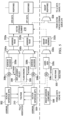
- the elements of FIG. 4A are arranged in a manner representing the flow of transaction processing.
- the temporal elements are represented by stages E1-E5. Each stage represents a discrete period of time, and in some examples each stage represents a clock cycle or an integer number of clock cycles.
- Data and ECC may be provided by the main cache storage 214 in the third cycle, corresponding to stage E3. However, this data may or may not correspond to the memory address specified by the read operation because the L1 data cache 110 may allocate multiple extended memory addresses to the same entry in the cache's main storage 214. Accordingly, in the third cycle, the L1 data cache 110 determines whether the provided data and ECC from the main storage 214 corresponds to the memory address in the read operation (e.g., a cache hit) based on the comparison of the tag RAM 208 record. In the event of a cache hit, the data and ECC bits are received by the error detection and correction circuit 310, which corrects any errors in the data in a fourth cycle, corresponding to stage E4.
- newer data that has not yet been written to the main storage 214 may be present in the main cache store queue 212, and may be forwarded from the main cache store queue 212 by the priority multiplexer 418. If so, the MUX circuit 314 selects the forwarded data over the corrected data from the main storage 214.
- Either the corrected data from the main storage 214 or the forwarded data from the main cache store queue 212 is provided to the L1 data cache 110 in a fifth cycle, corresponding to stage E5.
- the controller 220 may provide data with full ECC checking and correction in the event of a cache hit in about 5 cycles.
- the main cache store queue 212 may stall until the data can be retrieved from either the extended memory 106 and/or the victim storage 218, at which point the data may be written to the main storage and the tag RAM 208 may be updated.
- Such an application may utilize two additional clock cycles of the CPU (e.g., one clock cycle for error correction by the ECC logic and another clock cycle for ECC syndrome regeneration).
- examples described herein include utilizing the same parity block size between the main storage 214 and the victim cache storage 218.
- both the main storage 214 and the victim cache storage 218 calculate and/or otherwise determine parity on a 32-bit boundary. In this manner, the L1 cache 110 can move a cache line directly from main storage 214 to the victim cache storage 218 with less latency.
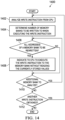
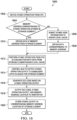
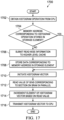
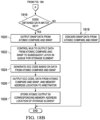
- the L1 data cache 110 supports a number of operations that read data from the cache and make changes to the data before rewriting it.
- the L1 data cache 110 may support read-modify-write operations.
- a read-modify-write operation reads existing data and overwrites at least a portion of the data.
- a read-modify-write operation may be performed when writing less than a full bank width (e.g., when writing less than a 32-bit, 4-byte word).
- the read functionality of the read-modify-write is used because the portion of the data in the bank that will not be overwritten still contributes to the ECC syndrome bits.
- a read-modify-write operation may be split into a write operation and a read operation, and the main cache store queue 212 may be structured such that the read operation in the read path stays synchronized with the write operation in the main cache store queue 212.
- the read operation and the write operation remain synchronized until the read-modify-write merge component 408 overwrites at least a portion of the read data with the write data to produce merged data.
- the merged data is provided to the ECC generator 412 that generates new ECC syndrome bits for the merged data, and then the merged data and ECC syndrome bits may be provided to the arbitration manager 414 for storing in the main storage 214.
- the cache controller 220 of FIGS. 2 and/or 3 transmits a write request indicating a subset of bytes of a word, or an entire word (e.g., a first set of data), to be written.
- the write request transmitted by the cache controller 220 includes an address value of the byte(s) to be written and the data to write to the indicated bytes.
- the main storage 214 of FIGS. 2 and/or 3 may include the four-byte word 0x12345678 associated with addresses A3, A2, A1, A0.
- address A3 corresponds to the byte 0x12
- address A2 corresponds to the byte 0x34
- address A1 corresponds to the byte 0x56
- address A0 corresponds to the byte 0x78 of the stored word.
- the cache controller 220 may transmit a write request to replace address A3 with the byte 0x33, replace address A1 with the byte 0x22, and replace address A0 with the byte 0x11 of the currently stored word 12345678.
- the first write request to replace address A3 of the stored word with the byte 0x33 would result in the stored word becoming 0x33345678
- the second write request to replace address A1 of the stored word with the byte 0x22 would result in the stored word becoming 0x3334227
- the third write request to replace address A0 of the stored word with the byte 0x11 would result in the stored word becoming 0x33342211.
- the L1 data cache 110 compares an address of the read operation to a record of the tag RAM 208, and the L1 data cache requests the data and ECC syndrome bits from the main storage 214 and/or the main cache store queue 212. Because the read-modify-write operation will modify the data, in examples that track MESI (Modified, Exclusive, Shared, and Invalid) states of entries in the main storage 214, a cache hit that is not in either the Modified or Exclusive state may be considered a cache miss. When the data is obtained in the proper state and any errors are corrected, it is provided to the read-modify-write merge component 408. In this same cycle, the read-modify-write merge component 408 may overwrite at least a portion of the corrected data with the write data to produce merged data. The ECC generator 412 generates new ECC syndrome bits for the merged data.
- MESI Modified, Exclusive, Shared, and Invalid
- the ECC generator 412 operates on word granularity. Accordingly, the ECC generator 412 calculates the ECC syndrome for a block of data.
- the block of data may four bytes (e.g., a word).
- the main cache store queue 212 processes the write instruction by, at a first example cycle (e.g., to compete the first write request of replacing address A3 with the byte 0x33), because the ECC generator 412 operates on word granularity (e.g., a 4-byte or 32-bit word), the cache controller 220 initiates a read request of the currently stored byte in address A3 of the currently stored word.
- the byte and address in the first write request (e.g., 0x33 and A3) is stored in the latch 402b.
- the cache controller 220 transmits a read request of the entire currently stored word to the main storage 214.
- a read request of the entire currently stored word is transmitted to the main storage 214 and the byte 0x33 is stored in the first latch 402b.
- the byte from the first write request is transmitted to the latch 402c, the entire currently stored word is transmitted from the main storage 214 to the ECC logic 310, and the second write request (e.g., to replace address A1 with the byte 0x22) is transmitted by the cache controller 220 to be stored in the latch 402b.
- the read-modify-write merge component 408 obtains the byte stored in the latch 402c and the entire currently stored word transmitted by the ECC logic 310. In this manner, the read-modify-write merge component 408 identifies the address of the byte in the currently stored word to be updated .
- Such an example written portion output by the read-modify-write merge component 408 may be referred to herein as the merged word.
- such a merged word is provided by the read-modify-write merge component 1108 for writing to the victim storage 218.
- the select multiplexer 410 transmits the merged word from the read-modify-write merge component 408 to be stored in the latch 402d.
- the ECC generator 412 obtains the merged word from the latch 402d and generates the corresponding ECC syndrome bits.
- the ECC generator 412 transmits the merged word though the merging circuits 403a, 403b, and 403c to be handled by the arbitration manager 414 to be stored in the main storage 214.
- the read-modify-write merge component 408 can merge these three write instructions into one transaction when writing the three values of the three write instructions to the currently stored word. For example, before storing the merged word from a first write instruction in the main storage 212, the main storage queue 212 feedbacks (e.g., transmits) the merged word for use in the subsequent second write instruction.
- the example address line 462 (RD_ADDR) is coupled to the cache controller 220 to obtain an example read instruction from the CPU 102.
- such an example address line 462 obtains the read instruction for the main cache store queue 212.
- the main cache store queue 212 could forward any data from in-flight write transactions when executing the CPU 102 read instruction.
- an instruction from the CPU 102 e.g., a read instruction and/or otherwise transaction, and/or a write instruction and/or otherwise transaction
- the four addresses of the address stores 464a may include one or more valid bytes (e.g., bytes that are a logic high).
- the main cache store queue 212 is 64 bits (e.g., 8 bytes) and, thus, the main cache store queue 212 may perform a write on any number of bytes, such as, from one to eight.
- the example of FIG. 4B includes example select logic 470 and example select lines 472.
- the select lines 472 include eight, 2-byte outputs. Accordingly, there is one select signal of the select signals for each of the corresponding byte enables of the byten stores 464c.
- the example select logic 720 selects the most recent data.
- Such an output of the select logic 470 e.g., the select lines 472 control example multiplexers 474a-474h (multiplexers 474e-h not shown), respectively.
- the multiplexers 474a-h include 8 1-byte input terminals.
- any of the address line 462, the address stores 464a, the byten stores 464b, the data stores 464c, the compare logic 466, the output lines 468, the select logic 470, the select lines 472, and/or the multiplexers 474a-h may be implemented in the victim cache store queue 216.
- the output terminals of the multiplexers 474a-h are coupled to an example cache multiplexers 476.
- cache multiplexer 476 is also coupled to similar multiplexers implemented in this manner in association with the victim cache store queue 216.
- the topology of FIG. 4B may correspond to the example write data forwarding component of the main cache store queue 212, the write data forwarding component of the victim cache store queue 216, and the MUX circuits 314, 316.
- the cache multiplexer 476 may be implemented by the example MUX circuits 314, 316.
- the topology of FIG. 4B may correspond to the pending store address data store 418 and example priority multiplexer 418.
- the address stores 464a, the byten stores 464b, and/or the data stores 464c may be implemented by the example pending store address data store 416.
- any of the address line 462, the compare logic 466, the output lines 468, the select logic 470, the select lines 472, and/or the multiplexers 474a-h may be implemented by the example priority multiplexer 418.
- Example methods, apparatus, systems, and articles of manufacture to facilitate fully pipelined read-modify-write support in level 1 data cache using store queue and data forwarding are described herein. Further examples and combinations thereof include the following:
- the main storage 214 and/or the victim storage 218 may be multi-banked storages.
- the main storage 214 may include sixteen memory banks (e.g., sixteen sub-RAMs), each 64 bits wide.
- the cache controller 220 transmits a write instruction to write all 64 bits of a first bank of the main storage 214 (e.g., write a 64-bit word starting with the first address of the first bank)
- the write instruction can be executed without initiating a read instruction.
- the bank processing logic 303 may detect that such a write of an entire bank is to be performed and, thus, indicate to the cache controller 220 to initiate the read-modify-write operation, negating to transmit the read instruction.
- the example merging circuits 403a-c include example comparator(s) 420 and example switches 422.
- the example merging circuit 403a merges the two write operations to keep the writing data stored in latch 402c (e.g., the write to byte0 and byte2) and include the write data from latch 402d that doesn't overlap (e.g., byte2). In this example, the merging circuit 403a discards the write data of byte 0 from the latch 404d as part of the merging operation because the data to be written at byte 0 from the latch 404d will be overwritten by the write instructions of the latch 402c.
- the example comparator 480d outputs a second value ('0').
- the output of the comparator 480d is input to the select line of the MUX 484 of the switch 422.
- the comparator 480d will control the MUX 484 of the switch 422 to output merged data (e.g., from the OR gate 482 of the switch 422).
- Example 3 includes the apparatus of example 2, wherein the store queue is to store the third set of data in the at least one of the first cache storage or the second cache storage in one cycle.
- Example 4 includes the apparatus of example 1, wherein the store queue is operable to merge the first memory operation and the second memory operation by cancelling a part of the first memory operation.
- Example 6 includes the apparatus of example 4, wherein the part is a first part, the store queue operable to merge the first memory operation and the second memory operation by maintaining a second part of the first memory operation.
- Example 7 includes the apparatus of example 6, wherein the second part of the first memory operation are bytes that the second memory operation is not to write to.
- Example 8 includes the apparatus of example 1, wherein the first cache storage is a main cache storage and the second cache storage is a victim cache storage.
- Example 9 includes a system comprising a central processing unit coupled in parallel to a first cache storage and a second cache storage, a store queue coupled to at least one of the first cache storage and the second cache storage and operable to process a first memory operation from the central processing unit, the first memory operation for storing the first set of data in at least one of the first cache storage and the second cache storage, before storing the first set of data in the at least one of the first cache storage and the second cache storage, merge the first memory operation and a second memory operation corresponding to a same memory address.
- Example 10 includes the system of example 9, wherein the first memory operation specifies a first set of data, the second memory operation specifies a second set of data, and the store queue is operable to before storing the first set of data in the at least one of the first cache storage and the second cache storage, merge the first set of data and the second set of data to produce a third set of data, and provide the third set of data for storing in at least one of the first cache storage and the second cache storage.
- Example 11 includes the apparatus of example 10, further including a store queue to store the third set of data in the at least one of the first cache storage or the second cache storage in one cycle.
- Example 15 includes the system of example 14, wherein the second part of the first memory operation are bytes that the second memory operation is not to write to.
- the atomic compare component 406 compares the comparison value (e.g., a key) provided by the CPU 102 against the ECC data 310. On a match, the new data is swapped in place of the old data (e.g. ECC data 310) and output to the MUX 410. The size of the new data swapped-in is determined by cas_acc_sz input (e.g. 32-bit or 64-bit). In the example circuit implementation 450 of FIG. 4C , the atomic compare component 406 may also receive an atomic swap operation.
- the comparison value e.g., a key
- the new data is swapped in place of the old data (e.g. ECC data 310) and output to the MUX 410.
- the size of the new data swapped-in is determined by cas_acc_sz input (e.g. 32-bit or 64-bit).
- the atomic compare component 406 may also receive an atomic swap operation.
- Example 12 includes the system of example 8, wherein the cache storage is at least one of a main cache storage or a victim cache storage.
- Example 17 includes the method of example 15, wherein the vector is provided to a processor.
- the example atomic operation logic 406 will instruct the MESI RAM 300 to tag the data as modified.
- the received data from the L2 cache 112 is transmitted into the main cache store queue 212 to be stored in the main storage 214. Because the operation was an atomic operation (e.g., a regular atomic operation or an atomic compare and swap) or a histogram protocol, the data from the higher level cache is manipulated by the example arithmetic component 404 and/or the example atomic compare component 406 for the manipulation and stored in the example main storage 215 via the example ECC generator 412 and the example arbitration manager 414.
- atomic operation e.g., a regular atomic operation or an atomic compare and swap
- Example methods, apparatus, systems, and articles of manufacture to facilitate an atomic compare and swap are described herein. Further examples and combinations thereof include the following:
- Example 1 includes a system comprising a cache storage, a cache controller coupled to the cache storage wherein the cache controller is operable to receive a memory operation that specifies a key, a memory address, and a first set of data, retrieve a second set of data corresponding to the memory address, compare the second set of data to the key, based on the second set of data corresponding to the key, cause the first set of data to be stored at the memory address, and based on the second set of data not corresponding to the key, complete the memory operation without causing the first set of data to be stored at the memory address.
- Example 5 includes the system of example 1, wherein the cache controller is operable to complete the memory operation based on a single instruction from a central processing unit at a single cycle.
- Example 14 includes the storage queue of example 13, further including an arbitration manager to, if the first data matches the key, store the first set of data at the memory address after the exclusive state request has been granted from the other cache.
- the example snoop address component 506 is implemented by a snoop data path and/or otherwise interface.
- the L1 cache 110 includes the snoop data path to add coherency to the L1 cache 110.
- the example snoop address component 506 is connected to the tag RAM 210 and comparison logic 306c.
- the snoop address component 506 obtains an example snoop request address issued by a higher-level data cache (e.g., the L2 data cache 112) that issues an address read to the tag RAM 210.
- the snoop address component 506 attempts to read a memory address from the tag RAM 210.
- bank arbitration logic calculates and/or otherwise determines the banks required for each of the addresses and selects the read on each of the banks.
- the control logic resolves any bank conflict between the two addresses to effectuate serialization of the two memory operations.
- the control logic can effectuate not issuing multiple allocation requests for the same address.
- FIG. 7A is a schematic illustration of a first example encapsulated data cache system 700.
- the first encapsulated data cache system 700 can be an example circuit implementation of the L1 cache 110 of FIG. 1 or portion(s) thereof, and/or, more generally, the data cache 108 of FIG. 1 or portion(s) thereof.
- the first encapsulated data cache system 700 is encapsulated to provide a unified storage view to an external system (e.g., one or more CPUs, one or more processors, external hardware, etc.).
- an external system e.g., one or more CPUs, one or more processors, external hardware, etc.
- the first encapsulated data cache system 700 includes the victim cache store queue 216 of FIG. 2 and the victim storage 218 of FIG. 2 .
- the victim cache store queue 216 includes a plurality of first example independently addressable banks (e.g., data banks, store banks, data store banks, etc.) 702.
- the first independently addressable banks 702 can be bank queues, bank sub-queues, etc.
- the bank queues, the bank sub-queues, etc. can include a plurality of storage elements, as depicted below in FIG. 7C and/or FIG. 7E .
- the first independently addressable banks 702 are victim cache store queue banks (e.g., victim cache store queue data banks, victim cache bank queues, victim cache bank sub-queues, etc.).
- the victim cache store queue 216 includes 16 of the victim cache store queue banks 702. Alternatively, there may be fewer or more than 16 instances of the victim cache store queue banks 702.
- the victim storage 218 includes a plurality of second example independently addressable banks (e.g., data banks, store banks, data store banks, etc.) 704.
- the second independently addressable banks 704 are victim storage banks (e.g., victim storage data banks).
- the victim storage 218 includes 16 of the victim storage banks 704. Alternatively, there may be fewer or more than 16 instances of the victim storage banks 704.
- the multi-bank structure of the victim cache store queue 216, the victim storage 218, and/or, more generally, the first encapsulated data cache system 700 can service read and write operations that are sent to the banks in parallel.
- each bank arbitrates its own processes in response to the read and/or write operations.
- operation of the first encapsulated data cache system 700 is more efficient since an entire cache line is not locked up when a request is received. Rather, only the portion of the cache line allocated to the bank that received such a request would be locked.
- the victim cache multi-bank structure 720 is independently addressable by bank. For example, the first row of the rows 724 has a starting row address of 0 and an ending row address of 127, a second row of the rows 724 has a starting row address of 128 and an ending row address of 255, etc.
- the second allocation port 804 is configured to receive second example data 826.
- the second allocation port 804 can receive the second data 826 from the write state machine associated with the vector data path (DP1).
- the second data 826 includes WRM_TAG_UPDATE1 data, which can be representative of a control signal generated from the CPU interface 202 of FIG. 2 (e.g., the vector data path (DPI)).
- the control signal can be generated to inform the VCT RAM 800 that the CPU interface 202 has a cache line to be moved from the CPU interface 202 to the victim storage 218 and, thus, the CPU interface 202 has an address to be moved from the CPU interface 202 to the tag ram 210.
- the third allocation port 806 is configured to receive third example data 828.
- the third data 828 includes ARB_EVT_TAG_UPDATE data, which can be representative of a control signal generated from the main storage 214.
- the control signal is an arbitration (ARB) evict (EVT) tag update control signal, which can be generated to inform the VCT RAM 800 that the main storage 214 has a cache line to be moved from the main storage 214 to the victim storage 218 and, thus, the main storage 214 has an address to be moved from the tag ram 208 to the tag ram 210.
- ARB_EVT_TAG_UPDATE data which can be representative of a control signal generated from the main storage 214.
- the control signal is an arbitration (ARB) evict (EVT) tag update control signal, which can be generated to inform the VCT RAM 800 that the main storage 214 has a cache line to be moved from the main storage 214 to the victim storage 218 and, thus, the main storage 214 has an address to
- the third data 828 includes ADP_EVT_WR_TAG data, which can be representative of an address (e.g., a tag address) of the VCT RAM 800 that can correspond to an address of data to be stored in the victim cache 218.
- the third data 828 includes ADP_EVT_WR_SET data, which can be representative of the address of the victim cache 218 of where to store the data (e.g., the victim cache tag for the line moved from the main cache to the victim cache).
- ADP_EVT_WR_TAG and ADP_EVT_WR_SET data can be referred to as address datapath (ADP) data.
- the first data 824, the second data 826, and/or the third data 828 can be one or more data packets, one or more signals based on a communication protocol (e.g., an inter-integrated circuit (I2C) protocol), etc.
- I2C inter-integrated circuit
- the third read port 812 is configured to receive sixth example data 834.
- the third read port 812 can receive the sixth data 834 from the snoop address component 506 of FIG. 5 (e.g., the snoop interface).
- the sixth data 834 includes SNP_ADDR_E2_DPO data, which can be representative of an address of the victim storage 218 that the snoop address component 506 requests access to.
- the third output port 820 is configured to transmit third example output data 842.
- the third output port 820 can transmit the third output data 842 to the replacement policy component 308.
- the third output data 842 includes VTAG_ADDR_DP0 data, which can be representative of the address of the victim storage 218 that is associated with the request LRU_SET_DP0 by the replacement policy component 308 received at the LRU read port 814.
- the fourth output port 822 is configured to transmit fourth example output data 844.
- the fourth output port 822 can transmit the fourth output data 844 to the replacement policy component 308.
- the fourth output data 844 includes VTAG_ADDR_DP1 data, which can be representative of the address of the victim storage 218 that is associated with the request LRU_SET_DP1 by the replacement policy component 308 received at the LRU read port 814.
- FIG. 8B illustrates another schematic illustration of the example implementation of the VCT RAM 800 of FIG 8A .
- FIG. 8B can correspond to the victim cache-based section of the L1 cache 110 of FIG. 5 , or portion(s) thereof.
- FIG. 8B depicts another example implementation of the VCT RAM 800 of FIG. 8A .
- the VCT RAM 800 includes 16 example sets 846.
- the sets 846 include a first set VCT_ADDR[0], a second set VCT_ADDR[1], etc.
- the VCT RAM 800 may include fewer or more than 16 of the sets 846.
- the first multiplexer 858A has a first input to receive ADP_ADDR_E2_DP0, which is representative of an address requested by the DP0 interface from the E2 Arbitration stage of FIGS. 3A-3D .
- the first multiplexer 858A has a second input to receive SNP_ADDR_E2_DP0, which is representative of a snoop address requested by the snoop interface from the E2 Arbitration stage of FIGS. 3A-3D .
- the first multiplexer 858A has a select input to receive SNP_ADDR_EN_DP0, which is representative of an enable signal from the snoop interface that, when asserted, can invoke the first multiplexer 858A to select the second input.
- An output of the first multiplexer 858A is coupled to inputs of the first comparators 850.
- each of the first comparators 850 can compare an address from the output of the first multiplexer 858A to a corresponding one of the sets of the VCT RAM 800.
- a first one of the first comparators 850 can compare an address included in ADP_ADDR_E2_DP0 to the address stored in VCT_ADDR[0].
- the first one of the first comparators 850 can output and/or otherwise generate a logic one in response to the address from the first multiplexer 858A matching the address stored in VCT_ADDR[0].
- the first decoder 860A is a 4x16 decoder.
- the first decoder 860A has an input to receive VTAG_WR_SET0 data, which can be representative of an in-flight address from the scalar interface 502 to the victim storage 218.
- the first decoder 860A has an output coupled to an input of the first inverter 862A.
- the first decoder 860A can convert the in-flight address to a bit vector where each bit is inverted by one of the 16 instances of the first inverter 862A.
- An output of the first inverter 862A is coupled to a first input of the first AND gate 864A.
- the second address encoder logic circuit 856 includes a second example decoder 860B, a second example inverter (e.g., a logic gate, an inverting logic gate, etc.) 862B, a second example AND gate (e.g., a logic gate, an AND logic gate, etc.) 864B, a second example OR gate (e.g., a logic gate, an OR logic gate, etc.) 866B, a second example encoder 868B, a fifth example comparator 870B, and the sixth example comparator 872B.
- a second example decoder 860B e.g., a logic gate, an inverting logic gate, etc.
- a second example AND gate e.g., a logic gate, an AND logic gate, etc.
- a second example OR gate e.g., a logic gate, an OR logic gate, etc.
- FIG. 8B depicts only one instance each of the second AND gate 864B, the second OR gate 866B, the fifth comparator 870B, and the sixth comparator 872B for clarity.
- each of the second AND gate 864B, the second OR gate 866B, the fifth comparator 870B, and the sixth comparator 872B can be representative of 16 instances of said component.
- the second AND gate 864B can be representative and/or otherwise implement 16 instances of the second AND gate 864B
- the second OR gate 866B can be representative of and/or otherwise implement 16 instances of the second OR gate 866B, etc.
- the DP1 read finite-state machine 875 and/or the DP1 write finite-state machine 876 can transmit one or more of WRM TAG UPDATE1, VTAG_WR_TAG1, and VTAG_WR_SET1 to the fifth comparator 870B and/or the sixth comparator 872B.
- the DP1 read finite-state machine 875 and/or the DP1 write finite-state machine 876 can transmit VTAG_WR_TAG1 to the fourth comparator 872A included in the first address encoder logic circuit 854.
- WRM_TAG_UPDATE1, VTAG_WR_TAG1, and VTAG_WR_SET1 are described above in connection with FIG. 8A .
- a first one of the first comparators 850 determines that the read address matches an address stored at the corresponding one of the sets 846, the first one of the first comparators 850 can assert and/or otherwise output a logic one, otherwise the first one of the first comparators 850 outputs a logic zero. Accordingly, the first comparators 850 can generate HIT_DP0 on a 16-bit data bus as a 16-bit vector in response to the comparisons.
- the 16-bit vector can be an implementation of a train (e.g., a pulse train) of signals representative of a bit vector.
- the first comparators 850 can transmit HIT_DP0 to the first AND gate 864A.
- the fourth comparator 872A can assert a logic one in response to ADP_ADDR_E2_DP0 matching VTAG_WR_TAG1 and, thus, convert the cache miss to a cache hit and HIT_ADDR0 can be updated with VTAG_WR_SET1 because the data will be available when the ADP_ADDR_E2_DP0 address is read during the E3 pipeline stage.
- the first OR gate 866A and the second OR gate 866B can be configured to generate an output to a corresponding one of the first encoder 868A or the second encoder 868B.
- the first OR gate 866B can transmit a 16-bit vector representative of a cache miss (e.g., 16 bit values of 0) or a cache hit (e.g., 16-bit value of an address of the cache hit).
- the first encoder 868A can encode the 16-bit value from the first OR gate 866A as a 4-bit address and, thus, generate HIT_ADDR0.
- Such example operations can be applicable to the second OR gate 866B, the second encoder 868B, and/or, more generally, the second address encoder logic circuit 856.
- Data cache architectures including a victim cache system enable the main cache (e.g., the main storage 214) to allocate data to a victim cache (e.g., the victim storage 218) when the main cache needs to create a victim.
- the main cache e.g., the main storage 214.
- the main cache may be a direct mapped cache such that the read-miss can only be stored in one location, indicated by the address of the read-miss.
- the main cache may allocate data of the read-miss location to be moved to the victim cache when the data is dirty and evict data of the read-miss location to be sent out to higher level memory locations when the data of the location is clean.
- An allocation policy of the main storage may instruct the main cache controller to elect to victimize a modified line because the data for the memory address is not located in higher level cache or is located in higher level cache but is outdated. Such an allocation policy may instruct the main cache controller to not allocate/victimize a clean and/or shared line in the main storage because that line includes data at the memory address that is already located in the higher level cache (e.g., L2 cache, L3 cache, extended memory, etc.).
- the higher level cache e.g., L2 cache, L3 cache, extended memory, etc.
- the main cache controller 222 determines if the instruction is a read operation and if the read operation is a miss (e.g., determined based on the main tag RAM access 204 results). If the read operation is a miss, the main cache controller 222 determines that the main storage 214 needs to allocate the line, way, block, slot, etc. of data for allocation in the victim storage 218.
- the snoop address component 506 is utilized to store the MESI state of every cache line in the victim storage 218 in the MESI RAM 300. By storing the MESI state of every cache line in the MESI RAM 300, the victim cache system supports coherency.
- the corresponding store queue (e.g., the victim cache store queue 216) may be processing a write instruction to the address that is being read via the snoop address. Accordingly, while the victim storage 218 is servicing a snoop request (e.g., while the snoop request is being processed in response to the snoop address component 506 obtaining the snoop request), the victim cache store queue 216 forwards the data from the victim cache store queue 216 (e.g., the data stored in latch 402e) to the response multiplexer 508. In this manner, any state change obtained by the vector interface 504 due to the snoop address and any recently updated address obtained from the victim cache store queue 216 is forwarded to the higher-level data cache (e.g., the L2 data cache 112).
- the higher-level data cache e.g., the L2 data cache 112
- the coherency pipeline is longer than the victim cache pipeline to provide enough time for the victim cache controller 224 to properly order a potential snoop response and/or subsequent CPU 102 operation in the event such a snoop response and/or subsequent CPU 102 operation is issued to a higher level memory controller.
- the victim storage 218 of the L1 data cache 110 supports global coherence operation by allowing a global coherence operation to process on a fully associative cache and iterating over the tag RAM 208 based on sets.
- any of the above-mentioned operations and/or elements may be implemented on any of the L2 data cache 112, the L3 data cache 114, and/or any additional level data cache in the data cache 108.
- the replacement policy component 308 increments LRU value (Y) by one and the next LRU value (Y+1) by one because DP0 just evicted location Y, and therefore, the new LRU value will be Y+1. This operation is illustrated at row 642.
- the second encapsulated data cache system 710 can be encapsulated using firmware, software, hardware logic, etc., and/or a combination thereof to encapsulate and/or otherwise abstract all complexity related to read after write (RAW) hazards, write after write (WAW) hazards, data forwarding, etc.
- RAW read after write
- the unified architecture depicted in the example of FIG. 7B can provide separate ports to an external system (e.g., the CPU 102) to simplify obtaining access to the most recent versions of data of interest.
- the first independently addressable banks 712 are main cache store queue banks (e.g., main cache store queue data banks, main cache bank queues, main cache bank sub-queues, etc.).
- the main cache store queue 212 includes 16 of the main cache store queue banks 712. Alternatively, there may be fewer or more than 16 instances of the main cache store queue banks 712.
- the main storage 214 includes a plurality of second example independently addressable banks (e.g., data banks, store banks, data store banks, etc.) 714.
- the second independently addressable banks 714 are main storage banks (e.g., main storage data banks).
- the main storage 214 includes 16 of the main storage banks 714. Alternatively, there may be fewer or more than 16 instances of the main storage banks 714.
- the main cache store queue 212 and the main storage 214 each have 256 rows with each row having a line width of 1024 bits, but being divided into 16 banks as illustrated in FIG. 7B , with 64 bits per row in a given bank.
- the main cache store queue 212 and the main storage 214 each have 384 rows with each row having a line width of 1024 bits, but being divided into 16 banks as illustrated in FIG. 7B , with 64 bits per row in a given bank.
- the cache size described in the above examples are only two examples and the description is not limited to any particular cache line width, number of banks, or rows, etc.
- each of the first banks 712 correspond to one of the second banks 714.
- a first bank (BANK 1) of the main cache store queue 212 is in circuit with a first bank (BANK 1) of the main storage 214 and, thus, corresponds with the first bank of the main storage 214.
- the multi-bank structure of the main cache store queue 212, the main storage 214, and/or, more generally, the second encapsulated data cache system 710 can service read and write operations that are sent to the banks in parallel.
- each bank arbitrates its own processes in response to the read and/or write operations.
- operation of the second encapsulated data cache system 710 is more efficient since an entire cache line is not locked up when a request is received. Rather, only the portion of the cache line allocated to the bank that received such a request would be locked.
- the main cache multi-bank structure 730 is a data or memory structure that includes 16 example banks (Banks 0-15) 732, with each of the banks 732 having a data width of 64 bytes (e.g., bytes 0-7).
- the main cache multi-bank structure 730 is independently addressable by bank. For example, the first row of the rows 734 has a starting row address of 0 and an ending row address of 127, a second row of the rows 734 has a starting row address of 128 and an ending row address of 255, etc.
- a cache line can be 128 bytes of data that fits in a width of memory (e.g., DRAM) or storage unit (e.g., the main storage 214, the victim storage 218, etc.).
- a cache line can consume an entire row of the main cache bank structure 730.
- a cache line can use one of the rows 734 of 16 banks, where each bank is 8 bytes wide.
- the main cache bank structure 730 can enable 16 different cache lines to access data stored therein.
- FIG. 7E depicts an example unified cache multi-bank structure 740.
- the L1 cache 110, the L2 cache 112, and/or the L3 cache 114 of FIG. 1 can have the unified cache bank structure 740.
- the main cache store queue 212 of FIG. 2 , the main storage 214 of FIG. 2 , the victim cache store queue 216 of FIG. 2 , and/or the victim storage 218 of FIG. 2 can have the unified cache multi-bank structure 740.
- the unified cache multi-bank structure 740 can be an example implementation of the main cache store queue 212, the main storage 214, the victim cache store queue 216, and/or the victim storage 218.
- the unified cache multi-bank structure 740 is a data or memory structure that includes 16 example banks (Banks 0-15) 742, with each of the banks 742 having a data width of 64 bytes (e.g., bytes 0-7).
- the unified cache multi-bank structure 740 is independently addressable by bank. For example, the first row of the rows 744 has a starting row address of 0 and an ending row address of 127, a second row of the rows 744 has a starting row address of 128 and an ending row address of 255, etc.
- the first instruction servicing workflow 900 is executed in response to receiving a first example store instruction 902.
- the first store instruction 902 is a CPU write operation or command to write 64 bytes at address (Addr) 0.
- the address processing components 302a-c of FIGS. 3A-3D can rotate and/or otherwise organize first data (CPU-Write Data) included in the first store instruction 902 to generate first example rotated or aligned data (Write-Data Aligned) 904.
- the address processing components 302a-c of FIGS. 3A-3D can use a memory address from the store instruction to determine which banks of the main cache store queue 212, the main storage 214, the victim cache store queue 216, and/or the victim storage 218 of FIG. 2 are needed for the first store instruction 902. For example, the address processing components 302a-c can determine that Addr 0 of the first store instruction 902 is indicative of 8 entire banks (e.g., 8 of the banks 722 of FIG. 7C ) to be read from and written to. In such examples, the address processing components 302a-c can determine that the number or quantity of banks to read from is 0x00FF and the number or quantity of banks to write to is 0x00FF.
- the address processing components 302a-c can determine that Banks 0-7 of FIG. 7C need to be accessed, where each of the banks has a corresponding bit (e.g., a first bit for Bank 7, a second bit for Bank 6, a third bit for Bank 5, etc.).
- the corresponding bit position has a bit value of 1 and a bit value of 0 otherwise.
- the address processing components 302a-c can generate an address for the number of banks read of 0x00FF, which is 11111111 in binary, based on each of the bits for Banks 0-7 having a 1 value (e.g., Bank 7 is 1, Bank 6 is 1, etc.) indicative of that respective bank needed to be accessed for the first store instruction 902.
- the bank processing logic 303 of FIGS. 3A-3D detects whether incoming store instructions, such as the first store instruction 902, indicate a write of an entire bank, or a write of a partial bank.
- the bank processing logic 303 can determine that, since all of the needed banks are to be completely overwritten, then none of the banks are needed to be first read from. For example, the bank processing logic 303 can determine that the number of banks read is 0x0000, which is 000000000 in binary and is indicative of each of the banks not needed to be read from.
- the second instruction servicing workflow 910 is executed in response to receiving a second example store instruction 912.
- the second store instruction 912 is a CPU write operation or command to write 64 bytes at Addr 3.
- the address processing components 302a-c can rotate and/or otherwise organize second data (CPU-Write Data) included in the second store instruction 912 to generate second example rotated or aligned data (Write-Data Aligned) 914.
- the address processing components 302a-c can shift the second data to place the second data in the correct lane associated with cache memory, such as the L1 cache 110.
- the address processing components 302a-c can determine that Addr 3 of the second store instruction 912 is indicative of 8 entire banks (e.g., 8 of the banks 702 of FIG. 7 ) to be read from and written to. In such examples, the address processing components 302a-c can determine that the number or quantity of banks to read from is 0x01FF and the number or quantity of banks to write to is 0x01FF. For example, the address processing components 302a-c can determine that Banks 0-8 of FIG. 7 need to be accessed, where each of the banks has a corresponding bit (e.g., a first bit for Bank 8, a second bit for Bank 7, a third bit for Bank 6, etc.).
- a corresponding bit e.g., a first bit for Bank 8, a second bit for Bank 7, a third bit for Bank 6, etc.
- the address processing components 302a-c can generate an address for the number of banks read of 0x01FF, which is 111111111 in binary, based on each of the bits for Banks 0-8 having a 1 value (e.g., Bank 8 is 1, Bank 7 is 1, etc.) indicative of that respective bank needed to be accessed for the second store instruction 912.
- the bank processing logic 303 of FIGS. 3A-3D detects whether the third store instruction 922 indicates a write of an entire bank, or a write of a partial bank.
- the bank processing logic 303 can determine that when Banks 0 and 8 are to be completely overwritten, then Banks 0 and 8 do not need to be first read from. For example, the bank processing logic 303 can determine that the number of banks read is 0x0101, which is 100000001 in binary and is indicative of Banks 0 and 8 not needed to be read from.
- the bank processing logic 303 can reduce the number of banks to read from and, thus, improves efficiency and/or otherwise optimizes operation of the main cache store queue 212, the main storage 214, and/or, more generally, the encapsulated data cache system 700 of FIG. 7 by executing less read operations compared to previous implementations of cache systems.
- the third instruction servicing workflow 920 is executed in response to receiving a third example store instruction 922.
- the third store instruction 922 is a CPU write operation or command to write 64 bytes at Addr 113.
- the address processing components 302a-c can rotate and/or otherwise organize second data (CPU-Write Data) included in the third store instruction 922 to generate third example rotated or aligned data (Write-Data Aligned) 924.
- the address processing components 302a-c can shift the third data to place the third data in the correct lane associated with cache memory, such as the L1 cache 110.
- the address processing components 302a-c can determine that Addr 113 of the third store instruction 922 is indicative of 8 entire banks (e.g., 8 of the banks 722 of FIG. 7 ) to be read from and written to. In such examples, the address processing components 302a-c can determine that the number or quantity of banks to read from is 0xC07F and the number or quantity of banks to write to is 0xC07F. For example, the address processing components 302a-c can determine that Banks 0-6 and 14-15 of FIG. 7 need to be accessed, where each of the banks has a corresponding bit (e.g., a first bit for Bank 15, a second bit for Bank 14, a third bit for Bank 6, etc.).
- a corresponding bit e.g., a first bit for Bank 15, a second bit for Bank 14, a third bit for Bank 6, etc.
- the address processing components 302a-c can generate an address for the number of banks read of OxC07F, which is 1100000001111111 in binary, based on each of the bits for Banks 0-6 and 14-15 having a 1 value (e.g., Bank 15 is 1, Bank 14 is 1, Bank 6 is 1, etc.) indicative of that respective bank needed to be accessed for the third store instruction 922.
- FIG. 10A is a schematic illustration of an example data cache system 1000.
- the data cache system 1000 can be an example implementation of the L1 cache 110 of FIGS. 1, 2 , and/or 3, or portion(s) thereof.
- the data cache system 1000 includes a first example bank (ENCAPSULATED DATA CACHE SYSTEM BANK[i]) 1002 of the encapsulated data cache system 700 of FIG. 7B .
- the first bank 1002 can correspond to MAIN CACHE STORE QUEUE: BANK 1 and MAIN STORAGE: BANK 1 of FIG. 7B .
- the first bank 1002 includes a first example main cache store queue bank 1004 of the main cache store queue 212 of FIG.
- the first bank 1002 includes a first example main storage bank 1006 of the main storage 214 of FIG. 2 , which can be an example implementation of MAIN STORAGE: BANK 1 of FIG. 7B .
- the data cache system 1000 includes example arbitration logic 1008, 1010, and example multiplexer logic 1012, 1014, 1016.
- the arbitration logic 1008, 1010 includes first example arbitration logic (e.g., a first arbiter) 1008 and second example arbitration logic (e.g., a second arbiter) 1010.
- the first arbitration logic 1008 is a main storage read/write arbiter (MS R/W ARB[i]) and the second arbitration logic 1010 is a main cache store queue (STQ WRITE ARB[i]).
- the example arbitration logic 1008, 1010 of the illustrated example of FIG. 10A is implemented by a logic circuit such as, for example, a hardware processor.
- the multiplexer logic 1012, 1014, 1016 includes a first example multiplexer (MUX1[i]) (e.g., a first multiplexer logic circuit) 1012, a second example multiplexer (MUX2[i] (e.g., a second multiplexer logic circuit) 1014, and a third example multiplexer (MUX3[i]) (e.g., a third multiplexer logic circuit) 1016.
- the multiplexers 1012, 1014, 1016 have a select input (SEL[i]), data inputs (1-3), and an output.
- the first data inputs (data input 1) of the multiplexers 1012, 1014, 1016 are coupled to the first address processing logic 1001 and the second address processing logic 1003.
- the second data inputs (data input 2) of the multiplexers 1012, 1014, 1016 are coupled to the first address processing logic 1001 and the second address processing logic 1003.
- the third data inputs (data input 3) of the multiplexers 1012, 1014, 1016 are coupled to the first address processing logic 1001 and the second address processing logic 1003.
- a plurality of the banks including the first bank 1002 can be encapsulated to form and/or otherwise generate an encapsulated data cache system 1034.
- the encapsulated data cache system 1034 can be an example implementation of the encapsulated data cache system 700 of FIG. 7B .
- each corresponding bank of the main cache store queue 212 and the main storage 214 can be encapsulated together to form and/or otherwise generate example encapsulated data cache banks 1036 for simplification when interacting with external system(s).
- Each of the encapsulated data cache banks 1036 include an example encapsulated write port (WRITE PORT (STQ[i])) 438, an example encapsulated read port (READ PORT (STQ[i])) 1040, and an example encapsulated read/write port (READ/WRITE PORT MS[i])) 1042.
- WRITE PORT STQ[i]
- READ PORT STQ[i]
- READ/WRITE PORT MS[i] read/write port
- the first address processing logic 1001 can extract and rotate first WDATA from the first store instruction 1018 and transmit the first extracted and rotated WDATA to the first input of the first multiplexer 1012, the first input of the second multiplexer 1014, and the first input of the third multiplexer 1016.
- the second address processing logic 1003 can determine an address (MS/STQ_ADDR[i]) for one or more of the 16 banks of at least one of the store queue 212 or the main storage 214. The address can be based on the ADDR data included in the store instructions 1018, 1020, 1022.
- the second address processing logic 1003 can determine a byte enable value per bank (BYTEN/BANK[i]) based on the BYTEN data included in the store instructions 1018, 1020, 1022.
- the second address processing logic 1003 can determine a write bank request (WR_BANK_REQ[i]) and/or a read bank request (RD_BANK_REQ[i]) based on the R/W data included in the store instructions 1018, 1020, 1022.
- the first address processing logic 1001 and/or the second address processing logic 1003 can determine transaction data for respective ones of the store instructions 1018, 1020, 1022.
- the transaction data can include the rotated WDATA data, MS/STQ_ADDR[i], and BYTEN/BANK[i].
- the first address processing logic 1001 and/or the second address processing logic 1003 can generate first transaction data (TRANSACTION_DPO[i]) based on the first store instruction 1018, second transaction data (TRANSACTION _DMA[i]) based on the second store instruction 1020, and third transaction data (TRANSACTION_DP1[i]) based on the third store instruction 1022.
- the first address processing logic 1001 and the second address processing logic 1003 obtain the store instructions 1018, 1020, 1022.
- the first address processing logic 1001 and the second address processing logic 1003 generate the first through third transaction data based on respective ones of the store instructions 1018, 1020, 1022.
- the first address processing logic 1001 and the second address processing logic 1003 transmit the first through third transaction data to the multiplexers 1012, 1014, 1016.
- the second address processing logic 1003 transmit either a read bank request or a write bank request corresponding to each of the store instructions 1018, 1020, 1022.
- the first arbitration logic 1008 determines whether one(s) of the store instructions 1018, 1020, 1022 are requesting to read one or more banks of the main cache store queue 212 or write to one or more banks of the main storage 214. In example operating conditions, the first arbitration logic 1008 prioritizes read operations over write operations.
- the bank(s) of the store queue 212 can generate an example store queue full signal (FULL_SIG[i]) 1030 in response to the store queue 212 being full.
- the bank(s) of the store queue 212 can generate an example complete data write signal (COMLETE_DATA_WR_SIG[i]) 1032.
- the first arbitration logic 1008 can assign DP1 to transmit the third transaction data to the read port 1026 of Banks 10-14 (e.g., READ PORT[9], READ PORT[10], READ PORT[11], etc.) because no other data paths are requesting a read operation to be serviced in connection with Banks 10-14.
- the first arbitration logic 1008 can assign DP1 by generating a signal (SEL[i]) to instruct the third multiplexer 1016 to select the third transaction data. In such examples, Bank 15 is not assigned to any of the data paths.
- the first bank 1002b includes a first example victim storage bank 1006b of the victim storage 218 of FIG. 2 , which can be an example implementation of VICTIM STORAGE: BANK 1 of FIG. 7A .
- the data cache system 1000b includes first example address processing logic 1001b, second example address processing logic 1003b, example arbitration logic 1008b, 1010b, and example multiplexer logic 1012b, 1014b, 1016b.
- the arbitration logic 1008b, 1010b includes first example arbitration logic (e.g., a first arbiter) 1008b and second example arbitration logic (e.g., a second arbiter) 1010b.
- the first arbitration logic 1008b is a victim storage read/write arbiter (VS R/W ARB[i]) and the second arbitration logic 1010b is a victim cache store queue (STQ_V WRITE ARB[i]).
- the select input of the first multiplexer 1012b is coupled to an output of the second arbitration logic 1010b.
- the select input of the second multiplexer 1014b and the select input of the third multiplexer 1016b are coupled to outputs of the first arbitration logic 1008b.
- the output of the first multiplexer 1012b is coupled to an example write port (WRITE PORT[i]) 1024b of the first victim cache store bank 1004b.
- the output of the second multiplexer 1014b is coupled to an example read port (READ PORT[i]) 1026b of the first victim cache store bank 1004b.
- the output of the third multiplexer 1016b is coupled to an example read/write port (READ/WRITE PORT[i]) 1028b of the first victim storage bank 1006b.
- the first arbitration logic 1008b is coupled to the address processing logic 1001b, 1003b, the second arbitration logic 1010b, and outputs of the first victim cache store queue bank 1004b.
- STQ_V[i] of FIG. 10B is representative of a single bank of a multi-bank implementation of the victim cache store queue 216.
- the victim cache store queue 216 can have STQ_V[0]-STQ_V[15] representative of the victim cache store queue 216 having 16 banks.
- each of STQ_V[0]-STQ _V[15] can store 64 bits (i.e., 8 bytes).
- STQ_V[0]-STQ_V[15] and/or, more generally, the victim cache store queue 216, can store 24,576 bits (i.e., 3072 bytes).
- each of STQ_V[0]-STQ_V[15] may store a different quantity of bits and, thus, the victim cache store queue 216 may store a different quantity of bits.
- a plurality of the banks including the first bank 1002b can be encapsulated to form and/or otherwise generate an encapsulated data cache system 1034b.
- the encapsulated data cache system 1034b can be an example implementation of the encapsulated data cache system 700 of FIG. 7A .
- each corresponding bank of the victim cache store queue 216 and the victim storage 218 can be encapsulated together to form and/or otherwise generate example encapsulated data cache banks 1036b for simplification when interacting with external system(s).
- the store instructions 1018b, 1020b, 1022b include a first example store instruction (SCALAR_DP (DP0)) 1018b, a second example store instruction (DMA) 1020b, and a third example store instruction (VECTOR_DP (DP1))1022b.
- the first store instruction 1018b is transmitted from the scalar interface of FIG. 1 (e.g., the CPU interface 202 of FIG. 2 ) and, thus, corresponds to a scalar data path (SCALAR_DP (DP1)) of the data cache system 1000b.
- the second store instruction 1020b is transmitted from the memory interface of FIG. 1 , such as a direct memory access (DMA) interface and, thus, corresponds to a DMA data path (DMA).
- DMA direct memory access
- the example read-modify-write merge component 1108 of the illustrated example of FIG. 11A is implemented by a logic circuit such as, for example, a hardware processor.
- a logic circuit such as, for example, a hardware processor.
- any other type of circuitry may additionally or alternatively be used such as, for example, one or more analog or digital circuit(s), logic circuits, programmable processor(s), application specific integrated circuit(s) (ASIC(s)), programmable logic device(s) (PLD(s)), field programmable logic device(s) (FPLD(s)), digital signal processor(s) (DSP(s)), etc.
- 11A is implemented by a logic circuit such as, for example, a hardware processor.
- a logic circuit such as, for example, a hardware processor.
- any other type of circuitry may additionally or alternatively be used such as, for example, one or more analog or digital circuit(s), logic circuits, programmable processor(s), application specific integrated circuit(s) (ASIC(s)), programmable logic device(s) (PLD(s)), field programmable logic device(s) (FPLD(s)), digital signal processor(s) (DSP(s)), etc.
- Either the corrected data from the victim storage 218 or the forwarded data from the victim cache store queue 216 is provided to the L1 data cache 110 in a fifth cycle.
- the controller 220 may provide data with full ECC checking and correction in the event of a cache hit in about 5 cycles.
- the cache controller 220 in the event the cache controller 220 transmits a write instruction to the victim storage 218, and in the event the write instruction is not aligned with a parity block on the victim storage 218, the cache controller 220 indicates to the victim cache store queue 216 to perform a read-modify-write operation.
- a MUX of the one of the merging circuits 403a-c performs a merging protocol for the one or more rerouted write operations that prioritizes the newest write operation. For example, if the comparator(s) 1120 determines that the write operation stored in the example latch 1102c corresponds to the same memory address as the write operation stored in the example latch 1102d, the switches(es) 1122 reroute the write operation stored in the example latch 1102d to the latch 1102c.
- the atomic compare component 1106 compares the comparison value (e.g., a key) provided by the CPU 102 against the ECC data 310. On a match, the new data is swapped in place of the old data (e.g. ECC data 310) and output to the MUX 1110. The size of the new data swapped-in is determined by cas_acc_sz input (e.g. 32-bit or 64-bit). In the example circuit implementation 450 of FIG. 4C , the atomic compare component 1106 may also receive an atomic swap operation.
- the comparison value e.g., a key
- the resulting vector corresponds to a histogram of the values that were read in the corresponding sections of SRAM in parallel. Because a value of the histogram is incremented for each bit, the resulting vector is a histogram of the values stored in the section of memory identified in the histogram operation from the CPU 102. In some examples, the arithmetic component 1104 may increment in parallel by some weighted value (e.g., 1.5).
- the example histogram is input to the example MUX 418 (e.g., controlled by the example pending store address table 1116) to be input to the MUX 316 via the example latch 1102e.
- the example cache controller 220 controls the MUX 316 to output the final histogram vector to the example CPU interface 202 via the multiplexer circuit 314 and the example latch 322b, thereby ending the histogram operation.
- the L1 cache 110 supports functionality where a histogram bin can saturate after the histogram bin includes more than a threshold limit of the bin size (e.g., a byte, a halfword, a word, etc.).
- a threshold limit of the bin size e.g., a byte, a halfword, a word, etc.
- Table 1 illustrates an example of saturation values. Using this functionality, the histogram bin values will not roll over once they reach the maximum value.
- Example 2 includes the system of example 1, wherein the first cache storage is a main storage and the second cache storage is a victim storage.
- Example 3 includes the system of example 1, wherein the arithmetic component to obtain (a) the second set of data from the second cache storage via an error detection and correction circuit and (b) the memory operation from a central processing unit via a latch.
- Example 4 includes the system of example 1, wherein the third set of data is stored in the second cache storage with a single instruction from a central processing unit at a single cycle.
- Example 5 includes the system of example 1, further including a modified, exclusive, shared, invalid (MESI) component to determine a state of a memory address included in the memory operation, and an interface to, if the memory address included in the memory operation corresponds to a shared state, send miss instructions to another cache, the miss instructions including an exclusive state request.
- MESI modified, exclusive, shared, invalid
- Example 6 includes the system of example 5, wherein the arbitration manager is to store the third set of data at the memory address in the second cache storage after the exclusive state request has been granted from the other cache.
- Example 7 includes the system of example 5, wherein the arithmetic component is to receive the second set of data from the second cache storage after the exclusive state request has been granted from the other cache.
- Example 8 includes the system of example 5, wherein the second cache storage and the first cache storage are connected in parallel to a central processing unit.
- Example 10 includes a storage queue comprising an arithmetic component to receive a second set of data from a cache storage in response to a memory operation, and perform an arithmetic operation on the second set of data to produce a third set of data, and an arbitration manager to store the third set of data in the cache storage.
- Example 11 includes the storage queue of example 10, wherein the cache storage is a victim cache storage, the victim cache storage storing data that has been removed from a main cache storage.
- Example 13 includes the storage queue of example 10, wherein the arithmetic component to obtain (a) the second set of data from the cache storage via an error detection and correction circuit and (b) the memory operation from a central processing unit via a latch.
- Example 14 includes the storage queue of example 10, wherein the third set of data is stored in the cache storage with a single instruction from a central processing unit at a single cycle.
- Example 15 includes the storage queue of example 10, wherein the arbitration manager is to store the third set of data at a memory address in the cache storage after an exclusive state request has been granted from another other cache.
- Example 16 includes the storage queue of example 15, wherein the arithmetic component is to receive the second set of data from the cache storage from the memory address after the exclusive state request has been granted from the other cache.
- Example 17 includes the storage queue of example 10, wherein the memory operation is an atomic operation.
- Example 18 includes a method comprising obtaining a second set of data from a cache storage in response to a memory operation, and performing an arithmetic operation on the second set of data to produce a third set of data, and storing store the third set of data in the cache storage.
- Example 19 includes the method of example 18, wherein the cache storage is a victim cache storage, the victim cache storage storing data that has been removed from a main storage.
- Example 20 includes the method of example 19, further including storing the third set of data at a memory address in the cache storage after an exclusive state request has been granted from another other cache Atomic Compare and Swap Support in L1 in Victim Cache for Coherent System
- the example MESI RAM 300 tracks the state of the data stored in the victim storage 218 to be able to avoid issues with mismatched data in different caches that correspond to the same memory address.
- the example MESI RAM 300 changes the state of the memory address to shared, because the data in the memory address will not be manipulated. If the CPU 102 transmits a write operation, the example MESI RAM 300 changes the state of the memory address to exclusive, because the data in the memory address will be manipulated and the victim storage 218 needs write permission for the address. After the data in the memory address is written to the victim storage 218, the MESI RAM 300 updates the state of the memory address to modified (e.g., indicating that the memory address has been modified).
- the example cache controller 220 marks cache hits that correspond to a shared state as a cache miss. In this manner, the cache controller 220 can instruct the L2 interface 228 to send the cache miss to the higher level cache with an exclusive state request. In this manner, the higher level cache can grant the exclusive state to the L1 cache 110 and the L1 cache 110 can perform the read and write operation as part of the atomic operation in response to receiving the granted exclusive state.
- FIG. 2-5 and/or 10-11 While an example manner of implementing the L1 data cache 110 of FIG. 1 is illustrated in FIG. 2-5 and/or 10-11, one or more of the elements, processes and/or devices illustrated in FIG. 2-5 and/or 10-11 may be combined, divided, re-arranged, omitted, eliminated and/or implemented in any other way.
- 2-5 and/or 10-11 could be implemented by one or more analog or digital circuit(s), logic circuits, programmable processor(s), programmable controller(s), graphics processing unit(s) (GPU(s)), digital signal processor(s) (DSP(s)), application specific integrated circuit(s) (ASIC(s)), programmable logic device(s) (PLD(s)) and/or field programmable logic device(s) (FPLD(s)).
- the phrase "in communication,” including variations thereof, encompasses direct communication and/or indirect communication through one or more intermediary components, and does not require direct physical (e.g., wired) communication and/or constant communication, but rather additionally includes selective communication at periodic intervals, scheduled intervals, aperiodic intervals, and/or one-time events.
- FIGS. 12-33 A flowchart representative of example hardware logic, machine readable instructions, hardware implemented state machines, and/or any combination thereof for implementing the L1 data cache of FIG. 1-5 and/or 10-11 is shown in FIGS. 12-33 .
- the machine readable instructions may be one or more executable programs or portion(s) of an executable program for execution by a computer processor such as the processor 3412 shown in the example processor platform 3400 described below in connection with FIG. 34 .
- any or all of the blocks may be implemented by one or more hardware circuits (e.g., discrete and/or integrated analog and/or digital circuitry, an FPGA, an ASIC, a comparator, an operational-amplifier (op-amp), a logic circuit, etc.) structured to perform the corresponding operation without executing software or firmware.
- hardware circuits e.g., discrete and/or integrated analog and/or digital circuitry, an FPGA, an ASIC, a comparator, an operational-amplifier (op-amp), a logic circuit, etc.
- the machine readable instructions described herein may be stored in one or more of a compressed format, an encrypted format, a fragmented format, a compiled format, an executable format, a packaged format, etc.
- Machine readable instructions as described herein may be stored as data (e.g., portions of instructions, code, representations of code, etc.) that may be utilized to create, manufacture, and/or produce machine executable instructions.
- the machine readable instructions may be fragmented and stored on one or more storage devices and/or computing devices (e.g., servers).
- the machine readable instructions may require one or more of installation, modification, adaptation, updating, combining, supplementing, configuring, decryption, decompression, unpacking, distribution, reassignment, compilation, etc.
- the machine readable instructions may be stored in a state in which they may be read by a computer, but require addition of a library (e.g., a dynamic link library (DLL)), a software development kit (SDK), an application programming interface (API), etc. in order to execute the instructions on a particular computing device or other device.
- a library e.g., a dynamic link library (DLL)
- SDK software development kit
- API application programming interface
- the machine readable instructions may need to be configured (e.g., settings stored, data input, network addresses recorded, etc.) before the machine readable instructions and/or the corresponding program(s) can be executed in whole or in part.
- the described machine readable instructions and/or corresponding program(s) encompass such machine readable instructions and/or program(s) regardless of the particular format or state of the machine readable instructions and/or program(s) when stored or otherwise at rest or in transit.
- FIGS. 12-33 may be implemented using executable instructions (e.g., computer and/or machine readable instructions) stored on a non-transitory computer and/or machine readable medium such as a hard disk drive, a flash memory, a read-only memory, a compact disk, a digital versatile disk, a cache, a random-access memory and/or any other storage device or storage disk in which information is stored for any duration (e.g., for extended time periods, permanently, for brief instances, for temporarily buffering, and/or for caching of the information).
- a non-transitory computer readable medium is expressly defined to include any type of computer readable storage device and/or storage disk and to exclude propagating signals and to exclude transmission media.
- FIG. 12 is an example flowchart representative of example machine readable instructions 1200 that may be executed by the example L1 cache 110 of FIGS. 1-5 to perform write miss caching in the example victim storage 218 as described above. Although the instructions of FIG. 12 are described in conjunction with the L1 cache 110 of FIGS. 1-5 , the instructions may be described in conjunction with any type of storage in any type of cache.
- the cache controller 220 accesses the output of the example hit/miss logic 304, 306 to determine if a current write operation from the CPU 102 (e.g., received by the cache controller 220) resulted in a write miss (e.g., the memory address from the write operation is not stored in the example storages 214, 218).
- a write miss e.g., the memory address from the write operation is not stored in the example storages 214, 218.
- the hit miss comparison logic 304 may transmit a write miss to the example victim storage 218. In such an example, the victim storage 218 discards the write miss information because the operation hit the victim storage 218.
- the example cache controller 220 determines if more than a threshold amount of write miss information has been stored in the allocated section.
- the threshold amount may be set to the size of the victim cache (e.g., the threshold is satisfies when the allocated section is full), the size of the L2 interface 228 (e.g., if the L2 interface has a 64 byte bandwidth, then the threshold is set to 64 bytes), and/or any other amount set by a user and/or manufacturer. If the example cache controller 220 determines that more than the threshold (e.g., a first threshold) amount of write miss information has not been stored in the allocated section (block 1212: NO), control returns to block 1204.
- the threshold e.g., a first threshold
- the cache controller 220 selects a threshold (e.g., a second threshold) amount of write miss information (e.g., the N oldest write miss information stored in the allocated section where N corresponds to the threshold) from the allocated section of the victim storage 218 (block 1214).
- the second threshold may correspond to (e.g., be the same as) the first threshold and/or may correspond to the bandwidth of the L2 interface 228 (e.g., if the bandwidth of the L2 interface 228 is 64 bytes, than no more than 64 bytes of write miss data is selected).
- FIG. 13 is an example flowchart representative of example machine readable instructions 1300 that may be executed by the example L1 cache 110 of FIGS. 1-5 to facilitate a read-modify-write operation, in conjunction with the above Section 2.
- the main cache store queue 212 obtains a write instruction transmitted by the CPU 102 (e.g., transmitted through the cache controller 220) indicating byte(s) of a word, or an entire word, to be rewritten. (Block 1302).
- the write port 426 may obtain the write instruction transmitted by the CPU 102.
- the main cache store queue 212 stores the address value associated with the location of the portion of the word to be rewritten in the pending store address data store 416. (Block 1306). Also, the tag ram 208 transmits a read instruction (e.g., a read request) of the entire currently stored word to the main storage 214. (Block 1308).
- the main cache store queue 212 determines whether there has been a subsequent clock cycle of the CPU 102, or the cache controller 220. (Block 1310). In some examples described herein, the latch 402c determines whether there has been a subsequent clock cycle of the CPU 102, or the cache controller 220. In response to determining that there has not been a subsequent clock cycle of the CPU 102, or the cache controller 220, (e.g., the control of block 1310 returns a result of NO), the process waits.
- the main cache store queue 212 determines whether an additional write instruction is obtained. (Block 1322). the event the main cache store queue 212 determines another write instruction is obtained (e.g., the control of block 1322 returns a result of YES), the process returns to block 1302. Alternatively, in the event the main cache store queue 212 determines another write instruction is not obtained (e.g., the control of block 1322 returns a result of NO), the process 1300 may wait until a threshold timeout period occurs, thus ending the process 1300.
- FIG. 14 is an example flowchart representative of example machine readable instructions 1400 that may be executed by the example L1 cache 110 of FIGS. 1-5 to facilitate a read-modify-write operation for non-aligned writes, in conjunction with the above-Sections 3 and/or 14.
- the bank processing logic 303 of FIGS. 3A-3D analyzes the write instructions obtained from the CPU 102 (e.g., the write instructions obtained via the CPU interface 202). For example, the bank processing logic 303 may operate as initial processing circuitry to determine the nature of the write instruction.
- the bank processing logic 303 determines the number of memory banks to be written to when executing the write instruction. (Block 1404). For example, the bank processing logic 303 determines the address locations of the write instruction and, as such, determines the banks of either the main storage 214 or the victim storage 218 that include the corresponding address locations. In response, the bank processing logic 303 determines whether all addresses of a memory bank (e.g., a memory bank included in either the main storage 214 or the victim storage 218) are to be rewritten. (Block 1406).
- a memory bank e.g., a memory bank included in either the main storage 214 or the victim storage 21
- the bank processing logic 303 determines all addresses of a memory bank (e.g., a memory bank included in either the main storage 214 or the victim storage 218) are to be rewritten (e.g., the control of block 1406 returns a result of YES), the bank processing logic 303 indicates to the CPU 102, or the cache controller 220, to execute the write instruction without reading the currently stored values in the memory bank. (Block 1408).
- the bank processing logic 303 may identify that addresses A0 to A70 are to be rewritten and, thus, determine that the first memory bank (e.g., a memory bank having addresses A0 to A63) are to be rewritten. Thus, such a first memory bank can be rewritten without reading the currently stored values.
- the bank processing logic 303 determines whether there are additional memory banks to analyze. (Block 1410).
- the one or more of the merging circuits 402a-c that rerouted write instructions to be merged flags the data that was rerouted.
- the one or more merging circuits 403a-c may transmit a signal to the example arbitration manager 414 and/or the cache controller 220. In this manner, the arbitration manager 414 and/or the cache controller 220 can avoid reserving a cycle to write the data that has be rerouted into a prior latch for merging.
- the latch 402b determines if an additional write instruction has been received. If the latch 402d determines that an additional instruction has not been received (block 1520: NO), control returns to block 1520 until additional write instructions are received. If the latch 402d determines that an additional instruction has been received (block 1520: YES), control returns to block 1504.
- the cache controller 220 and/or the example latch 402b of the main cache store queue 212 and/or the example tag RAM 208 obtains a histogram operation from the CPU 102.
- the histogram operation includes determining a total number of each value stored in a section of memory (e.g., a SRAM line).
- the cache controller 220 interfaces with the example hit/miss logic 304 to determine if the memory address corresponding to the histogram operation is stored in the SRAM of the main storage 214. If the cache controller 220 determines that the memory address corresponding to the histogram operation is stored in the SRAM of the main storage 214 (block 1704: YES), control continues to block 1710.
- the example replacement policy component 308 determines if the results indicate that the first data path is a hit and the second data path is a miss (block 2502).
- the example replacement policy component 308 increments Y based on eviction (block 2614). For example, if the assignments of LRU values to data paths were switched (e.g., DP0 pointer points to the next LRU value Y+1), then the replacement policy component 308 increments Y by two. Otherwise, the replacement policy component 308 increments Y by one. In this manner, during the next clock cycle, the replacement policy component 308 is provided with an updated Y value. Alternatively and/or additionally, the replacement policy component 308 increments indicators for the first and second data paths based on eviction.
- the example replacement policy component 308 determines if a transaction on a new clock cycle has been received (block 2616). For example, if the replacement policy component 308 obtains hit-miss results corresponding to different transactions (e.g., accesses) than the previous accesses (e.g., block 2616 returns a value YES) then control returns to block 2402 of FIG. 24 . If the replacement policy component 308 does not obtain hit-miss results corresponding to different transactions (e.g., accesses) than the previous accesses (e.g., block 2616 returns a value NO) then the third operation 2600 ends.
- the replacement policy component 308 does not obtain hit-miss results corresponding to different transactions (e.g., accesses) than the previous accesses (e.g., block 2616 returns a value NO) then the third operation 2600 ends.
- the example replacement policy component 308 determines that the results do not indicate that second data path is a hit (e.g., block 2806 returns a value NO), then the second data path is a miss (block 2812).
- the example replacement policy component 308 points the second data path to the LRU Way (Y) (block 2814). For example, the replacement policy component 308 assigns the location of Y in the victim storage 218 to DP1 for eviction.
- FIG. 29A , FIG. 29B-1, and FIG. 29B-2 are example flowcharts representative of example machine readable instructions 2900 that may be executed by the L1 cache 110 of FIGS. 1-5 to perform LRU incrementing in the victim storage 214 based on the allocation status of a data path, in conjunction with the above description.
- the cache controller 220 performs the first transaction and the second transaction (block 2916). For example, the cache controller 220 reads/writes data of DP0 at location Y+1 and evicts data from location Y in the victim storage 218.
- the replacement policy component 308 increments the first data path allocate pointer by one (block 2918). For example, since the cache controller 220 evicted data from location Y and not Y+1, the replacement policy component 308 only needs to update the LRU value to the next LRU value (Y+1).
- the cache controller 220 performs the first transaction and the second transaction (block 2920). For example, the replacement policy component 308 determines that Y+1 includes data that is available to evict and thus, the second data path allocate pointer can evict data from that location while the first data path DP0 reads/writes data from the hit location.
- the replacement policy component 308 determines if the condition of block 2908 is not true (e.g., block 2908 returns a value NO)
- the replacement policy component 308 determines if the first data path is to allocate and the second data path hits (block 2924). For example, the replacement policy component 308 determines if the second data path hits a location in the victim storage 218 and if the main storage 214 is allocating data on the first data path DP0.
- the cache controller 220 performs the first transaction and the second transaction (block 2942). For example, the cache controller 220 evicts data from the LRU location (Y) utilizing the first data path DP0 and evicts data from the next LRU location (Y+1) utilizing the second data path DP1.
- the replacement policy component 308 increments the first data path allocate pointer by two (block 2944). For example, the replacement policy component 308 increments the location Y by two locations since data was evicted from Y+1. In some examples, when the LRU value is incremented by a value, the next LRU value is incremented simultaneously by the same value. Therefore, the first data path allocate pointer and the second data path allocate pointer always point to an updated and accurate eviction location.
- FIG. 30 is an example flowchart representative of example machine readable instructions 3000 that may be executed by the example L1 cache 110 of FIGS. 1-5 to execute arbitration logic to perform a read, modify, or write operation as described above.
- the instructions of FIG. 30 are described in conjunction with the L1 cache 110 of FIGS. 1-5 , the instructions may be described in conjunction with any type of storage in any type of cache.
- the instructions of FIG. 30 are described in conjunction with the main half of the L1 cache 110 (e.g., the main cache store queue 212, the main storage 214, etc.). However, the instructions of FIG. 30 can likewise be used in conjunction with the victim side of the L1 cache 110 (e.g., the victim cache store queue 216, the victim storage 218, etc.).
- the machine readable instructions 3000 of FIG. 30 begin at block 3002, at which the L1 cache 110 obtains store instruction(s) from interface(s) coupled to hardware.
- the address processing components 302a-c of FIGS. 3A-3D can obtain the first store instruction 1018 from the scalar interface, the second store instruction 1020 from the memory interface, and/or the third store instruction 1022 from the vector interface.
- the address processing components 302a-c of FIGS. 3A-3D can obtain the first store instruction 1018b from the scalar interface, the second store instruction 1020b from the memory interface, and/or the third store instruction 1022b from the vector interface of FIG. 10B .
- the L1 cache 110 determines whether read operation(s) is/are identified based on the transaction data.
- the address processing components 302a-c can determine that at least one of the first store instruction 1018, the second store instruction 1020, or the third store instruction 1022 includes a request to have a read operation serviced (e.g., a value of RD_BANK_REQ[i] is indicative of a read request, a logic high signal for RD_BANK_ REQ[i], etc.).
- the read operation request can be determined based on the R/W data included in the store instructions 1018, 1020, 1022.
- the address processing components 302a-c can determine that at least one of the first store instruction 1018b, the second store instruction 1020b, or the third store instruction 1022b includes a request to have a read operation serviced (e.g., a value of RD_BANK_REQ[i] is indicative of a read request, a logic high signal for RD_BANK_REQ[i], etc.).
- a read operation serviced e.g., a value of RD_BANK_REQ[i] is indicative of a read request, a logic high signal for RD_BANK_REQ[i], etc.
- the read operation request can be determined based on the R/W data included in the store instructions 1018b, 1020b, 1022b of FIG. 10B .
- the L1 cache 110 determines that there are no read operations identified based on the transaction data, control proceeds to block 3014 to invoke second arbitration logic to write the data to the store queue. If, at block 3006, the L1 cache 110 determines that there is at least one read operation identified based on the transaction data, then, at block 3008, the L1 cache 110 invokes first arbitration logic to locate data for the read operation(s) in at least one of a store queue or storage. For example, the address processing components 302a-c can invoke the first arbitration logic 1008 to locate data for the read operation(s) in at least one of the main cache store queue 212 or the main storage 214.
- the address processing components 302a-c can invoke the first arbitration logic 1008b to locate data for the read operation(s) in at least one of the victim cache store queue 216 or the victim storage 218.
- An example process that may be executed to implement block 3008 is described below in connection with FIG. 20 .
- the L1 cache 110 identifies the most recent version of the located data. For example, the L1 cache 110 can compare a first version of the requested data from the main cache store queue 212 to a second version of the requested data from the main storage 214 and determine that the first version is more recent than the second version based on the comparison. Alternatively, the L1 cache 110 can compare a first version of the requested data from the victim cache store queue 216 to a second version of the requested data from the victim storage 218 and determine that the first version is more recent than the second version based on the comparison.
- the L1 cache 110 delivers the most recent version of the located data to store queue to execute a modify operation on the read and write data.
- the main cache store queue 212 can deliver and/or otherwise transmit the first version of the requested data to the main cache store queue 212 to execute a modify operation on the requested data and the data to be written.
- the victim cache store queue 216 can deliver and/or otherwise transmit the first version of the requested data to the victim cache store queue 216 to execute a modify operation on the requested data and the data to be written.
- the L1 cache 110 invokes the second arbitration logic to write the data to the store queue or the storage.
- the first arbitration logic 1008 can transmit an instruction to the second arbitration logic 1010 to write the WDATA or portion(s) thereof to at least one of the main cache store queue 212 or the main storage 214.
- the first arbitration logic 1008b can transmit an instruction to the second arbitration logic 1010b to write the WDATA or portion(s) thereof to at least one of the victim cache store queue 216 or the victim storage 218 of FIG. 10B .
- the example machine readable instructions 3000 of FIG. 30 conclude.
- FIG. 31 is an example flowchart representative of example machine readable instructions 3100 that may be executed by the example L1 cache 110 of FIGS. 1-5 to generate transaction data based on store instruction(s) as described above.
- the flowchart of FIG. 31 can be an example implementation of the machine readable instructions 3004 of FIG. 30 .
- the instructions of FIG. 31 are described in conjunction with the L1 cache 110 of FIGS. 1-5 the instructions may be described in conjunction with any type of storage in any type of cache.
- the instructions of FIG. 31 are described in conjunction with the main half of the L1 cache 110 (e.g., the main cache store queue 212, the main storage 214, etc.). However, the instructions of FIG. 31 can likewise be used in conjunction with the victim side of the L1 cache 110 (e.g., the victim cache store queue 216, the victim storage 218, etc.).
- the machine readable instructions 3100 begin at block 3102, at which the L1 cache 110 extracts write data from the store instruction(s) based on a number of data storage banks.
- the address processing components 302a-c and/or the bank processing logic 303 of FIGS. 3A-3D can extract the WDATA from the store instructions 1018, 1020, 1022 based on a quantity of data banks that the main cache store queue 212 and/or the main storage 214 are broken up into.
- the cache line in response to the main cache store queue 212 having 16 data banks, the cache line can be 64 bits and, thus, WDATA can be extracted in 64 bit chunks.
- 3A-3D can extract the WDATA from the store instructions 1018b, 1020b, 1022b of FIG. 10B based on a quantity of data banks that the victim cache store queue 216 and/or the victim storage 218 are broken up into.
- the cache line in response to the victim cache store queue 216 having 16 data banks, the cache line can be 64 bits and, thus, WDATA can be extracted in 64 bit chunks.
- the L1 cache 110 rotates the write data to generate rotated write data.
- the address processing components 302a-c can rotate the CPU-Write Data of the first store instruction 902 of FIGS. 3A-3D to generate the rotated data 904 of FIG. 9 .
- the L1 cache 110 determines byte enable data based on the store instruction(s).
- the address processing components 302a-c and/or the bank processing logic 303 can determine the BYTEN/BANK[i] data of FIG. 10A based on the BYTEN data included in the store instructions 1018, 1020, 1022.
- the address processing components 302a-c and/or the bank processing logic 303 can determine the BYTEN/BANK[i] data of FIG. 10B based on the BYTEN data included in the store instructions 1018b, 1020b, 1022b.
- the L1 cache 110 determines a data storage address based on the store instruction(s). For example, the address processing components 302a-c and/or the bank processing logic 303 can determine the MS_ADDR[i] of a corresponding bank of the main cache store queue 212 and/or the STQ_ADDR[i] address of a corresponding bank of the main storage 214 based on the ADDR data included in the store instructions 1018, 1020, 1022.
- the address processing components 302a-c and/or the bank processing logic 303 can determine the VS_ADDR[i] of a corresponding bank of the victim cache store queue 216 and/or the STQ_V_ADDR[i] address of a corresponding bank of the victim storage 218 based on the ADDR data included in the store instructions 1018b, 1020b, 1022b.
- the L1 cache 110 maps the data access operation data size and the data storage address to a first quantity of data banks to read from.
- the address processing components 302a-c and/or the bank processing logic 303 can map the data access operation size and the data storage address to zero or more banks of the main cache store queue 212, zero or more banks of the main storage 214, etc., to generate RD_BANK_REQ[i] of FIG. 10A .
- the address processing components 302a-c and/or the bank processing logic 303 can map the data access operation size and the data storage address to zero or more banks of the victim cache store queue 216, zero or more banks of the victim storage 218, etc., to generate RD_BANK_REQ[i] of FIG. 10B .
- the L1 cache 110 maps the data access operation data size and the data storage address to a second quantity of data banks to write to.
- the address processing components 302a-c and/or the bank processing logic 303 can map the data access operation size and the data storage address to zero or more banks of the main cache store queue 212, zero or more banks of the main storage 214, etc., to generate WR_BANK_REQ[i] of FIG. 10A .
- the address processing components 302a-c and/or the bank processing logic 303 can map the data access operation size and the data storage address to zero or more banks of the victim cache store queue 216, zero or more banks of the victim storage 218, etc., to generate WR_BANK_REQ[i] of FIG. 10B .
- the L1 cache 110 generates transaction data based on at least one of the first quantity, the second quantity, the byte enable data, or the write data.
- the address processing components 302a-c and/or the bank processing logic 303 can generate the first transaction data (TRANSACTION_DP0[i]), the second transaction data (TRANSACTION _DMA[i]), and the third transaction data (TRANSACTION_DP1[i]) of FIG. 10A .
- the address processing components 302a-c and/or the bank processing logic 303 can generate the first transaction data (TRANSACTION_DP0[i]), the second transaction data (TRANSACTION _DMA[i]), and the third transaction data (TRANSACTION_DP1[i]) of FIG.
- control In response to generating the transaction data based on at least one of the first quantity, the second quantity, the byte enable data, or the write data at block 3116, control returns to block 3006 of the machine readable instructions 3000 of FIG. 30 to determine whether read operation(s) is/are identified based on the transaction data.
- FIG. 32 is an example flowchart representative of example machine readable instructions 3200 that may be executed by the example L1 cache 110 of FIGS. 1-5 to invoke first arbitration logic to locate data for read operation(s) in at least one of a store queue or storage as described above.
- the flowchart of FIG. 32 can be an example implementation of the machine readable instructions 3008 of FIG. 30 .
- the instructions of FIG. 32 are described in conjunction with the L1 cache 110 of FIGS. 1-5 , the instructions may be described in conjunction with any type of storage in any type of cache.
- the instructions of FIG. 32 are described in conjunction with the main half of the L1 cache 110 (e.g., the main cache store queue 212, the main storage 214, etc.). However, the instructions of FIG. 32 can likewise be used in conjunction with the victim side of the L1 cache 110 (e.g., the victim cache store queue 216, the victim storage 218, etc.).
- the machine readable instructions 3200 begin at block 3202, at which the L1 cache 110 selects a data storage bank of interest to process.
- the address processing components 302a-c and/or the bank processing logic 303 of FIGS. 3A-3D can select the first bank 1002 of FIG. 10A to process.
- the address processing components 302a-c and/or the bank processing logic 303 of FIGS. 3A-3D can select the first bank 1002b of FIG. 10B to process.
- the L1 cache 110 compares selected data storage bank to data storage banks included in read bank request(s) from interface(s).
- the first arbitration logic 1008 can compare the bank(s) identified in respective one(s) of RD_BANK_REQ[i] from the scalar interface, the memory interface, and the vector interface to the first bank 1002 (e.g., STQ[0], MS[i], etc.).
- the first arbitration logic 1008b can compare the bank(s) identified in respective one(s) of RD_BANK_REQ[i] from the scalar interface, the memory interface, and the vector interface to the first bank 1002b (e.g., STQ_V[0], VS[i], etc.).
- the L1 cache 110 determines whether at least one interface requests access to the selected data storage. If, at block 3206, the L1 cache 110 determines that none of the interfaces request access to the selected data bank, control proceeds to block 3208 to determine that the selected data storage bank is not used for read operation(s). In response to determining that the selected data storage bank is not used for read operation(s) at block 3208, control returns to block 3202 to select another data storage bank of interest to process.
- control proceeds to block 3210 to determine whether more than one interface requests access to the selected data storage bank. If, at block 3210, the L1 cache 110 determines that only one interface requests access to the selected data storage bank, control proceeds to block 3212 to invoke first arbitration logic to assign the selected data storage bank to the requesting interface. In response to invoking the first arbitration logic to assign the selected data storage bank to the requesting interface at block 3212, control returns to block 3202 to select another data storage bank of interest to process.
- the first arbitration logic 1008 can assign the first bank 1002 to the one of the interfaces requiring a read operation as read operations are prioritized over write operations.
- the first arbitration logic 1008b can assign the first bank 1002b to the one of the interfaces requiring a read operation as read operations are prioritized over write operations.
- the first arbitration logic 1008 can instruct the second arbitration logic 1010b to not assign the scalar data path the first data bank 1002b and, thus, stall and/or otherwise prevent execution of the write operation since the corresponding read operation is not to be completed during the clock cycle.
- the read-modify-write merge component 1108 identifies and/or otherwise obtains (a) the value (e.g., byte value, bit value, etc.) of the portion of the currently stored word to be updated from the latch 1102c and the (b) currently stored word from the ECC logic 312, the read-modify-write merge component 1108 writes (e.g., replaces) the portion of the currently stored word with the value of the portion of the currently stored word obtained from the latch 1102c. (Block 3316). For example, the read-modify-write merge component 1108 writes the value of the portion of the word to an address value corresponding to the portion of the word in the word.
- the read-modify-write merge component 1108 writes the value of the portion of the word to an address value corresponding to the portion of the word in the word.
- the victim cache store queue 216 determines whether an additional write instruction is obtained. (Block 3322). the event the victim cache store queue 216 determines another write instruction is obtained (e.g., the control of block 3322 returns a result of YES), the process returns to block 3302. Alternatively, in the event the victim cache store queue 216 determines another write instruction is not obtained (e.g., the control of block 3322 returns a result of NO), the process 3300 may wait until a threshold timeout period occurs, thus ending the process 3300.
- the processor platform 3400 of the illustrated example includes a processor 3412.
- the processor 3412 of the illustrated example is hardware.
- the processor 3412 can be implemented by one or more integrated circuits, logic circuits, microprocessors, GPUs, DSPs, or controllers from any desired family or manufacturer.
- the hardware processor may be a semiconductor based (e.g., silicon based) device.
- the processor implements any element of the example L1 cache 110 as shown in FIGS. 1-5 and 10-11 .
- the processor platform 3400 of the illustrated example also includes one or more mass storage devices 3428 for storing software and/or data.
- mass storage devices 3428 include floppy disk drives, hard drive disks, compact disk drives, Blu-ray disk drives, redundant array of independent disks (RAID) systems, and digital versatile disk (DVD) drives.
- example methods, apparatus and articles of manufacture have been described to facilitate fully pipelined read-modify-write support in level 1 data cache using store queue and data forwarding.
- the described methods, apparatus and articles of manufacture improve the efficiency of using a computing device by reducing a data cache to reduce latency of a computing system and improving computer system efficiency to reduce stress on a computer core.
- the described methods, apparatus and articles of manufacture are accordingly directed to one or more improvement(s) in the functioning of a computer.
Landscapes
- Engineering & Computer Science (AREA)
- Theoretical Computer Science (AREA)
- Physics & Mathematics (AREA)
- General Physics & Mathematics (AREA)
- General Engineering & Computer Science (AREA)
- Software Systems (AREA)
- Computer Hardware Design (AREA)
- Quality & Reliability (AREA)
- Computational Mathematics (AREA)
- Mathematical Analysis (AREA)
- Mathematical Optimization (AREA)
- Pure & Applied Mathematics (AREA)
- Multimedia (AREA)
- Computing Systems (AREA)
- Memory System Of A Hierarchy Structure (AREA)
Claims (14)
- Vorrichtung, umfassend:einen ersten Speicher (214);einen zweiten Speicher (218), der als ein Opferspeicher des ersten Speichers ausgelegt ist;eine Speicherwarteschlange (1124), die an den ersten Speicher und den zweiten Speicher gekoppelt ist, wobei die Speicherwarteschlange zum Empfangen einer ersten Speicheroperation, die einen ersten Satz von Daten angibt, betreibbar ist;Verarbeiten der ersten Speicheroperation zum Speichern des ersten Satzes von Daten in zumindest einem von dem ersten Speicher und dem zweiten Speicher;Empfangen einer zweiten Speicheroperation undvor dem Speichern des ersten Satzes von Daten in dem zumindest einen von dem ersten Speicher und dem zweiten Speicher, Übertragen des ersten Satzes von Daten zur Verwendung in der zweiten Speicheroperation.
- Vorrichtung nach Anspruch 1, wobei die Speicherwarteschlange ferner einen Fehlercodekorrekturgenerator zum Erzeugen eines Fehlererkennungscodes einschließt.
- Vorrichtung nach Anspruch 2, wobei der Fehlercodekorrekturgenerator den Fehlererkennungscode als Reaktion auf das Verarbeiten der ersten Speicheroperation erzeugen soll.
- Verfahren, umfassend:Empfangen einer ersten Speicheroperation, die einen ersten Satz von Daten angibt;Verarbeiten der ersten Speicheroperation zum Speichern des ersten Satzes von Daten in zumindest einem von einem ersten Speicher und einem zweiten Speicher, wobei der zweite Speicher als ein Opferspeicher des ersten Speichers ausgelegt ist;Empfangen einer zweiten Speicheroperation undvor dem Speichern des ersten Satzes von Daten in dem zumindest einen von dem ersten Speicher und dem zweiten Speicher, Übertragen des ersten Satzes von Daten zur Verwendung in der zweiten Speicheroperation.
- Verfahren nach Anspruch 4, wobei die zweite Speicheroperation eine Lese-Änderungs-Schreib-Operation ist und einen zweiten Satz von Daten angibt, das Verfahren ferner einschließend:vor dem Speichern des ersten Satzes von Daten in dem zumindest einen von dem ersten Speicher und dem zweiten Speicher, Zusammenführen des ersten Satzes von Daten und des zweiten Satzes von Daten zum Erzeugen eines dritten Satzes von Daten undBereitstellen des dritten Satzes von Daten zum Speichern in zumindest einem von dem ersten Speicher und dem zweiten Speicher.
- Verfahren nach Anspruch 5, ferner einschließend ein Empfangen einer dritten Speicheroperation, die angibt, dass der dritte Satz von Daten gelesen werden soll.
- Verfahren nach Anspruch 4, ferner einschließend ein Speichern eines ersten Adresswerts des ersten Satzes von Daten.
- Verfahren nach Anspruch 4, ferner einschließend ein Erzeugen eines Fehlererkennungscodes.
- Verfahren nach Anspruch 8, ferner einschließend ein Erzeugen des Fehlererkennungscodes als Reaktion auf das Verarbeiten der ersten Speicheroperation.
- System, umfassend eine Vorrichtung nach Anspruch 1 und:eine zentrale Verarbeitungseinheit, die zum Übertragen der ersten Speicheroperation und der zweiten Speicheroperation ausgelegt ist;wobei der erste Speicher und der zweite Speicher an die zentrale Verarbeitungseinheit gekoppelt sind.
- Vorrichtung nach Anspruch 1 oder System nach Anspruch 10, wobei:die zweite Speicheroperation eine Lese-Änderungs-Schreib-Operation ist und einen zweiten Satz von Daten angibt unddie Speicherwarteschlange betreibbar ist zum:vor dem Speichern des ersten Satzes von Daten in dem zumindest einen von dem ersten Speicher und dem zweiten Speicher, Zusammenführen des ersten Satzes von Daten und des zweiten Satzes von Daten zum Erzeugen eines dritten Satzes von Daten undBereitstellen des dritten Satzes von Daten zum Speichern in zumindest einem von dem ersten Speicher und dem zweiten Speicher.
- Vorrichtung oder System nach Anspruch 11, ferner einschließend ein Empfangen einer dritten Speicheroperation, die angibt, dass der dritte Satz von Daten gelesen werden soll.
- Vorrichtung nach Anspruch 1 oder System nach Anspruch 10, wobei die Speicherwarteschlange ferner einen Datenspeicher einschließt, der zum Speichern eines ersten Adresswerts des ersten Satzes von Daten ausgelegt ist.
- System nach Anspruch 10, wobei die Speicherwarteschlange ferner einen Fehlercodekorrekturgenerator zum Erzeugen eines Fehlererkennungscodes als Reaktion auf das Verarbeiten der ersten Speicheroperation einschließt.
Priority Applications (1)
| Application Number | Priority Date | Filing Date | Title |
|---|---|---|---|
| EP24183618.8A EP4432288A3 (de) | 2019-05-24 | 2020-05-26 | Verfahren und vorrichtung zur erleichterung von vollpipeline-lese-änderungs-schreibunterstützung in einem level-1-datencache mit speicherwarteschlange und datenweiterleitung |
Applications Claiming Priority (3)
| Application Number | Priority Date | Filing Date | Title |
|---|---|---|---|
| US201962852494P | 2019-05-24 | 2019-05-24 | |
| US16/882,238 US11741020B2 (en) | 2019-05-24 | 2020-05-22 | Methods and apparatus to facilitate fully pipelined read-modify-write support in level 1 data cache using store queue and data forwarding |
| PCT/US2020/034564 WO2020243099A1 (en) | 2019-05-24 | 2020-05-26 | Method and apparatus to facilitate pipelined read-modify- write support in cache |
Related Child Applications (1)
| Application Number | Title | Priority Date | Filing Date |
|---|---|---|---|
| EP24183618.8A Division EP4432288A3 (de) | 2019-05-24 | 2020-05-26 | Verfahren und vorrichtung zur erleichterung von vollpipeline-lese-änderungs-schreibunterstützung in einem level-1-datencache mit speicherwarteschlange und datenweiterleitung |
Publications (3)
| Publication Number | Publication Date |
|---|---|
| EP3977299A1 EP3977299A1 (de) | 2022-04-06 |
| EP3977299A4 EP3977299A4 (de) | 2022-07-13 |
| EP3977299B1 true EP3977299B1 (de) | 2024-07-10 |
Family
ID=73456693
Family Applications (6)
| Application Number | Title | Priority Date | Filing Date |
|---|---|---|---|
| EP20815004.5A Active EP3977296B1 (de) | 2019-05-24 | 2020-05-26 | Verfahren und vorrichtung zur erleichterung der schreibfehlerzwischenspeicherung in einem zwischenspeichersystem |
| EP24183618.8A Pending EP4432288A3 (de) | 2019-05-24 | 2020-05-26 | Verfahren und vorrichtung zur erleichterung von vollpipeline-lese-änderungs-schreibunterstützung in einem level-1-datencache mit speicherwarteschlange und datenweiterleitung |
| EP20812543.5A Active EP3977295B1 (de) | 2019-05-24 | 2020-05-26 | Opfer-cache mit unterstützung des entleerens von write-miss-einträgen |
| EP24190664.3A Pending EP4443435A3 (de) | 2019-05-24 | 2020-05-26 | Opfer-cache mit unterstützung des entleerens von write-miss-einträgen |
| EP25193762.9A Pending EP4636601A2 (de) | 2019-05-24 | 2020-05-26 | Verfahren und vorrichtung zur erleichterung von schreibfehlgriffzwischenspeicherung in einem cachesystem |
| EP20813951.9A Active EP3977299B1 (de) | 2019-05-24 | 2020-05-26 | Verfahren und vorrichtung für lese-änderungs-schreibunterstützung im pipelineformat in einem cache-speicher |
Family Applications Before (5)
| Application Number | Title | Priority Date | Filing Date |
|---|---|---|---|
| EP20815004.5A Active EP3977296B1 (de) | 2019-05-24 | 2020-05-26 | Verfahren und vorrichtung zur erleichterung der schreibfehlerzwischenspeicherung in einem zwischenspeichersystem |
| EP24183618.8A Pending EP4432288A3 (de) | 2019-05-24 | 2020-05-26 | Verfahren und vorrichtung zur erleichterung von vollpipeline-lese-änderungs-schreibunterstützung in einem level-1-datencache mit speicherwarteschlange und datenweiterleitung |
| EP20812543.5A Active EP3977295B1 (de) | 2019-05-24 | 2020-05-26 | Opfer-cache mit unterstützung des entleerens von write-miss-einträgen |
| EP24190664.3A Pending EP4443435A3 (de) | 2019-05-24 | 2020-05-26 | Opfer-cache mit unterstützung des entleerens von write-miss-einträgen |
| EP25193762.9A Pending EP4636601A2 (de) | 2019-05-24 | 2020-05-26 | Verfahren und vorrichtung zur erleichterung von schreibfehlgriffzwischenspeicherung in einem cachesystem |
Country Status (5)
| Country | Link |
|---|---|
| US (66) | US11403229B2 (de) |
| EP (6) | EP3977296B1 (de) |
| JP (6) | JP7553477B2 (de) |
| CN (3) | CN113853593B (de) |
| WO (3) | WO2020243098A1 (de) |
Families Citing this family (40)
| Publication number | Priority date | Publication date | Assignee | Title |
|---|---|---|---|---|
| US11151042B2 (en) * | 2016-09-27 | 2021-10-19 | Integrated Silicon Solution, (Cayman) Inc. | Error cache segmentation for power reduction |
| CN109392181B (zh) * | 2017-08-11 | 2022-07-19 | 华为技术有限公司 | 发送和接收随机接入前导码的方法和装置 |
| US10585819B2 (en) | 2018-03-05 | 2020-03-10 | Samsung Electronics Co., Ltd. | SSD architecture for FPGA based acceleration |
| EP3893119B1 (de) * | 2019-02-21 | 2023-07-26 | Huawei Technologies Co., Ltd. | System auf chip, routing-verfahren für zugangsbefehl und endgerät |
| US11403229B2 (en) | 2019-05-24 | 2022-08-02 | Texas Instruments Incorporated | Methods and apparatus to facilitate atomic operations in victim cache |
| US11223575B2 (en) * | 2019-12-23 | 2022-01-11 | Advanced Micro Devices, Inc. | Re-purposing byte enables as clock enables for power savings |
| KR102875444B1 (ko) * | 2020-03-13 | 2025-10-24 | 에스케이하이닉스 주식회사 | 호스트 및 메모리 시스템을 포함하는 전자 시스템 |
| KR20210157830A (ko) * | 2020-06-22 | 2021-12-29 | 에스케이하이닉스 주식회사 | 메모리 및 메모리의 동작 방법 |
| US11467962B2 (en) * | 2020-09-02 | 2022-10-11 | SiFive, Inc. | Method for executing atomic memory operations when contested |
| US12093258B2 (en) * | 2020-12-14 | 2024-09-17 | Samsung Electronics Co., Ltd. | Storage device adapter to accelerate database temporary table processing |
| WO2022139637A1 (en) * | 2020-12-22 | 2022-06-30 | Telefonaktiebolaget Lm Ericsson (Publ) | Snapshotting pending memory writes using non-volatile memory |
| US12271318B2 (en) * | 2020-12-28 | 2025-04-08 | Advanced Micro Devices, Inc. | Method and apparatus for managing a cache directory |
| CN112765057B (zh) * | 2020-12-30 | 2024-04-30 | 京信网络系统股份有限公司 | 数据传输方法、pcie系统、设备及存储介质 |
| US11144822B1 (en) * | 2021-01-04 | 2021-10-12 | Edgecortix Pte. Ltd. | Neural network accelerator run-time reconfigurability |
| US11735285B1 (en) * | 2021-03-12 | 2023-08-22 | Kioxia Corporation | Detection of address bus corruption for data storage devices |
| US11599269B2 (en) * | 2021-03-17 | 2023-03-07 | Vmware, Inc. | Reducing file write latency |
| US11803311B2 (en) | 2021-03-31 | 2023-10-31 | Advanced Micro Devices, Inc. | System and method for coalesced multicast data transfers over memory interfaces |
| US12175116B2 (en) * | 2021-04-27 | 2024-12-24 | Microchip Technology Inc. | Method and apparatus for gather/scatter operations in a vector processor |
| CN113553292B (zh) * | 2021-06-28 | 2022-04-19 | 睿思芯科(深圳)技术有限公司 | 一种向量处理器及相关数据访存方法 |
| US11768599B2 (en) | 2021-07-13 | 2023-09-26 | Saudi Arabian Oil Company | Managing an enterprise data storage system |
| KR102850055B1 (ko) | 2021-07-23 | 2025-08-25 | 삼성전자주식회사 | Dma를 이용한 데이터 처리 장치 및 방법 |
| CN113778906B (zh) * | 2021-07-30 | 2023-11-21 | 成都佰维存储科技有限公司 | 请求读取方法、装置、可读存储介质及电子设备 |
| US11829643B2 (en) * | 2021-10-25 | 2023-11-28 | Skyechip Sdn Bhd | Memory controller system and a method of pre-scheduling memory transaction for a storage device |
| US20220107897A1 (en) * | 2021-12-15 | 2022-04-07 | Intel Corporation | Cache probe transaction filtering |
| US11847062B2 (en) * | 2021-12-16 | 2023-12-19 | Advanced Micro Devices, Inc. | Re-fetching data for L3 cache data evictions into a last-level cache |
| US12050538B2 (en) * | 2022-03-30 | 2024-07-30 | International Business Machines Corporation | Castout handling in a distributed cache topology |
| US12131058B2 (en) * | 2022-04-22 | 2024-10-29 | SanDisk Technologies, Inc. | Configurable arithmetic HW accelerator |
| US20230359556A1 (en) * | 2022-05-03 | 2023-11-09 | Advanced Micro Devices, Inc. | Performing Operations for Handling Data using Processor in Memory Circuitry in a High Bandwidth Memory |
| US12242388B2 (en) * | 2022-06-02 | 2025-03-04 | Micron Technology, Inc. | Row hammer mitigation using a victim cache |
| DE112023002072T5 (de) * | 2022-06-28 | 2025-02-27 | Apple Inc. | Pc-basierte computerberechtigungen |
| CN115331718A (zh) * | 2022-08-02 | 2022-11-11 | 长江存储科技有限责任公司 | 一种数据传输装置、方法、存储器及存储系统 |
| US12013788B2 (en) * | 2022-08-30 | 2024-06-18 | Micron Technology, Inc. | Evicting a cache line with pending control request |
| WO2024058801A1 (en) * | 2022-09-12 | 2024-03-21 | Google Llc | Time-efficient implementation of cache replacement policy |
| CN115299888A (zh) * | 2022-09-14 | 2022-11-08 | 曹毓琳 | 基于现场可编程门阵列的多微器官系统数据处理系统 |
| US12462331B2 (en) * | 2023-02-28 | 2025-11-04 | Qualcomm Incorporated | Adaptive caches for power optimization of graphics processing |
| US12298915B1 (en) | 2023-07-26 | 2025-05-13 | Apple Inc. | Hierarchical store queue circuit |
| US20250147893A1 (en) * | 2023-11-06 | 2025-05-08 | Akeana, Inc. | Cache evict duplication management |
| US20250225081A1 (en) * | 2024-01-09 | 2025-07-10 | Qualcomm Incorporated | Priority-based cache eviction policy governed by latency critical central processing unit (cpu) cores |
| US20250252027A1 (en) * | 2024-02-01 | 2025-08-07 | Micron Technology, Inc. | Compressing histograms in a memory device |
| WO2025175090A1 (en) * | 2024-02-14 | 2025-08-21 | Texas Instruments Incorporated | Read-modify-write manager with arithmetic circuit |
Family Cites Families (256)
| Publication number | Priority date | Publication date | Assignee | Title |
|---|---|---|---|---|
| US4577293A (en) * | 1984-06-01 | 1986-03-18 | International Business Machines Corporation | Distributed, on-chip cache |
| US4941201A (en) * | 1985-01-13 | 1990-07-10 | Abbott Laboratories | Electronic data storage and retrieval apparatus and method |
| US5003459A (en) | 1988-04-01 | 1991-03-26 | Digital Equipment Corporation | Cache memory system |
| KR920009192B1 (ko) * | 1989-12-26 | 1992-10-14 | 재단법인한국전자 통신연구소 | 다중처리 시스템의 스눕 인터페이스 방법 및 그 장치 |
| US5412799A (en) * | 1990-02-27 | 1995-05-02 | Massachusetts Institute Of Technology | Efficient data processor instrumentation for systematic program debugging and development |
| US5256293A (en) | 1991-09-20 | 1993-10-26 | Research Corporation Technologies, Inc. | Separation of enantiomers of non-steroidal anti-inflammatory drugs and chiral selector therefor |
| US5325503A (en) * | 1992-02-21 | 1994-06-28 | Compaq Computer Corporation | Cache memory system which snoops an operation to a first location in a cache line and does not snoop further operations to locations in the same line |
| JPH05342107A (ja) * | 1992-06-11 | 1993-12-24 | Fujitsu Ltd | キャッシュメモリ制御装置 |
| US5418973A (en) * | 1992-06-22 | 1995-05-23 | Digital Equipment Corporation | Digital computer system with cache controller coordinating both vector and scalar operations |
| US6219773B1 (en) * | 1993-10-18 | 2001-04-17 | Via-Cyrix, Inc. | System and method of retiring misaligned write operands from a write buffer |
| US5687338A (en) * | 1994-03-01 | 1997-11-11 | Intel Corporation | Method and apparatus for maintaining a macro instruction for refetching in a pipelined processor |
| US5644752A (en) * | 1994-06-29 | 1997-07-01 | Exponential Technology, Inc. | Combined store queue for a master-slave cache system |
| US5561782A (en) * | 1994-06-30 | 1996-10-01 | Intel Corporation | Pipelined cache system having low effective latency for nonsequential accesses |
| US5577227A (en) * | 1994-08-04 | 1996-11-19 | Finnell; James S. | Method for decreasing penalty resulting from a cache miss in multi-level cache system |
| DE69616402T2 (de) * | 1995-03-31 | 2002-07-18 | Sun Microsystems, Inc. | Schnelle Zweitor-Cachesteuerungsschaltung für Datenprozessoren in einem paketvermittelten cachekohärenten Multiprozessorsystem |
| US5651136A (en) * | 1995-06-06 | 1997-07-22 | International Business Machines Corporation | System and method for increasing cache efficiency through optimized data allocation |
| JPH09114734A (ja) * | 1995-10-16 | 1997-05-02 | Hitachi Ltd | ストアバッファ装置 |
| US5809228A (en) * | 1995-12-27 | 1998-09-15 | Intel Corporaiton | Method and apparatus for combining multiple writes to a memory resource utilizing a write buffer |
| US5822755A (en) * | 1996-01-25 | 1998-10-13 | International Business Machines Corporation | Dual usage memory selectively behaving as a victim cache for L1 cache or as a tag array for L2 cache |
| US5758056A (en) * | 1996-02-08 | 1998-05-26 | Barr; Robert C. | Memory system having defective address identification and replacement |
| JP3429948B2 (ja) * | 1996-04-10 | 2003-07-28 | 株式会社日立製作所 | 組込み型cpu用制御装置 |
| US20010034808A1 (en) * | 1996-07-19 | 2001-10-25 | Atsushi Nakajima | Cache memory device and information processing system |
| US6038645A (en) * | 1996-08-28 | 2000-03-14 | Texas Instruments Incorporated | Microprocessor circuits, systems, and methods using a combined writeback queue and victim cache |
| US5860107A (en) * | 1996-10-07 | 1999-01-12 | International Business Machines Corporation | Processor and method for store gathering through merged store operations |
| KR100190379B1 (ko) | 1996-11-06 | 1999-06-01 | 김영환 | 쓰기 사이클의 성능 향상을 위한 프로세서 |
| US5894569A (en) * | 1997-04-14 | 1999-04-13 | International Business Machines Corporation | Method and system for back-end gathering of store instructions within a data-processing system |
| US6173371B1 (en) * | 1997-04-14 | 2001-01-09 | International Business Machines Corporation | Demand-based issuance of cache operations to a processor bus |
| US5978888A (en) * | 1997-04-14 | 1999-11-02 | International Business Machines Corporation | Hardware-managed programmable associativity caching mechanism monitoring cache misses to selectively implement multiple associativity levels |
| US5935233A (en) * | 1997-05-21 | 1999-08-10 | Micron Electronics, Inc. | Computer system with a switch interconnector for computer devices |
| US6085294A (en) * | 1997-10-24 | 2000-07-04 | Compaq Computer Corporation | Distributed data dependency stall mechanism |
| US6078992A (en) | 1997-12-05 | 2000-06-20 | Intel Corporation | Dirty line cache |
| US6226713B1 (en) | 1998-01-21 | 2001-05-01 | Sun Microsystems, Inc. | Apparatus and method for queueing structures in a multi-level non-blocking cache subsystem |
| US6195729B1 (en) * | 1998-02-17 | 2001-02-27 | International Business Machines Corporation | Deallocation with cache update protocol (L2 evictions) |
| US6289438B1 (en) * | 1998-07-29 | 2001-09-11 | Kabushiki Kaisha Toshiba | Microprocessor cache redundancy scheme using store buffer |
| US6215497B1 (en) * | 1998-08-12 | 2001-04-10 | Monolithic System Technology, Inc. | Method and apparatus for maximizing the random access bandwidth of a multi-bank DRAM in a computer graphics system |
| US6243791B1 (en) * | 1998-08-13 | 2001-06-05 | Hewlett-Packard Company | Method and architecture for data coherency in set-associative caches including heterogeneous cache sets having different characteristics |
| DE69924939T2 (de) * | 1998-09-01 | 2006-03-09 | Texas Instruments Inc., Dallas | Verbesserte Speicherhierarchie für Prozessoren und Koherenzprotokoll hierfür |
| US6397296B1 (en) * | 1999-02-19 | 2002-05-28 | Hitachi Ltd. | Two-level instruction cache for embedded processors |
| US6366984B1 (en) * | 1999-05-11 | 2002-04-02 | Intel Corporation | Write combining buffer that supports snoop request |
| FR2795196B1 (fr) * | 1999-06-21 | 2001-08-10 | Bull Sa | Processus de liberation de pages physiques pour mecanisme d'adressage virtuel |
| US6446166B1 (en) * | 1999-06-25 | 2002-09-03 | International Business Machines Corporation | Method for upper level cache victim selection management by a lower level cache |
| US6484237B1 (en) * | 1999-07-15 | 2002-11-19 | Texas Instruments Incorporated | Unified multilevel memory system architecture which supports both cache and addressable SRAM |
| US6609171B1 (en) * | 1999-12-29 | 2003-08-19 | Intel Corporation | Quad pumped bus architecture and protocol |
| US6633299B1 (en) * | 2000-01-10 | 2003-10-14 | Intel Corporation | Method and apparatus for implementing smart allocation policies for a small frame buffer cache serving 3D and 2D streams |
| JP2001249846A (ja) * | 2000-03-03 | 2001-09-14 | Hitachi Ltd | キャッシュメモリ装置及びデータ処理システム |
| US20020087821A1 (en) * | 2000-03-08 | 2002-07-04 | Ashley Saulsbury | VLIW computer processing architecture with on-chip DRAM usable as physical memory or cache memory |
| US6513104B1 (en) * | 2000-03-29 | 2003-01-28 | I.P-First, Llc | Byte-wise write allocate with retry tracking |
| JP3498673B2 (ja) | 2000-04-05 | 2004-02-16 | 日本電気株式会社 | 記憶装置 |
| US6751720B2 (en) * | 2000-06-10 | 2004-06-15 | Hewlett-Packard Development Company, L.P. | Method and system for detecting and resolving virtual address synonyms in a two-level cache hierarchy |
| JP2002007209A (ja) | 2000-06-26 | 2002-01-11 | Fujitsu Ltd | データ処理装置 |
| EP1182570A3 (de) * | 2000-08-21 | 2004-08-04 | Texas Instruments Incorporated | TLB mit Ressource-Kennzeichnungsfeld |
| JP2002108702A (ja) | 2000-10-03 | 2002-04-12 | Hitachi Ltd | マイクロコンピュータ及びデータ処理装置 |
| US6546461B1 (en) * | 2000-11-22 | 2003-04-08 | Integrated Device Technology, Inc. | Multi-port cache memory devices and FIFO memory devices having multi-port cache memory devices therein |
| JP2002163150A (ja) | 2000-11-28 | 2002-06-07 | Toshiba Corp | プロセッサ |
| US6766389B2 (en) | 2001-05-18 | 2004-07-20 | Broadcom Corporation | System on a chip for networking |
| US6775750B2 (en) | 2001-06-29 | 2004-08-10 | Texas Instruments Incorporated | System protection map |
| US6839808B2 (en) * | 2001-07-06 | 2005-01-04 | Juniper Networks, Inc. | Processing cluster having multiple compute engines and shared tier one caches |
| US6587929B2 (en) * | 2001-07-31 | 2003-07-01 | Ip-First, L.L.C. | Apparatus and method for performing write-combining in a pipelined microprocessor using tags |
| US7085955B2 (en) * | 2001-09-14 | 2006-08-01 | Hewlett-Packard Development Company, L.P. | Checkpointing with a write back controller |
| US6810465B2 (en) | 2001-10-31 | 2004-10-26 | Hewlett-Packard Development Company, L.P. | Limiting the number of dirty entries in a computer cache |
| JP2003196084A (ja) | 2001-12-25 | 2003-07-11 | Toshiba Corp | リードモディファイライトユニットを有するシステム |
| US20030182539A1 (en) * | 2002-03-20 | 2003-09-25 | International Business Machines Corporation | Storing execution results of mispredicted paths in a superscalar computer processor |
| US6912628B2 (en) | 2002-04-22 | 2005-06-28 | Sun Microsystems Inc. | N-way set-associative external cache with standard DDR memory devices |
| US7937559B1 (en) * | 2002-05-13 | 2011-05-03 | Tensilica, Inc. | System and method for generating a configurable processor supporting a user-defined plurality of instruction sizes |
| JP2005527030A (ja) * | 2002-05-24 | 2005-09-08 | コーニンクレッカ フィリップス エレクトロニクス エヌ ヴィ | ストール機能を有する疑似マルチポートデータメモリ |
| EP1552396B1 (de) | 2002-10-04 | 2013-04-10 | Callahan Cellular L.L.C. | Datenverarbeitungssystem mit einer hierarchischen speicherorganisation und betriebsverfahren dafür |
| US7290093B2 (en) * | 2003-01-07 | 2007-10-30 | Intel Corporation | Cache memory to support a processor's power mode of operation |
| US6976125B2 (en) * | 2003-01-29 | 2005-12-13 | Sun Microsystems, Inc. | Method and apparatus for predicting hot spots in cache memories |
| US7571287B2 (en) * | 2003-03-13 | 2009-08-04 | Marvell World Trade Ltd. | Multiport memory architecture, devices and systems including the same, and methods of using the same |
| US6976132B2 (en) * | 2003-03-28 | 2005-12-13 | International Business Machines Corporation | Reducing latency of a snoop tenure |
| US6880047B2 (en) * | 2003-03-28 | 2005-04-12 | Emulex Design & Manufacturing Corporation | Local emulation of data RAM utilizing write-through cache hardware within a CPU module |
| US20040199722A1 (en) * | 2003-04-03 | 2004-10-07 | International Business Machines Corp. | Method and apparatus for performing bus tracing in a data processing system having a distributed memory |
| TWI246658B (en) * | 2003-04-25 | 2006-01-01 | Ip First Llc | Microprocessor, apparatus and method for selectively associating store buffer cache line status with response buffer cache line status |
| ITRM20030354A1 (it) * | 2003-07-17 | 2005-01-18 | Micron Technology Inc | Unita' di controllo per dispositivo di memoria. |
| US7240277B2 (en) * | 2003-09-26 | 2007-07-03 | Texas Instruments Incorporated | Memory error detection reporting |
| WO2005066830A1 (en) * | 2004-01-08 | 2005-07-21 | Agency For Science, Technology & Research | A shared storage network system and a method for operating a shared storage network system |
| US7308526B2 (en) * | 2004-06-02 | 2007-12-11 | Intel Corporation | Memory controller module having independent memory controllers for different memory types |
| US7277982B2 (en) * | 2004-07-27 | 2007-10-02 | International Business Machines Corporation | DRAM access command queuing structure |
| US20060036817A1 (en) * | 2004-08-10 | 2006-02-16 | Oza Alpesh B | Method and system for supporting memory unaligned writes in a memory controller |
| US8775740B2 (en) * | 2004-08-30 | 2014-07-08 | Texas Instruments Incorporated | System and method for high performance, power efficient store buffer forwarding |
| US7360035B2 (en) * | 2004-09-01 | 2008-04-15 | International Business Machines Corporation | Atomic read/write support in a multi-module memory configuration |
| US7606998B2 (en) * | 2004-09-10 | 2009-10-20 | Cavium Networks, Inc. | Store instruction ordering for multi-core processor |
| JP2006091995A (ja) | 2004-09-21 | 2006-04-06 | Toshiba Microelectronics Corp | キャッシュメモリのライトバック装置 |
| US7716424B2 (en) * | 2004-11-16 | 2010-05-11 | International Business Machines Corporation | Victim prefetching in a cache hierarchy |
| US20060143396A1 (en) * | 2004-12-29 | 2006-06-29 | Mason Cabot | Method for programmer-controlled cache line eviction policy |
| US8103749B2 (en) * | 2005-01-05 | 2012-01-24 | Yissum Research Development Company Of The Hebrew University Of Jerusalem | Method and apparatus for managing communications |
| US20060179231A1 (en) * | 2005-02-07 | 2006-08-10 | Advanced Micron Devices, Inc. | System having cache memory and method of accessing |
| US7490200B2 (en) * | 2005-02-10 | 2009-02-10 | International Business Machines Corporation | L2 cache controller with slice directory and unified cache structure |
| JP2006260378A (ja) | 2005-03-18 | 2006-09-28 | Seiko Epson Corp | 半導体集積回路 |
| US7386685B2 (en) | 2005-03-29 | 2008-06-10 | International Busniess Machines Corporation | Method and apparatus for filtering snoop requests using multiple snoop caches |
| CN101156139A (zh) * | 2005-04-08 | 2008-04-02 | 松下电器产业株式会社 | 高速缓冲存储器 |
| US20070005842A1 (en) * | 2005-05-16 | 2007-01-04 | Texas Instruments Incorporated | Systems and methods for stall monitoring |
| US20060277352A1 (en) * | 2005-06-07 | 2006-12-07 | Fong Pong | Method and system for supporting large caches with split and canonicalization tags |
| US7711988B2 (en) * | 2005-06-15 | 2010-05-04 | The Board Of Trustees Of The University Of Illinois | Architecture support system and method for memory monitoring |
| US7779307B1 (en) * | 2005-09-28 | 2010-08-17 | Oracle America, Inc. | Memory ordering queue tightly coupled with a versioning cache circuit |
| US8019944B1 (en) * | 2005-09-28 | 2011-09-13 | Oracle America, Inc. | Checking for a memory ordering violation after a speculative cache write |
| US7437510B2 (en) * | 2005-09-30 | 2008-10-14 | Intel Corporation | Instruction-assisted cache management for efficient use of cache and memory |
| US20070094450A1 (en) * | 2005-10-26 | 2007-04-26 | International Business Machines Corporation | Multi-level cache architecture having a selective victim cache |
| JP4832862B2 (ja) * | 2005-11-18 | 2011-12-07 | 株式会社日立製作所 | ディスクアレイシステム及びセキュリティ方法 |
| US8327075B2 (en) * | 2005-12-08 | 2012-12-04 | International Business Machines Corporation | Methods and apparatus for handling a cache miss |
| US7613941B2 (en) * | 2005-12-29 | 2009-11-03 | Intel Corporation | Mechanism for self refresh during advanced configuration and power interface (ACPI) standard C0 power state |
| US7461210B1 (en) * | 2006-04-14 | 2008-12-02 | Tilera Corporation | Managing set associative cache memory according to entry type |
| US8407395B2 (en) * | 2006-08-22 | 2013-03-26 | Mosaid Technologies Incorporated | Scalable memory system |
| KR101086417B1 (ko) | 2006-11-27 | 2011-11-25 | 삼성전자주식회사 | 다이내믹 랜덤 액세스 메모리의 부분 액세스 장치 및 방법 |
| CN101558390B (zh) * | 2006-12-15 | 2014-06-18 | 密克罗奇普技术公司 | 用于微处理器的可配置高速缓冲存储器 |
| US7539062B2 (en) * | 2006-12-20 | 2009-05-26 | Micron Technology, Inc. | Interleaved memory program and verify method, device and system |
| US7996632B1 (en) * | 2006-12-22 | 2011-08-09 | Oracle America, Inc. | Device for misaligned atomics for a highly-threaded x86 processor |
| JP5010271B2 (ja) | 2006-12-27 | 2012-08-29 | 富士通株式会社 | エラー訂正コード生成方法、およびメモリ制御装置 |
| US7620780B1 (en) * | 2007-01-23 | 2009-11-17 | Xilinx, Inc. | Multiprocessor system with cache controlled scatter-gather operations |
| US7660967B2 (en) * | 2007-02-01 | 2010-02-09 | Efficient Memory Technology | Result data forwarding in parallel vector data processor based on scalar operation issue order |
| JP2008234806A (ja) * | 2007-03-23 | 2008-10-02 | Toshiba Corp | 半導体記憶装置およびそのリダンダンシ方法 |
| US7836262B2 (en) * | 2007-06-05 | 2010-11-16 | Apple Inc. | Converting victim writeback to a fill |
| JP4613247B2 (ja) | 2007-06-20 | 2011-01-12 | 富士通株式会社 | 演算処理装置、情報処理装置及び演算処理装置の制御方法 |
| US8166246B2 (en) * | 2008-01-31 | 2012-04-24 | International Business Machines Corporation | Chaining multiple smaller store queue entries for more efficient store queue usage |
| KR100947178B1 (ko) * | 2008-02-01 | 2010-03-12 | 엠텍비젼 주식회사 | 카메라 시리얼 통신 인터페이스와 디스플레이 시리얼 통신인터페이스의 통합구조를 가지는 인터페이스 통합 장치 |
| EP2271989A1 (de) * | 2008-04-22 | 2011-01-12 | Nxp B.V. | Mehrfachverarbeitungsschaltung mit cache-schaltung zum schreiben auf vorher nicht geladene cache-zeilen |
| US7814300B2 (en) * | 2008-04-30 | 2010-10-12 | Freescale Semiconductor, Inc. | Configurable pipeline to process an operation at alternate pipeline stages depending on ECC/parity protection mode of memory access |
| US9146744B2 (en) * | 2008-05-06 | 2015-09-29 | Oracle America, Inc. | Store queue having restricted and unrestricted entries |
| US7934080B2 (en) * | 2008-05-28 | 2011-04-26 | Oracle America, Inc. | Aggressive store merging in a processor that supports checkpointing |
| US8117395B1 (en) * | 2008-06-25 | 2012-02-14 | Marvell Israel (Misl) Ltd. | Multi-stage pipeline for cache access |
| US8327072B2 (en) | 2008-07-23 | 2012-12-04 | International Business Machines Corporation | Victim cache replacement |
| US8943273B1 (en) * | 2008-08-14 | 2015-01-27 | Marvell International Ltd. | Method and apparatus for improving cache efficiency |
| US8181005B2 (en) | 2008-09-05 | 2012-05-15 | Advanced Micro Devices, Inc. | Hybrid branch prediction device with sparse and dense prediction caches |
| US8782348B2 (en) * | 2008-09-09 | 2014-07-15 | Via Technologies, Inc. | Microprocessor cache line evict array |
| TW201017421A (en) * | 2008-09-24 | 2010-05-01 | Panasonic Corp | Cache memory, memory system and control method therefor |
| US8225045B2 (en) * | 2008-12-16 | 2012-07-17 | International Business Machines Corporation | Lateral cache-to-cache cast-in |
| US9053030B2 (en) * | 2009-01-28 | 2015-06-09 | Nec Corporation | Cache memory and control method thereof with cache hit rate |
| US8259520B2 (en) * | 2009-03-13 | 2012-09-04 | Unity Semiconductor Corporation | Columnar replacement of defective memory cells |
| US8117390B2 (en) * | 2009-04-15 | 2012-02-14 | International Business Machines Corporation | Updating partial cache lines in a data processing system |
| US9183145B2 (en) * | 2009-04-27 | 2015-11-10 | Intel Corporation | Data caching in a network communications processor architecture |
| US8095734B2 (en) | 2009-04-30 | 2012-01-10 | Lsi Corporation | Managing cache line allocations for multiple issue processors |
| US8533388B2 (en) * | 2009-06-15 | 2013-09-10 | Broadcom Corporation | Scalable multi-bank memory architecture |
| JP5413001B2 (ja) * | 2009-07-09 | 2014-02-12 | 富士通株式会社 | キャッシュメモリ |
| US8244981B2 (en) * | 2009-07-10 | 2012-08-14 | Apple Inc. | Combined transparent/non-transparent cache |
| US8392661B1 (en) * | 2009-09-21 | 2013-03-05 | Tilera Corporation | Managing cache coherence |
| US8595425B2 (en) * | 2009-09-25 | 2013-11-26 | Nvidia Corporation | Configurable cache for multiple clients |
| US8621478B2 (en) * | 2010-01-15 | 2013-12-31 | International Business Machines Corporation | Multiprocessor system with multiple concurrent modes of execution |
| US8688901B2 (en) * | 2009-12-08 | 2014-04-01 | Intel Corporation | Reconfigurable load-reduced memory buffer |
| US20110149661A1 (en) * | 2009-12-18 | 2011-06-23 | Rajwani Iqbal R | Memory array having extended write operation |
| US9081501B2 (en) * | 2010-01-08 | 2015-07-14 | International Business Machines Corporation | Multi-petascale highly efficient parallel supercomputer |
| US8341353B2 (en) | 2010-01-14 | 2012-12-25 | Qualcomm Incorporated | System and method to access a portion of a level two memory and a level one memory |
| US8370582B2 (en) * | 2010-01-26 | 2013-02-05 | Hewlett-Packard Development Company, L.P. | Merging subsequent updates to a memory location |
| US8429374B2 (en) * | 2010-01-28 | 2013-04-23 | Sony Corporation | System and method for read-while-write with NAND memory device |
| US8621145B1 (en) * | 2010-01-29 | 2013-12-31 | Netapp, Inc. | Concurrent content management and wear optimization for a non-volatile solid-state cache |
| US20130117838A1 (en) * | 2010-02-11 | 2013-05-09 | Timothy Evert LEVIN | Superpositional Control of Integrated Circuit Processing |
| US8514235B2 (en) * | 2010-04-21 | 2013-08-20 | Via Technologies, Inc. | System and method for managing the computation of graphics shading operations |
| JP5650441B2 (ja) * | 2010-06-07 | 2015-01-07 | キヤノン株式会社 | 演算装置、キャッシュ装置、その制御方法及びコンピュータプログラム |
| US8751745B2 (en) | 2010-08-11 | 2014-06-10 | Advanced Micro Devices, Inc. | Method for concurrent flush of L1 and L2 caches |
| US8352685B2 (en) | 2010-08-20 | 2013-01-08 | Apple Inc. | Combining write buffer with dynamically adjustable flush metrics |
| US20120079245A1 (en) * | 2010-09-25 | 2012-03-29 | Cheng Wang | Dynamic optimization for conditional commit |
| US8904115B2 (en) * | 2010-09-28 | 2014-12-02 | Texas Instruments Incorporated | Cache with multiple access pipelines |
| US8756374B2 (en) * | 2010-11-05 | 2014-06-17 | Oracle International Corporation | Store queue supporting ordered and unordered stores |
| WO2012116369A2 (en) | 2011-02-25 | 2012-08-30 | Fusion-Io, Inc. | Apparatus, system, and method for managing contents of a cache |
| US9547593B2 (en) | 2011-02-28 | 2017-01-17 | Nxp Usa, Inc. | Systems and methods for reconfiguring cache memory |
| JP2012203729A (ja) * | 2011-03-25 | 2012-10-22 | Fujitsu Ltd | 演算処理装置および演算処理装置の制御方法 |
| US9229879B2 (en) * | 2011-07-11 | 2016-01-05 | Intel Corporation | Power reduction using unmodified information in evicted cache lines |
| JP5524144B2 (ja) * | 2011-08-08 | 2014-06-18 | 株式会社東芝 | key−valueストア方式を有するメモリシステム |
| JP5674613B2 (ja) | 2011-09-22 | 2015-02-25 | 株式会社東芝 | 制御システム、制御方法およびプログラム |
| US9330002B2 (en) * | 2011-10-31 | 2016-05-03 | Cavium, Inc. | Multi-core interconnect in a network processor |
| US8634221B2 (en) * | 2011-11-01 | 2014-01-21 | Avago Technologies General Ip (Singapore) Pte. Ltd. | Memory system that utilizes a wide input/output (I/O) interface to interface memory storage with an interposer and that utilizes a SerDes interface to interface a memory controller with an integrated circuit, and a method |
| US8966457B2 (en) * | 2011-11-15 | 2015-02-24 | Global Supercomputing Corporation | Method and system for converting a single-threaded software program into an application-specific supercomputer |
| US9928179B2 (en) * | 2011-12-16 | 2018-03-27 | Intel Corporation | Cache replacement policy |
| US9229853B2 (en) * | 2011-12-20 | 2016-01-05 | Intel Corporation | Method and system for data de-duplication |
| US9251086B2 (en) | 2012-01-24 | 2016-02-02 | SanDisk Technologies, Inc. | Apparatus, system, and method for managing a cache |
| JP5565425B2 (ja) | 2012-02-29 | 2014-08-06 | 富士通株式会社 | 演算装置、情報処理装置および演算方法 |
| US11024352B2 (en) * | 2012-04-10 | 2021-06-01 | Samsung Electronics Co., Ltd. | Memory system for access concentration decrease management and access concentration decrease method |
| US20130321439A1 (en) * | 2012-05-31 | 2013-12-05 | Allen B. Goodrich | Method and apparatus for accessing video data for efficient data transfer and memory cache performance |
| CN104508646A (zh) * | 2012-06-08 | 2015-04-08 | 惠普发展公司,有限责任合伙企业 | 访问存储器 |
| US8904100B2 (en) * | 2012-06-11 | 2014-12-02 | International Business Machines Corporation | Process identifier-based cache data transfer |
| US9092359B2 (en) * | 2012-06-14 | 2015-07-28 | International Business Machines Corporation | Identification and consolidation of page table entries |
| JP6011194B2 (ja) | 2012-09-21 | 2016-10-19 | 富士通株式会社 | 演算処理装置及び演算処理装置の制御方法 |
| US9639469B2 (en) * | 2012-09-28 | 2017-05-02 | Qualcomm Technologies, Inc. | Coherency controller with reduced data buffer |
| US10169091B2 (en) * | 2012-10-25 | 2019-01-01 | Nvidia Corporation | Efficient memory virtualization in multi-threaded processing units |
| US9158725B2 (en) * | 2012-11-20 | 2015-10-13 | Freescale Semiconductor, Inc. | Flexible control mechanism for store gathering in a write buffer |
| US9170955B2 (en) | 2012-11-27 | 2015-10-27 | Intel Corporation | Providing extended cache replacement state information |
| US9612972B2 (en) * | 2012-12-03 | 2017-04-04 | Micron Technology, Inc. | Apparatuses and methods for pre-fetching and write-back for a segmented cache memory |
| US9244841B2 (en) | 2012-12-31 | 2016-01-26 | Advanced Micro Devices, Inc. | Merging eviction and fill buffers for cache line transactions |
| US9317433B1 (en) * | 2013-01-14 | 2016-04-19 | Marvell Israel (M.I.S.L.) Ltd. | Multi-core processing system having cache coherency in dormant mode |
| US8984230B2 (en) * | 2013-01-30 | 2015-03-17 | Hewlett-Packard Development Company, L.P. | Method of using a buffer within an indexing accelerator during periods of inactivity |
| US9189422B2 (en) * | 2013-02-07 | 2015-11-17 | Avago Technologies General Ip (Singapore) Pte. Ltd. | Method to throttle rate of data caching for improved I/O performance |
| US9489204B2 (en) * | 2013-03-15 | 2016-11-08 | Qualcomm Incorporated | Method and apparatus for precalculating a direct branch partial target address during a misprediction correction process |
| US9223710B2 (en) * | 2013-03-16 | 2015-12-29 | Intel Corporation | Read-write partitioning of cache memory |
| US9361240B2 (en) * | 2013-04-12 | 2016-06-07 | International Business Machines Corporation | Dynamic reservations in a unified request queue |
| US20150006820A1 (en) * | 2013-06-28 | 2015-01-01 | Texas Instruments Incorporated | Dynamic management of write-miss buffer to reduce write-miss traffic |
| US10061675B2 (en) * | 2013-07-15 | 2018-08-28 | Texas Instruments Incorporated | Streaming engine with deferred exception reporting |
| US9606803B2 (en) | 2013-07-15 | 2017-03-28 | Texas Instruments Incorporated | Highly integrated scalable, flexible DSP megamodule architecture |
| US8704842B1 (en) * | 2013-07-17 | 2014-04-22 | Spinella Ip Holdings, Inc. | System and method for histogram computation using a graphics processing unit |
| WO2015010327A1 (zh) * | 2013-07-26 | 2015-01-29 | 华为技术有限公司 | 数据发送方法、数据接收方法和存储设备 |
| US9092345B2 (en) * | 2013-08-08 | 2015-07-28 | Arm Limited | Data processing systems |
| US9710380B2 (en) * | 2013-08-29 | 2017-07-18 | Intel Corporation | Managing shared cache by multi-core processor |
| US9612961B2 (en) * | 2013-08-29 | 2017-04-04 | Empire Technology Development Llc | Cache partitioning in a multicore processor |
| JP6088951B2 (ja) * | 2013-09-20 | 2017-03-01 | 株式会社東芝 | キャッシュメモリシステムおよびプロセッサシステム |
| WO2015057857A1 (en) * | 2013-10-15 | 2015-04-23 | Mill Computing, Inc. | Computer processor employing dedicated hardware mechanism controlling the initialization and invalidation of cache lines |
| TWI514145B (zh) * | 2013-10-21 | 2015-12-21 | Univ Nat Sun Yat Sen | 可儲存除錯資料的處理器、其快取及控制方法 |
| JP6179369B2 (ja) | 2013-11-22 | 2017-08-16 | 富士通株式会社 | 演算処理装置及び演算処理装置の制御方法 |
| GB2520942A (en) * | 2013-12-03 | 2015-06-10 | Ibm | Data Processing system and method for data processing in a multiple processor system |
| US10216632B2 (en) * | 2013-12-30 | 2019-02-26 | Michael Henry Kass | Memory system cache eviction policies |
| WO2015101827A1 (en) * | 2013-12-31 | 2015-07-09 | Mosys, Inc. | Integrated main memory and coprocessor with low latency |
| US9436972B2 (en) * | 2014-03-27 | 2016-09-06 | Intel Corporation | System coherency in a distributed graphics processor hierarchy |
| US9342403B2 (en) * | 2014-03-28 | 2016-05-17 | Intel Corporation | Method and apparatus for managing a spin transfer torque memory |
| US9483310B2 (en) * | 2014-04-29 | 2016-11-01 | Bluedata Software, Inc. | Associating cache memory with a work process |
| WO2015165055A1 (zh) * | 2014-04-30 | 2015-11-05 | 华为技术有限公司 | 存储数据的方法、内存控制器和中央处理器 |
| US9864007B2 (en) * | 2014-04-30 | 2018-01-09 | Duke University | Software-based self-test and diagnosis using on-chip memory |
| US9691452B2 (en) * | 2014-08-15 | 2017-06-27 | Micron Technology, Inc. | Apparatuses and methods for concurrently accessing different memory planes of a memory |
| GB2549239A (en) * | 2014-11-13 | 2017-10-18 | Advanced Risc Mach Ltd | Context sensitive barriers in data processing |
| US10447316B2 (en) * | 2014-12-19 | 2019-10-15 | Micron Technology, Inc. | Apparatuses and methods for pipelining memory operations with error correction coding |
| US9690710B2 (en) * | 2015-01-15 | 2017-06-27 | Qualcomm Incorporated | System and method for improving a victim cache mode in a portable computing device |
| US9696934B2 (en) * | 2015-02-12 | 2017-07-04 | Western Digital Technologies, Inc. | Hybrid solid state drive (SSD) using PCM or other high performance solid-state memory |
| US10360972B2 (en) * | 2015-03-10 | 2019-07-23 | Rambus Inc. | Memories and memory components with interconnected and redundant data interfaces |
| US20160269501A1 (en) * | 2015-03-11 | 2016-09-15 | Netapp, Inc. | Using a cache cluster of a cloud computing service as a victim cache |
| US20160294983A1 (en) * | 2015-03-30 | 2016-10-06 | Mellanox Technologies Ltd. | Memory sharing using rdma |
| US20170046278A1 (en) * | 2015-08-14 | 2017-02-16 | Qualcomm Incorporated | Method and apparatus for updating replacement policy information for a fully associative buffer cache |
| JP6540363B2 (ja) * | 2015-08-19 | 2019-07-10 | 富士通株式会社 | ストレージ制御装置、ストレージ制御方法、およびストレージ制御プログラム |
| US9824012B2 (en) * | 2015-09-24 | 2017-11-21 | Qualcomm Incorporated | Providing coherent merging of committed store queue entries in unordered store queues of block-based computer processors |
| US10002076B2 (en) * | 2015-09-29 | 2018-06-19 | Nxp Usa, Inc. | Shared cache protocol for parallel search and replacement |
| US10255196B2 (en) | 2015-12-22 | 2019-04-09 | Intel Corporation | Method and apparatus for sub-page write protection |
| US20170255569A1 (en) * | 2016-03-01 | 2017-09-07 | Qualcomm Incorporated | Write-allocation for a cache based on execute permissions |
| US10019375B2 (en) | 2016-03-02 | 2018-07-10 | Toshiba Memory Corporation | Cache device and semiconductor device including a tag memory storing absence, compression and write state information |
| US10185668B2 (en) * | 2016-04-08 | 2019-01-22 | Qualcomm Incorporated | Cost-aware cache replacement |
| US10169240B2 (en) * | 2016-04-08 | 2019-01-01 | Qualcomm Incorporated | Reducing memory access bandwidth based on prediction of memory request size |
| US9940267B2 (en) * | 2016-05-17 | 2018-04-10 | Nxp Usa, Inc. | Compiler global memory access optimization in code regions using most appropriate base pointer registers |
| US12287763B2 (en) * | 2016-05-27 | 2025-04-29 | Netapp, Inc. | Methods for facilitating external cache in a cloud storage environment and devices thereof |
| US10430349B2 (en) * | 2016-06-13 | 2019-10-01 | Advanced Micro Devices, Inc. | Scaled set dueling for cache replacement policies |
| US9928176B2 (en) | 2016-07-20 | 2018-03-27 | Advanced Micro Devices, Inc. | Selecting cache transfer policy for prefetched data based on cache test regions |
| US9946646B2 (en) | 2016-09-06 | 2018-04-17 | Advanced Micro Devices, Inc. | Systems and method for delayed cache utilization |
| US10719447B2 (en) | 2016-09-26 | 2020-07-21 | Intel Corporation | Cache and compression interoperability in a graphics processor pipeline |
| US10949360B2 (en) * | 2016-09-30 | 2021-03-16 | Mitsubishi Electric Corporation | Information processing apparatus |
| US20180107602A1 (en) * | 2016-10-13 | 2018-04-19 | Intel Corporation | Latency and Bandwidth Efficiency Improvement for Read Modify Write When a Read Operation is Requested to a Partially Modified Write Only Cacheline |
| EP3549129B1 (de) | 2016-11-29 | 2021-03-10 | ARM Limited | Auf einen etikettabgleichsbefehl reagierende speicherschaltung |
| US10430706B2 (en) * | 2016-12-01 | 2019-10-01 | Via Alliance Semiconductor Co., Ltd. | Processor with memory array operable as either last level cache slice or neural network unit memory |
| US10282296B2 (en) * | 2016-12-12 | 2019-05-07 | Intel Corporation | Zeroing a cache line |
| US10162756B2 (en) * | 2017-01-18 | 2018-12-25 | Intel Corporation | Memory-efficient last level cache architecture |
| US10331582B2 (en) | 2017-02-13 | 2019-06-25 | Intel Corporation | Write congestion aware bypass for non-volatile memory, last level cache (LLC) dropping from write queue responsive to write queue being full and read queue threshold wherein the threshold is derived from latency of write to LLC and main memory retrieval time |
| JP2018133038A (ja) | 2017-02-17 | 2018-08-23 | Necプラットフォームズ株式会社 | 情報処理装置、制御装置、制御方法及びプログラム |
| US10102149B1 (en) * | 2017-04-17 | 2018-10-16 | Intel Corporation | Replacement policies for a hybrid hierarchical cache |
| US10482028B2 (en) * | 2017-04-21 | 2019-11-19 | Intel Corporation | Cache optimization for graphics systems |
| US20180336143A1 (en) * | 2017-05-22 | 2018-11-22 | Microsoft Technology Licensing, Llc | Concurrent cache memory access |
| US10318436B2 (en) * | 2017-07-25 | 2019-06-11 | Qualcomm Incorporated | Precise invalidation of virtually tagged caches |
| US11294594B2 (en) * | 2017-08-07 | 2022-04-05 | Kioxia Corporation | SSD architecture supporting low latency operation |
| US20190073305A1 (en) * | 2017-09-05 | 2019-03-07 | Qualcomm Incorporated | Reuse Aware Cache Line Insertion And Victim Selection In Large Cache Memory |
| US10503656B2 (en) * | 2017-09-20 | 2019-12-10 | Qualcomm Incorporated | Performance by retaining high locality data in higher level cache memory |
| US10719058B1 (en) * | 2017-09-25 | 2020-07-21 | Cadence Design Systems, Inc. | System and method for memory control having selectively distributed power-on processing |
| US10691345B2 (en) | 2017-09-29 | 2020-06-23 | Intel Corporation | Systems, methods and apparatus for memory access and scheduling |
| US10402096B2 (en) * | 2018-01-31 | 2019-09-03 | EMC IP Holding Company LLC | Unaligned IO cache for inline compression optimization |
| US10909040B2 (en) * | 2018-04-19 | 2021-02-02 | Intel Corporation | Adaptive calibration of nonvolatile memory channel based on platform power management state |
| US10983922B2 (en) * | 2018-05-18 | 2021-04-20 | International Business Machines Corporation | Selecting one of multiple cache eviction algorithms to use to evict a track from the cache using a machine learning module |
| US10884751B2 (en) * | 2018-07-13 | 2021-01-05 | Advanced Micro Devices, Inc. | Method and apparatus for virtualizing the micro-op cache |
| US11030098B2 (en) * | 2018-09-25 | 2021-06-08 | Micron Technology, Inc. | Configurable burst optimization for a parameterizable buffer |
| US10628312B2 (en) * | 2018-09-26 | 2020-04-21 | Nxp Usa, Inc. | Producer/consumer paced data transfer within a data processing system having a cache which implements different cache coherency protocols |
| US11347644B2 (en) * | 2018-10-15 | 2022-05-31 | Texas Instruments Incorporated | Distributed error detection and correction with hamming code handoff |
| US10768899B2 (en) * | 2019-01-29 | 2020-09-08 | SambaNova Systems, Inc. | Matrix normal/transpose read and a reconfigurable data processor including same |
| US11061810B2 (en) * | 2019-02-21 | 2021-07-13 | International Business Machines Corporation | Virtual cache mechanism for program break point register exception handling |
| US11487616B2 (en) * | 2019-05-24 | 2022-11-01 | Texas Instruments Incorporated | Write control for read-modify-write operations in cache memory |
| US11403229B2 (en) * | 2019-05-24 | 2022-08-02 | Texas Instruments Incorporated | Methods and apparatus to facilitate atomic operations in victim cache |
| US11163700B1 (en) * | 2020-04-30 | 2021-11-02 | International Business Machines Corporation | Initiating interconnect operation without waiting on lower level cache directory lookup |
| CN116257472B (zh) * | 2023-05-15 | 2023-08-22 | 上海励驰半导体有限公司 | 接口控制方法、装置、电子设备及存储介质 |
-
2020
- 2020-05-22 US US16/882,262 patent/US11403229B2/en active Active
- 2020-05-22 US US16/882,272 patent/US11119935B2/en active Active
- 2020-05-22 US US16/882,395 patent/US12141078B2/en active Active
- 2020-05-22 US US16/882,238 patent/US11741020B2/en active Active
- 2020-05-22 US US16/882,378 patent/US11886353B2/en active Active
- 2020-05-22 US US16/882,234 patent/US11940929B2/en active Active
- 2020-05-22 US US16/882,258 patent/US11693790B2/en active Active
- 2020-05-22 US US16/882,252 patent/US11636040B2/en active Active
- 2020-05-22 US US16/882,244 patent/US11461236B2/en active Active
- 2020-05-22 US US16/882,369 patent/US11194729B2/en active Active
- 2020-05-22 US US16/882,241 patent/US11275692B2/en active Active
- 2020-05-22 US US16/882,235 patent/US12147353B2/en active Active
- 2020-05-22 US US16/882,264 patent/US11714760B2/en active Active
- 2020-05-22 US US16/882,231 patent/US11640357B2/en active Active
- 2020-05-22 US US16/882,387 patent/US11334494B2/en active Active
- 2020-05-22 US US16/882,390 patent/US11360905B2/en active Active
- 2020-05-22 US US16/882,374 patent/US11442868B2/en active Active
- 2020-05-22 US US16/882,249 patent/US11449432B2/en active Active
- 2020-05-22 US US16/882,225 patent/US11620230B2/en active Active
- 2020-05-22 US US16/882,268 patent/US11507513B2/en active Active
- 2020-05-22 US US16/882,403 patent/US11347649B2/en active Active
- 2020-05-26 CN CN202080037620.6A patent/CN113853593B/zh active Active
- 2020-05-26 EP EP20815004.5A patent/EP3977296B1/de active Active
- 2020-05-26 WO PCT/US2020/034560 patent/WO2020243098A1/en not_active Ceased
- 2020-05-26 CN CN202511082784.1A patent/CN120973707A/zh active Pending
- 2020-05-26 JP JP2021569842A patent/JP7553477B2/ja active Active
- 2020-05-26 EP EP24183618.8A patent/EP4432288A3/de active Pending
- 2020-05-26 CN CN202080038198.6A patent/CN113874846A/zh active Pending
- 2020-05-26 WO PCT/US2020/034557 patent/WO2020243095A1/en not_active Ceased
- 2020-05-26 JP JP2021569845A patent/JP7551659B2/ja active Active
- 2020-05-26 EP EP20812543.5A patent/EP3977295B1/de active Active
- 2020-05-26 WO PCT/US2020/034564 patent/WO2020243099A1/en not_active Ceased
- 2020-05-26 EP EP24190664.3A patent/EP4443435A3/de active Pending
- 2020-05-26 EP EP25193762.9A patent/EP4636601A2/de active Pending
- 2020-05-26 EP EP20813951.9A patent/EP3977299B1/de active Active
- 2020-05-26 JP JP2021569843A patent/JP7553478B2/ja active Active
-
2021
- 2021-07-16 US US17/377,509 patent/US11693791B2/en active Active
- 2021-09-13 US US17/472,811 patent/US11775446B2/en active Active
-
2022
- 2022-03-14 US US17/693,581 patent/US12259826B2/en active Active
- 2022-05-16 US US17/744,810 patent/US11762780B2/en active Active
- 2022-05-31 US US17/828,189 patent/US12007907B2/en active Active
- 2022-06-16 US US17/842,257 patent/US11803486B2/en active Active
- 2022-07-28 US US17/875,572 patent/US11940930B2/en active Active
- 2022-09-09 US US17/941,587 patent/US12210463B2/en active Active
- 2022-09-15 US US17/945,242 patent/US12105640B2/en active Active
- 2022-09-30 US US17/956,960 patent/US11868272B2/en active Active
- 2022-11-22 US US17/991,926 patent/US12141079B2/en active Active
-
2023
- 2023-04-03 US US18/194,716 patent/US12380035B2/en active Active
- 2023-04-24 US US18/305,437 patent/US12141073B1/en active Active
- 2023-05-01 US US18/309,893 patent/US12072814B2/en active Active
- 2023-06-19 US US18/337,104 patent/US12393521B2/en active Active
- 2023-06-26 US US18/340,944 patent/US12001345B2/en active Active
- 2023-07-31 US US18/362,015 patent/US12197347B2/en active Active
- 2023-08-28 US US18/456,619 patent/US12189540B2/en active Active
- 2023-09-19 US US18/469,825 patent/US12417186B2/en active Active
- 2023-09-29 US US18/477,674 patent/US12216591B2/en active Active
- 2023-10-30 US US18/497,005 patent/US12292839B2/en active Active
- 2023-12-11 US US18/535,162 patent/US12265477B2/en active Active
-
2024
- 2024-01-08 US US18/406,319 patent/US12182038B2/en active Active
- 2024-02-15 US US18/442,660 patent/US12321284B2/en active Active
- 2024-02-22 US US18/584,151 patent/US20240232100A1/en active Pending
- 2024-04-18 US US18/639,013 patent/US12455836B2/en active Active
- 2024-05-09 US US18/659,407 patent/US12321285B2/en active Active
- 2024-07-17 US US18/775,300 patent/US20240370380A1/en active Pending
- 2024-08-29 US US18/818,738 patent/US20240419607A1/en active Pending
- 2024-09-04 JP JP2024152222A patent/JP7762781B2/ja active Active
- 2024-09-05 JP JP2024153139A patent/JP2024174950A/ja active Pending
- 2024-09-05 JP JP2024153306A patent/JP7762783B2/ja active Active
- 2024-10-03 US US18/905,305 patent/US20250028651A1/en active Pending
- 2024-10-07 US US18/907,746 patent/US20250028645A1/en active Pending
- 2024-10-08 US US18/909,000 patent/US20250028652A1/en active Pending
- 2024-10-14 US US18/914,845 patent/US20250036573A1/en active Pending
- 2024-12-03 US US18/966,268 patent/US20250094359A1/en active Pending
- 2024-12-03 US US18/966,252 patent/US20250094358A1/en active Pending
- 2024-12-18 US US18/985,285 patent/US20250117340A1/en active Pending
- 2024-12-19 US US18/986,944 patent/US20250117341A1/en active Pending
- 2024-12-30 US US19/004,607 patent/US20250139019A1/en active Pending
-
2025
- 2025-02-14 US US19/053,578 patent/US20250190368A1/en active Pending
- 2025-03-05 US US19/071,090 patent/US20250225083A1/en active Pending
- 2025-04-29 US US19/192,522 patent/US20250272249A1/en active Pending
- 2025-05-05 US US19/198,219 patent/US20250272250A1/en active Pending
- 2025-05-06 US US19/199,722 patent/US20250265200A1/en active Pending
- 2025-07-02 US US19/257,672 patent/US20250335372A1/en active Pending
- 2025-07-22 US US19/276,781 patent/US20250348438A1/en active Pending
Also Published As
Similar Documents
| Publication | Publication Date | Title |
|---|---|---|
| EP3977299B1 (de) | Verfahren und vorrichtung für lese-änderungs-schreibunterstützung im pipelineformat in einem cache-speicher |
Legal Events
| Date | Code | Title | Description |
|---|---|---|---|
| STAA | Information on the status of an ep patent application or granted ep patent |
Free format text: STATUS: THE INTERNATIONAL PUBLICATION HAS BEEN MADE |
|
| PUAI | Public reference made under article 153(3) epc to a published international application that has entered the european phase |
Free format text: ORIGINAL CODE: 0009012 |
|
| STAA | Information on the status of an ep patent application or granted ep patent |
Free format text: STATUS: REQUEST FOR EXAMINATION WAS MADE |
|
| 17P | Request for examination filed |
Effective date: 20220103 |
|
| AK | Designated contracting states |
Kind code of ref document: A1 Designated state(s): AL AT BE BG CH CY CZ DE DK EE ES FI FR GB GR HR HU IE IS IT LI LT LU LV MC MK MT NL NO PL PT RO RS SE SI SK SM TR |
|
| A4 | Supplementary search report drawn up and despatched |
Effective date: 20220613 |
|
| RIC1 | Information provided on ipc code assigned before grant |
Ipc: G11C 29/44 20060101ALN20220608BHEP Ipc: G11C 29/52 20060101ALI20220608BHEP Ipc: G06F 13/16 20060101ALI20220608BHEP Ipc: G06F 11/10 20060101ALI20220608BHEP Ipc: G06F 12/0897 20160101ALI20220608BHEP Ipc: G06F 12/0815 20160101AFI20220608BHEP |
|
| DAV | Request for validation of the european patent (deleted) | ||
| DAX | Request for extension of the european patent (deleted) | ||
| REG | Reference to a national code |
Ref country code: DE Ref legal event code: R079 Ref document number: 602020033846 Country of ref document: DE Free format text: PREVIOUS MAIN CLASS: G06F0012088800 Ipc: G06F0012081500 Ref country code: DE Ref legal event code: R079 Free format text: PREVIOUS MAIN CLASS: G06F0012088800 Ipc: G06F0012081500 |
|
| GRAP | Despatch of communication of intention to grant a patent |
Free format text: ORIGINAL CODE: EPIDOSNIGR1 |
|
| STAA | Information on the status of an ep patent application or granted ep patent |
Free format text: STATUS: GRANT OF PATENT IS INTENDED |
|
| RIC1 | Information provided on ipc code assigned before grant |
Ipc: G11C 29/44 20060101ALN20231205BHEP Ipc: G11C 29/52 20060101ALI20231205BHEP Ipc: G06F 13/16 20060101ALI20231205BHEP Ipc: G06F 11/10 20060101ALI20231205BHEP Ipc: G06F 12/0897 20160101ALI20231205BHEP Ipc: G06F 12/0815 20160101AFI20231205BHEP |
|
| INTG | Intention to grant announced |
Effective date: 20240108 |
|
| P01 | Opt-out of the competence of the unified patent court (upc) registered |
Effective date: 20240212 |
|
| GRAS | Grant fee paid |
Free format text: ORIGINAL CODE: EPIDOSNIGR3 |
|
| GRAA | (expected) grant |
Free format text: ORIGINAL CODE: 0009210 |
|
| STAA | Information on the status of an ep patent application or granted ep patent |
Free format text: STATUS: THE PATENT HAS BEEN GRANTED |
|
| AK | Designated contracting states |
Kind code of ref document: B1 Designated state(s): AL AT BE BG CH CY CZ DE DK EE ES FI FR GB GR HR HU IE IS IT LI LT LU LV MC MK MT NL NO PL PT RO RS SE SI SK SM TR |
|
| REG | Reference to a national code |
Ref country code: CH Ref legal event code: EP |
|
| REG | Reference to a national code |
Ref country code: DE Ref legal event code: R096 Ref document number: 602020033846 Country of ref document: DE |
|
| REG | Reference to a national code |
Ref country code: LT Ref legal event code: MG9D |
|
| REG | Reference to a national code |
Ref country code: NL Ref legal event code: MP Effective date: 20240710 |
|
| PG25 | Lapsed in a contracting state [announced via postgrant information from national office to epo] |
Ref country code: PT Free format text: LAPSE BECAUSE OF FAILURE TO SUBMIT A TRANSLATION OF THE DESCRIPTION OR TO PAY THE FEE WITHIN THE PRESCRIBED TIME-LIMIT Effective date: 20241111 |
|
| REG | Reference to a national code |
Ref country code: AT Ref legal event code: MK05 Ref document number: 1702652 Country of ref document: AT Kind code of ref document: T Effective date: 20240710 |
|
| PG25 | Lapsed in a contracting state [announced via postgrant information from national office to epo] |
Ref country code: NL Free format text: LAPSE BECAUSE OF FAILURE TO SUBMIT A TRANSLATION OF THE DESCRIPTION OR TO PAY THE FEE WITHIN THE PRESCRIBED TIME-LIMIT Effective date: 20240710 |
|
| PG25 | Lapsed in a contracting state [announced via postgrant information from national office to epo] |
Ref country code: PT Free format text: LAPSE BECAUSE OF FAILURE TO SUBMIT A TRANSLATION OF THE DESCRIPTION OR TO PAY THE FEE WITHIN THE PRESCRIBED TIME-LIMIT Effective date: 20241111 Ref country code: NL Free format text: LAPSE BECAUSE OF FAILURE TO SUBMIT A TRANSLATION OF THE DESCRIPTION OR TO PAY THE FEE WITHIN THE PRESCRIBED TIME-LIMIT Effective date: 20240710 |
|
| PG25 | Lapsed in a contracting state [announced via postgrant information from national office to epo] |
Ref country code: NO Free format text: LAPSE BECAUSE OF FAILURE TO SUBMIT A TRANSLATION OF THE DESCRIPTION OR TO PAY THE FEE WITHIN THE PRESCRIBED TIME-LIMIT Effective date: 20241010 |
|
| PG25 | Lapsed in a contracting state [announced via postgrant information from national office to epo] |
Ref country code: GR Free format text: LAPSE BECAUSE OF FAILURE TO SUBMIT A TRANSLATION OF THE DESCRIPTION OR TO PAY THE FEE WITHIN THE PRESCRIBED TIME-LIMIT Effective date: 20241011 Ref country code: FI Free format text: LAPSE BECAUSE OF FAILURE TO SUBMIT A TRANSLATION OF THE DESCRIPTION OR TO PAY THE FEE WITHIN THE PRESCRIBED TIME-LIMIT Effective date: 20240710 Ref country code: PL Free format text: LAPSE BECAUSE OF FAILURE TO SUBMIT A TRANSLATION OF THE DESCRIPTION OR TO PAY THE FEE WITHIN THE PRESCRIBED TIME-LIMIT Effective date: 20240710 |
|
| PG25 | Lapsed in a contracting state [announced via postgrant information from national office to epo] |
Ref country code: BG Free format text: LAPSE BECAUSE OF FAILURE TO SUBMIT A TRANSLATION OF THE DESCRIPTION OR TO PAY THE FEE WITHIN THE PRESCRIBED TIME-LIMIT Effective date: 20240710 |
|
| PG25 | Lapsed in a contracting state [announced via postgrant information from national office to epo] |
Ref country code: LV Free format text: LAPSE BECAUSE OF FAILURE TO SUBMIT A TRANSLATION OF THE DESCRIPTION OR TO PAY THE FEE WITHIN THE PRESCRIBED TIME-LIMIT Effective date: 20240710 |
|
| PG25 | Lapsed in a contracting state [announced via postgrant information from national office to epo] |
Ref country code: IS Free format text: LAPSE BECAUSE OF FAILURE TO SUBMIT A TRANSLATION OF THE DESCRIPTION OR TO PAY THE FEE WITHIN THE PRESCRIBED TIME-LIMIT Effective date: 20241110 Ref country code: AT Free format text: LAPSE BECAUSE OF FAILURE TO SUBMIT A TRANSLATION OF THE DESCRIPTION OR TO PAY THE FEE WITHIN THE PRESCRIBED TIME-LIMIT Effective date: 20240710 |
|
| PG25 | Lapsed in a contracting state [announced via postgrant information from national office to epo] |
Ref country code: HR Free format text: LAPSE BECAUSE OF FAILURE TO SUBMIT A TRANSLATION OF THE DESCRIPTION OR TO PAY THE FEE WITHIN THE PRESCRIBED TIME-LIMIT Effective date: 20240710 |
|
| PG25 | Lapsed in a contracting state [announced via postgrant information from national office to epo] |
Ref country code: ES Free format text: LAPSE BECAUSE OF FAILURE TO SUBMIT A TRANSLATION OF THE DESCRIPTION OR TO PAY THE FEE WITHIN THE PRESCRIBED TIME-LIMIT Effective date: 20240710 Ref country code: RS Free format text: LAPSE BECAUSE OF FAILURE TO SUBMIT A TRANSLATION OF THE DESCRIPTION OR TO PAY THE FEE WITHIN THE PRESCRIBED TIME-LIMIT Effective date: 20241010 |
|
| PG25 | Lapsed in a contracting state [announced via postgrant information from national office to epo] |
Ref country code: RS Free format text: LAPSE BECAUSE OF FAILURE TO SUBMIT A TRANSLATION OF THE DESCRIPTION OR TO PAY THE FEE WITHIN THE PRESCRIBED TIME-LIMIT Effective date: 20241010 Ref country code: PL Free format text: LAPSE BECAUSE OF FAILURE TO SUBMIT A TRANSLATION OF THE DESCRIPTION OR TO PAY THE FEE WITHIN THE PRESCRIBED TIME-LIMIT Effective date: 20240710 Ref country code: NO Free format text: LAPSE BECAUSE OF FAILURE TO SUBMIT A TRANSLATION OF THE DESCRIPTION OR TO PAY THE FEE WITHIN THE PRESCRIBED TIME-LIMIT Effective date: 20241010 Ref country code: LV Free format text: LAPSE BECAUSE OF FAILURE TO SUBMIT A TRANSLATION OF THE DESCRIPTION OR TO PAY THE FEE WITHIN THE PRESCRIBED TIME-LIMIT Effective date: 20240710 Ref country code: IS Free format text: LAPSE BECAUSE OF FAILURE TO SUBMIT A TRANSLATION OF THE DESCRIPTION OR TO PAY THE FEE WITHIN THE PRESCRIBED TIME-LIMIT Effective date: 20241110 Ref country code: HR Free format text: LAPSE BECAUSE OF FAILURE TO SUBMIT A TRANSLATION OF THE DESCRIPTION OR TO PAY THE FEE WITHIN THE PRESCRIBED TIME-LIMIT Effective date: 20240710 Ref country code: GR Free format text: LAPSE BECAUSE OF FAILURE TO SUBMIT A TRANSLATION OF THE DESCRIPTION OR TO PAY THE FEE WITHIN THE PRESCRIBED TIME-LIMIT Effective date: 20241011 Ref country code: FI Free format text: LAPSE BECAUSE OF FAILURE TO SUBMIT A TRANSLATION OF THE DESCRIPTION OR TO PAY THE FEE WITHIN THE PRESCRIBED TIME-LIMIT Effective date: 20240710 Ref country code: ES Free format text: LAPSE BECAUSE OF FAILURE TO SUBMIT A TRANSLATION OF THE DESCRIPTION OR TO PAY THE FEE WITHIN THE PRESCRIBED TIME-LIMIT Effective date: 20240710 Ref country code: BG Free format text: LAPSE BECAUSE OF FAILURE TO SUBMIT A TRANSLATION OF THE DESCRIPTION OR TO PAY THE FEE WITHIN THE PRESCRIBED TIME-LIMIT Effective date: 20240710 Ref country code: AT Free format text: LAPSE BECAUSE OF FAILURE TO SUBMIT A TRANSLATION OF THE DESCRIPTION OR TO PAY THE FEE WITHIN THE PRESCRIBED TIME-LIMIT Effective date: 20240710 |
|
| REG | Reference to a national code |
Ref country code: DE Ref legal event code: R097 Ref document number: 602020033846 Country of ref document: DE |
|
| PG25 | Lapsed in a contracting state [announced via postgrant information from national office to epo] |
Ref country code: RO Free format text: LAPSE BECAUSE OF FAILURE TO SUBMIT A TRANSLATION OF THE DESCRIPTION OR TO PAY THE FEE WITHIN THE PRESCRIBED TIME-LIMIT Effective date: 20240710 Ref country code: DK Free format text: LAPSE BECAUSE OF FAILURE TO SUBMIT A TRANSLATION OF THE DESCRIPTION OR TO PAY THE FEE WITHIN THE PRESCRIBED TIME-LIMIT Effective date: 20240710 Ref country code: SM Free format text: LAPSE BECAUSE OF FAILURE TO SUBMIT A TRANSLATION OF THE DESCRIPTION OR TO PAY THE FEE WITHIN THE PRESCRIBED TIME-LIMIT Effective date: 20240710 |
|
| PG25 | Lapsed in a contracting state [announced via postgrant information from national office to epo] |
Ref country code: EE Free format text: LAPSE BECAUSE OF FAILURE TO SUBMIT A TRANSLATION OF THE DESCRIPTION OR TO PAY THE FEE WITHIN THE PRESCRIBED TIME-LIMIT Effective date: 20240710 |
|
| PG25 | Lapsed in a contracting state [announced via postgrant information from national office to epo] |
Ref country code: CZ Free format text: LAPSE BECAUSE OF FAILURE TO SUBMIT A TRANSLATION OF THE DESCRIPTION OR TO PAY THE FEE WITHIN THE PRESCRIBED TIME-LIMIT Effective date: 20240710 |
|
| PG25 | Lapsed in a contracting state [announced via postgrant information from national office to epo] |
Ref country code: IT Free format text: LAPSE BECAUSE OF FAILURE TO SUBMIT A TRANSLATION OF THE DESCRIPTION OR TO PAY THE FEE WITHIN THE PRESCRIBED TIME-LIMIT Effective date: 20240710 Ref country code: SK Free format text: LAPSE BECAUSE OF FAILURE TO SUBMIT A TRANSLATION OF THE DESCRIPTION OR TO PAY THE FEE WITHIN THE PRESCRIBED TIME-LIMIT Effective date: 20240710 |
|
| PLBE | No opposition filed within time limit |
Free format text: ORIGINAL CODE: 0009261 |
|
| STAA | Information on the status of an ep patent application or granted ep patent |
Free format text: STATUS: NO OPPOSITION FILED WITHIN TIME LIMIT |
|
| 26N | No opposition filed |
Effective date: 20250411 |
|
| PGFP | Annual fee paid to national office [announced via postgrant information from national office to epo] |
Ref country code: DE Payment date: 20250423 Year of fee payment: 6 |
|
| PGFP | Annual fee paid to national office [announced via postgrant information from national office to epo] |
Ref country code: GB Payment date: 20250423 Year of fee payment: 6 |
|
| PGFP | Annual fee paid to national office [announced via postgrant information from national office to epo] |
Ref country code: FR Payment date: 20250423 Year of fee payment: 6 |
|
| PG25 | Lapsed in a contracting state [announced via postgrant information from national office to epo] |
Ref country code: SE Free format text: LAPSE BECAUSE OF FAILURE TO SUBMIT A TRANSLATION OF THE DESCRIPTION OR TO PAY THE FEE WITHIN THE PRESCRIBED TIME-LIMIT Effective date: 20240710 |