EP3974044A1 - Verfahren zur wässrigen extraktion von biotensiden aus maisquellwasser - Google Patents
Verfahren zur wässrigen extraktion von biotensiden aus maisquellwasser Download PDFInfo
- Publication number
- EP3974044A1 EP3974044A1 EP20808721.3A EP20808721A EP3974044A1 EP 3974044 A1 EP3974044 A1 EP 3974044A1 EP 20808721 A EP20808721 A EP 20808721A EP 3974044 A1 EP3974044 A1 EP 3974044A1
- Authority
- EP
- European Patent Office
- Prior art keywords
- aqueous solution
- biosurfactant
- biosurfactants
- buffered aqueous
- process according
- Prior art date
- Legal status (The legal status is an assumption and is not a legal conclusion. Google has not performed a legal analysis and makes no representation as to the accuracy of the status listed.)
- Granted
Links
Images


Classifications
-
- B—PERFORMING OPERATIONS; TRANSPORTING
- B01—PHYSICAL OR CHEMICAL PROCESSES OR APPARATUS IN GENERAL
- B01D—SEPARATION
- B01D11/00—Solvent extraction
- B01D11/02—Solvent extraction of solids
- B01D11/0288—Applications, solvents
-
- B—PERFORMING OPERATIONS; TRANSPORTING
- B01—PHYSICAL OR CHEMICAL PROCESSES OR APPARATUS IN GENERAL
- B01D—SEPARATION
- B01D11/00—Solvent extraction
-
- A—HUMAN NECESSITIES
- A01—AGRICULTURE; FORESTRY; ANIMAL HUSBANDRY; HUNTING; TRAPPING; FISHING
- A01N—PRESERVATION OF BODIES OF HUMANS OR ANIMALS OR PLANTS OR PARTS THEREOF; BIOCIDES, e.g. AS DISINFECTANTS, AS PESTICIDES OR AS HERBICIDES; PEST REPELLANTS OR ATTRACTANTS; PLANT GROWTH REGULATORS
- A01N25/00—Biocides, pest repellants or attractants, or plant growth regulators, characterised by their forms, or by their non-active ingredients or by their methods of application, e.g. seed treatment or sequential application; Substances for reducing the noxious effect of the active ingredients to organisms other than pests
- A01N25/30—Biocides, pest repellants or attractants, or plant growth regulators, characterised by their forms, or by their non-active ingredients or by their methods of application, e.g. seed treatment or sequential application; Substances for reducing the noxious effect of the active ingredients to organisms other than pests characterised by the surfactants
-
- A—HUMAN NECESSITIES
- A23—FOODS OR FOODSTUFFS; TREATMENT THEREOF, NOT COVERED BY OTHER CLASSES
- A23L—FOODS, FOODSTUFFS OR NON-ALCOHOLIC BEVERAGES, NOT OTHERWISE PROVIDED FOR; PREPARATION OR TREATMENT THEREOF
- A23L33/00—Modifying nutritive qualities of foods; Dietetic products; Preparation or treatment thereof
- A23L33/10—Modifying nutritive qualities of foods; Dietetic products; Preparation or treatment thereof using additives
-
- A—HUMAN NECESSITIES
- A61—MEDICAL OR VETERINARY SCIENCE; HYGIENE
- A61K—PREPARATIONS FOR MEDICAL, DENTAL OR TOILETRY PURPOSES
- A61K8/00—Cosmetics or similar toiletry preparations
- A61K8/18—Cosmetics or similar toiletry preparations characterised by the composition
- A61K8/30—Cosmetics or similar toiletry preparations characterised by the composition containing organic compounds
- A61K8/64—Proteins; Peptides; Derivatives or degradation products thereof
-
- A—HUMAN NECESSITIES
- A61—MEDICAL OR VETERINARY SCIENCE; HYGIENE
- A61K—PREPARATIONS FOR MEDICAL, DENTAL OR TOILETRY PURPOSES
- A61K8/00—Cosmetics or similar toiletry preparations
- A61K8/18—Cosmetics or similar toiletry preparations characterised by the composition
- A61K8/96—Cosmetics or similar toiletry preparations characterised by the composition containing materials, or derivatives thereof of undetermined constitution
- A61K8/97—Cosmetics or similar toiletry preparations characterised by the composition containing materials, or derivatives thereof of undetermined constitution from algae, fungi, lichens or plants; from derivatives thereof
- A61K8/9783—Angiosperms [Magnoliophyta]
- A61K8/9794—Liliopsida [monocotyledons]
-
- A—HUMAN NECESSITIES
- A61—MEDICAL OR VETERINARY SCIENCE; HYGIENE
- A61Q—SPECIFIC USE OF COSMETICS OR SIMILAR TOILETRY PREPARATIONS
- A61Q19/00—Preparations for care of the skin
-
- B—PERFORMING OPERATIONS; TRANSPORTING
- B01—PHYSICAL OR CHEMICAL PROCESSES OR APPARATUS IN GENERAL
- B01D—SEPARATION
- B01D11/00—Solvent extraction
- B01D11/02—Solvent extraction of solids
- B01D11/0215—Solid material in other stationary receptacles
- B01D11/0253—Fluidised bed of solid materials
- B01D11/0257—Fluidised bed of solid materials using mixing mechanisms, e.g. stirrers, jets
-
- B—PERFORMING OPERATIONS; TRANSPORTING
- B01—PHYSICAL OR CHEMICAL PROCESSES OR APPARATUS IN GENERAL
- B01D—SEPARATION
- B01D11/00—Solvent extraction
- B01D11/02—Solvent extraction of solids
- B01D11/028—Flow sheets
-
- B—PERFORMING OPERATIONS; TRANSPORTING
- B01—PHYSICAL OR CHEMICAL PROCESSES OR APPARATUS IN GENERAL
- B01D—SEPARATION
- B01D21/00—Separation of suspended solid particles from liquids by sedimentation
- B01D21/26—Separation of sediment aided by centrifugal force or centripetal force
-
- C—CHEMISTRY; METALLURGY
- C09—DYES; PAINTS; POLISHES; NATURAL RESINS; ADHESIVES; COMPOSITIONS NOT OTHERWISE PROVIDED FOR; APPLICATIONS OF MATERIALS NOT OTHERWISE PROVIDED FOR
- C09K—MATERIALS FOR MISCELLANEOUS APPLICATIONS, NOT PROVIDED FOR ELSEWHERE
- C09K23/00—Use of substances as emulsifying, wetting, dispersing, or foam-producing agents
-
- C—CHEMISTRY; METALLURGY
- C09—DYES; PAINTS; POLISHES; NATURAL RESINS; ADHESIVES; COMPOSITIONS NOT OTHERWISE PROVIDED FOR; APPLICATIONS OF MATERIALS NOT OTHERWISE PROVIDED FOR
- C09K—MATERIALS FOR MISCELLANEOUS APPLICATIONS, NOT PROVIDED FOR ELSEWHERE
- C09K23/00—Use of substances as emulsifying, wetting, dispersing, or foam-producing agents
- C09K23/22—Amides or hydrazides
- C09K23/24—Amides of higher fatty acids with aminoalkylated sulfonic acids
-
- C—CHEMISTRY; METALLURGY
- C11—ANIMAL OR VEGETABLE OILS, FATS, FATTY SUBSTANCES OR WAXES; FATTY ACIDS THEREFROM; DETERGENTS; CANDLES
- C11D—DETERGENT COMPOSITIONS; USE OF SINGLE SUBSTANCES AS DETERGENTS; SOAP OR SOAP-MAKING; RESIN SOAPS; RECOVERY OF GLYCEROL
- C11D1/00—Detergent compositions based essentially on surface-active compounds; Use of these compounds as a detergent
- C11D1/02—Anionic compounds
- C11D1/36—Anionic compounds of unknown constitution, e.g. natural products
-
- C—CHEMISTRY; METALLURGY
- C11—ANIMAL OR VEGETABLE OILS, FATS, FATTY SUBSTANCES OR WAXES; FATTY ACIDS THEREFROM; DETERGENTS; CANDLES
- C11D—DETERGENT COMPOSITIONS; USE OF SINGLE SUBSTANCES AS DETERGENTS; SOAP OR SOAP-MAKING; RESIN SOAPS; RECOVERY OF GLYCEROL
- C11D9/00—Compositions of detergents based essentially on soap
- C11D9/02—Compositions of detergents based essentially on soap on alkali or ammonium soaps
-
- A—HUMAN NECESSITIES
- A23—FOODS OR FOODSTUFFS; TREATMENT THEREOF, NOT COVERED BY OTHER CLASSES
- A23V—INDEXING SCHEME RELATING TO FOODS, FOODSTUFFS OR NON-ALCOHOLIC BEVERAGES AND LACTIC OR PROPIONIC ACID BACTERIA USED IN FOODSTUFFS OR FOOD PREPARATION
- A23V2002/00—Food compositions, function of food ingredients or processes for food or foodstuffs
-
- A—HUMAN NECESSITIES
- A61—MEDICAL OR VETERINARY SCIENCE; HYGIENE
- A61K—PREPARATIONS FOR MEDICAL, DENTAL OR TOILETRY PURPOSES
- A61K2800/00—Properties of cosmetic compositions or active ingredients thereof or formulation aids used therein and process related aspects
- A61K2800/10—General cosmetic use
-
- B—PERFORMING OPERATIONS; TRANSPORTING
- B01—PHYSICAL OR CHEMICAL PROCESSES OR APPARATUS IN GENERAL
- B01D—SEPARATION
- B01D11/00—Solvent extraction
- B01D11/04—Solvent extraction of solutions which are liquid
- B01D11/0492—Applications, solvents used
Definitions
- the present invention belongs to the field of obtaining detergents of natural origin, called biosurfactants.
- the main purpose of the invention is to obtain a biosurfactant extract obtained from corn steep liquor (CSL), generated during the wet fractionation of corn, using a buffered aqueous saline solution or a buffer solution as the sole extracting agent.
- CSL corn steep liquor
- Corn steep liquors are a residue of the wet corn fractionation industry (Singh and Eckhoff, 1996, Yan et al 2005, Ramirez et al 2008). These liquors are composed of water and solids (Ramirez et al 2008). The concentration of solids in these liquors can reach up to 50% by weight, when they are subjected to a process of water evaporation. In fact, most corn steep liquors that are marketed as a low-cost nutritional supplement, in biotechnological processes or for animal feed, contain around 50% solids (See the percentage in solids of Corn Steep Liquors marketed by Sigma Aldrich, Santa Cruz Biotechnology, or FeedStimulants).
- the solid fraction of these liquors is formed mainly by microbial biomass that dies during the maceration process, as well as by substances that have not reached the necessary degree of solubility from corn. It is known that, during the maceration process of corn, lactic bacteria, among other microorganisms, grow for its wet fractionation (Yang et al 2005), which is why corn steep liquors contain a high concentration of lactic acid.
- Vecino et al 2015 also collects the use of other solvents such as Isoamyl alcohol; Tributyl Phosphate (TBP); Methyl butyl ether (MTBE); Trichlorethylene (TCE); Dichloromethane; Xylene; Hexane or Heptane, in addition to chloroform and ethyl acetate.
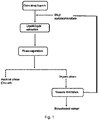
- Figure 1 shows a flow diagram of the process followed so far to obtain biosurfactants from corn steep liquors.
- biosurfactants obtained from corn steep liquors by liquid-liquid extraction with organic solvents i) on a soil and sludge treatment level, it has been observed that the use of this biosurfactant extract favors the solubilization and subsequent biodegradation of polycyclic aromatic hydrocarbons (Vecino et al 2014, Vecino et al 2015); ii) On a cosmetic level, tests have been carried out with this biosurfactant extract on human hair (Rincón-Fontán et al 2016, Rincón Fontán et al 2017), observing an improvement in the physical characteristics of the hair covering after the treatment with the biosurfactant extract obtained from (CSL), compared to the chemical surfactant sodium dodecyl sulfate (SDS); iii) the use of the biosurfactant extract in the formulation of gold and silver nanoparticles has also been evaluated (Gomez-Gra ⁇ a et al 2017), observing that this extract not only has surfactant capacity, replacing
- Gold particles are introduced in many cosmetic formulations in order to promote the nutrition, luminosity, and vitality of the skin.
- Rodriguez-Lopez et al 2019 has also corroborated the improvement of the permeation of active principles through the skin, in the presence of the biosurfactant extract obtained from corn steep liquors, through extraction with organic solvents.
- Lopez-Prieto et al 2019 has applied this same biosurfactant extract in the formulation of drinkable yogurts in order to improve their rheological properties, the probiotic biomass contained in the yogurt not being affected.
- corn steep liquors have a high solids content, generally 50% w/w.
- a high percentage of these solids is represented by the microbial biomass that grows during the maceration process of corn (Ramirez et al 2008).
- microbial biomass that grows during the maceration process of corn
- lactic acid bacteria Within the microbial flora present in corn steep liquors, there are, among others, lactic acid bacteria.
- biosurfactants adhered to the plasma membrane of this type of bacteria (Velraeds et al 1996, Rodriguez-Lopez et al 2018, Vecino et al 2018), although so far, the extraction of biosurfactants from the solid fraction of corn steep liquors, by means of solid-liquid extraction, has not been contemplated.
- biosurfactants can be applied in different industrial fields and each biosurfactant extract can be considered unique, because each microorganism produces biosurfactants in a very specific way.
- small changes in the composition of the fermentation medium or in the operating variables cause the microorganisms to produce different biosurfactants at a compositional level, varying in many cases the length of the fatty acids or the amino acids that constitute them (Mata-Sandoval et al. al 2001, Singh et al 2014, Vecino et al 2017).
- it has been shown that, even under the same operating conditions, the same microorganism can produce different biosurfactants, depending on the growth phase in which it is found (Velraeds et al 1996, Angelo et al 2003).
- the present invention refers to a process for obtaining biosurfactants from corn steep liquors (CSL), comprising the steps of:
- the process of the present invention is a solid-liquid extraction process, by which the buffered aqueous solution extracts the biosurfactants present in the solids of the CSL. Therefore, it is necessary to separate the solid phase from the liquid phase that constitute corn liquors.
- CSL solid phase and “CSL solids” are synonymous with and interchangeable with each other.
- any solid-liquid separation process known in the art such as centrifugation or filtration, can be used to separate the solid phase from the CSLs.
- the CSL solids separated in this way are washed with water to remove impurities present in the solids and improve the extraction performance of the biosurfactants.
- Said washes are preferably carried out with deionized water.
- such washes preferably occur at room temperature (typically 10 to 25 °C).
- the solid phase of the CSL is put in contact with a buffered aqueous solution with a pH of 6 to 8.
- the buffered aqueous solution uses a buffering agent to maintain a pH in the solution of 6 to 8, preferably around 7.0, such as between 6.5 and 7.5.
- the pH of the buffered aqueous solution should be such that it minimizes or prevents cell lysis and the consequent release of cell contents, since this can hinder the extraction and purification of the biosurfactants.
- buffering agents that can be used in accordance with the invention include phosphate salts, carbonate salts, and combinations of these.
- the buffering agent is a phosphate salt, such as KH 2 PO 4 , K 2 HPO 4 , and / or Na 2 HPOa.
- the buffered aqueous solution may comprise at least one salt selected from the group that consists of sodium chloride, potassium chloride, calcium chloride, and magnesium chloride, and combinations thereof.
- the buffered aqueous solution is isotonic.
- isotonic is a solution whose osmotic concentration varies between 280 and 315 mOsm/L. Said osmotic concentration can be achieved, for example, by adjusting the concentration of at least one salt selected from the group that consists of sodium chloride, potassium chloride, calcium chloride and magnesium chloride, and combinations of these. Isotonicity prevents cell lysis of microorganisms present in the solid phase of CSL, and the consequent release of cell content, which can hinder the extraction and purification of biosurfactants.
- the buffered aqueous solution of the invention is capable of extracting biosurfactants with the same characteristics with osmolarities lower than 280 mOsm/L, as low as 20 and 30 mOsm/L.
- the inventors believe that this is possible because the biosurfactants present in the solid fraction of the CSL are bound externally to the cell membrane of the microorganisms present in the CSL and during the extraction processes the osmotic pressure is balanced on both sides of the plasma membrane of the microorganisms present in corn steep liquors, through the release of the biosurfactants present in their plasma membrane.
- a buffered aqueous solution with an osmolarity of at least 20 mOsm/L, such as at least 30 mOsm/L, at least 50 mOsm/L, at least 100 mOsm/L, at least 150 mOsm/L, at least 200 mOsm/L, and at least 250 m/Osm/L.
- Osmolarities less than 280 mOsm/L can be achieved, for example, with low concentrations of the at least one salt selected from the group that consists of sodium chloride, potassium chloride, calcium chloride, and magnesium chloride, and combinations of these.
- the buffered aqueous solution is phosphate buffered saline (PBS).
- PBS phosphate buffered saline
- the PBS solution is isotonic and has a pH between 7.3 and 7.5. It is composed of at least one phosphate salt, such as KH 2 PO 4 , K 2 HPO 4 , and/or Na 2 HPOa as a buffer, and at least one salt selected from the group that consists of sodium chloride, potassium chloride, calcium chloride, and magnesium chloride.
- the contacting of the separated solid phase with the buffered aqueous solution can be carried out for a time of at least 20 minutes, preferably at least 1 hour, for example, at least 1.5 hours. Although the contact time can be extended beyond 2.0 hours, a time of between 20 minutes and 2.0 hours is preferred. Furthermore, contacting can occur at a temperature of 10°C to 70 °C.
- the extraction time varies depending on the temperature: the lower the temperature, the longer the extraction time. For the economy of the process, the extraction is preferably carried out at room temperature (10-25 °C), without the use of heating or cooling equipment.
- the extraction time can also vary depending on the presence or absence of the at least one salt selected from the group that consists of sodium chloride, potassium chloride, calcium chloride, magnesium chloride and combinations of these, in the buffered aqueous solution. For example, extraction at room temperature will take longer in the absence of NaCl and/or KCI.
- the contacting of the separated CSL solid phase with the buffered aqueous solution can be carried out in a discontinuous or semi-continuous process, in an equipment suitable for solid-liquid separation.
- one or more reactors can be used with stirring, depending on the operating regime, discontinuous (one could be sufficient) or semi-continuous (several reactors would be coupled in series).
- the CSL solids are washed in the reactors, as well as the biosurfactant extraction process, both processes being independent but sequential.
- the buffered aqueous solution which also contains the biosurfactants, is separated from the CSL solids, so that an extract of biosurfactants is obtained.
- Said separation can be carried out with any solid-liquid separation process known in the art, such as centrifugation or filtration.
- biosurfactant extract thus obtained can also be dialyzed to remove salts, concentrated and/or processed for long-term storage.
- biosurfactant extract obtained by this route presents differentiating biomarkers from the other biosurfactants collected in the bibliography, and also presents a different aspect and surfactant capacity to the biosurfactant extract obtained from corn steep liquors by extraction with organic solvents, therefore it can be deduced that corn steep liquors contain different types of biosurfactants, probably produced by different classes of microorganisms.
- the present invention also relates to a biosurfactant obtained or obtainable by means of the process for obtaining biosurfactants, as described.
- Said biosurfactant extract is useful as a surfactant, emulsifier and/or emulsifier agent in the food, cosmetic, pharmaceutical, agrochemical or environmental industries.
- examples of application of the biosurfactant extract include the emulsion and/or stabilization of active principles in aqueous and/or oily solutions; surface cleaning; and to improve the permeability of those formulas that contain active ingredients through cell membranes.
- Example 1 Formulations of the isotonic buffered aqueous solution
- This example illustrates formulations of buffered solutions, with varying concentrations of salt, which can be used to extract the biosurfactants present in the microbial biomass of CSL.
- Extractions were made to corn steep liquors from the wet corn fractionation process, supplied by FeedStimulants (Utrecht, The Netherlands).
- corn steep liquors were taken and subjected to a centrifugation process, in order to obtain the solid fraction contained in these liquors, which, once the supernatant had been eliminated, was washed several times with deionized water at room temperature, repeating the spin process, between each wash cycle.
- the solids, from the corn steep liquors, once washed and centrifuged, were subjected to an extraction process with Formulation 1 of Example 1 (with the pH adjusted to 7.4).
- the extraction process was carried out for 2 hrs, at room temperature. After the extraction, the saline solution and the solid fraction of the corn washing liquors were centrifuged, obtaining a biosurfactant extract and a solid precipitate, which was discarded.
- Table 2 provides an example of some of the conditions used during the extraction process. Table 2. Selected conditions for obtaining the biosurfactant extract from corn steep liquors. Solvent Extraction Agent Time Temperature (°C) Conditions selected as optimal for obtaining biosurfactants Water Physiological phosphate-buffered saline, (PBS) 2 hrs Environment Water Phosphate buffer, (0% NaCl, 0% KCI) 1.5 hrs 65 °C Other formulations with the ability to extract biosurfactants Solvent Extraction Agent Time Temperature (°C) Water NaCl; KCI; Na 2 HPOa 20 min-2hrs 10-70 °C Water NaCl; KH 2 PO 4 /K 2 HPO 4 20 min-2hrs 10-70 °C Water H 2 CO 3 / NaHCO 3 20 min-2hrs 10-70 °C Water H 2 CO 3 / KHCO 3 20 min-2hrs 10-70 °C Water Na 2 HPOa 20 min-2hrs 10-70 °C Water KH 2 PO 4 /K 2 HPO 4 20 min-2hrs 10-
- biosurfactant extract was obtained, it was dialyzed and lyophilized, to be subsequently subjected to various analyzes, including elemental analysis, surfactant capacity (based on measurement of surface tension), calculation of the critical micellar concentration, evaluation of the foaming capacity and mass analysis by electrospray-type mass spectrometry.
- biosurfactant extract dialyzed and lyophilized
- biosurfactant extracts were identified by using electrospray ionization/collision-induced dissociation mass spectrometry (ESI-MS/CID). For analysis, 1 mg of each sample was diluted in chloroform and volatilized by vacuum distillation. Next, a stream of electrons was used to ionize and fragment the molecules. Finally, the fragmentation patterns were recorded on a Bruker FTMS APEXIII mass spectrometer (Fremont, CA) in positive mode. On the other hand, an elemental analysis of the different extracts was carried out by chromatographic combustion using a Carlo Erba 1108 Elemental Analyzer.
- the biosurfactant extract obtained has a different appearance and composition to the biosurfactant extracted from the corn steep liquors by extraction with organic solvents.
- the biosurfactant extract obtained by extraction with organic solvents has a yellow color, is viscous, has an oily appearance and does not have the ability to form foam.
- the biosurfactant extract, object of this invention has the appearance of a white powder and has the ability to form foam.
- the extract object of this invention which corresponds to the mass spectrum of Figure 3 , is composed of an average composition of: 12.5% N, 42.5% C, 6.2% H and less 0.3% sulfur.
- Table 3 shows by way of example the composition obtained after elemental analysis of different extracts obtained from several batches of corn steep liquors and using different extractant solutions comprising phosphate buffered saline or non-saline phosphate buffer.
- Table 3 Elemental analysis of the extracts Batch Extractant N (%) C (%) H (%) 1a non-saline phosphate buffer 6.14 30.15 4.42 1b non-saline phosphate buffer 7.81 29.59 4.5 2a non-saline phosphate buffer 7.36 39.79 6.02 2b non-saline phosphate buffer 7.42 39.81 6.03 3a PBS 12.64 37.37 5.51 3b PBS 12.49 37.21 5.70 4a PBS 8.22 42.02 6.17 4b PBS 8.42 41.67 6.30 a and b refer to different samples of biosurfactant from the same batch.
- biosurfactant extract obtained by extraction with organic solvents from corn steep liquors has other substances in its composition (such as free fatty acids or antioxidants) that give the whole extract different characteristics (Rodriguez -Lopez et al 2016), to the biosurfactant extract under study.
- biosurfactant extract object of this invention, can comprise other biomolecules with surfactant capacity that comprise other glycopeptides, as well as high molecular weight proteins that can undergo hydrolysis and/or glycosylation processes, resulting in mass spectrum to biomarkers between 400 and 900 m/z, among which the following biomarkers stand out: 706 m/z, 642 m/z; 486 m/z; 536 m/z, 571 m/z.
- biosurfactant object of this invention, has biomarkers and masses different from those listed in the bibliography and that therefore have not yet been applied in any industrial field, including cosmetic, pharmaceutical, environmental, agrochemical, or food.
- Li et al (2016) found that Bacillus pseudomycoides produces a lipopeptide with surfactant capacity with a main signal at 933 m/z, and other lower signals at 1533, 1231 and 1024 m z, which correspond to different biosurfactants produced by the same strain at different stages of growth.
- Angelo et al (2003) observed that Bacillus globigii produces different biosurfactants depending on whether it is in a vegetative or a sporulated state.
- biosurfactants described above are lipopeptides that present biomarkers close to those of the biosurfactant object of this invention, although none coincides in its entirety with the biosurfactant extracted from the corn steep liquors by extraction with PBS and object of study. It should also be noted that these biosurfactants were produced in controlled fermentations with fermentation media other than corn steep liquors, unlike the biosurfactant object of this invention. Furthermore, the biosurfactants mentioned in these works have been extracted from the fermentation medium, using methods other than the extraction with aqueous solution proposed in this invention.
Landscapes
- Chemical & Material Sciences (AREA)
- Life Sciences & Earth Sciences (AREA)
- Chemical Kinetics & Catalysis (AREA)
- Health & Medical Sciences (AREA)
- Engineering & Computer Science (AREA)
- General Health & Medical Sciences (AREA)
- Organic Chemistry (AREA)
- Wood Science & Technology (AREA)
- Animal Behavior & Ethology (AREA)
- Veterinary Medicine (AREA)
- Public Health (AREA)
- Oil, Petroleum & Natural Gas (AREA)
- Materials Engineering (AREA)
- Mycology (AREA)
- Epidemiology (AREA)
- Birds (AREA)
- Nutrition Science (AREA)
- Polymers & Plastics (AREA)
- Food Science & Technology (AREA)
- Agronomy & Crop Science (AREA)
- Toxicology (AREA)
- Biotechnology (AREA)
- Botany (AREA)
- Microbiology (AREA)
- Pest Control & Pesticides (AREA)
- Plant Pathology (AREA)
- Dermatology (AREA)
- Dentistry (AREA)
- Zoology (AREA)
- Environmental Sciences (AREA)
- Peptides Or Proteins (AREA)
- Cosmetics (AREA)
- Preparation Of Compounds By Using Micro-Organisms (AREA)
Applications Claiming Priority (2)
| Application Number | Priority Date | Filing Date | Title |
|---|---|---|---|
| ES201900084A ES2795574B2 (es) | 2019-05-21 | 2019-05-21 | Proceso para la extracción acuosa de biosurfactantes a partir de los licores de lavado de maíz o "corn steep liquor" |
| PCT/ES2020/070321 WO2020234501A1 (es) | 2019-05-21 | 2020-05-19 | Proceso para la extracción acuosa de biosurfactantes a partir de los licores de lavado de maíz o "corn steep liquor" |
Publications (4)
| Publication Number | Publication Date |
|---|---|
| EP3974044A1 true EP3974044A1 (de) | 2022-03-30 |
| EP3974044A4 EP3974044A4 (de) | 2022-12-28 |
| EP3974044B1 EP3974044B1 (de) | 2024-02-21 |
| EP3974044C0 EP3974044C0 (de) | 2024-02-21 |
Family
ID=73451188
Family Applications (1)
| Application Number | Title | Priority Date | Filing Date |
|---|---|---|---|
| EP20808721.3A Active EP3974044B1 (de) | 2019-05-21 | 2020-05-19 | Verfahren zur wässrigen extraktion von biotensiden aus maisquellwasser |
Country Status (5)
| Country | Link |
|---|---|
| US (1) | US12383847B2 (de) |
| EP (1) | EP3974044B1 (de) |
| CN (1) | CN113874090B (de) |
| ES (1) | ES2795574B2 (de) |
| WO (1) | WO2020234501A1 (de) |
Families Citing this family (3)
| Publication number | Priority date | Publication date | Assignee | Title |
|---|---|---|---|---|
| ES2931088B2 (es) * | 2021-06-16 | 2024-03-22 | Univ Vigo | Obtención de un extracto biosurfactante a partir de los licores de lavado de maíz mediante procesos de separación física |
| CN115650530B (zh) * | 2022-12-14 | 2023-08-22 | 山东省鲁洲食品集团有限公司 | 一种玉米浸泡水除盐方法 |
| ES2996007B2 (es) | 2023-08-04 | 2025-06-11 | Univ Vigo | Protocolo para la obtención de un extracto biosurfactante a partir de los licores de lavado de maíz, mediante extracción líquido-sólido, utilizando matrices sólidas poliméricas |
Family Cites Families (10)
| Publication number | Priority date | Publication date | Assignee | Title |
|---|---|---|---|---|
| EP0824355A4 (de) * | 1995-04-14 | 1998-12-30 | Univ Southern California | Mistelextrakt und verfahren zu seiner verwendung |
| KR20030025200A (ko) * | 2001-09-19 | 2003-03-28 | (주)바이오니아 | 아밀라제의 활성을 억제할 수 있는 옥수수 추출물, 이를함유하는 비만증 또는 당뇨병 치료 또는 예방용 의약적조성물 및 식품 첨가물 그리고 그들의 제조방법 |
| WO2009044279A2 (en) * | 2007-09-30 | 2009-04-09 | Umo Inc., Co. Ltd. | Peptides having antimicrobial and/or biosurfactant properties |
| US20150037307A1 (en) * | 2012-01-27 | 2015-02-05 | Gfs Corporation Aus Pty Ltd. | Poultry farm practices |
| ES2424399B2 (es) | 2012-03-27 | 2014-01-20 | Universidade De Vigo | Aplicación de licores de lavado de maíz ("corn steep liquid") como surfactante |
| ES2435324B2 (es) | 2012-06-18 | 2014-04-23 | Universidade De Vigo | Procedimiento de separación de los surfactantes presentes de licores de lavado de maíz y usos |
| AU2014234432A1 (en) * | 2013-03-18 | 2015-09-17 | Dsm Ip Assets B.V. | Method for protein extraction from oil seed |
| ES2527366B1 (es) | 2013-07-22 | 2015-11-02 | Universidade De Vigo | Composición detergente que comprende un biosurfactante de origen vegetal |
| AT14337U1 (de) * | 2014-06-12 | 2015-08-15 | Erber Ag | Verfahren zur Extraktion von Kontaminanten aus agrarischen Produkten sowie Vorrichtung hierfür |
| CN105838763A (zh) * | 2016-05-10 | 2016-08-10 | 青岛科技大学 | 一种脂肽类生物表面活性剂的制备方法 |
-
2019
- 2019-05-21 ES ES201900084A patent/ES2795574B2/es active Active
-
2020
- 2020-05-19 WO PCT/ES2020/070321 patent/WO2020234501A1/es not_active Ceased
- 2020-05-19 EP EP20808721.3A patent/EP3974044B1/de active Active
- 2020-05-19 US US17/605,812 patent/US12383847B2/en active Active
- 2020-05-19 CN CN202080035458.4A patent/CN113874090B/zh active Active
Also Published As
| Publication number | Publication date |
|---|---|
| EP3974044A4 (de) | 2022-12-28 |
| US12383847B2 (en) | 2025-08-12 |
| ES2795574B2 (es) | 2021-06-03 |
| EP3974044B1 (de) | 2024-02-21 |
| WO2020234501A1 (es) | 2020-11-26 |
| CN113874090B (zh) | 2023-08-22 |
| EP3974044C0 (de) | 2024-02-21 |
| ES2795574A1 (es) | 2020-11-23 |
| CN113874090A (zh) | 2021-12-31 |
| US20220203262A1 (en) | 2022-06-30 |
Similar Documents
| Publication | Publication Date | Title |
|---|---|---|
| EP3974044B1 (de) | Verfahren zur wässrigen extraktion von biotensiden aus maisquellwasser | |
| JP5066384B2 (ja) | 安定化酵素組成物 | |
| WO2006005986A1 (en) | Olive polyphenols concentrate | |
| US20150110948A1 (en) | Production of soluble protein products from pulses | |
| CA2463106A1 (en) | Flax protein isolate and production | |
| CA2973183A1 (en) | Production of rhamnolipid compositions | |
| JP2017526658A (ja) | 豆類タンパク質生成物(「yp810」)の調製 | |
| EP3169695B1 (de) | Verfahren zur extraktion von löslichen proteinen aus mikroalgenbiomasse | |
| US20180223245A1 (en) | Method for thermal permeabilization of a microalgae biomass | |
| KR20150031252A (ko) | 중성 또는 거의 중성 pH를 갖는 콩 단백질 제품(“S701N2”) | |
| CN110944626A (zh) | 包含高浓度伊枯草菌素脂肽的组合物 | |
| WO2023220508A1 (en) | Compositions comprising brevibacilla multifunctional fermentates and methods of use | |
| EP4357006A1 (de) | Herstellung eines biotensidextrakts aus maisquellwasser | |
| KR20170105497A (ko) | 단백질이 풍부한 미세조류의 바이오매스의 성분들을 분별하는 방법 | |
| KR20220150477A (ko) | 소포로리피드 정제 방법 | |
| KR101980922B1 (ko) | 다이하이드로칼콘 정제 방법 | |
| WO1999025864A2 (en) | HIGH MOLECULAR WEIGHT η-POLY(GLUTAMIC ACID) | |
| KR20190055624A (ko) | 세리신 추출물의 친환경적인 제조방법 및 상기 추출물을 포함하는 조성물 | |
| US20050075260A1 (en) | Process for producing natural surfactants and compositions based on natural surfactants | |
| WO2025141008A1 (en) | Process for purifying high molecular weight hyaluronic acid | |
| ZA200603443B (en) | Process for producing natural surfactants and compositions based on natural surfactants |
Legal Events
| Date | Code | Title | Description |
|---|---|---|---|
| STAA | Information on the status of an ep patent application or granted ep patent |
Free format text: STATUS: THE INTERNATIONAL PUBLICATION HAS BEEN MADE |
|
| PUAI | Public reference made under article 153(3) epc to a published international application that has entered the european phase |
Free format text: ORIGINAL CODE: 0009012 |
|
| STAA | Information on the status of an ep patent application or granted ep patent |
Free format text: STATUS: REQUEST FOR EXAMINATION WAS MADE |
|
| 17P | Request for examination filed |
Effective date: 20211022 |
|
| AK | Designated contracting states |
Kind code of ref document: A1 Designated state(s): AL AT BE BG CH CY CZ DE DK EE ES FI FR GB GR HR HU IE IS IT LI LT LU LV MC MK MT NL NO PL PT RO RS SE SI SK SM TR |
|
| DAV | Request for validation of the european patent (deleted) | ||
| DAX | Request for extension of the european patent (deleted) | ||
| A4 | Supplementary search report drawn up and despatched |
Effective date: 20221125 |
|
| RIC1 | Information provided on ipc code assigned before grant |
Ipc: B01D 11/02 20060101ALI20221121BHEP Ipc: A01N 25/30 20060101ALI20221121BHEP Ipc: A61K 8/64 20060101ALI20221121BHEP Ipc: B01D 21/26 20060101ALI20221121BHEP Ipc: B01D 11/00 20060101AFI20221121BHEP |
|
| STAA | Information on the status of an ep patent application or granted ep patent |
Free format text: STATUS: EXAMINATION IS IN PROGRESS |
|
| 17Q | First examination report despatched |
Effective date: 20230313 |
|
| REG | Reference to a national code |
Ref country code: DE Free format text: PREVIOUS MAIN CLASS: B01D0011000000 Ref country code: DE Ref legal event code: R079 Ref document number: 602020026149 Country of ref document: DE Free format text: PREVIOUS MAIN CLASS: B01D0011000000 Ipc: A61K0008979400 |
|
| RIC1 | Information provided on ipc code assigned before grant |
Ipc: B01D 11/02 20060101ALI20230711BHEP Ipc: A61K 8/64 20060101ALI20230711BHEP Ipc: A01N 25/30 20060101ALI20230711BHEP Ipc: C11D 1/36 20060101ALI20230711BHEP Ipc: B01D 11/04 20060101ALI20230711BHEP Ipc: A61Q 19/00 20060101ALI20230711BHEP Ipc: A61K 8/9794 20170101AFI20230711BHEP |
|
| GRAP | Despatch of communication of intention to grant a patent |
Free format text: ORIGINAL CODE: EPIDOSNIGR1 |
|
| STAA | Information on the status of an ep patent application or granted ep patent |
Free format text: STATUS: GRANT OF PATENT IS INTENDED |
|
| INTG | Intention to grant announced |
Effective date: 20231002 |
|
| GRAS | Grant fee paid |
Free format text: ORIGINAL CODE: EPIDOSNIGR3 |
|
| GRAA | (expected) grant |
Free format text: ORIGINAL CODE: 0009210 |
|
| STAA | Information on the status of an ep patent application or granted ep patent |
Free format text: STATUS: THE PATENT HAS BEEN GRANTED |
|
| AK | Designated contracting states |
Kind code of ref document: B1 Designated state(s): AL AT BE BG CH CY CZ DE DK EE ES FI FR GB GR HR HU IE IS IT LI LT LU LV MC MK MT NL NO PL PT RO RS SE SI SK SM TR |
|
| REG | Reference to a national code |
Ref country code: GB Ref legal event code: FG4D |
|
| REG | Reference to a national code |
Ref country code: CH Ref legal event code: EP |
|
| REG | Reference to a national code |
Ref country code: DE Ref legal event code: R096 Ref document number: 602020026149 Country of ref document: DE |
|
| REG | Reference to a national code |
Ref country code: IE Ref legal event code: FG4D |
|
| U01 | Request for unitary effect filed |
Effective date: 20240319 |
|
| U07 | Unitary effect registered |
Designated state(s): AT BE BG DE DK EE FI FR IT LT LU LV MT NL PT SE SI Effective date: 20240402 |
|
| U20 | Renewal fee for the european patent with unitary effect paid |
Year of fee payment: 5 Effective date: 20240522 |
|
| PG25 | Lapsed in a contracting state [announced via postgrant information from national office to epo] |
Ref country code: IS Free format text: LAPSE BECAUSE OF FAILURE TO SUBMIT A TRANSLATION OF THE DESCRIPTION OR TO PAY THE FEE WITHIN THE PRESCRIBED TIME-LIMIT Effective date: 20240621 |
|
| PG25 | Lapsed in a contracting state [announced via postgrant information from national office to epo] |
Ref country code: GR Free format text: LAPSE BECAUSE OF FAILURE TO SUBMIT A TRANSLATION OF THE DESCRIPTION OR TO PAY THE FEE WITHIN THE PRESCRIBED TIME-LIMIT Effective date: 20240522 |
|
| PG25 | Lapsed in a contracting state [announced via postgrant information from national office to epo] |
Ref country code: HR Free format text: LAPSE BECAUSE OF FAILURE TO SUBMIT A TRANSLATION OF THE DESCRIPTION OR TO PAY THE FEE WITHIN THE PRESCRIBED TIME-LIMIT Effective date: 20240221 Ref country code: RS Free format text: LAPSE BECAUSE OF FAILURE TO SUBMIT A TRANSLATION OF THE DESCRIPTION OR TO PAY THE FEE WITHIN THE PRESCRIBED TIME-LIMIT Effective date: 20240521 |
|
| PG25 | Lapsed in a contracting state [announced via postgrant information from national office to epo] |
Ref country code: ES Free format text: LAPSE BECAUSE OF FAILURE TO SUBMIT A TRANSLATION OF THE DESCRIPTION OR TO PAY THE FEE WITHIN THE PRESCRIBED TIME-LIMIT Effective date: 20240221 |
|
| PG25 | Lapsed in a contracting state [announced via postgrant information from national office to epo] |
Ref country code: RS Free format text: LAPSE BECAUSE OF FAILURE TO SUBMIT A TRANSLATION OF THE DESCRIPTION OR TO PAY THE FEE WITHIN THE PRESCRIBED TIME-LIMIT Effective date: 20240521 Ref country code: NO Free format text: LAPSE BECAUSE OF FAILURE TO SUBMIT A TRANSLATION OF THE DESCRIPTION OR TO PAY THE FEE WITHIN THE PRESCRIBED TIME-LIMIT Effective date: 20240521 Ref country code: IS Free format text: LAPSE BECAUSE OF FAILURE TO SUBMIT A TRANSLATION OF THE DESCRIPTION OR TO PAY THE FEE WITHIN THE PRESCRIBED TIME-LIMIT Effective date: 20240621 Ref country code: HR Free format text: LAPSE BECAUSE OF FAILURE TO SUBMIT A TRANSLATION OF THE DESCRIPTION OR TO PAY THE FEE WITHIN THE PRESCRIBED TIME-LIMIT Effective date: 20240221 Ref country code: GR Free format text: LAPSE BECAUSE OF FAILURE TO SUBMIT A TRANSLATION OF THE DESCRIPTION OR TO PAY THE FEE WITHIN THE PRESCRIBED TIME-LIMIT Effective date: 20240522 Ref country code: ES Free format text: LAPSE BECAUSE OF FAILURE TO SUBMIT A TRANSLATION OF THE DESCRIPTION OR TO PAY THE FEE WITHIN THE PRESCRIBED TIME-LIMIT Effective date: 20240221 |
|
| PG25 | Lapsed in a contracting state [announced via postgrant information from national office to epo] |
Ref country code: PL Free format text: LAPSE BECAUSE OF FAILURE TO SUBMIT A TRANSLATION OF THE DESCRIPTION OR TO PAY THE FEE WITHIN THE PRESCRIBED TIME-LIMIT Effective date: 20240221 |
|
| PG25 | Lapsed in a contracting state [announced via postgrant information from national office to epo] |
Ref country code: PL Free format text: LAPSE BECAUSE OF FAILURE TO SUBMIT A TRANSLATION OF THE DESCRIPTION OR TO PAY THE FEE WITHIN THE PRESCRIBED TIME-LIMIT Effective date: 20240221 |
|
| PG25 | Lapsed in a contracting state [announced via postgrant information from national office to epo] |
Ref country code: SM Free format text: LAPSE BECAUSE OF FAILURE TO SUBMIT A TRANSLATION OF THE DESCRIPTION OR TO PAY THE FEE WITHIN THE PRESCRIBED TIME-LIMIT Effective date: 20240221 |
|
| PG25 | Lapsed in a contracting state [announced via postgrant information from national office to epo] |
Ref country code: CZ Free format text: LAPSE BECAUSE OF FAILURE TO SUBMIT A TRANSLATION OF THE DESCRIPTION OR TO PAY THE FEE WITHIN THE PRESCRIBED TIME-LIMIT Effective date: 20240221 |
|
| PG25 | Lapsed in a contracting state [announced via postgrant information from national office to epo] |
Ref country code: SK Free format text: LAPSE BECAUSE OF FAILURE TO SUBMIT A TRANSLATION OF THE DESCRIPTION OR TO PAY THE FEE WITHIN THE PRESCRIBED TIME-LIMIT Effective date: 20240221 |
|
| PG25 | Lapsed in a contracting state [announced via postgrant information from national office to epo] |
Ref country code: SM Free format text: LAPSE BECAUSE OF FAILURE TO SUBMIT A TRANSLATION OF THE DESCRIPTION OR TO PAY THE FEE WITHIN THE PRESCRIBED TIME-LIMIT Effective date: 20240221 Ref country code: SK Free format text: LAPSE BECAUSE OF FAILURE TO SUBMIT A TRANSLATION OF THE DESCRIPTION OR TO PAY THE FEE WITHIN THE PRESCRIBED TIME-LIMIT Effective date: 20240221 Ref country code: RO Free format text: LAPSE BECAUSE OF FAILURE TO SUBMIT A TRANSLATION OF THE DESCRIPTION OR TO PAY THE FEE WITHIN THE PRESCRIBED TIME-LIMIT Effective date: 20240221 Ref country code: CZ Free format text: LAPSE BECAUSE OF FAILURE TO SUBMIT A TRANSLATION OF THE DESCRIPTION OR TO PAY THE FEE WITHIN THE PRESCRIBED TIME-LIMIT Effective date: 20240221 |
|
| REG | Reference to a national code |
Ref country code: DE Ref legal event code: R097 Ref document number: 602020026149 Country of ref document: DE |
|
| PLBE | No opposition filed within time limit |
Free format text: ORIGINAL CODE: 0009261 |
|
| STAA | Information on the status of an ep patent application or granted ep patent |
Free format text: STATUS: NO OPPOSITION FILED WITHIN TIME LIMIT |
|
| PG25 | Lapsed in a contracting state [announced via postgrant information from national office to epo] |
Ref country code: MC Free format text: LAPSE BECAUSE OF FAILURE TO SUBMIT A TRANSLATION OF THE DESCRIPTION OR TO PAY THE FEE WITHIN THE PRESCRIBED TIME-LIMIT Effective date: 20240221 |
|
| 26N | No opposition filed |
Effective date: 20241122 |
|
| PG25 | Lapsed in a contracting state [announced via postgrant information from national office to epo] |
Ref country code: MC Free format text: LAPSE BECAUSE OF FAILURE TO SUBMIT A TRANSLATION OF THE DESCRIPTION OR TO PAY THE FEE WITHIN THE PRESCRIBED TIME-LIMIT Effective date: 20240221 |
|
| PG25 | Lapsed in a contracting state [announced via postgrant information from national office to epo] |
Ref country code: IE Free format text: LAPSE BECAUSE OF NON-PAYMENT OF DUE FEES Effective date: 20240519 |
|
| U20 | Renewal fee for the european patent with unitary effect paid |
Year of fee payment: 6 Effective date: 20250414 |
|
| PGFP | Annual fee paid to national office [announced via postgrant information from national office to epo] |
Ref country code: GB Payment date: 20250415 Year of fee payment: 6 |
|
| PGFP | Annual fee paid to national office [announced via postgrant information from national office to epo] |
Ref country code: CH Payment date: 20250601 Year of fee payment: 6 |
|
| PG25 | Lapsed in a contracting state [announced via postgrant information from national office to epo] |
Ref country code: CY Free format text: LAPSE BECAUSE OF FAILURE TO SUBMIT A TRANSLATION OF THE DESCRIPTION OR TO PAY THE FEE WITHIN THE PRESCRIBED TIME-LIMIT; INVALID AB INITIO Effective date: 20200519 |
|
| PG25 | Lapsed in a contracting state [announced via postgrant information from national office to epo] |
Ref country code: HU Free format text: LAPSE BECAUSE OF FAILURE TO SUBMIT A TRANSLATION OF THE DESCRIPTION OR TO PAY THE FEE WITHIN THE PRESCRIBED TIME-LIMIT; INVALID AB INITIO Effective date: 20200519 |