EP3972071A1 - Vorrichtung zur zeitplanverwaltung zum ess-aufladen/-entladen - Google Patents
Vorrichtung zur zeitplanverwaltung zum ess-aufladen/-entladen Download PDFInfo
- Publication number
- EP3972071A1 EP3972071A1 EP21772620.7A EP21772620A EP3972071A1 EP 3972071 A1 EP3972071 A1 EP 3972071A1 EP 21772620 A EP21772620 A EP 21772620A EP 3972071 A1 EP3972071 A1 EP 3972071A1
- Authority
- EP
- European Patent Office
- Prior art keywords
- load
- power
- demand response
- time period
- ess
- Prior art date
- Legal status (The legal status is an assumption and is not a legal conclusion. Google has not performed a legal analysis and makes no representation as to the accuracy of the status listed.)
- Pending
Links
Images


Classifications
-
- H—ELECTRICITY
- H02—GENERATION; CONVERSION OR DISTRIBUTION OF ELECTRIC POWER
- H02J—ELECTRIC POWER NETWORKS; CIRCUIT ARRANGEMENTS OR SYSTEMS FOR SUPPLYING OR DISTRIBUTING ELECTRIC POWER; SYSTEMS FOR STORING ELECTRIC ENERGY
- H02J7/00—Circuit arrangements for charging or discharging batteries or for supplying loads from batteries
- H02J7/80—Circuit arrangements for charging or discharging batteries or for supplying loads from batteries including monitoring or indicating arrangements
-
- H—ELECTRICITY
- H02—GENERATION; CONVERSION OR DISTRIBUTION OF ELECTRIC POWER
- H02J—ELECTRIC POWER NETWORKS; CIRCUIT ARRANGEMENTS OR SYSTEMS FOR SUPPLYING OR DISTRIBUTING ELECTRIC POWER; SYSTEMS FOR STORING ELECTRIC ENERGY
- H02J3/00—Circuit arrangements for AC mains or AC distribution networks
- H02J3/28—Arrangements for balancing of the load in networks by storage of energy
- H02J3/32—Arrangements for balancing of the load in networks by storage of energy using batteries or super capacitors with converting means
-
- G—PHYSICS
- G06—COMPUTING OR CALCULATING; COUNTING
- G06Q—INFORMATION AND COMMUNICATION TECHNOLOGY [ICT] SPECIALLY ADAPTED FOR ADMINISTRATIVE, COMMERCIAL, FINANCIAL, MANAGERIAL OR SUPERVISORY PURPOSES; SYSTEMS OR METHODS SPECIALLY ADAPTED FOR ADMINISTRATIVE, COMMERCIAL, FINANCIAL, MANAGERIAL OR SUPERVISORY PURPOSES, NOT OTHERWISE PROVIDED FOR
- G06Q10/00—Administration; Management
- G06Q10/06—Resources, workflows, human or project management; Enterprise or organisation planning; Enterprise or organisation modelling
- G06Q10/063—Operations research, analysis or management
-
- G—PHYSICS
- G06—COMPUTING OR CALCULATING; COUNTING
- G06Q—INFORMATION AND COMMUNICATION TECHNOLOGY [ICT] SPECIALLY ADAPTED FOR ADMINISTRATIVE, COMMERCIAL, FINANCIAL, MANAGERIAL OR SUPERVISORY PURPOSES; SYSTEMS OR METHODS SPECIALLY ADAPTED FOR ADMINISTRATIVE, COMMERCIAL, FINANCIAL, MANAGERIAL OR SUPERVISORY PURPOSES, NOT OTHERWISE PROVIDED FOR
- G06Q50/00—Information and communication technology [ICT] specially adapted for implementation of business processes of specific business sectors, e.g. utilities or tourism
- G06Q50/06—Energy or water supply
-
- H—ELECTRICITY
- H02—GENERATION; CONVERSION OR DISTRIBUTION OF ELECTRIC POWER
- H02J—ELECTRIC POWER NETWORKS; CIRCUIT ARRANGEMENTS OR SYSTEMS FOR SUPPLYING OR DISTRIBUTING ELECTRIC POWER; SYSTEMS FOR STORING ELECTRIC ENERGY
- H02J3/00—Circuit arrangements for AC mains or AC distribution networks
- H02J3/008—Circuit arrangements for power supply or distribution technologies responsive to energy trading
-
- H—ELECTRICITY
- H02—GENERATION; CONVERSION OR DISTRIBUTION OF ELECTRIC POWER
- H02J—ELECTRIC POWER NETWORKS; CIRCUIT ARRANGEMENTS OR SYSTEMS FOR SUPPLYING OR DISTRIBUTING ELECTRIC POWER; SYSTEMS FOR STORING ELECTRIC ENERGY
- H02J3/00—Circuit arrangements for AC mains or AC distribution networks
- H02J3/17—Demand-responsive operation of AC power transmission or distribution networks
-
- H—ELECTRICITY
- H02—GENERATION; CONVERSION OR DISTRIBUTION OF ELECTRIC POWER
- H02J—ELECTRIC POWER NETWORKS; CIRCUIT ARRANGEMENTS OR SYSTEMS FOR SUPPLYING OR DISTRIBUTING ELECTRIC POWER; SYSTEMS FOR STORING ELECTRIC ENERGY
- H02J7/00—Circuit arrangements for charging or discharging batteries or for supplying loads from batteries
- H02J7/50—Circuit arrangements for charging or discharging batteries or for supplying loads from batteries acting upon multiple batteries simultaneously or sequentially
- H02J7/52—Circuit arrangements for charging or discharging batteries or for supplying loads from batteries acting upon multiple batteries simultaneously or sequentially for charge balancing, e.g. equalisation of charge between batteries
-
- H—ELECTRICITY
- H02—GENERATION; CONVERSION OR DISTRIBUTION OF ELECTRIC POWER
- H02J—ELECTRIC POWER NETWORKS; CIRCUIT ARRANGEMENTS OR SYSTEMS FOR SUPPLYING OR DISTRIBUTING ELECTRIC POWER; SYSTEMS FOR STORING ELECTRIC ENERGY
- H02J7/00—Circuit arrangements for charging or discharging batteries or for supplying loads from batteries
- H02J7/90—Regulation of charging or discharging current or voltage
- H02J7/933—Regulation of charging or discharging current or voltage the cycle being controlled or terminated in response to electric parameters
-
- H—ELECTRICITY
- H02—GENERATION; CONVERSION OR DISTRIBUTION OF ELECTRIC POWER
- H02J—ELECTRIC POWER NETWORKS; CIRCUIT ARRANGEMENTS OR SYSTEMS FOR SUPPLYING OR DISTRIBUTING ELECTRIC POWER; SYSTEMS FOR STORING ELECTRIC ENERGY
- H02J2103/00—Details of circuit arrangements for mains or AC distribution networks
- H02J2103/30—Simulating, planning, modelling, reliability check or computer assisted design [CAD] of electric power networks
- H02J2103/35—Grid-level management of power transmission or distribution systems, e.g. load flow analysis or active network management
-
- H—ELECTRICITY
- H02—GENERATION; CONVERSION OR DISTRIBUTION OF ELECTRIC POWER
- H02J—ELECTRIC POWER NETWORKS; CIRCUIT ARRANGEMENTS OR SYSTEMS FOR SUPPLYING OR DISTRIBUTING ELECTRIC POWER; SYSTEMS FOR STORING ELECTRIC ENERGY
- H02J2105/00—Networks for supplying or distributing electric power characterised by their spatial reach or by the load
- H02J2105/50—Networks for supplying or distributing electric power characterised by their spatial reach or by the load for selectively controlling the operation of the loads
- H02J2105/54—Networks for supplying or distributing electric power characterised by their spatial reach or by the load for selectively controlling the operation of the loads according to a non-electrical condition, e.g. temperature
- H02J2105/55—Networks for supplying or distributing electric power characterised by their spatial reach or by the load for selectively controlling the operation of the loads according to a non-electrical condition, e.g. temperature according to an economic condition, e.g. tariff-based load management
-
- Y—GENERAL TAGGING OF NEW TECHNOLOGICAL DEVELOPMENTS; GENERAL TAGGING OF CROSS-SECTIONAL TECHNOLOGIES SPANNING OVER SEVERAL SECTIONS OF THE IPC; TECHNICAL SUBJECTS COVERED BY FORMER USPC CROSS-REFERENCE ART COLLECTIONS [XRACs] AND DIGESTS
- Y02—TECHNOLOGIES OR APPLICATIONS FOR MITIGATION OR ADAPTATION AGAINST CLIMATE CHANGE
- Y02B—CLIMATE CHANGE MITIGATION TECHNOLOGIES RELATED TO BUILDINGS, e.g. HOUSING, HOUSE APPLIANCES OR RELATED END-USER APPLICATIONS
- Y02B70/00—Technologies for an efficient end-user side electric power management and consumption
- Y02B70/30—Systems integrating technologies related to power network operation and communication or information technologies for improving the carbon footprint of the management of residential or tertiary loads, i.e. smart grids as climate change mitigation technology in the buildings sector, including also the last stages of power distribution and the control, monitoring or operating management systems at local level
- Y02B70/3225—Demand response systems, e.g. load shedding, peak shaving
-
- Y—GENERAL TAGGING OF NEW TECHNOLOGICAL DEVELOPMENTS; GENERAL TAGGING OF CROSS-SECTIONAL TECHNOLOGIES SPANNING OVER SEVERAL SECTIONS OF THE IPC; TECHNICAL SUBJECTS COVERED BY FORMER USPC CROSS-REFERENCE ART COLLECTIONS [XRACs] AND DIGESTS
- Y04—INFORMATION OR COMMUNICATION TECHNOLOGIES HAVING AN IMPACT ON OTHER TECHNOLOGY AREAS
- Y04S—SYSTEMS INTEGRATING TECHNOLOGIES RELATED TO POWER NETWORK OPERATION, COMMUNICATION OR INFORMATION TECHNOLOGIES FOR IMPROVING THE ELECTRICAL POWER GENERATION, TRANSMISSION, DISTRIBUTION, MANAGEMENT OR USAGE, i.e. SMART GRIDS
- Y04S20/00—Management or operation of end-user stationary applications or the last stages of power distribution; Controlling, monitoring or operating thereof
- Y04S20/20—End-user application control systems
- Y04S20/222—Demand response systems, e.g. load shedding, peak shaving
-
- Y—GENERAL TAGGING OF NEW TECHNOLOGICAL DEVELOPMENTS; GENERAL TAGGING OF CROSS-SECTIONAL TECHNOLOGIES SPANNING OVER SEVERAL SECTIONS OF THE IPC; TECHNICAL SUBJECTS COVERED BY FORMER USPC CROSS-REFERENCE ART COLLECTIONS [XRACs] AND DIGESTS
- Y04—INFORMATION OR COMMUNICATION TECHNOLOGIES HAVING AN IMPACT ON OTHER TECHNOLOGY AREAS
- Y04S—SYSTEMS INTEGRATING TECHNOLOGIES RELATED TO POWER NETWORK OPERATION, COMMUNICATION OR INFORMATION TECHNOLOGIES FOR IMPROVING THE ELECTRICAL POWER GENERATION, TRANSMISSION, DISTRIBUTION, MANAGEMENT OR USAGE, i.e. SMART GRIDS
- Y04S50/00—Market activities related to the operation of systems integrating technologies related to power network operation or related to communication or information technologies
- Y04S50/10—Energy trading, including energy flowing from end-user application to grid
Definitions
- the present disclosure relates to an energy storage system (ESS) charging/discharging schedule management device, and more particularly, to an energy storage system (ESS) charging/discharging schedule management device that is capable of preventing a decrease in a customer baseline load, which is a baseline for power demand response bidding, by minimizing an equalized discharge amount during a maximum load time period while maintaining charging/discharging efficiency of an ESS.
- ESS energy storage system
- This system is a system in which customer sides (participating customers) such as factories or facilities reduce power as much as agreed and receive the agreed amount when a power exchange requests the consumer sides to reduce power in preparation for power shortage or instability.
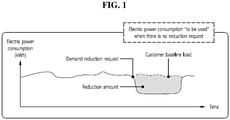
- the power demand response system as illustrated in FIG. 1 calculates a customer baseline load (CBL) using a max(4/5) calculation method based on the time period of a request for demand reduction according to power demand response bidding.
- the power consumption that can be reduced is determined based on the customer baseline load, in order to calculate the reduction amount to be high, it is necessary to prevent the customer baseline load, which is the baseline, from being lowered.
- a method of preventing a customer baseline load from being lowered has not been currently provided so far.
- the present disclosure is directed to providing an energy storage system (ESS) charging/discharging schedule management device that is capable of preventing a decrease in a customer baseline load, which is a baseline for power demand response bidding, by minimizing an equalized discharge amount during a maximum load time period while maintaining charging/discharging efficiency of an ESS.
- ESS energy storage system
- an energy storage system (ESS) charging/discharging schedule management device including: a load amount data storage unit configured to provide information on a maximum load, a medium load, and a light load through statistical data on power consumption of a consumer by season and time period; a power control unit configured to control charging/discharging of an ESS by time period of the maximum load, the medium load, and the light load; a demand response (DR) participation capacity calculation unit configured to calculate a DR participation capacity in a total discharge capacity of the ESS; a scheduler configured to manage a customer baseline load (CBL) calculation period including power consumption for the most recent five days on weekdays from a power demand response participation bidding date; and a CBL management unit configured to determine a discharge amount of the ESS so that the power demand response participation capacity is divided and discharged at different times on weekdays in a week managed by the scheduler.
- CBL customer baseline load
- the DR participation capacity calculation unit may calculate an equalized discharge amount that equally distributes the discharge amount discharged from the ESS to the power load by time period and may calculate a remaining capacity, excluding the equalized discharge in the total discharge capacity of the ESS, as the power demand response participation capacity.
- the scheduler may transmit a charge/discharge command signal to the power control unit to charge the ESS during the light load time period and discharge the ESS during the maximum load time period.
- the device may further include a load monitoring unit configured to monitor power consumption of power loads, in which the load monitoring unit may calculate the power consumption used in the power loads and compare the power consumption with baseline consumption determined as an abnormal working day to determine whether a corresponding day is the abnormal working day.
- a load monitoring unit configured to monitor power consumption of power loads, in which the load monitoring unit may calculate the power consumption used in the power loads and compare the power consumption with baseline consumption determined as an abnormal working day to determine whether a corresponding day is the abnormal working day.
- the scheduler may proceed with the power demand response bidding when the power consumption of the power loads is maintained above the baseline consumption of the abnormal working day and may recalculate the power demand response participation capacity when the power consumption of the power loads is less than the baseline consumption on the abnormal working day.
- the scheduler may discharge the ESS during a first medium load time period when the power demand response trading time period elapses in summer and spring/autumn, and discharge the ESS during a first maximum load time period when the power demand response trading time period elapses in winter.
- the CBL management unit may discharge the power demand response participation capacity at the maximum load time period and sequentially proceed with discharging at a later time every time period a first one day elapses from weekdays when the discharge starts according to a power demand response discharge plan.
- the CBL management unit may designate a divided discharge day by the number of days corresponding to a difference between the number of unit times and the number of weekdays in the week and equally divide and discharge the power demand response participation capacity at different time periods on the divided discharge day.
- the device may further include: a template database (DB) configured to provide a document template required for the power demand response bidding; and a bid generation unit configured to receive the document template from the template DB and record application details required for the power demand response bidding, in which the scheduler 14 may transmit a bid in an electronic document format generated by the bid generation unit to a bidding agency server through a network.
- DB template database
- bid generation unit configured to receive the document template from the template DB and record application details required for the power demand response bidding, in which the scheduler 14 may transmit a bid in an electronic document format generated by the bid generation unit to a bidding agency server through a network.
- an ESS is charged at a light load and discharged at a maximum load, and at this time period, equalized division discharge is performed. Accordingly, the charging/discharging efficiency of the ESS is maintained.
- unit is defined herein as having its broadest definition to an ordinary skill in the art to refer to a software including instructions executable in a non-transitory computer readable medium that would perform the associated function when executed, a circuit and/or a processor designed to perform the associated function, a hardware designed to perform the associated function, or a combination of a software, a circuit, or a hardware designed to perform the associated function.
- block diagrams of the present specification illustrate a conceptual aspect of an illustrative circuit for embodying a principle of the present disclosure. Therefore, it is to be understood that all flow charts, state transition diagrams, pseudo-codes, and the like, illustrate various processes that may be tangibly embodied in a computer-readable medium and that are executed by computers or processors regardless of whether or not the computers or the processors are clearly illustrated.
- processors or functional blocks represented as concepts similar to the processors and illustrated in the accompanying drawings may be provided using hardware having capability to execute software in connection with appropriate software as well as dedicated hardware.
- the functions are provided by the processors, they may be provided by a single dedicated processor, a single shared processor, or a plurality of individual processors, and some of them may be shared with each other.
- DSP digital signal processor
- components represented as means for performing functions mentioned in a detailed description are intended to include all methods for performing functions including all types of software including, for example, a combination of circuit devices performing these functions, firmware/micro codes, or the like, and are coupled to appropriate circuits for executing the software so as to execute these functions. It is to be understood that since functions provided by variously mentioned means are combined with each other and are combined with a method demanded by the claims in the present disclosure defined by the claims, any means capable of providing these functions are equivalent to means recognized from the present specification.
- an ESS charging/discharging schedule management device 10 relates to an ESS operation method for optimal participation in power demand response, and maintains charging/discharging efficiency of an ESS.
- a customer baseline load which is a baseline for power demand response bidding, is prevented from being lowered.
- the demand response is also referred to as a "power demand response" and refers to a system in which, when a power exchange requests a reduction in preparation for power shortage or instability, the power demand response customer side saves (reduces) power as much as agreed in advance and receives the agreed amount.
- this system is a compensation system for the reduction of power consumption.
- CBL customer baseline load
- the ESS charging/discharging schedule management device 10 includes a load amount data storage unit 11, a power control unit 12, a DR participation capacity calculation unit 13, a scheduler 14, and a CBL management unit 15. Further, according to another embodiment, the ESS charging/discharging schedule management device 10 may further include a load monitoring unit 16, a template database (DB) 17, and a bid generation unit 18, and the like.
- DB template database
- the technical configurations of the present disclosure may be implemented in a computing device that includes various wired and wireless terminal devices, including a server personal computer (PC) including a central processing unit (CPU), a program memory, a database, a network communication module, and the like, and some configurations are provided in an external third terminal and may be linked to each other.
- PC server personal computer
- CPU central processing unit
- program memory e.g., a program memory
- database e.g., a database
- network communication module e.g., a network communication module
- the load amount data storage unit 11 collects or refers to statistical data on power consumption of consumers by season and time period, and stores information on maximum load, medium load, and light load time periods, and stores the stored information in the power control unit 12 and the like.
- the power consumption may be slightly different for each country, and as illustrated in FIG. 3 , statistical samples of maximum load, medium load, and light load calculations are obtained from an average value for all consumers managed by the Korea Power Exchange.
- the power load is divided into summer and spring/autumn, and other winter seasons according to the power load by season, and by classifying the divided seasonal power load according to time period again, the power load is divided into a maximum load, a medium load, and a light load by season and time period.
- the power control unit 12 is also referred to as a power control system (PCS) and controls charging/discharging of an ESS. To this end, the power control unit 12 receives power from the ESS and charges the battery (storage battery).
- PCS power control system
- the power control unit 12 is a system that converts characteristics (for example, frequency, voltage, and alternating current/direct current (AC/DC)) of electric power for grid discharge, and due to this limitation, a maximum discharge amount per hour is, for example, 30% of ESS capacity.
- characteristics for example, frequency, voltage, and alternating current/direct current (AC/DC)
- AC/DC alternating current/direct current
- the power control unit 12 controls charging or discharging by time period of the maximum load, medium load, and light load. That is, the necessity or efficiency of charging or discharging varies according to the power load by season and time period and, therefore, is controlled by the scheduler 14 and the like.
- the DR participation capacity calculation unit 13 calculates power demand response participation capacity in a total discharge capacity (total battery capacity) of the ESS, which means the remainder excluding an equalized discharge amount equally discharged to the power load in the total discharge capacity.
- the DR participation capacity calculation unit 13 first calculates the equalized discharge amount in which the discharge amount discharged from the ESS to the power load is equally distributed by time period. Thereafter, the remaining capacity excluding the equalized discharge amount in the total discharge capacity of the ESS is calculated as the power demand response participation capacity.
- the maximum charging capacity is 10M
- the maximum discharge capacity is also 10M accordingly
- the maximum discharge capacity per hour is 30% of the ESS capacity, and thus, becomes 3M.
- the equalized discharge amount is the amount of power discharged from the ESS provided in the power exchange during a maximum load time when an electric power rate of the power exchange is expensive, and is equal to, for example, 1.4M by time period, and the remaining 1.6M (10M-6H ⁇ 1.4M) corresponds to the power demand response participation capacity.
- the scheduler 14 manages a discharge schedule of the ESS, and in particular, manages a calculation period of the customer baseline load.
- the calculation period for customer baseline load is the most recent five days from a power demand response participation bidding date.
- a method of calculating a customer baseline load uses a max(4/5) method, which is calculated as an average value of four days excluding a day with the greatest power consumption from among the most recent five days on weekdays, and calculates the average value by time period.
- the scheduler 14 manages the calculation period by time period for the previous five days on weekdays thereafter and provides the schedule to the CBL management unit 15 to be described later.
- the scheduler 14 may transmit a charge/discharge command signal to the power control unit 12 to charge the ESS during the light load time period and discharge the ESS during the maximum load time period.
- the light load time period is a time period when the electric power rate is inexpensive, and the ESS is charged during the time period.
- the electric power rate is expensive during the maximum load time period, there is an effect of discharging the ESS to obtain a profit.
- the scheduler 14 does not receive a feeding instruction by the power demand response trading time period (for example, 10:00 to 20:00) of the day while waiting for registration and reduction test or waiting for the peak demand power demand response participation, the discharge is made as follows.
- the ESS in summer and spring/autumn, the ESS is discharged at the first medium load time period when the power demand response trading time period elapses, and in winter, the ESS is discharged at the first maximum load time period when the power demand response trading time period elapses.
- the CBL management unit 15 prevents the customer baseline load, which is the baseline for determining the reduction amount of the power demand response participating customers, from being lowered and determines the discharge amount of the ESS on weekdays in a week managed by the scheduler 14.
- the CBL management unit 15 determines the discharge amount of the ESS so that the power demand response participation capacity at different times on weekdays is divided and discharged.
- the supply-side power consumption measured by a meter such as a meter from Korea Electric Power TM is defined as a value excluding the discharge amount of the ESS from the load-side power consumption of the consumer.
- Supply ⁇ side power consumption Load-side power consumption ⁇ ESS discharge amount
- the power consumption (electric power consumption), which is the baseline for calculating the customer baseline load, means the supply-side power consumption
- the supply-side power consumption decreases and the customer baseline load also decreases. That is, as the average discharge amount of the ESS increases, the customer baseline load decreases.
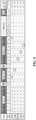
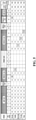
- FIGS. 4 and 5 illustrate a time period table to which the method of calculating a customer baseline load is applied.
- FIG. 4 illustrates the ESS charging/discharging state by each time period in summer and spring/autumn
- FIG. 5 illustrates the ESS charging/discharging state by each time period in winter.
- the present disclosure controls the ESS so that the power demand response participation capacity is divided and discharged at different times on weekdays in response to the method of calculating a customer baseline load which is the max(4/5) method.
- the CBL management unit 15 discharges the power demand response participation capacity during the maximum load time period but sequentially performs discharging at a later time every time period one day passes from a first weekday starting discharging according to the power demand response discharge plan.
- the discharge is executed only during the maximum load time period when an electric power rate is expensive, in FIG. 4 , the discharge is executed stepwise like 10:00, 11:00, 13:00, 14:00, and 15:00, and in FIG. 5 , the discharge is made stepwise like 10:00, 11:00, 17:00, 18:00, 19:00, and 20:00.
- the discharge amount is 2.2M (1.4+0.8) on Monday
- the discharge amount is 3.0M (1.4+1.6) on Tuesday
- the discharge amount is 1.4M on each of the rest Wednesday, Thursday, and Friday.
- the average discharge value of four days of Monday, Wednesday, Thursday, and Friday is 1.6M ((2.2+1.4+1.4+1.4)/4), and when all the power demand response participation capacities are divided (1.4M) at different times, the average discharge value of the ESS increases.
- the increase in the average discharge value of an ESS means using the ESS instead of using power supplied by Korea Electric Power, etc., and thus the supply-side power consumption decreases and the CBL decreases.
- controlling the customer baseline load is advantageous to the ESS, and thus the power demand response participation capacity is divided and discharged at different times during weekdays of a week as in the present disclosure.
- the entire maximum load time period is constituted by a plurality of unit times with one hour (1H) as a unit.
- 1H one hour
- the maximum load is 6 hours (six unit times). Therefore, there may be a case in which it is not possible to distribute and allocate the power demand response participation capacity in six unit times for five days including Monday, Tuesday, Wednesday, Thursday, and Friday, which are weekdays of a week.
- the CBL management unit 15 designates divided discharge days by the number of days corresponding to the difference between the number of unit times and the number of weekdays in a week.
- the power demand response participation capacity is equally divided and discharged at different time periods on the designated divided discharge day.
- the load monitoring unit 16 monitors power consumption of power loads receiving power from the ESS and calculates power consumption used in the power loads. In addition, it is determined whether the corresponding day is an abnormal working day by comparing the power consumption with baseline consumption determined as an abnormal working day.
- the abnormal working day refers to a day when a value obtained by calculating the average power consumption for the corresponding demand reduction request reduction time period of the maximum reference day (10 or 20 days) is less than 75% of the average power consumption, which is excluded from the calculation of the reference date.
- the day when the power consumption decreases by 75% or more of usual corresponds to an abnormal working day, not weekdays or weekends (weekends are already excluded), and therefore, is excluded from the calculation of the CBL.
- the scheduler 14 proceeds with the power demand response bidding, and upon successful bidding, it is possible to additionally receive a reduction settlement amount according to the contents of the successful bid. Even when there is failure in bidding, the economical operation of the existing CBL, which prevents the decrease in the customer baseline load, is continuously maintained.
- the power consumption of the power load is less than the baseline consumption of the abnormal working day, it is excluded from the calculation of the customer baseline load because the corresponding day is the abnormal working day, so the power demand response participation capacity may be freely recalculated and applied.
- the discharge is preferably divided into two hours a day, and the discharge uses the time planned to participate in the power demand response according to the scheduling table of the previous day (abnormal working day).
- the discharge does not have to be performed every two hours, and the discharge can be performed on Thursday, Friday, or even on Monday of the following week.
- the template DB 17 and bid generation unit 18, which are omitted from the description above, are provided as needed, and the template DB 17 provides a document template necessary for the power demand response bidding, and the bid generation unit receives the document template from the template DB 17 and records applications required for power demand response bidding.
- the scheduler 14 transmits a bid in the form of an electronic document generated by the bid generation unit 18 to a bidding agency server such as Korea Electric Power or a power agency through the network, thereby automatically performing the power demand response bidding according to a fixed schedule.
- a bidding agency server such as Korea Electric Power or a power agency
Landscapes
- Engineering & Computer Science (AREA)
- Business, Economics & Management (AREA)
- Power Engineering (AREA)
- Economics (AREA)
- Health & Medical Sciences (AREA)
- Human Resources & Organizations (AREA)
- Strategic Management (AREA)
- Theoretical Computer Science (AREA)
- Physics & Mathematics (AREA)
- General Physics & Mathematics (AREA)
- Marketing (AREA)
- General Business, Economics & Management (AREA)
- Tourism & Hospitality (AREA)
- Water Supply & Treatment (AREA)
- Primary Health Care (AREA)
- General Health & Medical Sciences (AREA)
- Public Health (AREA)
- Entrepreneurship & Innovation (AREA)
- Development Economics (AREA)
- Educational Administration (AREA)
- Game Theory and Decision Science (AREA)
- Operations Research (AREA)
- Quality & Reliability (AREA)
- Supply And Distribution Of Alternating Current (AREA)
- Management, Administration, Business Operations System, And Electronic Commerce (AREA)
Applications Claiming Priority (2)
| Application Number | Priority Date | Filing Date | Title |
|---|---|---|---|
| KR1020200034333A KR102164212B1 (ko) | 2020-03-20 | 2020-03-20 | Ess 충방전 스케쥴 관리장치 |
| PCT/KR2021/000774 WO2021187739A1 (ko) | 2020-03-20 | 2021-01-20 | Ess 충방전 스케쥴 관리장치 |
Publications (2)
| Publication Number | Publication Date |
|---|---|
| EP3972071A1 true EP3972071A1 (de) | 2022-03-23 |
| EP3972071A4 EP3972071A4 (de) | 2023-12-06 |
Family
ID=72886333
Family Applications (1)
| Application Number | Title | Priority Date | Filing Date |
|---|---|---|---|
| EP21772620.7A Pending EP3972071A4 (de) | 2020-03-20 | 2021-01-20 | Vorrichtung zur zeitplanverwaltung zum ess-aufladen/-entladen |
Country Status (5)
| Country | Link |
|---|---|
| US (1) | US12199460B2 (de) |
| EP (1) | EP3972071A4 (de) |
| KR (1) | KR102164212B1 (de) |
| CN (1) | CN113950784B (de) |
| WO (1) | WO2021187739A1 (de) |
Families Citing this family (7)
| Publication number | Priority date | Publication date | Assignee | Title |
|---|---|---|---|---|
| KR102164212B1 (ko) * | 2020-03-20 | 2020-10-12 | 주식회사 시너지 | Ess 충방전 스케쥴 관리장치 |
| KR102603221B1 (ko) * | 2021-11-12 | 2023-11-16 | 한국에너지기술연구원 | 보상된 고객기준부하를 이용한 수요반응 계산방법 및 계산장치 |
| KR102886449B1 (ko) | 2022-02-21 | 2025-11-13 | 주식회사 엘지에너지솔루션 | 수요 반응 자원의 최적 운영을 위한 에너지 저장 시스템 및 이의 운영 방법 |
| KR20240143341A (ko) | 2023-03-24 | 2024-10-02 | 주식회사 인코어드피앤피 | 전기차 충전소의 부하 예측을 통한 ess 충방전 최적화 관리 장치 및 방법 |
| US20240372389A1 (en) * | 2023-05-02 | 2024-11-07 | Microsoft Technology Licensing, Llc | Hybrid energy storage backup for datacenter |
| KR102689530B1 (ko) * | 2023-10-31 | 2024-07-26 | 한화에너지 주식회사 | 전기차 충전기 연계형 전기저장장치를 이용한 전력시장 거래와 전기차 유인을 위한 방법, 이를 구현하기 위한 프로그램이 저장된 기록매체 및 이를 구현하기 위해 매체에 저장된 컴퓨터프로그램 |
| EP4596990A1 (de) * | 2024-01-31 | 2025-08-06 | Carrier Corporation | Lastversatz in klimaanlagensystemen |
Family Cites Families (12)
| Publication number | Priority date | Publication date | Assignee | Title |
|---|---|---|---|---|
| KR100808944B1 (ko) * | 2007-08-01 | 2008-03-04 | 주식회사 베스텍 | 자동부하분석기능을 갖는 수배전반 운전제어방법 |
| WO2013042475A1 (ja) * | 2011-09-22 | 2013-03-28 | 日本電気株式会社 | 電池制御システム、電池制御装置、電池制御方法および記録媒体 |
| KR20130063949A (ko) | 2011-12-07 | 2013-06-17 | 한국전자통신연구원 | 전력사용모드 결정 장치 및 방법 |
| KR102101509B1 (ko) | 2013-03-29 | 2020-04-17 | 주식회사 케이티 | 전력 수요반응 시장 자원으로 이동성 부하의 관리 방법 및 이를 위한 이동성 부하의 충전 전력 관리 시스템 |
| KR101744576B1 (ko) * | 2015-08-27 | 2017-06-09 | 주식회사 우암코퍼레이션 | 중소형 분산 에너지 저장장치를 활용한 소비 전력 운영 시스템 |
| JP6361643B2 (ja) * | 2015-12-15 | 2018-07-25 | 横河電機株式会社 | 蓄電サービスシステム |
| CN106058851B (zh) * | 2016-05-27 | 2018-09-04 | 南方电网科学研究院有限责任公司 | 基于需求响应的电力资源配置方法和系统 |
| KR20180044700A (ko) * | 2016-10-24 | 2018-05-03 | 한국전력공사 | 고객 맞춤형 수요 반응 프로그램을 운영하는 수요 반응 운영 시스템 및 그 방법 |
| KR101836439B1 (ko) * | 2017-09-01 | 2018-03-09 | 주식회사 텔다 | 전력 수용가에 설치된 ess의 충방전 알고리즘 예측 시스템 |
| CN109829834A (zh) * | 2019-03-04 | 2019-05-31 | 上海电力设计院有限公司 | 一种储能系统配置方法、装置和存储介质 |
| CN110429627B (zh) * | 2019-08-08 | 2021-03-23 | 南方电网科学研究院有限责任公司 | 一种基于负荷自适应的储能晚高峰负荷削减方法 |
| KR102164212B1 (ko) * | 2020-03-20 | 2020-10-12 | 주식회사 시너지 | Ess 충방전 스케쥴 관리장치 |
-
2020
- 2020-03-20 KR KR1020200034333A patent/KR102164212B1/ko active Active
-
2021
- 2021-01-20 WO PCT/KR2021/000774 patent/WO2021187739A1/ko not_active Ceased
- 2021-01-20 CN CN202180003832.7A patent/CN113950784B/zh active Active
- 2021-01-20 EP EP21772620.7A patent/EP3972071A4/de active Pending
- 2021-12-17 US US17/554,855 patent/US12199460B2/en active Active
Also Published As
| Publication number | Publication date |
|---|---|
| EP3972071A4 (de) | 2023-12-06 |
| US12199460B2 (en) | 2025-01-14 |
| US20220109315A1 (en) | 2022-04-07 |
| KR102164212B1 (ko) | 2020-10-12 |
| WO2021187739A1 (ko) | 2021-09-23 |
| CN113950784B (zh) | 2024-12-27 |
| CN113950784A (zh) | 2022-01-18 |
Similar Documents
| Publication | Publication Date | Title |
|---|---|---|
| US12199460B2 (en) | ESS charging/discharging schedule management device | |
| US9003211B2 (en) | Method and apparatus for holistic power management to dynamically and automatically turn servers, network equipment and facility components on and off inside and across multiple data centers based on a variety of parameters without violating existing service levels | |
| EP3118962A1 (de) | Speicherbatterieteilungssystem, informationsverarbeitungsvorrichtung, speicherbatterieteilungsverfahren und aufzeichnungsmedium zur aufzeichnung eines speicherbatterieteilungsprogramms | |
| US11705754B2 (en) | Method and devices for optimizing backup power control using machine learning | |
| AU2017253053B2 (en) | Demand monitoring device, demand monitoring method, and demand monitoring program | |
| CN116325408A (zh) | 电力控制系统和程序 | |
| WO2023148918A1 (ja) | 制御装置、制御方法および記録媒体 | |
| US20210075242A1 (en) | Charge and discharge control apparatus and method for an energy storage system | |
| JP6823581B2 (ja) | デマンドレスポンスシステム | |
| US20140288721A1 (en) | Power leveling control method and power leveling control device | |
| JP7094312B2 (ja) | 管理装置、装置、電力機器の管理方法、プログラムおよび記憶媒体 | |
| JP2022150731A (ja) | 電力制御システム、電力制御方法、および電力制御プログラム | |
| KR102194123B1 (ko) | 전력 저장 장치 | |
| KR20150067860A (ko) | 에너지 저장장치의 전력관리장치 및 전력관리방법 | |
| KR20220080551A (ko) | 수요 반응을 고려한 ess 운영 시스템 및 운영 방법 | |
| CN117200299B (zh) | 储能电池的功率控制方法、装置及电子设备 | |
| KR20190021538A (ko) | 가상 발전소 플랫폼에 기반한 에너지 관리 시스템 및 그 관리 방법 | |
| JP2022121495A (ja) | 電力制御システム、電力制御装置およびプログラム | |
| JPWO2017146243A1 (ja) | 電力管理サーバ、電力管理システム、及び電力管理方法 | |
| JP2022070363A (ja) | 電気自動車充電システム、充放電制御装置、および方法 | |
| JP7729575B1 (ja) | 蓄電池システム | |
| US12374885B2 (en) | Controlling usage of energy storages | |
| JP7716612B1 (ja) | 制御システム | |
| WO2015162997A1 (ja) | 電力制御装置、電力制御方法、プログラム、および電力制御システム | |
| JP2022058230A (ja) | 電力制御システムおよびプログラム |
Legal Events
| Date | Code | Title | Description |
|---|---|---|---|
| STAA | Information on the status of an ep patent application or granted ep patent |
Free format text: STATUS: THE INTERNATIONAL PUBLICATION HAS BEEN MADE |
|
| PUAI | Public reference made under article 153(3) epc to a published international application that has entered the european phase |
Free format text: ORIGINAL CODE: 0009012 |
|
| STAA | Information on the status of an ep patent application or granted ep patent |
Free format text: STATUS: REQUEST FOR EXAMINATION WAS MADE |
|
| 17P | Request for examination filed |
Effective date: 20211217 |
|
| AK | Designated contracting states |
Kind code of ref document: A1 Designated state(s): AL AT BE BG CH CY CZ DE DK EE ES FI FR GB GR HR HU IE IS IT LI LT LU LV MC MK MT NL NO PL PT RO RS SE SI SK SM TR |
|
| DAV | Request for validation of the european patent (deleted) | ||
| DAX | Request for extension of the european patent (deleted) | ||
| A4 | Supplementary search report drawn up and despatched |
Effective date: 20231103 |
|
| RIC1 | Information provided on ipc code assigned before grant |
Ipc: G06Q 10/063 20230101ALI20231027BHEP Ipc: H02J 7/00 20060101ALI20231027BHEP Ipc: G06Q 50/06 20120101ALI20231027BHEP Ipc: H02J 3/00 20060101ALI20231027BHEP Ipc: H02J 3/14 20060101ALI20231027BHEP Ipc: H02J 3/32 20060101AFI20231027BHEP |