EP3967701A1 - Verfahren zur isolierung von mucin auf der basis von filtrationsschritten - Google Patents
Verfahren zur isolierung von mucin auf der basis von filtrationsschritten Download PDFInfo
- Publication number
- EP3967701A1 EP3967701A1 EP20196327.9A EP20196327A EP3967701A1 EP 3967701 A1 EP3967701 A1 EP 3967701A1 EP 20196327 A EP20196327 A EP 20196327A EP 3967701 A1 EP3967701 A1 EP 3967701A1
- Authority
- EP
- European Patent Office
- Prior art keywords
- mucin
- filter
- solution
- aqueous solution
- tissue
- Prior art date
- Legal status (The legal status is an assumption and is not a legal conclusion. Google has not performed a legal analysis and makes no representation as to the accuracy of the status listed.)
- Pending
Links
Images




Classifications
-
- C—CHEMISTRY; METALLURGY
- C07—ORGANIC CHEMISTRY
- C07K—PEPTIDES
- C07K14/00—Peptides having more than 20 amino acids; Gastrins; Somatostatins; Melanotropins; Derivatives thereof
- C07K14/435—Peptides having more than 20 amino acids; Gastrins; Somatostatins; Melanotropins; Derivatives thereof from animals; from humans
- C07K14/46—Peptides having more than 20 amino acids; Gastrins; Somatostatins; Melanotropins; Derivatives thereof from animals; from humans from vertebrates
- C07K14/47—Peptides having more than 20 amino acids; Gastrins; Somatostatins; Melanotropins; Derivatives thereof from animals; from humans from vertebrates from mammals
- C07K14/4701—Peptides having more than 20 amino acids; Gastrins; Somatostatins; Melanotropins; Derivatives thereof from animals; from humans from vertebrates from mammals not used
- C07K14/4727—Mucins, e.g. human intestinal mucin
-
- B—PERFORMING OPERATIONS; TRANSPORTING
- B01—PHYSICAL OR CHEMICAL PROCESSES OR APPARATUS IN GENERAL
- B01D—SEPARATION
- B01D2239/00—Aspects relating to filtering material for liquid or gaseous fluids
- B01D2239/06—Filter cloth, e.g. knitted, woven non-woven; self-supported material
- B01D2239/065—More than one layer present in the filtering material
-
- B—PERFORMING OPERATIONS; TRANSPORTING
- B01—PHYSICAL OR CHEMICAL PROCESSES OR APPARATUS IN GENERAL
- B01D—SEPARATION
- B01D2239/00—Aspects relating to filtering material for liquid or gaseous fluids
- B01D2239/12—Special parameters characterising the filtering material
- B01D2239/1216—Pore size
Definitions
- the invention provides a method for isolating mucin from a mucin containing solution whereby the mucin containing solution is subjected to at least two subsequent filtration steps, using decreasing filter pore size diameters in each consecutive filtration step, and thereby producing a filtered mucin containing solution. Further encompassed are a bubble column and the use thereof in the method for isolating mucin.
- the invention also provides a mucin obtained by the method of the invention.
- the herein described invention provides a composition comprising the mucin obtained by the method of the invention.
- Mucins are highly glycosylated proteins, which are either membrane bound or secreted to form the structural part of mucus.
- the mucus serves as a barrier against invading germs and mucins, which are the key component of mucus, can function as biological lubricant molecules.
- mucins enable for example the painless chewing and swallowing of food, or the eyelid closure. These properties make mucins invaluable for various medical applications, for example as lubricious ingredient in eye drops or mouth sprays or as germ protective lubricative for the coating of medical devices such as catheters, intubation tubes, contact lenses, or injected as artificial joint fluid in osteoarthritis therapies ( Figure 1 ).
- mucins There are currently about 20 different types of mucins known to be found in the human body.
- mucins consist of a long polypeptide backbone of several thousand amino acids with various attached sugar chains, which contain negatively charged residues such as sialic acids and/or sulfates, and form the central area of the mucin molecule. Compared to the central area the outer side chains are folded and rather hydrophobic which confers the whole protein an amphiphilic character.
- mucins utilized for experimental purposes often originate from vertebrates such as pigs and cattle because the structure of porcine and bovine mucin is extremely similar to human mucin.
- the mucus harvest can take about a quarter of an hour of manual work per stomach. Further, the harvesting process depends on the skill of the performing person as the rinsing and mucus scraping can result in a loss of mucus and thus in a loss of mucin.
- the collected mucus is pooled with the mucus of several other porcine stomachs.
- PBS phosphate buffered saline
- the mucin solution is then homogenized with a magnetic stirrer at approx. 4°C overnight. Afterwards, the mucin solution is subjected to several centrifugation steps, starting at 8300 x g for 30 min to separate and finally remove left over food residues, cell debris and other impurities. The supernatant of the centrifuged mucin solution is then again centrifuged at 15000 x g for 45 min before it is subjected to a long ultracentrifugation at 150000 x g for 60 min to further remove impurities. After a concentration step using cross-flow ultrafiltration, the mucin containing fraction is separated from smaller proteins in a size exclusion chromatography (SEC). Thereafter, the salt content of the mucin solution is reduced to a conductivity of ⁇ 100 ⁇ S/cm by diafiltration using distilled water. The mucin is then lyophilized for long-term storage.
- SEC size exclusion chromatography
- the herein described method is thus to comply with these needs. This method is easy applicable, has a high throughput and does not require time-consuming centrifugation steps, while providing a constant mucin quality superior to commercially available mucins, as reflected by the data provided herein.
- the invention provides a method for isolating mucin from a mucin containing solution whereby the mucin containing solution is subjected to at least two subsequent filtration steps, using decreasing filter pore size diameters in each consecutive filtration step, and thereby producing a filtered mucin containing solution. Further encompassed is a mucin obtained by the method of the invention. Moreover, the herein described invention provides a composition comprising the mucin obtained by the method of the invention.
- the invention is directed to a method for isolating mucin from a mucin containing solution.
- This method comprises isolating the mucin from a mucin containing tissue of plant or animal origin by contacting the mucin containing tissue with an aqueous solution under conditions suitable for the transfer of the mucin into the aqueous solution, whereby a mucin containing solution is produced.
- the mucin containing solution is subjected to at least two subsequent filtration steps, thereby producing a filtered mucin containing solution.
- the method also comprises performing a size exclusion chromatography with the filtered mucin containing solution, thereby producing a mucin enriched solution, diafiltrating the mucin enriched solution with demineralized, distilled or ultrapure water and optionally freeze-drying the mucin enriched solution, thereby isolating the mucin.
- the inventors were able to simplify and further develop a previously described method for isolating mucin from a mucin containing tissue as described by Schömig et al., 2016. For example, the overnight homogenization as described for the method of Schömig et al.,2016 are also no longer necessary. Further, the method of the present invention reduces complicated logistics and renders an in-between storage of intermediate products unnecessary.
- Another main advantage of the herein presented method is the use of an aqueous solution comprising a high salt concentration which allows the filtration of the mucin containing solution and eliminates all the time-consuming centrifugation steps.
- the method of the invention is easy scalable thus allows the production on an industrial scale. Further, the method of the present invention is applicable to a huge variety of mucin and thus provides for a time-efficient and effective isolation of mucins. The method is thereby especially suitable for the isolation and purification of secreted mucins such as MUC2, MUC5AC, MUC5B, MUC6 und MUC7.
- mucin containing tissue refers to tissue with membrane bound or secreted mucins which have not been removed or extracted. Included are thus, for example, the tissue and mucus of a mucous membrane, if not indicated otherwise.
- the mucin containing tissue may, for example, be of plant origin.
- the mucin containing tissue may be a whole plant or parts thereof.
- An example for such a plant is a carnivorous plant such as a flypaper trap like Pinguicula conzatti or a great sundrew like Drosera anglica, which use mucilage secreted on the leaves to catch prey.
- the plant may be selected from the group consisting of a carnivorous plant, a marshmallow root or leaf, a forest mallow flower, a black mallow flower, a flax seeds, a fenugreek seed, a mullein flower, a coltsfoot leaf, an Icelandic lichen, a psyllium seed, a quince seed, a tuber of an orchid, a red seaweed, and red algae.
- the mucin containing tissue may be of animal origin.
- the tissue may, for example, be obtained from a mammal such as a farm animal including, but not limited to, a pig, a cow, a sheep, a horse, a goat, a donkey, a dog, a cat, a rabbit or poultry such as a bird, a chicken, a turkey, a duck or a goose.
- the mucin containing tissue may also be the egg albumen.
- the mucin containing tissue When obtained from a mammalian quadruped such as a pig or a cow the mucin containing tissue may be an organ or a part thereof.
- the tissue may be a mouth tissue comprising salivary glands, a mucous membrane such as a tongue, an esophagus, a stomach, an intestine, a lung or a mixture thereof.
- Mucin containing tissue may also be a specific tissue of an animal organ such as the gastric tissue of a pig or a submaxillary gland of a cow.
- the mucin containing tissue may originate from a mollusk or a marine mollusk such as a clam or a cockle, wherein the isolated tissue may comprise a suprapedal or submaxillary gland.
- the mucin containing tissue may also be obtained from a fish. Examples for suitable fish include eel or hagfish. When such fish are used as mucin source, the mucin containing tissue of an eel or hagfish may be its skin.
- the mucin containing tissue may also be sourced from a cnidarian such as a box jellyfish or a coral.
- the mucin containing tissue of animal origin may be selected from the group consisting of a stomach, a submaxillary gland, a suprapedal gland, a lung, an intestine, a mucous membrane, a skin, or a part or a mixture thereof.
- the mucin containing tissue is a stomach.
- the tissue may be present in any suitable processable form.
- the tissue may be used as a whole (for example, if skin or an intestine from a small animal such as a bird or tissue from a plant is used).
- the mucin containing tissue may be everted to facilitate the accessibility of the aqueous solution to the mucin containing tissue.
- a whole organ is used. If, as an illustrative example, the skin of a whole hagfish is used, the tissue (skin) may be about 30 cm to about 90 cm in the longest dimension. However, the dimensions of the used mucin containing tissue may also be greater.
- the mucin containing tissue may be further prepared, in that pieces or parts of the mucin containing tissue of plant or animal origin are used. Consequently, the mucin containing tissue may be cut manually or by using a cutting device before it is contacted with the aqueous solution.
- tissue pieces may be used. Likewise it is envisaged that tissues originating from different individual animals may be extracted at the same time. These individual animals may not necessary belong to the same species.
- the mucin containing tissue pieces may have any shape, for example an essentially rectangular, square or circular shape.
- stomach pieces with an essentially rectangular shape are used, these pieces may have the longest dimension of about 1 cm to about 20 cm, or of about 4 cm to 15 cm.
- the mucin containing tissue is a stomach and originates from pork. When preparing the dissected stomach for the mucin isolation the organ may be rinsed briefly, and may be cut to the abovementioned dimensions.
- Using (relatively) small tissue pieces may have the advantage that the aqueous solution is able to access the complete mucous surface of the mucin containing tissue which also may contribute to effective mucin isolation.
- the method of the present invention relates to the isolation of mucin from a mucin containing tissue which is contacted with an aqueous solution over a suitable period of time, at a suitable temperature for transferring mucin into the aqueous solution and thus creating a mucin containing solution.
- the mucin containing solution is then filtered in at least two subsequent filtration steps to remove debris and impurities from the mucin containing solution. Further filtration steps are also envisaged, each using different filters with successively decreasing pore size diameters.
- the filtered mucin containing solution is further purified by performing a size exclusion chromatography, thereby producing a mucin enriched solution, and diafiltered to reduce the amount of salt in the mucin enriched solution.
- the diafiltered mucin enriched solution can then be frozen or dry-frozen to store the isolated mucin.
- the mucin containing solution is produced by contacting a mucin containing tissue with an aqueous solution over a suitable period of time, at a suitable temperature as defined somewhere else herein, for transferring the mucin into the aqueous solution.
- contacting means in its broadest sense adding the aqueous solution to the mucin containing tissue, or removing the mucin mechanically from the mucin containing tissue and adding the aqueous solution subsequently.
- Removing the mucin mechanically includes any means or treatment by which the mucin can be removed and collected from the surface of the mucin containing tissue.
- contacting the mucin containing tissue with the aqueous solution comprises manually scraping, brushing, or washing the mucin from the mucin containing tissue into the aqueous solution, or adding the aqueous solution to the mucin containing tissue.
- a contact of the mucin containing tissue with the aqueous solution can also be established without mechanical or manual interfering, simply by adding the solution to the mucin containing tissue over a suitable period of time, at a suitable temperature as described somewhere else herein.
- Contacting the tissue with the aqueous solution further comprises moistening of the entire mucin containing tissue with the aqueous solution. This way, the solution may access the complete surface of the mucin containing tissue, which facilitates the transfer of mucin into the solution.
- the aqueous solution may be added to the collected mucin.
- the mucin may be removed mechanically and collected into the aqueous solution or the aqueous solution may be added without a mechanical preparation of the mucin containing tissue and left thereon as described herein.
- the aqueous solution may be filled directly into the stomach which may be accompanied or aided by shaking or by using a magnetic stir bar which constantly moves the fluid inside the stomach.
- the organ When preparing the dissected stomach for the mucin isolation, the organ may be rinsed briefly, and may be cut into smaller pieces.
- the mucin containing tissue is optionally cut to an essentially rectangular shape with the longest dimension of about 1 cm to 20 cm, more preferably the longest dimension of about 4 cm to 15 cm, prior to contacting the mucin containing tissue with the aqueous solution.
- the pork stomach may be cut into pieces with the abovementioned dimensions before adding the aqueous solution.
- Adding the aqueous solution to the mucin containing tissue can be performed by placing the mucin containing tissue in a suitable vessel or bucket and adding the aqueous solution, or aided by a bubble column as describe somewhere else herein.
- the process of contacting the mucin containing tissue with the aqueous solution can optionally be performed manually or in a bubble column, as described somewhere else herein.
- the mucin containing solution which may be produced manually or by using the bubble column is afterwards subjected to the filtration steps, as described herein.
- Mucins are water soluble glycoproteins which enables their transfer into an aqueous solution. Suitable conditions for a facilitated mucin transfer into the aqueous solution may be determined by the temperature, pH or the salt concentration of the solution. Further, the time period over which the mucin containing tissue is contacted with the aqueous solution, may play a role.
- any suitable period of time allowing the transfer of the mucin into the aqueous solution can be applied.
- the mucin containing tissue may, for example, be contacted with the aqueous solution e.g. for as short as about 10 min or at least about 30 min.
- the mucin containing tissue may be contacted with the aqueous solution over a longer period e.g. for at least about 1h, about 2h, about 3h, about 4h, about 5h, about 6h, about 10h, about 12h or even about one or two days.
- a suitable period of time for contacting the mucin containing tissue with the aqueous solution is at least about 10 min, at least about 20 min, at least about 30 min, at least about 40 min, at least about 50 min, at least about 60 min, at least about 70 min, at least about 80 min, at least about 90 min, at least about 100 min, at least about 110 min, at least about 120 min.
- a suitable time period is any time period between 30 minutes and 3 hours.
- a transfer of mucin into the aqueous solution is encompassed to include the suitable time period or incubation time.
- a suitable temperature for the transfer of mucin into the aqueous solution may be influenced by different factors as well. The broadest applicable temperature range may be based on the natural requirements of proteins, which denaturize above 42°C and likewise loose structural integrity below 0°C. An efficient transfer using the Brownian motion might be established by higher temperatures in the range of 25°C to 42°C. However, to prevent extensive bacterial growth and thus degradation of the mucin by bacterial processes, the temperature of the aqueous solution may be adjusted.
- the temperature of the aqueous solution may be in the range of about 2°C to about 6°C, or in the range of about 3°C to 5°C.
- a bactericidal or bacteriostatic agent may be added to the aqueous solution. Any bactericidal or bacteriostatic agent suitable to avoid or inhibit bacterial growth in an aqueous solution can be used.
- An illustrative example for a suitable bactericide may be sodium azide or merthiolate.
- Examples for a suitable bacteriostatic agent include but are not limited to chloramphenicol, macrolides, novobiocin, spectinomycin, sulfonamides and tetracyclines.
- Said temperatures in the range of about 0°C to about 42°C, in the range of about 2°C to about 6°C, or in the range of about 3°C to 5°C and said bactericidal or bacteriostatic agents may be applied in combination with a bubble column.
- a suitable pH is influenced by the pH optimum of digestive enzymes of the stomach which are capable of degrading mucin.
- the enzyme pepsin which is found in the gastric juice is active in a range of pH 2 to pH 4 and may be an example for such a mucin degrading enzyme.
- impurities such as food residues, gastric fluids or cell lysates may decrease the pH to a level suitable for the activity of such mucin degrading enzymes.
- the pH may be set in a range of about pH 4 to about pH 9.
- the pH may, for example, be set to be about 7, or about 8 or to be in the pH range of about 7 to about 8.
- a buffer solution may be used.
- any aqueous solution can be used for the method of the present invention which is suitable for transferring mucin from a mucin containing tissue into the solution. Further, considering osmotic properties it may be advantageous to use a suitable amount of aqueous solution which may facilitates the transfer of mucin into the aqueous solution.
- a suitable amount of fluid may be crucial for the transfer of mucin into the aqueous solution and thereby for the mucin yield of isolation process.
- a suitable amount of aqueous solution has been determined by the inventors as ten to fifteen volumes of aqueous solution in relation to one volume of mucin containing tissue.
- the respective amount of aqueous fluid needs to be determined in relation to the amount of mucin containing tissue used to extract the mucin.
- an amount of aqueous solution has to be prepared before the mucin containing tissue is contacted with the aqueous solution.
- the aqueous solution suitable for the present invention may be a saline solution or a saline buffer.
- An illustrative example for a suitable saline solution is a physiological solution, which may be prepared with salt comprising monovalent cations.
- An illustrative example for such a salt may be any commonly used salt such as sodium chloride or potassium chloride in which sodium or potassium is the monovalent cation.
- the saline solution may also be prepared with commonly used buffering salts such as disodium hydrogen phosphate, potassium dihydrogen orthophosphate or monopotassium phosphate.
- any aqueous buffer reagent that is able to buffer within a range of about pH 4 to about pH 9 can be used in the present invention.
- Illustrative examples include, but are not limited to saline solution, phosphate buffer, phosphate buffered saline (PBS) solution, tris-buffered saline (TBS), Veronal-buffer, citrate-phosphate buffer, tris(hydroxymethyl) aminomethane (TRIS), TE buffer, 4-(2-hydroxyethyl)-1-piperazineethanesulfonic acid (HEPES) buffer, Ringer's solution or a bicarbonate buffer system.
- the aqueous solution is a sodium phosphate buffered saline solution with about 10 mM sodium phosphate and about 1 M NaCl.
- the aqueous solution that is contacted with the mucin containing tissue is a sodium phosphate buffered saline solution with at least the concentration of 3x PBS, but preferably about 10 mM sodium phosphate, about 1 M NaCl and about 0,04 % NaN 3 ..
- the aqueous solution may have a certain salt concentration.
- a high salt concentration decreases the Debye screening length, causing attenuated electrostatic interactions of the charged mucin.
- a certain salt content in the aqueous solution facilitates the detachment of mucin from the mucin containing tissue or debris and consequently contributes to the liquefaction of the mucus.
- the salt content of the solution may also influence the quality of the mucin product since impurities such as charged molecules may detach from the mucin structure due to the attenuated electrostatic interactions of the mucin.
- the concentration of osmotic active compounds of the aqueous solution is reflected in the osmolarity of the solution.
- the aqueous solution suitable for the present invention may have an osmolarity of at least about 800 mOsmol/L up to about 2500 mOsmol/L.
- the aqueous solution of the present invention may also have, for example, an osmolarity of up to about 1000 mOsmol/L, of up to about 1100 mOsmol/L, of up to about 1200 mOsmol/L or of up to about 1300 mOsmol/L, of up to about 1400 mOsmol/L, of up to about 1500 mOsmol/L, of up to about 1600 mOsmol/L, of up to about 1700 mOsmol/L, of up to about 1800 mOsmol/L, of up to about 1900 mOsmol/L, of up to about 2000 mOsmol/L, of up to about 2100 mOsmol/L, of up to about 2200 mOsmol/L, of up to about 2300
- the liquid phase containing the mucin (herein termed mucin containing solution) may be separated from the remaining solid tissue.
- mucin containing solution such a separation is established by filtration without the need for centrifugation. This can be established, as mentioned above, through a high salt concentration of the aqueous solution with an osmolarity of at least about 800 mOsmol/L.
- the filtering process comprises at least one filtration step, preferably two filtration steps, more preferably three filtration steps. Further filtration steps, such as four of five filtration steps are also envisaged by the method of the present invention.
- Isolating mucin from a mucin containing solution using the method of the present invention comprises subjecting the mucin containing solution to at least two subsequent filtration steps, wherein the pore size diameter of the first filter used in the first step and the filter pore size diameter of the second filter used in the second step are different, and wherein the second filter used in the second step has a smaller pore size diameter than the first filter used in the first step, thereby producing a filtered mucin containing solution.
- Each of the at least two filtration steps may be repeated several times, meaning the mucin solution may be filtered several times through a filter having the same pore size diameter or a pore size in the range given herein for the respective filtration step before the next subsequent filtration step is performed.
- the subsequent filtration step uses a filter with a smaller pore size diameter than the previous filtration step.
- the mucin containing solution is filtered through filters with successively decreasing pore sizes.
- the first filtration step uses a first filter with a pore size diameter typically in the range of about 3 mm to about 0.5 mm, meaning of about 4 mm, about 3.5 mm, about 3 mm, about 2.5 mm, about 2 mm, about 1.5 mm, about 1 mm, about 0.5 mm.
- the pore size employed in this first filtration step is not limited to this range, in one illustrative example, the pore size diameter of the first filtration step is about 1 mm.
- a mesh may be used as filter for the first filtration step.
- the mesh used herein may be made of any one of nitrocellulose, mixed cellulose ester (MCE), glass, glass fiber, glass foam, plastic, polypropylene (PP), polyether sulfone (PES), polytetrafluoroethylene (PTFE), polyvinylidene fluoride (PVDF), nylon, tissue, felt, wool, fleece or metal.
- the mesh is preferably a stainless steel mesh. Even more preferably the first filtration step uses a steel mesh as first filter, with the pore size diameters indicated herein for the first filtration step.
- the second filtration step uses a second filter with a pore size diameter typically in the range of about 600 ⁇ m to about 60 ⁇ m, meaning of about 700 ⁇ m, about 600 ⁇ m, about 500 ⁇ m, about 400 ⁇ m, about 300 ⁇ m, about 200 ⁇ m, about 100 ⁇ m, about 90 ⁇ m, about 80 ⁇ m, about 70 ⁇ m, about 60 ⁇ m. While the pore size employed in this first filtration step is not limited to this range, in one illustrative example, the pore size diameter of the second filtrating step is about 100 ⁇ m.
- a filter may be used for the second filtration step, and the filter may be a paper filter, a nitrocellulose filter, a mixed cellulose ester (MCE) filter, a glass filter, a glass fiber filter, a glass foam filter, a syringe filter, a filter sleeve, a sterile filter unit, a plastic filter, a polypropylene (PP) filter, a polyether sulfone (PES) filter, a polytetrafluoroethylene (PTFE) filter, a polyvinylidene fluoride (PVDF) filter, a nylon filter, a tissue filter, a felt filter, a wool filter, or a fleece filter, but preferably a stainless steel mesh.
- MCE mixed cellulose ester
- PP polypropylene
- PES polyether sulfone
- PTFE polytetrafluoroethylene
- PVDF polyvinylidene fluoride
- the second filtration step may preferably use as second filter a stainless steel mesh or filter with the pore size diameters indicated herein for the second filtration step.
- the method of the present invention may comprise a third filtration step.
- the third filtration step may use a third filter with a pore size diameter in the range of about 60 ⁇ m to about 10 ⁇ m, meaning about 60 ⁇ m, about 50 ⁇ m, about 40 ⁇ m, about 30 ⁇ m, about 20 ⁇ m, about 10 ⁇ m.
- the third filtration step uses a pore size diameter of about 40 ⁇ m.
- the third filtration step uses a third filter which is a paper or tissue filter with said pore size diameter.
- a commercially available tea or coffee filter may also be used.
- the mucin containing solution may be filtered through filters with successively decreasing pore sizes, wherein each filter is used only once and wherein more than four filters with decreasing pore size diameters are used consecutively.
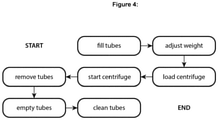
- the filtration process of one or more steps is used to separate impurities or debris from the mucin containing solution and produces a filtered mucin containing solution and each of the filtration steps may be repeated at least once before the next subsequent filtration step is performed. It is apparent from the method described herein that no centrifugation step is used. A subsequent sequence of centrifugation steps, as described for the method of Schömig et al., 2016, requires several preparation steps and prolongs the complete isolation process (see also Figure 4 ).
- any separation means suitable for restraining the solid tissue or impurities from the liquid phase may be used in addition to the method described herein.
- the tissue may also be separated by decanting, straining, sieving, centrifuged or separated by the use of a disc separator.
- the filtered mucin containing solution which may thus be subjected to further separation or purification.
- the mucin is purified from impurities such as cellular components.
- the mucin containing solution may be contacted with a chemical for a certain period of time to ensure a binding or denaturation of the impurities.
- the chemical containing mucin solution may be filtered so that impurities remain in the filter.
- any chemical suitable for denaturizing proteins in a physiological solution can be used.
- suitable chemicals are urea or guanidine hydrochloride.
- the mucin containing solution may be contacted with about 4 M, or about 5 M, or about 6 M, or about 7 M, or about 8 M urea for about 10 min to about 24 h, for example for about 3 h to bind cellular impurities.
- the impurities may precipitate allowing their removal by centrifugation leaving the mucin in the supernatant.
- the mucin containing solution may be further subjected to filtration or ultracentrifugation leaving the purified mucin in the supernatant.
- the mucin containing solution may be subjected to a size exclusion chromatography (SEC) after filtration to remove lipids, macromolecules such as polymers or proteins or previously added compounds such as bactericidal or bacteriostatic agents.
- SEC size exclusion chromatography
- the SEC may be carried out by using a saline solution or saline buffer.
- the salt content in the solution or buffer decreases the electrostatic interactions of the mucin molecule, thereby improving the purification and the quality of the mucin.
- Any saline solution or saline buffer with high salt content can be used for the SEC step of the present invention.
- the filtered mucin containing solution is subjected to a SEC with a saline buffer, wherein the saline buffer is preferably 1x, 2x or 3x PBS.
- the mucin containing solution may be subjected to a diafiltration to concentrate and further purify the mucin.
- the diafiltration may be performed with a saline solution or saline buffer.
- the salt concentration of the saline solution or saline buffer used for the diafiltration may have a salt concentration in the range of about 200 mM to about 5 M, or in the range of about 1.5 M to about 2.5 M. In an illustrative example a 10 mM sodium phosphate solution with about 1 M NaCl is used for the diafiltration.
- the present method may also comprise a desalination of the diafiltrated mucin containing solution using distilled water or ultrapure water.
- the salt concentration of the diafiltrated mucin containing solution is reduced to a conductivity of at least ⁇ 50 ⁇ S/cm, more preferably ⁇ 25 ⁇ S/cm, most preferably ⁇ 10 ⁇ S/cm.
- the purified mucin solution may optionally be frozen at -80°C for long-term storage.
- the mucin may be dried for long-term storage. In this context, any drying procedure available to a person skilled in the art may be used.
- the purified mucin may be freeze-dried, lyophilized or spray-dried.
- the method of the present invention may comprise the steps of:
- the step of contacting the mucin containing tissue with the aqueous solution is performed by using a bubble column as described herein.
- a bubble column as described herein.
- the present invention includes, in one embodiment, the use of a bubble column for contacting a mucin containing tissue with an aqueous solution and further isolating said mucin.
- the bubble column suitable for the present invention may comprise components depicted in Figure 3 , i.e. a hollow chamber (1), which may be sealed to the outside, a gas inlet (2), a non-return valve (3), a gas outlet (4), an external cooling system (5) and a control system for pH and a control system for the conductivity of the liquid.
- the gas inlet (2) of the bubble column may comprise several nozzles on the bubble column bottom.
- the gas outlet (4) of the bubble column may be mounted on the top or the upper side of the hollow chamber (1) of the bubble column.
- any bubble column of similar properties aerating a hollow chamber capable of containing an aqueous solution and thus mixing the aqueous solution with the mucin containing tissue can be used.
- Such a bubble column consequently facilitates the transfer of the mucin into the solution.
- the bubble column can be made from any suitable material.
- the bubble column may be of poly methyl methacrylate (PMMA), stainless steel or glass, to mention only a few suitable materials.
- the bubble column may have any suitable dimensions, depending on the intended capacity, for example.
- the bubble column may have an inner diameter of at least about 100 mm to about 250 mm and a height of at least about 150 mm to about 750 mm.
- the bubble column may have a volume of about 1 liter to about 37 liters. Consequently, in one illustrative example the bubble column may have at least an inner diameter of about 190 mm and at least a height of about 500 mm resulting in a volume of about 14 liters.
- the bubble column is optionally equipped with a filter and a return system to prevent foam from leaking into the gas outlet and to return the liquid to the system.
- the bubble column is used to contact the mucin containing tissue with the aqueous solution.
- the mucin containing tissue can simply be cut (if necessary) to suitable dimensions as mentioned somewhere else herein.
- the tissue and the aqueous solution can be added together into the bubble column. Thereby, both can be carried out in any sequence, for example the mucin containing tissue and the aqueous solution can be added to the bubble column. This means the aqueous solution can be added into the bubble column and the mucin containing tissue can be added subsequently or in reverse order.
- the mucin containing tissue is a stomach and originates from pork.
- the organ When preparing the dissected stomach for the mucin isolation the organ may be rinsed briefly, cut into pieces and added into the bubble column.
- the bubble column By using the bubble column for contacting the mucin containing tissue with the aqueous solution the manual removal of mucins from the tissue is rendered dispensable.
- a manual removal of the mucin may be performed after rinsing the mucin containing tissue and before cutting the tissue into pieces which are then placed in the bubble column.
- the mucin may be mechanically removed in a first step, and the remaining tissue may be added into the bubble column to efficiently remove residual mucins.
- An efficient transfer of the mucin into the aqueous solution is enabled by the constant air or gas flow into the hollow chamber filled with the aqueous solution, causing a bubble driven circulation of the fluid and thus gently removing the mucin from the surface of the mucin containing tissue.
- any gas may be used, wherein the gas may be preferably air or an inert gas or a mixture thereof.
- An example for an inert gas may be nitrogen.
- a noble gas such as helium, neon, argon, krypton, xenon, or radon may be used as inert gas.
- the gas flow generates bubbles in the aqueous solution, which cause shear and flow forces on the mucous surface of the mucin containing tissue.
- the bubble driven circulation may contribute to transferring the mucin into the aqueous solution.
- the bubble column may contain the aqueous solution such as a saline solution or a saline buffer as described somewhere else herein to isolate mucin from a mucin containing tissue.
- the aqueous solution may be 3x PBS having an osmolarity of about 840 to 945 mOsmol/L, or sodium phosphate buffered saline solution with about 10 mM sodium phosphate with about 1 M NaCl and about 0,04 % NaN 3 having an osmolarity of about 2108.6 mOsmol/L.
- the aqueous solution therefore has an osmolarity of at least about 800 mOsmol/L up to about 2500 mOsmol/L.
- the amount of aqueous solution which needs to be added to the mucin containing tissue is preferably about 10 to about 15 volumes aqueous solution to 1 volume of mucin containing tissue.
- volumes of aqueous solution may be combined with 1 volume of mucin containing tissue. This means that the size of the bubble column has to be adapted to the volumes of mucin containing tissue and aqueous solution used, prior to the isolation process.
- a suitable time period is, as mentioned already, preferably any time period between 30 minutes and 3 hours.
- the mucin containing solution resulting from the incubation in the bubble column is further processed as described herein.
- the mucin containing solution is, in a preferred embodiment, subjected to the filtration process, the size exclusion chromatography and diafiltration as described herein.
- the mucin containing solution may be centrifuged after the described incubation time in the bubble column, to purify the mucin containing solution from the remaining tissue.
- Such a centrifugation step may be an ultracentrifugation at about 45000rpm (Ti-45)/150000 x g for about 1h. A thereby created supernatant is consecutively subjected to size exclusion chromatography and diafiltration as described herein.
- the present invention is further directed to a mucin which can be obtained by the method described herein.
- a mucin has lubricious properties, which are comparable or superior to the properties of mucin isolated manually after the protocol of Schömig et al., supra.
- the present invention provides a mucin which may be structurally undamaged or less damaged and therefore more lubricious than the commercially available mucin products as shown by Figure 6 .
- the structural integrity of the mucin molecule isolated according to the method of the present invention may be detectable by using antibodies in an enzyme-linked immunosorbent assay (ELISA; Figure 5 ).
- the mucin of the present invention may be more suitable for the use in a (molecular) biological or medical application and/or for use in a medical product or compound.
- the mucin of the present invention may be a more suitable biological lubricant for the use in a medical product or more suitable for the use on a medical device.
- the mucin obtained by the method of the present invention may also be more suitable for the use as an epidermal barrier against invading pathogens.
- a composition comprising the mucin obtained by the method of the present invention is further encompassed. This composition may be for the use in a medical product.
- Non limiting examples of such medical products are additives in a mouth or nose sprays.
- the present invention provides an easy and time efficient method for the isolation of mucin, and achieves a higher yield as compared to the manual mucin isolation of Schömig et al., supra.
- the mucin yield is increased from about 65 mg per stomach to about 200-300 mg per stomach by the present invention.
- Example 1 PGM isolation by using an aerated bubble column
- a pneumatic tubing was also used to connect the gas valve to a manometer and to a pneumatic clutch, which was later used as a coupling piece for the gas supply.
- Another pneumatic connector was installed on the central thread in the top lid, before it was connected to an overflow connector placed on a 0.5 L flask via a pneumatic tubing. Upon the overflow connector, a piece of paper towel was placed before the overflow lid was fixed with four M5 bolts.
- the bubble column was operated at 4°C.
- the assembled bubble column was placed in a cold room and then connected to compressed air supply (oil free, 10 bar) via the pneumatic clutch.
- compressed air supply oil free, 10 bar
- Four stomachs of freshly slaughtered pigs about 2 liters porcine stomach
- 4 liters of pre-cooled (4°C) 3x PBS was added to the porcine stomachs in the bubble column (i.e. one volume of mucin containing tissue is contacted with twice the volume of the saline buffer in the bubble column).
- the top lid of the bubble column was fixed with six M5 bolts and connected to the overflow flask via pneumatic tubing, the gas flow was started carefully.
- the gas pressure was slowly adjusted to 3 bar using the manometer. Stomach pieces and buffer were mixed for about 3 h before the gas supply was stopped. The gas supply was dismounted behind the non-return valve to avoid fluid from leaking. The top lid was dismounted and the contents of the bubble column comprising the porcine stomachs and the mucin containing solution was decanted into a 10 L beaker using a grid. The mucin containing solution was then subjected to ultracentrifugation. If necessary, the mucin containing solution can be stored at -80°C until further use. The bubble column was then disassembled and cleaned with Milli-Q water and 2-propanol.
- a first step 70 ml centrifuge tubes (Beckmann) were filled up to 90% with the decanted mucin containing solution. After taring, the closed centrifuge tubes were carefully inserted into a Ti-45 rotor, and the rotor was inserted into the ultracentrifuge without scratching the coding disk at the bottom of the rotor. The mucin containing solution was ultracentrifuged at 4°C and 45000 rpm (Ti-45)/150000 x g for about 1h. Afterwards, the supernatant of all centrifuged tubes was decanted into one 2l Schott flask. All tubes and also the 2l Schott flask were kept at 4°C when not in direct use. The collected and pooled supernatant of all runs can be divided into 50 ml Falcon tubes and stored at -80°C for further use. The ultracentrifuge was cleaned manually. An alternative for this step is a filtration.
- the supernatant collected after the ultracentrifugation was poured through a paper filter (commercially available tea filter) into a 250 ml glass cylinder and stored at 4°C.
- an ⁇ KTA purifier system was prepared for SEC by purging the sample inlet to be used with 50 ml 1x PBS. 50 ml Falcon tubes were placed into the autosampler and the fractionation volume was adjusted to 44 ml per falcon tube. A 5l bottle of 1x PBS and the 250 ml glass cylinder containing the mucin containing solution were connected with the ⁇ KTA purifier system using inlet tubes. After the waste bottle was emptied the purification was started manually. After about 90 min the automatically collected samples were harvested. At this point the collected samples can be also stored at -80°C for further use. The ⁇ KTA purifier system was cleaned after the run was completed.
- the samples of 3 ⁇ KTA runs were thawed overnight at 4°C (alternatively in a water bath at room temperature on the day of crossflow filtration).
- the mucin containing solution was filled into the reservoir of the clean crossflow filtration device.
- the osmolarity of the solution was adjusted by adding sodium chloride (NaCI) until a NaCl concentration of 2M is reached.
- NaCI sodium chloride
- the pump was operated at low speed (max. 200 rpm). Afterwards, the pump was operated at 400 rpm and about 10 psi retentate pressure until the mucin solution was concentrated to a volume of about 300 ml.
- the mucin solution was dialyzed against ultrapure water until a conductivity of ⁇ 10 ⁇ S/cm was reached (400 rpm and ⁇ 10 psi retentate pressure). Then, the mucin solution was concentrated to a volume of about 70 ml to 90 ml. The concentrated mucin solution was aliquoted in labelled 5 ml Eppendorf tubes (4.5 ml per aliquot) and stored at -80°C.
- the purified mucin solution was freeze dried. For this, holes were drilled into the lids of the still frozen 5ml Eppendorf tubes. Then, these prepared frozen Eppendorf tubes were put into the vacuum chamber. After 2 to 3 days the mucin was freeze-dried and ready to be harvested.
- the present invention provides a significant improvement for mucin isolation since the method described herein provides for a time efficient, effective and scalable isolation of mucin while at the same time yields about three times more mucin than the prior art with constant quality (as shown in the following Examples 2 and 3).
- Example 2 Experiment showing that the mucin isolated according to the present invention is detectable by mucin-specific antibodies in contrast to commercially available mucin
- the binding of antibodies to MUC5AC isolated according to the present invention is a qualitative feature for mucin integrity and thus for native mucin.
- the mucin antibodies were diluted 1:400 in blocking buffer. After incubating, the samples were rinsed again with PBS-Tween. A second antibody staining was then performed using horse radish peroxidase (HRP) conjugated goat anti mouse (murine) IgG antibodies (ABIN237501, antibodies-online GmbH). These secondary antibodies were diluted 1:5000 in blocking buffer. Incubation was allowed to take place for 120 min on a shaker at room temperature (RT). Afterwards, the samples were washed in pure PBS (since Tween tends to interfere with the solutions used for following steps).
- HRP horse radish peroxidase
- RT room temperature
- QuantaRed Working Solution consisting of 50 parts QuantaRed Enhancer Solution, 50 parts QuantaRed Stable Peroxide and one part of QuantaRed ADHP Concentrate (QuantaRed Enhanced Chemifluorescent HRP Substrate Kit 15159, Thermo Fisher Scientific, Waltham, Massachusetts, USA) were added to each well. Since the Working Solution is light sensitive, direct light contact was avoided.
- the peroxidase activity was stopped by adding 20 ⁇ L of QuantaRed Stop Solution to each well.
- the fluorescence signal of the converted substrate was measured with a multi-label plate reader (Viktor3, PerkinElmer, Inc., Massachusetts, USA). Fluorescence was measured at a wavelength of 570 nm using a data acquisition time of 0.1 s.
- the inventors could determine that the two commercial mucin variants could hardly be detected with the specific anti-PGM antibody ( Figure 5a and b ).
- the manually purified mucin could be detected by a colour reaction visible to the naked eye, even at a mucin concentration of 10 -7 (w/v).
- the fluorescence signal of manually purified mucin (at a mucin concentration of 10 -7 (w/v)) differs from signals determined for the two commercial mucins by ⁇ 2 orders of magnitude.
- the inventors assume that either this part is damaged, or by a conformational change of the mucin no longer accessible. Therefore the commercial mucin is not suitable for molecular biological applications, e.g. as a standard for the analysis of clinical mucus samples, while the manually purified mucin is suitable.
- Example 3 Friction tests showing the lubrication properties of mucin isolated and purified according to the present invention in comparison to commercial available mucin
- Porcine gastric mucin MUC5AC was purified from porcine gastric mucus.
- 30 porcine stomachs were obtained from a local slaughter house on the day of processing. Mucus was obtained from gently rinsed pig stomachs by manual scraping of the inner surface of the gastric tissue.
- the collected mucus ( ⁇ 1 L) was diluted 10-fold in 10 mM sodium phosphate buffer (pH 7.0) containing 1 M NaCl and 0.04 % (w/v) NaN 3 , and stirred at 4 °C overnight.
- the homogenized mucus (-10 L) was then filtered through a mesh made from stainless steel with a pore size diameter of 1 mm twice.
- the mucus was stored at -80 °C in aliquots of 45 ml.
- 5 aliquots were thawed and the mucus was subjected to another filtration step using a membrane with a pore size diameter of 100 ⁇ m.
- the filtrate was poured through a paper filter (commercially available tea filter) into a 250 ml glass cylinder.
- the mucins were separated from other macromolecules by size exclusion chromatography using an ⁇ KTA purifier system (GE Healthcare) and an XK50/100 column packed with Sepharose 6FF, which has been equilibrated in 10 mM sodium phosphate buffer (pH 7.0) containing 1 M NaCl.
- the mucin yield per stomach determined from these five batches is ⁇ 231 mg.
- the mucin yield per stomach obtained by Schömig et al. was -65 mg, meaning the method of the present invention to isolate mucin is not only easier and more efficient to carry out but also provides a yield that is about 4 times higher than the method of Schömig et al.
- the speed-dependent friction behavior was evaluated by performing a logarithmic speed ramp from ⁇ 700 to 0.001 mm s -1 .
- the friction coefficient was measured at 48 distinct speed levels for 10 s each. Before the first measuring point, the system was allowed to stabilize at the highest rotational speed for 30 s. For each measurement, 600 ⁇ L of 0.1 % (w/v) solutions of the respective mucins (dissolved in 20 mM HEPES pH 7.0) were used as lubricants.
- Intact mucin including the manually purified PGM, is an excellent lubricant.
- the Lubricity of commercially available mucins on the other hand has been almost completely lost ( Figure 6 ).
- Manually purified mucin proved to be a highly efficient lubricant - regardless of which manual process the inventors use for purification of the mucin.
- Already a small amount of 0.1 % (w/v) of manually purified PGM was able to reduce the coefficient of friction by about two decades compared to pure water - and even at extremely low relative speeds, where interfacial friction typically occurs (and which are physiologically relevant; Figure 6 ).
- a 0.01 % (w/v) mucin solution (generated in 20 mM HEPES, pH 7.0) was injected into the test chamber at a flow rate of 100 ⁇ L min -1 and the resulting frequency shift was monitored for 45 min.
- This dilution step ensures that the pores of the filter membranes are not clogged with viscous raw mucus.
- a higher concentrated buffer 3x PBS instead of 1x PBS
- potential contaminations of the mucin through electrostatic adhesion of impurities are reduced.
- the inventors could determine that the salinity of the aqueous solution influences the amount of impurities in the final product. These results could be achieved with a 3xPBS as homogenization buffer.
- a higher concentrated buffer prevented a drop of the pH-value into acidity, and thereby an undesirable re-gelation of the mucus.
- Example 6 Determining flow rates through nylon membranes and meshes made from stainless steel
- Mucus from 30 pig stomachs was harvested by manually scraping the inner surface of the stomachs. A total amount of ⁇ 1 L was collected and diluted 10-fold in 10 mM sodium phosphate buffer (pH 7.0) containing 1 M NaCl and 0.04 % (w/v) NaN 3 (having an osmolarity of about 2108.6 mOsmol/L), which yielded ⁇ 10 L of mucus. For homogenization, the diluted mucus was stirred at 4 °C overnight.
- the homogenized mucus was filtered through mesh made from stainless steel with a pore size diameter of 1 mm twice.
- meshes with a pore size diameter of ⁇ 100 ⁇ m were used.
- Two different materials were tested, namely nylon and stainless steel.
- the flow of mucus through these membranes was quantified as follows: In each experiment, a volume of 50 mL homogenized mucus (after the first filtration step) was filtered either through a nylon membrane or a steel mesh into a measuring cylinder. The effective filtration area was 3.80 cm 2 and the total volume was applied onto the filtration membrane at once. Before each experiment, the membranes were soaked in tap water. The time required to filter the entire volume through the respective membrane was determined (no external forces were applied to accelerate the filtration). After each experiment the membranes were rinsed with tap water. The experiments were performed in triplicates.
- the entire volume of 50 mL could be filtered through the steel meshes successfully.
- the time required was 28 ⁇ 2 s.
- the mucus flow stopped at some point and the remaining mucus could not seep through the pores of the membranes without additional stirring.
- a volume of 33 ⁇ 3 mL was filtered through the nylon membrane until the mucus flow ceased.
- the time required for the filtration of this volume was 56 ⁇ 4 s.
Landscapes
- Chemical & Material Sciences (AREA)
- Health & Medical Sciences (AREA)
- Life Sciences & Earth Sciences (AREA)
- Organic Chemistry (AREA)
- Biochemistry (AREA)
- Gastroenterology & Hepatology (AREA)
- Zoology (AREA)
- Biophysics (AREA)
- General Health & Medical Sciences (AREA)
- Genetics & Genomics (AREA)
- Medicinal Chemistry (AREA)
- Molecular Biology (AREA)
- Proteomics, Peptides & Aminoacids (AREA)
- Toxicology (AREA)
- Peptides Or Proteins (AREA)
Priority Applications (1)
| Application Number | Priority Date | Filing Date | Title |
|---|---|---|---|
| EP20196327.9A EP3967701A1 (de) | 2020-09-15 | 2020-09-15 | Verfahren zur isolierung von mucin auf der basis von filtrationsschritten |
Applications Claiming Priority (1)
| Application Number | Priority Date | Filing Date | Title |
|---|---|---|---|
| EP20196327.9A EP3967701A1 (de) | 2020-09-15 | 2020-09-15 | Verfahren zur isolierung von mucin auf der basis von filtrationsschritten |
Publications (1)
| Publication Number | Publication Date |
|---|---|
| EP3967701A1 true EP3967701A1 (de) | 2022-03-16 |
Family
ID=72521463
Family Applications (1)
| Application Number | Title | Priority Date | Filing Date |
|---|---|---|---|
| EP20196327.9A Pending EP3967701A1 (de) | 2020-09-15 | 2020-09-15 | Verfahren zur isolierung von mucin auf der basis von filtrationsschritten |
Country Status (1)
| Country | Link |
|---|---|
| EP (1) | EP3967701A1 (de) |
Citations (3)
| Publication number | Priority date | Publication date | Assignee | Title |
|---|---|---|---|---|
| JPH05310799A (ja) * | 1992-05-11 | 1993-11-22 | Teikoku Hormone Mfg Co Ltd | ムチンの精製方法 |
| JPH08256788A (ja) * | 1995-03-27 | 1996-10-08 | Shokuhin Sangyo Eco Process Gijutsu Kenkyu Kumiai | ムチンの製造法 |
| US20200199185A1 (en) * | 2018-12-21 | 2020-06-25 | Wisconsin Alumni Research Foundation | Methods of purifying mucin |
-
2020
- 2020-09-15 EP EP20196327.9A patent/EP3967701A1/de active Pending
Patent Citations (3)
| Publication number | Priority date | Publication date | Assignee | Title |
|---|---|---|---|---|
| JPH05310799A (ja) * | 1992-05-11 | 1993-11-22 | Teikoku Hormone Mfg Co Ltd | ムチンの精製方法 |
| JPH08256788A (ja) * | 1995-03-27 | 1996-10-08 | Shokuhin Sangyo Eco Process Gijutsu Kenkyu Kumiai | ムチンの製造法 |
| US20200199185A1 (en) * | 2018-12-21 | 2020-06-25 | Wisconsin Alumni Research Foundation | Methods of purifying mucin |
Non-Patent Citations (10)
| Title |
|---|
| BIEGLER, M.DELIUS, J.KASDORF, B. T.HOFMANN, T.LIELEG, O.: "Cationic astringents alter the tribological and rheological properties of human saliva and salivary mucin solutions", BIOTRIBOLOGY, vol. 6, 2016, pages 12 - 20 |
| BOETTCHER, K.WINKELJANN, B.SCHMIDT, T. A.LIELEG, O.: "Quantification of cartilage wear morphologies in unidirectional sliding experiments: Influence of different macromolecular lubricants", BIOTRIBOLOGY, 2017 |
| KASDORF, B. T. ET AL.: "Mucin-Inspired Lubrication on Hydrophobie Surfaces", BIOMACROMOLECULES, vol. 18, 2017, pages 2454 - 2462 |
| KOCEVAR-NARED, J.KRISTL, J.SMID-KORBAR, J.: "Comparative rheological investigation of crude gastric mucin and natural gastric mucus", BIOMATERIALS, vol. 18, 1997, pages 677 - 681, XP004059037, DOI: 10.1016/S0142-9612(96)00180-9 |
| LIELEG, O.LIELEG, C.BLOOM, J.BUCK, C. B.RIBBECK, K.: "Mucin biopolymers as broad-spectrum antiviral agents", BIOMACROMOLECULES, vol. 13, 2012, pages 1724 - 1732, XP055057519, DOI: 10.1021/bm3001292 |
| MA, L.GAISINSKAYA-KIPNIS, A.KAMPF, N.KLEIN, J.: "Origins of hydration lubrication", NATURE COMMUNICATIONS, vol. 6,6060, 2015 |
| SCHOMIG ET AL.: "An optimized purification process for porcine gastric mucin (PGM) with preservation of its native functional properties", RSC ADVANCES, vol. 6, no. 50, 2016, pages 44932 - 44943, XP055655417, DOI: 10.1039/C6RA07424C |
| SCHOMIG, V. J. ET AL.: "An optimized purification process for porcine gastric mucin with preservation of its native functional properties", RSC ADVANCES, vol. 6, 2016, pages 44932 - 44943, XP055655417, DOI: 10.1039/C6RA07424C |
| VERONIKA J. SCHÖMIG ET AL: "An optimized purification process for porcine gastric mucin with preservation of its native functional properties", RSC ADVANCES, vol. 6, no. 50, 1 January 2016 (2016-01-01), pages 44932 - 44943, XP055655417, DOI: 10.1039/C6RA07424C * |
| WINKELJANN, B.BOETTCHER, K.BALZER, B. N.LIELEG, O.: "Mucin Coatings Prevent Tissue Damage at the Cornea-Contact Lens Interface", ADVANCED MATERIALS INTERFACES, vol. 4, 2017, pages 1700186, XP055703350, DOI: 10.1002/admi.201700186 |
Similar Documents
| Publication | Publication Date | Title |
|---|---|---|
| Hood et al. | Biofilms in food processing | |
| Leriche et al. | Limitation of adhesion and growth of Listeria monocytogenes on stainless steel surfaces by Staphylococcus sciuri biofilms | |
| EP1037966B1 (de) | Herstellung von fleisch in industriellem massstab aus in vitro zellkulturen | |
| Baier | Conditioning surfaces to suit the biomedical environment: recent progress | |
| Schmidt‐Schultz et al. | Bone protects proteins over thousands of years: extraction, analysis, and interpretation of extracellular matrix proteins in archeological skeletal remains | |
| Pinzón-Arango et al. | Role of cranberry on bacterial adhesion forces and implications for Escherichia coli–uroepithelial cell attachment | |
| Uchida et al. | Lactobacilli binding human A-antigen expressed in intestinal mucosa | |
| Schneeweiß et al. | Analysis of the attraction of haemocytes from Mytilus edulis by molecules of bacterial origin | |
| Jaeckle et al. | Experimental manipulations of the organic compositions of seawater: implications for studies of energy budgets in marine invertebrate larvae | |
| US7547552B2 (en) | Indication composition for surgical instrument cleaning evaluation | |
| EP3967701A1 (de) | Verfahren zur isolierung von mucin auf der basis von filtrationsschritten | |
| US9018009B2 (en) | Thermally induced gelation of collagen hydrogel and method of thermally inducing gelling a collagen hydrogel | |
| EP3792275B1 (de) | Verfahren zur isolierung von mucin aus mucinhaltigem gewebe | |
| JP2002517188A (ja) | 海綿動物、サンゴ、および他の無脊椎動物由来の単離細胞から、プライムモルフと称される細胞塊を調製および培養する方法、ならびにその使用 | |
| Aly et al. | Drinking rate regulation in some fresh‐water mosquito larvae | |
| US20220112267A1 (en) | Produce and isolate and/or extract collagen and/or gelatin from animal cell lines and/or tissue explants | |
| WO2018176066A2 (en) | Cord blood therapy to treat chronic disease caused by l-form bacteria | |
| JP7113436B2 (ja) | コンドロイチン硫酸型プロテオグリカン及びヒアルロン酸の製造方法 | |
| Heacox et al. | Development of a medium for in vitro culture of oocytes from the polychaete Nereis virens | |
| CN102687013A (zh) | 加工食品中的猪肉的检测法及其检测试剂盒 | |
| Tomar et al. | Evaluation of in vitro anti-microbial activity of goat urine peptides | |
| US6506308B1 (en) | Methods for the removal of organic substances from aqueous solutions | |
| RU2331437C1 (ru) | Способ получения аллергена из клещей домашней пыли рода дерматофагоидес | |
| Arora et al. | Effect of Staphylococcus aureus extracellular proteinaceous fraction in an isolated osteoclastic resorption assay | |
| EP0201390B1 (de) | Herstellung von Zelladhäsioninhibitoren, so erhaltene Antiadhäsine und diese enthaltende Arzneimittel und Nährmittel |
Legal Events
| Date | Code | Title | Description |
|---|---|---|---|
| PUAI | Public reference made under article 153(3) epc to a published international application that has entered the european phase |
Free format text: ORIGINAL CODE: 0009012 |
|
| STAA | Information on the status of an ep patent application or granted ep patent |
Free format text: STATUS: THE APPLICATION HAS BEEN PUBLISHED |
|
| AK | Designated contracting states |
Kind code of ref document: A1 Designated state(s): AL AT BE BG CH CY CZ DE DK EE ES FI FR GB GR HR HU IE IS IT LI LT LU LV MC MK MT NL NO PL PT RO RS SE SI SK SM TR |
|
| STAA | Information on the status of an ep patent application or granted ep patent |
Free format text: STATUS: REQUEST FOR EXAMINATION WAS MADE |
|
| 17P | Request for examination filed |
Effective date: 20220916 |
|
| RBV | Designated contracting states (corrected) |
Designated state(s): AL AT BE BG CH CY CZ DE DK EE ES FI FR GB GR HR HU IE IS IT LI LT LU LV MC MK MT NL NO PL PT RO RS SE SI SK SM TR |
|
| STAA | Information on the status of an ep patent application or granted ep patent |
Free format text: STATUS: EXAMINATION IS IN PROGRESS |
|
| 17Q | First examination report despatched |
Effective date: 20250801 |
|
| GRAP | Despatch of communication of intention to grant a patent |
Free format text: ORIGINAL CODE: EPIDOSNIGR1 |
|
| STAA | Information on the status of an ep patent application or granted ep patent |
Free format text: STATUS: GRANT OF PATENT IS INTENDED |
|
| INTG | Intention to grant announced |
Effective date: 20260225 |