EP3965518A1 - Zufallszugriffsverfahren und vorrichtung sowie kommunikationssystem - Google Patents
Zufallszugriffsverfahren und vorrichtung sowie kommunikationssystem Download PDFInfo
- Publication number
- EP3965518A1 EP3965518A1 EP19927513.2A EP19927513A EP3965518A1 EP 3965518 A1 EP3965518 A1 EP 3965518A1 EP 19927513 A EP19927513 A EP 19927513A EP 3965518 A1 EP3965518 A1 EP 3965518A1
- Authority
- EP
- European Patent Office
- Prior art keywords
- random access
- preamble
- step random
- contention
- terminal equipment
- Prior art date
- Legal status (The legal status is an assumption and is not a legal conclusion. Google has not performed a legal analysis and makes no representation as to the accuracy of the status listed.)
- Pending
Links
Images


Classifications
-
- H—ELECTRICITY
- H04—ELECTRIC COMMUNICATION TECHNIQUE
- H04W—WIRELESS COMMUNICATION NETWORKS
- H04W74/00—Wireless channel access
- H04W74/08—Non-scheduled access, e.g. ALOHA
- H04W74/0833—Random access procedures, e.g. with 4-step access
- H04W74/0841—Random access procedures, e.g. with 4-step access with collision treatment
-
- H—ELECTRICITY
- H04—ELECTRIC COMMUNICATION TECHNIQUE
- H04L—TRANSMISSION OF DIGITAL INFORMATION, e.g. TELEGRAPHIC COMMUNICATION
- H04L5/00—Arrangements affording multiple use of the transmission path
- H04L5/003—Arrangements for allocating sub-channels of the transmission path
- H04L5/0048—Allocation of pilot signals, i.e. of signals known to the receiver
- H04L5/0051—Allocation of pilot signals, i.e. of signals known to the receiver of dedicated pilots, i.e. pilots destined for a single user or terminal
-
- H—ELECTRICITY
- H04—ELECTRIC COMMUNICATION TECHNIQUE
- H04W—WIRELESS COMMUNICATION NETWORKS
- H04W56/00—Synchronisation arrangements
- H04W56/001—Synchronization between nodes
-
- H—ELECTRICITY
- H04—ELECTRIC COMMUNICATION TECHNIQUE
- H04W—WIRELESS COMMUNICATION NETWORKS
- H04W74/00—Wireless channel access
- H04W74/002—Transmission of channel access control information
-
- H—ELECTRICITY
- H04—ELECTRIC COMMUNICATION TECHNIQUE
- H04W—WIRELESS COMMUNICATION NETWORKS
- H04W74/00—Wireless channel access
- H04W74/08—Non-scheduled access, e.g. ALOHA
- H04W74/0833—Random access procedures, e.g. with 4-step access
- H04W74/0838—Random access procedures, e.g. with 4-step access using contention-free random access [CFRA]
-
- H—ELECTRICITY
- H04—ELECTRIC COMMUNICATION TECHNIQUE
- H04W—WIRELESS COMMUNICATION NETWORKS
- H04W74/00—Wireless channel access
- H04W74/08—Non-scheduled access, e.g. ALOHA
- H04W74/0866—Non-scheduled access, e.g. ALOHA using a dedicated channel for access
-
- H—ELECTRICITY
- H04—ELECTRIC COMMUNICATION TECHNIQUE
- H04L—TRANSMISSION OF DIGITAL INFORMATION, e.g. TELEGRAPHIC COMMUNICATION
- H04L5/00—Arrangements affording multiple use of the transmission path
- H04L5/003—Arrangements for allocating sub-channels of the transmission path
- H04L5/0048—Allocation of pilot signals, i.e. of signals known to the receiver
- H04L5/005—Allocation of pilot signals, i.e. of signals known to the receiver of common pilots, i.e. pilots destined for multiple users or terminals
-
- H—ELECTRICITY
- H04—ELECTRIC COMMUNICATION TECHNIQUE
- H04W—WIRELESS COMMUNICATION NETWORKS
- H04W56/00—Synchronisation arrangements
- H04W56/001—Synchronization between nodes
- H04W56/0015—Synchronization between nodes one node acting as a reference for the others
-
- H—ELECTRICITY
- H04—ELECTRIC COMMUNICATION TECHNIQUE
- H04W—WIRELESS COMMUNICATION NETWORKS
- H04W74/00—Wireless channel access
- H04W74/08—Non-scheduled access, e.g. ALOHA
- H04W74/0833—Random access procedures, e.g. with 4-step access
-
- H—ELECTRICITY
- H04—ELECTRIC COMMUNICATION TECHNIQUE
- H04W—WIRELESS COMMUNICATION NETWORKS
- H04W74/00—Wireless channel access
- H04W74/08—Non-scheduled access, e.g. ALOHA
- H04W74/0833—Random access procedures, e.g. with 4-step access
- H04W74/0836—Random access procedures, e.g. with 4-step access with 2-step access
Definitions
- This disclosure relates to the field of communications.
- a random access procedure is a very critical step in mobile communication technologies.
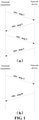
- FIG. 1(a) is a flowchart of an existing 4-step contention-based random access (CBRA) procedure.
- a terminal equipment selects a CBRA preamble, and transmits the preamble via Msg 1 in a contention-based random access occasion (RO) pre-configured by the system;
- the network device transmits msg2 after receiving the preamble; thus, a random access response (RAR) grants a dedicated uplink PUSCH resource for the terminal equipment transmitting the preamble and allocates a temporary CRNTI to indicate uplink advance of the PUSCH;
- the terminal equipment transmits Msg3 carrying signaling or data on the PUSCH resource; and in step 104, the network device transmits a contention resolution signaling Msg4 for Msg3 to the terminal equipment.
- RAR random access response
- FIG. 1(b) is a flowchart of an existing 2-step contention-based random access (CBRA) procedure.
- CBRA contention-based random access
- the terminal equipment transmits Msg A, Msg A containing CBRA preamble and a payload, and the terminal equipment transmits the preamble of MsgA in the contention RO and transmits signaling or service data of MsgA in a contention physical uplink shared channel (PUSCH) resource; and in step 106, the network device transmits MsgB after receiving MsgA, thereby transmitting a random access response and a contention resolution message to the terminal equipment.
- PUSCH physical uplink shared channel
- the network device demodulates MsgA data via a demodulation reference signal (DMRS) transmitted on a physical uplink shared channel (PUSCH) resource of the MsgA data, a DMRS sequence being related to an index of a preamble of the MsgA transmitted by the terminal equipment, and the network device obtains a corresponding DMRS of the index of the preamble according to the preamble demodulated in a random access occasion (RO) resource.
- DMRS demodulation reference signal
- PUSCH physical uplink shared channel
- the network device may demodulate the MsgA data according to the DMRS to which the preamble index corresponds.
- embodiments of this disclosure provide a random access method and device and a communication system.
- the terminal equipment initiates a non-contention random access procedure or a 4-step random access procedure when a 2-step random access procedure is not completed.
- a problem of increase of transmission latency may be avoided.
- a random access device applicable to a terminal equipment, the device including: a first controlling unit configured to control the terminal equipment to initiate a two-step random access procedure; and a second controlling unit configured to control the terminal equipment to initiate a non-contention random access procedure or a four-step random access procedure when the two-step random access procedure is not completed.
- a random access device applicable to a network device, the device including: a third controlling unit configured to control the network device to transmit to a terminal equipment, non-contention random access configuration information of a non-contention random access procedure initiated by the terminal equipment when a two-step random access procedure is not completed, and/or, first indication used for indicating the terminal equipment to initiate a non-contention random access procedure when a two-step random access procedure is not completed; or a fourth controlling unit configured to control the network device to transmit to a terminal equipment, four-step random access configuration information of a four-step random access procedure initiated by the terminal equipment when a two-step random access procedure is not completed, and/or, second indication used for indicating the terminal equipment to initiate a four-step random access procedure when a two-step random access procedure is not completed.
- a communication system including a terminal equipment and a network device, the terminal equipment including the random access device as described in the first aspect of the embodiments, and the network device including the random access device as described in the second aspect of the embodiments.
- An advantage of the embodiments of this disclosure exists in that the terminal equipment initiates a non-contention random access procedure or a 4-step random access procedure when a 2-step random access procedure is not completed. Thus, in case of failure of the 2-step random access procedure, a problem of increase of transmission latency may be avoided.
- terms “first”, and “second”, etc. are used to differentiate different elements with respect to names, and do not indicate spatial arrangement or temporal orders of these elements, and these elements should not be limited by these terms.
- Terms “and/or” include any one and all combinations of one or more relevantly listed terms.
- Terms “contain”, “include” and “have” refer to existence of stated features, elements, components, or assemblies, but do not exclude existence or addition of one or more other features, elements, components, or assemblies.
- single forms “a”, and “the”, etc. include plural forms, and should be understood as “a kind of' or “a type of' in a broad sense, but should not defined as a meaning of "one”; and the term “the” should be understood as including both a single form and a plural form, except specified otherwise.
- the term “according to” should be understood as “at least partially according to”, the term “based on” should be understood as “at least partially based on”, except specified otherwise.
- the term “communication network” or “wireless communication network” may refer to a network satisfying any one of the following communication standards: long term evolution (LTE), long term evolution-advanced (LTE-A), wideband code division multiple access (WCDMA), and high-speed packet access (HSPA), etc.
- LTE long term evolution
- LTE-A long term evolution-advanced
- WCDMA wideband code division multiple access
- HSPA high-speed packet access
- communication between devices in a communication system may be performed according to communication protocols at any stage, which may, for example, include but not limited to the following communication protocols: 1G (generation), 2G, 2.5G, 2.75G, 3G, 4G, 4.5G, and 5G and new radio (NR) in the future, etc., and/or other communication protocols that are currently known or will be developed in the future.
- 1G generation
- 2G 2.5G, 2.75G
- NR new radio
- the term "network device”, for example, refers to a device in a communication system that accesses a terminal equipment to the communication network and provides services for the terminal equipment.
- the network device may include but not limited to the following equipment: a base station (BS), an access point (AP), a transmission reception point (TRP), a broadcast transmitter, a mobile management entity (MME), a gateway, a server, a radio network controller (RNC), a base station controller (BSC), etc.
- the base station may include but not limited to a node B (NodeB or NB), an evolved node B (eNodeB or eNB), and a 5G base station (gNB), etc. Furthermore, it may include a remote radio head (RRH), a remote radio unit (RRU), a relay, or a low-power node (such as a femto, and a pico, etc.).
- NodeB or NB node B
- eNodeB or eNB evolved node B
- gNB 5G base station
- RRH remote radio head
- RRU remote radio unit
- relay or a low-power node (such as a femto, and a pico, etc.).
- base station may include some or all of its functions, and each base station may provide communication coverage for a specific geographical area.
- a term "cell” may refer to a base station and/or its coverage area, which may be expressed as a serving cell, and may be a macro cell or
- the term "user equipment (UE)” or “terminal equipment (TE)” refers to, for example, an equipment accessing to a communication network and receiving network services.
- the terminal equipment may be fixed or mobile, and may also be referred to as a mobile station (MS), a terminal, a subscriber station (SS), an access terminal (AT), or a station, etc.
- the terminal equipment may include but not limited to the following devices: a cellular phone, a personal digital assistant (PDA), a wireless modem, a wireless communication device, a hand-held device, a machine-type communication device, a lap-top, a cordless telephone, a smart cell phone, a smart watch, and a digital camera, etc.
- PDA personal digital assistant
- wireless modem a wireless communication device
- hand-held device a machine-type communication device
- a machine-type communication device a lap-top
- a cordless telephone a smart cell phone, a smart watch, and a digital camera, etc.
- the user equipment may also be a machine or a device performing monitoring or measurement.
- the user equipment may include but not limited to a machine-type communication (MTC) terminal, a vehicle mounted communication terminal, a device to device (D2D) terminal, and a machine to machine (M2M) terminal, etc.
- MTC machine-type communication
- D2D device to device
- M2M machine to machine
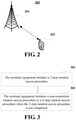
- FIG. 2 is a schematic diagram of a communication system of an embodiment of this disclosure, in which a case where a terminal equipment and a network device are taken as examples is schematically shown.
- a communication system 200 may include a network device 201 and a terminal equipment 202 (for the sake of simplicity, an example having only one terminal equipment is schematically given in FIG. 2 ).
- eMBB enhanced mobile broadband
- MTC massive machine type communication
- URLLC ultra-reliable and low-latency communication
- the terminal equipment 202 may transmit data to the network device 101, for example, in a grant or grant-free transmission mode.
- the terminal equipment 201 may receive data transmitted by one or more terminal equipments 202, and feed back information, such as acknowledgement ACK/non-acknowledgement NACK, to the terminal equipment 202, and the terminal equipment 202 may acknowledge terminating a transmission process according to the feedback information, or may further perform new data transmission, or may perform data retransmission.
- the network device 201 may transmit information related to system information to the terminal equipment 102, and the terminal equipment 202 detects the received information so as to achieve downlink synchronization, and establishes connection with the network device 201.
- a network device in a communication system is a transmitter end or a receiver end and a terminal equipment is a receiver end or a transmitter end as an example; however, this disclosure is not limited thereto, and the transmitter end and/or receiver end may also be other devices.
- this disclosure is not only applicable to signal transmission between a network device and a terminal equipment, but also applicable to signal transmission between two terminal equipments.
- a four-step random access procedure refers to a 4-step contention-based random access (CBRA) procedure, which may also be written as a 4-step random access procedure, or a 4-step CBRA.
- CBRA contention-based random access
- the two-step random access procedure refers to a 2-step contention-based random access (CBRA) procedure, which may also be written as a 2-step random access procedure, or 2-step CBRA
- CBRA contention-based random access
- Embodiment 1 of this disclosure provides a random access method, which may be executed by a terminal equipment.
- FIG. 3 is a schematic diagram of the random access method of this embodiment. As shown in FIG. 3 , the method includes:
- the terminal equipment initiates the non-contention random access procedure or the 4-step random access procedure when the 2-step random access procedure is not completed.
- the 2-step random access procedure fails, efficiency of random access may be improved, and increase of transmission latency may be avoided.
- the 2-step random access procedure being not completed refers to at least one of the following cases:
- step 302 of this embodiment when the 2-step random access procedure of step 301 is not completed, the terminal equipment may initiate the non-contention random access procedure or the 4-step random access procedure.
- FIG. 4 is a schematic diagram of a method for initiating a non-contention random access procedure by the terminal equipment. As shown in FIG. 4 , the method includes: step 401: when configuration information of non-contention random access is stored, the terminal equipment decides to initiate a non-contention random access procedure; or, when configuration information of non-contention random access is stored, a non-contention random access procedure is initiated according to a first indication of the network device.
- the terminal equipment may receive the configuration information of non-contention random access transmitted by the network device, and store the configuration information of non-contention random access.
- the configuration information of non-contention random access stored by the terminal equipment may at least include: configuration information of a candidate synchronization signal/physical broadcast channel block (SS/PBCH block, SSB) of the non-contention random access, and configuration information of a preamble corresponding to the candidate synchronization signal/physical broadcast channel block; or, configuration information of a candidate channel state information reference signal (CSI-RS) of the non-contention random access, and configuration information of a preamble to which the channel state information reference signal (CSI-RS) corresponds and configuration information of a transmission opportunity of the preamble.
- SS/PBCH block, SSB candidate synchronization signal/physical broadcast channel block
- CSI-RS candidate channel state information reference signal
- the terminal equipment may receive the configuration information of the non-contention random access via a radio resource control (RRC) message, and/or a physical downlink control channel (PDCCH) indication of a physical layer, and/or a random access response message of a media access control (MAC) layer.
- RRC radio resource control
- PDCCH physical downlink control channel
- MAC media access control
- the RRC message carrying the configuration information of the non-contention random access may be a dedicated RRC message for the terminal equipment.
- the non-contention random access configuration information in the RRC message may include: a candidate synchronization signal/physical broadcast channel block (SS/PBCH Block, SSB) for non-contention random access, and configuration information of the preamble corresponding to the candidate SSB, or configuration information of the candidate channel state information reference signal (CSI-RS) of the non-contention random access, and configuration information of a preamble corresponding to the channel state information reference signal (CSI-RS) and configuration information of a transmission occasion of the preamble.
- SS/PBCH Block SS/PBCH Block
- the configuration information of the non-contention random access in the RRC message may further include at least one piece of the following information: a total number of available contention and non-contention random access preambles, a physical random access channel (PRACH) root sequence index , a subcarrier spacing of a preamble, a measurement reference signal received power (RSRP) threshold of a synchronization reference signal (SS-RS) needed by the terminal equipment in selecting a predetermined non-contention random access candidate SSB, a measurement RSRP threshold of a CSI-RS needed by the terminal equipment in selecting a predetermined non-contention random access candidate CSI-RS, a set of transmission occasions for non-contention random access preambles, the number of preamble transmission occasions distributed in the frequency domain, a starting position of preamble transmission occasions in the frequency domain, a power ramping step factor of preambles, a maximum number of times of transmission of non-contention random access preambles, a length of a random access response reception window, and
- the non-contention random access configuration information in the PDCCH indication or the MAC layer random access response message may include: a candidate synchronization signal/physical broadcast channel block (SS/PBCH block, SSB) of non-contention random access, and configuration information of a preamble corresponding to the candidate SSB; or, configuration information of a candidate channel state information reference signal (CSI-RS) of non-contention random access, and configuration information of a preamble corresponding to the channel state information reference signal (CSI-RS) and configuration information of transmission occasions of preambles.
- SS/PBCH block SS/PBCH block
- SSB candidate synchronization signal/physical broadcast channel block
- CSI-RS candidate channel state information reference signal
- CSI-RS channel state information reference signal
- step 401 in a case where the terminal equipment stores the configuration information of non-contention random access, when the above 2-step random access procedure is not completed (such as when at least one of the above cases 1-4 occurs), a non-contention random access procedure may be initiated on its own, that is, the configuration information of non-contention random access stored by the terminal equipment is equivalent to implicitly instructing the terminal equipment to initiate a non-contention random access procedure.
- the terminal equipment may decide on its own to initiate a non-contention random access procedure. That the terminal equipment receives the MAC layer control information containing the configuration information of non-contention random access when the 2-step random access procedure is not completed may be, for example, that the terminal equipment receives a random access response containing the configuration information of non-contention random access in a random access response reception window after the terminal equipment transmits MsgA of the 2-step RACH.
- the terminal equipment may initiate a non-contention random access procedure according to a first indication of the network device in a case where the terminal equipment stores the configuration information of the non-contention random access.
- the terminal equipment may receive the first indication via an RRC message and/or a physical downlink control channel (PDCCH) indication of the physical layer and/or a random access response message of a media access control (MAC) layer.
- the RRC message is a system broadcast message or a dedicated RRC message for the terminal equipment.
- the random access response message of the MAC layer may be a specific type of random access response message, that is, the network device transmits the specific type of random access response message as the first indication to the terminal equipment.
- the specific type of random access response message may be, for example, a random access response message not carrying contention resolution information and/or not carrying an uplink transmission grant.
- the network device may transmit the random access response message not carrying contention resolution information and/or not carrying an uplink transmission grant to the terminal equipment to instruct the terminal equipment to initiate a non-contention random access procedure.
- the terminal equipment receives the random access response in the random access response reception window, and initiates a non-contention random access procedure.
- the method for initiating a non-contention random access procedure by the terminal equipment may further include: step 402: initialization of the non-contention random access procedure is performed when the 2-step random access is not completed.
- the initialization may include: configuring non-contention random access parameters.
- the non-contention random access parameters may be obtained from an RRC message and/or a PDCCH indication and/or an MAC layer random access response message. These parameters may be used for selection of the non-contention random access preambles and configuration of transmission resources and transmission power of the preambles.
- the configured non-contention random access parameters include common parameters and dedicated parameters.
- the common parameters may include at least one of the following parameters:
- the dedicated parameters may include at least one of the following parameters:
- the above common parameters may be obtained from the stored configuration information of non-contention random access described in step 401, or may be obtained from parameters reused with original non-contention random access parameters.
- some of the common parameters are obtained from the configuration information of non-contention random access, and the other part of the common parameters are obtained from the parameters reused with original non-contention random access parameters; or, all the common parameters are obtained from the configuration information of non-contention random access parameters; or, all the common parameters are obtained from random access; or, all common parameters are obtained from the parameters reused with original non-contention random access parameters.
- step 402 of this implementation the above dedicated parameters may be obtained from the stored configuration information of non-contention random access described in step 401.
- the method for initiating a non-contention random access procedure by the terminal equipment may further include: step 403: when the 2-step random access is not completed, a preamble of non-contention random access to be transmitted is determined.
- the preamble of non-contention random access may be determined according to the synchronization signal/physical broadcast channel block (SSB), or the preamble of non-contention random access may be determined according to a channel state information reference signal (CSI-RS).
- SSB synchronization signal/physical broadcast channel block
- CSI-RS channel state information reference signal
- FIG. 5 is a schematic diagram of a method for determining the preamble of non-contention random access according to an SSB. As shown in FIG. 5 , the method includes:
- the candidate synchronization signal/physical broadcast channel block (SS/PBCH Block, SSB) and the configuration information of the preamble to which the candidate SSB corresponds may be included in the configuration information of non-contention random access described in step 401.
- the configuration information of non-contention random access may come from an RRC message, and/or a PDCCH indication, and/or an MAC layer random access response message.
- the terminal equipment may measure received power of synchronization reference signal (SS-RS) of the candidate synchronization signal/physical broadcast channel block (SS/PBCH Block, SSB) in the configuration information of non-contention random access, and select the used SSB from the candidate SSBs according to the measured received power of synchronization reference signal (SS-RS). For example, the terminal equipment selects an SSB with a received power of synchronization reference signal (SS-RS) higher than a first preconfigured threshold (for example, denoted as rsrp-ThresholdSSB) from the candidate SSBs as the used SSB.
- SS-RS received power of synchronization reference signal
- SS-RS received power of synchronization reference signal
- a first preconfigured threshold for example, denoted as rsrp-ThresholdSSB
- the preamble corresponding to the selected used SSB is determined according to the used SSB selected in step 501 and configuration information of preambles to which the candidate SSBs correspond.
- FIG. 6 is a schematic diagram of a method for determining the preamble of non-contention random access according to a CSI-RS. As shown in FIG. 6 , the method includes:
- the candidate channel state information reference signal (CSI-RS) and the configuration information of the preamble to which the candidate channel state information reference signal (CSI-RS) corresponds may be included in the configuration information of non-contention random access described in step 401.
- the configuration information of non-contention random access may come from an RRC message, and/or a PDCCH indication, and/or an MAC layer random access response message.
- the terminal equipment may measure the received power of the candidate channel state information reference signals (CSI-RSs) in the configuration information of non-contention random access, and select the used CSI-RS from the candidate CSI-RSs according to the measured receive power of the channel state information reference signals (CSI-RSs). For example, the terminal equipment selects a CSI-RS with CSI-RS received power higher than a second preconfigured threshold (for example, denoted as rsrp-ThresholdCSI-RS) from the candidate CSI-RSs as the used CSI-RS.
- a second preconfigured threshold for example, denoted as rsrp-ThresholdCSI-RS
- step 602 the preamble corresponding to the selected used CSI-RS is determined according to the used CSI-RS selected in step 601 and the configuration information of the preamble to which the candidate CSI-RSs correspond.
- the method for initiating a non-contention random access procedure by the terminal equipment may further include: step 404: an uplink transmission resource for transmitting the preamble of non-contention random access is selected when the 2-step random access is not completed.
- the terminal equipment may select a physical random access channel (PRACH) occasion for transmitting the preamble of non-contention random access according to the synchronization signal/physical broadcast channel block (SS/PBCH block, SSB) selected from the non-contention random access candidate synchronization signal/physical broadcast channel blocks (SS/PBCH blocks, SSBs) in step 501 or the channel state information reference signal (CSI-RS) selected from the candidate non-contention random access channel state information reference signals (CSI-RSs) in step 601.
- PRACH physical random access channel
- the terminal equipment may select a next available physical random access channel (PRACH) transmission occasion from a permitted set of preamble transmission occasions identified by a physical random access channel (PRACH) transmission occasion configuration parameter (such as a parameter ra-ssb-OccasionMaskIndex) to which the SSB in the configuration information of non-contention random access corresponds.
- PRACH physical random access channel
- the terminal equipment may select a next available physical random access channel (PRACH) transmission occasion from a permitted preamble transmission occasion identified by a physical random access channel (PRACH) transmission occasion configuration parameter (such as a parameter ra-ssb-OccasionList) to which the CSI-RS in the configuration information of non-contention random access corresponds.
- PRACH physical random access channel
- FIG. 7 is a schematic diagram of the next available physical random access channel (PRACH) transmission occasion of this embodiment.
- PRACH physical random access channel
- a current time is t0
- the next permitted PRACH transmission occasion is P1
- a further next permitted PRACH transmission occasion is P2
- a time to which PRACH transmission occasion P1 corresponds is t1
- a time to which PRACH transmission occasion P2 corresponds is t2.
- a length of time between time t0 and time t1 is T1
- a length of time between time t0 and time t2 is T2.
- s time length for the terminal equipment to prepare for transmitting the preamble of non-contention random access is T0, if T0 ⁇ T1, PRACH transmission occasion P1 is the next available PRACH transmission occasion; if T0>T1, PRACH transmission occasion P1 is an unavailable PRACH transmission occasion, and if T0 ⁇ T2, PRACH transmission occasion P2 is the next available PRACH transmission occasion.
- the method for initiating a non-contention random access procedure by the terminal equipment may further include:
- the target received power of the random access preamble may be calculated by using multiple methods.
- the target received power of the random access preamble may be calculated according to a target received power parameter preambleReceivedTargetPower of the random access preamble, a first target received power offset value DELTA_PREAMBLE, a power ramping counting value of the random access preamble (PREAMBLE_POWER_RAMPING_COUNTER) and a power ramping step factor of the random access preamble (PREAMBLE_POWER_RAMPING_STEP).
- the target received power of the random access preamble may be calculated according to the target received power parameter preambleReceivedTargetPower of the random access preamble, the first target received power offset value DELTA_PREAMBLE, the power ramping counting value of the random access preamble (PREAMBLE_POWER_RAMPING_COUNTER), the power ramping step factor of the random access preamble (PREAMBLE_POWER_RAMPING_STEP) and a second target received power offset value delta_fallback_TargetPower.
- the second target received power offset value delta_fallback_TargetPower is a value greater than zero.
- the target received power is higher than that of ordinary random access, so that a priority of the non-contention random access procedure is higher than that of an ordinary random access procedure.
- the second target received power offset value delta_fallback_TargetPower is a preset fixed value, or it is related to a ramping amplitude of target received power of the preamble of the uncompleted 2-step random access.
- the second target received power offset value delta_fallback_TargetPower is linearly related to the ramping amplitude of the target received power of the preamble of the uncompleted 2-step random access.
- the target received power of the random access preamble may be calculated according to the target received power parameter preambleReceivedTargetPower of the random access preamble, the first target received power offset value DELTA_PREAMBLE, the power ramping counting value of the random access preamble (PREAMBLE_POWER_RAMPING_COUNTER), the power ramping step factor of the random access preamble (PREAMBLE_POWER_RAMPING_STEP) and the target received power ramping step offset value delta_fallback_step.
- the target received power ramping step offset value delta_fallback_step is a value greater than zero.
- the target received power ramps faster than that of an ordinary random access, so that a priority of the non-contention random access procedure may be higher than a priority of an ordinary random access procedure.
- the power ramping count value of the random access preamble (PREAMBLE_POWER_RAMPING_COUNTER) is used to record the number of times of preamble transmit power ramping, and 1 is added to each time of transmitting the non-contention random access preamble, therefore, each time of transmitting the preamble when the terminal equipment has not completed random access, the target received power of the preamble is increased by a step.
- an initial value of the power ramping count value of the random access preamble may be equal to: a preset initial value, that is, when the terminal equipment initiates a non-contention random access procedure, the initial value of the power ramping count value of the random access preamble (PREAMBLE POWER RAMPING COUNTER) is the preset initial value, the preset initial value being, for example, 1; or, the preamble power ramping count value of the uncompleted 2-step random access, that is, when the terminal equipment initiates a non-contention random access procedure, the initial value of the power ramping count value of the random access preamble (PREAMBLE POWER RAMPING COUNTER) is equal to a current value of the power ramping count of the preamble of the uncompleted 2-step random access.
- step 406 of this embodiment reference may be made to the relevant art for a particular method for calculating the transmit power of the random access preamble, which shall not be described in this embodiment any further.
- the method for initiating a non-contention random access procedure by the terminal equipment may further include: step 407: non-contention random access preamble is transmitted when the 2-step random access is not completed according to the selected random access preamble, an uplink transmission resources of the selected random access preamble and the calculated transmit power of the random access preamble.
- the terminal equipment when the 2-step random access procedure is not completed, the terminal equipment initiates a non-contention random access procedure.
- FIG 8 is a schematic diagram of a method for initiating a 4-step random access procedure by a terminal equipment. As shown in FIG 8 , the method includes: step 801: the terminal equipment decides to initiate a 4-step random access procedure, or initiates a 4-step random access procedure according to a second indication of a network device.
- step 801 when the 2-step random access procedure is not completed (for example, when at least one of the above cases 1-4 occurs), the terminal equipment may decide to initiate the 4-step random access procedure on its own.
- the terminal equipment may also initiate the 4-step random access procedure according to the second indication of the network device.
- the terminal equipment may receive the second indication via a radio resource control (RRC) message and/or a random access response message of a media access control (MAC) layer.
- the random access response message of the MAC layer may be a specific type of random access response message, that is, the network device transmits the specific type of random access response message as the second indication to the terminal equipment.
- the specific type of random access response message may be, for example, a random access response message not carrying contention resolution information and/or not carrying an uplink transmission grant.
- the RRC message may be a system broadcast message or dedicated RRC signaling.
- the second indication may be payload indication information of a random access channel transmitted by the network device, and the terminal equipment may decide to initiate the 4-step random access procedure according to the payload indication information of the random access channel. That is, the network device may detect a preamble transmission occasion of the 2-step random access and/or a collision rate or a payload condition in a PUSCH transmission occasion, or it may further detect a collision rate or a payload condition in the preamble transmission occasion of the 4-step random access, and take the payload indication information of the random access channel as the second indication are transmit to the terminal equipment.
- the payload indication information may be a payload factor from 0 to 1.
- the terminal After receiving the second indication, the terminal generates a random number between 0 and 1 at a uniformly distributed probability. If the random number is greater than the payload factor, the terminal equipment initiates the 4-step random access procedure; otherwise, the terminal equipment continues to initiate the 2-step random access procedure.
- the smaller the payload factor identifies that the collision rate and payload of the 2-step random access channel are higher.
- the terminal After receiving the second indication, the terminal generates a random number between 0 and 1 at a uniformly distributed probability. If the random number is less than the payload factor, the terminal equipment initiates the 4-step random access procedure; otherwise, the terminal equipment continues to initiate the 2-step random access procedure.
- the terminal equipment may decide to initiate a contention-based 4-step random access procedure.
- That the terminal equipment receives the MAC layer control information instructing the terminal equipment to initiate the 4-step random access procedure when the 2-step random access procedure is not completed may be, for example, that the terminal equipment receives the random access response message not carrying contention resolution information and/or not carrying an uplink transmission grant in the random access response reception window after the terminal equipment MsgA of the 2-step RACH.
- the RRC message received by the terminal equipment instructing the terminal equipment to initiate the contention-based 4-step random access procedure may be system broadcast information or dedicated RRC signaling.
- the method for initiating a 4-step random access procedure by the terminal equipment may further include: step 802: initialization of the 4-step random access procedure is performed when the 2-step random access is not completed.
- the initialization may include: configuring 4-step random access parameters.
- the 4-step random access parameters are obtained from configuration information of the 4-step random access, and these parameters may be used for selection of preambles of the 4-step random access and configuration of transmission resources and transmission power of the preambles.
- the configured 4-step random access parameters may include at least one of the following parameters:
- the above configured 4-step random access parameters may be obtained from the received configuration information of the 4-step random access, and/or may be obtained from parameters reused with original contention random access parameters.
- the terminal equipment may receive the configuration information of the 4-step random access via system broadcast information, and the original contention random access is, for example, original 4-step random access.
- the method for initiating a 4-step random access procedure by the terminal equipment may further include: step 803: a preamble of the 4-step random access to be transmitted is determined when the 2-step random access is not completed.
- the preamble of the 4-step random access may be determined according to the synchronization signal/physical broadcast channel block (SSB).
- SSB synchronization signal/physical broadcast channel block
- FIG. 9 is a schematic diagram of a method for determining the preamble of the 4-step random access according to the SSB. As shown in FIG. 9 , the method includes:
- the terminal equipment may measure received power of the synchronization reference signal (SS-RS) of the synchronization signal/physical broadcast channel block (SS/PBCH block, SSB) transmitted by the network device, and select an SS with SSB-RSRP higher than a pre-configured threshold (for example, expressed as rsrp-ThresholdSSB) from the measured SSBs and take the selected SS as the SSB used for the 4-step random access.
- a pre-configured threshold for example, expressed as rsrp-ThresholdSSB
- the terminal equipment may select any SSB.
- the terminal equipment may not measure the received power of the SSB, but may select the SSB selected in the uncompleted 2-step random access procedure and take it as the SSB used for the 4-step random access.
- FIG. 10 is a schematic diagram of a method for determining the preamble of the 4-step random access according to the selected SSB in step 902. As shown in FIG. 10 , the method includes:
- the preamble group selected in the uncompleted 2-step random access procedure may be determined as a preamble group used in the 4-step random access procedure.
- a preamble group may be reselected.
- multiple methods may be used to reselect a preamble group.
- the terminal equipment may determine the preamble group used in the 4-step random access procedure according to a size of a first message (msgA) in the 2-step random access procedure or according to a size of a second message (msg3) in the 4-step random access procedure.
- msgA a size of a first message
- msg3 a size of a second message
- preamble group B is determined to be used; otherwise, preamble group A is determined to be used.
- the size of the first message (msgA) is, for example, a size of a media access control layer protocol data unit (MAC PDU) of MsgA
- the size of the second message msg3 is, for example, a size of an MAC PDU of msg3 obtained by copying the MAC PDU of MsgA into an msg3 buffer of the 4-step RACH.
- MAC PDU media access control layer protocol data unit
- the terminal equipment determines the preamble group used in the 4-step random access procedure according to a size of a media access control layer protocol data unit (MAC PDU) of a potential second message (msg3) of the 4-step random access procedure.
- MAC PDU media access control layer protocol data unit
- MAC PDU media access control layer protocol data unit
- msg3 media access control layer protocol data unit
- ra-Msg3SizeGroupA a parameter set by a parameter (ra-Msg3SizeGroupA) of the configuration information of 4-step random access
- the size of the media access control layer protocol data unit (MAC PDU) of the second message (msg3) is a size of an MAC PDU composed of a size of uplink data needing to be transmitted plus a header of the MAC PDU and a size of an MAC control unit needing to be transmitted.
- the terminal equipment may determine the preamble group used in the 4-step random access procedure according to a current pathloss.
- the preamble group B is determined to be used; otherwise, the preamble group B is determined to be used.
- the preset pathloss threshold PCMAX ⁇ preambleReceivedTargetPower ⁇ msg3 ⁇ DeltaPreamble ⁇ messagePowerOffsetGroupB; where, preambleReceivedTargetPower denotes the target received power of the preamble, msg3-DeltaPreamble denotes the target received power offset of msg3, messagePowerOffsetGroupB denotes the target received power offset of the preamble group B selected by the terminal equipment, and PCMAC denotes a permitted maximum transmit power of the terminal equipment.
- a preamble is randomly selected from the preamble set of preamble group A or group B to which the SSB determined in step 1001 corresponds as the preamble of the 4-step random access to be transmitted, wherein probabilities of the preambles in the selected preamble set of the preamble group are identical.
- the preamble group to which the SSB corresponds determined in step 1001 is group A
- a preamble is randomly selected at a uniformly distributed probability from the preamble set of preamble group A and taken as the preamble of the 4-step random access to be transmitted.
- the method for initiating a 4-step random access procedure by the terminal equipment may further include: step 804: an uplink transmission resource for transmitting the preamble of the 4-step random access is selected when the 2-step random access is not completed.
- the terminal equipment may select a next available physical random access channel (PRACH) transmission occasion from a permitted preamble transmission occasion set identified by a preamble transmission occasion configuration parameter in the configuration information of the 4-step random access and take it as the physical random access channel (PRACH) transmission occasion for transmitting the preamble of the 4-step random access when the 2-step random access is not completed.
- PRACH physical random access channel
- the method for initiating a 4-step random access procedure by the terminal equipment may further include:
- the target received power of the random access preamble may be calculated by using multiple methods.
- the target received power of the random access preamble may be calculated according to a target received power parameter preambleReceivedTargetPower of the random access preamble, a first target received power offset value DELTA_PREAMBLE, a power ramping counting value of the random access preamble (PREAMBLE_POWER_RAMPING_COUNTER) and a power ramping step factor of the random access preamble (PREAMBLE_POWER_RAMPING_STEP).
- the target received power of the random access preamble may be calculated according to the target received power parameter preambleReceivedTargetPower of the random access preamble, the first target received power offset value DELTA_PREAMBLE, the power ramping counting value of the random access preamble (PREAMBLE_POWER_RAMPING_COUNTER), the power ramping step factor of the random access preamble (PREAMBLE_POWER_RAMPING_STEP) and a second target received power offset value delta_fallback_TargetPower.
- the second target received power offset value delta_fallback_TargetPower is a value greater than zero.
- the target received power is higher than that of ordinary random access, so that a priority of the 4-step random access procedure is higher than that of an ordinary random access procedure.
- the second target received power offset value delta_fallback_TargetPower is a preset fixed value, or it is related to a ramping amplitude of target received power of the preamble of the uncompleted 2-step random access.
- the second target received power offset value delta_fallback_TargetPower is linearly related to the ramping amplitude of the target received power of the preamble of the uncompleted 2-step random access.
- delta_fallback_TargetPower may be calculated by using formula (3) above.
- the target received power of the random access preamble may be calculated according to the target received power parameter preambleReceivedTargetPower of the random access preamble, the first target received power offset value DELTA_PREAMBLE, the power ramping counting value of the random access preamble (PREAMBLE_POWER_RAMPING_COUNTER), the power ramping step factor of the random access preamble (PREAMBLE_POWER_RAMPING_STEP) and the target received power ramping step offset value delta_fallback_step.
- the target received power ramping step offset value delta_fallback_step is a value greater than zero.
- the target received power ramps faster than that of an ordinary random access, so that a priority of the 4-step random access procedure may be higher than a priority of an ordinary random access procedure.
- an initial value of the power ramping count value of the random access preamble may be equal to: a preset initial value, that is, when the terminal equipment initiates a 4-step random access procedure, the initial value of the power ramping count value of the random access preamble (PREAMBLE_POWER_RAMPING_COUNTER) is the preset initial value, the preset initial value being, for example, 1; or, the preamble power ramping count value of the uncompleted 2-step random access, that is, when the terminal equipment initiates a 4-step random access procedure, the initial value of the power ramping count value of the random access preamble (PREAMBLE POWER RAMPING COUNTER) is equal to a current value of the power ramping count of the preamble of the uncompleted 2-step random access.
- step 806 of this embodiment reference may be made to the relevant art for a particular method for calculating the transmit power of the random access preamble, which shall not be described in this embodiment any further.
- the method for initiating a 4-step random access procedure by the terminal equipment to may further include: step 807: the 4-step random access preamble is transmitted when the 2-step random access is not completed according to the selected random access preamble, an uplink transmission resource of the selected random access preamble and the calculated transmit power of the random access preamble.
- the terminal equipment initiates the non-contention random access procedure or the 4-step random access procedure when the 2-step random access procedure is not completed.
- the terminal equipment initiates the non-contention random access procedure or the 4-step random access procedure when the 2-step random access procedure is not completed.
- Embodiment 2 provides a random access method, applicable to a network device.
- FIG 11 is a schematic diagram of the random access method of Embodiment 2. As shown in FIG. 11 , the method includes:
- the first indication may be transmitted via an RRC message, and/or a physical downlink control channel (PDCCH) indication of a physical layer, and/or a random access response message of a media access control (MAC) layer; wherein the RRC message may be a system broadcast message, or may be a dedicated RRC message.
- PDCCH physical downlink control channel
- MAC media access control
- the second indication may be transmitted via an RRC message, and/or a random access response message of a media access control (MAC) layer; wherein the RRC message may be a system broadcast message, or may be a dedicated RRC message.
- MAC media access control
- the random access response message of the MAC layer in step 1101 or 1102 does not carry contention resolution information and/or does not carry an uplink transmission grant.
- the configuration information of the non-contention random access includes at least: configuration information of a candidate SSB of the non-contention random access and configuration information of a preamble to which the candidate SSB corresponds; or configuration information of a candidate channel state information reference signal (CSI-RS) of non-contention random access, and configuration information of a preamble to which the channel state information reference signal (CSI-RS) corresponds and configuration information of a transmission occasion of the preamble.
- CSI-RS channel state information reference signal
- the configuration information of the non-contention random access may be transmitted via an RRC message, and/or a physical downlink control channel (PDCCH) indication of a physical layer, and/or a random access response message of a media access control (MAC) layer.
- PDCCH physical downlink control channel
- MAC media access control
- the RRC message used for transmitting the configuration information of the non-contention random access in step 1101 may be a dedicated RRC message for the terminal equipment.
- the network device may transmit the configuration information of the 4-step random access via system broadcast information.
- the second indication may be payload indication information of a random access channel transmitted by the network device, and the terminal equipment may decide to initiate a 4-step random access procedure according to the payload indication information of a random access channel. That is, the network device may detect a preamble transmission occasion of the 2-step random access and/or a collision rate or a payload condition in a PUSCH transmission occasion, or it may further detect a collision rate or a payload condition in the preamble transmission occasion of the 4-step contention random access, and take the payload information of the random access channel as the second indication and transmit to the terminal equipment.
- the payload indication information may be a payload factor from 0 to 1.
- the terminal After receiving the second indication, the terminal generates a random number between 0 and 1 at a uniformly distributed probability. If the random number is greater than the payload factor, the terminal equipment initiates the 4-step random access procedure; otherwise, the terminal equipment continues to initiate the 2-step random access procedure.
- the smaller the payload factor identifies that the collision rate and payload of the 2-step random access channel are higher.
- the terminal After receiving the second indication, the terminal generates a random number between 0 and 1 at a uniformly distributed probability. If the random number is less than the payload factor, the terminal equipment initiates the 4-step random access procedure; otherwise, the terminal equipment continues to initiate the 2-step random access procedure.
- the 2-step random access procedure being not completed refers to at least one of the following cases where:
- the network device transmits the configuration information of non-contention random access and/or the first indication to the terminal equipment, or transmits the configuration information of 4-step random access and/or the second indication to the terminal equipment.
- the terminal equipment is able to initiate a non-contention random access procedure or a 4-step random access procedure, thereby avoiding increase in transmission latency and improving random access efficiency.
- Embodiment 3 provides a random access device, corresponding to the random access method in Embodiment 1.
- a principle of the device for solving problems is similar to that of the method of Embodiment 1, reference may be made to the implementation of the method in Embodiment 1 for implementation of this apparatus, with identical parts being not going to be described herein any further.
- FIG. 12 is a schematic diagram of the random access device of Embodiment 3.
- a random access device 1200 includes: a first controlling unit 1201 and a second controlling unit 1202.
- the first controlling unit 1201 controls a terminal equipment to initiate a 2-step random access procedure; and the second controlling unit 1202 controls the terminal equipment to initiate a non-contention random access procedure or a 4-step random access procedure when the 2-step random access procedure is not completed.
- the random access device 1200 is configured in the terminal equipment, and may control the terminal equipment, so that the terminal equipment carries out the random access method in Embodiment 1. Reference may be made to description of actions of the terminal equipment in Embodiment 1 for controlling actions of the random access device 1200.
- Embodiment 4 provides a random access device, corresponding to the random access method in Embodiment 2.
- a principle of the device for solving problems is similar to that of the method of Embodiment 2, reference may be made to the implementation of the method in Embodiment 2 for implementation of this apparatus, with identical parts being not going to be described herein any further.
- FIG. 13 is a schematic diagram of the random access device of Embodiment 4.
- a random access device 1300 includes: a third controlling unit 1301 or a fourth controlling unit 1302.
- the third controlling unit 1301 is configured to control a network device to transmit to a terminal equipment, non-contention random access configuration information of a non-contention random access procedure initiated by the terminal equipment when a 2-step random access procedure is not completed, and/or, first indication used for indicating the terminal equipment to initiate a non-contention random access procedure when a 2-step random access procedure is not completed; and the fourth controlling unit 1302 is configured to control the network device to transmit to a terminal equipment, 4-step random access configuration information of a 4-step random access procedure initiated by the terminal equipment when a 2-step random access procedure is not completed, and/or, second indication used for indicating the terminal equipment to initiate a 4-step random access procedure when a 2-step random access procedure is not completed.
- the random access device 1300 is configured in the network device, and may control the network device, so that the network device carries out the random access method in Embodiment 2. Reference may be made to description of actions of the network device in Embodiment 2 for controlling actions of the random access device 1300.
- Embodiment 5 provides a terminal equipment.
- a principle of the equipment for solving problems is similar to that of the device of Embodiment 3, reference may be made to the implementation of the device in Embodiment 3 for implementation of this equipment, with identical parts being not going to be described herein any further.
- FIG. 14 is a schematic diagram of a structure of the terminal equipment of the embodiment of this disclosure.
- a terminal equipment 1400 may include a central processing unit (CPU) 1401 and a memory 1402, the memory 1402 being coupled to the central processing unit 1401.
- the memory 1402 may store various data, and furthermore, it may store a program for data processing, and execute the program under control of the central processing unit 1401, so as to instruct a terminal equipment according to received signaling.
- the functions of the device 1200 described in Embodiment 3 may be integrated into the central processing unit 1401 of the terminal equipment 1400.
- the central processing unit 1401 may be configured to carry out the method described in Embodiment 1.
- the central processing unit 1401 may be configured to control, so that the terminal equipment 1400 carries out the method in Embodiment 12.
- Embodiment 1 for other configuration modes of the central processing unit 1401, which shall not be described herein any further.
- the device 1200 described and the central processing unit 1401 may be configured separately; for example, the device 1200 may be configured as a chip connected to the central processing unit 1401, such as the units shown in FIG. 14 , and the functions of the device 400 are executed under control of the central processing unit 1401.
- the terminal equipment 1400 may include a communication module 1403, an input unit 1404, a display 1406, an audio processor unit 1405, an antenna 1407, and a power supply 14014, etc.
- the terminal equipment initiates the non-contention random access procedure or the 4-step random access procedure when the 2-step random access procedure is not completed, thereby avoiding increase in transmission latency and improving random access efficiency.
- Embodiment 6 provides a network device.
- a principle of the device for solving problems is similar to that of the method of Embodiment 2, reference may be made to the implementation of the method of Embodiment 2 for implementation of this device, with identical parts being not going to be described herein any further.
- FIG. 15 is a schematic diagram of a structure of the network device of the embodiment of this disclosure.
- a network device 1500 may include a central processing unit (CPU) 1501 and a memory 1502, the memory 1502 being coupled to the central processing unit 1501.
- the memory 1502 may store various data, and furthermore, it may store a program for data processing, and execute the program under control of the central processing unit 1501.
- the functions of the device 1300 described in Embodiment 4 may be integrated into the central processing unit 1501.
- the central processing unit 1501 may be configured to carry out the method described in Embodiment 2.
- the central processing unit 1501 may be configured to control, so that the network device 1500 carries out the method described in Embodiment 2.
- Embodiment 2 for other configuration modes of the central processing unit 1501, which shall not be described herein any further.
- the device 1300 and the central processing unit 1501 may be configured separately; for example, the device 1300 may be configured as a chip connected to the central processing unit 1501, such as the units shown in FIG. 15 , and the functions of the device 1300 are executed under control of the central processing unit 1501.
- the network device 1500 may include a transceiver 1503, an antenna 1504, a display, an audio processor, and a power supply, etc. Functions of the above components are similar to those in the relevant art, and shall not be described herein any further. It should be noted that the network device 1500 does not necessarily include all the parts shown in FIG. 15 . Furthermore, the network device 1500 may include parts not shown in FIG. 15 , and the relevant art may be referred to.
- the embodiment of this disclosure provides a communication system, at least including the network device 1500 described in Embodiment 6 and the terminal equipment 1400 described in Embodiment 5. Contents of Embodiment 5 and Embodiment 6 are incorporated herein, and shall not be described herein any further.
- An embodiment of this disclosure provides a computer storage medium, including a computer readable program, which will cause a random access device or a terminal equipment to carry out the random access method described in Embodiment 1.
- An embodiment of this disclosure provides a computer readable program, which, when executed in a random access device or a terminal equipment, will cause the random access device or the terminal equipment to carry out the random access method described in Embodiment 1.
- An embodiment of this disclosure provides a computer storage medium, including a computer readable program, which will cause a random access device or a network device to carry out the random access method described in Embodiment 2.
- An embodiment of this disclosure provides a computer readable program, which, when executed in a random access device or a network device, will cause the random access device or the network device to carry out the random access method described in Embodiment 2.
- the above apparatuses and methods of this disclosure may be implemented by hardware, or by hardware in combination with software.
- This disclosure relates to such a computer-readable program that when the program is executed by a logic device, the logic device is enabled to carry out the apparatus or components as described above, or to carry out the methods or steps as described above.
- This disclosure also relates to a storage medium for storing the above program, such as a hard disk, a floppy disk, a CD, a DVD, and a flash memory, etc.
- the methods carried out in the devices described with reference to the embodiments of this disclosure may be directly embodied as hardware, software modules executed by a processor, or a combination thereof.
- one or more functional block diagrams and/or one or more combinations of the functional block diagrams shown in FIGs. 12 and 13 may either correspond to software modules of procedures of a computer program, or correspond to hardware modules.
- Such software modules may respectively correspond to the steps shown in FIG. 2 .
- the hardware module for example, may be carried out by firming the soft modules by using a field programmable gate array (FPGA).
- FPGA field programmable gate array
- the soft modules may be located in an RAM, a flash memory, an ROM, an EPROM, and EEPROM, a register, a hard disc, a floppy disc, a CD-ROM, or any memory medium in other forms known in the art.
- a memory medium may be coupled to a processor, so that the processor may be able to read information from the memory medium, and write information into the memory medium; or the memory medium may be a component of the processor.
- the processor and the memory medium may be located in an ASIC.
- the soft modules may be stored in a memory of a mobile terminal, and may also be stored in a memory card of a pluggable mobile terminal.
- the soft modules may be stored in the MEGA-SIM card or the flash memory device of a large capacity.
- One or more functional blocks and/or one or more combinations of the functional blocks in FIGs. 12 and 13 may be realized as a universal processor, a digital signal processor (DSP), an application-specific integrated circuit (ASIC), a field programmable gate array (FPGA) or other programmable logic devices, discrete gate or transistor logic devices, discrete hardware component or any appropriate combinations thereof carrying out the functions described in this application.
- DSP digital signal processor
- ASIC application-specific integrated circuit
- FPGA field programmable gate array
- the one or more functional block diagrams and/or one or more combinations of the functional block diagrams in FIGs. 12 and 13 may also be realized as a combination of computing equipment, such as a combination of a DSP and a microprocessor, multiple processors, one or more microprocessors in communication combination with a DSP, or any other such configuration.
Landscapes
- Engineering & Computer Science (AREA)
- Signal Processing (AREA)
- Computer Networks & Wireless Communication (AREA)
- Mobile Radio Communication Systems (AREA)
Applications Claiming Priority (1)
| Application Number | Priority Date | Filing Date | Title |
|---|---|---|---|
| PCT/CN2019/085332 WO2020220323A1 (zh) | 2019-04-30 | 2019-04-30 | 随机接入的方法、装置和通信系统 |
Publications (2)
| Publication Number | Publication Date |
|---|---|
| EP3965518A1 true EP3965518A1 (de) | 2022-03-09 |
| EP3965518A4 EP3965518A4 (de) | 2022-05-04 |
Family
ID=73029586
Family Applications (1)
| Application Number | Title | Priority Date | Filing Date |
|---|---|---|---|
| EP19927513.2A Pending EP3965518A4 (de) | 2019-04-30 | 2019-04-30 | Zufallszugriffsverfahren und vorrichtung sowie kommunikationssystem |
Country Status (6)
| Country | Link |
|---|---|
| US (1) | US12356467B2 (de) |
| EP (1) | EP3965518A4 (de) |
| JP (1) | JP7520883B2 (de) |
| KR (1) | KR20210141732A (de) |
| CN (1) | CN113748742A (de) |
| WO (1) | WO2020220323A1 (de) |
Families Citing this family (12)
| Publication number | Priority date | Publication date | Assignee | Title |
|---|---|---|---|---|
| US10980067B2 (en) | 2019-05-02 | 2021-04-13 | Qualcomm Incorporated | Reference signal transmission techniques for random access messages |
| WO2020252744A1 (zh) * | 2019-06-20 | 2020-12-24 | 北京小米移动软件有限公司 | 确定随机接入信道机会ro的方法及装置 |
| KR20220046614A (ko) | 2019-08-13 | 2022-04-14 | 아이디에이씨 홀딩스, 인크. | Nr-u에서의 csi-rs의 수신 및 csi 피드백을 위한 방법 |
| WO2021029716A1 (en) * | 2019-08-14 | 2021-02-18 | Samsung Electronics Co., Ltd. | Method and apparatus for determining preambles and rach occasions for 2 step random access |
| JP7375925B2 (ja) * | 2019-11-07 | 2023-11-08 | 富士通株式会社 | ランダムアクセス方法、装置及び通信システム |
| WO2021102895A1 (zh) * | 2019-11-29 | 2021-06-03 | 华为技术有限公司 | 用于随机接入的方法和装置 |
| WO2021157998A1 (en) * | 2020-02-03 | 2021-08-12 | Samsung Electronics Co., Ltd. | Method and apparatus for performing communication in wireless communication system |
| CN116709560A (zh) * | 2022-02-25 | 2023-09-05 | 展讯通信(上海)有限公司 | 随机接入处理方法及相关装置 |
| CN115988675B (zh) * | 2022-12-15 | 2026-04-14 | 紫金山实验室 | 基于波束分合的mMTC切片随机接入控制方法和系统 |
| CN120858615A (zh) * | 2023-06-25 | 2025-10-28 | Oppo广东移动通信有限公司 | 通信方法、终端设备和网络设备 |
| WO2025231752A1 (en) * | 2024-05-09 | 2025-11-13 | Nec Corporation | Device and method of communication |
| CN121510237A (zh) * | 2024-08-09 | 2026-02-10 | 华为技术有限公司 | 通信方法及通信装置 |
Family Cites Families (18)
| Publication number | Priority date | Publication date | Assignee | Title |
|---|---|---|---|---|
| CN101980575B (zh) * | 2010-10-14 | 2013-04-24 | 华为技术有限公司 | 随机接入的处理方法和终端 |
| EP2804416B1 (de) | 2012-01-09 | 2021-07-07 | Samsung Electronics Co., Ltd. | Verfahren und vorrichtung zur protokollierung |
| CN105992328B (zh) * | 2015-01-30 | 2019-07-09 | 华为技术有限公司 | 一种前导序列的发送方法及装置 |
| EP3419340B1 (de) * | 2016-03-11 | 2024-05-01 | LG Electronics Inc. | Systeminformationssignalempfangsverfahren, benutzergerät, systeminformationssignalübertragungsverfahren und basisstation |
| WO2018110857A1 (en) * | 2016-12-12 | 2018-06-21 | Samsung Electronics Co., Ltd. | Method, base station apparatus and user equipment for random access |
| CN108271275B (zh) | 2017-01-04 | 2021-02-05 | 电信科学技术研究院 | 一种竞争随机接入的方法和装置 |
| CN108282897B (zh) | 2017-01-06 | 2020-04-17 | 电信科学技术研究院 | 一种随机接入反馈、处理方法、基站及终端 |
| CN108282901B (zh) | 2017-01-06 | 2019-08-09 | 电信科学技术研究院 | 一种随机接入响应方法和装置 |
| JP2020065095A (ja) | 2017-02-20 | 2020-04-23 | シャープ株式会社 | 端末装置、基地局装置、通信方法、および、集積回路 |
| CA3057464A1 (en) * | 2017-03-22 | 2018-09-27 | Comcast Cable Communications, Llc | Random access process in new radio |
| EP3643135B1 (de) | 2017-07-27 | 2023-10-18 | Samsung Electronics Co., Ltd. | Verfahren und vorrichtung zur durchführung einer direktzugriffsprozedur |
| ES3055216T3 (en) * | 2017-09-28 | 2026-02-10 | Sony Group Corp | User equipment, base station and methods thereof |
| CN115134017B (zh) * | 2017-11-17 | 2023-04-11 | 华为技术有限公司 | 一种传输消息的方法、设备、计算机存储介质及芯片 |
| US10855396B2 (en) * | 2018-01-04 | 2020-12-01 | Ofinno, Llc | Semi-persistent channel state information report |
| EP3547766B1 (de) * | 2018-03-30 | 2025-10-08 | Comcast Cable Communications LLC | Leistungsregelung für drahtlose kommunikation im zusammenhang mit preempted ressourcen |
| US11445549B2 (en) * | 2018-10-10 | 2022-09-13 | Qualcomm Incorporated | Two-step random access channel (RACH) procedure to four-step RACH procedure fallback |
| US10893544B2 (en) * | 2019-02-14 | 2021-01-12 | Nokia Technologies Oy | Beam refinement in two-step random access channel (RACH) procedure |
| CN113597810B (zh) * | 2019-03-28 | 2024-05-07 | 株式会社Ntt都科摩 | 用户装置以及通信方法 |
-
2019
- 2019-04-30 JP JP2021564407A patent/JP7520883B2/ja active Active
- 2019-04-30 CN CN201980095893.3A patent/CN113748742A/zh active Pending
- 2019-04-30 WO PCT/CN2019/085332 patent/WO2020220323A1/zh not_active Ceased
- 2019-04-30 EP EP19927513.2A patent/EP3965518A4/de active Pending
- 2019-04-30 KR KR1020217035215A patent/KR20210141732A/ko not_active Ceased
-
2021
- 2021-10-27 US US17/511,637 patent/US12356467B2/en active Active
Non-Patent Citations (3)
| Title |
|---|
| CATT: "RACH power control and power ramping procedure in multi-beam configuration", vol. RAN WG1, no. Prague, Czechia; 20170821 - 20170825, 20 August 2017 (2017-08-20), XP051315174, Retrieved from the Internet <URL:http://www.3gpp.org/ftp/Meetings_3GPP_SYNC/RAN1/Docs/> [retrieved on 20170820] * |
| HUAWEI ET AL: "RACH type switching between 2-steps, 4-steps RACH and CFRA", vol. RAN WG2, no. Xian, China; 20190408 - 20190412, 6 April 2019 (2019-04-06), XP051701426, Retrieved from the Internet <URL:http://www.3gpp.org/ftp/Meetings%5F3GPP%5FSYNC/RAN2/Docs/R2%2D1904112%2Ezip> [retrieved on 20190406] * |
| See also references of WO2020220323A1 * |
Also Published As
| Publication number | Publication date |
|---|---|
| US12356467B2 (en) | 2025-07-08 |
| KR20210141732A (ko) | 2021-11-23 |
| WO2020220323A1 (zh) | 2020-11-05 |
| EP3965518A4 (de) | 2022-05-04 |
| US20220053576A1 (en) | 2022-02-17 |
| CN113748742A (zh) | 2021-12-03 |
| JP2022531213A (ja) | 2022-07-06 |
| JP7520883B2 (ja) | 2024-07-23 |
Similar Documents
| Publication | Publication Date | Title |
|---|---|---|
| US12356467B2 (en) | Random access method and device and communication system | |
| US11564255B2 (en) | Method and apparatus for processing LBT monitoring failures and system | |
| US12302382B2 (en) | Method and apparatus for supporting wideband and multiple bandwidth transmission protocols | |
| US12250732B2 (en) | Methods and devices for transmitting and receiving random access response and communication system | |
| US11039479B2 (en) | Information transmission method and apparatus, random access method and apparatus, and communication system | |
| US12284686B2 (en) | Random access method and apparatus and communication system | |
| US12426082B2 (en) | Random access configuration method, signal transmission method, apparatuses thereof and system | |
| US12336020B2 (en) | Random access method and apparatus and communication system | |
| US11902192B2 (en) | Method and apparatus for determining power | |
| US12284682B2 (en) | Random access method and apparatus and communication system | |
| US12052758B2 (en) | Data transmission method and apparatus and communication system | |
| US20260006607A1 (en) | Uplink transmission method, uplink scheduling method, apparatuses thereof and system | |
| US20210136833A1 (en) | Random access method and data reception method, apparatuses thereof and communication system | |
| US20250279919A1 (en) | Uplink transmission method and apparatus | |
| US20210204327A1 (en) | Method for controlling power ramp counter, and terminal device | |
| WO2020252633A1 (zh) | 随机接入前导码退避的方法、装置和系统 |
Legal Events
| Date | Code | Title | Description |
|---|---|---|---|
| STAA | Information on the status of an ep patent application or granted ep patent |
Free format text: STATUS: THE INTERNATIONAL PUBLICATION HAS BEEN MADE |
|
| PUAI | Public reference made under article 153(3) epc to a published international application that has entered the european phase |
Free format text: ORIGINAL CODE: 0009012 |
|
| STAA | Information on the status of an ep patent application or granted ep patent |
Free format text: STATUS: REQUEST FOR EXAMINATION WAS MADE |
|
| 17P | Request for examination filed |
Effective date: 20211028 |
|
| AK | Designated contracting states |
Kind code of ref document: A1 Designated state(s): AL AT BE BG CH CY CZ DE DK EE ES FI FR GB GR HR HU IE IS IT LI LT LU LV MC MK MT NL NO PL PT RO RS SE SI SK SM TR |
|
| A4 | Supplementary search report drawn up and despatched |
Effective date: 20220404 |
|
| RIC1 | Information provided on ipc code assigned before grant |
Ipc: H04W 74/08 20090101AFI20220329BHEP |
|
| DAV | Request for validation of the european patent (deleted) | ||
| DAX | Request for extension of the european patent (deleted) | ||
| STAA | Information on the status of an ep patent application or granted ep patent |
Free format text: STATUS: EXAMINATION IS IN PROGRESS |
|
| 17Q | First examination report despatched |
Effective date: 20240417 |
|
| RAP1 | Party data changed (applicant data changed or rights of an application transferred) |
Owner name: 1FINITY INC. |